The hearable industry is presently dominated by True wireless earphones. Apple is the undisputed industry leader of this segment. The Airpods has played a significant role in this regard. Since its release, the AirPods have created a massive trend that saw many companies produce either look-alikes or similarly functioning audio gadgets. That trend isn’t fading away soon. OnePlus is reportedly working on its own wireless earphones and they are tipped to look like the Airpods.
Tipster Max J. shared a new teaser which suggests the Oneplus TWS earphones will be launched in July. Interestingly, that is around the same time the company is expected to unveil the OnePlus Z smartphone. The tipster, however. advises that we take it with a pinch of salt since the source is a new one but seemingly reliable.
Although the design looks like the Airpod’s, there is no word yet on the features that OnePlus has planned to include. The likely price of the product is also not in the public domain, but we expect OnePlus to offer it at a cheaper price than the competition. Throwing in active noise cancellation will also be a plus.
OnePlus 7T was one of the best flagship smartphones of 2019. In fact, it is still worth buying in 2020 as its successor OnePlus 8 cost way more similar to premium smartphones from different OEMs, thanks to Qualcomm. Last week, the handset received its third OxygenOS Open Beta build. Now, according to a user on Reddit, the update added 960fps slow-motion mode and 4K 30fps video recording from the ultra-wide camera.
OnePlus 7T was recently added to OxygenOS Open Beta channel. It has received three updates so far. The third one was rolled out last week but the changelog did not mention the major features which were included with the update.
And those major features are 960fps slow-motion mode and ultra-wide 4K 30fps video recording. These two options were promised by the company after the launch of OnePlus 7T last year. And now, they are here but the brand did not acknowledge them in the official changelog for the update.
Maybe, because they need some more tweaks to function properly. Also, according to XDA, the 48 MP Sony IMX586 sensor on the OnePlus 7T does not support 960fps. Hence, the feature on the phone could be using the interpolation method to double the number of frames. That means the ultra slow-motion video shot on this handset will not be smooth as other premium smartphones.
These features will be soon making their way to the OnePlus 7T units running stable OxygenOS build if the feedback from the beta users is positive.
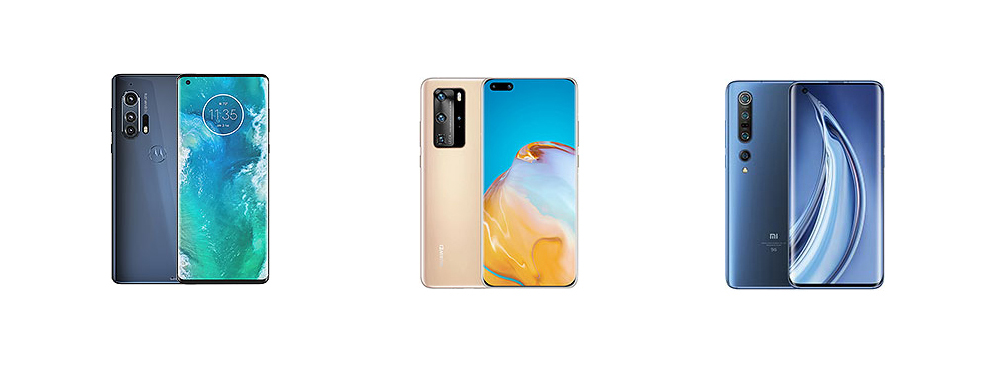
In 2020, if you talk about Chinese manufacturers, you are not talking only about affordable flagships anymore. Chinese companies actually release top-tier flagships that have nothing to envy to the most respected brands outside China. After comparing the Motorola Edge+ to the OnePlus 8 Pro and Oppo Find X2 Pro, we decided to compare it to the remaining top Chinese flagships released in 2020: Huawei P40 Pro and Xiaomi Mi 10 Pro. Through this specs comparison, you will learn all their key features, strong and weak points of this amazing trio of flagships. After checking it, you can let us know your opinion and which one would you pick by using the comment box below the post.
Motorola Edge+ vs Huawei P40 Pro vs Xiaomi Mi 10 Pro
Huawei P40 Pro
Motorola Edge+
Xiaomi Mi 10 Pro
DIMENSIONS AND WEIGHT
158.2 x 72.6 x 9 mm, 209 g
161.1 x 71.4 x 9.6 mm, 203 g
162.6 x 74.8 x 9 mm, 208 g
DISPLAY
6.58 inches, 1200 x 2640p (Full HD+), OLED
6.7 inches, 1080 x 2340p (Full HD+), OLED
6.67 inches, 1080 x 2340p (Full HD+), Super AMOLED
Motorola Edge+ has an astonishing design. It is my favorite one because it offers one of the highest screen-to-body ratios ever seen on a phone. And it is naturally built with premium materials, including glass for the back and aluminum for the frame. Right after, if we only consider the look, there is Xiaomi Mi 10 Pro with a minimalistic design and a curved screen just like the Motorola Edge+. I do not like the Huawei P40 Pro so much because of its huge camera module, but it is the only phone from this trio to be waterproof with the IP68 certification. While Motorola Edge+ is just splash resistant, Xiaomi Mi 10 Pro does not offer any kind of protection against water.
Display
If we talk about displays, it is a very close fight between Xiaomi Mi 10 Pro and Motorola Edge+. They offer very similar specifications on the paper, including the same aspect ratio, a Full HD+ resolution, the HDR10+ certification, and a 90 Hz refresh rate. Huawei P40 Pro offers a high refresh rate and a Full HD+ resolution as well, but its rivals have slightly more interesting front panels and smaller punch holes. On the other hand, Huawei P40 Pro is the only offering infrared face recognition thanks to the additional sensor placed inside is dual punch hole.
Hardware/Software
There is no way the Kirin 990 chipset found on the Huawei P40 Pro can compete with the Snapdragon 865 found on Motorola Edge+ and Xiaomi Mi 10 Pro when it comes to performance. You should get more or less the same performance with the Motorola Edge+ and Xiaomi Mi 10 Pro. The former offers a stock Android experience, while Xiaomi Mi 10 Pro has the highly-customized MIUI 11 out of the box. On the other hand, Xiaomi Mi 10 Pro offers more internal storage in its high-end variant (512 GB). Only the internal storage of the Huawei P40 Pro (which goes up to 512 GB) can be expanded with an external card.
Camera
Despite the lower resolution of its main sensor, Huawei P40 has the highest camera capabilities. Its camera setup co-engineered with Leica is composed of a 50 MP main sensor, a 40 MP ultrawide lens, a 12 MP periscope sensor with 5x optical zoom, a TOF 3D sensor, and dual OIS. It provides a stunning photo quality in every environment. Xiaomi Mi 10 Pro and Motorola Edge+ are more interesting when it comes to video recording (they can record videos up to 6K and 8K resolution, respectively), with the Xiaomi Mi 10 Pro offering a slightly more advanced rear camera department but an inferior front camera. Huawei P40 Pro wins the selfie comparison as well.
Battery
With an amazing 5000 mAh battery, Motorola Edge+ is the king of battery life. It supports both fast charging and wireless charging, but it does not provide blazing charging speeds, unlike Xiaomi Mi 10 Pro and Huawei P40 Pro.
Price
Motorola Edge+ is sold for €1200/$999 globally, Xiaomi Mi 10 Pro sells for €999/$1081, and Huawei P40 Pro begins at €999 as well. On the paper, Huawei P40 Pro looks slightly more impressive since it is waterproof, it has better cameras, 3D facial recognition, and more “exclusive” features. But it lacks Google services in the global market and this is a big issue. Motorola Edge+ and Xiaomi Mi 10 Pro are very close: the former offers a bigger battery and an amazing design, the latter has more internal storage in its higher-end version and potentially better cameras (but this has to be verified). Which one would you choose?
Samsung has officially announced the new Galaxy A21S model in Europe today. The phone is yet another lower mid-range offering in the A-series family, offering a very large battery and a capable set of quad-cameras at the back. Conforming to the current trend, the Galaxy A21s also comes with an Infinity-O punch-hole display up front.
The Galaxy A21s brings RAM and camera upgrades as compared to the month-old Samsung Galaxy A21. The phone features a 6.5-inch HD+ Infinity-O Super AMOLED display with a 13MP selfie shooter located on the top-left corner. It runs on an octa-core CPU (Exynos 850) clocked at 2.0GHz and you can select from 3GB RAM to up to 6GB of RAM with 32GB and 64GB storage options.
The biggest difference between the regular A21 and this A21s is in the camera department. The new model upgrades the primary sensor to 48MP paired with an 8MP ultrawide sensor, 2MP macro shooter, and another 2MP depth shooter. The four cameras are arranged in an L-shaped design. You also get a fingerprint sensor at the back.
The Samsung Galaxy A21s gets a huge 5000mAh battery with 15W wired charging. As for software, the phone runs on Android 10 based OneUI.
The phone will launch in Europe for €200 ($217) or 179 GBP (UK) and will go on sale from June 19 in three colors: Black, White, and Blue.
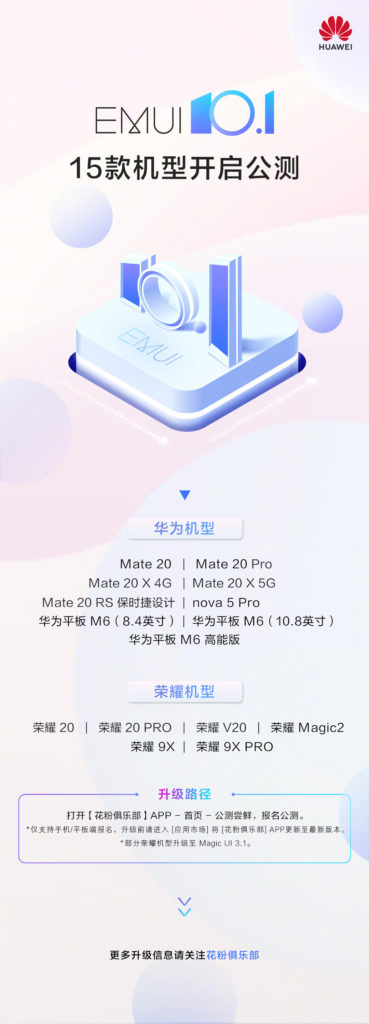
Huawei has been seeding out EMUI 10.1 Closed Beta builds for eligible devices for past few weeks. Now, finally, the company has announced the rollout of Open Beta builds so that more users can experience the latest version of the company’s mobile software. These public builds are currently available for a total of 15 Huawei and Honor devices. Sadly, these beta builds are still limited to the Chinese version of the handsets and tablets
For the unaware, EMUI 10.1 is known as Magic UI 3.1 for Honor devices. It is basically the same software with different branding. But the Honor 9X series is an exception as it runs EMUI instead of Magic UI. That being said, here’s the complete list of devices that are eligible for public beta testing.
EMUI 10.1 Open Beta (Public) Eligible Devices
Huawei Mate 20
Huawei Mate 20 Pro
Huawei Mate 20 X 4G
Huawei Mate 20 X 5G
Huawei Mate 20 RS Porsche Design
Huawei Nova 5 Pro
Huawei MediaPad M6 8.4-inch
Huawei MediaPad M6 10.8-inch
Huawei MediaPad M6 Turbo Edition
Honor 9X
Honor 9X Pro
Magic UI 3.1 Open Beta (Public) Eligible Devices
Honor 20
Honor 20 Pro
Honor V20
Honor Magic 2
We are not clearly sure when and which devices will be receiving EMUI 10.1 globally. But once the company announces it officially, we will make sure to write a post to let you know.
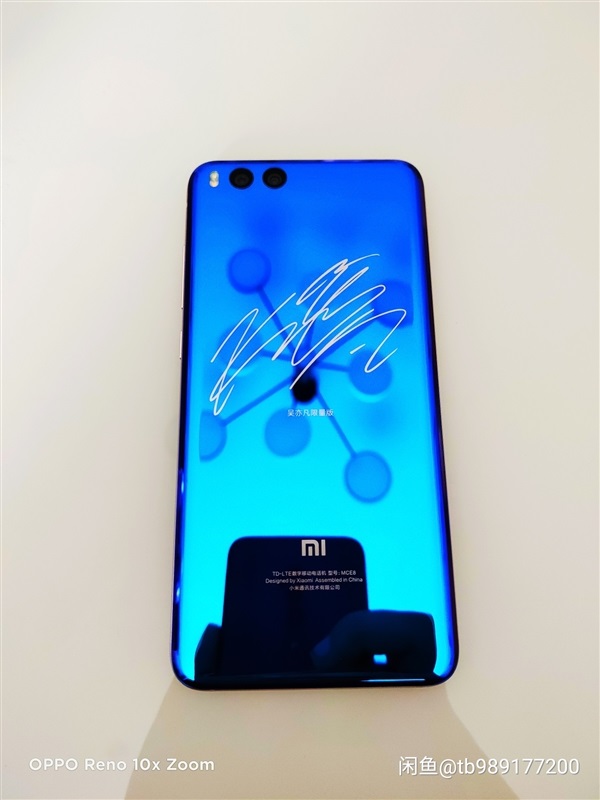
Xiaomi Mi Note 3 was the last Mi Note series smartphone before the 2019’s Mi Note 10 with 108MP camera. This handset made its debut in September of 2017 in China. It also had a special edition with actor-singer Kris Wu’s (Wu Yi Fan) name engraved on the back panel. Now, after three years, a rare variant of this edition of the phone with the celebrity’s signature popped up on Alibaba’s Idle Fish ( 闲鱼) platform.
The Xiaomi Mi Note 3 was one of the best mid-range smartphones of 2017. It was powered by then newly introduced Qualcomm Snapdragon 660 paired with 6GB RAM and 64GB / 128GB ROM. It had a 5.5-inch FHD IPS LCD panel with 16:9 aspect ratio.
The phone had a huge forehead and chin, which housed a front-facing oval-shaped fingerprint sensor. It featured a dual-camera setup consisting of a 12MP primary sensor with OIS and a 12MP 2x optical zoom telephoto camera. Whereas, the selfie camera was of 16 megapixels.
The device came with MIUI 9 based on Android Nougat out of the box. But it was later updated to MIUI 11 based on Android Pie. It will be neither getting the latest MIUI 12 or Android 10 getting MIUI 12 update and beta builds for the same are already live, however the handset won’t be receiving Android 10.
Anyway, special editions are known as collector’s item. Hence, even if the software support has ended is about to end for this device, it is still worth buying for the 1,999 Yuan ($281) asking price. Above all, it is a rare variant with the signature of Kris Wu rather than his name as the retail special edition.
Motorola will be launching its first flagship smartphone in years called Motorola Edge Plus in India on May 19. A teaser page is already live on Flipkart, which reveals the unveiling will take place at 12 PM on the said date. Since the phone is already on sale in the US, we know all the specifications of it except for the price it will be sold in India.
Motorola Edge Plus Specifications
Motorola Edge Plus is the most ambitious premium smartphone from the brand after the Motorola Razr, which retails in India for a whopping ₹1,24,999 ($1,648). It sports a 6.7-inch FHD+ curved AMOLED display with 90Hz refresh rate and a punch hole at the top left corner for the selfie camera.
The phone is powered by Qualcomm Snapdragon 865 with support for 5G connectivity, which will be of no use in India. The SoC is further coupled with 12GB of LPDDR5 RAM and 256GB of UFS 3.0 storage.
The handset features a quad-camera setup consisting of a 108MP primary sensor paired with 16MP ultra-wide unit, 8MP telephoto camera, and a TOF 3D depth sensor. Whereas, the front selfie camera is of 25 megapixels.
The Motorola Edge Plus runs Android 10 out of the box and will be receiving at least two Android OS updates (Android 11 & 12). Lastly, a large 5,000 mAh battery runs the device with support for 18W wired fast charging, 15W fast wireless charging, and 5W reverse wireless charging.
The childhood phenomenon is making an appearance again. Xiaomi has officially launched Hasbro‘s iconic Transformer, Optimus Prime, as a new toy. The figurine follows the designs from the original Transformers children’s show.
The Optimus Prime toy is built from 1277 blocks and, once finished, has a size of 440 x 279 x 126mm. Its design features the highly nostalgic blue and red color schemes, with the body having multiple spherical joint cavities. These joints allow for customizations that are only limited to imagination and the joints of the toy are also flexible for free movement for the arm, legs, and even the hip region.
Since Optimus Prime is a Transformer (an extraterrestrial being that can morph into various machines and automobiles), the toy also features a truck. In the original animated show, the character was known to turn into a semi truck, and we can see the toy having the windshield on the chest and tires on his legs that suggest the same. This means, that the toy can both be played with its humanoid structure and in its truck form when needed.
The Hasbro Transformer is currently on sale and is available on the Xiaomi Youpin platform, Xiaomi Mall, and more, for the price of 399 Yuan (roughly 56 US Dollars). Optimus Prime was a big inspiration for a great many kids during the early 2000s. So do check it out if you want a hint of nostalgia in these difficult times.
Huawei is gearing up for the launch of the Honor X10 on 20th May. However, just a few days prior to the launch, the smartphone had its popup camera revealed online. The leak revealed a stronger build design but at a higher cost.
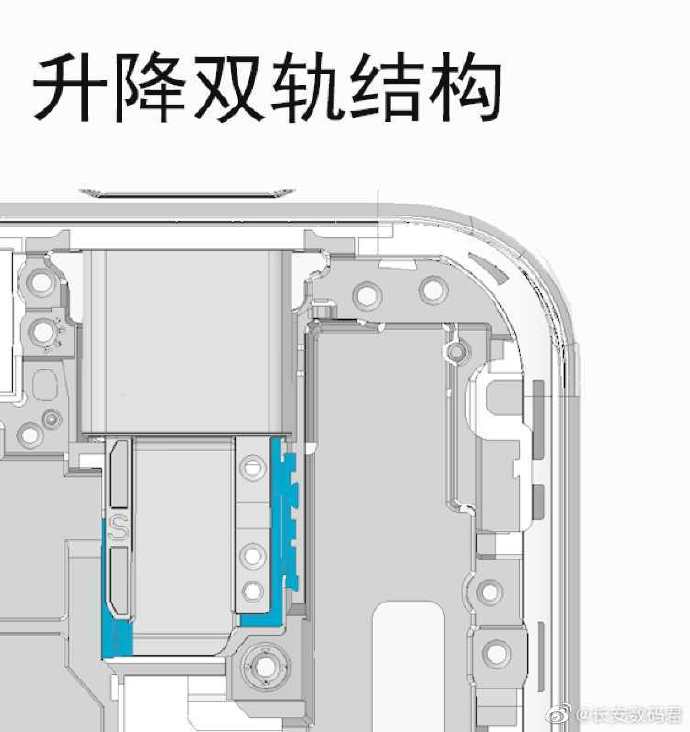
For those unaware, the Honor X10 is a mid range smartphone and will feature the Kirin 820 5G SoC. Its display has a sampling rate of 180Hz and a refresh rate of 90Hz. The device will be powered by a large 4,200mAh battery that supports up to 22.5W fast charging. For selfies, the front shooter is housed in a popup camera mechanism, which had its internal structure revealed.
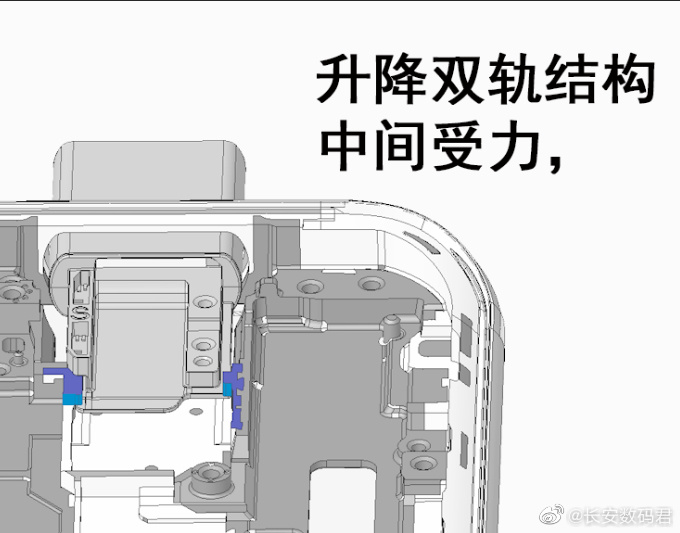
The reveal was first shared online by @长安数码君 on Weibo, a Chinese microblogging website, and arrived alongside a few images as well. The images revealed the internal layout and schematics of the Honor X10’s popup camera mechanism. These schematics showcase a dual-rail popup mechanism. In comparison, smartphones generally only have a single rail design and motor for raising or lowering the camera module.
This essentially translates to a robust design, which should offer a stronger structure to the mechanism. However, it also means that the Honor X10’s popup camera will be a bit more expensive and could potentially raise the price of the handset as well. Over the conventional builds, this system also placed lesser stress on the middle portion of the lifting track and the mechanism will have a lower chance of deviation with use over time.
Google has done a horrible job in keeping the Pixel 4a away from the public before it is launched. Although there is no official word yet from the US company, the Pixel 4a has continued to surface online and has even been reviewed. More leaks continue to enter the public domain as the case for the device has now being listed by a retailer.
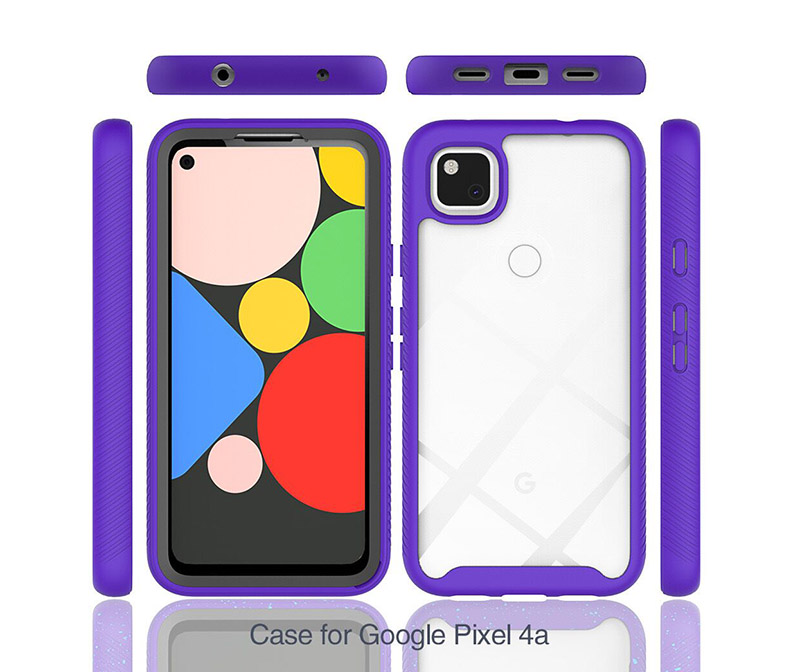
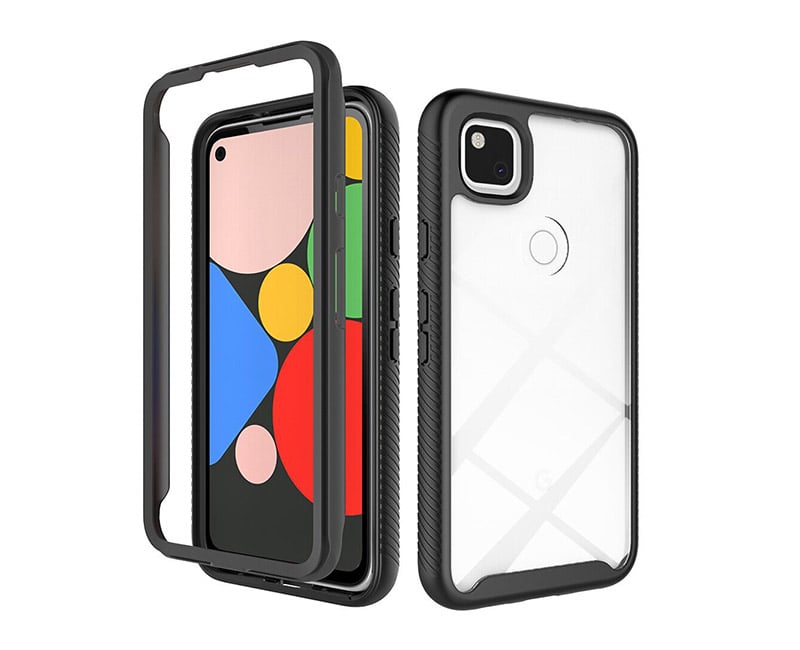
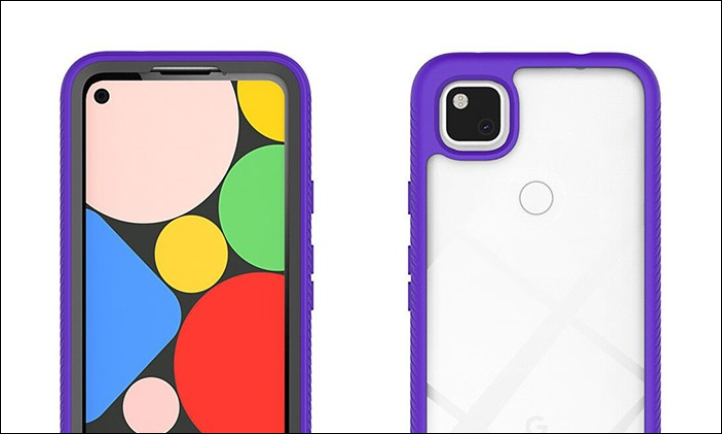
Giztop has got the cases stocked up and ready for shipping but that isn’t the interesting part. We get to see the design of the smartphone from different angles. The device will indeed utilise a front punch-hole design located at the upper left corner. The rear aspect also holds a physical fingerprint sensor. The rear camera is a single sensor housed in a square-shaped module.
Even the cases come with an interesting but minimalist design. It is shockproof and has cutouts where required, like the rear camera, fingerprint sensor and side button. They come in black and purple colours.
As a reminder, Pixel 4A is expected to feature a 5.81-inch OLED display with a punch-hole at the upper-left corner. The display has a Full HD+ resolution of 1080 x 2340 pixels. A 3,080mAh battery will keep the lights on and the phone supports 18W fast charging.
The Pixel 4a punch-hole houses an 8-megapixel camera while at the rear, it packs a single 12MP sensor and LED flash. It is powered by a Snapdragon 730 processor and is likely to arrive in 64 GB and 128 GB storage sizes. The phone also features a 3.5mm audio jack. will likely be available in Just Black and Barely Blue colour options. The Pixel 4A’s pricing will reportedly start at $399 and was expected to go on sale from May 22. However, the latest rumour hints that the first sale has been shifted to June 5.
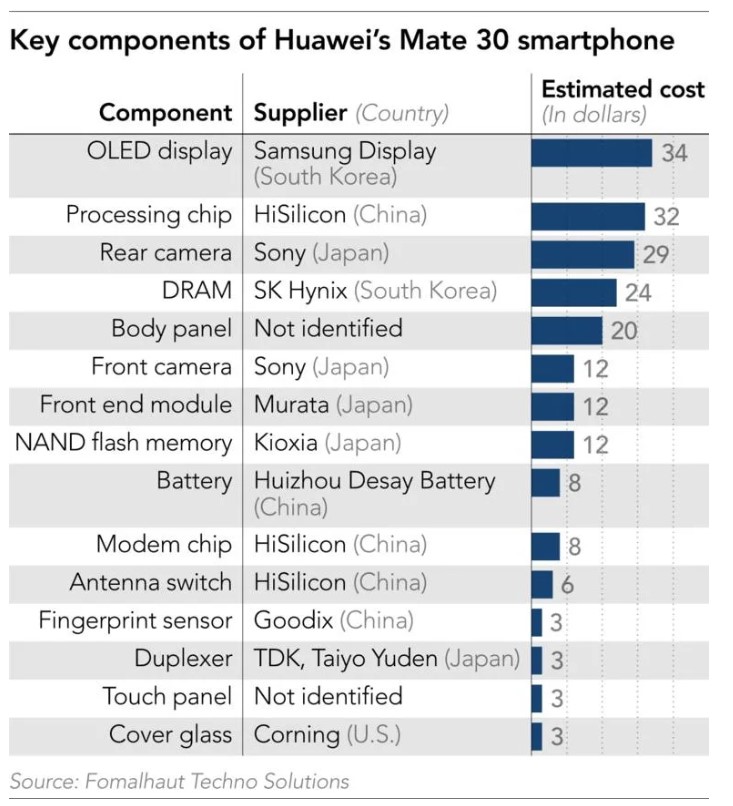
A new teardown of Huawei devices has revealed that the company had to replace the US made parts with unknown Chinese ones. This replacement was caused after the US ban, where the Chinese tech giant was barred from using products made by America based companies.
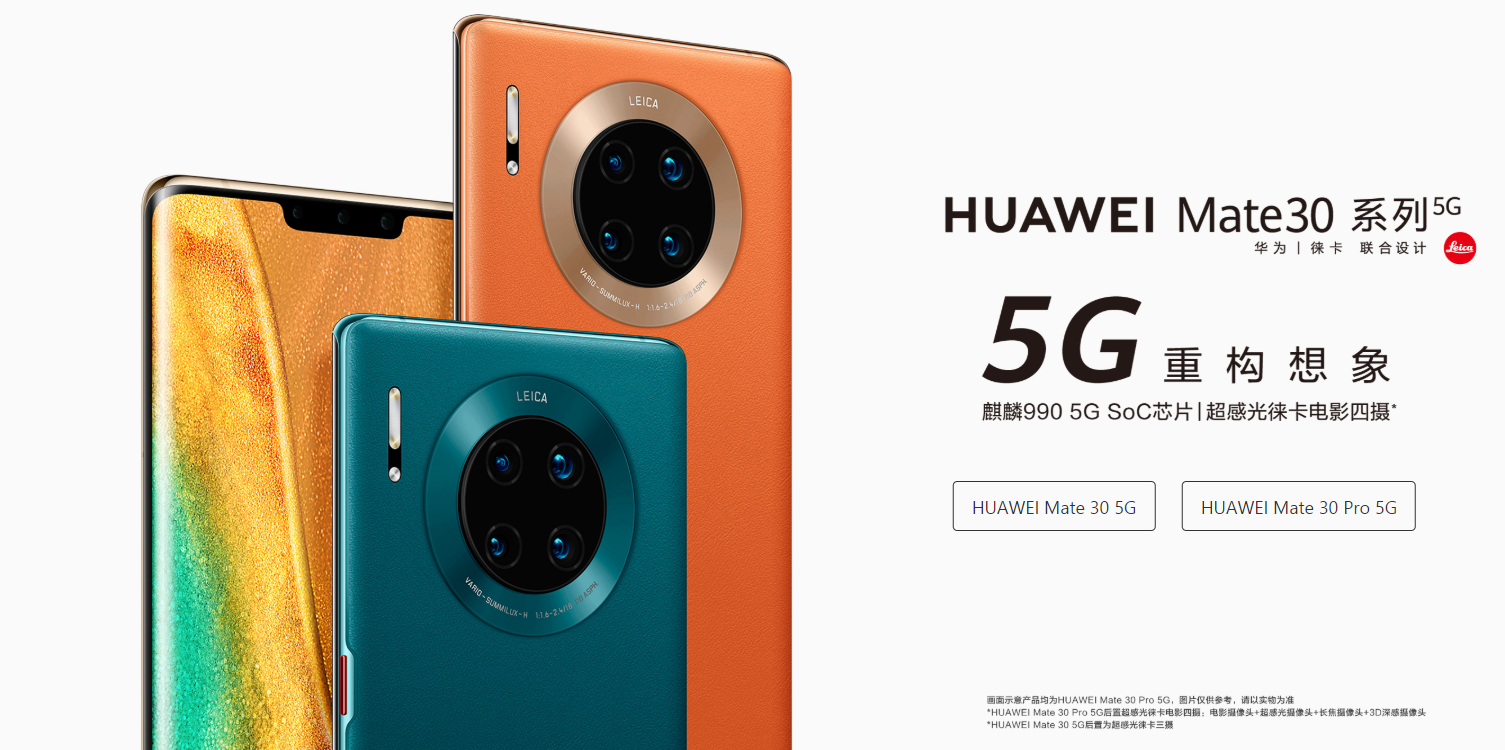
Huawei Mate 30
According to a new report, a Tokyo teardown specialist by the name of Fomalhaut Techno Solutions opened up Huawei’s flagship Mate 30. The teardown was done to analyze the internals of the smartphone, which revealed various parts from different Chinese firms. For those unaware, the Mate 30 is a part of Huawei’s flagship series and boasts top notch specs but arrives with vanilla Android without Google services due to the ban.
After the ban, only 1 percent of the internal components value of the Huawei smartphone comprised of US made parts. This number is a sharp decline from the previously reported 11 percent. Thus, it seems that Huawei had to forcibly shift suppliers for various parts. Currently, Huawei handsets ship without Google services and feature its own proprietary HMS (Huawei mobile services) and AppGallery.
At the same time, the Chinese tech giant is also racing to ready its HarmonyOS (HongMengOS in China). Despite the loss of Google support, Huawei is doing quite well in China, even during the coronavirus pandemic. However, the same cannot be said for the overseas market, where Google services are almost synonymous with the Android operating system.
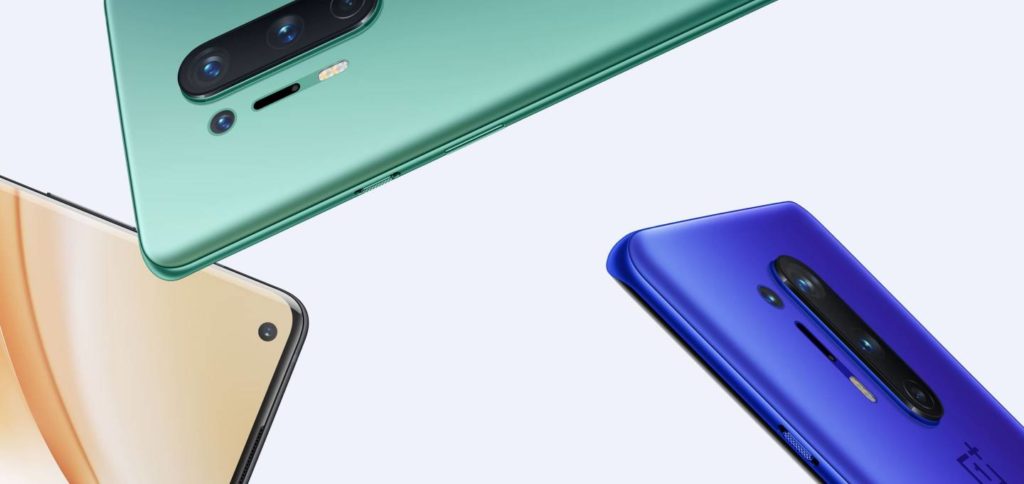
OnePlus is rolling out April 2020 security patch to the OnePlus 8 and OnePlus 8 Pro worldwide. The updates not only bump up the security level but also fix and optimize the system, Bluetooth, camera, and network. Also, unlike previous generations, these handsets are receiving different software builds based on model and region.
Ever since OnePlus introduced region-specific features in OxygenOS, the builds for the devices have become different for each other. Hence, the same update for the OenPlus 8 series varies as mentioned below.
OnePlus 8
OxygenOS 10.5.6 – Europe
OyxgenOS 10.5.7 – India, International
OnePlus 8 Pro
OxygenOS 10.5.8 – Europe, India, International
OnePlus 8 / 8 Pro OxygenOS 10.5.6 / 10.5.7 / 10.5.8 Official Changelog
System
Optimized touch and interaction experience
Improved power consumption performance of the system
Improved the video playing effect when in low brightness (8 Pro only)
Improved system stability and fixed general issues
Updated Android Security Patch to 2020.04
Bluetooth
Improved stability and compatibility of Bluetooth connection
Camera
Optimized the HDR video effect (8 Pro only)
Improved the shooting experience with Camera and improved stability
Network
Enable 5G for Telia Norway (Europe only)
Improved the performance and stability of Wi-Fi
Improved the stability of communication
Optimized network latency for online games and improved the smoothness
OnePlus officially announced the rollout of this update on OnePlus Community. But it might take time to reach every unit since it is being seeded out in batches like any other OTA update.
Amid COVID-19 pandemic, the Indian government recently announced its decision to scrutinise Chinese investments closely over fears of possible hostile takeovers. India has made prior government clearance mandatory for all forms investments, even indirect ones, from all countries sharing land border with the country.
The new rules could cause trouble for the fin-tech plans of Xiaomi and OPPO. In December last year, Xiaomi launched its Mi Credit service in India to offer online lending to its customers. On the other hand, OPPO had launched the OPPO Kash fin-tech service in March, days before the company went under lockdown due to COVID-19.
Both the companies have partnered with Indian financial companies to provide the funds for services offered on their platforms as they cannot directly lend to consumers without a shadow banking licence in India.
To improve the margins, the companies are keen to establish their own non-banking financial company (NBFC). But the license may be very difficult to come by given that the Indian government has made changes in the FDI (Foreign Direct Investment) rule adding an extra layer in the already slow and difficult approval process.
As per the report, Xiaomi and OPPO have been waiting for around a year to get an NBFC approval from the Reserve Bank of India. Even if the RBI were to grant an NBFC permit to Xiaomi and Oppo because they applied prior to rule change, they may face delay in getting approval for the fund raise.
Xiaomi is currently the leading smartphone brand in the Indian market, having around 30 percent market share. OPPO, on the other hand, has captured around 12 percent of the Indian smartphone market share. Combined, both the companies have more than 100 million users in India.
Since the profit margin for the smartphones are thin, an NBFC would give Xiaomi and Oppo access to user data and spending patterns which can be used to boost revenue for other services. But given the current situation, it’s unlikely for the Chinese companies to get NBFC license anytime soon.
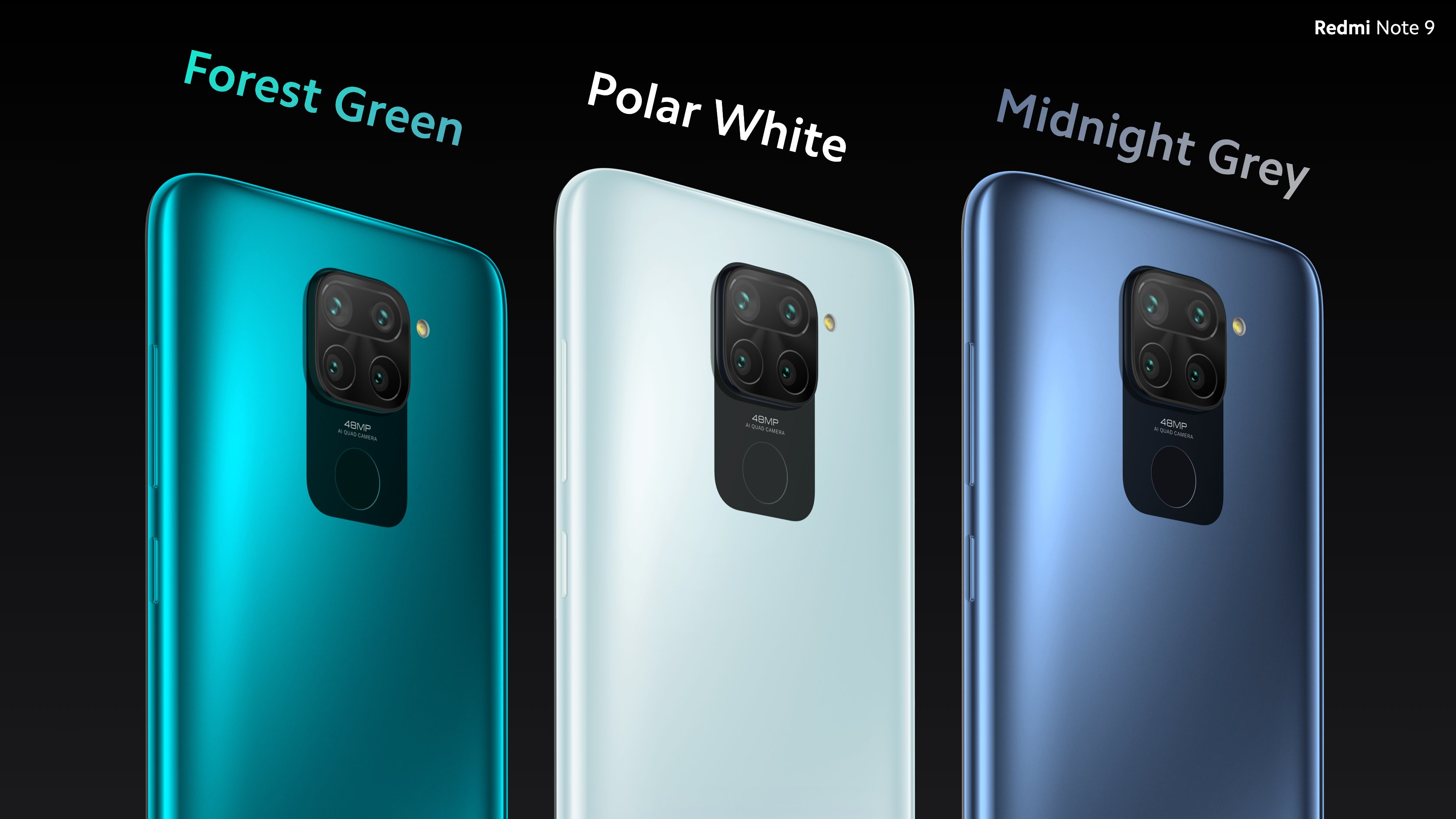
Back in April 2020, Xiaomi had launched the Redmi Note 9 through an online conference. The device is mid range handset and is the latest successor to the popular Redmi Note series. Now, an Indian variant of the device has been spotted on Wi-Fi Alliance‘s official website, which may imply an imminent launch in India. The news was first reported on by Mukul Sharma (@stufflistings) on Twitter.
For those unaware, the Redmi Note 9 features a 6.43 inch IPD LCD display with an FHD+ (1080 x 2340px) resolution. It is powered by a large 4,920mAh battery and features a quad camera setup on the rear. MediaTek’s Helio G85 is housed under the hood alongside 4GB, 6GB, and even 8GB of RAM. In terms of storage, a 32GB, 64GB, and 128GB variants are offered respectively.
The Redmi Note 9 being spotted on the Wi-Fi Alliance’s official website does imply that a launch could arrive soon, although an official date is yet to be announced. Interestingly, the device also runs Xiaomi’s latest Android 10 based custom skin, MIUI 12. So, the Redmi Note 9 could also mark the arrival of the new major software upgrade for the Indian Redmi and Xiaomi smartphone users.
Redmi Note 9
Unfortunately, apart from the listings, we have nothing to more to go on. The Chinese tech giant may announce a launch date or a teaser soon, but a launch within this month is unlikely. As the Indian government plans on relaxing the mandatory lockdown in various regions, we may hear more from smartphone OEMs and their product launch dates. So stay tuned.
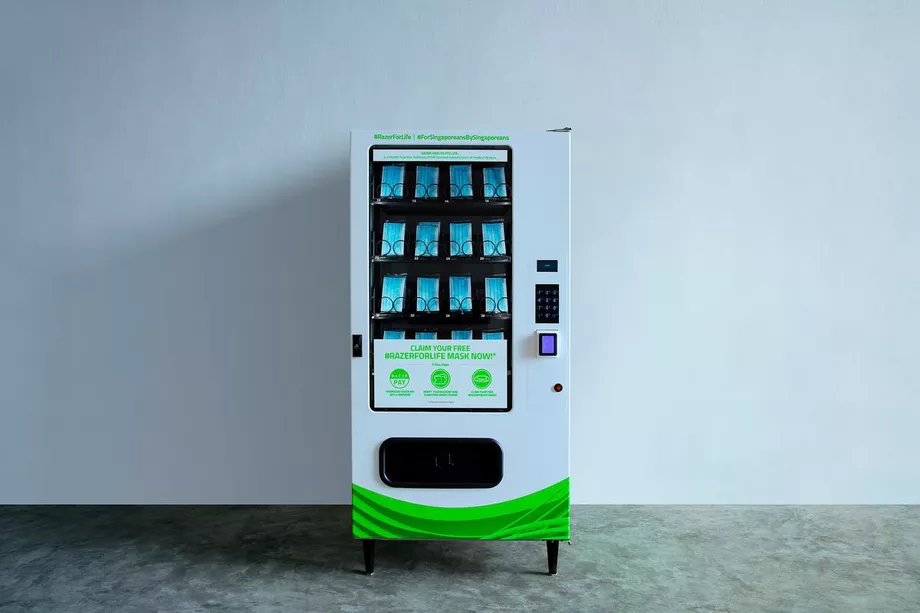
Razer, the company known for making gaming products, has revealed its plan to help people in the Singapore fight against the COVID-19. The company said that it will deploy 20 face masks vending machines across the country by the end of this month to distribute millions of masks for free.
It’s noteworthy that the company’s global operations are based in Singapore. The company’s CEO CEO Min-Liang Tan said that “Razer will continue our endeavours in supporting Singapore to be self-sufficient for face masks as a nation.”
To pick up a mask from the vending machine, the company says that users will have to download its digital wallet app and scan a QR code. Razer is already making masks and is now planning to double that production.
The company’s plan is to give all Singaporean adult residents one free surgical mask, which adds up to about 5 million in total. Once the program kicks off, more locations may be added as per the requirement.
The response from Razer comes as the country is experiencing an alarming second wave of coronavirus infections. It now has more than 23,822 confirmed cases, up from just a few hundred in March.
However, the company is also facing criticism on social media for the requirement of downloading Razer app to get face mask. People are suggesting that the company is trying to pick up more users for its fintech platform Razer Pay.
Responding to the criticism, Min-Liang Tan said that having users scan QR from the app “is the only way we’ll be able to ensure there’s no free for all on the masks … We’re funding this completely ourselves and would like to ensure there’s no fraud.”
Razer said on April 24th that it’s already shipped more than 1 million of those masks all over the world. With plan of offering 5 million masks for free in Singapore, the company is also partnering with plastic manufacturer Sunningdale Tech to up its production to 10 million masks a month.
Samsung will be unveiling the Galaxy Note 20 series in the second half of 2020. The long-rumored Galaxy Fold 2 is also expected to debut alongside it. There have been multiple leaks about these two devices over the past few weeks. A new one now suggests the Galaxy Note 20 series to come with 16GB RAM as standard.
As of now, there’s only one Samsung smartphone with 16GB RAM in the market and that is the beefed-up 512GB variant of Galaxy S20 Ultra. But the upcoming Galaxy Note 20 series, on the other hand, could feature 16GB RAM on all models.
This piece of information comes from a recent Q&A session by DSCC CEO Ross Young. The Galaxy Note 20 series is expected to launch in both 4G as well as 5G variants like the Galaxy S20 series. Hence, there is still a confusion if both these versions will have 16GB RAM or only the 5G variant will feature it.
Samsung has already begun the mass production of 16GB LPDDR5 RAM in late February. So it is certain it will be featured in the forthcoming Galaxy Note 20 series and maybe even other high-end devices from different OEMs in the future.
In addition to a huge amount of RAM, the Galaxy Note20 series is expected to feature the following specifications.
Industry giants like Samsung, Huawei, and even the chipmaker Qualcomm are backing the MPEG-5 EVC over the HEVC (High Efficiency Video Codec) for high resolution videos. This codec offers reduced file size and better quality, both of which are crucial to 4K and 8K UHD video capture in smartphones.
Some smartphones already support 8K video recording
For those unaware, HEVC isn’t a relatively new video codec and has been around for a while. But despite its various positive aspects, the format had never been more widely adopted. The reason for this is the licensing situation around it. Attaining the licensing was apparently so complex that only 12 percent of the internet streaming services adopted HEVC.
But now, a press released from Qualcomm, Samsung, and Huawei may push forward a better alternative to the HEVC video codec. In the press release, the trio stated that they will offer “fair, reasonable, and nondiscriminatory terms for their respective essential patent claims covering this standard.” In other words, the benefits of MPEG-5 EVC video standard could soon reach customers across various different platforms and even smartphones.
Furthermore, a simplified licensing method could also imply wider adoption of MPEG-5 EVC over the existing HEVC. Notably, Google also offers its own royalty free AV1 codec, which is another alternative that is used in popular sites like YouTube, Netflix, and Facebook.
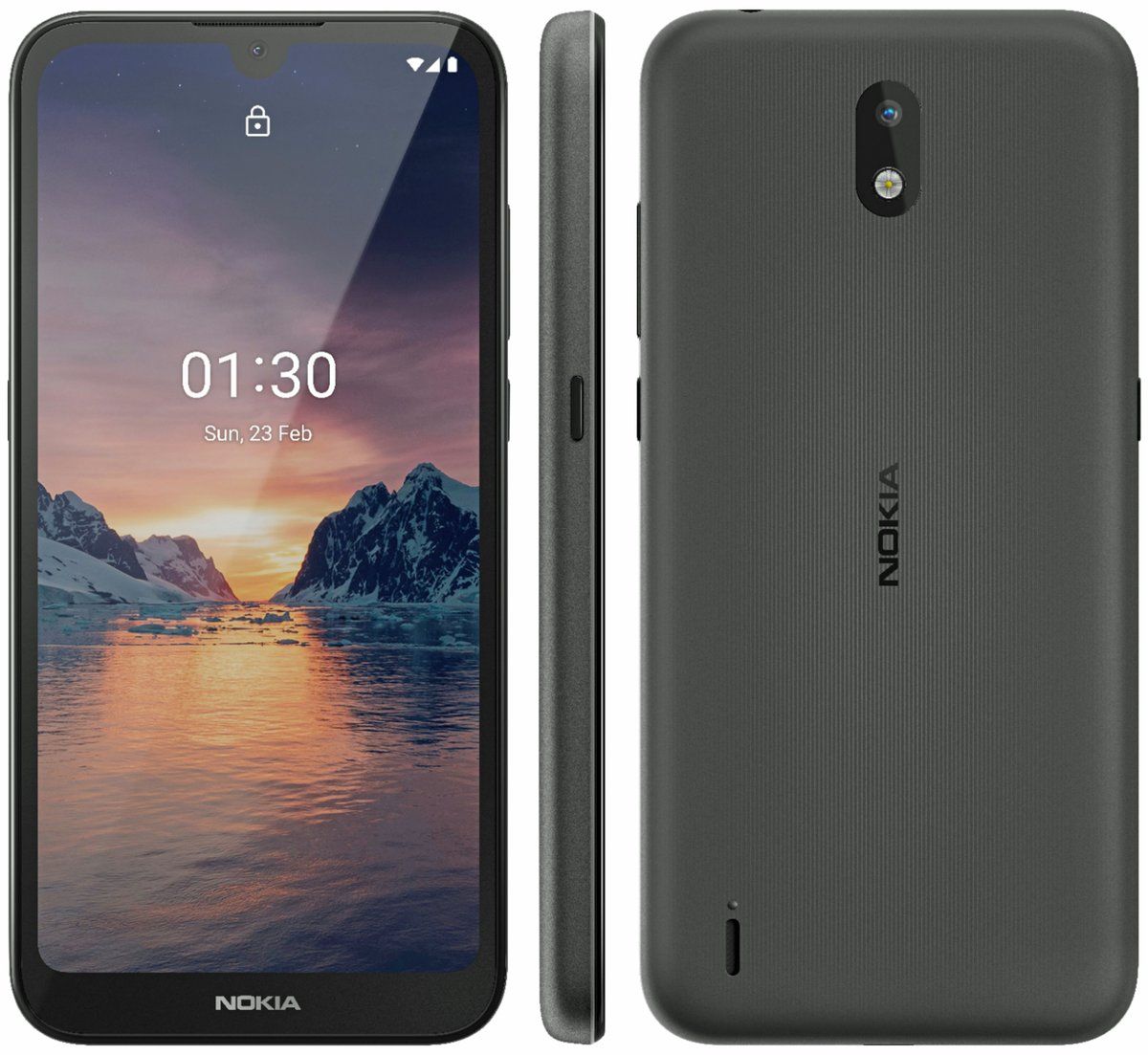
A couple of months ago, Nokia 1.3 smartphone was announced, making it the first Android Go device to come with Camera Go app. Today, HMD Global has launched the Nokia 1.3 in the United States.
The smartphone is now available for pre-order through Amazon and B&H and is priced at $99. It comes in two colors — Cyan and Charcoal and the company says that it start shipping the device from next week.
The Nokia 1.3 comes with a 3D nano-textured polycarbonate back while the front is covered in glass. The phone has a waterdrop notch in the display with pretty thick bezels which we can’t complaint about this price point.
Coming to the specifications, the smartphone features a 5.71-inch HD+ display offering 400 nits brightness. Under the hood, the device is powered by the Qualcomm Snapdragon 215 quad-core chipset, coupled with 1GB of RAM.
It comes packed with 16GB of internal storage and there’s also microSD card slot for expanding the storage capacity up to 400GB. In the camera department, there’s an 8-megapixel sensor on the back.
On the front side, the device has a 5-megapixel snapper for taking selfies. The smartphone comes with a new camera app called Camera Go which Google says is built to be fast, take beautiful photos and brings features like Portrait Mode to entry-level smartphones.
The device also comes with a dedicated Google Assistant button, a 3.5mm audio jack, FM radio, Bluetooth 4.2, LTE, and 2.4GHz Wi-Fi. It runs Android 10 (Go Edition) and will be updated to Android 11 (Go Edition). The phone is powered by a 3,000mAh battery which is claimed to offer more than a day of usage on a single charge.
During this period of crisis, the world is gripped by the Coronavirus pandemic, especially the US that has the highest number of confirmed cases. Now, the US President, Donald Trump, has threatened to cut trade ties with China due to the spread of COVID-19, which Chinese media has mocked by calling it “lunacy.”
While the US struggles with the viral outbreak, the President of the nation has expressed his dismay regarding the Chinese government’s lack of action during the virus’s early stages. Trump had mentioned on various occasions that he shared a good relationship with Xi Jinping, China’s President. However, he further added that he no longer wishes to talk with the latter anymore.
According to Trump, “they should have never let this happen. So I make a great trade deal and now I say this doesn’t feel the same to me. The ink was barely dry and the plague came over. And it doesn’t feel the same to me.” With this, the President of the US said that there are various measures they could take against China, with the most prominent being cutting relationship completely.
Donald Trump believes that the US can save about $500 billion by halting imports from China. This is something he called “lost money,” and stated that this would only seek to benefit the US. In response to this, a state backed Chinese media reporting agency, Global Times, mocked the US leader. Stating, “Such lunacy is a clear byproduct, first and foremost, of the proverbial anxiety that the US has suffered from since China began its global ascension.”
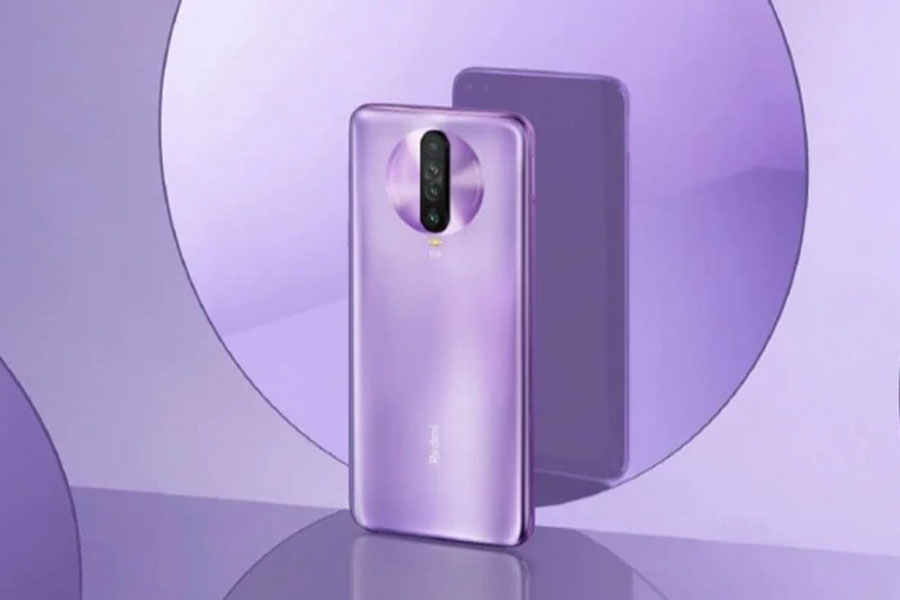
Xiaomi-backed Redmi brand recently launched the Redmi K30 5G Extreme Edition, making it the first smartphone to be powered by the Qualcomm Snapdragon 768G processor. Now, the company is gearing up to launch a new device.
Lu Weibing, General Manager of Redmi brand and President of Xiaomi China has teased a new Redmi smartphone which is said to offer “super performance”. However, he has not revealed anything related to the new smartphone, not even its name. After teasing this new phone, he also reshared MediaTek’s post about the upcoming chipset launch.
Redmi K30 5G
While there’s no official word about this upcoming smartphone from Redmi, it seems to be the same that has recently been leaked online carrying model number M2004J7AC. The phone’s name still remains unknown but some of the key specs have been leaked.
The smartphone has a 6.57-inch OLED display that offers Full HD+ screen resolution of 1080 x 2400 pixels, a 20:9 aspect ratio, and a punch-hole cutout in the top-center position for housing the front-facing camera.
It is also said to have in-display fingerprint sensor. Interesting, the device is powered by the MediaTek Dimensity 820, which is set to go official on 18th May. This could be the first smartphone to be powered by the upcoming processor.
Running on Android 10 operating system with the company’s own MIUI, the device is expected to come in multiple memory variants such as 6GB RAM + 64GB storage, 6GB RAM + 128GB storage, 8GB RAM + 128GB storage and 8GB RAM + 256GB storage.
The smartphone is reportedly powered by a 4,420mAh battery and supports 22.5W fast charging technology. We expect this smartphone to soon get launched in its home market China. However, it remains to be seen if this the same phone that Lu Weibing teased.
We use cookies on our website to give you the most relevant experience by remembering your preferences and repeat visits. By clicking “Accept”, you consent to the use of ALL the cookies.
This website uses cookies to improve your experience while you navigate through the website. Out of these, the cookies that are categorized as necessary are stored on your browser as they are essential for the working of basic functionalities of the website. We also use third-party cookies that help us analyze and understand how you use this website. These cookies will be stored in your browser only with your consent. You also have the option to opt-out of these cookies. But opting out of some of these cookies may affect your browsing experience.
Necessary cookies are absolutely essential for the website to function properly. This category only includes cookies that ensures basic functionalities and security features of the website. These cookies do not store any personal information.
Any cookies that may not be particularly necessary for the website to function and is used specifically to collect user personal data via analytics, ads, other embedded contents are termed as non-necessary cookies. It is mandatory to procure user consent prior to running these cookies on your website.