Google Stadia is the search giant’s cloud gaming service that debuted in November of 2019. Although the company is adding more games and features, the service’s availability and supported devices are still limited. Thankfully, the list is growing as the recently launched OnePlus 8 and OnePlus 8 Pro are now compatible with the service according to the latest blog post by the Stadia team.
Google Stadia has been out for the public for about five months now. But it is still only compatible with a handful of Android smartphones. However, users can access it on any TV using Chromecast Ultra and any computer or laptop via Google Chrome browser. Additionally, it also supports almost all the popular gamepads available in the market.
But it is restricted to certain regions just like few Android smartphones. When Stadia launched last year, initially it was only compatible with Google’s Pixel lineup of smartphones (excluding the OG Pixel and Pixel XL). Later on, the service became compatible with handsets from OEMs like Samsung, Asus, and Razer. Now, OnePlus becomes the new member of this elite squad with its OnePlus 8 and OnePlus 8 Pro.
Anyway, here’s the complete list of Android smartphones compatible with Google Stadia as of May 1, 2020.
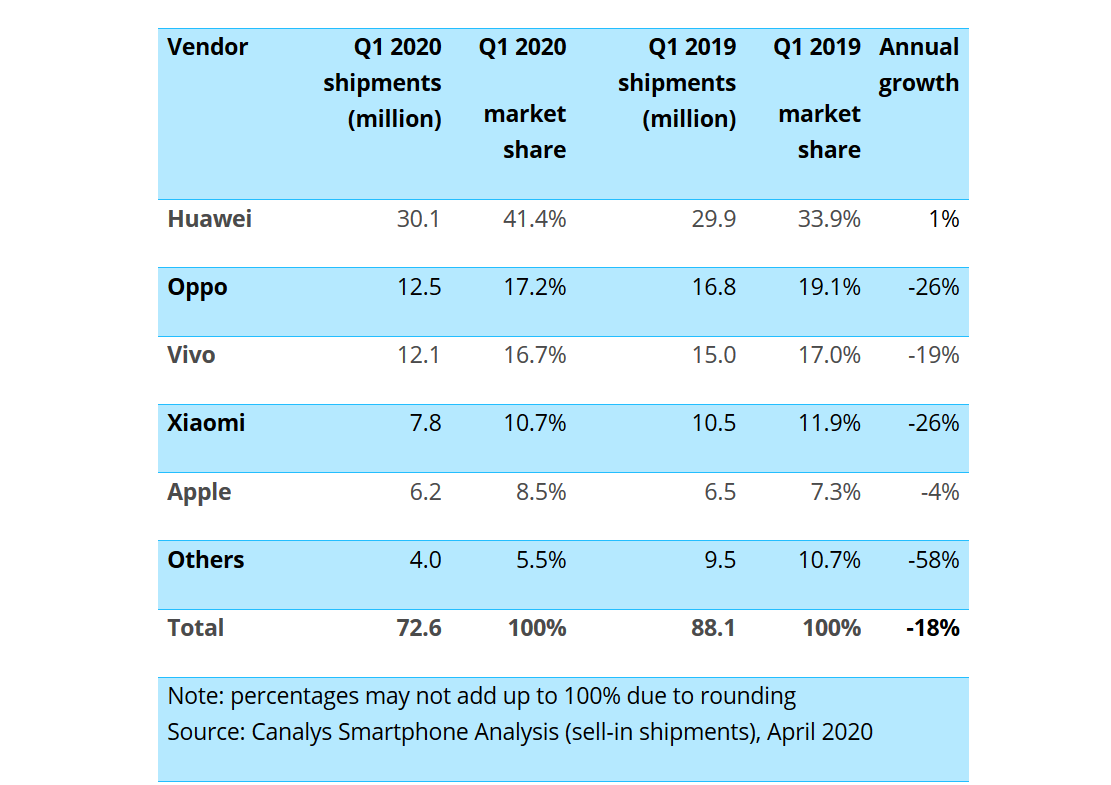
According to a new report from the known analytical agency Canalys, China’s smartphone market suffered a sizeable blow in the first quarter of 2020. The primary reason for this is undoubtedly the Coronavirus pandemic that had devastated the country during its initial outbreak.
In the Canalys report, the Chinese smartphone market only saw 73 million units being shipped in Q1 of 2020. This is a notable decline of 18 percent during the same period back in 2019. While the smartphone market, in general, was seeing stagnation, the viral outbreak seemed to have had a severe negative impact on the industry globally. However, the top five OEMs all reported on seeing better than expected results during this time.
An important factor that prevented the overall smartphone market in China from declining was also linked to government actions. The electronic product and its vendors were listed by the government as essential items, which basically allowed them to continue production and regain its footings. Unfortunately, the same can not be said for other major markets that are seeing complete shutdown, like India.
According to Canalys analyst, Mo Jia, “The vendors with the greatest financial resources, supply chain control and negotiating power with the channel are recovering fastest, while smaller vendors have been brought down. The coronavirus crisis has pushed the market toward the top five, which now account for nearly 95% of the total market.” Interestingly, Huawei with its 5G offerings had best leveraged the market to its favor and managed to pull ahead of its competitors.
Manu Kumar Jain, the Managing Director of Xiaomi India, has again teased a smartphone with a 108 megapixel camera. The senior official shared the information through his official Twitter handle and may be suggestive of an imminent launch of a new handset.
At the moment, the Indian government has employed a strict lockdown policy across the country. Many companies, especially ones related to production have since been closed. So, it isn’t unlikely to believe that once the lockdown ends, Xiaomi would take the initiative to launch a new smartphone.
Earlier this year, the Chinese tech giant launched the Mi 10 series, which featured Samsung’s 108 megapixel ISOCELL Bright HMX sensor. The sensor had an f/1.69 aperture alongside four axis OIS (optical image stabilization). Hence, it is probable that the company might launch an entirely new smartphone with the Samsung sensor or may consider bringing back its flagship lineup to the Indian market.
Xiaomi Mi 10 Pro
Unfortunately, finer details are currently unknown. However, it seems that Xiaomi is working on the pricing of the smartphone with the 108 megapixel camera. According to a previous tweet by Manu, the company is working on setting a ‘different pricing’ for upcoming smartphones due to various external aspects like depreciating Rupee value, higher GST, direct import, and more. So stay tuned, as more information is expected to arrive soon.
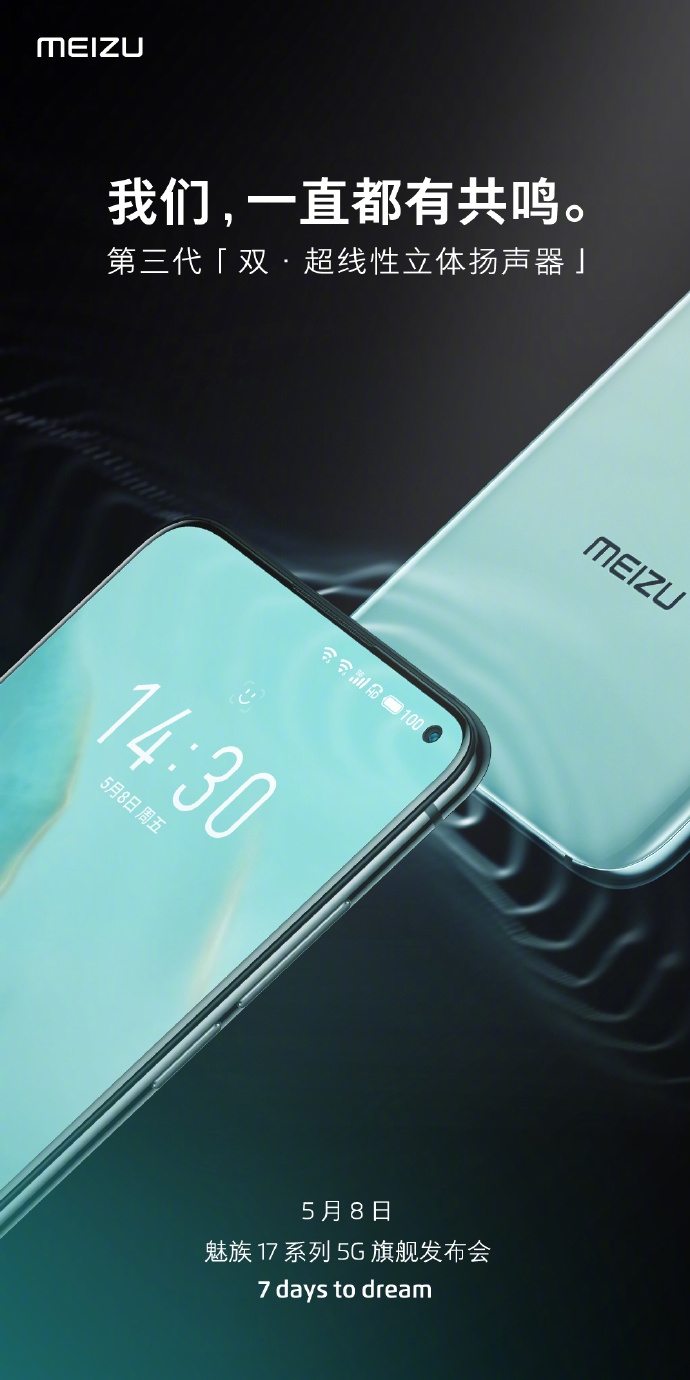
Ahead of launching its next-generation Meizu 17 series smartphones in China on 8th May, the company has been revealing some key features of the upcoming devices through teaser posters.
In the latest poster, the company has confirmed that the Meizu 17 smartphone will feature third-generation dual ultra-linear stereo speakers. Compared to the traditional speakers, these ultra-dynamic speakers greatly improves mid-low frequency and can provide more thumping bass for better sound quality.
Recently, the company had revealed that the Meizu 17 Pro smartphone will come equipped with a 3D depth sensor. While the company has not revealed information about the 3D depth sensor, it is believed to be a LiDAR scanner used by Apple in iPad Pro.
Prior to that, the company had released official renders of the Meizu 17 Pro, confirming that the device will come with a ceramic body. The phone will also come with Super wireless mCharge technology and is expected to support 40W fast charging.
The Chinese smartphone manufacturer has also confirmed that the Meizu 17 will feature 90Hz refresh rate display and will come powered by the flagship Qualcomm Snapdragon 865 octa-core processor with support for 5G connectivity. The company has also confirmed UFS 3.1 internal storage and thus, we expect the phone to have LPDRR5 RAM.
The smartphone features a quad-camera setup where the primary sensor will be a 64-megapixel Sony IMX686 sensor. There are reports which claims that the pricing for the series could start at 3,999 yuan which is approximately $564.
Meizu will be launching three smartphones in this lineup — Meizu 17, Meizu 17 Pro, and Meizu 17T. All three smartphones are already up for pre-orders in the Chinese market through the company’s own online store, JD.com, Tmall and Suning. To know for sure what the devices pack, as well as their pricing and availability details, we’ll have to wait for a few more days for the official launch event on 8th May.
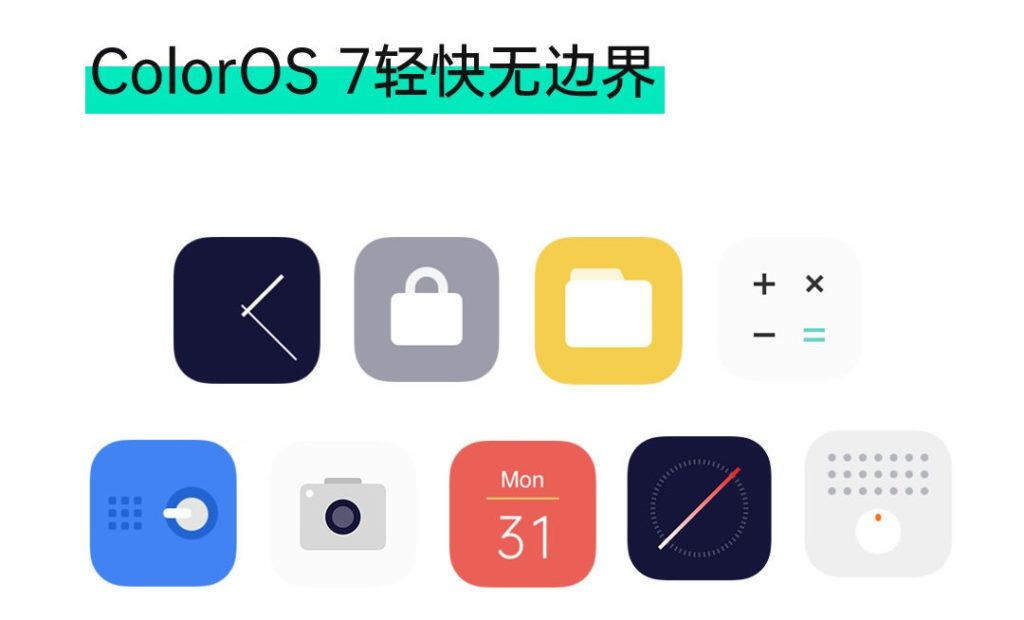
In April, Oppo updated 17 of its smartphones to stable ColorOS 7 build in China. The list included all the premium and mid-premium devices. Now, the company has shared an update timeline for its mid-range and budget smartphones. These handsets will be receiving the OTA by the end of May.
The below-listed models are the third batch of handsets to receive stable ColorOS 7 stable update in China.
Device
Update Date
Oppo A11
May 15
Oppo A11x
Oppo K5
May 20
Oppo R15
May 28
Oppo A9
Oppo A9x
Oppo K3
May 29
Oppo R15 Dream Mirror Edition
May 30
For the unware, Oppo already has a new version of its mobile software called ColorOS 7.1. This incremental version is only available on the company’s latest flagship smartphones – Find X2 and Find X2 Pro as well as the newly launched Oppo Ace 2. The brand is yet to reveal which devices will get this update
ColorOS 7 was announced way back in November 2019 but only now the company is rolling out stable updates to its devices. The new software update, apart from bringing new features, also bumps up the underlying Android to version 10.
The Chinese smartphone maker has also started seeding out stable updates globally. To learn more about ColorOS 7, do check out our launch coverage.
According to the data released by Counterpoint Research, smartphone sales in the Chinese market registered a decline of 22 percent Year-on-Year and 24 percent Quarter-on-Quarter for the Q1 2020.
The report attributes such massive fall in the market to the COVID-19 pandemic. It reveals that the top five leading brands in the market accounted for 93 percent of the market share, up by 6 percent compared to the last year.
As per the report, the month of February along registered a decline of 35 percent YoY in smartphone shipments in China. However, it adds that the online sales grew to 50 percent, up around 20 percent compared to last year.
Huawei, the Chinese giant, continues to lead the market with a market share of 40 percent and remains the only company on the list that achieved positive Year-on-Year growth despite the coronavirus outbreak.
While Huawei registered 6 percent growth, the report shows that Apple show a minor decline of 1 percent while other brands on the list — Vivo, OPPO, and Xiaomi registered decline of 27 percent, 30 percent and 35 percent respectively.
The Counterpoint report also adds that within just six months after commercialisation of 5G in China, the penetration of 5G smartphone sales jumped to over 15 percent in Q1 2020 while the sale of 5G smartphones grew by nearly 120 percent QoQ.
Huawei also lead the 5G wave in the Q1 2020 in China, followed by Vivo, OPPO, and Xiaomi. The growth of 5G devices in China is also due to the fact that many manufacturers launched sub-$400 5G smartphones in the market. Further, it adds that by the end of this year, the 5G smartphone shipments could account for 40 percent of the market in China.
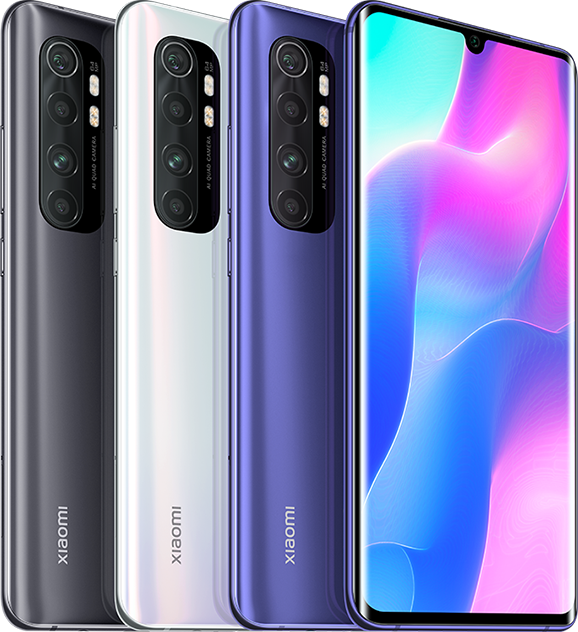
Yesterday, Xiaomi announced the Xiaomi Mi Note 10 Lite smartphone for the European markets. It is unclear which other markets outside of China will be receiving the handset. The Chinese manufacturer recently unleashed the Xiaomi Mi 10 Youth Edition 5G phone with 50x periscope zoom lens in China. As far MI Note 10 Lite is concerned, China won’t be receiving it.
In the below shown screengrab, Zang Zhiyuan who is the General Manager of Xiaomi’s Marketing Department in China can be seen talking to Mi fans. He confirmed that the company will not be launching the Mi Note 10 Lite in the home market.
In March, a list of Xiaomi phones that are lined up for Q3 launch had surfaced online. It revealed that the company is planning to Mi CC10 and Mi CC10 Pro. When Zhiyuan was asked whether the Mi Note 10 Lite will be arriving in China as Mi CC10, he refuted the claim.
This is in line with Xiaomi CEO Lei Jun’s statement from November last year. He had said that all Xiaomi phones for China above 2,000 Yuan (~$283) pricing will come with support for 5G connectivity. The MI Note 10 Lite that debuted in Europe yesterday is a 4G phone that is priced at 349 euros (~$382).
The Xiaomi Mi Note 10 Lite has a full HD+ 6.47-inch AMOLED display with waterdrop notch. It is powered by Snapdragon 730G and its 5,260mAh battery comes with 30W rapid charging support. The MIUI 11 based Android 10 OS comes preloaded on the Mi Note 10 Lite.
Xiaomi Mi Note 10 Lite
There is a 16-megapixel front camera on the Mi Note 10 Lite. The back panel has of the device has a quad camera setup. It has a Sony IMX686 64-megapixel primary lens, an 8-megapixel ultrawide lens, a 5-megapixel depth sensor and a 2-megapixel macro lens.
The Mi Note 10 Lite comes in two models such as 6 GB RAM + 64 GB storage and 8 GB RAM + 128 GB storage. They are priced at 349 euros and 399 euros (~$437), respectively. Midnight Black, Glacier White and Nebula Purple are the three color variants of the smartphone.
At the global Redmi 9 series launch, Xiaomi also unveiled an IoT product for Europe called Mi Smart Standing Fan 1C alongside Mi Note 10 Lite. As the name suggests, it is a fan with smart connectivity features. For the unware, it was leaked to launch in the region a few days back along with a number of other ecosystem products.
The design of this product goes in line with other smart home products from the company. It is simple and elegant with a classic white paint job. The fan features seven custom build-blades to provide strong yet smooth airflow to the users.
It comes with three different airflow speed settings and two modes namely ‘Sleep’ and ‘Standard’. Users can even adjust the height like most conventional fans available in the market.
Another interesting feature of the new Xiaomi fan is its 37.2dB(A) low noise level apart from smart features. It can be paired with Mi Home app to control it remotely. On top of that, it is also compatible with both Google Assistant and Amazon Alexa. That means users can also control it with their voice.
Xiaomi is yet to reveal the price and availability of Mi Smart Standing Fan 1C for different European regions. However, it has suggested the average retail price to be €39.99.
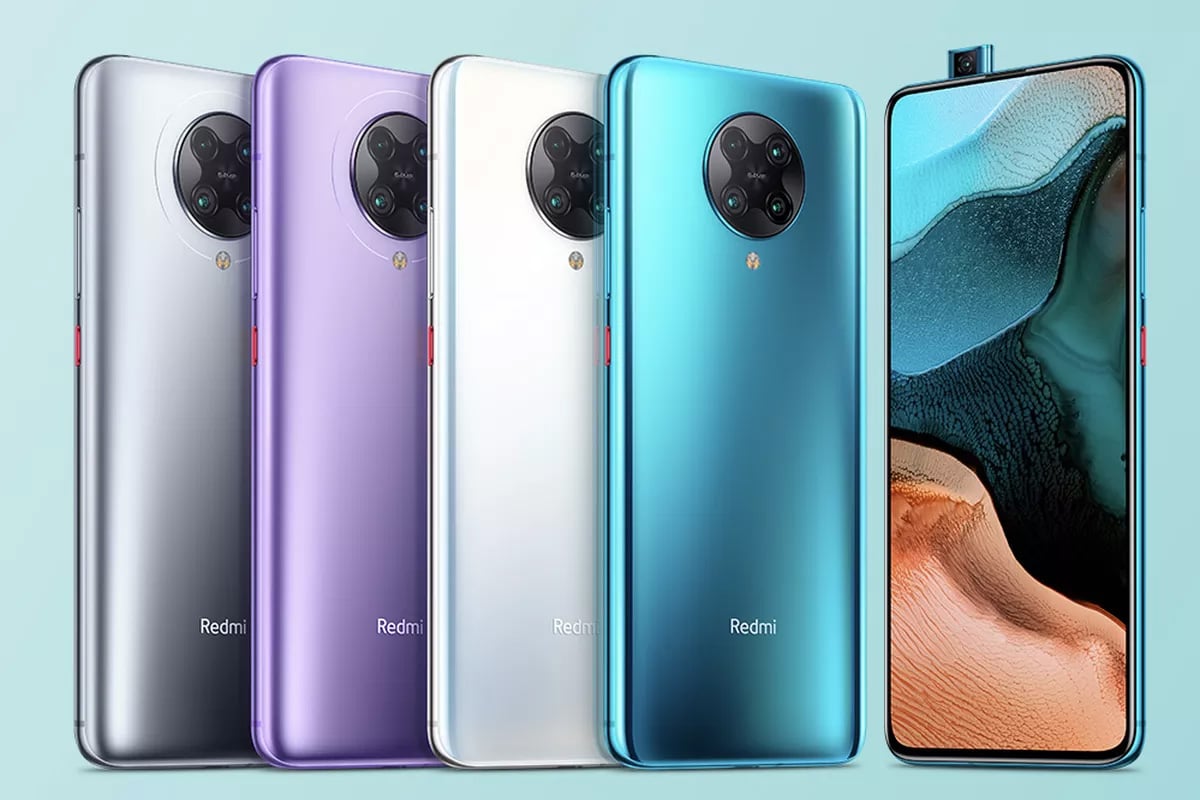
Xiaomi’s Redmi K30 smartphone was recently launched in the Indian market as POCO X2. Thus, it was being rumored that the Redmi K30 Pro could get launched as the POCO F2 smartphone. However, the brand’s general manager denied the reports.
Soon after C Manmohan, General Manager of the POCO brand said that the POCO F2 won’t be the rebranded version of Redmi K30 Pro, it was reported that the Redmi K30 Pro will get launched as the POCO F2 Pro. Ahed of the launch, the upcoming smartphone’s pricing details have leaked online.
Xiaomi Redmi K30 Pro
It seems that the POCO F2 Pro will not be limited to the Indian market and will also get launched in the European market as the phone’s pricing has been leaked online. As per the report, the smartphone is expected to start at €649 in Portugal.
While the base model with 6GB RAM and 128GB storage is reportedly priced at €649, the top-end model with 8GB RAM and 256GB storage is said to be priced at €749. However, the report adds that the pricing in other European regions will be lower than the pricing in Portugal because of the ‘private copy fee’ in the country.
Since the POCO F2 Pro will be a rebranded Redmi K30 Pro, the device will feature a pop-up front-facing camera for a notch-less display design and a circular quad-camera module on the back. The phone will be powered by the Qualcomm Snapdragon 865 octa-core chipset.
It will feature a 6.67-inch Full HD+ display with 2400 x 1080 pixels screen resolution, a 20MP front-facing snapper, a quad-camera setup on the back that consists of a 64MP primary sensor, a 13MP super wide-angle lens, a 5MP telephoto lens and a 2MP depth sensor. The phone will be powered by a 4,700mAh battery with 33W fast charging.
Now, it remains to be the seen what the company has planned for the POCO F2, which will be act as the successor to the POCO F1. While not much information is available about the upcoming POCO F2 series, we expect the company to launch these devices as early as next month. It will also be interesting to see how Xiaomi positions the POCO brand and Redmi K-series given that both fall within the same price segment.
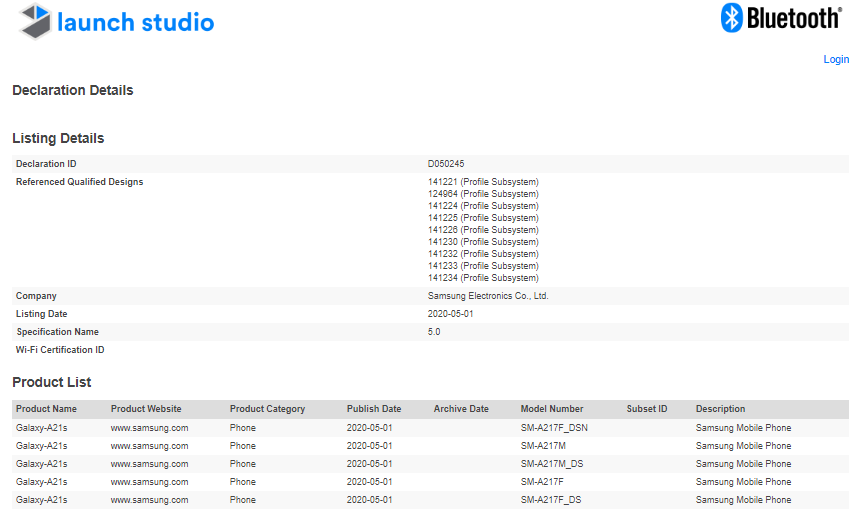
Recent leaks have revealed that Samsung is working on the Galaxy A21s smartphone. The moniker suggests that it is an updated version of the Galaxy A21 phone that was unveiled last month. The handset has today appeared at the database of Bluetooth SIG certification to confirm its moniker and its variants.
As it can be seen below, the model number variants such as SM-A217F, SM-A217M, SM-A217F_DSN, SM-A217F_DS, SM-A217M_DS and SM-A217N are all associated with Galaxy A21s. The Bluetooth SIG certification of Galaxy A21s that the device supports Bluetooth 5.0. The model numbers belong to the country variants of the Galaxy A21s.
Indian tipster Sudhanshu Ambhore had recently leaked the alleged specifications of the Galaxy A21s smartphone. The leak revealed that the Galaxy A21s could be coming with a 6.55-inch IPS LCD panel that produces HD+ resolution of 720 x 1600 pixels resolution. Probably, it may feature the same punch-hole screen that is available on the Galaxy A21 phone.
The leak did not reveal the name of the processor that fuels the Galaxy A21s. Recently, the Galaxy A21s variant with model number SM-A217F was spotted on Geekbench benchmarking platform with never before heard Exynos 850 chipset. The smartphone is expected to come with 3 GB of RAM and 64 GB of native storage. It may come with a 5,000mAh battery.
For photography, it may house a 13-megapixel front camera and a 48-megapixel + 8-megapixel + 2-megapixel triple camera setup. Other expected features of the phone include Android 10 OS, microSD slot, microUSB, NFC, dual-SIM, fingerprint reader and 3.5mm audio jack.
Xiaomi is among the top-selling smartphone companies in the world and is the leading brand in the world’s second largest smartphone market — India. The rise of Xiaomi smartphones is attributed to cheaper pricing with top-of-the-line specifications. However, it seems that the users have to pay a hefty price when it comes to privacy.
According to the latest report published by Forbes, Xiaomi smartphones are found that the company is recording data of what the user is doing with the devices and the data are then sent to remove servers hosted by Alibaba, which are ostensibly rented by Xiaomi.
It found that Xiaomi’s default browser records all the websites visited, including search queries even from privacy-focused search engines, and every item viewed on its news feed. It reports that the tracking happens even when the user is in the private mode.
Further, the report adds that the Xiaomi device records what folders users open and to which screens they swipes, including the status bar and the settings page. All of the data are then being packaged and sent to remote servers in Singapore and Russia, while the web domains they hosted were registered in Beijing.
The report from Forbes reveal that the company wasn’t just collected web browser data but also data about the phone, including unique numbers for identifying the specific device and Android version.
However, Xiaomi denies that there’s a problem with privacy. The company claims that data is encrypted when transferred to protect user privacy. But it just takes a few seconds to decode the base64 encryption and to change the garbled data into readable information.
In its response, the Chinese smartphone maker says that “privacy and security is of top concern” for them and adds that it “strictly follows and is fully compliant with local laws and regulations on user data privacy matters.” The spokesperson for the company also confirms that it was collecting browsing data, claiming the information was anonymised so wasn’t tied to any identity.
Xiaomi’s spokesperson also denied that browsing data was being recorded under incognito mode. However, two security researcher found in their independent tests that their web habits were sent off to remote servers regardless of what mode the browser was set to. When Forbes sent a video proof of the claim to Xiaomi, the company continued denying it.
Upon further digging, Forbes found that to better understand its users’ behaviour, Xiaomi is using services of a behavioural analytics company called Sensors Analytics which has tools that help its clients in “exploring the hidden stories behind the indicators in exploring the key behaviors of different businesses.” Xiaomi’s spokesperson also confirmed the company’s relationship with Sensors Analytics.
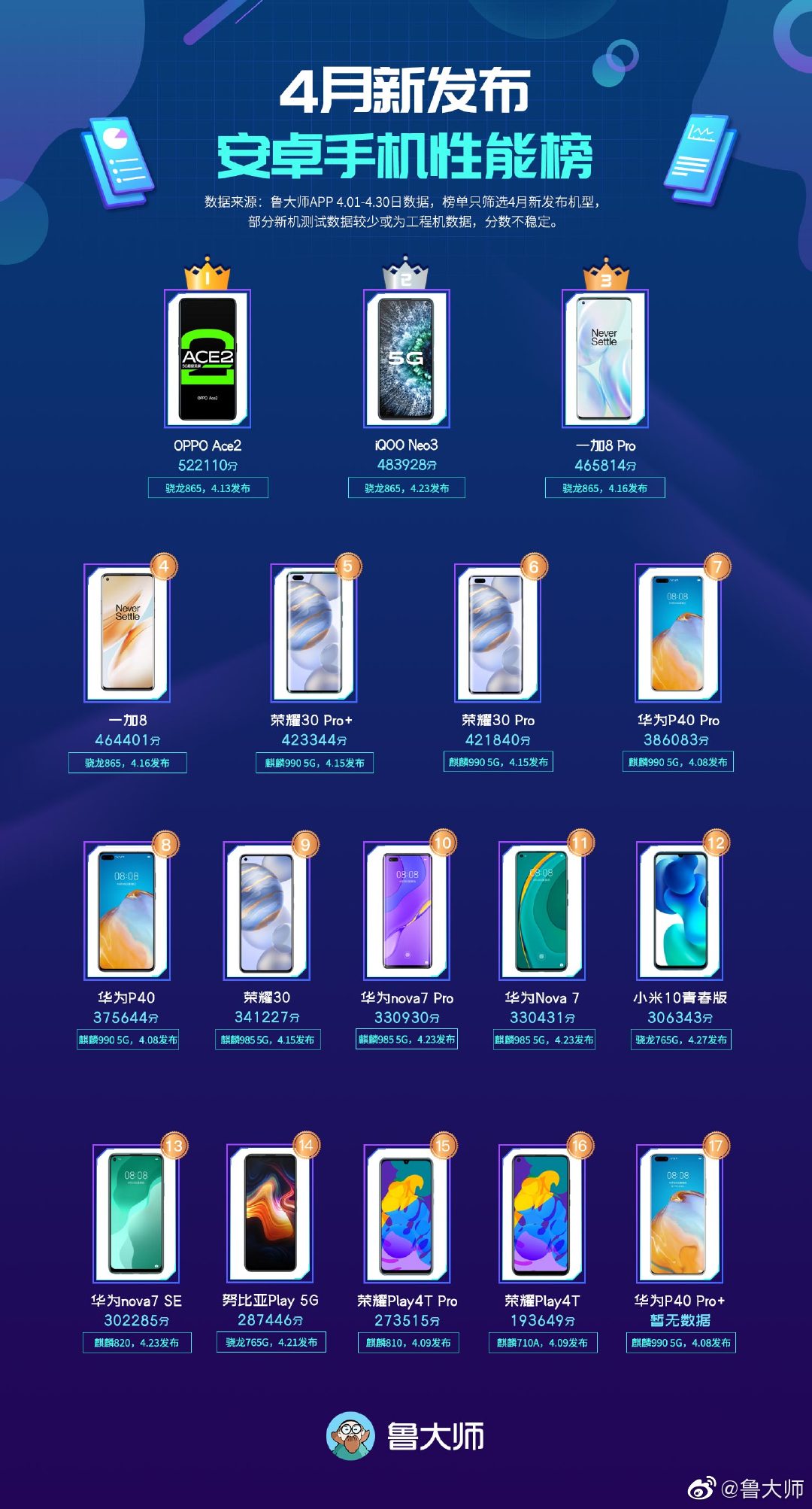
In April, the Chinese benchmarking platform – Master Lu shared a report on the market share of smartphone brands in the first quarter of 2020 in China. Huawei ranked first followed by Honor, OPPO, Xiaomi and Vivo. Today, the company released the list of best performing smartphones for the month of April. The list is led by the OPPO Ace2 flagship that was announced earlier in the same month.
The OPPO Ace2 scored 522,110 in Maser Lu benchmarks. Second came the iQOO Neo3 phone that recorded a score of 483,920. The OnePlus 8 Prov acquired the third spot with a scored of 465,814. Fourth came the OnePlus 8 with a score of 464,401. The top four are Snapdragon 865 mobile platform powered devices.
The Honor 30 Pro+ Kirin 990 5G powered surpassed Huawei P40 series with a scored of 424,344. The Honor 30 is placed sixth with a score of 421,840. The Huawei P40 Pro recorded a score of 386,083 to gain the seventh position. The Huawei P40 is on the eighth spot with 375,644 score.
The Honor 30 which is the first Kirin 985 5G chipset powered smartphone reached the ninth position with a score of 341,227. Powered the same Kirin 985 SoC, Nova 7 Pro and Nova 7 gained the tenth and eleventh places in the list with respective scores of 330,930 and 330,431.
The other phones that are included in the top 17 best performing phones in April in China include Snapdragon 765G powered Xiaomi Mi 10 Youth Edition, the Kirin 820 5G powered Huawei Nova 7 SE, Nubia Play 5G that features SD765G, Honor Play 4T Pro driven by Kirin 810, Honor Play 4T fueled by Kirin 710A and Kirin 990 5G powered Huawei P40 Pro+.
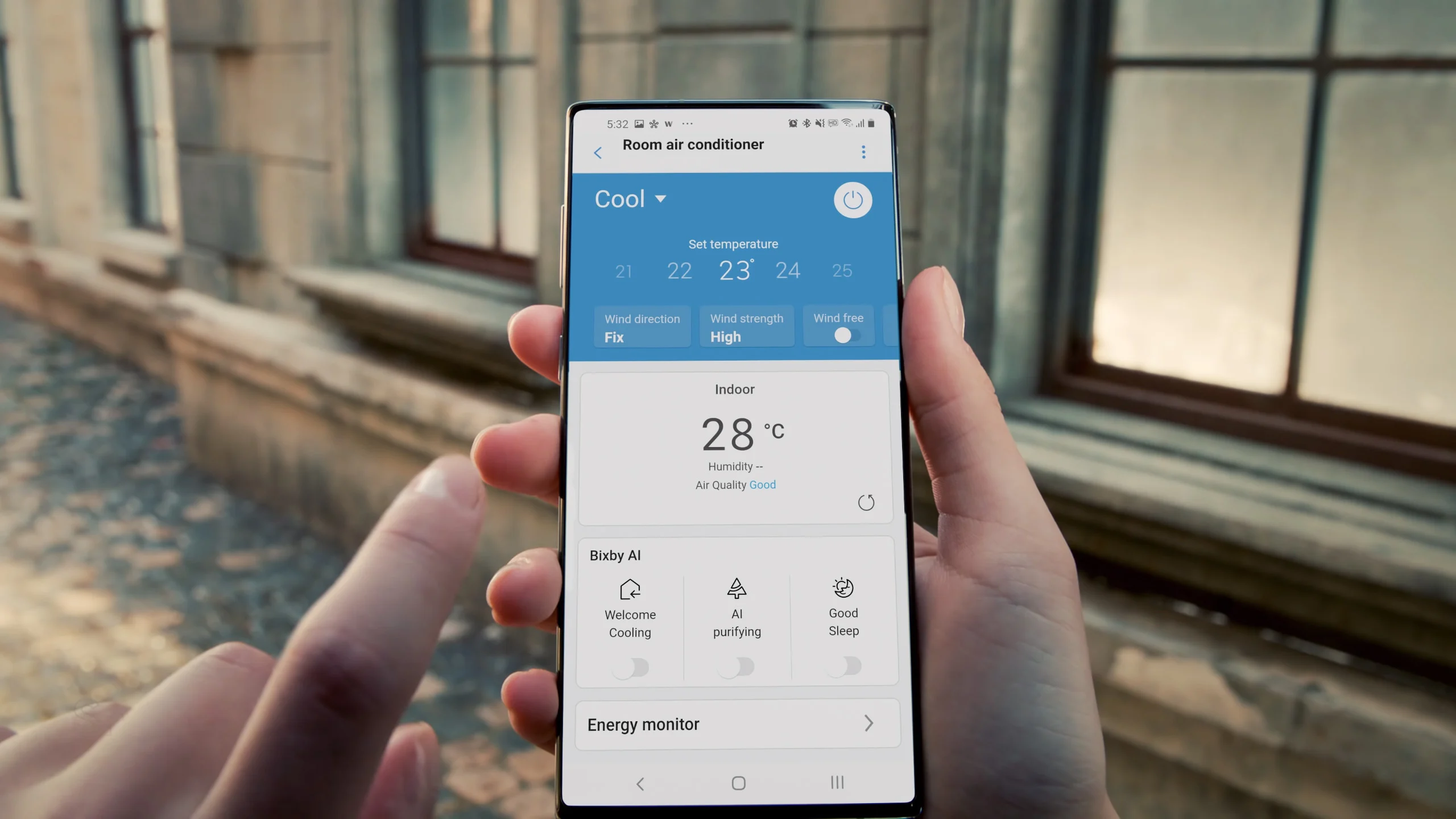
South Korean giant Samsung recently released an advertisement for its new wind-free air conditioners and in that ad, the company’s unannounced full-screen smartphone is showcased, running SmartThings app.
It shows that the smartphone has full-screen display without ant type of notch or punch-hole cutout for the front-facing camera setup. This could mean that the phone has an under-display camera technology, which the company has been working for a while.
Recently, renders of Samsung’s first smartphone featuring a pop-up camera setup as a part of its premium mid-range Galaxy A-lineup were leaked online. So, the phone showcased in the ad could be the upcoming Galaxy A-series device having pop-up front-facing camera.
However, it makes more sensor for the company to showcase a flagship-grade smartphone in an advertisement. Thus, there’s a possibility that the phone in question is a part of the upcoming Galaxy Note 20 series.
While the Samsung Galaxy Note 20 flagship was rumoured to feature the under-display camera technology, new reports claim that the company has ditched the plan because of issues with the supply chain with the on-going COVID-19 pandemic.
So, as said, the phone could either be the upcoming Galaxy A-series device with a pop-up front-facing camera or the upcoming flagship under the Galaxy Note 20 lineup. Or there’s a possibility that the phone in question is a totally different one. Another possibility is that there’s no such device from Samsung coming anytime soon and it was just a dummy device for the advertisement.
Samsung is expected to launch its flagship Galaxy Note 20 series as well as the second-generation Galaxy Fold smartphone this summer. Both the devices could get launched together at the same event. To know for sure, we’ll have to wait for some kind of confirmation from the company.
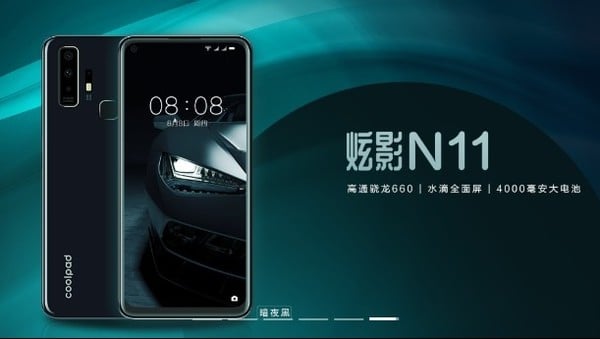
According to Chinese media, Coolpad has silently revealed a new smartphone called the Coolpad N11. The smartphone found listed on the official website (Chinese version) of the company with some of its key specs. The handset is expected to go on sale soon in China.
The images available on the Coolpad’s website reveals that the display has a punch-hole at the top-left corner. Except for the chin, the other three bezels appear quite slim. Hence, it appears that the phone will offer users with a high screen space.
Coolpad N11
The Coolpad N11 draws power from a 4,000Ah battery. It is unclear whether the phone supports rapid charging. The Snapdragon 660 chipset is present under the hood of the device. The top-left corner of the rear shell of the phone has a triple camera setup and an LED flash.
A fingerprint scanner is also available on the backside of the Coolpad N11. The phone can be seen in black color. It may also come in other color editions. The other specs of the Coolpad N11 are not known yet. Also, the company is yet to confirm on the pricing and availability of the N11 smartphone.
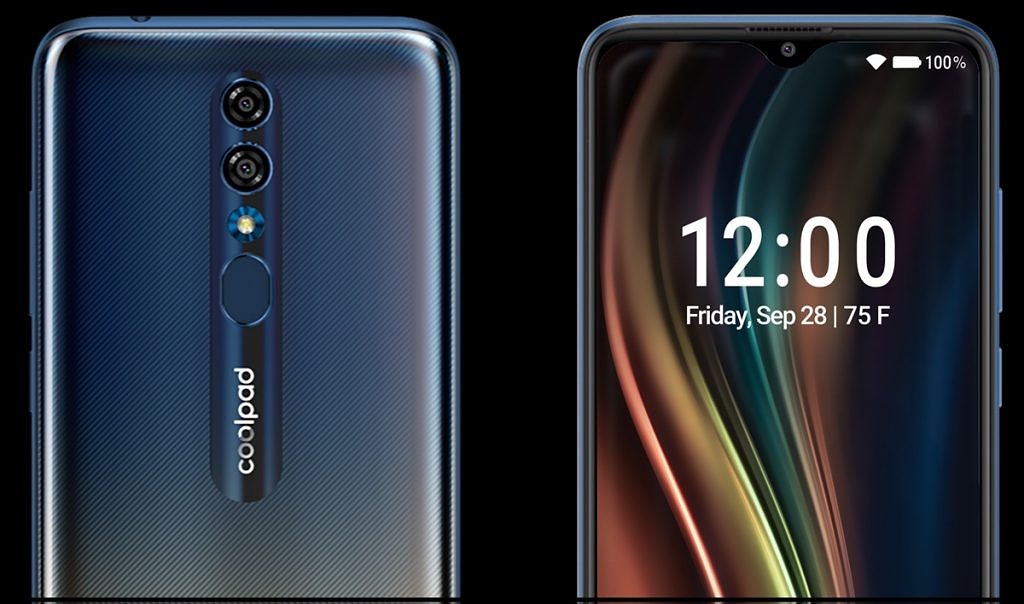
Coolpad Legacy 5GIn related news, earlier this year, Coolpad unveiled the Coolpad Legacy 5G at the Consumer Electronics Show (CES) 2020 tech exhibition that was held in January. The Snapdragon 765 powered phone has a 6.53-inch full HD+ display with waterdrop notch. It has 4 GB of RAM and 64 GB of storage. There is a 48-megapixel + 8-megapixel dual camera setup on its rear and it has a front camera of 16-megapixel. The Android 10 OS runs on the device. It has a 4,000mAh battery that supports Quick Charge 3.0 through USB-C. The handset that is priced around $400 is yet to go on sale.
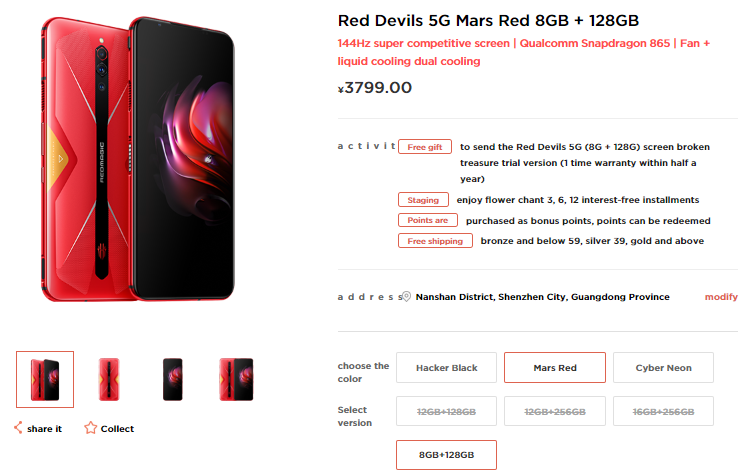
At the unveil event of the Red Magic 5G phone in March, Nubia had confirmed that it will be available in three colors like Hacker Black, Cyber Neon (red-blue) and Mars Red (red-orange) in China. However, the first 5G-ready gaming phone has been available in Hacker Black and Cyber Neon editions since the time it was made available for purchase in the home market. Starting from today, buyers can also avail the Mars Red version of Red Magic 5G.
The Nubia Red Magic 5G Mars Red edition comes in 8 GB RAM + 128 GB storage version only. It carries a price tag of 3,799 Yuan ($537).
In the international markets, the Hacker Black, Cyber Neon and Mars Red color editions are called Eclipse Black, Pulse and Hot Rod Red, respectively. Currently, the handset is available in Eclipse Black color in the global market in 8 GB RAM + 128 GB storage for $579. The Hot Red Red color edition with 8 GB RAM + 128 GB storage version will soon go on in international markets also for $579. The Pulse model with 12 GB RAM + 256 GB storage is currently sold out. Its pricing is $649.
The Red Magic 5G has a 6.65-inch notch-less screen that supports full HD+ resolution of 1080 x 2340 pixels. The Android 10 OS along with Red Magic 3.0 runs on the device. The Snapdragon 865 mobile platform powers the device and it comes with up to 16 GB of LPDDR5 RAM. The phone offers users with UFS 3.0 storage and it lacks an external storage slot.
A 4,500mAh battery is at the helm of Red Magic 5G. The handset comes with support for 55W fast charging. It has a front camera of 8-megapixel. The back panel has a Sony IMX686 64-megapixel lens, an 8-megapixel ultrawide sensor and a 2-megapixel macro sensor placed inside its triple camera system. It is equipped with 5G support, stereo speakers, 3.5mm audio jack and NFC.
The Samsung Galaxy S20 Ultra 5G has been available in China in Cosmic Grey and Cosmic Black colors. Earlier this week, the South Korean company revealed that the Galaxy S20 Ultra 5G will soon arrive in a new color variant Cosmic White. Today, the company began with the sales of the Cosmic White edition of the smartphone.
In terms of appearance, the Galaxy S20 Ultra Cosmic White edition appear similar to the Galaxy S20’s Cloud White model that is only available in South Korea, the US (Verizon) and Spain. The new Cosmic White does not have the gradient appearance like the Cloud White model.
The Galaxy S20 Ultra 5G Cosmic White that has 12 GB of RAM and 256 GB of storage is available for purchase from today with a pricing of 9,999 Yuan (~$1,416). The Cosmic White is currently exclusive to the Chinese markets. The specs of the S20 Ultra Cosmic White are same as its other color variants.
The Galaxy S20 Ultra 5G comes with a massive 6.9-inch Dynamic AMOLED display with top-center positioned punch-hole. It supports quad HD+ resolution and 120Hz refresh rate. The display is integrated with an ultrasonic fingerprint sensor.
The Snapdragon 865 mobile platform drives the phone with LPDDR5 RAM. The phone comes with UFS 3.0 storage and it has a shared SIM slot for adding a microSD card. The One UI 2.0 based Android 10 OS runs on the device. The 4,500mAh battery of the device supports 45W fast charging, 15W wireless charging and 9W reverse wireless charging.
The Galaxy S20 Ultra’s rear camera setup includes a 108-mgaepixel main lens, a 48-megapixel periscope telephoto lens with 10x hybrid zoom support, a 12-megapixel ultrawide lens and a 3D ToF sensor. It has a selfie camera of 40-megapixel.
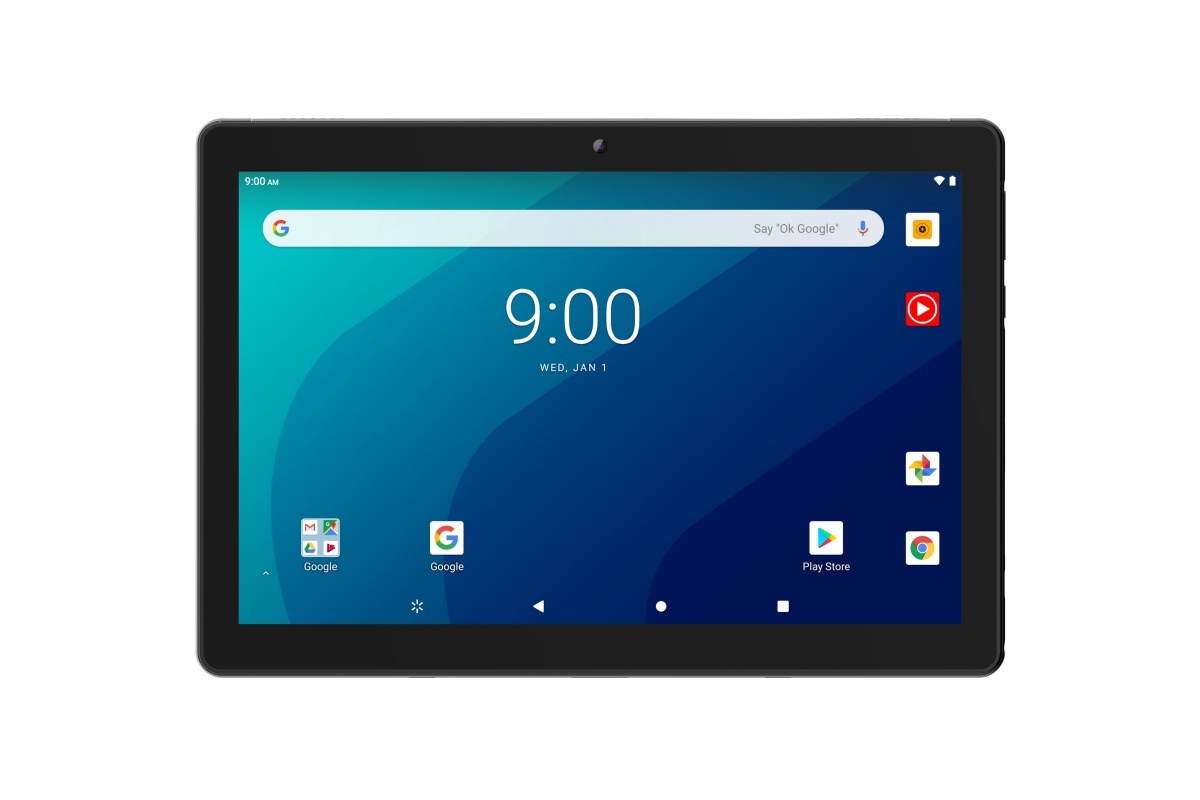
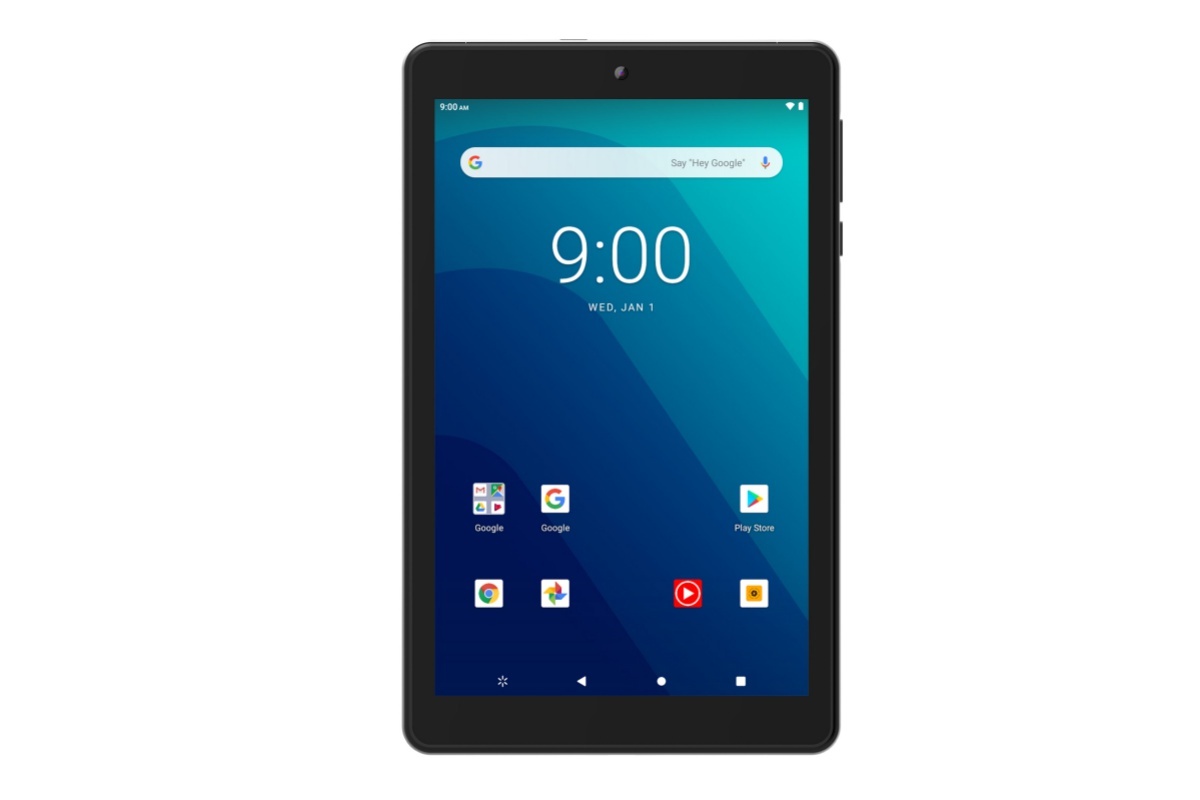
Walmart’s Onn brand has been around for a while, making home theatre accessories and the like. The brand last year ventured into the tablet market with the launch of the Onn 7, Onn8 and Onn 10 tablets in the U.S. The e-commerce giant seems to have recorded some success with the product as the Onn 8 Pro and Onn 10 Pro have now been introduced as upgraded versions.
Walmart Onn 8 Pro and Onn 10 Pro are still entry-level slates perhaps targeted at taking on the Amazon Fire lineup. As the names imply, the Onn 8 Pro features an 8-inch LCD display with HD resolution while the Onn 10 Pro packs a 10.1-inch LCD FHD display panel. Both tablets run on Google’s latest Android 10 operating system.
Both tablets are powered by an octa-core processor clocked at up to 2.0 GHz, said to be MediaTek MT8768WA processors. The processor is paired with 3GB of RAM on the Onn 10 while the Onn 8 packs 2GB of RAM. You get 32GB of expandable storage on both models. Walmart also touts the tablets’ batteries to last up to 10 hours. For photography, you get a 5MP front and 5MP rear cameras on both tablets.
As for the prices, the Onn 8 comes in at $99 while the Onn 10 is offered for $129.
Walmart Onn 10.1″ Tablet Pro
10.1″ LCD touchscreen
10-hour battery life
5 MP front-facing camera & 5 MP rear-facing camera
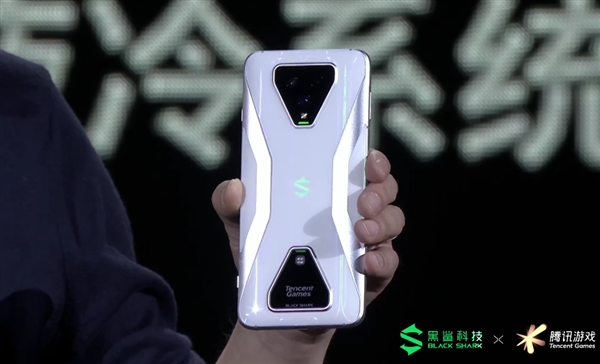
Xiaomi‘s Black Shark gaming phone brand took the wraps off the third-generation Blackshark 3 and 3 Pro in March this year. Since then the smartphones have gone on sale in China. The company has now revealed that both models will be available to buyers in Europe from May 8.
This was revealed on Black Shark’s official website but the poster didn’t contain any detail of the price. The Black Shark 3 starts at 3499 yuan (~$502) in China while the 3 Pro has a starting price of 4699 yuan (~$674). We expect the prices to be slightly higher but still remain attractive to buyers.
Asa reminder, the Black Shark 3 features a 6.67-inch AMOLED panel with the industry’s first 270Hz touch sampling rate. This combined with a 24ms touch response time and a 28ms multi-finger touch response time ensures that you face minimal touch lags during gameplay. The touch panel refreshes at 90Hz, ensuring smooth scrolling and animations.
On the other hand, the Black Shark 3 Pro model takes things to another level. It comes with a tablet-sized 7.1-inch AMOLED panel with a Quad HD+ 3120 x 1440p resolution display. It’s nearly the size of Mate 20 X’s massive screen but with a higher resolution! Clearly, the Black Shark 3 Pro has one of the best displays for mobile gaming.
Both phones are powered by a Snapdragon 865 processor. But the biggest difference between the two models in terms of design is the presence of two tactile physical buttons on the right side of the Pro variant which the standard variant lacks.
Xiaomi just launched the Lite version of the Mi Note 10 in the global market. It came just two months after the Lite version of the Mi 10 and it is impossible for us not to compare these two devices due to their similar specifications and prices. We also brought another interesting device in this “Lite” comparison: Oppo Find X2 Lite. In each case, we are talking about upper-midrange handsets coming with advanced specs sheets, but they are not flagships and they are focused on value for money. Which has the highest value and which is worth the money asked? This specs comparison between Mi Note 10 Lite, Mi 10 Lite, and Oppo Find X2 Lite will clear your idea.
Xiaomi Mi Note 10 Lite vs Xiaomi Mi 10 Lite vs Oppo Find X2 Lite
Xiaomi Mi 10 Lite
Xiaomi Mi Note 10 Lite
Oppo Find X2 Lite
DIMENSIONS AND WEIGHT
164 x 74.8 x 7.9 mm, 192 g
157.8 x 74.2 x 9.7 mm, 204 grams
160.3 x 74.3 x 8 mm, 180 grams
DISPLAY
6.57 inches, 1080 x 2400p (Full HD+), Super AMOLED
Quad 64 + 8 MP + 2 + 5 MP f/1.9, f/2.2, f/2.4 and f/2.4
16 MP f/2.5 and f/2.5 front camera
Quad 48 + 8 + 2 + 2 MP f/1.7, f/2.2, f/2.4 and f/2.4
32 MP f/2.0 front camera
BATTERY
4160 mAh, fast charging 20W
5260 mAh
Fast charging 30W
4025 mAh, Fast charging 30W
ADDITIONAL FEATURES
Dual SIM slot, 5G
Dual SIM slot, 5G
Dual SIM slot, 5G
Design
If we consider aesthetics, my favorite handset here is the Oppo Find X2 Lite. It offers a very thin and lighter design, as well as a less invasive camera module on the rear side making it more minimalistic. It is equipped with a glass back and an aluminum frame for a premium look. Definitely a beautiful device, like every handset from the Find X2 series. But with its curved display edges, Xiaomi Mi Note 10 Lite remains a very elegant and futuristic device. Even the Xiaomi Mi 10 Lite has a great design, it features a flat display but a smaller camera module than Xiaomi Mi Note 10 Lite on the back. All of these devices come with an in-display fingerprint reader.
Display
On the paper, Xiaomi Mi Note 10 Lite offers a more interesting display. The panel is HDR10-compliant, so it may provide a richer image quality, even while streaming content. On the other hand, Xiaomi Mi 10 Lite offers a wider diagonal. Thanks to its smaller display, Oppo Find X2 Lite is slightly more compact. Do not underestimate it: unfortunately, we still had no chance to test that display, but Oppo usually equips its handsets with great panels.
Hardware/Software
Xiaomi Mi 10 Lite and Oppo Find X2 Lite offer a stronger hardware thanks to the Snapdragon 765G mobile platform. Unlike the Mi Note 10 Lite, they support 5G networks thanks to a 5G integrated modem. You should get very similar high-end performances with Xiaomi Mi 10 Lite and Oppo Find X2 Lite, but the former has a micro SD slot to expand the internal storage, while the latter does not. Android 10 is installed out of the box on all of these smartphones.
Camera
Xiaomi Mi Note 10 Lite, Xiaomi Mi 10 Lite, and Oppo Find X2 Pro are midrange camera phones. Oppo Find X2 Lite looks more convincing with its bright focal aperture and an amazing selfie camera. But Xiaomi Mi Note 10 Lite and Xiaomi Mi 10 Lite’s quad-cameras are great as well. You should get a similar photo quality, judging by the camera specs.
Battery
Due to its mammoth 5260 mAh battery, Mi Note 10 Lite will most likely offer a way longer battery life than Xiaomi Mi 10 Lite and Oppo Find X2 Lite with all the usage patterns. Also consider that Xiaomi Mi Note 10 Lite does not support 5G, so it is even more efficient. It also comes with a fast 30W charging technology, but the 30W fast charging found on the Oppo Find X2 Lite will charge it faster because the battery is smaller.
Price
The global price of the Xiaomi Mi Note 10 Lite and Xiaomi Mi 10 Lite ranges from €350/$383 to €400/$438, while Oppo Find X2 Lite starts from €499/$546. On the paper, Xiaomi Mi Note 10 Lite looks more gorgeous due to its huge battery, but it lacks 5G support and it has an inferior chipset. Oppo Find X2 Lite offers an amazing and compact design, great cameras, and faster charging and Xiaomi Mi 10 Lite is more or less at the same level (slightly bigger battery, potentially inferior cameras). Which one would you pick?
Earlier this week, we reported that MediaTek will have an event on May 7 where it is expected to announce new processors. One of the expected chipsets is a higher-clocked version of the Dimensity 800.
It turns out that an AnTuTu benchmark result of this higher clocked version already surfaced on the web. And it is compared against that of the standard version. The benchmark results were posted on Weibo by Digital Chat Station and he said they are from prototype devices.
[envira-gallery id=”320400″]
As you can see in the images above, the device powered by the overclocked Dimensity 800 (right) scored higher than the device powered by the standard Dimensity 800 in all areas, most especially in the CPU, UX, and GPU categories.
According to a tweet by Russian tech blog @Xiaomishka, the Dimensity 800 and Dimensity 800+ (overclocked version) will power two upcoming Redmi phones in China. The phones have model numbers M2004J7AC and M2004J7BC and are believed to be the Redmi Note 10 (Dimensity 800) and Redmi Note 10 Pro (Dimensity 800+).
After the presentation of #MediaTek on May 7th, now I am more than sure that the following #Redmi smartphones are: 1⃣ M2004J7AC = #RedmiNote10 with Dimensity 800 SoC 2⃣ M2004J7BC = #RedmiNote10Pro with Dimensity 800+ SoC (the speed of the large core is increased to 2.6GHz) 😉👍 https://t.co/Nny8PDu7Vf
The tweet reveals the Dimensity 800+ has its “large core” pushed to 2.6GHz which is a significant bump from the 2.0GHz clockspeed of the performance cores of the Dimensity 800.
We advise you to take the above with a grain of salt until more details surface. Nevertheless, there is no gainsaying that the overclocked Dimensity 800 will offer a significant improvement in performance over the Dimensity 800.
We use cookies on our website to give you the most relevant experience by remembering your preferences and repeat visits. By clicking “Accept”, you consent to the use of ALL the cookies.
This website uses cookies to improve your experience while you navigate through the website. Out of these, the cookies that are categorized as necessary are stored on your browser as they are essential for the working of basic functionalities of the website. We also use third-party cookies that help us analyze and understand how you use this website. These cookies will be stored in your browser only with your consent. You also have the option to opt-out of these cookies. But opting out of some of these cookies may affect your browsing experience.
Necessary cookies are absolutely essential for the website to function properly. This category only includes cookies that ensures basic functionalities and security features of the website. These cookies do not store any personal information.
Any cookies that may not be particularly necessary for the website to function and is used specifically to collect user personal data via analytics, ads, other embedded contents are termed as non-necessary cookies. It is mandatory to procure user consent prior to running these cookies on your website.