Advertisement

MIUI 12 AOD+ is now live for MIUI 11 users, Here’s how to enable It

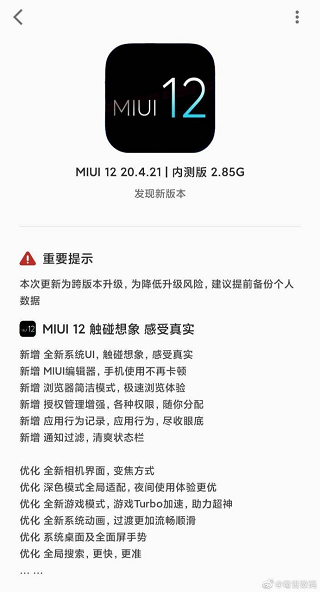
Two days back, Xiaomi revealed AOD+ (Always-on Display) ahead of MIUI 12 announcement scheduled for April 27. Now, the feature is already live for MIUI 11 users via the latest versions of MIUI Themes and MIUI Always-on display. Interested users of Xiaomi and Redmi smartphones with OLED display can try it now.

To use the new AOD+ functionality on MIUI 11, the user’s phone must have an OLED display and should run Android Pie or Android 10. Then, they will have to install MIUI Themes v1.7.6.0 and MIUI Always-on display v1.19.387, which you can download from the link provided at the end of the post.
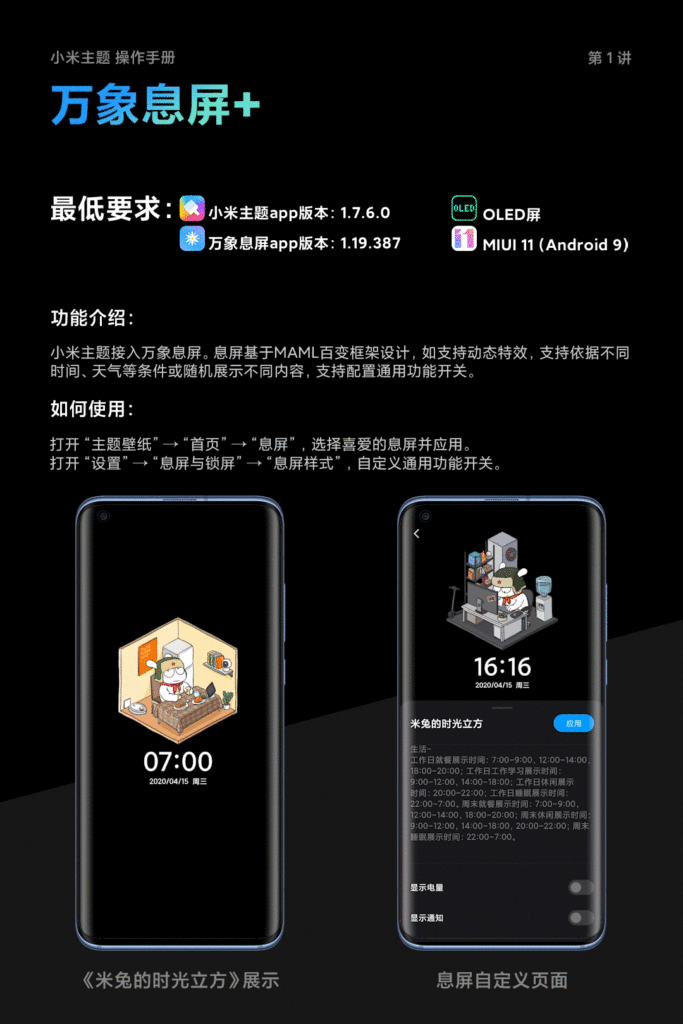
MIUI 12 AOD+ on MIUI 11

Once the APKs are installed, open MIUI Themes, navigate to the new AOD section and download as well as apply a style of your choice from over 1000+ options. Followed by that, head over to Settings -> Always-on display & Lock screen, then turn on Ambient display if it is not. Lastly, go to Style which is present on the same page and customize the applied AOD style as per your choice.

Unfortunately, the specified version of MIUI Themes app is not installing on our Redmi K20 Pro Indian unit running the current stable MIUI v11.0.4.0. But the MIUI Always-on display app does install, however, without the former app, it is impossible to download new MAML format animated AOD styles.

Also, we don’t have access to any other Xiaomi / Redmi smartphone with an OLED display at the moment. Additionally, the early access for AOD+ could be limited to Chinese devices. Hence, if it’s not working on your region-specific MIUI ROM, then do try flashing the latest MIUI China ROM available for your handset.

Download  MIUI Themes v1.7.6.0

Download MIUI Always-on display v1.19.387


Xiaomi Mi 10 Youth Edition TENAA listing confirms key specs ahead of launch

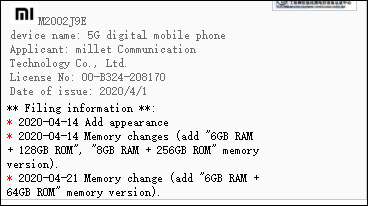
Xiaomi Mi 10 Youth Edition is scheduled to go official on April 27 alongside the MIUI 12 custom ROM. Ahead of the launch date, the smartphone has been certified by China’s telecoms regulatory agency TENAA. The listing gives us a look at the key specs of the device.

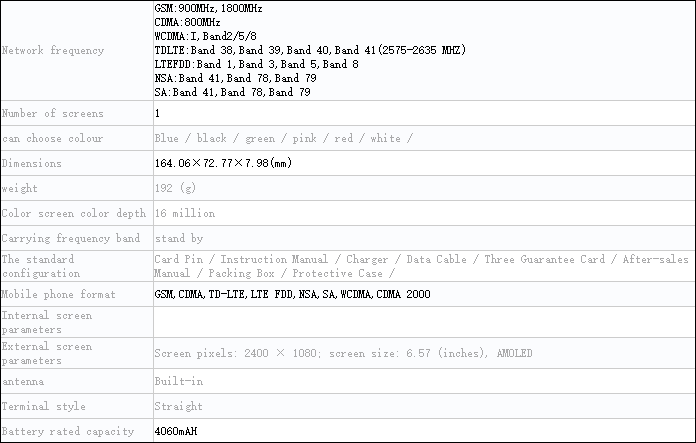
The Mi 10 Youth Edition (or Mi 10 Lite) is confirmed to feature a 6.57-inch AMOLED display with a waterdrop notch. The display has a resolution of 2400 × 1080 pixels. The device earlier being revealed to pack a Snapdragon 765G processor and the listing indeed confirms it is a 5G phone.

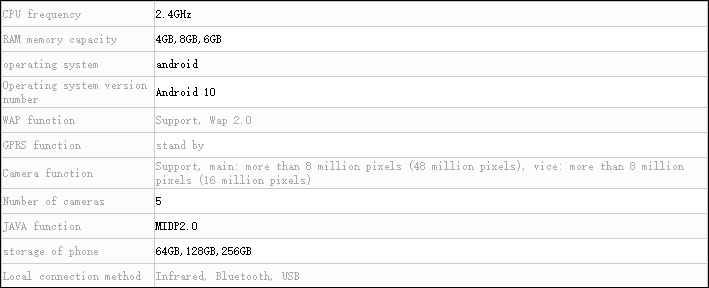
The TENAA listing equally shows the Mi 10 Youth Edition will be available in 4GB, 6GB and 8GB RAM versions. The storage options include 64GB and 128GB storage options for the 4GB/6GB RAM versions and 256GB internal storage for the 8GB RAM version.Xiaomi Mi 10 Youth Edition

The Mi 10 Youth Edition is equipped with a quad-camera setup at the rear, housed in a rectangular module. The main camera is a 48MP sensor but there is a periscope telephoto lens which supports 50x zoom. The mobile phone will get its power from a 4060mAh battery.

Furthermore, the device will run on Android 10 which we expect to get the newest MIUI 12 overlay which Xiaomi is expected to unveil on the same day. Another impressive aspect is the thin 7.88mm thickness and lightweight build of just 192g.Xiaomi Mi 10 Youth Edition

Finally, the TENAA listing shows the Xiaomi Mi 10 Youth Edition will be available in six attractive colours namely; Blue, black, green, pink, red, and white.


(source)


Get Google Phone App for non-Pixel smartphones!

Google has crafted some of the apps purely for its Pixel devices. These apps not only improves the functionality but even adds to its value. Google’s refined software and impressive applications always remain favorite among the third-party development community. Several Pixel-based Mods are made available for non-Pixel devices. For example, Google Camera, aka Gcam Mod, is quite popular among photography enthusiasts. Similarly, Pixel phone-based themes and boot animations are also quite popular among non-Pixel users.

Google-Phone-App-980x539

In a way forward, the search giant has surprisingly made the Google Phone app available on the Play Store for non-Pixel devices. Until now, the Google Phone app was limited to Pixel and Android One smartphones. The users needed to root the device to use the modified apk or Magisk Module on their respective devices. But the users can now directly use the Google Phone app on a non-Pixel phone by directly installing it from the Play Store.

Google Phone App Compatibility

According to research done by our folks at XDA Developers, the Google Phone App is currently compatible with specific devices that have com.google.android.dialer.support shared library support. However, the above saying is not confirmed by any official source, but it seems a legit reason behind the app compatibility. You can check the smartphone compatibility by running the ADB command on CMD after connecting via USB cable:

pm list libraries | grep "com.google.android.dialer.support"

The support appears to be absent on some Samsung and OnePlus devices; meanwhile, it is working flawlessly on the Asus and LG smartphones. The availability of the app for non-Pixel devices is not officially confirmed from Google, but anyhow it is now working on some Android smartphones.

Note: The ‘Go’ version, aka Google Phone Go app is working on devices that get an error while installing the standard phone app.

Verified Google App working device list:

  • Oppo Find X2 Pro
  • Asus Zenfone 6
  • LGV60 ThinQ
  • Samsung Galaxy S8
  • Galaxy Note 10
  • Poco F1
  • Xiaomi Mi 9T Pro
  • LG G7
  • LG V35

Download Google Phone App for Non-Pixel smartphones

Google Phone app is finally available for non-Pixel smartphones. Most of the devices can directly install the app from the Play Store. However, if you get any error while installing the Google Phone app, we suggest you install the ‘Go’ version app from the link below.

Download from Play Store /  APKMirror

Download Go Version

We hope you’ve got the latest and workable Google Phone app on your device. If you have any issues, then let us know via the comments below.

iPhone SE 2020 Boots using Motherboard of iPhone 8

Apple surprised everyone by launching a sub $500 iPhone when the world is facing a pandemic. The newly released iPhone SE 2020 is the cheapest iPhone ever after the original from four years back in 2016. But to price the device so cheap, the Cupertino-based tech giant used the same chassis and components of iPhone 8 from 2017. A teardown video on YouTube confirms it and the person even manages to boot the new device with the motherboard of the older model.

Apple is known for many things but not for cheap affordable products. But that has begun to change with the iPad 7th generation and the aggressively priced iPhone 11 from last year. Now, the company even undercut Android OEMs by launching the $399 iPhone SE 2020 featuring its flagship A13 Bionic chipset.

The American tech company is successful in doing this because only the chip, rear camera, and battery connector are different. Whereas, the other components are identical to the ones used in the iPhone 8. The teardown video embedded above proves it by swapping the iPhone SE 2020 motherboard with the one of iPhone 8.

By doing so, the handset boots up normally and almost everything works including display, speaker, haptic engine, and front camera. Only the main back camera does not work as it could be a different module than the one used in iPhone 8, probably from iPhone XR.

That said, not every company can pull a stunt like Apple. But if they do, then it can surely help a lot of people and even the company itself during these hard times.


(Via)

Xiaomi Mi TV to finally enter the Malaysian market later this year

Xiaomi has become a very successful brand in various markets, especially in the Southeast Asian region. Malaysia is one such market, where its smartphones were popular. However, the company never officially launched its Mi TV lineup, but now, the Chinese tech giant has announced that the product will soon be entering the market later this year.

Xiaomi

Similar to its smartphones, the Xiaomi Mi TV lineup is generally considered an affordable value for money smart TV. Although, up until now, the only way to own a Mi TV in Malaysia was to import. Xiaomi had a few units on display on its official physical stores across the country but those were never available for purchase.

According to an interview, Xiaomi’s Country Manager for Malaysia and Singapore, Nicholas Shi, revealed that the customers in Malaysia can expect the Mi TV series to arrive in the country later this year. Furthermore, the senior official also revealed that other Xiaomi IoT (Internet of Things) products will also be launched in the country soon, including Mi Watch, Mi Gaming Monitor, Mi Robot Vacuum Mop, and more.

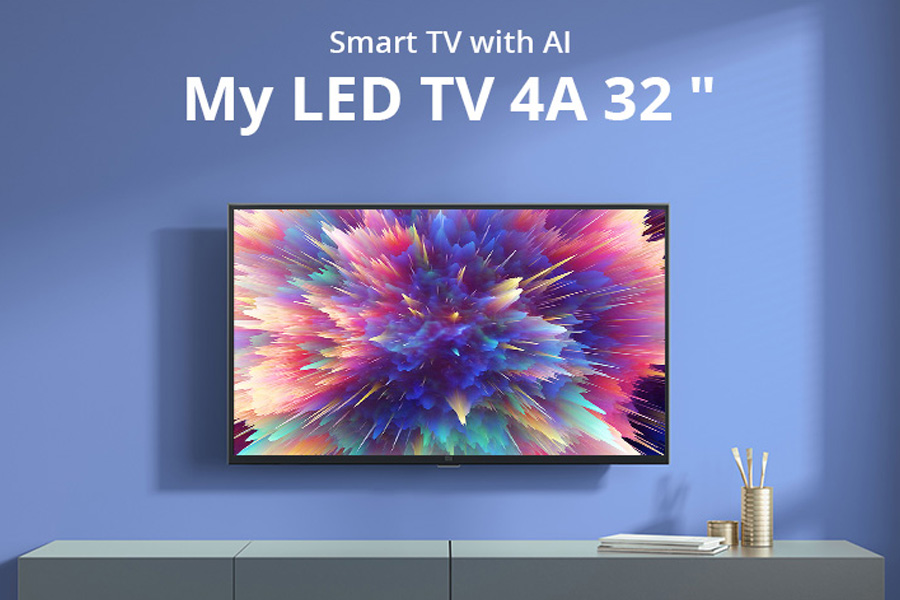
Xiaomi Mi TV 4A
Xiaomi Mi TV 4A 32 inch

Unfortunately, Nicholas refrained from revealing any specific launch date or time frame other than later in 2020. Similarly, it is also currently unknown which models of the Mi TV’s broad lineup will ship in Malaysia. The company recently launched 4 models in Indonesia, Mi TV 4 (55 inch and 43 inch) and Mi TV 4A (43inch and 32 inch). Thus, we can expect Xiaomi to launch models in line with these. More updates should arrive in the coming weeks, so stay tuned.


(Via)

Xiaomi appoints XW Bank’s Chief as the new VP for Xiaomi Finances

Zhao Weixing, the President of XW Bank, has been named as the Vice President of Xiaomi Corp’s financial service, Xiaomi Finance. The senior official is a veteran in the banking industry and will help the Chinese tech giant expand its interests in the financial services business.

The announcement arrived from a statement made by the company to a Chinese reporting, Caixin. Zhao was appointed as the Vice President after he completed his three year tenure with XW Bank, a lender backed by Xiaomi. Despite his shift, the official will still be supporting the bank from his new position as well.

For those unaware, the Sichuan based XW Bank is China’s third internet only bank. In other words, it is completely based online. Zhao has been integral in the company’s growth in inclusive finances and partnerships with other financial institutions. Under his run, the bank had a total asset evaluation coming around 44 billion Yuan, which roughly translates to about 6 billion US Dollars.

mi logo

Notably, Zhao Weixing has previously worked with other banks in the region like Minsheng Bank, Shanghai Pudong Development Bank, and Bank of Hangzhou as well. Now, only time will tell what new policies or restructuring the Xiaomi Finances will see under his reign.


(Source)

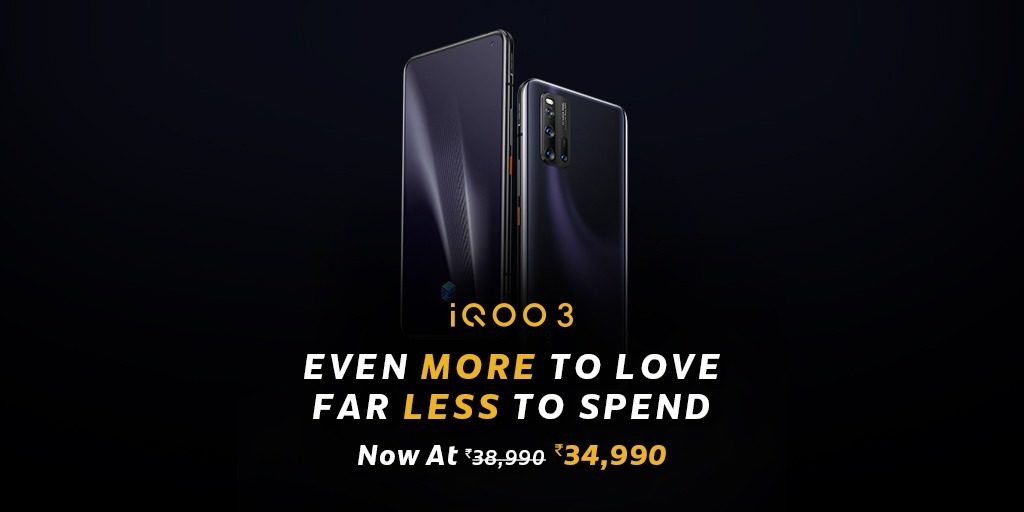
iQOO 3 receives a Permanent Price Cut of up to ₹4,000 ($52) in India

The Vivo sub-brand iQOO launched its iQOO 3 smartphone a couple of months back in India. The phone comes in both 4G and 5G variants though they are powered by the same Qualcomm Snapdragon 865 SoC. The handset started at ₹36,990 but it was increased to ₹38,990 earlier this month due to new GST (Goods & Services Tax) by the Indian government. And now, the company has announced a permanent price cut of ₹4,000 and ₹2,000 on the 4G and 5G versions of the device respectively.

iQOO 3 Permanent Price Cut India

The price cut for iQOO 3 in India was already teased by the company on Twitter. It is a bold move by the new player in one of the most competitive smartphone markets in the world. We are uncertain how the brand is pulling this off as it was only able to sell the phone in March before the country went on lockdown last month and the scenario is still the same due to the COVID-19 outbreak.

At the moment, e-commerce companies in India are only allowed to sell essential goods and since phones are non-essential goods as per the government, their sales are expected to begin only after lockdown. And thus, the price cut of iQOO 3 will be effective from then.

Anyway, here’s the new revised price of iQOO 3 in India after the permanent price cut.

Variant

Old Price

Price Cut

New Price

iQOO 3 4G (8GB + 128GB) ₹38,990 ($510) ₹4,000 ($52) ₹34,990 ($458)
iQOO 3 4G (8GB + 256GB) ₹41,990 ($550) ₹4,000 ($52) ₹37,990 ($498)
iQOO 3 5G (12GB + 256GB) ₹46,990 ($615) ₹2,000 ($26) ₹44,990 ($589)


Xiaomi launched the Gentle Breeze Air Conditioner: An energy efficient AC for 2199 Yuan ($310)

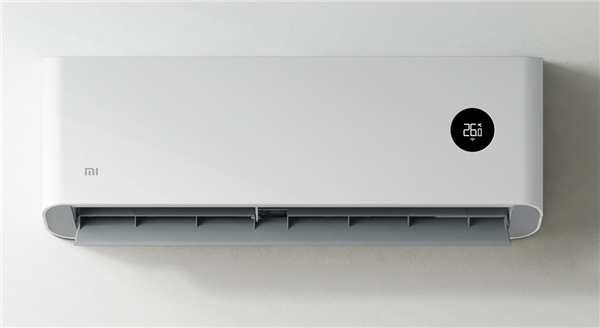
Xiaomi has just released a new air conditioner earlier today (24th April 2020). The new Gentle Breeze Air Conditioner was teased a few days ago and has finally been launched. It is priced at 2,199 Yuan (roughly 310 US Dollars) and is also available for 2,499 Yuan (roughly 352 US Dollars) for the high variant and 2,699 Yuan (roughly 381 US Dollars) for the 1.5 ton variant.

One of the most notable aspects regarding the Xiaomi Gentle Breeze Air Conditioner is also described in its name. The gentle/natural breeze is another term for broader coverage of its air outflow. While traditional air conditioners let out the air in a particular direction which isn’t suitable for direct contact for human beings, the Gentle “Soft” breeze feature enables the AC to spread the wind flow evenly across the room.

Xiaomi

This not only brings the temperature variance to a minimum but also makes it feel more natural, like a gentle breeze in the countryside; a term Xiaomi heavily implied on the air conditioner’s promotional images. The Gentle Breeze Air Conditioner features 1120 air outlet micro holes that provide three dimensional air supply at a wide angle. It also houses two 98mm super large cross flow fans.

The 1 ton version has a 620 cubic meters per hour circulating volume and a max range of 10 square meters. On the other hand, the 1.5 ton variant has a 660 cubic meters per hour circulating airflow and a max range of 16 square meters. The Xiaomi Gentle Breeze Air Conditioner adopts a full DC frequency conversion technology that is energy efficient and has a high APF value of 5.13, which is far higher than the national standard and energy efficiency limit value of 4.5 in China.

The Gentle Breeze Air Conditioner also supports the Xiao AI voice assistant and can also be interlinked with other smart home products. In other words, it supports voice control to turn it on or off, change temperatures or even use other smart home products, while also being connected via the common smart home Mi application.

Meizu 17 PANDAER Case revealed, will launch exclusively alongside the phone

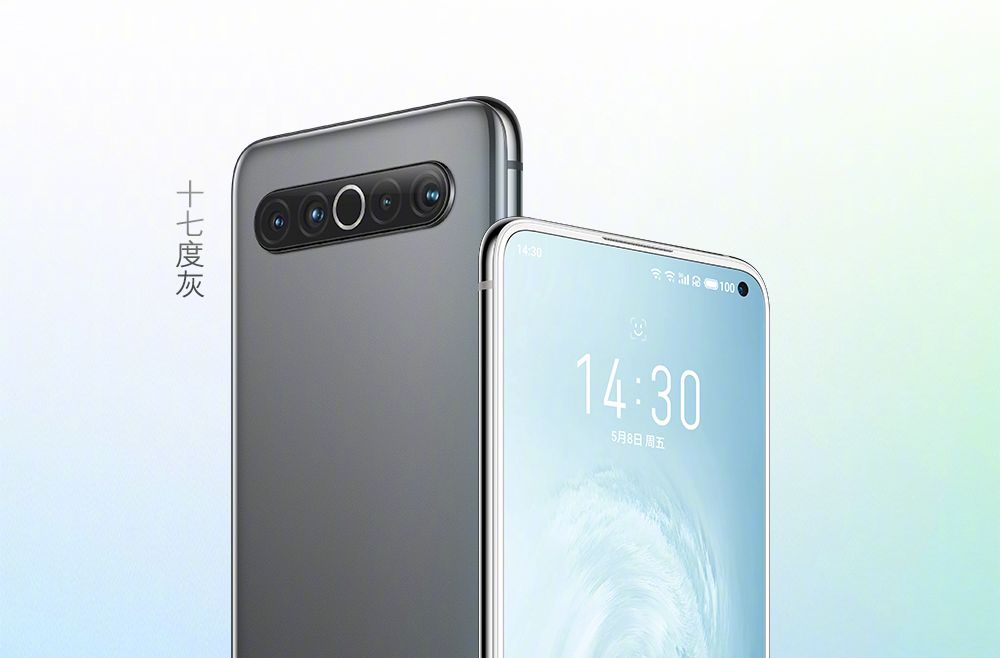
The Meizu 17 series will be launched on 8th April 2020, and alongside the flagship lineup, the PANDAER special case will also be unveiled. The back cover was seen in a recent promotional poster image and features interesting and unique designs.

Meizu

Looking at the images, the smartphone cover is an exclusive specially designed for the Meizu 17. The special edition cover brings fresh and unique designs, with bright colors as well. The flagship handset’s rear camera module can be observed on the back surrounded by the graffiti like caricatures. This is done seamlessly and to accentuate the overall design of the device itself.

According to official notes, the patterns on the protective case covers every corner, edges, and sides, unlike most other brands that only print the back. Furthermore, it also guarantees that the cover won’t add any noticeable weight to the smartphone and is designed to ensure a premium feel through a special coating that also makes it more comfortable to hold on to.

Meizu 17 5G

For those unaware, the Meizu 17 will be the company’s latest flagship series and will feature top notch specs like Qualcomm’s Snapdragon 865 SoC along with UFS 3.1 memory. It will also arrive with many features like fast charging and more and will be unveiled on 8th April 2020, with the PANDAER case also being launched on the same day. So stay tuned.

OnePlus Drops OxygenOS Open Beta Support For OnePlus 6 / 6T

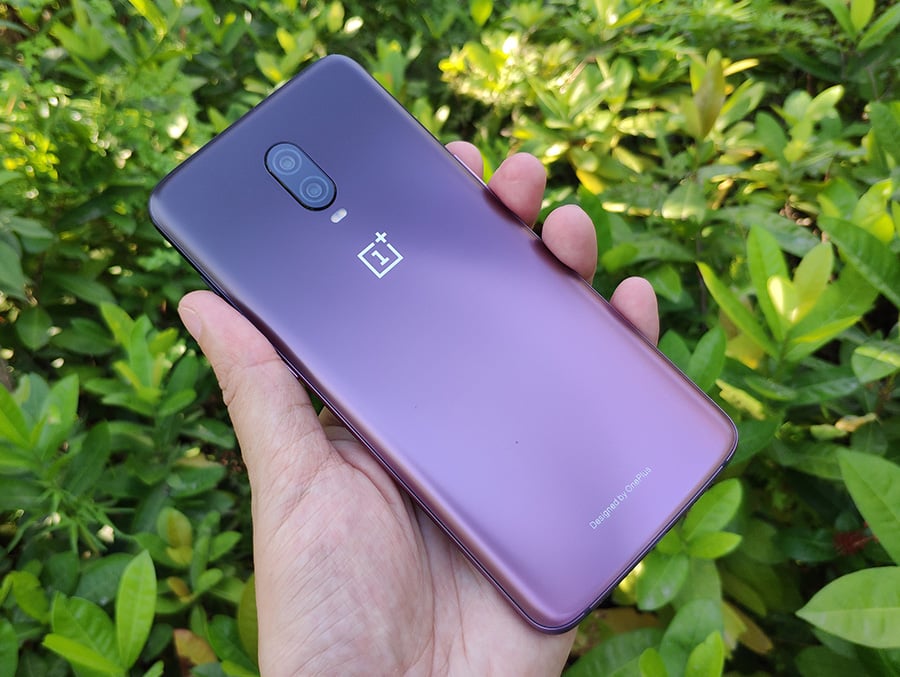
The OnePlus 6 series debuted in the year 2018 with now ubiquitous glass design ditching the metal exterior from the previous generations. The OnePlus 6T was also one of the first mainstream smartphones to feature an in-display fingerprint sensor. Like any other OnePlus smartphones, this duo has been receiving OxygenOS Open Beta updates. Sadly, good times don’t last forever as the company has officially dropped support for these smartphones.

OnePlus 6T

The OnePlus 6 and OnePlus 6T will continue to get stable maintenance and platform updates from time to time. But it will no longer receive OxygenOS Open Beta builds in order to accommodate newly launched OnePlus 8 series in the program.

The last update build for these phones was OxygenOS Open Beta 6, which was released earlier this month and had the following changes.

  • Now unlock the LockBox without any problems in File Manager
  • No more crashes in the Launcher with apps in full-screen display
  • Got rid of blank screens while clearing up the background apps
  • Updated Android Security Patch to 2020.03

Now, as these devices are kicked out of the program, OnePlus has provided a rollback OxygenOS 10.3.2 stable build for them. OnePlus 6 / 6T users can download it from the link provided below and install it as usual. However, do note that this will format your storage and hence make sure to backup your data before proceeding.

Download OnePlus 6 OxygenOS 10.3.2 Stable Rollback ROM

Download OnePlus 6T OxygenOS 10.3.2 Stable Rollback ROM


(Via)

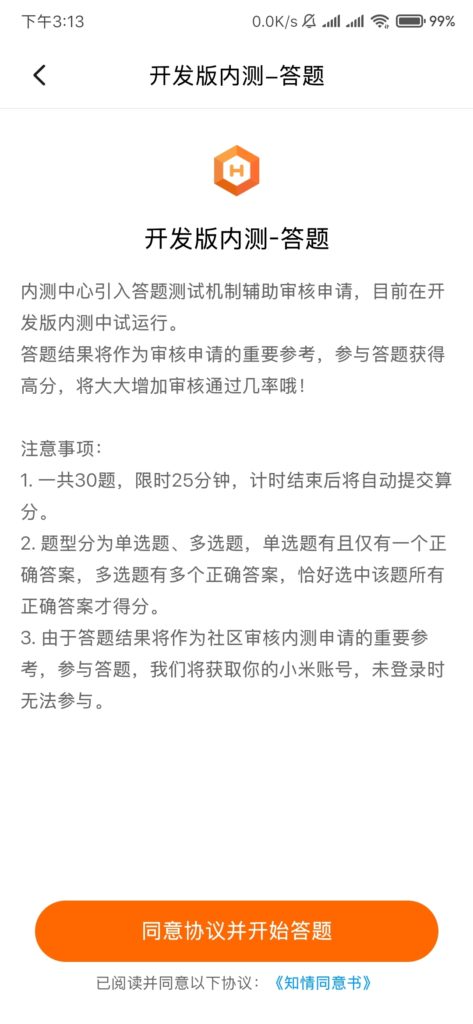
Beware of Fake MIUI 12 Closed Beta Recruitments
MIUI is one of the most desired Android skin in Asian markets. The hype for the new version intensifies at the dawn of release. Making use of this opportunity, perpetrators have been now sharing fake MIUI 12 closed beta recruitments all over the internet. Thankfully, Xiaomi has responded asking users to stay away from such posts.

Fake MIUI 12 Closed Beta Recruitment

Even before Xiaomi officially announced the launch event for MIUI 12 and Mi 10 Youth Edition, multiple fake closed beta recruitments had already taken over the web. All thanks to the hype created by rumours since after the release of MIUI 11 late last year.

MIUI has a larger fan base than one could have ever thought of. This Chinese Android skin is a big no from westerners because of cultural difference and complexity. But it is the interface that has built the Xiaomi empire as the company started with MIUI and not making smartphones.

Every iteration of the Xiaomi mobile software brings new features and changes based on users feedback and market trends. It does have advertisements for monetization but that is not stopping people from buying Xiaomi or Redmi smartphones as they offer great value for money.

Fake MIUI 12 Closed Beta Changelog

Further, the company has a number of release channels for MIUI such as closed beta, public beta, and stable. These releases are further offered in recovery and fastboot versions. This makes it difficult for a normal user to keep track of the new build releases unless they are active on Mi community.

And, that has what led to the rise of fake MIUI 12 closed beta recruitments. In response, this is what Sangat Desai aka R0user, the head of Mi Community India has to say for the current situation.

Dear MIUI Fans,

It has been brought to our attention that multiple fake MIUI12 testing programs were spotted across different channels recently. In the interests of our MIUI users, we hereby clarify that the MIUI testing programs will be launched only through Xiaomi’s official channels which refers to Mi Community and Official MIUI Social Handles.

Please do not apply for any testing programs unless released across our official channels.

Stay tuned, thanks for your understanding and support.

We all know MIUI 12 will be announced coming Monday, i.e. 27th April. So, we urge you to wait until the event to know about beta recruitments and rollout schedule. We also expect the company to announce more information in the coming days across various localized Mi Communities for different markets.

Until then, beware of fake MIUI 12 closed beta recruitments and check out the upcoming features officially teased by Xiaomi.

 

(Via)

Xiaomi launches the MIJIA Sweeping Robot G1, an affordable cleaning device

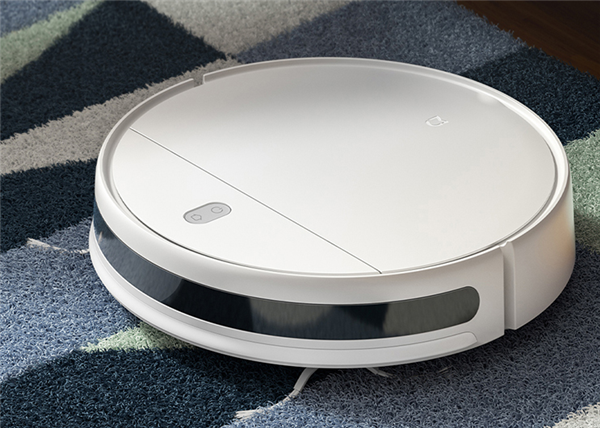
Earlier today (24th April 2020), Xiaomi launched the affordable MIJIA Sweeping Robot G1. The product is a home appliance and, as its name implies, was built for sweeping. It can even drag and has a triple filtering system with four block suction.

The MIJIA Sweeping Robot G1 features a round design that helps it in mopping up. This is function is further facilitated by the 200ml intelligent precision controlled water tank that has a water pump. Through this, the robot can control the water output level while also being able to measure the water remaining in the tank thanks to its intelligent chip that does not waste water.

The MIJIA Sweeping Robot G1 is also equipped with a Japanese NIDEC motor that has a suction power of 2200Pa. The 4 stop suction switching technology enables it to clean particles as small as hair or as large as a steel ball or soybean. The gadget can be controlled via the app, which also provides real time view of cleaning status and its path.

Xiaomi

Notably, the robot also supports the Xiao AI voice assistant. It can also be linked with a smart door lock. Thus, the Xiaomi MIJIA Sweeping Robot G1 can immediately start sweeping as people start walking in. The device automatically goes to recharge once it is done with its designated task. The gadget starts from 899Yuan (roughly 127 US Dollars) but a higher priced variant is also available for 999 Yuan (roughly 141 US Dollars).


Honor X10 could be new name of Honor 10X

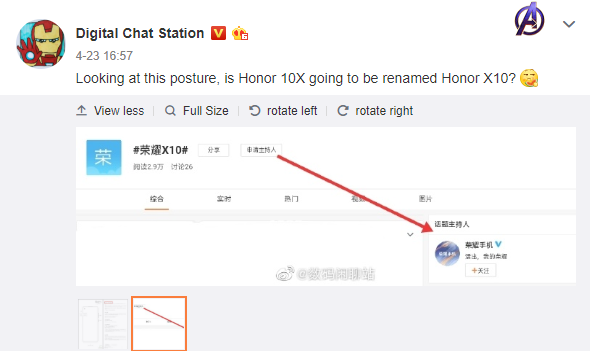
Last year in July, Honor had launched the Honor 9X and Honor 9X Pro smartphones in China. Recent reports have revealed that the Chinese manufacturer is now working on the launch of the successor models. While there is no information available on the existence of the Honor 10X Pro, a recent report claimed that the Honor 10X could be the cheapest 5G phone form the company. Some findings from the official Huawei forums site suggest that the device may not launch as Honor 10X. Instead, it may arrive as Honor X10.

A screenshot from Huawei’s forum site reveals that there is a thread for the Honor X10 phone. We tried searching with the same name on the forum site, but the dedicated thread could not be found. Multiple Weibo users have including has claimed the Honor 10x will be renamed as Honor 10X. A reliable tipster from China has also claimed the same.

Honor X10 5G renamed

The probable reason why Honor may name its next X-series as Honor X10 is that competitor brand Redmi is also gearing to launch a phone with similar moniker. The unannounced Redmi 10X 4G is already listed with its specifications and pricing on the database of China Telecom’s product library. Honor may want to avoid to confusion between the two devices among the consumers.

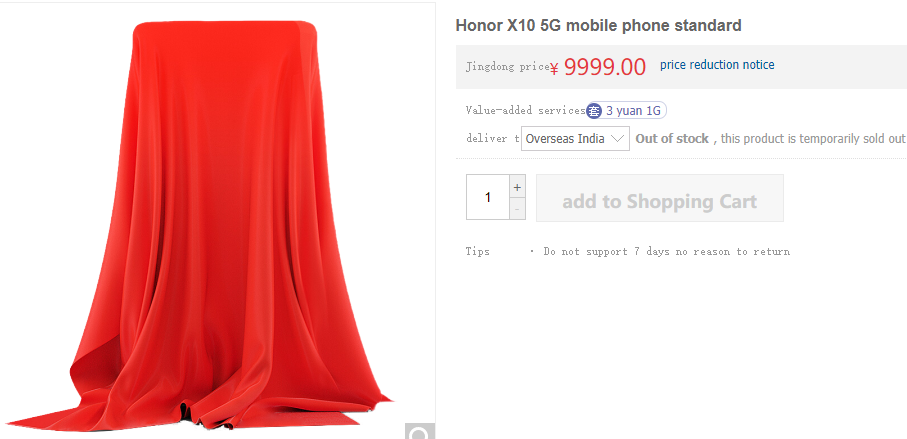
A listing of the Honor X10 phone can be found on JD.com. It is not an official listing. However, the seller has a good reputation on the retailer site. These findings do suggest that the next X-series Honor could be arriving as Honor X10.

Honor X10 5G JD listing

The Honor 30S that carries a pricing of 2,399 Yuan (~$339) is currently the cheapest 5G-ready smartphone from the brand. The Honor 9X had arrived in China with a price tag of 1,399 Yuan (~$197). The 5G ready Honor X10 could be coming in May to the home market with a slightly higher price tag. The specifications of the phone are currently under the wraps. A render of the Honor X10 had appeared last week. It was later found to be a fan-made image.


OnePlus 8 Pro users face screen issues on pre-orders, fixes to arrive soon

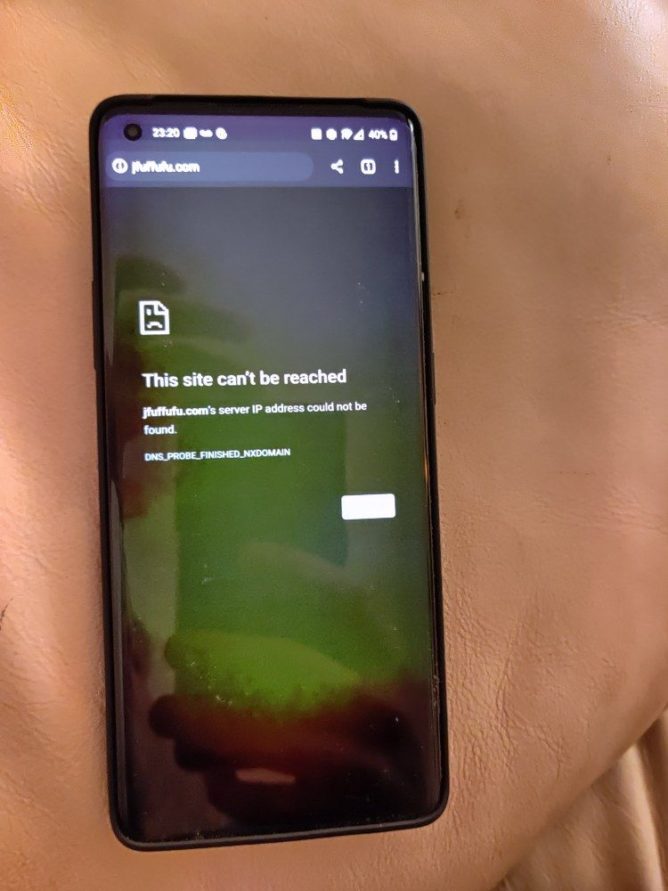
While the OnePlus 8 Pro doesn’t go on sale till April 29th, the pre-orders of the flagship smartphone have already started shipping. However, certain users are already reporting on issues regarding the device’s display, with problems ranging from crushed/clipped blacks and even a “green tint.”

OnePlus
Green Tint Issue (Via Tungmeister)

OnePlus has officially acknowledged the problem and has stated that they are already working on a fix, which should arrive soon. As of right now, the list of problems includes low brightness irregularities, clipped blacks, image retention on the screen, and even lines appearing around the punch hole selfie camera cutout. The company has said that it is working on fixing the issues for at least some of the reported problems being faced by users.

Certain issues like uniformity at low brightness is an issue which is faced universally by smartphones equipped with OLED display panels. Thus, it will likely not get fixed through a simple software patch, but the issues regarding crushed/clipped blacks can be solved or have its effects minimized at the very least. According to some users, the issues faced may change based on certain display settings, like resolution and refresh rate. In other words, lower or non-adaptive settings may reduce the visibility of the problems in certain cases.

OnePlus
Low brightness uniformity issues (Via u/johntrials)

OnePlus’ official statement read, “OnePlus values user feedback and is committed to delivering the best smartphone experience. Our team is currently investigating these reports to identify the best solutions for our users, and we will issue updates as soon as they are ready.” So, users are advised to wait till an OTA update drops, which hopefully will arrive soon.


(Via)

Vivo Y50 launched, features 128GB storage and large 5,000mAh battery

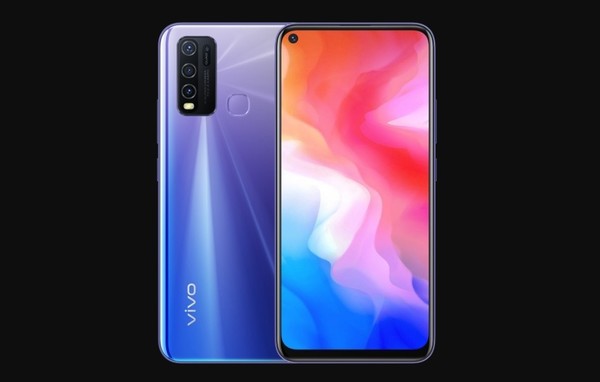
Vivo has officially launched the Vivo Y50 earlier today (24th April 2020), which is now available for pre-booking. It is a mid range smartphone with a quad camera setup on the rear, 128GB of internal storage, and a large 5,000mAh battery pack. It is priced at 1,698 Yuan (roughly 240 US Dollars) and will officially be launched on 26th April 2020.

Vivo

Specifications

Under the hood, the Vivo Y50 packs Qualcomm’s Snapdragon 665 SoC alongside 8GB of RAM and 128GB of storage. The storage can further be expanded up to 256GB as well via a microSD card. The device sports a 6.53 inch display with an FHD+ resolution (2340×1080) and a high screen to body ratio of 90.7 percent. One of Vivo Y50’s most notable feature is its large 5,000mAh battery, which also supports up to 18W fast charging.

Camera

For optics, the Vivo Y50 features a quad camera module on the rear. This includes a13 megapixel primary camera, an 8 megapixel wide angle lens, 2 megapixel macro sensor and 2 megapixel depth of field lens as well. The device can cycle through these different image sensors seamlessly while the front shooter is a 16 megapixel punch hole camera that supports AI smart beauty functions. This allows the camera to identify 103 basic facial feature points to improve image quality and enhancing the user’s selfie shots.

Vivo

Design

The Vivo Y50 arrives in three different colors, including Glacier Blue, Silver, and Obsidian Black. Its rear panel is made from glossy glass, with a curved mirror design. So under direct lighting, its back cover has a flare effect. Next to the camera module, a rear mounted fingerprint scanner can also be found.


OnePlus 8 and OnePlus 8 Pro pop-up boxes listed in India; price starts at ₹45,999 ($602)

The OnePlus 8 and OnePlus 8 Pro flagship smartphones were officially unveiled a few days ago in the Indian market and now the company has listed the Limited Edition Pop-up Boxes for both the devices on its website.

OnePlus usually hosts pop-up events in various cities around the world after launching its flagship smartphones. At these events, users can experience the newly announced smartphone and the company also allows them to buy the phone before it hits the market.

OnePlus 8 Pro Pop-up Box

However, the company cannot host any such event this time because of the on-going coronavirus pandemic. Thus, OnePlus has opted for online Pop-up Events and is now offering its users a change to purchase the Limited Edition Pop-up Boxes.

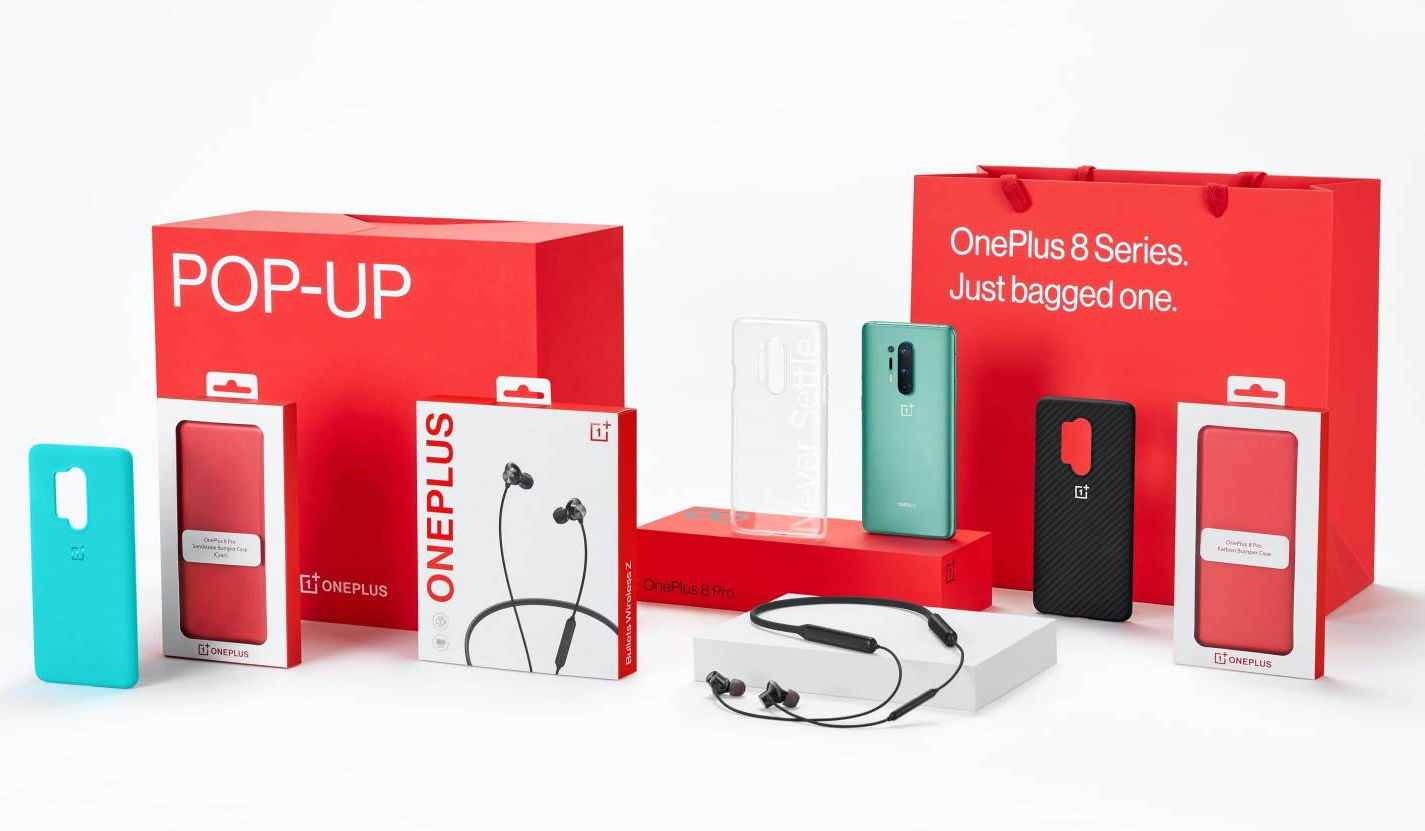
The Pop-up box comes with the smartphone, Bullets Wireless Z earphones, and two mobile cases. The OnePlus 8 pop-up box is priced at ₹45,999 (~$602) while the pop-up box for the OnePlus 8 Pro is priced at ₹60,999 which is roughly $798. While they have been listed on the OnePlus India website, the boxes are not yet available for purchase or pre-orders.

The OnePlus 8 Pop-up Box includes 8GB RAM + 128GB storage smartphone in either Onyx Black or Glacial Green color, Bullets Wireless Z earphones, a Cyan Bumper Case and a Nylon Bumper Case.

OnePlus 8 Pop-up Box

On the other hand, the OnePlus 8 Pro Pop-up Box includes 12GB RAM + 256GB storage variant of the smartphone in either Onyx Black or Glacial Green color, along with a Bullets Wireless Z earphones, a Cyan Bumper Case and a Karbon Bumper Case.

The company is set to start selling the OnePlus 8 series smartphones in India from next month. As for the pricing, the OnePlus 8 is priced at ₹44,999 while the OnePlus 8 Pro is priced at ₹59,999. The OnePlus Bullets Wireless Z is priced at ₹1,999 in India.

Meanwhile, all the models of the OnePlus 8 series are out of stock in China as the sales exceeded the company’s expectations. Pete Lau has said that the company is ramping up production in the domestic market and the sale will resume as soon as possible.


Mi 10 Youth Edition will feature ‘Multiplicity Photography’ and ‘Burst Video’ Modes

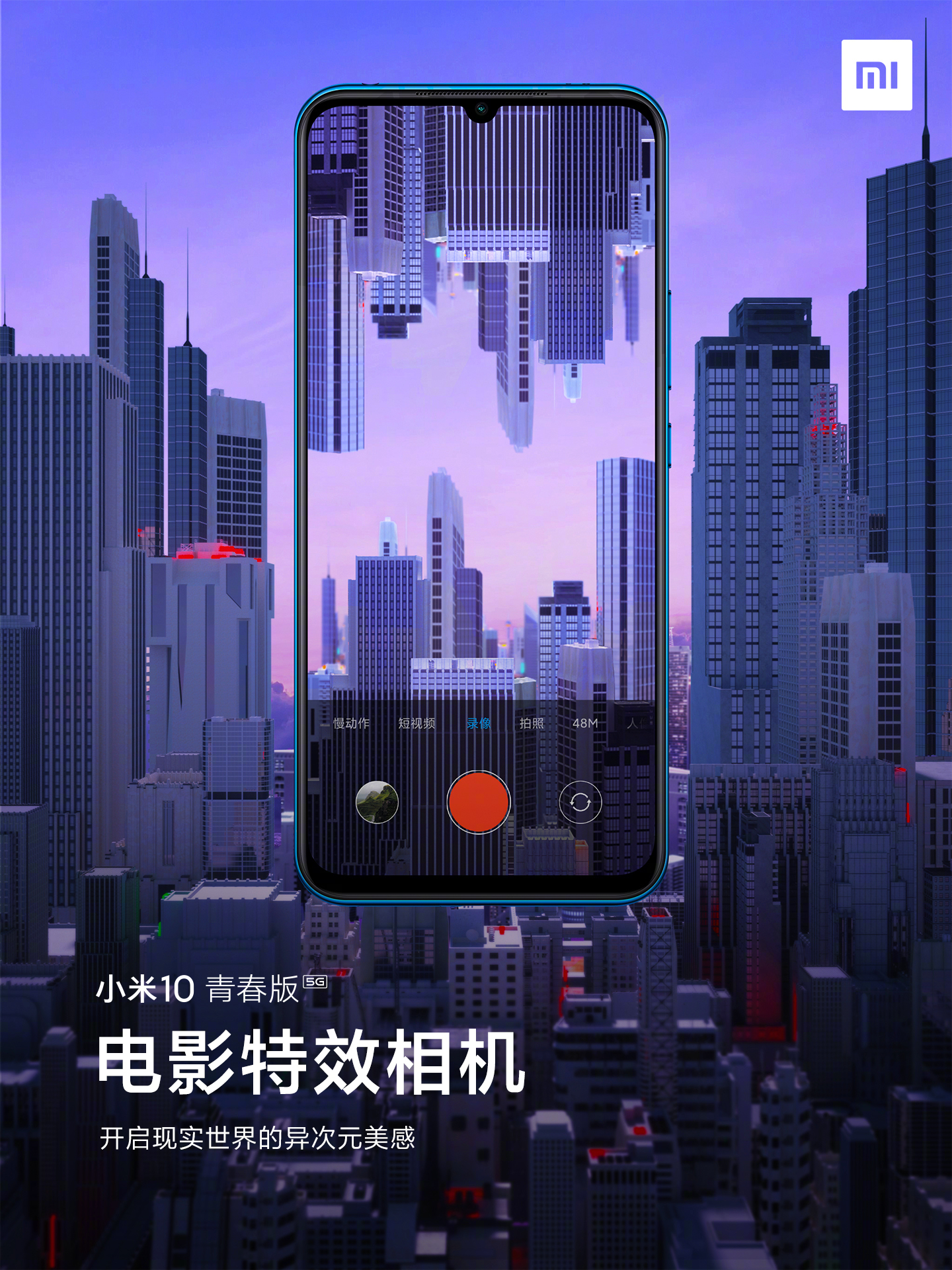
Xiaomi’s upcoming smartphone Mi 10 Youth Edition is completely different in both design and specs compared to the Mi 10 and Mi 10 Pro though it comes under the same series. The phone has been scheduled to launch alongside MIUI 12 on April 27. As usual, the company has been teasing its features for a few days now. The latest teaser posted today reveals the handset to come with ‘Multiplicity Photography’ and ‘Burst Video’ options, the first on a Xiaomi device.

For the unware, multiplicity photography refers to a technique which enables the subject of the picture (person or pet) to occur multiple times in different positions. Usually, one has to capture multiple images and then edit them to achieve the final result. But with the upcoming Xiaomi Mi 10 Youth Edition, users can click multiplicity pictures within the camera app itself. 

The burst video mode, on the other hand, will let users shoot videos with anime effects. This feature sounds similar to the one found on the recently launched Nubia Play 5G. The phone will also feature a video mode to achieve effects like in the movie ‘Doctor Strange’. The Chinese tech company claims that it has developed these camera features at its own Xiaomi AI Lab by incorporating AI and AR together.

As for the camera hardware, the handset will feature a quad-camera setup placed on a rectangular module at the top left corner of its back. The setup will include a new periscope camera with up to 50x digital zoom, which is not found on the international Mi 10 Lite. Other three sensors are expected to be the same from its global counterpart. That means it will feature a 48MP primary shooter, an 8MP ultra-wide snapper, and a 5MP macro unit.

Further, the Mi 10 Youth Edition will be powered by Qualcomm Snapdragon 765 with support for dual-mode 5G (SA / NSA). The device will sport an AMOLED panel at the front with an in-display fingerprint sensor and a dew-drop notch accommodating a 16MP selfie camera. The phone will be available in four color options – white gradient, peach, turquoise, and blue.


UNISOC is making gains in the Chinese 5G market with its T7510 chipset

As the world is seeing growth in 5G infrastructure deployment, smartphone manufacturers seems to have made 5G connectivity a standard feature on most of the new mid-range and premium smartphones.

While the market for 5G chipset for mobiles is mostly dominated by Qualcomm, MediaTek, Huawei, and Samsung, another company from China has joined the list of suppliers for 5G chipsets for the mid-range devices — UNISOC.

As per the reports, China-based chipset maker UNISOC is taking a leap into the mid-range 5G chipset market after the company provided the T7510 SoC for HiSense F50 5G smartphone in China.

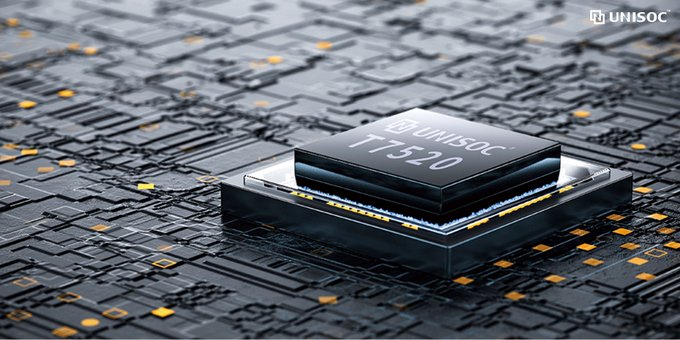
UNISOC T7520

The UNISOC T7520 is touted to be one of the world’s first chips to be made using TSMC’s 6 nm process technology using extreme ultraviolet lithography (EUVL). It packs four high-performance Arm Cortex-A76 cores, four energy-efficient Arm Cortex-A55 cores, and Arm Mali-G57 GPU.

It also comes with a new NPU that is said to offer 50 percent higher TOPS-per-Watt rate than the company’s previous-generation NPU. It features a four-core ISP that supports up to 100MP sensors and multi-camera processing capability. It also supports 5G NR TDD+FDD carrier aggregation, and is designed to offer peak uplink speed of 3.25 Gbps.

The pricing for the 5G chipsets are currently on the higher side and thus the pricing of 5G smartphones are also not as aggressive as what we’ve seen some of the companies offer on their phones. However, with more competition in the chipset market, we expect the pricing to go down soon.

Qualcomm and MediaTek are the leading suppliers for the 5G SoC in the market for mid-range devices. Huawei has also recently launched its mid-range chipset Kirin 820 with 5G support but it’ll most likely be limited to Huawei and Honor phones. Samsung doesn’t have a good presence in the Chinese market but the company has started supplying its Exynos chipset to other brands, like Vivo.

(Via)

Alleged Meizu 17, 17 Pro images appear; Snapdragon 865, UFS 3.1 storage confirmed

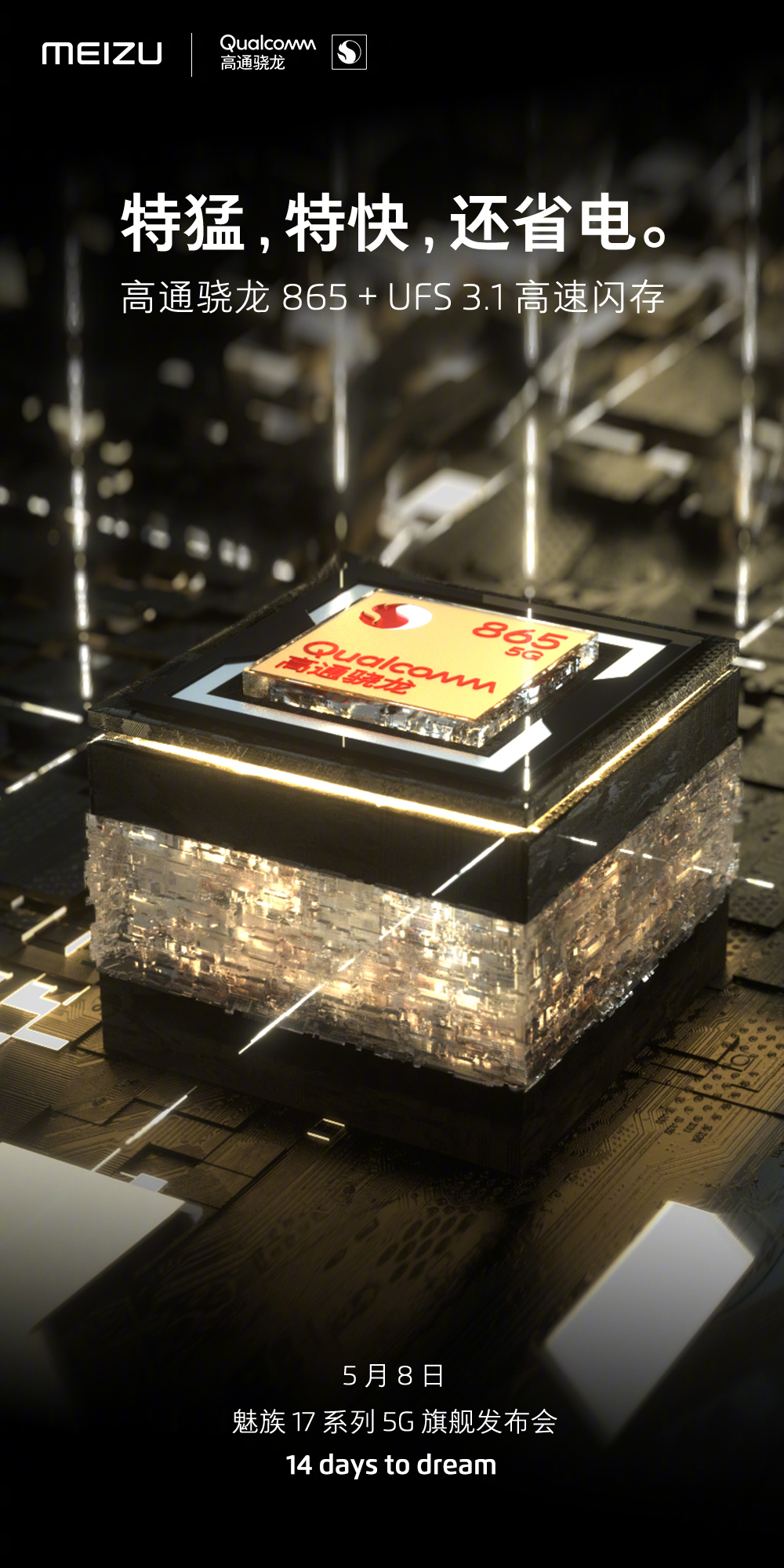
Meizu will be announcing the Meizu 17 5G series on May 8. With some days remaining for the launch, the Chinese firm has started revealing the key features of the smartphone. Today, it revealed that the Meizu 17 is powered by Snapdragon 865 mobile platform and it is equipped with UFS 3.1 storage. At the same time, live images of the alleged Meizu 17 smartphone has appeared on SlashLeaks.

Meizu 17 SD865 UFS 3.1

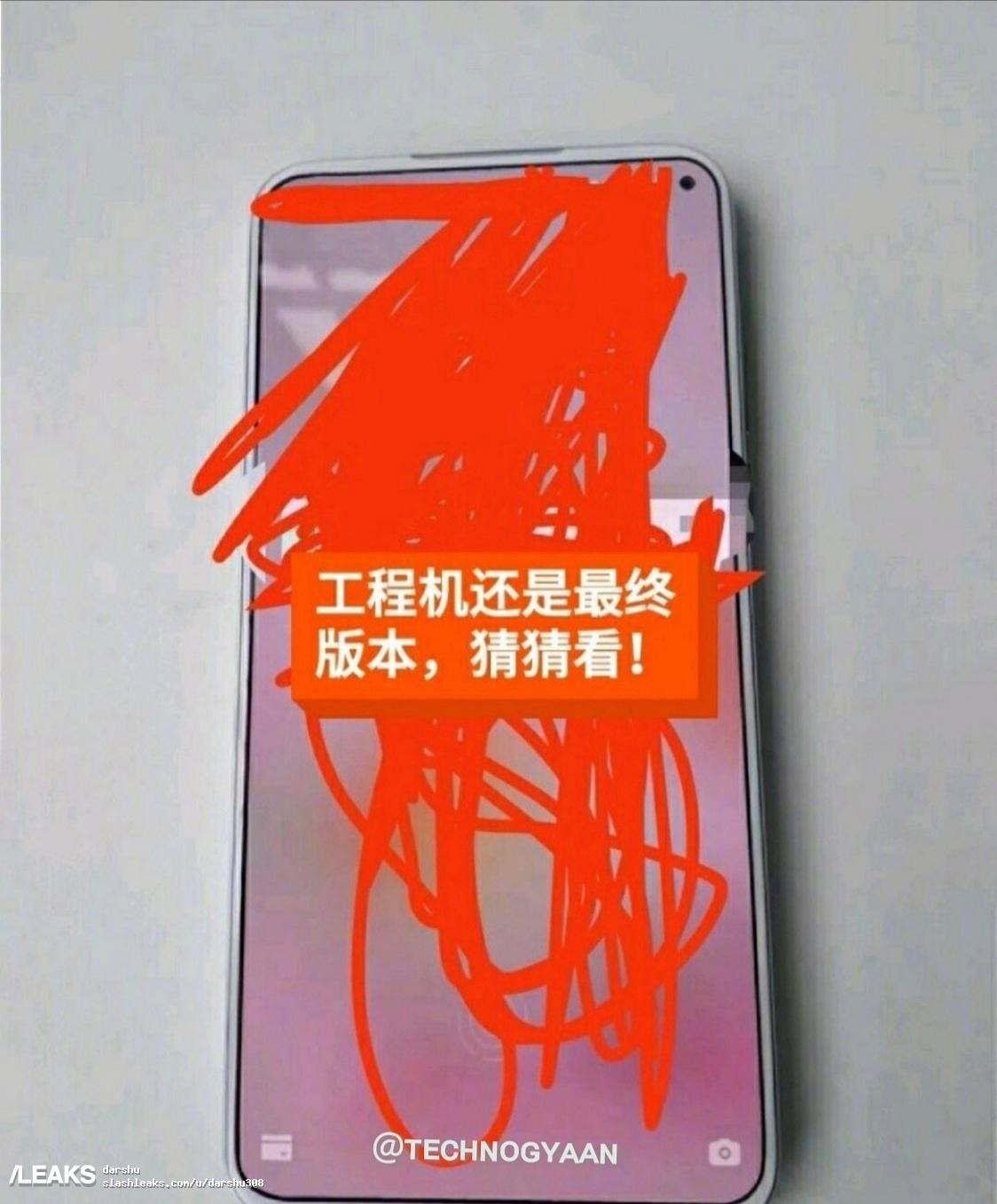
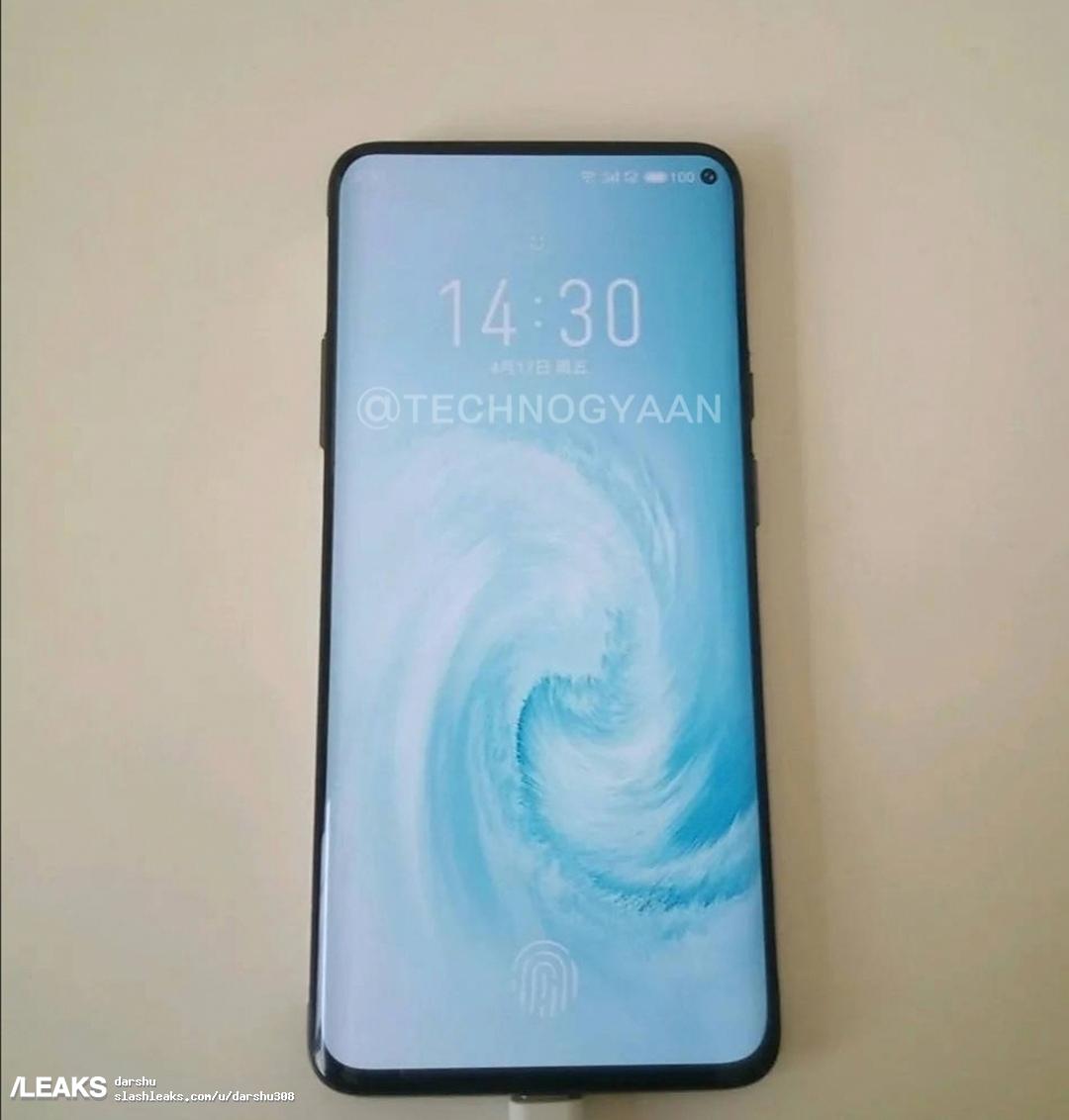
Yesterday, Meizu had shared an official poster which revealed the front and rear designs of the Meizu 17 5G smartphone. The image revealed that the Meizu 17 has a flat display with white-colored bezels. Hence, it appears that the image shown above may belong to the Meizu 17 smartphone. It has an earpiece in the upper bezels and a punch-hole at the top-right corner.

Meizu 17 live shot

On the other side, the other image shows the Meizu phone with a display that curves towards the left and right edges. Hence, it appears that the image may belong to the Meizu 17 Pro. A top-right center positioned punch-hole can be seen on the screen. The image seems to show the dummy unit of the smartphone. The Meizu 17 and 17 Pro smartphones are likely to arrive with in-screen fingerprint readers.

Meizu 17 Pro live shot

The Meizu 17 phone is believed to have M081Q model number. Its 3C certification revealed that it may arrive with 30W fast charger. On the other side, the Meizu 17 Pro 5G has M091Q model number. Its 3C listing revealed that it may ship with a 40W rapid charger. There is no information on the other differences between the two phones. The Meizu 17 5G series may hit the Chinese markets with a starting price of 3,999 Yuan (~$564).


(source)

Huawei leads the Chinese tablet market; captures nearly half of the market share

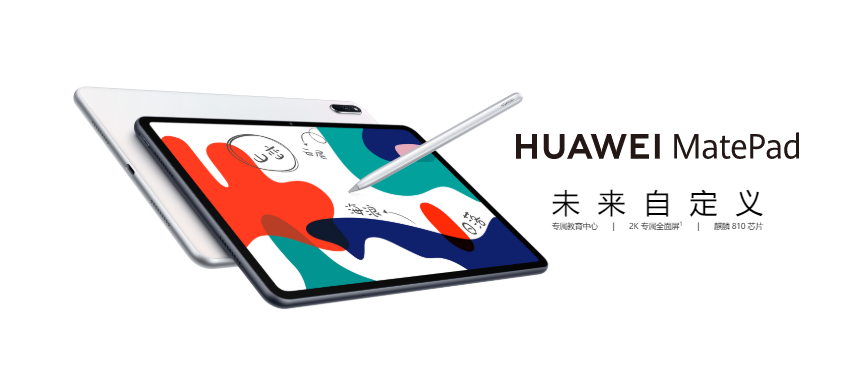
Recently, during the launch of Huawei Nova 7 series smartphones in the Chinese market, the company also launched the Huawei MatePad tablet. He Gang, President of Huawei’s Consumer Business Product Line also revealed that the company has become the leading tablet brand in China.

According to the reports, Huawei remained the leading tablet company in terms of shipments in its home market China for the third and fourth quarter of 2019. The company has also reportedly achieved higher breakthrough in 2020 and now accounts for nearly half of the Chinese tablet market.
Huawei Logo

The sale numbers seem to align with what the company’s founder and CEO Ren Zhegfei said in a recent interview. He said that the ongoing coronavirus pandemic has made shipments and production difficult, but the company has also been seeing an increase in demand for tablets, computers and more.
In a recently released financial report for Q1 2020, Huawei has managed to sell more than 450,000 units of smartphones in the Chinese market alone in March 2020. However, Ren Zhegfei has acknowledged that while the domestic market is showing growth, the international market is facing a decline.
This is likely because of the effective ban on Huawei by the United States which bars the company from using Google’s apps and services on its devices. Thus, the new devices from Huawei comes packed with Huawei Mobile Services (HMS).

Huawei MatePad featured

The newly launched Huawei MatePad comes with a 10.4-inch IPS display with 2000 x 1200 pixels resolution, Kirin 810 7nm chipset, up to 6GB RAM, 128GB internal storage, 8MP front as well as rear camera sensors, Android 10 operating system with EMUI 10.1, optional 4G LTE and 7,250mAh battery.

The base model with 4GB RAM costs 1,899 yuan (~$268) while the 6GB RAM model is priced at 2,199 yuan (~$311) and LTE variant of the same going for 2,499 yuan (~$352). It is now up for pre-orders and will be available for purchase from 26th April.