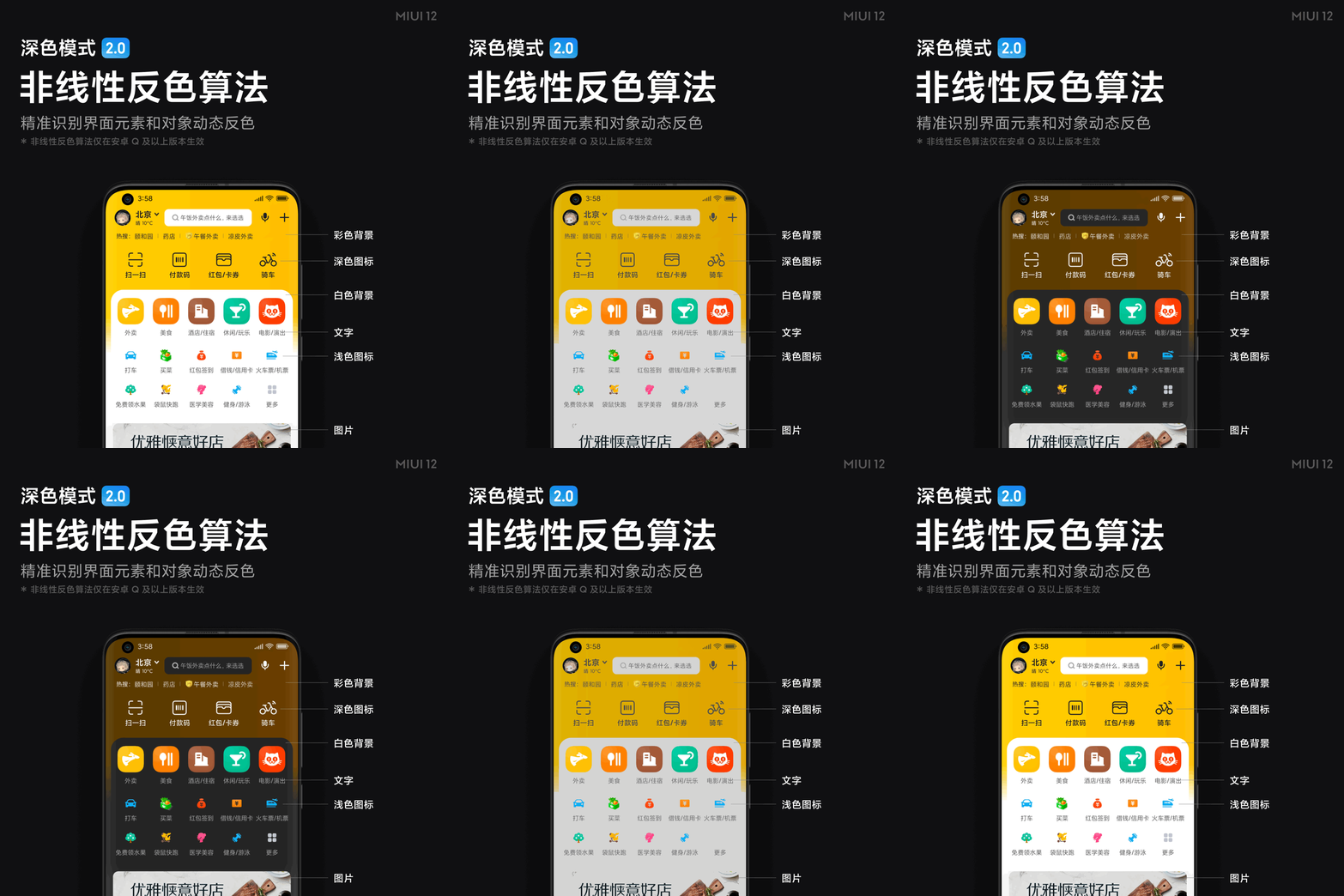
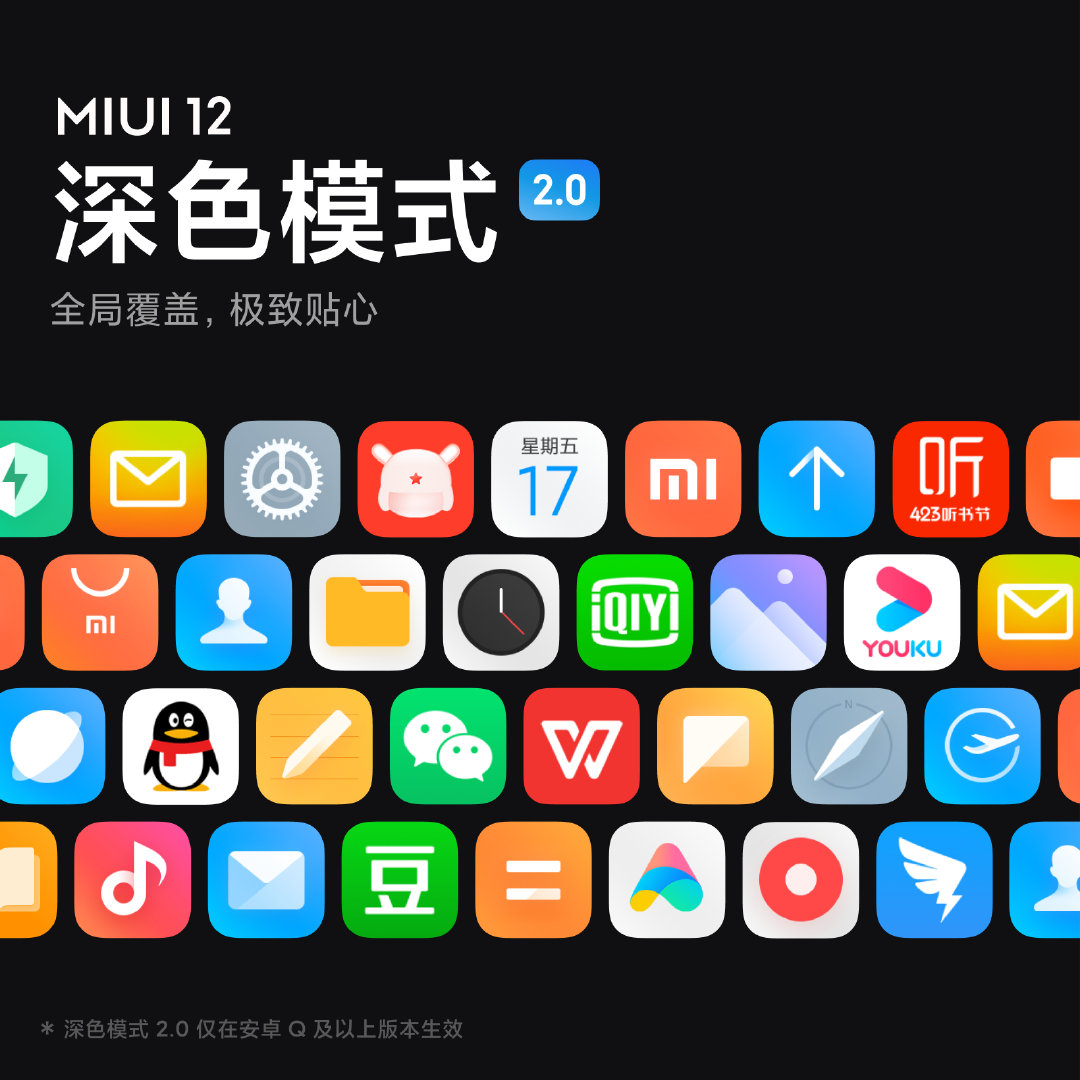
Earlier today, Xiaomi confirmed to announce MIUI 12 on April 27 alongside Mi 10 Youth Edition. Followed by that, the official MIUI Weibo account has now started teasing the new features and we expect it to continue till the day of the announcement. The first set of teasers officially confirms a new improved ‘Dark Mode 2.0’, which has been under the rumour mill for a few weeks now.
1 of 6
Xiaomi introduced ‘Dark Mode’ on its smartphones in early 2019 via an incremental update for MIUI 10. The same was improved a little and passed on to MIUI 11 later that year. But now, the company has fully revamped this feature for MIUI 12 and is calling it ‘Dark Mode 2.0’.
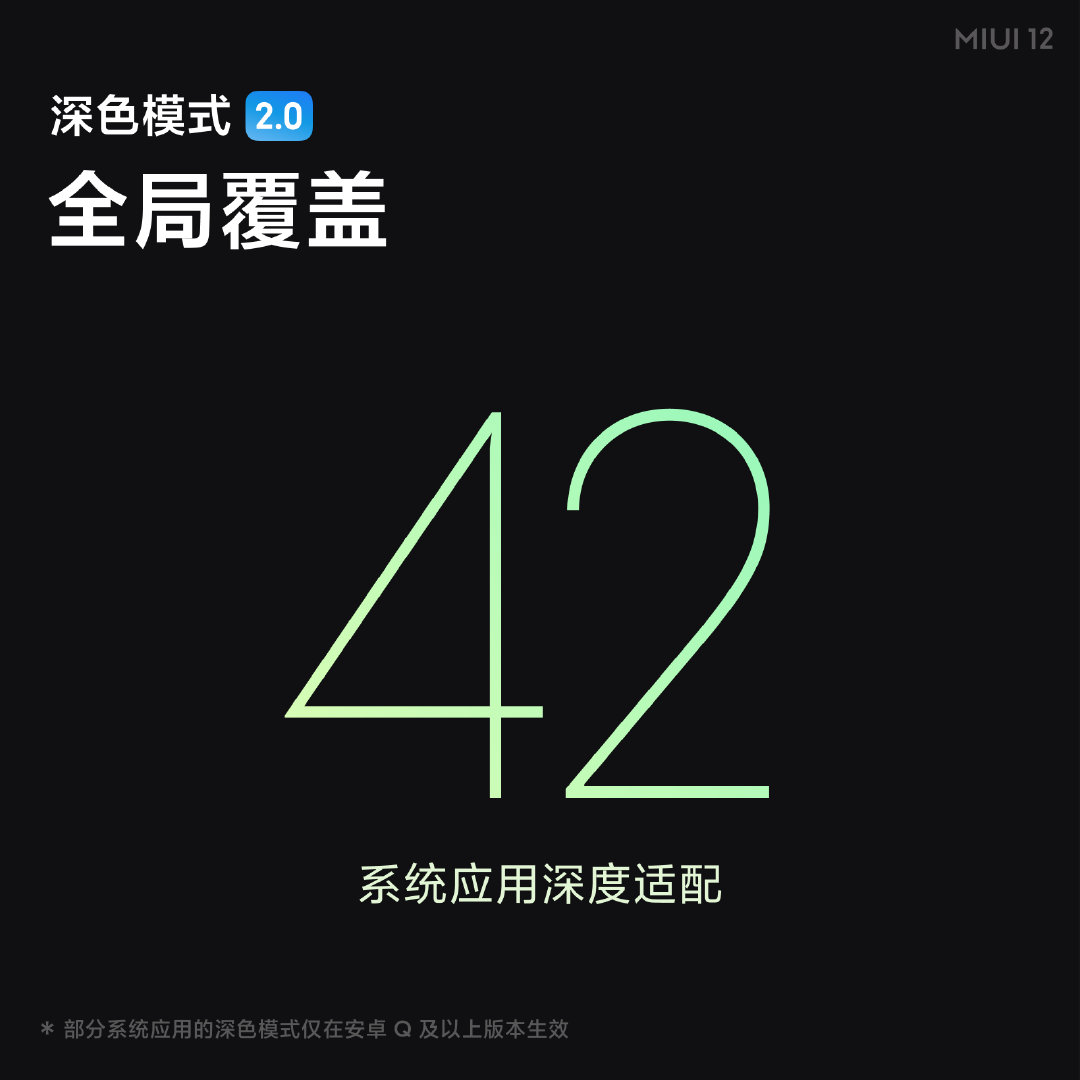
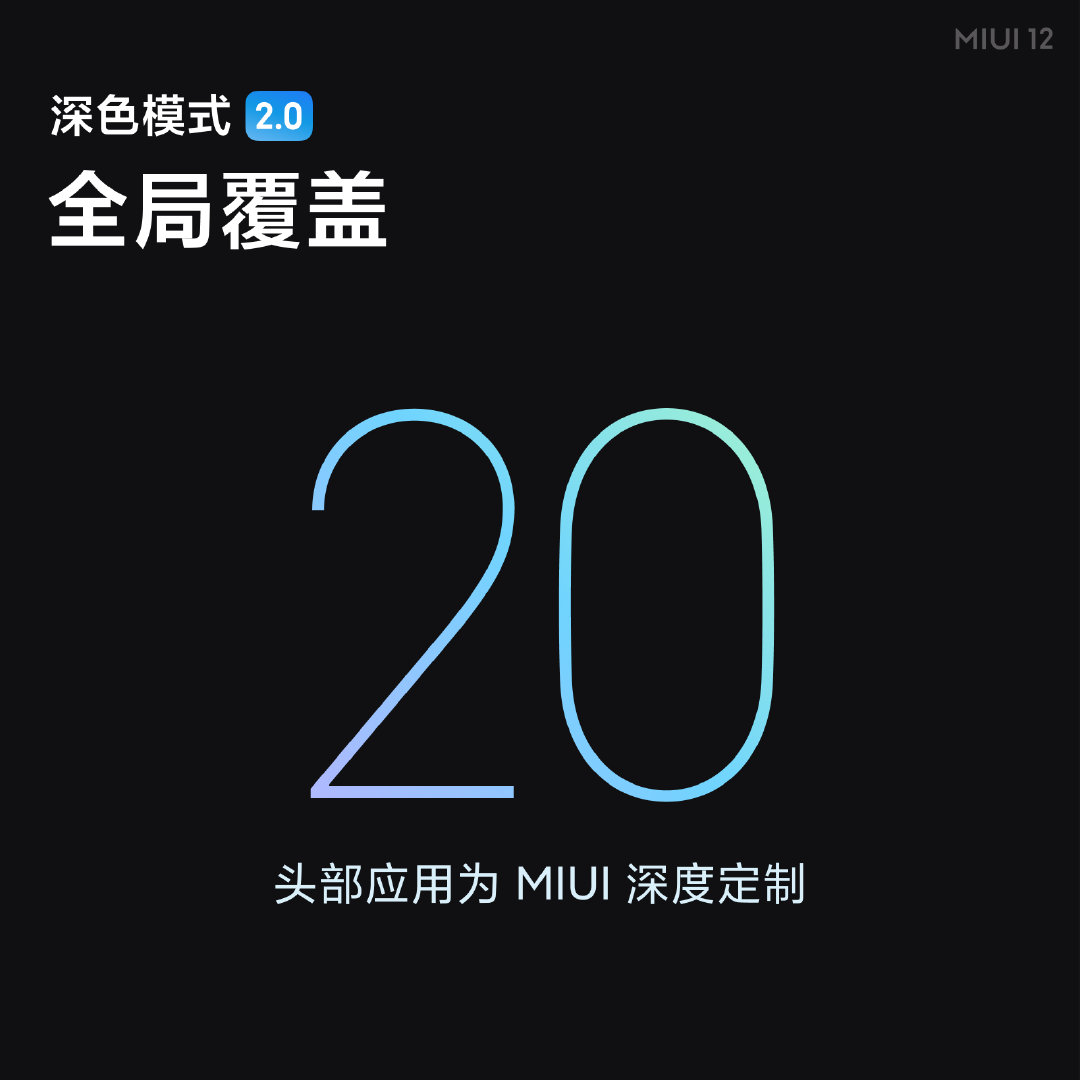
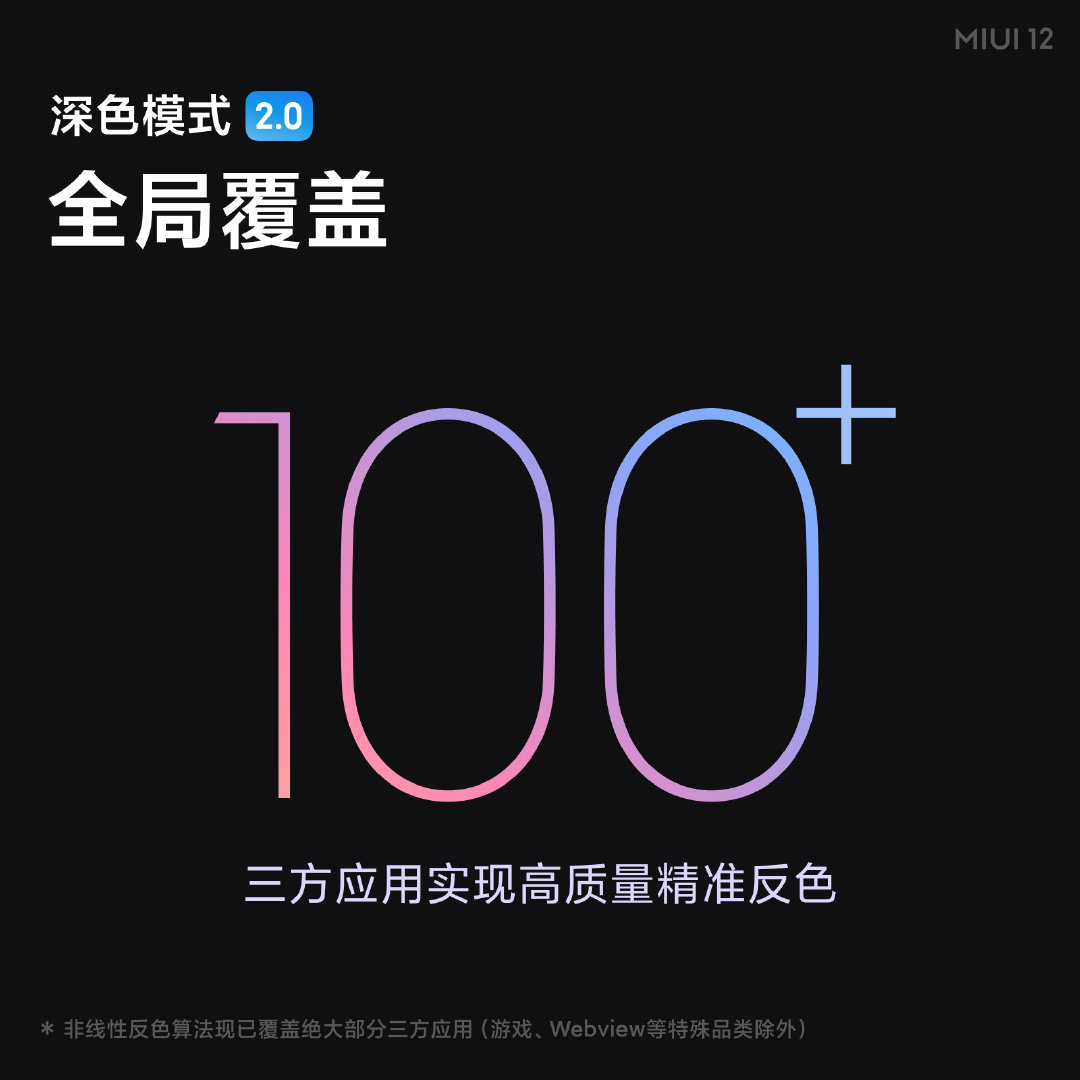
The current ‘Dark Mode’ on MIUI 11 does not affect all the system applications and the same can be said for third-party apps. But with the ‘Dark Mode 2.0’ on MIUI 12, the firm confirms it to support 42 system apps and 20 mainstream apps with deep integration. This new addition corroborates a report from November when an engineer revealed MIUI 12 to bring a system-wide (global) dark mode
1 of 6
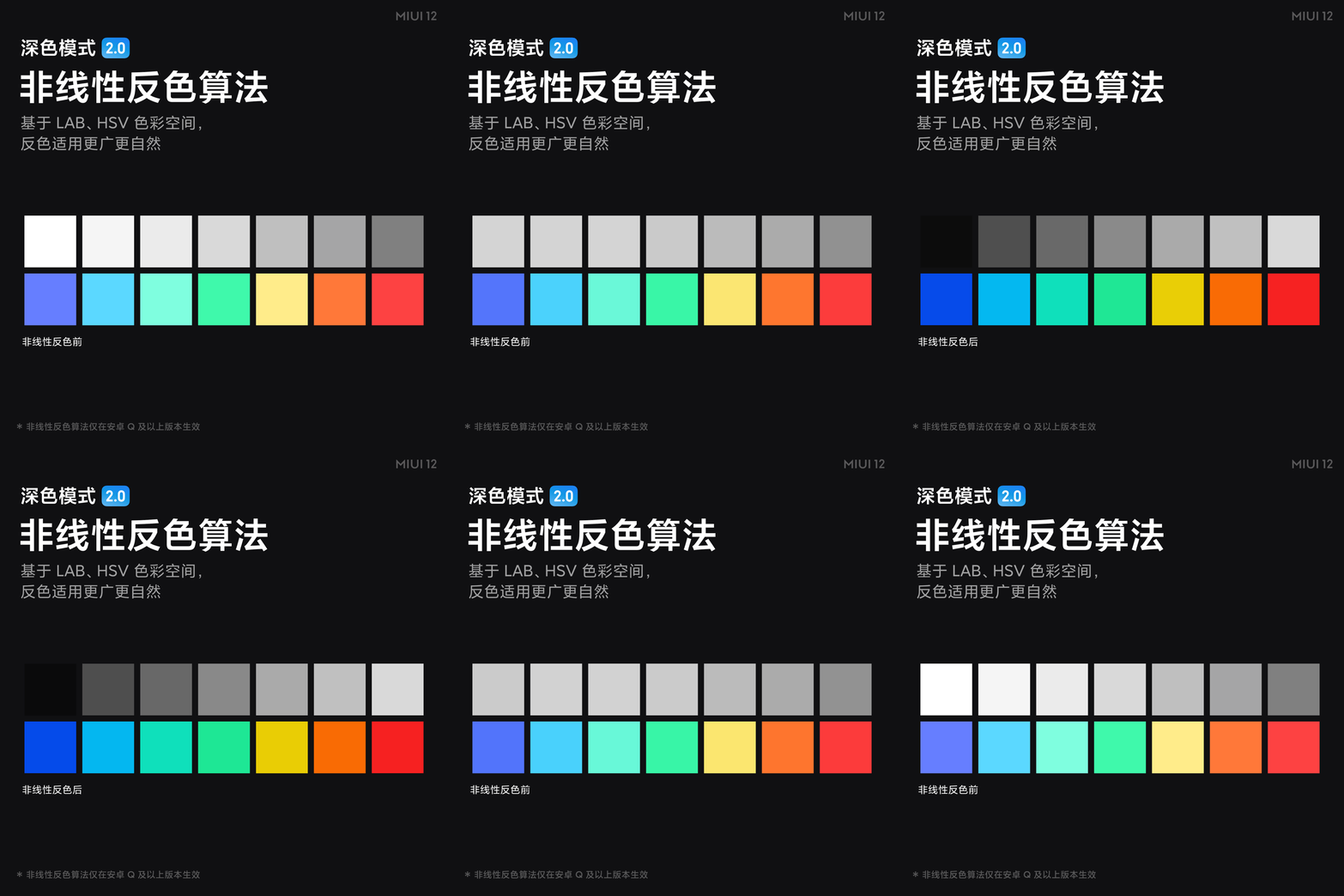
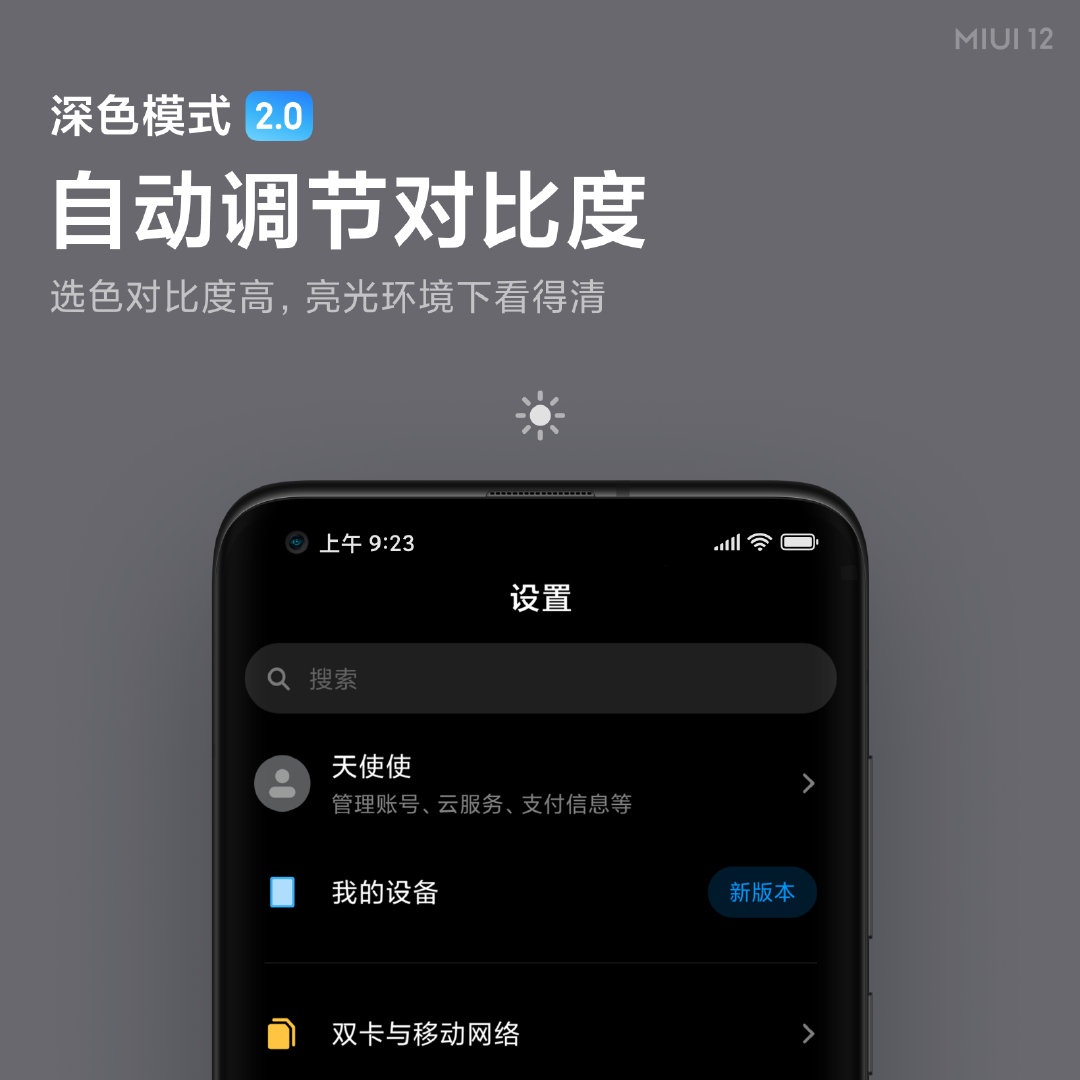
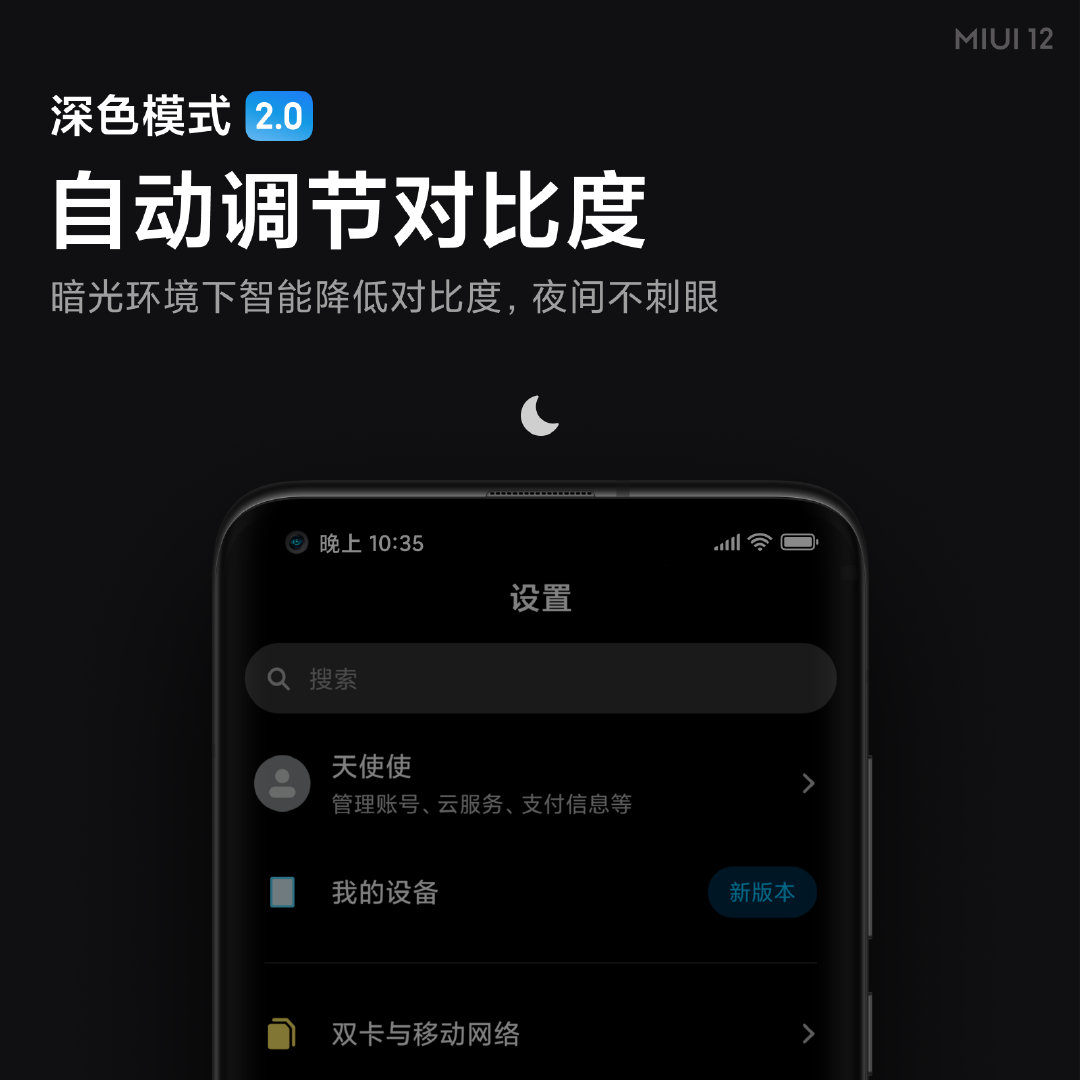
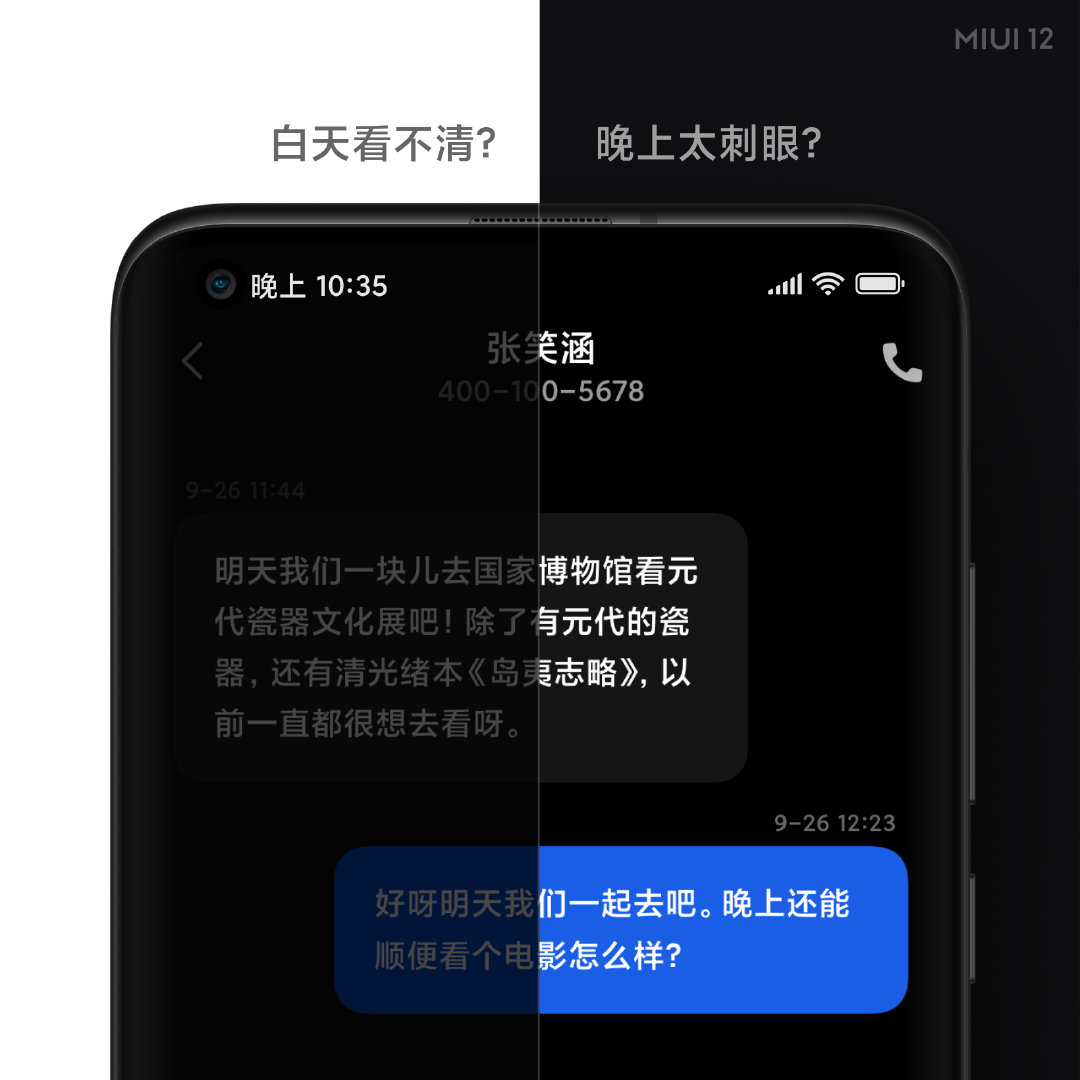
The new dark mode will use non-linear conversion of LAB and HSV color space to offer a natural and pleasing visual experience to users on 100+ apps. In addition to this, the contrast will now change dynamically based on the brightness in the surrounding for better visibility while using dark mode at any time of the day. That means when the brightness is low, the contrast will lower according to it. Similarly, when the brightness is high, the contrast will bump up to a higher level.
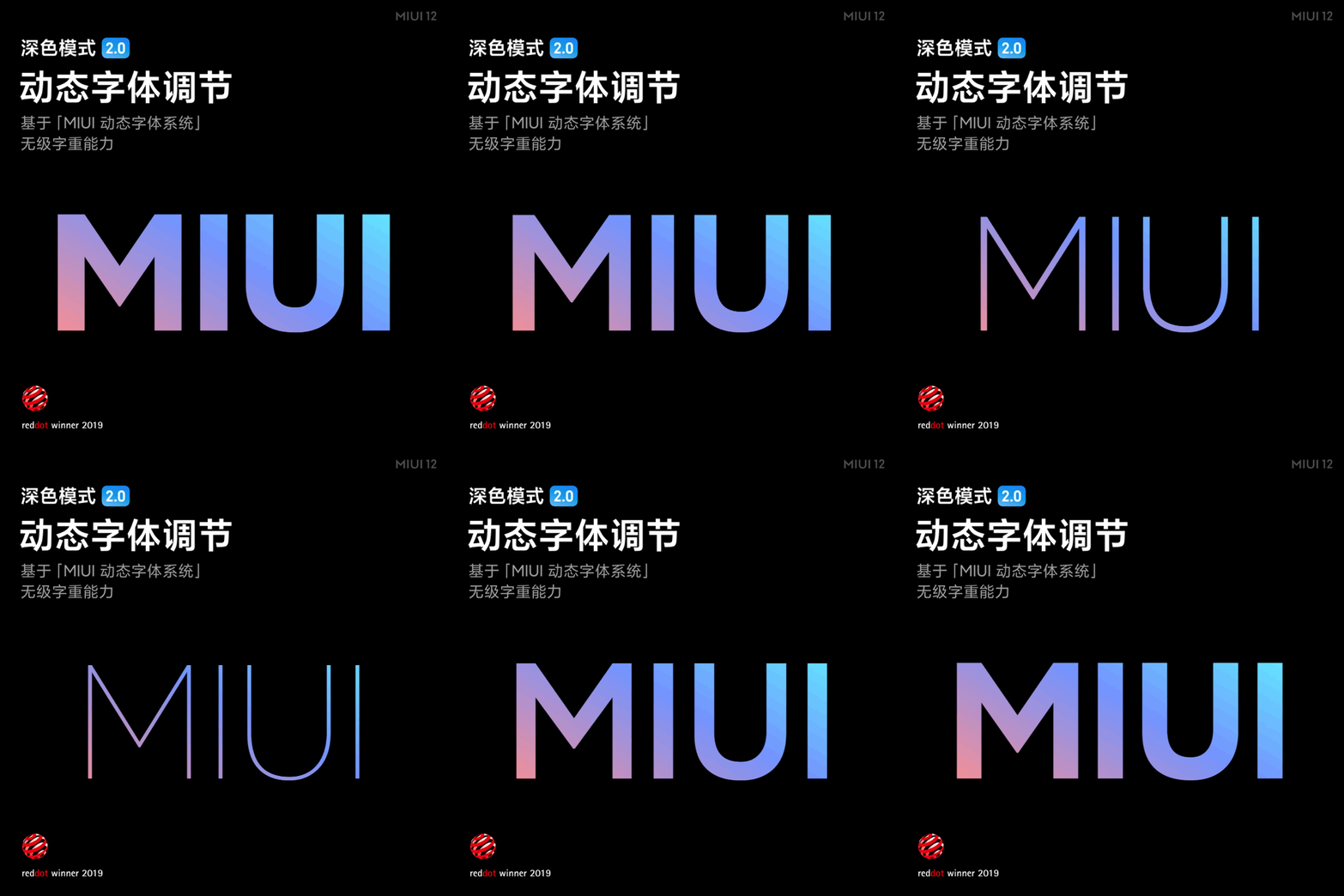
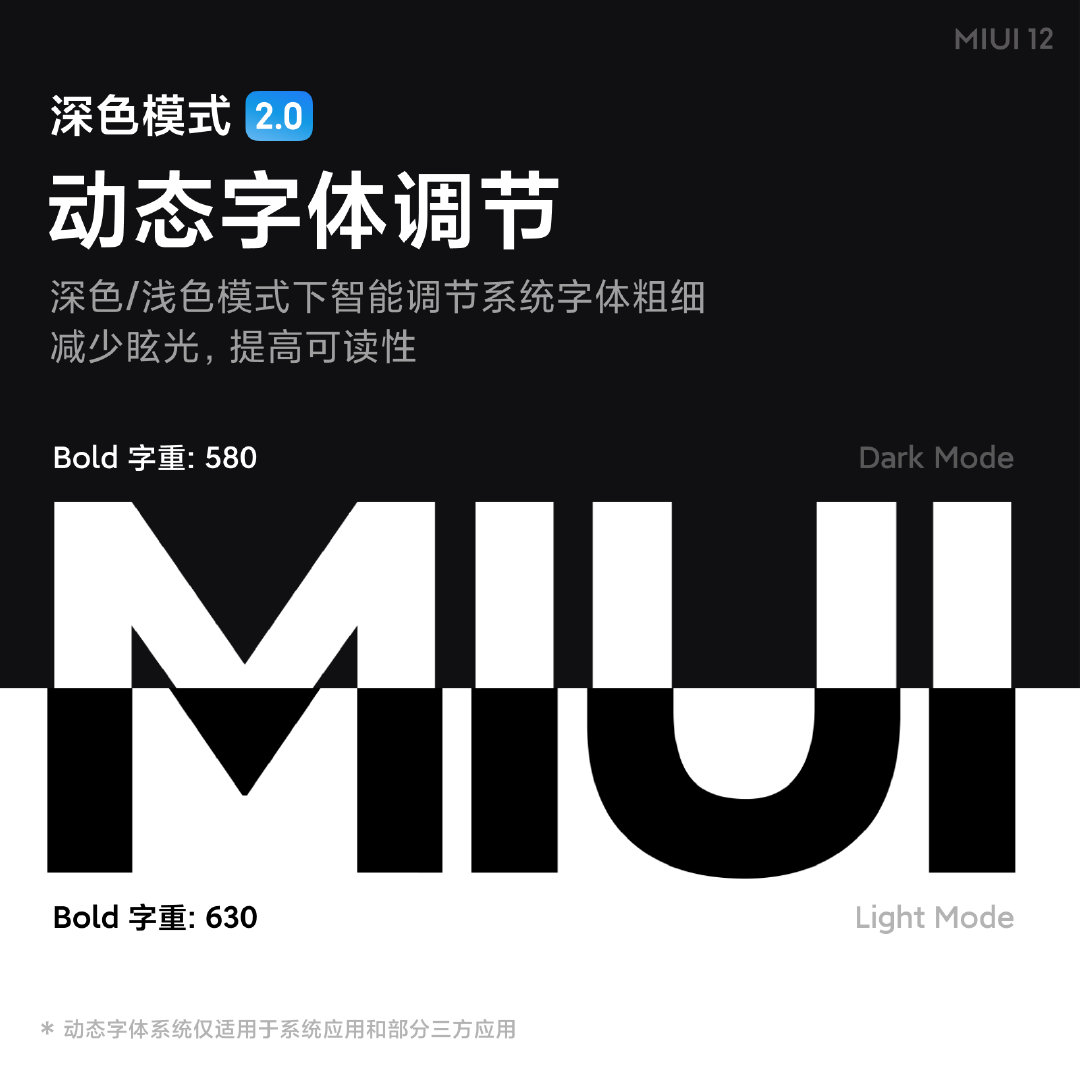
Further, the ‘Dark Mode 2.0’ on MIUI 12 will also affect fonts by dynamically changing the font-weight as well as by reducing glare and blurriness. Once the dark mode is turned off, they will return to normal to suite the light mode. This feature goes in line with a previous report of unified fonts and UI elements confirmed by the MIUI head designer in an AMA (Ask Me Anything) session.
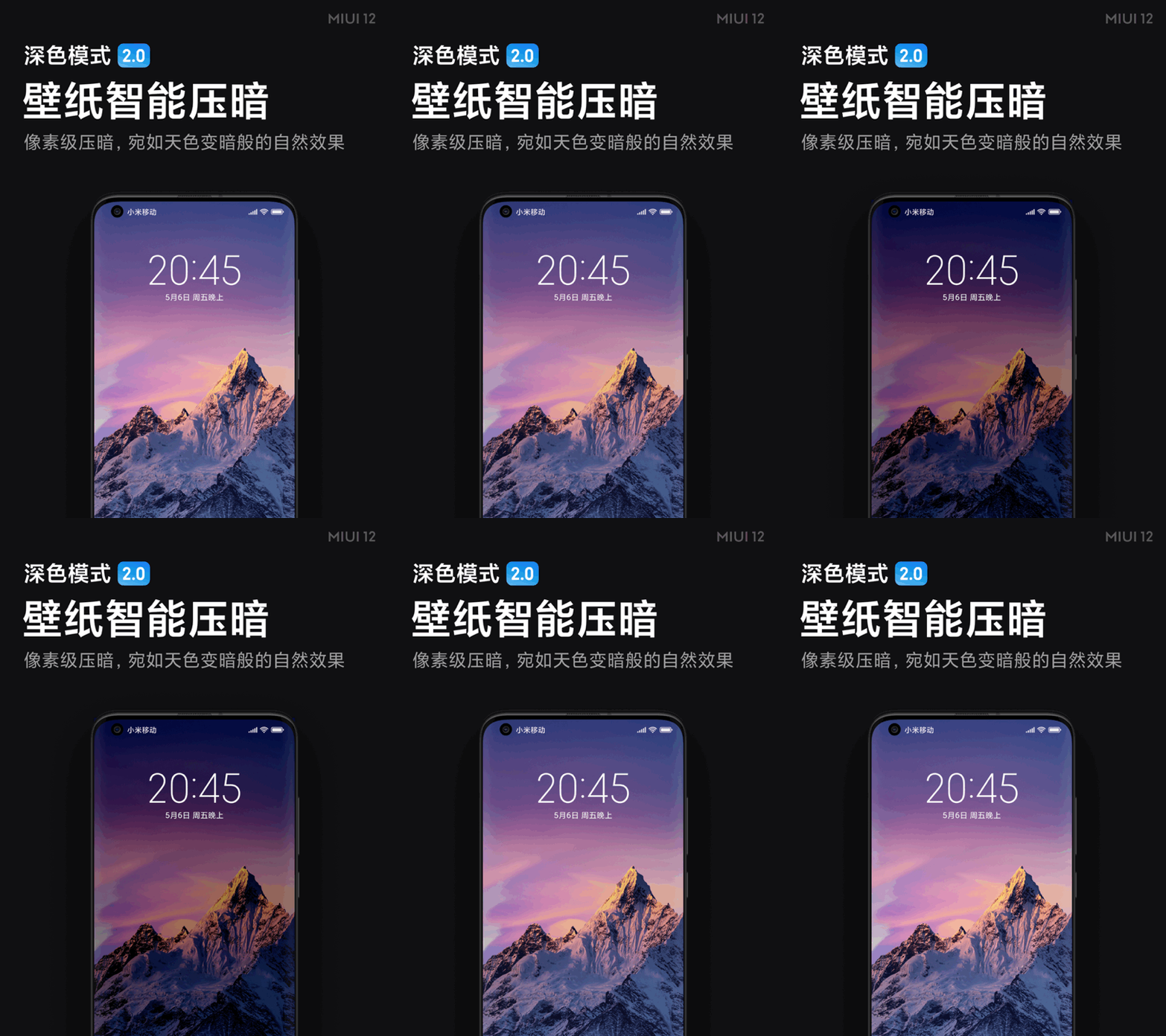
Last but not least, the ‘Dark Mode 2.0’ will also dim the phone’s wallpaper at the pixel level to simulate natural day and night scenarios.
As of now, Xiaomi has only revealed the above-mentioned new features. However, as we mentioned in the beginning, the company will reveal almost all the changes and additions in MIUI 12 daily leading up to the day of the official announcement.
Amidst the ongoing Coronavirus pandemic, tech giants like Google have started coming with smart ideas that aim in controlling/preventing the further spread of the virus. The company has built a new system that will allow people to be aware of who is infected around, possibly as a warning or to seek immediate isolation. While this system will see an eventual global rollout, it seems like Huawei and China have been cut off from it.
Let’s briefly look into the contact-tracing system first. The idea is relatively simple that users will get notifications once they are near a person infected by the COVID-19 virus. Detection and notification occur through the Bluetooth system, which will run on either side. This will also prompt a person to self isolate, preventing the virus to spread further to people around you.
The concept behind it is that Apple and Google will both drop core updates in upcoming software patches to bring this feature. Through this, one apart from being notified can exercise a reasonable amount of caution and isolate themselves. However, the only issue with this kind of system is that it would need a wide scale adoption. For example, 60 percent of people would need to have this system installed for it to work as efficiently as desired.
Furthermore, the system is also built with various privacy concerns in mind from both Google and Apple, while also adhering to rules set by medical health agencies. Unfortunately, the issue now lies with its implementation. While Google said that about 80 percent of the Android phones outside of China can run this system, the Southeast Asian country and Huawei might be skipped over for this feature.
According to a Huawei official, “it is encouraging to see technology playing a key role in addressing this global issue—we believe technology should be open and available to everyone. Only then can we use technology to move the world forward and make it a better place.” On the other hand, China as a whole seems to have no interest in this international privacy first contact-tracing system. The region already has various phone tracking solutions of their own and will likely employ localized structures regardless.
After launching it earlier this month, Huawei sub-brand Honor finally started selling Honor 30 series smartphones in China from today. In the first sale, the company claims to have managed to sell units worth 300 million yuan in just one minute.
Riding on the popularity of this new smartphone series, the company has now launched a new accessory product for the same. The Chinese company has launched Honor 30 anti-bacterial skin-friendly protective case.
It is currently up for crowdfunding for 49 yuan (~$7) which represents a discount of 10 yuan over its original price of 59 yuan, which is approximately (~$8.3). The company is also holding a giveaway contest for those who take part in this crowdfunding campaign.
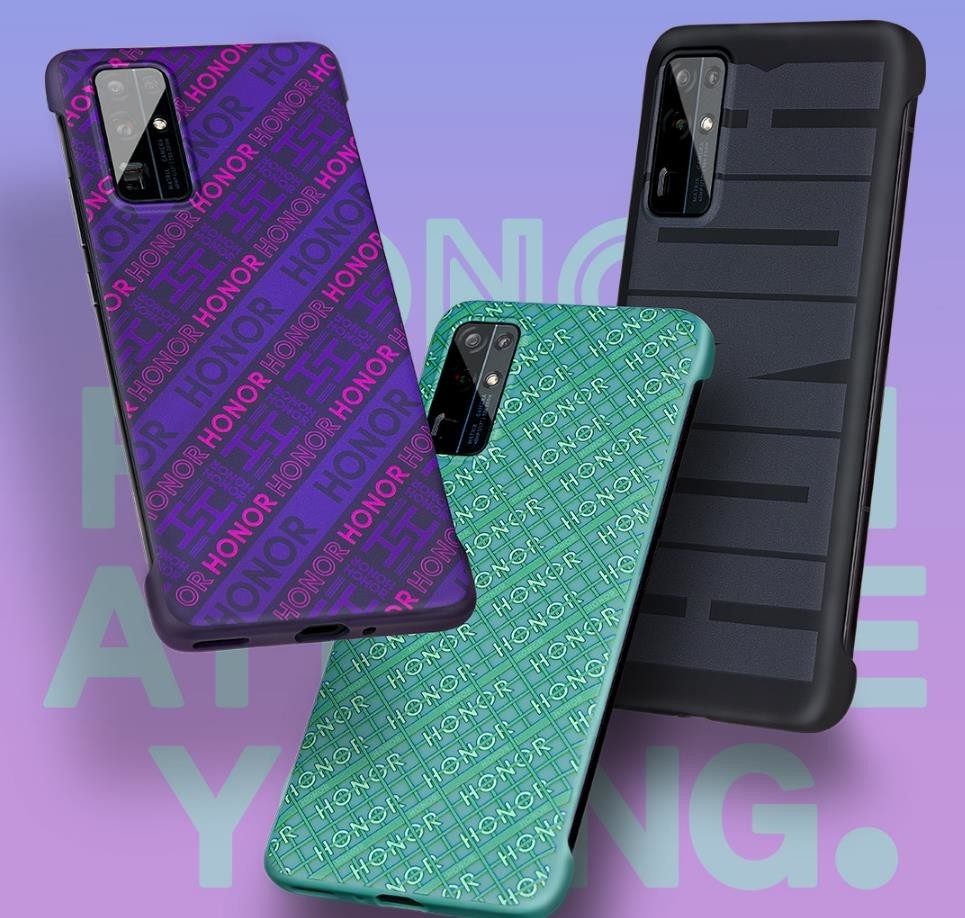
The Honor 30 anti-bacterial skin-friendly protective case is being offered in three color options — Magic Night Black, Neon Purple, and Green Wizard. Along with this, the company has also launched a custom protective case for the Honor 30 Pro.
As the name itself indicates, this newly launched protective case for the Honor 30 smartphone uses anti-bacterial coating while ensuring that it offers comfortable feel.
The company says that the case for the Pro variant is made using the hand-painted lacquer technology and the material is exquisite and warm as well as skin-friendly. However, there’s no official confirmation about Honor 30 Pro and 30 Pro+ getting the anti-bacterial skin-friendly protective case anytime soon.
A few days back, OnePlus rolled out OxygenOS Open Beta 12 for OnePlus 7 and OnePlus 7 Pro devices. A couple of days later, the company has now halted the update as it is causing some serious issues in certain devices.
Usually, OnePlus’ OxygenOS Open Beta builds are stable enough to use as a daily driver. Anyway, they are called beta for a reason and thus they can have bugs. Even the company does not recommend every user to install them. These builds are primarily targeted at enthusiasts and early adopters to provide feedback.
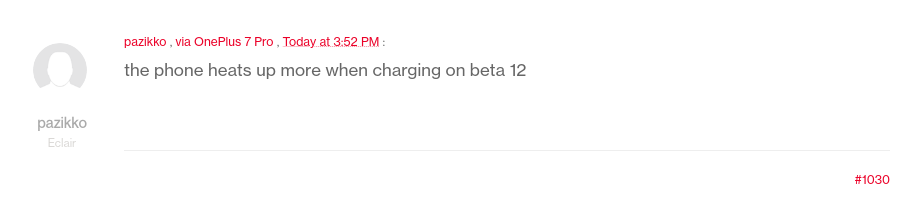
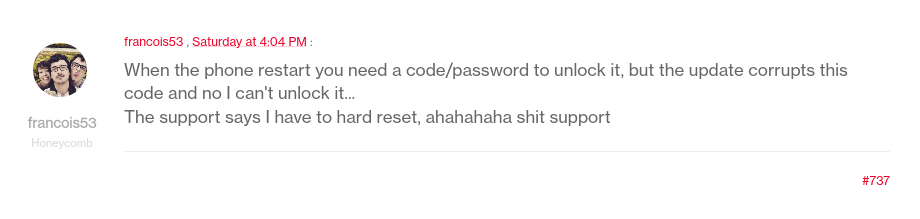
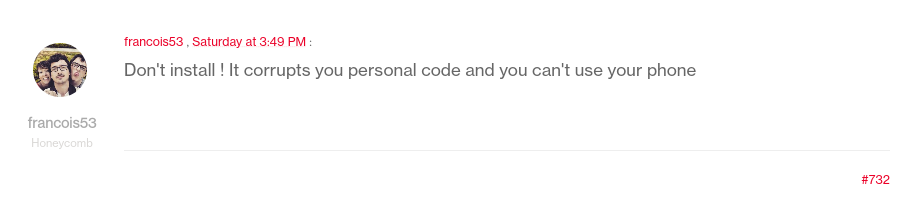
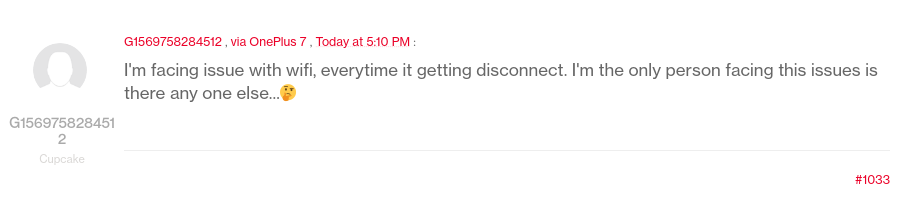
Unfortunately, the latest OxygenOS Open Beta 12 for OnePlus 7 and OnePlus 7 Pro has become a nightmare for some users. They are now locked out of their device unable to go past the lockscreen. While other users are facing heating issues during charging, disconnections from WiFi networks, and more.
It is worth noting that not all the users of the new update are facing problems. This scenario is exactly similar to Mi A3 Android 10 update fiasco. As a precaution, OnePlus has pulled back the OTA but we are not sure if they have removed the download links for the Full ROM too.
If you are using OxygenOS Open Beta 12 on your OnePlus 7 / 7 Pro and locked out of your device, then the only way to fix it is by performing a hard reset. Users cannot roll back to the previous build, which happens to be OxygenOS Open Beta 11. All they can do is wait for the company to soon release a fix.
Here’s the official changelog for the update in case you are interested.
System
Optimized the volume adjustment to improve user experience
Added the missing recording icon in call screen
Updated Android security patch to 2020.04
Fixed known issues and improved system stability
Phone
Added the ringing duration info for missed calls
Now you can switch your mobile data on phone calls supported with VoLTE
Camera
Added a feature which can now detect dirt on the camera lens, prompting a quick cleanup for better image and video quality.
The Honor 30 series was recently unveiled and was finally launched earlier today (21st April 2020). The smartphone was the Chinese tech giant’s flagship series with top notch specs, which nearly sold 300 million Yuan (roughly 42 million US Dollars) worth of units in just 1 minute as sales opened.
For pricing, the base Honor 30 starts at 2,999 Yuan (roughly 425 US Dollars) while the Honor 30 Pro starts at 3,999 Yuan (roughly 566 US Dollars) and Honor 30 Pro+ goes for 4,999 Yuan (roughly 708 US Dollars). So, just by taking the Honor 30 Pro as the average cost of the entire series, we can say the company has sold over 75,000 units in just 1 minute, which is quite impressive.
However, this is just a rough median so take it with a grain of salt. We can expect Huawei to unveil specific unit sales sometime later. But as it stands right now, Honor is enjoying the success of its latest flagship launch.
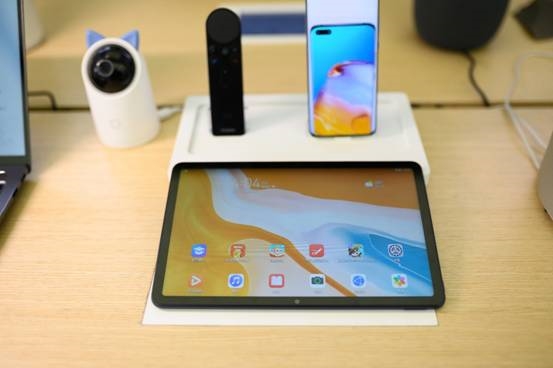
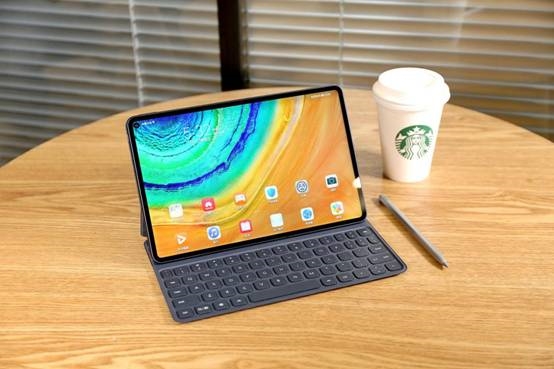
Huawei is all-set to launch its Huawei MatePad premium tablet in the home country on 23rd April. Now, ahead of the official launch, some details and key specifications about the upcoming tablet have surfaced online.
It is revealed that the Huawei MatePad will come with 2000 x 1200 pixel screen resolution and 84 percent screen-to-body ratio. Under the hood, the device is powered by the company’s own Kirin 810 chipset.
The device is also expected to come in two variants — 4GB RAM with 64GB internal storage and 6GB RAM with 128GB internal storage. It is also said to be equipped with four speakers which support Harman Kardon tuning.
Further, the report adds that the tablet measures 245.2mm × 154.96mm × 7.35mm and weighs 450 grams. It is reportedly powered by a 7,250mAh battery and is running the company’s own EMUI 10 user interface. We expect it come with Android operating system but with HMS support instead of Google’s services.
Going by the recently listing of the upcoming Huawei MatePad on the company’s official online store in China, the device will be made available in Wi-Fi only and LTE version. It is expected to be offered in a gradient-based White color.
The tablet, which features an 8-megapixel camera sensor on the front as well as back, will support Huawei’s M-pen stylus which will be sold separately. The Huawei MatePad is currently up for pre-order in China. While the device is set to get launched on 23rd April, it seems that the official sale will begin from 26th April.
Apart from this, the company will reportedly launch a 5G variant as well as Kirin 820-powered model at a later date. We expect to know more details about this other variant of the device in the coming days or weeks.
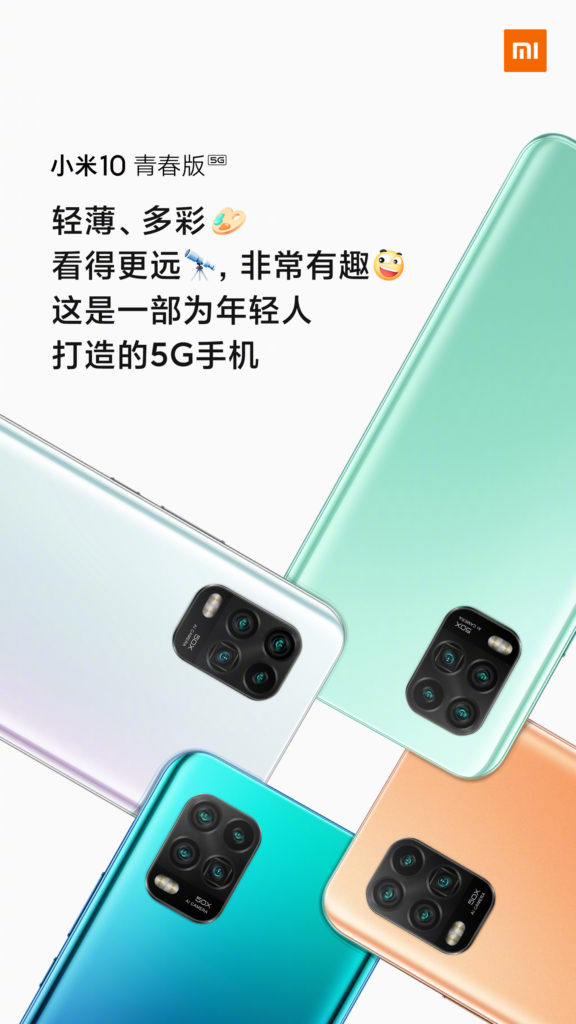
Yesterday, the Xiaomi Mi 10 Youth Edition discussion thread was unearthed on Mi Community China. Now, earlier today, the company officially announced its launch to take place on April 27 alongside MIUI 12. Followed by that, the brand has now shared a new teaser render of the handset on Weibo.
The upcoming Xiaomi Mi 10 Youth Edition will be different than the global Mi 10 Lite 5G. As per the new detailed render posted by Xiaomi on Weibo, the new handset will feature a periscope camera with up to 50x zoom capability, which is not present on the original lite device launched in Europe last month.
The details of the other sensors of the phone’s quad-camera setup are scarce at the moment. Probably, it will come equipped with the same 48MP primary sensor and a similar 8MP ultra-wide unit. Unfortunately, we are not sure whether the 5MP macro camera or the 2MP depth sensor will return from the global Mi 10 Lite 5G.
Apart from the new camera configuration, we expect the Mi 10 Youth Edition to feature similar specs as its global counterpart. That means it will be powered by Qualcomm Snapdragon 765 paired with up to 8GB LPDDR4X RAM and 128GB UFS 2.1 storage. It will have support for 5G connectivity on both SA (standalone) and NSA (non-standalone) 5G networks in the country.
Further, the phone will come fitted with a 6.57-inches AMOLED display with an in-screen fingerprint reader and a dew-drop notch housing a 16MP selfie camera if the company does not swap it with a different sensor. The handset will get its juice from a 4,160 mAh battery with support for 22.5W fast charging according to a recent leak. The device will measure 7.98mm in thickness and will weigh 192 grams.
Going by the official render, the Mi 10 Youth Editon will be available in four colours in China. The first one will be a fusion of white and purple gradient, the second, third, and fourth versions will be emerald, peach, and blue respectively.
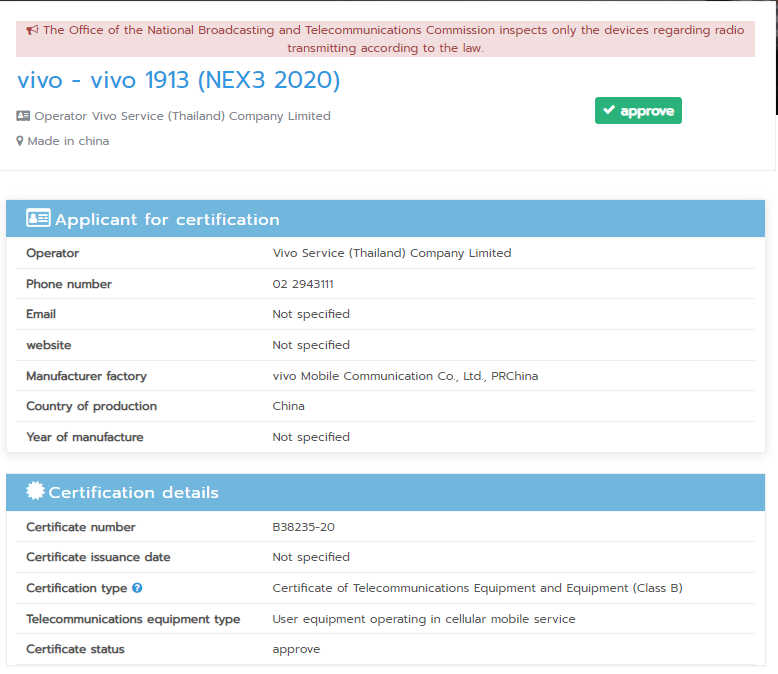
The Android Enterprise a new listing for a smartphone named Vivo Y21. The few specs that has appeared through its listing suggests that it is a mid-range device. At the same time, the Vivo NEX 3 2020 moniker has appeared on the database of Thailand’s NBTC authority.
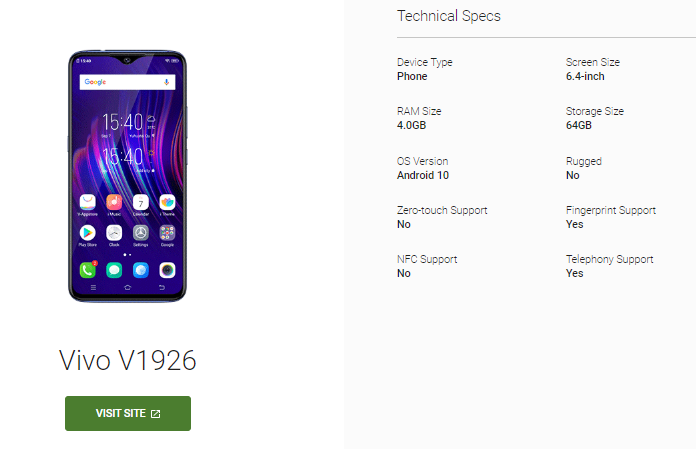
In February, the Vivo Y21 moniker was spotted at GFC database along with its V1926 model number. The model was also approved by the Bluetooth SIG around the same time. Now the same V1926 has popped with some key specs and image on the Android Enterprise database.
The listing states that the Vivo Y21 has a 6.4-inch waterdrop notch screen. It has 4 GB of RAM and a built-in storage of 64 GB. The Android 10 OS is loaded on the device along with FunTouchOS UI skin. Some unconfirmed rumors claimed that the handset has a 4,500mAh battery with 18W fast charging support.
In related news, a smartphone with Vivo NEX 3 2020 moniker has been spotted at NBTC. The model number of the device is Vivo 1913. Nothing is known on the specs of the device.
Earlier this year, Vivo introduced the Vivo NEX 3S 5G as an enhanced version of the original Vivo NEX 3 that debuted last year in September. There is a possibility that the Vivo NEX 3 2020 could be a rebranded version of the NEX 3S 5G for Thailand. It is advisable to wait for further reports to appear to know more about the NEX 3 2020.
Samsung has made huge progress in terms of smartphone camera sensors. The company was among the first to launch a 64-megapixel camera sensor and the first one to launch 108-megapixel image sensor.
But it seems that the company hasn’t stopped yet in terms of megapixel count for the smartphone cameras. Samsung has today revealed in an article that it is now planning to develop camera sensors with 600-megapixel resolution.
To put that in perspective, Yongin Park, Executive Vice President and Head of Sensor Business Team, System LSI Business says that human eyes can match up to 500-megapixel resolution.
However, with 48-megapixel and 12-megapixel sensors still being standard, it seems like a long journey for the 600-megapixel camera sensor to materialise. To make this happen, the South Korean giant also needs to develop new technologies.
The company has been advancing the pixel binning technology. The 64MP sensors from Samsung use 2×2 pixel binning while the 108MP sensors use 3×3 pixel binning to increase light absorption and mitigate issues related to low-light conditions.
Samsung’s ambitions for the future camera sensors is not limited to 600MP resolution. The Systems LSI Business division of Samsung, which deals with image sensors, is also looking to make sensors that can register smells and tastes.
Apart from supplying image sensors for smartphones, the company is also reportedly planning to provide camera sensors for other use cases, including autonomous vehicles (AVs), drones, and other IoT (Internet of Things) devices.
Currently, 108MP camera sensor remains the highest for smartphones but that is about to change soon. Samsung is working on a 150MP sensor using Nonacell technology and is expected to be available from Q4 2020.
Meizu is slated to announce details about the launch of its next-generation flagship smartphone — Meizu 17 in China on 22nd April. Now, just a day ahead of the official announcement, the company has now shared new posters on Weibo which reveals the upcoming phone’s front panel.
The poster shared by the company confirms that the Meizu 17 will feature a punch-hole cutout in the top-right corner and overall it has tiny bezels surrounding the display. The design is similar to what has already been leaked. The company also said that it may be the only 5G flagship smartphone this year to offer white panel.
As per the reports, the FHD+ display will offer 90Hz refresh rate with high screen-to-body ratio. It is expected to come packed with Qualcomm Snapdragon 865 SoC with support for 5G connectivity, LPDDR5 RAM and UFS 3.0 storage. The phone has already been confirmed to be powered by a 4,500mAh battery which will come with mSmart charging technology.
It’s being reported that the Meizu 17 will have support for Wi-Fi 6, enabling download speed of up to 4,151 Mbps. This new Wi-Fi standard brings more stability, lower latency and more to the table. We’ll know more about the smartphone, along with its pricing and availability details in the coming days.
Meanwhile, the company recently launched a Commemorative Edition of the Meizu 16S Pro, marking the discontinuation of the series. The move is likely made to make way for the upcoming flagship Meizu 17.
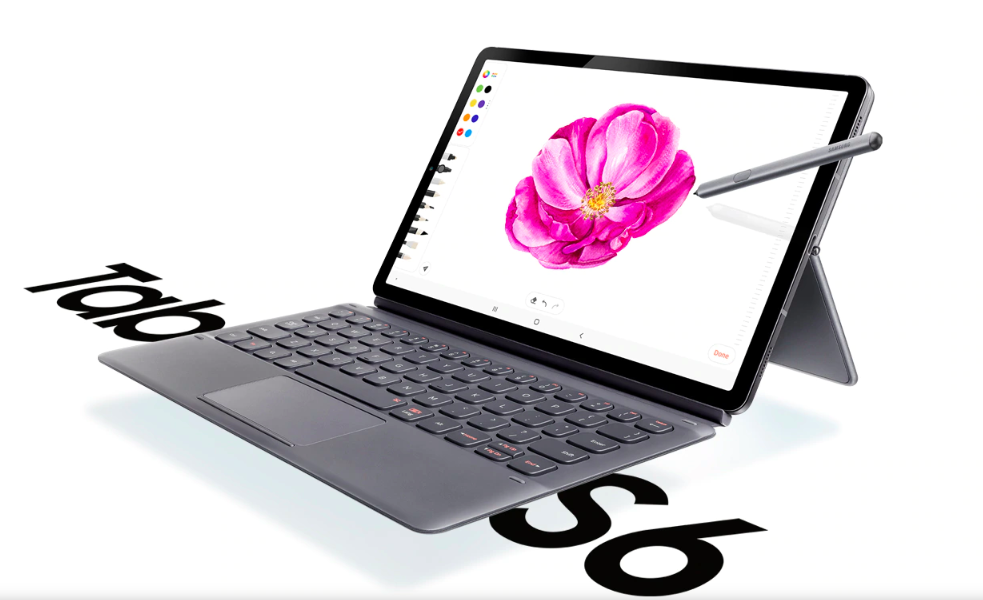
Samsung is reportedly working on the successor of the Galax Tab S6 flagship tablet from last year. A fresh report on GalaxyClub.nl has revealed some key information on the upcoming Galaxy Tab S7 tablet.
The report states that the publication came across SM-T970 (Wi-Fi edition) and SM-T975 (LTE variant) model numbers of the upcoming high-end Samsung tablet. It is believed that this tablet may sport a 12.4-inch display. On the other side, there is a smaller high-end tablet with model numbers SM-T870 and SM-T875 which is speculated to debut as its 11-inch screen version. Like the predecessor Galaxy Tab models, the Tab S7 is also expected to arrive with S Pen stylus support.
In February, Samsung launched the Galaxy S20 series of flagship phones. In Q3, it is expected to launch Galaxy Note 20 series. Early rumors had claimed that the upcoming high Galaxy Tab could be debuting as Galaxy Tab S20. However, the new report states that the South Korean company has settled for Galaxy S7 and Galaxy S7 Plus monikers. The 12.4-inch model is expected to carry Galaxy Tab S7+ name.
Just as Samsung had a 5G variant of the Galaxy Tab S6 with SM-T866 model number, it is speculated that there is a 5G-ready version of the Galaxy Tab S7+. Its model number will be SM-T976. Last year’s Galaxy Tab S6 5G was only available in South Korea. However, the 5G version of the Tab S7 Plus will also be also available outside of the home market. Its European version is said to have SM-T976B model number.
The Galaxy Tab S7 series may go official in early August. It could be short followed by Galaxy Note 20. The rumored Galaxy Fold 2 may debut alongside the Note 20 series.
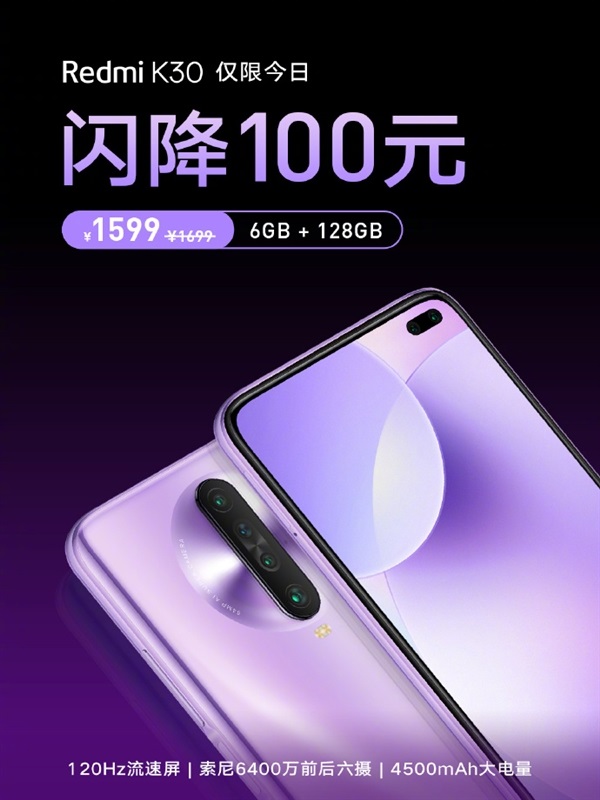
Last year, in December, Xiaomi’s sub-brand Redmi launched its Redmi K30 smartphone which recently got a Pro variant. Amid rumors of a new variant coming soon, the company has today shared that it is holding a limited-time sale of Redmi K30 at a discounted rate.
The poster reveals that the Redmi K30 6GB RAM and 128GB storage model will be available for a discount of 100 yuan for a limited time, which brings down the smartphone’s pricing to 1,599 yuan, roughly $226. While the company’s says it’s a limited time sale, there’s has been no mention on sale end date.
The Redmi K30 comes in four models — 6GB + 64GB priced at 1,599 yuan, 6GB + 128GB costing 1,699 yuan, 8GB + 128GB which is on sale for 1,899 yuan, and the top-end 8GB + 256GB which costs 2,199 yuan.
To remind you of the specifications, the phone features a 6.67-inch IPS Full HD+ 120Hz display and comes with a punch-hole cutout on the screen at the top-right corner for dual cameras. Under the hood, the device is powered by the Qualcomm Snapdragon 730G octa-core processor with Adreno 618 GPU.
In the camera department, there’s a quad-camera setup on the back, consisting of Sony IMX686 64-megapixel primary sensor, an 8-megapixel ultra-wide sensor, a 2-megapixel depth assist lens, and a 2-megapixel macro lens. On the front side, it comes with a 20-megapixel primary sensor and a 2-megapixel secondary sensor.
The phone runs the latest Android 10 operating system out-of-the-box with the company’s own MIUI 11 on top. The device is powered by a 4,500mAh battery with support for 27W fast charging technology.
The development comes at a time when the company is reportedly planning to discontinue Redmi K30 4G model in favor of the 5G variant. The only major difference in the Redmi K30 5G compared to the 4G model is the chipset, minor camera specs change, and battery charging speed. The 5G model is powered by Snapdragon 765G SoC and the 2MP depth sensor has been replaced by a 5MP sensor. The phone also has 30W fast charging.
In addition to this, the company is also rumoured to launch a new variant in this lineup — Redmi K30i. It is said that it could come powered by MediaTek Dimensity 800 SoC and will have 5G support. The device is expected to be priced around 1,799 yuan, which is approximately $245.
Lately, Oppo has been pushing stable ColorOS 7 update based on Android 10 to the eligible devices in China after being delayed due to COVID-19 pandemic. Now, the global versions of these devices are getting a similar treatment. The handsets that are currently receiving the OTA update are listed along with their respective builds in a table below.
Since the update is being rolled out through OTA (over the air), it is being seeded out to units in batches. Hence, it might take time to reach every user. In order to check whether your device has received the update, head over to Settings -> Software Updates section.
Here’s the official changelog of ColorOS 7 stable update provided by the company for the above-mentioned handsets.
Visuals
Brand new borderless design makes visuals more attractive and operation more efficient.
Added OPPO Sans as the default font. The new font delivers a refreshing feel and fits well with OPPO’s pursuit of blending beauty and technology.
Smart Sidebar
Optimised user interfaces and improved one-handed operation.
Drag an app out of Smart Sidebar to open it in Split-screen mode.
Added two settings: Assistive Ball Opacity and Hide Assistive Ball on Fullscreen App.
Optimised the Floating Window feature for more apps.
Added a bubble: A bubble is displayed when you open an app in a floating window from the Smart Sidebar. Tap the bubble to collapse and open the app.
Screenshot
Optimised 3-Finger Screenshot: Use 3 fingers to touch and hold the screen and swipe your fingers to adjust the screenshot size. Use 3 fingers to touch and hold the screen and swipe your fingers outwards to capture a long screenshot.
Added screenshot settings: You can adjust the position of the screenshot preview floating window and set the screenshot sound.
Optimised screenshot preview floating window: After taking a screenshot, drag it up and release to share it, or drag it down and release to take a long screenshot.
Navigation Gestures 3.0
New gesture: Swipe inward from both sides of the screen and then hold to switch to the previous app.
Optimised gestures: All gestures are supported in landscape mode.
System
Added Dark Mode: Protects your eyes while reducing power consumption.
Added Focus Mode: Shields you from outside distractions when you are learning or working.
Added all new charging animation.
Optimised the Quick Settings user interface for easier one-handed operation.
Swipe left or right to ignore banner notifications.
Added a pause function for screen recording.
Added a floating window and settings for screen recording.
New sounds added for file deletion, calculator key touches, and compass pointer.
Optimised system pre-loaded ringtones.
Added TalkBack floating prompts for Accessibility.
Colour Accessibility Mode added to improve the user experience for visually impaired users.
New management function for recent tasks: You can view memory information about recent tasks and lock apps.
Games
Optimised visual interaction for Game Space.
Optimised the startup animation for Game Space.
Home Screen
More live wallpapers.
Added Art+ static wallpapers.
Customise whether to open Global Search or the notification drawer when swiping down on the Home screen.
Customise the size, shape, and style of app icons on the Home screen.
Swipe up on the Lock screen to switch unlock methods.
Optimised the graphic design of password unlocks to facilitate one-handed operations.
Supported live wallpapers on the Lock screen.
More screen-off clock styles.
Added a simple Home screen mode, featuring larger fonts and icons and a clearer layout.
Security
Connect your phone to Wi-Fi networks using a random MAC address to avoid targeted ads and protect your privacy.
Tools
In Quick Settings or Smart Sidebar, you can open Calculator in a floating
Added the trim feature in Recordings.
Added the Weather (dynamic) ringtone, which automatically adapts to the current weather.
Added weather-adaptive animations in Weather.
Camera
Optimised the Camera UI for better user experience.
Optimised the Timer UI and sound.
Photos
Optimised the Album UI for a clear hierarchy and quick lookup of photos.
Added Album Recommendations that recognises more than 80 different scenes.
Communications
OPPO Share now supports sharing files with vivo and Xiaomi devices.
Optimised the Contacts UI for a more efficient experience.
Settings
Search Settings now supports fuzzy match and contains a search history.
Applications
Soloop Video Editor: Create your video with one tap.
Added DocVault, an app for easy management and use of your digital ID cards (available only on phones sold in India).
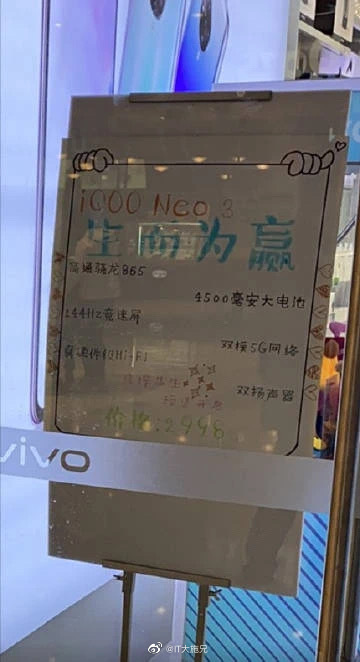
On April 23,iQOO will be announcing the iQOO Neo3 5G flagship phone. An advertisement that surfaced last week had revealed that the smartphone will be priced at 2,998 Yuan (~$423) in China. A snapshot of the phone’s poster at retailer store was shared by a Chinese tipster on Weibo yesterday. It reiterated that the Neo3 will be priced at 2,998 Yuan.
The poster has all the key features of the iQOO Neo3 mentioned on it along with the pricing. It states that the phone has Snapdragon 865 chipset with dual-mode 5G support, 144Hz refresh rate supporting display, a 4,500mAh battery, Hi-Fi audio chip and stereo speakers.
The Chinese firm has already revealed that the iQOO Neo3 is equipped with UFS 3.1 storage. The AnTuTu listing of the smartphone had revealed that it will be arriving with 8 GB of RAM and 256 GB of storage. A previous leak had also revealed the existence of a lower model with 6 GB of RAM and 128 GB storage. On AnTuTu, the handset managed to breach 608K+ benchmark scores.
The iQOO Neo3’s 144Hz display is an LCD panel with a punch-hole positioned at the top-right corner. It has a side-mounted fingerprint sensor. The back panel of the device has a triple camera setup. The handset had recently appeared at the database of China’s 3C authority to confirm that it may ship with a 44W fast charger.
The Redmi K30 Pro 5G is selling with a starting price of 2,999 Yuan in China. The upcoming iQOO Neo3 appears to a worthy rival for the K30 Pro.
Oukitel WP6 was launched on March 20. The international brand known for offering high-end smartphones aimed at redefining outdoor communication with the WP series, while the C series was touted to offer the most affordable cutting-edge smartphone.
The last C series was launched back in 2019 and it sold out like hot cakes on AliExpress. Oukitel is expecting the long-awaited successor to follow suit and garner huge popularity among smartphone lovers. The C18 Pro was made available to the public on April 20.
The recently unveiled smartphone has gone up for sale through AliExpress. More importantly, the Alibaba owned online retail service is offering the C18 Pro for a considerably lowered price.
The Oukitel C18 Pro comes with 4GB of RAM and offers 64GB of internal storage space would normally set you back $166.65, but you can now get it for a lowered price of just $99.99, which translates to a 40 percent reduction in the phone’s original asking price. This model is available in black, as well as a purple color option.
Alternatively, you can go for the standard package that comprises black, as well as purple color options with a Xiaomi earphone. This variant would normally set you back $179.98, but can now be yours for an unbeatable price of just $107.99. This is a 40 percent reduction in the phone’s selling price.
Likewise, you can get a 40 percent discount on the standard package that comes with a 32GB TF card. While it normally retails for $183.32, you can now purchase it for a considerably lowered price of only $109.99 from AliExpress. This 40 percent off is valid for the black and purple color options.
There’s a 40 percent off on another standard package that ships with a 64GB TF card. This variant carries a $191.65, but AliExpress is offering it for just $114.99, which means, you can avail of a 40 percent off on the aforesaid model.
On top of that, those placing their first order with AliExpress can save more money by applying a $3 Off New User Coupon during the checkout process. Moreover, you can get an extra $1 off if your order value exceeds $119.
The irresistible Oukitel C18 Pro smartphone features a 6.55 inches HD display with 1600×720 pixels resolution. It packs a powerful MTK6757 processor coupled with 4GB of RAM under the hood.
In the optics department, the C18 Pro houses a 16MP, a 2MP, an 8MP and a 5MP camera at the back. Upfront, it has an 8MP snapper for selfies and video calling. It is backed by a 4000mAh battery and runs Android 9.0 OS., but the hardware supports the latest Android 10.
You can head straight to this link to check out more details about the Oukitel C18 Pro and place your order. Note that you can add a free gift with your order during the activity period. Regrettably, the promo is slated to end this weekend.
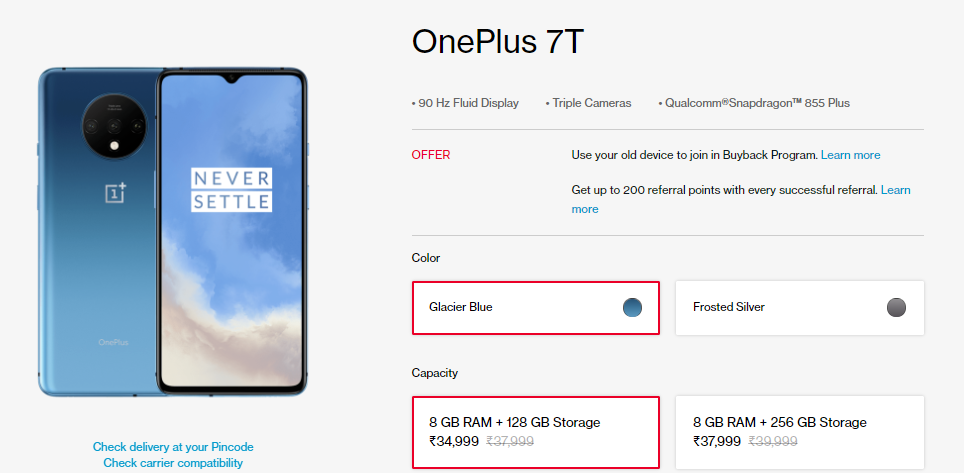
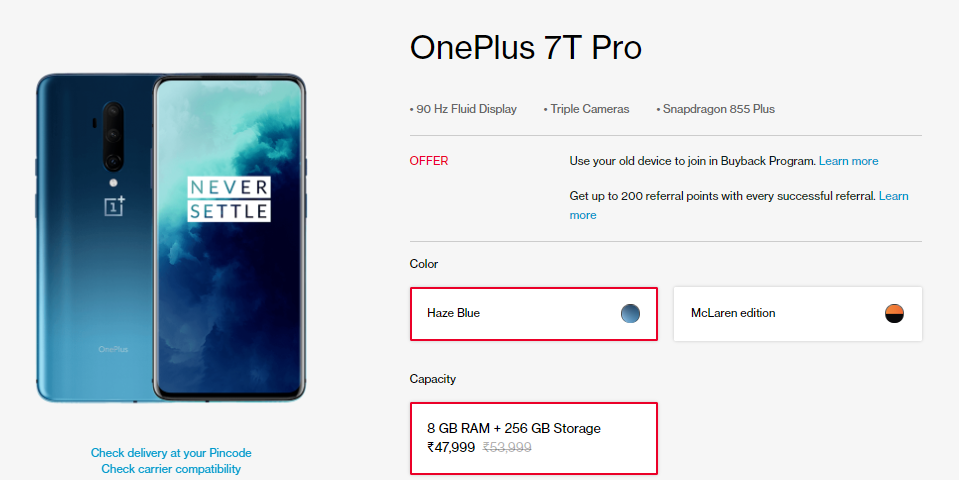
Last week, OnePlus held an unveil event to announce the OnePlus 8 and OnePlus 8 Pro smartphones. Due to the COVID-19 lockdown situation in India, the sales of the OnePlus 8 phones are expected to begin at some point in May. The Chinese firm has also confirmed on the pricing of both phones for India. With the arrival of the OnePlus 8 series, the OnePlus 7T and OnePlus 7T Pro were expected to receive a price cut. The OnePlus 7T series have received up to Rs. 6,000 (~$78) price cut on OnePlus.in and Croma.com.
The 128 GB and 256 GB OnePlus 7T models were introduced for Rs. 37,999 (~$495) and Rs. 39,999 (~$521), respectively in India in September 2019. The OnePlus 7T Pro came with a pricing of Rs. 53,999 (~$703) for its 8 GB RAM + 256 GB storage version. The OnePlus 7T Pro McLaren Edition with 12 GB RAM + 256 GB storage was priced at Rs. 58,999 (~$768).
The OnePlus 7T Pro (8GB + 256GB) is listed with a revised pricing of Rs. 47,999 (~$625) after an impressive price reduction of Rs. 6,000 (~$78). The 128 GB and 256 GB OnePlus 7T models are now priced at 34,999 (~$456) and Rs. 37,999 (~$495), respectively. Both models have received Rs. 3,000 (~$39) and Rs. 2,000 (~$26) price cuts, respectively. There is no change in the pricing of the McLaren Edition.
The OnePlus 8 smartphone will be heading to India in three variant such as 6 GB RAM + 128 GB storage, 8 GB RAM + 128 GB storage and 12 GB RAM + 256 GB storage. They are priced at Rs. 41,999 (~$547), Rs. 44,999 (~$586) and Rs. 49,999 (~$651), respectively.
The OnePlus 8 Pro will be arriving in India in two options such as 8 GB RAM + 128 GB storage and 12 GB RAM + 256 GB storage. They are priced at Rs. 54,999 (~$716) and Rs. 59,999 (~$781), respectively.
Samsung is expected to unleash the Galaxy Fold 2 in the second half of the year. Some reports have claimed that the South Korean may announce it along with the Galaxy Note 20 series in Q3, but there is no concrete evidence to support this claim. Today, the CEO of Display Supply Chain Consultants, Ross Young shared key information on the specs of the Galaxy Fold 2.
While Young revealed that the Galaxy Fold 2 is codenamed as Project Champ, a report on XDA Developers that the device could be also referred to as Project Winner 2 internally. Young further revealed that the main flexible Dynamic AMOLED display of the Fold 2 measures 7.59 inches. It supports 2213 x 1689 pixels resolution, a pixel density of 372 ppi and 120Hz refresh rate.
Samsung Galaxy Fold 2 render by Benjamin Geskin
Samsung wanted to make use of in-screen selfie camera technology on the Galaxy Fold 2. However, due to issues related to shipments timing, the company decided to add a punch-hole cutout on the display for the selfie snapper. Like the Galaxy Z Flip clamshell device, the Fold 2 said to come with Ultra Thin Glass on the flexible screen. Its punch-hole could be on the top-right corner.
Samsung Galaxy Fold 2 render by Benjamin Geskin
The Galaxy Fold 2 is rumored to house a larger outer Dynamic AMOLED LTPS display of 6.23 inches. The 60Hz panel that will also feature a punch-hole cutout is said to support 819 x 2267 pixels. In comparison, the original Galaxy Fold has a 4.6-inch outer screen and an inner flexible display of 7.3 inches. The outer display of Fold 2 may have the punch-hole at the top-center position. Shown in this post are two Galaxy Fold 2 renders made by Benjamin Geskin based on the rumors surrounding it.
According to XDA, the Galaxy Fold 2 will come in 4G and 5G flavors. Both could be powered by Snapdragon 865 or Snapdragon 865+ SoC. The Fold 2 is also expected to arrive with S Pen stylus. The usage of the harder plastic called Ultra Thin Glass will protect the Fold 2’s screen from getting scratched with the usage of S Pen.
The Galaxy Fold 2 may arrive in 256 GB and 512 GB storage editions. It could be available in Martian Green and Astro Blue colors. There could be another variant of the device with ceramic and stainless steel build. The Fold 2 may borrow the cameras that are available on the Galaxy S20+. At front, it may have a 10-megapixel or a 40-megapixel camera. The Galaxy Fold 2 may house a 4,500mAh battery with 25W superfast charging. It will also have wireless and reverse wireless charging support.
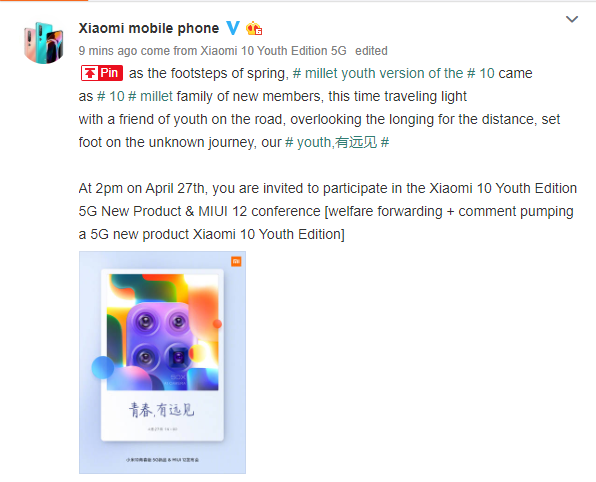
A new discussion thread for an unannounced smartphone called Xiaomi Mi 10 Lite was found in the Mi Community in China. Hence, it was speculated that Xiaomi may soon launch the handset in the home market. Today, the company confirmed through a Weibo post that the Xiaomi Mi 10 Youth Edition (aka Mi 10 Lite) 5G phone will break cover on April 27 at 2 PM (local time). The company will be also announcing MIUI 12 alongside the smartphone.
The Xiaomi Mi 10 Lite’s poster shows that it will be flaunting a square-shaped camera setup. A careful look at the camera setup reveals that it includes a periscope zoom lens that will enable up to 50x zoom on the device.
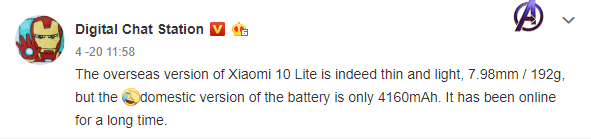
A reliable tipster from China had claimed that the Mi 10 Lite 5G for China weighs 192grams and its thickness is 7.98mm. He also revealed that the device has a battery of 4,160mAh battery. These details with the Xiaomi Mi 10 Lite 5G phone that was announced at March end in Europe.
It appears the Europe’s Mi 10 Lite 5G will be made official in China on April 27. Interesting thing to note that the European edition does not have a periscope zoom lens. Hence, it seems that the Mi 10 Lite for China could be coming with an enhanced camera setup. Last month, a 5G-capable Xiaomi phone with M2002J9E model number was spotted with 22.5W fast charger. It is likely that the M2002J9E phone could be the upcoming Mi 10 Lite 5G.
The Xiaomi Mi 10 Lite 5G that debuted in Europe carries a pricing of 349 euros. The handset is equipped with a 6.57-inch AMOLED display with in-screen fingerprint reader. It is powered by Snapdragon 765G processor and 6 GB of LPDDR4X RAM. The phone arrived in 64 GB and 128 GB UFS 2.1 storage choices in China. The rear camera setup of the phone features a 48-megapixel main lens, an 8-mgeapixel ultrawide shooter, a 5-megapixel macro lens and a 2-mgeapixel depth sensor. It has a front camera of 16-megapixel. Its 4,160mAh battery supports 20W fast charging.
As far as MIUI 12 is concerned, it is expected to offer users with refreshed UI, better navigation experience, new animations and improved battery performance. Dark Mode for all apps and style options in Recents are also rumored to arrive with MIUI 12.
The smartphone market changed a lot in the last decade. Most of the top brands who dominated the scene more than 10 years ago disappeared from the top smartphone manufacturers rankings and made way for new companies, especially Chinese ones. But a few old players are still in the scene. Once in a while, some of the old phone manufacturers release smartphone reboots to attract the customers’ attention, especially the nostalgic ones. In this article, we collected all the coolest smartphone reboots released in 2019 and 2020 which gave new life to old and iconic phone series.
Cool Smartphone Reboots 2019 and 2020
Motorola Razr
Apple iPhone SE 2020
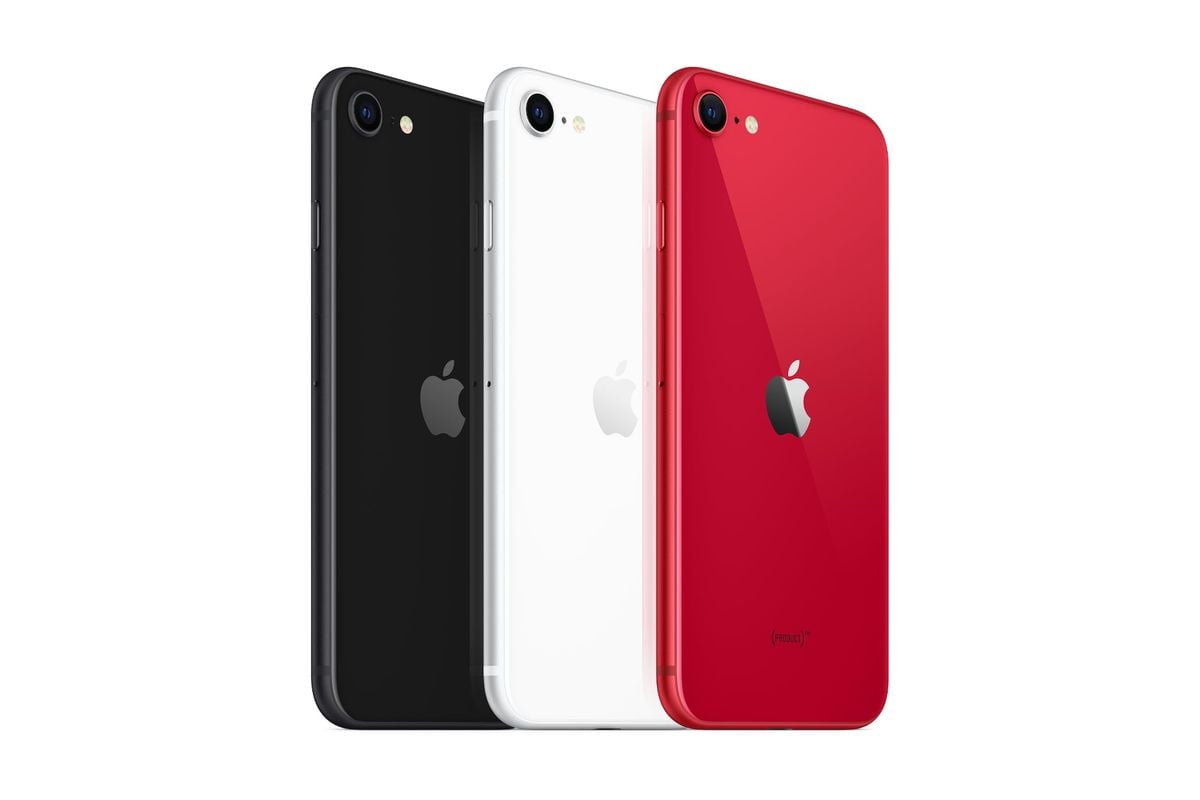
The latest smartphone reboot released in 2020 is the new iPhone SE. It is an upgraded version of the iPhone SE released back in 2016 and it is the most compact and affordable last-generation Apple phone. Unlike the original iPhone SE, it has the same design as the iPhone 8 released in 2017, the same dimensions and even the same weight. It is the only last-generation Apple device with thick bezels around the display and Touch ID. The handset comes with a very compact 4.7-inch display and it can be considered as the most compact modern flagship. But despite its old school design, it packs flagship-class hardware including the same processor as the iPhone 11 series: the Apple A13 Bionic. You even get the same main camera as the iPhone 11 lineup (but there are no secondary sensors). The only real downside is the battery which comes with the same 1821 mAh capacity of the iPhone 8.
Nokia 8110
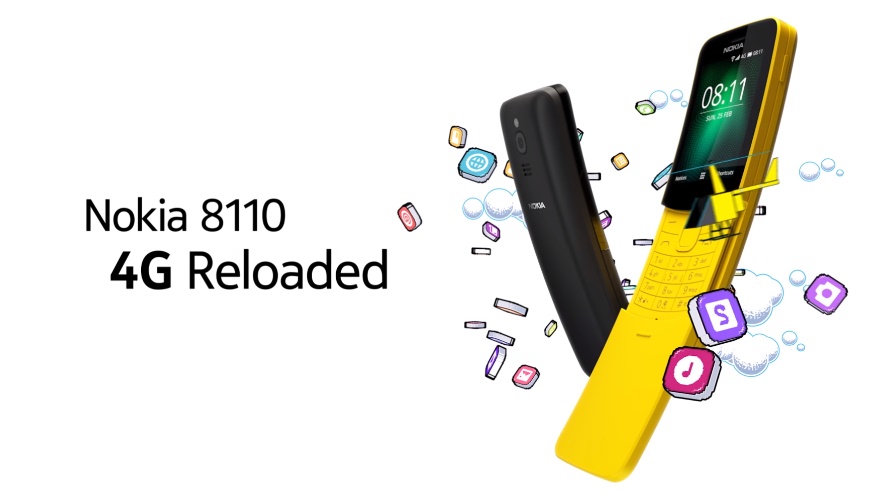
The new Nokia 8110 4G is a revival of the “banana phone”: the iconic 8110 released in 1996 and used in the famous movie “The Matrix” which debuted in 1999. The original Nokia 8110 had a monochromatic display and a slider protecting the keyboard which would activate the phone once opened. And you get the same slider with the new Nokia 8110 4G, but there is no monochromatic display anymore. You get a wider 2.4-inch color display with a resolution of 240 x 320 pixels. But this is not a real smartphone, neither it comes with touch screen. It works with a physical 3×4 keyboard. Despite not being a smartphone, it still comes with the support to 4G networks and a smart operating system. We are talking about KaiOS: a fork of Firefox OS which supports several apps including WhatsApp and Facebook.
Motorola Razr
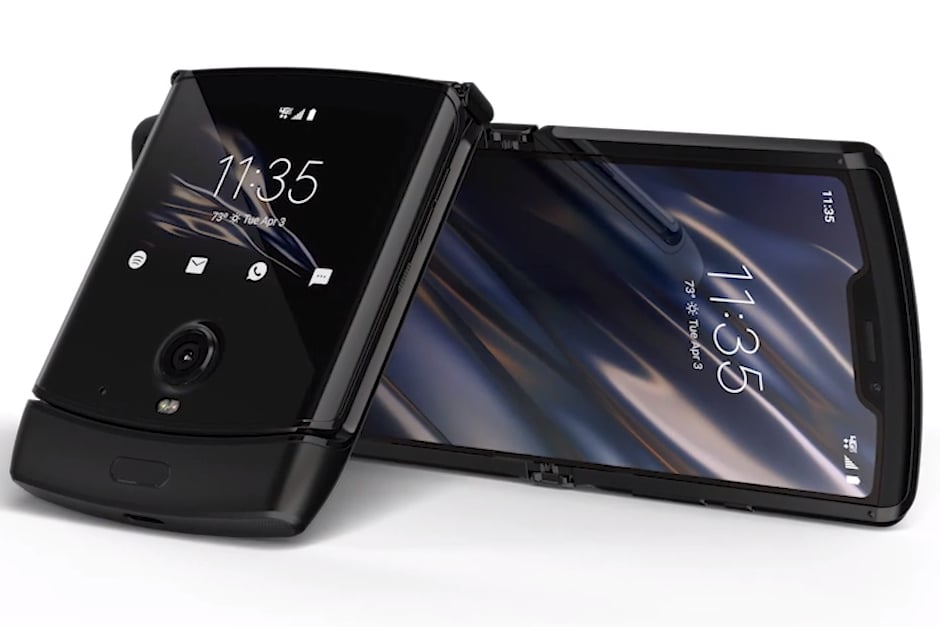
The most impressive smartphone reboot released in the last years is the new Motorola Razr. It is a revival of the Motorola Razr V3 clamshell phone from the early 2000s, as you can easily notice by looking it from the outside. But on the inside, it is a foldable phone with a foldable screen! The handset sports a foldable display with a 6.2-inch diagonal just like a typical smartphone, but it can fold in half and become extremely compact! It also comes with a smaller external display allowing the user to perform several operations such as checking notifications, shooting selfies, answering calls, and more. The Razr is based on the mid-range Snapdragon 710 mobile platform and it costs $1,500/€1,500.
Nokia 5310
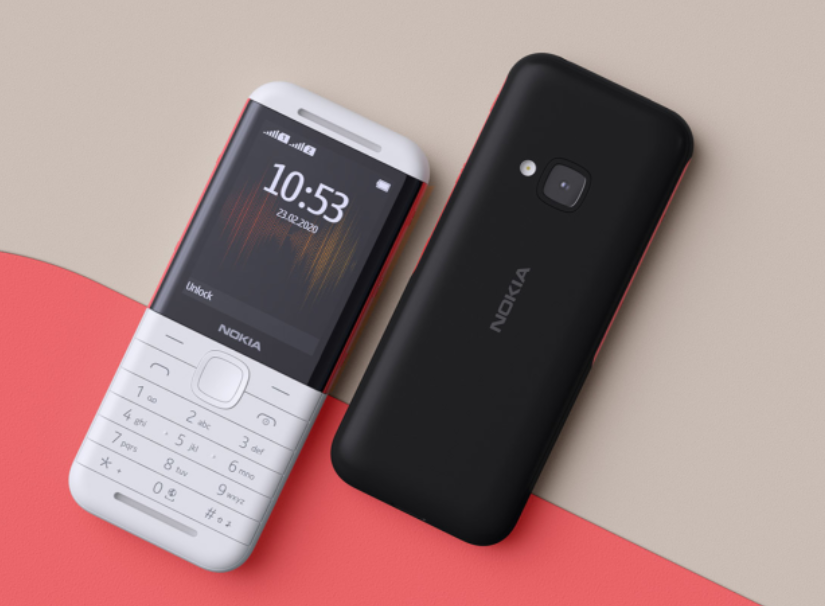
One of the most interesting retro phones brought back to life is the Nokia 5310: a revival of the Nokia 5310 XpressMusic from 2007. Just like its old sibling, the new phone brings the same black/red and white/red paint jobs, as well as hose amazing side-mounted keys to control the music player. The Nokia 5310 (2020) is a feature phone with the Series 30+ operating system, a physical 3×4 keyboard, and a 2.4-inch display. It offers a 16 MB internal storage with a micro SD slot allowing to expand it up to 32 GB, front-facing stereo speakers, Bluetooth and a 3.5 mm jack. Further, it packs a 1,200 mAh battery lasting up to 7.5 hours of talk time and up to 30 days in standby. It only supports 2G and it costs €39. Besides the Nokia 5310, it is impossible for us not to mention the Nokia 2720 Flip, a clamshell phone which runs KaiOS just like the Nokia 8110, packs a GPS + GLONASS receiver and features LTE connectivity. A clamshell feature phone offering smartphone features and providing an even better experience than 8110.
HTC Wildfire X
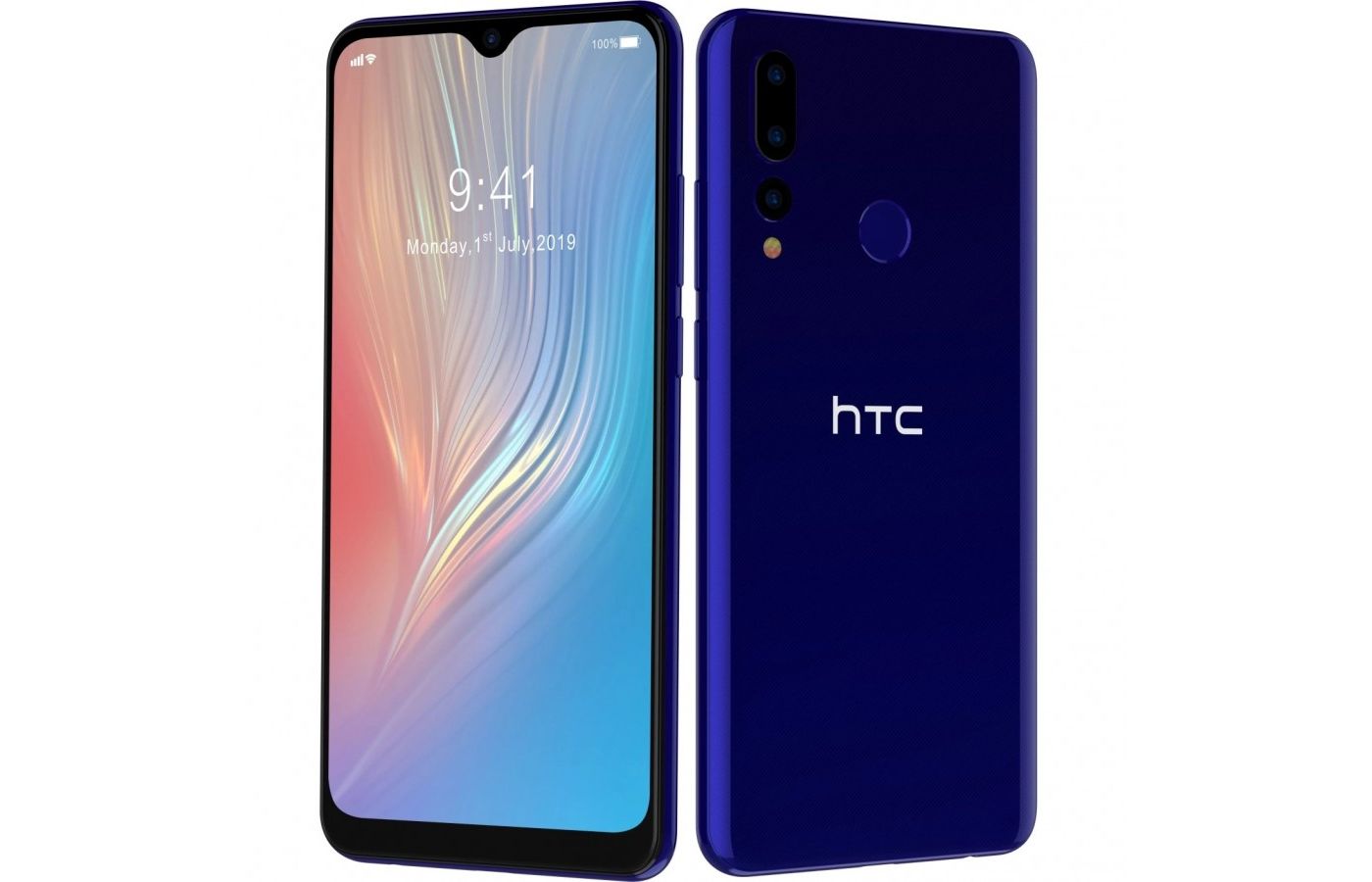
Another classic reborn was launched by HTC in the second half of 2019: the company resurrected the famous Wildfire series which made its success at the beginning of the last decade by launching the Wildfire X. The phone is not manufactured by HTC but it is made by a Chinese company named InOne Smart Technology which licensed the brand for the Indian market. The handset packs entry-level specifications, including a 6.2-inch HD+ display, an Helio P22 chipset and up to 4 GB of RAM paired with up to 128 GB of internal storage. But it has a modern design with a waterdrop notch and narrow bezels.
Nokia 9 PureView
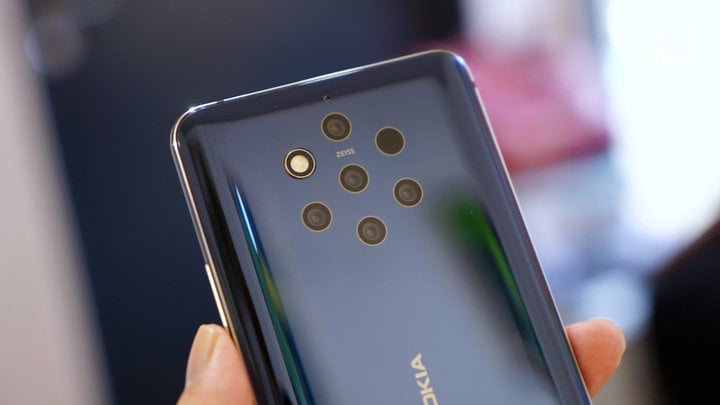
The Nokia 808 PureView was a smartphone released in 2012 which offered astonishing camera specifications. One of the first phones with a camera sensor sporting a resolution above 40 Megapixels and naturally one of the most innovative devices when it came to cameras. In the Windows Phone era, it was followed by the Nokia 1040 PureView, another device known for its amazing 41 MP camera. The Nokia 9 PureView is not a smartphone reboot, but it brings the PureView series back to life with innovative cameras once again. Nokia 9 PureView is the last top-tier flagship released by Nokia and it is made for photography enthusiasts. It sports a 12 MP Penta-camera with 2 RGB sensors and 3 monochromatic cameras (plus a TOF 3D sensor) working simultaneously to capture the best shots. It also packs a powerful Snapdragon 845 chipset and a Quad HD+ P-OLED display.
We think the whole Realme brand deserves a spot among the honorable mentions. A lot of people think Realme is just a name copied from Redmi, but it is not so. The brand already existed in 2010: do you remember the Oppo Real series? It included a device advertised as RealMe.
After 8 years, Oppo re-launched the brand and it quickly entered the top 7 in the ranking of the best global smartphone manufacturers. It is not exactly a smartphone reboot, but we also want to mention the Xiaomi Mi Note 10. If we consider when Xiaomi is born (2010), the Mi Note 10 is indeed a revival of the Mi Note series which was discontinued in 2016.
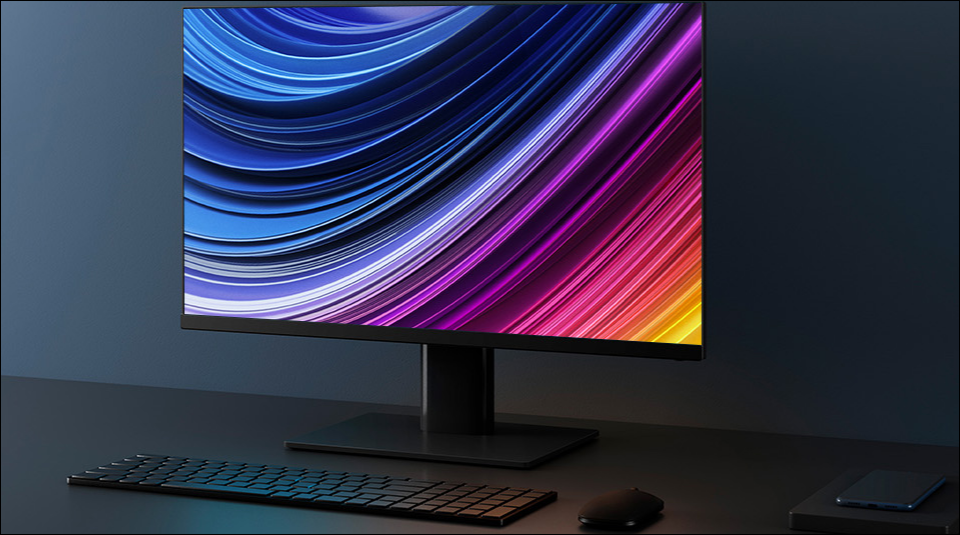
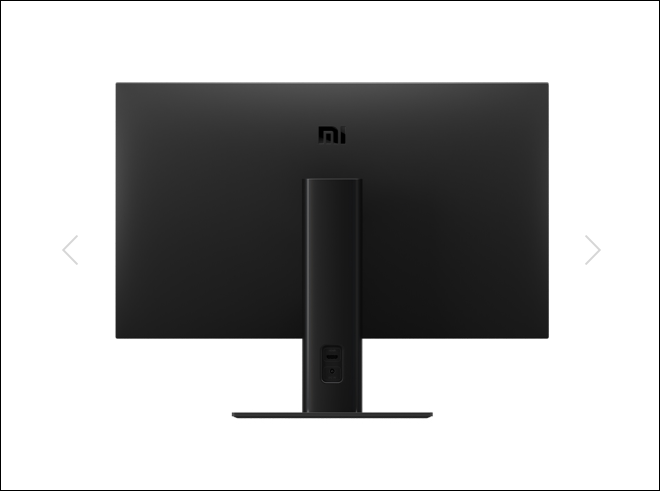
Xiaomi has launched the Mi Display 1A and it is now available on Xiaomi Mall. The display screen is similar to the Mi Display in many aspects including design and even has the same 699 yuan ($98) price tag. In case you are wondering the difference between the two, the original version is manufactured by Gaochuang, and 1A is manufactured by Shenzhen Zhaochi. Users can buy with confidence.
In fact, Xiaomi had already released two display products as early as the end of last year. The two products are the Xiaomi display equipped with a 23.8-inch IPS flat screen and the Xiaomi curved display equipped with a 34-inch curved screen. Compared with the old manufacturers’ monitors at the same price, Xiaomi’s monitors are really good in terms of cost performance. There are basically no competing products at the same price and specifications.
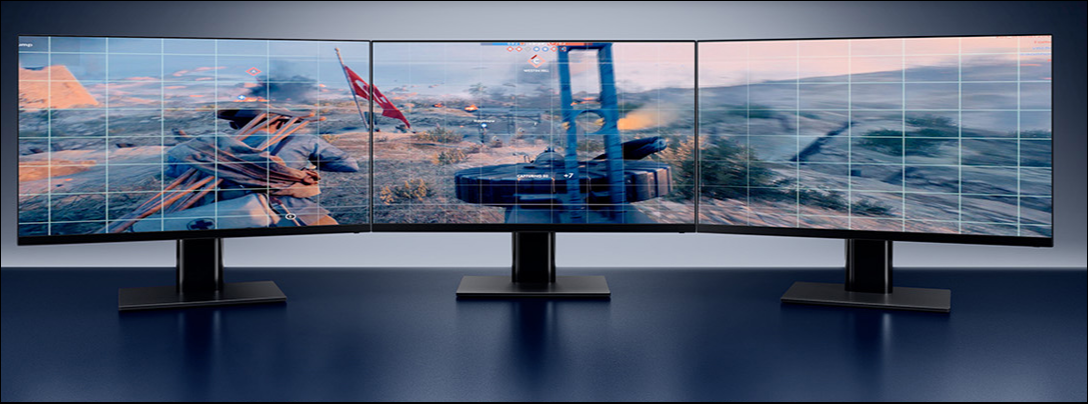
The Mi Display 1A is equipped with a 23.8-inch IPS flat screen with a resolution of 1920 x 1080 pixels. The display uses the 16:9 aspect ratio and has a viewing angle of up to 178 °. The panel has a common design with three sides having narrow bezels and the bottom bezel coming in wider. The display isn’t a high-end one suitable for gaming as it only supports 60Hz refresh rate.
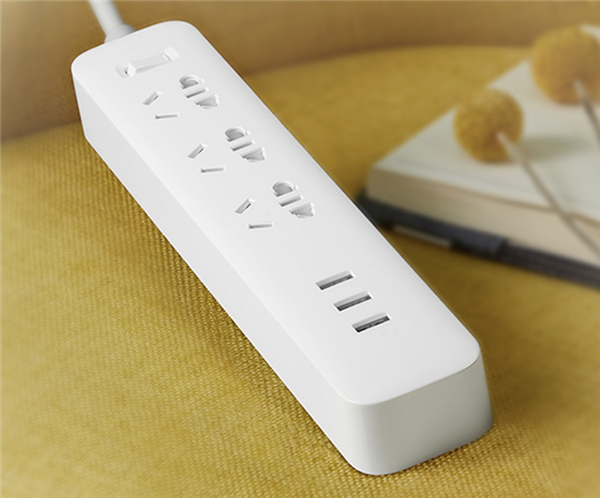
MIJIA Smart Socket 27W Fast Charge version
The MIJIA 27W Fast Charge Smart Socket was also launched on Mi Mall but under crowdfunding. The product carries a crowdfunding price of 69 yuan (~$9) but will retail for 79 yuan (~$11) after the exercise.
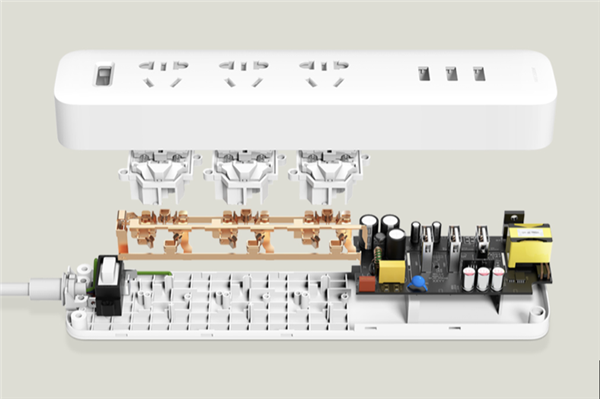
The smart socket comes with three USB-A ports with each having a maximum output power of 27W. However, when te three ports are put to use, the maximum output power drops slightly to 21W Max. The USB ports also support Quick Charge 3.0 fast charging protocol. The ports can be used to charge mobile phones, tablets, smartwatches and other gadgets. There is a built-in smart charging chip onboard which matches the output power according to different models but not more than 27W.
The MIJIA Plug-in board 27W Fast charge version also features three standard sockets and has 10A overload protection. If the electrical load exceeds the standard, the power will be automatically cut off, effectively avoiding the dangers caused by overload short circuit and accidental fire. After troubleshooting, you can turn it on again by simply pressing the power switch.
In addition, the internal copper strip adopts a higher-security one-piece non-breakpoint connection technology and high-quality tin-phosphor bronze structural materials. There is a safety door which shuts automatically when nothing is plugged into any of the sockets.
We use cookies on our website to give you the most relevant experience by remembering your preferences and repeat visits. By clicking “Accept”, you consent to the use of ALL the cookies.
This website uses cookies to improve your experience while you navigate through the website. Out of these, the cookies that are categorized as necessary are stored on your browser as they are essential for the working of basic functionalities of the website. We also use third-party cookies that help us analyze and understand how you use this website. These cookies will be stored in your browser only with your consent. You also have the option to opt-out of these cookies. But opting out of some of these cookies may affect your browsing experience.
Necessary cookies are absolutely essential for the website to function properly. This category only includes cookies that ensures basic functionalities and security features of the website. These cookies do not store any personal information.
Any cookies that may not be particularly necessary for the website to function and is used specifically to collect user personal data via analytics, ads, other embedded contents are termed as non-necessary cookies. It is mandatory to procure user consent prior to running these cookies on your website.