A Chinese tipster had revealed at the beginning of this month that the Huawei Nova 7 series of smartphones will debut on April 23. However, Huawei remained mum on the arrival of the Nova 7 lineup. Today, the confirmed released a post on Weibo to confirm that it will be announcing the Nova 7 phones on April 23.
The poster released by the company which confirms the Huawei Nova 7 launch date showcases the vertical camera setup placed at the upper-left corner of its rear. The setup can include as many as four cameras along with an LED flash. The company did not reveal any information on the specs of the Nova 7 models.
Rumors surrounding the Huawei Nova 7 series have revealed that it comprises of three 5G-ready devices such as Nova 7 SE, Nova 7 and Nova 7 Pro. It is speculated that three phones could be powered by Kirin 820 5G, Kirin 985 5G and Kirin 990 5G. They are expected to be priced between 2,000 Yuan (~$282) and 4,000 Yuan (~$565) in the home market.
A leaked poster of Huawei Nova 7 series that is now being circulated on Weibo has revealed the key specs and design of the Nova 7 smartphone. It revealed that the smartphone draws power from the new Kirin 985 chipset. After the Honor 30 phone that was unveiled yesterday, the Nova 7 will be the second phone to arrive with the new 7nm chipset that clocks at 2.58GHz.
The Nova 7 sports a curved display with a dual punch-hole at the upper-left corner that will most likely accommodate two front-facing cameras. The rear-facing quad camera system of the Nova 7 includes a periscope zoom lens that supports up to 50x digital zoom. The handset can be seen in three colors like red, purple and gradient white. It is expected to arrive with 40W fast charging support.
The mainstream Chinese manufacturers OnePlus, Oppo and Xiaomi stopped focusing on affordable smartphones only and started releasing top-tier flagships which have nothing to envy to the most expensive devices released by Samsung, Huawei, and Apple. This is a specs comparison between the most advanced top-tier flagships from those manufacturers: OnePlus 8 Pro, Oppo Find X2 Pro, and Xiaomi Mi 10 Pro. Their prices are higher than ever: is the value of these handsets high as well? Are they worth the money asked? Let’s discover it together through an in-depth comparison.
OnePlus 8 Pro vs Oppo Find X2 Pro vs Xiaomi Mi 10 Pro
OnePlus 8 Pro
Oppo Find X2 Pro
Xiaomi Mi 10 Pro
DIMENSIONS AND WEIGHT
165.3 x 74.4 x 8.5 mm, 199 g
165.2 x 74.4 x 8.8 mm, 200/208 g
162.6 x 74.8 x 9 mm, 208 g
DISPLAY
6.78 inches, 1440 x 3168p (Quad HD+), Fluid AMOLED
6.7 inches, 1440 x 3168p (Quad HD+), AMOLED
6.67 inches, 1080 x 2340p (Full HD+), Super AMOLED
With OnePlus 8 Pro, Oppo Find X2 Pro and Xiaomi Mi 10 Pro nothing was left to the case, including the design. All of them are very elegant and futuristic devices with premium materials, high screen-to-body ratio, and a punch-hole design. The winner is Oppo Find X2 Pro because it offers unique materials. It is available in two versions: one with a ceramic back and one made of vegan leather. OnePlus 8 and Xiaomi Mi 10 Pro come with a glass back and an aluminum frame like most of the flagships out there. OnePlus 8 Pro and Oppo Find X2 Pro are waterproof with the IP68 certification, while Xiaomi Mi 10 Pro does not offer any kind of certification against water.
Display
OnePlus 8 Pro and Oppo Find X2 Pro have superior displays to Xiaomi Mi 10 Pro and most of the smartphones in the market. Both come with a 10 bit panel sporting a Quad HD+ resolution, the AMOLED technology, and a 120 Hz refresh rate. They are HDR-compliant too. On the paper, we are talking about very similar displays and it is currently hard to tell which one is the best. OnePlus 8 Pro has a slightly bigger panel with its 6.78-inch diagonal. Xiaomi Mi 10 Pro has a lower 90 Hz refresh rate and even a lower Full HD+ resolution, so it can not compete with its rivals.
Hardware/Software
With Oppo Find X2 Pro, OnePlus 8 Pro and Xiaomi Mi 10 Pro you get the same processor (Snapdragon 855 with 5G connectivity thanks to the Snapdragon X55 modem) and the same amount of RAM: up to 12 GB, as well as Android 10 out of the box, but customized by different user interfaces. In each case, there is LPDDR5 RAM and UFS 3.0 internal storage, but only with Oppo Find X2 Pro and Xiaomi Mi 10 Pro you can get up to 512 GB of storage, while OnePlus 8 Pro stops at 256 GB.
Camera
A lot of people still would not expect it from Chinese smartphones, but Oppo Find X2 Pro, OnePlus 8 Pro, and Xiaomi Mi 10 Pro are top camera phones. And they are more or less at the same level in terms of photo quality. We still did not test each of these devices, but Oppo Find X2 Pro and Xiaomi Mi 10 Pro look superior to the OnePlus 8 Pro. They have better zoom capabilities (Oppo Find X2 Pro has the best sensor with optical zoom) and Xiaomi Mi 10 Pro can even record 8K videos.
Battery
OnePlus 8 Pro and Xiaomi Mi 10 Pro are equipped with bigger batteries than Oppo Find X2 Pro and, unlike the Find X2 Pro, they support wireless charging and reverse wireless charging. Oppo Find X2 Pro lacks wireless charging, but it has the fastest wired charging technology and still a great battery life. According to the company, the Find X2 Pro charges from 0 to 100 percent in just 38 minutes.
Price
Oppo Find X2 Pro (12/256 GB) has a global listing price of €1200/$1308, Xiaomi Mi 10 Pro (8/256 GB) starts at €999/$1090, and OnePlus 8 Pro (8/128 GB) has a starting price of €919/$1002. Given the inferior display and the absence of certified protection against dust and water, I would not go for the Xiaomi Mi 10. My favorite one is the Oppo Find X2 Pro due to its materials and very fast charging technology, as well as its amazing rear cameras. But some may prefer the OnePlus 8 Pro because it offers a bigger battery and wireless charging while still providing an amazing display quality and a waterproof body.
Blackview’s popular rugged smartphone Blackview BV9600 recently received a better and upgraded version – Blackview BV9600E. The new smartphone packs a few new changes upon the BV9600’s tough design and powerful hardware. Apart from all the updates, the ongoing discount of 20% on the newer version is another reason to grab the device.
Before detailing the new discount offer, let’s take a look at the specifications of Blackview BV9600E. It is a true rugged smartphone and engrosses most of the hardware specifications from its predecessor. The smartphone features IP68, IP69K and MIL-STD-810G ratings offering dust, drop and water protection. Moreover, the device can sustain for half an hour under the 1.5m depth. It is designed to work under extreme weather conditions or temperatures.
It comes powered with MediaTek Helio P70 processor, 4GB RAM and 128GB internal storage. The Blackview BV9600E sports a 6.21-inch AMOLED display with Full HD+ resolution of 2248 x 1080 pixels having an aspect ratio of 19:9. There’s a 5580 mAh battery that can sustain for a few days and can be very useful while on outings where there’s no power supply.
Blackview BV9600E also houses a Samsung 16-megapixel dual rear camera setup for high-quality and detail-oriented pictures. There’s an 8-megapixel selfie camera on the front side. The smartphone also features a side-mounted fingerprint sensor, multifunctional NFC with Google Pay integration.
It usually retails for the price of $249.99, but due to the ongoing sale, its price has dropped to $199 on AliExpress store and Blackview’s official store. The interested users can grab the device at such a discounted price from April 13 to April 22, 2020. To know more about the device, head over to their official website.
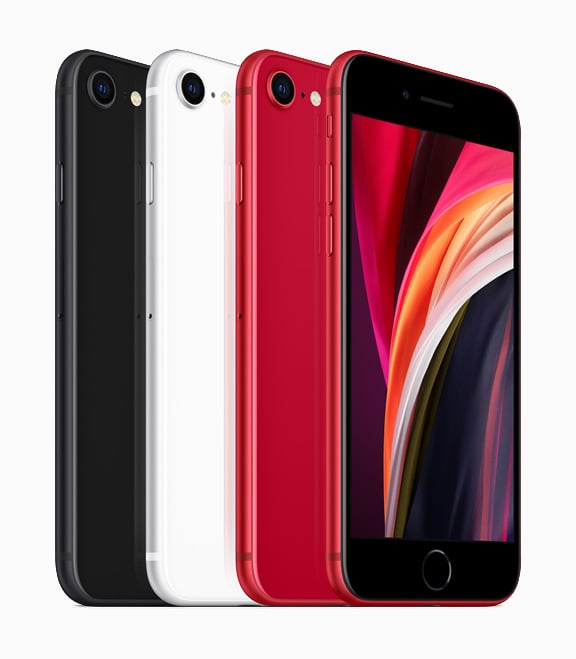
The iPhone SE was announced in 2016. It had a 4.0-inch display, an A9 chipset, and of course a front-mounted fingerprint scanner buried under the home button. Four years later, Apple has announced a new model, still called the iPhone SE by the way, but with a bigger display and the same A13 Bionic chipset inside the iPhone 11 series.
iPhone SE 2020 Design
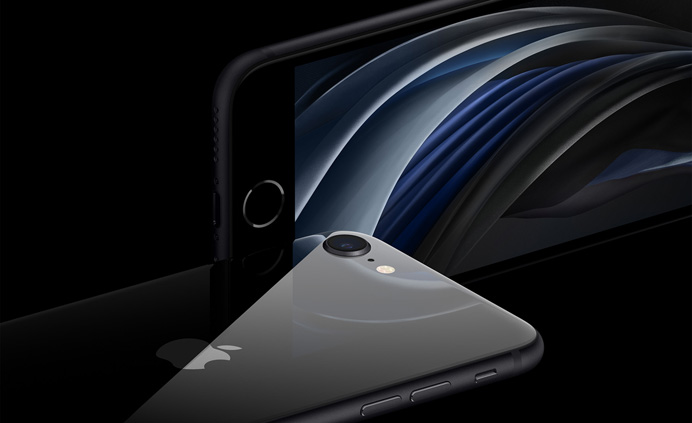
With respect to design, the new iPhone SE or iPhone SE 2020 to avoid confusion, can best be described as a mix of the 2016 iPhone SE and the iPhone XR or a 2020 edition of the iPhone 8. It keeps the huge bezels and a sapphire crystal-covered home button with Touch ID while the back is covered in glass and adorned with a single camera. Apple has announced the phone in three colors – Black, White, and (PRODUCT)RED.
iPhone SE 2020 specifications
The iPhone SE 2020 has a 4.7-inch Retina HD display. It supports Dolby Vision and HDR10 playback and also has Haptic Touch for Quick Actions (previewing messages, rearranging apps and more).
What is amazing about this phone is its processor. This is the same A13 Bionic inside the iPhone 11 which is the fastest mobile processor in the world. Trust Apple to not reveal the RAM. Nevertheless, the phone comes in 64GB, 128GB, and 256GB versions.
The rear camera is a 12MP f/1.8 camera which Apple says is the best single-camera system ever in an iPhone. Thanks to the A13’s ISP and Neural Engine, the iPhone SE 2020 can take portrait mode images with six different portrait lighting effects. It can also take portrait photos with the 7MP selfie camera. The phone can also record 4K videos at 60fps.
The iPhone SE 2020’s battery capacity wasn’t revealed but it supports 18W fast charging (ships with a 5W charger though) and also supports wireless charging. With an 18W charger, you can charge it from empty to 50% in about half an hour.
Other features include Wi-Fi 6, Dual SIM (1 nano +eSIM) and an IP67 water and dust resistance rating.
iPhone SE 2020 price and availability
The iPhone SE 2020 starts at $399 for the base model, goes up to $449 for the 128GB version, and $549 for the 256GB version. It will be available for pre-order beginning Friday, April 17 before going on sale on April 24. Apple has included a free one-year subscription for Apple TV+. They will also send a portion of the proceeds from the sales of the (PRODUCT) RED version to the Global Fund created for COVID-19.
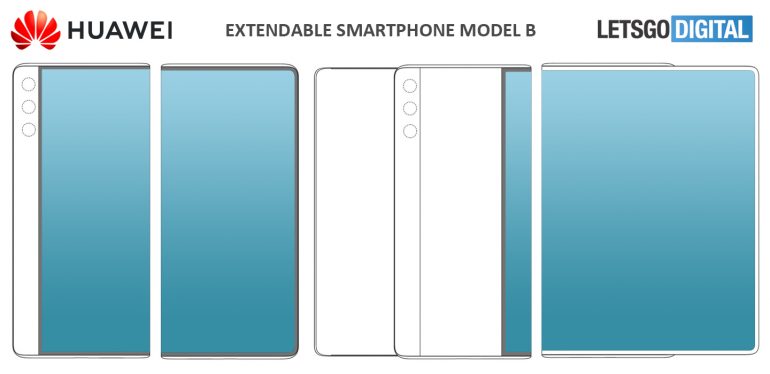
The World Intellectual Property Organization (WIPO) recently released data for patent filings in 2019 which shows that Huawei was the top patent filer in the corporate category. Huawei has also at different times bragged about its huge R&D investment. The Chinese tech giant has once again filed a new patent for extendable smartphone design. The patent was filed with the China National Intellectual Property Administration (CNIPA) and was discovered in WIPO’s global design database.
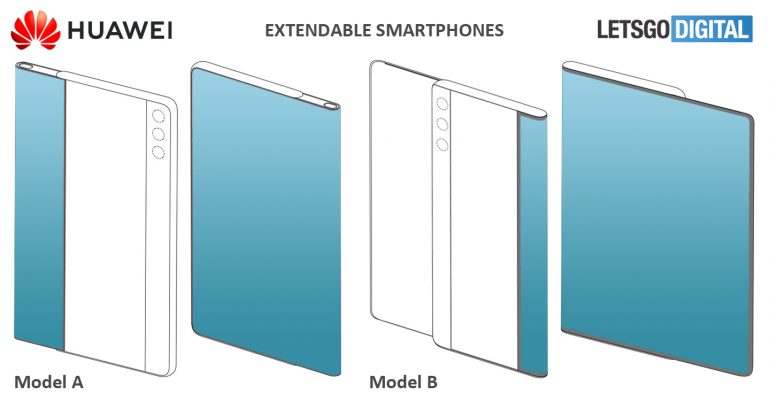
The sketches which have been rendered by LetsGoDigital shows the phone will adopt a foldable panel just like the Mate X and Mate Xs. However, instead of an in-folding design, the new patented model has a pull-out display design.
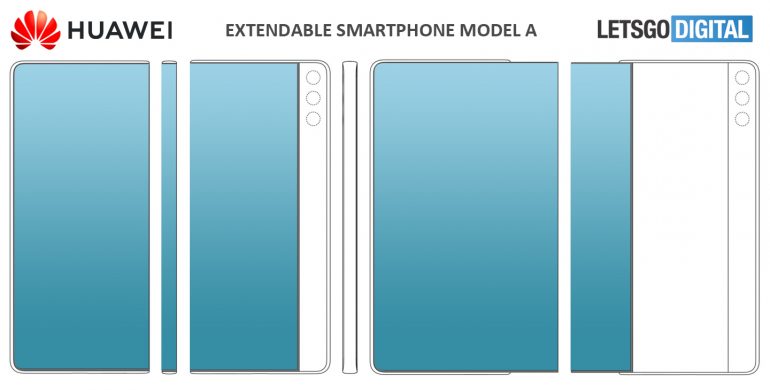
Huawei exhibited two different design styles which are described and illustrated by several images. The first model (Model A) has a significantly smaller pull-out display than the Model B. It features a bezel-less design and the flexible screen can be extended from the right side to the rear with a simple swipe of the finger. There is a vertical trim at the back which houses a triple camera setup. There is no indication of a front camera. You may have to just turn the phone over to take self-portraits with the main camera. The extension increases the display area by 30% on the model A.
For the second model, Huawei implements a different type of sliding system. This change sees the triple camera setup located on the left rear side instead of the right side. The flexible display also extends from the left. The extended part will be a lot thinner on the right side considering that the left side houses the rear sensors. With this design, the display area may be increased up to 50% on the second design. However, in terms of practicality, the first design looks better.
We must point out that this isn’t the first of such extendable design that has been patented. Samsung, LG, Xiaomi and even TCL have at different times filed patents for retractable phone design. TCL even showcased a prototype of the first extendable smartphone in the world. Just like foldable design, smartphones with sliding flexible displays may meet with us in the next few years.
The OnePlus 8 series launched globally yesterday. The launch event, which was done online, saw the manufacturer announce the OnePlus 8, OnePlus 8 Pro, and OnePlus Bullets Wireless Z. However, one device that was missing from the lineup is the much-anticipated OnePlus Z a.k.a. OnePlus 8 Lite. A teaser by OnePlus China on Weibo hints at the phone launching tomorrow.
The teaser is an image of a white box with a question mark on top and a caption that roughly translates to “If there will be a “mysterious new product“ at the launch event tomorrow, what do you think it will be?”.
The box is clearly a retail package for a phone and it is quite smaller than the retail box for the new OnePlus 8 and OnePlus 8 Pro. We believe it is the retail box for the OnePlus Z/OnePlus 8 Lite.
It makes sense that OnePlus is launching this phone in China (first) rather than globally. The phone is expected to come with a MediaTek Dimensity 1000 processor, and unlike the rest of the world, Chinese phone buyers are more receptive to phones powered by MediaTek processors.
The OnePlus Z is rumored to have a 6.4-inch FHD+ AMOLED display with a 90Hz refresh rate and a centered punch-hole. It has also been reported to have 48MP triple rear cameras, a 4000mAh battery capacity, and support for 30W Warp Charge.
Do you think the mysterious product is the OnePlus Z?
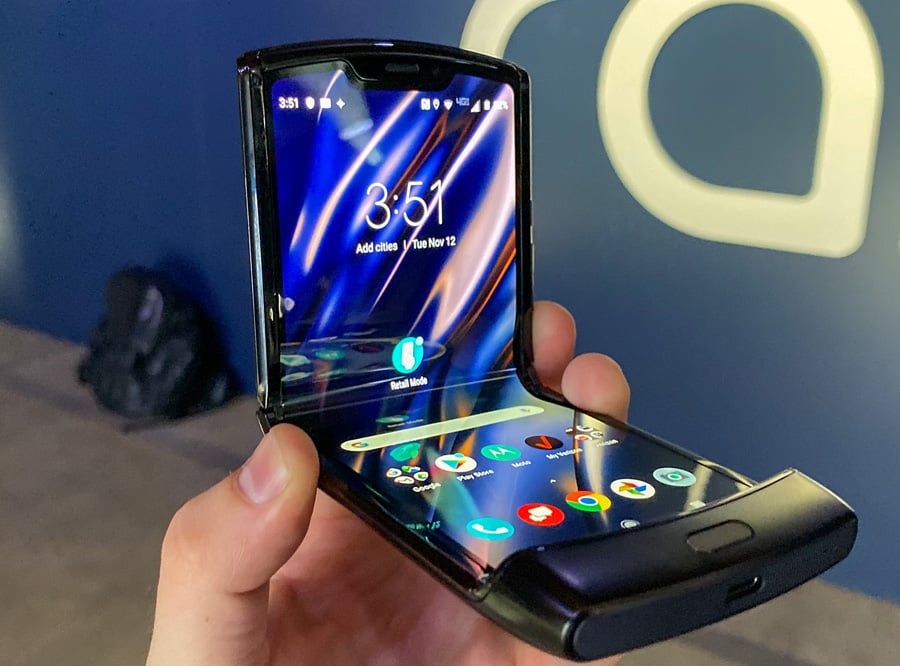
Motorola announced the Motorola Razr (2019) foldable phone in India on March 16 and the clamshell model was billed to go on sale on April 2. The release was later shifted to April 15 (today) due to the COVID 19 lockdown instituted by the Indian government. Sadly, the Motorola Razr (2019) won’t be released today as the company has once again shifted the release date to May 6.
India is still in lockdown until May 3 after the recent extension and that is what prompted the shift, a statement released by the company revealed. Clutching a retail price of Rs. 124,999 (around $1632), we doubt if there are very many persons who would be disappointed by the announcement.
Motorola first unveiled the Razr (2019) last year as a re-imagined version of the classic Motorola Razr of yore. The smartphone is powered by a Snapdragon 710 midrange chipset but what makes it tickle is the foldable OELD screen which it packs. The device features a 6.2-inch pOLED display with a 21:9 aspect ratio and resolution of 2142 x 876 pixels. There is also a secondary 2.7-inch cover screen upfront with 800 x 600 pixels resolution. The foldable phone comes in a sole 6GB RAM and 128GB storage option.
DJI, the world’s popular drone maker has scheduled an event for April 27 to unveil a new product. According to the teaser and release timeline, the upcoming release could be DJI Mavic Air 2, the successor to the original launched back in early 2018.
The DJI Mavic Air was the world’s first pocket-sized portable drone to be able to capture 4K videos. It was and still well-received for its compactibility by the users as well as media. Hence, a successor with improvements was never out of a question for the company.
Also, the image leak and FCC listing from a few weeks back suggest the DJI Mavic Air 2 to debut soon. In addition to those, the new teaser video posted by DJI’s official Twitter account also implies the same.
The drone in the teaser video resembles the original DJI Mavic Pro with rounded shape unlike any other recent drones from the company. We also get to see new green-coloured lights in a diamond pattern for battery indication. For comparison, the other drones from the company come with linearly aligned LED indicators.
According to leaks, the DJI Mavic Air 2 will have a 3,500 mAh battery, which is much better than its predecessor’s 2,375 mAh unit. In fact, battery life was one of the problems in the first version. Thankfully, the company will be fixing it in the second iteration slated to launch on April 27.
The Nokia 8 Sirocco flagship phone was a follow-up to the Nokia 8, arriving six months later with generally better specs overall. Today, the phone has begun receiving its last major OS upgrade in the form of Android 10.
HMD Global has begun rolling out the Android 10 update to the 2018 flagship that ran Android 8.0 Oreo out of the box when it launched. The update is 1.38GB in size and also comes with April 2020’s security patch. Below is the full changelog:
Dark Mode – Take it easy on your eyes
Smart reply – Save more time with recommended actions
Gesture Navigation – Get around with a swipe and a pull
Of course, the update will take time to reach everyone, so if you have not gotten it yet, you will have to wait a few days. HMD Global says it expects all countries in the first wave to have received it by April 20.
The Nokia 8 Sirocco is still up for 1 more year of security updates before it reaches its end of life.
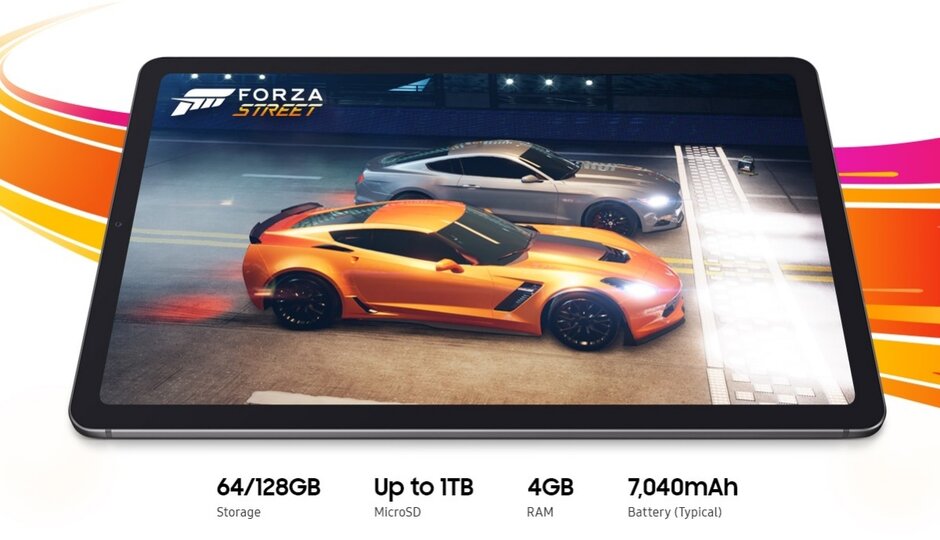
The tablet Android market has experienced a serious downturn in recent years which has seen many OEMs drastically reduce their product catalogue. The Korean giant has kept faith with its tablet business but in a somewhat uninspiring manner. We recall how the company launched the LTE-enabled Galaxy Tab A 8.4 (2020) with little to no fanfare. Again Samsung has gone official with the Galaxy Tab S6 Lite without much publicity. The tablet is now officially listed on Samsung Indonesia’s official website.
Before now, the tablet has featured in several leaks revealing the renders and specs. It has even been reportedly listed by several carriers and e-retailers including in South Korea. Thus, there is little left to the imagination but this official listing confirms the hardware and software details. Here we go.
The Galaxy Tab S6 Lite features a 10.4-inch display with a decent WUXGA+ resolution of 2000 x 1200 pixels. The tablet is powered by an Octa-core processor whose identity wasn’t revealed on the website. However, it is believed to be either the Exynos 9610 or 9611 chipsets. The processor is paired with 4GB of RAM while there are 64 GB or 128 GB of internal storage variants available. The internal storage is expandable via a microSD slot.
The tablet comes with an S-pen stylus just like its sibling. It equally packs dual speakers with AKG and Dolby Atmos enhancements, a 3.5mm headphone jack, USB Type-C port. For photography, there is an 8MP rear-facing camera and 5MP selfie shooter. It comes pre-installed with Android 10-based One UI 2.
Further, the Samsung Galaxy Tab S6 Lite packs a mammoth 7040mAh battery which supports up to 13 hours of continuous video playback between charges. Despite the huge battery, the tablet is just 7mm thick and weighs 467 grams.
Samsung Galaxy Tab S6 Lite Pricing and availability
The Samsung Galaxy Tab S6 Lite comes in Oxford Gray, Angora Blue, and Chiffon Pink colour options. Earlier listing on B&H which was later pulled down shows the tablet will retail for $350 for the 64GB Wi-Fi-only variant and $420 for the 128GB Wi-Fi-only variant. There is no word yet on when it will go on sale.
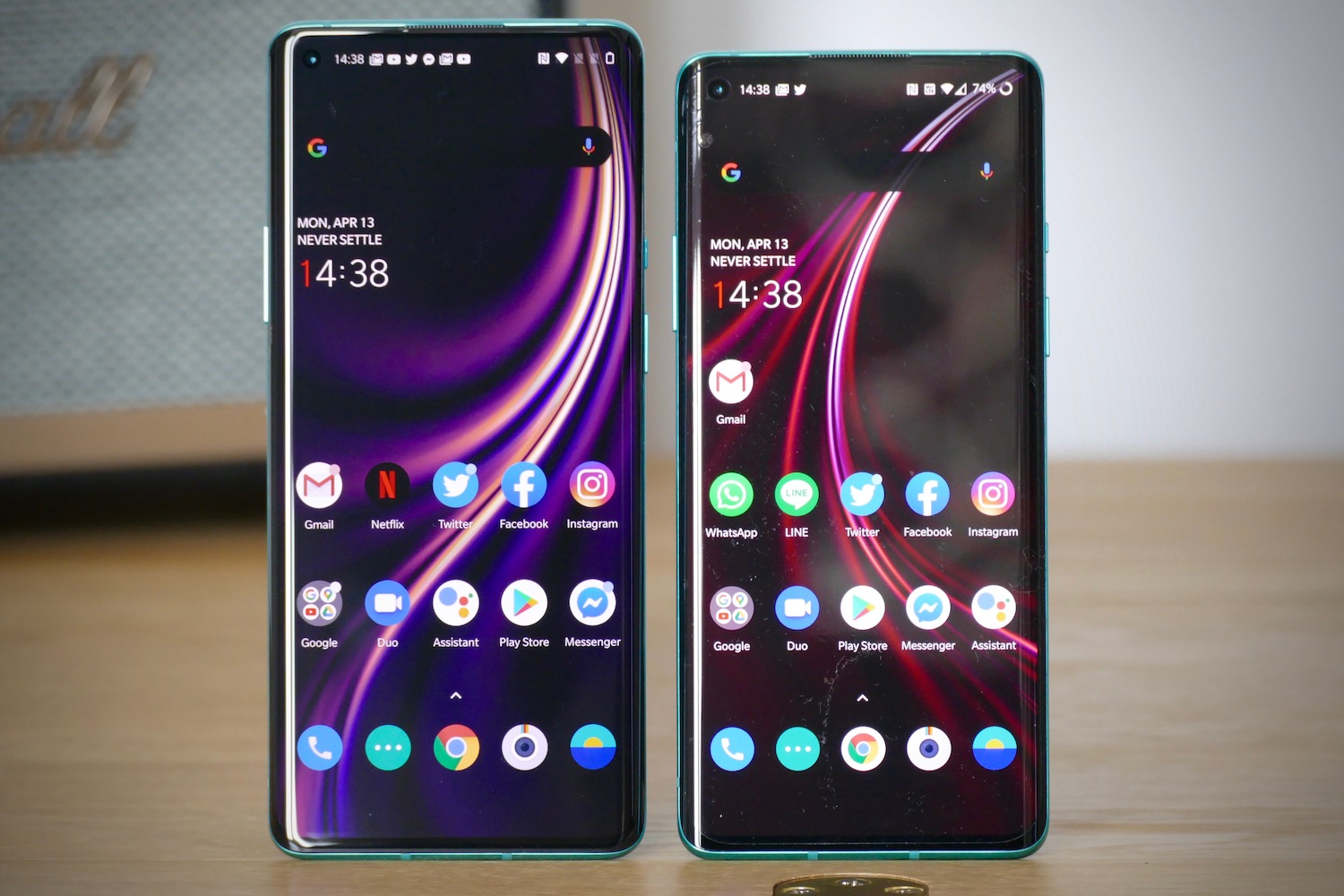
OnePlus officially launched the OnePlus 8 Pro and OnePlus 8 in a digital event hosted yesterday. Apart from announcing the full specifications, the company also revealed the pricing and availability for the US, UK and Europe but did not announce that of India. But a few hours after the event, OnePlus India official Tweeter handle shared a teaser for the India prices of the OnePlus 8 Pro and OnePlus 8.
The teaser detailed the company of planning to announce the India price for the series soon. However, that may not be very soon and the wait will likely be worth the while if we are to make some wild guesses from the tweet – ” Good things come to those who w8″. Obviously, the prices will likely be lower than the dollar equivalent and not direct conversions. However, we’ll have to wait for more details.
To recall, the OnePlus 8 Pro and OnePlus 8 both come with a hole-punch display notch and have matte-frosted glass protection at the back. The models are powered by a Snapdragon 865 processor with 5G support. The pricing for the OnePlus 8 starts at $899 (roughly Rs. 68,500) while the OnePlus 8 starts at $799 (roughly Rs. 60,800). The models will go on sale in the US on April 29, while their sales will start in the UK and other European regions on April 21. The launch in India will likely be next month after the lockdown ends.
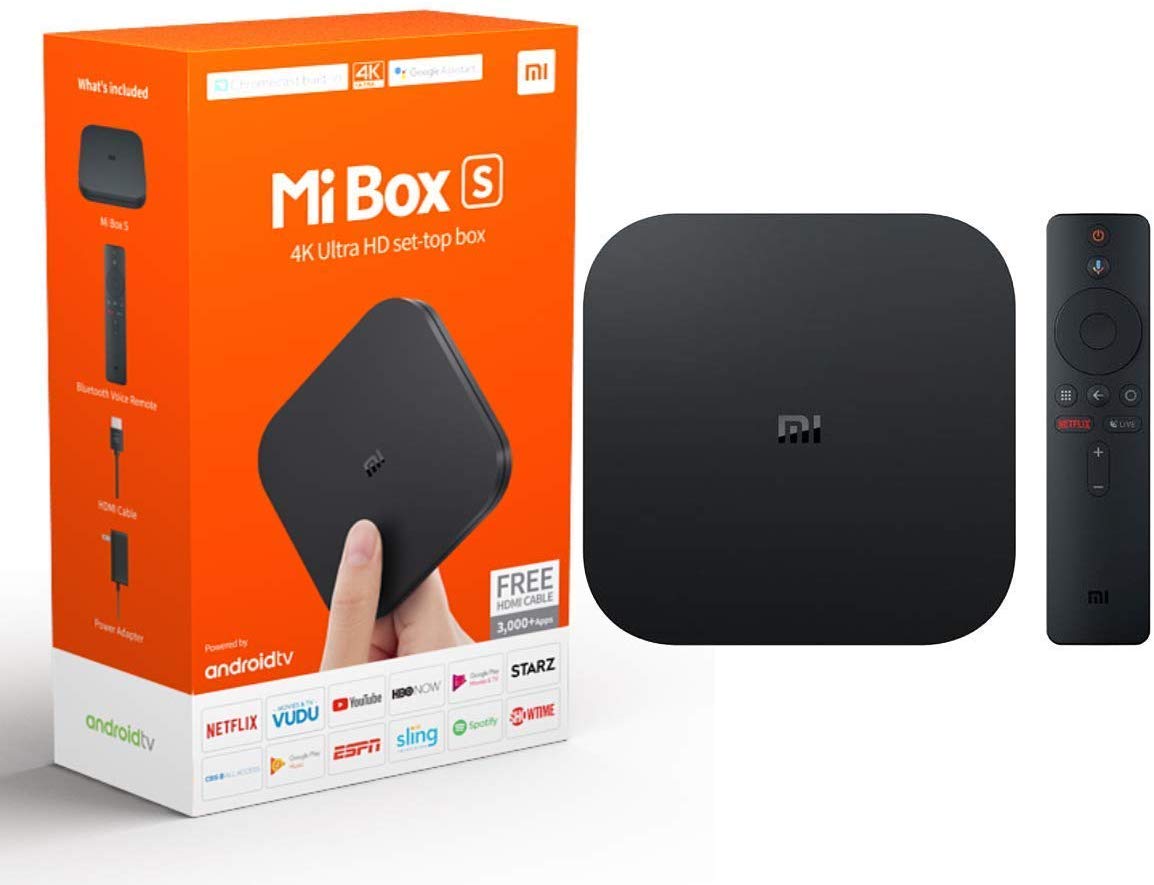
The Mi Box S was announced back in the fourth quarter of 2018 as a follow-up to the Mi Box. The Android TV box launched with a new design and a new remote but came with the same internals as the Mi Box albeit at a cheaper price.
Xiaomi has now released a stable Android 9 TV update for the TV box which originally launched with Android 8.1 TV. The update is over 600MB in size and comes with lots of bug fixes. Below is the full changelog:
Fixed Chromecast not working
Fixed some apps playback freeze
Fixed special H264 decode error
Fixed Bluetooth audio not in sync with the video
Fixed HDMI compatibility
Fixed pop sound when STB is in standby mode
Fixed Gboard not working when connecting an external keyboard
Fixed CEC not working (from build 2603)
Fixed system stability issues after resuming from standby mode (from build 2596)
Support for more Wi-Fi channels in special areas (from build 2596)
Sadly, the firmware cannot be applied to the Mi Box, which is currently stuck on Oreo, even though both TV boxes share the same hardware.
Do you have a Mi Box S? Have you received the stable Android Pie update? Do let us know in the comment box.
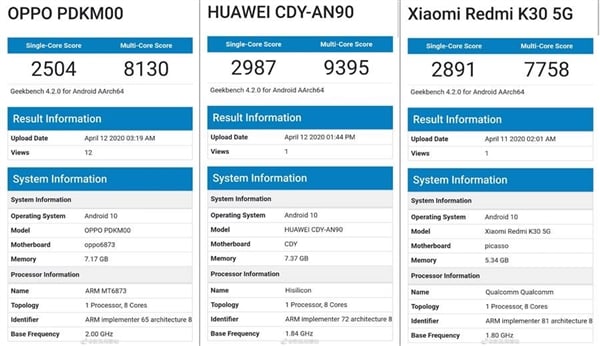
Recently, an OPPO model bearing the model number PDKM00 and believed to be the OPPO A92s 5G appeared on Geekbench database. The devices believed to be powered by a Dimensity 800 chipset. MediaTek announced the Dimensity 800 processor in January 2020 but the chipset is yet to find its way into any smartphone but may feature on the OPPO A92s and Redmi Note 9 Pro China version. Here is a comparison of the Dimensity 800 benchmark scores with those of the Qualcomm Snapdragon 765 and Huawei’s Kirin 820 5G SoCs.
The Dimensity 800 is a mid-range 5G processor just like the Kirin 820 and Snapdragon 765G. The GeekBench scores show the Kirin 820 5G has the highest score both on the single-core and multi-core tests. The Kirin 820 5G-powered model scored 2987 in the single-core test and 9395 in the multi-core test. On the other hand, MediaTek’s Dimensity 800 has a better multi-core score of 8130points compared to 7758 points for the SNapdragon 765G. However, the SD 765G has a superior single-core test score of 2891 while the Diemsity 800 scored 2504.
Regardless of the disparity in the test scores, the three processors are in the same performance range. There are just likely a few aspects where they outwit each other. However, going by user experience, the Snapdragon 765G will likely be the preferred choice of most users and will definitely get the widest spread in terms of deployment on smartphones by OEMs.
As a reminder, the Dimensity 800 is a 7nm octa-core processor just like the other two SoCs. It features four Cortex A76 cores clocking at 2.0GHz and four Cortex A55 cores working at 2.0GHz. For graphics, it is equipped with Mali-G77MC4. The SoC is coupled with HyperEngine gaming technology for an enhanced gaming experience. It features APU 3.0 which offers up to 2.4 TOPS of AI performance. Other features include support for full HD+ resolution display with up to 90Hz refresh rates as well as up to 16 GB of LPDDR4x RAM.
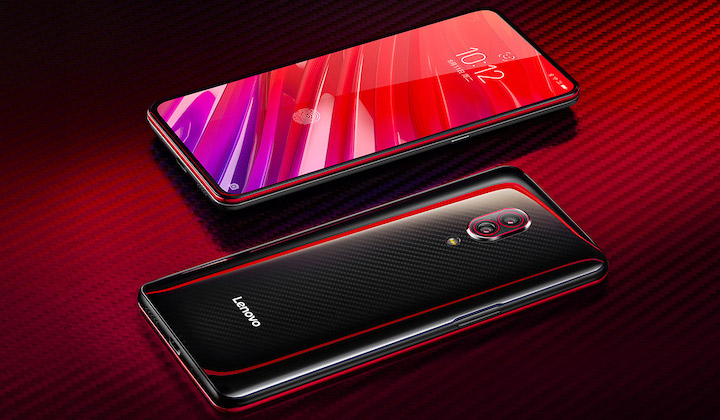
The Lenovo Z5 Pro GT, which was announced as the world’s first smartphone powered by Qualcomm Snapdragon 855 SoC in December 2018 is finally receiving its stable Android 10 update now in China. The update comes with build number ZUI 11.5.223 and weighs 1.80 GB in size.
Lenovo has been always poor at updating its smartphones in a timely manner and the company is sadly proving it over and over again. Motorola devices used to be one of the first to received Android security patches and platform updates. But ever since Lenovo acquired it, it is also sharing the same fate as the Chinese PC maker’s own smartphones.
Anyway, the Android 10 update for Lenovo Z5 Pro GT bumps up the company’s ZUI Skin version to 11.5.223 and brings a ton of new changes. One of the best new features in this include Lenovo One, which enables the users to pair their smartphone with Windows PC / laptop and control it from there. For other new addition and bug fixes, take a look at the complete changelog provided below.
Lenovo Z5 Pro GT Android 10 ZUI 11.5.223 Official Changelog (Translated from Chinese)
Update highlights
Android 10 version is coming!
Optimize system interface display
Application management interface update
Optimize the volume adjustment function
Optimize system screenshot function
Added 2 new calendar widgets
Added 2 new time weather widgets
Added the most beautiful Chinese style theme
Set to support fuzzy search
Added small window reply function
Fix the misidentification of occasional fingerprint unlocking
Increase night power saving and abnormal power consumption switch
New Lenovo One is added, making mobile PC connection more convenient
The new version of Music Voice supports the power button to wake up
Newly added network intelligent detection, the network situation can be known immediately
Optimize U health detail function and more device support
Lenovo Wallet added the function of simulating access control card
There are more system optimizations waiting for you to discover
Known issues
Due to third-party reasons, the red envelope assistant function was removed
Laboratory function adjustment, remove chat / article interface switching and magic input box
Payment security and distributed voice no longer support Android 10 version, the above applications will be removed after system upgrade
Due to cooperation issues, Lenovo Wallet adjusted the card opening method in the Beijing-Tianjin-Hebei region, and the already opened bus card will not be affected
Some third-party applications are not yet adapted to the Android 10 system, and there may be startup failures or abnormal functions
Due to Android 10 permission adjustment, individual permissions of the three-party application may be disabled, please manually open the corresponding permissions.
Although the update does not format user data, Lenovo recommends the users of the phone to back up their data for safety purpose before hitting the download button. Also, suggests updating only when the handset is not rooted as well as have enough battery and storage space.
Also, it mentions warming up of the phone while updating, which is normal anyway. Further, if the user is facing any issue, then it suggests them to seek help from Lenovo Community.
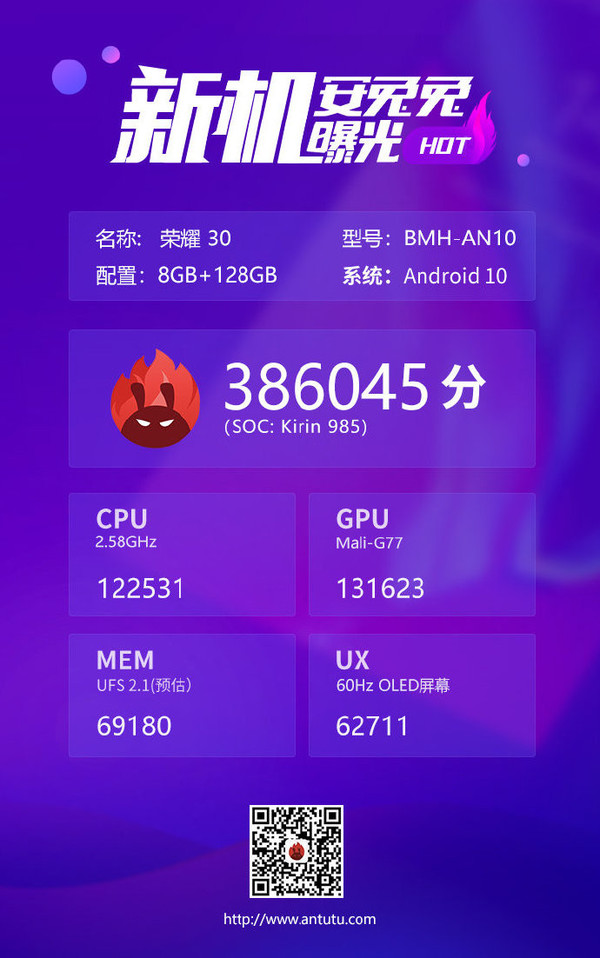
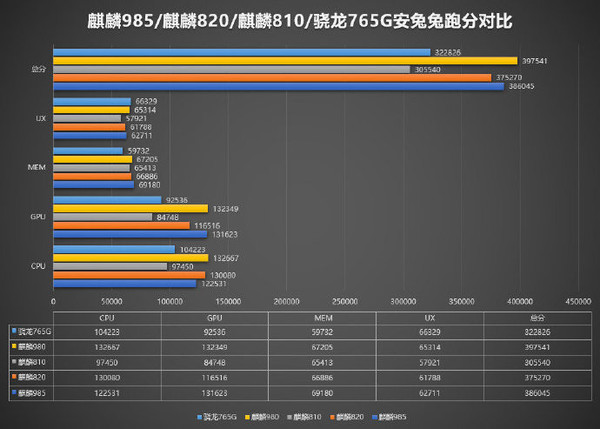
The chipset is equipped on the Honor 30 series, including Honor 30, Honor 30 Pro and Honor 30 Pro+. It is an octa core processor with the new Mali-G77 GPU. The Kirin 985 also houses the same dual core NPU, similar to the Kirin 990. Arriving at the performance, the AnTuTu benchmark had managed the highest score of 386,045 points. Notably, this is just slightly higher than the Kirin 820 SoC.
Breaking down the overall score, the CPU of the Kirin 985 scored 122,531 points, while its GPU received 131,623 points. The MEM score arrived in at 69,180 points and finally, the UX score brought in 62,711 points. In simpler terms, this should translate to overall better performance when compared to the Kirin 820. However, the Kirin 820 actually managed to score slightly higher in the CPU department while lagging behind in the rest.
This is surprising since the clock speed of the Kirin 985 is higher than the 820 and is based on the same CPU architecture. Although this may be due to software optimization, as the newly launched processor has yet to receive any specific software update, unlike the latter which has already been available for a while now.
Huawei has announced a new flagship Hisilicon Kirin chipset. The Kirin 985 processor is yet another 5G processor, bringing the total number of 5G SoCs under Huawei’s belt to three. The other two SoCs are the flagship Kirin 990 5G and the mid-range Kirin 820 5G announced recently.
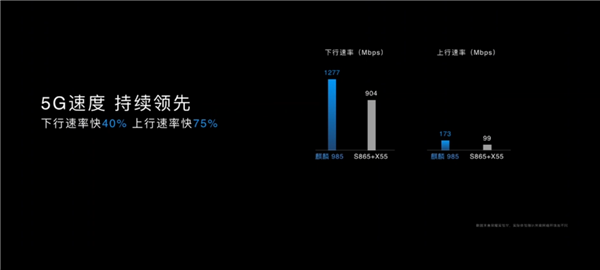
The new Kirin 985 is a flagship processor but isn’t as powerful as the Kirin 990 5G SoC. It is manufactured using TSMC’s 7nm process and integrates a single-chip 5G baseband solution without a plug-in. It supports 2G / 3G / 4G / 5G network standards and NSA / SA 5G dual-modes. The theoretical maximum downlink rate is 1277Mbps and the uplink rate is 173Mbps. In comparison with the Snapdragon 865 processor integrated with Snapdragon X55 modem, the downlink rate is said to be about 40% faster while the uplink rate is about 75% faster.
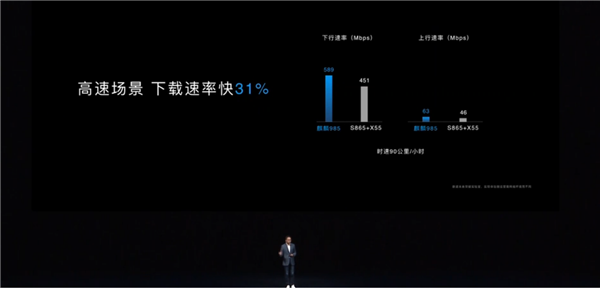
The new processor is said to be specifically optimized for high-speed scenarios. For example, at a speed of 90 km/h, the downlink rate and uplink rate can still reach 589Mbps and 63Mbps respectively. These are 31% and 37% faster than the downlink and uplink rates of the Snapdragon X55-integrated Snapdragon 865 chipset.
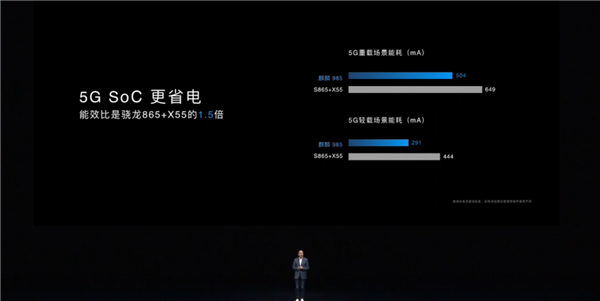
Furthermore, the Kirn 985 processor has high energy efficiency. Huawei claims that the power consumption under 5G heavy load and light load scenarios is only 504mA and 291mA respectively. Also, the Chinese company claims that the energy efficiency ratio is about 1.5 times that of the Snapdragon X55-integrated Snapdragon 865 chipset.
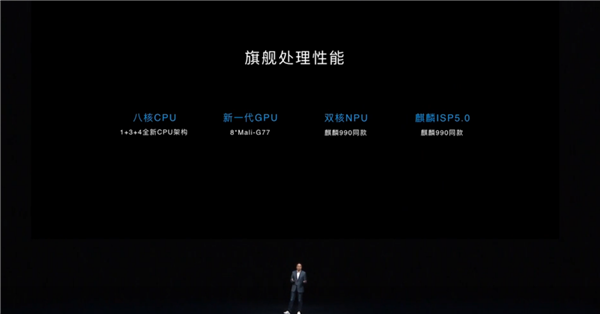
In terms of the architecture, the Kirin 985 integrates an Octa-core CPU, which is made up of a single large core, three medium cores, and four small cores. Although Huawei didn’t announce details of the cores, the AI benchmark listing has shown that the Kirin 985 features a single Cortex-A76 core clocked at 2.58GHz and three Cortex-A76 cores with clocking frequencies of 2.4GHz each. There are also four Cortex-A55 cores with lower clock frequency of 1.84GHz. It also integrates an octa-core Mali-G77 GPU as well as a dual-core NPU AI unit and ISP 5.0 image unit, similar to what is found on the Kirin 990.
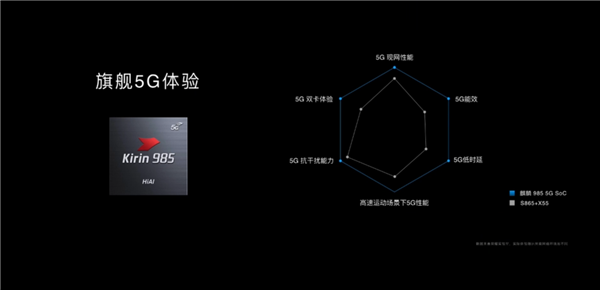
According to the official announcement, Kirin 985 is sufficient for 5G network performance, dual-SIM 5G use. The processor also features 5G anti-jamming capability, 5G low latency, 5G energy efficiency, and 5G high-speed scene performance.
Huawei has reportedly shifted its 14nm chipset orders from TSMC (Taiwan Semiconductor Manufacturing Company), the world’s largest contract chipmaker to China based SMIC (Semiconductor Manufacturing International).
Huawei’s HiSilicon Kirin chipsets are manufactured by TSMC
For those unaware, SMIC is China’s leading chipmaker and should be a viable alternative to the semiconductor giant TSMC. Huawei’s HiSilicon chips have historically been manufactured by the latter and currently range anywhere from its 14nm, 12nm or even 7 or 5nm chipsets. According to sources, Huawei is rumored on re-releasing Kirin 710 processor branded as the Kirin 710A, but this time with a 14nm FinFET process over the previous 12nm FinFET node.
Although the report is still unconfirmed, it is still major news as it marks a major departure from TSMC and a big order being placed with SMIC, which would be a big win for the Chinese chipmaker. Since the Chinese tech giant needs a fab capable of manufacturing the 14nm FinFET process, the SMIC would be a perfect fit. This may also be directly related to the whole US-China trade ware situation and the pressure from the US on Huawei.
The American government has tried hampering Huawei’s operations recently by limiting its chip supplies through TSMC. Thus, it could be a trial run for the smartphone maker before it eventually completely shifts its HiSilicon processors away from the Taiwanese company to its home country.
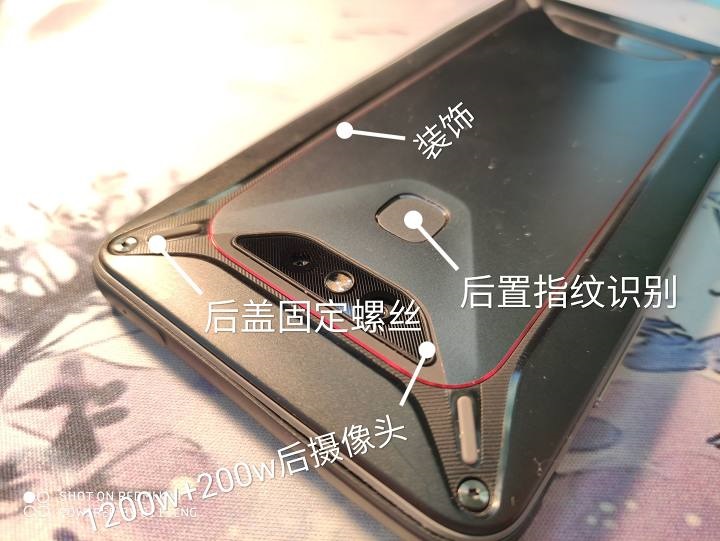
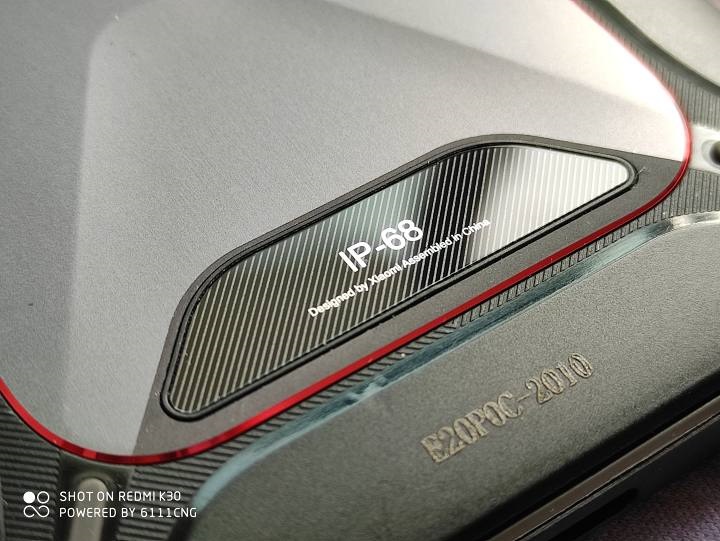
Earlier today (15th April 2020), a new set of leaks had surfaced online for a Xiaomi device. The smartphone in question is an Engineering Prototype, with a codename Comet, and also features IP68 water and dust resistance.
According to the person that bought the device, the prototype handset reportedly only has three units that can be found in the entire network. This is primarily due to the nature of the smartphone which is technically an unfinished unit. Furthermore, it is claimed that the device features an LCD display with Qualcomm’s Snapdragon 710 SoC with 4GB of RAM and 64GB of internal storage.
The Xiaomi Comet also supports Bluetooth 5.0 and has a 2,900mAh battery pack. In terms of optics, the smartphone features 12 megapixel primary and a 2 megapixel secondary lens. It is also rated IP68 for water and dust resistance. The person that bought the Xiaomi Comet also shared a couple of images that revealed its design and overall aesthetics.
On the rear, the device features a dual camera setup with an LED flash in between, and a rear mounted fingerprint scanner surrounded by angular designs. Notably, the Xiaomi Comet highly resembles Black Shark gaming smartphones. It could also be a budget gaming device that the company had intended to launch previously. Although that is just speculation at this point. So take it with a grain of salt.
MIUI 12 will be the next big release from Xiaomi in the second half of the year. There have been multiple reports of it ever since the company released MIUI 11 last year. The upcoming MIUI 12 will mark the 10th anniversary of the brand’s mobile software and hence expectations are high. Thankfully, we don’t need to wait for more as we are being treated with the first-ever glimpse of the new UI, courtesy of the new Mi Settings app shared by the company on Mi Community China.
Like weekly beta releases of MIUI, Xiaomi also shares beta versions of its apps on Mi Community from time to time. A couple of days back, the firm uploaded a new beta version of the Mi Settings app. While checking it out, kacskrz, an XDA Junior Member found the latest version of the app to feature revamped UI throughout most pages.
What is interesting is that these changes are probably meant for MIUI 12 as Xiaomi has now removed them. Developers might have mistakenly included them in the recent Mi Settings beta. Anyway, the XDA member has shared some screenshots comparing them with those from the previous version of the app.
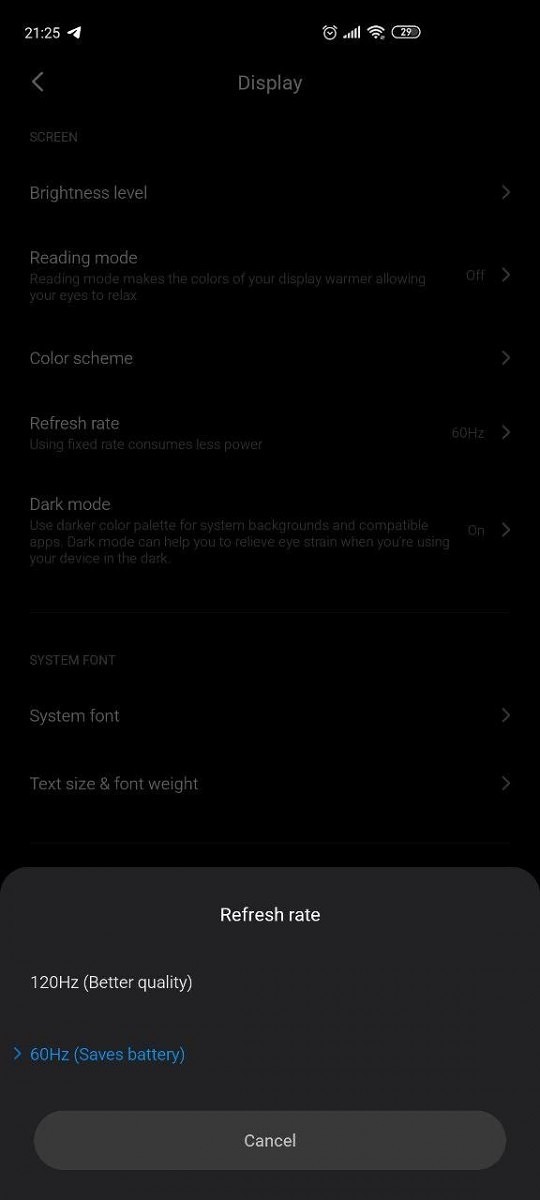
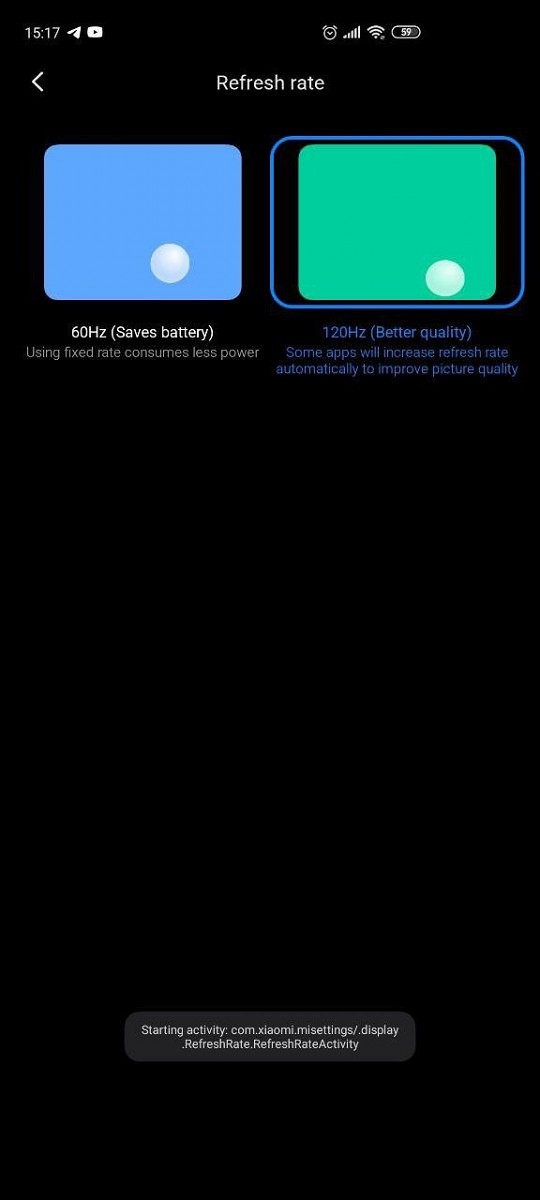
As you can see from the screenshots, the new Mi Settings, which could debut with MIUI 12 will have a dedicated page for display refresh rate settings with animations. This feels much better than the previous plain implementation.
Refresh Rate Settings
1 of 2
MIUI 11 Refresh Rate
MIUI 12 Refresh Rate
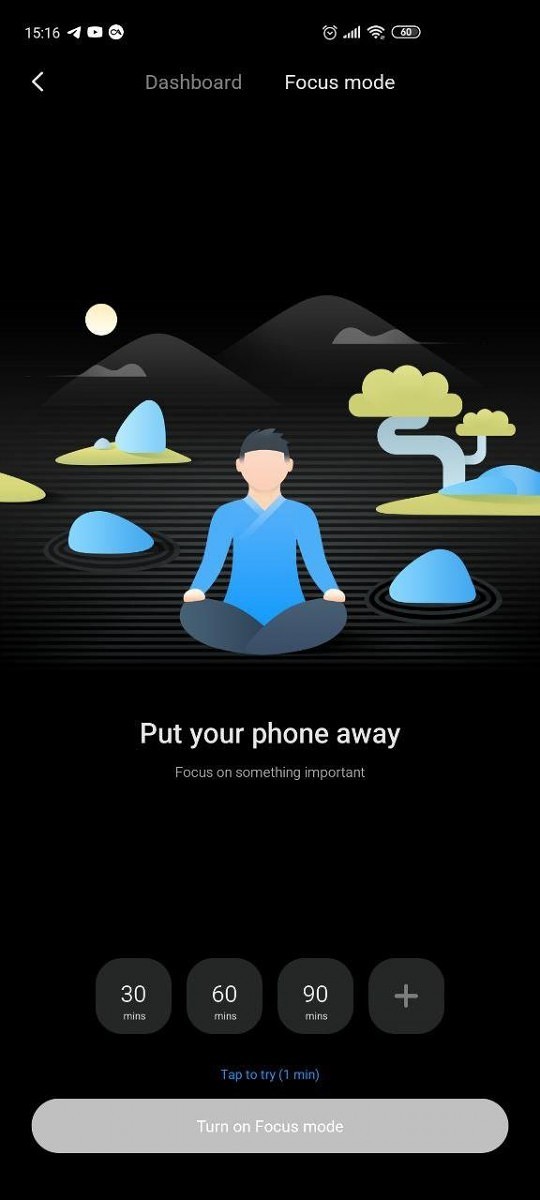
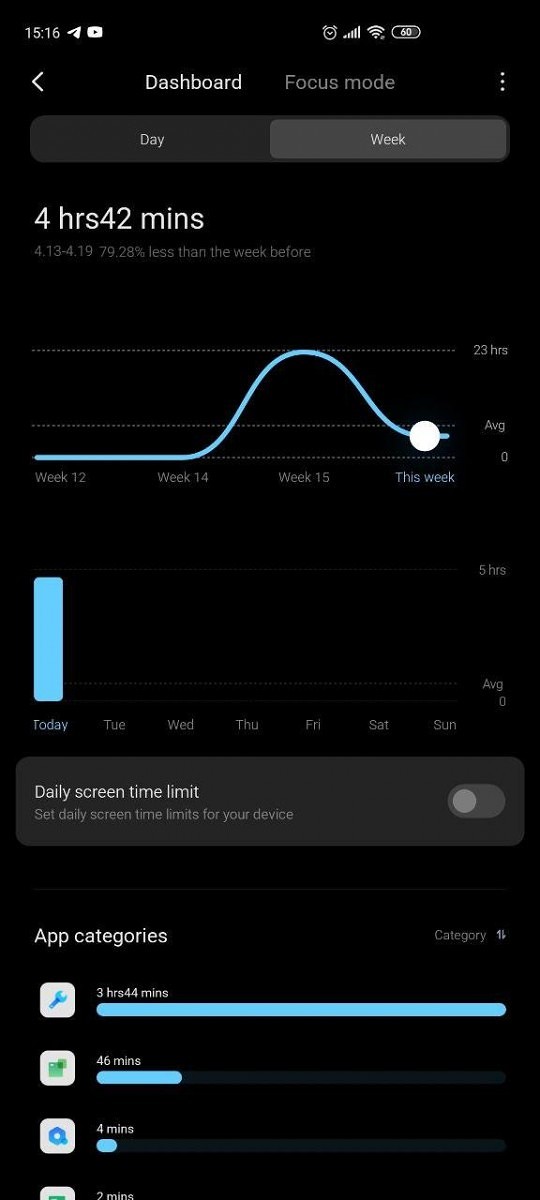
Further, the Focus mode option gets a tab for Dashboard on the same page. Also, the new Dashboard is built from scratch looking nothing like the old version. It looks cleaner than the earlier version with new graphs, tabs for day and week, individual app usage, and more.
Focus Mode Settings
1 of 4
MIUI 11 Focus Mode
MIUI 12 Focus Mode
MIUI 11 Dashboard
MIUI 12 Dashboard
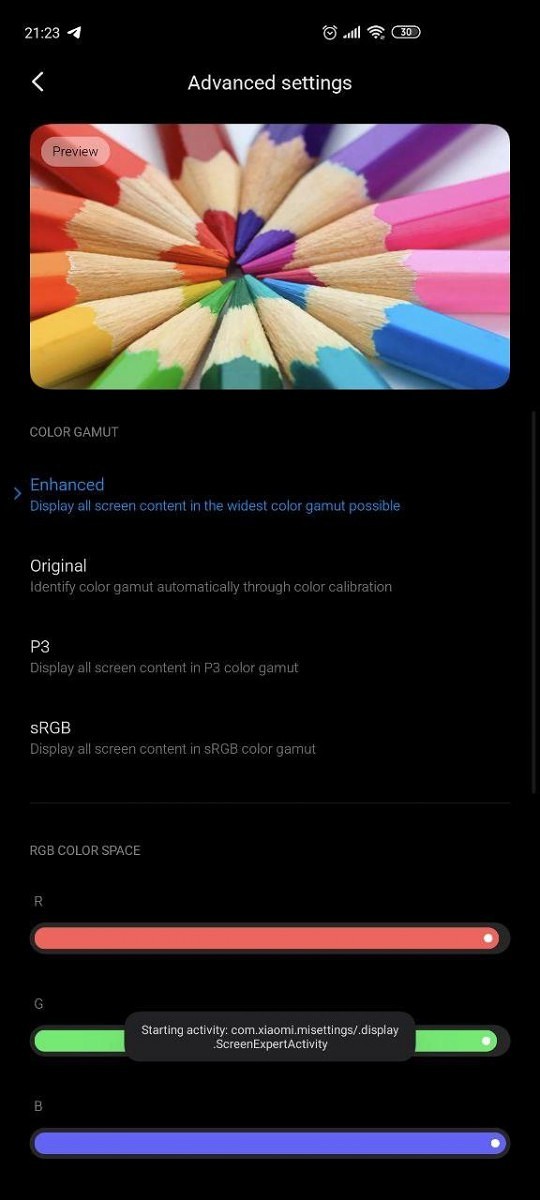
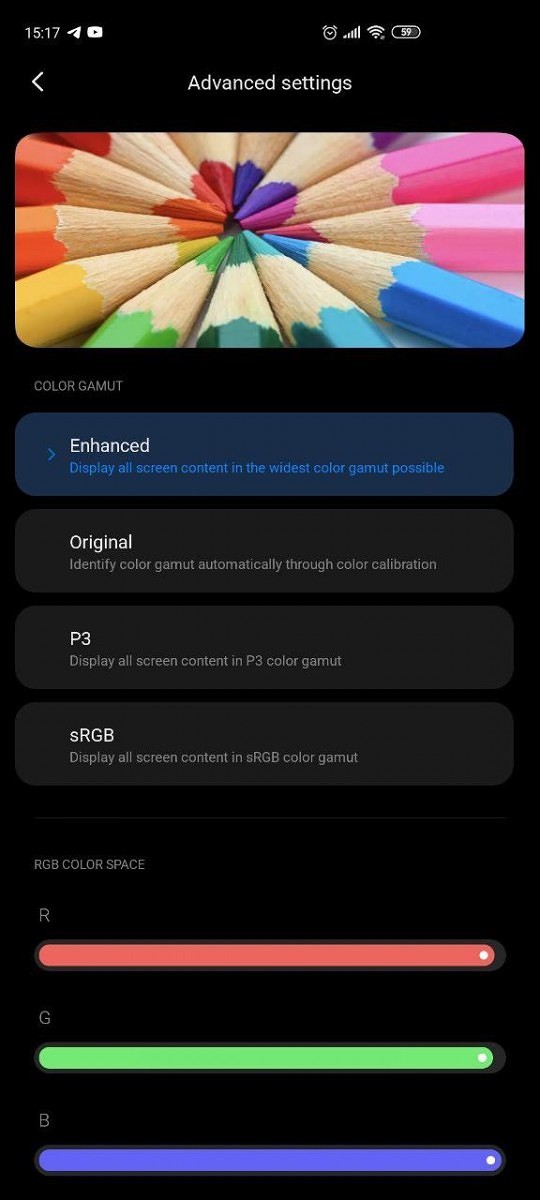
The advanced display settings page is also revamped but it does not look well with the grey box backgrounds for different options. As this is an early version of Mi Settings app, it may be fixed in the future versions before MIUI 12 goes official.
Advanced Display Settings
1 of 2
MIUI 11 Display Settings
MIUI 12 Display Settings
The MIUI 12 Android skin by Xiaomi is expected to bring tons of changes including a better global dark mode, uniformed fonts and UI elements (which is already visible in the above screenshots), common loading screens, and more.
Honor has officially announced three new models in China today – the Honor 30, the Honor 30 Pro, and the Honor 30 Pro+. So it looks like the company is committed to the Pro+ moniker this year, making it the second such device after Huawei launched the Pro+ model in its P40 series last month. All three new Honor models feature a similar design which includes an OLED display, a punch-hole camera up front, and a rectangular camera setup at the back.
Just like the OnePlus 8 that was announced yesterday, Honor is marketing the Honor 30 as a compact 5G flagship. It weighs just 185 grams and measures 8.1mm in thickness. On the other hand, the Honor 30 Pro and Pro+ models have an 8.38mm body and weigh 186 grams and 190 grams respectively. So all the three models are pretty lightweight. The company has used a 3D curved back on all three models giving them better ergonomics.
The Honor 30 and 30 Pro comes in four colors – Neon Purple, Black, Green, and Silver. The Honor 30 Pro+ has just three colors, Black, Silver, and Green. Interestingly, the Honor logo takes up nearly half of the back on all the three models.
So what’s so special about their cameras? The Pro+ shares the same primary camera as the P40 Pro and features a 50x telephoto periscope lens too!
Honor 30 Pro+ camera specs – Triple Cameras
50MP RYYB IMX700 sensor – same as the P40 Pro – large 1/1.28-inch sensor and 2.44um pixels
Periscope Telephoto Lens with 50x digital zoom, 10x hybrid zoom, and 5x optical zoom + Dual OIS
16MP Ultra wide-angle lens with 17mm focal length and support for 2.5cm macro shots
Honor 30 Pro camera specs -Triple Cameras
40MP RYYB IMX600 1/1.7″ sensor
Periscope Telephoto Lens with 50x digital zoom, 10x hybrid zoom, and 5x optical zoom + Dual OIS
16MP Ultra wide-angle lens with 17mm focal length
Honor 30 camera specs – Quad Cameras
40MP RYYB IMX600 sensor
8MP Ultra Wide Angle Lens
Persicope Telephoto lens with 50x optical zoom and 10x hybrid zoom
2MP Macro Lens
The Honor 30 comes with a single 32MP punch hole camera while the Pro models have a 32MP + 8MP (wide angle) dual front camera solution.
Honor 30, 30 Pro, 30 Pro+ Specs
The Honor 30 comes with a flat 6.53-inch OLED display with 1080p FHD+ resolution. The screen is a regular 60Hz refresh rate panel and features a single punch-hole camera on the top left corner. The Honor 30 Pro and Pro+ models feature a 6.57-inch curved OLED panel up front with dual punch-hole cameras. The resolution is 1080p FHD+ on both the models but the Pro+ comes with a higher 90Hz refresh rate panel and 180Hz touch sampling rate. All three models have in-display fingerprint sensors.
As for the hardware, the Honor 30 comes with the new octa-core Kirin 985 chipset with Mali-G76 GPU. The Kirin 985 is a slightly toned-down version of the Kirin 990 chip that powers the Honor 30 Pro and Pro+ models. Both the Pro variants have Mali-G77 GPU inside. The Honor 30 comes in 6GB RAM and 8GB RAM with 128GB and 256GB ROM options. The Honor 30 Pro has 8GB and 128GB /256GB ROM variants while the Pro+ comes in 8GB / 12GB RAM and 256GB ROM variants.
All three Honor 30 models support dual-mode 5G and NFC. The Honor 30 has Wi-Fi 6 while the 30 Pro and Pro+ have Wi-Fi 6+ support. The Pro models also come with VC cooling to ensure better heat dissipation even during long hours of gameplay. The Pro variants also have stereo speakers with Histen sound effects for an immersive entertainment experience.
All three models feature a 4000mAh battery with 40W fast wired charging. However, the Honor 30 Pro+ adds support for 27W fast wireless charging as well. They run on Android 10 based Magic UI 3.1.1.
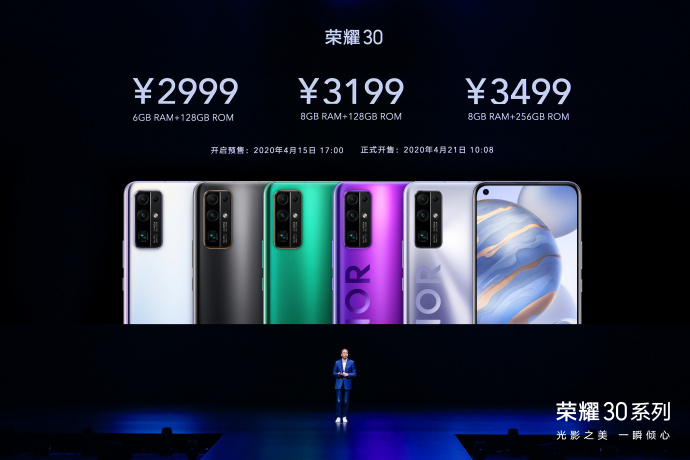
The Honor 30 starts at 2999 yuan ($425) for the 6GB RAM + 128GB ROM model and goes up to 3199 yuan ($453) and 3499 yuan ($495) for the 8GB RAM + 128GB ROM and 8GB RAM + 256GB ROM models respectively.
1 of 3
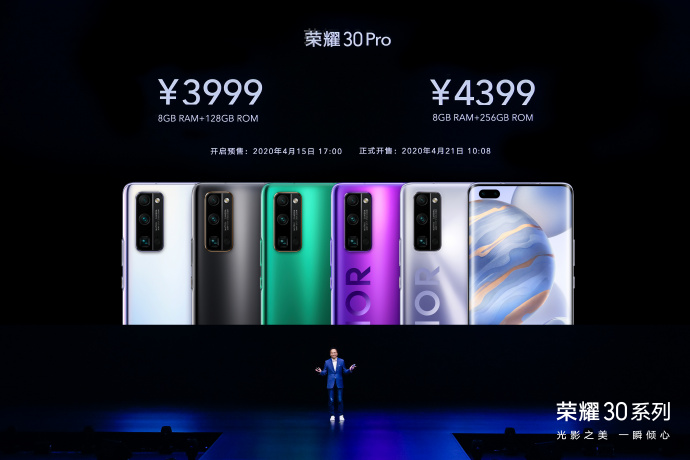
The Honor 30 Pro starts at 3999 yuan ($566) for the 8GB RAM + 128GB ROM model and goes up to 4399 yuan ($623) for the 8GB RAM + 256GB ROM variant.
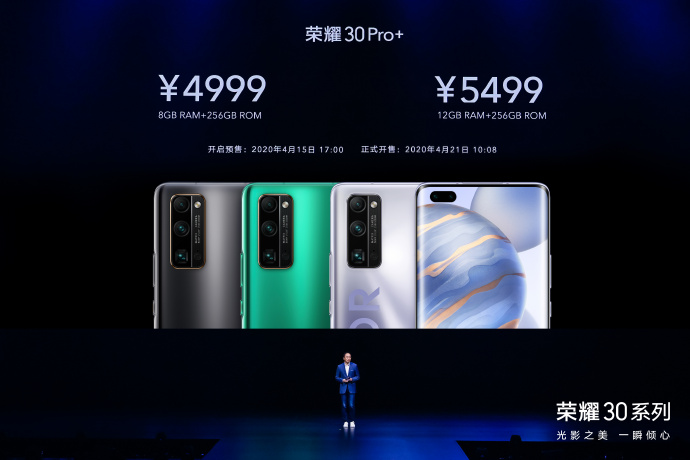
Finally, the Honor 30 Pro+ starts at 4999 yuan ($708) for the 8GB RAM + 256GB ROM model and goes up to 5499 yuan ($778) for the 12GB RAM + 256GB ROM variant.
All the three models are up for pre-orders in China and will go on sale for the first time on April 21 at 10:08 AM.
We use cookies on our website to give you the most relevant experience by remembering your preferences and repeat visits. By clicking “Accept”, you consent to the use of ALL the cookies.
This website uses cookies to improve your experience while you navigate through the website. Out of these, the cookies that are categorized as necessary are stored on your browser as they are essential for the working of basic functionalities of the website. We also use third-party cookies that help us analyze and understand how you use this website. These cookies will be stored in your browser only with your consent. You also have the option to opt-out of these cookies. But opting out of some of these cookies may affect your browsing experience.
Necessary cookies are absolutely essential for the website to function properly. This category only includes cookies that ensures basic functionalities and security features of the website. These cookies do not store any personal information.
Any cookies that may not be particularly necessary for the website to function and is used specifically to collect user personal data via analytics, ads, other embedded contents are termed as non-necessary cookies. It is mandatory to procure user consent prior to running these cookies on your website.

 Rumors surrounding the Huawei Nova 7 series have revealed that it comprises of three 5G-ready devices such as Nova 7 SE, Nova 7 and Nova 7 Pro. It is speculated that three phones could be powered by Kirin 820 5G, Kirin 985 5G and Kirin 990 5G. They are expected to be priced between 2,000 Yuan (~$282) and 4,000 Yuan (~$565) in the home market.