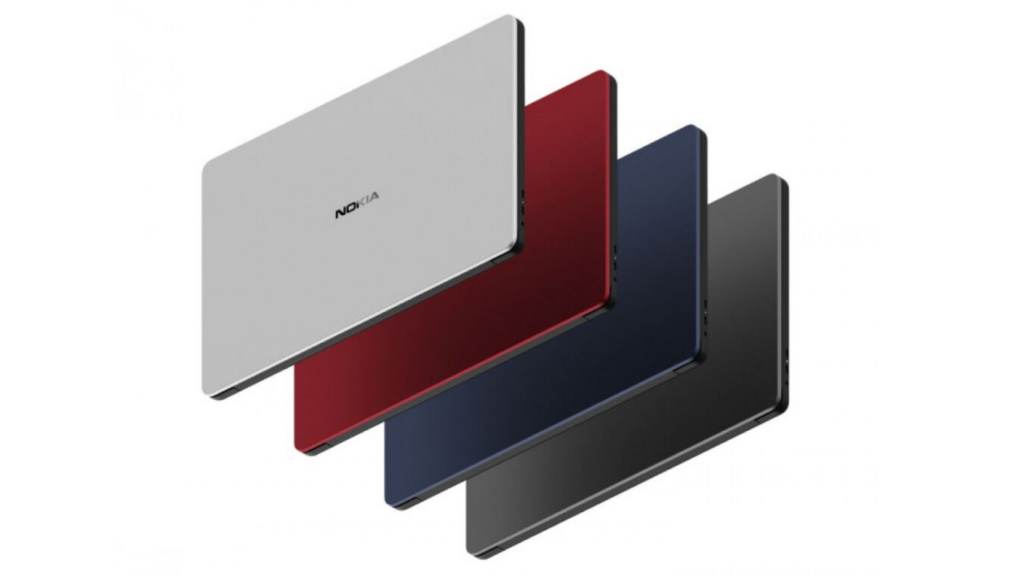
HMD, the company that took over Nokia’s phone business and later began building its own smartphones, seems to be eyeing a surprising new product category: laptops.
A new leak from X user @smashx_60 claims HMD is working on its first computer, a 2-in-1 Chromebook called the HMD (Chrome)Book CS-1 Flip — or just HMD Book CS-1 Flip for short. The “Flip” name points to a 360-degree hinge and touchscreen, similar to the familiar ASUS Chromebook Flip lineup and other convertible machines.
Over the last couple of years, HMD has expanded from basic feature phones into Android tablets and a growing accessories business. But laptops? That’s a first for the Finnish company. Technically, we’ve seen “Nokia” laptops before, like the PureBook models, though those were built by a now-shuttered licensing partner and not by HMD itself. This time, the company finally appears ready to put its own brand into the PC space.
Specs are still mostly a mystery, but the leak suggests the CS-1 Flip will use an Intel processor — interesting since many entry-level Chromebooks rely on ARM-based chips like MediaTek’s Kompanio line.
I've had info on this model since mid-year, Based on the render showing multitasking and the Play Store, I'm unsure if it runs ChromeOS or Android replacing ChromeOS. The name is HMD Book CS-1 Flip, but I don't know if 'Chrome' will precede it.
What we don’t know: the display size, exact Intel chip, RAM and storage configurations, price, or who HMD is targeting with this machine. And once it does launch, it’ll be stepping straight into a very competitive corner of the market currently dominated by Acer, Asus, Lenovo, and Samsung.
For now, nothing is official. But a leak that includes a full product name usually means things are further along than early speculation. If this laptop is real, it could mark HMD’s biggest shift yet since breaking away from Nokia-only branding. More details are almost certainly coming — probably sooner than expected.
Realme fans were disappointed when the Realme 15 series skipped the Pro Plus variant entirely. A new leak courtesy of tipster Abhishek Yadav now confirms that the Realme 16 Pro+ is in the works. The device carries the model number RMX5131, and the tipster has shared its full RAM and storage combinations along with color choices, setting the stage for what to expect next.
Realme 16 Pro+ configurations and possible design
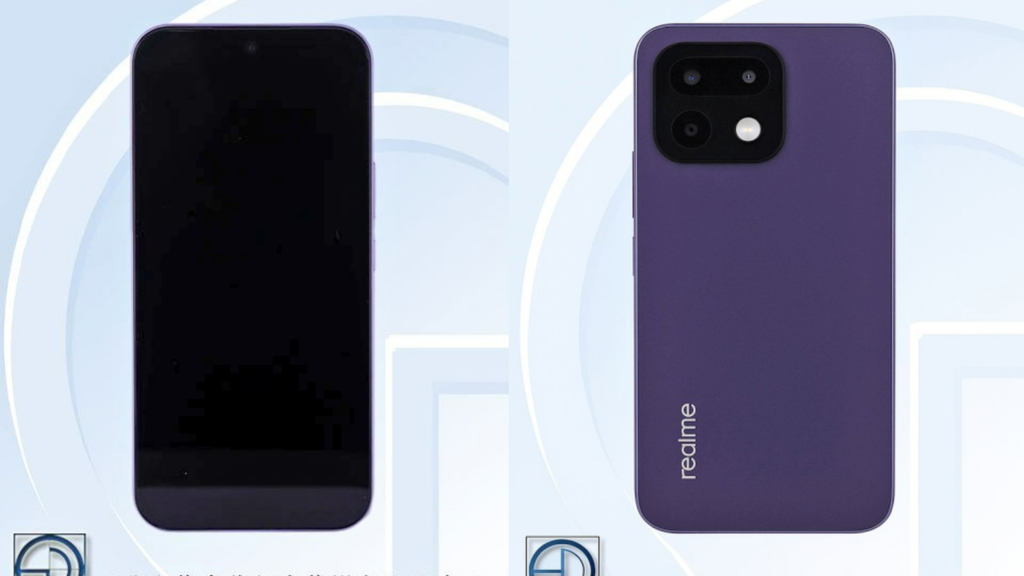
Realme 16 Pro front and back
According to the leak, the Realme 16 Pro+ 5G for India will come in Master Grey, Master Gold, and Camellia Pink. The available configurations include 8GB+128GB, 8GB+256GB, 12GB+256GB, and 12GB+512GB.
While the company has not shown the device yet, the Realme 16 Pro+ may share the same overall styling as the Realme 16 Pro seen in newly surfaced images.
Realme 16 Pro design revealed
Last week, the Realme 16 Pro appeared in TENAA’s certification database in China. The listing initially revealed its full specifications, although images were missing at that time. The updated entry now includes images, confirming a flat front panel and a square rear camera island with rounded corners. It appears to contain three lenses and an LED flash, but TENAA data confirms a dual-camera arrangement.
The Realme 16 Pro measures 162.6 x 77.6 x 7.75mm and weighs 192 grams. It has a 6.78-inch OLED screen delivering a 1.5K resolution of 2772 x 1272 pixels and may support a 144Hz refresh rate. The rear setup includes a 200-megapixel main camera and an 8-megapixel secondary lens, while the front houses a 50-megapixel camera.
It runs Android 16 with Realme UI 7 and features an unidentified 2.5GHz chip. Storage options range from 128GB to 1TB, with RAM options from 8GB to 16GB depending on the region. The phone includes a 7,000mAh typical battery, an ultrasonic in-screen fingerprint sensor, an IR blaster, and expected 80W charging.
In India, it will be available in options, such as 8GB+128GB, 8GB+256GB, 12GB+256GB, and 12GB+512GB. The country will receive the device in shades like Pebble Grey, Master Gold, and Orchid Purple.
Realme C81 4G details
The same leak by Yadav reveals the existence of an entry-level Realme C81 4G phone. As per the leak, the phone is set to launch in 64GB and 128GB variants with 4GB of RAM in Storm Black and Glacier Blue.
For more daily updates, please visit our News Section.
Vivo is all set to announce the Vivo S50 Pro Mini next month in China. Reports suggest that this device will be rebranded as the Vivo X300 FE globally. Vivo has confirmed several details about the S50 Pro Mini, giving us a clear idea of what to expect from the X300 FE.
Vivo S50 Pro Mini design, specifications
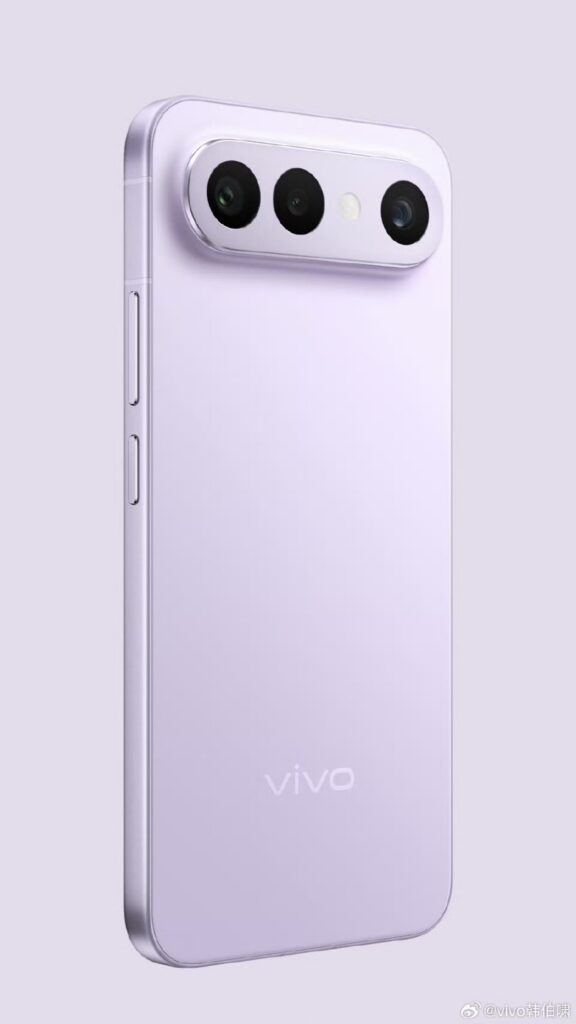
Vivo S50 Pro Mini
As can be seen above, the Vivo S50 Pro Mini sports a horizontal camera bar on the back, which houses three cameras and an LED flash. The company has confirmed that it features a large primary sensor, paired with an ultra-wide lens and a 50MP Sony IMX882 periscope telephoto camera.
A previously seen front design of the Vivo S50 Pro Mini shows that it will have a flat screen with rounded corners. Since it is a compact offering, it features a 6.31-inch OLED panel offering a 1.5K resolution and a 120Hz refresh rate. For selfies, it has a 50MP camera on the front, and the screen is integrated with an ultrasonic in-screen fingerprint sensor for robust security.
Inside, the Vivo S50 Pro Mini packs the all-new Snapdragon 8 Gen 5 chip, paired with LPDDR5x RAM, UFS 4.1 storage, and a 6,500mAh battery. The phone is confirmed to support 90W wired and 40W wireless charging.
It goes without saying that the device will run on Android 16 with a layer of OriginOS 6 on top. It is also confirmed to feature dual speakers, an x-axis linear motor, an aerospace-grade metal frame, and an IP68/69-rated body.
In related news, Vivo will also announce the standard Vivo S50 equipped with the Snapdragon 8s Gen 3 chip, up to 16GB of RAM, and a 6.59-inch OLED 1.5K 120Hz screen in China next month. A teaser image revealed that its rear design will be completely different from the S50 Pro Mini.
For more daily updates, please visit our News Section.
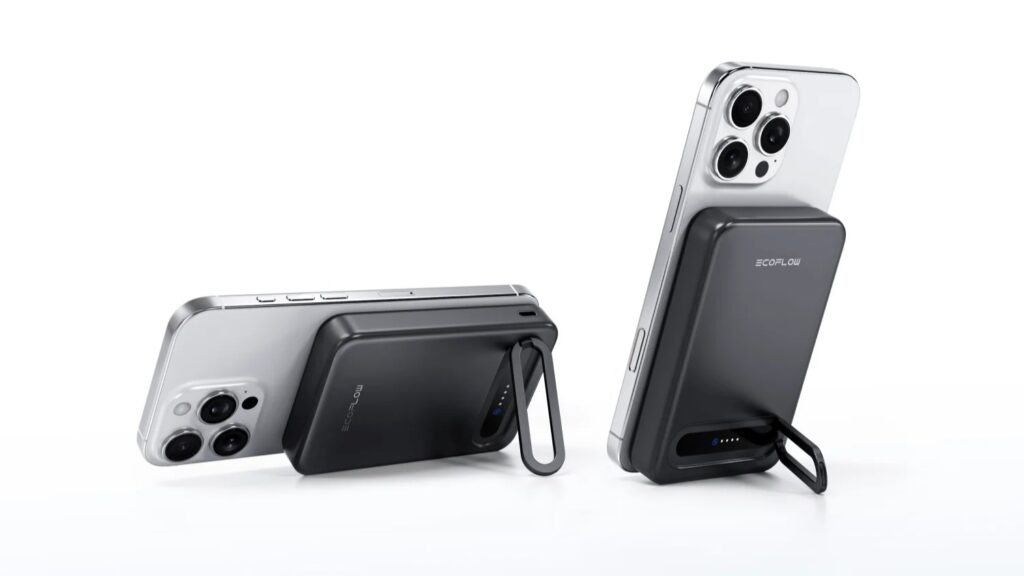
EcoFlow has just released a new Qi2-ready wireless power bank that shows you don’t need to spend a fortune to get the features most people actually use — including a built-in stand and MagSafe-style snap-on convenience.
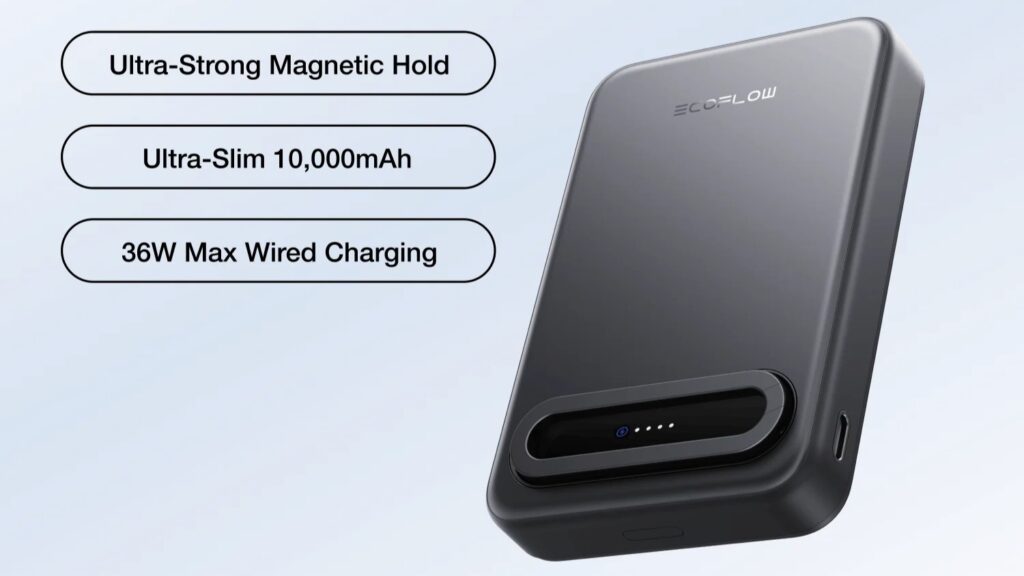
The new Rapid Mag Qi2 Magnetic Power Bank (10,000 mAh, 15 W) is a budget-friendly sibling to EcoFlow’s earlier Rapid Mag series. It sacrifices the full 25 W Qi2.2 wireless charging speed of the premium model, but maxes out at 15 W. According to EcoFlow’s own tests, that slightly slower rate only adds about eight minutes to reaching 50 % on a dead iPhone 16.
Sure, most recent Chinese flagships now support 50 W wireless charging — far beyond what this power bank can push. But for Samsung users, even with a Galaxy S25 Ultra, 15 W is the maximum the phone accepts wirelessly anyway. In that case, you’re still getting peak performance without paying extra.
And it can also deliver up to 36W of power through its USB-C port. It even supports pass-through charging, so you can top up both the power bank and your phone from a single power adapter overnight.
At just 220 g (7.76 oz) and 15.95 mm thick, it’s slim enough to stay attached to your phone without making it bulky.
What makes it special is a built-in kickstand
Perhaps the most distinctive feature is the fold-out metal kickstand. It locks firmly in either portrait or landscape mode — perfect for video calls or streaming content while charging. Even if your phone is not asking for power, the kickstand may still come in handy.
Instead of an OLED screen like on the pricier model, this version uses four simple LED indicators to show remaining battery capacity.
EcoFlow has priced the new Rapid Mag aggressively: it’s currently available on Amazon and the official EcoFlow store for an introductory $54.99 — a full $35 less than its typical $89.99 retail price. For anyone in search of a practical, no-nonsense MagSafe-compatible battery that won’t break the bank, EcoFlow’s latest offering may finally deliver the sweet spot.
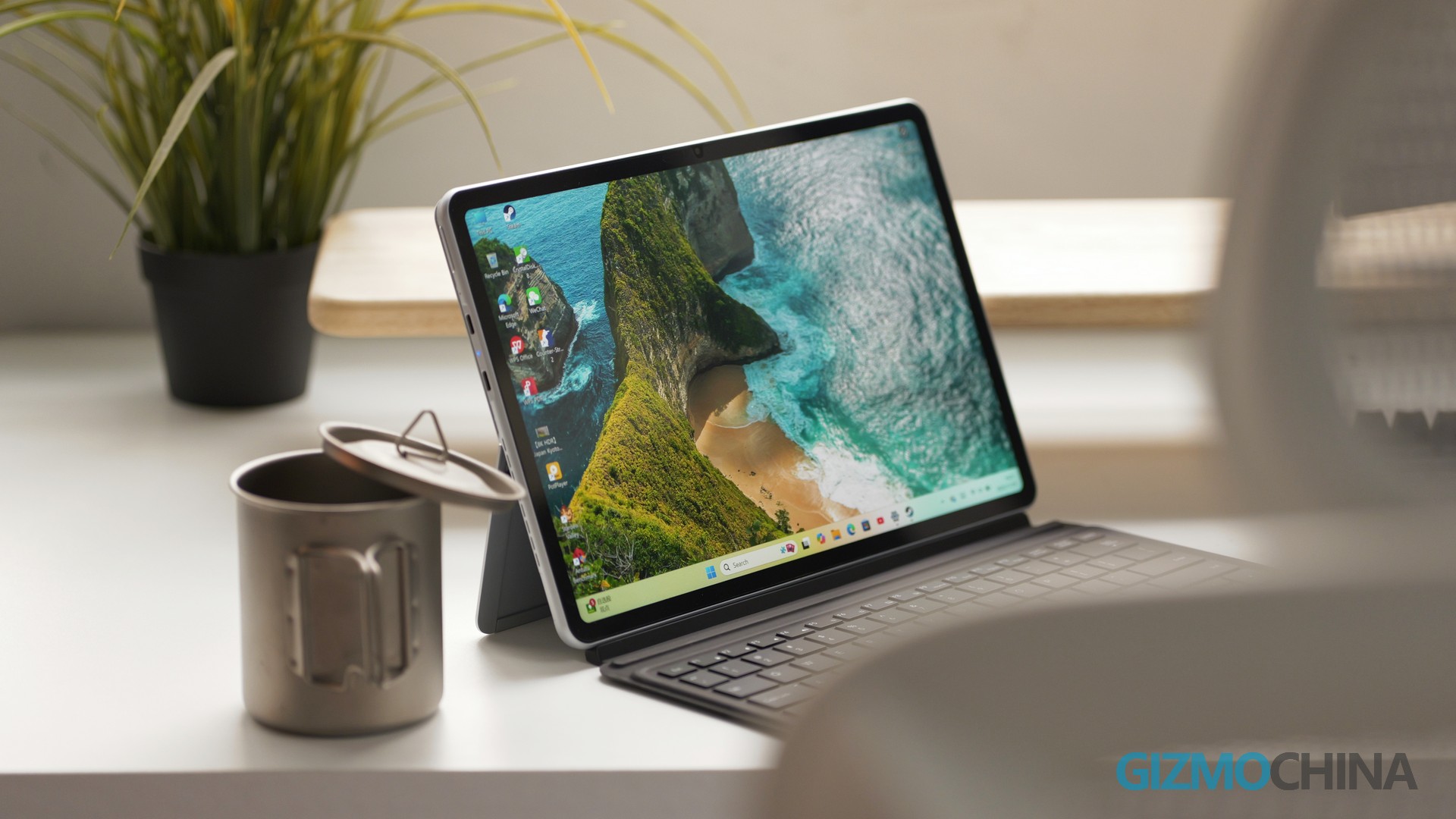
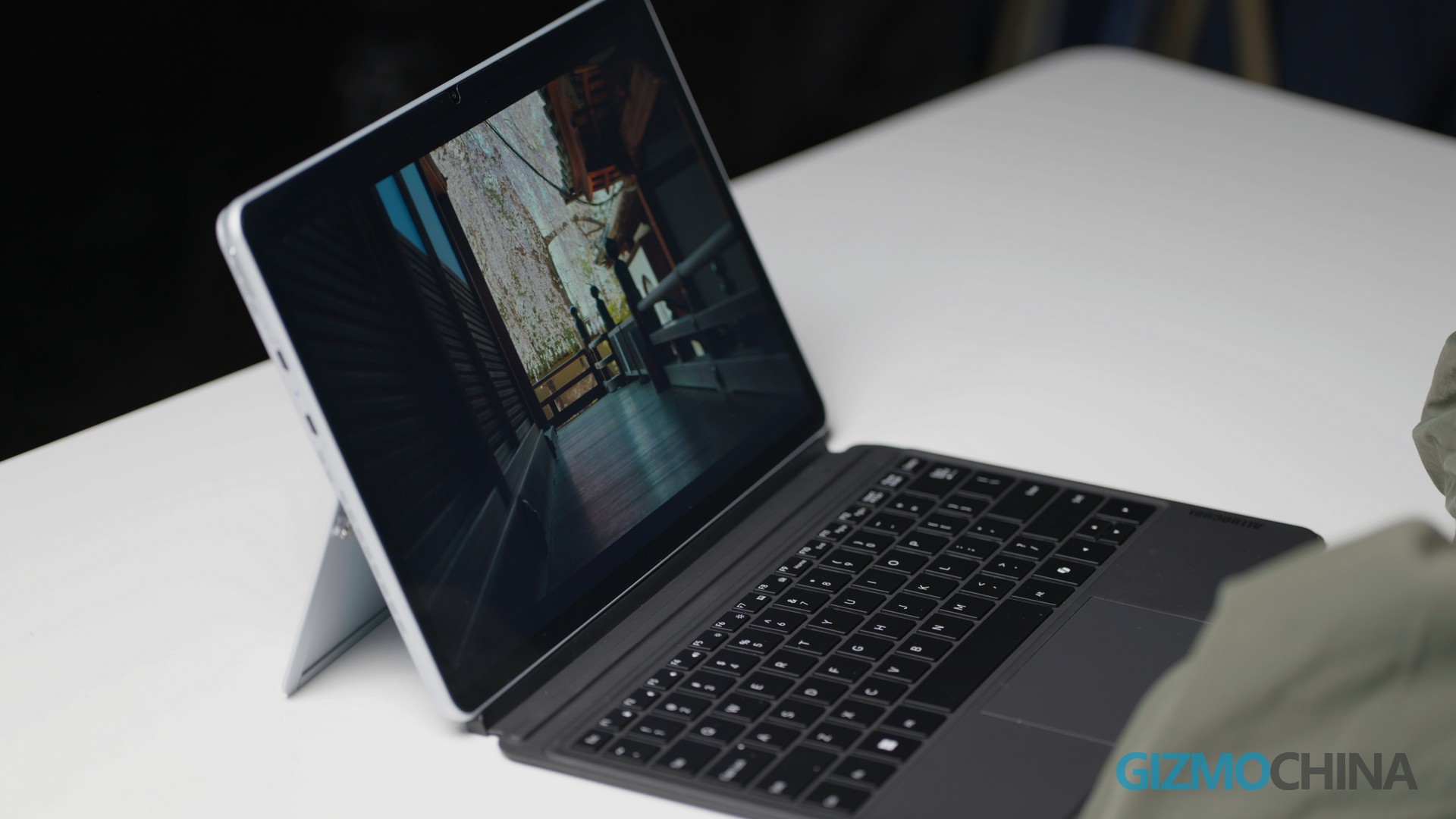
For owners of the previous-generation ALLDOCUBE iWork GT, the tradeoffs were unavoidable: its 600g ultra-lightweight design made it effortless to carry, but the 11-inch screen felt cramped for document work, and 8GB of RAM struggled with even basic multitasking. If you’re new to 2-in-1 devices and seek Windows 11’s seamless office compatibility without sacrificing screen size or performance, the ALLDOCUBE iWORK GT Ultra is tailor-made for your needs.
As a purpose-driven iterative upgrade, it delivers on three core promises: a larger display, enhanced processing power, and expanded storage. After the daily testing—spanning commutes, back-to-back meetings, and late-night report sessions—we’re breaking down how these upgrades translate to real-world usability.
Design & Portability
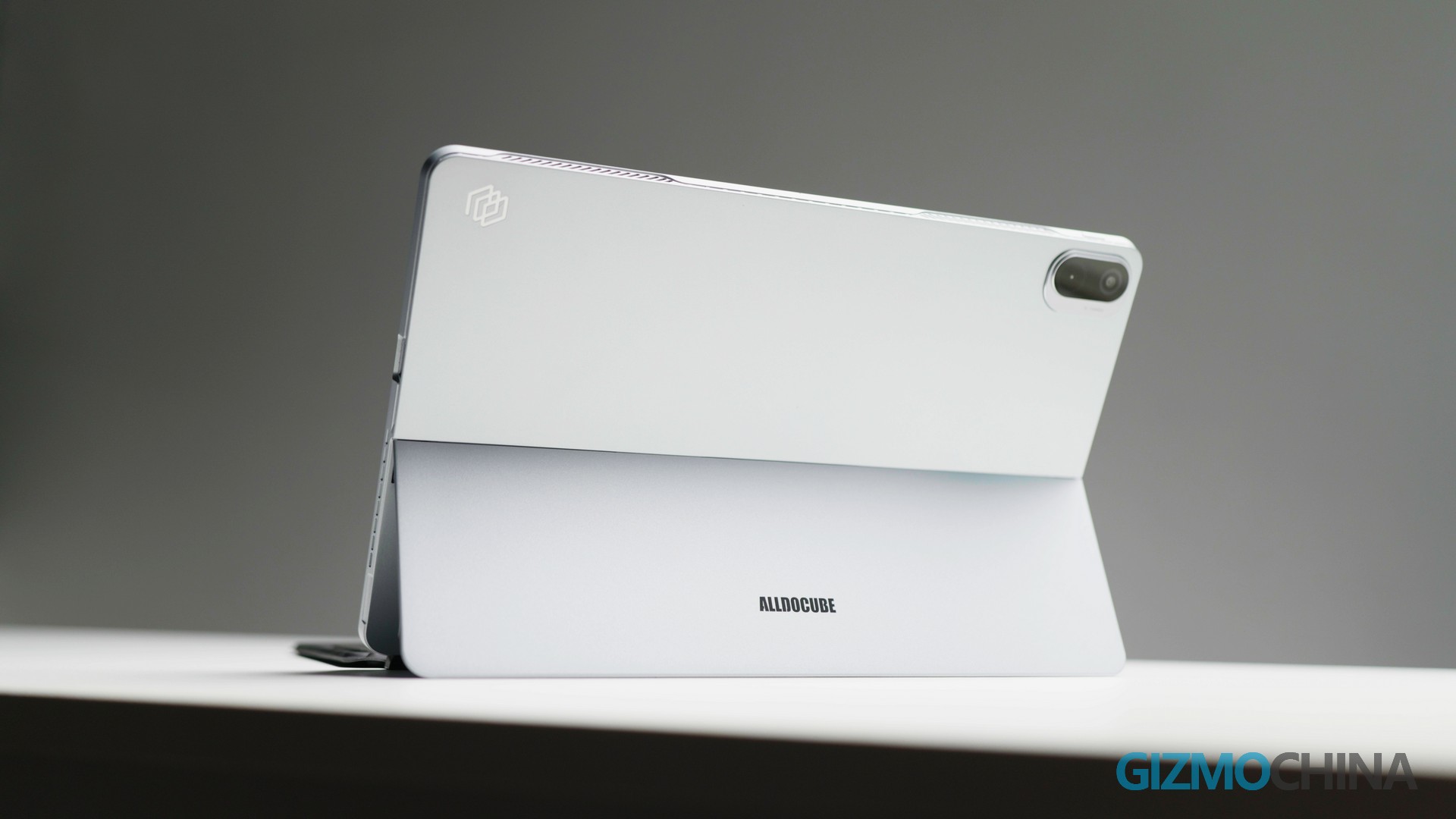
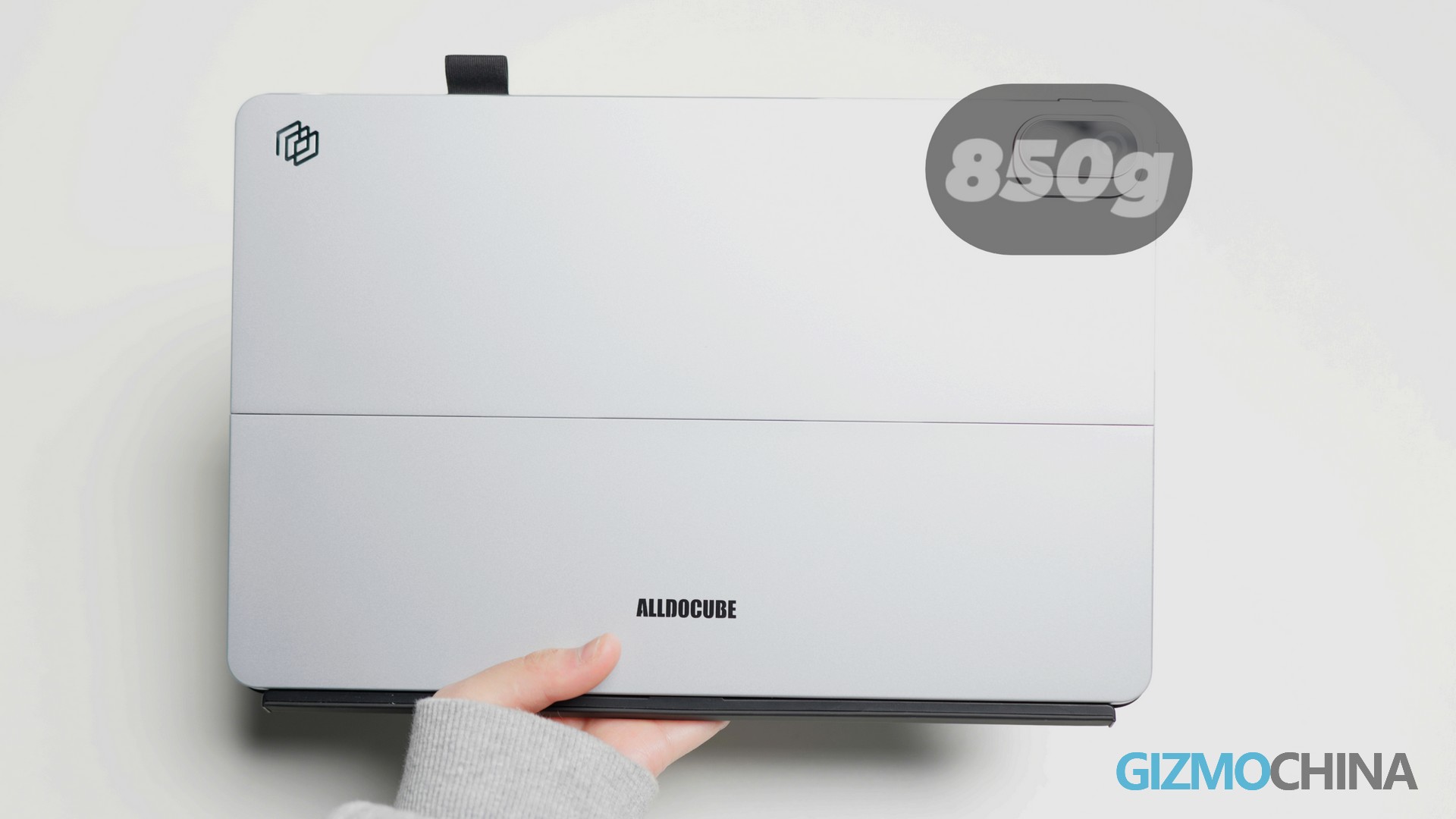
The previous iWork GT stood out for its 600g frame—slim enough to slip into a backpack side pocket and light enough for 30 minutes of one-handed video viewing without wrist strain. To accommodate the 13-inch display, the Ultra gains 250g (now 850g)—a deliberate tradeoff that prioritizes productivity without sacrificing portability:
One-handed usability: Holding it for more than 10 minutes causes mild wrist fatigue, but it still fits seamlessly into a 13-inch laptop bag. At 850g, it’s 35g lighter than the Microsoft Surface Pro 10, making it a more comfortable choice for frequent travelers.
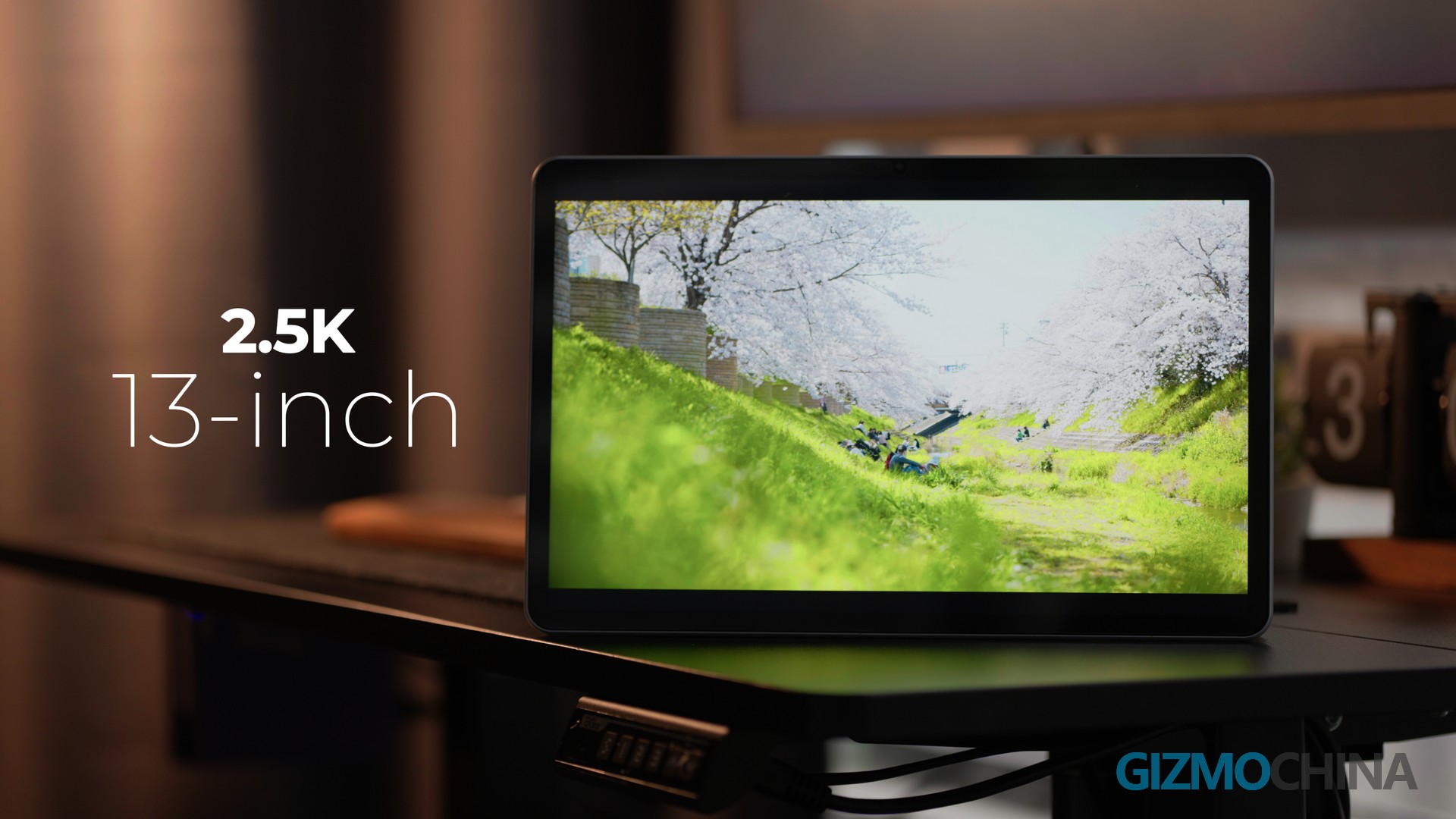
Game-changing display upgrade: Jumping from an 11-inch to a 13-inch 2.5K panel transforms multitasking. Split-screen work—Excel on one side, reference documents on the other—finally feels intuitive, with 1-2 extra columns of data visible at once. This cut our report-writing time by ~20% during testing, eliminating the need for constant window switching.
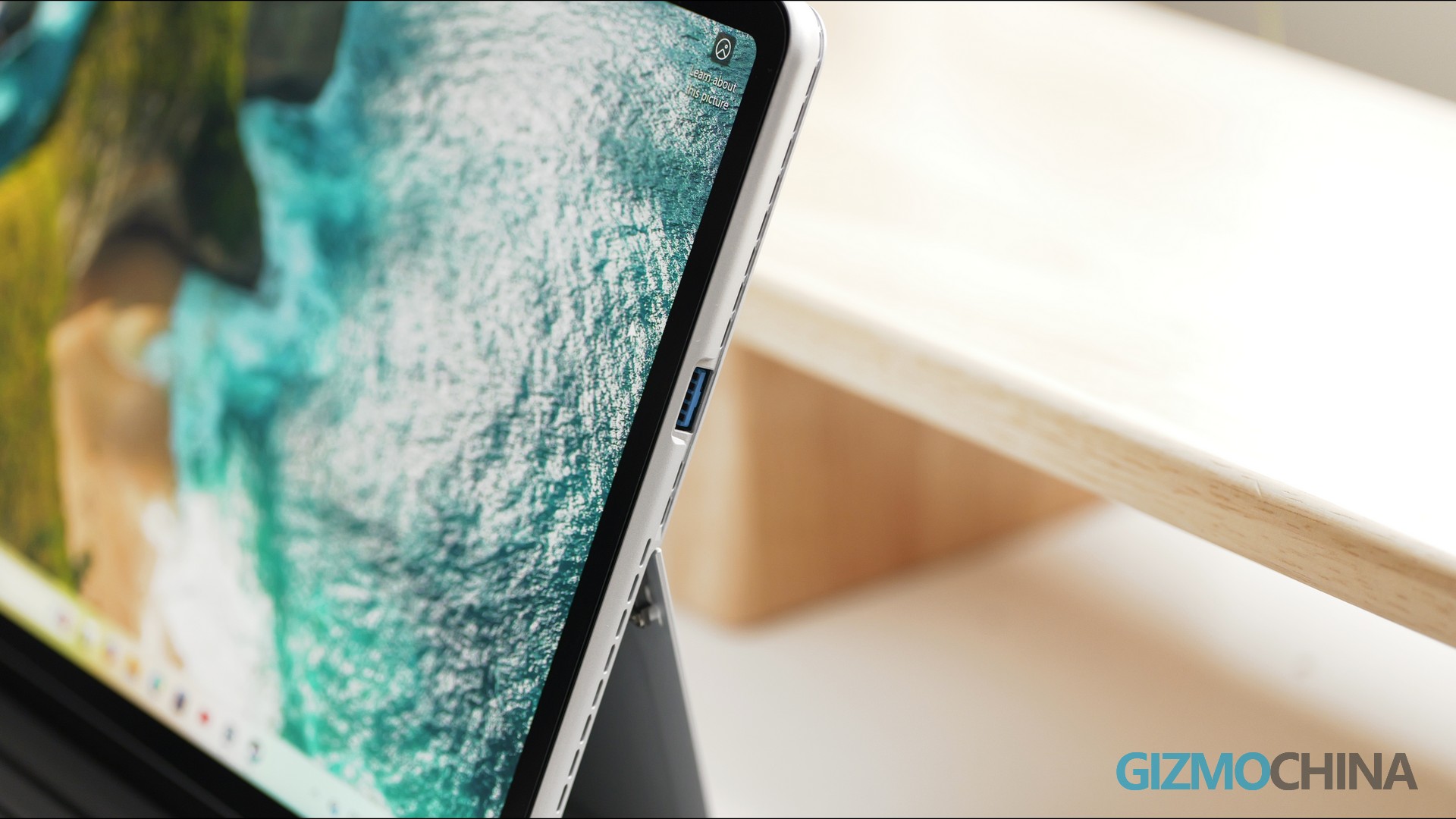
Practical port refinement: Retaining the matte aluminum alloy chassis (fingerprint-resistant as ever), the Ultra streamlines its ports to two full-function USB-C and one USB-A. While the older model’s SD card slot, mini-HDMI, and 3.5mm headphone jack are discontinued (a minor inconvenience for photographers), the USB-A port is a lifesaver for direct connections to U disks and portable printers—no adapters needed for business trips.
Display Performance
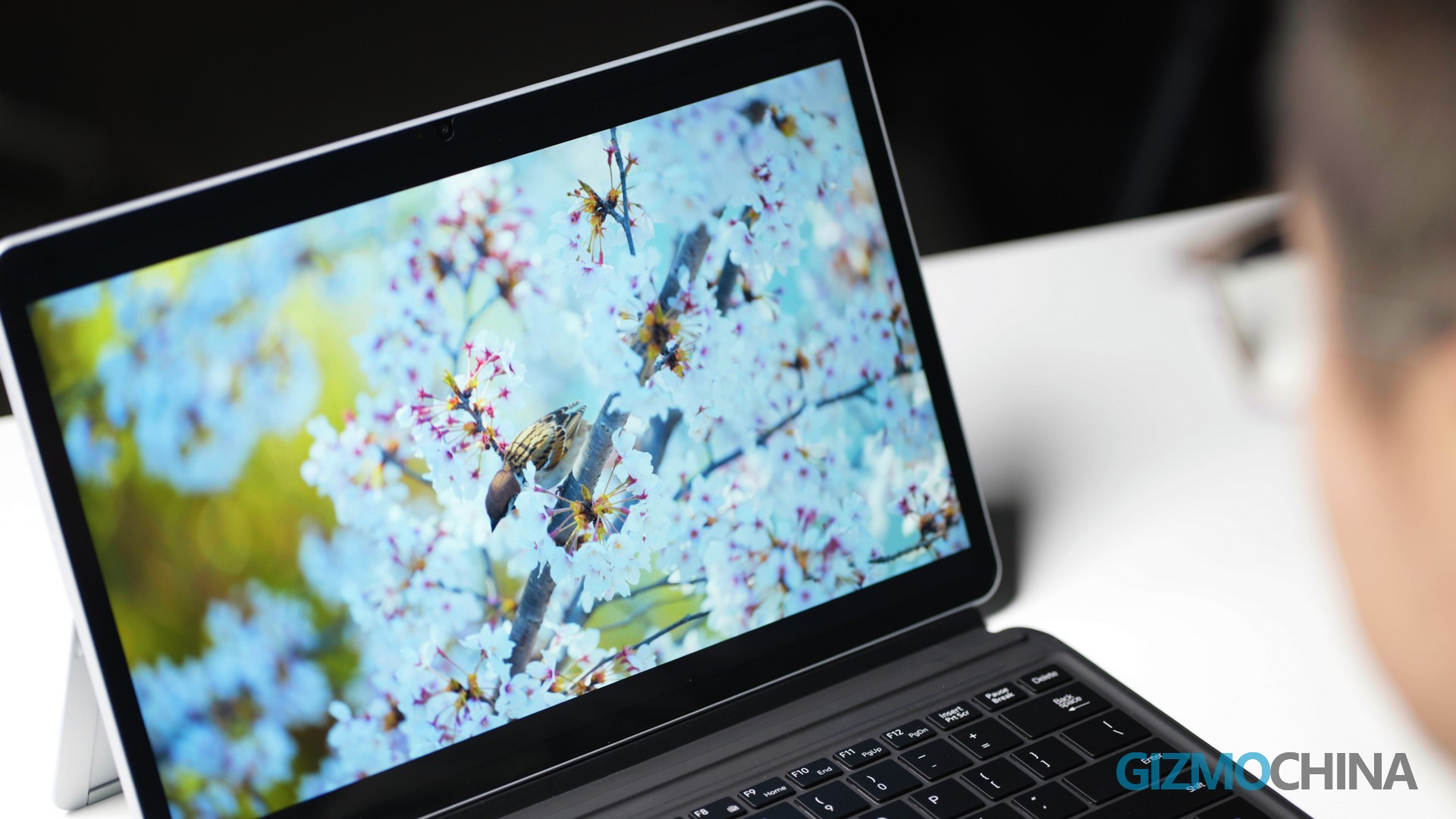
The 13-inch 2.5K screen builds on the previous 11-inch 2K panel, with upgrades that directly improve daily workflows: Expanded viewing real estate: PDFs and Excel spreadsheets are fully readable at 100% zoom, eliminating repetitive horizontal scrolling. The wider 16:10 aspect ratio makes editing long documents or analyzing datasets far less tedious. Enhanced color accuracy: Lab tests confirm 92% sRGB and 85% DCI-P3 gamut coverage—an upgrade from the older model’s unspecified color performance. It’s reliable for PPT design and casual photo editing, with red tones rendering true-to-life.
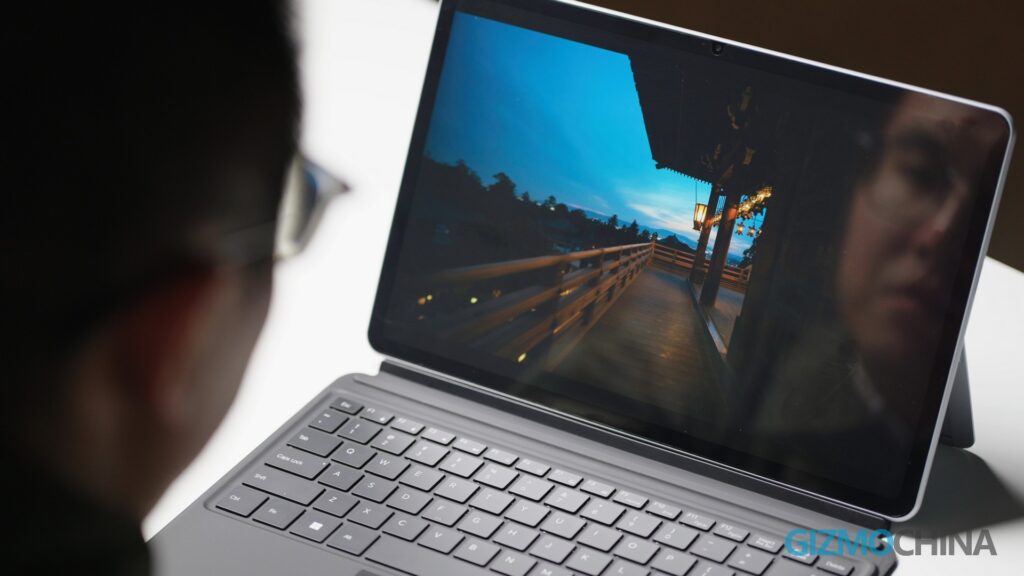
Brightness & glare control: 400 nits of brightness works seamlessly in offices and homes, and the matte finish reduces reflections better than the older model—usable under shaded outdoor conditions, though direct sunlight still requires max brightness.
The 60Hz compromise: Like its predecessor, the Ultra sticks with a 60Hz refresh rate. If you’re upgrading from the older iWork GT, this won’t feel like a downgrade. However, users switching from 120Hz devices will notice a slight lag when scrolling webpages or e-books. This tradeoff prioritizes battery life—a sensible choice for productivity-focused users, as high refresh rates offer minimal benefit for static tasks like document editing.
Processing Power
The Ultra’s most impactful upgrade lies under the hood: swapping the 11th-gen Intel Core i3/i5 for the Intel Core Ultra 5-125H, paired with 16GB LPDDR5 RAM and 512GB/1TB PCIe SSD. The performance leap is tangible in every workflow: Gaming & creative use: The integrated Intel Arc Graphics handles a smooth experience in Stardew Valley, as well as low image quality “Counter-Strike 2” —enough for lunch-break gaming, but 3A games still cannot run, consistent with the old mode. For casual creators, 16GB RAM eliminates lag when editing 20MB RAW photos in Photoshop or running Photoshop + Premiere Pro simultaneously, no more crashes from insufficient memory, a common frustration with the 8GB older model.
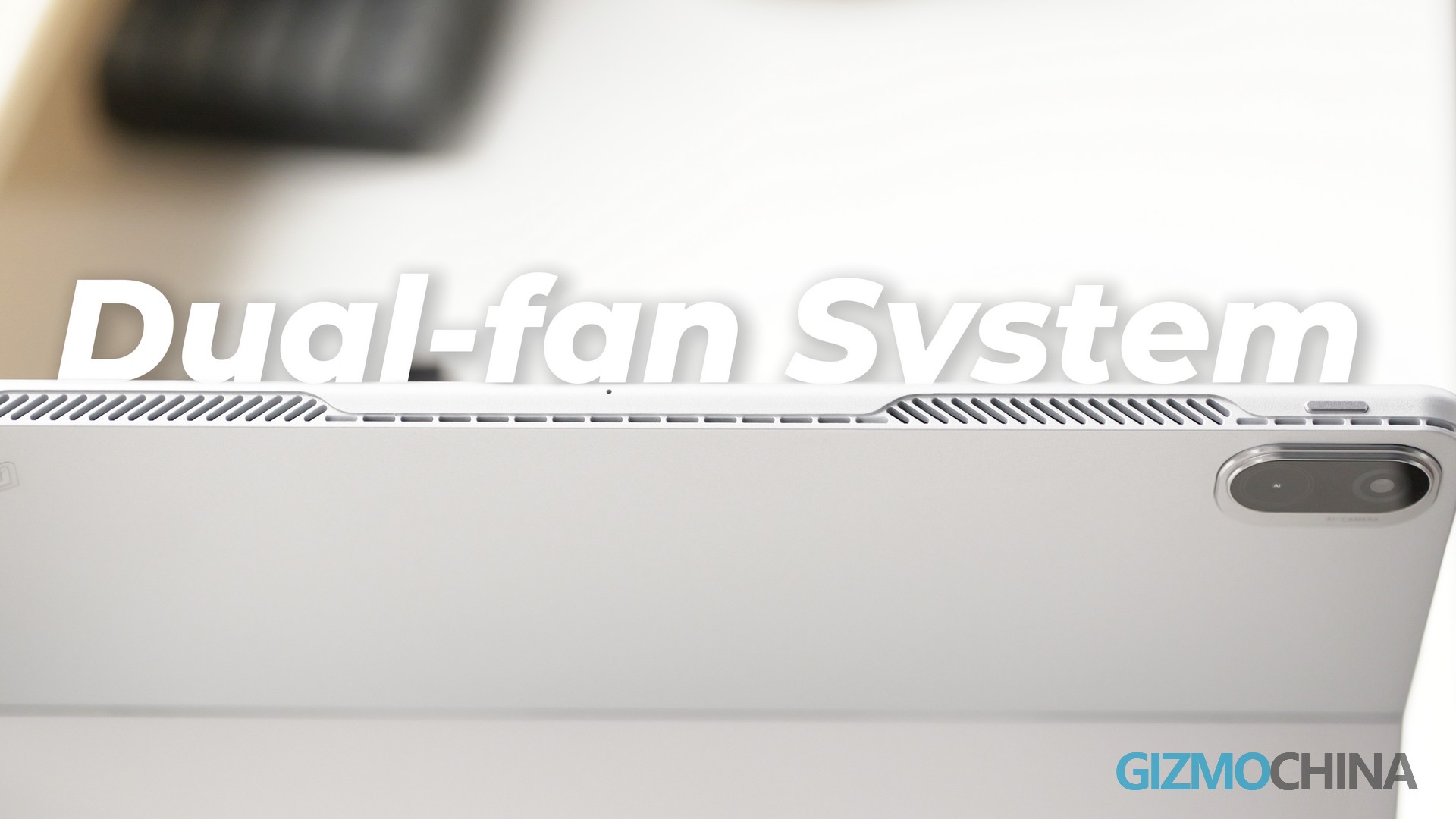
Cooling & noise management: During a 30-minute 4K video export stress test, the Ultra’s dual-fan system kept temperatures warm to the touch, not uncomfortable. Fan noise peaked at 42 decibels—barely audible in a quiet office, making it suitable for open workspaces.
Battery Life & Charging
The Ultra swaps the older model’s battery for a 42.72Wh unit, delivering transformative Battery Life improvements: Scenario-based battery performance: 1080P video playback: 7.5 hours – enough for a full afternoon of streaming or in-flight entertainment. Office workload: 4 hours 10 minutes – sufficient for a morning of back-to-back meetings without hunting for an outlet. Web browsing: 5 hours 20 minutes – ideal for research-heavy workdays.
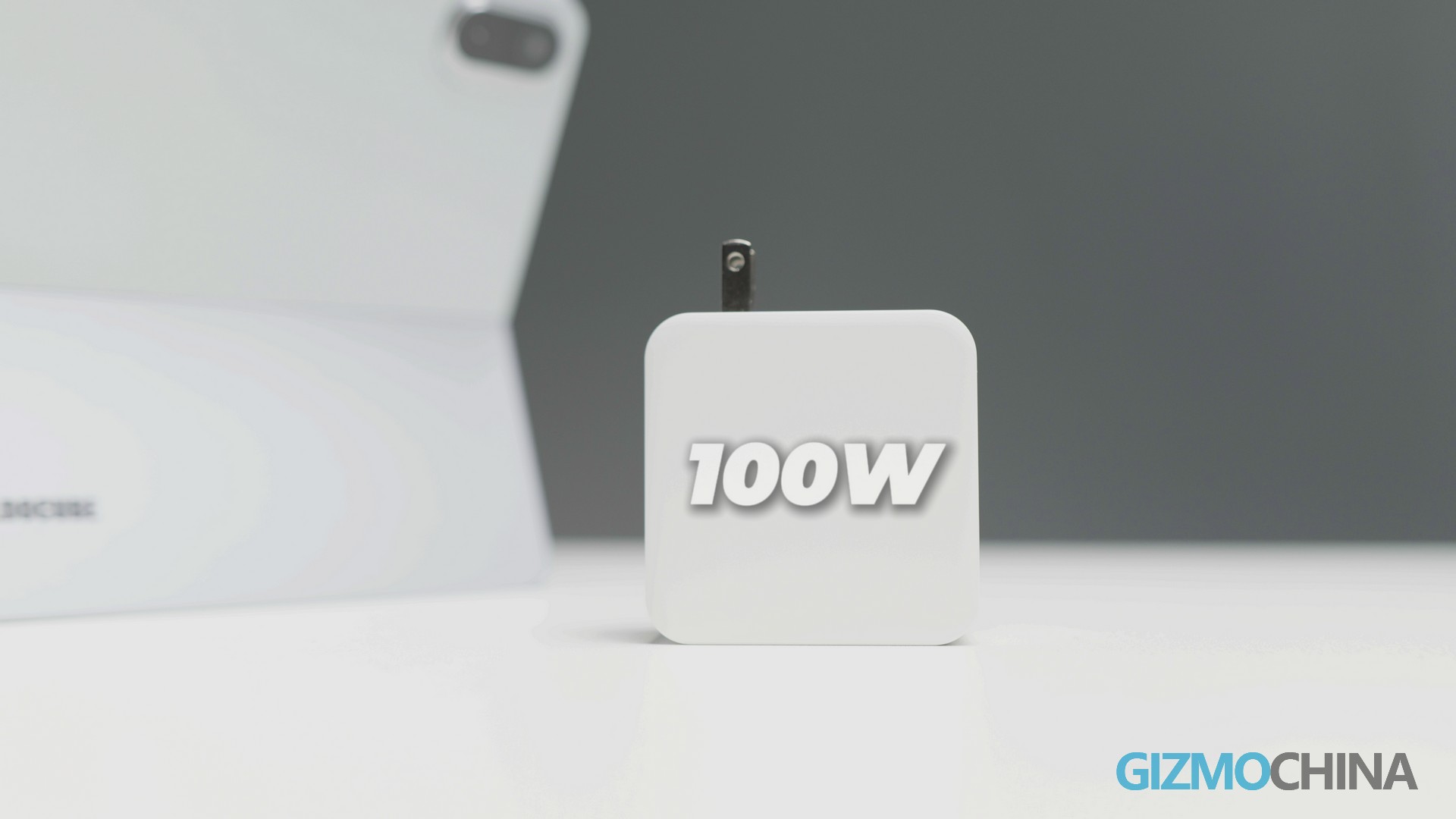
Charging tradeoff: The Ultra supports 65W PD fast charging, down from 45W on the older model, reaching 50% battery in 45 minutes and full charge in 1 hour and 50 minutes. While slower than its predecessor, the larger battery capacity means less frequent charging overall. For rushed mornings, a 30-minute top-up delivers ~35% battery—enough for 2 hours of office use.
Input Ecosystem
Magnetic Pogo pin keyboard: This device comes with a keyboard, the keyboard attaches more securely than the older model’s floating design, with no wobble during typing. The 1.2mm key travel offers better tactile feedback, making 3000-word essays or long emails more comfortable.
The touchpad, 20% larger than the older model’s, supports smooth three-finger gestures, reducing reliance on an external mouse. Pressure-sensitive stylus: Retaining 4096-level pressure sensitivity and 18ms latency. However, two drawbacks persist: no eraser function on the stylus body and no magnetic attachment to the device.
Who Should Buy It?
Previous iWork GT owners: Frustrated by the small screen, limited RAM, or multitasking lag—this upgrade fixes all core pain points. Students: Need Windows 11 for assignments, note-taking, and occasional vlog editing; value the large display and long battery life without the Surface Pro 10’s premium price tag. Mobile professionals: Travel frequently, hate carrying adapters (USB-A is a game-changer), and prioritize lightweight design for commutes or business trips.
Final Verdict
The 2025 ALLDOCUBE iWORK GT Ultra isn’t a revolutionary device—it’s a refined, user-centric upgrade that solves the previous model’s most frustrating flaws. The 13-inch 2.5K display, Intel Core Ultra 5 performance, and 15000mAh battery directly enhance productivity, while the pragmatic port selection and lightweight design cater to mobile users.
For students, mobile professionals, and previous iWork GT owners seeking a Windows 11 2-in-1 that balances performance, portability, and affordability, this is one of 2025’s strongest contenders.
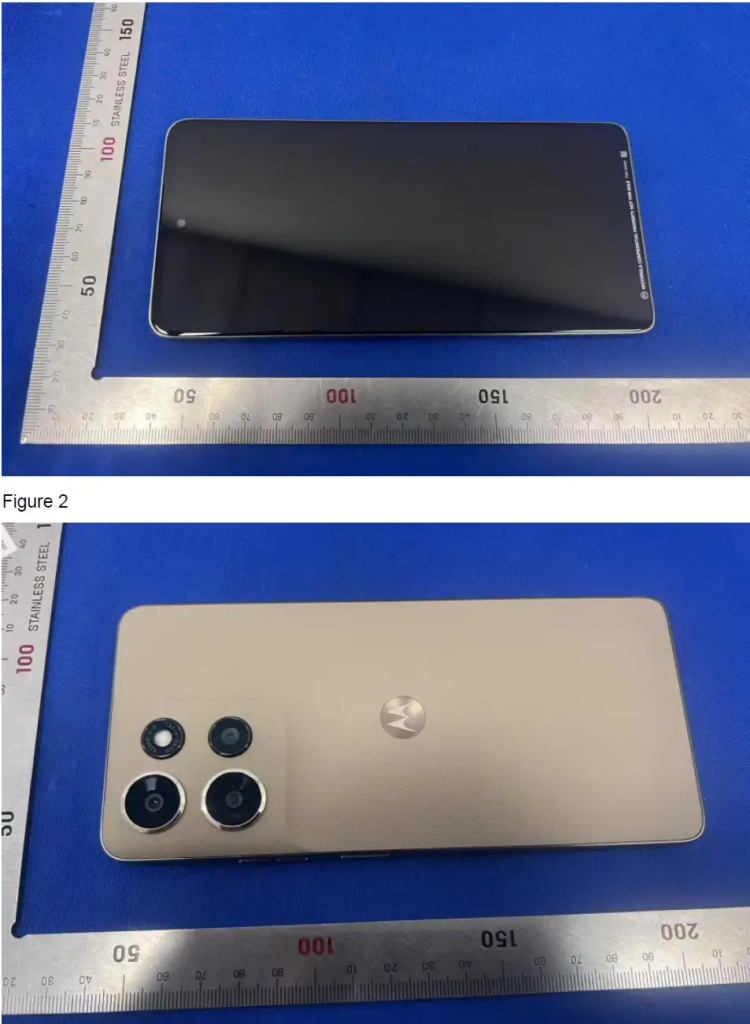
Tipster claims a recent Motorola leak wasn’t what most people thought it was. A few days ago, a set of clean-looking renders popped up online, and it was reported to be the successor to the Moto G Stylus (2025).
Reliable leaker Evan Blass now claims the phone in those images is actually the Moto G Power (2026) — the follow-up to the Moto G Power (2025), which has been on sale since Q1 2025.
This lines up with some breadcrumbs from earlier in the year too. The exact same blue and cream finishes showed up in promotional material spotted by Android Headlines back in May, and those images were specifically tied to the G Power line.
Design-wise, not much is changing. The new model sticks closely to Motorola’s current template — flat sides, centered punch-hole camera, and a familiar rear layout. The biggest update visible so far? New paint jobs. The refreshed colors replace the options offered with the 2025 version and give the phone a slightly cleaner look.
Motorola usually refreshes the G Power series in the first few months of the year, so an early-2026 launch still feels likely. Specs are a mystery for now, so we’ll have to wait and see whether Motorola boosts the battery capacity, swaps in a more capable chipset, or just keeps things modest.
Still, if you were expecting a redesign or major reinvention, don’t hold your breath. Motorola seems happy to stick with the same big battery, low-cost formula — with a fresh coat of paint to keep things moving into 2026.
Samsung fans hoping for a big camera upgrade in 2027 might want to lower their expectations a bit.
There’s been plenty of speculation that the Galaxy S27 Ultra would finally move past the familiar 1/1.3″ 200-megapixel sensor Samsung has been using since the S23 Ultra. The most exciting rumor pointed to Sony’s new LYT-901 — a 1/1.12-inch 200 MP sensor unveiled recently and already being hyped as the next big thing in Android photography.
Galaxy S25 Ultra
But according to well-known tipster Ice Universe, Samsung isn’t planning to use it. While that may sound obvious considering Samsung makes its own sensors, his prediction that the S27 Ultra’s sensor size will remain unchanged does seem reasonable. In fact, Samsung has steadily been shrinking its 200MP sensor generation after generation since the very first one. In other words, it’s highly unlikely we’ll see a near-1-inch (or even slightly larger) 200MP ISOCELL sensor anytime soon.
ISOCELL HP1: 1/1.22″
ISOCELL HP2: 1/1.3″
ISOCELL HP3: 1/1.4″
ISOCELL HPX / HP9: 1/1.4″
And for those wondering why it matters, a smaller sensor with smaller pixels produces less accurate signals, which generally results in relatively poorer image quality. This aligns with what we’ve seen in camera comparison tests between the Galaxy S25 Ultra and its Chinese counterparts such as the vivo X300 Pro.
Good News: Sony has officially launched its new 200MP sensor LYTIA 901 featuring a 1/1.12" large format, 0.7 µm pixels, the Quad-Quad Bayer Coding (QQBC) array, and flagship-grade technologies such as DCG-HDR, Fine 12-bit ADC, and HF-HDR. At the same time, OmniVision has… pic.twitter.com/zD41tTqy9R
Samsung’s top-tier phone in 2027 could once again rely on a slightly “updated” version of the 1/1.3-inch ISOCELL sensor we’ve seen for several years now.
Over the past few generations, the company has leaned heavily on software processing to squeeze improvements out of largely unchanged camera hardware. Meanwhile, rivals have been pushing ahead with bigger sensors, and many of the phones, such as the Oppo Find X9 Pro (our review) and vivo X300 Pro, are nicely tuned for those sensors as well.
For now, the latest leak suggests the next few Ultra phones won’t be the generational camera jump many are hoping for — even when the rest of the industry keeps moving forward.
Xiaomi’s 17 Ultra is the last holdout in the company’s annual flagship lineup. The phone is expected to land in two variants, and local testing in India reportedly kicked off not long ago.
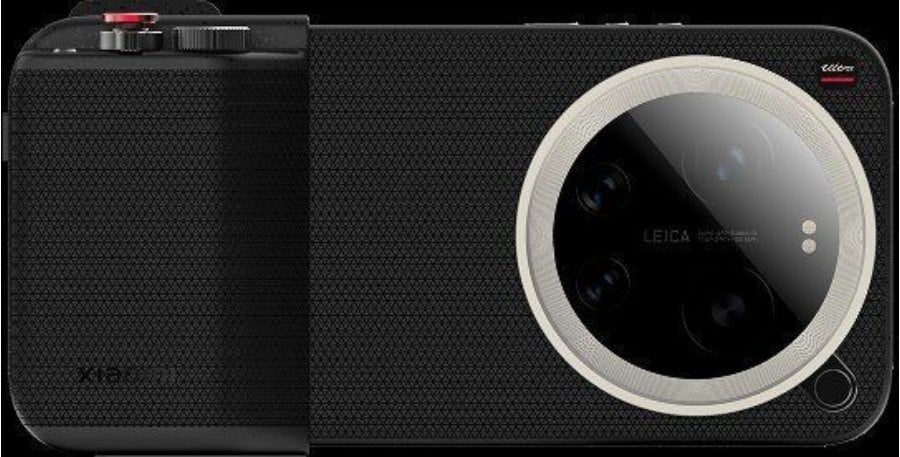
Now, a fresh set of renders showing the Xiaomi 17 Ultra wrapped in the company’s Photography Kit has made its way to the rumor mill.
The images show the Photography Kit in two variants, beige and black. But the bigger surprise sits on the phone itself. It sports a triple-camera setup on the rear. The module has four cutouts, but if you look closely, it has only three lenses.
If you remember the Xiaomi 15 Ultra’s quad-camera system, this might look like a downgrade on paper. So what’s changing this year?
Xiaomi 17 Ultra camera setup
The 15 Ultra used dual telephoto shooters, but this time Xiaomi is reportedly cutting the 50MP 3x optical telephoto lens in favor of a more capable, higher-resolution sensor. According to the latest leak, the Xiaomi 17 Ultra’s cameras include:
50 MP OmniVision OVX10500U main camera
200 MP Samsung S5KHPE telephoto camera
50 MP OmniVision OV50M or Samsung S5KJN5 ultra-wide camera
So despite the change in cameras from four to three, Xiaomi is making up for it with larger, more advanced sensors across the board. In other words, you’re losing a sensor but gaining better hardware overall.
On the front, Xiaomi is expected to stick a 50 MP OmniVision OV50ME selfie camera.
The Photography Kit also shows a detachable camera grip, similar to what Xiaomi offered with the 15 Ultra. The grip includes a physical shutter button and a textured finish.
Xiaomi 17 Ultra might launch in China in December or early January. A global launch is likely to follow soon after, where the company will announce it alongside other Xiaomi 17 phones.
For more daily updates, please visit our News Section.
Samsung’s next mid-range lineup might have shown its face a bit earlier than planned. A new Geekbench entry — believed to be the Galaxy A37 — has popped up online, hinting at what could be a curious hardware decision if the listing holds up.
The device, which matches Samsung’s typical model numbering for the A37 series, was tested running Android 16 with 6GB of RAM. So far, so normal. But the real eyebrow-raiser is the chipset: the Exynos 1480 paired with the Xclipse 530 GPU. That’s the same processor Samsung used in the Galaxy A55… way back in early 2024. Earlier this year, it also powered the Galaxy M56.
Sure, the Exynos 1480 looks a bit stronger than the A36‘s Snapdragon 6 Gen 3 on benchmarks, but efficiency is just as important. Whether that translates into better long-term performance or battery life is something we’ll only know once the A37 hits shelves next year. After all, the Exynos 1480 isn’t much (if any) better based on previous reviews.
Samsung is reportedly prepping the Galaxy A27, A37, and A57 for a spring 2026 launch. The A57 just leaked with Samsung’s newer Exynos 1680, making the A37’s chipset feel a bit out of place. Many expected the A37 to take a step forward with the Exynos 1580, the same chip used in the Galaxy A56.
Then again, Samsung has a long track record of recycling silicon between generations — the A26 and A35 both rely on the aging Exynos 1280 — so the idea isn’t completely unbelievable.
Of course, there’s still a chance this listing isn’t the real deal. Just recently, a “Galaxy A77” benchmark made the rounds before being debunked as fake. So nothing is guaranteed until Samsung speaks up.
If the leak is legit, though, it tells us something about Samsung’s 2026 strategy: keep costs down, even if that means tuning expectations for performance. Whether that helps the A37 stay affordable or leaves it looking outclassed next to the A36 is a question we won’t have answers to until next year’s launch.
The OnePlus Ace 6T is officially set to launch on Dec. 3 in China and will enter the market carrying the title of the world’s first Snapdragon 8 Gen 5 phone. The company recently released its official images to showcase its design. Now, a premature China Telecom listing of the phone has appeared online, revealing all the key details about this device.
OnePlus Ace 6T specifications (rumored)
OnePlus Ace 6T
The OnePlus Ace 6T (model number PLR110) is listed in China Telecom’s product library with a 6.83-inch OLED display supporting a 1.5K resolution of 2800 x 1272 pixels. OnePlus has already confirmed the phone will push the segment further with a 165Hz refresh rate.
At its core is Qualcomm’s SM8845 chipset, the Snapdragon 8 Gen 5, which went official recently. Buyers in China may be able to choose from a wide range of configurations, including: 12GB+256GB, 12GB+512GB, 16GB+256GB, 16GB+512GB, and 16GB+1TB.
The Ace 6T will house an enormous 8,300mAh battery, the largest ever on a OnePlus phone. Rumours suggest that it may support 100W fast charging. For software, the phone is expected to run Android 16 layered with ColorOS 16 out of the box. Connectivity options include dual SIM, Bluetooth, Wi-Fi, NFC, and USB-C, while unlocking is handled by an ultrasonic in-screen fingerprint sensor.
In the optics department, the phone will likely use a 16-megapixel front camera, paired with a rear dual system consisting of 50MP + 8MP sensors. Design details show dimensions of 163.41 x 77.04 x 8.32mm and a weight of 215 grams.
The China Telecom listing does not reveal pricing, but it mentions that the phone will go on sale from December 19. It is expected to be positioned above the existing OnePlus Ace 6, which starts at 2,599 Yuan (~$370) in China. It will be available in three finishes: Flash Black, Lightning Purple, and Glimpse Green. It will also come in a special Genshin Impact Kamisato Ayaka edition.
What this means for OnePlus 15R
OnePlus is currently working on the OnePlus 15R for global markets (including India). Recent reports suggest it may arrive as Ace 6T’s a rebranded or tweaked version, as both devices share the same design and the Snapdragon 8 Gen 5 chip.
For more daily updates, please visit our News Section.
Asus has released a new monitor called VA259HGA in the Chinese market. The model targets office and everyday productivity needs while still handling casual gaming and entertainment. It is priced at 610 yuan ($86) and is now available on JD.com.
Asus VA259HGA Monitor Specifications
The VA259HGA features a 24.5-inch Full HD (1920×1080) IPS panel with a 16:9 aspect ratio and an anti-glare surface. The screen supports wide 178-degree viewing angles and uses an LED backlight. Asus has used a frameless design on three sides to give the monitor a more modern look and support multi-monitor setups.
The display supports a 120Hz refresh rate and delivers a 1ms MPRT response time. It also supports Adaptive-Sync technology to minimize screen tearing and input lag. These features allow smoother visuals while gaming, watching videos, or scrolling through content. Asus claims 99% sRGB coverage, with a typical brightness of 300 nits and contrast ratios of 1500:1 (typical) and 3000:1 (maximum).
Asus includes TÜV Rheinland-certified Flicker-Free and Low Blue Light technologies to reduce eye fatigue. These features are designed for users who spend long hours at the desk. The panel uses DC dimming to reduce flickering and includes a Blue Light Filter accessible via the on-screen menu.
The monitor provides one HDMI 1.4 port, one VGA port, a headphone jack, and a PC audio input. Asus has equipped the VA259HGA with dual 2W speakers, which eliminates the need for separate external audio devices for basic use.
The design includes a tilt-adjustable stand with a +23° to -5° range and support for 100×100mm VESA wall mounting. The monitor also supports Power Sync, which lets it switch on or off together with compatible Asus mini PCs through HDMI.
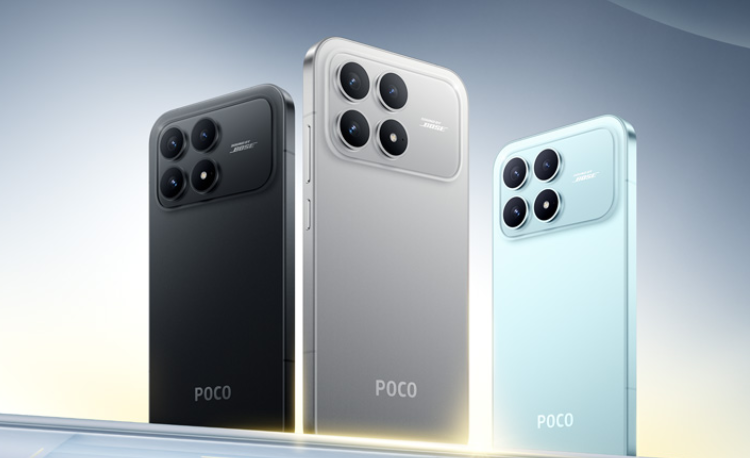
With the launch of both POCO F8 Pro and POCO F8 Ultra, buyers now have two powerful “affordable flagships” to choose from. These devices are rebranded versions of the Redmi K90 and Redmi K90 Pro Max for the global market, bringing high end specs for an approachable price. However, both bring different sets of features and pricing. So in this article, we’ll break down their differences to help you pick the version that fits you best.
POCO F8 Ultra vs POCO F8 Pro: Design, Display, & Multimedia Experience
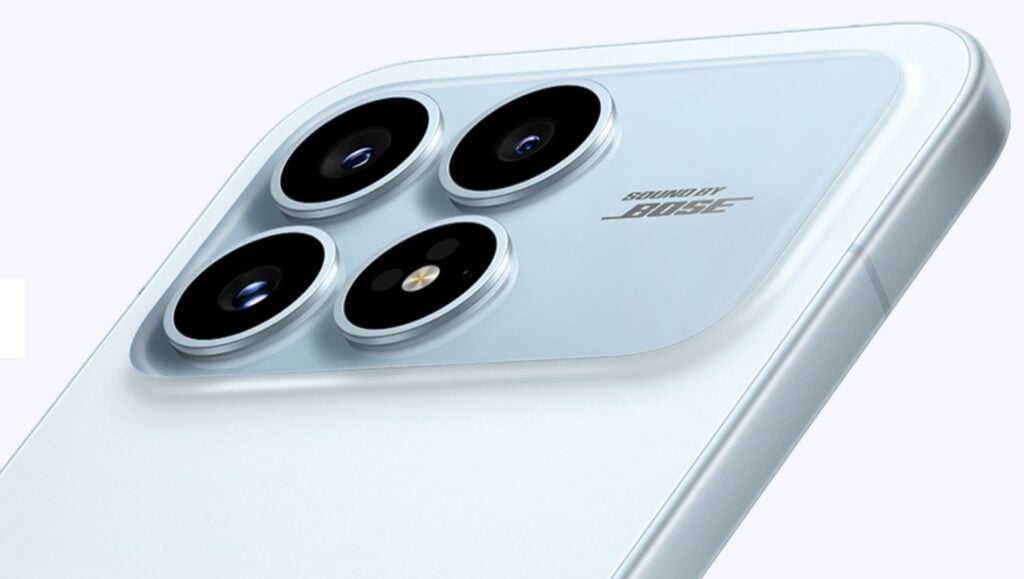
Display size and presentation are a clear differentiator. The POCO F8 sports a 6.59-inch OLED display with a 1.5K resolution, a 120Hz refresh rate, and 3500 nits of peak brightness. Meanwhile, the overall design appears to have a large camera module that seems inspired by the iPhone 17 Pro. On the other hand, the POCO F8 Ultra offers a much larger 6.9-inch OLED display with a 1.5K resolution, 120Hz refresh rate, and 1-3500 nits of peak brightness. So the F8 Pro is better for those who want a relatively compact phone, while the F8 Ultra brings a better watching experience.
POCO F8 Ultra and POCO F8 Pro
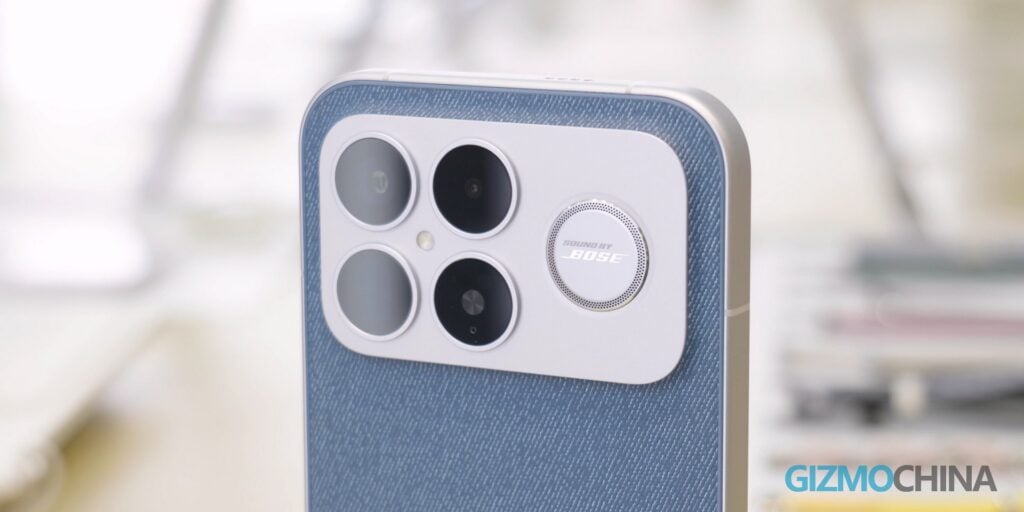
When it comes to audio and media consumption, both phones benefit from “Sound by Bose” stereo tuning. But the F8 Ultra also includes a dedicated rear subwoofer along with the stereo speakers, delivering deeper bass and fuller audio, which is a rare trait in smartphones. If you watch movies, play games, or care about multimedia immersion, that extra audio punch makes the F8 Ultra stand out.
Camera Capability & Versatility
Photography and zoom flexibility are another key area of divergence. The POCO F8 Pro is equipped with a 50MP Light Fusion main sensor (OIS, 1/1.55-inch) along with a 50MP telephoto shooter with a 2.5x optical zoom, and an 8MP ultra wide angle lens, while the front houses a 20MP shooter for selfies and video calls. This offers great versatility and three usable image sensors on the rear.
However, the POCO F8 Ultra basically upgrades all three cameras. It features a 50MP Light Fusion 950 main camera with OIS and a 1/1.31-inch sensor size that is paired with a 50MP periscope telephoto shooter with 5x optical zoom, and a 50MP ultra wide angle lens. Meanwhile, the front houses a 32MP camera for selfies and video calls. If photography, zoomed shots, or content creation matters to you, the Ultra offers a noticeably more powerful setup.
Battery, Charging & Everyday Use
Battery life and charging remain strengths for both phones, though with slight differences. The F8 Pro houses a 6,210 mAh battery, paired with 100 W wired fast charging for rapid top-ups. The F8 Ultra comes with a slightly larger 6,500mAh cell, and even adds 50W wireless charging on top of 100W wired fast charging. For most users, both phones will last a full day (or more) of heavy use. If you value wireless charging, media consumption, or just prefer the convenience, the F8 Ultra is definitely more versatile.
POCO F8 Pro
Performance
Both models use Qualcomm’s flagship-class chipsets from the 8-series lineage and deliver strong performance. But the Ultra model easily edges ahead thanks to the latest Snapdragon 8 Elite Gen 5 chip, offering better GPU and CPU performance compared to the Snapdragon 8 Elite on the POCO F8 Pro. Long term performance for gaming, video editing, or even heavy daily use is better on the F8 Ultra, which is also more future proofed.
Price & Value
Given their specs and features, the F8 Pro is the more compact, lighter, and likely more affordable option. The POCO F8 Ultra basically has an advantage in every key area, but the F8 Pro still offers a robust set of features. It is ideal for those who prefer balanced performance in a manageable form factor. Meanwhile, the F8 Ultra, with its larger screen, premium features, better cameras, and richer audio, pushes toward a “flagship killer” category that comes at a higher price tag and increased size.
Redmi K90 Pro Max
It is also $150 more expensive than the Pro variant with all of its upgrades. In other words, the POCO F8 Pro is a great balanced phone for everyday use with a competent set of hardware and specs, while the F8 Ultra brings a more premium flagship level experience for those with a higher budget.
For more daily updates, please visit our News Section.
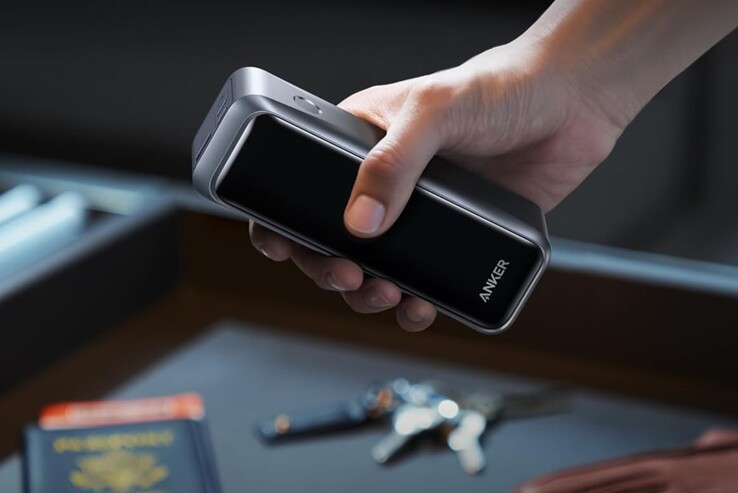
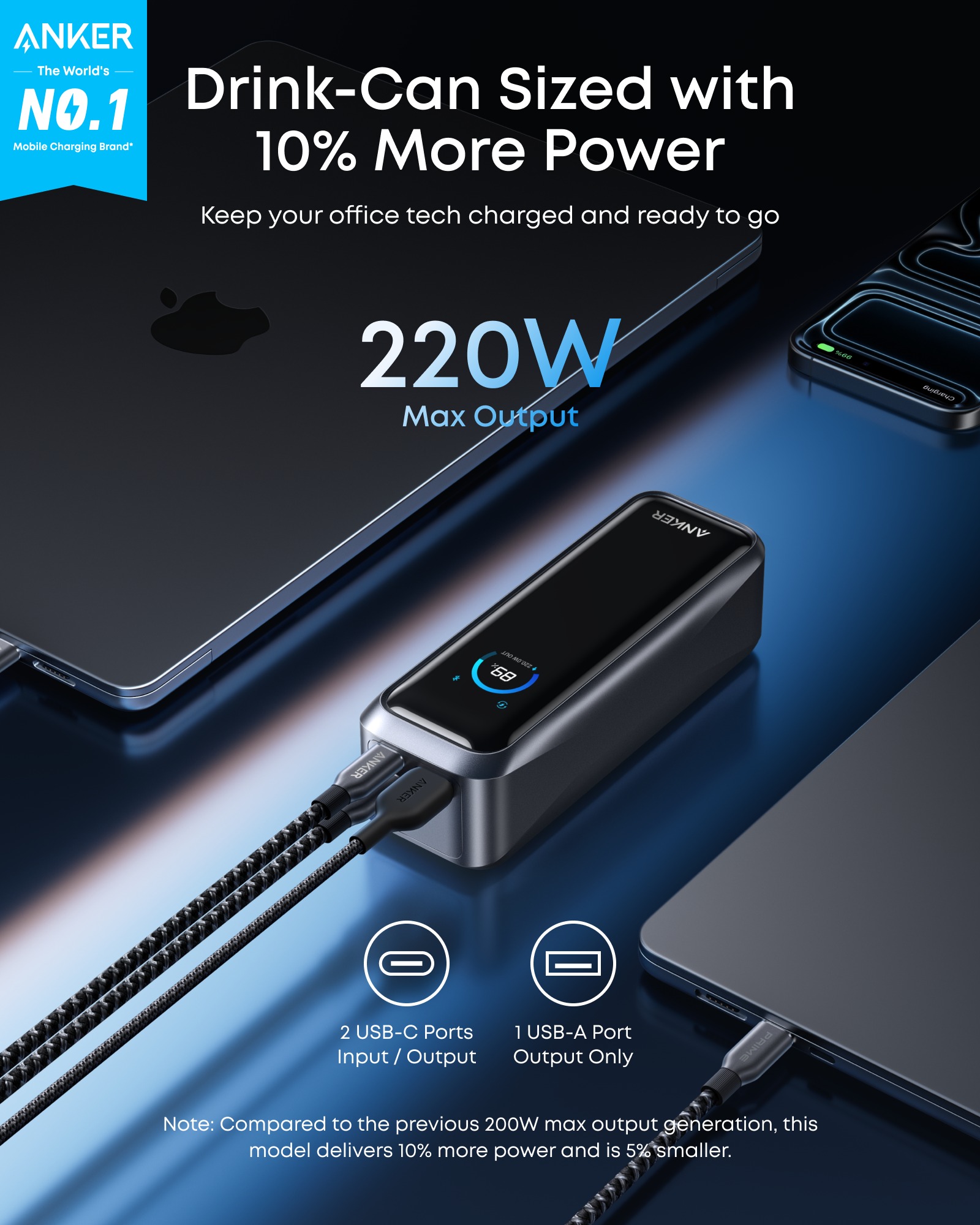
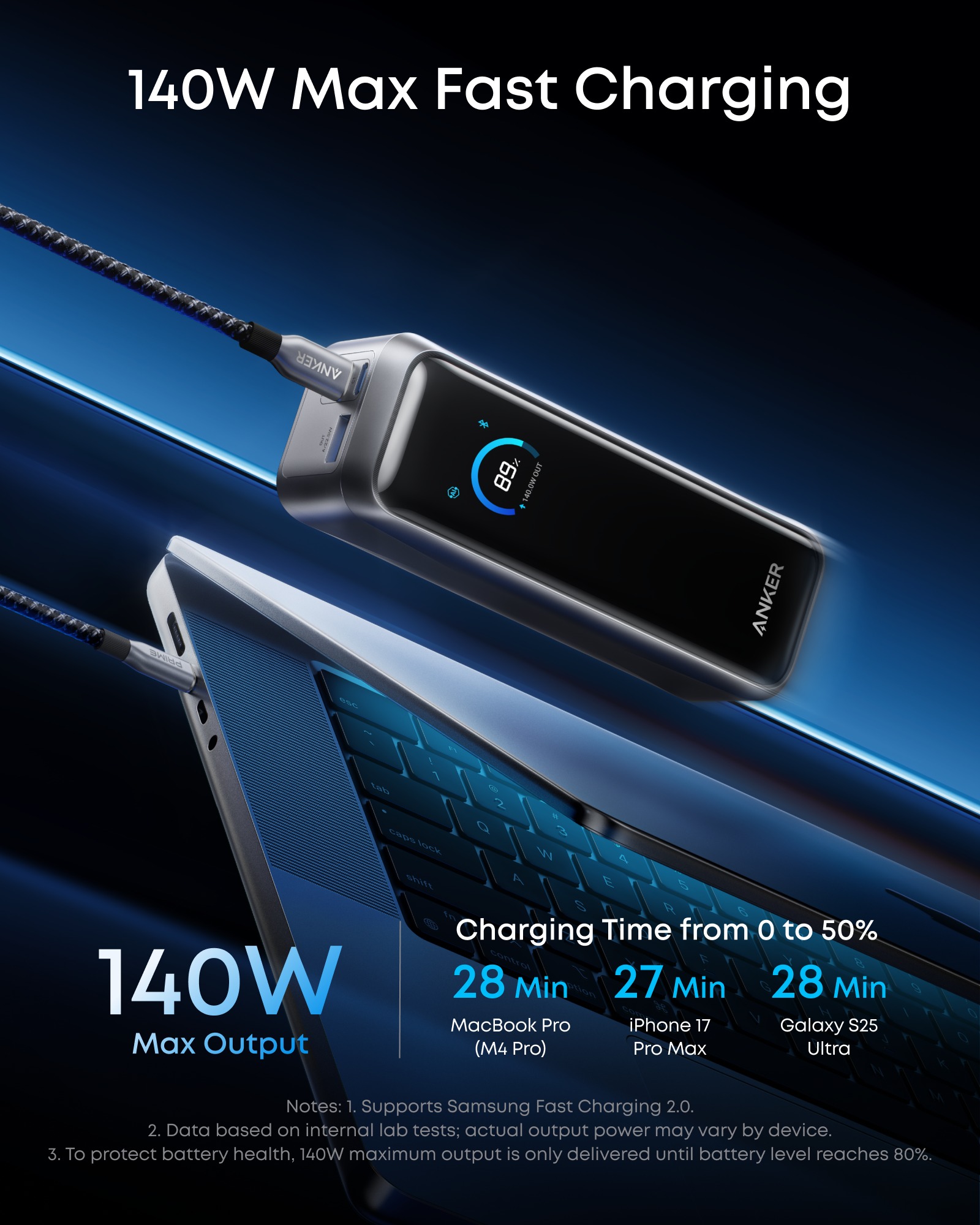
Anker has brought its Prime Power Bank (20K, 220W) to the US after releasing it earlier in the UK and Germany. It is now available on Amazon US for $179.99.
This model sits right below Anker’s 300W flagship and is built for users who want strong charging speeds without carrying a heavy block. It has a 20,100mAh battery inside a 490 g aluminum body. The size is compact at 147 x 44 x 50.5 mm, so it fits easily into a backpack or work bag.
The 220W output is the main highlight. There are two USB C ports and one USB A port. Each USB C port can deliver up to 140W on its own. When all ports are used together, each USB C port goes up to 100W. The USB A port covers older devices. This setup can charge a 14 inch MacBook Pro, a phone, and a tablet at the same time without needing a wall outlet.
A color display on the front shows real time power use, battery percentage, and a timer. You can also check and adjust settings through the Anker app. The power bank supports 100W USB C recharging, which helps it refill quickly. It is also compatible with Anker’s upcoming Prime Charging Base that will let you place the bank on the dock for a drop and go charge. ActiveShield temperature monitoring is built in for safety.
In Europe, the 220W Prime model costs €149.99. It sits between Anker’s 140W model priced at $89.99 and the 300W version. For people who want laptop level charging in a smaller body, the 220W Prime Power Bank offers a practical balance of power, size, and features.
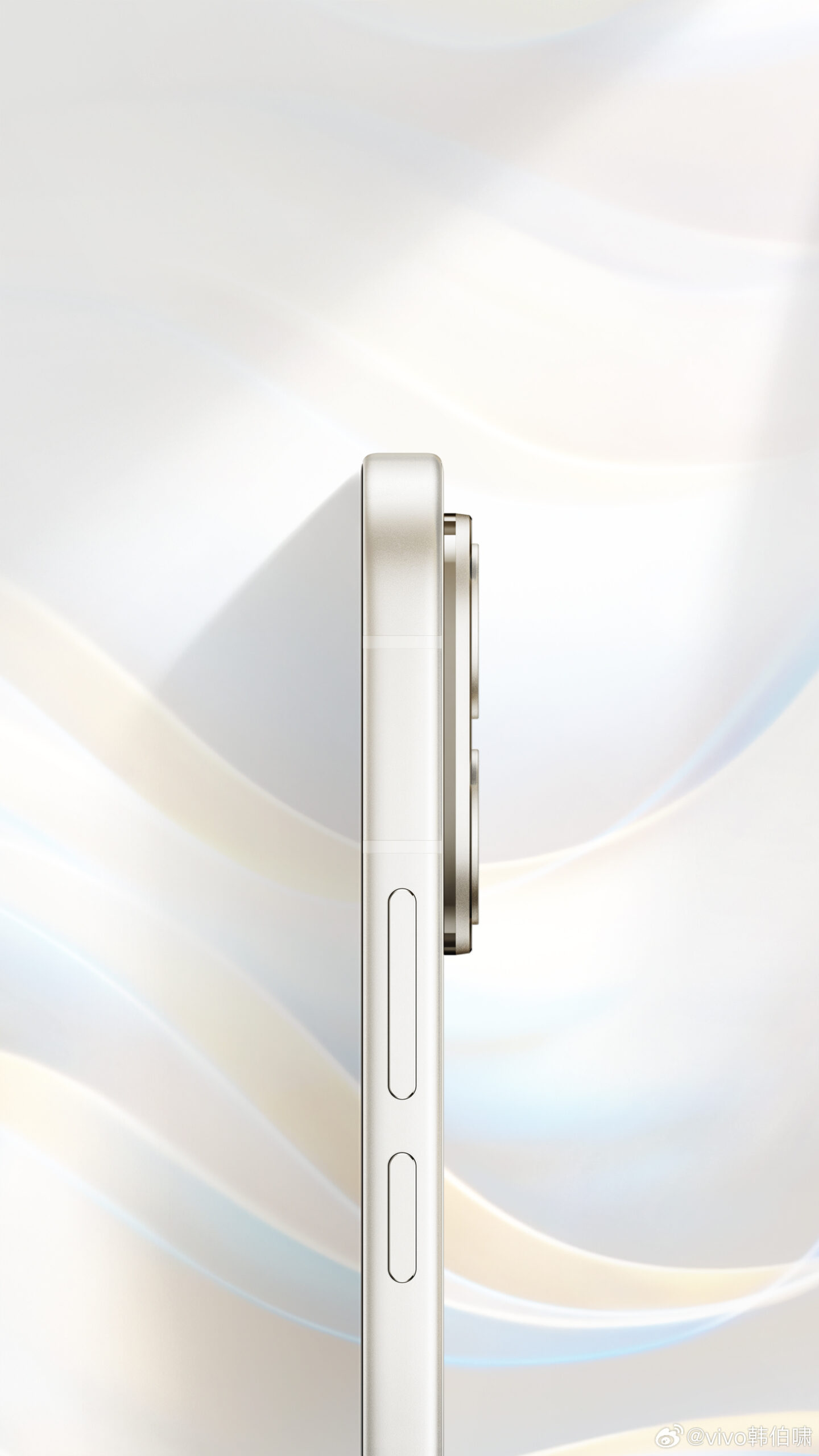
Vivo is expected to unveil the Vivo S50 and S50 Pro Mini smartphones in December in China. It is already known that the Vivo S50 Pro Mini will be one of the early adopters of the recently unveiled Snapdragon 8 Gen 5 chip. However, the brand is yet to confirm the chipset that powers the standard S50. A new Geekbench listing of the S50 has appeared, revealing that it is also powered by a Snapdragon 8-series chip. At the same time, official teasers have emerged to give a good look at its design.
Vivo S50 design
The first image in this post provides a view of the Vivo S50 series’ side profile, revealing an aerospace-grade metal frame. The other image reveals that the S50 series will have an iPhone-like triangular camera setup housed in a square camera island with rounded corners.
Vivo S50 Geekbench listing
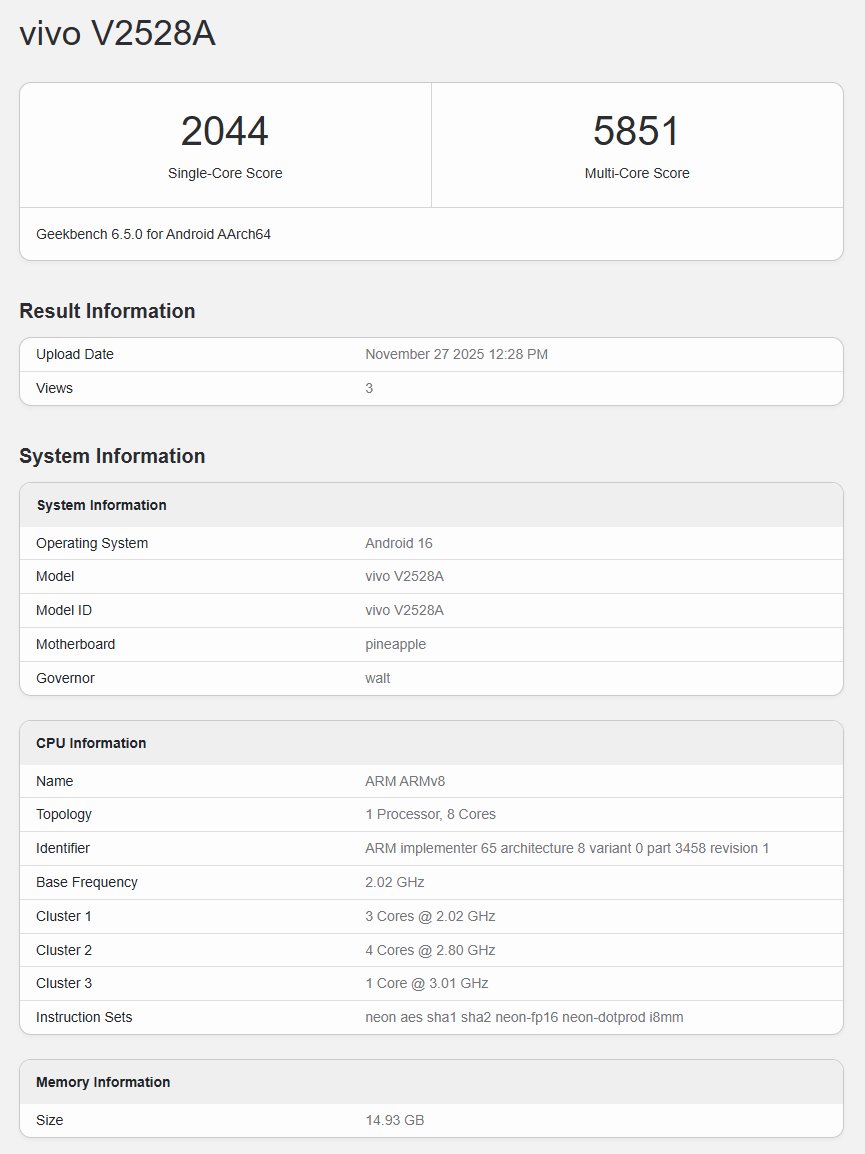
Reports have revealed that the Vivo S50 has the V2582A model number. Earlier this month, the said device was spotted on China’s 3C certification platform with a 90W fast charger. Now, the same model has appeared in Geekbench’s database.
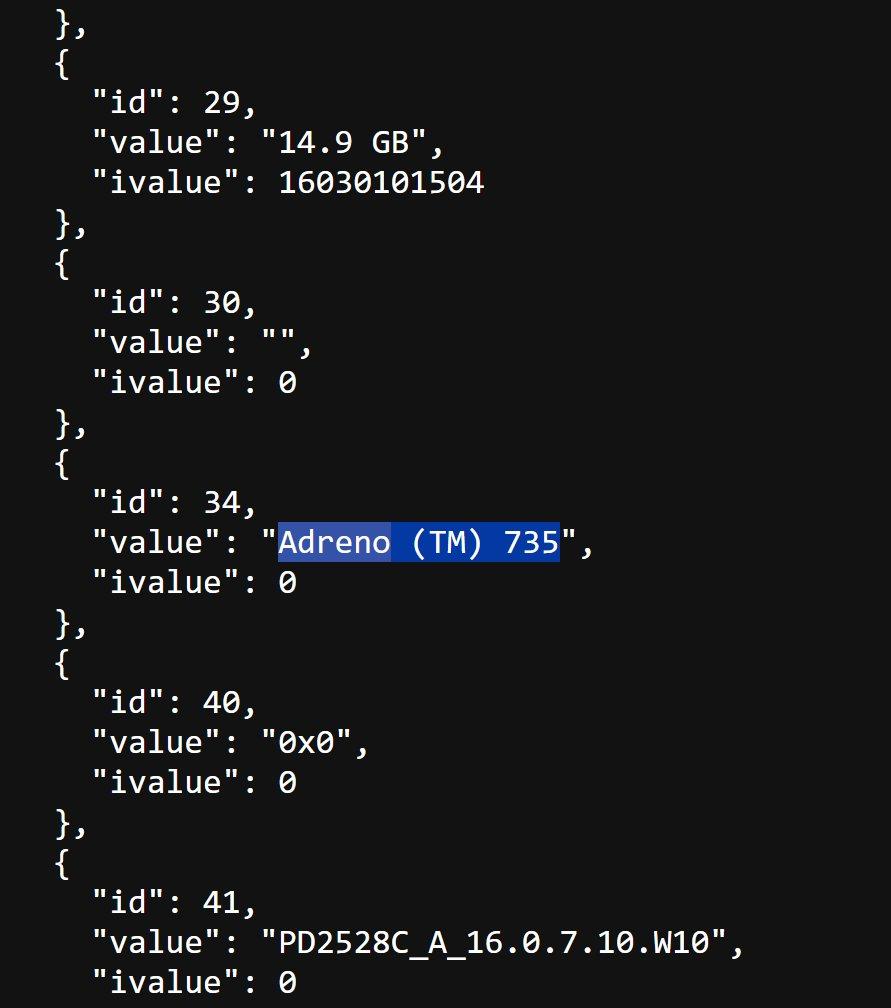
The CPU and GPU details that have emerged through Vivo S50’s Geekbench listing (via) reveal that it is powered by the Snapdragon 8s Gen 3 chipset. The SoC is accompanied by 16GB of RAM and Android 16.
The brand has already confirmed that the entire S50 series will be equipped with LPDDR5x RAM and UFS 4.1 storage. It scored 2044 and 5851 points in the single-core and multi-core Geekbench tests, respectively.
As per other reports, the Vivo S50 could be equipped with a 6.59-inch OLED screen that offers 1.5K resolution and a 120Hz refresh rate. Its rear camera setup is expected to include a Sony IMX882 50-megapixel periscope telephoto camera. The other details of this phone are currently under wraps.
For more daily updates, please visit our News Section.
Samsung has led the global smartphone market for so long that it’s practically tradition. But if the latest forecast from Counterpoint Research plays out, that streak is ending — and sooner than you’d think.
Counterpoint expects Apple to climb back to the No. 1 position by the end of this year, a title it hasn’t held since 2011. Overall smartphone shipments are only predicted to rise about 3.3% next year, yet Apple’s growth is projected to more than triple that pace at roughly 10%. That would give the company a 19.4% share of the global market — just enough to push Samsung into second place despite its own solid 4.6% growth.
And if Apple takes the crown, analysts don’t see it giving it up anytime soon. The projections suggest the company could stay out front through at least 2029.
A few major trends are working in Apple’s favor. The iPhone 17 line is performing strongly in key regions, including China — a market that has been notoriously difficult for Western brands recently. On top of that, we’ve hit a massive upgrade wave: smartphones bought during the pandemic are now aging out, driving millions to replace cracked screens and fading batteries.
Global Smartphone Forecast for 2025 (Source: Counterpoint Research)
There’s also the second-hand factor. From 2023 to mid-2025, roughly 358 million used iPhones traded hands globally. And once someone gets into the iPhone ecosystem, even through a refurbished device, they tend to stay there.
The road ahead looks just as aggressive. Apple is widely rumored to be preparing its first foldable iPhone for 2026 — a direct challenge to Samsung’s current dominance in the premium foldable market. A lower-cost iPhone 17e is reportedly on the way as well, potentially taking over the SE’s role or launching a new “Slim” family to court budget-minded shoppers. Then in 2027, Apple is expected to introduce a major design overhaul. If these forecasts prove accurate, next year could break Samsung’s reign.
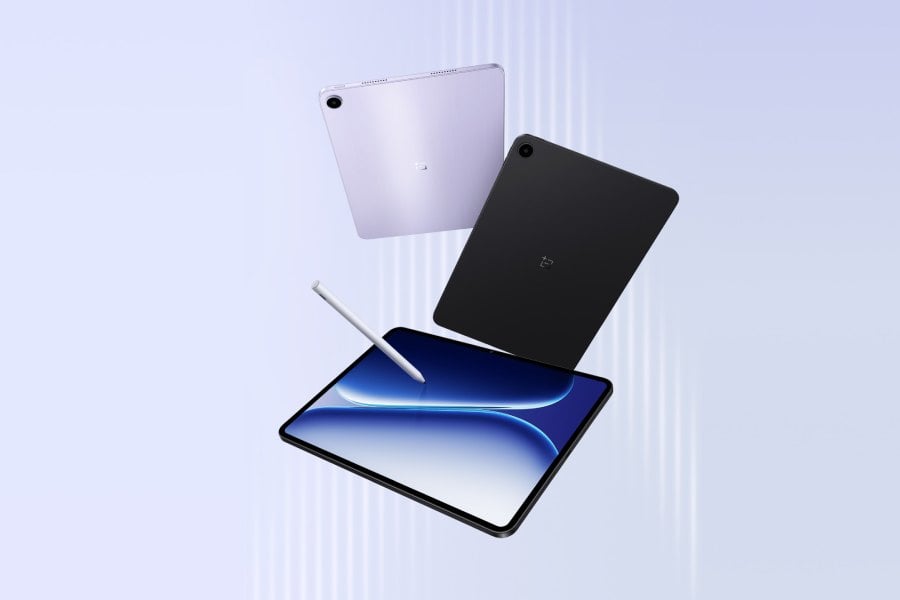
OnePlus seems ready to refresh its budget-friendly tablet lineup with the Pad Go 2. The first OnePlus Pad Go found a decent audience because it offered a large screen, a clean Android experience, and solid battery life without costing too much.
But it also had some clear gaps, like no accessory support and no 5G option.
The company seems to be quietly fixing these complaints with the Pad Go 2 while giving the tablet a more modern finish. So let’s break down how the OnePlus Pad Go 2 will differ from the original Pad Go.
A noticeably different design and new colors
The first big difference between the two tablets is simply how they look.
The original OnePlus Pad Go came only in Twin Mint, a soft green tone that gives off a calm, pastel-style vibe. The overall design was functional, with an 11.35-inch display, rounded corners, and a flat back holding a single camera in the middle.
The Pad Go 2 switches things up. This time we’re getting two color options: Shadow Black and Lavender Drift.
The Pad Go 2 is also built to look cleaner and more modern. The single rear camera sits as a minimal bump on the top left, and the overall form factor gives it an iPad kind of vibe. iPad mini to be exact and even the Lavender Drift color matches with iPad’s Purple shade.
The original Pad Go has dimensions of 255.1 x 188 x 6.9 mm and 532g. We don’t yet have the exact numbers for the Pad Go 2, but based on its target audience and design hints, it’s likely to stay in that same lightweight category.
Stylus support: finally added
If there was one big miss on the first Pad Go, it was the lack of stylus support. A budget tablet with a big display but no way to use a pen felt like a missed opportunity. Even casual users expect at least some level of writing or drawing capability these days.
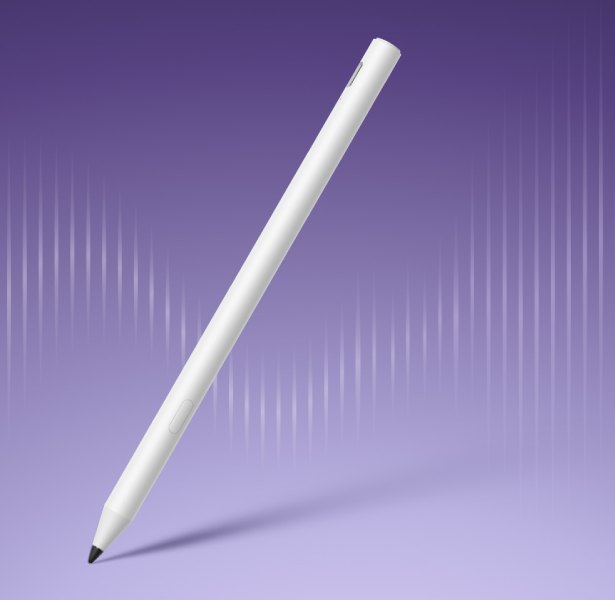
The Pad Go 2 fixes that. OnePlus is preparing Pad Go 2 Stylo support, allowing users to write, sketch, annotate PDFs, or just doodle in class. This addition alone can make the tablet more useful for students and office users.
Stylus support will also help the Pad Go 2 compete with budget tablets from Samsung and Xiaomi, which already offer pen features at similar prices.
Connectivity
Another major upgrade is wireless connectivity.
The original OnePlus Pad Go was limited to 4G, and even that was only available in the cellular model. If you needed faster mobile data or better network flexibility, you were basically out of luck.
A lot of budget tablets still skip 5G to cut costs, but it’s becoming more noticeable as everyday apps and work tools increasingly rely on fast, stable internet.
The Pad Go 2 doesn’t fully jump into 5G across the lineup, but it does introduce one 5G-capable variant: the Shadow Black model.
Wi-Fi details haven’t been fully shared yet, but the original tablet supported dual-band Wi-Fi and Bluetooth 5.2 with aptX HD. The Pad Go 2 is expected to stay at least at that level, if not offer a mild upgrade in Bluetooth support.
Performance and software
The original Pad Go used the MediaTek Helio G99, a 6nm chip. It can handle streaming, web browsing, note-taking, and lightweight games just fine. Paired with 8GB RAM and UFS 2.2 storage, the tablet offers stable everyday performance.
OnePlus hasn’t revealed the chipset for the Pad Go 2 yet, but we are not expecting any major upgrade here. Since the tablet is for study and light work users, OnePlus may continue using a mid-range MediaTek chip.
Software-wise, the Pad Go 2 will ship with Android 15 (if not Android 16) based OxygenOS.
Display and media
The Pad Go’s display was an 11.35-inch IPS LCD, with a 90Hz refresh rate, 400 nits brightness, and sharpness at 1720 x 2408 pixels. The quad-speaker setup also helped it feel more premium during movies or classes.
There’s no direct confirmation about display changes on the Pad Go 2, so for now, assume a similar setup. And honestly, that’s okay. The screen was already one of the tablet’s better components. A brightness bump would be welcome, but we’ll know more after the launch.
Battery and charging
The original Pad Go used an 8000 mAh battery with 33W fast charging. It wasn’t the fastest charger around, but the battery comfortably lasted a full day of light use.
OnePlus tends to repeat battery tech in updates unless it’s a major redesign, so the Pad Go 2 will likely carry something similar.
So… how different will the OnePlus Pad Go 2 be, really?
In some ways, the OnePlus Pad Go 2 is an upgrade.It simply fixes the biggest issues of the first model: lack of stylus support, lack of 5G, and limited design options.
If you liked the size, battery life, and simplicity of the Pad Go but wished it were a bit more flexible, the Pad Go 2 might be exactly what that tablet should have been the first time. It launches globally and in India on December 17th.
For more daily updates, please visit our News Section.
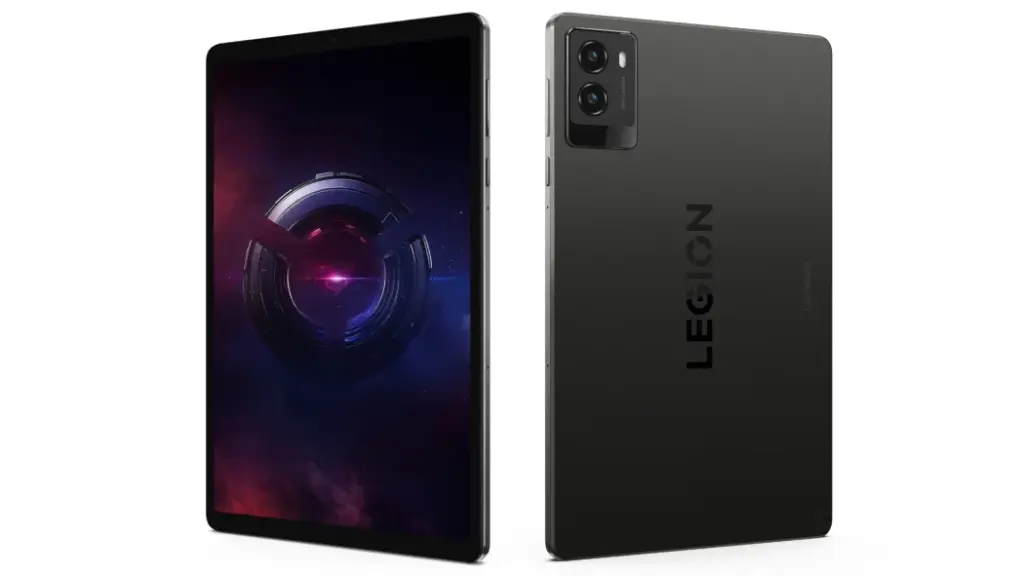
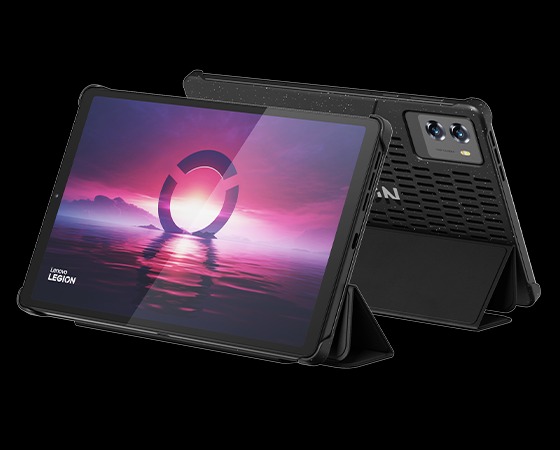
The Lenovo Legion Tab Gen 3 is selling for its lowest price yet this Black Friday. The 8.8-inch gaming tablet, usually priced at 550 dollars, is now available for 390 dollars. At this price, it becomes an easy choice for anyone who wants a compact Android tablet that can handle heavy gaming and everyday work.
The Legion Tab Gen 3 has an 8.8-inch 2.5K LTPS display with a 2560 x 1600 resolution, a 16:10 aspect ratio, a 165Hz refresh rate, 98 percent DCI P3 coverage, 500 nits brightness with 900 nits in high brightness mode, HDR10 support, 10-point touch input, and TÜV Low Blue Light, Flicker Free, and Precise Touch certifications. It weighs 350 grams and measures 7.79mm by 208.54mm by 129.46mm.
The tablet is powered by the Snapdragon 8 Gen 3 processor and comes with 12GB of LPDDR5X RAM and 256GB of UFS 4.0 storage. It uses a large vapor chamber and a 3D heat dissipation structure to keep performance stable during long gaming sessions. It runs Android 14 out of the box, and Lenovo promises three years of OS updates. The tablet also has a dedicated desktop mode. You can pair it with a wireless keyboard and mouse, and when the 8-inch display feels small, you can connect it to an external monitor using one of its USB 3.2 Gen 1 ports.
Other features include a 6,550mAh battery with 65W fast charging, Wi-Fi 7 support, Bluetooth 5.4, Dolby Atmos speakers, dual X axis haptics, and two noise reducing microphones. The rear camera setup has a 13MP autofocus camera and a 2MP macro camera with flash. The front camera is an 8MP fixed focus unit with flash. Ports include one USB C port at 480Mb per second and another USB C port at 10Gb per second.
Lenovo has launched the ThinkPlus 100W GaN charger in China. The new charger supports up to 100W output through a single USB-C port and is compatible with laptops, tablets, smartphones, and accessories. It features three ports in total and carries a price tag of 249 yuan ($35). Lenovo also includes a 1.5-meter 240W dual USB-C cable in the box.
Lenovo ThinkPlus 100W Charger Specifications
The charger comes with a compact, dual-color design that looks modern while keeping the overall style familiar. It also features a revised internal layout that improves space utilization, which helps airflow and reduces heat buildup during long charging sessions.
Due to GaN tech, the company is able to reduce the overall size by 50% compared to earlier models, which makes the charger easier to carry and more convenient in tight desk setups or travel bags. Lenovo says the new design is five times smaller than older multi-port chargers with similar power output.
There are two USB-C ports and one USB-A port. Either USB-C port delivers up to 100W individually, and the USB-A port reaches up to 30W. It can fast-charge a laptop and a smartphone simultaneously. It fills a 16-inch MacBook Pro to around 40% in 30 minutes. It can also charge an iPhone 17 Pro to roughly 46% in the same time, while the Galaxy S24 Ultra reaches about 63%.
The charger supports a wide range of fast-charging protocols, including PD 3.0, PPS, QC 3.0, AFC, FCP, and Motorola Turbopower. It works with devices from various brands and is compatible with smartphones, tablets, laptops, drones, gaming consoles, and wearables.
Lenovo uses third-generation gallium nitride (GaN) and silver-nitride materials to improve efficiency and heat control. The charger reaches a peak energy efficiency of 93% while maintaining stable output during high-power usage.
It supports a 12-layer protection system that ensures safety with built-in safeguards against overcurrent, overvoltage, overheating, short circuits, and electromagnetic interference. The charger also supports wide-voltage input, making it suitable for global travel.
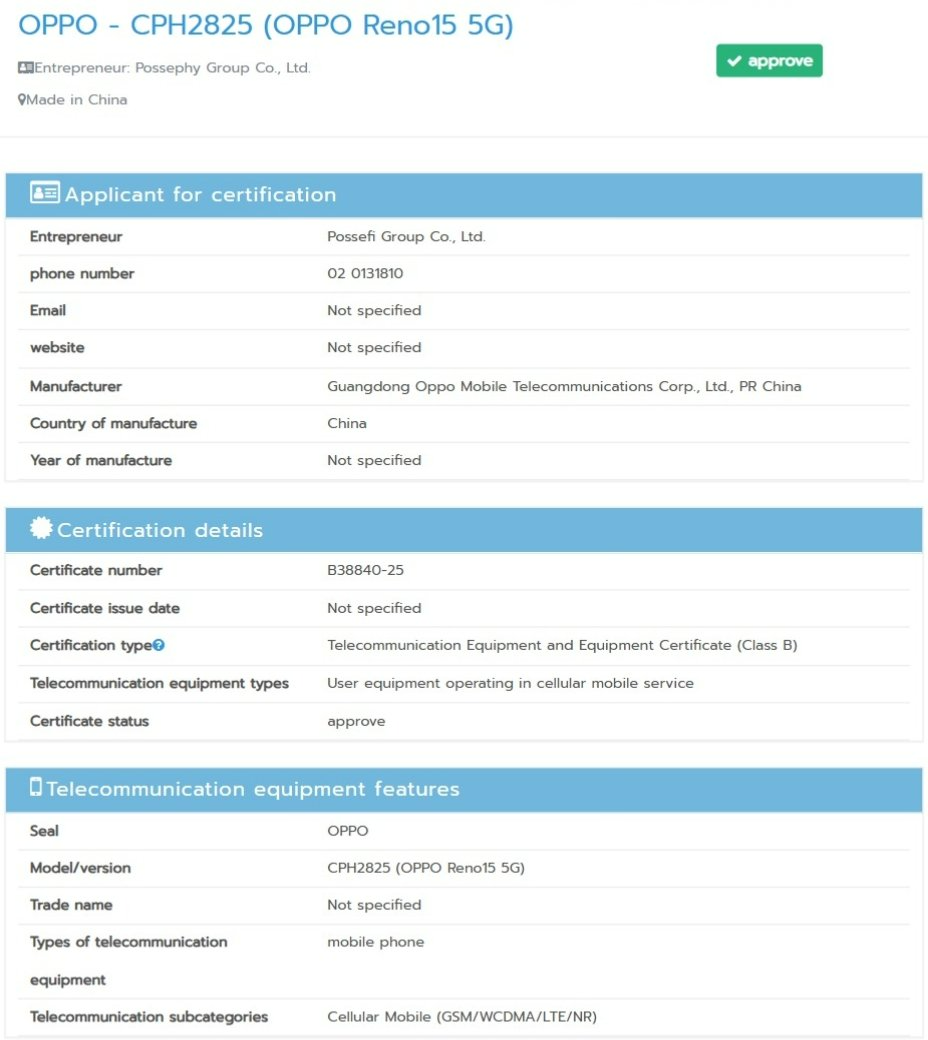
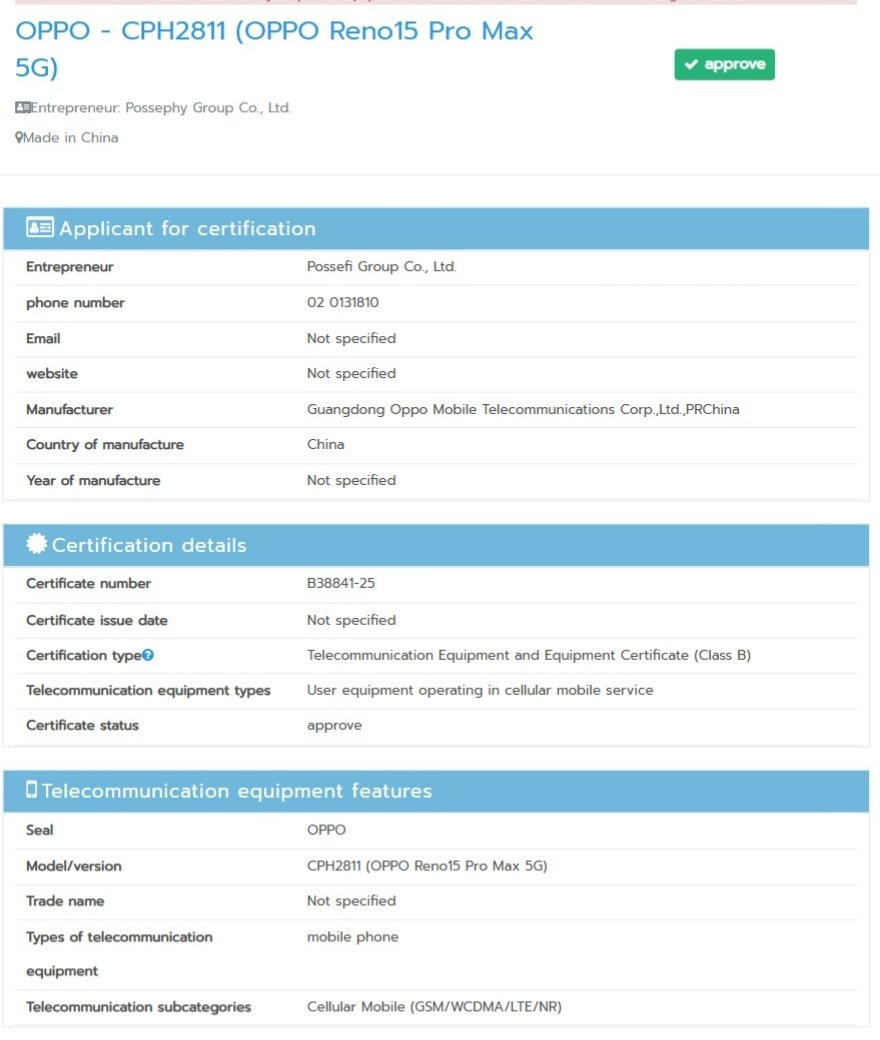
Earlier this month, Oppo unveiled the Reno 15 and Reno 15 Pro in China. Next, the brand will announce the Reno 15c in the home market. For the global market, the Reno 15 series will include as many as four models. Here’s a look at their names and associated model numbers.
Global Oppo Reno 15 series models
Oppo Reno 15 NBTC listingOppo Reno 15 Pro NBTC listingOppo Reno 15 Pro Max NBTC listing
The Reno 15 series for the global market will include the following models, along with their model numbers:
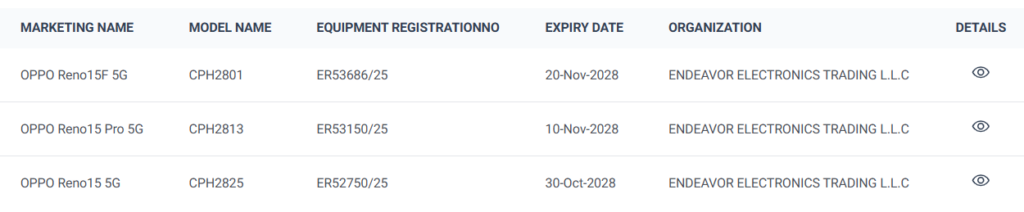
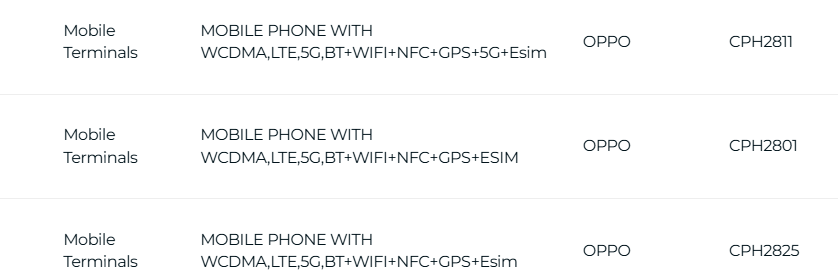
• Reno 15 (CPH2825) • Reno 15F (CPH2801) • Reno 15 Pro (CPH2813) • Reno 15 Pro Max (CPH2811)
Europe’s EEC, the UAE’s TDRA (above screenshot), and TUV certification platforms have already approved the Reno 15, 15F, and 15 Pro, but they have yet to approve the 15 Pro Max. The TDRA certification revealed that these devices will support 80W wired charging.
Coming to India, the above screenshot shows that the BIS has approved all four Reno 15 models. However, it is unclear whether the Reno 15F will carry the same marketing name in India.
All four Oppo Reno 15 models have been approved by India’s BIS
Singapore’s IMDA approves Reno 15, Reno 15F, and Reno 15 Pro
The Indonesian TKDN listing has revealed the Reno 15F, whereas Singapore’s IMDA certification platform lists all three models, but it has yet to approve the Reno 15 Pro Max.
The above certifications also suggest that not all four variants will be available in all regions. The certifications also indicate that not every model will launch in every market.
China’s Reno 15 series
The Reno 15 and Reno 15 Pro available in China are powered by the Dimensity 8450 chipset, whereas the upcoming Reno 15c will feature the Snapdragon 7 Gen 4. These devices have 6.32-inch, 6.78-inch, and 6.59-inch displays, respectively.
Oppo Reno 15 Pro Max’s leaked specs
As far as the global market is concerned, the rumor mill has yet to leak concrete details about the global Reno 15 series models. However, leaked specifications that have surfaced so far have revealed that the Reno 15 Pro Max will include a 6.78-inch OLED LTPO 1.5K 120Hz screen, a Dimensity 9400 chip, 200-megapixel triple rear cameras, a 50-megapixel front camera, and a 6,500mAh battery.
For more daily updates, please visit our News Section.
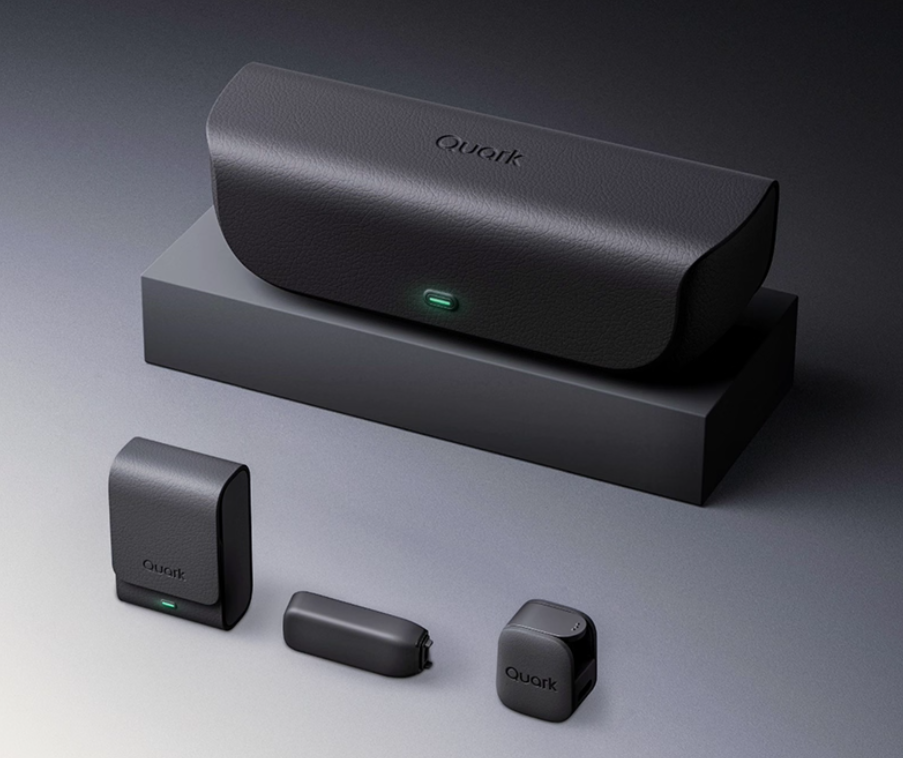
Alibaba’s Quark AI glasses, launched earlier this month, have now officially gone on sale in China. The company has opened purchases for three variants of the flagship S1 model and three versions of the more affordable G1 model. Both series pair with Alibaba’s new Qwen App, which uses the company’s in-house AI system to provide voice- and touch-based assistance.
The Quark AI Glasses S1 function as a wearable AI assistant for real-time translation, object recognition, POV video capture and voice interaction. The device runs on Alibaba’s Qwen large language model to provide hands-free access to contextual information throughout the day.
The S1 uses dual Micro LED light engines and diffractive waveguide lenses, delivering up to 2,300 nits of eye brightness. Users can adjust both the viewing distance and display height, and Alibaba supports prescription lenses from 0 to 800 degrees in 1.6, 1.67 and 1.74 refractive index options. The frame weighs 51g and uses a 7.5mm slim temple arm with balanced weight distribution.
The device runs on a dual-chip setup combining Qualcomm’s Snapdragon AR1 for AR tasks and the BES2800 chip for audio. Connectivity options include Bluetooth 5.4 and Wi-Fi 6. The S1 features five microphones, including a bone-conduction mic, and dual 10mm speakers.
Imaging is handled by a Sony IMX681 sensor with a 109-degree field of view. It captures 4032×3024 photos and records 3K 30fps video with EIS stabilization, Super Night Mode and instant capture support.
Power comes from two 280mAh swappable batteries housed in the temples. Users can extend usage with a 700mAh MiniBag dock, a 2500mAh charging case or a USB-C fast-charging clip that delivers 50 percent power in 10 minutes. Expected runtimes include 45 minutes of calling, 2.5 hours of music, 20 minutes of navigation and 15 short video clips. The glasses offer up to 7 hours of active use, 25 hours of standby time and IPX4 splash resistance. They also support Apple’s MFi standard.
Pricing & availability
Alibaba has yet to disclose whether the glasses will be sold outside China. The S1 and G1 are currently listed on Chinese e-commerce platforms at ¥3,799 ($537) and ¥1,899 ($268).
For more daily updates, please visit ourNews Section.
We use cookies on our website to give you the most relevant experience by remembering your preferences and repeat visits. By clicking “Accept”, you consent to the use of ALL the cookies.
This website uses cookies to improve your experience while you navigate through the website. Out of these, the cookies that are categorized as necessary are stored on your browser as they are essential for the working of basic functionalities of the website. We also use third-party cookies that help us analyze and understand how you use this website. These cookies will be stored in your browser only with your consent. You also have the option to opt-out of these cookies. But opting out of some of these cookies may affect your browsing experience.
Necessary cookies are absolutely essential for the website to function properly. This category only includes cookies that ensures basic functionalities and security features of the website. These cookies do not store any personal information.
Any cookies that may not be particularly necessary for the website to function and is used specifically to collect user personal data via analytics, ads, other embedded contents are termed as non-necessary cookies. It is mandatory to procure user consent prior to running these cookies on your website.