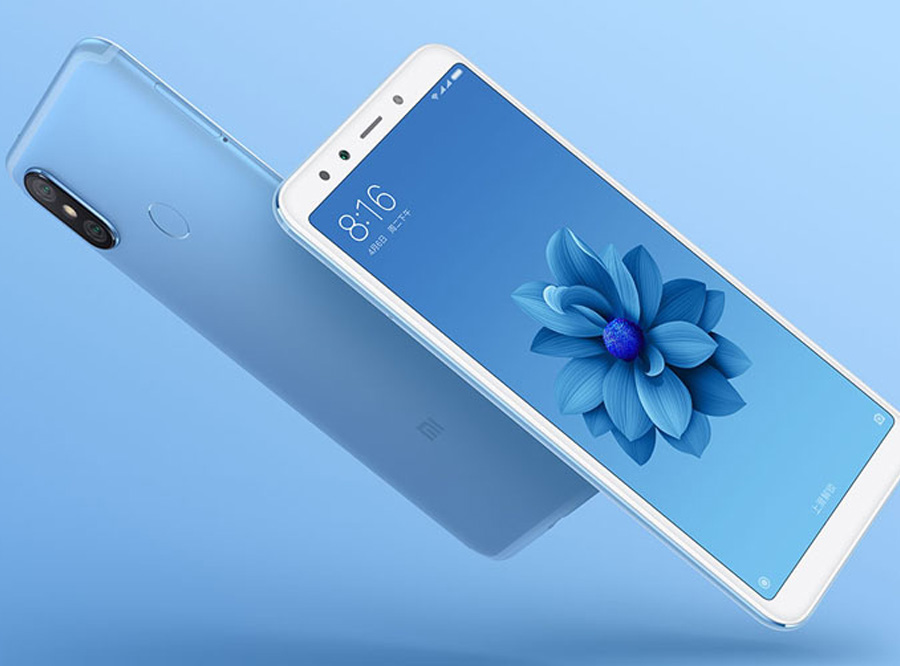
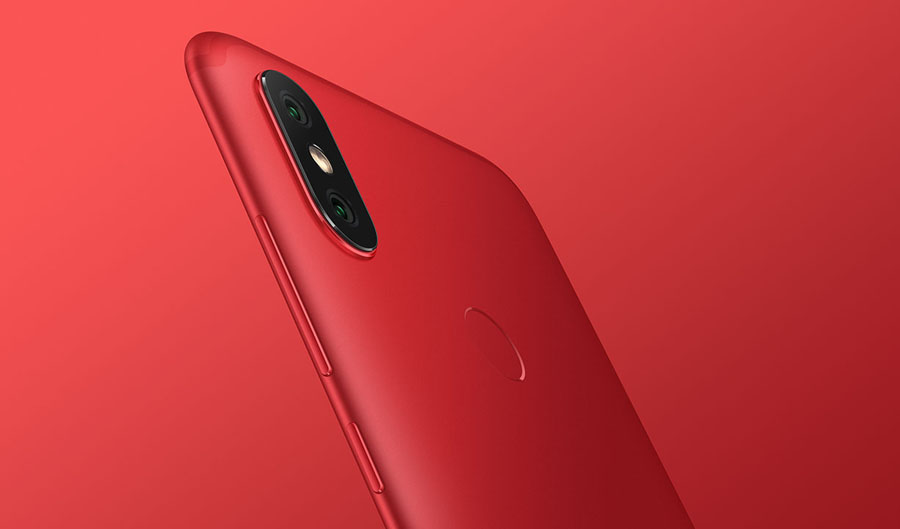
Marketed as the long-awaited Mi 5X successor, Xiaomi’s Mi 6X was unveiled back in 2018. As compared to its predecessor, the Mi 6X offered a slew of improvements such as a full-screen design and a dual-camera setup at the back.
Even a couple of years after hitting the store shelves, the Mi 6X continues to garner popularity among Xiaomi’s huge fanbase. To make the phone available even to those on a tight budget, the Chinese tech giant is now offering the 6GB RAM+64GB ROM Xiaomi Mi 6X variant for a lowered price through Giztop.
Available in two eye-catching color options including black, as well as gold, the Xiaomi Mi 6X would normally set you back $199. While the device is worth a pretty penny, you can now purchase it for just $119 through one of China’s most reliable e-tailers, Giztop.
An absolute steal with this 25 percent off, the Xiaomi Mi 6X sports a 5.99-inch LCD IPS 2.5D curved glass screen with an FHD+ resolution of 2160×1080 pixels. It packs a powerful Snapdragon 660 Octa-Core AIE chipset, up to 2.2GHz along with an Adreno 512 650MHz GPU under the hood.
As mentioned earlier, it houses a 12MP and 20MP cameras with Sony IMX486 Exmor RS at the back and a 20MP front shooter with Sony IMX376 sensor for selfies and video calling. The front-mounted camera uses a soft-light LED flash and pre-AI that allows the camera to capture best quality selfie shots as it can identify 12 kinds of self-portrait scenes. Aside from that, the front camera has AI Beauty and AI night self-timer and it also scans your face for instantly unlocking the phone.
The phone runs MIUI 9.5 based on Android 8.1 OS and is backed by a 3010mAh battery that supports 5V2A QC3.0 quick charge. To know more about the Xiaomi Mi 6X and place your order, simply follow this link without wasting time.
The Gizmochina Coupons is a community that finds, reports and evaluates deals and coupons of Chinese products from online shops. Please visit it here to find more coupons to save money on mobiles and smart gadgets.
Vivo recently launched its latest V-series smartphone — Vivo V19 in Indonesia and now it seems that the company is all set to launch the Vivo V19 in the Indian market as well. However, the upcoming Indian variant of the V19 will be the different from the one launched last week in Indonesia.
While the phone’s launch date for the Indian market is not yet confirmed, it is expected to be in the last week of this month. Ahead of the launch, the phone’s specifications as well as pricing information has leaked online.
As per the report, the Vivo V19 will feature a 6.44-inch Full HD+ Dual iView E3 Super AMOLED display with 20:9 aspect ratio, offering a pixel density of 409PPI. The Indian variant will come powered by Qualcomm Snapdragon 712 SoC along with 8GB of RAM.
The phone will be offered in two storage options — 128GB and 256GB. The device will have a quad-camera setup on the back, consisting of a 48MP main sensor, an 8MP super wide-angle lens, a 2MP macro lens and a 2MP depth sensor. The dual punch-hole cutout on the front will have a 32MP main sensor and an 8MP wide-angle lens.
It will also have an in-display fingerprint sensor for added security. The device will be running Android 10-based FunTouch OS 10 operating system and will be powered by a 4,500mAh battery and will support 33W Vivo Flash Charge 2.0.
As for the pricing, the report claims that the device will be priced around ₹25,000 in India and also cites an unknown source claiming the phone’s pricing to be ₹24,999, which is approximately $338 for the base model with 8 GB RAM and 128 GB storage.
Huawei is all set to launch its next-generation flagship smartphone series — Huawei P40 lineup on 26th March through an online launch event. With just few days left for the official unveiling, the company has started teasing the upcoming phone.
The Chinese giant has today shared a new teaser video for the upcoming Huawei P40 series smartphones. In the video, the company clearly showcases the curved body design of the upcoming flagship.
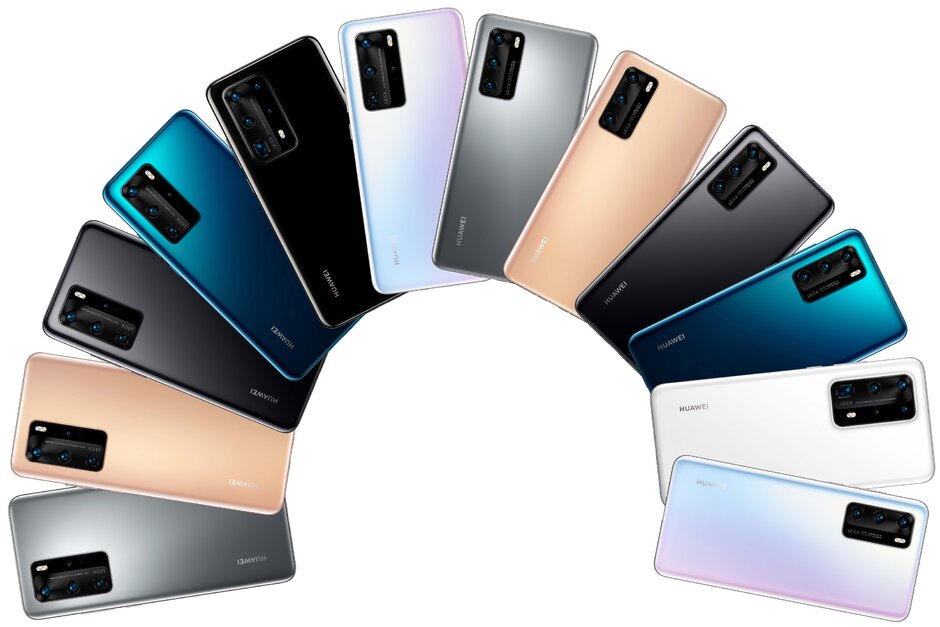
The teaser also confirms rounded corners for the P40 series. It also shows that the camera sensors are placed on a rectangular bumped module on the back of the phone. While the phones in the series will have glass body, the P40 Pro Premium version is said to come with a ceramic body.
Along with this, Evan Blasshas also shared renders of the upcoming Huawei flagship devices, including Huawei P40, P40 Pro and P40 Pro Premium version. While the devices don’t differ much in terms of design, the only major difference seems to be for camera configuration.
The Huawei P40 is said to come with a triple-camera setup on the back, which includes a 52 MP super-sensitive primary sensor, a 40 MP lens, and an 8 MP optical variable lens. On the other hand, the P40 Pro replaces 8 MP lens with a square-shared periscope lens and adds a ToF lens to make it a quad-camera setup.
However, the highlight in the lineup seems to be the P40 Pro Premium version which will come with a penta-camera setup having an additional monochrome sensor. All the devices will come powered by the company’s own Kirin 990 5G chipset.
As per the reports, the P40 Pro Premium will come with a 6.7-inch 120Hz display with 2K screen resolution and will come packed with a 5,500mAh battery with support for 50W fast charge technology and 27W wireless charging.
To know more about the smartphones, including confirmed specifications, features, pricing and availability of the P40 lineup, we’ll have to wait for a few more days, until 26th March, when the company officially launches these devices.
ZTE has been rumored to launch a new smartphone under its flagship Axon lineup named Axon 10s. After postponing its launch event from MWC 2020, the company has today confirmed that it is going to launch its new flagship smartphone in China this month.
The company has today revealed that the ZTE Axon 11 5G smartphone will be launched in China on 23rd March at 02:00 PM local time. As with most other launch events, this one too will be an online event because of the coronavirus outbreak.
The poster announcing this development touts the upcoming device as “5G Video Phone”, hinting that the company will be focusing on two aspects for the flagship smartphone — 5G connectivity and camera for video.
Earlier, it was rumored that the ZTE Axon 10s will be the company’s first smartphone to be powered by the latest Qualcomm Snapdragon 865 chipset but nothing has been officially revealed about that phone. Thus, there’s a possibility that the so-called Axons 10s could get launched as the Axon 11 5G.
As per the reports, the ZTE Axon 10s Pro features a 6.47-inch AMOLED display with full HD+ resolution of 1080 x 2340 pixels and a tall aspect ratio of 19.5:9. The waterdrop notch display promises a screen space of 92 percent and the screen is further integrated with a fingerprint reader.
As for the camera, it is said that the phone could feature a 20-megapixel front-facing camera while the back panel houses a triple-camera setup. It consists of a 48-megapixel main lens with f/1.7 aperture, a 20-megapixel ultrawide lens with 125-degree field-of-view and f/2.2 aperture and an 8-megapixel telephoto lens with f/2.4 aperture.
The 7nm Snapdragon 865 mobile platform fuels the device, coupled with 12GB of LPDDR5 RAM and 256GB of UFS 3.0 storage. It is said that MiFavor 10 OS overlaid on the Android 9 Pie OS runs on the smartphone, which is powered by a 4,000mAh battery and carries support for Quick Charge 4+ fast charging technology.
The Samsung Galaxy M21 smartphone was confirmed in the last week to debut today in India. However, without revealing the exact reason, the South Korean company has postponed its launch to March 18. There is a possibility that the unveil may have been delayed due to concerns related to the Coronavirus outbreak.
The official landing page of the Samsung Galaxy M21 on Amazon India now states that it will be made official on March 18 at 12PM (local time). Previously, it carried the March 16 launch date. The landing page of the phone has plenty of details on the smartphone.
Previous reports revealed that the upcoming Samsung Galaxy M21 will borrow most of its specs from the Galaxy M30s handset from September 2019. The landing page on the retailer site has revealed that it is equipped with a Super AMOLED display with waterdrop notch. The rear side of the phone has a fingerprint reader and a 48-megapixel triple camera setup. The front notch has a 20-megapixel selfie snapper. The handset features a massive battery of 6,000mAh capacity.
The Galaxy M30s has a 6.4-inch S-AMOLED display that supports full HD+ resolution and 19.5:9 aspect ratio. The Exynos 9611 chipset powers the smartphone with up to 6 GB of RAM. The handset up to 128 GB of native storage.
The Galaxy M30s has a 16-megapixel selfie camera. The 48-megapixel + 8-megapixel + 5-megapixel triple camera setup is placed on the backside of the device. The 6,000mAh battery of the phone supports 15W fast charging.
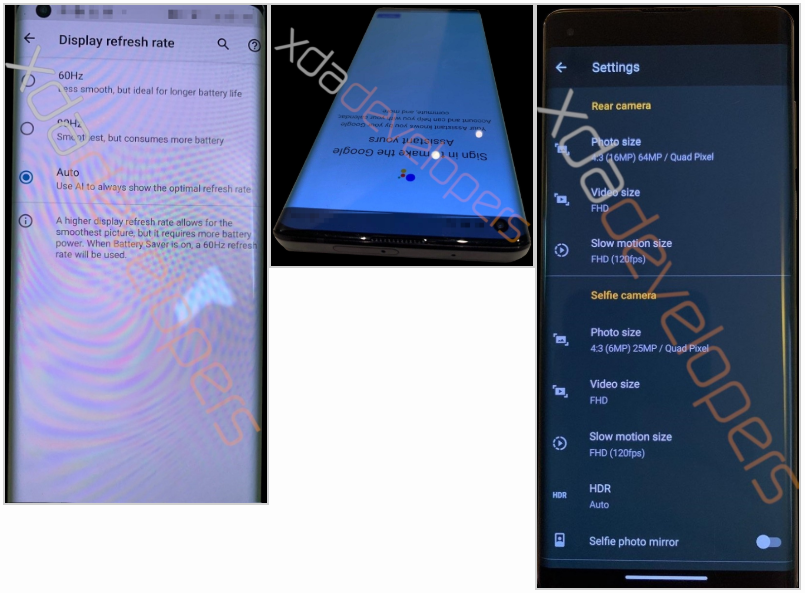
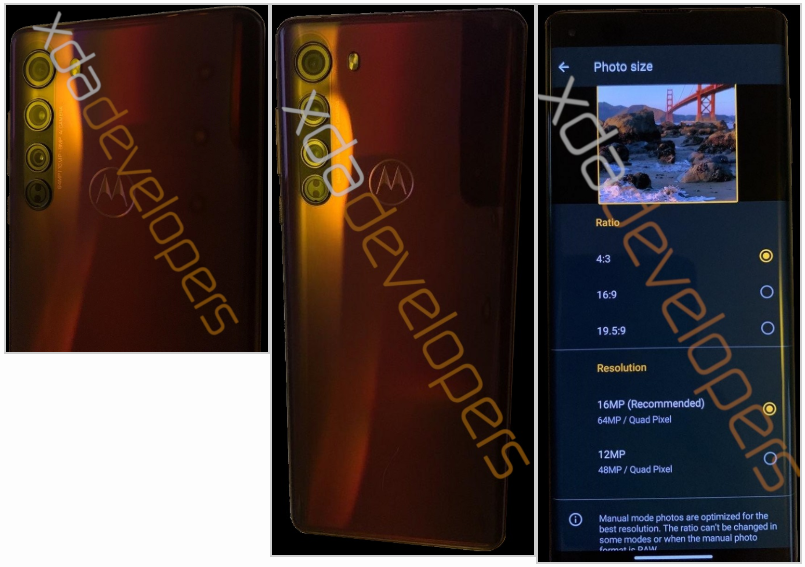
Recent reports have revealed that Motorola is gearing up to launch the Snapdragon 865 mobile platform powered Motorola Edge+ smartphone. An upper mid-range sibling of the phonev with Motorola Edge moniker also exists. A fresh report on XDA Developers has revealed the key specifications of the Motorola Edge phone. The report has also carried some of its live shots.
The report reveals that the Motorola Edge is blessed with a 6.67-inch display with extremely curved edges. Because of the extreme curvature of the screen, it is dubbed as “waterfall display.” The full HD+ resolution supporting screen will offer a refresh rate of up to 90Hz. There is a “auto” mode in Settings page of the device which lets the phone to decide through AI to automatically switch between 60Hz and 90Hz refresh rates. The screen of the phone is integrated with a fingerprint reader.
There is a punch-hole at the top-left corner of the screen that serves a home for its 25-megapixel selfie camera. A speaker is lodged in the top bezel of the device. A speaker can be found on the bottom edge of the device which indicates that it will either carry support for stereo audio.
Despite featuring a curved display, the edge of the phone features a volume rocker and a power key. The good old 3.5mm audio jack is available on the device. The handset has a hybrid SIM slot for adding a microSD card.
The Snapdragon 765 mobile platform powers the device along with a 4,500mAh battery. The SoC is coupled with 6 GB of RAM. The phone offers users with a native storage of 128 GB. The handset supports fast charging, but its charging rate is yet to be revealed. The phone lacks support for wireless charging. Even though the chipset that powers the Motorola Edge has a 5G modem, there is no confirmation whether it supports 5G connectivity.
The rear camera setup of the Motorola Edge will house a 64-megapixel main lens. It will be coupled with a 16-megapixel wide-angle lens and an 8-megapixel telephoto shooter. The other features of the phone include Android 10 OS, dual-SIM support, NFC and USB-C. Motorola is expected to soon confirm on its launch date in the near future.
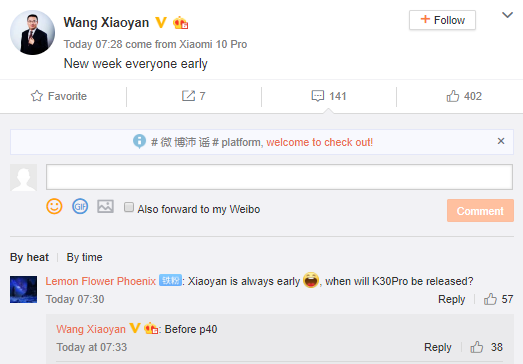
Recent reports have suggested that the Redmi K30 Pro will break cover by the end of this month. The smartphone is expected to debut as the cheapest phone powered by the Snapdragon 865 mobile platform. The Chinese firm is yet to confirm on the launch date of the smartphone. A Weibo post from Xiaomi China Vice President Wang Xiaoyan reveals that it will go official before the Huawei P40 series.
A Weibo user responded to Xiaoyan’s recent Weibo post asking him to confirm on the announcement date of the Redmi K30 Pro. Xiaoyan replied, “before P40.” The Huawei P40 series is scheduled to go official on March 26.
Redmi is known for holding its launch event on Tuesdays. Hence, there is a possibility that the Redmi K30 Pro may go official on March 24. Hence, the company is expected to confirm on the actual launch date this week.
The Redmi K30 Pro will not be the only device that will go official at the event. It is said that a new edition of the RedmiBook as well as Redmi’s first ever fitness band will be also made official at the event.
The Redmi K30 Pro is said to be equipped with a 6.67-inch OLED notch-less display. The Snapdragon 865 mobile platform will power the device with LPDDR5 RAM. It will be equipped with UFS 3.0 storage.
The phone may house a 4,700mAh battery that will support 33W fast charging. It will feature a Sony IMX686 64-megapixel quad camera system on the rear. It could be featuring a pop-up selfie camera setup. There could be two editions of the phone. One could be a standard model and the other could be called Redmi K30 Pro Zoom Edition. It may arrive with a starting price of 3,000 Yuan (~$428). Redmi General Manager Lu Weibing recently confirmed that the Redmi K30 Pro is well stocked for the launch.
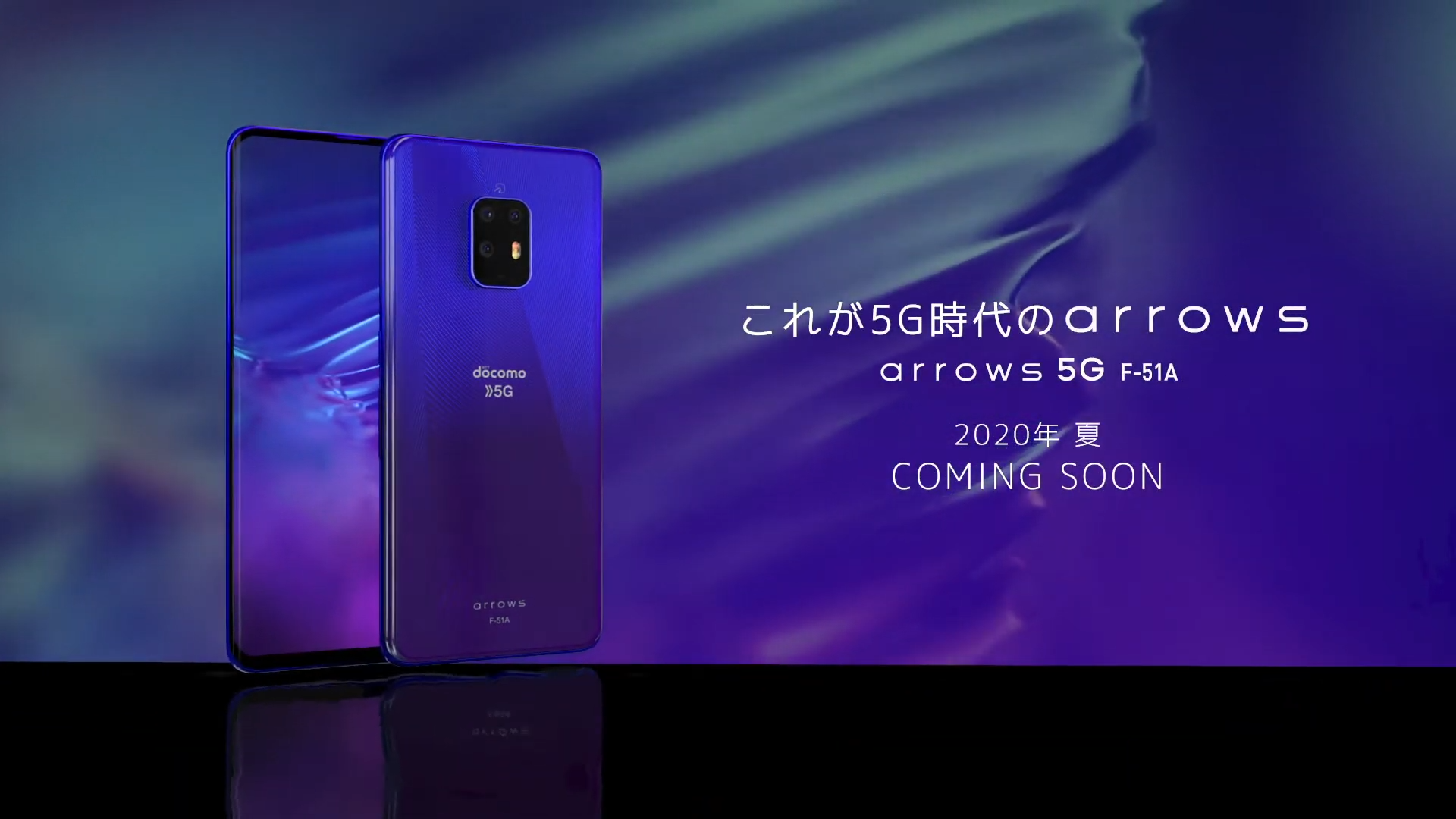
Recently, Qualcomm had confirmed the list of upcoming Snapdragon 865 mobile platform powered smartphones. The list includes names of various phones from mainstream smartphone OEMs. The list also included FCNT (Fujitsu Connected Technologies Limited) arrows 5G phone. The unannounced smartphone had reportedly appeared on the official website of the company with its entire specs and images. The listing has been taken down.
The Fujitsu arrows 5G phone that has a model number of F-51A features a marvelous curved screen with a punch-hole at its top-right corner. The size of its screen is 6.7 inches and it supports full HD+ resolution of 1080 x 2340 pixels. The screen is protected by Gorilla Glass 5. The phone features a front camera of 32-megapixel. The AMOLED display is integrated with an ultrasonic fingerprint reader.
The Snapdragon 865 mobile platform is coupled with 8 GB of RAM. The phone offers users with a native storage of 128 GB. The Android 10 OS comes preloaded on the phone.
The back panel of the Fujitsu arrows 5G features a square-shaped camera setup. It includes a 48-megpixel main lens, a 16.3-megapixel secondary shooter, an 8-megapixel third lens and a dual LED flash unit. The rear cameras support 4K video shooting, optical image stabilization and 3x optical zoom. The handset will come with Adobe Photoshop Express for shooting and editing photos at the same time.
The Fujitsu arrows 5G is backed by a 4,070mAh battery with USB-PD fast charging support. The 5G flagship phone sports an IP68 rated chassis. The other features of the smartphone include FM Radio, Wi-Fi 6, Bluetooth 5.1, GPS, USB-C and NFC. It lacks support for 3.5mm audio jack.
The Fujitsu arrows 5G has 164 x 76 x 7.8mm dimensions and it weighs 180 grams. At present, there is no word on the pricing and release date of the smartphone. The official listing of the phone had revealed that it will be “Coming Soon” in “Spring 2020.”
Last week, Nubia took off covers from the Red Magic 5G smartphone that bears a model number of NX659J. it arrived as the first gaming phone equipped with 5G capabilities. A new phone from the company has a model number of NX615J has recently approved by 3C regulatory body of China. It seems to be the next flagship phone with 5G support from the company. It could be the successor of the Nubia Z20 dual display smartphone from last year.
The 3C certification of the Nubia NX651J smartphone revealed that it carries support for 5G connectivity. The charger that was found mentioned in the 3C listing of the smartphone offers up to 30W fast charging.
The Nubia Z20 dual display that was made official in August 2019 was driven by the Snapdragon 855+ mobile platform. The handset had supported 27W fast charging. The newly found NX651J could be the successor of the Nubia Z20 phone. Hence, the alleged Nubia Z30 could be a dual display phone powered by the Snapdragon 865 SoC that will come equipped with dual-mode 5G and 30W fast charge support.
The Nubia Z20 dual display smartphone has AMOLED screens on its front and rear. The front one is a notch-less display that measures 6.42 inches. It supports 19.5:9 aspect ratio and full HD+ resolution of 1080 x 2340 pixels. The rear side of the Nubia Z20 is fitted with a 5.1-inch screen that produces HD+ resolution of 720 x 1520 pixels.
The Snapdragon 855+ powered phone has 8 GB of RAM and up to 512 GB of UFS 3.0 storage. It features two side-mounted fingerprint sensors. It lacks a front camera but uses the three rear cameras for shooting selfies with secondary screen working as viewfinder.
The Nubia Z20 has a 48-megapixel + 5-megapixel + 16-megapixel triple camera setup. The phone is backed by a 4,000mAh battery.
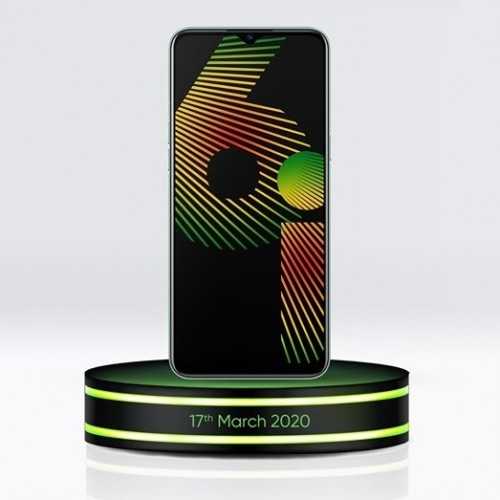
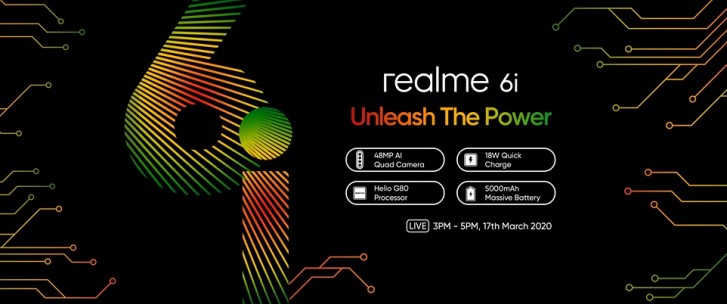
Realme Myanmar recently confirmed that it will be announcing the Realme 6i smartphone on March 17. Since then, the company has been revealing some of its key specs. It confirmed in the previous week that the Realme 6i will be equipped with four cameras on its back and it will carry support for 18W fast charging. Also, it will be arriving as the world’s first smartphone driven by the Helio G80 chipset. Now, the Chinese firm has confirmed some more features of the Realme 6i.
The Realme 6i will be arriving with a waterdrop notch display. There is no confirmation on the display size and the supported resolution. The display notch will be housing a front-facing camera of 16-megapixel. The device will be backed by a huge battery of 5,000mAh capacitive battery. The smartphone will be equipped with a USB-C port through which it will carry support for rapid charging.
In comparison, the Realme 5i smartphone that had gone official few months ago had arrived with a 6.52-inch IPS LCD display that supported a tall aspect ratio of 20:9 and an HD+ resolution of 720 x 1600 pixels. It featured a front-facing camera of 8-megapixel.
The 5,000mAh battery of the Realme 5i was only provided with 10W charging support. The rear shell of the Realme 5i sported a quad camera setup that comprised of a 12-mgeapixel main shooter, an 8-megapixel ultrawide lens, a 2-megapixel macro lens and a 2-megapixel depth sensor. While the company has already confirmed that the Realme 6i has an AI quad camera setup with a 48-megapixel primary lens, the configurations of its other lenses are not known yet.
Last year’s Realme 5 has almost identical specs as the Realme 5i. The only major differences between the two phones is that the Realme 5 has a better 13-megapixel selfie camera and larger internal storage. Recently, Realme unveiled the Realme 6 and Realme 6 Pro smartphones. These phones were made official as successors of Realme 5 Pro and Realme X phones from last year. The Realme 6i appears like the successor of the Realme 5 phone.
Xiaomi launched the Mi 10 series in February this year as its top flagship and one of the spectacular features of the series is the presence of dual-mode 5G connectivity on both models. As a result of the launch of the 5G phone, the company is planning to take all other 4G models from mid-range to flagship segments off the shelf.
Xiaomi VP and Redmi GM Lu Weibing disclosed a couple of days back that the Mi CC9 Pro and all other models with prices ranging from 2000 yuan (around $285) and above will be delisted right away. This means the company is planning to remove all 4G phones in, not just the flagship segment but all in the premium mid-range segment.
For the avoidance of doubt, the Mi CC9 Pro isn’t a flagship model but falls in the mid-range category. However, the Mi CC9 Pro Premium Edition happened to be Xiaomi’s first model to climb to the top of DXOMark camera ranking. The device had an overall score of 121 points when it was released to tie with the Mate 30 Pro which was the highest overall camera score of any phone tested as at then. The ranking has since changed with the launch of the Mi 10 Pro and lately, the OPPO Find X2 Pro. However, the Mi CC9 Pro Premium Edition still ranks among the top 10.
The Mi CC9 Pro was later launched outside China as Mi Note 10 powered by a Snapdragon 730G chipset. The phone equally packs an array of five camera sensor with a 108MP Samsung sensor jointly developed by Samsung and Xiaomi.
The delisting is to make way for 5G phones and since the Mi 10 isn’t in the same category with the Mi CC9 Pro, the move may be as a result of the Redmi K30 5G and other upcoming 5G mid-range phones.
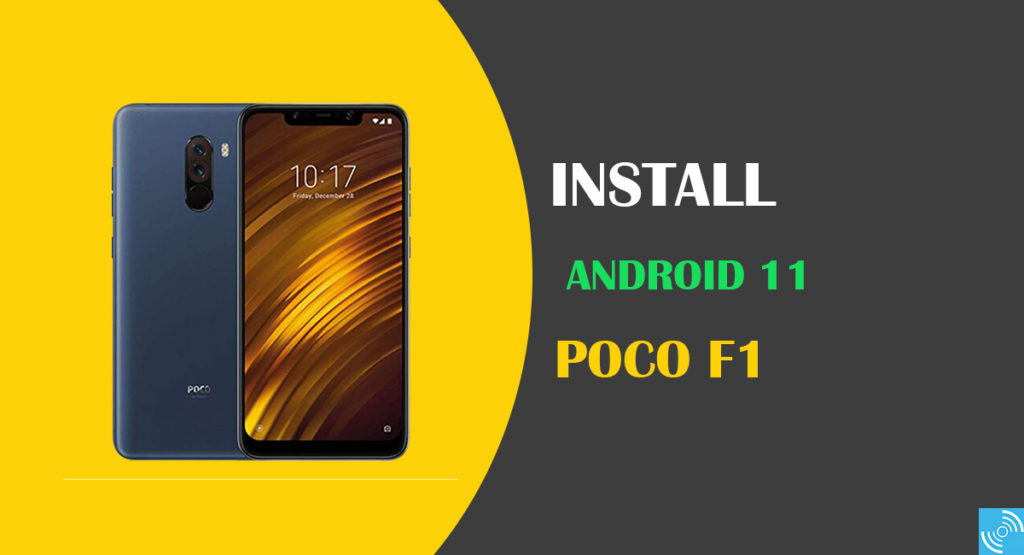
Google recently unveiled the Android 11 Developer Preview for Pixel devices. Instead of announcing the newer Android version at IO Developer’s conference during summers, the search giant launched the Android 11 Developer Preview a few months earlier. The newer build is available for Pixel 2, 3, 3a and 4 devices, but it can be installed on Project Treble supported devices also. We have prepared a guide to install the Android 11 Developer Preview GSI on POCO F1.
GSI is an untouched AOSP build for devices that are compatible with Project Treble devices. However, it is not advised to be used by general users as it is solely for the developers to test their apps and products prior to the official rollout. Project Treble is meant for rapid software update rollouts across compatible devices.
Project Treble carve the high-level code and low-level code and at the same time allow developers to bring updates without affecting the high-level code running hardware. The Operating System layer is differentiated from the high-level code under Project Treble. On the same principle, users can boot Poco F1 using the Android 11 Developer Preview GSI build.
Currently, the Android 11 stable version is a few months away, but until then the users can enjoy the Developer Preview. Moreover, it is not even confirmed from POCO whether the device will receive the official Android 11 update or not.
Note: Gizmochina.com is not responsible if any damage to data or device occurs while following the guide.
Install Android 11 Developer Preview on POCO F1
The guide is solely for the Poco F1 device and we suggest to take necessary backups before proceeding.
Note: We don’t recommend installing Android 11 Developer Preview if the device is your daily driver. There are many bugs and issues which may hamper your experience even while accessing basic functions.
Extract Fastboot ADB and drivers in a folder on your PC. Then, move all the files like GSI image, ROM and Force Encryption Disabler in the same folder.
Connect your smartphone with a PC using a USB cable, and verify the connection by executing the following command:
adb reboot recovery
Once in recovery mode, goto Wipe > Advanced Wipe and select Dalvik, Cache, System, Vendor, and Data for a clean wipe. Swipe to confirm the data wipe.
Head over to “Install” and select the ROM file that you have downloaded from the above link. Swipe to confirm the flash.
Now, “Install” Force Encryption Disabler to prevent hardware encryption.
Once again, “Wipe” the cache before moving ahead.
“Reboot System” to boot for the first time on new Pixel 4 ROM.
Once booted into Pixel 4 ROM, you need to enable ADB from the Developer option.
Now, boot into the recovery by using the appropriate button configs or connect your device with PC via USB cable and enter the following command:
adb reboot recovery
After booting into recovery, once again head over to Install > select GSI image and then browse “GSI System Image.” Swipe to confirm flash, and then “Reboot System”.
Enjoy the Android 11 GSI on the Poco F1.
We hope you’ve successfully installed Android 11 Developer Preview on the Poco F1 smartphone. If you get any problem while installing, then make sure to let us know via the comments below.
The Redmi K20 Pro was a huge success when it launched last year. It practically filled the void left by POCOPHONE since there was no successor to the 2018 POCO F1. The first Redmi flagship phone packed not only a flagship processor but also flagship features. Now a successor, called the Redmi K30 Pro, is expected to launch soon and it might be the cheapest Snapdragon 865 phone this year.
The info comes from the young leaker, Ishan Agarwal (@ishanagarwal24) and he said in a tweet today that the Redmi K30 Pro will be “one of the cheapest Snapdragon 865 phones or maybe even the cheapest Snapdragon 865 smartphone”.
Redmi K30 Pro will become one of the cheapest or maybe even the cheapest Snapdragon 865 Smartphone. The focus is on this only so don't expect majorly good specifications in other areas like the camera. #Redmi#RedmiK30Pro
He adds that Redmi is focusing on the price, so we should not expect particularly good specifications in other areas such as the camera. This should not be a surprise as super-affordable phones usually have a few tradeoffs which can be in the type of display used, the fast charging technology, the battery capacity, and as mentioned above, the camera performance.
Based on this info, there is a high chance the Redmi K30 Pro will launch in India as the POCO F2, just as the Redmi K30 4G is sold in India as the POCO X2. The POCO F1 was one of the cheapest Snapdragon 845 phones launched in 2018. Its successor is expected to be pretty affordable too.
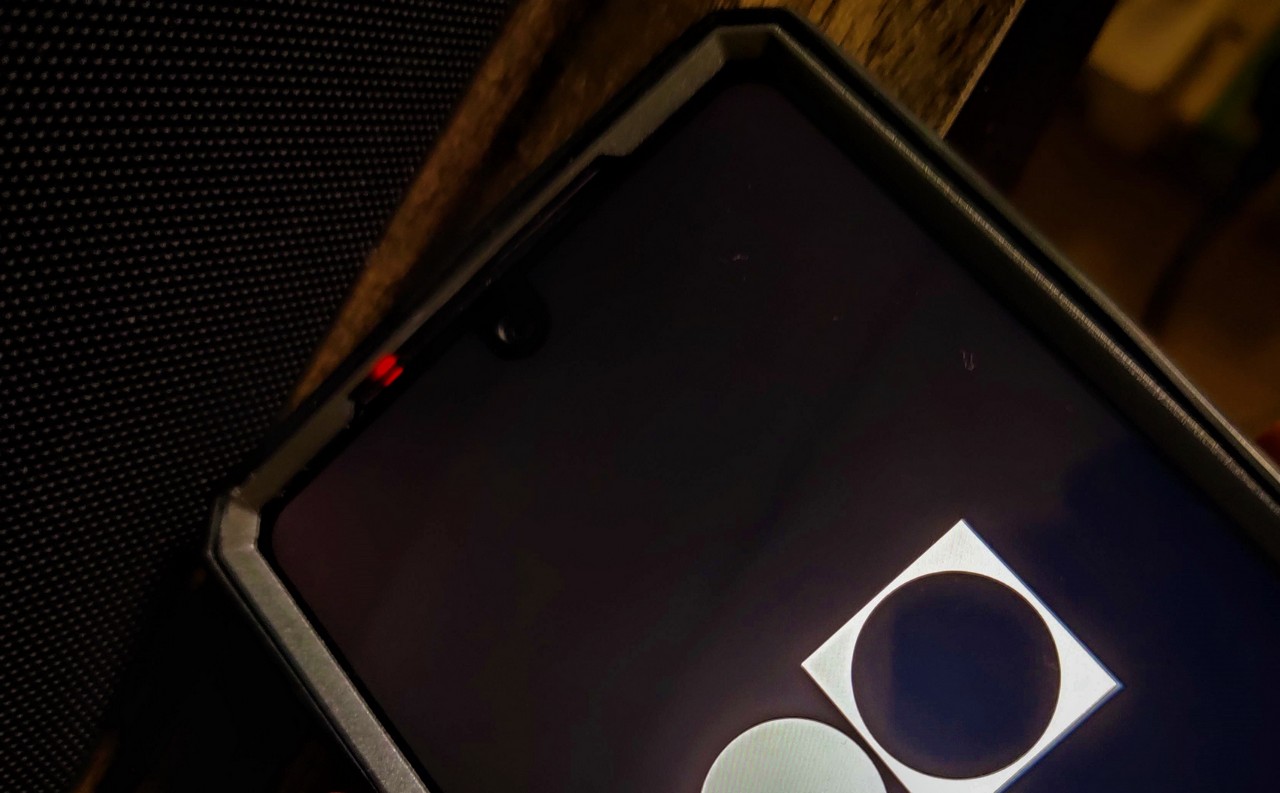
One feature that has existed on phones for a pretty long time but is now slowly disappearing is the notification LED. I remember my mum’s Samsung C100, back when I was much younger, with its notification LED at the top left corner of the phone. When there’s a call, the LED would flash in different colors that actually synced with the polyphonic ringtone. The notification LED also served other purposes such as when there’s a missed call or a message or even if the battery is low and also when you plug it in.
It is 2020 now and the notification LED is disappearing from phones. My current phone, the OnePlus 7 Pro, does not have a notification LED and there are plenty of other phones in the market that does not have one either.
For this week’s poll, we want to know if your current phone has a notification LED. If it doesn’t, do you miss it or are you better off without one? Do take the poll and also post a comment telling us what phone you use and the opinions you have about the notification LED.
Last week, Redmi India announced the Redmi Note 9 Pro and Redmi Note 9 Pro Max. The two phones are the latest devices in the Redmi Note series and they pack some pretty interesting specs.
Fans of the series were surprised at the addition of a new model with the “Max” suffix and equally astonished that a standard/non-Pro model was not announced. Now, Xiaomi Malaysia has announced that it plans to launch a new Redmi Note phone next week and it will arrive as the Redmi Note 9S.
The Redmi Note 9S is scheduled to be announced on March 23, and from the teaser poster, it will also have four rear cameras arranged in the same fashion as those of its siblings in India. Another image posted on their Facebook page confirms the phone will have a punch hole in the middle of the screen.
It is still unknown if this is a different model entirely or one of the already announced devices with a new name. Nevertheless, we look forward to its launch.
This is not the first Redmi Note phone with an “S” at the back of its name. Last year, Xiaomi announced the Redmi Note 7S in India which is actually a version of the Redmi Note 7 with a 48MP primary rear camera. It was announced a few months after the Redmi Note 7 which has a 12MP primary rear camera.
🎇Instagram Giveaway: Share your Redmi Note Series stories!🎇 If you are one of the Redmi Note Series hardcore fans, we…
Xiaomi Malaysia is also running a competition and the prize is a brand new phone. To enter, you have to follow Xiaomi Malaysia on Instagram (@xiaomi.malaysia). Then take a picture of a Redmi Note device you own and post it on Instagram with a 30-word caption telling your story with the said device (an experience or something along that line). Make sure you tag Xiaomi Malaysia on the post. The competition began on Friday, the 13th of March and it runs till Friday, the 20th of March.
Two new mid-rangers just debuted in the Indian market, offering advanced specifications at incredibly affordable prices. We are talking about Realme 6 and Redmi Note 9 Pro. The two handsets come with very similar specifications and for this reason, it will be hard for the final consumers to choose the best device depending on their needs. That is why we decided to write a specs comparison. We also brought the Samsung Galaxy M40 to the comparison because it is one of the best-selling and most famous devices available at a similar price. Through this comparison, you will discover the main differences between the three handsets and we will pick a winner after evaluating their specs on the paper.
Oppo Realme 6 vs Xiaomi Redmi Note 9 Pro vs Samsung Galaxy M40
Quad 64 + 8 + 2 + 2 MP f/1.8, f/2.2, f/2.4 and f/2.4
16 MP front camera
Quad 64 + 8 + 2 + 2 MP f/1.8, f/2.3, f/2.4 and f/2.4
16 MP f/2.0 front camera
Triple 32 + 8 + 5 MP f/1.7, f/2.2, and f/2.2
16 MP f/2.0 front camera
BATTERY
5020 mAh, fast charging 18W
4300 mAh, fast charging 30W
3500 mAh, fast charging 15W
ADDITIONAL FEATURES
Dual SIM slot
Dual SIM slot, splash resistant
Hybrid Dual SIM slot
Design
Despite Realme 6, Redmi Note 9 Pro and Samsung Galaxy M40 are just affordable phones, they have a very interesting design, at least in regards to this period. They all offer a punch-hole screen with very narrow bezels, no notch and well-built bodies. Redmi Note 9 Pro is the best when it comes to materials since it is the only to sport a glass back. But not everyone might like it due to its huge camera module and its bigger dimensions. On the other hand, Samsung Galaxy M40 is a very compact smartphone and it is even the thinnest one. Realme 6 has a beautiful and minimal look, but it is entirely made of polycarbonate (except the display, naturally) like the Samsung Galaxy M40. Note that Realme 6 and Redmi Note 9 Pro are splash resistant, while Samsung Galaxy M40 is not.
Display
Realme 6 boasts the most advanced display. It is one of the few devices delivering a high 90 Hz refresh rate, a very rare feature on affordable phones. Further, it has a high 120 Hz touch-sampling rate. That is why this device is great for gamers and for all users seeking for a smoother viewing experience. Unfortunately (at least for most of the people actually liking AMOLED displays), it has an IPS display. The fingerprint reader is side-mounted. Redmi Note 9 Pro takes the second place with the widest display, an IPS panel with a 6.67-inch diagonal and a Full HD+ resolution.
Specs & Software
If you want the most powerful device able to provide the highest performance, then you should go for the Realme 6 without thinking twice. In terms of CPU and GPU performance, the MediaTek Helio G90T SoC found on the Realme 6 is stronger than the Snapdragon 720G found on the Redmi Note 9 Pro (even though the difference is not huge). But if you want a lower energy consumption and a longer battery life, go for the Redmi Note 9 Pro, it has a chipset built with a better 8 nm production process.
Camera
With the exception of macro shots, Realme 6 may offer a better photo quality. But we can not assure it since we only took a look at the specs on the paper and we still had no chance to test the Redmi Note 9 Pro since it just went official. But we know that Realme 6 has a better main sensor on its quad camera. On the other hand, Redmi Note 9 Pro boasts a better dedicated macro camera.
Battery
Redmi Note 9 Pro Max is the king of battery life with its huge 5020 mAh battery and a chipset built at 8 nm, there is no doubt about it. But with Realme 6, you still get a great battery and way faster charging technology.
Price
Redmi Note 9 Pro starts at €160/$178 in India, Realme 6 is priced €157/$175 in its base variant, while you can find Samsung Galaxy M40 for €200/$222. While Samsung Galaxy M40 loses the comparison under most of the points of view, it is a very close fight between Realme 6 and Redmi Note 9 Pro. Realme 6 has a faster charging, a more powerful chipset, and a better display, that is why we choose it as the winner of this comparison. But Redmi Note 9 Pro will offer a way longer battery life.
Huami, Friday, released its financial report for the fourth quarter and the entire 2019. The company reported some impressive gains in wearable shipment commanding an estimated shipment of 42.3 million units of both smartwatches and fitness bands for the entire year. This figure represents a Year-on-Year increase of 72.4%. The company generated a total of 2.114 billion yuan ($303.3 million) in the fourth quarter alone. However, the adjusted net profit after deducting cost was put at 213.8 million yuan ($30.7 million).
For the entire 2019, Huami’s overall financial performance was also impressive. The company recorded rapid growth in both revenue and profit. For the revenue, the company’s total revenue for 2019 peaked at 5.823 billion yuan ($ 834.9 million), representing an increase of 59.4% when compared with the revenue for 2018. Huami posted a net profit of 630.3 million yuan ($90.5 million), an increase of 32.8% Year-on-Year.
Most of the shipments were recorded in the fourth quarter where the company saw an estimated 14.7 million units sold. In comparison, Huami shipped 9.2 million units in the fourth quarter of 2018, representing a year-on-year increase of 59.8%. Total shipments for the full year of 2019 reached 42.3 million units, an increase of 53.8% compared to 27.5 million units for the entire 2018.
Huami’s founder and CEO, Huang Wang, stated that 2019 was a great year for the company. The performance makes Huami one of the leading brands in the smart wearable industry. Mr Huang also disclosed that Huami and Timex entered into a partnership for product development. The partnership has had its first product and it has gone on sale in North American market. The product is likely the Timex Ironman R300 which was launched recently as Timex’s first smartwatch. Also, Huami’s partnership with Xiaomi is still on course and the Mi Band 5 manufactured by Huami for Xiaomi is expected to be launched later this year.
Despite the current global economic impact of the Coronavirus epidemic, Huami is still optimistic in its forecast for the first quarter of 2020. The New York Stock Exchange-listed company forecast a net income of between 980 million yuan and 1.01 billion yuan. Compared to the 799.6 million yuan revenue generated in the first quarter of 2019, the company expects a YoY growth estimate of 22.6% to 26.3%.
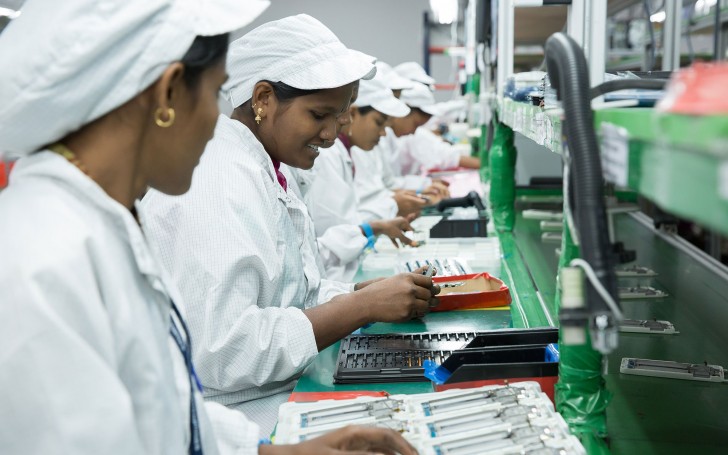
The global smartphone shipment is expected to experience some decline due to the Coronavirus epidemic that is sweeping through several countries. In the face of this situation, India’s Goods and Services Tax (GST) Council has hiked the Goods and Services Tax payable on mobile phones from 12 percent to 18 percent. The new development was announced by the GST Council during a meeting in New Delhi today. This would likely result in a rise in the prices of smartphones in the world’s third-largest smartphone market.
The council reportedly skipped the proposal to also increase the rates on fertilizers and footwear citing the slumping economy and impact of the COVID-19 pandemic. The tax increase on mobile phones is said to have been necessitated by the fact that the mobile phone industry is one of the sectors that had less impact from the prevailing economic slowdown in the Asian nation.
India’s Cellular and Electronics Association (ICEA) had earlier appealed against increasing the tax on mobile phones. The industry body had argued that the increase in GST would be detrimental for consumer sentiment and would have an effect on the local manufacturing of smartphones. Even the country’s mobile retailers association had also appealed against increasing tax which they say would impact on their already low margin.
The Indian market was among a few markets that experienced slight growth in the face of a global decline in growth. This could be attributed to modest pricing as a result of the government’s “Make in India” initiative. The increased tax could negatively impact on this gain as it could affect domestic patronage.
IDC India’s Navkendar Singh, Research Director, Client Devices & IPDS believed the decision will affect getting more persons coming in the smartphone fold. ”Despite being the fastest-growing smartphone market in the world, India still has a long way to go with an estimated penetration of around 400 million people out of 1.6 billion having access to smartphones in the country.“Considering the current supply and projected demand scenario in the next couple of quarters, brands are not in any position to absorb this hike. They will be forced to pass it onto the consumer, which will further increase the replacement cycle (which has been a major engine of growth in the market for the past couple of years),” says Singh.
The Mi CC9 or Mi 9 Lite as it is known outside China, launched last year as the first of a new series from Xiaomi in partnership with Meitu.
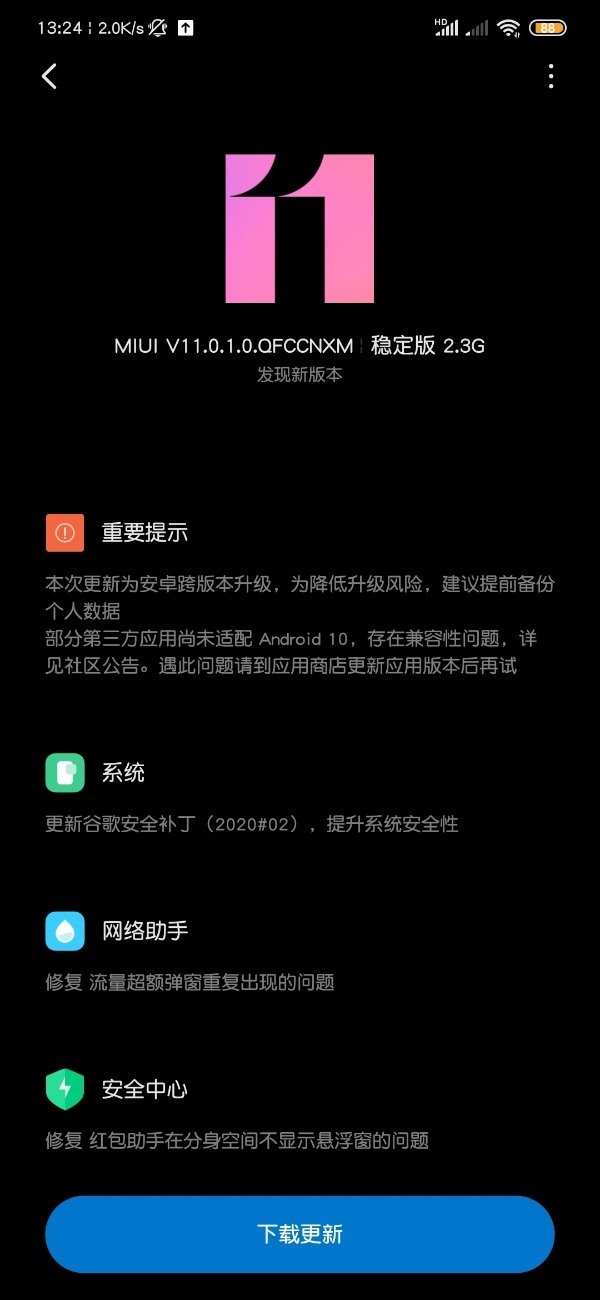
When it launched, the Mi CC9 ran Android 9 Pie out of the box. Now, Xiaomi has begun rolling out a new MIUI 11 update that brings Android 10 to the phone. This is a stable update that is limited to China and it comes with the February 2020 security patch. Hopefully, the update will soon be made available for the Mi 9 Lite.
The update arrives as MIUI V11.0.1.0.QFCCNXM and is 2.3GB in size. The update also fixes some bugs in the device.
The Mi CC9 has a 6.39-inch Super AMOLED display with a waterdrop notch for a 32MP selfie camera. There is a Snapdragon 710 processor powering it along with 6GB or 8GB of RAM and up to 256GB of expandable storage.
On the back are a 48MP primary rear camera, an 8MP ultrawide camera, and a 2MP depth sensor. There is a fingerprint scanner under the display, an infrared blaster at the top, and a USB Type-C port at the bottom. The Mi CC9 also has NFC, Bluetooth 5.0, an audio jack, and FM radio. It packs a 4030mAh battery capacity with support for 18W fast charging.
The OnePlus 8 series is set for launch in a month’s time if the rumors are to be believed. Just like last year’s OnePlus 7 series, there will be two phones – the OnePlus 8 and the OnePlus 8 Pro.
We already have an idea of what the two phones will look like thanks to 3D renders that were leaked last year. More details have surfaced after that including the confirmation that the OnePlus 8 series will be 5G phones.
While we wait for the phone’s launch, GizTop is already selling a TPU Case for the OnePlus 8. The case which has a price tag of $1.99 or $1.29 if you are buying 2 or more units, gives us another look at the design of the phone.
[envira-gallery id=”310302″]
As you can see from the renders, the OnePlus 8 will have triple rear cameras, one more than its predecessor, the OnePlus 7. The cameras are arranged vertically and the camera housing is raised. The design actually reminds us of that of the OnePlus 7 Pro though the first two cameras do not have a ring around them.
The front of the phone is a curved AMOLED panel with a punch hole at the top left corner for the selfie camera. There is a cut-out at the top for the secondary microphone and you also have cut-outs on the right side for the alert slider and power button while the one on the left is for the volume rocker. The two openings at the bottom are for the USB Type-C port and the primary microphone.
The OnePlus 8 will have a Snapdragon 865 processor. It should come with up to 12GB of LPDDR5 RAM and 256GB of UFS storage. The phone is also expected to come with wireless charging, though we won’t be surprised if OnePlus goes ahead to make it exclusive to the Pro model.
We use cookies on our website to give you the most relevant experience by remembering your preferences and repeat visits. By clicking “Accept”, you consent to the use of ALL the cookies.
This website uses cookies to improve your experience while you navigate through the website. Out of these, the cookies that are categorized as necessary are stored on your browser as they are essential for the working of basic functionalities of the website. We also use third-party cookies that help us analyze and understand how you use this website. These cookies will be stored in your browser only with your consent. You also have the option to opt-out of these cookies. But opting out of some of these cookies may affect your browsing experience.
Necessary cookies are absolutely essential for the website to function properly. This category only includes cookies that ensures basic functionalities and security features of the website. These cookies do not store any personal information.
Any cookies that may not be particularly necessary for the website to function and is used specifically to collect user personal data via analytics, ads, other embedded contents are termed as non-necessary cookies. It is mandatory to procure user consent prior to running these cookies on your website.