Since the news about LG Mobile pulling out of this year’s edition of Mobile World Congress, it is unknown when it plans to announce its flagship. Nevertheless, some features of the upcoming LG V60 flagship have surfaced thanks to a leak from Evan Blass.
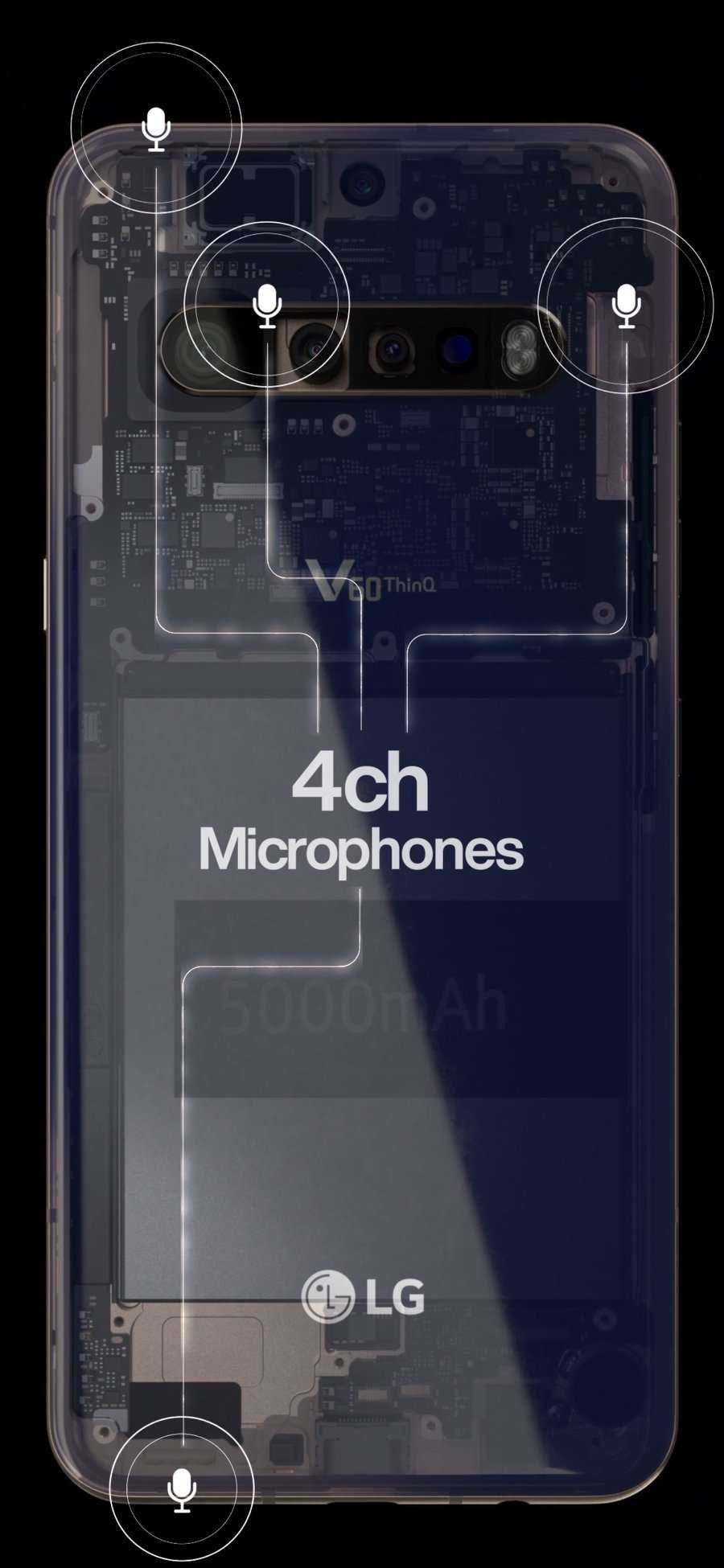
According to a tweet posted by the famed leaked, the images below are stills from a promotional video of the “LG Time” a.k.a. LG V60 ThinQ.
The first image shows the LG V60 has a four-channel microphone system. There is one at the bottom which is the primary mic while another is positioned at the top for noise-cancelation. Two more microphones are positioned near the rear cameras. However, it appears all four microphones will be able to capture audio when recording.
LG has marketed the V-series as a phone great for making cinematic videos and with four microphones on the V60 ThinQ, this should enhance the audio for video recordings.
Thankfully, the image is see-through and allows us to see some of the phone’s other specs. In addition to the four rear cameras, the LG V60 ThinQ has four rear cameras arranged horizontally. It also has a single front-facing camera that is positioned in the middle and will be housed in a notch.
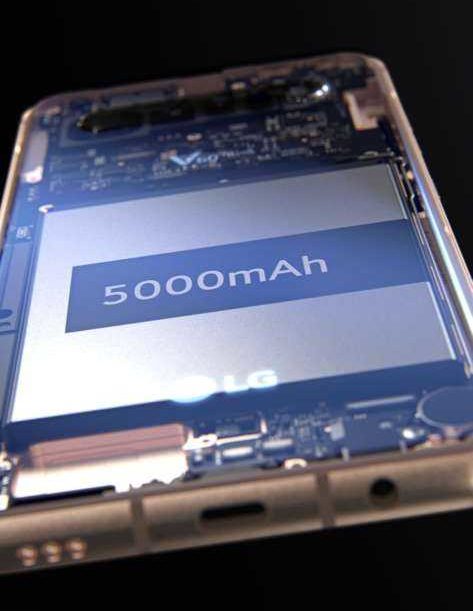
The image also shows the phone will pack a massive 5000mAh battery. This is a significant bump from the 4000mAh battery of the LG V50S ThinQ. We hope LG ships it with support for a faster-charging technology.
The image also shows the LG V60 ThinQ will have an audio jack at the bottom. This makes LG practically the only big-name brand still keeping the audio jack on its flagship phones.
The second image gives us a better look at the audio jack and also highlights the battery capacity. We can also see the phone has a speaker grille flanking the USB Type-C port on one side.
There are rumors LG will kill its G-series of smartphones. The unconfirmed reports have also said that it will launch a new series and keep the V-series. However, there is no release date yet for any new LG flagship at the moment since it canceled its MWC attendance.
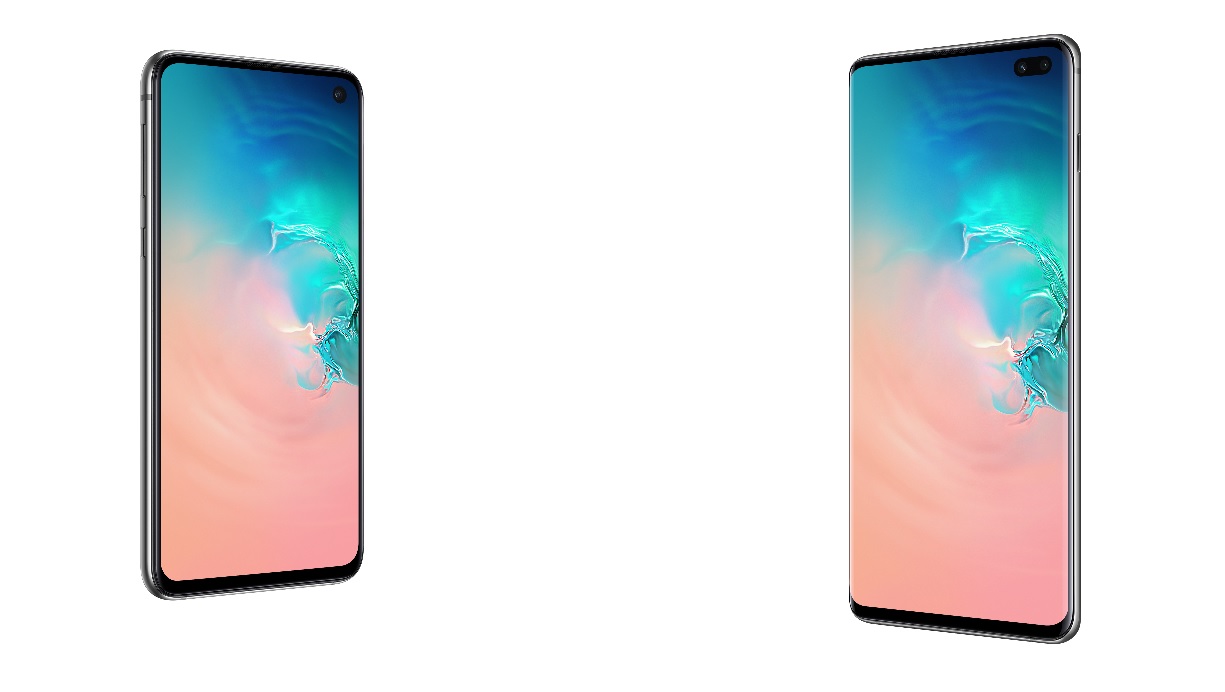
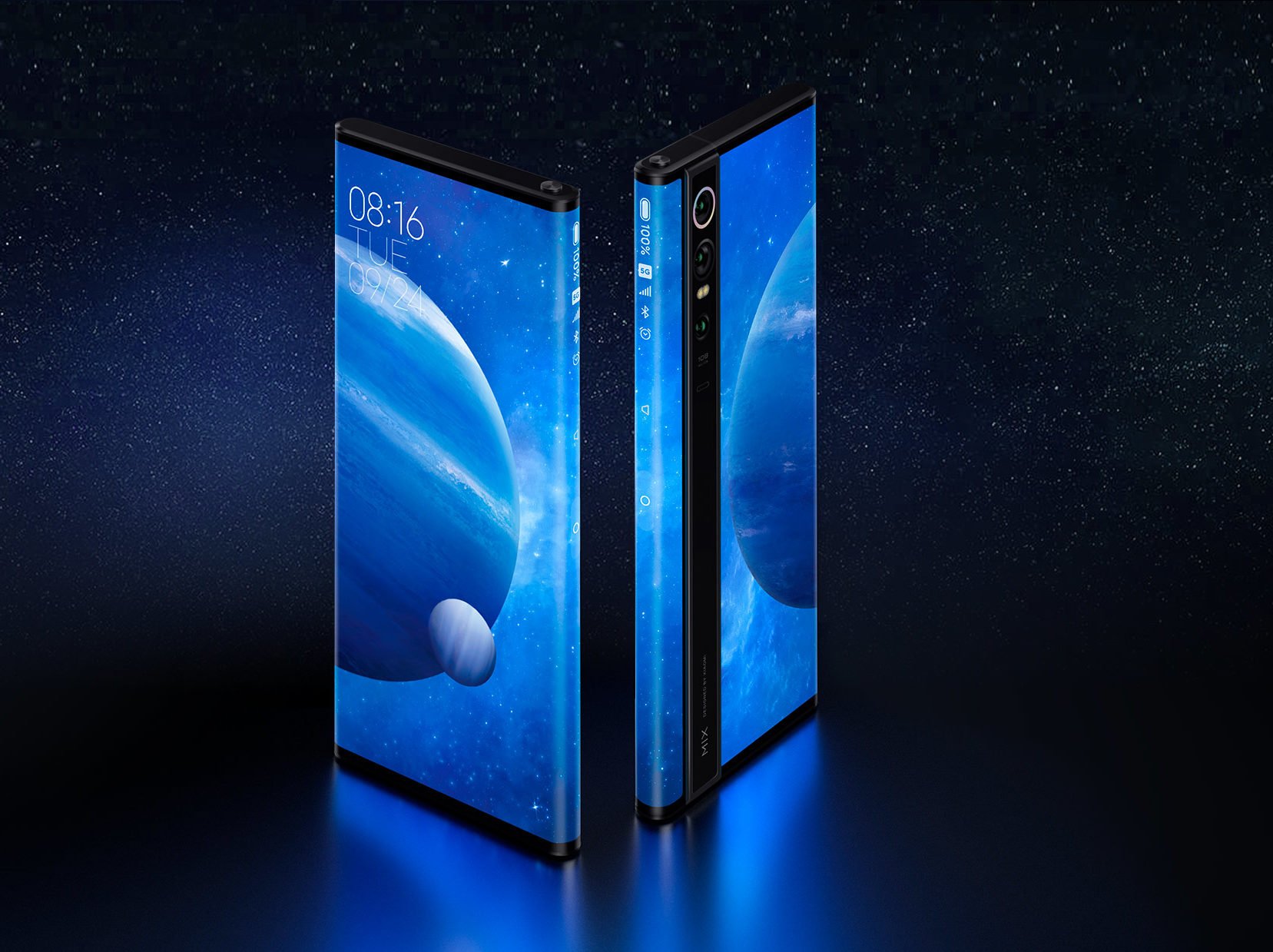
Most smartphones have a flat edge display but more phones are launching with a curved edge display, at least in the premium segment. The curved edge display trend can be said to have been made popular by Samsung. The Korean giant’s Galaxy Note Edge is the first smartphone with a curved edge display.
This year, more manufacturers including Xiaomi will join the curved edge display train. The Mi 10 series will have a curved edge screen unlike their predecessor, the Mi 9 which has a flat edge display. The upcoming OnePlus 8 series will also have a curved edge display, a continuation of the trend OnePlus joined last year with the OnePlus 7 Pro and OnePlus 7T Pro.
A curved edge display greatly enhances the aesthetics of a smartphone. Some manufacturers have even included custom gestures and features that work with curved edge screens. However, not everyone likes curved edge screens. First, they are more prone to breaking when they drop. They also cost more to repair. Another disadvantage is that a lot of manufacturers do not add any special features to their phones that take advantage of the curved edges. Despite all of the above-mentioned flaws, curved displays are here to stay, at least for the foreseeable future.
For today’s poll, we want to know which type of display you prefer. So do take the poll and also post a comment telling us why you prefer one over the other.
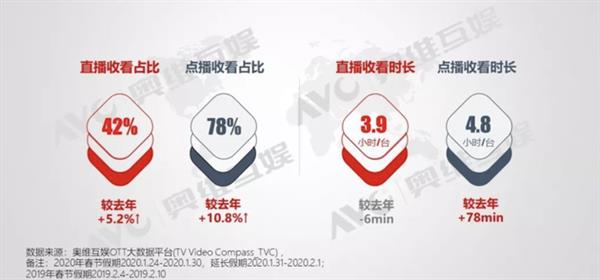
TV viewership in China during the Spring festival this year rose to an all-time high as a result of the restrictions and extended holidays. More persons spent time in front of smart TVs and mobile phones away from the traditional holiday settings.
Data obtained from Aowei Cloud shows that the overall smart TV boot rate during the Spring Festival increased by 11% compared with normal times. There was no decline during the three-day extended holidays. Affected by the epidemic, the daily activity of first-tier cities this year has decreased, and Spring Festival migration has driven the growth of cities below the third-tier. Compared with last year’s Spring Festival, over 70% of the those who cumulatively switched on their smart TVs did so for more than five days. Also, the proportion of cumulative start-ups for 10 days reached 43%.
Some of the reasons adduced for the change in TV viewing trend includes
1. After the prolonged holiday policy was introduced, suddenly, many families did not have a clear plan to arrange activities during this time, and rich smart TV entertainment became the best solution to supplement the blank plan.
2. Due to travel restrictions, family activities are centred on television, which is more suitable for multiple people to live together and share the family.
In addition, smart TVs shoulder media responsibilities in special periods, with media coverage reaching urban and rural areas.
Smart TV boot rate have declined in first-tier cities before now but the decline was significantly reduced compared with the same period last year. The “sit-at-home holiday” made smart TVs an important medium for family members to obtain information, and the start-up rate in each city has increased significantly.
In the traditional 7-day holiday, the proportion of households that have turned on their TV continuously for 7 days is higher than 12.4% in the same period last year. Waking up and turning on the TV every day has become the holiday habit of nearly half of families.
This habit was still maintained during the extended 3-day holiday, with the proportion of the families that have turned on their TV continuously for 10 days reaching 43%.
From this data, we can understand that the necessity of smart TVs for families, combined with the integration of information, audio and video entertainment, greatly met the recreational needs of users during the “sit-at-home holiday”. Smart TVs still continue to play a significant role as China is still battling the epidemic after the Spring Festival and thus, there are still restrictions in social activities that create a fertile ground for person-to-person transmission of the Coronavirus.
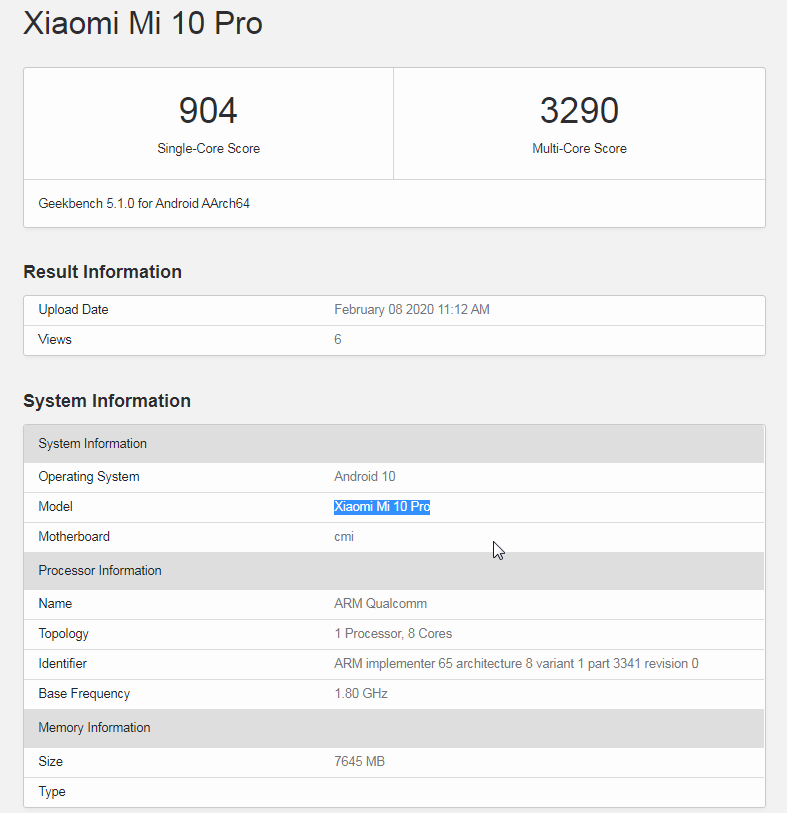
Xiaomi just officially revealed that the Mi 10 5G will be launched in China via an online-only event that would hold on February 13. The Mi 10 is expected to be accompanied by the Mi 10 Pro but there are rumours that there won’t be a transparent edition this year. Ahead of its unveiling, the Xiaomi Mi 10 Pro has been spotted on GeekBench database.
The model was uploaded recently and shows the device will have an 8GB RAM variant which would likely by on the base variant. The device is also expected to run Android 10 from outset but that should have an MIUI 11 overlay. The processor name wasn’t given but the device will definitely be powered by the latest Qualcomm Snapdragon 865 chipset just like the Mi 10 5G.
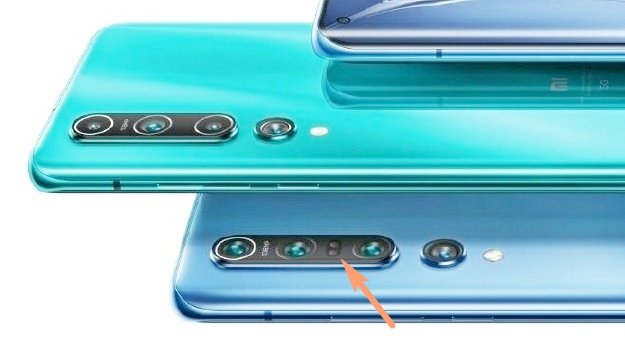
In terms of the design, leaked images have shown that the Mi 10 Pro will feature a curved display that has a punch-hole at the upper-left corner. The display of the phone is surrounded by ultra-slim bezels and possibly an in-display fingerprint sensor.
The other specifications of that are expected to be available on the Mi 10 series include LPPDR5 RAM and Wi-Fi 6. The Mi 10 Pro may support 66W fast charging whereas the Mi 10 may arrive with 30W rapid charger.
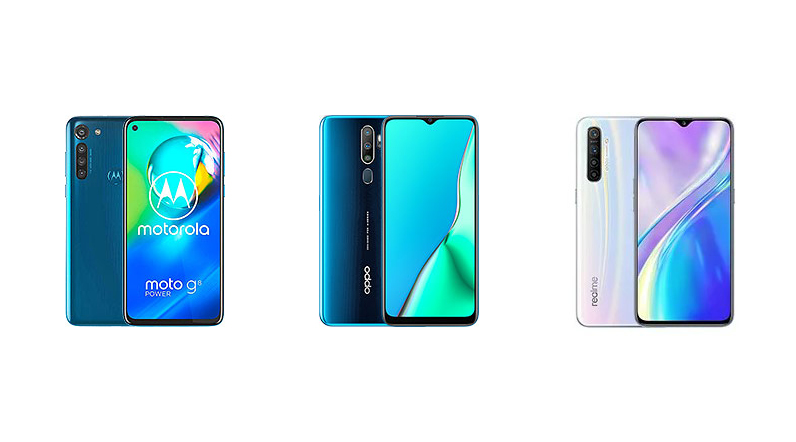
Motorola decided not to wait for Mobile World Congress to launch its new affordable smartphones: Moto G8 Power and G Stylus. The former is a very interesting battery phone and it even debuted in the global market with an interesting price tag. But it has a lot of rivals: two of the most awesome in terms of value for money are Oppo A9 2020 and Realme XT.
Is the Moto G8 Power the best choice for people seeking a large battery phone with high performance or there is something better with a similar budget? This specs comparison between Moto G8 Power, Oppo A9 2020 and Realme XT will help you find out.
Motorola Moto G8 Power vs Oppo A9 2020 vs Oppo Realme XT
Quad 16 + 8 + 8 + 2 MP f/1.7, f/2.2, f/2.2 and f/2.2
16 MP f/2.0 front camera
Quad 48 + 8 + 2 + 2 MP f/1.8, f/2.3, f/2.4 and f/2.4
16 MP f/2.0 front camera
Quad 64 + 8 + 2 + 2 MP f/1.8, f/2.3, f/2.4 and f/2.4
16 MP f/2.0 front camera
BATTERY
5000 mAh, fast charging 18W
5000 mAh, battery charging 10W
4000 mAh, fast charging 20W
ADDITIONAL FEATURES
Hybrid Dual SIM slot
Dual SIM slot, reverse charging
Dual SIM slot
Design
Moto G8 Power offers a more attractive design and even a better build quality, but personal tastes play an important role in this kind of choice. Moto G8 Power has a plastic back, but it is the only model to sport a sturdy aluminum frame (6000 series). Further, it is splash resistant and it has a futuristic punch-hole display instead of the usual and boring waterdrop notch. Realme XT comes with a glass back, but it has a plastic frame and it is not splash resistant. Oppo A9 2020 is entirely made of plastic except for the display. Motorola Moto G8 Power looks the most interesting one due to its aluminum frame and punch-hole display.
Display
The best panel is offered by the Realme XT: it is the only with an AMOLED display boasting more vivid colors and deeper blacks. And it delivers a Full HD+ resolution. The Realme XT even sports an in-display fingerprint reader which is not present on Moto G8 Power and Oppo A9 2020. Moto G8 Power takes the silver medal with a Full HD+ IPS panel. Oppo A9 2020 has a wider display, but it is inferior since it has a lower resolution and a lower level of detail (it is a 720p IPS panel). But this impacts positively on energy consumption.
Specs & Software
Realme XT provides the highest performance thanks to the Snapdragon 712 chipset which is an upgraded version of the Snapdragon 710 by Qualcomm. It is also the only with up to 8 GB of RAM, and it features UFS 2.1 internal storage. Oppo A9 2020 comes right after with Snapdragon 665 and up to 128 GB of UFS 2.1 storage. Moto G8 Power has an inferior hardware department, but it is the only to run Android 10 out of the box. On the other hand, Realme XT already received an update to Android 10 in the Indian market.
Camera
Besides having a better hardware side, Realme XT is also the device with the best camera department, although it is not a high-end camera phone. It has a rear quad-camera including a 64 MP main sensor able to shoot very detailed photos. But you should not underestimate the Moto G8 Power as it still comes with a pretty good 16 MP f/1.7 sensor and, unlike the Realme XT, it includes a telephoto lens supporting 2x optical zoom.
Battery
Moto G8 Power and Oppo A9 2020 come with a huge 5000 mAh battery. We believe Oppo A9 2020 will last more on a single charge due to its more efficient display (which comes with a lower resolution). Further, it supports reverse charging and it can be used as a power bank.
Price
Motorola launched the Moto G8 Power with a €249,99/$274 starting price, Oppo A9 2020 starts from €249/$272 and Realme XT starts from €259/$284. Moto G8 Power is a better device when it comes to the build quality, Oppo A9 2020 provides a longer battery life, but Realme XT is what power users would go for due to its AMOLED display and better hardware. There is not a perfect choice for everyone, it mostly depends on what you need more from a phone. That is why we will not pick a definitive winner of this comparison.
OnePlus usually has two phone launch events each year. The first is scheduled for the first half of the year while the second launch, for the T-series, is in the second half of the year. The launch in the first half of the year has actually been shifting upwards with last year’s OnePlus 7 series launching in May compared to the OnePlus 3 and OnePlus 5 that were announced in June. This year’s OnePlus 8 series is expected to arrive even earlier.
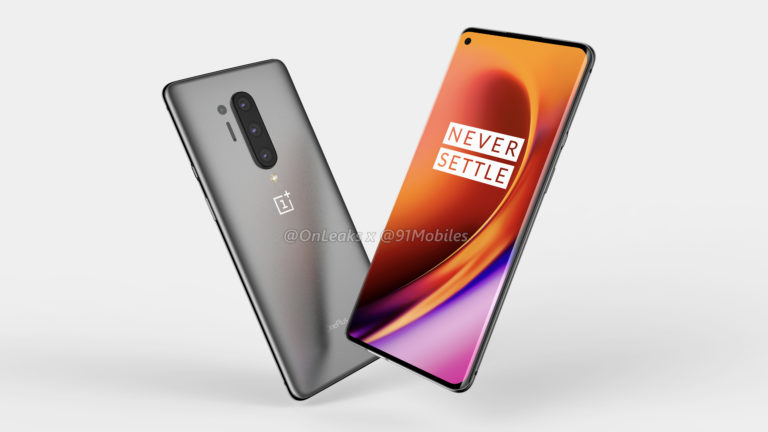
OnePlus 8 Pro render
The news about the OnePlus 8 series launching early this year first surfaced last year when famed leaker, Steve Hemmerstoffer (@OnLeaks) revealed renders of the OnePlus 8. Now, new info that narrows the timeframe has surfaced.
According to Ishan Agarwal, the OnePlus 8 and OnePlus 8 Pro, and possibly the OnePlus 8 Lite too, will launch in late March or April. If this is true, OnePlus will be launching its 2020 flagships more than a month earlier than last year’s models.
Got some #OnePlus news to share with you all! The OnePlus 8 & 8 Pro (Who knows, maybe the 8 lite too) will be launching sooner this time! Expect a launch in Late March or April. Also, there will be a new Green colour for both the phones. Are you excited for these phones? pic.twitter.com/ceUjcWOzm4
There are a couple of advantages to this. First is that OnePlus fans don’t have to wait longer for a new phone to arrive when other manufacturers such as Huawei, Samsung, and Xiaomi have already launched their flagship phones since the first quarter of the year.
Another (possible) advantage is that the gap between the T-series can now be longer, unlike last year’s OnePlus 7T that was announced just four months after the OnePlus 7.
Apart from the phones launching earlier this year, the young leaker also revealed that the OnePlus 8 series will come in green. This will be an entirely new color variant never before seen on a OnePlus phone. OnePlus has steadily been playing with colors for a few years now. The OnePlus 5T and OnePlus 6 both launched in red while the OnePlus 6T was announced in Thunder Purple. Last year’s OnePlus 7 series launched in blue and we later saw a photo of a canceled gold variant of the OnePlus 7T.
While a new color variant will surely get fans excited, wireless charging support is actually what I look forward to seeing. This is a feature that has been long expected on a OnePlus phone and now it is set to debut on the OnePlus 8 and OnePlus 8 Pro.
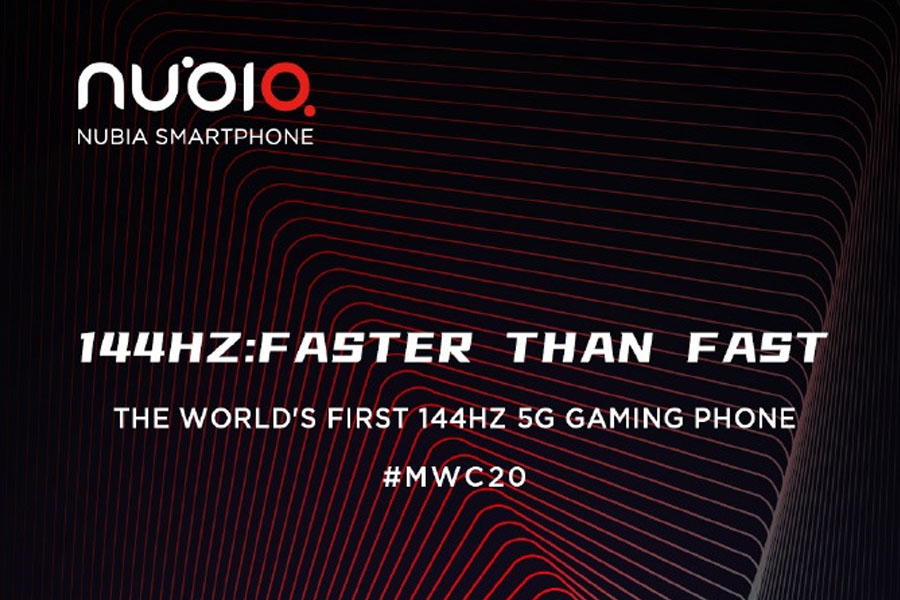
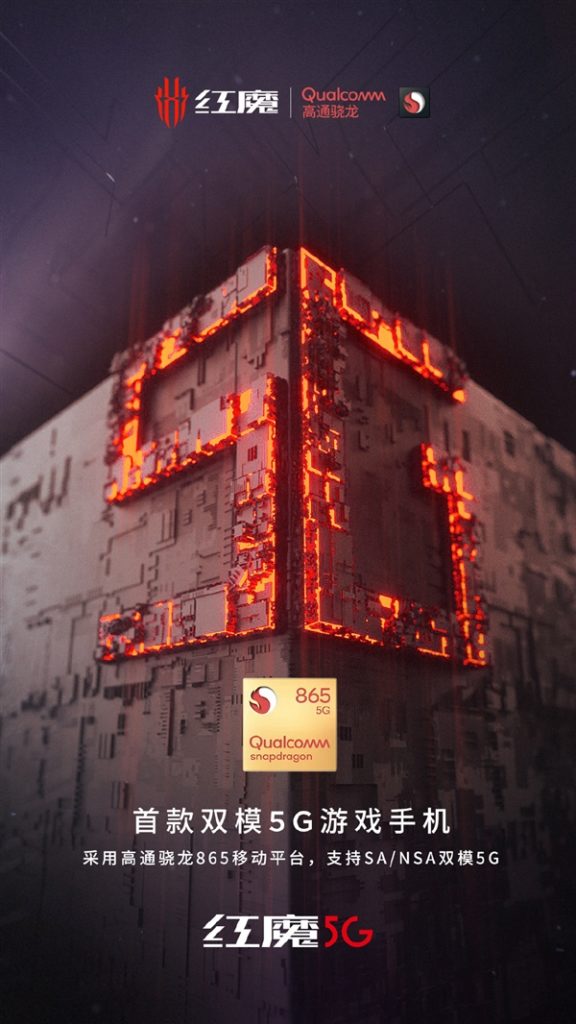
Nubia is all set to announce its new gaming flagship phone at MWC 2020 called the Red Magic 5G. Aside from confirming the Red Magic 5G’s impending launch at MWC 2020, the Chinese smartphone maker has also hinted at numerous unique features including support for 80W fast charging and 144Hz display.
The company’s President and co-founder, Mr. Ni Fei took to his personal Weibo account to share some posters. Mr. Ni Fei also touted the Red Magic 5G as the “world’s first 144Hz 5G gaming phone” in his post. Given that there is currently no other phone slated to offer a refresh rate of 144Hz, it looks like this claim is true.
It can be recalled that Nubia had already confirmed that its new phone will pack the Qualcomm Snapdragon 865 SoC, which is capable of supporting a refresh rate of 144Hz at QHD+ resolution. Moreover, it is hardly surprising that the new phone supports 5G connectivity since Snapdragon X55 is the only modem compatible with the Snapdragon 865. There is a possibility that the phone comes with sub-6GHz 5G network support, though.
According to Mr. Ni Fei, the new Nubia-branded gaming phone will ship with LPDDR5 RAM, which works with Snapdragon 865’s memory controller. One of his recent revelations also suggests that the device will come with 80W wired fast charging support.
The USB-IF told AndroidPolice that the aforesaid charging rate (9.6A/8.4V) mentioned by Nubia is unsuitable for the USB Power Delivery specification, which means, Nubia has come up with its own charging solution. While such super-fast charging technology is known for gradually reducing the battery’s capacity, Mr. Ni Fei says the company solved the problem with the help of Red Magic 5G’s built-in fan that restricts the battery from overheating while it’s charging.
This not only ensures an improved battery life but also enables the battery to fast-charge for a longer duration and minimizes the charging time. There’s a chance Nubia could change its plan to attend the MWC 2020 citing the 2019-nCoV outbreak; however, more details about the Red Magic 5G are likely to surface online ahead of its scheduled launch.
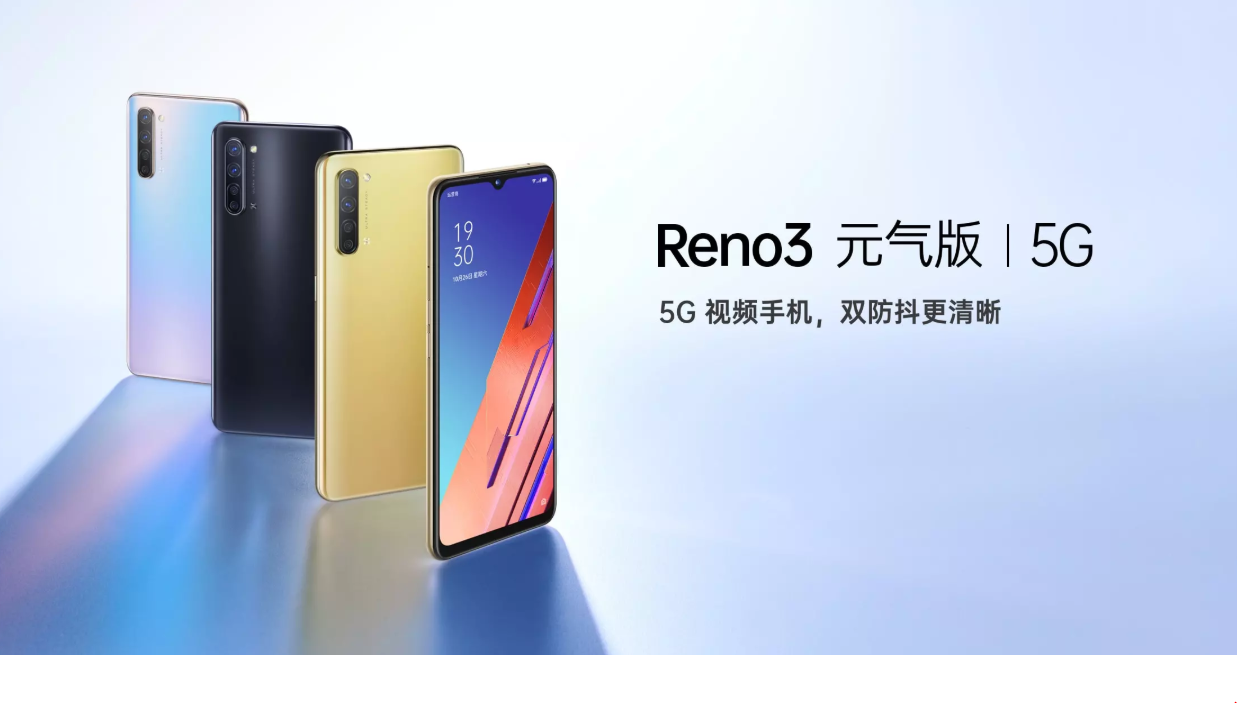
OPPO has a new mid-range 5G smartphone and it is called the Reno3 Vitality Edition. This is practically the Reno3 5G with a Snapdragon 765 (not Snapdragon 765G) processor and a 48MP primary camera. The phone is now available for pre-order on OPPO’s online shop and the listing has all the details about the device.
Reno3 Vitality Edition Design
The Reno3 Vitality Edition looks like the Reno3 5G. It has a flat display and a curved glass back and comes in three color variants. There is Streamer Gold, Moon Night Black, and Sky Mirror White. The phone is 7.96 millimeters thick and weighs 180 grams.
Reno3 Vitality Edition Specs and Features
The phone has a 6.4-inch FHD+ OLED display with a waterdrop notch and a 20:9 aspect ratio. OPPO says it has a third-generation fingerprint scanner.
The Reno3 Vitality Edition is powered by the Snapdragon 765 5G processor and it is paired with 8GB of RAM and 128GB of UFS 2.1 storage.
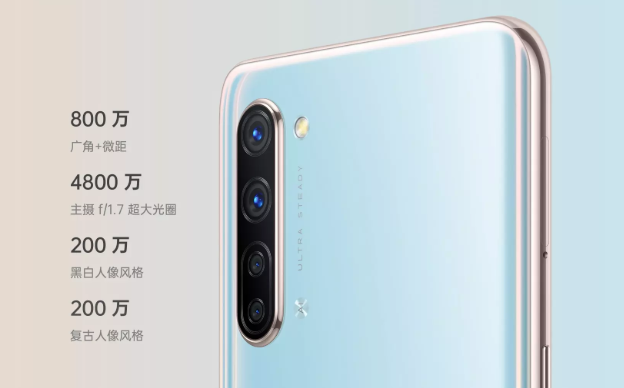
There are four rear cameras on the device. The first sensor is an 8MP ultrawide angle camera and it is followed by a 48MP f/1.7 primary camera. Next is a 2MP black and white portrait camera and another 2MP portrait style camera. The selfie camera is a 32MP f/2.0 sensor.
The Reno3 Vitality Edition runs ColorOS with features such as Link Boost 2.0 that combines 5G and WiFi networks together; Hyper Boost which provides GPU performance boost, improves touch response and reduces lags while gaming; OPPO Wallet; and OPPO Cloud Service.
There is a 4025mAh battery under the hood with support for VOOC 4.0 (30W). It also has NFC, Bluetooth 5.0, and a USB Type-C port.
[envira-gallery id=”304494″]
Reno3 Vitality Edition Price
OPPO is charging ¥2999 for the phone, and if you pre-order it, you get a free pair of O-Fresh earphones and an extra 6 months of warranty. The pre-order page says the Reno3 Vitality Edition will be announced on February 14 at 10:00 AM.
Xiaomi took to its official Weibo account to announce that the Chinese launch of its upcoming Mi 10 line will be on schedule on February 13; however, the unveiling event will be held online. The popular smartphone maker usually invites media to attend a press conference where it announces a flagship phone, but it looks like that will not be the case this time.
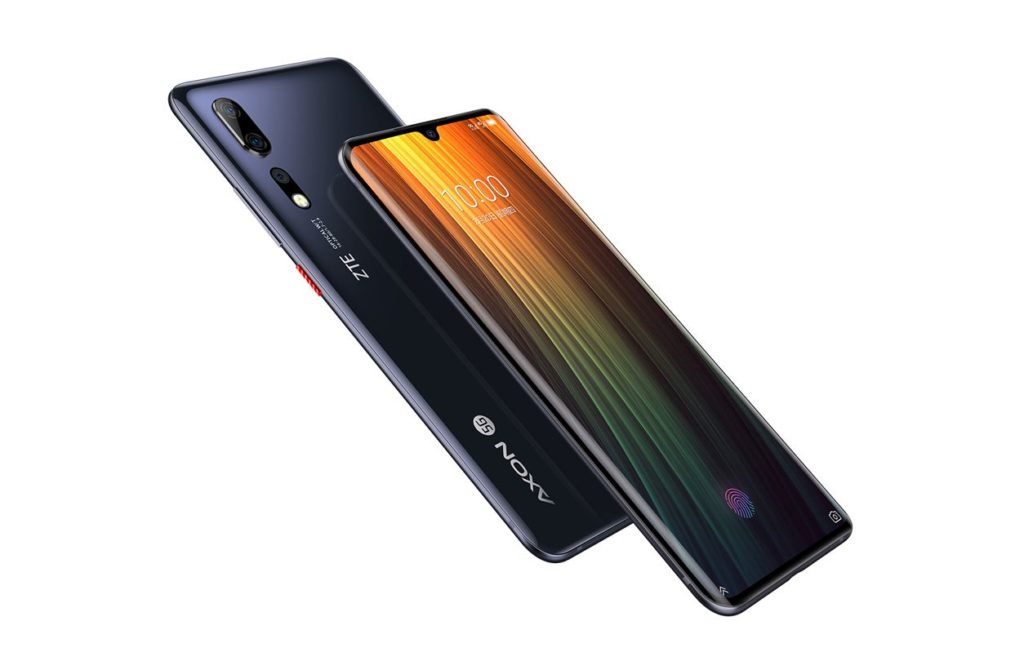
The online event is slated to kick off on February 13th – just two days after Samsung launches its Galaxy S20 series of smartphones in San Fransico. Regrettably, this means Xiaomi will not be the first phone maker to use Qualcomm’s latest Snapdragon 865 SoC, though neither does Samsung have this bragging right as ZTE had quietly launched the Axon 10s Pro that packs the SD865 platform before both the companies.
ZTE Axon 10s Pro
Keeping Xiaomi’s reputation for undercutting its competitors in mind, the Mi 10 series launch event will be nothing short of interesting, regardless of whether it is held online or offline. Aside from packing the Snapdragon 865 and LPDDR5 RAM provided by Samsung and Micron, some other details about the Mi 10 series have surfaced online.
If reports doing the rounds online are anything to go by, both devices could house 108MP main cameras at the back. Moreover, the Pro variant is tipped to come with 66W fast wired charging support. More shreds of information about the new devices are slated to surface on the web ahead of the February 13th event.
Some companies slated to attend the MWC 2020 are backing off from making an appearance at the impending exhibition citing the 2019 Novel Coronavirus (2019-nCoV) outbreak. Leading brands including NVIDIA, Ericsson, and LG have already pulled out of their hotly-anticipated attendance of the Mobile World Congress.
Yesterday, Realme confirmed it will be attending Mobile World Congress 2020. This will be the young smartphone maker’s first time attending one of the mobile industry’s biggest events and it plans to make a splash. One of the products it is expected to unveil is the Realme X50 Pro 5G, its first flagship phone of the year. Ahead of the launch, the company’s VP has shared a screenshot that reveals some of the phone’s key specs.
Hey, MWC, it's realme! We are young but we are ready to be the 5G pioneer. Are you ready to leap to the 5G Era with realme? #realme5Gpic.twitter.com/BFzW7B1MRp
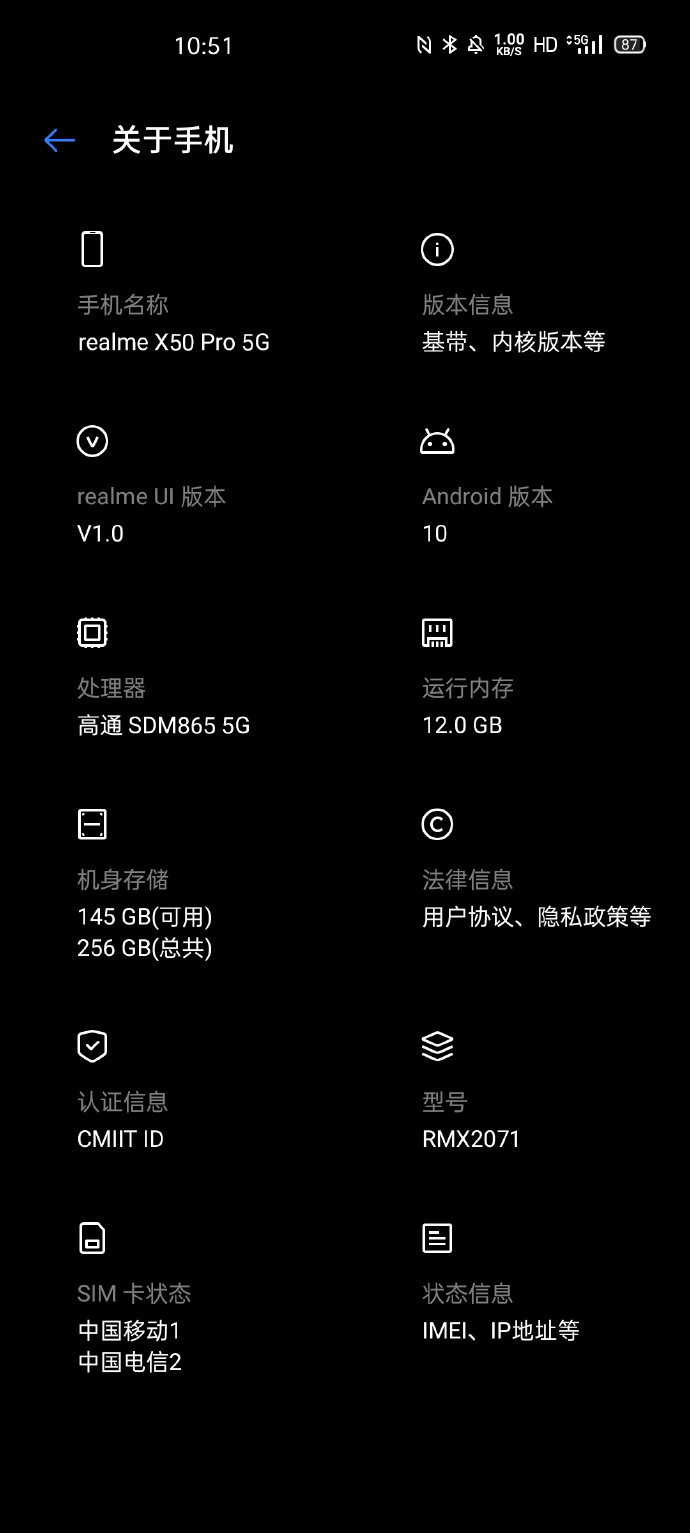
The screenshot was posted on Weibo this morning by Xu Qi Chase, the Vice President of Realme and President of Global Marketing. The screenshot confirms the device will launch as the Realme X50 Pro 5G.
The screenshot is from the about phone section of the device and it shows the device will run Realme UI version 1.0 based on Android 10. It will be powered by the Snapdragon 865 flagship processor with a Snapdragon X55 5G modem paired with it.
The Realme X50 Pro 5G will have 12GB of LPDDR5 RAM and 256GB of storage. The storage is most probably non-expandable but we expect there will be other configurations available. The Realme X50 Pro 5G’s model number is also revealed as RMX2071 in the image and it is shown to have dual SIM support.
There are still a lot of unknown specs such as the screen size, type and resolution; the camera configuration; and the battery capacity. Nevertheless, these details may surface before the launch which is still a few weeks away.
Other than the phone, Realme has also confirmed that we will have an announcement at MWC about its first smart TV. We are not sure it will unveil the TV at the event as MWC isn’t really the place for TVs. What we expect we will get are more details about the TV and its eventual release date.
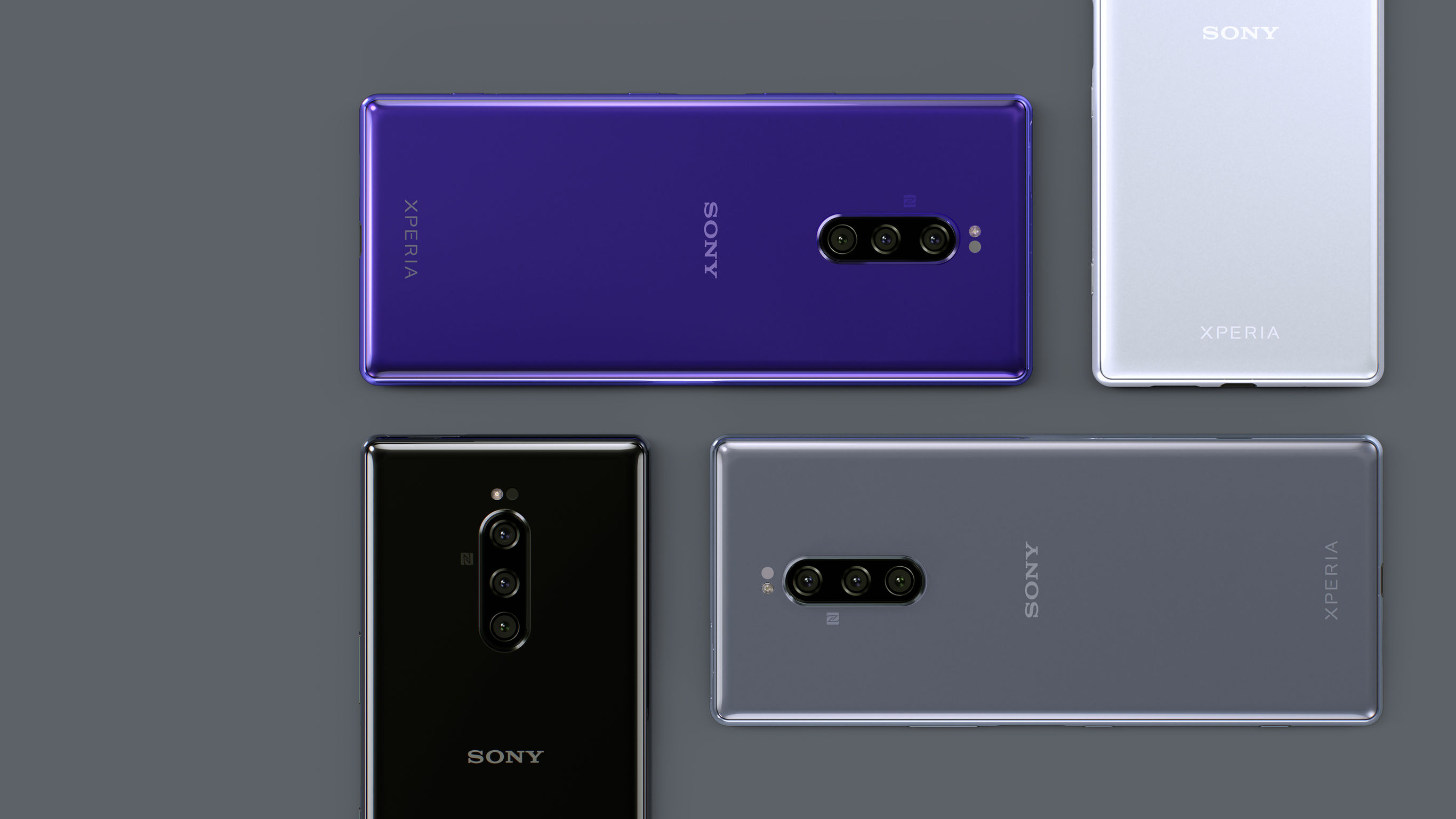
Japanese tech giant Sony has got some of the most amazing designs you will find on a smartphone. The company’s smartphone brand was in recent time experiencing some difficulties until recently when the company rejigged its design style culminating in the launch of the Xperia 1 smartphone in February 2019.
The flagship phone has gone on to corner rave reviews from users and tech enthusiasts alike. One year after the device was launched, it has now been selected as one of the winners of the 2020 German iF award. Apart from the Xperia 1, several other smartphones were selected among the winning designs for the iF Design Award 2020. The models include the Xiaomi MIX Alpha, Redmi K20 Pro, Pixel 3a/3a XL, Galaxy M series, Galaxy Note 10/10+, Meizu Zero, Mi 9, Mi 9 SE and Mi 9 Transparent Edition. Others are the Motorola One vision, One Action and One Zoom, OnePlus 7T/ 7 Pro, Blackshark 2 Pro, ASUS Zenfone 6 among others.
Sony is likely going to continue the full-screen design on its 2020 models just like it did with the Xperia 5. Apart from its aesthetic appeal, the Sony Xperia 1 smartphone equally packs a well-studded specs lineup this includes a Snapdragon 855 chipset, as well as a massive 6.5 inch OLED display. The device comes with 6GB of RAM on the base variant and up to 128 GB of internal storage.
After waiting for over a few months, WhatsApp finally received permission from NCPI (National Payments Corporation of India) for its digital payment platform, WhatsApp Pay. The digital payment service from WhatsApp was delayed due to its non-compliance with data localization norms. However, WhatsApp has finally agreed to comply with rules and regulations laid by the regulators in India.
According to Business Standard, “The National Payments Corporation of India (NPCI) has granted WhatsApp permission to operate its digital payment service in a phased manner.” It means initially WhatsApp Pay services will be limited to only 10 million users in the country. However, the limit will be withdrawn once the company complies with all other points.
WhatsApp Pay will be one of the most prominent payment players in the country. The service is going to use Unified Payments Interface (UPI) for real-time payments transfer. It will pose a severe threat to present players, including PhonePe, Google Pay, PayTM, and others.
Every major tech giant is in the race to dominate the 400 million users market in India. However, WhatsApp plans to launch the Pay service in the other six countries. In Q4 2014 Facebook financial report, Mark Zuckerberg told about the WhatsApp Pay rollout in other countries. He said, “One example we’ve been working on is WhatsApp Payments. You’ll be able to send money as quickly and easily as sending a photo. We got approval to test this with a million people in India back in 2018, and when so many of the people kept using it week after week, we knew it was going to be big when we get to launch. I’m really excited about this, and I expect this to start rolling this out in several countries and for us to make a lot of progress here in the next six months.”
Payments option on the world’s most used social messaging app is a convenient way to transfer money. At the same time, it’s a tough job for the WhatsApp to provide security and privacy by taking care of the local laws. We hope WhatsApp Pay will reach masses and will ensure safe and secure payment transfers.
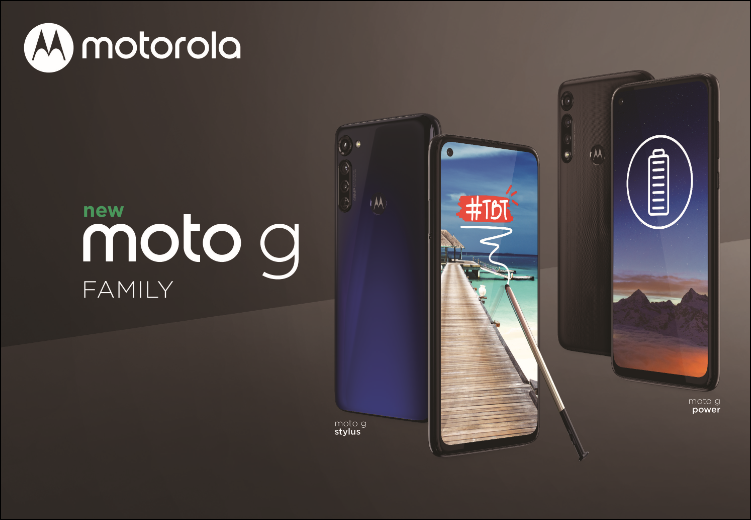
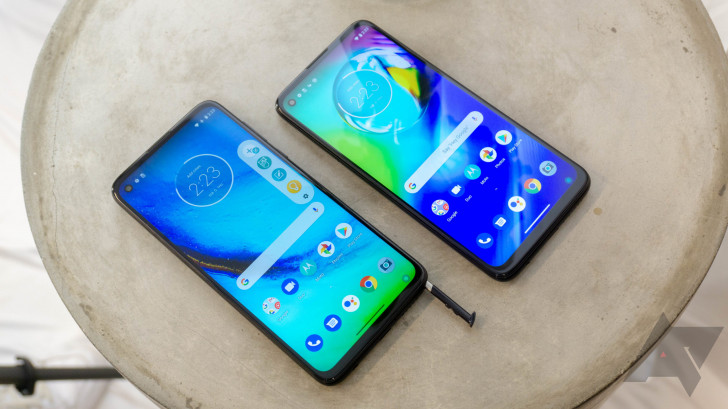
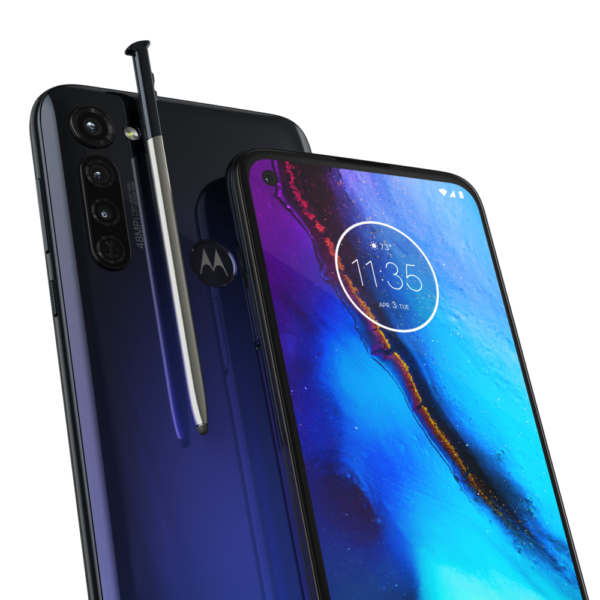
Motorola is still in celebration mood as a result of the sales of the Moto G series exceeding 100 million units. The US company has now launched to new G series models to commemorate this monumental feat. The Moto G Power and Moto G Stylus were announced today for the US and Canada markets. The two models are not really new as they have been keeping the tech media space buzzing from several weeks running. However, Motorola dropped the number from the name, opting for G instead of G8.
Both the Moto G Power and Moto G Stylus ar premium mid-range models bt the G Stylus is on top of the line. This isn’t as a result of only the Stylus pen which it bundles along but also due to better camera setup.
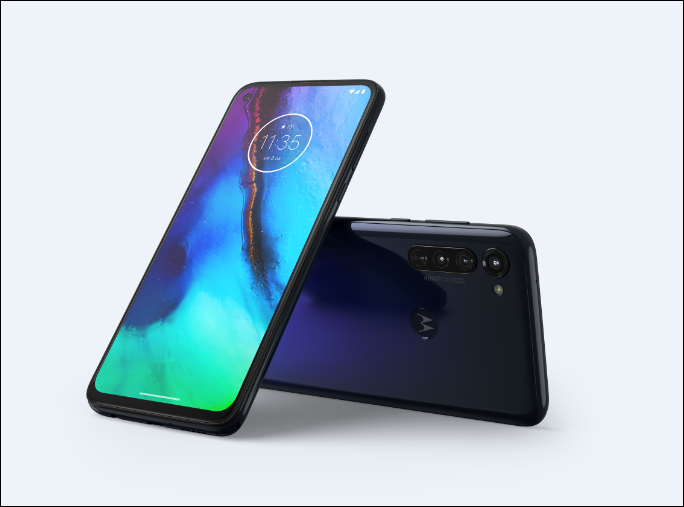
The Motorola Moto G Power sports a 6.4-inch LCD display with a FullHD+resolution of 1080p and a punch-hole camera. The device is powered by a Qualcomm Snapdragon 665 chipset paired with 4GB of RAM and there is 64GB of storage onboard. Motorola has trimmed down the bezels a little this year, but there’s still a noticeable “chin” below the screen.
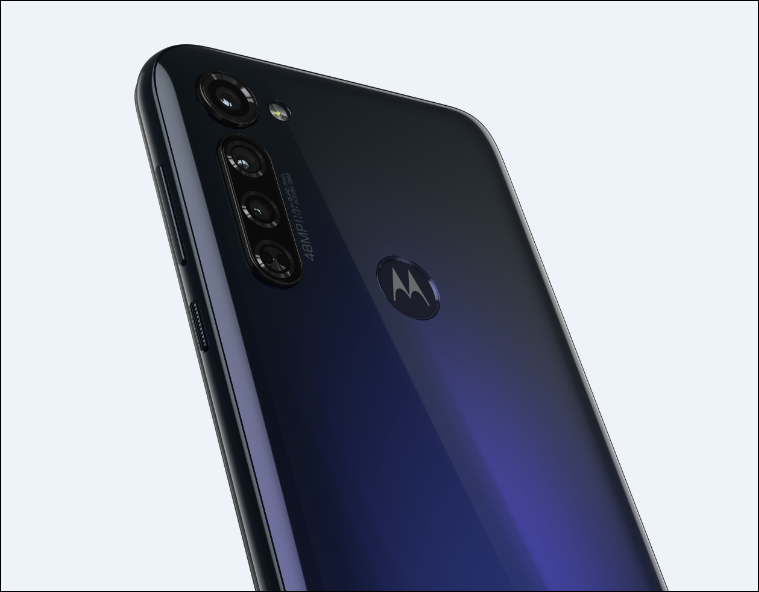
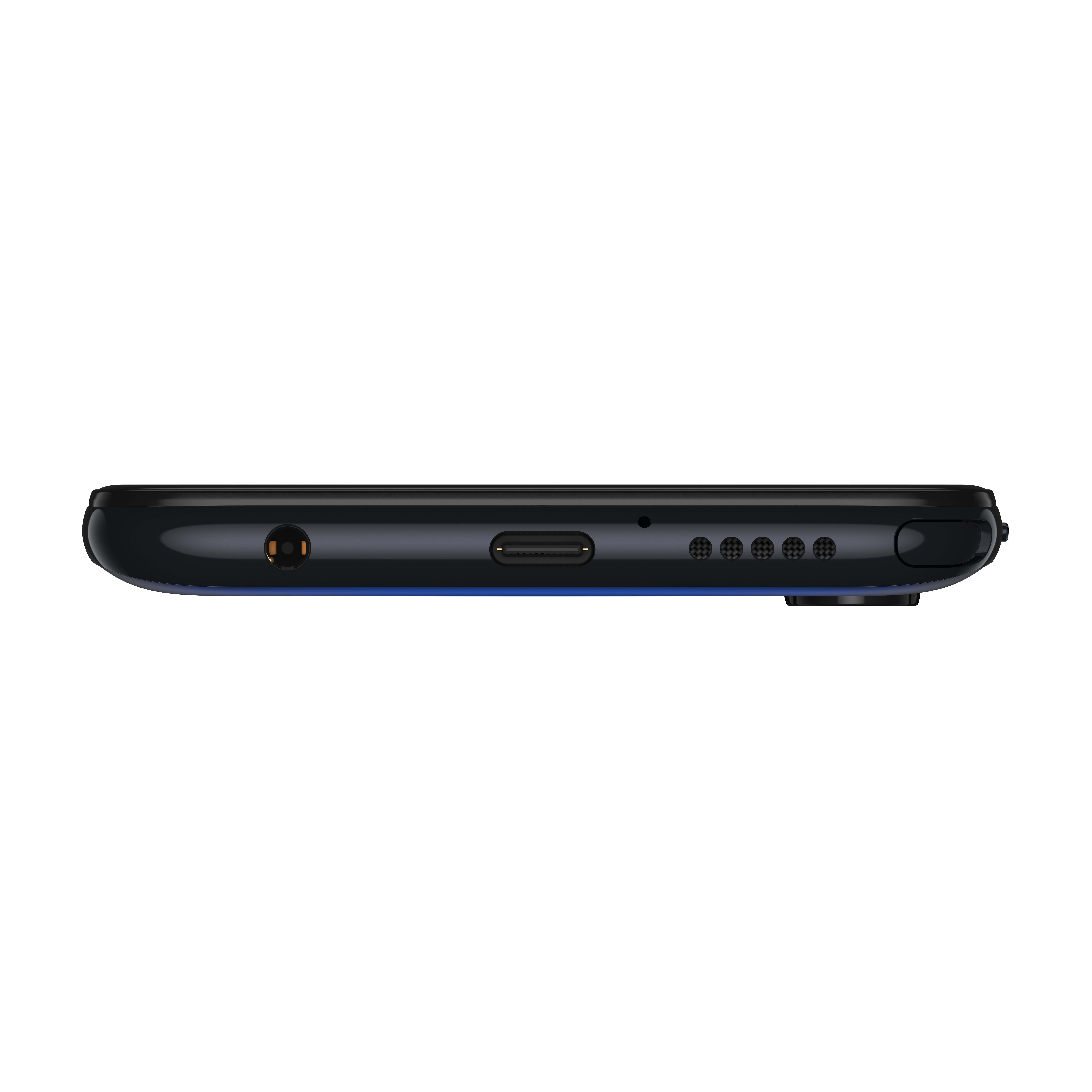
The G Power packs a mammoth 5,000mAh battery which Motorola says should get you about three days on a full charge. The device utilises a plastic body and is equipped with stereo speakers. The device has a thickness of 9.63mm. The phone also packs a fingerprint sensor at the back embedded with the Moto logo. There is equally a headphone jack onboard.
For photography, the Moto G Power packs a triple camera setup arranged vertically at the top left corner. The camera includes a 16MP main sensor, a 2MP macro camera, and an 8 MP ultra-wide shooter (118-degrees). The samples shared by Motorola shows the camera setup has some prospect.
Moto G Stylus
The Moto G Stylus packs a similar plastic chassis under a similar 6.4-inch LCD FHD+ display. The fingerprint sensor, processor, and RAM are similar to those of the G Power. But the 4GB RAM teams up with 128GB of internal storage. The device also packs a smaller 4000mAh battery which isn’t too bad. Despite having a stylus pen, the G Stylus is slightly thinner at 9.2mm. Talking of the stylus, it is located at the bottom right edge f the display and it has to be removed manually as there is no pop-up mechanism.
On the camera aspect, the G Stylus features a triple camera setup as well, but the sensors are a bit different. The only camera the new G phones share is the 2MP macro lens. There’s a 48MP main sensor on the G Stylus that defaults to “quad-pixel” binned images at 12MP. Plus, the pixels are larger at 1.6μm compared to the Power’s 1.12μm pixels. There’s also a 16MP action cam with a 117-degree field-of-view. Like the One Action from last year, you can hold the phone vertically and capture landscape video. There’s a button to toggle between “regular” video and the action cam video
Pricing and Availability
The new Moto G models are expected to be released in the US and Canada sometime in the Spring. The G Power will retail for $249.99 while the G Stylus will cost $299.99.
Ericsson, one of the largest exhibitors at the Mobile World Congress 2020 that is set to kick-off later this month, has pulled out from the event. The company is citing coronavirus outbreak as the reason for this decision.
This is a major blow to the MWC 2020, which is touted as the world’s largest event for the telecom industry. The development comes just days after LG and ZTE had announced that will not take part in this year’s Mobile World Congress.
Making this announcement, Ericsson said that the company took this decision as a precautionary measure after an extensive internal risk assessment. It also added that following the outbreak and continued spreading of the novel corona virus, the company closely monitored the development and adhered to recommendations from relevant national authorities and international bodies.
Ericsson said that it will now showcase the company’s portfolio and innovations planned for MWC Barcelona with local events called “Ericsson Unboxed”.
GSM Association, which organises MWC, said in a statement that it respects Ericsson’s decision and is encouraged that the company committed to the 2021 show. It also reemphasised that the show will go on as planned.
Further, the association said that it is continuing to monitor and assess the virus situation to make appropriate changes. The group previously said it would increase medical support and disinfection measures on site and communicate best practices to attendees.
The Mobile World Congress, which is scheduled from February 24 to 27, attracts more than 100,000 visitors. It has come under increased scrutiny since the World Health Organization declared the coronavirus epidemic a public health emergency of international concern.
Xiaomi is known for its competitive smartphones at aggressive pricing. The Chinese smartphone maker is now expanding its brochure of products by introducing flagship killer smartphones. They have even diversified the portfolio by launching new sub-brands like Poco and Redmi. Xiaomi has become a major Android smartphone manufacturer with availability across Asia, Europe, and North America. Xiaomi’s support over its community and third-party forums has multiplied over time. The company has even developed dedicated softwares for unlocking bootloader or getting root access. The users can download the Xiaomi Mi Flash Tool from the link below to flash the stock firmware.
Xiaomi’s policy of providing diversified smartphones based on the user’s needs across different countries is working like a charm. The company has managed to improve smartphone sales across various countries. The Chinese company is vying ahead of the primary smartphone manufacturers like Apple, Smasung, LG, and Sony. According to recent IDC data for Q4 2019, Xiaomi has become India’s number one handset brand by replacing Samsung.
A successful manufacturer always tends to provide support for the smartphones along with providing hardware at affordable prices. Xiaomi also stands along with this saying and provide regular software upgrades and security patches for the smartphones. They also provide dedicated tools for users who want to root or unlock the smartphone bootloader.
What is Xiaomi Mi Flash Tool?
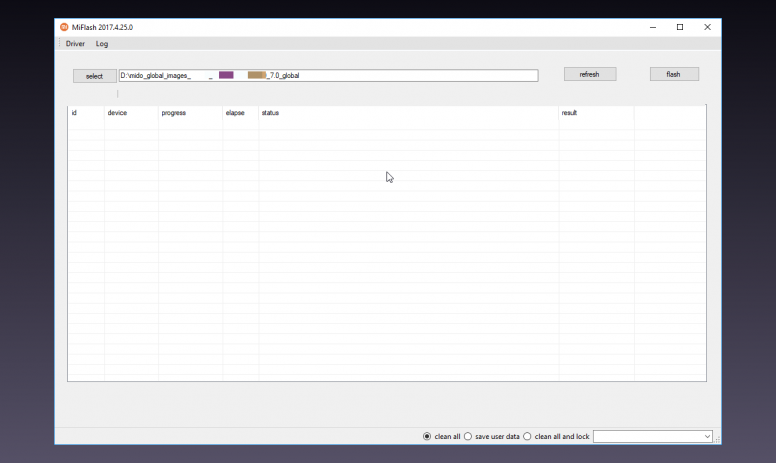
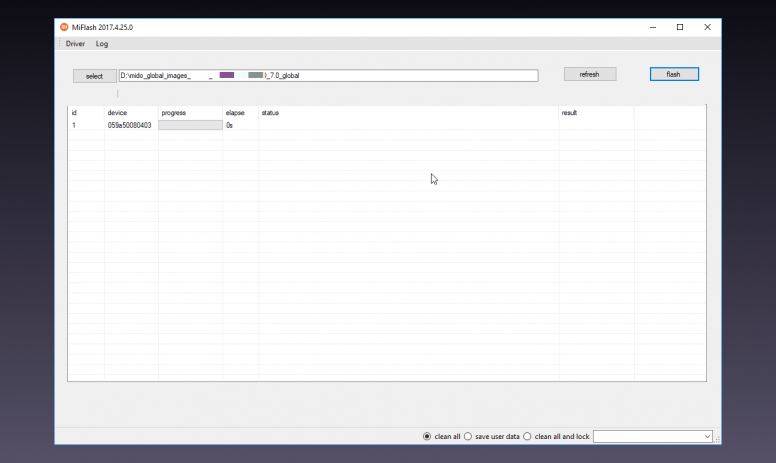
Xiaomi Flash Tool is one such software that helps the users to flash the stock firmware. This nifty tool installs MIUI firmware on Xiaomi smartphones or tablets is available freely. It comes to aid when a user hard or soft brick his/her device by either installing third-party MODs or custom ROMs. There can be various other reasons behind such device status.
Xiaomi Mi Flash Tool carries all the important scripts to flash your smartphone. It simplifies the process of flashing the stock ROM by verifying any files for the security anomalies. It even enhances the Anti Roll Back Protection, error logging, driver installtion, and device detection.
Important:
Xiaomi Mi Flash Tool is compatible with Windows 7/8/10 PC only.
The tool will only work for Xiaomi devices.
It is compatible with only Qualcomm Devices.
It misses the ability to flash OTA files.
Download the latest version of the Mi Flash Tool.
Xiaomi Mi Flash Tool Features
All in One Tool: The Xiaomi Mi Flash Tool is all in one tool and consists of ADB Tool, Mi Tool, and all necessary drivers. It’s just a full package if you want to tweak your phone.
In-Built USB Driver: The Xiaomi Mi Flash Tool by default packs USB drivers for Microsoft RNDIS, MTP, Qualcomm, USB Serial and Google ADB drivers. You will not have the hassle to install USB drivers.
Different Flashing Options: Xiaomi Mi Flash Tool offers three flashing tools – “Flash All Except Data & Storage”, “Flash All Except Storage” and “Flash All”.
Download Mi Flash Tool for Windows
The Mi Flash Tool is available in different versions. We have provided a download link for all the versions. The latest is present just below this line.
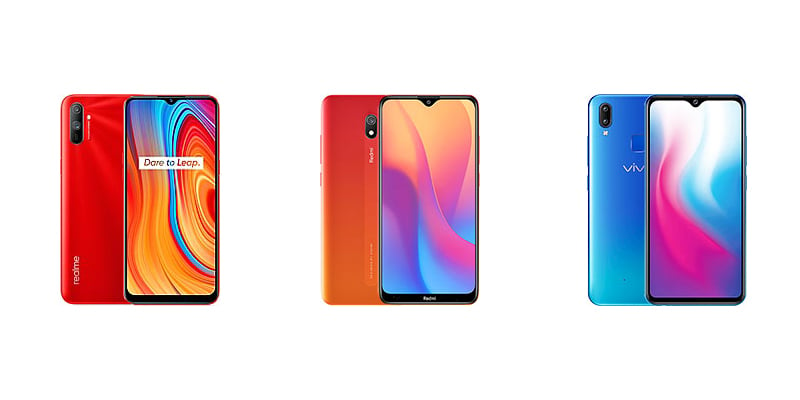
Realme just launched the new Realme C3 in India and a lot of people are already considering it as the king of entry-level smartphones. But is it true? Is it the best phone you can get for that price? We already gave you an idea about it by comparing it to the Redmi 8 and the Infinix Hot 8 actually available in the Indian market, but there are other entry-level devices among its rivals. That is why we made a second comparison: Redmi 8A and Vivo Y91 are the new rivals to beat: go ahead with this post if you want to know which one offers the highest value for money.
Dual 13 + 2 MP f/2.2 and f/2.4
8 MP f/1.8 front camera
Dual 12 + 2 MP f/1.8 and f/2.4
5 MP f/2.4 front camera
Single 12 MP f/1.8
8 MP f/2.0 front camera
BATTERY
4030 mAh
5000 mAh, battery charging 10W
5000 mAh, fast charging 18W
ADDITIONAL FEATURES
Dual SIM slot
Dual SIM slot, reverse charging
Dual SIM slot
Design
If you want an entry-level device, then you have to face several compromises and one of them is the design. These three devices all come with a plastic design and they do not feature premium materials like flagship smartphones. But they are still elegant and well-built. Realme C3 and Redmi 8A are even splash resistant. In each case, you get narrow bezels around the display thanks to a waterdrop notch, but the Redmi 8A is my favorite one since it has a more compact size than Realme C3. Note that in this trio, only the Vivo Y91 sports a fingerprint reader.
Display
Entry-level displays, nothing special. A high brightness, but a below-average resolution, with either 720 x 1520 or 720 x 1560 pixels. You do not get a high level of detail, neither very accurate colors. But they are sufficient displays. What you should be very interested to know is that Realme C3 has a much wider panel than Redmi 8A and Vivo Y91: 6.5 inches vs 6.22 inches. So Realme C3 is a better device for power users and multimedia lovers, despite it has a lower pixel density due to its wider diagonal.
Specs & Software
Both Redmi 8A and Vivo Y91 are equipped with a Snapdragon 439 SoC, while Realme C3 sports a much more powerful Helio G70. It is a toned-down version of the Helio G90 and it is one of the best MediaTek midrange chipsets. It provides higher CPU and GPU performance and it is a good SoC even for gamers. Further, only the Realme C3 comes with Android 10 out of the box. Redmi 8A is based on Android 9 Pie, while Vivo Y91 still comes with the old Android 8.1 Oreo. We think you already got the ranking: Realme C3 wins, then Redmi 8A, then Vivo Y91.
Camera
On the paper, Realme C3 offers the best rear camera setup. It consists of a primary 12 MP lens with a bright f/1.8 focal aperture and a secondary 2 MP depth sensor. Right after, we got the Redmi 8A, even though it has just a single rear camera. Vivo Y91 wins the selfie comparison with a very interesting selfie snapper, while the second place goes to Redmi 8A when it comes to selfies.
Battery
Redmi 8A and Realme C3 feature a mammoth battery: with a 5000 mAh capacity, they are able to last three days with moderate usage. We believe Redmi 8A will last a bit more due to its smaller display and good software optimization. Redmi 8A even offers a faster charging technology, while Realme C3 is the only one who supports reverse charging.
Price
To get Realme C3 in India, you just need Rs.6,999/€90/$99. Redmi 8A sets you Rs.6,499/€83/$90, while Vivo Y91 starts from Rs.8,890/€114/$125. The clear winner of this comparison is Realme C3: it ships with Android 10, it has a way better hardware department, it features a huge battery, a wider display and it even supports an innovative feature such as reverse charging. Redmi 8A comes right after, despite Vivo Y91 is the only sporting a fingerprint reader.
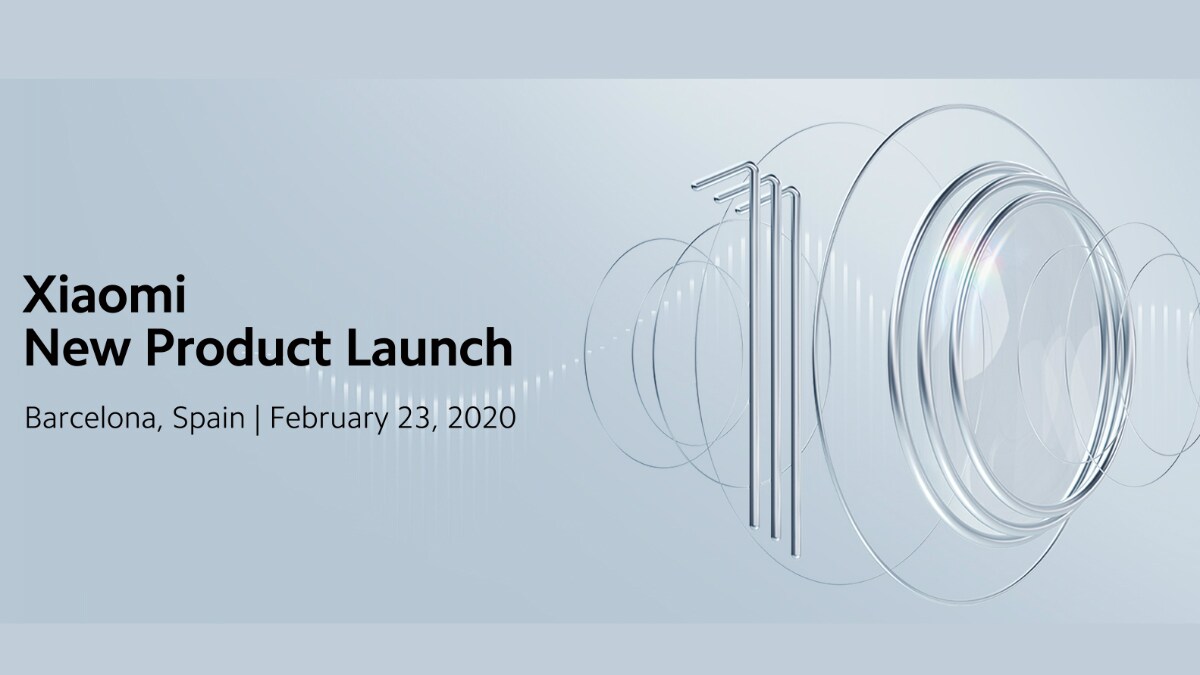
Xiaomi has been working on its next-generation flagship smartphones — Mi 10 and Mi 10 Pro and now the company is all set to make them official. Xiaomi has sent out media invites for a launch event later this month.
The company is hosting an event on 23rd February in Barcelona, Spain just ahead of the Mobile World Congress 2020 — the world’s biggest event for the telecom sector.
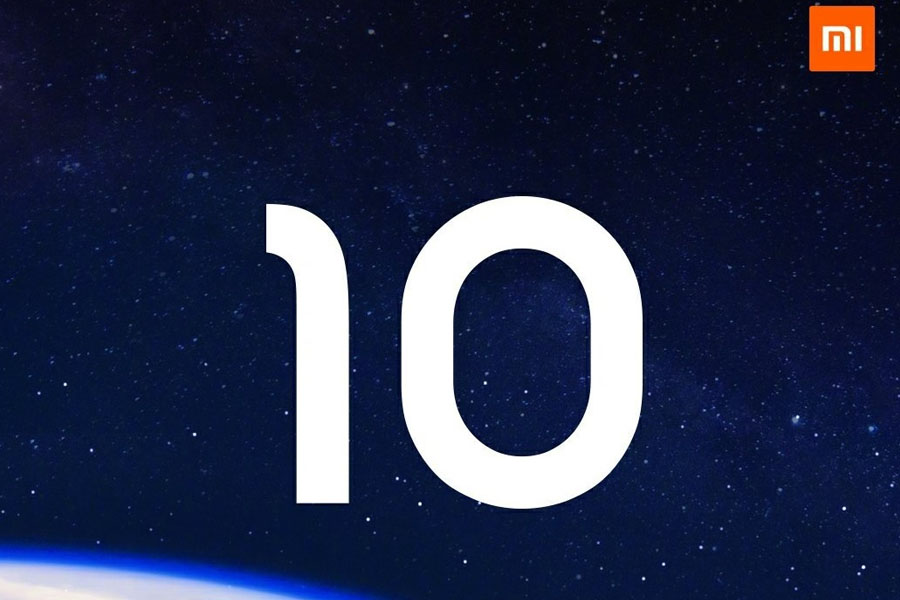
The invite shared by the company clearly shows the number “10” hinting that the launch event is for the Mi 10 series. Further, it also shows graphics related to the camera lens, which seems like a reference to the optical zoom capability.
Both the phones are expected to come powered by the latest Qualcomm Snapdragon 865 chipset. The company had earlier revealed that it would be one of the first manufacturers to launch a device powered by SD865 SoC.
It has also been confirmed that the Mi 10 series devices will come with LPDDR5 RAM supplied by Micron which is claimed to be 20 percent more power-efficient and can offer 50 percent faster data speed.
As per the rumors and leak, the Pro variant of the flagship smartphone could come with up to 16GB of RAM and 512GB of internal storage. As for the camera department, the phone is expected to feature 108-megapixel Samsung ISOCELL Bright HMX sensor along with an ultra-wide, telescope lens, and a dedicated macro lens.
While details about the battery capacity are not yet known, it is reported that the standard model will come with 48W fast charging support whereas the Pro model will have support for 66W fast charging. Further, both the variants will reportedly come with support for fast wireless charging.
To know for sure what the upcoming Mi 10 series packs, how the company prices them and when they will go be up for purchase, we’ll have to wait for a few more weeks for the launch event to take place.
Huawei could be planning to pre-install up to 70 apps on its upcoming international smartphone models to make up for the lack of Google services. The Chinese smartphone maker is banned from using software from US companies like Google, putting its phones at a disadvantage as compared to competitors like Samsung in the international market.
Google services won’t be available on upcoming Huawei smartphones
According to Mobiltelefon.ru, Huawei could pre-load nearly 70 selected apps on its smartphones this year. They are expected to be the most popular apps from the Google Play store or viable alternatives to the apps that are dependent on Google services. The pre-loaded apps will vary according to the region.
Since Huawei smartphones can’t run google services, the company will have to provide viable alternatives to popular apps like YouTube and Google Maps. The report states that Huawei will launch its own video service called as Huawei Video sometime in March this year. This is likely going to coincide with the P40 launch in the same month.
Huawei’s app store, called the Huawei AppGallery, has around 45,000 apps right now, but it is still nowhere close to the 3 million figure on the Google Play Store. Without access to the Google Play Store, the Chinese smartphone maker will have to ensure that popular apps like Uber, Spotify are available in its own store. Also, it will have to provide viable alternatives to Google’s own apps. In this regard, the company is already in talks with companies like Tomtom (for Google Maps alternative) and Russia’s Yandex.
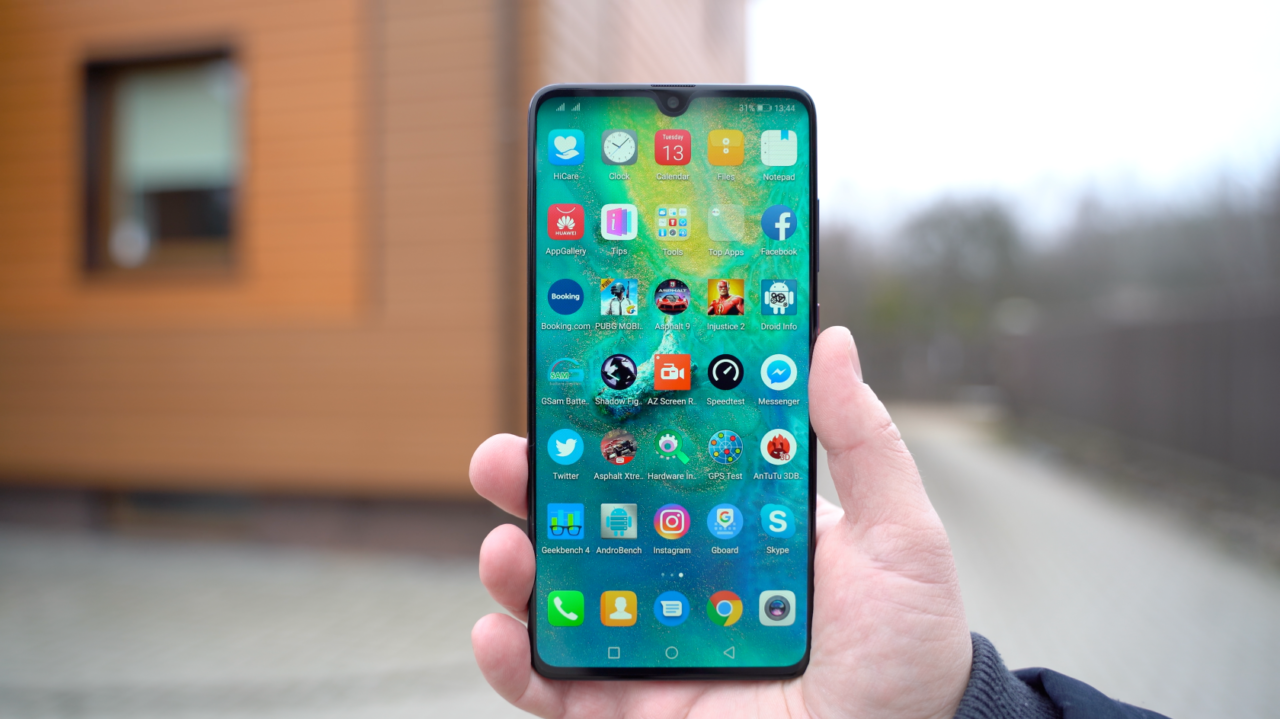
Huawei Mate 20 Pro – Gizmochina –
Huawei reportedly plans to pre-load these apps on at least nine models in the next four months. Mobiltelefon.ru’s source says that Huawei is likely to use this strategy on mid-range models using Kirin 810 and Kirin 710 chipsets. This could include the Huawei Y7p and P40 Lite E models. So Huawei could be using a different strategy for upcoming flagship devices like the Kirin 990 powered Huawei P40 series.
It makes sense why Huawei would want to pre-load a bunch of apps on its international smartphones. Without Google services, the availability of apps would be a big concern on Huawei’s phones. But if most of the popular apps are already on the device, users might be less worried.
However, pre-loading as many as 70 apps doesn’t sound like a good idea, even if they are curated according to the market. Imagine the nightmare sorting out 70 different apps on a brand new smartphone!
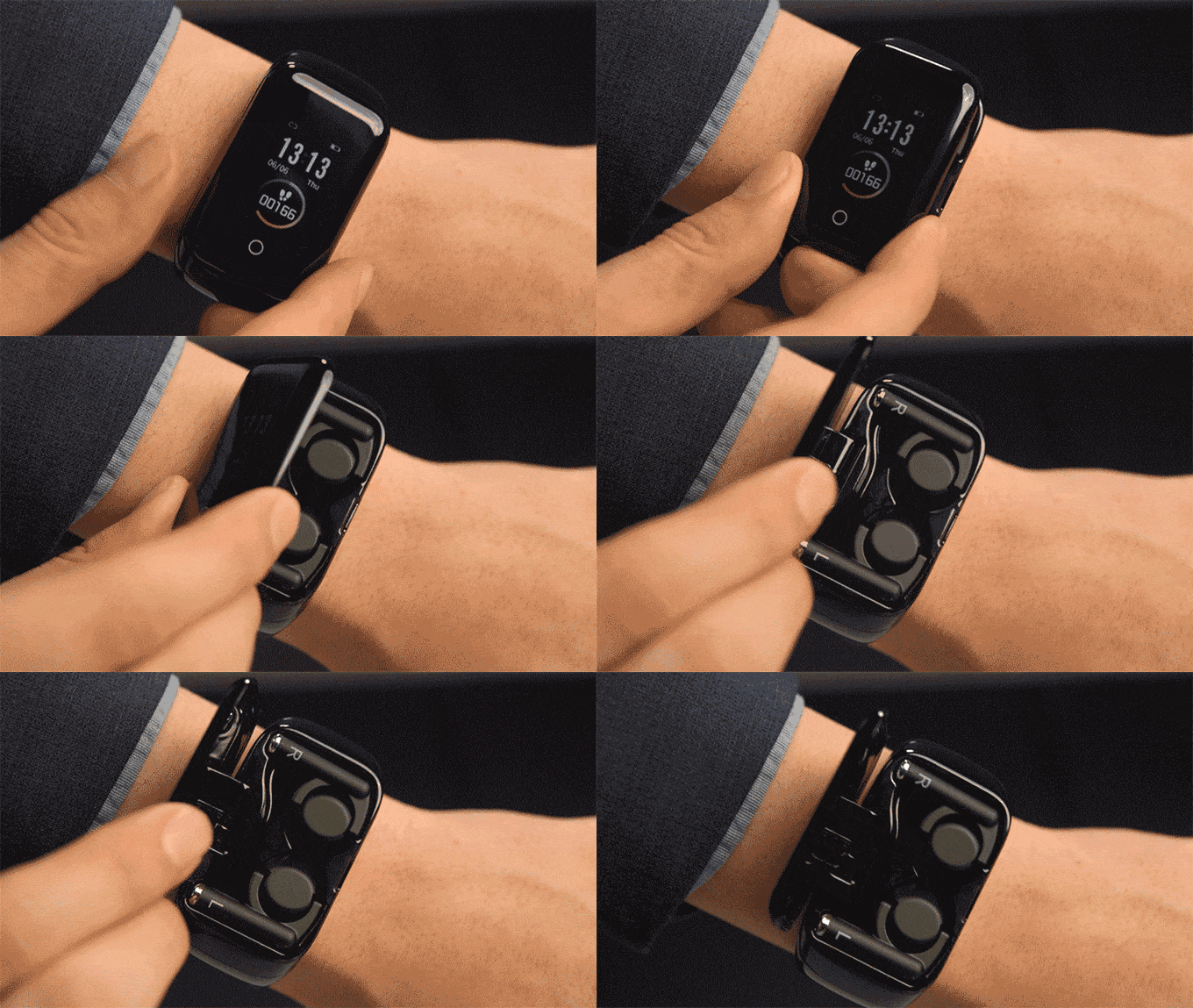
Having the option to follow a morning run and hear out some tunes without carrying a phone around is most likely one of the key selling purposes of present-day smartwatches – so why not consolidate the smartwatch and a couple of remote earbuds in one minimal form? That’s the idea behind the Wristbuds, as of now looking for financing on Kickstarter. Flick back the display of the smartwatch, and you have a pair of AirPods-style wireless earbuds prepared to blast tunes direct to your ears via Bluetooth.
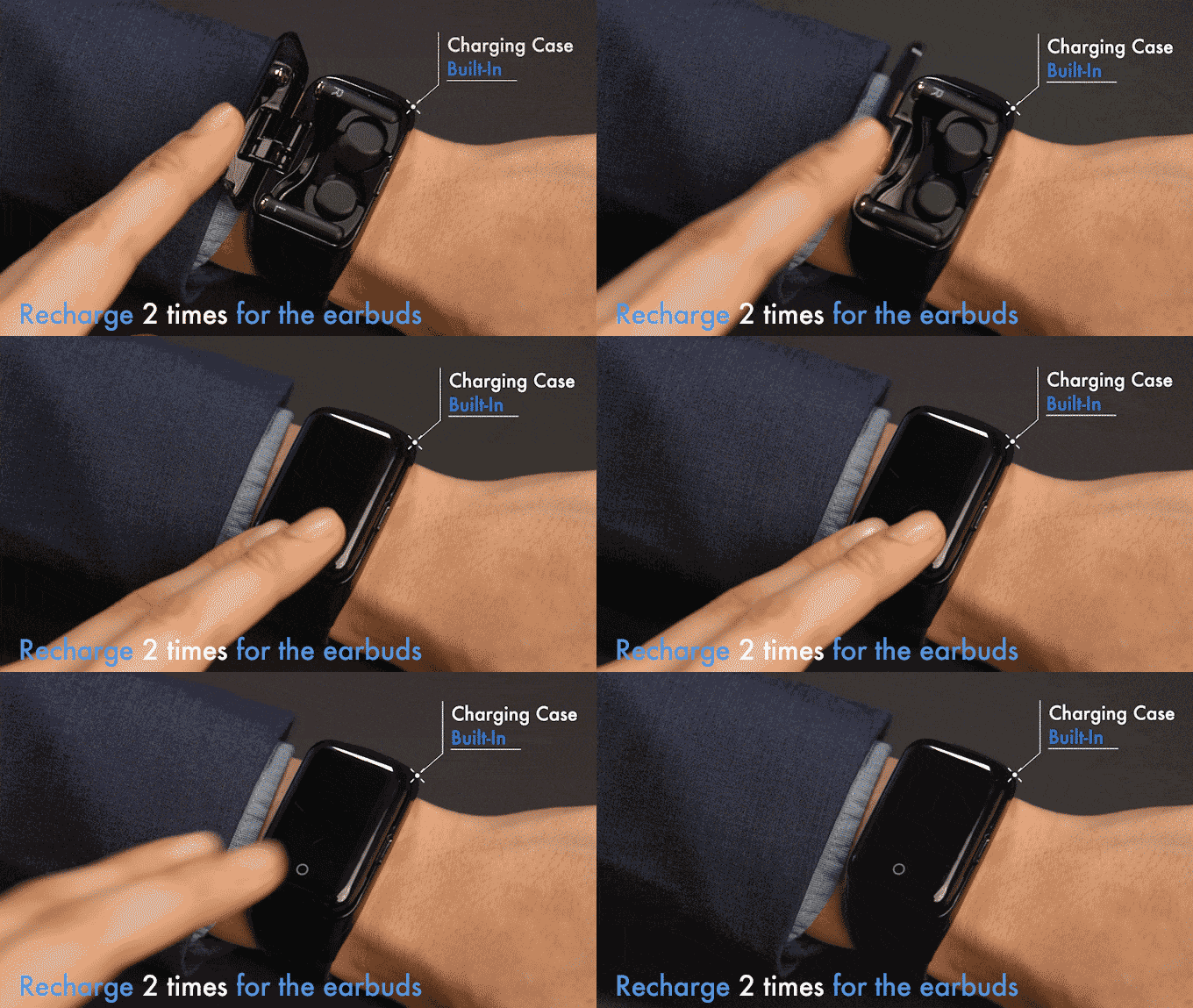
The crowdfunding exercise has just blasted past its US$5,000 goal but you can still join by paying just $99 and get a Wristbuds smartwatch shipped to you around April. You’ll also need to pay an extra $30 to get an expanded storage version to enable you to store MP3 files inside. Not only does the smartwatch provide a storage compartment for the earbuds, it equally charges them, so there’s no need for a different charging case.
The battery life of the earbuds isn’t recorded, which appears to be an odd exclusion, yet obviously the wearable can go for as long as four days between charges, which is impressive. The earbud is touted to come with good sound quality as well as noise cancellation. It is equipped with graphene-covered drivers which clearly improve constancy. They’re being publicized as having the option to remain safely attached to the ear during exercises regardless of the type of exercise.
The Wristbuds smartwatch will track your exercises and we expect it to come with all the major functions found on smartwatches/ fitness trackers such as pedometer, sleep tracker, call function, heart rate monitor etc.
After the crowdfunding ends, the smartwatch will go on sale at a retail cost of $149.It’s evident that other equipment creators are quick to get a portion of the Apple AirPods showcase, and the Wristbuds wearable is one of the more inventive takes on the genuinely remote earbuds structure that we’ve seen up until this point.
In the year 2016, Apple had launched its first budget smartphone named iPhone SE and now the company is reportedly set to launch yet another budget device, dubbed iPhone SE 2 or iPhone 9.
As per the reports, Apple has already started trial production of the upcoming iPhone SE 2 and is all set to start mass-production from mid-February. Now, Evan Blass claims that the device will get launched in March this year.
Reports indicate that the device could come with a body design of iPhone 8 and will be powered by Apple’s own A13 processor and carry the same RAM as iPhone. As per the report, the current production of iPhone 9 is two to four million units each month.
As for the pricing, the iPhone 9 or iPhone SE 2 is expected to be priced under $432 or CNY 3,000 in China. The first budget phone from Apple, iPhone SE, was a success because of its competitive pricing as it was launched at $399, which was way cheaper than iPhone 6S.
He believes that the iPhone SE 2 will arrest Apple’s faltering sales in 2020 and also estimates suppliers selling anywhere between 2 and 4 million devices every month with a total of 30 million devices sold at the end of 2020.
While all these reports about the budget-friendly Apple iPhone SE 2 aka iPhone 9 are making rounds online, the company has not yet confirmed by the company so far.
We use cookies on our website to give you the most relevant experience by remembering your preferences and repeat visits. By clicking “Accept”, you consent to the use of ALL the cookies.
This website uses cookies to improve your experience while you navigate through the website. Out of these, the cookies that are categorized as necessary are stored on your browser as they are essential for the working of basic functionalities of the website. We also use third-party cookies that help us analyze and understand how you use this website. These cookies will be stored in your browser only with your consent. You also have the option to opt-out of these cookies. But opting out of some of these cookies may affect your browsing experience.
Necessary cookies are absolutely essential for the website to function properly. This category only includes cookies that ensures basic functionalities and security features of the website. These cookies do not store any personal information.
Any cookies that may not be particularly necessary for the website to function and is used specifically to collect user personal data via analytics, ads, other embedded contents are termed as non-necessary cookies. It is mandatory to procure user consent prior to running these cookies on your website.