Most of the smartphone manufacturers are working on premium smartphones with higher screen-to-body ratio. For this, the companies have tried different types of technologies, including punch-hole display, pop-up front camera, and others.
Nowadays, companies are working on yet another technology — under-display camera sensor. While brands like OPPO and Xiaomi have already showcased their in-display camera technology and Samsung has revealed that it is working on the same.
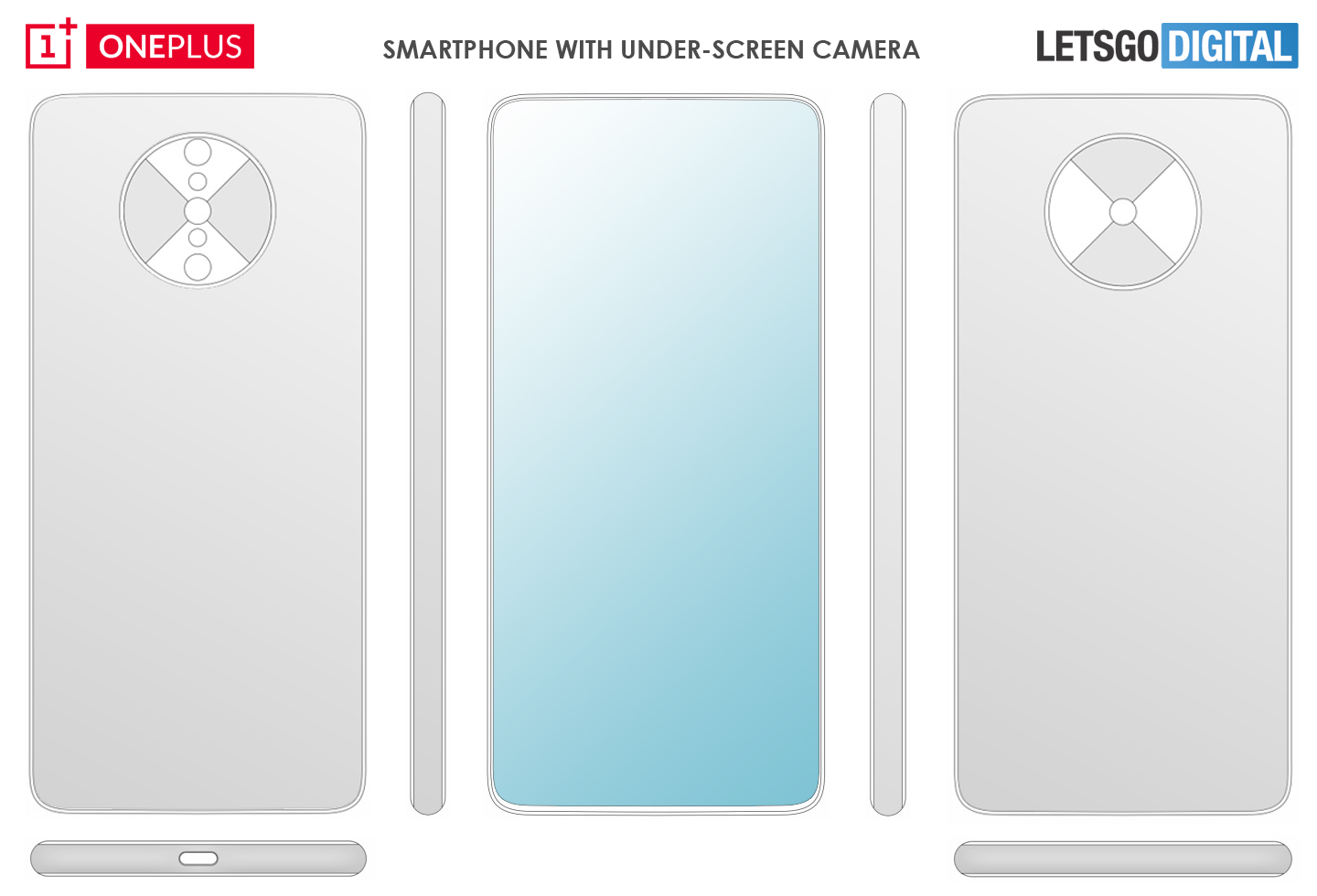
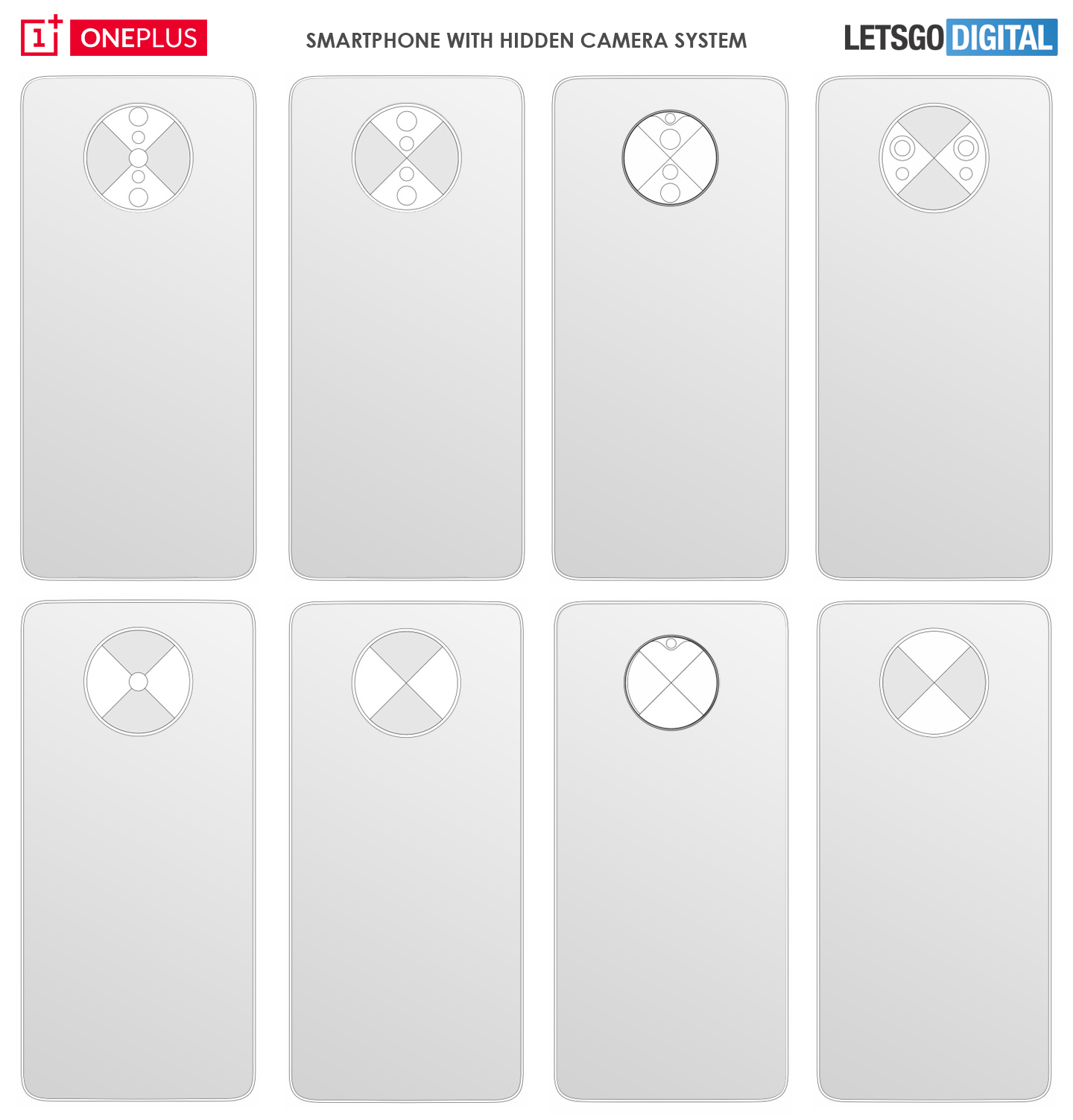
Now, OnePlus has also joined the list as the company has filed a patent for a technology that hides the camera when not in use. The patent seems to be similar to the implementation of the Concept One smartphone that was showcased by the company at CES 2020 last month.
From the photo included in the patent application, it is clearly visible that there are no punch-holes of pop-up camera mechanism for the front-facing snapper and the entire surface is covered by the screen.
This could mean that the device will come with an in-display camera sensor for the front panel. The back of the phone seems similar to the OnePlus 7T but there seems a plastic flap on top of the lenses which can hide the camera module when not in use.
However, the back camera system seems like a mechanical design and has nothing to do with the under-display camera-type technology. The back camera flap seems like a design choice to better protect it from dust and dirt.
If this is indeed the camera with an in-display front-facing camera system, we don’t expect to see the smartphone available commercially in near future. At this point in time, the technology isn’t fully developed and there seems to some issues with the image quality.
Meanwhile, the company is now gearing up to launch its next-generation flagship smartphones — OnePlus 8, 8 Pro, and 8 Lite. While the launch date is not yet known, we expect it to go official in the coming weeks.
Amazon has announced a new smart display, called the Echo Show 8, in India. The Echo Show 8 was originally announced in the US back in September 2019 and is positioned between the Echo Show 5 and the Echo Show.
The Echo Show 8 has an 8-inch HD touchscreen with stereo speakers that allow users to stream their favorite shows and movies from platforms such as Prime Video and Voot.
Like any other Amazon smart display, you can ask it questions, ask it to show your security cameras, or use it to control other supported smart home products such as lights and Air Conditioning units. You can also ask the Echo Show 8 questions about the weather and the latest news. The device also has a camera, so you can use it to make video calls.
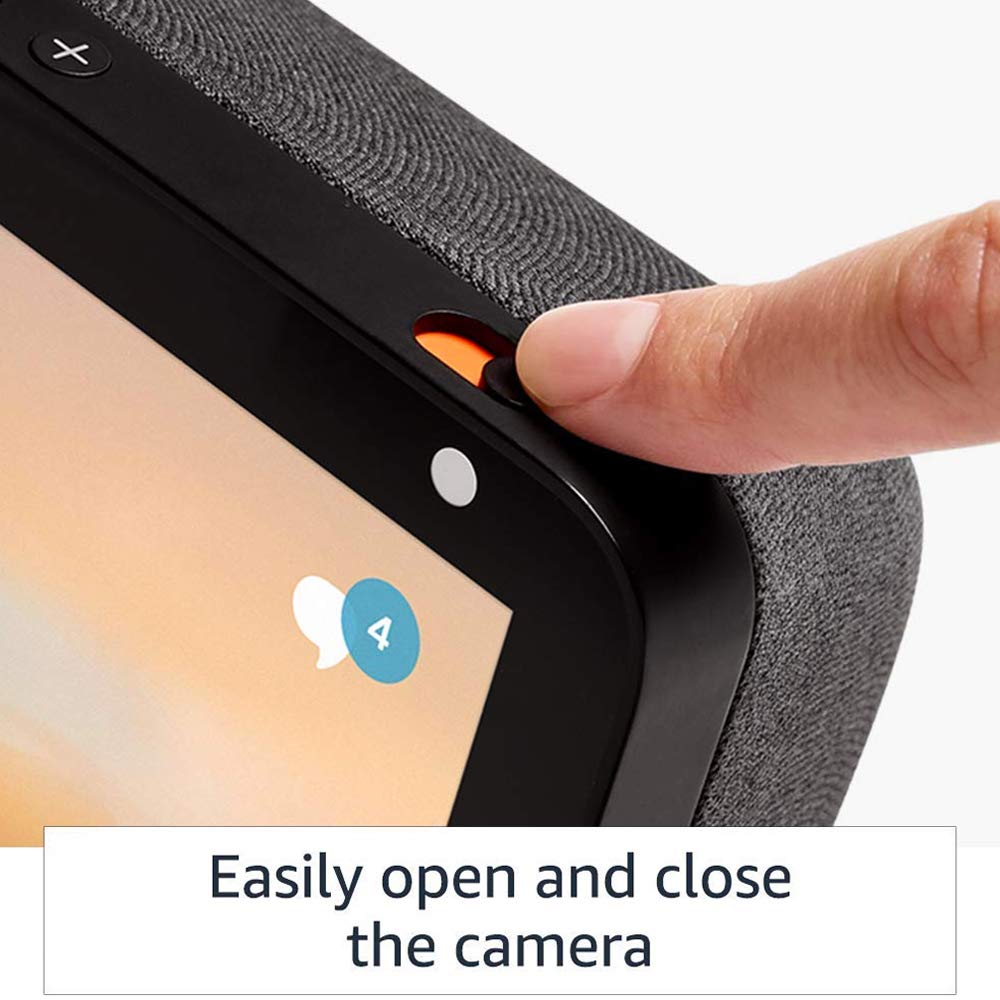
Amazon is concerned about privacy and has added a shutter to cover the 1MP camera and also the option to mute the microphone. You can also ask it to delete your voice recordings. For example, you can say “Alexa, delete everything I said today”.
Setting up the Echo Show 8 is simple and just takes three easy steps according to Amazon:
Plug in the Echo Show 8.
Connect to the internet using Echo Show 8 (you probably have to input your Amazon login details at a point here). This is easier and faster when you use WiFi simple setup and already have a previous Amazon device and have saved your WiFi password to Amazon.
Ask Alexa about the news, play movies, and more.
The device measures 200.4 x 135.9 x 99.1 millimeters and weighs 1.037 kilograms. It has its volume controls at the top alongside the camera shutter button and microphone button. The power port is on the back and you also get a 3.5mm audio out port in case you want to connect it to an external speaker. The device itself has 2 x 2.0” (52mm) neodymium speakers with a passive bass radiator.
Amazon has put a price tag of INR 8999 (~$126) on the Echo Show 8 and it says it is a “limited period launch price”. You can pre-order now before its February 26 release date.
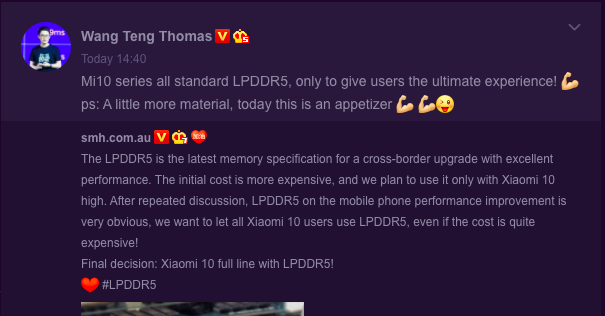
UPDATE: Xiaomi Product Director named Wang Teng Thomas has confirmed that all the variants of the Mi 10 series from standard and above will be equipped with the latest LPDDR5 RAM technology. Hence, it is likely the Mi 10 and Mi 10 Pro will come equipped with the LPDDR5.
Original story follows…
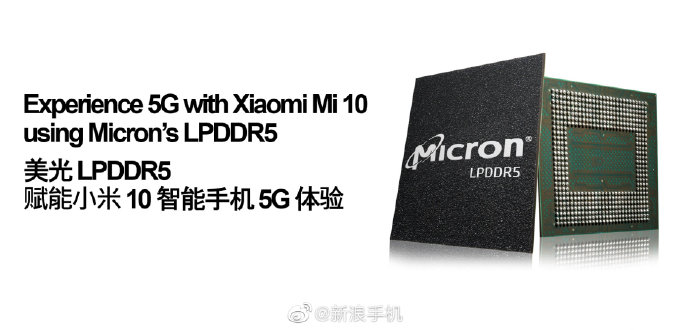
This morning, Micron Technology announced that it has commenced the mass production of the world’s first low-power LPDDR5 DRAM chip designed for high-end smartphone market. It is now confirmed that the upcoming Xiaomi Mi 10 series will be the first phones to feature it. The Mi 10 may become the first smartphone to arrive with the latest LPDDR5 RAM technology. However, there is a possibility that Samsung’s Galaxy S20 series could beat the company in using this new-age RAM.
Micron’s LDDR5 make use of industry leading packaging technology for its 12 GB RAM. The low power DDR5 offers a transmission rate of up to 6.4Gbps. In terms of speed, it is twice as fast as LPDDR4 and 20 percent faster than LPDDR4x RAM. The data access speed has been upped by 50 percent on the LPDDR5.
Compared to the previous generation, it consumes 20 percent less power. According to Micron Technology, just because LPDDR5 is faster, the app processing and operation speed also becomes fast. Hence, devices equipped with LPDDR can help in extending the battery life by 5 to 10 percent.
When it comes to performance, Micron Technology said that the predecessor LPDDR4 RAM can be used for 4K, 8K applications, and image editing. However, it does not work well with AR games, 100-megapixel images, and high-performance video editing. These advantages are available with LPDDR5. Also, if LPDDR4 runs 100 apps simultaneously, a bottleneck may appear. LPDDR5 devices will not encounter such an issue, claims the company.
LPDDR5 can provide the required speed and capacity for AI engine that is built directly inside the mobile device processor. These CPUs rely on the data transfer of Micron’s built-in LPDDR5 memory to support machine learning capabilities. Phones equipped with 8 GB and 12 GB RAM LDDR5 RAM are expected to release in the first half of the year. Companies are expected to release phones with 16 GB in the second half of the year.
Micron Technology confirmed that the upcoming Xiaomi Mi 10 will be the first smartphone to come equipped with LPDDR5 memory. Xiaomi Group VP Chang Cheng said, “We value Micron’s long-standing leadership and innovation capabilities in the memory field. Micron’s LPDDR5 DRAM memory has market-leading performance and brings lower power consumption to Xiaomi 10 smartphones. It also ensures better performance and stability. We believe that LPDDR5 will be standard on flagship phones in 2020.” Xiaomi is yet to confirm the launch for the Mi 10 series. It is speculated that the Chinese firm will unveil it in the coming week.
We love special edition phones, sometimes for the phone itself when it is also customized and has special features, and other times it is the retail box and the extra goodies inside. Of all the special edition boxes I have seen, the one for the Realme X50 New Year Edition might as well be the most colorful.
Photos of the Realme X50 New Year Edition were originally posted on the Weibo account late last month but we missed it. Nevertheless, they were reposted on Twitter yesterday by Francis Wang, the CMO of Realme India.
The retail box highlights the Chinese New Year with a cartoonish and colorful style. If all retail boxes were designed this way, I wouldn’t mind collecting them as a hobby.
From the images, it appears the Realme X50 New Year Edition comes with the red variant of the Realme Fast Charge Power Bank, the orange version of the Realme Buds Wireless earphones, a bunch of colorful red envelopes, a calendar, and of course a unit of the phone included in the box.
Unfortunately, it doesn’t seem as if Realme will be selling this special edition as there is no info about purchasing it both on their social media channels and on their official website.
[envira-gallery id=”304021″]
The Realme X50 was announced in early January. It has a 6.57-inch FHD+ display with a pill-shaped punch-hole at the top left corner for dual front-facing cameras. The phone is powered by a Snapdragon 765G processor with 6GB, 8GB, or 12GB of RAM and 128GB or 256GB of non-expandable storage.
There is a quad-camera setup on the back of the phone that includes a 64MP primary camera, a 12MP telephoto camera, an 8MP ultrawide camera, and a 2MP macro camera. The primary front-facing camera is a 16MP primary sensor and it is paired with an 8MP ultrawide angle camera.
The Realme X50 also has NFC, Bluetooth 5.1, a side-mounted fingerprint scanner, and Dual-SIM with 5G support. It packs a 4200mAh battery with support for VOOC 4.0 (30W fast charging) and runs Realme UI based on Android 10 out of the box.
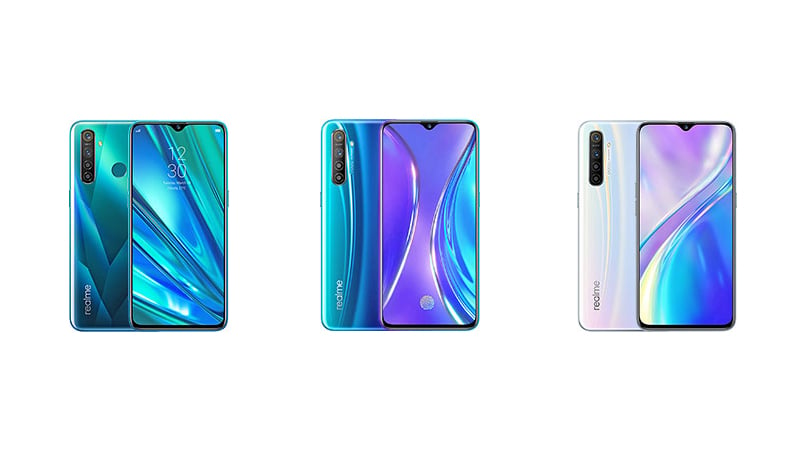
Realme brought an amazing smartphone lineup in Europe in terms of quality price ratio. In the price tag ranging from €150 to €300, you can currently find three awesome Realme smartphones in the global market. We are talking about Realme 5 Pro, Realme XT, and Realme X2. The differences between the user experience provided by these three devices are not huge, but they exist and they may be important for a lot of people. Through this comparison, we will try to help you make the right choice for your needs by highlighting the differences between their specifications.
Oppo Realme 5 Pro vs Oppo Realme X2 vs Oppo Realme XT
Quad 48 + 8 + 2 + 2 MP f/1.8, f/2.2, f/2.4 and f/2.4
16 f/2.0 front camera
Quad 64 + 8 + 2 + 2 MP f/1.8, f/2.3, f/2.4 and f/2.4
32 MP f/2.0 front camera
Quad 64 + 8 + 2 + 2 MP f/1.8, f/2.3, f/2.4 and f/2.4
16 MP f/2.0 front camera
BATTERY
4035 mAh, fast charging 20W
4000 mAh, fast charging 30W
4000 mAh, fast charging 20W
ADDITIONAL FEATURES
Dual SIM slot
Dual SIM slot
Dual SIM slot
Design
Realme XT and X2 offer exactly the same design and it is definitely a superior design if we compare it to the Realme 5 Pro. While the Realme 5 Pro has a plastic design, both Realme XT and X2 offer a glass back, while the frame is still made of plastic. On the other hand, note that Realme 5 Pro is splash resistant, while XT and X2 are not. But if we consider the look, XT and X2 are actually a better choice due to their materials.
Display
Besides the design, Realme XT and X2 share another thing in common: the display. Both are equipped with the same 6.4-inch AMOLED panel boasting a Full HD+ resolution and an in-display fingerprint reader. Realme 5 Pro has a smaller panel with the IPS technology and still a Full HD+ resolution. Given that the 5 Pro has an IPS panel, it does not sport an in-display fingerprint reader, but it has a rear-mounted biometric sensor. In each case, you get a waterdrop notch. Realme XT and X2 offer a better image quality thanks to their better AMOLED panel, so go either for the XT or the X2 if you need the best display.
Specs & Software
The best smartphone of this comparison in terms of performance is the Realme X2. It sports a higher-end Snapdragon 730G which offers better CPU performance and way superior graphics performance. So it is amazing for both power users and gamers. Further, it offers the best memory configuration with up to 8 GB of RAM and up to 256 GB of internal storage. Realme 5 Pro and Realme XT share the same chipset and the same memory configuration in their most expensive variant. And in each case, you get the same software: ColorOS 6 based on Android 9 Pie out of the box. All of these devices will be updated to Android 10 this year and they will get the new Realme UI with several improvements.
Camera
Realme XT and X2 offer exactly the same rear camera department including a 64 MP main sensor, an 8 MP ultrawide lens, a 2 MP macro camera and a 2 MP depth sensor. And this quad camera setup is better than the one found on the Realme 5 Pro. Note that Realme X2 and XT differ for the front camera: while the former has a 32 MP selfie snapper, the latter has just a 16 MP sensor. So overall, the X2 wins the camera comparison. Realme 5 Pro has the same cameras as the XT except for the main sensor of the rear camera setup, which is a 48 MP lens.
Battery
More or less the same battery capacity for all of these handsets, but Realme X2 lasts slightly more in most of the scenarios thanks to its more efficient Snapdragon 730G chipset built at 10 nm. Further, it has a faster charging technology.
Price
Realme 5 Pro starts from €199/$219 globally, Realme XT starts from €259/$285 and Realme X2 starts from €299/$329 (you can find them at lower prices thanks to online street prices). Realme X2 is the winner of the comparison due to its better chipset, front camera and charging technology. But if you do not need an incredibly powerful SoC, Realme XT is enough for you. Realme 5 Pro lacks an AMOLED display and it has a less impressive camera department, as well as a glass back. But its price is very affordable. Which one would you go for?
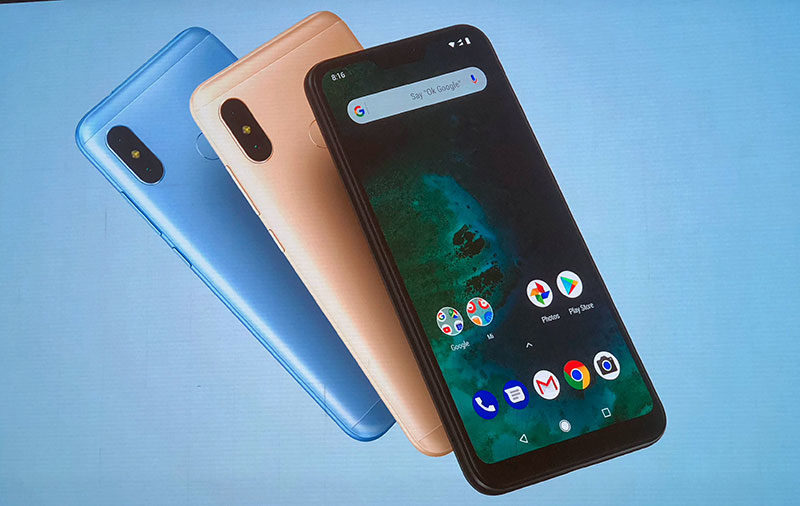
Xiaomi relies heavily on ad placement inside its custom MIUI OS as a source of revenue. The company, however, took the industry by surprise when it launched the Mi A1 in 2017 and then the Mi A2 and Mi A2 Lite 2018 running stock Android under Google’s Android One program. The Mi A3 was also released in 2019. The Mi A2 and A2 Lite launched with Android 8.1 Oreo but received Android 9 update last ear. The Mi A2 Lite had earlier been confirmed to receive Android 10 update.
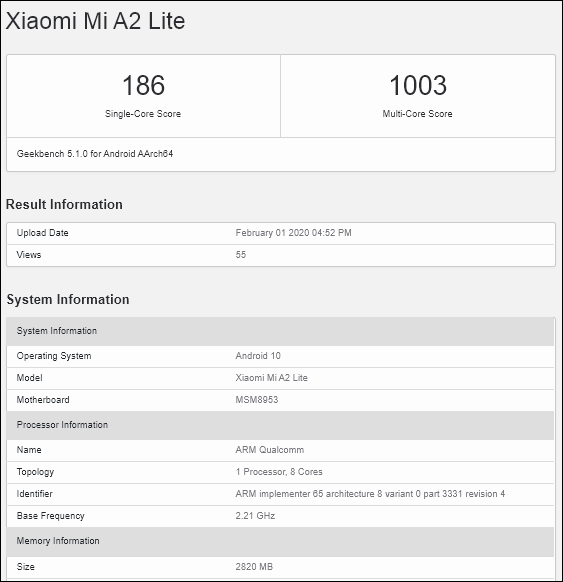
Now, several Xiaomi Mi A2 Lite units running Android 10 have surfaced on GeekBench. The models included versions having 3GB and 4GB of RAM. The Mi A2 Lite models were also listed with the MSM8953 motherboard which integrates the Snapdragon 625 that powers the Mi A2 Lite.
As stated earlier, Xiaomi had earlier confirmed the Mi A2 Lite will receive Android 10 update after disgruntled users filed a petition for not receiving Android 10 update on Change.org. Before the petition, the company had earlier hinted that it had no plans of releasing Android 10 update for the A2 Lite. Thus, the GeekBench listings may be an indication that the update will roll out pretty soon. We expect the Mi A2 to also receive the update for Google’s latest OS version. No doubt, this will definitely be the last major Android update the Mi A2 models will receive.
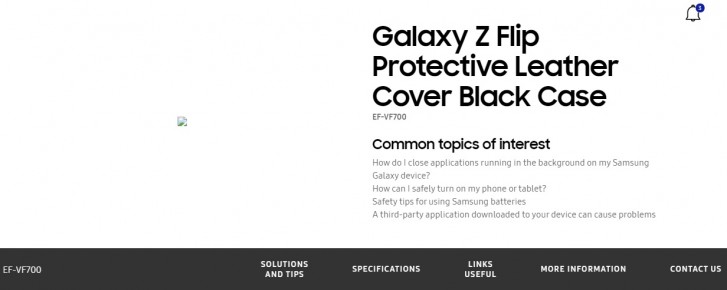
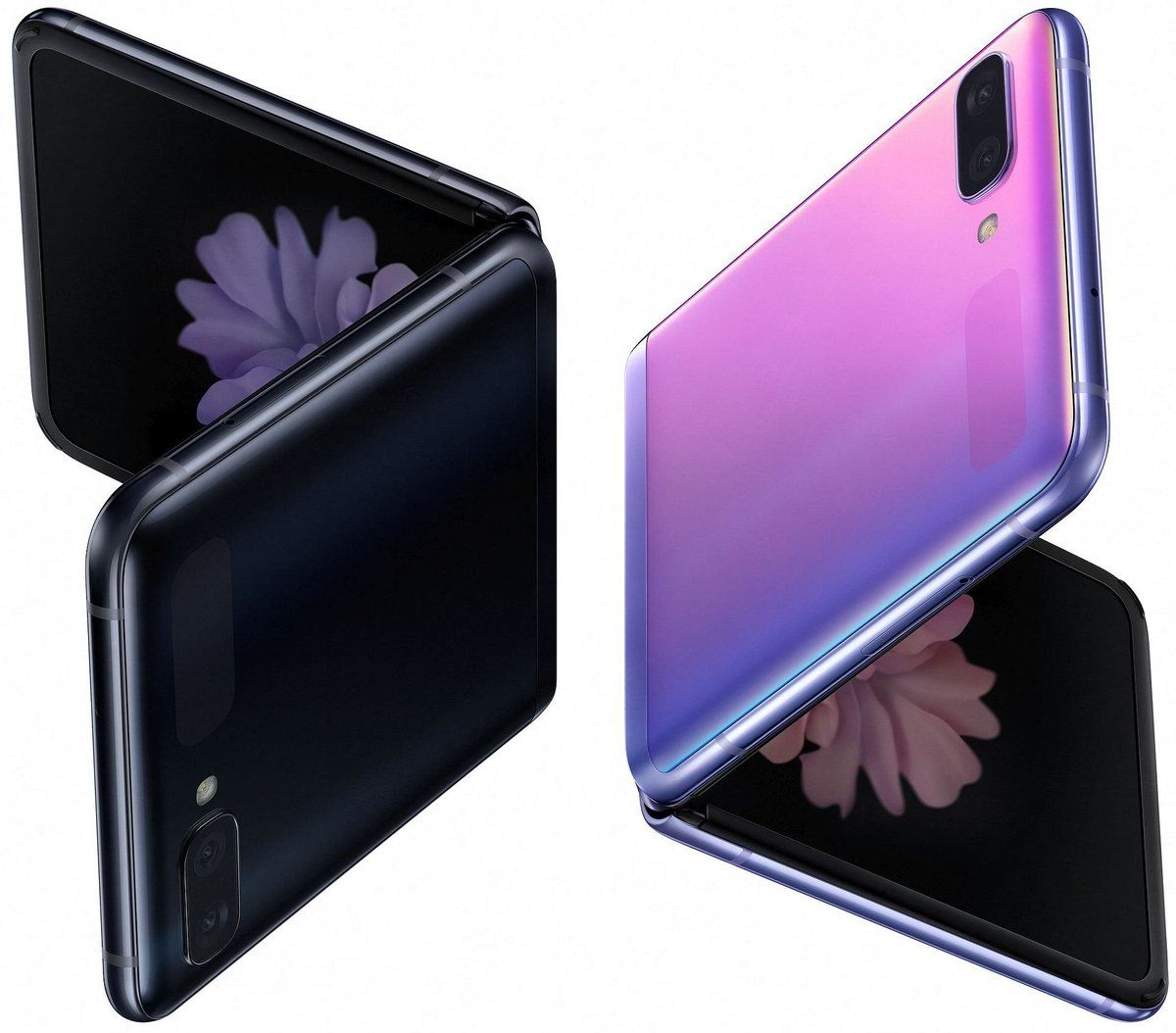
Recent reports reveal that Samsung’s clamshell phone Galaxy Z Flip with foldable display and Galaxy S20 series of flagship phones will debut on Feb. 11. Initial reports had dubbed it as Galaxy Fold 2 The Galaxy Z Flip moniker was not confirmed by the company, but recent reports revealed that it will be breaking cover with the said name. Now a listing of an accessory of the phone on Samsung Romania website has confirmed that it will indeed debut as Galaxy Z Flip.
In October last year, Samsung had said that it is working on a clamshell phone. Assuming this to be successor to the original Galaxy Fold phone, the name Galaxy Fold 2 got held up in every new report on this flip phone. By December, news had it that this next generation Galaxy Fold 2 would get announced alongside the Galaxy S20 series in February 2020. With just two months for its launch, more information on the phone’s name as well as specifications was certainly expected within a span of a few weeks.
The Galaxy Z Flip name was first revealed by reliable Chinese tipster Ice Universe. Any clouds over the reliability of this tip were cast away when the same name appeared on an Indonesian certification body. To everyone’s delight, later the name also appeared on the database of Thailand’s NBTC regulatory body.
What stayed amiss however was any official update as till then Samsung did not confirm the name for a phone whose design it had showcased months back. Who could expect that such official authorization could come in an unexpected way through an accessory listing for the phone on Samsung’s Romania website? The accessory listing states that the company will be selling a leather cover for its upcoming clamshell phone.
Samsung Galaxy Z Flip specifications and pricing (Rumored)
The Galaxy Z Flip will run on Android 10 along with Samsung’s One UI skin. It could be driven by the 7nm Snapdragon 855+ processor with 8 GB of RAM and 256 GB UFS 3.0 built-in storage. It could be coming with a two-part battery system with a total capacity of 3,300 mAh. The phone supports 15W rapid charging and 9W wireless charging.
The clamshell phone is expected to house a 6.7-inch S-AMOLED Infinity Flex foldable display that offers full HD+ resolution and an aspect ratio of 22:9. The rear side of the device has 12-megapixel + 12-megapixel dual camera setup whereas it is equipped with a 10-megapixel selfie camera. The device could be priced at $1,399 in the U.S.
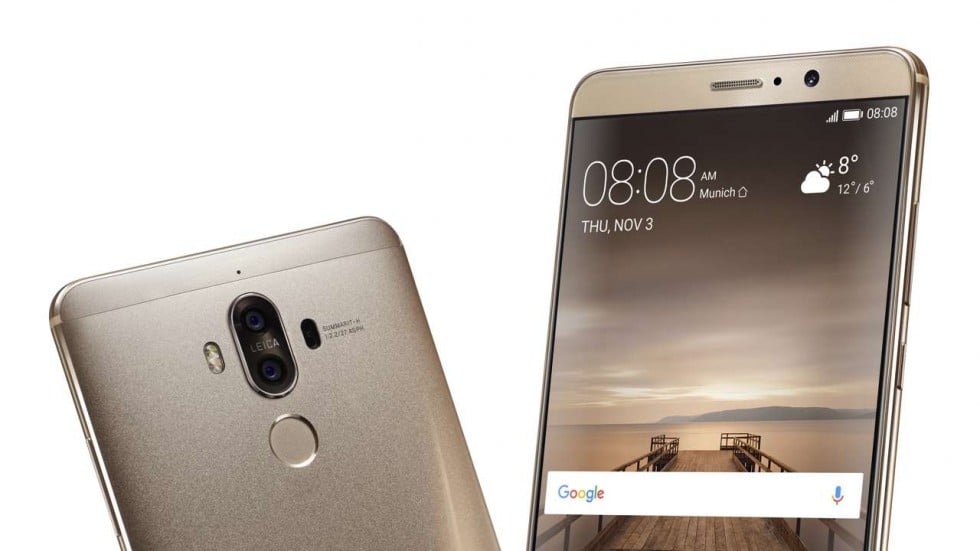
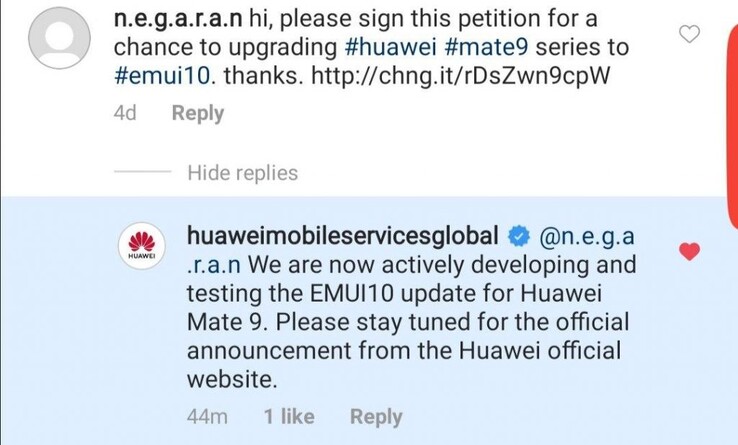
Huawei Mate 9 series was launched in 2016 and truth be told, that is a long time away. That was before smartphones started adopting the 18:9 aspect ratio and full-screen design. But the device was one popular model and fans of the model still expect Huawei to provide an update for the model. Recently, Mate 9 users signed a petition urging Huawei to release EMUI 10 based on Android 10 update for the model. A response issued by the company on Instagram indicated that the Chinese giant was working on an update for the Mate 9. While Mate 9 users were basking in the good news, it turns out the response may have been generated by a bot.
According to Huawei Central, Huawei has now responded, confirming that the Mate 9 WILL NOT receive the latest Android 10-based EMUI 10 update. The response also included some clarification that the statement on Instagram wasn’t given by an official representative.
Huawei Mate 9 made its debut in 2016 packing a 5.9-inch display, powered by Kirin 960 processor and preloaded with Android 7 (EMUI 5) then upgraded to Android 8 (EMUI 8) and last year it received Android 9 based EMUI 9.1. Looks like users will have to stick with the Android 9 based EMUI 9.1 or upgrade to a newer model like the Mate 30 which runs EMUI 10.
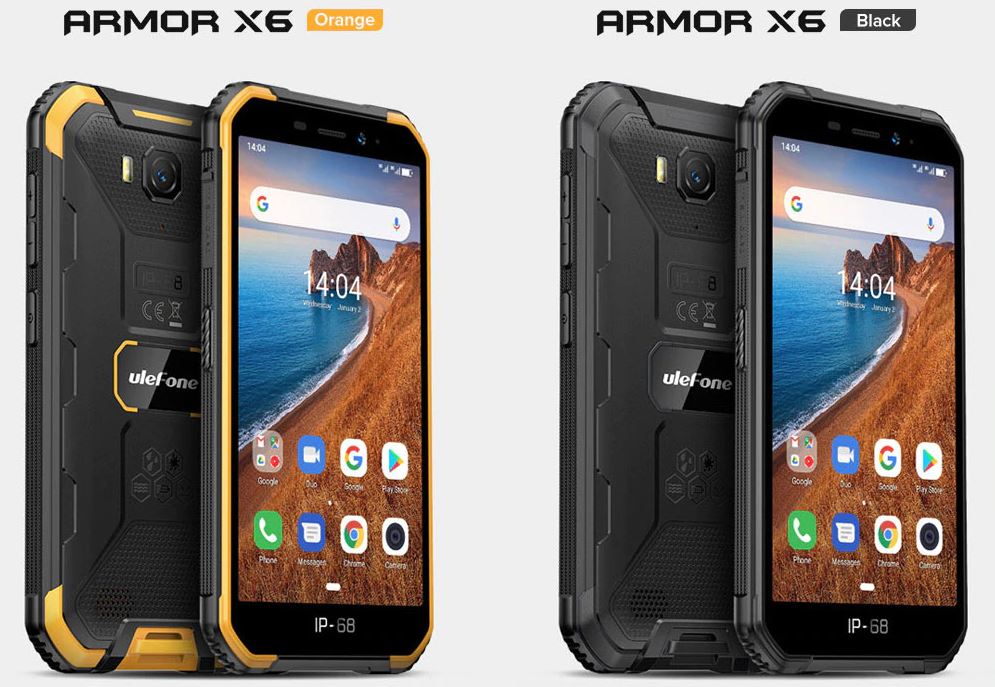
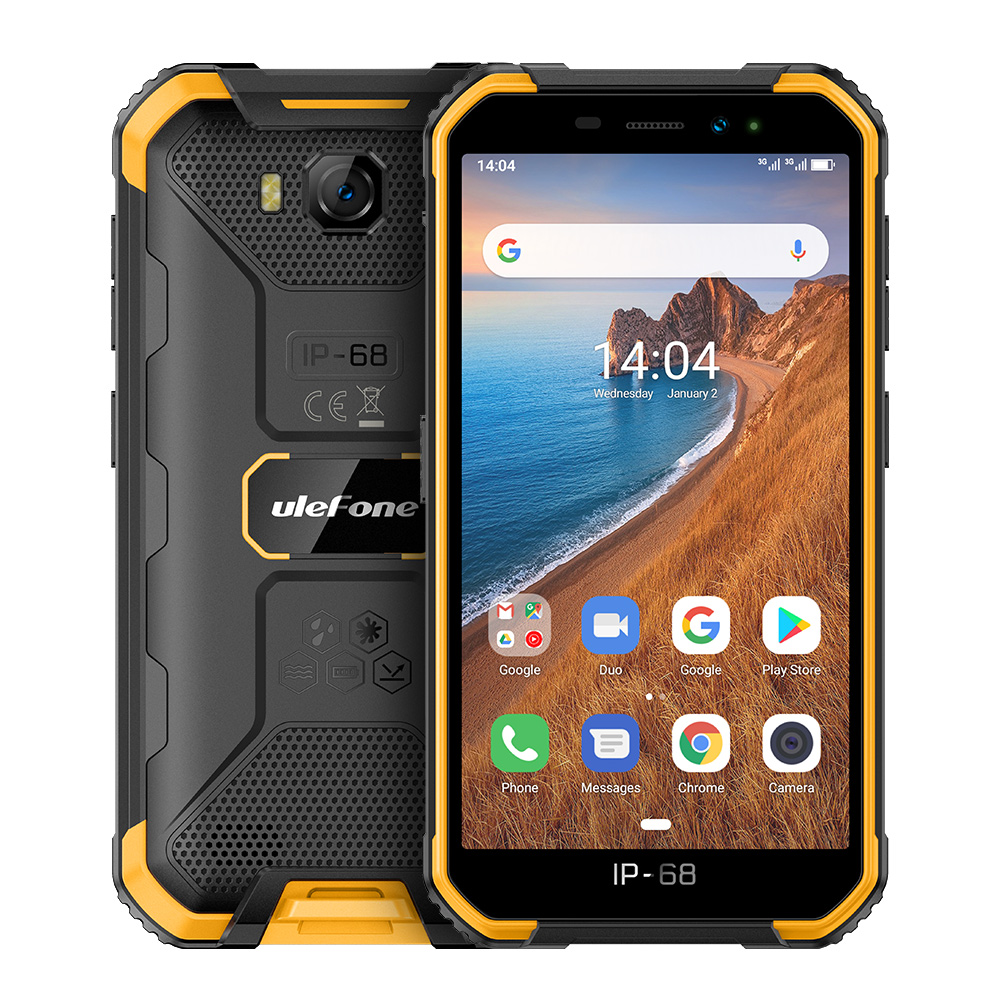
Ulefone Armor X6 belongs to the entry-level rugged smartphone series of the Chinese manufacturer and so far, we’ve seen it go through various durability tests that have to do with water and drop resistance. Today, the company released a crazy test showing the Armor X6 being stepped over by a car! Let’s see what happened.
As you can see in the video, the car’s wheel passes many times over the Armor X6 and still, the device remains fully functional and in one piece! Neither the body nor the screen got any cracks or any other kind of damages. It seems that the MIL-STD-810G certification does its job well.
As for the rest of its specs, these include a power-efficient 4-core SoC backed by 2GB of RAM and 16GB of storage. Also, there is a big, 4000mAh battery and a 5″ HD display. On the camera department, there’s a dual camera on the back with 8MP/5MP setup and a 2MP selfie shooter that supports face unlock. Of course, it’s a dual-SIM/dual-standby device and comes with Android 9 Pie.
If you are an outdoor enthusiast or just want a durable smartphone for everyday use, Armor X6 should be taken under consideration, especially now that it sells at just $69.99on Aliexpress. To check out the rest of the company’s product lineup, visit their official website.
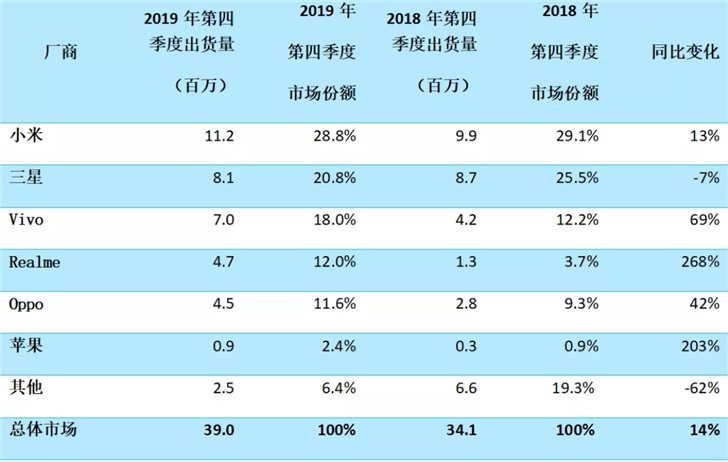
International market research firm Canalys has released a report containing the shipping estimates of the Indian market for the fourth quarter of 2019. The data shows Chinese tech giant Xiaomi continued to dominate the market in the fourth quarter.
In terms of shipments, Xiaomi increased by 13% to 11.2 million units in the fourth quarter, and annual shipments rose steadily from 41 million units in 2018 to 42.9 million units. Samsung ranked second, with a year-on-year decline of 7% to 8.1 million units in the fourth quarter. Samsung’s gross estimated shipment of 32.3 million units in 2019 was slightly inferior to 35.4 million units in 2018. Vivo ranks third, with a year-on-year increase of 69% to 7 million units in the fourth quarter, and annual shipments increased 72% to 24.7 million units. Realme ranked fourth, with shipments up 268% year-on-year to pitch at 4.7 million units.
Finally, BBK subsidiary OPPO ranked fifth with a total shipment of 4.5 million units in the fourth quarter, an increase of 42% year-on-year. Apple has also achieved its best performance ever in India. Shipments in the fourth quarter were close to 925,000 units, a year-on-year growth rate of over 200%.
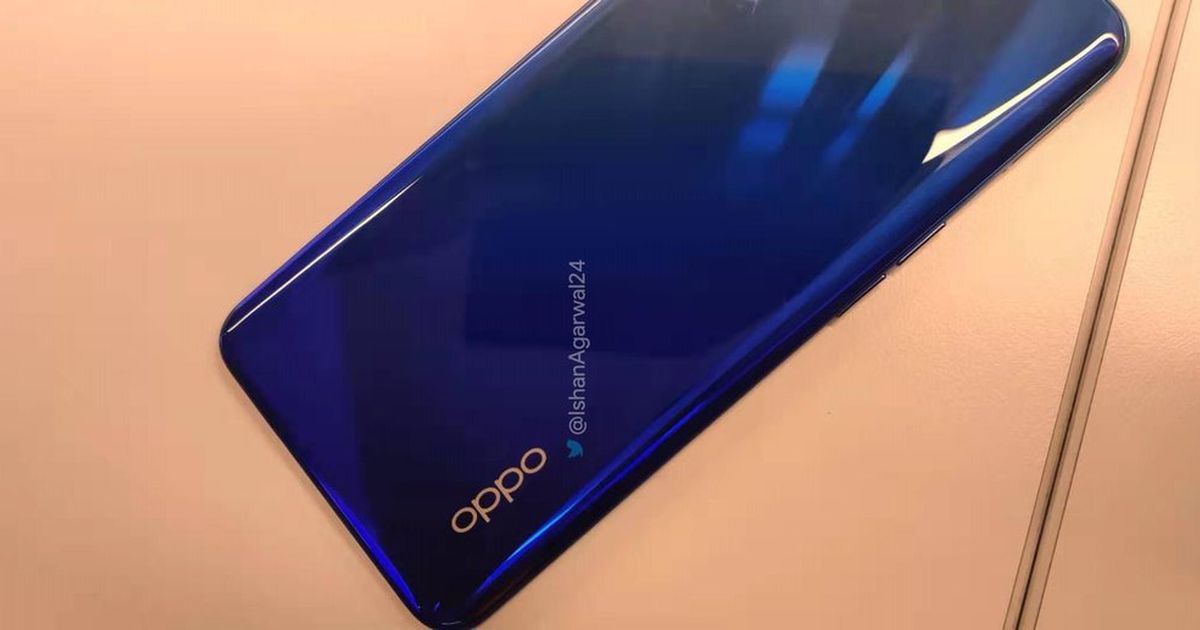
OPPO India is reportedly gearing up to launch a global version of the Reno3 Pro. It is rumored to go official in the third week of this month. Initial reports have revealed that the Reno3 Pro its front design will be different from the Chinese edition of the same phone that had debuted in December. Reputed leakster Ishan Agarwal has shared a real-life image of the Reno3 Pro. The China version of the Reno3 Pro comes in a blue color option. However, the Reno3 Pro that has appeared today in a blue color has a sleeker appeal.
The tipster has revealed that India will be the first country to receive the Reno3 Pro’s global version. The leaked shot reveals that the glass rear of the Reno3 Pro has a gradient finish. The edges of the phone are slightly curved. The cameras of the phone seem to be present at the top-left corner of the rear shell. There is no confirmation on the number of cameras that are available on the backside of the device.
A previously leaked image of the global version of the Reno3 Pro had revealed that it will be equipped with a dual punch-hole screen. It is rumored to have feature a main lens of 44-megapixel and it could be coming with a 2-megapixel lens. The Reno3 Pro phone that had unveiled in China has a single punch-hole screen.
There is no information on the other specifications of the Reno3 Pro that will be launching in India. The Chinese edition has Snapdragon 765G onboard which makes it 5G ready. Hopefully, future leaks will reveal more information on the device.
In related news, OPPO India is planning to launch OPPO A8 and OPPO F15s smartphone in India. The Chinese firm had launched the OPPO A8 phone in China in December with a price tag of 1,199 Yuan (~$172). The Helio P35 powered A8 phone is expected to debut in India with a price tag of around Rs. 12,000.
The OPPO F15s will be arriving as a lower version of the OPPO F15 that launched in the previous month. The F15 had launched as a rebrand version of China’s OPPO A91 phone. The phone may arrive with a price tag of Rs. 19,990 (~$280) in March. The new OPPO F15s is expected to rival with the likes of the Redmi Note 8 and Realme 5 phones in India.
The Coronavirus scourge that is currently on a rampage in China has brought out the humanitarian angle of mot companies. Apart from donations from large companies like Xiaomi, Lenovo, Huawei, we have seen individuals make huge donations to aid persons that were caught up in Wuhan and other cities in Hubei province where the virus first appeared.
Xiaomi’s CEO Lei has reportedly donated medical supplies worth 12.7 million yuan to Hubei. According to the report carried by Voice of Hubei, a 90-tonne special plane full of medical protection supplies arrived at Wuhan Tianhe Airport from South Korea. This batch of medical-grade protective supplies included 200,000 sets of medical protective clothing, 90,000 N95 masks, 1 million medical surgical masks, 2 million KF94 masks, and 100,000 goggles. Due to the huge amount of supplies, the first batch of supplies was delivered by special aircraft in batches and arrived in Wuhan on the evening of January 30 and 31. The third batch arrived on February 5, and the fourth batch will arrive today (February 6). Before now, the CEO had also made other donations both in cash and products to help fight the scourge.
Lei Jun has a close tie with Hubei as that is his province and he also graduated from the Wuhan University. This he has shown by the number of donations that have been made under his watch. Lei Jun had first announced a donation of 10.7 million yuan on behalf of Xiaomi Group. He later donated 3.4 million yuan from the assets of Wuhan University alumni company. China Chengxin Group donated 3.3 million yuan and China Jia Capital donated 3.3 million yuan. He also got the Wuhan University Alumni Association to purchase medical protective supplies urgently from South Korea.
Furthermore, on February 2, Xiaomi Group, Xishanju and Viomi Company donated a large number of materials to Wuhan Vulcan Mountain Hospital and Raytheon Mountain Hospital, worth 2.485 million yuan. The materials included 1,750 Xiaomi tablet computers for remote video viewing systems. Others are air purification gadgets, infrared thermometers, walkie-talkies and others. On February 3, Xiaomi donated 50,000 medical surgical masks to Donghu High-tech Zone for epidemic protection. On the same day, Lei Jun also donated 2 million yuan to Xiantao City, and the relevant funds will be designated for the purchase of epidemic-resistant medical supplies and equipment.
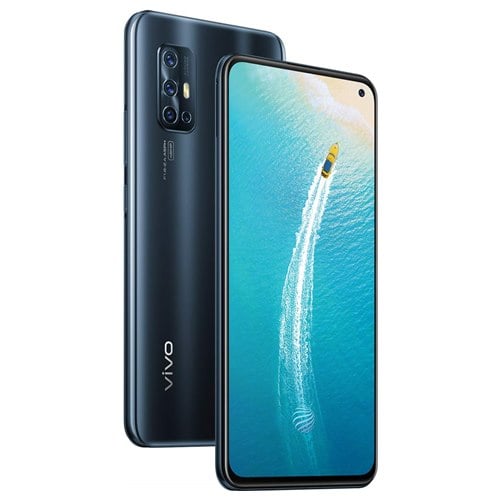
Vivo is reportedly working on the Vivo V19 series of smartphones. A recent report had revealed that Vivo India will begin with pre-booking of the Vivo V19 series by end of this month. A fresh report on 91mobiles reveals that the Vivo V19 phone will be hitting the Indian market in March. It could be arriving as the first Vivo with dual punch-hole screen.
The publication claims that it has come to know from an insider that the Vivo V19’s display has a pill-shaped cutout for housing two front-facing cameras. Unfortunately, there is no information available on the display and camera configurations. The secondary lens of the dual selfie camera setup of the Vivo V19 could be a depth assist lens. The Vivo V17 that had gone official few months ago had arrived with four rear cameras. Hence, it is likely the successor V19 phone could be also coming with quad rear cameras. Like the predecessor phone, the V19 may arrive with an in-display fingerprint reader.
The Vivo V17 Pro that had launched last year had come with a 32-megapixel + 8-megapixel dual camera setup. The Vivo V19 series includes the advanced Vivo V19 Pro. It remains to be seen whether Vivo brings the same brings the Vivo V17 Pro’s dual selfie snappers on to the Vivo V19. It remains to be seen whether the Vivo V19 Pro also arrives with a dual punch-hole screen like the V19.
The Vivo V19 and V19 Pro phones won’t be debuting tougher. The Pro model is expected to hit the Indian markets first. The company is expected to market the Vivo V19 series during the Indian Premier League (IPL) cricket tournament that starts on March 29 in India. It is speculated that the Vivo V19 series will be priced between Rs. 20,000 and Rs. 30,000. Both phones could be available for purchase in online and offline markets.
Vivo V17 specifications
Priced at Rs. 22,990, the Vivo V17 has a 6.44-inch S-AMOLED punch-hole display that produces full HD+ resolution and 20:9 aspect ratio. The Snapdragon 675 mobile platform, 8 GB of RAM and 4,500mAh battery powers the phone. It supports 18W fast charging and comes loaded with Android 10 OS. It has an internal storage of 128 GB and a microSD card slot. It has a 32-megapixel front camera and a 48-megapixel + 8-megapixel (ultrawide) + 2-megapixel (macro) + 2-megapixel (depth) quad camera system.
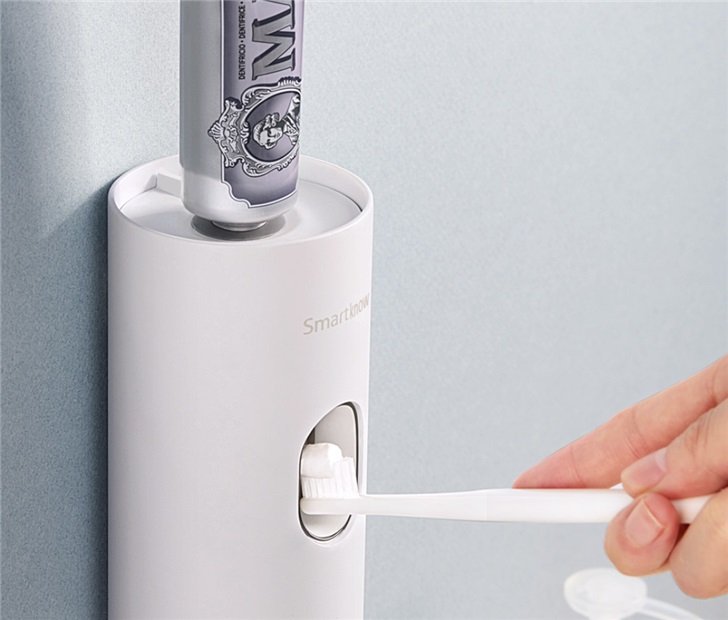
Xiaomi has just started crowdfunding a new product earlier today (5th February 2020). It is the Smartknow automatic toothpaste dispenser, which is also capable of uses UV to disinfect the toothbrush when releasing toothpaste.
The Smartknow automatic toothpaste dispenser uses infrared sensors to detect the proximity of a toothbrush. When detecting one, it squeezes out a certain amount of toothpaste. While this is happening, the gadget uses UV to disinfect the head of the toothbrush which is placed in the dispenser’s cavity in the middle.
The Smartknow Automatic Toothpaste Dispenser can disinfect the toothbrush using UV
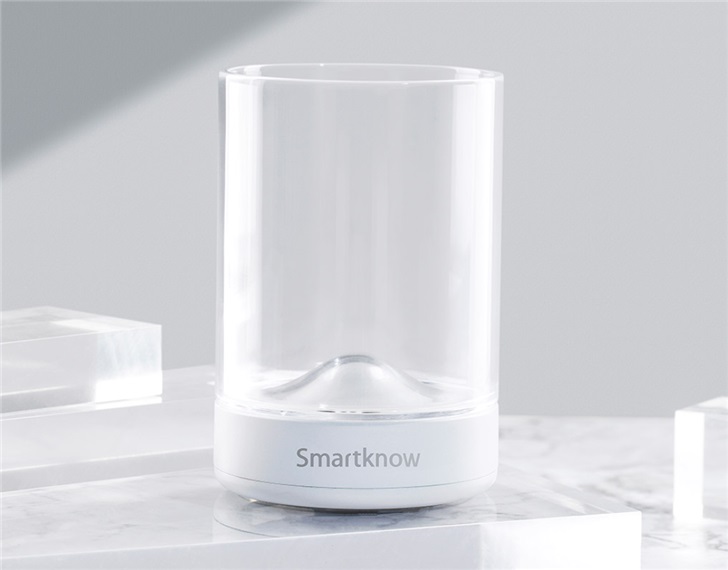
According to official notes, the Smartknow product uses an integrated tube design which allows the toothpaste to not make contact with air, helping in avoiding exposure to pollutants in the atmosphere. Additionally, the dispenser also arrives with a smart toothbrush cup as well.
Both the automatic dispenser and sterilization cup adopts a simplistic design philosophy and similar to former, the latter can also disinfect the toothbrush once UV sterilizing mode is turned on. The product can also be linked to the Xiaomi Mijia App, which allows for remote control over its operations. The cup is made of plexiglass and has a total capacity of 300ml and sterilize multiple toothbrushes at the same time.
Smartknow offers a sterilizing cup as well, also uses UV to disinfect the toothbrush
The Smartknow Automatic toothpaste dispenser and sterilizing cup are currently available via crowdfunding from Xiaomi; and is available for a price of 89 Yuan (or roughly 12 US Dollars) for just the dispenser, while the cup cost 69 Yuan (or roughly 10 US Dollars). Both can also sold together in a set which carries a price tag of 99 Yuan (or roughly 14 US Dollars)
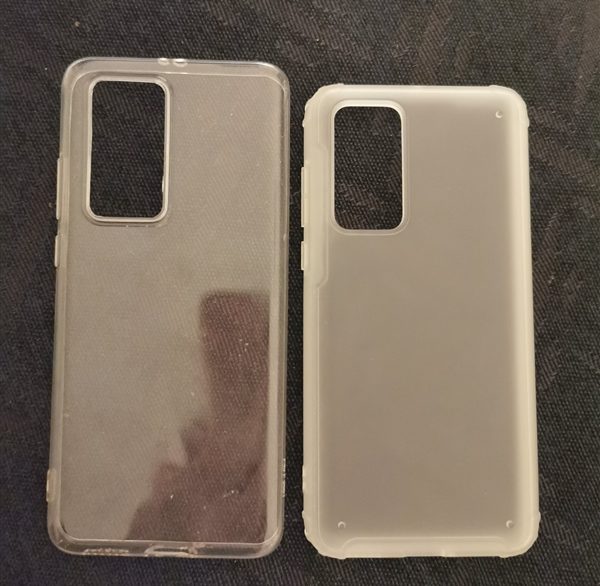
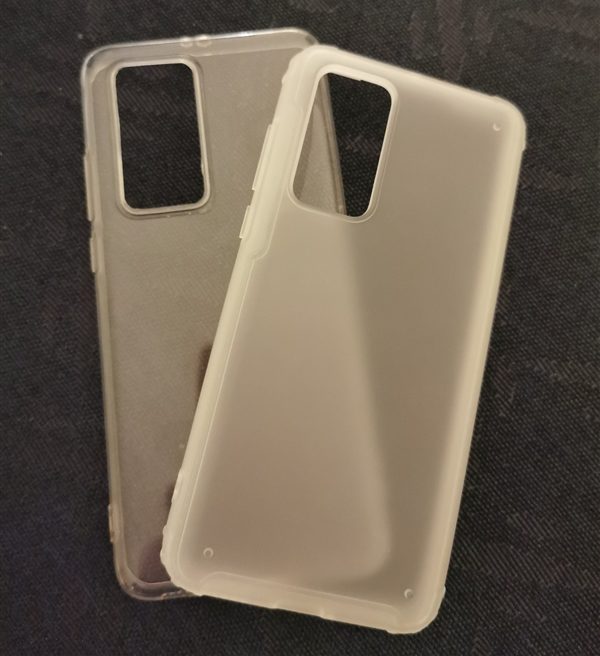
Huawei is expected to take the wraps off the P40 series in March this year. While we wait for the company to officially announce a launch date, the P40 continues to be the subject of leaks. The latest is the protective cases of both the Huawei P40 and P40 Pro.
Huawei P40 and Huawei P40 Pro case
The protective cases may not give us an idea of the front design but it tells how the sizes would be different as well as the rear camera design. In this case, the Huawei P40 and P40 will have different screen sizes as one aspect where both models differ. The model will also come with a matrix camera on the back. The details differ in the arrangement and number of cameras.
According to the information previously exposed by @RODENT950, the Huawei P40 will come with a triple rear camera setup that includes a 40MP Cine (ultrawide) camera with a 1/1.5” sensor size, a 52MP main camera with a 1/1.3” sensor size, and an 8MP telephoto camera with 3x optical zoom.
The Huawei P40 Pro will also have a 40MP Cine (ultrawide) camera with a 1/1.5” sensor size and will pair it with a 52MP main camera with a 1/1.3” sensor size. Rather than a telephoto camera, Huawei is said to adopt a periscope zoom lens like that of the Huawei P30 Pro. This will offer more optical zoom, at least 5x, and of course more digital zoom. The P40 Pro will also have a 3D ToF camera.
The Android TV Box comes handy when the users want to cut the cord and stream content wirelessly. It comes handy when looking to stream a movie or a show directly on the TV. Numerous Android TV boxes are available in the market, running ages-old Android versions with low-end hardware specifications. To safeguard the buyers from such products, we have curated a guide of Best Android TV Boxes.
Are you a regular TV user and often have issues while streaming your favorite movie or show? Then you need to buy an Android TV Box to bring seamless connectivity and smart features. These Android TV Boxes provide integrated intelligent TV experience with inbuilt Chromecast, Voice Control, and Play Store compatibility. However, Google has failed twice in bringing its Android TV, but other manufacturers have gained momentum in the market by offering intuitive features.
Being an avid Android TV user, I will help our readers to choose the best Android TV box available in the market. They need not go to any other place to find a competitive Android TV Box.
Things to Consider before buying
Technical Specifications: Before purchasing any Android TV box, the user needs to look at its technical specifications carefully. Various manufacturers play around with the technical specification to bring affordable Android TV Boxes in the market.
Define Purpose: Frankly speaking, there’s no ideal Android TV box available in the market that can do everything. There are different Android TV Boxes for various purposes.
Support: The availability of upgrades and support for new programs are necessary before buying any Android TV Box. Inspect the support for the product, search for guides and forums before making the decision.
Budget: It is quite necessary to look into the pockets as some gaming-related boxes are surely going to burn a hole in the pocket.
Now, it’s time to look at the Best Android TV Boxes, as listed below.
Best Android TV Boxes
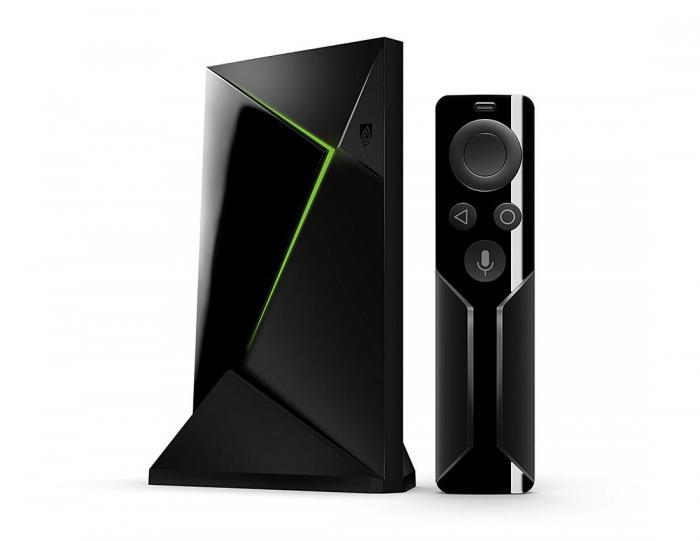
Nvidia Shield TV
Price: $149
It is a sturdy Android TV Box available for the price of $179. It is a beast Android TV Box featuring quad-core Tegra X1 processor, 3GB RAM, 16GB storage. The user can install massive games and applications from the Play Store.
The Nvidia Shield TV aids your home theatre with Dolby Vision HDR, and Dolby Atmos surround sound. It upscales the HD video to 4K by detailing brighter and crisper visuals using next-generation techniques. The new stealthier and compact design help to improve the look of your entertainment center.
The Nvidia Shield TV comes with a Gigabit Ethernet port, dual-band AC WiFi, a built-in power supply, and a microSD card slot. There’s an interactive smart remote supporting voice control, IR, for seamless control of the box. The media player supports 4K content of all major video streaming apps like Amazon Prime, Vudu, Netflix, YouTube, Hulu Live, and others.
Moreover, the Nvidia Shield TV can play Android games, stream games via the cloud with GeForce Now. All this is bundled in a single Android Box, and you can get from Amazon for $149.
There’s a Pro version also which is retailing for $199.
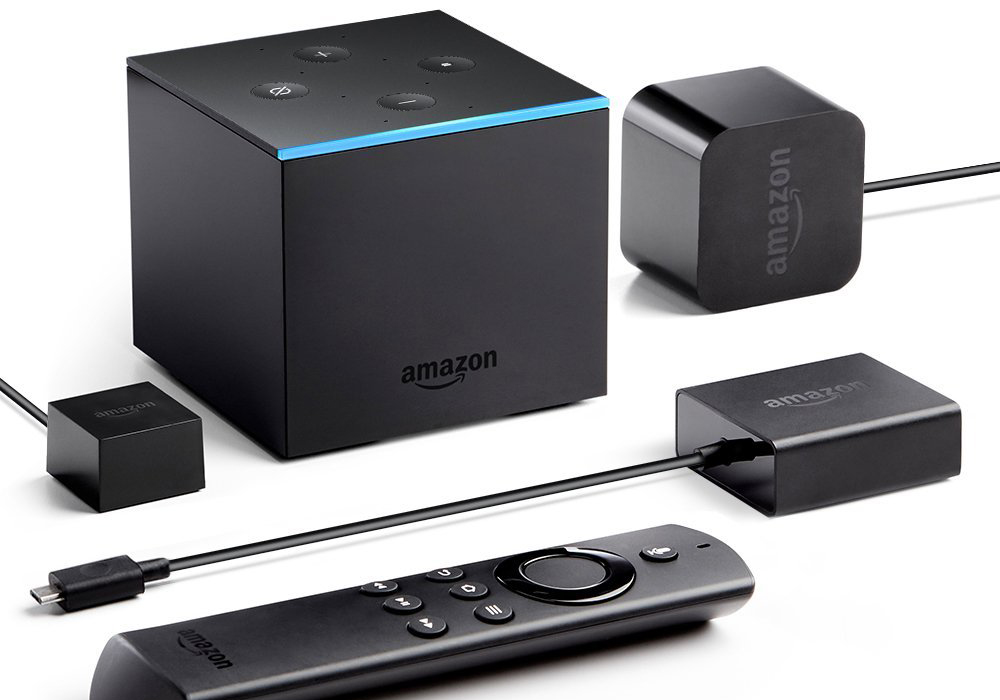
Amazon Fire TV Cube is another right choice to own if you’re looking for Android TV. However, the device is based on Fire OS, which is ultimately an Android 9.0 based skin. It consists of all the basic features of being an Android TV Box.
Amazon Fire TV Cube supports 4K Ultra HD video at 60 FPS, Dolby Atmos audio, HDR 10+, HDR, and casting capability. The Fire TV offers Alexa powered assistance and a visual treat for monitoring the status of all smart home devices. It supports 500,000 movies and TV shows from Netflix, Prime Video, HBO, Starz, Showtime, and Hulu. The user has access to YouTube, Facebook, and Reddit. Also enjoy live broadcasts from NBC, PBS, and other channels.
The user can interact with other Alexa powered smart appliances through TV. It allows you to control lights, thermostats, and other compatible smart home devices.
The device runs on the Hexa-core processor with the maximum clocking speed of 2.2GHz and is coupled with ARM Mali G52-MP2 GPU. It comes with 2GB RAM and 16 GB internal memory. To better connect with nearby devices, Amazon has added dual-band WiFi (MIMO) for faster streaming, Bluetooth 5.0 + LE, HDMI, micro-USB, and wired infrared support. It also supports a built-in speaker. The Fire TV Cube supports Dolby Atmos, 7.1 Surround Sound, 2ch Stereo, and HDMI audio pass.
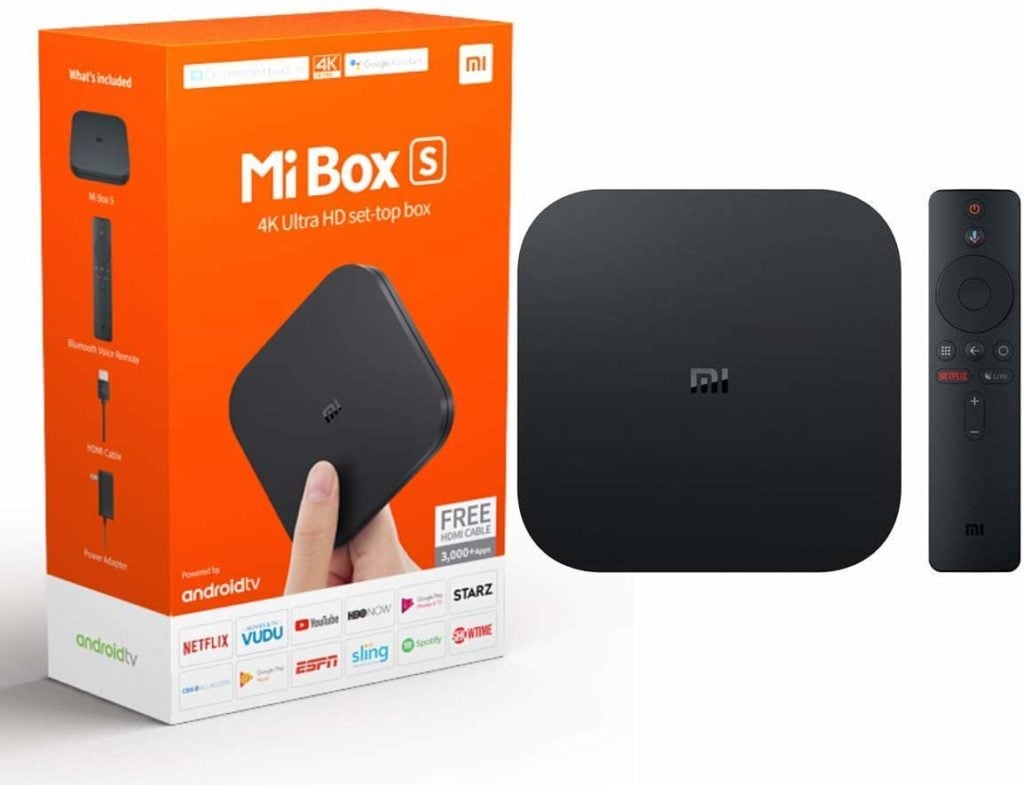
When it comes to affordability and competitive specs, Xiaomi never disappoints its users. Xiaomi Mi Box S is a high-end Android TV box with all the necessary functions. It features 4K HDR support with the latest Android TV version and Google Assistant support. Xiaomi Mi Box S supports inbuilt Chromecast and has a dedicated remote for hassle-free operation.
The users can install desired apps from the Play Store. It runs on Android TV 8.1 and supports all the major video apps like Netflix, VUDU, YouTube, SlingtV, and more. Xiaomi Mi Box S supports Dolby DTS along with 4K HDR visuals for an immersive experience. It connects easily with Google Assistant-powered devices.
In hardware specifications, Xiaomi Mi Box S hosts a powerful Quad-core CPU, 3+2-core GPU, and WiFi Connectivity. Multiple connectivity options like USB, HDMI, WiFi, and Bluetooth 4.1 make Box usage more friendly. It is a cheaper alternative for Nvidia Shield TV.
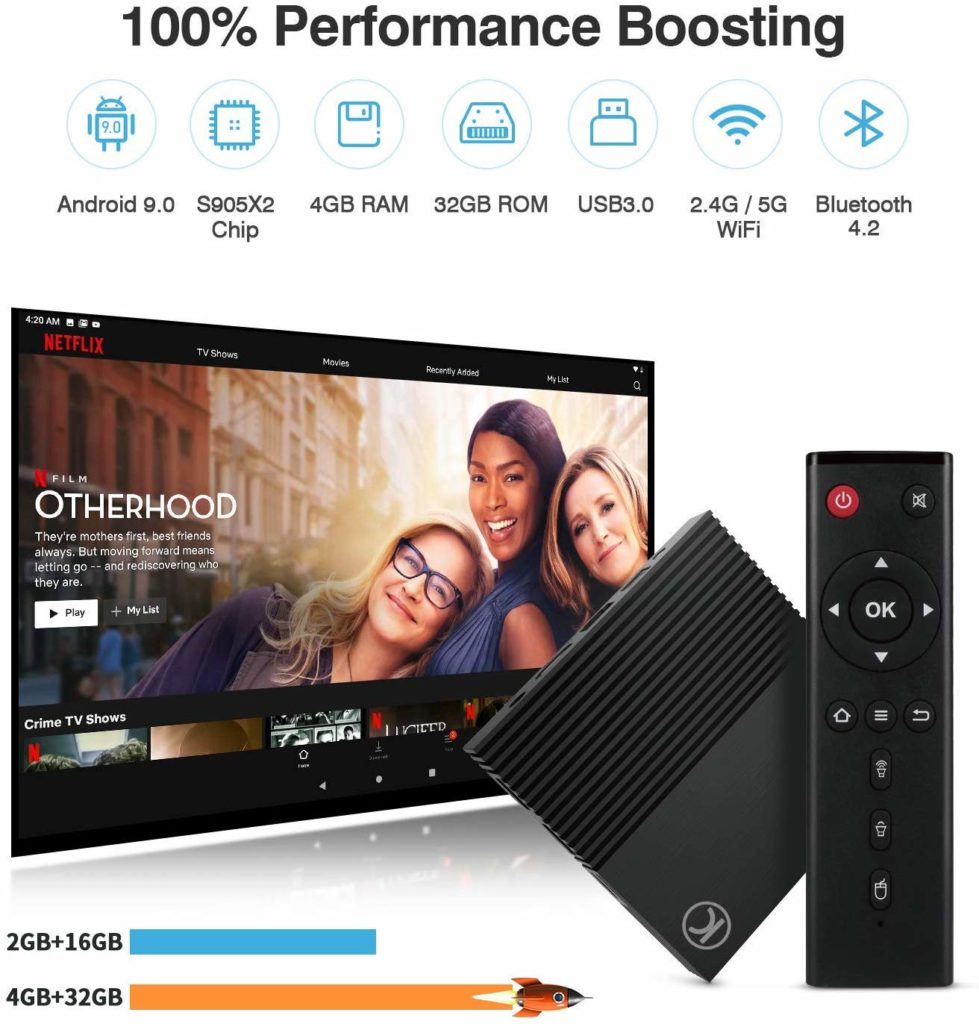
It is a powerful Android Box supporting 4K Ultra HD streaming. It is powered with the Amlogic’s latest 64-bit quad-core Cortex-A53 processor and coupled with Mali-G31 GPU. Vankyo MatrixBox is equipped with 4GB RAM and 32GB internal storage and supports expandable storage up to 128GB.
Talking about its streaming capabilities, Vankyo MatrixBox supports 4K @75fps UHD, HDR 10+, H.265 hardware decoding, and 3D. IN connectivity, the user gets a 2.4/5.0 GHz WiFi, Bluetooth 4.2, USB 3.0, and built-in 100M Ethernet connection port. The box supports Netflix.
Well, these are osm best Android TV Boxes available for being powerful and affordable at the same time. If you have any recommendations, then do let us know via the comments below.
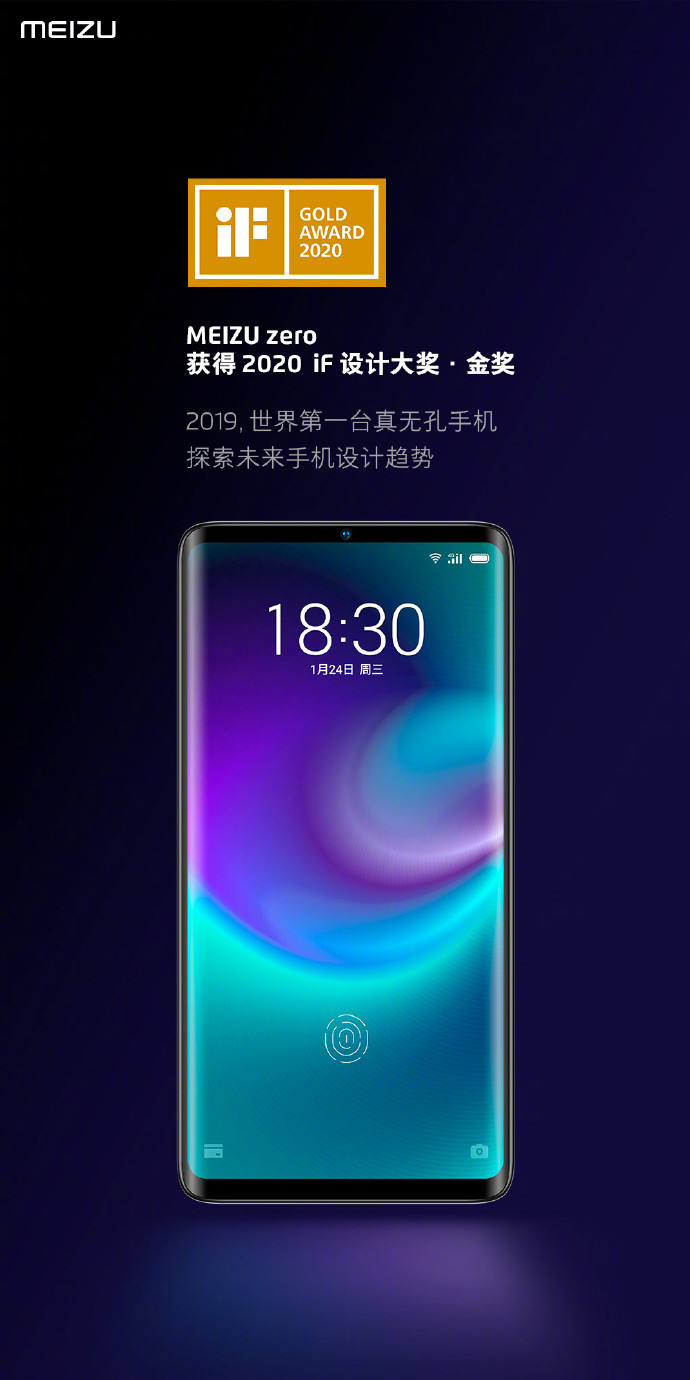
The Meizu Zero was announced last year as the world’s first phone with a “hole-less” design. It did not have a charging port, speaker grille, SIM tray, and even physical buttons. Meizu settled for alternatives such as wireless charging, sound-on-display technology for audio, an eSIM, and virtual buttons that provided haptic feedback via a linear motor. The device was listed on Indiegogo for crowdfunding but failed to meet its $100,000 goal.
Today, Meizu has announced that the Meizu Zero was the recipient of iF’s 2020 Gold Award. The 2020 iF Design Awards had a total of 7298 finalists from 56 different countries. The Meizu Zero and the Google Pixel 4 were the only two mobile phones that received a Gold Award of the 46 mobile phones that were given an award for design.
The Meizu Zero will never be mass-produced but Meizu will adopt some of its features for its future devices. Last year, it was reported that the Meizu 17 will be based on the Meizu Zero.
The Meizu Zero launched with a 5.99-inch OLED display and a ceramic unibody. It had a Snapdragon 845 processor but there were no details about the RAM and storage. It supported 18W wireless fast charge, had an IP68 rating and could survive immersion in water for 2 hours and 30 minutes. It also had dual rear cameras (12MP + 20MP) and a 20MP selfie camera.
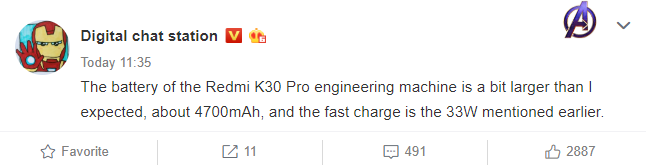
The Redmi K30 series includes Redmi K30 and Redmi K30 Pro. The Chinese firm unveiled the Redmi K30 in 4G and 5G editions. Rumors surrounding the Redmi K30 Pro suggest that it will be made official in March. Couple of details of the smartphone have appeared in the recent reports. Today, a tipster from China shared some key information on the battery capacity and maximum charging rate for the forthcoming Redmi K30 Pro.
The leakster claims that the pre-production unit of the Redmi K30 Pro has around 4,700mAh battery. He has claimed that the size of the battery is a bit larger than what he expected. Also, the phone is equipped with a 33W fast charger.
In comparison to the new leak, the predecessor Redmi K20 Pro is backed by a 4,000mAh battery whereas the Redmi K30 has a larger 4,500mAh battery onboard. Considering the K30’s battery capacity, users may want to see a same-sized or a slightly larger battery inside the K30 Pro. The Redmi K30 supports 30W charging in China.
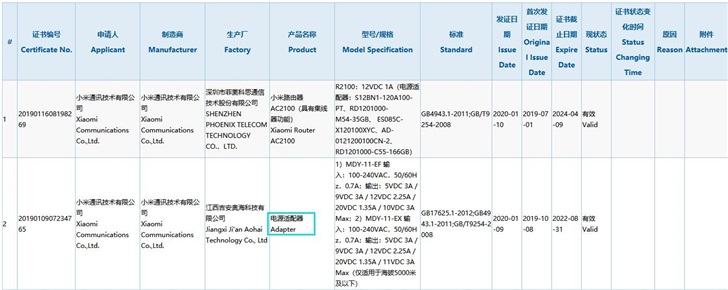
Recently, a Xiaomi charger with model numbers MDY-11-EF and MDY-11-EX was approved by the 3C regulatory body in China. The charger was found to support a maximum charging rate of 33W. There is a possibility that the Redmi K30 Pro could be arriving with the same charger.
Apart from the aforementioned details, the tipster has revealed many key details on its other specs of the Redmi K30 Pro. He has revealed that the K30 Pro may not come with a punch-hole screen. Rather, the phone may sport a pop-up selfie camera system like the Redmi K20 Pro. Also, the phone may sport an OLED panel. However, its pre-production unit does not seem to have a high refresh rate.
The rear shell of the phone may sport a round-shaped camera module. It could be coming with four cameras. The primary lens could be the Sony IMX686 64-megapixel lens which is also available on the Redmi K30.
The recent Geekbench appearance of the Redmi K30 Pro corroborated on previous rumors that it is codenamed as “Lmi.” The listing further revealed that the Snapdragon 865 mobile platform fuels the device with 8 GB of RAM. It was found to be running on Android 10 OS.
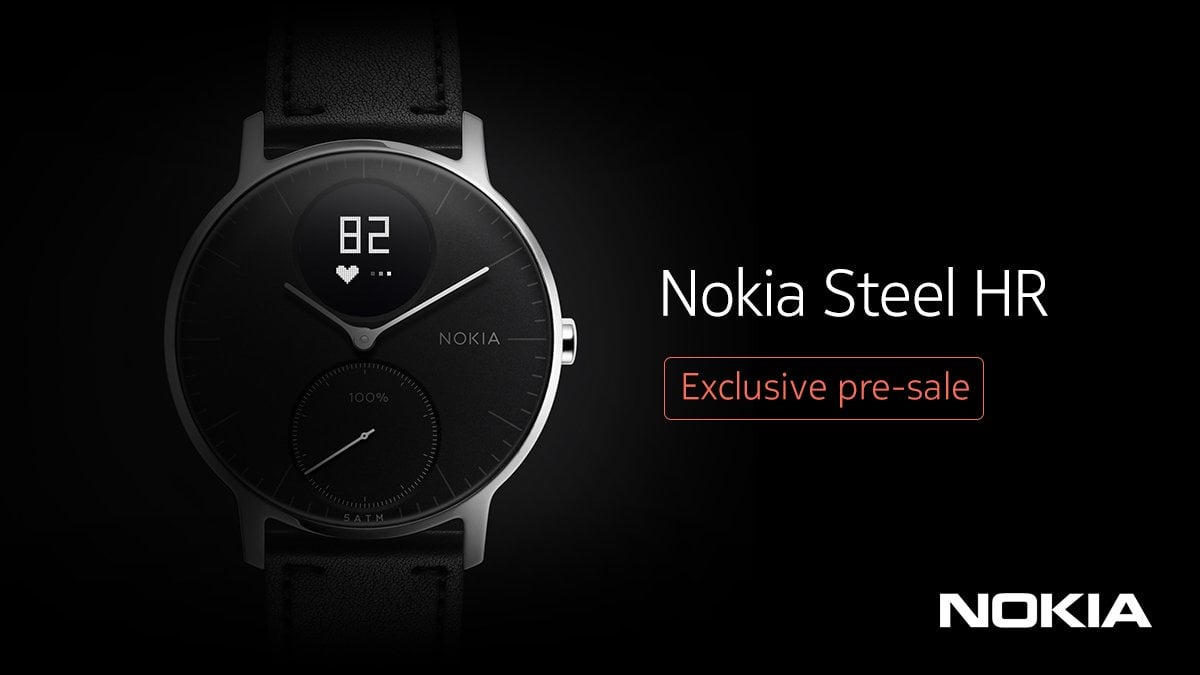
In MWC 2020, all major smartphone brands and more will be present to unveil their new lineup and offerings. HMD Global is one of them, arriving with a new series of Nokia smartphones. But, it seems that Nokia won’t just release smartphones and could possibly unveil a new smartwatch model.
Nokia Steal HR, a smartwatch which was released back in 2017
Previously, it was reported that Nokia had canceled multiple projects of IoT devices including two different smartwatches mini projector, mini printer, and power bank. However, a new rumor suggests that one of the mentioned smartwatches is still seeing continued development and being prepared for a release. Furthermore, we could see the smartwatch as soon as the 23rd February event in the city of Catalonia, Spain.
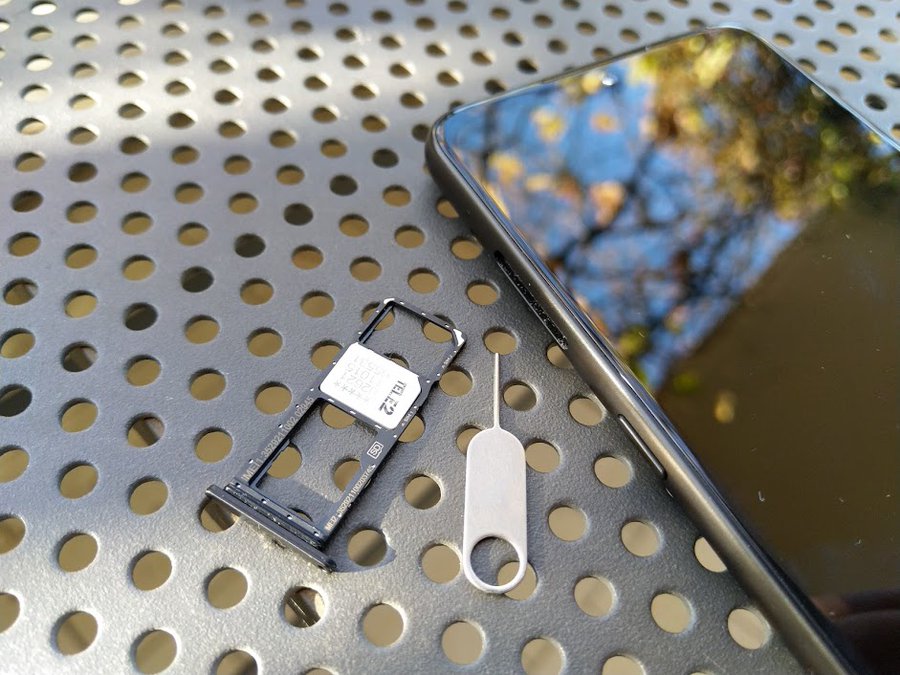
As of right now, the rumor has mentioned two aspects regarding the smartwatch. One, that it would support or will provide an option cellular connection via an eSIM. Secondly, the wearable will also arrive with Google certification, meaning that it will feature Wear OS software.
An eSIM that is expected to arrive for upcoming Nokia smartphones and a smartwatch model that supports cellular data connections
In terms of availability, it is expected that the smartwatch will make its way across the European regions and also be released in the US. Unfortunately, this has yet to be confirmed and neither are its exact specifications have been discerned, at the moment. Although a Nokia smartwatch has not been announced or confirmed, a reveal would be a welcomed surprise.
Huawei’s upcoming 5G smartphone with codename “TAH-AN00m” was spotted online last month, which is said to make its debut as the Huawei Mate Xs next month — a new variant of the company’s first foldable smartphone Huawei Mate X.
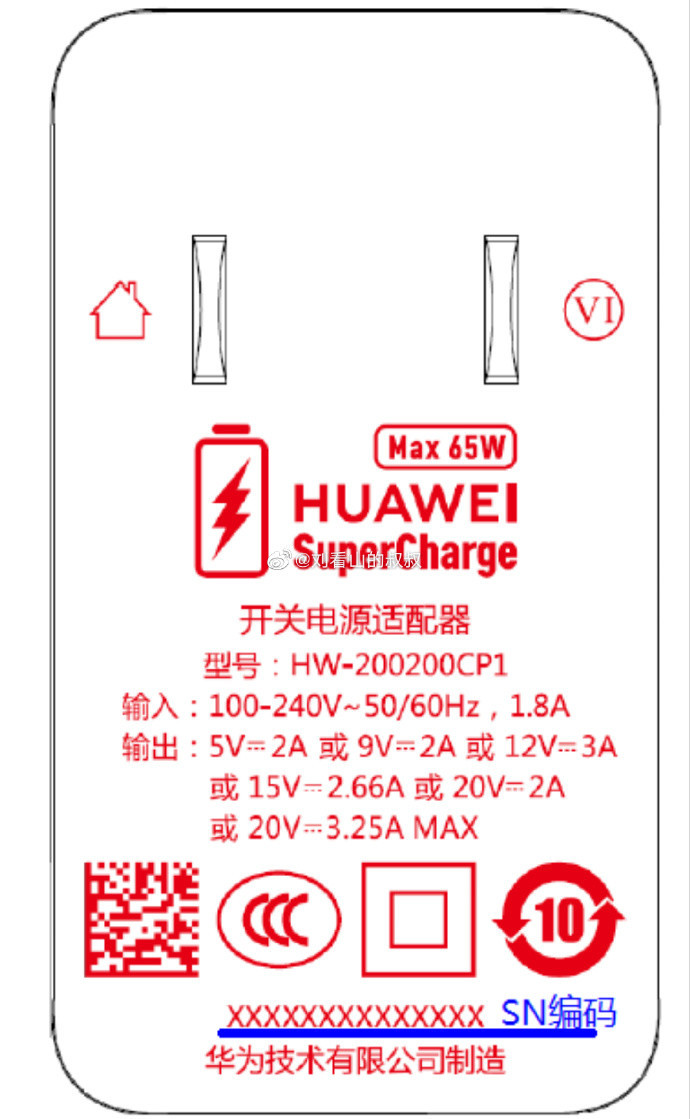
Now, it seems that along with a more durable build quality, the company will also be adding support for 65W fast charging technology on the Huawei Mate Xs. Ahead of the launch, details about the said charging technology has surfaced online.
The charging head of the 65W charger that the Mate Xs will weighs just 92 grams, which is lighter than the 160 grams for the charging head of the 65W charger for Huawei MateBook 14 2020 which was recently launched.
It is said that the upcoming charger can also be used in other Huawei smartphones as well, including Mate X, Mate 30 and P30 Pro, however, there will be some difference in terms of actual charging speed because of different protocols.
As for the Huawei Mate Xs, the phone is said to come powered by the Huawei Kirin 990 5G chipset and some other changes for enhancing the user experience. To know for sure, we’ll have to wait for a few more weeks.
We use cookies on our website to give you the most relevant experience by remembering your preferences and repeat visits. By clicking “Accept”, you consent to the use of ALL the cookies.
This website uses cookies to improve your experience while you navigate through the website. Out of these, the cookies that are categorized as necessary are stored on your browser as they are essential for the working of basic functionalities of the website. We also use third-party cookies that help us analyze and understand how you use this website. These cookies will be stored in your browser only with your consent. You also have the option to opt-out of these cookies. But opting out of some of these cookies may affect your browsing experience.
Necessary cookies are absolutely essential for the website to function properly. This category only includes cookies that ensures basic functionalities and security features of the website. These cookies do not store any personal information.
Any cookies that may not be particularly necessary for the website to function and is used specifically to collect user personal data via analytics, ads, other embedded contents are termed as non-necessary cookies. It is mandatory to procure user consent prior to running these cookies on your website.