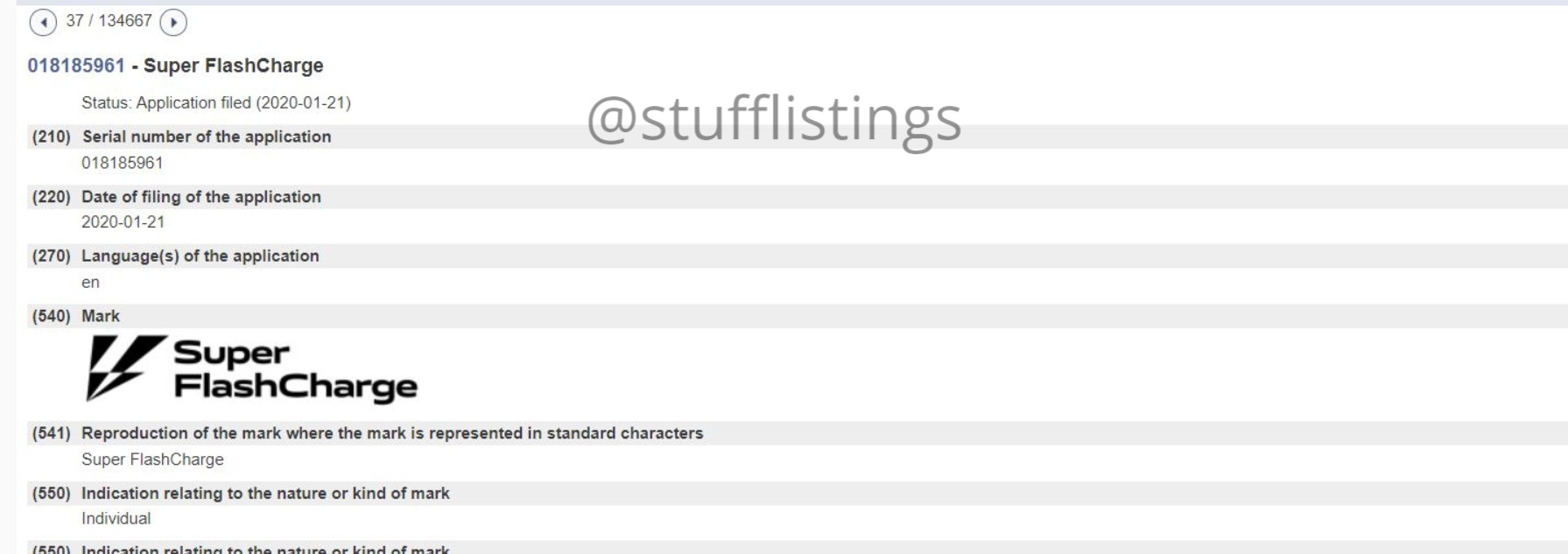
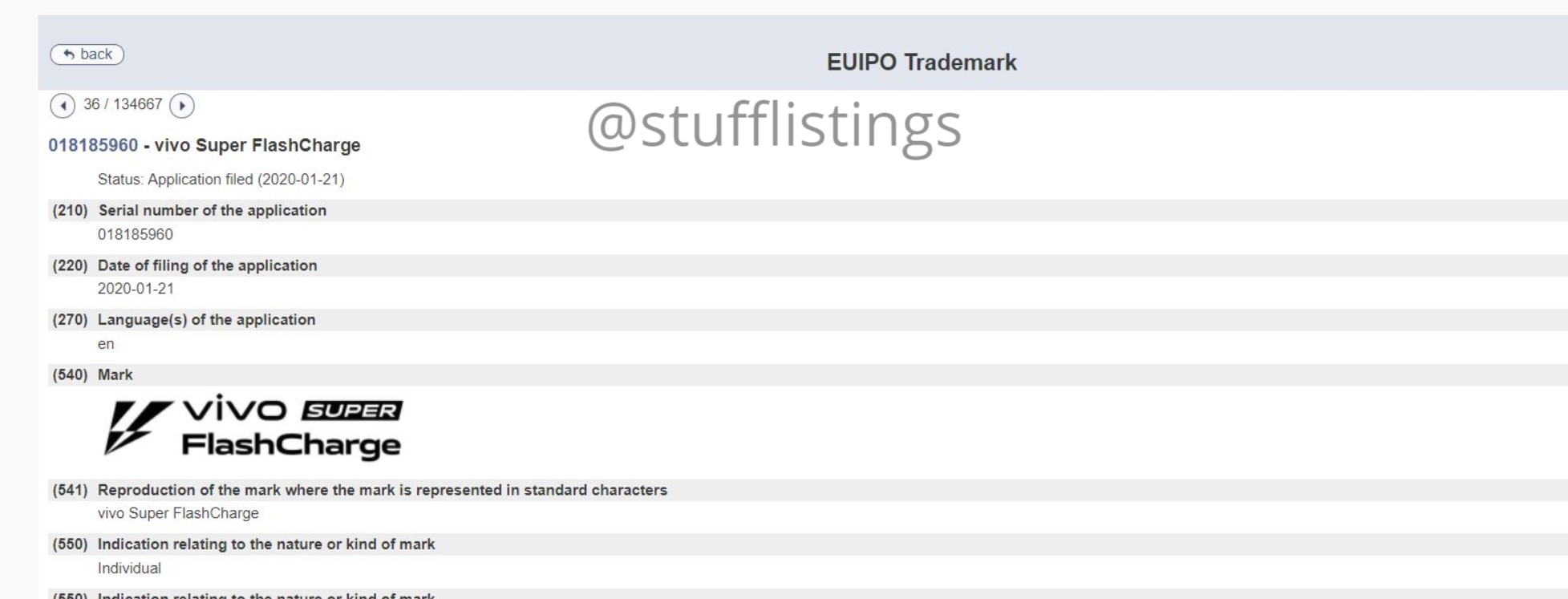
Smartphone maker Vivo has applied for a new trademark application which indicates that the company is working on a new fast charging technology under the name “Super FlashCharge”.
While the trademark application doesn’t reveal any information about the technology the company is working on, it seems that this new Super FlashCharge technology could be the previously rumored 55W fast charging tech.
Although the company has not announced anything related to this, we expect Vivo to use this new charging technology on its upcoming high-end smartphone. Currently, the fastest charging speed offered on a smartphone is 65W, present on Oppo Reno Ace.
Last year, Vivo took everyone by surprise as it introduced 120W Super FlashCharge technology. The company claims that its 120W charging technology can completely power a 4,000mAh battery phone in just 13 minutes.
Along with Vivo, Xiaomi has also teased its 100W Super Charge Turbo technology that was able to charge a 4,000mAh battery in 17 minutes. However, both these charging technology have been introduced but not yet available commercially.
Vivo has not yet revealed the technology behind its sophisticated 120W Super FlashCharge. The company has also not confirmed when it will begin the mass production of the technology. There’s a possibility that the trademark application is for this technology or the new 55W charging tech.
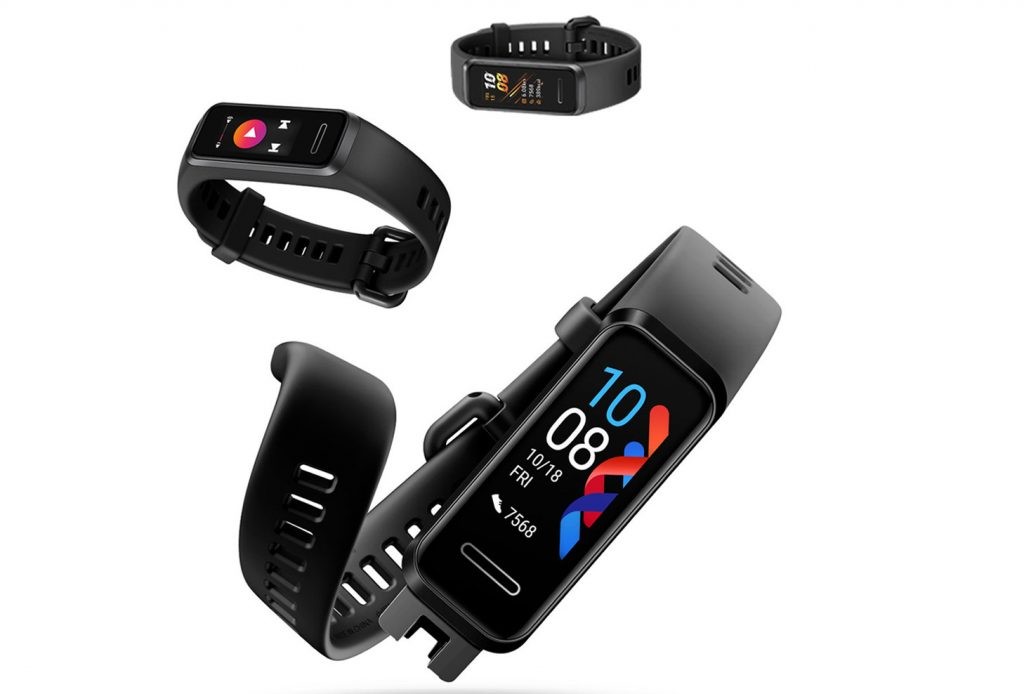
A few months ago, Huawei had launched the Huawei Band 4 fitness tracker in its home market China. Now, the company had launched the same device in the Indian market, carrying a price tag of ₹1,999 that is roughly $28.
The Huawei Band 4 comes with a 0.96-inch color display with 80 x 160 pixels screen resolution. Under the hood, it is powered by a processor called the Apollo 3. Unlike the Honor Band 5i which has a circular capacitive home button, the Huawei Band 4 has a pill-shaped button.
The company is also offering an option for customising clock faces with Huawei offering 8 built-in options. Further, Huawei has said that users can also download about 66 watch faces from Huawei Watch face store.
When it comes to features the Huawei Band 4 has sleep tracking with TruSleep 2.0 which also tracks your heart rate while you sleep. It can identify up to 6 types of sleep problems and will provide suggestions to help you sleep better. The device can also measure blood oxygen level and comes with support for 24/7 heart-rate monitoring feature, along with the company’s Trueseen 3.5 technology.
The fitness tracker can track indoor and outdoor run, indoor and outdoor walk, and indoor and outdoor cycling along with tracking activities on the elliptical bike and rower. The device will provide details such as heart rate, heart rate zone, steps, distance, and calories.
Other features on the wearable device include Remote Shutter, Find My Phone, and notification for messages, calls, and goals. The Huawei Band 4 is powered by a 91mAh battery which the company claims can provide 9 days of usage on a single charge. Further, Huawei also claims that it takes just 1.5 hours to fully charge this 5ATM waterproof device.
The Huawei Band 4, which is priced at ₹1,999 in India, is available for purchase in just one color option — Graphite Black, through online marketplace Flipkart.
The leaks keep pouring in for the Galaxy S20 series, and at this rate, the unpacked event may as well be watched just for the fun of it and other new products Samsung may be planning to announce. The latest leak is official press renders of the Galaxy S20, Galaxy S20+, and the Galaxy S20 Ultra. It also includes the price the devices will sell for.
The source of the leak is Ishan Agarwal and he has partnered with 91Mobiles.
Galaxy S20 and Galaxy S20+
The Galaxy S20 is shown in a powder blue color variant. The color variant has a rainbow-like color shift at the bottom and the sides of the phone are curved. Both the front and rear of the phone are covered in glass. It has been reported that the glass covering the screen is actually 2.5D and should make it easier to use tempered glass on the screen protector.
[envira-gallery id=”302090″]
The Galaxy S20, like its other siblings, has a punch-hole in the middle of the Infinity-O display for the selfie camera. On the back, it has the same rectangular camera housing which holds three sensors and the LED flash. A side view shows us the buttons are on the right-hand side of the phone and there is no Bixby button on the left-hand side. The S20 will come in Cosmic Gray, Cloud Blue, and Cloud Pink.
[envira-gallery id=”302098″]
The Galaxy S20+ also has a near-identical design. However, there are four cameras rather than three on the back. The device is shown in Cosmic Black but will be available in Cosmic Blue and Cloud Blue.
Price
With respect to price, the GalaxyS20 will start at €899 for the 4G version and jump to €999 for the 5G version. The Galaxy S20+ 5G, on the other hand, will be priced at €1099.
Galaxy S20 Ultra 5G
The Galaxy S20 Ultra 5G also comes in Cosmic Black and Cosmic Gray. It too will have a 2.5D display rather than a 3D curved screen. The buttons are placed in the same place as that of its siblings and it too doesn’t have a Bixby button.
On the rear, the Galaxy S20 Ultra 5G looks different from its siblings. It also has a rectangular camera housing, however, the camera housing is wider and has a two-color design. The dark part houses three sensors while the gray part is home to a single camera that has a periscope lens which will have up to 100x digital zoom.
[envira-gallery id=”302104″]
The source says the phone will have a starting price of €1,349 for the base model. Buyers will get a bigger screen with QHD+ resolution and a 120Hz refresh rate.
Samsung Galaxy S10 Lite just made its official debut in the Indian market, right after its sibling Samsung Galaxy Note 10 Lite. After comparing the latter with a few amazing devices sold in the same price range, now it is time for the Galaxy S10 Lite to be compared. Among the most interesting affordable flagships in India, there are definitely the king of gaming phones Asus ROG Phone II and the OnePlus 7T. We chose these handsets as the main opponents of the Galaxy S10 Lite due to their sales and their amazing specs sheets. Here we will try to let you find out which one offers the highest value for money under every point of view.
Samsung Galaxy S10 Lite vs Asus ROG Phone II vs OnePlus 7T
Triple 48 + 12 MP + 16 MP f/1.6 and f/2.2 and f/2.2
16 MP f/2.0 front camera
Dual 48 + 13 MP f/1.8 and f/2.4
24 MP f/2.2 front camera
Triple 48 + 12 + 5 MP, f/2.0, f/2.2 and f/2.4
32 MP f/2.2 front camera
BATTERY
3800 mAh
Fast charging 30W with Warp Charge 30T
6000 mAh, Fast Charging 30W with Quick Charge 4.0
4500 mAh, fast charging
ADDITIONAL FEATURES
Dual SIM slot
Dual SIM slot, support to external accessories, RGB light
Hybrid Dual SIM slot
Design
If you need the most elegant and futuristic handset, then you should opt for the Samsung Galaxy S10 Lite. It is the only with a punch-hole display allowing the presence of very narrow bezels without the need for a notch. OnePlus 7T is slightly more compact, but despite that, I personally prefer the Samsung Galaxy S10 Lite for its punch-hole display. Asus ROG Phone II has an aggressive, gaming centric design, so it is the best only for gaming-addicted users and it is not among the most elegant devices. It even supports several external accessories to enhance the gaming experience.
Display
If you want the best-performing display for games, then there is nothing better than Asus ROG Phone II. With a high 120 Hz refresh ratio, full DCI-P3 coverage and a 1240 Hz touch sampling rate, it offers one of the most interesting displays out there. And how not to mention those powerful stereo speakers with DTS audio placed on the front? On the other hand, OnePlus 7T and Samsung Galaxy S10 Lite are all but disappointing when it comes to displays. The former offers the HDR10+ certification (unlike the ROG Phone 2) as well as a high 90 Hz refresh rate. The latter employs a new Super AMOLED Plus panel with improved image quality. But I define Asus ROG Phone II more advanced.
Hardware/Software
Asus ROG Phone II and OnePlus 7T are equipped with the most powerful chipset: the Snapdragon 855+. But we are going to give the gold medal to the Asus ROG Phone II only since it has a more powerful memory configuration: it offers up to 12 GB of RAM and up to 1 TB of UFS 3.0 native storage. You can get only 8 GB of RAM on the OnePlus 7T. Asus ROG Phone II is the only one still based on Android Pie out of the box, but it has already been updated to Android 10 and it lets you switch between a custom and a stock Android user interface.
Camera
Samsung Galaxy S10 Lite offers the most advanced camera department. It consists of a triple 48 MP rear camera with a brand new optical stabilization technology (Super Steady OS) reaching awesome results in terms of photo quality. The second place goes to the OnePlus 7T with its 48 MP triple camera supporting OIS and including a telephoto sensor (unlike the Galaxy S10 Lite).
Battery
With its mammoth 6000 mAh battery, Asus ROG Phone II is the longest-lasting flagship on a single charge. And it can even be used as a power bank thanks to reverse charging. Right after, we got the Samsung Galaxy S10 Lite with a 4500 mAh battery.
Price
Samsung Galaxy S10 Lite has an Rs. 39,999 listing price in India, while it costs €649/$717 globally. OnePlus 7T costs Rs. 37,999 in India and you can find it for about €450/$497 thanks to global street prices. Asus ROG Phone II is available for about €500/$552 globally and it costs Rs. 37,999 in India. Overall, Asus ROG Phone II is a better smartphone, if you do not mind about the camera and elegant designs. But if you need the best camera and a more sober design while keeping a big battery, go for the Samsung Galaxy S10 Lite. OnePlus 7T offers better performance than Galaxy S10 Lite and better cameras than Asus ROG Phone II, but it has a battery below 4000 mAh and that is the reason why it would not be my choice.
Xiaomi’s partner and Korean company KH Vatec has launched the Line Friends Bluetooth headset under the Youpin crowdfunding platform. The product comes from the partnership with the well-known global character brand Line Friends and has received several positive reviews as well as large patronage.
In terms of appearance, the earbuds come in two design styles themed after the famous Brown Bear and Sally characters. Not only are the colours very pleasing, but you may also even confuse the storage box for a toy. The earbuds look very much like the Redmi AirDots range of earbuds. The earbuds come in white only which is a bit low-key compared to the fanciful storage box. There is a caricature of the Brown Bear or Sally characters on each of the earbuds, depending on the variant.
Specs-wise, the Line Friends Bluetooth Earbuds comes with Bluetooth 5.0 technology which is more stable and less susceptible to interference from WiFi and other Bluetooth signals than Bluetooth 4.0. It comes with a standby time of 6days but each earphone can provide 3.5 hours of playback time. The storage box has some magnetic properties such that as soon as the earbuds are inserted, it gets stuck. Also, it shuts down automatically when inside the box and turns back on when removed from the box.
Furthermore, the earbuds each have a transmission range of 10m and comes with an IP5X level water and dustproof protection. Another thing is the lightweight property, weighing just 4g.
As for the pricing and availability, the earbuds are presently available to buy on Tmall for an affordable price of 169 yuan ($24).
The Realme X50 launched as the first 5G smartphone by Realme. The phone which is powered by the Snapdragon 765G is already on sale in China. Realme fans in India have been asking when the phone will be available in the country and now it has been answered by Realme’s CEO in the latest episode of AskMadhav.
When asked when the Realme X50 will be available in India, Madhav Sheth had replied: “We are bringing something bigger and better for India”. While he did not expressly state that the Realme X50 will not launch in India, it can be inferred from his response. He then adds that we “stay tuned for Realme at MWC”, confirming once again that the brand will be attending the tech show in Barcelona. To listen to that part of the interview, move the slider to the 6:53 mark.
It has been reported that Realme will launch a flagship phone with a Snapdragon 865 processor on February 24 at MWC Barcelona. Rumors say the device is called the Realme X50 Pro. It is possible this is the device that will launch in India in place of the Realme X50. However, this will be more expensive but of course better than the X50.
According to a leaker, the Realme flagship phone will have a punch hole at the top left corner for a single camera. We also know the phone has model number RMX2071 thanks to an AnTuTu benchmark result. The rest of the specs are unknown but more details should surface as the launch draws closer.
Do let us know what you think about the Realme X50 5G not launching in India.
At the launch of the Realme 5i, Madhav Sheth, the CEO of Realme teased the company’s first fitness tracker. There have been rumors flying around about the design and features of the watch, sadly, most have been false. Today, we now have official info about when the device will launch.
In the latest episode of AskMadhav (episode 14), the CEO was asked when the Realme fitness tracker will be launched. The top executive revealed that the fitness tracker will be unveiled next month, unsurprisingly, he didn’t disclose the exact date.
The Realme fitness band should be an affordable fitness tracker that will take on Xiaomi’sMi Band series as well as Honor and Huawei’s own fitness trackers too.
Other information revealed in the video include the arrival of Android 10 for the Realme 5i in May 2020; no bokeh mode video for Realme 3 Pro due to lack of hardware and software features; and an OTA update to fix the background noise issue affecting the Realme Buds Air. However, the update will not roll out until March. He also revealed that the yellow and black color variants of the TWS earbuds will be available next month. he also added that all realme phones launched this year will receive security updates for two years.
By the time, Google is ready to roll out Nearby Sharing (formerly known as Fast Share), its answer to Apple’s AirDrop feature, half of the mobile industry would have come up with their own version. We already know Xiaomi, OPPO, Vivo, and Realme already formed an alliance to create their own version of AirDrop that will allow users to share files to devices within their range using WiFi and Bluetooth. now, an exclusive report has revealed Samsung has its own version coming too called Quick Share.
An exclusive report by XDA Developers has revealed details about Quick Share which will work on all Samsung smartphones. They were able to get their hands on an APK and have provided details about the new feature.
According to the app description, Quick Share allows you to “Share (files) instantly with people nearby” with a Samsung phone or Samsung tablet. The requirement is that the other person has Quick Share turned on on their device, have their screen on, and visibility switched on.
[envira-gallery id=”302051″]
The Quick Share settings menu has similar features to Google’s Fast Share. When turned on, people can now find you and send files to you. It says, to use Quick Share to send a file in any app, all you have to do is tap share and select Quick Share. This should be as simple as you selecting Bluetooth in the share menu.
There are two options to chose who can share with you. You can choose between “Contacts Only” (limited to only Samsung Social users within your contacts) or “Everyone”. The latter allows anyone near you to be able to share files with you.
Another screenshot from the app shows you can use Quick Share to send files to SmartThings devices. It says the files will be temporarily uploaded to the cloud then streamed to the device. It also states that you will be able to send up to 1GB at a time and a maximum of 2GB per day (this is for SmartThings devices only).
The APK was gotten from a source that has access to the upcoming Galaxy S20+. However, when it was tried on two Samsung devices, it didn’t work. Since the feature is yet to launch, it is understandable why it didn’t work yet.
Quick Share is expected to be officially unveiled next month at the Galaxy Unpacked event. Details about availability for other devices should be revealed then.
Samsung re-established its dominance as the global smartphone market leader last year and the Galaxy A series played an important role in its achievement. The company shifted focus from launching only upper mid-range models on the A-series to churning out a rich blend of entry-level, lower mid-range and premium mid-range models on the series. The trend will definitely continue this year as the tech giant has already secured trademarks for the A-series models such as the Galaxy A11, A12, A13 etc.
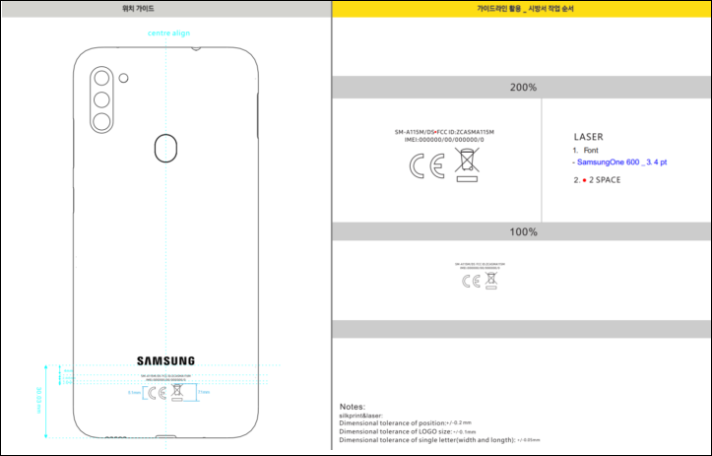
Talking of the Galaxy A11, the device has been certified by the Federal Communications Commission (FCC). The certificate which has been listed on FCC’s website gives us some insight into the hardware in respect of the battery and camera configuration. This is coming just days after the Galaxy A31 and A41 camera and battery specs were leaked.
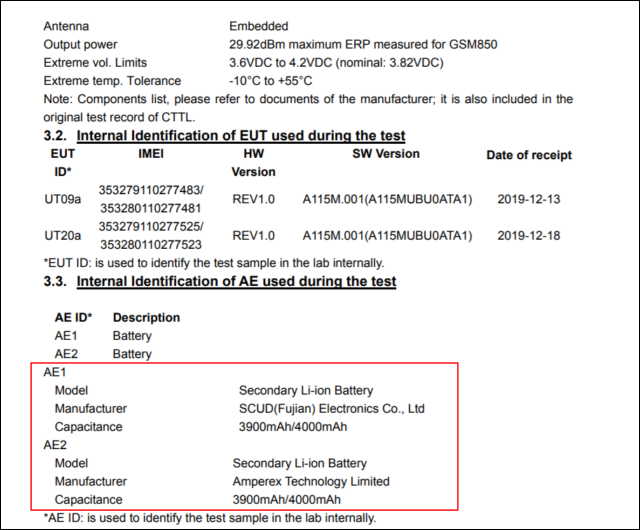
In this case, the Samsung Galaxy A11 which is expected to be the cheapest A-series model this year features a 4,000mAh battery. This is similar to what is on the Galaxy A10 but with software improvements and a better chipset, we may see better durability. The device is also listed to pack a triple camera setup as against a single sensor on the A10. The A11’s camera configuration wasn’t listed.
The Galaxy A11 which appears with the model number SM-A115F will be powered by the Snapdragon 625/626 chipset, which is more efficient than the A10’s Exynos 7884 as it doesn’t have any high-performance cores. The FCC document also shows the presence of a rear-mounted fingerprint sensor. Some of the other specs, which were revealed in previous leaks and rumours, include 2GB of RAM, 32GB of storage, and Android 10 with One UI 2.0 out of the box. The Galaxy A11 will be available in white, red, blue, and black.
There is word yet as to when Samsung will announce the device, but it is expected to go official with this one in March, exactly one year after the Galaxy A10 was unveiled.
This may just be the right time to pick up a new Android One mid-range phone if you reside in India. Earlier today, Xiaomi announced a price cut for the Mi A3, but if you will rather go with a different brand, then HMD Global Oy’s Nokia 7.2 or Nokia 6.2 are alternatives as the manufacturer has also announced permanent price cuts for the two devices.
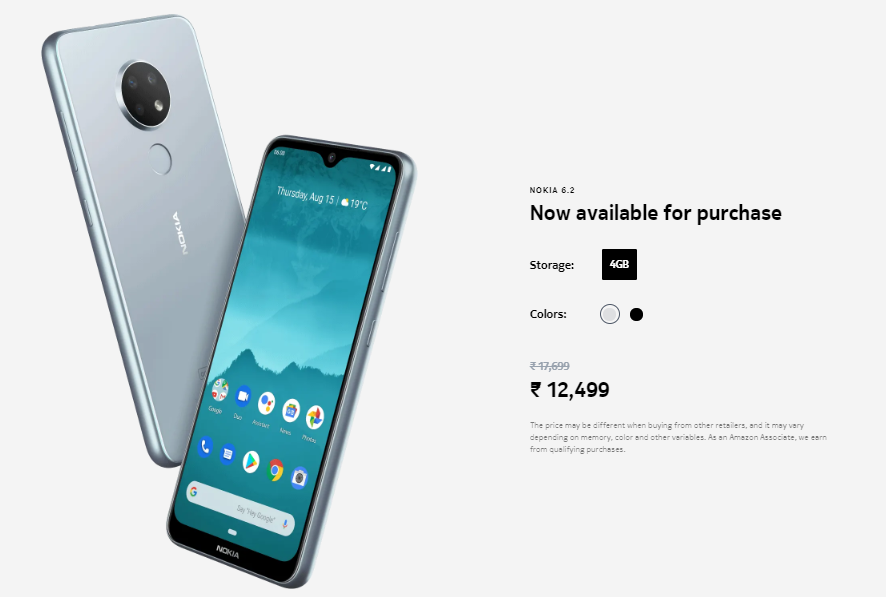
Starting with the Nokia 6.2, the phone is now available for purchase at offline partner stores for INR 12,499 (~$175), which is INR 3500 (~$49) off its original launch price in October 2019.
$175 seems like a more reasonable price for a phone with a 6.3-inch FHD+ display with a Snapdragon 636 processor inside it. It has 4GB of RAM, 64GB of expandable storage, triple rear cameras with a 16MP + 8MP + 5MP configuration, and an 8MP selfie camera. You also get a 3500mAh battery, fingerprint scanner, and a dedicated Google Assistant button.
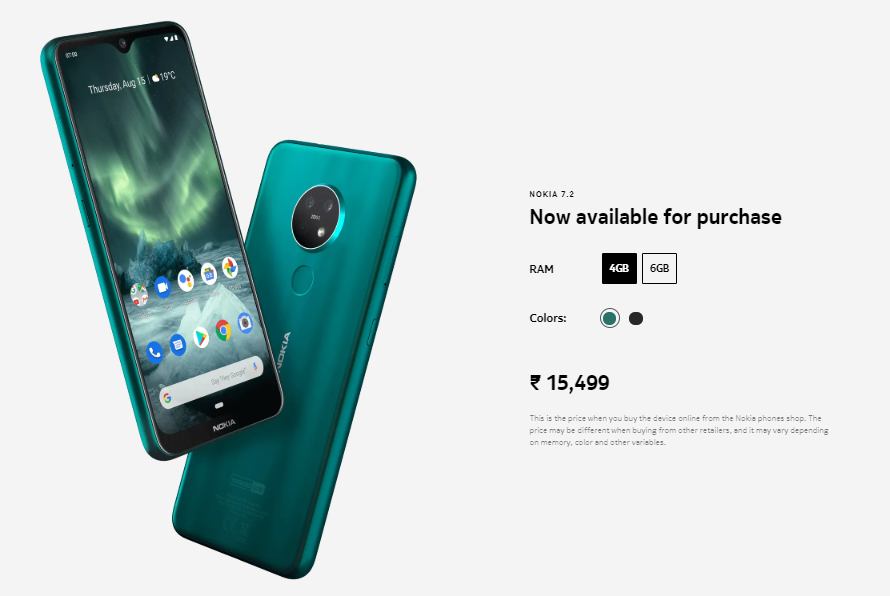
The more powerful Nokia 7.2 will sell for INR 15,499 (~$217) for the 4GB + 64GB version. That is a reduction of INR 4500 off its launch price. If you want more RAM, then the 6GB + 64GB version which had a launch price of INR19,599 (~$275) can now be bought for INR 17,099 (~$240).
The Nokia 7.2 has a 6.3-inch FHD+ screen with Gorilla Glass protection. It is powered by the Snapdragon 660 and also packs a 3500mAh battery. There are three cameras on the back too but it has a 48MP primary camera while the selfie camera is a 20MP sensor. You get a dedicated Google Assistant button, USB Type-C, an audio jack, a fingerprint scanner, and Dual-SIM support.
The two phones launched with Android 9 Pie out of the box but they will get three years of OS upgrades and security updates. Android 10 should be made available for both devices soon.
The Nokia 6.2 and Nokia 7.2 can be bought at the new prices at retail stores as well as on the official Nokia Mobile India website.
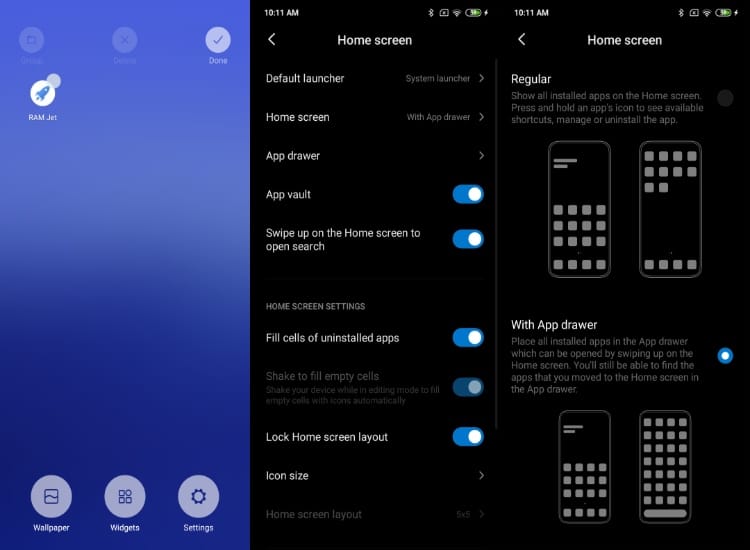
Xiaomi first rolled out the new app drawer feature for models running MIUI 11 in November last year but the feature was only available for phones running MIUI 11 China ROM. There isn’t any word as to when the app drawer will be available to global models. The Chinese smartphone manufacturer only announced that models running MIUI 11 Global ROM will soon get an app drawer. You don’t have to wait anymore for the feature as you can now get the feature on your Mi or Redmi smartphone following these simple steps.
How to get the app drawer in MIUI 11 devices?
The app drawer is part of the MIUI system launcher so you’ll need to download a new MIUI system launcher. Xiaomi enabled the feature on the alpha build of MIUI launcher in several Xiaomi devices back in November but as stated earlier, the update was restricted to devices running MIUI 11 China ROM.
Right now, you can get it on the latest alpha build of MIUI system launcher for models running MIUI 11 Global ROM as well. Here is how to enable the app drawer on your Xiaomi device.
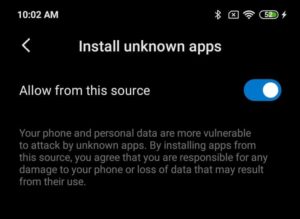
Enable “Allow from this source” in the Install unknown apps settings (if applicable)
Once the build is installed, long-press on the home screen. Then tap on Settings, select more. This will take you to Home screen settings. Now, tap on “Home screen,”
Change the layout option to “With app drawer” home screen layout.
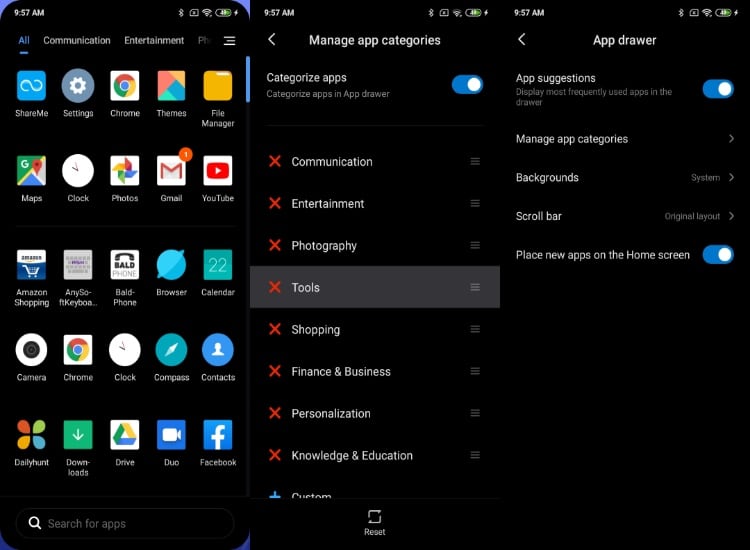
Now, swipe up on the home screen to use the much-awaited app drawer on your Xiaomi device.
Users can also make changes to the app drawer, such as which app categories to display, changing the background colour, and much more.
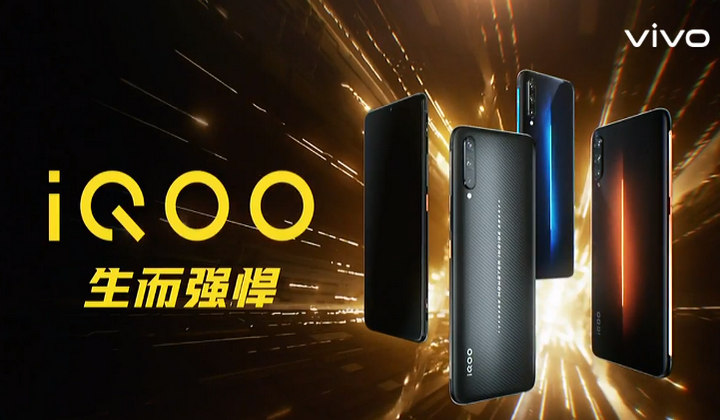
There have been reports that Vivo‘s iQOO sub-brand which launched as a gaming smartphone line last year would be making its way into the Indian market this year. The names of three iQOO phones have also been trademarked by the Indian trademark office. However, it was not until today before an official press statement was released by the company.
The director of marketing for iQOO India, Gagan Arora, confirmed via a press statement that iQOO will indeed enter into the premium segment of India’s smartphone market.
We see extreme potential in the premium segment smartphone market in India and have deep-dived to understand the gap that the consumers face in this segment. We understand very closely that there is an increasing demand for performance delivery devices and smooth smartphone experience, be it using multiple apps, downloading heavy files or just social media. Consumers today look for power-packed performance, and that is exactly what we offer. We are proud to share the same ethos and values exhibited by today’s younger generation who grew up in the internet era. We are confident that the values of the iQOO brand resonate strongly with this audience. iQOO is a brand that understands, is in-sync and progresses with them.
-Gagan Arora, iQOO’s Director of Marketing
The press statement also said iQOO will soon launch its first product in India. The device will be announced in February and will have “many industry-first specifications”. It goes on to reveal that the iQOO smartphone will be powered by the Snapdragon 865 Mobile Platform, which is Qualcomm’s top of the line chipset. It will also have support for 5G, though that feature will be useless until there are 5G networks in India.
Other than having a high-end processor and 5G support, the iQOO phone will have “robust performance capabilities in the charging, gaming, and design department, providing phone phonetics uninterrupted content consumption“ according to the press release.
The name of the upcoming iQOO phone is not known but more details including its specs and design should surface in the weeks leading up to its launch.
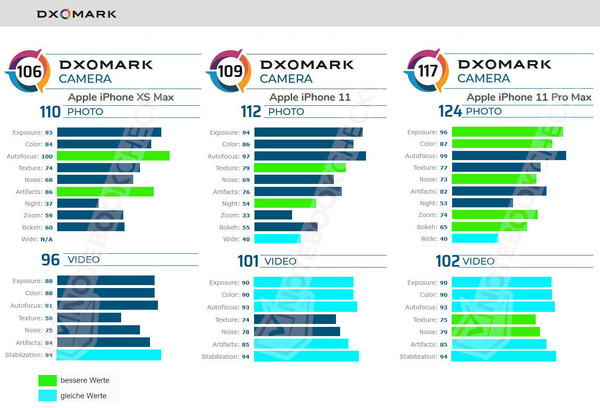
Apple’s iPhone 11 series has been one of its most popular lineups in recent years. It includes the iPhone 11, iPhone 11 Pro and the Pro Max variant. One of the great features the smartphone lineup provided was a great camera and DxOMark has rated the iPhone 11 with 109 points in its tests.
Initially, DxOMark was a benchmarking platform that tested digital and professional grade cameras, but since the original Google Pixel, have also started testing smartphones as well. In the tests, Apple iPhone 11 scored 109 points overall for its camera which includes both photography and videography. This put the Cupertino based giant’s smartphone right below Xiaomi Mi 9 with 110 points and next to Huawei P20 Pro that scored 109 points as well.
Apple iPhone 11 DxOMark Overall Rating for both photography and videography
Notably, iPhone 11 beat the previous generation flagship, iPhone XS Max, which scored 106 points. However, the former is beaten by its more expensive variants, the iPhone 11 Pro Max with an overall score of 117. The reason for the noticeable difference has bee n accredited to the lack of a third lens in the iPhone 11, unlike its larger more pricier variant. It scored 112 points in still images with its strength lying in its quick autofocus and great exposure in images.
Unfortunately, it loses out due to its short focal length for portraits and the low zoom quality at medium to long ranges, since it lacks a telephoto lens on the rear. Although it’s ultra wide lens did receive positive remarks. In terms of videography, Apple iPhone 11 scored 101 points, with its exposure being highlighted again alongside great color reproduction and praiseworthy stabilization.
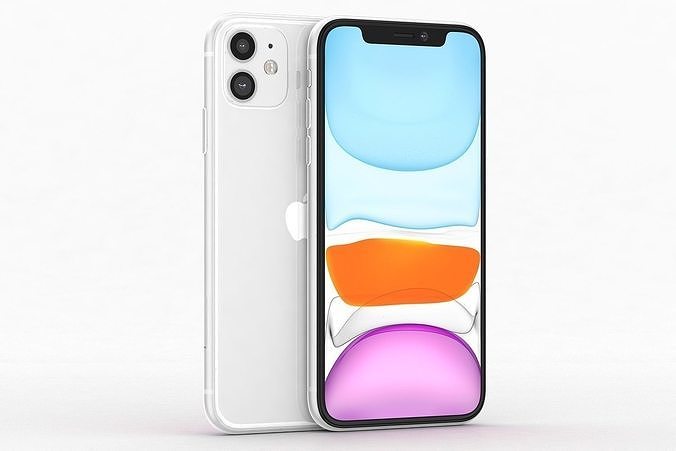
Apple iPhone 11
But, the Apple flagship from 2019 suffers from a visible jello effet with when walking and recording and its white balance tends to suffer while indoors, according to DxOMark. All in all, the company stated that “the device is very capable of shooting both stills and video” so it is still one of the best cameras on a smartphone.
Huawei has announced that it will be delaying its largest annual developer conference, the HDC.Cloud. The reason cited for the postponement is the new virus outbreak in Wuhan which has caused alarm in China.
According to the event website, HDC.Cloud 2020, which was originally planned to be held in Shenzen from 11th to 12th of February 2020, has been postponed to the 27th – 28th of March 2020. The major event is witnessing more than a month of delay but will still be broadcasted via live webcast. The main reason for the delay is the new virus outbreak which has primarily affected the Wuhan region in China. The Coronavirus is responsible for the outbreak and is known to cause cases of pneumonia in the infected.
Huawei HDC Teaser for 2019
Many companies operating in the region have warned their respective employees and citizens residing in the region have been told to exercise caution when moving about in the open. Furthermore, this has even led to face masks being sold out in the Southeast Asian country, which now also suffers from a shortage of the crucial and preventive commodity. Wuhan district is currently under quarantine with 11 million people barred from leaving the region while about 17 people have been confirmed to have perished due to the outbreak.
For those unaware, HDC.Cloud is Huawei Group’s largest annual developer conference, meaning its a flagship event with notable announcements taking place. The Huawei Developer Conference of 2020 is a global event that also sees the presence of foreign developers as well for its Information and Communications field (ICT). The aim of the conference is to build a global platform for communications and has been an annual event for the past 30 years.
Huawei Developer Conference 2019
Since the situation is Wuhan grows dire, Huawei’s plan on the delay is the right move with global organizations like WHO (World Health Organization) also stepping in to deal with the situation. Although, controlling an entire region filled with 11 million people seems like a Herculean task in itself. Stay tuned for more updates and developments regarding the event.
Chinese gaming conglomerate Tencent made an offer to acquire Oslo-based developer Funcom, whose notable titles include the popular “Conan franchise”, “Dune,” and other titles. If accepted, the deal would put Funcom’s value at $148 million and supply the necessary cash flow required to pursue its future endeavors.
Tencent is the largest game developer globally in terms of generated revenue and has stakes in some of the biggest businesses like Riot Games – makers of League of Legends, Epic Games – creators of Fortnight, Supercell – developers of Clash of Clans, and more. Tencent currently owns 29% shares in Funcom through a deal made back in October 2019.
Reports claim Funcom is quite happy about the offer and have urged shareholders to sell their stakes. The company’s shares are traded publicly at the Oslo Stock Exchange at 27.3% higher value than the previous day’s (January 21) closing bid.
According to Rui Casais, Funcom CEO “We have had a great relationship with Tencent in the past being a majority shareholder, and are excited about the turn of events. We plan to continue developing great games that people love spending time on. With Tencent’s expertise, we plan to take gaming to the next level. Tencent brings on board a vast knowledge-base from its successful stint in the world of competitive and casual gaming”.
This news could not have come at a better time. While Tencent competes with the likes of Microsoft, Nintendo, and Sony in terms of gaming revenue, rival compatriot ByteDance, the makers of popular short video maker TikTok, is getting ready to make a foray into gaming. This is interesting since Tencent had shown a keen interest in the social media space in the past, especially through WeChat, its messaging app.
While most people download and use multiple apps, spending money on one platform increased dependency on the platform, reducing their chances of spending on a similar app. While ByteDance currently generates revenue by posting content related to Tencent’s gameplay. If Tencent comes up with its own platform, users are likely to switch loyalty. Hence, diminishing generated revenue. It is hardly surprising that both companies have been involved in legal battles in Chinese courts related to unfair competition in the past.
Today Tencent is the biggest gaming companies in the world with a turnover of RMB 28.6 billion (~$4.1 billion) in the last quarter. Mobile games account for RMB 24.3 billion (~$3.51 billion) of the total revenue. Acquiring stakes in rival companies play a major role in generating revenue for Tencent.
Speaking of Funcom, some of its most popular titles include Anarchy Online, Conan: Exiles, and Age of Conan. The studio is currently working on Dune, based on the classic sci-fi novel by Frank Herbert. Tencent does not wish to interfere with Funcom’s future projects, management or employee policies post-acquisition.
In an official statement, Steven Ma, Senior Vice President at Tencent said, “We are impressed with Funcom’s capabilities as an open world, action, multiplayer, and survival game developer. The company has a strong track record for developing new titles with a long lifespan. We are excited about being a part of Funcom’s journey and help them develop more exciting games for the fans to enjoy.”’
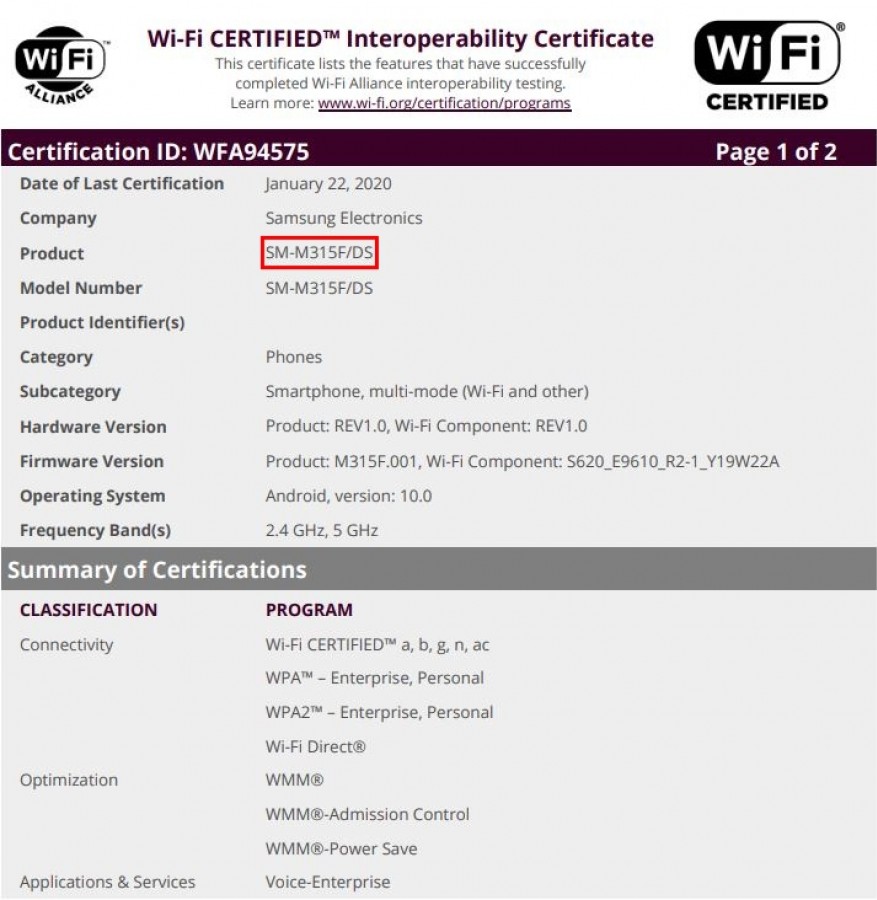
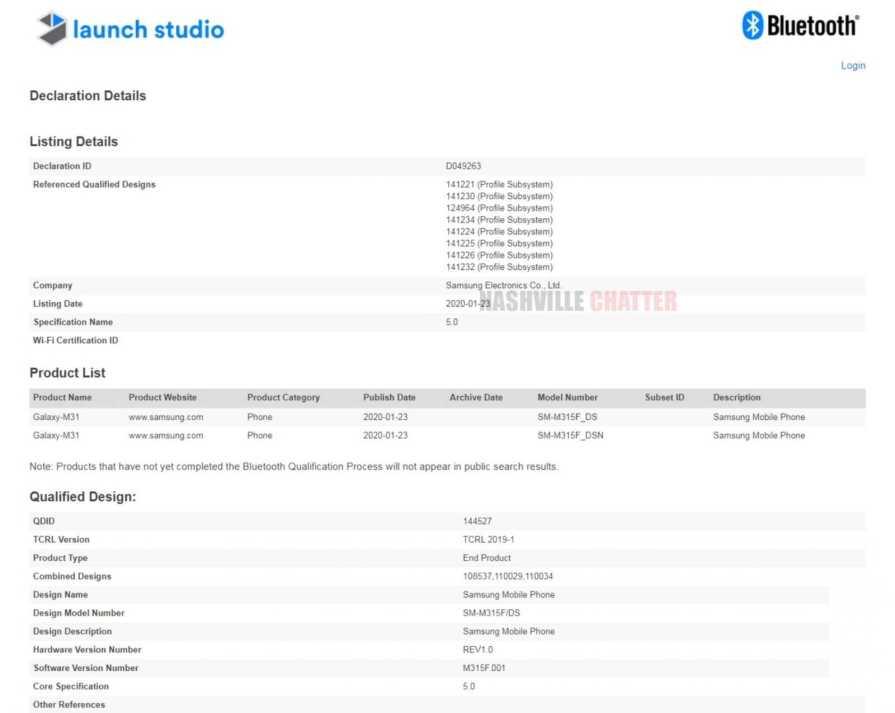
A report from the previous month had revealed that Samsung has started the production of the Galaxy M11 and Galaxy M31 smartphones and these phones will be hitting the Indian markets in February. The Galaxy M31 model numbers have appeared on the database of Bluetooth SIG and Wi-Fi certification authorities. These appearances suggest that the Galaxy M31 may possibly go official in the coming month.
The Galaxy M31 Wi-Fi certification reveals carries its SM-M315F/DS model. The same model number along with its SM-M315F/DSN has been approved by Bluetooth SIG. The WFA listing revealed that the Galaxy M31 is preloaded with Android 10 OS and it carries support for 2.4GHz and 5GHz dual-band Wi-Fi. The Bluetooth SIG certification has only revealed that the device is equipped with support for Bluetooth 5.0.
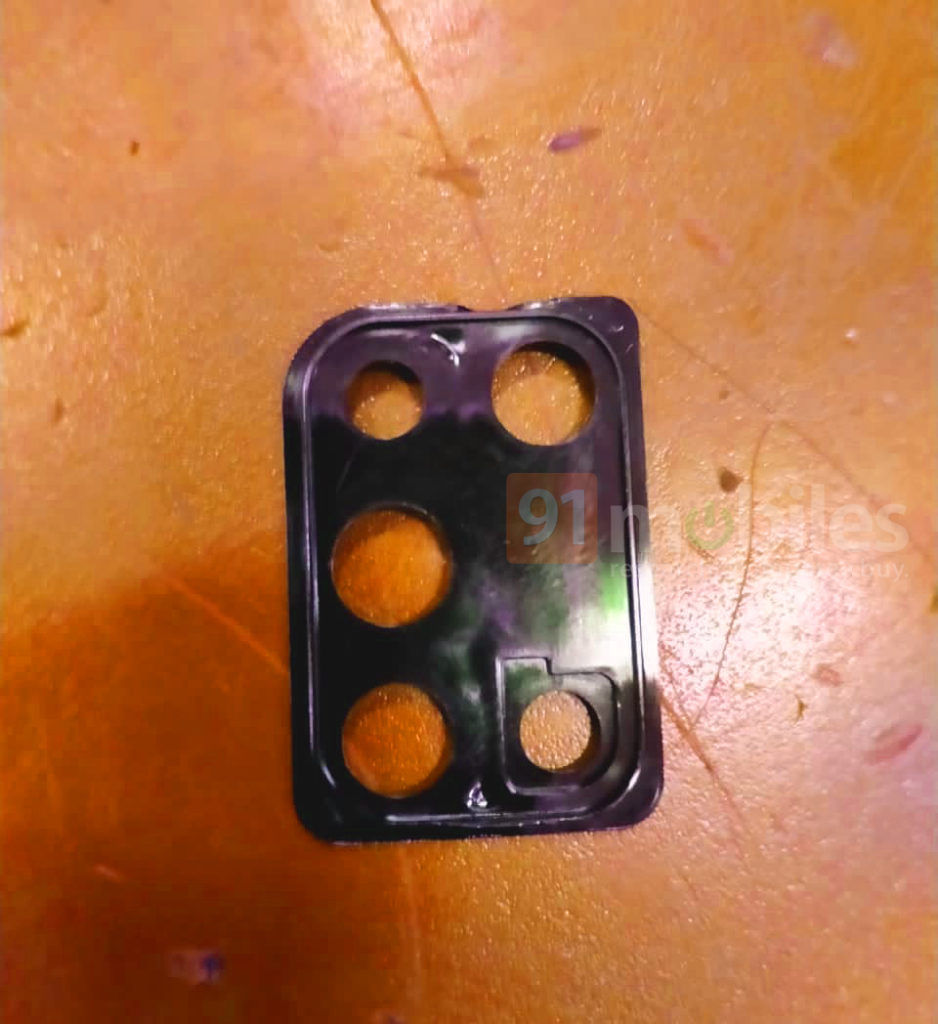
At present, only minimal details of the Galaxy M31 are known. It is speculated to arrive in 32 GB and 64 GB storage choices. Recently, a leaked image of the rear camera module of the Galaxy M31 was leaked by 91mobiles. The image revealed that the phone will be equipped with a rectangle-shaped camera housing on its back. It will be equipped with as many as four cameras and an LED flash.
Galaxy M31 camera module leaked shot
The Galaxy M31 has recently appeared on Geekbench benchmarking platform. The listing revealed that it is powered by Exynos 9611 chipset and 6 GB of RAM. The handset is speculated to arrive in three color variants in India such as blue, black and red.
Samsung introduced a behemoth battery of 6,000mAh capacity on the Galaxy M30s. Hence, it is likely that the Galaxy M31 may retain the same battery. Smartphones are known to go official around a month after its appearance on Bluetooth SIG. Hence, if it is going to debut in February, Samsung India may soon begin releasing the teasers of the smartphone.
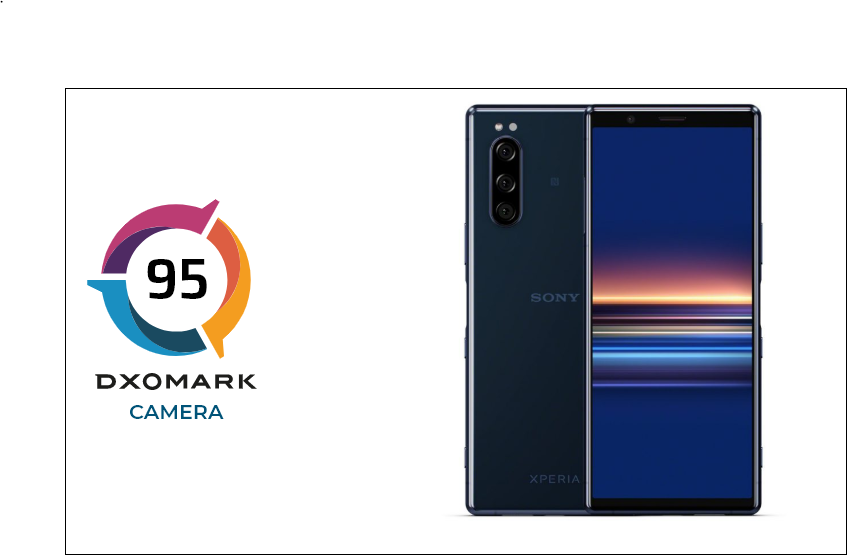
Japanese tech giant Sony first unveiled the mid-range Xperia 5 at IFA Berlin in September 2019. The smartphone was later launched in China a few weeks after. The device comes as a mid-range model but packs a triple camera arrangement just like the flagship Xperia 1. The Xperia 5 is said to have an improved camera setup over the Xperia 1 with all three sensors being 12MP sensors. DXOMark has released its review of the Xperia 5 camera and the score isn’t superb.
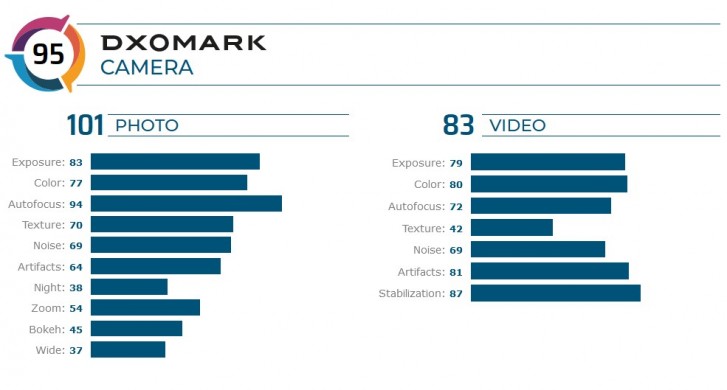
The overall score of the Xperia 5 is 95 slightly higher than the Xperia 1’s score of 91. In the aspect of photography, it scored 101 and 83 for video. The review noted slight improvements in exposure, textures, artefacts, night, and wide-angle shots with slight declines in colour, autofocus, and zoom. However, DxOMark labels these differences as marginal, stating that both devices are comparable in image quality.
That is in no way saying that the Xperia 5 ranking isn’t impressive. The device, in fact, ranks in the same class as the Galaxy Note 8 and iPhone 8 Plus in terms of video performance.
One of the limitations noted by DxOMark is that the device comes with a limited dynamic range with highlights easily clipping in high-contrast scenes. Colour rendition could also be improved with a more neutral white balance. The low-light performance, they noted, tends to generate a lot of noise in dimmer edges of the shot. Also, the autofocus wasn’t very fast but was consistent and accurate on the Xperia 5.
In addition, the video performance was also affected by the same limited dynamic range issue, with highlights constantly clipping in bright outdoor footage. There are also some inconsistencies with white balance and unstable autofocus. However, exposure remains accurate and noise is well-controlled with effective stabilization.
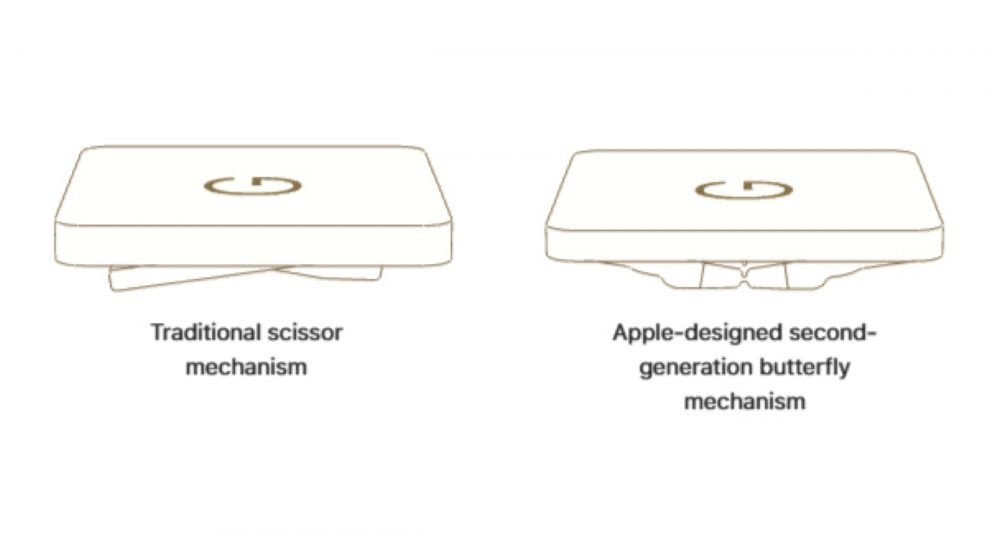
In 2019, Apple had switched from its controversial butterfly switch keyboard design and back to the scissor switches that are found in MacBook lineup. Now, the Cupertino based is planning on including the same input technology for its 2020 iPad lineup as well.
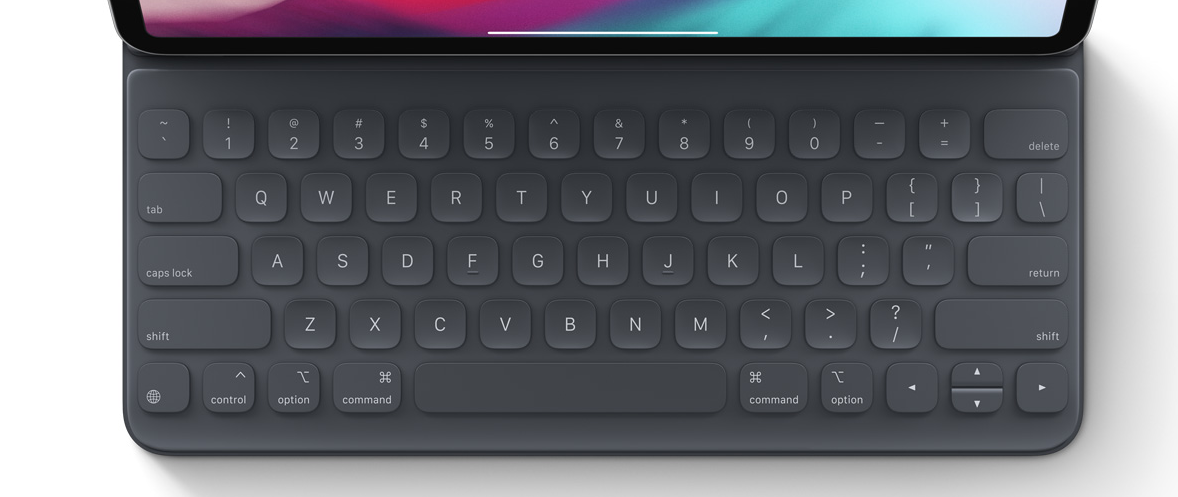
Apple Folio Keyboard
According to a new report, Apple’s latest generation of iPad series will feature a scissor switch keyboard. The upcoming iPad lineup is also expected to feature a “glowing” keyboard in the second half of 2020. In other words, iPads will receive a detachable keyboard as seen before in the past, unlike a built in one that is found in the MacBook series.
Apple had initially used the scissor switch keyboard up until 2015 before the infamous move towards the flawed butterfly switch keyboard. These keyboards were known to malfunction easily with elements like dust ruining its functionality quite easily. But with the 16 inch MacBook Pro in 2019, the company made a shift back to the original. The reason cited was that the butterfly switch was more expensive for the company and it wished to save on the cost of production.
A traditional keyboard switch on the left and Apple’s proprietary butterfly keyboard design on the right
The key difference between a traditional scissor type (X shaped) and butterfly type (V shaped) switch is the travel distance. The former has a larger travel distance which makes it easier to clean and a bit sturdier as well. Apple initially made the move to the latter to make its portable PC offerings even thinner and lighter. But we all know how that panned out, with Apple laptops still suffering from heat displacement issues in the long run for productivity.
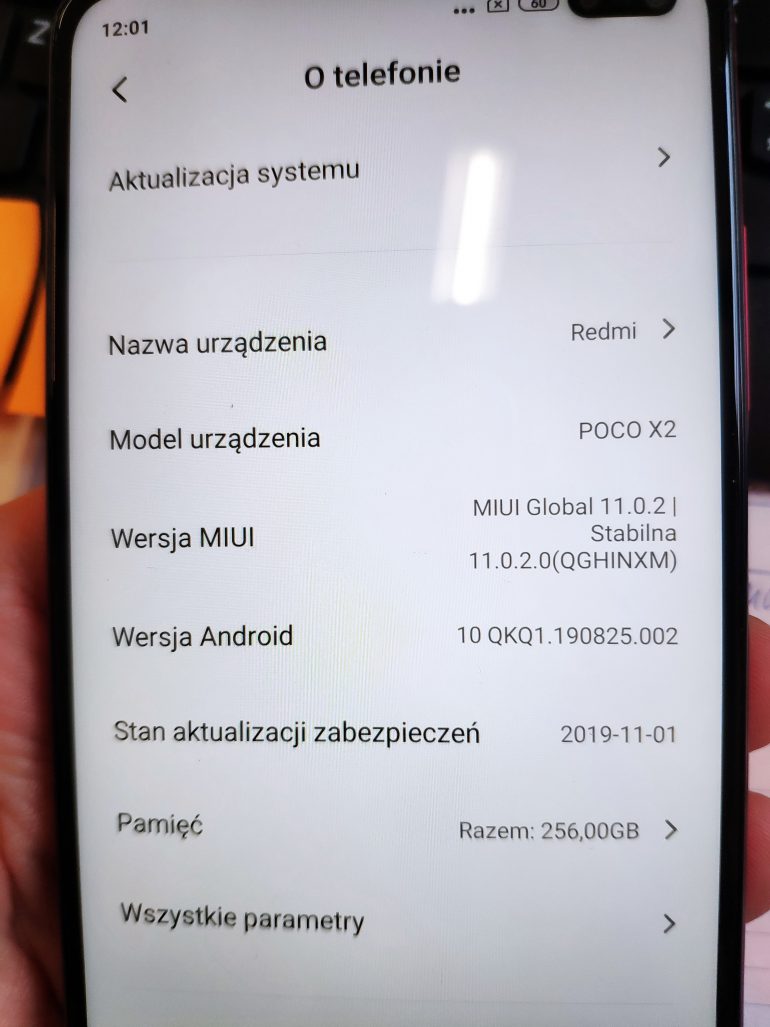
POCO is soon expected to unveil new phones in India. Rumors have it that its upcoming phones are POCO F2, POCO F2 Lite and POCO X2. Fresh evidences reveal that have surfaced suggests that the POCO X2 could be the first phone to debut in India. A new report on XDA Developers cites information a Polish website that has carried a leaked photo of the purported POCO X2 phone. Also, the Polish site has revealed some screenshots taken from the device through which its key specifications have been revealed. The fresh leak indicates that Redmi K30 4G that had gone official in China last month will be probably arriving in India as POCO X2.
The real-life image of the purported POCO X2 shows that there is a pill-shaped camera cutout on the display for its dual front-facing cameras. The Redmi K30 4G for China has the same display design. Moreover, the image reveals the POCO X2 name on its About Phone page.
The above shown video showcases the About Phone and All Specs pages of the POCO X2 phone. It has been found the model number of M1912G7BE. This model number along with M1912G7BC belongs to the Redmi K30 4G. Those pages further reveal that it is fueled by an octa-core processor that clocks at 2.2GHz. It seems to be the Snapdragon 730G.
The SoC is coupled with 8 GB of RAM. The native storage of the device is 256 GB. The phone is running on MIUI 11.0.2 (global edition) based Android 10 OS. The leak further reveals that the device is preinstalled with ‘pheonixin’ ROM. The same codename was spotted on Geekbench of the POCO X2 last week. Phoenix is the codename of the Redmi K30 4G phone and inclusion of ‘in’ suffix suggests that the POCO X2 that appeared on Geekbench could be Indian version of the Redmi K30 4G.
The Polish site has further stated that the alleged POCO X2 does not seem to support 120Hz refresh rate. Also, it could not be confirmed whether the phone has NFC support. The purported POCO X2 may not be running on the final build. It remains to be seen whether these features will be available on the final build on the device.
In December, a Redmi phone with model number M1912G7BI had surfaced at the database of Bureau of Indian Standards (BIS). Since the model number is associated with Redmi K30 4G, it was believed India will be receiving it soon. However, recently the M1912G7BI was moved to POCO section at BIS. This suggested that the India could be receiving the Redmi K30 4G as POCO X2. The screenshot shown above has been snapped from POCO’s recent teaser on Twitter. It reveals that the upcoming device from POCO could be indeed called POCO X2. Readers are advised to take the report with a grain of salt and wait for further leaks to know the full specifications of POCO X2.
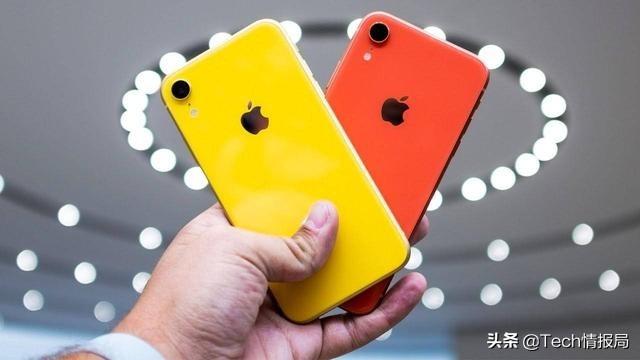
Apple, the smartphone manufacturing giant, had previously started the production of its popular iPhone series in India. It achieved this alongside its known suppliers. Now, Wistron, one of its known suppliers, is bumping up the production capacity of iPhones in India.
Apple iPhone XR
Wistron plans on raising the production capacity by running its third and latest manufacturing plant in full capacity. The trial production of the facility started in November 2019 and has been constructed in haste thanks to collaborative efforts with local teams, according to Simon Lin (Chairman of Wistron). The company will also be hiring mid to top level management for the plant from the locals as well.
Currently, Wistron has two plants established in India, which includes its Bengaluru plant that has been producing Apple’s iPhone SE and iPhone 6s models for the Indian market. the newest and third plant that has been set up in India is situated in Naraspura and will also undertake the production of iPhones in India. This is expected to boost the total production capacity of Wistron by a significant margin in the Southeast Asian country which is also the second largest smartphone market in the world, after China.
Apple iPhone SE
Furthermore, Apple is also expanding the production of more smartphones in the iPhone lineup for the Indian production facilities with another notable supplier called Foxconn Electronics. It has already been supplying iPhone XR devices in India and is expected to include higher end models and the newer models as well.
We use cookies on our website to give you the most relevant experience by remembering your preferences and repeat visits. By clicking “Accept”, you consent to the use of ALL the cookies.
This website uses cookies to improve your experience while you navigate through the website. Out of these, the cookies that are categorized as necessary are stored on your browser as they are essential for the working of basic functionalities of the website. We also use third-party cookies that help us analyze and understand how you use this website. These cookies will be stored in your browser only with your consent. You also have the option to opt-out of these cookies. But opting out of some of these cookies may affect your browsing experience.
Necessary cookies are absolutely essential for the website to function properly. This category only includes cookies that ensures basic functionalities and security features of the website. These cookies do not store any personal information.
Any cookies that may not be particularly necessary for the website to function and is used specifically to collect user personal data via analytics, ads, other embedded contents are termed as non-necessary cookies. It is mandatory to procure user consent prior to running these cookies on your website.