Advertisement

TCL to hold global conference on February 22 at MWC 2020

At the just-concluded CES 2020, TCL, the Chinese manufacturer best known for its TVs and as the licensee for Alcatel and BlackBerry, showcased a couple of its upcoming phones including a foldable one. It revealed more details will be disclosed at Mobile World Congress in February and now it has officially confirmed it will have a launch event with an official poster.

The poster says there will be a TCL MWC 2020 Global Press Conference on Saturday, February 22nd, 2020. The date is a few days before MWC officially commences but that is a standard practice among manufacturers. The event will begin at 18:00 hrs and should be live-streamed.

TCL MWC 2020 Event

TCL will officially take the wraps off the TCL 10 Pro, the TCL 10 5G, and the TCL 10L at the event. The TCL 10 Pro will come with a curved AMOLED display with a U-shaped notch. It will have four rear cameras which include a 64MP sensor and also have an audio jack. The TCL 10 5G and TCL 10L both have a punch-hole display, quad rear cameras, and a rear-mounted fingerprint scanner.

TCL is also expected to bring its new Alcatel phones to MWC 2020. The Alcatel 3L, 1S, and 1V have all gotten 2020 editions that boast multiple rear cameras, dedicated Google Assistant buttons, and run Android 10 out of the box. There is also the Android Go Alcatel 1B which has a single rear camera but also has a Google Assistant button and runs Android 10 (Go Edition) out of the box.

TCL already confirmed all the devices will be available in Europe, so it makes sense they will be showcased at MWC 2020.


(Source)
Master Lu’s ranking of the most-faked smartphones of 2019 – Samsung W2018 tops

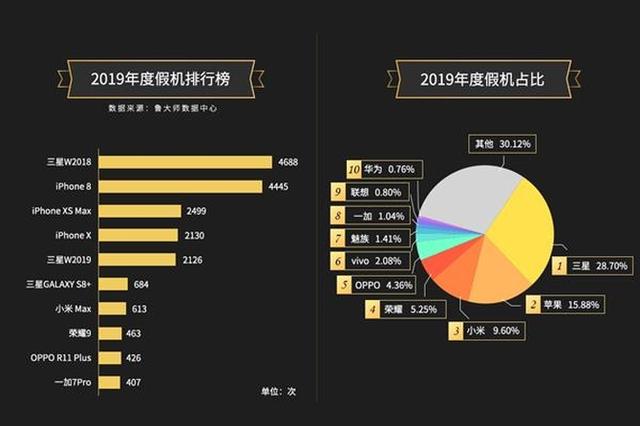
Chinese benchmarking outfit Master Lu has released its ranking of top 10 most counterfeited smartphones in 2019. Among them, Samsung and Apple have been counterfeited the most. In terms of proportionality, Samsung phones had a 28.7% share of most faked smartphones while Apple models ranked second with 15.88% respectively.

In terms of specific models, the Samsung W2018 is ranked as number one most-faked phones, apparently in China. The Samsung W2018 flip phone is one popular model in China and so, this doesn’t come as a surprise. Fake Samsung W2018 were detected 4688 times. Next in line is Apple’s iPhone 8 while the iPhone XS Max is rated as the third most-faked mobile phone. iPhone 8 was detected 4,445 times to be fake while the iPhone XS Max was detected 2,499 times.Samsung W2019

The rest of the list is made up of the iPhone X, Samsung W2019, Galaxy S8+, Xiaomi Mi Max, Mi 9, OPPO R11 Plus and finally OnePlus 7 Pro.

On the whole, a total of 6,639,704 smartphones were tested using the Master Lu app. Out of this, 57,790 units of various models were detected to be fake.


(source)


Vivo sends out invite for MWC 2020 event; to show off APEX 2020

It has just been a few days after the end of CES 2020 and preparations are already underway for the next big tech show which is Mobile World Congress (MWC) 2020. Vivo is one of those who will be attending and they have sent out invites for the unveiling of the Vivo APEX 2020.

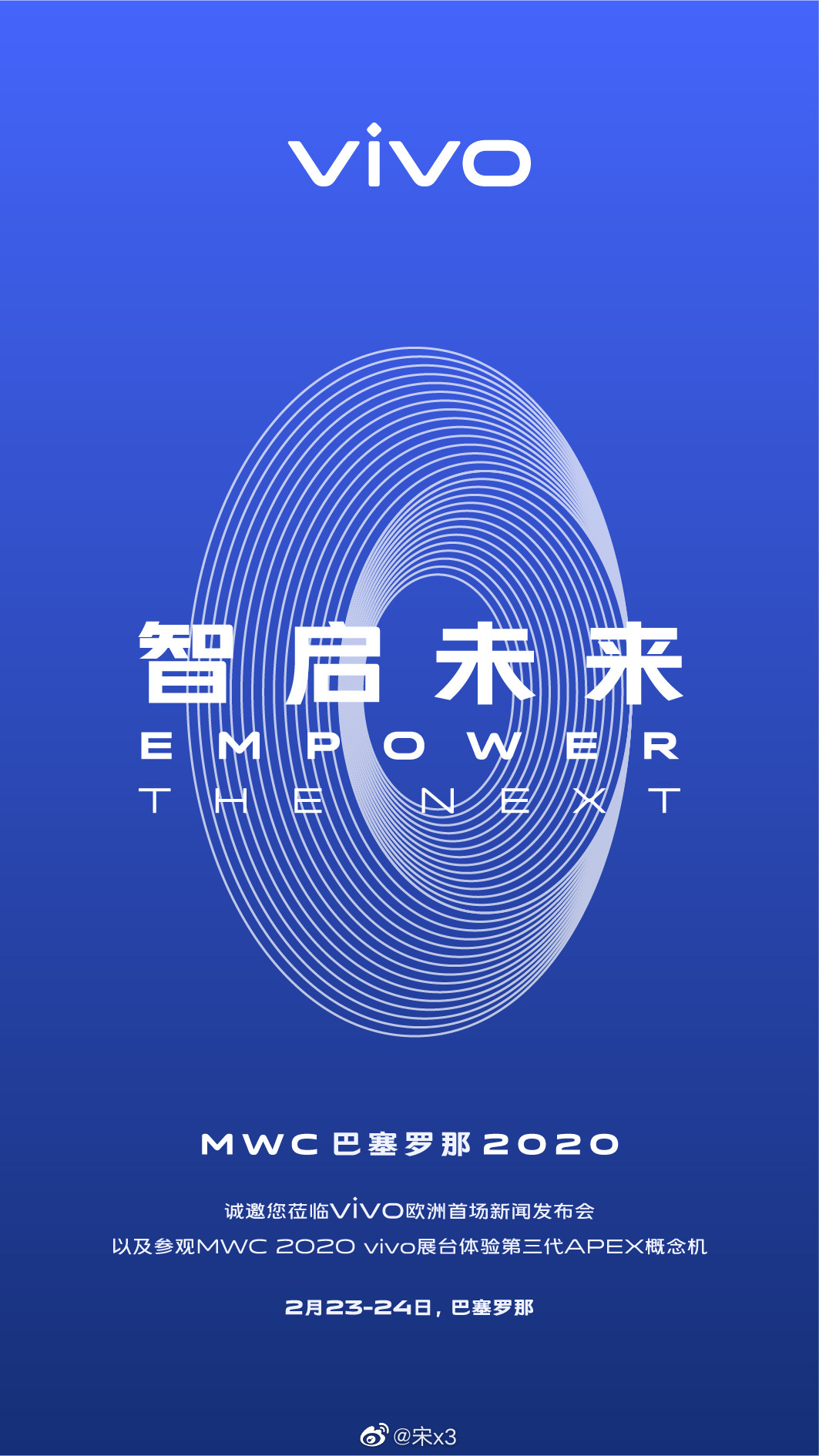
Vivo APEX 2020 MWC Invite

The APEX line of smartphones is a concept line that was developed by Vivo back in 2018. The first of the series is the Vivo APEX, which was the first phone with a motorized pop-up selfie camera and was later launched as the Vivo NEX.

Last year, Vivo followed it up with the APEX 2019; a phone without ports and physical buttons. However, the APEX 2020 never launched as a commercially-available product.

We don’t know what the Vivo APEX 2020 will bring or look like, but a few weeks ago, alleged renders of the phone surfaced online. The renders show the phone will have a curved display with no hardware buttons and no ports. We advise you to take the leak with a grain of salt as the APEX 2020 may have a totally different design.

The invite has the words “EMPOWER THE NEXT” written on it and there are a bunch of concentric circles too. Those circles may be hinting at the APEX 2020 sporting a rear camera with a mechanical zoom lens.

We look forward to the launch of the phone and hope it gets a commercial-release, unlike its predecessor.


(Source, Via: 1, 2)

Lenovo Ego smartwatch launched for Rs. 1,999 (~$28); Specifications and features

Lenovo has launched the Lenovo Ego smartwatch in India. Designed for fitness enthusiasts, it sports a sporty appeal and comes with many health-centric features. The device has arrived with a pricing of Rs. 1,999 in India and is now available for purchase through Amazon India and Flipkart.

Lenovo Ego smartwatch specifications and features

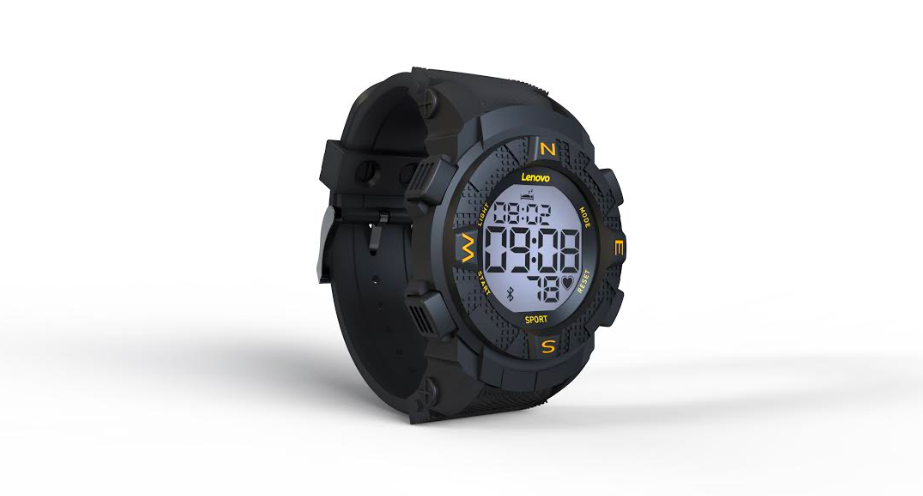
The Lenovo Ego HX07 smartwatch features a round-shaped 42mm anti-reflective monochrome screen. Its chunky appearance is similar to Casio’s G-Shock watch series. The electronic display consumes less power. There is a dedicated “Light” button on the device that effectively illuminates the display in the dark. It can be paired with Android OS and iOS devices through Bluetooth. Users can control its functions by using the Lenovo Life app on their paired devices.

Lenovo Ego Smartwatch

Once paired, the Lenovo Ego HX07 smartwatch can notify users on calls, emails, SMS and social media app alerts through different vibrating patterns. Lenovo claims that the Ego smartwatch can last for up to 20 days on a single charge. One can easily connect the charging pin at the bottom of the watch so that it can be charged without a hassle.

The Lenovo Ego smartwatch is equipped with multiple sensors for tracking heart rate, sleep, calories burnt, and steps taken. With 5ATM water resistance, the Ego smartwatch can last be used while swimming. The soft and durable strap ensures that the wearer can use it throughout the day without any discomfort. It is a lightweight smartwatch that weighs only 45gm.

At the end of year 2019, Lenovo had launched the Lenovo Carme smartwatch. It has a square-shaped 1.3-inch IPS LCD display and IP68 certified chassis. Priced at Rs. 3,499 (~$49), the Carme smartwatch offers many health and fitness activities.


LuluPet AI Smart Cat Litter Box uses AI to track the cat’s health status through the stool

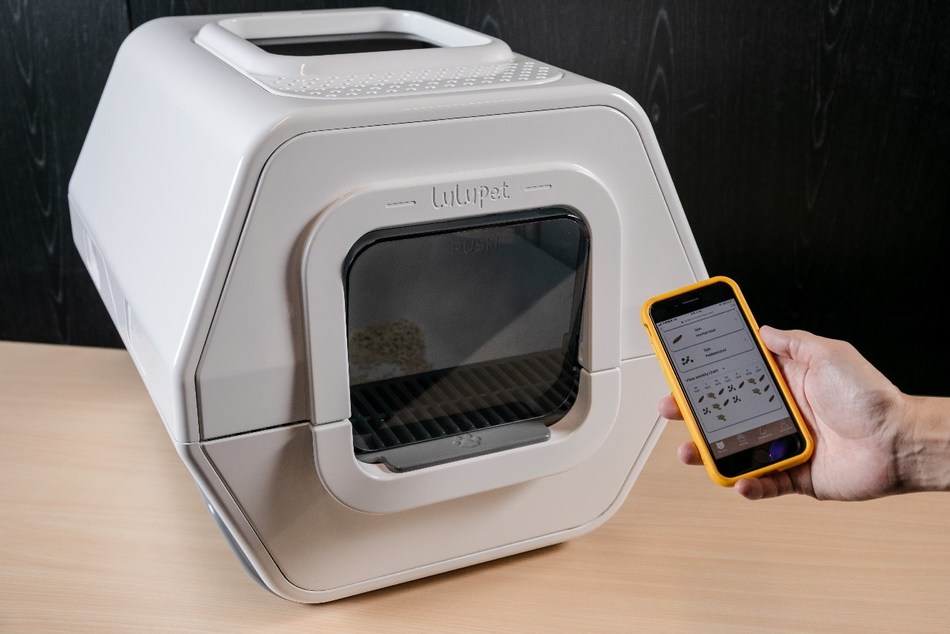
At the recently concluded CES 2020 tech show held in Las Vegas, one of the products that stood out and even clinched an award is the LuluPet AI Smart Cat Litter Box. The smart cat shelter is touted to be the world’s first litter box with built-in stool and urine image recognize and excretory behavioural algorithms. LuluPet AI Smart Cat Litter Box

Cats are quite capable of withstanding pain; hiding any signs of discomfort they may be experiencing. This means that the quickest way to tell your kitty’s condition is through its litter. The product was developed by Taiwanese startup LuluPet. The litter box is equipped with AI image restoration technology and automatically detects cat litter condition and helps look for abnormalities in the cat’s body in places where cat owners cannot. It can monitor and analyze the cats’ health data through cats’ stool image, weight change, and excretory behaviours and notifies the owner for any abnormal activities. So the cat can receive early treatment and help the owners’ cats to live a healthier life.LuluPet AI Smart Cat Litter Box

Among the top ten causes of death for domestic cats, seven were faeces-related diseases. Cats, however, are born concealers of their own weaknesses, making it difficult for owners to find out whether their precious feline is in pain. LuluPet illustrates this with the example of kidney failure: Statistically, a cat’s kidneys are 70% damaged by the time the owner suspects an illness and brings the cat to the veterinarian. The organ damage is not only irreversible, but subsequent medical fees may cost up to US$ 1,200.

LuluPet AI Smart Cat Litter Box

Sick cats aren’t completely undetectable. According to the Bristol stool scale, cat faeces may be divided into 7 categories, ranging from constipation to diarrhoea; constipation may be caused by the pressing of a tumour, while symptoms of diarrhoea may be the result of common systemic diseases such as kidney failure. Stool analysis thus becomes the most straightforward way of detecting these diseases.

For persons who raise multiple cats, it is pretty difficult to assign litter to a specific cat. LuluPet identified this pain point and put 2 years into developing an “intelligent litter box.” The intelligent litter box works mainly by detecting with lenses whether the cat is urinating or littering. It not only detects littering frequency and litter weight but also the condition of the litter (normal, constipation, diarrhoea, etc.). After judging litter conditions through the use of AI image restoration, it uses this data to notify the owner of the cat’s health. The device can safely identify litter with an accuracy of up to 90%.


(source)

Two new Redmi phones bag China’s MIIT certification

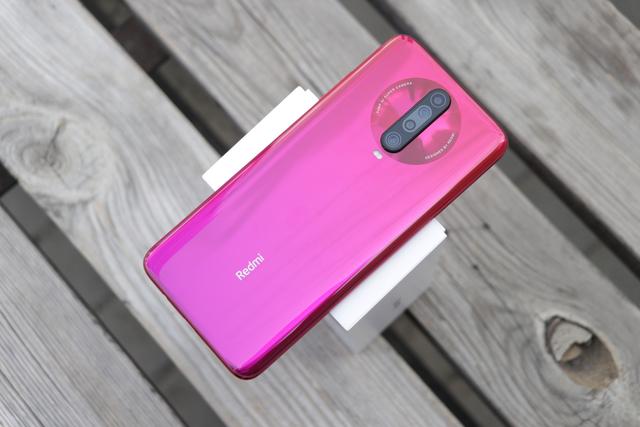
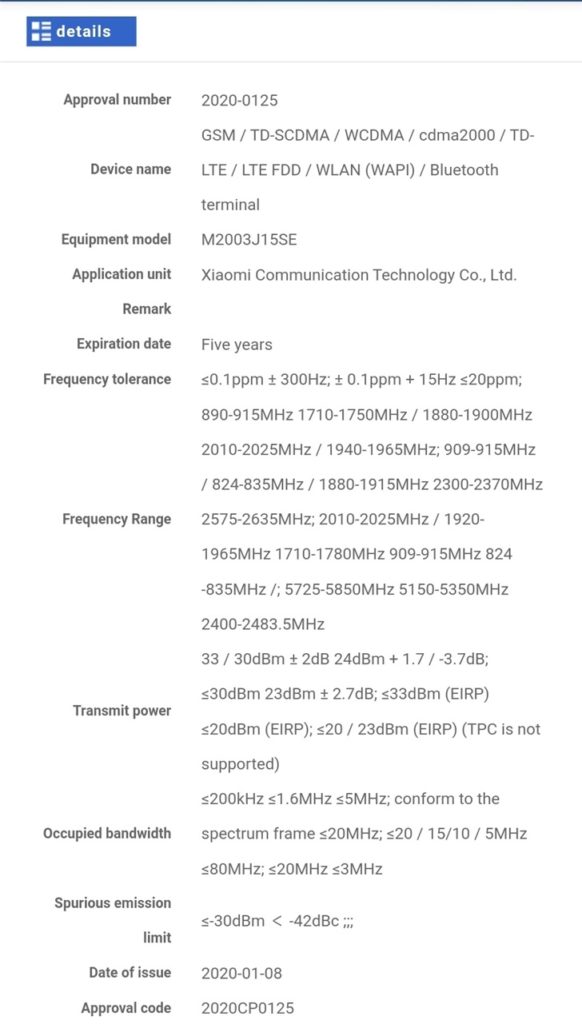
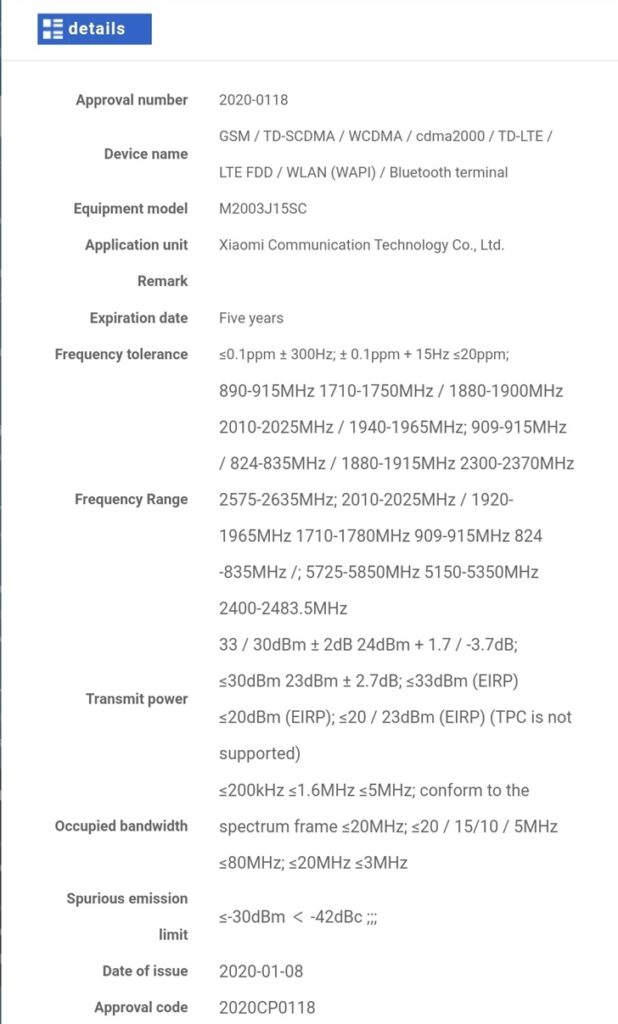
Two new Redmi models have reportedly been certified by China’s Ministry of Industry and Information Technology (MIIT). The models come with the model numbers “M2003J15SC” and “M2003J15SE”.

The certificates were shared by tipster @Sudhanshu who hinted that the devices were the suspected Redmi Note 9 Pro (4G). But Xiaomi is yet to reveal any details of the device.

The Redmi Note 9 Pro is expected to come equipped with MediaTek Helio G70 processor paired with 4GB of RAM and 64GB storage, likey on the base model. The phone is also expected to feature a 6.6-inch waterdrop screen. A recent 3C certification of a Xiaomi model with the same model number shows the device will support 33W fast charging. Xiaomi’s new power adapter passed 3C certification a few days ago, and the information shows that this product will feature support for 33W fast charging.

We keep you posted when more details of the Redmi Note 9 Pro emerges.


(source)

MediaTek Helio G70 launched for mid-rangers with gaming capabilities

MediaTek has discreetly announced a new chipset named Helio G70. As the name goes, the new SoC is positioned under the Helio G90 and Helio G90T processors. Since it is a Helio G-series processor, the Helio G70 processor is designed to offer gaming capabilities on low powered smartphones. Rumors have it that the upcoming Xiaomi Redmi 9 could be one of the first phones to debut with the new Helio G70 processor.

MediaTek Helio G70 Specifications

The Helio G70 is an octa-core processor that constitutes four cores of Cortex A75 working at 2GHz and four cores of Cortex A55 clocking at 1.7GHz. The SoC is coupled with 820MHz Mali-G52 2EEMC2. The smartphones powered by Helio G70 can deliver maximum resolutions of 1080 x 2520 pixels. It supports up to 8 GB of 1800MHz LPDDR4x and eMMC 5.1 storage.

Mediatek logo

When it comes to connectivity, the Helio G70 supports 4G carrier aggregation, Wi-Fi 5 802.11ac and Bluetooth 5.0. The SoC supports a single camera of 48-megapixel or up to 16-megapixel + 16-megapixel dual camera system with support for up to 30fps video shooting. Other camera related features available through chipset are Face ID, rolling shutter compensation (RSC), single cam bokeh, dual cam bokeh and AI smart photo album. There is integrated Voice on Wakeup feature that optimizes the performance of voice assistant with less power consumption. The HyperEngine Game Technology ensures fast and smooth experience while enjoying games. It also supports intelligent networking and resource management while gaming.

In related news, the Redmi 9 could be one of the first Helio G70 powered smartphones. Rumors have it that Redmi 9 may come with a 6.6-inch display with notch-less design.  It could be featuring 4 GB of RAM and may come equipped with a native storage of 64 GB. The phone could be also available in other variants. The MIUI 11 flavored Android 10 OS may come preloaded on the device. The handset is speculated to get announced in the first quarter of this year.


UBook Pro sells fast on Amazon as it uleashes the productivity of its users

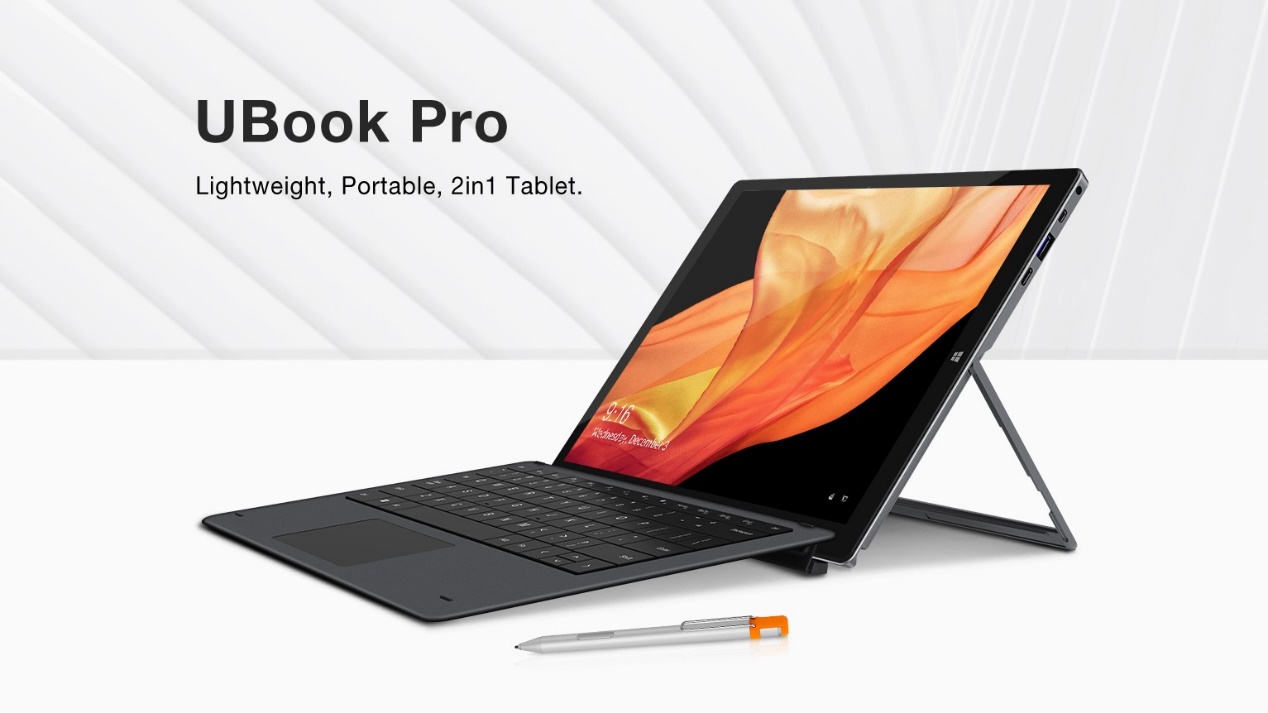
The Chuwi UBook Pro is already on the market for about a month and has gained very positive critics from users. Chuwi gathered some of the customers’ feedback to understand the user experience they receive. According to the company, some of the most frequent comments are these:

  • Lightweight and portable body, convenient to carry in a backpack, 2-in-1 tablet designs well
  • Adequate configurations run office software smoothly, deals with multitasking efficiently
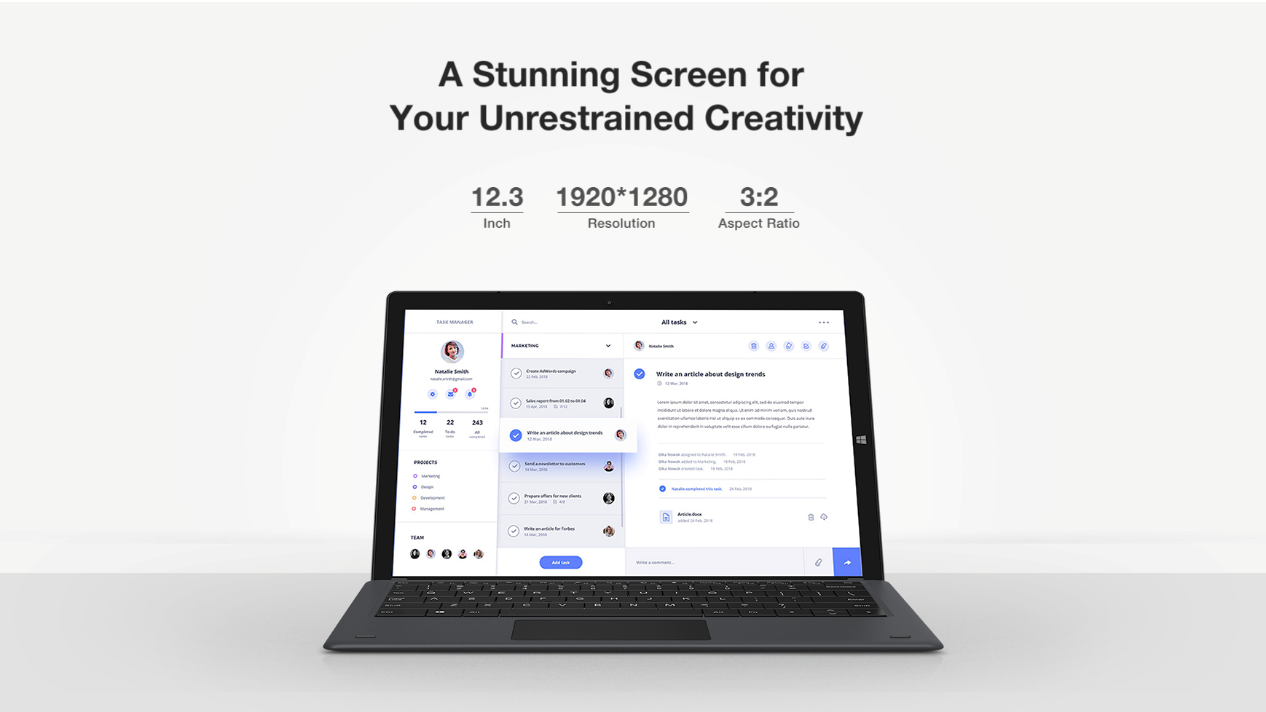
  • 3:2 display ratio screen brings a bigger and more comfortable view
  • Similar to Surface but comes with a more decent price
  • UBook Pro can suit office workers and students with great performance and decent price.

UBook Pro

And indeed, equipped with a 12.3″ IPS screen, a U-shape kickstand, Intel 8100Y/N4100 processors and full-metal body, UBook Pro meets all the requirements of a high productivity tablet.


Multiple configurations, high productivity

In terms of hardware configuration, UBook Pro comes in 2 versions depending on the CPU they sport. The standard model comes with the Intel N4100 while the top version comes with the Intel 8100Y CPU. Both versions come with 8GB of RAM and 256GB SSD while the Intel UHD Graphics GPU can easily decode 4K video. Also, it does the job when it comes to video editing and graphic design.

Chuwi UBook Pro

Meanwhile, The U-shaped kickstand supports step-less adjustment and the maximum opening angle of 145° can transform it into a laptop, workstation or tablet, which means that almost all use cases are available. No matter if you are in the office, business trip, outdoors or enjoying some leisure time, UBook Pro can cope with all situations.


Impressive display

Chuwi UBook Pro

Chuwi chose to adopt the 3:2 aspect ratio for the 12.3″ display so that it is ideal for office work, document editing and web surfing, as it expands the vertical visual range and it’s easier to read and type. Also, the panel reaches 100% of the sRGB color gamut to be suitable for designers too. In addition, the touch panel supports 4096 pressure-sensitive points when using the stylus, making drawing and sketching even more accurate.


Full-size keyboard, efficient typing

Chuwi UBook Pro

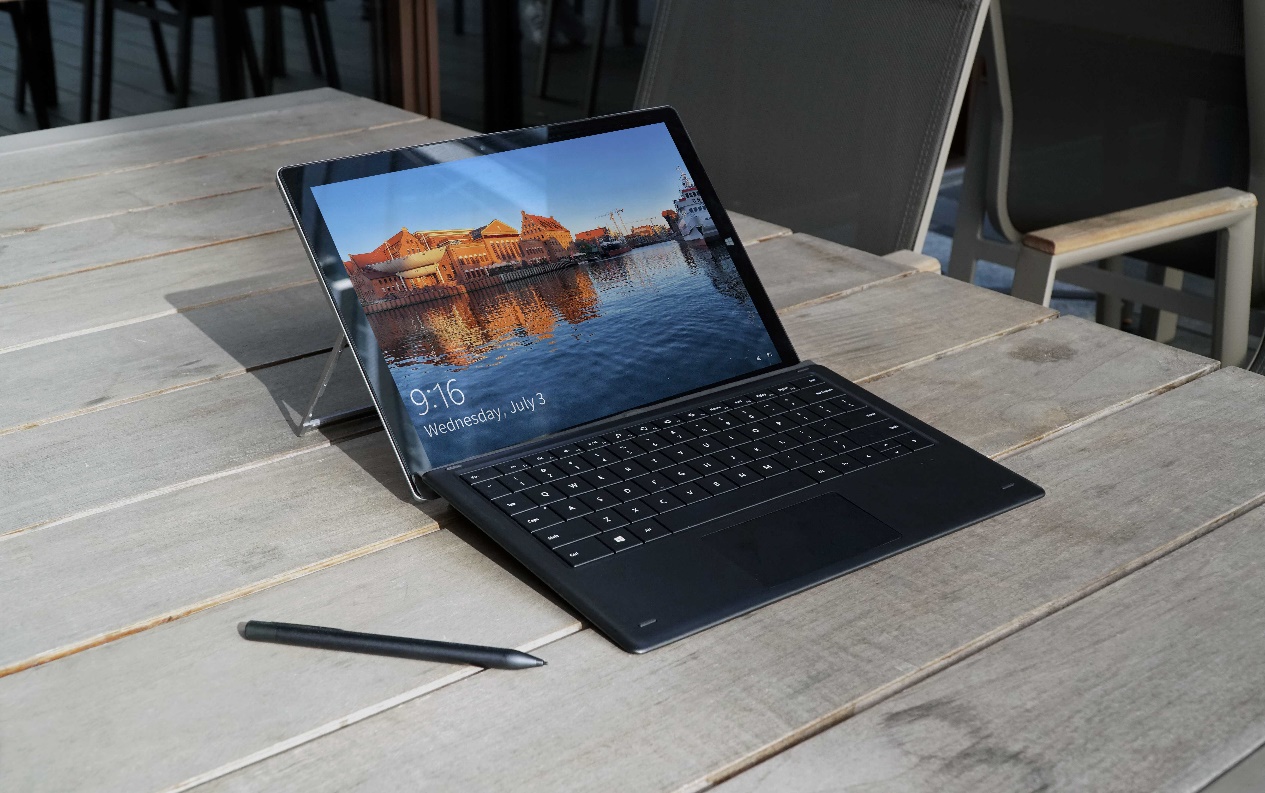
UBook Pro is a tablet but it can be turned into a laptop anytime using the magnetic docking keyboard. The full-size keycaps got an excellent touch and you can even use it in dark environments since it is backlit.


Cost-effective productivity tablet

Chuwi UBook Pro

With specs and features that tick all the boxes of a modern mobile PC, the UBook Pro is can be considered as one of the best all-around choices out there. Also, the low price (about $350) of the standard version, makes it a Value-for-Money choice too. To learn all the details about it, visit the official product page.

New Vivo patent shows two separate housings for rear cameras

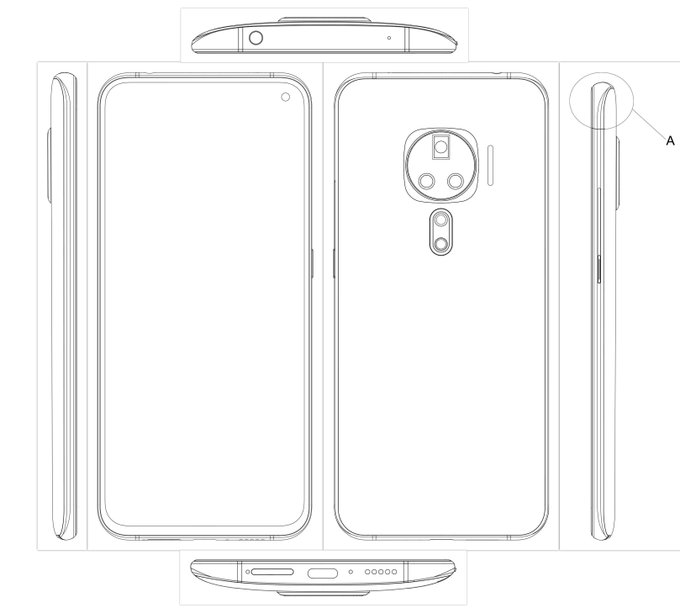
Chinese smartphone brand Vivo has patented a new smartphone design which is quite unique in terms of design, especially when it comes to the camera module. The design shows a penta-camera setup on the back with two camera modules.

The first camera module on the back is a circular one which houses three camera sensors. There’s a second camera module just below the first one in a pill-shaped housing that holds two more camera sensors. It we see closely, it seems that the phone will come with a periscope lens setup.

Vivo Penta-Camera Design Leak

On the front side, we can see that there’s a single punch-hole cut-out for housing a camera sensor. While the design has been leaked, nothing is known about the phone’s specifications at this point in time.

Since the phone’s back design seems a bit similar to the Vivo NEX 3 and the periscope lens setup on the back is similar to the Vivo X30 Pro smartphone launched recently, it is being speculated that the phone in question is a flagship offering from Vivo.

While it is not yet known what smartphone will have this design, it is being speculated that the smartphone could be the much-awaited Vivo NEX 4. There’s a possibility that it is an entirely different or new phone. To know for sure, we’ll have to wait for some more information about this smartphone to emerge.

(Source)
Ulefone Armor X7: The World’s 1st Android 10 rugged smartphone

Google announces its next version of Android at the Google I/O Event that takes place around May and releases the final version around September of the same year. Android 10 is the latest version of Android OS and was released back in September bringing many new features like system-wide dark theme, improved privacy controls, new gesture navigation, native desktop mode, etc., offering a simple and smarter UX. Recently, Ulefone revealed that they will launch the world’s first Android 10 rugged phone soon by the name Armor X7.

Ulefone Armor X7

According to the revealed information, Armor X7 will be powered by a 12nm quad-core processor backed by 2GB RAM and 16GB of internal storage. As you can imagine, it should be an affordable rugged phone, perfect for casual use. In addition, there will be a 13MP rear camera and a 5MP selfie shooter, enough to capture photos and videos of adequate quality.

Ulefone Armor X7

Also, judging from the low-consumption hardware, the large 4000mAh battery will be enough for more than a day of full use. Of course, it supports all the usual features that almost all Ulefone phones come with like face and fingerprint unlock, NFC with Google Pay, dual-SIM/dual-standby, global network bands, etc.. Lastly, being a rugged phone means IP68/IP69K certifications and durable chassis.

Long story short, the Armor X7 will be a value for money model. If you are interested in it, you can visit their official website for more details.

XIDU Back-to-School mid-season sales are on, offering discount for PhilBook Pro and PhilPad

As the Christmas holiday is over and schools, as well as universities, open their doors for the Spring semester, XIDU is offering some of the best deals since Black Friday. Back to School activity is usually held at the end of the summer but the Chinese manufacturer is holding a mid-season BtS activity for two of its best laptops so that being a student can become a little easier. So, until January 31st, XIDU PhilBook Pro and PhilPad are offered at the lowest price for 2020 while customers can also take advantage of many $30 for other products too.


XIDU PhilBook Pro

One of the best features of the PhilBook Pro is its 2560×1440 IPS display. Such a resolution on an 11.6″ panel means higher ppi and incredible clarity. And if you think that a high resolution like this is ideal just for photos and videos, you should reconsider as higher resolution means crisper details for office work as well as gaming. Besides, the panel is supplied by Sharp and that takes care of high quality.

XIDU PhilBook Pro

The design of the PhilBook Pro adopts the 360° flexible hinge featured by a double torque technology and offers an ideal mix of flexibility and quality so users can easily open the lid with only one hand yet have enough torque for a wobble-free touch experience. The hinge transforms the laptop into a tablet in no time or you can use it in tent mode, according to your liking. In addition, it is an ultra-light device thanks to the aluminum-alloy body and small size.

XIDU PhilBook Pro

As for the hardware performance, the device comes with an Intel J3355 4-core 2.0GHz CPU backed by 6GB of RAM and 128GB SSD. That means stable and fluid performance in everyday tasks as well as low power consumption and many hours of use on a single charge.


XIDU PhilPad

In addition to the laptop lineup, XIDU is also offering 2in1 tablets. XIDU PhilPad is one of those models and it’s a business-class Tablet PC designed for those who need a powerful and, most importantly, mobile tool for daily work outside the office or at home.

XIDU PhilPad

The PhilPad features a metal body and it can be transformed into a laptop using the detachable keyboard. The device sports a generous 13.3″ multitouch IPS 2K (2560×1440) display and is powered by an Intel E3950 quad-core CPU backed by 6GB of DDR3 RAM and 128GB SSD. The storage space can be further expanded with up to 256GB more via the TF card slot.

XIDU PhilPad

In the box, you’ll also get a stylus and the mentioned keyboard, as well as a licensed Windows 10 operating system, a powerful power supply for fast charging and a nice bonus: branded protective film pre-applied on the display.

So, if you’re looking for a best-value laptop or 2in1 tablet, make sure to visit the XIDU Official Store to catch the Back-to-School promotion for up to 30% off discount.

XIDU Back to School

What’s more, there are big discounts on the rest of the platforms that XIDU is present. Visit Amazon US, UK, FR, ES, IT stores as well as Aliexpress to learn more. For coupons on all of the company’s products, look here.

Realme UI with stock Android designs officially detailed with Roadmap

Realme smartphones have primarily used Android based ColorOS custom user interface skins so far. However, the company has wanted to take a step away from this and offer a more stock experience for a while now, with beta testing in China that had taken place earlier. Now, the company has finally unveiled the Realme UI which is listed with a simplified design alongside various improvements and new features.

Realme

The company which was previously an Oppo subsidiary is advertising the new UI as “Seamless Fun.” It arrives with a stock Android experience alongside system colors, icons, wallpapers, and new animations as well. Since Realme’s target audience has primarily been the youth, it’s marketing with “vitality” and “younger” keywords can also be seen for its fresh new look.

Realme

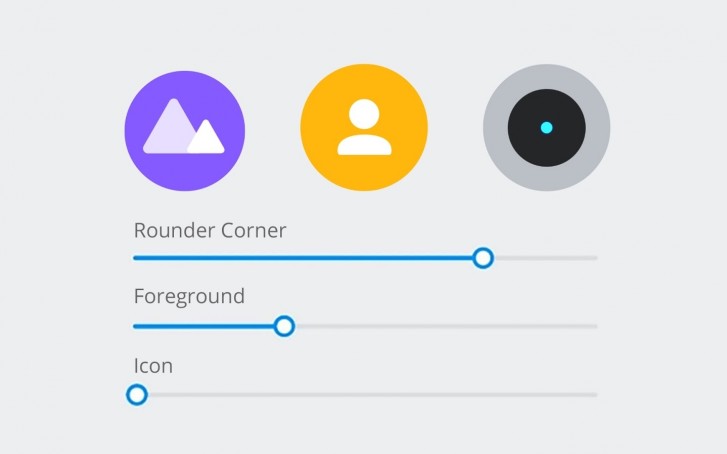
With Realme UI, users are able to design the icons and can choose their transparency as well. The sizes of the icons are also customizable and are personalized, even for the actual image in the icon. Alongside the fresh look, the UI brings 11 new background wallpapers for the home screen of Realme smartphones. Notably, the wallpapers are based on “natural elements” and will users can always find a match with a particular color scheme.

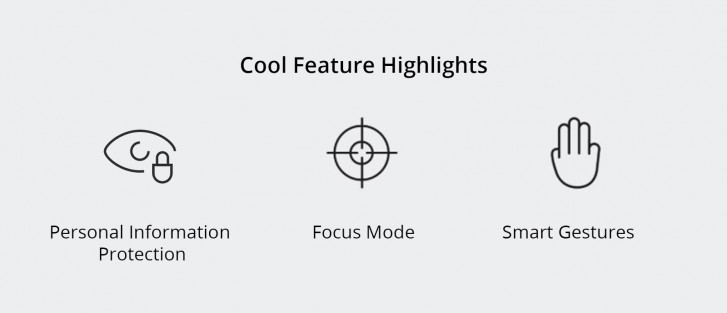
The Android 10 based Realme UI also brings performance improvements as well. It arrives with new power saving features and a lot more. A new Focus Mode helps disconnect from the outside world and even plays relaxing music to help improve concentration.

Realme

For security, a Personal Information Protection feature has been added that allows the system to fill empty information pages regarding call history, contacts, messages, or schedules that certain websites or apps might enquire about. Thus, it makes one’s private data safe while not limiting the usage of the app itself.

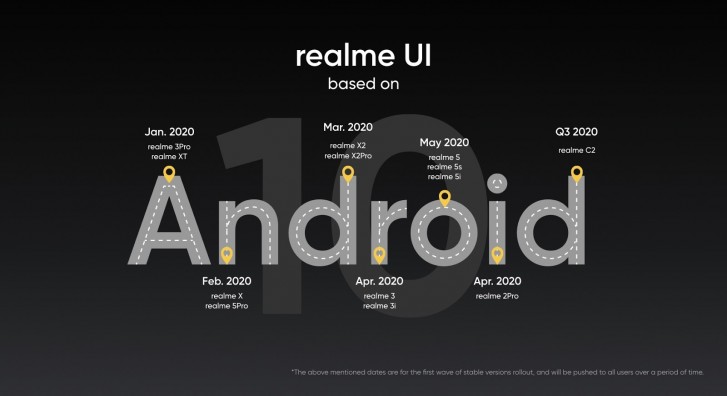
Lastly, Realme also provided a roadmap (See Image Above) for the new update or the stable rollout of its new UI. Hopefully, Realme smartphones that are released in the future carry the update right out of the box.


(Source)
Apple granted a patent for Apple Pencil with a built-in camera

The Apple Pencil may be getting some really cool upgrades in the future. According to the United States Trademark and Patent Office (USPTO), Apple has received a patent for a stylus with a built-in camera and more.

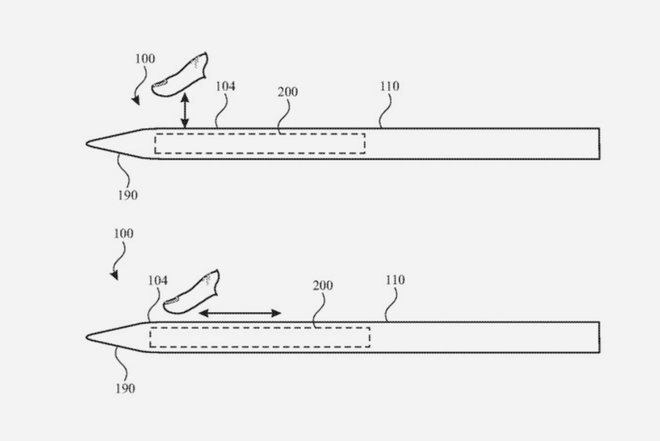
The patent description said the stylus will have a touch-sensitive area with support for gestures such as taps, rotations, and swipes or a combination of gestures. This version of the Apple Pencil will also be able to distinguish between a user simply holding it or performing an actual gesture. The current Apple Pencil allows you to switch between tools such as a pen and an eraser by double-tapping the side of the stylus.

Apple Pencil patent

The patent also states that the stylus may also be able to detect biological characteristics of the user such as heart rate, respiration rate, blood pressure, and skin temperature, etc.

One other patent listed mentions a version of the Apple with a built-in camera. The camera will be able to capture the physical characteristics of a surface and visually reproduce it on the screen of the iPad.

Another patent has a haptic feedback feature that replicates the feeling of drawing on paper while another mentions the stylus having a fingerprint scanner so that it can be used to unlock the iPad and also to carry out payments.

It is not yet known which of these features will eventually make it to a commercial product. However, we have a feeling the new gestures may come with the Apple Pencil that will launch with the upcoming iPad Pro. Renders of the upcoming tablet leaked a few weeks ago and they revealed the next-gen iPad will have triple rear cameras.


(Source, Via)

Xiaomi patents new design for another smartphone with a surround display

The smartphone industry saw some very notable innovations in the year 2019. 5G advancements saw the inclusion of the newer and faster bandwidth while foldable handsets became a reality. Now, Xiaomi is reportedly making a smartphone with a display that almost completely covers the smartphone body, according to patents.

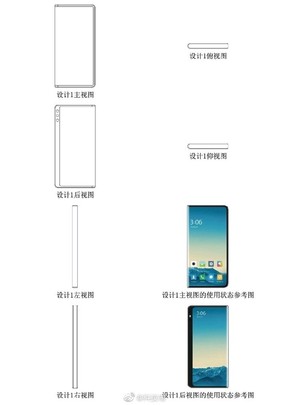
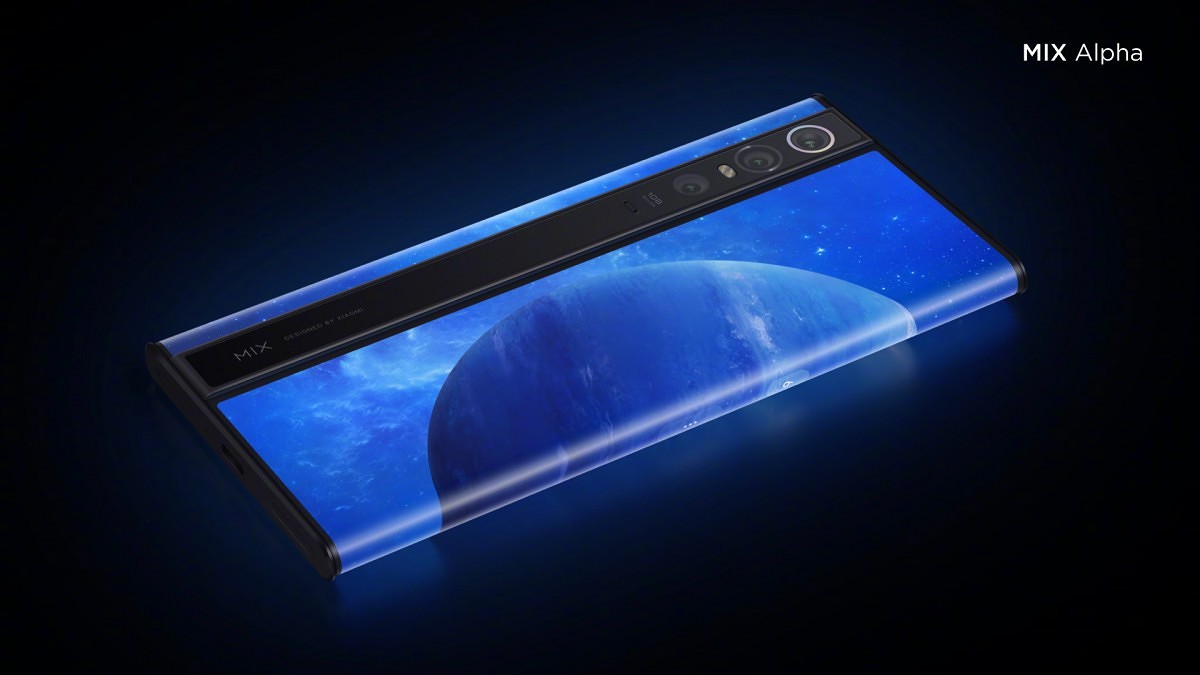
Xiaomi Mi Mix Alpha is a concept smartphone with a similar design to the patents that were recently uncovered. However, a few points can be discerned while looking at the patents. Unlike the Mi Mix Alpha, the patented device has yet to be produced and is still unconfirmed or at conceptual stages at best.

Xiaomi
Xiaomi secretly patented a smartphone with a surround screen

The Mi Mix Alpha was the first smartphone to have a surround display that covered most of the handset’s body. Hence, the newer device could follow the same philosophy but could be made for mass-producing; since the Mi Mix Alpha will only be offered in limited numbers since it is a concept smartphone.

Looking at the design patents, the handset is visually distinct from the Mi Mix Alpha but also has the display cover the front panel and most of the rear panel. The patented device also carries a form factor that resembles that of a book. To further differentiate the device from the already existing Mi Mix Alpha, different materials could be used to manufacture it.

Xiaomi
Xiaomi Mi Mix Alpha with a surround screen

Earlier builds of the Xiaomi Mi Mix Alpha had plastic materials for its display. Since then, the Chinese tech giant has confirmed that future iterations will arrive with flexible glass display technology. But as it stands right now, the design of the unique screen of the smartphone still needs work and improvements to be made on viability, strength and more.


(Via)

MediaTek to soon launch a new low-end G-Series gaming chipset: Report

A new report has surfaced which suggests that MediaTek, the chip making company, will soon launch a low-end G-series SoC that is aimed at gaming for affordable smartphones. The news arrived after Yenchi Lee (Senior Director in MediaTek) stated in an interview that the upcoming processors will be placed below the G90 series chipsets for both power and performance.

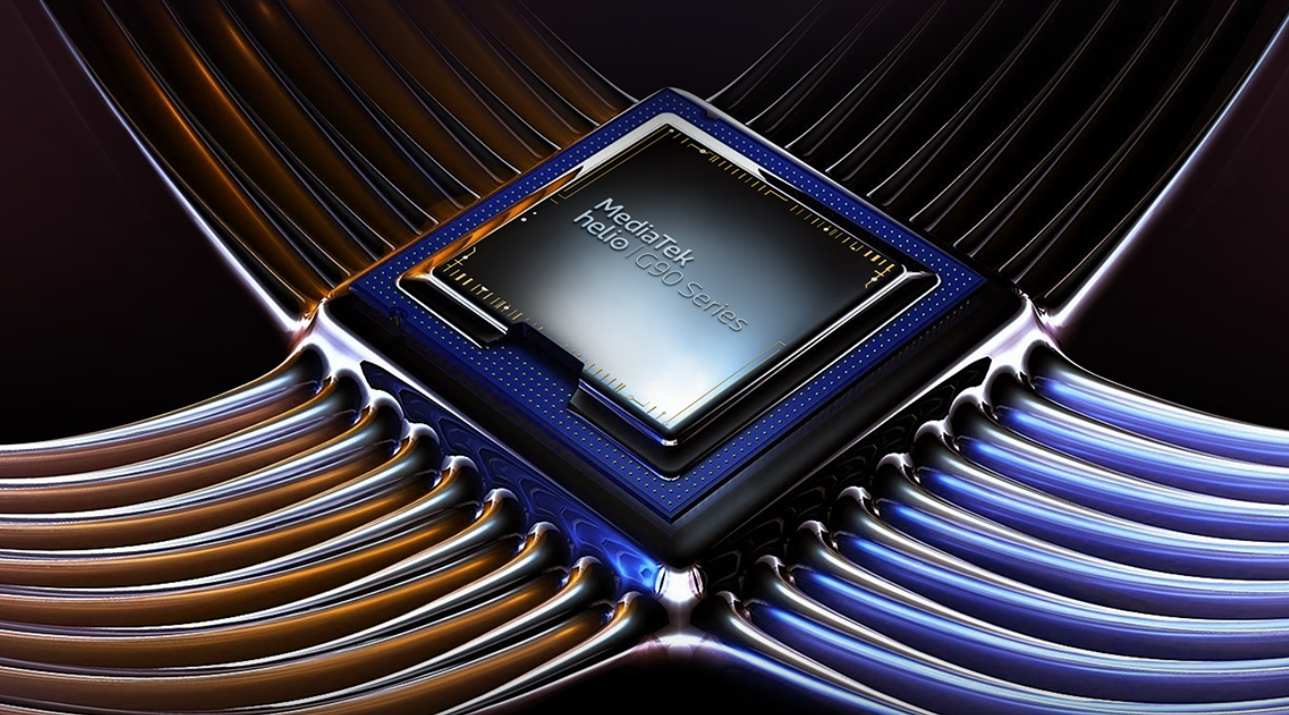
MediaTek’s Helio G90 series was one of the first smartphone chipset produced with mobile gaming as a focus. Following this line, the new entries will target the same audience but will be featured in more affordable smartphones. Although unconfirmed, the new chip series could be the Helio G70 series that is expected to power the Redmi 9 smartphones.

MediaTek Helio G90 series
MediaTek Helio G90 Gaming Series SoC

As of right now, the senior executive from MediaTek has only given out a vague estimate. So, an official release date is still unknown. Furthermore, finer details like specifications of the upcoming low-end gaming SoC is also unknown. However, a leak has suggested that the chipset would be an octa core processor with two Cortex A-75 and six Cortex-A55 cores coupled with Mali-G52 MC2 GPU.

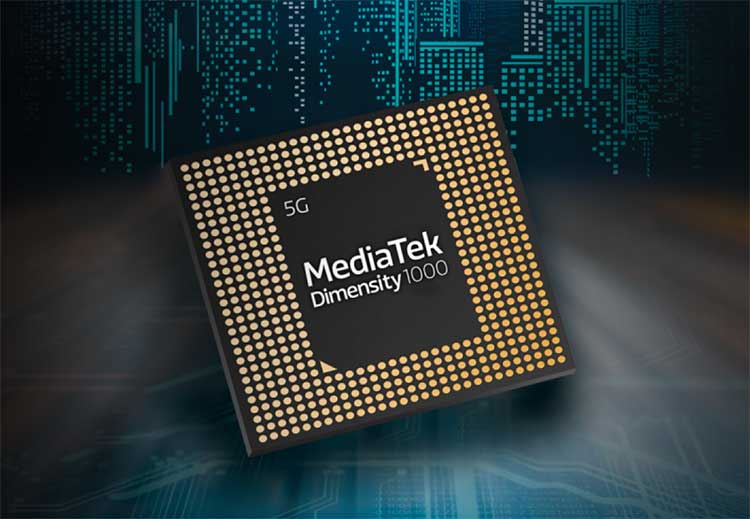
Notably, current flagship processors arrive with a tri-cluster or triple power domain CPUs. In other words, they feature a big, medium and little core, unlike MediaTek’s dual cluster. Even the Dimensity 1000 and Dimensity 800 chipsets did not feature this architecture while Qualcomm’s Snapdragon SoC’s have been for a while now. According to Yenchi Lee, the company is looking into this technology for the future and these chipsets would start shipping soon.

MTK Dimensity 1000
MediaTek Dimensity 1000 SoC

Lastly, the Senior Director also mentioned that MediaTek is looking into offering GPU updates via Google Play Store as well, something Qualcomm announced last month. However, an ETA on this is unavailable as well, at least for now.


(Source)
Redmi K30 5G 144Hz refresh rate update could be coming in future

In June last year, a MIUI community member had developed a mod that could allow the standard 60Hz display of the Xiaomi Mi 9 to deliver a faster refresh rate of 84Hz. Last month, Redmi had launched the Redmi K30 4G and Redmi K30 5G smartphone. Both phones are currently selling as the cheapest phones with 120Hz refresh rate displays in China. Today, Redmi General Manager Lu Weibing confirmed that the company successfully tested 144Hz refresh rate support on the Redmi K30 5G.

Weibing has released a video on Weibo to demonstrate the support for 144Hz refresh rate on the Redmi K30 5G. As it can be seen, the 120Hz display of the Redmi K30 5G can seamlessly support 144Hz possibly through a software update.  Hence, there is a possibility that the company bring support for 144Hz refresh rate through an update in the near future.

Weibing has shared the above video at a time when major companies are getting ready to launch flagship phones like Galaxy S20 series and OnePlus 8 lineup with 120Hz refresh rate screens. Weibing’s Weibo post appeared few hours after Nubia President Ni Fei confirmed that the forthcoming Red Magic 5G phone has a 144Hz refresh rate display. It appears that many smartphone OEMs will launch handsets with higher refresh rates in this year.

In related news, Redmi will be starting with the sales of the 6 GB RAM + 64 GB storage and 6 GB RAM + 128 GB storage models of the Redmi K30 5G from tomorrow in the home market. These variants are currently priced at 1,999 Yuan (~$290) and 2,299 Yuan (~$333_. These models will be available in two color choices such as Deep Sea Blue and Deep Ocean Glitter.

Redmi K30 5G Specifications

The Redmi K30 5G houses a 6.67-inch IPS LCD display with punch-hole design. It offers 20:9 aspect ratio and full HD+ resolution of 1080 x 2400 pixels. The Snapdragon 765G chipset with support dual-mode 5G powers the device. It comes with up to 8 GB of RAM and up to 256 GB of native storage. It is equipped with a microSD card slot for additional storage.

The Redmi K30 5G has a 20-megapixel + 2-megapixel dual camera system on the front. On its rear, it is fitted with a 64-megapixel + 8-megapixel + 2-megapixel + 2-megapixel quad camera module. The Android 10 OS skinned with MIUI 11 comes preloaded on the device. The phone houses a 4,500mAh battery that supports 30W fast charging.


(source)

Huawei reportedly placed orders for 14nm SMIC manufacturing process

According to a new report, Huawei subsidiary, HiSilicon, has placed an order from SMIC’s (Semiconductor Manufacturing International Corporation) new 14nm process, and has received orders from TSMC (Taiwan Semiconductor Manufacturing Company) as well.

The former started the research and development regarding 14nm processes back in 2015 and has begun mass producing 14nm FinFETs successfully since the third quarter of 2019. Thus, it also makes the SMIC factory the most advanced integrated production base in Mainland China.

Huawei

On the other hand, TSMC is an established industry supplier with a bulk of its operations concentrated in the Nanjing plant that was put into operation at the end of 2018. It has an investment in 3 billion US Dollars that enables it to produce 20,000 12 inch wafer fabs on a monthly basis. In simpler terms, the plant is able to consistently manufacture a large number of smartphone based circuitry.

Previously, HiSilicon’s primary orders for 16nm and 14nm were mainly taken up by TSMC. Now, Huawei subsidiary brand is placing orders to the newer SMIC for the same technology. For those unaware, HiSilicon develops the Chinese smartphone manufacturer’s proprietary Kirin smartphone chipsets.

A known project taken up by SMIC in regards to smartphones was for Qualcomm’s Snapdragon 400 series SoC (system on chip). Unfortunately, it is currently unclear as to which device the 14nm SMIC will be made for, but Huawei smartphones (or even tablets) might be the obvious choice here.

Huawei

Notably, TSMC is facing certain issues since the US Government has plans to lower the standard of “Derived from US technology” from 25 percent to 10 percent. This move will create a barrier to TSMC’s supply to companies not based in the US, affecting market trends and orders for 16nm processes.


(Via)

Rundown of 5G smartphones unveiled in China for 2019

The fifth generation of mobile communication technology, referred to as 5G, is the latest generation of its kind, and 2019 marks the first year of commercial 5G use in China. This doesn’t mean technology has been slow to grow however, as companies are all scrambling to get their 5G smartphones out of the gate. With that in mind, let’s take a closer look at the 5G devices that released in 2019.

In May 2019, we saw the first commercial 5G device launch, that being ZTE’s Axon 10 Pro 5G. Two months later in July, Huawei ‘s first 5G mobile phone Mate20 X 5G was released, using the Kirin 980 chip + Balong 5000 set. In August, we got the Samsung Galaxy Note 10 5G, iQOO Pro 5G and the China Mobile pioneer X1 5G. September got us the Vivo NEX 3 5G version, Xiaomi Mi 9 Pro 5G version and Huawei Mate 30 5G.

In October, the Samsung Galaxy A90 5G and Huawei Mate X 5G were released. In November the Lenovo Z6 Pro 5G, Samsung W20 5G and Honor V30 5G saw launches. Finally, in December we saw a high number of launches with the Huawei nova 6 5G, Redmi K30 5G, Vivo X30 5G and OPPO Reno3 5G. Among these, the Redmi K30 5G is currently the lowest-priced 5G mobile phone in China start at 1999 yuan ($291).

It’s been a wild year for 5G development, though it hasn’t been progressing as fast as it could be. Thankfully, things are looking really good for the future. “2020 is the year 5G goes mainstream,” according to Qualcomm President Cristiano Amon, and he expects more than 200 million 5G smartphones will ship in 2020. Whether we hit that remains to be seen.

(Source)

Nubia Red Magic 5G phone has 144Hz refresh rate, confirms Nubia President

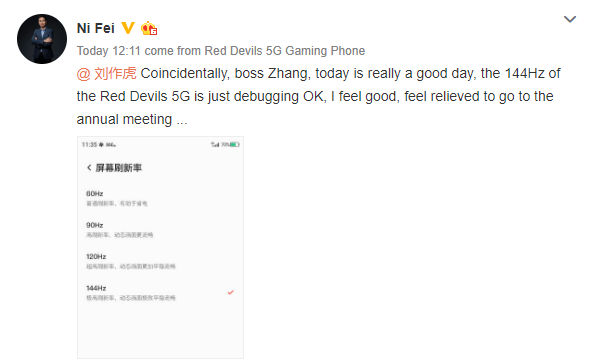
Major smartphone OEMs are preparing to launch their next flagship phones with 120Hz refresh rate displays. The Redmi K30 5G that went official last month is currently the cheapest phone with 120Hz screen. Samsung’s upcoming Galaxy S20 series and the OnePlus 8 are going to arrive with 120Hz displays. Nubia co-founder and President Ni Fei has confirmed through a Weibo post that the company’s next gaming smartphone will support 144Hz refresh rate.

Ni Fei has shared a screenshot of its upcoming Red Magic 5G smartphone on Weibo. It seems to show that the phone will provide refresh rate options such as 60Hz, 90Hz, 120Hz and 144Hz. Hence, Nubia fans who are eagerly waiting for the next Red Magic phone can expected to deliver topnotch gaming and viewing experience through its 144Hz refresh rate display.

Red Magic 5G phone with 144Hz referesh rate

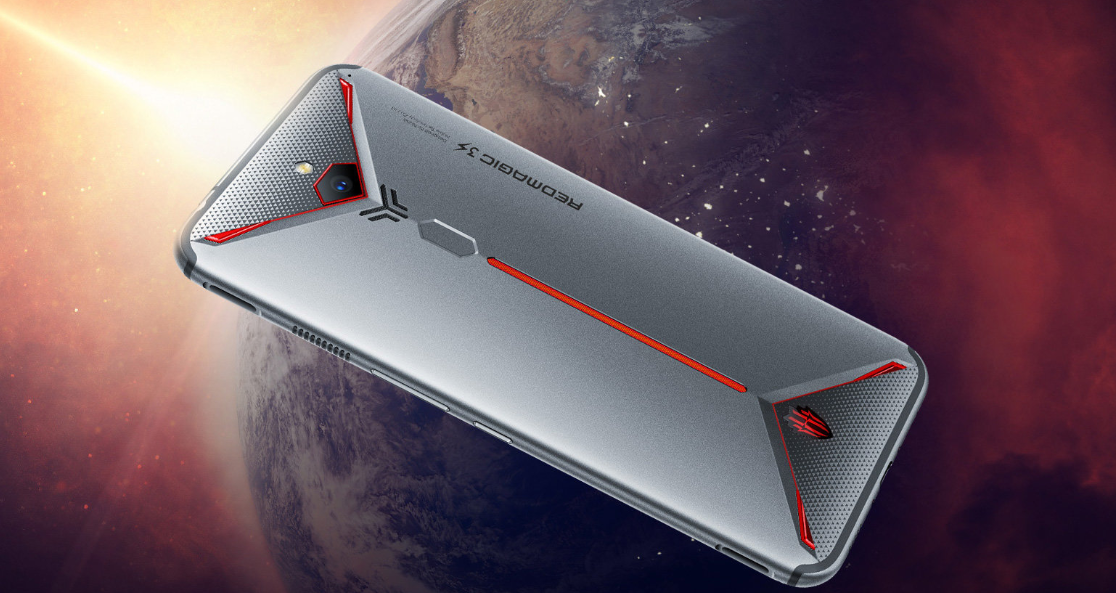
In comparison, the predecessor Red Magic 3S gaming phone was made available with 90Hz refresh rate screen. The predecessor phone had featured an AMOLED display. It is likely its successor could be also coming with an AMOLED panel.

Not many details of the next Red Magic 5G phone have been revealed. At the beginning of this year, Nubia confirmed that the next Red Magic phone will be its 5G ready gaming smartphone powered by the Snapdragon 865 mobile platform. Also, Fei had confirmed last week that shared a camera sample of the Red Magic 5G phone which revealed that is possesses triple rear cameras. Based on the recent reports, it can be said that the smartphone has a model number of NX651J. The Red Magic 3 was announced in May last year. However, with teasers of the next Red Magic 5G phone emerging early this year, it may get announced in Q1 this year.

nubia red magic 3s silver featured

Rival brand Xiaomi is also stirring up the Black Shark 3 smartphone. A recent leak revealed that it could be coming with a 2K resolution supporting display that will carry support for 120Hz refresh rate. Also, is speculated to debut as the first smartphone with 16 GB of RAM! It may house a 4,700mAh battery that may support 3W charging. The Black Shark 2 was announced in March in China. Hence, there is a possibility that the Black Shark 3 could be announce in the same month this year.


(source)
Black Shark 3 gaming smartphone leak shows 2K display at 120Hz refresh rate

Gaming smartphones have become a new category in itself and many manufacturers have launched their own gaming smartphones, even some of them are now launching second-generation and third-generation devices.

One such is Xiaomi-backed Black Shark which has already launch a few devices, is now gearing up to launch Black Shark 3 gaming smartphone. Now, a new leak related to the phone has surfaced online, which reveals its display specs.

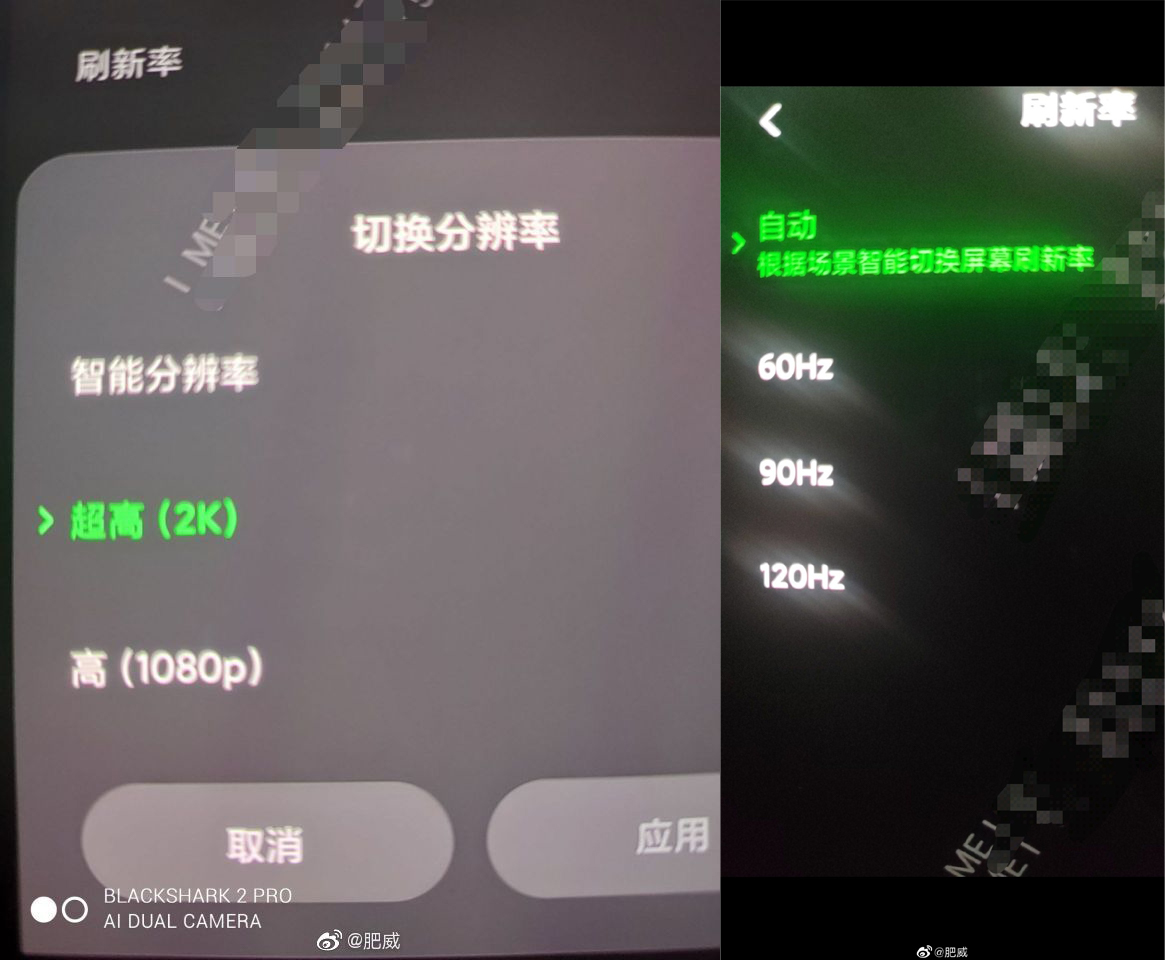
Black Shark 3 Display

The leak shows that the Black Shark 3 will come with 2K resolution display and will be offering 120Hz refresh rate. Earlier, it was said that the phone will come powered by the newly announced Qualcomm Snapdragon 865 SoC.

Previous reports indicate that the phone could come equipped with 16GB of RAM. The smartphone has been certified for radio transmission under model number KLE-A0. It shows that the device supports dual mode 5G connectivity.

If the reports are true, then the Black Shark 3 gaming smartphone will be the first to come with 16GB of RAM. So far, the highest memory configuration that any smartphone offers stands at 12GB.

The upcoming phone will be the successor to Black Shark 2 Pro which was announced back in July last year. It features a 6.39-inch FHD+ screen, a Snapdragon 855+ processor, and packs a 4000mAh battery with support for 27W fast charge. We don’t expect anything lesser from the Black Shark 3 and a recent leak says it will have a bigger 4700mh battery.

While not much is known about the smartphone yet, we expect to come across more details about the Black Shark 3 in the coming weeks and we also expect to know everything about the phone before it goes official.

(Via)