What is the next number after 10? 11, right? Wrong! For some phone manufacturers, the next number after 10 is 20, not 11. We saw this with the Honor 10‘s successor launching as the Honor 20 instead of the Honor 11 and the Huawei P10‘s successor launching as the Huawei P20. Now, Samsung may be joining the bandwagon too with its upcoming Galaxy S series flagship phone.
Next year, Samsung is expected to announce the Galaxy S11 as the successor to this year’s Galaxy S10 series but a couple of tweets from two known leakers say otherwise.
According to Ice Universe (@UniverseIce) and @MMDDJ_, the successor to the Galaxy S10 is the Galaxy S20 and not the Galaxy S11.
Based on this new development, the Galaxy S10 series’ successors should arrive as the Galaxy S20e, Galaxy S20, and the Galaxy S20 Plus.
It is also safe to assume that next year’s Galaxy Note series will launch as the Galaxy Note20 and not the Galaxy Note11 series since Samsung now uses the same naming scheme for both lines.
The change in naming makes sense since the coming year is 2020, so everything syncs. However, we believe the 2021 models may not be called the Galaxy S21 and Galaxy Note21 but the Galaxy S30 and Galaxy Note30 series respectively.
Lei Jun, the founder and CEO of Xiaomi Group, has announced earlier today (24th December) that its smart TV shipments have crossed 10 million units in 2019; this breaks previous records in the history of Chinese television sales in just one year.
Lei Jun’s post on his Official Weibo account
According to a new report, other leading TV brands within China have yet to achieve this milestone that the smartphone manufacturer just reached. The Chinese tech giant has set an unprecedented record in the Southeast Asian country for the number of units sold in a single year.
The senior executive stated that the reason for Xiaomi’s Smart TVs’ high sales numbers is due to the company constantly innovating. In other words, quick adaptation and inclusion of newer technology have helped them obtain this achievement. Prior to this, Lu Weibing, President of Xiaomi Group, had stated that Smart TVs are not Smartphones and that reaching 10 million units in sales is “too difficult as no one had done it.” Although, now it seems that Xiaomi was the one to achieve this massive breakthrough.
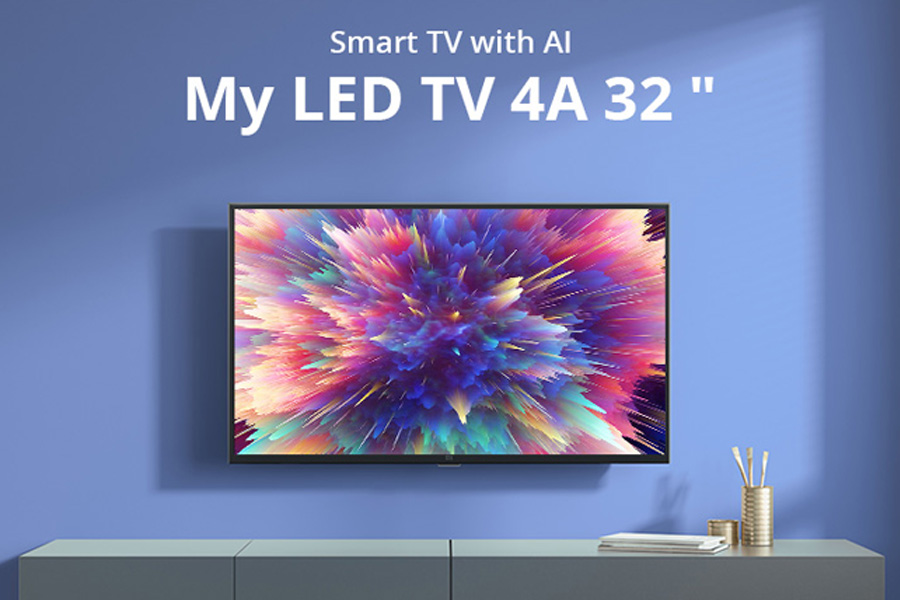
Xiaomi Smart Mi TV 4A with 32 inch LED display and AI features
Notably, Xiaomi’s Mi TV series has also won the top “Color TV Innovation Product” award previously at the China Intelligent Display and Innovation Application Industry Conference. The company even arrived first in the “Top Ten TV Awards 2019” and “High-end Smart Product Awards.” This essentially cements the OEMs place in the TV industry in the country and as a viable option in global markets.
The first time we heard about the Helio G70 was in an exclusive leak from last week about the upcoming Redmi 9 phone. The leak revealed the phone will be powered by the yet-to-be-announced chipset. Now, details about the processor have been leaked.
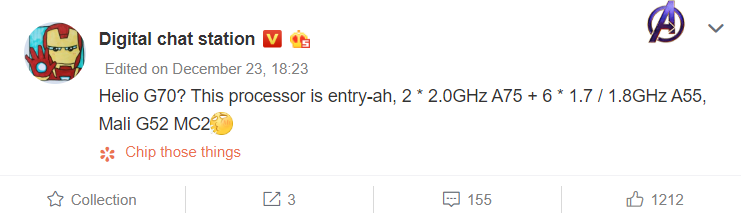
According to a Weibo post made by Digital Chat Station yesterday, the Helio G70 is an “entry-level-ish” processor. That is not surprising since the Redmi 9 is expected to be an entry-level/lower mid-range device.
He goes further to reveal the chipset will have 8 cores in a 2 + 6 configuration. It will have 2 x Cortex-A75 cores clocked at 2.0GHz and 6 x Cortex-A55 cores clocked at 1.7GHz or 1.8GHz. The leakster also mentioned Mediatek will use a Mali-G52 MC2 GPU inside the chipset.
Based on the above configuration, the Helio G70 should sit below the Helio P65, which has 4 x Cortex-A75 + 4 x Cortex-A55 cores, with respect to performance.
Redmi’s decision to use a MediaTek processor for the Redmi 8’s successor marks the manufacturer’s return to MediaTek processors since 2018’s Redmi 6. At the moment, we do not know if the Redmi 9A will use the same processor as its sibling since the Redmi 8A and Redmi 8 use the same processor.
MediaTek is yet to announce the processor but going by its recent “exclusive” partnerships with Redmi, the Redmi 9 may be the first phone to be powered by the processor.
The Redmi 9 is expected to launch in early 2020. It will have a 6.6-inch display, a not so small bump when compared to the 6.2-inch screen of the Redmi 8. Along with the Helio G70 processor will be 4GB of RAM. However, there should be other RAM variants too.
It should also run MIUI 11 based on Android 10 out of the box, have a big battery capacity, a USB Type-C port, and support for fast charging.
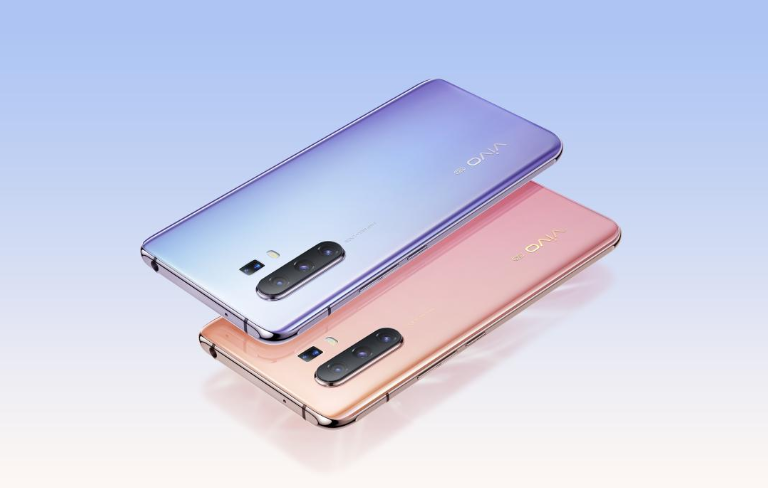
On Dec. 16, Vivo had held a launch event in China to announce the Vivo X30 series of smartphones. These are the first non-flagship 5G phones from the company. The Vivo X30 is will go on sale on Dec. 28 in China. As scheduled, the advanced Vivo X30 Pro smartphone is available for purchase starting from today in the home market. The X30 Pro can be bought with a starting price of 3,998 Yuan (~$570).
Vivo X30 Pro Price
The Vivo X30 Pro is available in two models such as 8 GB RAM + 128 GB storage for 3,998 Yuan (~$570) and 8 GB RAM + 256 GB storage for 4,298 Yuan (~$613). The phone comes in gradient orange, gradient blue and black color editions. The base model is available in all three colors whereas the higher variant can be bought in black and blue colors only.
The Vivo X30 Pro has a 6.44-inch S-AMOLED display with punch-hole design. It offers 1080 x 2400 pixels full HD+ resolution and is integrated with a fingerprint sensor. The Exynos 980 chipset is present under the hood of the device along with 8 GB of RAM. It offers users with up to 256 GB of UFS 2.1 native storage. The latest FunTouchOS 10 based Android 9 Pie OS comes preloaded on the device. The device lacks support for external storage slot.
For shooting selfies, it possesses a frontal shooter of 32-megapixel with f/2.0 aperture. The rear side of the phone has a vertical strip featuring three cameras such as an OIS enabled 64-megapixel main lens with f/1.8 aperture, a 122-degree 8-megapixel ultrawide lens with f/2.2 aperture and an OIS assisted 32-megapixel portrait lens with f/2.0 aperture. Above the separately placed LED flash, there is a periscope lens of 13-megapixel that enables 5x optical zoom on the device. The Vivo X30 Pro can capture images with up to 60x digital zoom. The X30 Pro is backed by a 4,350mAh battery that supports 33W rapid charging through USB-C.
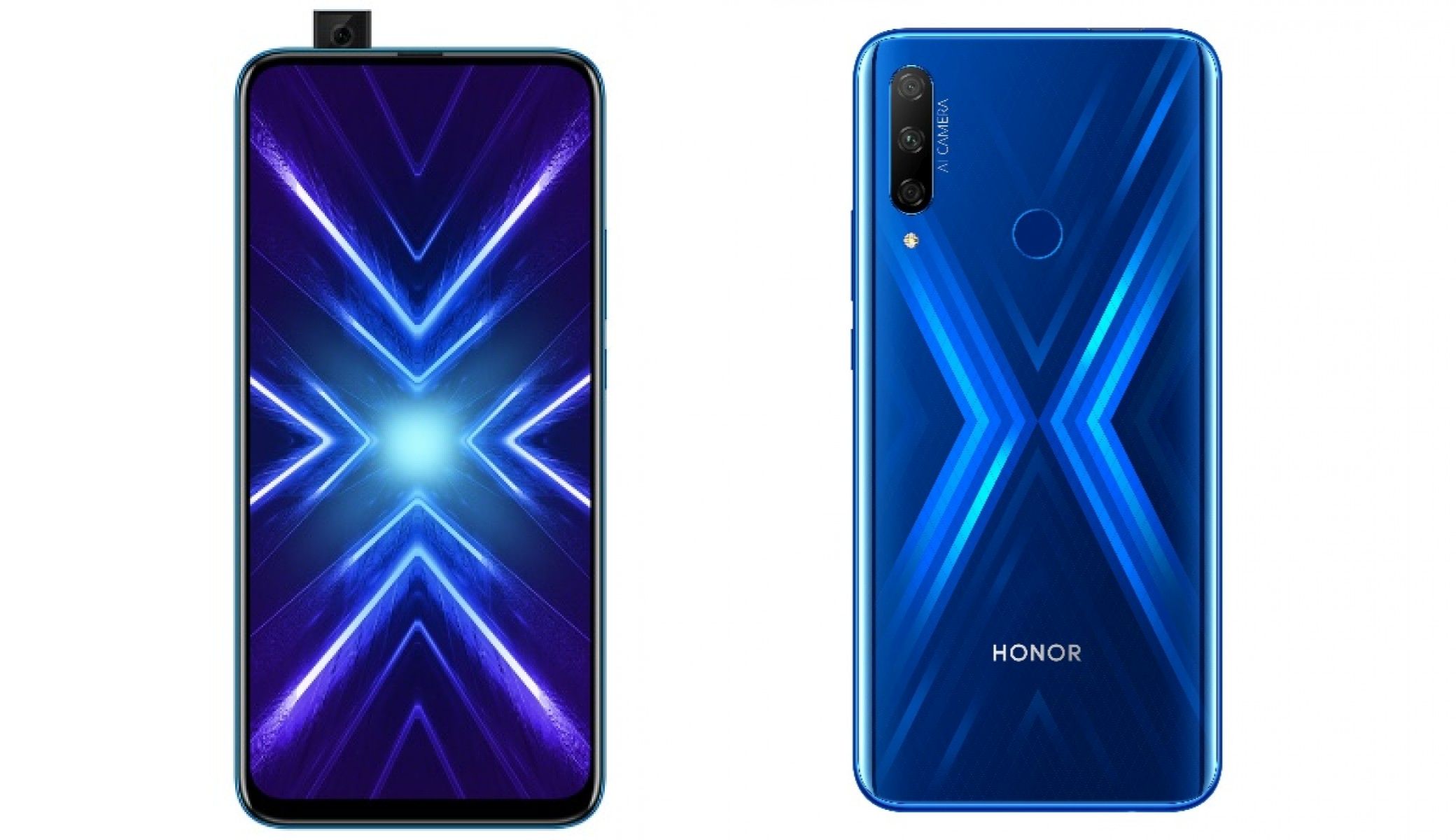
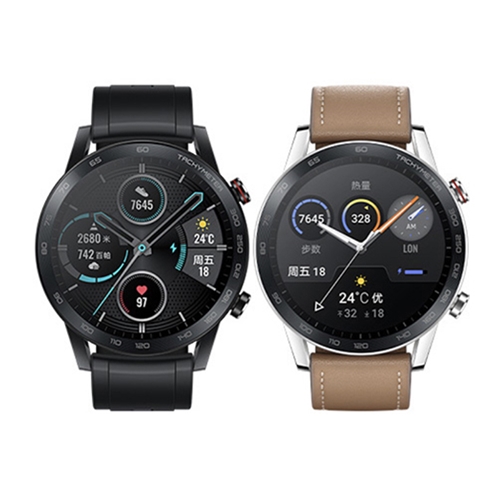
Honor had launched the Honor 9X and Honor 9X Pro smartphones in China in July. In November, it unveiled the Honor Magic Watch 2 in China with a price tag of 1,399 Yuan (~$199; ~Rs. 14,000). Soon after the Honor 9X series in the home market, the rumor mill speculated that the Honor 9X will be made available in India. However, its arrival seems to have been delayed. A fresh report on 91mobiles reveals that the Chinese manufacturer will unveil the Honor 9X in January 2020. It will be also announcing the Magic Watch 2 smartwatch alongside the smartphone.
Honor 9X and Honor Magic Watch 2 Specifications
The Honor 9X that will be arriving in India will not be the exact same Kirin 810 powered Honor 9X device that debuted in China. However, the country could be receiving the international edition of the smartphone. The Honor 9X for India will be featuring a 6.59-inch IPS LCD display with notch-less display. The screen supports full HD+ resolution of 1080 x 2340 pixels and 19.5:9 aspect ratio. The phone will draw power from the older Kirin 710F chipset. It could be coming with up to 6 GB of RAM and 128 GB of native storage. A microSD card slot will be available onboard for more storage.
For shooting selfies, it will be equipped with a pop-up selfie camera of 16-megapixel. The triple camera system on its rear will feature a 48-megapixel main lens, an 8-megapixel superwide lens and a 2-megapixel depth sensor. The phone will draw power from a 4,000mAh battery that will only support 10W charging. A fingerprint scanner could be available on the backside of the device. The EMUI based Android 9 Pie OS runs on the device. The Honor 9X heading to India is expected to arrive with support for Google Mobile Services (GMS).
The Honor Magic Watch 2 had launched in two variants like 42mm model with 1.2-inch screen and 46mm model with 1.33-inch display in China. The Kirin A1 chipset fuels the device. The 5ATM water-resistant Magic Watch supports 15 fitness tracking modes. The device offers other features like Always-On Display, heart rate moniker and sleep tracking. At present, there is no word on the pricing of the Honor 9X and Honor Magic Watch 2 for India.
Earlier this year, Huawei had faced complications with the US Government regarding national data security reasons. Since then, the company had initially faced a ban in the country which had even led to Huawei losing its partners like Google (Android support) and ARM (chipsets). Thus, the company has been looking to become increasingly more independent and less reliant on western corporations.
This leads to now, as Huawei is set to finalize its replacement of Google Services on its Android devices.
Huawei Mobile Services
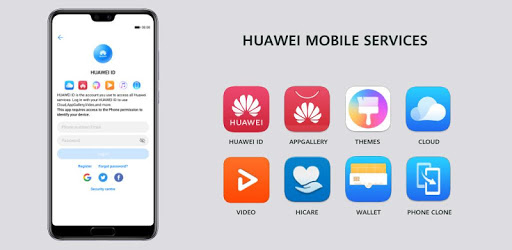
Reportedly, Huawei will be moving forward with its own services and replace Google’s services by 2020 for its smartphones. The new replacement is dubbed as Huawei Mobile Services and will be launched by the end of 2019. The Chinese tech giant has been working on the service for a while so the company could be functionally self-sufficient and less reliant.
According to a recent report, the CEO of Huawei and Honor India, Charles Peng, spoke to news outlets regarding the upcoming services’ app ecosystem. In other words, the company is looking to attract developers of the top 150 apps in India to ensure the availability of the same apps in the company’s smartphones as well. This is done since the lack of Google Services means no Play Store. Thus, bringing various developers to its proprietary store is crucial to the Huawei Mobile Services’ success.
Huawei App Gallery
Furthermore, India is the second largest smartphone market in the world with social media platforms like Facebook, Instagram and more being extremely popular. Currently, these apps are still not natively supported or included in the Huawei app store. So, to help in the transition from Google services to its own, Huawei needs to include popular apps and features to its services as well.
Google’s success in its services lies with its tight-knit ecosystem that includes apps like YouTube, Google Maps, Play Store and more. Huawei needs to find suitable and effective replacements for these few crucial apps to be better welcomed by the large userbase. So far, the company has confirmed alternatives to navigation, payments, gaming, and messages which will debut on its HMS platform by the end of 2019.
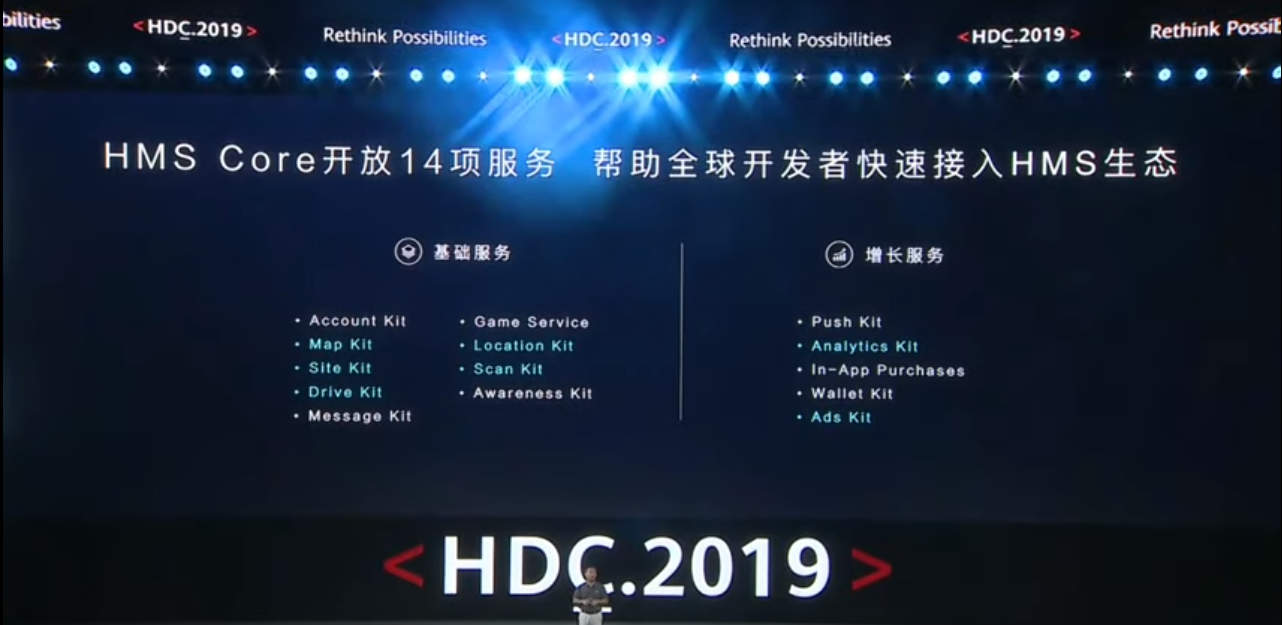
Huawei HMS Core Map Kit
It remains to be seen how well the new Huawei Mobile Services is implemented as it stands as the only viable mainstream alternative to Google right now. Historically, the search engine giant has had dominance in this field and has yet to be toppled off its throne.
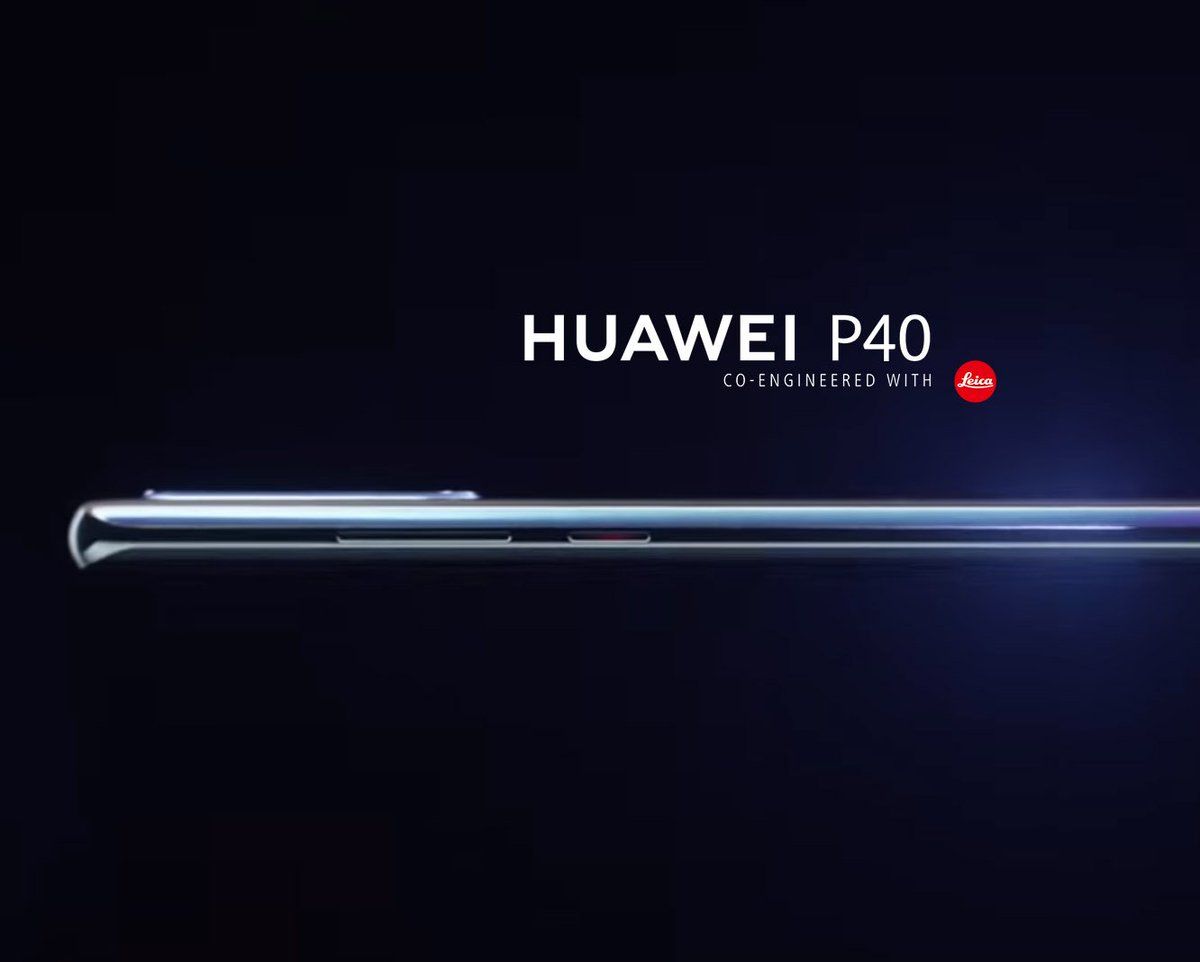
Recently we reported that Huawei might be planning to use a graphene battery for their upcoming Huawei P40 Pro. It’d be an interesting change from the standard lithium-ion batteries all companies are already using, as well as a slightly smaller and more condensed package allowing for a smaller chassis. It made a lot of sense, but it’s unfortunately been completely debunked.
Huawei France’s official Twitter account recently posted about graphene batteries. The tweet explicitly claimed that Huawei’s next flagship, the P40, will come with a next-generation graphene battery. People were quick to point out that the technology involved in the post was basically impossible, and not too soon after the company themselves debunked the statement, claiming that the P40 Pro would not have a graphene battery.
In fact, the company even went ahead claiming we shouldn’t expect graphene anytime soon.
For those who don’t know, graphene is a revolutionary material that promises significantly faster charging times and very high battery endurance, which means you can charge your battery many times faster than conventional Lithium-ion batteries and the charge will remain for days together. Batteries made out of graphene will also take up less space in a smartphone.
However, the possibility of the upcoming Huawei P40 Pro, or any smartphone sporting a graphene battery is pretty low. Prominent leaker @IceUniverse, who is well known for his scoops in Samsung smartphones via his Twitter handle, has ridiculed the speculations by saying that the technology is currently “impossible.”
So why is this exactly? It’s mainly because they’re really hard to make right at the moment. We’ve only heard rumors about this technology until recently, and even Samsung, who have a head start compared to everyone else, aren’t expecting graphene batteries until 2021 or so. So chances, we really shouldn’t expect anything new soon.
Google recently fixed a Chrome 79 bug of data loss for some Android Apps last week. Since then, some Indian users are receiving pop-ups of immediately changing their passwords on affected websites. The users are receiving warnings on laptops, desktops, and mobile screens after getting the Chrome 79 bug fix.
The recent data breach has alarmed the big media houses and users that their passwords may have been compromised. The warning appears on the affected websites recently after the Google resumed Chrome 79 rollout with a bug fix this week. The exact notification reads as, “Change your password. A data breach on a site or app exposed your password. Chrome recommends changing your password for the site.”
It is advised to the users to change their password immediately if they receive such warning no website. The warning is appearing for the users living in India. A user reported having received the warning pop-up after trying to log into the Freshtohome website, which primarily deals with fresh and chemical-free seafood. Moreover, people from media received such warnings while logging into the portals.
A grave issue related to WebView popped up a couple of weeks ago after updating the Chrome to v79. In response, Google temporarily paused the update rollout until the problem was fixed.
However, the issue is now fixed, and the rollout of Chrome v79 resumed last week. According to the changelog, the latest version “resolves an issue in WebView where some users’ app data was not visible within those apps.” Google Developers forget to move the contents of local storage to the Chrome 79 directory that led to the dysfunction of the WebView feature.
The Consumer Electronics Show (CES) 2020 is arriving soon. The Las Vegas tech exhibition event is scheduled to take place between Jan. 7 and Jan. 10. According to South Korean publication The Korea Herald, industry sources have revealed many smartphone companies such as Samsung, Apple, Huawei, OnePlus and more will be showcasing their new smartphones at the CES 2020. The report also reveals that Samsung might showcase the Galaxy S10 Lite and Note 10 Lite at the event.
Samsung is reportedly working on a clamshell foldable phone. Rumors have dubbed it as Galaxy Fold 2. The report claims that the company is unlikely to unveil it at the CES 2020. Rather, it may go official along with the Galaxy S11 series at the Mobile World Congress (MWC) 2020 tech trade show in February. Speaking of Samsung, apart from presenting the Galaxy S10 Lite and Note 10 Lite, it is also poised to reveal new mid-range smartphones. The publication has stated that the new Lite models will be coming to India in January. Past reports have revealed that European regions will be treated with Galaxy S10 Lite and Note 10 Lite.
Samsung Galaxy Fold will be showcased at the CES 2020. Other foldable devices that will be exhibited at the event include the Huawei Mate X and Motorola Razr. Apple was last seen at the CES event in 1992. The report claims that Apple will be present at CES 2020. It won’t be running a booth, but the company will be sharing information on consumer security issues through a roundtable meeting. The discussion will be attended by executives from other major companies including Facebook.
OnePlus will be showcasing it OnePlus Concept One device. Lesser-known Chinese smartphone brands are expected to dominate the CES 2020’s mobile segment.
Samsung Galaxy S10 Lite and Note 10 Specifications and Price (Rumored)
Samsung Galaxy Note 10 LIte (left) and Galaxy S10 LIte (right)
The Galaxy S10 Lite and Galaxy Note 10 Lite will be respectively equipped with Infinity-O Super AMOLED displays of 6.7 inches that will offer full HD+ resolution. The Snapdragon 855 will be powering the S10 Lite with 8 GB of RAM. The Note 10 Lite will Exynos 9810 and 6 GB of RAM as driving force. The S10 Lite and Note 10 Lite will be equipped with 128 GB of internal storage and 4,500mAh batteries. Both phones will respectively support 45W and 25W fast charging. These phones will be preloaded with Android 10 OS and One UI 2.0.
The Galaxy S10 Lite and Note 10 Lite with both featuring a selfie camera of 32-megapixel. The S10 Lite will be arriving with tOIS enabled 48-megapixel + 12-megapixel (ultrawide) + 5-megapixel (macro) triple camera setup. A square-shaped module on the rear side of the Note 10 Lite will feature an LED equipped 12-megapixel + 12-megapixel (telephoto) + 12-megapixel (ultrawide) triple camera system. The Note 10 Lite will come with a S Pen stylus with Bluetooth 5.0 support and it will also feature a 3.5mm audio jack.
The Galaxy S10 Lite and Note 10 Lite could be priced at 679 euros (~$752) and 609 euros (~$675), respectively in Europe. The S10 Lite may come in colors like Prism Black, Prism White and Prism Red while the Note 10 Lite may arrive in colors such as Aura Black, Aura Red and Aura Glowpress.
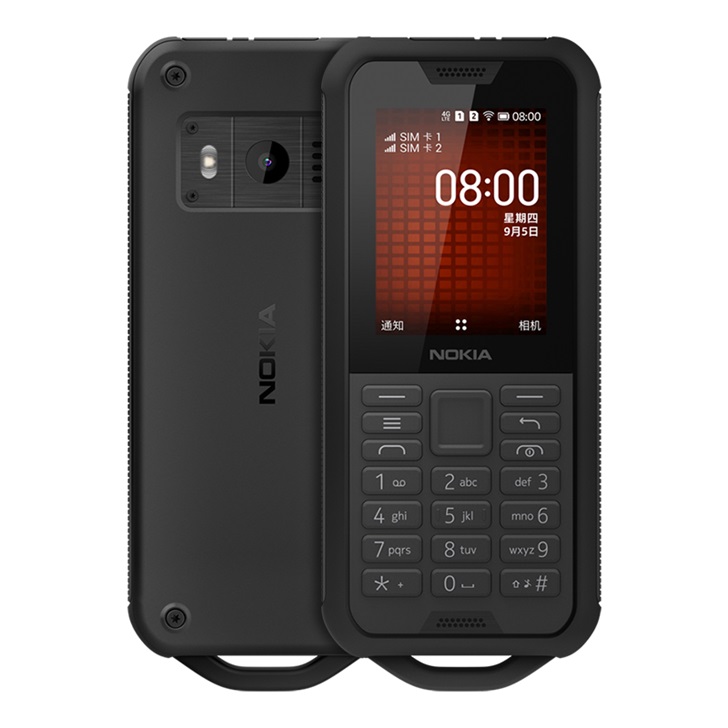
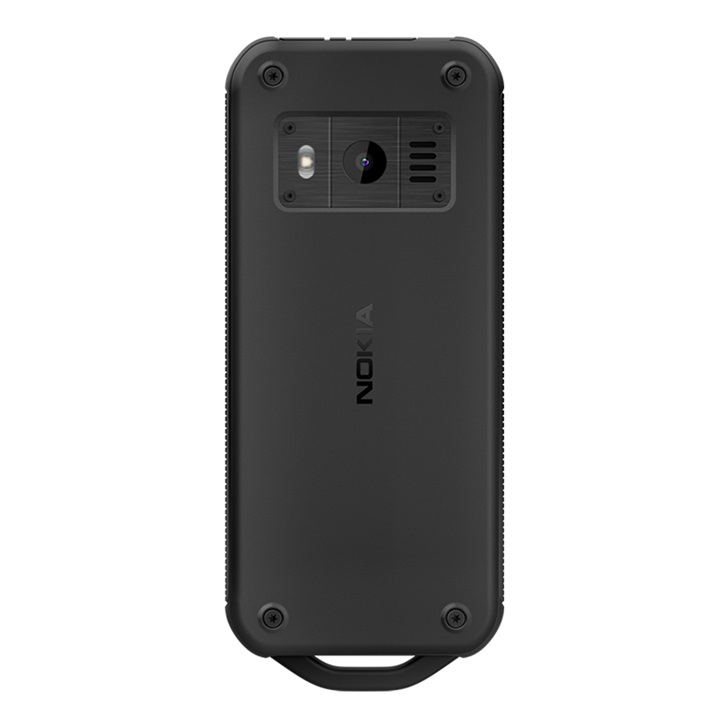
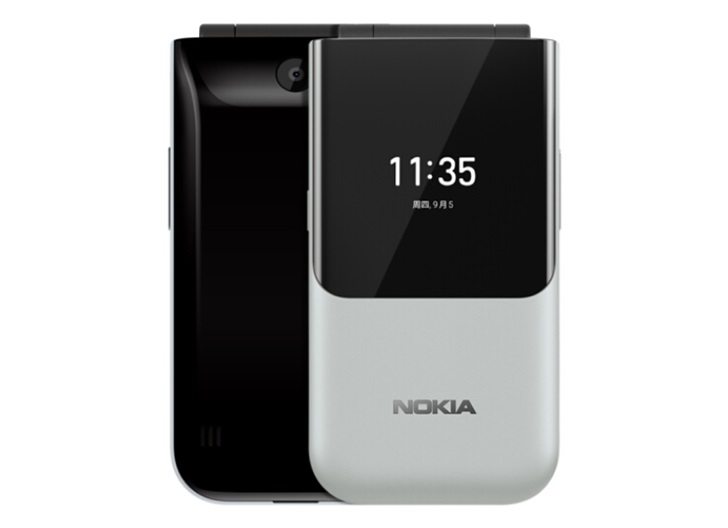
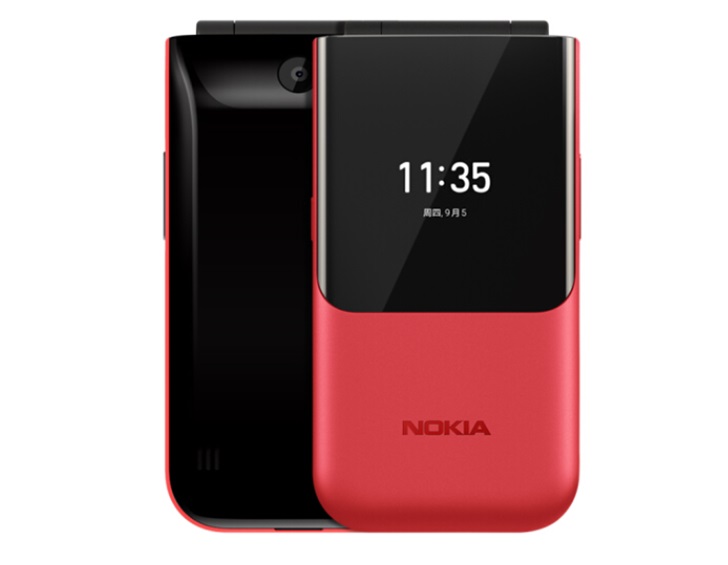
Earlier today (24th December 2019), Nokia 2720 and Nokia 800 were officially revealed by the company. The former is a nostalgic flip phone while the latter is a rugged device built for harsh environments.
Nokia 800
Nokia 800 is built with tough usage in harsh environments in mind. The device as passed military-grade MIL-STD-810G standard so it can be assumed it won’t be nearly as susceptible to daily wear and tear as an average mobile. The handset also supports IP68 waterproof and dustproof rating and can be submerged in water up to a depth of 1.5 meters for about 30 minutes.
Nokia 800
The mobile features a rugged body design and aesthetic that are mainly to protect it from an accidental drop from over 1.8 meters directly on to concrete. Additionally, since it has passed US military-grade electronic equipment tests, Nokia 800 can withstand extreme temperatures from a range of -20 to even 55 degree Celsius. This is also supplemented by the device being covered with a special rubber from all sides and corners and deep keystrokes.
Nokia 800 supports 4G networks of China Mobile, China Unicom, and China Telecom. It supports VoLTE high definition voice call functions and WiFi hotspot features as well. The device will also have an app store and will receive OTA updates after its actual launch. For photography, the handset arrives with a 2 megapixel camera alongside an LED flash.
Nokia 2720 (White)
Nokia 2720
Nokia 2720 is a dual screen flip phone that is a new age version of devices from back in the feature phone days. It arrives with a 2.8 inch QVGA display which is the main display, while the secondary screen is a small 1.3 inch display on the outside. The handset features a T9 physical keyboard and supports GPS and GLONASS, includes Google Maps and also provides Kai App Store.
For connectivity, the Nokia 2720 supports WiFi and LTE connections, which even can be shared via WiFi hotspot. The device is available in two variants which is a single SIM version and a dual SIM version. It is equipped with a 2 megapixel camera with a flash. It is offered with 4GB of internal storage that can be expanded through a microSD card. Notably, it also support the 3.5mm headphone jack and Bluetooth 4.0.
Price and Availability
The rugged Nokia 800 is officially priced at 899 Yuan or roughly 128 US Dollars while the Nokia 2720 flip phone is offered for 599 Yuan or about 85 US Dollars. Both smartphones will be officially available for purchase from 30th December 2019. Notably, unlike the former, the latter arrives in multiple color options as well.
Realme has expanded its portfolio beyond smartphones in 2019. The emerging tech prodigy currently offers a bunch of accessories including cables, chargers, portable battery packs, smartphone cases, backpack, and tote bag. The company recently launched a pair of wireless earbuds, including one with a neckband design, and a second truly wireless earbud, along with a conventional wired earphone. However, one of the major highlights of 2020 from the company is the upcoming Realme fitness band. CEO Madhav Sheth is quite clear about the company’s future course of action.
Sheth confirmed Realme is currently working on a fitness band and hinted at an early 2020 launch. This information came from Episode 13 of Ask Madhav, a monthly series where Realme fans submit their questions to the CEO, who answers them directly in a video. Madhav talks about the Realme fitness band at 1:37 during the episode and clarified “Realme might launch the device in the first half of 2020”.
Realme is closely following the heels of Chinese tech giant Xiaomi and is turning out to be one of its major rivals. The Realme fitness band will compete with the Xiaomi Band 4, along with a bunch of other products from Honor, Intex, Lenovo, and more. In short, Realme is keen on launching its range of IoT products and might look to expand its existing portfolio.
In a separate interview to an Indian publication, Sheth commented on Realme’s offline strategy, “We do not give our retailers a high percentage of mobile sales. In fact, we give one-fourth of what other manufacturers are paying. But we ensure that all our products reach retailers at the earliest so that they do not feel left out”. Realme plans to increase the number of offline stores to 35,000 by December 2020, up from the current 10,000 retailers. Sheth also confirmed that the company is working on a 108-megapixel smartphone. He wants Realme to evolve into a tech lifestyle brand by introducing lot of IoT products
A few weeks ago, OnePlus teased a press event for early January at CES 2020 and we learned in reports that followed that it may be planning to launch a phone called the OnePlus Concept One. We had no idea what this concept device would look like, but recent reports indicate that the company might have something foldable up their sleeves this time.
According to The Korea Herald, market watchers (people who monitor stock markets) think that the Concept One is likely a smartphone with a foldable screen. Unfortunately, why they believe so was not explained and there has been no info about the Concept One so far; no design images or tech specs whatsoever. Considering how rampant leaks are these days, it’s actually quite surprising.
Having said that, we do believe that OnePlus will want to make a splash at the upcoming CES. There have been news of the OnePlus 8 Lite and 8 Pro lately, so it’s probably safe to think that those would be revealed at the event. As for whether the Concept One will be a foldable smartphone, we’ll just have to wait and see.
OnePlus has reached its sixth anniversary. It’s a huge milestone for the fledgling company, and the OnePlus Concept One is how the company plans to celebrate. Not much information has been shared, but we’re definitely hoping it’ll impress us. Perhaps it might even hit the heights if unique impressiveness that Xiaomi hit with the Mi MIX Alpha.
According to a new report, Japan is easing its export-related restrictions of a few crucial smartphone components to South Korea. It arrives as a step towards a healthy relationship between the two nations. The Japanese Ministry of Economy, Trade, and Industry (METI) has partially removed the export restriction on photoresists to some degree with more initiative to follow soon.
Samsung’s microLED technology that utilizes the components from Japan
Previously, the Japanese Government had imposed restrictions on three key industrial chemicals in South Korea; which occurs after a long standing deterioration of political and trade relations between the two countries. The restriction led companies like Samsung, LG, and SK Hynix to be at a loss with no viable alternative as Japan provides 70 to 90 percent of the global supply of the aforementioned chemicals.
From July 2019, Japanese companies had to obtain their home Government’s approval for individual exports when shipping fluorinated polyimides (a key component of LCDs and OLEDs panels), photoresists and high purity hydrogen fluoride (used in making DRAM and NAND memory chips). Thus, it made things difficult for Japan’s indigenous companies as well as foreign OEMs. Notably, the move is also quite similar to how American based companies had to be issued licenses to partner with blacklisted companies like Huawei.
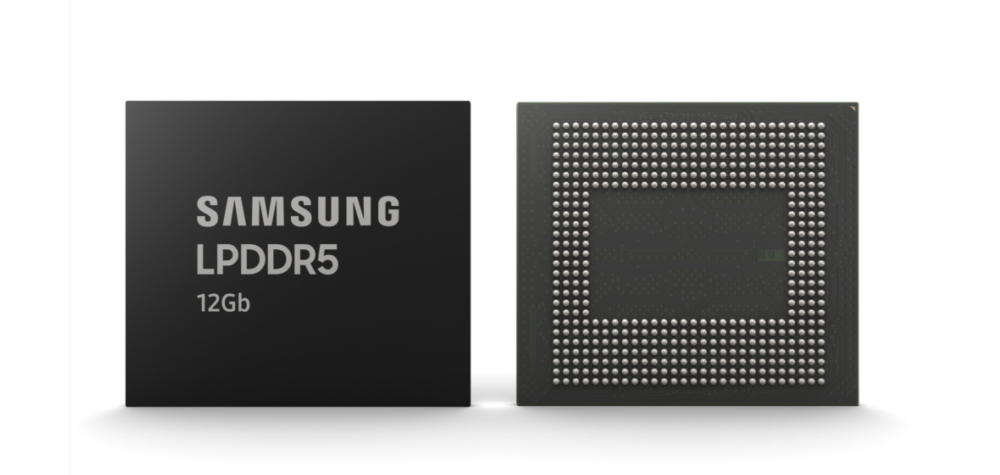
Samsung’s LPDDR5 2019 DRAM Chips
Now, it would seem that the trade tensions are declining and both sides might have arrived at a consensus. Political leaders from both nations had also met earlier this month to discuss the import/export relations. For now, only photoresists have been made available for “bulk” licensing that will supply three years worth of the component to Samsung, LG, and SK Hynix.
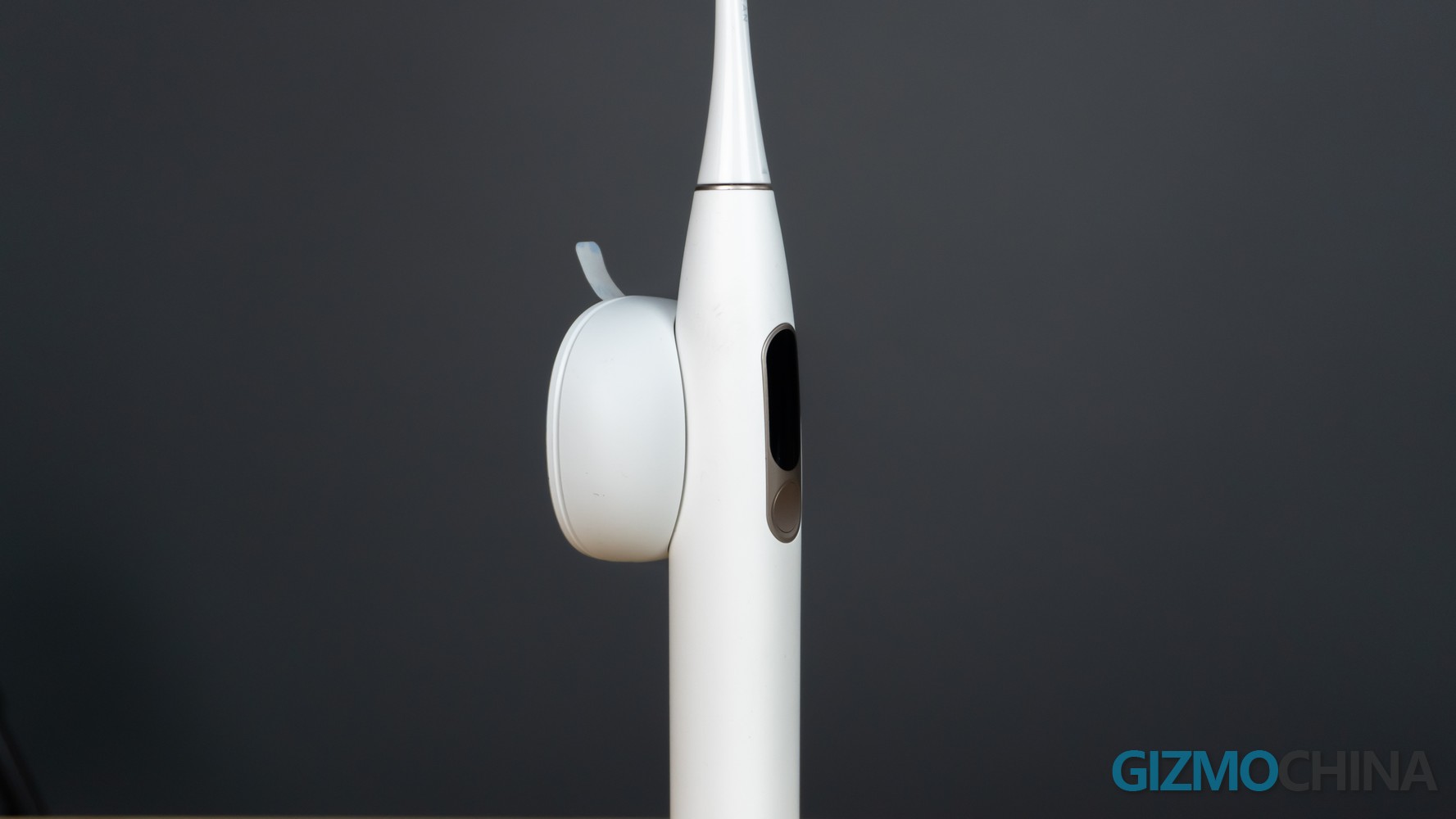
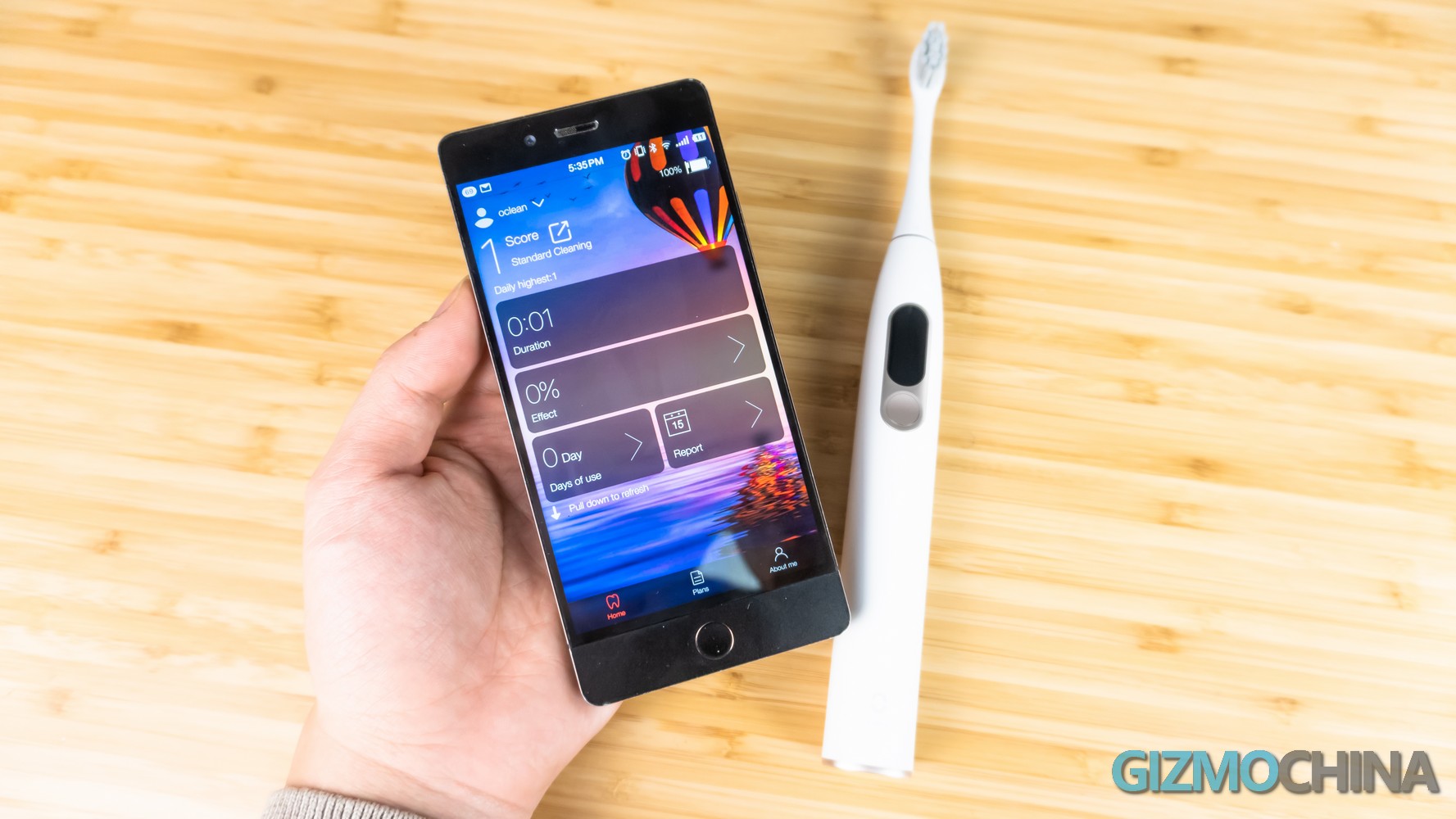
Oclean X Pro electric toothbrush has shown up on Xiaomi YOUPIN and Indiagogo, a Xiaomi official online shop. Thanks to the Xiaomi ecosystem, Xiaomi’s excellent supply chain partners are able to develop their own brand’s products but with the same Xiaomi quality, and, more importantly, sell the products on the YOUPIN Online shop. Oclean is absolutely one of them. The Oclean team has focused on tooth health and developed various models for years. Speaking of their latest model, the Oclean X Pro, it was claimed as not just an effective electric toothbrush but also the world’s smartest toothbrush. But how smart is it?
Design
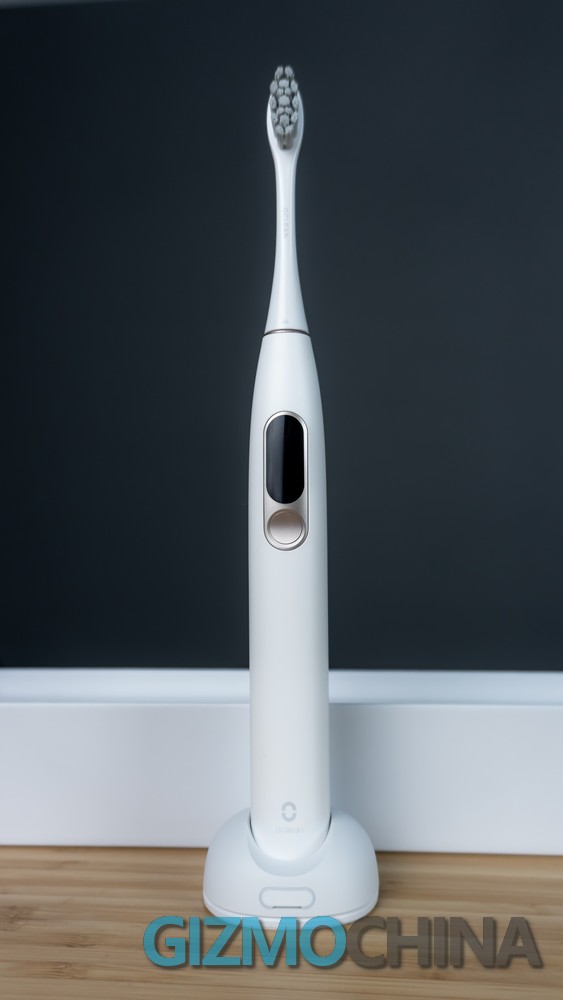
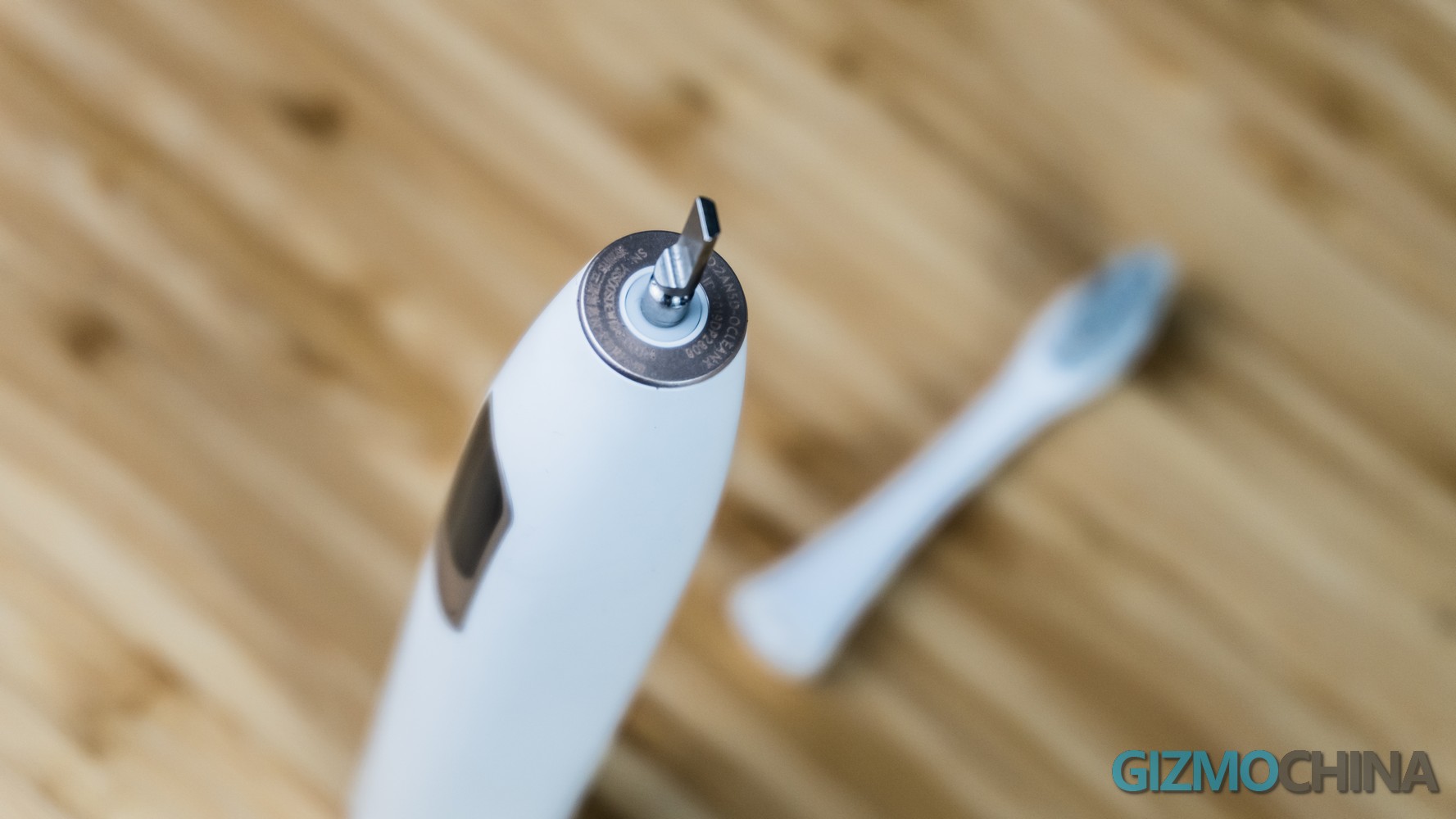
From the appearance design of the Oclean X Pro, it’s easy to have some associations with products from Xiaomi universe, a kind of minimalistic design. In the cardboard box, users will have a toothbrush body with a brush head, a Micro USB small charging station with cable and user manuals in both Chinese and English. There’s one brush head included, so users can select a multi-pack combination or just reorder brush heads when they want to replace the brush head, which is not too expensive. And in some regions, Oclean Rewards Program supports users to trade in brushing points for free brush heads in their App. About the program users can find more information in the Oclean App.
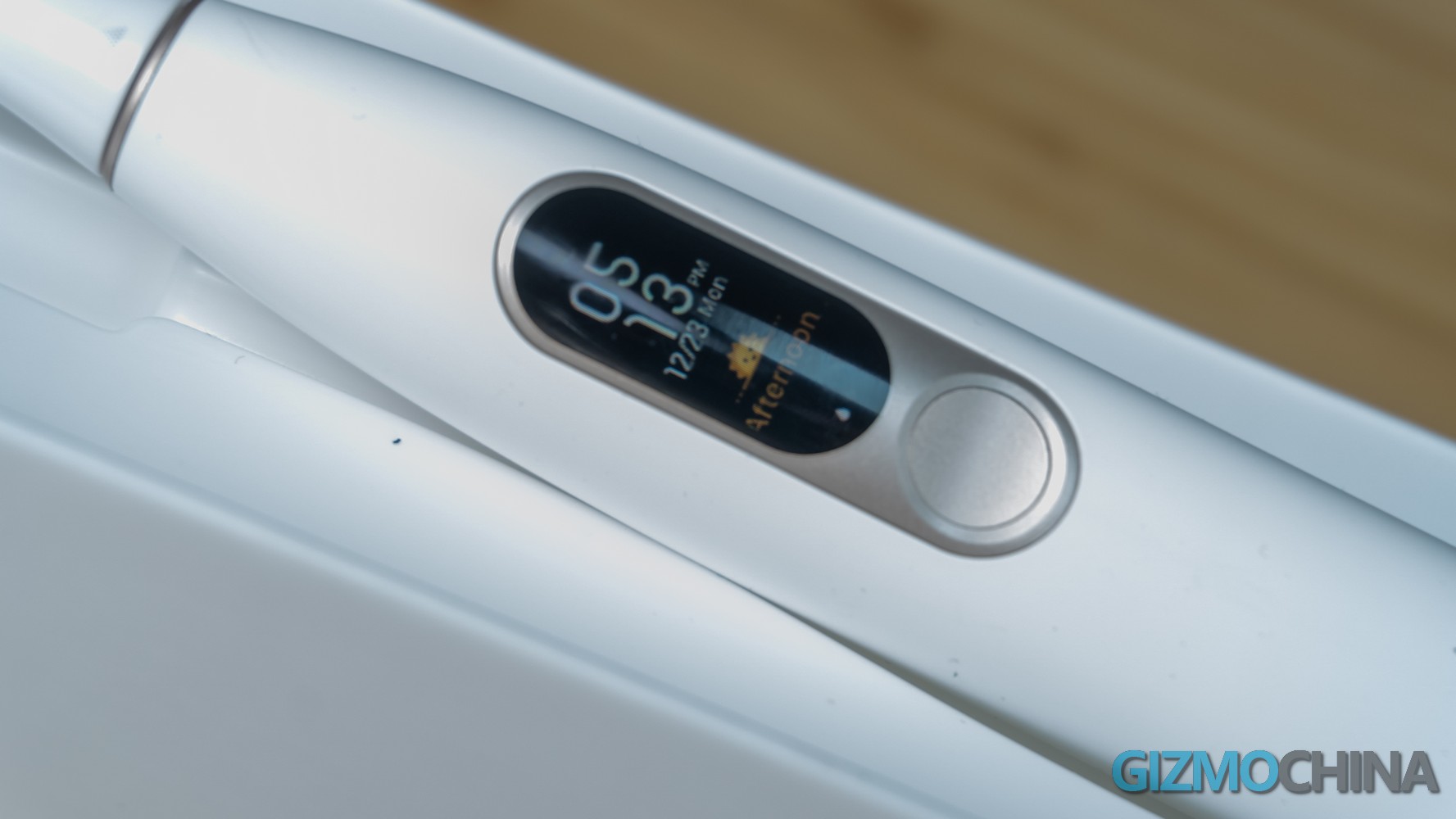
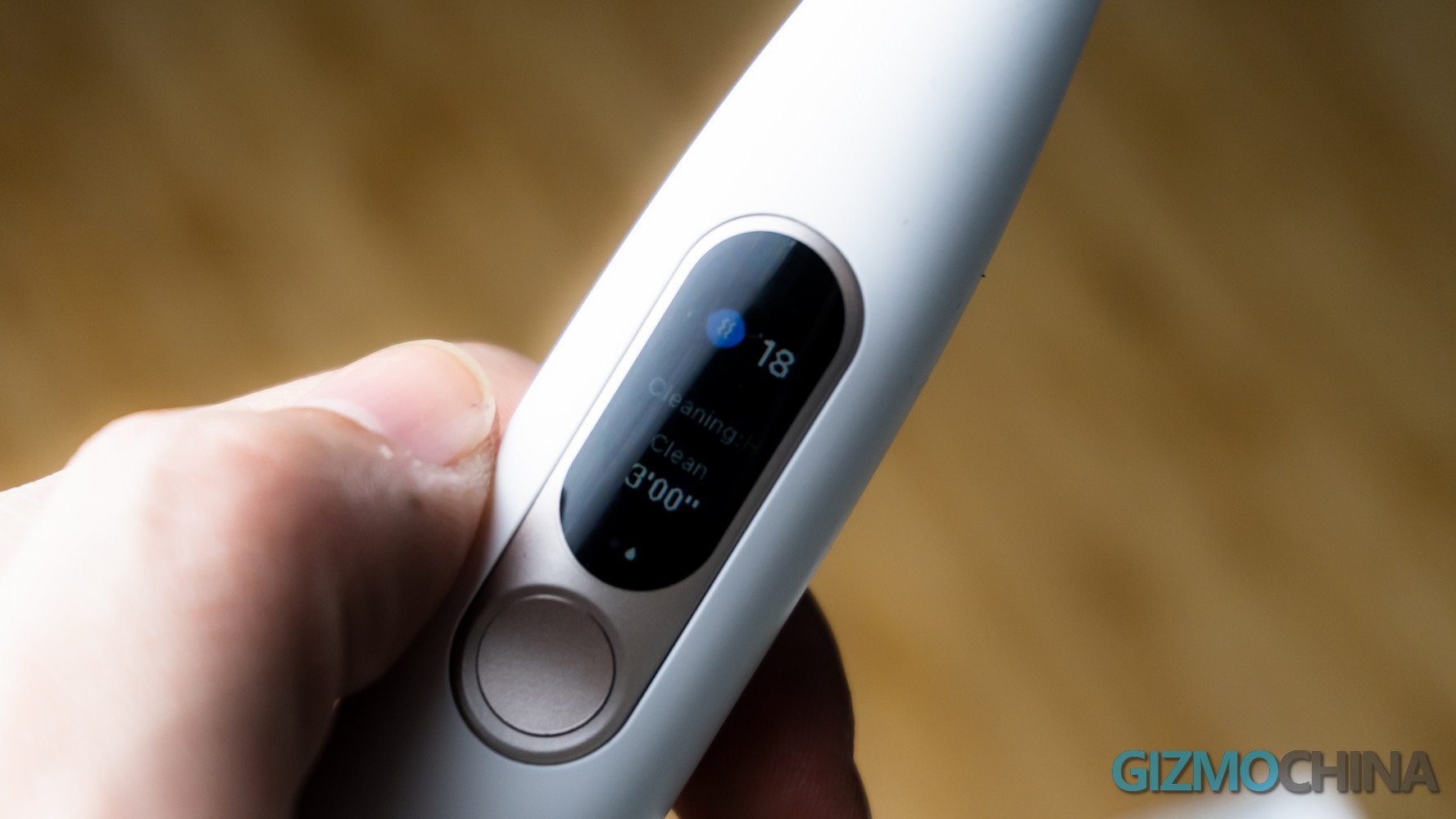
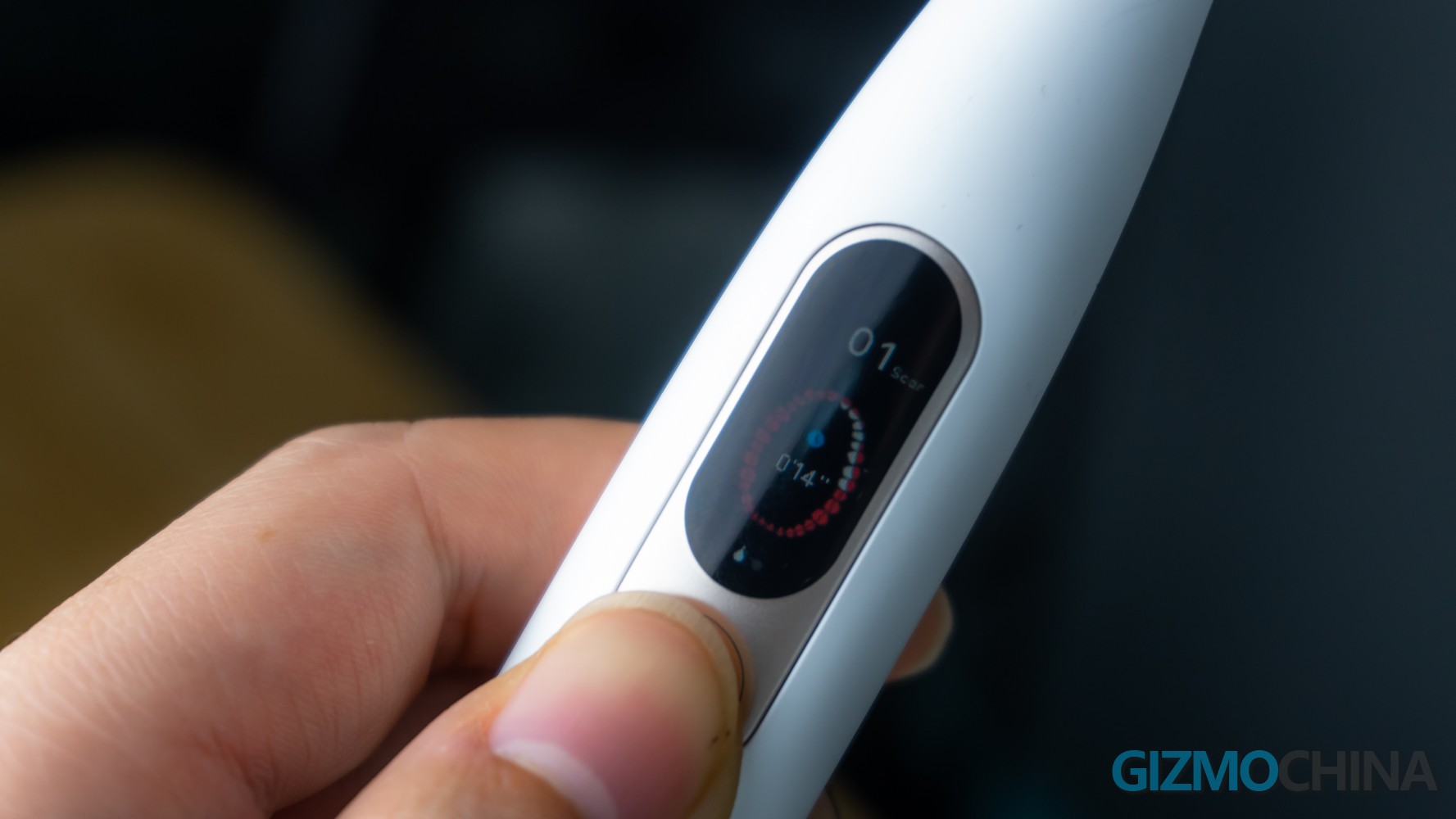
The biggest innovation of the Oclean X Pro is that it equips a 0.95inch color touchscreen, which is rarely seen on previous toothbrush products. At first glance, it’s no surprise that the touchscreen is the most attractive detail of Oclean X Pro. More importantly, the touchscreen is not just a useless marketing technique but really brought great experience. For example, users can customize personal cleaning modes and brushing time through the touchscreen. In addition, it detects your brushing motion and generates instant reports on your brushing technique.
Features
The toothbrush surface is made of high-quality plastic with a matte finish. The solution here is brilliant: the slighter plastic body leads to weight reduction (weight<100g) and better hand feeling. To protect users’ oral cavity from brushing damage or discomfort, the Oclean X Pro adapted both hardware and software solutions. From hardware, special-designed antibacterial brush heads are customized to prevent bleeding from incorrect brushing; from software, the Oclean X Pro uses AI-Controlled Pressure sensitive Sonic technology to automatically adjust brushing strength. Meanwhile, to ensure users to have better knowledge about their own brushing, a built-in 6-axis gyroscope detects blind zone left during every brushing. Users can learn it on the display and improve their brushing skills.
The Oclean X Pro uses a new generation of maglev brushless motor to bring you a flagship efficient tooth cleaning experience. Its highest frequency is 40000 rpm, high vibration pendulum, can impact tooth stains at high speed, in addition, the maximum torque of the Oclean X Pro is 220gf. Cm, high output, can clean dental plaque vigorously.
IPX7 Waterproof body
The Oclean X Pro has level-IPX7 Dust&water-proofing certification, so there is no need to worry about watering.
Battery life & Charging
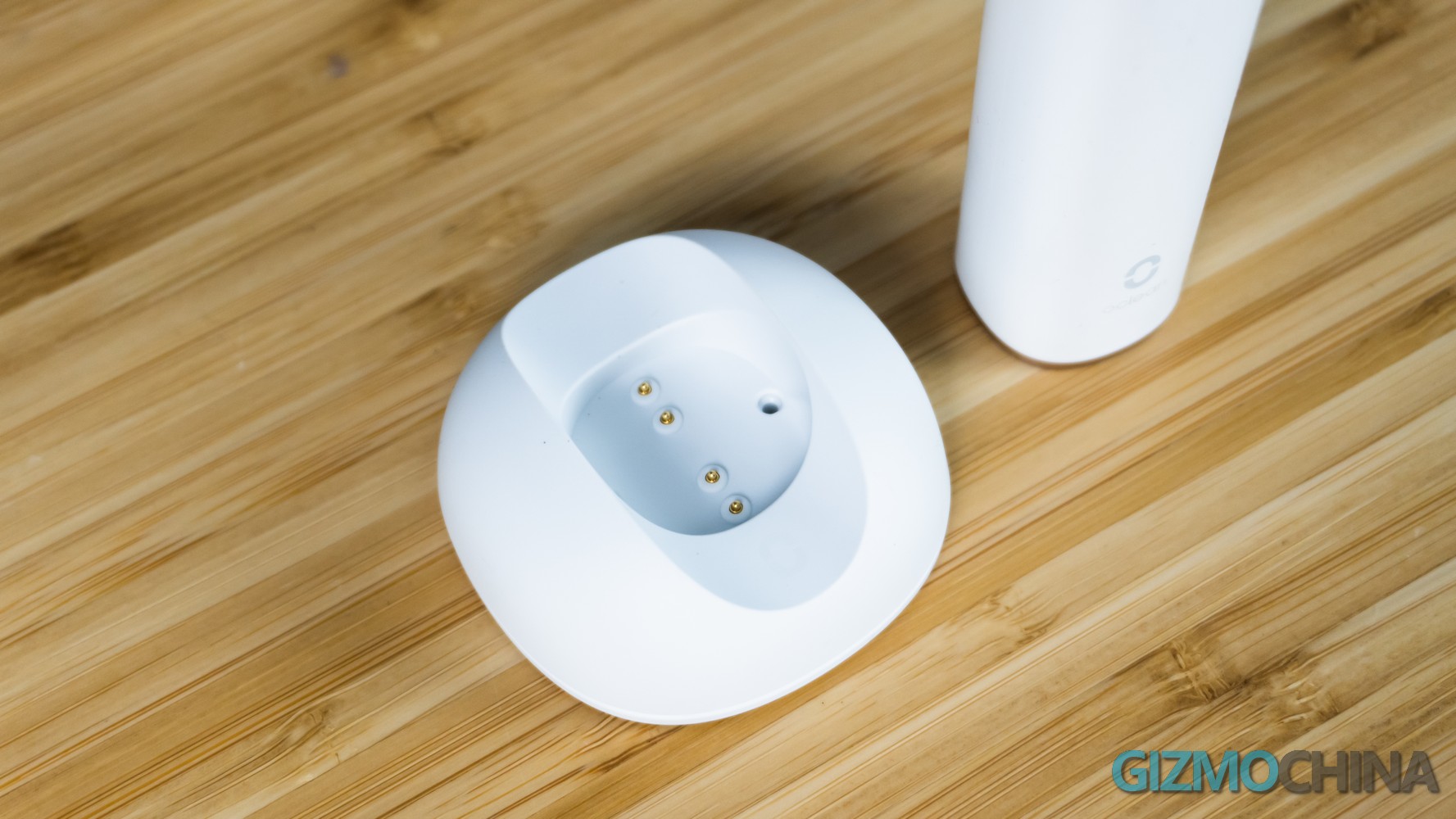
The small charging station can give the toothbrush a full-charge in 2 hours, and also be used as a wall mount to save space. The full-charged battery life in standby is 21 days, which is good enough as we consider the power consumed from the color display.
Oclean App
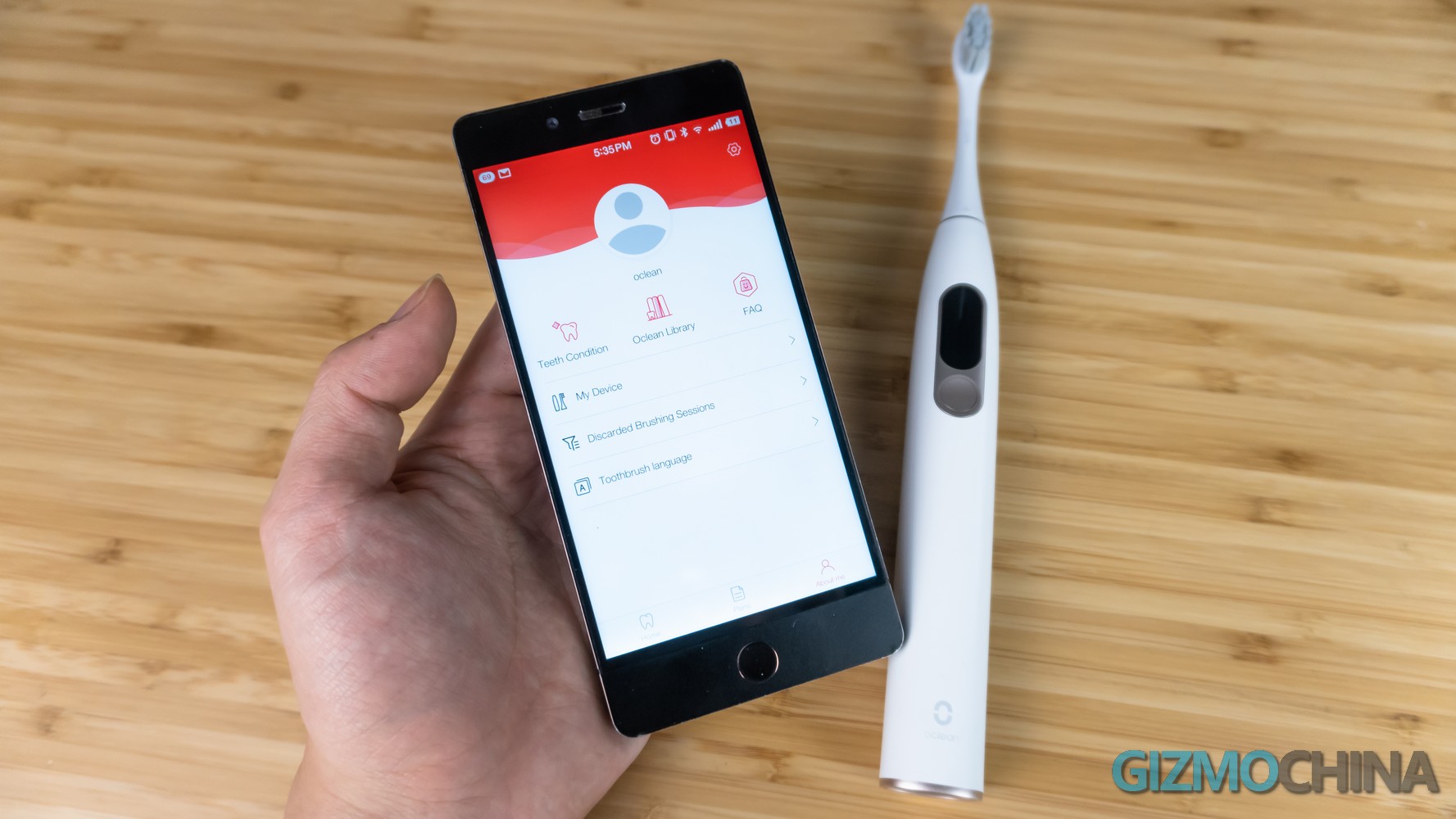
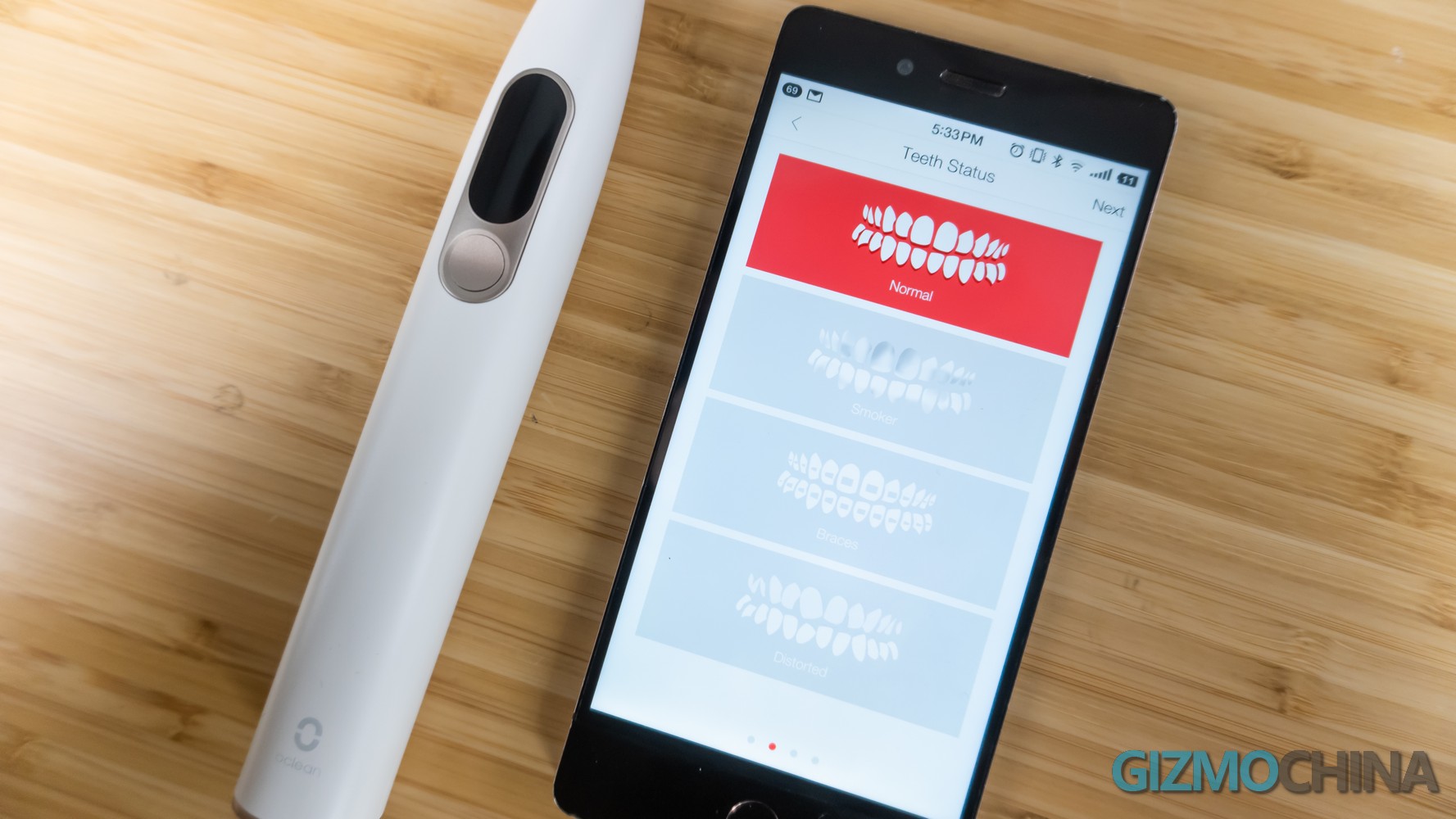
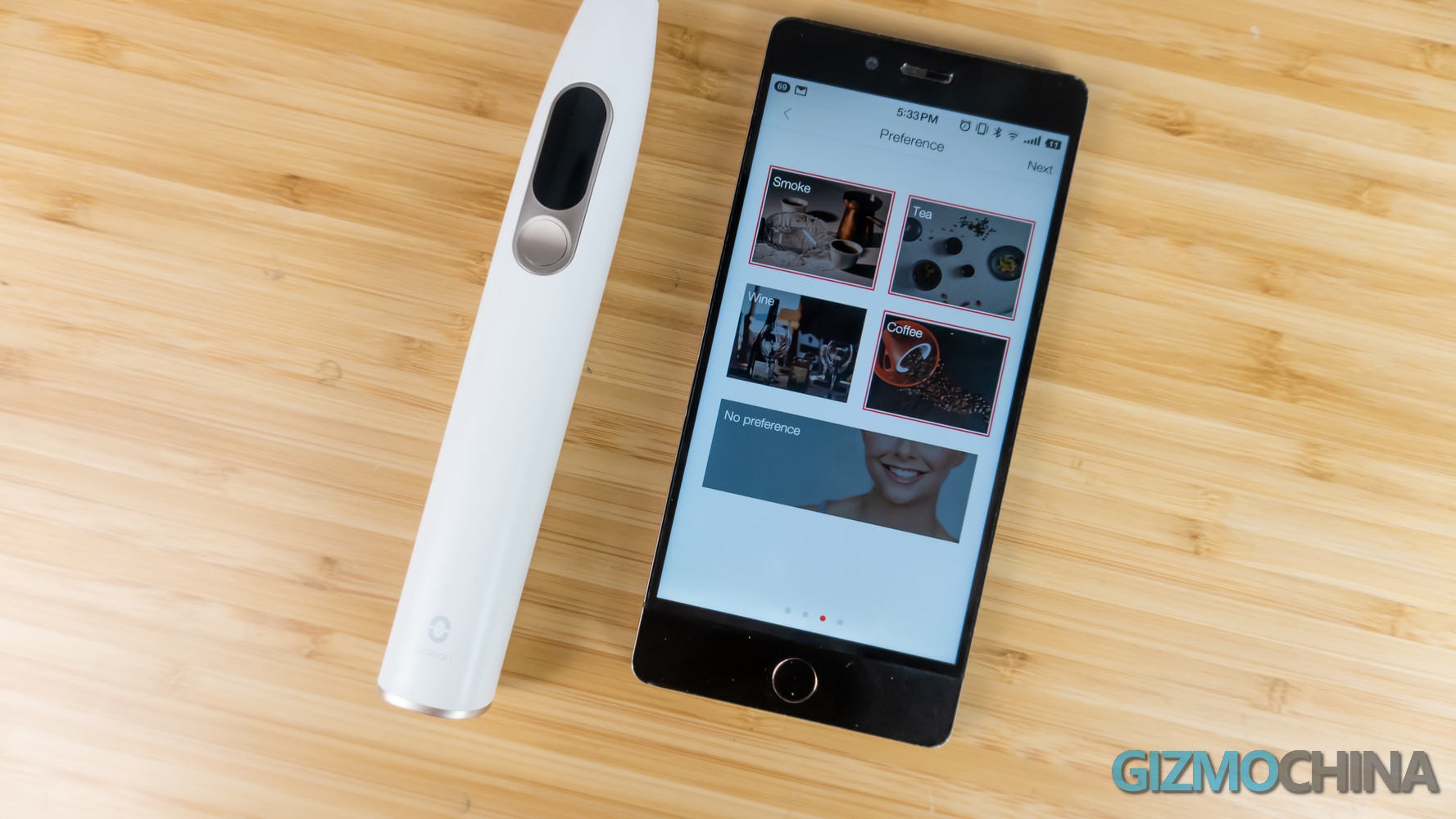
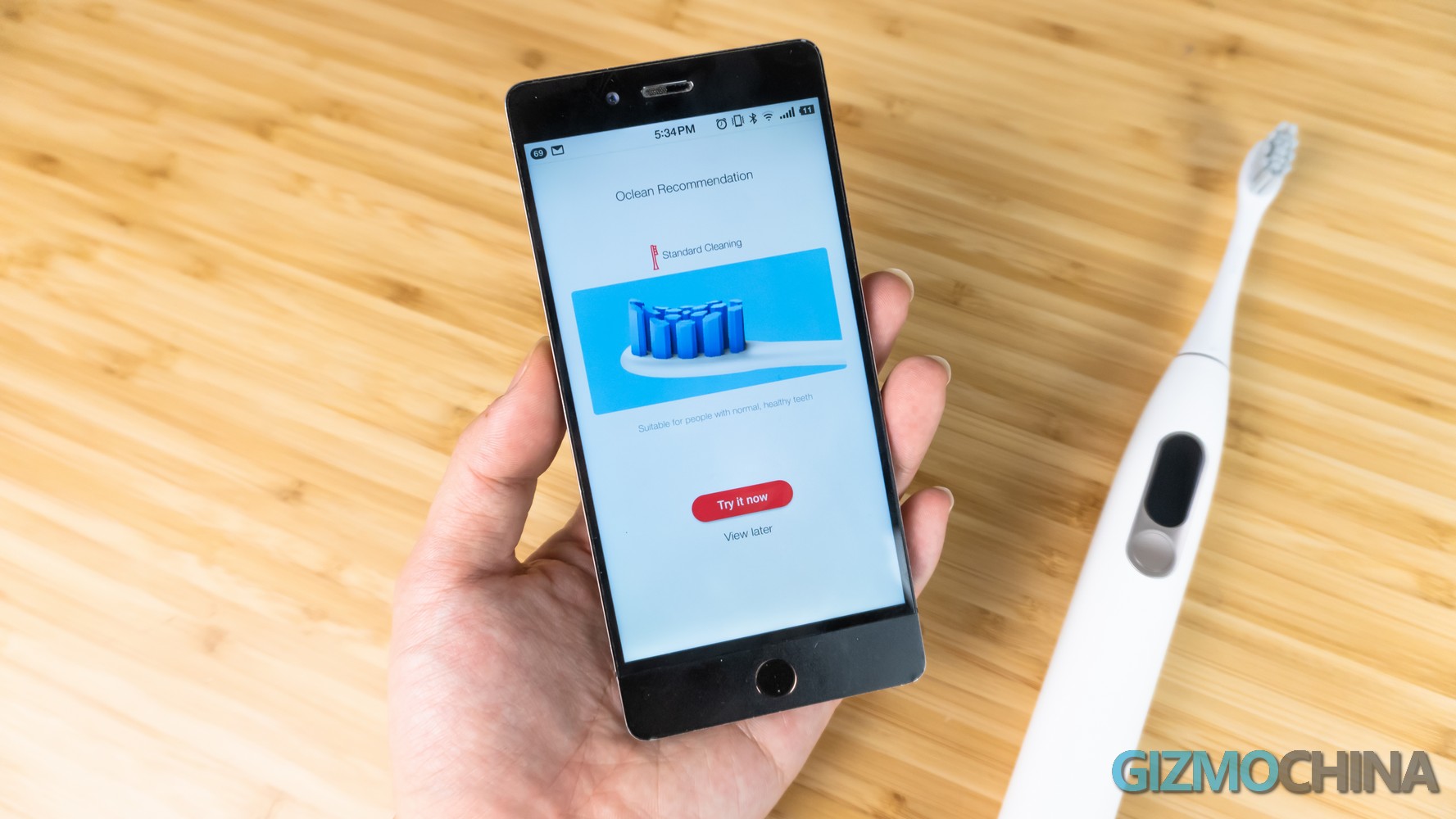
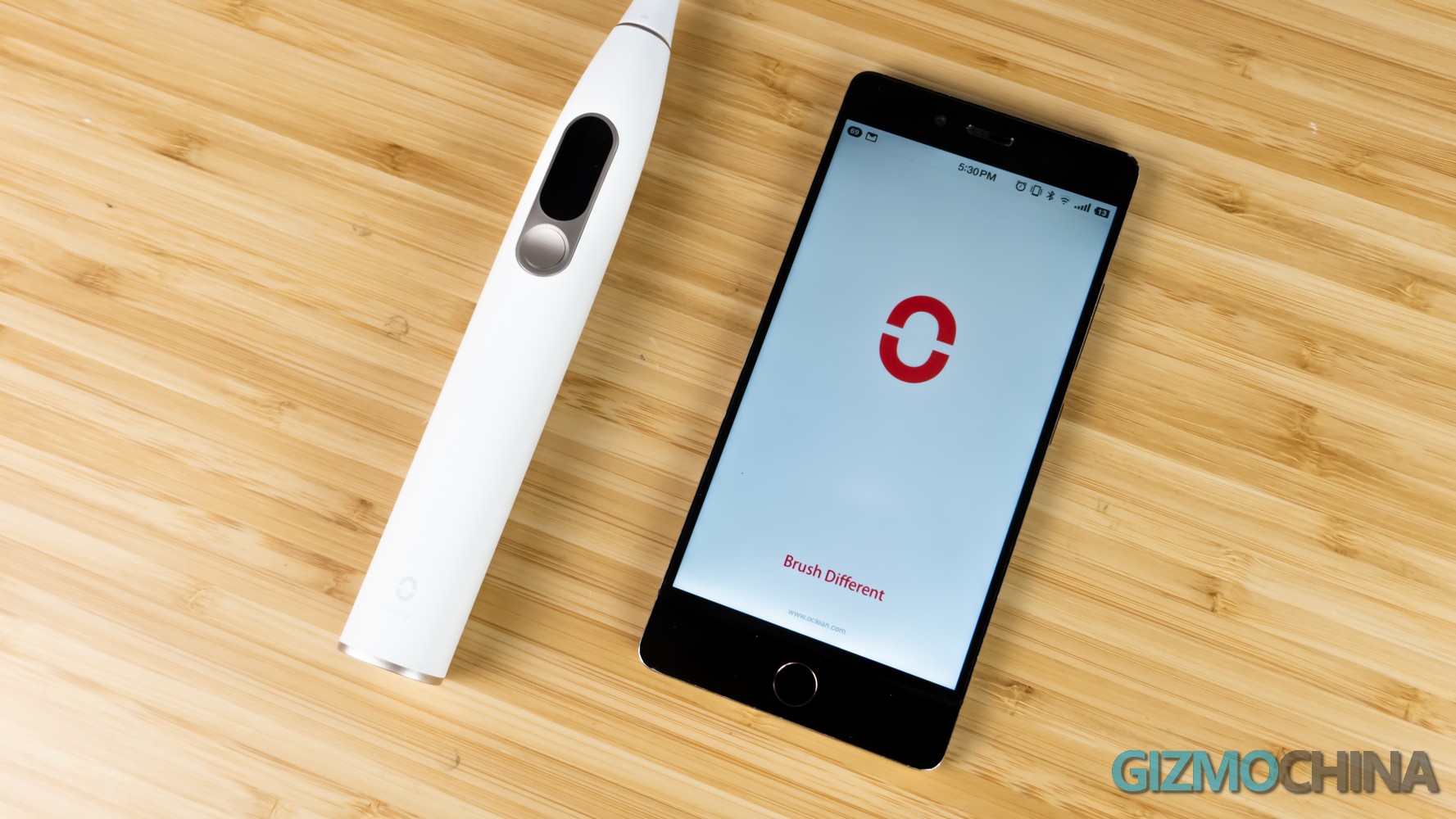
The Oclean X Pro supports Bluetooth connection, through which it can transmit users’ brushing data to the Oclean App, and help users get rid of incorrect brushing. With the Oclean App, you can check your personal brushing report, blind zone detection overview and family profiles, which is smart and practical in users’ family life. And if you are not going to use it with the App, there is no problem to access many cleaning modes through the button.
1 of 4
Conclusion
The Oclean X Pro is definitely one of those great daily-used products that would improve your life quality. Most people used to harm their oral cavities using a traditional toothbrush and then people started used electric toothbrushes to get a higher cleaning effect, but without a dentist, people are still having little knowledge about how to get the correct brushing. Our tester told us that the Oclean X Pro is a kind of smart toothbrush born to fix the problem.
To get your hands on the best-price Oclean X Pro, all you need to do is to follow this link without wasting time.
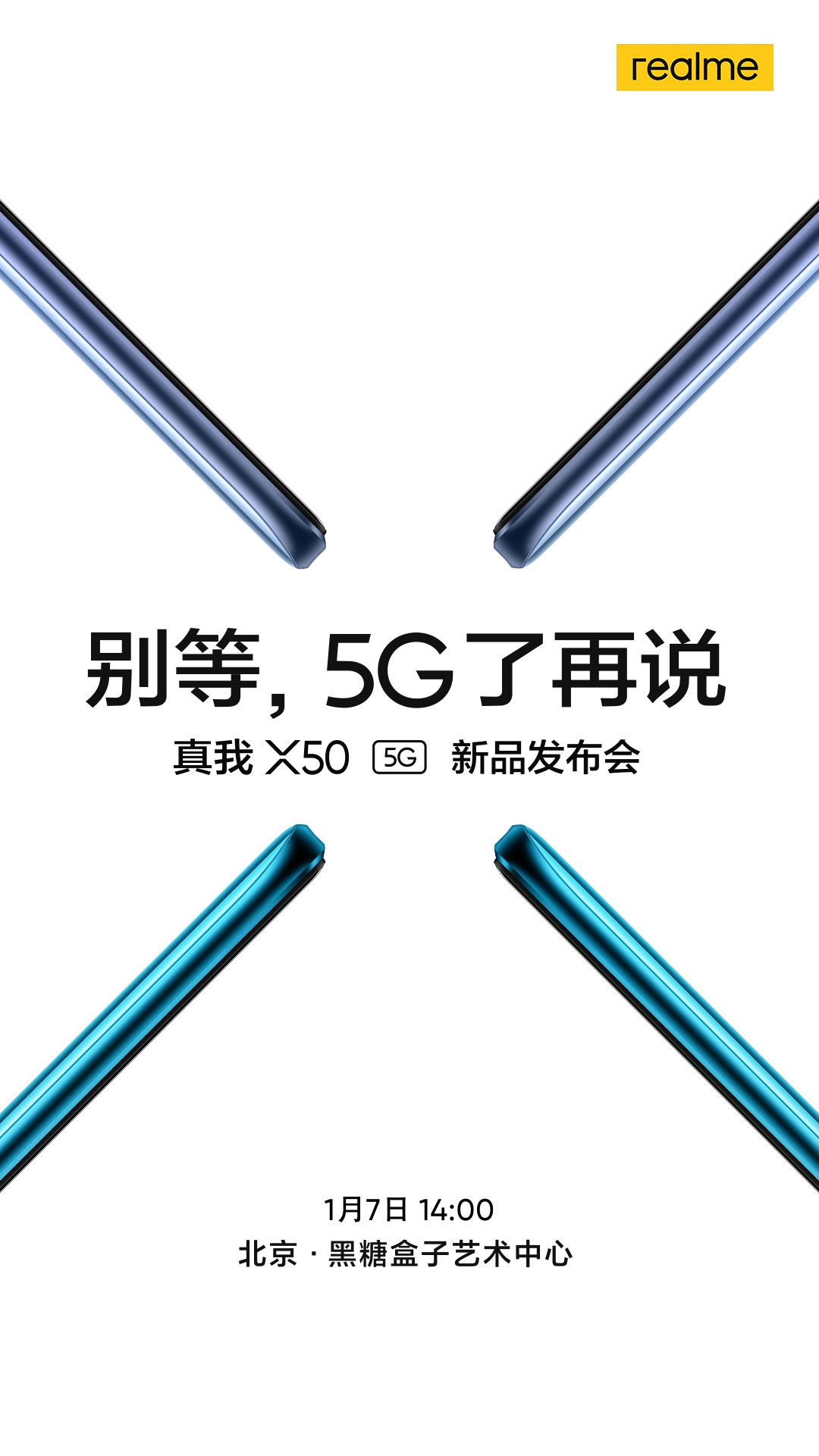
Yesterday, we reported that Realme will be announcing the launch date of Realme X50 5G smartphone today and keeping its promise, the company has today officially confirmed that launch date of its first 5G smartphone.
Realme has today revealed that the company’s first 5G smartphone — Realme X50 5G, will go official in China on 7th January. The company’s CMO had previously teased the launch date but didn’t reveal it.
While the launch date is confirmed today, the company has already shared most of the key features and specifications of this upcoming smartphone. In line with the company’s strategy, it has been teasing features of Realme X50 on Weibo since past couple of weeks.
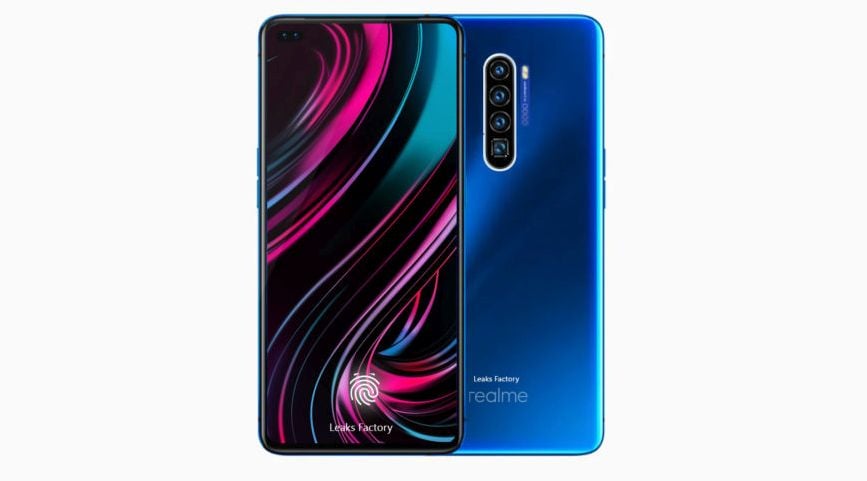
The company has confirmed that the Realme X50 will come with dual punch-hole cameras like the Redmi K30 5G. It will support dual-channel Wi-Fi and 5G for online connectivity at the same time, which can smartly increase the network speed under all scenarios.
Realme has also revealed that the smartphone will cover all the mainstream frequency bands for 5G connectivity, including n1, n41, n78, n79 and will support both SA and NSA dual-mode networking with 5G.
The Chinese company has confirmed that the Realme X50 will come powered by the newly launched Qualcomm Snapdragon 765G chipset. This is the same SoC that powers the Redmi K30 5G smartphone and will power the upcoming Oppo Reno3 Pro.
Recently, Realme had revealed that the phone uses 8mm ultra-large diameter liquid-cooled copper tube, 410 cubic millimeters of ultra-large volume and with the liquid-cooled copper tube heat dissipation 3.0, it offers five-dimensional ice-cooled heat dissipation which covers 100 percent of the core heat source.
The company has also shared a teaser poster that reveals that the Realme X50 5G smartphone will come with support for Enhanced VOOC 4.0 Flash Charge technology that can charge the device up to 70 percent in just 30 minutes.
Rumors indicate that the phone will be equipped with a 6.44-inch AMOLED display. It could be coming with Sony IMX686 60-megapixel + 8-megapixel + 2-megapixel + 2-megapixel quad rear cameras and 32-megapixel + 8-megapixel dual front facing cameras.
The handset may come with up of 12GB of RAM and 256GB of internal storage. We expect Android 10-based custom ColorOS 7 running the smartphone. The company will also be launching Realme Buds Air TWS earbuds along with the X50 5G smartphone on 7th January at a launch event in China.
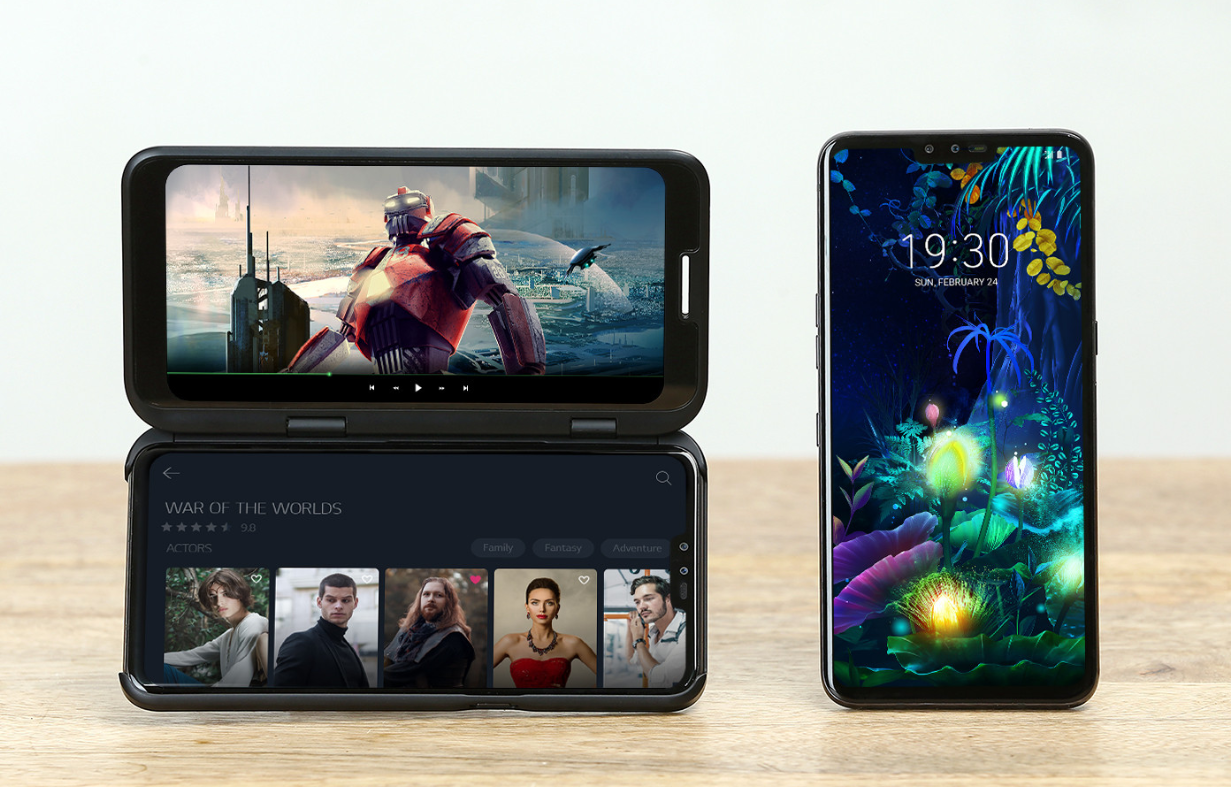
In September, LG had launched the LG G8X ThinQ smartphone that had arrived with a Dual Screen accessory. A 5G variant of the same smartphone had debuted in South Korea as LG V50s ThinQ in October. Fresh information reveals that the company is gearing up to introduce new flagship phones at the Mobile World Congress (MWC) 2020 in February. According to The Korea Herald, industry sources have revealed that LG will be announcing a new 5G flagship smartphone and LG V60 ThinQ 5G at the MWC 2020.
The LG V60 ThinQ will be a 5G enabled device that will arrive with a Dual Screen accessory. The V50 ThinQ’s second screen accessory came with “free stop hinge” technology that allowed users to stop and hold the second display at desired angle. The V60 ThinQ will be arriving with an upgraded folding technology for its Dual Screen accessory. An unnamed industry official stated that the LG plans to unveil V60 ThinQ as 2020’s first phone to expand is presence in the 5G market. He also said that the firm aims to increase its shipments in markets such as South Korea, the U.S. and Japan.
The report on the South Korean publication did not reveal the name of the new 5G-ready flagship phone that will be unleashed alongside the LG V60 ThinQ 5G. At the MWC 2019, the South Korean company had showcased the LG V50 ThinQ 5G with Dual Screen accessory and LG G8 ThinQ and G8s ThinQ phones. The G8 phones did not support 5G connectivity. Hence, there is a possibility that the company may announce the LG G9 ThinQ and LG G9s ThinQ with 5G capabilities along with the V60 ThinQ 5G. As of this writing, there is no confirmation on the specs of the LG G9 series and LG V60 ThinQ.
The V60 ThinQ could be driven by the Snapdragon 865 mobile platform that tags along the X55 5G modem for 5G connectivity. Last year’s LG G8 series came with a wider notch on their screens that include a selfie camera and a ToF (Time of Flight) 3D camera for Hand ID that scanned the veins in the palm of the user to unlock. It remains to be seen whether the LG G9 series also comes with Hand ID feature.
Soon after OnePlus launched its second flagship smartphone of the year — OnePlus 7T lineup, leaks and rumors about the company’s next year’s flagship smartphone — OnePlus 8 and 8 Pro started surfacing online.
Now, OnePlus founder and CEO Pete Lau revealed during a meeting that the company’s upcoming OnePlus 8 series smartphones getting launched next year will be the “most beautiful flagship of OnePlus.”
As per the reports, the company is all set to launch three smartphones with its upcoming OnePlus 8 series, which will include the standard OnePlus 8, OnePlus 8 Pro as well as a toned OnePlus 8 Lite.
The upcoming flagship phones from the company will come powered by Qualcomm’s flagship Snapdragon 865 chipset. OnePlus has already confirmed that all the devices from the company will now feature a higher refresh rate display. This means that the devices could with either 90Hz or 120Hz refresh rate and not the standard 60Hz.
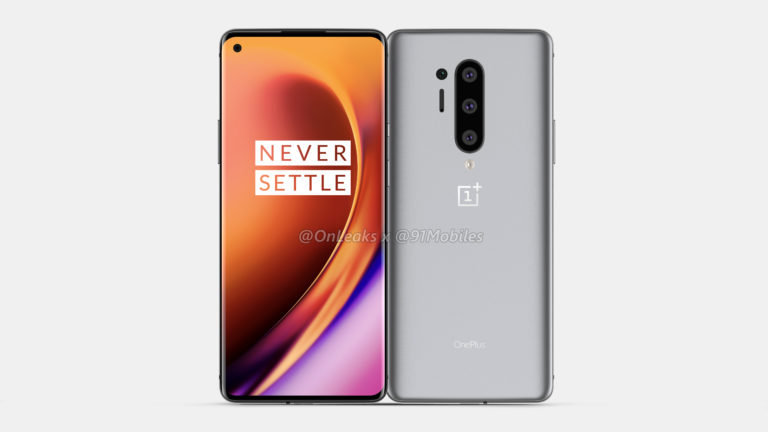
Last month, an alleged product diagram of the OnePlus 8 Pro has been leaked online, which showcases the quad-camera setup on the smartphone’s back panel. It shows camera module that sits at the top-center position, with all the sensors aligned vertically. Along with the triple-camera setup we saw on the OnePlus 7T Pro, the company will be adding a ToF sensor as the fourth one.
On the front side, the company will be ditching the pop-up camera mechanism and will instead opt for the punch-hole design. From the leaked image, it look like OnePlus 8 will have a cut-out in the top-left corner of the display for a single camera sensor while the Pro variant will have two front-facing cameras.
Coming to the specifications, the OnePlus 8 and 8 Pro are rumored to be equipped with 6.4-inch and 6.7-inch S-AMOLED E3 curved dual punch-hole display that supports 120Hz refresh rate. As for the resolution, the 8 Pro is expected to produce quad HD+ resolution of 1440 x 3140 pixels while 8 and 8 Lite will offer full HD+ resolution of 1080 x 2400 pixels. The OnePlus 8 Lite may house a 6.4-inch S-AMOLED E2 display with 90Hz refresh rate. All three phones will sport an in-screen fingerprint reader.
The OnePlus 8 and 8 Pro is powered by Snapdragon 865 mobile platform and X55 5G modem that brings support for 5G connectivity. Both models are expected to come in 8/12 GB LPDDR5 RAM variants and USF 3.0 storage options such as 128/256 GB. On the other side, the OnePlus 8 Lite is expected to feature the Dimensity 1000 SoC, 8GB of LPDDR4x RAM and UFS 3.0 storage of 128/256 GB.
The OnePlus 8 and 8 Pro may feature 32-megapixel (Sony IMX616 Iens) + 3D ToF dual camera system. The OnePlus 8 Lite may feature a front-facing camera of 16-megapixel (Sony IMX471) housed inside a single punch-hole on the screen.
The OnePlus 8 and OnePlus 8 Lite may come with a 4,000mAh batteries that support 30W fast charging while the Pro model may come with a larger 4,500mAh battery with 35W fast charging. The pricing for this series is expected to start at 2,999 yuan (~$428).
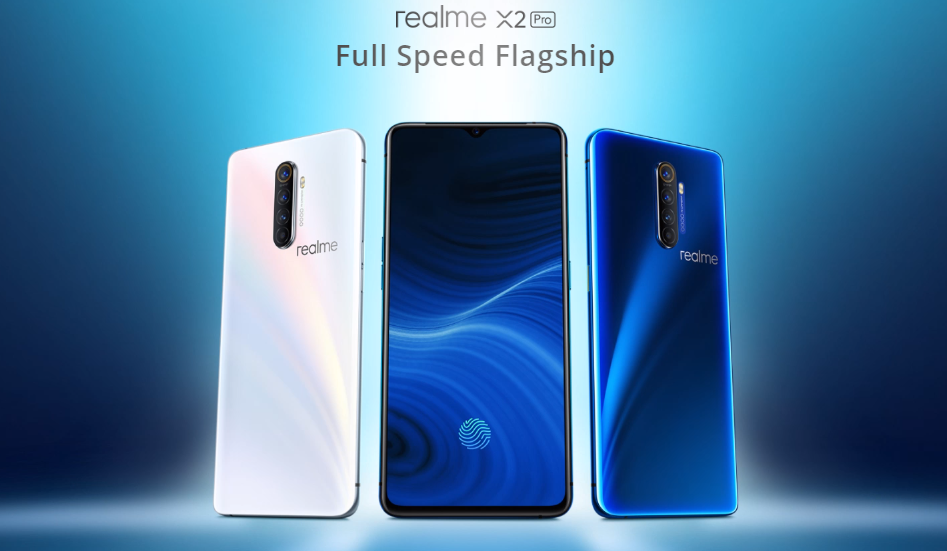
In November, Realme had held an unveil in India to launch the Realme X2 Pro flagship smartphone. It had debuted with a starting price of Rs. 29,999 (~$421) for the 8 GB RAM + 128 GB storage variant. Now, the Chinese manufacturer has introduced a new base model for the smartphone in India. It comes with 6 GB of RAM and 64 GB of native storage. The device is priced at Rs. 27,999 (~$393). At the Realme X2 Pro launch event, the company had claimed that the Realme X2 Pro Master Edition will go on in sale in December. Starting from today, Realme fans in India can purchase the specially designed Realme X2 Pro Master Edition.
Realme X2 Pro 6 GB + 64 GB and Master Edition Availability
Including the newly introduced base model, the Realme X2 Pro is available in three variants such as 6 GB RAM + 64 GB storage, 8 GB RAM + 128 GB UFS 3.0 storage and 12 GB RAM + 256 GB UFS 3.0 storage. These models are respectively priced at Rs. 27,999 (~$393), Rs. 29,999 (~$421) and Rs. 33,999 (~$473).
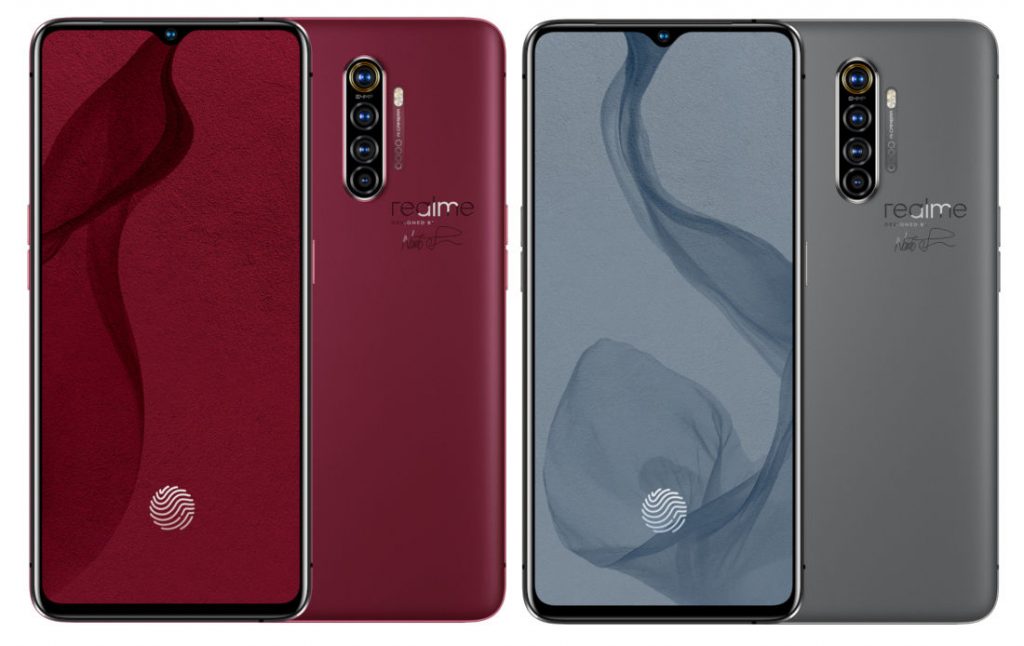
In addition, Realme is also selling Realme X2 Pro Master Edition that is crafted by popular Japanese designer Naoto Fukasawa. His laser-engrave signature is also available on the rear sides of the Red Brick and Concrete colour editions of the Realme X2 Pro Master Edition. The special edition comes with 12 GB of RAM and 256 GB of UFS 3.0 storage. It carries a price tag of Rs. 34,999 (~$491).
Realme X2 Pro Master Edition Red Brick and Concrete Color Editions
The Master Edition will be available for buying at 8:55 PM IST (local time) through Flipkart and Realme India’s official online store. The 6 GB + 64 GB storage Realme X2 Pro can be also availed from the aforementioned platforms. However, it its availability is not confirmed yet.
The glass-bodied Realme X2 Pro has a 6.5-inch S-AMOLED display with waterdrop notch. It supports full HD+ resolution of 1080 x 2400 pixels and 90Hz refresh rate. The display is embedded with in-screen fingerprint reader. The Snapdragon 855+ powers the device and it features a comprehensive heat dissipation system. The 4,000mAh battery can be fueled by 50W SuperVOOC Flash Charge technology.
The Realme X2 Pro has a 64-megapixel (Samsung GW1) + 8-megapixel (ultrawide) + 13-megapixel (telephoto) + 2-megapixel (portrait) quad camera system. The phone features a front-facing camera of 16-megapixel. The ColorOS 6.1 based Android 9 Pie OS. The device offers connectivity features such as dual 4G VoLTE, Wi-Fi 802.11ac, Bluetooth 5.0, dual-band GPS, NFC, USB-C and 3.5mm audio jack. Neptune Blue and Lunar White are the two color editions of the Realme X2 Pro.
Last month, Microsoft announced that it is all set to pull the plug on its Cortana mobile application for both Android and iOS devices in several countries next year. The company confirmed that from January 31, 2020, Microsoft will no longer support the digital assistant app in some of the regions.
At that time, it was revealed that the Cortana mobile app will no longer support UK, Canada, Australia, China, Germany, India, Mexico and Spain. Now, in a recent interview, Andrew Shuman, who is leading the Cortana team, confirmed that the Cortana mobile app (as well as its integration in Microsoft’s Android launcher) was going away in all countries except for the U.S.
Explaining why the app will still be functional in the United Sates, he said that it is used to configure Cortana and update the firmware on Surface Headphones, which debuted only in the United States.
This doesn’t make sense as the headphones are now on sale in other regions as well. After January 30, only Surface Headphones users in the U.S. will be able to keep using Cortana for Android and iOS. All other Surface Headphones owners will now have to use Cortana for Windows.
However, he did gave two more reasons for killing the app. First, Cortana for Android and iOS didn’t receive much traction outside the U.S. He said that “the markets we turned off had much lower usage and engagement.” The second reason is that Cortana for Android and iOS is sticking around in the U.S. because Microsoft wants to keep experimenting.
With the application for smartphones going away in almost all regions, the company previously said that “to make Cortana as helpful as possible, we’re integrating Cortana deeper into your Microsoft 365 productivity apps, and part of this evolution involves ending support for the Cortana mobile app on Android and iOS.” This confirms that Microsoft is refocusing Cortana for the enterprise, and specifically for Windows and Office.
Huawei has now finally launched its Huawei Mobile Service (HMS) in the company’s home market China. Huawei Mobile Service offers a bunch of basic applications for a smartphone which includes the likes of phone, SMS, email, among others.
As per the reports, the company released two public beta applications — Huawei Mobile Services and HMS Core. This version of Huawei Mobile Services come with several bug fixes and new features as well as improved performance experience.
The new features on the app now includes Huawei accounts, applications internal payment system, message notifications, wallet service, among others. The app is now also claimed to provide more stable and high-quality services to users.
Coming to the HMS Core Test application, it is said to be a small application marketplace model that integrates the installation and download of six basic HMS services. It includes Games, Fido & Safety, Purchase, Identity, Scan, Nearby, ML, and other apps.
The launch of these apps and services from Huawei comes as the company remains banned from using Google apps and services given that the United States government has put the company on its “Entity List”, effectively barring it from doing business with any of the U.S. based firms without permission from the government.
To counter the dependency on Google, Huawei launched its own ecological services with HMS or Huawei Mobile Services. As per the data released by the company, as of August 2019, the HMS has grown rapidly and now over one million developers are using it with HMS Core having more than 450,00 apps on the platform.
This seems like a major boost for the company’s own HarmonyOS (aka HongMeng OS) which was launched a couple of months ago. This home-grown operating system from Huawei aims to be a one-stop-solution for all the company’s hardware and will soon be powering Huawei and Honor’s smartphones.
We use cookies on our website to give you the most relevant experience by remembering your preferences and repeat visits. By clicking “Accept”, you consent to the use of ALL the cookies.
This website uses cookies to improve your experience while you navigate through the website. Out of these, the cookies that are categorized as necessary are stored on your browser as they are essential for the working of basic functionalities of the website. We also use third-party cookies that help us analyze and understand how you use this website. These cookies will be stored in your browser only with your consent. You also have the option to opt-out of these cookies. But opting out of some of these cookies may affect your browsing experience.
Necessary cookies are absolutely essential for the website to function properly. This category only includes cookies that ensures basic functionalities and security features of the website. These cookies do not store any personal information.
Any cookies that may not be particularly necessary for the website to function and is used specifically to collect user personal data via analytics, ads, other embedded contents are termed as non-necessary cookies. It is mandatory to procure user consent prior to running these cookies on your website.