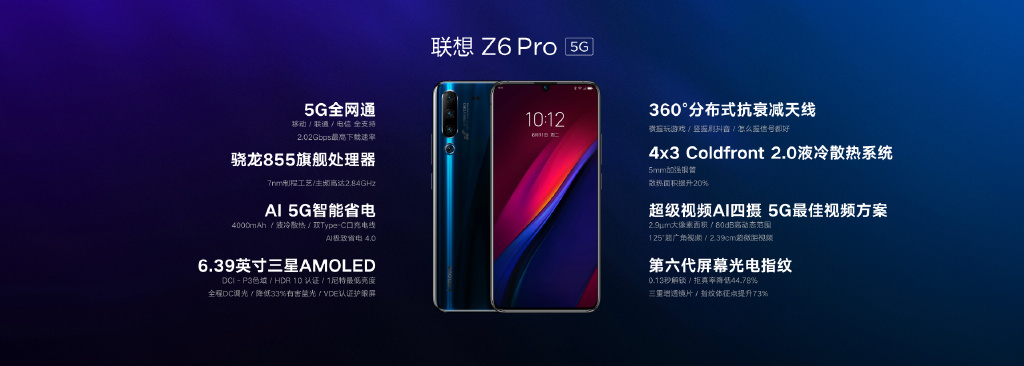
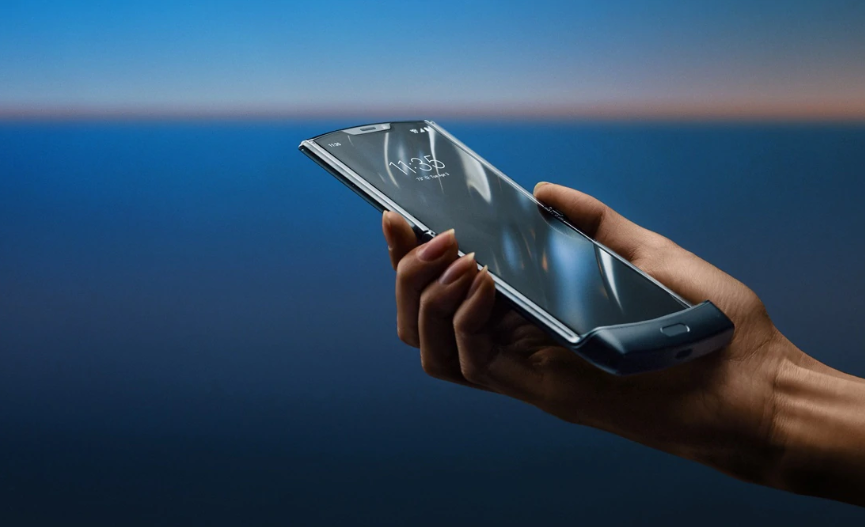
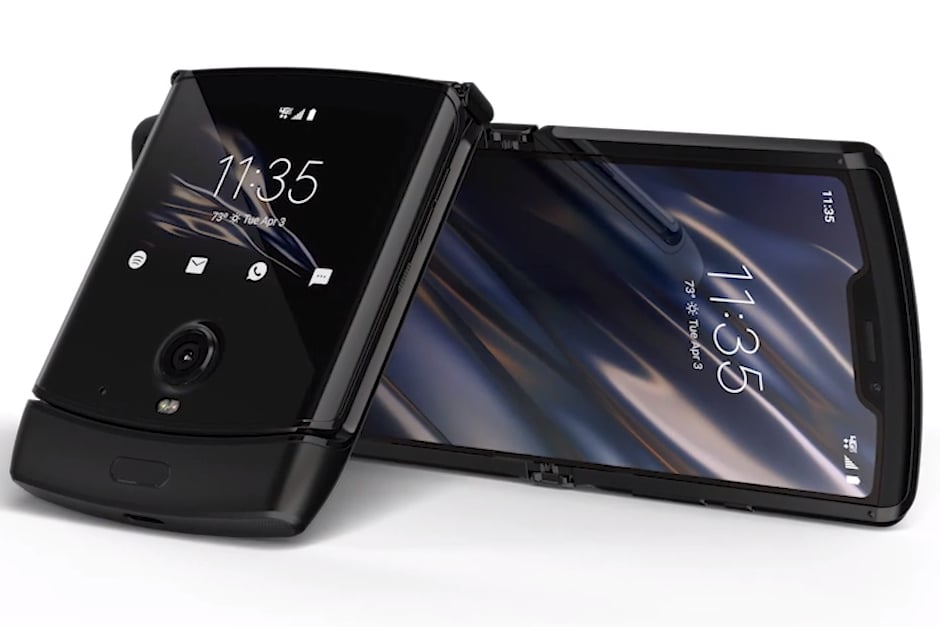
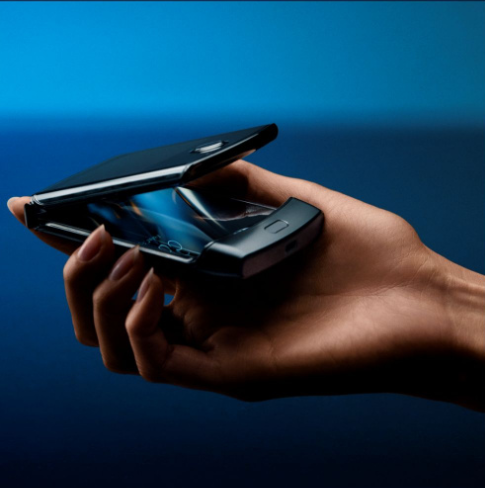
Lenovo Group today held the 2019 Lenovo Innovation and Technology Conference in Beijing, where a number of products were released, including the Moto Razr classic foldable phone and ThinkPad X1 foldable laptop. The tech giant also introduced a new variant of the Lenovo Z6 Pro 5G phone. The new variant has a Deep Blue paint job as its only distinguishing feature from the Red variant.
The Lenovo Z6 Pro 5G is a flagship model packing a Snapdragon 855 chipset and said to be among the cheapest 5G phones at 3299 yuan ($470). It sports a 6.39-inch AMOLED display with Full HD+ screen resolution of 1080 x 2340 pixels, waterdrop notch, and an aspect ratio of 19.5:9. The screen also comes integrated with a sixth-generation in-display fingerprint reader. The price tag listed above is for the 8 GB RAM and 256GB version. There is equally a 512GB internal storage versions. There’s also a Coldfront liquid cooling technology onboard that regulates the internal temperature of the device.
Further, the Z6 Pro packs a quad-camera setup consisting of a 48 MP + 16 MP + 8 MP + 2 MP camera sensors on the back with AI Hyper Video feature. On the front side, the smartphone comes with a 32 MP snapper. The ZUI 11 based Android 9 Pie OS comes pre-loaded on the device and for the optimized gaming experience, the handset features Game Turbo game acceleration feature. It is fueled by a 4,000mAh battery that carries support for 18W fast charging.
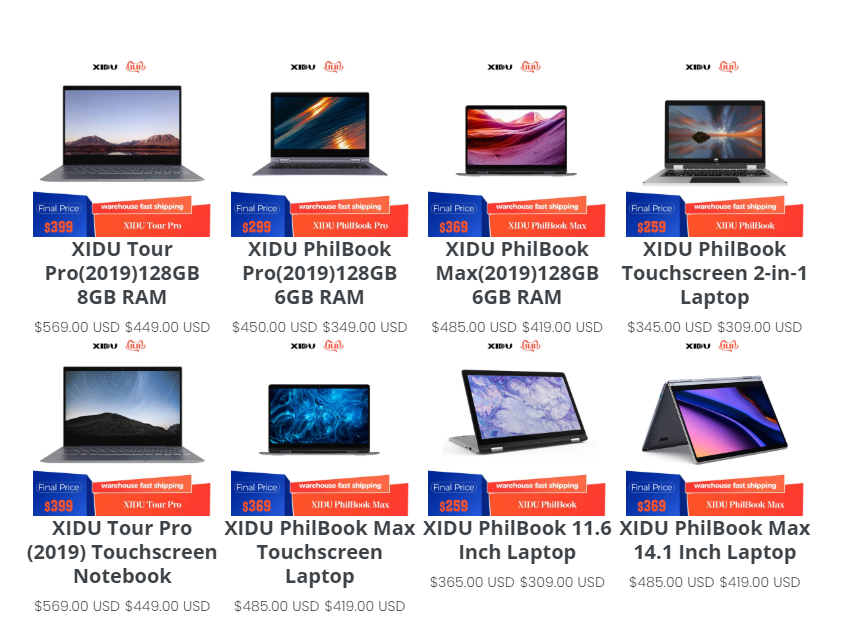
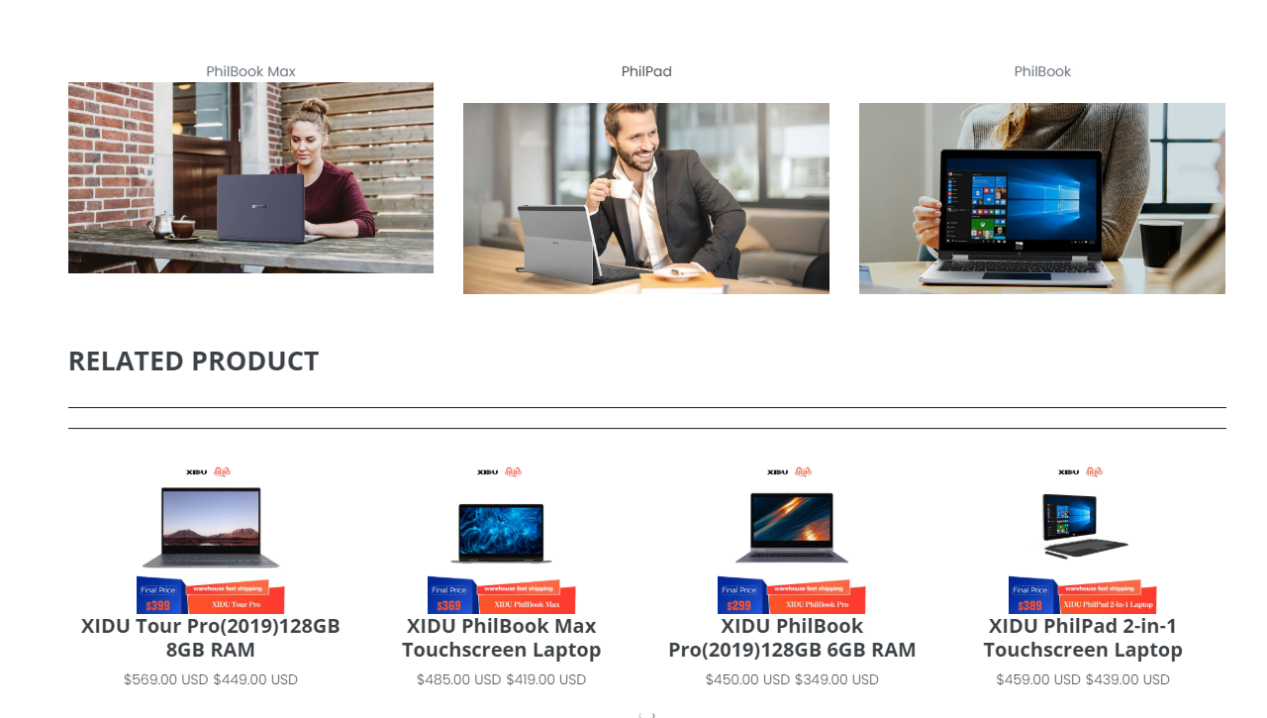
Having set an expansion plan to expand globally, XIDU has created its own online shop where you can find all its product lineup at great prices. Recently, the Chinese manufacturer launched the Year-End Shopping Festival that will last until November 30th and the deals are extraordinary. Prices are even lower than Aliexpress’ 11.11 promotion and you can save up to $50 for every order and get a free gaming mouse worth $30. Below, you can see the discounts on all the laptops. There is no special promotion page, just visit their Official Store!
XIDU PhilPad 13.3″ touchscreen 2in1 laptop
The PhilPad comes with a 2K (2560×1440) display and is powered by Intel’s Atom x7-E3950 CPU backed by 6GB of RAM and 128GB of storage that can be expanded up to 256GB more. It’s just 0.4″ thick and the rest of the specs include a 5000mAh/7.4V battery, 1 x USB Type-C, 2 x USB 3.0, 1 x Microphone Jack, 1 x MicroSD card slot, and Dual-band 2.4GHz/5.0GHz WiFi. The promotion price is just $389. That’s $50 off and the discount is applied directly on the product page.
XIDU PhilBook Max 14.1″ Touchscreen Laptop
The PhilBook Max features a beautiful and smart design with a 360° flexible hinge that allows you to turn the laptop into a tablet in seconds taking advantage of the touchscreen. It is powered by the Intel E3950 4-core CPU backed by 8GB of RAM and 128GB SSD. It also features a backlit keyboard as well as 1 x Mini HDMI, 2 x USB 3.0, 1 x Microphone Jack, 1 x Bluetooth 4.2, 1 x MicroSD card slot, 802.11 ac/a/b/g/n, and a webcam. During the promotion, you can get it for just $369.
XIDU Tour Pro 12.5″ Touchscreen Laptop
Going below the usual 13.3″ dimension, the Tour Pro carries a 12.5″ 2560×1440 display and that makes it very portable and easy to carry as it weighs just 2.22lbs and it sports ultra-thin 4.9mm borders around the display resulting in an 85% screen-to-body ratio. It comes with Intel 3867U 8th Gen CPU inside, backed by 8GB of RAM and 256GB of storage. It also comes with a webcam, ergonomic keyboard design, 802.1 b/g WiFi and Bluetooth 4.2, 2 x USB 3.0 ports, 1 x mini HDMI port, TF card slot, and headphone jack. This little beast cost just $399 during the promotion.
XIDU PhilBook Pro 11.6″ Laptop
The PhilBook Pro comes with an even more compact design that the Tour Pro as it sports an 11.6″ 2560×1440 IPS display. It’s built using Aluminum Alloy and carries the same 360 degrees flexible hinge as the PhilBook Max. You can use it in various modes like laptop mode, tablet mode, and tent mode. It is powered by the Intel J3355 Quad-Core CPU backed by 6GB of LPDDR RAM and 128GB SSD and Windows 10 OS runs smoothly and fast. It will be available at just $299 until November 30th.
XIDU Philbook 11.6″ Touchscreen 2in1 Laptop
Finally, there’s the PhilBook 11.6″ that might be a bit less powerful than the rest of the lineup but carries a lot of other features that make it a bargain at just $233.34. It also features the 360° flexi-hinge and comes with a FHD resolution. It is powered by the Intel Atom 4-core CPU backed by 4GB of RAM and 64GB of storage. Also, there are 1 x USB 3.0, 1x USB 2.0, 1x MicroSD Card Reader, 1x Mini HDMI, 1x Headphone jack, 802.11b/g/n WiFi and Bluetooth 4.0. Of course, it runs on Windows 10 OS. Get it for $259 during while the shopping festival lasts.
As you can see, it is a large-scale promotion that’s rare to find in the market, especially a 3 weeks long one. Also, you can visit the company’s stores on Amazon US, UK, FR store and Aliexpress! Get discount coupons for Amazon and Aliexpress here.
While the US continues to mount pressure on its allies to boycott Huawei‘s products, the company continues to saunter on. Japan may be one of the countries that won’t be using Huawei’s 5G equipment but the Asian country isn’t closing its doors entirely against the Chinese giant. Huawei has reportedly launched a retinue of new products for the Japanese market top of which is the Nova 5T.
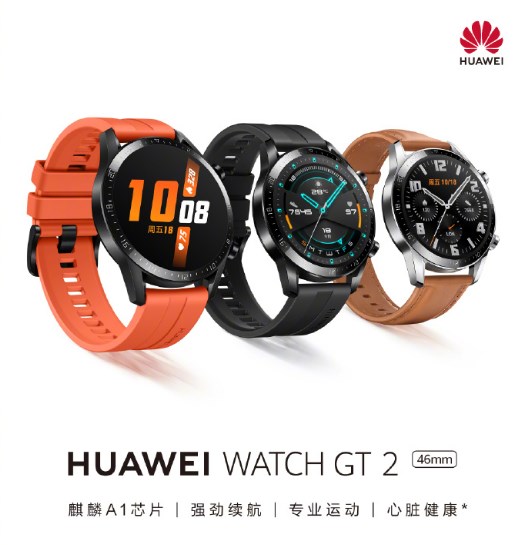
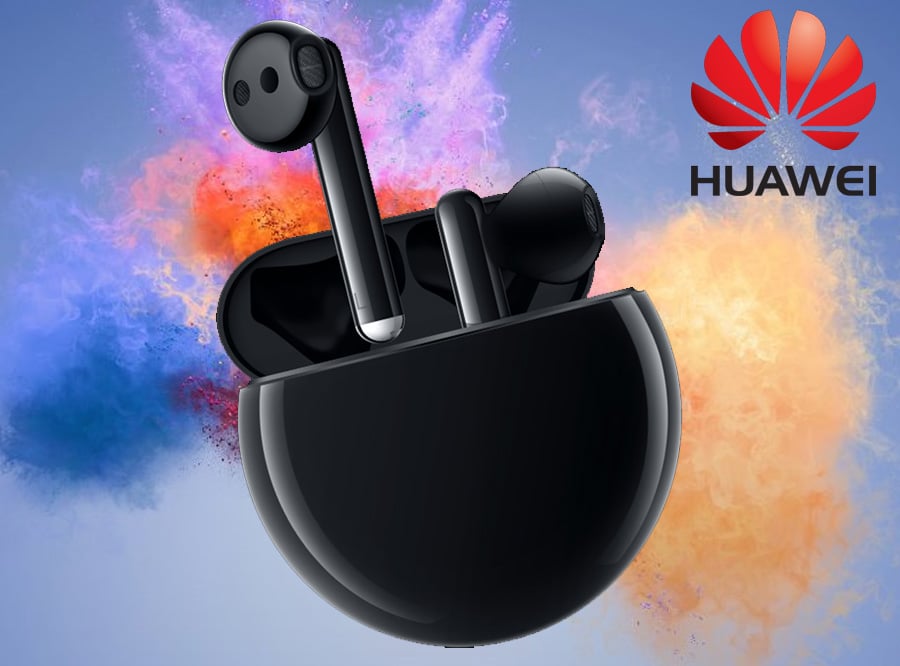
Huawei Nova 5T is joined by the Watch GT2, FreeBuds 3, and Band 4 in making their grand entrance into Japan. All the products were launched within the last couple of months. The Nova 5T made its debut in August packing a powerful specs lineup. The phone is an affordable premium mid-range model but is powered by the flagship Kirin 980 chipset. The model introduced in Japan comes with 6GB of RAM and 128GB storage. The Nova 5T also comes with a Quad -camera setup. The EMUI 9.1 based Android 9 Pie OS runs on the device with support for Google Services.
As for the pricing, the Nova 5T is priced at ¥54,500 Japanese yen (approximately $500). The Huawei FreeBuds 3 is priced at 18,800 yen (about $172). Both products will be available to buy on November 29.
The Huawei Band 4 and Watch GT2 will be available earlier, from November 22. The Band 4 costs 4800 yen ($44) while the Watch GT 2 42mm version costs 22,800 yen ($209). The 46mm version comes in at 24,800 yen ($228). The Classic version of both the 46mm and 42mm sizes cost 28,800 yen ($264) and 26,800 yen ($246) respectively. we must point out that these prices are higher than what they cost in China and other countries they have been launched. This may be due to import duties and other charges.
Some may see Xiaomi as a company that copies product designs and create them at affordable pricing. Truth is, you can’t take away the fact that the company has some innovative products geared towards making life easy. The brand has now launched a warm cup equipped with wireless charging. The warm cup comes with a decent price tag of 189 yuan (around $26).
The Warm cup can maintain a constant temperature of 55°C and this is delivered through wireless charging. All you have to do is to place the cup on the charging pad. This method is said to be different from the traditional resistance wire heating method. Wireless heating is safer and more stable as it can maintain the temperature of the cup at 55 °C.
The Warm cup is no different from the traditional mug made of pure ceramic. It is safe and durable. The whole cup is waterproof and the user can clean it at will during use. The heating feature is designed in a way to ensure the safety of the users from burn. The cup also automatically enters sleep mode and stops heating after 4 hours of inactivity.
Apart from that, the wireless charging pad can also be used to charge smartphones that support wireless charging. It is compatible with Xiaomi, Huawei, Apple and Samsung phones. The charger has a power rating of 10W which should deliver wireless fast charging.
It’s been six months since Huawei was banned by the U.S. government from buying or selling components and services from U.S. companies. However, until now, the full force of the ban has not come into effect, all thanks to the delay of the ban’s enforcement. The second temporary extension, enforced in August, will end on Tuesday, November 19. Now, a report from Politico states that the U.S commerce department is expected to grant another 6-month extension to Huawei.
The extension should allow Huawei to continue to support its existing set of smartphones and devices that use U.S. components. So, existing Huawei devices could be safe for another six months, if this extension is permitted. However, the U.S. government is yet to officially announce anything in this regard and is likely to do it just before the current extension ends.
Even if Huawei gets a reprieve for another 6-months, that still doesn’t change the fact that none of its new devices can use Google Play services. The Mate 30 series will continue to struggle internationally without GAPPs support and we aren’t seeing any solution in this regard.
Despite US Commerce Secretary Wilbur Ross stating that the U.S. government will start granting licenses to U.S companies to trade with Huawei a few weeks back, we are yet to hear about it. With the U.S. – China trade war still going on strong, it remains to be seen if Huawei will get any real reprieve anytime soon.
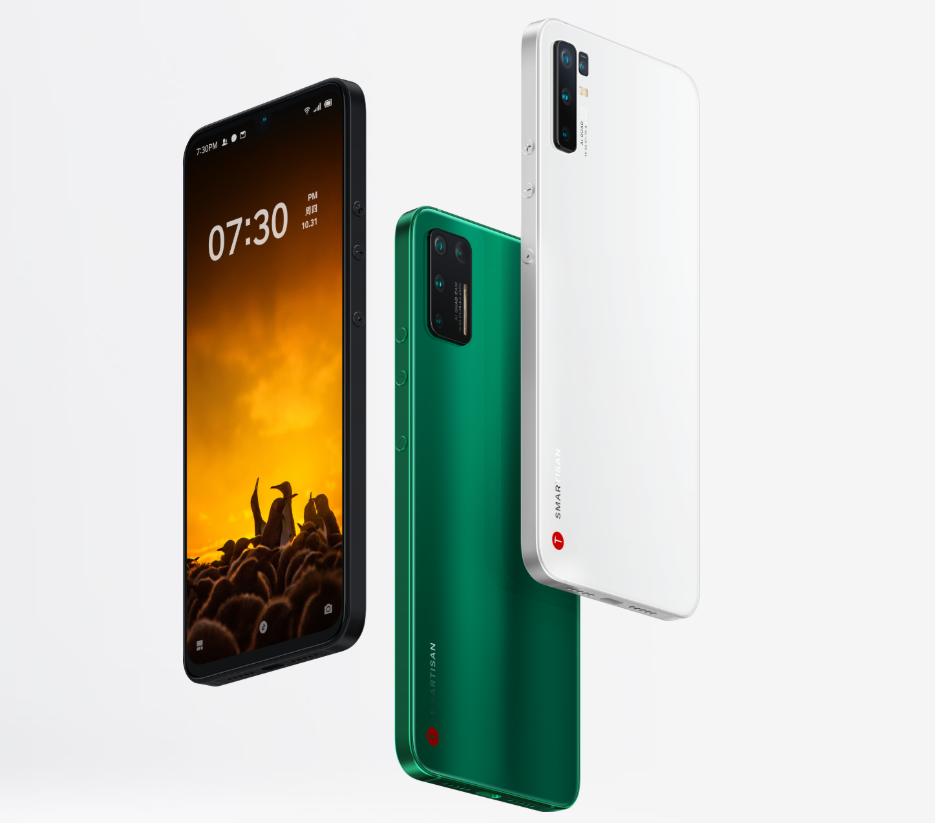
Today, Chinese smartphone maker Smartisan officially announced that the company has now started rolling out the latest Smartisan OS 7.12 version update step 3.0 to Nut Pro 3 smartphone which brings several new features.
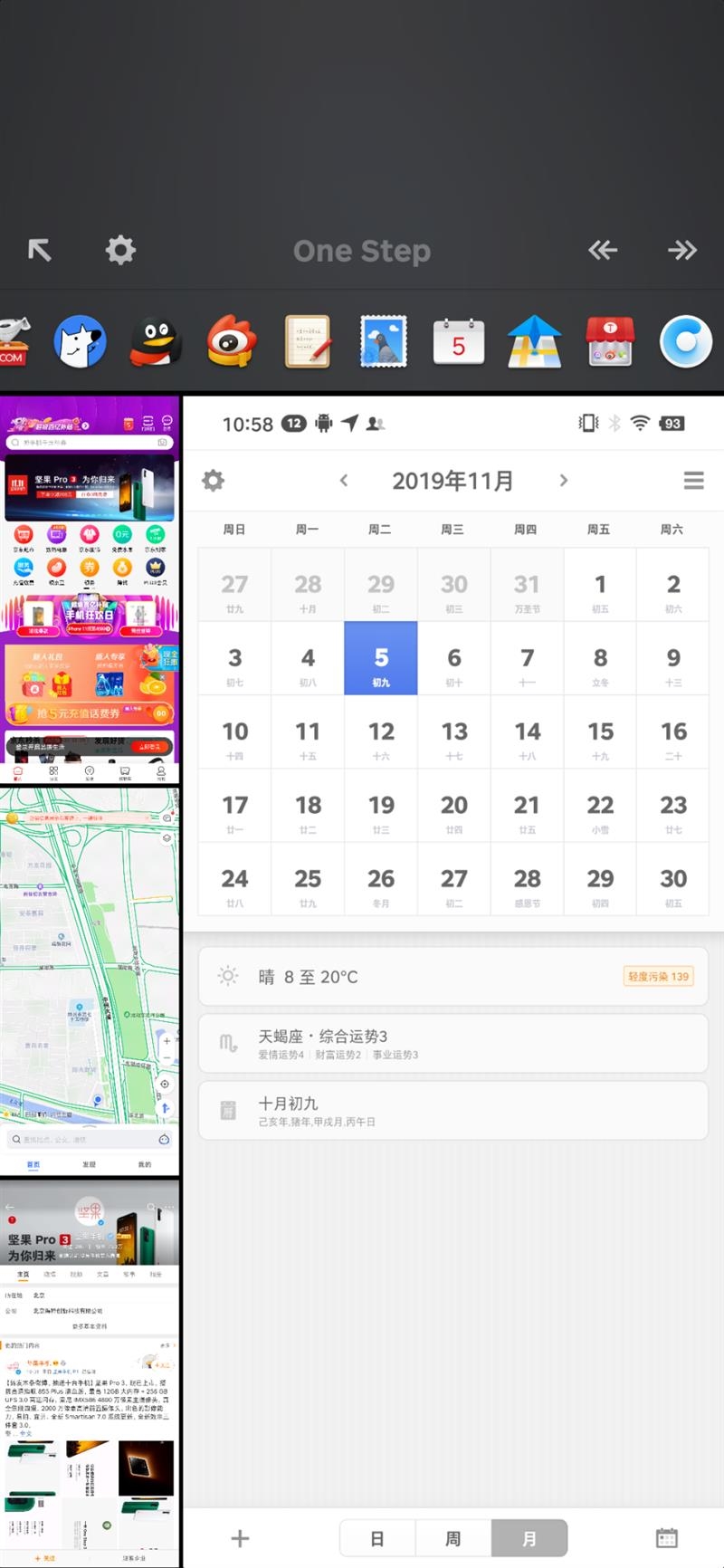
The update brings several new features, especially related to the Split Screen. You can now just pull down screen from the two corners at the top or press the shortcut key and volume down button to open the split screen interface.
In that, you can run four applications simultaneously — one main app and three sub-interfaces. As you can seen in the image attached, there are four different user interfaces on a single screen.
Further, the company has confirmed that the Smartisan OS 7.2 stable version will also be released to Nut R1 and Nut Pro 2s smartphones, but in early next year. The company is also expected to reveal more details about the devices getting this new update in the coming weeks or months.
Smartisan Nut Pro 3 flagship smartphone was launched in October, featuring a 6.39-inch Full HD+ AMOLED display with a wide color gamut and 2 nits ultra-low brightness. It also comes with an in-display fingerprint scanner.
The device is powered by Qualcomm Snapdragon 855 Plus octa-core processor and comes in three configurations – 8GB RAM + 128GB internal storage, 8GB RAM + 256GB internal storage, and 12GB RAM + 256GB storage.
In the camera department, the device features Sony’s IMX586 48MP f/1.75 camera and it is paired with a 13MP 1.12um ultrawide angle camera with a 123° FOV. There is also an 8MP telephoto camera and a 5MP 2cm macro camera. The selfie camera is a 20MP Samsung 3T1 sensor with an f/2.0 aperture and 1.8um pixel size.
The device runs Smartisan UI 7.0 based on Smartisn OS 7.0 operating system which brings lots of new features including Bing Bang 3.0, One Step 2.0, and Idea Pills 2.0. Its 4000mAh battery supports both 5V/3A and 9V/2A fast charge. There is dual-SIM support, a USB Type-C port but no audio jack.
As for the pricing, the Smartisan Nut Pro 3 is priced at ¥2899 (~$412) for the 8GB RAM + 128GB version. The 8GB RAM + 256GB version is ¥3199 (~$455) and the 12GB RAM + 256GB version is ¥3599 (~$511).
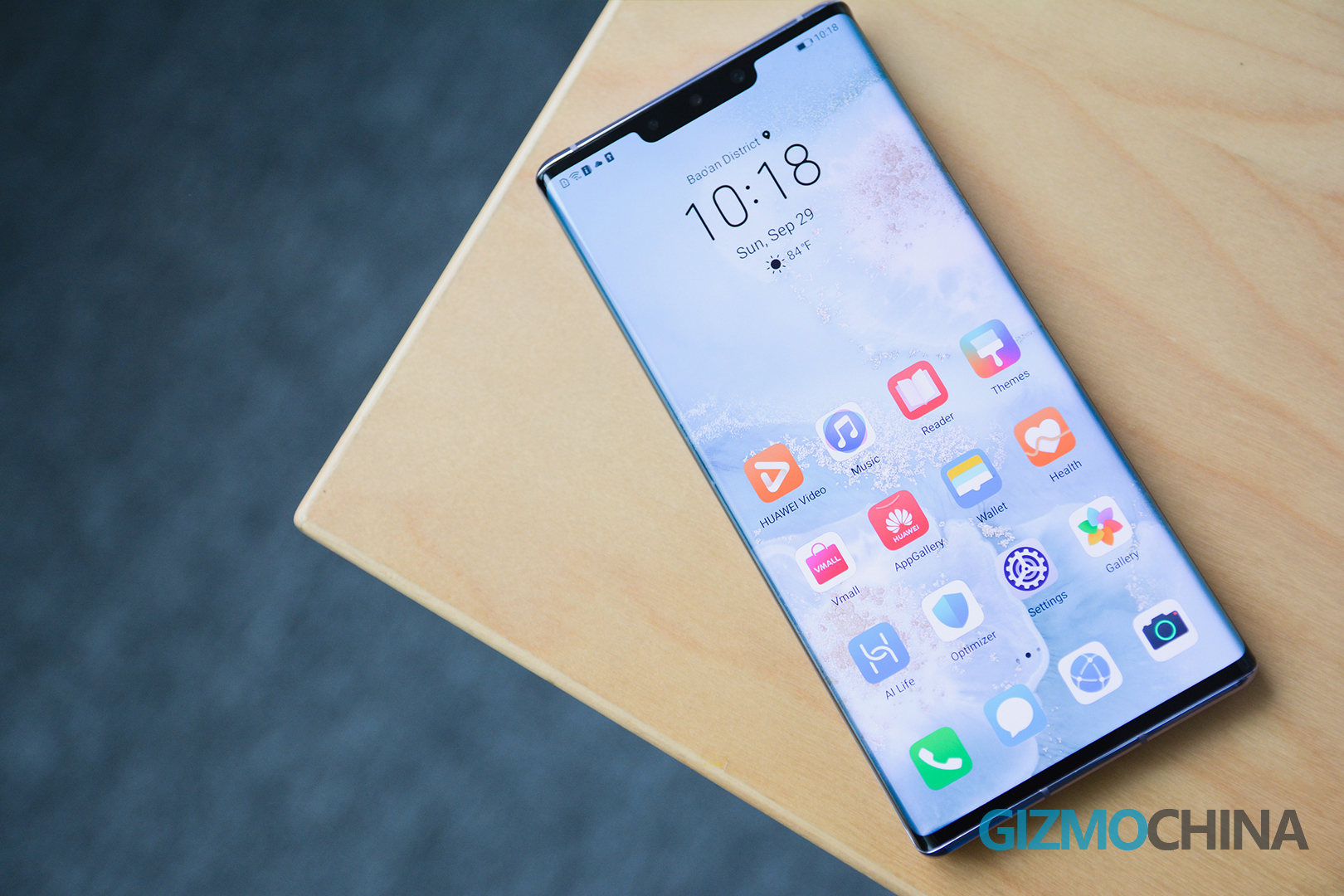
Last week, Huawei released a revised EMUI 10 update roadmap which stipulated when the tech giant would push the latest update for the Android custom skin, including Stable ROMs to specific models.
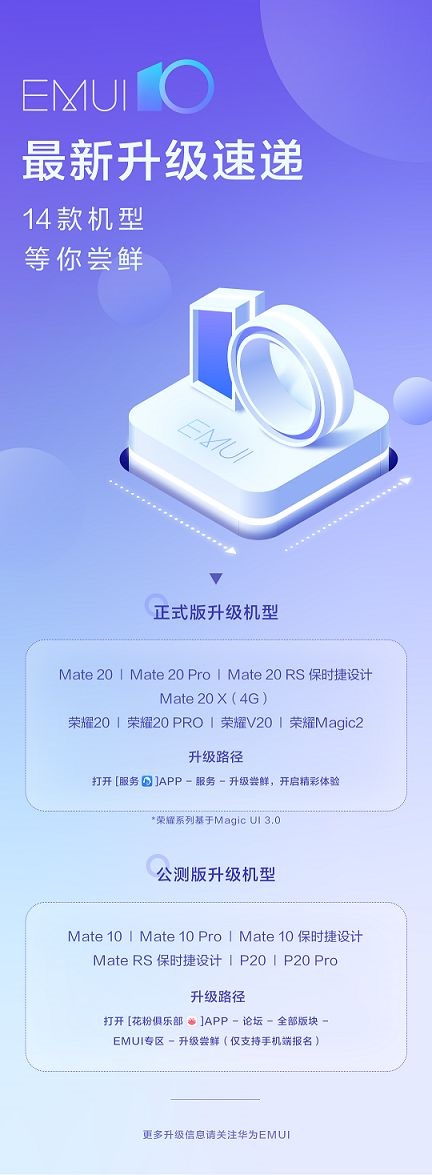
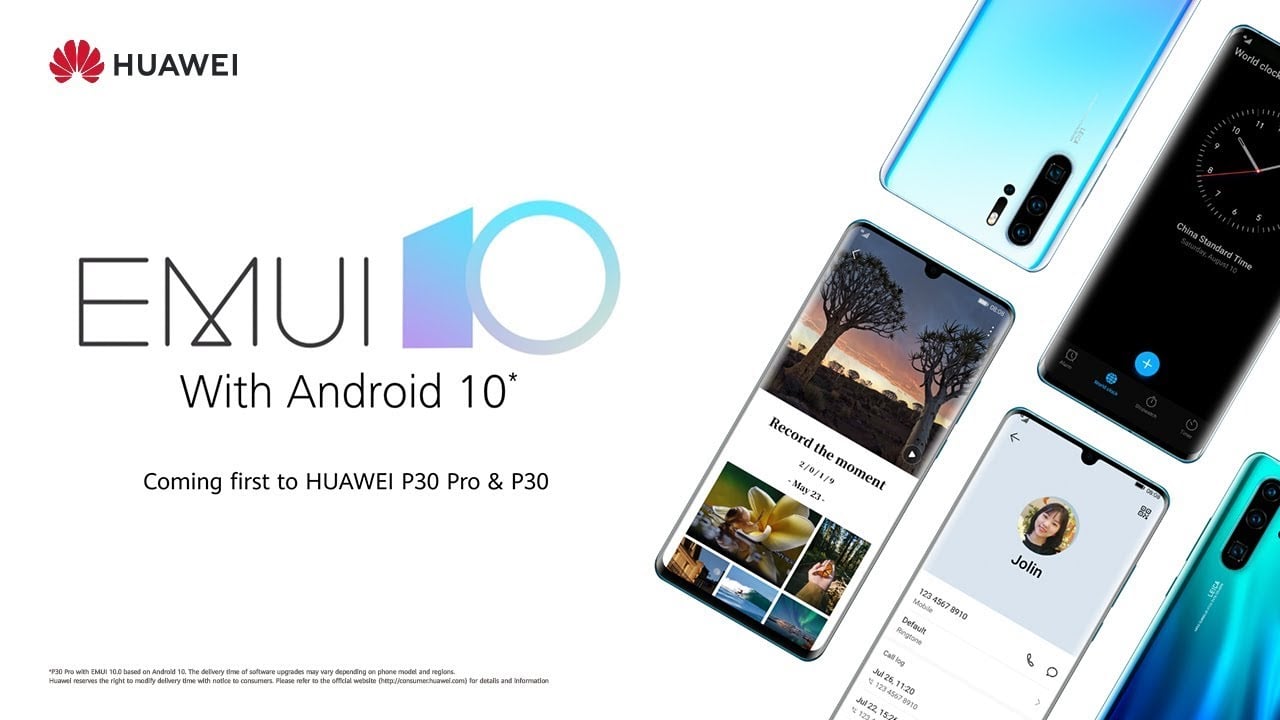
In line with that, the company had started rolling out the EMUI 10 update based on Android 10 operating system to the Huawei P30 and P30 Pro smartphones. Now, the company seems to have released the update for 14 more devices.
As per the reports, the Chinese giant has now started rolling out the latest stable version of the EMUI 10 operating system to Huawei Mate 20, Mate 20 Pro, Mate 20 RS Porsche Design, Mate 20 X, Honor 20, 20 Pro, V20, and Honor Magic 2.
On the other hand, the company has also released a public beta update for a few smartphone models, which includes Huawei Mate 10, Mate 10 Pro, Mate 10 Porsche Design, P20, and Huawei P20 Pro.
EMUI 10 is an important update for Huawei phones as it improves smoothness and performance on existing devices. The company has even added a system-wide dark mode which even forces apps that don’t have a dark mode to comply.
The system settings are now better organized in this new version and the OS is designed to offer a better experience when working other devices like a Windows 10 laptop. EMUI 10 allows the smartphone to cast its screen directly on to the Windows 10 device, offering a seamless working experience. The update equally brings Android 10-inherent features.
Multi-Screen Collaboration: Supported devices will be able to pair with their Huawei computer with just a single tap. Your phone’s screen shows up on your computer screen and you can operate the device using your keyboard and mouse/trackpad. When connected, you can seamlessly transfer files between both devices. This feature also allows you to carry out tasks such as replying messages without picking up your phone.
New Color Scheme: EMUI 10 brings a new color scheme inspired by the Morandi gradient color scheme. You will notice the use of softer colors with gentle textures across apps such as messages and contacts.
Dark Mode: EMUI 10 brings Dark Mode which is easy on the eyes and provides a more comfortable and immersive reading experience.
Improved System Performance: EMUI 10 adopts what is called Deterministic Latency Engine. It is able to optimize the allocation of system resources at the chip level for faster performance. Huawei says response latency decreases by 25.7% while latency fluctuation decreases by 55.6% with EMUI 10.
Accelerated Switch: Huawei Clone, the app for moving your data from your old phone to your new Huawei phone is now faster and easier to use.
Security: Huawei says its operating system’s microkernel has achieved CC EAL 5+, the highest level of security certification for consumer operating systems globally. All payments, authentication, and sensitive operations are carried out in this isolated part of the system.
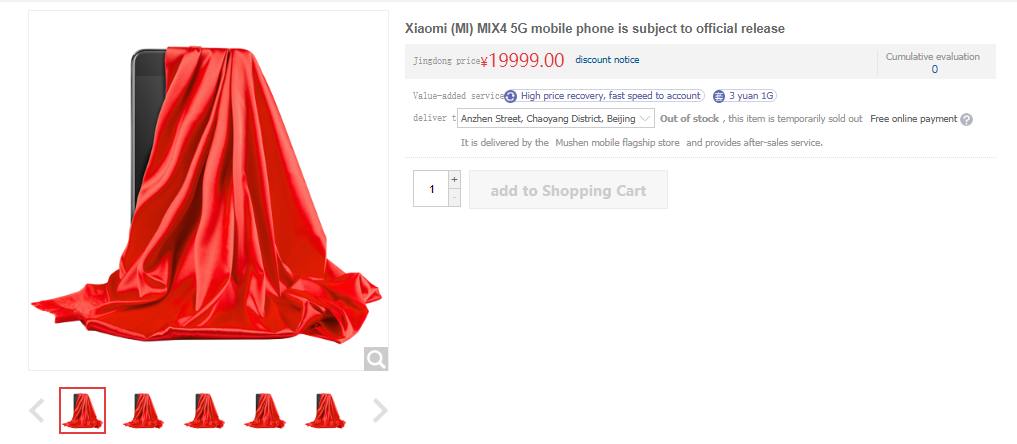
In September, Xiaomi had held a launch event to announce the Xiaomi Mi 9 Pro 5G and Mi MIX Alpha, a concept phone with wrap-around display. However, the company did not unveil the much-anticipated Mi MIX 4 phone. At September, a Xiaomi executive had claimed that it won’t be launching the Mi MIX 4 this year. However, he was quick to retract his statement which suggested that the Mi MIX 4 may debut this year. The arrival of the Mi MIX 4 could be drawing near as its preliminary listing has appeared on Chinese retailer site, Jingdong Mall.
As it can be seen in the below shown screenshot, JD.com is known for adding a page for upcoming phone with a red-colored cloth placed over it. The Mi MIX 4 5G phone is listed as an upcoming phone on JD, but none of its specs are mentioned. There is no official confirmation yet form Xiaomi whether it will be debuting the smartphone before the end of 2019.
Xiaomi is reportedly working on a phone that will better cameras than the Xiaomi Mi CC9 Pro (Mi Note 10 in international markets) which has recently debut as the world’s first phone with 108-megapixel penta-lens camera system. Probably, the Mi MIX 4 5G could be the phone that is expected to offer better photography experience than Mi CC9 Pro. The new Mi MIX phone is likely to come equipped with 108-megapixel Samsung ISOCELL HMX lens as the primary sensor.
Rumors surrounding the Mi MIX 4 have claimed that it could be coming with a Samsung-made punch-hole display that will offer a refresh rate of 120Hz along with quad HD+ resolution. Some reports have claimed that it may sport a waterfall display with extremely curved edges. It remains to be seen whether it features the Snapdragon 855+ chipset or the new Snapdragon 865 mobile platform that it expected to get announced at the Qualcomm event that will be held at the beginning of December. Hopefully, more details on the Mi MIX 4 will surface in the coming days if its arrival is drawing near.
Earlier today, Xiaomi confirmed that it is currently testing an interesting feature for its newly announced Mi TV 5 series. The company will soon add support for voiceprint on the new Mi TV 5 models. We don’t have an exact date for the update, but it should be rolled out soon.
Voiceprint will make Mi TV 5’s experience highly personal. With support for voiceprint, the Mi TV 5 will be able to recognize each user with his or her unique voice. Imagine a situation where you could call out to your TV and it would immediately recognize your profile and show up your personalized content and recommendations. Another good example is when you can simply say ‘continue with the previous video’ and the TV will automatically playback the video that you were last playing. It’s just like a fingerprint profile but for voice.
The Mi TV 5 comes in regular and Pro variants, featuring 4GB of RAM and 64GB of internal storage to ensure smooth performance. As usual, this new Smart TV from Xiaomi comes with the company’s own PatchWall user interface. It also comes with features like Dolby Audio and DTS HD Sound.
There are three models in the Pro lineup. The 55-inch model starts at 3,699 Yuan which roughly converts to $537. On the other hand, the 65-inch and 75-inch model costs 4,999 Yuan and 9,999 Yuan that roughly converts to $713 and $1,425 respectively. The standard Mi TV 5’s 55-inch model costs 2,999 Yuan (~$428) while the 65-inch and 75-inch models are priced at 3,999 Yuan (~$571) and 7,999 Yuan (~$1,142) respectively.
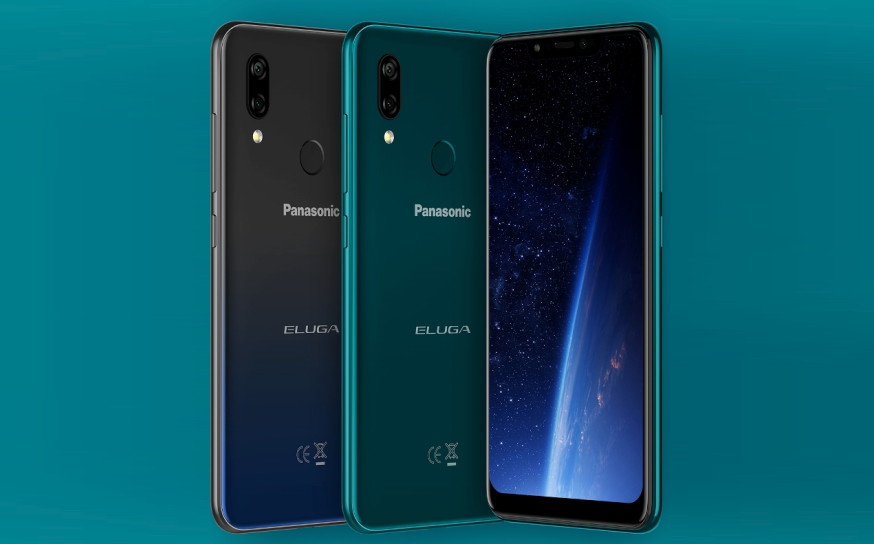
Panasonic has officially launched the Eluga Ray 810 in India. The smartphone succeeds the Eluga Ray 800 that launched in India back in March 2019. The new Eluga Ray 810 has debuted with a pricing of Rs. 7,999 (~$111) in the country.
Panasonic Eluga Ray 810 Specifications and Features
The Panasonic Eluga Ray sports a massive notch similar to the iPhone X, which houses the front camera with an LED flash module for better low-light selfies, apart from an earpiece and other sensors. The Eluga Ray 810 features slim bezels on three sides and a sizeable chin. The device features a dedicated fingerprint scanner on the rear panel for added security and ease of access. The highlight of the smartphone is Panasonic’s ARBO hub that brings smart assertive features.
The Eluga Ray 810 sports a 6.19-inch HD+ display with a resolution of 720 x 1500 pixels. The device features a 2.2Ghz octa-core MediaTek Helio P22 chipset under the hood and comes with 4 GB of RAM and 64 GB of native storage, which is further xpandable with a microSD card.
The Eluga Ray 810 smartphone flaunts a dual-camera setup at the rear. The primary lens is a 16-megapixel unit that works together with a 2-megapixel sensor. The device uses a 16-megapixel sensor on the front. The Eluga Ray 810 draws power from a 4,000 mAh battery and runs on Android 9.0 Pie. Connectivity options include dual-SIM 4G VoLTE, Wi-Fi, micro USB, and Bluetooth v5.0.
Panasonic Eluga Ray 810 Price and Availability
The Panasonic Eluga Ray 810 is available in two color options, namely Turquoise Blue and Starry Black. The device is available exclusively on Flipkart for Rs. 7,999 (~$111).
Today, at the Lenovo Innovation and Technology Conference, the company released its first foldable screen laptop — ThinkPad X1 and along with that, the company also announced its first foldable smartphone — Motorola Razr.
Now, at the sidelines of the event, during media interaction, Liu Jun, President of Lenovo China has revealed that the Motorola Razr clamshell foldable smartphone won’t be listed in China and when the device eventually goes on sale in the country, it will come with support for 5G connectivity.
He has also revealed the reason behind not launching the Motorola Razr smartphone in China at this time. He says that the company’s domestic market’s network operators currently do not support eSIM cards due to technical problems. This is an issue given that the Motorola Razr doesn’t come with physical SIM card slot and only supports eSIM.
Coming to the specifications, the Motorola Razr features a main Flex View p-OLED display of 6.2 inches. It carries support for 2142 x 876 pixels and a tall aspect ratio of 21:9. It can be accessed by unfolding the device.
While the Galaxy Fold and Mate X can be unfolded horizontally to use them like a tablet, the Razr can be unfolded vertically to use it as a regular phone. The device comes with nano-coating for splash resistance and it weighs 205 grams.
When the device is closed, users can make use of the Quick View secondary display of 2.69 inches that offers a resolution of 800 x 600 pixels. When folded, it becomes a pocketable device as it measures 94.5 x 71.95 x 14.06mm.
The second screen or the Quick View display can be used for viewing notifications and basic tasks like responding to messages. The Quick View is integrated with Google Assistant which enables quick responses. Content can seamlessly transition between the Quick View and Flex View screens.
Under the hood, the device is powered by Qualcomm Snapdragon 710 chipset, which is coupled with 6GB of RAM and internal storage of 128GB. The device runs Android 9 Pie operating system and is fuelled by a 2,510mAh battery that carries support for 15W TurboPower charging through USB-C.
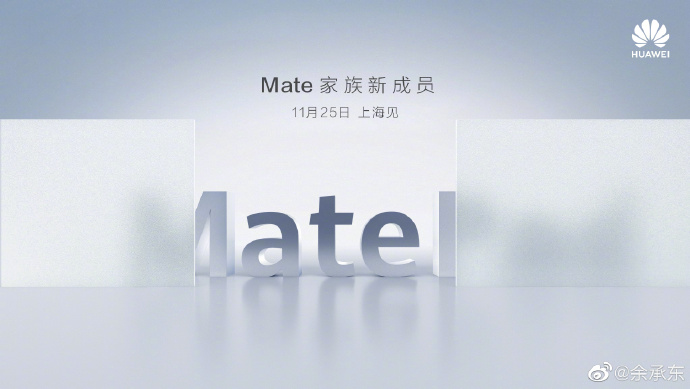
Rumors have revealed that Huawei will be announcing the MatePad Pro flagship tablet by the end of this month. The rumors have come true as Richard Yu, the CEO of Consumer Business Group has confirmed through Weibo that there will be a launch event on Nov. 25 in Shanghai to announce the new MatePad product.
In the image shared by Yu, the text can be easily identified. A careful look reveals that the blurred ‘Pad’ text. Hence, it can be deduced that Huawei will be announcing the new MatePad device on Nov. 25. Based on the rumors that have surfaced so far, the upcoming flagship tablet from Huawei will be dubbed as MatePad Pro.
Huawei MatePad Pro Specifications and Features (Rumored)
The Huawei MatePad Pro has already bagged certifications from TENAA and 3C authorities in China ahead of its launch. The listings have revealed that the MatePad Pro that is codenamed as Marx will be available in two models. The Wi-Fi variants of the MatePad Pro have MRX-W09 and MRX-W19 model numbers. On the other side, its LTE edition has model variants such as MRX-AL09 and MRX-AL19. No details on the specs of the device have surfaced through its TENAA listing. The 3C certification has revealed that it will carry support for 40W SuperCharge rapid charging technology like the Huawei Mate 30 and Mate 30 Pro flagship phones.
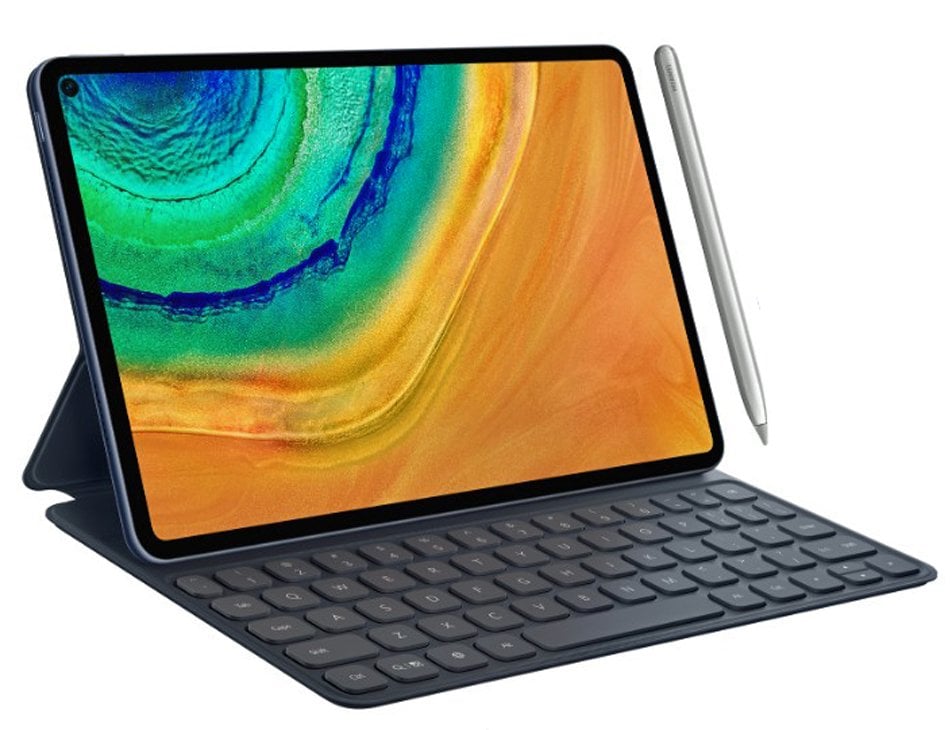
The most striking feature of the MatePad Pro is that it will be breaking cover as the world’s first tablet with punch-hole display. Another unique feature of the device is that it features dual cameras on its back. The tablet is expected to arrive in multiple colors like Blue, White, Orange and Green.
The MatePad Pro is expected to deliver quad HD+ resolution, but its display size is under the wraps. The Kirin 990 chipset may power the flagship tablet along with 8 GB of RAM. It could be packed with 256 GB of native storage and a behemoth battery. The MatePad Pro features a magnetic pogo pin connector for attaching an optional keyboard. The device will also carry support for M-Pen stylus.
The MatePad Pro launch event will be held a day prior to Honor’s event that will be used to announce the Honor V30 series of flagship phones. The Chinese firm is also expected to announce Kirin 810 powered Honor Tab 6 tablet alongside the V30 phones.
Gionee is not new to making feature phones. It has been doing so for years now and is not about to stop yet. Last week, it announced the Gionee A326 feature phone with a clamshell design. Today, it has followed it with the Gionee L6+ but this one has a candybar design.
The Gionee L6+ is aimed at students, business folks, and older citizens. You may be wondering why a student will need a feature phone. We all know our smartphones can be distracting, and for students who need to focus, a basic feature phone that can be used for just calls and messaging will come in handy. Business folks can pick up the L6+ as a backup phone to be reached on in case their main phone runs out of battery. While older citizens will find it easier to operate compared to a smartphone.
The specs of the phone are yet to be disclosed so we can’t say anything about the display size, battery capacity, and network support. The phone comes in two colors – gray and blue, with a touch of gold around the rear HD camera. The alphanumeric keypad has large keys and the characters have a bold and large font size.
Gionee is also yet to reveal details about availability and price. Nevertheless, we don’t expect it to cost more than $50.
Taiwan has banned the sale of three Huawei smartphones with immediate effect. This has nothing to do with the previous allegations of spying or backdooring against Huawei. According to Taiwan’s National Communications Commission (NCC) regulatory body, it has taken this decision so that the Huawei P30, Huawei P30 Pro and Huawei Nova 5T cannot be sold in the country until the company updates the operating system on the three devices.
Huawei’s OS currently lists the nation Taiwan, China in the contacts and time zone, a designation that the independent island loathes. The NCC announced its decision on Thursday, making it clear that Huawei will not be allowed to sell the three smartphones unless the OS is tweaked.
This is an extremely sensitive political issue with Beijing considering Taiwan a part of its “One China” policy. It is waiting for territorial unification for the past seven decades, and will not shy away from using force if necessary. Although, both countries are governed separately. “The labeling in Huawei’s smartphones are factually incorrect and has hurt the dignity of the Taiwanese people. We have taken strict measures to uphold Taiwan’s dignity” according to the NCC’s official statement.
The People’s Republic of China does not consider the Republic of China or Taiwan as a legitimate nation. If the PRE cannot find a peaceful solution for reunification, it plans to use any other means necessary. However, the Republic of China has its own constitution, president and armed forces. Hence, the Chinese smartphone maker referring to the island as a part of China was deemed an insult.
Ironically, Huawei might have referred to Taiwan as a part of China after numerous complaints were made against the manufacturer by the citizens of the mainland. Huawei failed to refer to Hong Kong, Macau and Taiwan as part of China in some local Chinese dialects, leading to the software update and the current fiasco!
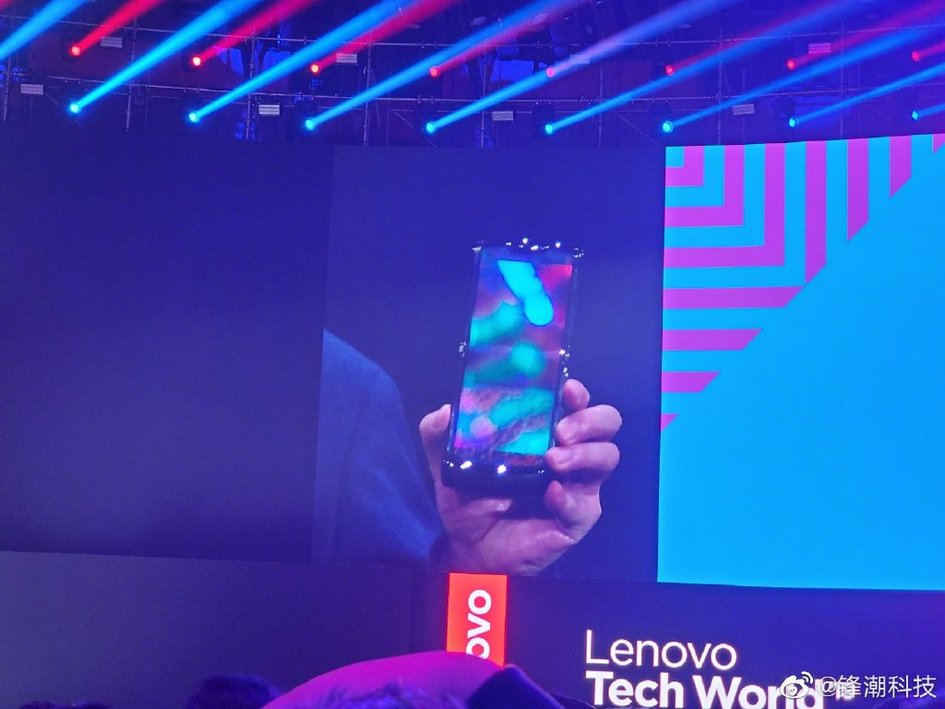
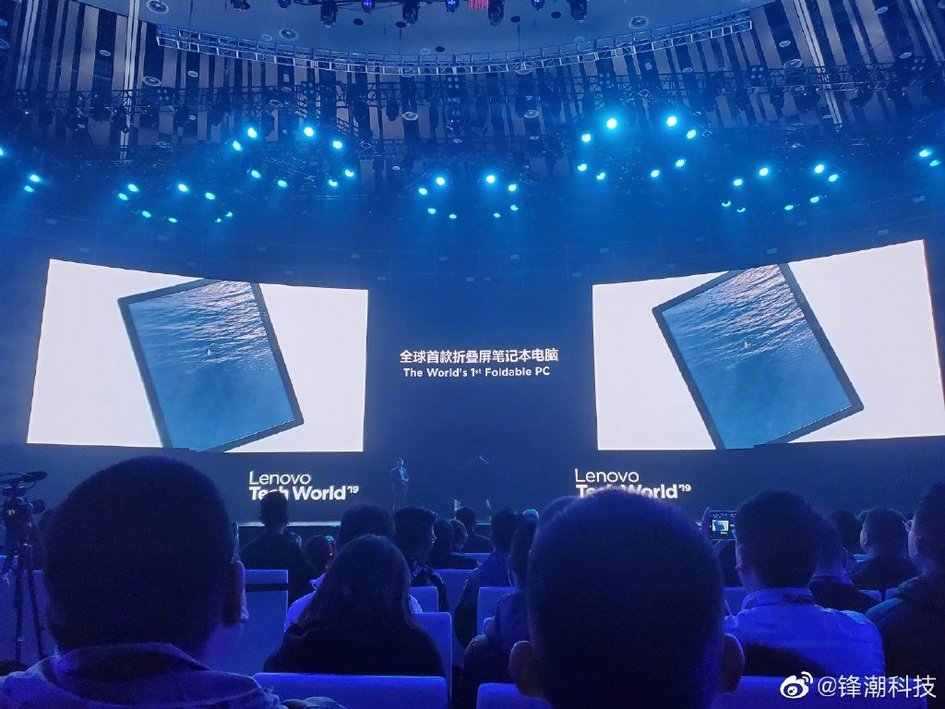
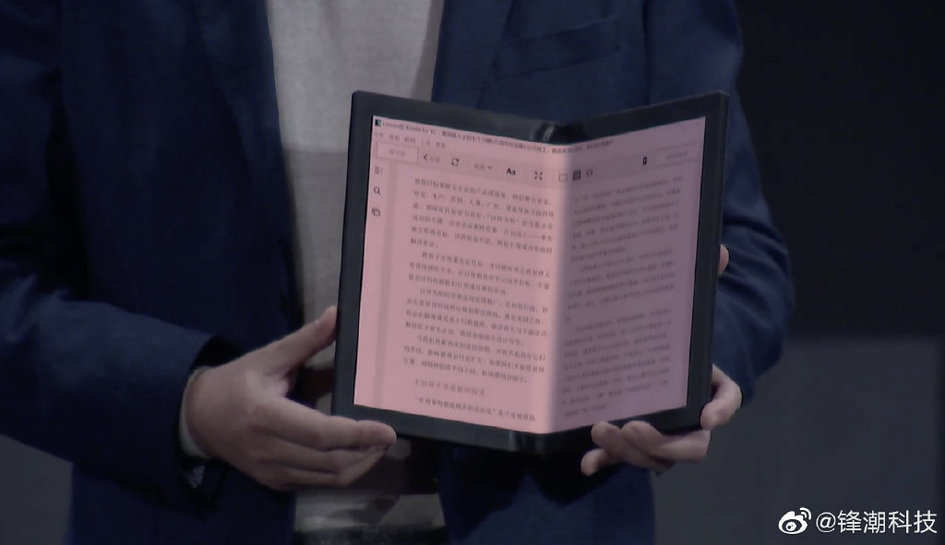
Lenovo officially launched the much-awaited Motorola Razr amidst much fanfare at an event in Los Angeles, US yesterday. The company launched the device this morning at the Tech World 2019 in China. At the event, the Chinese firm also showcased the world’s first foldable PC with a flexible screen apart from the Motorola Razr foldable phone. It is the very same device that was revealed as ThinkPad X1 series device earlier this year.
The images of the event shows that the display of the Motorola Razr has some creases at the folding area. It’s surprising since various tech publications have praised its screen for no visible creases. During the press conference at the event, Lenovo CEO Yang Yuanqing answered queries related to Motorola Razr, he said that Lenovo’s product is a compact device like a mobile phone. It doesn’t transform into a tablet like other foldables. Instead, it folds in half making it more compact.
Coming to Lenovo’s ThinkPad X1 series notebook with foldable screen, it is equipped with a 13.3-inch folding display manufactured by LG. Not much is known about the device apart from its weight, which is around 900 grams, and the 2K display. It will take a while for the laptop to reach showrooms, as Lenovo needs to iron out a few creases to get the device ready for production.
BOE Vice-President has confirmed supplying OLED panels for the world’s first foldable PC and Motorola Razr.
There are two displays on the Motorola Razr. The 6.2-inch primary p-OLED Flex View display has a resolution of 2142 x 876 pixels and an aspect ratio of 21:9. The 2.7-inch gOLED display on the outer surface features a resolution of 800 x 600 pixels and an aspect ratio of 4:3. Motorola calls it the Quick View which can be used to check notifications and quickly respond to messages. The Razr is powered by a Snapdragon 710 SoC with 6 GB of RAM and 128 GB of internal storage.
The primary camera on the new Razr is a 16-megapixel unit with an aperture rating of f/1.7 and dual-pixel autofocus that doubles as the selfie camera when the device is folded. There is a 5-megapixel front camera on top of the FlexView display. The Razr draws power from a 2,510 mAh battery that supports 15W TurboPower fast charge and runs on Android 9.0 Pie. The device lacks a 3.5mm headphone port but makes up for it with a bottom-mounted speaker, which together with the box acts as a passive amplifier. The packaging contains Razr Buds earphones and a headset adapter cable.
The Motorola Razr flip phone has a price tag of $1,499 in the U.S. It will be hitting the U.S markets in January The 2020 foldable phone is facing criticism now since it commands an overwhelming price tag and offers inferior specs. There is no word on the China launch of the Motorola Razr.
Next year is supposed to be a big year for 5G smartphones. Qualcomm and MediaTek both have 5G chipsets planned for mid-range phones which means phone buyers should be able to pick up a 5G phone for under $400.
Xiaomi’s CEO, Lei Jun, has revealed that all the phones it will release next year priced above ¥2000 (~$285) will have 5G support. He also added that they plan to announce at least 10 5G smartphones next year. The information was revealed this morning at the on-going China Mobile Global Partners Conference.
While $285 does sound great for a 5G phone, we believe most of these phones will sell for at least ¥2399 (~$342). Also, 10 phones sound like a lot, but with a large product portfolio such as Xiaomi’s (including Redmi), that is just shy of half of its annual lineup.
Lei Jun also added that these affordable phones will launch in the first half of the year.
Xiaomi intends to aggressively market 5G next year as it believes it brings a number of benefits. It already launched a 5G+AIoT strategy so as to increase the development and adoption of the use of its AIoT sevices.
Mr. Lei Jun also implored China mobile to speed up the roll-out of its eSIM One Phone Number Dual Terminal service across China. This service allows you to use one phone number on two devices such as your phone and your wearable that supports eSIM. The service is currently only available in 7 cities in China – Tianjin, Guangzhou, Shanghai, Nanjing, Hangzhou, Shenzhen, and Chengdu.
The new Xiaomi Watch has an eSIM but because the eSIM One Phone Number Dual Terminal service is available in only a few cities, it may affect the sales of the watch and the development of smartwatches in general.
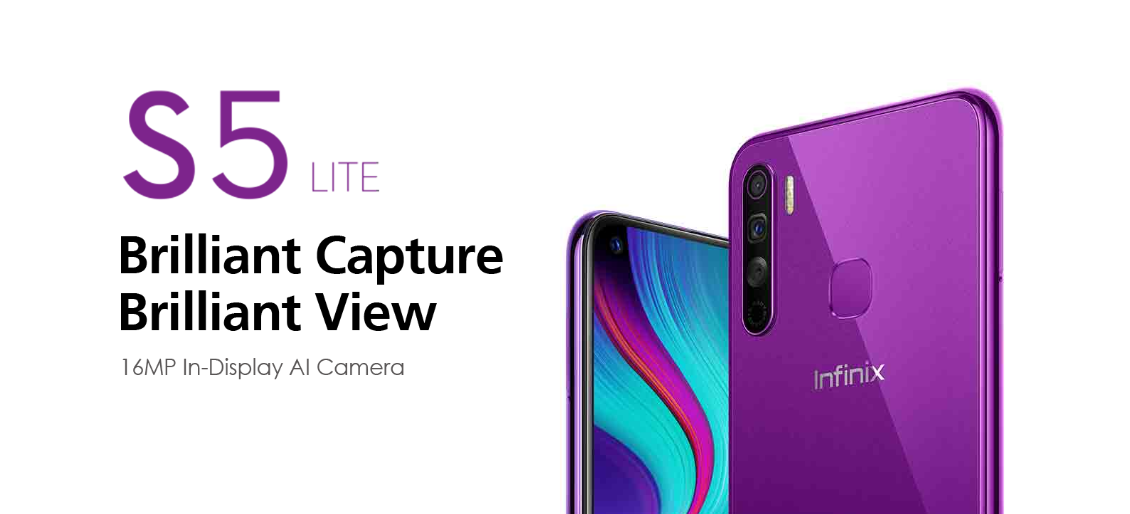
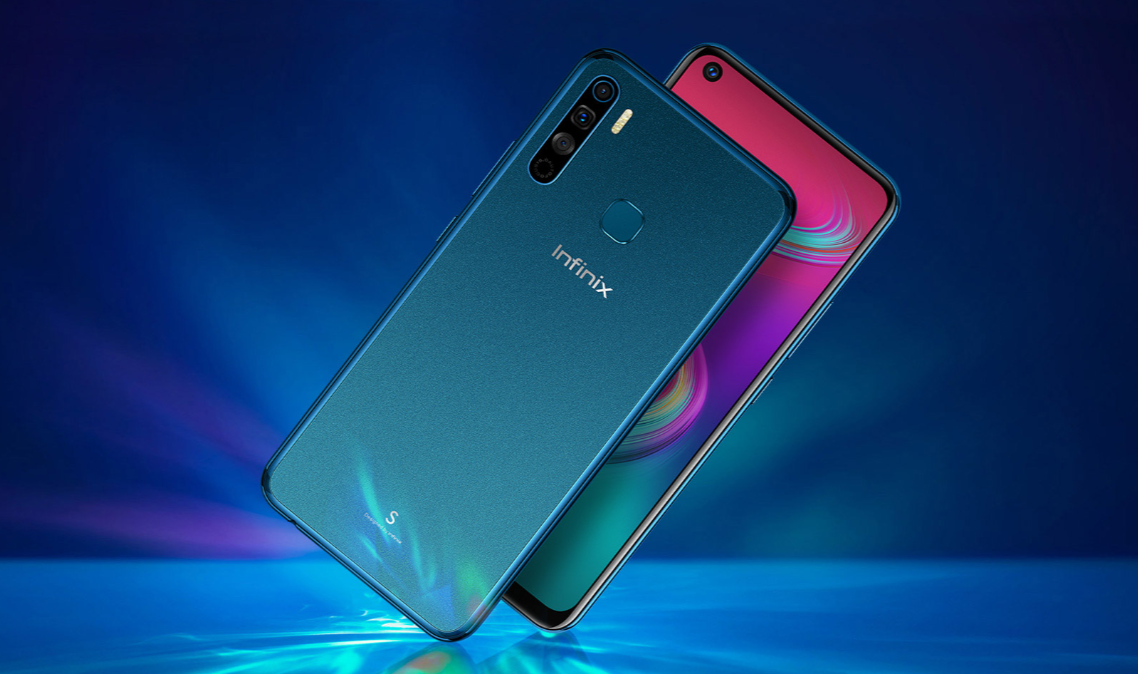
The Infinix S5 Lite is the newest Infinix phone to go official in India. It has arrived as a weaker sibling of the Infinix S5 phone that is selling with a price tag of Rs. 8,999 (~$125) in India. Priced at Rs. 7,999 (~$111), the Infinix S5 Lite comes with some attractive features like punch-hole display, triple rear cameras and a large-sized battery. The same phone was recently made official in Nigeria.
Infinix S5 Lite Specifications and Features
The Infinix S5 Lite impresses with its 6.6-inch Infinity-O TFT display that offers HD+ resolution of 720 x 1600 pixels and 20:9 aspect ratio. The Chinese firm claims that the phone offers a screen-to-body ratio of 90.5 percent. The punch-hole present at the top-left corner of its screen has an AI driven 16-megapixel HDR+ selfie shooter with f/2.0 aperture. It can capture better shots in low-light conditions thanks to the 4-in-1 Super Pixel technology. The front camera is optimized to capture beautified selfie shots relying on AI. The phone also supports face beauty in WhatsApp video calling. The selfie snapper also supports AR emojis.
The rear side of the Infinix S5 Lite has a quad smart flash enabled triple camera system. It includes a 16-megapixel autofocus enabled main lens, a 2-megapixel fixed focus lens and an AI sensor. The rear camera supports bokeh mode, hybrid focus, AI scene detection and full HD+ video recording.
The Infinix S5 Lite has a 4,000mAh battery that promises 3-day performance. The device runs on XOS 5.5 based Android 9 Pie OS. The Helio P22 chipset fuels the smartphone along with 4 GB of RAM. The device comes with 64 GB of native storage and there is a microSD card slot onboard for additional storage. The smartphone also features face unlock support and a rear-positioned fingerprint reader.
Infinix S5 Lite Price and Release Date
The Infinix S5 Lite carries a pricing of Rs. 7,999 (~$111). Midnight Black, Quetzal Cyan, and Violet are the color editions of the S5 Lite. The smartphone is available for purchase through Flipkart in the country.
Earlier this month, Xiaomi launched its first smartwatch powered by Google’s Android-based WearOS, dubbed Mi Watch. During the Double Eleven sale in China, the company managed to sell the smartwatches worth 100 million in just nine hours.
With these many devices sold in China, users also started giving feedbacks and making comments related to the smartwatch. Qu Heng, General Manager of Xiaomi Ecological Chain confirmed that the company has received feedback from the users and added that the company is thankful as it will help them improve the user experience.
Mi Watch
Now, it is being believed that Xiaomi is all set to release the first over-the-air (OTA) update for the Mi Watch in China on 3rd December. With this new update, the company will be optimizing several features, including first pairing, application market, dial market, notification prompts, input method interaction, and weather positioning.
Along with the new update for the Mi Watch users, the company will also be launching the Xiaomi Wearable App on 3rd December, further enhancing the user experience for the iOS users. Qu Heng has also added that the company will classify, schedule, and continuously improve the product experience through OTA updates.
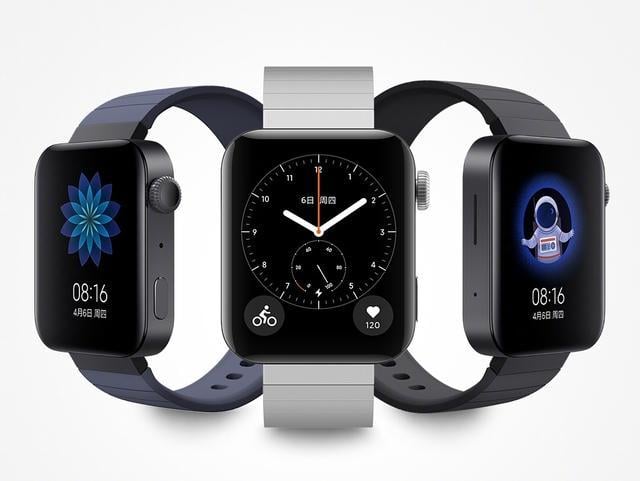
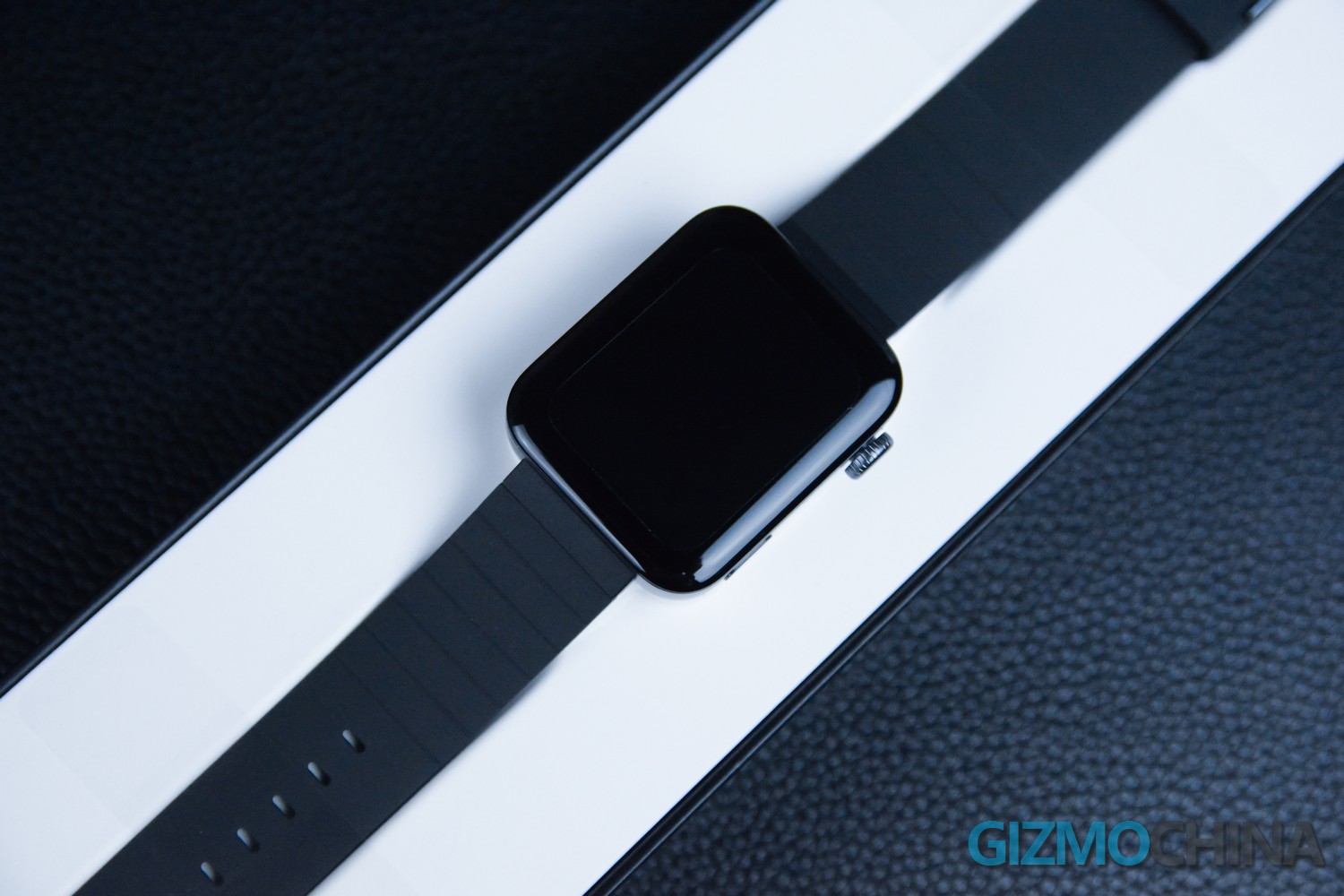
The Xiaomi Mi Watch comes with a square touchscreen display protected by Corning Gorilla Glass 3. It features a 1.78-inch AMOLED curved display with 326 PPI pixel density and the back of the watch is made out of ceramic.
There’s a crown on the right that can be used to navigate through the watch UI. Apart from the crown, there’s a multi-purpose button as well as a microphone on the right side. On the left, you have another microphone hole along with a speaker vent.
The Mi Watch features an aluminum alloy body with a matte finish, but it has sharper curves than the Apple Watch. At the bottom, you’ll see the pins for the charging dock and the heart rate monitor.
It comes powered by the Qualcomm Snapdragon Wear 3100 4G chipset featuring four Cortex A7 cores clocked at 1.2GHz. The watch features one of the biggest batteries ever seen on a smartwatch featuring 570mAh in capacity which the company claims can last up to 36 hours or up to two days on a single charge.
Mi Watch
The wearable devices comes loaded with features such as NFC, Bluetooth 4.2, Wi-Fi (n), GPS, an independent vibration motor, and a pretty large speaker. It also supports eSIM, which ensures you can connect to the internet via cellular network as well as make and receive calls independently.
As we mentioned earlier, Xiaomi has adopted Google’s WearOS platform for its new smartwatch. However, like its smartphones, the WearOS running on the Xiaomi watch will be customized with its own MIUI for Watch skin. It comes integrated with the company’s own XiaoAI smart assistant.
Xiaomi smartwatch supports heart rate monitoring, blood oxygen VO2 max sensor, sleep monitoring, and body energy monitoring. It is priced at 1299 yuan (approx. $185) in China and is now available for purchase in China.
The landing page for the upcoming Vivo U20 smartphone recently popped up on Amazon India. It revealed that the smartphone will go official in India on Nov. 22 at 12 PM (local time). Some details on the specs of the phone was also revealed through its landing page. Fresh details on the battery capabilities of the phone have surfaced now on the Amazon listing.
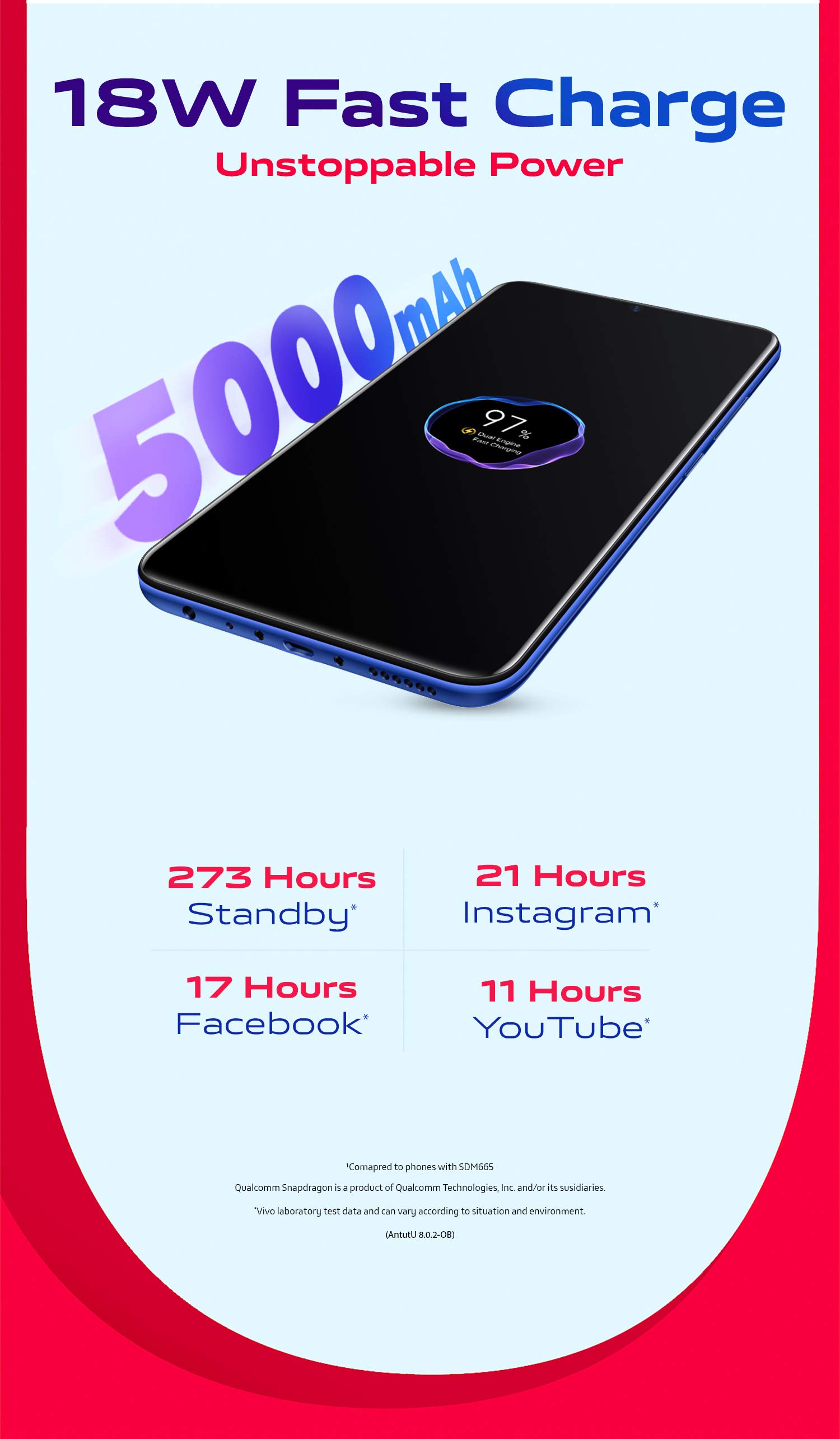
New details reveal that the Vivo U20 has a mammoth 5,000mAh battery. To ensure that it charges quickly, the phone will carry support for 18W dual engine fast charging technology. A closer look at the bottom edge of the device reveals that it does not feature a USB-C port. The bottom side of the phone has a 3.5mm audio jack, a microphone, a microUSB port and an external speaker.
The behemoth battery of the Vivo U20 will allow the phone to deliver a standby time of 273 hours, 21 hours of Instagram usage, 17 hours on Facebook and 11 hours of video watching on YouTube. It was previously revealed that the Vivo U20 will be sporting a display with waterdrop notch. A fingerprint scanner is available on the back panel which also features an LED flash enabled triple camera setup at its top-left corner.
The Vivo U20 is powered by Snapdragon 675 mobile platform. After the Vivo V17 Pro and Vivo V15 Pro high-end phones, the U20 will be third phone from the Chinese firm to feature the SD675 chipset. The SoC is coupled with 6 GB of RAM. The smartphone is equipped with UFS 2.1 storage.
The Vivo U10 smartphone that had gone official in September in India is a rebadged version of China’s Vivo U3x phone. It is speculated that the Vivo U3 phone that had recently debuted in China could be rebranded in India as Vivo U20.
The Vivo U3 has a 6.53-inch IPS LCD display with waterdrop notch. It supports a tall aspect ratio of 19.5:9 and 1080 x 2340 pixels full HD+ resolution. The Snapdragon 675 chipset powers its 4 GB and 6 GB RAM variants. Both models have 64 GB of native storage and carries support for external storage.
Vivo U3
Its back has a 16-megapixel + 8-megapixle + 2-megapixel triple camera system. On its front is a 16-megapixel selfie shooter. The 5,000mAh battery of the phone supports 18W dual-engine fast charging. The FunTouch OS 9.2 UI flavored Android 9 Pie OS runs on the device. A fingerprint scanner lies on the back panel of the phone. The 3 GB and 4 GB RAM variants of the Vivo U3 are respectively priced at 999 Yuan (~$142) and 1,199 Yuan (~$171) in China.
The Motorola Razr is the third commercial foldable smartphone in the market from an established tech company. Samsung’s Galaxy Fold is already available for purchase across the globe, and the Huawei Mate X went on sale in China today. Now, the Motorola Razr is here to challenge these two foldable smartphones, with a unique design. Instead of adopting a form factor that transforms your regular-sized smartphone into a tablet, the Motorola Razr makes your regular smartphone a lot more compact by folding it in half.
The Razr 2019’s design is inspired by the iconic Razr v3 clamshell smartphone from the 2000s. However, the new model gets rid of the physical keyboard and brings an all-screen design on the inside, featuring a flexible pOLED display panel. This enables the phone to transform from a regular-sized smartphone into something as compact as the Nokia 110 when folded in half.
But do we really need a super compact smartphone like the Motorola Razr? Especially when it’s only half a phone, literally, with its less than impressive hardware?
A lot less phone at $1500.
Today’s smartphones pack in a lot of features in an incredibly tight space. So if you are going to add some cool new tech without increasing its size, some features have to be axed.
Motorola Razr
First, a foldable flip design divides a regular-sized smartphone into two sections for hardware. The manufacturer has to work with these two sections to fit in the components. Not to mention, it will need a robust hinge design, as seen in the Motorola Razr, which will further take up some precious space. So you are left with limited space for essential hardware like processor, battery, and even cameras.
Now let’s take a closer look at the Motorola Razr.
The phone features an incredibly tall form factor (172 x 72 x 6.9mm). However, some space is taken up by the hinge at the center. So it’s not surprising that the Razr packs in a below-average 2510mAh battery. That’s less than what Pixel 4 brings to the table and do you recall how terrible its battery life is?
You may argue that the 2.7-inch small display upfront will help in conserving this battery but what’s the use of a foldable phone if you are always afraid to use its larger sized display?
Now let’s take a look at its camera setup. It has a 16MP f/1.7 primary sensor above the secondary OLED panel and a 5MP secondary sensor on the flexible display’s notch. While the 16MP single sensor may turn out to be good, you are still missing out on major camera features like telephoto, wide-angle, and even macro, which have become standard among flagships of 2019. For a phone that costs $1500, this camera setup lacks a lot of important features.
Also, you have to settle for a decent but still mid-range Snapdragon 710 chip. The SD710 usually powers smartphones that cost only about a third of the Razr’s selling price. Ideally, you would have expected something like the Snapdragon 855 inside such an expensive device. And the phone doesn’t impress us in its software department either. It will come with the old Android 9 Pie when it ships in January 2020!
I agree that the Motorola Razr looks cool. If it was any cheaper, I would have probably thought about getting one, despite its hardware limitations. The flip design makes it one of the coolest smartphones of 2019. However, when I’m paying $1500, I would definitely expect top-end hardware as well. After all, a smartphone is not just defined by its design.
So despite the innovative hinge design (which is really cool btw) on the Motorola Razr, you have to settle for a limited camera experience, terrible battery life, and an average CPU if you are going to get the phone.
Are these sacrifices worth the foldable flip design?
I don’t think so.
And when you have competitors like the Galaxy Fold that features top of the line hardware, including fantastic battery life and powerful camera performance, it makes you think whether it’s a good decision to spend $1500 on the Motorola Razr. If you want a compact yet powerful smartphone, get the S10e. Or if you want a foldable, it’s probably a good idea to spend a little more and get the Galaxy Fold.
We use cookies on our website to give you the most relevant experience by remembering your preferences and repeat visits. By clicking “Accept”, you consent to the use of ALL the cookies.
This website uses cookies to improve your experience while you navigate through the website. Out of these, the cookies that are categorized as necessary are stored on your browser as they are essential for the working of basic functionalities of the website. We also use third-party cookies that help us analyze and understand how you use this website. These cookies will be stored in your browser only with your consent. You also have the option to opt-out of these cookies. But opting out of some of these cookies may affect your browsing experience.
Necessary cookies are absolutely essential for the website to function properly. This category only includes cookies that ensures basic functionalities and security features of the website. These cookies do not store any personal information.
Any cookies that may not be particularly necessary for the website to function and is used specifically to collect user personal data via analytics, ads, other embedded contents are termed as non-necessary cookies. It is mandatory to procure user consent prior to running these cookies on your website.