After months of delay, Samsung’s ambitious foldable smartphone — Samsung Galaxy Fold — was finally made available for purchase, soon after the company fixed few issues related to its design and display.
The Samsung Galaxy Fold smartphone went on sale in China today at 10:00 AM local time for a price of 15,999 Yuan which roughly converts to $2,293. Samsung has now announced that all the units were sold out in just five minutes.
However, its noteworthy that the South Korean giant has not revealed how many units it sold during those five minutes. There’s a high possibility that the units were quite limited for the first sale in China but the exact number is not yet known.
Earlier, it was reported that the company has reportedly sold around 500,000 units of Galaxy Fold smartphones globally. On the other hand, its rival Huawei has launched Huawei Mate X foldable smartphone for a price of 16,999 Yuan (~$2,414) which went on sale last month in China.
The Samsung Galaxy Fold smartphone presents a 7.3-inch Infinity Flex Display with a 1536 x 2152 pixels screen resolution. In this mode, you can use three apps at the same time which Samsung calls Three-app Multitasking.
When folded into phone mode, it offers a 4.6-inch display with 840 x 1960 pixels screen resolution. It comes with a feature called App Continuity which automatically adjust an app when you switch screens. It is powered by a 7nm processor paired with 12GB of RAM and packs 512GB of internal storage using UFS 3.0 technology.
The phone comes equipped with a camera module that is made up of a 16-megapixel ultra-wide camera, a 12-megapixel telephoto camera, and another 12-megapixel wide-angle camera. On the front side, it comes with a 10-megapixel sensor for taking selfies and video calling. It runs the latest Samsung One UI with Android 9 Pie operating system out-of-the-box. The phone packs a 4,380mAh battery which is split into two units.
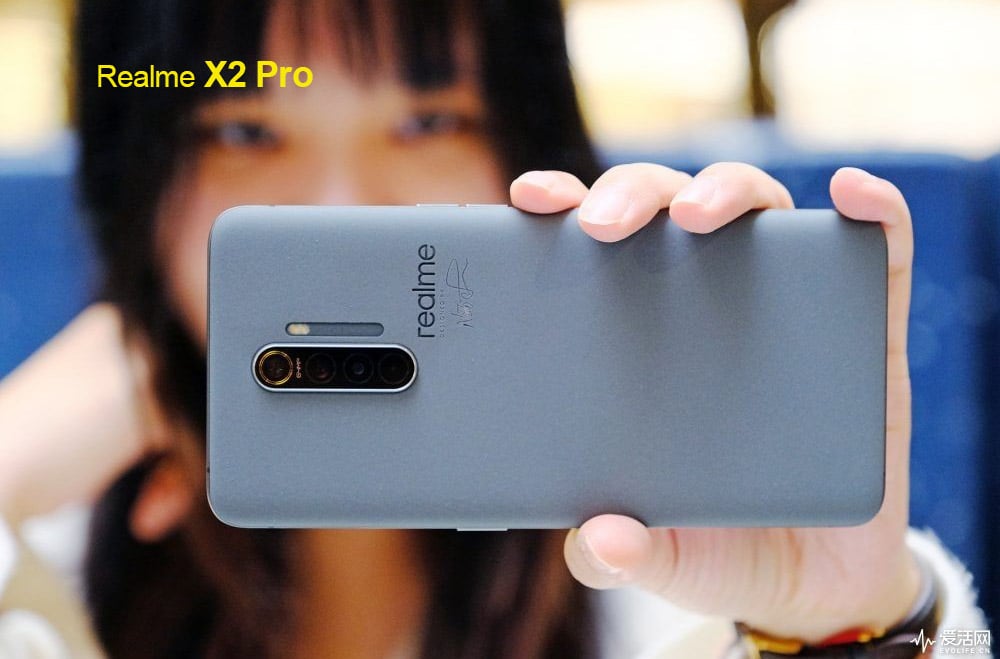
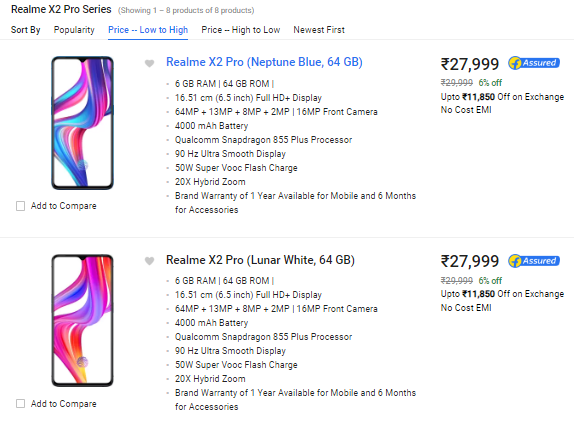
Last month, OPPO-backed Realme launched its first premium flagship smartphone in its home market China, dubbed as Realme X2 Pro. The company had also launched Realme X2 Pro Master Edition, which is a premium custom version of the device.
While the X2 Pro has been available for purchase, the Master Edition is scheduled to go on sale in China from 11th November. Now, the company has announced that the Realme X2 Pro Master Edition “Cement” variant will be available for purchase on 11th November.
This is interesting that the company has also announced the sale for just variant of the Master Edition — Cement. The other variant, which is called Red Brick variant, will apparently not go on sale next week.
For those who are unaware, the Realme X2 Pro Master Edition is crafted by Japanese designer Naoto Fukasawa and comes with a signature of the designer on the back panel. The Master Edition packs 12GB of RAM and 256GB of storage.
The smartphone carries a price tag of 3,299 Yuan (approximately $452) but at the time of launch, the company had said that the first 100 units of the Master Edition will be available with 100 Yuan discount (~$14).
Apart from the design and memory configuration, everything else remains the same on the Master Edition as the standard version. It flaunts a 6.5-inch Full HD+ AMOLED display with waterdrop notch and offers screen resolution of 1080 x 2340 pixels that carries support for 90Hz refresh rate. The smartphone promises a screen-to-body ratio of 91.7 percent.
The device also comes with an in-display fingerprint scanner that is claimed to unlock the device in just 0.23 seconds. Under the hood, the display is powered by Qualcomm Snapdragon 855 Plus chipset which is clocked 2.96GHz and packs Adreno 640 GPU.
Realme X2 Pro Master Edition “Cement” Version
The phone features vapor chamber liquid cooling, superconducting carbon fiber multi-layer scheme, multi-layer graphite sheet and other heat-dissipating materials. In the camera department, the phone has a quad-camera setup on the back that consists of Samsung GW1 64-megapixel lens with f/1.8 aperture, a telephoto lens of 13-megapixel with support for up to 20x hybrid zoom, a ultrawide lens of 8-megapixel with 115-degree field-of-view and a 2-megapixel depth sensor.
On the front side, the device features an AI driven 16-megapixel selfie shooter that has support for super night scene along with 4-in-1 pixel merging technology. Connectivity options on the device include Dual SIM, 4G VoLTE, Wi-Fi 802.11ac, Bluetooth 5.0, USB-C, dual frequency GPS, and NFC.
The phone is also equipped with stereo dual speakers coupled with Dolby Atmos and Hi-Res audio technologies. The device runs Android 9 Pie operating system out-of-the-box with ColorOS 6.1 on top. The phone features tactile linear motor which assists in 4D in-game vibrations. The handset is powered by a 4,000mAh battery with 50W SuperVOOC Flash Charging technology which can be fully charged in 35 minutes.
Last month, Xiaomi officially released its next-generation custom Android skin — MIUI 11 and has already started rolling out the new update to compatible devices. The company has revealed the roadmap for the phased rollout of this new version of MIUI for Xiaomi and Redmi smartphones.
After rolling out MIUI 11 for the first batch of devices, the company has now started offering the new stable version update to its second batch of devices in China in which Xiaomi has listed 15 devices.
The list smartphones in the second batch which is scheduled to receive the new MIUI 11 stable version includes Mi 9 Pro 5G, Mi 6, Mi MIX 2, Redmi Note 7, Mi CC9 Mito Customized Edition, Mi 9, Redmi K20 Pro, Mi CC9, Redmi K20 Pro Premium Edition, Redmi Note 6 Pro, Mi Note 3, Redmi Note S2, Redmi Note 5A Standard Edition, Redmi Note 5A High Edition, and Redmi 7A.
In the first batch, the company had rolled out the update for twelve devices, which included Mi 9 Pro 5G, Mi 9 SE, Mi Mix 3, Mix 2s, Mi 8, Mi 8 Youth Edition, Mi 8 Explorer Edition, Mi 9 In-Display Fingerprint scanner variant, Mi 8 SE, Mi Max 3, Redmi K20, Redmi Note 7 Pro, and Redmi 7.
To recall here are some of the features that MIUI 11 introduces:
New Icons and smoother animations: With the latest MIUI 11, Xiaomi has tweaked the look of the icons found in the UI and they now have a minimalist yet appealing look. The company has also tweaked the animations which are slower in comparison to MIUI 10 but they now provide for a rich and immersive experience.
Ultra Power Saving Mode: As the name suggests, this mode is meant for prolonging battery life when running out of charge. According to the company, while in this mode, a device can provide a battery backup of upto 24 hours with just 5% of battery. When this mode is turned on, the device turns off the Wi-Fi module, hides non-essential apps, turns the display colour to black/white whilst restricting background processes.
Kids Mode: This mode is meant for parents who want to create a safe digital environment for their kids. While in kids mode, the device will only be able to run applications that are whitelisted by their parent or guardian. Besides, it also has an education space which Xiaomi claims is an intuitive manner to teach young kids.
Digital Wellbeing: With this feature, device owners will be able to check how much time they spend on each application and if needed they can cut down the usage time in order to maintain a healthy mental and physical well-being.
Earthquake alerts: With the help of data provided by regional offices, devices running MIUI 11 can notify its owner in case of an ongoing earthquake or after one takes place. Moreover, it will also provide additional details like nearby relief centres and places to avail medical service in case of a mishap.
Casting to external display: This feature will allow smartphones running on MIUI 11 to wirelessly cast onscreen content which includes games, videos, documents and other applications to TV, given the TV also supports this functionality. Xiaomi has thoughtfully designed this feature so users can even hide personal items to keep all sensitive things private. Moreover, the device can continue to cast even when its display has been turned off.
Apart from the update roadmap for the Chinese market, the company has also revealed timeline for MIUI 11 stable update for the users in India. You can find out more about the MIUI 11 update in India here.
Xiaomi officially unveiled the Mi CC9 Pro alongside its Pro Premium Edition and launched them in the European market as the Mi Note 10 and 10 Pro. The strongest point of these smartphones is the camera department: they are already considered as the best camera phones by a lot of people, including experts from DxOMark. But is it true and is it worth choosing the Mi Note 10 Pro instead of other camera phones? Here we will try to let you find out by comparing it with the other best camera phones released recently: Huawei Mate 30 Pro and Samsung Galaxy Note 10+!
Xiaomi Mi Note 10 Pro vs Huawei Mate 30 Pro vs Samsung Galaxy Note 10+
Huawei Mate 30 Pro
Samsung Galaxy Note 10+
Xiaomi Mi Note 10 Pro
DIMENSIONS AND WEIGHT
158.1 x 73.1 x 8.8 mm, 198 g
162.3 x 77.2 x 7.9 mm, 196 g
157.8 x 74.2 x 9.7 mm, 208 g
DISPLAY
6.53 inches, 1176 x 2400p (Full HD+), OLED
6.8 inches, 1440 x 3040p (Quad HD+), Dynamic AMOLED
6.47 inches, 1080 x 2340p (Full HD+), Super AMOLED
In my opinion, the Horizon display found on the Huawei Mate 30 Pro and the punch-hole screen of the Samsung Galaxy Note 10+ make them much more attractive than the Mi Note 10 Pro, if we talk about the design. Despite it has a wider notch, I personally prefer the Huawei Mate 30 Pro because of its Horizon display with extremely curved borders allowing the absence of physical keys since they support the side touch technology. Note that Huawei Mate 30 Pro and Samsung Galaxy Note 10+ are waterproof and dustproof with the IP68 certification, while Xiaomi Mi Note 10 Pro does not provide any kind of water and dust resistance.
Display
There is no doubt about the fact that Samsung Galaxy Note 10+ has the most advanced display. First of all, it supports a higher Quad HD+ resolution. Second, it has a wider diagonal and the support to the HDR10+ standard which is not supported on Huawei Mate 30 Pro and Xiaomi Mi Note 10 Pro. Last but not least, Samsung Galaxy Note 10+ supports the S Pen for handwriting and drawing with up to 4096 pressure levels. Samsung Galaxy Note 10+ has one of the best AMOLED panels you can find on a mobile device.
Hardware/Software
Besides boasting the best display, Samsung Galaxy Note 10+ also comes with the most advanced hardware side. It is powered by either the Snapdragon 855 or the Exynos 9825 chipset, it boasts up to 12 GB of RAM and up to 512 GB of internal storage which you can furtherly expand with a micro SD. The Note 10+ also comes in a 5G variant, just like the Mate 30 Pro. Talking about the Mate 30 Pro, Huawei’s flagship takes the second place with its Kirin 990 chipset and up to 8 GB of RAM. In terms of hardware, Xiaomi Mi Note 10 Pro is just a mid-ranger due to its Snapdragon 730G chipset, and this is its weak point.
Camera
While there is no way Xiaomi can compete when it comes to performance, it sports the most impressive camera department. According to DxOMark, it is the best camera phone ever alongside the Huawei Mate 30 Pro. The Mi Note 10 Pro sports a 108 MP rear penta-camera with 5x optical zoom, while the Huawei Mate 30 Pro has a quad-camera with two amazing 40 MP sensors. While both are superior when it comes to rear cameras, Samsung Galaxy Note 10+ is able to take better selfies.
Battery
Xiaomi Mi Note 10 Pro is the winner even when it comes to battery life since it boasts a mammoth 5260 mAh battery. Unfortunately, it does not support wireless charging and reverse wireless charging, unlike Huawei Mate 30 Pro and Samsung Galaxy Note 10+.
Price
Xiaomi Mi Note 10 will start from €599/$662 globally, Huawei Mate 30 Pro is still not available globally, while Samsung Galaxy Note 10+ starts from €1129/$1099. The most complete device is the Samsung Galaxy Note 10+, despite Mi Note 10 Pro has a higher value for money.
ZTE has announced two new phones for the US. The Blade A7 Prime is a $99 phone with entry-level specs while the $179 Blade A10 Prime packs more powerful specs and features.
Blade A7 Prime
The Blade A7 Prime has a 6.09-inch screen with an HD+ resolution and a waterdrop notch. It has a thick chin and a red power button as we have seen on a lot of ZTE phones this year.
The phone is powered by an Helio A22 processor paired with 3GB of RAM and 32GB of expandable storage. A single 16MP camera sits on the back along with a fingerprint scanner while a 5MP camera is in front for selfies. The back cover is made of plastic with a textured finish that reminds one of the OnePlus One’s SandStone finish. There are two holes at the bottom of the phone for the speaker.
The ZTE Blade A7 Prime runs Android 9 out of the box. It packs a 3200mAh battery and charges via a USB Type-C port. It also has an audio jack at the top and DTS Sound.
You can purchase the phone unlocked from the American carrier, Visible.
Blade A10 Prime
The Blade A10 Prime comes with a bigger 6.3-inch screen with an FHD+ resolution and a 19:9 aspect ratio. Like the Blade A7 Prime, there is also a notch but it is home to a 16MP camera.
There is a more powerful Helio P60 processor under the hood along with 3GB of RAM and 64GB of internal storage that can be expanded (up to 2TB). A 16MP + 5MP dual camera combo sits on the back. You also get a fingerprint scanner and a 3200mAh battery. The Blade A10 Prime has a USB Type-C port, an audio jack, and DTS Sound. It runs Android Pie out of the box, and just like the A7 Prime, it is compatible with hearing aids (M4/T3).
The phone is available on Visible for $179 starting today. There is only one color variant available and it is black.
China’s popular e-tailer GeekBuying has launched a new promotion dubbed The 2019 11.11 Sale Shopping Festival, dolling out great discounts on a wide range of products across various categories.
The shopping festival gives you a chance to check in to share $11,000,000 coupons, in addition to winning marvelous gifts such as the Xiaomi Redmi headset, Tronsmart T6 Plus Bluetooth speakers, AMAZFIT GTR smartwatch, and Xmas LED Light. The products have been placed under specific categories so that consumers do not end up spending a lot of time searching for their favorite device.
Among a myriad of other top-notch products, the first section called Flash Deals includes two well-received variants of the Magic-Ben MAG1 pocket laptop that are currently available for considerably lowered prices. We will not only shed light on these discounts but also show how you can save more money at checkout.
Featuring 8GB of RAM, along with 256GB of internal storage space, the aforesaid model usually retails for $907.99, but as part of the recently kicked-off 11.11 Sale on GeekBuying, you can buy it for just $709.99. Furthermore, you can even extend this 22 percent discount by applying coupon code MagicBen4GL.
The coupon helps you get an extra $10 off by bringing the already lowered asking price of the Magic-Ben MAG1 further down to just $699.99 even before you place your order. You can click here to place your order and get a discount. If you are a new user, do not forget to take advantage of the 2% OFF New User Coupon before clicking the ‘Place Your Order’ button.
Those who do not mind shelling out a few extra dollars for more power under the hood can go for the larger model that ships with 16GB of RAM and offers a hefty 512GB of internal storage capacity so that you can save all your multimedia content without worrying about running out of space. There are no prizes for guessing, the aforesaid model doesn’t come cheap.
To get your hands on this considerably larger Magic-Ben MAG1 variant, you’d normally need to spend a whopping $1047.99, but much to the relief of those on a tight budget, GeekBuying is offering it for just $873.99. This is a 17 percent drop in the device’s original asking price.
On top of that, you can grab an extra $ off simply by applying coupon code MagicBen4GH at the time of checking out. The coupon enables you to reduce the retail price of the slightly larger Magic-Ben MAG1 laptop variant to only $859.99 during the checkout process.
If this would your first order with GeekBuying, you can use the 2% OFF New User Coupon and save more money. You can follow this link to and place your order without wasting time as the promo will be valid for only two days.
The compact, yet powerful Magic-Ben MAG1 laptop boasts an impressive array of features. Here are a few of them:
8.9-inch Touchscreen with 2560×1600 pixels resolution
A dashcam is an important car accessory that records the video of the vehicle on the driving road. It gives crucial evidence in case of car accidents and provides a much-needed safety to the driver.
If you’ve restlessly been searching for a budget car DVR that doesn’t compromise on performance, the Alfawise LS02 1080P FHD dash cam might just fill the bill. With a full HD video processor under the hood, the Alfawise LS02 records crystal clear images, as well as your locations using its GPS function.
Loaded with a slew of similar useful features, the Alfawise LS02 understandably carries a $100.26 price tag, but Gearbest is giving you a chance to buy it for a reduced price of only $85.99. As if that weren’t enough, you can extend this 14 percent discount by applying coupon code ILALFA1014.
The aforesaid coupon enables you to save $11 more at the time of checking out. In other words, you can bring the already reduced asking price of the Alfawise LS02 further down to $74.99 simply by applying the coupon. Moreover, you can get an add-on item for just $2.11 if you spend $20, as part of Gearbest’s latest promo.
This feature-rich dashcam sports a 3.0 inch large OLED touch screen, which is large enough to operate conveniently. Furthermore, it houses a dual-camera setup (front and back) for all-around recording during your driving trip. It helps avoid disputes
The Alfawise LS02 supports GPS and WiFi, allowing you to track your location on the map, and it can be easily controlled using an app. Powered by supercapacitors, the dashcam comes with a built-in SONY 1080P IMX370 STARVIS image sensor that captures ultra-clear images even in dark environments.
To know more about the Alfawise LS02 1080P dashcam and to place your order, all you need to do is to follow this link without wasting time. With several pieces already sold out at the time of writing, this promo is slated to end in just four days.
Recent data from research firm Counterpoint Research shows that shipments in the premium smartphone segment grew astronomically by 66% YoY. This segment is comprised of smartphones with retail prices between Rs. 30,000 (roughly US$493) or higher
According to the report, the segment’s massive growth was aided by new launches, aggressive offers, and channel push, before the important festive season. Smartphone OEMs had begun to promote aggressively mouthwatering offers on premium smartphone well-ahead of the festive season, most of them as early as the last week of September. Offers included payment plans (EMI), cashback and exchange offers.
The data also showed that OnePlus‘ rise in the premium smartphone market continued in Q3 2019. The OP 7T and 7T Pro played huge roles in giving OnePlus its widest ever portfolio in the Indian market which accounts for a quarter of its global shipments. The OnePlus 7 and OnePlus 7 Pro were the best-selling and third best-selling models during the quarter, respectively.
OnePlus cornered a market share of 35% to lead the premium market segment, representing a 95% increase YoY. This is followed by Samsung with a 23% market share and Apple in third place with 22% market share. OnePlus grew faster (+95%) than the segment (+66%) and remained the fastest-growing brand, driven by strong performances of both the 7 and 7T series. Samsung shipments were helped by the new Galaxy Note 10 series, while the price cut for iPhone XR drove Apple’s shipments. However, the cumulative share of top three brands declined to 79% in Q3 2019 as compared to 83% in Q3 2018, highlighting a growing presence of other brands in the segment, mainly OPPO, Xiaomi, and Asus. More than 20 flagship phone variants launched in Q3 2019, the highest ever in a single quarter.
Counterpoint Research notes that the Indian premium smartphone market still has a long way to go despite the amazing Q3 2019 outing. The segment contributed just 5% of the entire market in terms of volume. In comparison, the premium phone segment accounts for 50% and 22% of the smartphone market in the US and China respectively.
Just yesterday, we reported that Huawei’s Y9 series will be getting a new member called the Huawei Y9s. Today, the phone’s full listing has appeared on Huawei’s official website.
The Huawei Y9s has the same 6.59-inch FHD+ Ultra FullView Display as the Huawei Y9 Prime 2019 that launched in the first half of this year. It also retains the pop-up selfie camera design. However, there have been some changes in the design.
The phone has a side-mounted fingerprint scanner buried under the power button and its triple rear cameras share the same housing. It also ditches the two-tone design for a single finish Midnight Black and a color-changing Breathing Crystal.
Huawei has swapped the 16MP sensor of the Prime model for a 48MP f/1.8 sensor. You still get an 8MP f/2.4 ultrawide angle camera with a 120° field of view and a 2MP f/2.4 depth sensor. The selfie camera also remains a 16MP sensor but with an f/2.2 aperture now.
The Huawei Y9s is powered by the same Kirin 710F processor and it gets 6GB of RAM and 128GB of storage which can be expanded via a MicroSD card slot (512GB max.). The phone packs a 4000mAh battery with support for 10W charging via a USB Type-C port.
Huawei will ship the phone with EMUI 9.1 out of the box based on Android 9 Pie. The Huawei Y9s should launch soon and should have a price tag higher than the Y9 Prime 2019 as a result of the upgraded camera and larger RAM.
Oukitel’s “Young Series” just recently got another member as the company announced the new sports tri-proof smartphone, Oukitel Y1000. Doing away with the cumbersome weight of traditional rugged smartphones and gaining a super-thin body, it becomes a new standard in the rugged smartphone market. Today, the Chinese manufacturer announced that the official presale will begin on 11.11 on the occasion of the global shopping festival.
Breakthrough in Design
Moving away from the traditional manufacturing methods of rugged phones, the Y1000 combines a layer of hard PC+GF cover and another layer of soft TPU material cover. When it drops, the phone is elastic to protect itself. Also, the USB port doesn’t need a plug as it is IP68 waterproof by itself. In addition, the frame around the screen sits a bit higher than the glass so that the screen remains intact when the phone falls facing down.
Of course, besides the USB port, the whole device is waterproof, dust-proof and shockproof, and it is giving a good hand feel. The whole body is quite thin and slim at only 11.2mm and weighs just 212g. Those numbers are 30% and 39% less than, let’s say, Oukitel WP2 which is a traditional rugged smartphone.
Big battery for a whole day of use on a single charge
A thin body has its disadvantages too, as it cannot host a very large battery. Hence, the 3600mAh battery of the Y1000 is enough for a whole day’s use. If you love to listen to music while exercising, it supports up to 25 hours of music playback. This is achieved due to the MediaTek MT6580P quad-core SoC that is very power-conservative.
Memory
The Y1000 is a 3G entry-level smartphone when it comes to hardware specs. It is powered by the MT6580P quad-core SoC backed by 2GB of RAM and 32GB internal storage that can be expanded up to 128GB more via the microSD slot. Also, there is an 8MP/2MP dual rear camera and a 5MP selfie shooter placed in the waterdrop notch.
Oukitel Y1000 will go on presale with a price of just $99.99 instead of the $129.99 retail price on November 11th and you can get it on the Oukitel Official Store on Aliexpess. Check out the detailed specs on the official product page.
After nearly two months following the launch of the iPhone 11 Pro Max, DxOMark finally releases its camera review for the Apple flagship. The phone scores high, beating several other flagships announced this year but it ends up third on the list with a score of 117, losing to the Huawei Mate 30 Pro and the still-fresh-out-of-the-oven Xiaomi Mi CC9 Pro Premium Edition.
The iPhone 11 Pro Max’s score of 117 is made up of a photo score of 124 and a video score of 102. Its video score beats that of the Mate 30 Pro and ties with that of the Mi CC9 Pro Premium Edition making it and the Xiaomi the best phones for video recording but it loses to both phones when it comes to photos.
A breakdown of the photo score shows the iPhone 11 Pro Max is great at exposure, color accuracy, and autofocus but it scores low when it comes to very low-light photos and this is because of the Mate 30 Pro and the Mi CC9 Pro sporting much larger image sensors. It is important to state that the iPhone is better than the Huawei flagship and Xiaomi premium mid-range phone at taking wide-angle photos.
DxOMark praises the new Deep Fusion feature as it helps with rendering fine details such as freckles, the hair on pets, and distant foliage, making it a great at taking landscape and portrait photography. However, while it is better at noise reduction than the iPhone XS Max, it cannot keep up with the competitors.
Even though it scores lower than the Mate 30 Pro and Xiaomi CC9 Pro in low-light, the iPhone 11 Pro Max does a fantastic job when taking photos at night. DxOMark mentions that you are better off with the flash auto mode turned off when taking night photos so you don’t get overexposed photos.
For videos, the iPhone 11 Pro Max renders colors well and its video HDR allows it to capture details excellently. It is also good at video stabilization but surprisingly not as good as the iPhone XS Max, no thanks to a more visible jello effect.
Overall, the iPhone 11 Pro Max earns its spot as one of the top five phones with the best camera. If it had a larger sensor and better zoom, it most likely will be at the top of the list.
Yesterday we talked about the tease poster that the CEO of Blackview posted on Facebook and today we have an official confirmation and launch date. The phone is coming on November 18th and according to the product page, it is a super budget-friendly mainstream device with a quad rear camera and 4680mAh big battery.
Blackview A80 Pro main specs
According to the Blackview A80 Pro landing page, the device comes with a 6.49″ display with In-cell technology and achieves a 90.3% screen/body ratio. One of the highlights of the phone is the Sony 13MP main sensor included in the quad rear camera which makes it on par with modern flagship counterparts.
Also, it sports a big, 4680mAh battery and runs on Android 9 Pie that feels very comfortable using the 4GB of RAM and 64GB of storage of the device. It also supports global LTE bands, which means you can use it all over the world.
Design
From the renders we can see there is a waterdrop notch and the bezels are quite thin. The phone features a 3D-like design with rounded corners and a just 8.8mm thin body so it should feel comfortable in hand despite the big battery under the hood. On the back, there is the quad-camera setup placed on the top left corner while there’s also a fingerprint sensor.
While yesterday’s info was that it would come in 3 different colors, it seems that there is another one after all. So, Blackview A80 Pro will be available in Red, Gradient Blue, Green, and Black.
The A80 Pro will launch in 11 days from today and we expect it to feature a pretty competitive price. After all, the slogan “quad-camera budget king” tells that the price should be extraordinary, making it the most affordable 4-camera phone to date. What do you think the price will be?
What’s more, the Chinese manufacturer is also offering 10 units through a huge giveaway in order for the winners to test the device and propose improvements. To be among the winners, you just need to guess the final global sale price of the phone. If you are interested in it, you can add it to your cart on Aliexpress right now and get notified when the sales begin.
A new Samsung patent filing with the European Union Intellectual Property Office (EUIPO) has revealed yet another feature that could find its way to the Galaxy S11. The patent which was published on November 6, 2019, is for a software feature titled Space Zoom.
According to details first published by LetsGoDigital, the trademark is categorized as Class 9/42 and is described as; “Smartphones; Software to zoom in to a subject without lowering image quality.”
There is no doubt Samsung will be looking to improve the camera on its 2020 flagship and this feature may be one of the ways it’ll do that. Samsung may want to integrate ‘Space Zoom’ on the device but the description suggests it just a new name for the hybrid zoom function which the company is reportedly developing. Already, some smartphones like the Huawei P30 Pro, OPPO Reno 10x Zoom and the latest Reno 2 utilise the hybrid zoom. This zoom functionality delivers better image quality than the digital zoom. There are already camera samples to support the capabilities of the hybrid zoom feature.
Since the feature is already growing gradually into a trend, we expect other OEMs to include it in their flagship models. That may be what Samsung is trying to do. This obviously, eclipses the 5X zoom camera feature that had been rumoured to be on the Galaxy S11.
Samsung is expected to unveil the device around February 2020 during the Mobile World Congress (MWC 2020). We’ll have to wait to see if the device will indeed pack these features. Recall that the company earlier patented a smartphone-embedded IR spectrometer that is thought to also come with the S11.
Xiaomi has launched the MIJIA Automatic Air freshener Dispenser under crowdfunding on Xiaomi Mall. The product comes with an affordable price tag of 79 yuan ($11) but that is for the crowdfunding exercise only. The price is going to go up to 108.9 yuan (~$15) after the exercise. The product comes with two bottles of fragrance liquid in addition to the automatic dispenser.
The product automatically releases the fragrance every 15 minutes. As a result, a bottle of fragrance can last between 1 and 4 months. The device equally comes with a powerful 2200mAh battery that is said to last up to four months on a single charge when used consistently. There is a USB port for charging. The fragrance is available in three flavours: Sea Breeze Morning Dew, Xingyue Mulan, and Bihu Cedar, all made from essential oil.
In terms of the build, the MIJIA Automatic Air freshener Dispenser adopts a minimalistic, compact and lightweight design. It is quite easy to move around and also adds class to the environment apart from blasting freshness into the air. With the use of microporous atomization technology, the fragrance is released through hundreds of micron pores and quickly diffuses into the air. The dispenser produces a low noise of 30dB meaning it runs quietly.
Asus launched the Zenfone Max Pro M2 last year in December with magnanimous specifications and features. It is a mid-range smartphone priced around $250 in India and some other countries. It came with Android 8.1 Oreo and recently received an Android 9.0 Pie upgrade. However, the company has not made it clear whether the device will receive the Android 10 upgrade or not. In the meantime, third-party developers have started working on the custom ROMs for Asus Zenfone Max Pro M2 using the AOSP code.
Asus Zenfone Max M2 Pro is the most popular budget smartphone from Asus. Many owners are expecting the Asus to deliver the Android 10 upgrade for the device, but they are not sure as Asus’s record has remained pathetic in providing the latest updates. The Android-based third-party development seems to be the only window for Aus Zenfone Max Pro M2.
There are various new advancements, and several new features are adjoined in Android 10. After a wait for over the years, Google has finally made Dark Theme official in Android 10. Other features such as live captions, full-on gestures, focus mode, smart reply everywhere, new parental controls, and edge-to-edge gestures.
Key Features Android 10
Digital Wellbeing
Android 10 focuses on the digital wellbeing project. The search engine giant has added the following features to promote digital wellbeing.
Focus Mode – It is the best way to black distractions. This mod allows users to limit the use of apps either by blocking them or pausing temporarily.
Family link – It can help to build healthy habits. The users can establish limits on the kid’s devices. It helps manage apps and content restrictions.
Security
Android 10 features several security tweaks to enhance overall data security.
Faster Security updates – Android 10 allows quicker and easier security updates. The Google Play Stem update patches security and privacy bugs.
Privacy Controls – Android 10 induces smarter controls to adjust all your privacy settings. A single place to control all your privacy-related issues.
Next-Generation tech support
Foldables support – The new Android version provides native support to foldable devices that fold, flex, and move faster.
5G Support -It also incorporates 5G support for the supported devices. The internal APIs of Android 10 can easily control the next-generation connection technology.
The Zenfone Max Pro M2 carries a 6.26-inch display featuring 1080 x 2280 pixel resolution, 403 PPI density, and 82% screen-to-body ratio. The device hosts Corning Gorilla Glass 6 to protect from frequent falls. The Qualcomm Snapdragon 660 is coupled with 3/4/6 GB RAM configurations on the device. The gaming is handled with the inbuilt Adreno 512 GPU.
The smartphone is available in different storage options including 3GB + 32 GB, 4 GB + 64 GB and 6 GB + 64 GB. In the camera department, the smartphone consists of a dual rear module consistent with a 12 MP primary lens, and a 5-megapixel secondary lens. On the front, there’s a 13-megapixel shooter for selfies and video calling. Other features such as LED flash, HDR and panorama are inclusive in teh device.

In connectivity, the smartphone supports WiFi, Bluetooth 5.0, GPS, NFC, FM Radio, MicroUSB 2.0. The fingerprint sensor on the back, accelerometer, gyro, proximity, and compass sensors are present in the device. The smartphone can withstand a couple of days without charging with its huge Mi-Po 5000 MAh battery. It supports 10W fast charging technology. It is available in Blue and titanium colors.
Note: The Android-based custom ROMs are currently in the early stages of developement. It is recommended not to install these custom ROMs if the Zenfone Max Pro M2 is your daily driver, as there might be some bugs and issues.
List of Best Custom ROMs for Asus Zenfone Max Pro M2
Asus has always remained behind other OEMs in providing the latest updates. The track record of Asus is making the users of the Asus Zenfone Max Pro M2 switch to third-party ROMs based on Android 10. Let’s see what’s in there for the Asus Zenfone Max Pro M2:
SuperiorOS Phoenix
It is the first stable ROM based on Android 10 available for the Asus Zenfone Max Pro M2. It is based on the AOSP code and several other customizable features. The developer confirms the presence of minimal features to fulfill the user’s demands these days. All the features, including WiFI, Bluetooth, Network, Mobile data, hotspot, and camera, are working.
There are two ways to install the SuperiorOS Phoenix on Zenfone Max Pro M2. The users can choose either clean flash the ROM by wiping the whole system, data, cache, and Dalvik partitions, or they need to overlap the existing data by merely flashing the latest build. The Gapps need to be installed externally after flashing the ROM. If you’re interested in installing SuperiorOS Phoenix on your device, then follow the download link below.
Arrow OS is becoming popular custom ROM for most of the devices due to its aggressive support. The AOSP/CAF based ROM packs various additional customization option. The aim is to make UI clean, simple, and neat for the users. It is based on Android 10 with Linux 4.0 kernel.
Before installing the ArrowOS 10.0 on Asus Xenfone Max Pro M2, the user should upgrade the device to the latest Android Pie-based firmware. Additional Gapp flash is required to use Google services after installing the ArrowOS. The ORM is currently in the beta stage. So, there might be some minor issues or bugs which can hapmper smooth experience of the ROM. The interested usres can install the ROm by following the link below.
The Pixel Experience ROM is always known for its resemblance to the Pixel devices. It features the Pixel device launchers, ringtones, wallpapers, and other features. Several other goodies enhance the user’s experience. Th Pixel Experience ROM is available both on the conventional AOSP build and the CAF build also.
Specific minor bugs won’t hinder our experience using the pixel Experience ROM. The original thread of the ROM consists of Android 9 based ORM, and the user needs to head over to the appropriate reply to find the Android 10 based Pixel Experience ROM version.
After serving the Asus Zenfone Max Pro M2 users, the developers have now shifted the base to Android 10. The interested users can grab the Android 10 based NitrogenOS from the link below. It features several tweaks alongside the Android 10 features. The mods for CPU, display, and media experience is intact in the latest version.
The users need to follow the thread to get the Android 10 based Nitrogen OS build.
These are some best custom ROMs that are compatible with the Asus Zenfone Max Pro M2. We will update the list once support for more ROMs arrives in the meantime. If you get any issue while installing the ROMs, then do let us know via the comments below.
Samsung’s W Series has always been a China-exclusive line with its dual displays and clamshell design. This year’s model will go by a different naming scheme. Rather than launch as the Samsung W2021, the phone will launch as the Samsung W20 5G. A poster has now revealed the launch date for the phone and also its design which is super familiar.
The Samsung W20 will be announced on November 19 in Wuhan, China according to a poster shared on Twitter by @MMDDJ_. But that isn’t the only thing the poster reveals.
The poster also shows what the device looks like and it sure shares a striking resemblance to the Galaxy Fold. Actually, it is an upgraded Galaxy Fold with a Snapdragon 855+ processor and a 5G modem.
855+ Because No Samsung's foldable display smartphone with 5G in China.(Fold 5G isn't launch in China)
The Galaxy Fold will launch in China tomorrow but that is the 4G version. So rather than launch a 5G version as the Galaxy Fold 5G, it will be sold in China as the Samsung W20. Sounds weird but that is what it is.
Other than the processor and modem, there may be other differences between the upcoming phone and the 4G version.
International Data Corporation (IDC), a well-known statistical agency has released a new report revealing details about the Chinese smartphone market for the third quarter of this year, i.e. Q3 2019.
As per the report, a total of around 98.9 million smartphone units in the market in Q3 2019, which represents a decline of 3.6 percent year-on-year. However, the decline is narrower compared to the shipments in the first quarter of this year.
It reported Huawei as the leading smartphone brand in the market with 41.5 million units, which accounted for 42 percent of the market share, which represents growth of around 64.6 percent year-on-year.
Vivo is ranked second with around 18.1 million shipments, which is about 18.3 percent market share. OPPO and Xiaomi ranks third and fourth with 16.4 million and 9.7 million units with a market share of 16.6 percent and 9.8 percent. Apple, on the other hand, is ranked fifth with 8.1 million units shipments and 8.2 percent market share.
Apart from these five brands, other companies managed to sell around 5.1 million units of their smartphones for a market share of 5.1 percent, which represents a decline of 59.3 percent year-on-year.
Except for Huawei and Apple, all the companies have registered decline in smartphone shipments in double digital. Huawei has shown a growth of 64.6 percent while Apple witnessed a 5.6 percent growth.
Korean tech giant LG Electronics has trimmed down its smartphone production in recent times. The company had even outsourced the production of its budget models using the ODM model. The company has now announced plans to further expand the production of its mid-range models using ODM.
In a statement reportedly made in a conference call after the release of its Q3 revenue, Jae-Seok Shin, head of the project management team at LG Electronics’ Mobile Communications Division, said, “We will use the ODM as a lever for improving the cost structure of the smartphone business.” He stated further; “We have been making efforts to raise cost competitiveness by reducing fixed costs and optimizing production sites.” “We will expand the application of ODM from existing low-end smartphones to mid-range phones,” he said.
An ODM (original design manufacturer) is a company that takes the original specifications of another company or individual and builds the design to the product specifications. Samsung is also using an ODM model on some of its mid-range models in China where sales have been on the low. The model enables the company to significantly cut production cost and be in a good position to offer competitive prices for its phone. LG will also benefit from the ODM arrangement in the same way.
The MarQ TurboStream is shaped like a diamond with curved edges. It has a two-tone design with a short HDMI cable sticking out of one end. It is pretty small and can fit into your pocket. There is a voice remote with a Google Assistant button as well as dedicated YouTube and Netflix buttons.
The dongle can stream 1080p videos at 60 frames per second. It has 1GB of RAM, 8GB of storage, and is powered by a quad-core processor with a Mali 450 GPU. It also has dual-band WiFi and Bluetooth 4.2.
The MarQ TurboStream runs Android TV 9 with access o the Google Play Store to download apps and games. It has built-in Chromecast, so you can cast content from your phone or tablet to your TV. It also has Dolby Audio for a cinematic audio experience.
[envira-gallery id=”288239″]
The dongle has a MicroUSB port for power but is missing a full-sized USB port, so you can’t plug in external storage. It ships with a power adapter and you even get 2 AAA batteries for the remote.
The MarQ TurboStream is available on Flipkart for INR 3,499 (~$49) and is a super affordable way to make your TV smart. And with Android TV 9 pre-installed which brings features such as Data Saver and the option to be notified when you cross a certain data threshold, it sure sounds like a good way to get into the streaming world.
360 Mobiles may be down and out at the moment but the brand still has other products lineup that is doing pretty well. The brand recently launched a True Wireless earbud, a smartwatch and now, the 360 Smart Camera with a water drop design and Artificial Intelligence (AI). The smart camera adopts an affordable price tag of 149 yuan ($21).
The 360 smart camera is equipped with a Huawei Hisilicon chip which the brand’s official said has a faster and more stable video processing capabilities. and features support for 1080P shooting. The camera also supports two-way voice function meaning you can address someone outside using the camera and the person can equally respond from the camera. The camera also supports ultra-clear night vision technology.
In terms of function, the 360 Smart Camera has support for enhanced humanoid detection. It can sound an alarm to alert you of an intruder and the facial recognition is pretty fast. The camera can also function as a baby-cam to alert you via alarm if the baby is crying. The camera also comes with a dedicated smartphone app that can be used to view the camera recording live and also receive a notification.
The camera is presently available on Jingdong (JD.com) for 169 yuan ($24) but the price will come down to 149 yuan ($21) on 11.11.
We use cookies on our website to give you the most relevant experience by remembering your preferences and repeat visits. By clicking “Accept”, you consent to the use of ALL the cookies.
This website uses cookies to improve your experience while you navigate through the website. Out of these, the cookies that are categorized as necessary are stored on your browser as they are essential for the working of basic functionalities of the website. We also use third-party cookies that help us analyze and understand how you use this website. These cookies will be stored in your browser only with your consent. You also have the option to opt-out of these cookies. But opting out of some of these cookies may affect your browsing experience.
Necessary cookies are absolutely essential for the website to function properly. This category only includes cookies that ensures basic functionalities and security features of the website. These cookies do not store any personal information.
Any cookies that may not be particularly necessary for the website to function and is used specifically to collect user personal data via analytics, ads, other embedded contents are termed as non-necessary cookies. It is mandatory to procure user consent prior to running these cookies on your website.