Advertisement

AnTuTu releases list of most preferred smartphone features in China in Q3 of 2019

AnTuTu benchmark aka Ann Bunny in China has recently published the list of features that are most preferred in a smartphone by Chinese consumers in the Q3 of 2019. The data in the report has been derived from smartphones that have installed and at least once ran the benchmarking software on their devices.

To begin with, 88.5% of all smartphones have a display equal to or larger than 6 inch. Most number of handsets have a 6.4-inch display that accounts for 39.7%, followed by 6.3 inches and 6 inch that account for 12.1% and 9.2% respectively. In terms of screen resolution, 1080×2340 ranked first with 58.3%, followed by 1080×2160 and 1080×1920, accounting for 8.8% and 8.6% respectively.

When it comes to the number of CPU cores, 97% of the devices are equipped with an Octa-Core chipset. In comparison,quad-core CPUs are found in just 2.2% and 10 core CPUs are found in 0.5% devices. In terms of memory, 6 GB, 8 GB and 4 GB options are the most popular which accounts for 41.4%, 38.2% and 12.9% respectively.

Talking about built-in storage, devices with 128GB memory top the list found on 59% of all devices, 64GB ranked second, accounting for 23.8% and 256GB accounting for 12.9% of all devices, ranking third. Lastly, when it comes to the operating system, most Chinese smart devices in the Q3 of 2019 run Android 9 Pie which was released last year.

To recall, these figures were only gathered from units that have run the AnTuTu benchmark at least once. Therefore, these cannot be used to determine exact numbers which are likely to vary to some extent.


(Source)


Leaked Mi CC9 Pro live photo focuses on penta-camera system

The Nokia 9 PureView launched early this year with five rear cameras (six, counting the ToF sensor). No other manufacturer has put more than 4 sensors in total after that but will change with the upcoming Xiaomi Mi CC9 Pro.

Although Xiaomi has already shared a teaser showing us the design of the phone, a live photo has surfaced on the web. The photo was posted on Weibo by a user called @复读机002 (reviewer002).

Mi CC9 Pro live photo

The image allows for a closer look at the five cameras as well as the design of the phone.

Rather than a circular arrangement of the sensors like we have on the Nokia 9 PureView which some folks have complained about triggering trypophobia, Xiaomi has gone for a vertical arrangement. Three sensors are housed together while the 108MP sensor which is pretty large is separated. The fifth camera which should be a ToF sensor is also separated from the other cameras.

The phone has four LEDs in total and you can see the words “108MP” and “5X optical” printed on each side of the LED flash. The Mi CC9 Pro has a glass back which we are pretty sure is supplied by Corning. So far, this blue variant is the only one we have seen but there should be other colors available.

The phone has its volume rocker and power button on the right side of the frame. While we can’t see the front of the device, the chances of the display being curved are very slim based on the position of the buttons.

The Mi CC9 Pro will not only have five rear cameras but its primary camera is a 108MP sensor Samsung and Xiaomi developed together. It will come with a Snapdragon 730G processor, an AMOLED display, an in-display fingerprint scanner and should also run Android 10 out of the box. It will be unveiled on November 5.


(Source, Via)

Confirmed: Honor 20 Lite supports 20W+ faster charging via high-wattage chargers

Last week, Honor announced its new mid-range smartphone in the market, the Honor 20 Lite featuring Kirin 710F and triple rear cameras. The phone came with a large 4000mAh battery, officially supporting 22.5W charging. However, it turns out that the phone can charge faster than 22.5W if you use a high-wattage charger.

honor 20 lite with supercharging

Earlier today, a known blogger in China tried charging his Honor 20 Lite with Huawei’s 40W SuperCharge fast charger. To his surprise, the phone displayed the ‘SuperCharging’ text on the screen, with decimal points in the charging percentage. This raised speculations that the phone actually charged at more than 20W.

honor confirms faster charging for honor 20 lite

And soon after this post was made public, Honor’s VP, Xiong Junmin, confirmed that the Honor 20 Lite charges at more than 20W. However, we still don’t have an official figure for its maximum charging speed. So before you get too excited, note that it still might not be as fast as 40W.

The stock 22.5W charger is still pretty good as it reportedly charges the Honor 20 Lite up to 53% in 30 minutes. For a 4000mAh battery, this figure is pretty good. Apart from this, the phone comes with a 6.3-inch FHD+ AMOLED display, 8GB of RAM, and a triple camera setup featuring a 48MP primary sensor, 8MP ultrawide lens, and a 2MP depth sensor. The Honor 20 Lite starts at around $200 for the 4GB RAM and 64GB ROM version. You can check out Honor 20 Lite hands on photos from here.


TSMC commences construction of facilities to develop 3 nm semiconductor chips

TSMC (Taiwan Semiconductor Manufacturing Company) is the world’s largest dedicated independent semiconductor foundry. To get an idea of its expanse, TSMC is the one that is commissioned to manufacture three of the best mobile chipsets of 2019 which include Qualcomm Snapdragon 855, Apple A13 Bionic and Huawei HiSilicon Kirin 990. While all three of these chipsets are manufactured using a 7 nm process, according to past reports, the independent foundry has already completed risk productions with 5 nm process.

To put it simply, lower the process number, the higher the number of transistors inside a chip. Correspondingly, the more transistors inside a chip, the more powerful and energy-efficient it is. For example, the Kirin 990 that features an embedded 5G modem packs an astounding 10.3 billion transistors.

This process number “nm” which is short for nanometers has been shrinking for decades. Back in the 1960s, Intel co-founder Gordon Moore observed that the number of transistors inside chips doubled every year. However, in the following decade, it was observed that the number of transistors inside these components would double every other year and since then it has been referred to as “Moore’s law”.

Some experts in the past have assumed that the 5 nm node will be the end of Moore’s law. Transistors smaller than 7 nm were previously reported to face an obstacle known as quantum tunneling through the gate oxide layer, however, this does not seem to be the case. Not only has TSMC successfully completed risk production of 5 nm chips, but it is reported to have started working on fabrication facilities that can churn out 3 nm chips and will be ready by 2023.

The TSMC facility will cover over 74 acres of land in southern Taiwan’s Science and Technology Park which will reportedly incur $19.5 billion to build. In addition to TSMC, Samsung, which is one of the biggest microchips manufacturers is also gearing to make chips with a 3 nm node. However, Samsung’s facility will reportedly be operational during the 2021-2022 time frame.

Having said that transistor density on Samsung chips won’t be as high as TSMC’s 3 nm process. This means that Samsung made microchips at that node won’t pack as many transistors into a small space as TSMC’s.

Talking about the current scenario, Qualcomm’s upcoming chip, the Snapdragon 865 which is expected to debut in the following months will be made using the 7 nm process. While its successor, the Snapdragon 875 and Apple’s A14, both of which will launch next year will be made using 5 nm process.


(via)

Mi CC9 Pro’s 108MP sensor is really big compared to a 12MP sensor

Earlier today, Xiaomi announced that it will have an event on November 5 where it will unveil a new phone called the Mi CC9 Pro. The device will be the second phone after the Mi MIX Alpha to come with Samsung’s 108MP sensor.

Lao Wei, the Product Manager of the Mi CC line took to Weibo to show us just how big the 108MP Samsung ISOCELL Bright HMX sensor is. In the attached photo, we see her holding a standard 12MP sensor in one hand and the 108MP ISOCELL Bright HMX in the other and one can see the latter is about four times the size of the 12MP sensor.

She explained that the large size of the sensor brought challenges when designing the phone and in the structure of the device. The 108MP Samsung ISOCELL Bright HMX is said to have a photosensitive area twice the size of a 48MP sensor.

Xiaomi will release a teardown photo of the Mi CC9 Pro later which will give us a look at how the 108MP sensor influenced the design of the phone’s internals.

[envira-gallery id=”285859″]

The Xiaomi executive also shared more sample photos taken with the phone.

The Mi CC9 Pro will have five cameras on the rear. Three of the other four cameras should include an ultrawide angle lens, a telephoto lens, and a ToF sensor.


Samsung patents a funny looking smartphone case with human like ears

Korean electronics giant, Samsung often files a wide variety of patents with trademarks and patent houses across the globe. Even though not all devices or technologies in these patents come to fruition, they do provide us a glimpse about the company’s future offerings. Not long ago, the company patented a couple of foldable smartphone (1, 2) which could succeed it’s first foldable smartphone, the Galaxy Fold.

On April 4, 2019, the company filed a patent for a unique smartphone accessory with The Hague International Design System which was published earlier this month. The said patent exhibits a total of 6 images which reveal that the accessory happens to be a smartphone case. Funnily enough, it has two human-like ears that are attached to its either side.

Unfortunately, the text attached along the patent does not reveal many details about the purpose of the case. However, going by its overall shape and a hole in each ear, it could help in evenly spreading audio output from a smartphone’s stereo speaker. The benefit of such an accessory is that it will allow to fill a large space with audio rather than firing it towards just one person who is holding the smartphone.

While the case does not have a extendable design which would allow smartphones of different length to be compatible with it, it does have a safety mechamism that elongates vertically to secure the device in its place.

As of now, it cannot be predicted whether Samsung plans to launch such a smartphone case or not. Until more details are revealed, we would recommend taking this patent with a grain of salt.

(Source)

British PM to grant Huawei access to UK’s 5G network

While the United States has taken strict measures against Huawei, Britain which is its ally has not. The British Parliament rejected a proposed ban on Huawei’s technology and products. The committee had said back in July that “there are no technical grounds for excluding Huawei entirely from the UK’s 5G or other telecommunications networks”.

huawei 5g

Now, reports say Boris Johnson is set to grant Huawei access to the UK’s 5G network. First reported by Sunday Times, sources in the senior government and security services have said that the British government is moving forward with a decision to grant Huawei access to the “non-contentious” parts of the network.

There is not an explanation for what they meant by non-contentious parts of the network but some sources say this refers to areas of the network where if possible surveillance by the Chinese were to happen, the damage will be minimal.

The UK’s move may hurt its relationship with the US and may result in sanctions. However, others say that the decision to grant Huawei access may force Huawei’s competitors such as Nokia and Ericsson to lower prices.


(Source; Via: 1, 2)

Xiaomi Mi CC9 Pro with 108MP camera spotted on Geekbench

Xiaomi was reportedly working on a new smartphone featuring 108-megapixel camera sensor which has now been confirmed by the company as Mi CC9 Pro. The Chinese company has also revealed that the phone will get launched on 5th November.

Now, ahead of the phone’s official launch in the coming days, the Xiaomi “tucana” aka Mi CC9 Pro, has been spotted on benchmarking website Geekbench, which sheds more light on the device’s hardware specifications.

Xiaomi Mi CC9 Pro Geekbench

The specs listed on Geekbench for the upcoming Xiaaomi Mi CC9 Pro suggests that it won’t be a flagship smartphone but will be more of a premium mid-range offering. The device is listed to be powered by an octa-core Snapdragon chipset, which is expected to be the Qualcomm Snapdrafon 730G.

The phone is packed with 6GB of RAM but other reports have pointed that the device will come with up to 8GB of RAM and up to 256GB of internal storage. The handset is confirmed to come with 108-megapixel primary camera sensor and the teaser from the company hints at a penta-camera setup on the back.

In the software department, the Mi CC9 Pro is said to be running Android 9 Pie operating system out-of-the-box with the company’s own MIUI on top. This means that the phone won’t feature Android 10 OS out-of-the-box.

We’ll come to know more about the smartphone, along with its pricing and availability details, when it goes official in China on 5th November. Along with the Mi CC9 Pro, the company will also be launching Xiaomi Watch and Xiaomi Portable Air Conditioner at the same event, along with a few other products.


(Via)

Realme Q3 2019 Shipments exceed 10M units, Leaps to 7th Rank Globally

Over the past year, Realme has been churning out value for money smartphones across a number of price segments. Most Realme devices have gone head to head with Redmi’s bestsellers, and more often than not, it has managed to grab a chunk of Redmi’s market share in the segment. The company’s immense growth is now visible in terms of shipment numbers as well. Today, Counterpoint revealed that Realme shipped more than 10 million units in Q3 2019.

realme growth counterpoint
Source: Counterpoint Research

What’s more, this figure marks an incredible 808% YoY growth for the brand, which now ranks 7th in the top global smartphone list. It got into the top 10 smartphone brand’s list in Q2 2019 but now has leaped to the 7th position in Q3 2019. It’s no surprise that Realme is now the fastest-growing smartphone brand in the world.

realme top 7 brand

In a market, which is traditionally extremely hard to crack, achieving such a high level of growth in just a year is truly commendable. Notably, India and Indonesia contribute to nearly 80% of the company’s shipments. Recently, it became the fourth largest brand in India grabbing a 16% market share. Realme is already present in over 20 countries and with the recent Realme X2 Pro launch, it aims to crack the European market as well.


Meizu 16X discounted heavily in China: Symmetric design & SD710 at 1098 yuan ($155)

The Meizu 16X is already a year old, but the company is making a compelling case for the device by bringing down its price to just 1098 yuan ($155). This marks a 600 yuan ($85) price cut from its recent selling price for the 6GB RAM and 64GB storage version. The model with 6GB + 128GB ROM will now retail for 1298 yuan ($184).

meizu 16x antutu

The Meizu 16X was launched late last year with a beautiful 6.1-inch Super AMOLED FHD+ display from Samsung with a 90.62% screen to body ratio. One of the highlights of the phone is its no-notch design, embracing a symmetric form factor with really thin bezels.

For those who aren’t really big fans of the recent notch design, this could be a really good option, especially because it features Snapdragon 710 processor inside. And did I mention that the phone comes with an in-display fingerprint scanner? The camera isn’t very powerful featuring a 12MP + 2MP setup but it has OIS. Also, the battery is only of 3100mAh capacity, which is less than average for a 2019 phone.

However, the Meizu 16X can be a really good option for those looking for a symmetric and lightweight smartphone. The phone is just 7.5mm thick and weighs only 154 grams, making it extremely compact and easy to carry. Snapdragon 710 inside will also ensure that even the most demanding applications are handled pretty well. You can check out the discounted listing on JD.com from here.

Honor Hunting Gaming Router teased to launch next month with Honor V30 series

Huawei‘s sub-brand Honor is all set to launch its first 5G smartphone next month in China, i.e. in November 2019. The company is expected to launch two devices — Honor V30 and Honor V30 Pro.

Now, the company has teased another product which is expected to get launched along with the Honor V30 series smartphones — Honor Hunter Gaming Router. The device is reportedly aimed at reducing the gaming delay.

Honor Hunter Gaming Router

The leaked images of the upcoming router showcases that the product is designed to have a gaming-related feel and will also be able to change color depending on the gaming situation. It comes with a built-in Legendary Mode which can be optimized for the current network speed and delay as well as reduce game delay.

However, this won’t be the company’s first gaming router. Earlier this year, in August, the company had launched Honor Router Pro Gaming Version, which is powered by the company’s own HiSilicon dual-core processor. It comes with two Gigabit game network ports and can intelligently identify game data and open the game in priority mode.

The teaser poster revealed by the company suggests that the 5G Gaming router will come with support for 802.11 b/g/n/ac dual-band with support for both 2.4GHz and 5GHz frequency. It will be interesting to see what other features the upcoming Honor Hunter Gaming Router packs and what will be its pricing.


Huawei filed the most number of patents in 2018, but that’s not the whole story

Will you be surprised if I told you that Huawei filed the most number of international patent applications in 2018? It filed 5,405 patent applications last year which was twice as many as Mitsubishi Electric and Intel, which ranked second and third in the list. However, this doesn’ tell you the whole story, or at least that’s what Patent Result, a Tokyo-based research company, believes.

According to the quality analysis of the patents filed by the top applicants in 2018, Huawei’s patent applications were not exactly innovative. According to Patent Result’s analysis, only 21% of the patents filed by Huawei can be classified as ‘highly innovative’. In comparison, Intel and Qualcomm which are ranked third and fourth in the list had 32% and 44% ‘highly innovative’ patents under their name, respectively.

What’s even more interesting is that the contribution of North American talent in filing these high-quality patents is pretty high. Patent Result found that out of the 30 best Huawei engineers, 17 of those engineers were recruited from foreign companies, the majority from North American ones. So, their research reveals that the talents poached from companies like Motorola and other IT giants (note that Moto, under Lenovo, is now a Chinese company) is driving Huawei’s R&D.

Another important point highlighted by their research is Huawei’s aggressive patent buying spree. The telecommunications giant has reportedly purchased around 500 patents from foreign companies, out of which 250 were from U.S. companies. These purchases have a significant impact on the company’s patent portfolio since they account for nearly 67% of its ‘high quality’ patents. The report adds that IBM and Yahoo both sold a large number of patents to Huawei, 40 and 37 respectively.

To recall, back in July, U.S. Senators had introduced a bill to block Huawei from buying or selling US patents. Given how foreign patents form an important part of the company’s patent portfolio, this move could be a blow to Huawei’s technological advancement. The bill essentially wants to block companies listed on its trade blacklist from buying, selling, or exclusively licensing U.S. patents. It would also give the government the authority to step in any domestic case relating to patent infringement.

Finally, it’s worth adding that tech companies are generally aggressive when it comes to strengthening their patent portfolio. Samsung was ranked second in the list of most number of U.S. patents granted in 2018. Apple took the eleventh spot while Huawei was at the nineteenth spot on the list.


(Source)


Xiaomi Mi CC9 Pro’s first camera sample shows off its 108MP prowess

Xiaomi confirmed earlier today that the Mi CC9 Pro is launching on November 5. The phone will be packed with camera-centric features, including a Penta-camera setup featuring a 108MP sensor. This would make CC9 Pro the second smartphone in the world to feature this 108MP sensor and likely the first one to get a wide-scale commercial release.

Mi CC9 Pro quad-cameras

Samsung developed the 108MP sensor in partnership with Xiaomi. So it’s not surprising to see that the first set of products to feature this high-resolution sensor will be from Xiaomi. We saw how 48MP and 64MP increased the amount of details in a picture, but 108MP will take things to a whole new level. In order to give us a glimpse of its capability, Xiaomi has revealed a camera sample from the device.

mi cc9 pro 0.8 pc crop image post
Lei Jun talks about this sample on Weibo

Well, it’s not exactly a full sized sample, but Xiaomi reportedly cropped a small chunk of the original sample (0.8% of the actual image) and showed us that the photo still retains an incredible amount of details. The company said that it took a portrait image and cropped out just 0.8% of the image to focus on the eye that you see below. What’s interesting is that not only the details of the eye are clear and focused, but we can also clearly see the reflection in the eye. We can make out the windows as well as the shadow of the person taking the image.

mi cc9 pro 0.8 pc crop image

Unfortunately, Xiaomi didn’t release the full-sized sample. So, we can’t check this out for ourselves. However, the penta-camera setup at the back should offer some incredible shooting options to the user. From the teaser image of the CC9 Pro, we can see that there are three main sensors along with two other supporting sensors. The setup is confirmed to support 5X optical zoom with two dual-tone flash modules. We can expect the phone to feature a powerful wide-angle lens, telephoto lens, macro-lens, and probably an additional 3D depth sensor.

The Mi CC9 Pro launches on November 5, so expect more details in the coming days.


Xiaomi Portable Air Conditioner with “Power Saving” feature to launch in China on November 5

Xiaomi has already confirmed scheduled an event in China on 5th November and has confirmed that it will launch a bunch of new products. The company has teased the Mi CC9 Pro, Xiaomi Watch, Mi TV 5 lineup, and now another device is confirmed to get launched at the same event — Xiaomi Portable Air Conditioner.

The company has shared a teaser poster online revealing that it will be launching Xiaomi Portable Air Conditioner on 5th November in China, which seems to be an Internet-of-Things (IoT) powered device.

Xiaomi Air Cooler

While teasing this new Xiaomi Portable Air Conditioner launch, the company’s official Li Xiaoshuang also shared that the product will be a “super energy efficient” and will be saving huge amount of power, and in turn, money.

A render of the upcoming Portable Air Conditioner from the company has also been shared with the teaser. It reveals that the device will follow the company’s minimalistic design language and come in White color option in a cylindrical-type cabinet design.

A display can be seen on top of the long air outlet that shows various information. However, the company has not share more information about this upcoming Portable Air Conditioner, including energy consumption, product size, pricing or availability.

Since the company has confirmed that it will be launching the Xiaomi Portable Air Conditioner in China on 5th November, we expect the device to be available for purchase soon after the company officially launches it later this week.


Ultimate guide to enable Dark Mode in Google Apps – Google Chrome, Calendar, Photos, News, Discover, Keep and others

It took a decade for the tech giants to understand the impact of white screen on the human eyes. According to recent research, the time spent while viewing mobiles has surpassed the TV in 2019. Smartphones have become an essential part of everyone’s life. It has become difficult to survive without smartphones.

Dark Mode is the in-demand feature for smartphone users. It puts less strain eyes by just inverting the colors. Moreover, it even saves battery life on your AMOLED packed phone, improves readability, and looks beautiful.

At the Google IO 2019, the search giant announced system-wide dark mode availability in the Android Q. Since then, the company is facilitating its services with the dark mode. Google Chrome, Calendar, Photos, News, Discover, and Keep are some products and services which have received the Dark Mode capability. Half-baked Dark Mode on the Android 9.0 Pie will become fully furnished in the newer Android version.

In today’s write-up, we will guide you to turn on Dark Mode in Google Apps following the easiest way. Most of the apps have native Dark Mode support. Meanwhile, some need little tweaks. We’ve compiled a list of all the Google services that offer a dark mode with instructions. So let’s start without wasting any additional time.

Enable Dark Mode on Google Apps

Google provides various free-to-use services, such as Gmail, Maps, Search, etc. We use these services in our daily routines, either on desktop/laptops or on mobile devices.

Update: 28 October 2019

Google Play Store

Recently, Google silently rolled out Dark Mode for Google Play Store. A server-side upgrade has rolled out the Dark Mode support for Google Play Store. The dark mode carries gray color instead of black and works with Android 10 toggle. The new dark mode is also available on older Android versions.

Google Duo

The famous video calling app known for its quality video calling has also received the Dark Mode. The Dark mode is available within the contacts list, and users can toggle it by heading to the settings > Choose Theme. The dark grey colored UI does not affect the calling interface.

Google Fi Dark Mode

The Google Fi Dark Mode which is for Google’s own cellular service. It has also eloped into the Dark clothes with a recent update. It works with the native Android 10 Dark mode toggle. It also features dark grey color instead of black. Moreover, you can also manually toggle the Dark Mode by heading to the Settings > App theme.

Gallery Go

The app optimized for the Android Go device has also received the dark theme support. The version 1.0.2 delivers a dark theme that respects the Android 10 system theme, and also has a manual toggle in the settings menu.


Update: 6 August 2019

Google Fit

The dark grey mode for Google Fit was recently made available with v2.16. The Google Fit Dark Mode can be manually applied through the app’s settings. Enable the new way:

  1. Update and open Google Fit App.
  2. Tap the Profile icon in the bottom right corner.
  3. Now, Select the Settings icon from the top-right corner and then tap Display settings.
  4. Select Dark Mode from the pop-up menu and enjoy.

Google Files

An important app for Pixel devices to browse the files locally on the phone’s internal storage. In an announcement post to celebrate 100 million users for the Files App, Google revealed the Dark Mod and integrated media player. After a much delay, users can enjoy the dark mode for Google files after updating the app. The new theme carries pue black sections of content which can be a boon for OLED back. To get the Dark mode on Google Files:

  1. Update the Google Files App.
  2. Open the app and press the menu icon on the top right bar.
  3. Now head over to Settings > Other Settings > Toggle Dark Theme and enjoy.

Gmail

The most widely used service of Google in every part of the world. The mailing service is providing service to users since its launch in 2004. The dark mode for Gmail was in line since a long time, but still, it hasn’t made it to the Android App. Unfortunately, Gmail or Google Mail Dark Mode is limited to the Web version only.

Steps to enable Dark Mode in Gmail

  1. Open Gmail Web Interface
  2. Now, hit the Settings Icon and OpenThemes” Menu.
  3. SelectDark” Theme and pressSave” on the pop-up console.
  4. Enjoy the Dark Mode on Gmail

However, the dark Mode on Gmail for Android is in the pipeline and is currently available for the beta version. Interested users can download the Gmail V2019.06.09 for the Dark Mode. It is not stable and fluctuates automatically as per the beta users.

Google Chrome

The world’s most used browser also carries support for Dark Mode. Earlier the Dark Mode was used to be present in the beta, but now it is rolled out on the stable build for some Operating Sytems.

Windows:

Google Chrome for Windows has received the Dark Mode in its stable version. Notably, Chrome’s Dark mode runs in sync with the UI mode on Windows 10. Steps to enable Google Chrome’s Dark Mode on Windows 10:

  1. Goto Settings>Personalisation and select Colors tab from sidebar.
  2. Now, Scroll down and choose your default app mode to Dark.
  3. Google Chrome will automatically switch to Dark Mode.

Android:

Google Chrome for Android also carries Dark Mode support in Beta builds. To enable the dark mode support, users need to toggle some settings. Follow the steps below to enable it:

  1. Open chrome://flags/#enable-android-night-mode in Chrome for Android.
  2. Select the dropdown menu below ‘Android Chrome UI dark mode‘ and enable it.
  3. Relaunch the browser and go to the Settings page.
  4. Toggle the ‘Dark Mode‘ option and enjoy.

MacOS:

Google Chrome is also present as the primary browser on Apple’s macOS. Surprisingly, Google Chrome’s Dark Mode also works in sync with the MacOS’ Dark mode as like of Windows 10.

  1. Open Apple Settings and navigate to System Preferences.
  2. Now, openGeneral” and locate the “Appearance” menu.
  3. Tap the “Dark” option.
  4. Google Chrome will automatically shift to dark mode.

Google Photos

It is Google’s free service to store unlimited photos and is being used by various Android users. It also carries some inbuilt AI features which can turn your simple photos into a full, lively video or can beautify with some filters automatically. It is a favorite choice among users who preserve their photos. Google has officially rolled out the Dark Mode support for Photos app. Users can easily enable the Dark Mode in photos on Android Q by enabling system-wide dark mode.

Note: On the Android Q, users need to enable the system-wide dark mode (Night Mode) by heading to the Developer Options. 

Google News

Google’s News app is a catalog of news curated by Google-approved publishers. Users can customize their preferences over the news topics and publishers. They can easily follow interests and publishers for news. Being a kind of newsreader app, Google has fully rolled out the dark mode for News App. Users can easily enjoy the new feature by following the instructions below:

  1. Open the Google News App.
  2. Tap your round profile icon on the top-left side.
  3. SelectSettings” from the slide-up menu.
  4. Browse the “Dark theme” option under the General listing.
  5. After tapping, selectAlways,”Automatically (at night & Battery Saver),”Battery Save only,” or “Never” option.
  6. The app will automatically update itself with the select preference.

Google Calendar

Google Calendar is an essential app to save important dates and add tasks. It recently received dark mode for Android Nougat+ devices. The primary dark grey colored UI of the Google Calendar is impressive. The Dark mode on Google Calendar can be enabled by following the instructions below:

  1. Update your Google Calendar App.
  2. Now, open the app and tap the “Menu” icon on the top-right corner.
  3. Select Settings>General>and tap Theme option.
  4. Choose theme style between “Light,”Dark” or “Set by Battery Saver.
  5. The app will refresh with the selected option

Google Keep

Are you an avid user of note-keeping apps? Then the Google Keep might fit comfortably in your smartphone. It also carries a Dark theme scheme as similar to the other Google Apps. To enable the Google Keep dark mode to follow below:

  1. Update Google Keep from the Play Store
  2. Open the app, and now enter settings.
  3. Tapenable dark mode‘ to toggle the setting.

Google Maps

It is the world’s best maps service available on the digital platform. Google Maps already offers Dark Mode while navigating from one place to another.  However, the full-fledged Dark Mode for Maps is not yet available. Users can easily enable Google Maps Dark mode:

  1. Open the Google Maps and tap menu icon on the top-right corner.
  2. Now, head over to the Settings>Navigation settings>Map display.
  3. Select the Color Scheme options between Automatic, Day, and Night.
  4. ChooseNight” option to darken the Navigation window dark even during day time.

Android Messages

The default messaging app for devices based on vanilla Android or Android One Platform. It is the central console where users get simple text messages. The Dark mode on Android Messages is available from August 2018. It can be enabled easily:

  1. Tap the hamburger icon on the top-left corner of the Android Messages UI.
  2. Now, tapenable dark mode‘ in the menu.
  3. The UI will refresh into the dark mode.

YouTube

How anyone can forget about YouTube – the world’s largest online video streaming service. It is the house to most of the videos on the internet. Users spend a significant amount of time watching YouTube videos. To prevent excessive battery drain and save users’ eyes from strain, YouTube enabled Dark Mode on every OS platform. YouTube Dark Mode is available for Windows, Web, Android and iOS operating systems.

Web:

  1. Browse to YouTube.com in the browser.
  2. Click the Profile Icon, and select the Dark Theme option.
  3. Now, turn the Dark theme option on by toggling it.

Android:

  1. Update the YouTube Android app.
  2. Launch the App, and tap Profile Icon in the top-right corner.
  3. Select Settings>General>Dark Theme and toggle it.
  4. The app will refresh to dark mode.

iOS:

  1. Launch the YouTube app on an iOS device.
  2. Tap the Profile icon in the top-right corner.
  3. Select Settings and toggle Dark Theme option to ON position.
  4. Exit settings, and enjoy dark mode on YouTube iOS App.

Gboard

It is the native keyboard for Pixel powered Android devices. It is one of the best Android Keyboards available till now on the Play Store. However, there’s nothing official Dark Mode available with Gboard. Users can choose any Dark theme to save eyes from strain and save some battery life.

Google Contacts

The full-fledged dark mode for Google Contacts recently rolled out via version 3.2 update. It carries fully-furnished dark style with the entire interface from the list to contact details turned dark. Follow the instructions below to enable dark mode on Google Contacts:

  1. Update the app for Dark Mode.
  2. Launch the app and tap the hamburger menu icon on the top-left corner.
  3. Now tapTurn dark theme on‘ option.

The option will freeze if the device is using system-wide dark mode.

Google Discover Feed

It is the home for personalized information to most of the Android users. The discover feed brings the information optimized from your activities and actions. It will give you customized news stories, weather, and other information. Google recently added a proper dark theme to the Discover feed. Unfortunately, the inbuilt dark theme is only seen if system-wide Dark Mode is enabled. There’s no manual option or way to turn the Google Discover Feed Dark.

Google Drive

The greate productivity tool for users has also come up with native Dark Mode capability. The users running Android Q can easily avail this facility by enabling system-wide dark mode. Otherwise, users have to wait for the App update to switch Light and Dark Mode on Google Drive app manually.

We hope you have successfully enabled Dark Theme on Google Apps using our guide.

Up Next: How to block system-wide ads on Android without root access?

Vivo launches two new Power Banks in China; will go on sale from November 1

Chinese smartphone maker Vivo has announced its new power bank which is now up for reservation in its home country, carrying a price tag of 229 Yuan, which roughly converts to $32.

The Vivo Two-Way Flash Charging Power Bank carries 10,000mAh capacity battery and also supports 22.5W flash charging. The device with bi-directional fast charging, also comes with two types of ports — USB Type-C and microUSB.

Vivo Power Bank

The power bank comes in two color options — Black and White. While the Vivo Power Bank is up for reservation in China, the device will be available for purchase in China from 1st November, costing 229 Yuan (~$32).

Along with this power bank that comes with 22.5W fast charging support, Vivo has also launched another power bank that comes with 18W two-way fast charging. This one too comes in Black and White color options.

Vivo Power Bank

The 18W fast charging power bank is priced at 159 Yuan which roughly converts to $22.50. It will also go on sale from 1st November in China. Both the power banks from Vivo come with 13 layers of security, as claimed by the company.

In terms of design, both the power banks come with a minimalistic design with all the ports on the top and a small button on the right side. While the 22.5W power bank doesn’t come with any texture and has a solid color design, the 18W power bank has a grainy/noise texture on the solid color.


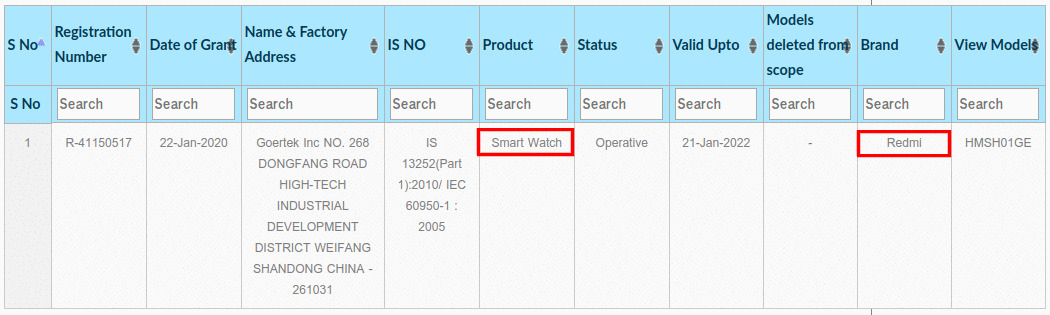
Xiaomi Watch gets teased to launch in China on November 5

Xiaomi is one of the leading brands when it comes to wearable devices, thanks to the company’s Mi Band fitness trackers. However, the company has not yet launched a smartwatch under its own brand, which should change now.

We recently reported that the company will soon launch a smartwatch named Mi Watch which will be running Google‘s WearOS. Now, the company has teased that the upcoming Mi Watch will be launched on 5th November in China.

Xiaomi Watch Teaser

Along with the Xiaomi Watches, the company is also set to launch a few other products at the 5th November launch event, including Mi CC9 Pro with 108MP primary camera and new Xiaomi Mi TV 5 series.

Earlier, it was reported that the upcoming smartwatch will be powered by the Xiaomi Wear chipset and will also also come with support for eSIM card, 4G LTE network connectivity, multi-function NFC, and smart voice assistant.

The device is expected to run a customized version of Google’s Android Wear operating system out-of-the-box which could be named “Mi Wear” OS. The design of the device has also been leaked online, which shows a circular dial, however, the teaser shows a rectangular dial, similar to the Apple Watch.

In early September, the Chinese company had registered a few trademarks, including “Millennium MIX ALPHA”, “Mi MIX Alpha” and “Mi Watch COLOR”. Xiaomi currently sells wearable devices under its eco-chain companies which includes Huami Technology.

Apart from the Mi Band fitness tracker, it has a line of smartwatches under Amazfit branding but none of them are running Android Wear OS. The upcoming smartwatch will be the first to come with company’s own branding.


Lenovo Z5 Pro GT with SD855 is now selling for 1,399 Yuan (~$198) in China

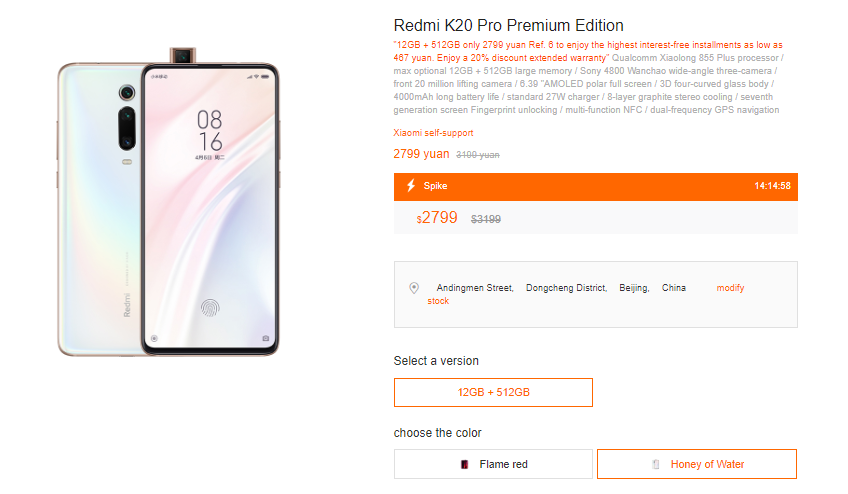
In China, many available flagship phones are now available at irresistible price tags. The Snapdragon 855+ powered Realme X2 Pro is selling with a starting price of 2,599 Yuan. The Redmi K20 Premium Edition with SD855+ is priced at 2,999 Yuan. Last week, Meizu 16T and iQOO Neo 855 smartphones were made official with attractive pricing of 1,999 Yuan (~$283). Both phones are powered by Snapdragon 855 SoC that had gone official last year in December. The Lenovo Z6 Pro GT was the world’s first smartphone to feature the SD855 SoC. Currently, it is selling with a price tag of 1,399 Yuan (~$198) on Pinduoduo.

Lenovo Z5 Pro GT 1,399 Yuan deal on Pinduoduo

Pinduoduo that lets users to take part in group buying deals is selling the Lenovo Z5 Pro GT at a very price tag of 1,399 Yuan (~$198). Single’s day that is arriving on Nov. 11 is the biggest online shopping festival in China. Hence, many smartphone manufacturers are gearing up to sell their devices with attractive discounted price tags. With a pricing of 1,399 Yuan for the Lenovo Z5 Pro 855 is an irresistible deal for buyers in China.

Lenovo Z5 Pro GT Specifications and Features

The Lenovo Z5 Pro GT is a slider phone with a 6.39-inch S-AMOLED display that offers full HD+ resolution of 1080 x 2340 pixels and 19.5:9 aspect ratio. Its display is embedded with an in-display fingerprint sensor. The Snapdragon 855 mobile platform that powers the smartphone is assisted by up to 8 GB of RAM. The highest model of the phone has 12 GB of RAM and up to 512 GB of native storage. There is no microSD card slot on the device.

The rear side of the Lenovo Z5 Pro GT has 16-megapixel + 24-megapixel dual camera system. The slider of the device has a 16-megapixel + 8-megapixel dual front-facing cameras. It is loaded with Android 9 Pie and ZUI. The handset is backed by a 3,350mAh battery that supports 18W fast charging. It does not feature a 3.5mm audio jack.


(via)

Xiaomi Mi CC9 Pro with 108MP five rear cameras and 5x optical zoom to launch on November 5

Recent reports have revealed that Xiaomi is gearing up to introduce the Mi CC9 Pro smartphone. The handset was rumored to go official last week, but the company remained silent on its existence. Today, the Chinese manufacturer has took to Weibo reveal that the Xiaomi Mi CC9 Pro will be announced on Nov. 5. It will be the first smartphone to be commercially available with 108MP camera. The poster reveals that the smartphone will be arriving with as many as five cameras on it rear.

The poster reveals that Xiaomi will be holding a launch event for the Xiaomi Mi CC9 Pro on Nov. 5 at 2 PM. The same event will be used to announce the Xiaomi Watch and Xiaomi Mi TV 5.

Xiaomi Mi CC9 Pro November 5 Launch Date

A careful look at the poster that showcases the rear cameras of the Mi CC9 Pro reveals that are there is a vertical camera module with three lenses, followed by a separate placed fourth camera and another separately positioned fifth lens. It will be the first smartphone from the company to arrive with support for 5x optical zoom. There are two dual-LED flash units along the camera system of the smartphone. And last but not the least, it features the Samsung-made 108-megapixel shooter as the main lens. The Chinese manufacturer hasn’t shared any information on the configuration of the other cameras of the Mi CC9 Pro.

With ‘Pro’ in its name, the Mi CC9 Pro will be certainly arriving with better specs than the Mi CC9 phone that was announced in July. Past reports that have revealed some information on the specs of the phone may not be true since none of them could reveal that it features a penta-lens setup on the rear.

Rumors are rife that the Xiaomi Mi CC9 Pro will be sporting a 6.5-inch full HD+ AMOLED display that will come embedded with an in-screen fingerprint reader. It is expected to sport a front-facing camera of 32-megapixel. The smartphone may draw power from the 8nm Snapdragon 730G octa-core processor. The highest model of the phone may feature 8 GB of RAM and up to 256 GB of native storage. It may house a 4,000mAh battery that may arrive with support for 27W fast charging and 20W wireless charging. It may come loaded with some other features such as MIUI 11 based Android 10, NFC and IR blaster. It may arrive in China with a starting price of 2,199 Yuan (~$311).


Buy 2019 Xiaomi Mijia 1S Robot Vacuum Cleaner for Just $406.25 from Banggood [for U.S. Only]

Vacuum cleaners have come a long way since their advent. While the earliest models had quite a few limitations, newfangled vacuum cleaners, particularly robot vacuum cleaners are simply remarkable, when it comes to keeping your house clean and tidy all the time.

2019 XIAOMI Mijia 1S Robot Vacuum Cleaner

Aside from being a great addition to your home, a robot vacuum cleaner gives you more time to do the things you love, like spending more time with your family members. Regrettably, these devices aren’t easy on the pocketbook, especially if you are on a tight budget.2019 XIAOMI Mijia 1S Robot Vacuum Cleaner

If you are in the market for an inexpensive alternative, you are highly likely to stumble upon numerous options; however, these low-cost models aren’t worth your money — not even for a fraction of the price of a top-end robot vacuum cleaner. But fret not, we have you covered!

Touted as one the most effective robot vacuum cleaners, the 2019 Xiaomi Mijia 1S has gone up for sale bearing a lowered price of just $406.25 on Banggood.

2019 XIAOMI Mijia 1S Robot Vacuum Cleaner

This high-end smart vacuum cleaner usually retails for $466.19. This is a noteworthy 13 percent off on the Mijia 1S robot vacuum cleaner’s original asking price.

2019 XIAOMI Mijia 1S Robot Vacuum Cleaner

The Xiaomi Mijia 1S is an irresistible robot vacuum cleaner that boasts an impressive array of features. It uses a two-dimensional map, along with a visual sensor to get image feature points for enhanced map stability and accuracy. The robot uses a vision sensor that enables it to see the home scene clearly.

Furthermore, it adopts AI image recognition to accurately determine the door position. As soon as the power goes below 20 percent, Mijia 1S automatically returns to charging, and go back to the breakpoint to continue cleaning after the battery is charged up to 80 percent.2019 XIAOMI Mijia 1S Robot Vacuum Cleaner

It has a powerful 2000Pa suction that enables deep cleaning of floor dust, floor crevices and hair. The Mijia 1S draws its juices from a 5200mAh battery that lasts for 2.5 hours.

To facilitate effective cleaning of different home environments, it features a new Omni-directional sensor. On top of that, you can control the Mijia 1S using the app even when you are not at home.

To take full advantage of the coupon code, which is likely to expire soon, all you need to do is to follow this link without wasting time.