Yesterday, OnePlus revealed press renders of its upcoming smartphone, the OnePlus 7T. The images confirmed what we have seen in leaks but also revealed the phone will come in a new Haze Blue color. Today, a render of the OnePlus 7T Pro has surfaced but this time from an unofficial source.
The leaked image was shared by OnLeaks in partnership with igeeksblog. The image shows the OnePlus 7T Pro will also be available in the same Haze Blue color variant as the OnePlus 7T.
The OnePlus 7T Pro will keep the pop-up selfie camera design of the OnePlus 7 Pro. It will also keep the triple rear camera design. However, the laser focus module is now outside the camera housing.
Both sides are covered with glass but the rear features a new matte finish with a metallic look. The display is also curved and will keep its 90Hz refresh rate.
The OnePlus 7 Pro will have a 6.65-inch Fluid AMOLED display with an in-display fingerprint scanner. It will be powered by the Snapdragon 855 Plus processor. It will have a 48MP primary rear camera paired with an 8MP telephoto camera with 3x optical zoom and a 16MP ultrawide angle camera. It will also have a 16MP selfie camera.
It has also been revealed that the 7T Pro will have a 4085mAh battery with Warp Charge 30T fast charging. It will also run Android 10 out of the box.
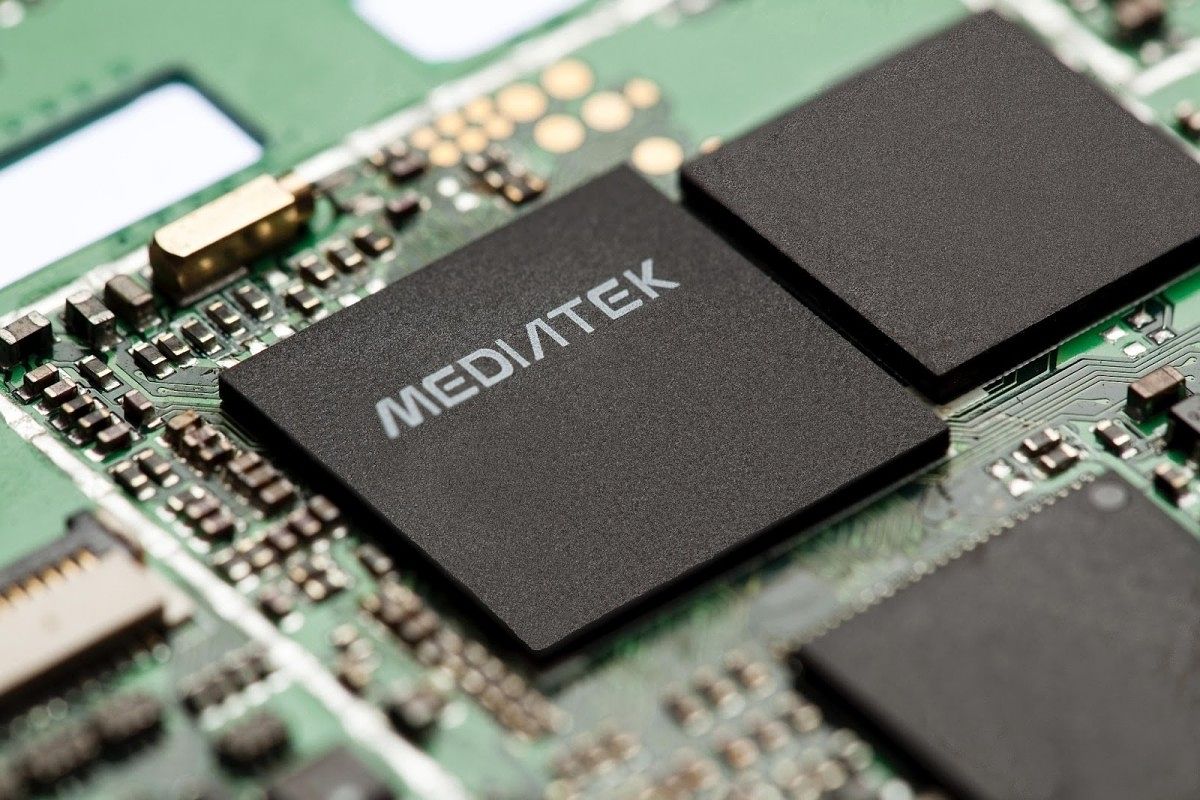
Reports emanating from the Taiwanese supply chain indicate that semi-conductor manufacturer MediaTek is targeting 60 million 5G chip shipments next year. Although the company refused to comment on the news, previous news from the supply chain noted that MediaTek’s 5G chip has changed the 7nm process of the 5G MT6885 SoC from “general mass production” to “ultra-quick order production” due to customers’ hopes of early shipment. It is expected to be mass-produced before the end of this year.
The Taiwanese industry expects that MediaTek should be able to win orders for some 5G mobile phones from China’s mobile phone brands such as OPPO, Vivo and Huawei. It is reported that the initial evaluation of the average selling price (ASP) per unit of MediaTek’s 5G chip shows it costs about $50 USD, far beyond the 4G single-chip ASP which is about $10 to $12 USD. However, we believe it is still cheaper than the average selling price of Qualcomm’s 5G chipsets.
MediaTek is extremely optimistic about the Chinese 5G market. Previously, market consulting firm Strategy Analytic believed that China’s 5G mobile phone sales reached 80 million in 2020, and 160 million worldwide. MediaTek CEO Cai Lixing projects that global sales will be around 140 million, while China will account for 100 million which is about 70% of expected 5G phone shipment next year. That could be due to the rapid roll-out of 5G networks by Chinese carriers.
It has been more than a year since the first Black Shark phone was revealed. Following its launch in April 2018, the Xiaomi-backed company has released three successors to its very first gaming smartphone.
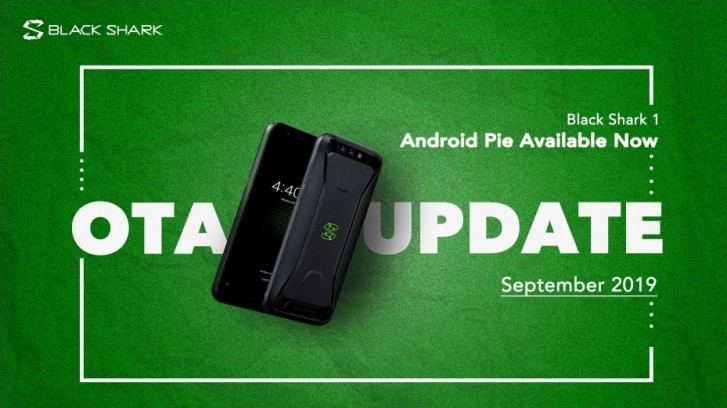
When the Black Shark 1 launched, it ran Android Oreo out of the box. Since then Google has announced two new versions of Android. While it is unlikely it will get updated to Android 10, the Black Shark 1 is finally getting updated to Android 9 Pie.
The update has begun rolling out and it brings along some new features in addition to those that Android Pie brings.
The changelog says there is a new version of SharkSpace and GamerStudio. The update also brings ScreenRecorder and Face Unlock and a feature that lets users share a WiFi network through hotspot. It has also been reported that the update brings August 2019’s security patch.
The Black Shark 1 also gets optimizations for its camera, performance, and system stability.
The update is said to be rolling out globally, so if you own a Black Shark 1, you should go check System Updates under Phone Settings or wait for the OTA’ notification.
The Black Shark 1 has a 5.99-inch FHD+ display. It has bezels at the top and bottom and the chin is home to a fingerprint scanner. There is a Snapdragon 845 processor inside along with 6GB or 8GB of RAM and a 4000mAh. Storage is 64GB and 128GB respectively with no option for memory expansion.
The phone has 12MP + 20MP dual rear cameras with 2x optical zoom. It also has a 20MP selfie camera. There is no audio jack but it has stereo speakers. It has Dual-SIM support, Bluetooth 5.0, and a USB Type-C port. It also supports 18W fast charge.
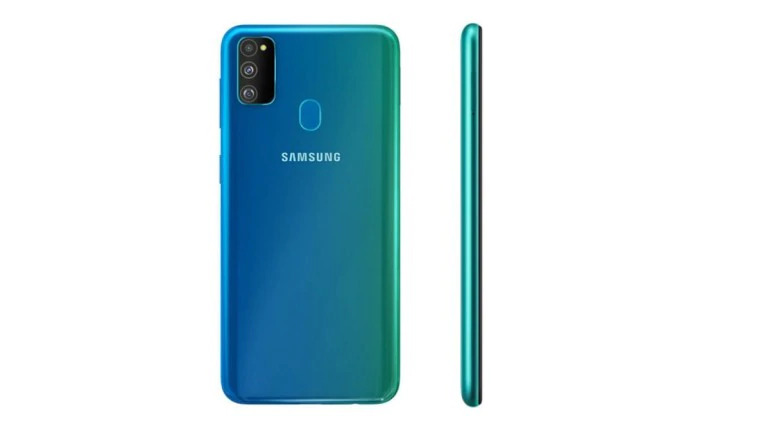
Earlier this year, Samsung launched the Galaxy M30 smartphone in India as a part of its new online-only Galaxy M-series. Today, the company has launched a new variant of the same — Samsung Galaxy M30s.
The smartphone features a 6.4-inch Full HD+ Infinity-U Super AMOLED display with 2340 x 1080 pixels screen resolution. Under the hood, it is powered by Samsung Exynos 9611 10nm processor with Mali-G72MP3 GPU.
Coming to the memory configuration, the phone comes in two variants — 4GB RAM with 64GB internal storage and 6GB RAM with 128GB internal storage. There’s also a microSD card slot for expanding the storage capacity up to 512GB.
As for the camera, the smartphone comes with a triple-rear camera setup that consists of a 48 MP primary sensor with LED flash, f/2.0 aperture, Samsung GW2 sensor, a 5 MP depth sensor with f/2.2 aperture, and an 8 MP 123° ultra-wide angle camera with f/2.2 aperture.
On the front side, the device comes with a 16-megapixel Samsung SK3P8SP camera sensor with f/2.0 aperture. The phone also comes with a rear-mounted fingerprint sensor for added security.
Connectivity options on the device include Dual 4G VoLTE, Wi-Fi 802.11 ac (2.4 GHz + 5 GHz), Bluetooth 5, GPS + GLONASS, and USB Type-C port. The phone runs Android 9 Pie operating system with Samsung One UI on top and is powered by a massive 6,000mAh battery with 15W fast charging.
The Samsung Galaxy M30s is offered in three color options — Opal Black, Sapphire Blue, and Pearl White. The 4GB RAM model is priced at ₹13,999 (~$196) while the 6GB RAM model costs ₹16,999 (~$238). The smartphone will be available for purchase from Amazon.in and Samsung online store from September 29th.
Xiaomi is hosting a launch event in China on 24th September where the company will be launching a few products, including the Mi 9 Pro 5G — the company’s second 5G-enabled smartphone in its home market. One of the features we’ve heard a lot about is the device’s fast charging capabilities, and it turns out even Lei Jun has something to say about it.
The founder of Xiaomi has gone to Weibo, revealing the charge times for the new device. According to Lei Jun, Xiaomi’s 40W wired fast charging will bring the phone from 0% to 100% in a mere 48 minutes, fairly impressive. Meanwhile, the 30W wireless charging also works remarkably fast, going from 0% to 100% in 69 minutes, nice.
Additionally, the phone also supports 10W reverse wireless charging, making it the first flagship smartphone from the company this year to support reverse wireless charging. This means that the phone can be used to power other devices like headphones, watches, razors and electric toothbrushes, or even your friend’s device if you’re feeling generous.
We are eagerly waiting for the 24th to arrive so that we finally get a proper glimpse at Xiaomi’s Mi 9 Pro 5G and, more interestingly, the Mi MIX 4 5G. We can also expect Xiaomi to unveil the latest version of MIUI at the event, that being MIUI 11. Until then, stay tuned on Gizmochina for any updates regarding Xiaomi and the upcoming launch.
The Redmi K20 Pro Exclusive Edition will be announced tomorrow and it has already been confirmed that it will be powered by the Snapdragon 855 Plus processor. Today, more details have surfaced revealing that it will come with more than just a new processor.
Earlier, it was officially revealed that the phone will come with 512GB of internal storage, double that of the standard edition’s highest configuration. Now Redmi has released a poster that reveals the phone will also have 12GB of RAM!
The standard edition K20 Pro comes in 6GB RAM and 8GB RAM variants, so the switch to 12GB of RAM is a significant one. But that is not all.
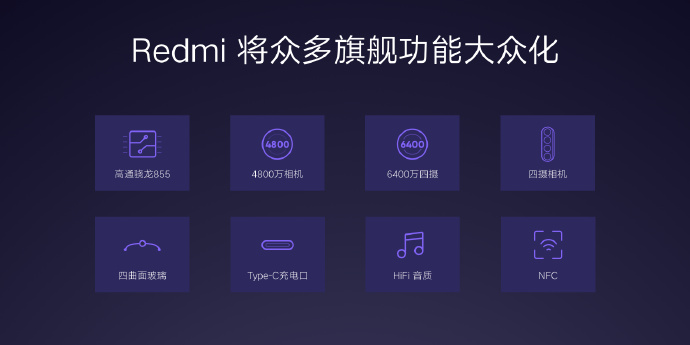
Redmi also revealed that the Exclusive Edition will come with a better primary rear camera, actually even more cameras. Rather than 48MP triple sensors, the phone will have a 64MP quad-camera setup. The 64MP camera is most likely the Samsung GW1 ISOCELL sensor inside the Redmi Note 8 Pro.
Other features of the phone confirmed include NFC, Hi-Fi audio, Type-C port, and a four-curved glass body with Gorilla Glass 5 on both sides. The image also says there is a 48MP camera which is a bit confusing since the primary rear camera is revealed to be a 64MP sensor. We’ll keep our fingers crossed on that.
The Redmi K20 Pro Exclusive Edition launches tomorrow night in China.
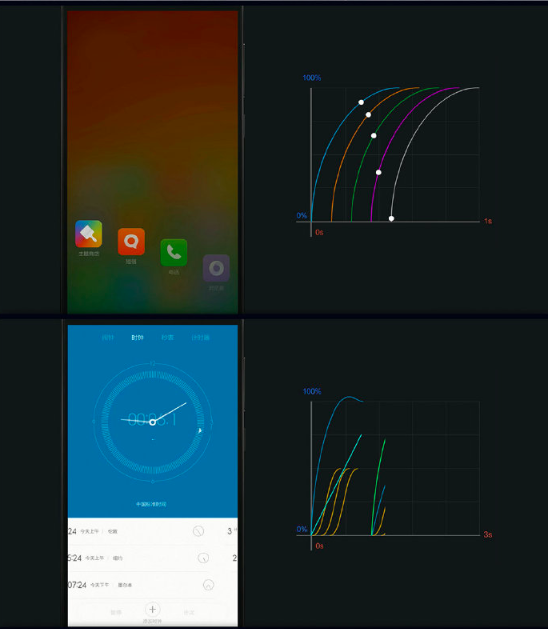
Xiaomi’s much-awaited MIUI 11 OS will debut next week alongside two new 5G flagships. Before the official launch of the new OS, the company’s MIUI experience chief, Xiaofan has revealed a key change in MIUI 11. Earlier today, he revealed on Weibo that Xiaomi has decided to take a slightly different approach for animations in the new OS.
First off, he says that Xiaomi is probably one of the few Android smartphone makers to use non-linear animations in its OS. The company adopted this style from MIUI 6 where it used non-linear animations throughout the UI like in the case of home screen and app deletion animations. In the next few iterations of MIUI, the company was in the pursuit of speeding up these animations to make the UI quick and responsive.
Xiaomi started using non-linear animations from MIUI6
In fact, MIUI 9 was launched with the tagline ‘快如闪电’ which means ‘lightning-fast’. So it was clear that the company wanted to make the animations as quick as possible in the OS. But when MIUI 10 was in the development phase, Xiaomi realized that speed was less important in an animation. It was both speed as well as the smoothness of the animation that really mattered. So, Xiaomi decided that MIUI 10 would be the last OS where it would talk about app startup speeds.
This brings us to the upcoming MIUI 11 OS. Xiaomi’s MIUI team has focused on making the animations slightly slower and thereby making them richer in detail. He adds that the faster and smoother animations make for better user experience on the OS. In fact, Xiaomi’s CEO Lei Jun forwarded his post a few hours later saying that even he was surprised with the animations on MIUI 11.
Unfortunately, Xiaofan adds that we won’t hear much about the animations on MIUI 11 at the event next week because of time constraints. So, we’ll have to experience it in real life (after rollout) to really see what he’s talking about.
Are you excited about MIUI 11? Considering the company’s history, most of the Xiaomi models should be updated to MIUI 11 in the coming weeks.
The ZenFone 6 was a huge surprise from ASUS this year. The ZenFone 6 arrived with a notch-less display, top of the line specs, a massive 5000mAh battery, near-stock Android, and even a headphone jack. Not to mention its unique flip camera that transforms the rear-camera into a selfie shooter in order to give you a display with no notches or holes. All of this and it came in at only $500, which is frankly incredible.
ASUS is so confident about the phone, it has decided to release a special ‘Edition 30’ variant, coming with 12GB of RAM and 512GB of storage. It’s now available in the US for $900. Coupled with the same Snapdragon 855 and 5,000mAh battery from the standard edition, the 30-years-of-ASUS version is almost comparable to the company’s other hardware behemoth, the ROG Phone II, albeit with a more conventional design.
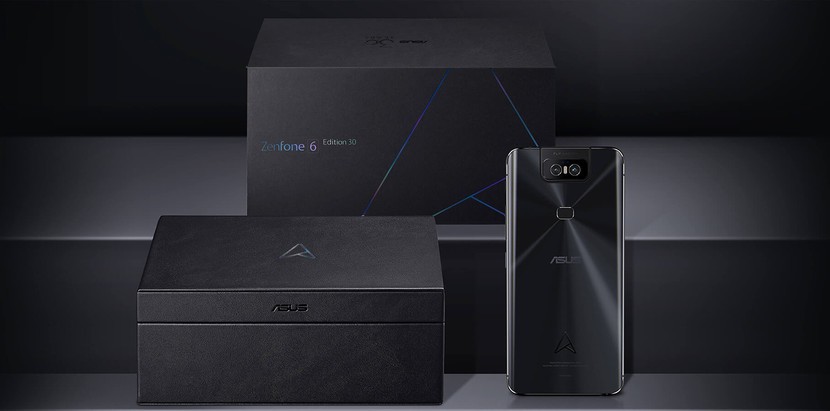
Speaking of the device’s design, it’s essentially unchanged from the typical Zenfone 6, though there are some small changes. The device sports a matte-black rear panel featuring a concentric circle design making it less slippery and glossy than the regular Zenfone 6. Towards the bottom, you’ll also find a 30th-anniversary logo.
ASUS also went the extra mile with the packaging, including a premium box along with an exclusive VIP card inside that entitles you to a 30-month warranty with prioritized repairs. You can check out an official image of the new packaging below, it’s pretty crazy how far they’ve gone polishing the presentation.
The Asus Zenfone 6 Edition 30 will set you back $900, about $300 more than the 8GB/256GB edition. Unfortunately, all the other variants are currently sold out, so the Edition 30 is your only option in the US. Also, keep in mind that the Zenfone 6 is GSM-only, so it will not work on Verizon, Sprint, or other CDMA carriers in the US.
Google is all set to introduce the new-gen Pixel 4 lineup next month, and it’s possibly one of the worst kept tech secrets of all time. Ahead of its launch, the Pixel 4 has been making splashes over the web giving an insight on the renders. Now, in the latest developments, a new color option of the device has been tipped.
9to5Google found that a couple of Redditors—LousyTX and NVRLand— snapped a few photos of a Times Square billboard showing off the Pixel 4. The ad not only confirms the back camera design of the Pixel 4 series, but also the Coral color option. This will be the third color option along with black and white.
It also also confirms one of the “few new things Made by Google” that the tech giant will be launching at its upcoming hardware event. To recall, the invite that Google sent out earlier this week didn’t reveal the products that the company was planning to launch. It simply said — “Come see a few new things Made by Google”.
What is more interesting about the billboard is that Google is also confirming the new square-ish camera island. According to reports, both Pixels will feature Snapdragon 855, 6GB of RAM and dual rear cameras. This dual setup will comprise a 12 MP main sensor along with a 16 MP telephoto one. The smaller Pixel 4 will ship 5.7″ 90Hz 1080p+ OLED display and a really disappointing 2,800 mAh battery.
Really, at this point it’d be more surprising to NOT find out something about the Pixel 4 every day. We wouldn’t even be shocked if the Pixel 5 leaked at the launch event at this rate. Still, at least the upcoming Pixel 4 seems like a decent upgrade over the previous Pixel smartphones. We’ll keep covering Google Pixel 4 news as it comes, so stay tuned.
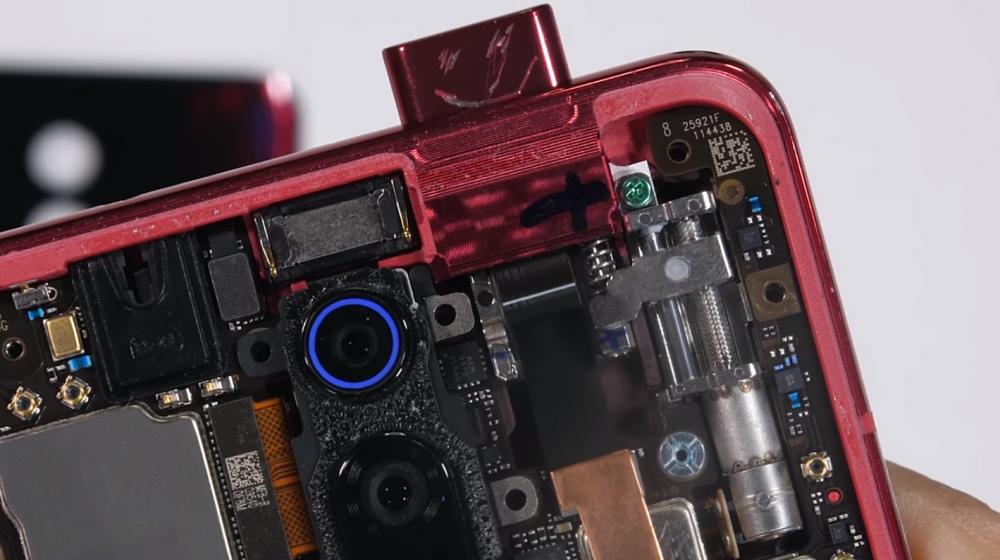
The Redmi K20 Pro is a beast of a smartphone. It’s got top-end hardware, an affordable price tag, and is definitely well made. But what’s it like on the inside? To answer that question, JerryRigEverything has posted a new YouTube video that does a complete teardown of the Redmi K20 Pro. So, let’s take a closer look.
The K20 Pro is built using the typical glued glass sandwich design. Once the back panel comes off, it reveals red rubber seals around every opening of the phone. It seems that Redmi has included some form of water resistance in the phone but hasn’t acquired any certification, similar to what OnePlus did with its latest flagship the OnePlus 7 Pro. This is probably one of the reasons why the phone has such an affordable price tag.
It may not completely water-resistant though, as there are still some large openings with no protection. But these rubber seals coupled with the officially confirmed P2i nanocoating for splash resistance will provide very good water resistance. It’s nice to see that Redmi has put an effort into water resistance without any impact on cost.
The motorized pop-up camera mechanism is identical to the OnePlus 7 Pro. The internal motor spins the threaded shaft and as it spins, the pop-up camera is moved in and out of the phone. What is different about this one though, is that it has flashy LED lights around the sides that are neatly fitted into the plastic cover of the camera itself.
Overall, it seems like the Redmi K20 Pro isn’t just well built on the outside, but it’s also well assembled from the inside as well. It’s excellent to see Xiaomi put in this much effort into a product. This is especially good for them considering tomorrow’s Redmi K20 Pro Exclusive Edition with 512GB storage launch. We’ll keep you updated on all Redmi K20 Pro news.
Lenovo and Gearbest have teamed up to launch the Lenovo Brand Sale. The recently kicked-off promo gives you a chance to get $10 off on orders over $70, gifts and a lot more to cheer about.
The promo page is crammed with amazing products from the Chinese multinational technology company. More importantly, these products have gone up for sale bearing considerably lowered prices.
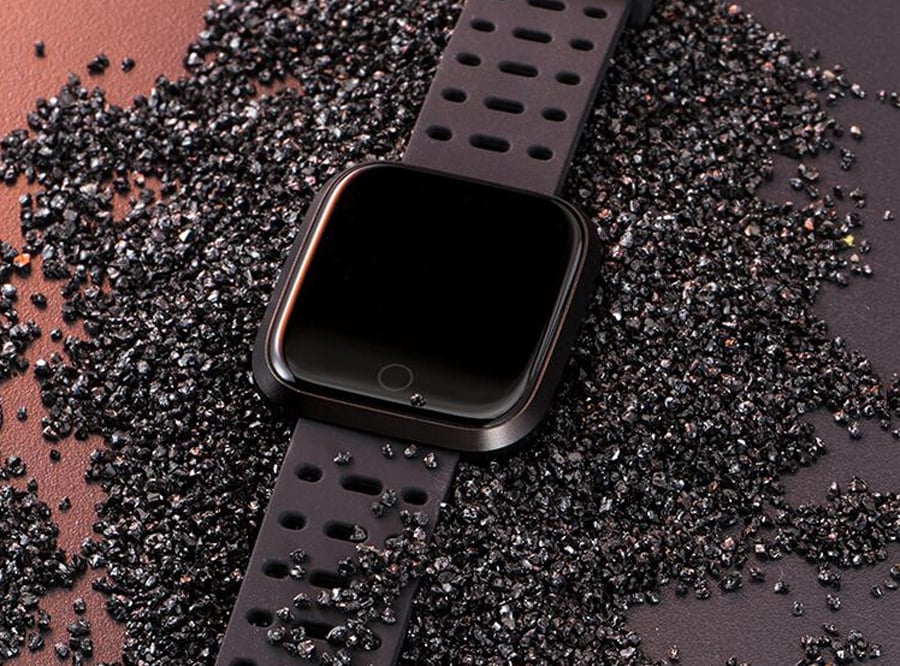
For the sake of an instance, the Lenovo E1 1.33-inch TFT screen sports smartwatch, which usually retails for $49.99, can now be yours for a lowered price of just $39.99 from the promo page. Aside from this 20 percent off, Gearbest is offering you a gift with this order.
You can also avail a noteworthy discount on the Lenovo HE15 True Wireless Bluetooth Headset, which usually retails for $39.90, but is currently available for just $26.99. Moreover, the Lenovo HT10 wireless earphone is also available for a lowered price of just $49.99.
The rest of the products have carefully been added to two categories including Hot Picks and More Deals. The first category dubbed Hot Picks features a wide selection of smartwatches and other useful accessories that you can buy without emptying your pocket.
The aforesaid section offers a significant $10 off on orders over $70, in addition to dedicated discounts that they carry. For example, the Lenovo Fitness Band HX03W Car charger would normally set you back $27.99, but you can buy it for only $25.19.
The More Deals category offers tech buffs a lot to cheer about as well. The section features a slew of electronic items that would normally burn in a hole in your pocket but are currently available for reduced prices.
The above-mentioned category includes all sorts of electronic products ranging from the Xiaomi Mi Band 4 to iLife V5s Pro vacuum cleaner robot and more. You can visit the activity page by following this link to grab the discounts and take full advantage of the coupons before they expire.
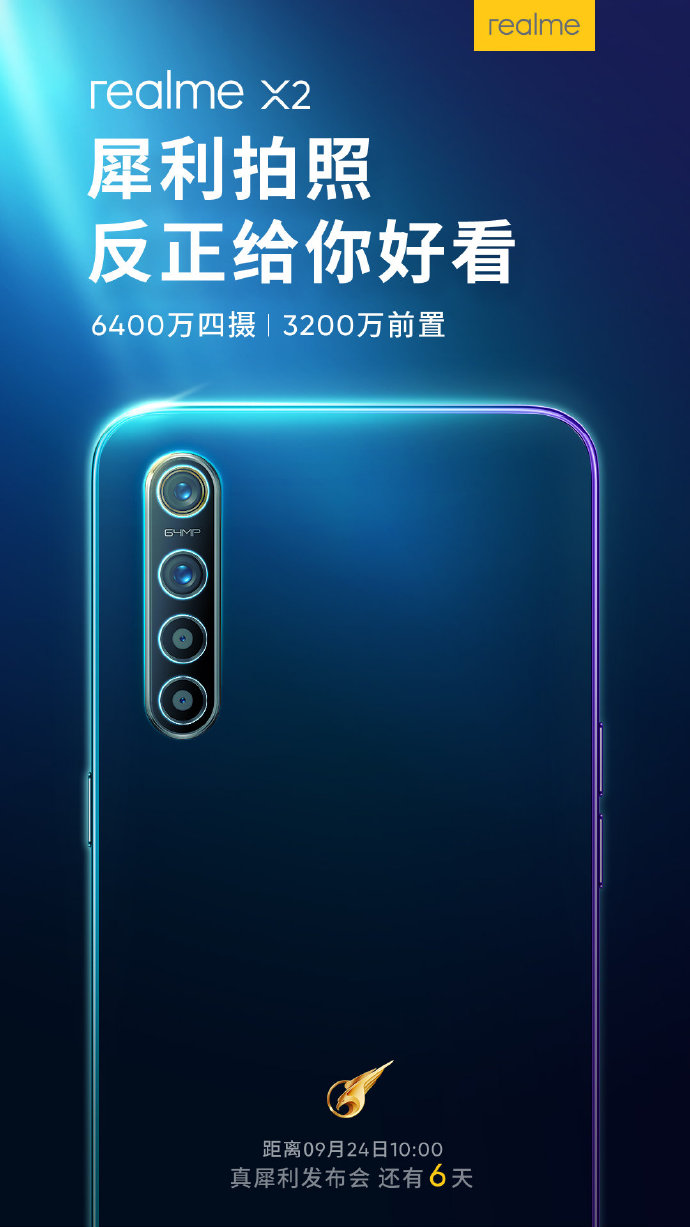
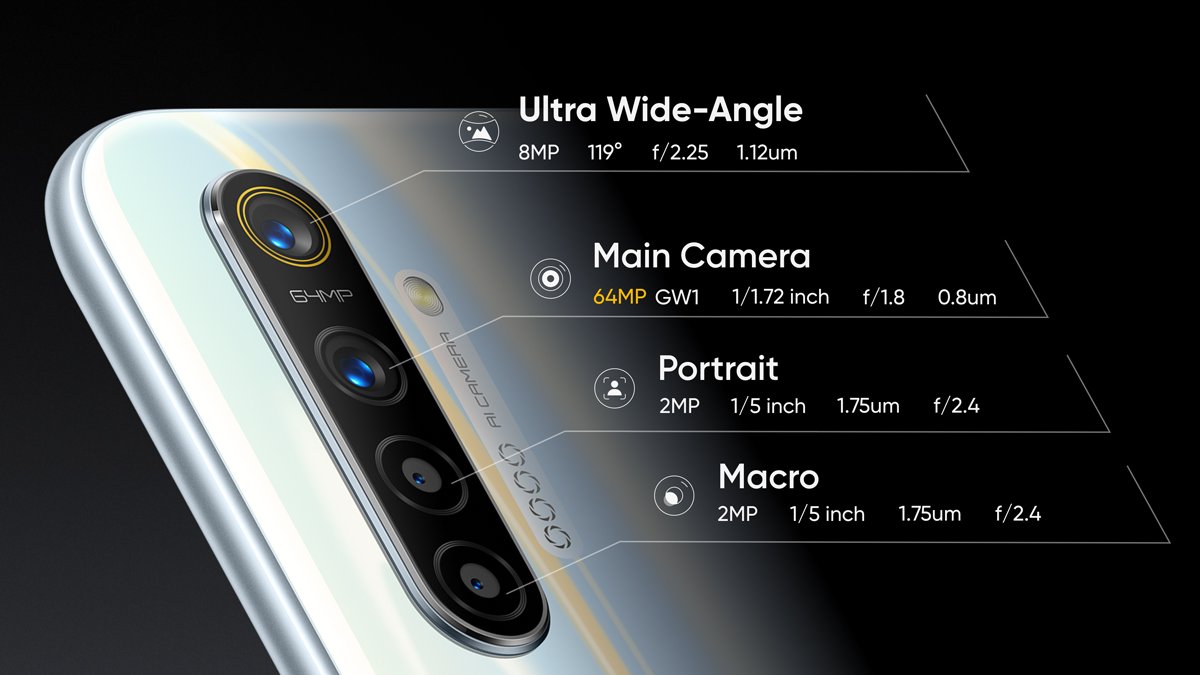
Realme has already confirmed that the it will be hosting a launch event in China on 24th September where the company will launch the Realme X2 smartphone. Francis Wang, Chief Marketing Officer of Realme has already confirmed that the X2 is the re-branded version of the XT for China.
Earlier, the company had confirmed that the phone will feature a 64-megapixel quad-camera setup. Now, it has revealed that the smartphone will be featuring a 32-megapixel camera sensor on the front. Notably, the Realme XT features a 16-megapixel front camera.
It features a 6.4-inch S-AMOLED display with waterdrop notch, Full HD+ screen resolution, and 19.5:9 aspect ratio. The phone is powered by Qualcomm Snapdragon 712 AIE octa-core processor, with up to 8GB RAM and 128GB internal storage.
The quad camera system on the phone comes with 64-megapixel Samsung GW1 main lens, 8-megapixel ultra-wide lens, 2-megapixel dedicated macro camera and 2-megapixel depth sensor. While the 16-megapixel front-facing snapper is on XT, the X2 will come with a 32-megapixel selfie snapper.
Running on Android 9 Pie-based ColorOS 6.0.1, the smartphone is powered by a 4,000mAh battery and VOOC 3.0 fast charging support. To know which variants the company launches as well as its pricing, we’ll have to wait for the official launch next week.
Meanwhile, the Oppo-backed company is also gearing up to launch the Realme XT 730G smartphone. The device is expected to have the same configuration, except for the chipset which will be Snapdragon 730G. The phone will be launched in India in December this year.
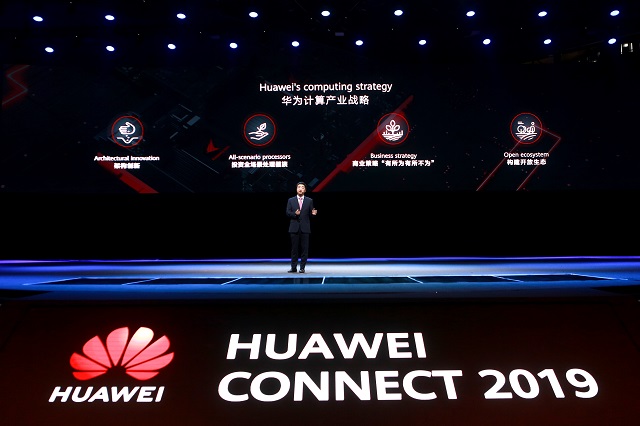
At Huawei Connect 2019, the Chinese telecom giant announced its strategy for the computing market and has released Atlas 900, which is claimed to be the world’s fastest AI training cluster. The company says that Atlas 900 will help make AI more readily available for different fields of scientific research and business innovation.
Atlas 900 combines the power of thousands of Ascend processors and takes only 59.8 seconds to train ResNet-50 for measuring AI training performance. This is 10 seconds faster than the previous world record.
It brings new possibilities to different fields of scientific research and business innovation – astronomy, weather forecasting, autonomous driving, oil exploration, etc. Huawei also deployed Atlas 900 on Huawei Cloud as a cluster service, making it more accessible to its customers across different industries.
Based on Huawei’s experience in over 500 projects across more than 10 industries, Zheng Yelai, President of Huawei’s Cloud BU, pointed out that industry AI is crossing the commercial chasm and becoming the key driver for reshaping how companies go digital.
Huawei estimates that in the next five years, statistical computing will become the mainstream and AI computing will account for more than 80 percent of all computing power used around the world. Huawei’s strategy will focus on four key areas:
Architecture innovation – Huawei has launched the Da Vinci architecture, an innovative processor architecture. The company will continue to invest in basic research.
Investment in all-scenario processors – Huawei has a full lineup of processors: Kunpeng processors for general purpose computing, Ascend processors for AI, Kirin processors for smart devices, and Honghu processors for smart screens.
Clear business boundaries – Huawei won’t sell its processors directly. Instead, it will provide them to its customers in the form of cloud services, and to its partners in the form of components, prioritizing support for integrated solutions.
Building an open ecosystem – In the next five years, Huawei will invest another $1.5 billion in its developer program. The aim is to expand the program to support five million developers and enable Huawei’s worldwide partners to develop new applications.
Commenting on the company’s strategy, Ken Hu, Huawei’s Deputy Chairman said: “The future of computing is a massive market worth more than two trillion US dollars. We’ll keep investing with a strategy that focuses on four key areas. We will push the boundaries of architecture, invest in processors for all scenarios, keep clear business boundaries, and build an open ecosystem.”
Xiaomi is hosting a launch event in China on 24th September where the company will be launching a few products, including the Mi 9 Pro 5G — the company’s second 5G-enabled smartphone in its home market.
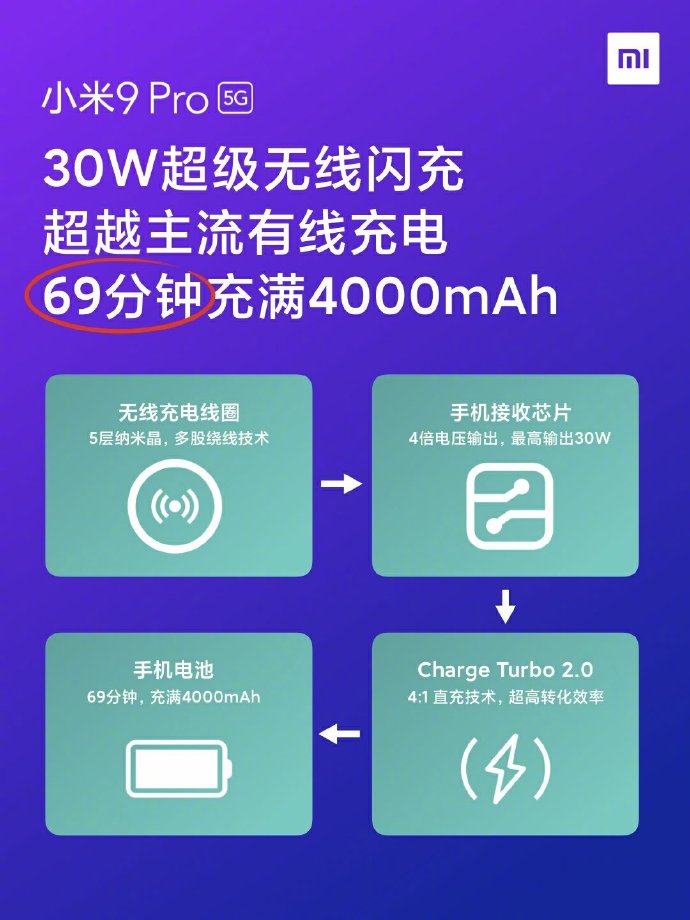
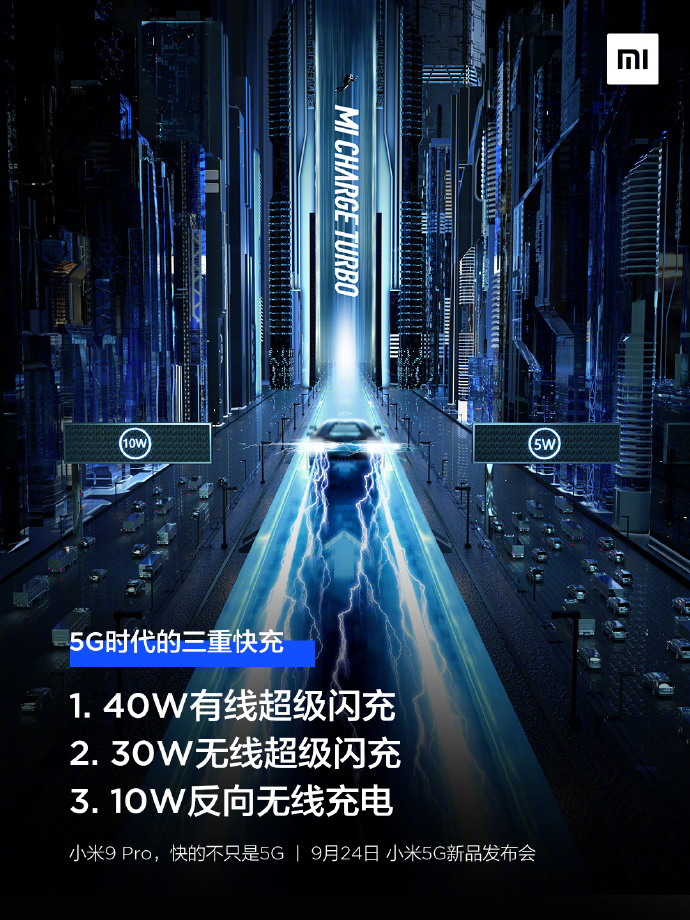
Ahead of the phone’s official launch in China, the company has shared a new teaser poster on Weibo which reveals some key details about the phone’s charging capabilities. Xiaomi confirms that Mi 9 Pro 5G will come with Mi Charge Turbo triple fast charging feature.
The smartphone will have 40W wired fast charging, 30W wireless fast charging as well as 10W reverse charging support. The 30W Super Wireless Flash charing is claimed by the company to charge the 4,000mAh battery up to 50 percent in 25 minutes and takes around 69 minutes to fully charge.
Additionally, the phone also supports 10W reverse wireless charging, making it the first flagship smartphone from the company this year to support reverse wireless charging. This means that the phone can be used to power other devices.
The 40W wired fast charging support for the Mi 9 Pro 5G is a massive upgrade over 27W fast charging support in the Xiaomi Mi 9 smartphone. While it’s on-par with Huawei’s fast charging technology, it lacks behind Vivo’s 44W and OPPO’s new 65W fast charging.
The Mi 9 Pro 5G has already been certified by TENAA, which reveals that the phone will come with a 6.39-inch display and should come powered by Snapdragon 855 Plus SoC, coupled with up to 12GB of RAM and 512GB of internal storage. The smartphone is expected to come powered by a 4,000mAh battery.
Along with the Mi 9 Pro 5G, Xiaomi is also set to introduce its new Mi MIX 4 flagship smartphone which could feature a 100-megapixel camera sensor. The company will also be launching a new Mi TV model and its new MIUI 11 operating system with major updates.
A few months ago, Xiaomi-backed Redmi launched the Redmi K20 Pro flagship smartphone which comes with up to 8GB RAM and 128GB internal storage. Yesterday, we reported that the company will launch an Exclusive Edition of the same phone on 19th September.
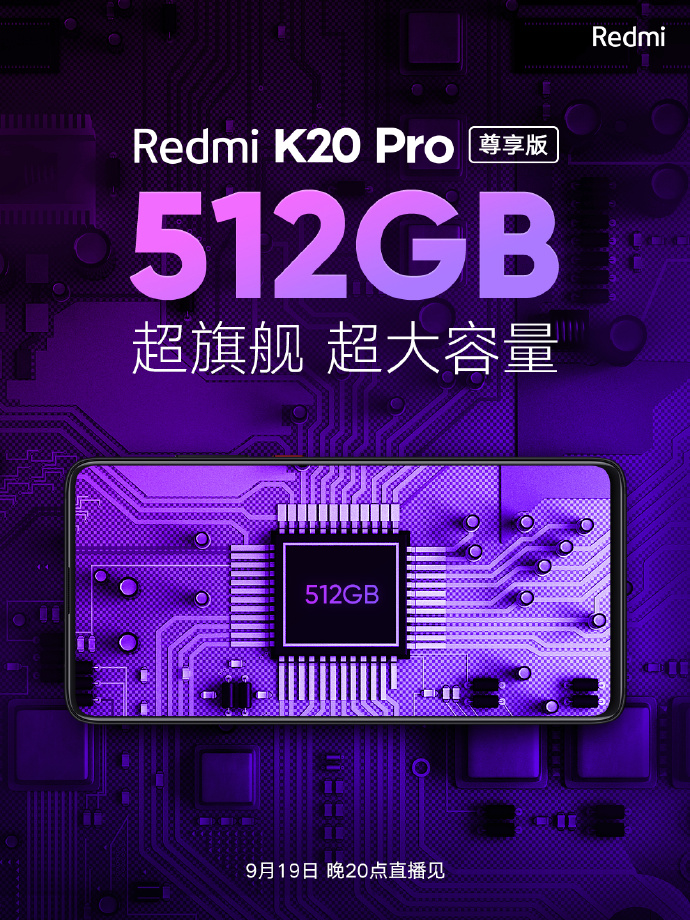
Now, it has been confirmed that the Redmi K20 Pro Exclusive Edition will come packed with 512GB of internal storage. It was earlier confirmed that the smartphone will be powered by the newly launched Qualcomm Snapdragon 855 Plus octa-core processor.
With 512GB of internal storage, this will be the second smartphone from the Xiaomi’s brands to offer such massive storage capacity. Currently, the Black Shark 2 gaming smartphone is the only one that comes with 12GB RAM and 512GB internal storage.
The Qulacomm Snapdragon 855+ has a higher clock speed of 2.96GHz and offers 15 percent improvement in GPU performance. Redmi’s General Manager Lu Weibing says that this upcoming smartphone variant scores as high as 473,183 points on AnTuTu. The standard edition scored 458,754 points on the benchmark test.
The Redmi K20 Pro features a 6.39-inch Full HD+ AMOLED display with 1080 x 2340 pixels screen resolution. It also comes with an in-display fingerprint scanner for added security and the display is notch-less.
The phone comes with up to 8GB of RAM and up to 256GB of storage. As for the camera setup, the phone has a triple-camera setup on the back — 48MP + 8MP + 13MP while on the front side, it features a 20MP snapper for taking selfies and video calling.
Connectivity options on the device include 4G VoLTE, WiFi 802.11 b/g/n/ac, Bluetooth 5, GPS + GLONASS, NFC, and USB Type-C port. The phone runs MIUI 10 based on Android Pie and is powered by a 4,000mAh battery with 27W fast charging technology.
Xiaomi has announced the rollout of a new update for the Mi Band 4. The update brings some more refreshing outlook to the smart wearable. One of such is several custom watch faces.
The Mi Band 4 already has many custom watch faces available to users but the new update adds some more to the mix. With so many watch faces available to users, you definitely will find a few that will catch your fancy. To check for this update, head over to the Mi Fit app and update the wearable to the latest version. This new feature is available also to the NFC version.
The Mi Band 4 comes with an elegant look spearheaded by a colour AMOLED display. The screen size is said to be 39.9% bigger than its predecessor. There’s also 2.5D scratch-resistant tempered glass protection on top of the display. It already comes pre-installed with several watch faces and you can also download some more from the Mi Fit app on a smartphone when the device is paired. The wearable device also comes with water resistance up to a depth of 5ATM (50 meters). There is also an upgraded 6-axis high-precision sensor as well as the regular features such as sleep tracking, heart rate monitor, GPS etc.
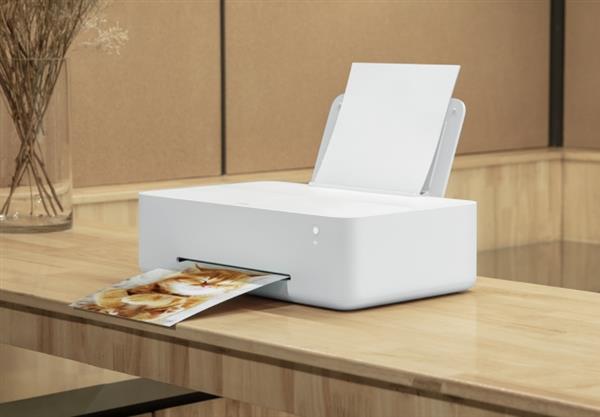
Xiaomi has almost covered all product categories with its ecological chain products consisting of smart home products and all other gadgets that we need either at home, in our cars, at the office etc. And talking of office equipment, the prolific brand has launched the MIJIA Inkjet printer. The gadget is presently on sale for just 999 yuan ($141).
The MIJIA Inkjet printer comes with a portable build and keeps up with Xiaomi’s traditional minimalist design. The printer is equipped with a 1.2GHz quad-core processor. With WPS’s powerful real-time file conversion function onboard, it can easily realize the remote printing of mobile and cloud files. The printing accuracy of Xiaomi Mi’s inkjet printer can reach 4800x1200dpi, and a thin line of 0.1mm can also be printed clearly. The unique paper path design supports a variety of printing materials and different paper sizes.
The MIJIA inkjet printer also comes with an anti-clog print head and has an automatic maintenance function. Where it is left constantly connected to a power source, the print head will automatically maintain and clean every 7 days. Alternatively, the owner can manually activate the maintenance function from the MIJIA app. Sure, the MIJIA Inkjet printer can be connected to MIJIA app meaning it is a smart product with WiFi connectivity. It also supports photo scan via the MIJIA app, remote printing, smart correction and several other innovative features. You also don’t need to install any driver as it is a plug and play device.
Inside the box, is a set of printer cartridges having four different ink colours namely, cyan, magenta, yellow, and black. The ink cartridges are colour coded so that the wrong colour isn’t added to the machine. It is also easy to swap the cartridges. According to the manufacturer, a set of ink cartridge supports 9500 pages of colour printing, as well as 3200 pages of black and white printing.
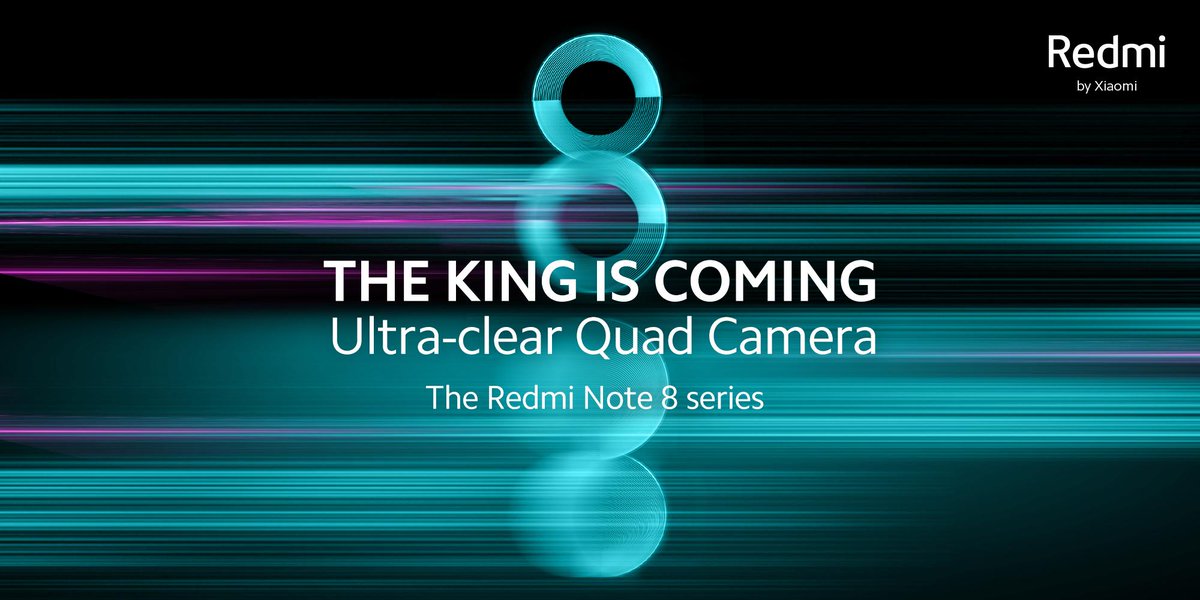
The Redmi Note 8 series will soon get a global release. The official Xiaomi Twitter account already teased the launch a few days ago but is yet to reveal the date.
It appears the launch is close as it has been reported that some European retailers have already listed the devices.
For those curious about the price of the Redmi Note 8 Pro, Sudhanshu Ambhore tweeted that the phone will be available in two variants – 6GB RAM + 64GB which will sell for €259 and 6GB RAM + 128GB which will sell for €289 according to listings by unnamed European retailers.
At the moment, the European price for the Redmi Note 8 is still unknown.
The Redmi Note 8 Pro packs a 6.53-inch FHD+ LCD display with a waterdrop notch. It is powered by the Helio G90T processor which draws power from a 4500mAh battery. It has a 64MP primary rear camera, an 8MP ultrawide angle camera, a 2MP Macro camera, and a 2MP depth sensor. The selfie camera is a 20MP sensor. Other features include a rear-mounted fingerprint scanner, dual-SIM support, MicroSD card slot, NFC, and an IR port. It also supports 18W fast charge and Quick Charge 4+.
The Redmi Note 8 has a smaller 6.3-inch FHD+ display with a notch for a 13MP selfie camera. It is powered by the Snapdragon 665 chipset paired with up to 6GB of RAM and 128GB of storage. Its quad-camera configuration is 48MP + 8MP + 2MP + 2MP. It also has a rear-mounted fingerprint scanner but no NFC. There is a 4000mAh battery under its glass back with support for 18W fast charge. Both phones run MIUI 10 based on Android 9 Pie.
The Realme XT may have just been revealed last week, but the company’s wasting no time getting a Realme XT update out of the door. The RMX1921EX_11_A.10 update improves the camera previews and photo quality of the device. It also updates the device to the latest version of the Android security patch, that being the September patch.
The update is currently rolling out over the air, but it’s likely a staged rollout. Realme does these all the time where they release the update to a small batch of users to see if there are any major issues. If there aren’t any issues, all users should be able to download the new Realme XT update soon enough.
Apart from its high-resolution camera, the Realme XT comes with Snapdragon 712 processor, 4000mAh battery with VOOC 3.0 fast charging. It’s one of the best mid-rangers available on the market right now, especially with its beautiful 6.4-inch Super AMOLED dewdrop display and other impressive features at its price range.
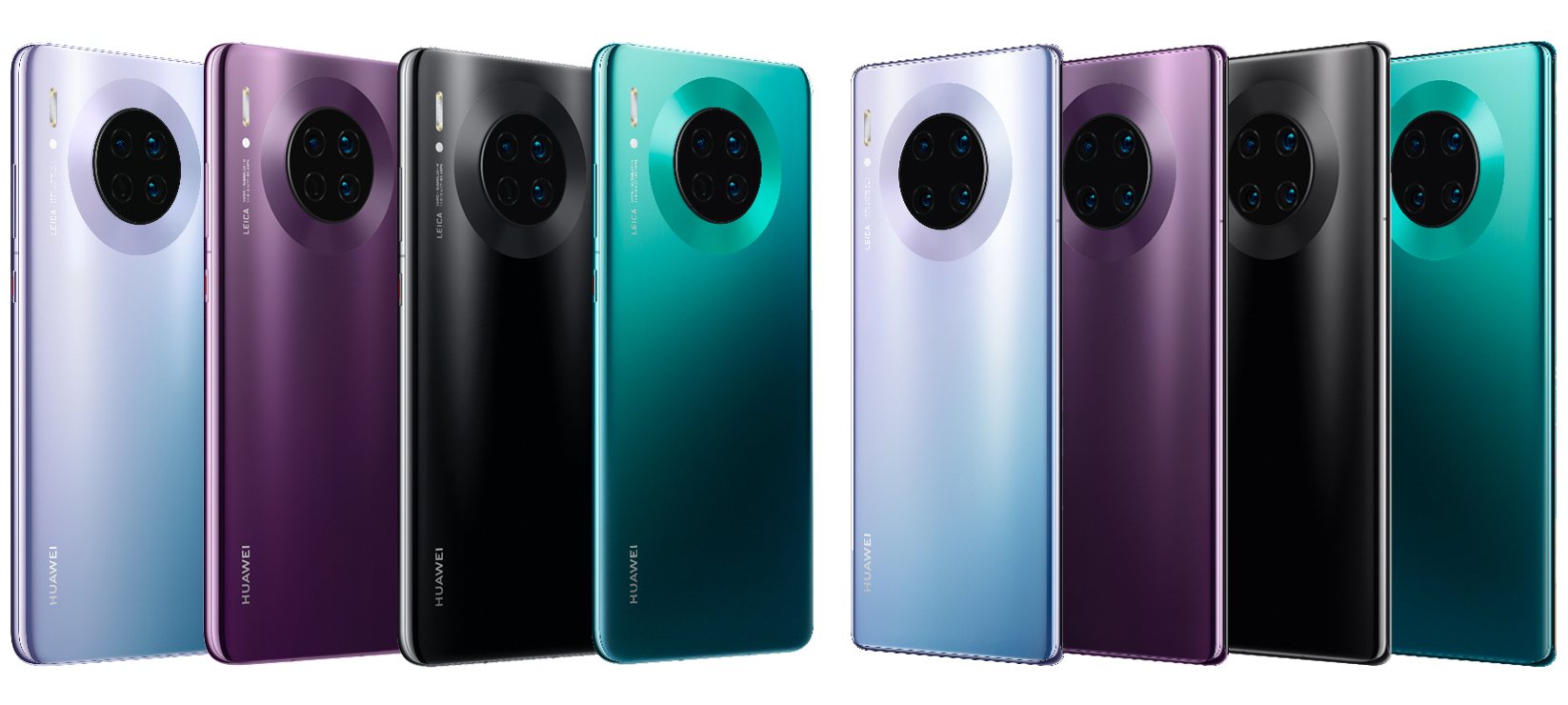
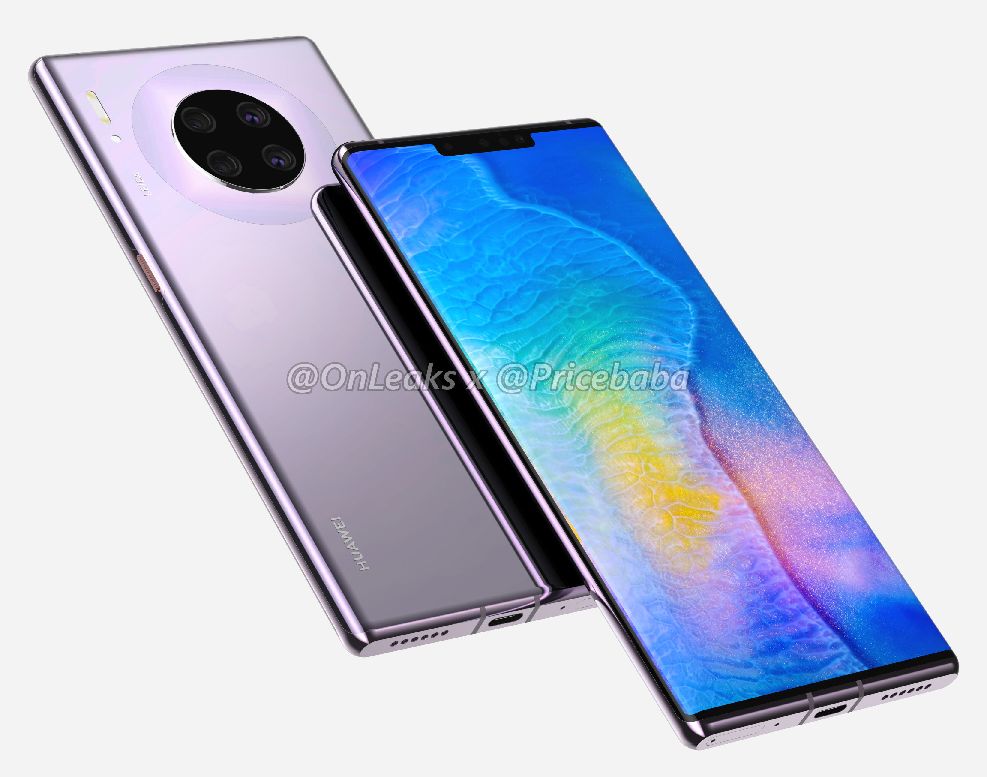
Just two days are separating us from the launch of the Huawei Mate 30 series. The new line-up from the Chinese giant will include four variants: Huawei Mate 30, Mate 30 Pro, Mate 30 RS Porsche Design and Mate 30 Lite. Just like every year, when a new important flagship series is about to launch, a lot of leaks and rumors surface, revealing all the main specifications and features of the upcoming devices. That is why we know almost everything about the Huawei Mate 30 series.
Here is all you need to know about the new line-up ahead of the launch. Given that the Mate 30 Lite will probably be a re-branded Nova 5i Pro for the global market, we will focus on the Mate 30 and 30 Pro.
Mate 30 Lineup by evleaks
Design
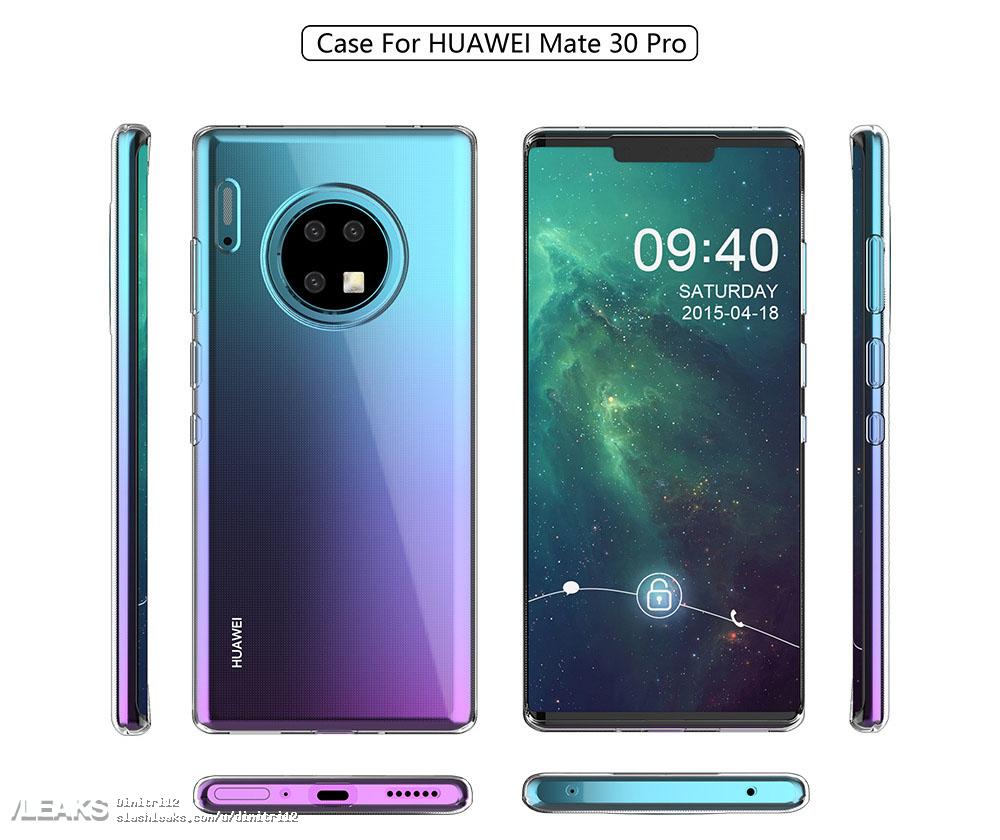
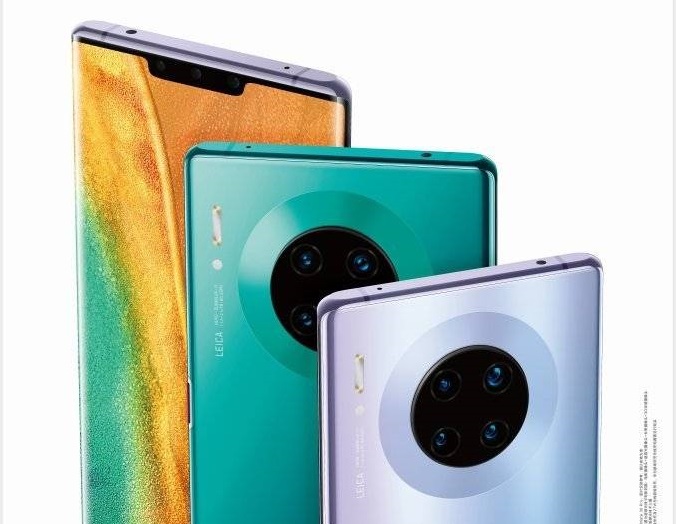
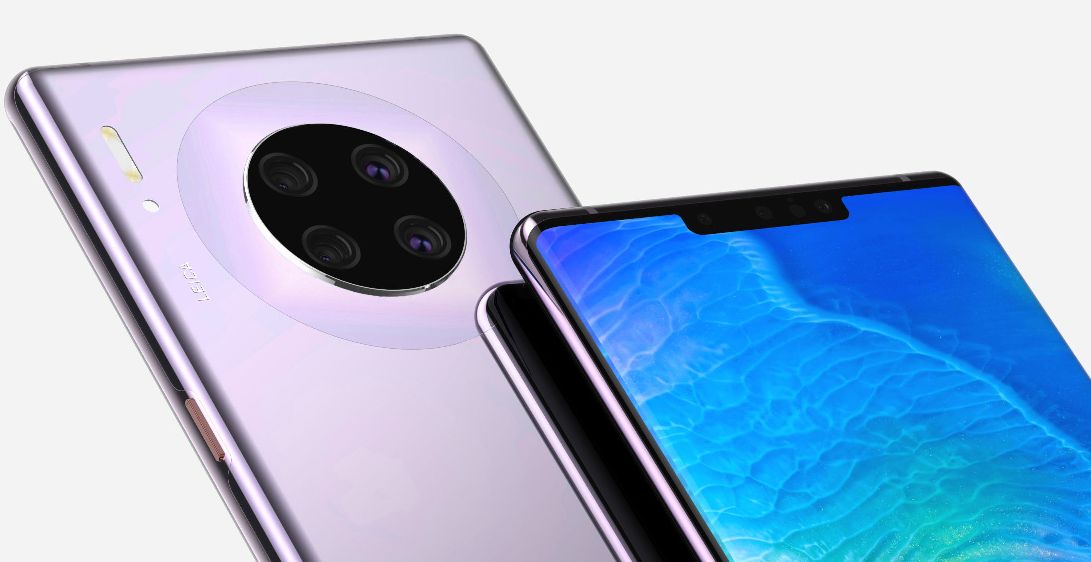
Huawei Mate 30 and 30 Pro will have a brand new design way different from their predecessors from the P30 series. The rear side will house a circular camera module including several sensors, while the front panel will differ depending on the variant. The vanilla Mate 30 will have a classic flat display with a small notch, while the Mate 30 Pro will come with a new waterfall display that will offer side controls. It will be a screen with an extremely curved side and it will include a wider notch housing additional sensors for 3D face unlock.
huawei-mate-30-pro-rendered-by-case-maker
According to the latest renders, there will be four color options at launch: Blue, Black, Purple, and Green. Huawei Mate 30 RS Porsche Design will lack the circular housing for the camera and it will feature a black narrow strip that goes from the top towards the bottom. On at least one of the devices (Mate 30 Pro), there should also be an IR blaster and a volume slider touch bar. Unfortunately, there will be no 3.5 mm headphone jack on the Mate 30 Pro, but the phone will come with IP68 certification for water and dust resistance.
Mate 30 Pro’s expected design
Display
Usually, the Mate series comes with better displays than the P series. But we expect different display quality depending on the variant. Huawei Mate 30 is tipped to come with a lower Full HD+ display resolution, while the Mate 30 Pro should have a Quad HD+ display boasting a 90 Hz refresh ratio. As mentioned above, the Mate 30 Pro will have a different waterfall display panel with a wider notch, and it will include side controls. The screens will obviously include under-display fingerprint readers. LG is said to supply OLED panels to Huawei for the Mate 30 Pro.
Huawei Mate 30 and 30 Pro will be Huawei’s first phones to be powered by the new Kirin 990 chipset. It will be the world’s first SoC to feature an integrated 5G modem and it will also come in a cheaper version with 4G only. The mobile platform is built with a 7 nm+ production process by TSMC. Alongside the Kirin 990, on the Mate 30 Pro, there will supposedly be 8 or 12 GB of RAM depending on the variant and up to 512 GB of internal storage expandable with a microSD. Due to the issues coming from the U.S. ban and Android license by Google, the Huawei Mate 30 series will ship without Play Store and Google apps. The phones will still have Android but it will include third-party alternatives to Google apps running on a bespoke version of Android 10. Obviously, 5G-enabled variants will not be missed, given the 5G capabilities of the Kirin 990 chipset. But expect a higher price.
Camera
Just like most of Huawei’s flagships released in the past few years, even on the new Mate line-up, the camera department will be a key feature. Inside the round-shaped camera housing of the Huawei Mate 30 Pro, there will be four sensors with super slow motion support: two of them will come with a 40 MP resolution.
The first sensor will be a Sony IMX600 with an f/1.6 aperture and optical stabilization, the secondary sensor will be a 40 MP wide cine camera, the third one will be an 8 MP telephoto lens with an f/2.4 focal aperture, and the fourth will be a ToF sensor. The phone is even rumored to sport a Xenon flash and a color temperature sensor. With these specifications, it may be the best camera phone out there.
Battery
Huawei Mate 30 will get a 4200 mAh battery, while the Mate 30 Pro will feature a larger 4500 mAh unit. Both will support 40W fast charging alongside a wireless charging technology reaching a max power of 27W. There should even be reverse wireless charging just like the P30 series.
Unfortunately, there is no information about the prices of the Huawei Mate 30 series. We can only tell you that the Mate 20 Pro had a price of about $1,150 at launch, so expect a similar price tag. Just like Apple did, the company might even decide to decrease the prices as after the U.S. ban its sales dropped and the devices will not feature Google apps. The series may release first in China, then it will expand to other markets.
Huawei Mate 30 Launch Date
Huawei will officially announce the Mate 30 series through an event that will be held in Munich, Germany, on September 19. There is no official confirmation about the arrival of a successor of Mate 20 X (the Mate 30 X). In case you missed it, the Mate 20 X was a bigger variant of the Mate 20 (our review here). It is Huawei’s first smartphone with 5G connectivity to hit the shelves and also the first one supporting a stylus with thousands of pressure levels like Samsung’s Galaxy Note series.
Are you interested in the new line-up? Which device from the Mate 30 series are you waiting for? Let us know in the comment section below.
We use cookies on our website to give you the most relevant experience by remembering your preferences and repeat visits. By clicking “Accept”, you consent to the use of ALL the cookies.
This website uses cookies to improve your experience while you navigate through the website. Out of these, the cookies that are categorized as necessary are stored on your browser as they are essential for the working of basic functionalities of the website. We also use third-party cookies that help us analyze and understand how you use this website. These cookies will be stored in your browser only with your consent. You also have the option to opt-out of these cookies. But opting out of some of these cookies may affect your browsing experience.
Necessary cookies are absolutely essential for the website to function properly. This category only includes cookies that ensures basic functionalities and security features of the website. These cookies do not store any personal information.
Any cookies that may not be particularly necessary for the website to function and is used specifically to collect user personal data via analytics, ads, other embedded contents are termed as non-necessary cookies. It is mandatory to procure user consent prior to running these cookies on your website.