OPPO Vice President Shen Yiren went to Weibo to tease more news regarding the upcoming Oppo Reno 3. While nothing really new has been shown, with do get reaffirmation for previous teasers and leaks. The only bit of new information we’ve received the device’s weight which is rated as 17_g, giving us a rough idea with completely spilling the beans.
As has already been previously revealed, the device is equipped with a 7.7mm chassis with a glass rear. The device is equipped with a 4,025mAh battery that will probably arrive with fast charging support. It will be a dual-mode 5G smartphone that could be powered by the Snapdragon 735 5G chipset.
We also know that the Oppo Reno 3 will be the first device to feature the company’s latest ColorOS 7. The display punch-hole could be housing a 32-megapixel selfie snapper. The rear shell of the phone may house a quad camera setup with a 60-megapixel main lens. The device may come with up to 8 GB of RAM and up to 256 GB of native storage.
Hopefully, the company will also unveil the Reno 3 smartphone alongside the Reno 3 Pro later this month. Most of the 5G phones that are available in China are flagship devices right now, so the influx of lower cost 5G devices like the Reno 3 series, Vivo X30 series, Redmi K30 lineup and Realme X50 powered by mid-range chipsets will finally bring some much needed value and competition to the 5G segment.
Earlier today, Redmi officially announced that the global sales of the Redmi Note 8 series has exceeded 10 million units for 3 consecutive months. To put this into perspective, this means that an average of 110,000 units were sold every day. This is excellent for Redmi, breaking the 10 million sales record a whole month quicker than the Redmi Note 7 did.
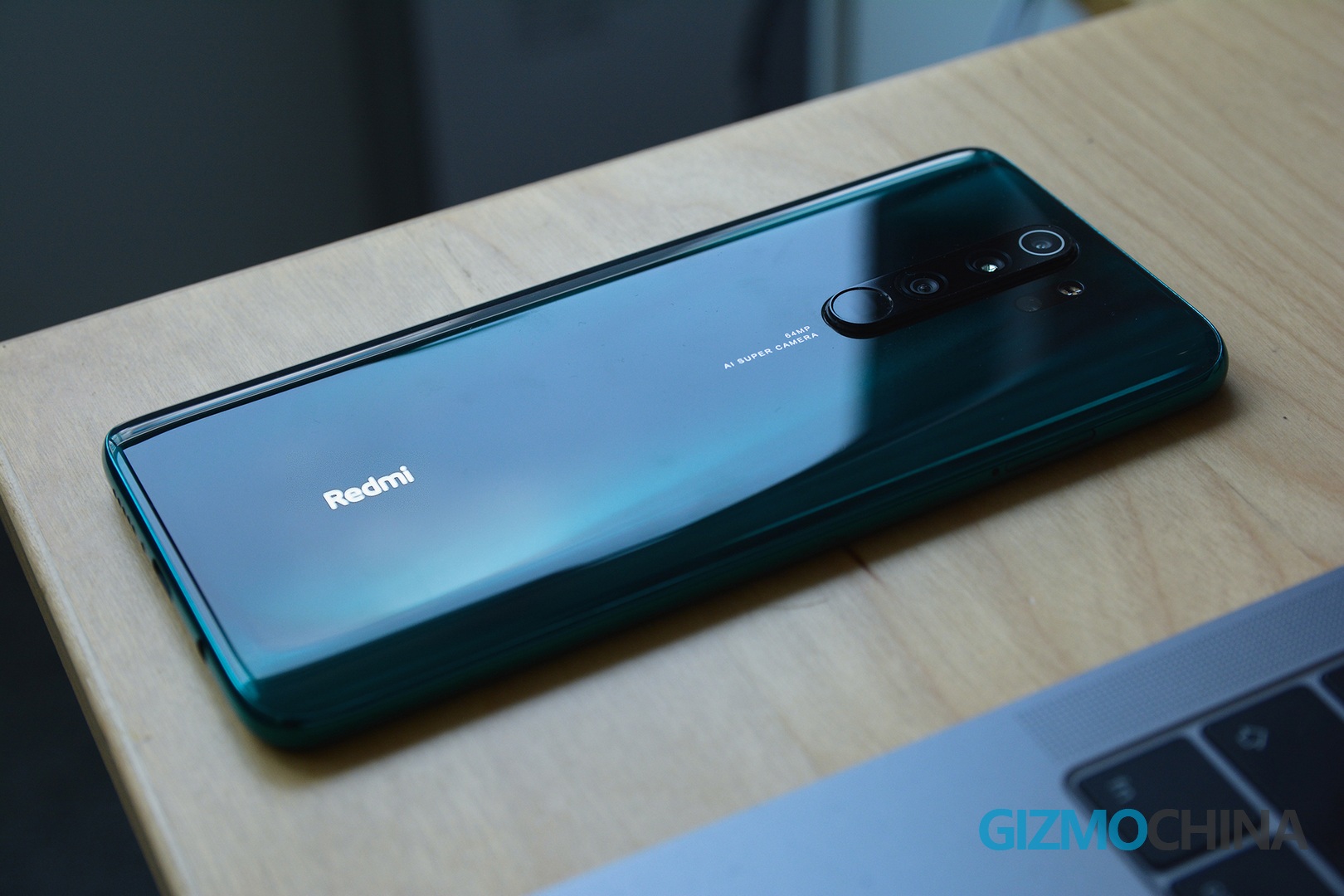
The Redmi Note 8 Pro features a 6.53-inch IPS LCD display with a waterdrop notch. It comes with a Helio G90T processor with 6GB or 8GB of RAM and up to 128GB of UFS 2.1 storage. A 64MP camera sits on the back of the phone along with an 8MP ultrawide camera, a 2MP macro camera, and a 2MP depth sensor. It also features a rear-mounted fingerprint scanner, IR blaster, audio jack, NFC, and a 4500mAh battery with support for 18W fast charge.
On top of that, the Redmi Note 8 comes with a 6.39-inch FHD+ LCD display and Snapdragon 665. There’s a quad-camera setup at the back featuring a 48MP f/1.79 aperture lens, an 8MP 120° wide-angle shooter, a 2MP macro camera and another 2MP depth sensor. It’s an excellent device, and it’s no surprise that it’s doing so well.
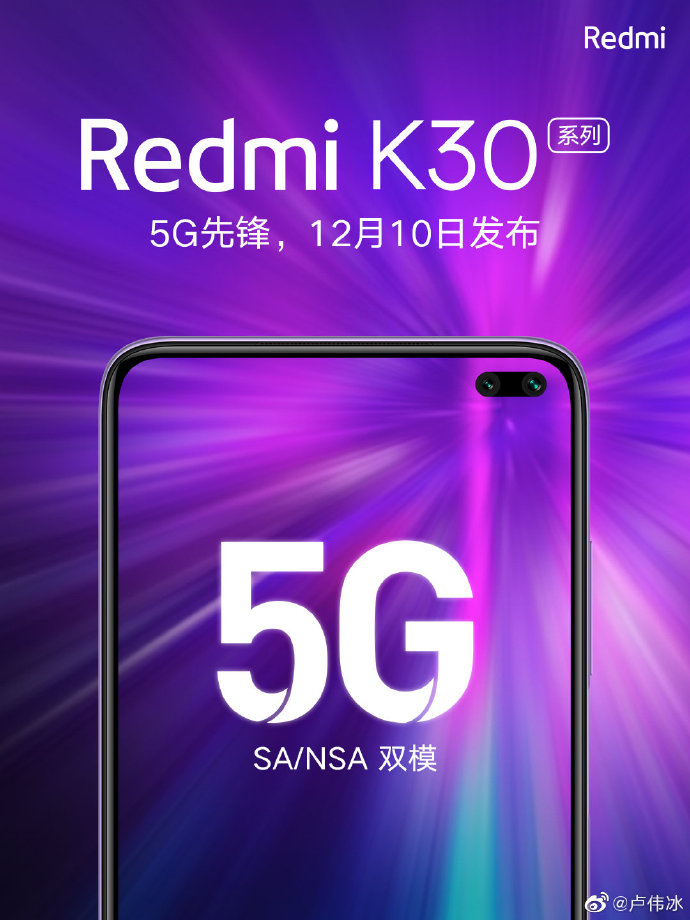
In addition to this, the company also informed that something related to the upcoming Redmi K30 will be announced tomorrow, though we aren’t sure what exactly we’ll see.
We already know that the Redmi K30 will be equipped with a 6.6-inch IPS LCD display with dual punch-hole design. The display of the phone will support 120Hz refresh rate as it was in seen in the leaked shots of the Redmi K30. It will be fueled by Snapdragon 730G processor which is the same SoC that fueled the predecessor Redmi K20 phone, though a possible 5G variant could see the MediaTek Dimensity 1000 chipset.
The pill-shaped punch-hole of the Redmi K30 has a 32-megapixel primary lens that is accompanied by a ToF sensor for 3D face recognition. The rear shell of the phone h a quad camera setup that includes a 60-megapixel Sony IMX686 primary shooter, an 8-megapixel telephoto sensor, a 13-megapixel wide-angle lens and a 2-megapixel sensor.
The new device will include a massive 5,000mAh battery that supports 27W fast charging. The MIUI 11 based Android 10 OS will come preloaded on the device. Other features of the phone include 64GB of internal storage for starting variant, 3.5mm audio jack, IR blaster and NFC.
Vivo U20, a new U-series smartphone from the Chinese brand in the Indian market, was made official a couple of weeks ago. The phone went on sale in India for the first time on 28th November and now it’s up for grab today.
Today, the Vivo U20 smartphone will be available for purchase in India exclusively through online marketplace Amazon and Vivo e-shop, with sale beginning at 12:00 PM IST. The base model with 4GB RAM and 64GB storage is priced at ₹10,990 while the 6GB RAM and 64GB storage model costs ₹11,990. The phone comes in two color options – Racing Black and Blaze Blue.
The smartphone features a 6.5-inch FHD+ 2340 x 1080p IPS LCD screen and a 90.5 percent screen-to-body ratio. Under the hood, the device is powered by Qualcomm Snapdragon 675 chipset.
In the camera department, the device features a triple camera setup on the back consisting of Sony IMX499 16MP primary sensor with f/1.8 aperture while there are two other sensors include a 120° degree 8MP super wide-angle lens and a 2MP macro lens that can shoot objects as close as 4cm.
On the front side, the device features a 16MP selfie camera housed in a waterdrop notch. The company also confirmed support for Widevine L1 certification, so streaming HD content on Netflix and Prime Video apps shouldn’t be an issue. As for the other connectivity features, you get a fingerprint sensor at the back, 4G LTE, Wi-Fi, Bluetooth 5.0, GPS, BeiDou, GLONASS, and Galileo.
The smartphone is running Android 9 Pie operating system out-of-the-box with the company’s own FunTouch OS 9 custom user interface. The device is powered by a 5,000mAh battery that comes with an 18W fast charger right inside the box.
Huawei, despite all bans and problems, is still the world’s 2nd largest smartphone company only behind Samsung in terms of sales. It’s to be expected that with this many shipments, the Chinese giants probably also have a huge amount of devices constantly being manufactured behind the scenes, and a report from Taiwan Times corroborates this.
According to the report, infamous manufacturing and assembly plant Foxconn have received the full order for next year’s Huawei 5G smartphones. Huawei’s apparently ordered more than 50 million units, which is an absolutely massive number for a 5G smartphone considering how 5G devices are still a fairly niche segment of the market.
Smartphone sales have been on the decline for Q3 2019, but Huawei are the sole exception to this. The Chinese giants recorded double-digit sales growth despite the slowing smartphone market, and was the only one of the top-five global smartphone vendors with double-digit growth in smartphone sales in the third quarter of 2019. It’s not hard to see why they’re so confident, they’ve got the numbers to back things up.
Amidst the US-China trade disputes, Huawei is still facing issues with the US Government. The US Government is currently issuing a license for such trade and has received 300 applications. So far, about half have been rejected while the other half have been approved, such as Microsoft supplying Windows 10 OS to their laptops. Things are looking up for Huawei, though we doubt everything will go so smoothly.
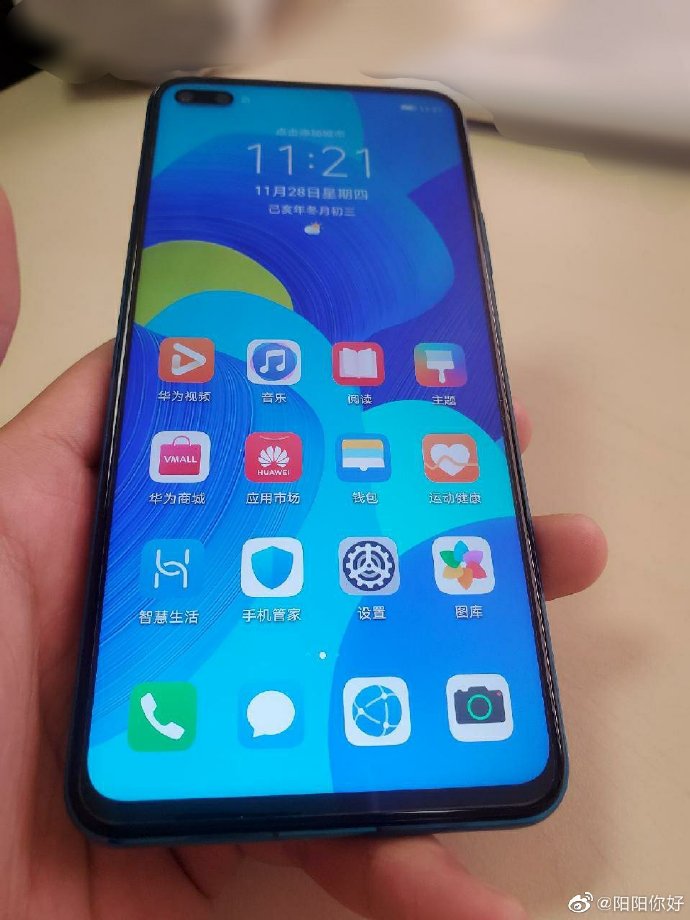
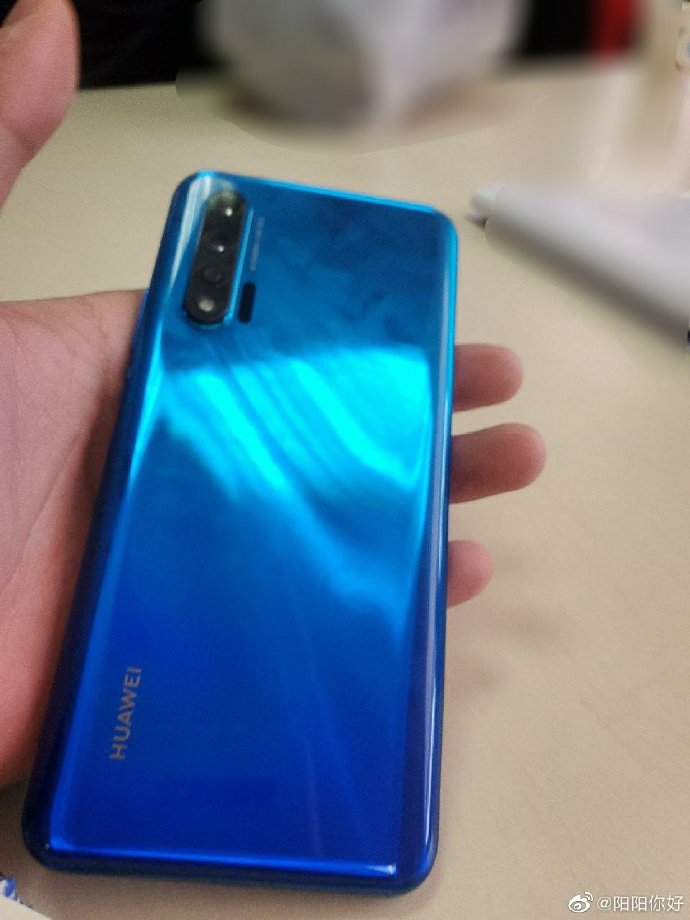
The Huawei Nova 6 5G will debut on Dec. 6 in China. The smartphone is now up for reservations in the home market through the official online store of Huawei i.e. Vmall. The official listing has not only revealed the render of the Nova 6 but also confirmed that it will be available in 4G and 5G editions. A few hands-on images of the Huawei Nova 6 5G smartphone has appeared on Weibo to reveal its appearance in real.
As it can be seen, the new images show the blue colored edition of the Huawei Nova 6 5G. The front side of the device features a notch-less display that has a pill-shaped cutout for two front-facings at the upper-left corner. With a slightly thick chin, the smartphone seems to offer a good screen-to-body ratio.
1 of 3
The right side of the Nova 6 5G features a volume rocker followed by a power key that is integrated with a fingerprint scanner. The glass rear of the phone features a vertical triple camera setup that houses three lenses. There seems to be a module with a 3D ToF sensor and a laser autofocus alongside the vertical camera strip.
The Vmall appearance of the Huawei Nova 6 5G has revealed that it will come in four color options such as Black, Blue, Purple-Blue gradient and Red model that has Nova 6 imprinted on the back. The Nova 6 is expected to arrive with a 6.57-inch IPS LCD display hat offers full HD+ resolution. The dual front-facing camera setup is expected to include an autofocus enabled 32-megapixel main lens with 105-degree field-of-view. The rear shell of the phone is rumored to be equipped with a Sony IMX686 60-megapixel quad camera setup.
The Huawei Nova 6 will be fueled by Kirin 990 chipset along with Balong 5000 5G modem for 5G connectivity. The device is expected to house a 4,000mAh battery that may arrive with support for 40W fast charging. Rumors surrounding the phone have claimed that it will be available in variants such as 8 GB RAM + 128 GB storage, 8 GB RAM + 256 GB storage and 12 GB RAM + 256 GB storage. These models could be respectively priced at 3,499 Yuan (~$497), 3,799 Yuan (~$539) and 4,099 Yuan (~$582).
Xiaomi, one of the leading smartphone brands from China, which has now expanded its operations far beyond smartphones, has made some major changes in its organization, especially related to the company’s executives.
One of the founders of the company and Senior Vice President, Li Wanqiang, confirmed that he is departing from the company. Three other executives — Lin Bin, Wang Xiang, and He Yong were promoted while two executives Zhou Shouzi and Lu Weibing were moved to important business lines for rotation.
Explaining these major organizational changes, Lei Jun, Founder and CEO of Xiaomi said that the company needs more powerful group management support and the organizational innovation is the reason behind rotation mechanism. He believes that this is necessary as the company gears up for the next year, which the company is considering crucial because of the growth in 5G and AIoT areas.
As for the departure of Li Wanqiang, one of the founders of Xiaomi, Lei Jun expressed gratitude and thanked him for his long-term contributions since the company’s founding. He led several projects at the company, including MIUI, Xiaomi.com, Xiaomi Brand Market System, and some other businesses. This led to indelible contributions in many areas such as business model verification and implementation, corporate culture and brand building.
Xiaomi recently revealed its financial report for the third quarter of this year (Q3 2019). The company reported total revenue of 53.7 billion yuan, a record high and an adjusted net profit of 3.5 billion yuan, which has exceeded market expectations.
The company currently ranks fourth in terms of smartphone market share in the world and the company has been performing extremely well in the international markets. In the Indian market, it is dominating the market since past few quarters and the company’s shipments in Western European market has increased by 90.9 percent year-on-year.
Vivo Y9s is the latest Y-series phone to debut in China. It is the rebranded version of the Vivo S1 Pro that was recently launched in Southeast Asian markets. The same phone is now available in Russia as Vivo V17. With a price tag of 1,998 Yuan (~$284), the Vivo Y9s is a decent smartphone offering in-display fingerprint scanner enabled display, Snapdragon 665, 48-megapixel quad cameras and a large-sized battery with fast charging support.
Vivo Y9s Specifications and Features
The Vivo Y9s has a 6.38-inch Super AMOLED display with waterdrop notch. It offers full HD+ resolution of 1080 x 2340 pixels and 19.5:9 aspect ratio. The smartphone delivers a screen-to-body ratio of 90 percent. The display of the phone is integrated with an in-screen fingerprint reader.
Vivo Y9s
The Snapdragon 665 is at the helm of the Vivo Y9s. The SoC is coupled with 8 GB of RAM. The internal storage of the device is 128 GB and there is a microSD card slot onboard for additional storage. There is a 4,500mAh battery packed inside the Vivo Y9s. It is equipped with support for 18W dual-engine fast charging through USB-C. The FunTouch OS 9 based Android 9 Pie OS runs on the Vivo Y9s. Vivo’s Multi-Turbo system assist in optimizing the overall performance of the phone. It also comes with Jovi AI features.
The Vivo Y9s has a frontal shooter of 32-megapixel. The rear shell of the phone features quad cameras system arranged a diamond shaped module. It comprises of an f/1.8 aperture 48-megapixel Samsung GM1 main lens, an 8-megapixel ultrawide lens with f/2.2 aperture, a macro lens of 2-megapixel with f/2.4 aperture and a 2-megapixel depth sensor with f/2.2 aperture. The usual connectivity features such as dual SIM support, 4G VoLTE, Wi-Fi 802.11ac, GPS, USB-C and 3.5mm audio jack are also available on the phone.
Vivo Y9s Price and Release Date
The Vivo Y9s comes in a single option of 8 GB RAM + 128 GB storage. It is priced at 1,998 Yuan (~$284). The smartphone will be available for purchase in China from Dec. 6 It is now for pre-orders in three color variants such as Glazed Black, Nebula Blue and Symphony of Light.
In our fast-paced lifestyles, we hardly find time to spend with our loved ones so spending your time cleaning your house is probably the last thing you want to do on your weekly offs. Nevertheless, we cannot deny the fact that keeping your home clean and tidy is extremely important.
Thankfully, the market is teeming with all sorts of high-end robot vacuum cleaners that are capable of efficiently cleaning the house without requiring a lot of your effort. On the downside, these robots aren’t easy on the pocketbook.
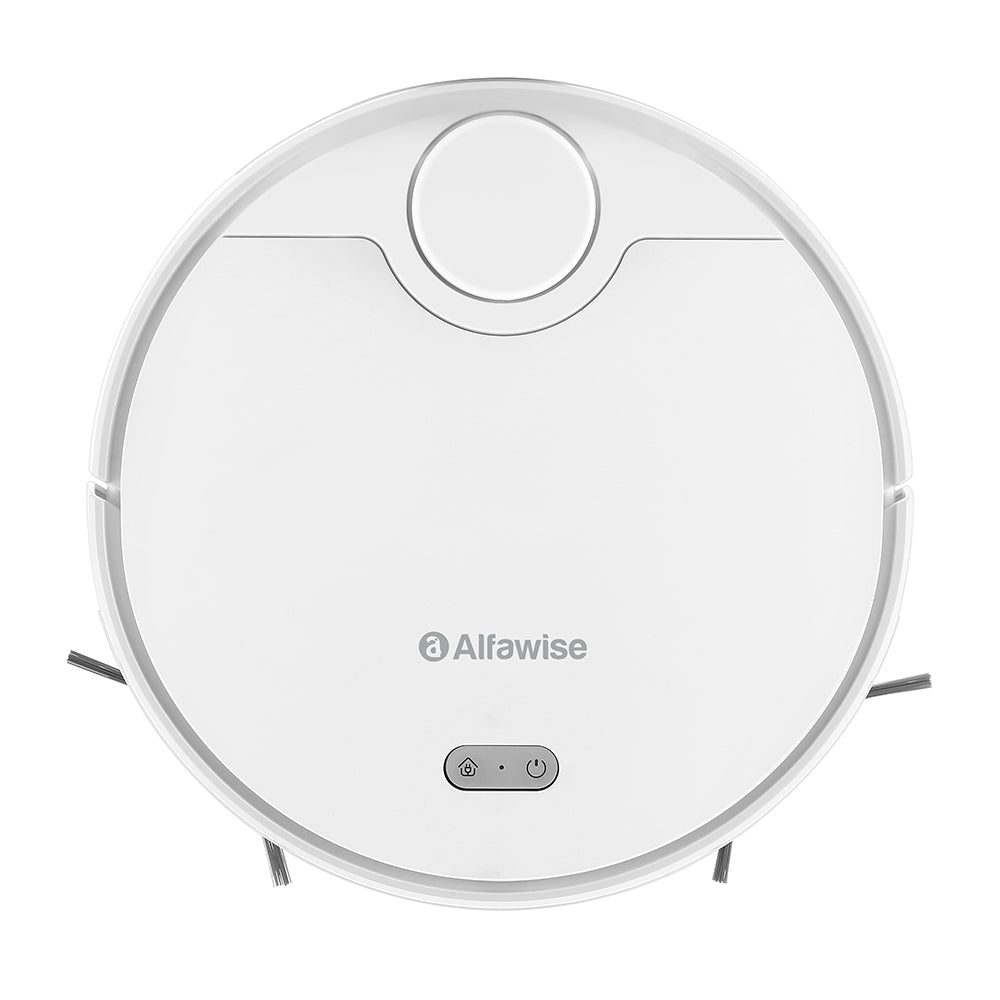
If you are looking for an inexpensive robot vacuum cleaner that doesn’t disappoint in terms of performance, you might want to check out the Alfawise V10 Max Laser Navigation Robot Wet and Dry Vacuum Cleaner. The V10 Max has gone up for sale bearing a lowered price on Gearbest.
We will talk about the aforesaid discount and even show how you can save a considerable amount of more money at the time of checking out. So without wasting more time, let’s dive straight into the details.
Alfawise V10 Max Laser Navigation Robot Wet and Dry Vacuum Cleaner
The feature-laden Alfawise V10 Max understandably carries a $319.99 price tag, but you can now buy it for a lowered price of just $259.99 from Gearbest. On top of that, you can even extend this 19 percent discount with the help of coupon code ALFAV10MAX.
The aforesaid coupon helps you save $40 more. In other words, you can bring the already lowered asking price of the Alfawise V10 Max Laser Navigation Robot Wet and Dry Vacuum Cleaner further down to just $219.99 simply by applying the aforesaid coupon at checkout.
As if that weren’t enough, you get an Alfawise PE1004T Smart Plug worth $10.76 absolutely free with your purchase. An absolute steal at this price, the Alfawise V10 Max is designed to scan the entire room using laser ranging, along with 360° radar to determine an accurate a real-time map and mark obstacle areas with SLAM algorithm.
Furthermore, it comes with a 450ml large capacity water tank with precise electronic pump control. Aside from that, it has three- speeds regulation. It ensures uniform seepage water and faster drying.
The Alfawise V10 Max laser smart robot vacuum cleaner stops flowing water while charging for a real intelligent cleaning that doesn’t require you to waste a lot of time manually adjust the settings.
You can follow this link to grab the discount and other offers available with the Alfawise V10 Max Laser Navigation Robot Wet and Dry Vacuum Cleaner on Gearbest. With more than 300 pieces sold at the time of writing, the promo is slated to end in seven days.
Samsung’s hotly-anticipated Galaxy S11 series of smartphones comprising the S11 has been floating around the rumor mill for a long time. Moreover, the phone has been subject to several speculations and multiple leaks.
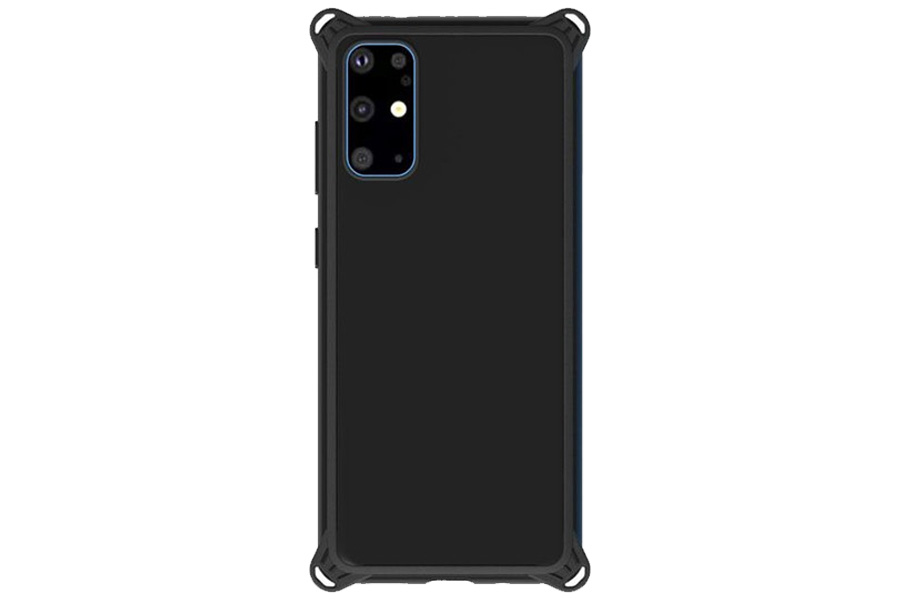
The South Korean handset maker is slated to take the covers off the S11 series of phones in February next year, but you can already get your hands on the Synic Rugged Armor Case for your Samsung Galaxy S11 from Giztop for just $0.59. The carbon fiber case is made using high-quality TPU (thermal plastic polyurethane) material, which makes it a perfect choice for protecting your phone from all sides.
The case adopts wiredrawing technology. The inside of the case is complemented with a spiderweb pattern. Furthermore, it uses air cushion technology to make sure all corners can absorb the shock and withstand impacts if you accidentally drop your phone.
The highly flexible Synic Rugged Armor Case is shockproof, scratch-resistant, waterproof, and fingerprint resistant. In other words, it not only protects your phone from accidental scratches, but it also gives it a stylish look, thanks to its exquisite design.
Moreover, it snugly fits around the Galaxy S11, preventing dust from entering inside the buttonholes. As a result, the button’s lifespan gets increased. You can follow this link to get your hands on the Synic Rugged Armor Case For Samsung Galaxy S11 from Giztop. The Synic Rugged Armor Case is available in a black transparent color option.
The Xiaomi Smart Rubik Cube has gone up for pre-order bearing a reasonable price tag of just $22.99 on Giztop. Let’s check out more details.
Aside from manufacturing top-end mobile devices, Xiaomi makes a wide range of other equally high-end products in collaboration with the Mi Ecosystem companies. The Smart Rubik Cube is one of such unique products from the Chinese electronics giant.
You can use the Xiaomi Smart Rubik Cube App to calculate the reduction steps within 30 steps. Beginners can use the 3D dynamic graphics teaching, guide for step by step instructions. It even notifies the user when wrong.
Xiaomi Smart Rubik Cube App intelligently determines a new route and restores the Rubik’s cube instantly. The app features nine different gaming levels, each with a different level of difficulty. The Xiaomi Smart Rubik Cube adopts a magnetic positioning design, which can be tied with the racing structure design to make sure it doesn’t get stuck or fall apart.
The Xiaomi Smart Rubik Cube draws its juices from a built-in replaceable coin cell battery. It uses a low power consumption design to ensure longer battery life. Equipped with a six-axis sensing system, the Rubik cube is capable of automatically capturing every rotation and color change.
You can achieve real-time data synchronization simply by connecting the device with your smartphone via Bluetooth. Aside from that, you can pair the Xiaomi Smart Rubik Cube with the MIJIA app and connect it with any home devices using Bluetooth 5.0. When paired, you can turn the Xiaomi Smart Rubik Cube to control the smart home products.
You can visit this link to check out more details about the Xiaomi Smart Rubik Cube and place your pre-order from Giztop. Note that the estimated delivery for the Xiaomi Smart Rubik Cube is set for the early of December.
GeekBuying’s Black Friday Sale is on the verge of coming to an end. If you still haven’t taken advantage of the great discounts the Chinese e-tailer is currently offering on various products, now’s the time.
The GeekBuying Black Friday Sale activity page is loaded with a wide range of amazing products across various categories including smartphones, laptops, smart home devices, consumer electronics, and RC drones just to name a few. More importantly, the products gracing the Black Friday Sale promotion page are all available for considerably reduced prices during this activity period.
With the promo page featuring thousands of products, finding the best deal on your favorite item can prove to be a backbreaking task. To simply and expedite the search process, GeekBuying has split these heavily discounted products into specific categories.
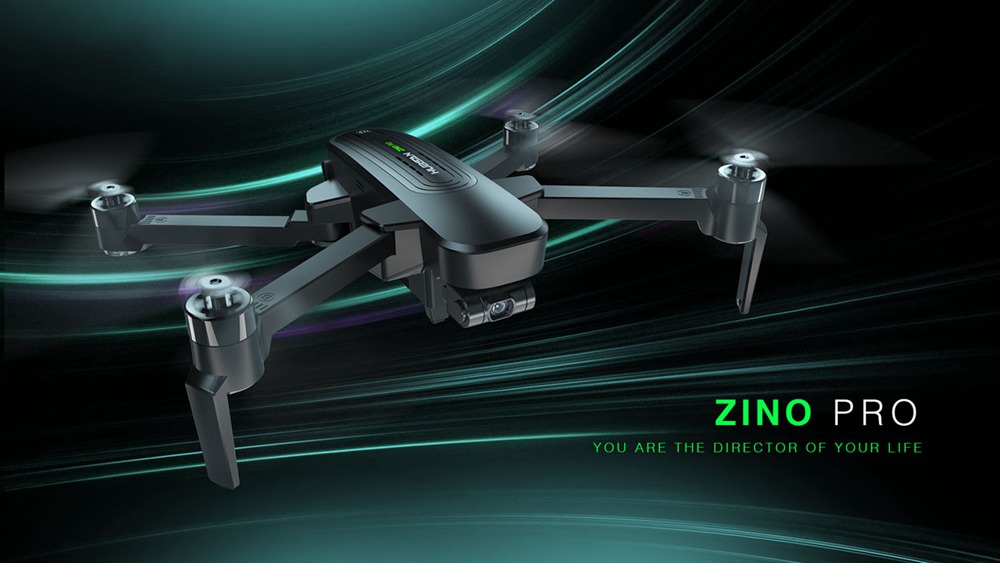
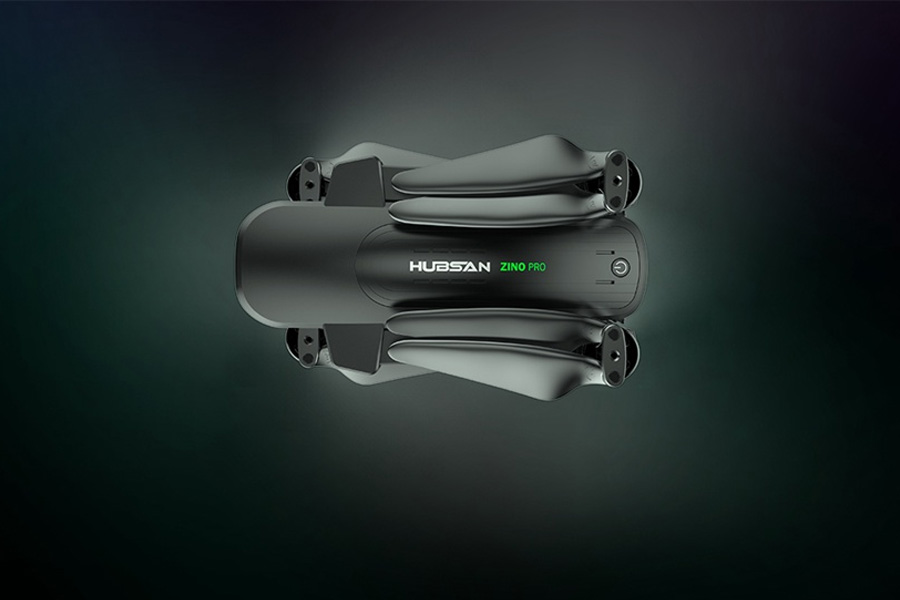
Today, we would be talking about the discounts you can get on two different versions of the Hubsan ZINO PRO RC drone, which are placed under the Drones & RC Toys category on GeekBuying’s Black Friday Sale promo page. Moreover, we will even show how you can save more money at the time of checking out.
Hubsan ZINO PRO RC Drone [Portable Three Batteries Version]
The Hubsan ZINO PRO RC Drone portable three-battery version would normally set you back a pretty penny, but GeekBuying is offering it for a lowered price of just $ 399.99. This is a noteworthy 15 percent reduction in the drone’s original asking price of $469.99.
On top of that, you can save $60 more simply by applying coupon code 43FB0JAZ at the time of checking out. As a result, the retail price of the Hubsan ZINO PRO RC Drone reduces to only $399.99 even before you click the ‘Place Your Order’ button.
If you are a new user, you can take advantage of the 2% OFF New User Coupon and save more money. To avail of the discount and use the coupon, follow this link. Note that the promo is slated to end in just 1 day.
Hubsan ZINO PRO RC Drone [Portable Two Batteries Version]
The portable two-battery model usually retails for $459.99, but much to the relief of cost-conscious drone enthusiasts who aren’t willing to spend that kind of money on a drone, GeekBuying is currently offering it for a reduced price of just $379.99. Moreover, you can extend this 17 percent discount with the help of coupon code 43FB0JAZ.
The aforesaid coupon enables you to grab an extra $60 off. In other words, you can bring the already lowered asking price of the drone further down to only $379.99 during the checkout process. There’s a 2% OFF New User Coupon for those placing their first order with GeekBuying.
You can visit this link to avail of the discount and the other offers. It is worth noting that the promo will end in just 1 day.
The Hubsan ZINO PRO RC drone enables you to capture memorable moments. It offers 4K Ultra HD output with 3840×2160 pixels, 30FPS. It has a maximum bit rate of 60Mbps and packs an Ambarella A12S processor under the hood.
A great choice for 180-degree panorama photography, the Hubsan ZINO PRO RC drone has a removable lens and can be outfitted with ND4/ND8/ND16/ND32 filters. It uses an image transmission system LEAS 1.0 for delivering a maximum signal range of 4Km.
Don’t forget to check out the promotion page for more details about the amazing Hubsan ZINO PRO RC drone and place your order through GeekBuying for great discounts.
Gearbest is touted as one of China’s best online stores when it comes to buying electronic items at unbeatable prices.
It is highly recommended that you visit Gearbest for great discounts and unmissable deals on mobile phones, vacuum cleaners, TV boxes, projectors, RC drones, and numerous other high-end electronic products. Today, we would be talking about the discounts Gearbest is offering top-end projectors and how you can save more money at checkout while placing your order.
Xiaomi Mijia Laser Projector
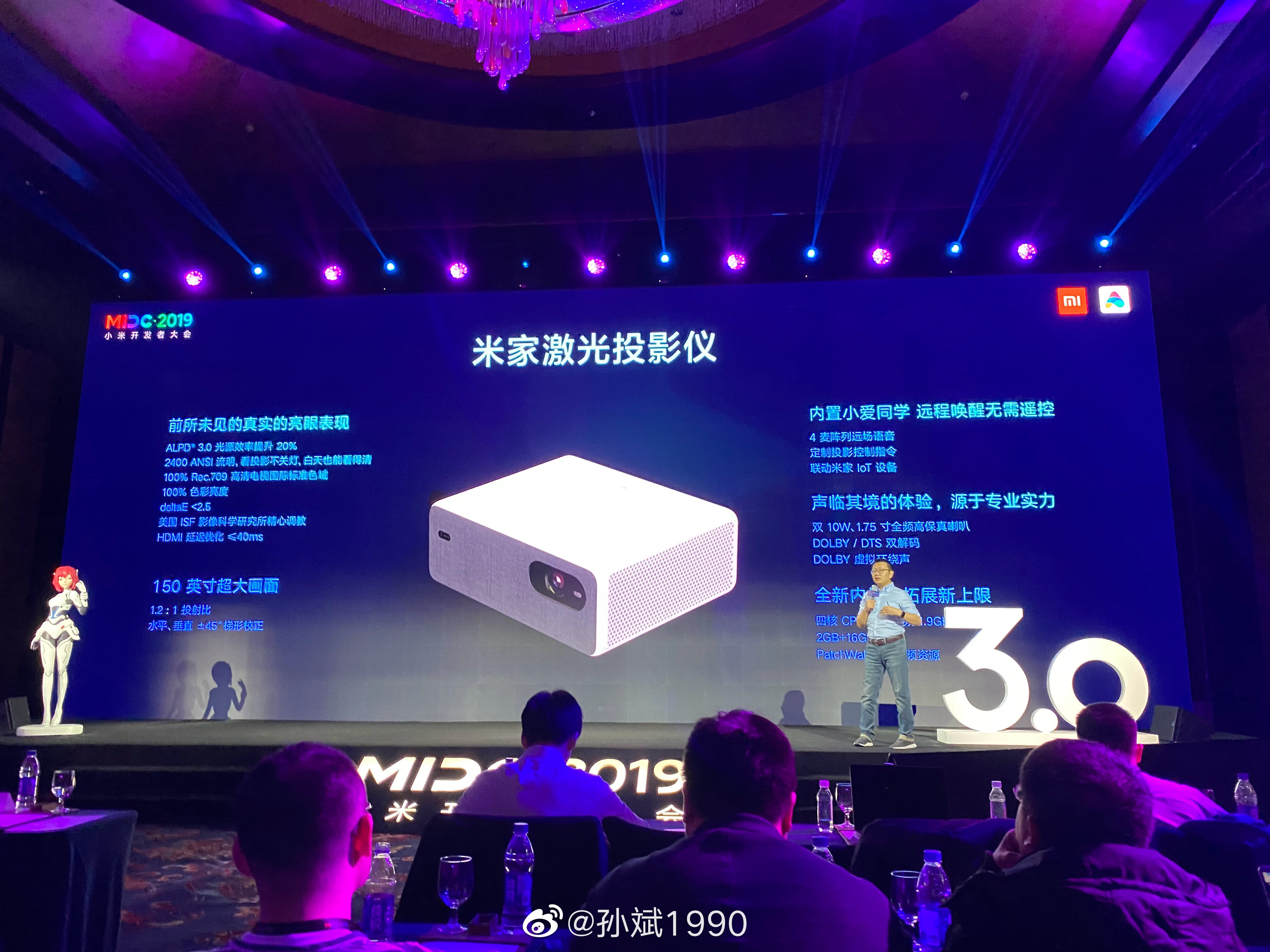
Touted as the world’s first ultra-short projector, the Mijia Laser Projector adopts the advanced laser display (ALPD) technology, which enables it to delivers up to 150 inches of full HD quality images is 50cm, with an ultra-long product life of up to 25,000 hours. For user-friendly design goals, the device uses a compact, minimalist “box” design language without compromising on host and Bluetooth remote control design style consistency.
You’d normally end up shelling out $$1456.21 for the Xiaomi Mijia Laser Projector, but Gearbest is giving you a chance to purchase it for a reduced price of only $1177.99. As part of this flash sale, Gearbest has already sold more than 40 pieces and the promo is slated to expire in two days.
To ensure you do not end up missing this opportunity, simply follow this link without wasting time. Note that the discount will be valid for the white-tinted, English version of the Xiaomi Mijia Laser Projector.
The WEMAX ONE PRO FMWS02C produces 150-inches of high-definition quality of images in 50cm and has an impressive product life of 25,000 hours. It can be operated using a voice assistant from any corner of the room. There is a slew of other interactive ways that ensures a superior visual experience.
Gearbest is doling out a noteworthy 27 percent off on the WEMAX ONE PRO FMWS02C laser projector that normally carries a steep price tag of $2300.06. Thanks to the aforesaid discount, you can now purchase the Mirror Black color version of this laser projector for a lowered price of just $1679.99.
On top of that, you can apply coupon code GBONEPROBJ for an extra $31 off. In other words, by applying the aforesaid coupon, you can bring the already lowered retail price of the laser projector further down to only $1648.99.
You can follow this link to place your order and take advantage of the coupon before it expires. With twenty pieces sold at the time of writing, this promo will come to an end in two days.
There’s an 11 percent off on the XGIMI XK03S MoGo Pro 4K Projector, which normally retails for $671.01. As a result, the original selling price of the projector has reduced to only $598. Gearbest is also offering $50 off on orders over $500.
Crafted for those who fancy watching their favorite movies on the go, the XGIMI XK03S MoGo Pro is the world’s first 1080p Android TV portable projector that comes with a built-in Harman/Kardon dual speakers and is backed by a high capacity battery to ensure you get your dose of entertainment wherever you are.
You can follow this link to check out more details about the XGIMI XK03S MoGo Pro 4K Projector and place your order. This discount is valid for the white color version of the projector for a short period of time.
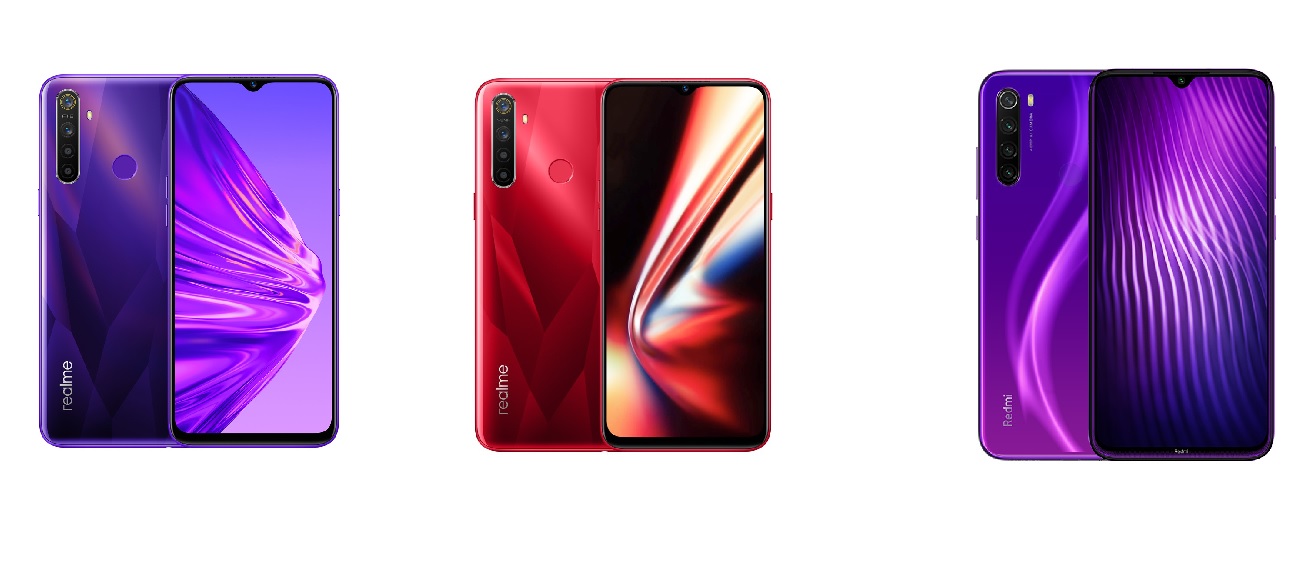
For anyone on a search for a mid-range phone, there are several options to choose from, especially if you reside in India and if your budget is just INR 10,000 (~$139). Realme and Redmi (Xiaomi) are the two manufacturers ruling this category, so you most likely will end up with a phone from either of the two brands.
For this week’s poll, we are asking our readers which of the following three devices they will purchase if they have INR 10,000 to buy a new phone. Is it the Realme 5 with its massive 5000mAh battery, the Realme 5s which adds a 48MP camera to its quad-camera setup, or the Redmi Note 8 with its FHD+ display and support for 18W fast charging?
So, please do take the poll and also drop a comment telling us the reason(s) for your choice.
Huawei launched a brand new flagship killer: Honor V30. At a very modest price, it offers incredibly powerful hardware and a complete specs sheet. But Huawei actually has to compete with two other Chinese manufacturers in the affordable high-end phone segment: Xiaomi and Oppo. The former recently launched the Mi Note 10 with an amazing camera department, while the latter came up with the Oppo Reno2. All of these devices are focused on the quality-price ratio and they are among the most wanted phones for people who cannot afford the most expensive flagship. Here is a comparison between their specifications.
Huawei Honor V30 vs Oppo Reno2 vs Xiaomi Mi Note 10: Specs Comparison
Huawei Honor V30
Xiaomi Mi Note 10
Oppo Reno 2
DIMENSIONS AND WEIGHT
162.7 x 75.8 x 8.9 mm, 213 g
157.8 x 74.2 x 9.7 mm, 208 grams
160 x 74.3 x 9.5 mm, 189 g
DISPLAY
6.57 inches, 1080 x 2400p (Full HD+), IPS LCD
6.47 inches, 1080 x 2340p (Full HD+), Super AMOLED
Triple 40 + 8 + 8 MP, f/1.8, f/2.4 and f/2.4
Dual 32 + 8 MP f/2.0 and f/2.2 front camera
Penta 108 + 5 + 12 + 20 MP, f/1.7, f/2.0, f/2.2 and f/2.4
32 MP f/2.0 front camera
Quad 48 + 13 + 8 + 2 MP, f/1.7, f/2.4 and f/2.2
16 MP f/2.0 front camera
BATTERY
4200 mAh, fast charging 40W
5260 mAh, fast charging 30W
4000 mAh, fast charging 20W with VOOC Flash Charge 3.0
ADDITIONAL FEATURES
Dual SIM slot
Dual SIM slot
Hybrid Dual SIM slot
Design
When it comes to the design it is all a matter of tastes, but I personally think Oppo Reno2 is superior. It has a more original glass back and a full borderless display without a notch or other interruptions. The phone features a shark fin pop-up camera which makes notches and holes unnecessary so that the phone can provide a full borderless experience. Oppo Reno2 also comes with a high builds quality, including a Gorilla Glass 5 back, a Gorilla Glass 6 front glass, and an aluminum frame. Xiaomi Mi Note 10 and Honor V30 still provide a very elegant look: the first has a great curved edge-to-edge display, while the second has a punch-hole display and a very modern form factor.
Display
The most convincing display is the one of the Xiaomi Mi Note 10. First of all, it is able to provide a higher image quality, thanks to the HDR10 technology and DCI P3 coverage. It even provides very high brightness with a peak of 600 nits. Right after, there is Oppo Reno2 with a still flawless AMOLED display, but it does not support HDR that is why we put it in second place. Honor V30 has a classic IPS display like the ones you can find on most mid-rangers.
Hardware/Software
While both Oppo Reno2 and Xiaomi Mi Note 10 have midrange-class hardware, Honor V30 is actually a flagship. It is fueled by the latest Huawei’s flagship chipset: Kirin 990. And it even supports 5G connectivity. Alongside the chipset, there are up to 8 GB of RAM and up to 256 GB of internal storage. Xiaomi Mi Note 10 and Oppo Reno 2 are both powered by the Snapdragon 730G, but only the Oppo Reno2 has an 8/256 GB configuration, while the Mi Note 10 only comes with 6 GB RAM and 128 GB of native storage.
Camera
Xiaomi Mi Note 10 is the king of camera phones. We believe its 108 MP penta-camera currently has only one rival, and it is not the Honor V30 and neither the Oppo Reno2. The camera department of the Xiaomi Mi Note 10 includes OIS and 5x optical zoom, as well as a dedicated macro camera and an ultrawide sensor. While Xiaomi Mi Note 10 wins the rear camera comparison, Honor V30 offers a better selfie setup with a 32 + 8 MP dual camera and wide angle. Oppo Reno2 is still an amazing camera phone, but its photo quality does not reach the Xiaomi Mi Note 10.
Battery
Xiaomi Mi Note 10 packs a mammoth 5260 mAh battery and it lasts up to three days on a single charge. It is the winner of the battery comparison, while Honor V30 and Oppo Reno2 offer a similar battery life with their 4200 and 4000 mAh units, respectively.
Price
Honor V30 made its debut in China with a €430/$474 price tag (it will go global in 2020), Xiaomi Mi Note 10 starts from €599/$660 globally but it is easy to find it at €450 thanks to online street prices, while Oppo Reno2 costs €499/$550. Overall, Xiaomi Mi Note 10 is the best phone if you are searching for the best camera and longest battery life, while Honor V30 has superior performances and offers 5G. Oppo Reno2 offers better aesthetics and still great cameras. Which one would you pick?
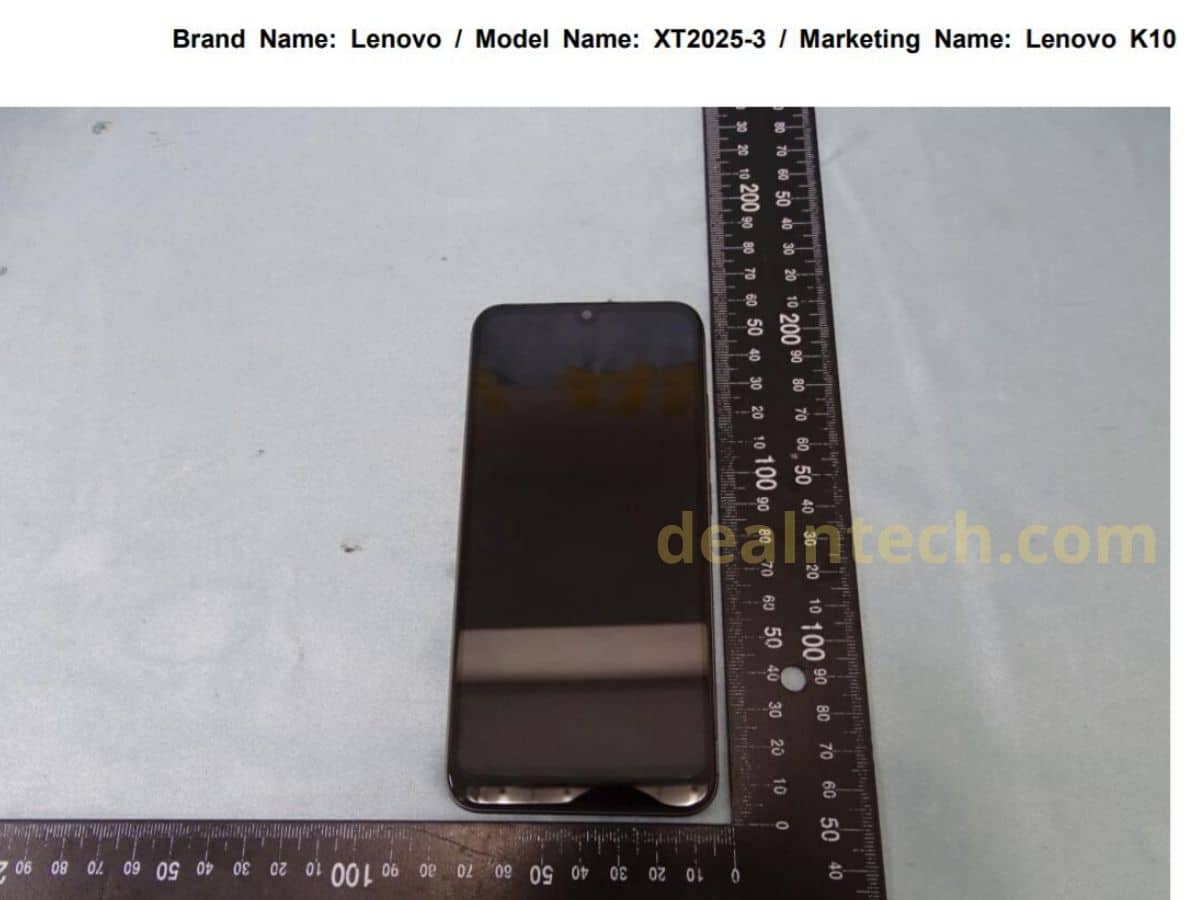
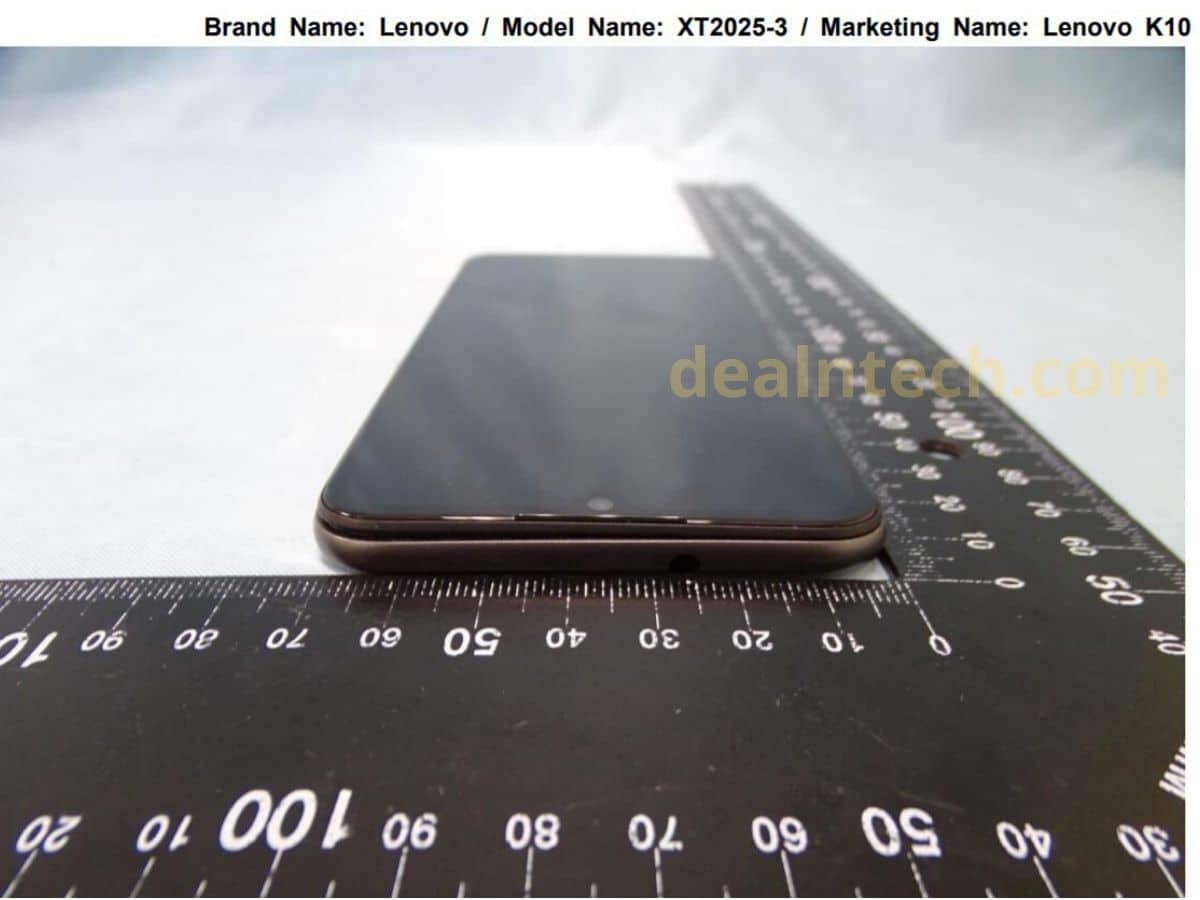
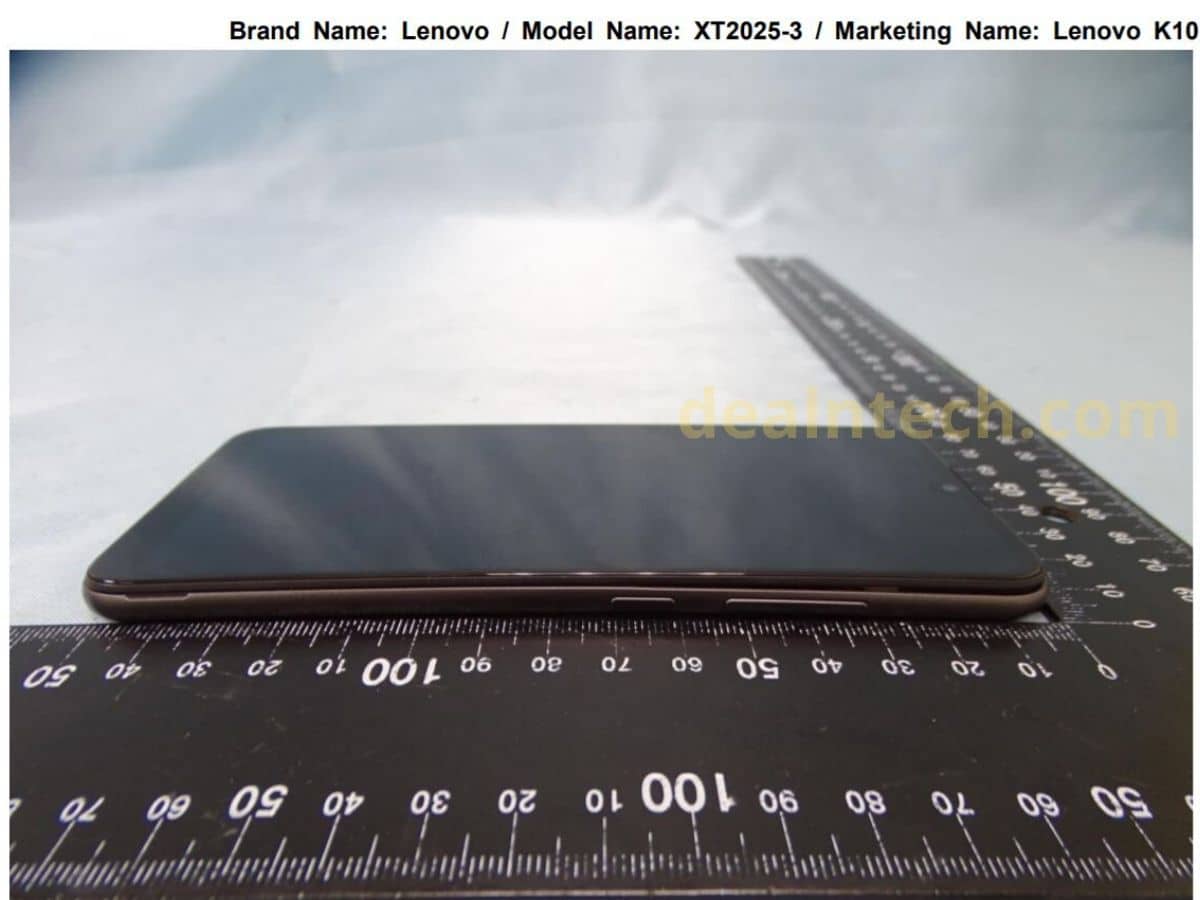
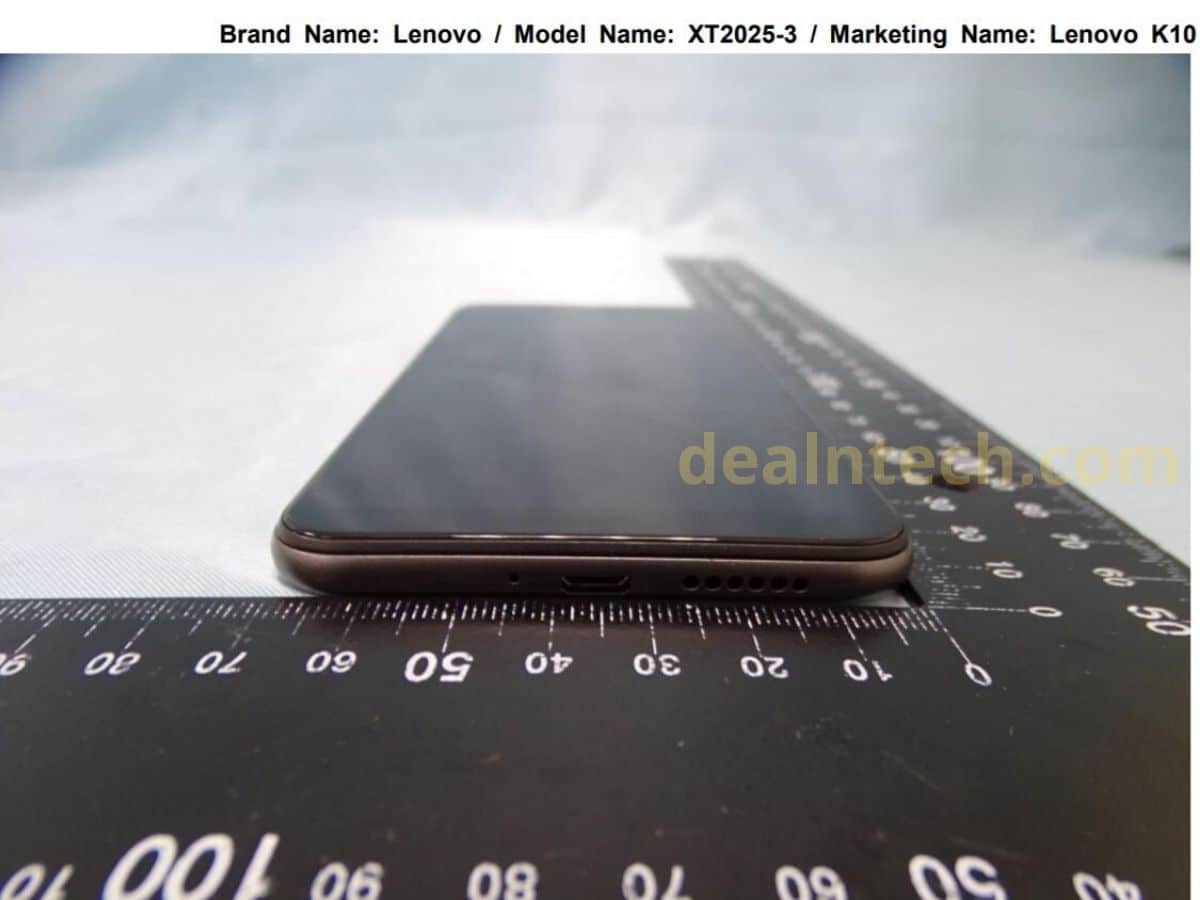
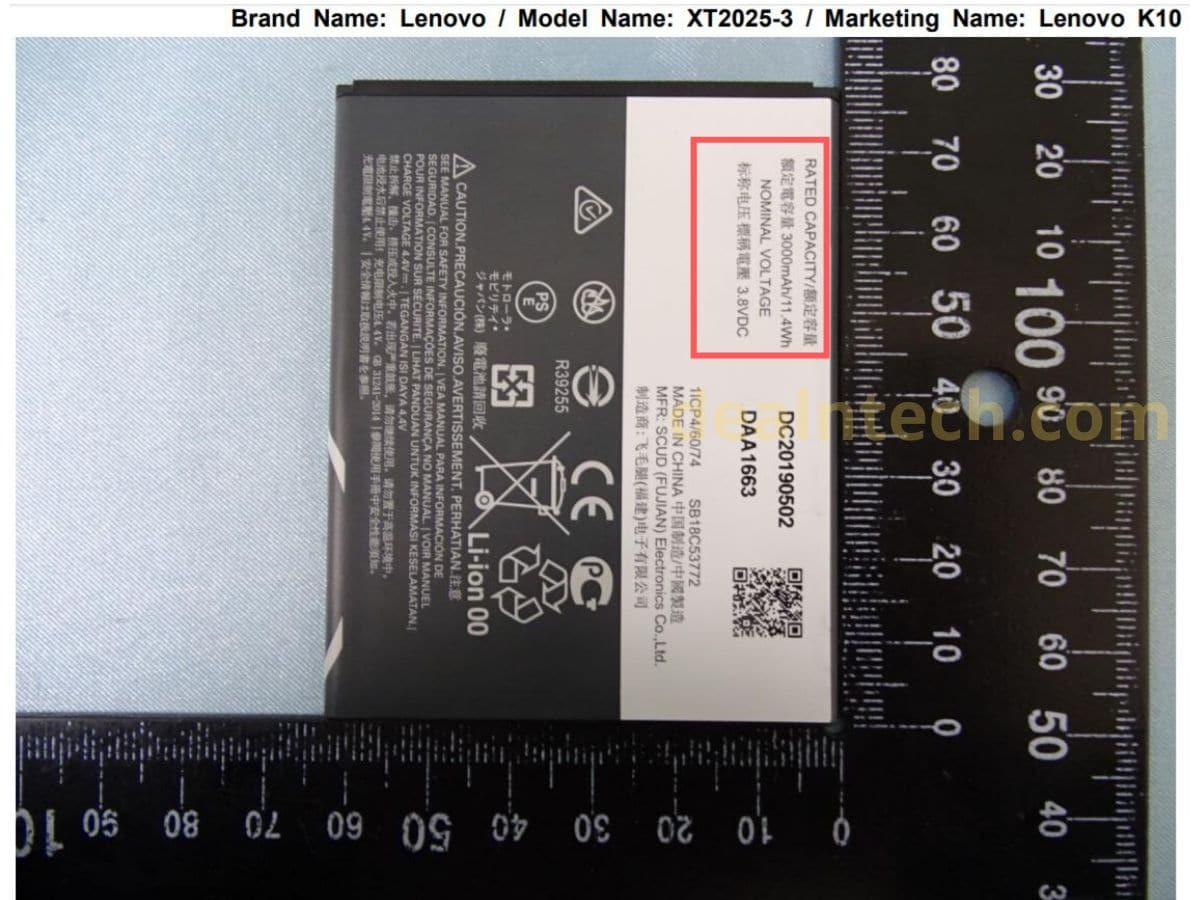
The Lenovo K10 Note and Lenovo K10 Plus series may be getting a new member soon. Certification documents have revealed the name of the upcoming device is the Lenovo K10. The documents also include live images of the phone, which to be honest, show the device is just a rebranded Motorola E6 Plus.
The Lenovo K10 has been certified in Taiwan and the documents reveal its model number is XT2025-3. The live photos show its display has a waterdrop notch and there are two cameras on the rear that are stacked vertically. The phone also has a rear-mounted fingerprint scanner.
1 of 7
Lenovo K10 NCC
Lenovo K10 NCC
Lenovo K10 NCC
The back of the phone has a polished appearance that it is quite reflective and will get smudged easily. There is a MicroUSB port at the bottom and it is flanked on the right by the speaker grille and on the left by the primary microphone. On the right side of the phone are the buttons while the top is home to the audio jack.
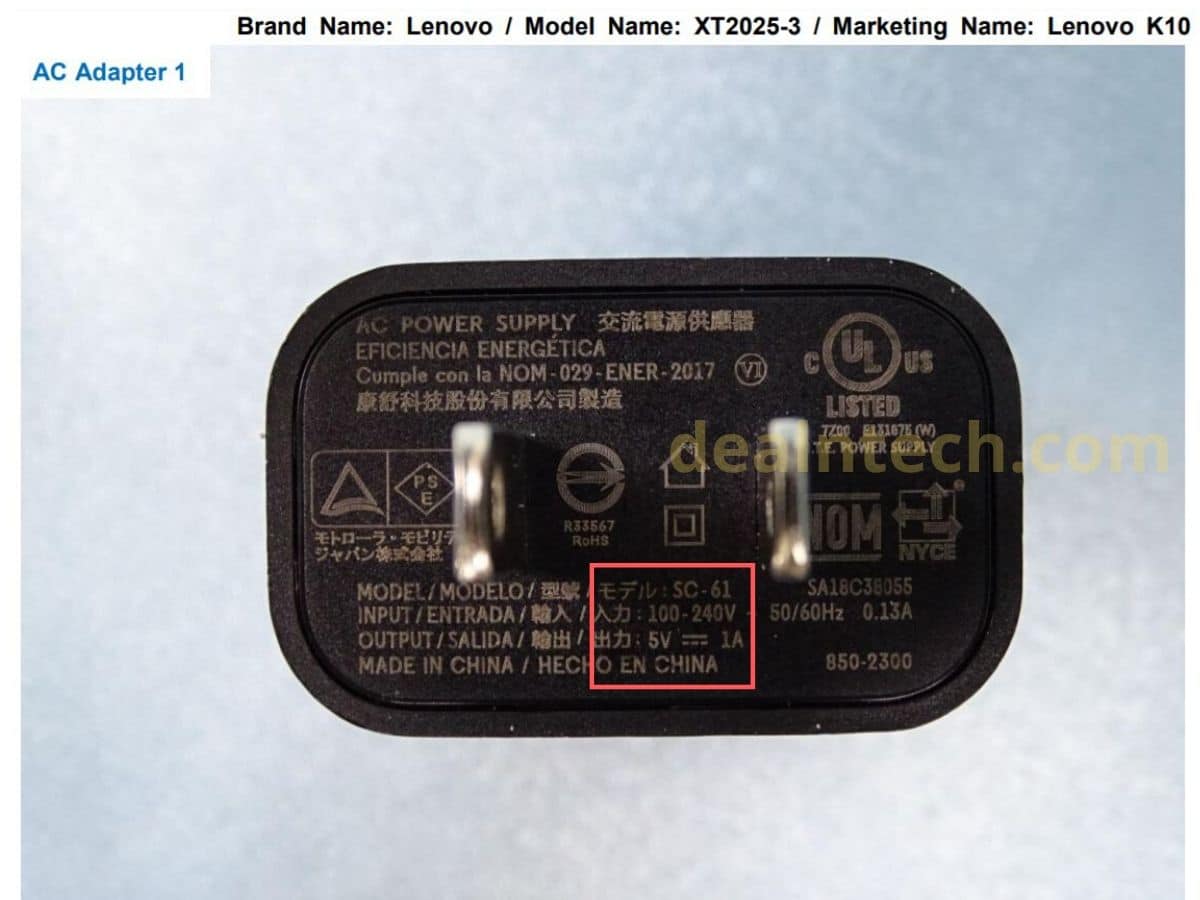
The Lenovo K10 has a removable 3000mAh battery. However, while the Moto E6 Plus supports 10W charging, the NCC documents show the phone will ship with a 5W charger.
Since this is just the Moto E6 Plus with a new name, the Lenovo K10 will arrive with a 6.1-inch HD+ display, an HelioP22 processor, 2GB RAM, 32GB of expandable storage, 13MP + 2MP dual rear cameras, and an 8MP selfie camera. It should run Android 9 Pie when it launches and should have a price tag similar to that of the Moto E6 Plus.
The Vivo V17 Pro already launched back in September and has even received price cuts in some markets. Vivo announced a non-pro model in Russia last month and is set to announce it in India on December 9. However, a new leak has confirmed that the Vivo V17 launching in India will have a different design from the Russian variant.
We already knew the Indian version will look different, at least with respect to the front, thanks to a launch poster that was released last week. Now photos of the device have leaked and they show the phone will not only look different on the front but also on the rear.
The source of the leak is 91Mobiles and it is a promotional image showing the device in the color variants it will be available in. The phone sports a punch-hole display, with the hole positioned at the top right corner. It has been reported that the display will be called iView display and it will measure 6.44-inches in size with an FHD+ (1080 x 2340) resolution.
On the back, the Vivo V17 for India ditches the diamond-shape camera housing for one similar to that of the Smartisan Nut Pro 3. However, the fourth sensor is placed at the bottom instead of at the top. The LED flash also has a different design. This camera design will be pretty popular next year. Leaks have even revealed that Samsung’s S11 series, as well as the Galaxy A51 and Galaxy A71, will adopt the same rear camera design with the differences boiling down to the number of cameras and the position of the sensors.
The source has also revealed that the Vivo V17 for India will have a 48MP f/1.8 primary rear camera, an 8MP f/2.2 secondary camera, and two 2MP sensors. There is no mention of the selfie camera’s specification but it is believed to be a 32MP sensor.
The phone will be powered by the Snapdragon 665 with 8GB of RAM and 128GB of storage that can be expanded. There is also an in-display fingerprint scanner and a 4500mAh battery with support for 18W fast charge via a USB Type-C port. When the phone launches next week, it will be available in Glacier Ice and Midnight Ocean and an expected price tag below INR 20,000 (~$279).
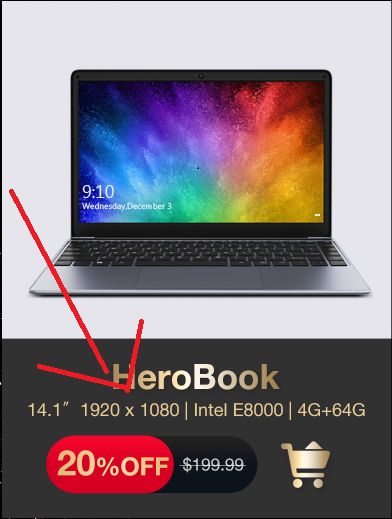
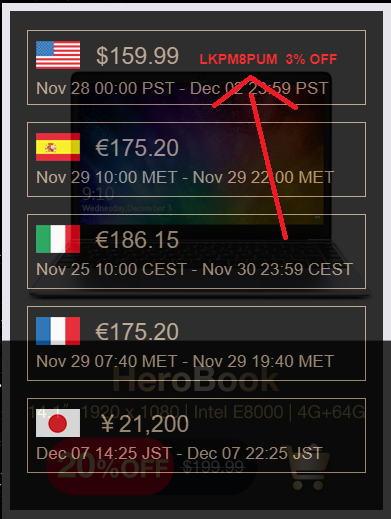
Chuwi this year launched the biggest Black Friday activity ever with laptops and tablets getting a discount of up to 20% off. Besides the already discounted prices, the company offers an additional activity where they put their most popular products in a wish list and users that participate can get an additional discount of up to 3% with the highest coupon reaching $9.
1 of 2
You can enter the activity on their official site and choose the desired product in order to get the highest possible discount. To get the discount, click on the product you want and choose the top selection with the 3% coupon. Below, you can see the eligible products. The activity ends on December 2nd at midnight so you better hurry!
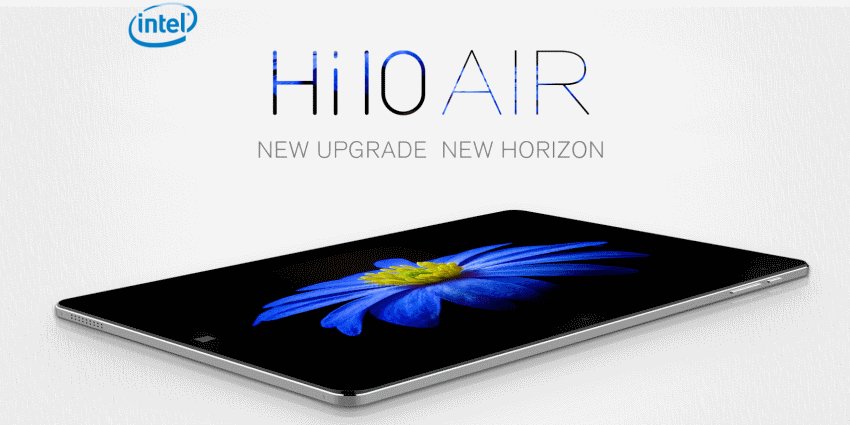
Chuwi Hi10 Air
The Intel Z8350-powered tablet sports a fully-laminated 10.1″ HD IPS display as well as 4GB of RAM and 64GB of internal storage. In addition, it supports external docking keyboard and comes with USB Type-C ports and a 6500mAh battery. The BF price is $135.99 and the final price after the extra discount is $131.9.
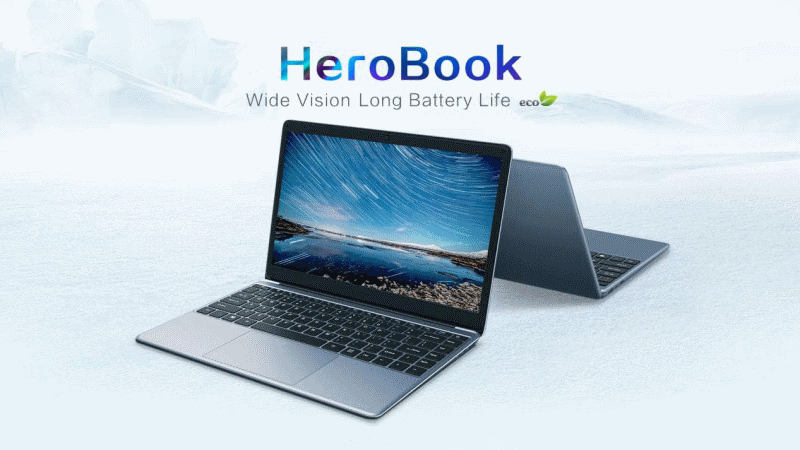
Chuwi HeroBook
Chuwi calls the HeroBook “the king of budget laptops” as it costs well below $200 and offers exceptional specs for that price. It is a 14.1″ FHD display laptop with an awesome battery life up to 9 hours. In addition, it comes with 4GB of RAM and 64GB of storage while you can extend the storage via the M.2 slot. Inside lies the Intel E8000 CPU and the small bezels make it a rather compact device to carry around. The BF price is $159.99 and the extra discount will add $4 off to reach the final price of $155.2.
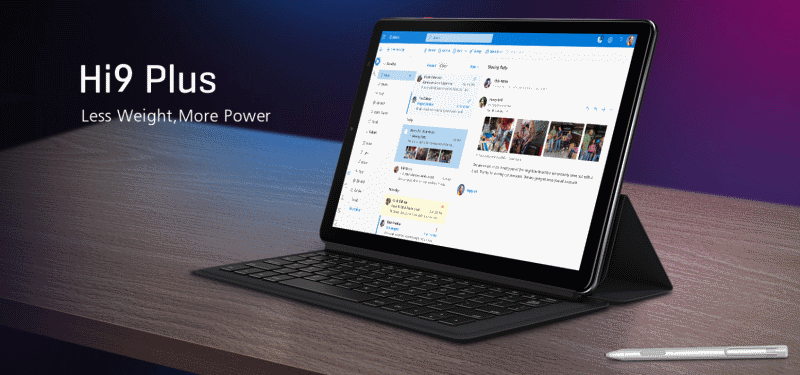
Chuwi Hi9 Plus
For those who are looking for an affordable yet powerful media consumption tablet, Chuwi offers the Hi9 Plus, and Android 8 tablet featuring a 10.8″ 2560*1600 display and powered by the Helio X27 SoC backed by 4GB of RAM and 128GB of storage. You can get it at just $170.7, $5 off the already discounted price.
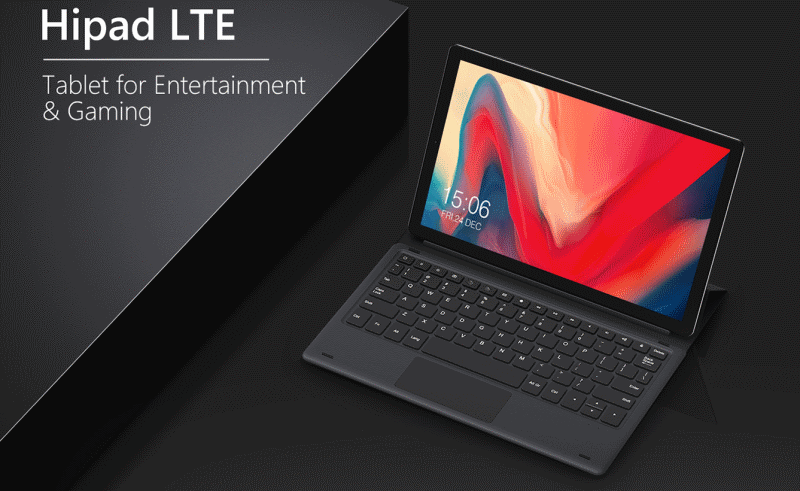
Chuwi HiPad LTE
Another tablet offered is the HiPad LTE that sports the Helio X27 10-core SoC with 4G/LTE support and a big, 7000mAh battery. Of course, it is an Android-powered tablet and is ideal both for gaming and video playback thanks to the 10.1″ fully-laminated display. It’s available at an all-time low price of $127.99!
1 of 4
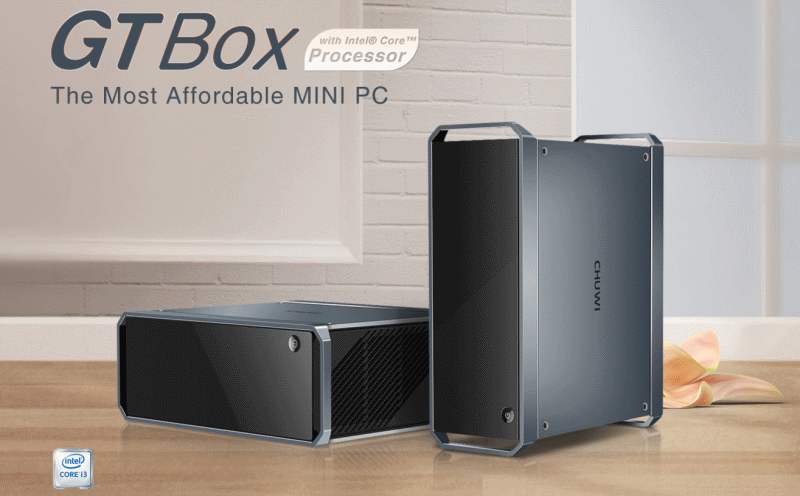
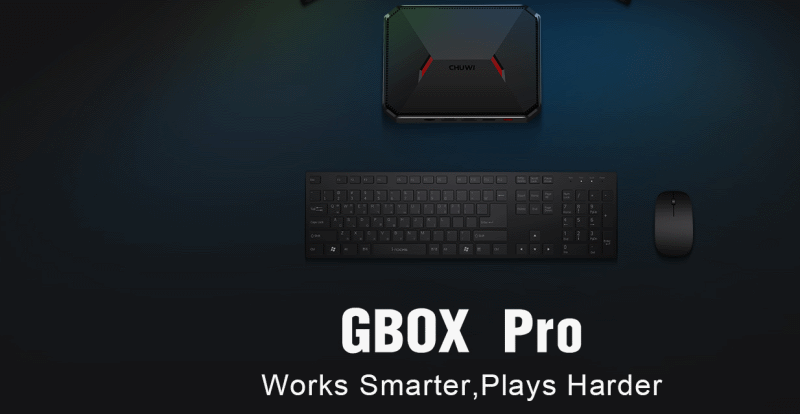
In addition to the abovementioned models, Chuwi also offers 3% extra discount on some of their best VFM models. These include the Hi9 Pro 8.4″ 3G Android tablet that costs just $108.6, the GBox Pro Windows MiniPC that sells for just $147.40, the LapBook Pro super compact 14.1″ laptop at just $294.10, and the GT Box PC that now costs just $232.8!
Another month, another bunch of Xiaomi smart products launched or crowdfunded. Thanks to a lot of start-ups it is supporting through its crowdfunding platform and its huge profits, Xiaomi is one of the most prolific companies in the hi-tech sector. Just like the rest of this year, even this month the Chinese giant released and announced a lot of smart products. And most of them are smart and/or connected devices. That is why, in order to let you discover the most innovative things of the month, we made a selection of the best Xiaomi smart products released and crowdfunded in November 2019.
Best Xiaomi smart products of the month
Xiaomi Mi TV 5 Pro
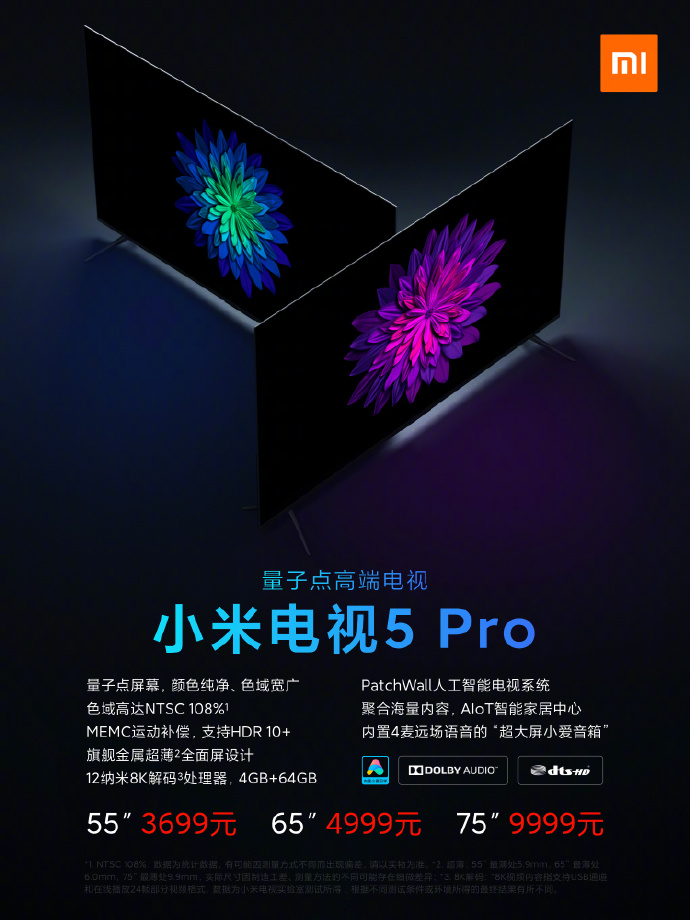
Unlike most of Xiaomi TVs, the Mi TV 5 Pro is a flagship-class smart TV. It is the first from the brand to sport a Quantum Dot QLED display with an 8K resolution, as well as the support to HDR10+, MEMC motion compensation, Dolby Audio sound, DTS HD, and 108 percent NTSC color gamut. Besides delivering an incredibly high image quality, the Xiaomi Mi TV 5 Pro is also a smart TV, just like every Xiaomi TV. It is powered by the Amlogic T972 chipset paired with 4 GB of RAM and 64 GB of native storage. It integrates the PatchWall AI assistant and, even though it is smart and high-end, it comes with an amazing design. Indeed, it is just 5.9mm thin and it has an aluminum screwless body. Xiaomi Mi TV 5 Pro debuted in China in three variants with 55, 65 and 75-inch monitors. The base model sells for about $537 at the actual change (3,699 Yuan).
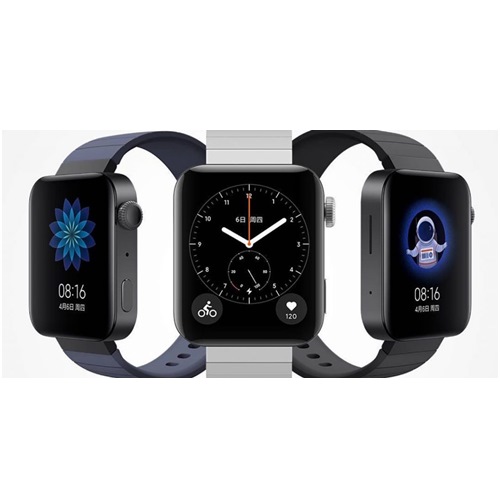
The Mi Watch is Xiaomi’s first Wear OS smartwatch and it is the smartest and most attractive one for power users. The company defined it as a small smartphone on your wrist. It has an Apple Watch-like design with a square-shaped display. The screen is a 1.78-inch AMOLED panel with a 326 ppi pixel density and the body is made of metal and ceramic. It runs the world’s first customization of Wear OS (MIUI) and it is powered by the Snapdragon Wear 3100 4G that is the most powerful chipset for wearables. It even packs the biggest battery ever implemented on a smartwatch, with a 570 mAh capacity and up to two days of battery life on a single charge. It features 4G connectivity, NFC, GPS, and eSIM support, as well as the XiaoAI virtual assistant and an in-built app store with more than 40 optimized apps, including WeChat. Xiaomi Mi Watch is available in China for about $185 in its base version.
With Xiaomi even your bed becomes smart. Through its ecological chain enterprise, Xiaomi realized and launched the 8HMilan Smart Electric Bed. It is an electric bed you can control through a button and voice commands. Thanks to these solutions, you can lift it up to the desired angle in order to get the best comfort and relax. The bed works with a dual-motor mechanism thanks to which the upper and the lower half of the bed can be controlled independently, raising up to 60 and 30 degrees, respectively. There are several positions available: flat mode, anti-snore mode, reading mode, TV mode, and zero-gravity mode. Crowdfunding will start on December 3 and it will cost $285.
Xiaomi took on Amazon and its Kindle by announcing its first ebook reader. It is called Mi Reader and it went in crowdfunding in China with a price tag of 579 Yuan which roughly translates into $83 (the launch price will be 599 Yuan). The ebook reader features a 6-inch e-ink display with a 1024 x 768p resolution and a 212 ppi pixel density. It is an anti-glare display with front-lit LED lights you can adjust based on the light conditions around you. The ebook reader runs Android 8.1 Oreo and features a 16 GB internal storage which can contain up to 5,000 books. It has a 1,800 mAh battery providing several weeks of battery life that can be charged through a USB-C port.
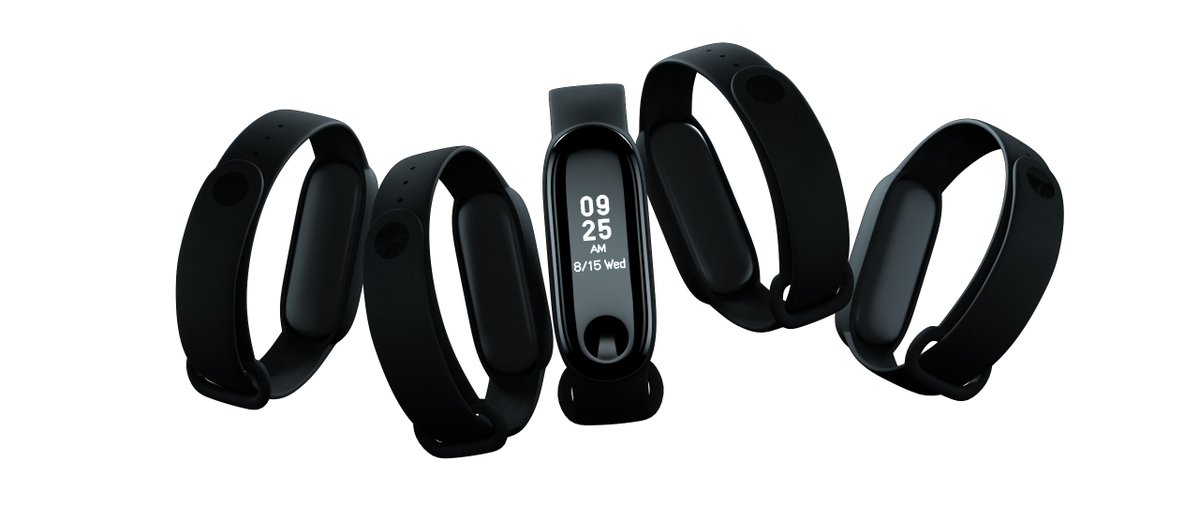
Despite it is not a variant of its latest fitness tracker, Xiaomi launched a brand new variant of the Mi Band 3 in India: its name is Mi Band 3i. For those who can not afford the new Mi Band 4 with its color display, there is the new Mi Band 3i sold with a $25 price tag in the Indian peninsula. It is essentially a Mi Band 3 without a heart rate sensor. The wearable is waterproof up to 5 atm and provides a battery life of up to 20 days thanks to a 110 mAh battery and an efficient AMOLED display with a size of 0.78 inches.
It looks like a smartphone, but it is not exactly so. It is the Xiaomi Mijia Translator, manufactured by Qingping Technology Co. Ltd. which is one of Xiaomi’s ecological chain companies. It launched in China with a $184 price tag and comes with a 6-microphone array to detect the voice and improve the accuracy of the translation. It even comes with a 4.1-inch HD LCD display and a camera through which you can shoot photos at the text you need to translate from a foreign language. It supports 18 different languages and 170 different countries.
Last but not least, the amazing Xiaomi Mijia Laser Projector launched in China for 4999 Yuan. In a compact build, you can find not only a laser projector but also the same MIUI customization present on Mi TVs allowing to interact with Xiaomi’s ecosystem and smart home appliances. It has a brightness of 2400 ANSI lumens and over 85 percent NTSC color gamut. It also packs 10W stereo speakers and it can project images up to 150 inches with 8K video decoding.
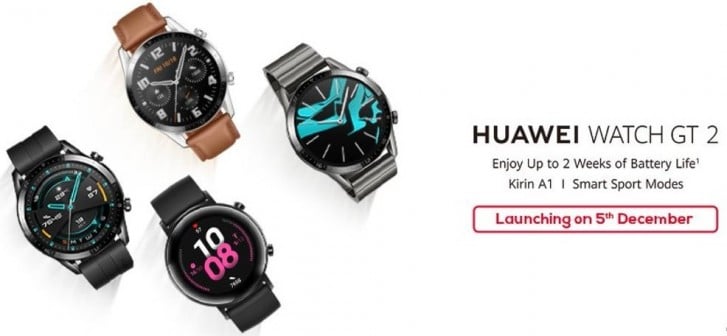
A few days ago, Huawei announced it had shipped 1 million units of the Watch GT 2. We were quite impressed with the figure seeing as it took just 45 days to reach the milestone and that the watch isn’t even yet available in India which is a key market. Huawei has now announced that the smartwatch will be launched in India on December 5.
Huawei India has already put up a page where you can sign up to be notified when the watch is available. Based on the details on the page, we know the 46mm version of the watch will be available in three variants – Sport, Classic, and Elite Editions while the 42mm version will only be available in one variant – Sport Edition. Sorry but Huawei will not be selling the Elegant and Classic Editions of the 42mm version in India.
The Watch GT 2 will be sold by Amazon India and Flipkart as well as at offline stores but we have no idea what the price will be.
The Huawei Watch GT 2 has a Kirin A1 processor, Bluetooth 5.1, Bluetooth Calling, Music Playback, Sleep and Stress Monitoring, GPS, and boasts a battery life of up to 2 weeks. It can track several exercise activities including swimming and elliptical training.
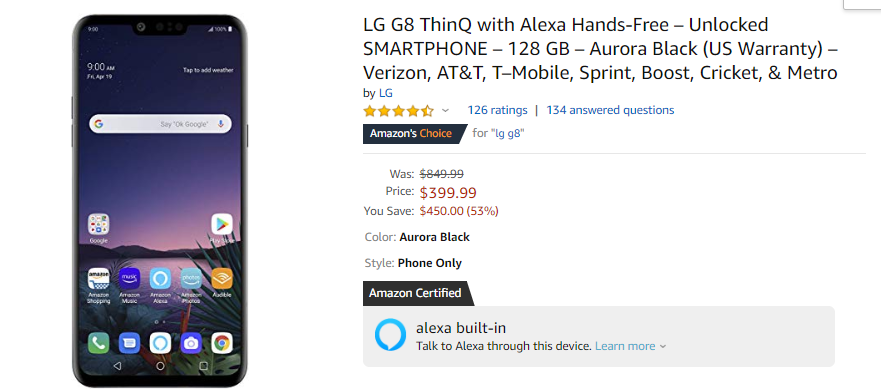
When it comes to updating its phones (including flagships), LG is pretty terrible at it. However, the Korean manufacturer seems to be making moves to improve its poor track record. It has now been reported that the LG G8 ThinQ is receiving a stable Android 10 update. But that isn’t the only exciting news. You can also grab a brand new unit on Amazon for just $399!!! Awesome, right?
Last month, the LG G8 ThinQ, the LG V50 ThinQ, and the LG V50S ThinQ 5G began receiving Android 10 beta stable update in LG’s home country. Just a month later and a stable update is already rolling out to the 2019 flagship.
The update arrives with version number G820N20x and it comes bundled with November 2019’s security patch. There are no details on the new LG features the update brings but expect Android 10 features such as smart reply, a new navigation system, and dark mode.
The update is rolling out in Korea at the moment and may take a few weeks before it arrives in other markets.
If you are on the search for a new phone under $500, then the LG G8 ThinQ is currently on sale on Amazon for just $399. That is a great deal considering the phone launched for $850. It is important to state that the phone has actually been discounted multiple times over the past couple of months but this seems to be its lowest price yet. We do not know how long the deal will last or how much stock Amazon has, so you may want to hurry.
The LG G8 ThinQ has a 6.1-inch QHD+ OLED FullVision display with a notch at the top. There is a Snapdragon 855 processor under the hood paired with 6GB of RAM and 128GB of expandable storage. The phone has a 16MP primary camera paired with a 12MP ultrawide angle camera on the rear while the front is home to an 8MP camera. LG has also buried some sensors in the notch for what it calls Air Motion which allows you to control the phone with certain hand gestures.
There is a 3500mAh battery under the hood with support for 21W fast charging and wireless charging. It also has an IP68 rating, Crystal Sound OLED which uses the display as a speaker, NFC, and an audio jack. There is Face ID, a rear-mounted fingerprint scanner, and Amazon’s Alexa assistant on board.
We use cookies on our website to give you the most relevant experience by remembering your preferences and repeat visits. By clicking “Accept”, you consent to the use of ALL the cookies.
This website uses cookies to improve your experience while you navigate through the website. Out of these, the cookies that are categorized as necessary are stored on your browser as they are essential for the working of basic functionalities of the website. We also use third-party cookies that help us analyze and understand how you use this website. These cookies will be stored in your browser only with your consent. You also have the option to opt-out of these cookies. But opting out of some of these cookies may affect your browsing experience.
Necessary cookies are absolutely essential for the website to function properly. This category only includes cookies that ensures basic functionalities and security features of the website. These cookies do not store any personal information.
Any cookies that may not be particularly necessary for the website to function and is used specifically to collect user personal data via analytics, ads, other embedded contents are termed as non-necessary cookies. It is mandatory to procure user consent prior to running these cookies on your website.