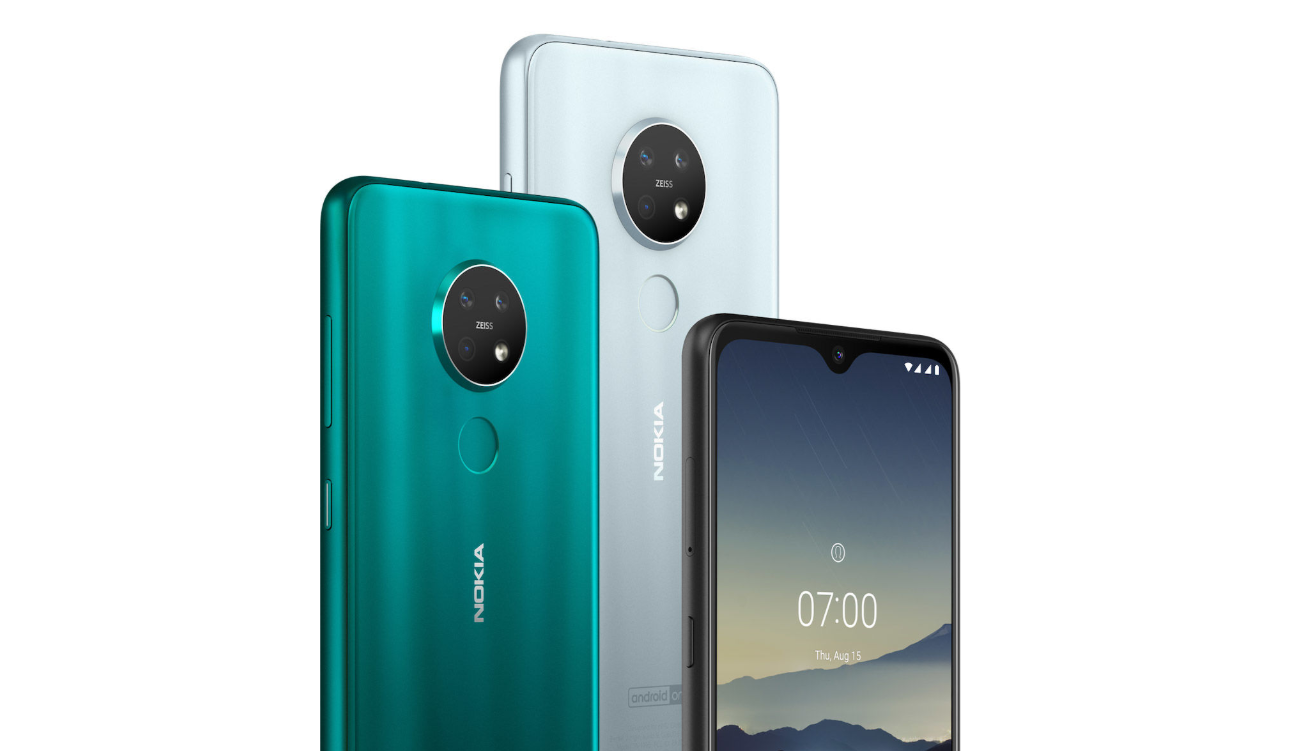
Nokia 7.2 and 6.2 were officially unveiled at IFA 2019 among a bunch of other products such as the Nokia 2720 Flip and Nokia Power earbuds. However, these two phones turned out to be the real showstoppers of the Nokia event in Berlin, thanks to its revamped design and competitive specs. Now it looks like HMD Global is all set to release the duo in India as well. Both the models were recently listed on the official Nokia India website.
The Nokia 7.2 and the 6.2 share a similar design language with a waterdrop notch on their 6.3-inch IPS LCD displays and a circular camera housing at the back. But the real highlight is the color options available like Cyan Green and Ice which makes their design stand out even more. Unfortunately, the Nokia India website doesn’t reveal a date for its release. But the company is said to have sent invites for a September 11 event in India, likely for their launch.
Unlike the global variants, the Nokia duo won’t have NFC support. This was recently confirmed by a company executive. While the lack of NFC is a bit disappointing, it’s not going to be a deal-breaker for most Indian customers. NFC payment is not really a popular feature in India and even the Nokia 4.2 which was announced in May in India lacked this one particular feature.
You can read more about the Nokia 7.2 and 6.2 from our launch coverages.
Those skilled in film making usually go for high-end gimbals to shoot a masterpiece video. Others who fancy capturing memorable moments using their mobile devices, on the other hand, go for inexpensive alternatives that offer disappointing performance.
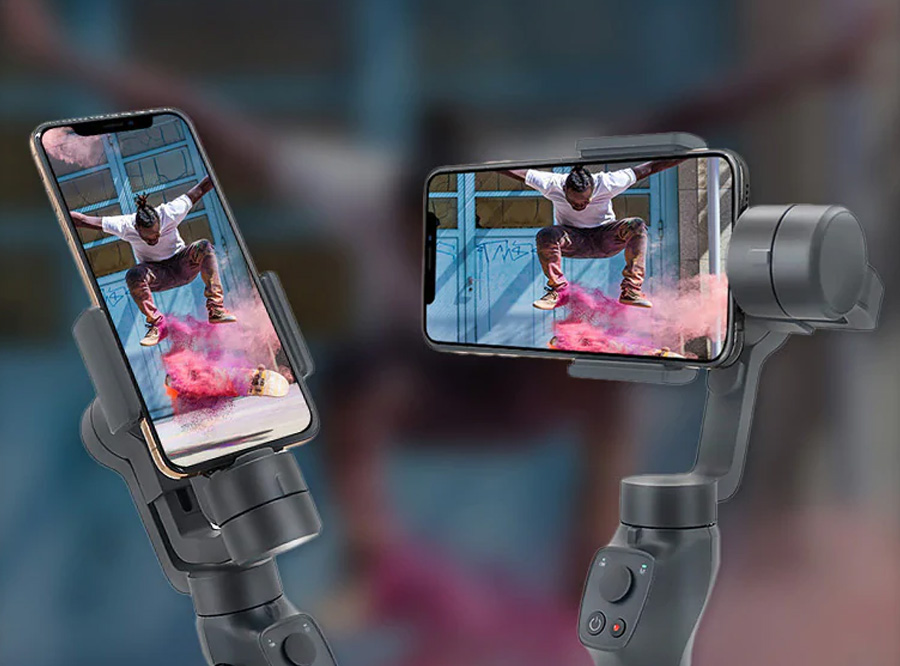
Designed to radically enhance the process of shooting or film making, high-priced gimbals come in various shapes and sizes. If you are in the market for a feature-laden gimbal that doesn’t cost a bomb, you have come to the right place.
We have listed the top 5 gimbals you can buy under $100 according to your needs. Moreover, we will show how you can save more money before placing your order. So without wasting more time, let’s check them out.
The MOZA Mini-S adopts a foldable design so that you carry it everywhere you go, and even store it without breaking a sweat as it does not take up a lot of space. In addition to the one-button zoom, focus control, and quick look-back the device boasts an impressive array of other features that ensure simple operation.
You’d normally associate a steep price tag with a high-end gimbal that offers comparable features, but the MOZA MINI-S can now be yours for a lowered price of just $69.99 from GeekBuying, while it usually retails for $89.99. You can extend this 22 percent discount with the help of coupon code 3PAJQGUT.
The coupon allows you to save $4 more at check out by reducing the retail price of the MOZA MINI-S to just $65.99. New users can take advantage of a $2 off coupon as well. Regrettably, the promo is slated to end in just two days. You can follow this link to grab the discount before the promo ends.
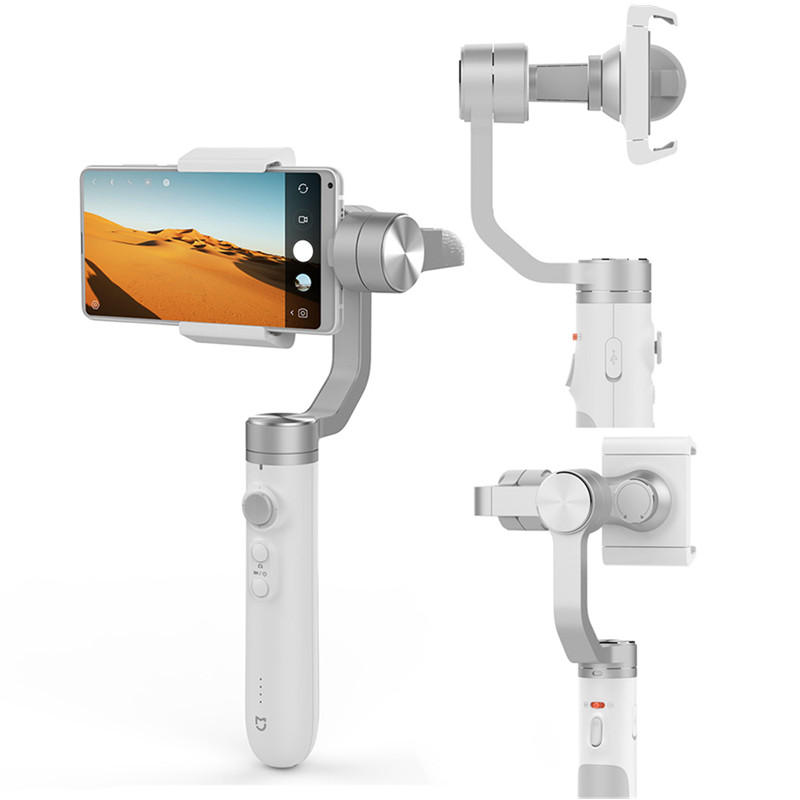
Primarily known for making top-end smartphones, Xiaomi offers a wide selection of mobile phone accessories including gimbals. The Xiaomi Mijia Handheld Gimbal would normally set you back $90.58, but you can now buy it from Gearbest for a lowered price of only $79.99.
This is a significant 12 percent reduction in the device’s original selling price. An absolute steal at this price, the Xiaomi Mijia Handheld Gimbal is designed to support both mobile phone equipment, as well as shooting equipment within the size of 56 – 86mm and weight of 200 grams.
It comes with a standard screw, allowing you to use it with brackets and other peripherals devices for all sorts of shooting needs. Moreover, it uses high accuracy attitude sensors, triaxial mechanical stabilization, coupled with loop servo system to ensure you get a stable and seamless picture even in a shaking environment.
You can visit this link to check out more details about this handheld gimbal from Xiaomi and place your order. With 33 pieces sold at the time of writing, this promo is slated to end in three days.
Touted as one of China’s best online stores for electronic items, Gearbest is currently doling out a 13 percent off on the Beyondsky Eyemind 2 Intelligent Handheld Gimbal, which usually carries an $85.82 price tag. Thanks to the discount, you can now buy it for a reduced price of $74.99.
As if that weren’t enough, you can get an extra $1 off by applying coupon code EYEMIND2 during the checkout process. In other words, you can bring the already lowered asking price of the Beyondsky Eyemind 2 further down to just $73.99 by applying the above-mentioned coupon.
The Beyondsky Eyemind 2 is quite a durable handheld gimbal that is made using high-quality ABS + electronic components + metal materials. It offers a maximum control speed of 120 degrees and a rotation range of its heading axis is 320 degrees.
To check out more details about this intelligent handheld gimbal, you can follow this link. Over thirty pieces were sold out at the time of writing, and it is also worth noting that the promo will end in three days. Note that the coupon will be valid for the first hundred units only.
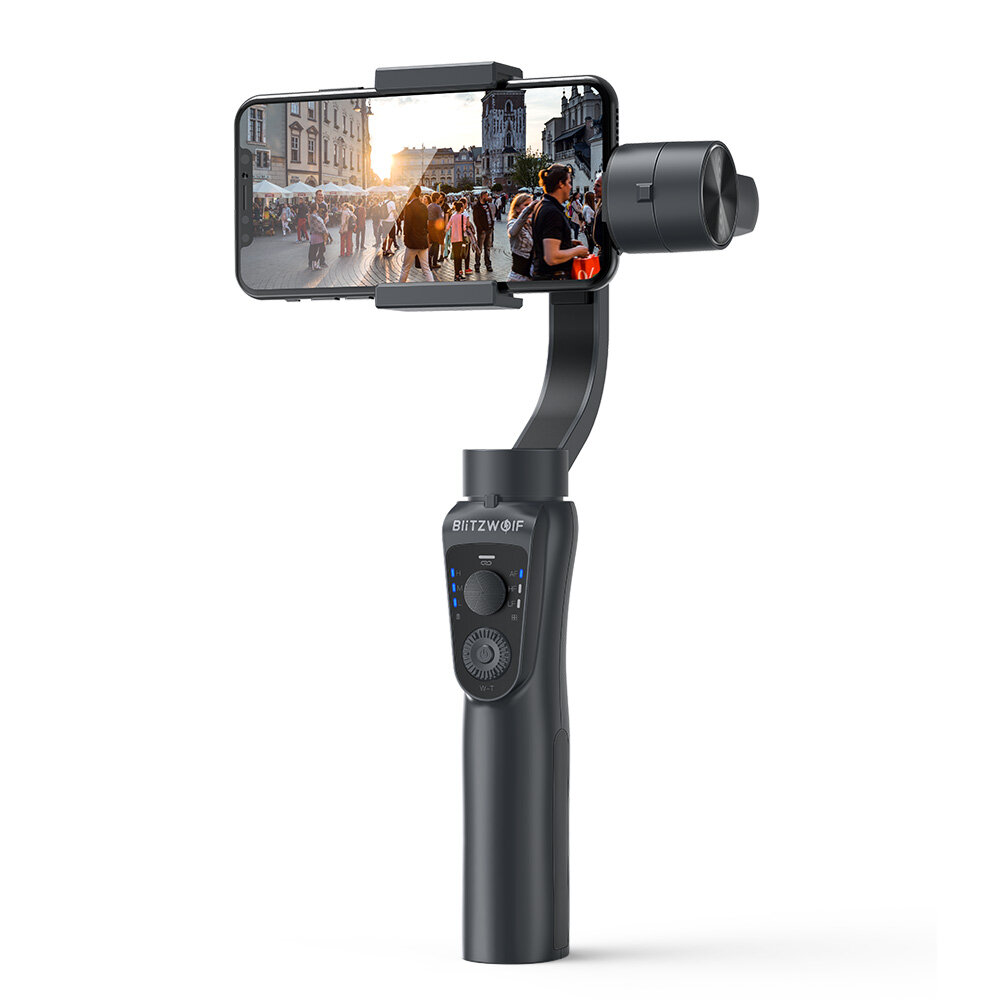
BlitzWolf BW-BS14 Bluetooth 3-Axis Gimbal Stabilizer
The BlitzWolf BW-BS14 offers three adjustable modes including AF / Following Mode, HF / Pan Following Mode, and LF / Locking Mode. Moreover, it can accurately track the movements of people or objects and gives you the freedom to adjust the camera close so that you can effortlessly capture close-up images using the app.
Backed by a robust 4000mAh high capacity battery that offers 12 hours of working, the BlitzWolf BW-BS14 has gone up for pre-order bearing a $115.19 price tag on Banggood. You can get free shipping on orders over $19.99, and $2 cashback on cash order of $99 with PayPal.
You can visit this link to get your hands on the black-tinted x-axis gimbal stabilizer and earn 115 BG points.
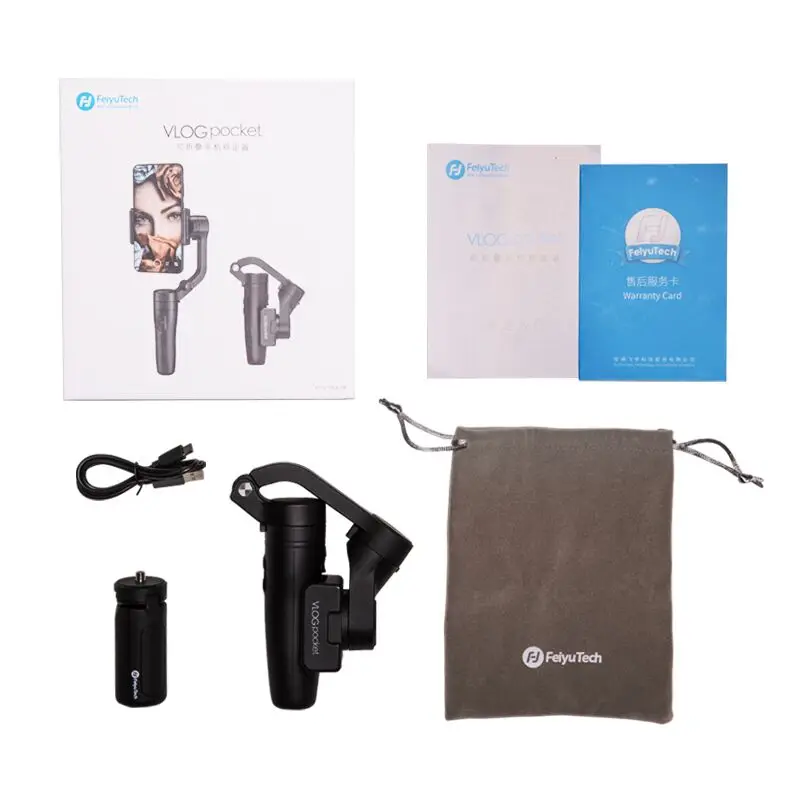
With a $99 price sticker on it, the Feiyutech VlogPocket works with smartphones with dimensions of 42mm to 88mm (about 7 inches) maximum and weighing in at 240 gram. Aside from that, it is compatible with all iPhone series, along with Huawei P30 Pro, Xiaomi Mi 9, Vivo Nex, and more.
It supports both Android, as well as iPhone with 7-inch or smaller screen. Sporting an innovative foldable design, the Feiyutech VlogPocket can be purchased from AliExpress. New users can use a $2 off coupon. If your cart value exceeds $799, you can apply a $20 off coupon and save more money at checkout.
Available in black and color options, the Feiyutech VlogPocket Foldable Phone Gimbal can be purchased by following this link.
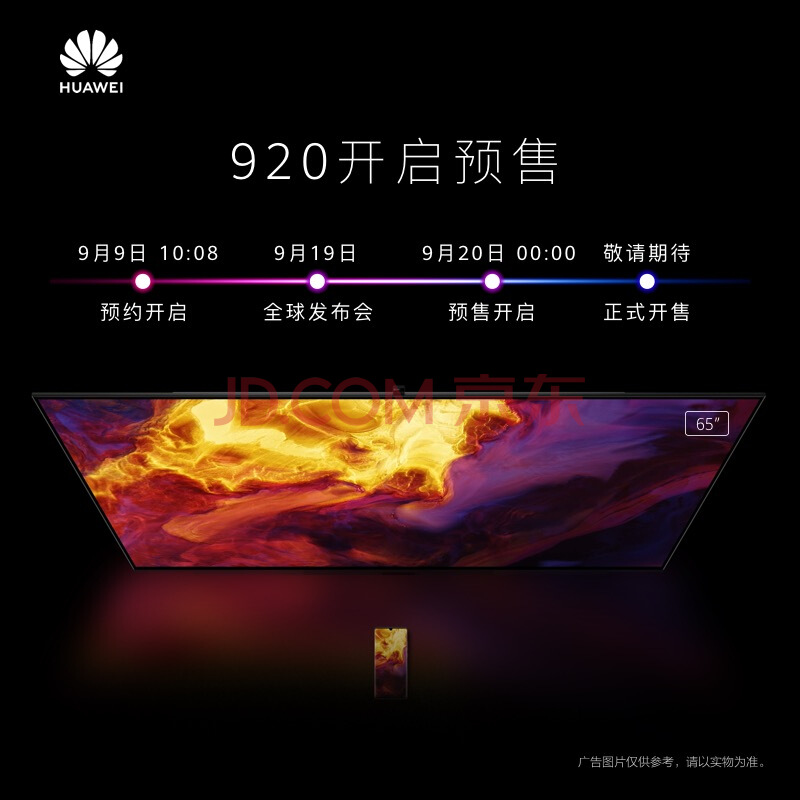
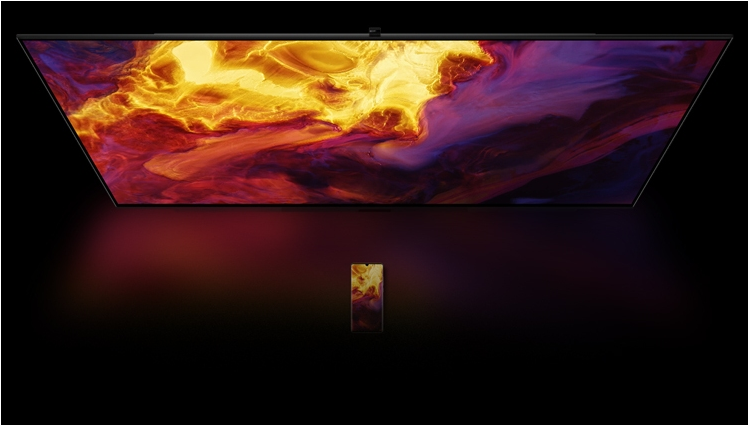
Huawei announced its alternative to Google’s Android operating system dubbed Harmony OS recently. The company’s much-anticipated smart TV was tipped to be among the first products to have the OS on board. Reservations for the Huawei TV has now opened today (09/09) in China via Jingdong (JD.com).
The JD product page includes a timetable of the product release including the launch date. From the page, we can grab that Huawei will hold a global launch conference on September 19 where the TV dubbed Huawei Smart Screen will be unveiled. According to an official poster released by Huawei on Weibo, the launch event will hold in Munich, Germany. The smart TV will go on pre-order on September 20 but the release date wasn’t stated. The part that was supposed to contain the date contains the words “Stay tuned”. However, we expect the device to go on sale in no distant time after the launch.
The new smart device will become the second device from Huawei to feature Harmony OS after the Honor Smart Screen that was launched packing The new OS. Little is known about the Huawei Smart Screen but it was recently certified at China’s National Quality Certification Center. The certification page shows the smart TV will have a 55-inch model and a 65-inch model, and both are from Hefei BOE Video Technology Co., Ltd, one of China’s leading LCD makers. Huawei’s CEO Richard Yu later disclosed that there is also a 75-inch model. The new smart device is also expected to feature a pop-up camera, AI technology, powerful sound systems, cloud services and others, in addition to the new operating system. It will equally become a new control centre for Huawei’s Internet of Things (IoT), providing artificial intelligence-powered interactive user experiences.
The launch of the smart TV, which is expected to ship globally, is a superb opportunity for the Chinese tech giant to showcase the capabilities of Harmony OS. This has become even more imperative considering that the company is positioning the OS as an alternative to Android OS on the Huawei P40 next year if it remains on the US government blacklist and unable to access Google’s Android service. The self-developed OS is also expected to find its way to Huawei smartwatches and laptops in the near future.
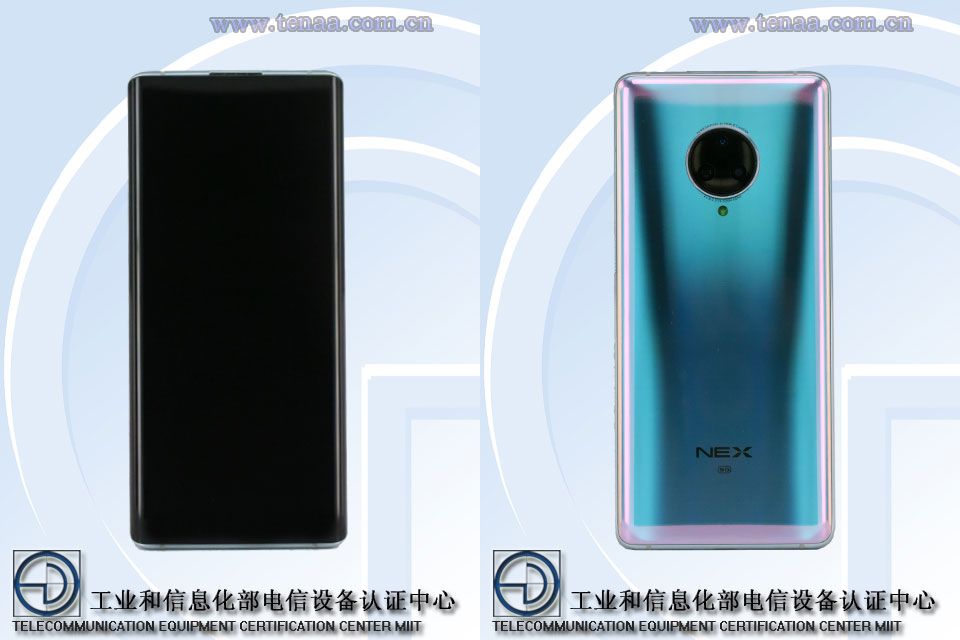
UPDATE: Vivo has officially confirmed that the NEX 3 will indeed offer a massive screen space of 99.6 percent. The real images of the phone that have appeared recently also second that. The leaked images also give a good view of the sides and rear panel of the phone. The 5G edition of the NEX 3 that has the model number of V1924A was spotted with impressive performance scores on the single-core and multi-core tests of Geekbench.
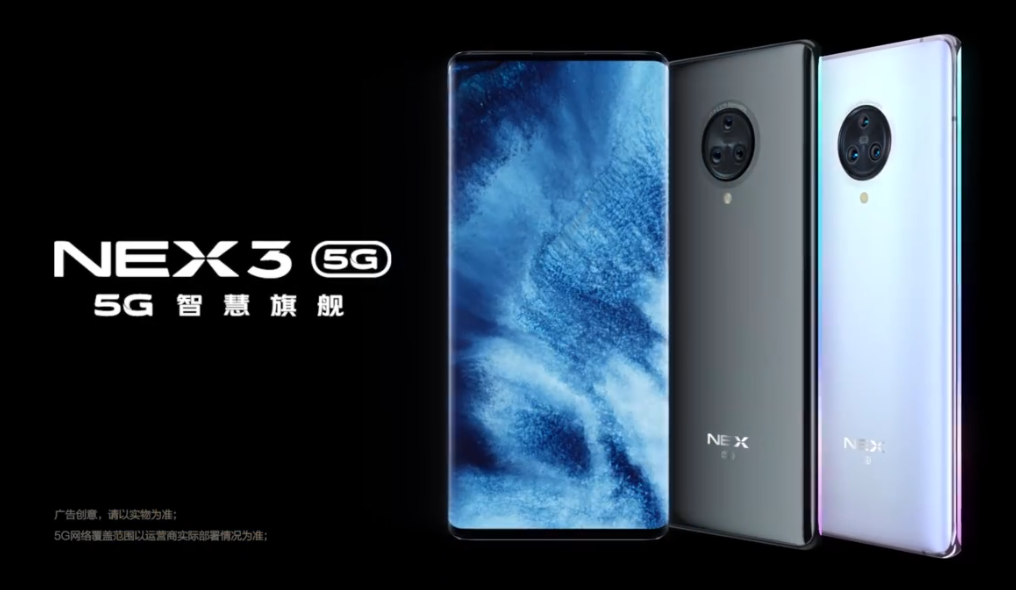
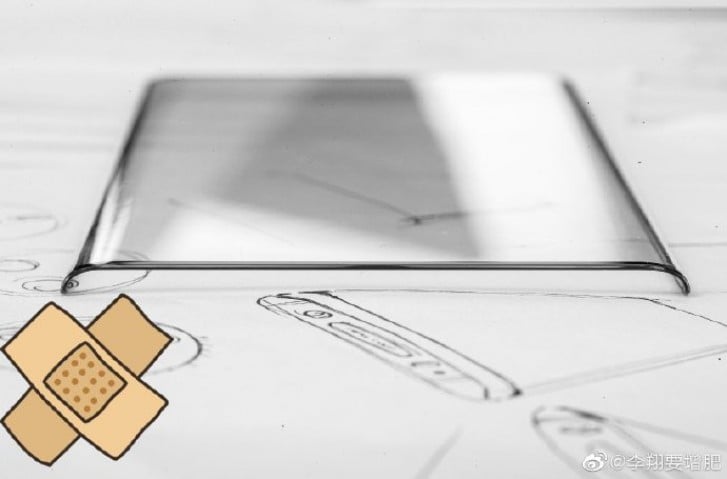
On Sept. 16, Vivo will be debuting the Vivo NEX 3 flagship phone to replace the Vivo NEX S from last year. The most striking feature of the Vivo NEX 3 is its notch-less screen that is equipped with extremely curved edges. Ahead of the launch, the Chinese manufacturer has revealed the entire design of the phone through a couple of teasers. Also, the NEX 3 has appeared on TENAA with full specifications.
Vivo NEX 3 Design
The NEX 3 has a marvelous notch-less display with extreme curvature coupled with ultra-thin side bezels. An earpiece is available on the top bezel of the smartphone. The top and bottom bezels of the phone are also very thin. Rumors surrounding the NEX 3 smartphone have claimed that it may offer a screen-to-body ratio of 99.6 percent.
The rear-mounted round-shaped camera housing three sensors arranged in a triangular manner is inspired from the design of mechanical watches. An LED flash is present under the circular module of the device. The top bezel of the phone has a wider pop-up camera module that is home for two front-facing cameras.
Another important thing about the design of the Vivo NEX 3 is that there are no physical buttons on the sides of the device. It features pressure-sensitive zones for volume and power. There is an additional power button at the top edge of the phone. There is a 3.5mm audio jack and a microphone on the top side of the smartphone. On the bottom, the NEX 3 has an external speaker, a USB-C port and another microphone. The smartphone may release in Black and White color editions. Here is an unboxing video of the NEX 3 smartphone that showcases its design.
Vivo NEX 3 Specifications
The Vivo NEX 3 has 167.4 x 76.1 x 9.4mm and it weighs 218.5 grams. The smartphone will be releasing in 4G-only and 5G editions. The handset is fitted with a 6.89-inch S-AMOLED display that carries support for full HD+ resolution of 1080 x 2256 pixels. The display of the NEX 3 is integrated with an in-display fingerprint sensor.
The 2.96GHz Snapdragon 855+ processor powers the Vivo NEX 3. The handset may release in China in 8 GB and 12 GB RAM variants. The smartphone comes in three storage versions such as 128 GB, 256 GB and 512 GB. A microSD card slot is available on the device for more storage. The Android 9 Pie OS comes preloaded on the device. It will be coming with the latest version of the FunTouch OS.
The Vivo NEX 3 camera module has a 64-megapixel primary lens, a secondary lens of 13-megapixel and a third sensor of 13-megapixel. The pop-up camera module has a 16-megapixel main lens and an unknown second lens. The phone will be sporting a new camera UI that can be completely customized. It will allow users to personalize functions and icons that appear on the viewfinder. The handset has a 4,500mAh battery that carries support for 44W charging. At present, there is no information on the pricing of the Vivo NEX 3.
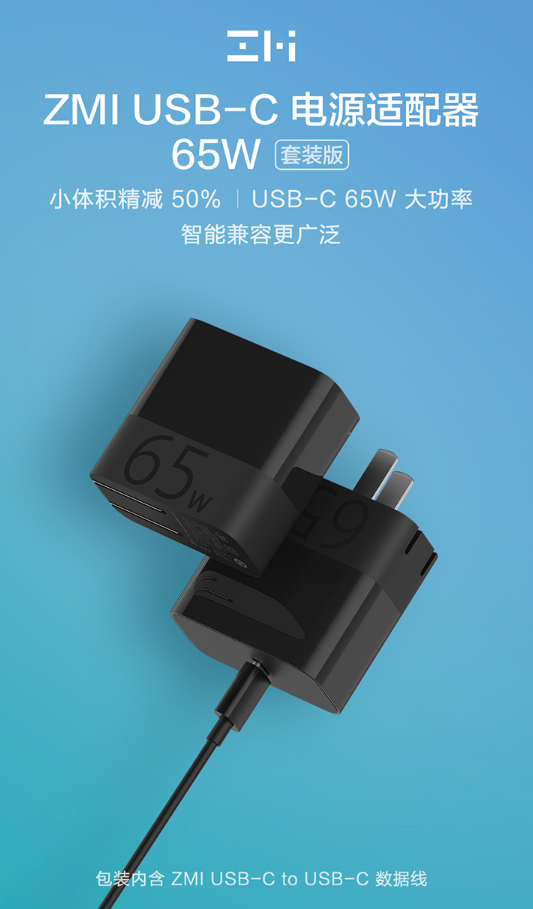
ZMI is best known as a Xiaomi partner company that makes chargers of various types as well as cables and power banks. Today, the company announced a new 65W USB-C charger for MacBooks, iPhones, laptops and all other devices that support USB Power Delivery.
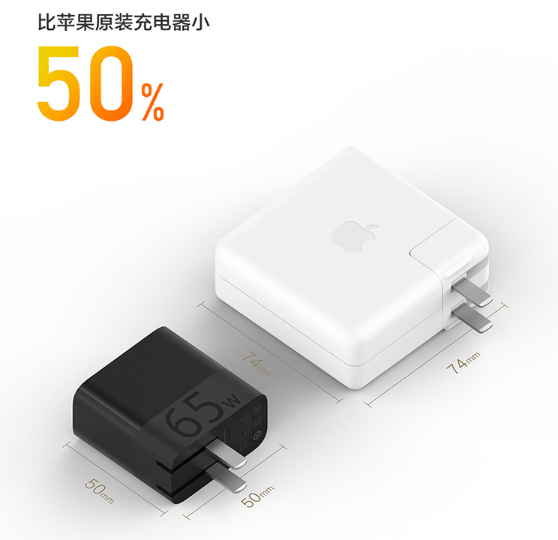
But this is no ordinary charger. Not only is it small, 50% smaller than Apple’s 61W USB-C Power Adapter, it is also really cheap. It is actually priced at ¥149 (~$21) which is less than one-third the price of Apple’s own charger.
The ZMI USB-C 65W Charger has a two-tone black finish with a foldable plug design albeit American and 65W branded on the sides. It has a single USB-C port at the top and measures 50mm x 50mm.
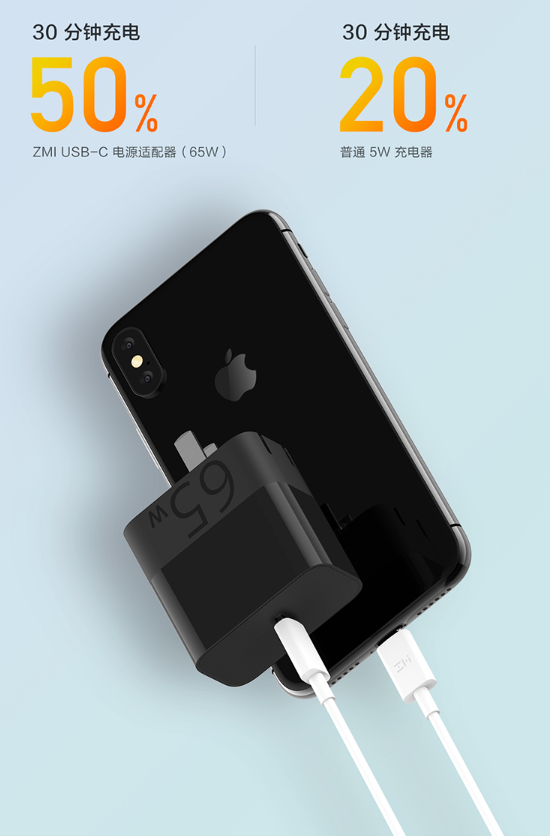
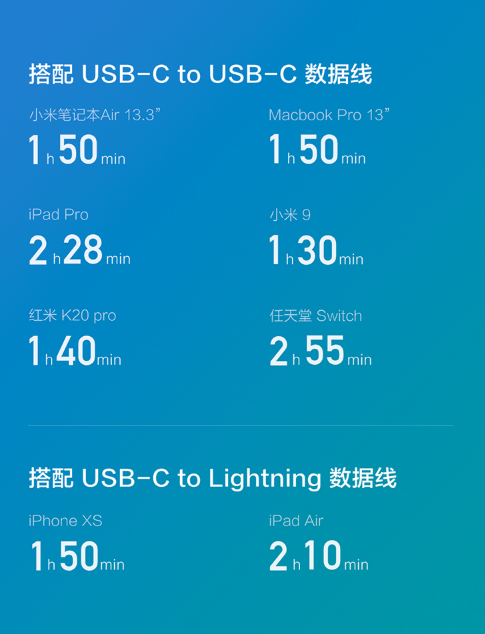
The charger is compatible with a wide range of devices and will automatically detect the device connected so as to supply the right power rating. ZMI says it will charge the 13.3” MacBook Air and 13” MacBook Pro in 1hr 50 minutes, the iPad Pro in 2hrs 28 minutes, the Redmi K20 Pro in 1hr 40 minutes, the Mi 9 in 1hr 30 minutes, and the Nintendo Switch in 2hrs 55 minutes.
1 of 4
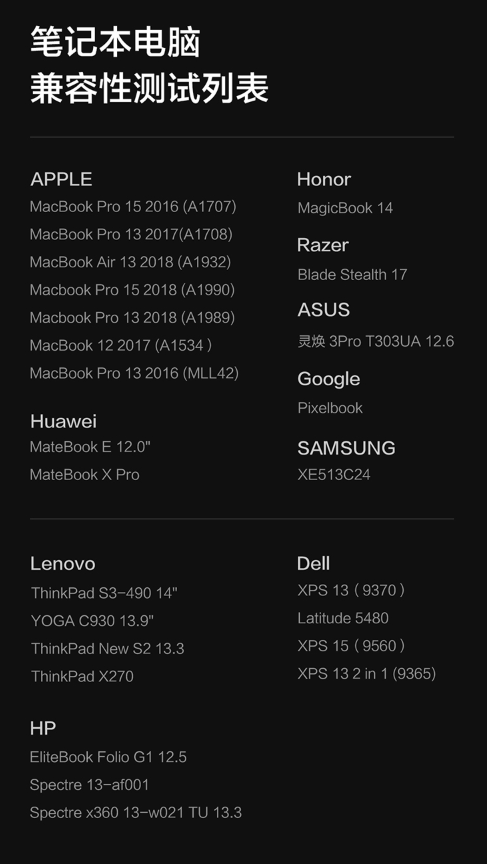
It will also work with the iPhone XS and iPad Air when connected to a USB-C to Lightning connector cable and charge both devices in 1hr 50 minutes and 2hrs 10 minutes respectively. A full list of compatible laptops is included above.
The ZMI USB-C 65W Charger has 7 different protections built-in such as input and output high current protection, high-temperature protection, and short-circuit protection.
[envira-gallery id=”275137″]
ZMI will ship the charger with a free 1.5 meters long USB-C to USB-C cable that supports 5A current and has an e-mark chip.
The charger is available for pre-order on JD.com and will begin shipping on September 17. It is also available for pre-order on Giztop for $29.99 and will begin to ship by the middle of September.
Xiaomi today held the 5G era charging technology conference where it unveiled the Mi Charge Turbo 30W Wireless charging technology. The company also revealed some of its products that are in the works. One of them is a 40W wireless charging solution which was revealed alongside a Mi 30W Wireless charging stand and a 20W wireless charger.
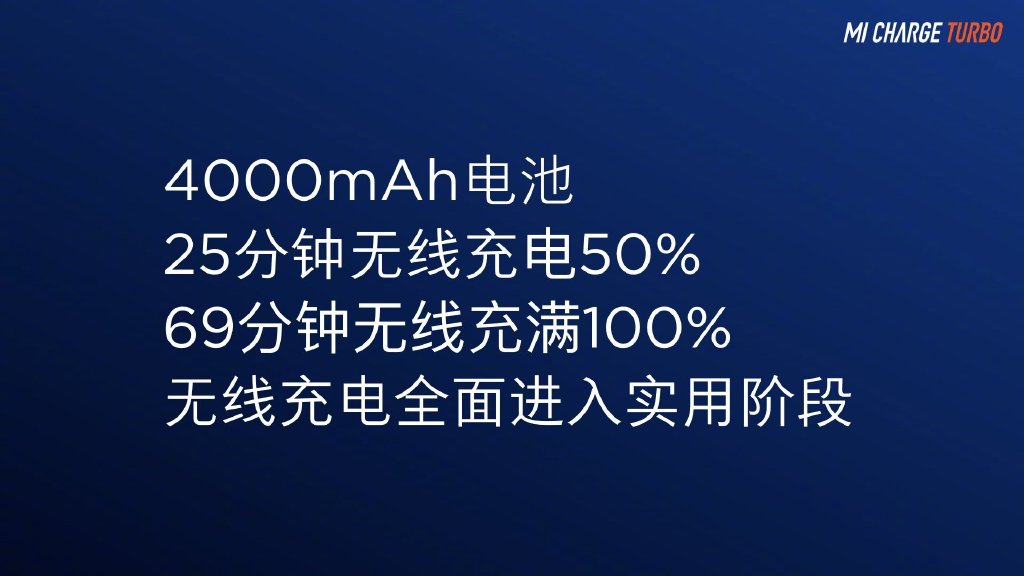
The 40W wireless charger may likely be released in the near future and will put Xiaomi in an exclusive zone. The new 30W wireless charger is the first in the world and is expected to feature on the Mi 9 Pro 5G which will be released soon. The 30W wireless flash charger can charge a 4000mAh from 0% to 50% in 25 minutes while it takes just 69 minutes.
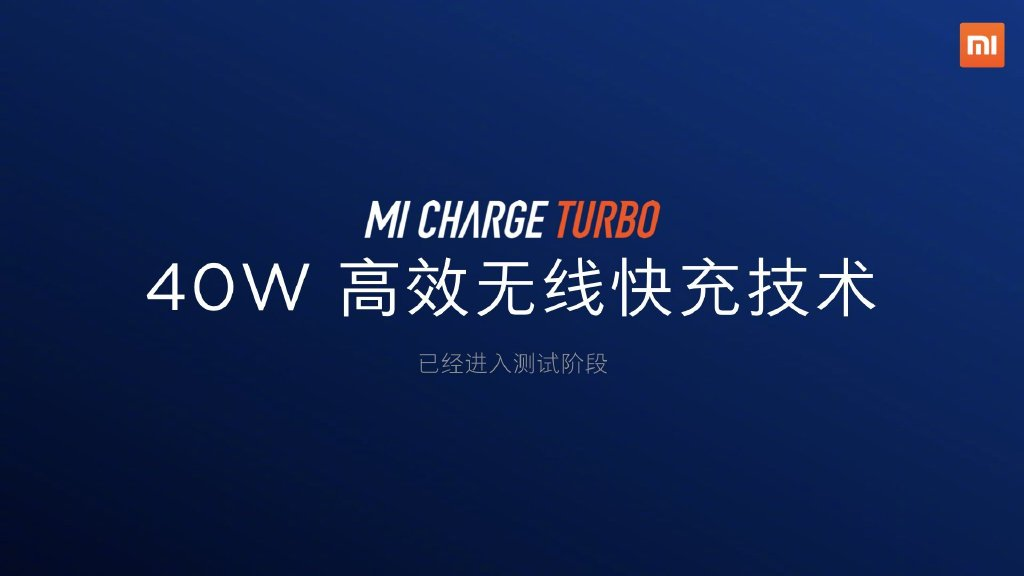
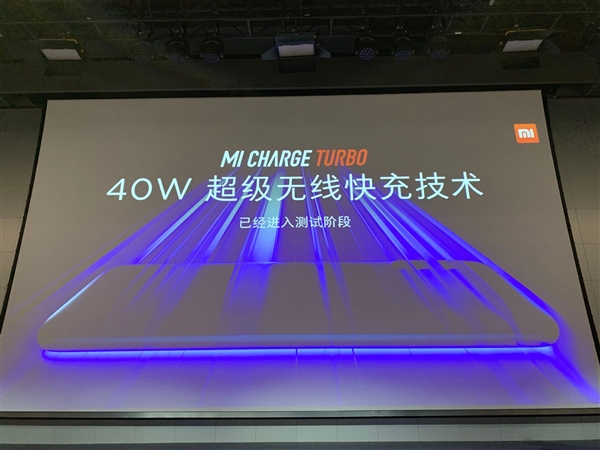
The company says the 40W super wireless fast charging technology has entered the testing phase. The 40W wireless charging solution will deliver an improved 33% faster-charging capability. In addition to wireless direct charge, Xiaomi says the future flagship standard would deliver not just wireless charging but also wired charging and reverse charge. The product may likely not debut this year but we expect it to drop at the earliest, next year.
The Meizu 16s Pro was announced last month and is already available for purchase. The phone which starts at under $400 has a gorgeous design with pretty slim bezels and flagship specs to match. Today, Meizu has revealed it will make an announcement tomorrow that is related to the flagship.
The news was shared by the official Weibo account and it says there is an announcement tomorrow at 10 o’clock. The post also includes a poster with the figures “25”, “130”, and “140” written in red, green, and blue fonts respectively.
We think the announcement is related to the Meizu phone with the model number M928Q which appeared on TENAA last week. Seeing as the Weibo post includes a Meizu 16s Pro hashtag, the TENAA phone is likely a variant of the new flagship.
According to the TENAA listing, the Meizu M928Q has a 6.5-inch 2232 x 1080 OLED display. It is powered by a 2.84GHz octa-core processor which is actually the Snapdragon 855. There is 6GB of RAM and 128GB of storage but no support for storage expansion.
The Meizu M928Q also has triple rear cameras like the 16s Pro but a different configuration and design. It is a 12MP + 8MP + 5MP setup. Although the sensors are stacked on top of each other on the left just like the Meizu 16s Pro’, it doesn’t use the ring-flash design which means the third sensor and LED flash are not integrated together. The second camera sensor also has a red ring around it. Up in front is a 16MP sensor for selfies and video calls.
[envira-gallery id=”275113″]
The rest of the specs include an in-display fingerprint scanner, Android 9 Pie pre-installed, and a 4400mAh battery. It will be available in blue, green, and red. These are the same colors used for the font of the figures in the poster above. The phone measures 159.63 x 78.2 x 8.3 millimeters and weighs 183 grams. The extra thickness and weight are not surprising as the phone packs a bigger battery capacity than the Meizu 16s Pro.
We strongly believe Meizu’s announcement for tomorrow is related to this device. When it launches, it should be cheaper than the base model of the Meizu 16s Pro which is priced at ¥2699 (~$379).
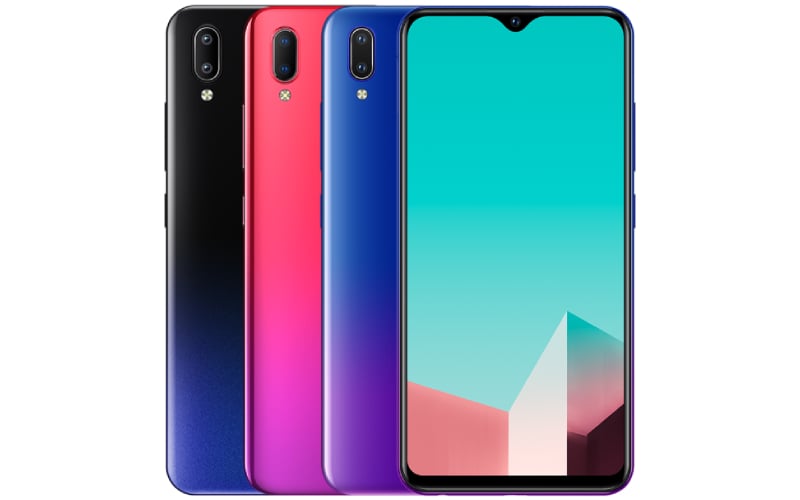
A report from the previous month had claimed that Vivo India will be launching several new phones including a new U-series phone in the country. The Chinese firm has recently launched Vivo Z1 Pro, Vivo S1 and Vivo Z1X phones in India. It is expected to launch the Vivo V17 Pro smartphone in this month. Vivo India Brand Strategy Director Nipun Marya has revealed to 91mobiles that the company will be soon debuting the Vivo U10 smartphone exclusively through Amazon India
The report claims that Vivo India will begin campaigning the Vivo U10 through Amazon India later today. The Vivo U10 phone is priced under Rs. 12,000 (~$167) and it will be hitting the markets by the end of September.
According to Marya, the Vivo U-series phones made include youth-centric phones with fast charging technology. The retail package of the U-series will include a fast charger. The new series will carry ‘Unstoppable’ branding. It is speculated that forthcoming U-series may come with large-sized batteries. Marya said that 80 percent of online smartphones sales includes devices priced between Rs. 8,000 (~$111) and Rs. 20,000 (~$279). The U-series will be targeting the online market in this price range. As of this writing, there is no information on the specifications of the Vivo U10 phone.
Vivo U1 from 2018
In order to capture the online market, Vivo is also selling Z-series phone like Vivo Z1 Pro and Vivo Z1X that are priced between Rs. 15,000 and Rs. 20,000. For offline markets, it is selling Vivo S-series in the same price range in the country. The Vivo V-series costs between Rs. 20,000 and Rs. 30,000. Rumors have it that the Vivo V17 Pro phone may go official in the third week of this month.
As per a recent market research study by Counterpoint, Xiaomi is leading the Indian market with 28 percent market shared followed by Samsung with 25 percent market share. Vivo is third with 11 percent market share. Vivo India could be eyeing the second position in the India n market as the company has planned to invest Rs. 4,000 crores in the coming years to produce 5 crore mobile phones per year.
Whenever the name Blackberry is mentioned, what readily comes to mind is the physical QWERTY keyboard-packing smartphone. But the company is much more than its ailing smartphone brand. In recent times, BlackBerry reorganised into three business units: IoT, Blackberry Cylance, and Licensing with a focus on enterprise software, services, security, and the Internet of Things. In this light, the company has announced a partnership with automobile giant Jaguar Land Rover which will see both firms work together to develop new autonomous vehicles using artificial intelligence (AI) and machine learning technologies.
The autonomous vehicles will use Blackberry’s QNX operating system and Blackberry Cylance, the security software technology which Blackberry acquired at the end of last year. This is in a bid to develop a range of capabilities to bolster vehicle safety, including predictive software maintenance and cyber threat protection, in Jaguar Land Rover’s next-generation vehicle architecture.
The partnership will also see Blackberry help Jaguar Land Rover identify potential security vulnerabilities found in connected and autonomous vehicles. This will be the first time Blackberry will integrate Cylance’s AI technology into Blackberry’s solution since it bought the security company at the end of last year in what was its biggest acquisition to date.
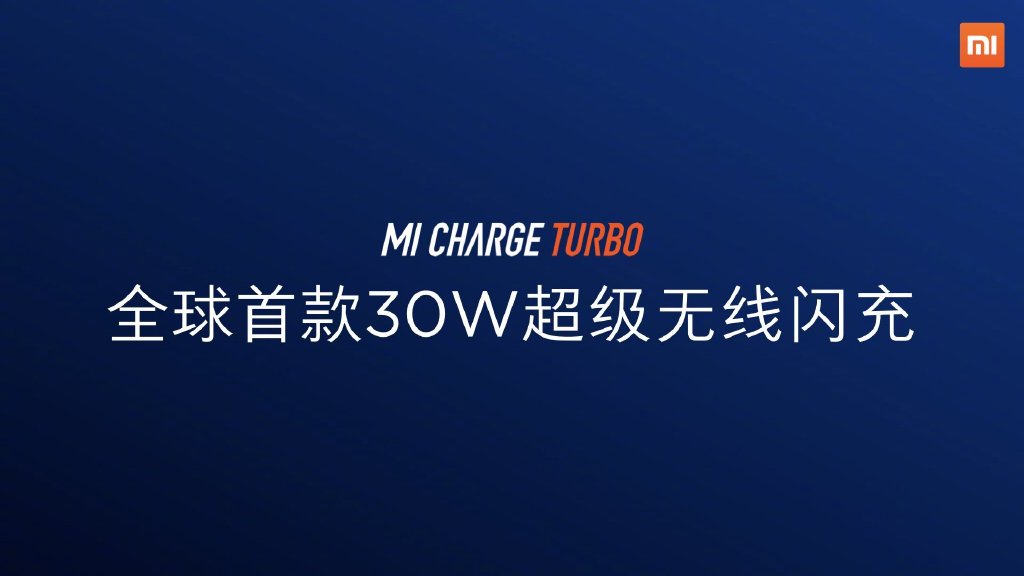
Xiaomi announced the Mi Charge Turbo 30W wireless charging technology at an event in China today. The new charging solution takes wireless charging speeds to new levels, making it even faster than the company’s own wired charging technology. At the same event, Xiaomi also revealed a couple of wireless charging accessories that are in the works.
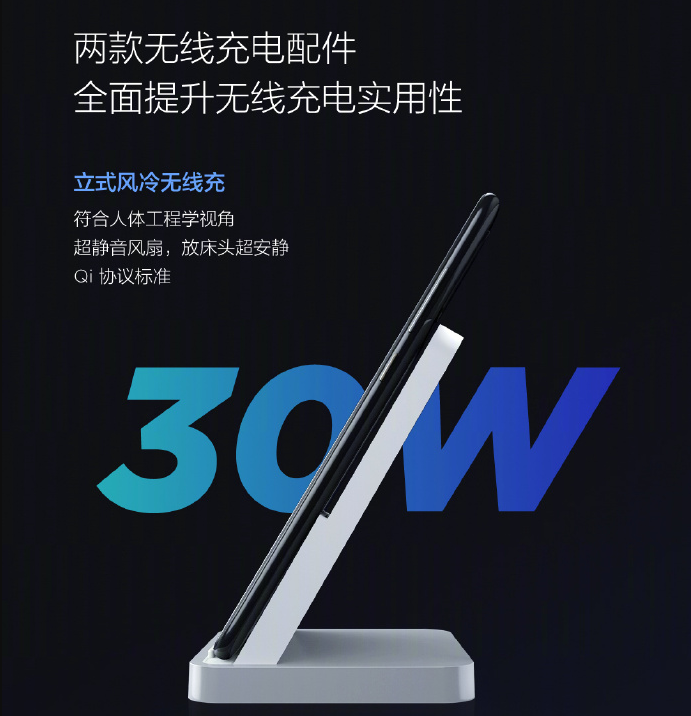
The first one is the Xiaomi Mi 30W wireless charging stand. The charger comes in an all-white design and is relatively thin. It acts as a dock for your smartphone and features a quiet fan inside. It can wirelessly charge your phone at 30W using the Qi wireless charging standard.
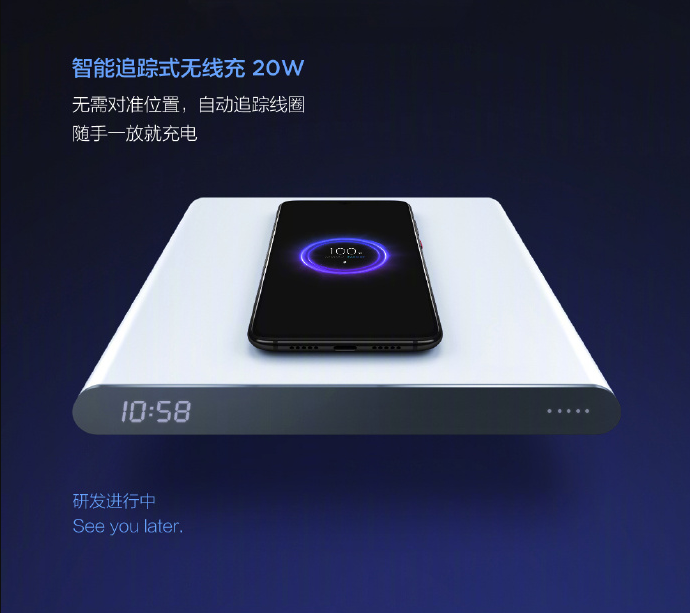
The second product is even more interesting. It supports the company’s current 20W wireless charging standard and comes in at a relatively thick form factor. It’s almost as thick as a book! However, there are a few features that sets it apart. First, this charger is said to come with a smart wireless charging tracking technology. This technology can locate and match the receiving wireless charging coil on your phone with the transmitter coil inside the charger. This ensures that your phone will start charging the moment it is placed on the charger, irrespective of its position. This teaser video (taken from Weibo) actually explains it perfectly.
Further, this 20W Mi wireless charger supports OOB pairing (Out of Box) which is fast and brings security and stability while charging wirelessly. From the image, we can also discern that this 20W smart wireless charger will have a small display that shows the current time as well as the power output.
Xiaomi hasn’t revealed a release date or pricing for these two wireless charging products, but expect it to be present at the Xiaomi Mi 9 5G launch that should happen sometime in the coming weeks.
Qualcomm recently announced its first mobile processor with 5G modem integrated. Soon after that, Shen Yiren, Vice President of Oppo revealed that the company will be the first to launch a smartphone powered by the same chipset.
While he has not revealed the name of the smartphone, the phone in question is believed to be the Oppo Reno series or K-series handset and will be the world’s first to come with the latest 7nm Snapdragon 5G integrated chipset.
The Qualcomm Snapdragon 855 platform has support for 5G modem but the module is separate from the processor. The chipset is powering many current 5G smartphones but the company has announced that its next range of chipsets will have integrated 5G modems right into the processor.
The Snapdragon 6xx and Snapdragon 7xx series as well as the flagship Snapdragon 8xx series will come with integrated 5G modem, covering both the smartphone segments — mid-range as well as premium.
The three Snapdragon 5G platforms will support all the key regions and frequency bands, claims Qualcomm. The phones powered by this will support the entire range of 5G features including mmWave and sub-6 GHz spectrum, TDD and FDD modes, 5G multi-SIM, Dynamic Spectrum Sharing, and Standalone (SA) and non-standalone (NSA) network architectures.
Qualcomm has recently unveiled the faster and more power-efficient X55 modem which is based on 7-nanometer tech, but it won’t arrive until 2020. The latest integrated 5G processors and separate 5G modems will use Qualcomm’s “Snapdragon 5G Modem-RF System” that combines the modem, RF tranceiver and RF front-end.
Chinese tech giant Xiaomi has scheduled an event tagged Smart Living 2020 for September 17 in India. This was revealed via a tweet on Xiaomi India’s official Twitter handle. The tweet which was accompanied by a poster didn’t give any detail of the product that would be unveiled. However, the teaser poster gives us a clue as to the product that will likely be unveiled on that day and that is the Mi Band 4.
The poster has the image of the Mi Band 4 as one of the letters “I” in “LIVING”. The Smart Living 2020 caption is surrounded by icons of the features that would be onboard the smart wearable such as Bluetooth connectivity, heart rate monitor, sedentary alert, call notification, stopwatch, a durable battery and others.
The Mi Band 4 was first launched in China in June this year and has also made its debut in Europe with the moniker Mi Smart Band 4. The device comes with several features that will surely enhance our fitness level and ensure smarter living. We won’t rule out the possibility of the tech giant launching more than more product on that day. We’ll keep you posted here on Gizmochina as soon as the launch event happens.
This year at IFA 2019, Huawei released the Kirin 990 5G processor, the world’s first 5G chipset built on a 7nm EUV process. The Kirin chipsets have always been a hallmark of Huawei’s devices, often being a selling point for them. Huawei themselves have never really treated these as commercial products, but rather as important intellectual property. Which is exactly why this statement by Richard Yu after IFA 2019 is so surprising.
According to Globaltimes, in the interview after IFA, Huawei CEO Richard Yu claimed that Huawei is now considering selling their Kirin chipsets to other industries, though only for specific uses such as in IoT fields. The company is still hesitant to deal with the export of Kirin processors for smartphones, though they did not rule out the possibility.
This is a huge turnaround from the company’s previous stance on Kirin chipsets. In the past, Huawei has always vehemently abhorred talks about selling their Kirin chipsets to others. Just last year Senior Product Director Brody Ji claimed: “For Huawei, Kirin is not a business but a product or technology that acts as our competitive edge against rival smartphone brands.”
So the big question is, why the sudden change of heart? First off, the elephant in the room is probably Huawei’s current US ban. It’s possible that the company is expecting a huge drop in revenue from the ban, possibly due to the losses in the international market, and as a result, is pressured into taking this step as a means to alleviate their revenue problems. It’s also possible the company’s just looking to expand their horizons further.
Now, there’s plenty of good that comes out of this for Huawei, the obvious one being an increase in revenue. Huawei has a pedigree of excellence when it comes to chipset design, which is evident from its recent Kirin 990 launch. So even if it’s limited to non-smartphone devices, we can definitely see there being a reception for these.
On top of that, this can also help Huawei expand its connections with other companies and build bridges that will help them in the future. From the recent Honor Smart Screen launch, we know that Huawei wants to build a smart interconnected system that allows many different devices to communicate freely. It even opens the door for Huawei to market HarmonyOS more effectively, allowing for a higher and faster rate of adoption.
On the downside, Huawei selling their processors would essentially make their own devices stand out less, especially when it comes to their smart devices. The company’s smartphone division would likely be less unharmed, but their smart products like TVs and stuff would gain competition from the very companies that Huawei works with.
Regardless of how things turn out, we’re eager to see what happens next. These past few months have been some of the most exciting to watch, and it doesn’t seem like it’s slowing down anytime soon. Huawei has some tough times ahead of them, but we’re hoping sudden and unexpected moves like these will allow the company to regain ground soon.
Google has officially released the latest Android 10 and some of the smartphones have already started receiving this new update. While the Google Pixel series, Essential Phone and Xiaomi’s K20 and K20 Pro have got the stable build, phones like OnePlus 7 and 7 Pro are on the beta build.
The source code of the new Android 10 is already up at AOSP and thanks to it, custom ROMs based on Android 10 have started surfacing online. In the latest development, Android 10-based custom ROMs for a few Xiaomi smartphones, including Poco F1, Mi 6, Mi 8, and the Redmi Note 5 have been released.
The popular Poco F1 has now received unofficial Android 10, thanks to the Potato Open Sauce Project (POSP) custom ROM. The ROM is not yet stable and there are some issues such as the fingerprint scanner is not working for some users. It also lacks some features but it’s alright given the early days of development.
The same ROM is also available for the Redmi Note 5 (India) and the Redmi Note 5 Plus (Global). However, the ROM is marked as alpha and it’s advisable to use this only if you are experience in this. It too has issues with the fingerprint scanner and the thermal engine, among others.
The Xiaomi Mi 6 is also receiving Android 10 through unofficial LineageOS 17 build (link) and has only one bug listed which is related to Bluetooth playback. This is quite impressive that an almost stable build is available for the smartphone just days after the rollout of this new version of the operating system. Also, the Mi 8 has got Android 10 through Pixel3 ROM (link), which has some issues with FPC scanners and Google Camera.
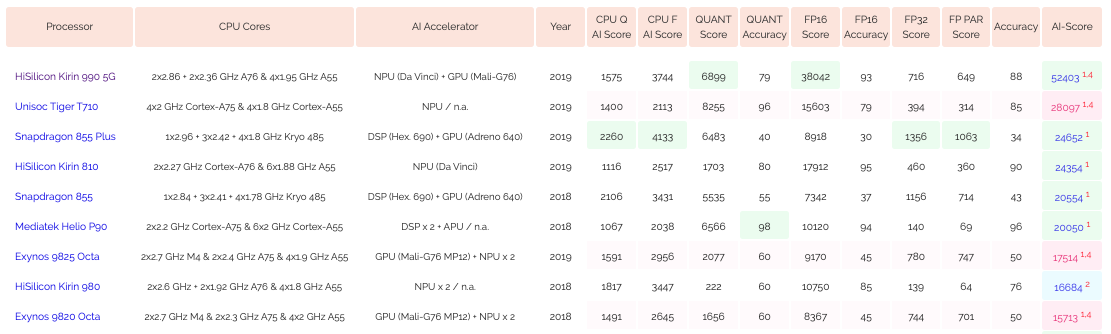
A few days ago, at the IFA 2019 in Berlin, Germany, China-based Huawei announced its much-awaited Kirin 990 5G flagship chipset for smartphones. The chipset comes with dual NPU hardware which not only makes it superior than its predecessor but also superior compared to its competition.
The AI Benchmark test puts the newly announced Kirin 990 5G chipset ahead of the Qualcomm Snapdragon 855 Plus SoC, topping the rankings. The chipset has achieved a score of 52,403 in the test, far ahead compared to the scores of Unisoc Tiger T710 and Qualcomm Snapdragon chipsets.
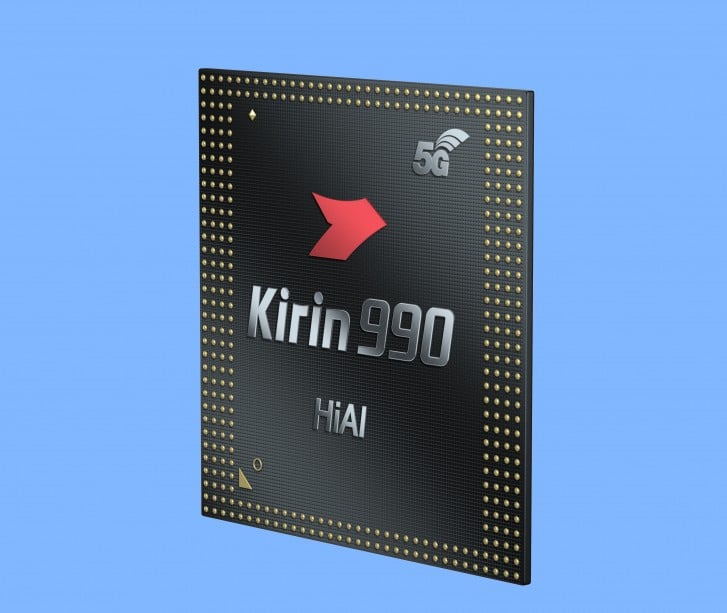
The Huawei HiSilicon Kirin 990 5G is a 7nm octa-core chipset that has 10.3 billion transistors. It uses two big, two middle and four little cores to optimize multitasking, with clock speeds of 2.86GHz, 2.36GHz and 1.95GHz respectively. The 990 5G also packs a 16-core Mali G76 graphics processor which should offer plenty of power for mobile gaming, as well as smart cache built in to reduce bandwidth by up to 15 percent.
It is also touted to be the first full-frequency 5G SoC — with support both non-standalone and standalone architectures as well as TDD/FDD full frequency bands. The Kirin 990 is a true unified design, supporting Sub-6 GHz 5G networks on both SA and NSA architectures.
For photography, it has a new fifth-generation Dual ISP boasts DSLR-level hardware noise reduction and block-matching and 3D filtering. Huawei’s smartphone cameras already produce stunning low-light results, but it looks like that can be improved further.
The Kirin 990 will probably be the FIRST integrated 5G chipset to hit the market
Aside from implementing the 5G modem, the biggest change in the Kirin 990 is going to be the NPU, or Neural Processing Unit. Boiled down to basics, it’s a co-processor optimized for the sort of vector math that’s the lifeblood of machine learning frameworks.
Huawei has scheduled a launch event in Munich on the 19th of September, where the company is expected to launch Huawei Mate 30 and Mate 30 Pro flagship smartphones, which will be powered by this new Kirin 990 SoC.
Today, Huawei’s sub-brand Honor has released a poster confirming a new lineup of smartphones — Honor Vera30. While nothing much is known about this new smartphone series, the company has confirmed that it’ll be powered by the Kirin 990 5G chipset.
Xiaomi released the world’s fastest wireless charging technology earlier this year alongside the Xiaomi Mi 9. Today, the company takes that technology a step forward by announcing the new Mi Charge Turbo that promises up to 3OW of fast wireless charging. This is a significant announcement for the smartphone industry given that wireless charging technology has been often criticized for its slow charging speeds. With speeds up to 30W, Xiaomi’s Mi Charge Turbo is even faster than its 27W wired charging tech that’s usually bundled with its flagship smartphones.
Xiaomi claims that the Mi Charge Turbo can charge a 4000mAh battery wirelessly up to 50% in just 25 minutes and up to 100% in just 69 minutes. So you no longer have to endure the painfully slow charge times while topping up your smartphone wirelessly.
What’s more, the Mi Charge Turbo tech supports fast reverse wireless charging as well. The company said that it can charge accessories like smartwatches, headphones, and even other smartphones wirelessly. The technology can top up the iPhone Xs up to 20% while reverse charging in around 30 minutes. In comparison, Huawei P30 Pro could only charge the same phone up to 13%.
Xiaomi confirmed that the Mi Charge Turbo 30W wireless charging will be first available on its new 5G flagship called the Xiaomi Mi 9 Pro 5G. This phone has been making rounds on the internet (often referred to as the Mi 9S 5G) for quite a while and we have already seen it on TENAA with a large 4000mAh battery. With the new 30W wireless charging tech on board, the phone will feature three types of fast charging technology: Fast wired charging, Fast wireless charging, and Fast reverse wireless charging.
It’s worth adding that Xiaomi probably won’t be the only smartphone manufacturer with a fast wireless charging solution. Huawei is also expected to release a 30W wireless charging technology in the coming months.
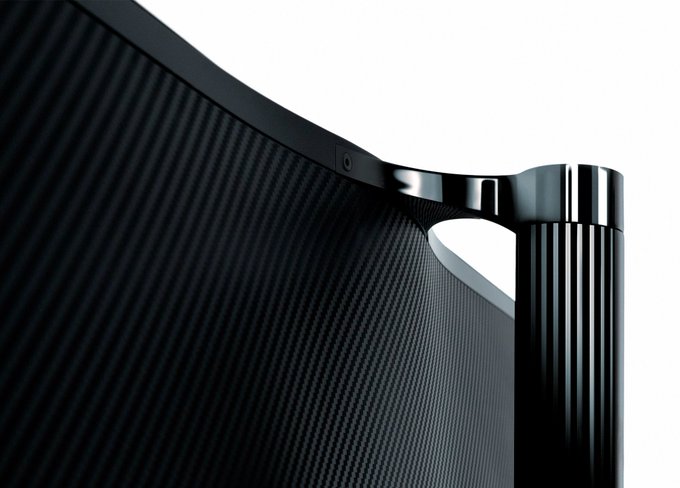
OnePlus will be debuting the OnePlus TV by the end of this month. In India, the OnePlus TV will be available exclusively through Amazon India. The retailer giant has already started teasing on the features of the OnePlus TV. Founder and CEO of OnePlus, Pete Lau has shared an image of the swivel stand of the OnePlus TV.
The new image shared by Lau showcases the rear side of the OnePlus TV as well as its swivel stand. The image suggests that even its swivel stand will have a good appeal. It has a carbon fiber finish and its appearance is similar to the rear design. The inclusion of the swivel stand indicates users will be able to enjoy watching their favorite dose of entertainment by moving the display to the desired angle. Lau’s tweet reads ‘no detail is too small’ which indicates that the company has lot of efforts in enhancing the design of the OnePlus TV.
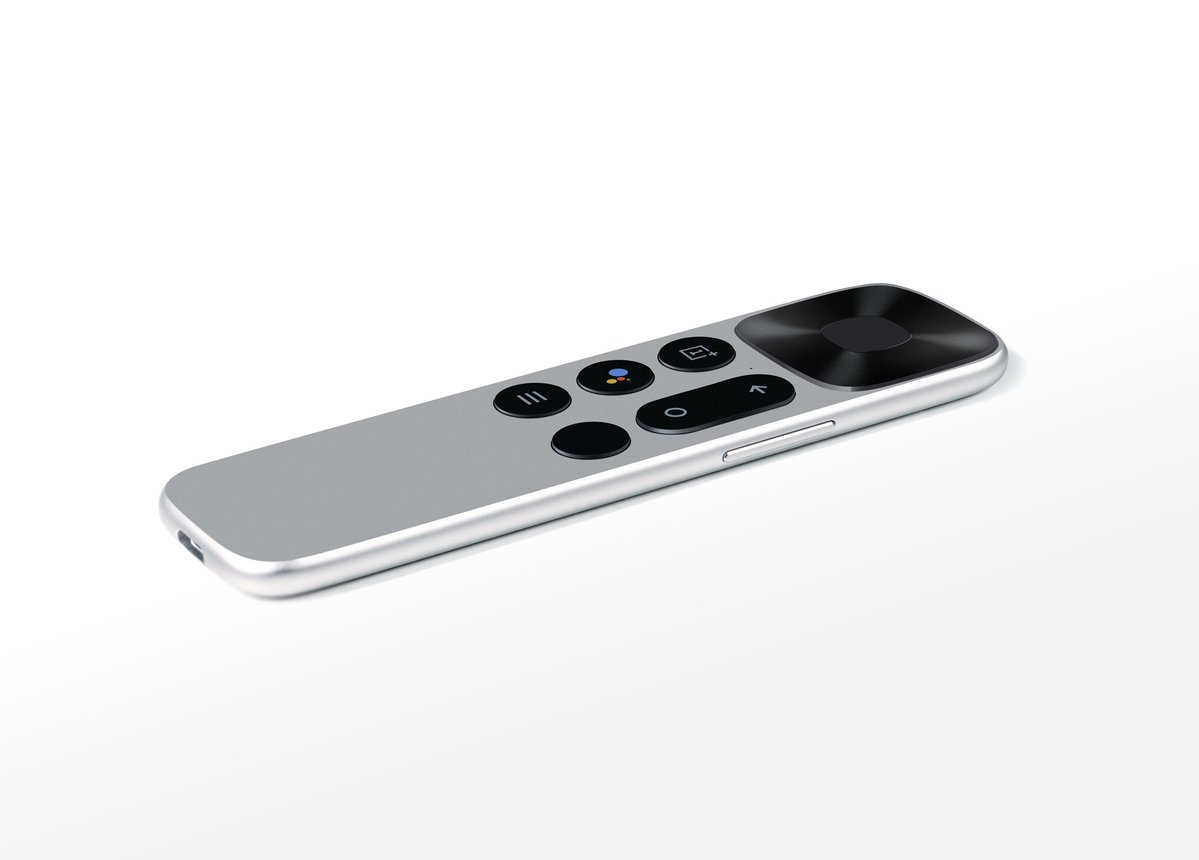
Last week, Lau had shared an image of the remote control for the OnePlus TV. The Bluetooth enabled remote control has a USB-C port, a OnePlus button, a blank button, a Google Assistant button and navigation buttons. What’s unique about the OnePlus TV remote control is that it is equipped with a touchpad at the top for easy navigation experience. The remote seems to be made out of aluminum alloy.
OnePlus TV coming to India has a 55-inch 4K QLED display powered with Gamma Color Magic image processor. It is fitted with eight speakers that will deliver 55W audio output along with Dolby Atmos support. The OnePlus TV could be powered by the MediaTek MT5670 quad-core processor that works 1.5GHz and 3 GB of RAM.
OnePlus TV will deliver plenty of OTT content and it is expected to run on a custom edition of Android. The company will be providing Android TV updates for OnePlus TV for at least 3 years. In the U.S., Europe and China, the Chinese firm may launch the 75-inch and 65-inch editions.
OnePlus will be also debuting the OnePlus 7T and OnePlus 7T Pro smartphones by the end of this month. Some reports have claimed that the company will be holding an unveil event on Sept. 26 to announce the OnePlus TV and OnePlus 7T series.
With the likes of Samsung, Apple, and Huawei launching their flagship smartphones, Xiaomi is also jumping the bandwagon. The company is gearing up to launch its Mi MIX 4 smartphone but ahead of the announcement, some of the phone’s specifications have been leaked online.
The leak reveals that the smartphone will come with a new “waterfall screen”, which is the same that Vivo is adopting for its upcoming Vivo NEX 3. Further, it has also been confirmed that the phone’s display will come with a 90Hz refresh rate.
As for the camera, the smartphone will feature a 100-megapixel camera sensor on the back. Xiaomi had previously announced that it will soon launch a new smartphone featuring a 100MP camera sensor from Samsung. Now that smartphone seems to be the upcoming flagship Mi MIX 4.
Also, on the front side, there will be a pop-up mechanism for the selfie camera sensor, which has now become a trend for premium mid-range as well as flagship smartphones. Now coming to the charging, it is said that the phone will come with 40W fast charging.
It remains to be seen if the stated 40W fast charging technology refers to wireless charging given that the company is all set to launch Mi Charge Turbo technology for the wireless charging. Currently, the company is offering 20W wireless charging in the Mi 9 flagship.
Previously leaked information related to the device reveals that the phone will come with a 2K display. The full ceramic body smartphone will be powered by the Qualcomm Snapdragon 855 Plus octa-core processor with up to 12GB of RAM and 1TB of internal storage. It is also expected to come with support for 5G communication technology.
While the launch date for the Xiaomi Mi MIX 4 is not yet revealed, several reports points that the phone will go official this month in China. We’ll have to wait for a couple of days to know if that is true as the company should official reveal the launch date in the coming days if it really plans to launch it this month.
Even thirteen years after its launch, Banggood continues to offer the best bang for your buck! The Chinese International E-commerce provider is currently gearing up for its 13th-anniversary celebration.
Banggood is leaving no stone unturned to show appreciation to its loyal users and keeping in line with that, the online store has launched a new promotion sale. Offering a chance to grab up to a whopping $100,000 off, the 13th Anniversary Sale promotion page is crammed with high-end products that have been split into various categories.
The first section called Daily Flash Deals is where you can avail unmissable opportunity to get your hands on top-end items at lowered prices. The promo page will offer flash deals daily until the promo wraps up.
Brand conscious buyers can head straight to the next category called Featured Brand, wherein they can avail noteworthy discounts on products from leading manufacturers such as BlitzWolf, Eachine, H96Max, OnePlus and Doniu. You can even use designated coupon code for select items and save more money.
For example, the 8GB RAM+256GB ROM OnePlus 7 variant usually retails for $999.99 but you can now buy it for a lowered price of just $719.79 under the Featured Brand category. Moreover, you can extend this 28 percent discount by applying coupon code BGannv349 during the checkout process.
You can win a site-wide 8%-10% off coupon under the following category dubbed Share and Get Coupon. To win max 10% off code, all you need to do is to share a coupon with your friends.
While the site-wide coupon will be valid until September 12th (UTC+8), it cannot be used on items carrying already reduced price tags, or under any other promotional offer. Aside from that, you can share and win $10000 bonuses, $200 New User Gift Pack, up to 100,000,000 points, and take advantage of the $0.1 Snatch Deals.
You can check out the Deals by Category section on the promotion page for heavily discounted items that come in handy in day to day life. These products have carefully been added to specific sub-categories such as Autumn Fashion Trends, Toys Hobbies & Robot Sale, Electronics & Tools Sale, etc.
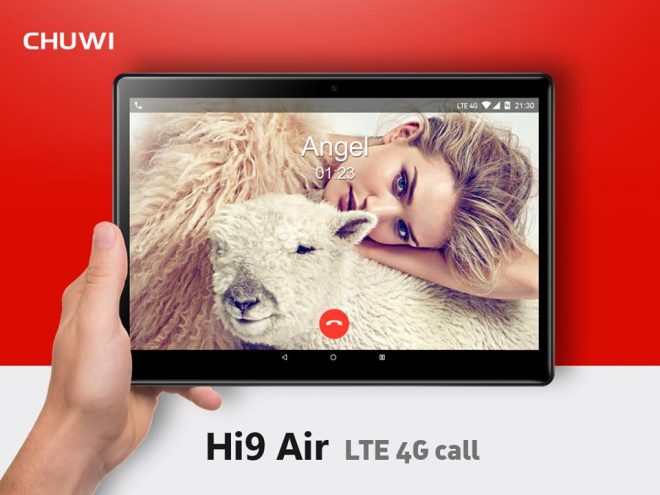
Each sub-category offers a chance to save a considerable amount of money on high-end products. For the sake of an instance, the Super Tech Deals sub-category offers up to a $130 off coupon on popular electronic items including the CHUWI Hi9 Air tablet, BMAX Y11 Laptop, Xiaomi Mi9T smartphone, and more.
The concluding section on the activity page is called More to Love and just like the rest of the previously mentioned categories, this section offers significant discounts on select products that would normally cost a bomb. For example, the BlitzWolf BW-HL1 smartwatch that sells for $49.99 can now be yours for just $33.27.
You can visit the activity page by following this link and take full advantage of the discounts and coupons before the promotion sale comes to an end.
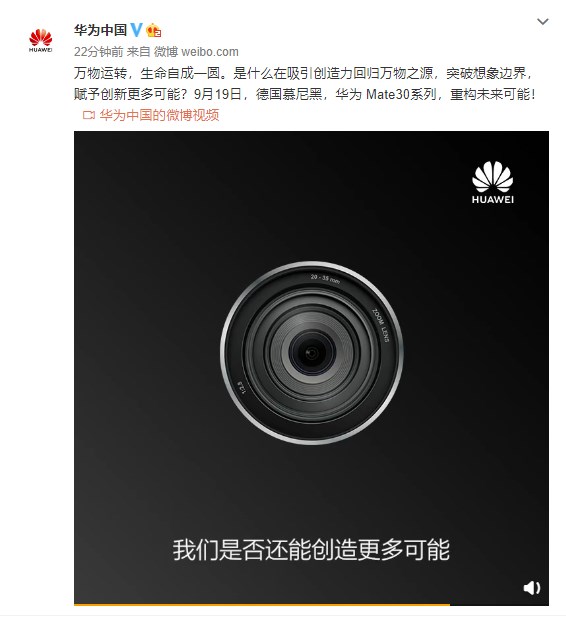
Huawei Mate 30 series smartphones are all set to go official later this month. The company has scheduled a launch event in Munich, Germany on 19th September. Ahead of the phone’s launch, Huawei has now shared a new teaser video on Weibo.
The teaser for the Huawei Mate 30 series smartphones showcases a circular camera sensor, hinting at the new “Oreo” camera module on the back panel. The rear camera sensors will be housed inside a circular casing, which is being referred as “Oreo” module.
Recently, a leaked poster revealed that the Huawei Mate 30 series will come with quad rear cameras with a huge bump. That bump is said to be as a result of smart cases which will bring additional features to the phone. We talked about the cases here which we think will not be limited to the Mate 30 series but also other Huawei phones and Honor phones too.
The Huawei Mate 30/30 Pro will feature cameras co-developed with Leica, two of which are 40MP sensors. It will also have triple cameras in front housed inside a notch, an in-display fingerprint scanner, a Kirin 990 processor, and an IR sensor. It will feature a display that curves to the sides at an angle close to 90-degree. Huawei also recently received certification for a new wireless charger that can charge at 25W.
However, while the Huawei Mate 30 series will be announced in Europe first, report claims that the phone not be available for purchase outside China for a while as Google has said the manufacturer isn’t licensed to launch the phones with official Android and Google Play services due to the trade ban.
The company has now confirmed that the Mate 30 will launch without any Google applications. Instead, it will reportedly come with third-party alternatives running on a bespoke version of Android 10.
Since Android is an open source operating system, the Mate 30 will still be running the latest Android 10 OS out-of-the-box. This will make Mate 30 the first Huawei smartphone to ship without Google’s support after the US trade ban.
Meanwhile, Huawei CEO Richard Yu has hinted that the company is all set to adopt HarmonyOS for smartphones if the situation with the United States doesn’t improve. He hinted that the Huawei P40 will come running HarmonyOS next year and has also confirmed that the OS is now ready to power smartphones.
We use cookies on our website to give you the most relevant experience by remembering your preferences and repeat visits. By clicking “Accept”, you consent to the use of ALL the cookies.
This website uses cookies to improve your experience while you navigate through the website. Out of these, the cookies that are categorized as necessary are stored on your browser as they are essential for the working of basic functionalities of the website. We also use third-party cookies that help us analyze and understand how you use this website. These cookies will be stored in your browser only with your consent. You also have the option to opt-out of these cookies. But opting out of some of these cookies may affect your browsing experience.
Necessary cookies are absolutely essential for the website to function properly. This category only includes cookies that ensures basic functionalities and security features of the website. These cookies do not store any personal information.
Any cookies that may not be particularly necessary for the website to function and is used specifically to collect user personal data via analytics, ads, other embedded contents are termed as non-necessary cookies. It is mandatory to procure user consent prior to running these cookies on your website.

 Designed to radically enhance the process of shooting or film making, high-priced gimbals come in various shapes and sizes. If you are in the market for a feature-laden gimbal that doesn’t cost a bomb, you have come to the right place.