It is already five years since Xiaomi made its first official appearance in India. The company is celebrating its fifth anniversary in India and we must say that there are several reasons to celebrate. The Chinese company has grown to become the number 1 brand in India, beating Samsung who enjoyed that title for long. Despite Samsung’s efforts, Xiaomi has held on to the title for more than two consecutive quarters. In order to celebrate its achievements with the last five years, Xiaomi is planning to release a slew of Mi-branded products.
The company recently released the Mi Beard Trimmer and as a followup, the company teased five new products that are to come to India very soon. Most likely in the span of the next five weeks or so.
The products include new over the head headphones, new wireless earphones, rechargeable LED Lamp, fast charger, and Mi Truck Builder. This will be the first time Xiaomi will be launching headphones, wireless earphones, and an LED lamp in India. Also, the company already sells an18W fast charger in India so, may likely be launching a 27W fast charger in India next.
In addition to these products, Xiaomi India is also gearing up to launch Redmi K20 series aka the Redmi K20 and the Redmi K20 Pro in the country. Meanwhile, some reports also suggest that the company will launch the Redmi 7A in India alongside the Redmi K20 series.
When Xiaomi and Meitu announced their partnership last year, it was revealed that Xiaomi will develop, manufacture, and market Meitu-branded smartphones while Meitu will provide imaging technology.
However, the first product from their partnership isn’t carrying Meitu’s name but Xiaomi. The upcoming Xiaomi CC9 is the first smartphone under a new line called CC. So when will we see the first Meitu smartphone manufactured by Xiaomi?
According to the response given by Lei Jun when asked the above question by a Weibo user, Meitu-branded phones will arrive next year but until then, the new CC line is the result of the Xiaomi-Meitu partnership. This means the Meitu phone with the flip camera will not launch this year even if that render is actually genuine.
Up until then, Xiaomi will continue to launch camera-focused devices under the new CC line. Phones under the new line will have Xiaomi’s branding but will make use of Meitu’s imaging technology.
Things may be looking good for Huawei has some US companies have resumed shipping products to the Chinese company. US chipmaker, Micron is said to be one of the top firms that have begun shipping goods to Huawei.
The chip manufacturer is able to do this without breaking any law thanks to the ban which sanctions only goods that contain 25% or more of components or materials sourced from the US. It also doesn’t affect goods that are not manufactured in the US or those not labeled as “Made in the US”.
Intel and some other market leaders have also been reported to have resumed shipping products to Huawei.
Micron CEO: Sanjay Mehrotra; Source:Bloomberg
Mr. Sanjay Mehrotra who is the top official at Micron warned investors that there is “ongoing uncertainty” with respect to Huawei’s predicament, so they can’t “predict the volumes or duration” they will be able to continue shipping products to Huawei.
He added that the Huawei ban cost the company 200 million dollars in revenue for its fiscal third quarter which ended on May 30 as the Chinese giant is its biggest client. The ban is expected to affect over a thousand American companies too.
Micron’s shares rose by as much as 13.8% today following the news that it has resumed shipping to Huawei.
The Huawei-US saga is still on and is part of a trade war between the US and the Chinese governments.
Micron used to own the storage brand Lexar before it was acquired by Longsys, a Chinese-based company. Early this year, Micron announced the first 1TB MicroSD card in the world.
Elephone is betting a lot on its first pop-up camera flagship and that’s totally logical since it is the most advanced phone they’ve ever made. After an incredible first sale on Aliexpress, the Chinese manufacturer is now teaming up with Banggood to continue the reduced price promotion that can get you Elephone U2 4GB/64GB for just $199.99 and 6GB/128GB for just $249.99! You can get it on Banggood until July 1st as after that date, the price will go up to its official retail price. Also, for the 11 more days, you can participate in the Giveaway Event.
1 of 3
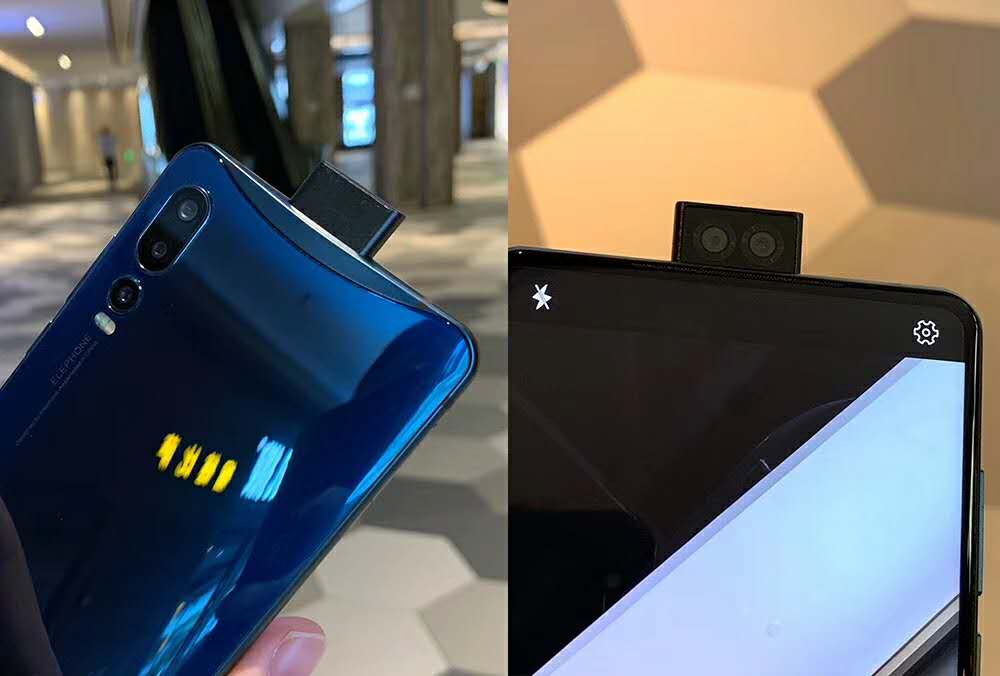
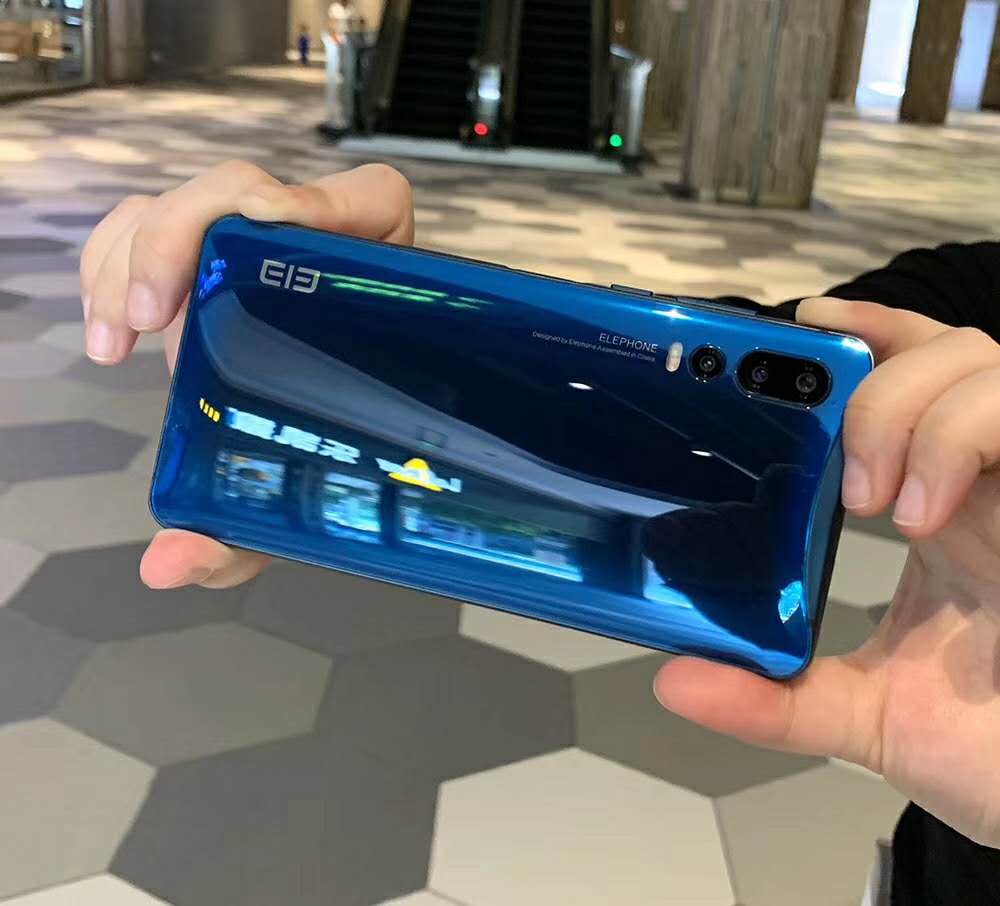
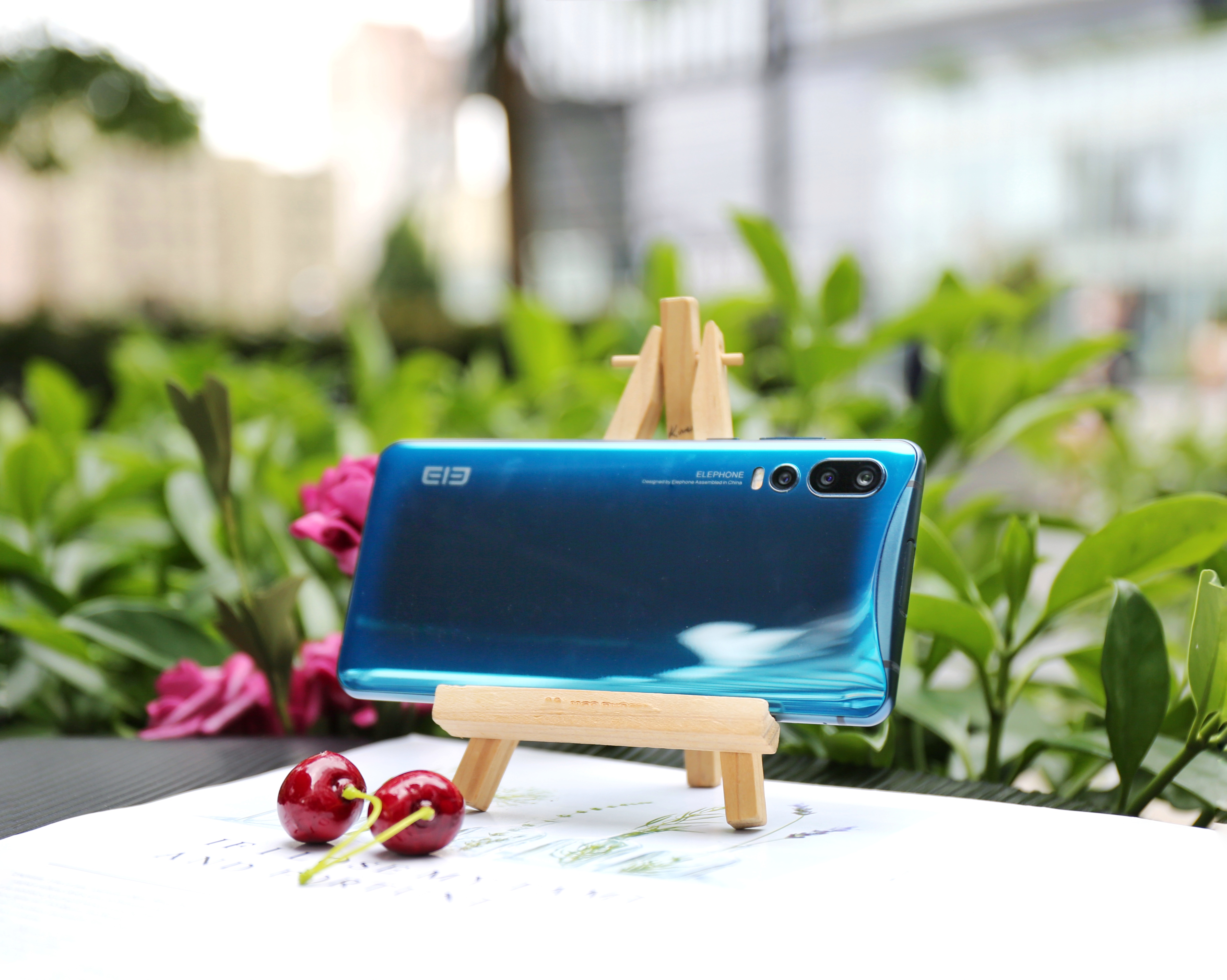
At the same time, the company released some photos of the real thing and boy does it look beautiful. As you can see for yourselves, the phone seems very well made and the glass back is stunning. Also, you can see the pop-up camera in action as well as the triple rear camera. In general, the features on this device are unprecedented at this price range.
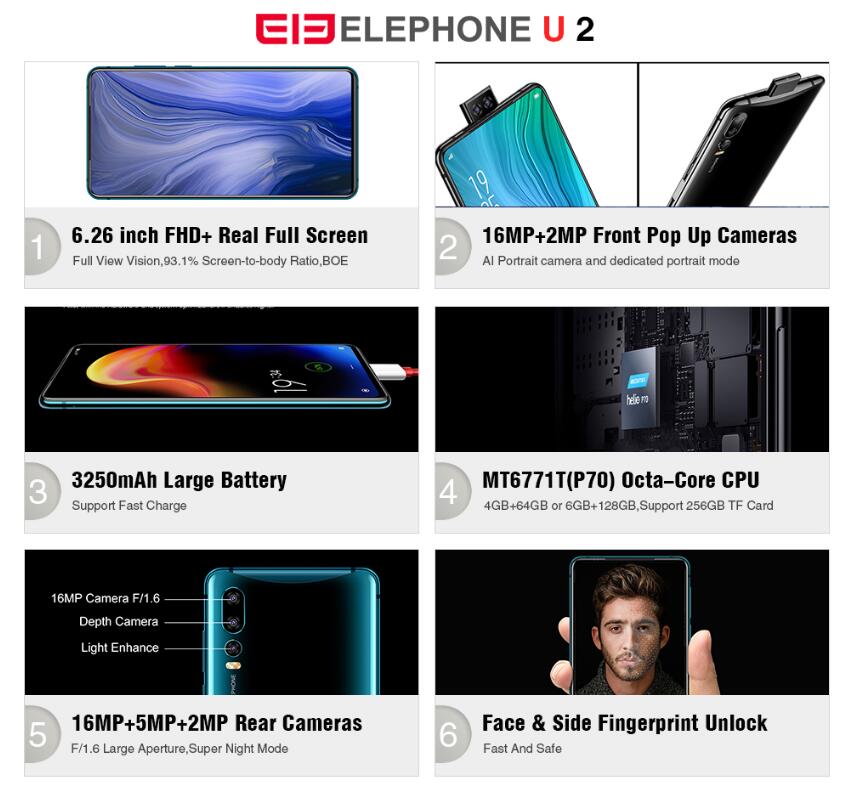
In short, Elephone U2 comes with a 103% Wide-Gamut, 500nit Brightness 6.26″ FHD+ full display with a 93,1% screen/body ratio thanks to the pop-up front camera and ultra-narrow bezels. The pop-up camera hosts 2 sensors with 16MP/2MP configuration while the rear camera is a triple setup with 16MP/5MP/2MP sensors and f/1.6 aperture with Super Night mode. Also, it is powered by Helio P70 SoC backed by 4GB/64GB or 6GB/128GB memory configuration. The battery capacity is 3250mAh and supports fast charging while there are face & side fingerprint sensors and comes with Android 9.0 Pie OS. See all the details here.
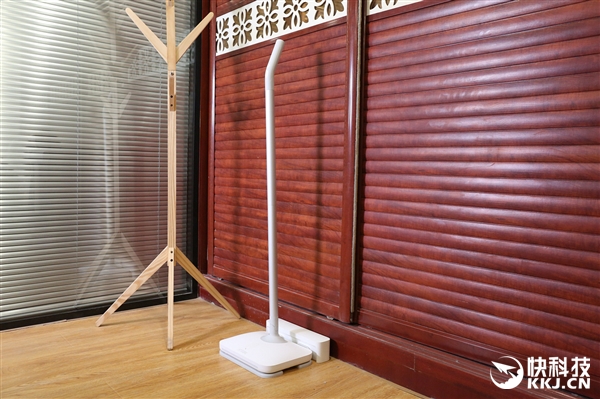
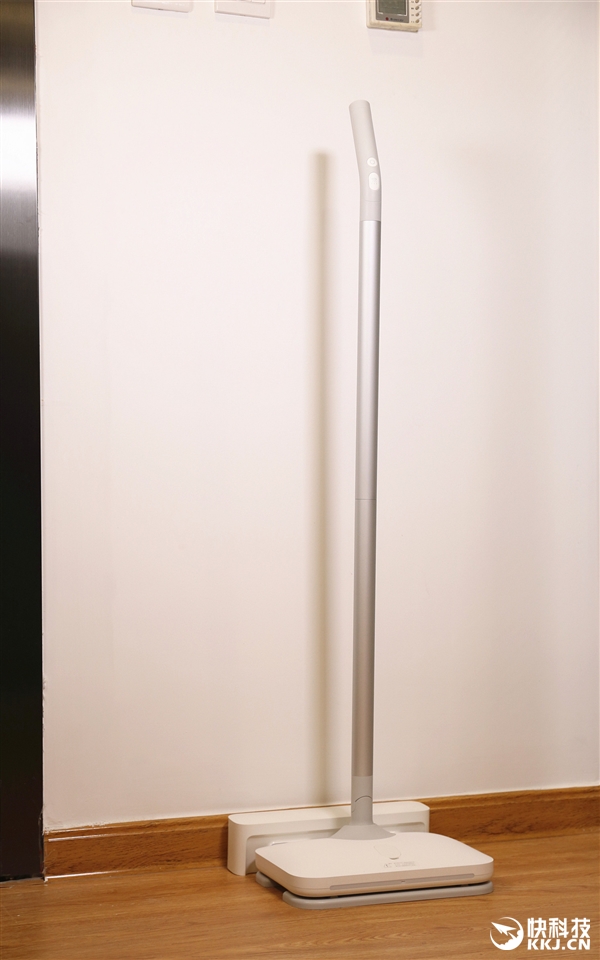
Xiaomi‘s ecological chain has continued to be a vital part of the company. One of the latest product from the chain is the MIJIA Wireless hand-held Electric Mop. The MIJIA brand is Xiaomi’s smart home products division and is known for its minimalist and powerful products. The MIJIA electric mop isn’t any different.
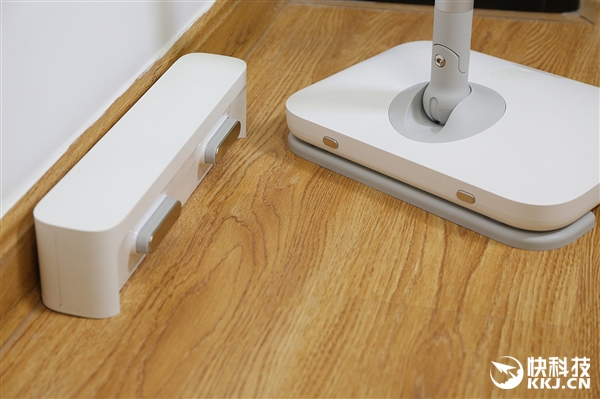
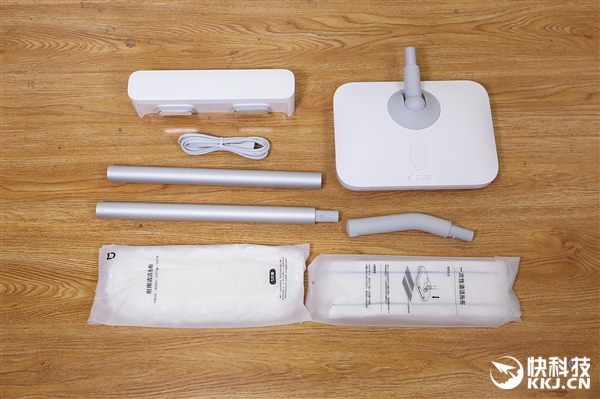
The Mijia wireless hand-held electric mop continues the simple design of the Mi family. It has four-section splicing combination, a curved body design, slim and stylish build. The Mijia mopping machine adopts a wireless design, one-hand controllable handle and is 180° rotatable. The tractor is only 4cm from the floor and with the design of the handle, it can be flattened so as to gain access to hard to reach areas like the bottom of the bed and under the sofa. The control buttons at the handle are powered by a button battery.
The electric mop also packs a high-speed drive motor which drives the scrubber. The motor is capable of spinning the brush up to 1000 times per minute, producing high-frequency friction with the floor. Thus, it is capable of effectively removing dirty spots and stubborn stains on the surface and quickly remove dust, dirt and hair. The device has a fan-shaped water spray which wets the floor in order to aid in removing tough stains and also to suppress dust. The device comes with a durable cleaning mop and a disposable cleaning mop.In addition, the electric mop comes with a charging pile with which it can be charged. There is a built-in 2200mAh large-capacity lithium battery which can power the device for use continuously for about 1 hour.
As for the price, the MIJIA Wireless hand-held Electric mop is priced at 499 yuan ($72) in China. Sadly, we won’t be seeing this product soon overseas except via third-party retailers.
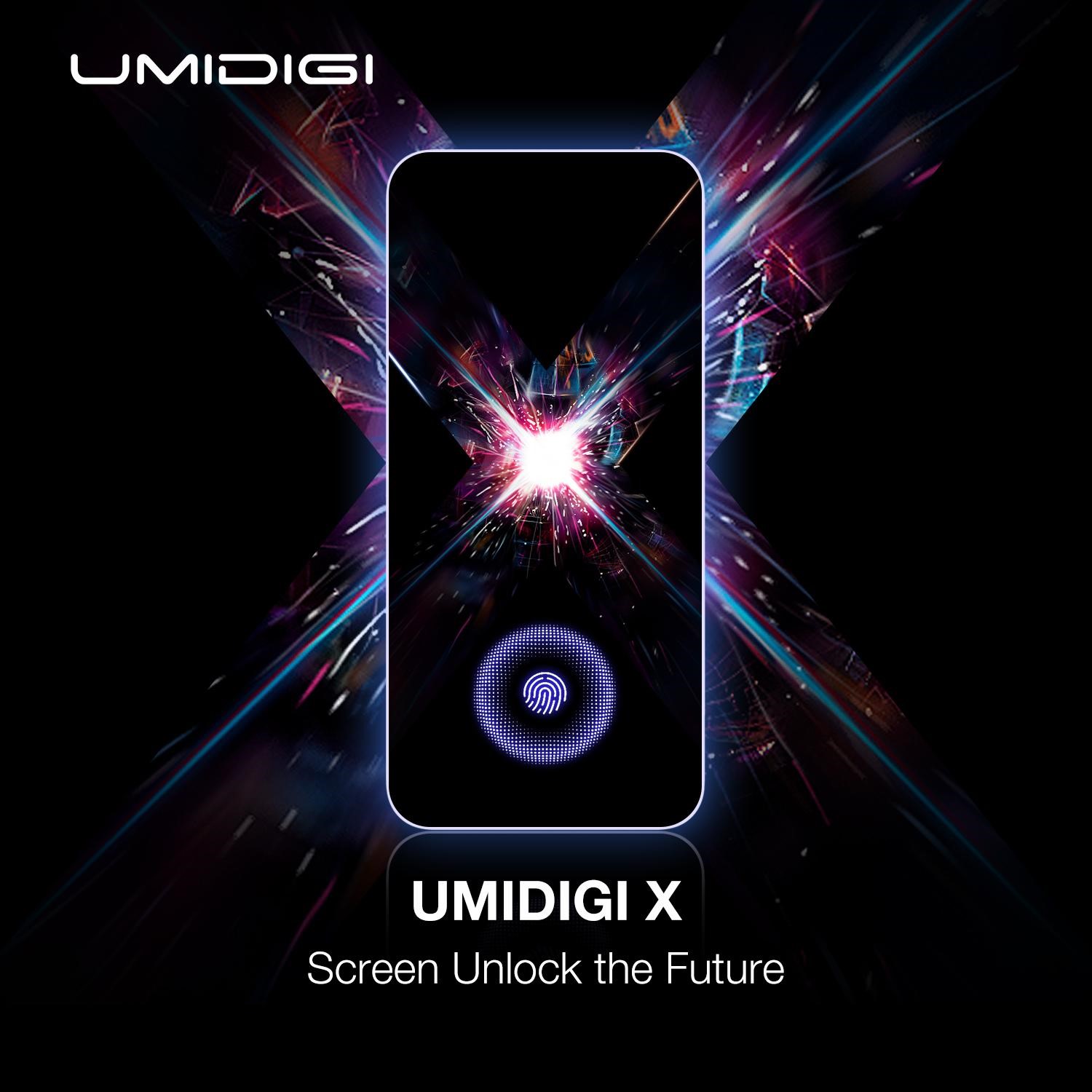
According to a recent leak, the Chinese manufacturer UMIDIGI is soon going to launch a new model following the big success of the A5 Pro. The leaked poster says that it is will be named UMIDIGI X but that might be a temporary name. According to the same poster, the phone is going to come with an in-display fingerprint sensor, a feature that is mostly found in expensive flagship devices. But according to UMIDIGI’s strategy until now, this one should be part of the budget market segment.
Currently, in-display fingerprint readers can only be applied to OLED displays so the UMIDIGI X will certainly come with one. That’s great since OLED panels have more accurate colors with true black, better contrast, and sometimes better brightness than common LCD panels. Also, they are more power efficient most of the times since LCD panels have always-on LEDs to function while OLED panels only light the portion of the display that’s needed. Apart from the fingerprint reader, the poster shows that there is no notch on the top. Does this mean that it could come with a fullview display and a pop-up selfie camera like Xiaomi Mi 9T or OnePlus 7 Pro? We’ll investigate and post any new information that comes up.
Of course, there is no launch date available right now nor is the price. It is speculated that UMIDIGI would reveal the new device in early August. In the meantime, UMIDIGI is globally recruiting 30 trial users to test its smart devices UMIDIGI Ubeats, UMIDIGI Uwatch 2, and UMIDIGI Selfie Stick (10 units each) to help improve the user experience. You can learn all the latest news for UMIDIGI’s devices on their Facebook page and join the giveaway on their official website.
Already some time in the market, the Ulefone Armor 6E has received good reviews by users and media thanks to its rugged features and smooth performance. In addition to these features, the device also sports great battery life and that is clearly seen in the battery test video conducted by Ulefone.
As you can see in the video, the battery lost just 10% of its charge after 1.5 hour of mixed use. The test included 30 minutes of music playback, 30 minutes of video playback, and 30 minutes of online gaming. This means that you can use Armor 6E for 15 hours continuously. If you are a casual user, it should last for 2-3 days on a single charge. Not bad for the 5000mAh battery that supports 9V/2A fast charging as well as 10W wireless charging.
The rest of the specs are no slouch either as it comes with a 6.2″ FHD display protected by Gorilla Glass 5 and sports a 16MP/2MP rear camera as well as an 8MP selfie shooter. The driver for all this performance is the new Helio P70 octa-core SoC backed by 4GB of RAM plus 64GB of internal storage (expandable up to 256GB more via microSD). What’s more, it supports Face and Fingerprint unlock, NFC with Google Pay, global network bands, and Android 9 Pie OS.
The Armor 6E sells for a special price of $199,99 on Gearbest, pretty low for all the features it offers. Also running is the promotion for the big battery flagship Ulefone Power 6 that costs just $159.99.
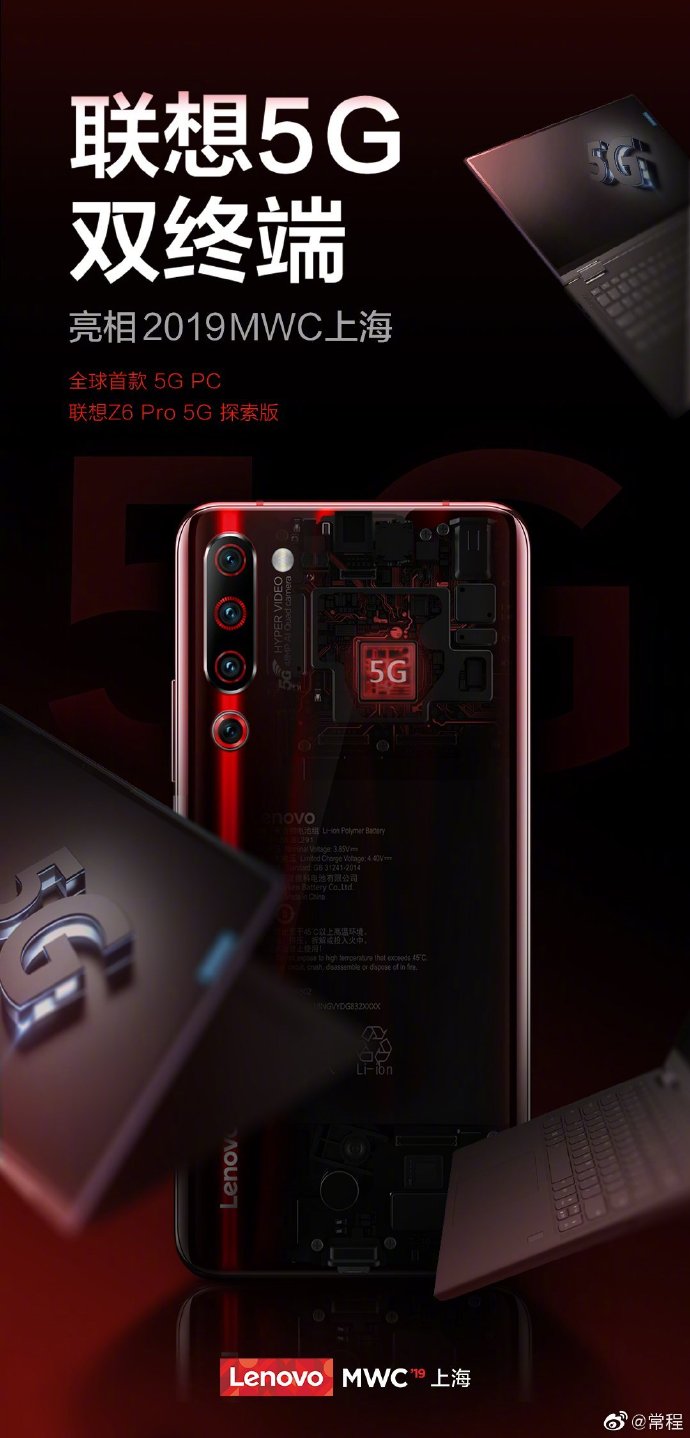
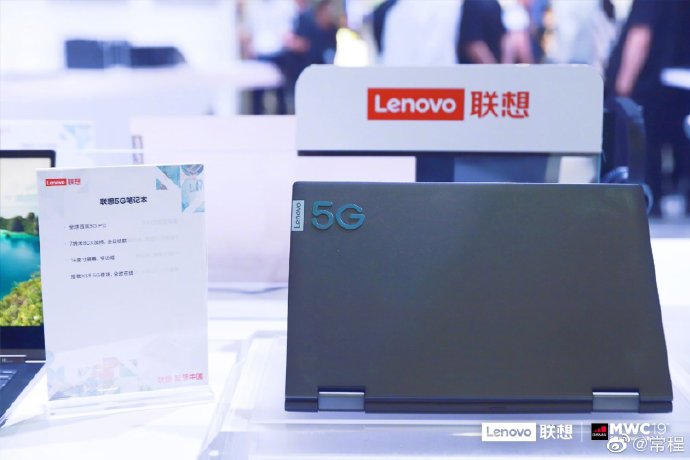
5G is the theme at this year’s edition of MWC Shanghai. China Mobile kicked things off yesterday with its 5G+ Initiative at a pre-MWC event while brands like Vivo announced its 5G plans. Today, Lenovo announced the world’s first 5G laptop as well as the Lenovo Z6 Pro 5G Explorer Edition.
Lenovo 5G Laptop
This is the world’s first 5G laptop. It is powered by the Snapdragon 8cx processor which is clocked at 2.75GHz. The rest of the specs are not mentioned which isn’t surprising as it appears Lenovo just wants to show that 5G will also be coming to laptops in the future.
Lenovo Z6 Pro 5G Explorer Edition
The Lenovo Z6 Pro 5G Explorer Edition is powered by the Snapdragon 855 processor and has a Snapdragon X50 Modem. It keeps its 6.39-inch AMOLED display with a waterdrop notch and packs a 4000mAh battery just like the standard Z6 Pro. In a nutshell, only the components needed for 5G differentiates it from the LTE version. However, there is a 5G logo beside the rear cameras.
[envira-gallery id=”261196″]
Promotional images show the phone has a see-through back but live images show otherwise. There is no info on when the Lenovo Z6 Pro 5G Explorer Edition will launch and how much it will cost.
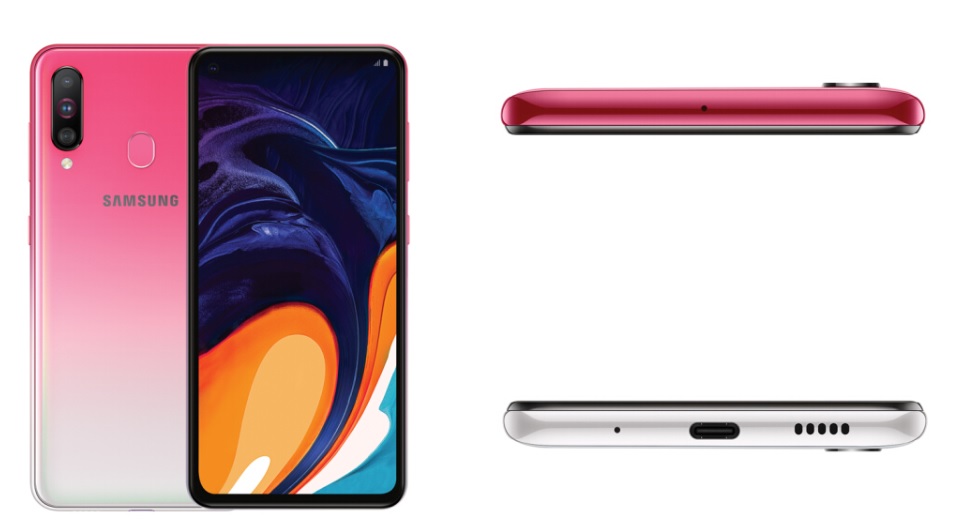
The new “Peach Fog” color variant is a mix of red and white and it is an attractive piece of work. Its two-color finish spills to the top and bottom edges where the former is red and the latter is white.
It is already listed on Jingdong.com and will go on sale tomorrow at 10 AM (local China time). The Peach Fog color variant will only be available in the 6GB RAM + 128GB configuration just like the orange variant, and will sell for ¥1999 (~$290).
The Samsung Galaxy A60 is a mid-range phone powered by the Snapdragon 675 processor. It has a 6.3-inch Infinity-O display, 6GB of RAM and 64GB/128GB of expandable storage.
There is a 16MP camera in front for selfies and video calls, while a 32MP + 8MP + 5MP triple camera setup sits on its back along with a fingerprint scanner. The Galaxy A60 runs One UI based on Android Pie and has a 3500mAh battery with support for 15W fast charging.
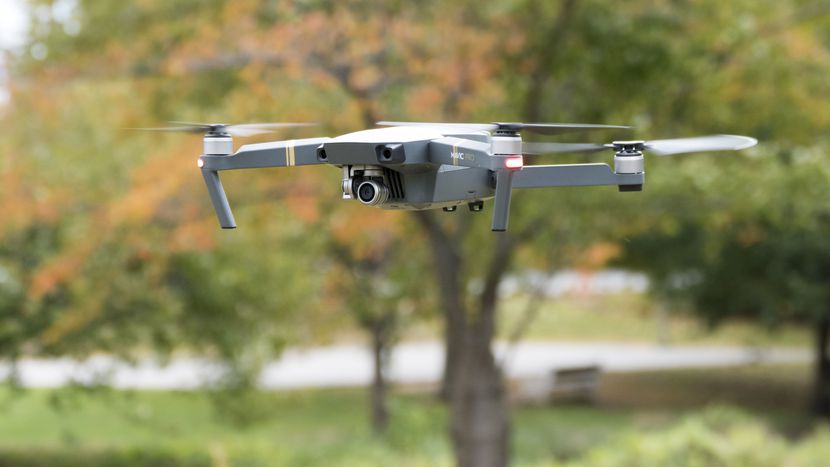
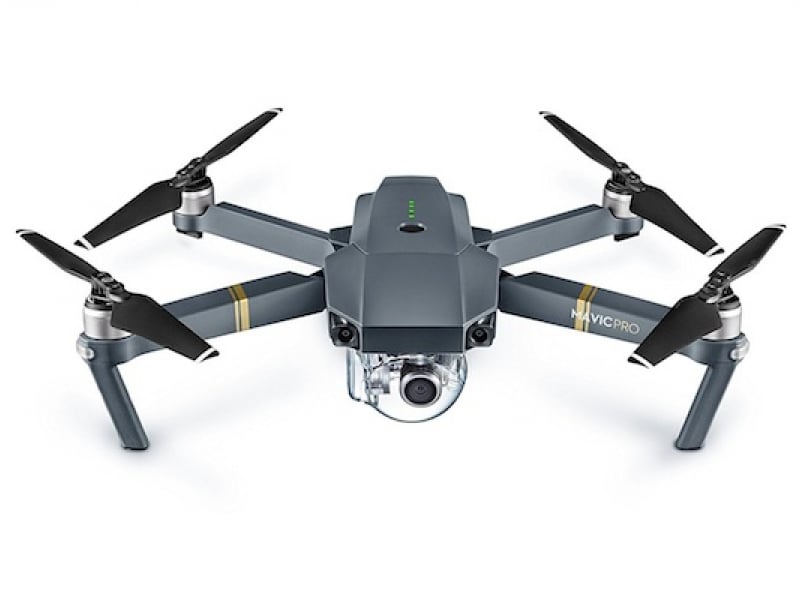
When it comes to consumer drones, Chinese manufacturer SZ DJI Technology is unarguably the world’s largest producer. The company’s customer base extends beyond China to the US, Europe and several other countries. In the US, DJI drones are deployed by not just the consumers but by the government agencies such as the police and military. However, the company is presently in the spotlight as US lawmakers reignite Trump’s and the US government’s rhetorics about Chinese companies posing a security risk to the US. The lawmakers and security researchers, during a public hearing, opined that America’s reliance on DJI, with up to 80% market share, poses a security risk.
Before the discussion about security gathers steam and becomes another Huawei/US imbroglio, DJI is taking proactive measures to reassure the US authority and end users that its drones are no security risk just because they are manufactured in China. The drone maker plans to commence assembling drones in one of its warehouses in California. The company says it will assemble its Mavic 2 Enterprise Dual drones in Cerritos, California after the US Customs and Border Protection determines that the US-produced value of its drones will qualify under the US Trade Agreements Act. That designation should make it easier for some US government agencies to buy the drones, the company said.
The California plant will be DJI’s first assembly line located outside of Shenzhen, China, the company said in a statement on Monday. The company also disclosed that it carried out assembly tests at the plant in January, and it showed “positive results”. The plant is currently pending approval from relevant US departments.
DJI’s announcement to assemble drones in the US comes on the heels of the company sending an open letter to the Senate Committee on Commerce, Science, and Transportation, in which it rebutted security concerns that its products have security risks to the country.
“DJI drones do not share flight logs, photos or videos unless the drone pilot deliberately chooses to do so. They do not automatically send flight data to China or anywhere else. They do not automatically transmit photos or videos over the internet. This data stays solely on the drone and on the pilot’s mobile device. DJI cannot share customer data it never receives,” the company said in the open letter.
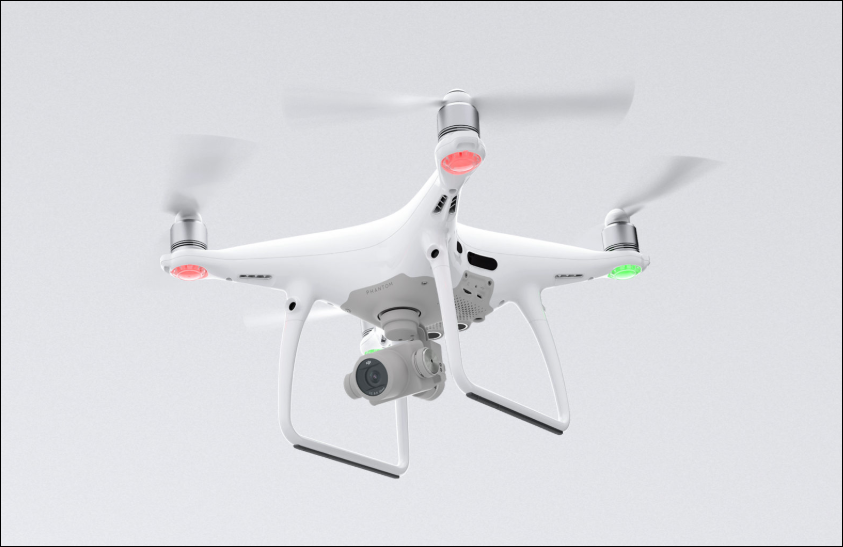
DJI Phantom 4 Pro
Emphasizing that DJI customers have full control of their data, the Chinese company also said its products help American businesses and government agencies create values for the US economy and has helped the US enter the drone age safely.
The 2020 Summer Olympics will be held in Japan, beginning the 24th of July and running through to the 9th of August. It is still more than a year away but Lenovo Japan has announced its workers will be on a “break”.
The Japanese arm of the world’s largest PC manufacturer has a workforce of about 2000 people. With Tokyo expected to be packed and commuters expected to increase significantly, Lenovo workers will not be required to show up at work but will have to work from home.
The order is said to cover workers at Motorola Mobility Japan and NEC Personal Computers too but some workers of repair centers and factories will have to show up at work.
Lenovo will also grant its workers two special days off in addition to the national holidays that are within the period of the Olympics.
President of Lenovo Japan, David Benett, said the move is to improve employee satisfaction, and they may consider a similar program in 2021 and in the future. The Nikkei Asian Review reports that companies like NEC, Fujitsu, and Ricoh are also considering a similar decision to ease things for their workers during the period.
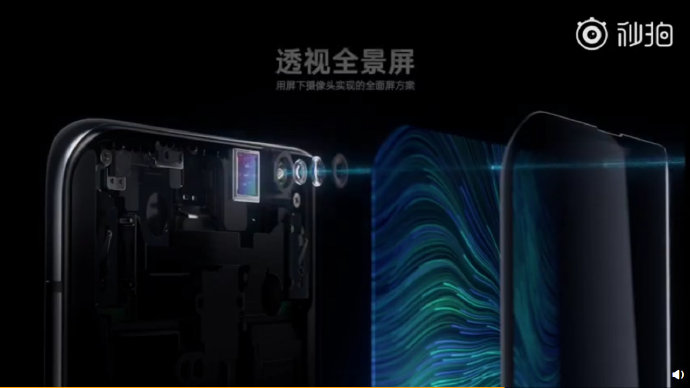
OPPO has been at the forefront of innovations to ensure the user enjoys an immersive visual experience by trimming the bezels around the display. We have seen several of them from the BBK subsidiary ranging from ultra-slim bezels, waterdrop notch to mechanical pop-up cameras. Earlier this month, OPPO showcased another innovative technology which is called “Perspective Panorama Screen”.
The company has released a short video which shows the camera in action. The video has the renders of a full-screen phone without a notch. The camera is embedded under the screen. There is an under-screen camera module as well as a high transmittance screen The device also comes with an optimization algorithm which will ensure the output isn’t too bad.
Since this is the first time the technology is being put to use, OPPO warns that the screen could affect the quality of the camera output. According to an earlier statement by OPPO’s VP Brian Shen, the image quality of the in-screen camera technology may not be good. After the initial announcement of the new camera technology earlier this month, Brian had claimed that at present the screen camera is unable to generate the same image quality as the non-screen camera. He added that the images captured through the new technology will have some loss in optical quality. We expect the company to continue to optimize the technology in order to improve on the quality. Check out the video from below.
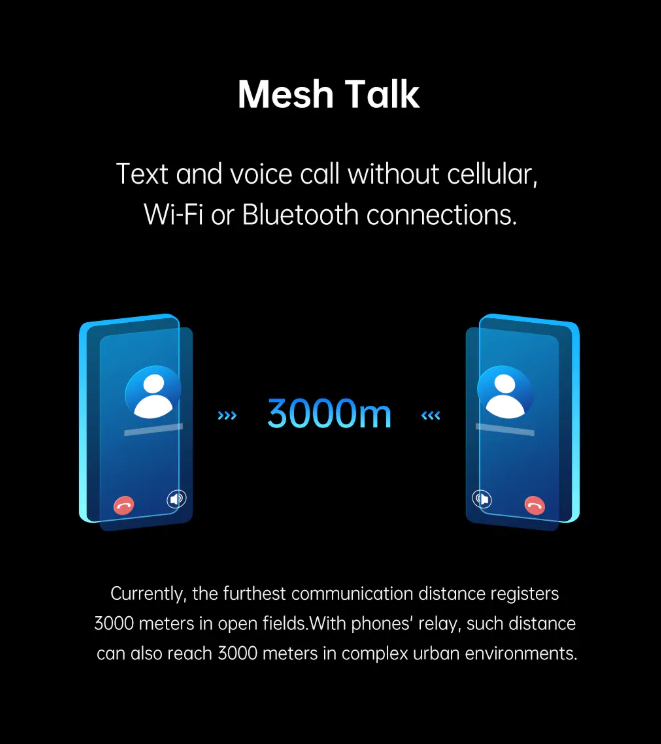
At MWC Shanghai 2019 today, OPPO showed off a new technology called MeshTalk. This is a feature that allows OPPO phones to make calls and send messages to each other without the need for a cellular network, Bluetooth, or Wi-Fi connection and only requires the phones are within a 3km range.
OPPO says users will be able to send texts, voice messages, and make phone calls to OPPO devices within a 3km range. Multiple devices will also be able to “create an ad hoc local area network (LAN) that allows for the creation of group chats and also helps to expand the communication range via a signal relay”.
The official blog post said MeshTalk uses a custom chip that “takes advantage of decentralization, greater speed, and lower power consumption”. MeshTalk is also has a high level of privacy according to OPPO as it is able to bypass base stations and servers.
OPPO didn’t reveal when the technology will be available to the public. However, one can deduce that only new models released in the future will support MeshTalk since it uses a special chip which is a hardware component.
OPPO has proved once again that it is one of the forerunners in mobile innovation. The Chinese phone company has invested a lot in research and development and keeps coming up with new technologies. MeshTalk wasn’t the only feature it showed off at MWC Shanghai today, it also showcased its Under Screen Camera (USC) technology which should become the trend in a year.
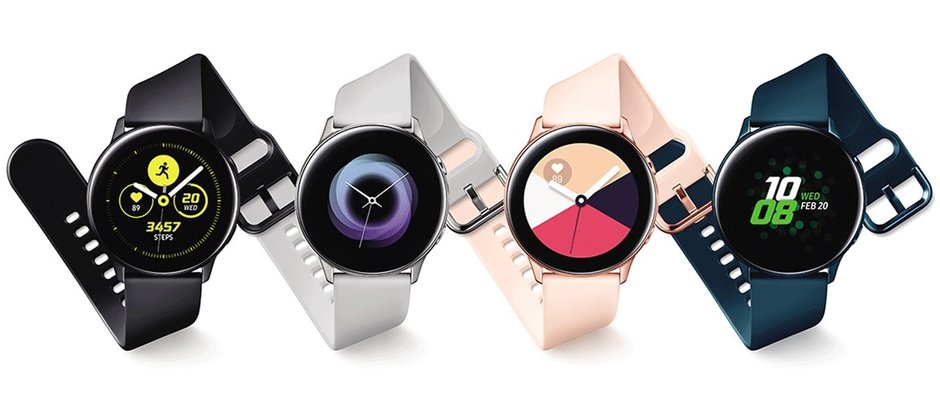
Samsung had launched the Galaxy Watch Active earlier this year ahead of the Mobile World Congress at its Unpacked event. Now finally, the South Korean giant has launched the Samsung Galaxy Watch Active in India.
The smartwatch comes with a 1.1-inch circular AMOLED display with 360 x 360 pixels screen resolution and a Gorilla Glass 3 protection on top. Under the hood, it is powered by the company’s own Exynos 9110 dual-core processor.
It packs 768MB of RAM and 4GB of onboard storage. The device runs Tizen OS-based Wearable OS 4.0. It comes with an IP68 rating, making it 5ATM water resistant and is also MIL-STD-810G certified for durability.
The device supports blood pressure monitoring feature in the Indian market but as per the original announcement, it is currently limited to select markets. However, the feature is supported in the Indian variant of the smartwatch. There is Bixby voice assistant integration as well to enable voice actions.
It comes with sensors like Accelerometer, Gyroscope, Barometer, Heart Rate Monitoring, and Ambient Light. As for connectivity options, the device supports Bluetooth 4.2, Wi-Fi b/g/n, NFC, and GPS. The Samsung Galaxy Watch Active is powered by a 230mAh battery which also supports wireless charging capability.
The Samsung Galaxy Watch Active is priced at Rs. 19,990 (approximately $289) in India and comes in Black, Deep Green, Rose Gold, and Silver color options. It is now available for purchase Amazon India as well as Samsung Online Store. It will also be available through offline stores across the country.
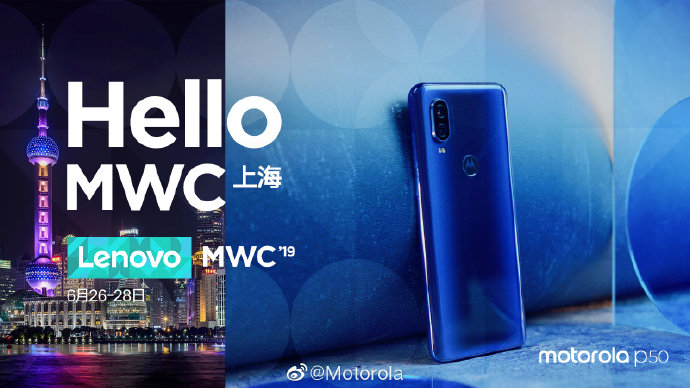
The Mobile World Congress (MWC) Shanghai that has started from today in China will come to an end on June 28. Many smartphone OEMs are making 5G-related important announcements, while other companies are showcasing newer technologies like 120W fast charging and in-display camera technology. Motorola has confirmed through its Weibo account that it will be unleashing the Motorola P50 smartphone during the MWC Shanghai 2019 tech event.
The Lenovo-owned firm had announced the Motorola One Vision smartphone in Brazil at the beginning of the previous month. Soon after the launch, Motorola confirmed through Weibo that it will be launching the Motorola P50 smartphone in June in China. The image of the P50 phone that was shared in the last month had suggested that it could be the rebranded version of the One Vision phone for China.
Without mentioning the exact launch date of Motorola P50, the company has confirmed today that it will be made official at MWC Shanghai 2019 tech expo. Hence, it is expected to go official by June 28. As of this writing, there is no information on the specs and pricing of the smartphone. However, it is expected to come with identical specs like the One Vision phone.
The Motorola One Vision comes with an impressive 21:9 aspect ratio IPS LCD punch-hole display of 6.3 inches. It carries support for 1080 x 2520 pixels full HD+ resolution. The splash-resistant body of the phone features a fingerprint scanner embedded under the logo of the company.
The One Vision is an Android One phone that comes with Android 9 Pie OS. The P50 phone is expected to come with ZUI based Android Pie OS. The Exynos 9609 SoC from Samsung powers the smartphone along with 4 GB of RAM. The native storage of the phone is 128 GB. A microSD card slot can be added to the second SIM slot of the phone.
There is OIS and LED flash enabled 48-megapixel + 5-megapixel dual camera sitting on the backside of the Motorola One Vision. It has a front-facing camera of 25-megapixel. The smartphone houses a 3,500mAh battery that supports 15W rapid charging through USB-C. The handset comes in Bronze Gradient and Sapphire Gradient colors.
Huawei‘s US research arm Futurewei seems to have kickstarted the process of severing ties with the parent company. Futurewei has reportedly banned Huawei employees from its offices, moved Futurewei employees to a new IT system and forbidden them from using the Huawei name or logo in communications. Reuters reports a Futurewei employee to have said on condition of anonymity but the employee claimed Huawei will continue to own Futurewei.
Futurewei is Huawei’s U.S.-based research and development arm. The firm employs hundreds of people at offices in Silicon Valley and the greater Seattle, Chicago and Dallas areas, according to its workers’ LinkedIn pages. Futurewei has filed more than 2,100 patents in such areas as telecommunications, 5G cellular networks, and video and camera technologies, according to data from the United States Patent and Trademark Office. Until now, Futurewei’s operations have been largely indistinguishable from Huawei and it had no separate brand or even a website, the employee said. Its staff often identified themselves as Huawei employees.
The division of operations, which is being reported for the first time, comes as many U.S. universities have halted research partnerships with Huawei in reaction to U.S. government allegations that the company poses a national security threat. Many universities are also rethinking their partnerships with other Chinese firms. However, Futurewei is not on the “entity list” and isn’t affected by Huawei’s sanctions. This may just be Huawei’s effort to ensure the research arm doesn’t get the US sledgehammer.
Milton Frazier, Futurewei’s general counsel, declined to comment on the separation or the strategy behind it, referring questions to Huawei spokesman Chase Skinner. Skinner did not answer questions about the effort.
Huawei is among the world’s largest telecommunications equipment manufacturers. The Commerce Department in May placed the firm on its “entity list” of organizations that pose security risks. Companies on the entity list are banned from buying parts and components from American firms without U.S. government approval. The Justice Department earlier filed charges against the firm alleging theft of trade secrets and other crimes.
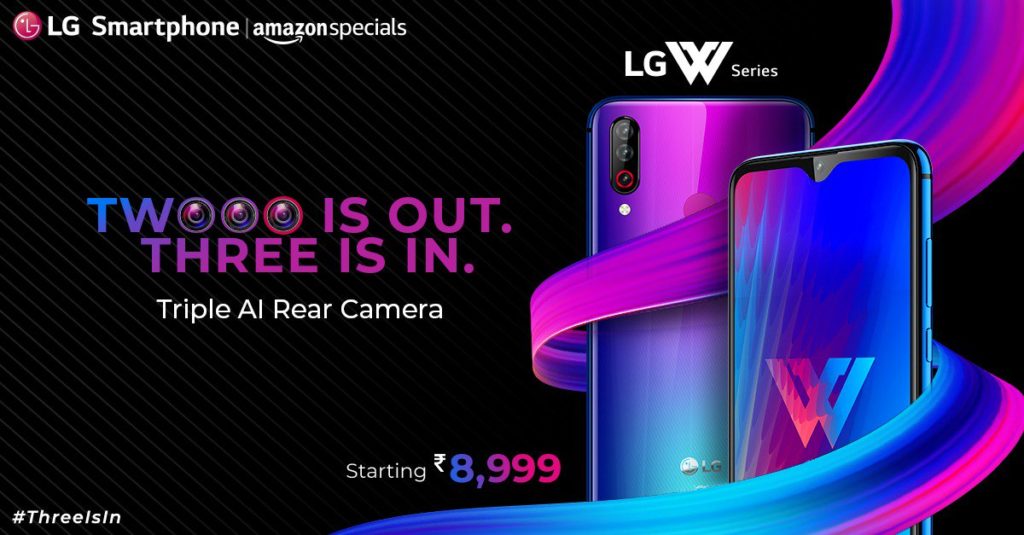
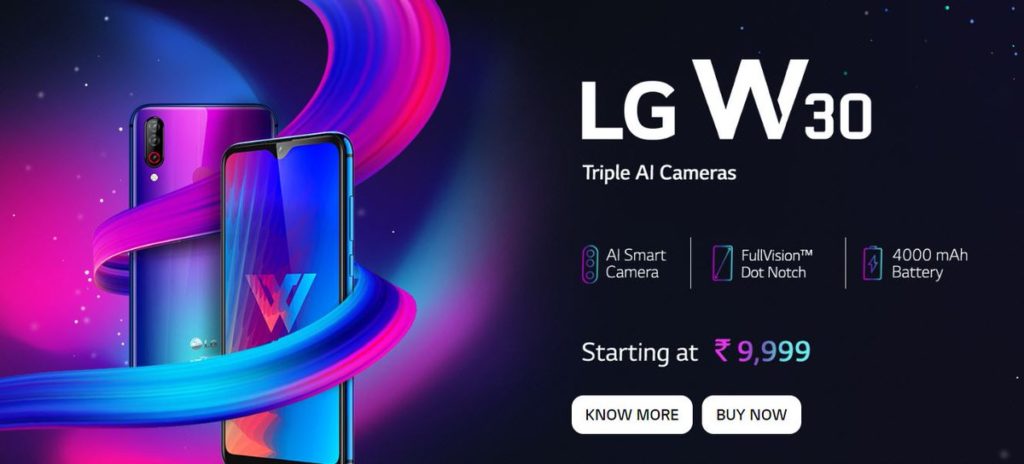
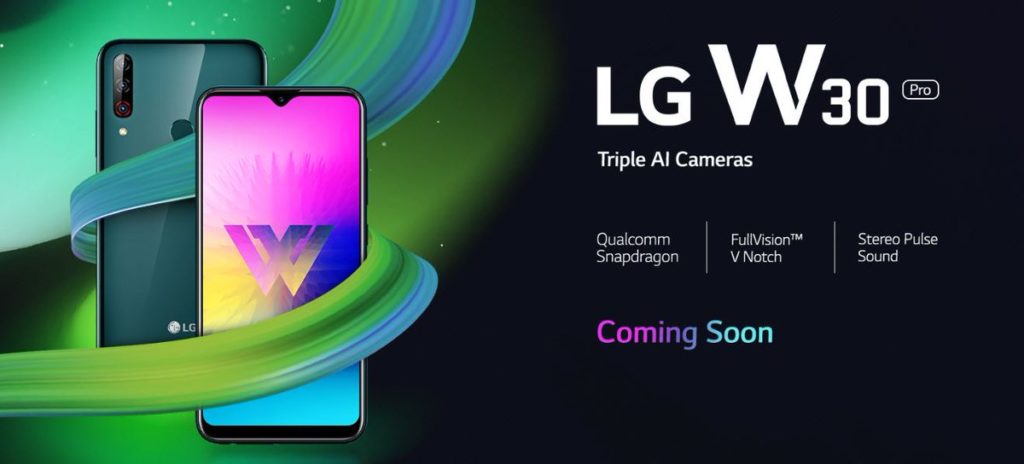
Through an unveil event in India, LG has announced its new W-series of smartphones such as LG W10, LG W30 and LG W30 Pro. The South Korean company has launched these phones to rival with brands like Xiaomi, Samsung and Realme in the mid-range segment in India. Starting at Rs. 8,999 (~$129), the LG W-series offer high screen space, impressive cameras and long-lasting performance.
LG W10, W30 and W30 Pro Specifications and Features
The LG W10 comes with a 6.19-inch FullVision IPS LC display whereas the W30 and W30 Pro are both equipped with 6.26-inch FullVision IPS LCD displays that support HD+ resolution. The W10 offers 18.9:9 aspect ratio and W30 models offer 19:9 aspect ratio. The W10 sports a wider notch whereas the W30 and W30 Pro smaller waterdrop notch. LG is offering a software feature that allows users to customize the notch design from options such as u-shaped or v-shaped or straight bezel.
The LG W10 and W30 feature MediaTek Helio P22 chipset. Both phones come with 3 GB of RAM, 32 GB of internal storage. The W30 Pro being an advanced model has Snapdragon 632 mobile platform, 4 GB of RAM and 64 GB of native storage. Both phones have hybrid dual SIM slot that can be used for adding a microSD card. The Android 9 Pie OS in its purest form is available on the LG W-series. It is equipped with Google Launcher that tags along Google Assistant, Digital Wellbeing and so on.
For capturing selfies, there is an LED equipped 8-megapixel front camera on the LG W10. Its rear shell has a dual camera system with a 13-megapixel main sensor and 5-megapixel lens for adding depth effects. It comes with features like PDAF, 2x zoom and LED flash.
The W30 and W30 Pro have 16-megapixel front-facing cameras. Both smartphones are fitted with triple rear cameras. There is a Sony IMX486 12-megapixel main sensor for low-light photography, a 13-megapixel wide-angle lens and a 2-megapixel depth sensor inside the triple camera system of the LG W30. The W30 Pro’s triple camera unit has 2x zoom enabled low-light primary lens of 13-megapixel, an 8-megapixel wide-angle sensor and a depth sensor of 5-megapixel.
All three LG W-series phones feature large-sized 4,000mAh batteries that lack support for fast charging. They also come with rear-mounted fingerprint scanners and face unlock feature. The W30 Pro comes with a StereoPulse Sound. Both phones come with usual connectivity features such as dual 4G VoLTE, Wi-Fi, Bluetooth, GPS, microUSB 2.0 and 3.5mm audio jack.
LG W310, W30 and W30 Pro Pricing and Release Date
The LG W10 is priced at Rs. 8,999 (~$129) and its color options are Tulip Purple and Smokey Grey. The LG W30 costs Rs. 9,999 (~$144) and its color variants are Aurora Green, Thunder Blue and Platinum Grey. The South Korean company did not reveal the pricing of the LG W30 Pro which is expected to go on sale later.
The LG W-series will be exclusively available for buying through the first flash sale that will be carried out on Amazon India from July 3. Purchase of W10, W30 and W30 Pro in India can benefit from Rs. 3,250 cashback from ClearTrip and Rs. 1,700 cashback from Reliance Jio. There is no word on when the LG W-series of smartphones will be made available outside of India.
What’s your opinion on the new LG W10, W30 and W30 Pro smartphones? Can they rival well with mid-rangers from Xiaomi, Samsung and Realme? Share us your thoughts by posting your comments below.
MicroLED is coming soon to smartwatches if these new reports are to be believed. The latest report from Digitimes clams that a US-based smartwatch brand will start a design process in Q3 2019 using a 1.25″ micro-LED display that was co-developed by RiTDisplay and PlayNitride. RiT will start shipping samples in Q4 2019.
Unfortunately for most, MicroLED displays don’t seem to have taken off yet. While the company is conservative about the business outlook for the display industry amid volatile market conditions, the company expects its performance to improve in the second half of 2019, buoyed by peak-season effect. This essentially means we can expect more MicroLED devices pretty soon.
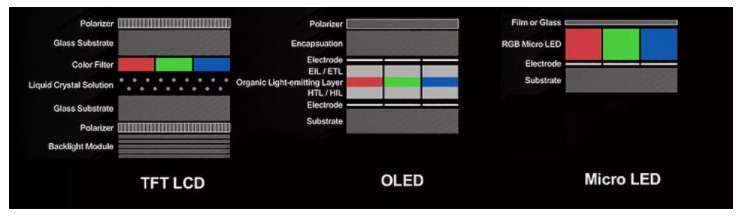
For those who aren’t in the new, MicroLED displays are the upcoming competitor to the current OLED displays. MicroLED displays are more slender, more brilliant, and more vitality proficient than OLED panels. MicroLED displays likewise have inorganic gallium nitride-based LEDs, which have a more drawn out life expectancy than the natural compound utilized in OLED panels and should make them increasingly impervious to burn-in issues.
MicroLED displays have a significant number of similar preferences that OLED displays have over LCDs, including improved shading exactness, improved complexity proportion, quicker reaction times, and genuine blacks – given both have self-lit pixels. So far we haven’t really seen a mass adoption of the technology, but hopefully things are going to change soon.
Last month, Google revoked Huawei’s license to use its Android mobile operating system after the U.S. Department of Commerce listed Huawei Technologies Co. Ltd under its Entity list which includes companies that pose a threat to its national security.
Later, the US Commerce Department eased up the ban and provided a 90-day window to settle with other companies before the ban goes into effect. Meanwhile, the company confirmed that the existing users of Huawei smartphones will continue to receive updates.
But, it doesn’t seem that the situation for Huawei can improve anytime soon and the company has also revealed that the ban will hit Huawei’s revenue by $30 billion. However, the company is working on its own mobile operating system — HongMeng OS (Oak OS).
In an interview with CNBC, Ren Zhengfei, founder and CEO of Huawei claimed that Google will lose 700-800 million users if Huawei abandons Android. He said that Huawei and Google will “always be on the same line of interest, and if we don’t load Google’s system, Google will lose 700-800 million users in the future.”
He added that the company does not want to replace Google’s system at all because it will slow down the growth but if they get to that point, Huawei has its own system to replace and will return to growth. HongMeng OS or Oak OS is all set to release by the end of September or October and will initially focus on the mid-range devices, as per the reports.
In a recently conducted test of Huawei’s own mobile operating system, in which other Chinese brands like Vivo and Oppo also participated, it was claimed that HongMeng OS is about 60 percent faster than Android. There are reports that claim that Huawei is in talks with Sailfish OS and Russia’s Avrora OS as a possible replacement for Android.
The HongMeng OS from Huawei will be compatible with all Android apps and they can also be recompiled to improve performance, like Chrome OS. If Huawei replaces Android OS and convinces other Chinese smartphone manufacturers to use its operating system, it could pose a great threat to Google’s monopoly in the smartphone market with Android OS.
Last month, Oppo-backed Realme launched the Realme X smartphone in China, making it the first smartphone from the company to not make its debut in India first. It is also the company’s first phone to have an in-display fingerprint sensor and a pop-up selfie camera.
Recently, Madhav Sheth, Realme India CEO confirmed that the Realme X will get launched in India. While he didn’t reveal the launch date, he said that the smartphone will be launched in India in the second half of this year.
Now, a report claims that Realme X will be launched in India next month. Not only that, but the report also says that the company has partnered with Marvel for the promotion of the upcoming ‘Spider-Man: Far From Home’ movie and will also offer a Spider-Man themed case for the Realme X smartphone.
However, it is not yet known if the Spider-Man: Far From Home themed case will be bundled with the phone or the users need to purchase it separately. This Marvel movie is scheduled to release in mid-July and thus, the promotional timeline makes sense.
The Realme X smartphone flaunts a 6.53-inch Full HD+ AMOLED display with 2340 × 1080 pixels screen resolution and Corning Gorilla Glass 5 protection. The phone’s display offers a 91.2 percent screen-to-body ratio, thanks to the pop-up selfie camera design.
Under the hood, Qualcomm’s Snapdragon 710 octa-core processor is powering the device, just like the Realme 3 Pro. It is coupled with Adreno 616 GPU and packs up to 8GB of RAM and up to 128GB of internal storage.
Taking care of the photography needs is a dual camera setup on the back panel that comes with a 48-megapixel primary camera with 1/2.0″ Sony IMX586 sensor, f/1.7 aperture, 6P lens, coupled with a 5-megapixel secondary camera sensor.
On the front side, the device features a 16-megapixel camera with a Sony IMX471 sensor and f/2.0 aperture. For security, the device comes with an in-display fingerprint sensor, a feature that Realme is introducing for the first time on its smartphones.
Connectivity options on the device include Dual 4G VoLTE, WiFi 802.11 ac (2.4GHz + 5GHz), Bluetooth 5, and GPS + GLONASS. The smartphone runs on Android 9 Pie operating system with ColorOS 6 custom interface on top. The device drives power from a 3,765mAh battery which also comes with support for VOOC 3.0 fast charging support.
We use cookies on our website to give you the most relevant experience by remembering your preferences and repeat visits. By clicking “Accept”, you consent to the use of ALL the cookies.
This website uses cookies to improve your experience while you navigate through the website. Out of these, the cookies that are categorized as necessary are stored on your browser as they are essential for the working of basic functionalities of the website. We also use third-party cookies that help us analyze and understand how you use this website. These cookies will be stored in your browser only with your consent. You also have the option to opt-out of these cookies. But opting out of some of these cookies may affect your browsing experience.
Necessary cookies are absolutely essential for the website to function properly. This category only includes cookies that ensures basic functionalities and security features of the website. These cookies do not store any personal information.
Any cookies that may not be particularly necessary for the website to function and is used specifically to collect user personal data via analytics, ads, other embedded contents are termed as non-necessary cookies. It is mandatory to procure user consent prior to running these cookies on your website.