Advertisement

Xiaomi Mi TV is now available in Russia; Mi 9T, Mi Smart Band 4 also debuts

Yesterday, Xiaomi introduced several of its products in the Russian market. It unveiled the Xiaomi Mi 9T, Mi Smart Band 4, Mi True Wireless Earphones and Mi TVs. It is the first time Xiaomi has launched its Mi TV line of smart TVs in Russia.

Xiaomi Mi TVs

The Xiaomi Mi TV models with screen sizes of 32 inches, 43 inches and 55 inches have been brought to Russia. The precise models are Mi TV 4A 32-inch, Mi TV 4S 43-inch and Mi TV 4S 55-inch. These models are respectively priced at 11,990 rubles (~$186), 22,990 rubles (~$357) and 33,990 rubles (~$528). The sales of the new Mi TVs will begin in Russia from June 25.
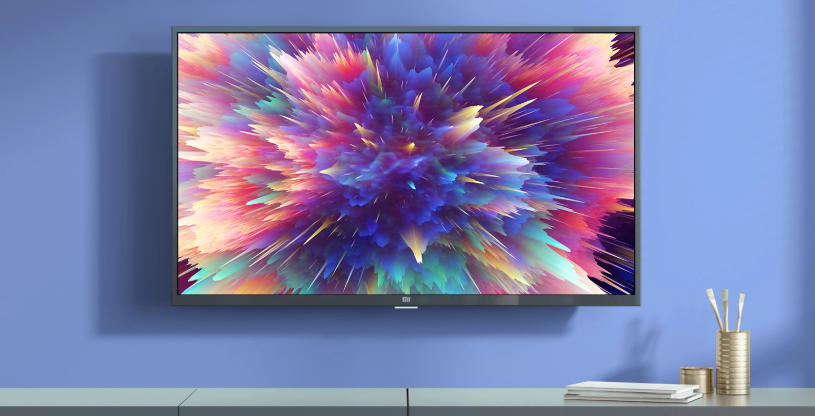
Xiaomi_Mi TV 4a 32-inch

To attract first time buyers, Xiaomi will be selling the three Mi TVs at discounted prices between June 25 and Aug. 5. The aforementioned models can be availed at respective prices of 9,990 rubles (~$155), 19,990 rubles (~$310) and 29,990 rubles (~$466) until Aug. 5. Apart from online store, the new Mi TV series will be also available through its offline stores. The new Mi TVs are all equipped with bright display panels, dual speakers with DTS-HD and Dolby Audio, three HDMI, USB 2.0, Bluetooth 4.2, dual-band Wi-Fi and support for built-in Google play and Chromecast.

Xiaomi Mi 9T

The Xiaomi Mi 9T that is selling as Redmi K20 in China was also unveiled yesterday. Its 6 GB RAM + 64 GB storage and 6 GB RAM + 128 GB storage models are respectively priced at 25,990 rubles (~$404) and 28,990 rubles (~$450) in Russia. The sales of the Mi 9T begins from today through its online store. The offline Xiaomi stores will be selling the smartphone from June 28. It can be availed in colors like Carbon Black and Blue.
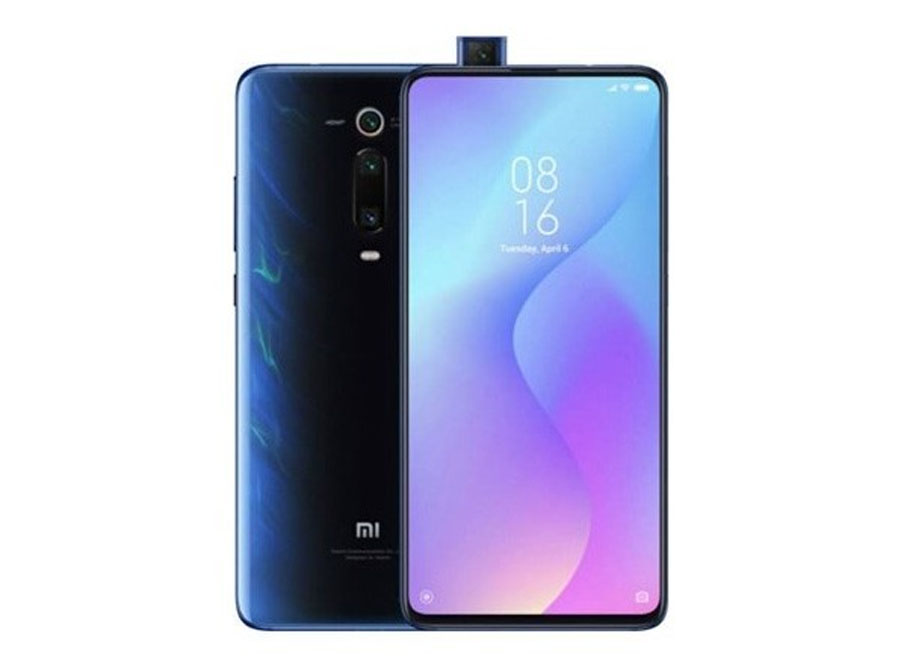
The first buyers of the Mi 9T will get the all new Mi True Wireless Earphones. The Red variant will be brought to Russia sometime later. There is no word yet on whether the Snapdragon 855 powered Xiaomi Mi 9T Pro will be made available in Russia.

Xiaomi Mi Smart Band 4 and Mi True Wireless Earphones
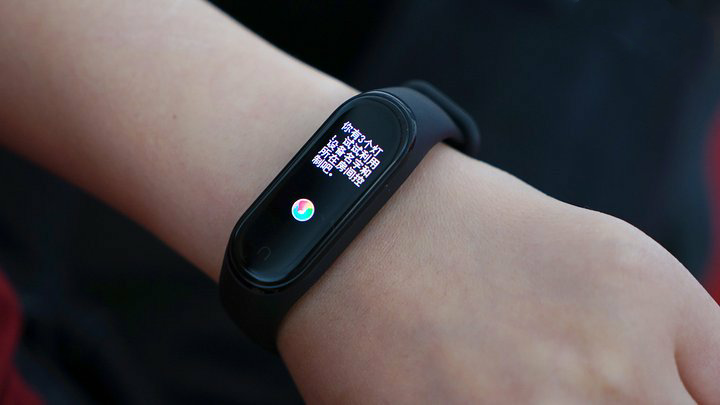
xiaomi mi band 4

The non-NFC edition of the Xiaomi Mi Smart Band 4 has landed in Russia with a price tag of 2,990 rubles (~$46). Its sales will kick off from July 9. The Mi True Wireless Earphones is priced at 5,990 rubles (~$93) in the country. It will available for buying from June 28.
UP NEXT: Xiaomi Mi CC9 and CC9e key specs, variants and pricing leaked

Xiaomi is finally introducing an app drawer and app shortcuts in MIUI

Xiaomi’s MIUI is one of the most popular custom Android user interface as it comes pre-installed on most of the Xiaomi smartphones. However, like most other Chinese custom UIs, this one too lacks the app drawer.

When Xiaomi launched the Poco brand and Poco F1 smartphone, the company also announced Poco Launcher which surprisingly features an application drawer. This was well-received as users didn’t have to rely on third-party launchers.

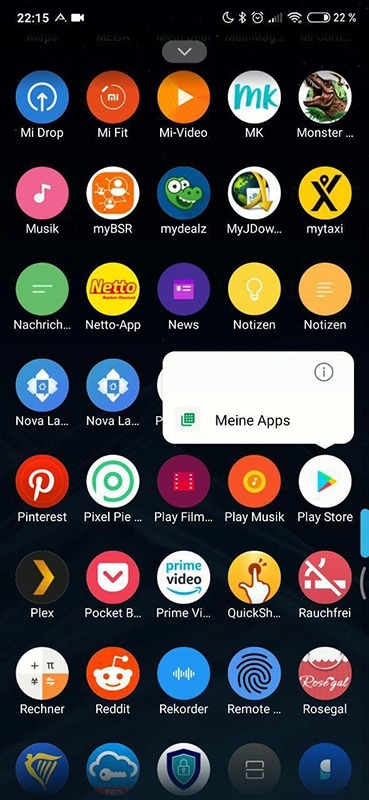
Now, it seems that Xiaomi is finally ready to introduce app drawer in the MIUI itself. In the latest alpha build of the MIUI launcher, which carries version 4.10.6.1025-06141703, an app drawer is found.

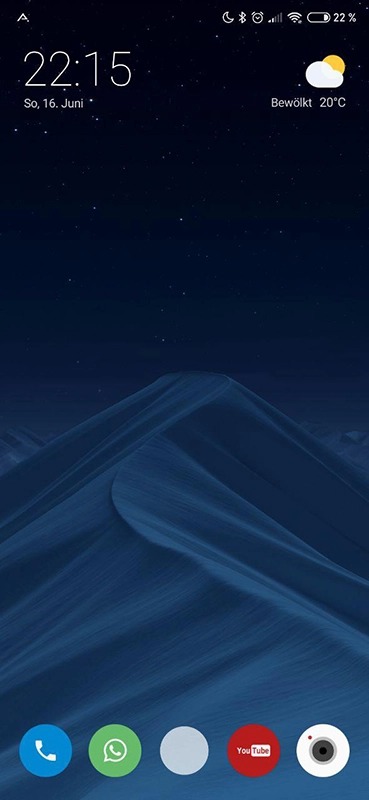
However, the images show that instead of the new swipe gesture to open the app drawer, the company has adopted the older technique and the user will have to tap on the middle button in the app bar at the bottom of the home screen to open the app drawer.

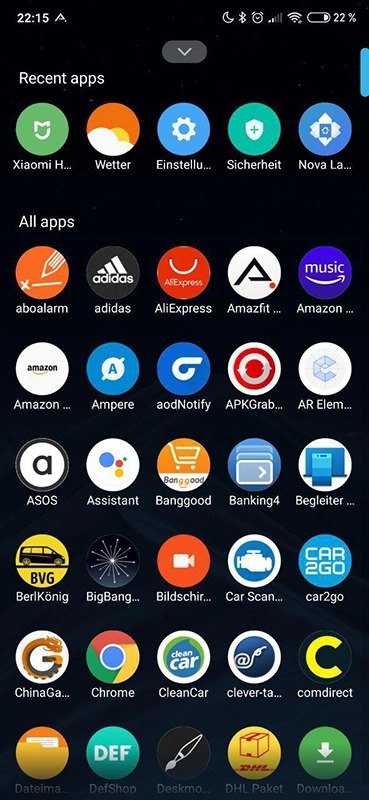
In the app drawer, the installed applications are listed in the alphabetical order. On top of the apps list, there’s a list of recently used apps. There’s also a downward-facing arrow on the top, which when tapped, collapses the app drawer. Swipe down gesture to close the drawer doesn’t work but you can use the back button or the downward-facing arrow.

MIUI App Shortcut

Along with this app drawer, the alpha build of the MIUI also gets support for app shortcuts. These are sets of quick actions which show up when the app icon is long-pressed. The feature was first introduced with Android 7.0 Nougat which enables users to launch any specific part of the app directly to perform key tasks.

You can go to the source link to install this alpha build of the MIUI launcher on your compatible device. However, we recommend not to do so given that it may not be very stable or might crash during usage. While the Poco Launcher is available for all device, this one is limited to the device running MIUI.

(Source)

Up Next: Xiaomi India throw shade at OnePlus over the OnePlus 7 Pro’s “World’s Fastest Phone” claim

Buy Top-End Smartwatches from Microwear at Lowered Prices from GearVita [Coupons]

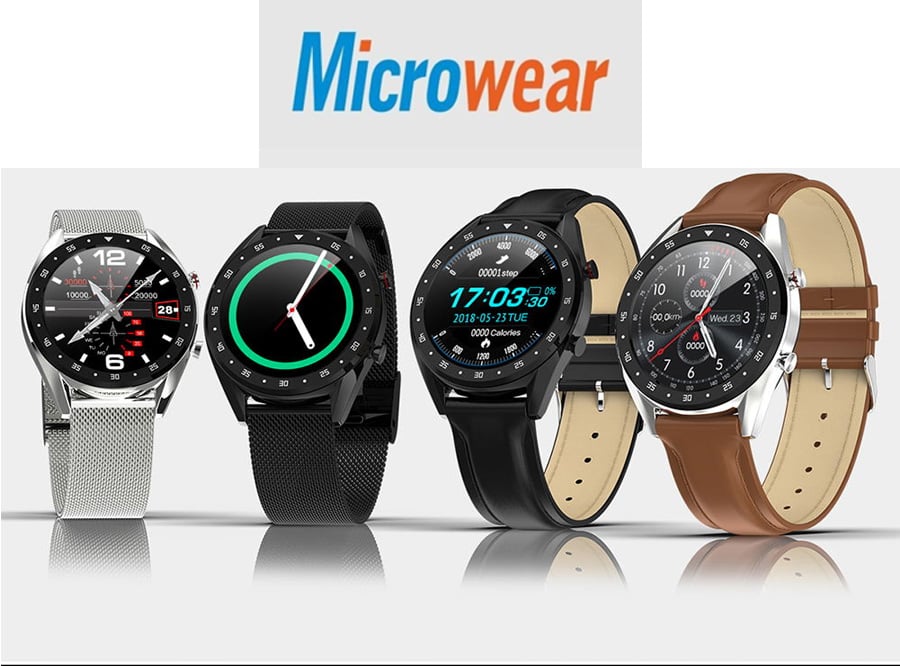
Founded in 2010 by a group of tech junkies, Microwear is known for making smartwatches that encourages us to lead a healthier lifestyle. If you’ve restlessly been waiting to get your hands on a Microwear-branded smartwatch without emptying your pocket, you’ve come to the right place.

Microwear has teamed-up with GearVita in a bid to offer its well-received smartwatches at unbeatable prices. Not only we will shed light on the aforesaid smartwatches but also show how you can save a considerable amount of money during the checkout process.

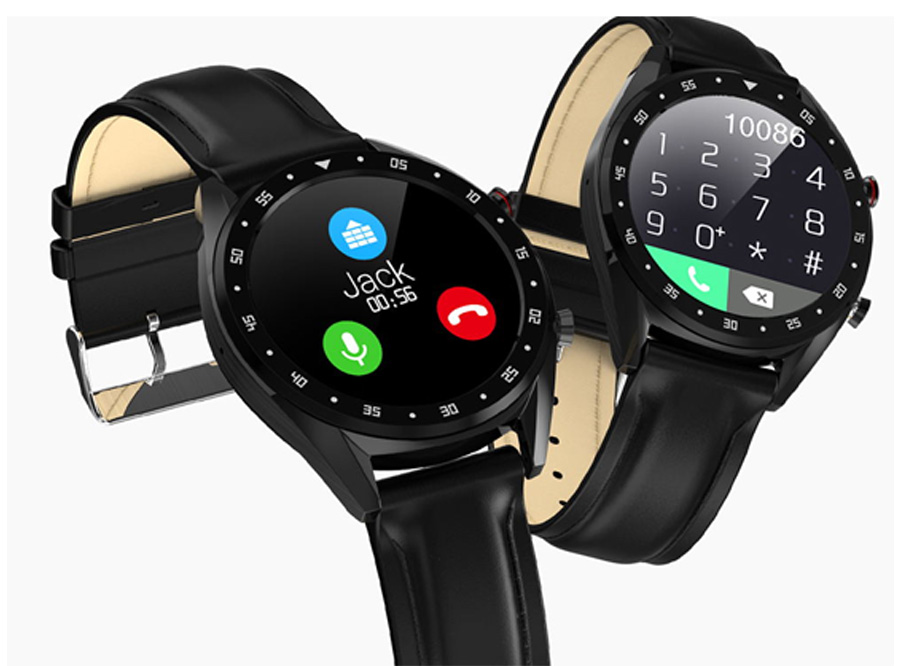
Microwear L7 Bluetooth Smartwatch

The L7 delivers multiple times faster graphics processing and computing speed as compared to the regular Bluetooth watch chip. The smartwatch’s high-precision gravity sensor enables it to record various activities of the wearer.

Moreover, the L7 smartwatch is backed by a 300mAh high-density polymer lithium-ion battery which offers up to 2-3 days of battery life with low power consumption management. This feature-laden smartwatch usually retails for $54.99, but you can buy it for just $48.99 from GearVita.

You can extend this 11 percent discount by applying coupon code ROMWearL7. The coupon helps you save $13 more by reducing the retail price of the Microwear L7 smartwatch to just $35.99. You can choose between multiple color options including black, brown, black steel, and silver steel.

You can head straight to this link to grab the discount and check out more details about the Microwear L7 smartwatch before the promo ends.


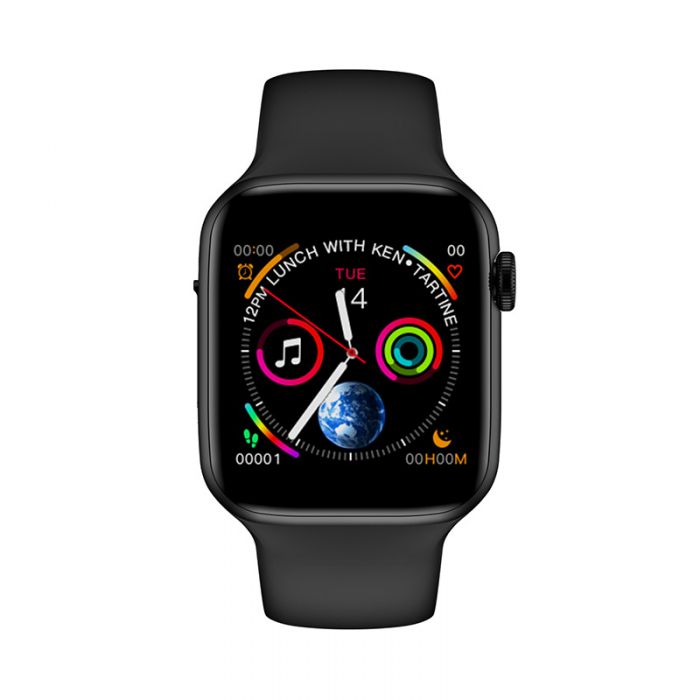
Microwear W34 Bluetooth Smartwatch

The Microwear W34 smartwatch is housed in a sturdy shell that’s made using high-quality alloy metal. Sporting an ultra-thin and tough finishing design, the Microwear W34 is designed for daily life sports wearing.

Aside from being wear resistance, the smartwatch offers superior performance. The smartwatch comes with a built-in heart rate sensor that monitors the wearer’s dynamic and resting heart rate in real-time. The Microwear W34 comes in black and silver color versions bearing a $30.99 price tag.Image result for Microwear W34 Bluetooth Smartwatch
If you aren’t willing to shell out that kind of money on a smartwatch, all you need to do is to apply coupon code ROMWearW34 for an extra $14 off.  As a result, the original asking price of the Microwear W34 smartwatch reduces to only $16.99.


You can visit this link to take advantage of the coupon. Note that the aforesaid coupon is slated to expire soon.


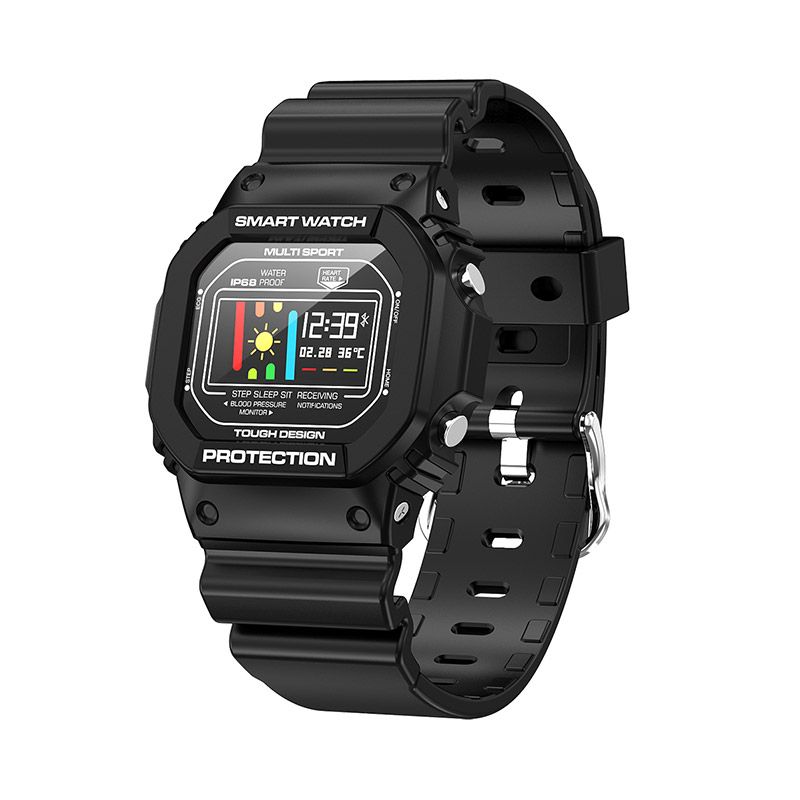
Microwear X12 Smartwatch

Equipped with an optical pulse monitor, the Microwear X12 smartwatch measures the heart rate, Blood pressure, Blood oxygen, and ECG. The smartwatch carries a waterproof level of IP68 so that you can wear it even while swimming without damaging its parts.

Furthermore, the X12 smartwatch comes with new technology optical monitor, which facilitates ECG+PPG heart rate monitoring. Aside from that, it supports sleep monitoring that keeps a track of your different sleep stages such as deep sleep, light sleep, awake at night, etc.Image result for Microwear X12 Bluetooth Smartwatch ECG+PPG Monitoring Long Standby Time


The Microwear X12 comes in two eye-catching color versions including black and white, both carrying a $25.99 price tag. You can use coupon code ROMWearX12 to bring the original asking price of the smartwatch down to just $13.99.

In other words, the coupon helps you save $12 before you place your order. You can follow this link to use the coupon before it expires.

LG Stylo 5 renders leak design ahead of launch

In June 2018, LG had launched the LG Stylo 4 smartphone.  According to a fresh report from Android Headlines, the South Korean company may soon launch the LG Stylo 5 as its successor in the coming weeks. Leaked renders of the upcoming LG Stylo 5 have been shared by the publication to give an early look at its design before launch.

LG-Stylo5-

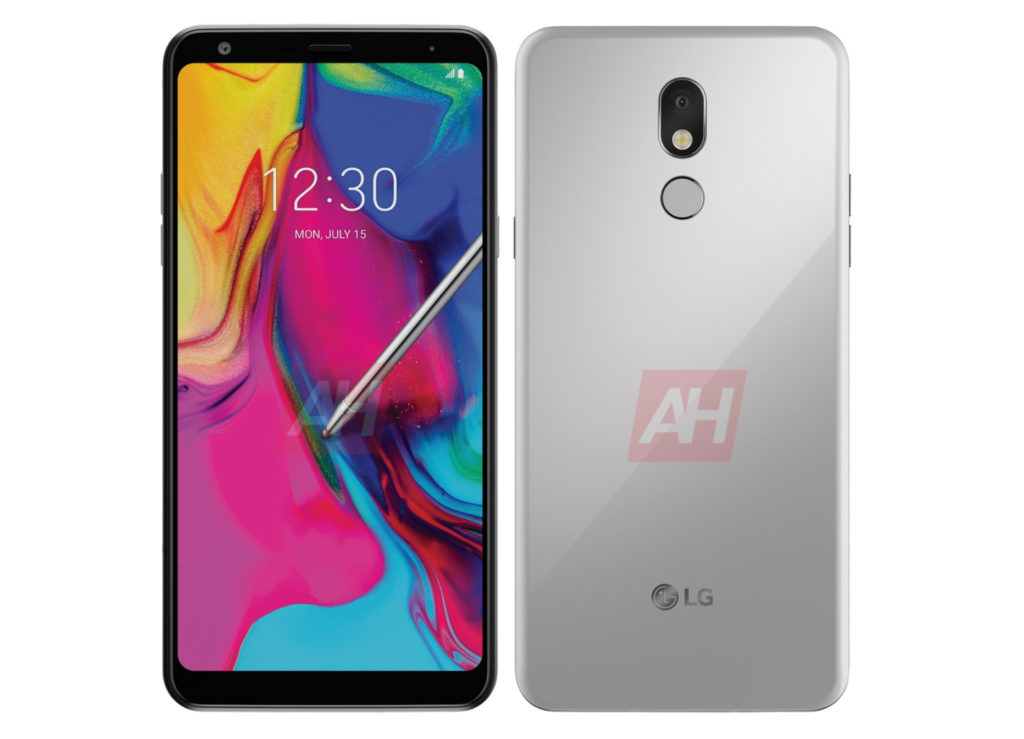
The leaked renders reveal that the LG Stylo 5 largely resembles the predecessor phone in terms of design. Earlier this month, the rumor mill had leaked some renders of the black version (shown below) of the same phone. Today, the publication shared images of the Platinum Gray edition of the LG Stylo 5 smartphone. Last year, the LG Stylo 4 had released in Aurora Black and Metallic Lavender. The new renders suggest that the Stylo 5 will be available in a new color.

Apart from the slight change in the camera module of the Stylo 5, there is hardly any change in its design compared to the predecessor phone. The left and right bezels of the phone are thin, but its upper and lower bezels are a bit thick. The top bezel features a front-facing camera and an earpiece. The right edge of the smartphone has volume up and down buttons. A power button seems to be positioned on the left spine of the device.

The LED flash and camera were placed separately on the predecessor model. However, the LG Stylo 5 renders show that the both are placed together with a fingerprint sensor positioned below them. As the name of the phone goes, the major selling feature of the Stylo 5 smartphone is that it is equipped with a stylus. There is no information available on the specifications of the smartphone yet. The renders have the July 15 date mentioned on the screen of the Stylo 5. It remains to be seen whether LG announces the smartphone on the said date.

LG-Stylo-5
LG Stylo 5 in Black

The LG Stylo 4 came with a 6.2-inch IPS LCD display with HD+ resolution and 18:9 aspect ratio. It features LG UX 7 based Android 8.1 Oreo OS, Snapdragon 450 chipset, 2 GB of RAM, 32 GB of native storage and a microSD card slot. For photography, it came with a 13-megapixel rear camera and a frontal shooter of 5-megapixel. The 3,300mAh battery of the Stylo 4 supported 10W charging through USB-C. It had arrived with a price tag of $239 in the U.S.

(source).

UP NEXT: Live photo of LG W10 surfaces, has an audio jack

Xiaomi Redmi 7A heads to Europe amidst Redmi 7 Pro rumors

Xiaomi had announced the Redmi 7A smartphone in China just over a month ago. The entry-level Xiaomi phone is now on its way to Europe. It is expected to be priced around 100 euros (~$112). The smartphone could be available in European markets starting from June 21. However, dealers in Europe may start the sales of the phone from the coming month.

Xiaomi Redmi 7A Specifications

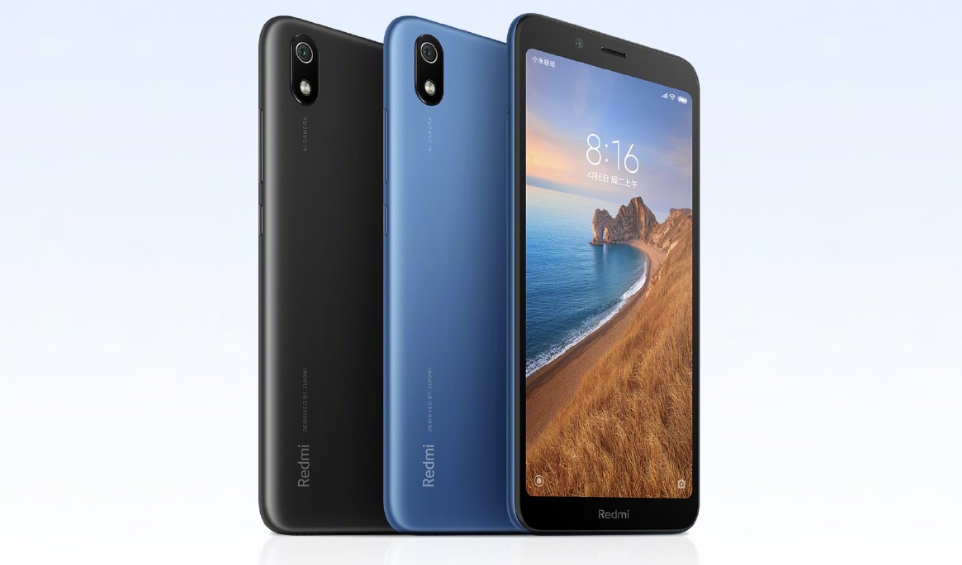
The Redmi 7A that measures 9.6mm in thickness and weighs 165 grams comes with a polycarbonate with splash-resistant coating. It is fitted with a 5.45-inch notch-less display that is surrounded by thick bezels. It supports HD+ resolution of 720 x 1440 pixels and an aspect ratio of 18:9.

The MIUI 10 based Android 9 Pie OS comes preinstalled on the Redmi 7A smartphone. The 12nm Snapdragon 439 is present under the hood of the device along with up to 3 GB of RAM. There is a dedicated slot for adding a microSD card for extra storage. The smartphone is packed with a big battery of 4,000mAh capacity that supports 10W charging.

Redmi 7A launch

The rear panel of the Redmi 7A smartphone features a main camera of 13-megapixel along with an LED flash. There is a front-facing camera of 5-megapixel on the device. The handset lacks support for fingerprint scanner. The smartphone offers usual connectivity features like dual 4G VoLTE, Wi-Fi, Bluetooth, GPS, microUSB and 3.5mm audio jack.

The Redmi 7A is available in China in two models such as 2 GB RAM + 16 GB storage and 3 GB RAM + 32 GB storage. Both are respectively priced at 549 Yuan (~$79) and 599 Yuan (~$86). It comes in two color options such as Morning Blue and Matte Black.

The Xiaomi Redmi 7A has not been officially announced in Europe yet. It is speculated that the variants of Redmi 7A that were released in China will be also made available in the European markets.

In related news, a new Xiaomi phone with model number M1906F9SC was spotted on the database of China’s 3C authority recently. Since it was spotted with 10W charger, it was believed that it could be an upcoming mid-range phone from the company. Some sources are speculating that it could be the Redmi 7 Pro. It is advisable to wait for further reports to confirm on the arrival of Redmi 7 Pro.

(source)

UP NEXT: Xiaomi India throw shade at OnePlus over the OnePlus 7 Pro’s “World’s Fastest Phone” claim

Samsung Galaxy M40 to go on sale in India today for the first time

Samsung recently launched its fourth Galaxy M-series smartphone in the Indian market — Samsung Galaxy M40. This is also the lineup’s first device to come powered by the Qualcomm Snapdragon chipset and not the company’s own Exynos processor.

Today, the handset will go on sale in India for the first time through Amazon India and Samsung’s official online store. The phone is priced at Rs. 19,990 which roughly converts to $286. The sale will begin from 12:00 PM IST today and the phone is offered in Midnight Blue and Seawater Blue gradient colors.

Galaxy M40 featured

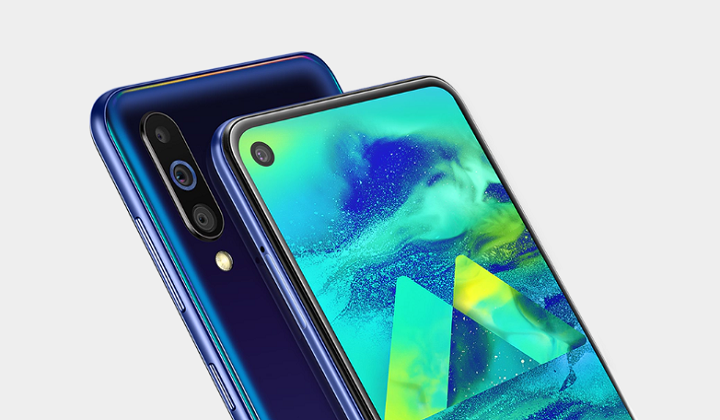
The Samsung Galaxy M40 features a 6.3-inch Full-HD+ Infinity-O Display with 2340 x 1080 pixels screen resolution, a contrast ratio of 1200:1, Corning Gorilla Glass 3 protection, and 480 nits of brightness. The device has ditched the speaker and comes with Screen Sound Technology that pumps out sounds by vibrating the screen.

Under the hood, the handset is powered by the Qualcomm Snapdragon 675 octa-core processor, which is paired with Adreno 612 GPU and 6 GB of RAM. This is the first Galaxy M-series smartphone to come powered by the Qualcomm chipset instead of the company’s own Exynos SoC. It packs 6GB RAM and 128GB of internal storage and also has a microSD card slot that supports memory expansion of up to 512GB.

For taking selfies and video calling, the smartphone has a 16-megapixel sensor at the front. There’s also a fingerprint sensor at the back panel. It features a triple rear camera setup that comprises a 32-megapixel primary sensor with an AI scene optimizer and f/1.7 lens, a 5-megapixel secondary depth sensor, and an 8-megapixel tertiary sensor with an ultra-wide-angle lens.

Connectivity options on the device include 4G VoLTE, Wi-Fi, Bluetooth, GPS/ A-GPS, and a USB Type-C port. The handset is running Android 9 Pie-based Samsung One UI out-of-the-box and is powered by a 3,500mAh battery with support for fast charging.

Up Next: Samsung Galaxy A20 and Galaxy A30 get price cut of up to Rs. 1,500 (~$22) in India

Nokia 3.2 and Nokia 4.2 gets price cut in India, now starts at Rs. 8,490

HMD Global’s two entry-level smartphones in the Indian market — Nokia 3.2 and Nokia 4.2 have received a price cut of Rs. 500. With this price cut, the Nokia 3.2 now starts at Rs. 8,490 (approximately $122) for the 2GB RAM model while the 3GB RAM model costs Rs. 10,290 (~$147).

When launched, the Nokia 3.2 was priced at Rs. 8,990 for the base model and Rs. 10,790 for the 3GB RAM model. On the other hand, the Nokia 4.2 (Full Specs) is available for Rs. 10,490 (approximately $150), down from its original pricing of Rs. 10,990.

nokia 4.2
Nokia 4.2

The Nokia 3.2 comes with a 6.29-inch HD+ a-Si TFT LCD display with 720 x 1520 pixels screen resolution having an aspect ratio of 19:9. The device is powered by the Qualcomm Snapdragon 429 SoC, with up to 3GB of RAM.

In the camera department, it comes with a 13-megapixel rear camera and a 5-megapixel camera on the front with support for Face Unlock. The 3GB RAM model also features a rear-mounted fingerprint scanner. It has dedicated dual SIM and microSD slots and packs a 4000mAh battery with 10W fast charging support.

The Nokia 4.2 flaunts a 5.71-inch IPS LCD display with a water drop notch and an HD+ screen resolution of 1520 x 720 pixels and 19:9 aspect ratio. The device is powered by the Snapdragon 439 chipset and comes in 3GB RAM + 32GB storage model in India. The company has not launched the 2GB RAM variant in India.

It comes with a 13-megapixel rear camera along with a 2-megapixel secondary camera for portrait shots and an 8-megapixel camera sensor on the front. The phone is fuelled by a 3,000mAh battery while there is equally a dedicated Google Assistant button.

Up Next: HMD Global executive admits about confusing Nokia smartphone naming scheme

OnePlus 7 Pro kills the Galaxy S10 Plus sales in China

Samsung‘s smartphone business has been on the decline in China, no thanks to local OEMs who offer premium smartphones at affordable prices. OnePlus isn’t helping the Korean giant’s plight in the Chinese market with its latest OnePlus 7 Pro flagship. The OnePlus 7 Pro sales have literally crippled that of Samsung’s latest Galaxy S10+ going by data from one of China’s biggest e-tailer Jingdong (JD.com)

We didn’t verify the data independently as it was shared by popular tipster @Universelce on Twitter who claims the sales is ten times that of the Galaxy S10+. He disclosed also that the 90Hz 2K AMOLED display is the most potent weapon which the OP7 Pro has over the Galaxy S10+.

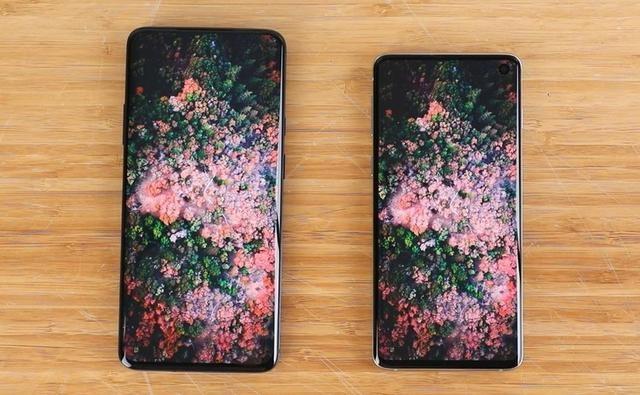
oneplus 7 pro vs samsung s10
OnePlus 7 Pro and Galaxy S10

The information is consistent with earlier official disclosure by Jingdong which termed the OnePlus 7 Pro as the ‘best selling product on the whole platform.’ When it went on its first sale, it garnered huge sales within few minutes in China and went out of stock in a short while.  OnePlus CEO Pete Lau later hinted that the company was redistributing the supply of other regions to meet the demand in China. Apparently, sales have not slowed down since then, despite a handful of fans still undecided and waiting to see what the Redmi K20 Pro will offer. DO you think, the Redmi K20 Pro will a real challenger to the OnePlus 7 Pro? Let us in on your thoughts in the comment section.


UP NEXT: Huawei gearing up for 40%-60% drop in international smartphone shipments

Xiaomi India throw shade at OnePlus over the OnePlus 7 Pro’s “World’s Fastest Phone” claim

Xiaomi India has practically been trolling OnePlus for a while and the reason isn’t difficult to find out. OnePlus and Samsung controls India’s premium smartphone market. The OnePlus 7 Pro launch was yet another opportunity for Xiaomi India to resume its demarketing tactics against the OnePlus 7 Pro but this time the Redmi brand takes the front seat.

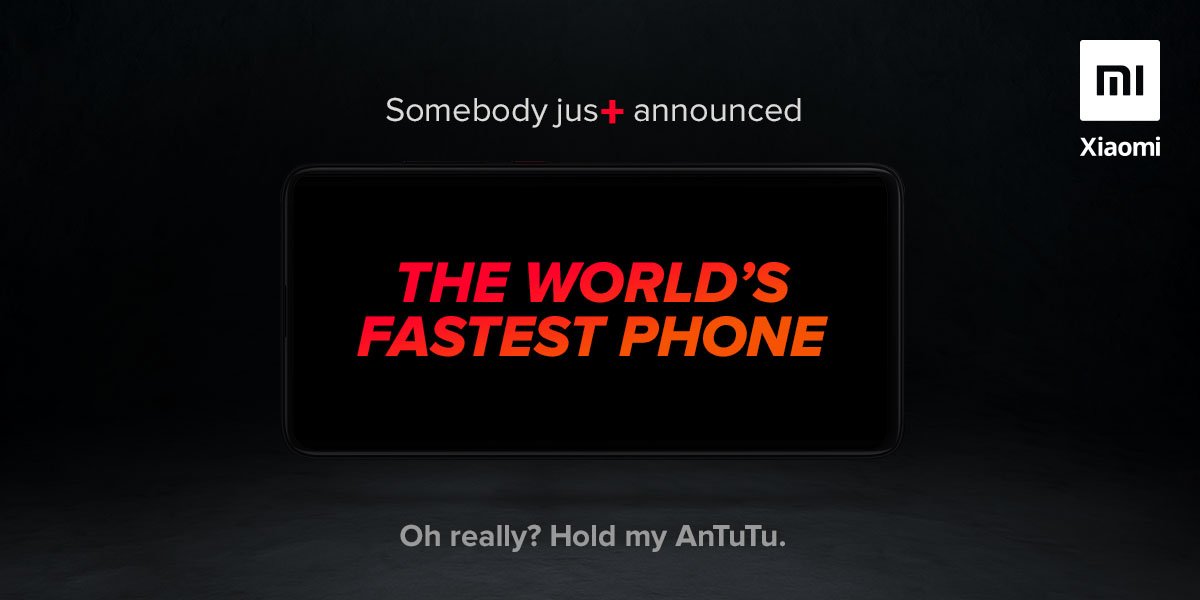
In a tweet posted a couple of days back, Redmi India shared a poster which practically disses the OnePlus 7 Pro. The poster has the text “Someone jus+ announced the World’s Fastest phone. Oh really? Hold my AnTuTu.” Notice the + sign used in place of letter T in “just”? That is a clue, the OnePlus model is referenced. Besides, OnePlus projects the model as the World’s Fastest phone. Definitely, Redmi India thinks otherwise, hence the cheeky reference to AnTuTu which we understand to mean the OnePlus 7 Pro will be floored by Redmi’s upcoming flagship Redmi K20 Pro.

EDITOR’S PICK: OnePlus TV is our Next Focus For India: Vikas Agarwal

The Redmi K20 Pro is expected to debut with a Snapdragon 855 chipset just like the OP7 Pro. Both models will square up with each other in other departments but we’ll need more than an AnTuTu benchmark score to be convinced as to which is better.

Xiaomi India has been a thorn in the flesh of smartphone rival OnePlus and it did not just start today. We could recall Xiaomi attended the OnePlus 6T India launch in October last year and reportedly shared calculators to fans at the event with the boxes having the inscription “You Do The Math” in comparison with the Pocophone F1 that was also launched around that period. The company later took to its Twitter handle to post a tweet which borrowed OnePlus’ slogan “Never Settle” but instead, it read “Never Settle for OverPriced” apparently comparing the OP6T price tag to that of the Poco F1. The tweet also had the hashtag #DoTheMath. In addition, Xiaomi also placed an outdoor billboard advert close to the OnePlus 6T conference venue with the same theme.


UP NEXT: Alleged Honor 9X Pro specs leaks, will also have a Kirin 810 chipset

(source)

BOE demos 12.3-inch rollable screen at display show

China’s BOE is a display company and one of Samsung Display’s main rivals. The Chinese company is the supplier for the flexible display used in Huawei‘s P30 Pro flagship.

BOE seems to have been hard at work thinking of the next phase for its displays. At a display show that was held recently, the display manufacturer demoed a petty neat rollable display alongside several other products. However, it is the rollable display that we are really excited about.

Tech Blog – armdevices was at the event and they were able to get a look at the rollable display and the other cool products on display.

When unrolled, the prototype screen becomes a 12.3-inch device and when rolled back, its form factor is similar to that of a 7-inch tablet. The prototype doesn’t support touch-input but BOE says they will be working on one with touch-support in the future.

Rollable displays are not entirely new, though they are not yet in mass production. LG demoed a rollable TV at CES 2019 that was the star attraction of the show. It will take a while before it becomes mainstream and a little more time before it comes to smartphones and other portable devices.

BOE also demoed HUDs and in-car displays at the event. The prototype car is shown to have a single long display for its dashboard which stretches from the driver’s side to the other end of the dashboard. The display shows the usual car parameters on one side, navigation details in the middle and an entertainment section for the front passenger. On the far ends are side mirrors which are also part of the single display.

We also see a foldable smartphone with a flexible display that folds outward. When folded it becomes a phone with a 6-inch display and a 7.7-inch tablet when unfolded.

Another interesting device seen at the show is a TV with a display technology made to rival OLEDs. BOE worked with Hisense on a new type of display called BD Cell. The display is a combination of two types of cell – the main cell which is the main color panel for the pictures and a sub-cell which is a black and white cell that provides the backlight and pixel-level local dimming.

When combined, the result is the BD Cell which offers up to OLED-level quality for a cheaper price. The contrast and picture quality are significantly better than LCD while still managing to be pretty slim.

There was also a 27-inch monitor with the same BD Cell technology on display. It has a resolution of 3840 x 2160, a contrast ratio of 20,000:1, 460 nits of brightness, and is just 10.8 millimeter’s thick.

(Source, Via)


UP NEXT: Samsung patents phone with a 4-sided curved display

Sony to announce new phones in Japan next month

A new report says Sony may launch new phones in its home country of Japan next month. At the moment, the name of the phones aren’t confirmed but there are speculations they will arrive as the Xperia 1s/Xperia S and Xperia 1v/Xperia V.

Xperia S and Xperia V

Xperia 1s and Xperia 1v

The source is ZACKBUKS, a Japanese leaker; and the news was first reported by Japanese blog – Sumahoinfo. According to ZACKBUKS, Sony has a launch on July 9 in Tokyo. The post also says “S and V” leading to the guesses about their names.

Sony has been reported to be working on a flagship phone exclusive to Japan. This phone will have an LCD panel and not an OLED panel like the Xperia 1 but will be powered by the same Snapdragon 855 processor. It is unclear if any of these upcoming devices is the LCD flagship phone.

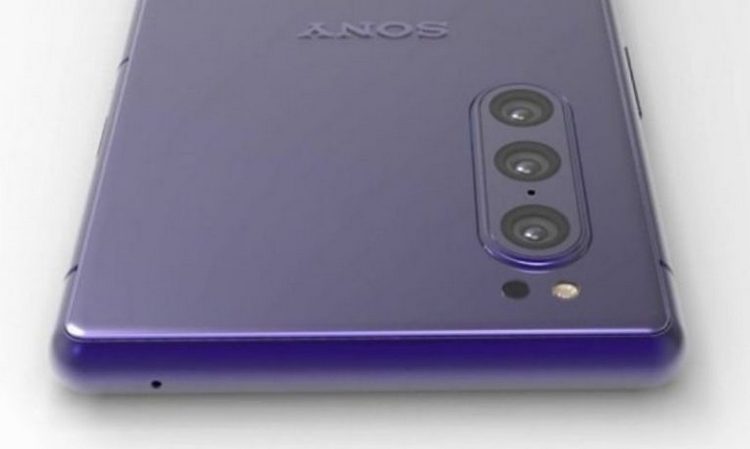
In other news, an image of an unknown Sony phone with triple rear cameras have also surfaced. Unlike the Xperia 1, the triple rear cameras are on the left side of the phone and not the middle Above the sensors are the LED flash and laser focus module.

Sony Xperia triple cameras

There is no fingerprint scanner on the back of the phone and we can’t tell if there is one on the sides. The Sony phone has a purple finish, is covered in glass and appears to be a bit thick. There are also antenna lines on the sides.

The identity of the phone is still unknown but we hope more details will surface in the coming days or weeks.

(Source, Via)


UP NEXT: Think five rear cameras on a phone are too many? Sony is planning to launch one with six!

Huawei gearing up for 40%-60% drop in international smartphone shipments

It is no longer news that Huawei was recently handed a trade ban by the US government. Although the company had initially downplayed the effect of the ban, recent reports show it will have some effect not just on Huawei’s revenue but also on those of chipmakers like Broadcom. A report by Bloomberg says Huawei is preparing for a slump in global shipments of its phones to a tune of 40%-60%.

The report hints that the Chinese tech giant is already exploring the option of pulling its latest model the Honor 20 off the international market. The gadget will start selling in parts of Europe, including Britain and France, on June 21, the report said. The company will evaluate the sales and possibly cut off shipments if sales are poor, Bloomberg reports.

EDITOR’S PICK: Huawei patents a new foldable smartphone design

The company is expecting a drop in volumes at a region between 40 million and 60 million units this year. An earlier report had already disclosed that Huawei was expecting a dip in revenue of up to $100 billion between now and 2020. In order to mitigate the effect of the slump in overseas sales, the Chinese giant will reportedly focus on capturing a large chunk of the local smartphone market over there in China.


UP NEXT: Xiaomi Mi 9T vs Mi 9 vs Mi 9 SE: Specs Comparison

(via)

Xiaomi Mi 9T vs Mi 9 vs Mi 9 SE: Specs Comparison

Xiaomi is betting a lot on the Mi 9 series by releasing several variants. In case you missed our posts in the last days, we recently learned that the next ones will be the Mi CC9 and the Mi CC9e. A lot of variants means more choice for consumers, but also a lot of confusion for those who are not familiar with Xiaomi line-ups and its complicate naming schemes. That is why, after the Xiaomi Mi 9T (the global variant of the Redmi K20) debuted in the global market, we decided to make a comparison between the most wanted variants of the Mi 9 (which are also the ones mostly creating confusion). So here is a complete specs comparison between the Mi 9T, the vanilla Mi 9 and the Mi 9 SE.

Xiaomi Mi 9T vs Mi 9 vs Mi 9 SE

Xiaomi Mi 9T Xiaomi Mi 9 Xiaomi Mi 9 SE
DIMENSIONS AND WEIGHT 156.7 x 74.3 x 8.8 mm, 191 g 157.5 x 74.7 x 7.6 mm, 173 g 147.5 x 70.5 x 7.5 mm, 155 g
DISPLAY  6.39 inches, 1080 x 2340p (Full HD+), Super AMOLED 6.39 inches, 1080 x 2340p (Full HD+), Super AMOLED 5.97 inches, 1080 x 2340p (Full HD+),  Super AMOLED
PROCESSOR Qualcomm Snapdragon 730, octa-core 2.84 GHz Qualcomm Snapdragon 855, octa-core 2.84 GHz Qualcomm Snapdragon 712, octa-core 2.3 GHz
MEMORY 6 GB RAM, 64 GB – 6 GB RAM, 128 GB – 6 GB RAM, 128 GB – 8 GB RAM, 256 GB 6 GB RAM, 128 GB – 8 GB RAM, 128 GB 6 GB RAM, 64 GB – 6 GB, 128 GB
SOFTWARE  Android 9 Pie, MIUI Android 9 Pie, MIUI Android 9 Pie, MIUI
CONNECTIVITY  Wi-Fi 802.11 a/b/g/n/ac, Bluetooth 5.0, GPS Wi-Fi 802.11 a/b/g/n/ac, Bluetooth 5.0, GPS  Wi-Fi 802.11 a/b/g/n/ac, Bluetooth 5.0, GPS
CAMERA  Triple 48 + 13 + 8 MP, f/1.8, f/2.4 and f/2.4 Triple 48 + 12 + 16 MP, f/1.8 and f/2.2 and f/2.2
20 MP f/2.0 front camera
Triple 48 + 8 + 13 MP, f/1.8 and f/2.4 and f/2.4
20 MP f/2.0 front camera
BATTERY  4000 mAh, fast charging 27W with Quick Charge 4.0 3300 mAh, fast charging 27W with Quick Charge 4.0 3070 mAh, fast charging 18W
ADDITIONAL FEATURES  Dual SIM slot Dual SIM slot Dual SIM slot

Design

Despite it is not the most expensive handset of this trio, Xiaomi Mi 9T has the most attractive and innovative design. It sports a full borderless display with no holes, neither a notch, thanks to its pop-up front camera. It even has a beautiful rear side with a liquid finish and amazing gradient hues. Xiaomi Mi 9 and Mi 9 SE share a pretty similar design with a waterdrop notch and the same color variants, but they have an important advantage in terms of aesthetics. The former comes with a better build quality thanks to a 7000 series aluminum frame and a Gorilla Glass 5 glass back, while the latter has a more compact and thinner body. Xiaomi Mi 9 is as thin as the Mi 9 SE, but it is bigger than its toned down variant.


Display

When it comes to the quality of the display, Xiaomi Mi 9 wins the comparison with a higher-end AMOLED screen that sports a better color reproduction. If you had all of these devices on your table, you probably wouldn’t notice a huge difference, but it is worth noting that Xiaomi Mi 9 has higher DCI-P3 coverage and it is HDR10-compliant. On the other hand, the Xiaomi Mi 9 SE comes with smaller display size, so it is easier to use with one hand. Each of these devices integrates an in-display fingerprint reader and the Gorilla Glass protection, but Xiaomi Mi 9 is the only one with Gorilla Glass 6.


Hardware/Software

The hardware side is what really makes the difference here. With the Xiaomi Mi 9, you get a much more powerful chipset, that is the best Qualcomm’s flagship SoC of 2019. We are talking about the Snapdragon 855 running at a max frequency of 2.84 GHz. Xiaomi Mi 9 is also the only to be available with up to 8 GB of RAM. At the second place of the ranking, we put the Xiaomi Mi 9T which is powered by the best chipset from Qualcomm’s Snapdragon 7xx series: the Snapdragon 730. Each handset is equipped with Android 9 Pie out of the box, customized by the MIUI 10.


Camera

If you are searching for a very affordable camera phone, then grabbing a unit of one of these three devices is among your best choices. But which one shoots the photos in the best way? Xiaomi Mi 9 is the best on the paper, and it manages to click amazing shots in every light condition. It has higher resolutions for the secondary sensors and even a laser autofocus mechanism. Last but not least, it is able to record 4K videos at 60 fps.


Battery

Battery life is the weakest point of both the Xiaomi Mi 9 and the Mi 9 SE, while it is a strong point when it comes to Xiaomi Mi 9T equipped with a big 4000 mAh battery. It lasts one day in almost every scenario, but it does not feature wireless charging, unlike the vanilla Mi 9.


Price

Xiaomi Mi 9 SE starts from €280/$314, Xiaomi Mi 9T costs €300/$336 in its base variant and Xiaomi Mi 9 starts from €450/$505. The best choice for me would be the Xiaomi Mi 9 due to its higher performance and better cameras, as well as wireless charging. But for those who want to save some money, Xiaomi Mi 9T is the best, it should be definitely better than Mi 9 SE for most people.


Xiaomi Mi 9T vs Mi 9 vs Mi 9 SE: PRO and CONS

Xiaomi Mi 9

PROS

  • Higher performance
  • Great cameras
  • Compact design
  • Amazing build quality

CONS

  • Average battery


Xiaomi Mi 9T

PROS

  • Affordable
  • Very original design
  • Good cameras
  • Big battery

CONS

  • Nothing particular


Xiaomi Mi 9 SE

PROS

  • Compact design
  • Great cameras
  • Affordable price
  • Good display

CONS

  • Smaller battery


Alleged Honor 9X Pro specs leaks, will also have a Kirin 810 chipset

Last week, a new Honor smartphone called the Honor 9X Pro was certified by Russia’s communications agency. Now, what might be the phone’s full specifications have leaked ahead of its release.

Honor 9X Pro
The successor to the Honor 8X Max (shown above) may ditch the “Max” and adopt the “Pro” suffix

The Honor 9X Pro is packing some pretty interesting specs according to the source – @RODENT950. The phone’s display is expected to be between 6.5” and 6.7” and will be an LCD panel. The display may have a punch hole which will house a 25MP camera.

Like most phones released this year, the Honor 9X Pro will have a 48MP camera. This is a Sony IMX582 sensor and it will be paired with an 8MP super-wide angle camera, a 2MP macro lens, and another 2MP depth sensor for a quad camera setup.

Honor will include a 4000mAh battery which should suffice for the large display. It will also have 20W fast-charge technology to allow you to refill in the shortest time possible. The back of the phone will have a 3D glass design. It is too early to say which colors will be available but we expect at least one will have a gradient finish.

In a follow-up tweet, it is revealed the Honor 9X Pro will be powered by the new Kirin 810 SoC and will be the second phone to come with the chipset. The first is the Nova 5. The info about the chipset was first posted by Huawei Club (@ClubHuawei) and their tweet even reveals more details about the SoC.

The Kirin 810 will be a 7nm SoC mid-range chip (the first) and will have a self-developed and integrated NPU. The NPU part is a big deal as Huawei’s Kirin 970 and Kirin 980 processors use Cambricon’s NPU. We sure are excited to know the features of Huawei’s in-house NPU.

We have no idea when the Honor 9X Pro will hit the market but it sure will be after the announcement of the Nova 5 which will be the first Kirin 810-powered chipset. If we were to take a guess, we will say July at the earliest. It should launch alongside the Honor 9X which has already received certification in China.

(Sources: 1, 2)


UP NEXT: Honor will announce its own 5G smartphone in the fourth quarter says CEO

Nubia Red Magic 3 gaming smartphone launched in India, price starts at Rs. 35,999 ($515)

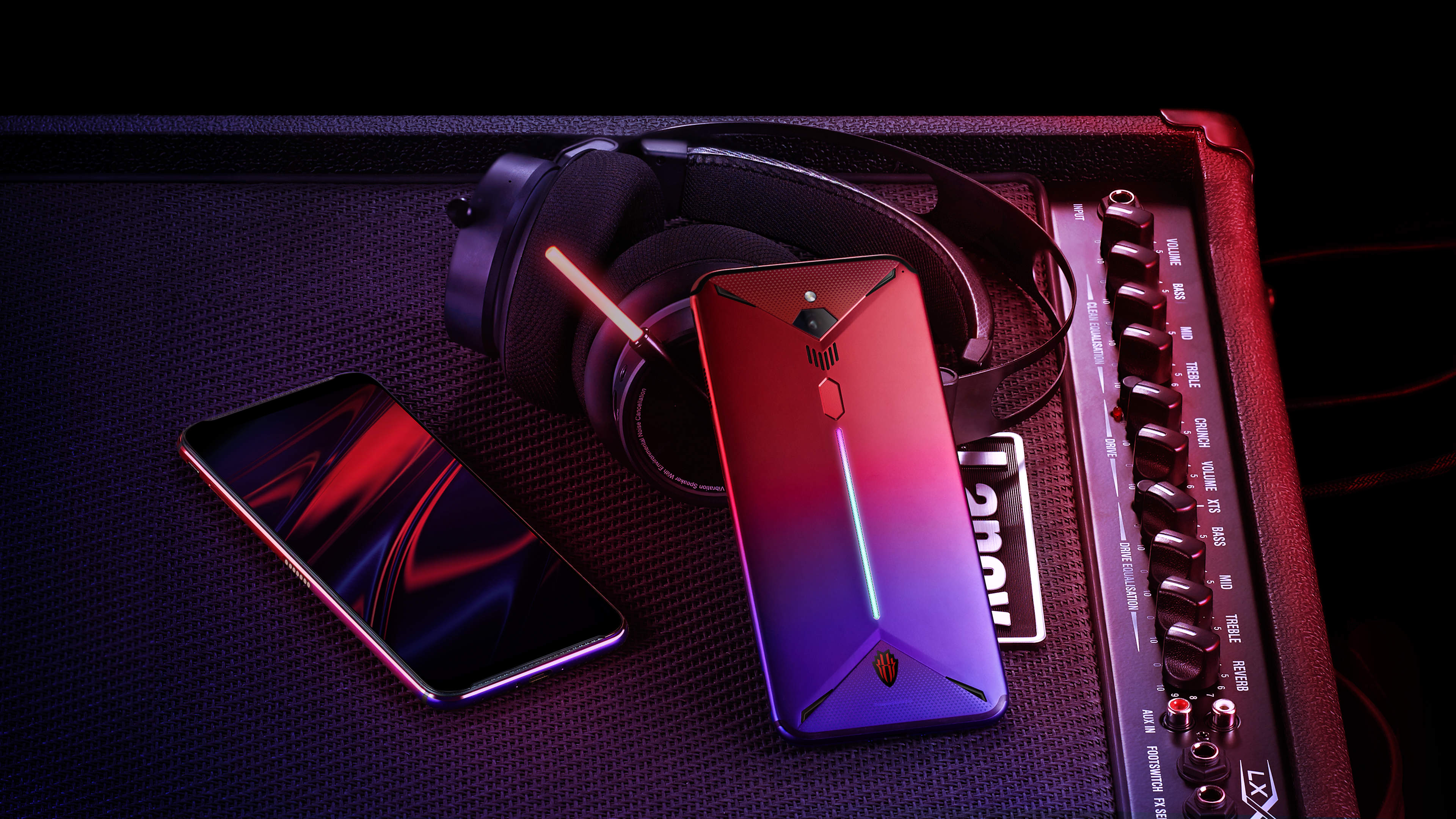
China-based ZTE’s Nubia had launched the Nubia Red Magic 3 gaming smartphone in China a few months ago. Today, the company has launched its latest gaming smartphone in the Indian market.

The Nubia Red Magic 3 will compete against other premium gaming smartphone in the Indian market, which includes Asus ROG Phone and Black Shark 2. The Red Magic 3 will be available for purchase in India exclusively through online market Flipkart from 27th June.

Nubia Red Magic 3 red-blue featured

No gaming device is complete without the use of LED lights and this Nubia Red Magic is no exception. It comes with an RGB LED accent lighting system and has V-shaped elements on its back, making it look like a hardcore gaming device.

Coming to the specifications, the smartphone boasts a 6.65-inch Full HD Super AMOLED display with 2340 x 1080 pixels screen resolution, a fast 90Hz refresh rate and a 19.5:9 aspect ratio. It also allows you to choose between 60Hz and 90Hz refresh rate or you can let the phone decide it automatically.

Under the hood, the device is powered by the Qualcomm‘s flagship Snapdragon 855 octa-core processor, coupled with up to 12GB of RAM and up to 256GB of internal storage. The device is fuelled by a 5,000mAh battery with 27W fast charging support.

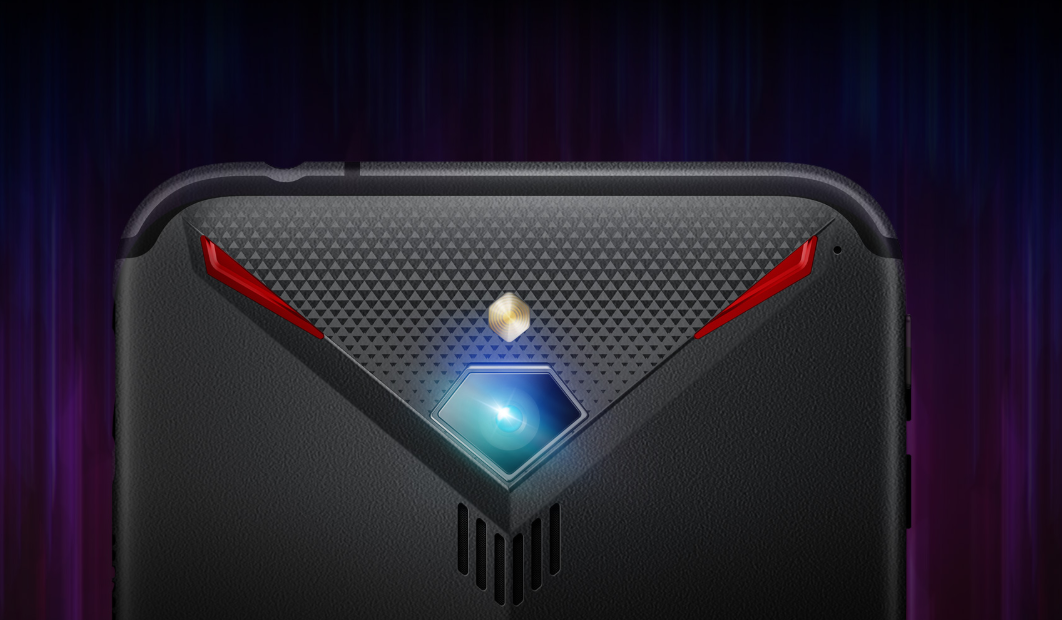
red magic 3 camera

In the camera department, the smartphone features Sony IMX586 48-megapixel single camera sensor at the back and comes with 8K recording and world’s first 1920 fps Super Slo-mo recording. On the front side, it comes equipped with a 16-megapixel shooter.

The smartphone features the industry’s first cooling fan inside which doesn’t use any physical bearings and is made out of nanomaterials. The company says that the fan runs at 14K RPM and consumes very little power. It is supported by a liquid-cooled copper tube to keep the temperature inside cooler.

Being a gaming smartphone, it comes with a lot of gaming-centric features. There’s a new dedicated noise-canceling gaming mic for better conversations with your fellow teammates. Apart from the two shoulder button on the top of the device, the phone also uses the fingerprint sensor as an added button during gameplay.

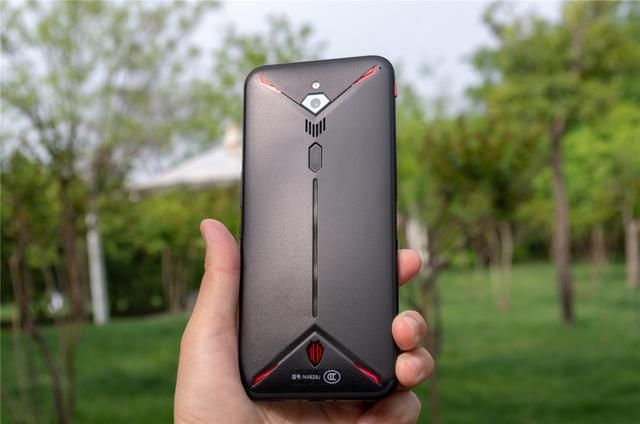
Back Side of Red Magic 3

It comes with 4D smart shock, which is a smart system that adds vibrations to match different scenes in the game, enhancing your overall gameplay experience. It has a special gaming dock pins on the left side that support a number of accessories.

The Nubia Red Magic 3 gaming smartphone is offered in two color options in India — Black and Flame Red. It comes in two variants in India — 8GB RAM + 128GB internal storage and 12GB RAM + 256GB internal storage. Both the variants are priced at Rs. 35,999 (~$515) and Rs. 46,999 (~$673) respectively.

You can check out our review of the Nubia Red Magic 3 here.

Up Next: ZTE Axon 10 Pro 5G launched in Finland as the first 5G phone available in Northern Europe

Huawei Nova 5 Pro shows up on Geekbench

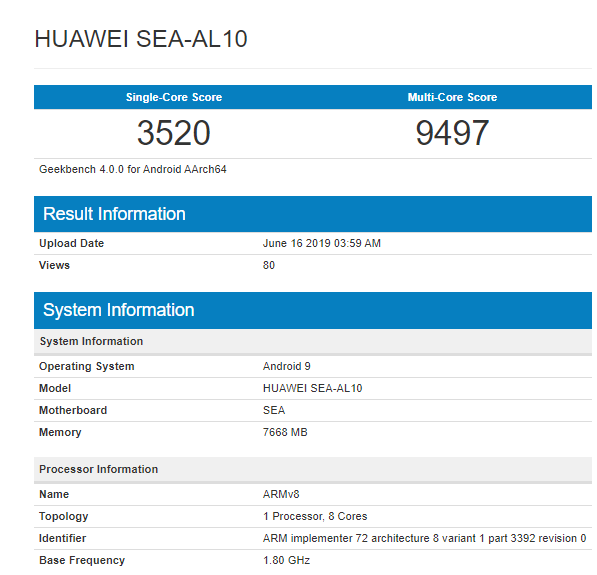
A new Huawei device has been spotted on Geekbench. The Huawei SEA-AL10 is believed to be the Nova 5 Pro and the benchmark results confirm some key specs.

The Huawei SEA-AL10 was benchmarked yesterday. It runs Android 9 Pie, has 8GB of RAM and is powered by an octa-core processor. The benchmark scores – 3520 and 9497 – are similar to those of Kirin 980-powered devices, hence the conclusion that it uses the same chipset.

Huawei Nova 5 Geekbench

The Huawei Nova 5 Pro will have quad rear cameras and an AMOLED display with a waterdrop notch and a 32MP selfie camera. It will arrive alongside the Nova 5i which will also have quad rear cameras but a punch hole display and will be powered by the Kirin 710. There will also be the Nova 5 which will also have a waterdrop notch, quad rear cameras, and be the first device powered by the yet-to-be-announced Kirin 810.

All three phones along with the MediaPad M6 tablet are scheduled to arrive on June 21.

(Source, Via)


UP NEXT: Huawei may opt to use Sailfish OS fork in the future

Early details of Qualcomm’s Next-gen Snapdragon 865 leak hinting at two variants

US chipmaker Qualcomm is expected to mount the rostrum later this year to announce its next-generation flagship chipset. The chipset isn’t expected to find its way into smartphones until next year but going by last years activities, the next-gen Snapdragon chipset should be announced later this year. Some details of the flagship SoC expected to go by the name Snapdragon 865 has been shared by popular tipster Roland Quandt on Twitter.

According to the tipster, the next-gen chipset is referred to as Snapdragon 865 by Qualcomm employees and has the model number SM8250. He also disclosed that the chipset will come in two variants that go by the codenames- Kona and Huracan. Both variants will have support for LPDDR5X RAMand UFS 3.0 flash storage.

EDITOR’S PICK: Samsung bags Qualcomm Snapdragon 865 chip orders ahead of TSMC

The major difference between both variants is that one is likely integrated with the 5G model (SDX55) while the other isn’t. But this isn’t a confirmed assertion but we believe it is taking a cue from the present-gen Snapdragon 855. The SoC which is Qualcomm’s first 7nm SoC comes with a 5G variant and another without the 5G modem. The Snapdragon 855 modem is an upgrade over the Snapdragon X50 used on the SD 855 5G version. The chipset is expected to find its way first into the Galaxy S11 next year and it will be mass produced by Samsung.


UP NEXT: US-based chipmakers are reportedly lobbying to ease Huawei ban

(via)

Xiaomi crowdfunds the Deerma Wet and Dry Bucket Vacuum Cleaner priced at 399 yuan ($57)

Xiaomi has launched yet another product under the Youpin crowdfunding platform. The product is the Deerma Wet and Dry Bucket Vacuum Cleaner and it comes with wet and dry vacuum functions. The device is priced at 399 yuan ($57) and is scheduled to start shipping on July 31, 2019.Deerma Wet and Dry Bucket Vacuum Cleaner

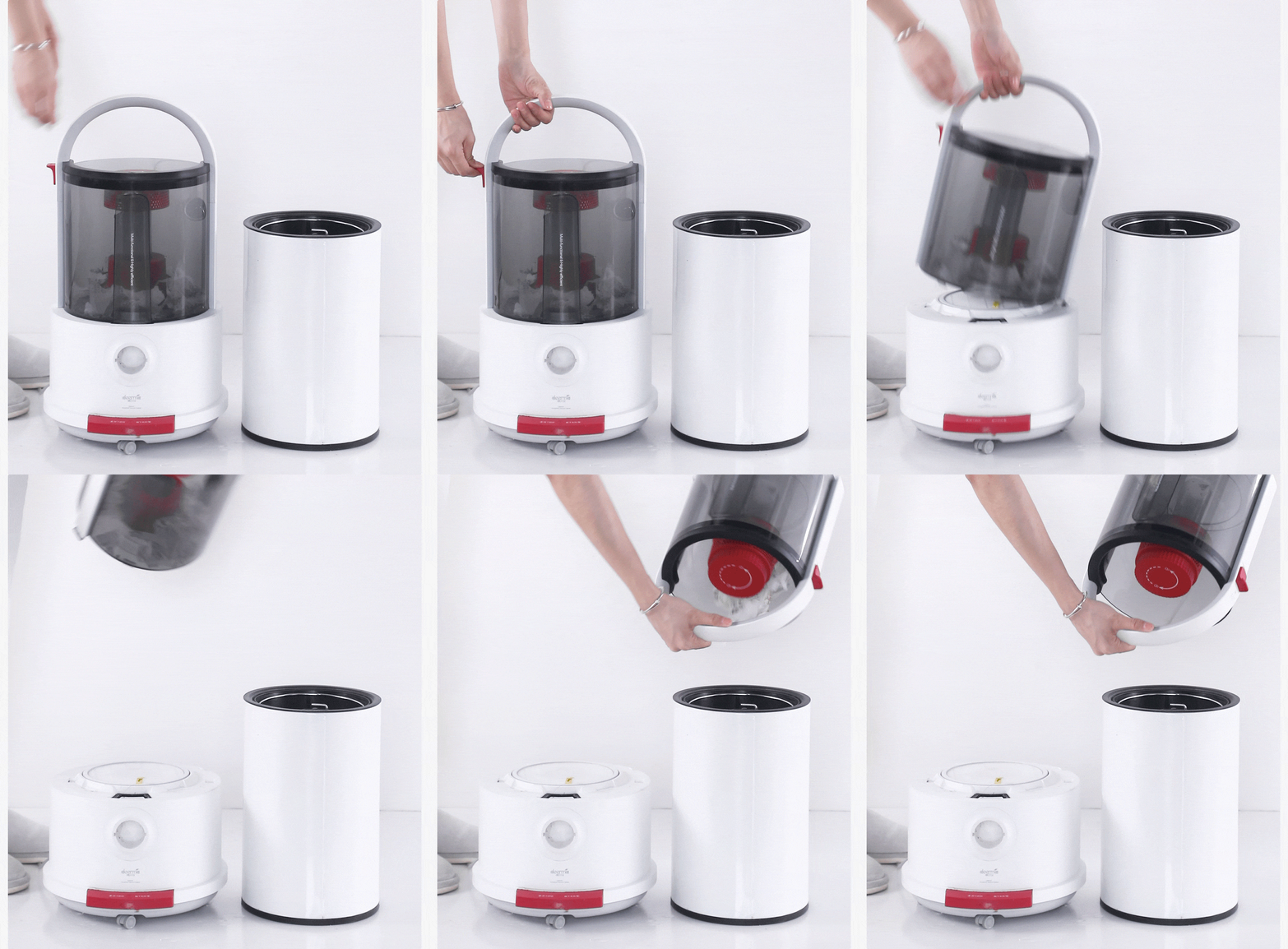
The Deerma Dry and wet bucket vacuum cleaner can absorb dry and wet mixed garbage and can dry the floor and thus, can keep the entire house clean regardless of the type of dirt. Whether it is spilt Ketchup, Yoghurt or rice paste, the Deerma Vacuum is up to the task. It not only cleans up the floor but also dries it.Deerma Wet and Dry Bucket Vacuum Cleaner

The Deerma Wet and Dry Bucket Vacuum Cleaner use a 1200W wet and dry motor with up to 33000 rev/min, and a large 18kPa suction. The suction is so powerful that it can absorb the water in a bucket in an instant and even easily suck the bucket as well. The device also uses a single-piece floor carpet dual-purpose brush head. The floor brush fits the ground and absorbs dust and garbage easily. The brush can also absorb the deep dirt in the carpet, even the “difficult” wet hair in the bathroom can be sucked and cleaned.Deerma vacuum cleaner

EDITOR’S PICK: Realme 4’s retail box shows up in a video

It also comes standard with two small brush heads, which can be extended into the corners, window sill gaps, keyboard gaps, etc. The vacuum cleaner comes with a dust bucket that is separate from the motor. It can be detached with a single push. The bucket and brush are connected by an aluminium tube which is durable and corrosion resistant, and also lightweight. There is also a 1.5m hose which makes it easy to cover a large area unhindered. The power cord is also 5m long.


UP NEXT: Huawei Nova 5 series to debut with 32-megapixel selfie camera

(source)

ZTE Blade A7 2019 gets a global version, powered by Unisoc SC9863A

When ZTE announced the Blade A7 in China last month, we were surprised at its price. The phone which is powered by MediaTek’s Helio P60 chipset has a starting price of ¥599 (~$87) for the base model with 2GB of RAM and 32GB of storage. The Blade A7 now has a global version but it comes with a different chipset.

ZTE Blade A7 2019 display

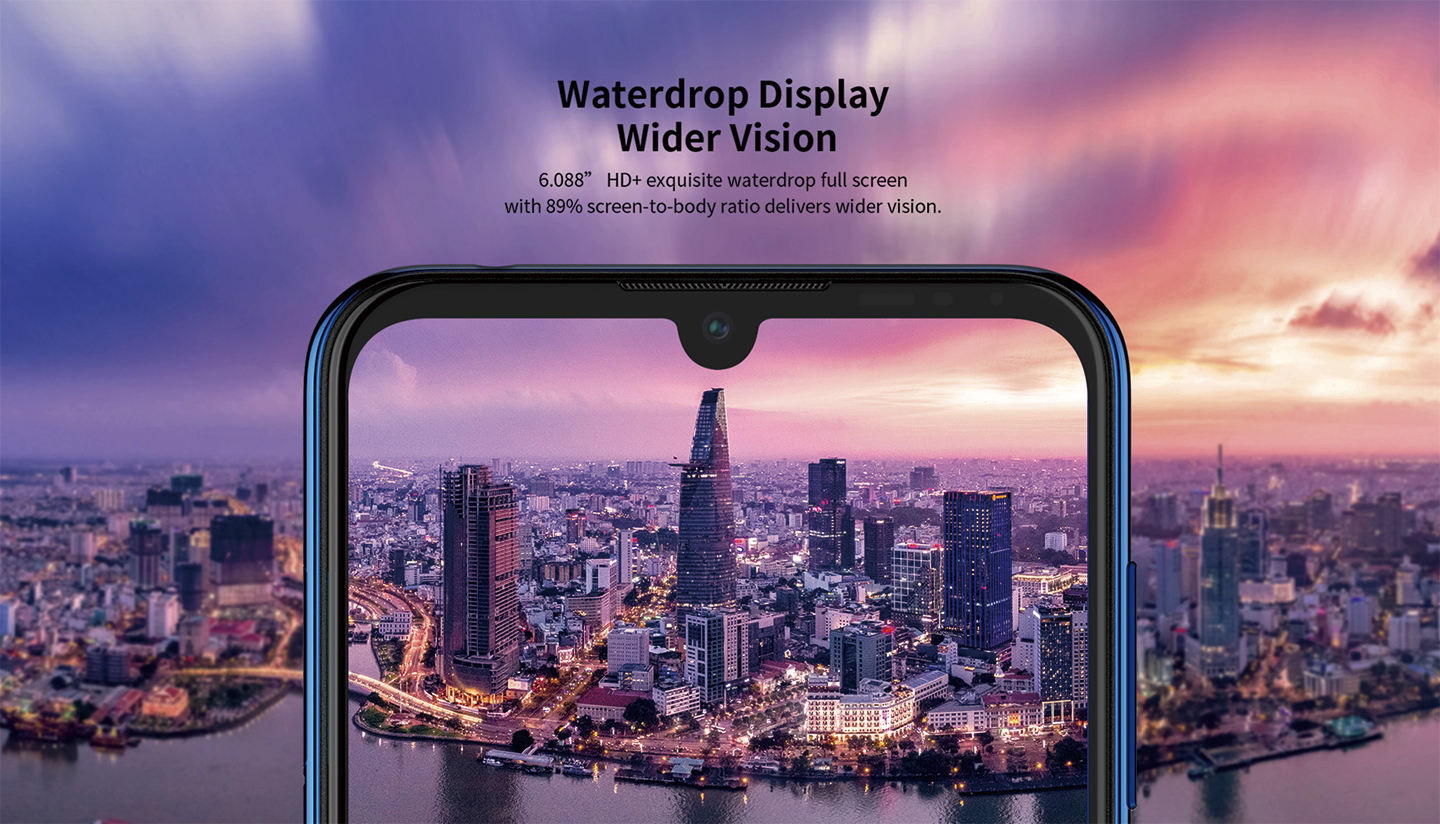
The Blade A7 2019 has a 6.088” HD+ display with a waterdrop notch and an 89% screen-to-body ratio. ZTE says its 7.9mm thin body, 2.5D curved edge glass, and narrow bezel provides a more comfortable grip. The phone comes in three color variants, all with red-painted power buttons.

It has 2GB of RAM and 32GB of storage but swaps the Helio P60 for the Unisoc SC9863A. This is an octa-core processor with 4 Cortex-A55 cores clocked at 1.6GHz and another four clocked at 1.2GHz. The phone has a MicroSD card slot for adding up to an extra 256GB of storage.

The Blade A7 2019 has a 16MP f/2.0 rear cameras with an LED flash while a 5MP camera with support for Face Recognition (unlocks in 0.6s) is housed inside the notch. The phone runs Android Pie out of the box, but unlike the Chinese version which specifically says it runs MiFavor 9 based on Android Pie, this doesn’t. We have a feeling it is running a stock-like version of Android Pie like the global version of the Axon 10 Pro.

[envira-gallery id=”259438″]

The European version supports LTE bands B1/3/5/7/8/20(B28AB) and TD-LTE B38 or B40 or B41(2610-2630) while the version for Latin America supports LTE bands B2/B4/B5/B7/B28AB. It has Bluetooth 4.2, VoLTE, a MicroUSB port, an audio jack, and single band Wi-Fi. Its battery capacity is 3200mAh.

The Blade A7 2019 has a price tag of €150. We don’t have info about pricing for other countries yet as well as availability.

(Source, Via)


UP NEXT: ZTE Axon 10 Pro 5G confirmed to launch in China next month

Redmi K20 is first to feature Qualcomm’s new Golden Ears-tuned Aqstic WCD937x series

Last week, Qualcomm announced it has a brand new audio codec. The Qualcomm Aqstic WCD937x family is the latest codec designed for smartphones so users can listen to music and movie audio just as the producers intended. Qualcomm says the new codec is special as it was developed in collaboration with a group of people referred to as “Golden Ears”.

The Aqstic WCD937X family includes the Qualcomm WCD9370 & Qualcomm WCD9375 and is built using the same high standards as the flagship Aqstic WCD9341 audio codec.

To make the audio better, Qualcomm decided to work with a group of audiophiles referred to as Golden Ears. These are people who are able to “identify the slightest distortions in music, the characteristics of different digital filters, reverb, colorization, panning, harmonics, and more”.

This is actually a very rare skill and you either have it by training or naturally. There are programs you have to take to get certified as having Golden ears and they usually take years to complete. Most manufacturers that employ Golden Ears or those who manufacture really expensive audio products that sell for over a $100,000. Qualcomm has now brought that same high-quality to its codecs for smartphones.

Qualcomm was able to fine-tune the WCD9375 codec using feedback from a group of Golden Ears. They designed a digital audio filter to do this. This filter is also customizable so OEMs can design it to meet different needs and have their own signature sound.

Redmi K20
Redmi K20

The Golden Ears-tuned Qualcomm Aqstic WCD937x series will be available in phones powered by the Snapdragon 730 and Snapdragon 730G. Qualcomm expressly states the Redmi K20 has it but we are not sure if the Samsung Galaxy A80 has it. Phones with the new codec should provide “far better audio quality” for users. Qualcomm also said the flagship WCD9341 codec will also support the Golden Ear filter.

(Source)


UP NEXT: Samsung bags Qualcomm Snapdragon 865 chip orders ahead of TSMC