Advertisement

LG’s 5G phone launch could be delayed due to lingering license negotiations with Qualcomm

LG’s 5G smartphone was expected to launch in May but that did not happen. It has now emerged that some disagreement with Qualcomm over chipset contract is responsible for the delay. Not just the V50ThinQ5G, all other 5G phones by LG could be delayed also.
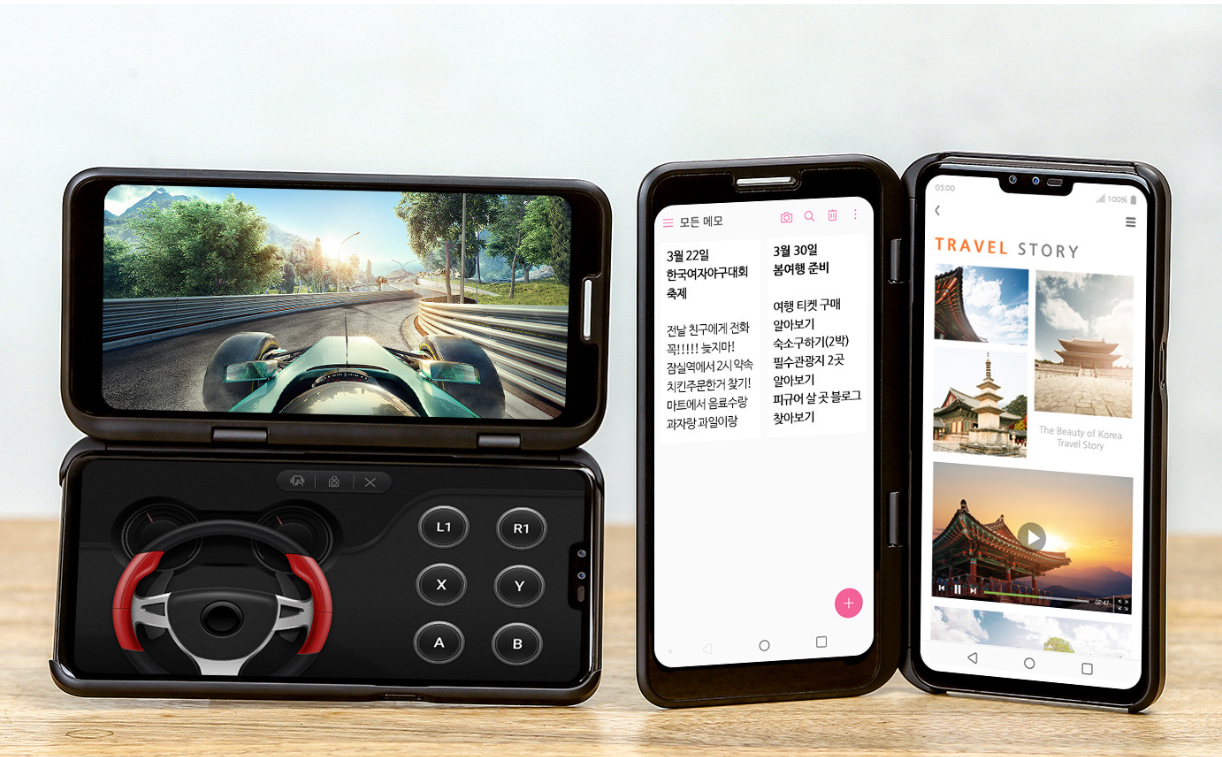
LG’s current contract with Qualcomm is said to expire soon with LG looking to negotiate a new contract with the chipset maker. However, LG is hoping to negotiate terms based on a recent court ruling which classified Qualcomm as a monopoly. But the problem is that Qualcomm is appealing the antitrust ruling and so would not want to negotiate on that basis. Qualcomm’s appeal could linger and thus, force LG to enter into an unfair agreement with Qualcomm. For this reason, LG has instituted another lawsuit in the US, which opposes Qualcomm’s decision to set aside the antitrust ruling. Part of the court filing reads “If Qualcomm does not participate in negotiations with LG Electronics in accordance with the court’s order, LGE will have no option but to conclude license and chipset supply agreements once again on Qualcomm’s terms.”

EDITOR’S PICK: Xiaomi starts reducing ad spots in MIUI and is making it easier to disable ads

The clock is ticking for LG which had hinged its plans to re-enter the smartphone market and make some profits on its 5G phone. Speaking in an interview following the unveiling of the V40 last year, the president of LG’s mobile division, Hwang Jeong-Hwan, said their company is one of three manufacturers ready to launch a 5G-ready smartphone when 5G roll-out begins. LG believes this should give them a headstart and an increase in sales for the first half of 2019. Unless an agreement is reached soon, the train might just leave the station without LG onboard. We hope the issue is resolved soon.


UP NEXT: Redmi Note 7 Pro gets first price cut in China for 618 day

(source)
Throwback Tech Thursday: We Revisit the World’s First Camera Phone & Its Selfie Camera

We have come to a stage where smartphones can essentially replace DSLRs. Be it the Huawei P30 Pro with its incredible 50X zoom or the Pixel 3 XL with its amazing low-light images, smartphones have come a really long way in the camera department. But how long have they come? Who was the first to conceptualize camera phones? We answer these questions in today’s article for Throwback Tech Thursday.

There’s actually quite a bit of confusion as to who released the first ever camera phone. Wikipedia states it was Samsung with its SCH-V200 that marked the entry of camera phones. However, the same article argues that the world’s true camera phone could be from Sharp. The Japanese company had released the camera-equipped J-SH04 a few months after Samsung’s SCH-V200, but with an integrated camera module. However, if you research a bit, you’ll realize that there was actually a camera phone released even before these two models (which Wikipedia had initially missed)!


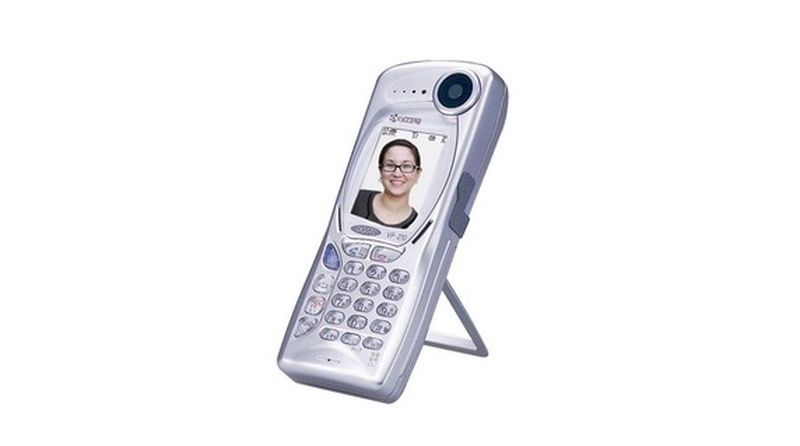
Kyocera VP-210 Visualphone
Kyocera VP-210 Visual phone

The first true camera phone was actually announced by a different Japanese manufacturer, Kyocera. It was the VP-210 Visual Phone that’s the world’s first true camera phone. It was released way before the above two models, as early as 1999 in Japan. What’s even more interesting is that it had a front facing camera, similar to what we have to today for selfies. Clearly, it was a phone that was way ahead of its time! The Kyocera VP-210 came with a 2-inch color TFT display with a 110,000-pixel camera. Don’t be confused with the large pixel count, it was actually a tiny sensor with just 0.11MP. Unsurprisingly, it was expensive at $335 for ‘1999’ standards.

Now let’s look at the two models that Wikipedia claims to be the first camera phones. Samsung SCH-V200 was officially released in June 2000. On the other hand, Sharp’s J-SH04 was announced a few months later, in November 2000.

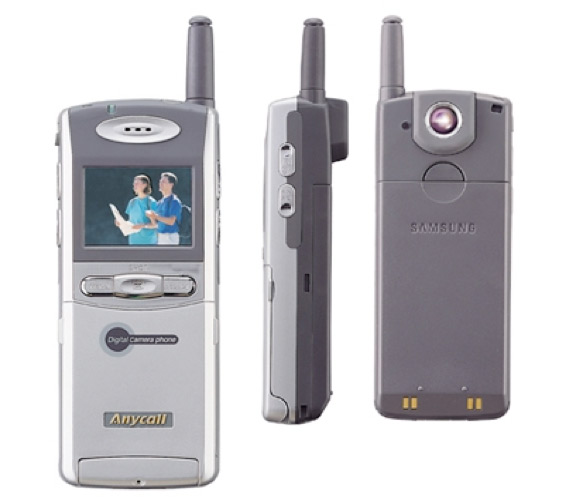
Samsung SCH-V200
Samsung SCH-V200

Both had cameras and could capture images, however, there was a fundamental difference between the two models. The Samsung SCH-V200 was basically a phone with a camera module attached at the back. It had a 0.35MP camera and the phone could capture 20 photos. However, in order to share a photo, you had to connect it to your computer.

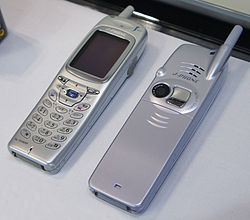
Sharp J-SH04
Sharp J-SH04

On the other hand, Wikipedia claims Sharp’s J-SH04 was the first real camera phone because it had an integrated design. Samsung’s model had a half integrated design i.e. the camera module shared the same case and battery but wasn’t connected to the phone functionally. While on the Sharp J-SH04, you could share photos captured on the phone directly through the device because the camera was fully integrated. However, it’s worth noting that Sharp’s 0.11MP camera was weaker than Samsung 0.35MP one.

So, in all regards, it looks like the Kyocera VP-210 and its front-facing 0.11MP camera was the world’s first true camera phone. It all basically started with a 0.11MP sensor. Today, we are at a 48MP sensors and even 64MP camera modules on smartphones. The megapixel count is bound to increase further in the coming years. So don’t be surprised if you see 192MP camera phones in the future, after all, Qualcomm’s high-end chipsets already support such high-resolution camera modules!

UP NEXT: Nova 5 Will Come With Kirin 810!

Nova 5 to come with Kirin 810 SoC, live photos leak

The launch of the Nova 5 series is still a week away but the leaks haven’t stopped pouring in. The latest is a couple of live photos of the Nova 5. But that isn’t the exciting part, the source of the images has also revealed a key spec about the phone.

According to @RODENT950, the Nova 5 will be powered by the Kirin 810. This is a processor that is yet to be unveiled and definitely the literal successor to the Kirin 710. He adds that the new chipset is actually a 7nm premium mid-range SoC that will take on Qualcomm’s Snapdragon 730.

This is exciting news as the Kirin 710 is overdue for a successor but it also means Huawei may still be following its tradition of releasing just one mid-range SoC per year. This new chipset will most likely be the one that will power future Huawei and Honor mid-range and upper mid-range phones for the next 1 year or thereabout.

We have no idea when the processor will be unveiled but if it doesn’t get a separate launch before next week, that means it will be unveiled at the Nova 5 launch.

The tweet also says the Nova 5i will come with the Kirin 710 while the Nova 5 Pro will be powered by the flagship Kirin 980.

[envira-gallery id=”259028″]

With respect to the images of the Nova 5, we can see it will also have quad rear cameras like the Nova 5i. Three of the sensors are stacked vertically while the fourth one sits separately on the right in a similar design to that of the Honor 20.

There is no fingerprint scanner on the back of the phone which is covered in glass. There doesn’t seem to be an indentation on the side which rules out a side-mounted scanner and leaves us with an in-display fingerprint sensor.

Huawei will announce the Nova 5 series on June 21. It has also been reported that the MediaPad m6 tablet will also be announced at the event.

(Sources: 1, 2)


UP NEXT: HTC’s U19e is a feature-packed upper mid-ranger, brings along the HTC Desire 19+

Huawei Nova 5 Pro major leak reveals renders, storage and color variants ahead of June 21 launch

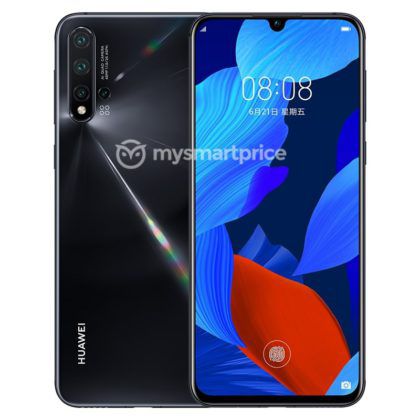
Huawei will be launching the Nova 5 series of smartphones on June 21. Last year, Huawei had launched Nova 3 and Nova 3i smartphones. Hence, the rumor mill has been speculating that the upcoming Nova 5 series will include Nova 5 and Nova 5i smartphones. However, a recent leak had revealed that one of the upcoming Nova 5 series phones could be called Nova 5 Pro. Earlier today, the case renders of the Nova 5 Pro were spotted online. A major leak from MySmartPrice has revealed the renders, storage and color variants of Huawei Nova 5 Pro.

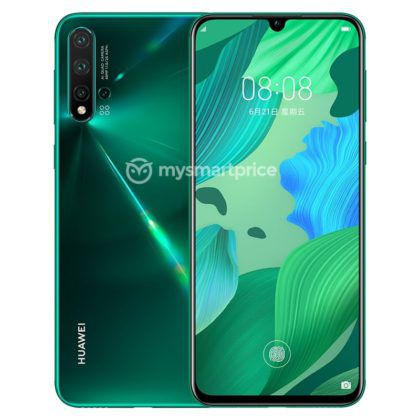
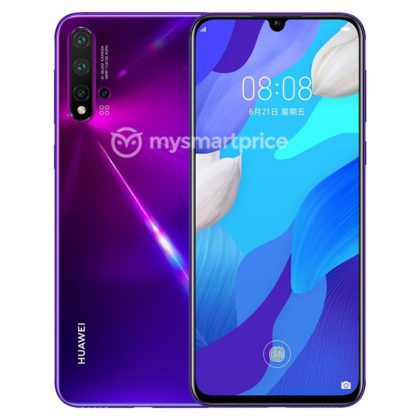
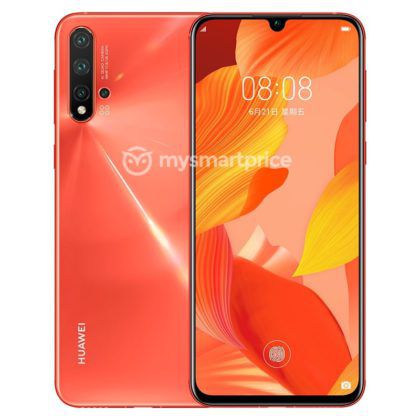
As it can be seen in the below images, the Nova 5 Pro will be releasing in four color options such as Green, Purple, Orange and Black. Since Nova 5i smartphone features a punch-hole display, it was being speculated that the Nova 5 could be also sporting a display with similar appeal. However, the leaked renders have revealed that the Nova 5 Pro will be featuring a display with waterdrop-style notch.

Moving to the rear side of the phone, the Nova 5 Pro features a vertically arranged three camera sensors and LED flash at the top-left corner. The other sensor that is placed alongside the three cameras could be a ToF (Time of Flight) 3D sensor. The rear side of the phone lacks a fingerprint scanner. The symbol of the fingerprint on the display is a clear indication that the Nova 5 Pro will be equipped with an in-display fingerprint reader.

The leak has revealed that the Huawei Nova 5 Pro will be releasing in China in two models such s 8 GB RAM + 128 GB storage and 8 GB RAM + 256 GB storage. The inclusion of “Pro” in its name suggests that it could be a flagship smartphone fueled by the Kirin 980.

Recently, a new Huawei phone with model numbers SEA-AL10 and SEA-TL10 was approved by the TENAA authority. It is speculated that SEA-AL10 / TL10 is a Nova series flagship smartphone – the Nova 5 Pro. The specifications and images of the phone haven’t yet appeared on TENAA. However, XDA Developers editor Mishaal Rahman had revealed in the previous month that the handset will be sporting a 6.39-inch AMOLED display that will produce full HD+ resolution of 1080 x 2340 pixels. It may come with a 3,500mAh battery that will carry support for 40W fast charging. For shooting selfies, it may feature a 25-megapixel front camera. Its quad camera setup may include 48-megapixel Sony IMX586 as primary sensor.

(source)

UP NEXT: Huawei Mate X 3C certified with 55W charger; Launch could be imminent

Xiaomi recommends Mi 8 Pro as the phone to buy during 618 festival, now starts at ¥1999 (~$288)

It is not all the time you see a manufacturer market a device that already has a successor, but that is exactly what Xiaomi is doing for the Mi 8 Pro a.k.a. Mi 8 UD.

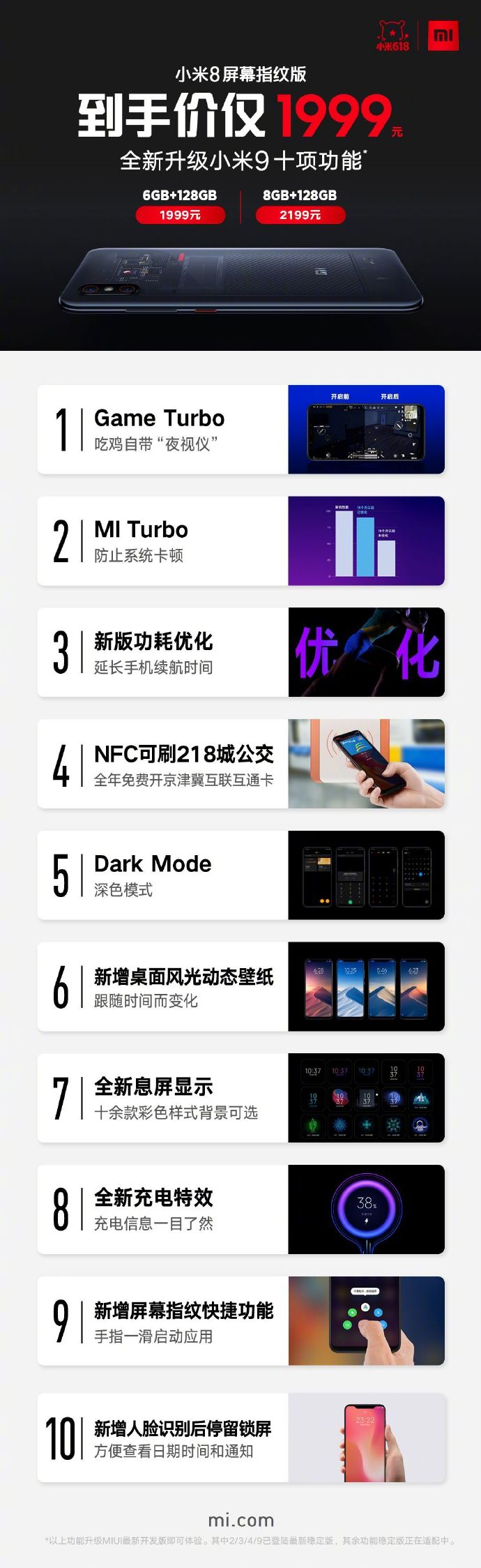
The official Xiaomi phone Weibo account, as well as that of top executives, has begun advertising the 2018 flagship ahead of the 618 shopping festival. According to Xiaomi, the Mi 8 Pro will now have a starting price of ¥1999 (~$288). That price gets you the 6GB RAM + 128GB version while ¥2199 (~$317) is the price tag for the 8GB RAM + 128GB version.

Mi 8 Explorer 618 festival

Those prices are really amazing for a phone that sold for ¥3599 (~$519 for the 8GB RAM version) when it launched last year, but the low price isn’t the only reason why Xiaomi wants you to buy it. The Chinese giant has actually listed 10 new features of the Mi 9 which are now available for the Mi 8 Pro and makes it even a more compelling purchase. Below is the list of new features:

  • Game Turbo – improves gameplay quality of games like PUBG
  • MI Turbo – improvement in system performance
  • New battery optimization features
  • NFC support for more bus cards
  • Dark Mode
  • Dynamic Wallpaper
  • Color Always-On-Display
  • New charging animation
  • In-display fingerprint shortcuts
  • Screen stays “locked” when you raise the phone in case you just want to check notifications and time.

In three other separate posts, Xiaomi lists features such as the Snapdragon 845 processor, the dual-frequency GPS, and its pressure-sensitive in-display fingerprint scanner as top features of the phone. It particularly brags about the last two since it is the first phone in the world to have both features.

[envira-gallery id=”258980″]

The Mi 8 Pro has a 6.21-inch 1080 x 2248 Super AMOLED display with a wide notch at the top for an IR Face Unlock mechanism, a 20MP selfie camera, and sensors. It is powered by the 10nm Snapdragon 845 and paired with 6GB/8GB of RAM and 128GB of storage. It has dual rear cameras – a 12MP f/1.8 primary camera and a 12MP f/2.4 telephoto lens with 2x optical zoom. It has a bunch of camera features including 960fps slow-motion recording and Night Mode.

The Mi 8 Pro packs a 3000mh battery with support for Quick Charge 4+. It charges via a USB Type-C port but misses out on wireless charging like its successor. Add all of the above to its unique see-through back and you will be hard pressed to find a better phone at under $300.

The phone will be available at the new prices on the official Xiaomi online store.

(Sources: 1, 2, 3, 4)


UP NEXT: Xiaomi launches Mi 9T, Mi Smart Band 4 and more in Europe

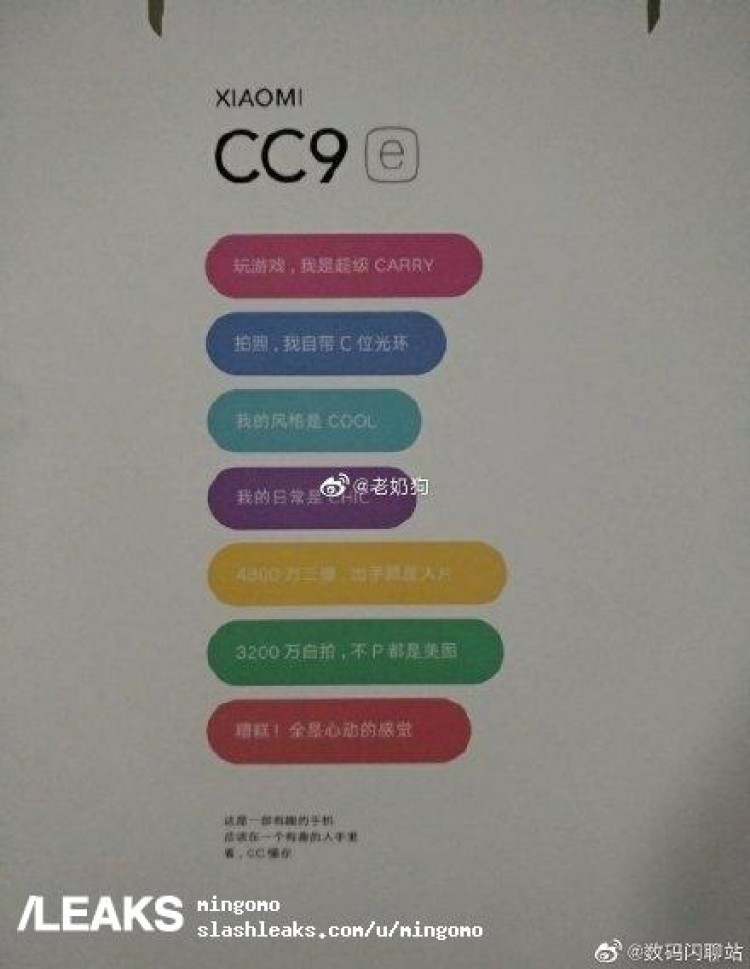
Purported Xiaomi Mi CC9e selfie phone’s specs leaked; Could it be the 3C approved M1904F3BC/T smartphone?

A rumor about a new Xiaomi phone with a weird name – Xiaomi Mi CC9e is now doing rounds on Weibo. Some of the key specification of the Mi CC9e smartphone have surfaced. It is being speculated that the M1904F3BC Xiaomi phone that has recently bagged approved 3C authority in China could be the rumored Xiaomi Mi CC9e smartphone.

Leaked information about the Xiaomi Mi CC9e states that it will be featuring a 6.3-inch IPS LCD display with dot notch and it will carry support for full HD+ resolution. The rear shell of the phone could be sporting a 3D glass.

The Snapdragon 710 or 712 mobile platform could be the driving force of the smartphone. For capturing selfies, it may house a 32-megapixel selfie camera. The rear side of the phone is expected to sport a 48-megapixel + 8-megapixel + 13-megapixel triple camera setup. The handset is expected to arrive with a 3,300mAh battery. The leak also claimed that the Xiaomi Mi CC9e will be a selfie-focused smartphone.

Xiaomi M1904F3BC 3C

Two new Xiaomi phones with model numbers such as M1904F3BC/T and M1906F9SC have bagged approval from China’s Compulsory Certificate (3C) body in China. The M1904F3BC and M1904F3BT that are variants of the same phone have been 3C approved with MDY-10-EC charger that supports up to 18W fast charging. The M1906F9SC Xiaomi phone seems to be an upcoming budget phone because its MDY-09-EK charger supports only 10W charging.

Xiaomi M1906F9SC 3C

It is being speculated that the M1904F3BC/T Xiaomi phone may release in the market as Xiaomi Mi CC9e. Xiaomi smartphones are well known for offering the best price-performance ratio. The Chinese has mainly concentrated on selling its phones online since its beginning. However, now that the online market has saturated Xiaomi is working on expanding its presence in the offline market. OPPO’s A series, Vivo Y’s lineup and Huawei’s Maimang phones are mainly sold to target offline customers. Xiaomi too has started selling its phones offline. The rumored information about Xiaomi Mi CC9e also states that it could belong to a new series that will be primarily sold offline.

Since there is no concrete information on the exact identity of M1904F3BC/T and the existence of Xiaomi Mi CC9e, it is advisable to digest the report with a grain of salt. More details on the newly spotted Xiaomi phones are expected to surface in the near future.

(via 1, 2)

UP NEXT: Xiaomi starts reducing ad spots in MIUI and is making it easier to disable ads

Huawei’s HongMeng OS is 60% faster than Android OS, report claims!

More details continue to emerge concerning Huawei‘s self-developed smartphone operating system. The operating system reportedly going by the name Hongmeng OS (or ARK OS) will come as an alternative to Google’s Android OS.

According to a report by China’s Global Times, Huawei is reportedly intensively the testing process of the HongMeng operating system (OS) HongMeng with internet giants and domestic smartphone vendors. The new OS is expected to be launched in the next few months, the report reveals.Huawei logo

The source of the report wasn’t mentioned and so, this news could be regarded as being a part of the ongoing PR drive to get the US government to capitulate on its ban of the company from using US technology. The report cites a source close to a major Chinese carrier to have hinted that Huawei is working closely with technology giant Tencent, as well as smartphone makers Xiaomi, Oppo and Vivo to push forward the release of HongMeng OS.

EDITOR’S PICK: Chinese media say Huawei’s PC business isn’t facing issues, new model coming next month

The report creates an atmosphere of anticipation as to what the future holds for Google’s Android. While it is still believed that creating a market-ready alternative to Android is near impossible, the report says otherwise. It is even rumoured that tests show the HongMeng OS is 60% faster than Google’s Android. This is even more difficult to believe.

Huawei is yet to reveal when the new OS will be released and that could be another joker in the US/Cina trade war. In a situation where the US goes ahead to enforce the ban after the expiration of the 90 days extension, we could hear a surprise announcement from Huawei. However, there are speculations that the new OS will drop with the Mate 30 in the last quarter of the year. Global Times quotes some industry sources to have hinted that the new OS could come on the Huawei P40, expected in the first quarter of 2020.


UP NEXT: Samsung patents phone with a 4-sided curved display


(source)

Huawei Mate X 3C certified with 55W charger; Launch could be imminent

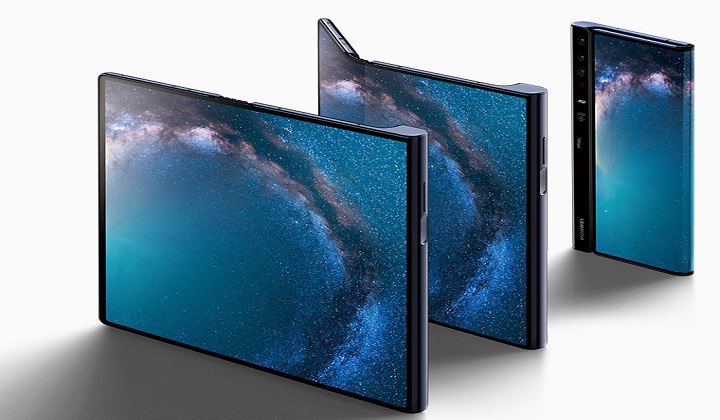
Yesterday, the Huawei Mate 20 X 5G edition was spotted on the database of the 3C authority of China. It indicated that it may release in the Chinese market soon. Today, the Huawei Mate X foldable smartphone that has a model number of TAH-AN00 has bagged approval from 3C body. It suggests that the Chinese firm may soon launch the 5G enabled Mate X foldable phone in China.

The HW-200200CP1 charger that has been approved along with carries support for up to 65W charger. When the Huawei Mate X foldable smartphone was showcased at the Mobile World Congress (MWC) 2019 tech expo earlier this year, the Chinese firm had revealed that it carries support for 55W SuperCharge fast charging technology.

Huawei Mate X 5G 3C Certified

Earlier this month, He Gang who pioneers the smartphone division for Huawei had shared the 5G test result of the Huawei Mate X foldable phone. In the Ookla Speed Test app, it had recorded download speeds of 1 Gbps and upload speeds of 100 Mbps. The 5G tests on Mate X was carried out through China Unicom’s network at the Shanghai Research Institute office.

The Huawei Mate X is powered by 7nm Kirin 980 chipset. It is the same SoC that powers the LTE connectivity enabled Huawei Mate 30 and P30 series of flagship phones. However, what enables 5G connectivity on Mate X is the presence Balong 5G modem that achieve peak download speeds of 4.6Gbps.

Huawei Mate X Specifications

The Huawei Mate X comes with folded cover display of 6.6 inches. The AMOLED screen offers 19.5:9 aspect ratio and full HD+ resolution of 1148 x 2480 pixels. When unfolded, the Mate X gives access to an 8-inch outer OLED display that supports a resolution of 2200 x 2480 pixels. The EMUI 9.1 based Android 9 Pie OS comes preloaded on the device.

Huawei Mate X featured

The Kirin 980 chipset of the Mate X is assisted by 8 Gb of RAM. It comes with an inbuilt storage of 512 GB. For additional storage, it is equipped with a microSD card slot. The Leica engineered quad camera setup is available on the Mate X. It features a 40-megapixel main sensor with f/1.8 aperture, an 8-megapixel telephoto lens with f/2.4 aperture, a 16-megapixel ultrawide lens with f/2.2 aperture and a ToF 3D camera. The Mate X is equipped with a side-mounted fingerprint reader. Its packed with 4,500mAh battery that supports 55W rapid charging through USB-C.

The Huawei Mate X was recently listed on the company’s official online store which indicated that it may go on sale in China soon. When the company had announced its 5G roadmap at the Huawei Global Analyst Conference in April, it had stated that the Mate X will be debuting in China in June.

UP NEXT: Huawei Nova 5 and Nova 5 Pro case render leak reveals phone’s design

Samsung Galaxy S10 and S10+ to get new “Smoky Blue” variant in China

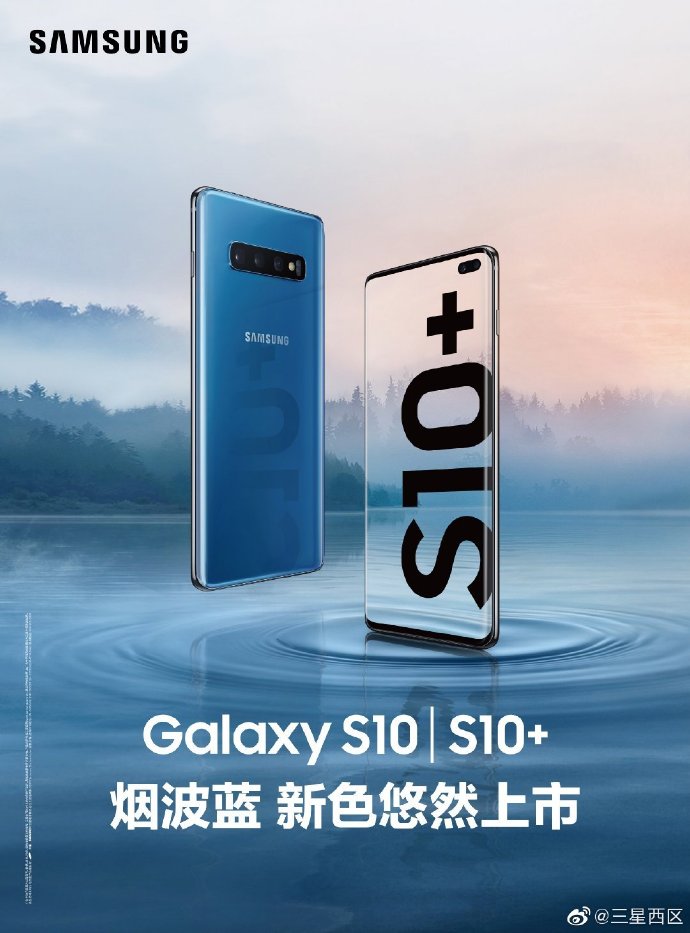
Samsung is not done announcing new color variants for the Galaxy S10 series. Yesterday, one of Samsung’s Weibo account shared a poster of a new color variant for the Galaxy S10 and Galaxy S10+. According to the post, this color is called “Smoky Blue”.

Samsung Galaxy S10 Smoky Blue

The poster shows the S10+ in the new color variant which is similar to the Prism Blue sold in some other markets. There is no date of release yet but it should not be far off.

In the last month, Samsung has released a Cardinal Red Galaxy S10/S10+, a Diamond Silver S10+, and a Prism Silver Park Hang Seo Galaxy S10+ limited edition.

Manufacturers release new color variants as a way to increase sales. We are still in the first half of the year and we already have multiple variants for the S10 series but we have a feeling Samsung may announce at least one more in the second half of the year.

(Source, Via)


UP NEXT: Samsung bags Qualcomm Snapdragon 865 chip orders ahead of TSMC

Huawei recorded the largest growth in Europe, the Middle East and Africa in Q1 2019-IDC

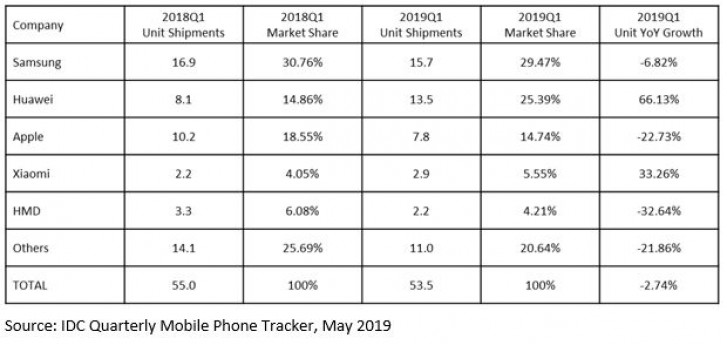
IDC’s latest report bothering on smartphone shipment in Europe, the Middle East and Africa shows that an estimated 83.7 million units were shipped during the first quarter of this year. The shipping estimate represents a 3.3% year-on-year decrease when compared to the same period last year.huawei

The data also shows that the major players raked in an estimated $26.8 million in revenue for the sales but this is less than what was obtained during the same period last year. The estimate is 10% lower than what was obtained in Q1 2018.

Despite its battle with the government, the data shows that Huawei recorded the largest growth in the region with a 66.1% YoY increase in shipments. Fellow Chinese OEM Xiaomi followed with 33.3% YoY growth in shipment. Apart from the two companies that recorded a year-on-year increase in shipments, all other major brands recorded slumps in their shipments. HMD’s Nokia shipments fell by 32.6% YoY while Apple lost 22.73%.

EDITOR’S PICK: Xiaomi MIJIA Smart Door Lock with a fingerprint sensor, NFC & Bluetooth launched

In terms of gross shipments, Samsung remains the market leader in the regions with a 29.5% market share, followed closely by Huawei with a 25.4% market share. Apple came in at third place with a 14.7% market share. IDC notes that Apple’s Q1 2019 result was the company’s lowest in five years.  Since the US giant isn’t expected to release a new smartphone until the third quarter, we don’t expect an improved result in Q2. Apple’s reduced market share is traceable to poor performance in former strongholds like China where local OEMs have risen with sleek but cheaper models, threatening not just Apple but Samsung.

Overall shipments fell short of previous figures as consumers hold on to devices for longer. The average price of phones also dropped as OEMs look to attract more customers. However, IDC predicts a grim future for the market due to heightened geopolitical tensions and the habit of consumers holding onto devices for longer periods.


UP NEXT: Xiaomi starts reducing ad spots in MIUI and is making it easier to disable ads

(source)

Samsung patents phone with a 4-sided curved display

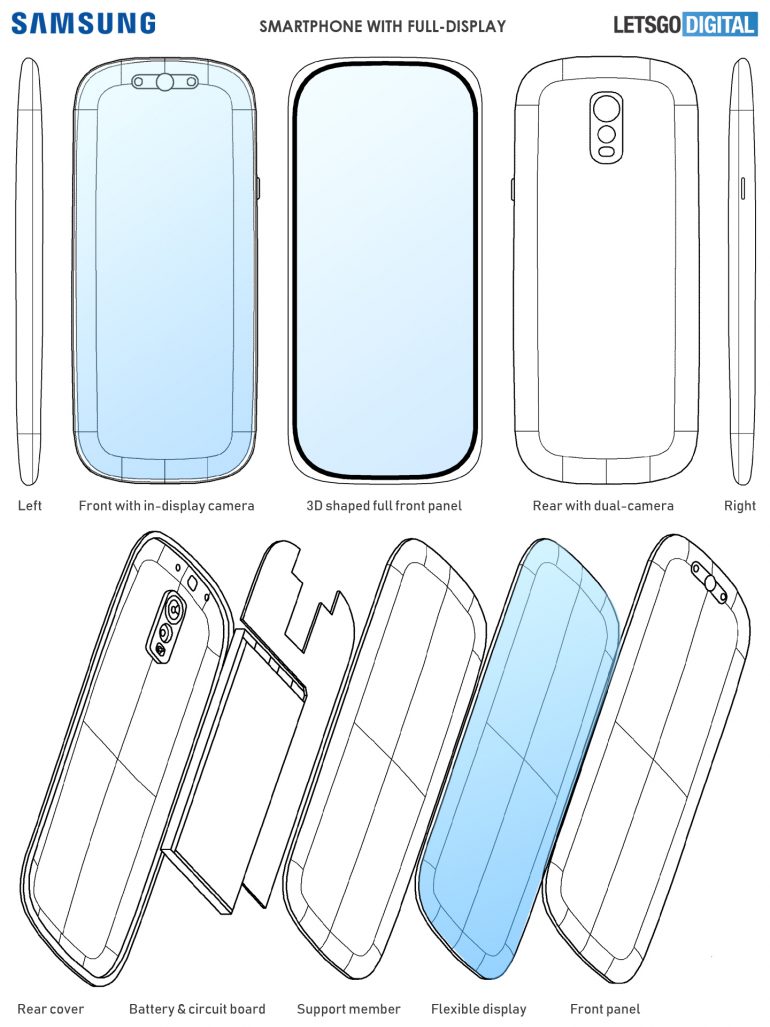
Samsung already makes phones with curved displays but it has always been limited to just two sides. A publicized patent filed in November 2018 at the World Intellectual Property Organization shows the Korean phone manufacturer may want to make one with all the sides curved including the top and bottom.

Does the design sound familiar? Yes, the Honor Magic from 2016 also has all its sides curved but Samsung’s is a bit different. The major difference is the size of the bezels. Unlike the Honor Magic which has thick bezels at the top and bottom, Samsung’s phone keeps them to a minimum for a practically all-screen design.

Samsung phone with 4-sided curved display patent

Another difference is that Samsung hides the sensors and front-facing camera under the display. Since the display is curved and laying the camera flat will result in distorted images, the patent says the sensor is placed at an angle. There isn’t a fingerprint scanner on the back or sides which means it is also under the screen. The patent diagram shows the phone has dual rear cameras and a single button on the side.

[envira-gallery id=”258946″]

LetsGoDigital has made 3D renders of the device to give us an idea what the phone may look like. Looking at the images, all we can say is it sure is going to be a really slippery phone although the patent says the curves will provide a firmer grip. The patent says the back which is also curved on all sides can be made of metal but knowing Samsung, Glass will probably be the material of choice.

We have no info if this will ever be released as a commercial device and even if it is, it sure will be different from what the images show as everyday usage will be considered during the design. Nevertheless, we sure will love to see a working prototype at least.

(Sources: 1, 2)

UP NEXT: Galaxy Note10 Pro won’t have 45W fast charging; a different Samsung phone will

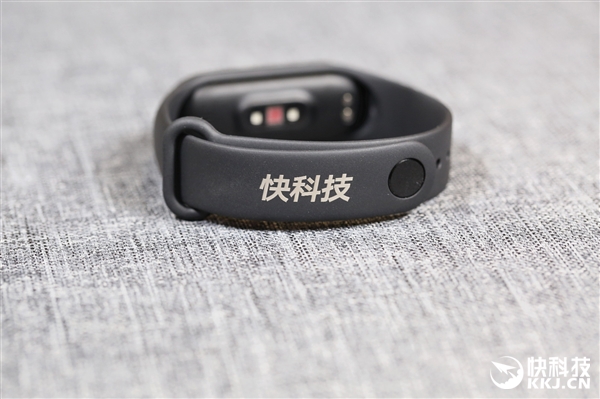
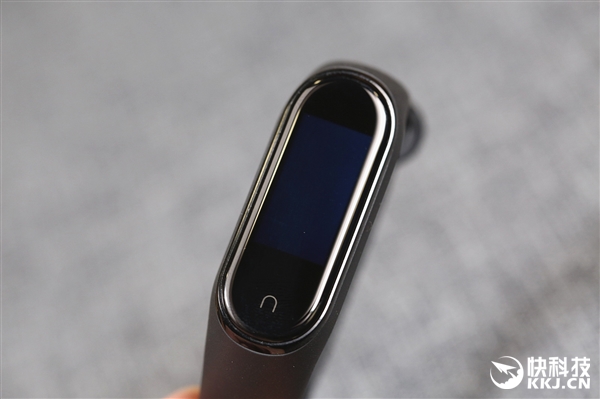
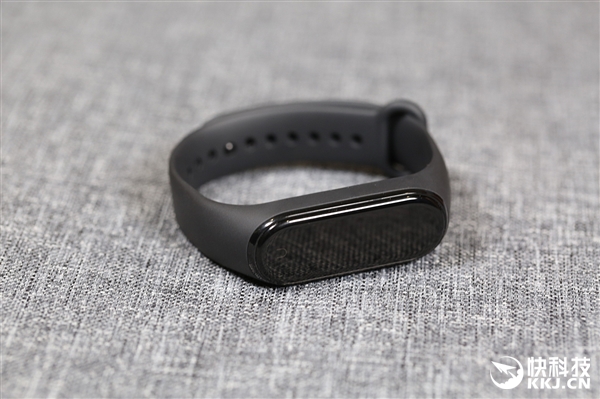
Xiaomi Mi Band 4 in Pictures: A Look at the new design and features

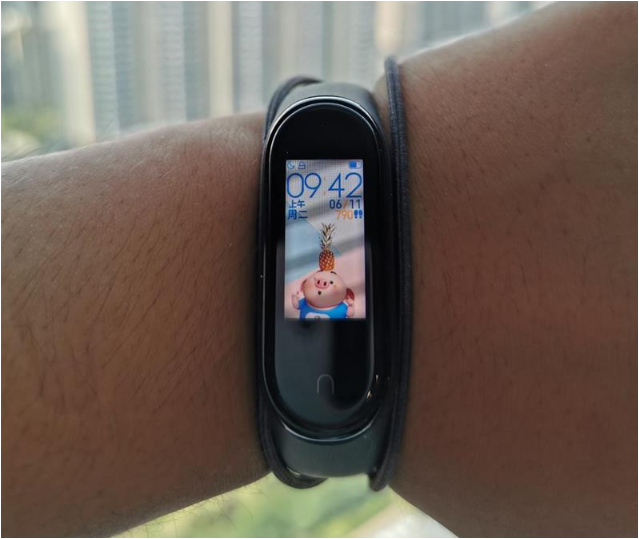
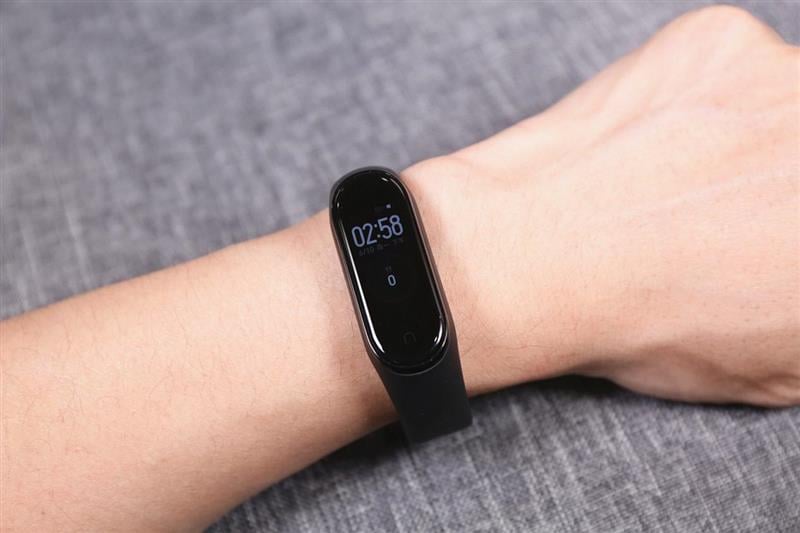
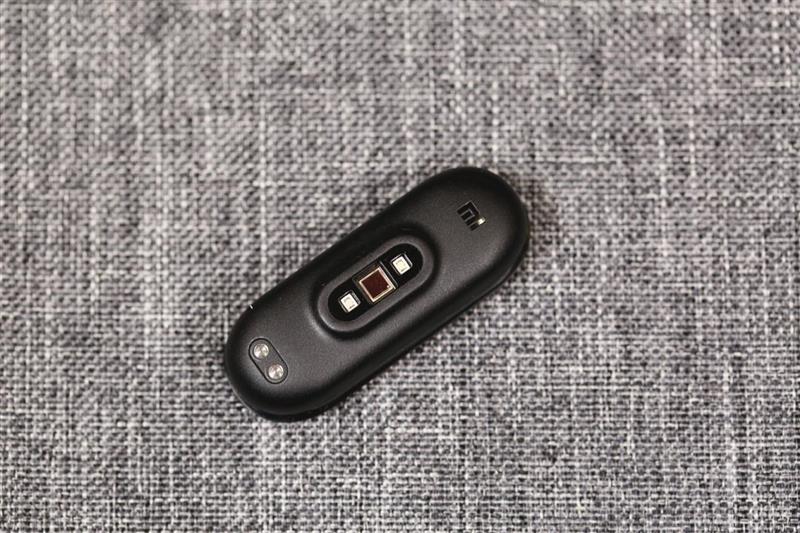
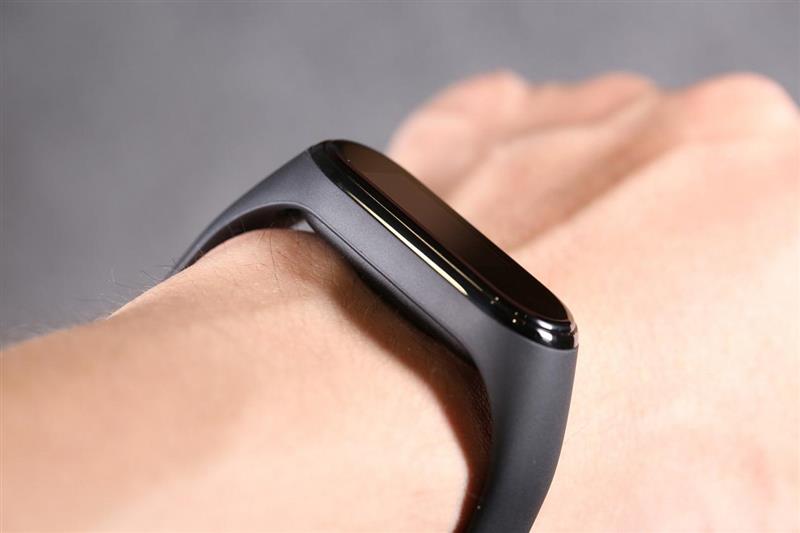
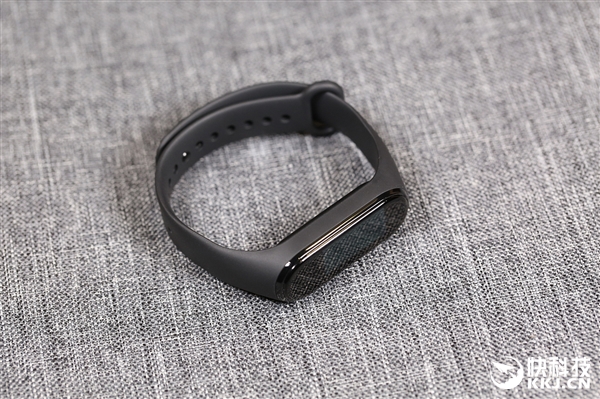
Xiaomi finally took the wraps off the next-generation Mi Band 4 a couple of days back in China. Just yesterday, the tech giant also launched the wearable device as Mi Smart Band 4 in Europe. Here is a look at the pictures of the Band 4, with focus on the new features onboard. Credit for the images goes to Chinese blog MyDrivers.Xiaomi Mi Band 4

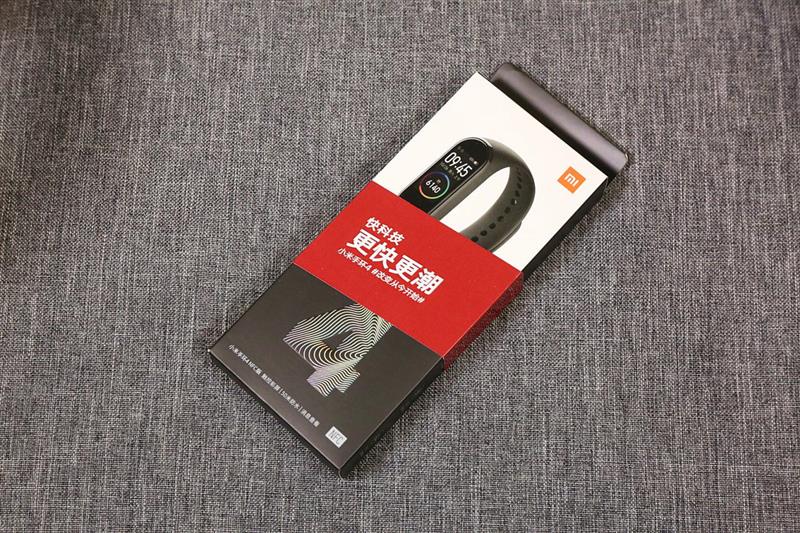
The Mi Band 4, or Mi Smart Band 4 if you like, hits the market with an upgraded design over its predecessor. For the first time, Xiaomi is using a colour AMOLED display for the smart band and it looks beautiful. The screen size is said to be 39.9% bigger than its predecessor. There’s also 2.5D scratch-resistant tempered glass protection on top of the display. The Band 4 screen isn’t as curved as that of the Band 3 and this should offer better protection from scratches.Mi BAnd 4 Towards the end of 2018, Xiaomi had released new packaging for the Mi Band 3. The Band 4 will be using the new attractive packaging box from inception. Inside the box, you get the Band 4, a rubber strap as well as the charging cable.

EDITOR’S PICK: Zomato successfully tests its Drone delivery technology in India

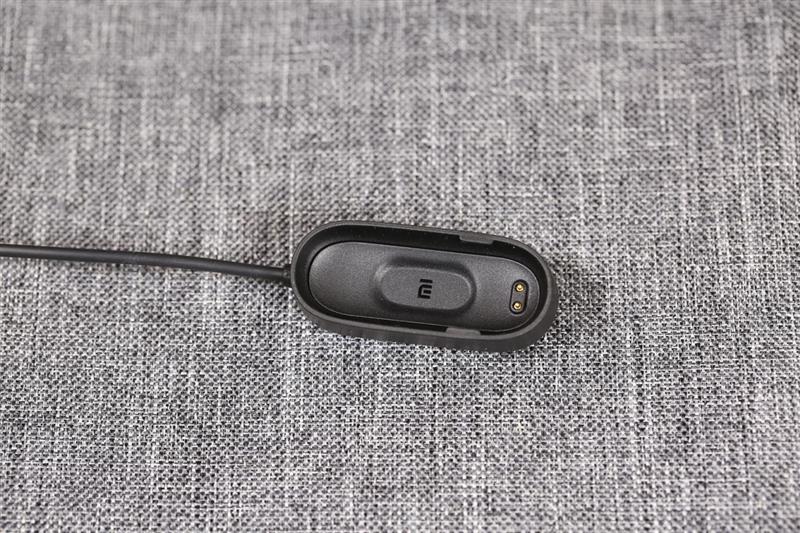
Xiaomi Mi BAnd 4Talking of charging, the Mi Band 4 cannot be charged with the USB cable of any of the previous models. It comes with a redesign such that the entire pebble-shaped device will sit entirely inside the charging housing with the charging point at the bottom and not on the side. This ensures the device is held securely in place while charging.

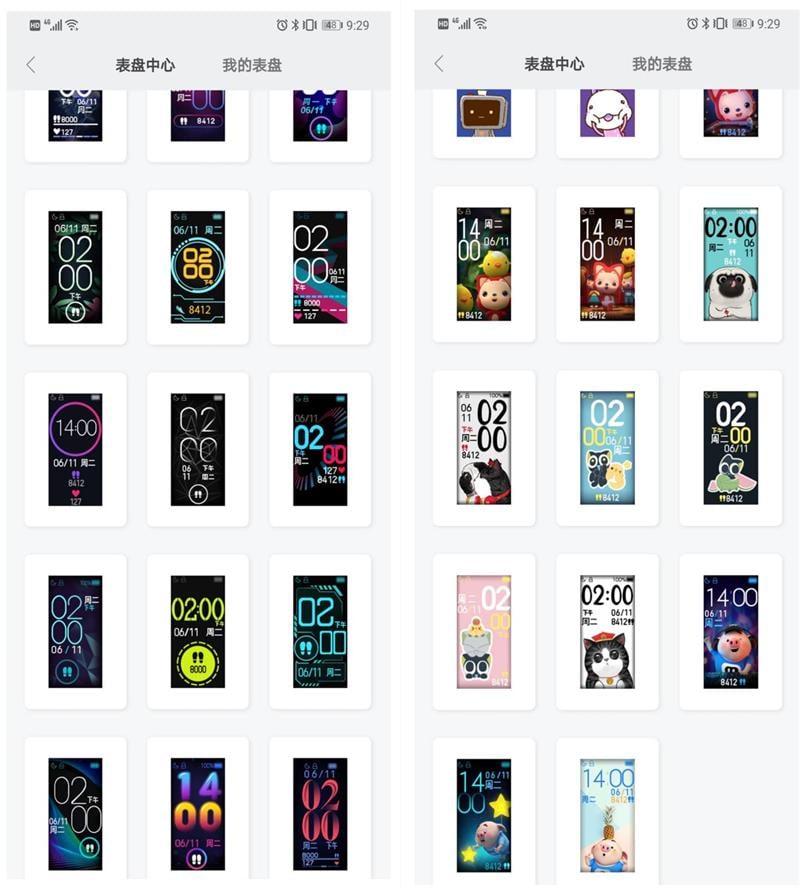
Mi Band 4 watch faces

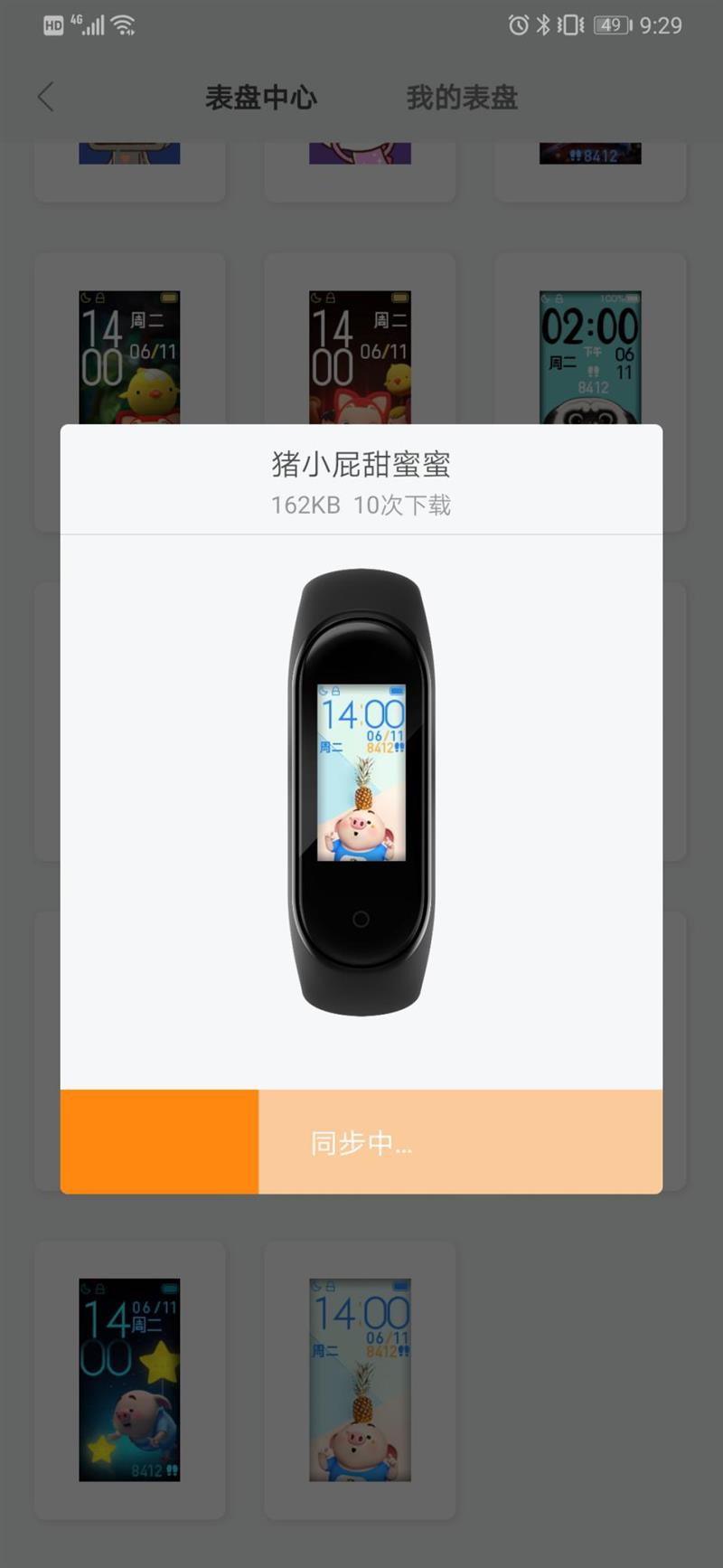
On the internals, the Mi Band 4 comes with several watch faces with a couple of them pre-installed but others, you can download from the Mi Fit app on a smartphone when the device is paired.

Xiaomi Mi Band 4 also comes in two versions with NFC being the only distinguishing feature between the two. The device also comes with water resistance up to a depth of 5ATM (50 meters. There is also an upgraded 6-axis high-precision sensor to intelligently recognize different type of swimming strokes including Freestyle, Backstroke, Butterfly stroke, and Medley. It also supports 6 different sport modes like indoor running, outdoor running, exercise, swimming, cycling, and walking. There are also the regulars; sleep tracking, heart rate monitor, GPS etc.

Check out more pictures from below.Xiaomi Mi Band 4Xiaomi Mi Band 4Xiaomi Mi Band 4Xiaomi Mi Band 4Xiaomi Mi Band 4Xiaomi Mi Band 4Xiaomi Mi Band 4

Xiaomi Mi Band 4 charger


UP NEXT: Redmi Note 7 Pro gets first price cut in China for 618 day

(source)
Samsung Galaxy J7 (2017), Galaxy J7 Nxt, and Galaxy J7 Pro receive Android Pie update

Samsung is rolling out Android Pie to three of its mid-range phones from 2017. The devices are the Galaxy J7 (2017)/Galaxy J7 Pro and the Galaxy J7 Nxt. All three are members of the now defunct Galaxy J series.

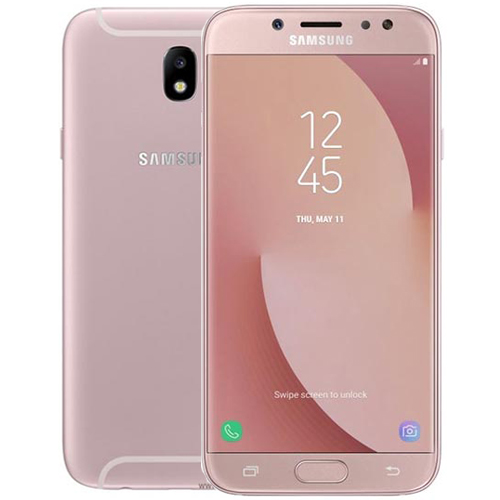
Samsung Galaxy J7 2017

The Galaxy J7 Pro and the Galaxy J7 (2017) are nearly identical devices save for differences in storage capacity but the former already began receiving the update last week.

The update is already rolling out for the J7 Pro in Algeria, Mexico, Russia, and Spain. It is 1GB in size and comes with the new One UI interface and May’s security patch. The firmware version is said to be J730FXXU4CSF1.

For the Galaxy J7 (2017), the update comes as version J730FXXU4CSF1. It is rolling out in Spain already and also has May’s security patch too. Some of the One UI features include Night Mode, navigation gestures, and a re-arranged menu for one-hand use. It also comes with Digital Wellbeing.

The Galaxy J7 Nxt’s firmware version gets updated to J701FXXU6CSF1 with the new update. It also comes with May’s security patch and a new user interface. The update is already rolling out in Thailand but owners of the phone in other regions can go to Software Update under Settings to check if the update is available for them.

All three phones launched with Android Nougat back in 2017. It is nice to see Samsung’s attitude to updates has improved. This will most likely be the last major OS update for all three phones but we are not sure about security updates.

(Sources: 1, 2 Via: 1, 2)


UP NEXT: Samsung’s new Galaxy M40 is a re-branded Galaxy A60, starts at ~$300

Huawei Nova 5 and Nova 5 Pro case render leak reveals phone’s design

Even though Huawei is going through the worst time in the company’s history with the U.S. ban, the company is backing off from launching new devices. Huawei has confirmed that it will be launching Nova 5 series smartphones on 21st June in China.

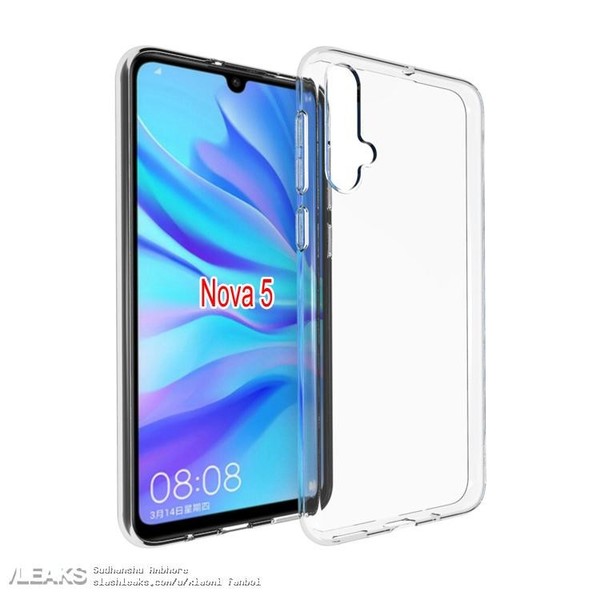
Now, ahead of the launch, render of the protective case of the Nova 5 has leaked online, which reveals that the smartphone will feature a waterdrop notch on top of the display. It also suggests that the phone will have an in-display fingerprint sensor given that there’s no cut-out for the traditional fingerprint sensor.

Huawei Nova 5 Case Render

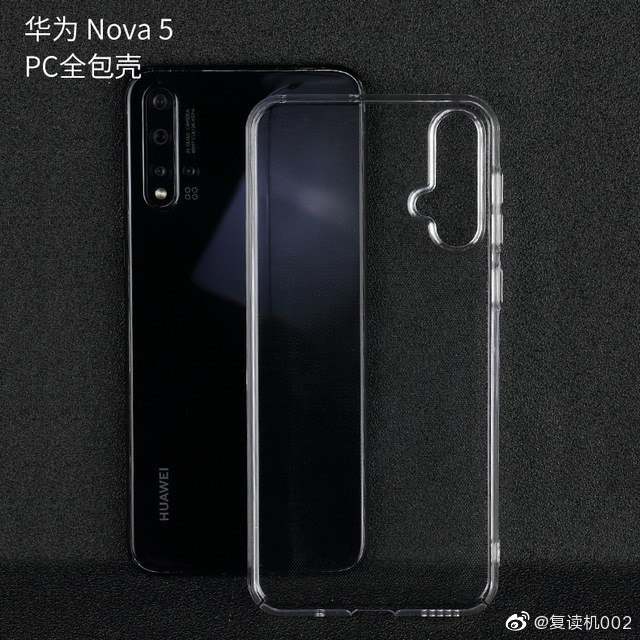
The leak also shows that the phone will come with four camera sensors arranged vertically on the back panel, along with an LED flash. The camera module on the phone is placed in the top-left corner.

Earlier, tempered glass for the Huawei Nova 5 had leaked online, which also revealed that the phone will have a waterdrop notch in the center of the display. It also hints at minimal bezels surrounding the display.

Along with this, a case render of the Huawei Nova 5 Pro shows its back panel. This confirms the quad camera setup for an enhanced camera experience. There’s also no rear-mounted fingerprint sensor and is likely to house an in-display fingerprint sensor.

Huawei Nova 5 Pro Case Render

As for the specifications, the Nova 5 is expected to come powered by the company’s own Kirin 810 octa-core chipset while the Nova 5 Pro is said to be powered by the Kirin 980 flagship chipset. The Nova 5i, on the other hand, is expected to come powered by Kirin 710 octa-core processor. The Huawei P20 Lite (2019), which was recently launched in Europe, is expected to come as Huawei Nova 5i.

Along with the Nova series smartphones, the Chinese smartphone maker is also going to launch the Huawei M6 tablet at the launch event. To know the pricing and availability details of all these devices, we’ll have to wait until the official launch event in China that will take place on 21st June.

Up Next: Huawei could ship Hongmeng OS in October; Smartphone shipments likely to exceed 200 million

(Via – 1, 2)

China’s Changxin set to produce first locally designed DRAM chip

Changxin Memory Technologies, previously known as Innotron Memory, and previously to that known as either Hefei Chang Xin or Heifei Rui-li IC Manufacturing, is said to be targeting 10k wpm DRAM production by the end of the year. Changxin will compete against chips giants Micron Technology and Samsung Electronics in a $1 billion per year market.

The Chinese company is taking steps to minimize its use of US technology thereby propels them to redesign its dynamic random access memory (DRAM) chips. The company is taking measures to avoid infringing patents and potentially falling victim to the U.S. pressures on China’s rising tech industry.

While Changxin is determined in reducing their reliance on US technology, much of its production still reply on U.S. equipment and tool suppliers. By redesign its DRAM chips, the company is hoping that they will be safe against potential U.S. allegations of intellectual property theft.

While the output will still be small compared with the 1.3 million DRAM wafers a month currently produced globally, the start of production would still mark a major breakthrough for China as the country currently has no homemade DRAM chips, said Sean Yang, an analyst at market research company CINNO.

However, much like the world’s leading semiconductor manufacturers, Changxin still needs to use U.S. equipment from companies like Applied Materials, Lam Research, KLA-Tencor, materials from Dow Chemical and electronic design automation tool providers from Cadence and Synopsys. For more news, stay around on Gizmochina.com.

UP NEXT: Xiaomi Mi Band 4 officially launched with AMOLED color Display & Cheap Price tag

(Source)

Redmi Note 7 Pro gets first price cut in China for 618 day

In a surprise announcement, Xiaomi has announced that the Redmi Note 7 Pro is getting a price cut in China. In conjunction with 618 day, the Redmi Note 7 Pro’s price will get cut down to a mere 1399 yuan, or about $202. This is the first time we’ve seen the Redmi Note 7 get a discounted price since its launch, but it’s clearly not going to be permanent change.

The phone comes with a 2.5D curved glass on the front as well as back, which is protected by Corning Gorilla Glass 5 on both the sides, protecting it from minor scratches. Under the hood, the device is powered by the latest Qualcomm Snapdragon 675 octa-core chipset which is manufactured using the 11nm FinFET process. As for the memory configuration, the smartphone comes with 6GB of RAM and 128GB of internal storage.


For the camera department, the Redmi Note 7 Pro features a dual camera setup with Sony’s 48-megapixel IMX586 sensor and a 5-megapixel depth sensor, while the selfie camera is 13-megapixels. The Redmi Note 7 features only a 12-megapixel + 2-megapixel dual rear camera setup, however still has the 13-megapixel selfie camera of the Pro.

For those of you in China, this may be your only chance to get discounted Redmi Note 7 Pro for a long time. The device is still selling incredibly well everywhere, so there’s a high chance we won’t be seeing another sale anytime soon. I’d recommend bucking up and snatching a unit before they’re all gone and the chance passes. Until then, stay around on Gizmochina.com for more Xiaomi news.

UP NEXT: Xiaomi Mi Band 4 officially launched with AMOLED color Display & Cheap Price tag

(Source)
Huawei ban will hurt UK’s mobile connectivity leadership and trade

United Kingdom mobile operators plan to warn the British government that a ban on Chinese telecommunications company Huawei would jeopardize the UK’s role as a leader in mobile connectivity. Several operators reportedly plan to send a letter to Cabinet Secretary Mark Sedwill asking the government to urgently clarify whether it intends to allow Huawei to bid for 5G contracts in Britain, according to the BBC

On top of this, China’s ambassador to London also warned the British government that if Huawei is blocked from developing 5G networks then it will hurt Chinese trade and investment relationship with the United Kingdom. “It will send a very bad message not only to Huawei but also to Chinese businesses,” Ambassador Liu Xiaoming told the BBC. He added blocking Huawei would lead to “bad effects not only on trade but also on investment.”

What’s been done to improve the Huawei situation?

Britain’s National Security Council, chaired by Prime Minister Theresa May, met to discuss Huawei in April and a decision was made to block Huawei from all core parts of the 5G network but to give it restricted access to non-core parts.

A final decision by the British cabinet of senior ministers was due to have happened in recent weeks but May’s pledge to step down as prime minister has stalled the process, sources said. She is expected to be out of office by the end of July.

Until then, all we can really do is wait for an ultimatum. The company insists that it poses no security threat to any of its customers. Huawei says suggestions to the contrary are a smokescreen for frustrating China’s attempts to emerge as a leading designer and provider of high tech equipment, rather than assembling the nuts and bolts of technology designed in the US and Europe.

UP NEXT: Xiaomi Mi Band 4 officially launched with AMOLED color Display & Cheap Price tag

(Source 1 | Source 2)
Giveaway – Win a Xiaomi Mi Band 4 Smart Bracelet


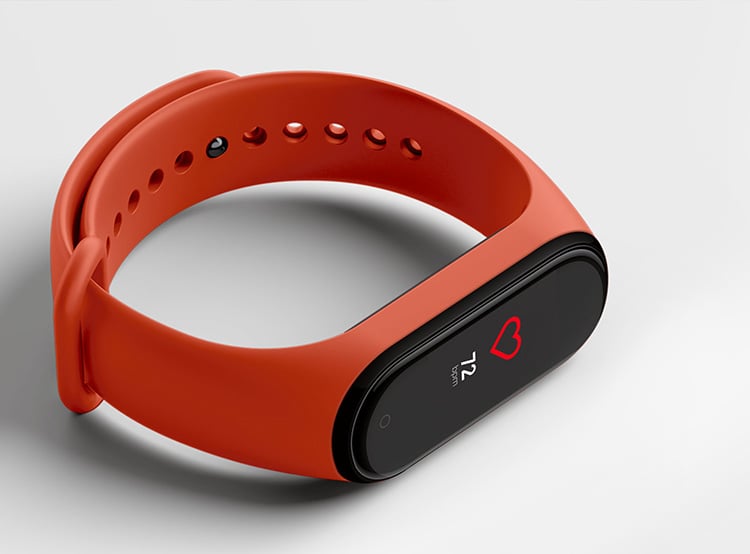
Xiaomi Mi Band 4

Gizmochina along with Giztop is conducting 1 unit Xiaomi Mi Band 4 Bracelet Standard Version as giveaway gift to a lucky reader. Like always, you just have to follow the steps mentioned on the Gleam widget to get a chance to win this amazing gift.

The winner of giveaway will be published on Gizmochina’s Facebook and Twitter page, so follow the social page of Gizmochina.

Xiaomi Mi Band 4 is the latest smart bracelet launched by Xiaomi. Xiaomi Mi Band 4 comes with a 0.95-inch AMOLED color screen having the resolution of 120×240 pixels, which is 39.9% bigger than Xiaomi Mi Band 3. The smart bracelet supports fitness tracking, sleep monitor, 24H heart rate detection, sedentary reminder and so on. It is also water resistant up to 5ATM (50meters), so you can wear the bracelet in daily washing. The latest band uses Bluetooth 5.0 which offers an improved range, connectivity speed and efficiency. Xiaomi Mi Band 4 is fueled by 135mAh battery, and it is rated to last more than 20 days on a single charge. The main feature for Xiaomi Mi Band 4 is Xiao Ai AI assistant, so you can order it to turn on lights or fans.

You can click here to get more information about Xiaomi Mi Band 4.


Here are the on-going giveaways:

Giveaway – Win an Ulefone Armor 6E Smartphone

Giveaway – Win A Xiaomi 20W Wireless Charger (2 units)

How to entry this giveaway? Just follow these steps via Gleam widget:

  1. Visit Xiaomi Mi Band 4 Smart Bracelet on Giztop‘s website;
  2. Share this giveaway contest on Facebook, Twitter and Reddit;
  3. Visit Gizmochina’s Youtube channel and subscribe: http://bit.ly/2ZEDCQG;

Terms & Conditions:

1. The giveaway is an international giveaway.
2. We are not responsible for lost shipments.
3. We are not responsible for any duties, import taxes that you may incur.
4. We reserve all rights to make any changes to this giveaway.
5. The prize will be shipped in a month when the giveaway end.

Just follow the steps mentioned in the Gleam widget to participate in the giveaway.

Once again, good luck.

Giveaway – Win a Xiaomi Mi Band 4 Smart Bracelet

Huawei seeks trademark for Hongmeng OS in Peru

Huawei has received temporary relief from the US ban for 90 days which is set to expire in August. In case the ban on the company isn’t lifted by then, Huawei is getting prepared with its backup plan.

Huawei Technologies Co Ltd has applied for the trademark of its “Hongmeng” mobile operating system with the Peruvian authorities. As we recently reported, the company is expected to launch the Hongmeng OS in October this year.

Huawei

Peru’s anti-trust agency Indecopi has said that Huawei filed the trademark request on May 27, days after the United States put Huawei on a blacklist that barred it from business with global tech companies, including Google. This also bars Huawei from using the Android operating system on its devices.

As per local newspaper Diario Correo, there are some 5.5 million users of Huawei cellphones in Peru, a country of 32 million people. Earlier, the company had confirmed that it was working on a back-up operating system in case Huawei was cut off from U.S.-made technology and software.

Indecopi has said that it needs additional information from Huawei before it could register a trademark for Hongmeng. However, it has refrained from providing any more details on the documents it said it had requested from Huawei. But it informed that the company has been given up to nine months to respond.

According to the reports, when the Hongmeng OS gets released, it won’t be having an application ecosystem to fulfill the needs of a high-end user and thus, Huawei is expected to focus on the budget smartphone segment with its own OS in the initial stages.

Outside China, Huawei is expected to ship its Hongmeng mobile operating system to Central and Eastern Europe as well as emerging countries. Europe is one of the major markets for the company and it has been putting efforts to develop an app ecosystem of its own for the European market.

Up Next: Why the Asian countries are disregarding the U.S. ban on Huawei?

Huawei wants Verizon to pay $1 billion for compensation

Huawei slapped a $1 billion compensation claim on US operator Verizon covering licensing fees for more than 230 of its patents. The Chinese vendor issued its claim in February, asking Verizon to cough up to “solve the patent licensing issue” which relates to core and wireless network gear, along with IoT equipment according to a report from the Wall Street Journal.

Verizon doesn’t directly use Huawei equipment, but reportedly depends on 20 vendors that use Huawei technologies, and the Chinese company’s patent claim in this regard covers properties like network devices and wireless technology. According to sources that The New York Times talked to, on the condition of anonymity, the patent claims made by Huawei would amount to over $1 billion in total.

Representatives for Huawei and Verizon met last week in New York to discuss some of the patents at issue. A Verizon spokesperson told the New York Times that the company had no comment on the matter, but added that “these issues are larger than just Verizon.” He also added, “Given the broader geopolitical context, any issue involving Huawei has implications for our entire industry and also raise national and international concerns.”

The United States last month put Huawei on a blacklist that barred it from doing business with U.S. companies on security grounds without government approval, prompting some global tech firms to cut ties with the world’s largest telecoms equipment maker. This has put a huge strain on the company, though they’ve been slowly recovering ground as of late.

UP NEXT: Xiaomi Mi Band 4 officially launched with AMOLED color Display & Cheap Price tag

(Source)