Advertisement

Buy Jumper EZBook X4 Pro Notebook for Just $419.99 from Gearbest

Jumper launched its EZBook X4 Pro notebook in April this year. The Shenzhen-based computer products manufacturer has teamed-up with Gearbest to launch the  ‘Jumper EZBook X4 Pro Flash Sale,’ wherein it will be offering the recently unveiled notebook at a reduced price.
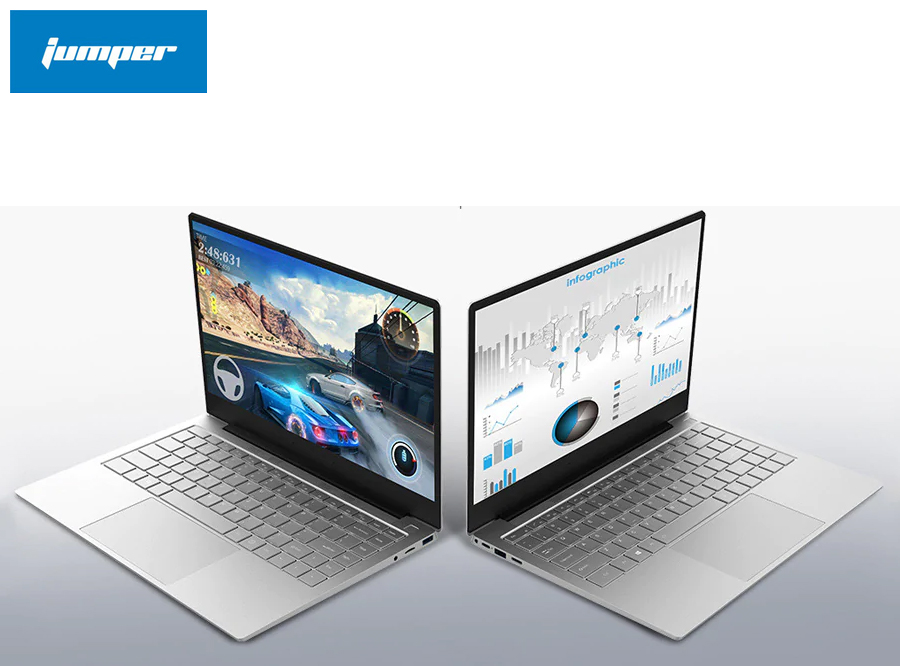
There’s no dearth of top-end laptops and notebooks in the market today; however, these devices aren’t necessarily easy on the pocketbook. In fact, the Jumper EZBook X4 Pro notebook would normally set you back $629.77 on both online as well as offline stores.

As part of its recently kicked-off promotion, Jumper is giving its loyal fanbase a chance to get their tech greedy hands on the EZBook X4 Pro notebook for a heavily discounted price of just $419.99. This is a significant 33 percent drop in the device’s original asking price.

With 299 pieces remaining, this promo will come to an end in only five days. Note that the discount will be available for the silver color version of the EZBook X4 Pro notebook.
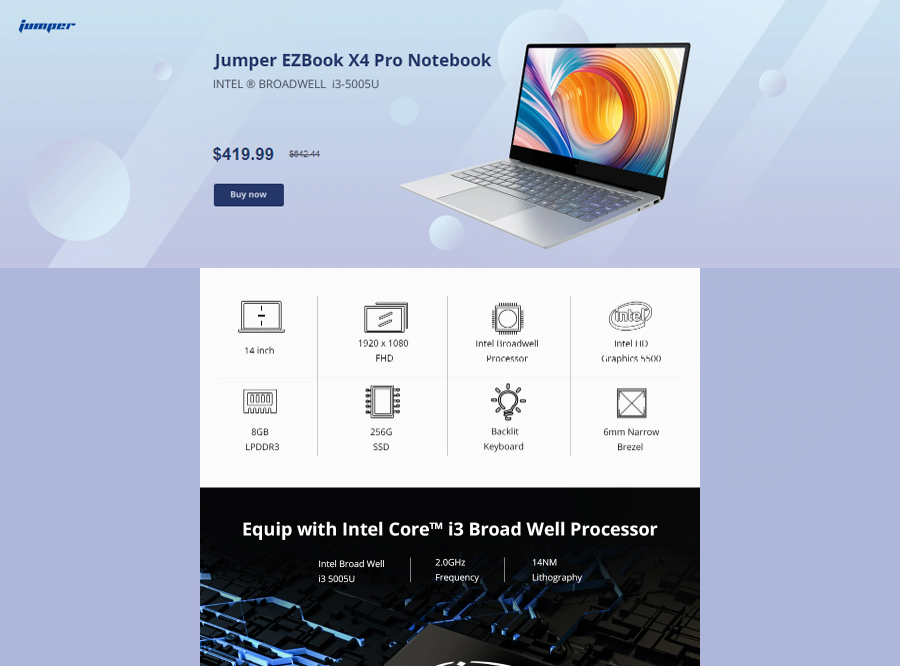
Alternatively, you can head straight to the ‘Jumper Laptops’ category on the promotion page to check out a slew of other equally coveted laptops that you can buy without breaking the bank. For instance, the Jumper EZBOOK 3 PRO Notebook, which usually retails for $330.24 can be yours for a lowered price of only $239.99.

In addition to receiving this 27 percent discount, Gearbest users are eligible for getting a free gift with this order. Those ordering the EZBOOK 3 Pro will get a $2.57 worth Multi-languages Silicone Keyboard Protective Film for the notebook absolutely free.

Moreover, you can buy a slew of other accessories from the ‘Accessories’ section. The category is cramped with all sorts of accessories for Jumper-branded laptops, notebooks, tablets, etc. You can click here to visit the promotion page and check out the rest of the products.

Get 33%
Off on Jumper EZBook X4 Pro Notebook

Redmi K20, K20 Pro 3C certified; Supports up to 27W rapid charging [Update]

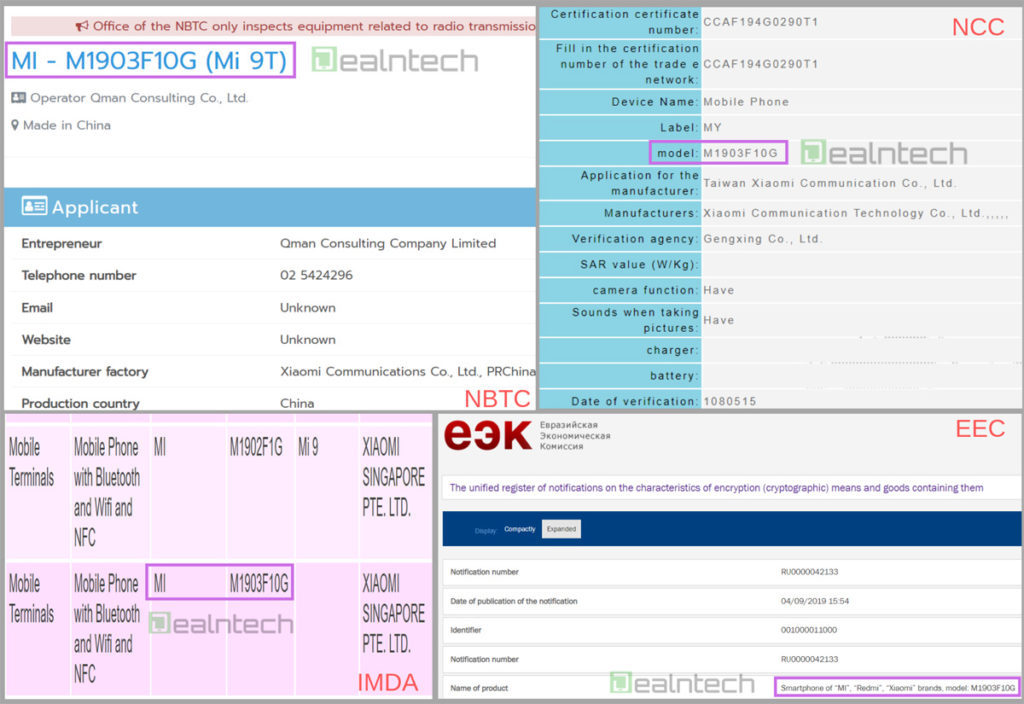
Update: The M1903F10G model number has been recently approved by multiple bodies such as NBTC in Thailand, NCC in Taiwan, IMDA in Singapore and EEC in Russia. The NBTC certification has revealed that the M1903F10G will be releasing in these markets as Xiaomi Mi 9T. There is possibility that the M1903F10A/T/C may launch in China as Redmi K20 and it may debut outside of the home market as Xiaomi Mi 9T.

Original Story continues…

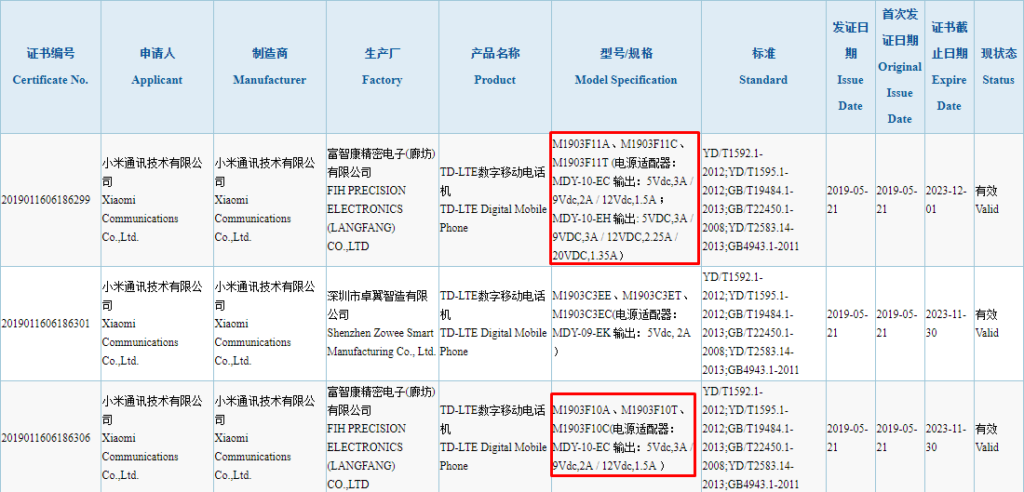
Three new Redmi phones have been certified by the 3C authority of China. The model numbers of the these phones suggest that they are the upcoming Redmi K20, Redmi K20 Pro and Redmi 7A smartphones that will be made official soon. The 3C certification of Redmi K20 has revealed that it will carry support for 18W rapid charging. On the other side, the Redmi K20 Pro may offer up to 27W fast charging.

Popular tipster Ishan Agarwal who is known for his accurate leaks had claimed in the recent past that M1903F10 and M1903F11 model numbers belong to the upcoming Redmi flagship phones. The same models have been approved by the China’s 3C body.

The M1903F11A, M1903F11T and M1903F11C shown in the below image reportedly belongs to the Redmi K20 Pro handset. The 3C listing shows that the handset could be shipped with MDY-10-EH charger that supports 27W rapid charging. The Xiaomi Mi 9 that carries support for 27W fast charging is also shipped with the same charger.

The M1903C3EE, M1903C3ET and M1903C3EC model numbers that can be seen below Redmi K20 Pro belongs to the entry-level Redmi 7A that is yet to go official. The entire specifications of the Redmi 7A are known since it has already appeared on TENAA. It is speculated that the Redmi K20 is listed below Redmi 7A on 3C. The handset is mentioned with its M1903F10A, M1903F10T and M1903F10C model numbers. The Redmi K20’s retail box may include MDY-10-EC charger that is equipped with support for 18W fast charging.

Redmi K20, Redmi K20 Pro, Redmi 7A 3C Certified

The support for different charging rates suggests that Redmi K20 and K20 Pro could be powered by different chipsets. Rumors have it that the Redmi K20 could be fueled by the Snapdragon 730 mobile platform whereas the Redmi K20 Pro may arrive with Snapdragon 855 onboard.

The Redmi K20 and K20 Pro handsets are expected to arrive with notch-less displays and pop-up selfie snappers. Ahead of the May 28 launch date, Redmi has been busy confirming features of the Redmi K20 and K20 Pro smartphones. Earlier today, it confirmed that the Redmi K20 will be arriving with seventh generation in-display fingerprint scanner. The company recently revealed that the camera setup of the Redmi K20 will include Sony IMX586 48-megapixel sensor and it will carry support for 960fps slow-motion video shooting. Also, it will be packed with a 4,000mAh battery. These features are also expected to be available on the Redmi K20 Pro smartphone.

A recent report had claimed that the Redmi K20 and K20 Pro will be available in variants such as 6 GB RAM + 64 GB storage, 6 GB RAM + 128 GB storage, 8 GB RAM + 128 GB storage and 8 GB RAM + 256 GB storage and color options like Carbon Fiber, Blue, and Red. It is speculated that the Redmi K20 Pro may debut as Poco F2 outside of China.

HMD Global discounts Nokia 8.1 by INR 6000 in India for Fan Festival

HMD Global is running a fan festival in India and select Nokia models have been discounted, with price cuts reaching up to INR 6000 (~$86). The fan festival began yesterday and will end on May 24.

Nokia Fan Festival Nokia 8.1

The Nokia 8.1 is the device that has received the biggest discount of all. If you are purchasing the 4GB RAM version, you get INR 6,000 off if you use the promo code “FAN6000” at checkout. That brings the price from INR 26,999 (~$386) to INR 20,999 (~$300). If you decide to purchase the 6GB RAM version which is originally priced at INR 29,999 (~$429), the promo code “FAN4000” will bring the price down to INR 25,999 (~$371).

Even though it is for a limited period, we are not surprised at the massive price cut. With phones like the Realme 3 Pro which is powered by the same Snapdragon 710 SoC as the Nokia 8.1, has a bigger battery, and starts at INR 13,999 (~$200) for the 4GB RAM version; HMD Global has no choice but to announce a price cut.

The Nokia 7.1, Nokia 6.1 Plus, and Nokia 8 Sirocco also get a discount of INR 1000 of their respective prices when you use the promo code “FANFESTIVAL” at checkout. The discount is far from that of the Nokia 8.1 but it is better than nothing.

READ MORE: Nokia 4.2 now officially on sale in India for INR10,990 ($158)

OPPO Reno and Reno 10x Zoom launching in the UK in June, starts at £449

The OPPO Reno and Reno 10x Zoom are already on sale in China. Both phones are also expected to launch in India on May 28, and now pricing and release details have surfaced for the UK too.

According to a Tweet by the official OPPO global account, the OPPO Reno 10x Zoom has been launched in the UK. However, it isn’t yet on sale. The phone will actually be available in early June alongside the regular OPPO Reno.

The OPPO Reno will be priced at £449 and be available for purchase on June 5 while the Reno 10x Zoom will be available for purchase on June 12 at £699. Both phones will most likely be available via Carphone Warehouse.

The Reno has a 6.4-inch 2340 x1080 display that covers virtually the whole front. There are almost no bezels and it doesn’t have a notch or a punch hole. It has a pop-up selfie camera styled like a shark-fin. The camera in the pop-up module is a 16MP sensor. On the back, it has a 48MP + 5MP dual camera combo. The OPPO Reno is powered by the Snapdragon 710 and paired with 6GB/8GB of RAM and 128/256GB of storage. It also has a 3765mAh battery with support for VOOC 3.0 fast charging.

READ MORE: OPPO A9x unveiled with 6.53-inch FHD+ display, 48MP camera and VOOC 3.0 fast charging

Honor 20 Lite pricing for the European market officially announced

With the impending US ban set to take its toll on Huawei‘s usage of Google’s Android services, the company today announced the flagship Honor 20 and Honor 20 Pro as scheduled. The pricing details of the Honor 20 Lite was also announced today. The Honor 20 Lite was earlier listed on Honor’s Russia website as Honor 10i but the pricing wasn’t revealed. The device will be available in Europe for €300. While in the United Kingdom, the phone adopts a £250 price tag and will be available at Carphone Warehouse, Amazon, Argos, John Lewis and Very. honor 20 Lite

The Honor is a mid-range model with trimmed down specs from the Honor 20. In terms of specs, it features a 6.21-inch 2340 x 1080 pixels waterdrop notch display with a 19.5:9 aspect ratio. There is also GPU Turbo 2.0 for improved gaming performance. Its screen is also certified as safe by TUV Rheinland. The phone is powered by the Hisilicon Kirin 710 chipset paired with 4GB of RAM and 128GB of expandable storage (512GB max.).

On the camera aspect, the Honor 20 Lite features a 32MP selfie camera that is housed inside the notch. The selfie camera has lots of face-adjustment features so your portrait selfies can turn out great. On the back of the phone lies the triple camera sensors – a 24MP f/1.8 primary camera, an 8MP f/2.4 ultra-wide angle secondary sensor, and a 2MP f/2.4 depth sensor.  The phone runs EMUI 9 based on Android 9 and even though Google is pulling the plugs on updates for future Huawei phones, the company says it will continue pushing its own updates. The phone also comes with NFC, dual-SIM support (nano only), dual-SIM VoLTE, and NFC. There is a fingerprint scanner on the back and it also has support for Face Unlock. The device is powered by a 3,400mAh battery.

Read Also: Huawei P Smart Z vs Huawei P30 Lite vs Honor 20 Lite: Specs Comparison

The phone is no doubt a premium and affordable one at that price but most buyers would likely be sceptical about sticking their money on a Huawei or Honor model at the moment.

(source)

Google silently removes Huawei Mate 20 Pro from Android Q Beta page

Amidst the current controversy between Huawei, Google, and the US, the Huawei Mate 20 Pro has been removed from the Android Q Beta page. For the time being, it’s unclear whether Google removed the device from the extensive roster before or after Huawei was granted a temporary license allowing it to continue doing business with key US partners and suppliers for a period of three months.

This latest Google move further adds to the uncertainty regarding major future updates for Huawei devices. It’s become increasingly likely that the Mate 30 and Mate 30 Pro will come in the fall with some sort of a homebrewed OS pre-installed. Huawei is especially adamant that their own OS will have Android app support, in a similar vein to Tizen and Sailfish OS.


Despite all this, the Huawei Mate 20 Pro developer page for the update is still up and running, and Google claims services like Google Play will continue to work on Huawei’s devices. This could simply be because Huawei has their priorities elsewhere, though we hope the company achieves some sort of workaround for this.

The more we hear from Huawei, the more optimistic we feel about their future. A recent report had claimed that in preparations to trade war uncertainties, Huawei has already stockpiled crucial components for up to 12 months. Add to that the upcoming Huawei OS, and we’re left with one of the most oddly exciting years in technology so far.

(Via)

Samsung announces ultra-slim 5X Optical zoom camera module

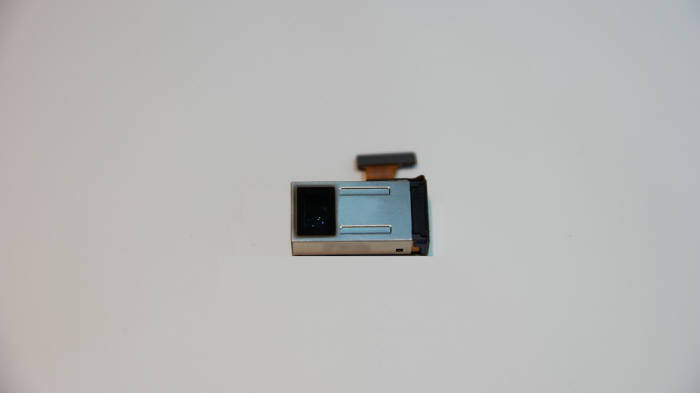
Samsung Electro-Mechanics commenced its sojourn in the camera module market in 2003 and since then, the division has been developing camera modules for dual (OIS) cameras. The company has now announced that it has developed a flat, ultra-slim camera module capable of delivering 5x optical zoom. The device is even ready to meet with us as mass production will reportedly commence this month.

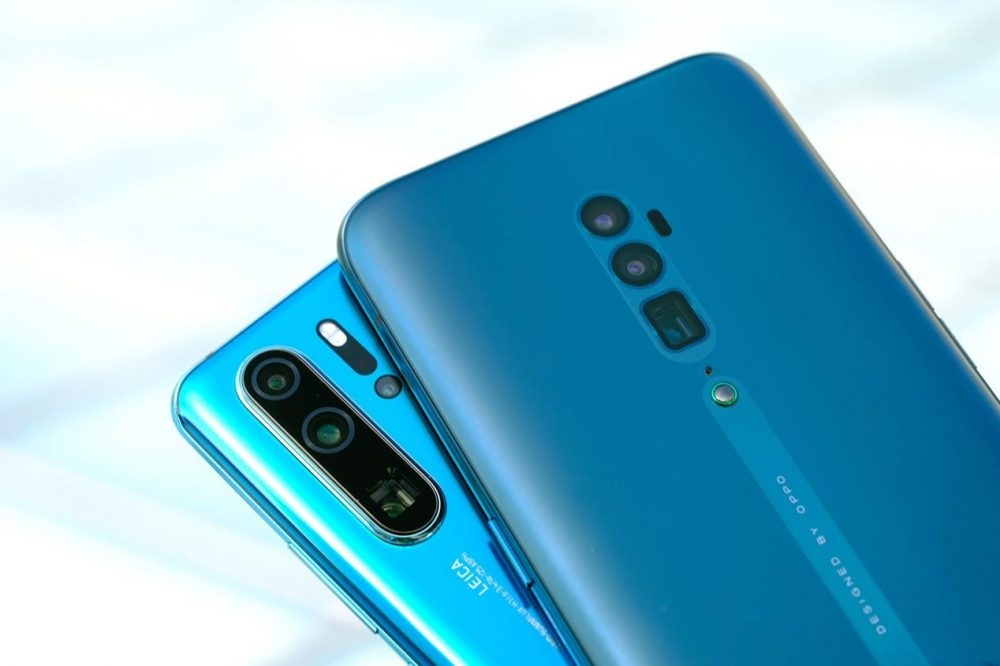
Since OPPO released the Reno smartphone with 10X hybrid zoom capability, the feature seems to be gaining ground. Huawei included a 5x optical zoom-capable camera sensor on the P30 Pro. It is common to get 2x optical zoom with a telephoto lens as found on most smartphones but ramping up the zoom to 5x requires some bit of engineering and that isn’t something to challenge Samsung. We must add, though, that Samsung recently acquired Corephotonics, the same company that worked with Oppo on optical zoom lenses. This may have played a role in the swiftness with which the technology is entering mass production.

OPPO Reno vs Huawei P30 Pro-1
OPPO Reno vs Huawei P30 Pro

Talking about the features, the module is barely 5mm thick, giving it a thinner build than most of the 2x zoom lenses that are in the market presently. The technology is no different from those of OPPO or Huawei. It still involves the use of a periscope design housing several mirrors that are used to reflect light sideways to keep things slim.

Read Also: Samsung brings One UI to its smartwatches

Samsung may likely be selling the camera module to other OEMs in the near future but may want to use it on its model first. Thus, the Galaxy Note 10 or any of the mid-range Galaxy series could launch bearing the 5x optical zoom periscope lens.

(source)

Huawei’s own OS is coming in Fall, features Android app compatibility

Google cutting off its Android relationship with Huawei in response to a US government ban on the Chinese giant wasn’t much of a surprise to Huawei. Speaking to Chinese state media on Tuesday, Ren Zhengfei said there would be “conflict with the United States sooner or later” as Huawei seeks to grow its dominance in the global telecom industry.

Although many simply assumed Huawei would switch over to using AOSP, it looks like Huawei has different plans. According to a report by Chinese publication Caijing, Richard Yu, the CEO of Huawei Consumer Business Group, has revealed details about Huawei’s upcoming OS. It will apparently be available later this Fall or early next year on phones, computers, tablets, TVs, cars, and wearables.

The OS will be compatible with all Android apps and they can also be recompiled to improve performance, like ChromeOS. Samsung has also done something similar in the past with Tizen, but this is different in the sense Huawei’s looking to completely replace Android, unlike Samsung. On top of that, rumors claim Huawei is also working closely with Google to achieve some sort of workaround.

With Huawei’s massive and still growing popularity (possibly assisted by the said ban), it’s clear they need to recoup fast. Thankfully, it seems like they’ve got plenty of backup plans in store already. We’re eager to see how Huawei’s own OS turns out in comparison to Android, as well as how it performs in real life.

(Source|Via)

Honor 20 Pro and Honor 20 launch with focus on photography, starts at €499

Today, at an event in London, Honor unveiled its latest smartphones – the Honor 20 and the Honor 20 Pro. Both phones bring a stunning new design, a focus on photography, and a competitive price tag.

Honor 20 and Honor 20 Pro Design

The Honor 20 series have a punch hole display like that of the Honor View 20. It is a 6.26-inch All-View Display with a hole that houses a 32MP camera in both phones.

Honor 20 Pro screen

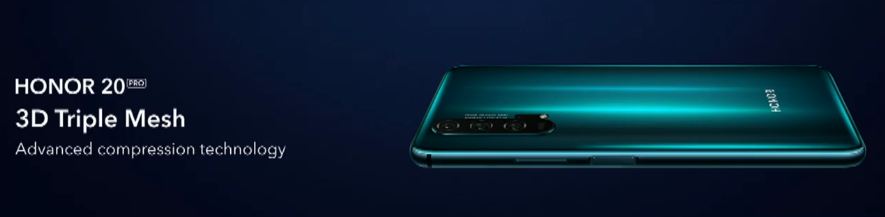
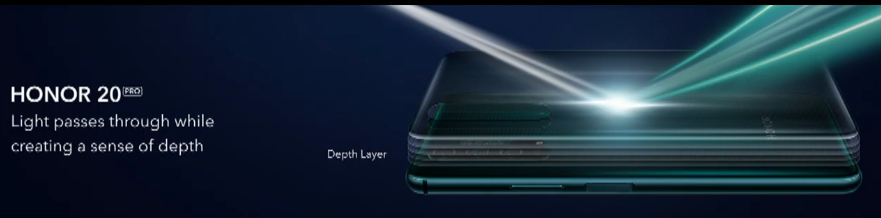
The back of the phone is covered in glass with three layers. There is the main glass layer at the top, a color layer in the middle and a depth layer at the bottom. The depth layer is said to create a sense of depth when light passes through. Honor says it was able to combine the three layers to form a 3D Triple Mesh using what it calls Advanced compression technology. The design is completed with a four-sided 3D curved glass.

Honor 20 Pro Moschino Edition

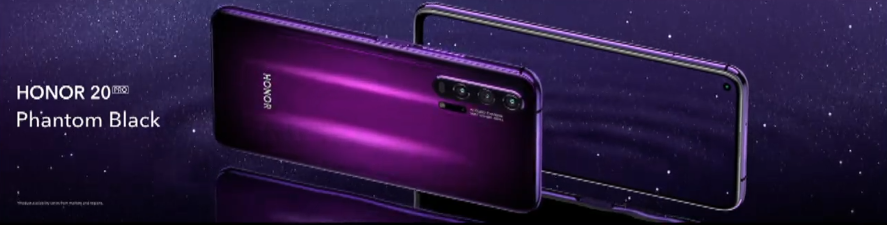
The Honor 20 Pro comes in Phantom Black (a mix of purple and black) and Phantom Blue (mix of blue and green). The Honor 20 will be available in Sapphire Blue, Midnight Black, and Icelandic White. The Pro model also has a black Moschino special edition.


Honor 20 Pro and Honor 20 Cameras

Let’s take a look at the camera specs which is the main selling point before diving into the rest of the specs.

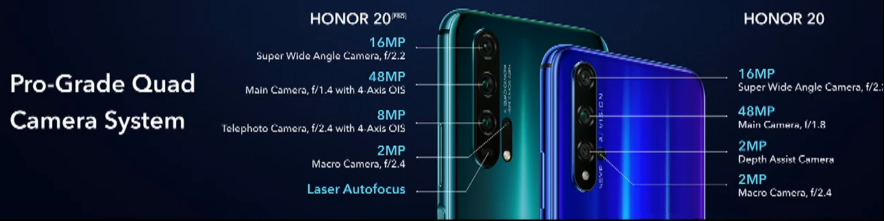
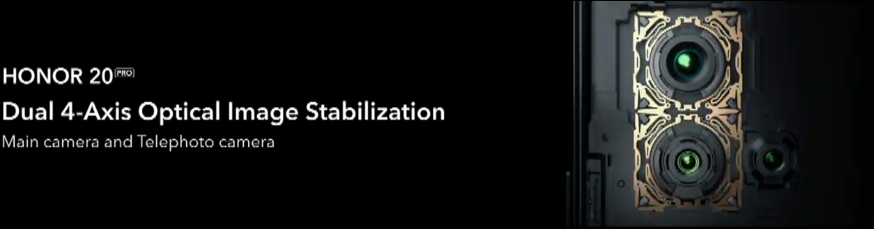
The Honor 20 Pro has a quad-camera setup. A 16MP f/2.2 super-wide angle camera, a 48MP Sony IMX586 camera with an f/1.4 aperture – the largest on a mobile phone, an 8MP f/2.4 Telephoto camera and a 2MP f/2.4 Macro camera. Both the 48MP primary sensor and 8MP telephoto lens have 4-axis OIS. There is also a laser autofocus module for superfast focusing.

Honor 20 series cameras

The IMX 586 camera has a 1/2-inch CMOS sensor which is 25% larger than that of the iPhone Xs Max and Galaxy S10+. Combined with its large f/1.4 aperture and 204800 ISO sensitivity, the result is stunning photographs.

The Honor 20 Pro has a 16MP ultra-wide angle camera with a 117° FOV. It also works with AIS Super Night Mode for super-wide angle low-light images. The telephoto camera, on the other hand, provides a 3x optical zoom which lets you get closer to your object without losing details. The Honor 20 Pro also supports up to 30x digital zoom!

Other features include 4cm Macro photography, AIS Super Night Mode for high-quality low-light photos, 48MP ultra-clarity mode for high-quality daytime photos, and a handheld moon shot mode.

Honor 20 Pro DxOMark
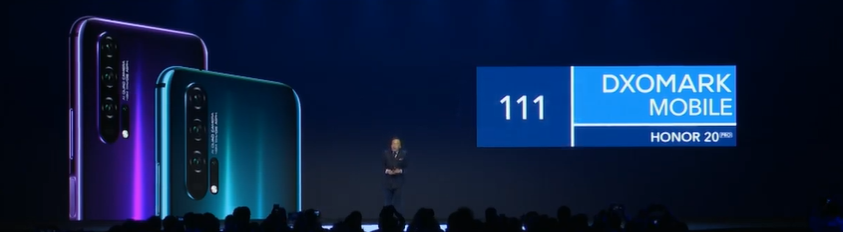
The Honor 20 Pro has a DxOMark score of 111, tying with the OnePlus 7 Pro.

The standard Honor 20 also has a quad-camera setup which includes the same 16MP f/2.2 Super-wide angle camera, a 48MP primary camera but with an f/1.8 aperture, a 2MP depth assist camera, and a 2MP f/2.4 Macro camera.


Specs

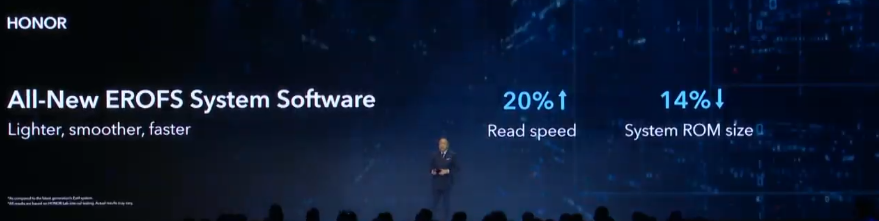
Both phones are powered by the Kirin 980. The Honor 20 Pro has 8GB of LPDDR4X RAM and 256GB of UFS 2.1 storage while the Honor 20 has 6GB of RAM and 128GB of storage. They use the new EROFS system software which increases read speed by 20% and reduces System ROM size by 14%.

Honor 20 Pro EROFS

The Honor 20 Pro and Honor 20 don’t have an AMOLED display, so there is no in-display fingerprint scanner. Rather than go with a rear-mounted design, the fingerprint scanner is on the side where it doubles as the power button.

The Honor 20 Pro has a 4000mAh battery while the Honor 20 has a 3750mAh battery. Both support 22.5W SuperCharge fast charging which allows you to get up to 50% battery in half an hour. The Pro version has a new Graphene cooling sheet technology with a 27% increase in heat dissipation efficiency. There is also GPU Turbo 3.0 for 60fps gaming on both devices. The Honor 20 series will also get an exclusive Fortnite Wonder Outfit.

Honor 20 Pro Wonder Outfit Fortnite

Honor 20 pro surround sound

The two phones don’t have an audio jack but they come with a 9.1 surround sound feature that is said to work with most headphones and earphones. Both phones run a new version of Magic UI out of the box with 43% faster tap response and a 57% improvement in UI operation.

READ MORE: Honor KSA-AL00/KSA-TL00 TENAA listings hint at Honor 8S’ China launch

Check out the Luxury 24K Gold-plated Xiaomi Mi 9 Limited Edition with love from Sweden

Since the release of the Mi 9 flagship in February this year, the device has risen to become a popular model. The premium smartphone has courted lots of attention from fans in Europe, in addition to China and elsewhere. Xiaomi has released the model in several Europe countries, including Sweden. A Swedish tech company known as Golden Concept has produced a limited edition 24K Gold plated customized design just for the Mi 9 users!

The company is known for manufacturing customized iPhone accessories with luxurious materials such as premium leather and precious stones. The firm’s gold plated iPhone cases are reported to sell for as high as $40,000 USD. There are still buyers for these luxury-designed phones such as sports stars and celebrities who won’t find it difficult shelling out such huge sums to customize their iPhones.

Read Also: Unannounced Xiaomi Mi 9T (model number: M1903F10G) receives certification in Thailand

While designing gold-plated cases for iPhones isn’t strange, a 24K gold-plated Mi 9 case is very uncommon. The gesture could be an indication of the increase in popularity of the Mi brand in Europe. We won’t be surprised if someone out there snags up the luxurious phone soon. The Mi 9 customization sees the back panel gets replaced with a gold-plated case, with a dragon engraved on the panel. We don’t have the release itinerary for the custom model.

(source)Xiaomi Mi 9

Xiaomi reports 27% revenue growth in Q1 2019

China-based Xiaomi has today shared the financial report for the first quarter of 2019 and reported adjusted net profit growth by 22.4 percent year-over-year compared to 2.1 billion yuan (approximately $300 million).

It also reported that its total revenue climbed 27.2 percent to 43.8 billion yuan (approximately $6.33 billion). The biggest source of revenue for the company continues to be the smartphone business.

Xiaomi Logo

Xiaomi is currently dominating the smartphone market in India and is also doing well in a few other countries outside of its home market China. International markets generated over 38 percent of its total revenue over the first quarter, representing a 35 percent increase. Xiaomi’s overseas momentum came amid a global slowdown in the sector.

As per the report from Canalys, Xiaomi was the world’s fourth-largest smartphone maker by units shipped in the first quarter. Further, the company’s “IoT and lifestyle” unit, which has a wide range of home appliances saw its share of revenue jump from 22.4 percent to 27.5 percent year-over-year.

The company says that the growth of this segment was primarily driven by smart TV sales, a new area of focus for the company. In January, Xiaomi had announced taking a 0.48% stake in TV manufacturer TCL. This deepens an existing alliance under which Xiaomi’s operating system was integrated into TCL products.

Till March-end, the company reported that it owned 261 million monthly active users through its MIUI operating system installed across all devices, which represent a 37.3 percent growth YoY. The number of IoT devices, excluding smartphones and laptops, have jumped 70 percent to reach approximately 171.0 million units.

Read More: Unannounced Xiaomi Mi 9T (model number: M1903F10G) receives certification in Thailand

Xiaomi is working very hard to grow its software and internet services segment but the strategy so far hasn’t been much effective as it accounted for 9.7 percent of the company’s total revenue, compared to 9.1 percent a year before. The company has said that it won’t make more than 5 percent profit from the hardware business, so it makes sense for Xiaomi to focus more on software and internet services.

Upcoming India-specific OxygenOS features for OnePlus 6 and OnePlus 6T revealed


Szymon Kopec, more popularly known as the Product Lead at OnePlus, has revealed a bunch of new features coming soon to Indian OnePlus 6 and OnePlus 6T devices. While new features being added through software updates is nothing new, this case is slightly different. These features were all developed in-house at OnePlus’ R&D center in Hyderabad, and are tailor-crafted for the Indian market.

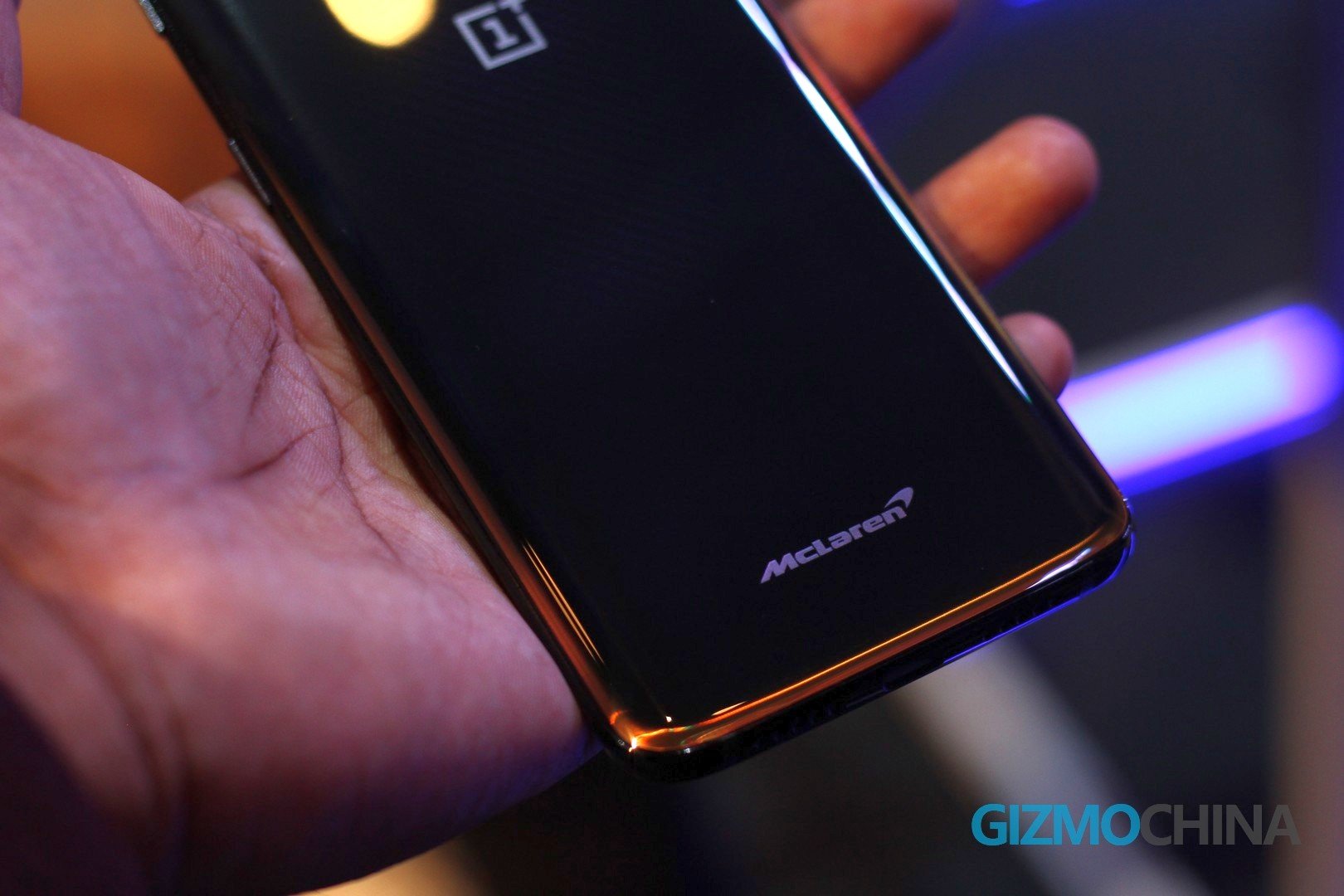
OnePlus 6T McLaren Edition Hands On (15)

The new features are Work-life Balance, a Smart SMS app, Caller Identification, OnePlus Roaming, and Cricket Scores. These names thankfully aren’t finalized and are subject to change before launch. The India-specific features will be rolling out to OnePlus 6 and 6T devices in the Open Beta build of OxygenOS at the end of June.

Caller Identification

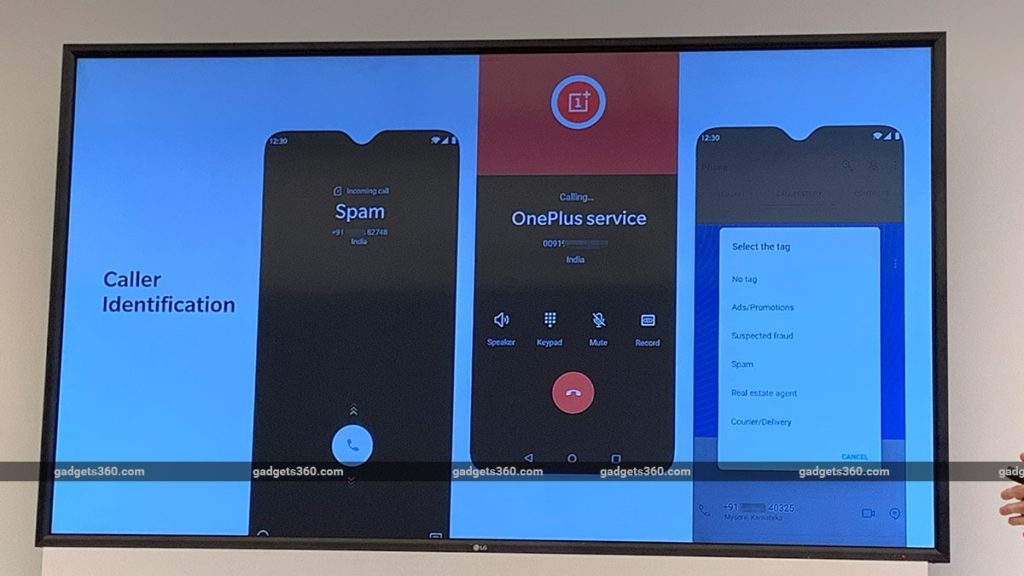
First up, we’ve got Caller Identification. This feature will be rolled into the dialer, and it will help the user to identify unknown callers before picking up. The feature smartly recognizes and labels both spam and legitimate business calls as you’d expect. On top of this, it also allows the user to tag unknown numbers as Spam, Real Estate Agent, Courier/Deliver, etc themselves.


Smart SMS

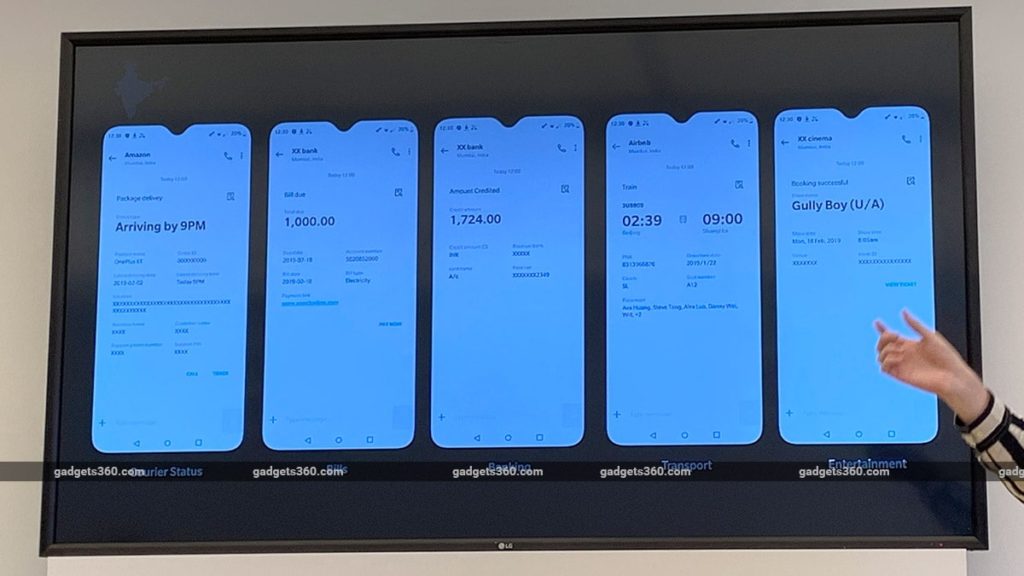
Next, we have the Smart SMS app. How we understand it, the app will identify different types of service SMSes, be it bills, banking, transport, etc. It will then categorize them and display the relevant information accordingly. For example, an SMS from a courier will have the ETA for the arrival and contextual buttons to track your package. OnePlus claims the app can identify 39 different types of service messages, impressive!


Work-life Balance

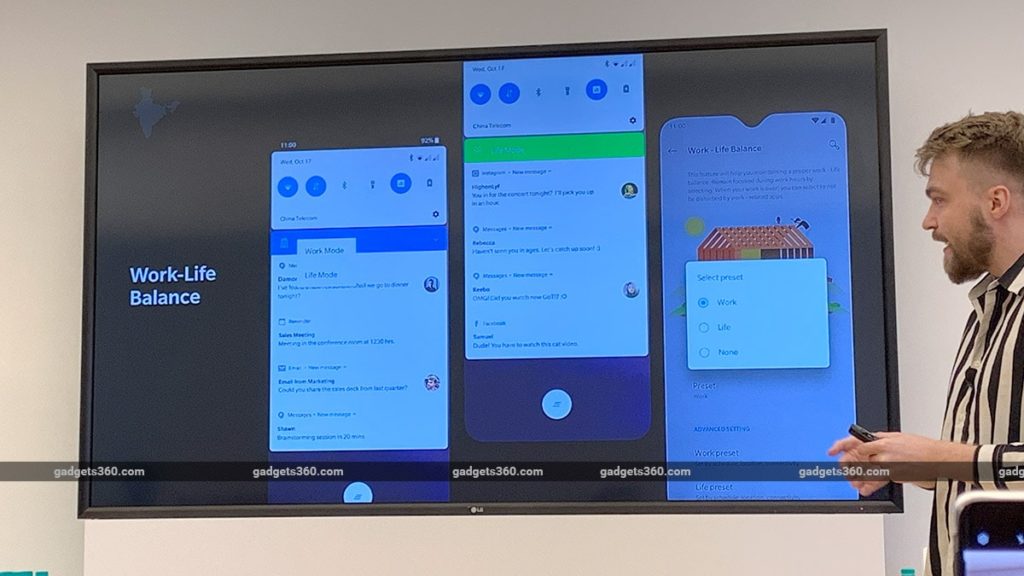
Perhaps the most interesting feature in the lineup, Work-life Balance is essentially a time and lifestyle management app. It lets you record when you go to and leave from work, and accordingly lets you choose what notifications you see both the times. You can block social media notifications at work, and hide work emails at home. You can categorize apps under ‘Work’ and ‘Life’, and see how much time you’ve spent on both via a bar chart.


OnePlus Roaming

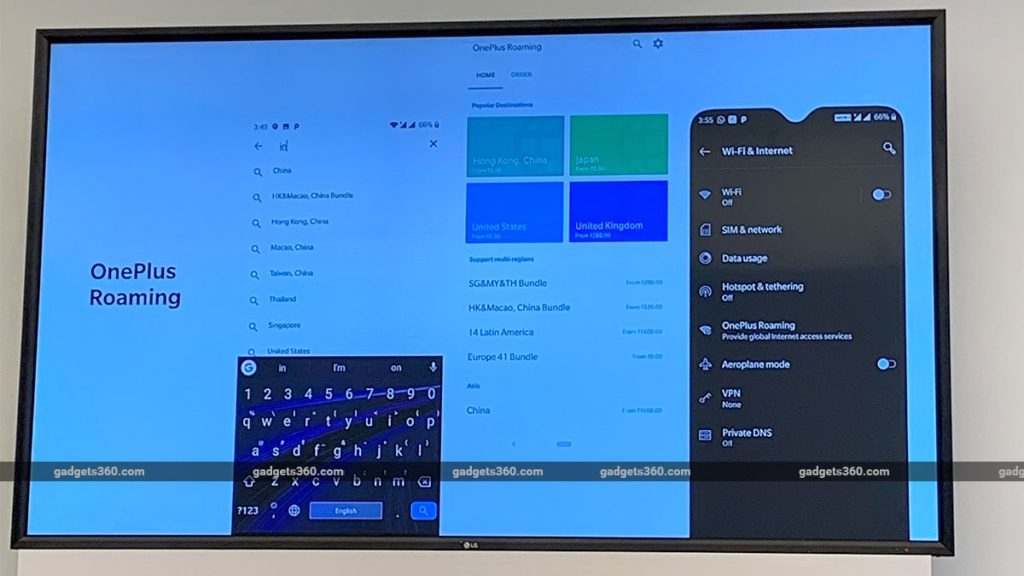
OnePlus Roaming, on the other hand, seems decidedly simple. It’s similar to Oppo‘s ORoaming which offers you affordable data packs when you travel overseas. You get to keep your own SIM card and save money from buying a brand new one. This feature will be baked right into the settings under the ‘Wi-Fi & Internet’ options.


Cricket Scores

Last, of all, we’ve got Cricket Scores which is pretty self-explanatory. Working with ESPNCricinfo, your OnePlus device will showcase current big cricket matches, as well as provide live score updates for them. Cricket Scores will be accessible straight from the Shelf, which is the OnePlus equivalent of the Google Now screen.

We haven’t been given a solid release date for these features, though we know we’re going to see them in the Open Beta builds of OxygenOS in June. We can expect to see these features roll out to the OnePlus 7 Pro soon enough as well, though the OnePlus 6 and 6T take higher priority for now. We’re looking forward to seeing how the features work, as well as what else OnePlus has in store.


(Source)

Android Q Beta 3 is out for OnePlus 7 and OnePlus 7 Pro

Google unveiled Android Q Beta 3 at the Google I/O 2019 developer conference. It was confirmed that the OnePlus 7 series would support the latest beta build after launch. Just like OnePlus said, now it has shared the latest Android Q beta for both the OnePlus 7 and OnePlus 7 Pro devices. The interested users can follow the published guide to install it on the latest OnePlus flagship device.

The Android Q Beta 3 update carries various advancements and support for new APIs. Unfortunately, it is not recommended for everyday use as it is riddled with multiple bugs. The Beta 3 build is meant for developers and early adopters. Features like Ambient display, navigation gesture, recovery mode are not working as of now. Users won’t be able to use SMS service when VoLTE is active. There are many other issues related to system stability and apps which will cause inconvenience for daily users.

We have released Android Q Developer preview for OnePlus 6 and 6T right after Google I/O, and now we are super excited to offer OnePlus 7 Series users an early glimpse at the future of Android.

As the name suggests, this build of Android Q is best suited for developers and early adopters. As it is still in an early stage of development, we do not recommend flashing this ROM if you have little or no experience in software development or flashing custom ROMs. Proceed at your own risk!

Users are advised to backup data before installing Android Q Beta update on OnePlus 7/7 Pro. The upgrade from stable to developer build will erase all important content from the device.

Related: OnePlus 7 Pro receiving its first update with DC Dimming and other optimizations

OnePlus recommends ensuring above 30% battery level and 3GB of minimum space for successful Android Q Beta installation on both the devices. We recommend you to follow detailed steps (from the source below) if you aren’t familiar with flashing a ROM.

Android Q Beta 3 is penultimate increment before the release of final APIs and official SDK with Beta 4.

(source)


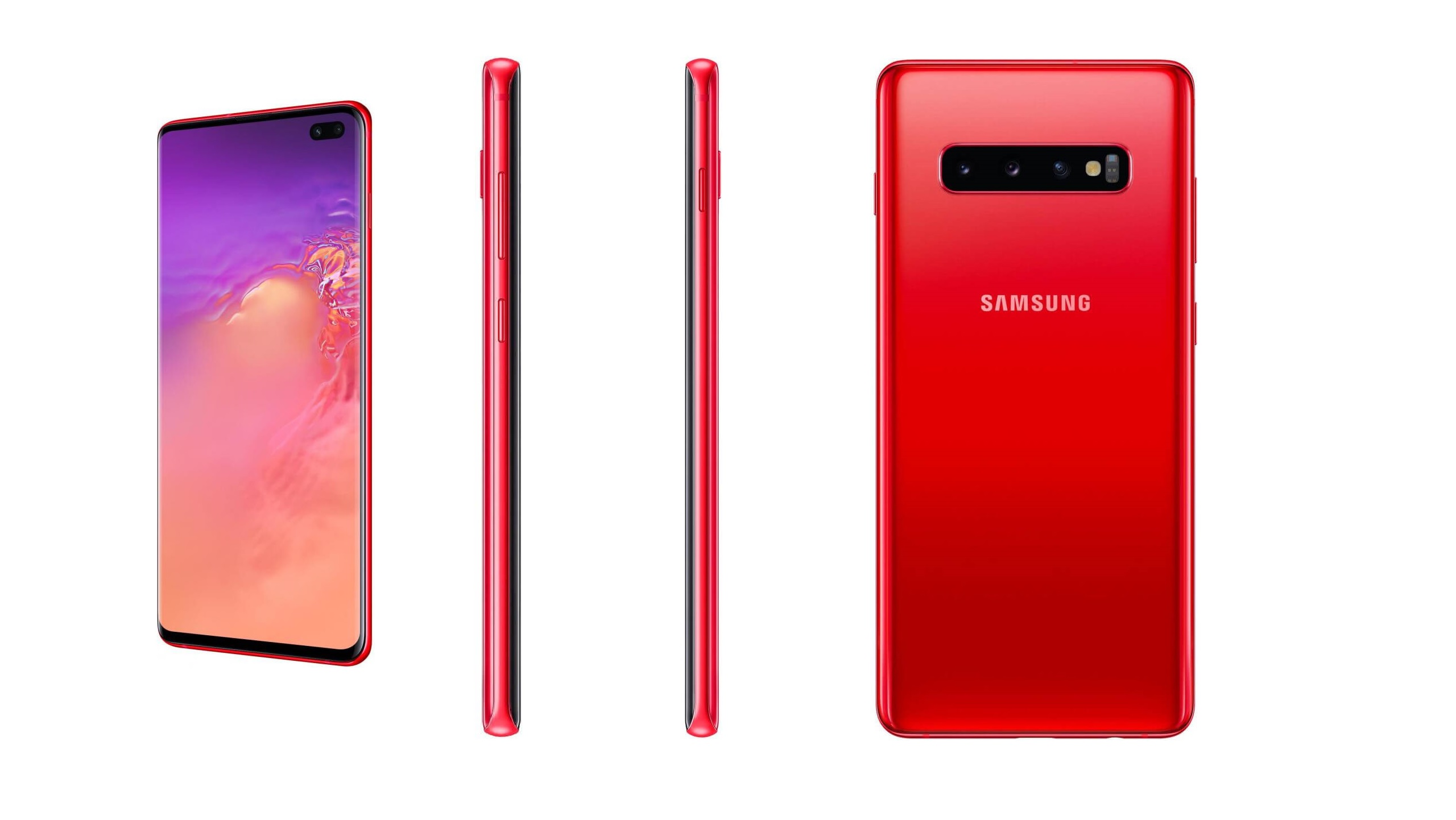
Samsung Galaxy S10 and S10+ to come in new Cardinal Red variant

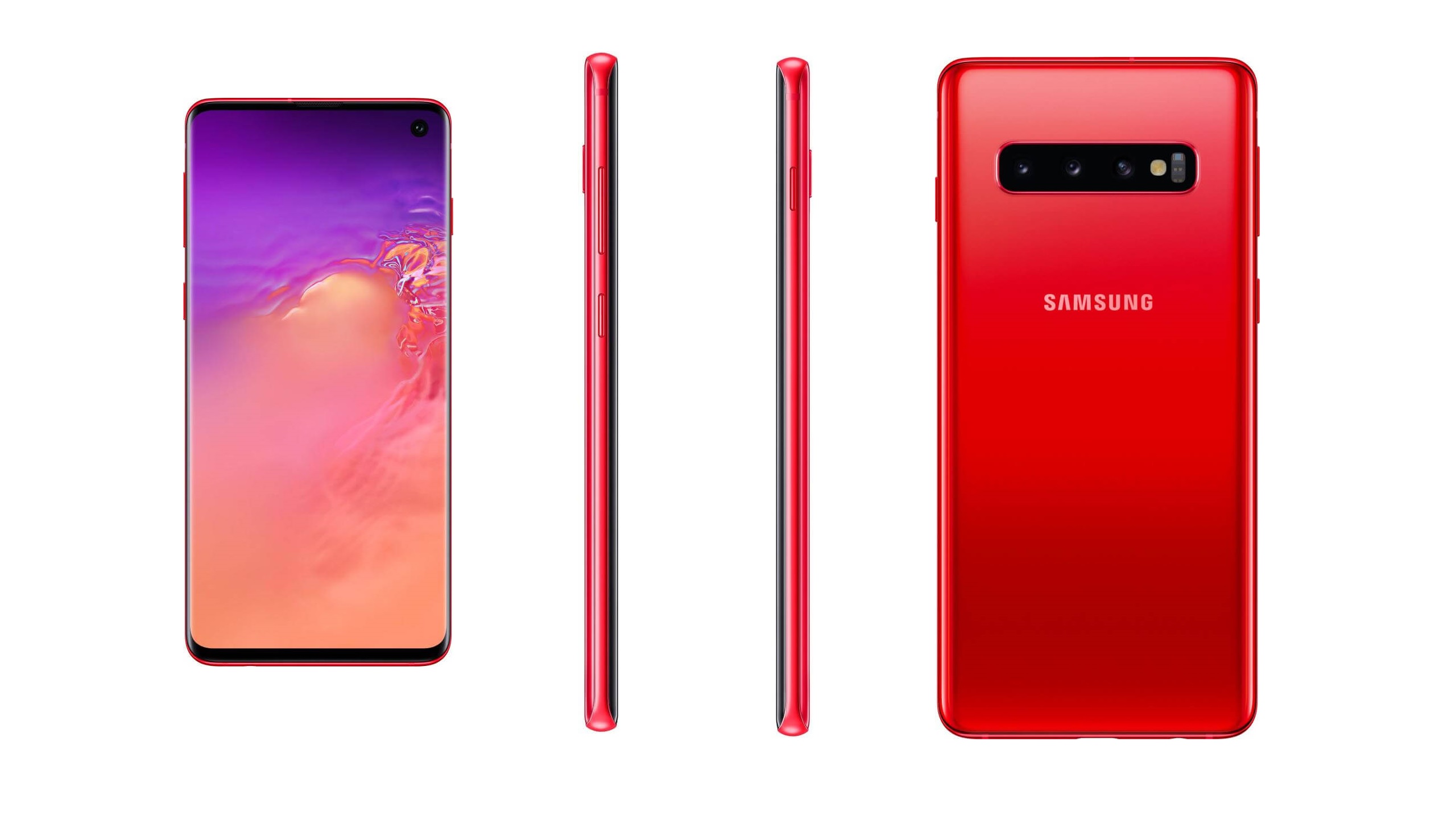
The Samsung Galaxy S10 and Galaxy S10+ come in a variety of colors from white to blue to black to green and even pink. The Galaxy S10e even comes in a bright Canary Yellow. A new report says the S10 and S10+ will get a new Cardinal Red color variant.

The info was revealed by Roland Quandt on Twitter (@rquandt) along with press renders of the new color variant. Actually, this is not the first time we have heard of a red Galaxy S10. Back in February before the phone launched, there was a leaked render of a red Galaxy S10 called Cinnabar Red. Unfortunately, it wasn’t announced alongside the other color variants.

Galaxy S10 cardinal red main

This color variant is quite different from the Burgundy Red of the Galaxy S9/S9+. It is significantly brighter but there is a chance it might appear a little different in real life.

Other than the red paint job, there should be no difference between this color variant and the others. However, there is a possibility availability might be limited to certain markets.

Galaxy S10+ Cardinal Red main

Announcing a new color variant of its flagships is now a tradition Samsung has adopted for a while now. It is a smart marketing move and a sort of way to reinvigorate interest in the phones.

READ MORE: Samsung Galaxy M40 price in India could be around Rs. 25,000

Vivo Z5x reservations begin; Official images and four variants confirmed

The Vivo Z5x smartphone is scheduled to go official on May 24. Few live shots of the phone that have appeared recently have revealed that it will be company’s first phone with punch-hole display. It was recently spotted on Geekbench some key specs. Starting from today, the Chinese manufacturer is receiving the reservations of the smartphone. The Jingdong Mall listing of the Vivo Z5x contains the official renders of the phone. The listing has also confirmed that it will be arriving in four variants.

The Vivo Z5x images reveal that its display will be equipped with a small hole for the front-facing camera at the top-left corner. The display is surrounded by super-slim bezels.

The rear shell of the phone feature a vertical triple camera setup along with an LED flash. A fingerprint scanner is also available on the rear shell of the device. The left edge of the phone features a key for accessing the Jovi AI assistant. The volume rocker and power key are available on the right side of the phone. The JD listing of the smartphone reveals that it will be releasing in Extreme Night Black and Phantom Black color options.

The $9999 Yuan pricing for the Vivo Z5x on the JD listing is only a placeholder. There is no information on the actual pricing of the phone. The smartphone will be releasing in four models in China such as 4 GB RAM + 64 GB storage, 6 GB RAM + 64 GB storage, 6 GB RAM + 128 GB storage and 8 GB RAM + 128 Gb storage.

Previous reports have revealed that the Vivo Z5x will be arriving with a 6.53-inch IPS LCD panel that will produce full HD+ resolution. The Geekbench listing of the phone has revealed that it will be powered by Snapdragon 710 chipset and it will come loaded with the latest Android 9 Pie OS. The handset will include a 5,000mAh battery. It has been found through the 3C certification of the phone that it will carry support for 18W rapid charging.

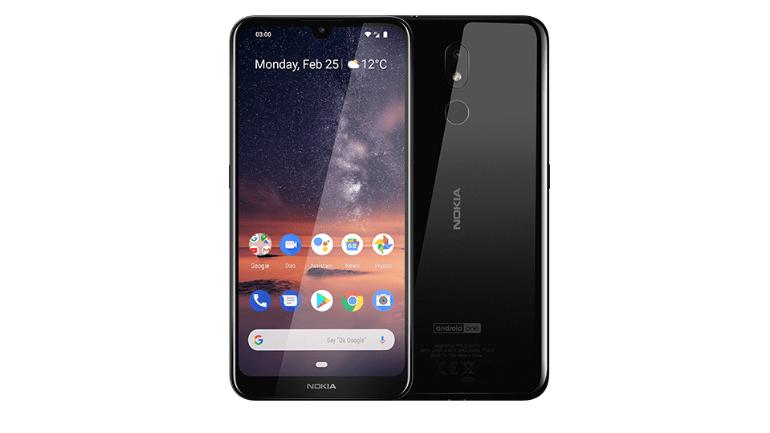
Nokia 3.2 launched in India with Snapdragon 429 for Rs 8,990 (~$128)

After unveiling the Nokia 4.2 a month ago, HMD Global has now launched Nokia 3.2 in India. The new device carries improved specification and form factor than the more affordable Nokia 4.2. It is available in two different size variants of 2GB RAM + 16GB internal and 3GB RAM + 32GB internal storage. Nokia 3.2 will be on sale from May 23 via offline as-well-as online retail outlets in India.

nokia 3.2 launch india

Nokia 3.2 Specification

The Nokia 3.2 is powered by Qualcomm Snapdragon 429 processor coupled with Adreno 504 GPU. It carries a 6.29-inch HD+ a-Si TFT LCD with 720 x 1520 pixels resolution having an aspect ratio of 19:9. Its waterdrop notch embeds a 5-megapixel sensor with f/2.2 aperture and 1.12um pixel size for selfies. Whereas, a single 13-megapixel sensor with a dedicated LED unit is present on the rear side.

A new dedicated button for Google Assistant is present on the device. It is a part of the Android One program and runs on Android 9 Pie out of the box. In connectivity, Nokia 3.2 comes with Bluetooth 4.2, micro USB, GPS/AGPS/GLONASS/BeiDou, and 4G VoLTE. Unlike the flagship devices, it supports a 3.5 mm headphone jack and micro USB interface. Other features include a 4000 mAh battery with 10W charging, rear fingerprint sensor (32 GB internal storage version only) and Qualcomm aptX technology for better sound quality.

Pricing and Offers

Nokia 3.2 with 2GB RAM + 16GB internal is available for Rs 8,990 and 3GB RAM + 32GB internal retails at Rs 10,790. Buyers can choose between two color options of Back and Steel. Nokia 3.2 is available with several launch offers.

Vodafone and Idea subscribers can avail Rs 2500 cashback offer in the form of Rs 50 vouchers. Interested users can use promo code ‘ LAUNCHGIFT’ to receive Rs 1000 gift card while placing an order from nokia.com. A limited time free screen-replacement insurance for six months is bundled at no extra cost.

(via)

Meizu 16Xs’ selling point will be 4,000mAh battery inside lightweight body

Recently, a Meizu phone with M926Q model number was approved by China’s TENAA authority. The entire specifications along with the images of the phone have been leaked through its TENAA listing. Teasers released by Meizu suggests that the phone may go official on May 23. What’s interesting about it is that it will be the first Meizu phone to arrive with triple rear cameras. Rumors are rife that it could be releasing with Meizu 16Xs moniker. According to a reliable tipster, the official selling point of the Meizu 16Xs will be that it will be packing a 4,000mAh battery inside a lightweight chassis.

The TENAA listing of the Meizu 16Xs has revealed that it will be featuring a minimum capacity battery of 3,900mAh. Its typical capacity could be 4,000mAh. The handset measures 8.35mm in thickness and it weighs 162 grams. Most of the recently released phones with 4,000mAh battery such as Lenovo Z6 Pro, Honor View 20 Redmi Note 7 Pro, Poco F1 and so on weigh around 180 grams. Meizu has somehow managed to reduce the weight of the device while still despite packing high-end internals in the Meizu 16Xs smartphone.

The triple camera setup of the Meizu 16Xs features a 48-megapixel primary sensor, a 5-megapixel sensor and an 8-megapixel lens. For capturing selfie shots, the phone features a front-facing camera of 16-megapixel. The Meizu 16Xs continues to sport a symmetrical design thanks to its thin-sized upper and lower bezels. It features a 6.2-inch AMOLED display that carries support for full HD+ resolution of 2232 x 1080 pixels and an aspect ratio of 18.5:9.

Meizu 16Xs TENAA

The Meizu 16Xs smartphone will be fueled by an octa-core processor of 2 GHz. The SoC is supported by 6 GB of RAM. The Android 9 Pie OS along with Flyme 7.3 UI will come preloaded on the device. The handset lacks support for a microSD card slot. Lastly, the handset is equipped with an in-display fingerprint reader. It will be available in the market in color variants like Black, Gradient Blue and Coral. At present, there is no information available on the price tag of the phone.

China is now leading the smart speaker market, reports 500% growth

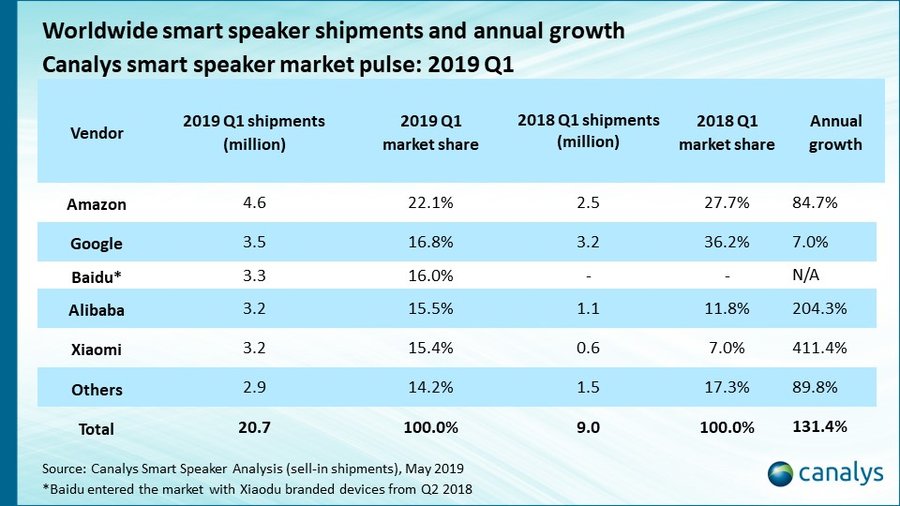
According to the latest report coming from Canalys, the United States is no longer the leading market when it comes to the smart speaker. Instead, China is now leading the market and has reported a 500 percent growth in the first quarter of this year, capturing 51 percent of the market.

The report adds that more than 10.4 million units of smart speakers were shipping in the Chinese market, which was mostly driven by the festive season offerings and promotions.

Smart Speaker Market Share

Chinese internet giant Baidu had a huge quarter thanks to an exclusive sponsorship deal with China’s national TV channel, CCTV, on its New Year’s Gala on Chinese New Year’s Eve, which is one of the biggest entertainment shows in terms of viewer numbers.

This promotion prompted users to download the Baidu app, which distributed more than 100 million coupons to an audience of 1.2 billion during the show, and drove awareness around the brand’s smart speakers, reports Canalys.

Coming to the numbers, Baidu shipped 3.3 million speakers in Q1 2019, which puts the company in the third place, just behind Amazon which shipped 4.6 million units and Google, which shipped 3.5 million units.

Smart Speaker Shipments Q1 2019

Following Baidu are Alibaba and Xiaomi, with each of them shipping around 3.2 million units of smart speakers, the sales of which were mostly driven during the Chinese New Year promotions.

Other brands, combined, accounted for over 2.9 million shipments. It also includes Apple’s HomePod, whose market share was so small it got wrapped into this “Others” section instead of being broken out on its own.

Commenting about the development of the Chinese market for smart speakers, Nicole Peng, VP of Mobility at Canalys, notes:

“The lightning-fast development in China is largely driven by vendors pouring in large amounts of capital to achieve dominant share quickly. This strategy is favored by internet service providers like Baidu, Alibaba, and Tencent who are used to spending billions on traffic acquisition and know how to reach critical installed base fast.”

Read More: LG announces its self-developed AI chip for smart home products

In comparison to the 10.6 million units shipped in China, the United States witnessed 5 million shipments. While China captured 51 percent market share, the share of the U.S. dropped from 44 percent in Q4 2018 to 24 percent in Q1 2019. Overall, the global smart speaker market saw triple-digit annual growth of 131 percent in the quarter.

(Source)

Unannounced Xiaomi Mi 9T (model number: M1903F10G) receives certification in Thailand

Xiaomi’s launch itinerary for this year may include another variant of the flagship Mi 9 series. The series already has the Mi 9, Mi 9 SE and Mi 9 Transparent Edition. Just like last year, there are indications that the Mi 9 may get another variant that will adopt the moniker Mi 9T. The model has been certified by NBTC in Thailand where it is listed with the model number M1903F10G. The listing also gave us a hint of the Mi 9T moniker.Xiaomi Mi 9T

The device has also received certification in Taiwan, Singapore and by the Eurasian Economic Commission bearing the same model number M1903F10G. Among the details gathered from the listing include that the model is part of the Mi 9 series.

Read Also: Xiaomi crowdfunds the Furrytail Pet Smart Feeder with app control for 199 yuan ($28)

Xiaomi is yet to reveal any detail or even confirm the existence of the purported Mi 9T but we expect that to happen soon. The device may turn out to be the Mi 9 Pro, a successor to the Mi 8 Pro which was launched last year.

(via)

OnePlus Bullets Wireless 2 Review: Premium Sound and Fast Charging

In addition to smartphones and bags, OnePlus has still launched some of peripheral products, such like notebook, pen, phone case and so on.

As the OnePlus 6T lacks the 3.5mm earphone jack, OnePlus has spent more on wireless earphones. In the launch event of OnePlus 6T, OnePlus also launched OnePlus Bullets Wireless earphones priced at $69, which has good performance.

In the OnePlus 7 series launch event, OnePlus Bullets Wireless 2 was launched, which is priced at $99. Compared with its predecessor, OnePlus Bullets Wireless 2 has better performance.

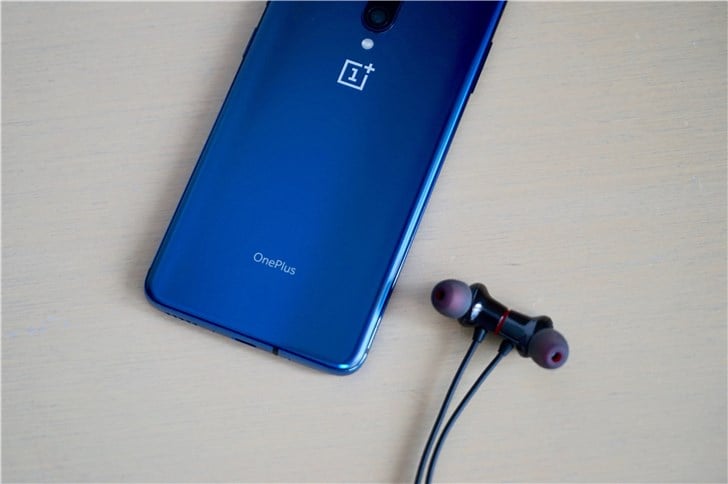
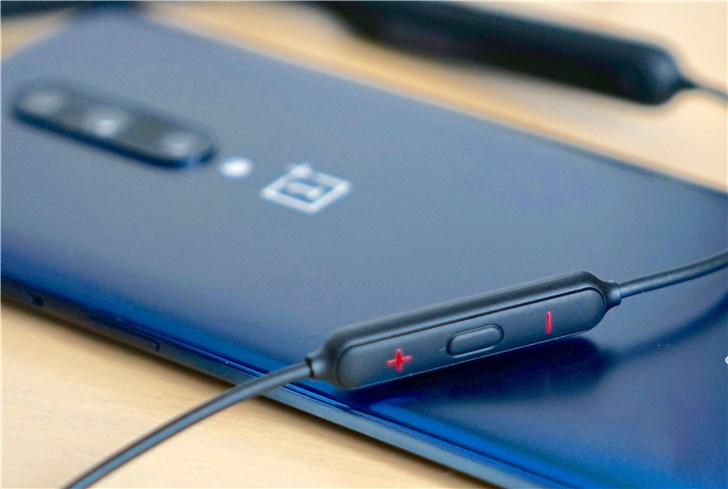
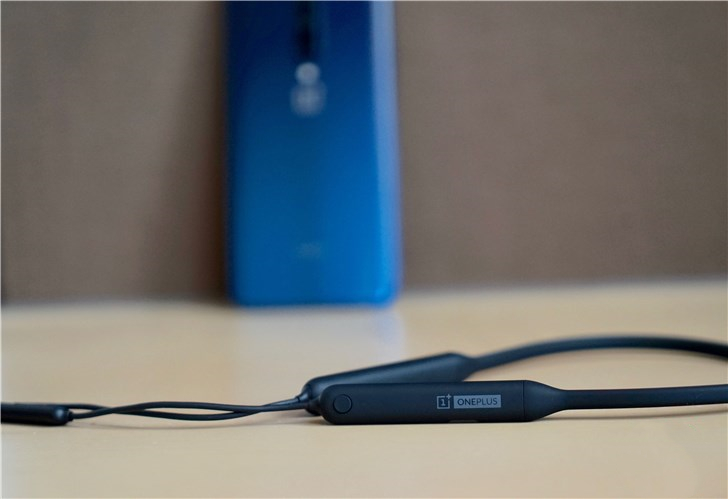
OnePlus Bullets Wireless 2 still adopts neck hanging design with silicone material, and the chipset, battery, charging port and other components are set in the necklet. There is a conventional wire-control module on the left headphone line, which is used to control the volume, play/pause music, and switch track.

Why the latest earphones of OnePlus don’t adopt the TWS design? Peter Lau, the CEO of OnePlus, explains that TWS earphones cannot meet all people’s needs. In addition, neck hanging earphones can get advantages in the aspect of stability and sound quality.

The design of OnePlus Bullets Wireless 2 is ordinary, but the details show well.

The Bullets Wireless 2 comes with the seashell-inspired stainless steel design which is delicate. The attractive point of the earphones is the magnetic control, which is simple for you to turn on/off them. You can simply clip the Bullets together magnetically to turn them off. When you want to resume playback, just separate them.

What’s more, OnePlus Bullets Wireless 2 has another feature, which can switch between devices easily. If the Bullets Wireless 2 is paired with two devices, you can switch directly between the two devices by double-clicking the button on the outside of the left necklet when both devices’ Bluetooth is on.

Also, as same as the Bullets Wireless, you can use Bullets Wireless 2 to pair your OnePlus smartphone quickly.

The sound quality is the biggest improvement of the OnePlus Bullets Wireless 2.

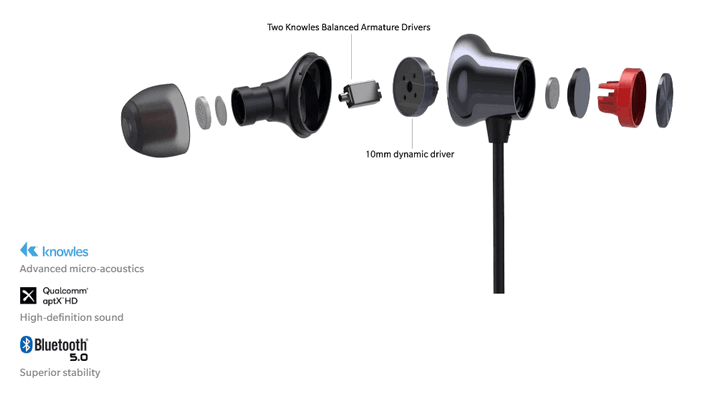
OnePlus Bullets Wireless 2 comes with two Knowles Balanced Armature Drivers and one 10mm dynamic driver in each earbud.

Compared with OnePlus Bullets Wireless, Bullets Wireless 2 has a great improvement in sound quality, which is clear, powerful and premium. The balance of soft trebles and low basses performs well. It is suitable to hear pop music.

There’s no doubt that OnePlus Bullets Wireless 2 is the best sound we’ve ever heard.

Thanks to the canalearphone design, Bullets Wireless 2 can achieve good passive noise reduction effect with a little big size silicon earbuds. But the earphones don’t have active noise reduction feature.

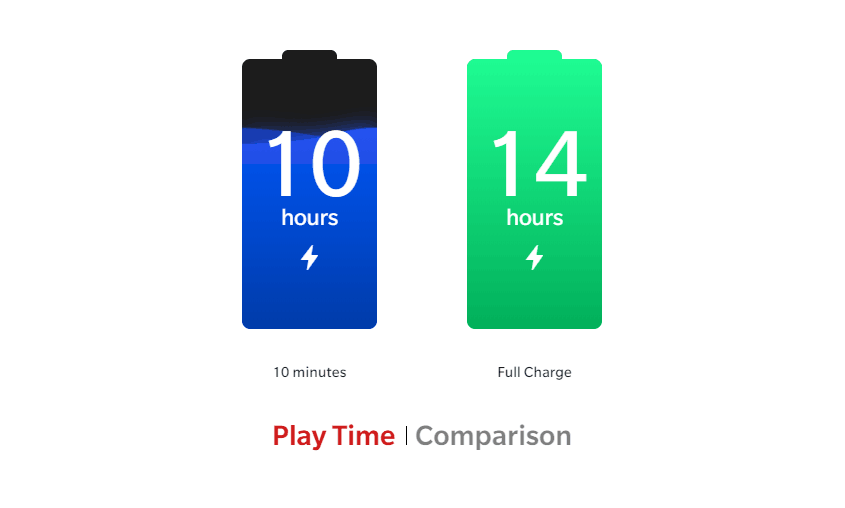
OnePlus Bullets Wireless 2 supports fast charging, the earphones charges to 70% in just 10 minutes, which can give you 10 hours of listening time, while a full charge can give 14 hours of listening time.

OnePlus Bullets Wireless 2 comes with warp charge, which can charge quickly with a 5V/0.6A charging brick and a Type-C cable.

Overall, the appearance of OnePlus Bullets Wireless 2 is conventional, but it performs well in terms of sound quality, charging and features.