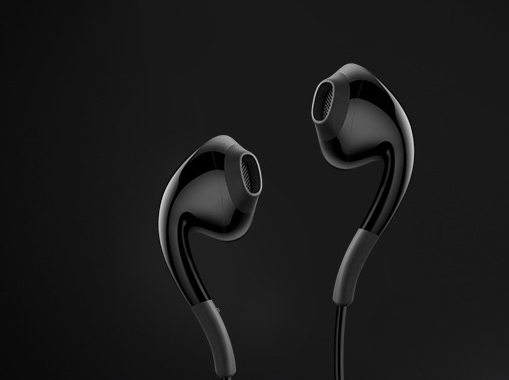
Apart from smartphones, one other area that Meizu is renowned is in the manufacture of powerful headphones. The Meizu EP lineup is one of the top-grossing range of headsets in China and sales overseas are also impressive. During the Meizu 16X launch event yesterday, the company also unveiled a new headset dubbed Meizu EP2C. The headset comes with a 129 yuan ($18) price tag and is scheduled to go on sale at 10 AM on June 10.
The Meizu EP2C uses a USB Type-C interface. In terms of appearance, the headset adopts a new one-piece streamlined design with distinct ridge lines and a straight arc to the root of the earmuffs, freeing the rigid shape of the straight line. Moreover, the new curve design not only facilitates the space created in the ear cavity and guides the sound into the ear, but also is comfortable to wear and fits the auricle.
The outer cavity is made of PC+ABS material while the part that goes into the ear is made of high-elastic rubber, which is soft and comfortable. The earphones are lustrous and sleek and are also wear and dirt-resistant. It has a built-in 14mm double material synthetic diaphragm, the horn diaphragm is made of ultra-fine bio-fiber paper film, and the edge film is made of TPU high compliant material. The moving coil unit is made of neodymium iron boron magnet with 32 ohm + 105db low resistance and high sensitivity design.
The headset can be used with a mobile phone as well as computers and any other music player with a Type-C port.
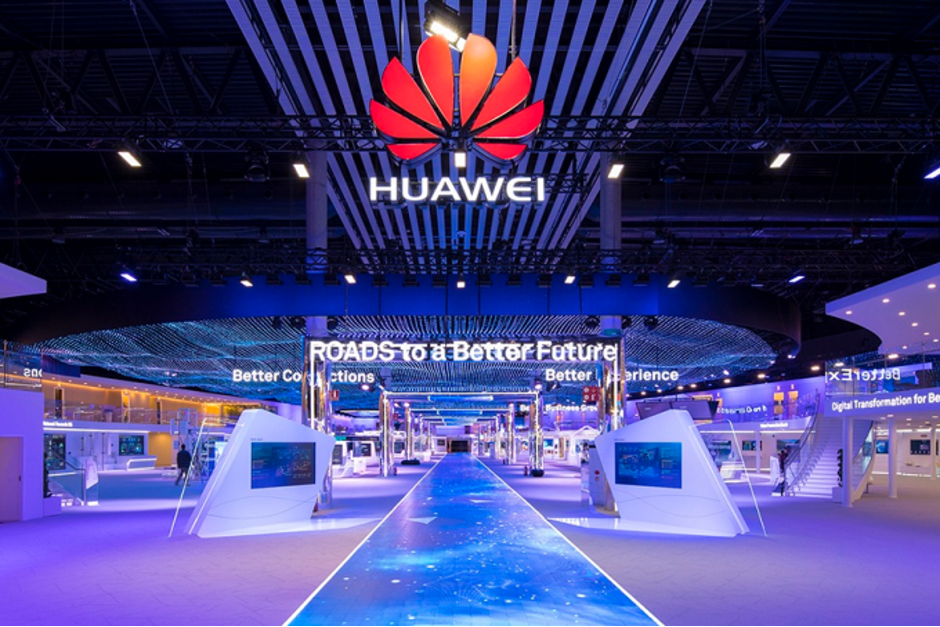
After the U.S. put Huawei in the Commerce Department’s Entity List, banning the Chinese company to do business with the US-based firms and technology without a license from the United States, Google was among the first to suspend its business with Huawei.
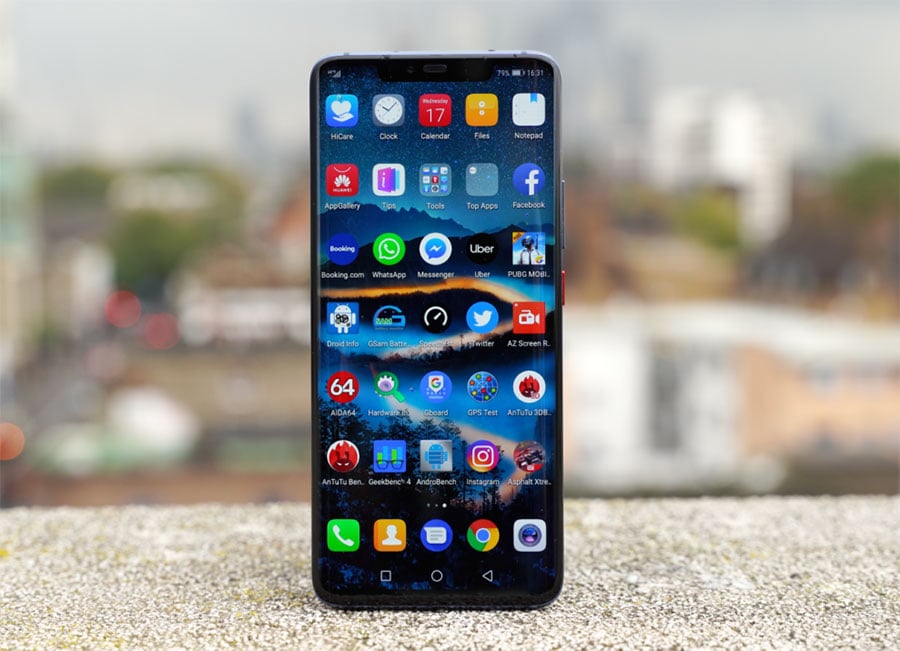
Last week, it was reported that Google had removed the Huawei Mate 20 Pro smartphone from the list of smartphones that are part of the Android Q beta program. Now, Google has reinstated the Mate 20 Pro in the Android Q beta program.
This means that the Android 9 Pie won’t be the last update for the flagship Huawei smartphone and the phones will get the Android Q update. There’s also a possibility that the company’s upcoming flagships, Mate 30 series, could come powered by Huawei’s own mobile OS instead of Android.
The development comes after the U.S. Commerce Department offered a 90-day reprieve to the Chinese company. Apart from Google, SD Association and Wi-Fi Alliance both have reinstated Huawei, making it a bit easier for the Chinese giant.
After Google suspended business operations with Huawei, in a statement, the US-based search giant said that services like Play Store and security from Google Play Protect will keep working on the existing Huawei devices.
Huawei Mate 30 Pro
Currently, the list of smartphones eligible for the Android Q beta program includes Asus Zenfone 5Z, Essential Phone, LG G8 ThinQ, Nokia 8.1, OnePlus 6T, Oppo Reno, Realme 3 Pro, Sony Xperia XZ3, Tekno Spark 3 Pro, Vivo X27, Vivo NEX S, Vivo NEX A, Xiaomi Mi 9, Xiaomi Mi MIX 3 5G, Pixel 3, Pixel 3 XL, Pixel 2, Pixel 2 XL, Pixel and the Pixel XL.
The Huawei Mate 20 Pro features a notched 6.39-inch QHD+ AMOLED display with 3120 x 1440 pixels screen resolution and is powered by the company’s own Kirin 980 chipset, coupled with 8GB RAM and 128GB internal storage.
It comes with a 40 MP + 20 MP + 8 MP triple rear camera setup and a 24 MP front-facing snapper with 3D face unlock support. It runs Android 9 Pie-based EMUI 9.0 and is powered by a 4,200mAh battery with 40W SuperCharge fast charging technology.
Britain has announced that it has officially launched the country’s first 5G network and BBC informed that it also made the first telly broadcast over 5G. But, the interesting part of the story is that the equipment used to make this possible is sourced from Huawei.
The use of Huawei equipment wouldn’t be the highlight of the story but given that the Chinese telecom equipment giant is banned from doing business with US-based firms and US origin technologies, and pressure from the United States on its allies to drop business with Huawei, this is now the highlight.
No one would have come to know the usage of Huawei made transmission apparatus but the state broadcaster posted pictures of the branded equipment on its website. The outside broadcast van was being used to relay morning’s BBC News program. However, shortly after sharing the images, the pictures were deleted.
EE, one of the UK’s cellular providers, officially launched its 5G network in six cities across the country including Belfast, Birmingham, Cardiff, Edinburgh, London, and Manchester. To help illustrate one of 5G’s biggest advantages, BBC reporter Rory Cellan-Jones did a live report during its BBC Breakfast program that was streamed over EE’s 5G network.
Huawei declined to celebrate the occasion publicly which is understandable given that EE, whose network went live today, hastily dropped Huawei’s flagship Mate 20 handset from its list of 5G launch devices after the US ban.
While the US, Australia, and New Zealand has banned Huawei from supplying telecom equipment, no European country has formally blocked Huawei and the majority of the company’s current global 5G contracts are with companies operating within Europe.
As per the reports, despite pressure from the United States, Germany has resisted a ban while France has not indicated it plans to follow a tough line against the Chinese company. On the other hand, Huawei is not facing much heat from Asian countries.
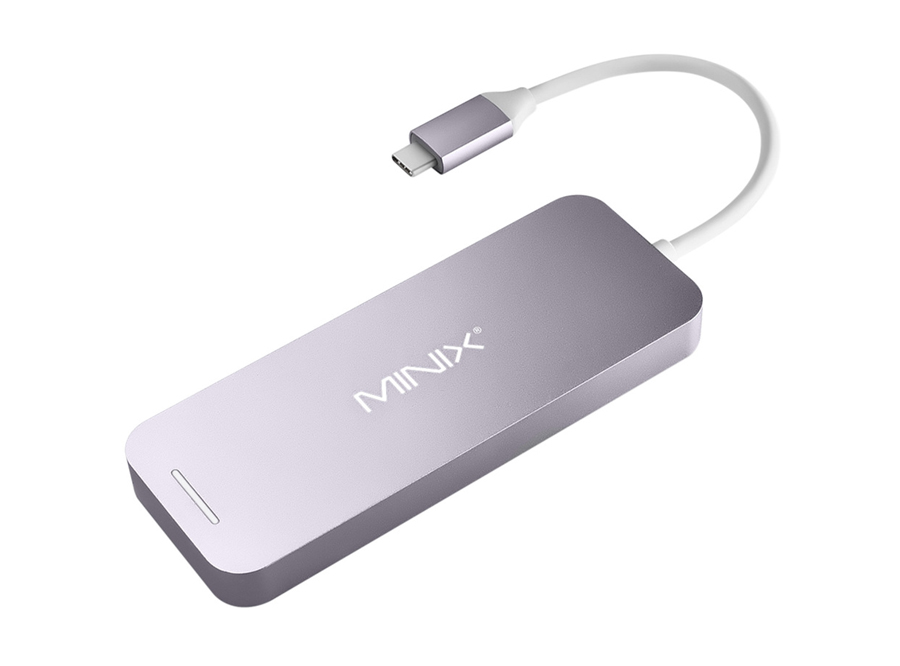
Designed for the Apple MacBook, MacBook Air, and the MacBook Pro, the MINIX NEO Storage, USB-C Multiport SSD Storage Hub is a perfect storage companion.
The MINIX NEO is touted as the world’s first to combine SSD storage with additional data and display output ports for superior convenience and high-speed transfers. Housed in a lightweight, aluminum hub that suits the Apple MacBook, the MINIX NEO has a built-in SSD Storage, HDMI (4K @ 30Hz), 2 x USB 3.0 and USB-C (Power Delivery).
In order to enjoy super-fast SSD storage, all you need to do is to connect MINIX NEO Storage to a USB-C port on the MacBook. On top of that, it also keeps your Apple MacBook charged through the USB-C pass-through charging port. Note that it does not support Apple SuperDrive.
While the aforesaid features justify the $101.99 price tag the MINIX NEO Storage usually carries, you can now buy it for a lowered price of just $74.99 on GeekBuying. You can extend this 26 percent discount with the help of coupon code 3WRXQAPS.
The aforesaid coupon helps you get an extra $5 off. In other words, you can bring the already reduced asking price of the MINIX NEO Storage further down to just $69.99 even before placing your order simply by applying the coupon at checkout.
You can head straight to this link in order to grab the discount, which will be valid for the Space Gray color version of the MINIX NEO C SSD storage hub. Note that the promotion sale is slated to end in four days.
After floating around the rumor mill for quite some time and making several appearances online in the form of leaked images, the Xiaomi Mi 9 was finally launched in March this year.
Loaded with an impressive array of features, it was only a matter of time before the phablet became an instant hit among Xiaomi fans. Taking the device’s undying demand into consideration, Xiaomi is now looking to make it available to the cost-conscious buyers.
Keeping in line with that, the Chinese electronics giant has teamed-up with Gearbest to offer the Mi 9 phablet for an unbeatable price. The 6GB RAM+64GB ROM variant of the Mi 9 phablet comes in black and blue color options, bearing $516.87 price tags.
As part of its latest flash sale, Gearbest is offering the black-tinted model for a lowered price of just $379.99. This is a significant 26 percent drop in the device’s original asking price.
It is worth mentioning here that the discount will be valid for the first 701 pieces only. The promo will come to an end in sixteen days.
Alternatively, you can go for the blue color version of the Mi 9 4G phablet if you are willing to shell out $389.99. This 25 percent discount will be available for the first 457 pieces and the promo will wrap up in fifteen days.
An absolute steal at this price, the Xiaomi Mi 9 phablet offers the following features:
39-inch display with 2340 x 1080 pixels resolution
A couple of weeks ago, Xiaomi launched the Redmi Note 7S smartphone in the Indian market, replacing the Redmi Note 7 that was launched a few months ago. The major difference between the Redmi Note 7 and Redmi Note 7S is the camera configuration.
Now, just 10 days after its launch, the company has announced that the smartphone will be available through open sale and potential buyers won’t have to wait for the flash sales to get their hands on the device. It is available for purchase through Mi.com, Flipkart, and Mi Home Stores across the country.
The Xiaomi Redmi Note 7S (Full Specs) comes with a 6.3-inch IPS LCD display featuring a “dot” notch, offering a Full HD+ screen resolution of 1080 x 2340 pixels. The front, as well as the rear side of the Redmi Note 7S, comes equipped with Gorilla Glass 5 panel.
Under the hood, the device is powered by the Qualcomm Snapdragon 660 octa-core chipset and comes in two variants — 3GB RAM + 32GB internal storage and 4GB RAM + 64GB internal storage. Both models are equipped with hybrid SIM slot for adding a microSD card.
The dual camera setup on the phone’s back panel features a 48-megapixel Samsung GM1 sensor with f/1.8 aperture and a depth sensor of 5-megapixel. It comes with features like PDAF, Electronic Image Stabilization (EIS), AI Portrait Mode and LED flash. The standard Redmi Note 7 features a 12 MP + 2 MP camera setup on the back.
On the front side, there’s a 13-megapixel camera present inside the front notch of the phone, which can capture AI-driven portrait shots. The phone runs Android 9 Pie operating system customized with MIUI 10 custom interface.
The device is powered by a 4,000mAh battery that supports 10W charging through a bundled charger. However, the phone supports 18W fast charging but the users of the Redmi Note 7S will need to separately buy a Quick Charge 4 charger to take advantage of this feature.
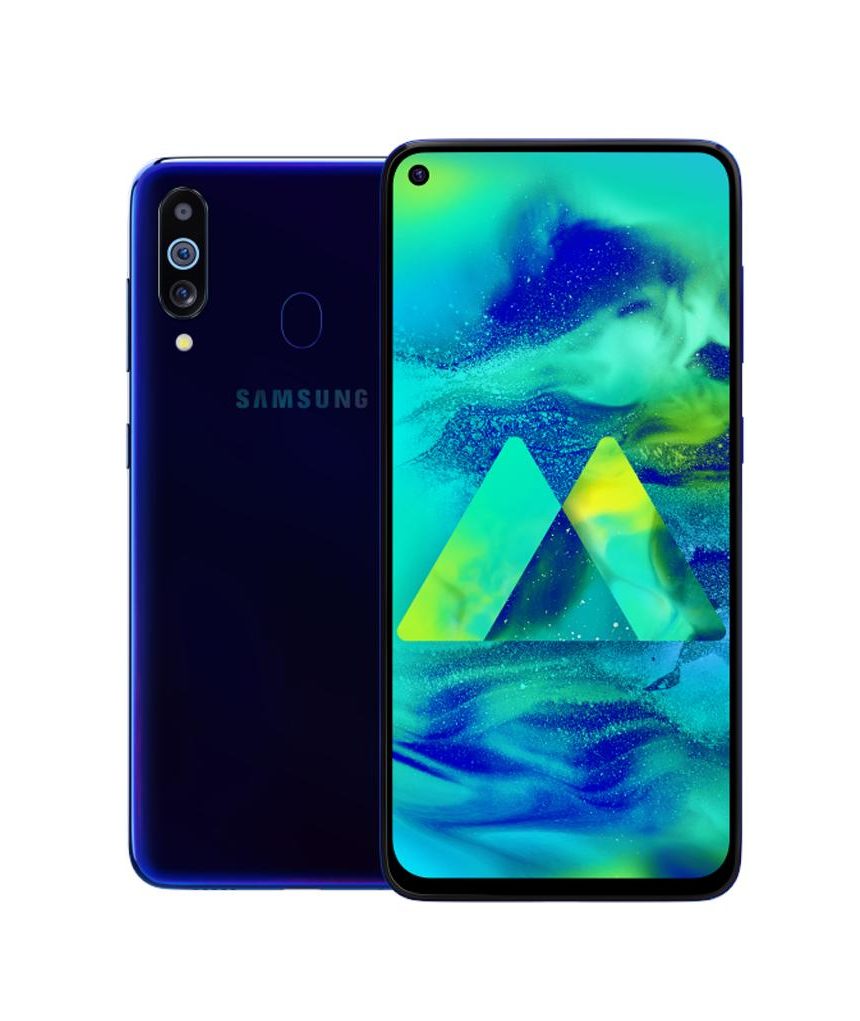
Samsung will be launching the Galaxy M40 smartphone in India on June 11. A landing page for the phone is now live on the official website of Samsung India. The firm has confirmed several features of the phone through its landing page. A render of the phone has also appeared to reveal its front and rear design. Also, Samsung India’s Senior VP for Smartphone Business Asim Warsi have revealed the camera details of the Galaxy M40 to 91mobiles.
The landing page of the Galaxy M40 on Samsung India’s website reveals that it will be first M-series phone with punch-hole display design. It will be featuring Snapdragon 6 series processor and a triple camera setup on its rear. Showing below is the render of the phone that has appeared to give a good look at its design.
Except for the slightly thick-sized chin, the punch-hole display of the Galaxy M40 is surrounded by super-slim bezels. The rear shell of the smartphone features a vertically arranged triple camera setup. A fingerprint reader is also available on the backside of the device. The smartphone can be seen sporting a blue colored rear. There is a possibility that it could be also arrive in Black color option like the Galaxy M30 and Galaxy M20 smartphones.
According to Warsi, the Galaxy M40’s triple camera unit will be featuring a 32-megapixel primary sensor. For shooting selfies, the phone will be equipped with a 16-megapixel lens. He also stated that the smartphone will be priced under Rs. 20,000. Apart from these details, he did not share anything else on the specs of the Galaxy M40.
Rumors surrounding the Galaxy M40 have revealed that it will be driven by the Snapdragon 675 chipset and 6 GB of RAM. The One UI based Android 9 Pie OS is expected to arrive preloaded on the device. The Galaxy M30 and M20 phones are both packed with 5,000mAh batteries. Probably, the M40 may feature a same-sized battery. It may come with a native storage of 128 GB. The highest configuration edition of the Galaxy M30 phone that features 6 GB of RAM and 128 GB of internal storage is priced at Rs. 17,990 (~$258). The M40 may hit India with a price tag of Rs. 19,990 (~$287).
Do you think that the Samsung Galaxy M40 will be a promising phone? Share us your views by posting your comments below.
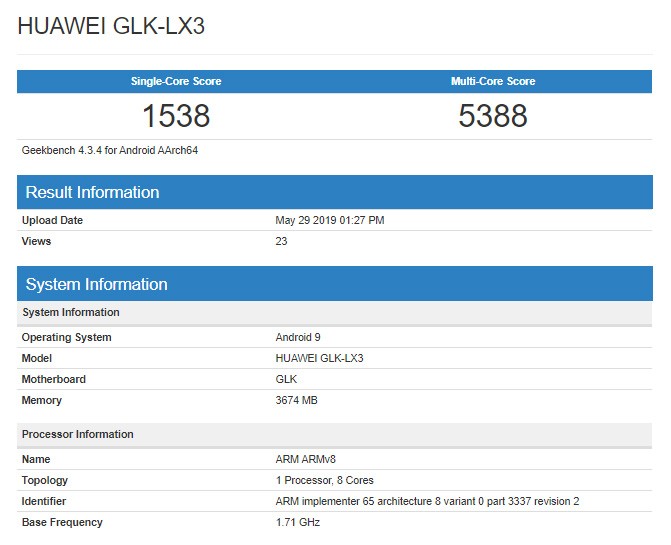
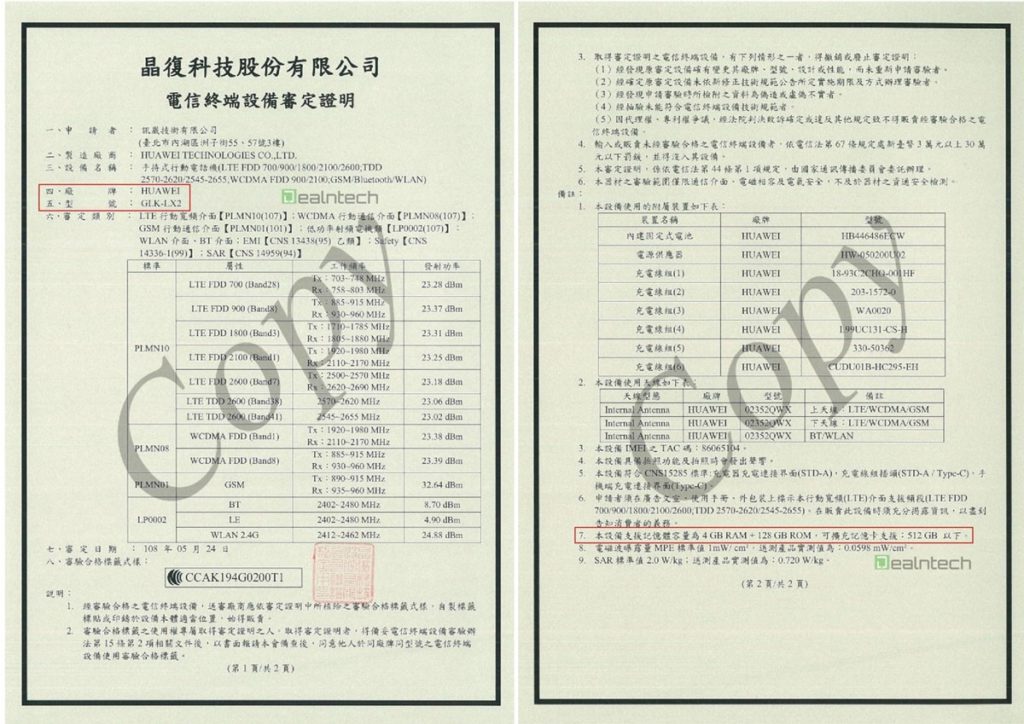
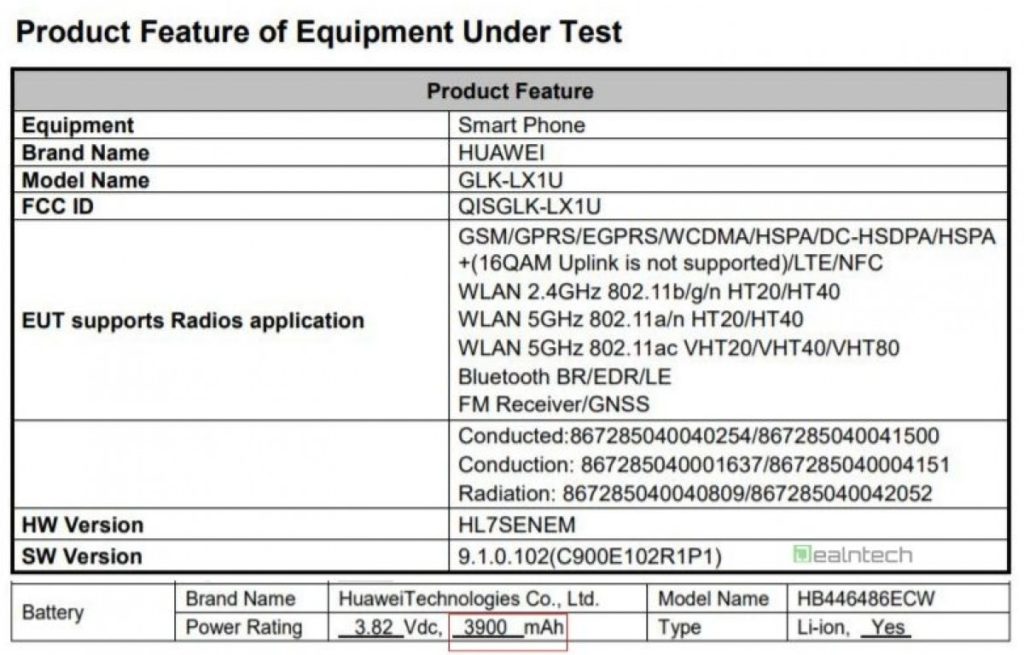
Huawei is expected to soon unleash the Nova 5 and Nova 5i smartphones in the near future. While the Nova 5 is expected to arrive with flagship specs, the Nova 5i will be a mid-ranger with Kirin 710 SoC onboard. The Nova 5i has appeared on Geekbench to suggest that it will be indeed arriving with Kirin 710 SoC. The handset has also received approval from National Communications Commission (NCC) authority in Taiwan through which its storage variants have been revealed. Also, the Nova 5i has also been certified by the Federal Communications Commission (FCC) in the U.S. through which its battery size been revealed.
The Huawei Nova 5i has appeared with its model number GLK-LX3 on Geekbench. While it is not directly mentioned on the Geekbench listing that the phone is powered by Kirin 710, the base frequency of the processor and benchmarking scores suggests that it could be featuring the very same SoC. The smartphone features 4 GB of RAM and it runs on Android 9 Pie OS. In the single-core and multi-core tests of Geekbench, the handset has respectively scored 1538 and 5388.
The NCC certification of the Nova 5i has revealed that the phone is equipped with 4 GB of RAM and it will be arriving in 64 GB and 128 GB storage choices. It will also be featuring a microSD card slot for more storage. The FCC documents of the phone reveals that it is backed by a 3,900mAh battery that carries support for 10W charging. Even the 3C certification of the Nova 5i in China had revealed that it will offer only 10W charging.
Rumors have it some markets like Europe may receive the same with Huawei P20 Lite (2019) moniker. The smartphone is expected to arrive with a 6.4-inch IPS LCD panel with a punch-hole at its top-left corner. It will carry support for full HD+ resolution. For capturing selfies, it may feature a front camera of 16-megapixel. Its rear-facing triple camera setup my include a 24-megapixel primary sensor, an 8-megapixel ultrawide lens and a 2-megapixel depth sensor.
The Kirin 710 SoC may fuel it with 4 GB of RAM and it could be powered by a 4,000mAh battery with 10W charging. The EMU 9.1 based Android 9 Pie OS may come preinstalled on the device. The smartphone is expected to release in Midnight Black, Crush Blue and Charming Red color options and it could be priced under 330 euros.
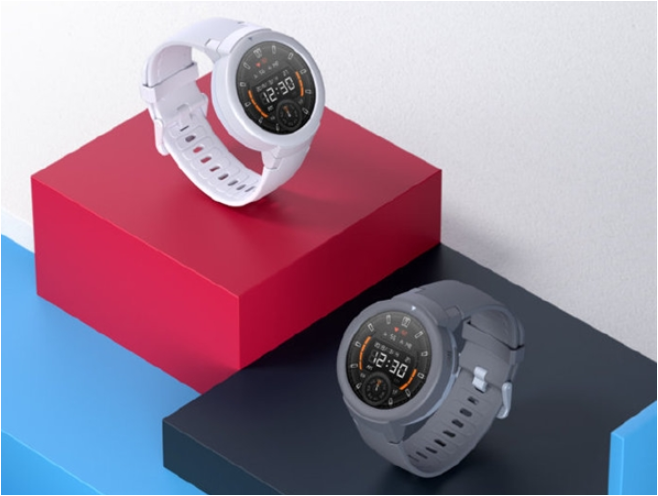
Huami has unveiled a new smartwatch in China. The name of the device translates to Amazfit smartwatch Youth Edition but we believe this is the Amazfit Verge Lite considering the similarity in design with premium Amazfit Verge. The features are also basically similar to those of the Verge except that this version offers longer battery life.
The Amazfit Verge Lite comes with a cheaper price tag of 499 yuan ($72) and is presently on presale in China. The smartwatch comes with same hardware lineup as the Verge. It packs a 1.3-inch circular display with a diameter of 43mm. The Verge Lite is also equipped with an AMOLED display with a resolution of 360x360pixels as well as Gorilla Glass 3 on top. Huami says there is a coating on top of the screen which prevents fingerprint smudges from accumulating on the screen during use. The smartwatch is equipped with a silicone strap that can be removed in the same manner as those of the Amazfit Pace and Stratos.
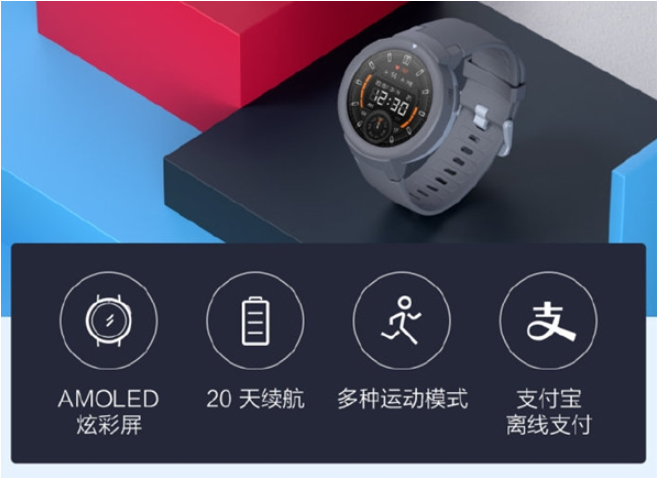
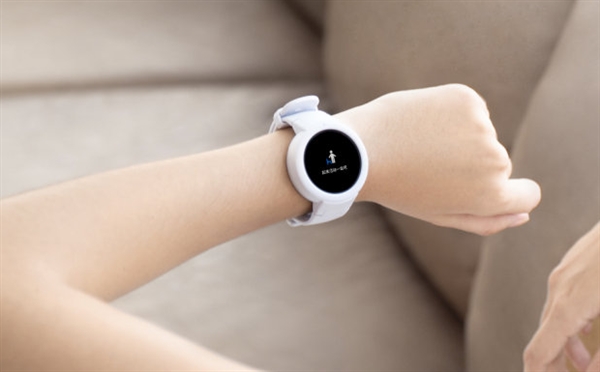
The Verge Lite is lightweight, weighing just 46 grams as it is tailor-made for lightweight sports and daily use. It has real-time motion tracking, heart rate monitoring, long battery life and offline payment, and other functions. In terms of functions, the AMAZFIT Verge Lite supports automatic heart rate monitoring throughout the day. Users can pay attention to their heart rate interval data in the app at any time, and intuitively control their heart rate changes in different time periods and different sports conditions. When the heart rate exceeds the warning value, the watch will vibrate immediately. It also records nighttime sleep data, analyzes sleep quality, and there is a built-in sedentary reminder.
You also get the variety of sports mode as the device comes with support for 11 different sports mode including Golfing, Riding, Running, hiking, Gym training, Soccer and Boat riding. It also has GPS+GLONASS support.
The Verge Lite also has low-power sensor design which ensures it can deliver up to 20 days of battery use in daily usage. However, if the GPS is turned on, the battery can only do 40 hours. There is also support for AliPay offline payment function which can still work without a phone. This suggests the global version may get support for Google Pay or something similar but there’s no indication if it has NFC. Apart from having several Watchfaces, the Verge Lite supports more personalized settings whereby users can customize the dial background and dial display information according to personal preferences. No mention is made of XiaoAI or ALEXA voice assistant support.
At 499 Yuan ($72), the Amazfit Verge Lite is a tad cheaper than the 799 yuan (~$116) price tag which the Verge was launched with.
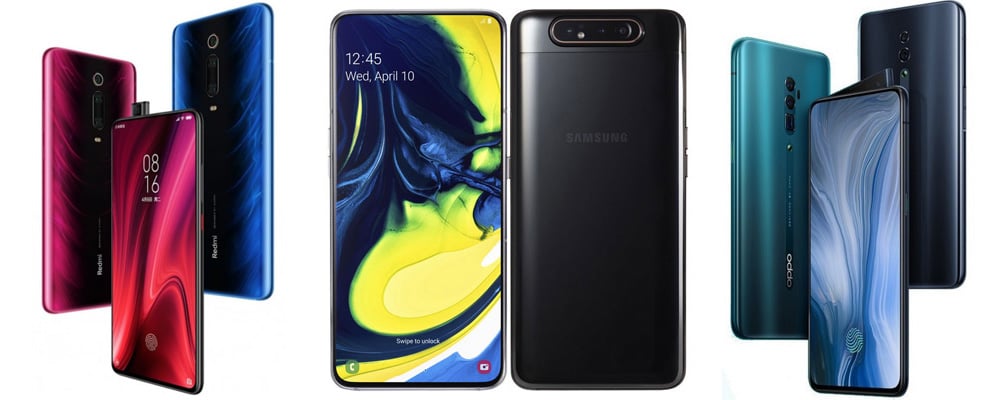
For 2019, Xiaomi, Samsung, and Oppo completely revolutionized their midrange line-ups in order to face the concurrency in the best way. Redmi is not just a series of Xiaomi phones anymore: now it is an independent brand and it even includes a high-end line-up in which you can find the Redmi K20. Oppo launched a brand new series called Reno, which is also the same name of the first device from the series. Samsung renewed the A series with a new name scheme and innovative phones with a higher value for money, such as the Samsung Galaxy A80. Here is a comparison between Redmi K20, Samsung Galaxy A80, and Oppo Reno that you should definitely check if you are looking for the best upper-midrange handset.
Xiaomi Redmi K20 vs Samsung Galaxy A80 vs Oppo Reno
Xiaomi Redmi K20
Oppo Reno
Samsung Galaxy A80
DIMENSIONS AND WEIGHT
156.7 x 74.3 x 8.8 mm, 191 grams
156.6 x 74.3 x 9 mm, 185 grams
165.2 x 76.5 x 9.3 mm
DISPLAY
6.39 inches, 1080 x 2340p (Full HD+), 403 ppi, AMOLED
6.4 inches, 1080 x 2340p (Full HD+), 402 ppi, AMOLED
6.7 inches, 1080 x 2400p (Full HD+), 393 ppi, Super AMOLED
Triple 48 + 13 + 8 MP f/1.8 and f/2.4 and f/2.4
20 MP f/2.2 front camera
Dual 48 + 5 MP f/1.7 and f/2.4
16 MP f/2.0 front camera
Triple 48 + 8 MP + TOF f/2.0 and f/2.2
BATTERY
4000 mAh, fast charging 18W
3765 mAh, fast charging with VOOC 3.0
3700 mAh, fast charging 25W
ADDITIONAL FEATURES
Dual SIM slot
Dual SIM slot
Dual SIM slot
Design
Goodbye notches, finally. None of these devices comes with a display interruption: they are all full-screen phones, but they rely on different solutions to get rid of bezels. Redmi K20 has a classic pop-up camera, Oppo Reno has a shark fin pop-up camera and Samsung Galaxy A80 comes with the most innovative solution: a rotating rear camera which can be used as selfie camera as well. In my opinion, it is not the high screen-to-body ratio (neither the pop-up cameras) to make the difference. The rear side of the Redmi K20 with its “liquid” finish is simply amazing, so the Redmi K20 is my favorite one aesthetically.
Display
It is really hard to pick a winner among these displays as you will not easily notice the difference in everyday use. If you are a multimedia lover, you may like the Redmi K20 more because it is HDR-compliant, so it enhances the colors in a brilliant way. On the other hand, the Samsung Galaxy A80 comes with a wider display and a taller 20:9 aspect ratio which is very interesting as well. Last but not least, Oppo Reno has good DCI-P3 coverage, so good colors too. All of them come with an under-display fingerprint scanner. Given the marginal differences, we do not suggest you focus on the display quality.
Specs & Software
Given that Oppo Reno is powered by a less powerful Snapdragon 710 chipset, it loses the hardware comparison. The main battle is between the Redmi K20 and the Samsung Galaxy A80 which come with the same SoC and the same amount of RAM in the most expensive memory configuration. However, Redmi K20’s high-end variant wins the comparison because it is equipped with more internal storage (256 GB). None of these devices supports a micro SD expansion slot, while all of them come with Android 9 Pie out of the box, as well as a custom user interface.
Camera
When it comes to the rear cameras, Redmi K20 has the most impressive setup on the paper. It is composed of a main 48 MP sensor with a bright f/1.8 aperture, a secondary ultrawide lens with a 13 MP resolution and a telephoto lens with 2x optical zoom. On the other hand, when it comes to selfies, Samsung Galaxy A80 wins as it allows to use the rear camera as a selfie camera thanks to its rotating mechanism.
Battery
In each case, you get an above-average battery, but Redmi K20 is the real winner as it simply comes with a bigger 4000 mAh unit. Samsung Galaxy A80 has the fastest charging technology but also the smallest battery. We are satisfied with Redmi K20’s battery life, it lasts one full day with moderate use.
Price
Samsung Galaxy A80 carries a price tag of €650/$723, Oppo Reno starts from €500/$555, Redmi K20 costs just €260/$290. Given the higher value for money and the bigger battery, Redmi K20 wins this comparison.
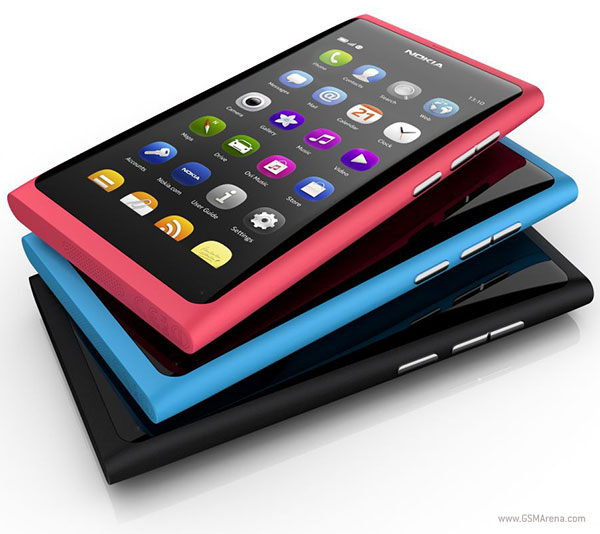
It was the year 2011 and Nokia was still the largest phone maker in the world. Android was just getting some traction but the Finnish giant was still sticking to its own Symbian OS. With its market share dwindling, Nokia decided to try out a new OS called Meego. This gave birth to the one and only Nokia N9 – the first and the last commercially available Meego smartphone from the company, all thanks to its newfound relationship with Microsoft’s Windows Phone OS.
Image Credit: GSMArena
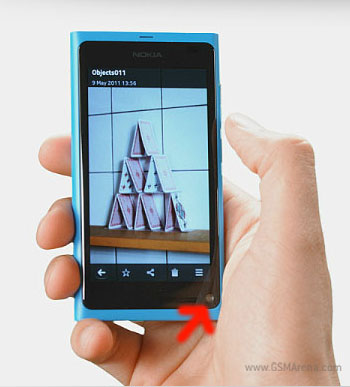
While many know the N9 as a failed but beautiful phone running Meego, there was one feature that we all might have missed. On this day, we take a look at the weird secondary camera of the Nokia N9. It could have been one of the first smartphones to actually feature a bottom right corner front-facing camera. Definitely, the inspiration for Xiaomi’s first premium full-screen smartphone, the Xiaomi Mi MIX.
Image Credit: GSMarena
Back in 2011, when selfies were not exactly invented (I mean popularized), it was simply a secondary VGA camera with very little purpose. In fact, if you read a GSMArena post about the Nokia N9, you would see that many didn’t even know what it was at first.
I mean, you can’t blame folks back in 2011. Selfie cameras were not mainstream back then, and the placement was the weirdest of all. Without leaksters like Evan Blass or Roland Quandt or Steve Hmmerstoffer (OnLeaks) in the industry, very little was known about a phone before it was launched. In fact, even after a phone was announced, there would still be a few details that were left unrevealed. So you usually had to wait for a review to know exactly what’s what!
Meego OS for smartphones Source: Wikipedia
Another highlight of the N9 was, of course, its Meego OS. While the operating system didn’t really catch on, it was definitely way ahead of its time. Everything in the OS was gesture based (what we call swipes today), very similar to what we see in Android and iOS smartphones. It’s really a shame that the OS didn’t catch on, probably because it didn’t have any strong backers. Well, Intel did back it for a while, but Intel wasn’t into making smartphones. Nokia ditched Meego after the N9’s release and switched to Windows Phone.
After the Nokia Lumia 800’s release – its first Windows Phone-powered smartphone, the end of Meego was nigh. Google was supporting Android while Microsoft was backing its own Windows Phone platform. With these two giants focused on their own operating systems, hardly anyone else could have survived. And today, we are left with Google’s Android dominating a major chunk of the smartphone space followed by Apple’s iOS.
So, in this episode of Throwback Tech Thursday, let’s remember the Nokia N9, not just as the first and last Nokia phone with Meego, but also as the inspiration behind the legendary Xiaomi Mi MIX series’ camera placement!
Despite its tragic fate, the Nokia N9 was definitely ahead of its time! What are your thoughts?
Xiaomi is yet to officially unveil the new member of the Mi 9 series it teased yesterday. The name has already been confirmed to be Mi 9T, and now, an early listing has revealed the price of the phone in Italy.
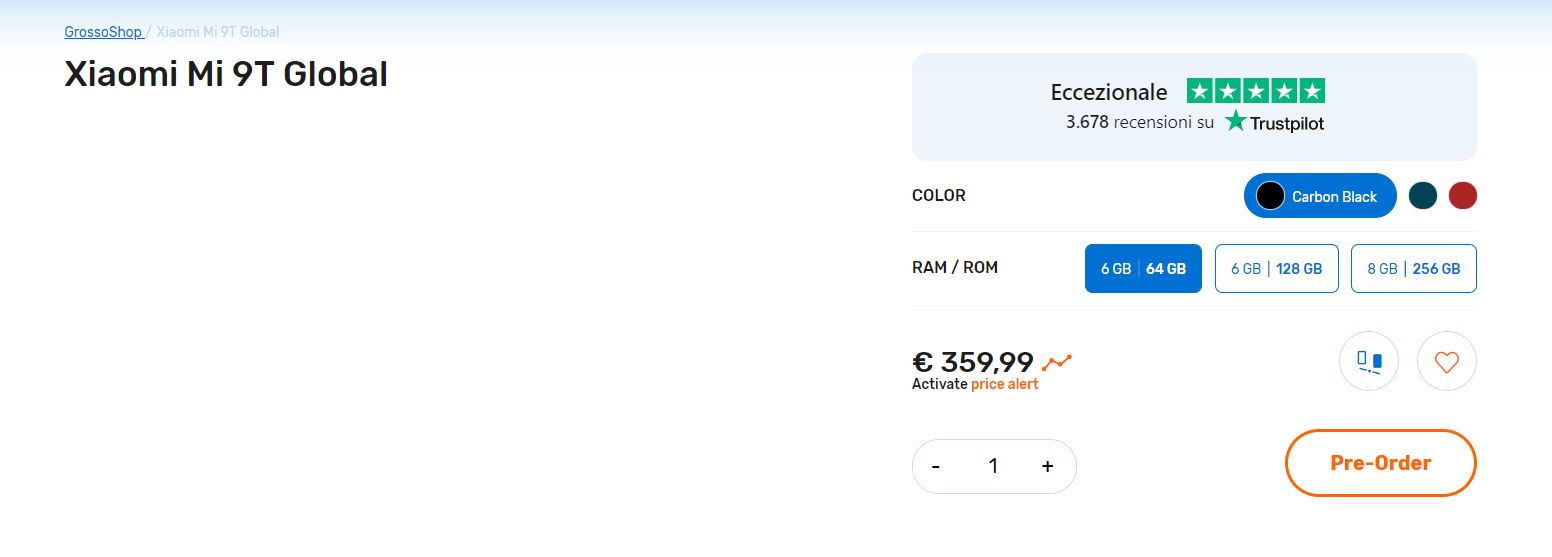
The listing, which was first reported by Smartprix, is on an Italian e-commerce store called GrossoShop. The listing says the Mi 9T will be available in three color variants – Carbon Black, Glacier Blue, and Flame Red.
The Mi 9T will also come in three configurations – 6GB RAM + 64GB, 6GB RAM + 128GB, and 8GB RAM + 256GB. In China, the Redmi K20 was only announced in the first two configurations but the listing on the official site includes the third variant.
The listing states the Mi 9T supports LTE Band 20 and a conversation between Smartprix and the store’s customer support confirmed the phone does support the aforementioned band. The customer support also said the phone will be in stock in a few days which means that a launch date is close.
Below is the price for the three variants:
6GB RAM + 64GB = €359.99
6GB RAM + 128GB = €379.99
8GB RAM + 256GB = €499.99
Grossoshop is already taking pre-orders for the phone. Interested buyers will be required to pay up a deposit of €25. However, they will also get a €50 coupon for use at checkout. This means those who pre-order will get the Mi 9T for €25 less.
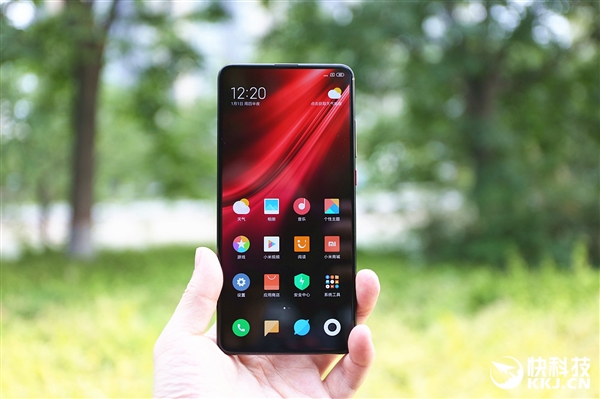
The Mi 9T has a 6.39-inch FHD+ AMOLED display with a fingerprint scanner under the screen. It is powered by the Snapdragon 730 processor, has 48MP + 8MP + 13MP triple rear cameras, and a 20MP pop-up selfie camera. It also has a 4000mAh battery with 18W fast charging and runs MIUI based on Android 9 Pie.
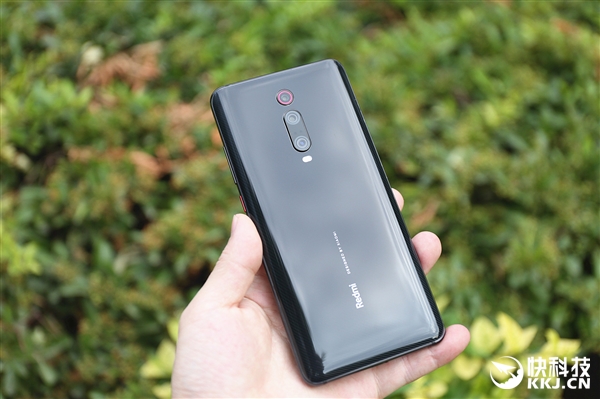
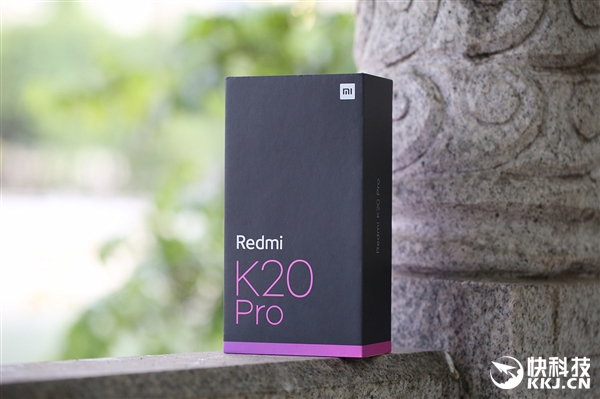
On May 28, Xiaomi’s Redmi brand launched the Redmi K20 Pro and Redmi K20 as its first flagship phones powered by Qualcomm’s latest Snapdragon 855 chipset. Before now, the Redmi brand is known for budget and premium mid-range phones with affordable pricing. All that has changed with the Redmi K20 and K20 Pro, well, except for the cost-effective price they adopt. Pricing for the K20 Pro starts at 2,499 Yuan (~$362) for the 6GB+64GB variant. Here we bring you the Redmi K20 Pro hands-on pictures as a captured by Chinese tech blog MyDrivers.
The Redmi K20 Pro is no doubt the top-end variant among the two and a look at the design features affirm that. The phone adopts a notch-less design and Xiaomi was able to achieve this using a pop-up selfie camera. The camera is located in the top left corner of the display and houses a 20MP sensor. The camera is said to pop up in just 0.8 seconds and has a sapphire lens cover. The device comes with a USB-C port at the bottom edge and also has the SIM card slot at the bottom edge instead of on the side. This is due to the pop-up camera on the area the slot is supposed to be located. The phone has dual SIM slots and sadly, there is no microSD slot if there is need to expand the memory.
At the rear, the phone packs a triple camera setup aligned vertically at the centre. The glass back panel means there is no rear fingerprint sensor. Instead, you get an in-display fingerprint sensor onboard the K20 Pro. The Redmi logo is crest at the bottom with the inscription “Designed by Xiaomi”. The glass panel is curved at the edges, adding to the aesthetics of the device.
As a reminder, the phone packs a 6.39-inch AMOLED display with 91.9% screen ratio. The phone comes with hardware DC dimming feature. At the helm is a Snapdragon 855 chipset paired with 6GB/8GB of RAM. There are 64GB, 128GB and 256GB storage options. The device gets its power from a 4000mAh battery with support for 27W fast charge. It is available in flame red, glacial blue, and carbon fibre black colours. Check out more pictures of the Carbon fibre black variant from below. For more details on the models, read our launch article.
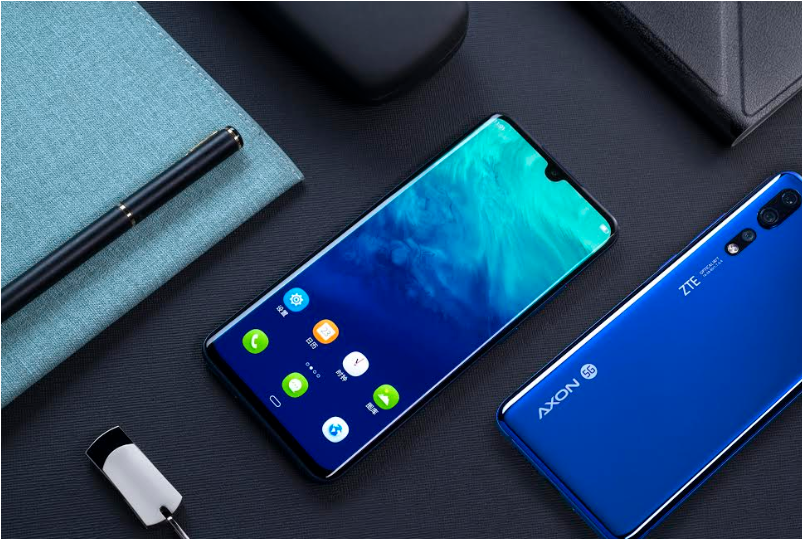
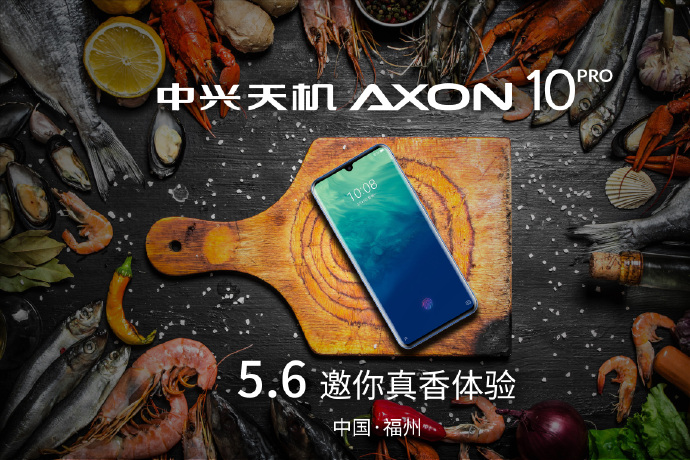
Chinese telecommunications equipment giant ZTE has teamed up with Finnish telecom service provider Elisa to launch the Axon 10 Pro 5G in Finland. The launch of the 5G phone makes the device the first 5G flagship smartphone to become available in Northern Europe. It also signals the start of the release of the Axon 10 Pro 5G in Europe just as scheduled.
ZTE Axon 10 Pro 5G
A press release by the Chinese tech giant indicates that the device will be sold on Elisa’s online and offline stores from May 28. This means the flagship is already on sale in Finland. The company disclosed that the Axon 10 Pro 5G has also been released in Dubai in partnership with Du. Further, the press release stated that “ZTE has deployed 5G device field tests with mainstream carriers in 8 countries around the world, including Austria, Australia, China, Finland, Spain, and Italy.” Thus, we may see the phone gets released in other countries in Europe soon. The 4G version of the phone is already available in China, Germany, Sweden and Finland.
The Axon 10 Pro 5G is powered by Qualcomm’s Snapdragon 855 processor with the X50 5G modem and so offers 5G connectivity for super fast internet. The phone comes with an in-display fingerprint sensor. On the camera end, it has a 48MP f/1.7 primary camera, a 20MP f/2.2 ultra-wide angle lens with a 125° FOV, and an 8MP f/2.4 telephoto lens in a triple camera arrangement. The Axon 10 Pro 5G also comes with 3x optical zoom, 5X hybrid zoom, and 10x digital zoom. There is also a 20MP front camera for selfies.
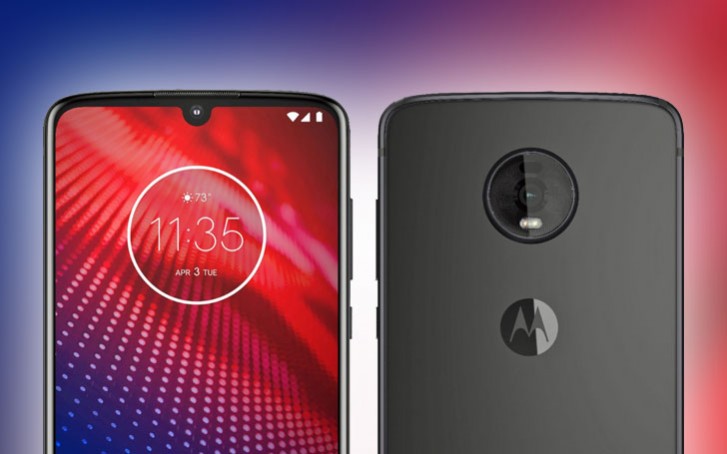
Motorola Z-series phones have always felt premium, with rigid aluminum frames and dramatic flat backs to attach their mods, such as add-ons like a projector, an external battery, or a 5G modem. That last one is especially important, seeing as it comes straight from Verizon themselves. That’s right, the Moto Z4 is coming to Verizon, with a 5G Moto Mod in tow.
The Moto Z4’s Geekbench listing shows that it runs a Snapdragon 675 SoC. This will be paired with 4GB of RAM. We can expect to see other RAM configurations later, as well as Android 9.0 P straight out of the box. It’ll also have a 6.4-inch OLED FullVision display with a resolution of 1080 x 2340 and a 19:9 aspect ratio. The display is embedded with an in-screen fingerprint sensor.
The selfie notch of the Moto Z4 features a 25-megapixel sensor. The rear side of the phone is fitted with a single camera of 48-megapixel. The buyer of Moto Z4 phone has shared some of the images that were snapped using its rear camera. The device is powered by a 3,500mAh battery that carries support for 15W TurboPower through USB-C. It also comes equipped with wireless charging support.
The Moto Z4 may have already been purchased and received by one lucky customer, but it’s not officially for sale yet. That changes soon. Verizon has announced that the Moto Z4 will go on sale starting June 13th for $499.99. Customers who purchase a 5G Moto Mod will even get free 5G Ultra Wideband service thrown in.
HMD Global will be having two separate launches on June 6. It is set to launch the Nokia 9 PureView in India on that day. Now the phone maker has announced it will also have a launch event in Milan, Italy.
Invites have already been sent out to guests and the official Twitter account has released a teaser for the launch. The teaser doesn’t reveal any hint about the device(s) that will be announced though it does seem as if the camera will be a selling point.
There are speculations that HMD Global will announce the Nokia 6.2 and Nokia 5.2. The former is already overdue for a successor. The Nokia 6.2 is expected to come with a punch hole display just like the China-exclusive Nokia X71. It should also have dual rear cameras and a rear-mounted fingerprint scanner.
However, rather than the Snapdragon 660, the Nokia 6.2 is said to be powered by the Snapdragon 632 processor found in the Moto G7 and Redmi 7.
There is still a week to the launch and we expect more details will surface before then.
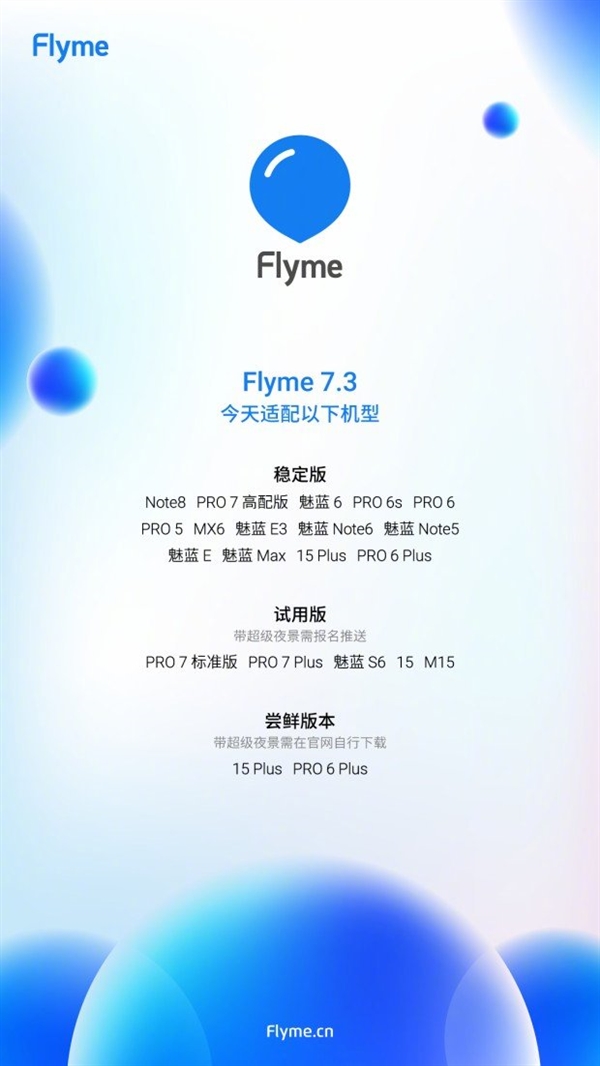
Meizu’s Flyme OS 7.3 was revealed earlier this month, and we’ve been waiting for an update list. Well, Meizu just released the list to the public to peruse. There doesn’t seem to be any important devices missing, and it’s a decent list. We also learn that Flyme 7.3 will be the final version of Flyme 7, with Flyme 8 coming up very soon.
The new update integrates Meizu Pay app with the Flyme system for touchless payments experience using the bank, bus and other access cards. The company has integrated the whole system with NFC. Furthermore, users can now set the default payment option by going into the settings menu. One-touch Android Beam is also a part of the new system.
After the update, Meizu 16s users can toggle between DC dimming and PWM dimming. DC dimming significantly reduces the eye strain while using the AMOLED displays at lower brightness. Meizu also added enhanced gaming experience, a new battery UI, NFC toggle, Android Beam and smoother experience.
Moreover, Meizu introduced One Mind 3.0 based on Android Pie and Flyme 7.3 version. Meizu’s internal apps like Shutdown Wake 3.0, Smart Free 3.0, Resource Manager 2.0, Memory compression 2.0, etc have also been optimized for better performance. The update solved various bugs like black screen not responding, icon switch toggle error, etc.
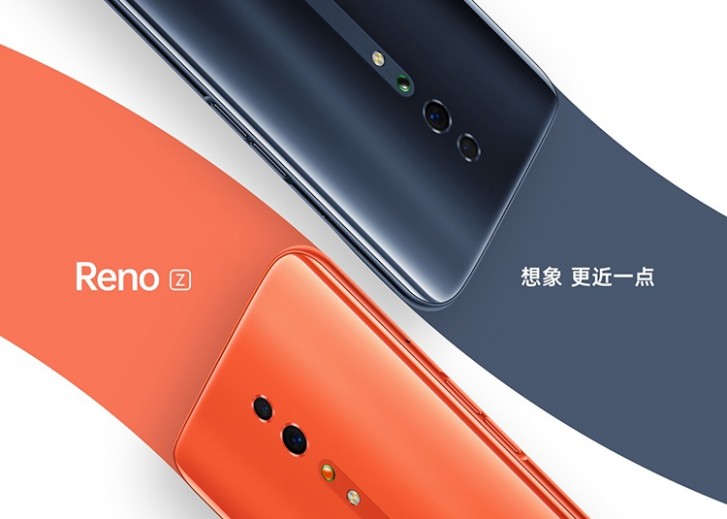
OPPO has quietly released a new model under the Reno series dubbed OPPO Reno Z. The device is presently up for reservations on OPPO’s official online store in China as well as Jingdong (JD.com). The Reno Z comes as the fourth member of the Reno series and it comes with trimmed down specs and that also translates to a more affordable price tag.
Specs wise, the OPPO Reno Z sports a 6.4-inch AMOLED screen with FHD+ resolution. The display design also includes a waterdrop notch at the top which houses a big 32MP selfie camera. In addition, the display comes with HDR 10 support and equally packs an under-display fingerprint scanner. The rear design is similar to the Reno as the Reno Z packs a dual camera setup comprising a 48MP Sony IMX586 main sensor and a 5MP depth sensor. OPPO went for a Mediatek Helio P90 chipset for the Reno Z. The device comes in 6GB RAM + 256 GB storage as well as 8GB RAM + 128GB storage variants.
For software, the smartphone runs Android 9.0 Pie-flavoured ColorOS 6. Keeping the lights on is an impressive 4035mAh battery with OPPO’s 20W VOOC 3.0 fast charging support. The Reno Z also comes with NFC and Dolby Atmos support for optimum sound quality.
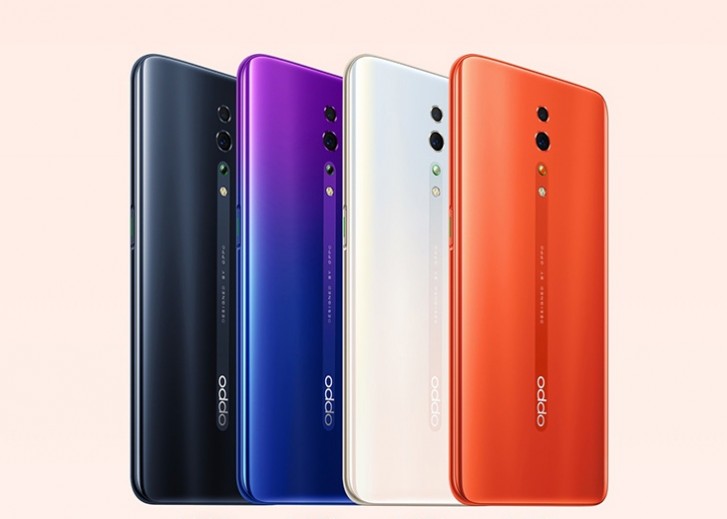
As for the price, the OPPO Reno Z comes with a price of 2,499 Yuan ($362). The phone comes in Night Black, Star Purple, Bead White and Coral Orange colours. It will officially go on sale in China on June 6.
Xiaomi has finally confirmed the Mi 9T name via a teaser on Twitter. The Mi 9T has been a regular in the rumour mills lately and the teaser finally confirms its existence. The confirmation comes on the heels of speculations that the device will be launched soon. Xiaomi had even released a teaser earlier on which sought the option of fans on what the letters among the trio of K, I, or T best suit the latest member of the Mi 9 family. This new teaser is a response to that question.
The teaser didn’t reveal any detail of the Mi 9T but rumour has it that the device will be released alongside the Mi 9T Pro. It is also said that both models will arrive as rebranded Redmi K20 and K20 Pro models. This rumour was first carried a Polish blog which claimed that these Redmi flagships will be launching as Xiaomi Mi 9T and Mi 9T Pro in Poland. A Russian tech blog also rumoured that the Redmi K20 and K20 Pro will be arriving as Mi 9T and Mi 9T Pro in Russia in the coming month. The blog even tipped that the Mi 9T and Mi 9T Pro will be respectively priced around RUB 25,000 (~$387) and RUB 35,000 (~$540).
The Mi 9T was also recently certified in Thailand as well as Taiwan, Singapore and by the Eurasian Economic Commission. While the specifications are still not revealed, the spread of the certification shows the model will likely be sold globally when it launches. Further, Xiaomi had teased a render of the Mi 9T yesterday showing a triple rear camera setup, pop-up selfie camera, curved-edge display and the rear panel with a gradient finish. That’s basically the design of the Redmi K20 Pro. So we may see the Mi 9T coming with the Redmi K20 series design but with some slight modifications. Another thing we could pick up from the official tweet is that the phone may come with a 5G version. Xiaomi is yet to reveal a date but the launch is likely imminent.
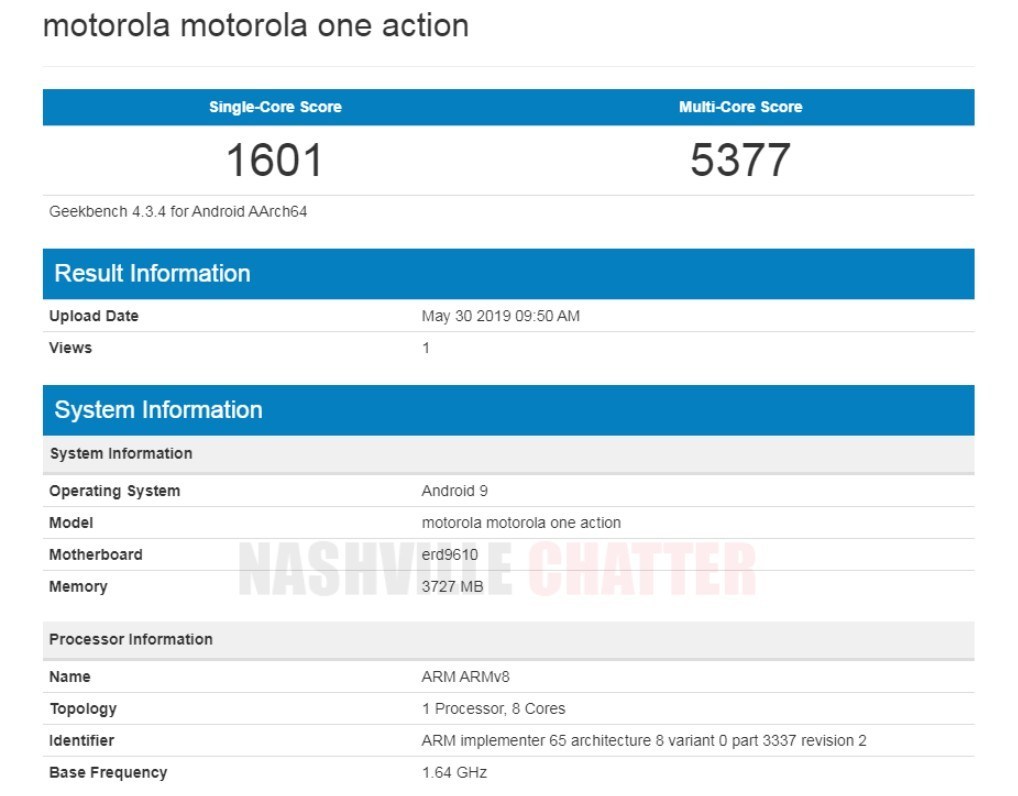
A few weeks ago, Motorola announced the Motorola One Vision in Brazil. The device is its first smartphone with a punch hole display and is powered by an Exynos 9609 processor. It has been reported that there will also be a Motorola One Action and a Motorola One Pro. The former has now been spotted on Geekbench and it shares a few key specs with the One Action.
The Motorola One Action was benchmarked earlier today. It runs Android 9 Pie and has 4GB of RAM just like its sibling but the similarities don’t end there. Geekbench says the device is powered by the “erd9610”.
This is the same chipset shown in the Geekbench listing for the Motorola One Vision. When the phone launched, we found out it is actually powered by Samsung’s Exynos 9609 processor. This means the Motorola One Action will also come with the same processor.
With the RAM and processor the same, we believe Motorola will find ways to distinguish the two phones. The Motorola Action may have a different design, camera configuration, and maybe even a different battery capacity.
Nevertheless, it will also be an Android One phone with guaranteed updates to Android Q and Android R.
We use cookies on our website to give you the most relevant experience by remembering your preferences and repeat visits. By clicking “Accept”, you consent to the use of ALL the cookies.
This website uses cookies to improve your experience while you navigate through the website. Out of these, the cookies that are categorized as necessary are stored on your browser as they are essential for the working of basic functionalities of the website. We also use third-party cookies that help us analyze and understand how you use this website. These cookies will be stored in your browser only with your consent. You also have the option to opt-out of these cookies. But opting out of some of these cookies may affect your browsing experience.
Necessary cookies are absolutely essential for the website to function properly. This category only includes cookies that ensures basic functionalities and security features of the website. These cookies do not store any personal information.
Any cookies that may not be particularly necessary for the website to function and is used specifically to collect user personal data via analytics, ads, other embedded contents are termed as non-necessary cookies. It is mandatory to procure user consent prior to running these cookies on your website.