Marking smartphones is as important as making good smartphones. However, marking isn’t as easy job, especially you are in a market like smartphones which is heavily crowded. To stand out from the crowd, the companies try to make witty remarks and ads.
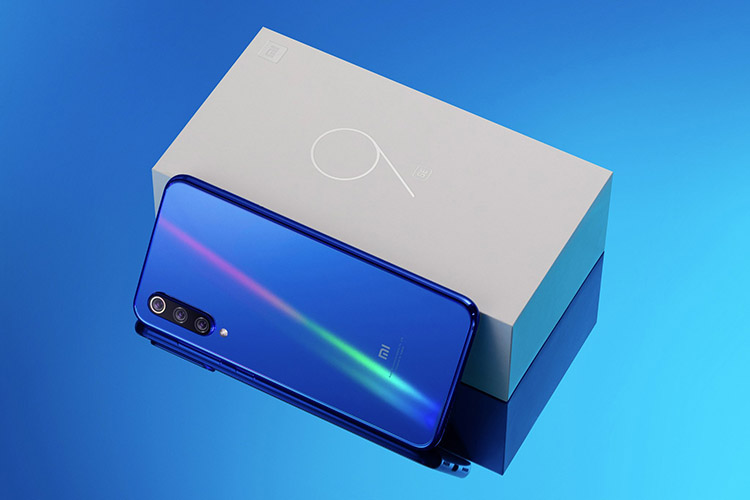
Xiaomi tried to do the same for the marketing of its Mi 9 SE smartphone by posting a video on Twitter. However, instead of getting people interested in the smartphone, the move backfired because of the content. Realizing this, the company soon took down the ad.
The video shows a couple in bed and the man is using his smartphone. He is shown responding to late-night, flirty messages from another woman on Facebook Messenger. He subsequently gets caught. In a text accompanying the video, the company implies that he’d have gotten away with this if he’d been using a Mi 9 SE.
This was posted by the company’s Xiaomi Malaysia Twitter account and as said, the advertisement has now been deleted by the company. This isn’t the first time that the company’s attempt has backfired.
Last year, after launching the Mi A1 Android One smartphone, Xiaomi ran a poll on Twitter asking its followers whether they preferred MIUI or Android One. But due to a result deemed unsatisfactory by Xiaomi, the tweet was removed by the company.
As for the Mi 9 SE, the smartphone comes with a 5.97-inch AMOLED display having 1080 x 2280 pixels resolution and Gorilla Glass 5. The device is powered by Qualcomm Snapdragon 712 SoC coupled with 6GB RAM and 64/128GB internal storage.
On the back, the smartphone feature a triple camera module – a 48MP primary sensor, a 13MP ultra-wide sensor, and an 8MP telephoto sensor. A single 20 MP camera is present on the front side for selfies and video calling.
The device runs Android 9.0 Pie operating system with the company’s own MIUI V10 custom UI on top. It measures 70.5 x 147.5 x 7.45 mm and weighs 155 grams. The phone is powered by a 2070mAh battery and comes with 18W fast charging support.
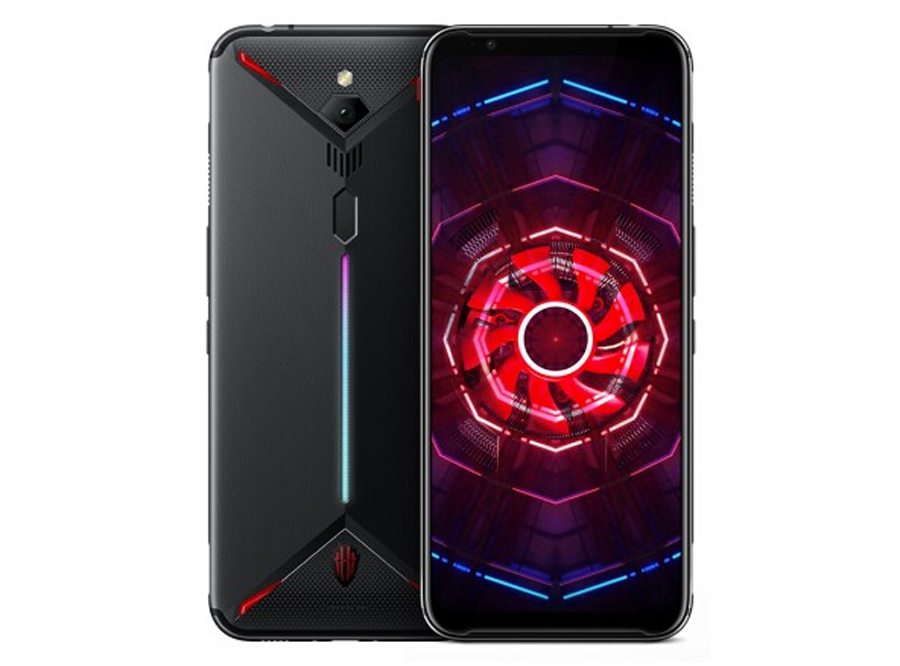
After floating around the rumor mill and making several appearances online, the Nubia Red Magic 3 gaming smartphone was finally announced this month. The black and red color versions of the phone offering 6GB/8GB of RAM and 64GB/128GB of internal storage capacities have gone up for pre-order on Giztop. Let’s check out the details.
The 6GB RAM, 128GB ROM variant of the Red Magic 3 gaming phone carries a $599 price tag, while the smaller model that ships with 6GB of RAM and 64GB of internal storage capacity will set you back $539. Both versions are available in black color option. Those who fancy using their phones for heavy gaming can go for the larger model that features 8GB of RAM, paired with 128GB of onboard storage capacity. This model is available for pre-order in black and red color versions carrying a $649 price tag on Giztop.
The Nubia Red Magic 3 Gaming Phone offers the following features:
65-inch AMOLED 90Hz FHD+ gaming display
Qualcomm Snapdragon 855 Octa-core processor
Adreno 640 GPU
IP55 rating
6GB/8GB/12GB LPDDR4X RAM
128GB/256GB UFS 2.1 ROM
48MP rear camera | 16MP front camera
Redmagic OS 2.0 based on Android 9.0 OS
5000mAh battery with 27W fast charge
You can follow this link to check out the full specifications and pre-order your favorite variant without wasting time. Note that the estimated delivery for this recently unveiled gaming phone is slated for the beginning of next month.
Recently, there have been talks that the Cupertino giant was looking for partners to bring 5G compatibility to the upcoming iPhone models. Further, Apple had initiated talks to purchase Intel’s modem chip business, cited a report. After being in the negotiations with 5G modem manufacturers like Intel and Qualcomm, Apple finally joined hands with San Diego based – Qualcomm last week.
Both the companies – Apple and Qualcomm were in a tussle from the past couple of years. But surprisingly, they ended the court battle abruptly a week ago. Before the negotiations, Apple was aiming to develop its own chipsets for next year’s iPhone. To speed up the process, Apple even hired Intel’s lead developer for 5G phone modems, Umashankar Thyagarajan, in February. Though “poaching” isn’t a new concept for Apple, it does shed light on Apple’s desire to develop its own chipset in the coming years.
Apple aims to power 2021 iPhone models with its own developed chipsets, despite the six-year licensing deal, and a supply chain agreement with Qualcomm. On the other hand, Intel has entirely scrapped its plans to work on the 5G mobile modems business after Apple abandoned the 5G chip project.
According to internal emails, Thyagarajan’s departure from Intel’s 5G modem business was seen as a significant setback for Intel’s 5G ambitions. It forced the company to reshuffle the whole team but finally ended up on its 5G plans. Intel’s executives Messay Amerga and Abhay Joshi reveal in an internal email that Mr Thyagarajan had “played a key role” in the Intel chip that featured in last year’s iPhones and he had been the project engineer on developing its 5G chip, known as XMM 8160.
Intel was planning to sell off its 5G modem chip business to Apple or some other company, but all ended after Apple-Qualcomm settlement. Patrick Moorhead of Moor Insights reveals Intel’s chip business is costing around $1 billion annually, and the value is depreciating with every second without a sale.
Companies like Broadcom, ON Semiconductor Inc., Samsung, or Chinese company Unisoc Communications Inc are some potentials buyers for Intel’s business.
OnePlus is gearing up to launch its next-generation flagship smartphone next month. The China-based company has already scheduled a launch event on 14th May to unveil the upcoming smartphones.
Reports indicate that the company will be announcing three smartphones in the new lineup — OnePlus 7, 7 Pro, and 7 Pro 5G. Ahead of the official launch, many details about the OnePlus 7 and 7 Pro have been leaked online.
Now, the in-depth Lab Test results of the OnePlus 7 Pro’ OLED display by DisplayMate have been completed and it ranks at the highest with the A+ display ratings. It has been revealed that the display shoot-out of the same will be published on May 14, the day when the phone gets officially launched.
As per the reports, the OnePlus 7 Pro will feature a 6.7-inch Super AMOLED display that is curved towards the left and right edges. It will support Quad-HD+ resolution of 1440 x 3120 pixels and will have a refresh rate of 90 Hz.
Recently, the company shared a short video teaser of the 7 Pro smartphone that shows a two-dimensional drawing and reveals that the phone will have three rear cameras arranged vertically and positioned in the middle. It will have a 48MP primary camera paired with an 8MP f/2.4 telephoto lens and a 16MP f/2.2 ultra-wide angle lens.
Further, the device is said to pack 4,000mAh battery with 30W Warp Charge. The OnePlus 7 Pro will come in Mirror Grey, Almond, and Nebula Blue colors. Leak indicates that the 8GB+256GB variant will cost €749/$749, while the 12GB+256GB variant will go for €819/$819. Information about the 6GB RAM variant is not yet known.
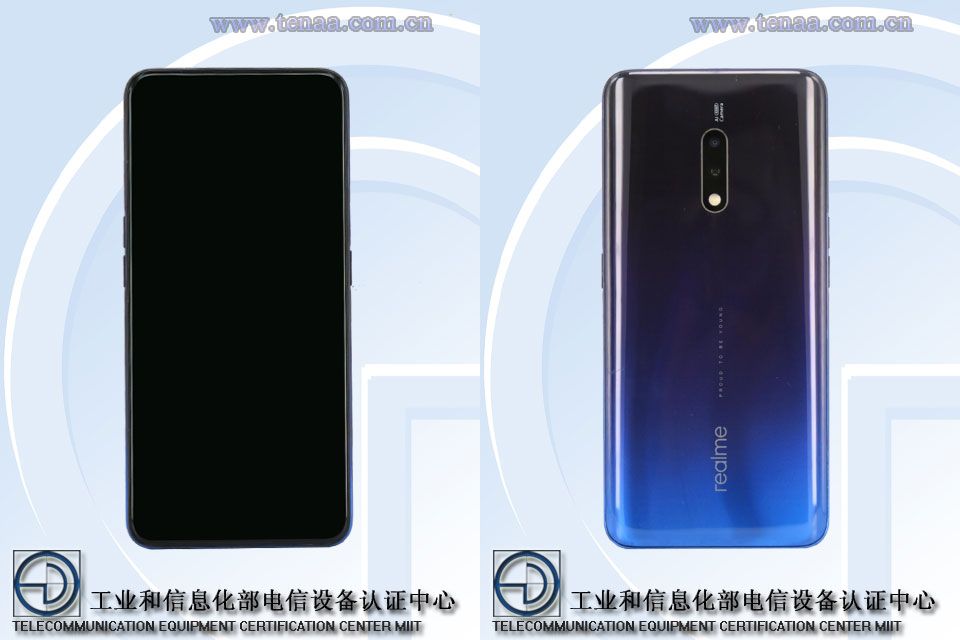
Last week, Realme RMX1851 and RMX1901 had bagged approval from China’s telecom authority. The TENAA certifications of these phones have only revealed few information such as dimensions, display size and battery capacity. The RMX1851 is the Realme 3 Pro smartphone that was recently made official in India. The identity of the RMX1901 phone is not known yet. Its TENAA images have suggested that it could be featuring a pop-up selfie camera module. Toda, Realme has released its new theme song on Weibo. The video features the very same RMX1901 mysterious phone with notch-less display and pop-up selfie camera.
At the very beginning of the video, the handset is shown sporting a 3.5mm audio jack on its top edge. Few seconds into the video, the front view of the phone is revealed. The handset features a huge display. According to TENAA listing, the smartphone is equipped with a 6.5-inch display that probably carries support for full HD+ display.
The display is surrounded by super-slim bezels and it has a thick-sized chin. Going ahead of the video, the smartphone is seen with its center-positioned pop-up selfie camera. The video gives a glimpse of the rear panel of the phone, but nothing about its design can be deduced from it.
The TENAA images of the RMX1901 have revealed that it features a vertical dual camera setup and an LED flash on its rear shell. A fingerprint scanner is not available on the rear side of the device. It appears that the phone could be feature an OLED display that is embedded with an in-screen fingerprint scanner. The smartphone measures 161.2 x 76. x 9.4mm and it houses a battery that has a minimum capacity of 3,680mAh.
Realme is yet to confirm on the launch date for Realme 3 Pro in China. It features a 6.3-inch IPS LCD display with waterdrop-style notch. It supports full HD+ resolution and an aspect ratio of 19.5:9. The Snapdragon 710 SoC powers the phone along with 4,000mAh capacity that carries support for 20W VOOC 3.0 fast charging. It features 16-megapixel + 5-megapixel dual camera setup and a front-facing snapper of 25-megapixel. The ColorOS 6.0 based Android 9 Pie comes preloaded on the device.
In India, the Realme 3 Pro comes in three models such as 4 GB RAM + 64 GB storage, 6 GB RAM + 64 GB storage and 6 GB RAM + 128 GB storage. These models are respectively priced at Rs. 13,999 (~$200), Rs. 15,999 (~$229) and Rs. 16,999 (~$243).
Yesterday, Redmi had conveyed through Weibo that it will be making a new announcement today. Keeping true to its promise, the Chinese brand released the first teaser of an upcoming Redmi phone earlier today on the microblogging website. The teaser reveals that the forthcoming Redmi flagship phone will come equipped with a pop-up selfie shooter.
The new video teaser showcases the new “Avengers: Endgame” movie along with some images of the recently released Redmi phones in between. At the end of the video, a mysterious Redmi phone shows up with notch-less display design along with a pop-up selfie camera. Redmi is using “flagship” term to tease the phone, but its exact name is still under the wraps.
Could the mysterious Redmi smartphone with pop-up selfie camera be the Snapdragon 855 powered phone? Rumors have claimed that the Snapdragon 855 Redmi smartphone will be arriving with up to 8 GB of RAM, up to 128 GB of inbuilt storage, 32-megapixel selfie camera, 48-megapixel + 8-megapixel + 13-megapixeel triple camera, NFC, 3.5mm audio jack and a display of 6.39 inches. While many rumors have stated that it will be arriving with a notch-less display, other sources have also claimed that it could be featuring a punch-hole display. Redmi General Manger Lu Weibing had claimed in the recent past that the Redmi SD855 will deliver stronger performance, better cameras, high screen-to-body ratio and affordable price tag.
Rumors have it that there is an upcoming Redmi phone powered by Snapdragon 730 SoC. It is rumored to include a notch-less screen and a pop-up front camera. It is speculated to arrive with 4,000mAh battery and 48-megapixel + 8-megapixel + 13-megapixel triple camera system. This phone seems to have been officially teased by Xiaomi India Managing Director, Manu Kumar Jain in the past week. Jain has hinted that the company will be soon launching a Snapdragon 730 powered smartphone in India. However, he did not share any other information on the phone.
Redmi may want to launch a less powerful phone before it unveils the Redmi Snapdragon 855 smartphone. Hence, it is advisable to wait for further teasers from the company to confirm whether it is the SD730 or SD855 powered Redmi phone.
A few weeks ago, Oppo took the wraps off its new flagship lineup — Oppo Reno. So far, the company has launched two models of the series in China — Oppo Reno and Oppo Reno 10X Zoom Edition.
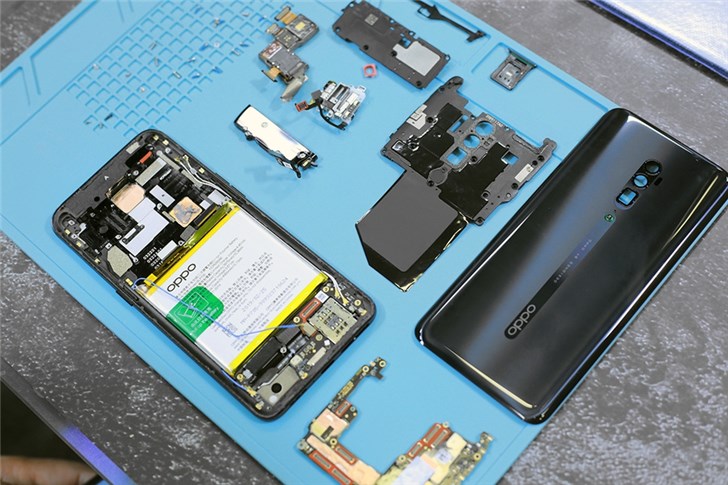
The phone, which is currently available for pre-order in China and before the device goes up for sale, here’s the teardown of the Reno 10X Zoom Edition, explaining the internals of the flagship smartphone.
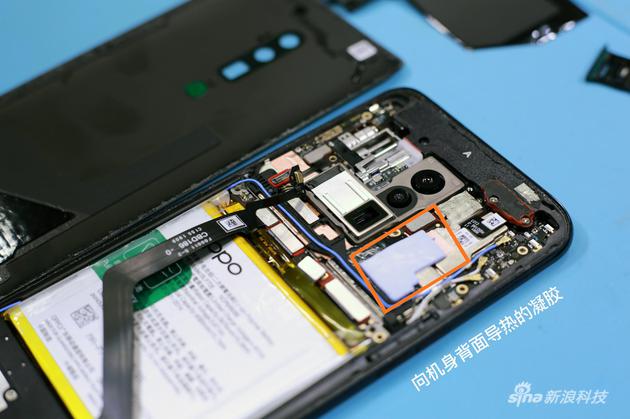
Removing the plastic back cover of the phone reveals that it is connected to the NFC chip. The company has made some changes on both sides of the cover, including the addition of grooves for heat dissipation gel and to make the wire turn to the flash.
Moving ahead, we can see the two major highlights of the smartphone — the new and unique pop-up camera mechanism and the 10X hybrid zoom triple-camera setup for the back panel. Because of these two features, the PCB board or the motherboard layout is quite compact compared to others.
It seems that the device offers a good level of heat dissipation on the motherboard. It has metal shields on both the front as well as the back and a uniform copper foil. Also, silicone grease and gel have been added to the front and the back side of the CPU core area.
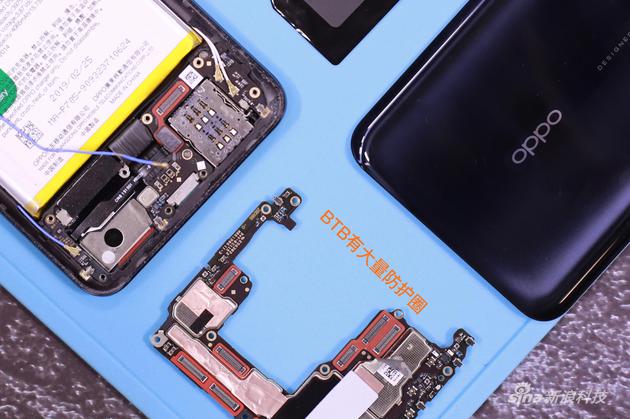
There’s also soft protective ring protection around the BTB and the lens for the protection and is not much difficult to take it apart. However, the precision and the quality used for this definitely looks like a flagship-grade device.
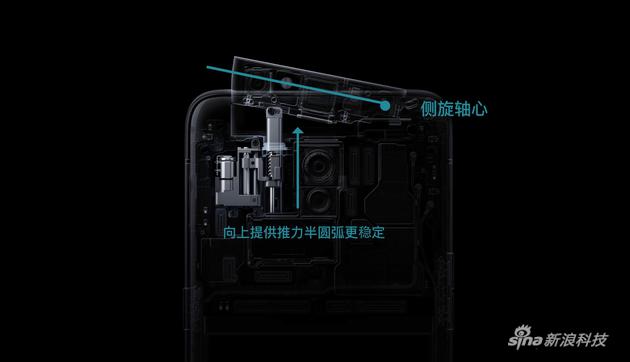
The smartphone has a unique pop-up mechanism and so does its implementation and layout under the hood. It combines a front camera, soft light, an earpiece, a microphone, and a rear flash on the asymmetrical rotating structure and the stepper motor is placed on the right side. The volume of the transmission part is also small and has a seven-toothed gear that reduces movement sound.
The whole pop-up mechanism is made up of a circular motion which centers on one point on the right side of the fuselage. The guide rail is made of a metal frame which offers much higher stability.
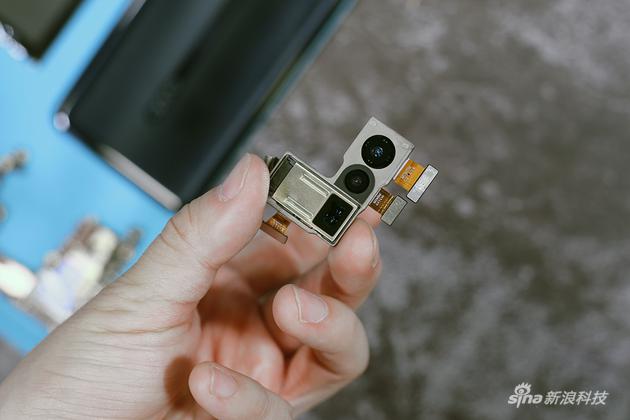
Coming to the major highlight — the 10X Hybrid Zoom camera setup — it comes with a 48 MP primary sensor, an 8 MP wide-angle lens, and a 13 MP telephoto lens. These three lenses are held together in an L-shaped arrangement and are fixed by a gel.
It seems that the periscope lens, which measures 11.5 x 5.7 x 24.5 mm, is separately packaged in another metal cover. When opened, along with the CMOS for the general lens, it can be seen that the lens and the refractive prism are much larger than the conventional size. The company has also customized the lens module to cut the circular lens further in parallel, reducing the volume occupation, which is the origin of the D-Cut module. To achieve the anti-shake effect, the company uses electromagnetic control.
Overall, the internal structure of the Oppo Reno 10X Hybrid Zoom Edition is quite compact. As with the unique pop-up mechanism, the internals for the same is also executive a bit differently. It also takes care of the heat dissipation and offers protections for regular usage. So, the phone does have the flagship grade build quality.
OPPO is reportedly planning to launch a new entry-level smartphone in India named OPPO A1K. Recent reports have revealed plenty of details on the specifications of the smartphone. Fresh information shared by 91mobiles reveals that it will be announced on May 2.
Citing information received from retail sources, the publication has claimed that the offline sales of the OPPO A1K smartphone will begin on May 2 across India. As of this writing, there is no word on the online availability of the smartphone. As it was revealed earlier, the OPPO A1K will be hitting the Indian markets with a price tag of Rs. 7,990 (~$114).
OPPO A1K Specifications and Features
The OPPO A1K will be arriving with a 6.1-inch IPS LCD panel that offers HD+ resolution of 1560 x 720 pixels. The waterdrop-styled notch display of the smartphone will be shielded by Corning Gorilla Glass panel. The MediaTek Helio P22 chipset that comes with 2.2 GHz octa-core processor will be present under the hood of the phone.
The SoC is supported by 2 GB of RAM. It has an internal storage of 32 GB. For additional storage, the phone is equipped with 32 GB of native storage. The smartphone includes a battery of 4,000mAh capacity. It is equipped with a front-facing camera of 5-megapixel and a rear-mounted camera of 8-megapixel. There is no fingerprint scanner on the device. Hence, the only biometric recognition feature available on the device will be face unlock. It is loaded with ColorOS 6.0 based Android 9 Pie OS.
The OPPO A1K was recently announced in Russia with a price tag of 9,990 Rubles (~$157). Black and Red are the two color variants of the smartphone.
Gizmochina along with GearVita is conducting 1 unit QCY T1C earphones, 1 unit Xiaomi Redmi AirDots earphones and 1 unit Meizu EP52 earphones as giveaway gift to three lucky readers. Like always, you just have to follow the steps mentioned on the Gleam widget to get a chance to win this amazing gift.
If you want to win free Bluetooth Earphones, the most important thing is to Follow and Like the GearVita’s Facebook.
The winner will be post at the Facebook and twitter of Gizmochina, so follow the pages.
The QCY T1C and the Xiaomi Redmi AirDots are TWS earphones, and the Meizu EP52 is the neckband earphones. QCY T1C Mini Wireless Earphones comes with Bluetooth V5.0 and 10M connection with no obstacle. They are fueled with 43mAh battery and 380mAh charging box, and they can be used at most 16 hours with the charging box. It needs to charge 2 hours from empty to full. The Xiaomi Redmi AirDots have the similar design with QCY T1C earphones. But the charging box is definitely different. The charging box of the Redmi AirDots has a lid, and the QCY T1C doesn’t. The Meizu EP52 Bluetooth earphones fit all smartphone and tablet. The Meizu earphones come with unique nano-coating and IPX5 water resistance, which can protect it from water or sweat.
Share this giveaway contest on Facebook, Twitter and Reddit.
Terms & Conditions:
1. The giveaway is an international giveaway. 2. We are not responsible for lost shipments. 3. We are not responsible for any duties, import taxes that you may incur. 4. We reserve all rights to make any changes to this giveaway. 5. The prize will be shipped in a month when the giveaway end.
Just follow the steps mentioned in the Gleam widget to participate in the giveaway.
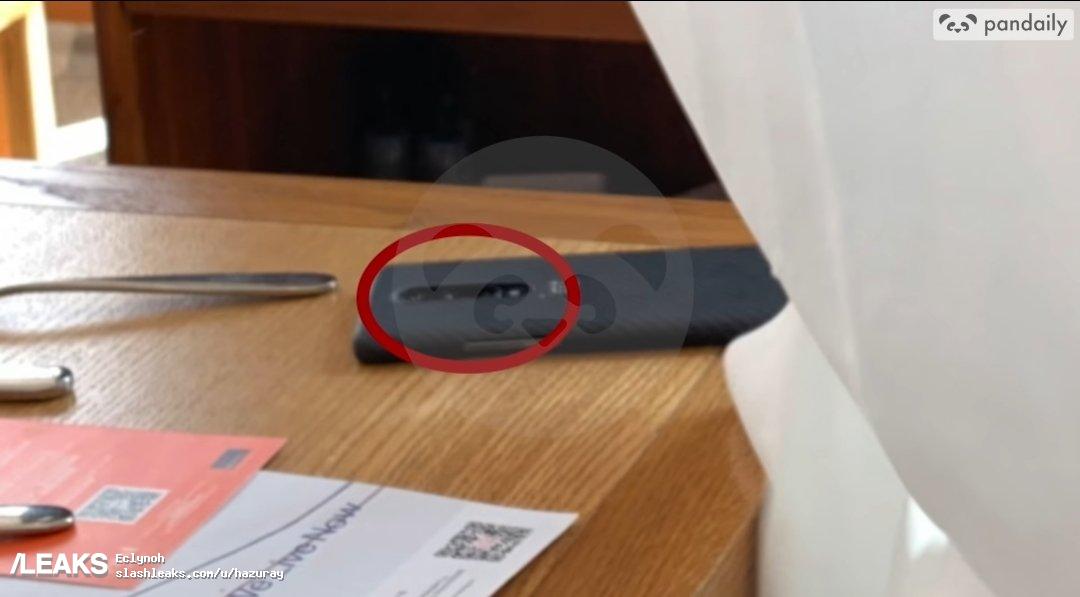
OnePlus 7 and OnePlus 7 Pro are scheduled to go official on May 14. Recent reports have revealed that the OnePlus 7 will be sporting a notched display design along with dual rear cameras like the OnePlus 6T smartphone. On the other side, the OnePlus 7 Pro has a triple camera setup on its rear and a notch-less display with pop-up selfie camera. The OnePlus 7 has seemingly made its appearance in a new music video by Indian singer Neha Bhasin made available through the OnePlus Playback which serves as a platform to promote independent music. At the same time, an unknown user was able to snap two images of OnePlus CEO Pete Lau with OnePlus 7 Pro placed on his table at a restaurant.
What’s interesting about the mysterious OnePlus phone with dual rear cameras that has appeared in the handset is that does not feature waterdrop-styled notch. This mysterious handset could be the cheaper OnePlus 7 phone and its front shots from the music video suggests that it will be also sporting a notch-less display like the OnePlus 7 Pro smartphone. Also, like the Pro sibling, the OnePlus 7 handset may arrive with pop-up selfie shooter.
The alleged OnePlus 7 phone in the video features a flat display panel. Also, the vertical dual camera setup appears somewhat different from what was revealed through the renders made by popular tipster @OnLeaks. The LED flash has a pill-shaped appearance whereas the renders by the tipster carried circular LED flash. In fact, the rear appearance of the purported OnePlus 7 resembles with OnePlus 6T handset. The absence of rear-facing fingerprint scanner confirms that the phone features an in-display fingerprint reader.
The OnePlus 7 Pro has also shown up along with the CEO Pete Lau in fresh images. The new images show that the handset has an elongated camera setup that could be housing triple rear cameras. The frontside of the phone is not visible since it is kept upside down on the table.
Recent reports have claimed that the OnePlus 7 will have a 6.4-inch display full HD+ display, Snapdragon 855 SoC, 48-megapixel + 5-megapixel dual camera, 3,700mAh battery with 20W fast charging technology and it will be releasing in variants like 6 GB RAM + 128 GB storage and 8 GB RAM + 256 GB storage. On the other side, the OnePlus 7 Pro is expected to come with a 6.7-inch curved AMOLED display with quad HD+ resolution, Snapdragon 855, 48-megapixel + 8-megapixel + 16-megapixel triple rear cameras, a 4,000mAh battery with 30W rapid charging. It may release in variants like 6 GB RAM + 128 GB storage and 8 GB / 12 GB RAM + 256 GB UFS 3.0 storage. The OnePlus 7 series which also includes OnePlus 7 Pro 5G edition will be made official on May 14.
The brand name SMATE might not ring a bell to many but it is one of Xiaomi‘s ecological chain company. The start-up is best known for the portable MIJIA portable shaver. The company has some other products and in its first year in 2018, raked in a revenue of almost 200 million yuan with sales exceeding 10 million units. The MIJIA portable razor is one of its star products. We could recall it sold 10,000 units in just 30 minutes when it first went on sale. The company has now launched a facial cleansing brush.
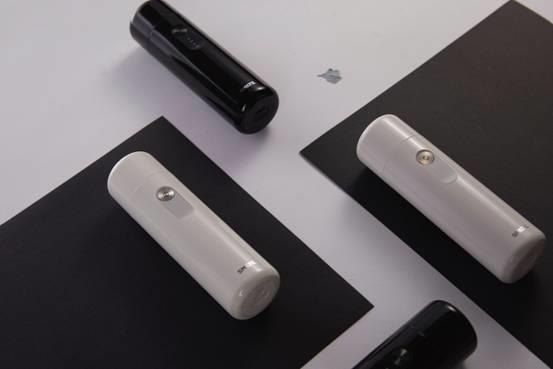
SMATE Sonic Eyebrow Cleansing instrument is designed for both men and women folks for use basically on the eyebrow. In terms of design, the gadget adopts a columnar appearance with a high-bright material, which is fashionable. The device has a built-in battery and comes with the Type-C charging interface. It can also be washed meaning it has some level of water resistance but we don’t know the IP rating exactly. The device also comes with a smart travel lock and other features.
In terms of technology, the SMATE Sonic Eyebrow Cleansing instrument adopts the combination of the most popular vibration type + ion export + precision bristles, in which the fine velvet brush head is matched with the unique conductive sheet, which will generate microcurrent during the cleaning process to penetrate the deep pores. This also helps in caring for the underlying skin. The velvet head has a diameter of only 0.075mm and is stuffed with over 27,000 bundles. There is a second nylon bristle head of same diameter. A third silicon bristle has a diameter of 0.9mm and has just 64 bristle strands. The overall bristles are delicate and gentle, with three strong and weak vibrations, so that the cleansing does not hurt the skin.
The SMATE Sonic Eyebrow Cleansing instrument will be sold on Tmall and Jingdong at the end of April. The device comes in white and black colours. The black model is priced at 299 yuan and is bundled with a fine brush head and a nylon brush head in a high-grade gift box packaging. The White coloured version is priced at 399 yuan and is equipped with the three brush heads, including four pieces of fine velvet brush. IT also comes with a high-grade gift box packaging.
Just less than a week after launching the Realme 3 Pro, Realme has announced a new 6GB+64GB memory variant for the sleek device. The Realme 3 Pro was initially launched in 4GB+64GB and 6GB+128GB variants. The new variant comes to give fans further option to choose from. Don’t forget the device is said to have an unannounced 8GB RAM variant that is tipped for release in July.
The Realme 3 Pro is scheduled to go on sale via Flipkart and Realme online store on April 29. The 6GB RAM+64GB storage variant will join the earlier two variants to go on sale. It is priced at Rs. 15,999 ($229). The 4GB+64GB variant is priced at Rs. 13,999 ($200), whereas the 6GB + 128GB variant carries a price tag of Rs. 16,999 ($243). Do note that all the storage variants can be expanded via a dedicated microSD slot.
Apart from the memory, the new variant shares basically all other features with the earlier announced variants. As a reminder, the device packs a 6.3-inch FHD+ display and is powered by a Snapdragon 710 AIE processor clocked at 2.2 GHz. The device sports a 16MP + 5MP dual rear camera setup and a huge 25MP front camera for stunning selfies. The phone crams an adequate 4045mAh battery boosted with VOOC Flash Charge 3.0 for fast charging. The Realme 3 Pro comes in Carbon Grey, Nitro Blue, and Lightning Purple colour options with a gradient finish. The Lightning Purple colour option will be released in later in May.
Huawei has been at the centre of a protracted controversy bothering on whether the company can be trusted with providing countries with 5G equipment. The US has already delivered its verdict that the company cannot be trusted and could leak customers’ data to the Chinese government. The US government has even pressed on several allies to boycott Huawei’s 5G infrastructure. The Chinese company has severally debunked these fears which they say isn’t based on any substantial evidence. Huawei even went further to claim that it is not owned by the Chinese government but by employees who are shareholders.
That claim sounded too good to be true and so it wasn’t much of a surprise when Christopher Balding of Fulbright University Vietnam and Donald Clarke of George Washington University, in a research paper, examined publicly available sources that suggest Huawei’s operating company belongs to a holding company, with Huawei founder, Ren Zhengfei, holding a 1% share. The paper went further to claim that the remaining 99% is held by a “trade union committee,” which was established under China’s Trade Union Law. However, under Chinese law, trade unions answer to the state which could mean that 99% of Huawei is effectively controlled by Chinese authorities.
Huawei has again debunked this assertion alleging that it was “based on unreliable sources and speculations, without an understanding of all the facts.” At a press conference held last week, Jiang Xisheng, chief secretary of Huawei’s board of directors, stated that a company of Huawei’s size is legally obliged to establish a trade union, which organizes social and recreational functions for the employees and has to abide by Chinese law. He further hinted that it is registered under the Shenzhen Federation of Trade Unions which certifies trade unions and carries out annual audits but doesn’t control Huawei’s trade union.
THe US government has been at the helm of efforts to stop the use of Huawei technology globally
Jiang further disclosed that Huawei had assigned an additional function for the trade union committee by making it the owner of 99% of the holding company, thus legally entrusting it to implement the company’s employee shareholding scheme. That program covers some 97,000 Huawei current and former employees and entitles them to shares and related dividends. Employees buy into this employee shareholding scheme using money from their own pockets. Should they wish to forgo the shares, they can only sell them back to the company. Jiang asserted that the employee shareholding scheme meant Huawei is owned and controlled by its shareholding employees.
The academics argue that the shareholding scheme was no more than a profit-sharing scheme as the shareholders don’t have actionable ownership, which could have actually given the employees some real control over the company. But Huawei says the shares can depreciate and thinks this makes it more than contractual interests in a profit-sharing system.
The claim still doesn’t sound too convincing but Huawei recently invited LA Times to its sprawling campuses in Shenzhen, China. Apparently, the company keeps a 10-volume printed registry under a glass case in a room in one of its campuses. The registry is said to contain the names of close to 100,000 employees said to be the company’s only shareholders. The Times reporter was also shown the names of the employees, identification numbers, departments and the total shares owned. The company in a bid to be seen as transparent, traced the origin of the company, revealing to The Times the names and occupations of the five investors who helped the founder Ren Zhenfei raise Huawei’s $5,000 start-up capital in 1987. The investors each paid equal amounts as private individuals and withdrew their stakes between 1991 and 2000, Huawei said. As convincing as it sounds, recent interviews, lawsuits and news reports still contradict parts of the company’s official narrative, making it difficult to believe the new narrative of employees ownership. We see Huawei bearing this toga of distrust around its neck for a long time.
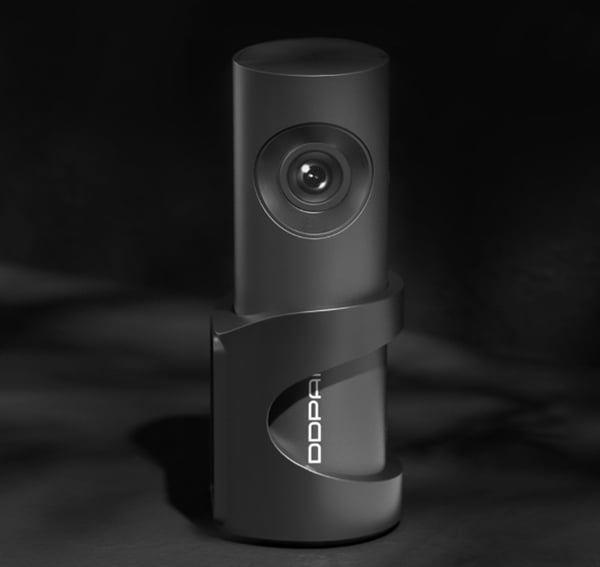
Xiaomi has launched a new dashboard camera on the Youpin platform dubbed DDPAI miniONE Dashcam Night Vision version. As the name suggests, this isn’t the first dashcam DDPAI would be launching but this version is an upgraded model with night vision capabilities. Dashboard cameras that are not capable of recording clear videos at night are almost useless since the cars also move at night. Moreso, it is more likely that a road accident would occur at night when visibility is low than during the day time.
In terms of design, it adopts a one-piece body and a compact size. The camera can be rotated 360° manually, meaning it can not only shoot outside the car but also shoot inside the car. Equipped with a voice system, you can use the voice command to take photos, mute the device and perform other operations.
The miniONE night vision dashcam has a Sony IMX307 star-level large-size image sensor with unit pixel size up to 2.9um, F / 1.8 aperture. The camera also has a 6-layer all-glass lens which greatly enhances the sensitivity. The camera is capable of achieving the wolf-eye level night vision effect. Whether it is low-light or starlight conditions, the license plates of cars and road pedestrians are still clearly visible. With gravity sensor, when the emergency brake is detected or a collision occurs, the video is well protected and the loop recording will not be covered.
The dashcam uses eMMC built-in storage, no need to purchase additional TF card, 100% save driving video, built-in reading speed is 5 times faster than TF card, record storage is more stable. At the same time, the number of eMMC erasures is up to 5000 times, and the lifetime is 10 times longer than that of the TF card. The device is available in 16GB and 32GB version. In addition, using H.265 new codec technology, video compression efficiency is greatly improved, and the same file size is smaller.
The DDPAI miniONE dashcam night vision version is officially on sale on Xiaomi Youpin. The 16GB version is priced at 299 yuan ($44) and the 32GB version goes for 369 yuan ($54). The package comes with a car charger, 3.5mm to USB charging cable, a 3M sticking pad and pry tool.
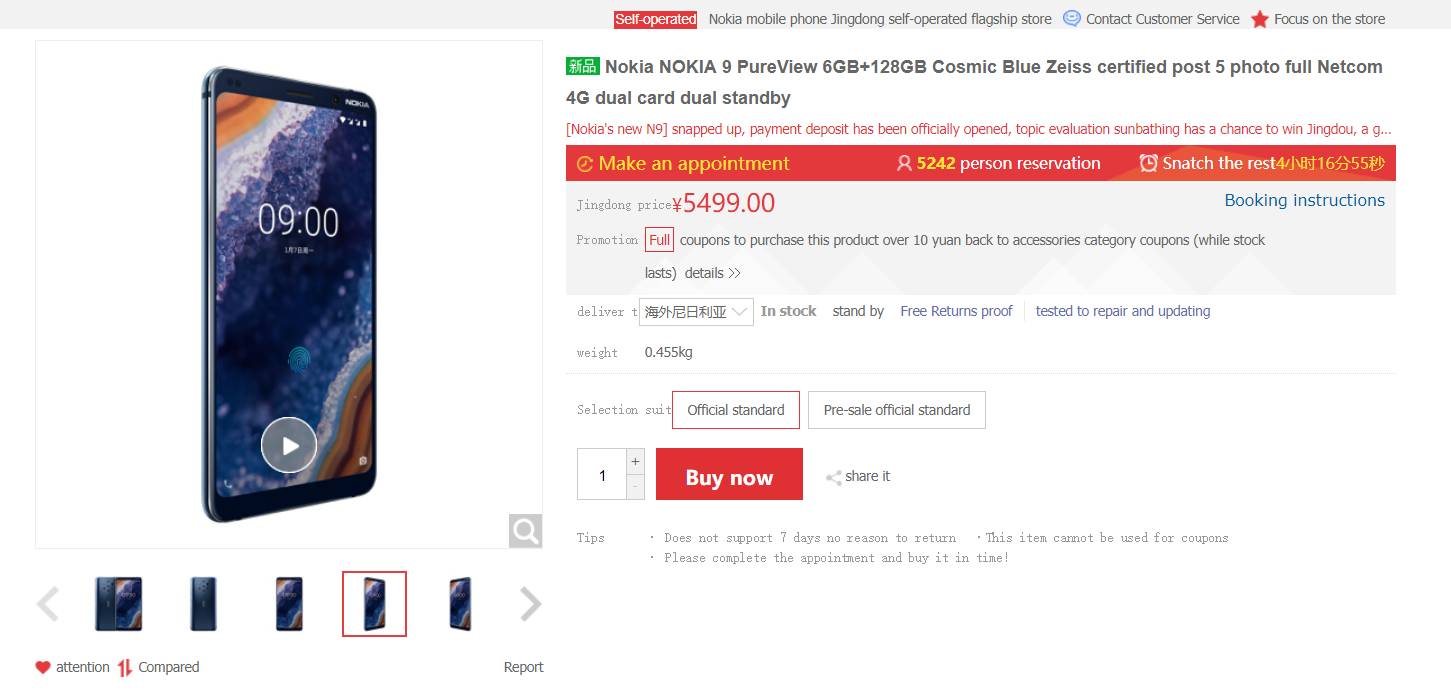
Two weeks after it was officially launched, the Nokia 9 PureView is now available for purchase in China. The phone was announced on the 15th and went on pre-order on the 19th of April.
The Nokia 9 PureView (6GB+128GB) is sold by JD.com for ¥5499 (~$817) which is pretty expensive for a Snapdragon 845 device. There are a lot of options out there such as the Snapdragon 855-powered Samsung Galaxy S10 (8GB+128GB) sold for ¥5999 (~$891) and the Kirin 980-powered Huawei P30 Pro (8GB+128GB) sold for ¥5488 (~$815). Even with the five rear cameras on the Nokia 9, HMD Global is going to have a hard time winning buyers over.
The Nokia 9 PureView is the first phone with five rear cameras. Unlike other manufacturers that use a combination of different lenses (ultra-wide angle, telephoto, depth) for their multiple cameras, the Nokia flagship uses the same 12MP f/1.8 cameras with two being RGB sensors while the other three are monochrome sensors for better low-light images. The phone fuses all the shots taken with each camera into one impressive photo.
The Nokia 9 PureView has a 5.99-inch P-OLED display with Gorilla Glass 5 protection. There is a fingerprint scanner under the display too. The Snapdragon 845 is the SoC under the hood and there is 6GB of RAM and 128GB of non-expandable storage.
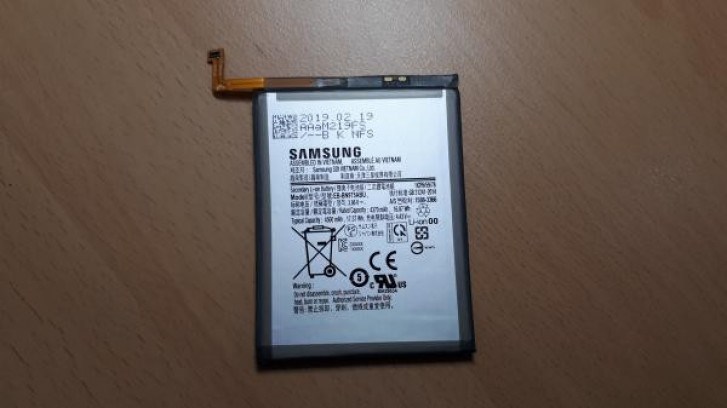
The Galaxy Note10 this year will likely be available in multiple variants. Reports say we might get as much as four variants just like the Galaxy S10 series. However, rather than a plus model, there will be a Galaxy Note10 Pro. The battery capacity of this Pro model has been revealed.
A photo alleged to be that of the Galaxy Note10 Pro’s battery surfaced on the web recently with a battery capacity of 4500mAh. The model number of the battery is EB-BN975ABU. Previous reports have revealed the Galaxy Note10 Pro’s own model number is SM-N975 which means the battery in the image is most likely its own.
Motorola will bring back the RAZR line this year and when it does, it will do so in style. The RAZR (2019) as the phone is expected to be called, will be a foldable phone with a clamshell design similar to that of the flip RAZR models of old. Press renders of the phone have been leaked on Weibo, giving us more details about the upcoming phone.
The images show the Motorola RAZR (2019) will come in a triangular prism box. The box will contain the charger which has foldable plugs, a USB Type-C cable, a pair of headphones, and a USB-C to 3.5mm audio adapter. The audio adapter included in the box is confirmation the phone will not have an audio jack.
The phone itself has a flexible display with a notch at the top. There have been rumors it will have a secondary display on the outside but the renders do not show this. Also, the renders do not provide a close-up view of the phone so we can’t see more details such as the camera(s), ports and button arrangement.
The Huawei P30 Pro is one of the best camera smartphones released this year. According to DxOMark’s camera ranking, it shares the top spot with the Galaxy S10 5G. Huawei is rolling out an update to the phone which brings camera improvements among others.
The update which is already rolling out in India is said to improve the already awesome night mode for better low-light photos and the SuperZoom feature.
There are also bug fixes for the in-display fingerprint scanner and Huawei says its sensitivity has also been improved. The update also improves audio-video synchronization, playback of Instagram videos recorded in hands-free mode, and brings April’s security patch.
The Huawei P30 Pro has a 6.47-inch display with a waterdrop notch. It is powered by the Kirin 980 processor with up to 8GB of RAM and 512GB of storage. It has four rear cameras – a 40MP standard sensor, a 20MP ultrawide angle sensor, an 8MP periscope zoom lens, and a ToF 3D camera. The phone also has a 32MP selfie camera.
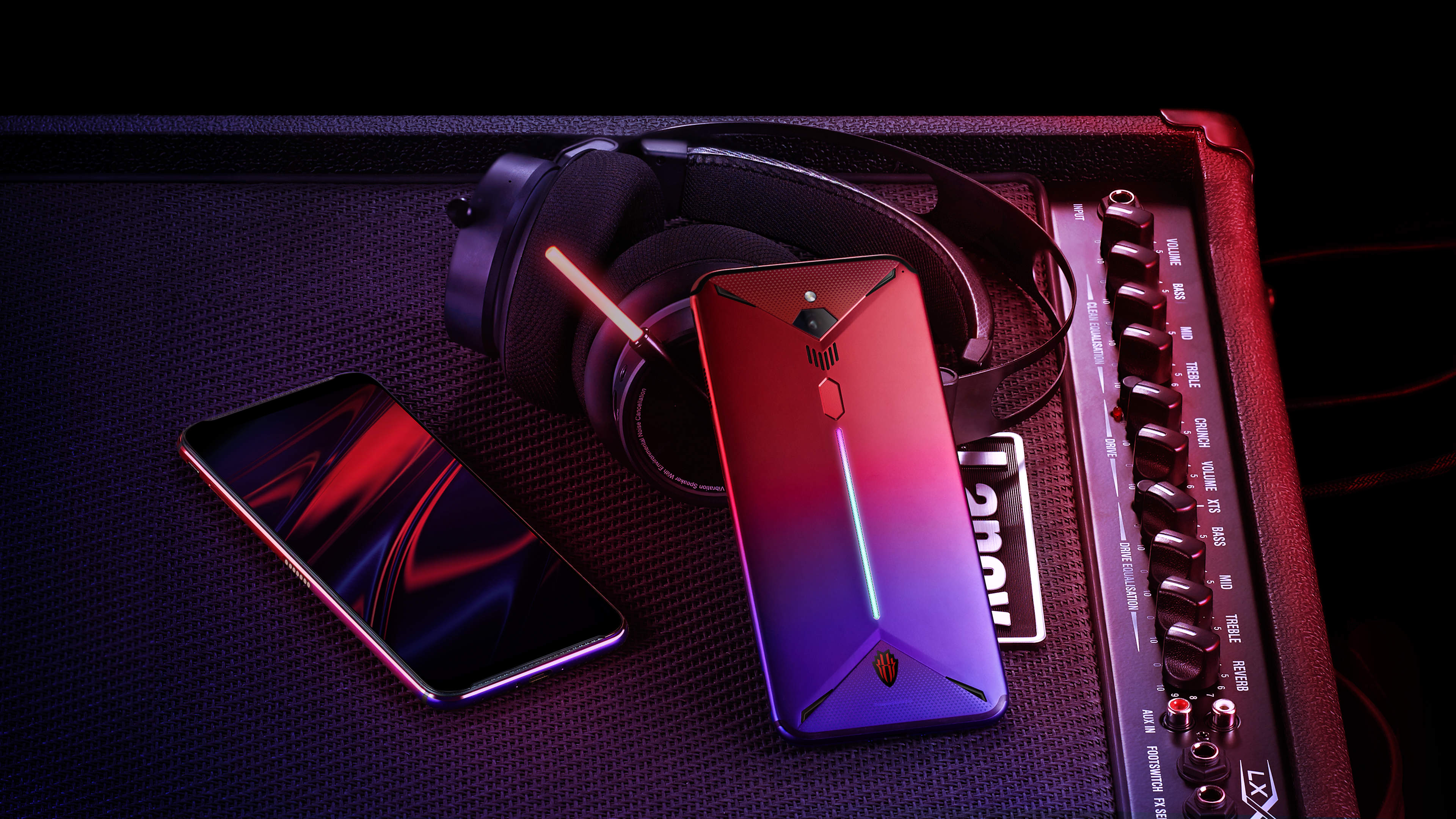
Nubia has officially launched its new gaming flagship, the Nubia Red Magic 3 in China. Judging from its official specs, the phone has turned out to be one of the best gaming flagships in the market today, coming with gaming oriented features like the industry’s first cooling fan, ICE 2.0 cooling tech, special connector pinks for accessories and a large battery.
Nubia Red Magic 3 Design
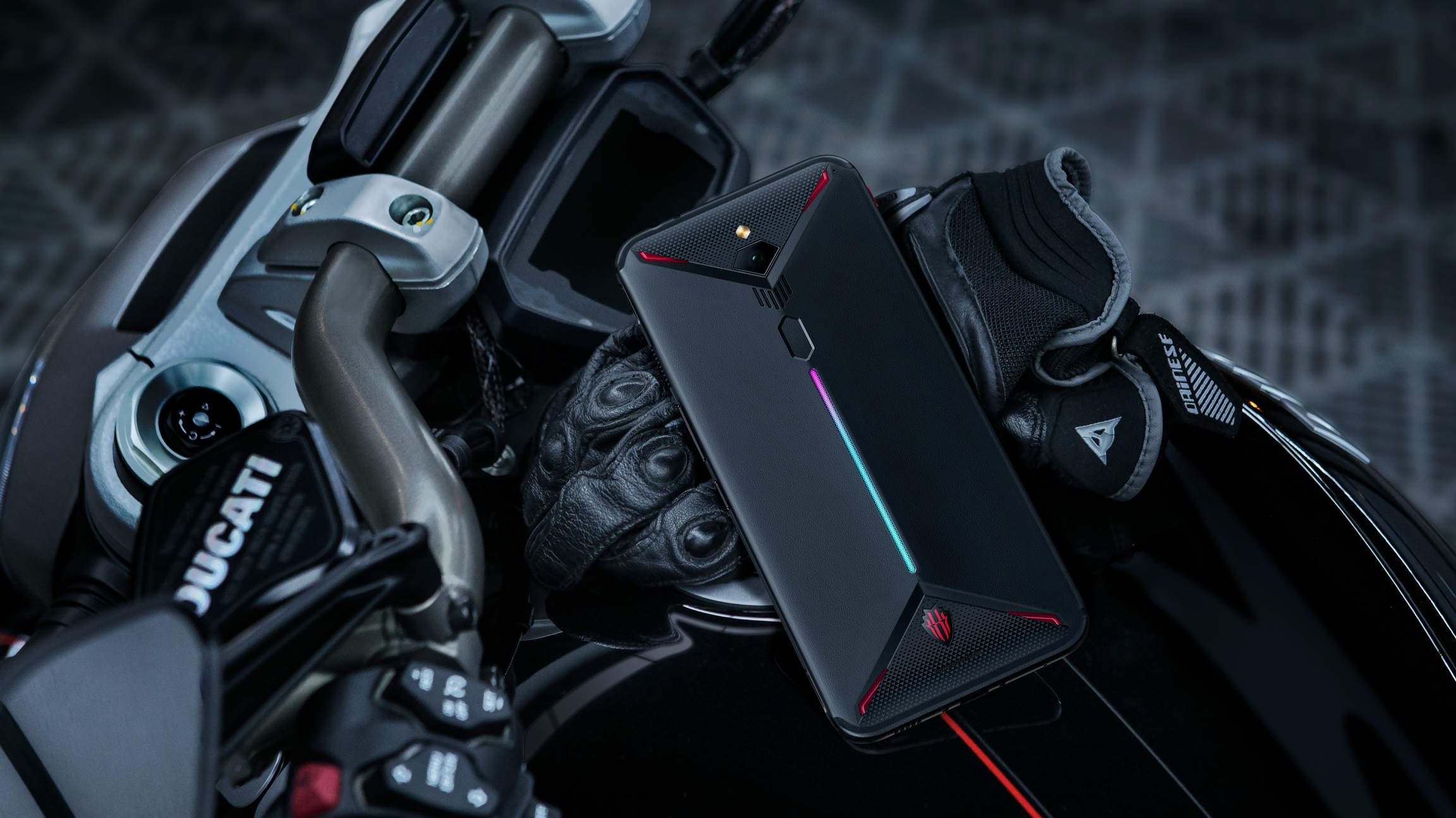
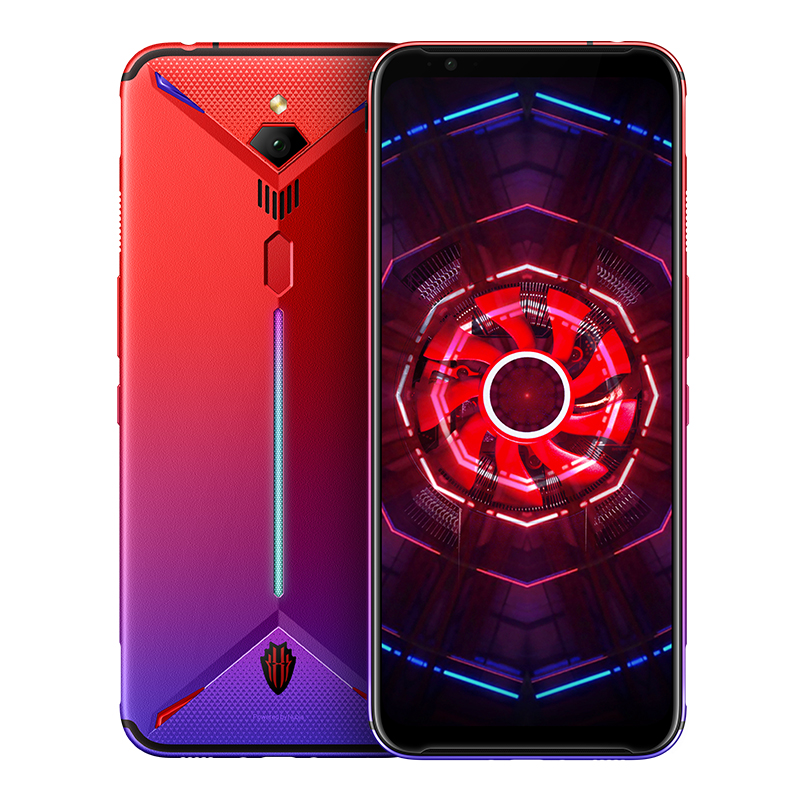
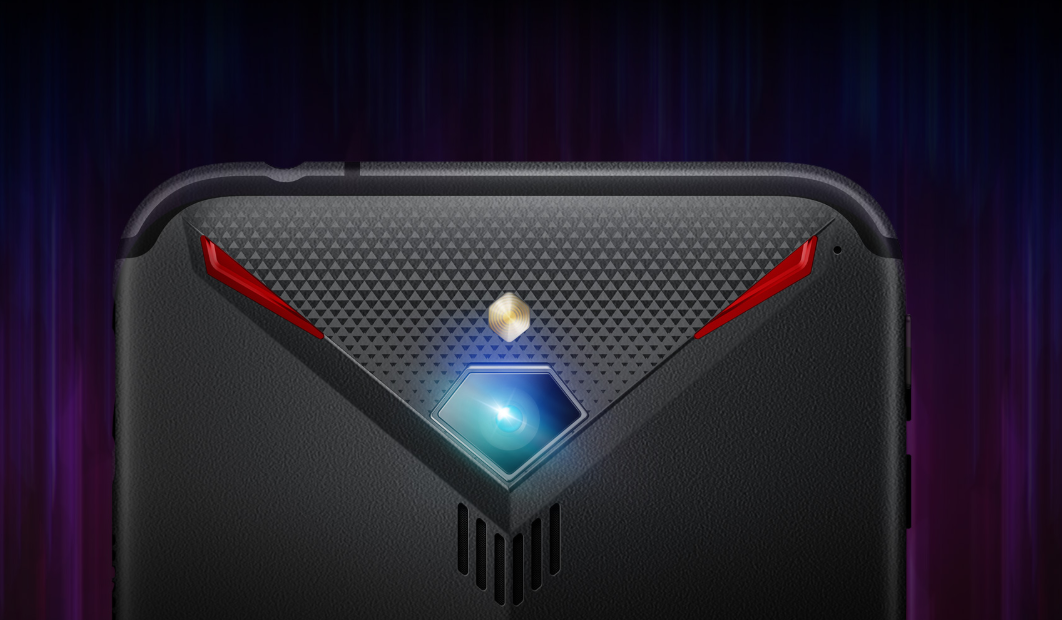
The Nubia Red Magic 3 is made for gaming inside out. So, the moment you look at the phone, the geometric design would immediately reveal it’s a gamer’s paradise. The new model builds on its predecessors’ design by adding a few more elements to its vector aesthetic design. So, the Red Magic 3 features a mesh-like design inside its V-shaped elements on its back, which wasn’t present before. Also, the hexagonal camera module is now better integrated into its groves.
The overall rear design is also a bit more curved, for better grip and comfort during gameplay. The RGB LED strip also makes a comeback on the new model. As for the front design, there are dual stereo speakers (the top one is integrated into its earpiece) with thin bezels on both sides. So, you don’t have to worry about a notch ruining your gaming experience. In fact, the front reminds me a bit of my Pixel 2 XL, but with thinner bezels.
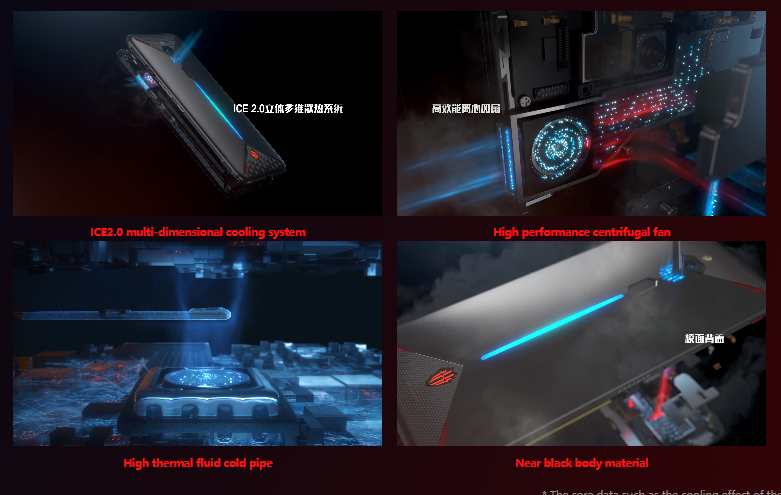
The company has paid special attention to the phone’s cooling system. In this regard, there’s an Air In vent at the back and an Air Out vent on the side. This ensures that the phone remains cool, even during long hours of high-end gameplay. The phone also features the industry’s first cooling fan, which ensures that the phone remains nearly 5 degrees Celsius cooler than its rivals.
Nubia has added one more color alongside its usual, Red, Black, and Camouflage options. There’s a special Red-Blue gradient color for the new model.
Nubia Red Magic 3 Gaming Features
The new Nubia model comes with a lot of gaming-centric features. For example, there’s a new dedicated noise-canceling gaming mic for better conversations with your fellow teammates. Apart from the two shoulder button on the top of the device, the phone also uses its fingerprint sensor as an added button during gameplay.
The Red Magic 3 comes with 4D smart shock too, which is a smart system adds vibrations to match different scenes in the game, enhancing your overall gameplay.
As mention above, the phone features the industry’s first cooling fan inside. The fan doesn’t use any physical bearings and is made out of a nanomaterial which is extremely light. Nubia adds that the fan runs at 14K RPM and consumers very little power. Further, according to its testing, the fan has a solid lifespan of 30K hours! This is further supported by a liquid cooled copper tube to keep the temperature inside cooler than its rivals.
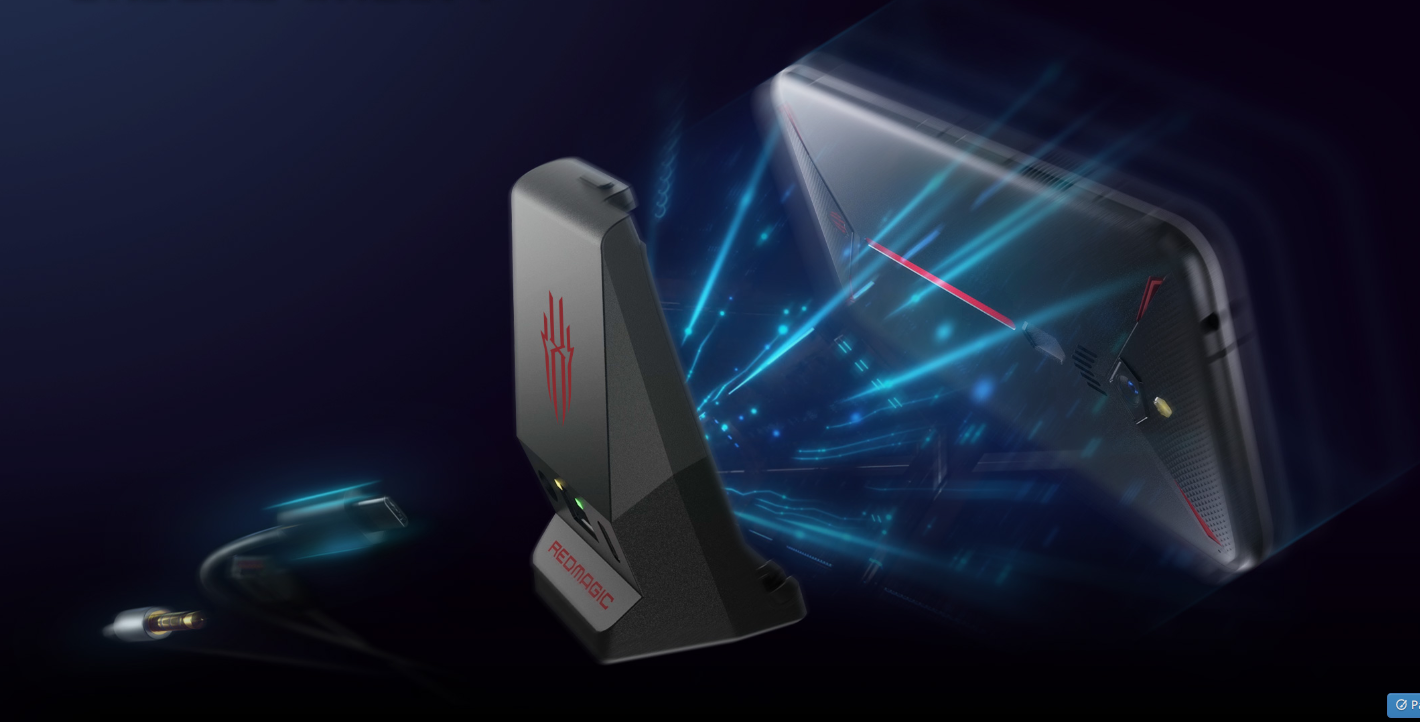
The Nubia Red Magic 3 also adds a special gaming dock pins on its left side. This dock can take a number of Nubia specified accessories including the special Red Magic e-Sports box. This unique box accessory houses a 3.5mm headphone port, Type-C port for charging, and an ethernet port that allows for wired internet access!
Clearly, this phone is made for hardcore gamers!
Nubia Red Magic 3 Specs
What’s a gaming phone without high-end hardware right?
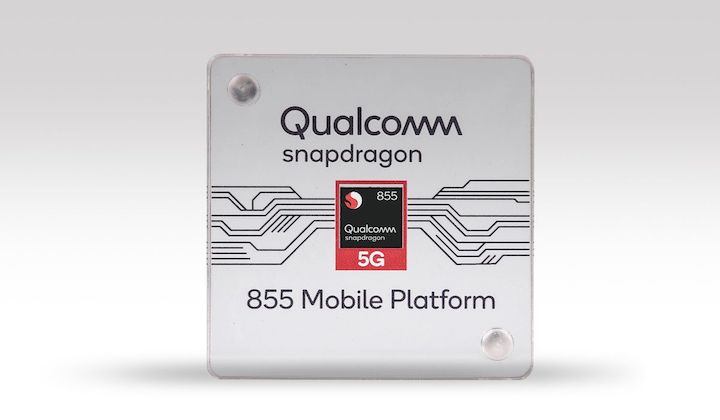
Well, Nubia has taken care of this department pretty well. The phone features the flagship Snapdragon 855 processor with up to 12GB of RAM on board. There’s a huge 5000mAh battery inside with 27W PD fast charging that gives you an hour of gameplay in just 10 minutes of charging.
The screen on the Nubia Red Magic Mars was pretty decent. However, the new model takes things to a level where gameplay would be smoother. The phone features a large 6.65-inch FHD 2340 x 1080p Super AMOLED display with a fast 90Hz refresh rate and 195:9 aspect ratio. You can choose between 60Hz and 90Hz or let the phone decide it automatically. The phone supports DC dimming as well, so you shouldn’t worry about straining your eye with long hours of gameplay.
In the camera end, the Nubia Red Magic 3 doesn’t disappoint. The phone features the large IMX586 48MP single sensor at the back and comes with 8K recording and world’s first 1920 fps Super Slo-mo recording! The front camera department is taken care of by a 16MP shooter.
As for audio, you have a dedicated 3.5mm headphone jack, DTS 7.1 channel, and stereo box 3D surround sound speakers.
Finally, for software, the phone runs on Red Magic OS 2.0 based on Android Pie.
The phone has four variants. The 6GB+64GB model starts at 2899 Yuan ($~431). The 6GB+128GB model is priced at 3199 Yuan ($~475), the 8GB+128GB model is priced at 3499 Yuan($~520) and finally, the top-end 12GB+256GB model will retail for 4299 Yuan($~640)!
Elephone launched its long-awaited smartphone dubbed the Elephone U Pro in February last year. Even over a year after hitting the store shelves, the U Pro continues to garner skyrocketing popularity among smartphone lovers.
Taking the phone’s undying demand into consideration, the Chinese Android smartphone manufacturer has launched a new promotion in collaboration with Banggood. Dubbed as ‘Banggood Elephone U Pro,’ the promo offers an unmissable chance to buy the well-received handset without emptying your pocket.
Known for offering the best bang for your bucks, Banggood is doling out a noteworthy 13 percent off on the Elephone U Pro with 6GB RAM and 128GB of internal storage capacity. In other words, you can buy the well-received smartphone at a lowered price of just $189.99.
It is worth mentioning here that the Elephone U Pro would set you back $269.99 without the aforesaid discount.The Elephone U Pro is an irresistible smartphone that boasts the following features:
99 Inch AMOLED flexible curved-display with 2160×1080 pixels resolution
Qualcomm Snapdragon 660,2.2GHz processor
Adreno 512 up to 650 MHz GPU
6GB RAM / 128GB ROM (128GB,TF/Micro SD Card Slot)
13MP+13MP | 8MP cameras
Android 8.0 Oreo OS
3550mAh built-in battery with Wireless Charging
You can click here to visit the promotion page and check out the full specifications and avail the discount, which will be valid for the blue color version of the phone. Note that the promotion is slated to end on April 29.
We use cookies on our website to give you the most relevant experience by remembering your preferences and repeat visits. By clicking “Accept”, you consent to the use of ALL the cookies.
This website uses cookies to improve your experience while you navigate through the website. Out of these, the cookies that are categorized as necessary are stored on your browser as they are essential for the working of basic functionalities of the website. We also use third-party cookies that help us analyze and understand how you use this website. These cookies will be stored in your browser only with your consent. You also have the option to opt-out of these cookies. But opting out of some of these cookies may affect your browsing experience.
Necessary cookies are absolutely essential for the website to function properly. This category only includes cookies that ensures basic functionalities and security features of the website. These cookies do not store any personal information.
Any cookies that may not be particularly necessary for the website to function and is used specifically to collect user personal data via analytics, ads, other embedded contents are termed as non-necessary cookies. It is mandatory to procure user consent prior to running these cookies on your website.


 The black and red color versions of the phone offering 6GB/8GB of RAM and 64GB/128GB of internal storage capacities have gone up for pre-order on Giztop. Let’s check out the details.
 Those who fancy using their phones for heavy gaming can go for the larger model that features 8GB of RAM, paired with 128GB of onboard storage capacity. This model is available for pre-order in black and red color versions carrying a $649 price tag on Giztop.






















 Taking the phone’s undying demand into consideration, the Chinese Android smartphone manufacturer has launched a new promotion in collaboration with Banggood. Dubbed as ‘Banggood Elephone U Pro,’ the promo offers an unmissable chance to buy the well-received handset without emptying your pocket.
 The Elephone U Pro is an irresistible smartphone that boasts the following features: