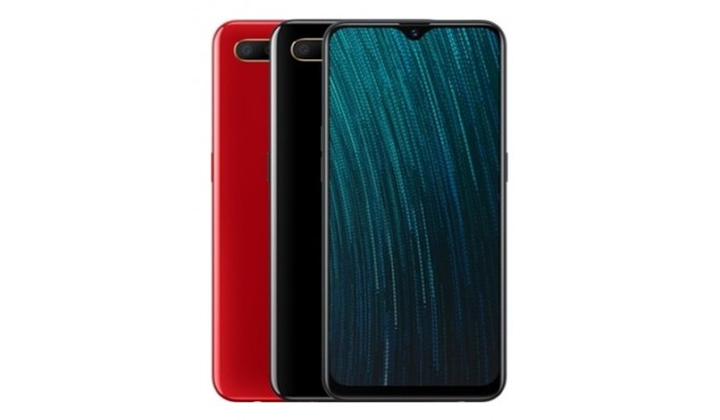
The OPPO A5s is the latest budget-friendly Oppo smartphone to go official in Taiwan. The newly unveiled smartphone is just a new CPU variant of the Snapdragon 450 SoC powered OPPO A5 phone that was announced in July 2018. The newly unveiled OPPO A5s is driven by the Helio P35 SoC.
OPPO A5s Specifications and Features
As mentioned above, except for the inclusion of Helio P35, the rest of the specs of the OPPO A5s is same as the OPPO A5 model. The A5s comes with 6.2-inch IPS LCD panel. It is equipped with a waterdrop-style notch and it produces HD+ resolution of 720 x 1520 pixels. The notch houses a front-facing camera of 8-megapixel. The backside of the phone is fitted with 13-megapixel + 2-megapixel horizontally arranged dual camera setup.
The Android 8.1 Oreo OS with ColorOS 5.2 UI placed over it comes preloaded on the OPPO A5s. The Helio P35 chipset is supported by 3 GB of RAM. There is an internal storage of 64 GB on the device. A microSD card slot is available on the smartphone for additional storage. The handset draws power from a 4,230mAh battery. There is no support fast charging for the big battery of the A5s. It is equipped with a fingerprint scanner. The device measures 155.9 x 75.4 x 8.2mm and weighs 170 grams.
At present, there is no information available on the price tag of the OPPO A5s. The A5 was made available in Blue and Pink colors and the color variants of the newly announced A5s are Black and Red.
Xiaomi announced the long-awaited Redmi 7 smartphone earlier this month. Following the footsteps of its well-received precursors, the latest smartphone garnered huge popularity among Xiaomi fans.
Taking the phone’s skyrocketing demand into consideration, Xiaomi is now offering the global version of the Redmi 7 starting from $129 on Giztop. For the aforesaid price, you can get your hands on the 2GB RAM, 16GB ROM variant of the phone, which is available in the black color version.
Those willing to shell out $10 more can go for the slightly larger variant that ships with 3GB of RAM and offers 32GB of internal storage capacity for you to save your favorite multimedia content. This model is available in the black color version.
If you fancy having larger storage option, you can check out the 3GB RAM, 64GB ROM variant that would set you back $169 on Giztop. This variant is available in the black color version.
In terms of specifications, the Xiaomi Redmi 7 Global Version offers the following:
6.26-inch Waterdrop HD+ display with 1520 x 720 pixels resolution and an aspect ratio of 19:9
Qualcomm Snapdragon 632 octa-core processor
Adreno 506 GPU
12MP+2MP Dual AI rear camera
8MP front camera
Fingerprint Recognition placed at the back
2GB/3GB/4GB RAM and 16GB/32GB/64GB ROM
MIUI 10 based on Android 9 Pie O
Dual Nano SIM Card Slots
4000mAh battery, 5V2A
You can follow this link and check out the rest of the specifications and buy your favorite variant of the Xiaomi Redmi 7 Global Version on Giztop.
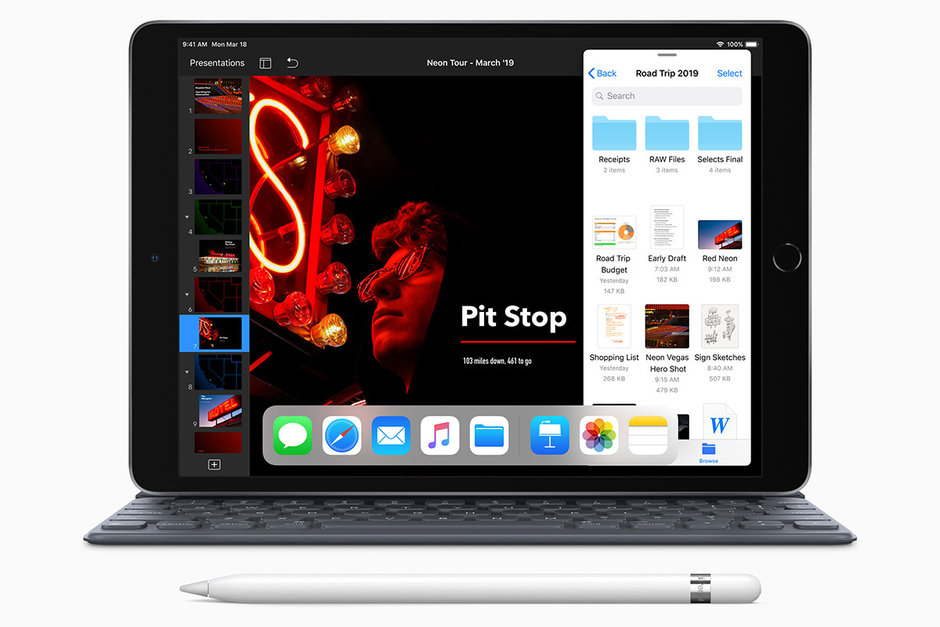
Apple has announced its latest iPad models without any sort of fanfare. The fifth generation iPad Mini and iPad Air were both announced via a press release by the US company. The surprise package is the iPad Mini which is coming four years after the last model was launched in 2015. The iPad Air, on its part, borrows many of the outstanding features from the iPad Pro, including a similar, 10.5-inch screen with True Tone, a thin and lightweight design, and top-tier performance with the latest Apple A12 chip at a much more affordable, $500 price.
iPad Mini 5th Generation
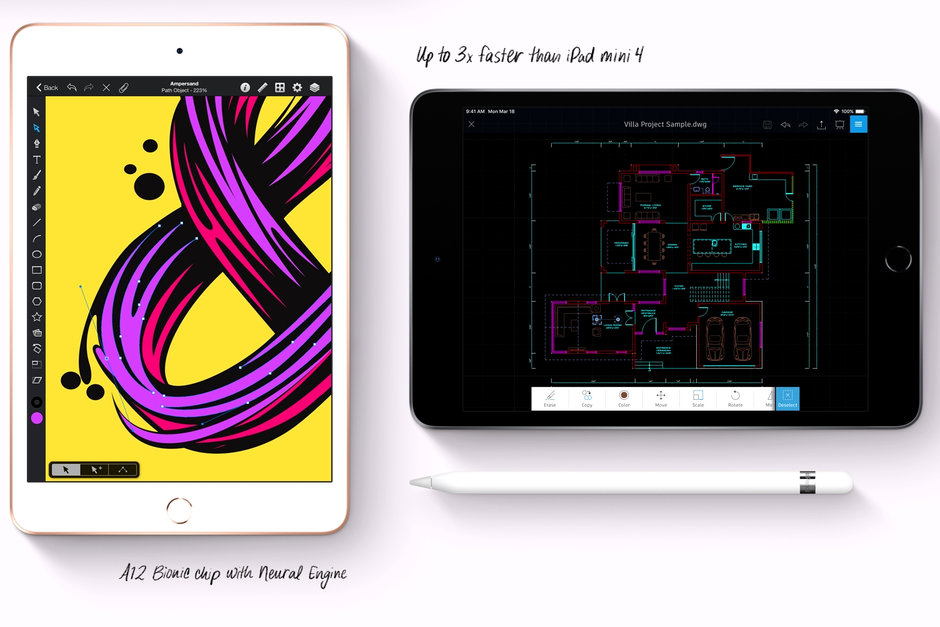
Despite the gap between the last model and this version, the iPad Mini 5th gen isn’t very much different from the 2015 iteration. The device features a 7.9-inch IPS display with a resolution of 2048×1536 pixels and 326 ppi. The display has gained wider color (DCI-P3 gamut) support and now features Apple’s True Tone technology for keeping the white balance of the display the same in appearance to the user, regardless of the ambient light around the screen.
The iPad Mini 5 is powered by Apple’s newest A12 processor that has proven to return some industry-topping benchmarks that can only be beaten by its more powerful A12X version in the iPad Pro models. The iPad mini 5 starts with 64GB of storage and has another model that offers 256GB out of the box. There’s Touch ID on board and a dual speaker system. On the camera end, the new iPad Mini is equipped with an 8MP rear camera, like its predecessor but for selfies, there is an upgraded 7MP FaceTime HD camera. The new Mini comes with Pencil stylus support meaning the first-generation Apple Pencil can now be used on the new iPad mini’s wide-color screen for doodling, highlighting and other stylus tasks. You’ll have to purchase the pencil separately, though, for $99.
iPad Air
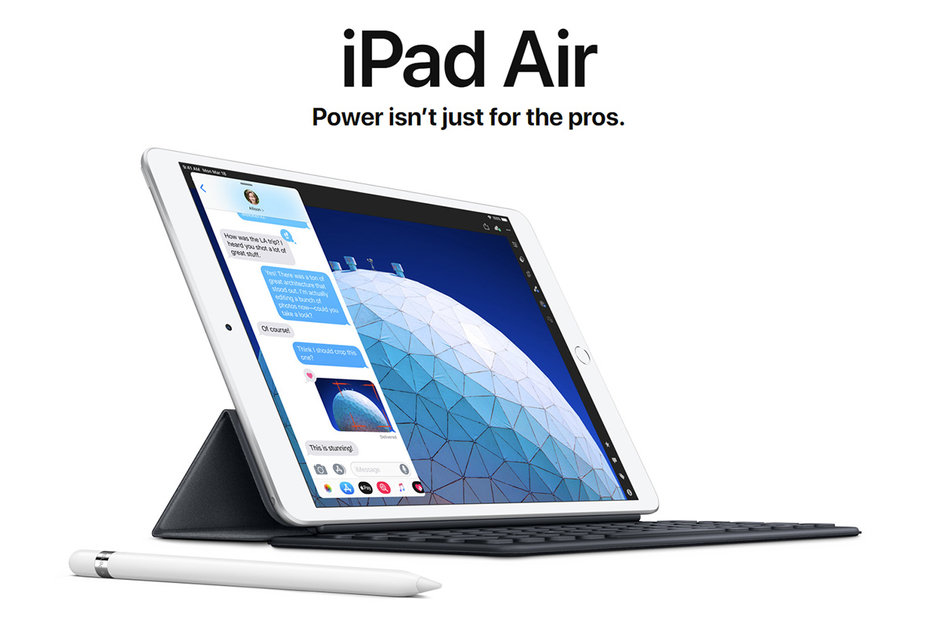
The iPad Air features a 10.5-inch LCD Retina Display with True Tone and wide colors. It weighs 1 pound and has a slim build just 6.1mm thick. The device is powered by Apple’s A12 Bionic chip with Neural Engine. The iPad Air equally supports the first-gen Apple Pencil and Smart Keyboard. Under the hood is a battery that delivers up to 10-hour battery life. It comes in Space gray, silver and gold color options. On the camera end, the iPad Air features an 8-megapixel f/2.4 main shooter, compared to a 12MP f/1.8 camera on the iPad Pros.
Prices and Availability
The new iPad Air is available in two storage options: 64GB and 256GB, and as always with Apple products, the storages are unexpandable. The device is also available in two models, one with cellular connectivity and a WiFi variant As for their prices, the 64GB WiFi version cost $499 while the 256GB WiFi version goes for $649. On the other hand, the 64GB Wi-Fi + Cellular model costs $629 while the 256GB Wi-Fi + Cellular model costs $779.
The iPad Mini equally comes in WiFi only and WIFi + Cellular models. The iPad Mini 2019 costs $399 for the 64GB Wi-Fi-only version while the Wi-Fi + Cellular model costs $529. The WiFi version with 256GB storage will cost $549 and if you prefer the version with cellular connectivity, it costs a whopping $579.
We still have a little over a week before the launch of the Huawei P30 and Huawei P30 Pro. If you reside in Europe and want to know how much Huawei will charge for its new flagships, then you are in luck. Popular leaker, Roland Quandt has revealed the prices for the two phones for the European market along with some other details.
According to him, the prices were revealed to him by trusted sources. Starting with the Huawei P30, you will have to shell out €749 for the base model with 128GB of storage and 6GB of RAM. It seems that will be the only configuration sold in Europe for the P30.
For the P30 Pro, there will be an 8GB RAM + 128GB version and it will sell for €999. There will also be a variant with 8GB of RAM and 256GB of storage priced at €1099. Europe will also get a 512GB model but there is no confirmation of the price yet.
I was wrong earlier. P30 128GB = 749 Euro P30 Pro 128GB = 999 Euro P30 Pro 256GB = 1099 Euro Nothing definitive on the 512GB model yet. https://t.co/2S9k1eZusV
Huawei P30 Pro launch gifts include bundling both a fast wireless charger (MSRP 59,99 Euro) and a Sonos One speaker (MSRP 229,00 Euro) IN SOME COUNTRIES.
In a separate tweet posted earlier, he revealed the phone will ship with a wireless charger worth €59.99 and a Sonos One Speaker worth €229 in some countries. It is not unusual to get free gifts along with your purchase of a phone especially for those who are pre-ordering.
The Honor 10i may or may not get a special launch event as the phone is sort of official in Russia already. The new mid-range phone is listed on Huawei’s Russian website with all you need to know about it save for the price.
The Honor 10i is covered in glass on both sides with the one on the rear curving to meet the frame in the middle. The front of the phone is home to a Dewdrop display with a moderately sized lower bezel and a notch at the top. The phone is available in three colors – Shimmer Red, Shimmer Blue, and Vicious Black – with the first two having a 3D color gradient effect that allows them to appear different depending on the angle you hold them.
In terms of specs, the Honor 10i doesn’t disappoint, at least for a mid-range phone from Honor. It has a 6.21-inch 2340 x 1080 display with a 19.5:9 aspect ratio. Its screen is also certified as safe by TUV Rheinland. Under the glass hood of the phone is the Kirin 710 chipset paired with 4GB of RAM and 128GB of expandable storage (512GB max.). There is also GPU Turbo 2.0 for improved gaming performance.
If you call the Honor 10i a camera-centric phone, we won’t disagree with you. It has a 32MP selfie camera that is housed inside the notch. The selfie camera has lots of face-adjustment features so your portrait selfies can turn out great. On the back of the phone lies the triple camera sensors – a 24MP f/1.8 primary camera, an 8MP f/2.4 ultra-wide angle secondary sensor, and a 2MP f/2.4 depth sensor. It can record slow-motion videos at 480fps, has AI scene detection, and can shoot long exposure nighttime photos without the need for a tripod.
[envira-gallery id=”241725″]
The phone has dual-SIM support (nano only), dual-SIM VoLTE, and NFC. It runs EMUI 9.0.1 based on Android 9 Pie. There is a fingerprint scanner on the back and it also has support for Face Unlock. The Honor 10i has a 3,400mAh battery which charges via a MicroUSB port flanked by an audio jack and a speaker grille. Sorry, but no USB type-C on this one.
HMD Global’s Nokia recently launched the Nokia 9 PureView smartphone. The phone happens to be the first in the world to pack a Penta-lens camera. The camera samples shot by the Nokia 9 PureView has shown that the array of camera lens was not just mere gimmick but the image quality was impressive. The camera setup was the result of a collaboration between HMD Global Oy and Light and it uses computational photography for fusing and delivering the final image.
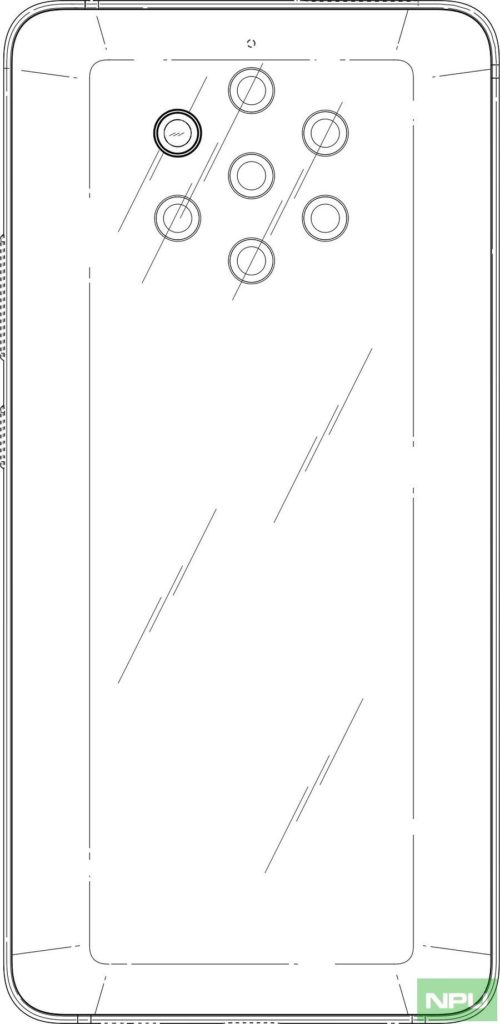
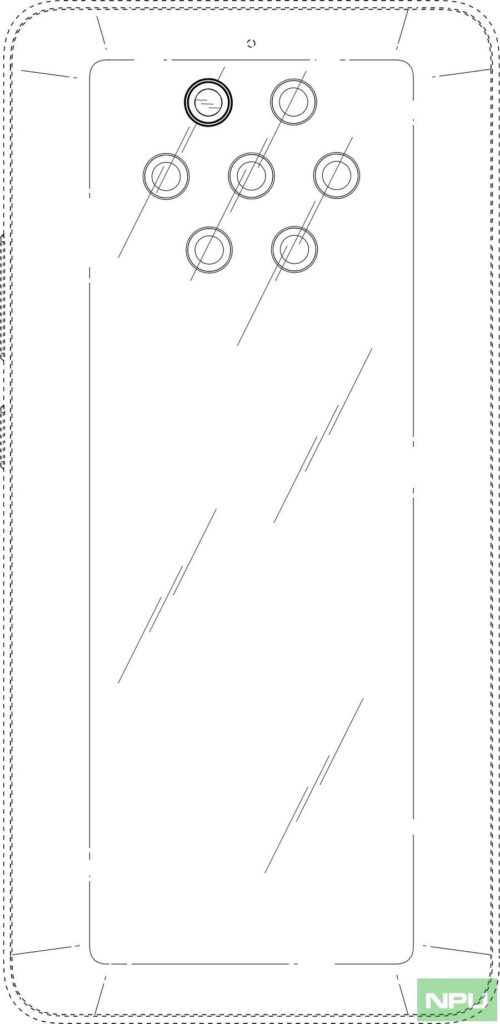
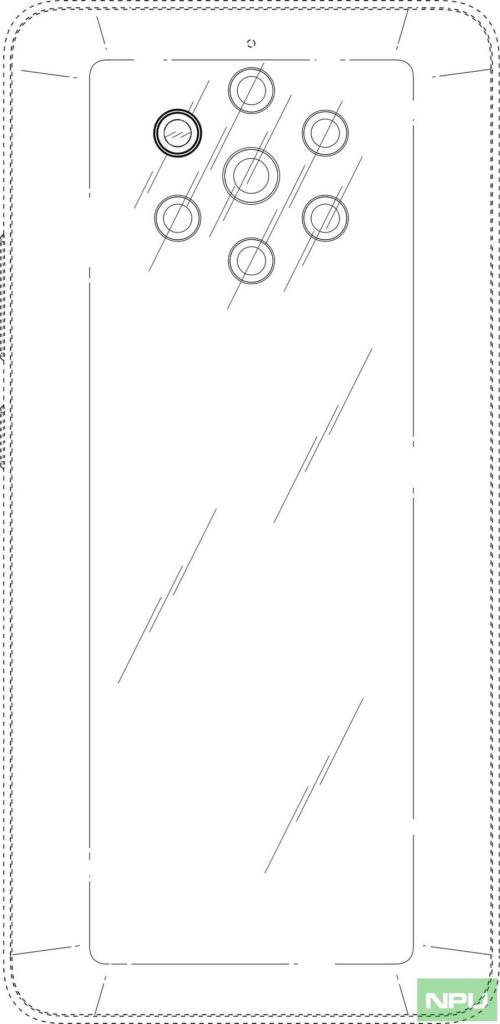
A Nokia patent has been spotted which showed that Nokia had a couple of other designs it was toying with. The patent application actually reveals three different Penta-lens camera module setup onboard the Nokia 9 prototype. Two of the designs have all their camera lenses remain of the same size while on the third one, the central sensor is larger than the others. The two designs having the same lens sizes, the position of the TOF sensor also differ. It remains to be seen if Nokia will utilise the other patented designs on the successor to the Nokia 9 which is rumoured to land in Q3 2019.
Nokia 9 PureView has five cameras and a ToF (Time of Flight) sensor. The penta-lens setup of the phone includes two 12-megapixel RGB sensors and three monochrome 12-megapixel sensors. All the five camera sensors of the Nokia 9 PureView can function simultaneously to capture a single image of 50-megapixel powered a dedicated image co-processor. Each image has 12.4 stops of dynamic range. It is a sensitivity measurement where the brightness of the image increases by twofold. With the help of the ToF sensor, the Nokia 9 PureView can capture a depth map with up to 1200 layers of depth data for up to 40 meters away from the camera. You can read more about the Nokia 9 PureView from our launch article here.
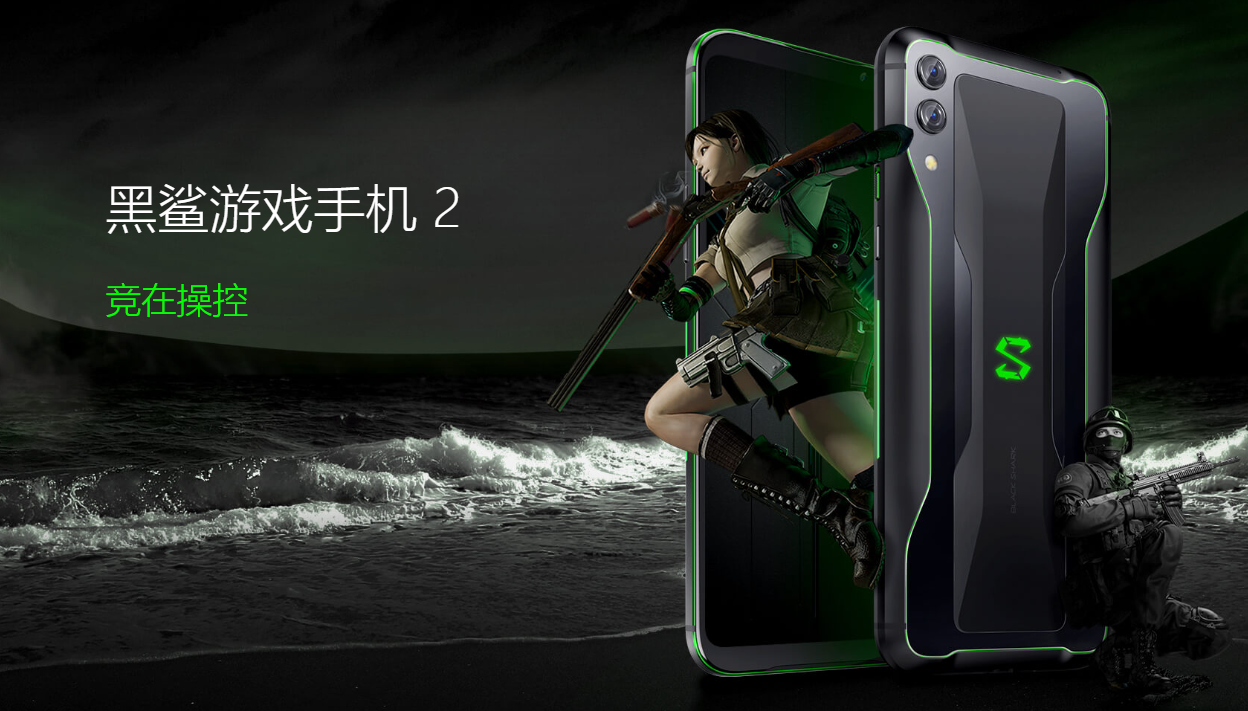
Today is a big day for Xiaomi. Earlier, its new independent brand, Redmi, launched two new smartphones, a pair of wireless earbuds, and a washing machine. Hours later, Black Shark, the gaming phone company it has a stake in announced its third gaming phone – the Black Shark 2.
Black Shark 2 Design
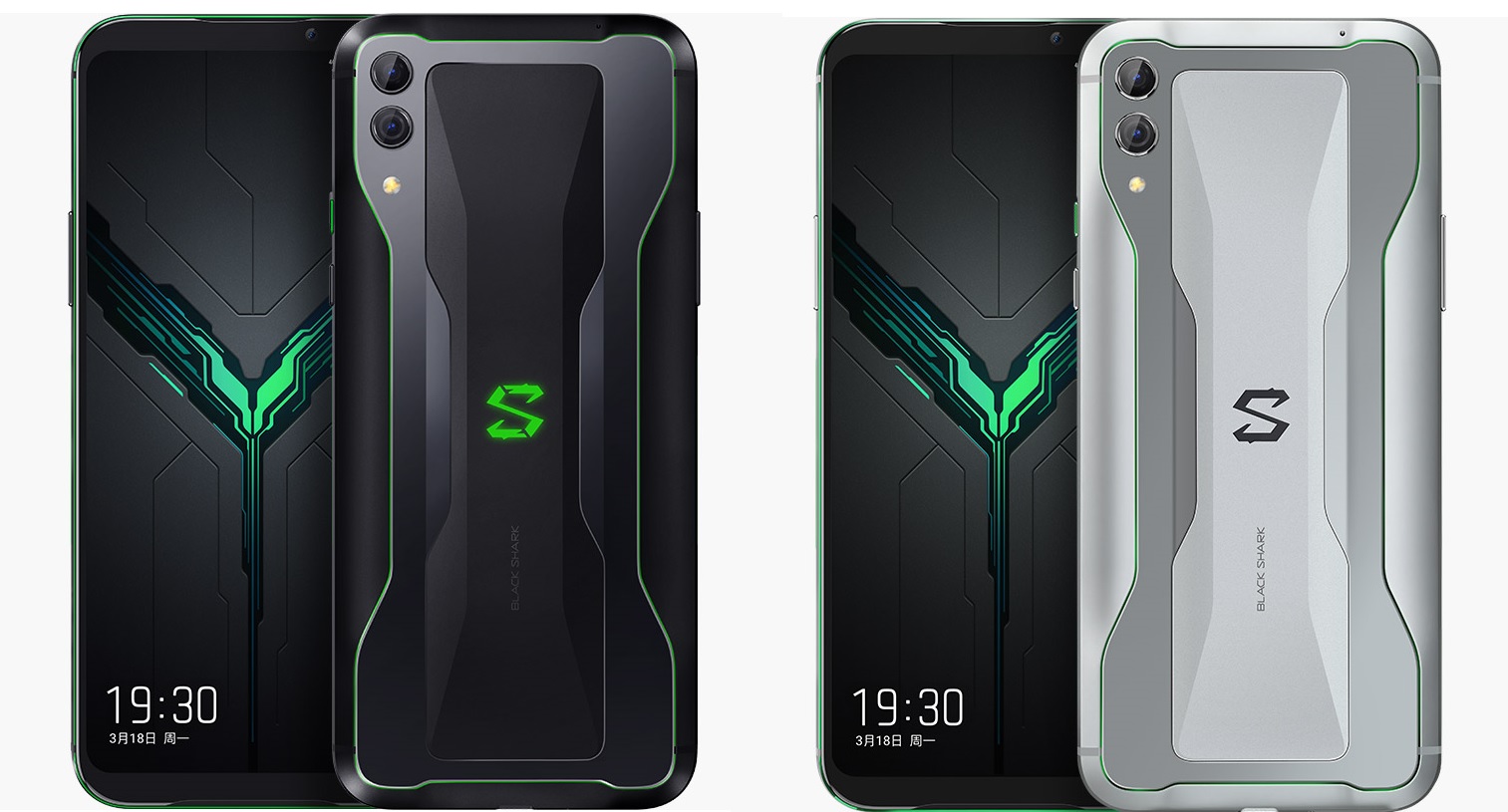
The Black Shark 2 takes on a different design from the original and the Black Shark Helo. It also has the largest display of all the three phones. The phone doesn’t have super thin bezels which isn’t surprising but they are smaller than those of its predecessors.
On the rear, the overall design is different too. The cameras are arranged vertically and positioned on the left. They aren’t flush with the body though. The now recognizable Black Shark logo sits at the center and there is an LED underneath it. There are also LEDs on the sides and a Black Shark Key switch on top of the power button.
Specs and features
The Black Shark 2 is the first gaming phone released this year and it tries to make a big statement. The display is a 6.39-inch AMOLED panel with a 2340 x 1080 resolution and a 19.5:9 aspect ratio. Black Shark calls it a Trueview Display which restores true color to the screen. With a dedicated image processing chip, the phone automatically adjusts the display parameters for the best color output. There are also features like Full DC dimming, MEMC intelligent motion, Super HDR, and an eye protection mode.
The Black Shark 2 is powered by Qualcomm’s Snapdragon 855 processor and comes in four variants – 6GB RAM + 128GB, 8GB RAM + 128GB, 8GB RAM + 256GB, and 12GB RAM + 256GB.
The Black Shark 2 is a gaming phone but that doesn’t mean it has to slack in the camera department. On the front above the display is a 20MP 0.9μm f/2.0 sensor covered with a 5P lens. On the rear is a 48MP f/1.75 0.8μm primary camera paired with a 12MP f/2.2 telephoto lens with 2x optical zoom. The camera can record in 4K at 30fps, record slow-motion videos in 720p at 240fps and in 1080p at 120fps.
The Black Shark 2 has an in-display fingerprint scanner, Bluetooth 5.0, and a USB type-C port. Under its hood is a 4000mAh battery with support for 27W fast charging. It has stereo speakers, triple-microphones for stereo recording, and uses AI to reduce background noise.
In terms of gaming, the phone comes with a feature called Magic Press which lets you customize the touch controls on the screen. Magic Press also lets you customize the pressure sensitivity of the two sides of the screen. Black Shark say they have also reduced the touch response time to 43.5ms for a smoother gaming experience.
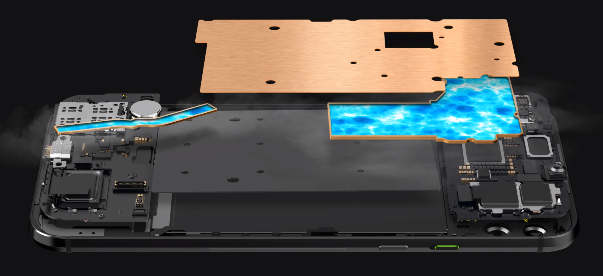
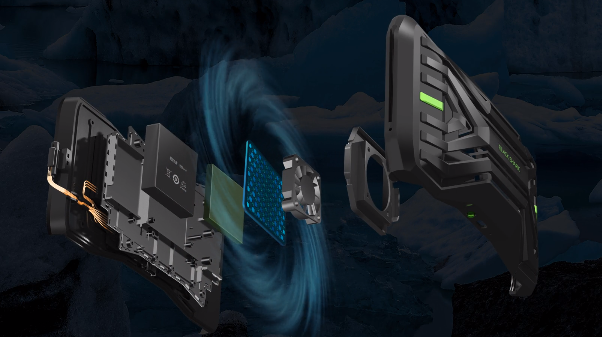
Don’t worry about your device heating up as Liquid Cooling 3.0 with its tower-style cooling design which is a combination of a liquid-cooling pipe and liquid-cooling plate, efficiently covers the heat-generating components of the phone. Liquid Cooling 3.0 is 20 times more efficient in heat dissipation. There is also a cooling fan attachment for the phone that helps bring the temperature down by an extra 5 degrees. This comes in handy if you will be playing for long hours.
After the so-called best-buy Redmi Note 7, Xiaomi announced the even more affordable Redmi 7 that will sell in China for less than €100. It carries a very affordable and entry-level price even though it offers superior specifications to the typical low-end handset. But is it the best device in its price range or there are better alternatives? Among its most quoted rivals, there are the Realme 3 by Oppo and the Asus Zenfone Max M2. With this comparison, we will try to let you find out if you can get a better device than the Redmi 7 at a similar price or the new Xiaomi’s affordable phone is the number one.
Xiaomi Redmi 7 vs Asus Zenfone Max (M2) vs Oppo Realme 3
Are you searching for a beautiful and futuristic phone? If so, you should absolutely go either for the Xiaomi Redmi 7 or the Oppo Realme 3. They come with stunning rear sides with gradient colors and waterdrop notches which help to reduce the bezels around the display. I would personally choose the Xiaomi Redmi 7 because it even offers a hydrophobic coating, while the Realme 3 does not provide any kind of water resistance.
Display
Unfortunately, you get a below-average display in each case. These panels stop to the HD+ resolution and they do not provide a high level of detail, but they are still sufficient for everything. You may like the Oppo Realme 3 and the Xiaomi Redmi 7 more because of their smaller notches, but all of these devices offer more or less the same display quality. All of them come with an IPS LCD panel, the same pixel density, and a similar screen-to-body ratio.
Specs & Software
The hardware side may seriously make you take a decision. The Realme 3 comes with a MediaTek SoC, but even though people like MediaTek chipsets less than Snapdragon ones by Qualcomm, the Helio P70 found on the Realme 3 is much more powerful than the Snapdragon 632 that you can find on the Redmi 7 and Asus Zenfone Max M2. So, you would get definitely better performances with the Realme 3. Note that Realme 3 also comes in a more affordable version with Helio P60, and that is the one with a similar price tag to the Redmi 7. Asus Zenfone Max M2 and Redmi 7 come with the same chipset and the same memory configurations, except for the lower-end 2/16 GB variant which is only available with the Redmi 7. Oppo Realme 3 and Redmi 7 come with Android Pie out of the box and highly customized user interfaces, while Asus Zenfone Max M2 is still based on Android Oreo out of the box. However, the update to Android Pie for the Asus Zenfone Max M2 is already confirmed.
Camera
We still had no chance to test the cameras of the Redmi 7 but, judging from the specs on the paper, Asus Zenfone Max M2 is a better camera phone. It has a brighter focal aperture for the main rear sensor, 4K video recording and even a selfie camera with a front-facing LED flash. The second place should go to the Realme 3 which comes with the same bright aperture and a front camera that may be even better. Things may change after we tested the Redmi 7 that is the only phone of this trio which can record 1080p videos at 60 fps. It does not seem excellent on the paper, but the software will play an important role here.
Battery
The battery is the strongest point of all the devices from this trio. They all come with a huge battery compared with their components which have a low energy consumption. The Oppo Realme 3 has a slightly bigger battery than its rivals, but it does not mean that it will last more on a single charge as Redmi 7 and Asus Zenfone Max M2 are equipped with a very efficient Snapdragon 632 chipset, while Realme 3 comes with a more powerful Helio P60/P70. Anyways, you should get similar battery life in most of the scenarios, so we do not suggest you choose one of these handsets by basing on the battery life only. Note that Xiaomi Redmi 7 and Oppo Realme 3 come with 10W fast charging, while the Asus Zenfone Max M2 does not, so it takes a little bit more to fully charge.
Price
If you live in China or India, you will soon be able to get a unit of the Xiaomi Redmi 7 for just €92 in its base variant with 2 GB RAM and 16 GB of internal storage, while Realme 3 and Asus Zenfone Max M2 start from about €115 and €110 respectively, in their 3/32 GB configuration. I would go for the Realme 3 due to its higher-end chipset.
Huawei is expected to launch its first flagship phone for 2019, the P30 series on March 26 in Paris, France. The launch date is roughly 8 days away and ahead of that day, more leaked details continue to emerge about the Huawei P30 models. The latest is a couple of leaked photos said to be of the P30 Pro. The pictures were shared by a Weibo user and they afford us a closer look at the front design of the device.
The Huawei P30 Pro features a water drop notch on the screen. The screen has a higher screen to body ratio compared to the P20 Pro. The device is also shown to pack the on-screen fingerprint sensor with the sensor located lower down on the screen than on the Mate 20 Pro. The bezel at the chin is also further reduced than on its predecessor.
The Huawei P30 Pro is expected to arrive with a 6.47-inch OLED display with a water drop notch on top of the display. The device will have a resolution of 1080 x 2340 pixels. The waterdrop notch on the top edge of the display houses a 32-megapixel front camera which also doubles up for face unlock feature. The display of the phone is embedded with an in-screen fingerprint reader.
At the back, the P30 Pro is expected to pack a quad camera setup made up of an OIS enabled 40-megapixel main sensor with f/1.6 aperture. It is followed by a wide-angle lens of 20-meapixel with f/2.2 aperture. The third 8-megapixel camera sensor is slightly separated from the second sensor probably because it is equipped with periscope structurer to offer 10x loseless zoom. With a focal length of 135mm, it can offer optical magnification of at least 7.8 times. With software algorithm, the P30 Pro will offer 10x hybrid zoom. Below the dual-LED is the laser autofocus module and a ToF (Time of Flight) sensor. The device will be powered by a Kirin 980 chipset paired with 8GB+128/256/512GB memory combinations. There will be a 4200mAH battery onboard the phone. Further, the smartphone will be available in four colors such as Midnight Black, Breathing Crystal (White), Aurora (Green) and Amer Sunrise (Orange).
Tesla CEO Elon Musk has once again shown his eagerness to enter the Indian market. Today, amid a series of claims regarding its new Model Y compact SUV, Elon Musk revealed another exciting information. In a tweet, Musk added that he would love to be in India by this or next year.
“Would love to be there this year. If not, definitely next! India,” Musk tweeted in response to a question. He further added that “Deepak Ahuja, our CFO, is from India. Tesla will be there as soon as he believes we should.”
Elon Musk knows the potential of the promising Indian market for electric vehicle makers. He tried to enter the Indian market in 2017, but the attempt failed due to some policies. Last time, he took a dig on the country’s restrictive policy for delaying automaker’s entry. He even blamed FDI norms for being not in sync with the car maker’s desires.
At that time, Tesla was set to launch Model 3 in India for the price of $35000 which roughly translates to Rs 24,14,000. Tesla came into action after India’s Prime Minister Narendra Modi visited the company’s headquarters in 2015 at Palo Alto, California.
Elon Musk continually keeps teasing about the potential Indian vehicles market, but every time he failed to impress his Indian fans. We suggest you take this lightly and don’t get too excited. He even claimed to install the biggest Gigafactory in the country, but all went in vain.
Unlike previous announcements, it appears this or next year Tesla will surely make its debut in India. Elon Musk didn’t mention any potential date or timings but claimed to be coming within a couple of years.
As like in the US, the Indian government’s efforts for EV adoption will help the manufacturers to gain momentum. India is an essential market for EV (Electronic Vehicles) after China.
Tesla launched its $5 billion factory in China this year. The company set to tap different markets to survive against the increasing competition on its home turf. It’s even part of Tesla’s “Broader expansion” plans in 2020.
It’s the year of foldable smartphones, after Samsung and Huawei, now Xiaomi may launch its foldable smartphone in Q2 2019. Unlike Galaxy Fold and Huawei Mate X, the Xiaomi’s version could be cheaper than the iPhones. It will cost half the price of the Galaxy Fold which retails at $1980. Xiaomi is bringing a lesser priced foldable device by April this year.
Many users lost hopes to own a foldable product after Huawei and Samsung revealed prices for their respective foldable devices. Thanks to Xiaomi, as they are bringing foldable devices like Mi Fold and Mi Flex at an affordable price tag. As per iGyaan, Xiaomi’s foldable smartphone will be available for $999 which roughly translates to 6706 Yuan. Precisely, it will cost €999 in Europe, and INR 74,999 in India.
According to Xiaomi supply chain’s investors, the company plans to launch its new phone between April and June aka Q2 2019. Xiaomi will first launch the foldable device in its home country followed by separate launches in other regions.
If Xiaomi manages to launch the device at such a price, then it will be a bargaining deal for the customers.
Further, the price difference in Xiaomi and other manufacturer’s foldable devices is due to different displays. Samsung and Huawei have used high-quality OLED panels in their respective foldable devices, involving a hefty sum of money. On the other hand, Xiaomi will use Visisonox Technology OLED display.
Xiaomi’s phone is expected to carry top-notch hardware specifications. It will come with Qualcomm Snapdragon 855 chipset, coupled with 10 GB RAM. It will run on Android 9 Pie based MIUI 10 out of the box. Moreover, its display believed to measure 6.5-inch when folded and 10-inch when opened.
A video showing the foldable phone’s design revealed that it can bend from both the ends. It carries two foldable hinges on the left and right side instead of back and forth displays on Galaxy Fold.
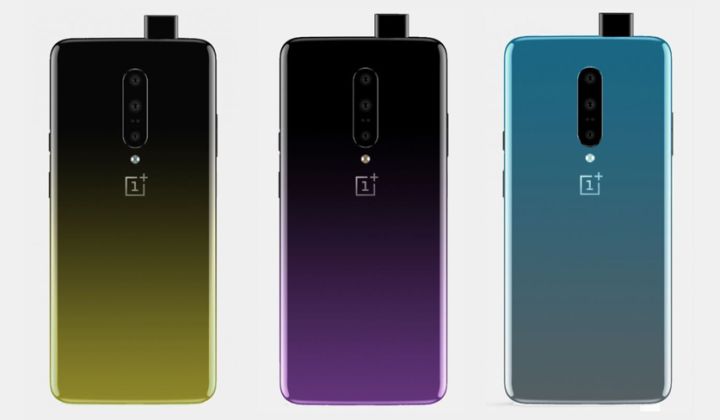
OnePlus is expected to unleash the OnePlus 7 smartphone by May or June this year. Rumors have claimed that it will be arriving with a triple camera setup on its rear and a pop-up selfie snapper. A leaked render that has surfaced recently not only corroborates on these OnePlus 7 features, but also reveals that it will be arriving in three color gradient editions.
The color gradient versions of the OnePlus 7 that can be seen in the below image are Black Yellow, Black Purple and Cyan Grey. The starting two models that can be seen in the below image appear black at the top that respectively blends with Yellow and Purple colors. The third variants appear Cyan at the top and fades to Grey towards the bottom.
The new render also shows the presence of triple rear cameras in the upper half of the back panel of the OnePlus 7. Below the camera module is an LED flash followed by the company’s logo. A pop-up selfie shooter can be also seen in the image. The presence of a pop-out front camera is a clear indication that the OnePlus 7 will be equipped with a notch-less screen like the Vivo V15 Pro and Oppo F11 Pro.
The upcoming OnePlus 7 won’t be the first phone from the company to sport a gradient color. The OnePlus 6T from last year was made available in Thunder Purple gradient color. Nothing much is known on the specs of the phone except for the fact that it will be fueled by Snapdragon 855 mobile platform. The smartphone is also expected to retain the in-display fingerprint scanner that was introduced on the OnePlus 6T phone
It is no news that Redmi is now an independent company but following today’s launch event, we now have a clearer view of what the company’s plans are. General Manager of Redmi, Lu Weibing, revealed at the event the direction the company will follow.
The Redmi name has been associated with only smartphones but today, it launched its first non-phone product – the Redmi 1A washing machine. It also launched its first mobile accessory – the Redmi AirDots. Going forward, more products that are not smartphones will carry the Redmi name.
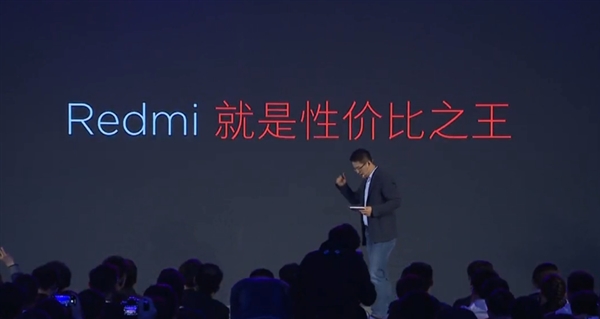
According to Mr. Weibing, Redmi will have its own ecosystem just like Xiaomi does. The ecosystem will include AIoT devices that connect to one another. The head of Redmi also outlined the company’s goals which are listed below
Adherence to “high-value low-price” tradition
Adherence to high-quality standards
Acceleration of global expansion
Launching of high-end smartphones
Expansion of portfolio: 5G, AIoT, and creation of Redmi ecosystem.
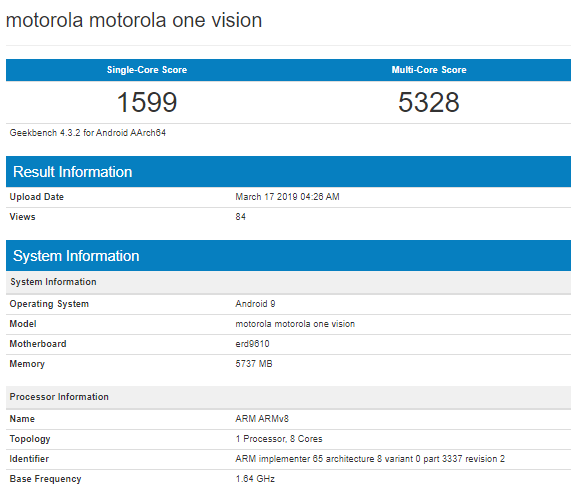
A new Motorola phone has appeared with “Motorola One Vision” label on Geekbench benchmarking platform. Samsung is known for using its Exynos chipsets to power its smartphones. A few Exynos driven Meizu phones have also launched in the past. What’s interesting about the Motorola One Vision Geekbench listing is that it reveals that it is powered by the Exynos 9610 SoC.
The Geekbench listing of the Motorola One Vision reveals that it is running on Android 9 Pie OS. It is fueled by the Exynos 9610 SoC and 6 GB of RAM. In the single-core and multi-core tests, the Motorola One Vision has respectively scored 1599 and 5328 points.
Early rumors of the upcoming Motorola P40 smartphone had revealed that it would be arriving with Snapdragon 675 SoC. However, in the previous month it was reported by 91mobiles that the handset will be featuring the Exynos 9610 SoC. The publication had also revealed that it would be arriving in three editions such as 3 GB RAM + 32 GB storage, 4 RAM + 64 GB storage and 4 GB RAM + 128 GB storage.
The newly spotted One Vision Geekbench listing may belong to the forthcoming Motorola P40 phone. The Exynos 9610 that will be driving the P40 phone also powers the recently launched Samsung Galaxy A50.
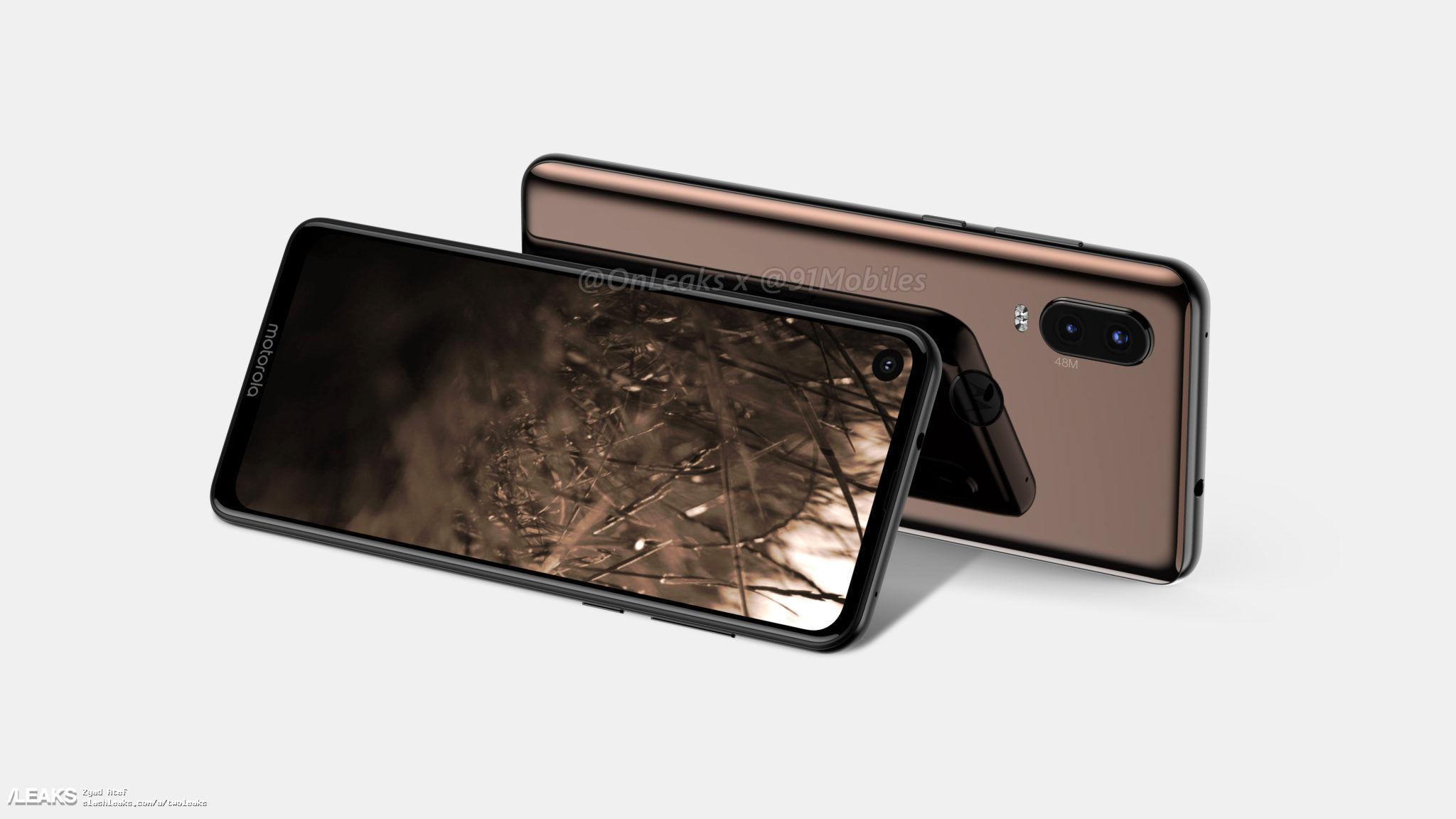
The Motorola P40 is expected to replace the Motorola P30 Android One phone from last year. Recent reports have revealed that it will be arriving as the first Motorola smartphone with a punch-hole display. It may come with 48-megapixel + 5-megapixel dual camera setup. The P40 may feature a 3,500mAh battery and carry support for NFC. There is no word on the launch date of the smartphone yet.
It turns out the Redmi brand will not be limited to just phones alone. Other than the Redmi Note 7 Pro, Redmi 7, and Redmi AirDots released today, Redmi also released its first non-mobile related product – the Redmi 1A washing machine.
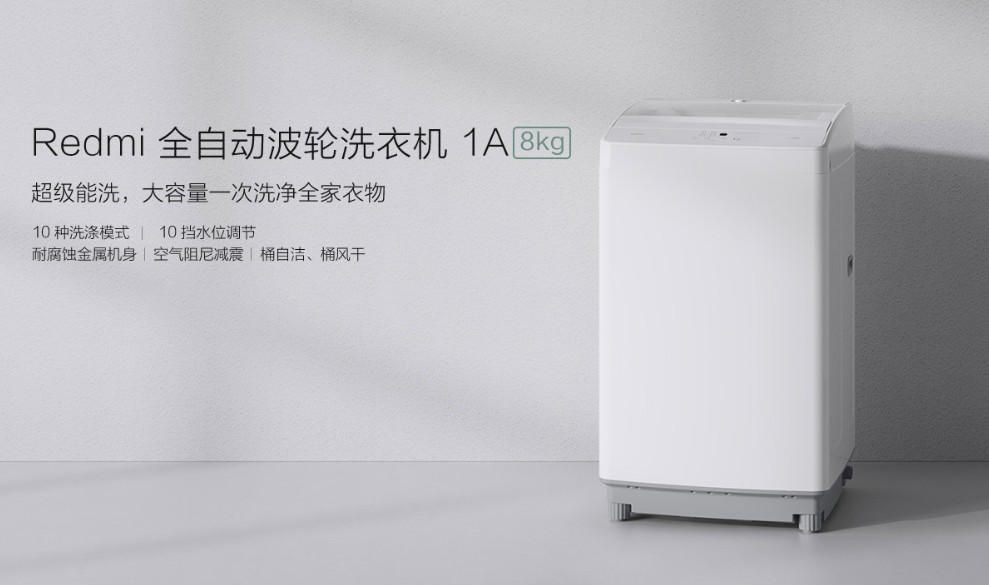
The Redmi 1A is an automatic top loader washing machine and like other Redmi products, it has a pretty affordable price tag.
The Redmi 1A has a capacity of 8kg with a PCM metal body that is highly anti-corrosive. The lid is transparent, so you can see the wash state of your laundry. It also has multiple wash modes including a self-cleaning mode.
The Redmi 1A washing machine is 944 mm tall and 545 mm wide. It weighs 32 kg and has a rated power input of 310W. It comes in only white but you will agree that a black model will also look really nice.
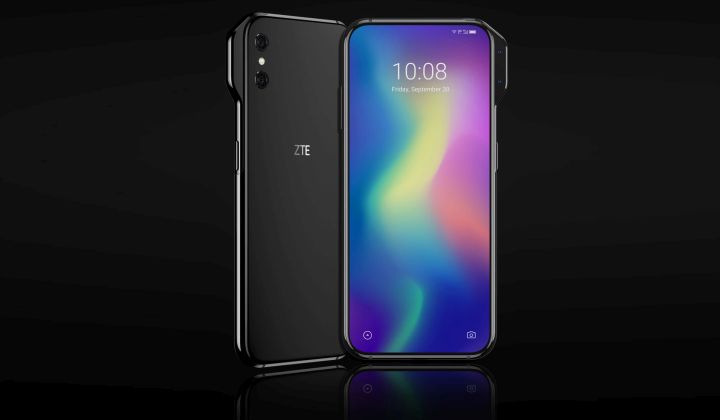
The design of smartphones has launched quite a lot in the past few years. Smartphone design with tall aspect ratio screens of 18:9 were followed by small screen notch phones. In the previous year, many phones had released waterdrop-style notched displays. Also, notch-less phones with pop-up selfie camera and dual display smartphones were also released last year. There are many phones are now available with in-screen fingerprint readers and smartphones with multiple rear cameras such as Nokia 9 PureView that features as many as five rear-facing camera sensors have launched in the recent past. A new concept phone called ZTE Axon V with innovative features was spotted recently just like Axon S concept smartphone. The Axon V is equipped with a borderless design, a notch-less display and it comes with a side-protruding dual selfie camera setup.
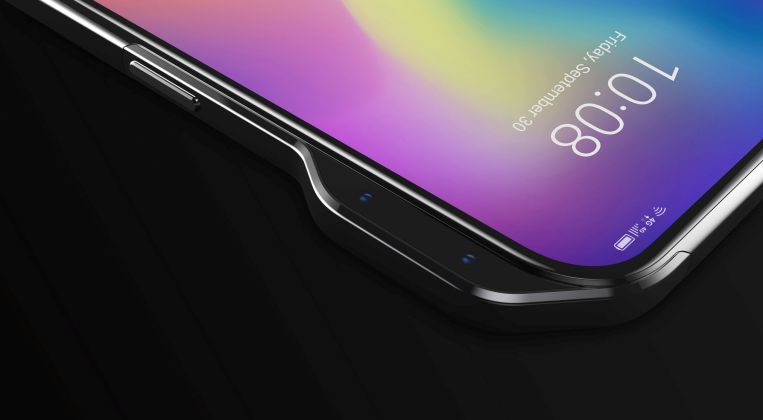
The source reveals that the Axon V is an entertainment-centric phone that will be featuring a 6.8-inch OLED display that will offer a tall aspect ratio like the recently announced Sony Xperia 1, Xperia 10 and 10 Plus smartphones. The display is surrounded by ultra-thin bezels which indicates that the concept phone offers a very high screen-to-body ratio.
On the top-right corner of the device is the 3D structured camera setup that includes two lenses that are arranged vertically. The dual front-facing cameras do not hide inside the edge of the device. The back side of the phone has a dual vertical camera module at the top-left corner. The dual rear cameras that includes an LED flash in between do not protrude like the front-facing cameras.
The source has no information on the specifications of the Axon V, but it only mentions that it is equipped with a large native storage and a big battery.
What’s your opinion on the unconventional and asymmetrical design of the ZTE Axon V? Share us your views by posting your comments below.
Xiaomi has just shown that the Redmi brand is an entirely independent brand with its own range of products that stretches further than smartphones. The Redmi series was previously focused on mid-range and budget smartphones but the Chinese giant recently reorganised it into a separate brand. Xiaomi had hinted that the brand will have its own flagship phone. However, nothing prepared our mind for this new launch of a Redmi washing machine and now, a Redmi AirDot TWS Bluetooth headset.
The new products were announced during the Redmi brand conference held today in China. One stand out feature of the two products is that they both come with affordable prices. Redmi’s head Lu Weibing, during the conference, reiterated the brand’s desire to continue to pursue high-quality products with an amazing price to performance ratio (value for money). The Redmi AirDOts comes with an affordable 99.9 yuan ($15) price tag.
The Redmi AirDots Truly Wireless Bluetooth headset packs a built-in Realtek 8763 chip and Bluetooth 5.0. The headset can be used for bilateral calls and digital sound quality is assured with its DSP digital noise reduction feature. The headset also packs a durable battery that can last up to 4 hours of continuous music playback when the pair is used. The headset comes as a pair and each of them weighs just 4.1g. Thus, they are not heavy. It is also comfortable to wear with silicon earbuds. It also pairs easily as soon as it is removed from its charging box and when it is kept inside the box, it goes off. The storage case also doubles as is charging compartment. The charging box can last up to 12 hours.
The Redmi AirDots has a control button on one of the pair which performs various functions apart from switching it off and on. A single click pauses songs while double-clicking the button wakes up the Voice Assistant such as XiaoAI smart assistant and Apple’s Siri. The button can also be used to control the mobile phone, as well as to take a photo. Recall that Xiaomi launched a TWS Bluetooth headset Youth Edition under the Mi brand not too long ago. The design and features of both headsets are similar except that the Mi model comes with touch panel while the Redmi model has a physical button.
The Redmi AirDots Truly Wireless Bluetooth headset will go on sale in China on April 9.
The latest smartphone from the now-independent Redmi brand, the Redmi Note 7 Pro was announced in January this year. Much to the delight of those who have restlessly been waiting to get their hands on the long-awaited smartphone, the Redmi Note 7 Pro has gone up for pre-order on Giztop.
While the rumor mill continues to churn out all sorts of speculation around the Redmi Note 7 Pro’s imminent launch, smartphone lovers will be able to prebook the black and blue color versions of the handset.
Under the hood, the phone will reportedly pack Qualcomm’s upgraded Snapdragon 675 AIE processor and boast an impressive array of other features when it hits the store shelves later this month. This slightly larger variant of the Redmi Note 7 surprisingly carries an affordable price tag of just $279. An absolute steal at this price, here’s what the Xiaomi Redmi Note 7 Pro has to offer in terms of features:
6.3-inch screen, FHD+ display with an aspect ratio of 19.5:9
Qualcomm Snapdragon 675 AIE processor
Adreno 612 GPU
Sony IMX 586 sensor 48MP + 5MP AI Dual rear cameras
13MP front camera
4GB/6GB RAM and 64GB/128GB ROM
A rear-mounted ultrasonic fingerprint sensor
MIUI 10 based on Android 9 Pie OS
You can follow this link to check out the full specification and pre-order the Redmi Note 7 Pro without wasting time.
Samsung’s Galaxy S10 series has been getting all the attention since it went on sale earlier this month. There are reviews popping up on virtually all tech sites. Nevertheless, it appears Samsung has more high-end devices scheduled for the first half of the year as it has just announced there is another event next month.
The official Samsung Mobile Twitter account just revealed this morning that there will be an event on April 10, 2019. The event will also be live-streamed on Samsung.com.
The tweet itself doesn’t reveal the device that will be launching but there is a chance it is more than one phone judging from the attached video which shows three displays. One of the screens is an Infinity-V display. The other two screens do not seem to have a notch.
If we were to take a guess, we would say the launch is for new Galaxy A smartphones with one of them being the Galaxy A90. Since there is a dedicated event, it makes sense it is for a high-end Galaxy A smartphone.
The Galaxy A90 is said to have a display without a notch or punch hole like the Galaxy S10 series. So for the front-facing camera, Samsung is said to have adopted a pop-up camera that also rotates. This allows the camera to double as the rear camera too. We are pretty excited to see how Samsung pulls this off.
As part of its recently launched March Mega Sale, GeekBuying is offering a slew of top deals, and great discounts on various items. In order to help effortlessly find what you’re looking for, the Chinese online store has split all the products carrying big discounts into multiple categories.
Aside from doling out noteworthy discounts on various products, GeekBuying is also giving its loyal users whose cart value exceeds $800 a chance to get an extra $50 off. GeekBuying users who spend more than $80 will be eligible for a $5 off, while those who order over $20 can save $2 by using sitewide coupons that will be valid for a limited number of pieces.
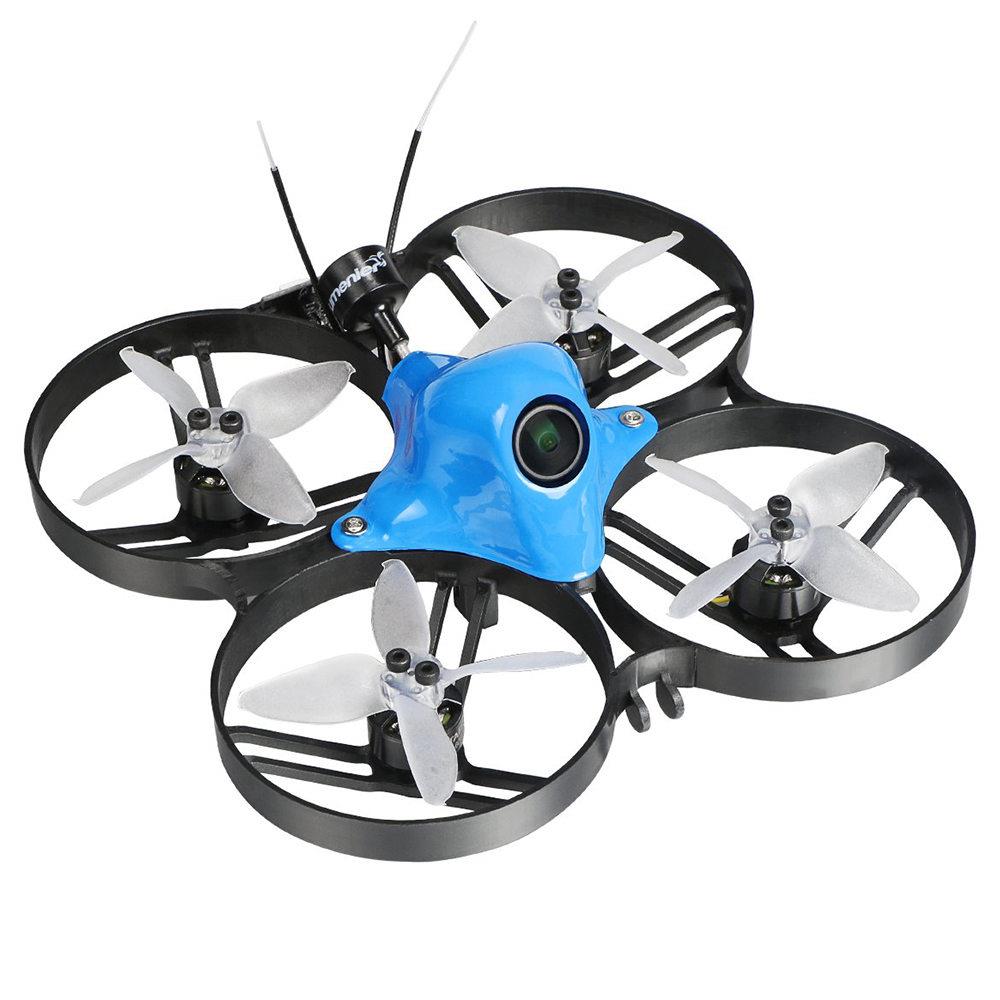
Much to the delight of drone enthusiasts, the promo offers top-end drones at lowered prices. We’ll check out the discounts available on the BETAFPV Beta85X and on the HD version of this racing drone. Moreover, you can get extra discounts by using specific coupons at the time of checking out. We’ll show how in just a bit.
BETAFPV Beta85X FPV Racing Drone
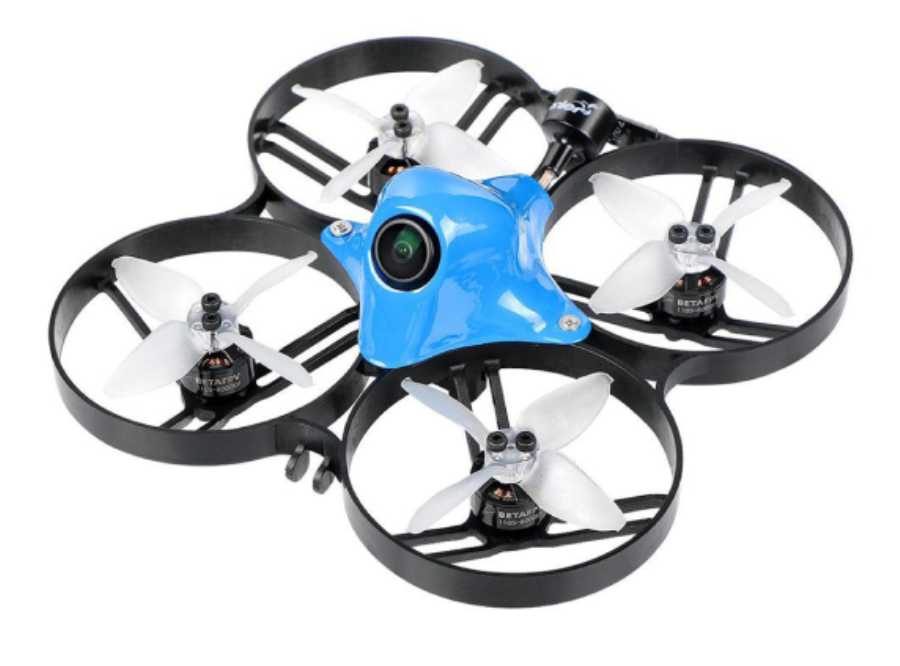
The Beta85X not only represents but pushes the new era of brushless whoop drones to the next level. Its newfangled power system enables you to fly real acro even with an HD DVR camera in racing or freestyle.
Moreover, it packs STM32F405 processor FC boards and tuned Betaflight Ominibus 3.5.0 firmware, under the hood. Aside from that, the Beta85X FPV racing drone is touted as the first 2-inch BNF drone that has BLHeli-32 ESC. This feature-laden BETAFPV Beta85X understandably carries a steep $199.99 price tag, but GeekBuying users can buy it for a reduced price of only $159.99. On top of that, you can use coupon code GIZ_FUVXMUAC to get an extra $7 off.
In other words, you can bring the already reduced asking price of the Beta85X FPV Racing Drone further down to $152.99 before placing your order. You can visit this link to grab the discount before the promo ends.
Housed in a light, yet durable and customized frame, the HD version of the BETAFPV Beta85X works without needing any soldering or tinkering, It is powered by customized lightest 1105 6000KV motors with cables.
The FPV racing drone draws its juices from a robust 2-3S high rate battery. While the aforesaid features completely justify the steep $299.99 price tag, the BETAFPV Beta85X FPV Racing Drone [HD Verison] normally carries, GeekBuying users have a chance to buy it for an unbeatable price of just $196.99.
Moreover, you can extend this 34 percent discount by using coupon code GIZ_HZLLFXLI. The aforesaid coupon helps you save $31 more by reducing the original asking price of the device to only $194.99 during the checkout process.
You can grab this unmissable discount simply by following this link. Note that the promo is slated to end in just six days.
We use cookies on our website to give you the most relevant experience by remembering your preferences and repeat visits. By clicking “Accept”, you consent to the use of ALL the cookies.
This website uses cookies to improve your experience while you navigate through the website. Out of these, the cookies that are categorized as necessary are stored on your browser as they are essential for the working of basic functionalities of the website. We also use third-party cookies that help us analyze and understand how you use this website. These cookies will be stored in your browser only with your consent. You also have the option to opt-out of these cookies. But opting out of some of these cookies may affect your browsing experience.
Necessary cookies are absolutely essential for the website to function properly. This category only includes cookies that ensures basic functionalities and security features of the website. These cookies do not store any personal information.
Any cookies that may not be particularly necessary for the website to function and is used specifically to collect user personal data via analytics, ads, other embedded contents are termed as non-necessary cookies. It is mandatory to procure user consent prior to running these cookies on your website.



















 An absolute steal at this price, here’s what the Xiaomi Redmi Note 7 Pro has to offer in terms of features:
 This feature-laden BETAFPV Beta85X understandably carries a steep $199.99 price tag, but GeekBuying users can buy it for a reduced price of only $159.99. On top of that, you can use coupon code GIZ_FUVXMUAC to get an extra $7 off.