Advertisement

Lei Jun reveals Xiaomi phones will become more expensive

When Xiaomi first rolled out its IPO last year, there were speculations the company will have to increase the prices of its phone in other to make the company more profitable. The company was quick to debunk such speculations and assured fans that it would not increase the profit margin of its phones above 5%. There have been doubts as to how the company will keep its phone prices low and still make some profit for its investors. Those doubts are turning out not to be unfounded but we are not surprised because it was expected.XIaomi Mi 9

Tech Node reports that Xiaomi’s CEO Lei Jun has warned that Xiaomi phones could get more expensive in future releases. This is as a result of attempts by the Chinese company to sed off the reputation for producing cheap hardware. Lei is quoted to have stated; “Actually, we want to get rid of this reputation that our phones cost less than 2,000 Yuan. We want to invest more and make better products.” H went further to disclose that he had informed the staff internally that this might be the last time the company’s phone prices will be under 3,000 Yuan, apparently referring to the flagship Mi brand. “In the future, our phones might get more expensive—not a lot, but a little more expensive,” he added.

Read Also: Xiaomi bet big on AI and smart devices with $1.5billion investment

Xiaomi has subtly been hinting at a change in its pricing pattern for a while now. Earlier in January after the Redmi Note 7 launch, Xiaomi had promoted the base model of last year’s flagship Mi 8 for 2099 yuan ($310). Xiaomi’s product director, Wang Teng Thomas had hinted back then that after the cost-focused Redmi series, there won’t be any such crazy cheap deals anymore as the Mi brand will go high end. For now, the innovative phone maker seems to be taking things slowly in that regard. The Mi 9 which was launched on February 20 came with several innovations such as three rear cameras, a powerful Qualcomm Snapdragon 855 chip, and wireless charging but the pricing was barely higher than its predecessor. The Mi 9 starts at 2,999 yuan (around $446), while the Transparent Edition sells for 3,999 yuan. The Mi 9 SE which is a trimmed down variant starts at 1,999 yuan. The Mi 9 price is just 300 yuan ($44) higher than the Mi 8 which starts at 2,699 yuan ($355).

(source)
OnePlus short film contest can win you a prize of $10000: Know more details

OnePlus is currently working on its next flagship device OnePlus 7. It has been leaked in multiple reports and rumors over the past few months. Along with the smartphone launches, OnePlus is also famous for it’s out of box marketing techniques and competitions. The Chinese company actively organize various activities to facilitate its fans and build a new audience. Similarly, this time, OnePlus has come up with a short film contest which can win you a whopping prize of $10000.

It’s a perfect time for new filmmakers who also love OnePlus to make a mark and win the grand prize of $10000, 2 OnePlus devices and a gimbal. There are multiple steps that you need to follow before entering into the competition. The procedure is quite intricate, but with the right understanding, you can easily enter and compete in the contest. The company has followed a different path to make users understand how to do filmmaking using a smartphone.

OnePlus has partnered with a filmmaker, Giacomo Mantovani to help users understand the process of filmmaking with a mobile device via a series “Master class” videos. Here’s the first and foremost Introduction video of “Masterclass” series:

Now, you have to submit your idea with a title and a story. You need to explain every aspect of the story from the initial phase to the final phase in a very precise and essential manner within 250 -200 words. Later, the OnePlus will select the finalists, and they will move to the next round.

Now, after various rounds, OnePlus will select the 10 semi-finalists which will be given OnePlus 6T to shoot their film. Out of these semi-finalists, the winner will be selected with undisclosed criteria. The first prize will be of $10000 along with two OnePlus devices and a gimbal. The runner ups at the second and third position will receive $4000 and $2000 prizes respectively.

Make sure that you send entries in English only. The punctuality aka completion of tasks should be on time and in an honest manner. OnePlus holds the right to publish and use your story in any production materials. Those who are interested can head over to the source below to enter the contest before March 11th, 2019.

(Source)

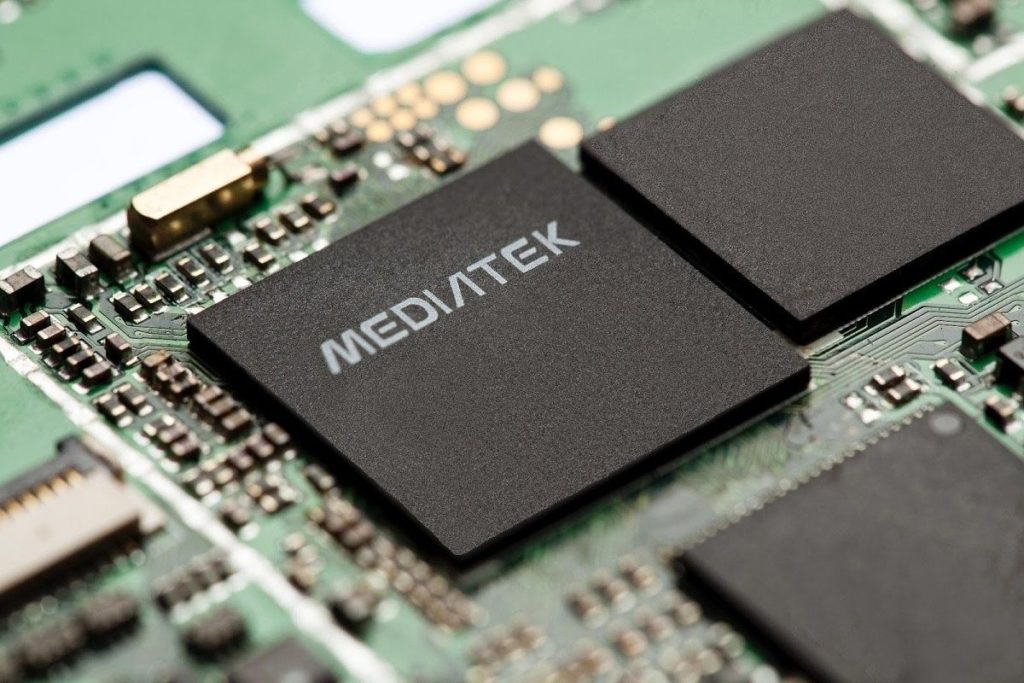
MediaTek 7nm 5G chipset in works, will be a step ahead than Helio P90

Almost, all the major chipset manufacturers have already revealed their 7nm chipsets this year. Qualcomm announced its Snapdragon 855 built on the 7nm process. Similarly, Apple and Huawei have also launched A12 Bionic and Kirin 980 7nm chipsets respectively. There are significant improvements that these 7nm mobile SoCs carry over the traditional 12 nm chipsets. The 7nm chipsets have now become standard for high-end smartphones. In order to match the new standards, MediaTek is also going to debut 7nm chipset in the market soon. As per the Finbarr Moynihan, MediaTek’s vice president of corporate sales and business development, the company is eagerly working on the 7nm 5G chipset.

mediatek nokia 5g

In an interview with our folks over at the Android Authority, Finbarr Moynihan claimed that MediaTek is working on the 7nm 5G chipset. He further added that the new chipset is mainly designed for the higher end market and would be better and more capable than the Helio P90 chipset. Although, he didn’t confirm any specifications for the upcoming 5G chipset but confirmed that it wouldn’t be as expensive as like of its competitors.

In a related question regarding Helio X series, Finbarr replied that “I think you’ll see something moving up-tier from us.” He further added that “How we brand it and what it shows up as, I’m not sure. But you’ll certainly see more high-end capability than, say, we’ve exhibited on the P90.”

Along with 5G compatibility, the new chipset could come up with recently announced M70 5G modem. Although if we match some past revelations, then the new chipset would become available by the end of this year as the 5G modem is slated to debut by the end of this year. So as per developments, next year will be a game-changing year for MediaTek. As most of the high-end devices running the new chipset will come by the first half of 2020.

Although, its too early to comment whether on which devices the new chipset will debut. On the basis of Finbarr sayings, the new chipset will be affordable aka it won’t be carrying a hefty price tag. Overall, the total build cost of the devices using it will significantly reduce. In other words, the devices running the MediaTek 7nm 5G chipset won’t be as expensive as like of Samsung, Huawei and Apple devices.

(Source)

Corning reportedly working on Gorilla Glass for foldable phones

Over the previous two years, full-screen design, as well as different styles of screen notch, have been the trend in the smartphone industry. This year seems to be for 5G and foldable smartphones. Already, we are starting to see a few smartphones getting launched with 5G technology. While we expect a few other flagships to join the train, it is our opinion that 5G may not pick up fully this year due to the lack of infrastructure. However, since the Galaxy Fold and Mate X are already released, we expect to see a lot more foldable phones in the course of the year.

Corning is definitely gearing up for the emerging trend with reports that the company is working towards manufacturing a screen protector for foldable phones. Foldable phones like the Mate X use plastic polymers which enables the display to bend. However, plastic tends to crease after a certain number of folds and is also more prone to scratches. Now, the Galaxy Fold and Mate X are priced around $2000. Nobody would want to take such risk, especially when it is certain that the replacement screen won’t be anywhere near cheap.  On the other hand, a foldable glass display would be able to retain its structure regardless of the number of folds and it would hold up against scratches from keys and coins repeatedly. Thus, the company is working on glass-based protective screen.

Read Also: Where To Pre-order Vivo iQOO Smartphone

Corning has been able to make a glass that’s just 0.1mm thick and can fold to a radius of 5mm. However, since this glass is too thin, it can’t be used on smartphones as it will easily shatter if dropped. Increasing the thickness of the glass without veering out of the 3-to5-millimetre bend radius range is a technical challenge and the company is currently working on improving it. The company is reportedly experimenting with the fusion of the rollable Willow Glass and Gorilla Glass presently. The technology involves immersing the glass into a molten salt solution. Unfortunately, this corrodes the transistors found in the display so Willow Glass is currently not suitable for smartphones. Corning believes a solution will pop-up in a few years time that would be drop-resistant and have a tighter bend radius.

(source)

New Xiaomi Mi 9 (global) update brings camera features

Xiaomi is rolling out a new update to the global version of its Mi 9 flagship. The OTA update brings optimizations and new camera features according to Roland Quandt (@rquandt) who has already received it.

The update comes as MIUI 10.2.12.0 and is about 456MB in size. The changelog says the UI has been optimized for displays with a notch. You also get new camera features such as “Moon Mode for AI camera” and the ability to track moving objects while recording a video. Xiaomi says the image quality has also been improved.

The Mi 9 has a 6.39-inch 2340 x 1080 AMOLED display protected by Gorilla Glass 6. It comes with a Snapdragon 855 processor, 6GB of RAM and up to 128GB of storage. A triple camera setup graces its back which includes a 48MP primary sensor, a 12MP telephoto sensor with 2x optical zoom, and a 16MP ultrawide-angle sensor.

READ MORE: Xiaomi reveals a list of features that will be added in the new MIUI update

Xiaomi Mi Max 3 starts receiving Android 9.0 Pie based MIUI 10.2.1 stable update

Over the past few months, Xiaomi was quite busy in rolling out MIUI 10 Android 8.1 Oreo-based updates to the majority of devices. Even though, they pushed the Android 9.0 Pie update to a few devices like Pocophone F1, Mi 8 and Mi Mix 3. In addition, Xiaomi has started rolling out the Android 9.0 Pie based MIUI 10.2.1 stable OTA update to Mi Max 3 in China. There are many improvements and new enhancements in the latest build of MIUI 10 including Android 9.0 Pie features.

mi max 3 android pie stable update

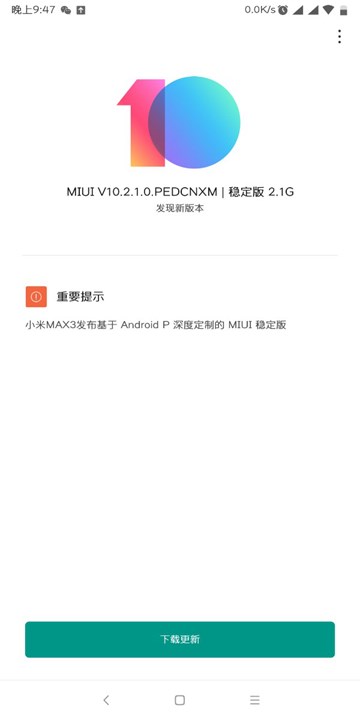
Last week, the direct download links of the MIUI 10.2.1.0.PEDCNXM based ROM was made available. Some users have manually flashed the update, but most of them are still waiting for OTA update. Today, Xiaomi has started pushing the OTA update to Mi Max 3. There are major advancements that the new update carries.

Xiaomi Mi Max 3 MIUI 10.2.1 stable update changes

As per changelog, the new MIUI 10.2.1 update optimized the camera and has added various fixes. In detail, they have fixed the problems such as automatic burst shot, crashing while previewing photo, resized the exposure icon while taking photos and has tweaked the full-screen camera reference line issue. Even, it enhances the inbuilt photo editor in the device with the addition of photo frame feature.

Moreover, it has addressed the hotspot glitch in the settings menu. Xiaomi Mi Max 3 has improved the accessibility by adding the desktop shortcuts feature. By default it is turned off, users can turn it on by going into the settings menu of the device.

Particularly in the file manager of the devices, Xiaomi has fixed almost every bug that was reported in the last few months. The Chinese smartphone maker has fixed thumbnail refresh issue which was working abnormally in an unorderly manner. There are many other changes that the file manager has received in the latest update.

Overall, Xiaomi has optimized the overall performance of the device by fixing some significant bugs. User Interface has been improved for much better accessibility.

Users can check for the update by heading over to the Settings>About phone>System Update. The update weighs around 2.1 GB, so we suggest you switch to WiFi networks to save additional costs on the carrier network. Also, make sure, your device is charged above 60% for smooth installation of the update. Xiaomi has just pushed the update, means that it would take few more days to roll out on every Mi Max 3 unit in China.

Xiaomi Mi Max 3 China versions have started receiving the latest Android 9.0 Pie based MIUI 10.2.1 OTA update. We expect that Xiaomi will soon commence the Android 9.0 Pie update for Global variants also.

(Source)

OPPO VP questions the significance of DxOMark for smartphones

Over the past few years, DxOMark has turned out to be an important part of smartphone benchmarks. Almost all of the new flagship models that are released in the market are subjected to their thorough camera tests. But there are some smartphone companies who opt out of DxOMark tests, and OPPO is one of them.

Earlier today, OPPO’s VP, Brian Shen, questioned the significance of DxOMark benchmarks in today’s smartphone market. While talking to his followers on Weibo, he said that there was no need to set a specific standard when it comes to smartphone cameras. He questioned whether it was right to tune every smartphone camera to one particular standard.

oppo-r17-pro-king-custom-edition-featured
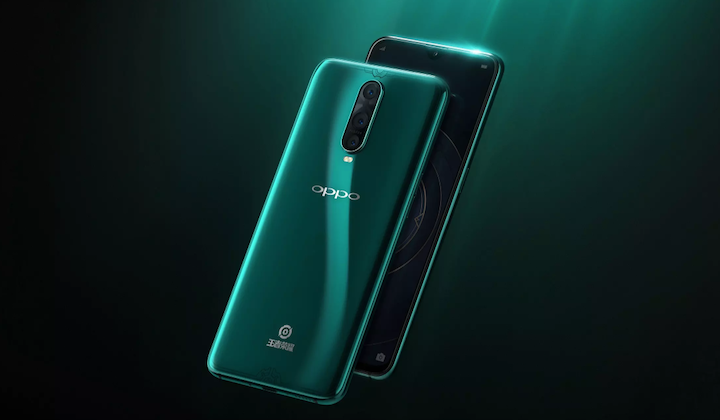
OPPO’s flagship, R17 Pro has never been featured in DxOMark

“Do you really need DXO? Do all cameras have to be tuned to the same standard?

I mean, there may be a need for rating agencies, but does anything as subjective as taking a picture have to be set to the same standard? Is it right To beautify everyone into one style?” Brian posted on his Weibo earlier today.


Interestingly, OPPO smartphones are never rated on DxOMark’s camera tests. As a result, you won’t find a single flagship from the company on DxOMark’s best smartphone camera list. On the other hand, you’ll find almost everyone else, including Huawei, Xiaomi, Samsung, Sony and even OnePlus on DxOMark’s chart.

mi mix 3 dxomark

This goes on to prove that most companies don’t mind getting their smartphones rated from the benchmarking platform. While I agree one specific standard is never the best way to judge a smartphone camera, what DxOMark gives us is the opportunity to compare the best phones out there on a standard benchmark. Understanding how different smartphone cameras work in a set environment does give us an idea of where it stands among the competition.


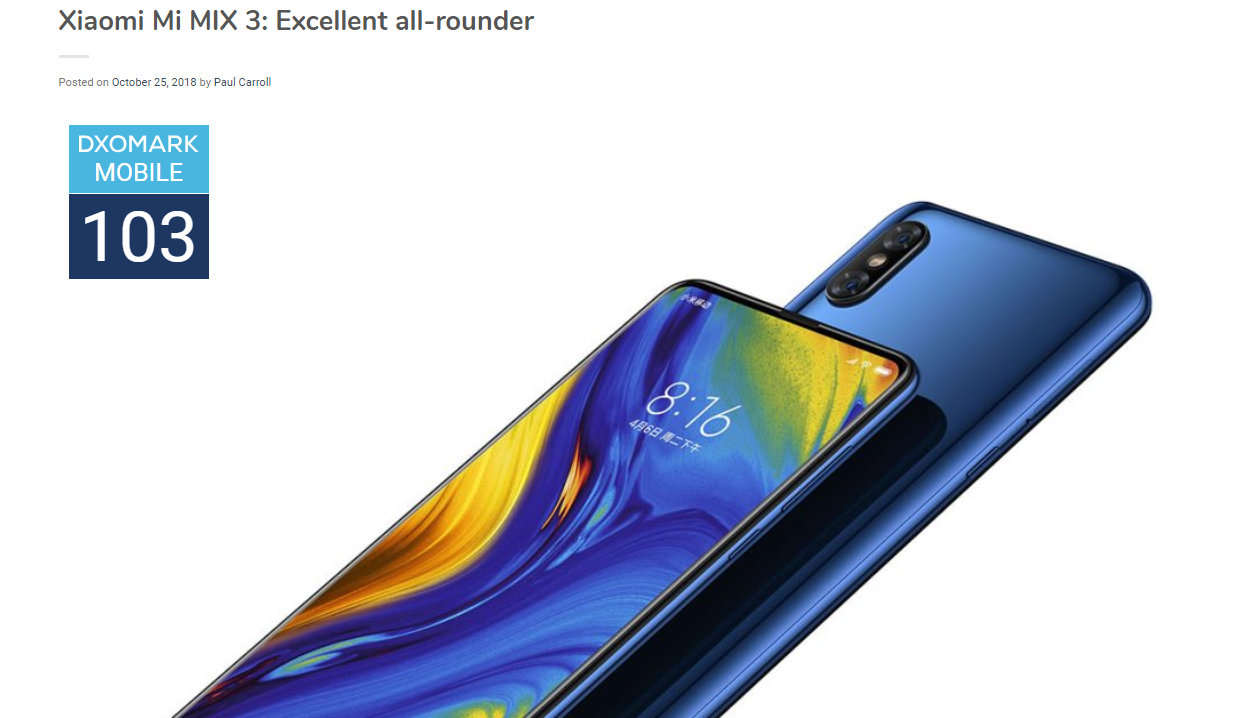
That said, some might prefer Google Pixel 3’s camera (DxoMark score: 107) over Huawei Mate 20 Pro (DxOMark score: 109). So there’s definitely a hint of personal preference to a smartphone’s camera performance. But it’s unlikely that you would end up finding Asus Zenfone 5’s camera (much lower down the DxoMark chart at 90 points) better than say something like the Galaxy Note 9 (featuring one of the top DxoMark scores — 103).


What are your thoughts? Should we stop giving too much importance to DxOMark ratings?


(Source)

100 lucky winners to get a Redmi Note 7 Pro in China

The Redmi Note 7 Pro launched in India last week and has been getting positive reviews. It will launch in China on March 18 where it is expected to bring along the Redmi 7.  Yesterday, Redmi announced it will give 100 lucky winners in China a unit of the Redmi Note 7 for free. Those who are selected will have to test certain features of the phone and provide feedback.

Redmi Note 7 Pro giveaway

The giveaway seems to be open only to residents of Mainland China. To apply, you are required to fill a form using your Mi account. You also have to include your name, gender, phone number, mailing address, and your Weibo and Xiaomi accounts’ usernames. It is also required that you state the numbers of followers you have on social media and provide a reason why you should be selected.

Those who are selected will have to test features such as cameras, gaming, and audio performance etc. If you are interested, head to the registration page here and submit your details.

READ MORE: Redmi 7 listed on TENAA, packs a 6.26” display and a 4000mAh battery

Nubia Z17 to soon get Android 9 Pie beta update

ZTE’s sub-brand Nubia revealed a couple of months ago that the Nubia Z17 will get the Android Pie update. However, after that announcement, there was no news related to that. Now the company has confirmed that the smartphone, which was launched in June 2017, will soon get the latest Android 9 Pie update.

The company has announced that the company will start recruitment for beta testers to test the Android Pie Beta version on the Nubia Z17. Later, the company will officially roll-out the stable version of the Android Pie update to all the users.

Nubia Z17 hands on 01

This will be second major update for the company’s 2017 flagship smartphone after the Nubia 6.0 update that brought Android Oreo version last year.

Coming to the specifications, the smartphone features a bezel-less design and comes with a 5.5-inch 1080p display panel protected by Corning Gorilla Glass. Under the hood, the phone comes with Qualcomm Snapdragon 835 processor clocked at 2.45GHz.

It packs 8GB of RAM and 128GB of ROM. There are other memory options available, including 6GB RAM with either 64GB or 128GB of internal storage. As for the camera, it comes with a 23MP + 12MP camera sensors with f/1.8 aperture and 1.4um large pixel.

The camera setup supports 2x optical zoom and 10x dynamic zoom. The focus time is also impressive at 0.03 seconds. On the front side, the Nubia Z17 comes with a 16MP sensor with f/2.0 aperture and 80-degree wide angle lens.


Read More: Nubia Red Magic Mars gaming smartphone is now available for purchase in the US, Canada, and Europe


As for the software, the phone comes with Android 7.1 Nougat out-of-the-box with Nubia UI 5.0 on top. Connectivity features include Dolby Atmos, Hi-Fi+, NFC, Bluetooth 4.1 and dual-band Wi-Fi b/g/n/ac. The phone is powered by a 3,200mAh battery which charges up to 50% in 25 minutes.

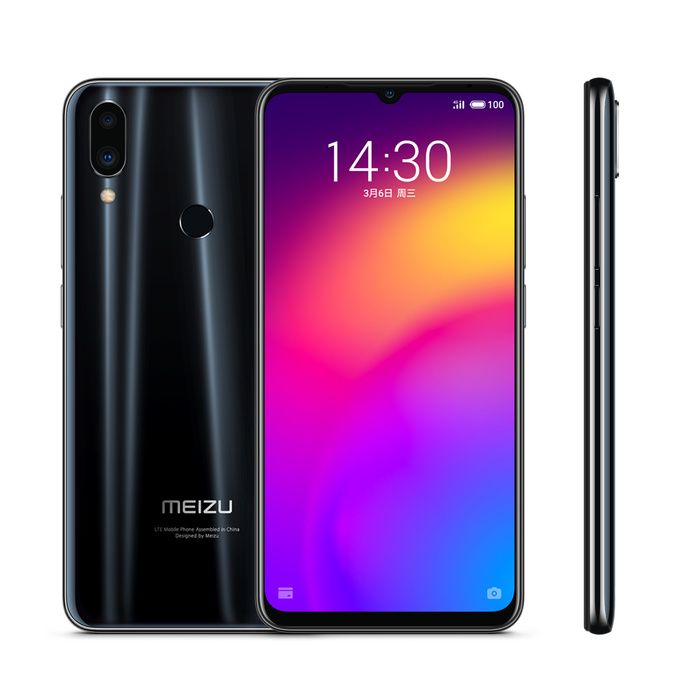
Meizu Note 9 with Snapdragon 675 and 48-megapixel dual camera goes official for 1,398 Yuan (~$208)

Meizu has finally taken off covers from the Meizu Note 9 mid-range smartphone. While the Meizu X9 that was unveiled in September 2018 was the company’s notched display smartphone, the newly announced Meizu Note 9 has arrived as its first waterdrop-style notch enabled smartphone. The handset is driven by the powerful Snapdragon 675 and it comes with some exciting features such as 48-megapixel dual camera and fast charging enabled big battery. Also, it carries an attractive starting price of 1,398 Yuan ($208).

Meizu Note 9 Specifications and Features

The Meizu Note 9 features a metal and glass combination chassis  with 153.11 x 74.34 x 8.65 mm dimensions. It is equipped with a waterdrop-style notched IPS LCD display of 6.2-inches. It supports 19.5:9 aspect ratio and full HD+ resolution of 1080 x 2244 pixels. The Note 9 offers a screen-to-body ratio of 89.23 percent.The Snapdragon 675 mobile platform that powers the likes of Vivo V15 Pro and Redmi Note 7 Pro can be found under the hood of the Meizu Note 9 with up to 6 GB of RAM. It can be availed in 64 GB and 128 GB storage choices. For optimized gaming experience through GPU acceleration, the Meizu Note 9 comes with the company’s Hyper Gaming technology.

The Meizu Note 9 features a 4,000mAh battery and still weighs only 169.7 grams. It is lighter than Redmi Note 7 Pro that houses a same-sized battery. The big battery of the Note 9 carries support for 18W mCharge rapid charging technology. An 18w charger is included in the retail box of the phone. The Android 9 Pie OS customized with the latest Flyme 7.2 UI comes preinstalled on the device. There is no microSD card slot on the phone.

The small notch at the front is the home for its 20-megapixel selfie camera. It is the very same selfie camera that’s available on the Meizu 16 series. The back panel of the Note 9 is fitted with a vertical dual camera setup. It includes a modified 48-megapixel Samsung ISOCELL Bright GM1 sensor as its primary lens and a depth sensor of 5-megapixel. The Note 9 comes with support night scene photography and offers features like handheld night scene mode and tripe mode. The other features of the Meizu Note 9 include rear-mounted fingerprint reader, face recognition 3.0 for unlocking in dim conditions, 4G VoLTE, dual-SIM support, Wi-Fi 802.11ac, Bluetooth 5.0, GPS, USB-C and 3.5mm audio jack.

Meizu Note 9 Price and Release Date

The Meizu Note 9 variants such as 4 GB RAM + 64 GB storage, 6 GB RAM + 64 GB storage and 4 GB RAM + 128 GB storage are respectively priced at 1,398 Yuan (~$208), 1,598 Yuan (~$238) and 1,598 Yuan (~$238). The handset can be availed in Black, White and Blue. The official sales of the Meizu Note 9 will begin at 10 AM (local time) on March 11.

Nokia 2 finally gets Android Oreo update

After nearly a year since it got a beta version of Android 8.1 Oreo, the stable version of the update is now rolling out to the Nokia 2.

The Nokia 2 is an entry-level phone that was released by HMD Global Oy in 2017. The phone has only 1GB of RAM and 8GB of storage just like a lot of Android Go devices but it launched before the Android Go platform kicked off and unfortunately, it isn’t possible to migrate it to Android Go.

Nokia 2 Android 8.1 Oreo update

Juho Sarvikas, the chief product officer for HMD Global revealed last month that the update to Android Oreo will eventually arrive but there will be a trade-off on snappiness due to the phone’s entry-level specs.

The manufacturer has also revealed that the update will not be available to all users but just those whose mobile networks have approved the update. The official statement from HMD Global also said some applications may not be supported. The list of countries and operators where the update will not be available are as follows:

  • Countries: Albania, Armenia, Austria, Azerbaijan, Belarus, Bosnia and Herzegovina, Chile, Croatia, Cyprus, Czech Republic, Estonia, Georgia, Greece, Hungary, Indonesia, Ireland (Except Vodafone Ireland), Israel, Kazakhstan, Latvia, Lithuania, Macedonia, Moldova, Mongolia, Montenegro, Peru, Poland, Russia, Serbia, Slovakia, Slovenia, Ukraine, United Kingdom, and Uruguay.
  • Operators: Movistar Ecuador, Tigo Guatemala, Greece Cosmot, Telekom Romania, DiGI RO, Orange Romania, and Swisscom.

READ MORE: Android Pie update released for Nokia 3.1 Plus

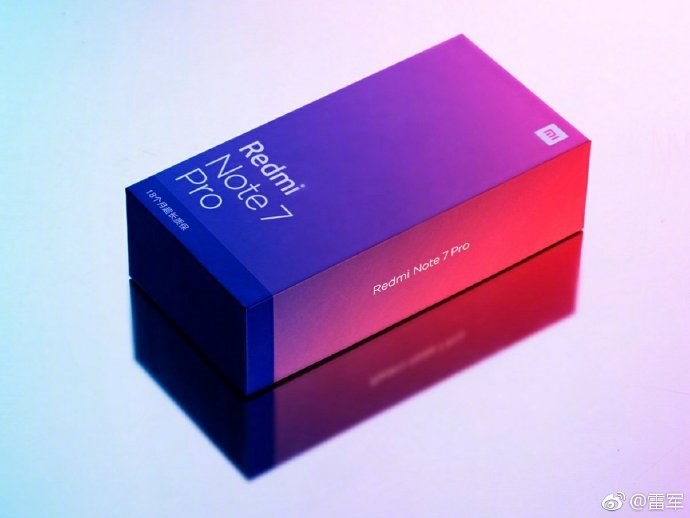
Xiaomi CEO reveals Redmi Note 7 Pro’s retail box that matches the phone’s gradient finish

Xiaomi’s newly independent Redmi brand launched its first smartphone in China in January — Redmi Note 7, which has been very well received in China. Recently, the company launched the Redmi Note 7 Pro in India.

The company has already confirmed that the Redmi Note 7 Pro will make its way to China on 18th March. However, the phone is expected to launch in China with minor changes in terms of specs and features and the company has said that it has “more surprises.”

Redmi Note 7 Pro Gradient Retail Box China

Now, ahead of the phone’s official launch in China on 18th March, Lei Jun, co-founder of Xiaomi, has posted an image of the Redmi Note 7 Pro’s retail box in gradient color on Chinese microblogging platform Weibo, teasing the arrival of the phone in China.

To remind you, the Redmi Note 7 Pro boasts a 6.3-inch Full HD+ display with 19.5:9 aspect ratio, 450 nits brightness and 15000:1 contrast ratio. The bezels surrounding the display measures just 1.95mm and it comes with Sunlight Display mode and Reading mode.

The device comes with a 2.5D curved glass on the front as well as back, which is protected by Corning Gorilla Glass 5 on both the sides, protecting it from minor scratches. Under the hood, the device is powered by the latest Qualcomm Snapdragon 675 octa-core chipset which is manufactured using the 11nm FinFET process, coupled with Adreno 612 GPU.

Xiaomi Redmi Note 7 Pro

It comes in two variants — 4GB RAM and 6GB RAM, packing 64GB and 128GB of internal storage respectively. There’s also a microSD card slot that enables users to further expand the phone’s storage capacity up to 512GB.

In the camera department, the smartphone features a dual camera setup on the back, consisting of a 48-megapixel primary Sony IMX586 sensor with f/1.79 aperture and a 5-megapixel secondary sensor for depth sensing along with an LED flash and AI-powered Steady handheld night photography mode.

On the front side, it is equipped with a 13-megapixel front-facing camera with AI Beautify, Studio Lighting. Scene Detection, Portrait Selfie, etc. It also supports AI Face Unlock feature. The phone has retained the 3.5mm headphone jack and comes with a USB Type-C port as well as an IR blaster.

In terms of software, the phone is running the company’s own MIUI 10 based on Android 9 Pie operating system out-of-the-box. The Redmi Note 7 Pro is powered by a 4,000mAh battery with support for 18W Quick Charge 4 fast charging support.


Read More: Xiaomi claims that Mi MIX 3 5G Edition can play 8K UHD videos online, to soon launch in China


Xiaomi has scheduled a launch event in China on March 18 at 2 PM (Beijing Time) for the launch of Redmi Note 7 Pro. We’ll have to wait for the official launch in China to know what “surprises” the company has to offer for the smartphone.

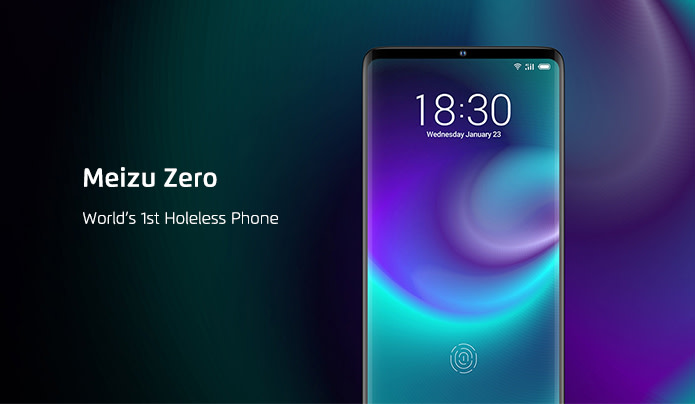
Meizu CEO responds to the crowdfunding failure of Meizu Zero smartphone

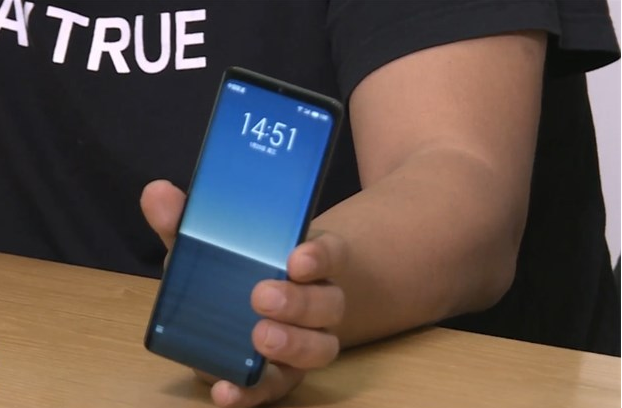
Meizu got the much-needed attention early this year when the company announced its Meizu Zero concept smartphone, which bears no holes or ports. Later, the company kicked-off plans to commercialize the smartphone and started crowdfunding on Indiegogo.

However, as we reported yesterday, the company failed to raise the amount of $100,000 in the specified time limit. Since the company chose the fixed goal route for the crowdfunding, the campaign only receives funding when the goal is reached within the deadline.

Meizu Zero

Now, Meizu CEO Huang Zhang responded on the company’s official forum to the news about the company’s failure of crowdfunding Meizu Zero smartphone. He shifted the blame to the company’s marketing department and said that the phone was only a pre-research project. Below is his statement.

This crowdfunding is carried out by the marketing department. The non-porous mobile phone is only a pre-research project of the development department. We never intended to mass-produce this project.

Many users have pointed out that the response of Huang Zhang lacks sincerity and is somewhat shameful and unfriendly to those who had decided to back the project.

As per the reports, the phone was considered in March 2018 and took almost a year to go to crowdfunding. The company had dubbed the smartphone as “Exclusive Engineer Unit”, priced at $1,299, and was said to be handmade by Meizu’s engineers.

Meizu Zero

There was also another version tagged “Exclusive Pioneering Unit” and with a $2,999 price tag but that version is sold out as just a single unit was available. The smartphone was to be offered in Black and White color options.

The Meizu Zero had a 5.99-inch curved OLED panel with full HD+ resolution of 2160 x 1080 pixels and was equipped with mSound 2.0 technology, making it possible for the smartphone to emit sound from the screen which eliminates the need for the earpiece and external speaker.

The screen of the smartphone is also embedded with an in-display fingerprint sensor and the device also comes with an IP68 certified for dustproof and waterproof to keep it completely sealed and there’s no opening on the device.


Read More: Meizu 16s to come with 48 MP Sony IMX586 camera and Optical Image Stabilisation confirms Huang Zhang


Since there’s no holes and buttons, the smartphone was equipped with linear motor-powered pressure-sensitive virtual buttons for power ON/OFF and volume up/down functions. The rear panel of the smartphone is made up of ceramic. Since there was no SIM card slot on the device, it carried support for eSIM.

Xiaomi Mi MIX 3 5G Edition can play 8K UHD videos online

Xiaomi Mi MIX 3 5G, the China-based company’s first 5G smartphone is claimed by the company to support 8K video streaming, thanks to the use of Qualcomm Snapdragon 855 chipset and Snapdragon X50 5G modem.

The company says that it has successfully tested using Unicom 5G in Shanghai that the phone can play 8K ultra-high definition videos online. It also says that the end-to-end 5G network solution provided by Nokia Bell is the first multi-vendor 5G live network communication base on the 3.3GHz frequency in China. With the ultra high-speed provided by the 5G network, its possible to stream 8K UHD videos on a smartphone.

Xiaomi Mi MIX 3 5G 8K Video

As said, the Mi Mix 3 5G is Xiaomi’s first 5G smartphone and one of the few 5G phones that have been released so far. While the company has announced the pricing and release itinerary for Europe during MWC 2019 in Barcelona, it is expected to soon launch the smartphone in China.

The smartphone features a 6.39-inch Super AMOLED with a 1080 x 2340 resolution, 19.5:9 aspect ratio and 93.4 percent screen-to-body ratio. Under the hood, it is powered by Snapdragon 855 SoC, coupled with Snapdragon X50 modem, Adreno 630, and 6GB RAM.

It comes with a dual rear camera setup which consists of two 12-megapixel sensors with AI-based features. On the front side also, it features dual cameras – a 24-megapixel primary snapper and a 2-megapixel depth sensor. The front-facing cameras are placed on a pop-up magnetic slider.


It packs a 3,800mAh battery with support for Quick Charge 4+ and 10W wireless charging. It also has a dedicated Google Assistant button. The Xiaomi Mi MIX 3 5G will be available for purchase in Europe from May with a starting price of 599 Euros.

Xiaomi Redmi Note 7 first sale in India begins today at 12 PM; Price and launch offers

The Xiaomi Redmi Note 7 and Redmi Note 7 Pro smartphones were unveiled on Feb. 28 in India. While the Note 7 Pro smartphone is scheduled to go on its first sale on March 13, the Note 7 handset will be available for buying for the first time in India starting at 12 PM from today.

Redmi Note 7 Price and Launch Offers

The Redmi Note 7 comes in two variants such as 3 GB RAM + 32 GB storage and 4 GB RAM + 64 GB storage. They are respectively priced at Rs. 9,999 and Rs. 11,999. Its three color options include Onyx Black, Ruby Red, and Sapphire Blue.

The Note 7 will be available for buying at 12 PM from today through various platforms such as Mi.com, Mi Store app, Flipkart, Mi Home stores. The handset will be available at local retail outlets soon. On Flipkart, the smartphone is available with a 5 percent discount for Axis Bank Buzz credit card users. Flipkart is also offering Rs. 5,500 Buyback value at Rs. 99 and EMI plans starting at Rs. 333 per month. Airtel and Reliance Jio are offering double data benefits for the buyers of Redmi Note 7.

Redmi Note 7 India


Redmi Note 7 Specifications and Features

The Redmi Note 7 smartphone that features a glass rear features a 6.3-inch IPS LCD panel that offers full HD+ resolution. The waterdrop-style notch screen offers 19.5:9 aspect ratio. The Snapdragon 660 chipset powers the phone along with up to 6 GB of RAM. Apart from the internal storage of up to 64 GB, it comes with a hybrid SIM slot for adding a microSD card.

The dual camera setup of the Redmi Note 7 comprises of the Samsung ISOCELL Bright GM1 48-megapixel sensor and a 5-megapixel depth sensor. It has a front-facing camera of 13-megapixel. The 4,000mAh battery of the phone supports 18W fast charging. The MIUI 10 based Android 9 Pie OS comes loaded on the device. A fingerprint scanner is available on the backside of the phone.

Buy Redmi Note 7 on Flipkart

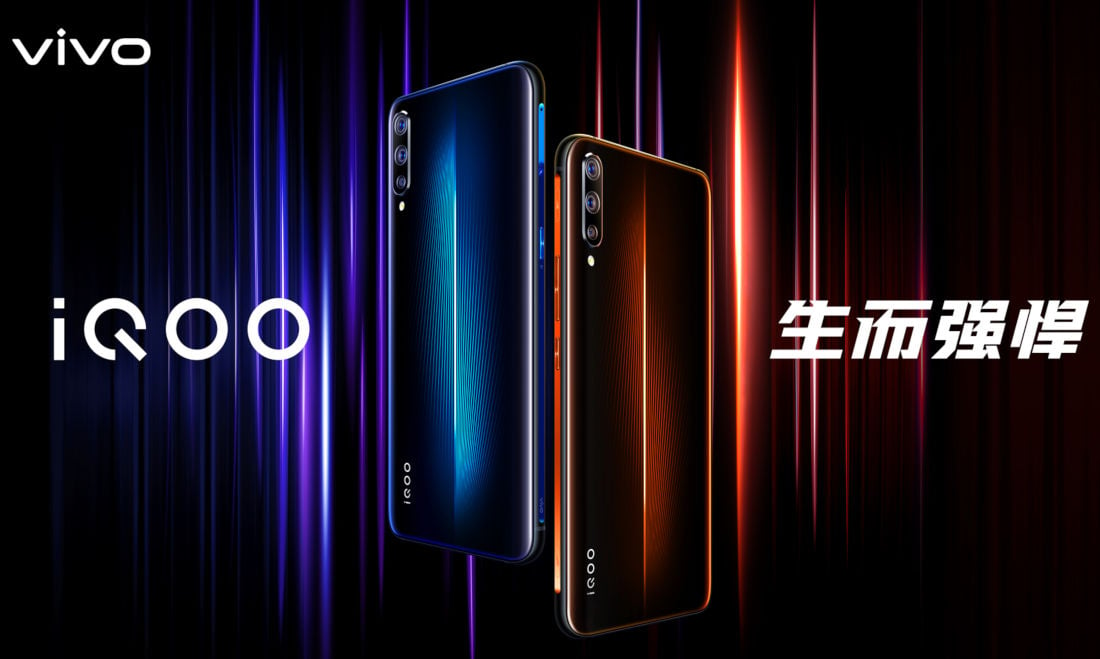
Where To Pre-order Vivo iQOO Smartphone

Vivo has announced the new independent brand called iQOO months ago, and the latest phone of it has been released officially last week.

Vivo iQOO phone

Vivo iQOO is powered by Snapdragon 855 with Adreno 640 GPU, the latest processor for Android phone. Coming with 6.41-inch dewdrop AMOLED display, the resolution of iQOO is 1080 x 2340 pixels. In the camera department, there are 12MP+13MP+2MP triple rear camera with IMX363 sensor. The handset carries support in-screen fingerprint sensor and facial unlock, also supports NFC. Different from the Vivo family, the charging slot of iQOO is Type-C. What’s, more, the battery capacity of the phone is 4000mAh with 44W fast charging. It should be noted that the iQOO of 6GB+128GB comes with 27W fast charging.
Several online shops are starting to do the pre-order, let’s see where to pre-order the Vivo iQOO.

IQOO Vivo phone

At the Giztop, the price of Vivo iQOO starts from $549, which is the good price for you to choose. You can click the button to get the terrific phone on Giztop.

Pre-order Vivo iQOO Smartphone on Giztop

The Mobile Phone Mall in Aliexpress starts to preorder the Vivo iQOO. You can get the smartphone with 6GB of RAM and 128GB internal storage at $549.99. Otherwise, it is priced at $549.99 of choosing to add wireless headset, and $579.99 of adding Xiaomi Mi Band 3.

Check Out Vivo iQOO Smartphone on Aliexpress

Here is the coupon code for preordering the Vivo iQOO on GeekBuying. The original price of it is about $734.99, and now the price is $655.99 that the reduction is close to $80. You can get the phone at $599.99 with the coupon code GIZ_WOXANMPR.

Pre-order Vivo iQOO Smartphone on GeekBuying, coupon code GIZ_WOXANMPR

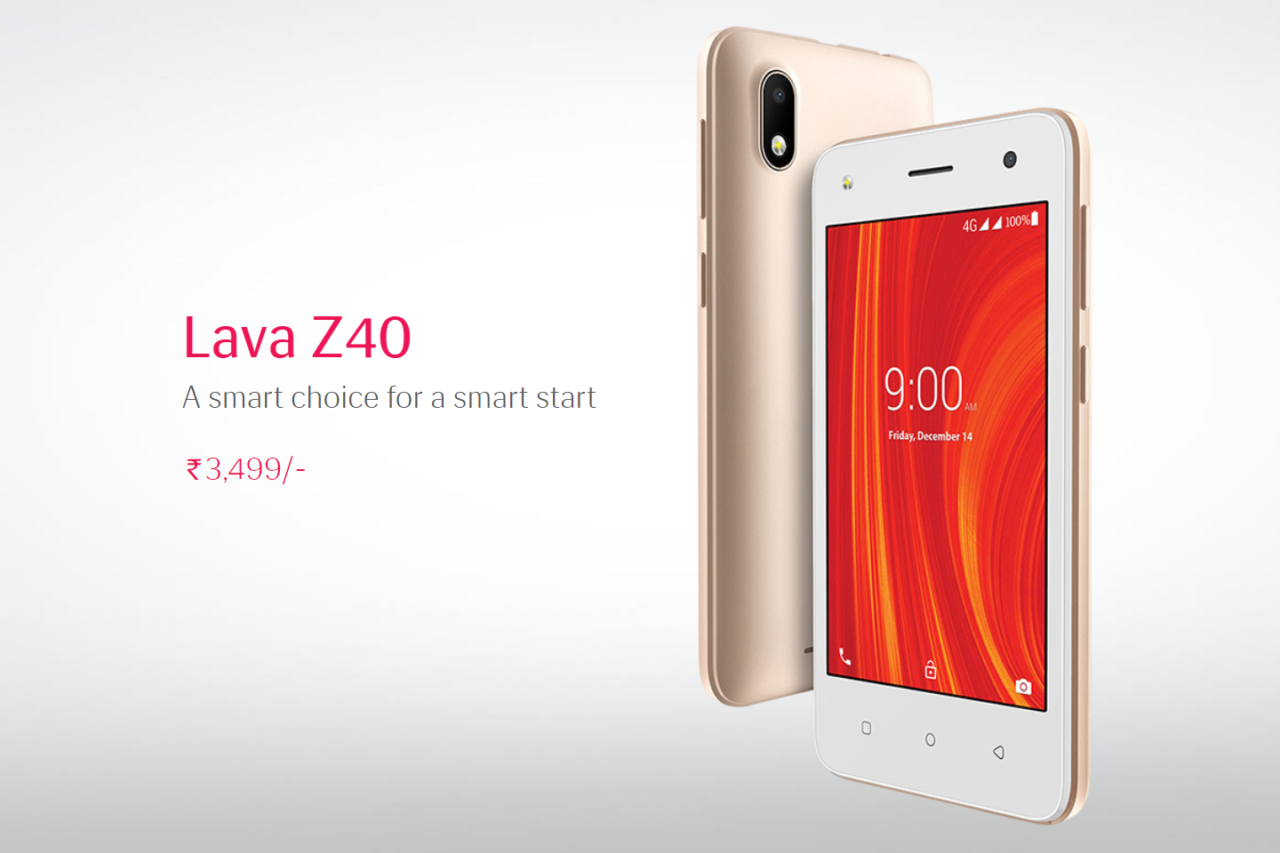
Lava Z40 Android Go phone launched: Specifications, features and price

To target first-time smartphone buyers, Lava has launched the Lava Z40 Android Go phone. The entry-level smartphone comes with modest specs and it carries an attractive price tag of Rs. 3,499. Here is all the information on its specifications and features.

Lava Z40 Specifications and Features

The Lava Z40 that runs on Android Go version of Android 8.1 Oreo OS is fitted with a 4-inch display. The smartphone delivers a resolution of 400 x 800 pixels along with a conventional aspect ratio of 16:9. The display of the phone is shielded by a Gorilla Glass layer.

The Z40 is driven by an octa-core processor that works at 1.4 GHz. The SoC is supported by 1 GB of RAM. The native storage available on the device is 8 GB of RAM. The smartphone supports up to 64 GB of microSD card. The device comes with support for 10 Indian languages. The Go edition of different apps consume less space on the device. Moreover, there is a Data Saver feature for cutting down the mobile data consumption.

Lava Z40

The Lava Z40 features a single camera of 2-megapixel on its rear which is assisted by an LED flash. Placed on the front is an LED enabled 2-megapixel selfie shooter. The modest phone carries support for bokeh mode for capturing photos with blurred effect. It is packed with a 2,250mAhbattery. The other features of the Lava Z40 include dual 4G VoLTE, Wi-Fi 802.11 b/g/n, Bluetooth 4.2, GPS, microUSB, 3.5mm audio jack and theatre-like sound output. The handset measures 125.5 x 63.9 x 11.65mm and weighs 120 grams.

Lava Z40 Price

The Lava Z40 that carries a price tag of Rs. 3,499 comes with 1-year warranty. The handset can be purchased in two colors such as Black and Gold.

Huawei P30 Pro’s periscope “super zoom’ camera officially confirmed

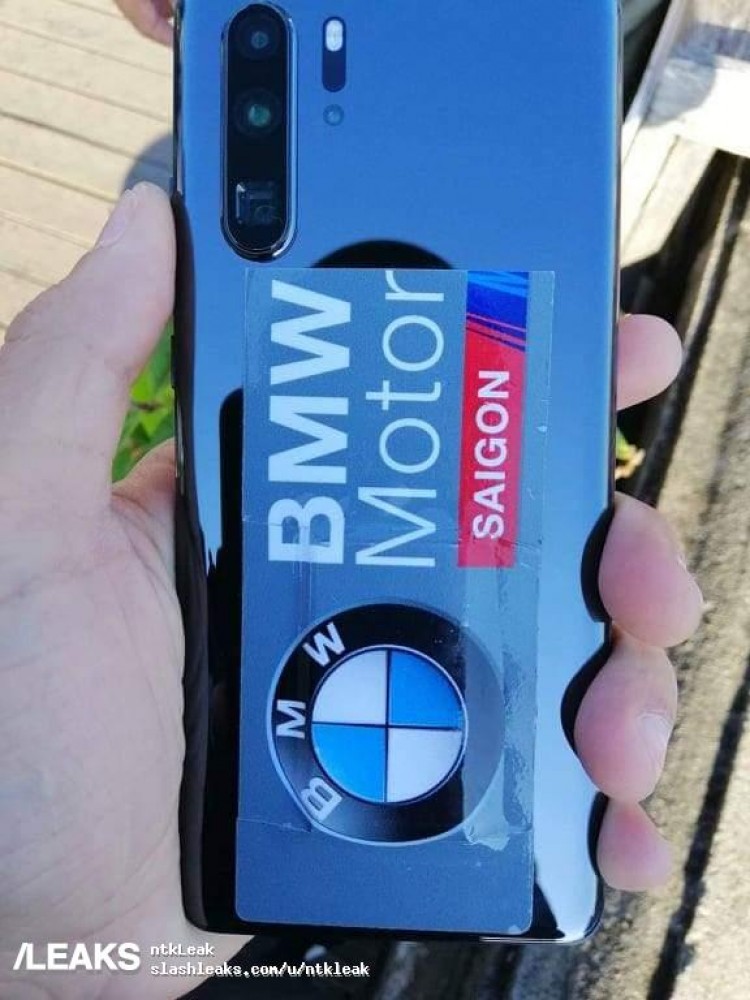
Huawei P30 Pro renders and leaked photos that have surfaced recently have revealed that it will be arriving with four rear-mounted cameras. A recently released teaser had hinted that the smartphone may carry support for 10x zoom. According to Android Central, Huawei’s Vice President of Global Product Marketing, Clement Wong has confirmed that the P30 Pro will be arriving with a periscope-style zoom camera that will offer “super-zoom” capabilities.

The Huawei P20 Pro from last year offered 3x optical zoom and up to 5x hybrid zoom. While Wong did not confirm on the exact zoom details of the P30 Pro, it is speculated that it will offer up to 10x zoom. Huawei CEO Richard Yu had shared an image of the moon that was snapped using the P30 Pro in the previous week. According to Wong, the image was captured handheld with no external help like tripod.

Huawei P30 Pro camera sample

The renders of the Huawei P30 Pro had revealed that it features a triple camera module on the top-left corner of the back panel. Alongside it is a 3D (Time of Flight) sensor, a laser autofocus and dual LED flash. It is speculated that the periscope camera could be the third sensor that has a squarish design. Describing the photography prowess of the P30 Pro, Wong stated that it will offer “something nobody has done before.”

The Huawei P20 Pro was praised for its low-light photography performance. Wong has confirmed that the P30 Pro will offer enhanced low-light shooting experience. Google Pixel 3 and other phones that offer impressive night scene photography rely on software-based algorithms. Wong has added the P30 Pro’s night mode will be better than the software-only approach of competitors. This indicates that the P30 Pro will be equipped with unique camera hardware.

He did not share any information on the camera prowess of the Huawei P30. It goes without saying that the Chinese manufacturer may have designed it to deliver stellar photography experience like its Pro sibling. Reputed tipster Evan Blass had claimed in December that the P30 will deliver 40-megapixel maximum resolution and 5x loseless zoom.

The Huawei P30 and P30 Pro smartphones are slated to go official on March 26. Both phones will be equipped with OLED displays, Kirin 980 SoC, 40W fast charging (P30 Pro) technology and more.

(source)

Samsung Galaxy A60 images leak full design and key specifications

Through a recent leak it was revealed that Samsung will be debuting the Galaxy A60 smartphone on April 19. It will be equipped with a massive display, a big battery and a triple camera system. Through a fresh leak, the front and rear design of the smartphone has been revealed. Moreover, the new leak has also confirmed some of the key specs of the Galaxy A60.

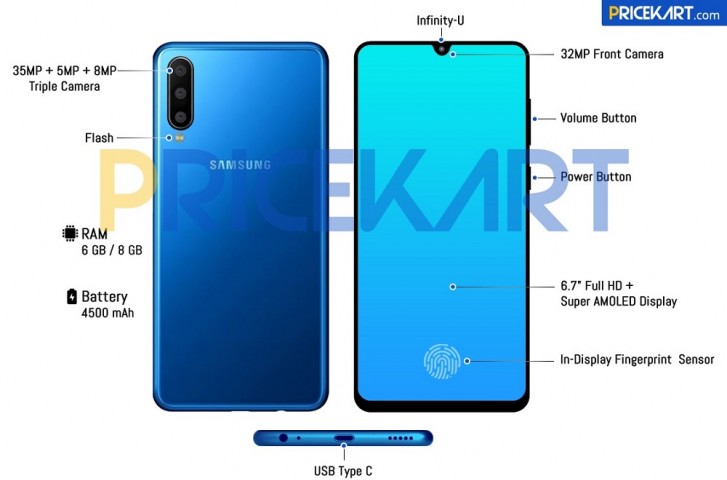
The rear view of the upcoming Samsung Galaxy A60 reveals that it could be equipped with a 3D Glasstic body like the Galaxy A50. In other words, the phone could be featuring a polycarbonate rear with a shiny appeal like glass. There is a vertical triple camera setup placed at the top-left corner followed by an LED flash.

The frontside of the Galaxy A60 features an Infinity-U Super AMOLED display of 6.7 inches. Placed under the display is an in-screen fingerprint sensor. Its selfie notch includes a 32-megapixel camera. The screen resolution of Galaxy A60’s massive display is not mentioned. Needless to say, it will carry support for full HD+ resolution.

A volume rocker and a power key are located on the right side of the handset. The bottom edge of the smartphone features a 3.5mm audio jack, a microphone, a USB-C port and an external speaker.

Samsung Galaxy A60 image

The Galaxy A10, A30 and A50 smartphones that have launched recently are all powered by Samsung’s Exynos chipset. The Galaxy A60 is rumored to be fueled by Snapdragon 675 SoC. The new leak states that the phone will be packed with a 4,500mAh battery and it will be available in 6 GB and 8 GB RAM variants. Both models are expected to include 128 GB of native storage.

The above specs are quite good for Galaxy A60 upper mid-range phone, but it would have been better it came with a glass or metallic rear. There is no information on the pricing of the Galaxy A60. The Snapdragon 675 powered Redmi Note 7 Pro with impressive 48-megapixel Sony IMX586 has a fabulous price tag of Rs. 13,999 (~$199). Being an upper mid-range phone, the Galaxy A60 has better specs than the Redmi Note 7 Pro. The Galaxy A50 has been introduced with a price tag of Rs. 19,990 (~$285) in India. Hence, the Galaxy A60 may cost under Rs. 30,000 (~$452).

What’s your opinion on the specifications and design of the upcoming Samsung Galaxy A60? Share us your views by posting your comments below.

(source)

Huawei P30, P30 Pro RAM and storage variants revealed in fresh leak

The Huawei P30 and P30 Pro smartphones will be unveiled on March 26 in Paris, France. The mid-range P30 Lite phone is also coming, but it may debut separately in European markets. Popular tipster Roland Quandt had revealed through a tweet that the base model of the P30 Lite will be arriving with 128 GB of internal storage along with a price tag of 369 euros. Through another tweet, he has also shared the configurations of the P30 and P30 Pro models arriving in Europe.

According to Quandt, the Huawei P30 will be landing in Europe with 6 GB of RAM and 128 GB of inbuilt storage. There is no information available on whether the European markets will be higher RAM and storage editions of the phone.

The Huawei P30 Pro will be available in three variants such as 8 GB RAM + 128 GB storage, 8 GB RAM + 256 GB storage and 8 GB RAM + 512 GB storage. He has added the configurations and color variants of the P30 series may vary depending on country. Last week, the tipster had shared the renders of the P30 and P30 Pro smartphones. Both phones are expected to be available in colors like black, sea green and electric blue. There is no information available on the pricing of the P30 and P30 Pro handsets.

Huawei P30 and P30 Pro renders

The Huawei P30v will be equipped with a 6.1-inch flat OLED display embedded with an in-screen fingerprint sensor. The P30 Pro will be featuring a 6.5-inch curved OLED screen along with an in-display fingerprint reader. The Kirin 980 SoC will be powering both the handsets. Some reports have claimed that there will be a 5G version of the P30 Pro with 12 GB of RAM onboard. So far, Quandt has not revealed any information on its existence.

The P30 will be arriving with triple rear cameras that may deliver a maximum resolution of 40-megapixel. The P30 Pro will have an additional 3D ToF (Time of Flight) sensor. The P30 will be equipped with a 3.5mm audio jack whereas the P30 Pro will be lacking it. The exact configurations of the batteries that will be driving the P30 and P30 Pro are not known. However, the 3C certifications of both devices have revealed that the P30 will carry support 22.5W fast charging and the P30 Pro will offer 40W rapid charging.