A little-known Google system app has started showing up in Play Store update lists on a lot of Android phones, leaving some users puzzled by its blank icon.
Android Pulse is an official Google app that’s been quietly pushed to millions of devices. Its Play Store description, which became more visible over the weekend, says it facilitates rule distribution for anomaly detection in critical system resource consumption by the Android operating system and installed applications.
In plain terms, it keeps an eye on whether apps or system processes are using unusually high amounts of resources like RAM, battery, or CPU. By sending out detection rules, it helps spot abnormal behavior that could hurt performance or efficiency. The name “Pulse” basically refers to this ongoing check on the phone’s vital signs.
The app isn’t brand new. Builds have been around since at least March, and the Play Store already lists more than 10 million downloads. It just stayed mostly under the radar until recent updates started making it appear in the available updates section for some people. The listing itself has a blank icon and empty screenshots, which is part of why it caused confusion at first.
Because Android Pulse works as a background system service rather than a regular consumer app, you can’t uninstall it once it’s there. You can disable it the same way you can many other built-in Android components if you really want to, though there’s no obvious reason to do so. It has no user interface and doesn’t need any interaction from you.
Google hasn’t given a detailed public explanation beyond the short Play Store blurb. Reports from reliable outlets covering the sudden appearance confirm it’s a legitimate first-party component meant to help with system health and debugging. If you see Android Pulse in your update queue, it’s safe to install. It’s designed to help keep your phone running smoothly rather than anything to worry about.
The argument about flagship phones, or which is truly the best, has always been the same every year. Which one has the best camera? Which one lasts the longest? And, perhaps most importantly, which phone actually gives you a reason to upgrade?
The questions are the same in 2026, but there’s a new problem sitting around this year. Memory prices have gone up sharply, and so have the prices of smartphones. Xiaomi flat-out said that higher component has pushed the 17 Ultra price, while Samsung has reportedly been dealing with higher RAM costs from its own chip business.
You might expect that to make phone makers play it safe. And they likely will with all the flagships coming in September and beyond. For the time being, though, the top-end hardware is still priced relatively well, while offering the best of what they can.
So, if you’re already thinking about spending flagship money today, here are the best flagship phones that you can buy right now.
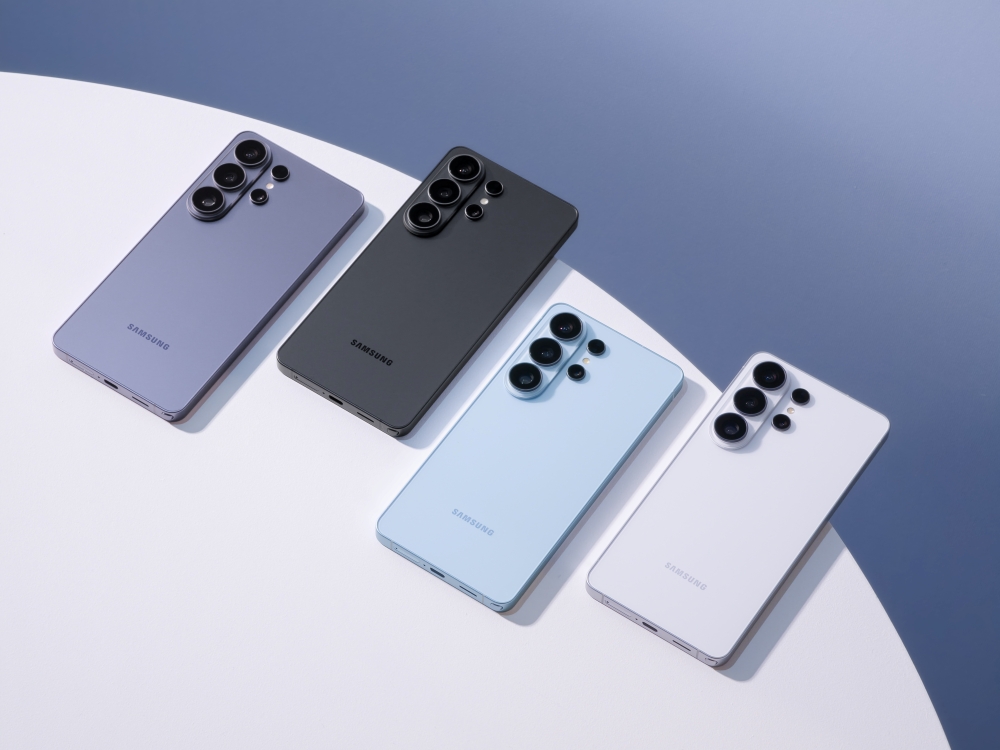
Samsung is known for playing it safe with its flagship phones, and the Galaxy S26 Ultra is no exception. It is built around the same formula we’ve seen in the previous Galaxy Ultras, but that’s not to say nothing is new here.
It starts at $1,299.99 and gives you a huge 6.9-inch Dynamic AMOLED 2X display with a 120Hz refresh rate. There’s Gorilla Armor 2 on top, but the more interesting addition this year is Samsung’s Privacy Display.
The idea around privacy on a phone’s screen isn’t new. We’ve had privacy-focused tempered glass for years, but Samsung decided to ship it on the phone itself. And that too with exclusive customizations.
Samsung’s privacy screen changes the way the pixels work so the screen becomes much harder to see from the side while staying clear when you’re looking straight at it.
It’s one of those features that sounds like a gimmick until you actually use it. What’s more impressive is that you can even hide a part of the screen, like the notification island or messages.
The S26 Ultra also gets a Snapdragon 8 Elite Gen 5 chip made specifically for Galaxy phones. Samsung finally increased wired charging to 60W as well, which is a welcome change after years of sticking with 45W.
The battery, however, is still 5,000mAh. That’s the one area where Samsung hasn’t really kept up with some of its Chinese rivals, which are now putting 6,000mAh and even larger batteries into their flagships.
Still, the S26 Ultra is difficult to fault as an overall package. You get the 200MP main camera, multiple zoom options, the S Pen, Samsung DeX, a polished version of Android, and years of software support.
It may not be the most exciting phone in every category, but that’s exactly why it’s such an easy recommendation. It does almost everything well.
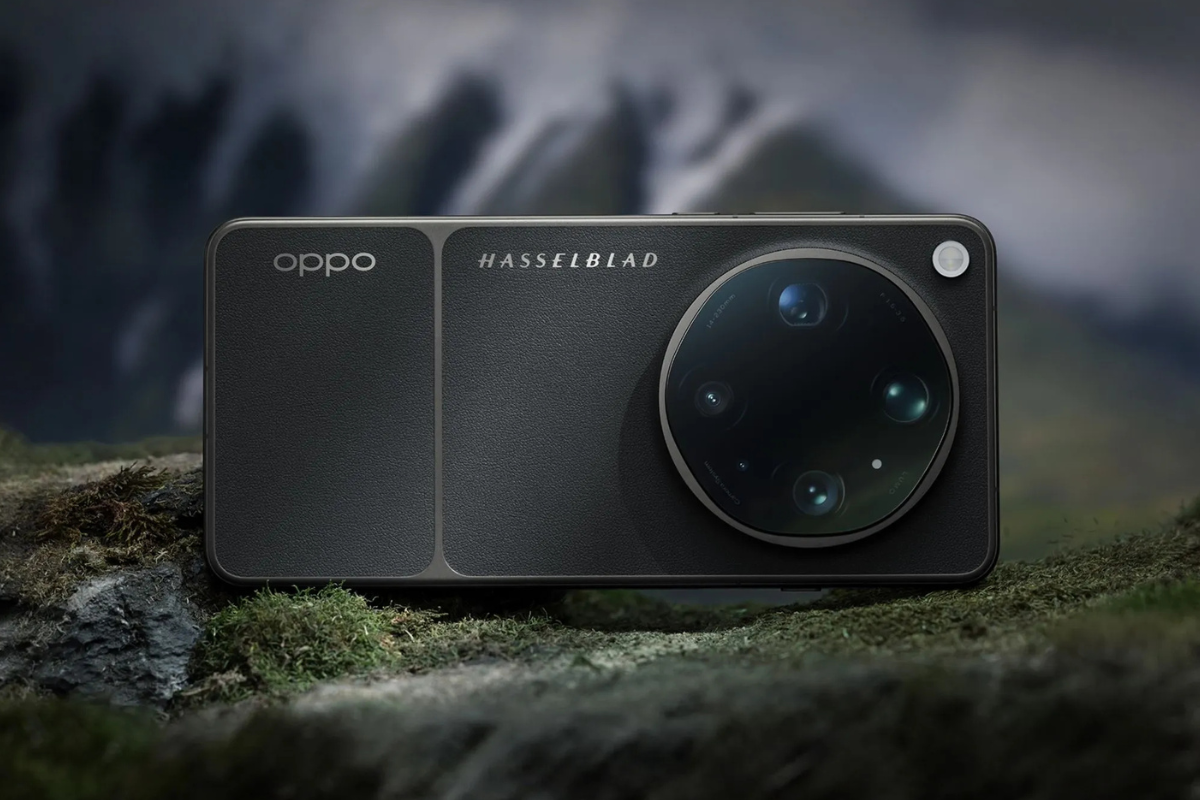
2. Oppo Find X9 Ultra
Oppo has been working with Hasselblad for a while now, but the Find X9 Ultra feels like the point where the partnership really starts to show.
This is also the first time Oppo has brought its Ultra flagship to global markets, and it has gone all-in on the cameras. There’s a 200MP main camera, a 200MP periscope telephoto, another 50MP periscope camera, and a 50MP ultrawide.
Yes, that’s a lot of megapixels. But the interesting part isn’t really the numbers. Oppo has worked the cameras into its Hasselblad Master Camera System, aiming for a more consistent look across the different lenses.
The rest of the phone doesn’t exactly feel like an afterthought either. There’s a 6.82-inch LTPO AMOLED display running at 120Hz, while a massive 7,050mAh battery handles the power requirements. And when you finally do need to charge it, 100W wired charging gets the job done quickly.
The biggest question is whether you like ColorOS. It’s perfectly capable, but it can feel a little busier than the software on a Pixel or even a Samsung phone.
Then there’s the $1,499 starting price, which is a lot of money, but we also can’t factor out what it is offering in terms of hardware.
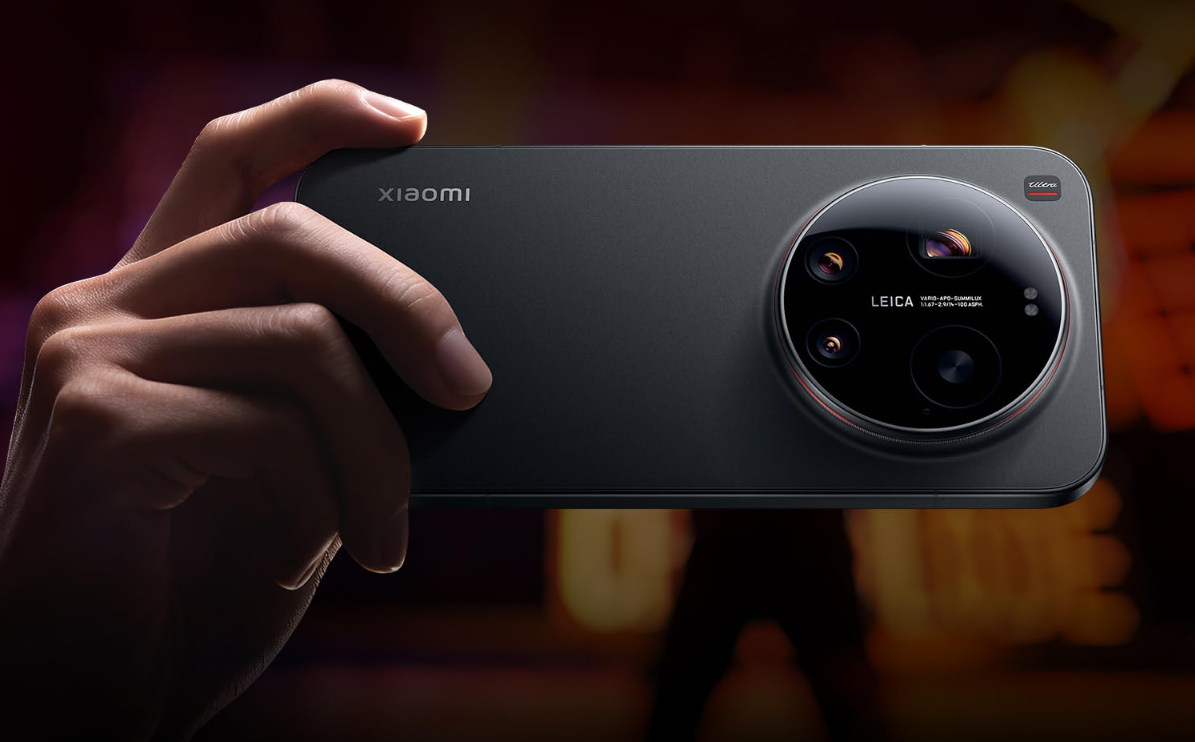
The Xiaomi 17 Ultra is another pick for camera nerds. Its main camera uses a 1-inch OmniVision sensor with LOFIC technology. It is designed to handle a wider range of brightness in difficult scenes. The 200MP periscope telephoto camera, developed with Leica as part of the companies’ deeper partnership, is another highlight here.
And this isn’t just a case of putting a Leica logo on the back. Leica has been involved in the camera’s development much earlier this time, including the design stage.
You can see where Xiaomi is going with this. The phone should be particularly good when you’re shooting after dark, zooming in on something far away, or dealing with scenes where the lighting is all over the place.
The hardware outside the cameras is flagship-grade too. There’s a Snapdragon 8 Elite Gen 5, a 6.9-inch LTPO AMOLED display with a 120Hz refresh rate, and a 6,800mAh battery. Charging is rated at 90W wired and 80W wireless. It’s available in the UK for £1,299.
So, should you buy it? If taking photos is one of the main reasons you’re upgrading, absolutely. If you’re more interested in software, gaming, or the overall ecosystem, there are better choices here.
4. Google Pixel 11 Pro XL
The Pixel 11 Pro XL is Google’s newest flagship in the market. And unlike other options in this list, it’s not big on camera megapixels or processing power. Pixel phones have mostly been known for software polish and tricks, and the 11 Pro XL is just that.
The phone starts at $1,299 for 256GB and comes with a 6.8-inch QHD+ AMOLED display that can reach 3,600 nits of peak brightness.
Inside is Google’s Tensor G6 chip, along with a Titan M3 security chip. The camera setup includes a 50MP main camera, 48MP ultrawide, and 48MP telephoto with 5x optical zoom.
As usual with a Pixel, the camera experience isn’t just about the hardware. Google’s image processing does a lot of the work, which is why Pixel phones can often produce great photos without asking you to think too much about the settings.
A novel camera feature this year is Magic Capture. It lets you record videos as you usually do, but once you’re finished, the phone presents you with candid images from those past moments. Google is using AI to refine photos, but it’s still a neat trick for everyone who struggles with poses in normal shoots.
There is one slightly strange change this year. The Pro XL now starts with 12GB of RAM, down from 16GB on last year’s model. That’s not something most people are going to notice in everyday use, but it does show just how much rising memory costs are affecting flagship phones.
What hasn’t changed is Google’s seven-year software support. The Pixel 11 Pro XL is probably the easiest phone on this list to recommend to someone who just wants Android to stay out of the way and work.
5. iPhone 17 Pro Max
iPhone 17 Pro / 17 Pro Max
If you’re already deep into Apple’s ecosystem, you probably don’t need much convincing about the iPhone 17 Pro Max. It’s still the phone Apple wants you to buy when money isn’t the main concern.
The 17 Pro Max starts at $1,199 for 256GB and comes with a redesigned aluminum unibody, a vapor chamber for better cooling, and Apple’s A19 Pro chip.
The 6.9-inch Super Retina XDR OLED display runs at up to 120Hz with ProMotion and can reach 3,000 nits outdoors. Apple has also added Ceramic Shield 2 and its new N1 wireless chip, along with Wi-Fi 7 and Bluetooth 6.
The camera setup has three 48MP cameras covering the main, ultrawide, and telephoto ranges, with up to 8x zoom. Apple also claims up to 39 hours of video playback, which should make this one of the better options here for heavy users.
Charging has finally become a little less painful too. With Apple’s new 40W adapter, the phone can reach 50% in around 20 minutes.
Of course, the biggest reason to buy the iPhone 17 Pro Max isn’t any single specification. It’s the ecosystem. If you have a Mac, Apple Watch, AirPods, or other Apple devices, everything simply works together.
The $1,199 starting price is still a lot, but if you’re already invested in Apple, the Pro Max is the obvious choice.
6. Which One Should You Actually Buy?
Here’s the simple version. The Galaxy S26 Ultra is the one I’d recommend if you don’t have a specific weakness or preference. It’s the complete package, and features like the S Pen and DeX give it things the competition doesn’t really match.
The Oppo Find X9 Ultra is where I’d look first if the camera is the whole reason you’re upgrading. It isn’t cheap, but Oppo has clearly put a lot of work into making this a serious camera phone.
The Xiaomi 17 Ultra makes more sense if you’re particularly interested in zoom and night photography. Its camera hardware is hard to ignore, although availability could be an issue depending on where you live.
The Pixel 11 Pro XL is the easy choice for people who value clean software and long-term support. It’s also probably the least intimidating phone here if you just want something that works without a lot of tinkering.
And then there’s the iPhone 17 Pro Max. If you’re already using Apple products, there’s little reason to look elsewhere unless you specifically want Android.
Flagship phones have gotten expensive, and there’s no getting around that. In previous years, at least the price hikes came with real hardware improvements. The upcoming flagships are set to become more expensive, and AI is to blame. So if you’re thinking of getting a new flagship phone, it’s best not to wait. Rather, know your requirements and get the one that’s best for you.
Xiaomi has launched a new multifunctional smart rice cooker for people who want something more versatile than a basic one-pot cooker.
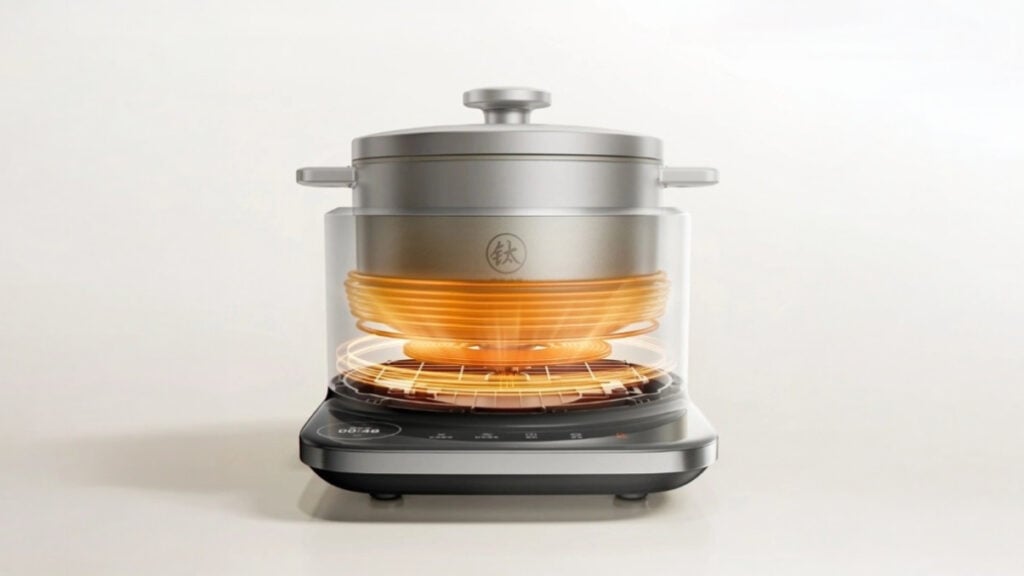
The Mijia Smart IH Rice Cooker 2 Multifunctional Edition is now listed on Xiaomi Youpin in both 3L and 4L sizes. Crowdfunding kicks off on September 6, with the 3L model priced at 649 yuan and the 4L at 689 yuan (~€87).
The design is modular, which should make cleaning a lot easier. Both sides of the inner pot have anti-scalding handles, so you can lift it out safely even when it’s hot. The 3L version measures 288.5 × 281 × 249.5 mm, while the 4L is a bit taller at 288.5 × 281 × 274 mm.
Both models put out 1,300 W and use a wrap-around 3D IH heating system. The three-dimensional coil covers more surface area so the rice heats and tumbles more evenly. The inner pot itself is a 3 mm thick fused titanium composite that holds heat well. It also features a true 0% fluorine coating that meets China’s national Class II non-stick standard, better for healthier cooking and simpler cleanup.
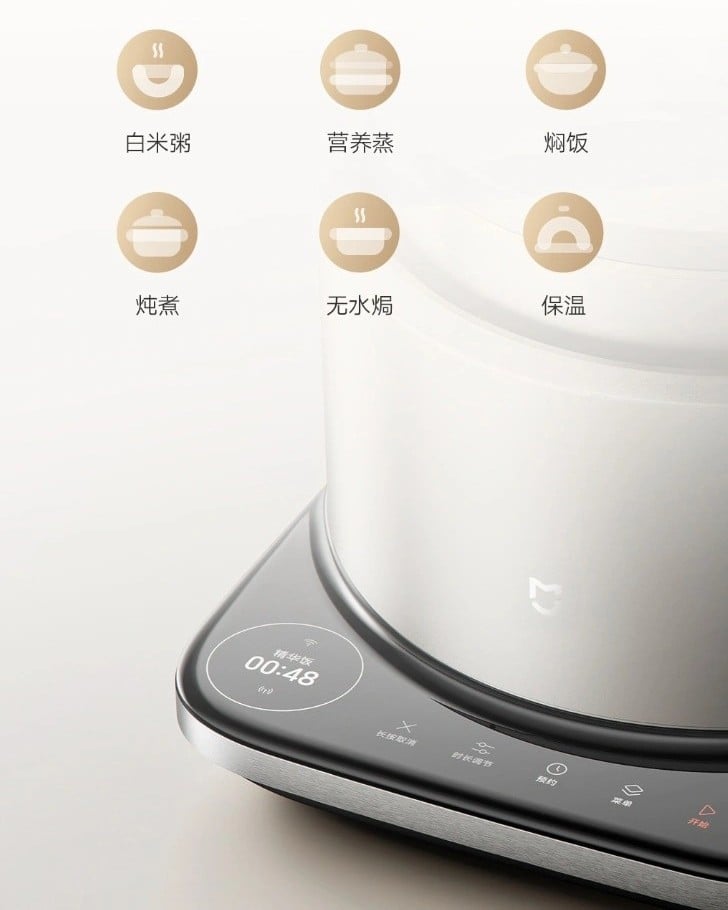
You get nine cooking modes, including premium rice, quick rice, nutritious steaming, stewing, and waterless baking. The heating logic has been tuned so a quick-cook cycle can finish in about 26 minutes. You can open the lid whenever you want to stir, add ingredients, or reduce the sauce without the cooker shutting down, which gives you more control over the process.
Connect it to the Xiaomi Mijia App and you unlock more than 100 cloud recipes. It also supports 24-hour delayed start and up to 12 hours of keep-warm, so meal planning is pretty flexible.
Overall, the Multifunctional Edition brings even IH heating, a fluorine-free non-stick pot, multiple cooking modes, and app support together in one package. It’s Xiaomi’s latest step toward giving people a single kitchen appliance that can handle a wider range of everyday dishes.
Xiaomi’s Mijia product needs no event to launch in China. Par for the course, the company quietly announced a new water heater in the mainland, and this one skips the usual condensate hassle.
Xiaomi launched the Mijia Smart Gas Water Heater Pro Dual Circulation Level 1 Energy Efficiency 16L on its Youpin crowdfunding platform today at 3,999 yuan (~ $595). You can, though, get it at an early-bird price of 3,499 yuan (~ $520) if you buy it during the launch window.
You’ll notice the design first if you’ve dealt with gas water heaters before. It measures 617 x 375 x 201 mm and uses a condensate-free setup.
Condensing gas water heaters (like this one) capture extra heat from the exhaust gases, which cools that exhaust enough for water vapor in it to condense into liquid. However, the liquid becomes acidic as it mixes with compounds from the combustion process, so it normally needs a dedicated drain — a pipe running from the unit to a floor drain or plumbing stack. This often means extra wall drilling and visible piping when the unit gets installed.
This new Xiaomi heater skips that. Instead of draining the condensate as liquid, it runs the condensate through an internal neutralization device and a high-speed centrifuge, which atomizes it into a fine mist. The mist then exits through the flue along with the regular exhaust gases. There’s no need for an extra hole in the wall, that is.
Efficiency and Purification
On performance, this heater delivers 16 kg of hot water per minute at a rated heat load of 27.0 kW. It has a built-in DC inverter booster pump that adds a 10-meter head boost, so it works across a wide range of water pressure, from 0.02 MPa up to 0.85 MPa.
If you live somewhere with multiple bathrooms running at once, its 7A-level constant temperature bathing function keeps your shower steady even when someone else turns on a tap, or you pause mid-shower.
The Heater Pro also has a built-in purification bottle that uses strontium-zinc trace element filtration to treat your bath water. For noise, Xiaomi is using four separate reduction methods, covering the source, water circuit, airtight isolation, and vibration, and the unit carries CQC certification for an operating noise level as low as 32 dB(A). You also get zero-cold-water tech, so hot water arrives instantly instead of making you wait through a cold-water drain first.
The heater runs on 220V power and natural gas rated at 2000Pa, and it connects over Wi-Fi and Bluetooth 5.0 through the Xiaomi Home app.
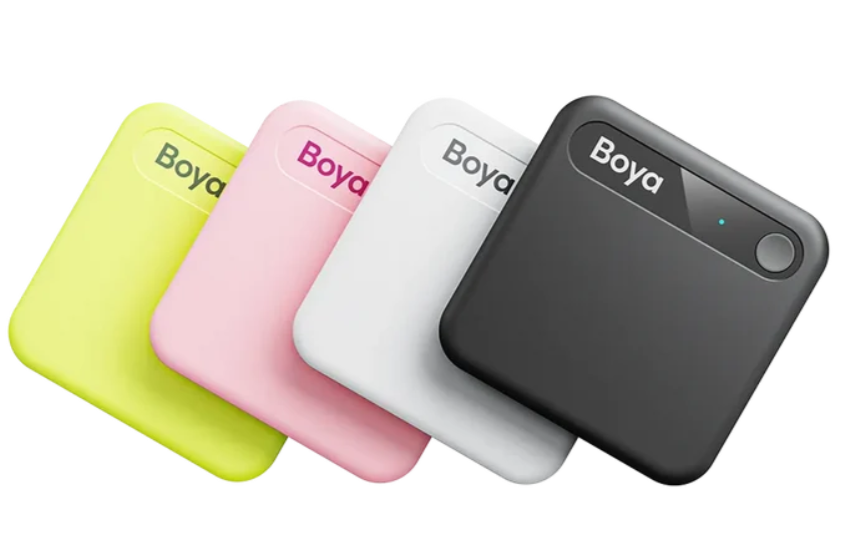
BOYA Notra Neo is an AI-powered voice recorder designed to make recording, transcription and note-taking easier. It can record ambient conversations, phone calls, and Bluetooth calls, with automatic switching between these modes. The device is compact, measuring 63 × 63 × 8 mm and weighing just 34.5 grams. It also supports magnetic attachment and MagSafe compatibility, making it convenient to carry and use.
BOYA is currently offering an early-bird 12% discount on the Notra Neo with the code NeoEarly12. Pre-orders are open now, with shipping scheduled to start on September 4, 2026.
360-Degree Recording and Long Battery Life
The Notra Neo comes with two MEMS microphones and one VPU for 360-degree sound pickup. Its microphones can capture audio from up to 5 meters away, while AI-powered noise cancellation is rated at up to -30 dB. The recorder can run for up to 20 hours on a full charge and offers standby time of up to 365 days. Charging is handled through USB-C, with a full charge taking around 1.5 hours.
AI Transcription in 140+ Languages
One of the main features of the Notra Neo is its AI transcription system. It supports more than 140 languages and includes smart speaker identification. This makes it useful for meetings, interviews, lectures, conversations and voice memos. Instead of manually listening to long recordings, users can turn conversations into searchable text and organized notes.
AI Summaries, Ask AI and Templates
The device goes beyond basic transcription. It can generate summaries, key points, to-do lists and mind maps from recordings. Users can also use the Ask AI feature to search recorded information and quickly find important details from previous conversations. The system supports AI models including ChatGPT, Grok, Claude and Gemini.
The Notra Neo also offers more than 60 professional templates for tasks such as meeting minutes, call summaries, interview notes, class summaries and key-point extraction. These templates are designed to turn conversations into useful and actionable information.
Storage, Sync and Export Options
The recorder has 8GB of local storage and supports unlimited cloud storage or synchronization. BOYA also highlights up to 1000 hours of recordings as a marketing claim, so this should not be confused with the device’s physical 8GB storage capacity.
Through the BOYA OS app and web access, users can sync recordings and notes across devices. Files can be transferred through Bluetooth or Wi-Fi, while supported exports include MP3, WAV, DOCX, PDF, TXT, Markdown and SRT. Users can also share recordings, transcripts, summaries and mind maps through shared links.
BOYA Notra Neo Deal
BOYA is offering an early-bird discount of 12% on the Notra Neo. The promotional code is NeoEarly12. Please note this is an early-bird offer, and shipping is scheduled to start on September 4, 2026.
With dedicated recording, AI transcription, summaries, searchable recordings and cross-device synchronization, the BOYA Notra Neo is positioned as an all-in-one tool for people who regularly attend meetings, conduct interviews, study or need to capture conversations without relying entirely on their smartphone.
A day after teasing the phone’s 17EV dynamic range, Vivo product manager Han Boxiao talks about X500 Pro Max’s camera stabilization in his latest Weibo post.
Han makes a fairly simple point about it. With photos, you can take multiple shots and pick the sharpest one. But video is different. If even one second of footage is shaky or too dark, the whole clip can end up being useless. That’s why Vivo is focusing on improving the consistency of its camera rather than just chasing higher specs.
The X500 Pro Max will feature what Vivo calls a 3-degree wide-angle, gimbal-level stabilization system on its main camera. Han claims the stabilization range is twice that offered by last year’s model.
For photos, it retains the CIPA 7.0 stabilization rating as the X300 Ultra’s periscope telephoto camera, but this time it is being used on the main camera.
Better stabilization can also improve low-light shots
Han also explains why stabilization is useful for more than just keeping videos steady. When shooting handheld, a faster shutter speed can help prevent blur, but it also gives the sensor less time to collect light. This results in more noise or smearing at night.
Better stabilization can help avoid that trade-off. The camera being steady means you can use a slower shutter speed and allow more light to reach the sensor without making the shot blurry.
The stabilization system will work alongside the 50MP main sensor. It’s reportedly developed jointly with Sony and is branded as the Zeiss Ultra Dynamic Main Camera.
Han says his next Weibo teaser will focus on the “Thanos Telephoto” lens. As usual, we will share the update soon after. The Vivo X500, X500 Pro, and X500 Pro Max are set to launch in September. Expect more teasers and reveals in the lead-up to the launch.
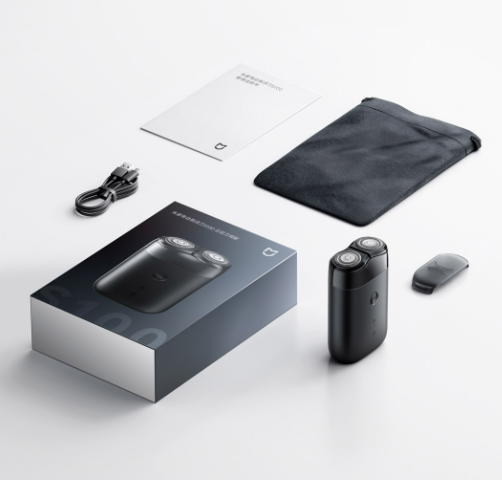
Xiaomi has added another affordable personal care gadget to its lineup, a compact electric shaver designed for everyday use and easy travel.
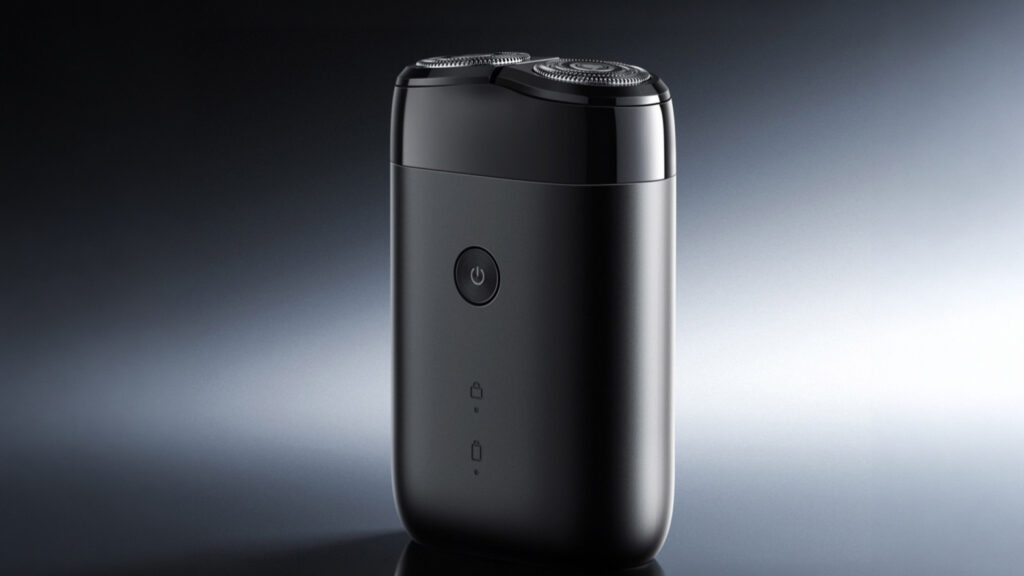
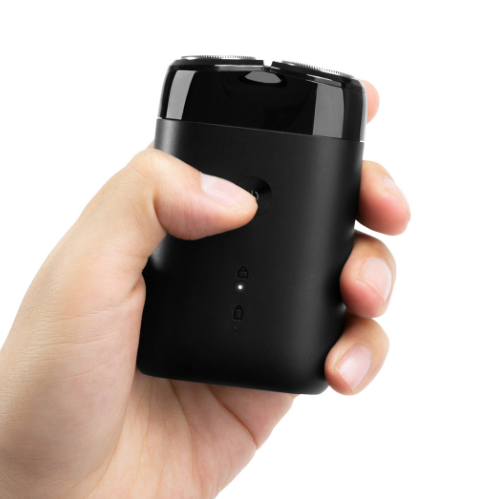
The Mijia Electric Shaver S100 Cloud Pattern Blade Edition is now up on JD.com and Xiaomi Youpin for 99 yuan (~€13). It measures about 90.8 mm × 58.5 mm × 30.3 mm and is roughly 30 mm thick, so it’s small enough to toss in a bag or keep in a drawer.
The whole unit is IPX7 waterproof, which means you can rinse it thoroughly under the tap. It’s also designed to be easy to clean: the shaver head detaches with a simple one-handed pry. There’s a single power button on the front. Press and hold it to lock the device for travel so it doesn’t turn on by accident in your bag.
According to Xiaomi, the shaving head is made using a Metal Injection Molding (MIM) process that creates a double-ring cloud-patterned foil. That design is said to boost the effective shaving area by about 34.7 percent. Pair that with a wider shaving inlet and a concave cutting edge, and you get a more wraparound cutting action. The floating dual-blade head can flex both ways: inward in a “V” shape to follow the jawline, and outward in an “8” shape to reach trickier spots like the corners of the mouth and sideburns.
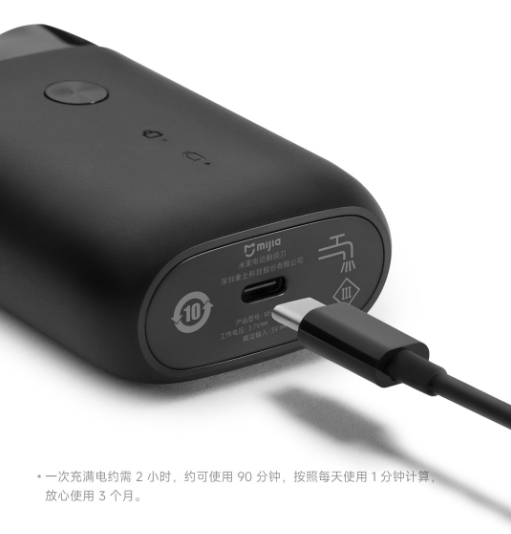
Inside, the motor spins at 7,200 rpm while keeping noise under 72 dB(A). Charging is handled through a USB-C port on the bottom. A full charge takes around two hours and gives you roughly 90 minutes of continuous use. There’s also a quick-charge feature: five minutes plugged in is enough for at least one full shave.
All in all, the S100 Cloud Pattern Blade Edition looks like a practical option for anyone who wants something portable, waterproof, and reasonably priced for everyday grooming at home or on the go.
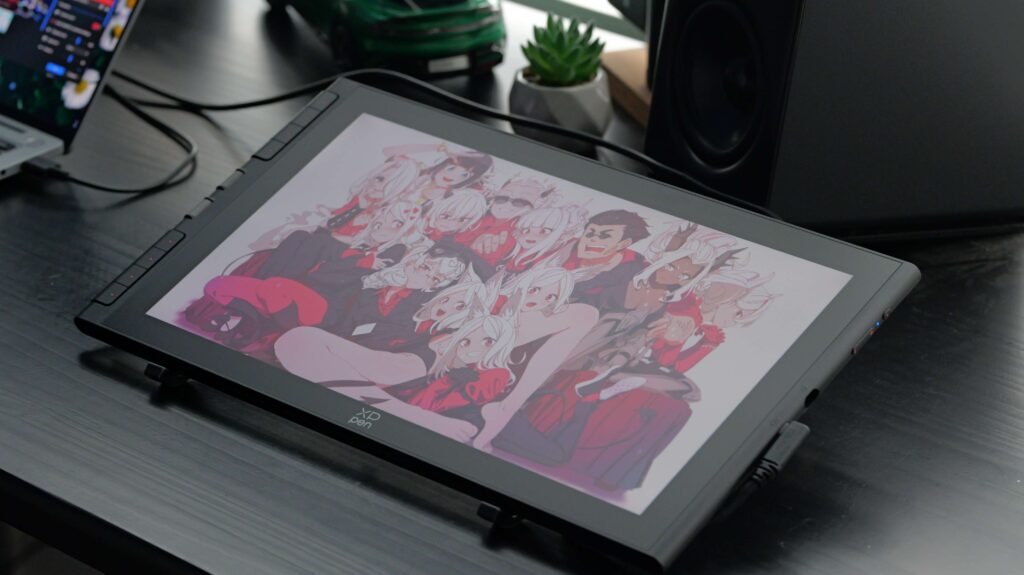
After refreshing its professional‑grade lineup, XPPen has finally turned its attention to the entry‑level segment with the Artist 16 3rd. After spending considerable time with it, I can say this is a precisely targeted and genuinely compelling product. It doesn’t chase top‑tier specs for the sake of marketing; instead, it takes the “goldilocks” 15.4‑inch screen size and pushes colour accuracy, pressure sensitivity, and interaction design to the top of its price bracket. Let’s dive in.
Special treat for Indian readers: use code Display1000 at checkout to get ₹1,000 off. Check XPPen official here and grab yours while the deal lasts.
Hardware Specifications
The Artist 16 3rd is positioned as an entry‑level device, but a glance at the spec sheet feels almost “unfair” for the category. It packs a 15.4‑inch display with a 16:9 aspect ratio and a full‑HD 1920×1080 resolution. To be honest, 1080p on a 15.4‑inch screen isn’t pixel‑density royalty, but in actual use it’s plenty sharp – at a normal working distance, I can barely spot individual pixels, and line edges stay crisp. The refresh rate is 60Hz, which doesn’t match the buttery 120Hz of the flagship Artist Pro 27 (Gen 2), but it’s more than adequate for drawing – we’re not playing competitive shooters here.
What genuinely surprised me is the colour performance. This panel covers 99% sRGB, 98% Adobe RGB, and 97% Display P3, with a colour accuracy Delta E < 1.5. To put that in perspective: in this price tier, seeing 99% sRGB alone is already considered generous – but the Artist 16 3rd pushes Adobe RGB and Display P3 to near‑professional levels. Simply put, whether you’re retouching photos, illustrating, or doing light video grading, this screen is reliable right out of the box – no extra calibration needed. Brightness is rated at 270 nits, which is perfectly fine indoors; direct sunlight might be a struggle, but who draws outside under the sun?
The screen uses a fully laminated AGAF nano‑etched glass finish. The full lamination means there’s virtually no parallax between the pen tip and the cursor – the hand‑eye coordination feels rock‑solid. The AG nano‑etching provides a paper‑like drag while effectively reducing glare and resisting fingerprints. Under indoor lighting, I barely noticed any reflections, and my fingers didn’t leave greasy smudges – a definite plus.
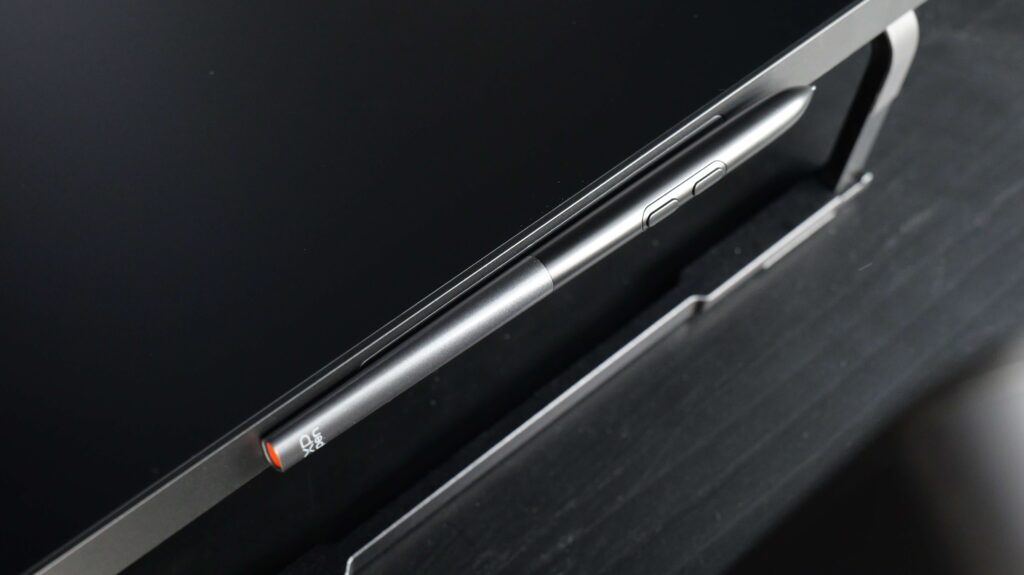
The stylus is a major upgrade this time. The Artist 16 3rd comes with the new‑generation X4 smart‑chip digital pen, featuring 16,384 pressure levels. For reference, most mainstream professional pen displays still stick with 8,192 levels – the X4 doubles that. The initial activation force is just 2g, response time is 30ms, and the nib travel is only 0.3mm. What do these numbers mean in practice? A feather‑light touch produces ink immediately, the nib barely feels like it moves, and line‑following is exceptionally responsive – no more “pen moved but line didn’t” lag. The pen also supports 60° tilt recognition, so when you’re sketching cross‑hatching or doing thick‑paint blending, the tilted stroke naturally mimics the width variation of a real brush. Bonus: the pen has magnetic snap‑on storage – it attaches neatly to the top of the display, so no more rolling off the desk.
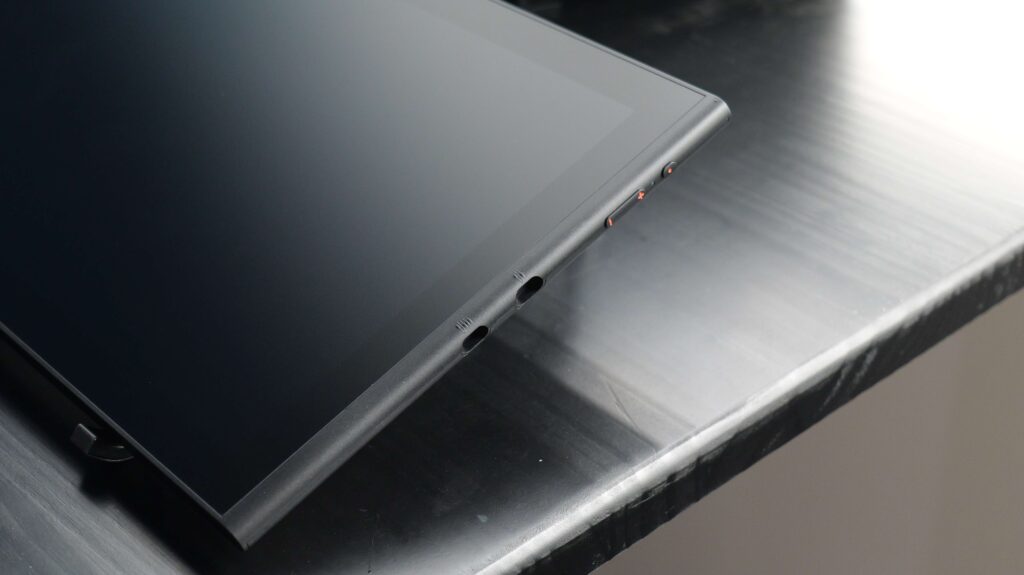
On connectivity, the Artist 16 3rd offers one full‑featured USB‑C port and one 3‑in‑1 USB‑C port. The full‑featured USB‑C means a single cable handles video, data, and power – a huge relief for those who frequently carry their tablet and laptop around, keeping your desk tidy. The 3‑in‑1 USB‑C supports video output, data transfer, and charging, offering flexible connection options.
Interaction & Shortcut Keys
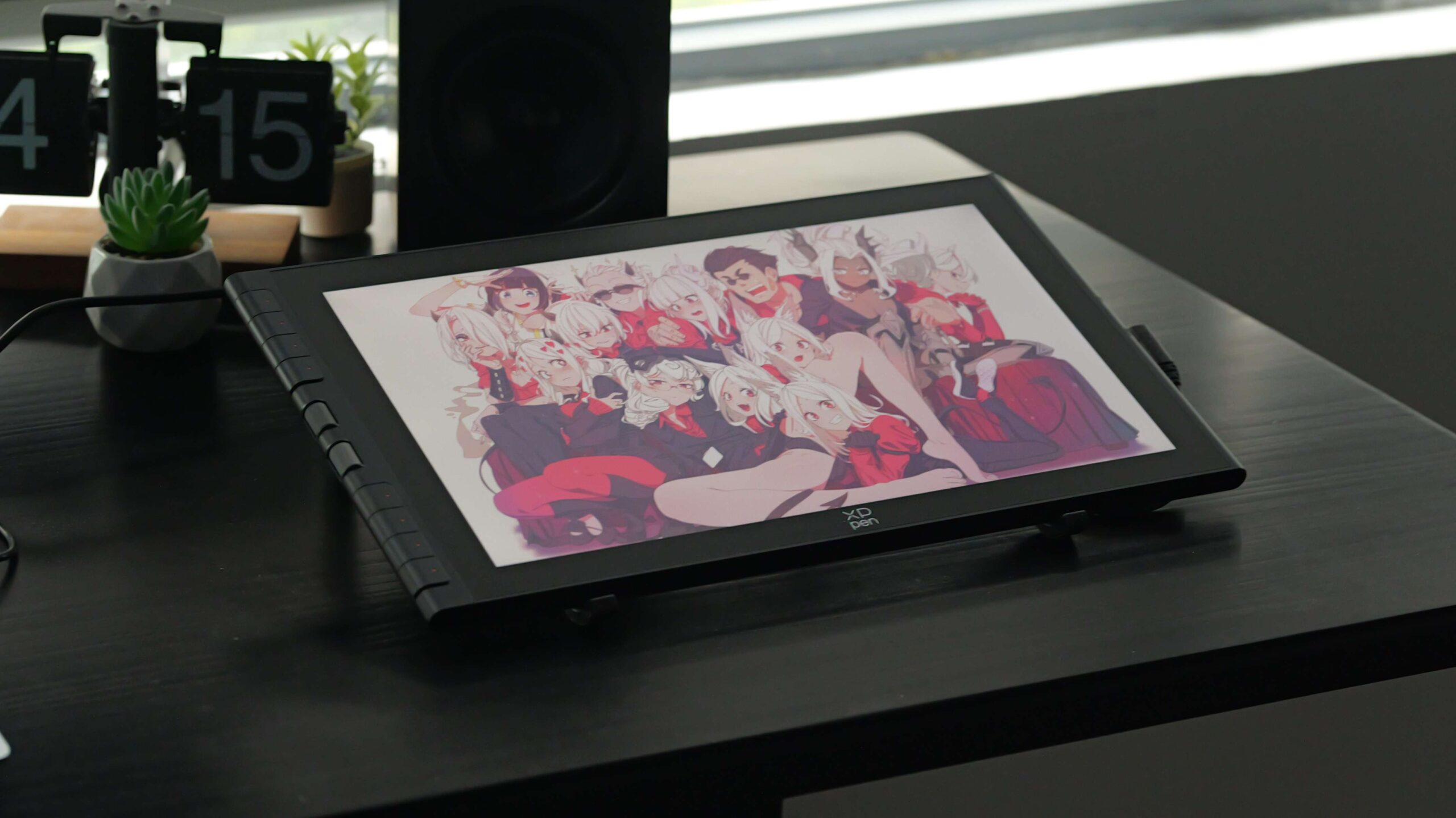
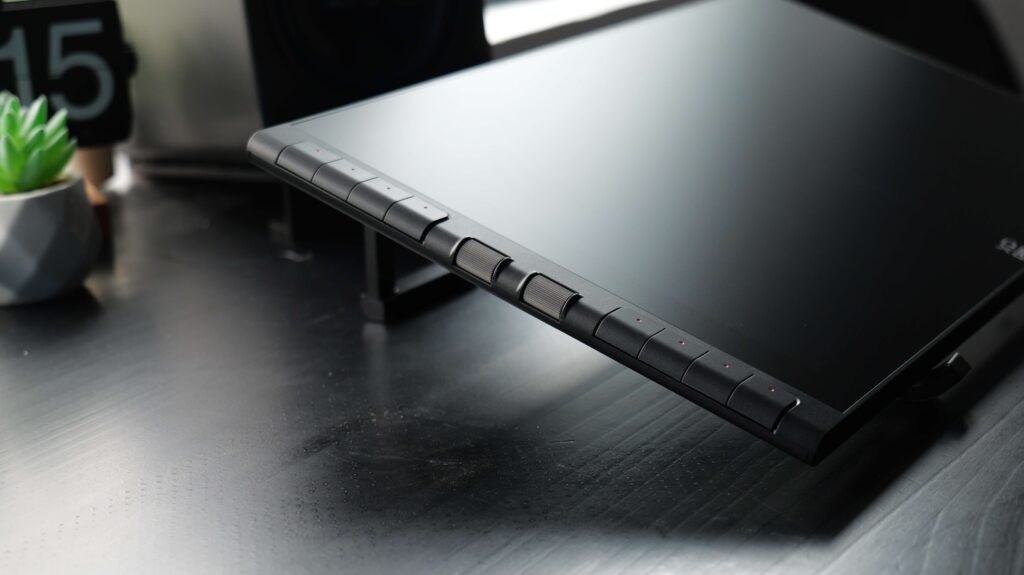
The Artist 16 3rd integrates dual X‑Dial wheels and 8 customisable shortcut keys on the left side. I have to highlight this design. In the past, adjusting brush size or zooming in/out meant reaching for the keyboard or tapping on the screen – a real workflow breaker. The X‑Dial wheels solve that completely.
A gentle flick of the wheel lets you smoothly adjust brush size, zoom the canvas, or scroll through layers. The dual‑wheel setup means you can control two functions simultaneously – say, one wheel for brush size and the other for canvas zoom – without interference. The 8 shortcut keys can be assigned to Undo, Duplicate, tool switching, and other frequent actions. With this combination, I found my drawing efficiency noticeably improved – my hand never leaves the pen display for most operations, and the immersion is something you don’t get with keyboard shortcuts. For beginners, this greatly lowers the learning curve – no need to memorise a ton of key combinations.
Drawing Experience
The first impression of the X4 pen is lightness – it sits comfortably in hand, with balanced weight distribution that doesn’t tire you out during long sessions. The 16K pressure sensitivity, in actual use, translates to a quantum leap in line delicacy. The slightest lift is captured – producing very fine, faint lines perfect for sketching or light washes – while firm pressure yields thick, saturated strokes with smooth transitions. This wide pressure range gives the brush a remarkably expressive feel, especially when doing pencil hatching or ink‑wash styles – the “press‑and‑lift” nuance feels surprisingly close to traditional media.
The 30ms response time is virtually unnoticeable – the cursor follows the pen tip without delay. The 0.3mm nib travel makes the pen feel almost like it’s not moving at all, as if you’re drawing directly on the screen. The fully laminated screen eliminates parallax, reinforcing that solid hand‑eye coordination. The AG nano‑etched glass adds a paper‑like drag – the nib glides with a subtle scratchy sound, neither slippery like plain glass nor overly sticky. That perfect friction makes precision control much easier.
Final Verdict
The XPPen Artist 16 3rd, with its X4 pen chip, delivers 16K pressure sensitivity and 30ms response that far exceed its price class. The dual X‑Dial wheels and 8 shortcut keys offer a tangible boost in workflow efficiency. Paired with a wide‑gamut screen (99% sRGB, 98% Adobe RGB) and a full‑laminated paper‑texture display, honestly – two years ago, you’d never have imagined this spec sheet in a sub‑$400 product.
If you’re a student, hobbyist, or any creator who needs a portable, well‑rounded pen display to start your digital art journey, the Artist 16 3rd is one of the most compelling choices on the market right now. It may not be the absolute top‑tier, but at this price, it gives you almost everything you need – and then some.
Here’s a special treat for our Indian readers: use code Display1000 at checkout to get ₹1,000 off your purchase. Head over to the XPPen official here and grab yours while the deal lasts — your next masterpiece is just a stroke away.
Huawei has officially set the date for its next major product event. The company confirmed today that the ‘HarmonyOS 7 | Huawei Mate XT 2 and All-Scenario New Product Launch Event’ will take place on September 7.
As the name implies, the Huawei Mate XT 2 tri-fold phone will be the highlight of the event alongside HarmonyOS 7.
The tri-fold is also expected to get a redesigned hinge that could reduce the visible crease. Huawei may also switch to UFG glass on the screen for improved durability. The device could come in Mystic Black, Auspicious Red, Crimson Purple, and the usual white finish.
Huawei has not confirmed any of these details yet. Still, they would make sense as upgrades to the original Mate XT. The first-generation model featured a 10.2-inch display when fully unfolded and had a body that was just 3.6mm thick at its thinnest point. Despite its high price, the phone reportedly sold more than 400,000 units.
For the Mate XT 2, Huawei will need to keep the phone thin while making the three-hinge design more durable. That will be especially important for a device with such a large folding screen and multiple moving parts.
HarmonyOS 7 will also take center stage
The software could be just as important as the hardware. Huawei officially introduced HarmonyOS 7 in June, and the September event should give us a better look at how it works on a tri-fold phone.
HarmonyOS 7
A device like the Mate XT 2 puts more pressure on the software than a standard foldable. Huawei needs to handle multiple windows, resize apps across three different screen layouts, and make switching between folded and unfolded modes feel seamless.
For now, Huawei has not shared an official specification sheet, so most of the Mate XT 2’s hardware details remain unconfirmed. We won’t have to wait much longer, though.
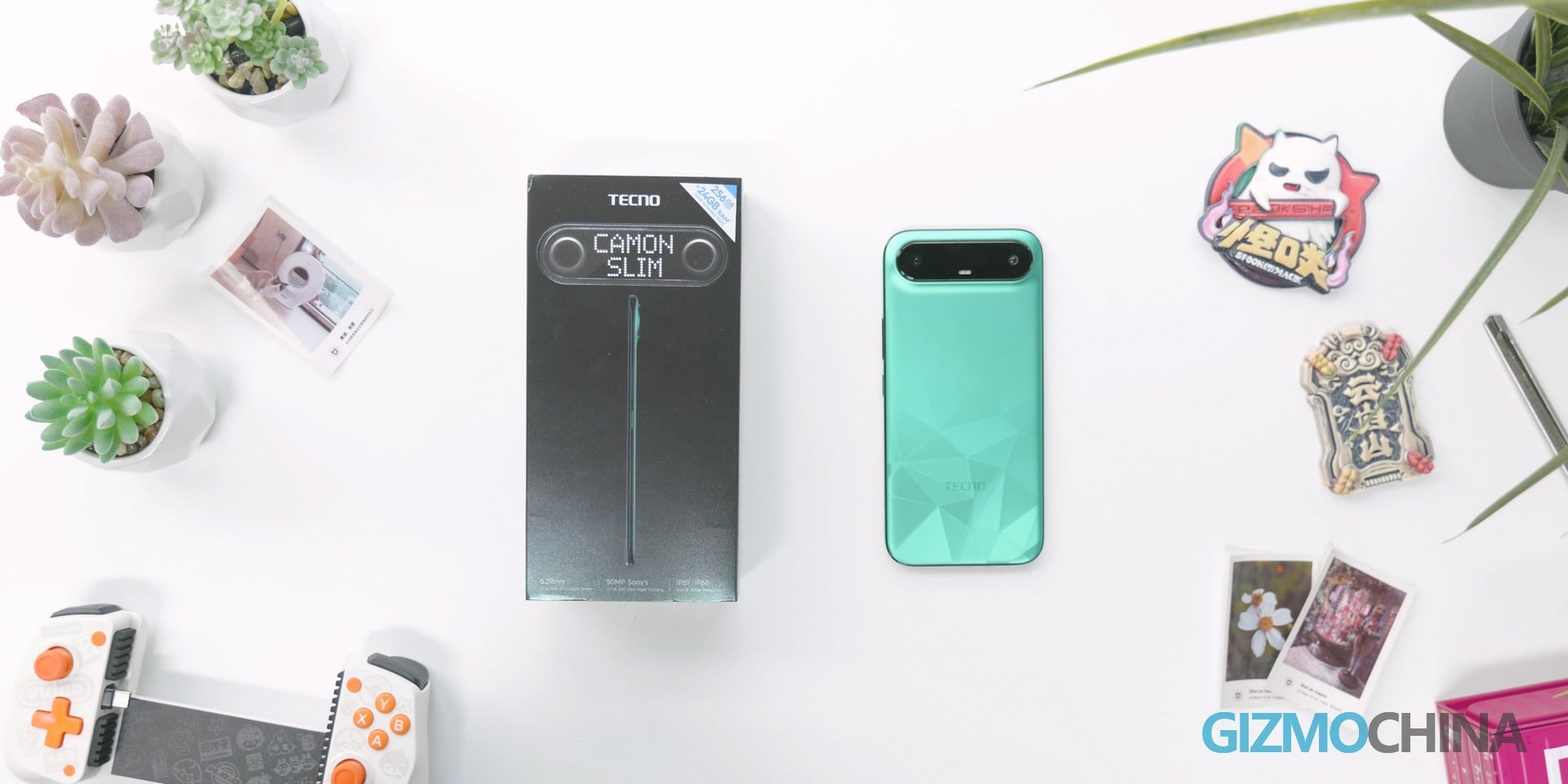
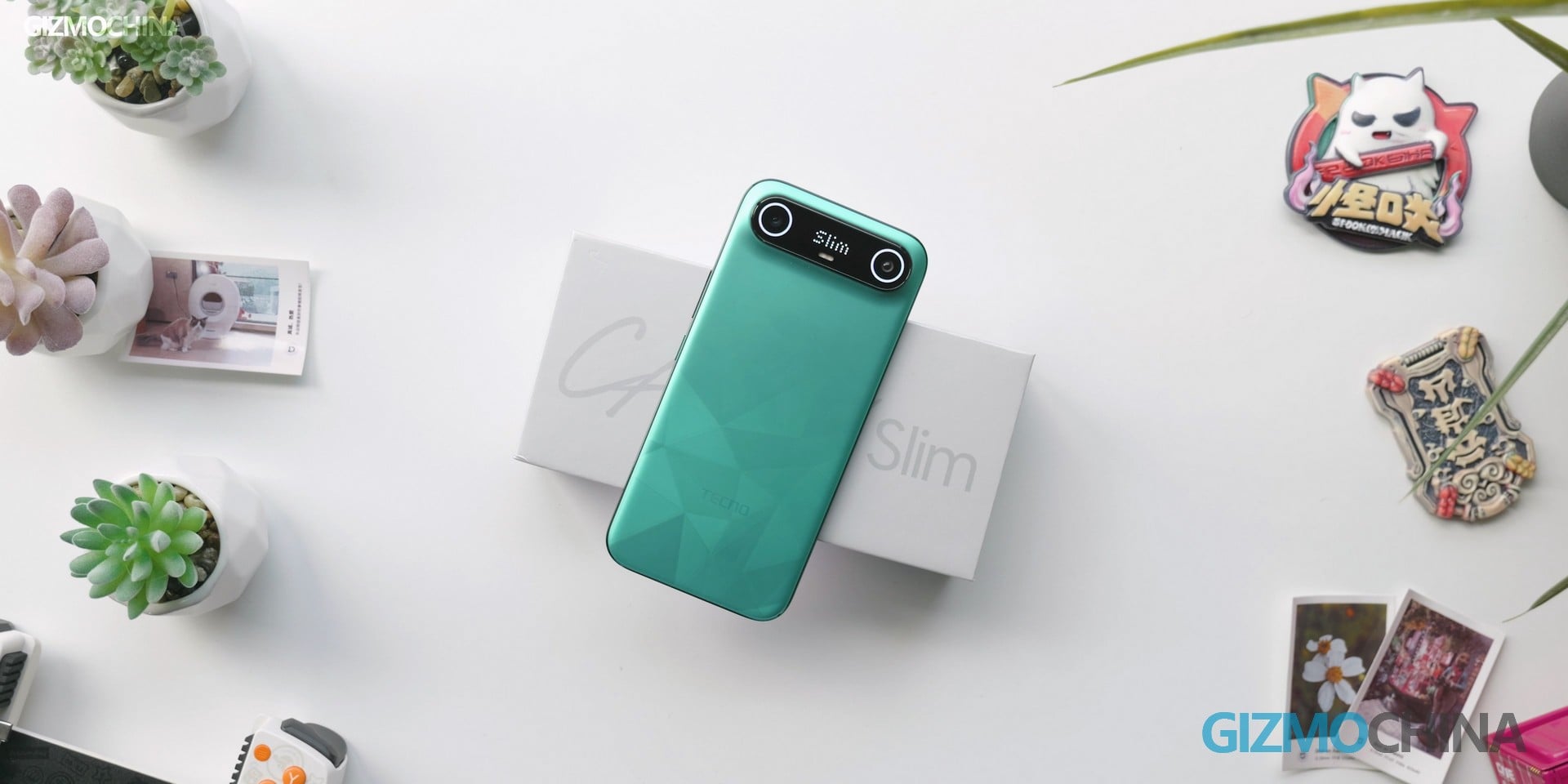
TECNO is clearly obsessed with ultra‑thin smartphones. We’ve already seen the POVA Slim and the SPARK Slim, and now the CAMON series finally gets its own Slim variant. But this one is fundamentally different from the previous two. Inside and out, it feels like TECNO’s definitive answer to what a slim phone should be. And we’re not kidding—this is easily the most refined TECNO handset we’ve ever laid hands on.
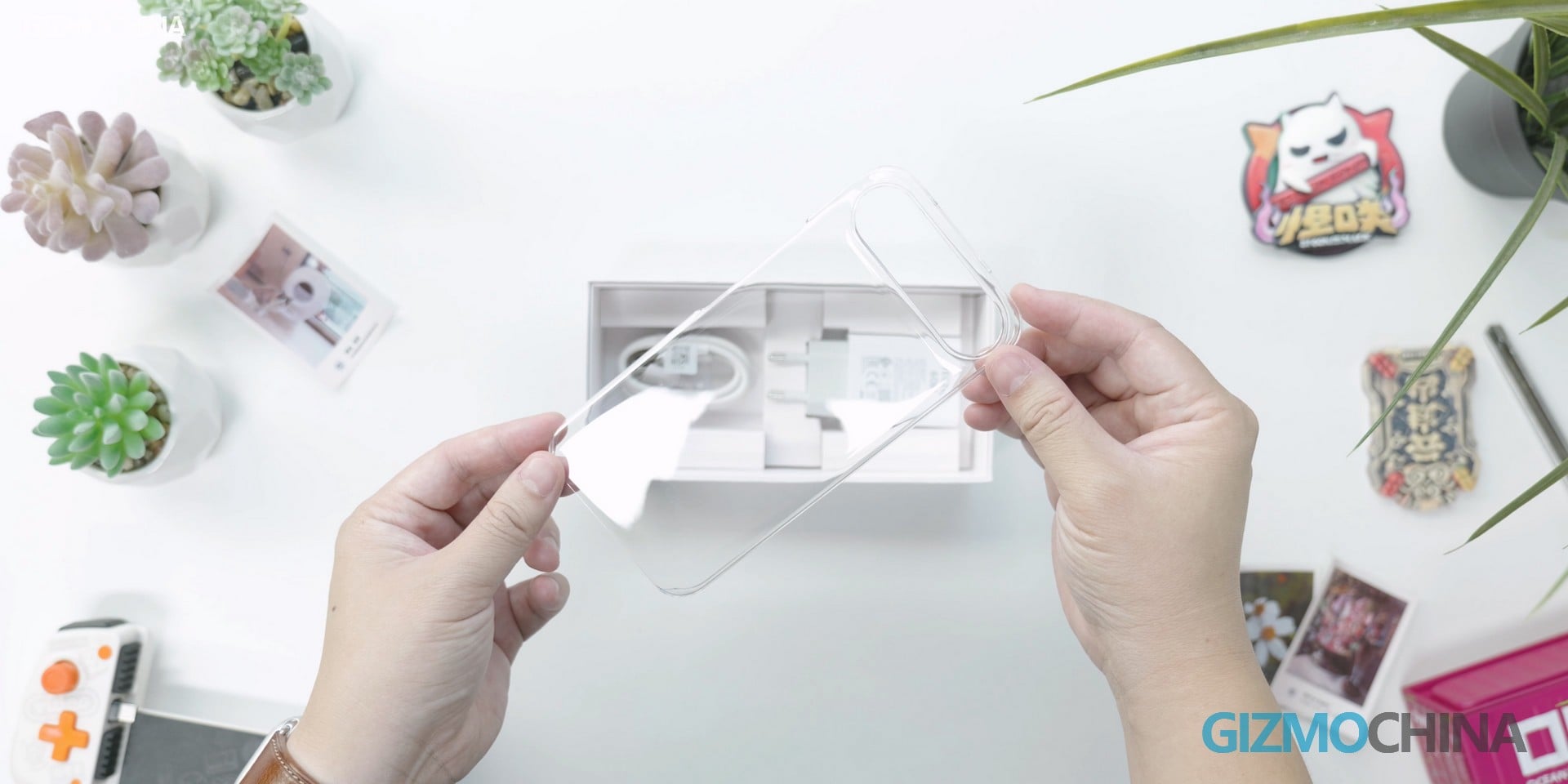
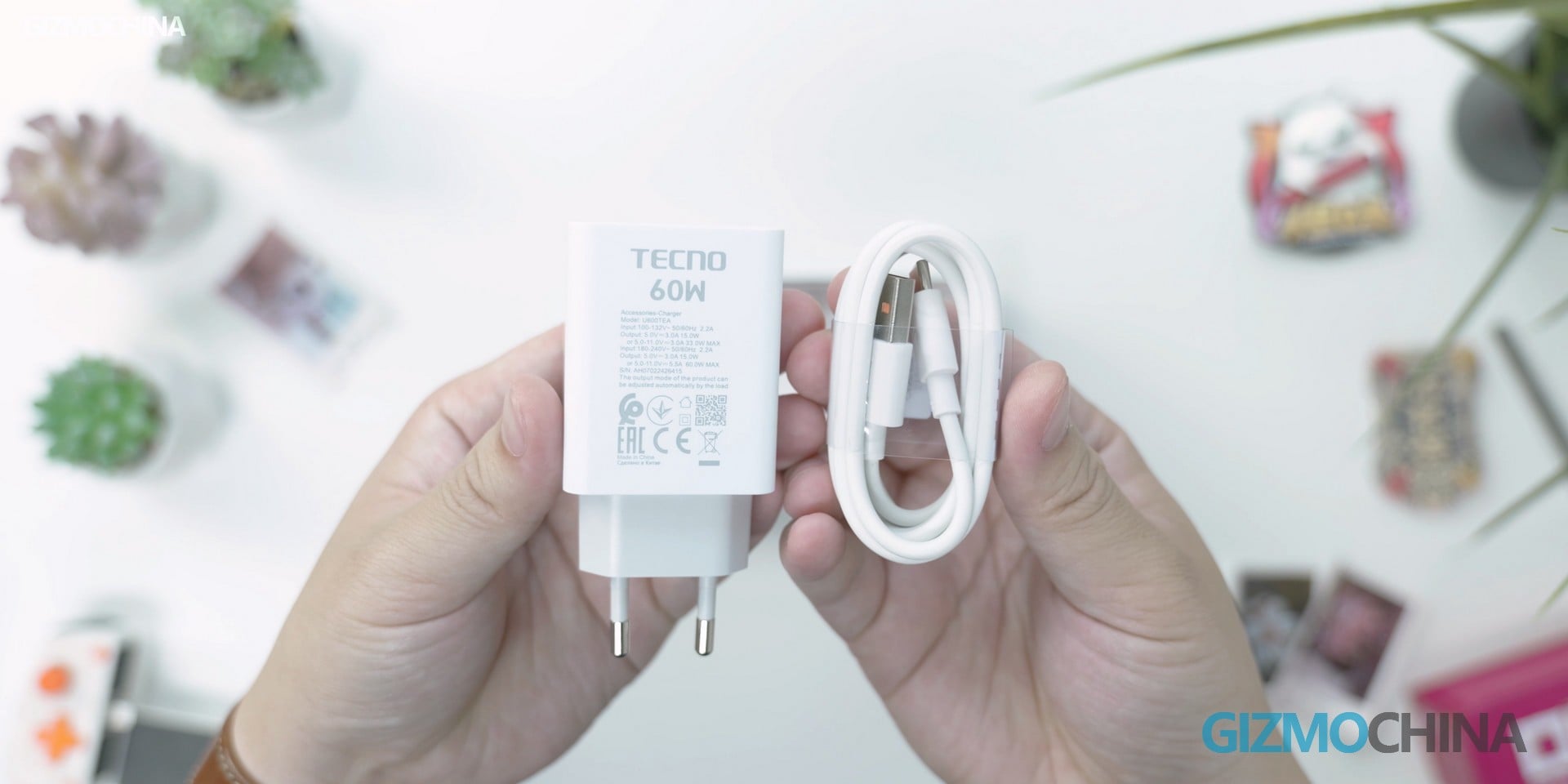
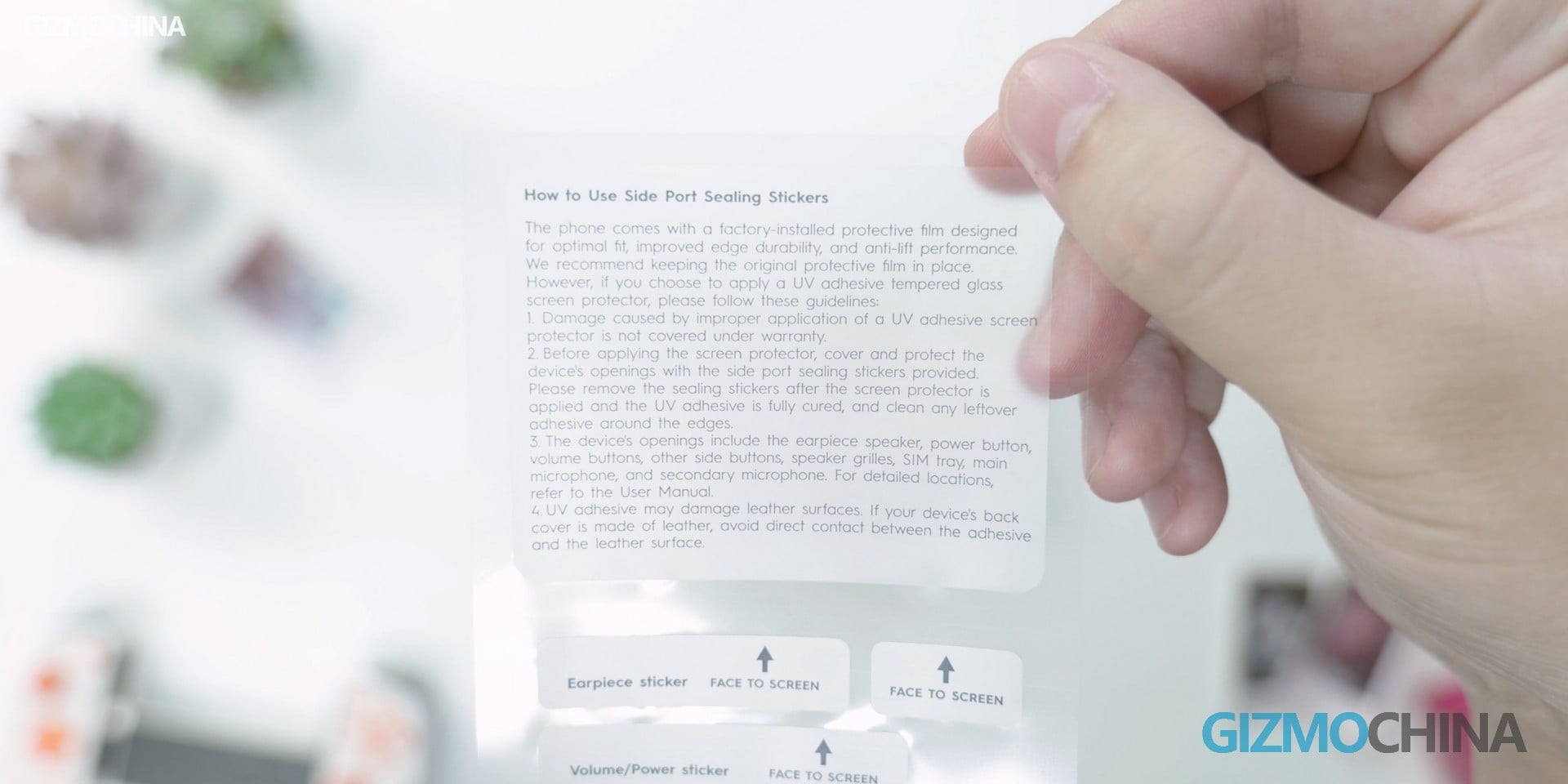
The CAMON Slim comes in a two‑layer box. You start by sliding off the outer sleeve, then lifting the lid to reveal the phone itself. We’ll get to the device in a moment, though, because all the accessories are tucked underneath. Most of them are fairly standard — a SIM ejector tool, a clear case, a 60W charger, and a USB cable. But there’s one item that stands out: the Side Port Sealing Stickers. And that’s something you don’t see every day.
You probably know that when applying a UV adhesive glass screen protector, the buttons and ports are the easiest places for glue to seep into and cause problems. These stickers are designed to seal them off before installation. Such a thoughtful little accessory.
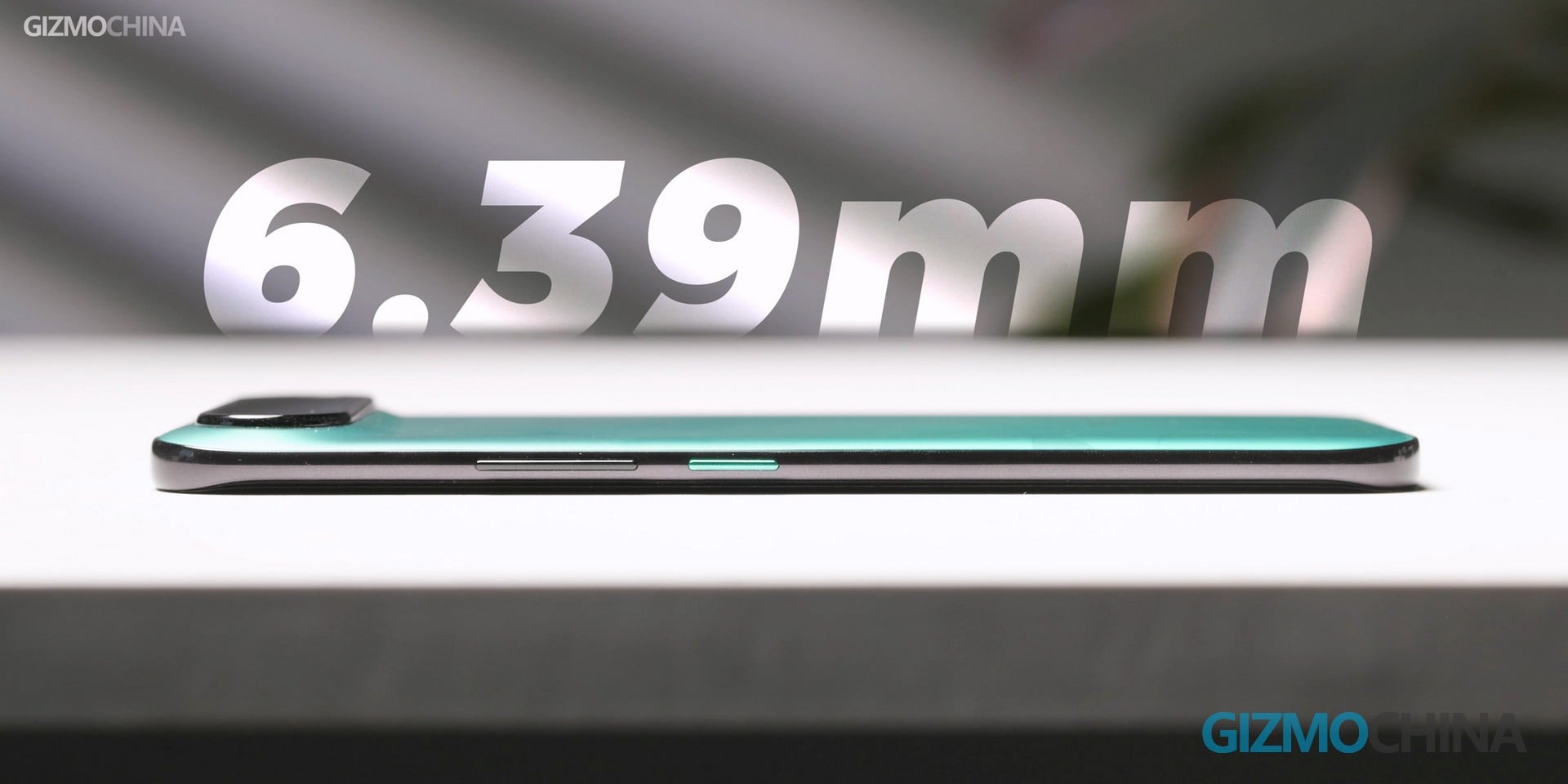
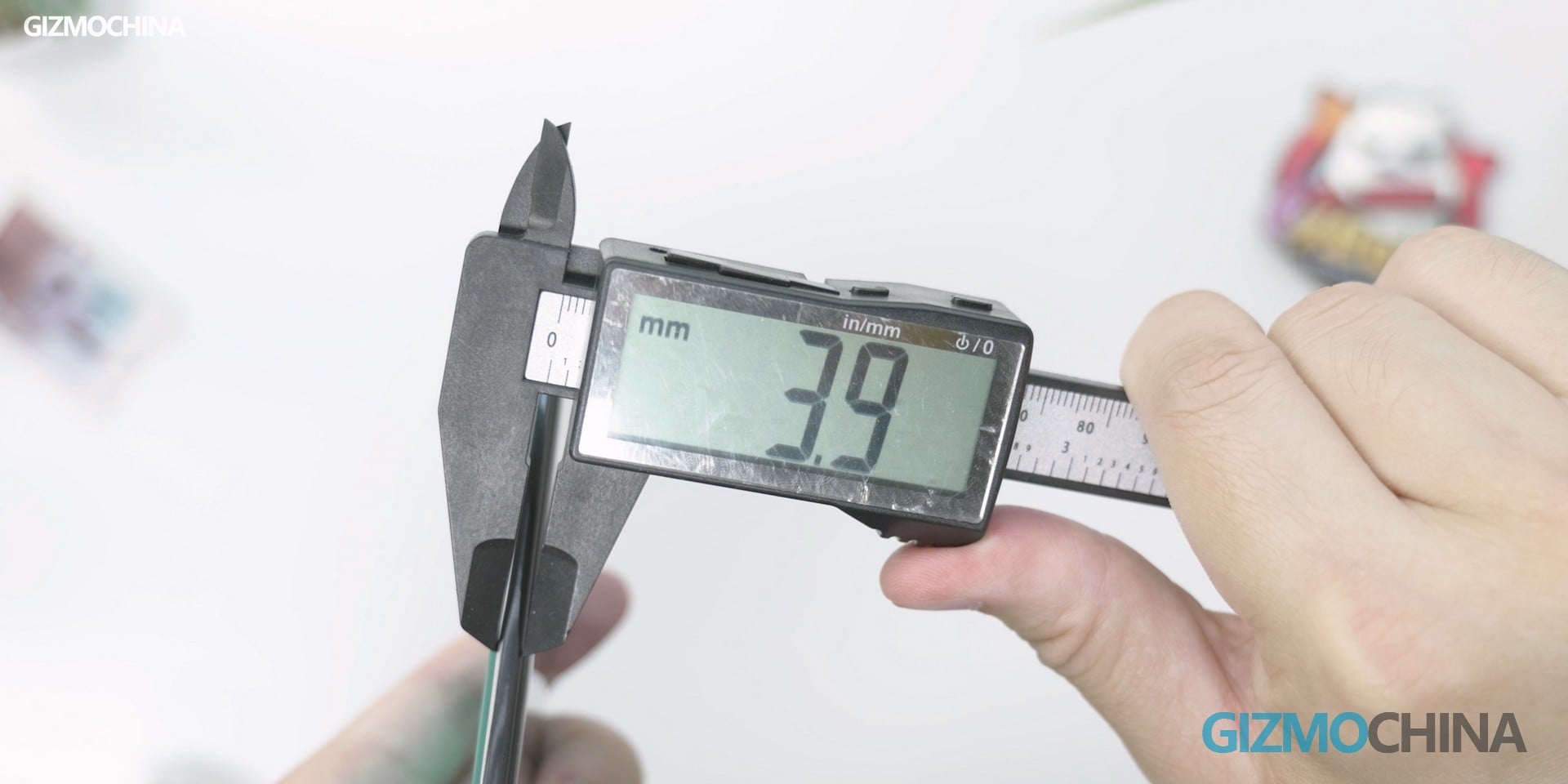
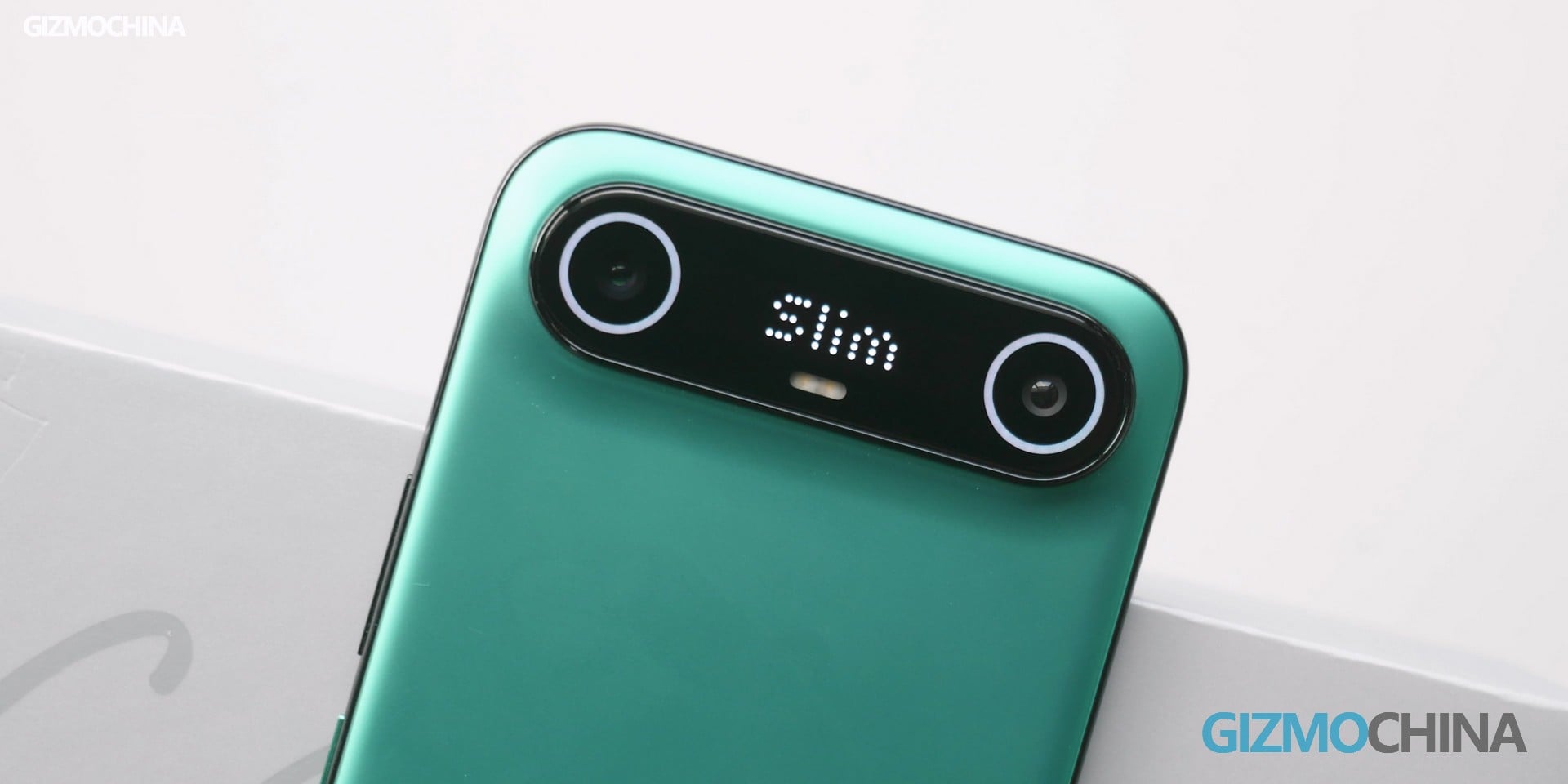
As always, let’s start with its biggest selling point—the thickness. The CAMON Slim is only 6.39mm thick. Combined with the curved display, the frame visually narrows down to less than 4mm. Admittedly, it isn’t the thinnest smartphone in the world, but the first time you hold it, it’s still genuinely impressive.
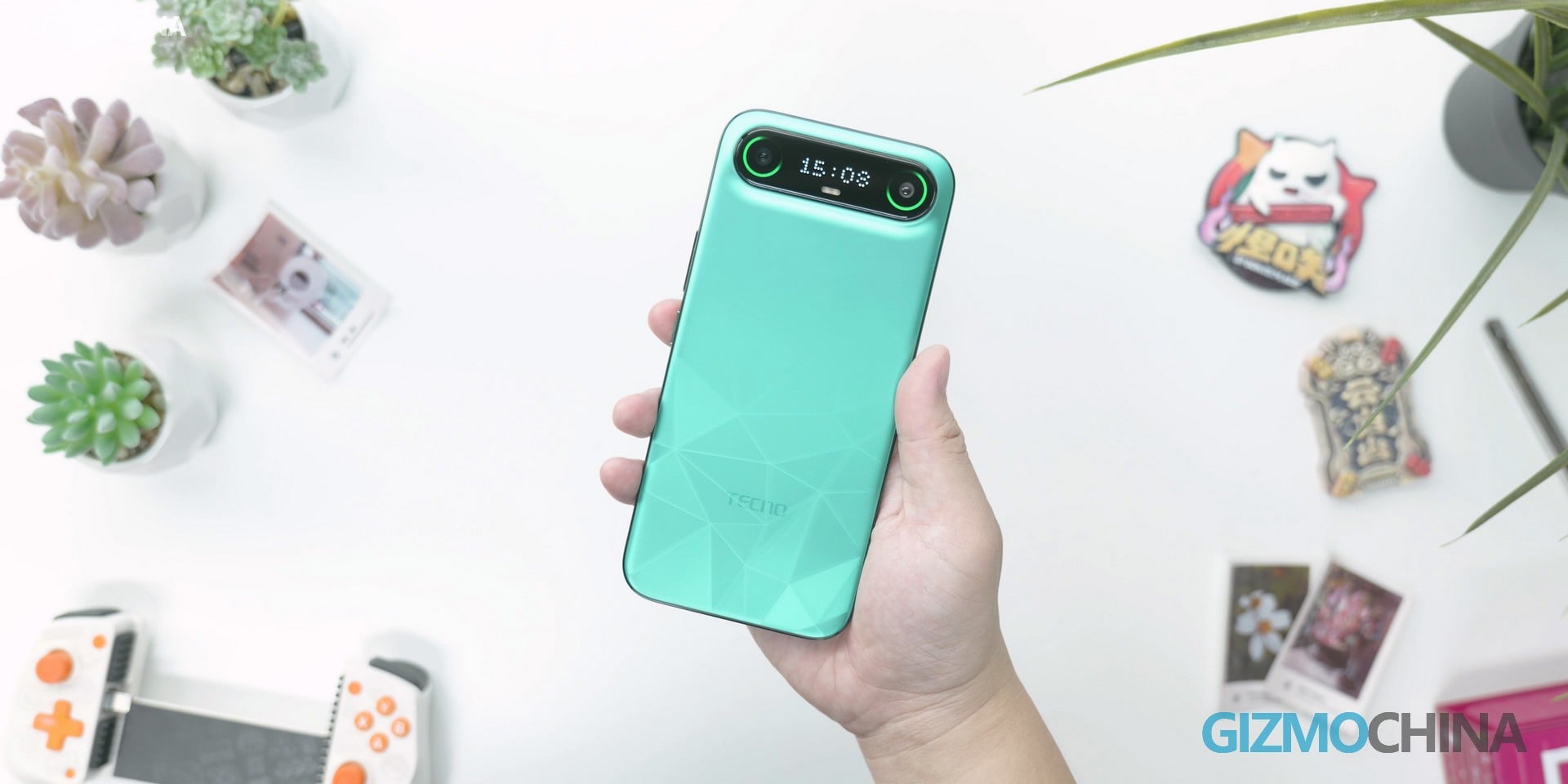
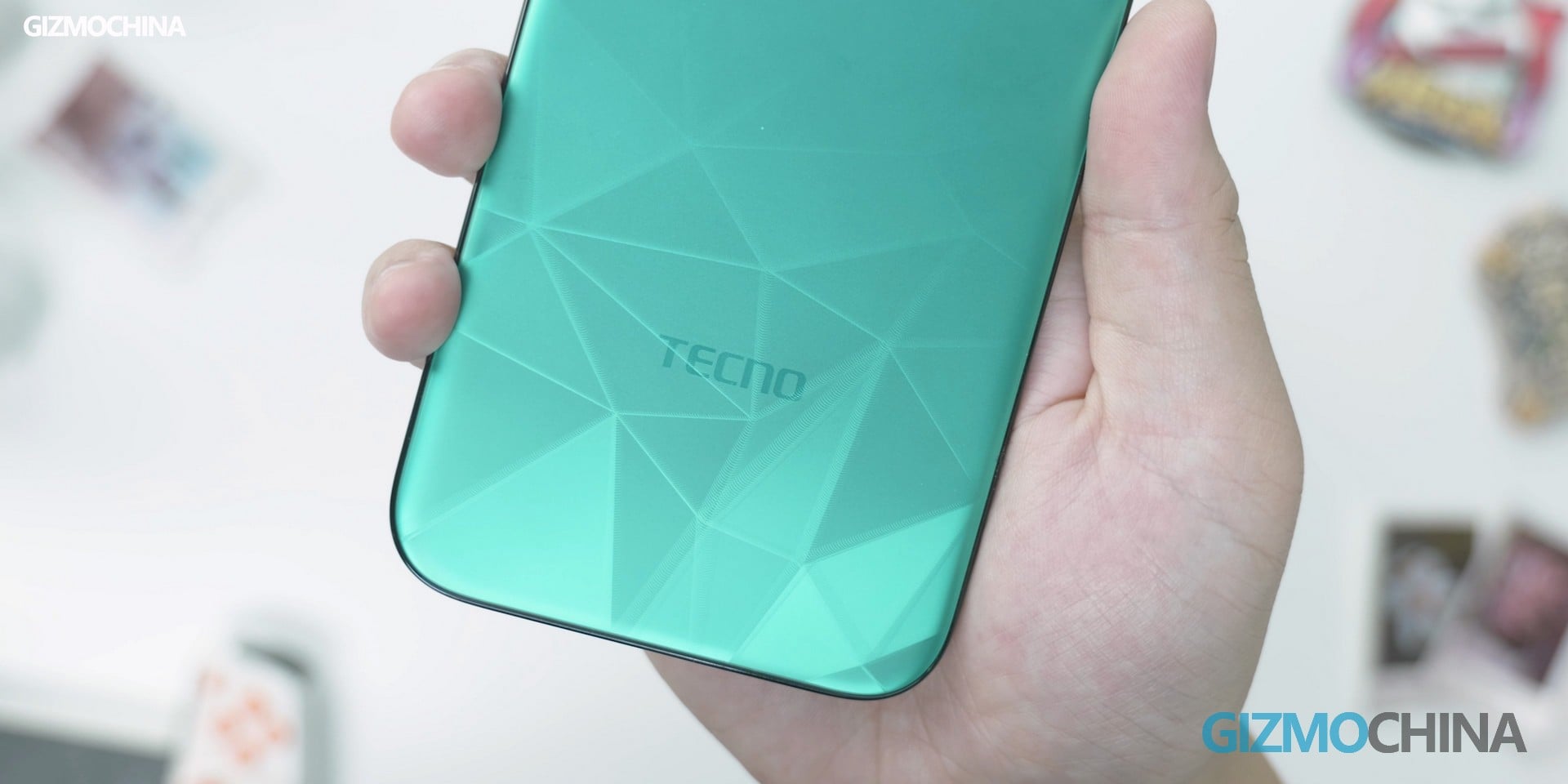
Making a phone thin is just the foundation of the CAMON Slim. What really sets it apart from its two older brothers is the color design. The one I have here is the Jungle Green version, featuring a crystal-like texture with a beautiful gradient finish. It has plenty of personality without being overly flashy, and it’s easily my favorite color option.
If you prefer something bolder, there are also the New Mondrian and Van Gogh Blue versions. Just from their names and appearances, you can probably tell which masterpieces they pay tribute to.
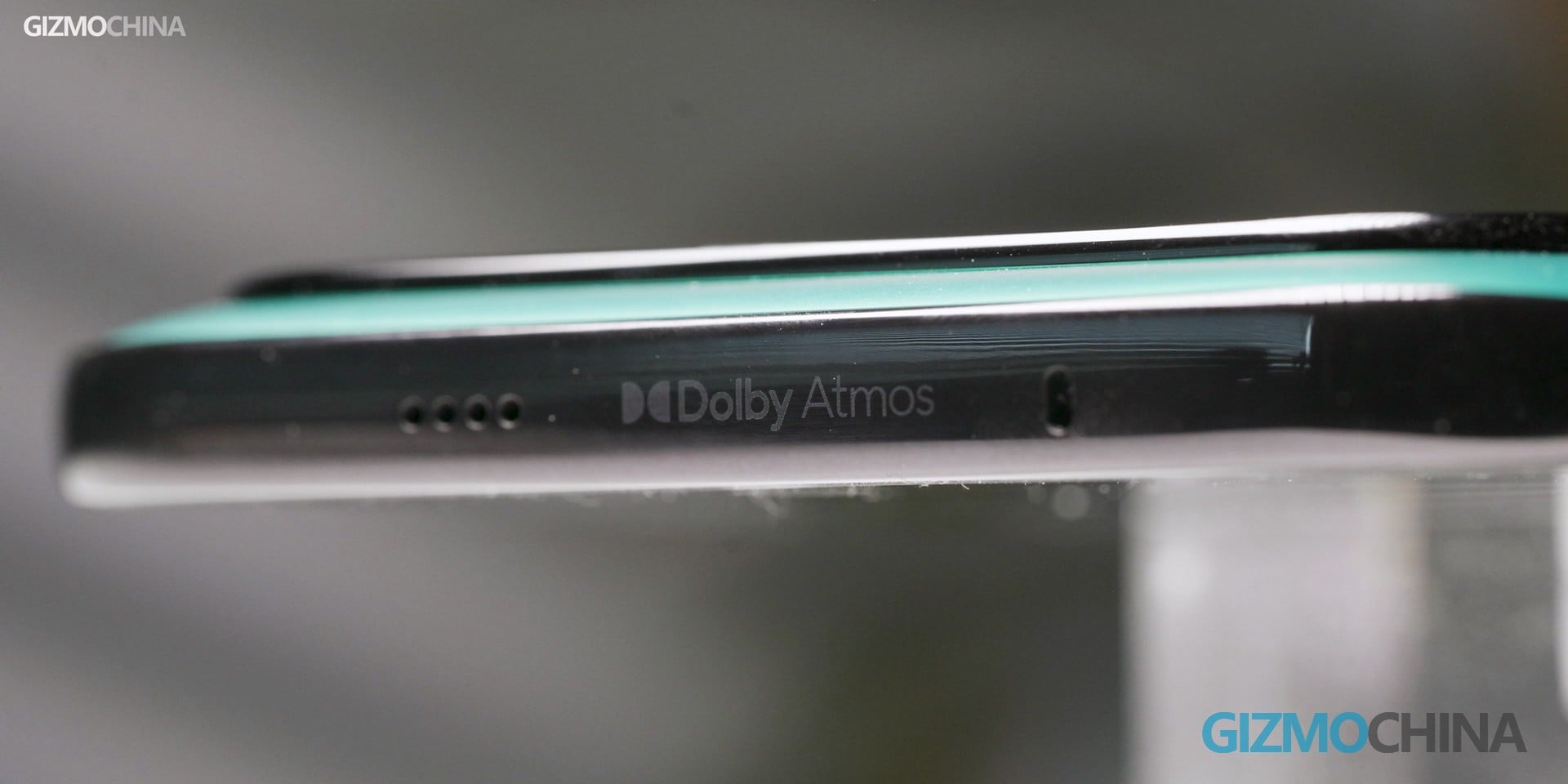
Beyond the sleek design, the CAMON Slim proves it’s built to last. It boasts both IP68 and IP69 ratings for water and dust resistance, and has also passed U.S. military‑grade drop tests (MIL‑STD‑810H). Audio-wise, it doesn’t just settle for stereo speakers — it also supports Dolby Atmos for a more immersive listening experience.
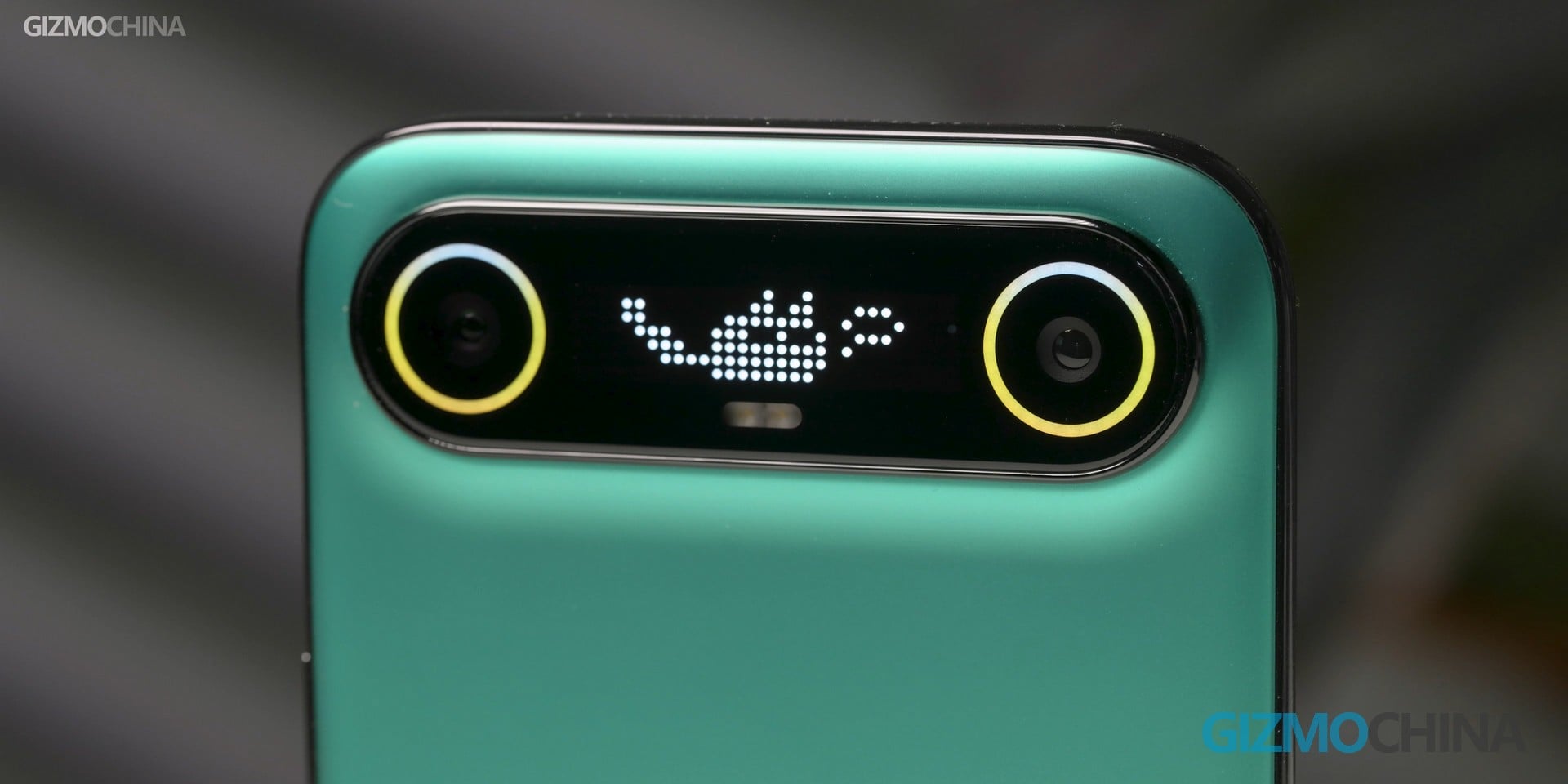
There’s also an interesting feature hidden inside the camera module: 354 built-in Mini LEDs. Notifications, music playback, and charging can all trigger different lighting effects. Of course, you can also customize your own text or patterns, making it both practical and highly personalized. So if you’ve been looking for another phone with an LED matrix display, here’s a new option.
Display & Camera
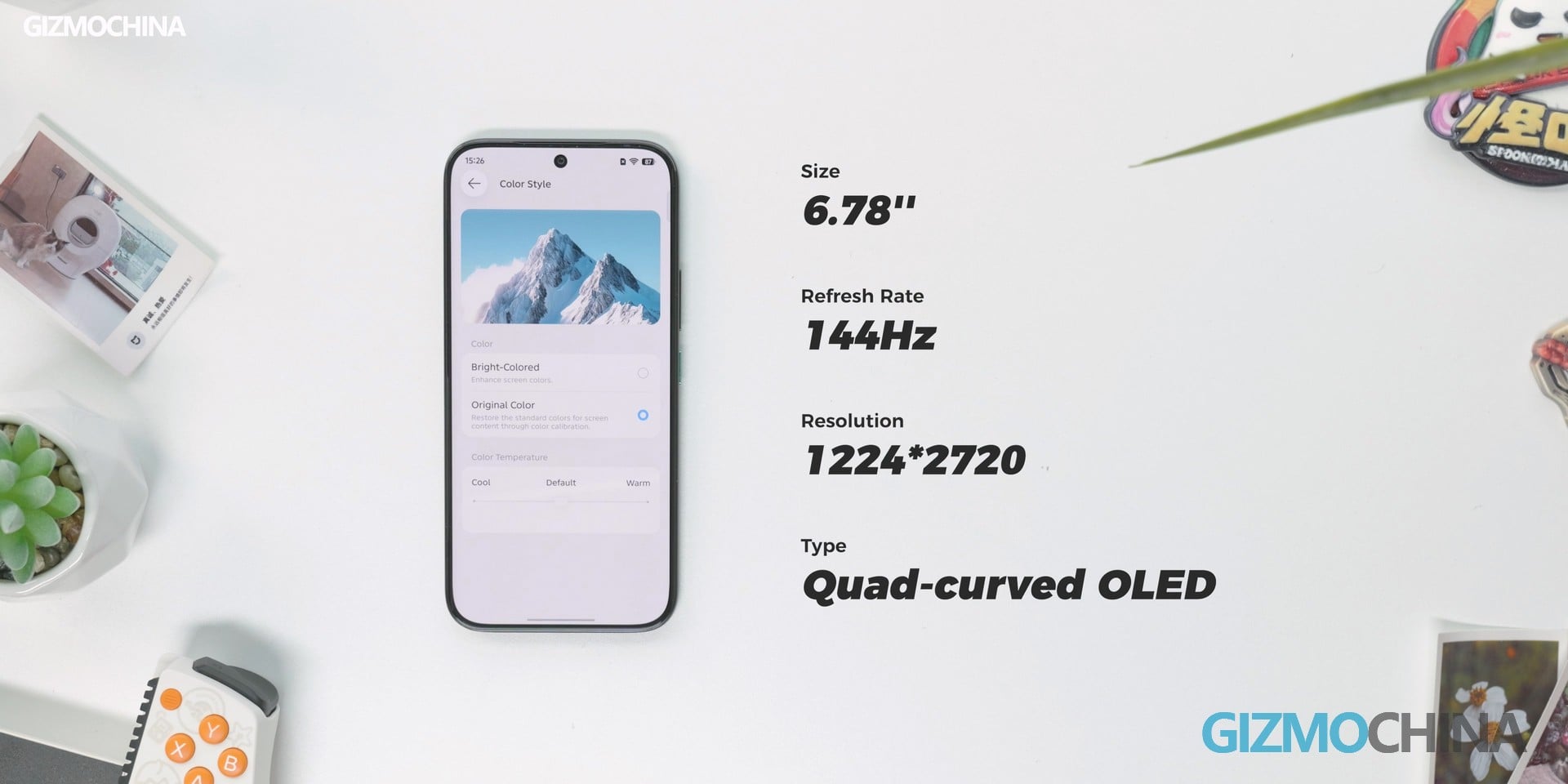
The CAMON Slim features a 6.78-inch AMOLED display, with a 144Hz refresh rate. It also supports 2160Hz PWM dimming, making it more comfortable on your eyes during extended use. The bezels aren’t the absolute narrowest, but at least all four sides are evenly sized.
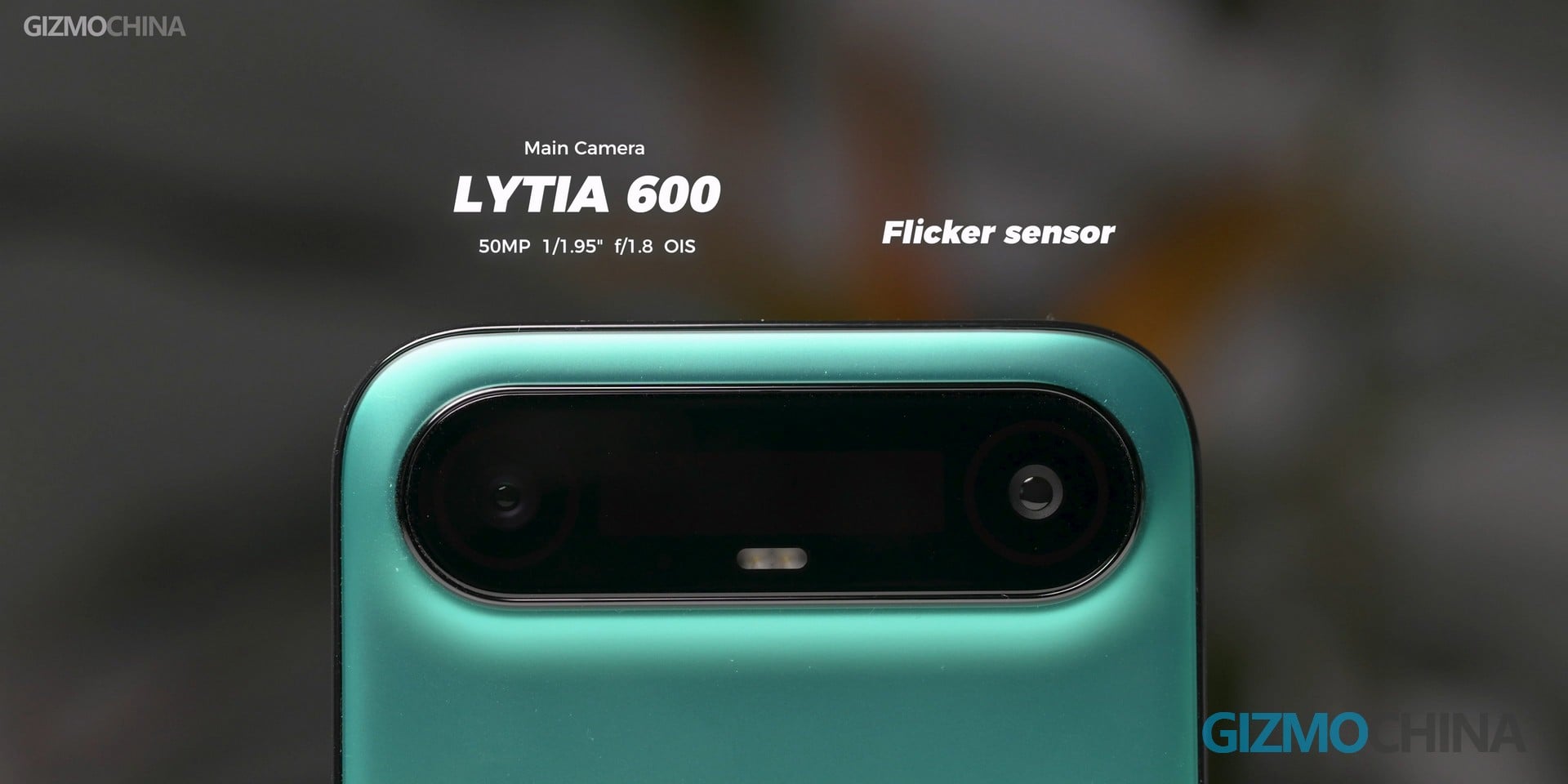
On the back, the CAMON Slim features a 50MP Sony LYT-600 main camera. The other lens that looks like a camera is actually a flicker sensor.
Although it’s a single-camera setup, the image quality from the main camera is quite good for its price. Photos are sharp, colors are accurate. Even when you zoom in to 2×, the image stays surprisingly sharp. It’s perfectly capable of handling everyday photography.
Performance & Battery
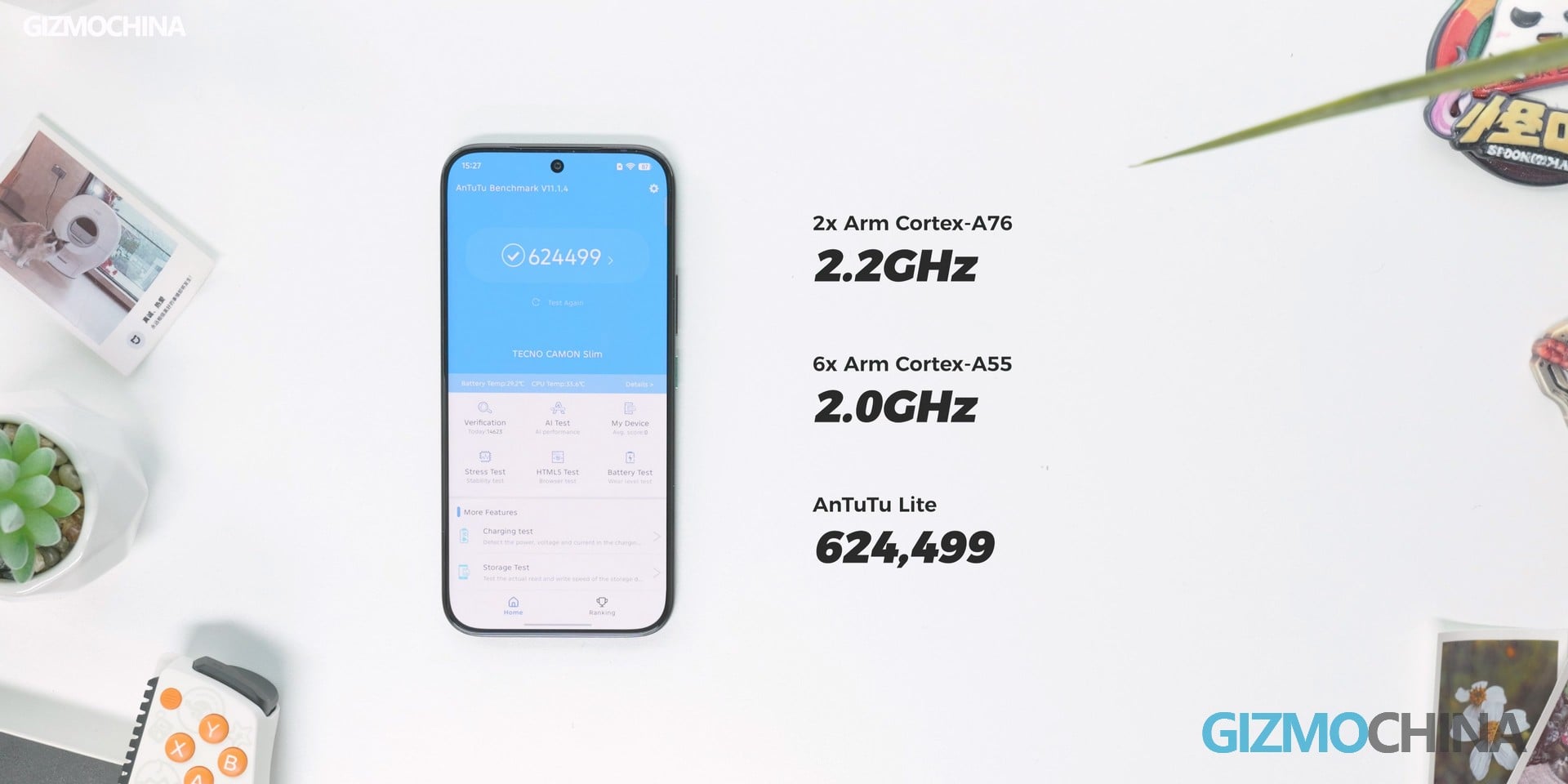
Under the hood, the CAMON Slim is powered by the MediaTek Helio G200 Ultimate — a capable entry‑level chipset that scores around 620,000 points on AnTuTu Lite. It’s not designed to handle graphically intensive games, and expecting it to do so would be a stretch. However, for everyday tasks like web browsing, social media scrolling, video streaming, and light casual gaming, it handles everything with ease — and for most users, that’s more than enough.
Performance isn’t really the issue here — the real drawback is that the Helio G200 Ultimate is a 4G‑only platform. While 5G only truly outshines 4G in download speeds, its absence still leaves a lingering sense of “what if” that’s hard to ignore.
On the software front, HiOS 16 — built on Android 16 — delivers a clean, fluid experience. TECNO is also promising five years of support, including three major Android OS upgrades, which is exceptionally generous for a phone at this price point.
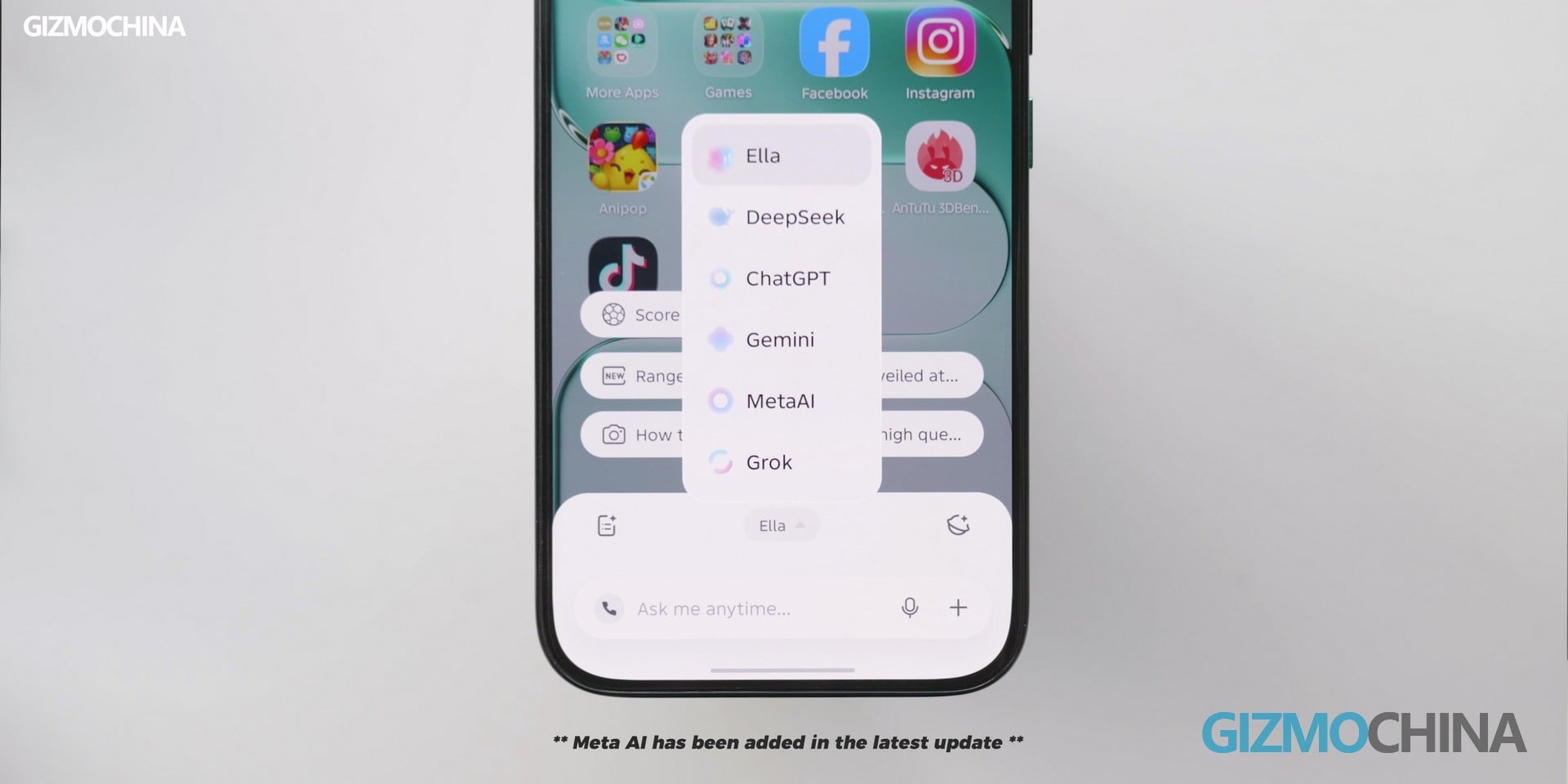
The AI experience is surprisingly competitive, even outperforming some better‑known brands. Not only does the phone include almost every AI feature you’d expect from a modern Android device, but it also lets you freely switch between five major LLMs — with zero regional restrictions. TECNO’s openness here is genuinely impressive and way beyond what I anticipated.
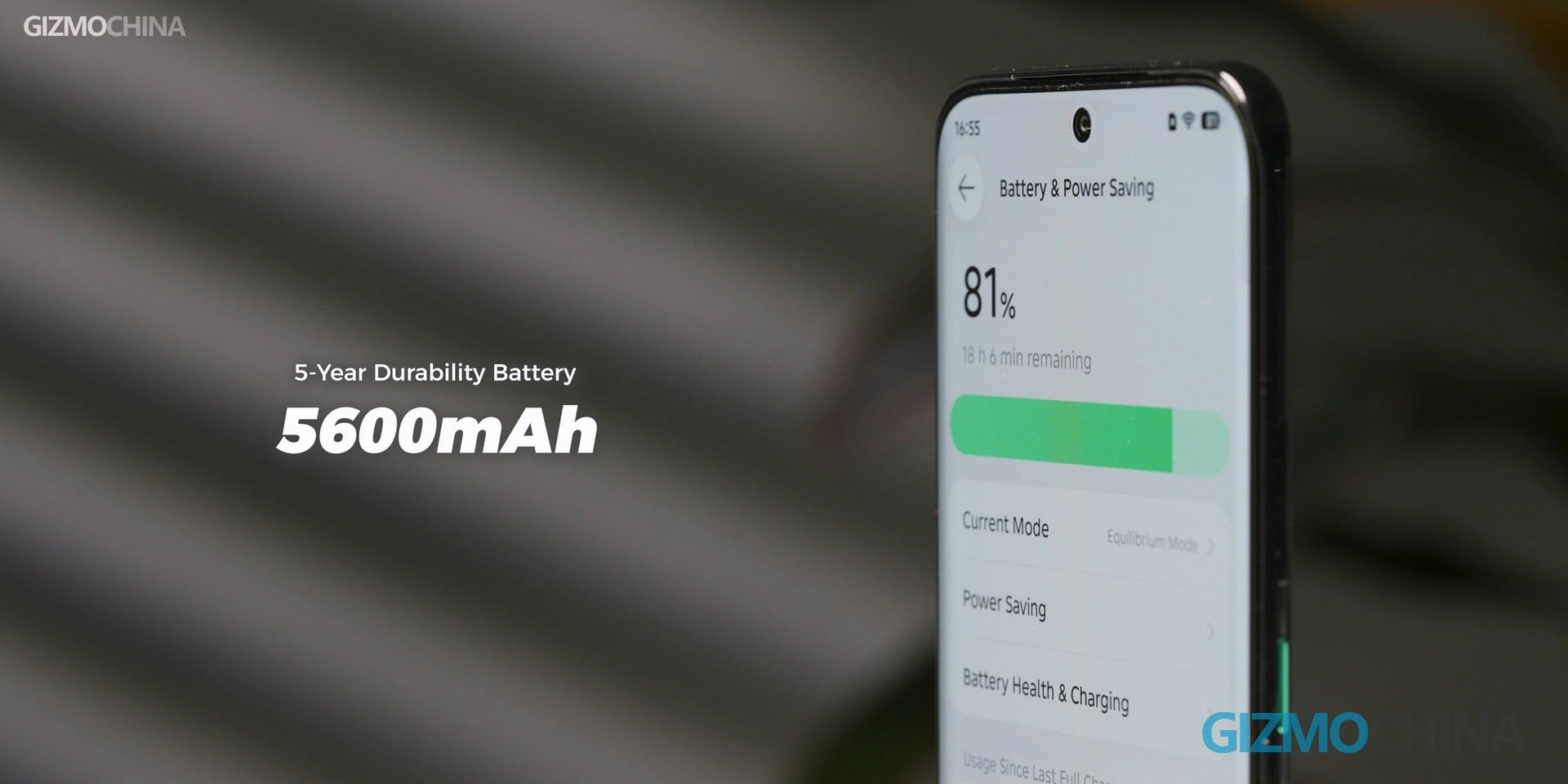
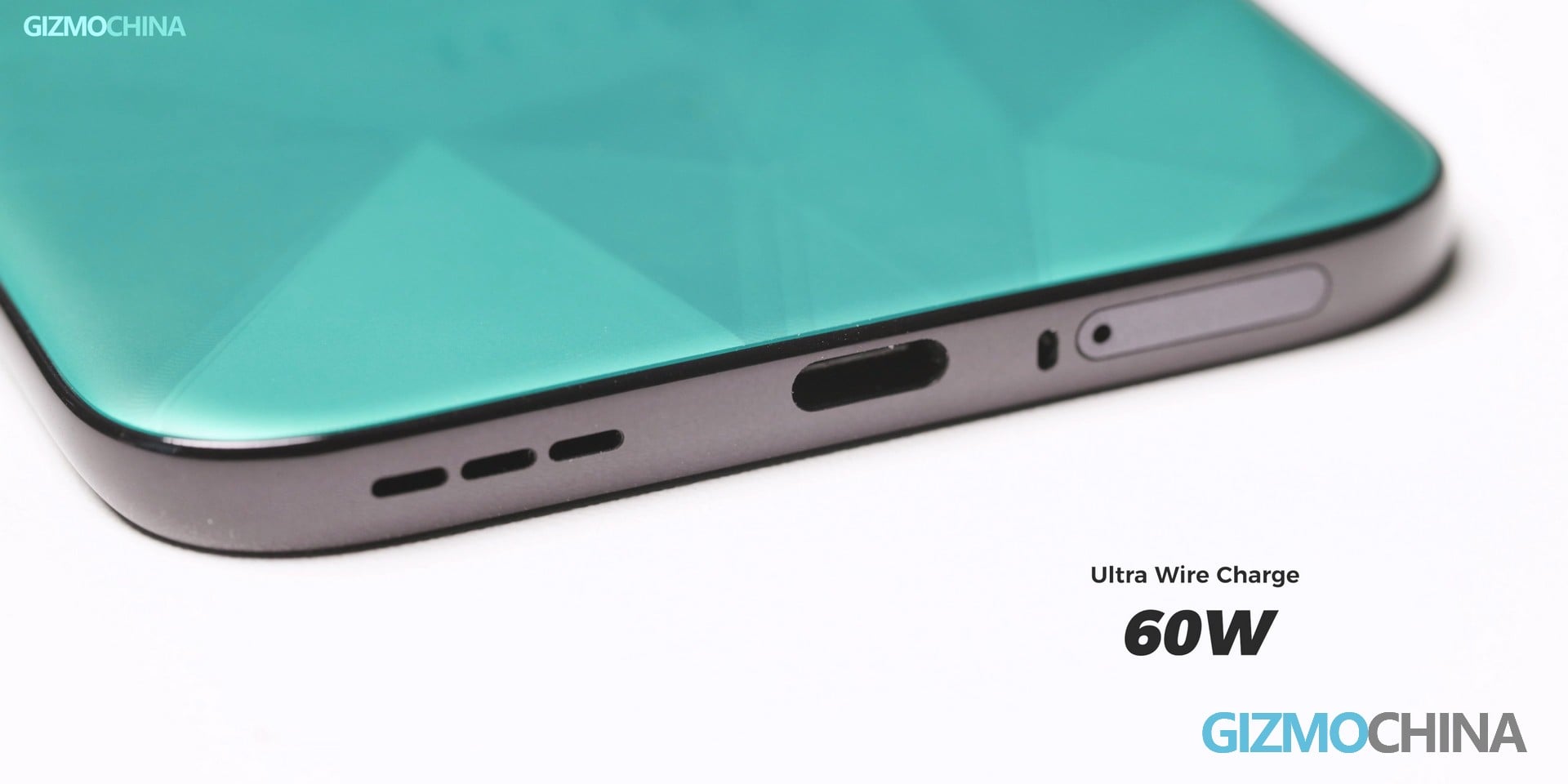
For a phone this slim, fitting in a 5,600mAh battery is nothing short of impressive engineering. In daily use, the battery easily lasted me through a full day with plenty to spare. Charging is also well taken care of, with 60W speeds that are excellent by TECNO’s standards. The only compromise? There’s simply no room for wireless charging — but honestly, that’s a trade‑off most users will be happy to make given the slim profile.
Conclusion
The CAMON Slim is a phone with a crystal‑clear identity: slim, stylish, and built to last. It’s not without compromises — the 4G‑only chipset will be a dealbreaker for some, and the single‑camera setup feels almost unconventional for the CAMON lineage. But then again, this phone was never meant to be everything to everyone.
Its target audience is refreshingly specific: budget‑conscious users who want a phone that feels unobtrusive in daily life without being dull. At the end of the day, a smartphone is just a tool. And sometimes, the best tools are the ones you forget are even there.
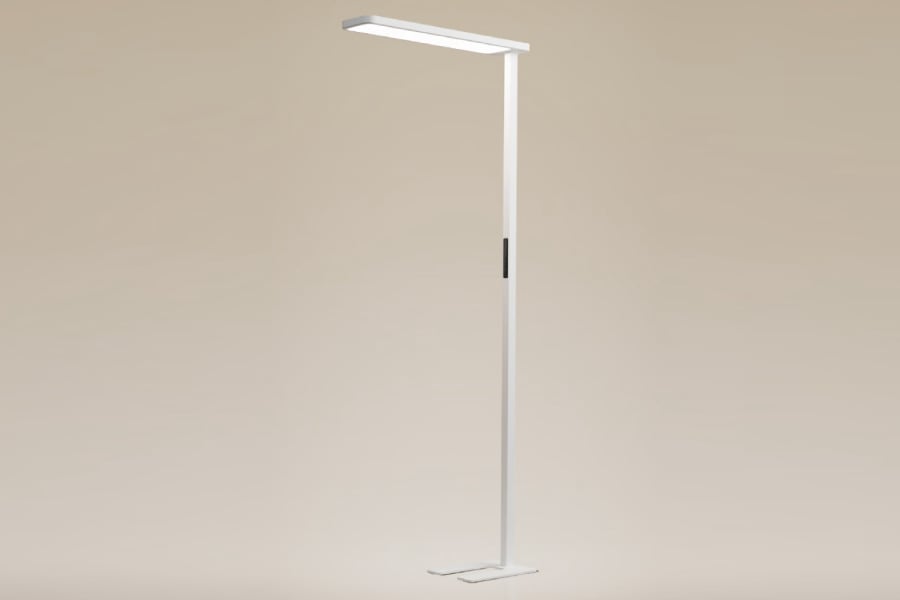
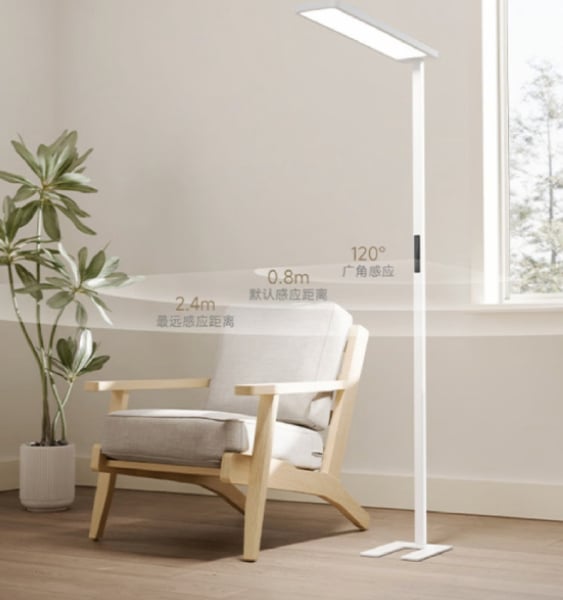
Xiaomi has added a new model to its study lamp lineup, the Mijia Vertical Study Lamp 2C. It arrives a few months after the more expensive Mijia Vertical Study Lamp 2, but this version costs less while keeping many of the same lighting features.
The 2C weighs around 8.5kg and uses a base with an 11-degree anti-tipping design on both the front and back. The lamp head is only 28mm thick with touch buttons on the upper post that let you change modes without opening the app. Xiaomi says the lamp also meets national and EU safety standards.
Bright light with a wide coverage area
The lamp produces up to 11,000 lumens of light, enough to cover a room of up to 14 square meters. Its light-emitting surface sits about 1.3 meters above the desk, while the lamp head measures 80 cm long and spreads light evenly across the work area. The wide light source should also help reduce shadows from your hands while reading or writing.
Xiaomi is using a dual-light setup on the Lamp 2C, with the upper and lower lights split roughly in an 8:3 ratio. The upper light produces up to 8,000 lumens, while the lower light adds another 3,000 lumens. Both use diffuse reflection to spread the light instead of shining it directly downward.
The lamp has an Ra98 color rendering rating and a 4000K color temperature. It also has a full-spectrum GFC rating above 0.985, which makes the light similar to natural sunlight. For eye safety, the 2C meets the RG0 blue-light exemption standard. It also has a UGR rating below 13, meaning glare should be kept to a minimum during use.
The Mijia Vertical Study Lamp 2C is now available in China for 1,199 yuan (~ $178). The standard Lamp 2, in comparison, costs 2,349 yuan ($342).
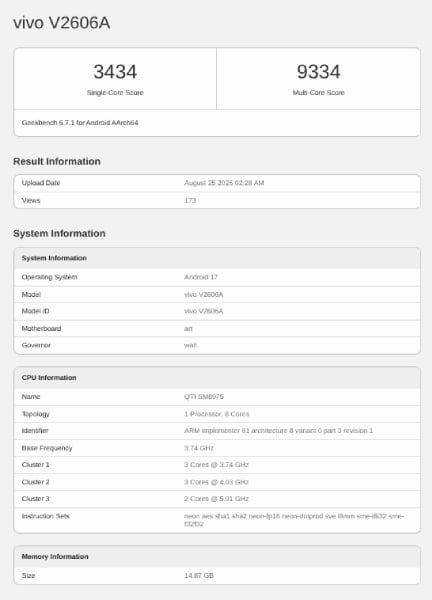
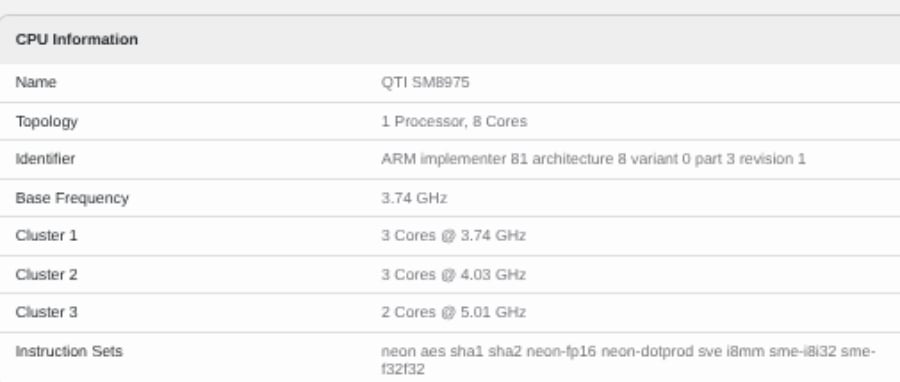
After AnTuTu, the Snapdragon 8 Elite Extreme Gen 6 has appeared on Geekbench for the first time in an unannounced iQOO device. The scores come from an iQOO 16 prototype carrying the model number V2606A.
On Geekbench 6.7, the chip scored 3,434 in the single-core test and 9,334 in the multi-core test, but these numbers are far below what you would expect from a new-generation chip. For comparison, the Snapdragon 8 Elite Gen 5 inside the iQOO 15 scored 3,649 in single-core and 10,682 in multi-core testing. That means this early result actually trails last year’s chip in both tests.
What’s surprising is that the two prime cores are actually clocked at an impressive 5.01GHz, making it the first smartphone SoC to reach desktop-level clock speeds. Meanwhile, the Dimensity 9600 Pro from MediaTek is capped at 4.55GHz, as shown in another recent Geekbench run.
Beyond the prime cores, the three performance cores run at 4.03GHz, while the three efficiency cores are clocked at 3.74GHz. Graphics duties are handled by the new Adreno 850 GPU.
It’s worth remembering that this benchmark comes from an engineering sample rather than a finished retail device. Early units often run unfinished software and may have less optimized power management, both of which can drag benchmark scores down before launch.
The same chip recently posted a strong AnTuTu result above 4.8 million points, so this low Geekbench score looks more like an early software issue than a sign of weak performance.
Once retail units confirm the real numbers, this chip’s standing will be reflected in our Snapdragon chipset rankings.
Those leaked promo images and the Geekbench listing from earlier this week were right on the money. Sony has now officially unveiled the Xperia 10 VIII at a press conference, and the phone looks almost exactly like the leaks suggested.
Sony is sticking with the same clean, notch-free, and punch-hole-free design it has used for years. The bezels on the sides are fairly slim, while the top and bottom are noticeably thicker than those on most phones in this price range. Up front, there’s a 6.1-inch OLED display with a 120Hz refresh rate. Sony says the screen is also 50% brighter than the one on last year’s model.
The device retains the familiar camera shutter button on the right side, while the dual speakers have been updated for what Sony says is fuller sound.
Around the back, the Xperia 10 VIII has a dual-camera setup. It includes a 50MP main camera with a 1/1.56-inch sensor and a 13MP ultra-wide camera.
The battery is also unchanged. The Xperia 10 VIII packs a 5,000mAh cell, and Sony once again claims the phone can last for up to two days on a single charge.
The Same Chip Makes a Return
Inside, things are even more familiar. The Xperia 10 VIII runs on Qualcomm’s Snapdragon 6 Gen 3, paired with 8GB of RAM and 128GB of storage. It ships with Android 16.
The problem is that the Snapdragon 6 Gen 3 is the same chip used in the Xperia 10 VII. So while the new phone gets some design and software changes, don’t expect a big jump in performance.
The biggest new feature comes from the software. Sony has added a Point & Pay function that lets you double-press the power button to access payment QR codes and loyalty cards quickly.
The Sony Xperia 10 VIII is priced at 599 Euros (~ USD 698). The phone will launch in Europe starting from mid to late September.
An early Geekbench listing from an unreleased Vivo phone has given us the most detailed look yet at MediaTek’s upcoming flagship chipset.
A Vivo X500 Pro Max test unit (model V2610) has shown up on Geekbench Browser running an unreleased MediaTek processor labeled “MT6995(ENG).” This is widely believed to be the Dimensity 9600 Pro. The entry currently offers the clearest view we have of the CPU layout and maximum clock speeds ahead of MediaTek’s expected September launch.
The Geekbench data points to an eight-core design split into three clusters, with a dual-prime-core setup: two cores that can hit up to 4.55 GHz, three cores peaking at 4.35 GHz, and three cores running at a base of 3.10 GHz. In this particular test the prime cores were limited to just 2.8 GHz, so the scores don’t reflect the chip’s full potential.
The 2+3+3 arrangement matches earlier information from tipster Digital Chat Station, who described two “Canyon” cores (thought to be Arm’s still-unannounced C2-Ultra), three “Gelas-B” cores, and three “Gelas” cores, the same name used for the C1-Pro cores in the Dimensity 9500. If this checks out, it would be the first time MediaTek has used two ultra-large prime cores in a flagship Dimensity chip.
The listing also names the GPU as “Mali-G2-Ultra-NX MC12,” which lines up with previous reports. Arm hasn’t officially announced the G2 series yet, though related hardware has already given some early hints about its performance. Other details from the entry include 11.05 GB of usable RAM (pointing to 12 GB installed) and a “release-keys” signing status that’s typical of pre-production devices.
MediaTek hasn’t confirmed the Dimensity 9600 Pro yet. Earlier leaks suggest it will be built on TSMC’s N2P (2 nm) process. Estimated Geekbench 6 scores for engineering samples are sitting in the 4,200–4,300 single-core and 12,000–12,500 multi-core range, though MediaTek’s pre-launch projections have often been higher than what the final retail chips actually deliver.
Timex has released a new analog watch (TW2Y89300) in the US market. The Expedition Sierra Chronograph is now available on the company’s website for $179. It is a traditional battery-powered quartz watch, offering standard timekeeping and stopwatch functions rather than any connected or smart features.
The watch features a 43mm case made of brass, finished in a brushed silver tone. With a case height of 12.5mm and a lug-to-lug measurement of 52mm, it is a relatively standard size for a modern chronograph, though it might feel a bit large on smaller wrists.
The face is protected by mineral crystal. This is a common material for watches in this price range, providing basic heat and scratch resistance, though it won’t be as durable as the sapphire crystal typically found on more expensive models.
On the dial, Timex went with a straightforward tan color scheme. It uses standard Arabic numerals for the hours and includes a small date window. The chronograph function is displayed across three sub-dials located at the 12, 9, and 6 o’clock positions.
To make the dial easier to read, the main hands and hour markers are coated with luminescent paint for low-light visibility, and the central second hand is painted yellow for a bit of visual contrast.
The watch runs on a standard quartz analog movement powered by an SR920SW battery. The stopwatch function is operated by two standard pushers located above and below the crown, allowing you to start, stop, and reset the timer.
For water resistance, the Expedition Sierra is rated to 100 meters. This means it is fine for surface swimming, snorkeling, or getting caught in the rain, but it is not built for scuba diving. Timex also says that you should not press the chronograph buttons while the watch is wet or submerged.
The model ships with a 20mm tan fabric strap that secures with a basic buckle. According to specs, the strap is designed to fit wrist circumferences between 5.9 and 8.1 inches.
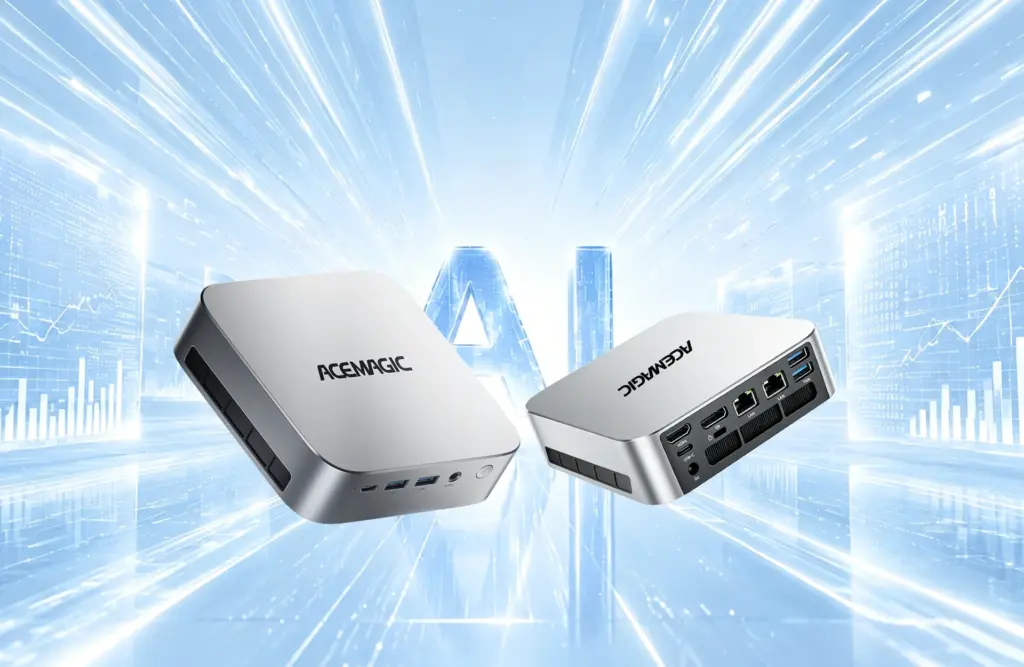
Acemagic has launched the F2A mini PC with Intel Panther Lake processors, offering local AI processing and modern connectivity. It is priced at $1,099 during the preorder period, down from the stated $1,699 regular price, with shipping set to begin on August 31.
The F2A features an Intel Core Ultra X7 358H processor with 16 cores, built on the Intel 18A process and using a hybrid core design. It includes a 50 TOPS NPU for AI workloads, while the CPU, NPU, and integrated graphics together deliver up to 180 TOPS of theoretical AI performance.
For graphics, the F2A relies on an integrated Arc B390 GPU, based on the Xe3 architecture. It includes 12 Xe-cores and supports modern standards like AV1 encoding and decoding, ray tracing, and XeSS upscaling.
Inside the 128 x 128 x 37 mm case, the F2A comes with 32GB of soldered LPDDR5X memory and a 1TB NVMe SSD. It supports up to 4TB of storage through two M.2 2280 slots, with one supporting PCIe 4.0 and the other PCIe 5.0.
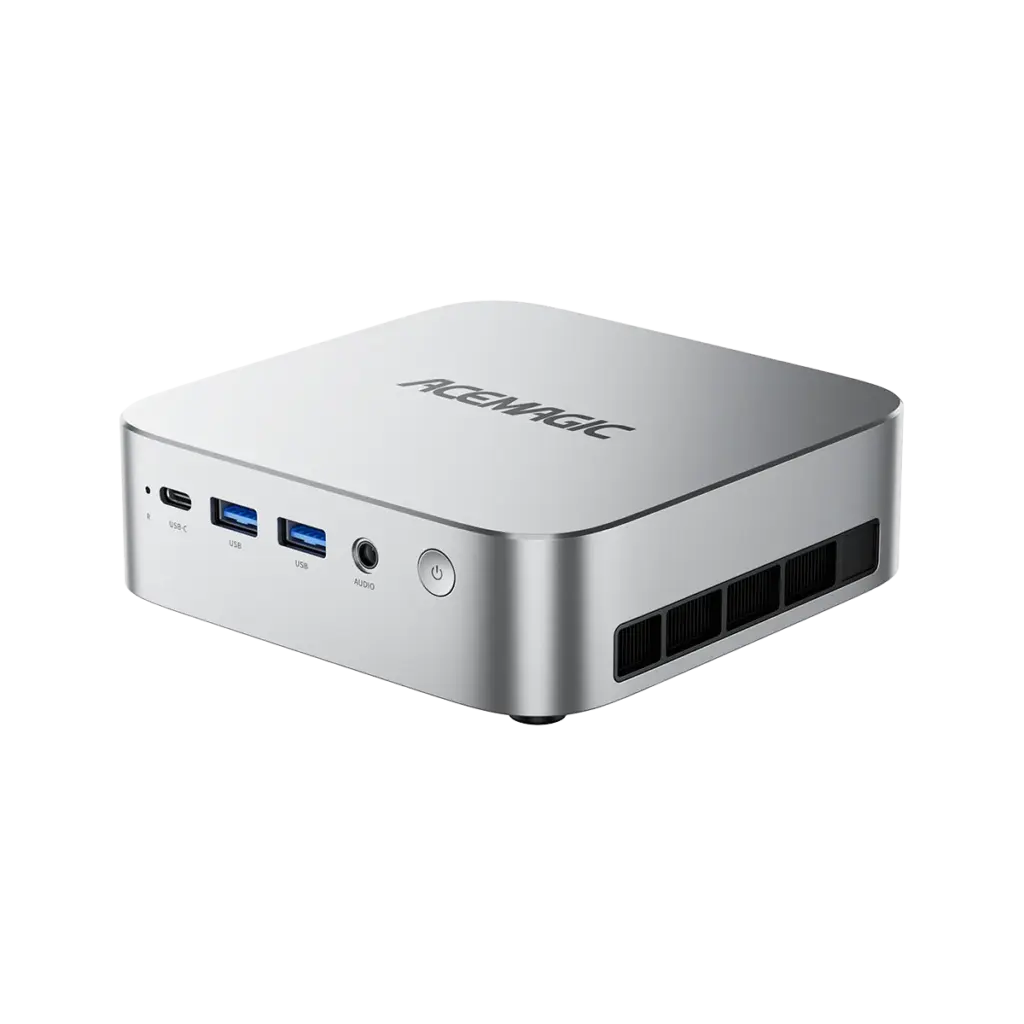
For connectivity, the front panel includes a 40Gbps USB4 Type-C port, which Acemagic says supports external GPU (eGPU) expansion for those who need more graphics power than the integrated chips can provide, alongside two USB 3.2 Gen 2 Type-A ports, and a 3.5mm audio jack.
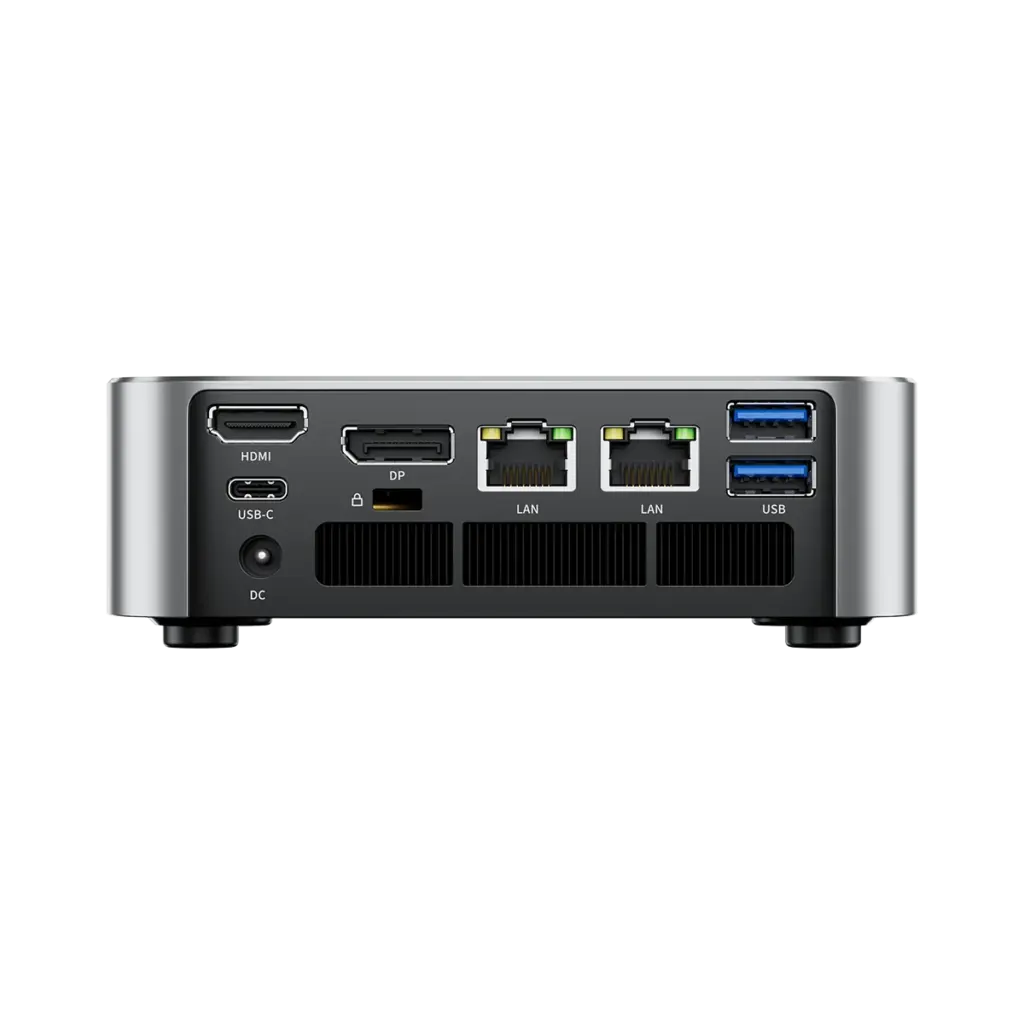
The rear panel houses an HDMI 2.1 TMDS port, a DisplayPort, dual 2.5Gbps Ethernet jacks, two USB 3.2 Gen 1 Type-A ports, and a secondary 20Gbps USB-C port that supports 100W power delivery input and DP 1.4. For wireless networking, it includes Wi-Fi 7 and Bluetooth 5.4.
The mini PC can drive up to four displays simultaneously, including an 8K monitor through DisplayPort 2.1. The F2A ships with Windows 11 Pro, though Acemagic says it also supports Linux and Ubuntu.
In related news, Minisforum has recently launched the Elite M2 Air-304 Mini PC with an Intel Core 3 304 processor, dual 2.5GbE LAN, and up to 64GB RAM, while Acemagic has launched the F9A Mini PC with an AMD Ryzen AI Max+ 395 processor, up to 128GB RAM, and Oculink eGPU support.
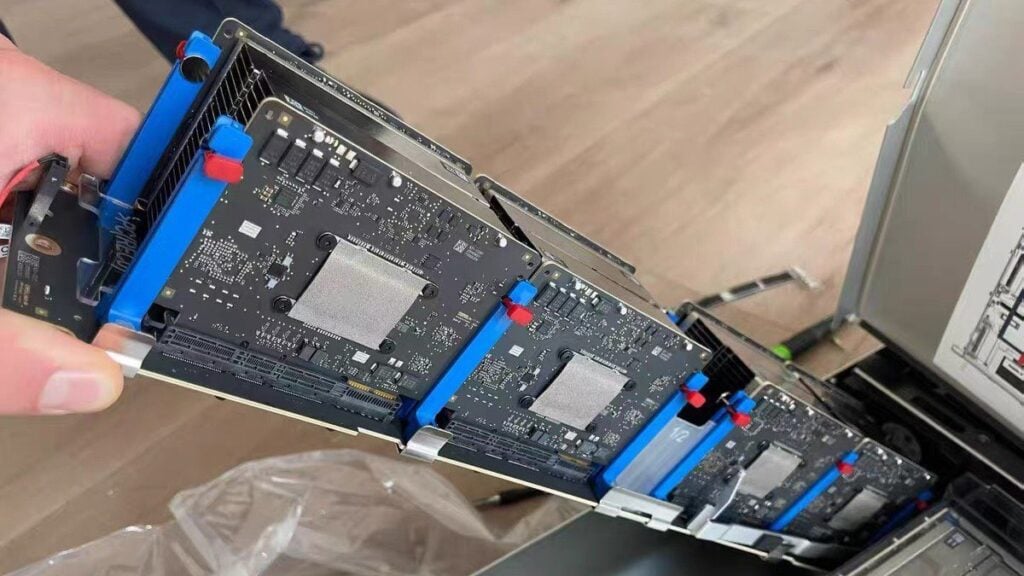
Leaked photos have given us a rare peek inside what looks like Apple’s Private Cloud Compute server hardware, and it appears to be running on the company’s own M5 silicon.
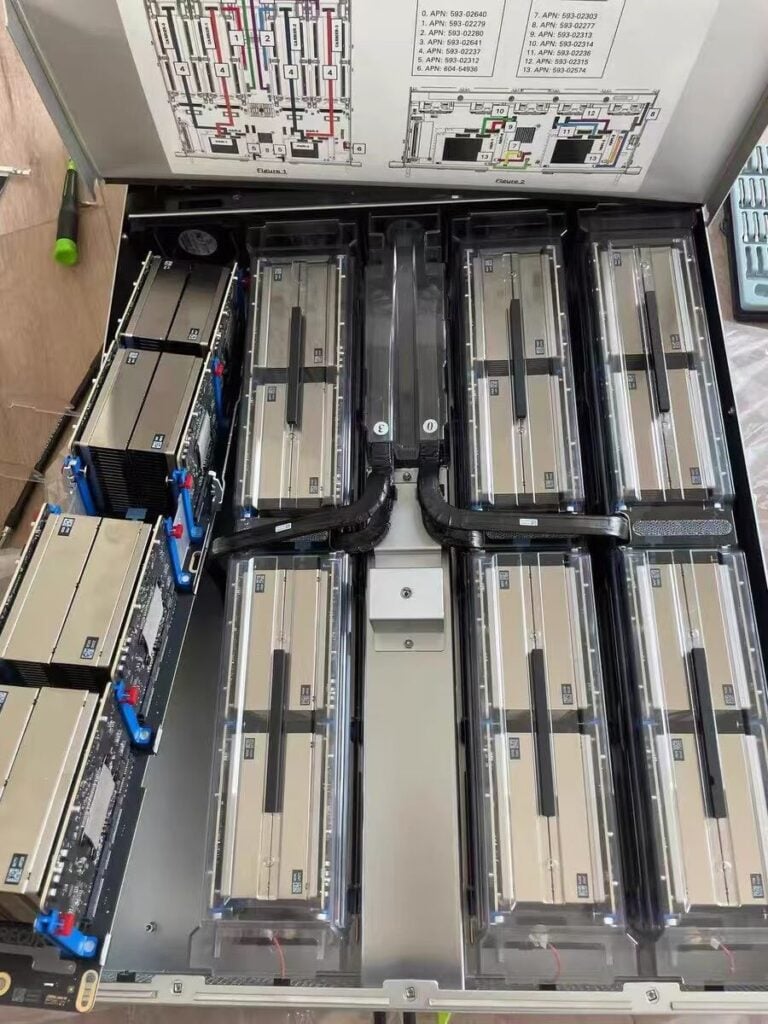
Images shared by X user @hsuchingpo show a rack-mount enclosure packed with multiple compute modules. Each module sits on a PCIe-style card with blue ejector latches, clearly designed so technicians can hot-swap them. A service diagram visible in the photos lists 14 numbered board positions, each with its own Apple part number (APN).
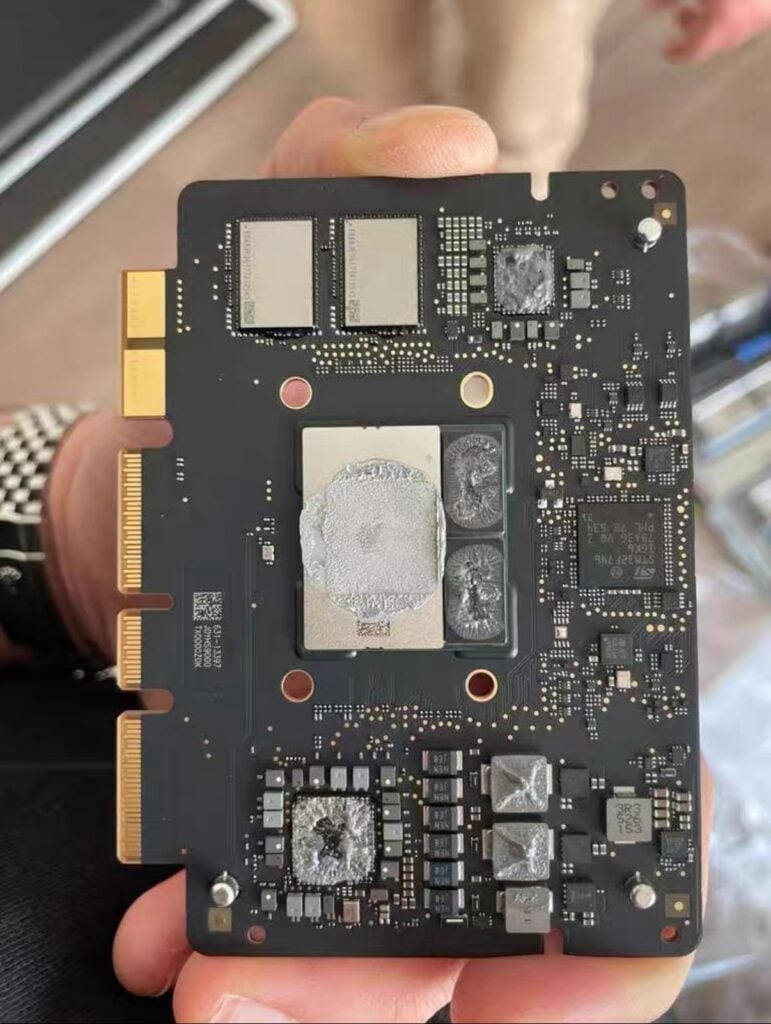
A close-up of one module shows a single M5 package under thermal paste, with VRM circuitry along the lower edge of the board and a gold edge connector that plugs into the backplane. The board itself has an Apple-style part-number sticker that reads 631-13397.
A wider shot of the chassis reveals a fully populated server blade. The compute modules are lined up across carrier bars, with each bar holding eight boards. Two of these rows are visible, connected by a central heat-pipe manifold. The service diagram taped inside the lid (listing positions 0 through 13 with unique APNs) points to a modular setup meant for field replacement rather than a fixed, single-board design. It’s possible the full chassis can hold more modules than the two rows shown, or the diagram might not line up perfectly with a symmetrical layout.
While the M5 isn’t as powerful as Apple’s higher-end workstation chips like the M3 Ultra in terms of raw multi-core processing, its higher efficiency means multiple units can be packed densely into one enclosure without major thermal headaches. Apple’s Private Cloud Compute setup relies on device-class silicon instead of traditional server processors, essentially extending the company’s on-device privacy approach to larger-scale AI work in the cloud.
While the photos could be showing an engineering or pre-production configuration, they give us one of the clearest public looks yet at how Apple may be building its secure cloud AI systems.
Honor has launched a new budget phone called Play 20A globally. It comes with a large display and a secondary rear screen. Let’s check out its key specs.
The Play 20A comes with a 6.9-inch IPS screen. The panel features slim bezels and a 90Hz refresh rate, which is standard for current mid-tier and budget devices, offering smoother scrolling than older 60Hz panels.
To support a screen of this size, the phone includes a 6,000mAh battery. Internally, the Play 20A runs on a MediaTek G81 processor. This is an entry-level chipset, which means the phone is built for standard daily tasks like web browsing, messaging, and video streaming rather than demanding applications or intensive gaming.
The device features a secondary display that lets you take selfies with the 13-megapixel main camera. It also shows notifications, call alerts, and media controls for quick access to basic functions.
The device comes with 128GB of internal storage, and you can expand this up to 1TB using a microSD card. For security, the device uses a side-mounted fingerprint sensor built into the frame.
The Play 20A will be available in three colors: Midnight Black, Light Blue, and Starry Purple. The company hasn’t revealed any pricing and availability details yet.
For more daily updates, please visit our News Section.
Leaked CAD models suggest Samsung is looking at some pretty big design changes for its next Ultra flagship, including a new camera arrangement and possibly even different sizes.
Well-known leaker Sonny Dickson has shared CAD renders that appear to show two slightly different sizes for what was first thought to be the Galaxy S27 Ultra. The side buttons sit in different positions on each model, which has sparked talk that Samsung might offer the Ultra in two sizes, a bit like how Apple does with its differently sized Pro phones. Another possibility is that the smaller one is actually the rumored Galaxy S27 Pro.
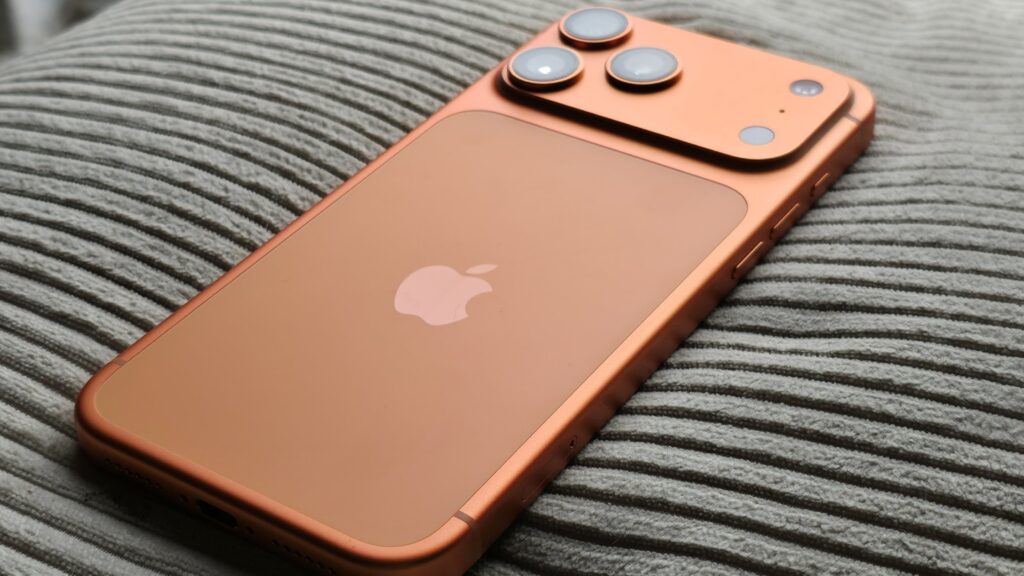
The designs also point to a new camera plateau on the back. Some people have noted that it looks quite a bit like the iPhone 17 Pro’s camera island, which would be a clear break from Samsung’s long-standing vertical camera setup. A camera hardware refresh is widely seen as overdue at this point. In particular, the current 3x telephoto, built around a small 1/3.94-inch 10MP sensor, is expected to be dropped. Getting rid of it could free up space inside for bigger batteries and maybe even allow magnets around a Qi2 charging coil.
Earlier leaks also suggest the four-year-old ISOCELL HP2 main sensor could be replaced by something more modern, like a 200MP ISOCELL HPC that might handle 3x–5x zoom as well.
In a follow-up, leaker Ice Universe clarified that the smaller CAD model is actually the Galaxy S27 Pro rather than a second Ultra size. According to him, both the S27 Ultra and S27 Pro would get the new camera plateau design. Of course, this is still unofficial and should be taken with a grain of salt until Samsung confirms anything.
These CAD-based claims give us an early (and still speculative) look at what Samsung might be planning for its 2027 flagships. We’ll have to wait until much closer to the official launch for solid details on the design, cameras, and exact model lineup.
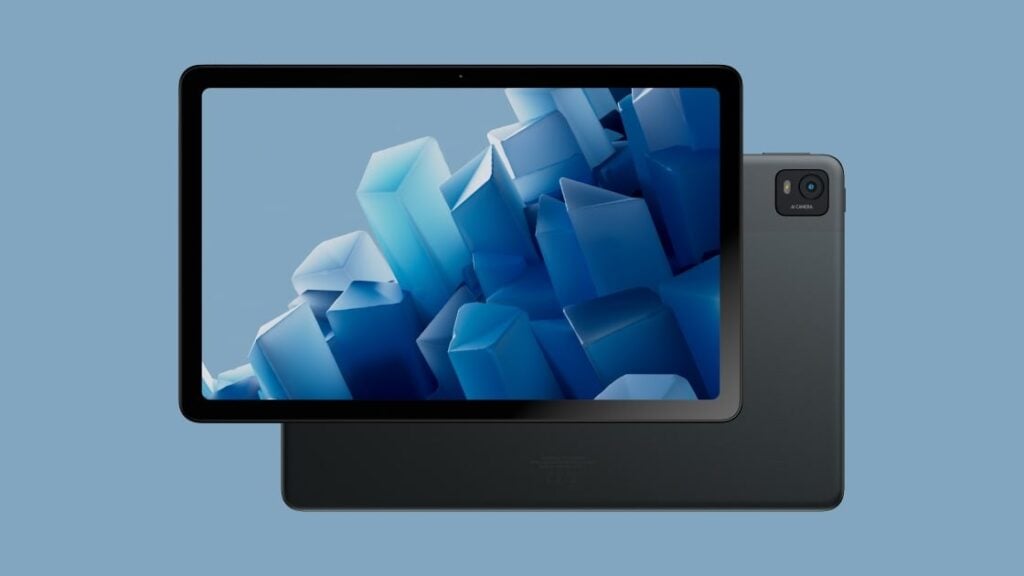
HMD seems to have started rolling out a refreshed version of its entry-level tablet in a new market, complete with some promotional pricing and freebies.
According to an X post by tipster smashx_60, the HMD T21 2nd Edition is now available to buy in Nepal. This follows earlier signs that HMD was working on a new tablet. One thing to note: HMD doesn’t have a dedicated website for Nepal, and the tipster didn’t name a specific retailer, so independent confirmation is still a bit tricky at this point.
The tablet is being offered in two configurations under early-bird pricing. The 4GB RAM + 128GB storage model is listed at रु24,999 (around €140), while the 8GB RAM + 256GB version is priced at रु29,699 (about €166) and is set to become available in September. These are described as introductory prices, so the regular retail price will likely be higher. Anyone who buys during the early-bird window is also said to get three free extras: a screen protector, a mobile stand, and a 16oz travel mug.
Specs-wise, the HMD T21 2nd Edition is pretty much the same as the original T21, with the main upgrades being the addition of an 8GB RAM option and more storage. It has a 10.36″ IPS display with 2K resolution and stylus support. Power comes from a Unisoc T7225 processor, and there’s a microSD card slot for expandable storage.
You also get dual 8MP cameras (front and rear), stereo speakers, a 3.5mm headphone jack, Bluetooth 5.0, Wi-Fi 5, 4G LTE, and NFC. The battery is 8,200 mAh with 18W wired charging, and it carries an IP52 rating for basic dust and water resistance. It ships with Android 15 out of the box.
In short, the HMD T21 2nd Edition is a light refresh of the previous model. It offers more memory options and a newer software version, but the same core hardware underneath. We’ll probably hear more about wider availability and final pricing once the tablet starts showing up in other markets.
We use cookies on our website to give you the most relevant experience by remembering your preferences and repeat visits. By clicking “Accept”, you consent to the use of ALL the cookies.
This website uses cookies to improve your experience while you navigate through the website. Out of these, the cookies that are categorized as necessary are stored on your browser as they are essential for the working of basic functionalities of the website. We also use third-party cookies that help us analyze and understand how you use this website. These cookies will be stored in your browser only with your consent. You also have the option to opt-out of these cookies. But opting out of some of these cookies may affect your browsing experience.
Necessary cookies are absolutely essential for the website to function properly. This category only includes cookies that ensures basic functionalities and security features of the website. These cookies do not store any personal information.
Any cookies that may not be particularly necessary for the website to function and is used specifically to collect user personal data via analytics, ads, other embedded contents are termed as non-necessary cookies. It is mandatory to procure user consent prior to running these cookies on your website.