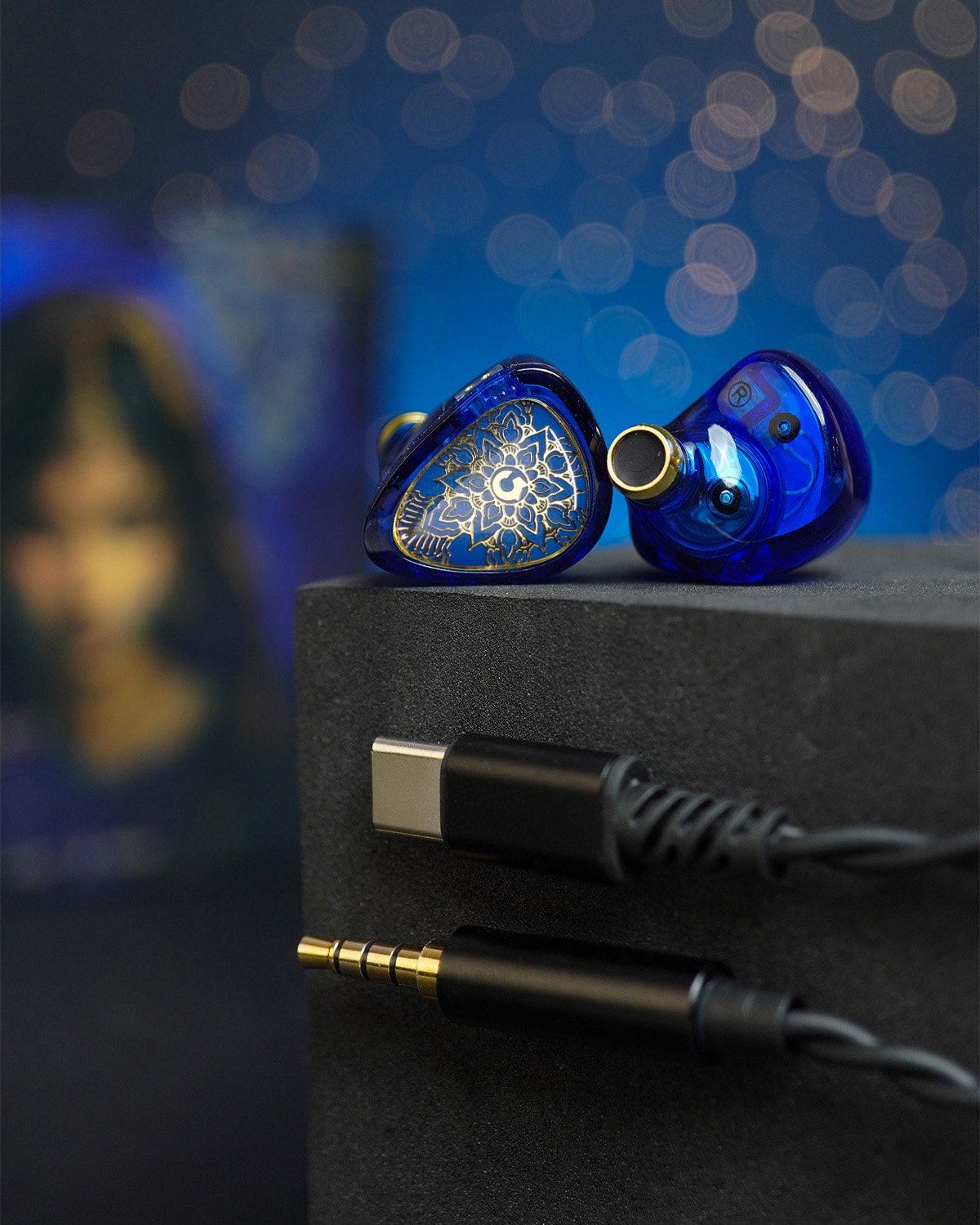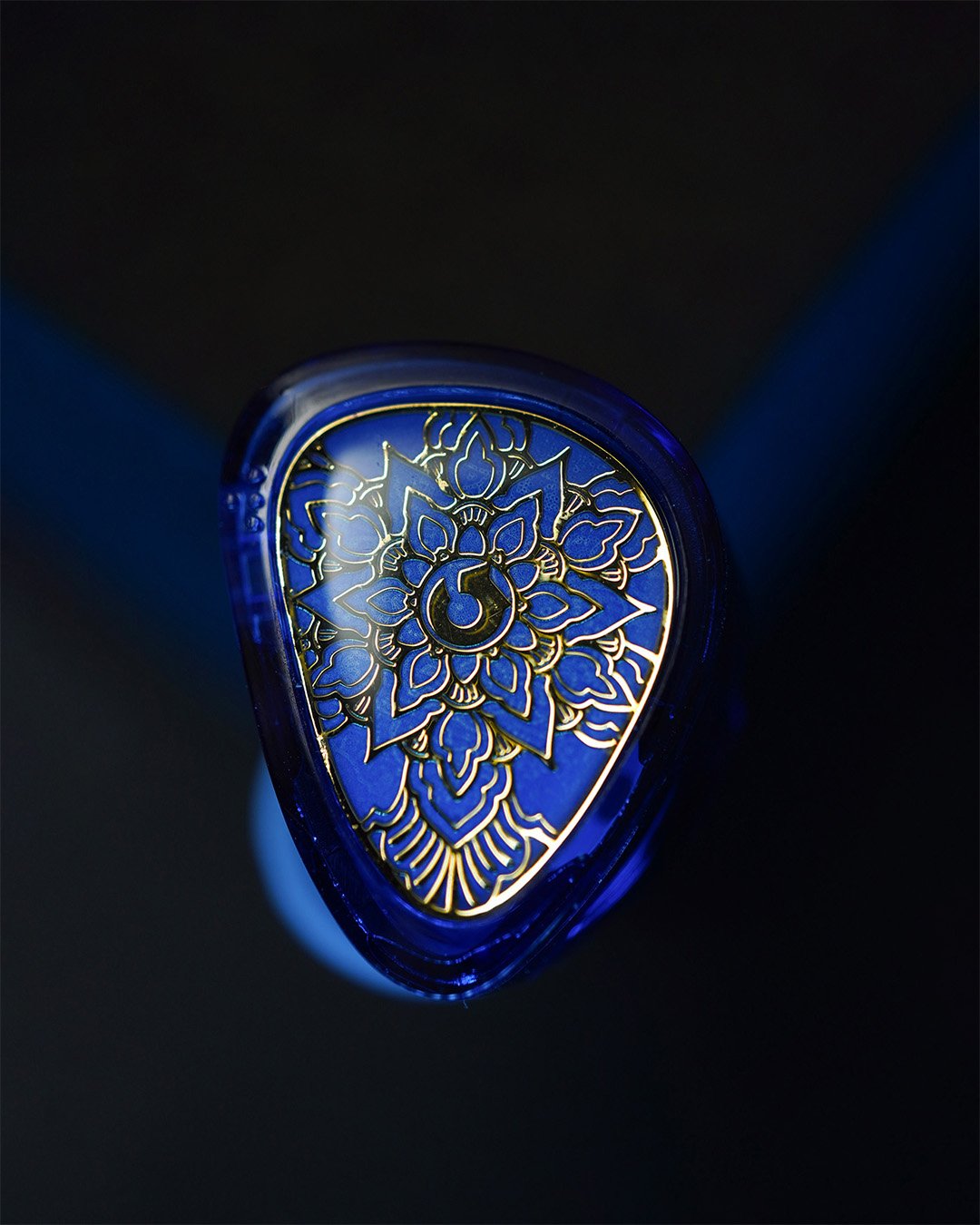
Truke has unveiled the latest addition to its Open-ear Wireless Stereo (OWS) collection in India. The company has introduced the Buds Infinity to provide a superior audio experience while ensuring all-day wearability. Here’s a look at the key specifications, features, and price of the device.
Truke Buds Infinity key specifications and features
Truke Buds Infinity – Royal Blue
The Truke Buds Infinity earbuds come with a striking design and are equipped with powerful 16mm titanium drivers, promising rich audio quality. Its open-ear design ensures comfort by resting gently on the ears without blocking the ear canal, allowing users to stay aware of their surroundings. This makes it suitable for outdoor activities and collaborative work environments.
For extended use, the Buds Infinity offer a substantial 70 hours of total playtime, including the charging case. Furthermore, these earbuds feature seamless dual pairing, enabling simultaneous connection to two devices. Users can effortlessly switch between a smartphone for calls and a laptop for music or videos without the need to disconnect and reconnect.
Truke Buds Infinity price in India, availability
Truke Buds Infinity – Jet Black
Scheduled to go on sale from June 12 in India, the Truke Buds Infinity has gone official with a price tag of Rs 1,499. It will be available in two color options: Jet Black and Royal Blue. Customers can purchase it from major e-commerce platforms like Flipkart and Amazon.in, as well as directly from Truke’s official website, Truke.in.
Commenting on the launch, Truke founder and CEO Pankaj Upadhyay said, “Expanding our OWS portfolio with Buds Infinity is a testament to Truke’s commitment to innovation and delivering premium audio experiences at accessible prices. These earbuds combine cutting-edge technology with condensed design, catering to the evolving needs of our customers. We are excited to bring this product to the market and continue redefining the audio landscape in India.”
For more daily updates, please visit our News Section.
Honor is reportedly working on the Magic 8 series of flagship phones for the Chinese market. It is speculated that flagship phones powered by the Snapdragon 8 Elite 2 will break cover by the end of September in China. Therefore, the Magic 8 series, which is expected to feature the said chipset, is also expected to debut in September.
Honor Magic 8 key specifications tipped
Honor Magic 8 key specifications leaked
According to the leak, the alleged Honor Magic 8 will feature a flat 6.58-inch display with a 1.5K resolution and 2.5D glass. The screen design will include large-radius corners and slim bezels. To recall, the tipster previously claimed that the thickness of the black border would be less than 1mm. The new leak also states that the screen will be integrated with an ultrasonic in-display fingerprint sensor.
The device is also expected to support wireless charging and carry an IP68/69 rating for water and dust resistance. Interestingly, the current prototype unit is said to be equipped with a periscope telephoto camera, pointing to advanced imaging capabilities even on the standard variant. To recall, last year’s Honor Magic 7’s rear camera setup included a 3x telephoto camera.
Honor Magic 7 series
While full hardware specifications haven’t been confirmed yet, the tipster remarks that the “core specs are decent,” hinting at a flagship-level performance package, likely featuring a Snapdragon 8 Elite 2 chipset.
Speaking of the Snapdragon 8 Elite 2, it is expected to launch by late September this year. It is speculated that the Honor Magic 8 series featuring the new chip will also debut by the end of September in China. At present, there is no information about the Honor Magic 8 series’ global launch.
For more daily updates, please visit our News Section.
The Snapdragon 7+ Gen 3 is one of the most powerful mid-range chipsets that even surpasses the flagship Snapdragon 8 Gen 1 in multiple benchmarks (see the comparison here). It was announced in March 2024, featuring a high-performance octa-core CPU that operates at a maximum clock speed of 2.8GHz and an Adreno 732 GPU.
The Dimensity 8300, on the other hand, isn’t without its benefits. It also features a powerful CPU that operates at a higher speed than 7+ Gen 3. The Mali-615 MP6 GPU also runs at a higher frequency. However, there’s a lot more to this comparison that could influence your decision.
In this detailed comparison, we’ll examine the benchmark scores first to understand the row performance, and then key differentiations in various other important aspects, such as connectivity and camera capabilities to understand how these chips stack up against each other.
Snapdragon 7+ Gen 3 vs Dimensity 8300: Benchmark scores
Note: The tests were conducted on the Realme GT 6T (Snapdragon 7+ Gen 3) and Poco X6 Pro (Dimensity 8300).
AnTuTu comparison
SD 7+ Gen 3
Dimensity 8300
AnTuTu score
1,448,293
1,442,661
CPU
376,122
283,402
GPU
488,799
531,968
Memory
334,990
362,429
UX
248,382
264,862
The Snapdragon 7+ Gen 3 and Dimensity 8300 deliver nearly identical overall AnTuTu scores — 1,448,293 and 1,442,661, respectively — but with different strengths. The Snapdragon chip leads in CPU performance by a notable 33%, making it more efficient for processing-intensive tasks and multitasking. The Dimensity 8300 maintains a slight lead in GPU performance. It also scores higher in memory and UX tests.
Geekbench comparison
SD 7+ Gen 3
Dimensity 8300
Single core
1,834
1,421
Multi core
4,498
4,398
On Geekbench, the Snapdragon 7+ Gen 3 clearly leads in single-core performance with a score of 1,834 — about 29% higher than the Dimensity 8300’s 1,421. This means better responsiveness in everyday tasks like app launches and scrolling.
Multi-core performance is much closer, with the 7+ Gen 3 slightly ahead at 4,498 compared to the Dimensity 8300’s 4,398 — a modest 2% difference. While both chips offer excellent overall CPU capabilities, the Snapdragon 7+ Gen 3 has the edge in scenarios that demand strong single-threaded performance.
Snapdragon 7+ Gen 3 vs Dimensity 8300: Key differences that matter
Let’s now break down the important differences.
Performance
CPU
Both mid-range chips use TSMC’s 4nm process node, but they feature different core structures and instruction sets. For instance, the Snapdragon chip has one Cortex-X4 large core, four Cortex-A720 performance cores, and three Cortex-A520 efficiency cores.
On the other hand, the Dimensity chip features four Cortex-A715 performance cores and four Cortex-A510 cores. It has a maximum clock speed of 3.35GHz, slightly higher than Snapdragon 7+ Gen 3’s 2.8GHz, but the latter features a newer instruction set.
GPU
The Snapdragon 7+ Gen 3 has an Adreno 732 GPU. It also features several gaming enhancements, including the Game Post Processing Accelerator and Adreno Frame Motion Engine 2.0, to enhance the overall gaming experience.
The Dimensity 8300 chip features the Mali-G615 MC6 GPU, along with MediaTek Adaptive Game Technology 2.0, to enhance FPS, rendering, and other aspects, ensuring smooth gaming.
Both chips offer excellent gaming performance, but the Snapdragon chip offers slightly higher peak performance and stability.
Camera
The Snapdragon 7+ Gen 3 features a Spectra triple ISP (18-bit) with support for up to 200MP single camera. With zero shutter lag (ZSL) and multi-frame noise reduction (MFNR), it supports 108MP single-camera, 64+36MP dual-camera, or 36MP triple-camera configurations.
The chip offers a range of camera features, including AI-based auto-exposure, AI-based auto-focus, low-light photography architecture, Real-time Semantic Segmentation, video super-resolution, and more.
On the other hand, the Dimensity 8300 has a 14-bit Imagiq 980 ISP that supports up to 320MP single camera or 32+32+32MP triple cameras. It also features a range of camera capabilities, including Video HDR, Video Bokeh, Video EIS, Video NR, and AI Color for Capture. Additionally, the camera brings AI-based (auto exposure, auto focus, auto white balance, and face detection), just like the Snapdragon chip. Both chips also offer up to 4K video recording.
Connectivity
The Snapdragon 7+ Gen 3 is equipped with an integrated X63 5G modem, featuring maximum download and upload speeds of 5Gbps and 3.5Gbps, respectively. On Wi-Fi 7, the maximum connection speed is 5.8Gbps. Additionally, the chip offers a range of features, including AI-Enhanced Signal Boost, Qualcomm Smart Transmit 2.0, Qualcomm 5G PowerSave 2.0, and Wi-Fi Optimised Connectivity, to enhance power saving and connection stability.
The Dimensity 8300 offers a peak download speed of 5.17Gbps. It doesn’t support Wi-Fi 7 but does offer a higher standard Bluetooth connection.
Snapdragon 7+ Gen 3 vs Dimensity 8300: Conclusion
Both the Snapdragon 7+ Gen 3 and Dimensity 8300 are impressive mid-range chipsets, offering near-flagship performance — but they excel in different areas. The Snapdragon 7+ Gen 3 stands out with a stronger CPU, making it ideal for responsive UI and demanding multitasking.
On the other hand, the Dimensity 8300 holds its ground with better GPU scores and a more flexible camera setup with up to 320MP support. However, it lacks Wi-Fi 7 and lags slightly behind in raw CPU power. If performance and connectivity are your top priorities, the Snapdragon 7+ Gen 3 is the better pick. But if you value stronger GPU and power efficiency, the Dimensity 8300 offers excellent value.
Samsung is building anticipation for its next-generation foldables. A new official teaser hints that the upcoming Galaxy Z Fold 7 will feature a dramatically slimmer and lighter design, alongside improved durability. The teaser doesn’t reveal everything but sets the tone for what could be a major step forward in foldable design.
Galaxy Z Fold 7 could be the thinnest Samsung foldable ever
The latest teaser describes the Galaxy Fold 7 as thinner, lighter, and more durable than its predecessor. While exact specifications haven’t been confirmed, internal testing and leaks suggest the phone may have a closed thickness of just 9mm and an unfolded profile as slim as 4.54mm — a notable drop from the Fold 6’s 12.1mm thickness. Although the phone may retain a slight camera bump, the overall form factor is expected to be significantly more pocketable.
Samsung has highlighted its intention to deliver a foldable that aligns with user demands for portability and ease of use. The design changes aim to make the Fold 7 more suitable for one-handed usage and everyday carry, addressing a common concern about earlier models being bulky and heavy.
An earlier teaser hinted at a possible “Ultra” version within the Fold series, something not seen in previous line-ups. If true, this could mark the beginning of a premium segment in Samsung’s foldable range.
While specific features remain under wraps, the company has suggested that the Fold 7 could bring “industry-first” technologies. The device is expected to launch alongside the Galaxy Z Flip 7, Galaxy Watch 8 series, and possibly more at the next Galaxy Unpacked event, likely to be held on July 10 globally.
For more daily updates, please visit our News Section.
itel has launched its latest smartwatch, the Alpha 3, aimed at users seeking a feature-rich wearable at an affordable price. It comes with key features, such as a round display, premium bezel design, Bluetooth calling support, and more. Here’s a look at the key specifications, features, and price of the Alpha 3.
itel Alpha 3 key specifications and features
itel Alpha 3
The itel Alpha 3 is equipped with a circular 1.5-inch screen, which delivers bright visuals even in sunlight with its 500 nits brightness rating. The watch is IP67 certified, ensuring protection from dust and splashes during workouts or outdoor use. A standout feature is the single-chip Bluetooth calling, which ensures smoother, more reliable call performance from the wrist.
For health tracking, the Alpha 3 includes round-the-clock heart rate monitoring, SpO₂ tracking, sleep insights, and real-time activity metrics. Fitness enthusiasts can make use of over 100 sports modes, while personalization is supported through more than 150 watch face options.
The Alpha 3 also supports an AI voice assistant to manage tasks hands-free, along with real-time notifications for calls and messages. A 300mAh battery powers the watch, offering day-long performance.
itel Alpha 3 price in India, availability
itel Alpha 3 – Dark Blueitel Alpha 3 – Rose Golditel Alpha 3 – Black
itel has priced the Alpha 3 smartwatch at Rs 1,499. The watch is available through offline retail stores across India and comes in three attractive colour variants: Dark Blue, Rose Gold, and Black. It comes with a 1-year warranty.
For more daily updates, please visit our News Section.
Xiaomi’s smartphone marketing head, Wei Siqi has officially started teasing the MIX Flip 2, expected to be the company’s first foldable release this year. In a recent Weibo post, she shared that President Lu Weibing had held a discussion with fans of small foldables to understand user expectations. While the company has no plans to launch the Xiaomi Mix Fold 4’s successor this year, the Mix Flip 2 clamshell foldable is expected to break cover later this month.
Here Xiaozhejia refers to small foldable phone – the Mix Flip 2
Xiaomi Mix Flip 2 specifications: What’s known so far
As per reports, the Xiaomi Mix Flip 2 is said to feature a 6.85-inch OLED inner foldable display with a 1.5K resolution and a 120Hz refresh rate. Reports suggest that it will be powered by the Snapdragon 8 Elite chipset paired with a 5,100mAh battery that supports 67W wired and 50W wireless charging.
When it comes to durability, the device is said to offer IPX8-rated water resistance. With a folded thickness of just 7.6mm and a weight of around 190 grams, it’s set to be thinner and lighter than the first-generation MIX Flip.
Xiaomi Mix Flip
A key highlight of the MIX Flip series has always been its functional cover display. Xiaomi appears to be retaining the large, 4-inch cover screen and optimizing it further with HyperOS 2. The outer screen is reportedly being redesigned with a dedicated section for running apps seamlessly, while the rest of the screen remains available for extra content.
For photography, the Mix Flip 2 is expected to feature a 50-megapixel main camera with OIS support and a 50-megapixel ultra-wide snapper. The device is also expected to come with other features like an IR blaster, NFC, and a side-mounted fingerprint sensor.
Xiaomi is expected to hold a major launch event later this month to unveil not just the Mix Flip 2, but also Redmi’s compact gaming tablet and K80 Ultra flagship phone.
For more daily updates, please visit our News Section.
Last year, Huawei surprised the tech world by launching the Mate XT as the world’s first triple foldable smartphone. There have been reports that the brand could be working on a successor edition of the device for this year. A new leak by tipster Super Dimension reveals that Huawei’s second-generation triple foldable device will launch this year.
There have been some reports that Huawei’s next triple foldable could be called the Huawei Mate XTs. Debunking these rumors, the tipster claims that the second-generation device will be called the Huawei Mate XT 2 Extraordinary Master. In the global market, this device is likely to be dubbed the Huawei Mate XT 2 Ultimate Design.
As can be seen in the Weibo post, the tipster claims that the Huawei Mate XT 2 (triple foldable) and Mate X7 (book-style foldable) will debut in the second half of this year. He added that these devices will arrive with new chipsets, cameras, and batteries. Next year, Huawei will launch foldable tablets.
Huawei Mate XT 2 specifications (rumored)
Huawei Mate XT
According to reports, the Huawei Mate XT 2 will continue to feature a 10.2-inch triple foldable screen like the previous generation. It is likely to feature Huawei’s in-house developed “Tian Gong” hinge mechanism, offering a slimmer yet durable construction.
Under the hood, the Mate XT 2 may feature the Kirin 9020hh chipset, which uses a 1+3+4 CPU setup consisting of a 2.5GHz prime Taishan core, three 2.15GHz middle cores, and four smaller 1.6GHz cores. For graphics, it is equipped with the Maleoon 920 GPU that works at 840MHz.
Huawei might also introduce eSIM functionality with the Mate XT 2, eliminating the need for a physical SIM card. This move could help reclaim internal space, an important advantage for foldables aiming for sleeker profiles.
For more daily updates, please visit our News Section.
Apple’s new iOS 26 may look like an ordinary version jump on paper, but it signals something bigger: a fresh chapter in how iPhone software looks, feels, and acts. You can call it the most ambitious refresh to iOS in years, one that goes beyond cosmetic polish and taps into Apple’s evolving vision for AI and real-time interaction.
Apple announced iOS 26 this week at WWDC 2025, and no, you didn’t miss iOS 19 through 25. The company is aligning version numbers across its platforms, giving us iOS 26, iPadOS 26, macOS 26, and so on, to match the year. That alone speaks to Apple wanting its entire ecosystem to feel more cohesive. But the real story here is what’s inside.
If there is one visual change you’ll notice first, it is the new Liquid Glass design. Inspired by the glassy, layered aesthetic of visionOS, Liquid Glass introduces an entirely fresh material to iOS. Everything from app icons to widgets to system controls now appears as if crafted from translucent glass, subtly refracting and reflecting what lies beneath. It makes static elements like the Lock Screen clock feel dynamic, adapting fluidly to images and space. Move your iPhone and spatial wallpapers respond with a 3D parallax effect that adds depth and dimension.
This marks an interesting evolution when viewed against iOS’s design history. Earlier versions of iOS, especially from iOS 1 to iOS 6, used a skeuomorphic design style. This approach mimicked real-world textures and materials, with many UI elements featuring a glassy, shiny, or 3D-like appearance. Buttons often looked like polished glass or plastic with highlights and reflections.
Starting with iOS 7 in 2013, Apple moved to a flat design under Jony Ive’s direction. This stripped away most of the skeuomorphic textures in favor of a flatter, more minimal aesthetic, using bright colors and simple icons. Subtle translucency effects, such as frosted glass in the Control Center and Notification Center, remained but were far more restrained.
Now, Apple has reworked app interfaces to take full advantage of this new Liquid Glass material. Safari flows edge-to-edge, shrinking tab bars to reveal more content. In apps like Music, News, and Podcasts, floating tab bars expand or shrink depending on your interaction, keeping content front and center. The Camera app also adopts a streamlined layout with hidden controls, allowing you to focus more fully on your shot.
Apple is also giving third-party developers access to Liquid Glass APIs, meaning your favorite apps could soon match this dynamic look and feel.
2. Apple Intelligence
Apple Intelligence isn’t entirely new, it first arrived in iOS 18. But in iOS 26, it has grown into a much smarter and more integrated part of the iPhone experience. Live Translation now works seamlessly across Phone calls, Messages, and FaceTime, translating both audio and text in real time, entirely on-device. No cloud required. You can hold a phone conversation in two different languages and both sides will follow along effortlessly.
Visual Intelligence takes the concept of Google’s Circle to Search and gives it an Apple spin. You can take a screenshot of anything — a social post, an event flyer, a product you like and ask ChatGPT questions about it or search similar items on Google or Etsy. It also recognizes event details and can suggest adding them straight to your calendar.
Apple Intelligence also now powers smarter Shortcuts and Writing Tools, auto-summarizes order tracking emails, and lets users create Genmoji, custom emoji built by combining their favorite icons and descriptions. The result is an AI layer that feels more capable and present in your day-to-day iPhone use.
3. Everyday apps get sharper, smarter
iOS 26 breathes new life into core iPhone apps too.
The Phone app now screens unknown calls for you. Your iPhone will answer first, ask who is calling and why, and show you the info so you can decide to pick up or ignore. Hold Assist will stay on hold for you, notifying you when a real person joins the call.
Messages gains message screening for unknown senders, typing indicators in group chats, and AI-suggested polls. You can even set AI-generated custom backgrounds for your chats.
Music gets lyrics translation and AutoMix DJ-style transitions. Maps adds Visited Places to help you track your favorite spots and suggests optimized routes for your commutes. Wallet now gives you real-time flight updates with airport maps and Find My integration.
And yes, gaming gets love too: the new Apple Games app pulls all your titles into one hub, helps you discover new ones, and shows you what friends are playing.
4. Designed for today’s Apple ecosystem
iOS 26 also brings its Liquid Glass aesthetic and smarter interactions to CarPlay, AirPods, and beyond. CarPlay Ultra now takes over your car’s entire display system, including climate and vehicle controls, giving you a unified, Apple-powered in-car interface.
For AirPods, you get studio-quality audio recording and even a new camera remote function that lets you snap photos or start recording with a press of the AirPods stem.
5. The bottom line
iOS 26 is more than a coat of fresh paint. It marks Apple’s clearest move toward an AI-integrated, visually immersive OS that adapts to how we use our devices today, while staying true to its privacy-first principles.
iOS 26 arrives this fall for iPhone 11 and later, though you’ll need an iPhone 15 Pro or newer to access the full Apple Intelligence feature set. Based on what we’ve seen so far, this feels like one iOS update worth the hype.
For more daily updates, please visit our News Section.
Motorola has recently unveiled its Edge 60 lineup of smartphones, continuing its annual tradition of delivering a diverse portfolio of devices. Like the previous generations, the new gen is also strategically designed to cater to a wide audience, with multiple models spread across various price segments to ensure there’s a compelling option for every type of user.
Choosing between these new phones can be confusing, even for tech enthusiasts. To make it easier, this guide will explain what makes each Edge 60 model different to help you understand your options.
Let’s check out how these products are similar and different from one another.
2. Design & Durability: A Shared Look with Key Differences
All the phones in the series feature an identical design. They come with an elevated, square camera island on the top-left of the rear panel, where the camera sensors and LED flash are arranged in a matrix.
Except for the Edge 60 Stylus, the rest of the lineup has a quad-curved display and is IP68 rated. In contrast, the model with the stylus has a flat screen and is limited to an IP52 rating. The entire series arrives with Dolby Atmos-supported stereo speakers, but only the Edge 60 Stylus sports a 3.5mm headphone jack. Additionally, unlike the other models, the Edge 60 Pro does not have a microSD card slot.
Finally, the Edge 60s is GJB 150A-2009 certified for durability, while the others are MIL-STD-810H compliant.
3. Display & Visuals: Pixels, Protection, and P-OLED
All handsets in the series offer a 1.5K screen resolution (2712 x 1220 pixels) and a 120Hz refresh rate. With the exception of the Edge 60 Stylus, all models support a peak brightness of up to 4500 nits, and their displays are protected by Corning Gorilla Glass 7i.
The Stylus variant, on the other hand, uses the older Corning Gorilla Glass 3 and is limited to a peak brightness of 3000 nits. However, as its name suggests, it is the only model in the lineup that supports stylus input.
Regarding the panel type, all phones in the series sport P-OLED screens. In terms of size, the display on the Pro and Stylus versions measures 6.7 inches diagonally, while the other models feature a 6.67-inch screen.
The Edge 60 Pro is the most powerful model in the lineup, equipped with a MediaTek Dimensity 8350 Extreme chipset. In contrast, the Edge 60 Stylus is the least powerful, featuring a Qualcomm Snapdragon 7s Gen 2 SoC.
The Edge 60 and Edge 60 Fusion are powered by the MediaTek Dimensity 7300 chip in most markets. However, in India, these models, along with the China-only Edge 60s, use a Dimensity 7400 SoC instead.
Furthermore, the Pro variant is the only model to feature faster LPDDR5x RAM and UFS 4.0 storage, while the other models come with LPDDR4x RAM and UFS 2.2 storage. All phones in the series ship with Android 15. However, their software support differs: the Edge 60 Stylus is promised only 2 major Android updates and 3 years of security updates, whereas all other models are guaranteed 3 Android updates and 4 years of security updates.
5. Cameras: A Detailed Look at the Optics
All handsets in the series feature a 50MP Sony LYTIA 700C primary camera with OIS. While the ultrawide camera on every model supports autofocus for macro photography, the sensor itself differs across the lineup. The Edge 60 and Edge 60 Pro are equipped with a 50MP ultrawide unit, whereas the other models use a 13MP sensor.
Additionally, the Edge 60 and Edge 60 Pro come with a 10MP 3x telephoto camera with OIS, a feature that is absent on the other models. Similarly, these two phones sport a 50MP selfie camera, in contrast to the 32MP front-facing camera found on the rest of the series.
6. Battery Life & Charging Speeds
The Edge 60 Pro is equipped with the largest battery in the lineup, a 6,000mAh cell. It is also the only model to support 90W wired charging and is one of two phones, along with the Edge 60 Stylus, to offer 15W wireless charging.
The Edge 60 Stylus is powered by a 5,000mAh battery. For charging, it supports the aforementioned 15W wireless charging and 68W wired charging.
Meanwhile, the Edge 60 and Edge 60 Fusion come with a 5,200mAh battery in most markets. However, in India, they feature a slightly larger 5,500mAh battery, the same capacity found in the China-exclusive Edge 60s. All of these models support 68W wired charging but lack wireless charging capabilities.
Please Note: When you buy something using the links in our articles, we may earn a small commission at no cost to you.
7. Availability: Where to Find Each Model
The Motorola Edge 60 family of smartphones is available worldwide, although some models are exclusive to certain markets.
For instance, the Edge 60s is sold only in China and is essentially a rebadged version of the Edge 60 Fusion. Similarly, the Edge 60 Stylus is limited to the Indian market. In other regions, this device is marketed as the Moto G Stylus (2025) and uses a different chipset (a Snapdragon 6 Gen 3 instead of the Snapdragon 7s Gen 2).
Therefore, the Edge 60 and Edge 60 Pro are the only phones in the lineup sold with the same name and specifications across all regions.
Please Note: When you buy something using the links in our articles, we may earn a small commission at no cost to you.
8. Which Edge 60 Should You Buy?
For the Power User: Choose the Edge 60 Pro. It has the fastest chip, the most capable camera system with a telephoto lens, the largest battery, and the fastest charging.
For the Creative Note-Taker: The Edge 60 Stylus is your go-to. It’s the only model with built-in stylus support and also keeps the convenient 3.5mm headphone jack.
For the Balanced User: The Edge 60 and Edge 60 Fusion/Edge 60s offer a great middle ground. They share powerful cameras with the Pro model but have slightly different performance and battery specs, providing excellent all-around value.
Vivo Product Manager Han Boxiao has been consistently revealing key features of the Vivo X Fold 5 ahead of its expected China launch this month. Yesterday, he shared an image showcasing the internal screen of the X Fold 5. In today’s Weibo post, he highlighted the cover display by placing it alongside the iPhone 16 Pro Max. The new post also reveals a standout feature — the phone’s ability to connect with iPhones for a seamless cross-platform experience.
Seamless two-phone sync between iPhone and X Fold 5
Vivo X Fold 5 (left) and iPhone 16 Pro Max (right)
One of the most noteworthy revelations is the Vivo X Fold 5’s ability to integrate smoothly with an iPhone, simplifying life for users who carry both devices. The foldable allows iPhone users to view incoming SMS and verification codes directly on the X Fold 5.
He added that if a call comes to the iPhone, users can answer it using the X Fold 5 without switching devices. Notification sharing between the two is also supported, making it easy to stay updated regardless of which phone is in hand. Impressively, all this works even with a single SIM card, eliminating the need for multiple connections.
Vivo X Fold 5 and Apple Watch Series 9
Boxiao also confirmed that the Vivo X Fold 5 is the first Android device confirmed to support connectivity with the Apple Watch. The smartwatch can display incoming calls and SMS from the X Fold 5, while health data recorded on the watch syncs directly with the vivo Health app. This allows the Apple Watch to remain functional even when paired with the X Fold 5 instead of an iPhone.
The X Fold 5 will come equipped with top-tier LTPO 8T panels on both inner and outer screens, delivering fluid adaptive refresh rates and high pixel density. Its 4,500-nit local peak brightness ensures visibility even in strong sunlight, while full-brightness high-frequency PWM dimming and TÜV Rhineland’s Global Eye Protection 3.0 certification focus on eye comfort. Vivo has partnered with Zeiss for colour tuning, ensuring lifelike tones through Zeiss Master Color calibration.
A new button has also replaced the previous alert slider on the left side, possibly offering programmable functions. While technical specs are still under wraps, Vivo has confirmed the foldable is built for extreme conditions, performing reliably at -20°C with IP5X dust and IPX9 water resistance.
For more daily updates, please visit our News Section.
Samsung is expected to announce its next Galaxy Unpacked event soon, where it’s likely to reveal new foldables and wearables. Ahead of the official launch, a prototype of the upcoming Galaxy Watch 8 Classic has leaked through an actual eBay listing.
Yes, someone tried to sell the unreleased watch online, and the listing gives us a surprisingly good look at what’s coming.
Galaxy Watch 8 Classic prototype gives clear look at the design
First off, the design is exactly what earlier rumors suggested. The Galaxy Watch 8 Classic adopts a squircle-shaped frame like the higher-end Galaxy Watch Ultra.
More notably, the rotating bezel is back. While it was absent from the Galaxy Watch 7 series entirely, Samsung seems to be bringing it back with the Watch 8 Classic in a more interesting design.
There are three physical buttons on the right side, along with a speaker grill on the left. But the biggest change may be to the strap system. The prototype doesn’t use the standard strap connectors found on previous Galaxy Watches. That means older watch bands might not be compatible with the newer models.
The eBay listing went live with a starting price of $150. Now, the bidding has driven it up to $570. The listing also spills some extra details. The watch has 64GB of internal storage and comes in a 46mm size. The latter reportedly is the only size option for the Classic model this year.
On the software side, the Watch 8 series is expected to ship with Wear OS 6, layered with Samsung’s own One UI 8 Watch interface. And despite the new design and storage upgrade, it looks like Samsung isn’t changing the chip.
According to reports, it will be powered by the same Exynos W1000 as the Galaxy Watch 7 and the Ultra.
For more daily updates, please visit ourNews Section.
Samsung launched the Galaxy S25 Ultra with mostly unchanged internals, wrapping them in a redesigned exterior. The middle frame adopted rounded corners and sharper edges, while the camera modules were made larger.
To achieve that bolder look, Samsung added metal rings on top of the largely unchanged optical hardware, which did enhance the rear design. However, it now appears that even these minimally functional camera rings are facing cost-cutting consequences—they’re coming off during regular use.
X user @parthosarathi_b shared images of his Galaxy S25 Ultra with one of the camera rings missing, claiming it happened under normal usage. “No drops, no damage,” he noted.
Samsung India promptly responded to his post, and the user visited an official service center, where the missing camera ring was replaced—hopefully with sufficient adhesive this time. Reports suggest that loose glue is the root cause, and there have been multiple similar incidents.
YouTuber JerryRigEverything had previously shown that the rings can be pried off fairly easily using a razor blade, though many dismissed it as unrealistic since no one uses a phone that way. But unfortunately, time is telling a different story.
While Samsung is addressing the issue under warranty and responding to affected users, the outlook for the Galaxy S26 Ultra doesn’t look much brighter. Despite early rumors of a silicon-carbon battery and 65W fast charging, a recent leak suggests those upgrades won’t be arriving in 2026.
The 7th-generation book-style foldable, set to launch sometime in mid-July, is expected to bring an actual redesign and compete with Chinese foldables not just through software features, but also with a thinner and lighter form factor.
Xiaomi has launched a new travel companion on its Youpin crowdfunding platform: the Mijia Front-Opening Travel Suitcase 18-inch. Positioned as a smartly designed, business-friendly suitcase, this new entry blends practical features with understated style. The suitcase will go live for crowdfunding on June 16, priced at 369 yuan (roughly $51).
The suitcase features a front-opening design that allows users to access essential items without opening the main compartment. It uses a stand-up open-close mechanism, which enables quick access to laptops, tablets, chargers, and cables. This layout aims to simplify the process of passing through airport security checks and makes the suitcase more convenient for business travelers.
Xiaomi has designed the front section with three dedicated storage layers. It can hold a folding laptop up to 15.6 inches, a tablet, and various smaller accessories. The main compartment includes a deep storage structure that provides enough space for clothing and personal items, making it suitable for short trips and daily business use.
The suitcase uses an antibacterial lining material that inhibits the growth of bacteria such as E. coli and Staphylococcus aureus. Xiaomi claims an antibacterial rate of up to 99%. It also comes with U-shaped pockets and integrated clothing straps that help users organize their belongings and keep them secure during transit.
Xiaomi builds the suitcase shell from a Covestro composite PC material. The multi-layer process enhances the shell’s strength and impact resistance while keeping it lightweight. The suitcase includes large-diameter aircraft-grade wheels that provide smooth and quiet rolling. It also features a three-level adjustable telescopic handle to accommodate users of different heights.
For added security, Xiaomi integrates a TSA-approved lock. The lock does not include a user key, as customs officials can open it with their own master key to avoid damaging the suitcase during inspections.
CORSAIR has launched the new CORSAIR ONE i600 PC, the latest compact model in its CORSAIR ONE series. The i600 offers more power, better efficiency, and improved thermal performance compared to the previous i500. It is designed for creators, AI developers, and gamers who want high performance in a small form factor.
The CORSAIR ONE i600 runs on an Intel Core Ultra 9 processor and NVIDIA GeForce RTX 5080 graphics with 16GB VRAM. Both components are cooled by individual 240mm liquid coolers. The PC comes with 64GB DDR5 memory and 4TB NVMe SSD storage, allowing fast load times, smoother AI workflows, and seamless 4K gaming. It is built in a compact aluminum case.
Cooling has been upgraded with a dual 240mm liquid cooling system, enhanced 120mm fans, and a Tri-spoke vent design. This setup improves passive airflow and reduces turbulence, keeping the system cool during demanding creative tasks and gaming.
The CORSAIR Dashboard Software lets users monitor performance in real time and adjust cooling. It offers Quiet, Balanced, and Advanced modes. Advanced mode allows users to fully customize thermal settings.
The CORSAIR ONE i600 includes customizable underglow and front-panel lighting. A touch-sensor spotlight on the rear I/O panel makes it easier to connect devices. The system also features an eco-friendly design, with a recycled aluminum case and packaging made from recycled materials. The PC comes in two finishes: Metal Dark and Wood Dark. The Wood Dark model includes an FSC-certified real wood accent panel.
Price and availability
The Corsair One i600 is now available directly from the manufacturer for $4,999, with a choice of metal or wood front panel options.
For more daily updates, please visit our News Section.
The Vivo Y400 Pro 5G might be the next addition to the company’s Y-series lineup in India, according to a new leak. While the company hasn’t made any official announcements yet, a leak by PassionateGeekz has revealed the colour variants, storage configurations, and key specifications of the phone.
Vivo Y400 Pro leaks in two colors
It is expected to arrive in two colour options—Festival Gold and Freestyle White—and could be available in 8GB RAM + 128GB and 8GB RAM + 256GB variants.
At the hardware level, the Vivo Y400 Pro is tipped to feature an AMOLED display with a 120Hz refresh rate. There’s no word yet on screen size, but AMOLED and high refresh rate has been a consistent feature across the Y-series in recent releases.
The device is also said to be powered by a 5G chipset, though the specific SoC hasn’t been confirmed. The battery could be a 6,000mAh+ unit.
Vivo Y300 Pro 5G
The Y400 Pro will likely succeed the Y300 Pro from last year. The latter features a 6.77-inch AMOLED screen, 1B colour support, 120Hz refresh rate, and a peak brightness of 5000 nits.
It is powered by the Snapdragon 6 Gen 1 chip and packs up to 12GB RAM and 512GB storage, though UFS 2.2 keep speeds moderate. The Y300 Pro also has a 50MP dual rear camera, a 32MP front-facing shooter, and an 80W wired charging setup for its 6,500mAh battery.
If the leak holds, the Y400 Pro might stick close to Vivo’s existing template for midrange 5G phones. There’s no official word yet on pricing or launch timeline, but an announcement could be around the corner as Vivo ramps up its summer release cycle.
As usual with early leaks, some specifications may shift by the time the phone is made official. But at least on paper, the Y400 Pro appears to be another iterative step rather than a substantial leap in Vivo’s Y-series strategy.
For more daily updates, please visit our News Section.
OnePlus has started rolling out the OxygenOS 15.0.0.831 update for the OnePlus 13 in India. The update is being released in batches, with a broader rollout expected in the coming days. The build version is CPH2649_15.0.0.831(EX01).
Key Highlights
The update introduces remote control support for Windows PCs, allowing users to control their PC and access PC files directly from the phone. The cellular network algorithm has also been improved for smoother network connections.
A new Game Camera feature has been added, offering live screenshots and Flashback recording to help users capture gaming moments. The Documents app now supports a Mind Mapping feature that can generate mind maps with one tap and export them to Photos or share them.
In multimedia, the update adds a Speaker Cleaner feature to help clean the speakers and maintain optimal performance. Users can access this option through Phone Manager under Tools, Accessibility & convenience settings.
System updates include a new Drag & Drop feature that allows users to perform actions on images and text in third-party apps using gestures. A Reduce White Point option has been introduced to improve comfort for users with color sensitivity. The Settings menu now supports app name searches and fuzzy searches with spaces.
Floating window responsiveness and the animations when exiting Quick Settings and the Notification drawer have been improved. Apps can now be opened directly from quick functions even when the screen is locked. Stacked notifications now display a summary showing the number of undisplayed notifications and their sources. The color consistency of the navigation bar background and app icons has also been improved. More apps are now supported in the Recent Tasks feature, and the search result display order in Settings has been optimized. Finally, the update integrates the June 2025 Android security patch.
Indian users can report issues via the OnePlus Community App’s Bug Report section or by dialing *#800# to access the feedback tool.
For more daily updates, please visit our News Section.
Acer, in collaboration with Indkal Technologies, has entered the Indian smartphone market with the launch of the Super ZX. Priced under Rs 10,000, this device aims to deliver a capable all-around experience with minimal compromises. Here’s how it fares in real-world use across key categories.
5Verdict
Acer Super ZX
The Acer Super ZX brings a thoughtful mix of design, clean software, decent performance, and hardware features in its price range. While it doesn’t try to oversell itself with aggressive marketing or flashy gimmicks, it manages to identify itself as an entry-level 5G offering with a clean UI and decent performance.
With a starting price of Rs 9,999, the Acer Super ZX is one of the most affordable 5G phones available in the Indian market. It comes in three RAM variants—4GB, 6GB, and 8GB—all offering 128GB of storage. These models are priced at Rs 9,999, Rs 10,999, and Rs 11,999, respectively. It comes in three shades: Carbon Black, Lunar Blue, and Cosmic Green.
With this pricing, the Acer Super ZX competes with the likes of the Poco M7 5G (Snapdragon 4 Gen 2), Redmi 14C 5G (Snapdragon 4 Gen 2), Moto G35 (Unisoc T670), Infinix Note 50x 5G (Dimensity 7300), and other Dimensity 6300-powered phones, such as Samsung Galaxy F16 5G, Galaxy M16 5G, Galaxy M06 5G, Galaxy A06 5G, Vivo Y19, Lava Bold, Realme C73, and itel A95.
As far as after-sales is concerned, the company claims to have service centres across 100+ cities and 15,000+ pincodes across India. Voice support: +91 7899889977 (available Monday to Sunday, 9 AM to 8 PM). Email: [email protected]
With Acer entering the Indian smartphone market, the Super ZX stands out as a promising option for users looking for a clean Android experience and 5G connectivity under Rs 10,000. While it offers solid value on paper, long-term satisfaction will ultimately depend on how well the brand delivers software updates and after-sales support over time.
For more daily updates, please visit our News Section.
Xiaomi has launched the Mijia Pocket Photo Printer Pro in China, with pre-orders now open at a price of 599 yuan (approximately $83). The printer will go on open sale starting on June 16. It is designed to let users print photos on the go while adding a modern twist to physical prints through features like AR video integration and voice message support.
Xiaomi Mijia Pocket Photo Printer Pro Specifications
The Mijia Pocket Photo Printer Pro features a compact and lightweight design that enhances portability. It measures 142.5mm in length, 86.8mm in width, and 26.8mm in thickness, with a weight of around 308 grams. The printer fits easily into a backpack or jacket pocket, making it convenient for travel and social events.
The device uses dye-sublimation thermal printing technology to produce high-definition prints. It supports a resolution of up to 313×313 DPI, a wide color gamut, and 256-level continuous grayscale. This ensures smooth color gradients and rich image details. Each printed photo is automatically laminated to protect it from scratches, water splashes, and fading.
The printer supports 2×3-inch (50mm×76mm) photo paper. It prints each photo in about one minute. The paper tray holds 10 sheets of regular photo paper or five sheets of adhesive-backed photo paper. The printer works with JPG and PNG file formats.
Xiaomi has added creative features through the Mi Home app. Users can embed AR video clips of up to 15 seconds or voice messages in printed photos. The Mi Home app scanner can play these clips when a printed photo is scanned. The app also provides various decorative borders, watermarks, and templates to personalize prints.
The printer connects via Bluetooth 5.2. It supports multi-user sharing with up to three users connected simultaneously through their Mi Home accounts. It works with Android devices running version 8.0 or higher and iOS devices on iOS 13.0 or above.
Power comes from an 880mAh rechargeable lithium-ion battery. The printer charges via a USB Type-C port. The package includes a USB Type-C cable, 10 sheets of photo paper, and a color ribbon cartridge for 10 prints.
Xiaomi will sell consumables separately in 10, 20, or 50-sheet kits, each including a matching color ribbon.
Samsung has filed a new lawsuit in a Texas federal court accusing Chinese smartphone maker TCL and its affiliates of infringing three patents related to OLED display technology. The case also names two US-based companies, Ultimate Eshop LLC and eTech Parts Plus LLC, which Samsung says sell or import replacement OLED displays covered by the disputed patents.
According to the complaint, Samsung alleges that TCL China Star Optoelectronics Technology Co. and Wuhan China Star Optoelectronics Semiconductor Display Technology Co. (a subsidiary of TCL CSOT) are producing OLED screens that violate patents covering OLED pixel circuits and driving methods. The company cites U.S. Patent No. 9,330,593, No. 7,414,599, and No. 11,594,578 in the lawsuit.
Samsung states that it informed TCL in July 2022 about the alleged patent violations but claims the infringement has continued. The lawsuit targets OLED displays used in several TCL smartphones sold in the U.S., including the TCL 10 Pro, TCL 20 Pro 5G, TCL 30, TCL 30 5G, and TCL 30+ models.
The legal action builds on a previous case at the U.S. International Trade Commission. In that case, the ITC ruled that Samsung’s patents were valid and found that certain respondents, including eTech Parts Plus, infringed them. TCL had attempted to intervene in the ITC case after some replacement OLED displays it manufactured appeared in the U.S. market.
Samsung also points to challenges TCL filed with the Patent Trial and Appeal Board last year. The PTAB upheld the validity of two of the patents, further strengthening Samsung’s position.
This case comes amid a broader legal push by Samsung to defend its OLED technology. Earlier this year, Samsung Display filed a trade secret lawsuit against China’s BOE and seven affiliates in the same Texas court, accusing BOE of using its technical drawings to build an OLED plant in Chengdu. Samsung is seeking damages and punitive compensation, partly due to BOE’s reported role as an OLED panel supplier for Apple’s iPhone 16e.
In response, BOE filed a separate patent infringement lawsuit against Samsung Display, claiming that OLED panels with under-display cameras used in Galaxy Z Fold devices infringe four of its patents. Industry sources see BOE’s suit as a countermeasure to Samsung’s earlier action and an effort to highlight its OLED advancements. The legal process is expected to take years, with no immediate impact on Galaxy Z Fold production.
Samsung declined to comment on the TCL lawsuit. TCL and the U.S.-based companies named in the case have not responded to requests for comment.
For more daily updates, please visit our News Section.
The Vivo X200 FE is shaping up to be another smartphone from the compact category. Recent leaks and certifications suggest the device will pack serious hardware in a more affordable and pocket-friendly design. While official specs are still under wraps, the rumor mill points at a capable chipset, notable cameras, and a relatively small yet smooth display. With its timing and positioning, it could be Vivo’s shot at the compact premium market, which might have it go head-to-head with the OnePlus 13s (Review).
Vivo X200 FE: Design and Display
The Chinese brand’s upcoming Vivo X200 FE is expected to be a rebranded version of the Vivo S30 Pro Mini for the global market. So while we have no official teasers that showcase its looks, the design might be similar to the S30 Pro Mini, which features an oval shaped camera module on the rear.
Vivo S30 Pro Mini
The body is rated with an IP68/IP69 rating for water and dust resistance and color options include Light Blue, Light Pink, Black, and Yellow (Dual tone color with a black frame). Moving on to the front, the Vivo X200 FE is rumored to sport a 6.31-inch 1.5K LTPO AMOLED display with a 1.5K resolution, a 120Hz refresh rate, HDR10+ support, and 4320Hz PWM dimming for improved eye comfort.
Performance
Vivo’s new X200 FE is expected to be a budget premium phone in a small form factor as it could be equipped with either the MediaTek Dimensity 9400e or Dimensity 9300+ SoC. To recall, the Dimensity 9400e is a slightly cutdown version of the flagship Dimensity 9400 chipset, while the 9300+ is last year’s top mobile chip from MediaTek.
Vivo X200 FE (Rumored)
The Dimensity 9300+ processor on the S30 Pro Mini is paired with up to 16GB of RAM and 512GB of internal storage. Thanks to advancements in battery tech, Chinese manufacturers have managed to pack big batteries on smaller phones and the X200 FE is no exception. It is expected to pack a massive 6,500mAh battery pack, which supports 90W wired fast charging.
Camera
For photography, the Vivo X200 FE packs some flagship grade camera sensors. Its main sensor could be a 50MP Sony IMX921 camera along with a 50MP IMX882 telephoto shooter with 3x optical zoom. This is the same image sensors found in the brand’s flagship Vivo X200. Although, its third sensor is a downgraded 8MP ultra wide angle lens. Meanwhile, the front may house a 50MP camera for selfies and video calls.
Rumored Launch Date
Vivo is gearing up to launch the X200 FE model in the Indian market soon. But it won’t be alone as both the X200 FE and Vivo X Fold 5 might be announced in the region on 10th July 2025. This is still just a rumor so take this with a pinch of salt for now.
For more daily updates, please visit our News Section.
We use cookies on our website to give you the most relevant experience by remembering your preferences and repeat visits. By clicking “Accept”, you consent to the use of ALL the cookies.
This website uses cookies to improve your experience while you navigate through the website. Out of these, the cookies that are categorized as necessary are stored on your browser as they are essential for the working of basic functionalities of the website. We also use third-party cookies that help us analyze and understand how you use this website. These cookies will be stored in your browser only with your consent. You also have the option to opt-out of these cookies. But opting out of some of these cookies may affect your browsing experience.
Necessary cookies are absolutely essential for the website to function properly. This category only includes cookies that ensures basic functionalities and security features of the website. These cookies do not store any personal information.
Any cookies that may not be particularly necessary for the website to function and is used specifically to collect user personal data via analytics, ads, other embedded contents are termed as non-necessary cookies. It is mandatory to procure user consent prior to running these cookies on your website.