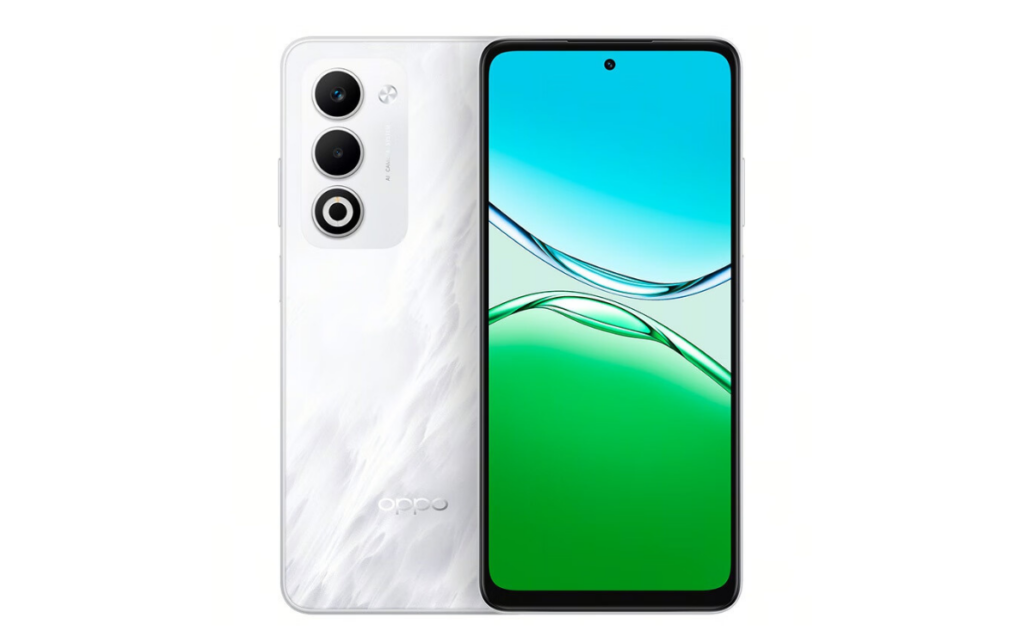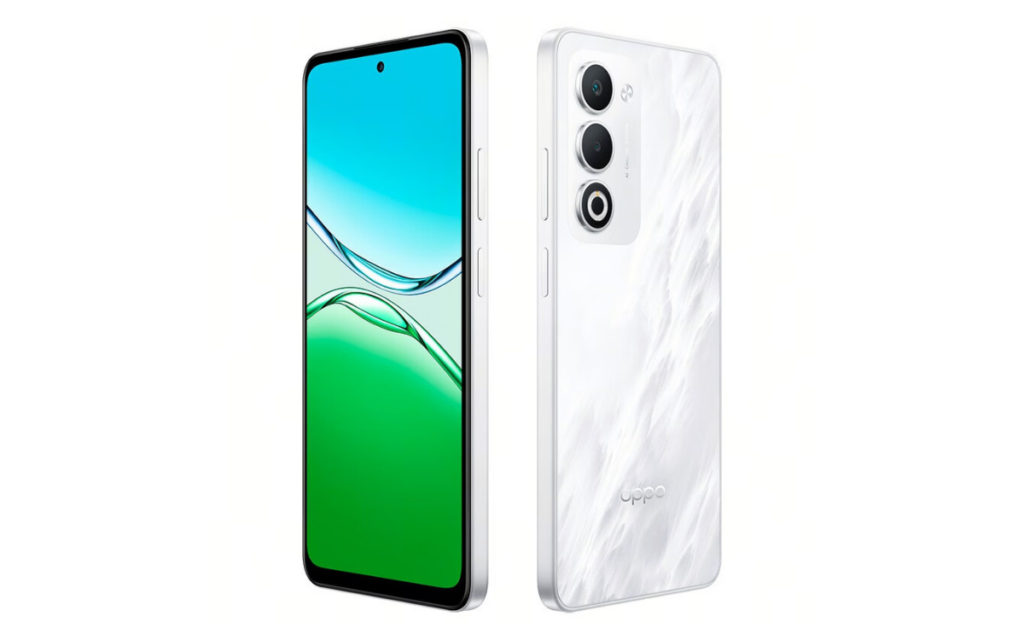
It looks like Oppo might return to clamshell foldables in 2025, more than a year after the Find N3 Flip. The next-gen foldable might be called the Find N5 Flip, as the number 4 is considered unlucky in China.
Recently, a new flip phone from Oppo has appeared on the World Intellectual Property Organization (WIPO) patent filing with a set of renders. While the docs don’t explicitly call it the Find N5 Flip, the timing and design make a pretty strong case.
This could be the upcoming Oppo Find N5 Flip
Seeing these renders, it’s clear that Oppo is refining its design rather than making any big changes. The cover screen still has that rectangular shape, but now the camera system has been reworked into a pill-shaped module stacked on the right.
The new layout frees up more space for the cover screen, which is pretty evident from renders. It now looks just a bit wider.
The clamshell has three cameras on the pill module and has no visible gap between the hinges when closed. The internal display also seems largely unchanged, and yes, there’s still an alert slider.
However, keep in mind that this is a patent filing and not all patent applications materialize. So this could either be something that Oppo is working on or just a concept in itself.
So far, Oppo hasn’t said a word about a new flip phone. The book-style Find N5 launched back in February 2025 and has made its way to global markets, at least in some regions. And just like last time, when the Find N3 Flip launched separately from its foldable sibling, we’re expecting the same rollout strategy for the Find N5 Flip.
For more daily updates, please visit our News Section.
Honor has launched the Watch Fit Vitality Edition in China. It comes with a 1.32-inch AMOLED screen with a resolution of 466 x 466. The touchscreen is capacitive and supports gestures like raise to wake, tap, and button press.
The watch runs on MagicOS 9.0 and works with phones using Android 9.0 and above or iOS 13.0 and above. It has a single button on the side that supports short press, long press, and double press actions. The body is 9.9mm thick at its slimmest part and weighs about 26g without the strap, and 44g with it. The strap is made of silicone and fits wrist sizes from 140mm to 200mm.
The battery has a rated capacity of 480mAh and a typical capacity of 495mAh. Charging is done through a magnetic port, and it takes about 1 hour to fully charge with a 5V/2A charger. The watch offers up to 23 days of battery life in regular use and 9 days with Always-On Display enabled.
It supports Bluetooth 5.4 and has a maximum range of up to 160 meters. The watch includes NFC for payments and supports Bluetooth calling. Music control and software updates via OTA are also available.
The Watch Fit Vitality Edition supports 100 sports modes, including 12 professional ones like running, cycling, swimming, hiking, and more. It tracks heart rate, sleep, blood oxygen levels, and stress. It also offers HRV monitoring, women’s health tracking, and health reports. Honor’s YOYO AI assistant gives fitness suggestions and daily updates.
Sensors include an accelerometer, gyroscope, geomagnetic sensor, PPG heart rate sensor, and ambient light sensor. For positioning, it supports Beidou, GPS, GLONASS, Galileo, and QZSS. The watch is water and dust resistant with a 5ATM and IP68 rating.
Pricing & availability
Pricing starts at ¥424 ($59) for the Active version and ¥594 ($82) for the Elegant version. The watch is available via JD.com and Honor’s Chinese website. The brand has not revealed any details regarding a global launch.
For more daily updates, please visit our News Section.
There have been reports that Redmi is working on a gaming tablet for China. It may launch alongside the upcoming Redmi K80 Ultra smartphone, which is expected to break cover next month (June) in the home market. In a new development, Redmi’s product manager, Xinxin Mia recently sparked excitement on social media by hinting at the arrival of the said device.
Redmi’s compact gaming tablet teased
In a recent Weibo post, Xinxin Mia asked Redmi fans why they are looking for a performance-focused compact tablet. This aligns with recent leaks that have claimed Redmi plans to launch a compact tablet equipped with an 8.8-inch screen alongside the Redmi K80 Ultra in June.
This new Redmi gaming tablet is expected to compete head-to-head with devices such as Lenovo’s Legion Y700 (fourth generation) and Red Magic’s gaming tablet. The Lenovo Legion Y700 debuted this month with an 8.8-inch LCD panel and the Snapdragon 8 Elite chipset, while the upcoming Red Magic’s offering will include a 9-inch OLED screen, the Snapdragon 8 Elite Leding Version SoC, and a built-in fan.
As per recent leaks, Redmi’s compact tablet will sport an 8.8-inch 3K LCD display with a 165Hz refresh rate. The tablet’s ergonomic design will ensure a comfortable grip for extended gaming sessions.
Under the hood, it will be powered by the robust Dimensity 9400+, the same chip that fuels the Redmi K80 Ultra. To enhance gameplay, the tablet will come with dual X-axis linear motors, dual USB-C ports, and stereo speakers. A substantial 7,500mAh battery with bypass charging support will keep the device powered during marathon gaming sessions.
For more daily updates, please visit our News Section.
Recent reports have claimed that Xiaomi is working on the Redmi Pad 2 (4G) and its Wi-Fi version for multiple markets. In a new development, a Brazilian YouTube channel TukEmperial, has posted an unboxing video of the Redmi Pad 2, giving viewers a first look at its design. Although Xiaomi hasn’t launched the tablet yet, the video covers everything from unboxing to specifications and price, revealing a host of details about the device ahead of its official debut.
Redmi Pad 2 unboxed
Redimi Pad 2 | Image source: YouTube / TukEmperial
The video starts with the unboxing process, showing off the tablet’s box and what’s inside. It includes the tablet itself, a USB-C cable, an 18W charger, manuals, and a tool for the memory card or SIM card tray.
Redmi Pad 2 specifications
As per the video, the Redmi Pad 2 comes with an 11-inch IPS display that offers a 2.5K resolution and a 90Hz refresh rate. In terms of audio, the device houses four speakers with Dolby Atmos support.
Powering the Redmi Pad 2 is the Helio G100 Ultra processor, accompanied by 8GB of RAM and 256GB of storage in the unit showcased in the video. There’s also a 4GB RAM version, offering more affordable options.
Redimi Pad 2 | Image source: YouTube / TukEmperial
The Redmi Pad 2 achieved a benchmark score of 400,000 points on AnTuTu benchmarks. Games like Asphalt 9 and Call of Duty run well, claims the YouTuber. Its massive 9,000mAh battery is expected to comfortably last a full day, with the presenter mentioning up to 10 hours of video playback.
On the photography front, the Redmi Pad 2 has an 8-megapixel rear camera and a 5-megapixel front camera with seemingly better quality for video calls. Other handy features include a microSD slot, a headphone jack, and HyperOS-based Android 15 with Circle to Search support.
As of now, Xiaomi hasn’t officially launched the Redmi Pad 2, but with such a comprehensive video already available, it’s likely that the company will reveal the tablet in the coming days. The video also claims that the device is priced at BRL 1300 (~$240).
For more daily updates, please visit our News Section.
Motorola has launched the Moto G56 5G, a budget phone that packs solid specs for everyday users who want good performance and cameras without spending too much.
The phone runs on MediaTek’s Dimensity 7060 chip with Android 15. You get 8GB of RAM and 256GB of storage, plus you can add up to 2TB more with a microSD card. It supports dual SIM with one physical slot and eSIM, and there’s a separate slot for the microSD card.
The screen is a 6.72-inch Full HD+ LCD with 120Hz refresh rate. It’s not AMOLED, but Motorola protected it with Corning Gorilla Glass 7i. The screen takes up 87% of the front.
Battery life comes from a big 5200mAh cell that charges at 30W. The phone weighs 200g and has IP68 and IP69 ratings, so it can handle water and dust.
For cameras, there’s a 50MP main sensor using Sony’s LYTIA 600 with PDAF and Quad Pixel tech. You also get an 8MP ultra-wide camera and a 32MP front camera. Software features include Auto Night Vision, Portrait Mode, Pro Mode, and 8x digital zoom. Motorola’s AI tools help improve photos.
Audio comes through Dolby Atmos stereo speakers, and there’s still a 3.5mm headphone jack. Other features include Google Assistant, ThinkShield security, Wi-Fi 6, Bluetooth, and NFC support in some regions.
Pricing & availability
The Moto G56 5G costs £199.99 in the UK and €250 in Europe. There’s only one version with 8GB RAM and 256GB storage. Motorola hasn’t said when it will launch in other countries.
For more daily updates, please visit our News Section.
OnePlus has been steadily expanding its Ace lineup in China, catering to a performance-driven audience with a balance of high-end specs and aggressive pricing. The OnePlus Ace 5 series now consists of four distinct models: the Ace 5, Ace 5 Pro, the newly introduced Ace 5 Ultra, and the Ace 5 Racing Edition. While they all share a common design philosophy, each model is tuned for a different kind of user, from hardcore gamers to premium smartphone enthusiasts.
Launched earlier, the OnePlus Ace 5 and Ace 5 Pro are the Snapdragon-based models in the lineup. The Ace 5 is powered by the Snapdragon 8 Gen 3 SoC, while the Ace 5 Pro takes things further with the Snapdragon 8 Elite chip, Qualcomm’s most powerful platform to date.
Both phones feature a 6.78-inch 1.5K 8T LTPO AMOLED display with up to 4500 nits of peak brightness, 120Hz refresh rate, and Crystal Shield Glass. The display supports wet-finger touch response and is tailored for high-end mobile gaming and media consumption.
The Ace 5 Pro features enhanced thermal management with its “double ice core” vapor chamber system and a dedicated G1 gaming Wi-Fi chip, giving it a solid edge in connectivity and sustained gaming performance. Both phones support native 120 fps gaming, 100W SuperVOOC fast charging (80W on Ace 5), and bypass charging for gaming while plugged in.
Camera-wise, both phones come with a 50MP Sony IMX906 main sensor, 8MP ultra-wide, and a 2MP macro shooter. The front houses a 16MP selfie camera inside a punch-hole cutout.
Battery capacities differ slightly: the Ace 5 has a 6415mAh carbon-silicon battery, while the Ace 5 Pro includes a 6100mAh cell. Both support fast charging, but the Ace 5 Pro’s superior silicon battery and chipset make it the more capable device overall.
2. OnePlus Ace 5 Ultra
The Ace 5 Ultra is the most powerful MediaTek-based phone OnePlus has ever released. It comes with the flagship Dimensity 9400+ chipset and a large 6.83-inch AMOLED display with 1.5K resolution and 144Hz refresh rate. This model is built for users who want top-tier performance without splurging on a Snapdragon Ultra-tier device.
The Ultra supports up to 16GB LPDDR5X RAM and 1TB UFS 4.0 storage, paired with a unique dedicated shortcut key that allows quick access to custom actions like voice recording, mute, or translation. The phone is kept cool by a new “Glacier Cooling System” with a 7300mm² vapor chamber and a 4000mm² backplate cooling area.
The camera system is modest, with a 50MP main IMX906 sensor, an 8MP ultra-wide, and a 16MP selfie camera. However, its 6700mAh battery with 100W fast charging and bypass charging stands out, especially for gamers and heavy users.
3. OnePlus Ace 5 Racing Edition
Targeting the value-conscious gamer, the Ace 5 Racing Edition brings the MediaTek Dimensity 9400e chip, an efficiency-optimized version of the 9400+, paired with the same custom Fengchi gaming core found in the Ultra. It has a slightly smaller 6.77-inch AMOLED screen at 120Hz, and while the display resolution is lower at FHD+, it still delivers a fluid gaming experience.
The camera setup is simplified to a 50MP main sensor and a 2MP monochrome lens. Still, the biggest highlight is its enormous 7100mAh battery, the largest in any OnePlus phone, coupled with 80W charging. It also includes a custom cooling solution with a 7000+mm² vapor chamber and a total heat dissipation area of 29772mm².
4. Final Thoughts
Each phone in the OnePlus Ace 5 lineup serves a specific purpose. The Ace 5 Pro is the ultimate gaming flagship with Snapdragon power, advanced cooling, and Wi-Fi optimization. The Ace 5 Ultra offers a balanced flagship experience with top-tier MediaTek hardware and a refined design. The Ace 5 is a slightly toned-down but still powerful variant with better affordability, and the Racing Edition is designed for budget-conscious gamers needing massive battery life and gaming chops at a lower cost.
While the Ace 5 Pro, Ultra, and Racing Edition remain exclusive to China for now, the standard OnePlus Ace 5 has already been rebranded and launched globally as the OnePlus 13R, featuring slightly altered camera and battery specifications.
For more daily updates, please visit ourNews Section.
Earlier this month, Huawei introduced the MateBook Fold Ultimate Design, its first notebook with a foldable display. This addition strengthens Huawei’s already impressive lineup of foldable devices, which includes flip phones, the wide foldable Pura X, horizontal foldable phones with both inward and outward folding designs, and a foldable PC. Now, tipster Digital Chat Station has revealed that Huawei is preparing to launch a foldable tablet.
Huawei foldable tablet: What to expect?
Huawei is working on a foldable tablet
While the tipster confirmed the existence of Huawei’s upcoming foldable tablet, he didn’t share any details about its specifications. However, it’s expected that the device could feature a 12 to 14-inch display when unfolded, shrinking to a more portable size when folded—making it easier to carry on the go.
Similar to foldable phones, the device may also include a cover screen for quick interactions in its folded state. As there’s no concrete information yet about the technical specifications, we’ll have to wait for further updates.
In related news, Huawei is also developing a new foldable phone called the Mate X7, expected to launch in the second half of this year. The Mate X7 will use Huawei’s in-house Kirin chip, though the device’s key specs remain unknown at this time.
For more daily updates, please visit our News Section.
Motorola has introduced two new mid-range 5G smartphones, the Moto G86 5G and the Moto G86 Power 5G. Both phones focus on strong battery life, solid performance, and advanced display features.
Moto G86 Power 5G
The Moto G86 Power 5G packs a large 6720mAh battery, the biggest in the series, with support for 30W TurboPower charging. The regular Moto G86 5G features a 5200mAh battery and promises up to 41 hours of usage on a single charge.
Both models are powered by the MediaTek Dimensity 7300 processor and run on Android 15. The G86 5G comes with 8GB of RAM, expandable up to 24GB using virtual memory. The G86 Power 5G offers 512GB of uMCP storage, double the standard G86 5G’s 256GB.
The phones share the same 6.67-inch AMOLED display with a resolution of 2712 x 1220, 120Hz adaptive refresh rate, 10-bit color, HDR10+ support, and a peak brightness of 4500 nits. The screen is protected by Corning Gorilla Glass 7i, and both devices are IP68/IP69 rated with MIL-STD 810H certification.
Moto G86 5G
On the camera front, both models include a 32MP front camera that supports 4K video. The G86 Power 5G’s rear camera setup includes a 50MP Sony LYTIA 600 sensor with OIS and an 8MP ultrawide + macro camera. AI features such as Auto Night Vision, Gesture Capture, and Pro Mode are included.
Additional features include dual stereo speakers with Dolby Atmos, an on-screen fingerprint sensor, dual SIM support (physical SIM + eSIM), Wi-Fi 6, NFC, and Motorola’s ThinkShield security platform.
The G86 Power 5G weighs 198g, while the G86 5G weighs 185g. Both come with vegan leather backs and include protective cases in the box.
Pricing and availability
The Moto G86 5G with 8GB RAM and 256GB storage is priced at £280.00/€299. The Moto G86 Power 5G with 512GB storage is priced at £299.99/€329. Both are available in Chrysanthemum (red), Cypress (olive green), Spellbound (dark blue), and Cosmic Sky (lavender). Launch details for other regions are yet to be confirmed.
Oppo Find X8s+ and Vivo X200s are two of the most advanced upper-flagship smartphones powered by the latest Dimensity 9400+ chip. With similar specs on paper, both aim to offer premium features like high-end cameras, OLED displays, and fast charging. However, subtle differences in battery tech, display tuning, and software experience make this a meaningful comparison for buyers seeking top-tier performance without going ultra-premium.
Build and Feel: Both phones offer premium designs with IP68/IP69 certifications for strong water and dust resistance. The OPPO Find X8s+ uses a sleek aluminum frame with glass panels on both sides, delivering a balanced and elegant feel. The Vivo X200s follows a similar glass-aluminum sandwich design, but also supports eSIM in some markets, providing more flexibility. The slightly bulkier feel of the X200s makes it feel more substantial in hand, though both are solidly built. OPPO’s finish looks slightly more refined, giving it a touch of class for design-conscious users.
OPPO Find X8s+ has a marginally more refined build, but the Vivo X200s offers better SIM flexibility.
Display Quality: Vivo X200s has a slightly larger 6.67″ AMOLED with a peak brightness of 5000 nits, which is exceptionally bright and highly visible under sunlight. In contrast, OPPO’s 6.59″ AMOLED panel peaks at 1600 nits. Both displays support 1B colors, 120Hz refresh rate, HDR10+, and Dolby Vision, offering rich colors and smooth visuals. While OPPO includes Ultra HDR and Dolby Vision, Vivo’s higher brightness gives it a clear edge in outdoor usability and HDR content.
Vivo X200s offers a superior viewing experience due to its extreme peak brightness.
Verdict: Both phones offer premium design and visual quality, but Vivo’s brighter panel gives it a more functional advantage outdoors, while OPPO’s sleeker finish may appeal more to design enthusiasts.
2. Specifications
Vivo X200S
Performance: Both phones share the same powerful MediaTek Dimensity 9400+ chipset, featuring identical CPU and GPU configurations. This means similar high-end performance with great efficiency and excellent multitasking. However, Vivo includes UFS 4.1 storage, while OPPO uses UFS 4.0. The faster read/write speeds in the Vivo may slightly improve app load times and file transfers. Both are future-ready and run Android 15 out of the box, but Vivo promises four major OS upgrades, giving it better longevity.
While performance is mostly equal, Vivo X200s wins with faster storage and longer software support.
Battery and Charging: Vivo X200s has a larger 6200 mAh battery compared to the 6000 mAh in the OPPO. It also supports faster wired (90W) and wireless (40W) charging. OPPO’s 80W wired and 50W wireless options are still strong, and it even includes reverse wireless charging. However, Vivo compensates with reverse wired charging and a slightly bigger battery. For power users, Vivo’s larger cell and faster wired charging offer better long-term endurance.
Vivo X200s takes the edge for its bigger battery and quicker wired charging.
Verdict: Though performance is nearly identical, the Vivo X200s offers better storage speed, longer software support, a larger battery, and faster-wired charging, making it the more future-proof option.
3. Camera
OPPO Find X8s Plus
Main and Secondary Lenses: Both phones feature triple 50 MP setups with wide, periscope telephoto, and ultrawide sensors. The hardware is closely matched, with nearly identical sensor sizes and capabilities. OPPO’s advantage lies in Hasselblad Color Calibration and a color spectrum sensor, aiding in precise color reproduction. Vivo counters with Zeiss optics and T* lens coating, known for natural color tones and reduced flare. Both support 3x optical zoom and excellent video capabilities. However, Vivo’s 3D LUT import support adds more flexibility for creators.
Vivo X200s edges ahead for photography enthusiasts due to Zeiss optics and color grading options.
Selfie Camera: Both use a 32 MP front camera, but Vivo opts for an ultrawide 20mm lens, making it more useful for group selfies. OPPO’s selfie cam supports autofocus and records at 4K 60fps, matching Vivo in resolution and frame rate but offering better sharpness due to the AF. The slightly wider angle on Vivo is better for social use, while OPPO’s sharper focus benefits vloggers and solo selfies.
OPPO wins on technical sharpness with autofocus, while Vivo offers more versatility in framing.
Verdict: Overall, both deliver flagship-grade camera systems, but Vivo X200s offers more advanced post-processing options and group selfie flexibility, making it better for creative users.
4. Pricing
Vivo X200s
OPPO Find X8s+ is priced at around $750, while the Vivo X200s comes in lower at approximately $650. For $100 less, Vivo offers equal performance, a brighter display, a bigger battery, longer update support, and competitive camera quality. OPPO counters with Hasselblad tuning, higher wireless charging speed, and a slightly more elegant build. However, the value proposition leans in Vivo’s favor.
Verdict: Vivo X200s provides stronger value for money by offering similar or better features at a lower price.
Disclaimer:Prices are approximate and may vary based on country, region, and applicable taxes.
5. Conclusion
OPPO Find X8s Plus
OPPO Find X8s+ includes Hasselblad color tuning, Dolby Vision video recording, Circle to Search, and faster wireless/reverse wireless charging. Vivo X200s offers Zeiss optics, T* coating, an ultrasonic fingerprint sensor (generally faster and more secure than optical), support for 3D LUT import for pro photographers, and slightly better storage speeds. Both have premium features like IR blasters, stereo speakers, and flagship-level cameras.
Verdict: For users seeking creative tools, superior display brightness, and longer update support at a lower price, the Vivo X200s stands out. However, for those prioritizing refined design, faster wireless charging, and color-tuned photos/videos out of the box, the OPPO Find X8s+ still holds appeal. Ultimately, Vivo offers better value and broader appeal for most users.
Realme is diving back into the audio scene with a bang, launching the Buds T200 earbuds at a steal of 129 yuan (roughly $18 or ₹1,500). Unveiled today (May 29), these true wireless earbuds are packed with premium features like Hi-Res audio and solid noise cancellation, making them a tempting pick for budget-conscious music lovers. Now listed in the brand’s Chinese website, here’s what makes these earbuds worth a look.
Specifications:
The Realme Buds T200 is a strong bargain for what it brings to the table at the $20 price point. The earbuds boast Hi-Res Gold Label sound quality, delivering crisp highs and deep bass through 12.4mm dynamic drivers, perfect for immersive listening. They also feature 32dB active noise cancellation (ANC), which does a solid job of muting a spectrum of background noise—great for busy commutes or focused workouts. With an IP55 rating for dust and water resistance, these buds can handle sweat and splashes, making them a trusty companion for active lifestyles.
Battery life is a standout, with up to 50 hours of total playback when using the charging case, and a quick 10-minute charge gives you hours of use. Gamers will appreciate the 45ms low-latency mode, paired with Bluetooth 5.4 for smooth, lag-free connections.
The Buds T200 also include AI-powered call noise reduction with dual mics, ensuring your voice comes through clear even in noisy spots. You can tweak settings via the Realme Link app, and they come in sleek colors like Volt Black, Aurora Purple, and Storm Grey.
Pricing and availability:
Realme is keeping the momentum going after launching the Buds T200 Lite earlier this year, which started at ₹1,199 in India. The T200 steps it up with better ANC and audio quality for 129 yuan (roughly $18 or ₹1,500), a price that’s hard to beat.
While the Buds T200 is currently exclusive to China, we expect it to arrive in markets like India soon—possibly under a different name. In the meantime, check out our review of the realme Buds Air 7 Pro.
Samsung has a bit of a history when it comes to chipsets, and not exactly a consistent one. Every year, we get the usual flurry of leaks hinting that Samsung’s next flagship phones will ship with its in-house Exynos processors. And almost every time, Samsung ends up going with Qualcomm chips in key markets like the US.
But things might end up different this time.
Galaxy Z Flip 7 will have an Exynos chip for the US
According to SamMobile, new firmware files for the Galaxy Z Flip 6 suggest it could ship with the Exynos 2500 even in the US. And that is a big change.
Traditionally, Samsung has reserved Exynos chips for markets such as Asia and Europe, while the US versions of its flagships have always used Snapdragon.
However, we’re now seeing signs that Samsung may be testing Exynos-powered foldables for the US market as well. If true, this would mark a major shift in Samsung’s hardware strategy.
It’s still a messy situation, though. A leak from a couple of days ago claims that only Korea will get the Exynos-powered Flip 7. Before that, it was rumored that it would have Exynos in most markets.
What’s clear is that Samsung is indeed testing its next-gen foldables with the Exynos 2500 chip. This has been confirmed by the Geekbench listing. Where it will actually debut, however, is for up to Samsung to decide.
The Z Fold 7 and Flip 7 will debut at the upcoming Galaxy Unpacked event sometime in June or July. Reportedly, the Galaxy Z Flip 7 FE might also launch at the same event.
According to a report, Samsung isn’t planning a price hike for its next-gen foldables. The Galaxy Z Flip 7 is expected to start at $1,099, while the Z Fold 7 could land at the same $1,899 price point as last year’s model.
Vivo has launched the TWS Air 3 earbuds in China. These are semi-in-ear true wireless earbuds that weigh just 3.6 grams each. The design is lightweight and ergonomic, made for all-day use.
Pricing & availability
Each earbud features a 12mm dynamic driver with a 4-layer voice coil, tuned by vivo’s Golden Ears acoustic team. The earbuds support DeepX 3.0 stereo effects with preset modes for bass, vocals, treble, and audiobooks. Spatial audio is also included for a surround sound experience.
Battery life is rated at 10 hours on the earbuds and 45 hours in total with the charging case. A 10-minute charge offers 3 hours of playback. The earbuds support Bluetooth 6.0 and allow dual-device connection with quick switching between phones, tablets, laptops, and smartwatches.
The TWS Air3 is built to handle tough conditions. It passed 23 reliability tests, including -40°C to 75°C temperature tolerance and 1.8-meter drop tests. It has an IP54 rating for dust and sweat resistance.
For calls, it uses AI-based noise reduction, cutting background noise by 51%. There are touch controls for playback, calls, and assistant features. It supports low-latency gaming mode at 44ms and karaoke mode with 33ms audio feedback delay. The earbuds are fully compatible with BlueOS, enabling integration with smartwatches for voice alerts, call controls, and notifications.
Pricing & availability
The Vivo TWS Air 3 is available in Cloud White, Cherry Pink, and Deep Sea Blue. It is priced at 99 yuan, which is around $14, and goes on sale starting May 29, 2025, through official vivo channels.
In other news, Vivo has introduced the Vivo Pad 5 in China alongside its new S30 series. The tablet comes with a 12.1-inch 2.8K LCD display offering a 144Hz refresh rate, up to 900 nits of brightness, and a slim 6.62mm all-metal body. It is powered by the MediaTek Dimensity 9300+ chipset. Meanwhile, the S30 series marks Vivo’s latest mid-range smartphone lineup, which includes the Vivo S30 and S30 Pro Mini models.
For more daily updates, please visit ourNews Section.
Vivo has officially launched its latest tablet, the Vivo Pad 5, alongside the S30 series in China. It succeeds the Pad 5 Pro that debuted last month and caters to both entertainment and productivity needs. The device features a slim all-metal build, high-refresh-rate display, and runs on the latest Android 15-based OriginOS.
Vivo Pad 5 Specifications
The Vivo Pad 5 sports a 12.1-inch LCD display with a 2.8K resolution of 3096 × 2064 pixels. The screen adopts a 16:10 aspect ratio, supports a 144Hz refresh rate, and delivers up to 900 nits of peak brightness. The tablet maintains a slim 6.62mm profile and weighs just 590 grams.
Under the hood, the tablet is powered by MediaTek’s Dimensity 9300+ processor built on a 4nm process. The chipset integrates the Immortalis-G720 GPU, enabling smooth performance across multitasking, gaming, and AI-powered productivity tools.
To keep thermals in check, the device is equipped with a 34200mm² superconducting 3D heat dissipation system, ensuring consistent performance during prolonged use. The base model uses UFS 3.1 storage, while higher variants use UFS 4.0. RAM options go up to 16GB LPDDR5X.
The tablet runs on OriginOS 5 based on Android 15, customized specifically for large-screen use. It includes PC-grade WPS Office and a tailor-made CAJViewer for reading and editing academic journal files. These tools aim to replicate a desktop-like experience, catering to students and professionals alike.
For optics, the Vivo Pad 5 includes an 8MP rear camera for document scanning and occasional photography, while the front houses a 5MP camera for video calls and face recognition.
The device packs a massive 10,000mAh battery that Vivo claims can deliver up to 62 days of standby time. It supports 44W fast charging via USB Type-C.
The Vivo Pad 5 includes six high-fidelity speakers, delivering an immersive audio experience for movies, music, and video conferencing. It supports Wi-Fi 7, Bluetooth 5.4, and NFC.
Pricing and Availability
The Vivo Pad 5 is available in Blue, Grey, and Pink finishes. Pricing starts at 2399 yuan (approximately $330) for the base 8GB + 128GB variant. The 8GB + 256GB version is priced at 2799 yuan (around $385), the 12GB + 256GB model costs 3099 yuan (about $425), and the top-end 16GB + 512GB variant is available for 3499 yuan (roughly $480).
Vivo is also offering a set of compatible accessories: the Smart Folio 5 is priced at 199 yuan ($27), the Smart Touch Keyboard 5 costs 599 yuan ($82), and the Vivo Pencil 3 is available for 499 yuan ($68). Pre-orders are now open in China, with official sales set to begin on June 6.
For more daily updates, please visit ourNews Section.
Hisense has launched its new E7Q Pro QLED TV series in India, targeting gamers and home cinema enthusiasts. The series is available in 55-inch, 65-inch, and 100-inch screen sizes and is now on sale via Amazon India starting at ₹42,999.
Hisense E7Q Pro Specifications
The Hisense E7Q Pro is marketed as a gaming-focused TV. It features a native 144Hz refresh rate panel with support for AMD FreeSync Premium and Variable Refresh Rate (VRR). The panel also supports MEMC motion smoothing and 240Hz High-Speed Refresh (HSR), which aims to reduce latency and improve motion clarity during fast-paced scenes. The TV includes a dedicated Game Bar UI that lets users adjust game-related settings quickly without interrupting their session.
The display uses Quantum Dot QLED technology with 4K Ultra HD resolution (3840 × 2160). It supports Dolby Vision, Dolby Vision IQ, HDR10+, and HDR10+ Adaptive. Hisense has also included a Filmmaker Mode to deliver content as intended by directors, free from post-processing effects.
The 100-inch model features a 2.1-channel audio system tuned by Devialet, delivering 61W of output power with a built-in 25W subwoofer. The audio suite supports Dolby Atmos, DTS:X, NICAM, and MPEG-H, aiming to offer immersive, cinema-level sound without additional speakers.
Hisense ships the E7Q Pro with its VIDAA OS platform. The TV integrates AI features such as an AI 4K upscaler, AI HDR Enhancer, and AI Smooth Motion. It includes smart functions like Alexa voice control (with Hindi support), Apple AirPlay and HomeKit compatibility, screen sharing, and an 8-year guarantee for software updates and security patches.
In terms of connectivity, the TV offers four HDMI 2.1 ports (including eARC and ALLM), dual-band Wi-Fi, Bluetooth 5.0, USB 3.0 and 2.0 ports, Ethernet, optical out, and dual RF tuners. It also comes with a built-in light sensor that automatically adjusts screen brightness based on ambient lighting conditions.
Early buyers can take advantage of promotional offers such as a one-year JioCinema Premium subscription, no-cost EMI, and exchange bonuses. Hisense has also confirmed that a standard E7Q model will launch next month.
In related news, Hisense recently launched the Discovery X1 Series Laser TVs featuring 4K resolution, Dolby Atmos, and up to 1000 nits peak brightness. The company has also introduced the Vidda C3 Pro projector, which offers 2800 CVIA lumens brightness, a tri-color laser light source, and built-in Harman speakers.
For more daily updates, please visit ourNews Section.
I spent a good amount of time with the Realme Buds Air 7 Pro, and I must say, these earbuds surprised me for their price point of Rs 5,499. They bring a few premium touches and features that you usually don’t expect in this range, and after daily use, here’s what I experienced across design, sound, battery, and more.
5Final thoughts
Realme Buds Air 7 Pro
After using the Realme Buds Air 7 Pro for a week, I feel they offer great value for Rs 5,499. The solid build, comfortable fit, balanced sound, and effective noise cancellation make them an easy recommendation for anyone who wants quality earbuds without burning a hole in their wallet.
They’re not perfect—if you’re an audiophile or want flagship-level ANC, you might find them a bit limited—but for everyday listening, calls, and casual gaming, they deliver well beyond expectations. For me, these earbuds have become my daily go-to, and I’m impressed by how Realme managed to pack so much into this affordable package.
For more daily updates, please visit our News Section.
RayNeo has launched its latest generation of AR glasses, the Air 3s and Air 3s Pro, in China. Priced at 1499 yuan ($205) and 1599 yuan ($220) respectively, both models are now available on JD.com. They are nearly identical in design and hardware, featuring an ultra-light 76g body and the same display technology used in Apple’s latest iPad Pro.
RayNeo Air 3s/3s Pro AR Glasses Specifications
The RayNeo Air 3s comes with a foldable design, soft adjustable nose pads, and nine-stage flexible temple arms for a tailored fit. It features a front-rear balanced frame structure that helps reduce pressure on the nose, making it more comfortable for prolonged use. Each eye is equipped with a 0.6-inch 5.5th-generation Micro-OLED display, offering a resolution of 1920 × 1080 in 2D mode and 3840 × 1080 in 3D. It uses the same dual-stack OLED technology found in Apple’s latest iPad Pro. The display reaches a peak brightness of 1200 nits and supports 20 levels of brightness adjustment.
It supports a refresh rate of 60Hz with an optional 120Hz mode for smoother video. The display covers 145% of the sRGB gamut and 98% of the DCI-P3 color space, and it delivers a contrast ratio of 200,000:1 with a color accuracy of ΔE < 2. For added comfort, it supports 3840Hz high-frequency PWM dimming and carries TÜV Rheinland low blue light and flicker-free certifications.
The glasses feature RayNeo’s Peacock Optical Engine 2.0, a self-developed system that improves brightness and reduces light pollution by 15% compared to previous iterations. It supports five color modes: Standard, Movie, Game, Eye Care, and High Brightness, tailored for different viewing scenarios.
The Air 3s comes with a four-speaker stereo system tuned by TCL’s acoustic engineering team. It supports 11-level volume adjustment and includes a custom-designed “Whisper Mode” for more private listening. The 0.7mm speaker stroke with phase cancellation is intended to improve low-frequency output and vocal clarity.
It supports Type-C direct connections and is compatible with over 1000 devices, including smartphones, tablets, laptops, and gaming consoles like the Nintendo Switch. It can also be used with HDMI and PD adapters for broader compatibility with PCs and home entertainment setups.
RayNeo equips the glasses with an accelerometer, gyroscope, proximity sensor, and geomagnetic sensor for improved interactivity and alignment. It supports a dedicated companion app and allows users to order prescription lenses, with support for up to 1000 degrees of myopia and 800 degrees of hyperopia.
The Air 3s Pro features the same core specs but adds 3D surround sound to the speaker system and includes a light-blocking front shield and charging adapter in the box. It also comes with RayNeo’s Eyebox visual alignment tech, designed to optimize image clarity across different interpupillary distances.
RayNeo is also selling a new HDMI adapter with built-in power for 299 yuan ($42), or 199 yuan ($28) when bundled with the glasses. This makes it easier to connect the Air 3s series to consoles or other media devices without requiring separate power cables.
In related news, TCL recently launched the QM8K Mini LED TV featuring a CrystGlow panel, Halo Control technology, and an ultra-thin ZeroBorder design. The company has also introduced the TCL Flip 4, a 5G-enabled feature phone with a classic clamshell design.
For more daily updates, please visit ourNews Section.
Vivo has officially unveiled the S30 series in China, introducing two new smartphones, the standard Vivo S30 and the compact S30 Pro Mini. Both models focus on design, camera creativity, and long-lasting battery life, while offering flagship-level performance at midrange prices. The S30 series continues Vivo’s trend of combining vibrant aesthetics with capable hardware, now enhanced with cinematic zoom features and triple-proof durability.
Vivo S30 and Vivo S30 Pro Mini Specifications
The Vivo S30 sports a 6.67-inch 1.5K AMOLED display with a 120Hz refresh rate, HDR10+ certification, and ultra-high 3840Hz PWM dimming. It delivers up to 5000 nits of peak brightness and uses BOE’s Q10 panel technology for vivid visuals. The S30 Pro Mini opts for a slightly smaller 6.31-inch 1.5K LTPO AMOLED panel with the same refresh rate and peak brightness, but adds 4320Hz PWM dimming for improved eye comfort.
Under the hood, the S30 is powered by Qualcomm’s Snapdragon 7 Gen 4 chipset built on a 4nm process, paired with the Adreno 722 GPU. It delivers solid performance for daily multitasking and gaming. The S30 Pro Mini steps things up with the flagship-class MediaTek Dimensity 9300+ processor, also built on 4nm, with clock speeds up to 3.4GHz and the Immortalis-G720 GPU. Vivo claims the phone can maintain 119.8fps in high-quality mode in games like Honor of Kings.
Vivo S30 Pro Mini
Both models run on Android 15 with OriginOS 5 skin on top. The software experience is enhanced with features like “One Tap Transfer,” device syncing with Mac, AirPods locator support, and the new Flash Sale Engine to improve booking speeds for tickets and events.
Both phones feature the same triple rear camera setup, led by a 50MP Sony main sensor—LYT700V on the S30 and IMX921 on the Pro Mini. This is paired with a 50MP IMX882 periscope telephoto lens offering 3x optical zoom at f/2.65, along with an 8MP ultra-wide camera. On the front, there’s a 50MP autofocus selfie camera with soft lighting and distortion correction.
The Pro Mini adds a “Clear Portrait Texture” algorithm that enhances facial details for a more natural look. Both models support Vivo’s new cinematic features, including “Classic Negative” and “Hitchcock Zoom Live,” which records a 3-second shot with dynamic background movement while keeping the subject locked in the center.
Vivo S30
Each phone houses a massive 6500mAh battery and supports 90W fast charging. The S30 features a plastic frame, while the S30 Pro Mini uses an aerospace-grade aluminum body with Gorilla Glass and is certified IP68 and IP69 for dust and water resistance.
The S30 Pro Mini also becomes the first smartphone globally to secure SGS triple-proof certification. Connectivity features include Wi-Fi 6 on the S30 and Wi-Fi 7 on the Pro Mini, along with Bluetooth 5.4, NFC, infrared remote control, and dual stereo speakers with Hi-Res audio support.
Vivo is also offering a limited-edition Sanrio-themed gift box with the S30 series. It includes Sanrio merchandise, a photo frame voucher, a perforated case, a phone pouch, a lanyard, and a phone stand.
Pricing and Availability
The Vivo S30 is priced at 2699 yuan (approximately $370) for the 12GB+256GB model, 2999 yuan (around $410) for 12GB+512GB, and 3299 yuan (about $450) for the 16GB+512GB variant.
The S30 Pro Mini starts at 3499 yuan (roughly $480) for 12GB+256GB, goes up to 3799 yuan (about $520) for 12GB+512GB, and tops out at 3999 yuan (around $545) for the 16GB+512GB version.
Buyers can take advantage of pre-sale offers such as trade-in bonuses, extended warranty coverage, and limited-edition accessories. Pre-orders are now open in China, with official sales beginning on June 6.
For more daily updates, please visit ourNews Section.
Android 16 release is on the horizon — it’s set to release in June for Google Pixels. Shortly after, Xiaomi will also start rolling it out to its devices. Unfortunately, a handful of Xiaomi, Redmi, and Poco devices won’t be upgraded to Android 16, as they have already reached the end of their life in terms of OS updates.
We have prepared a list of Xiaomi devices that won’t be upgraded to Android 16. Review the list to find out if yours is going to miss out on this major upgrade.
No Android 16 for these Xiaomi, Redmi, and Poco devices
Xiaomi hasn’t announced which devices will get the Android 16 update and which won’t. So, we had to rely on the existing software update policy and a little bit of guesswork to prepare the following list.
Xiaomi devices
Xiaomi flagship series
Xiaomi 12
Xiaomi 12 Pro
Xiaomi 12T
Xiaomi 12T Pro
Xiaomi 12 Lite
Xiaomi 12S
Xiaomi 12S Pro
Xiaomi 12S Ultra
Xiaomi 12X
Older models
Xiaomi Civi series
Xiaomi Civi 2
Xiaomi Civi 1S
Xiaomi Civi
Xiaomi Pad series
Xiaomi Pad 6
Xiaomi Pad 5
Xiaomi Pad 5 Pro
Older Xiaomi Pad models
Redmi devices
Redmi Note series
Redmi Note 12 (LTE/5G)
Redmi Note 12 Pro (LTE/5G)
Redmi Note 12 Pro+
Redmi Note 12 Turbo
Redmi Note 12R
Redmi Note 12R Pro
Redmi Note 12T Pro
Redmi Note 12 Pro Speed
Redmi Note 12S
Older Redmi Note models
Redmi K series
Redmi K50
Redmi K50 Pro
Redmi K50 Ultra
Redmi K50i
Redmi K50 Gaming
Older Redmi K models
Redmi number series
Redmi 12 (LTE/5G)
Redmi 12C
Older models
Redmi A series
Redmi A2
Redmi A2+
Older Redmi A models
Poco devices
Poco F series
Poco F5
Poco F5 Pro
Older Poco F models
Poco X series
Poco X5
Poco X5 Pro
Older Poco X models
Poco M series
Poco M5
Poco M5s
Older Poco M models
Poco C series
Poco C65
Poco C55
Poco C51
Older Poco C models
If your Xiaomi, Redmi, or Poco device is on the list, it’s unlikely to receive the Android 16 update. I prefer to say “unlikely” because the update policy for several devices is unclear. That’s why I recommend waiting until the official list is released, even if your device is on the list above.
Even if your device doesn’t receive Android 16, it might still get a few minor HyperOS releases and security patches for a while.
Xiaomi’s software update policy has improved — but still a lot behind
Xiaomi has worked on its update policy for phones to make it more competitive with its rivals. It has long offered up to 3 Android OS updates to its high-end phones, which increased to four with the Xiaomi 14 series. Surprisingly, the mid-range Redmi Note 14 4G has also been promised four generations of OS updates. However, its 5G variant will only get two — only Xiaomi knows why.
The latest Poco F-series phones, the Poco F7 Pro and F7 Ultra, have also been prompted to four OS updates. Other mid-range phones typically get a maximum of three OS updates, with budget phones maxing out at just two.
While Xiaomi has definitely improved its software update policy, it’s still far from the best. Samsung and Google are at the top with seven years of Android updates. Of course, that is reserved for high-end phones, but even mid-range phones from Samsung come with a promise of up to six OS updates.
The OnePlus 13s is a highly anticipated compact flagship phone that is set to make its global debut soon. OnePlus released this model as the OnePlus 13T in the Chinese market, so we already have an idea regarding its specs and features. But now, a fresh report has confirmed its price range as well for India. So here’s what we know.
OnePlus 13s India Pricing Revealed?
The news arrives from known tipster Yogesh Brar, who shared the information with 91Mobiles. Reportedly, the Chinese company plans on releasing the OnePlus 13s in the Indian market for around Rs 55,000 or roughly about 643 US Dollars. Keep in mind that this is a general pricing range, so the RAM and storage configuration are still unclear. At the moment, the only official detail regarding its availability is that it will be sold via Amazon India.
OnePlus 13s
The price range does make sense as the OnePlus 13s should be positioned between the flagship OnePlus 13 (Rs 69,999) and the OnePlus 13R (Rs 42,999). Apart from this, the tipster also stated that the OnePlus 13s will launch with a suite of OnePlus AI features and the customizable Plus Key (replacing the fan favorite Alert Slider). In China, the OnePlus 13T was released for a starting price tag of around 3,399 Yuan or about Rs 40,000. But depending on the regional taxes and storage tiers, the pricing in the global market varies.
However, the specifications should be in line with the Chinese variant. So, the OnePlus 13s sports a 6.32-inch LTPO AMOLED display with a 1.5K resolution and a 120Hz refresh rate. Under the hood, it is equipped with the Snapdragon 8 Elite SoC and a massive 6,260mAh battery pack with 80W wired fast charging. The rear has a 50MP dual camera setup, while the front has a 32MP selfie shooter (16MP on the OnePlus 13T). Other notable features include an in-display fingerprint scanner, WiFi 7, Bluetooth 5.4, Android 15 OS, IR Blaster, and more.
For more daily updates, please visit our News Section.
Xiaomi has launched a new 5000mAh Magnetic Ultra-Slim Power Bank (model: WPB0507S) with support for 7.5W wireless charging. The power bank is now available in China on JD.com and other platforms. It is priced at 169 yuan ($23).
Xiaomi 5000mAh Magnetic Power Bank Specs
The power bank features a slim profile measuring just 8.7mm in thickness. Xiaomi has used a high-density lithium cobalt oxide battery to reduce the size without compromising on capacity. The battery achieves an energy density of approximately 734Wh/L, which is 12.9% higher than the previous generation. According to Xiaomi, the battery retains more than 80% of its original capacity even after 300 charge cycles.
The device supports both wired and wireless charging. The USB-C port delivers up to 22.5W wired output, while wireless charging supports multiple power levels, including 5W, 7.5W, 10W, and 15W.
The power bank can charge two devices simultaneously, one via the wired USB-C port and another through wireless charging. Xiaomi has included 17 N52-grade neodymium magnets inside the unit, generating a magnetic force of up to 10N. This ensures a strong and stable connection to MagSafe-compatible iPhones and other supported devices.
Xiaomi has used aluminum alloy for the chassis, manufactured with a combination of sandblasting and high-gloss diamond cutting. The magnetic side features a durable fiberglass panel with a vacuum-imprinted texture. The design also includes G3 curved edges and discreet laser-etched LED indicators.
The power bank includes a dual NTC thermal sensor system that monitors temperature 12,000 times per minute. It also features an 826mm² graphene heat spreader to enhance heat dissipation. Xiaomi has added nine safety protections, including safeguards against overvoltage, overheating, short circuits, and overcharging.
The device measures 102mm in length, 69.6mm in width, and 8.7mm in thickness. The rated energy is 19.35Wh, which makes it compliant with international flight safety standards.
Xiaomi offers the power bank in four color options: Blue, Black, Purple, and Gold.
We use cookies on our website to give you the most relevant experience by remembering your preferences and repeat visits. By clicking “Accept”, you consent to the use of ALL the cookies.
This website uses cookies to improve your experience while you navigate through the website. Out of these, the cookies that are categorized as necessary are stored on your browser as they are essential for the working of basic functionalities of the website. We also use third-party cookies that help us analyze and understand how you use this website. These cookies will be stored in your browser only with your consent. You also have the option to opt-out of these cookies. But opting out of some of these cookies may affect your browsing experience.
Necessary cookies are absolutely essential for the website to function properly. This category only includes cookies that ensures basic functionalities and security features of the website. These cookies do not store any personal information.
Any cookies that may not be particularly necessary for the website to function and is used specifically to collect user personal data via analytics, ads, other embedded contents are termed as non-necessary cookies. It is mandatory to procure user consent prior to running these cookies on your website.