Advertisement

No, Honor isn’t exiting India—Madhav Sheth clarifies

Reports of Honor’s abrupt exit from the Indian market have sparked confusion online, fueled by a now-deleted X post and speculation around Madhav Sheth’s pivot to a new venture. But Sheth has since clarified that “HONOR isn’t going anywhere or merging with any other brand,” quashing rumors of an exit or handover to Alcatel.

Honor 200 Pro

What happened?

Over the past 24 hours, reports citing a now-removed post from the “Explore Honor” India channels suggested that Honor had ceased Indian operations and support. Some platforms even claimed that the official Telegram fan group would rebrand as the “Alcatel India Community,” reflecting Sheth’s reported transition to a new brand under NxtQuantum Shift Technologies.

The Alcatel angle

Madhav Sheth, who previously spearheaded Honor’s return to India via HTech, now lists himself as “Founder & Tech Advisor at Alcatel India” in association with NxtQuantum. The venture is reportedly working on relaunching Alcatel-branded smartphones in India through Nxtcell, under a licensing agreement with TCL.

Design leaks of the upcoming Alcatel V3 Ultra—with a stylus and triple-camera setup—sparked speculation that the device may borrow heavily from TCL’s NxtPaper and NxtVision lineup.

What’s actually going on?

Despite all the signs of a shift, Sheth’s recent denial on X strongly suggests that Honor’s Indian operations are not shutting down or merging with Alcatel. It’s possible Sheth may be working on Alcatel independently while Honor restructures or plans its next steps in India.

Reports from industry sources had earlier pointed to delayed launches, staffing cuts, and import complications faced by HTech, but there’s been no official word from Honor India itself about ceasing operations.

So, is Honor staying or leaving?

Right now, it’s safe to say the rumors of Honor’s exit were premature—or at least overstated. Sheth’s departure from active Honor India leadership may have sparked assumptions, especially with the growing visibility of the Alcatel project. But no official statement from Honor has confirmed a pullout.

Don’t miss a thing! Join our Telegram community for instant updates and grab our free daily newsletter for the best tech stories!

For more daily updates, please visit our News Section.

Source

Who Will Love (and Hate) the Sony Xperia 1 VII

Sony just took the wraps off Xperia 1 VII, its latest flagship phone that isn’t trying to be mainstream. In fact, none of the Xperias are built around that idea. 

These are devices built less like a general-purpose smartphone and more like a carefully-stitched portfolio of Sony’s hardware divisions: Alpha cameras, Bravia displays, Walkman audio, and just enough Android polish to call it a phone. 

But with a price hovering around $1,700, the real question isn’t what it can do, it’s who exactly it’s for.

Sony Xperia 1 VII

1. A phone that serves a niche

Sony’s recent track record in phones has followed a predictable but deliberate pattern. It ignores market trends, skip the gimmicks, and stick with the features that tech enthusiasts swear the rest of the industry has forgotten. Like headphone jack or microSD card slot. 

That formula hasn’t made Xperia devices bestsellers, and the Xperia 1 VII isn’t likely to change that. With every generation of Xperia, it feels like Sony takes a hard look at what a small but vocal group of users really wants, then builds it without asking anyone else for their opinion. And this year’s Xperia 1 VII is no different.

2. For the Camera Nerd, Not the Casual Snapper

Sony is still playing to its strengths in imaging. The Xperia 1 VII borrows heavily from the Alpha camera team, and it shows. Not in the way we are used to seeing, like megapixel count. Instead, Sony is borrowing elements like control, precision, and features that appeal to people who already own a Sony camera and want a phone that works the same way.

The new ultrawide sensor is the biggest change this year, finally addressing what was arguably the weakest link in the previous model’s camera setup. It’s now larger and faster, with a brighter f/2.0 aperture. 

You also get real-time Eye AF for humans and animals, AI-based exposure tuning, and a two-stage physical shutter button. These are all features that make it feel like home to photographers who already know their way around depth of field and focal lengths.

Sony even threw in an AI-based auto-framing mode for video, cropping footage in real-time to keep subjects centered. Though it maxes out at 1080p.

That said, if you just want to open the camera app, tap once, and get a social-media-ready shot, this isn’t really the phone for you. Sony’s pro-focused camera software expects the user to know what they’re doing, or at least be willing to learn. 

3. For Audiophiles

Then there’s the audio side of the Xperia 1 VII. After the camera, it’s arguably the most niche aspect of an already niche device. 

The phone borrows high-end circuitry from Sony’s Walkman lineup, upgraded soldering in the headphone jack, and support for just about every premium format out there: Hi-Res Audio, LDAC, DSEE Ultimate, and Dolby Atmos.

None of this is going to matter if you’re streaming compressed Spotify tracks over average earbuds. But if you’re the type of person who is an audiophile and can actually tell the difference between FLAC and AAC with your wired headphones, the Xperia 1 VII could be a device for you. 

The stereo speakers have also been given a bass and mid-bass boost (10%), and the tuning is done in collaboration with Sony Music Entertainment. 

4. The Display Is Smart, But Familiar

The 6.5-inch OLED display might be one of the most understated parts of the Xperia 1 VII. On paper, it’s largely unchanged from the previous model. It has the same size, resolution, and 120Hz refresh rate. 

What’s new is a smarter adaptive brightness system, which uses two sensors to better gauge ambient lighting and tweak brightness and color accordingly.

5. Performance That Doesn’t Show Off

Under the hood, the Xperia 1 VII is powered by the latest Snapdragon 8 Elite chip with 12GB of RAM and 256GB of storage. That’s very much in line with other 2025 flagships, though the inclusion of a microSD slot for up to 2TB of extra storage sets this phone apart — again, only if you care about that kind of thing.

There’s a vapor chamber for thermal control and while Sony hasn’t talked about gaming and benchmark scores, you can expect a flagship performance. There’s also Wi-Fi 7 and upgraded Bluetooth, which are great to have but won’t be noticed by anyone who isn’t already reading spec sheets.

6. Software and Support

The Xperia 1 VII launches with Android 15 and promises four major OS updates and six years of security patches. That’s decent, but still short of what Google and Samsung offer, especially considering the price. 

You’re getting a clean Android build without bloat, but there’s also no exclusive AI software experience or Pixel-like integration. It’s Android, largely untouched, which might appeal to some and underwhelm others.

7. So, Who’s This Actually For?

If you need to ask whether the Xperia 1 VII is for you, it probably isn’t.

This is a phone for people who want what Sony is offering specifically: a pro-tier camera setup that mirrors Alpha controls, uncompromised audio hardware with real headphone support, expandable storage, and a display that doesn’t scream for attention but performs well in any condition. It’s not designed to appeal to the masses. And it doesn’t try to.

You either want this phone for exactly what it is, or you’ll find its price hard to justify. 

For more daily updates, please visit our News Section.

Stay ahead in tech! Join our Telegram community and sign up for our daily newsletter of top stories!

Trump wants Apple to move production to the US, not India

US President Donald Trump has pressed Apple CEO Tim Cook to move iPhone production for the US market from India to domestic facilities, citing a $500 billion investment pledge. Analysts warn this could spike iPhone prices by 25% and disrupt supply chains, per Bloomberg.

During a state visit to Qatar on May 15, President Trump revealed he confronted Apple CEO Tim Cook about the company’s growing iPhone manufacturing in India, urging a shift to US-based production for American-bound devices. Trump, who toured Apple’s Mac Pro facility in Austin, Texas, with Cook in 2019, emphasized Apple’s prior $500 billion US investment commitment. He claimed Cook agreed to ramp up domestic output, though no timeline was specified.

Apple’s India operations, through partners like Foxconn, have been producing non-Pro iPhones for some time and had plans to scale up production of Pro models in the country. This move would benefit both local and global markets, driven by lower labor costs and India’s PLI scheme, according to TechCrunch.

Analysts estimate relocating could raise iPhone production costs by 25% due to higher US labor rates and a less developed electronics ecosystem, potentially hiking prices from $799 to $999 for base models.

The remarks triggered a dip in Apple’s stock, closing at $211.46 on May 15. Trump’s history with Cook includes praise for his direct engagement, recalling a 2019 tariff discussion. However, moving production risks supply chain chaos, as Asia dominates Apple’s 200+ supplier network, per Nikkei Asia. According to reports, India now accounts for 10% of global iPhone production, while China remains the dominant manufacturing hub. Will Apple pivot to appease Trump, or will cost and logistics keep India in play? With the iPhone 17 Air looming, Cook’s next move is critical.

Tech enthusiast? Get the latest news first! Follow our Telegram channel and subscribe to our free newsletter for your daily tech fix!

For more daily updates, please visit our News Section.

(Source: Apple Newsroom, Investor’s Business Daily )

These OnePlus phones won’t get OxygenOS 16 (Android 16) update

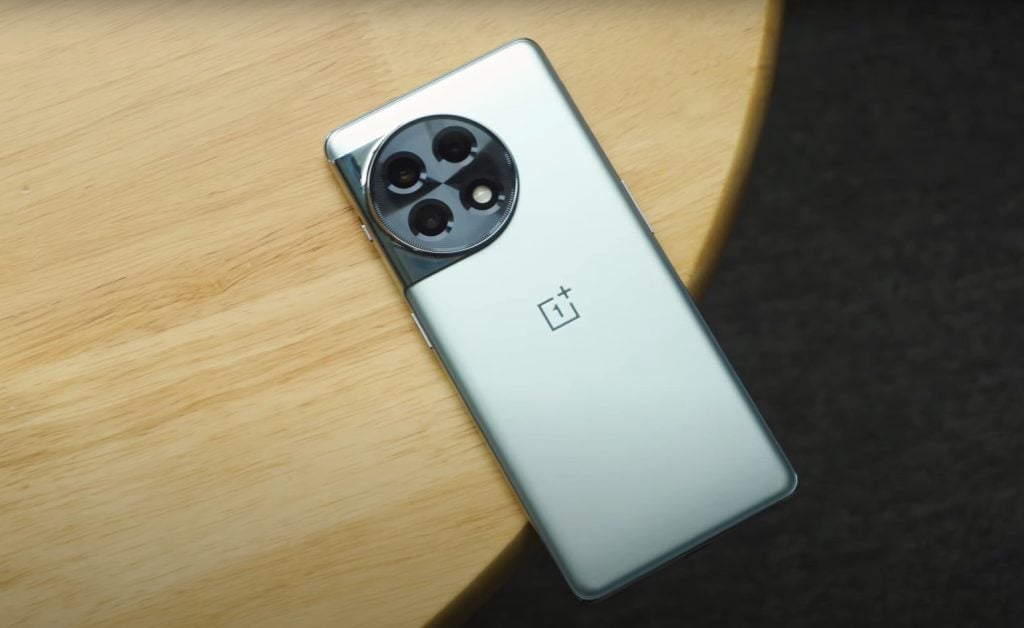
OnePlus Android 16 (OxygenOS 16) update ineligible devices

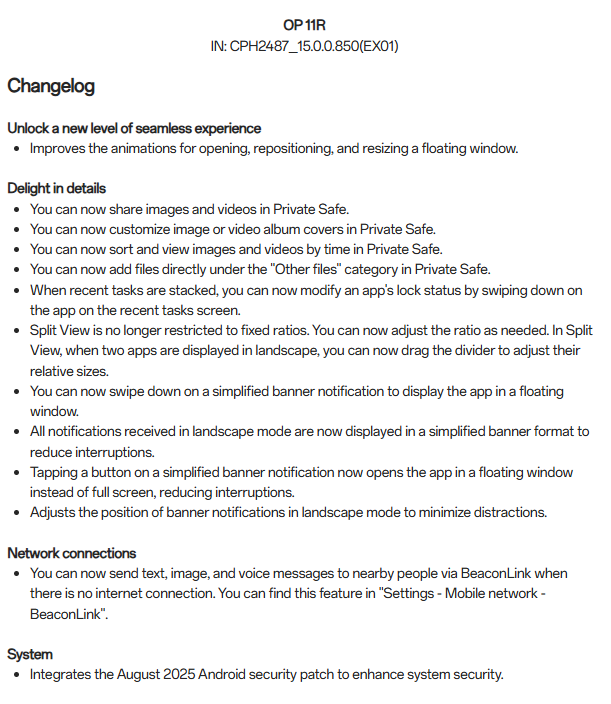
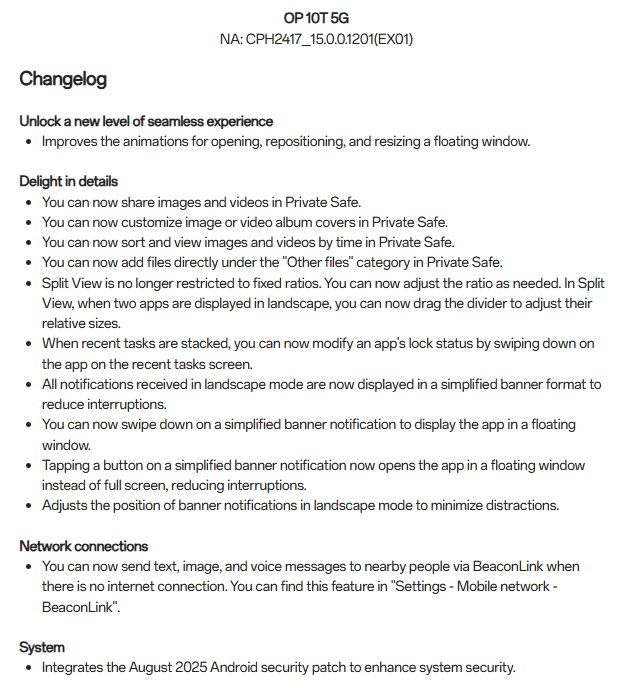
OnePlus was quick with the OxygenOS 15 rollout, which is based on Android 15. The brand wrapped it up earlier this year and has already started working on its next iteration — OxygenOS 16. In fact, OnePlus has already kicked off the Android 16 beta program for select premium smartphones.

While OnePlus hasn’t announced the OxygenOS 16 release date yet, it’s almost guaranteed to arrive much earlier than last year. The reason is that Google will release Android 16 in June, which will make it the fastest Android OS release in recent years. However, the update will only reach a handful of OnePlus devices. We’ve curated a list of OnePlus devices below that are not eligible for the OxygenOS 16 upgrade, based on the existing software update policy.

OnePlus OxygenOS 16 (Android 16) ineligible devices list

OnePlus flagship series

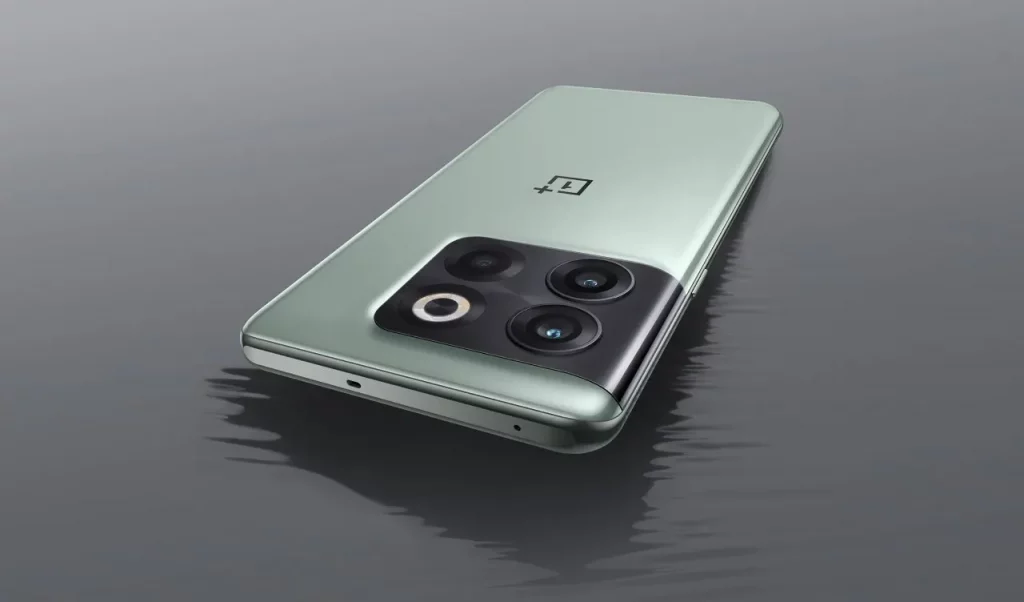
  • OnePlus 10 Pro
  • OnePlus 10T
  • OnePlus 10R
  • Older flagship models

OnePlus Nord series

  • OnePlus Nord 2
  • OnePlus Nord 2T
  • OnePlus Nord 2 Lite
  • Older Nord models

OnePlus Nord CE series

  • OnePlus Nord CE 3
  • OnePlus Nord CE 3 Lite
  • Older Nord CE models

OnePlus Nord N series

  • OnePlus Nord N30
  • OnePlus Nord N30 SE
  • OnePlus Nord N20
  • OnePlus Nord N20 SE
  • OnePlus Nord N10
  • OnePlus Nord N300
  • OnePlus Nord N200
  • OnePlus Nord N100

We prepared the aforementioned list based on the existing software update policy. If your OnePlus device is on the list, it’s unlikely to get the Android 16 update. You would want to upgrade to a newer model with longer software support to continue receiving new features and enhancements.

When will OnePlus release OxygenOS 16?

OnePlus typically releases the newest version of its custom skin a month after Google announces the stable version of its newest Android OS. For example, Android 15 was released in October 2024, and the stable OxygenOS 15 rollout kicked off in November. The same was true for OxygenOS 14 as well. So, we might see OxygenOS 16 getting released in July, as Android 16 is confirmed to arrive next month.

OnePlus 13 users, though, can get an early look at Android 16 right now via the beta program. The beta program will hopefully expand to more OnePlus devices in the coming weeks. We have a complete guide on how to install Android 16 beta on OnePlus devices.

Also read:
1. OnePlus phones eligible for Android 16 upgrade
2. Android 16: release date, eligible devices, and new features

Honor 400, 400 Pro to feature 7,200mAh battery, display size, chipsets also revealed

On May 22, Honor will unveil the Honor 400 and Honor 400 Pro for the global market. These devices will feature the Snapdragon 7 Gen 3 and 8 Gen 3 chipsets, respectively, and both will pack a 5,300mAh battery. Reports claim that the Honor 400 series will also hit the Chinese market on May 28. A recent Weibo post by tipster Digital Chat Station, which carries a screenshot of the Honor 400’s About Phone page, reveals that the Chinese variant will pack a significantly larger battery than its global version.

Honor 400 series key specifications tipped

Honor 400 About Phone page

The above image reveals that the display of the Honor 400’s variant heading to China will support a 1.5K resolution of 2736 x 1264 pixels, a fourth-generation Snapdragon 7 series chipset, 12GB of RAM, 12GB of virtual RAM, and a massive 7,200mAh battery. In comparison, the global version is said to pack a 5,300mAh battery, which is still 100mAh bigger than the Honor 200’s battery. For those who don’t know, the Honor 300 series was unveiled in December 2024, but it did not launch globally.

DCS claims that the Honor 400 and 400 Pro are both equipped with a 6.55-inch flat OLED panel with 1.5K resolution. Both devices are also backed by the same 7,200mAh battery.

Honor 400 series specs leak

The Honor 400’s Chinese edition will break cover as the world’s first Snapdragon 7 Gen 4 chipset. In comparison, the global version has the Snapdragon 7 Gen 3 chip. Readers can visit this post to checkout the Snapdragon 7 Gen 4’s performance on Geekbench.

On the other hand, the Honor 400 Pro will have the Snapdragon 8 Gen 3 chip onboard. Its global version also features the same chipset. The series will run on Magic OS 9 based on Android 15.

Honor 400 series
Honor 400 series

Speculations are rife that the Honor 400 may feature a 200-megapixel (main) + 50-megapixel (ultra-wide) dual-camera system. On the other hand, the 400 Pro may feature a 200-megapixel (main) + 50-megapixel (ultra-wide) + 50-megapixel (telephoto) triple camera system.

For more daily updates, please visit our News Section.

Stay ahead in tech! Join our Telegram community and sign up for our daily newsletter of top stories!

Geekbench confirms no Dimensity 9400 for Galaxy S25 FE

A Geekbench listing has settled rumors about the Galaxy S25 FE’s chipset, confirming it will use the Exynos 2400, not the 2400e or MediaTek Dimensity 9400.

Samsung’s Galaxy S25 FE, codenamed SM-S731U, is shaping up as an affordable flagship for late 2025, and a recent Geekbench listing has clarified its chipset. Initial rumors pointed to the Exynos 2400e, used in the Galaxy S24 FE, or a MediaTek Dimensity 9400 as a backup due to Exynos production issues. However, the leak reveals the standard Exynos 2400, the same 10-core chip (1x 3.2GHz Cortex-X4, 2x 2.9GHz Cortex-A720, 3x 2.6GHz Cortex-A720, 4x 1.96GHz Cortex-A520) that powered the Galaxy S24 and S24+ globally.

The difference between the Exynos 2400 and 2400e is minor, with the latter’s prime core slightly underclocked at 3.11GHz. Scoring 2064 single-core and 6899 multi-core on Geekbench 6, the S25 FE’s performance mirrors the S24 FE, suggesting no noticeable real-world upgrade.

While software optimizations in One UI 8 might offer some gains, the S24 FE will also receive the same updates soon—and likely perform neck and neck with its successor. That’s not exactly encouraging for buyers looking forward to the S25 FE.

The chip’s Xclipse 940 GPU and ray-tracing support are described as “solid” for gaming. However, it’s worth noting that image processing, system animations, and other aspects of “everyday use” are becoming increasingly demanding too.

Expected in September or October 2025, the S25 FE also reportedly retains many other specs of the S24 FE, such as the display resolution and camera setup. Could software optimizations give it an edge during the first few months before the update reaches its predecessor? Most likely, yes. Will it be cheaper than the predecessor? Let’s see.

Don’t miss a thing! Join our Telegram community for instant updates and grab our free daily newsletter for the best tech stories!

For more daily updates, please visit our News Section.

(Source)
Amazfit BIP 6 launched in India 2000nits AMOLED display, 14-day battery life

After teasing the arrival of a new smartwatch earlier this week, Amazfit has unveiled the BIP 6 in India today. Positioned in the entry-level smartwatch segment, this device is expected to raise the bar with display clarity and health tracking at a competitive price point. Here’s a look at the specifications, features, and price of the BIP 6.

Amazfit BIP 6 specifications and features

Amafit BIP 6
Amafit BIP 6

The Amazfit BIP 6 has a large 1.97-inch AMOLED screen that supports a peak brightness of 2000 nits. This makes it ideal for outdoor usage, even under direct sunlight. The smartwatch features a robust yet lightweight aluminum alloy frame and carries a 5 ATM water-resistance rating, making it suitable for everyday wear, including rainy conditions.

Equipped with the BioTracker 6.0 PPG sensor, the BIP 6 provides heart rate monitoring, blood oxygen (SpO2) measurement, HRV tracking, and stress evaluation. It also offers advanced sleep tracking with insights into sleep stages and breathing quality. For fitness enthusiasts, there are over 140 sports modes and smart strength training support with automatic muscle group recognition. Additionally, it includes offline navigation and round-trip routing for outdoor workouts.

Amazfit BIP 6
Amazfit BIP 6

The Amazfit BIP 6 is designed for users who dislike frequent charging. It delivers up to two weeks of battery life on a single charge. Other smart features include on-wrist call answering, text replies using voice-to-text or a touch keyboard, and hands-free control with Zepp Flow voice assistant integration.

Amazfit BIP 6 price in India, availability

The Amazfit BIP 6 will be available in India from May 16 (today) at Rs 7,999. It can be purchased via Amazfit’s official website, Amazon India, and authorized offline retailers. Buyers can choose from four color options: Black, Charcoal, Stone, and Red.

For more daily updates, please visit our News Section.

Stay ahead in tech! Join our Telegram community and sign up for our daily newsletter of top stories!

Nothing just made some bold promises for its first over-ear headphones, launching this summer

Nothing has officially confirmed it’s working on a pair of over-ear headphones, adding another product category to its growing audio portfolio. Following a recent partnership with high-end audio company KEF, Nothing revealed that several new audio products are in development—and many of them, including the headphones, are expected to launch later this year.

In a newly released video, the company confirmed the development of its first-ever over-ear headphones, following up on rumors that began circulating in February. At the time, a pair of wireless headphones with the model number B170 were certified by SGS Fimko, fueling speculation that Nothing would soon enter the premium audio space.

Nothing’s over-ear headphone fan concept

Interestingly, the idea may have been in the works for much longer. Nothing CEO Carl Pei shared fan-made concept designs of over-ear headphones back in October 2022. Those early mockups appear to have influenced the direction of the final product, with Nothing now committing to a design-first approach that aligns with the company’s aesthetic.

The upcoming headphones are expected to feature a standout design that aims to visually differentiate users. Nothing’s design team found current market offerings uninspiring and is working to create a product that’s both visually expressive and functional. This includes distinct, easy-to-recognize buttons to improve usability without needing to look or fumble while wearing the headset.

Nothing also claims that the sound quality will be among the best available at the price point. The company suggests that users switching from a premium product like Apple’s AirPods Max to its upcoming headphones won’t be disappointed—despite the likely price difference.

The official launch is expected this summer, possibly alongside the anticipated Nothing Phone (3), which would make for a compelling product duo. With a strong focus on design, performance, and price, Nothing’s over-ear headphones could shake up the space if they live up to the hype.

Don’t miss a thing! Join our Telegram community for instant updates and grab our free daily newsletter for the best tech stories!

For more daily updates, please visit our News Section.

Vivo X200 FE moniker, 90W charging revealed via certifications

The Vivo X200 series currently includes two models globally — the Vivo X200 and X200 Pro. However, reports suggest that the brand is preparing to introduce a third device, dubbed Vivo X200 FE. This upcoming model is expected to be a rebranded version of the Vivo S30 Pro Mini, which is set to launch in China later this month. The X200 FE has already received key certifications, hinting that its official launch may be just around the corner.

Vivo X200 FE SIRIM, TUV certified

Vivo X200 FE SIRIM certified

The screenshot above shows the Vivo X200 FE’s SIRIM certification in Malaysia, confirming that the device carries the model number V2503. The TUV certification of the device has revealed that it may support 90W charging.

Vivo X200 FE TUV certified

According to a recent report, the Vivo X200 FE may debut in July in India. It may arrive in two options, such as 12GB+256GB and 16GB+512GB, and is likely to be priced between Rs 50,000 and Rs 60,000.

Vivo X200 FE specifications (rumored)

Vivo S30 Pro Mini (left) and Vivo S30 (right)

The Vivo X200 FE is said to be equipped with a 6.31-inch LTPO OLED screen that offers a 1.5K resolution and a 120Hz refresh rate. Under the hood, the device will feature the Dimensity 9400e chipset, LPDDR5x RAM, UFS 4.0 storage, and a 6,500mAh battery with 90W charging.

For photography, the Vivo X200 FE’s rear camera setup will include a 50-megapixel (main, OIS) + 8-megapixel (ultra-wide) + 50-megapixel (Sony IMX882, 3x telephoto) triple camera unit. It is expected to feature a 50-megapixel camera on the front. It may run on FunTouch OS 15-based Android 15 and offer three years of OS upgrades along with four years of security updates.

For more daily updates, please visit our News Section.

Stay ahead in tech! Join our Telegram community and sign up for our daily newsletter of top stories!

(via)

itel A90 launched for Rs 6,499, brings iPhone-like design, 90Hz screen, Aivana AI assistant

itel has introduced a new budget smartphone to the Indian market, adding to its affordable A series lineup. Dubbed itel A90, it is positioned lower than the itel A95, which debuted last month with a price tag of Rs 9,599. While the A95 supports 5G connectivity, the A90 is a 4G smartphone that brings notable enhancements in performance, design, and features for its segment. The highlight here is the inclusion of a smart AI assistant and an improved display, all at a price under Rs 7,000.

itel A90 specifications and features

itel A90
itel A90

The itel A90 is equipped with a 6.6-inch HD+ IPS screen offering a 90Hz refresh rate and 180Hz touch sampling rate for smoother interaction. The display reaches up to 480 nits brightness and includes a Dynamic Bar that shows real-time updates for battery, calls and notifications. For photography, the phone features a 13-megapixel rear camera with LED flash and improved image processing, and a 5-megapixel front camera for selfies and video calls.

Under the hood, the smartphone is powered by a Unisoc T7100 octa-core processor built on a 12nm process, paired with 4GB of physical RAM and support for an additional 8GB of virtual RAM. Storage options include 64GB and 128GB, both expandable up to 2TB via microSD. It houses a 5,000mAh battery, which supports 15W fast charging, although the box includes a 10W charger.

The itel A90 runs on Android 14 (Go Edition) and features the upgraded Aivana 2.0 AI assistant. This assistant can help users read documents, interpret images, solve maths problems, and place WhatsApp calls. Other features include DTS sound, side-mounted fingerprint scanner, face unlock, IP54 dust and water resistance, and Always-on Display functionality.

itel A90 price in India, availability

The phone is available in two variants – 64GB at Rs 6,499 and 128GB at Rs 6,999. It comes in Starlit Black and Space Titanium colors. Buyers also receive a 100-day free screen replacement and a 3-month JioSaavn Pro subscription.

For more daily updates, please visit our News Section.

Stay ahead in tech! Join our Telegram community and sign up for our daily newsletter of top stories!

Honor 400’s Snapdragon 7 Gen 4 performance shows notable gains over predecessor

Honor has begun teasing the launch of its upcoming Honor 400 series smartphones in China. Interestingly, the Chinese variant will differ slightly from the global version set to debut on May 22. One key distinction is the processor: while the global Honor 400 series will be powered by the Snapdragon 7 Gen 3, the Chinese model will be the world’s first smartphone to feature the newly announced Snapdragon 7 Gen 4 chipset, which debuted yesterday. Ahead of the launch, the Honor 400 has emerged on Geekbench, revealing its performance scores for the first time.

Honor 400 Geekbench listing

The above screenshots show that the Honor 400, which bears the DNN-AN00 model number, features the Qualcomm SM7750 chipset, which is nothing but the recently unveiled Snapdragon 7 Gen 4.

The SoC includes a prime core working at 2.80GHz, four performance cores clocking at 2.40Hz, and three efficiency cores operating at 1.84GHz. According to Qualcomm, the Snapdragon 7 Gen 4, built with 4nm process, will offer 27 percent faster CPU performance over the Snapdragon 7 Gen 3

The source code of the Honor 400’s Geekbench listing reveals that the chipset includes Adreno 722 GPU. According to the US-based chip manufacturer, the GPU performance has improved by 30 percent compared to the previous generation.

The Honor 400’s Geekbench listing further reveals that it has 16 GB of RAM and runs on Android 15. In the single-core and multi-core tests, the device scored 1351 and 4145 points.

Compared to Snapdragon 7 Gen 3, its successor has scored approximately 200 points higher in the single-core test and around 1,000 points more in the multi-core test. Nevertheless, it’s too early to draw definitive conclusions about the Snapdragon 7 Gen 4’s performance based on a single Geekbench listing.

In related news, the Snapdragon 7 Gen 4 will also power upcoming phones like the Vivo S30 and the Chinese edition of the iQOO Z10. An unknown Realme phone will also feature this new chip.

For more daily updates, please visit our News Section.

Stay ahead in tech! Join our Telegram community and sign up for our daily newsletter of top stories!

(via)

iQOO Neo 10 Pro+ to be first 2K resolution Neo series phone, display specifications confirmed

iQOO’s upcoming May 20 launch event in China will see the launch of multiple products, such as the Neo 10 Pro+, Pad 5 series, Watch 5, and more. Ahead of the launch, the brand has been revealing key details of these products. Today, the brand shared the following posters to confirm the display specifications of the Neo 10 Pro+.

iQOO Neo 10 Pro+ display specifications confirmed

The iQOO Neo10 Pro+ is the first model in the Neo lineup to feature a 2K resolution panel. It uses BOE’s Q10 screen technology, offering a 2K resolution with an LTPO substrate. The screen supports 1Hz-144Hz refresh rate, 300Hz touch sampling rate, and reaches 1800 nits of global brightness and 4500 nits peak local brightness. While the brand has not revealed the screen size, recent reports have claimed that it will feature a 6.82-inch display.

The BOE Q10 is paired with a new circular polarised eye-care layer and supports 2592Hz high-frequency PWM dimming with a DC-like dimming effect. Despite its high resolution, the company claims power consumption is similar to that of a 1.5K panel.

Another highlight is the inclusion of iQOO’s custom Q2 gaming chip. Originally introduced with the iQOO 13, this chip enables simultaneous 2K resolution and 144fps frame interpolation, bringing console-level visual enhancements to mobile games. It also supports in-house texture rendering algorithms for improved clarity and depth in gaming visuals. For security, the device will come equipped with an ultrasonic in-screen fingerprint sensor.

On the performance front, the device is equipped with the Snapdragon 8 Elite, paired with LPDDR5X Ultra RAM and UFS 4.1 storage. It achieves an AnTuTu benchmark score of 3,311,557. For thermal management, the Neo10 Pro+ houses iQOO’s largest 7K vapor chamber yet, which reportedly improves heat dissipation by 15%. It is said to pack a 7,000mAh battery with 120W fast charging support.

For more daily updates, please visit our News Section.

Stay ahead in tech! Join our Telegram community and sign up for our daily newsletter of top stories!

Oppo Reno 14 Series Explained: Built for Broadcasts, Gaming & Getting Stuff Done

The Oppo Reno 14 series has officially arrived in China, and this time, the company isn’t playing it safe. Instead of going all-in on sleek looks or camera gimmicks, Oppo is positioning these phones as rugged, high-performance all-rounders, engineered for creators, gamers, and power users who need their phones to hold up under pressure. From live video broadcasting to extended gaming sessions, the Reno 14 and Reno 14 Pro are designed to push the mid-range boundary a little closer to flagship territory.

Oppo Reno 14 Series

1. Flat Screens, No Curves, All Clarity

Both phones ditch the curvy displays of their predecessors in favor of flat 1.5k AMOLED panels, 6.59 inches on the Reno 14 and 6.83 inches on the Pro, with support for 120Hz refresh rates and a blistering 3840Hz PWM dimming that should be easier on the eyes during long usage.

The panels also get Oppo’s Crystal Shield Glass for protection. Brightness peaks at 1200 nits, and touch response tops out at 240Hz, making both phones responsive enough for gaming and content creation.

2. All the Cameras You Could Ask For

Both phones are stacked with 50MP cameras across the board, including a main shooter, a 3.5x periscope telephoto (using Samsung’s JN5 sensor), and a high-resolution 50MP selfie cam. The Pro model gets the edge with a fourth 50MP ultra-wide lens, while the vanilla Reno 14 settles for an 8MP ultra-wide.

Both the front and rear cameras support 4K 60fps video recording, and Oppo is clearly pushing the Reno 14 Pro as a tool for livestreamers and vloggers. The company has even designed an external active cooler and a massive 20,000mAh power bank accessory to keep creators powered and thermally stable for hours. Noise reduction, color correction, and even a 30-second gameplay clip capture feature help round out the content-first pitch.

3. New Silicon, More Efficiency

Under the hood, the Reno 14 Pro is powered by the yet-to-be-documented Dimensity 8450 chipset. It’s paired with a Mali-G720 MC7 GPU and promises higher performance than the Dimensity 8350 found inside the base Reno 14. Both chips are built on 4nm nodes and come with up to 16GB of LPDDR5X RAM and 1TB of UFS 3.1 storage.

The phones use a new “nano ice crystal” heat sink that Oppo claims is three times more efficient than previous models. That’s especially important for sustained 4K recording or long gaming sessions, where thermal throttling can otherwise ruin the experience.

4. Battery Life and Charging

This is where the Reno 14 series really stands out. The Reno 14 packs a 6,000mAh battery, while the Pro model takes it up a notch with a 6,200mAh cell, the largest ever in the Reno lineup. Both support 80W wired SuperVOOC charging, and the Pro also throws in 50W AIRVOOC wireless charging.

Oppo says the Reno 14 Pro can livestream for up to five hours on a single charge or game for eight. These aren’t just big numbers, they’re big bets on the kind of user who needs more than a daily top-up.

5. Durability and Design

Despite their creator-first and gamer-friendly chops, both phones are surprisingly tough. They come with IP66, IP68, and IP69 water and dust resistance, which is uncommon in this category. Oppo even includes underwater photography and video modes (up to 4K 30fps), further reinforcing their outdoor-ready appeal.

As for design, the Pro model comes in Reef Black, Calla Lily Purple, and Mermaid, with a velvet glass finish that should feel as good as it looks. The Reno 14 also gets the Mermaid option, along with Reef Black and Pinellia Green.

6. Pricing and Availability

The Reno 14 starts at 2,799 yuan (~$390) for the 12GB+256GB variant and goes up to 3,799 yuan (~$530) for the top-end 16GB+1TB model. The Reno 14 Pro starts at 3,499 yuan (~$485) and maxes out at 4,499 yuan (~$625) for the same 16GB+1TB configuration. Both models are available for pre-order in China and will go on sale from May 23.

7. Final Thoughts

This isn’t just another Reno refresh. The Reno 14 series marks a bold pivot: from design-forward mid-rangers to high-endurance, content-ready machines. Between the massive batteries, flat flagship-grade displays, periscope telephoto lenses, and serious cooling claims, Oppo is making a case for why the Reno lineup should be taken seriously, even by creators and gamers used to premium flagships. Whether the rest of the world gets on board is just a matter of time.

For more daily updates, please visit our News Section.

Stay ahead in tech! Join our Telegram community and sign up for our daily newsletter of top stories! 💡

Xiaomi Civi 5 Pro officially revealed, launching this month as iPhone rival

Xiaomi has officially confirmed that the Civi 5 Pro will be launched later this month. The announcement came via official channels and was followed by additional details shared by Xiaomi executives. While the brand hasn’t announced an exact date, May 22 is currently tipped as the possible launch day.

Xiaomi Civi 5 Pro design revealed

According to Lu Weibing, Xiaomi’s president and head of the smartphone division, the Civi lineup is evolving from being a trendy flagship to an all-round thin and light flagship. The Civi 5 Pro, internally codenamed “Little 15,” is designed to match the standard iPhone in terms of experience, while maintaining its signature sleek profile and aesthetic appeal. It will be available in multiple shades, such as purple, beige, white, and black.

The Xiaomi Civi 5 Pro will come equipped with a Leica Pure Optics system housed inside a round camera module. According to tipster Digital Chat Station, it includes a main camera with an f/1.63 aperture, an ultra-wide lens with an f/2.2 aperture with a 15mm focal length, and a 50-megapixel telephoto camera with a 60mm focal length. For selfies, it is officially confirmed to feature a 50-megapixel front camera.

The Xiaomi Civi 5 Pro was recently spotted with the Snapdragon 8s Gen 4 chip at Geekbench earlier this month. The listing also revealed that it has 16 GB of RAM and Android 15. The 3C certification of the device revealed that it may support 67W fast charging.

Other reports have revealed that the Xiaomi Civi 5 Pro will feature a 6.55-inch quad-curved OLED panel with support for 1.5K resolution and a 6,000mAh+ battery. It is speculated that the device may get rebranded as the Xiaomi 15 Civi in India. In China, the device is likely to be priced at around 3,000 Yuan (~$415).

For more daily updates, please visit our News Section.

Stay ahead in tech! Join our Telegram community and sign up for our daily newsletter of top stories!

Galaxy A17 4G appears on Geekbench with some disappointing details

Samsung’s upcoming Galaxy A17 4G has surfaced on Geekbench, revealing its chipsets: the MediaTek Helio G99.

Samsung Galaxy A16 5G

Samsung is prepping two budget-friendly phones for late 2025, with details emerging from Geekbench and Bluetooth SIG databases. The Galaxy A17 4G, model SM-A175F, uses the MediaTek Helio G99 — a two-year-old 6 nm-based chip with two 2GHz Cortex-A76 cores and six 2GHz Cortex-A55 cores, paired with a Mali-G57 MC2 GPU. It’s the same chip found in the Galaxy A16 and A15, and according to the Geekbench listing, it’s returning for the A17 as well. The scores? Slightly lower than it’s predecessors.

Upcoming Galaxy A17 4G on Geekbench

While it’s easy to justify the lower scores—given that the phone is still in development and has months of optimization ahead—that alone might not be enough to deliver a noticeable performance boost. Another surprise lies in the OS version: the Galaxy A17 (4G) is being tested on Android 15 (One UI 7.0) while One UI 8 will debut in June or July with the 7th gen foldables, months before the Galaxy A17’s release.

Galaxy A15 4G from 2023 on Geekbench

A 5G variant, likely powered by an Exynos or MediaTek Dimensity chip, is also expected. For context, both 4G and 5G versions of the A16 launched in October last year.

Meanwhile, the Galaxy M36 5G, model SM-M366B/DS, nears launch, with a support page on Samsung UAE’s site and an Exynos 1380 chip (5nm, Mali-G68 MP5 GPU), 6GB RAM, and Android 15. Likely a rebranded Galaxy A36, which uses a snappier 4nm Snapdragon 6 Gen 3, the M36 may share its 50MP main camera, 5,000mAh battery, and 25W charging. The Exynos 1380’s 5.5 lakh AnTuTu score trails the A36’s, but it’s still okay for basic day-to-day tasks.

Will the A17 4G’s dated chip hold it back, or can a creative marketing win out? Only time will tell.

Tech enthusiast? Get the latest news first! Follow our Telegram channel and subscribe to our free newsletter for your daily tech fix!

For more daily updates, please visit our News Section.

(Source)

iPhone Fold could ditch the notch for punch-hole and under-display cameras

After years of cautious silence, Apple’s long-rumored foldable iPhone is finally starting to take shape, at least in the world of supply chain whispers and leaked prototypes. According to prominent Chinese tipster Digital Chat Station, the device is inching closer to reality with some big design departures that challenge Apple’s traditional playbook.

iPhone Fold Concept

The foldable iPhone is said to feature a book-style design with two distinct display experiences: a 7.8-inch crease-free inner panel and a 5.5-inch outer screen. What’s particularly interesting is how Apple appears to be handling the front-facing cameras. The external display will reportedly include a punch-hole cutout, marking a sharp shift away from the signature notch and Dynamic Island design. Meanwhile, the internal foldable screen may sport an under-display camera to preserve a full-screen experience, an ambitious choice that very few OEMs have executed well so far.

iphone fold leak DCS

Touch ID is also reportedly making a comeback, but not under the screen. Instead, Apple is said to be embedding it into the side-mounted power button, much like on the iPad Air. This choice likely stems from the tight internal layout of foldables, which might leave little room for the complex Face ID module.

Behind the scenes, development appears to be accelerating. Industry analysts like Ming-Chi Kuo say Apple aims to lock in the hardware by June, while Jeff Pu claims the foldable has entered the New Product Introduction (NPI) phase at Foxconn, suggesting a finalized prototype is already in motion. Mass production is reportedly planned for Q4 2026, with a potential launch at the tail end of next year.

As for pricing, the first-gen foldable iPhone is tipped to land somewhere between $2,000 and $2,300, placing it firmly in ultra-premium territory. Given Apple’s reputation and the anticipation surrounding a foldable iPhone, that price tag might not deter early adopters.

Apple has taken its time watching the foldable market evolve, but these early details suggest it’s preparing a device that isn’t just a late response, but potentially a redefinition of what a foldable iPhone should be. Whether it delivers on that promise remains to be seen, but Apple seems determined to fold the future its way.

In related news, Apple’s 20th anniversary iPhone is rumored to feature major upgrades, including a bezel-free design, no display cutouts, and a 100% silicon battery.

For more daily updates, please visit our News Section.

Stay ahead in tech! Join our Telegram community and sign up for our daily newsletter of top stories! 💡

(Source)

Huawei debuts Watch Fit 4 and Fit 4 Pro with 1.82″ AMOLED, 10-day battery & advanced fitness tracking

Huawei has officially launched its latest wearable duo, the Watch Fit 4 and Watch Fit 4 Pro, following the debut of its flagship Watch 5 series. While the Watch 5 leans heavily into health tech and luxury materials, the Fit 4 lineup is built to be lighter, sportier, and surprisingly ambitious in what it tries to do on your wrist. Both models bring AMOLED displays, advanced sensors, and Huawei’s latest TruSense health architecture, but it’s the Pro variant that’s aiming to stretch the limits of a fitness-focused smartwatch.

Huawei Watch Fit 4
Huawei Watch Fit 4

Huawei Watch Fit 4 Series Specifications

The Watch Fit 4 Pro carries a 1.82-inch AMOLED display with a sharp 480×408 resolution and a dazzling 3000-nit peak brightness, making it legible even in direct sunlight. The standard Fit 4 shares the same size and resolution but tops out at 2000 nits. Huawei hasn’t changed the rectangular form factor much, but the Pro now gets a titanium alloy bezel, sapphire glass protection, and an aluminum alloy mid-frame that together weigh only 30.4g (without the strap). The regular Fit 4 trims it further to 27g.

Under the hood, the Fit 4 Pro is built like a rugged sports watch. It’s 5ATM-rated, IP6X dustproof, and certified for free dives up to 40 meters, thanks to its EN13319-compliant depth sensor. Huawei also throws in a new diving mode with real-time depth tracking, apnea training, and even hover timers for underwater discipline.

But it’s not all about diving. The Fit 4 Pro also targets golfers with a full-featured golf mode offering access to a database of over 15,000 courses, 3D fairway visualizations, smart distance measuring, and a digital scorecard. For runners and hikers, it includes dual-band GNSS positioning, a new barometer for altitude data, and breadcrumb navigation with offline maps.

Huawei Watch Fit 4
Huawei Watch Fit 4

The standard Watch Fit 4 scales back slightly, skipping the dive-grade certification and ECG sensor, but still keeps serious fitness chops. It supports over 100 workout modes, route tracking for aquatic activities, and an improved barometric system with storm alerts and real-time ascent data.

Both watches are equipped with Huawei’s new TruSense system that powers everything from heart rate and SpO2 tracking to sleep breathing analysis, stress detection, and menstrual cycle predictions. Huawei has also built in the Emotional Wellbeing app, which uses a pet-themed mood-matching watch face to reflect and track your emotional state over time.

Huawei Watch Fit 4 Pro

Battery life remains impressive, delivering up to 10 days of usage in light scenarios and around 4 days with Always-on Display enabled. Huawei’s second-generation wireless SuperCharger allows a 10-minute top-up to power the watch for an entire day.

Talking about other features, they include voice note recording, Bluetooth calling, quick message replies, a remote camera shutter, and support for sticker-style custom watch faces. The Watch Fit 4 Pro offers full NFC support across all color variants, while the standard Watch Fit 4 limits NFC to the grey version.

Pricing and Availability

The Watch Fit 4 is priced at £149.99/€169.99, while the Watch Fit 4 Pro goes for £249.99/€279.99. Pre-orders are now open via the Huawei Store, with full availability starting May 26.

For more daily updates, please visit our News Section.

Stay ahead in tech! Join our Telegram community and sign up for our daily newsletter of top stories! 💡

Sony WH-1000XM6 Headphones Released with Smarter Noise Canceling and Real-Time Audio Upscaling

Sony has launched the WH-1000XM6, the newest model in its 1000X series of wireless noise-canceling headphones. The headphones use a new HD Noise Canceling Processor QN3, which is seven times faster than the previous version. It works with twelve microphones, 1.5 times more than before, to adjust noise cancellation based on the user’s environment.

Sony WH-1000XM6

The headphones also include Adaptive NC Optimizer, which adapts to different noise levels and air pressure. A redesigned driver unit helps block external noise more effectively. Auto Ambient Sound mode filters background noise and lets in important sounds like announcements. These settings can be changed automatically or manually through the Sony Sound Connect app.

Sony WH-1000XM6

Sony worked with mastering engineers from Sterling Sound, Battery Studios, and Coast Mastering to tune the sound. The headphones offer classical and balanced sound modes. The carbon fiber dome and custom voice coil improve detail across all frequencies. The headphones support High-Resolution Audio and LDAC. Compressed files are upscaled using Edge-AI and DSEE Extreme.

Users can adjust sound with a 10-band EQ or choose presets like Game EQ for shooters or Cinema 360 Reality Audio Upmix for movies. Calls are handled by a six-microphone beamforming system that separates the user’s voice from background noise. A mute button is included.

Sony WH-1000XM6

The WH-1000XM6 has a wider synthetic leather headband and soft earpads designed for long use. The headband is asymmetrical for quick left-right identification. The headphones fold using metal-injected joints and come with a compact case that closes magnetically.

Smart features include Scene-based Listening, which uses sensors to adjust playback and noise control based on activity and location. The headphones work with Spotify Tap, Apple Music, YouTube Music, and Amazon Music. LE Audio with AuraCast allows for low-latency playback and audio sharing. Multi-Point and Auto Switch let users move between devices without disconnecting.

The headphones offer up to 30 hours of battery life with noise canceling on. A 3-minute charge gives 3 hours of playback. Charging and listening can happen at the same time using USB-C.

Pricing & availability

The headphones come in Black, Platinum Silver, and Midnight Blue and are priced at $449.99 USD. Packaging is made from 100 percent paper using Sony’s Original Blended Material, made from bamboo, sugarcane fiber, and recycled paper.

Don’t miss a thing! Join our Telegram community for instant updates and grab our free daily newsletter for the best tech stories!

For more daily updates, please visit our News Section.

(Source)
Huawei FreeBuds 6 Launched in Europe with Dual Drivers, 36-Hour Battery, and AI Features

Huawei has launched the FreeBuds 6, a new pair of truly wireless earbuds with an open-fit design similar to the FreeBuds 5. The design has been improved for a lighter and more comfortable fit, with each earbud weighing 4.9 grams and the charging case weighing 40.3 grams. The shape is based on ear scan data to ensure better comfort.

HUAWEI FreeBuds 6

Huawei FreeBuds 6 features

The FreeBuds 6 feature an 11mm dynamic driver and a micro-flat tweeter, making them the first semi-open earbuds to use two sound units. They support audio playback from 14 Hz to 48 kHz and deliver 48 kHz/24-bit high-resolution sound. The earbuds adjust sound in real time based on how they fit in the ear.

Tuned by the Central Conservatory of Music, the earbuds offer classical and balanced sound modes. They also support head-tracking spatial audio. For calls and outdoor use, they use bone conduction microphones and reduce noise up to 95 dB and wind speeds up to 8 m/s. Semi-open noise reduction helps cut out background sounds.

Huawei FreeBuds 6

Battery life is up to 36 hours with the case. A 5-minute quick charge gives 2.5 hours of playback. Smart charging helps extend battery life by 37% over time. The earbuds support touch controls for music, calls, and volume.

Huawei’s AI assistant, Celia, supports 21-language translation and real-time interpretation. The earbuds include tracking features with up to 50-meter accuracy and long-distance locating. Bluetooth 5.2 provides low-latency performance for gaming and allows pairing with more than one device at a time. The earbuds are IP54 rated for water and dust resistance.

Pricing & availability

The Huawei FreeBuds 6 are priced at €159 and will be available on Huawei’s online store. These earbuds were launched in China a couple of months ago for 999 Yuan (US$138).

For more daily updates, please visit our News Section.

Stay ahead in tech! Join our Telegram community and sign up for our daily newsletter of top stories!

(Source)

Xiaomi 16 Series to Launch Without Pro Variant in India Once Again

Xiaomi will unveil its Xiaomi 16 series of flagship phones later this year in China. As is tradition, the company is expected to unveil the standard Xiaomi 16 and 16 Pro models first, with the Ultra variant likely arriving sometime next year.

Ahead of the announcement, both the Xiaomi 16 and 16 Pro have surfaced in the GSMA IMEI database, hinting at regional availability and offering a few early clues about what to expect.

Xiaomi 16 Pro model number confirms China exclusivity

Here are the model numbers associated with the upcoming phones (via XiaomiTime):

Xiaomi 16

  • 25113PN0EC (China)

  • 25113PN0EG (Global)
  • 25113PN0EI (India)

Xiaomi 16 Pro

  • 2509FPN0BC (China)
  • 25098PN5AC (China)
xiaomi 15 pro
Xiaomi 15 Pro

Based on these listings, it looks like the 16 Pro will once again be limited to the Chinese market. Interestingly, two model numbers have been registered for the Pro; these could be the two configurations of the phone. There’s no official word on what sets them apart, but it wouldn’t be surprising if one version includes satellite connectivity or ships with a ceramic body.

The base model, on the other hand, seems to have a single configuration. It will be available in China, India, and global markets, and its internal codename has already leaked: “Nezha.”

What to expect from the Xiaomi 16 series?

According to a report, Xiaomi 16 will be the first smartphone to feature the Snapdragon 8 Elite 2 chipset. The leak further states that the device is being tested with a 6,800mAh battery coupled with 100W charging. 

Meanwhile, the Pro is rumored to adopt a flat display. According to leaks, the screen will be a 6.85-inch LTPO OLED panel with 2K resolution and a 120Hz refresh rate. 

For more daily updates, please visit our News Section.

Stay ahead in tech! Join our Telegram community and sign up for our daily newsletter of top stories!

(Source)