Advertisement

Infinix Note 50 Pro+ 5G launched with 144Hz AMOLED screen, Dimensity 8350, 100W charging, 6x periscope camera

Infinix has officially introduced the Note 50 Pro+ 5G, adding a high-end variant to its Note 50 series, which includes the Note 50 (4G) and Note 50 Pro (4G). This new release, confirmed by official sources, brings several flagship-grade features, including an advanced display, a powerful chipset, and an improved camera system equipped with a periscope telephoto camera. With a focus on design, charging speed, and imaging capabilities, the Note 50 Pro+ 5G positions itself as a compelling choice in the premium mid-range category.

Infinix Note 50 Pro+ 5G specifications and features
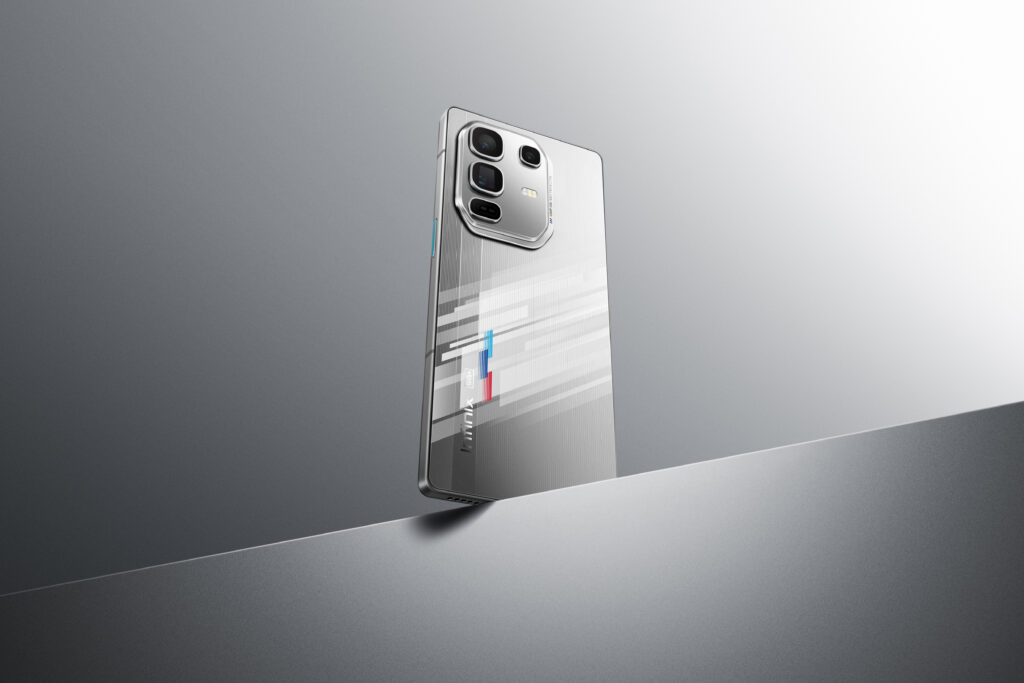
Infinix Not e50 Pro+ 5G
Infinix Note 50 Pro+ 5G – Racing Edition

The Infinix Note 50 Pro+ 5G sports a 6.78-inch AMOLED curved-edge display with FHD+ resolution, a 144Hz refresh rate, 1300 nits brightness, and 2304Hz PWM dimming, ensuring a smooth and vibrant viewing experience. Powering the device is the Dimensity 8350 Ultimate processor, paired with 12GB LPDDR5x RAM and 256GB UFS 4.0 storage, along with up to 12GB virtual RAM for enhanced multitasking.

Battery performance is a standout feature, thanks to the Cheetah X2 power management chip, which optimizes the 5200mAh battery. The device supports 100W wired charging, 50W wireless charging, and 10W reverse wireless charging, making it one of the fastest-charging phones in its category.
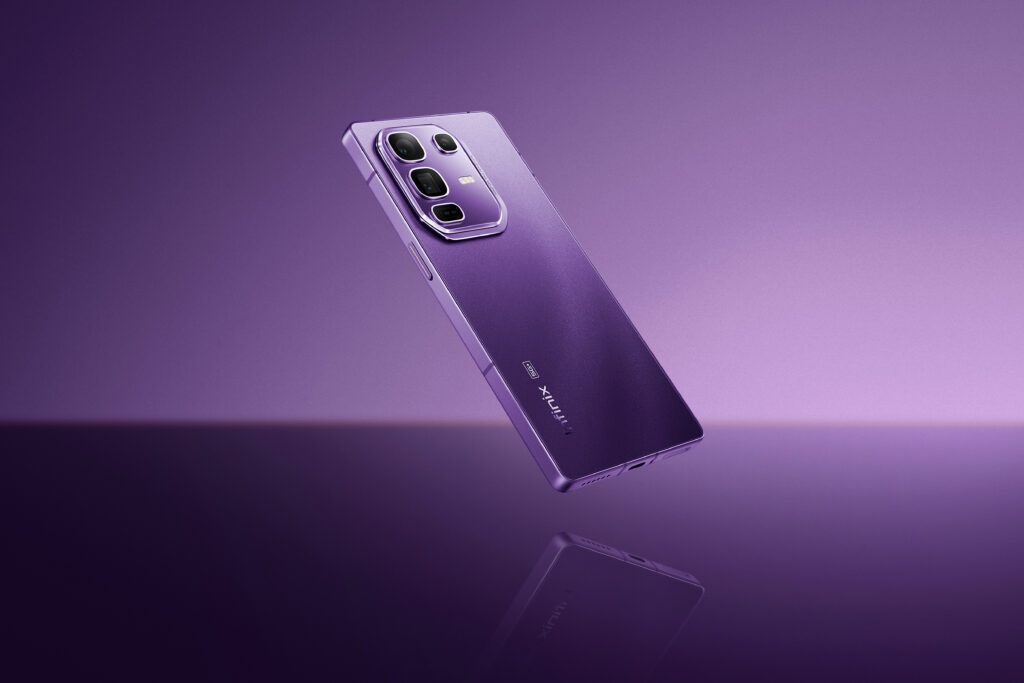
Infinix Note 50 Pro+ 5G
Infinix Note 50 Pro+ 5G – Enchanted Purple

For photography, the Note 50 Pro+ 5G features a 50-megapixel Sony IMX896 primary camera with OIS, an 8-megapixel ultra-wide lens, and a 50MP periscope telephoto lens with 6x optical zoom and 100x digital zoom. The front-facing 32-megapixel camera ensures high-quality selfies.

The Bio-Active Halo AI Lighting on the Infinix Note 50 series enhances various functions with real-time lighting effects. For photography and recording, it provides a visual indicator for the camera timer and video recording. In terms of health monitoring, it displays status updates for heart rate and SpO2 tracking. The feature also improves charging notifications by indicating the charging status with a glowing effect. Additionally, it alerts users to smart notifications, such as incoming messages and alerts. Lastly, the lighting system integrates with Folax Assistant, offering visual feedback to enhance smart assistant interactions.
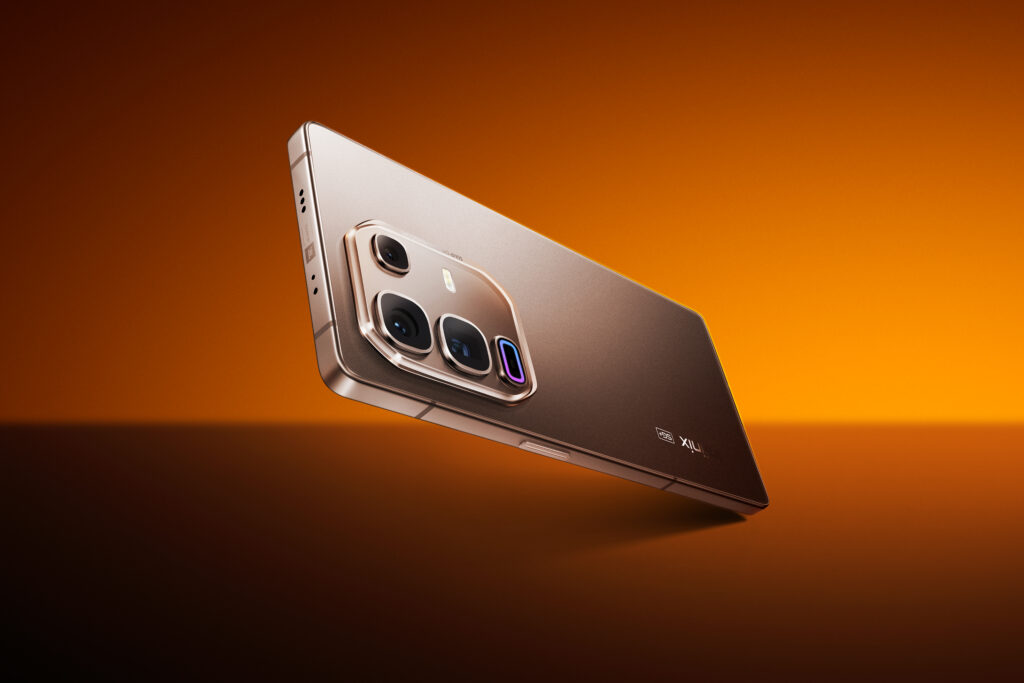
Infinix Note 50 Pro+ 5G
Infinix Note 50 Pro+ 5G – Titanium Grey

The Infinix Note 50 series runs on XOS 15-based Android 15, which brings along Infinix AI∞, a smart assistant designed to enhance productivity and efficiency. With a single tap on the power button, users can get instant answers, refine photos, edit text, and explore AI-generated content. The AI also helps with daily tasks like navigation, searching for forgotten photos, and summarizing text instantly. For communication, features like real-time call translation, auto-call answering, and noise reduction ensure seamless and clear conversations.

The smartphone also includes an in-display fingerprint scanner, JBL dual speakers, and an x-axis linear motor. Connectivity features include Wi-Fi 802.11ac, Bluetooth 5.4, NFC, an IR blaster, and a USB-C port. The device also offers an IP64 rating for dust and water resistance. Lastly, the phone measures 163.36 x 74.53 x 7.99mm and weighs 209 grams.

Infinix Note 50 Pro+ 5G price and availability

The Infinix Note 50 Pro+ 5G is priced at $370 for the 12GB+256GB variant. It is available in three color options: Titanium Grey, Enchanted Purple, and Racing Edition. The latter comes with a phygital design inspired by racing cars, featuring bold tri-color stripes and a sapphire crystal-embedded power button.

Alongside the Note 50 Pro+ 5G, Infinix also introduced the Note 50 (4G) and Note 40 Pro (4G), priced at $180 and $210 globally. Readers can click here to learn more about these smartphones.

The Note 50 lineup also includes the Note 50 (5G) and Note 50 Pro (5G), which are slated to go official at a later date. Meanwhile, the brand is gearing up to unveil the Note 50x 5G in India on March 27.

For more daily updates, please visit our News Section.

Stay ahead in tech! Join our Telegram community and sign up for our daily newsletter of top stories!

Infinix AI∞ Beta Plan, AI Ring, AI Buds, AI Glasses unveiled alongside Note 50 series

Infinix has introduced its “Infinix AI∞ Beta Plan,” marking a significant leap into AI-powered innovation. The announcement, made during a vertical-format launch event, highlights the brand’s vision for integrating AI seamlessly into everyday life. The initiative, called “Gen Beta,” aims to create a future where AI is not just an assistant but a central part of creativity, gaming, and communication. This launch aligns with the debut of the Note 50 series, which further integrates AI-driven features.

Infinix AI∞ Beta Plan: AI-driven innovation for the new generation

Infinix AI∞ Beta Plan

The “Infinix AI∞ Beta Plan” is designed to enhance user experiences by introducing AI capabilities that evolve through continuous upgrades and early access innovations. This initiative goes beyond conventional AI applications by making AI an integral part of entertainment, gaming, and daily tasks. Infinix AI∞ Lab is at the core of this transformation, ensuring AI adapts to user needs and enriches experiences in real-time.

A key highlight is the integration of AI-driven gaming enhancements. The XBoost AI gaming engine refines gameplay with intelligent optimizations, while the AI Magic Box enables automated in-game actions. Features like One-Tap Infinix AI∞ provide instant access to gaming tools, ensuring an uninterrupted and immersive experience. ZoneTouch Master fine-tunes controls for precision, and the Magic Voice Changer adds an element of fun by modifying voices during gameplay.

Infinix AI∞ Beta Plan

Infinix AI∞ aims to redefine user interactions by offering a seamless AI-powered experience across multiple applications. With a single tap, users can activate Folax to access over 1,000 smart features, including real-time translations, object identification, and deep-learning conversations. The AI∞ creative assistant further enhances usability with tools like AI Eraser, AI Cutout, and AI Wallpaper Generator, making creative processes intuitive and efficient.

Communication is also a focus area, with AI∞ enabling real-time call translation, noise reduction, and AI-powered call summaries. These features ensure smoother interactions across different languages and environments, making AI an essential tool in both professional and personal settings.

Infinix AIoT ecosystem: Expanding AI beyond smartphones

Infinix ecosystem
Infinix AIoT ecosystem

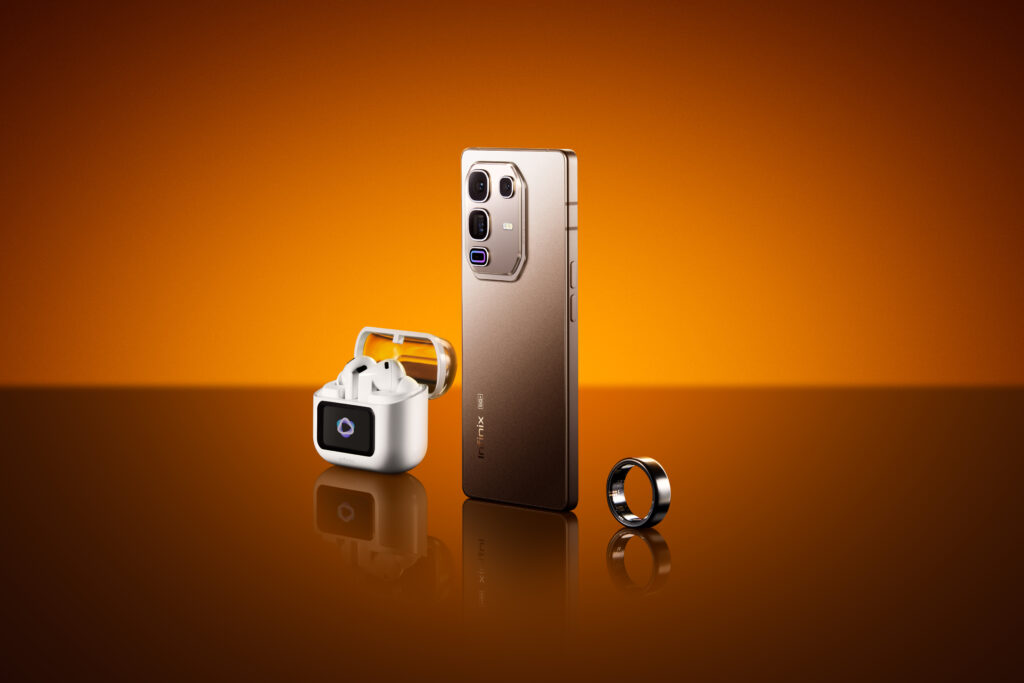
Infinix’s AI evolution extends beyond mobile devices with the introduction of an AI-powered ecosystem, including AI Buds, AI Ring, and AI Glasses. These devices leverage AI for real-time translation, smart health tracking, and enhanced user convenience.

The AI Buds offer hybrid ANC and a touchscreen charging case, while the AI Ring blends technology with fashion, offering all-week battery life and AI-assisted fitness tracking.

AI Glasses and AI Glasses Pro introduce smart assistance, scene recognition, and instant translation, further expanding the AI experience.

Additionally, Infinix has introduced AI Blind Box Figures—collectible AI-powered figures with distinct personalities and interactive features, merging technology with entertainment. The Note 50 series is also part of this AI-driven transformation, incorporating advanced AI enhancements for a superior user experience.

For more daily updates, please visit our News Section.

Stay ahead in tech! Join our Telegram community and sign up for our daily newsletter of top stories!

Upcoming Foldable Phones You Won’t Want to Miss: Razr 60 Ultra, Galaxy Z Fold 7, & More

We covered a list of a bunch of upcoming flagship smartphones that are set to launch soon. So now, here’s a list of new foldable smartphones that you should definitely be hyped about. These models are set to debut with cutting edge tech, new and improved designs, and capable hardware. So whether you’re looking for a flip phone or book style foldable device, here’s the most anticipated foldable phones.

Samsung Galaxy Z Fold 7 & Galaxy Z Flip 7

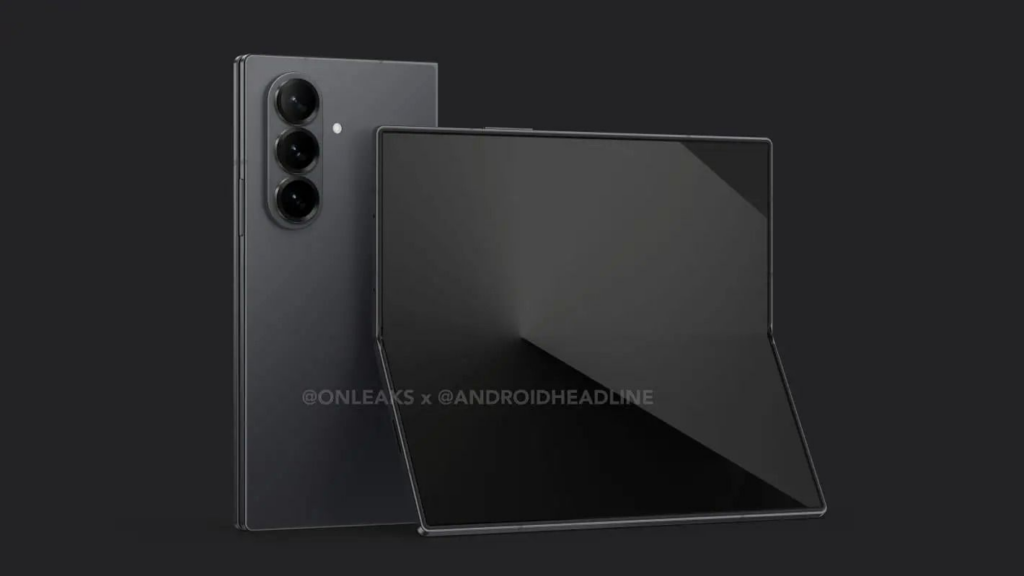
Samsung Galaxy Z Fold 7 CAD renders by OnLeaks and AndroidHeadlines

The very first entry in our list is the Galaxy Z Fold 7 and Galaxy Z Flip 7 from the South Korean tech giant. Samsung is one of the largest foldable phone makers and its next gen models are expected to debut with various improvements over their predecessors. The Galaxy Z Fold 7 is the top of the line model, which is expected to bring an improved folding design along with the powerful Snapdragon 8 Elite For Galaxy SoC.

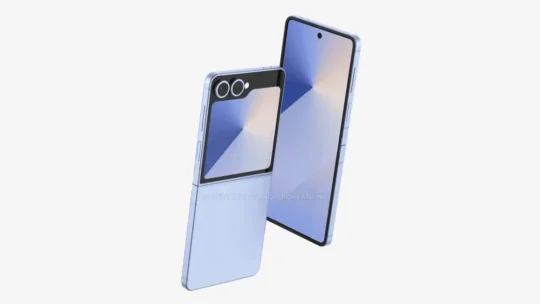
One of the biggest improvements could be to its camera systems, with the primary sensor reportedly being a 200MP shooter. Even the under-display selfie camera is supposedly getting some upgrades. This same processor is also rumored to power the Galaxy Z Flip 7. The flip phone might be getting a larger battery pack as well as an improved image processing for better quality pictures.

Samsung Galaxy Z Flip 7 CAD Renders

Motorola Razr 60 Series

Motorola-Razr-60-Design-and-Display
Motorola Razr 60

Motorola is well known for its Razr series of flip phones and the upcoming Razr 60 series is set to debut globally soon. The lineup is expected to include the base Razr 60 along with the Razr 60 Ultra (aka Razr+ 2025 in the US market). We covered fresh renders of the base model earlier today, while the Ultra variant was leaked in a Rio Red vegan leather option last month.

It seems that Motorola is bringing fast charging upgrades to the lineup with the base model possibly offering 33W wired fast charging and the Razr 60 Ultra getting 68W charging speeds. It isn’t a great jump from 30W on the Razr 50 for the vanilla model, but the Ultra is going from 45W to 68W, which is a more notable improvement. We can expect other upgrades like a newer chipset, but the camera system might not be getting such a big bump. The Razr 60 Ultra could launch with the 7-core variant of the Snapdragon 8 Elite.

Motorola Razr 60 Ultra

Honor Magic V4

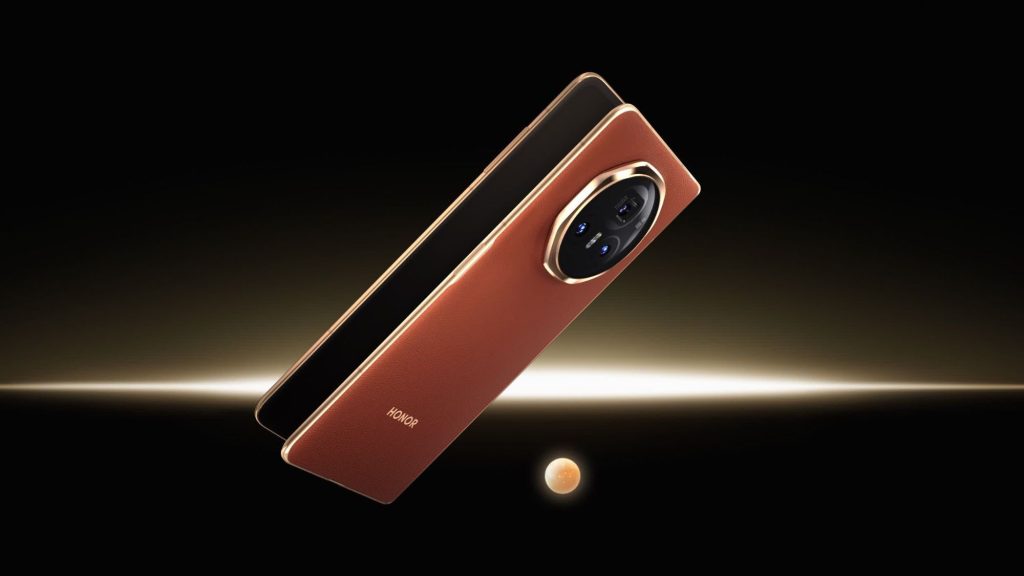
Earlier this month, a fresh leak revealed that a new Honor flagship foldable is also in the works. The Magic V4 surfaced on a Weibo post, which confirmed some of its key specs and features. It may sport a tall 8-inch LTPO inner display with a 120Hz refresh rate and 2K resolution, while the cover screen is a 6.45-inch panel with LPTO and 120Hz refresh rate support.

Honor Magic V3
Honor Magic V3

For optics, the Magic V4 is said to feature a 50MP main camera along with a 200MP 1/1.4-inch sensor with 3x optical zoom. Other notable features include Qualcomm’s Snapdragon 8 Gen Elite and an ultra slim body that measures less than 9mm.

For more daily updates, please visit our News Section.

Tech enthusiast? Get the latest news first! Follow our Telegram channel and subscribe to our free newsletter for your daily tech fix! ⚡

Huawei Smart Screen S6 Pro TV Debuts: Ultra-Thin, 288Hz, AI-Powered & Ready to Ditch Multiple Remotes

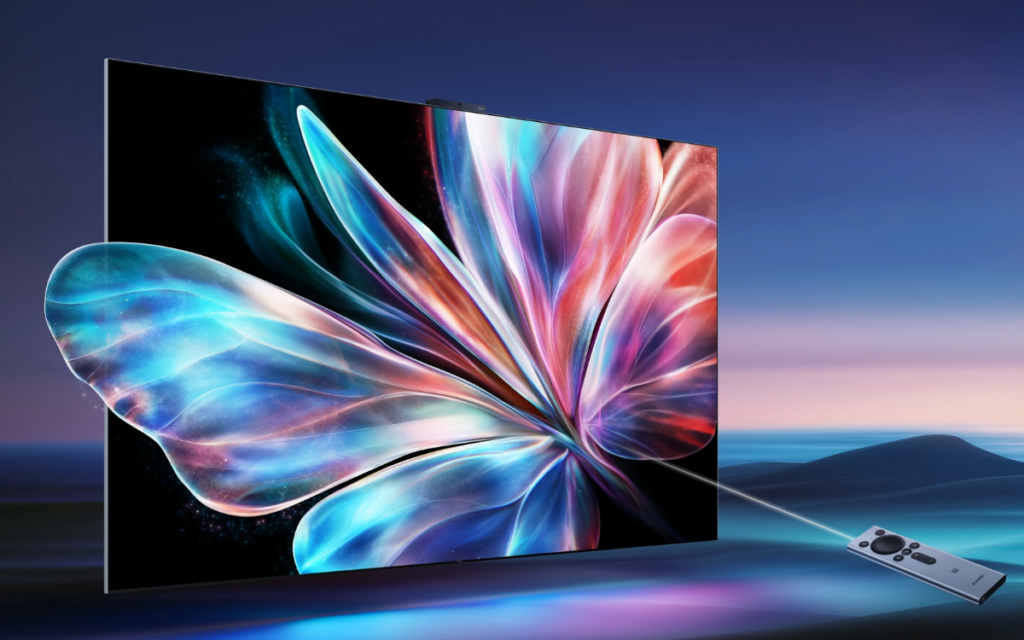
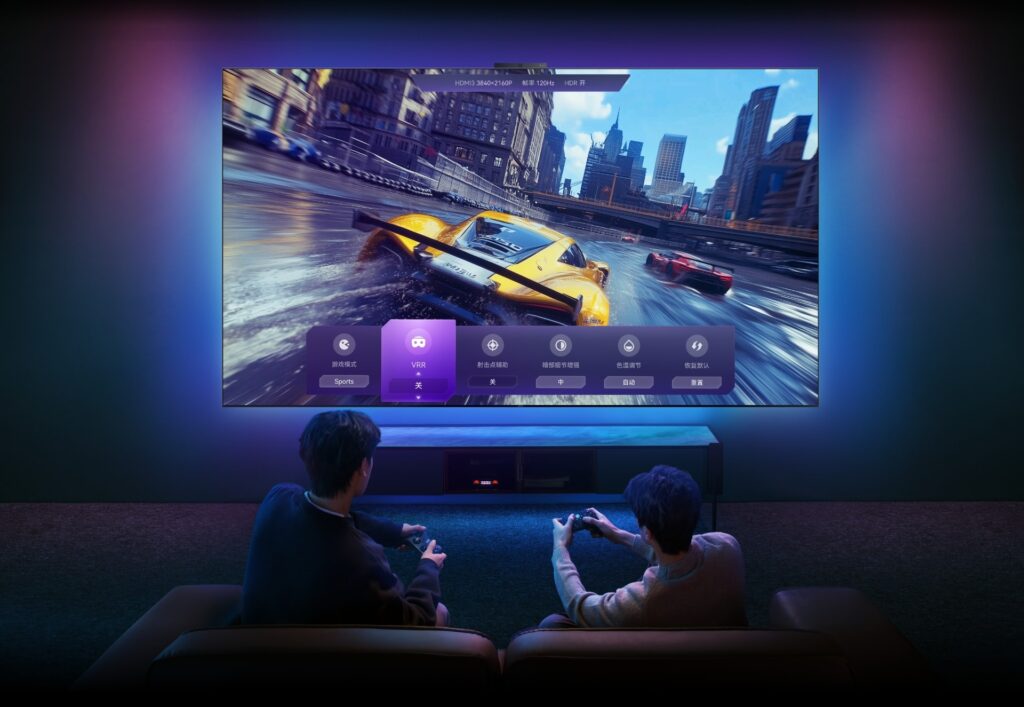
Huawei has just unveiled its latest Smart Screen S6 Pro series TVs in China, bringing a premium design and top-tier specs aimed at both home entertainment lovers and serious gamers. Pre-orders are now live on JD.com, with official sales kicking off on April 3 at 10:08 AM local time.

HUAWEI Smart Screen S6 Pro

Huawei Smart Screen S6 Pro Specifications

The Smart Screen S6 Pro goes all-in on design, featuring an ultra-thin profile that sits just 5mm from the wall thanks to its near zero-gap mount. Huawei has shaved the body thickness by 36%, making the panel blend into modern living spaces almost like a digital canvas. The screen itself is nearly bezel-free with a stunning 99% screen-to-body ratio, giving you a true edge-to-edge viewing experience.

Under the hood, the TV series uses a Super MiniLED panel powered by Huawei’s own Honghu picture engine. It delivers precision backlight control with thousands of dimming zones, making bright highlights and deep shadows pop without crushing details.

The screen is HDR Vivid-certified, covers 94% of the DCI-P3 color gamut, and promises color accuracy with a ΔE of less than or equal to 1.5 — professional-grade, according to Huawei. Motion handling also gets a serious boost, thanks to a 288Hz refresh rate and Honghu’s motion clarity algorithms, making it just as ready for fast-paced action sequences as it is for high-stakes gaming.

HUAWEI Smart Screen S6 Pro

Huawei is also pushing AI-powered enhancements, with the TV adjusting contrast, brightness, and color automatically based on the content on the screen. There’s a dedicated gaming UI, that lets gamers tweak settings on the fly.

Audio hasn’t been left behind either. The S6 Pro features Huawei’s Audio Vivid tech for immersive 3D sound, supported by an independent low-frequency design capable of hitting lows down to 60Hz. Expect punchy bass and clear mids and highs, ideal for both blockbuster movie nights and intense game sessions.

Inside, the TV runs on HarmonyOS 4.3 and is powered by a quad-core A73 chipset, paired with 4GB of RAM (expandable to 6GB via virtual RAM) and 128GB of storage. Multi-screen interaction is smooth, with one-tap 4K casting from Huawei smartphones. The included Lingxi remote doubles as a universal controller with voice commands and set-top box controls.

Huawei’s smart ecosystem integrations show up too — with AI fitness tracking, family video calls in 1080p (complete with smart face tracking), and a range of kid-friendly features like eye-protection modes and parental management tools.

Pricing

The Huawei Smart Screen S6 Pro lineup starts at 6,499 yuan (around $900) for the 65-inch model. The 75-inch version costs 8,999 yuan (about $1,245), the 85-inch is priced at 10,999 yuan (around $1,525), and the largest 98-inch variant will set you back 16,999 yuan (roughly $2,355).

In related news, we recently put together a list of the best Hisense TVs in 2025 — feel free to take a look.

For more daily updates, please visit our News Section.

Stay ahead in tech! Join our Telegram community and sign up for our daily newsletter of top stories! 💡

(Source)

OnePlus 13 Mini/13T concept renders reminds of us older OnePlus phones

OnePlus has been rumored to be working on a new compact flagship smartphone for a while now. This model could be called the OnePlus 13T or OnePlus 13 Mini. While there is no official teaser for this device, a bunch of concept renders have offered us a look at the possible design of the upcoming small premium phone. So let’s check it out.

OnePlus 13 Mini/13T Concept Renders

OnePlus 13T
Resembles the OnePlus 5

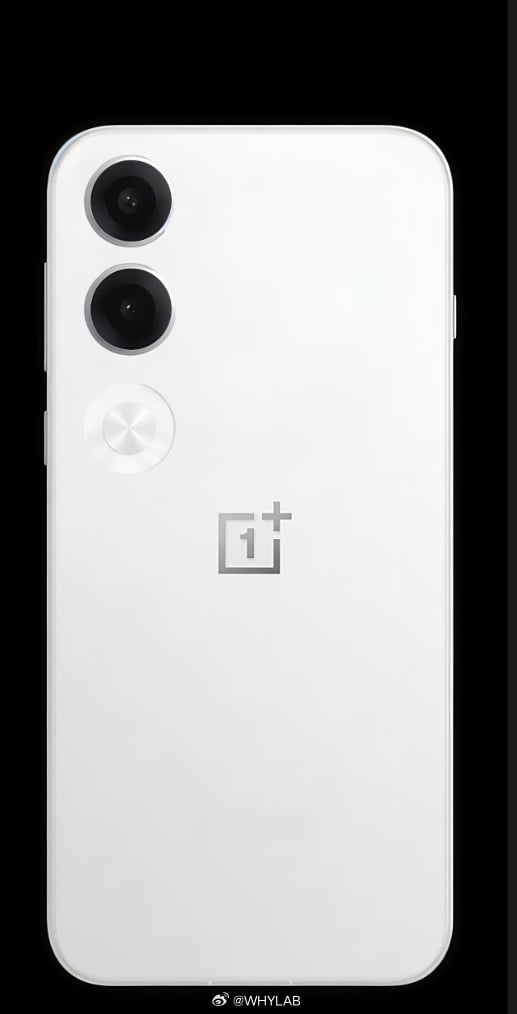
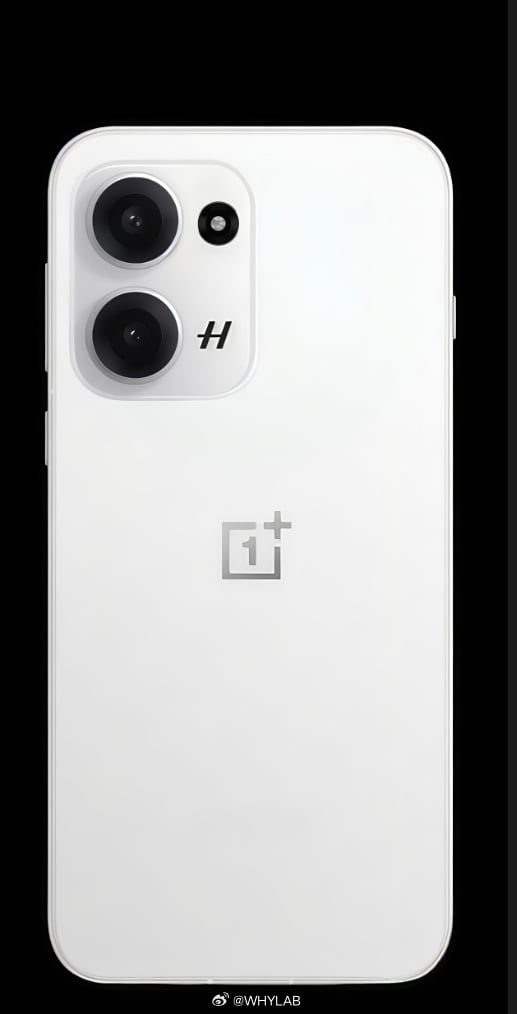
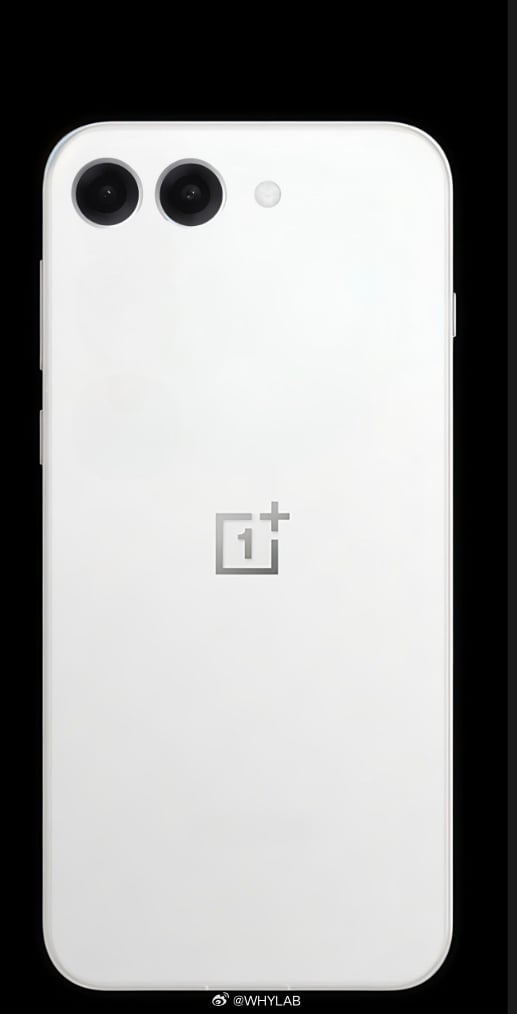
The Chinese brand’s upcoming OnePlus 13T was previously seen in mock renders, and now, new concept renders from Xiaohongshu on Weibo have revealed different iterations as well. These concept renders showcase the dual rear cameras in different orientations. Even the LED flash module has multiple variations. But what really caught our eye was how much these designs resemble certain older models.

OnePlus 13T
Resembles the Nord CE 4

One of these includes a horizontally aligned camera setup at the back, which makes it look like the old OnePlus 5 flagship model. In another concept, the OnePlus 13T looks more like the Nord CE 4 with its vertically stacked sensors and LED flash module. One of these even included a variation that featured the Hasselblad collaboration, but it’s unclear whether this model also gets the camera brand’s tuning. Although, every render has a couple of things in common like two cameras at the back and a flat rear panel with rounded corners.

OnePlus 13T
Possible Hasselblad Collaboration

Based on what we know so far, the OnePlus 13T is expected to be the cheapest Snapdragon 8 Elite powered smartphone. The model could sport a 6.31-inch LTPO OLED display with a 1.5K resolution and a 120Hz refresh rate. On the rear, the device has a 50MP main camera and 50MP telephoto shooter with 2x optical zoom. A massive 6,000mAh battery could power this device, which supports wired and wireless charging.

For more daily updates, please visit our News Section.

Stay ahead in tech! Join our Telegram community and sign up for our daily newsletter of top stories!


First Motorola Razr 60 renders show a smaller foldable screen

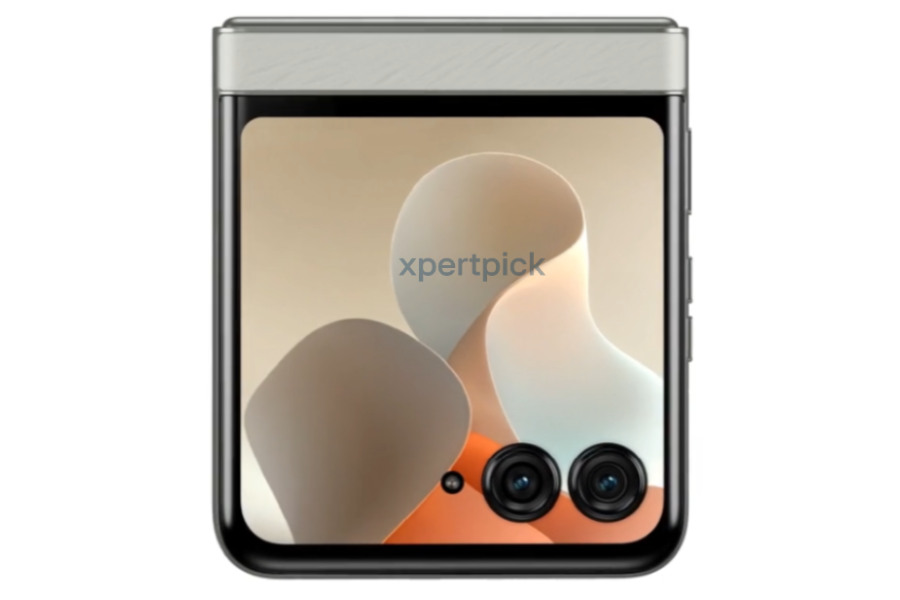
Motorola’s next batch of foldable phones—the Razr 60 and Razr 60 Ultra—is on the way. While the Ultra model has already surfaced in leaks and renders, a new report from XpertPick has now revealed key details about the standard Razr 60—complete with renders.

And no surprises here, the Razr 60 shares its design DNA with the Ultra model. It features a cover display flanked by a dual-camera setup, though the screen size will likely be smaller here at 3.6 inches, like its predecessor. Meanwhile, the Razr 60 Ultra is expected to sport a larger 4-inch cover display.

Motorola Razr 60 Specifications (Rumored)

The more notable change is on the inside. According to the leak, the Razr 60 will feature a 6.7-inch pOLED HDR10+ foldable screen which is a bit of a downgrade from last year’s 6.9-inch panel. 

It’s still Pantone-validated and is now said to support wet-touch functionality, but the decision to shrink the size is a bit surprising. That said, the bezels appear to be nearly identical to last year’s model.

Durability is getting a boost, though. The Razr 60 is rumored to have an IP48 rating which will offer some level of dust protection compared to the IPX8 rating on Razr 50.

Motorola Razr 60 renders

Under the hood, the foldable will be powered by MediaTek’s Dimensity 7400x chipset, paired with 12GB of LPDDR4x RAM and up to 512GB of storage. Keeping everything running is a 4,500mAh battery with 30W fast charging support.

On the camera front, the two rings on the cover screen will house a 50MP main lens with OIS and an ultrawide camera—which, according to the leak, will offer 4x more capture range than before. The inner display will feature a 32MP selfie camera like its predecessor.

Motorola is also said to be integrating AI-powered features and a side-mounted fingerprint scanner for security. The foldable will be available in Pantone Gibraltar Sea, Pantone Lightest Sky and Spring Bud.

There’s no official word yet on pricing or an exact launch date. But with leaks heating up, the Razr 60’s debut might not be far off. We’ll keep you posted as more details emerge.

For more daily updates, please visit our News Section.

Stay ahead in tech! Join our Telegram community and sign up for our daily newsletter of top stories!
Snapdragon 8 Gen 3 vs 7 Gen 3: Benchmarks and key differences

Snapdragon 8 Gen 3 vs 7 Gen 3

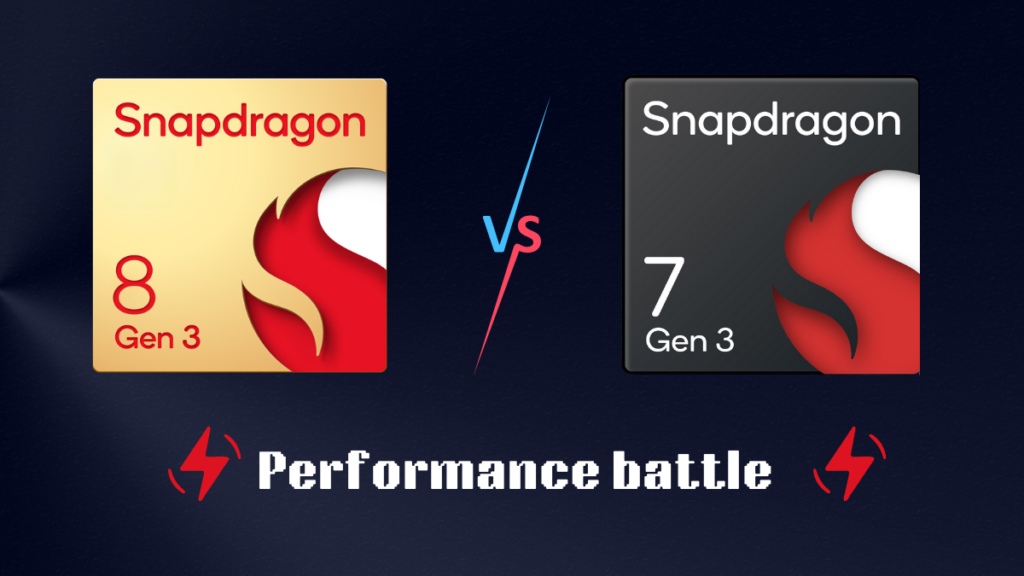
The Snapdragon 8 Gen 3 is a generation ahead of the 7 Gen 3, even though the latter is a relatively newer chip. The flagship 8 Gen 3, featuring eight cores (1x large core, 5x mid cores, & 2x small cores), was announced in October 2023. The 7 Gen 3, which has the same number of cores but a different configuration (4x mid cores & 4x small cores), was announced in November 2023.

The Snapdragon 8 Gen 3 delivers significantly higher performance and is built for high-end premium devices, whereas the 7 Gen 3 is designed for mid-range smartphones. Both chips, however, are manufactured using TSMC’s 4nm process node. But how significant is the performance gap between these two chips? Let’s analyze benchmark results and key differences.

[Note: The following benchmark tests were conducted on the OnePlus 12 (powered by Snapdragon 8 Gen 3) and OnePlus Nord CE 4 (powered by Snapdragon 7 Gen 3).]

Snapdragon 8 Gen 3 vs 7 Gen 3: AnTuTu and Geekbench scores

AnTuTu score:

AnTuTu is a widely used benchmarking tool to measure the overall performance of a device. It runs a series of tests to evaluate processing power, graphics rendering, multitasking efficiency, and overall system responsiveness.

Snapdragon 8 Gen 3 vs 7 Gen 3 AnTuTu score

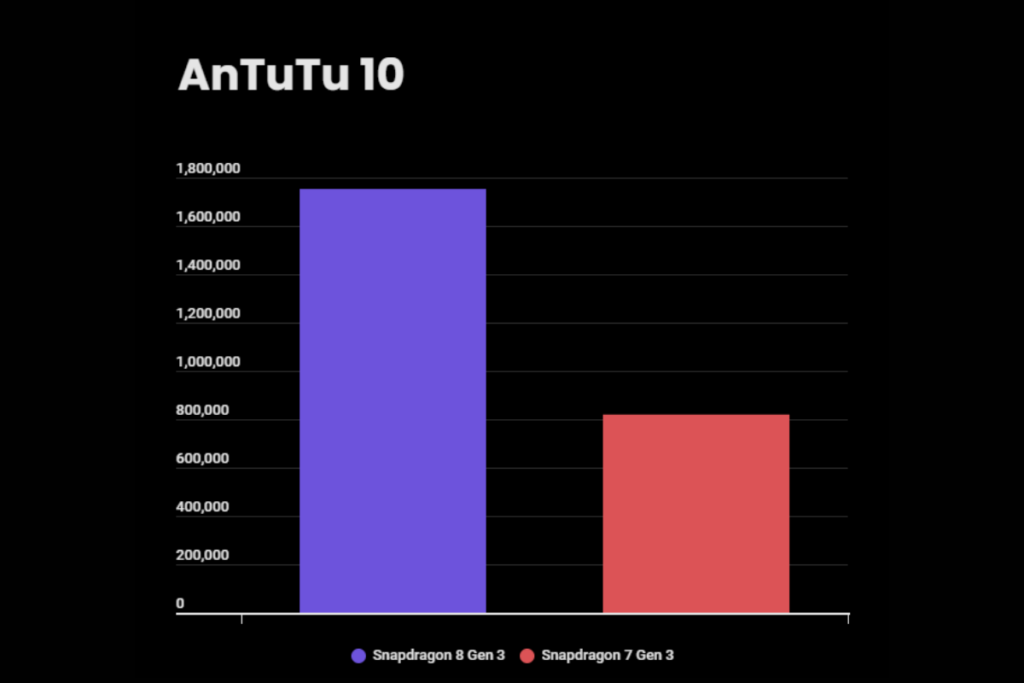
The Snapdragon 8 Gen 3 scores more than twice as much as the Snapdragon 7 Gen 3 on AnTuTu (v10), thanks to its significantly more powerful CPU and GPU. The GPU alone accounts for an impressive 190% boost in performance.

SD 8 Gen 3SD 7 Gen 3
AnTuTu score1,753,326819,655
CPU370,873269,334
GPU750,494256,584
Memory350,215129,961
UX281,744163,776

Geekbench score:

Geekbench measures CPU performance, providing single-core and multi-core scores. The single-core score reflects performance when a single CPU core is active, while the multi-core score measures overall processing power.

Snapdragon 8 Gen 3 vs 7 Gen 3 Geekbench score

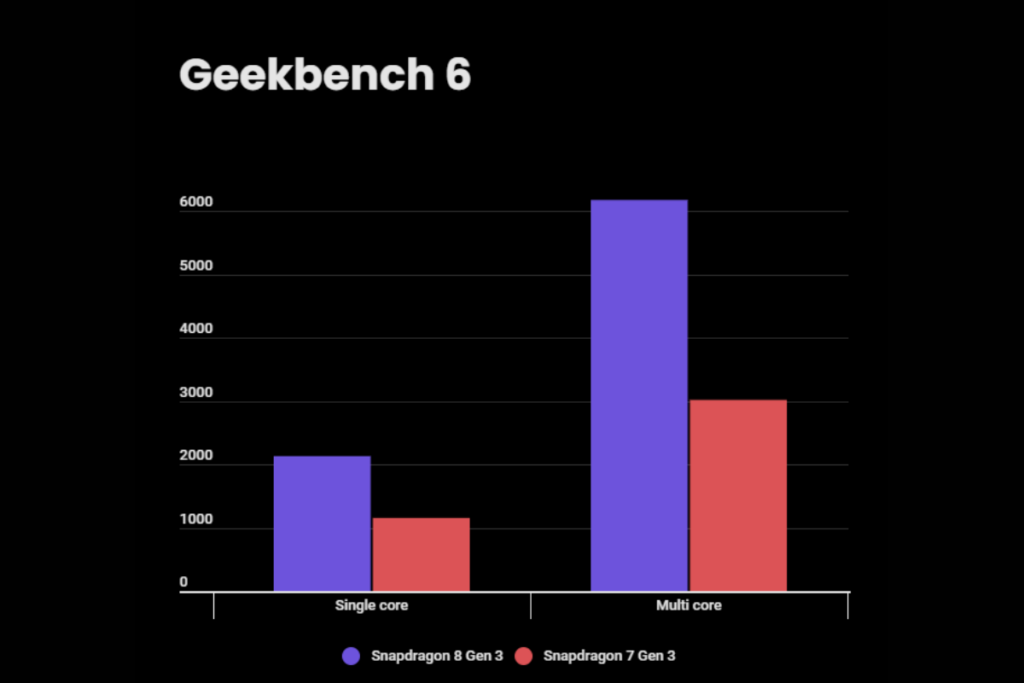
On Geekbench 6, the Snapdragon 8 Gen 3 delivers 84% better single-core performance and 104% better multi-core performance compared to the Snapdragon 7 Gen 3.

SD 8 Gen 3SD 7 Gen 3
Single core2,1301,154
Multi core6,1753,018

But why is there such a significant performance gap between the two chips? Let’s dive into the key differences.

Snapdragon 8 Gen 3 vs 7 Gen 3: Key Differences

CPU

While both chips have eight cores, the Snapdragon 8 Gen 3 has a more powerful configuration and operates at higher clock speeds. Here’s how the CPU clusters look like:

Snapdragon 8 Gen 3:

  • 1 Prime core: Cortex-X4 @ 3.3GHz
  • 5 Performance cores: (3x Cortex-A720 @ 3.15GHz & 2x Cortex-A720 @ 2.96GHz)
  • 2 Efficiency cores: Cortex-A520 @ 2.27GHz

Snapdragon 7 Gen 3:

  • 4 Performance cores: (1x Cortex-A715 @ 2.63GHz & 3x Cortex-A715 @ 2.4GHz)
  • 4 Efficiency cores: Cortex-A510 @ 1.8GHz

Not only does the Snapdragon 8 Gen 3 have a higher peak CPU speed (3.3GHz vs. 2.63GHz), but its cores are also more performance-driven and power-efficient, which is evident in the benchmark scores.

GPU

The Snapdragon 8 Gen 3 is equipped with the Adreno 750 GPU, designed for high-end gaming, while the Snapdragon 7 Gen 3 features the Adreno 730 GPU.

The flagship 8 Gen 3 features significantly higher shading units and FLOPS, which means it can handle more demanding graphics and compute tasks, leading to faster and more detailed graphics.

The 8 Gen 3 supports real-time hardware-accelerated ray tracing with global illumination, leading to more accurate and realistic lighting effects, detailed shadows and reflections, and more realistic gameplay. It also supports Unreal Engine 5.2 for advanced character rendering. The Snapdragon 7 Gen 3 lacks these features, though it does support Snapdragon Game Super Resolution and Adreno Frame Motion Engine—albeit in older versions compared to the 8 Gen 3.

Snapdragon 8 Gen 3 has excellent gaming performance, but that doesn’t make 7 Gen 3 a bad choice for gaming. It can still handle popular titles such as Genshin Impact and PUBG Mobile, but the experience will be far superior on 8 Gen 3 devices.

Connectivity

Both chips offer strong connectivity features, but the Snapdragon 8 Gen 3 has robust connectivity features and is more future-proof. For instance, it has a Snapdragon X75 modem with 10Gbps peak download speed and 3.5Gbps peak upload speed. While the upload speed remains the same, the peak download speed on 7 Gen 3 (X63 5G modem) reduces by half; up to 5Gbps.

In addition, the Snapdragon 8 Gen 3 supports Wi-Fi 7 via FastConnect 7800, offering speeds up to 5.8Gbps, while the 7 Gen 3 only supports Wi-Fi 6E with a peak speed of 2.9Gbps.

Camera

While both Qualcomm chips support up to 200MP single camera, the 8 Gen 3 supports noise reduction and zero shutter lag at higher resolutions for better low-light performance, reduced latency, and enhanced image quality. The 8 Gen 3 also has a higher bit depth, which means it’ll have superior color accuracy, dynamic range, and data capture speed than 7 Gen 3.

The 8 Gen 3 supports real-time semantic segmentation for photos and videos up to 12 layers. This results in more detailed and visually appealing photos and videos, while no such thing has been mentioned on the Snapdragon 7 Gen 3’s official page.

In terms of video recording, the Snapdragon 8 Gen 3 supports 8K video recording at 30fps, whereas the Snapdragon 7 Gen 3 maxes out at 4K recording.

Memory

The Snapdragon 8 Gen 3 supports LPDDR5x RAM with up to 4.8GHz frequency, while that on the 7 Gen 3 is LPDDR5 at 3200MHz. The 8 Gen 3 also supports faster UFS 4.0 storage (vs. UFS 3.1 on the 7 Gen 3). The faster RAM and storage in the 8 Gen 3 lead to quicker app loading times and better multitasking performance.

Conclusion

The Snapdragon 8 Gen 3 is a clear winner, offering significantly better performance, gaming capabilities, and connectivity. However, the Snapdragon 7 Gen 3 is still a solid choice for mid-range devices, delivering respectable performance and efficiency.

If you want flagship-grade performance with cutting-edge features, the Snapdragon 8 Gen 3 is the way to go. But if you’re looking for a cost-effective mid-range option, the Snapdragon 7 Gen 3 remains a capable performer.

SD 8 Gen 3SD 7 Gen 3
AnnouncedOctober 2023November 2023
Process node4nm4nm
ManufacturerTSMCTSMC
CPU1 x 3.3 GHz — Cortex-X3
3 x 3.15 GHz — Cortex-A720
2 x 2.96 GHz — Cortex-A720
2 x 2.27GHz — Cortex-A520
1 x 2.63 GHz — Cortex-A715
3 x 2.4 GHz — Cortex-A715
4 x 1.8 GHz — Cortex-A510
GPUAdreno 750 GPU
Support for Unreal Engine 5.2 Lumen
Global illumination
Ray tracing support
Snapdragon Elite Gaming features
Adreno 720 GPU
Snapdragon Elite Gaming features
NPUQualcomm Hexagon NPUQualcomm Hexagon NPU
MemoryLPDDR5x, up to 4.8GHzLPDDR5, up to 3.2GHz
StorageUFS 4.0UFS 3.1
USBUSB-C 3.1 Gen2USB-C 3.1 Gen2
CameraQualcomm Spectra Cognitive Triple 18-bit ISP
Real-time semantic segmentation (max 12 layers)
Up to 200MP single camera
Up to 108MP single camera at 30fps with zero shutter lag
Up to 64MP+36MP dual camera at 30fps with zero shutter lag
Up to 36MP triple camera at 30fps with zero shutter lag
Up to 8K/30fps video recording
Qualcomm Spectra triple 12-bit ISPs
Up to 200MP single camera
Up to 64MP single camera with zero shutter lag
Up to 32+21MP dual cameras with zero shutter lag
Up to 21MP triple cameras with zero shutter lag
Up to 4K video recording
ConnectivitySnapdragon X75 5G modem
Downlink: 10Gbps
Uplink: 3.5Gbps
Qualcomm FastConnect 7800
Wi-Fi 7 (peak speed: 5.8Gbps)
Bluetooth 5.4
Snapdragon X63 5G modem
Downlink: 5Gbps
Uplink: 3.5Gbps
Qualcomm FastConnect 6700
Wi-Fi 6E (peak speed: 2.9Gbps)
Bluetooth 5.4

Snapdragon 8 Gen 3 phones:

Snapdragon 7 Gen 3 phones:

Xgimi launches Play 6 and Play 6e projectors with 360-degree gimbal and portable design

Xgimi has just introduced its latest portable projectors in China, the Play 6 and Play 6e, aimed at delivering big-screen entertainment in a compact, travel-friendly design. Both models feature a built-in 360-degree gimbal and come with price tags that won’t break the bank.

The Play 6 is priced at 2,099 yuan (about $290), while the Play 6e comes in slightly cheaper at 1,799 yuan (around $250).

Xgimi Play 6 and Play 6e
Credit: ifdesign

Xgimi Play 6 and Play 6e Specifications

The design language is sleek and minimal, with both projectors roughly the size of a milk tea cup, small enough to toss into a bag without second thoughts. The Play 6 has already earned the 2025 German iF Design Award, and it’s clear why.

The integrated 360-degree gimbal not only looks refined but also allows smooth, flexible projection adjustments. Xgimi’s smart design extends to practical details too, like automatic keystone correction and fast autofocus, ensuring you can set up in seconds — even on uneven surfaces or at off-angles.

Under the hood, both models use advanced DLP technology paired with a 0.23-inch DMD chip, delivering 600 CVIA lumens (around 500 ISO lumens). The projectors support native 1080p resolution and can handle 2K and 4K content as well. The throw ratios — 1.21:1 for the Play 6 and 1.2:1 for the Play 6e — mean these projectors can cast large images even in cramped apartments or small hotel rooms.

Portability is more than just size. The Play 6 packs a 20,000mAh battery that offers up to 2.5 hours of continuous video playback and up to 6 hours in audio-only mode. The Play 6e doesn’t come with a built-in battery, but both models can transform into Bluetooth ambient speakers when the projection lid is closed, complete with synced lighting effects.

Xgimi didn’t cut corners on audio. Both devices feature dual 6W speakers, Harman Kardon-branded on the Play 6, and tuned under Xgimi Sound on the Play 6e with Dolby Audio and 360-degree surround sound. Whether you’re watching movies or using them as standalone speakers, they promise a surprisingly rich audio experience for their size.

Xgimi Play 6 and Play 6e
Credit: ifdesign

Both models run on GMUI 6.0, powered by an MT9-series processor with 1.5GB of RAM and 32GB of storage. They also support wireless casting through AirPlay, DLNA, and XGIMI’s own app. Connectivity options are solid, with HDMI (eARC), USB, and Type-C ports, plus dual-band WiFi and Bluetooth 5.1.

Xgimi has also baked in features like MEMC motion compensation, HDR10/HLG support, and its X-VUE picture engine for enhanced color and detail. And while they run quietly at just 28dB, they still manage to deliver efficient performance with power consumption under 65W.

For anyone who’s constantly on the move but refuses to compromise on big-screen entertainment, the Xgimi Play 6 and Play 6e seem like smart, well-rounded options and they’re designed to fit right into your lifestyle, quite literally. These projectors are also expected to hit the global market with MoGo branding later this year.

We’ve also recently covered a detailed roundup of the 5 best budget projectors in 2025 (the list includes Xgimi projectors too) for home and travel, and if you’re looking for something affordable yet reliable, you should definitely check it out.

For more daily updates, please visit our News Section.

Stay ahead in tech! Join our Telegram community and sign up for our daily newsletter of top stories! 💡
HMD’s hot pink Barbie Phone just launched in India for Rs 7,999

HMD has just announced a brand new flip phone in the Indian market. But it isn’t one of those clamshell folding phones. The HMD Barbie Phone is a classic flip phone that features Barbie’s iconic hot pink color scheme along with the old keypad format. So let’s check it out.

HMD Barbie Phone Specs

The company’s new Barbie Phone was previously announced in the global market earlier this month. While HMD had confirmed its Indian availability, we still had no details regarding its pricing in the region. This model sports a 2.8-inch main QVGA display and a 1.77-inch cover screen. Under the hood, it is equipped with the UNISOC T107 chipset that is paired with 64MB RAM and 128MB internal storage.

HMD Barbie Phone

Users can even expand storage by up to 32GB via a microSD card slot. The Barbie Flip Phone runs on the S30+ operating system. A 1,450mAh battery pack powers this device, which promises to offer up to 9 hours of talk time. For optics, the rear features a VGA camera with an LED flagship. Other notable features include Bluetooth 5, FM Radio, a 3.5mm headphone jack, a USB Type C port, and an MP3 player.

Pricing and Availability

The HMD Barbie Flip Phone was announced in India for a 7,999 INR price tag. This is an official collaboration and features a large Barbie branding on the back. You also get a Barbie inspired interface along with pre-installed apps such as Malibu Snake, Barbie Meditation, and Digital Balance Tips. In related news, the brand unveiled the Fusion X1 which targets the youth during MWC 2025.

For more daily updates, please visit our News Section.

Tech enthusiast? Get the latest news first! Follow our Telegram channel and subscribe to our free newsletter for your daily tech fix! ⚡

Motorola Edge 60 Fusion Key Specs, Launch Date, & More Revealed Ahead of India Release

Motorola has already shared teasers of the upcoming Edge 60 Fusion in India. However, this did not reveal any finer details like its specs or launch timeline, but now, a fresh leak has confirmed a bunch of its key features along with its release date. Read on to find out.

Motorola Edge 60 Fusion Launching on April 2

The latest leak arrives from known tipster Abhishek Yadav who shared the information on X (formerly Twitter). In his tweet, he claimed that the Edge 60 Fusion will be arriving in India on 2nd April 2025. Meanwhile, the date of the first sale is reportedly set for April 9. The post also confirmed a punch of the key specs of the Motorola Edge 60 Fusion like a tall 6.7-inch quad curved AMOLED display that offers a 120Hz refresh rate. This panel likely features a Full HD+ resolution as well.

Motorola Edge 50 Fusion

Under the hood, Yadav states that the device is equipped with the MediaTek Dimensity 7400 SoC. For photography, the rear features a 50MP Sony LYT700 main sensor and a 13MP secondary shooter. This is likely an ultra wide angle lens. The front houses a 32MP shooter for selfies and video calls. A large 5,500mAh battery pack could power the Edge 60 Fusion which should offer fast charging support.

Motorola is apparently building a durable smartphone once again as the leak point at military grade rating (MLT 810 STD) along with an IP69 rating. This means that it can survive drops and shocks while also being dustproof and capable of surviving high pressure and high temperature water jets as well. Unfortunately, pricing details are still at large, so stick around for more as we will be covering any official teasers or leaks that surface in the coming days.

For more daily updates, please visit our News Section.

Don’t miss a thing! Join our Telegram community for instant updates and grab our free daily newsletter for the best tech stories!

Huawei Pura X is a new take on foldable smartphones

Samsung may be the biggest name in foldables, but when it comes to real innovation, Huawei is making all the bold moves. 

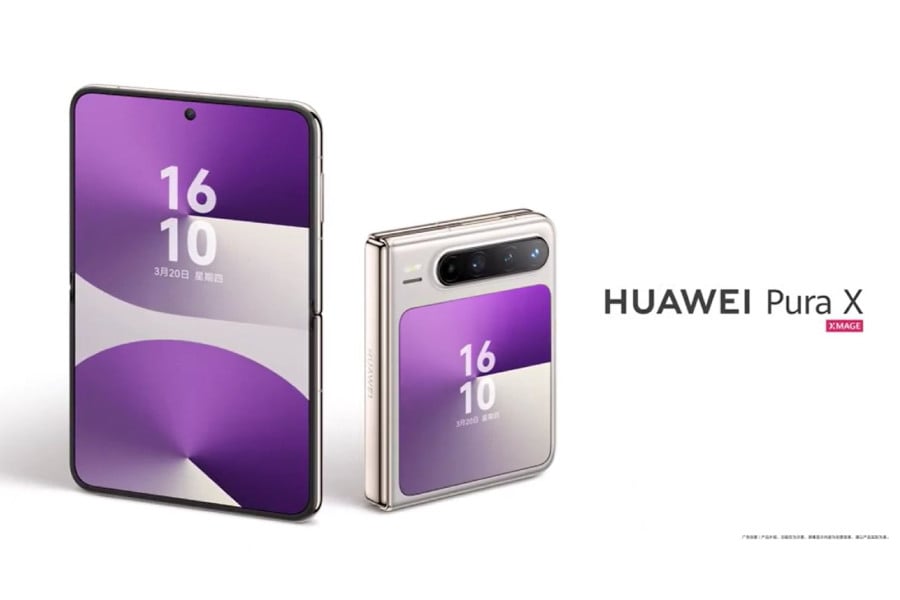
The company has already given us book-style and clamshell foldable, and last year, it launched the world’s first tri-fold. Now, Huawei is back with yet another unique form factor: the Pura X, the industry’s first wide foldable smartphone.

At first glance, the Pura X might seem a little unconventional, but it actually makes a lot of sense. Think of it as a clamshell foldable, but wider. Instead of the narrow flip-style foldable, we’re used to, the Pura X gives you extra screen real estate in a horizontal format—something that could change how we use foldable phones.

Huawei Pura X Specifications

On the outside, the Pura X has a 3.5-inch OLED cover display with a 1:1 aspect ratio and a 980×980 resolution. It’s not your typical tall and narrow cover screen—it’s more of a compact, square-shaped display. 

Open it up, and you’re greeted with a 6.3-inch OLED main screen boasting a 2120×1320 resolution and a 16:10 aspect ratio. That extra vertical space means more room for reading documents, browsing the web, and running two apps side by side without feeling cramped.

The camera system on the Pura X is no afterthought. It packs a 50 MP primary sensor with OIS, a 40 MP ultra-wide-angle lens, and an 8 MP telephoto sensor with 3.5x optical zoom and 30x digital zoom. 

On the front, there’s a 10.7 MP selfie camera. But as with most foldable, the primary camera can double as a selfie shooter.

The device is available with 12GB of RAM and 256GB or 512GB storage. Keeping everything running is a 4,720 mAh battery with 66W wired charging and 40W wireless charging. 

The Pura X also debuts Hongmeng OS 5, the latest version of Huawei’s in-house operating system. But as usual, Huawei is keeping the chipset a mystery, refusing to disclose what SoC is powering this device.

The Pura X is also IPX8-rated for water resistance and comes with Wi-Fi 7, Bluetooth 5.2, NFC, satellite communication, and has USB 3.1 Type-C port. 

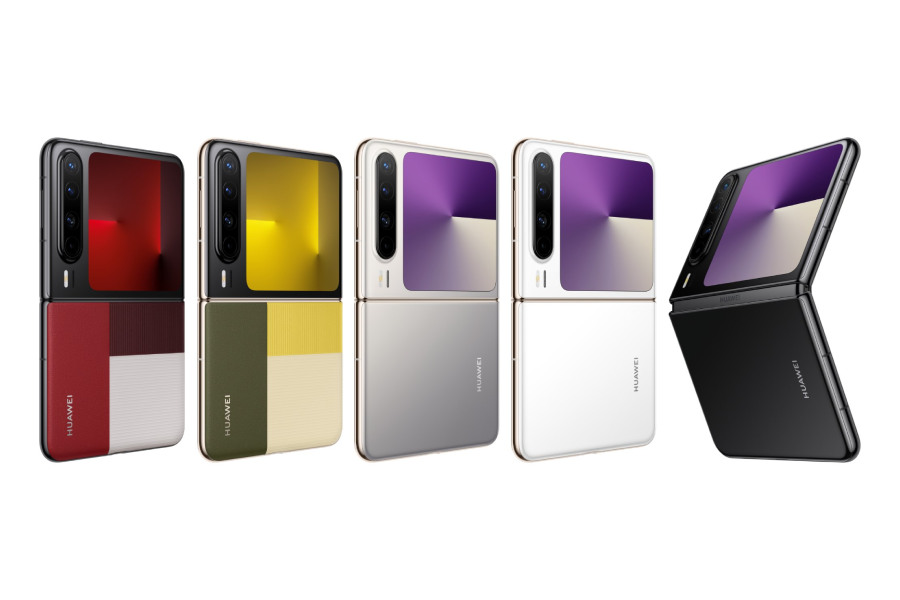
Huaewi Pura X Collector’s Edition

Alongside the regular variant, Huawei also launched the Pura X in a Collector Edition. The device comes in a tri-color leather back cover and a few extras, including satellite communication. The Collector’s Edition is also available with 16GB of RAM and storage options of 512GB or 1TB. 

Pricing

Pricing starts at RMB 7,499 ($1,038) for the base model, while the Collection Edition comes in at RMB 8,999 ($1,245). It’s not cheap, but for a foldable with this level of innovation, it’s clear Huawei is aiming for the premium crowd.

For more daily updates, please visit our News Section.

Stay ahead in tech! Join our Telegram community and sign up for our daily newsletter of top stories!
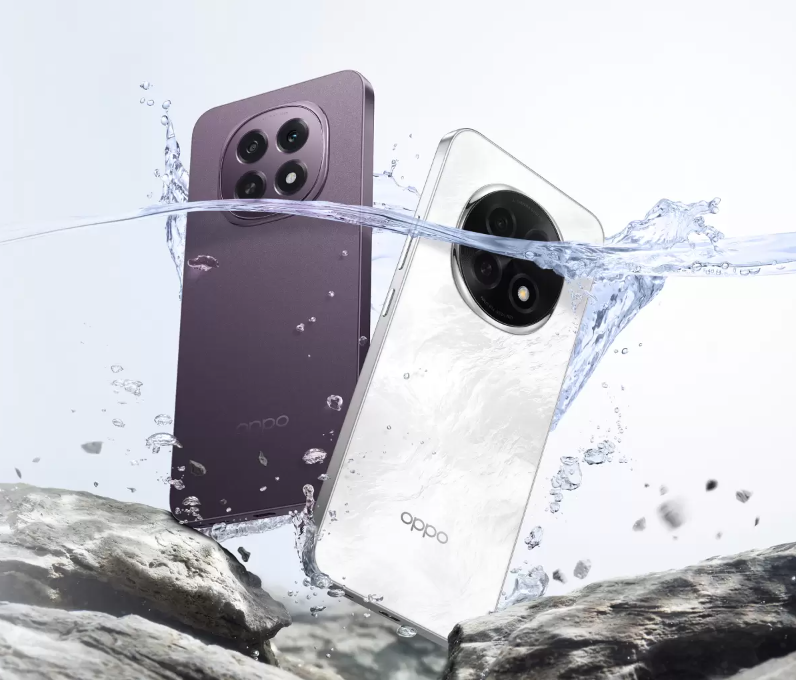
Oppo F29, F29 Pro Launched in India with Huge Batteries, 6.7-inch AMOLED display, & IP69 Rating

Oppo has just announced a pair of new mid range smartphones in the Indian market. The new series includes the Oppo F29 and F29 Pro that feature capable specs and enhanced durability. So here’s everything you need to know regarding its specs, features, pricing, and more.

OPPO F29 5G
Oppo F29 Series

1. Oppo F29 Pro

Talking about the higher end model first, the Oppo F29 Pro sports a tall 6.67-inch AMOLED display that offers an FHD+ resolution, a 120Hz refresh rate, Corning Gorilla Glass Victus 2 protection, and up to 2100 nits of peak brightness. Under the hood, this model is equipped with the MediaTek Dimensity 7300 Energy processor, which is paired with up to 12GB of RAM and 256GB of internal storage. For photography, there is a 50MP main camera and a 2MP monochrome sensor on the back, while the front houses a 16MP selfie shooter.

A massive 6,000mAh battery pack powers this device, which supports 80W wired fast charging. This battery size is impressive considering how the Oppo F29 Pro measures just 7.6mm in thickness. You’re also getting an IP66 + IP68 + IP69 rated smartphone, which is dustproof and can even survive high pressure water jets and submersions. Other notable features include an in-display fingerprint scanner, Bluetooth 5.4, Dual SIM support, and Android 15 based ColorOS 15.

Please Note: When you buy something using the links in our articles, we may earn a small commission at no cost to you.

2. Oppo F29

The base Oppo F29 arrives with a slightly taller 6.7-inch AMOLED display with a 120Hz refresh rate, FHD+ resolution, Corning Gorilla Glass 7i, and up to 1200 nits of peak brightness. This model features the Snapdragon 6 Gen 1 SoC, which is paired with 8GB of RAM and up to 256GB of internal storage. A lot of the features are similar between the two devices like the camera system with a 50MP dual camera setup on the back and a 16MP front facing camera for selfies.

However, a larger 6,500mAh cell powers the Oppo F29, although it offers a slower 45W wired fast charging rate. But sticking with the durability of its more expensive sibling, you still get the IP66 + IP68 + IP69 rating. Other notable features include an in-display fingerprint scanner, Bluetooth 5.1, and a slim 7.7mm body.

3. Pricing and Availability

The Chinese brand has just announced the Oppo F29 seriesm, which will go on sale via Amazon India, Flipkart, and Oppo India’s online and offline stores. Sales will kick off on 27th March 2025 for the base model, while the Pro variant will debut on 1st April 2025. Pre-orders are currently live for both models. The Oppo F29 has a starting price tag of 23,999 INR for the 8GB + 128GB model, while the 8GB + 256GB variant costs 25,999 INR.

On the other hand, the Oppo F29 Pro starts from 27,999 INR fo r the 8GB + 128GB option, while the 8GB + 256GB and 12GB + 256GB versions costs 29,999 INR and 31,999 INR respectively. For those interested, the brand is offering up to 10 percent instant bank discount to SBI, HDFC, IDFC, Bank of Baroda, and Axis bank credit card holders. There is also an exchange bonus of up to 2,500 INR depending on the model you buy and no-cost EMI options as well.

For more daily updates, please visit our News Section.

Tech enthusiast? Get the latest news first! Follow our Telegram channel and subscribe to our free newsletter for your daily tech fix! ⚡

These are the best smartphone chips for AI

AI is no longer just a buzzword in smartphones—it’s now a key part of how devices handle everything from voice commands to photo processing and even on-device generative AI.  

At the heart of this transformation is the smartphone’s processor, or system-on-chip (SoC). They pack the raw power to run these specialized AI features effortlessly. So let’s delve into some of the leading smartphone chips driving AI functionalities in 2025.

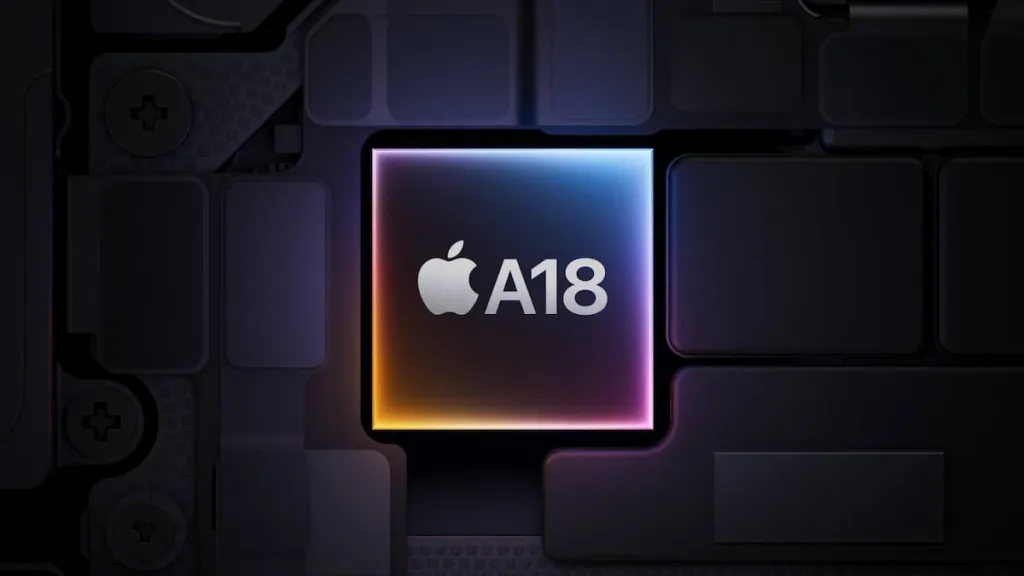
1. Apple A18 Pro

Snapdragon 8 Gen 4 vs Apple A18 Pro

Apple doesn’t market its AI capabilities as aggressively as Qualcomm or MediaTek, but it has been quietly integrating AI into its chips for years. Take the M1 chip, for example. Launched back in 2020—before all the hype about AI—it can run Apple Intelligence effortlessly.

In fact, the M1 was Apple’s first real step into AI silicon, with an NPU (Neural Processing Unit) designed to handle machine learning tasks. But here’s the weird part: why iPhones from 2020 and later don’t support Apple Intelligence then?

Turns out, it’s all about hardware. In an interview, Apple’s Craig Federighi explained that RAM plays a key role in powering Apple Intelligence, and every device that supports these AI features has at least 8GB of RAM. And guess what? iPhone 15 Pro series is Apple’s first smartphone with 8GB of RAM. 

That brings us to Apple’s A18 Pro, the company’s most powerful AI chip yet. It continues Apple’s focus on efficiency and deep software integration rather than just raw AI performance numbers.

The Neural Engine in the A18 Pro now pushes over 35 trillion operations per second (TOPS)—a significant upgrade from 35 TOPS from last year’s A17 Pro. 

However, unlike Android chipmakers, Apple doesn’t allow developers to access its Neural Engine as freely. That means third-party apps can’t take full advantage of its AI capabilities—at least, not yet. And as more apps embrace on-device AI, that walled garden approach might start to feel like a limitation.

2. Snapdragon 8 Elite

Snapdragon 8 Elite AnTuTu score

Qualcomm is leading the AI hardware race in the Android world, and its latest contender is the Snapdragon 8 Elite.

The 8 Elite packs what Qualcomm calls an AI Engine which is a comprehensive platform that includes multiple components working in tandem to deliver powerful AI performance. The AI Engine integrates the Hexagon NPU, CPU, GPU, and the Qualcomm Sensing Hub, combining their capabilities to handle diverse AI workloads efficiently.

The Hexagon NPU takes the load off the CPU and GPU, ensuring that AI features—like real-time translations or on-device photo enhancements—don’t slow the phone down. This allows AI-powered tasks to run in the background without impacting overall performance.

Qualcomm also integrates hardware-level security into its AI chip. The Secure Processing Unit works with the NPU to encrypt data, which is crucial as AI-powered assistants handle more personal information.

But it’s not just about AI. With the 8 Elite, Qualcomm also ditched the standard ARM Cortex cores in favor of its custom Oryon cores. The change gives Qualcomm an edge in terms of performance and efficiency. 

However, the real advantage of Qualcomm chips is the flexibility it provides to phone manufacturers. Unlike Apple’s tightly controlled AI ecosystem, Qualcomm’s approach gives manufacturers like Samsung, OnePlus, and Xiaomi the freedom to implement AI features in their own way.

3. Google Tensor G4

Google Tensor G4

Google’s Tensor G4 is less about raw power and more about AI-driven experiences. While it doesn’t match Qualcomm or MediaTek in terms of TOPS performance, it’s optimized for Google’s software, making it a key part of the Pixel 9 series.

Google designed the Tensor G4 with DeepMind to ensure it can run future AI models efficiently. This includes better memory bandwidth and improved power management. One of the biggest upgrades is multimodal Gemini Nano, allowing on-device AI to process multiple types of input simultaneously.

Tensor G4 can handle up to 45 tokens per second—meaning it can break down and process words, images, or voice inputs much faster than its predecessor. While that doesn’t make it the most powerful AI chip, it does make Google’s AI-powered features feel more responsive.

But Tensor’s biggest advantage is direct software integration. Google controls both the hardware and software, allowing Pixel phones to get AI features that other Android devices might not see for months (or ever). The trade-off? Tensor chips still lag behind in raw performance, so while they’re great for AI, they aren’t the best for gaming or high-performance tasks.

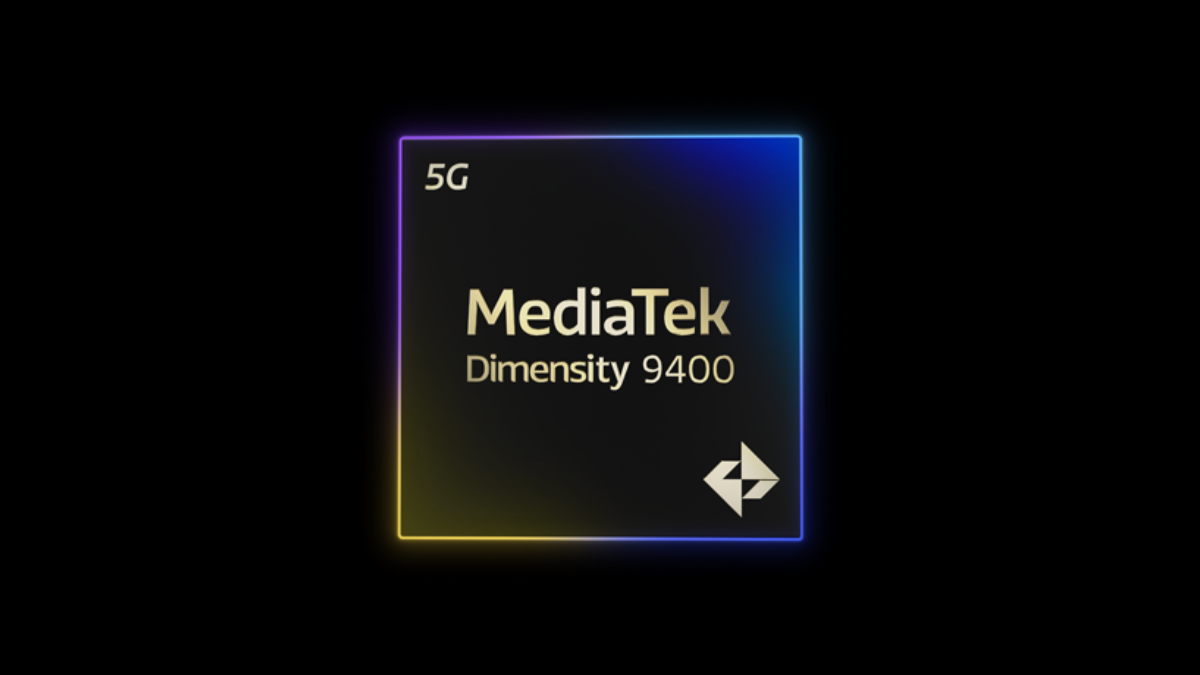
4. MediaTek Dimensity 9400

MediaTek Dimensity 9400

MediaTek’s Dimensity 9400 is its most ambitious AI chip yet, and on paper, it’s ahead of the competition. It boasts over 50 TOPS of AI performance, technically beating both Apple and Qualcomm.

At the heart of this AI performance is MediaTek’s 8th Gen NPU. It’s the first mobile chip to support on-device LoRA training and high-quality video generation. That means AI models can adapt to individual users in real-time, rather than relying entirely on cloud processing.

MediaTek is also pushing something called the Dimensity Agentic AI Engine (DAE). It’s designed to make AI-powered apps more dynamic by allowing them to interact with third-party software and cloud services more seamlessly. This could reduce development time for AI applications to make advanced AI features more accessible across different apps.

 Globally, premium phones continue to favor Qualcomm’s Snapdragon chips over Dimensity. The new Dimensity 9500 is mostly found in Vivo, Oppo, and Xiaomi devices, leaving MediaTek with limited reach in the flagship space. So we hope that more brands start taking MediaTek seriously at the high end.

5. Which AI Chip Is the Best?

Right now, AI in smartphones is still more about background improvements rather than game-changing new features. But as on-device AI models become more capable, having a smartphone with strong AI hardware could become more important.

For now, Snapdragon 8 Elite and Tensor G4 offer the most visible AI experiences, while Apple and MediaTek are pushing AI performance in their own ways. Whether any of this translates into a better smartphone experience depends on how software takes advantage of it.

For more daily updates, please visit our News Section.

Stay ahead in tech! Join our Telegram community and sign up for our daily newsletter of top stories!

Realme V70, V70s specifications, images appear, launch imminent

Recently, the Realme RMX3946 and RMX3948 were approved by China’s 3C and MIIT certification platforms. Now, both devices have surfaced in China Telecom’s product library under their final marketing names—Realme V70 and Realme V70s. These smartphones will succeed the Realme V60 and V60s. Just like their predecessors, the V70 and V70s have been found with nearly identical specifications. Here’s a closer look at their details as revealed through the China Telecom listing.

Realme V70, Realme V70s  pricing, color variants, and availability

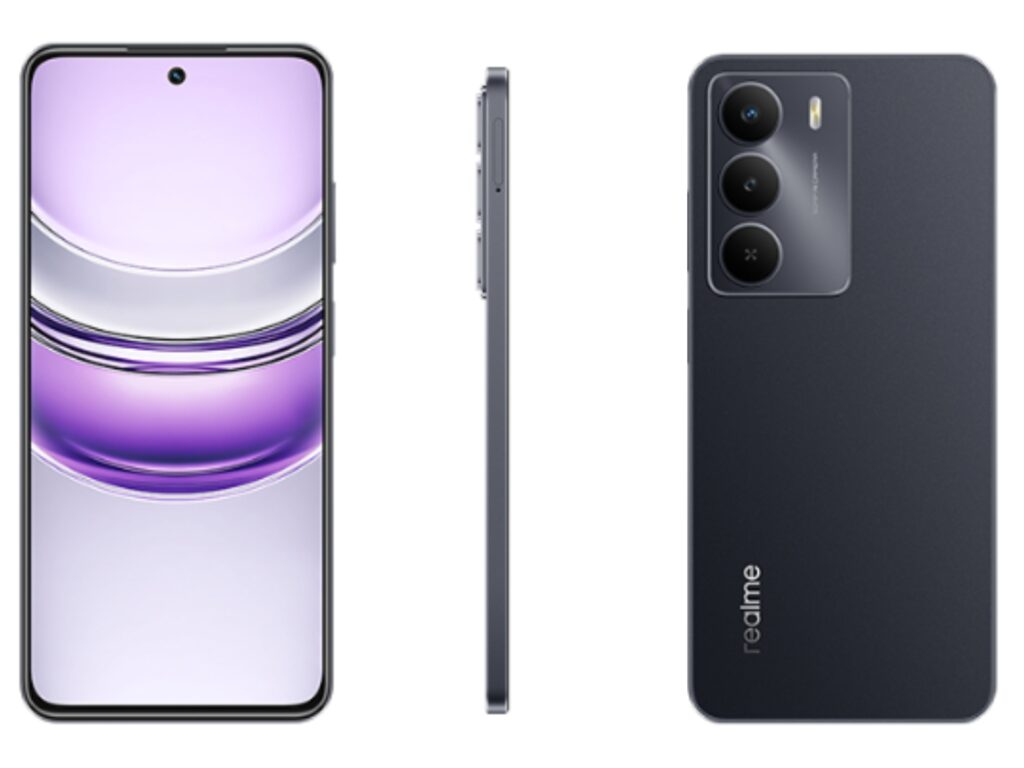
Realme V70 and Realme V70s
Realme V70 and Realme V70s sport the same design

The Realme V70 and V70s are listed with two storage variants each. The V70’s 8GB + 256GB model is priced at 1,499 Yuan (~$210), while the 6GB + 128GB variant is listed at 1,199 Yuan (~$165).

On the other hand, the Realme V70s’ 8GB + 256GB variant is priced at 1,899 Yuan (~$260) and the 6GB + 128GB model is listed at 1,499 Yuan (~$208). However, these prices may not be final, as Realme has not officially announced the devices yet.

Both smartphones will be available in two color options—Black Basalt and Green Basalt. As per the listing, the devices are expected to launch in China on March 20 (today), but Realme is yet to confirm an official release date.

Realme V70, Realme V70s specifications (rumoured)

In terms of design, the Realme V70 and V70s measure 165.7 x 76.22 x 8.16 mm and weigh 193 grams. Both phones are equipped with a 6.67-inch IPS LCD screen with a resolution of 720 x 1604 pixels. The smartphones sport an 8-megapixel front-facing camera, while the rear camera setup includes a 13-megapixel primary sensor.

Under the hood, the devices are powered by the MediaTek MT6835V chipset, which appears to be the Dimensity 6100 Plus. However, the previous generation was equipped with the Dimensity 6300 SoC. The V70 and V70s will come in 6GB+128GB and 8GB+256GB storage configurations. A 5,000mAh battery fuels both smartphones and according to the 3C certification, they may support 15W charging.

On the software front, the devices are expected to run on Realme Ui 6-based Android 15. Additional features include a microSD card slot, a side-mounted fingerprint sensor, a USB-C port, and a 3.5mm headphone jack.

As mentioned above, the Realme V70 and V70s are packed with identical specs. Probably, they are meant for offlne and online markets.

For more daily updates, please visit our News Section.

Stay ahead in tech! Join our Telegram community and sign up for our daily newsletter of top stories!

Lava ProWatch V1 goes on sale at an introductory price of Rs 1,999 (~$23)

Lava’s accessory sub-brand, ProWatch, originally introduced the ProWatch V1 in January and is now making it available for purchase exclusively on Flipkart. The smartwatch, designed for young and active users, offers a modern design, AMOLED display, and advanced health tracking features. As part of its launch, Lava is offering an introductory discount on all silicone strap variants.

Lava ProWatch V1 pricing and variants

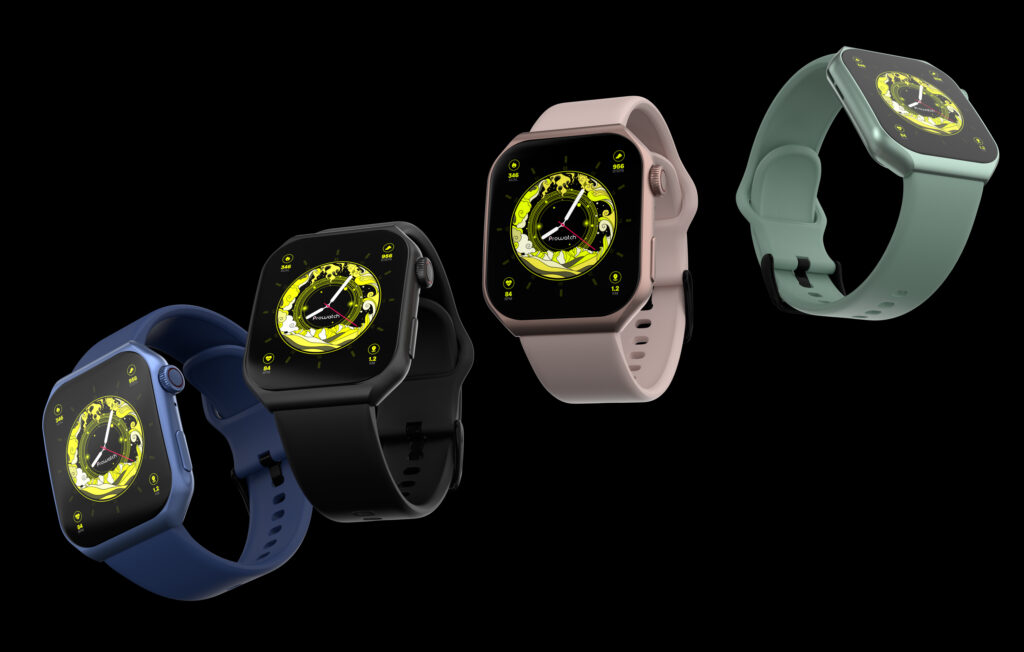
Lava ProWatch V1
Lava ProWatch V1

The ProWatch V1 is available in multiple color options and strap combinations. The silicone strap variants include Black Nebula, Bluish Ronin, Mint Shinobi, and Peachy Hikari, all of which are priced at Rs 2,399 but are now available at a discounted launch price of Rs 1,999.

In addition, there are two metal strap variants: Peachy Hikari Metal, which features a silicone and rose gold metal strap and is priced at Rs 2,699 (Rs 2,299 introductory price), and Black Nebula Metal, which includes a silicone and black metal strap, available for Rs 2,799 (Rs 2,399 introductory price).

Readers should note that the introductory pricing is valid until stocks last.

Lava ProWatch V1 specifications and features

Lava PorWatch V1
Lava PorWatch V1

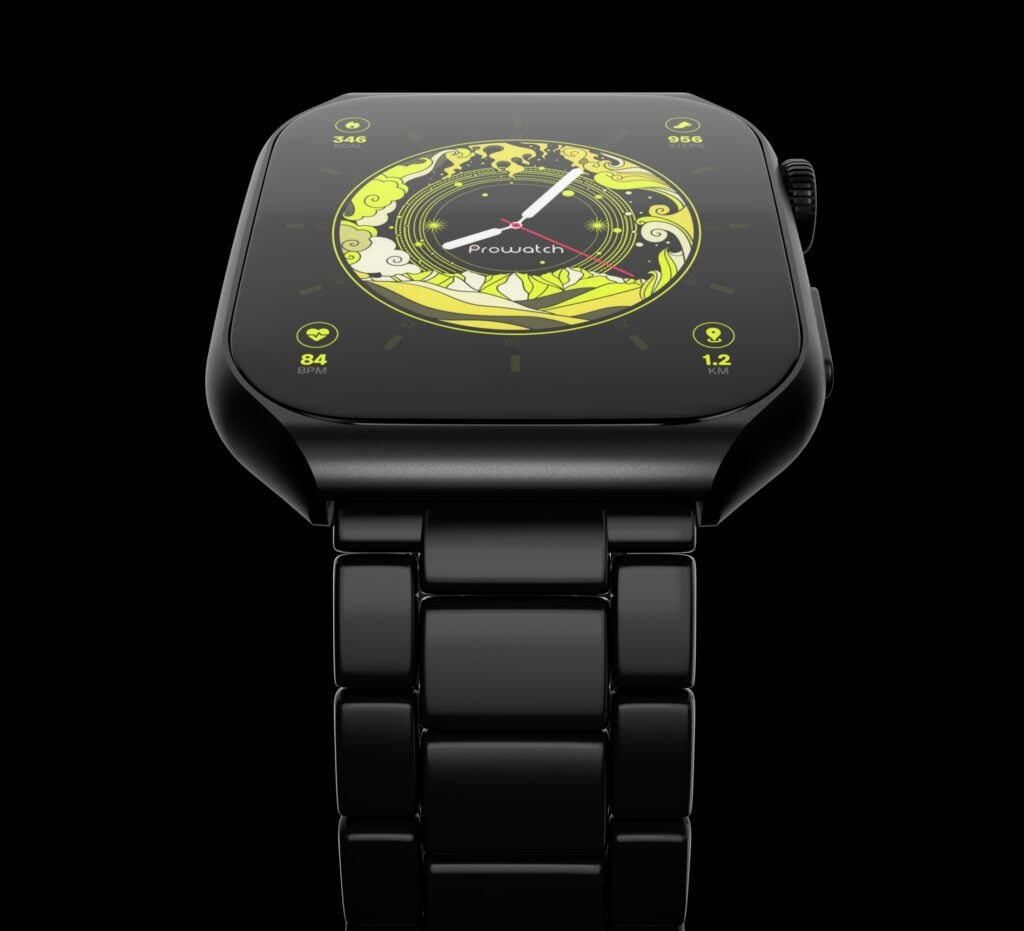
The ProWatch V1 features a 1.85-inch AMOLED display with a high resolution of 390 x 450 pixels. It has an octagonal design and is protected by Corning Gorilla Glass 3 for added durability. For health and fitness tracking, the watch is equipped with a high-accuracy VC9213 PPG sensor and supports over 110 sports modes.

The smartwatch is powered by the Realtek 8773 chipset and supports Bluetooth v5.3 for seamless connectivity. Its 2.5D GPU Animation Engine enhances UI transitions. Assisted GPS ensures precise outdoor activity tracking, while an IP68 rating offers resistance against water and dust.

For more daily updates, please visit our News Section.

Stay ahead in tech! Join our Telegram community and sign up for our daily newsletter of top stories!
Huawei Pura P80 Pro leak reveals a 6.78-inch flat display, 1-inch Sony IMX989 50MP camera sensor

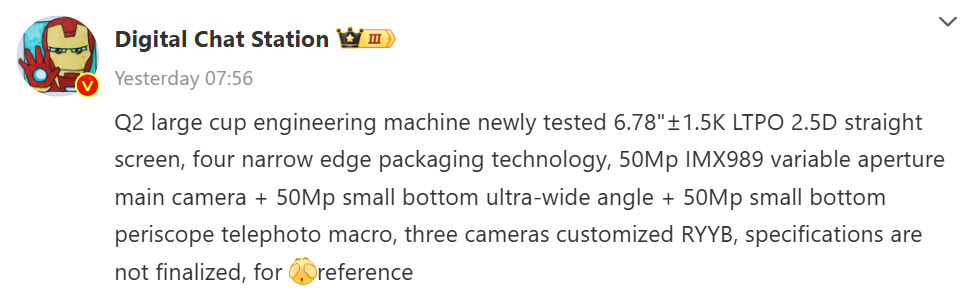
Several reports have claimed that Huawei is working on the Pura 80 series of flagship phones for the Chinese market. Recently, reliable tipster Digital Chat Station shared details of an engineering prototype, which is believed to be the Huawei Pura 80 Pro. The leak reveals that it will feature a flat display and an advanced camera system.

Huawei Pura 80 Pro specifications (rumored)

Huawei Pura 80 Pro specs leak by DCS

As per the leak, the Huawei Pura 80 Pro is being tested with a 6.78-inch 1.5K LTPO OLED display, featuring a 2.5D flat design and ultra-thin bezels. This marks a shift from curved screens in the previous generation. The device is expected to ship with HarmonyOS Next.

The leaker further states that the Pura 80 Pro will feature a 50-megapixel 1-inch Sony IMX989 main sensor with a variable aperture. If true, this would make the Pura 80 Pro one of the few Pro-tier devices to retain a 1-inch sensor, as most brands reserve such features for Ultra models.

The main snapper will be accompanied by a 50-megapixel ultra-wide lens and a 50-megapixel periscope telephoto macro camera. All three sensors will reportedly use a custom RYYB color filter, which enhances low-light performance by increasing light intake by up to 40 percent.

DCS revealed that the Huawei Pura 80 series could launch in the second quarter of this year. While he mentioned the specs of the Pura 80 Pro’s engineering prototype, he also stated that they have not been finalized.

In related news, Huawei will hold a launch event today (March 20) to unveil a new foldable phone with an unconventional screen aspect ratio of 16:10. While the device’s name is under wraps, it is expected to be the first device to come preloaded with the HarmonyOS Next.

For more daily updates, please visit our News Section.

Stay ahead in tech! Join our Telegram community and sign up for our daily newsletter of top stories!
Vivo X200S first official image released; Reveals flat display, wireless charging support

In April, Vivo is expected to host a major launch event in China, unveiling multiple new devices, including the Vivo X200 Ultra, X200S, Pad 4 Pro tablet, and Watch 5. Ahead of the anticipated launch, Vivo’s product manager, Han Boxiao, has shared an image of the Vivo X200S, offering a first look at its design.

Vivo X200S front design revealed

Vivo X200S
Vivo X200S

The image shared by Boxiao confirms that the Vivo X200S will feature a flat display, unlike the micro-quad-curved screen found on the existing X200. The device is placed inside a car for charging, suggesting it will support wireless charging—an upgrade over the X200, which lacks this feature. Another key highlight is the ultrasonic fingerprint sensor, positioned higher on the display, as seen in the image.

Vivo X200S specifications (rumored)

According to reports, the Vivo X200S will sport a 6.67-inch OLED LTPS display with a 1.5K resolution and a 120Hz refresh rate. It is expected to be powered by the upcoming Dimensity 9400 Plus chipset, paired with up to 16GB of RAM and 1TB of internal storage. A 6,000mAh battery with 90W fast charging and 50W wireless charging support will keep the device running.

On the back, the Vivo X200S is said to house a redesigned Zeiss-branded triple-camera setup within a circular camera module. The configuration will include a 50-megapixel Sony IMX921 primary sensor, a 50-megapixel Samsung JN1 ultra-wide lens, and a 50-megapixel LYT-600 3x periscope telephoto camera.

The X200S will continue to feature an IP68/69-rated chassis and a metal middle frame. It is expected to arrive in black and silver shades

For more daily updates, please visit our News Section.

Stay ahead in tech! Join our Telegram community and sign up for our daily newsletter of top stories!
The 5 Best Budget Projectors in 2025 for Home and Travel

Projectors have come a long way from bulky home theater accessories to compact, smart devices you can take anywhere. Whether you’re creating a cozy movie night, streaming content in a dorm room, or setting up a portable presentation on the go, the latest generation of budget-friendly projectors can deliver surprisingly good visuals without burning a hole in your wallet.

Here’s a look at some of the best budget projectors you can buy globally in 2025, featuring models that punch above their price with innovative design, solid specs, and practical usability.

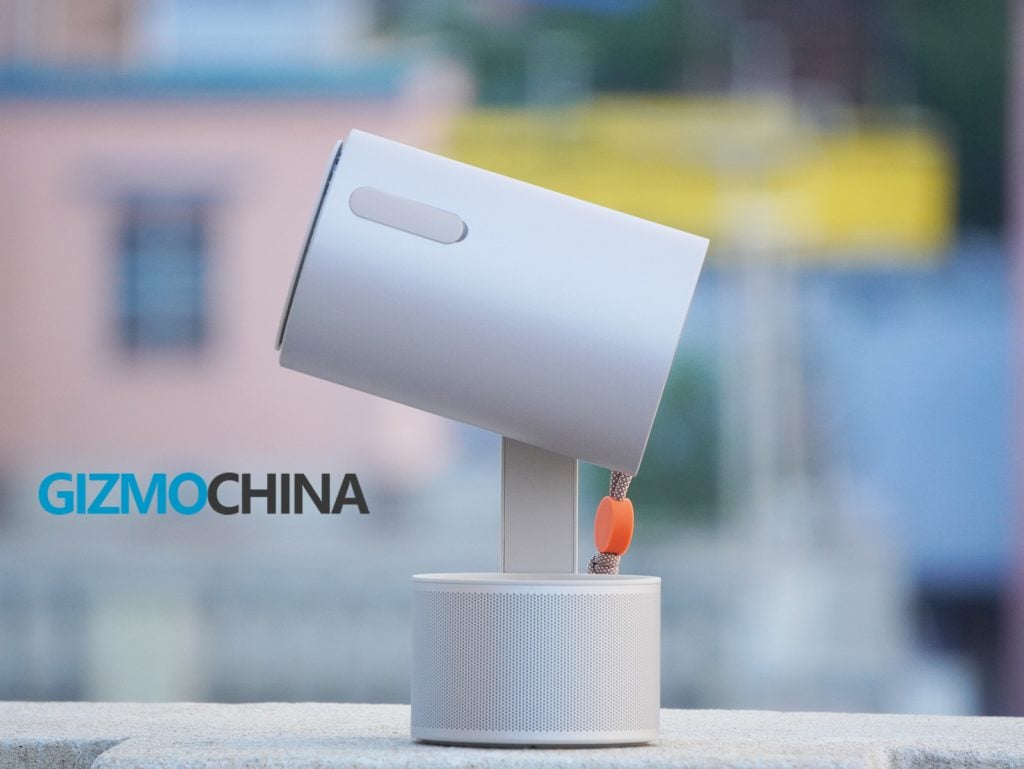
Xgimi MoGo 3 Pro

Xgimi-MoGo-3-Pro-Review

The Xgimi MoGo 3 Pro (our full review) might just be the most versatile option under $500. It comes with Google TV and licensed Netflix built-in, so streaming is effortless. The 1080p resolution with 450 ISO lumens brightness delivers vibrant visuals that hold up well in dimly lit rooms. Color accuracy is solid too, thanks to a 90% DCI-P3 color gamut, and it projects up to 120 inches.

Where MoGo 3 Pro really shines is usability: ISA 2.0 technology handles auto keystone correction, autofocus, and obstacle avoidance, meaning the setup takes care of itself. It also comes with dual Harman Kardon 5W speakers, which are more than capable of filling a small room with crisp audio. The Type-C power input makes it compatible with power banks, and Android/iOS connectivity is seamless. It’s ultra-portable, stable, and designed with smart touches like a lens cover mechanism integrated into its metal stand.

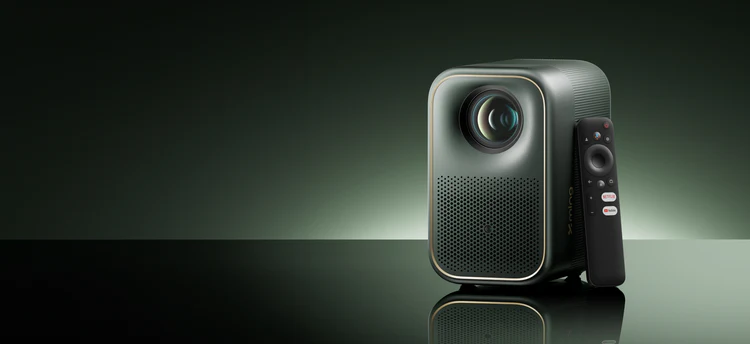
Formovie Xming Page One

Formovie Xming Page One

If you’re after brightness on a budget, the Formovie Xming Page One deserves attention. At just $329, it delivers 500 CVIA lumens of brightness — noticeably brighter than most in this price segment. Native 1080p resolution, a 2000:1 contrast ratio, and HDR10 decoding create visuals with deep blacks and punchy colors, whether you’re watching on a 40-inch or a maxed-out 120-inch screen.

Audio isn’t an afterthought either: two 5W speakers tuned by Boston Acoustics bring full-bodied sound. Auto keystone correction and autofocus come standard, along with intelligent screen alignment and obstacle avoidance. The projector runs on Google TV with certified Netflix, and connectivity includes dual-band Wi-Fi and Bluetooth 5.0. In short, it’s a projector that feels premium in use, with a price that makes it an easy recommendation.

Please Note: When you buy something using the links in our articles, we may earn a small commission at no cost to you.

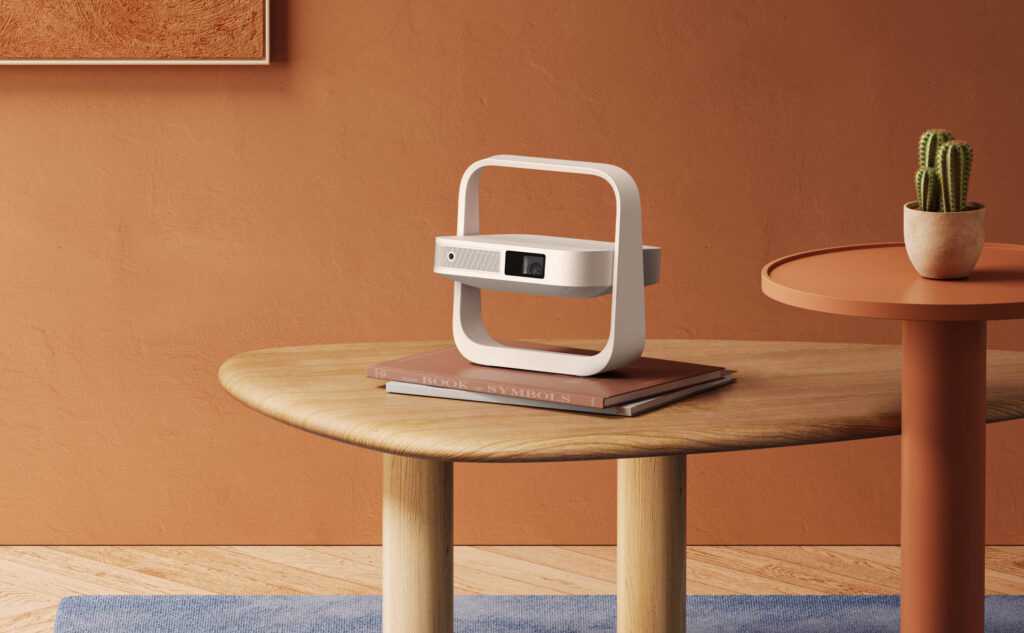
Xgimi Elfin Flip

Xgimi Elfin Flip

Xgimi’s Elfin Flip takes a slightly different approach, designed for those who value portability above all else. This ultra-compact, book-sized projector weighs very little yet manages to produce a 150-inch image with 400 ISO lumens brightness. The design includes a clever 150° rotating stand and handle, making it easy to project from almost any angle or carry it on the go.

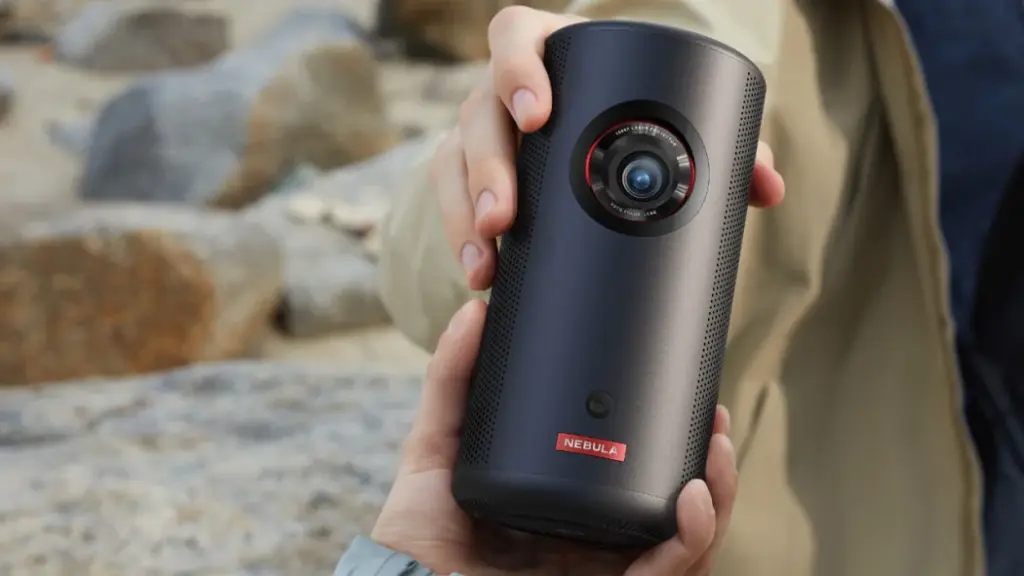
Nebula Capsule 3 Laser

While it uses Xgimi’s custom OS instead of full Google TV, streaming is still smooth with support for DLNA and Miracast. Dual 3W speakers and Dolby Audio support handle sound duties well for its size. And, of course, it benefits from Xgimi’s signature ISA technology for automatic focus, keystone correction, and obstacle detection. If you want something ultra-portable for casual movie nights or travel, the Elfin Flip is a stylish, lightweight pick.

Nebula Capsule 3 Laser

Anker’s Nebula Capsule 3 Laser, meanwhile, takes brightness and battery life seriously. At $749, it’s the most expensive of the bunch, but its laser light source with 300 ANSI lumens stands out for vibrant clarity, even in moderate lighting conditions.

It weighs just over two pounds and is roughly the size of a soda can, yet packs in Google TV, licensed Netflix, Chromecast support, and a 52Wh battery capable of powering 2.5 hours of movie playback or eight hours of music. Setup is painless with near-instant autofocus and auto keystone correction. The standout feature here is the audio: an 8W Dolby Digital speaker that delivers surprising punch for a projector this size. If portability, laser sharpness, and battery life are at the top of your list, the Capsule 3 Laser is a strong contender.

Please Note: When you buy something using the links in our articles, we may earn a small commission at no cost to you.

JMGO Picoflix

JMGO Picoflix

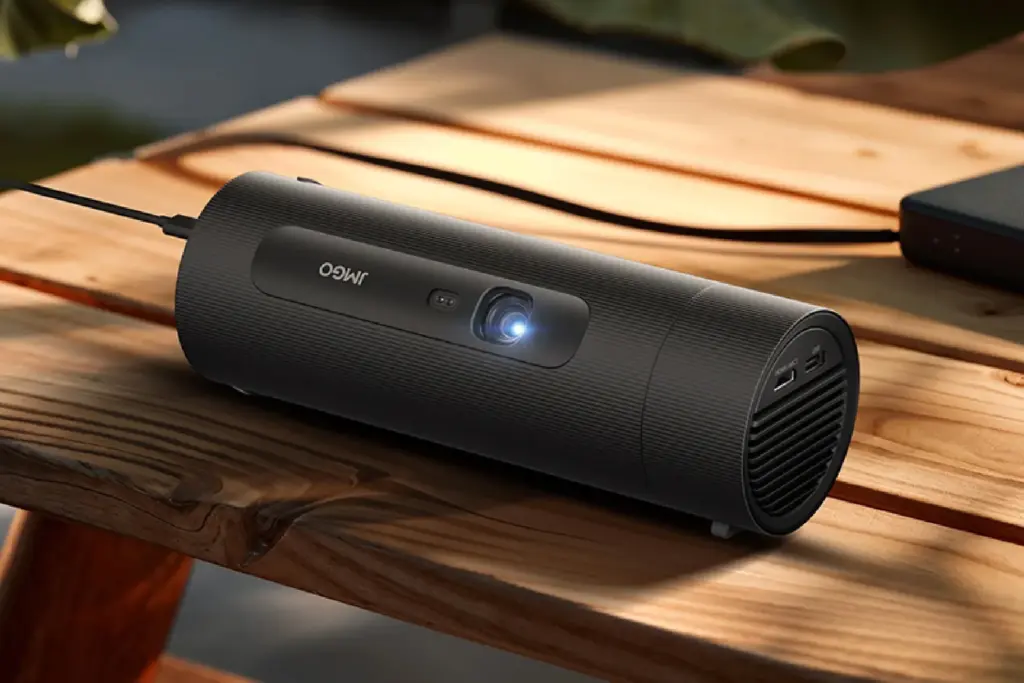
Finally, there’s the JMGO Picoflix, a unique projector that blends portability with innovative design. Priced at $499, it offers 420 ISO lumens of brightness and 1080p resolution, with support for HDR10. The standout feature is its 45-degree gimbal rotation design, allowing it to project on ceilings or walls without complicated setups.

It’s also powered by a 10,000mAh battery, offering up to 4.5 hours of movie playback in power-saving mode. The 10W speaker is surprisingly powerful, and the device includes auto keystone, autofocus, and smart eye protection features. Connectivity is generous with HDMI 2.1 (with eARC), dual USB-A ports, and Type-C input. Plus, it runs Google TV with native Netflix support and even supports 3D playback.

Please Note: When you buy something using the links in our articles, we may earn a small commission at no cost to you.

For more daily updates, please visit our News Section.

Stay ahead in tech! Join our Telegram community and sign up for our daily newsletter of top stories! 💡
Google Pixel 9a Launched: 5100mAh Battery, 48MP Camera & Seven-Year of Updates

Google has launched the Pixel 9a in India and globally. This latest mid-range smartphone features improved cameras, enhanced AI capabilities, and long-term software support.

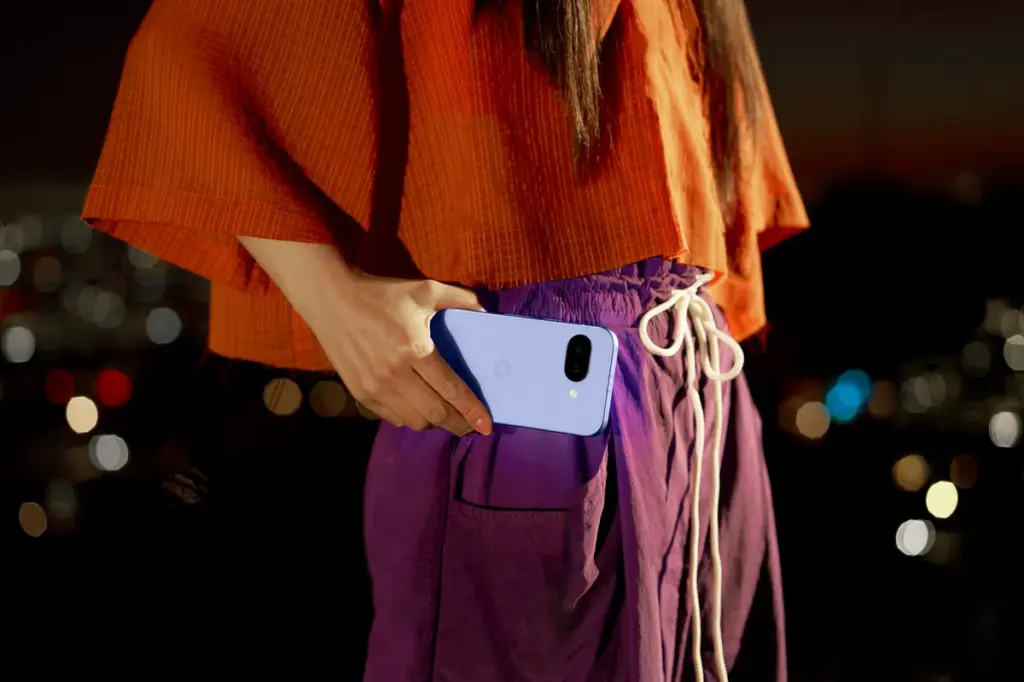
Google Pixel 9a

1. Specifications

The Pixel 9a includes a 6.3-inch FHD+ OLED display with a 120Hz adaptive refresh rate and 2700 nits peak brightness, up 35% from the Pixel 8a. It uses Corning Gorilla Glass 3 and supports HDR. The device runs on Google’s Tensor G4 chip with a Titan M2 security coprocessor, paired with 8GB LPDDR5X RAM and 256GB UFS 3.1 storage in India. It ships with Android 15 and guarantees seven years of OS updates, security patches, and Feature Drops.

2. Camera Details

Google Pixel 9a

The rear camera system comprises a 48MP main sensor (Samsung GN8, OIS) and a 13MP ultrawide lens (Sony IMX712). The front camera uses a 13MP Sony IMX712 sensor. Both support 4K video recording. New AI features include Add Me (combines group photos to include the photographer), Best Take (merges expressions from multiple shots), and Magic Editor (AI-based photo editing). The phone also introduces Macro Focus for close-up shots, a first for the A-series.

3. Design and Durability

Google Pixel 9a

The Pixel 9a measures 8.9mm thick, weighs 185.9g, and features a matte back, polished aluminum frame, and flat edges. It has an IP68 rating for dust and water resistance (1.5m depth for 30 minutes). Indian color options are Iris (new), Obsidian, and Porcelain. The global Peony variant is unavailable in India.

4. Battery and Connectivity

A 5100mAh battery supports 23W wired charging (50% in 30 minutes) and 7.5W wireless charging. Google claims over 30 hours of regular use and 100+ hours with Extreme Battery Saver mode. Connectivity includes 5G, Wi-Fi 6E, Bluetooth 6, NFC, and USB-C 3.2.

5. AI and Software

The phone integrates Gemini Nano for on-device AI tasks like Circle to Search (visual search without app switching) and Pixel Studio (AI-generated images). Gemini Live enables voice interactions, with future support for video/screen-sharing for Gemini Advanced subscribers. Productivity tools include Hold For Me and Call Screen.

6. Security and Parental Controls

Pixel 9a includes the same security features as the Pixel 9 and 9 Pro, such as Theft Protection, Car Crash Detection, and a built-in VPN by Google. The Find My Device feature allows users to share their live location with family and friends.

For families, the Pixel 9a supports Google Family Link, which enables parents to manage screen time, app usage, and privacy settings. School Time mode reduces distractions during class hours by silencing notifications and limiting app access. Google Wallet for kids is rolling out in select countries, allowing children to make safer digital payments under parental supervision.

Pricing, Offers, and Availability

The Pixel 9a is priced at ₹49,999 in India for the 256GB variant, available exclusively on Flipkart starting in April. A limited-period ₹3,000 cashback and 24-month no-cost EMI options are offered through HDFC Bank, IDFC Bank, and Bajaj Finserv.

Globally, the phone starts at $US499 / CAD $679 / €549 /£499 for the 128GB model, and the 256GB model costs US$599 / £599. Sales will begin in April via the Google Store and retailers.

Don’t miss a thing! Join our Telegram community for instant updates and grab our free daily newsletter for the best tech stories!
For more daily updates, please visit our News Section.

(Source)

Sony is working on 200MP and 100MP sensors for smartphones

Samsung has been using its 200MP ISOCELL sensors in the main camera of its flagship Galaxy S Ultra phones. According to a recent rumor, the Galaxy Z Fold 7 will also pack the S25 Ultra’s 200MP sensor. On the other hand, the Chinese OEMs are still using the 50MP sensors for the main camera, because the 200MP ISOCELL sensors have their own limitation.

Snapdragon 8 Elite 2 flagships to pack 100MP main camera

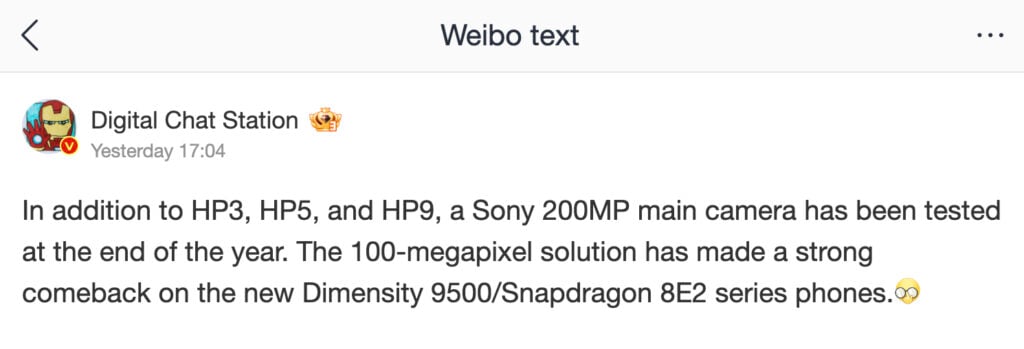
However, it could change soon, as Sony is also working on 200MP and 100MP smartphone sensors. According to Weibo tipster Digital Chat Station, the 100MP sensor will be adopted by many Chinese OEMS for their Snapdragon 8 Elite 2 or Dimensity 9500-powered flagships, which suggests we could see this change with the flagships set to launch towards the end of this year.

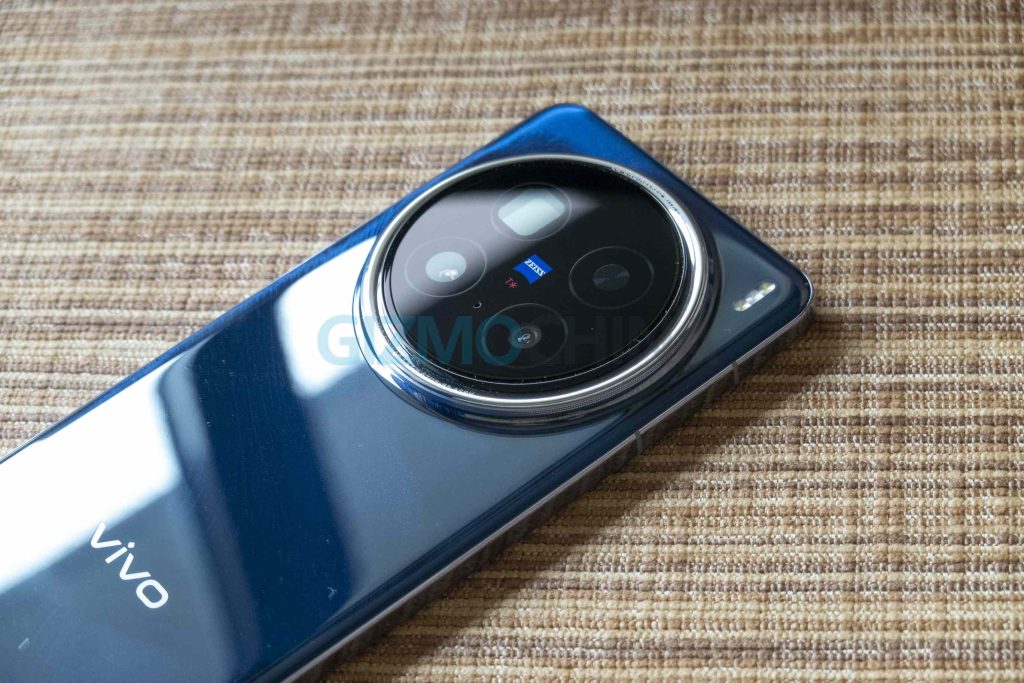
As for the 200MP sensor, Sony is expected to use it in one of its upcoming smartphones and is also expected to sell it to other Chinese OEMs. According to Sammobile, this 200MP Sony sensor will be larger than the 200MP ISOCELL sensors that are used by the vivo X200 Pro (as telephoto) or the S25 Ultra (as main camera).

Judging from the attention the vivo X200 Pro has received due to its 200MP periscope telephoto, it won’t be surprising if most (if not all) the Chinese OEMs switch to the 100MP and 200MP Sony sensors as soon as they can. And not to mention, it will likely offer a reasonable improvement in the details or the overall imaging performance as well.

For a while now, there’s been little to no distinction between the main sensor resolution of an entry-level phone and an ‘Ultra’ phone. Many of the Pro and Ultra phones have been using sensors, and it feels like just the right time for a bump in resolution as well. It will be interesting to see how much improvement the 100MP sensors can bring to the next generation of flagships from China.

Almost all the Pro and Ultra phones from China have been using the large 50MP sensors for a while, and it feels like the right time for a resolution bump. That said, it will be interesting to see how much improvement the 100MP sensors can bring to the next generation of Chinese flagships.

Don’t miss a thing! Join our Telegram community for instant updates and grab our free daily newsletter for the best tech stories!
For more daily updates, please visit our News Section.

(Source)