Advertisement

Poco F7 Ultra, F7 Pro renders leaked ahead of expected March 27 launch

Poco is expected to unveil the Poco F7 Ultra and Poco F7 Pro on March 27 for the global market. A recent report revealed the EU pricing of both handsets, indicating a price hike. Now, tipster Paras Guglani has shared the leaked renders of both devices, showcasing their design for the first time.

Poco F7 Ultra, Poco F7 Pro design revealed via leaked renders

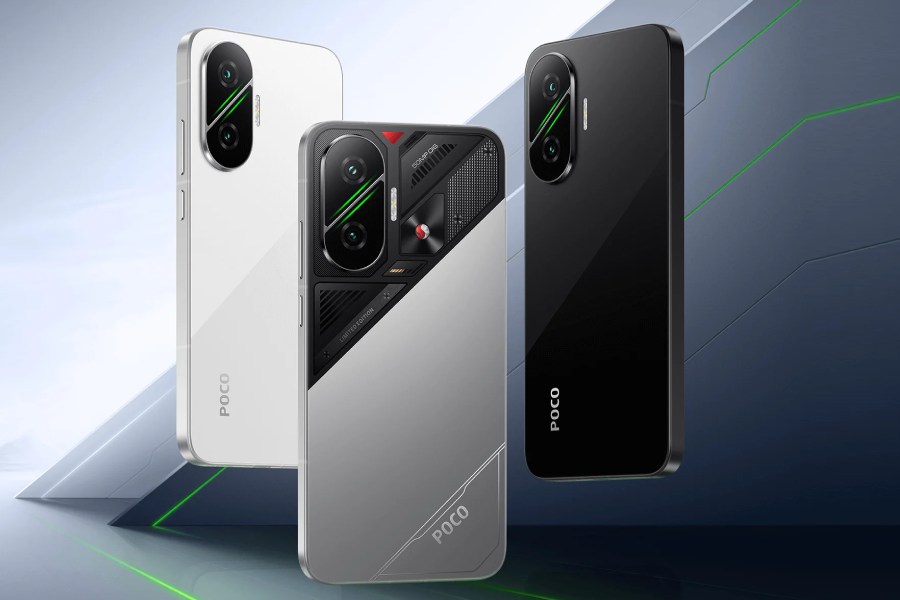
The Poco F7 Ultra leaked renders show that it will be available in yellow and black options. On the other hand, the F7 Pro will be available in light blue and silver. Both devices have a flat display design on the front and a round camera module accompanied by a horizontal LED flash unit on the back. These devices look identical to the Redmi K80 and K80 Pro, respectively, which were announced in China back in November last year.

Poco F7 Ultra, Poco F7 Pro specifications and price (rumored)

In terms of specifications, the Poco F7 Ultra and F7 Pro will be nearly identical to the K80 series. Both devices will feature a 6.67-inch OLED 1.5K 144Hz screen integrated with a fingerprint sensor. The F7 duo will run on HyperOS 2.0-based Android 15.

The F7 Ultra will feature the Snapdragon 8 Elite chipset and a 5,300mAh battery, whereas the F7 Pro will pack the Snapdragon 8 Gen 3 SoC and a 6,000mAh battery. In comparison, the K80 has a 6,550mAh battery, whereas the K80 Pro features a 6,000mAh battery. While the F7 Ultra may support 120W wired and 50W wireless charging, the F7 Pro may offer 90W wired charging.

Both phones may feature a 20-megapixel front-facing camera. On the back, both models may have an OIS-enabled 50-megapixel primary camera and an 8-megapixel ultra-wide lens. The Ultra model may also feature an additional 32-megapixel telephoto camera with 2x optical zoom.

The F7 Ultra may arrive in 12GB+512GB and 16GB+512GB versions, priced at 749 euros and 799 euros, respectively. On the other hand, the 12GB+256GB and 12GB+512GB editions of the F7 Pro may cost 535 euros and 599 euros, respectively.

For more daily updates, please visit our News Section.

Stay ahead in tech! Join our Telegram community and sign up for our daily newsletter of top stories!

(source)

Huawei’s self-developed Kirin PC chip surfaces in wild for the first time

Huawei has been working on HarmonyOS-based laptops for a while now, with an expected launch in 2025. However, a new report suggests the timeline may have been pushed back.

At the same time, we’ve known for a while that Huawei is developing its own PC processor. A report last year hinted that the company’s Kirin PC chip could arrive in early 2025

Aligning with the rumor, a new Kirin chip for PCs called the Kirin X90, has now surfaced on China’s Information Security Evaluation Center.

Huawei Kirin X90 PC chip

Kirin X90 will likely use 7nm fabrication

The listing itself doesn’t reveal much about the chipset, but given Huawei’s limited options, it’s likely built on SMIC’s 7nm process. That means it’s unlikely to match the performance of Apple’s latest M-series chips or even Qualcomm’s Snapdragon X lineup for that matter. 

An earlier report, however, hinted that the performance-wise, the SoC is in the same ballpark as Apple’s M2 chip. It is said to be built on Huawei’s Taishan v130 architecture, featuring an 8-core CPU clocked at 2.5GHz (likely its base frequency). The GPU is rumored to be a 10-core unit codenamed “Ma Liang 920”.

The chip is also expected to support up to 32GB of LPDDR5-6400 memory on a 128-bit bus, with 100GB/s of bandwidth. Storage-wise, it could handle up to 2TB of SSD space and come with three USB-4 ports.

Huawei’s push into the PC processor space is a big deal, but whether its Kirin chip can truly compete outside of China remains to be seen.

Stay ahead in tech! Join our Telegram community and sign up for our daily newsletter of top stories!

For more daily updates, please visit our News Section.

Samsung’s new Game Booster+ elevates gaming on Galaxy phones

Samsung has taken mobile gaming to the next level with the launch of Game Booster+, a new module for its Good Lock app, currently available in Korea. This enhanced version of Samsung’s existing Game Booster feature offers gamers more advanced customization options to optimize their gaming experience on Galaxy phones.

While the original Game Booster allowed users to tweak performance, refresh rates, and charging behavior to prevent overheating, Game Booster+ introduces additional features like key remapping, GPU settings adjustments, and game classification.

Gabe Booster+ features:

The app includes a total of three main features: Game Controller Key Remapping, Enable Game Booster GPU Settings, and Game Category Settings. The first feature, Game Controller Key Remapping, allows users to customize the buttons on their game controllers to suit their preferences. Gamers can create up to four unique profiles, making it easier to switch between configurations for different types of games.

The second feature, Enable Game Booster GPU Settings, is particularly intriguing. It lets you switch between two different GPU settings: PreTransform and Texture Filter. PreTransform is designed to reduce the GPU’s workload during screen rotation in Vulkan-based games, while Texture Filter enhances texture quality. Users can choose between three modes: Default, Performance, and Quality, depending on their preference for speed or visual fidelity.

Lastly, Game Category Settings allows users to manually classify apps as games. This is particularly useful for apps or games that aren’t automatically recognized as such, ensuring they can benefit from Game Booster’s optimization features.

While Game Booster+ is currently exclusive to the Galaxy Store in Korea, tech enthusiasts have already extracted the APK and made it available for download in other regions. However, users are advised to exercise caution while installing the APK or wait for an official release outside the home country.

Samsung has been powering all its Ultra flagships with Qualcomm chips throughout the last couple of generations, and it’s good to see that they are also making some effort to make the most of the expensive hardware.

Stay ahead in tech! Join our Telegram community and sign up for our daily newsletter of top stories!

For more daily updates, please visit our News Section.

The 4 most anticipated Ultra smartphones of 2025

As 2025 approaches, smartphone enthusiasts are already looking ahead to what’s shaping up to be another competitive year in the high-end flagship market. If you’re someone who only upgrades when the biggest and most powerful models hit the shelves, the “Ultra” segment is where you’ll want to focus your attention. 

Next year, four major players are lining up their most ambitious releases yet: the Samsung Galaxy S25 Ultra, Vivo X200 Ultra, Oppo Find X8 Ultra, and Xiaomi 15 Ultra.

Most anticipated ultra smartphones of 2025

These phones will deliver the best set of camera technology, performance, and design, but the real question is—which one will stand out? Let’s break down what we know (and what we can reasonably expect) from each device.

1. Samsung Galaxy S25 Ultra

Galaxy S25 Ultra (2)

Samsung’s Ultra series has long been the benchmark for high-end Android phones, and the Galaxy S25 Ultra isn’t likely to stray far from this formula. If history is any indication, the S25 Ultra will build on the successes of its predecessor, focusing on subtle but meaningful improvements rather than radical redesigns.

The S25 Ultra will likely retain its signature boxy, industrial design but with more rounded edges this time. Its front will feature a 6.8-inch Dynamic AMOLED 2X display, similar to previous models. 

The OLED panel is expected to maintain a resolution of 1440 by 3080 pixels, offering a sharpness of over 500ppi. As a result, individual pixels will remain indistinguishable. Samsung is also likely to continue refining its S Pen integration, keeping it as the go-to choice for productivity-minded users.

On the camera front, the S25 Ultra is expected to upgrade its ultrawide lens to a new 50MP ISOCELL JN3 sensor. The other three cameras—the 200MP main, 10MP telephoto with 3x zoom, and 50MP telephoto with 5x zoom—are likely to remain unchanged.

Powering the S25 Ultra will likely be Qualcomm’s Snapdragon 8 Elite, built by TSMC and officially announced in October 2024. The chipset’s two performance cores reach clock speeds of up to 4GHz, a significant leap from the 3.3GHz offered by the Cortex-X4 on the Snapdragon 8 Gen 3. The S25 Ultra has also been spotted on Geekbench, confirming its use of this powerful SoC.

Please Note: When you buy something using the links in our articles, we may earn a small commission at no cost to you.

2. Vivo X200 Ultra

vivo x100 ultra

Vivo might not have the global footprint of Samsung, but the X series has consistently impressed with its camera-first approach. The X200 Ultra is expected to double down on that strategy, catering to photography enthusiasts who prioritize camera hardware above all else.

The X200 Ultra is rumored to sport a 50MP main sensor, though it might forego the 1-inch size of its predecessor for a smaller 1/1.3″ sensor. 

The brand took a similar approach with the X200 Pro, which launched in October. Vivo swapped out its 1-inch Sony IMX 989 sensor from the X100 Pro for a slightly smaller 1/1.28” lens on the X200 Pro. 

The company, however, claims this new sensor should perform as well as the previous one, and possibly better in certain situations. We assume Vivo might take a similar approach with the X200 Ultra, though the exact camera sensor is still unknown. 

On the performance front, the X200 Ultra will likely run on the Snapdragon 8 Elite. It’s expected to feature a 2K resolution display with a 120Hz refresh rate, delivering a premium viewing experience over the 1.5K screens of the base and Pro variants. The device could also pack a powerful 6,000mAh battery, supporting 100W wired and 50W wireless charging.

3. Oppo Find X8 Ultra

Oppo Find X8 Ultra

Oppo’s Find X series has always combined premium design with powerful performance, and the Find X8 Ultra looks set to continue that legacy.

The Find X8 Ultra is rumored to feature a micro-quad-curved screen, enhancing its immersive feel. It will likely sport a 6.82-inch BOE X2 LTPO OLED panel with a 2K+ resolution and 120Hz refresh rate—possibly the same display debuting on the OnePlus 13.

The camera upgrades on the new model will likely be subtle, yet they remain impactful. The Find X8 Ultra is expected to retain its one-inch primary sensor and periscope telephoto lenses, now with slight focal length adjustments. 

We can also expect 3x and 6x periscope cameras for versatile zoom capabilities. And Oppo will also integrate a Hasselblad multi-spectral sensor to improve color accuracy and low-light performance.

Oppo will also be focusing on durability. The Find X8 Ultra is expected to carry an IP68/69 rating for water and dust resistance. Security-wise, it will feature a single-point ultrasonic fingerprint sensor, ensuring faster and more reliable unlocks.

Powered by the Snapdragon 8 Elite, the Find X8 Ultra will likely offer up to 16GB of RAM and 1TB of storage in its premium models.

4. Xiaomi 15 Ultra

Xiaomi 15 Ultra renders black

Last but not least, we have Xiaomi 15 Ultra. It is expected to feature a 6.73-inch AMOLED panel that features a micro-quad-curved design. It will offer a 2K resolution, a 120Hz refresh rate, and an ultrasonic in-screen fingerprint sensor. The device will run on HyperOS 2-based Android 15.

Under the hood, the Xiaomi 15 Ultra is expected to feature the Snapdragon 8 Elite chip and a 6,000mAh battery with 100W wired and 50W wireless charging support. The 15 Ultra is expected to arrive with up to 16 GB of LPDDR5x RAM and up to 1 TB of UFS 4.0 storage.

For selfies, it is expected to feature a 32-megapixel front-facing camera. The rear camera setup of the device will have a 50-megapixel Sony LYT-900 primary camera with OIS support, a 50-megapixel Samsung JN5 ultra-wide snapper, a 50-megapixel Sony IMX858 telephoto camera, and a 200-megapixel Samsung HP9 periscope telephoto camera with support for up to 100x AI-driven hybrid zoom.

5. Final Thoughts

The Ultra smartphone category in 2025 will bring some of the most ambitious designs and features to market, with each brand taking a unique approach. 

Ultimately, your choice will depend on what you value most: camera capabilities, design, performance, or price. With the first quarter of 2025 just around the corner, we’ll soon see which Ultra smartphone manages to capture the crown. For now, the stage is set for an exciting battle at the top.

Don’t miss a thing! Join our Telegram community for instant updates and grab our free daily newsletter for the best tech stories!

Upcoming Huawei Pura foldable phone to sport new form factor with an unconventional 16:10 screen ratio

Huawei is set to unveil a groundbreaking new smartphone at the Pura Pioneer Ceremony and HarmonyOS Intelligent Mobility launch event on March 20 in China. Today, Huawei’s Executive Director of the Board, Richard Yu, has teased this upcoming device as something beyond a conventional smartphone, revealing subtle hints about its unique design and capabilities.

A new form factor with a 16:10 screen ratio

Richard Yu teases upcoming phone with 1610 screen ratio

A recent teaser video by Richard Yu has provided the first real glimpse of the Huawei Pura device. Unlike traditional smartphones, this model appears to feature a significantly wider and shorter display, possibly introducing a 16:10 aspect ratio. This deviation from the usual smartphone form factors suggests a focus on enhanced usability across multiple modes.

The most intriguing revelation is that this device adopts a vertical clamshell fold, but unlike the compact flip phones on the market, it incorporates an external secondary screen. This design could enable versatile interaction modes, catering to productivity and entertainment alike. Additionally, the device is expected to pack a high-end camera system, supporting zoom levels from ultra-wide to 10x, aligning with Huawei’s recent flagship offerings.

Another major highlight is that this will be the first Huawei smartphone to ship with the stable version of the HarmonyOS Next, moving away from legacy Android dependencies. The software experience is likely to be deeply integrated with Huawei’s ecosystem, offering features such as seamless multi-device collaboration, enhanced AI capabilities, and optimised applications tailored for the new form factor.

While pricing details remain under wraps, Yu has hinted that it will be an accessible product for the masses. As the official launch nears, more details about the device’s hardware, software, and potential use cases will emerge. Huawei’s upcoming release could redefine how foldable devices integrate into daily workflows and entertainment, making it a significant launch in the smartphone industry.

For more daily updates, please visit our News Section.

Stay ahead in tech! Join our Telegram community and sign up for our daily newsletter of top stories!

Oppo Find X8S’ first official image released, 6.31-inch screen to sport slimmest bezels on all four sides

In April, Oppo will announce the Find X8 Ultra alongside the Oppo Pad 4 Pro, the Watch X2 Mini, and the Enco Free 4 TWS earbuds. The brand is also expected to unveil two more Find X8-series models with small and large form factors. According to a recent report, the larger variant, featuring a 6.6-inch screen, could be called the Oppo Find X8s+, while the compact model with a 6.31-inch display will be dubbed the Oppo Find X8s. Today, the Oppo Find-series Product Manager shared a Weibo post not only confirming the Find X8s moniker but also offering the first look at its impressive display.

Oppo Find X8s display design

In the image shared by Yibao, the upcoming Oppo Find X8s is seen on the left, while the iPhone 16 Pro Max is on the right. An Oppo executive claimed that the Find X8s features an advanced display technology developed in-house by Oppo. This next-generation chip-level screen encapsulation technique enables exceptionally slim bezels, pushing the boundaries of smartphone design. The black border around the display measures just 1.xx mm, making it one of the thinnest in the industry.

Oppo Find X8s (lefft) and Apple iPhone 16 Pro Max (right)
Oppo Find X8s (left) and Apple iPhone 16 Pro Max (right)

For context, the iPhone 16 Pro Max is known for having one of the slimmest bezels on a smartphone. A recent report suggested that the bezels on the Find X8s could be even narrower, potentially measuring under 1.38mm.

Oppo Find X8s specifications

As per reports, the Oppo Find X8s (previously known as the Oppo Find X8 Mini) will feature a 6.31-inch OLED panel that offers a 1.5K resolution, a 120Hz refresh rate, and an in-screen fingerprint scanner. It will be powered by the upcoming Dimensity 9400 Plus chipset and a massive 5,700mAh battery with 80W wired and 50W magnetic wireless charging.

The Find X8s will have an OIS-enabled 50-megapixel main camera, an 8-megapixel ultra-wide snapper and a 50-megapixel Samsung JN5 periscope telephoto camera. It is also expected to feature a new push-type Magic Cube hardware button instead of an Alert Slider. It will have an IP68/69-rated chassis with a slim profile of less than 8.15mm and weighing less than 187 grams.

For more daily updates, please visit our News Section.

Stay ahead in tech! Join our Telegram community and sign up for our daily newsletter of top stories!

Vivo X200 Ultra color variants leaked, tipped to sport dual-tone design

Vivo is expected to hold a major launch event in China to unveil a slew of new devices. These include the Vivo X200 Ultra, Vivo X200S, Vivo Pad 4 Pro, and Vivo Watch 5. The Ultra variant will take on the likes of the Xiaomi 15 Ultra, Samsung Galaxy S25 Ultra, and Oppo Find X8 Ultra in the home market. So far, reports have revealed a lot of details about the X200 Ultra variant. However, a new leak released by tipster Digital Chat Station focuses on the design of the phone.

Vivo X200 Ultra design details tipped

Vivo X200 Ultra color options, design details tipped

According to DCS, the early engineering units of the Snapdragon 8 Elite-powered Vivo X200 Ultra were spotted in three colour options: wine red, black, and white. The back panel features AG glass (or possibly glass fibre) instead of vegan leather.

The white variant is said to have a dual-tone design, with a plain upper section and a striped lower section, giving it a distinct “V” shape appearance. However, it is unclear whether all three color options will make it to the final version.

The X200 Ultra will feature a new periscope telephoto camera with a 200-megapixel sensor backed by advanced prism technology. Despite this innovation, the use of large camera sensors will still result in a bulky and heavyweight design, characteristic of imaging-focused flagships.

The X200 Ultra is expected to sport a 2K micro-quad-curved display with ultra-narrow bezels. In the comments, DCS added that a slightly curved display can help reduce the perceived thickness of the device while improving the in-hand feel.

MediaTek will hold the 2025 MediaTek Dimensity Developer Conference (MDDC) on April 11. The event will likely see the launch of the Dimensity 9400 Plus chipset, which is expected to power the Vivo X200S and Oppo Find X8S series that are rumored to launch in the same month.

To recall, the Vivo X200 series debuted as the world’s first Dimensity 9400-powered phones back in October 2024 in China. However, as can be seen above, DCS claimed that it is unclear whether Vivo will launch the first D9400+ phone. This indicates that Oppo’s launch event announcing the Find X8 series will be held a couple of days before the Vivo X200 Ultra launch event.

For more daily updates, please visit our News Section.

Stay ahead in tech! Join our Telegram community and sign up for our daily newsletter of top stories!

OnePlus Ace 5 series cross 1 million activations in just 70 days

OnePlus has announced a major milestone for its Ace 5 series smartphones. According to the brand, the series has achieved over 1 million activations within 70 days of launch, making it the best-selling Ace series model within the same timeframe.

OnePlus Ace 5, 5 Pro: Becomes OnePlus’ fastest-selling Ace series

OnePlus Ace 5 series sales
OnePlus Ace 5, 5 Pro set new sales record with 1 million activations

The OnePlus Ace 5 series debuted in December in China. While the Ace 5 is equipped with the Snapdragon 8 Gen 3 and a 6,415mAh battery with 80W charging, the Pro variant features the Snapdragon 8 Elite SoC and a 6,100mAh battery with 100W charging. The rest of the specifications are identical on both models.

One of the major highlights of the Ace 5 series is the inclusion of a micro-quad curved BOE X2 6.78-inch display that offers a 1.5K resolution and a 120Hz refresh rate. Designed for high-performance gaming, the Ace 5 lineup offers OnePlus’ self-developed “Storm Game Core” technology, along with an advanced cooling system. It also includes a dedicated eSports Wi-Fi chip and bypass charging for stable gameplay.

On the photography front, the OnePlus Ace 5 series is equipped with a 50-megapixel (Sony IMX906) main camera, an 8-megapixel ultra-wide lens, and a 2-megapixel macro camera. It is fitted with a 16-megapixel camera on the front for selfies and video calls.

To sum up, the OnePlus Ace 5 is a toned-down version of the OnePlus 13R available in the global market. While the Ace 5 starts at 2,399 Yuan (~$330), the Ace 5 Pro is one of the most affordable Snapdragon 8 Elite phones, with a starting price of 3,399 Yuan (~$470). Both Ace 5 models are exclusively available in China.

Speculations are rife that OnePlus is working on two Ace-branded phones for the Chinese market. These include the OnePlus Ace 5V with the Dimensity 9350 chip and a 7,000mAh battery and the OnePlus Ace 5S equipped with a 6.83-inch display, the upcoming Dimensity 9400 Plus chipset, and a 7,500mAh battery.

For more daily updates, please visit our News Section.

Stay ahead in tech! Join our Telegram community and sign up for our daily newsletter of top stories!

LG Display Begins Mass Production of 5K2K OLED Gaming Panel with 330Hz Mode

LG Display has started mass-producing a 45-inch OLED monitor panel designed for gaming, featuring a 5K2K resolution (5120×2160) — the highest resolution currently available in a gaming OLED panel. The display contains roughly 11 million pixels, exceeding FHD (1920×1080) by five times and surpassing UHD (3840×2160) by 1.3 times, offering sharper detail for gaming and professional applications like graphic design.

The panel achieves a peak brightness of 1,300 nits, the highest recorded for OLED monitors, improving contrast for realistic visuals. A specialized polarizer reduces glare to maintain deep blacks in bright environments. Users can switch between two modes via LG’s Dynamic Frequency & Resolution (DFR) technology: a 330Hz refresh rate at FHD for fast-paced games or 165Hz at 5K2K for high-resolution content.

The 45-inch screen uses a 21:9 aspect ratio, mimicking cinematic proportions for streaming and multitasking workflows. LG claims the panel emits 50% less blue light than LCDs and eliminates screen flicker, addressing eye strain during prolonged use.

The company plans to expand its Gaming OLED lineup, which includes panels from 27 to 45 inches, to compete in the high-end gaming display market. Won-seok Kang, Head of Large Display Product Planning at LG Display, stated the focus is on improving “picture quality, form factor, and refresh rate to enhance user experience and maintain technological leadership.”

For more daily updates, please visit our News Section.

Tech enthusiast? Get the latest news first! Follow our Telegram channel and subscribe to our free newsletter for your daily tech fix!

Xiaomi Set to Launch Redmi Gaming Tablet Alongside Redmi K80 Ultra

Xiaomi is set to expand its tablet lineup in 2025, with multiple models in development. Among them, the most anticipated is a Redmi-branded gaming tablet, which is expected to launch alongside the Redmi K80 Ultra in Q3 2025.

Xiaomi-Redmi-Pad-Pro
Redmi Pad Pro

According to tipster Digital Chat Station, the gaming tablet will debut in July or August, aligning with previous Redmi flagship launches. While its official name remains unknown, speculation suggests it could be a successor to the Redmi Pad Pro.

The tablet is expected to feature an 8.8-inch LCD display with a high refresh rate, catering to gamers seeking smooth visuals. Powering the device will be MediaTek’s upcoming Dimensity 9400+ processor, an overclocked variant of the Dimensity 9400, ensuring flagship-level performance. Other key features include dual X-axis linear motors for enhanced haptic feedback, dual USB-C ports for improved connectivity, and a dual-speaker setup for immersive audio.

Redmi’s gaming tablet will sport a metal unibody design, promising durability while maintaining a lightweight form factor for extended gaming sessions. The Redmi K80 Ultra is also expected to debut with a Dimensity 9400+ chip, along with a 1.5K resolution flat OLED display, an ultrasonic in-screen fingerprint scanner, a metal middle frame, a 7,000mAh+ battery, and 100W charging.

In other news, the Redmi Turbo 4 Pro (model 25053RT47C) has received 3C certification in China, confirming 90W fast charging. Expected to launch next month, it may feature a 7,000mAh battery—the largest in a Redmi phone. It will be powered by the Snapdragon 8s Elite SoC. The device is set to sport a 6.8-inch 1.5K OLED display with high-frequency PWM dimming, a metal frame, and a 50MP dual-camera setup.

For more daily updates, please visit our News Section.

Tech enthusiast? Get the latest news first! Follow our Telegram channel and subscribe to our free newsletter for your daily tech fix!

(Source, via)

5 Reasons Why Apple iPads are Better than Most Android Tablets

Tablets have become essential tools for work, play, and creativity. In the tablet market, Apple is one of the market leaders, offering great performance and features packed in a premium body. Despite stiff competition from the ever-improving Android tablets, Apple’s iPad consistently dominates the tablet market. So here are a few reasons why iPad tablets are simply superior.

Note: This is a simple list of advantages of iPads or areas where they excel, and not how it is objectively better.

iPad Pro
Apple iPad Pro

1. Premium Build Quality

Apple builds iPads with a sleek and premium design. The body uses materials like aluminum that add a luxurious feel. Now, this isn’t strictly limited to iPads and there are Android tablets that employ both glass and metal as well. However, these are typically premium models, while iPads entire lineup features a high quality build.

Please Note: When you buy something using the links in our articles, we may earn a small commission at no cost to you.

2. Regular and Long-Term Software Updates

Since Android tablets come from different brands that have varying levels of software support, the experience with longevity might differ from model to model. However, Apple offers regular support via updates, which helps keep their iPads secure for longer. These software patches might even bring new features at times. On the other hand, Android tablets often get short-lived update cycles, barring a few exceptions.

3. Seamless Ecosystem Integration

iPads are part of Apple’s tight knit ecosystem. So Apple’s tablets also work seamlessly with other Apple products like the iPhone, Mac, and Apple Watch. So you get access to features like Handoff, AirDrop, and Universal Control, which makes the multitasking across platforms effortless. The current generation of Android tablets offers the same level of cross platform support, but Apple is a veteran in this regard.

4. Top tier Performance

Apple equips its iPads with its A and M series of processors depending on the variant. The former is what powers its iPhones while the M series are usually featured on its MacBooks. So depending on the model you buy, the iPad offers either a flagship smartphone or even laptop level performance, which also strikes a balance in terms of efficiency. The base iPad and iPad Mini feature the A series processor, while the iPad Air and iPad Pro pack M series chips.

Please Note: When you buy something using the links in our articles, we may earn a small commission at no cost to you.

5. Better Resale Value

iPads are built to last and retain their value better than Android tablets. A well-maintained iPad often fetches a higher resale price compared to an Android counterpart, making it a more worthwhile long-term investment.

Please Note: When you buy something using the links in our articles, we may earn a small commission at no cost to you.

In related news, Xiaomi is currently working on a high-end tablet that can challenge Apple’s iPad. You can even click here to check out some of the best iPad alternatives.

Tech enthusiast? Get the latest news first! Follow our Telegram channel and subscribe to our free newsletter for your daily tech fix! ⚡

Apple is rumored to launch the iPhone 17 Ultra, replacing the Pro Max

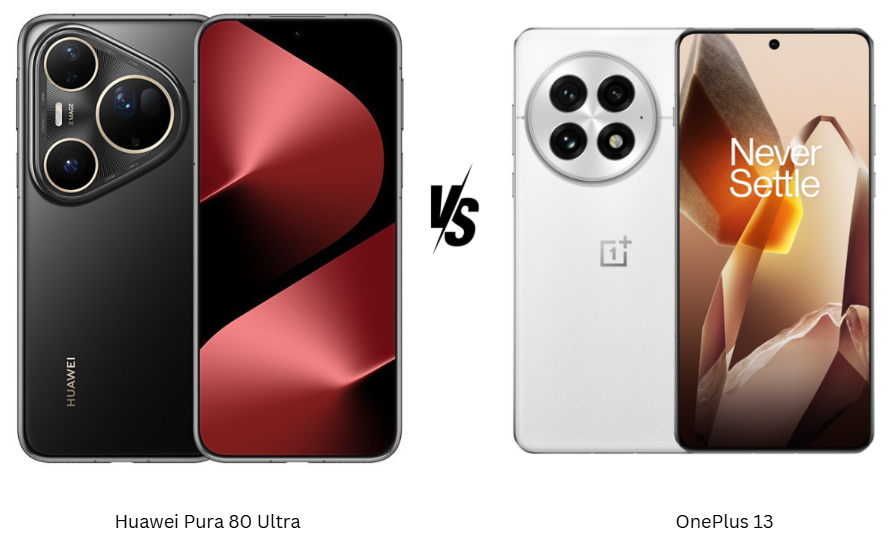
Apple might be making some big changes to its flagship iPhone lineup next year. A new report from Naver suggests that the iPhone 17 Pro Max will be rebranded as the iPhone 17 Ultra, marking the first time Apple has used the Ultra branding on an iPhone. While this isn’t the first time we’ve heard such a rumor, supply chain reports and investor insights are now giving it more weight. If true, the shift could bring some of the most significant iPhone changes in years.

Credit: Asherdipps

A Name Change with a Purpose

The move wouldn’t be entirely surprising; Apple has already introduced the Ultra name for its Apple Watch Ultra and M Ultra chips, and bringing it to the iPhone would create a clearer hierarchy in the lineup. It would also give Apple room to push its highest-end iPhone even further away from the Pro models, potentially with exclusive hardware upgrades and inevitably a higher price tag.

The rumored iPhone 17 Ultra isn’t the only change Apple might have in store. The company is also said to be reworking its lineup, with the iPhone 17 Air possibly replacing the Plus model. The Air branding hasn’t been confirmed, but it would make sense, given Apple’s existing product strategy. The MacBook Air and iPad Air both emphasize thinner, more lightweight designs, which could hint at Apple’s approach for this model.

If the iPhone 17 Ultra is real, it could come with some notable upgrades. Apple is reportedly shrinking the Dynamic Island, adding a vapor chamber cooling system, and boosting battery capacity, which could make the device slightly thicker. Unlike the current Pro and Pro Max models, which share most of their features, Apple might reserve some of these upgrades exclusively for the Ultra.

There are also rumors that Apple is experimenting with a titanium-aluminum alloy frame, making the phone lighter while keeping it durable. The display could measure 6.6 inches with an LTPO OLED panel. Under the hood, Apple is expected to introduce the A19 Bionic chip, likely built on a 2nm process, which could mean significant performance and efficiency gains.

While nothing is confirmed yet, the possibility of an iPhone 17 Ultra is already generating plenty of buzz. If Apple sticks to its usual schedule, we’ll likely see the official unveiling in September 2025, but until then, expect more leaks and speculation to fill in the gaps.

For more daily updates, please visit our News Section.

Stay ahead in tech! Join our Telegram community and sign up for our daily newsletter of top stories! 💡
(Source, Via)

Every Motorola Phones With The Green Line Issues

Motorola is known for offering reliable, budget-friendly, and premium smartphones with near-stock Android experiences. However, like many brands using OLED and AMOLED displays, some Motorola users have reported encountering the dreaded green line issue where a vertical green line appears on the screen (even without physical damage).

The green line problem is commonly linked to display degradation, software updates, or screen hardware failures, affecting multiple smartphone brands, including Samsung and OnePlus. So now, here’s a list of Motorola phones that have been reported to experience the same problem.

Motorola Phones With Green Line Issues
Motorola G82 With the Green Line Issue

Moto Edge 30 Series

Among the various models that are plagued Motorola’s smartphones, the Edge 30 series is one of the earliest models from the Edge family to have this issue. Due to various reports of green lines surfacing on Edge 30, Edge 30 Fusion, and Edge 30 Ultra, the company faced backlash in Asian markets like India. This was incredibly frustrating for buyers of the Edge 30 Ultra, which was a flagship device with a premium price tag.

Moto Edge 40 Series

After the entire green line fiasco surrounding the Edge 30 series, Motorola had seemingly prevented this issue on the premium Edge 40 Pro. But the Edge 40 and Edge 40 Neo weren’t so lucky. Around a year after their release, these devices started being affected by those frustrating green lines. Affected users were left disappointed as these issues typically surfaced right after their Motorola phones went out of warranty.

Moto G82 & Moto G52

Last but not least we had some Motorola G series smartphones from 2022. This includes the Moto G52 and Moto G82. Unlike the Edge 40, some buyers faced green line issues on the Moto G82 within 24 hours of making their purchase. So it was evident that there was no physical damage. Owners of the Moto G52 also shared images on social media of their devices with multiple green lines on the display.

Just like Motorola, we recently covered a list of every Samsung smartphone that has the green line problem. We even made a similar list for OnePlus, which has become infamous for this display issue. There might be more lists like these in the near future, so stick around for more.

For more daily updates, please visit our News Section.

Tech enthusiast? Get the latest news first! Follow our Telegram channel and subscribe to our free newsletter for your daily tech fix! ⚡

OnePlus Pagani: A Surprise Foldable Despite Earlier Denial?

Tipster Max Jambor recently shared the codename “OnePlus Pagani” on X, speculated to be a foldable smartphone. While it could be the internal codename for the OnePlus Open 2, this seems unlikely since OnePlus has officially confirmed that the Open 2 will not be launching in 2025.

This raises the possibility that “Pagani” might be a completely different foldable device. It could either be a sub-flagship foldable or a flip-style phone. Notably, Oppo recently scrapped its plans for the Oppo Find N5 Flip and limited the launch of the Find N5 due to weak sales and surplus inventory. As a result, Oppo might turn to its sister brand, OnePlus, to introduce the flip phone under its name to improve its mainstream appeal. However, this remains speculative, as no concrete information is available. If OnePlus releases a foldable this year, it will contradict its own statement from last month, when the company announced that it had “made the decision not to release a foldable this year.”

Oppo Find N5

In related news, OnePlus is reportedly working on a smaller variant of the OnePlus Watch 3, which is expected to launch in India soon. According to tipster Abhishek Yadav, this new model will feature a 43mm case size with an 18mm strap, compared to the original 46mm version. Additionally, rumors suggest that an Oppo Watch X2 Mini, possibly rebranded as the OnePlus Watch 3 Mini, could launch globally in a 42mm size.

While these details remain unconfirmed, the OnePlus Watch 3, which debuted in China last month, boasts a 1.5-inch LTPO AMOLED display with 2,200 nits peak brightness, housed in a titanium alloy bezel with a stainless steel body. It includes advanced health-tracking features such as an eight-channel heart rate sensor, a 16-channel blood oxygen sensor, a temperature sensor, and a 60-second Health Check function.

(Source)

Elecom unveils the world’s first sodium-ion power bank, offering 9000mAh, 45W USB-C output

Elecom just dropped what it claims is the world’s first consumer-grade sodium-ion power bank, a potential game-changer for portable batteries. Dubbed the Na+ Sodium-Ion Mobile Battery, this 9,000mAh pack ditches lithium in favor of sodium, a cheaper, more abundant alternative that’s also safer and better for the environment.

Elecom worlds first sodium-ion power bank

A Greener Alternative to Lithium-Ion Batteries

Unlike traditional lithium-ion batteries, which depend on scarce metals like lithium and cobalt, sodium-ion batteries use sodium, an element that’s way easier to source. That means less destructive mining, fewer ethical concerns, and a cleaner disposal process. If sodium-ion tech catches on, it could ease supply chain pressures and make battery production less of an environmental nightmare.

One of the biggest perks of Elecom’s new power bank? It works in extreme temperatures. While lithium-ion cells tend to shut down in the cold, this one can function at a bone-chilling -35°C (-31°F) or in heat up to 50°C (122°F). That makes it a solid pick for anyone spending time outdoors in harsh climates, whether you’re hiking in the snow or sweating through a desert trek.

Elecom worlds first sodium-ion power bank

Sodium-ion tech also brings major safety benefits. Lithium-ion batteries are prone to overheating and, in worst-case scenarios, catching fire. Sodium-ion cells? Much more stable, meaning a lower risk of thermal runaway. Plus, Elecom claims this power bank is rated for 5,000 charge cycles, about ten times what a typical lithium-ion battery can handle before degrading.

Despite its next-gen chemistry, Elecom isn’t skimping on modern charging features. The power bank comes with USB-C PD support, delivering up to 45W, which is enough to power smartphones, tablets, and even some laptops. There’s also an 18W USB-A port for added flexibility. The trade-off? It’s heavier than your average power bank at 350g because sodium-ion batteries aren’t as energy-dense as lithium. But at 87×31×106mm, it’s still compact enough to carry around.

Elecom worlds first sodium-ion power bank

As for real-world usage, a fully charged 9,000mAh battery can juice up a 1,800mAh smartphone approximately 2.9 times or a 3,000mAh smartphone about 1.7 times.

Pricing and Availability

Elecom is launching the Na+ Sodium-Ion Mobile Battery in black (DE-C55L-9000BK) and light grey (DE-C55L-9000LGY) for 9,980 yen (~$68). It’s up for preorder on Elecom’s Direct Shop now, with a limit of three per customer. No word yet on when (or if) it’ll be available internationally.

In related news, Baseus has recently introduced a 100W power bank featuring a retractable cable, digital display, and smart cooling.

For more daily updates, please visit our News Section.

Stay ahead in tech! Join our Telegram community and sign up for our daily newsletter of top stories! 💡

(Source, Via)

Haier’s new washing machine can wash your socks, shorts, and coats at the same time

Haier has just dropped what it’s calling the “world’s first lazy washing machine” – the Leader Three-Tub Washing Machine (Model XQGL125-MBLDE697WU1). Available for pre-order now on JD.com, it’s priced at 4,999 yuan ($690). It is officially launching in China on April 17.

Haier Three-Tub Washing Machine

Haier Three-Tub Washing Machine Specs

The standout feature here is its unique three-tub design, which lets you wash different types of clothes simultaneously. The main tub handles standard laundry, while two smaller, laundromat-style drums are meant for socks, shorts, and other small items. Haier says you can get through an entire load in just 22 minutes, a serious time-saver compared to traditional machines.

The smaller drums measure 216mm in diameter and each hold up to 1kg of laundry, but Haier hasn’t disclosed the exact size of the main drum. What we do know is that the entire unit is designed for maximum efficiency while saving space. It measures 600mm wide, 570mm deep, and 1070mm tall, making it easy to fit into tight laundry setups. Plus, it only requires a single power and water connection, so no extra installation headaches.

Beyond just speed and convenience, Haier is pushing hygiene and smart features with this washing machine. It includes medical-grade UV sterilization to kill bacteria, AI-powered controls for easier operation, and a Bra wash program that protects delicate fabrics. The AI dynamic balance technology helps keep vibrations and noise to a minimum, with a max spin speed of 1400 rpm to speed up drying.

For those who hate dealing with half-full laundry loads, there’s a ‘tap-to-wash’ function that lets you quickly start a small wash in one of the upper tubs without firing up the whole machine. And if you’re worried about detergent cross-contamination, Haier has that covered too; its 12-route water circulation system keeps everything separate.

The washing machine runs on a power consumption of 1850W and a Level 1 energy efficiency rating. Noise levels are surprisingly low, with just 48dB during washing and 66dB when spinning—good news if your laundry area is close to your bedroom or living space.

In related news, we recently covered the best JBL alternatives in 2025, including speakers, soundbars, headphones, and earbuds—feel free to check it out.

For more daily updates, please visit our News Section.

Stay ahead in tech! Join our Telegram community and sign up for our daily newsletter of top stories! 💡
(Via)

These $30 Earbuds Have a Built-In Display—And It’s Actually Useful

Ugreen’s HiTune S6 Magic clip-on earbuds put a new spin on open-ear audio with a lightweight design and a 1.6-inch touchscreen on the charging case. You can control music, snap photos, and even scroll through short videos without touching your phone. At just 219 yuan ($30) on JD.com, dropping to 212 yuan ($29) with an early discount, they offer a budget-friendly take on wireless audio.

Ugreen HiTune S6 Magic

Ugreen HiTune S6 Magic Specifications

Unlike traditional earbuds that rely on silicone tips or over-ear hooks, the S6 Magic clips onto the ear with a U-shaped bridge and a flexible titanium wire frame, making them comfortable yet secure. Each bud weighs just 5.6 grams, meaning you’ll barely notice them even after hours of use. Whether you’re hitting the gym, out for a run, or just lounging, these won’t fall off.

The real standout feature here is the touch-sensitive color display on the charging case, which offers 13 different functions. You can check lyrics, control playback, adjust volume, and even customize wallpapers. It also doubles as a remote shutter for your phone’s camera, which could be a fun feature for content creators or selfie lovers.

Under the hood, the S6 Magic packs a 12mm dynamic driver with a bio-composite diaphragm, tuned for deep bass and a wide soundstage. Ugreen’s AI spatial stereo algorithm enhances the listening experience, while an adaptive low-frequency compensation algorithm helps keep sound leakage to a minimum.

For calls, the earbuds use dual microphones with a deep neural network (DNN) noise-reduction system, filtering out background noise for clear conversations. There’s also micro-level directional sound wave tech designed to prevent audio from leaking out, handy if you’re listening to something private in public.

The S6 Magic runs on Bluetooth 5.4, ensuring a stable connection with ultra-low latency, which is a plus for mobile gaming. It supports dual-device pairing, meaning you can seamlessly switch between your phone and laptop. Codec support includes AAC and SBC, with a 10-meter range in open spaces.

Battery life is solid, offering 6 hours of playback per charge, with the charging case extending it to 30 hours. A 10-minute charge gives you 2 hours of playback, and a full charge via USB-C takes around 2 hours. There’s also IPX5 water resistance, so you don’t have to worry about sweat or a little rain.

In related news, we recently covered the best JBL alternatives in 2025, including speakers, soundbars, headphones, and earbuds—feel free to check it out.

For more daily updates, please visit our News Section.

Stay ahead in tech! Join our Telegram community and sign up for our daily newsletter of top stories! 💡

(JD)

Redmi Turbo 4 Pro 3C certified in China ahead of April launch

A new Xiaomi smartphone, identified by model number 25053RT47C, has received 3C certification in China. The device is expected to be the upcoming Redmi Turbo 4 Pro, which is set to launch next month. According to Digital Chat Station, this phone is the much-awaited Redmi Turbo 4 Pro, which will be positioned above the Dimensity 8400-powered Turbo 4 that debuted in January 2025.

Redmi Turbo 4 Pro 3C certified

Redmi Turbo 4 Pro 3C certified

According to the certification listing, the Redmi Turbo 4 Pro may ship with 90W fast charging. Reports surrounding the device have claimed that it will pack a 7,000mAh battery, making it the largest battery ever in a Redmi smartphone.

The Redmi Turbo 4 Pro could be one of the first phones to feature the upcoming Snapdragon 8s Elite SoC. The new chip is said to be built on the same architecture and process as the Snapdragon 8 Gen 3. Early benchmarks suggest that the Turbo 4 Pro could achieve an AnTuTu score exceeding the 2 million mark.

The device is expected to feature a 6.8-inch 1.5K flat OLED display with high-frequency PWM dimming for eye protection. It will sport narrow bezels and rounded corners, enhancing its premium feel. The metal middle frame further adds to its durability.

On the back, the Turbo 4 Pro is likely to include a 50-megapixel dual-camera setup in a vertical layout, though camera performance is not its primary focus. Instead, the device will prioritize raw performance, battery life, and an immersive display experience.

Reports indicate that the Turbo 4 Pro will be positioned between the Turbo 4 and the Redmi K80, offering flagship-level features at a competitive price. Therefore, it is likely that the device will be priced at around 2,300 Yuan (~$320). It will likely be rebadged as the Poco F7 in markets outside of China.

For more daily updates, please visit our News Section.

Stay ahead in tech! Join our Telegram community and sign up for our daily newsletter of top stories!

iQOO Z10 Turbo key specifications leaked, reveals display, cameras, chipset, battery details

iQOO is expected to unveil the iQOO Z10 and Z10 Turbo smartphones in China next month. While the standard model will feature the Dimensity 8400 chip, the Turbo variant will have the Snapdragon 8s Elite onboard. Therefore, these devices are expected to rival the Redmi Turbo 4 and the forthcoming Turbo 4 Pro, which are equipped with the same chipsets. A new leak, courtesy of tipster Digital Chat Station, has revealed the key specifications, detailing its display, cameras, chipset, battery, and charging capabilities.

iQOO Z10 Turbo specifications (rumored)

iQOO Z10 Turbo specs leak

Recent reports have revealed that the upcoming Z10 Turbo will feature a 7,600mAh battery with 90W fast charging support. While DCS has not specified the name of the phone he is referring to in the leak, the battery and charging details suggest that he could be talking about the Z10 Turbo.

The leak suggests that the iQOO Z10 Turbo will feature a 6.78-inch flat OLED LTPS panel that offers a 1.5K resolution. The device is expected to come with a 16-megapixel front-facing camera and a 50-megapixel + 2-megapixel dual-camera setup.

Under the hood, the Z10 Turbo will feature the Dimensity 8400 chip and a 7,600mAh battery with 90W charging. The leaker further states that the device will be equipped with a short-focus in-screen fingerprint sensor and a plastic middle frame.

Reports have revealed that the Z10 Turbo will have a rebranded version dubbed the Vivo Y300 GT. Therefore, the Y300 GT may also pack the same specs as above.

For more daily updates, please visit our News Section.

Stay ahead in tech! Join our Telegram community and sign up for our daily newsletter of top stories!

Redmi Xiaomi 55-inch F Series UHD 4K Smart TV gets a Rs 4000 discount

If you’re looking to grab a new 4K TV at an affordable price, then you should have a look at the Xiaomi’s Redmi 55-inch F Series Ultra HD Smart TV which is on sale for Rs 32,999. With Rs 4000 Instant discount from SBI Credit Card, the user can get the Smart TV at the final price of Rs 28,999. The discount applies only to SBI Card users. Meanwhile, ICICI card users can also get an Rs 2000 instant discount, and HDFC bank credit card users can get an Rs 1000 instant discount.

While purchasing the Xiaomi 55-inch UHD TV, the users should select the respective card while on the checkout to grab the maximum discount. Furthermore, there are No-Cost EMI options also, which further enable easy payments.

Xiaomi’s Redmi 55-inch F Series 4K TV runs FireOS 7, and supports Prime Video, Netflix, and 12000+ other apps on the store. It supports Dual-Band WiFi, and Bluetooth 5.0. The TV supports 2 USB ports, ARC, Ethernet, 3.5mm Audio Jack and 2x HDMI ports. Built-in Fire TV offers support for all the Apps, and also supports direct DTH Set-Top Box integration. It supports AirPlay 2 and Miracast Display Mirroring.

On the hardware front, the Redmi Xiaomi 55-inch TV packs a Quad core ARM Cortex-A55 CPU, 2GB RAM, and 8GB internal Storage.

Bezel-less display offers immersive experience, the Picture Engine helps to offer vivid, well-saturated photos on the display. The Smart TV ships with a 1-year comprehensive warranty and 1 year additional on Pabel warranty.

It is already available at a competitive pricing, and the recent SBI Card discount seems like a cherry on the cake.

Please Note: When you buy something using the links in our articles, we may earn a small commission at no cost to you.