Advertisement

Xiaomi’s new Mijia Water Heater P10 is smarter, faster, and scale-free

Xiaomi has introduced the Mijia Smart Crystal Dual-Tank Electric Water Heater P10 (60L) in China. It will be available for purchase on JD.com starting March 7, with a final price of 3,899 yuan ($535). Let’s check out its key specs.

Mijia Water Heater P10

Mijia Water Heater P10 Specifications

The water heater features an innovative crystal-clear dual-tank system, ensuring clean and healthy water with zero rust and zero metal residue. The heater is equipped with a self-cleaning purification system, eliminating impurities and maintaining high water quality for a safer, more refreshing bath. It sports a compact 607×357×780mm design and a lightweight 26.5kg body, making it easy to install in various bathrooms.

The Mijia heater features a 3300W heating element for rapid dual-tank heating and a steady hot water supply. It comes with intelligent algorithms that learn usage patterns for automatic preheating. It also sports an expanded capacity, delivering up to 840 liters of continuous hot water, making it ideal for families.

The P10 is designed with an advanced polymer-based inner tank, which eliminates the need for a magnesium rod, preventing scale buildup and extending durability. It also comes with an intelligent descaling system, offering 99.5% scale resistance for long-lasting cleanliness. Additionally, it sports strontium-rich mineral technology to improve water quality, providing a spa-like bathing experience that enhances skin hydration.

For enhanced user convenience, the water heater supports remote control via the Mijia App, allowing users to schedule heating, monitor water temperature, and activate sterilization with a single tap. It is also compatible with HyperOS, enabling smart home integration with other devices like voice assistants and smart bathroom fixtures.

Safety is a priority, with nine layers of protection, including extended anti-electric wall technology, triple leakage protection, dry-burn prevention, and over-temperature safety features. It boasts an IPX4 waterproof rating and operates at an energy efficiency level of 80%, ensuring optimal performance while saving electricity. The 5-year warranty on the entire unit and an 8-year inner tank leakage replacement guarantee further highlight its reliability.

In related news, Xiaomi has introduced the Mijia S1, a $70 espresso machine designed to be fast, quiet, and magnetic. The company has also launched a compact temperature sensor with long-lasting battery life.

For more daily updates, please visit our News Section.

Stay ahead in tech! Join our Telegram community and sign up for our daily newsletter of top stories! 💡

Samsung still hasn’t finalized One UI 7 release timeline

One UI 7 release timeline

One UI 7 is one of Samsung’s biggest software upgrades, but its rollout has been probably the worst so far. The brand has not even upgraded a single Galaxy device to One UI. Therefore, the hottest question among Galaxy owners right now is: When is One UI 7 coming to Galaxy devices? Samsung has been completely silent on this. However, a person from the One UI beta team recently shared some information, which only made the matter worse.

If you’ve been tracking One UI 7 news lately, you’d know that a One UI 7 release timeline surfaced on the internet, supposedly leaked out of a Zoom meeting held by Samsung Romania. As per the leaked timeline, the One UI 7 stable rollout will begin on April 18, starting with the Galaxy S24 series and Galaxy Z Fold 6/Flip 6. The leak also details the rollout date for dozens of Galaxy devices. It seems that was only a speculated timeline, as Samsung still hasn’t finalized the One UI 7 rollout.

A Samsung Community moderator part of the One UI beta team said, “Samsung is focused on ensuring a stable and polished release, which is why we avoid providing a fixed timeline until it’s finalized.” He also claims there’s no official release date for the stable One UI 7 update, as the team is still working to refine the software based on beta feedback and ongoing optimizations. This puts all the rumored release dates and timelines to rest.

One UI 7 rollout news

While it’s good to read Samsung’s take on the recent leaks, a much better take could have been the announcement of the One UI 7 timeline. Samsung is testing the patience of Galaxy fans, which doesn’t seem to be ending very soon. This is really disappointing from the brand, given that it has released entry-level phones like Galaxy A06 5G and Galaxy M06 with One UI 7 out of the box while leaving premium devices like Galaxy S24 series and Z Flip 6/Fold 6 in the queue without any release timeline.

Related:
1. One UI 7 beta program isn’t exclusive to Galaxy S24 series
2. 5 One UI 7 features that are making me impatient for this major upgrade

While Samsung is busy dealing with One UI 7 bugs and fixes, Google is halfway through the Android 16 development. The beta 2.1 was just rolled out yesterday, with the stable version expected to be released around June. Samsung needs to keep this in mind as well because if the delay like One UI 7 becomes the new normal for the brand, this could negatively impact the sales figure.

We’ll keep bringing you the latest software news in our One UI 7 section. Make sure to visit it regularly, and also follow our Telegram channel and subscribe to our free newsletter for your daily tech updates! ⚡

More One UI stories:
1. One UI 7 will be the last major upgrade for these Galaxy devices
2. One UI 7 might not bring this awesome Galaxy AI feature on older devices
3. Massive One UI 7 delay making me lose trust in Samsung’s software update policy

Nothing Phone (3a) and (3a) Pro India pricing leaks ahead of launch

Nothing’s upcoming Phone (3a) series is set to launch globally next week. The lineup is expected to be a major refresh from its predecessors, not just in terms of design but in features too. We already know a lot about what the phones will bring to the table—we’ll get to that in a bit—but now a new leak has spilled the price ahead of the official reveal.

Nothing Phone (3a) and (3a) Pro

According to SmartPrix, the Nothing Phone (3a) will start at Rs 24,999 for the base 8GB/128GB variant. The 8GB/256GB option will be priced at Rs 26,999, while the top-of-the-line 12GB/256GB model is expected to cost Rs 28,999.

Nothing Phone (3a) white
Nothing Phone (3a)

Meanwhile, the Pro variant is said to start at Rs 31,999 for the 8GB/128GB model, followed by Rs 33,999 for the 8GB/256GB version and Rs 35,999 for the 12GB/256GB option. The report also suggests that a launch offer will include a Rs 2,000 bank discount.

What to Expect from the Nothing Phone (3a) Series

Starting with the design, both phones will feature a completely different look. The Phone (3a) builds on the design of Phone (2a), but the Phone (3a) Pro introduces a brand new aesthetic in Nothing’s product lineup.

Nothing Phone (3a) Pro

Under the hood, both devices are rumored to pack Qualcomm’s Snapdragon 7s Gen 2. Up front, you’re looking at a 6.77-inch AMOLED display with a 120Hz refresh rate, Panda Glass protection, and a peak brightness of 3,000 nits. 

Powering it all is a 5,000mAh battery, which reportedly charges fully in 56 minutes. As expected, the phones will run Android 15 with Nothing OS 3 out of the box.

The camera setup gets a reasonable split in hardware. Both models feature a 50MP main sensor and an 8MP ultrawide lens, but the Pro variant steps things up with a 50MP periscope telephoto lens offering 3x optical zoom. The standard model, meanwhile, sticks with 2x zoom.

Nothing is also teasing a new feature called Essential Space. It appears to be tied to a dedicated button on the side of the phone, though the company hasn’t revealed exactly how it works just yet.

For more daily updates, please visit our News Section.

Stay ahead in tech! Join our Telegram community and sign up for our daily newsletter of top stories! 💡

(Source)

Dell’s new 27-inch UltraSharp monitor packs 4K, 120Hz & low blue light tech

Dell has introduced the U2725QE, a 27-inch UltraSharp series monitor aimed at professionals, in the Chinese market. It will be available for purchase starting March 3 at a price of 4,699 yuan ($645). Let’s check out its key specs.

Dell U2725QE Monitor

Dell U2725QE Specifications

The U2725QE features a 3840×2160 resolution with a 16:9 aspect ratio, delivering sharp and detailed visuals. It has an IPS Black panel, which enhances contrast with a 3000:1 ratio, significantly higher than standard IPS panels. This technology equips the display with deeper blacks, 47% darker than conventional IPS screens, improving shadow detail and creating a richer viewing experience.

The display comes with VESA DisplayHDR 600 certification, supporting a peak brightness of 600 nits. This ensures vibrant, high-contrast images even in bright environments. It also supports a wide color gamut, covering 100% sRGB, 100% Rec.709, 99% DCI-P3, and 99% Display P3, making it ideal for professionals working with color-sensitive tasks. Dell ensures accuracy by factory-calibrating each unit to a color precision of Delta E<1.5, providing near-perfect color reproduction.

The monitor supports a 120Hz refresh rate for smoother performance, reducing motion blur and screen tearing. It also features a 5ms response time in fast mode (8ms standard), ensuring minimal lag and precise real-time interactions.

Designed with user comfort in mind, the U2725QE is TÜV Rheinland-certified with a five-star Eye Comfort rating. It features hardware-level low blue light technology that reduces harmful blue light emissions by 15% over previous generations while maintaining accurate colors. The monitor also includes an ambient light sensor that adjusts brightness based on surrounding conditions, ensuring a comfortable viewing experience throughout the day.

For seamless connectivity, it equips a Thunderbolt 4 port with 140W power delivery, supporting both video and data transmission while charging devices. Additional connectivity options include HDMI 2.1, DisplayPort 1.4 (both input and output), USB-C, USB-A (10Gbps), RJ45 Ethernet (2.5GbE), and an audio jack. It also features a pop-out interface for quick access to frequently used ports.

The monitor is highly adjustable, offering a 150mm height adjustment, -5° to 21° tilt, -45° to 45° swivel, and 90° pivot rotation, making it adaptable to different working setups. The design follows Dell’s refined “Platinum Silver Plus” aesthetic, featuring a fingerprint-resistant silver finish, an integrated cable management system, and an elegant curved base.

Durability and service are also a priority. The U2725QE comes with a three-year premium panel exchange, meaning even a single bright pixel qualifies for a free replacement. Additionally, it includes three years of on-site replacement service, ensuring minimal downtime for professionals. The dimensions of the monitor, including the stand, are 612.44mm × 189.00mm × 385.68mm (minimum height).

In related news, Lenovo has introduced its first 240Hz OLED gaming monitor, delivering high-end performance. Meanwhile, Thunderobot has launched the Black Warrior ZQ27F210L, a 27-inch 2K gaming monitor with a rapid 210Hz refresh rate.

For more daily updates, please visit our News Section.

Stay ahead in tech! Join our Telegram community and sign up for our daily newsletter of top stories! 💡

One UI 7 beta program isn’t exclusive to Galaxy S24 series

One UI 7 beta program

The One UI 7 beta program kicked off with a slight delay in early December 2024. As anyone would expect, the latest flagship — the Galaxy S24 series — was the first to get an early taste of the newest software. So far, the Galaxy S24 models have received multiple One UI 7 betas, but other users have been left waiting. At one point, it seemed the brand might not push One UI 7 beta to more devices, but fresh information suggests otherwise.

It’s been around four months since the first One UI 7 beta was released, and Samsung is yet to open the beta program for more Galaxy devices. This has never happened in the One UI history. Usually, the beta program expands to more devices within weeks, but not this time. Some reports suggested that Samsung won’t expand the One UI 7 beta program beyond Galaxy S24 and directly release the stable build instead. But no, that’s not happening, unfortunately.

Recently, the One UI 7 beta builds for the Galaxy S23 models were spotted on the server, suggesting that Samsung might announce the beta program for these 2023 flagships. Beta builds were also spotted for the Galaxy Z Fold 6 and Galaxy Z Flip 6. More concrete evidence showed up when Samsung created dedicated pages for Galaxy Z Fold 6, Flip 6, and Galaxy S23 in the One UI Beta Program subforum on its community website.

So, Samsung isn’t restricting the One UI 7 beta program to the Galaxy S24 series. But isn’t that too late? While the beta program would allow users to explore new features before the stable release, the beta testing itself takes a few weeks (at least), and that would push the stable further. We aren’t against beta testing. It’s good for the users as it allows the brand to test and refine the software to give a nearly bug-free experience, but this massive delay somewhat reduces the excitement. Samsung should have released the stable build by now. By the way, if you want to have a look at the possible release timeline, check this post.

Related:
1. 5 One UI 7 features that are making me impatient for this major upgrade
2. Here’s when will Samsung phones get the stable One UI 7 update

Samsung is clearly not communicating well with Galaxy fans. The brand hasn’t properly justified the significant delay behind the One UI 7 rollout. They have only said that One UI 7 is a significant upgrade, and the development took more than two years. We all know Samsung is capable of implementing major changes within a shorter time frame. There are also theories floating on the internet, such as Samsung intentionally delaying the One UI 7 rollout to boost Galaxy S25 sales. Well, we don’t know the exact reason, but Samsung does, and I firmly believe the brand should address the delay and give valid reasons to justify it. Or at least they should start the stable rollout without further delay.

Don’t forget to visit our One UI 7 section for the latest news and rollout plans. Also, follow our Telegram channel and subscribe to our free newsletter for your daily tech updates! ⚡

Also read:
1. One UI 7 will be the last major upgrade for these Galaxy devices
2. One UI 7 might not bring this awesome Galaxy AI feature on older devices
3. Massive One UI 7 delay making me lose trust in Samsung’s software update policy

Xiaomi 15 Ultra vs Galaxy S25 Ultra: Battle of the Ultra Phones

Xiaomi and Samsung are back with their latest premium flagships, the Xiaomi 15 Ultra and Galaxy S25 Ultra. Both phones promise top-tier specs, advanced cameras, and the latest processors. But how do they stack up against each other? Let’s break it down.

Galaxy S25 Ultra vs Xiaomi 15 Ultra

1. Design and Build

Xiaomi 15 Ultra rear view
Xiaomi 15 Ultra

Neither Xiaomi nor Samsung is reinventing the wheel this year. The Xiaomi 15 Ultra sticks to a curved front and metal frame, while the Galaxy S25 Ultra continues with its now familiar industrial design. 

The Galaxy S25 Ultra sports a titanium frame which makes it both lighter and more durable than aluminum. It also features Gorilla Glass Victus 2 on the back and Corning Gorilla Armor 2 on the front. And at 218g, it’s slightly lighter than the Xiaomi 15 Ultra.

Samsung Galaxy S25 Ultra - S Pen
Samsung Galaxy S25 Ultra – S Pen

Xiaomi is using an aerospace-grade glass fiber or eco-leather on the back of the 15 Ultra. Its aluminum frame might not be as tough as titanium, but it keeps the weight in check at 226g–229g. It’s a bit thicker at 9.4mm, likely due to its 6000mAh battery.

Both devices are IP68-rated for dust and water resistance, so they can handle the occasional dunk without issue.

2. Display

In terms of display, both offer LTPO AMOLED panels with QHD+ resolution and adaptive 120Hz refresh rates. The Xiaomi 15 Ultra edges ahead in terms of brightness with a 3,200-nit peak compared to S25 Ultra’s 2,600 nits. That said, let’s not get too caught up in the numbers—both should be plenty bright for outdoor use.

One standout feature of the S25 Ultra is, of course, the S Pen—whether you actually use it or not. Samsung did remove its Bluetooth functionality this year, which is a bit of a downgrade, but it’s still handy for quick notes or doodling when boredom strikes. Plus, the S25 Ultra’s display gets an anti-reflective coating, making it even easier on the eyes.

3. Performance

The new flagships run on Snapdragon 8 Elite (3nm), the latest and most powerful chip from Qualcomm. However, Samsung’s variant is clocked slightly higher, with its Oryon V2 Phoenix L cores hitting 4.47 GHz compared to 4.32 GHz on the Xiaomi 15 Ultra.

In real-world use though, the difference is unlikely to be noticeable. Both devices handle gaming, multitasking, and AI-driven features with ease.

On the software side, Samsung promises 7 years of Android updates with One UI 7, giving it a serious longevity advantage. Xiaomi’s HyperOS 2 offers a slick experience but only comes with 4 years of major updates.

4. Cameras

Cameras are where these two flagships show stark differences.

The Galaxy S25 Ultra keeps its 200MP primary sensor, but Xiaomi has gone for a 1-inch type 50MP sensor with a wider f/1.6 aperture, which should capture more light.

For zoom capabilities, the S25 Ultra has:

  • 3x optical zoom (10MP sensor)
  • 5x periscope zoom (50MP sensor)

Meanwhile, the Xiaomi 15 Ultra offers:

  • 3x optical zoom (50MP sensor)
  • 4.3x periscope zoom (200MP sensor)

Xiaomi’s Leica-tuned optics and larger periscope sensor should provide better detail and natural bokeh, while Samsung’s AI processing and Best Face feature cater to casual users.

On the selfie front, Samsung sticks with 12MP, while Xiaomi opts for 32MP, giving it an edge in resolution.

5. Battery and Charging

The Xiaomi 15 Ultra packs a 6000mAh battery, making it one of the largest in a flagship phone. But that’s for the Chinese variant; the global model is expected to get a slightly smaller 5,410mAh cell, which still beats the Galaxy S25 Ultra’s 5,000mAh.

Xiaomi also crushes charging speeds with 90W wired and 80W wireless charging, compared to Samsung’s 45W wired and 15W wireless. This means the Xiaomi 15 Ultra can fully charge in under 40 minutes, while the S25 Ultra takes nearly an hour. 

6. Extra Features

Alongside S-Pen, DeX mode is an add-on you get on every Samsung flagship that lets you use your phone like a desktop. If you’re into productivity tools, this could be very useful for you.

Meanwhile, Xiaomi offers two-way satellite communication, which lets you send messages even without cellular reception. That could be lifesaving in emergencies.

Both phones have Wi-Fi 7, eSIM support, and ultrasonic fingerprint scanners.

7. Price and Availability

The Galaxy S25 Ultra starts at ₹129,999 in India or $1,300 in the US. Meanwhile, the Xiaomi 15 Ultra is currently only available in China, with a global launch set for March 2. Still for reference, it starts at 6,499 yuan (around $893) in China.

8. Final Thoughts

  • If you want the best stylus experience, longer software support, and a refined AI-powered camera, the Galaxy S25 Ultra remains a solid pick.
  • If you prefer faster charging, more aggressive camera hardware, and a slightly lower price, the Xiaomi 15 Ultra is compelling—if you can get it in your region.

Both phones are iterative upgrades rather than any major innovations. Unless you’re upgrading from a much older model, last year’s Xiaomi 14 Ultra or Galaxy S24 Ultra may still hold up well. But if you’re choosing between the two, it’s a matter of whether you value hardware advancements or Samsung’s ecosystem consistency more.

For more daily updates, please visit our News Section.

Stay ahead in tech! Join our Telegram community and sign up for our daily newsletter of top stories! 

Razer Blade 16 Pre-Orders Go Live: 16-inch OLED at 240Hz, Powered by Ryzen AI 9 & RTX 5090

Razer has opened pre-orders for its 2025 Blade 16 gaming laptop, unveiled at CES in January, positioning it as a high-performance portable system with desktop-grade specs. Starting at $2,800, the ultra-thin device (0.59–0.69 inches thick) pairs AMD’s Ryzen AI 9 Strix Point processors with NVIDIA’s RTX 50 Series GPUs, leveraging a hybrid GPU system to toggle between efficiency and performance.

Razer Blade 16

The base model includes a Ryzen AI 9 365 CPU, RTX 5070 Ti GPU, 32GB of LPDDR5x-8000 RAM, and a 1TB SSD. Top-tier configurations max out at $4,600 with a Ryzen AI 9 HX 370, RTX 5090, 64GB RAM, and 4TB storage. Notably, RAM is soldered, limiting post-purchase upgrades, though dual PCIe 4.0 M.2 slots allow SSD expansion.

All variants feature a 16-inch 2560×1600 OLED display with a 240Hz refresh rate, six speakers, a 1080p IR webcam, and a per-key RGB keyboard. Connectivity includes Wi-Fi 7, Bluetooth 5.4, two USB4 Type-C ports, three USB 3.2 Gen 2 Type-A ports, HDMI 2.1, a microSD reader, and a 3.5mm audio jack. The 90Wh battery pairs with a 200W adapter, supporting the laptop’s 4.71-pound chassis.

In related news, Razer has also launched the Blade 18 (2025), its most powerful laptop yet. It features an 18-inch dual-mode display (UHD+ 240Hz / FHD+ 440Hz), an Intel Core Ultra 9 275HX processor, and an RTX 5090 GPU. It starts at $4,499 for the top configuration (32GB RAM, 2TB SSD). Pre-orders are live on Razer’s website.

For more daily updates, please visit our News Section.

Stay ahead in tech! Join our Telegram community and sign up for our daily newsletter of top stories! 

(Source)

Xiaomi Watch S4 Eurozone Pricing Surfaces on Amazon: Base Model at €159.99, Some Listings Higher

Multiple SKUs of the Xiaomi Watch S4 have been spotted on Amazon listings in Dubai, France, Germany, Italy, and Spain, revealing a range of price points in these markets.

Xiaomi-Watch-S4-price-global

According to these early listings, the black and silver versions of the Watch S4 are expected to have a Manufacturer’s Suggested Retail Price (MSRP) of €159.99 in most Eurozone markets. The ‘Rainbow’ variant is listed at a slightly higher price of €169.99.

Xiaomi Watch S4

The Xiaomi Watch S4 was introduced in China in October 2024 alongside the Pad 7 Pro, Smart Band 9 Pro, Xiaomi 15, and Xiaomi 15 Pro. It is now expected to make its global debut at Mobile World Congress (MWC) 2025 in Barcelona next week. While Xiaomi has confirmed its participation at the event and plans to introduce new products globally, the company has not disclosed specific details about its announcements.

Xiaomi Watch S4 (global model) Specifications

The global variant of the Xiaomi Watch S4 is expected to be available in silver, black, and rainbow color options. It features a 1.43-inch AMOLED display with a 466 x 466 resolution and a peak brightness of 2,220 nits.

Connectivity options include Wi-Fi and Bluetooth 5.3, with Bluetooth calling supported via built-in microphones and speakers. Health and fitness tracking features include a heart rate monitor, accelerometer, and barometric altimeter. Navigation support includes GPS, Beidou, Galileo, and GLONASS. The Watch S4 also features NFC functionality and a 5 ATM water resistance rating, making it suitable for brief swims.

The smartwatch is powered by a 486 mAh Li-Po battery, which is reported to last up to 15 days. It is compatible with smartphones running Android 8.0 and above or iOS 12.0 and higher. However, wrist gesture controls available in the Chinese version are not mentioned in the global variant’s leaked specifications.

For more daily updates, please visit our News Section.

Stay ahead in tech! Join our Telegram community and sign up for our daily newsletter of top stories!

(Source 1, 2, 3, 4, 5, via)

COLORFUL X15 XS 2025: $699 Gaming Laptop with RTX 3050, 144Hz Display, and Upgradable RAM

COLORFUL has released the X15 XS 2025 gaming laptop, designed for budget-conscious gamers and creators. Priced at $699, the laptop comes in a grey finish and offers bang-for-the-buck mid-tier performance.

COLORFUL X15 XS 2025

The X15 XS 2025 runs on a 12th Gen Intel Core i5-12500H processor and an NVIDIA RTX 3050 GPU, supporting 1080p gaming and creative work. Since it weighs 2.1kg, it is quite portable for a gaming laptop.

The laptop features a 15.6-inch FHD display with a 144Hz refresh rate and an 86% screen-to-body ratio. Its 250-nit brightness may limit outdoor visibility, and its 45% NTSC color gamut may not meet the needs of users requiring precise color accuracy.

It includes 16GB of DDR4 RAM, expandable to 64GB, and a 512GB NVMe SSD with an additional M.2 slot for storage expansion. Connectivity options include Wi-Fi 6E, Bluetooth 5.2, HDMI 2.0, Mini DisplayPort 1.4, and multiple USB ports, including USB 3.2 Gen 2 for faster data transfer.

COLORFUL X15 XS 2025

Cooling is managed by Storm Blade 2.0, which incorporates four heat pipes and copper components. Users can switch between four modes using the Control Center via Fn + Esc: Performance for gaming, Entertainment for media, Quiet for reduced noise, and Power-saving mode to extend battery life. The laptop is powered by a 54Wh battery and includes a 150W adapter for fast charging.

Additional features include a 1MP HD webcam, Sound Blaster Cinema 6+ audio, and an anti-skid RGB keyboard. The device runs Windows 11 Home.

While the X15 XS 2025’s hardware supports 1080p gaming and creative tasks, its display limitations may not suit color-sensitive work. However, its core hardware and expansion options make it a practical option in the sub-$700 segment. COLORFUL confirms it will be available through global retail partners soon.

For more daily updates, please visit our News Section.

Stay ahead in tech! Join our Telegram community and sign up for our daily newsletter of top stories! 

(Source, via)

OnePlus Pad / Pad 2 Gets Camera Fixes & February 2025 Security Patch in Latest Update

OnePlus has started a phased global rollout of OxygenOS 15.0.0.601 for its OnePlus Pad 2 and original OnePlus Pad. This update reaches users in India (IN), Europe (EU), and global (GLO) regions—with the Pad 2 also available in North America (NA)—and focuses on maintaining consistent feature updates for both current and previous-generation tablets.

Shared Improvements

OnePlus

Both tablets receive updated visuals in the Notes AI app for a more consistent interface, along with a camera adjustment that restores default settings (no filters) each time the app is reopened. The update also includes the February 2025 Android security patch, along with system stability and performance improvements.

OnePlus Pad 2-Specific Improvement

OnePlus Pad 2

The newer Pad 2 adds landscape mode support for app optimization settings within the Tablet Manager’s Trinity Engine, which manages background processes. OnePlus also says it has extended the battery life in certain scenarios, though no specific figures are provided.

The Pad 2’s build (OPD2403_15.0.0.601) and the original Pad’s build (OPD2203_15.0.0.601) are currently live in the listed regions. The company has not mentioned any region-specific changes. If you have a supported device, you can check for the update manually by going to Settings > System > System Updates.

For more daily updates, please visit our News Section.

Stay ahead in tech! Join our Telegram community and sign up for our daily newsletter of top stories!

(Source 1, 2)

OnePlus 11’s finally gets February update fixing Bluetooth Sync, Live Photo Recovery also added

OnePlus has initiated a phased rollout of OxygenOS 15.0.0.600 for the OnePlus 11 in India (CPH2447_15.0.0.600 EX01). The update introduces functional tweaks, security enhancements, and bug fixes, with a broader release expected in the coming days.

OnePlus 11

Key changes include a new personalized watermark feature in the Photos app and the ability to revert edited live photos to their original state after applying crops, filters, adjustments, or watermarks. The update also addresses a Bluetooth audio-video sync issue during headphone use and resolves a system malfunction triggered when setting the “Snapshot” wallpaper theme after changing the device language.

The update has multiple system improvements that focus on stability and performance, paired with the February 2025 Android security patch. The rollout remains incremental, initially reaching a limited user base before expanding. You can check out the official changelog below.

OnePlus 11 OxygenOS 15.0.0.600 changelog

Apps

  • Adds a new feature to Photos for personalized watermarks.
  • Now you can revert live photos to the original after editing them with “Crop”, “Adjust”, “Filter”, or “Watermark” and saving them.

Interconnection

  • Fixes an issue where the sound and picture are not in sync while you are watching videos with Bluetooth headphones.

System

  • Improves system stability and performance.
  • Integrates the February 2025 Android security patch to enhance system security.
  • Fixes an issue where setting the wallpaper theme as Snapshot after changing the system language may lead to system malfunctions.

Indian users can report bugs via the Google Dialer by entering *#800#, a feedback method currently exclusive to the region. Global users are directed to share issues through OnePlus’ official community forums.

For more daily updates, please visit our News Section.

Stay ahead in tech! Join our Telegram community and sign up for our daily newsletter of top stories! 

(Source)

Realme P3x 5G smartphone goes on sale in India with attractive launch offers

Realme has commenced sales of its P3x 5G smartphone in India, following its launch last week alongside the P3 Pro 5G. The budget device starts at an effective price of ₹12,999 after bank discounts, targeting the competitive sub-₹15,000 segment.

Realme P3x
Realme P3x

The P3x 5G is offered in two configurations: a 6GB+128GB model priced at ₹13,999 (₹12,999 post-₹1,000 bank discount) and an 8GB+128GB variant at ₹14,999 (₹13,999 after discount). It is available via Realme’s website, Flipkart, and offline stores.

The phone features a 6.72-inch full-HD+ display with a dynamic 45Hz–120Hz refresh rate and 240Hz touch sampling. It runs on MediaTek’s 6nm Dimensity 6400 processor, paired with up to 8GB of LPDDR4x RAM and 128GB of UFS 2.2 storage, expandable up to 2TB via microSD. The device ships with Android 15-based Realme UI 6.0, among the first in its price range to adopt the latest OS.

Camera specs include a 50MP primary rear sensor and an 8MP front shooter. Durability is emphasized with IP68/IP69 dust/water resistance, which is uncommon for budget 5G devices. A 6000mAh battery supports 45W fast charging, while a side-mounted fingerprint sensor, stereo speakers, and a 3.5mm audio jack round out the features. Connectivity options include 5G SA/NSA, dual-band Wi-Fi, and Bluetooth 5.3. The phone weighs 197g and measures 7.94mm thick.

In other news, Realme’s P3 Pro is also currently on sale in India with a launch discount of up to ₹1,000. The device also has an IP68/69-rated body and features a 6.83-inch AMOLED display, Snapdragon 7s Gen 3 chipset, and a massive 6,000mAh battery that supports 80W fast charging.

For more daily updates, please visit our News Section.

Stay ahead in tech! Join our Telegram community and sign up for our daily newsletter of top stories!

(Source)

Oppo Pad 4 Pro to debut with Snapdragon 8 Elite in April alongside Find X8 Ultra

Oppo is gearing up for an exciting product launch event in April, where it is expected to unveil not only the Find X8 Ultra, but also its latest tablet, the Oppo Pad 4 Pro. According to renowned tipster Digital Chat Station, the Pad 4 Pro will be the first tablet to feature Qualcomm’s powerful Snapdragon 8 Elite chipset, which will offer a significant upgrade in performance over the Pad 3 Pro.

Oppo-Pad-3-Pro
Oppo Pad 3 Pro

Oppo Pad 4 Pro tipped to launch in April with Snapdragon 8 Elite

The Oppo Pad 4 Pro will debut just six months after its predecessor, the Pad 3 Pro, which was launched in October 2024 alongside the Find X8 series. The Pad 3 Pro was essentially a rebranded OnePlus Pad 2, featuring a Snapdragon 8 Gen 3 chipset and a 12.1-inch IPS display. The upcoming Pad 4 Pro is expected to take things a step further with the Snapdragon 8 Elite (vs 8 Gen 3). It means the upcoming tablet will be able to handle almost anything you can throw at it.

The Oppo Pad 4 Pro could be followed by the standard model, which is expected to share some similarities with the mid-range OnePlus Pad 3. For reference, the Oppo Pad 3 was launched a month after the Pad 3 Pro, which is not only slightly smaller than the Pro model (11.61″ down from 12.1″) but is also much lighter (533 g down from 586).

Both the OnePlus Pad 3 and Oppo Pad 3 use the mid-range Dimensity 8350 chipset, and the Oppo Pad 4 could pack a slightly more capable chipset.

While there’s not much information available about the Oppo Pad 4 series, we can refer to the predecessors to get an idea of what to expect. To recall, the Oppo Pad 3 (or the OnePlus Pad 3) packs an IPS LCD panel that reaches up to 700 nits in peak brightness, has a resolution of 2000 x 2800 pixels, measures 6.3mm in thickness, and weighs 533g. The Chinese version of this tablet is based on ColorOS 15, which is based on Android 15.

On the other hand, the Oppo Pad 3 Pro (launched alongside the Find X8 and X8 Pro back in October) packs a larger 12.1″ display (2120 x 3000 resolution) and is powered by the Snapdragon 8 Gen 3 chip. So the successor, the Pad 4 Pro, is likely to boast the Snapdragon 8 Elite.

Don’t miss a thing! Join our Telegram community for instant updates and grab our free daily newsletter for the best tech stories!

For more daily updates, please visit our News Section.

(Source)

Vivo T4x 5G Indian launch date & Price Point confirmed

Vivo has confirmed its T4x 5G smartphone will launch in India on March 5, revising the original February 20 date. The 6GB RAM + 128GB storage variant will retail below ₹13,000, lower than the initial ₹13,499 launch price of its predecessor, the T3x 5G.

vivo T4x 5G

Teasers reveal the T4x 5G will feature dual rear cameras paired with a ring-style LED flash and be available in two color options. The device is confirmed to include a 6500mAh battery, surpassing the T3x 5G’s capacity and touted as the largest in its price segment. Vivo has also hinted at enhanced durability but has yet to disclose specifics.

vivo T4x 5G

The company plans to announce further details about the phone’s processor, camera capabilities, and protective features in the days leading up to the launch. Like the T3x 5G, the new model will be sold via Flipkart, vivo’s online store, and offline retailers. According to a previous leak, the Vivo T4x will feature the Dimensity 7300.

Positioned as an upgraded version of the T3x 5G, the T4x 5G’s competitive pricing and larger battery aim to appeal to budget-conscious buyers in India’s crowded sub-₹15,000 5G market.

In other news, Vivo has quietly launched the Y39 5G in Malaysia, featuring a 6.68-inch 120Hz LCD, Snapdragon 4 Gen 2, 8GB RAM, and 256GB storage. Like the upcoming Vivo T4x, the Y39 5G also packs a large 6,500mAh battery with 44W fast charging.

Huawei MatePad Pro 13.2 2025 now available in EU & UK with early-bird offers & discounts

Huawei has expanded the global availability of its flagship MatePad Pro 13.2 2025 tablet, initially launched in China last November. Priced at £999.99 (UK), €1,199 (Eurozone), and RM 4,999 (~$1,130, Malaysia), the device includes a Smart Magnetic Keyboard, third-gen M-Pencil, and wireless mouse. Early buyers can claim discounts up to £150/€200/MYR 200.

The tablet features a 13.2-inch OLED display with a 2880 × 1920 pixels resolution, 144Hz refresh rate, and 1000 nits peak brightness. The tablet has a professional-grade color accuracy of ∆E < 1. It also has anti-reflection PaperMatte display technology that reduces glare and improves usability in well-lit environments, although optional FullView or PaperMatte finishes vary by region.

Huawei MatePad Pro 13.2

Powered by the Kirin T92 chipset, base models include 12GB RAM and 512GB storage, configurable up to 16GB RAM and 1TB storage. A dual-cell 10,100 mAh battery supports 100W Turbo Charging, reaching full capacity in around 65 minutes. The device runs HarmonyOS 4.3, supporting multi-window multitasking.

Weighing 580g and measuring 5.5mm thick, the MatePad Pro 13.2 includes a 50MP main camera, an 8MP ultra-wide lens, and a 16MP front camera. Security features include a fingerprint scanner, while stereo speakers with Huawei Sound enhance audio. Connectivity options span Bluetooth 5.2, dual-band Wi-Fi, and USB-C.

The brand has also launched the Mate XT Ultimate Design triple-folding smartphone, as well as the Huawei FreeArc earbuds and the Huawei Band 10 fitness band in multiple global markets.

For more daily updates, please visit our News Section.

Stay ahead in tech! Join our Telegram community and sign up for our daily newsletter of top stories!

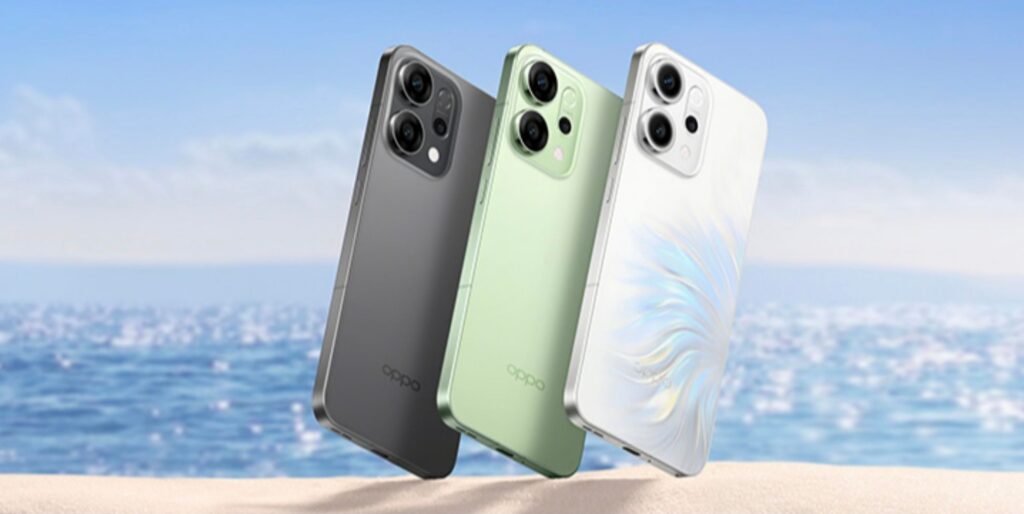
Oppo Reno 14 Pro specs tipped: 50MP periscope, ultrasonic fingerprint scanner, and a special feature

Oppo is reportedly gearing up to introduce its next-generation Reno 14 series in mid-2025, with the Reno 14 Pro expected to bring flagship-grade features to the mid-tier smartphone market.

According to the latest leak, the device will include a Quick Button for camera functions, similar to Apple’s Camera Control button. Not to mention, this is going to be one of the key selling points of the device. The Reno 14 Pro will likely launch around June 2025.

Oppo Reno 13 Pro
Oppo Reno 13 Pro

Rumored specs and features:

According to Weibo tipster Digital Chat Station, Oppo plans to equip the new model with some premium features, such as a 3D single-point ultrasonic fingerprint reader and 0809 haptics for more immersive tactile feedback. These upgrades will complement existing premium features like IP68/69 water and dust resistance and metallic mid-frames.

The Reno 14 Pro is also rumored to feature a 1.5K AMOLED display and a powerful MediaTek Dimensity 8350 (vs Dimensity 8300) chipset. On the camera front, the device is expected to boast a triple 50MP rear camera setup, which includes a Sony IMX882/ ISOCELL JN5 sensor for 3x periscope telephoto and Samsung ISOCELL JN5 sensors for mid-focus shooting.

One of the standout features of the Reno 14 Pro could be the inclusion of Oppo’s Quick Button, a capacitive-style button that debuted in the Find X8 series. This button is designed to provide quick access to camera functions. It could also serve as a shortcut for other features, making certain tasks easier to complete.

According to reports, these upgrades may also extend to other Oppo sub-flagship devices, such as the successors to the K12 series, OnePlus Ace 3V, and even the Nord 4. As mid-2025 approaches, more details about the Reno 14 Pro and its siblings are expected to emerge.

Don’t miss a thing! Join our Telegram community for instant updates and grab our free daily newsletter for the best tech stories!

For more daily updates, please visit our News Section.

(Source)

Tecno Spark Slim is incredibly thin at 5.75mm, but packs a bigger battery than the S25 Ultra

Smartphone brands seem to be focusing on making devices thinner in 2025. Samsung recently revealed the Galaxy S25 Edge with a slim design, and Apple is rumored to be launching the iPhone 17 Air later this year. Now, Tecno is joining the trend with the Spark Slim, a concept phone set to be showcased at MWC 2025.

The Spark Slim measures just 5.75mm thick, making it the world’s slimmest phone, according to Tecno. Despite its slimness, it packs a 5,200mAh battery, which is even bigger than what you get on the Galaxy S25 Ultra, which measures 8.2mm.

The phone has a 6.78-inch curved AMOLED display with a 1.5K resolution and a 144Hz refresh rate. Tecno also claims the screen has a peak brightness of 4,500 nits which should be plenty for outdoor visibility.

Many slim smartphones trade battery life for design, but Tecno says the Spark Slim avoids this issue with a high-density battery and 45W fast charging. Under the hood, it runs on an octa-core processor—though Tecno hasn’t revealed exactly which chip it’s using.

On the back, the Spark Slim sports a dual 50MP camera system, while the front gets a 13MP selfie shooter. Tecno has also added a light band around the rear cameras for a bit of extra flair.

The company says it prioritized both durability and weight, using recycled aluminum and a stainless steel unibody. And design-wise, the Spark Slim is definitely eye-catching—especially its camera module. 

It features a horizontal, pill-shaped layout, but instead of the usual centered sensors, the two cameras sit at the far left and right. The look is somewhat reminiscent of the rumored iPhone 17 Air renders that have been making the rounds.

Tecno will display the phone at its MWC 2025 booth. Hopefully, we will be there to give you more details on it.

For more daily updates, please visit our News Section.

Stay ahead in tech! Join our Telegram community and sign up for our daily newsletter of top stories! 

These Xiaomi devices won’t get HyperOS 2.1 update

Xiaomi HyperOS 2.1

HyperOS 2.1 introduces several new features and a host of improvements to make it more useful while also improving the overall software experience. This includes a networkless mode, improved night photography, seamless file transfer, game upgrades, and more. However, several Xiaomi, Poco, and Redmi devices will not be upgraded to HyperOS 2.1.

Review the list below to know if you’ll need to upgrade to a newer model to enjoy the latest features:

Xiaomi devices that won’t get HyperOS 2.1 update

The list has been shared by XiaomiTime, which also includes some top-end models and a Xiaomi tablet.

  • Xiaomi 11 series
  • Redmi Note 12
  • Redmi Note 12 5G
  • Redmi Note 12 Pro
  • Redmi Note 12 Pro 5G
  • Redmi Note 12 Pro+ 5G
  • Xiaomi 11 Lite 5G NE
  • Poco M5 series
  • Poco M5s
  • Poco X5
  • Poco X5 Pro
  • Poco F4
  • Poco F4 GT
  • Redmi K50
  • Redmi K50i
  • Redmi K50 Pro
  • Redmi K50 Gaming
  • Xiaomi Pad 6

These devices are unlikely to receive HyperOS 2.1 and upcoming HyperOS releases. You may need to upgrade to a newer model to enjoy the latest features and enhancements.

What’s new in HyperOS 2.1

There’s a new Networkless mode, which allows voice chats without an internet connection. It allows users to communicate effectively even in areas with poor connectivity. The HyperOS 2.1 update also improves device connect prompts and makes file transfer a seamless experience.

The camera is also getting several improvements. The night version is getting better. Xiaomi has also improved snapshot capabilities and imaging performance across wide-ranging lighting conditions. The update also brings a redesigned album layout, new album display columns, and enhanced search functions.

The image recognition with circle to search feature also gets better. The Gaming Toolbox is updated with a performance dashboard. The update also enhances gaming experience and gaming interface.

Also read:
1. Best Xiaomi smartphones of all time
2. Xiaomi drops software support for these devices

Poco M7 5G’s camera specifications, battery size, and more officially confirmed

Poco will take off covers from the Poco M7 5G on March 3. Its landing page available on Flipkart has been gradually confirming its key specifications. The updated page has now revealed the camera specifications, battery size, and several other details about the M7.

Poco M7 5G’s key details officially confirmed

Poco M7 5G camera specs

The Poco M7 5G is confirmed to feature a 50-megapixel Sony IMX852 primary camera, which will be capable of recording 1080p videos at 30fps. For selfies, it is equipped with an 8-megapixel front-facing camera.

Poco M7 5G battery and charging details

The brand has already confirmed that the Poco M7 5G will be powered by the Snapdragon 4 Gen 2 chipset and 6 GB of RAM. It will arrive with 6 GB of virtual RAM, 128 GB of built-in storage, and a 5,160mAh battery. While the device’s retail box will include a 33W charger, it will support 18W charging via a USB-C port.

While Poco hasn’t confirmed the OS of the Poco M7, its Geekbench listing that was seen back in December 2024 suggested that it may ship with Android 14. Nevertheless, the brand has confirmed that the M7 will be treated with two OS upgrades and four years of security updates.

The Poco M7 5G is equipped with a massive 6.88-inch IPS LCD panel that offers an HD+ resolution, a 120Hz refresh rate, and 600 nits of brightness. According to the brand, the Poco M7 5G prioritizes eye safety with TUV certifications, ensuring a comfortable viewing experience. It features TUV Low Blue Light, reducing blue light exposure to minimize eye strain and sleep disturbances.

Poco M7 5G color options

TUV Flicker-Free certification confirms reduced screen flickering, preventing discomfort during prolonged use. Additionally, TUV Circadian certification adjusts blue light emission based on the time of day to support a healthy sleep cycle. In terms of durability, the Poco M7 5G will arrive with IP52-rated protection against dust and splashes.

Poco M7 5G price in India

Poco M7 5G price hint

Poco has already hinted that the Poco M7 5G will have sub-Rs 10,000 pricing. It will be sold in shades like Satin Black, Mint Green, and Ocean Blue.

For more daily updates, please visit our News Section.

Stay ahead in tech! Join our Telegram community and sign up for our daily newsletter of top stories! 

One UI 7 update: eligible devices list, release date, and new features

Samsung One UI 7 update release date

Samsung’s One UI 7 is a pretty significant update that brings plenty of visual changes across the UI, new features, and a host of improvements. From smarter navigation to deeper customizations, this is shaping up to be one of the most exciting upgrades yet. However, the rollout has been disappointing so far. Samsung still hasn’t updated a single Galaxy device to One UI 7.

If you’re also waiting for the One UI 7 update, check the release timeline below. To give you a better picture, we have also shared the complete list of One UI 7 eligible devices and the major highlights of this upgrade in this article.

One UI 7 update: complete list of eligible devices

  • Galaxy S series: S24, S24+, S24 Ultra, S24 FE, S23, S23+, S23 Ultra, S23 FE, S22, S22+, S22 Ultra, S21, S21+, S21 Ultra, S21 FE
  • Galaxy Z series: Fold SE, Fold 6, Flip 6, Fold 5, Flip 5, Fold 4, Flip 4, Fold 3, Flip 3
  • Galaxy Tab series: Tab S10+, Tab S10 Ultra, Tab S9, Tab S9+, Tab S9 Ultra, Tab S9 FE, Tab S9 FE+, Tab S8, Tab S8+, Tab S8 Ultra, Tab S6 Lite (2024), Tab A9, Tab A9+, Tab Active 5, Tab Active 4 Pro
  • Galaxy A series: A73, A55, A54, A35, A34, A33, A25, A24, A23, A16 (LTE/5G), A15 (LTE/5G), A14 (LTE/5G), A06, A05s
  • Galaxy M series: M55, M55s, M54, M53, M35, M34, M33, M15, M14 (LTE/5G), M05
  • Galaxy F series: F55, F54, F34, F15, F05
  • Other Galaxy devices: Xcover 7, Xcover 6 Pro, C55

Samsung hasn’t published a list of devices that will be upgraded to One UI 7, but then how did we choose the devices? Well, we took the software update policy into account to prepare this list.

Related:
1. 5 One UI 7 features that are making me impatient for this major upgrade
2. Samsung could skip One UI 7.1 because of delayed One UI 7 rollout

One UI 7 update release timeline

After a long wait, Samsung released the One UI 7 with the Galaxy S25 series in January. Everyone was expecting the rollout to begin with the S25 series launch, but it has been a waiting game so far. The brand still hasn’t updated a single Galaxy device to One UI 7. Even the Galaxy S24 series, which started getting One UI 7 beta in early December, is waiting for a stable update.

Besides a significant delay, Galaxy fans are angry at Samsung for not releasing the One UI 7 release timeline. However, it appeared in a recent leak. The leakster claims this information was being shared by Samsung Romania during a Zoom meeting for the Galaxy S25 series workshop. Here’s the leaked rollout timeline:

Galaxy S series

  • Galaxy S24/S24+/S24 Ultra: April 18
  • Galaxy S24 FE: April 18
  • Galaxy S23/S23+/S23 Ultra: April 25
  • Galaxy S23 FE: May 16
  • Galaxy S22/S22+/S22 Ultra: May 16
  • Galaxy S21/S21+/S21 Ultra: May 23
  • Galaxy S21 FE: May 23

Galaxy Z series

  • Galaxy Z Fold 6: April 18
  • Galaxy Z Fold 5: April 25
  • Galaxy Z Fold 4: May 16
  • Galaxy Z Fold 3: May 23
  • Galaxy Z Flip 6: April 18
  • Galaxy Z Flip 5: April 25
  • Galaxy Z Flip 4: May 16
  • Galaxy Z Flip 3: May 23

Galaxy A series

  • Galaxy A54: April 25
  • Galaxy A53: May 23
  • Galaxy A34: May 16
  • Galaxy A33: May 23

It doesn’t take long to realize that many Galaxy devices are missing from the list. This includes several Galaxy A-series models and the entire Galaxy M series, Galaxy Tab series, and Galaxy F series. They will also get the update sometime within the first half of 2025.

The leaked timeline published above seems to be in line with recent leaks. However, I recommend taking it with a pinch of salt.

What’s new in One UI 7?

One UI 7 quick settings

Design and UI changes:

  • Now Bar: It’s a pill-shaped UI element that appears at the bottom of the lock screen and provides quick access to ongoing activities, such as music playback, timers, and navigation updates.
  • New app icons: Almost all stock apps have received an upgrade to their icons, which offer a more colorful appearance. They look better and are easier to recognize.
  • Widgets: The widgets now have a bolder look and a more vibrant color palette, making them visually appealing and consistent across the interface. One UI 7 lets you freely place the widgets on the home screen, and there are new interactive widgets as well.
  • Revamped Camera app: The Camera app gets a needed makeover, making it less cluttered and more intuitive. The newer layout has fewer on-screen options and easier zoom controls.
  • New charging animations: The newer charging animations look cool and enhance the visual experience. When the device is locked and plugged in, One UI 7 uses the Now Bar to display the charging status and battery level with a unique green progress bar. When the device is unlocked, plugging in the charger causes the battery icon to turn green and show a “Charging” text animation.
  • Smoother animations: The animations are way better than before, making opening apps, switching apps, and even navigating the UI a smoother experience.

Customizations:

  • Vertical app drawer: Yes, it’s finally here. You can now enjoy a vertical app drawer in One UI 7.
  • Home screen: It’s much more customizable than before, with the ability to create free-form layouts. The Home Up integration into One UI Home removes the need for a separate app. You can also add stickers on the home screen.
  • Lock screen: New clock styles with customizable fonts, colors, and sizes make the lock screen more personalized. Users can change the clock location and add more widgets. The “Suggest” option generates new background styles based on the current wallpaper.
  • Quick Settings: The notifications and quick settings panel are now separated. Swiping down from the top left opens notifications, and swiping down from the top right opens the Quick Settings panel. You can revert the changes anytime. One UI 7 brings more freedom to customize the Quick Settings panel.

Galaxy AI features:

  • Writing Assist: now works across the UI. You can select texts anywhere on your Samsung Galaxy and improve them on the go.
  • Call transcriptions: The feature can automatically transcribe recorded calls in up to 20 languages. So, you don’t have to take manual notes during calls or listen to the entire recording for a specific detail.
  • Now Brief: It uses on-device AI to present relevant information based on time and user habits. It uses a “Personal Data Engine” that requires extensive on-device processing. Samsung hinted that this feature might not come to older Galaxy devices (read more about it here).
  • Audio eraser for videos: This tool improves the audio quality of videos by removing unwanted background sounds, which improves the overall listening experience.
  • Object eraser for videos: The object eraser video now also works for videos in One UI 7. It allows users to select and remove unwanted objects from video frames.

More One UI stories:
1. Samsung reveals the reason behind One UI 7 delay
2. One UI 7 will be the last major upgrade for these Galaxy devices
2. Massive One UI 7 delay making me lose trust in Samsung’s software update policy