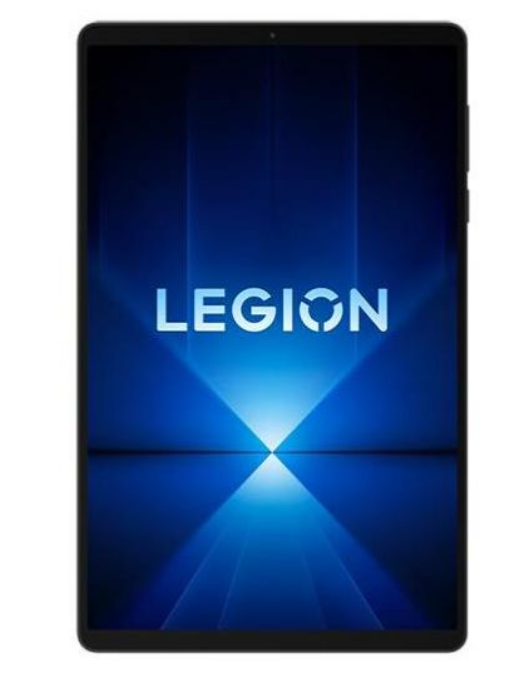
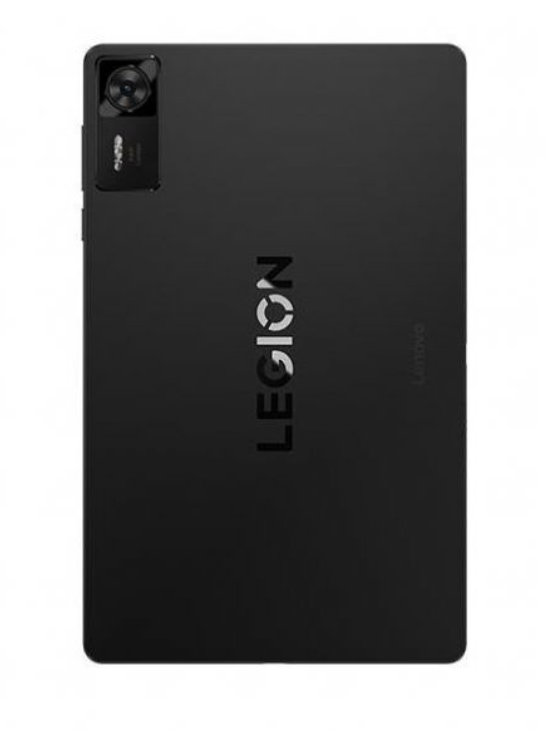
Lenovo Legion Y700 Gen 4 (2025) is a compact yet powerful Android tablet designed for gamers and multimedia enthusiasts. Featuring an 8.8-inch display with high-end specs, a strong Snapdragon 8 Gen 3 chipset, and a large battery, it strikes a balance between performance and portability. Whether you’re streaming movies, playing demanding mobile games, or multitasking between apps, the Legion Y700 aims to deliver a fluid experience with flagship features in a smaller form factor.
Pre-sale and Availability:
Lenovo Legion Y700 Gen 4 (2025) is now available for pre-sale at Geekwills for $599.00. Customers who place their orders early can expect shipping to begin on May 22nd. This is a great opportunity for tech enthusiasts and mobile gamers to secure the latest high-performance tablet before it officially hits the market.
Immersive Display and Multimedia Support
The tablet sports an 8.8-inch 2.5K LCD screen with a resolution of 3040 x 1904 pixels. It supports a smooth 165Hz refresh rate for ultra-responsive visuals, 100% DCI-P3 color accuracy, Dolby Vision, and DC dimming. This makes it excellent for gaming, video streaming, and even light creative work. With up to 600 nits of brightness and TÜV Rheinland certification for eye protection, it’s also suitable for long viewing sessions.
Strong Performance with Snapdragon 8 Elite
At the heart of the Legion Y700 2025 is the Qualcomm Snapdragon 8 Elite chipset, a high-performance octa-core processor capable of handling intense gaming and multitasking with ease. It is paired with up to 16GB of LPDDR5X RAM and UFS 4.1 storage in either 256GB or 512GB options, ensuring fast app loading times and seamless transitions. There is also a microSD card slot for extra storage.
Battery Life and Fast Charging
The device comes with a large 7600mAh battery, which offers extended usage time for gaming or productivity. It supports 68W fast charging, allowing users to recharge quickly and get back to their tasks without much downtime.
Audio, Cameras, and Connectivity
For immersive sound, the Legion Y700 2025 features dual ultra-linear speakers with Dolby Atmos support and dual X-axis linear motors for enhanced haptics. It includes a 50MP rear camera for capturing moments and an 8MP front camera that also supports face unlock. Connectivity options include Wi-Fi 6, Bluetooth 5.3, optional 5G, and dual USB-C ports (USB 3.2 Gen2 and DP support), along with a 3.5mm headphone jack.
Software and Security
Running on ZUI 16 based on Android 14, the user experience is clean and responsive. The tablet supports both fingerprint and face recognition for secure unlocking and added convenience.
Key Specs:
Display: 8.8-inch 2.5K LCD (3040 x 1904), 165Hz, Dolby Vision
OnePlus has started rolling out the OxygenOS 15.0.0.800 update for the OnePlus 11. The update is being released in phases for users in India (build CPH2447), Europe, and global regions (build CPH2449). A broader rollout will happen over the next few days.
The update adds partial screen recording, which allows users to record just a selected part of the screen instead of the whole display. You can now connect your OnePlus 11 to a Mac. This lets you view files from your phone on the Mac and transfer files between the two devices.
There are some system improvements as well. A new “stack view” layout has been added for the Recent Tasks screen. You can turn this setting on or off by going to Settings > Home screen & Lock screen > Recent tasks manager. Gesture controls for closing floating windows have been improved, and the shadows around floating windows have been made smoother. The April 2025 Android security patch is also included in this update, adding the latest security improvements.
For users in India, OnePlus has made it easier to report bugs. You can report issues using the “Bug Report” option in your profile on the OnePlus Community App, or dial *#800# on your phone to open the feedback tool. Since this is a staged rollout, only a small number of users will get the update at first. It will gradually reach more devices.
For more daily updates, please visit our News Section.
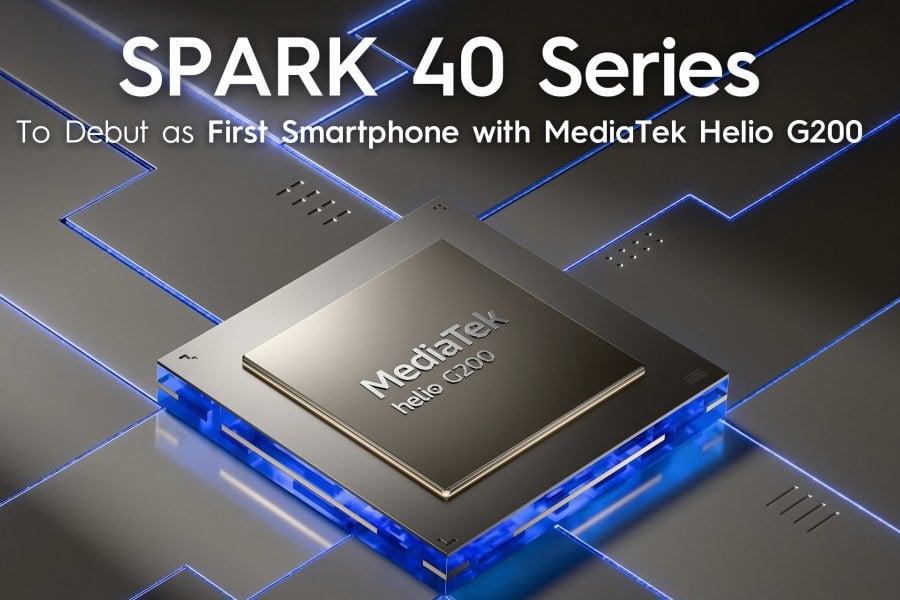
MediaTek just announced the Helio G200, its latest 4G chipset, and now we know where it’ll land first: Tecno’s upcoming Spark 40 Pro+. According to the company, the new phone will be the first to ship with the G200 under the hood. The Spark 40 series is launching globally in July.
The G200 doesn’t bring 5G to the table, but MediaTek seems to be doubling down on squeezing more out of 4G. The chip features an octa-core setup with two Cortex-A76 performance cores clocked at 2.2GHz and six Cortex-A55 efficiency cores running at 2.0GHz.
Helio G200 in Spark 40 Pro+ delivers 10% improvement
Tecno claims the SoC pulls in a score of around 470,000 on AnTuTu, which it says is roughly a 10% improvement over the previous generation.
Graphics see a modest bump, too. The Mali-G57 MC2 GPU now clocks at 1.1GHz, compared to 1.0GHz on the Helio G99 and G100. Tecno says that translates to a 10% gain in single-core GPU performance.
One of the more interesting additions here is support for what Tecno calls DC SAR, short for Dynamic Communication Smart Adaptive Response. In plain terms, it improves network reliability and efficiency when signal conditions are less than ideal.
Aside from this, the Helio G200 doesn’t bring any massive upgrade over the last-gen Helio G100, or even the Helio G99, for that matter. We have a separate story talking about the differences (or rather, should we say similarities) of these chips. You can check it out here.
Tecno hasn’t shared full specs for the Spark 40 Pro+ yet. It’s nearly two months to go before launch, so the company will likely start dropping teasers in the coming weeks. We’ll keep an eye out and update you as more details surface.
Motorola’s newest flagship flip phone has officially arrived in India. The Razr 60 Ultra arrives with cutting edge specs like Qualcomm’s latest and great Snapdragon 8 Elite, along with a refined foldable design. So here’s everything you need to know about Motorola’s best Razr yet.
Motorola Razr 60 Ultra: What does it offer?
The new flip phone sports a tall 6.96-inch LTPO pOLED display with a FHD+ resolution and a 1-165Hz variable refresh rate. Even the 4-inch cover pOLED screen offers LTPO for 1-165Hz variable refresh rate. These displays are brighter than their predecessor, with a 4000 nits and 3000 nits of peak brightness, respectively. Under the hood, the Motorola Razr 60 Ultra is equipped with the Snapdragon 8 Elite SoC, which is paired with 16GB of LPDDR5X RAM and 512GB of UFS 4.0 internal storage.
Motorola Razr 60 Ultra
A sizeable 4,700mAh cell powers the next gen flip phone, which supports 68W wired fast charging and 30W wireless fast charging. For optics, the rear has a 50MP main camera with OIS support and a 50MP ultra wide angle lens. The front houses a 50MP selfie shooter. Other notable features include Android 15 OS out of the box, stereo speakers with Dolby Atmos support, IP48 rating for water and dust resistance, a side mounted fingerprint scanner, Bluetooth 5.4, WiFi 7, and Corning Gorilla Glass Ceramic protection. This release also arrives a month after the foldable phone was launched globally.
Pricing and Availability
Motorola has announced the Razr 60 Ultra arrives in three eye catching colors, including PANTONE Scarab, PANTONE Rio Red and PANTONE Mountain Trail. The Red variant arrives in a vegan leather color option, while the Mountain Trail version has a wood finish.
The company will kick off the first sale of the Razr 60 Ultra on 21st May 2025 for a 99,999 INR price tag. As a part of an introductory price tag, the Razr 60 Ultra has 16GB + 512GB variant. You can purchase this model on Amazon India, the brand’s official website, Reliance Digital, and offline stores.
For more daily updates, please visit our News Section.
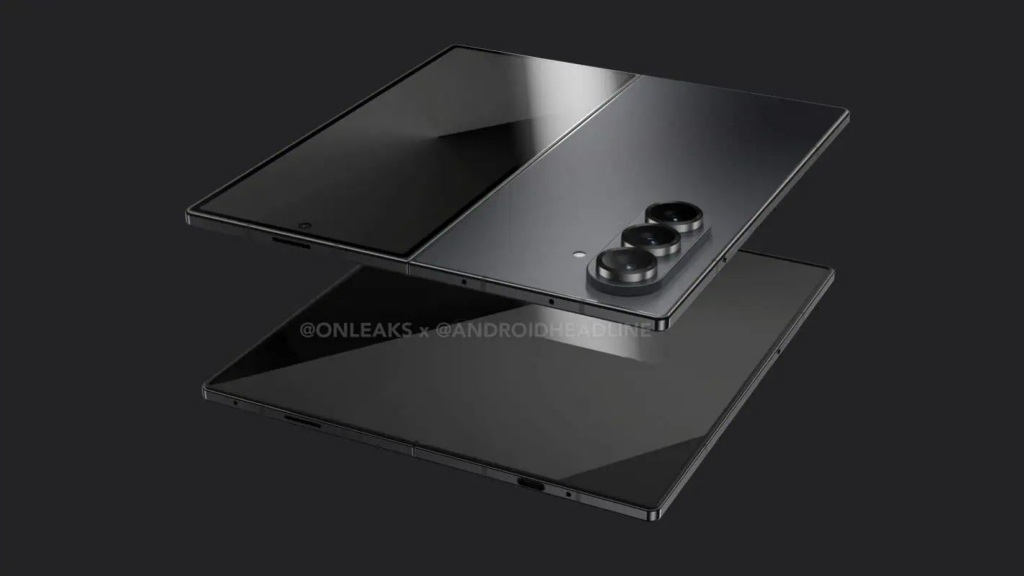
Samsung’s Galaxy Z Fold 7 is set to become the world’s thinnest foldable, with bezels as slim as 1mm—potentially outshining the Galaxy S25 Ultra’s 1.32mm and Z Fold 6’s 1.9mm, per leaker Ice Universe. The Z Flip 7 also gets sleeker, with 1.2mm outer screen bezels, promising larger displays for both folded and unfolded usage. These two devices will be the highlight of Samsung’s July 2025 Unpacked event, and the bigger one is expected to be priced around $1,899.
Samsung Galaxy Z Fold 7 CAD renders by OnLeaks and AndroidHeadlines
Measuring 158.4 x 143.1mm unfolded, the Z Fold 7 is taller and wider than the Z Fold 6, paving the way for a larger 8.2-inch inner AMOLED display, up from 7.6 inches. Posts on X from @TheGalox_ add it’ll pack a 200MP main camera and Snapdragon 8 Elite, enhancing its flagship appeal.
The Galaxy Z Flip 7 isn’t slacking either. Its outer screen bezels drop to 1.2mm, enabling a bigger 4-inch cover display, compared to the Z Flip 6’s 3.4 inches. The inner screen grows to 6.85 inches from 6.7 inches, with a thinner 6.9mm folded design. Both phones, running One UI 8 on Android 16, aim for a premium look with reduced creases and IP68 ratings.
While the Fold 7 may earn the “slimmest” tag—similar to the S25 Edge—the 4,400mAh battery feels underwhelming in 2025. Especially considering that Samsung, like most Chinese smartphone makers, had the option to use high-density silicon-carbon batteries to significantly boost capacity without increasing thickness.
Will these slimmer bezels and bigger screens make Samsung’s 2025 foldables unbeatable, or are rivals like Oppo’s Find N5 closing in? We’re pumped to find out.
The Snapdragon 8s Gen 3 was announced in March 2024 as a flagship chipset. It features a high-performance octa-core CPU with up to 3GHz of peak speed and a capable Adreno GPU that does the heavy lifting when it comes to gaming and other graphics-related tasks. This Qualcomm chip sits below the 8 Gen 3 and has benchmark scores pretty close to the 8 Gen 2.
On the other hand, the Snapdragon 7 Gen 3 is a mid-range processor that arrived a few months before the 8s Gen 3. It also has an octa-core CPU but not as powerful as the 8s Gen 3, and so is the GPU. While it’s pretty obvious that the Snapdragon 8s Gen 3 is superior, the real question is—how big is the performance gap? To find the answer, we tested them on multiple benchmarks. You can see the result below.
Snapdragon 8s Gen 3 vs 7 Gen 3: Benchmark comparison
Note: The tests were conducted on the Poco F6 (powered by Snapdragon 8s Gen 3) and OnePlus Nord CE 4 (powered by Snapdragon 7 Gen 3).
AnTuTu comparison
When it comes to raw AnTuTu performance, the Snapdragon 8s Gen 3 absolutely dominates the 7 Gen 3. Scoring over 1.5 million points, the 8s Gen 3 nearly doubles the overall performance of the 7 Gen 3, which comes in at 819,655.
The CPU and GPU differences are especially stark — 391,859 vs 269,334 for CPU, and a massive 517,257 vs 256,584 for GPU. That means the 8s Gen 3 isn’t just a little faster — it’s in a completely different league for gaming and multitasking. It also pulls far ahead in memory and UX performance, making it a clear winner in every metric.
SD 8s Gen 3
SD 7 Gen 3
AnTuTu score
1,505,656
819,655
CPU
391,859
269,334
GPU
517,257
256,584
Memory
325,777
129,961
UX
270,763
163,776
Geekbench comparison
On Geekbench, the Snapdragon 8s Gen 3 continues to flex its muscle with a single-core score of 1,932 and a multi-core score of 4,986. In comparison, the Snapdragon 7 Gen 3 trails behind with 1,154 and 3,018 in the same tests.
This shows that the 8s Gen 3 offers a 67% boost in single-core and a 65% boost in multi-core performance. So, whether you do editing, gaming, or any processing-intensive task, the 8s Gen 3 should feel significantly faster.
SD 8s Gen 3
SD 7 Gen 3
Single core
1,932
1,154
Multi core
4,986
3,018
3DMark Wild Life Stress Test
In the 3DMark Wild Life Stress Test, the Snapdragon 8s Gen 3 delivers the best loop score of 11,439, showing far superior peak GPU performance compared to the Snapdragon 7 Gen 3, which tops out at 5,451. However, the 8s Gen 3 also shows a noticeable dip in sustained performance with stability of 77.6%, while the 7 Gen 3 maintains an impressive 99.6% stability, with its lowest loop score barely dropping from the best.
SD 8s Gen 3
SD 7 Gen 3
Best loop score
11,439
5,451
Lowest loop score
8,881
5,426
Stability
77.6%
99.6%
Snapdragon 8s Gen 3 vs 7 Gen 3: Key differences that matter!
CPU
Both Qualcomm chips significantly differ in CPU architecture and design. For instance, the Snapdragon 8s Gen 3 has a 1+4+3 core configuration, featuring one Cortex-X4 prime core, four Cortex-A720 performance cores, and three Cortex-A520 efficiency cores.
On the other hand, the Snapdragon 7 Gen 3 uses a 1+3+4 core design, with one Cortex-A715 high-performance core, three Cortex-A715 performance cores, and four Cortex-A510 efficiency cores. Clearly, the 8s Gen 3 has superior CPU cores, and they run at higher speeds.
Additionally, this chip uses a newer instruction set, ARMv9.2-A (versus ARMv8.6-A), that brings improvements to security, AI, and performance efficiency. The 8s Gen 3 also has a larger cache memory for improved performance.
GPU
The Snapdragon 8s Gen 3 has an Adreno 735 GPU, and the 7 Gen 3 has an Adreno 720. While both are based on the same Adreno 700 architecture, they have significant differences.
The Adreno 735 GPU (on the 8s Gen 3) runs at a higher frequency and features larger shading units, total shaders, memory bandwidth, and significantly higher floating point operations per second (FLOPS). These contribute to superior gaming performance on the 8s Gen 3. Additionally, the chip supports hardware-accelerated ray tracing, which further enhances the gaming experience.
Camera
Both chips have triple Spectra ISP, but the 8s Gen 3 has a higher bit ISP, resulting in better dynamic range and richer colors. It also has a Cognitive ISP that enables real-time semantic segmentation for both images and videos. This means the chip can identify and individually optimize up to 12 distinct layers within an image or video frame.
The Snapdragon 8s Gen 3 also benefits from AI enhancements, such as AI-based auto-exposure, AI-based auto-focus, and AI-based face detection. The chip also features Locally Motion Compensated Temporal Filtering (MCTF), Engine for Visual Analytics 3.0, and Snapdragon Low Light Vision (LLV) on top of the 7 Gen 3 camera features.
Both chipsets support up to 200MP cameras and allow up to 4K video recording. However, the 8s Gen 3 supports multi-frame noise reduction (MFNR) and zero shutter lag (ZSL) at higher megapixels.
Connectivity
The two Qualcomm chips also offer notable differences in connectivity. The 8s Gen 3, for instance, features an X70 5G modem with up to 6.5Gbps of peak download speed, while the 7 Gen 3 (with X63 5G modem) peaks at 5Gbps.
The Snapdragon 8s Gen 3 also brings higher network speeds on a Wi-Fi connection. It allows up to 5.8Gbps speed on a Wi-Fi 7 connection, whereas the 7 Gen 3 supports Wi-Fi 6E with a maximum speed of 2.9Gbps. The 8s Gen 3’s Wi-Fi 7 support allows reliable and fast connectivity even in crowded places.
SD 8s Gen 3
SD 7 Gen 3
Announced
March 2024
November 2023
Manufacturing
4nm (TSMC)
4nm (TSMC)
CPU
1 x 3GHz — Cortex-X4 4 x 2.8GHz — Cortex-A720 3 x 2GHz — Cortex-A520
1 x 2.63GHz — Cortex-A715 3 x 2.4GHz — Cortex-A715 4 x 1.8GHz — Cortex-A510
GPU
Adreno 735 Ray tracing support
Adreno 720
NPU
Hexagon NPU
Hexagon NPU
Memory
LPDDR5x, up to 4.2GHz
LPDDR5, up to 3.2GHz
Camera
Spectra triple ISP (18-bit) Up to 200MP single camera Up to 4K video recording Semantic segmentation support
Spectra triple ISP (12-bit) Up to 200MP single camera Up to 4K video recording
iQOO has confirmed that the Neo 10 will launch in India on May 26. The phone will be the first in the country to use the Snapdragon 8s Gen 4 chipset and will also feature iQOO’s Q1 Supercomputing chip. Together, they deliver a 31 percent boost in CPU performance and a 49 percent boost in GPU performance compared to earlier models. The device has scored over 2.42 million on AnTuTu, positioning it as the most powerful phone in its segment. iQOO has confirmed the phone will launch at under ₹35,000.
The Neo 10 comes with LPDDR5X Ultra RAM and UFS 4.1 storage, offering a 36 percent increase in data transfer speed and 49 percent faster app installation. It supports 144 FPS gaming, the only phone in this price range to do so, and includes a 7000 mm² vapor chamber and bypass charging to manage heat during long gaming sessions. The phone houses a 7000mAh battery in a 0.809 cm chassis and supports 120W flash charging for fast top-ups.
In earlier coverage, iQOO confirmed the Neo 10’s Snapdragon 8s Gen 4 chip, with both Amazon and iQOO India updating microsites to list its specifications. The phone is positioned as the fastest in its class, outperforming rivals like the Dimensity 9300+, Dimensity 8400 Ultra, and Snapdragon 8s Gen 3. A Geekbench listing confirmed a 12GB RAM variant.
Other confirmed features include the Q1 chip for esports-level gaming and a large vapor cooling chamber to keep temperatures stable. The device will be available in two colors: Inferno Red and Chrome Titanium. Though final pricing isn’t officially confirmed, it’s expected to compete with devices like the upcoming Poco F7.
For more daily updates, please visit our News Section.
These are the HONOR Earbuds Open, a pair of open earbuds. They have very sleek and portable design, excellent sound quality, and AI translate features. So in this review article, some details will be revealed for these aspects, especially the AI features, because not only the translation is impressive, the ease of use is the best thing you can ever have.
Design
We have reviewed many open earbuds, there were only a handful of them that have this kind of minimalist and sleek design. Unlike others that opt for some refreshing or visually striking colors or patterns, these were made with a light beige color, with some leather-like texture on the cover and bottom. Although the case is made entirely of plastic, the look and the touch are very premium. The other thing about the case is that, it is very thin, and the overall shape is very adorable.
The interior is a normal beige color, with some parts in a matte finish, and some frosted. The earbuds are in light beige, with a metal finish on the touch control areas. There are two rubber tips to help secure the earbuds against the charging pin, and also earbuds won’t shake in the case. Overall, the inside is very good-looking and thoughtfully designed.
The earbuds themselves are C-shaped as you would expect, each earbud weighs about 8g. The bridge is made of Nickel-titanium Memory Alloy, which is not only strong ,but also flexible and stable as the best material in the bridge. I have worn them for a couple of hours, there wasn’t any discomfort at all. The touch controls are also very intuitive, the best being the volume control by swiping up and down. Normally it is a triple tap to change volume, which is not quite user-friendly, now it is very usable on these earbuds.
Sound Quality
Since last year, the sound quality of open earbuds has been much better than before, then it addressed both the sound leak issue and volume loss issue. So how about these?
The HONOR Earbuds Open comes with a 16mm Multi-magnetic circuit dynamic driver unit. 16mm driver is a golden standard for open earbuds now, it does not produce massive sound, that way there will be a lot of sound leakage; And it can reproduce very good sound quality for different kinds of music. The overall sound quality of these earbuds is quite detailed and rich, offering a pleasant listening experience. At the same time, the low frequencies are present, almost as powerful and punchy as you might find on in-ears. However, the earbuds still manage to deliver a decent sound that should satisfy most users.
When it comes to volume, these earbuds perform well up to 80% volume. The sound remains pretty clean and linear within this range. However, if you crank the volume all the way up to the maximum, you may notice some distortions, particularly in the low frequencies, this volume can be used when you are in a noisy space or running, so you can hear things, that are the main goal.
In terms of App features, there is no EQ to tweak the sound to your liking. Instead, the app offers two presets: Original and Workout Amplifier. The major difference between these two presets is volume and vocal, so you may listen to the music better, or enjoy vocal singing more.
AI Translation
There is an important feature integrated into these earbuds, which is the AI Translate. This is the first time I have seen such a feature on board on earbuds. I think in order to have this feature work properly, two things should be working really well. First, the microphones should be good enough to pick up voices correctly; Two, the AI translation should be fast and accurate enough to make every use smooth and intuitive.
So there are 3 mics located at different sides, and there is bone voiceprint sensor technology, which means it can capture voices very well. There are two modes: Shared Mode and exclusive Mode.
– Shared Mode
In this mode, two people share a pair of earbuds, that way it can capture both speakers’ voices, then use the phone as the hub to show the texts and some controls. The UI is very organized, and the texts are bold and clear. There are some good features in this mode
– The texts can be shown on one page, so if two people are next to each other, watching the phone in the same direction; or it can split, good for people who are face to face.
– The sound can be played automatically, or you can choose to confirm and play.
– Voices can be male or female.
– Font size is adjustable, so anybody can see the text clearly.
– Currently, it supports 13 languages translation, which covers most of the main languages in this world.
– There is also a Loop Recording feature, so in this mode recording and translation will be working contentiously, and will segment each speaker’s voice.
– Exclusive mode
If you prefer to use earbuds or the phone exclusively, then the Exclusive mode is the one. It means, that one person wears two earbuds, and the other people use the phone. This can help people who have their own preferences. All the features mentioned above can be used in this mode.
There is also an Interpreter mode, which is very useful if you are a student, or you often attend multi-lingual meetings. In this mode, both languages can be displayed, each sentence will be segmented, and the language you can understand can be played to the earbuds you are wearing, which is great.
Noise Cancellation
Surprisingly, they come with a noise reduction feature, and they can be used for listening to music and phone calls. There is only one setting for this feature, either it’s on or off. When testing these earbuds in a normal office environment, it can reduce some white noise, while keeping your ears open to people’s talking and some other sound from people’s activities.
When riding a bike or outdoor running, the noise cancellation isn’t working that perfectly, after all, it is still open earbuds. The good thing is that you can still hear the cars and people coming from different directions, to keep yourself safe out there. There is also a feature that can turn the volume up while being outdoors, so you can listen to music better.
Portability
There are some translation devices on the market, and most of them can be a reliable device. But with these earbuds, they can be your day-to-day device, and on that occasion, they are the interpreter. So you can bring one less gadget while on the go.
Summary
HONOR has some quite advantages in AI features, on phones and tablets. Now the earbuds are a good implementation in the AI lineup, and they still perform well as open earbuds. These earbuds will certainly lead the market in earbuds, there are rumors that some earbuds this year will include translation features. So if you are in need of this kind of earbuds, go check these out on HONOR’s website.
Oppo’s SuperVOOC 45W Super Flash Charge Power Bank 20000, launching in China on May 15, 2025, alongside the Reno 14 series. It packs a 20,000mAh battery, an integrated USB-C cable, and a built-in LED flashlight. With triple-device charging and a sleek mint green design, it’s a versatile accessory, though likely China-exclusive.
This SuperVOOC 45W power bank, packing a 20,000mAh capacity, is designed to juice up devices like smartphones with large batteries, supports simultaneous charging via an integrated USB-C cable (up to 45W), a USB-C port, and a USB-A port. While total output when charging three devices isn’t specified, its 45W input promises a decent recharge speed, though exact times remain undisclosed.
A standout feature is the integrated LED flashlight with three brightness modes, perfect for emergencies or late-night tasks. The power bank’s mint green casing, with a semi-transparent end, adds a stylish touch. While Oppo hasn’t shared dimensions or weight, its design suggests portability despite the hefty capacity.
Set to launch with Oppo’s 22.5W Energy Jelly Power Bank, this accessory targets fast-charging fans, but a North American or European release seems unlikely. Pricing remains unconfirmed, though expect a premium over the $30-50 range of similar banks. While the design, 20,000mAh capacity and the utility of the flashlight appears to be well received, some question the 45W cap versus 100W+ options on the market.
Also, keep in mind that the 45W output is likely tied to Oppo’s proprietary charging protocol, so devices like the Galaxy S25 Ultra (which supports 45W PD charging) may still charge at slower speeds. The exact rate for USB PD-compatible devices hasn’t been confirmed yet. So, it’s best to wait for the May 15 event for complete details — especially if your device doesn’t support Oppo’s SuperVOOC protocol or isn’t an Oppo phone.
In March, Amazfit globally unveiled the Amazfit BIP 6 with a price tag of $80. The brand is now gearing up to unveil it in India, as early as next week. While the company hasn’t officially confirmed the launch, sources familiar with the matter suggest that the unveiling is imminent — and that the device will mark a significant step forward in the BIP series.
Amazfit BIP 6 key features
Amazfit BIP 6
The Amazfit BIP 6 will represent a shift in the brand’s approach to the BIP series, pushing it closer to the premium smartwatch segment. One of the headline upgrades is a significantly brighter display — expected to reach up to 2000 nits — which would be among the most luminous in its category. This means improved outdoor visibility, particularly under harsh sunlight.
Another welcome improvement is the addition of built-in GPS navigation — a first for the BIP range. This move aligns the BIP 6 with more fitness-focused smartwatches and should appeal to runners, hikers, and outdoor enthusiasts looking for reliable route tracking without depending on a smartphone.
Amazfit BIP 6
Beyond performance features, the BIP 6 is said to maintain Amazfit’s hallmark long battery life. It is expected to run up to 15 days on a single charge, supporting uninterrupted usage across daily tasks, workouts, and sleep tracking. Combined with its lightweight design and focus on health tracking, the BIP 6 could be positioned as a compelling option in the mid-range smartwatch space.
It seems that the BIP 6 heading to India could be the same as the existing version. At present, there is no information regarding the BIP 6’s pricing in India.
For more daily updates, please visit our News Section.
Oppo’s new 22.5W Energy Jelly Fast Charging Power Bank 10000, set to launch in China on May 15, 2025, alongside the Reno 14 series, boasts a 10,000mAh battery, an integrated USB-C cable, and magnetic attachment. Its sleek, turquoise design promises portability, but it’s likely China-exclusive.
This power bank, set to debut with the Reno 14 series, features a 10,000mAh (9,670mAh rated) battery, delivering 22.5W output via a built-in USB-C cable, ideal for charging smartphones on the go. Teased on social media, its vibrant turquoise hue, dubbed “sea salt,” pairs with a compact, lightweight build—though exact dimensions and weight remain undisclosed.
While it magnetically clings to phones for convenience, charging is cable-only, not wireless. The battery recharges at 18W, but Oppo has yet to share charging times. While its 22.5W output is modest, the integrated cable and magnets add practicality. Oppo’s also launching a 45W Super Flash Charging Power Bank at the same event, hinting at a broader charging ecosystem.
Pricing for China is still under wraps, and a global release in North America or Europe seems unlikely. For international buyers, alternatives like Anker’s offerings are solid bets. X posts from @oppochina hype the Energy Jelly’s portability, but will its design and 22.5W speed stand out against 100W+ first charging power banks? The May 15 launch in Shenzhen should reveal more about this pocket-friendly power bank’s place in Oppo’s lineup!
For those seeking a faster power output, the 20,000mAh SuperVOOC 45W Super Flash Charge Power Bank might be a more appealing option. It’s set to launch alongside this compact power bank and the Reno 14 series at the same event on May 15.
Oppo unveiled the Oppo Find X8 and X8 Pro equipped with the Dimensity 9400 chip in October 2024. This year, the brand unveiled Find X8 Ultra, Find X8s, and X8s+ smartphones. The X8s debuted as a compact flagship phone, whereas the X8s+ debuted as an updated version of the existing X8. Today, well-known tipster Digital Chat Station released a Weibo post to reveal key details about the Find X9 series.
Find X9 series: Three phones to feature Dimensity 9500 chip
Find X9 series
According to the leak, the Oppo Find X9 series will include four distinct models, three of which are expected to run on MediaTek’s upcoming Dimensity 9500 chip. These three devices are said to come with 6.3-inch, 6.59-inch, and 6.78-inch displays, all with 1.5K resolution.
Each one will feature a flat panel design with uniform bezels and ultra-thin borders achieved through LIPO technology. They will also share the same rear camera setup – a triple camera system with a periscope telephoto lens for improved zoom performance. At least the topmost model among the three will have a 200-megapixel periscope telephoto camera as per a previous report.
Find X9 Ultra to use Snapdragon chip and one-inch sensor
Following Oppo’s established flagship pattern, the Find X9 Ultra is likely to stand apart. It’s expected to feature the upcoming Snapdragon 8 Elite 2 along with a massive one-inch main sensor.
It appears its rear camera setup may include a 50-megapixel ultra-wide lens, a 50-megapixel periscope telephoto camera with 10x optical zoom, and a 200-megapixel periscope telephoto camera. There’s a possibility that it may feature a 6.82-inch display like the Find X8 Ultra.
If the naming convention follows current trends, the lineup may include the Find X9, X9+, X9 Pro, and X9 Ultra. The X9 series will be designed to rival the upcoming iPhone 17 lineup. The Ultra edition may debut in the first half of 2026, while the other three may break cover in October of this year.
For more daily updates, please visit our News Section.
OnePlus and MediaTek have jointly announced a new strategic partnership centred on gaming for China. The information was shared through official channels, confirming that the two companies are working closely on a flagship chipset aimed at improving gaming performance. While the specifics are yet to be officially detailed, the official poster rolled out by the brand confirms the May 14 launch. Most likely, the rumored Dimensity 9400e SoC is expected to go official on the said date.
Dimensity 9400e: What to expect?
OnePlus and Mediatek to make a new announcement on May 14 in China
The Dimensity 9400e chipset is said to be a refined version of the Dimensity 9300+, bringing enhanced performance for gaming and multitasking scenarios. The partnership aims to bring smoother frame rates and better thermal performance, especially for titles demanding high GPU loads. It is expected to rival Qualcomm’s chip – the Snapdragon 8s Gen 4.
According to industry speculation, the Dimensity 9400e could serve as a bridge between the current flagship and the next-generation Dimensity 9500 series. The chip will debut first on OnePlus phones, though Vivo and other brands are also expected to adopt it. It is speculated that the upcoming phones, such as the OnePlus Ace 5 Racing, Vivo X300 Pro Mini, Vivo X200 FE (global), Realme GT 7 (global), Realme Neo 7 Pro, and OnePlus Nord 5 (global), will feature the new chip.
The new “Wind Tunnel Gaming Core” embedded within the chip is believed to optimize system resources dynamically based on in-game conditions. This feature is aimed at delivering consistent gaming performance, especially in competitive titles. This move also shows OnePlus’s growing focus on mobile gaming as a key product differentiator.
As mentioned above, the OnePlus Ace 5 Racing Edition will feature Dimensity 9400e. With the new chip onboard, the device is expected to rival the likes of the Snapdragon 8s Gen 4-powered iQOO Z10 Turbo Pro and Redmi Turbo 4 Pro in China.
The OnePlus Ace 5 Ultra, which is expected to launch alongside the Ace 5 Racing Edition, is likely to house the more powerful Dimensity 9400 Plus chipset. The new Ace 5-series phones are expected to debut this month in China.
For more daily updates, please visit our News Section.
Sony is back in the smartphone game with the Xperia 1 VII, launched today (May 13), just before the WH-1000XM6 headphones drop. Priced at €1,499 in the Eurozone, it boasts a Snapdragon 8 Elite chip, a brighter display, upgraded cameras, and Walkman-series audio components, aiming to top the Xperia 1 VI.
The phone is available in Black, Green, and Purple, replacing the Xperia 1 VI with several upgrades. It swaps the Snapdragon 8 Gen 3 for the Snapdragon 8 Elite, delivering 40% boosts in CPU, GPU, and NPU performance. The 5,000mAh battery returns, but efficiency gains promise up to two days of use, a claim bolstered by the chip’s 3nm process.
The 6.5-inch FHD+ LTPO OLED display, still 19.5:9 with a 120Hz refresh rate, gets 20% brighter and smarter with a rear light sensor adjusting color temperature. It’s a Bravia OLED panel, nearly identical to the one on the predecessor.
Camera and audio upgrades:
Camera upgrades are a highlight of this phone. The 48MP ultra-wide (1/1.56-inch, 2.1x larger than the VI’s 1/2.5-inch) doubles as a macro lens, offering sharper 16mm shots. The 48MP Exmor T main sensor supports native 24mm or 48mm focal lengths for versatile photography. The 85-170mm telephoto, unchanged from the VI, keeps its 3.5-7.1x zoom.
Audio shines with Walkman-series components, enhancing wired headphone sound via the 3.5mm jack, though Sony is light on details.
Running Android 15 with 12GB RAM and 256/512GB storage, it will offer 4 OS updates and 6 years of security updates. It’s priced at €1,499 in the Eurozone. Against rivals like the Galaxy S25 Ultra, its Alpha-powered cameras and audiophile cred stand out. Will the Xperia 1 VII’s niche appeal justify its price, or is Sony banking too hard on loyalists? Only time will tell.
iQOO has officially announced the launch date for its new flagship for China. The brand confirmed that the iQOO Neo 10 Pro+ will debut on May 20. The information was shared through the brand’s official Weibo channel, highlighting that it will be the company’s first Neo series phone to arrive in a BMW M Motorsport edition.
The front camera is said to be a 16-megapixel sensor, while the rear houses a 50-megapixel main sensor with OIS and a 50-megapixel ultra-wide lens. For security, it may feature an ultrasonic in-screen fingerprint sensor.
Design-wise, it retains iQOO’s signature styling with a dual-camera layout on the back and flat frame edges. While the mid-frame is said to be made of plastic, the back uses glass. As shown below, it will be available in Black, White, and Super Pixel shades.
iQOO Neo 10 Pro+
The Neo 10 Pro+ is likely to be priced at around 3,500 Yuan (–$485) in China. At present, there is no clarity whether it will be released in markets outside of China.
At the same event, iQOO will unveil a slew of other products, such as the iQOO Pad 5, Pad 5 Pro, Watch 5, TWS Air 3, 33W Power Bank, and Magnetic Cooling Clip Pro.
For more daily updates, please visit our News Section.
The Galaxy S25 Edge is finally here as the fourth member of the S25 series. The launch comes just under four months after Samsung announced the earlier S25 smartphones.
Apple is also expected to unveil its own slim phone later this year, and it’s pretty obvious that Samsung is trying to get ahead of the curve.
The S25 Edge is now the slimmest Galaxy S-series device ever, measuring just 5.8mm thick and weighing only 163 grams. It borrows design cues from the rest of the S25 lineup, with squared-off corners and flat edges, but features a dual-camera setup on the back, one less than its siblings.
Samsung Galaxy S25 Edge Overview
The S25 Edge is built around a 6.7-inch AMOLED panel with QHD+ resolution, a 120Hz refresh rate, and up to 2600 nits of peak brightness. The screen is protected by Corning’s new Gorilla Glass Ceramic 2. However, it lacks the anti-reflective coating available on the S25 Ultra’s Gorilla Glass Armor 2.
The front is also home to a 12MP f/2.2 selfie camera. Whereas, on the back, you get a 200MP main lens with an f/1.7 aperture and OIS, along with a 12MP ultrawide lens with an f/2.2 aperture and support for macro shots.
The device lacks a dedicated telephoto module — unlike the rest of the S25 series — but Samsung says the main camera can deliver 2x optical zoom.
Under the hood, the S25 Edge is powered by the Snapdragon 8 Elite for Galaxy chipset, paired with 12GB of LPDDR5X RAM and either 256GB or 512GB of UFS 4.0 storage.
Software-wise, it’s OneUI 7 based on the top of Android 15, with support for a lasting seven years of software and security patch updates. And as expected, it includes the full suite of Galaxy AI features.
The phone packs a 3900mAh battery that supports up to 25W wired charging, along with wireless charging support. It also includes an IP rating for water and dust resistance, and features titanium frames along the sides.
Price and Availability
The Galaxy S25 Edge is now available for pre-order, with sales set to begin on May 23. Pricing starts at $1,099.99 for the 256GB model, while the 512GB variant is priced at $1,219.99. You can get it in Titanium Silver, Titanium Jetblack, and Titanium Icyblue shades.
For more daily updates, please visit our News Section.
MediaTek’s Helio G is a smartphone chipset series that powers many budget Android phones. And recently, we got a new entrant in the lineup, the Helio G200.
As you’d naturally expect, the new chip should be noticeably more advanced than its predecessor. Unfortunately, the changes in this generation are hardly worth noting. In fact, the differences across the last three generations of G-series chips—Helio G99, G100, and G200—have been… restrained.
At a glance, all three chips share a nearly identical spec sheet: 4G-only modems, octa-core CPUs, Mali-G57 GPUs, and support for high refresh rate 120Hz displays. And since the core architecture remains the same, there’s no significant performance leap from one generation to the next. Let’s break it down in detail below.
When MediaTek introduced the Helio G99, it framed the chip as a meaningful upgrade for 4G devices. That was in a market already leaning heavily into 5G, but MediaTek still saw an opportunity.
The G99 brought some useful improvements over its predecessor, like support for 108MP cameras, high refresh rate displays up to 120Hz, and what MediaTek calls “Intelligent Display Sync” to dynamically control refresh rates for power efficiency.
Its CPU design was also practical for the time: two Arm Cortex-A76 cores at 2.2GHz and six Cortex-A55 efficiency cores. Paired with LPDDR4X RAM support and UFS 2.2 storage, the G99 performed well for its class. It also shipped with MediaTek’s HyperEngine 2.0 Lite, which optimized CPU, GPU, and memory usage in gaming scenarios. But this was more an act of rebranding existing efficiencies than a leap forward in gaming tech.
Networking was also stuck in 4G territory, with dual 4G VoLTE and Cat-13 LTE. While decent for regions with limited 5G rollout, it didn’t feel future-proof. Still, G99 was stable, efficient, and affordable, the sort of chip that made sense in a $150 to $200 phone.
2. Helio G100
With the G100, MediaTek stuck to the same architecture. Identical CPU configuration, same Mali-G57 GPU, same memory and storage support. In fact, most of the internal specs are a copy-paste from the G99.
The biggest change, at least on paper, came from a switch to TSMC’s 6nm process. That move alone gave MediaTek a talking point in the form of better power efficiency. And it surely makes a difference.
Elsewhere, the G100’s main upgrade came via the camera pipeline. The maximum sensor resolution jumped to 200MP, though manufacturers hardly took advantage of it. The chip retained a 3X ISP and support for ZSL (Zero Shutter Lag) dual-camera setups, plus the same bokeh, EIS, and AI processing features as the G99.
It also has HyperEngine gaming support, which is again a continuation of the same features. Dynamic antenna switching, call/data concurrency, and CPU-GPU-memory balancing were also carried forward. In essence, the G100 was a G99 on a more efficient process node, with better camera support baked in.
3. Helio G200
That brings us to the latest member of the lineup: Helio G200. At first glance, nothing really jumps out. The CPU layout is still two Cortex-A76 and six Cortex-A55, and the clock speed remains identical at 2.2GHz and 2.0GHz, respectively.
There’s no change in terms of RAM and storage as well. And even the 2520×1080 resolution cap and 120Hz display support stay exactly where they were.
MediaTek is making a talking point through incremental tuning and GPU overclocking. The Mali-G57 GPU here now runs up to 1.1GHz, and the company is quoting 75% faster GPU performance over some “competitor platforms” and a 50% increase in app launch speed for social apps.
There’s also a new 12-bit DCG (dual conversion gain) pipeline for better HDR video capture, and continued 200MP camera support.
Moreover, MediaTek claims up to 30% better power efficiency in gaming, thanks to HyperEngine refinements and continued use of the 6nm process. One of the few new additions is 4G DC SAR technology that should improve connectivity in fringe areas and reduce latency during social and messaging app usage.
But these changes don’t fundamentally alter the nature of the chip. At its core, the G200 remains a 4G-only chipset with largely unchanged hardware. It’s a third iteration on the same idea, just a little more refined.
4. Three Generations, One Blueprint
Stacked side-by-side, the Helio G99, G100, and G200 could easily be mistaken for the same chip. All share the same CPU architecture, same memory and storage capabilities, same networking features, and nearly identical display and camera pipelines. The differences mostly lie in secondary optimizations:
Feature
G99
G100
G200
CPU
2x Cortex-A76 + 6x A55
Same
Same
GPU
Mali-G57 MC2
Same
Same (up to 1.1GHz)
Camera Max
108MP
200MP
200MP, 12-bit DCG
Process Node
Unknown (likely 12nm)
6nm
6nm
Storage
UFS 2.2
Same
Same
Max Display
2520×1080 @ 120Hz
Same
Same
Special Features
HyperEngine 2.0 Lite
HyperEngine, Elevator Mode
DC SAR, enhanced HDR video
So what exactly is evolving? Technically, the GPU has been tuned, the camera ISP supports higher bit depth, and the networking stack is a bit more intelligent in fringe coverage areas. But the performance ceiling is still largely dictated by the same aging CPU layout. The Cortex-A76, first launched in 2018, is nearing seven years of service. It was a solid core in its day, but in 2025, it’s mostly cruising on nostalgia.
5. What’s missing?
One conspicuous omission across all three chips is 5G, and it’s a major one. It was understandable for the Helio G99 to support only 4G. But now that 5G has gained significant traction in countries like India, where the Helio G-series powers many phones, MediaTek really should have upgraded the network support in this generation.
The company could also have refreshed its core architecture by adopting a more recent ARM design like the Cortex-A78. It would offer better performance, which aligns better with current user demands and the increasingly power-hungry nature of apps in 2025. But the improvements we’re seeing in the Helio G series seem more about keeping pace than setting it.
For more daily updates, please visit our News Section.
Huawei’s Nova 14 series, tipped for a May launch in China, will run HarmonyOS 5 and may include a premium Ultra variant. With Kirin 9-series chips, up to 1TB storage, and multi-spectral cameras, it aims to rival Oppo’s Reno 13 in the mid-range market.
Huawei Nova 13 Pro
The Huawei Nova 13 series, with 50MP variable aperture cameras and 60MP selfie lenses, grabbed significant attention in China despite ditching Android for HarmonyOS 4.2. Its successor, the Nova 14 series, is set to elevate the game with HarmonyOS 5, boasting a 30% smoother UI and 15,000+ native apps. The Nova 14 series could launch as soon as this month, per Weibo tipster Digital Chat Station. It aligns with Huawei’s MateBook refresh, which also uses HarmonyOS 5 on custom ARM chips.
Nova 14 series specifications (rumored):
The Nova 14 and 14 Pro are expected to offer 12GB RAM and 256/512GB storage, while the rumored Nova 14 Ultra could pack a 1TB option and a Kirin 9-series SoC, per Digital Chat Station. A new multi-spectral camera sensor and 12MP telephoto lens (matching the Nova 13 Pro) promise enhanced imaging. All models reportedly sport 6.7-6.8″ OLED displays with 120Hz refresh rates.
The Nova 13 series includes three models: the Nova 13, 13 Pro, and 13i. The Nova 13 Pro stands out with its 12MP telephoto lens (69mm, approximately 3x zoom), a 50MP main camera with a variable aperture of f/1.4–4.0, and an 8MP ultrawide shooter. On the front, it features a dual-camera setup: a 60MP ultra-wide (17mm) lens paired with an 8MP telephoto (52mm, 2x).
According to reports, HarmonyOS 5’s “Ark Engine” and AI-powered Celia assistant enhance cross-device syncing and multitasking. The series could start from CNY 3,000, which is equivalent to $420. The Ultra’s flagship vibes could challenge Vivo’s V50, but global availability remains doubtful. Will the Nova 14’s AI and camera upgrades steal the mid-range crown, or is HarmonyOS still too niche? The official reveal should clarify.
Edifier has launched the Huazai New Play, a compact Bluetooth speaker that blends cyber-industrial aesthetics with high-performance audio. It is priced at 519 yuan (around $72) and targets users who want both sound and spectacle in a portable setup.
Edifier Huazai New Play Specifications
The speaker features a 1.1 acoustic system that combines a 66mm mid-bass driver, a 16-core tweeter, and a passive radiator. The speaker delivers continuous distortion-free output at 15W + 10W and peaks at 30W + 20W. It comes with Hi-Res Audio certification and supports 96kHz/24-bit playback, offering crisp, high-fidelity sound across a wide 62Hz to 40kHz frequency range.
The Huazai New Play equips dual-mode connectivity with support for Bluetooth 6.0 and USB sound card input. Bluetooth 6.0 provides stable transmission with over 30 meters of range in open spaces, while the USB mode enables direct wired playback on PCs. It also supports dual-device pairing for seamless switching between two smartphones or devices.
It sports synchronized RGB lighting with seven preset effects, including breathing, gradient, and rhythm-reactive modes. Users can customize up to 16.8 million color combinations using the companion app or desktop software. The software also allows EQ tuning, volume control, and firmware updates.
The speaker comes with four preset sound profiles: Music, Game, Movie, and Outdoor, as well as a DIY EQ mode for user-defined tuning. It supports TWS (True Wireless Stereo) pairing with another New Play speaker to enable stereo output.
It houses a 2600mAh battery rated at 7.4V, offering up to 15 hours of playback without lights and around 7 hours with full lighting enabled. It also comes with a smart power-saving feature that automatically shuts down the speaker after 30 minutes of inactivity.
The speaker measures 183.8 × 108.1 × 94.97 mm and weighs 1.02kg, making it easy to carry for both indoor and outdoor use. It is available in three colors: Aurora White, Phantom Night Black, and Cyber Space Grey.
In related news, Sony has launched its ULT Field 3 and 5 speakers in China, featuring ULT bass modes, IP67 durability, and up to 25 hours of battery life. Meanwhile, Portronics has introduced the Fynix 30W portable Bluetooth speaker with TWS support, Bluetooth 5.3, and a 6-hour battery life.
For more daily updates, please visit our News Section.
AOC has quietly added a new weapon to its arsenal of gaming displays, the C27G4H2, a 27-inch curved monitor that blends speed, color accuracy, and ergonomic flexibility, all wrapped in an aggressive price tag. It’s already listed on JD.com, with an official price of 1,499 yuan ($208), though marketing materials hint at a final retail price closer to 1,099 yuan ($153).
AOC C27G4H2 Specifications
The monitor features a Full HD (1920×1080) Fast VA panel with a tight 1500R curvature, creating a more immersive field of view that wraps around your peripheral vision. It comes with a 200Hz refresh rate and 1ms GtG response time, allowing for responsive gameplay and reduced motion blur in fast-moving scenes.
It equips Adaptive-Sync support, making it compatible with both AMD and Nvidia GPUs to eliminate tearing and stuttering. AOC’s custom MBR Sync motion blur reduction engine further enhances clarity by inserting black frames without sacrificing overall brightness. The panel supports HDR10 and peaks at 300 nits of brightness, allowing bright highlights and deep shadows to coexist with better detail retention.
In terms of colors, the C27G4H2 sports factory-calibrated color tuning with an average Delta E <2. It covers 100% of the sRGB and 93% of the DCI-P3 color gamuts, and supports 8-bit color depth. AOC also includes a 6-axis color adjustment system, letting users fine-tune hue and saturation to match their creative or viewing preferences.
The monitor features a highly adjustable stand with 120mm of height travel, -5° to 23° tilt, and ±30° swivel, ensuring long-session comfort. It’s also VESA-compatible (100x100mm), making wall or arm mounting a breeze.
In terms of ports, it comes with two HDMI 2.0 ports, one DisplayPort 1.4, and a 3.5mm audio jack, all HDR-ready. It includes flicker-free and low blue light modes to reduce eye fatigue and offers preset viewing modes for work, media, or gaming.
We use cookies on our website to give you the most relevant experience by remembering your preferences and repeat visits. By clicking “Accept”, you consent to the use of ALL the cookies.
This website uses cookies to improve your experience while you navigate through the website. Out of these, the cookies that are categorized as necessary are stored on your browser as they are essential for the working of basic functionalities of the website. We also use third-party cookies that help us analyze and understand how you use this website. These cookies will be stored in your browser only with your consent. You also have the option to opt-out of these cookies. But opting out of some of these cookies may affect your browsing experience.
Necessary cookies are absolutely essential for the website to function properly. This category only includes cookies that ensures basic functionalities and security features of the website. These cookies do not store any personal information.
Any cookies that may not be particularly necessary for the website to function and is used specifically to collect user personal data via analytics, ads, other embedded contents are termed as non-necessary cookies. It is mandatory to procure user consent prior to running these cookies on your website.