Xiaomi is expected to unveil the Xiaomi Civi 5 Pro later this month in China. Reports have revealed that it will be yet another Snapdragon 8s Gen 4 phone to hit the Chinese market after the iQOO Z10 Turbo Pro and the Redmi Turbo 4 Pro. While the iQOO and Redmi offerings are performance-focused affordable flagships, the Civi 5 Pro will be a photography-focused phone priced at around 3,000 Yuan (~$415). Ahead of the expected launch, the Geekbench listing revealing its key specifications has been spotted.
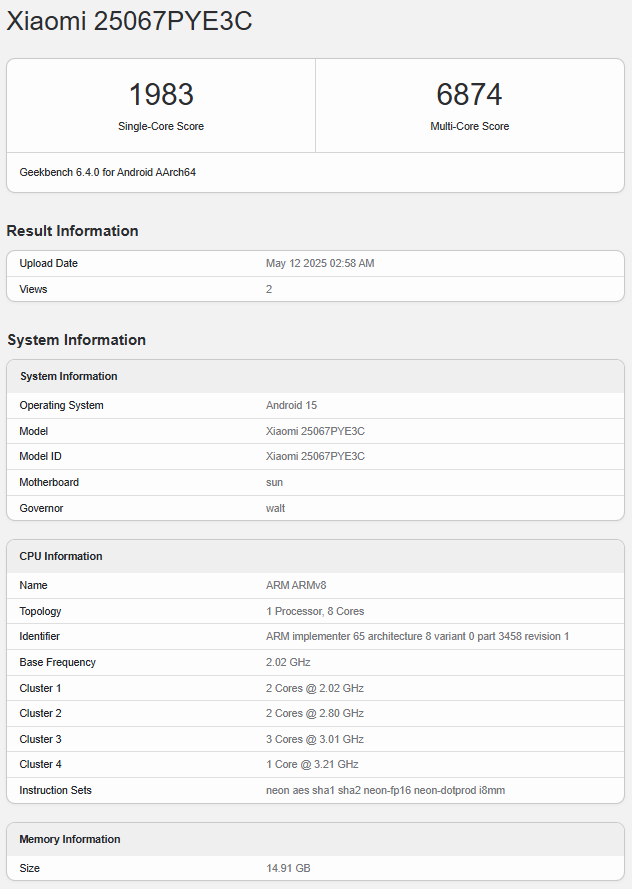
Xiaomi Civi 5 Pro Geekbench listing
According to reports, the upcoming Xiaomi Civi 5 Pro has the 25067PYE3C model number. The same device has now emerged in Geekbench’s database with the Snapdragon 8s Gen 4 chipset.
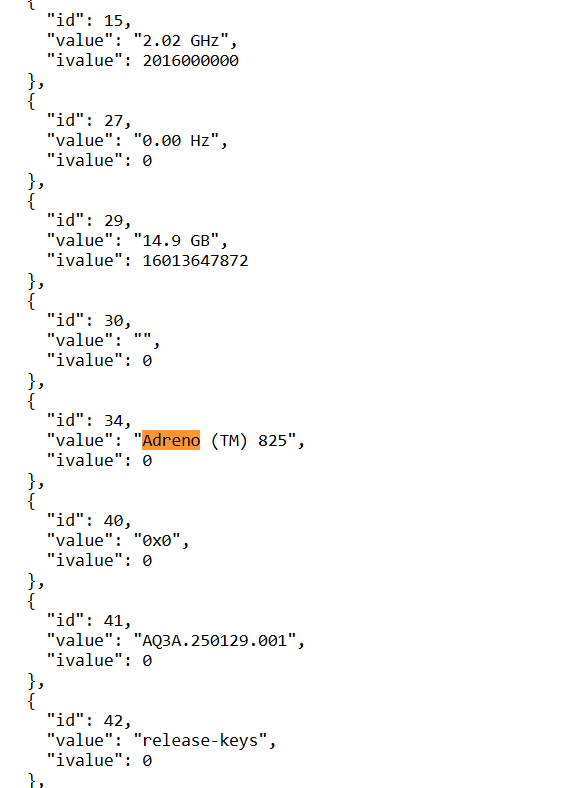
The Geekbench listing does not explicitly specify the name of the chip. However, the CPU information mentioned in the listing, which states that it has one prime core working at 3.21GHz, three CPU cores working at 3.0GHz, two CPU cores working at 2.80GHz, and the remaining two cores clocking at 2.02GHz, and the GPU information via source code that states it has the Adreno 825 GPU onboard, suggests that it is indeed equipped with the Snapdragon 8s Gen 4.
The Xiaomi Civi 5 Pro variant that has appeared on Geekbench has 16GB of RAM and Android 15. In Geekbench 6’s single-core and multi-core tests, the device scored 1983 and 6874 points, respectively.
Xiaomi Civi 5 Pro specifications (rumored)
Xiaomi Civi 4 Pro Disney Princess Limited Edition
So far, the rumor mill has been leaking the Xiaomi Civi 5 Pro specifications in bits and pieces. The device will likely feature a quad-curved OLED panel that supports a 1.5K resolution and packs a 6,000mAh+ battery with 67W charging. The Civi 5 Pro is expected to offer a better low-light photography experience compared to its predecessor, and its rear camera setup is expected to include a 50-megapixel telephoto lens, which is not surprising since its predecessor already features it. Likely, it will arrive with the Xiaomi 15 Civi moniker in the Indian market.
For more daily updates, please visit our News Section.
If you want to buy an latest phone powered by Snapdragon 8s Gen4, you currently only have two options: either you get the REDMI Turbo 4 Pro, or this iQOO Z10 Turbo Pro. Their specs on paper are similar, and so are their prices. If you really like the REDMI Turbo 4 Pro, then you should definitely be interested in the iQOO Z10 Turbo Pro as well.
The design of the Z10 Turbo Pro follows the style of the iQOO 13, with a rounded rectangular camera module placed in the top-left corner. But it only has two cameras—was it really necessary to make the module that big? When holding the phone horizontally, it’s still easy to touch this area.
Despite having a similar positioning, the Z10 Turbo Pro falls slightly short in terms of build quality. Both the back panel and the frame are made of plastic, so it feels and looks a bit cheap. However, there are two advantages to the plastic body: first, the back won’t shatter if dropped, and second, it makes the phone lighter. Unfortunately, it still uses USB 2.0, but given the low price, I can accept that. But it only has an IP65 rating for water and dust resistance, which isn’t as good as REDMI’s.
Compared to REDMI’s “All in on a big battery” approach, iQOO chose to sacrifice a bit of battery capacity for faster charging. It also supports third-party chargers with PPS protocol up to 100W. One has a bigger battery, the other has faster charging—which combo do you prefer? Share your thoughts in the comments section.
Display
The display on the Z10 Turbo Pro meets expectations. It’s slightly smaller than the REDMI Turbo 4 Pro, but its peak brightness in the 25% area is a bit higher.
One downside is that the Z10 Turbo Pro’s bottom bezel is still a bit thick, which contributes to its somewhat cheaper appearance. Although it boasts a 144Hz refresh rate, it mostly runs at 120Hz in everyday use. The full 144Hz only kicks in under specific conditions, like when gaming with frame interpolation enabled.
Performances & Gaming
The capabilities of the Snapdragon 8s Gen 4 were already demonstrated in our Quick Review of the REDMI Turbo 4 Pro. The Z10 Turbo Pro doesn’t lag far behind.
To put it simply, in heavy-load games, it delivers sufficient performance, though at the cost of higher power consumption and temperatures. One advantage it has over the REDMI is its comprehensive gaming features. Bypass charging, super resolution, and frame interpolation are all included. iQOO has essentially treated it like a gaming phone.
In everyday apps, it performs just as well, if not better than the 8 Gen 3—mainly due to improved power efficiency at the same clock speeds. As long as you’re not gaming, I believe it can easily last a full day without needing a charge.
Camera
The camera system on the Z10 Turbo Pro feels familiar—aren’t these the same two cameras found on the REDMI Turbo 4 Pro?
Our hands-on time with this phone was very limited, so we didn’t take many sample shots. But at first glance, the image quality doesn’t seem much different from REDMI’s, with the main variation being in color tuning. That said, the more vibrant color profile does make photos more eye-catching.
As a mid-range phone under $300, the Z10 Turbo Pro does a solid job. It delivers strong battery life and 120W fast charging while packing enough performance for most users. It’s just a shame that it falls slightly short in build materials and water resistance compared to its rivals.
Oh, and one more advantage worth mentioning—the Z10 Turbo Pro’s stereo speakers use identical sound chambers, meaning left and right channels have balanced volume.
The iQOO Pad 3 Pro, rumored to feature a 12.95″ display, has already bagged the 3C certification. Now, Weibo tipster Smart Pikachu claims that the brand is working on a compact tablet as well, which, according to reports, will compete with the Lenovo Legion Y700 Gen 4.
This compact iQOO tablet reportedly features a display in the 8″ range, expected to be smaller than the 8.8″ Legion Y700 Gen 4. It’s tipped to launch sometime in the second half of this year.
The compact Android tablet market isn’t huge at the moment—the iPad mini alone reportedly accounts for nearly the same number of unit sales as all compact Android tablets combined. But that could change soon, as multiple Chinese OEMs are now focusing on compact tablets, claims Weibo tipster Digital Chat Station.
All these upcoming compact tablets, including the one from iQOO, will reportedly be performance-centric—or more specifically, gaming-centric—while staying thin and light in design, with 8-9″ displays.
Unfortunately, details about the compact iQOO tablet remain scarce. However, based on its performance-focused positioning, it’s expected to pack a recent flagship chipset, such as the Snapdragon 8 Elite or Dimensity 9400.
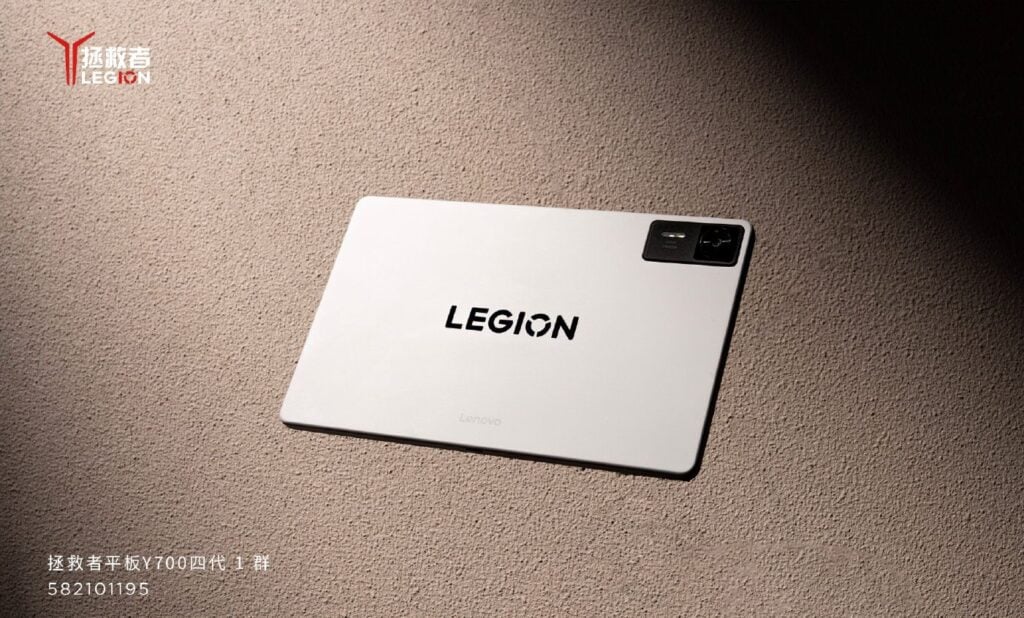
Legion Y700 Gen 4
For reference, the Legion Y700 Gen 4 is powered by the Snapdragon 8 Elite chip, paired with a 12,000mm² heat sink for sustained performance. It features a 7,600mAh battery with 68W fast charging and will be offered in two configurations: 12GB or 16GB RAM, and 256GB or 512GB of storage.
This compact Legion tablet supports a 165Hz refresh rate, 360Hz touch sampling rate, and reaches 600 nits of typical brightness. The panel has a resolution of 3040 x 1904, translating to a pixel density of 408 PPI. For a look at the design, refer to the image above.
We’ll share more information about the compact iQOO tablet as soon as it becomes available, so stay tuned.
Compact flagships are back — and better than ever. Smartphone makers have finally addressed the biggest challenge with compact phones: battery life. Thanks to high-density silicon-carbon (Si/C) batteries, compact flagships can now pack over 6,000mAh of capacity, something previously unheard of. The OnePlus 13T (coming to India soon as the OnePlus 13s) packs a massive 6,260mAh battery and was recently tested against some ‘Pro’, ‘Ultra’, and ‘Max’ branded flagships — namely the Xiaomi 15 Pro, Galaxy S25 Ultra, iPhone 16 Pro Max, Pixel 9 Pro XL, and OnePlus 13.
OnePlus 13T: 6260mAh
iPhone 16 Pro Max: 4685mAh
Galaxy S25 Ultra: 5000mAh
Xiaomi 15 Pro: 6100mAh
Pixel 9 Pro XL: 5060mAh
OnePlus 13: 6000mAh
OnePlus 13T outperforms the rest in battery life
Four of the six devices in the test are powered by the Snapdragon 8 Elite chip. The iPhone and Pixel run on the A18 Pro and Tensor G4, respectively. While different chipsets usually mean different power efficiency (or power draw), and display sizes and resolutions vary across these devices, the test still gives a good idea of how they compare in real-world endurance.
The Pixel showed the lowest battery percentage and the highest temperature throughout, and unsurprisingly, it was the first to die.
The Galaxy S25 Ultra followed next, shutting down just 14 minutes before the OnePlus 13. We’ve seen Apple devices with their A-series chips and well-optimized OS often outperform Android phones with much larger batteries. Interestingly, the S25 Ultra managed something similar here. Despite Samsung reusing most components and design from its previous Ultra flagship, it’s clear the brand spent time optimizing the OS — and it paid off.
[affiliate_genie_cta]
The Xiaomi 15 Pro lasted another 19 minutes beyond the S25 Ultra, but still died 6 minutes before the iPhone 16 Pro Max. Finally, the compact OnePlus 13T kept going for another 32 minutes — a seriously impressive feat.
Let’s hope Chinese smartphone makers continue optimizing their systems — we might be on the verge of another big leap in battery life.
Xiaomi has officially launched the Mijia M40S robot vacuum mop in China, and it features a compelling set of upgrades designed to tackle deep cleaning with smart automation and an ultra-slim form factor. Now available for pre-order on JD.com, the M40S starts at 2999 yuan ($414) for the water tank version, while the fully automatic water management model is priced at 3699 yuan ($511). Sales are scheduled to begin on May 13.
Xiaomi Mijia M40S Specifications
The M40S features a newly engineered liftable LiDAR navigation module that intelligently lowers itself when approaching low clearance furniture. This design reduces the robot’s height to just 8.8cm, allowing it to clean under beds, sofas, and other tight spaces that most vacuums can’t reach. Despite its low profile, it packs serious power as it comes with Xiaomi’s most powerful suction system yet, capable of delivering up to 23000Pa.
The robot vacuum equips a dual blade anti tangle main brush that cuts through hair while sweeping, reducing manual maintenance. It also sports a retractable side brush system and mop pads that extend automatically to clean edges and corners more effectively. These arms operate with millimeter level accuracy, improving reach and coverage along baseboards and walls.
It runs on a three laser navigation system that includes stereo LiDAR and edge distance sensors, offering 3D spatial awareness and precise obstacle avoidance. The robot intelligently maps out rooms in real time and adapts routes dynamically to avoid bumping into furniture or getting stuck.
The premium version comes with a compact embedded style dock that supports automatic water inlet and outlet, detergent dispensing, and high-temperature mop cleaning up to 80°C. It also features hot air drying that completes within two hours and dual scraper arms to keep the mop and base clean.
The vacuum supports 75 days of free dust disposal, uses a 5200mAh battery, and is controlled via the Mi Home app or Xiao Ai voice assistant. It also supports HyperOS Connect, enabling seamless interaction with other Xiaomi smart devices in the ecosystem.
The robot vacuum itself weighs around 3.75kg and has a diameter of 350mm. The standard dock measures 470 x 360 x 572mm, while the embedded auto water version is more compact at 450 x 420 x 280mm, designed for in-cabinet installation.
In related news, Xiaomi recently launched the Wireless Mouse Lite 3, featuring 2.4GHz wireless connectivity, a 1000 DPI sensor, and a lightweight 45g ergonomic design. The company has also introduced the Mijia Wireless Floor Scrubber 4 Max, which comes with a patented edge-cleaning arm and delivers up to 23,000Pa of suction power.
For more daily updates, please visit ourNews Section.
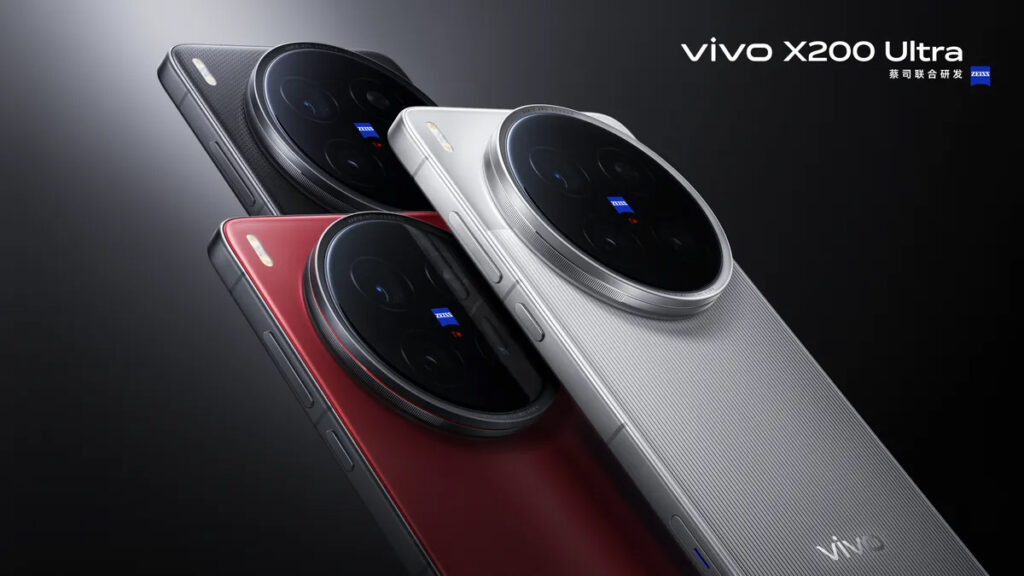
The Vivo X200 Ultra launched in April 2025 as a flagship built around photography. Vivo describes it as “a pocket camera that can make calls,” and our review team found its photo and video capabilities genuinely impressive. Here’s what sets the X200 Ultra apart, especially its standout camera system.
Triple-Camera Setup with Big Sensors
On the back, the phone has three high-end cameras. The main one is a 50MP sensor (Sony LYT-818, 1/1.28″) with a 35mm f/1.7 lens and advanced stabilization. Vivo worked with Zeiss on the optics, using a Zeiss T*-coated lens and a new GLC 2.0 glass to cut down on glare. The ultra-wide camera also uses a 50MP Sony LYT-818 sensor (1/1.28″) with a 14mm f/2.0 “Hawk Eye” lens, which Vivo says lets in 181% more light than the last version. Both the main and ultra-wide cameras have optical image stabilization. The main camera uses gimbal-style OIS, and the ultra-wide has dual-axis OIS.
The third camera is a 200MP telephoto lens using a Samsung Isocell HP9 sensor (1/1.4″) with an 85mm (about 3.7× zoom) f/2.3 periscope lens. Vivo says it’s the first APO-grade telephoto in a phone, using a six-element Zeiss lens and 5.0-level OIS to cut down on color fringing. This camera gives sharp detail even when zoomed in. You can also buy a Zeiss 200mm converter to extend it to about 8.7× zoom. All three cameras include laser autofocus and Zeiss T* coatings. Zeiss also helped tune the color output for more natural results.
Consistent Quality Across All Lenses
Each camera performs well on its own, but together they cover a wide range of zoom levels. Notebookcheck pointed out that the sensors are close in size—about 1/1.28″ for the main and ultra-wide, 1/1.4″ for the telephoto—so image quality stays consistent across lenses. That means you can shoot at 14mm, 35mm, or 85mm without worrying about a drop in quality. Gizmochina even said that “every camera can be the main camera.”
Two Image Chips for Better Photos
Inside, the phone has two dedicated image signal processors. The VS1 chip handles pre-processing and uses AI to help with things like background blur, HDR, and noise reduction. The V3+ chip handles post-processing. Together, they boost image quality well beyond the previous model.
Shooting Modes and Video Features
The camera software includes several shooting modes. There’s a “Humanistic Street Photography” mode locked to 35mm with a film-like look, and night modes like “Super Moon” and “Starry Sky” for low-light scenes. All three cameras can shoot high-quality video, including 8K at 30fps and 4K at 60fps in 10-bit Log. You can also shoot 4K slow-motion at 120fps. Vivo says the phone captures up to 14 stops of dynamic range and supports Dolby Vision HDR recording.
The software also lets you tweak sharpening and color. There’s a “Zeiss Natural Color” mode for more accurate colors, though default settings are a bit vibrant, and some users may want to adjust them.
Add-On Gear for Serious Shooters
Vivo also made hardware accessories for photography. The phone has a camera button that works like a shutter or zoom control. There’s an optional “Photography Kit” that adds a battery grip with controls and a 67mm adapter for extra lenses. One of those lenses is a 2.35× Zeiss teleconverter, turning the 85mm lens into about a 200mm f/2.3 lens—around 8.7× zoom. These accessories are sold separately and give the phone a DSLR-like setup. Gizmochina noted the grip and lens are mostly plastic, but they add useful features like tripod mounting and extra battery life.
For more daily updates, please visit our News Section.
Xgimi has introduced its most advanced projector lineup yet with the new RS 20 series in China, signaling a major step forward in home projection technology. The series includes four models: RS 20 Plus, RS 20 Pro Max, RS 20 Ultra, and RS 20 Ultra Max, each combining native 4K resolution, a tri-laser light engine, pro-grade color calibration, and ultra-low latency performance. Let’s check out the specs and pricing.
Xgimi RS 20 Ultra Max
Xgimi RS 20 Ultra Max
Sitting at the top of the range is the RS 20 Ultra Max, a projector that doesn’t pull any punches. It features a native 4K resolution (3840×2160) powered by MediaTek’s high-end MT9681 chip and Mali-G57 GPU, paired with a generous 8GB of RAM and 128GB of internal storage. The custom-built red-ring “X Master” lens delivers both optical zoom (1.2–1.5:1) and advanced lens shift support: ±120% vertical and ±45% horizontal. This allows users to resize and reposition the image without compromising quality.
This projector pushes brightness to 4500 CVIA lumens (5700 ISO) and features a 10000:1 contrast ratio. Its triple-laser light engine incorporates 40 emitters and the Qualas 32 architecture, offering exceptional HDR capabilities with Dolby Vision, HDR Vivid, and IMAX Enhanced certifications. The motorized pan-tilt body, automatic keystone correction, AI obstacle avoidance, and ultra-quiet 28dB operation all add up to an experience that blends convenience with performance. The projector is finished in an elegant Etoupe grey tone and weighs 5.4kg.
Xgimi RS 20 Ultra
Xgimi RS 20 Ultra
The RS 20 Ultra takes a slightly scaled-back approach while still packing elite hardware. Powered by the same MT9681 SoC but with 4GB of RAM and 128GB of storage, it offers 4100 CVIA lumens (4800 ISO) of brightness and utilizes a similar red-ring X Master lens with ±120% vertical and ±45% horizontal optical shift. The lens construction uses nine coated glass elements optimized for sharpness and color precision.
This model features the Qualas 22 triple-laser system with 36 emitters and SGS-certified support for Rec.709, DCI-P3, BT.2020, and Adobe RGB color spaces, all fine-tuned to Delta E<0.8 accuracy. With features like Da Vinci color mode and 22-point image customization, it’s clearly aimed at color grading enthusiasts and cinephiles. For gamers, there’s support for 240Hz at 1080p or 60Hz at 4K, plus ALLM, VRR, and an ultra-low 1ms input latency.
Xgimi RS 20 Pro Max
Xgimi RS 20 Pro Max
Positioned just below the Ultra models, the RS 20 Pro Max delivers native 4K with a laser focus on calibrated image performance. Alongside the MT9681 processor, it features the 8445 image driver and the 472TP DMD chip for rich, dynamic visuals. Brightness is rated at 3100 CVIA lumens (3800 ISO), and contrast remains a massive 10000:1.
Like its siblings, it supports Dolby Vision, IMAX Enhanced, and HDR Vivid, but it adds professional-grade LUT support. Its upgraded X-VUE 3.0 engine includes a dedicated AI processor for real-time image enhancements. Audio is handled by dual Harman Kardon speakers with surround sound support. Gaming perks include VRR, ALLM, 1ms latency, and genre-specific A/V presets.
Xgimi RS 20 Plus
Xgimi RS 20 Plus
The RS 20 Plus is the most accessible model in the lineup, but it still offers many of the high-end features found in the upper-tier variants. It carries the same native 4K DMD chip and custom-developed X Master lens with 1.2–1.5:1 optical zoom and ±120% shift. Under the hood, it runs on the MT9681 chipset, Mali-G57 GPU, 4GB of RAM, and 32GB of storage.
Its 18-laser setup delivers 2300 CVIA lumens (3000 ISO), and the projector supports Rec.709, DCI-P3, and BT.2020 color spaces within the same Delta E<0.8 threshold. Advanced image processing comes courtesy of X-VUE 3.0 with AI-PQ, AI-HDR, and AI-SR. Gaming support includes 240Hz at 1080p and 1ms response times, more than sufficient for console and PC gaming alike. The RS 20 Plus is housed in a darker “Little Elephant Grey” finish and weighs 4.8kg.
Pricing and Availability
The RS 20 Plus is priced at 6,699 yuan ($925), the RS 20 Pro Max at 9,199 yuan ($1,270), the RS 20 Ultra at 11,399 yuan ($1,570), and the RS 20 Ultra Max tops the range at 13,399 yuan ($1,850). All models are now available in China via major platforms and are expected to roll out to international markets later this year.
Earlier this month, Xgimi also launched the Z6X Pro compact projector in China, featuring a 910 CVIA tri-color laser light source, HiSilicon chip, and Harman-tuned audio.
For more daily updates, please visit ourNews Section.
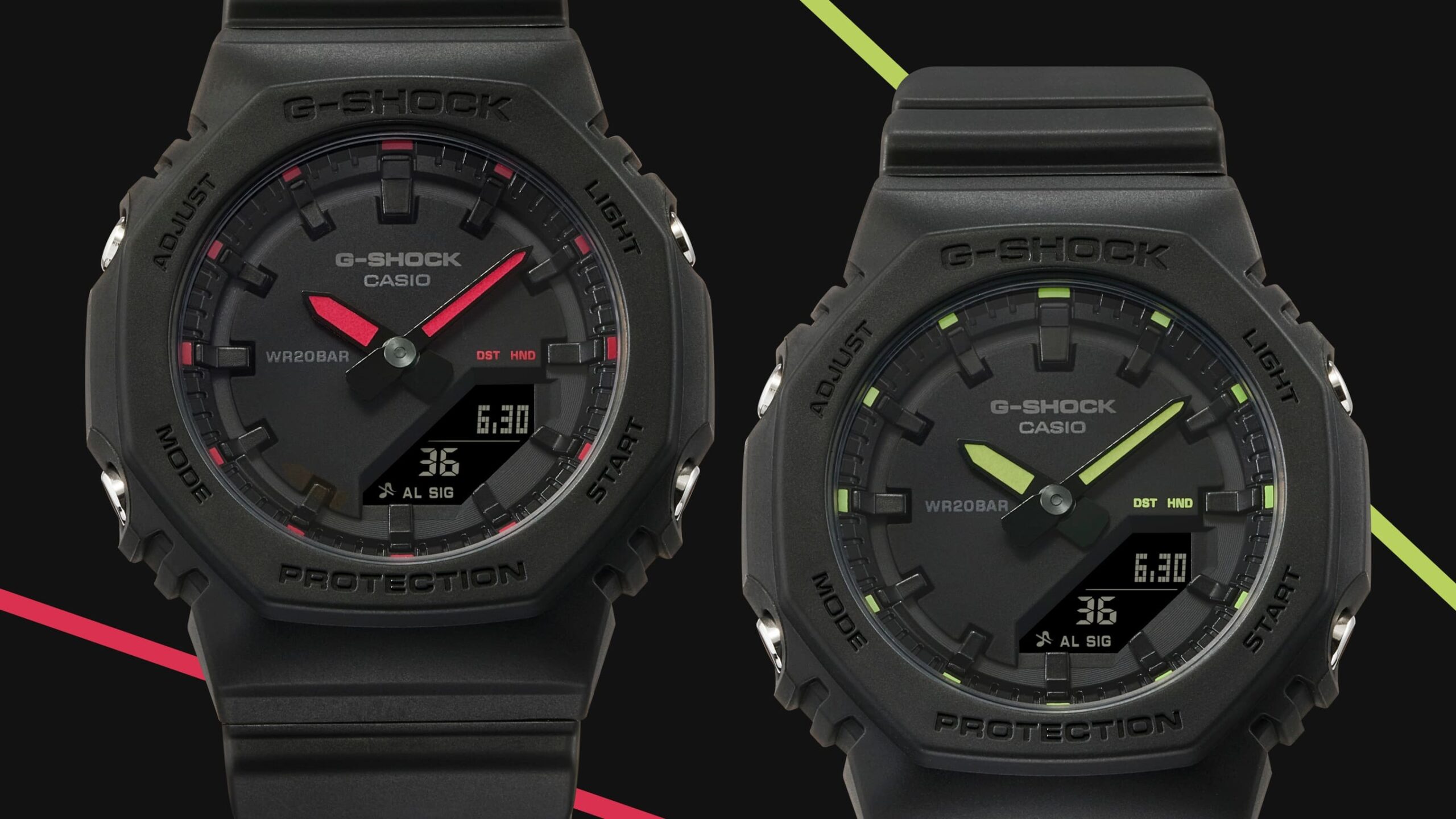
Casio has released four new G-Shock hybrid watches in Japan: the GMA-P2100SA-1A1, GMA-P2100SA-1A2, GMA-S120SA-7A1, and GMA-S120SA-7A2. All models are now available for pre-order.
From top: GMA-P2100SA-1A1, GMA-S120SA-7A2, GMA-S120SA-7A1, GMA-P2100SA-1A2
The GMA-P2100SA-1A1 and GMA-P2100SA-1A2 have a compact 46 × 40.2 × 11.2 mm case and weigh 40g. These watches feature a black octagonal bezel, a black resin strap, and a digital inset display with light text on a dark background. The 1A1 has yellow accent details, while the 1A2 comes with red. Both models support 31 world time zones, a 1/100-second stopwatch, a countdown timer, multiple daily alarms, and a double white LED backlight. The hands have a Neobrite coating for better visibility at night.
The GMA-S120SA-7A1 and GMA-S120SA-7A2 are slightly larger at 49 × 45.9 × 15.8 mm and weigh 55g. These models are all white, with round bezels and resin straps. They have two digital displays and a dial indicator. The 7A1 has orange hands and accents, while the 7A2 uses blue. They support 29 time zones, include a Home City function, a 1/1000-second stopwatch, a countdown timer, five alarms, and an amber LED backlight. They also have antimagnetic protection.
All four watches are shock-resistant, water-resistant up to 20 ATM, and offer a battery life of around three years.
Pricing & availability
Pricing in Japan is set at ¥17,600 (around $122) for the GMA-P2100SA-1A1 and 1A2, and ¥18,700 (around $130) for the GMA-S120SA-7A1 and 7A2. Casio has not confirmed any global release plans.
For more daily updates, please visit our News Section.
Xiaomi has officially introduced the Wireless Mouse Lite 3 in China, adding to its lineup of affordable peripheral devices. The new model is currently available for pre-order through JD.com and other retail platforms. It is priced at 39 yuan (approximately $5.40), with shipments scheduled to begin on May 14.
Xiaomi Wireless Mouse Lite 3 Specifications
The mouse is offered in two color options: Deep Space Black and Plain White Grey. Xiaomi has continued its minimalist hardware design approach, applying a clean one-piece aesthetic that blends the buttons into the device’s curved shell. The structure removes sharp edges and extruding elements, contributing to a more fluid appearance suitable for various workspace setups.
The body has been curved to align with the shape of the user’s palm, improving comfort during extended use. Xiaomi claims the mouse weighs approximately 45 grams without batteries, which keeps it lightweight enough to minimize wrist fatigue during long sessions. The shell supports a variety of grip styles and hand sizes, which may appeal to users looking for a basic, adaptable pointing device.
The device supports 2.4GHz wireless connectivity through a compact USB receiver. The receiver can be stored inside a compartment located under the mouse’s rear cover, which helps avoid loss when the mouse is in transit. Xiaomi’s implementation of this receiver compartment mirrors similar designs used in its earlier peripherals, prioritizing portability and practical cable-free use.
The Lite 3 is equipped with a 1000 DPI optical sensor that delivers standard tracking performance across common work and study tasks. It offers smooth and consistent cursor control suitable for basic productivity, browsing, and office applications.
The mouse uses PTFE (Polytetrafluoroethylene) feet on the bottom surface to improve gliding performance. These self-lubricating feet minimize surface friction, delivering a smoother and more consistent feel during movement on desks or mouse pads. It does not support Bluetooth or rechargeable batteries and is designed to operate using a standard AA cell.
In related news, Xiaomi recently introduced the Mijia Wireless Floor Scrubber 4 Max, featuring a patented edge-cleaning arm and 23,000Pa suction power. The company has also launched a 256L three-door refrigerator equipped with antibacterial cooling, HyperOS integration, and additional smart features.
For more daily updates, please visit our News Section.
A new report from Android Headlines has revealed the Motorola Moto G86 Power 5G, showing the phone in four color options: Chrysanthemum (pale red), Cosmic Sky (lavender), Golden Cypress (olive green), and Spellbound (blue-gray). Each version has a different back texture. The Spellbound model uses eco leather, while the others have textured plastic, with Cosmic Sky resembling fabric.
The phone looks almost the same as the Moto G86 but is slightly thicker and heavier due to its bigger battery. It has a flat 6.67-inch pOLED display with a 120Hz refresh rate, 2712 x 1220 resolution, and Gorilla Glass 7i protection. It features a flat frame, a flat backplate, and a seamless camera island in the top-left corner. The power and volume buttons are on the right side, and there is Dolby Atmos branding at the top. The front has a small punch-hole camera and thin, uneven bezels.
The Moto G86 Power 5G runs on the MediaTek Dimensity 7300 chip. It will come in 8GB and 12GB RAM options, with 128GB or 256GB storage, both expandable. It will ship with Android 15 and receive two years of OS updates and four years of bi-monthly security patches.
On the back, the phone has a 50MP main camera with Sony’s LYTIA 600 sensor (f/1.88, OIS) and an 8MP macro camera (f/2.2, 1.12µm). The front camera is 32MP (f/2.2, 0.7µm). The standout feature is the 6,720mAh battery, which brings the phone’s weight to 198g. It measures 161.21 x 74.74 x 8.65mm and supports 33W TurboPower charging. There is no wireless charging.
It is rated IP68, IP69, and MIL-STD-810H for water, dust, and drop resistance. Other features include dual stereo speakers with Dolby Atmos, Bluetooth 5.4, and both single and dual SIM versions depending on the region. Motorola has not yet announced a launch timeline. Meanwhile, specifications and renders of the Moto G86 5G have surfaced, suggesting that both the standard and Power models may launch together.
For more daily updates, please visit our News Section.
Vivo is preparing to unveil the S30 series in China, which includes two models: the Vivo S30 and a more compact Vivo S30 Pro Mini. In a new development, tipster Digital Chat Station has revealed key details about both smartphones.
Vivo S30 series key details tipped
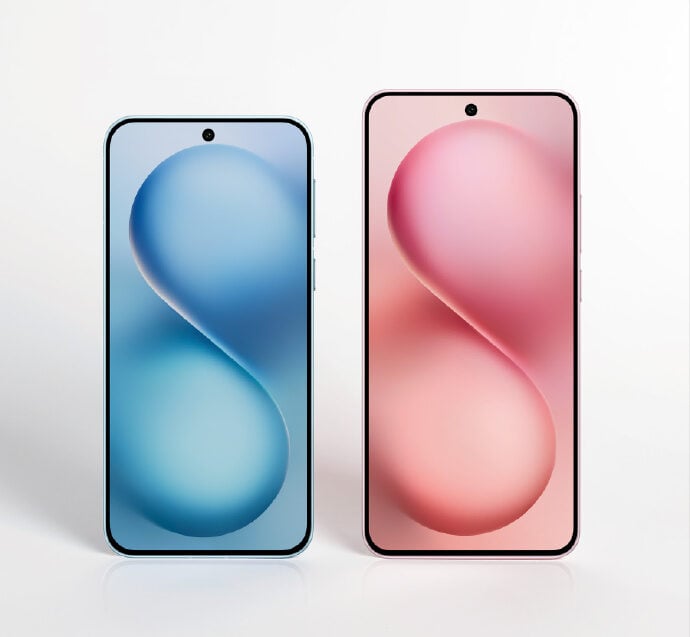
Vivo S30 Pro Mini (left) and Vivo S30 (right)
Recently, a Vivo official confirmed that the Vivo S30 will feature a 6.67-inch flat OLED panel, whereas the S30 Pro Mini will be a compact offering equipped with a 6.31-inch flat OLED screen. The report also suggested that both devices will be equipped with a 6,500mAh battery.
DCS revealed in a new Weibo post that the Vivo S30 Pro Mini will be powered by MediaTek’s yet-to-be-announced Dimensity 9400e chipset. This SoC is expected to be an improved version of the Dimensity 9300+, which was launched in May 2024.
He added that the S30 Pro Mini is also said to include a Sony IMX882 50-megapixel periscope telephoto camera, a metal middle frame, and an x-axis linear motor. A previous report claimed that its rear camera setup will comprise a 50-megapixel + 8-megapixel + 50-megapixel triple camera unit. This device is likely to get rebranded as the Vivo X200 FE in India.
The new leak also suggests that the S30 will feature the same periscope telephoto camera along with a metal middle frame. The tipster has not shared anything about the Vivo S30’s chipset. However, the tipster has previously claimed that the device will be equipped with the Qualcomm SM7550 chip, which is nothing but the existing Snapdragon 7 Gen 4 SoC. The S30 series is expected to arrive in four shades such as blue, gold, pink, and black.
For more daily updates, please visit our News Section.
Alcatel has been teasing its upcoming smartphones ahead of its re-entry into the Indian market. Until now, the teasers have offered only brief glimpses of the device, along with a hint at stylus support. However, a new image shared by Madhav Sheth — who is associated with Alcatel India in addition to Honor Tech — has confirmed both the name of the first Alcatel phone set to launch in India and its design.
The above image suggests that the Alcatel V3 Ultra will feature a round camera module camera with three cameras and an LED flash inside. A stylus is also illustrated alongside the device, indicating that the phone may support stylus functionality or include one in the box.
Prominently placed on the rear sketch are the words “Born in France” and “Now in India”, which highlight Alcatel’s French origins while also focusing on its availability or manufacturing shift to the Indian market. Towards the bottom of the box, bold gold text reads “India’s First”, although the full statement is partially obscured—it possibly refers to a unique feature such as full stylus support or a new display technology.
The Alcatel V3 Ultra’s design is similar to the TCL 50 Pro NextPaper, which was announced in September 2024. However, it will share the same internals as the TCL phone. Hopefully, the company will confirm the V3 Ultra’s key features in the coming days.
Alcatel phones to be manufactured in India
On May 10, NxtCell India, in partnership with Padget Electronics, a wholly owned subsidiary of Dixon Technologies, officially announce that it is set to bring Alcatel-branded smartphones back to the Indian market. This strategic agreement outlines that Padget Electronics will serve as the manufacturing partner for Alcatel smartphones in India. The collaboration is aimed at building a localised manufacturing ecosystem that reflects global standards while being aligned with India’s ‘Make in India’ vision.
The production will take place at Padget’s advanced facility, known for its automated processes, AI-powered quality checks, and sustainable practices. The tie-up also ensures the transfer of proprietary technologies and innovation from Alcatel to the Indian manufacturing base, with a focus on high-quality display and hardware integration. The collab also sets the stage for India to become a key export hub for the brand’s global reach.
For more daily updates, please visit our News Section.
OPPO has confirmed it will launch the OPPO Pad SE tablet alongside the Reno 14 and Reno 14 Pro smartphones on May 15, 2025, in China. The tablet is also set to launch soon in Malaysia, as teased by OPPO Malaysia on its official X handle.
The OPPO Pad SE will feature an 11-inch LCD display with eye-care features and a dedicated Kids Mode. It runs on ColorOS, likely version 15 based on Android 15. The tablet is powered by a 9,340mAh battery and the new Dimensity G100 chipset. It is not expected to support cellular connectivity.
In China, the Pad SE will be available in three configurations: – 6GB RAM + 128GB storage – 8GB RAM + 128GB storage – 8GB RAM + 256GB storage
[affiliate_genie_cta]
Color options include Starlight Silver and Night Blue, both offered in a Soft Light Edition. In Malaysia, a Grey variant has been confirmed.
The Pad SE is designed for learning and productivity. It includes preloaded educational content, supports long usage hours with its large battery, and focuses on visual comfort for extended use. The tablet also comes with basic multitasking features, but no cellular support, making it a Wi-Fi-only device.
The “Coming Soon” teaser for Malaysia suggests a launch shortly after the China event. OPPO is also expected to announce Enco Clip open earbuds and Reno 14 series accessories at the same event.
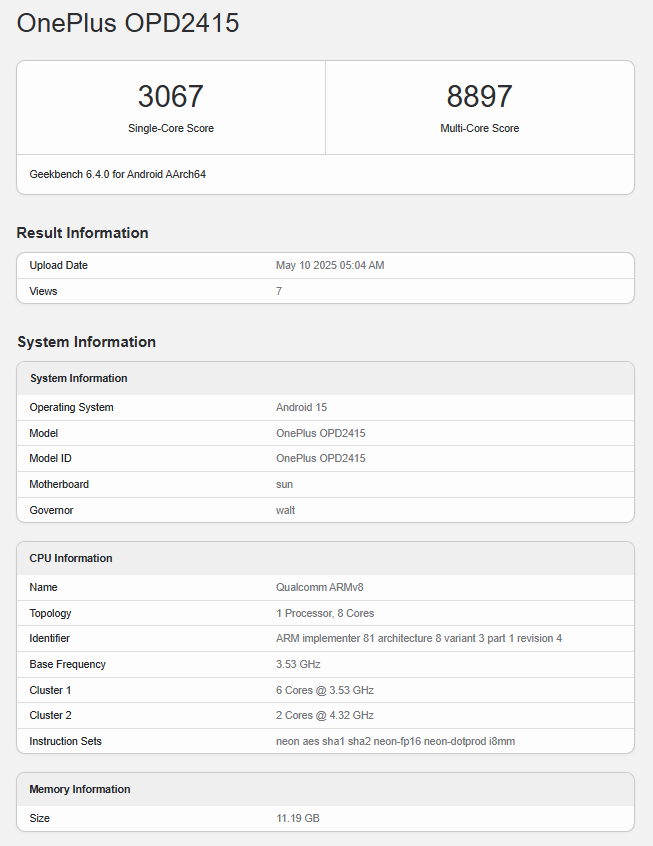
In other news, the OnePlus Pad 2 Pro has appeared on Geekbench under the model number “OPD2415,” confirming a Snapdragon 8 Elite chipset, Android 15, and 12GB RAM. It scored 3067 (single-core) and 8897 (multi-core). The tablet is expected to feature a 13.2-inch 3.4K 144Hz IPS LCD, 13MP rear and 8MP front cameras, and a 12,140 mAh battery with 67W charging.
For more daily updates, please visit our News Section.
Recently, two Snapdragon 8s Gen 4-powered smartphones — namely the iQOO Z10 Turbo Pro and the Redmi Turbo 4 Pro — have already launched in China. Now, a new leak claims that another Snapdragon 8s Gen 4 phone will debut in China this month. Here’s a look at what the device is and what it has to offer.
Xiaomi Civi 5 Pro tipped to launch this month
The above leak by tipster Digital Chat Station suggests that the Xiaomi Civi 5 Pro, equipped with the Snapdragon 8s Gen 4 chipse,t will launch this month in China. To recall, the Civi 4 Pro that debuted in March 2024 housed the Snapdragon 8s Gen 3 SoC.
Another highlight of the Xiaomi Civi 5 Pro is its camera setup. The phone will feature a 50-megapixel telephoto lens on the rear, though it is not yet confirmed whether it will be a standard telephoto or a periscope lens. The front and rear cameras are said to be tuned for improved low-light photography.
The device will feature a medium-sized OLED quad-curved display with a 1.5K resolution and slim bezels on all four sides. It will be powered by a large 6,000mAh+ battery, which may support 67W charging. The phone will likely be marketed to younger and style-conscious users, in line with the Civi brand’s positioning.
Pricing is yet to be revealed, but expectations point to a competitive offering in the 3,500 Yuan (~$485) to 4,000 Yuan (~$550) range. The said device may get rebranded as the Xiaomi 15 Civi in India.
For more daily updates, please visit our News Section.
Yesterday, tipster Digital Chat Station leaked renders of the OnePlus Pad 2 Pro, revealing a new design and sharing specifications of the upcoming tablet. Now, a Geekbench listing with model number “OPD2415” has emerged, which is believed to be the OnePlus Pad 2 Pro.
On Geekbench, the ‘OPD2415’ scored 3067 in single-core and 8897 in multi-core tests. It features an octa-core processor with two cores clocked at 4.32 GHz, and the other six clocked at 3.53 GHz. It also features the Adreno 830 GPU, which leads us to believe that the SoC in use is the Snapdragon 8 Elite. Other than that, the listing confirms Android 15 OS and 12GB RAM.
According to previous reports, the OnePlus Pad 2 Pro will be powered by the Qualcomm Snapdragon 8 Elite chipset and feature LPDDR5X RAM and UFS 4.0 storage. It will run Android 15 with ColorOS 15. The tablet is expected to sport a 13.2-inch IPS LCD display with 3.4K resolution, 144Hz refresh rate, and 900 nits peak brightness (HBM).
Camera specs include a 13MP rear camera and an 8MP front camera. Powering the device will be a 12,140 mAh battery with support for 67W wired charging. Other features include WiFi 7, Bluetooth 5.4, USB 3.2 Gen 1 Type-C port, eight speakers, 5.97mm thickness, and a 675g weight.
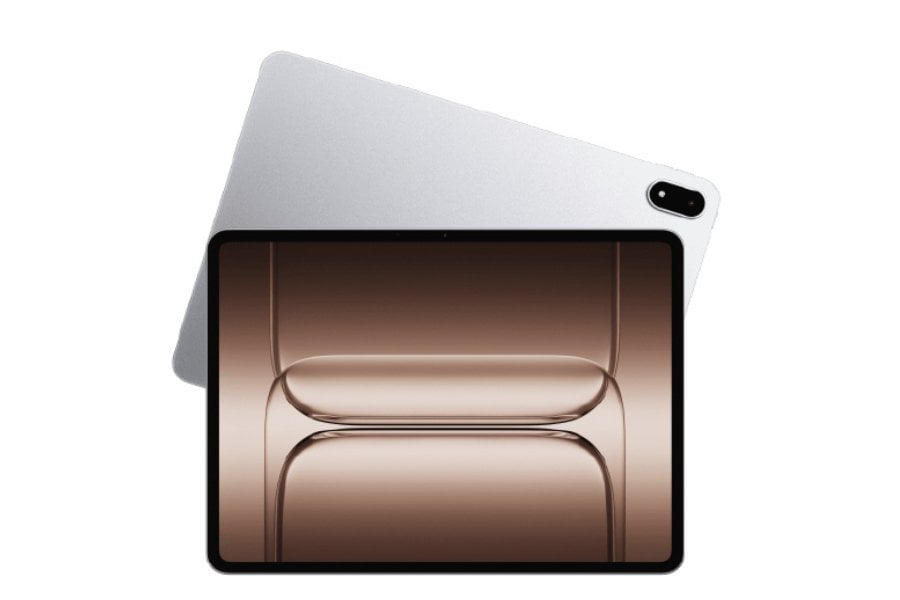
Leaked images show the tablet in two color options: Black/Grey and White/Silver. Design details include flat front and rear panels, a pill-shaped camera housing with LED flash, a landscape-oriented front camera, and magnetic POGO pins. The volume rocker is placed at the top, while the power button is on the left side. Two speaker grilles and mic holes are visible, with two more likely on the opposite side.
Interestingly, the design and specifications align closely with the OPPO Pad 4 Pro, strengthening speculation that the OnePlus Pad 2 Pro could be a rebranded OPPO device, similar to the OnePlus Pad 2’s rebranding of the OPPO Pad 3 Pro.
For more daily updates, please visit our News Section.
Update: Newer leaks refer to the OnePlus’ upcoming flagship as the OnePlus 15, instead of the OnePlus 14. The below post has been modified accordingly.
Original story follows…
New flagship phones from different brands are expected to hit the Chinese market in the last quarter of this year. A recent leak claimed that Xiaomi may unveil the Xiaomi 16 series as early as the end of September, whereas flagships from other brands are expected to debut in October. A new leak, courtesy of tipster Smart Pikachu, sheds some new information about the Oppo Find X9 series and the OnePlus 15 that are expected to break cover in October this year in China.
Oppo and OnePlus flagships to feature 200-megapixel periscope camera
Following last year’s wave of 200-megapixel periscope cameras adopted by brands like Vivo, Xiaomi, and Honor, Oppo is said to be joining the movement. Unlike the Find X8 Pro/Ultra, which featured dual 50-megapixel periscope lenses for a more unique optical approach, the upcoming Find X9 Pro is expected to switch to a single 200-megapixel periscope telephoto lens.
According to the tipster, both Oppo and its sub-brand—likely OnePlus—are gearing up to launch smartphones with a 200-megapixel periscope telephoto camera this year. Users won’t have to wait for an “Ultra” model, which is expected to debut in 2026, to access this high-end camera setup, implying that even the standard flagship models from both brands could offer this advanced feature.
The OnePlus 15 (tentative name) is expected to be one of the key beneficiaries of this upgrade, aligning with previous rumors about significant camera improvements in the next generation. The rumor mill is yet to leak concrete details about OP15, but it is expected to arrive with a flat display, a large battery, and the Snapdragon 8 Elite 2 chipset. On the other hand, the Find X9 series is expected to feature the Dimensity 9500 chipset. The tipster also claimed that apart from getting a 200-megapixel camera onboard, Oppo aims to maintain its reputation for slim flagship designs. Both devices are reportedly set for an official unveiling in October.
So what about the Find X9 Ultra? Will it also feature a single 200-megapixel periscope camera instead of a dual periscope system? A recent leak by reliable tipster Digital Chat Station revealed that its camera setup will include a 200-megapixel periscope telephoto camera accompanied by a smaller 50-megapixel periscope sensor with 10x optical zoom.
For more daily updates, please visit our News Section.
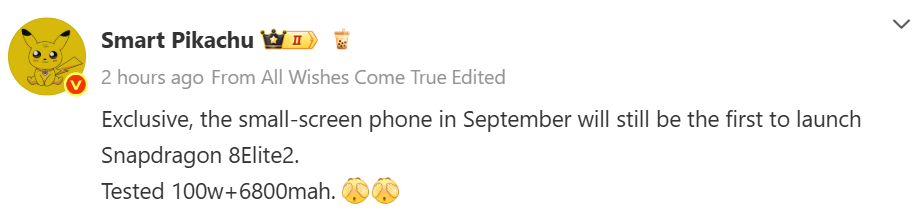
Xiaomi is expected to unveil the Xiaomi 16 series of flagship phones later this year in China. Well ahead of the launch, tipster Smart Pikachu has shared some intriguing details about the alleged Xiaomi 16. While the leaker has not mentioned the phone’s official name explicitly, the details he shared hint at an imminent launch, likely scheduled for September. The device is expected to come with groundbreaking features, including the first-to-market Snapdragon 8 Elite 2 chipset and an impressive battery capacity.
Xiaomi 16 launch timeframe, key specs (rumored)
Smart Pikachu’s leak suggests that the Xiaomi 16 will be the first smartphone to feature the Snapdragon 8 Elite 2 chipset. The leak further states that the device is being tested with a 6,800mAh battery coupled with 100W charging. This aligns with a previous leak that the Xiaomi 16 will have the latest battery in a 6.3-inch display phone.
To recall, the Xiaomi 15 (Chinese variant) packs a 5,400mAh battery with 90W charging support. The Xiaomi 16’s battery and charging combination will be bigger than similar phones in its category. To put it into context, the OnePlus 13T featuring a 6.3-inch display has a 6,260mAh battery and 80W charging, whereas the upcoming Vivo S30 Pro Mini (China) / Vivo X200 FE (India, rebranded version) is said to be equipped with a 6,500mAh battery with 90W charging.
The same tipster previously revealed that the Xiaomi 16’s 6.3-inch flat OLED panel will have ultra-narrow bezels on all four sides. The device is expected to run on Android 16 with the upcoming HyperOS 3.0 UI on top.
The Xiaomi 16 rumors suggest that it will have a 50-megapixel triple camera setup, which will include a periscope telephoto camera. Despite packing a huge battery, the Xiaomi 16 is expected to flaunt a thin and light form factor.
Additionally, previous leaks suggest that the Xiaomi 16 Pro and Xiaomi 16 will both debut together this year, but the Xiaomi 16 Ultrav is expected to launch later in the first half of 2026.
For more daily updates, please visit our News Section.
On May 8, iQOO Neo series product manager Luo Jiahui shared the first full look at the iQOO Neo10 Pro+ device across social media. This marks the first time the Neo series has partnered with BMW, with the collaboration designed as a tribute to pixel gaming culture. Luo teased that more details of this unique partnership will be revealed in the coming weeks.
iQOO Neo 10 Pro+ design teased in video
The official video reveals that the iQOO Neo 10 Pro+ sports a striking and unconventional design, highlighted by its BMW-inspired aesthetics. The glass back is divided into distinct sections with bold pixel-style graphics—a clear nod to retro gaming culture. The phone features a dual-tone finish with a blend of matte and glossy textures.
The BMW branding influence appears subtly integrated into the design. The camera module is rectangular with rounded edges, positioned in the top-left corner, and houses a dual-camera setup with visible ring accents around the lenses.
According to Luo, the phone will be powered by Qualcomm’s Snapdragon 8 Elite and will feature a 2K flat OLED display. These two elements—chipset and display—are areas where iQOO has invested significantly, aiming to meet the expectations of high-performance users without cutting corners.
Recent reports have revealed that the Neo10 Pro+ will house a 7,000mAh battery and support 120W fast charging. Its rear camera setup will comprise a 50-megapixel main sensor with OIS and a 50-megapixel ultra-wide camera. Other rumored features include an ultrasonic fingerprint sensor and a build comprising a plastic mid-frame and a glass back. The Neo 10 Pro+ has achieved an impressive score of 3.3 million on AnTuTu, positioning it as a strong contender against flagship smartphones in the 3,500 Yuan (~$485) price range.
For more daily updates, please visit our News Section.
As Infinix gears up for the global launch of its GT Verse ecosystem—featuring the GT 30 Pro smartphone, the XPad GT gaming tablet, GT Buds, and more—the company is also quietly experimenting with bold new ideas. While the upcoming products target gamers with high refresh rate displays, powerful chipsets, and custom accessories, Infinix is simultaneously working on a prototype that takes mobile design in a new direction.
Infinix GT DynaVue color-changing back panel demoed
A working prototype from the GT series has surfaced, featuring a standout innovation: the GT DynaVue back panel. This panel introduces electrochromic technology—typically seen in aircraft windows and luxury vehicles—to the world of smartphones. What makes it compelling is its ability to react to specific actions.
Whether it’s an incoming call, launching a game, or switching to the camera, the back panel shifts its appearance dynamically, offering more than just decoration. Unlike RGB lighting, which stays on regardless of context, this third-generation electrochromic film brings smarter responsiveness. It spans a large area of the rear panel without affecting usability, thanks to flexible and stable materials.
This reactivity adds an extra layer of engagement for users, potentially shaping the future of gaming phone aesthetics. Though it’s not meant for commercial release just yet, the working prototype shows how mobile designs might evolve in coming years.
Infinix GT 30 Pro, XPad GT to headline the GT Verse lineup
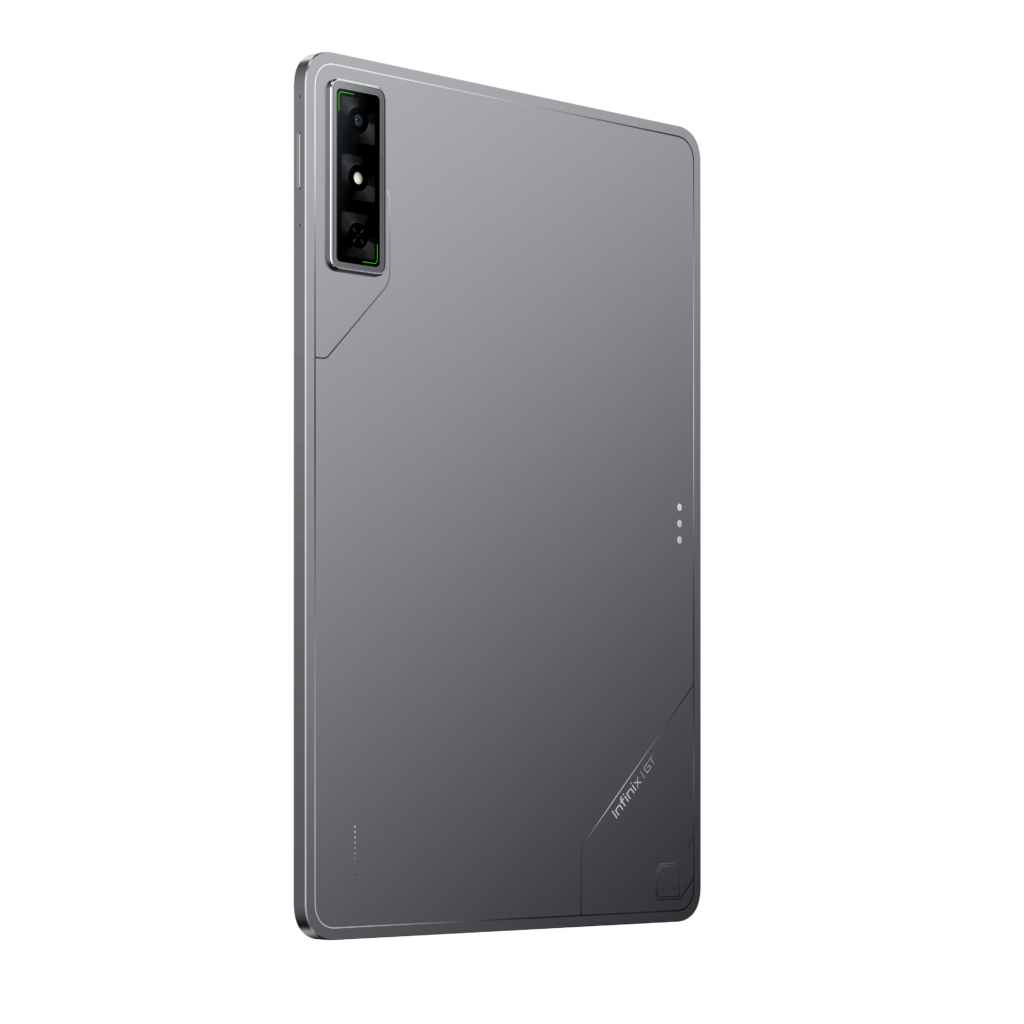
Infinix XPad GT gaming tablet
The GT 30 Pro is expected to be the performance-focused heart of the GT Verse. According to early benchmarks, it might pack a Dimensity 8350 chipset and 12GB of RAM. Alongside it, the XPad GT gaming tablet will feature a 144Hz display, Snapdragon 888 chipset, and a hefty 10,000mAh battery with 33W charging. The tablet also supports AI tools like Folax and has an eight-speaker setup for immersive sound. These, along with other accessories like the GT Buds, power bank, and cooling fan, are set to debut globally this month.
For more daily updates, please visit our News Section.
Huawei has officially launched its first personal computer operating system built from the ground up: HarmonyOS PC, also known as Hongmeng Computer in China. Marking a strategic shift away from Western tech dependencies, HarmonyOS PC represents the culmination of five years of internal development, involving over 10,000 engineers and more than 2,700 patents.
It is Huawei’s boldest attempt yet to establish a fully self-reliant computing ecosystem, complete with its own kernel, AI assistant, security architecture, and app framework. But how does it actually compare to Microsoft’s Windows, the long-dominant force in global PC operating systems?
What is HarmonyOS PC?
HarmonyOS PC is a fully domestic, full-stack operating system designed by Huawei, built on HarmonyOS 5. It is part of the broader HarmonyOS ecosystem that already spans smartphones, tablets, smartwatches, TVs, and even vehicle dashboards. The PC version extends HarmonyOS’s core values, fluid performance, multi-device integration, AI enhancement, and security into the desktop computing space.
At the heart of the system lies a redesigned Harmony kernel, supported by the Ark graphics engine, StarShield security architecture, and Huawei’s proprietary development tools such as ArkTS and ArkUI. HarmonyOS PC is built for seamless interaction across devices, allowing users to share keyboards, mice, screens, and files between phones, tablets, and PCs without friction.
The OS also integrates tightly with Huawei’s AI assistant, Xiaoyi, which supports voice interaction, smart summarization, translation, and contextual data search through AI-driven semantic understanding.
The first HarmonyOS PC will be officially launched on May 19, 2025, and will be powered by the Kirin X90 desktop chip, Huawei’s own 10-core processor. The device will not support Windows natively, but users can run Windows 11 via the Oseasy virtual machine for compatibility.
Key Differences Between HarmonyOS PC and Windows
1. Architecture and Ecosystem
While Windows is a mature, universal OS designed for compatibility across a broad range of hardware and software, HarmonyOS PC is vertically integrated. It is designed specifically for Huawei’s own devices and certified peripherals, ensuring tighter hardware-software synergy.
HarmonyOS includes more than 150 native PC apps and over 2,000 universal apps, most of which are optimized for Huawei’s ecosystem. In contrast, Windows supports hundreds of thousands of legacy and modern apps but lacks the kind of device-level integration Huawei is aiming for.
2. Multi-Device Collaboration
HarmonyOS PC leans heavily on distributed computing. With Huawei’s distributed soft bus technology, it enables seamless cross-device continuity such as dragging files between devices, using the same keyboard/mouse across multiple screens, and real-time app handoff.
Windows has made strides in this area through services like Phone Link and OneDrive, but it still depends on third-party hardware and applications for advanced integrations.
3. User Interface and Interaction
Visually, HarmonyOS PC resembles macOS more than Windows. It features a bottom-center dock for apps, top status bars, and a clean, card-based desktop layout.
Dynamic wallpapers, motion effects, gravity-based visuals, and layered window transitions give it a polished, modern aesthetic. Windows remains more traditional in layout, though Windows 11 has adopted some visual cues similar to macOS as well.
Gesture control on HarmonyOS PC is also more intuitive, supporting three-finger swipes, drag-and-drop multitasking, and screen splitting at the system level. These UI elements are designed with AI in mind and are tightly woven into the system’s operation.
4. AI Integration
This is where HarmonyOS PC aims to leap ahead. Huawei’s Xiaoyi assistant, powered by its Pangu and DeepSeek models, can generate templates, translate images, summarize meetings in real-time, and offer system-level automation.
Windows has Copilot and Microsoft 365 integrations, but Huawei’s Xiaoyi is more deeply embedded into the OS and can access system-level commands and UI elements through voice, image, or text.
5. Privacy and Security
Huawei built HarmonyOS PC with privacy as a foundational feature. The StarShield architecture enforces full-disk encryption at the chip level, meaning even if the drive is removed, data remains unreadable. Additional features include one-time permission grants, anti-peeping screens, and remote device wiping, even when the device is powered off.
Windows offers BitLocker and a range of user-configurable privacy tools, but it does not provide chip-level full-disk encryption by default on all devices and is more reliant on third-party antivirus and security software.
Final Thoughts
HarmonyOS PC represents a clear turning point in Huawei’s long-term vision to decouple from Western tech infrastructure. While Windows dominates in terms of legacy software compatibility and developer support, HarmonyOS PC’s tight integration with Huawei’s broader ecosystem, advanced AI capabilities, and strong security posture present a fresh alternative, particularly for users and institutions in China.
However, HarmonyOS PC still faces challenges. Native app development is ongoing, user habits will take time to shift, and international adoption may remain limited due to geopolitical and software compatibility issues. But for Huawei, HarmonyOS PC is not just an operating system, it is a declaration of self-reliance and a significant leap toward a unified, cross-device digital future.
For more daily updates, please visit our News Section.
We use cookies on our website to give you the most relevant experience by remembering your preferences and repeat visits. By clicking “Accept”, you consent to the use of ALL the cookies.
This website uses cookies to improve your experience while you navigate through the website. Out of these, the cookies that are categorized as necessary are stored on your browser as they are essential for the working of basic functionalities of the website. We also use third-party cookies that help us analyze and understand how you use this website. These cookies will be stored in your browser only with your consent. You also have the option to opt-out of these cookies. But opting out of some of these cookies may affect your browsing experience.
Necessary cookies are absolutely essential for the website to function properly. This category only includes cookies that ensures basic functionalities and security features of the website. These cookies do not store any personal information.
Any cookies that may not be particularly necessary for the website to function and is used specifically to collect user personal data via analytics, ads, other embedded contents are termed as non-necessary cookies. It is mandatory to procure user consent prior to running these cookies on your website.