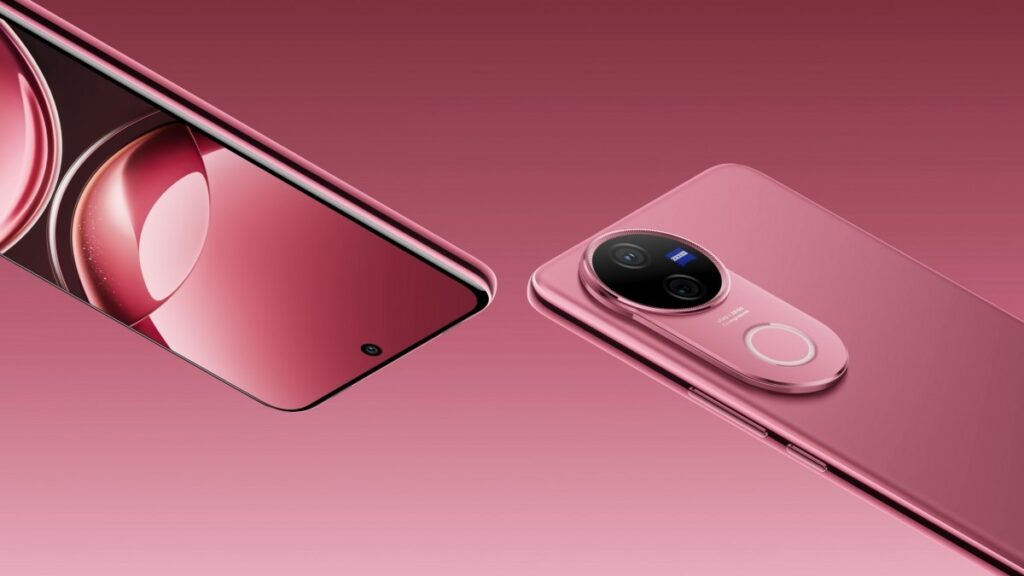
Huawei is preparing to launch the Nova 14 series of smartphones this month in China. Scheduled to launch on May 19, the lineup is expected to include three models, such as the Nova 14, 14 Pro, and 14 Ultra. Ahead of the launch, the brand has now revealed four colour options for the Ultra edition. Shared via official promotional images, the new phone is being described as Huawei’s most stunning Nova yet, with an eye-catching design and advanced camera setup.
Huawei Nova 14 Ultra color options
Huawei Nova 14 Ultra – Floating Gold
Huawei has confirmed that the Nova 14 Ultra will be offered in four colors — Floating Gold, Floating White, Glowing Purple, and Obsidian Black. The phone sticks with the brand’s signature Star Ring design but introduces smoother curves at the junction between the camera ring and the rear panel. The circular module houses four cameras: a primary sensor, a telephoto lens, an ultra-wide camera, and a Red Maple Color sensor — a feature seen earlier on the Mate 70 series.
Huawei Nova 14 Ultra – Floating White
Huawei Nova 14 Ultra – Glowing Purple
The Red Maple Color camera is a multi-spectral image sensor capable of capturing more accurate lighting data. This helps the camera reproduce colors more faithfully, delivering photos and videos that reflect true-to-life visuals. Huawei is promoting this sensor as a key differentiator for the Nova 14 Ultra in the mid-to-premium segment.
Huawei Nova 14 Ultra specifications (rumored)
Huawei Nova 14 Ultra – Obsdian Black
The Nova 14 Ultra will feature a 6.8-inch full-view display and will be powered by a Kirin 9 series chipset. This positions it on par with the Mate and Pura series in terms of processing capabilities. The phone will also be the first device to ship with HarmonyOS 5 out of the box, offering a refreshed software experience.
The Nova 14 series will compete with the Oppo Reno 14 series, Vivo S30 series, and Honor 400 lineup in China.
For more daily updates, please visit our News Section.
Realme is gearing up to unveil a new addition to its Neo 7 lineup in China. The information comes directly from Realme, which has confirmed the upcoming Neo 7 Turbo as its most powerful Neo-series device yet. The official teaser describes it as “the strongest Neo in history” and hints at a flagship-grade performance and refreshed design.
Realme Neo 7 Turbo confirmed for launch this month
Realme Neo 7 Turbo launching in May 2025 in China
According to recent reports, the Realme Neo 7 Turbo will be among the first smartphones to feature MediaTek’s Dimensity 9400e chipset. This is a new 4nm SoC with full-core architecture that includes four Cortex-X4 super cores and four Cortex-A720 performance cores.
The D9400e is said to be an enhanced version of the Dimensity 9300 Plus with no change in CPU and GPU configurations. Performance-wise, the chipset reportedly delivers better results than the Snapdragon 8s Gen 3, especially in GPU-intensive benchmarks like Aztec 1440p, where it has touched around 95fps. The Turbo branding suggests that the device will compete with the likes of the iQOO Z10 Turbo Pro and the Redmi Turbo 4 Pro.
The device is expected to feature a flat OLED display with a 1.5K resolution and could sport a 50-megapixel triple rear camera setup. Another major feature could be its massive 7,000mAh battery, which is said to support 120W fast charging—offering an ideal balance of performance and endurance for demanding users. Realme has described the design as “completely new,” indicating a fresh approach over its predecessor.
In terms of pricing, the Neo 7 Turbo is likely to be positioned above the Neo 7, which launched at 2,199 Yuan (~$305) in China. This suggests that the Turbo version may arrive with a starting price of 2500 Yuan (~$350).
Could it be a rebadged Realme GT 7?
Speculation suggests the Neo 7 Turbo may be a rebranded global Realme GT 7 variant. The GT 7 is already confirmed to feature the Dimensity 9400 Plus chipset in China, and a global variant with Dimensity 9400e could serve as the foundation for the new Neo model. For those who don’t know, the global GT 7 is set to debut on May 27.
For more daily updates, please visit our News Section.
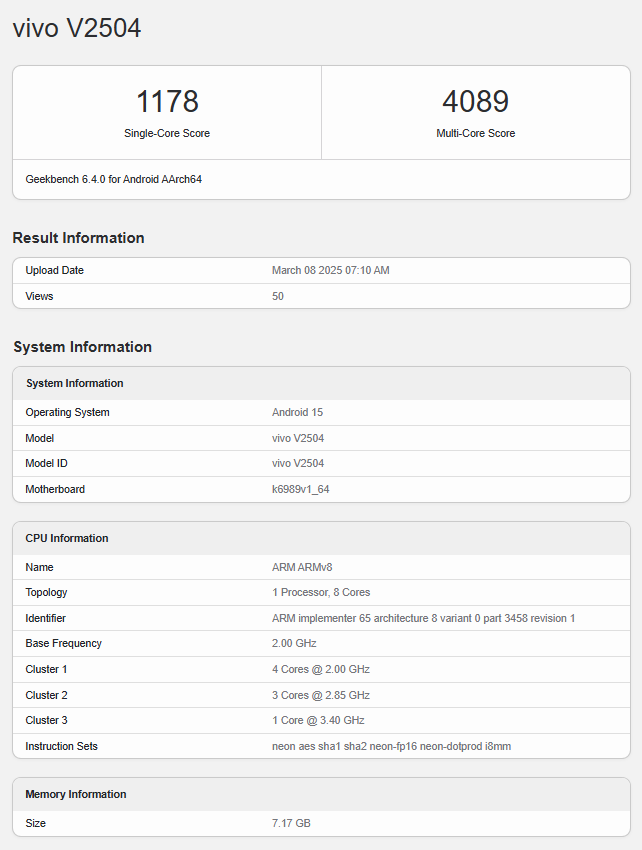
Back in March, an upcoming Vivo smartphone with model number V2504 was spotted in Geekbench’s database. The device was believed to be the Vivo V50 Pro at the time. However, a new development reveals that it is not the V50 Pro, but the upcoming Vivo T4 Ultra.
Vivo T4 Ultra, T4 Lite receive Bluetooth SIG certification
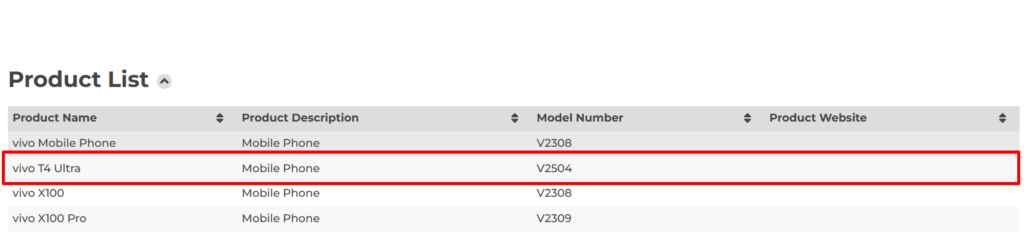
Vivo T4 Ultra Bluetooth SIG listing
As seen in the screenshot above, the Vivo T4 Ultra with model number V2504 has received approval from the Bluetooth SIG authority. This will be the topmost model in the T4 series, which already includes the Vivo T4x 5G and Vivo T4 5G.
Vivo T4 Ultra Geekbench listing
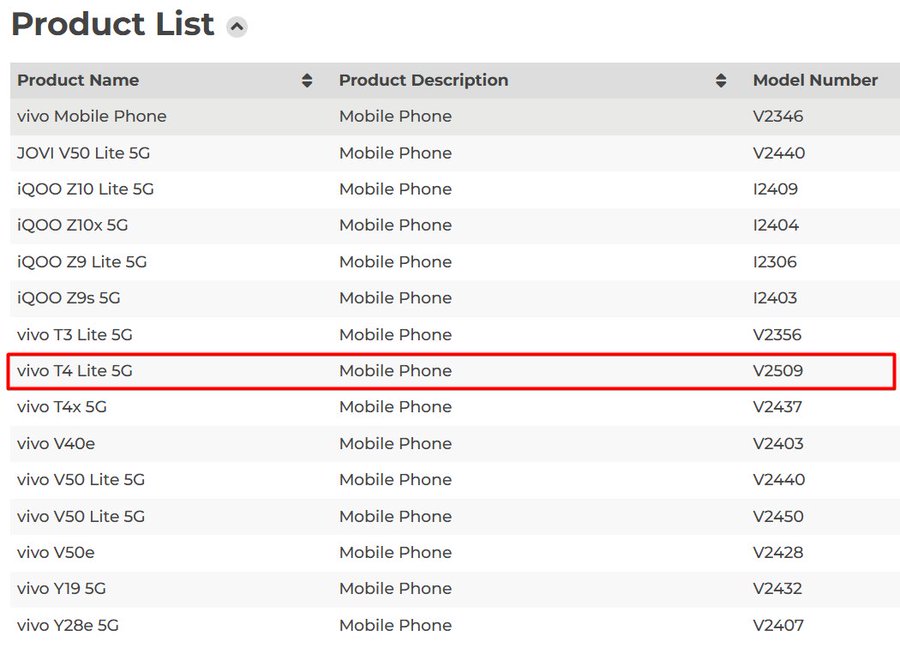
The other screenshot shared in the post reveals that the upcoming Vivo T4 Lite 5G, model number V2509, has also been certified by the Bluetooth SIG authority. It could be a rebranded version of the iQOO Z9 Lite 5G, which features the Dimensity 6300 chipset.
Vivo T4 Lite 5G Bluetooth SIG listing
Coming back to the Vivo T4 Ultra, its Geekbench listing has already revealed that it will feature the Dimensity 9300 Plus chipset, 8GB of RAM, and Android 15. To recall, the Vivo T3 Ultra, which debuted last year, featured the Dimensity 9200 Plus chipset.
The arrival of the T4 Ultra may not be far away, as the T3 Ultra recently received a price cut of Rs 2,000 in India. In all likelihood, the T4 Ultra may break cover within the first half of the year. To recall, the T3 Ultra was announced in September 2024 with a price tag of Rs 31,999. It came with key specs such as a 6.78-inch AMOLED 1.5K 120Hz screen, a Dimensity 9200+ chip, up to 12GB of LPDDR5x RAM, 256GB of UFS 3.1 storage, a 5,500mAh battery with 80W charging, and a 50-megapixel triple camera unit.
Vivo T3 Ultra price drop
The Vivo T4 lineup may also include the Vivo T4 Pro. However, at present, there is no clarity about its model number and key specifications.
For more daily updates, please visit our News Section.
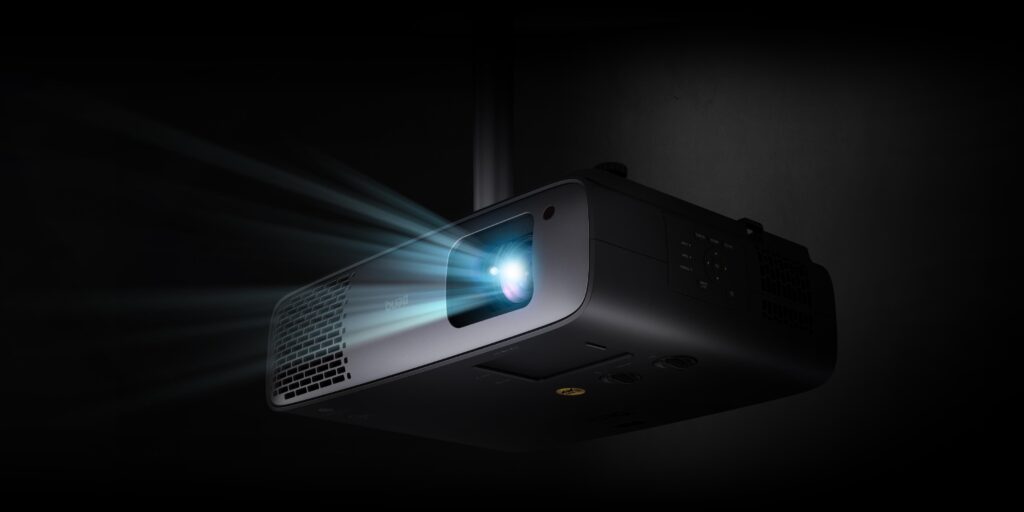
BenQ has unveiled two new high-end home cinema projectors in India, W5850 and W4100i, under its flagship W Series, marking a major push toward premium home entertainment. The pair is aimed at users who want a serious upgrade in both cinematic visuals and smart home integration, with BenQ claiming industry-leading color performance, high brightness levels, and pro-grade features.
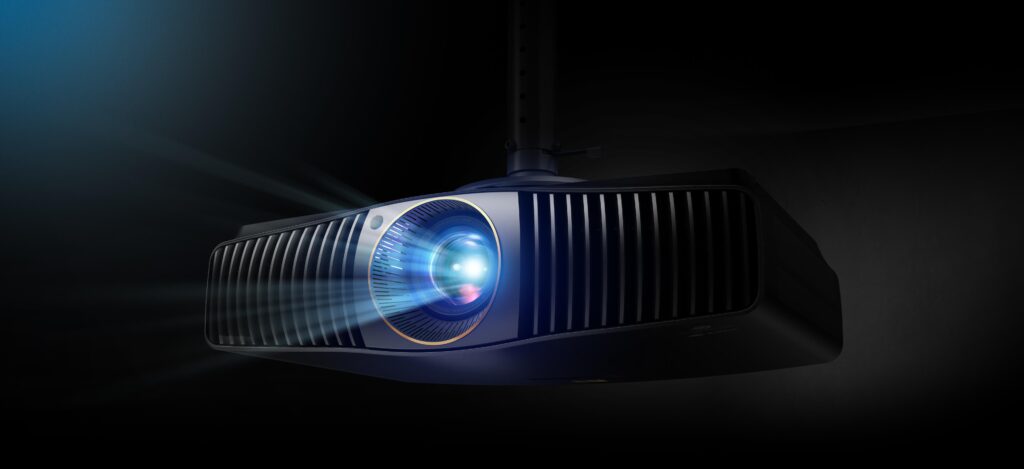
BenQ W5850
The BenQ W5850 is the bolder of the two. It’s built around a blue core laser light source capable of pushing 2600 ANSI lumens (or 2100 lumens when calibrated to 100% DCI-P3), with a lifespan stretching up to 30,000 hours. This projector can throw an ultra-sharp 200-inch 4K UHD image with 8.3 million pixels, rich color depth, and cinematic contrast thanks to a FOFO contrast ratio of 3,000,000:1. It supports 100% DCI-P3 and Rec.709 color gamuts with BenQ’s CinematicColor calibration engine, aiming for a true-to-source experience.
Setup flexibility is a highlight here, users get a 1.6x motorized zoom, four-way lens shift, and a 1.0–1.6 throw ratio that can easily deliver a massive 180-inch image from just 4 meters away. Input lag goes as low as 13ms at 1080p 120Hz, making it a rare projector that can keep up with fast-paced gaming. It lacks built-in speakers, though it supports Dolby Atmos pass-through and eARC for connecting to external audio systems.
BenQ W4100i
Positioned as a versatile all-rounder, the W4100i leans into practicality. It uses a 4LED light engine offering up to 3200 ANSI lumens and boasts an Android TV dongle certified by Google, bringing Netflix, Prime Video, and other streaming apps natively onboard. The projector supports wireless casting via AirPlay and Google Cast, and its smart AI Cinema mode adjusts picture settings automatically based on content type and ambient lighting.
Despite its smaller footprint, the W4100i still goes big on visuals. It retains the same 4K UHD resolution, full HDR support including HDR10+, HLG, and FILMMAKER MODE, plus a low 6.5ms latency at 1080p 240Hz. It even throws in a built-in 5W speaker, though serious users will still want to rely on external audio for the best results.
Price and Availability
BenQ is clearly targeting discerning enthusiasts with these models. The W5850 is priced at ₹7,00,000 ($8,230), while the W4100i costs ₹4,00,000 ($4,702. Both are available through BenQ’s authorized AVSI retail partners across India starting this month.
In related news, Xgimi recently introduced its RS 20 series projectors featuring lossless 4K resolution, advanced laser optics, and gaming-focused enhancements. Meanwhile, the Anker Nebula X1 4K Laser Projector is now available in Europe with Dolby Vision support and a limited-time €500 launch discount.
For more daily updates, please visit our News Section.
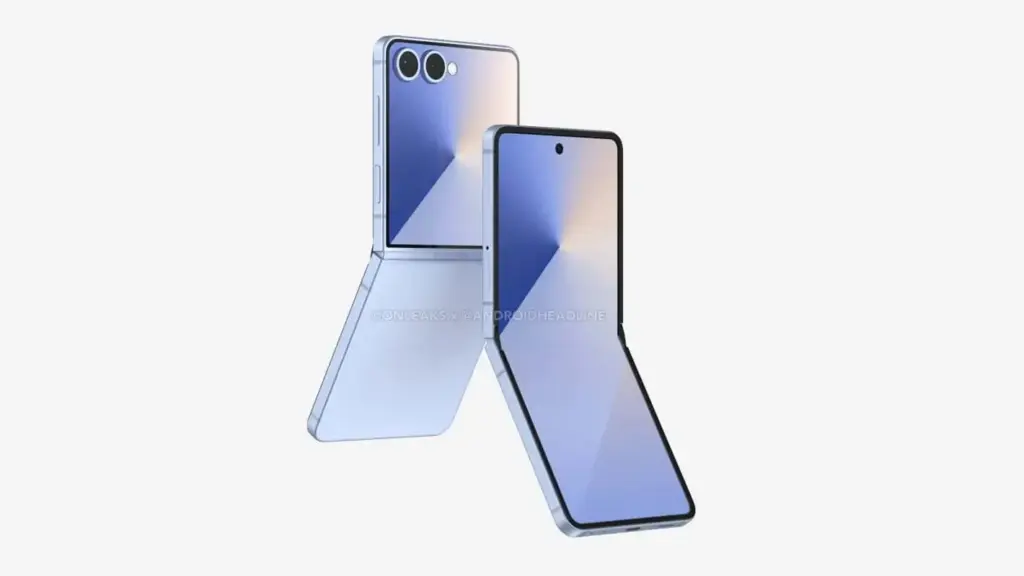
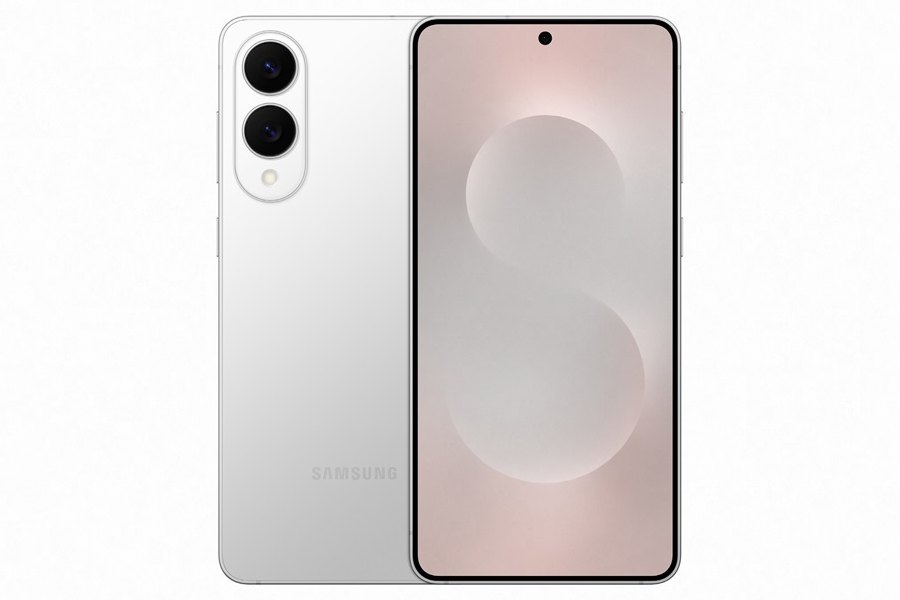
A One UI 8.0 leak has confirmed the Galaxy Z Flip 7 will sport a 4-inch edge-to-edge cover screen, matching earlier rumors. Set to launch in July 2025 alongside the Galaxy Z Fold 7, it also boasts a larger main display, thinner bezels, and a beefier battery, stealing some spotlight from its foldable sibling.
Samsung Galaxy Z Flip 7 Leaked Render
Samsung’s Galaxy Z Flip 7 is shaping up to be a standout at the July 2025 Unpacked event, with One UI 8.0 firmware leaks revealing key upgrades. Animation files extracted by Android Authority from leaked builds—tested on the Galaxy Z Flip 6, Z Fold 6, and S25 Ultra—confirm a 4-inch OLED cover screen that stretches across the dual-camera setup, mimicking the Motorola RAZR 60 Ultra’s design. For reference, the Z Flip 5 and Flip 6 both featured a 3.4-inch cover screen. The increased cover screen size will likely boost the device’s usability for notifications and quick tasks.
Galaxy Z Flip 6
But the upgrades don’t stop there. The Z Flip 7’s main 6.85-inch AMOLED display—up from 6.7 inches—features slimmer 1.2mm bezels for a sleeker look. A 4,300mAh battery, larger than the Z Flip 6’s 4,000mAh cell, is expected to improve battery life, although the chipset remains uncertain. While Samsung has exclusively used Snapdragon flagships for its foldables so far, the Exynos 2500 finally seems ready and is rumored to be a part of the Z Flip 7.
According to previous reports, the foldable’s crease may be nearly invisible, and it retains the 7-year OS update promise, running One UI 8.0 (Android 16) out of the box alongside the Z Fold 7. While the selfie camera’s specs—possibly sticking with 10MP or upgrading to 12MP like the S25 series—remain unconfirmed, new Galaxy AI features are expected.
With a price tag of around $1,099, will its larger cover screen and refined design outshine rivals like the Motorola Razr+ 2025, currently listed at $999 on Amazon (Razr 60 in other markets)? Only time will tell. The Flip 7’s chipset is still unconfirmed—and it’s one of the phone’s most crucial aspects. So, keep an eye out as we inch closer to launch before making a decision.
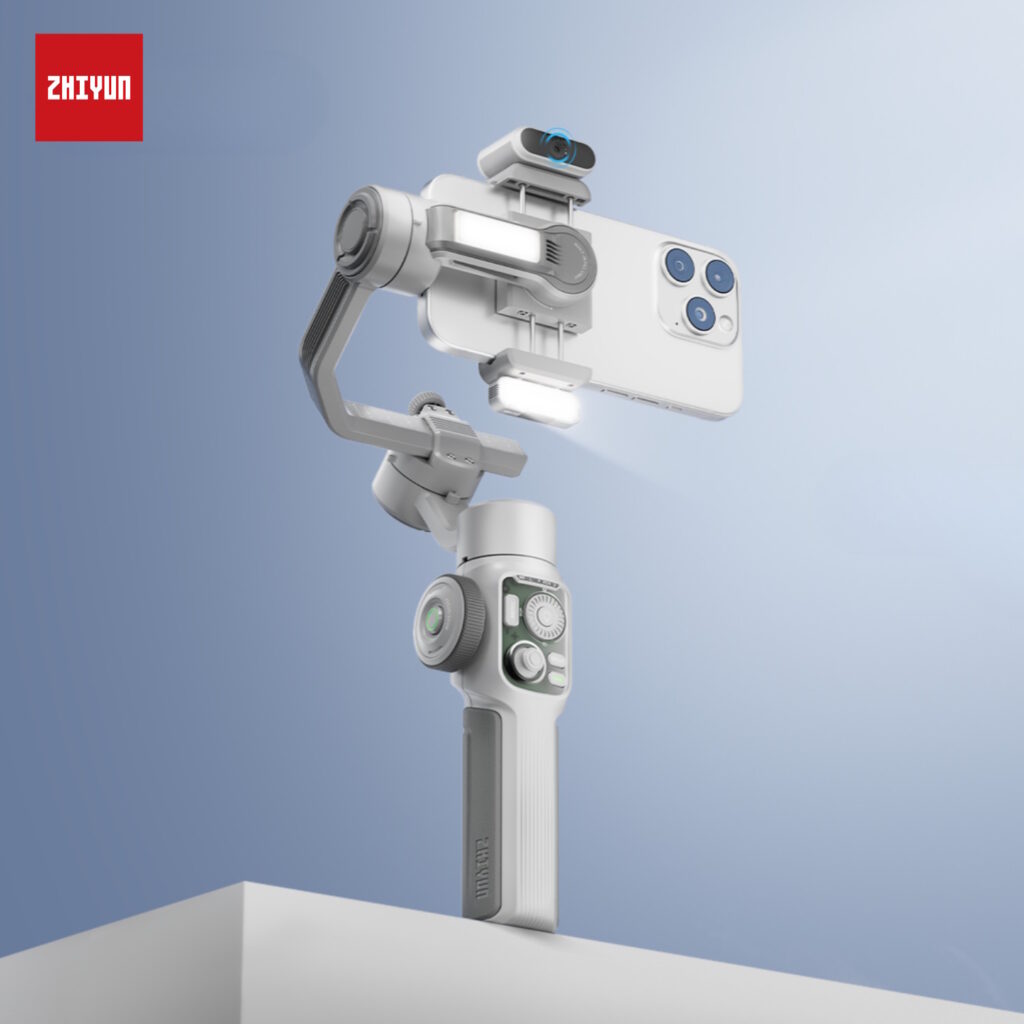
Zhiyun has unveiled the Cinepeer Smooth 5E, a new addition to its growing family of smartphone gimbals, this time with a sharper focus on accessibility without sacrificing professional-grade performance. The 5E brings flagship-tier stabilization, intuitive controls, and AI-powered features to creators who want more polish in their videos without the premium price tag.
Zhiyun Cinepeer Smooth 5E Specifications
The Smooth 5E features a true 3-axis orthogonal structure, providing smoother, more stable footage across a wider range of motion. It equips an enhanced roll-axis motor, which makes low-angle shots and wide-angle selfies easy to capture without frame obstruction. The design supports five classic gimbal modes: Follow, Pan Follow, Lock, Vortex, and POV, enabling creative shot variety that mirrors professional filmmaking styles.
It sports an integrated high-CRI fill light that outputs 680 lux of brightness by default, with magnetic mounts that allow two additional lights for a combined 2040 lux. Whether you’re shooting at dusk or indoors, the lighting setup ensures your subject always stands out.
The gimbal comes with intelligent AI-powered tracking via an optional magnetic module that enables fast, accurate face and object detection. It also supports gesture control, letting users initiate tracking with a simple hand signal, perfect for solo content creators who need to stay in frame without constantly reaching for controls.
It integrates seamlessly with Apple’s ecosystem, allowing remote control through the Apple Watch, so users can track, zoom, and trigger the shutter right from their wrist.
The gimbal features all-in-one thumb controls for streamlined operation, reducing the learning curve for beginners while maintaining precision for experienced users. Complementing this are the ZY Cami and StaCam apps, which offer tools like focus peaking, LUTs, Smart mode, and one-tap editing.
Pricing and Availability
The Smooth 5E is priced at $149 for the standard kit and $199 for the Combo Kit, which includes the AI Tracker and magnetic fill light. It is now available at Zhiyun’s official store and Amazon.
For more daily updates, please visit our News Section.
Vivo is expanding its V50 series with the V50 Elite Edition, launching in India on May 15, 2025. Teased with Zeiss-co-engineered cameras and hints of superior audio, this premium variant joins the V50 and V50e, promising enhanced portrait photography and immersive sound.
Teaser video confirms launch date and partnership with Zeiss
Vivo’s V50 series, already featuring the V50 and V50e, is getting a high-end addition with the V50 Elite Edition, set to debut at 12 PM IST on May 15, per Vivo India’s X post. The teaser video showcases a circular camera island with “co-engineered with Zeiss” branding, signaling a focus on advanced imaging. The tagline “portraits that captivate” and “sound that surrounds” suggests upgrades over the standard V50’s camera and audio, launched in February 2025.
To recall, the V50 came with a 6.77-inch FHD+ quad-curved AMOLED display with 120Hz refresh rate and 4,500-nit peak brightness, powered by the Snapdragon 7 Gen 3 SoC. It’s paired with 8/12GB RAM, 128/256/512GB storage, a 50MP main camera with OIS, a 50MP ultrawide with macro capabilities, and a 50MP selfie camera, plus a 6,000mAh battery with 90W fast charging. The Elite Edition is expected to retain these specs but introduce a premium design, possibly with a new finish or “Elite Edition” engraving.
vivo V50
Priced from ₹34,999 for the V50, the Elite Edition is expected to hover around ₹40,000, targeting mid-premium buyers. With IP68/IP69 ratings and Funtouch OS 15 based on Android 15, it’s set to compete with the likes of the iQOO Neo 10 (India), especially appealing to users who prioritize design and camera quality over raw performance. As per the recent teasers, the Neo 10 (India) will be priced “under INR 35K,” and is the “segment’s first 144fps gaming smartphone.”
The V50 Elite Edition could also be considered as an alternative to the Realme GT 7, a premium mid-range device, set for launch globally on May 27.
Will the vivo V50 Elite Edition’s Zeiss optics and audio enhancements make it a standout, or is it just a stylish V50 refresh? The May 15 launch will reveal all.
Nothing’s CEO, Carl Pei, previously revealed that the Nothing Phone (3), the brand’s first true flagship, will launch in Q3 2025. Now he reveals the pricing: around £800 (~$1,063, ₹90,500). Promising premium materials, major performance upgrades, and advanced software, it’s set to compete with top-tier flagships.
Nothing is gearing up for its biggest launch yet with the Nothing Phone (3), slated for July-September 2025, aligning with the summer releases of the Phone (1) in July 2022 and Phone (2) in July 2023. In a recent YouTube video on the Android channel, Carl Pei revealed the phone’s price—around £800, a significant jump from the Phone (2)’s ₹44,999 starting price in India. This translates to roughly €951, $1,063, or ₹90,500, positioning the Phone (3) as a premium contender against devices like the Galaxy S25 Plus (currently $999.99 on Amazon).
Pei teased “premium materials,” possibly a titanium frame or advanced glass, alongside “major performance upgrades,” with rumors pointing to a Snapdragon 8 Elite or a flagship Dimensity chip like the Dimensity 9400 or 9400+.
The Phone (3) is also rumored to pack a customizable Action Button, inspired by the iPhone, and a 6.5-inch AMOLED display, with a Pro variant possibly boasting a 6.7-inch screen. The software, likely Nothing OS 3.0 on Android 15, will feature deep AI integration for a personalized UI, potentially revamping the home screen.
Following the mid-range Phone (3a) and (3a) Pro launches in March 2025, the Phone (3) aims to solidify Nothing’s flagship ambitions. Priced higher than the Phone (2), it’s a bold move, but will its AI-driven features and premium build justify the cost? We’re pumped to find out.
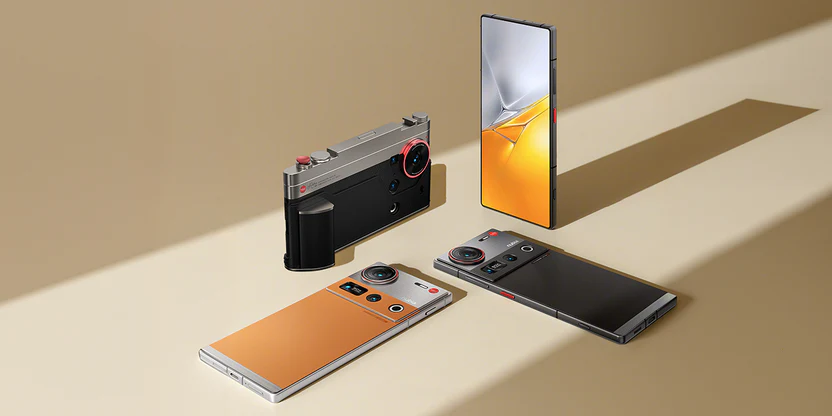
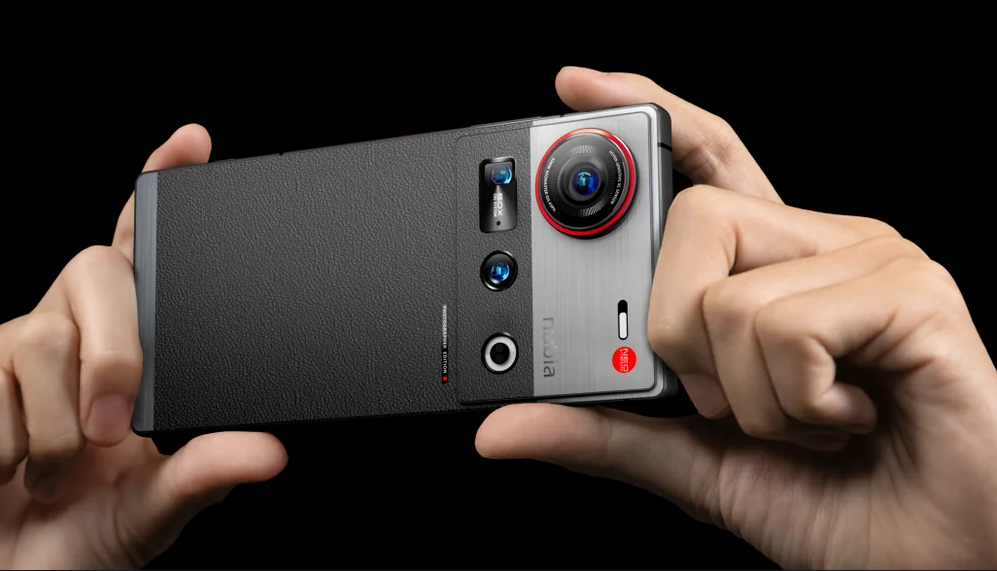
Nubia has launched the Z70S Ultra for global markets after releasing it in China last month. The phone focuses heavily on camera performance and is now available for pre-order on the Nubia official website until May 28, 2025.
Nubia Z70S Ultra
Nubia Z70S Ultra features
The main highlight is the 50MP custom “Light and Shadow Master 990” sensor from OmniVision. It comes with a 35mm focal length, horizontal and vertical phase detection autofocus, and dual conversion gain HDR. Nubia says this sensor delivers image quality better than standard one-inch sensors.
The phone also has a 64MP periscope telephoto camera and a 50MP ultra-wide camera that supports macro photography. It includes a physical shutter button, which supports half-press for focus and full-press to capture photos. To enhance the shooting experience, Nubia is also offering a Retro photography kit that includes a case, filter adapter rings, and a camera grip with controls.
The Z70S Ultra features a 6.85-inch OLED display with a resolution of 2688×1216, a 144Hz refresh rate, and up to 2000 nits peak brightness. The screen supports 10-bit color depth, 100% DCI-P3 coverage, DC dimming, and 2592Hz PWM dimming.
It runs on the Snapdragon 8 Elite chip built on a 3nm process and comes with an Adreno 830 GPU. Storage and memory options include 12GB RAM with 256GB storage, and 16GB RAM with 512GB storage, both using LPDDR5X RAM and UFS 4.0 storage. The phone ships with Android 15 and nubia’s Nebula AIOS 1.5.
Other features include a 16MP under-display front camera, in-display fingerprint sensor, IR sensor, dual stereo speakers with DTS:X Ultra, three microphones, and dual X-axis linear motors. It supports Wi-Fi 7, Bluetooth 5.4, NFC, and USB Type-C. The device is rated IP68 and IP69 for dust and water resistance.
Pricing & availability
The Z70S Ultra packs a 6600mAh battery with 80W fast charging. Pricing starts at $779 for the 12GB + 256GB model and $869 for the 16GB + 512GB model. The Retro kit will be sold separately. The Nubia Pad Pro will launch globally on June 12. Pricing is yet to be announced.
For more daily updates, please visit our News Section.
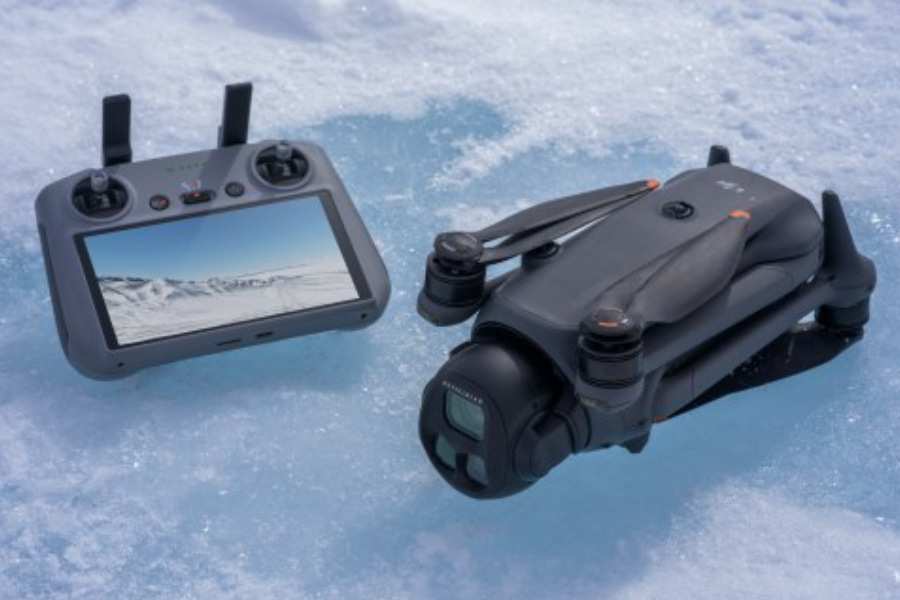
DJI’s latest flagship drone, the Mavic 4 Pro, doesn’t radically change the formula, but it quietly upgrades nearly every core component. The result is a compact flying camera system that shoots sharper video, flies longer, and sees more of its surroundings. But it’s not coming to the US just yet. All about it is here in this article.
DJI Mavic 4 Pro has triple camera setup
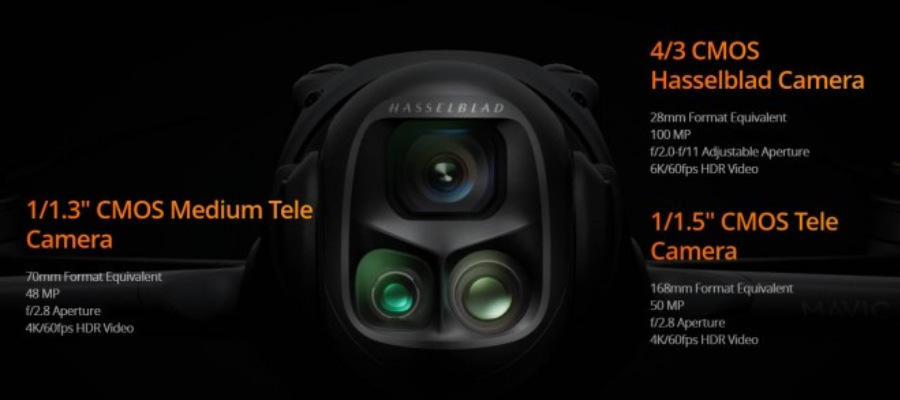
At the core of the drone is a new triple-camera setup. The main sensor is now a 100MP Four Thirds Hasselblad camera with a 28mm wide-angle lens, up from the 20MP sensor in the previous model. It features an adjustable aperture from f/2.0 to f/11 and captures 6K/60fps video with up to 16 stops of dynamic range.
Next to it are two telephoto cameras. One is a 48MP medium telephoto with a 70mm lens and a 50MP long telephoto with a 168mm f/2.8 lens. The long telephoto is the main upgrade here. It’s a jump from 12MP to 50MP and now features a faster f/2.8 aperture.
All three cameras can record 4K at 60fps HDR and 4K at 120fps slow-motion. The main module takes things a step further with support for 6K at 60fps and up to 16 stops of dynamic range.
You also, of course, don’t miss out on 10-bit D-Log, D-Log M, and HLG profiles. And DJI says it has worked to ensure color consistency across all three cameras, so it’s quicker to get post-production done.
Upgraded gimbal and battery
While the cameras themselves seem like a big upgrade, more so is the gimbal system holding them. DJI dubs it the 360° Infinity Gimbal, and as the name suggests, it can do a full rotation to pull off more experimental shots like Dutch angles or true vertical video. It can even tilt 70 degrees upward for architectural or action shots.
Despite the added hardware, the drone’s weight only climbs slightly — about 105 grams more than its predecessor for a total of 2.3 pounds (1.06kg). What users get in return is improved endurance. It has a bigger 95Wh battery that provides up to 51 minutes of flight time, the longest for a Mavic drone and near the limit of what can legally be carried on most flights.
That extended flight time is paired with a faster top speed of 90km/h and a reworked transmission system. The DJI O4+ link supports up to 41km of range, or 10-bit HDR video transmission at up to 30km.
As for navigation, the drone uses six fisheye sensors with low-light vision and dual processors to enable omnidirectional obstacle avoidance even at 65km/h. DJI says the system can also operate without GPS, as it can map the surroundings in real time to return home if a signal drops.
The ActiveTrack 360° system can follow subjects even when partially hidden and can lock onto vehicles up to 200 meters away.
Mavic 4 Pro Controllers and Accessories
DJI is also rolling out a new controller, the DJI RC Pro 2. It includes a 7-inch mini-LED display, 128GB of internal storage, and up to 4 hours of battery life. t supports both internal and external audio recording via a paired DJI Mic.
In terms of onboard storage, the base Mavic 4 Pro comes with 64GB, while the higher-end Creator Combo bumps that to 512GB.
Also new is the Parallel Charging Hub, which optimizes battery charging by giving priority to the lowest-charged battery before leveling out all three. It can charge one in 50 minutes, or three in 90 minutes, and can redistribute charge between batteries or serve as a 100W power bank for external devices.
For offloading footage, DJI’s QuickTransfer feature uses Wi-Fi 6 to wirelessly move video files at up to 80MB/s. Alternatively, you can also use Wired USB-C for transfer.
Pricing and Availability
Despite its spec sheet and upgraded internals, the Mavic 4 Pro will not be sold in the United States, at least for now. It’s currently available only in Europe.
The price starts at €2,100 for the standard kit, which includes the drone and a basic RC 2 controller. The Fly More Combo at €2,700 adds extra batteries, a 100W adapter, a charging hub, and a carrying case.
The top-tier Creator Combo, priced at €3,540, adds more internal storage, the RC Pro 2 controller, a 240W charger, and additional cables.
For more daily updates, please visit our News Section.
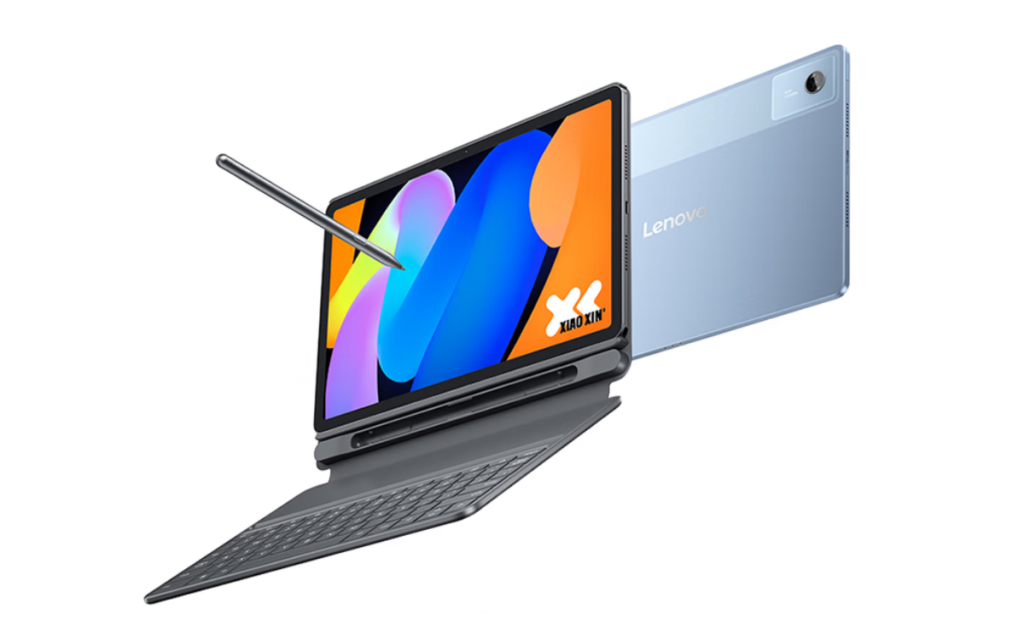
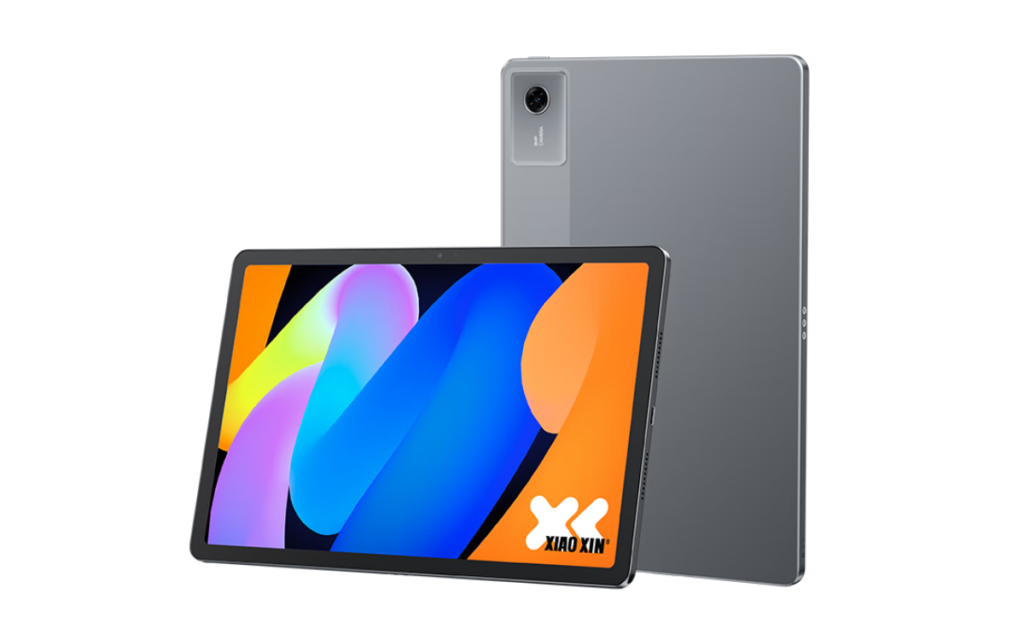
Lenovo has officially launched the 2025 edition of the Xiaoxin Pad 11 in China. It’s shaping up to be one of the more compelling budget tablets of the year. It features MediaTek’s Dimensity 6300 processor, comes with up to 8GB of RAM, and sports an 11-inch 2.5K display, with prices starting at just 899 yuan (around $125).
Lenovo Xiaoxin Pad 11 2025 Specifications
The Xiaoxin Pad 11 is powered by the Dimensity 6300 chipset, which Lenovo claims offers up to 32% improved performance compared to the previous model. It comes with 6GB or 8GB of RAM and offers up to 256GB of internal storage, with support for microSD expansion up to 2TB, providing ample space for apps, media, and educational content. The tablet comes with Lenovo’s self-developed Lingjing Engine, which helps to boost performance by accelerating app launch times and improving overall system responsiveness.
The Pad 11 sports an 11-inch 2.5K LCD display with a resolution of 2000 × 1200 pixels, a 90Hz refresh rate, and peak brightness of 500 nits. The panel is TÜV Rheinland-certified for dual-layer eye protection, making it comfortable for prolonged reading or streaming sessions. Stylus input is also supported, though the pen is sold separately.
The tablet features a quad-speaker system powered by Dolby Atmos, providing a rich and immersive audio experience. It comes with a 7040mAh battery, which Lenovo claims can last up to 11 hours during online learning and offers more than 1300 hours of standby time in lab tests.
It runs on Lenovo’s Tianjiao Learning Hub, a platform that integrates AI-powered tools such as smart screen recognition, real-time subtitles, and interactive study aids. The system also includes robust parental controls, allowing guardians to manage screen time and filter content.
The Xiaoxin Pad 11 features a minimalist design and a 7.15mm slim metal chassis that improves both durability and hand feel. It supports Wi-Fi connectivity only and does not include mobile network options. Accessories such as a smart keyboard and stylus are available separately. Lenovo backs the tablet with a two-year warranty.
Pricing & Availability
The Lenovo Xiaoxin Pad 11 (2025) comes in three configurations. The base model with 6GB RAM and 128GB storage is priced at 899 yuan (approximately $125). The 8GB RAM variant with 128GB storage is available for 999 yuan (around $139), while the top-end model with 8GB RAM and 256GB storage costs 1199 yuan (about $167).
Pre-orders are already live on JD.com, and the first sale begins on May 20.
For more daily updates, please visit our News Section.
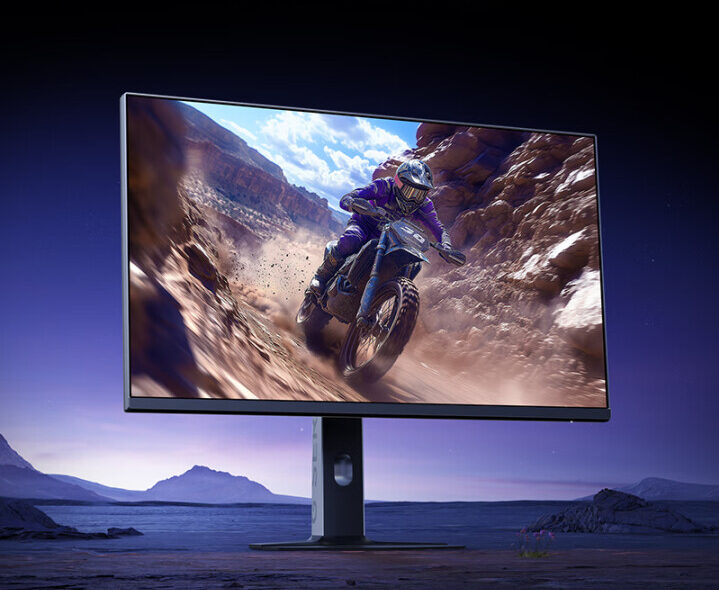
Xiaomi has officially launched the REDMI G27U gaming monitor on JD.com, and pre-orders are now live. Priced at 1,999 yuan, with a first-release offer of 1,599 yuan, the G27U targets gamers and creators looking for high refresh rates and sharp resolution at an affordable price point.
The REDMI G27U features a 27-inch panel with native 4K resolution (3840×2160) and a 160Hz refresh rate. For fast-paced competitive gaming, users can switch to “320Hz Competitive Mode” at 1080P resolution. The display supports a 1ms GTG (gray-to-gray) response time to reduce input lag and motion blur, making it suitable for FPS and esports titles.
The monitor covers 100% of the sRGB color gamut and 95% of DCI-P3, delivering a wide and accurate color range. It also supports 10-bit color depth and features a ΔE < 2 color accuracy rating for professional-level color performance. Xiaomi’s Qingshan eye protection solution is included to reduce eye strain during extended use.
Connectivity options include two DisplayPort 2.1 and two HDMI 2.1 ports, allowing multiple devices like gaming consoles, PCs, and laptops to be connected simultaneously. The monitor also supports DSC (Display Stream Compression), allowing for smooth 4K transmission at high refresh rates without image compression issues.
The G27U is equipped with a fully adjustable stand that allows for height adjustment, pivot, swivel, tilt, and wall mounting. The package also includes AdaptiveSync support to prevent screen tearing during gameplay.
Other key features include support for HDR400, hardware-level low blue light technology, and Xiaomi’s promise of a three-year after-sales warranty.
For more daily updates, please visit our News Section.
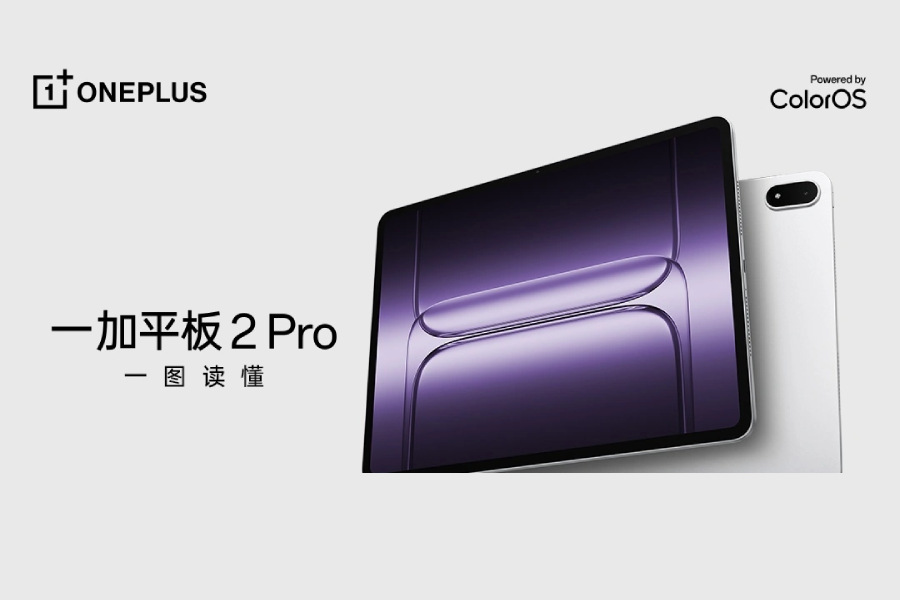
OnePlus has officially launched the Pad 2 Pro in China, its latest high-end tablet that follows last year’s Pad Pro. The update maintains the company’s focus on premium hardware while offering some predictable refinements alongside a few more noticeable upgrades.
OnePlus Pad 2 Pro Specifications
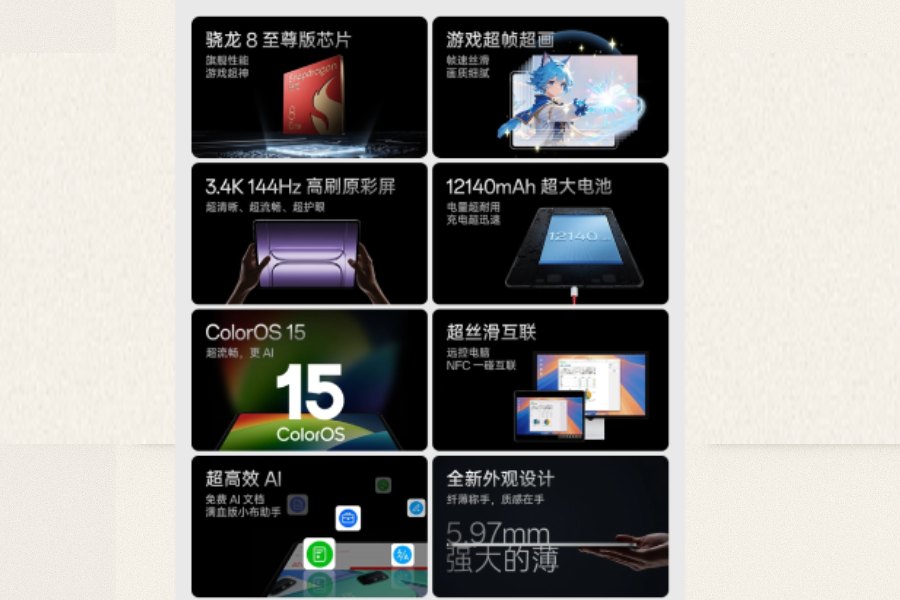
The OnePlus Pad 2 Pro now features a slightly larger 13.2-inch display with a 7:5 aspect ratio and 3.4K resolution. Like the original, it’s an IPS LCD panel with a 144Hz refresh rate, but the brightness is now rated at 900 nits in high-brightness mode.
Powering the Pad 2 Pro is Qualcomm’s Snapdragon 8 Elite chipset, which replaces last year’s Snapdragon 8 Gen 3. OnePlus pairs this with LPDDR5x RAM and UFS 4.0 storage. The device runs Android 15 with ColorOS 15 on top.
The tablet carries over a similar camera setup with a 13MP rear shooter and an 8MP front-facing camera, both unchanged from the previous model. The battery gets a notable upgrade to 12,140mAh from 9,510mAh, though charging remains at 67 watts via USB 3.2 Gen 1 Type-C.
As for connectivity, you get Wi-Fi 7 and Bluetooth 5.4 support along with NFC for contactless payments. For audio, it has eight speakers.
All this is wrapped in a body that weighs 675 grams and measures 5.97mm thick. It’s slimmer than last year’s model but slightly heavier than last year’s 584g Pad Pro.
Price and Availability
In terms of pricing, the Pad 2 Pro starts at CNY 3,199 (around ₹37,886 / $444 / €399). That positions it just slightly above the previous model’s ¥2,999 starting price for the 8GB + 256GB variant.
OnePlus hasn’t confirmed international availability yet, and like the Pad Pro, the new model may remain limited to select markets.
For more daily updates, please visit our News Section.
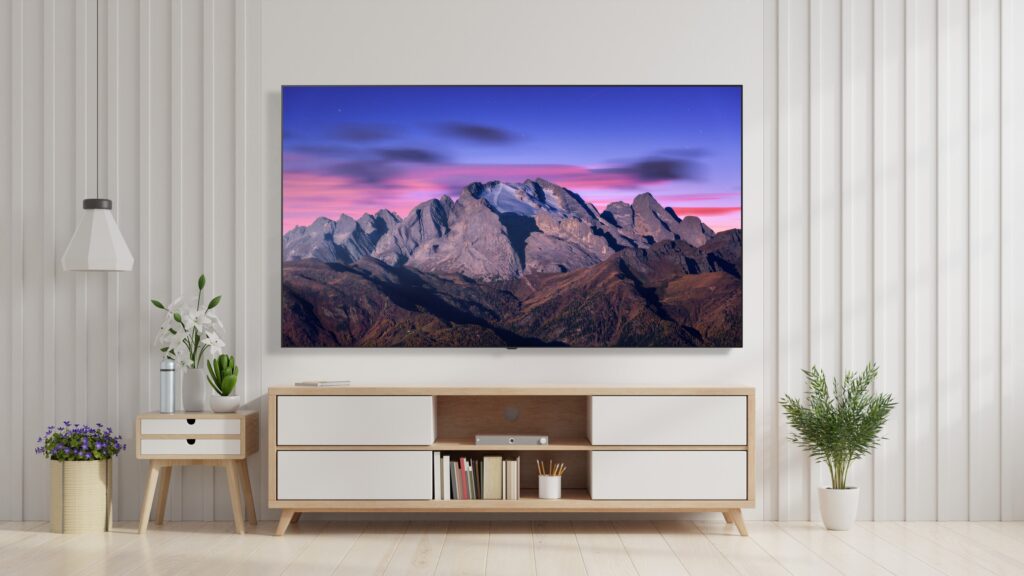
LG has launched its 2025 OLED B5-series TVs in the U.S., with the 83-inch model priced at $4,499 and now open for pre-order on LG.com. Other sizes, including 77, 65, and 55 inches, are available at authorized retailers.
The B5-series runs on LG’s new Alpha 8 AI Processor Gen2, which boosts image and sound performance by analyzing over 1.6 billion visual settings and 40 million sound profiles. The display supports Dolby Vision, HDR10 Pro, Dolby Atmos, and FILMMAKER MODE. With over 8.3 million self-lit pixels and a 120Hz refresh rate, the OLED panel delivers clear motion, deep blacks, and accurate colors.
For gamers, the B5 includes NVIDIA G-Sync, AMD FreeSync Premium, Variable Refresh Rate (VRR), Auto Low Latency Mode (ALLM), and a 0.1ms response time. Cloud gaming is fully supported with access to Xbox Cloud Gaming, NVIDIA GeForce NOW, and Amazon Luna. With an Xbox Game Pass Ultimate subscription and a Bluetooth controller, users can play games directly on the TV without needing a console.
Smart features have also been upgraded. The AI Picture & Sound Wizard adjusts settings automatically based on user behavior. The new AI Magic Remote includes a dedicated AI button for quick access. AI Welcome greets users by name and suggests content, while AI Voice ID switches profiles based on who is speaking.
Connectivity options include four HDMI 2.1 ports, two USB-A ports, Ethernet, Bluetooth 5.3, and Wi-Fi 6E. The B5 supports Apple AirPlay 2, Google Cast, Amazon Alexa, Google Assistant, Apple HomeKit, and Matter. It runs on LG’s WebOS platform, and the company promises five years of software updates under its WebOS Re:New program.
Samsung’s Galaxy S25 Edge stands out from the flagship crowd, but not just because of specs. At just 5.8mm thick and weighing only 163g, it’s the slimmest phone in the Galaxy S25 series, offering a stunningly sleek profile without compromising on raw power.
You also get the Snapdragon 8 Elite chipset, the big 200MP main camera of the Galaxy S25 Ultra, and a premium build quality. But for its $1,099 price tag, the downsides are hard to ignore. The battery capacity is quite tiny, and its charging speeds are slow as well. So who exactly is this slim powerhouse made for? Let’s break it down.
1. Samsung Galaxy S25 Edge: Flagship Specs That Impress
The South Korean tech giant’s latest premium model carries a premium price, starting from an exorbitant $1,099. But Samsung’s justifies the price with a titanium frame like the Galaxy S25 Ultra. The rear has a glass panel, while the front sports a tall 6.7-inch Dynamic AMOLED 2X display with a 2K+ resolution, 1-120Hz variable refresh rate, and Corning Gorilla Glass Ceramic 2 for protection.
Under the hood, it is equipped with the Snapdragon 8 Elite for Galaxy, which is paired with 12GB of RAM and up to 512GB of internal storage. For photography, the rear has the Galaxy S25 Ultra’s 200MP main camera along with a 12MP ultra wide angle lens. So you’re getting cutting edge specs and flagship level features.
2. Ultra-Thin Design
If you’re someone who cares deeply about how a phone feels in the hand, the Galaxy S25 Edge is practically unmatched. The titanium frame and Gorilla Glass Ceramic 2 protection offer a luxurious build, while the slim and light profile make it ideal for one-handed use and everyday portability.
This makes it a dream for minimalists who want a phone that’s as sleek as it is premium. It’s also a compelling choice for users who are tired of bulky phones and want something elegant without compromising too much on power.
3. So who is it for?
Samsung Galaxy S25 Edge alongside the entire Galaxy S25 series
Over the years, it has become clear that battery life is one of the biggest concerns for users. Buyers would rather have a slightly thicker or taller phone for a bigger battery. But Samsung took the opposite direction. So it is clearly trying to kick off a new trend (ahead of Apple’s iPhone 17 Air) or tap into a specific demographic. This might include light to moderate users who don’t game or multitask heavily and can afford the smaller battery.
There are also people who value a lightweight design, since it is easier to hold and carry around. The premium aesthetics and sleek form factor are another positive point. But apart from all of this, loyal customers of the brand and early adopters of new innovations may also like the Galaxy S25 Edge.
4. Who Should Probably Skip It?
If you’re a heavy user, gamer, or someone who needs your phone to last well into the night, the S25 Edge is likely not for you. The Samsung Galaxy S25 Edge is powered by a tiny 3,900mAh battery. This capacity is even smaller than the 4,000mAh cell on the tiny Galaxy S25. Just like the base model, the S25 Edge also offers a disappointing 25W wired fast charging (also supports 15W wireless charging). With a hefty $1,099 price tag, it is also quite expensive for most people.
For more daily updates, please visit our News Section.
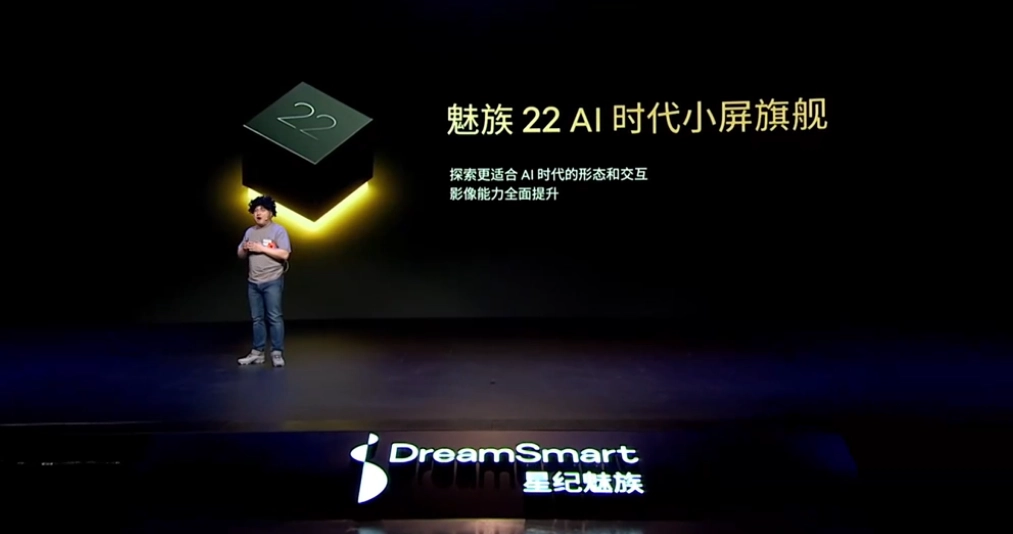
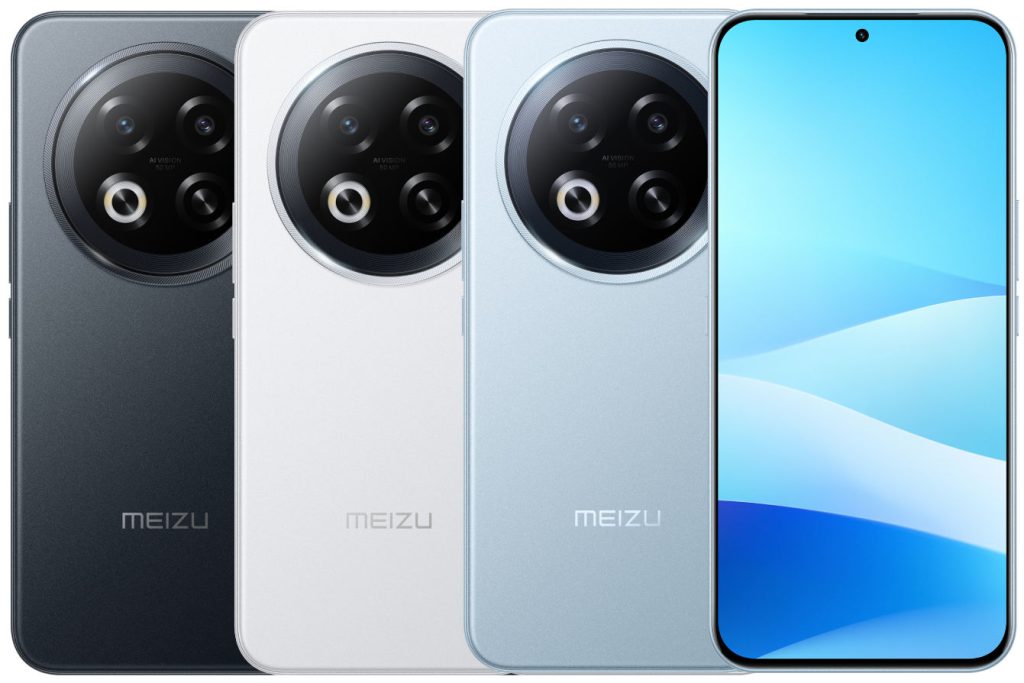
Meizu is officially stepping back into the flagship race with its next major smartphone, the Meizu 22. At its product event this afternoon in China, Meizu teased the upcoming device, branding it the company’s “AI-era compact flagship.” While the company stopped short of revealing the phone’s full design or images, it did confirm key details about the product’s positioning and launch timeline.
Meizu signals a bold comeback with its AI-focused compact flagship
According to Meizu, the 22 will focus on compact form factor and one-handed usability, featuring a 71mm wide display designed for better grip and ergonomics. It’s a direction rarely explored in recent Android flagships, most of which have trended toward larger, heavier designs. Meizu claims this will be its most comfortable small-screen phone to date.
Another major area of focus is imaging. Starting with the Meizu 22 series, the company says it will make no-compromise investments in camera hardware and software, aiming to completely overhaul its reputation in mobile photography. This likely means the device will feature an advanced sensor setup and AI-enhanced imaging pipeline. The company also hinted at building out a broader “Meizu 22 universe,” which may include other models or ecosystem accessories later on. The flagship is scheduled to launch this summer in China, though a precise date has not been revealed.
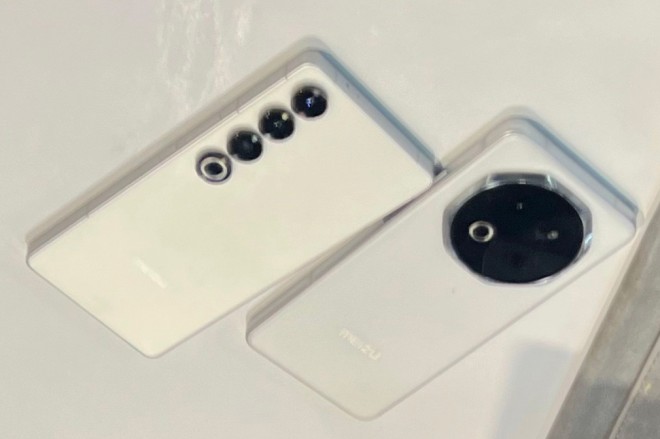
Earlier this month, a leaked image believed to show the Meizu 22 surfaced online. GSMArena suggested that the phone could feature an altered camera module design and a premium build. The same leak hinted at a Snapdragon 8-series chipset, reportedly the Snapdragon 8 Elite, and Flyme AIOS 2 as the operating system.
Meizu 22 (right)
Alongside the Meizu 22 teaser, the company also launched its latest mid-range Note 16 series at the event. The Note 16 Pro features a 6.78-inch 1.5K 144Hz AMOLED panel, Snapdragon 7s Gen 3 chip, up to 16GB RAM (plus 12GB virtual), a VC cooling system, and a 6200mAh battery with 80W fast charging. It carries IP66 and IP68 ratings, along with TÜV SÜD’s “triple-proof quality” certification. Pricing starts at 1,499 yuan (~$208).
The standard Note 16 comes with a 6.78-inch FHD+ LCD, 120Hz refresh rate, and a UNISOC T8200 chip. It houses a larger 6600mAh battery with 40W charging and supports IP65 resistance. This model starts at 799 yuan (~$111). Both phones ship with Flyme AIOS 2 based on Android 15, dual 50MP cameras, and customizable AI shortcut keys. Sales begin May 16 in China.
For more daily updates, please visit our News Section.
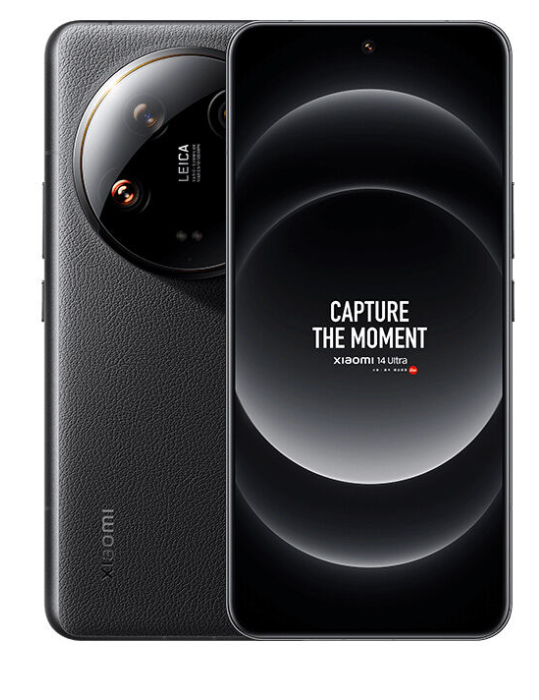
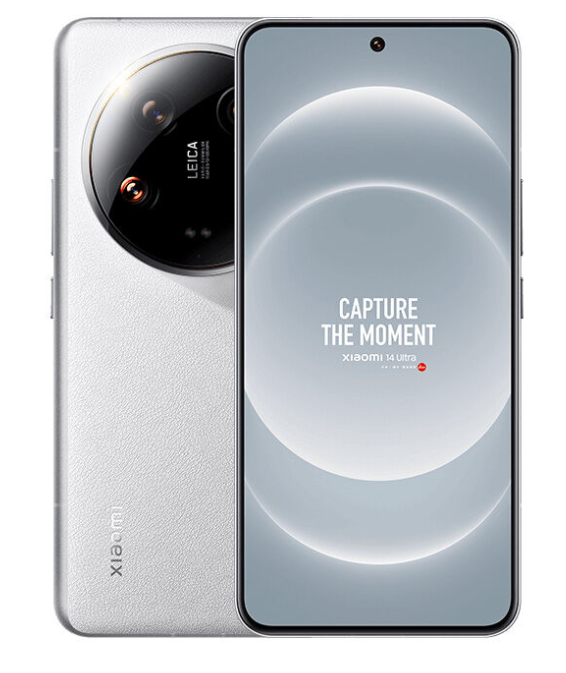
Xiaomi 14 Ultra is a true premium flagship smartphone built for users who want high performance, professional camera capabilities, and smooth everyday usability. It runs on the Xiaomi HyperOS based on Android, providing a fast and fluid experience with a polished MIUI interface. Whether you’re gaming, multitasking, or capturing high-quality photos, this device is engineered to perform at the top level.
$500 Discount
Xiaomi 14 Ultra is now available at a massive $500 discount, bringing the price down to just $699 at Giztop. This is an incredible deal for a flagship smartphone packed with top-tier features like the Snapdragon 8 Gen 3 processor, Leica quad cameras, a 2K AMOLED display, and ultra-fast 90W charging. For anyone looking to upgrade to a premium device at a fraction of the original cost, this is a limited-time offer worth grabbing.
Display and Design
The Xiaomi 14 Ultra features a 6.73-inch LTPO AMOLED display with 2K resolution. It supports a 120Hz refresh rate for smoother animations and up to 480Hz touch sampling for precise input. With support for Dolby Vision, HDR10+, and a peak brightness of 1900 nits, this display delivers stunning visuals whether indoors or under direct sunlight. It also offers 12-bit color depth, ensuring accurate and vibrant color reproduction for content creators and media lovers alike.
Performance and Storage
At the heart of the device is the latest Qualcomm Snapdragon 8 Gen 3 processor built on a 4nm process, clocked up to 3.3 GHz. This octa-core chip delivers ultra-fast performance and excellent power efficiency. The phone comes with LPDDR5X RAM options of 12GB or 16GB and storage variants of up to 1TB using UFS 4.0 technology, allowing for faster read/write speeds and ample space for all your files, apps, and videos.
Professional-Grade Cameras
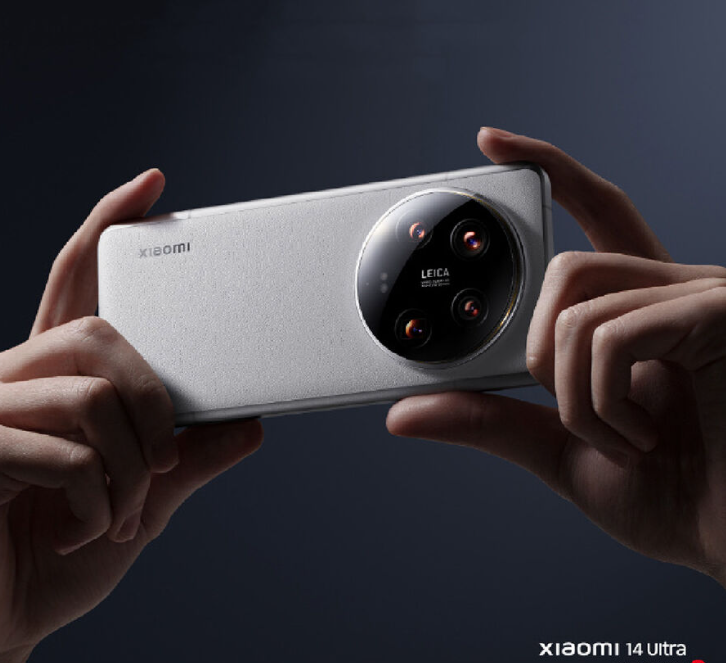
One of the biggest highlights of the Xiaomi 14 Ultra is its Leica-powered quad-camera system. It includes four 50MP sensors, starting with a 1-inch Sony LYT-900 main sensor featuring a stepless variable aperture (f/1.63 to f/4.0), which ensures great low-light performance and creative control. Accompanying this are three Sony IMX858 sensors: a floating telephoto lens (75mm), a periscope telephoto lens (120mm), and a wide-angle lens with a 122° field of view. Optical Image Stabilization (OIS), autofocus, and macro support enhance shooting flexibility.
Battery and Charging
To keep everything running smoothly, the phone includes a large 5300mAh battery. It supports 90W wired fast charging and 80W wireless charging, allowing for quick top-ups. With such high-speed charging options, the Xiaomi 14 Ultra easily lasts a full day and recharges within minutes.
Connectivity and Cooling
Xiaomi 14 Ultra supports the latest 5G networks and comes with WiFi 7, ensuring high-speed internet and reliable connectivity. It includes multi-function NFC, dual-frequency GPS, an IR blaster, and advanced antenna tech like HPUE and 4×4 MIMO for strong signals. A large 3400mm² vapor chamber (VC) cooling system keeps the phone’s temperature stable even under heavy use, making it ideal for gaming and extended use.
Meizu has just announced the Note 16 series, which is a pair of budget smartphones. The Meizu Note 16 Pro and Note 16 made its debut in the Chinese market with a durable build quality, massive batteries, and much more. So here are all the details.
Meizu Note 16 Pro
Talking about the more expensive model first, the Meizu Note 16 Pro features an ultra slim 6.75mm body. But despite its ultra thin form factor, it features an “anti-collision beam” structural design and “safety airbag” design. These are probably another way of saying that they are durable enough to withstand falls. It also comes with an IP66 + IP68 rating for water and dust resistance.
Meizu Note 16 Pro
On the front, the Note 16 Pro sports a 6.78-inch AMOLED display with a 1.5K resolution, a 144Hz refresh rate, 4500 nits of peak brightness, 2160Hz PWM dimming, and HDR10+ support. Under the hood, it is equipped with the Snapdragon 7s Gen 3 SoC, which is paired with up to 16GB of RAM and 512GB of internal storage. A massive 6,200mAh battery pack powers this device, which supports 80W wired fast charging.
For optics, the rear has a 50MP main + 8MP ultra wide dual camera setup while the front houses an 8MP selfie shooter. Other notable features include dual SIM support, Android 16 OS based Flymoer AIOS 2 out of the box, an in-display fingerprint scanner, Bluetooth 5.4, WiFi 6, and stereo speakers.
Meizu Note 16
On the other hand, the Meizu Note 16 is a lot more affordable with its specificartions reflecting this. It features a 6.78-inch LCD panel with a FHD+ resolution, 120Hz refresh rate, DC dimming, and up to 1050 nits of peak brightness. This model packs the UNISOC T8200 SoC, which is paired with 8GB of RAM and up to 256GB of internal storage. You get a dual camera setup on the rear again, but with a 50MP primary + 2MP depth shooter.
Meizu Note 16
For selfies and video calls, there is an 8MP selfie shooter on the front. The base model has an even larger 6,600mAh battery pack, which supports 40W wired fast charging. Other notable features include a side mounted fingerprint scanner, a 3.5mm headphone jack, an IP65 rating for water and dust resistance, Bluetooth 5, and WiFi 6.
Pricing and Availability
The Meizu Note 16 lineup has just been announced in China, with sales kicking off on 16th May 2025. You can buy the vanilla version in Snow Jade White, Red, and Rock Black colors, while the Pro version is available in Light Boat Blue, Star Chaser Gray, and Loud White. So here are the pricing details:
Meizu Note 16 Pro
12GB + 256GB – 1,699 Yuan (roughly 235 USD)
12GB + 512GB – 1,899 Yuan (roughly 263 USD)
16GB + 512GB – 2,099 Yuan (roughly 291 USD)
Meizu Note 16
8GB + 128GB – 799 Yuan (roughly 111 USD)
8GB + 256GB – 999 Yuan (roughly 138 USD)
8GB + 256GB – 1499 Yuan (roughly 208 USD)
For more daily updates, please visit our News Section.
The Meta Ray-Ban glasses have finally debuted in the Indian market. These new smart glasses arrive after being teased in the region and brings AI powered features and a lot more. So here’s everything you need to know regarding its features, pricing, and more.
Meta Ray-Bans: What’s new with the AI Glasses?
A crucial part of the new Meta Ray-Bans, which makes it smart, is the dual 12MP ultra wide cameras on the front. These are capable of capturing videos and are paired with a 5 mic setup for audio. The sensors can capture at 1080p and take 3024 x 4032 resolution pictures. There is also a built-in open ear speaker for audio. The mic and speaker setup also allows for making calls and listening to music.
Meta Ray-Ban AI Glasses
With touch controls, users can even control songs, answer calls, and activate the cameras. On a single full charge, the new smart glasses can last for up to 4 hours. There is also quick charging support, 32GB of storage, WiFi 6, and Bluetooth 5.2 support. You can get your hands on these glasses in both the Skyler and Wayfarer designs with customisation options for sun, clear, polarized, and other prescription lenses. Now that we’ve gotten past the glasses and specifications, let’s see what makes it “smart”.
One of the biggest inclusions is the support for Meta AI which brings a virtual assistant when saying Hey Meta. It allows for live translation, which supports English, French, Italian, and Spanish. You can also pair the Meta Ray-Ban glasses with the Meta AI app on your Android and iOS devices. The app will unlock more AI features and even let’s users access the history tab and start a chat with Meta AI.
Soon, these glasses can send and receive messages, photos, audio, and video calls on Instagram as well. It is currently listed for 29,900 INR in the Indian market, with pre-orders live from Ray-Ban’s official website. It will be heading to retail stores as well, starting from 19th May 2025.
For more daily updates, please visit our News Section.
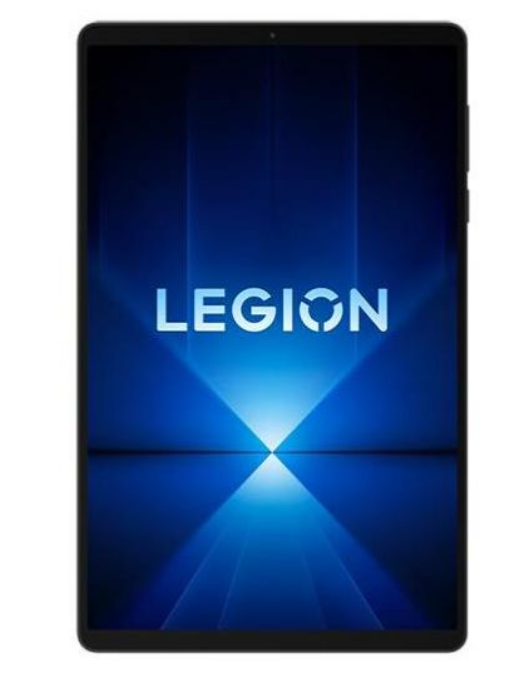
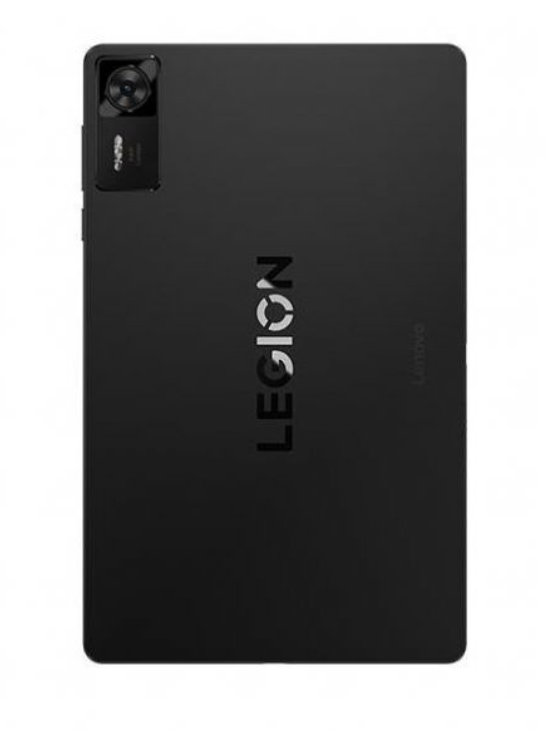
Lenovo Legion Y700 Gen 4 (2025) is a compact yet powerful Android tablet designed for gamers and multimedia enthusiasts. Featuring an 8.8-inch display with high-end specs, a strong Snapdragon 8 Gen 3 chipset, and a large battery, it strikes a balance between performance and portability. Whether you’re streaming movies, playing demanding mobile games, or multitasking between apps, the Legion Y700 aims to deliver a fluid experience with flagship features in a smaller form factor.
Pre-sale and Availability:
Lenovo Legion Y700 Gen 4 (2025) is now available for pre-sale at Geekwills for $599.00. Customers who place their orders early can expect shipping to begin on May 22nd. This is a great opportunity for tech enthusiasts and mobile gamers to secure the latest high-performance tablet before it officially hits the market.
Immersive Display and Multimedia Support
The tablet sports an 8.8-inch 2.5K LCD screen with a resolution of 3040 x 1904 pixels. It supports a smooth 165Hz refresh rate for ultra-responsive visuals, 100% DCI-P3 color accuracy, Dolby Vision, and DC dimming. This makes it excellent for gaming, video streaming, and even light creative work. With up to 600 nits of brightness and TÜV Rheinland certification for eye protection, it’s also suitable for long viewing sessions.
Strong Performance with Snapdragon 8 Elite
At the heart of the Legion Y700 2025 is the Qualcomm Snapdragon 8 Elite chipset, a high-performance octa-core processor capable of handling intense gaming and multitasking with ease. It is paired with up to 16GB of LPDDR5X RAM and UFS 4.1 storage in either 256GB or 512GB options, ensuring fast app loading times and seamless transitions. There is also a microSD card slot for extra storage.
Battery Life and Fast Charging
The device comes with a large 7600mAh battery, which offers extended usage time for gaming or productivity. It supports 68W fast charging, allowing users to recharge quickly and get back to their tasks without much downtime.
Audio, Cameras, and Connectivity
For immersive sound, the Legion Y700 2025 features dual ultra-linear speakers with Dolby Atmos support and dual X-axis linear motors for enhanced haptics. It includes a 50MP rear camera for capturing moments and an 8MP front camera that also supports face unlock. Connectivity options include Wi-Fi 6, Bluetooth 5.3, optional 5G, and dual USB-C ports (USB 3.2 Gen2 and DP support), along with a 3.5mm headphone jack.
Software and Security
Running on ZUI 16 based on Android 14, the user experience is clean and responsive. The tablet supports both fingerprint and face recognition for secure unlocking and added convenience.
Key Specs:
Display: 8.8-inch 2.5K LCD (3040 x 1904), 165Hz, Dolby Vision
We use cookies on our website to give you the most relevant experience by remembering your preferences and repeat visits. By clicking “Accept”, you consent to the use of ALL the cookies.
This website uses cookies to improve your experience while you navigate through the website. Out of these, the cookies that are categorized as necessary are stored on your browser as they are essential for the working of basic functionalities of the website. We also use third-party cookies that help us analyze and understand how you use this website. These cookies will be stored in your browser only with your consent. You also have the option to opt-out of these cookies. But opting out of some of these cookies may affect your browsing experience.
Necessary cookies are absolutely essential for the website to function properly. This category only includes cookies that ensures basic functionalities and security features of the website. These cookies do not store any personal information.
Any cookies that may not be particularly necessary for the website to function and is used specifically to collect user personal data via analytics, ads, other embedded contents are termed as non-necessary cookies. It is mandatory to procure user consent prior to running these cookies on your website.