There have been reports that Honor’s futuristic Robot Phone, first showcased at MWC 2026, will be unveiled in China this August. The handset has now secured two important certifications, indicating that the launch timeline remains on track. Here’s a look at the latest developments and what they reveal about the upcoming flagship.
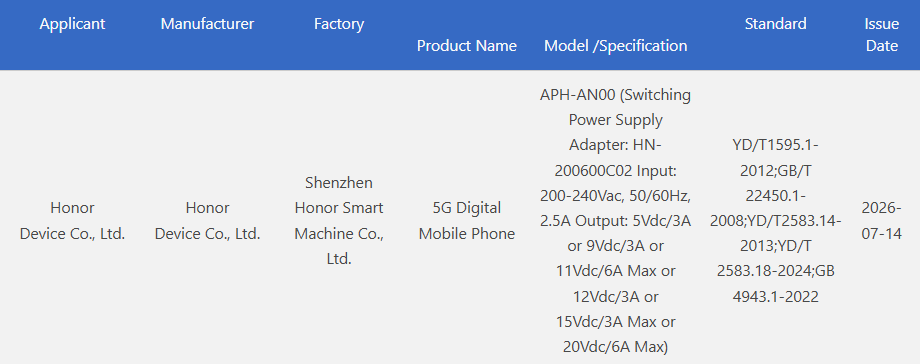
An Honor smartphone carrying the model number APH-AN00 has appeared on China’s MIIT and 3C certification platforms. This device is said to be the upcoming Honor Robot Phone. While the MIIT listing does not disclose any hardware details, its appearance confirms that the device has moved one step closer to launch.
The accompanying 3C certification reveals that the handset could ship with a 120W fast charger, suggesting that Honor is preparing flagship-grade charging speeds for the device. Although certification platforms rarely reveal complete specifications, the latest listings strongly indicate that the Robot Phone is progressing towards its expected August announcement.
Honor Robot Phone specifications (rumoured)
According to recent information shared by tipster Digital Chat Station, the Honor Robot Phone could feature a 6.3-inch to 6.4-inch flat display offering a 1.5K resolution and ultra-slim bezels on all four sides. The device is also tipped to be powered by Qualcomm’s Snapdragon 8 Elite Gen 5 chipset and may pack a battery of around 6,000mAh, placing it firmly in the premium flagship category.
The camera setup is expected to be one of the phone’s biggest highlights. The leak suggests a 200-megapixel main camera with an f/1.6 aperture, 23mm focal length and 4D gimbal stabilization. It could also include a 50-megapixel ultra-wide camera and a 200-megapixel periscope telephoto camera, with Honor’s Ailai imaging technology expected to enhance the photography experience. The tipster also claims the Robot Phone could offer an early preview of camera innovations planned for the upcoming Magic 9 series.
For more daily updates, please visit our News Section.
The HyperOS 3.3 testing phase may have come to an end, as Xiaomi has just begun a public rollout to select high-end phones, including the Xiaomi 17 series and Xiaomi 15T Pro, upgrading the OS to Android 17.
While it’s technically a major OS upgrade, you should not expect to see visual changes or new features, as we hinted in our past coverage. It lays the groundwork to support advanced features and upgrades coming with HyperOS 4 later this year. According to the changelog shared by Ximitime, HyperOS 3.3 update mainly focuses on improving system stability and adds the June 2026 security patch.
Device
Codename
Region
Build
Status
Size
Xiaomi 17 Ultra
Nezha
Global
OS3.0.332.0.XPAMIXM
Public release
9.5GB
Xiaomi 17 Ultra
Nezha
Europe
OS3.0.332.0.XPAEUXM
Public release
9.5GB
Xiaomi 17
Pudding
Global
OS3.0.332.0.XPCMIXM
Public release
7.5GB
Xiaomi 17
Pudding
Europe
OS3.0.331.0.XPCEUXM
Public release
7.5GB
Xiaomi 15T Pro
Klimt
Global
OS3.0.331.0.XOSMIXM
Mi Pilot release
7.5GB
Xiaomi is rolling out the HyperOS 3.3 update to the Xiaomi 17 and Xiaomi 17 Ultra in the Global and European regions. It’s being distributed as a public release, while the Xiaomi 15T Pro is receiving the update on the global variant via the Mi Pilot testing channel. That means only a limited number of Xiaomi 15T users will be able to upgrade to the latest build before the wider rollout begins.
Even though HyperOS 3.3 doesn’t introduce many new features or visual upgrades, the download size is massive. That’s because the update includes a new OS, Android 17, which is itself a large package, although major changes are expected to be introduced as part of HyperOS 4.
Xiaomi usually rolls out updates in batches, so it can take a few days for the update to appear on your device. To check for available updates, go to Settings > About phone and tap the HyperOS logo. For the Xiaomi 15T Pro users, the update may take a little longer, as it’s currently rolling out via the Mi Pilot channel.
The HyperOS 3.3 rollout has just begun, but Xiaomi is already preparing to release the most anticipated HyperOS 4. That would be a true major upgrade with major visual upgrades, new features, and enhancements across the system. Xiaomi is expected to release HyperOS 4 in August with the upcoming Xiaomi 18 series, and the rollout to older devices could begin in September.
We’ll keep you posted as we receive new details. You can visit the Xiaomi section regularly or join our Telegram channel to not miss out on the latest updates.
Samsung has introduced Flex Titanium, a new display technology that will debut on its next-generation Galaxy foldable smartphones. Ahead of the upcoming Galaxy Unpacked event, the company has revealed how the redesigned display structure aims to make foldable devices slimmer, tougher and more immersive while making the crease less noticeable.
Flex Titanium combines titanium with a redesigned display structure
Samsung Flex Titanium tech
Flex Titanium is the result of Samsung’s seven generations of foldable display development. Instead of relying on conventional materials alone, the new design combines a titanium-alloy film with a titanium plate beneath the OLED panel. The titanium-alloy film replaces the polymer support layer and delivers around 20 times higher mechanical stiffness while remaining extremely thin at roughly one-third the thickness of a human hair. This helps Samsung achieve a slimmer display without compromising flexibility.
The titanium plate sits below the display module and has been redesigned with precision-processed holes that remove air gaps between the adhesive and the display assembly. This structure offers firmer support when the phone is fully opened while still allowing the panel to fold repeatedly. According to Samsung, the new construction also helps reduce crease visibility and improves the overall viewing experience.
Samsung has also upgraded the display with a new high-resolution architecture and next-generation organic materials. Along with delivering sharper visuals, these changes are designed to lower power consumption, making the display more energy efficient. The company says the combination of stronger structural support, improved flexibility and better display efficiency is intended to push foldable smartphones closer to the experience of a conventional flagship handset.
The new Flex Titanium technology will make its commercial debut on Samsung’s next Galaxy foldable devices, which are expected to be unveiled at the upcoming Galaxy Unpacked event. The company is likely to share additional details about the display and the new foldable lineup during the launch.
For more daily updates, please visit our News Section.
Google‘s next smartwatch has stayed mostly out of the spotlight compared to the heavily leaked Pixel 11 series, but that’s starting to change. After earlier reports hinted at thePixel Watch 5’s pricing and color lineup, fresh press-style renders are now giving us our first look at the upcoming wearable ahead of its rumored August 12 unveiling.
The renders come from tipster OnLeaks, working alongside The Tide Chart, and show the Pixel Watch 5 in four different case finishes across two case sizes.
Google Pixel Watch 5 renders confirm familiar design
Based on the images, it’s safe to say Google isn’t changing the design language this generation. The Watch 5 looks similar to last year’s Pixel Watch 4, with the same curved, domed-glass display, the charging pins on the side of the case, and Google’s proprietary band-attachment system rather than standard lugs.
The watch is tipped to come in two case sizes, 41mm and 45mm, each available with either Wi-Fi-only or LTE connectivity.
Color options differ slightly between the two sizes. The smaller 41mm model is expected to come in four finishes: Dark Anthracite, Natural Silver, Pyrite, and Warm Gold. The larger 45mm version, however, reportedly skips the Warm Gold option, leaving buyers with three finishes to choose from instead.
Beyond the design, rumors suggest the Pixel Watch 5 will ship with Wear OS 7 out of the box, alongside modestly larger batteries than the previous generation for improved battery life. On the pricing side, earlier leaks suggest the new watch could cost about $50 more than the Pixel Watch 4 did at launch.
With the renders now out, we can also expect more technical details to come out soon. Stay tuned for more as the launch date approaches.
For more daily updates, please visit ourNews Section.
As we head into the second half of 2026, getting a smartwatch to last through a long weekend is no longer a challenge. The combination of high-density silicon-carbon batteries and more efficient processors means that multi-day battery life has simply become the baseline for most new devices.
For this list, we are focusing entirely on full-fledged smartwatches. While there are specialized, rugged watches built specifically for hikers and endurance runners that offer significantly longer battery life, they usually achieve that by stripping away everyday smart features and apps. If you are looking for a device that offers a complete wearable experience without needing a daily charge, here is a look at the most reliable options currently on the market.
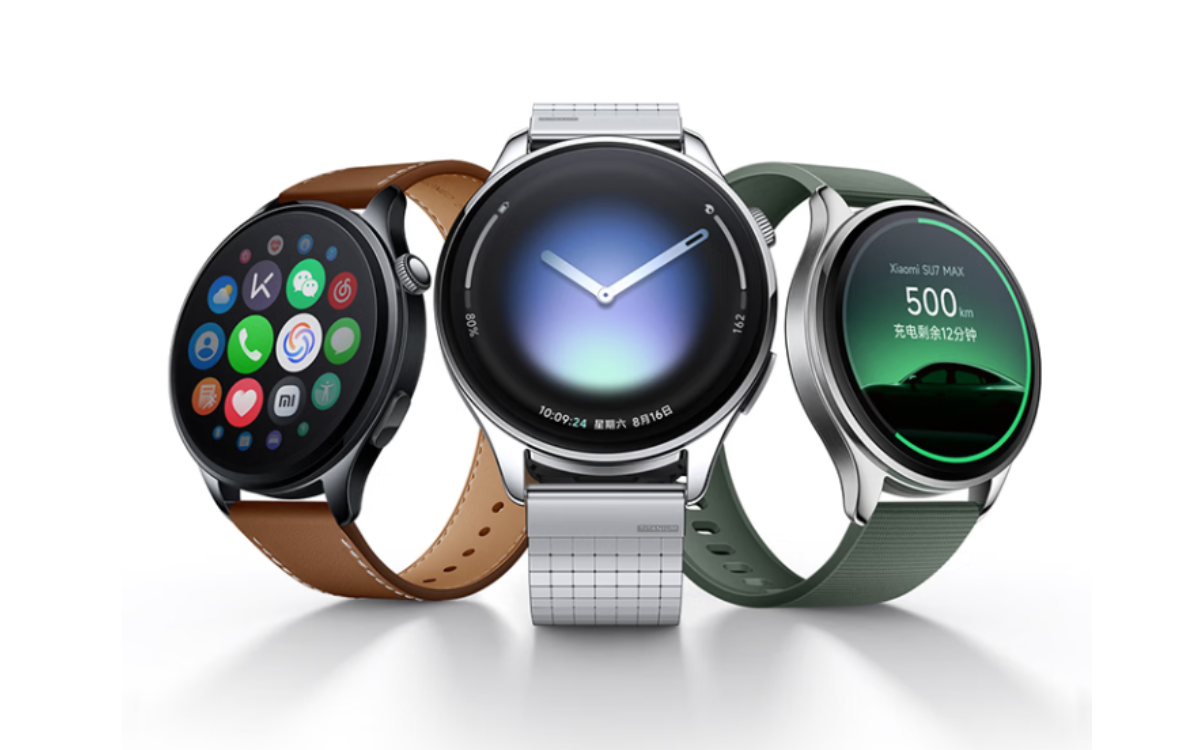
This watch runs Wear OS 6, an operating system that typically drains batteries quickly due to its heavy app integration and background syncing. However, the Xiaomi Watch 5 manages to provide up to six days of battery life in standard smart mode, and up to 18 days if you switch to power-saving mode.
It achieves this by utilizing a 930mAh silicon-carbon battery, a newer battery technology that allows for higher energy density without increasing the physical size or weight of the watch.
Additionally, it uses a dual-chip setup, pairing a main Snapdragon processor with a low-power co-processor. The co-processor handles basic background tasks like step counting and notifications, which prevents the main chip from waking up unnecessarily and draining power.
This makes it a highly practical choice if you want access to the full suite of Google apps, such as Maps and Wallet, without having to charge your watch every night.
If endurance isn’t your top priority, our broader roundup of the top smartwatches this year covers models that balance battery life with other features.
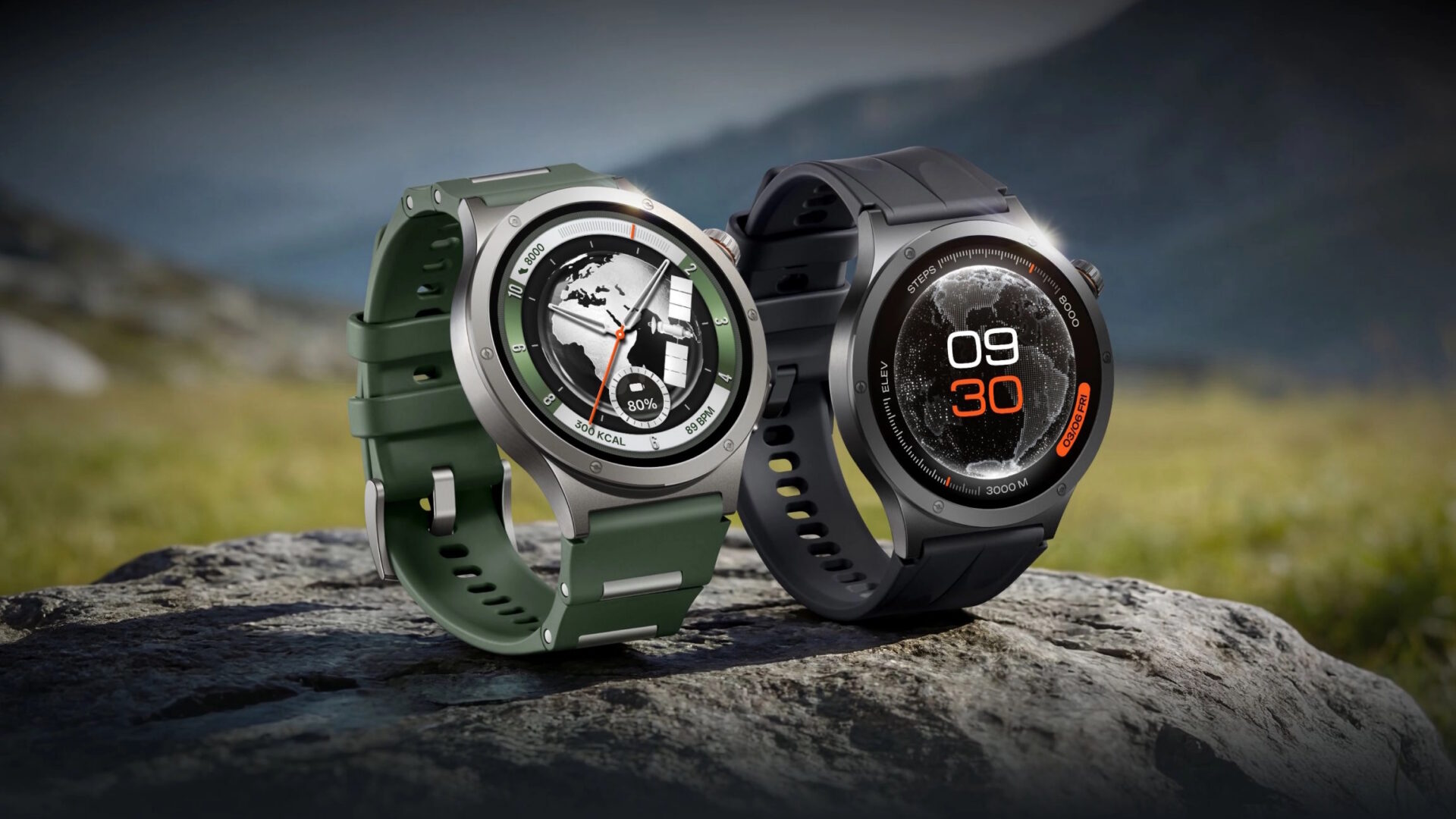
Another strong Wear OS 6 option, the OnePlus Watch 4 offers about five days of battery life in its standard smart mode. If you use it heavily, meaning frequent GPS tracking for outdoor runs, continuous heart rate monitoring, and streaming music offline, that battery life drops to roughly three days.
However, if you need to stretch the battery further, the watch includes a dedicated power-save mode. By disabling the main processor and full Wear OS functions, it relies on a low-power co-processor to handle basic timekeeping, step tracking, and essential notifications, which can extend the battery life up to 16 days.
It is equipped with a 646mAh battery that supports fast charging, allowing you to fully recharge the device from zero to 100% in about 75 minutes.
The watch features a titanium alloy case and a bright LTPO OLED display. The LTPO technology is particularly helpful for battery conservation, as it allows the screen’s refresh rate to drop significantly when you are not actively interacting with it.
It functions well as an everyday watch that provides premium materials and can comfortably last through a long weekend trip without needing a charger.
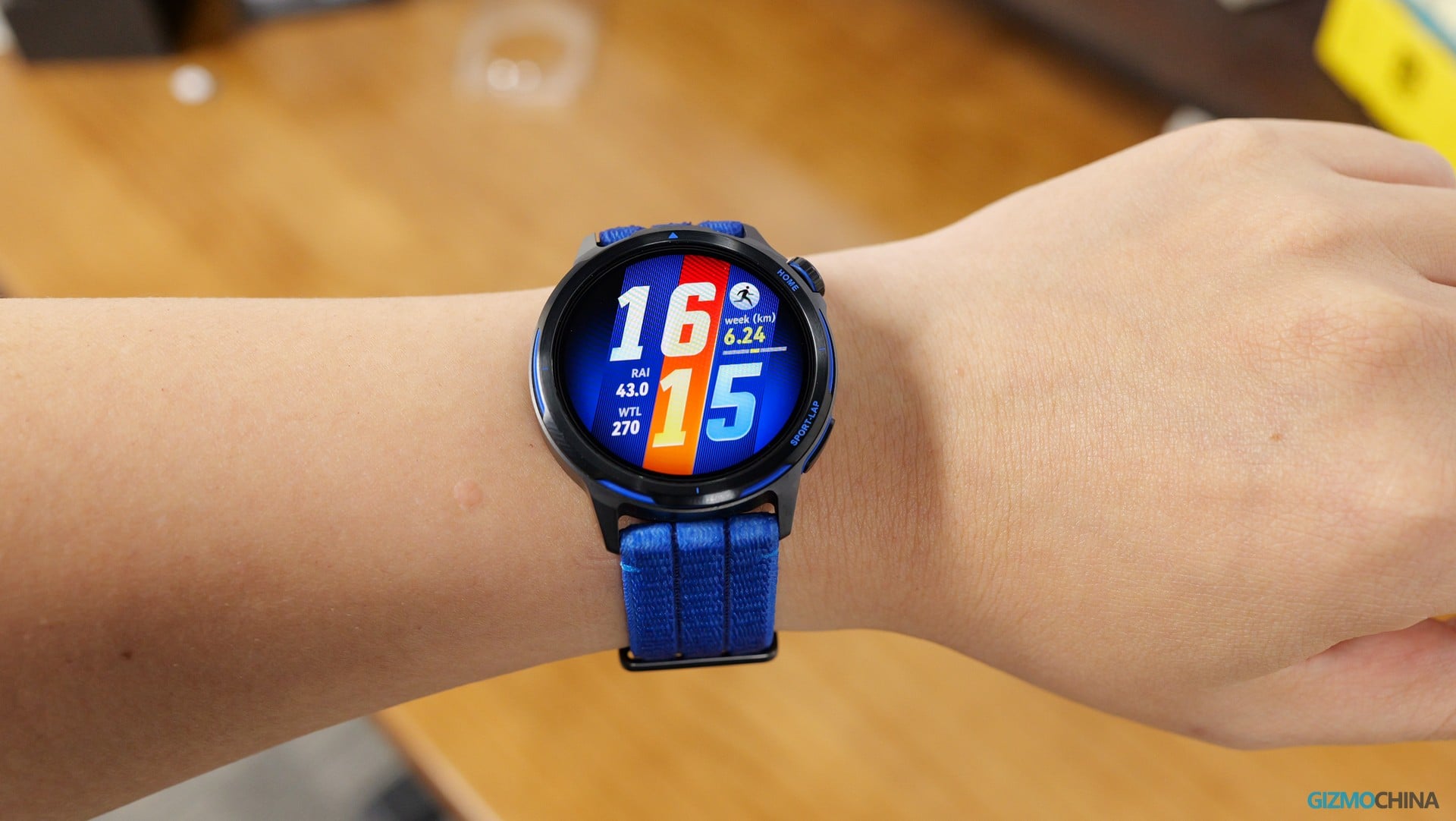
If you primarily want a smartwatch for tracking workouts and do not need access to third-party apps, the Huawei Watch GT Runner 2 (full review) is a very efficient option.
It runs proprietary HarmonyOS rather than a resource-heavy platform like Wear OS, it provides up to 14 days of battery life with light use, or about seven days under typical daily conditions.
For runners and hikers, the most relevant specification is its continuous GPS tracking capability. The watch can record up to 32 hours of continuous dual-band GPS tracking on a single charge, making it useful for marathons, ultramarathons, or multi-day hiking trips.
It also features a lightweight build at just 34.5 grams and a breathable strap, focusing entirely on comfort and detailed fitness metrics rather than smartwatch app ecosystems.
For iPhone users wanting to stay within the Apple ecosystem, the Apple Watch Ultra 3 offers up to 42 hours of normal use on a single charge. If you need to extend that, turning on Low Power Mode will give you up to 72 hours by limiting background heart rate measurements and delaying some notifications.
While it does not last as long as the dedicated fitness watches, the S10 chip and watchOS 26 optimizations make it efficient enough to prevent the need for daily charging, even with an always-on display and cellular connectivity active.
When the battery does run low, the fast-charging capability is quite useful, a 15-minute charge provides about 12 hours of standard use, which makes it relatively easy to keep the watch topped up while you take a shower or get ready for the day.
The current Samsung Galaxy Watch Ultra provides up to 100 hours of battery life in Power Saving mode, or 48 hours in Exercise Power Saving mode, drawing from its 590mAh battery. It runs Wear OS 6 layered with Samsung’s One UI 8 Watch interface, providing deep integration with Android smartphones.
For people already using Samsung devices, a practical detail is how the watch works alongside the Galaxy Ring. If you wear them both, they split the health-tracking workload. The ring can handle background tasks like monitoring your sleep and continuous heart rate, which lets the watch turn off those specific sensors to save battery.
This distribution of work can reduce the watch’s power consumption and extend its overall battery life by about 30%, depending on your daily usage patterns.
It is also worth noting that Samsung is expected to release the next-generation Galaxy Watch Ultra 2 later this month. According to recent hardware leaks, this upcoming model will be equipped with a larger battery capacity, which should further improve its overall longevity and reduce the frequency of required charging.
ZTE has added a new 5G cellular router to its hardware lineup. Following the recent release of the G5 Pro, the company has now listed the G5 Max WiFi 5G CPE on JD.com. The new model integrates Qualcomm’s latest modem technology with an outdoor-ready enclosure. It carries a standard retail price of 2,499 yuan ($369), with an introductory price of 2,419 yuan ($357).
ZTE G5 Max Specifications
The main difference between the G5 Max and a standard home internet gateway is its physical build. The router is designed for both indoor and outdoor installation. It features an IP65-rated weather-resistant enclosure that protects against dust and water, and it is rated to operate in temperatures ranging from -40°C to +55°C. Measuring 225 x 142 x 48 mm and weighing about 800 grams, the unit includes mounting hardware for walls and light poles, alongside a standard desktop stand.
To make outdoor installation practical, ZTE included a 2.5GbE network port on the bottom of the device that supports Power over Ethernet (PoE). This allows users to run a single Ethernet cable to the router to supply both data and power, eliminating the need for a dedicated outdoor electrical outlet.
Inside, the G5 Max runs on Qualcomm’s Snapdragon X75 5G platform. It supports a wide range of global 5G and 4G LTE frequency bands, including the high-capacity n79 5G band. To maintain a cellular connection in areas with weak coverage, the router uses a 13dBi high-gain antenna system and supports 4×4 MIMO technology. For cellular access, it includes a standard 4FF SIM card slot as well as an embedded SIM option.
For local networking, the router supports the new Wi-Fi 7 standard (IEEE 802.11be) and is backward compatible with older Wi-Fi protocols. It provides wireless speeds up to 3600Mbps and can handle up to 64 connected devices at the same time.
Software management is handled through the ZTE Smart Life app, which allows users to monitor the network locally or remotely. The system includes standard router features like bandwidth allocation, parental controls, and VPN support for L2TP and PPTP protocols.
In related news, Lenovo has recently unveiled the Legion LM50S portable Wi-Fi hotspot with Wi-Fi 6, 4G LTE connectivity, and up to 12 hours of battery life.
For more daily updates, please visit ourNews Section.
AOC is adding a new portable monitor to its lineup, but instead of a standard LCD or OLED panel, the company is opting for electronic paper. The AOC 13T5S is a 13.3-inch color E Ink monitor that has recently launched in China for 4,599 yuan ($679).
AOC 13T5S Specifications
The display relies on E Ink’s Kaleido 3 technology. It has a native resolution of 3200 x 2400, but because of how color e-paper functions, the pixel density changes depending on what you are looking at. Black-and-white text renders at a sharp 300 pixels per inch (PPI), while color elements drop to 150 PPI.
AOC is using an Oxide (IGZO) TFT backplane that allows for a 30Hz refresh rate. While 30Hz would be unusable for gaming or watching video on a standard monitor, it is actually quite fast for an E Ink panel, making basic scrolling and cursor movements much smoother than older e-paper screens.
To make the screen look and feel more like actual paper, the fully laminated panel is covered by 0.4mm AG anti-glare glass with a matte texture. AOC also included E Ink’s ComfortGaze front lighting system, which lets users adjust the brightness and color temperature from warm to cool depending on their ambient lighting.
To handle the ghosting issues that typically plague E Ink displays, the 13T5S uses a Dual T2000 TCON controller and an AI-assisted ghosting reduction system. This setup detects residual images left behind by previous pages and performs localized screen refreshes to clear them out without forcing the entire display to flash black and white.
Physically, the monitor has an anodized aluminum alloy chassis measuring 8mm thick and weighing about 700 grams. Connectivity is straightforward: it has two full-function USB-C ports that handle power, video, and data over a single cable. It is plug-and-play for Windows PCs, though AOC says that macOS compatibility will require a future OTG software update.
The 13T5S ships with a folding cover that works as a stand, allowing for landscape and portrait orientations at 10-degree, 20-degree, and 70-degree angles.
In related news, Lenovo has recently unveiled the ThinkVision E24q-30 monitor with a 1440p display and 100Hz refresh rate.
For more daily updates, please visit our News Section.
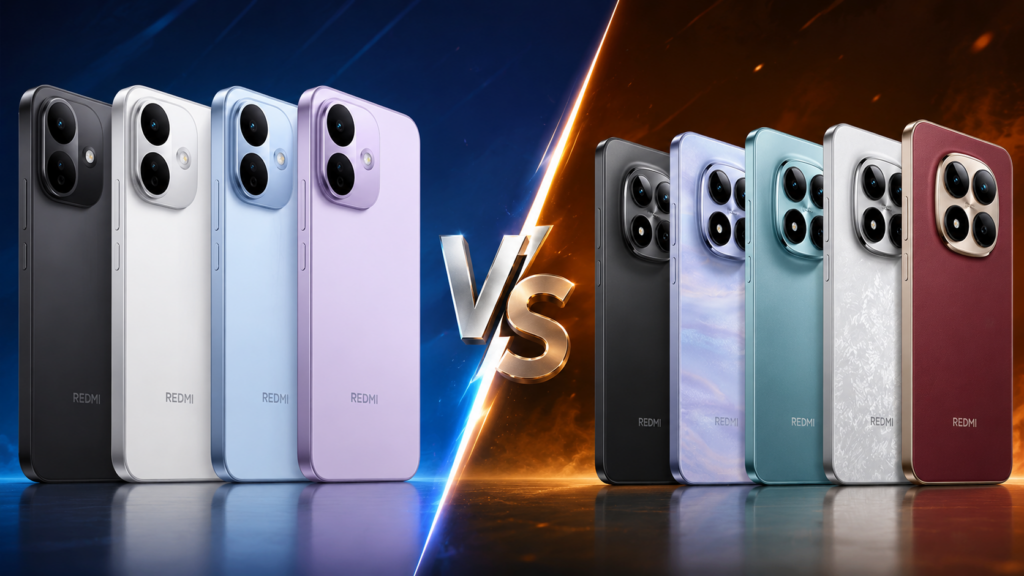
Redmi has just unveiled the Redmi Note 17 Pro as the successor to last year’s Redmi Note 15 Pro. There is speculation that the Note 17 Pro heading to the global market in the coming months could be identical to the Chinese variant, with the battery likely being the main difference. Instead of delivering incremental improvements across every area, Redmi has shifted its priorities this generation by reallocating internal space and manufacturing costs. A closer look at the official specifications reveals exactly where the upgrades and compromises have been made, helping buyers decide whether the new model better suits their everyday needs.
Redmi Note 17 Pro vs Redmi Note 15 Pro
4Final Thoughts
The Redmi Note 17 Pro represents a different approach rather than a straightforward upgrade. Its biggest strengths are the huge 9000mAh battery, faster charging, improved storage, stronger display protection, and newer software. However, these gains come at the expense of camera quality, wireless connectivity, recording capabilities, portability, and peak hardware performance.
If your priority is exceptional battery life, durability, and reliable day-to-day endurance, the Redmi Note 17 Pro is the stronger choice. On the other hand, users who value better cameras, lighter ergonomics, faster wireless standards, and more versatile video recording may still find the Redmi Note 15 Pro to be the more balanced smartphone.
For more daily updates, please visit our News Section.
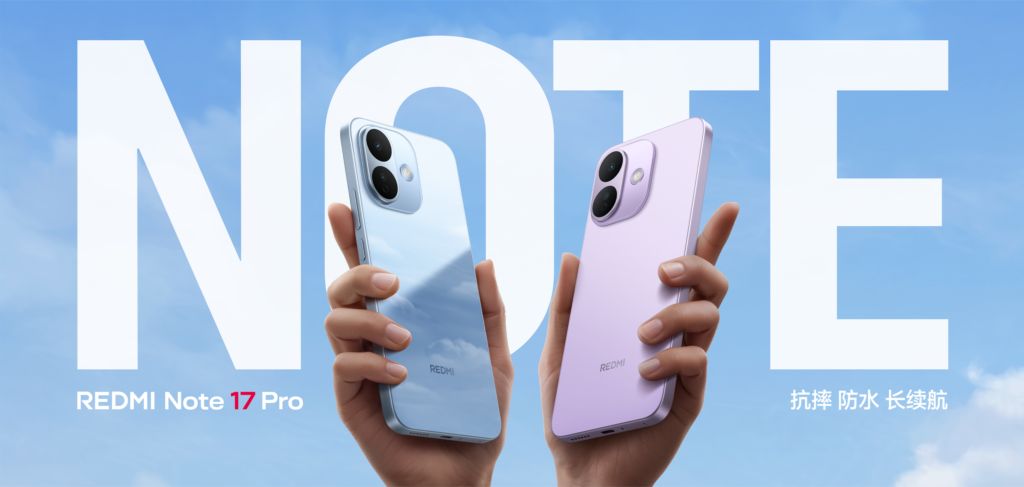
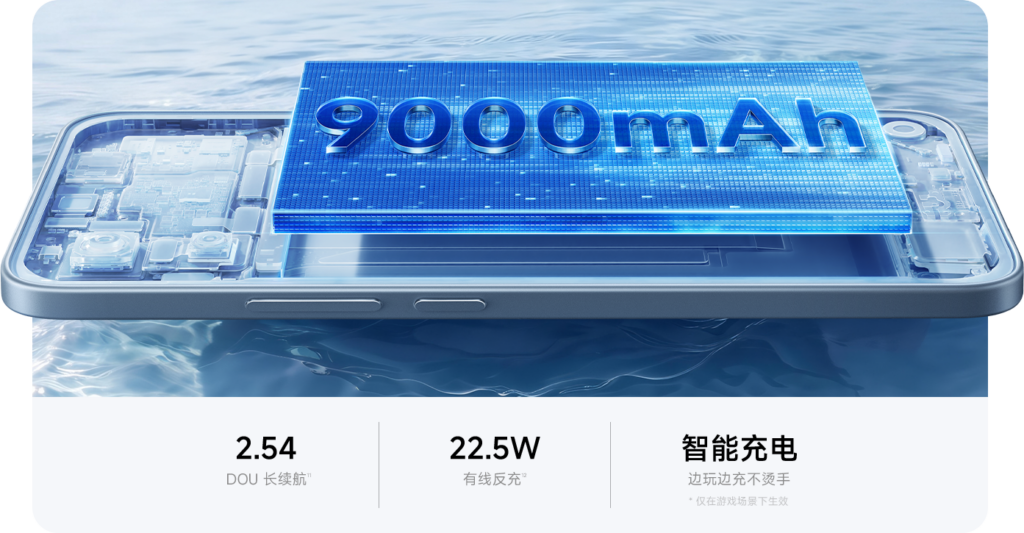
Xiaomi has announced the Redmi Note 17 Pro in China, a new midrange smartphone that focuses primarily on battery capacity and physical durability. The device includes a significantly larger 9,000mAh battery.
Redmi Note 17 Pro Specifications
To manage the 9,000mAh silicon-carbon battery, Xiaomi is using its proprietary Surge G1 management chip. The phone supports 67W wired charging and includes a 22.5W wired reverse charging feature, allowing users to supply power to other devices.
To address potential battery degradation over time, Xiaomi is offering early buyers a five-year battery service plan. Under this program, the company will replace the battery at no cost if its health falls below 80% within the first four years, with a replacement option also available in the fifth year.
Talking about durability, the Note 17 Pro is certified with IP66, IP68, IP69, and IP69K ratings, indicating a high level of resistance to dust and water, including exposure to high-pressure water jets. The phone’s internal structure incorporates a metal die-cast bracket and shock-absorbing materials, while the screen is covered by Corning Gorilla Glass Victus 2.
The device features a 6.83-inch AMOLED display with a 1.5K resolution (2772 x 1280) and a 120Hz maximum refresh rate. The screen can reach a peak brightness of 3,500 nits. It also includes several eye-care features, such as 3,840Hz PWM dimming and the ability to lower brightness to 1 nit for use in dark environments.
Inside, the phone runs on the Qualcomm Snapdragon 6s Gen 4 processor, a chip designed more for daily power efficiency than high-end gaming performance. It is paired with LPDDR4X RAM and either UFS 2.2 storage for the 128GB base model or UFS 3.1 for the higher storage configurations.
The camera setup is straightforward, featuring a 50MP main rear camera with an f/1.8 aperture, accompanied by a 2MP depth sensor. There is an 8MP camera on the front for selfies and video calls. Video recording on the device is capped at 1080p at 30 frames per second.
The phone ships with Xiaomi HyperOS 3 and includes standard features like 5G connectivity, Wi-Fi 5, Bluetooth 5.1, dual stereo speakers, and NFC.
Pricing and Availability
The Redmi Note 17 Pro is priced at 1,599 yuan ($236) for the 8GB RAM + 128GB storage variant, 1,899 yuan ($280) for the 8GB RAM + 256GB model, 2,199 yuan ($324) for the 12GB RAM + 256GB version, and 2,299 yuan ($339) for the 8GB RAM + 512GB configuration.
The Redmi Note 17 Pro is available in Sky Blue, Nebula Purple, Black, and White color options and is now on sale in China.
Alongside the Pro model, the company has also launched the base Redmi Note 17 model as well.
For more daily updates, please visit our News Section.
Xiaomi has officially announced the Redmi Note 17 in China, a new budget smartphone that combines a massive display with an equally large battery.
Redmi Note 17 Specifications
The 7-inch flat OLED panel is the largest Xiaomi has ever integrated into a Redmi device, effectively blurring the line between a smartphone and a small tablet. It features a 2396 x 1080 resolution, a 120Hz refresh rate, and a peak brightness of 1,800 nits for outdoor visibility. Xiaomi has also included an in-display fingerprint scanner, Wet Touch 2.0 for use with damp hands, and a dedicated glove mode.
To power a screen of that size, Xiaomi equipped the Redmi Note 17 with a huge 8,000mAh battery. The company says it can deliver up to 2.33 days of battery life under typical usage. It supports 45W wired fast charging and 22.5W wired reverse charging, allowing the phone to function as a high-speed power bank for other hardware.
Internal specifications align with the phone’s budget pricing. It is powered by Qualcomm’s Snapdragon 4 Gen 4 processor, a 4nm chip designed for entry-level efficiency rather than high-end performance, paired with up to 8GB of LPDDR4X RAM and 256GB of UFS 2.2 storage. The camera system is straightforward, featuring a 50-megapixel primary rear sensor and an 8-megapixel front-facing camera.
On the software side, the Redmi Note 17 runs Xiaomi’s HyperOS 3 and includes a heavy emphasis on AI-driven security. The operating system features an integrated anti-fraud system trained on a large language model to identify and block script-based scam calls. It also includes a tool to detect AI face-swaps during video calls, issuing real-time warnings to users.
The device also includes an IP65 water resistance rating, an infrared blaster, multifunction NFC for transit and payments, and support for microSD card expansion up to 2TB.
Pricing and Availability
The Redmi Note 17 is available in Black, Shallow Aqua, and Meteor Purple. The base model with 6GB of RAM and 128GB of storage is priced at 1,299 yuan ($192), while the 8GB + 128GB variant costs 1,399 yuan ($206). The top-end model with 8GB of RAM and 256GB of storage is priced at 1,599 yuan ($236).
The phone is now up for sale in China.
For more daily updates, please visit our News Section.
Samsung’s next Ultra flagship might not get the big design refresh that many people were hoping for. A new leak is pushing back against the widespread rumors of a completely new horizontal rear camera layout for the Galaxy S27 Ultra, suggesting Samsung is still considering smaller tweaks rather than committing to a radical change.
For the past few months, there’s been a lot of buzz about Samsung ditching its signature floating camera rings in favor of a Pixel-style horizontal camera bar. The speculation picked up steam after well-known leaker Ice Universe hinted at a redesigned rear camera module. But according to the latest report, those widely shared horizontal camera renders are “incorrect.”
While Samsung is apparently testing multiple design concepts internally, none of the current ones use that clean, minimalist horizontal layout. As you might have already expected, the company isn’t just thinking about how it looks. Instead of overhauling the camera housing just because the S27 Ultra has one fewer rear camera, Samsung is putting real emphasis on keeping manufacturing simple and costs under control. The final design will likely try to strike a good balance between looking premium and being practical to produce.
That approach fits right in with how Samsung has handled the Ultra series so far. They’ve mostly made small, incremental design tweaks over the last five years instead of dramatic overhauls. It’s helped the Galaxy S Ultra phones keep a strong, recognizable identity.
If Samsung goes with the more conservative route, the S27 Ultra could end up looking pretty similar to the S26 Ultra, with just some minor adjustments to the camera area to account for the reduced number of sensors.
Of course, it’s still really early. The Galaxy S27 Ultra isn’t expected until early 2027, so Samsung has plenty of time to refine or completely change the design. Like all pre-launch leaks, what we’re seeing now might not reflect the final product at all. For now, this latest info cools down some of the biggest expectations around the phone’s appearance.
Huawei has introduced the FreeClip 2 S, its latest open-ear wireless earbuds, during its global launch event in Malaysia. The earbuds arrive alongside the Huawei Pura 90s Series and the MatePad Air 2026.
Huawei FreeClip 2 S Specifications
The Huawei FreeClip 2 S features an open-ear C-bridge design that sits outside the ear canal for greater comfort and awareness of surroundings. It uses a liquid silicone material that is 25% softer than the previous generation and has been refined for a more secure, comfortable fit. Huawei says the design is based on data from over 10,000 ear samples, while each earbud weighs just 5.1 grams for lightweight, all-day wear.
Because of the open design, the earbuds are built to sit securely without blocking outside sounds. They also feature automatic left and right recognition, so you can wear either earbud in either ear without manually adjusting channel orientation.
Inside, the FreeClip 2 S uses a 10.8mm dual-diaphragm driver system housed in a compact acoustic unit. Huawei says the updated driver structure improves bass response and overall sound balance. It also features an integrated AI-powered NPU that handles audio and voice processing, supporting features such as call noise reduction and sound optimization.
The earbuds feature adaptive volume adjustment that automatically optimizes audio levels based on surrounding noise and content. It also includes adaptive voice enhancement for clearer speech, while a triple-microphone system with AI noise reduction improves call quality. Huawei additionally equips the earbuds with an inverse sound wave system to minimize audio leakage and enhance listening privacy.
The FreeClip 2 S supports spatial audio with dynamic head tracking, gesture-based controls, and head gesture call management. It features Bluetooth 6.0 with dual-device connectivity and works with the Huawei Audio Connect app, which allows users to customize controls, adjust a 10-band EQ, switch between devices, and monitor battery status.
In terms of battery life, the FreeClip 2 S offers up to 9 hours of playback, extending to 38 hours with the charging case. It also supports fast charging, USB-C and wireless charging, and comes with IP57-rated earbuds and an IP54-rated charging case.
Pricing and Availability
The FreeClip 2 S comes in Deepsea Blue and Space Silver. In Malaysia, it is priced at RM 899. In the UK, it is available for £169 until August 17 before returning to £199, with a £199 bundle option that includes Les Néréides clip-ons. In Europe, it retails for €229, with a promotional price of €199 available until August 21, 2026.
For more daily updates, please visit our News Section.
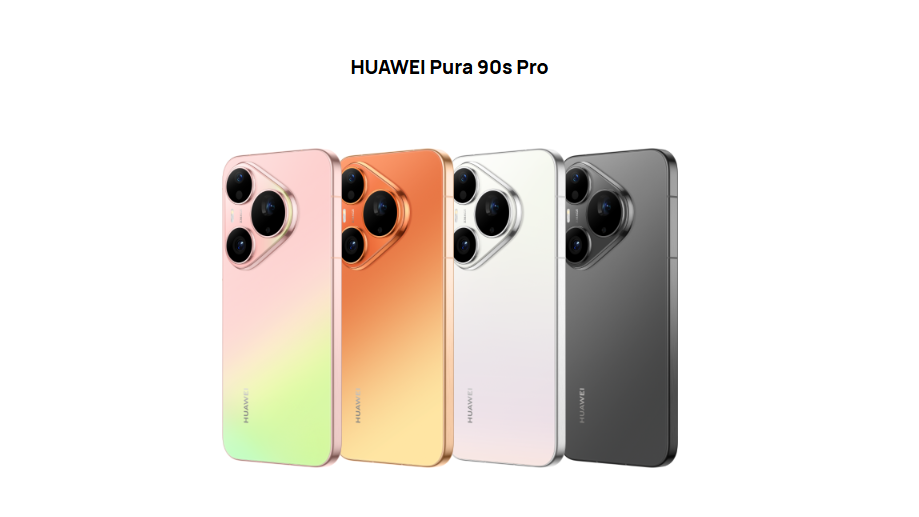
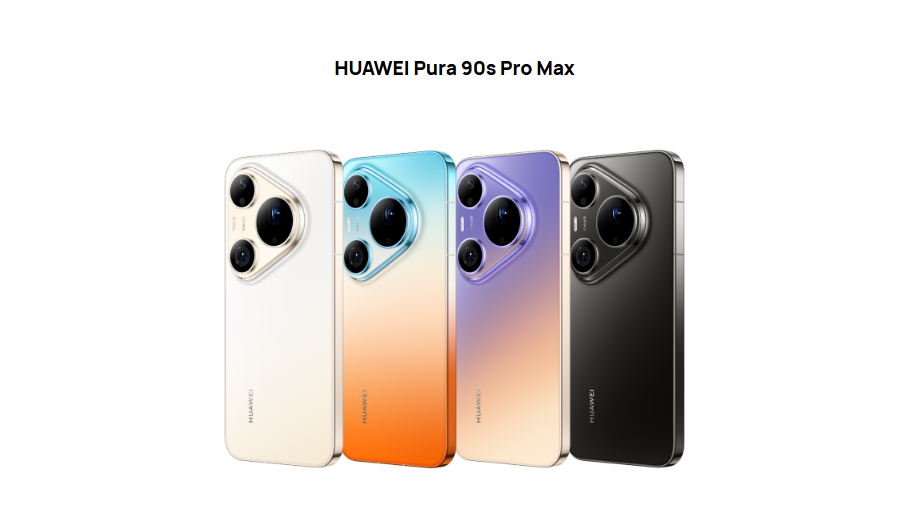
Huawei just officially rolled out the Pura 90s Pro and Pura 90s Pro Max to international markets, giving the Pura 90 lineup a proper global push beyond China.
The two models share a lot of the same DNA but carve out their own identities depending on what you’re after: size, charging speed, and a few camera tweaks. The Pura 90s Pro Max packs a generous 6.9-inch flat LTPO OLED display (1,308 x 2,880 pixels). The smaller Pura 90s Pro goes with a 6.6-inch LTPO panel (1,256 x 2,760) that’s easier to handle one-handed. Both screens use an anti-reflective coating that supposedly slashes reflections by up to 70%, and they’re protected by Kunlun Glass (second-gen on the Pro).
Photography is still the star of the show here. The Pro Max steals the spotlight with an industry-first 200MP RYYB telephoto sensor (1/1.28-inch, f/2.6, 4x optical zoom) that supports macro shots and even 20x telephoto video thanks to strong CIPA 7.0 stabilization. Its main camera is a 50MP 1/1.28-inch LOFIC RYYB sensor with a versatile 10-step adjustable aperture (f/1.4 to f/4.0) and OIS, backed by a 40MP ultra-wide. The Pura 90s Pro packs the same 50MP main (without LOFIC), a 12.5MP ultra-wide, and its own 50MP 4x telephoto.
Under the hood, both phones run on Huawei’s new Kirin 9030S chipset, available with 12GB of RAM and 256GB or 512GB of storage. They ship with EMUI 16 (based on AOSP 16). Connectivity looks solid: 5G, eSIM, Wi-Fi 7, Bluetooth 6.0, and Huawei’s NearLink.
Both phones get a 6,000mAh battery (though EU models drop to 5,500mAh because of regulations). Charging is faster on the Pro Max with 100W wired and 80W wireless, while the Pro settles for 66W wired and 50W wireless.
Pricing and availability:
On the availability front, they’re launching gradually. In Malaysia, the Pro starts at MYR 3,700 for the 12/256GB version and MYR 4,000 for the 12/512GB model, with pre-orders already underway. The Pro Max is listed at MYR 4,900 for the 12/512GB.
In Europe, pricing kicks off at roughly €900 for the Pro 12/256GB, rising to €1,050 for the 12/512GB. The Pro Max starts at €1,150 for 12/256GB and goes up to €1,300 for the 12/512GB. Expect rollouts soon in Singapore and the Middle East (with a July 16 launch event) as well.
Huawei has unveiled the 2026 MatePad Air for global markets, bringing a refreshed version of its lightweight productivity-focused tablet. The new model arrives as the successor to last year’s MatePad Air.
Huawei MatePad Air 2026 Specifications
The MatePad Air sports a new 12-inch OLED PaperMatte display with a 2800 x 1840 resolution, 144Hz refresh rate, and up to 1,200 nits of peak brightness. It also supports 1.07 billion colors, P3 wide color gamut coverage, a 2,000,000:1 contrast ratio, and Delta E < 1 color accuracy, while the PaperMatte coating helps reduce glare and reflections for a more comfortable viewing experience.
Under the hood, the tablet is powered by the Kirin T93C processor and runs HarmonyOS 4.3. It comes with 8GB or 12GB of RAM alongside 256GB of storage, and features a 3D cooling system with a custom vapor chamber and high-conductivity graphite to maintain stable performance under heavy workloads.
For imaging, the MatePad Air carries a 50MP rear camera with an f/1.8 aperture, autofocus, and an LED flash. It can capture photos at up to 8192 x 6144 pixels and record video at up to 1080p resolution.
On the front, there is a 12MP fixed-focus camera with an f/2.4 aperture. It is designed for video meetings, online classes, and selfies, with support for up to 1080p video recording.
The tablet packs a 10,100mAh typical-capacity battery and supports up to 66W fast charging. Huawei claims up to 10 hours of online HDR video playback or up to 16 hours of local video playback.
Talking about other specs, it includes six Huawei Sound speakers, dual microphones, Wi-Fi 7 capabilities, Bluetooth 5.2, NearLink, OTG support, and a USB Type-C port with USB 3.1 Gen 1 speeds.
It also supports SBC, AAC, LDAC, and L2HC Bluetooth audio codecs, alongside sensors such as a gyroscope, Hall sensor, gravity sensor, and ambient light sensor.
Pricing and Availability
The 2026 MatePad Air is available for pre-order in Europe today, with shipments starting on August 1. The non-PaperMatte model with 8GB of RAM, 256GB of storage, and an included keyboard costs €849.
The PaperMatte Edition with the same memory configuration is priced at €899 and comes with either a keyboard or the M-Pencil Pro stylus. The top-tier 12GB RAM version costs €999 and includes the keyboard.
The tablet comes in light blue, cherry blossom pink, and pure white finishes.
For more daily updates, please visit our News Section.
Redmi has just unveiled the Redmi Note 17 series of smartphones in China. In the coming days, the Note 17 lineup is also expected to head to global markets. The overseas versions could feature slightly tweaked specifications. At the same time, there could be Poco-branded rebadged versions for global markets. A new leak, courtesy of tipster Kacper Skrzypek, reveals some new details for the overseas market.
Poco M8 Power, global Redmi Note 17 series details emerge
Redmi Note 17
Scouring through the HyperOS code, the tipster claims that a forthcoming Poco phone for the Indian market with model number 2602IPC8I will be called the Poco M8 Power. This device already appeared in the BIS certification database in May. The phone also has a Redmi variant for the Indian market with model number 26021RN18I.
The tipster claims that China’s Redmi Note 17 could be rebranded as the Poco M8 Power. It also appears that there may not be a global version of this Poco device.
The Redmi Note 17 for global markets and India is said to feature the same specifications as the Chinese Note 17. However, there will be differences in battery capacity. While the Indian edition is expected to retain the same 8,000mAh battery as the Chinese model, the global version is said to feature a smaller 7,700mAh battery.
Apart from that, the global version of the Redmi Note 17 Pro is tipped to feature an 8,340mAh battery. While the Chinese edition packs a 9,000mAh battery, the Indian variant is also expected to retain the same battery capacity, according to the tipster.
Poco M8 Power, Redmi Note 17 5G specifications (expected)
Based on recent reports, the Poco M8 Power and the Redmi Note 17 (Global/India) are expected to feature a 7-inch Samsung AMOLED display with an FHD+ resolution and up to 1,800 nits of brightness. The device is also expected to feature the Snapdragon 4 Gen 4 chipset, a 50-megapixel primary camera, 45W fast charging, and 22.5W reverse wired charging.
On the other hand, the global and Indian variants of the Redmi Note 17 Pro 5G are expected to feature a 6.83-inch OLED display with a 1.5K resolution and up to 3,500 nits of brightness. The phone is also expected to feature the Snapdragon 6 Gen 4 chipset, a 50-megapixel primary camera, 67W fast charging, and 22.5W reverse wired charging.
For more daily updates, please visit our News Section.
Nearly a month after the beta 3 release, Samsung has just dropped another beta for the Galaxy S26 series, moving a step closer to the stable release. The latest release focuses on resolving bugs and issues that were found in the previous build.
The One UI 9.0 Beta 4 update for the Galaxy S26 series initially went live in India, and then quickly expanded to more regions, including the UK, Poland, Germany, and Korea. Only the US remains to receive the beta update, and the rollout could begin at any moment.
The latest beta update can be identified by a firmware version ending with ZZG4. It has a download size of about 1.25GB. While the update primarily focuses on bug fixes, it also includes the July 2026 security patch, making the device more secure than before.
Read the complete changelog below for a detailed look at the changes.
Galaxy S26 One UI 9.0 Beta 4 changelog:
Improved an issue where the clock size appears abnormal when rotating the lock screen horizontally/vertically.
Improved an issue where it does not operate normally when turning ON/OFF via Quick Panel or Settings while the Privacy Display routine is running.
Improved an issue where the navigation bar disappears under certain conditions during games.
Improved Ul performance issues that occur when opening and closing the Quick Panel.
Fixed an issue where timer notification numbers are cut off or the Ul is unstable in Live notification.
Improved an issue where the “Bluetooth audio media volume” routine action does not operate normally when connecting to vehicle Bluetooth via the Routines app.
If you have a Galaxy S26 running One UI 9.0 beta, you should be able to upgrade to the latest beta by navigating to Settings > Software updates > Download and install. Once the update package is downloaded, tap the Install now button.
Samsung would probably release a few more beta updates before the stable build starts rolling out sometime later this year. The stable One UI 9.0 is confirmed to debut later this month on the upcoming Galaxy Z Fold 8 and Galaxy Z Flip 8. A few weeks after that, older Galaxy devices will begin to receive the update.
Remember to visit our Samsung section regularly for fresh details. Or, you can join our Telegram channel to receive instant notifications when we post new stories.
There have been reports suggesting that Redmi could unveil the Redmi K100 series as early as next month. One reason behind the expected early launch is that the upcoming models are unlikely to feature the Snapdragon 8 Elite Gen 6 chipset, which is reportedly being reserved for the Xiaomi 18 series expected to debut in September. Ahead of the anticipated launch, reliable tipster Digital Chat Station has shared a new post on Weibo, revealing the key specifications of an upcoming Redmi K100 series model.
Redmi K100 series phone’s key specifications tipped
According to the leak, the engineering prototype of the forthcoming Redmi K100 series phone features a large flat display with rounded corners and support for a 185Hz refresh rate, along with an advanced display technology aimed at delivering sharper visuals. The handset is also tipped to be powered by the Snapdragon 8 Elite Gen 5 chipset, paired with a dedicated display chip for enhanced graphics performance.
On the camera front, the phone is said to feature a 200-megapixel large sensor primary camera alongside a 50-megapixel periscope telephoto camera for long-range zoom photography. Other expected features include a large 3D ultrasonic fingerprint scanner, flagship-grade stereo speakers, a bigger vibration motor, and IP68 and IP69 ratings for dust and water resistance.
The prototype is said to feature a battery with around 9000mAh capacity, along with support for 100W wired fast charging and wireless charging. If these specifications make it to the final product, it would mark a notable upgrade over the Redmi K90 Pro Max, which packs a 7560mAh battery with 100W wired charging, 50W wireless charging, a 50-megapixel primary camera, and a 50-megapixel 5x periscope telephoto camera.
While the exact branding of the upcoming Redmi K100 series phone remains unclear, its leaked hardware suggests it could launch as either the Redmi K100 Pro or Redmi K100 Pro Max.
For more daily updates, please visit our News Section.
Premium flagship phones aren’t immune to issues. Just months after launch, some owners of the Galaxy S26 Ultra are reporting a reddish tint appearing right in the center of the screen. While it doesn’t seem to affect every unit, the complaints are starting to pile up and have left potential buyers concerned.
Samsung has acknowledged the reports and says it’s currently running an internal investigation. According to users, the reddish patch usually shows up after two to three months of use, not right out of the box. This makes it different from the normal slight color variations you sometimes see on AMOLED screens. Samsung has previously said that overall red or yellow tints can often be fixed by tweaking settings, but this localized central discoloration feels more specific.
A lot of the speculation is pointing toward the S26 Ultra’s unique Privacy Display feature. This is a hardware-level technology that narrows the viewing angles to protect your screen from prying eyes. It’s great for privacy when checking banking apps or private messages. Some people are wondering if this feature, which intelligently controls light emission, might be causing uneven wear or discoloration over time. However, we can’t jump to conclusions yet. User photos alone aren’t enough to confirm something like burn-in.
So far, Samsung hasn’t confirmed any connection to the Privacy Display, the panel design, or specific production batches. In a statement, the company said: “We are currently examining the matter internally to determine the cause.”
At a premium price, buyers expect top-tier reliability. This reddish patch seen on the S26 Ultra, followed by the green or pink lines reported on multiple recent Galaxy flagship models, could shake user confidence fast. If the latest problem turns out to be widespread, we might see software fixes, panel swaps, or even a service program.
If you’re noticing something similar on your S26 Ultra, it’s a good idea to document it with photos or videos, try adjusting your display settings, and reach out to Samsung support.
Just days after leaked images gave us our first look at the upcoming Insta360 X6, a fresh report has now revealed full specifications of the handheld camera. According to details shared byWinFuture, the X6 will be smaller than the X5 but comes with several hardware upgrades.
Insta360 X6 Specifications
Starting with the camera itself, the X6 is said to feature two 1/1.1-inch image sensors, each rated at 42MP. Combined, they produce 360-degree photos of up to 120MP. The camera also supports 10-bit color in 360 mode, along with Dolby Vision and I-Log color profiles. It also gets an updated Adaptive Tone 2.0 feature for better exposure in difficult lighting.
As for videos, the camera can record 360-degree films at up to 8K resolution and 50 frames per second. What’s notable about this frame rate is that it allows footage to be played back at half speed for smooth slow-motion clips, which should be a big win for action and sports creators.
In its PureVideo 360 mode, the camera can also shoot 8K at 30fps, while switching to single-lens mode unlocks 5K video at 60fps or 4K video at a very high 120fps. Insta360 is also promising 11K timelapse recording in full 360-degree mode.
For digital controls, the camera has an OLED touchscreen with a brightness of up to 1200 nits. Compared to the predecessor, the X6 has a bigger 2600mAh battery that is said to offer up to 233 minutes of recording.
The body measures about 10cm in length, 5cm in width, and under 4cm in thickness, and weighs around 195 grams. As we mentioned in our previous report, pricing is expected to go up. The base model is likely to cost around €700 in Europe, while the Essentials bundle may cost close to €800.
Insta360 has not confirmed an official launch date. More details are expected soon.
For more daily updates, please visit our News Section.
We’ve seen plenty of tablets that promise to replace your laptop. They’re loaded with power, sure, but they also weigh a ton. So when Huawei showed up in 2026 with the MatePad Pro Max and took the exact opposite approach—going ridiculously thin and light—I was curious. At just 4.7mm thick and 499 grams, this thing is practically anorexic compared to other 13‑inch flagships that keep bulking up on specs. But does cutting so much weight mean cutting too much “Pro” performance? After using it daily for a month, here’s the unfiltered truth.
Design
The moment you pick it up, your brain does a double take. 499 grams—that’s nearly 200 grams less than the same‑size iPad Pro, and even lighter than a hardcover art book. At 4.7mm, you can literally pinch it between two fingers and wander around the house like it’s a fancy notepad. Slip it into your bag, and you’ll genuinely forget it’s there. Huawei calls this the “Cloud Falcon Architecture,” and it’s earned TÜV Rheinland’s ultra‑thin bend‑resistance certification—I gave it a good twist, and it stayed impressively rigid. My review unit is the blue “Flow Back” version, and yes, the 3.5mm headphone jack is gone, but the trade‑off is a six‑speaker HUAWEI SOUND setup that actually delivers: decent bass, clear vocals, and a genuinely enjoyable experience for movies or podcasts, easily beating most tablets in this class.
Display
Then you turn on the display. That 13.2‑inch flexible OLED panel has no notch, no punch‑hole, no distractions—just pure screen. With a claimed 94% screen‑to‑body ratio, videos truly fill your view, and the 3K resolution (3000 x 2000) plus 144Hz refresh rate makes scrolling and gaming butter‑smooth. There are two variants: the standard glossy OLED with punchy colours and 2,000,000:1 contrast, great for HDR, and the PaperMatte Edition I tested, which uses nano‑etched glass to cut glare and add a paper‑like drag for the stylus. That version is slightly less punchy for pure media, but it’s a lifesaver if you work near windows or take lots of handwritten notes. One caveat: the 1600‑nit peak brightness only fires up for specific HDR scenes in small windows—day‑to‑day, it’s fine by a window or outdoors, but don’t expect smartphone‑like visibility under blazing sun; that’s just the physics of big screens.
Productivity
Productivity is where things get interesting. Huawei touts this as a productivity beast, but honestly, the real wins for me weren’t the PC‑level WPS suite—it was the multi‑window, stylus, and keyboard combo I actually used every day. You can run three apps side by side: I’d have a browser for research, HUAWEI Notes for jotting, and the gallery for reference images, all switching without lag. It’s not mind‑blowing, but it’s rock‑solid. However, plug in an external monitor and the magic fades; it’s simple mirroring, not true desktop expansion, so you can’t drag windows to a second screen like a laptop. That stings if you wanted a dual‑monitor workflow.
The M‑Pencil Pro (sold separately) pairs beautifully, especially with the PaperMatte screen where the etched glass gives real paper‑like friction. The GoPaint app isn’t a throwaway—brush strokes have natural ink bleed, and the smart colour palette pulls suggestions from your drawing, making it way more than “good enough” for sketching, storyboarding, or visual notes. But the surprise hit was the AI handwriting beautification in HUAWEI Notes—my handwriting is barely legible, and toggling it on transforms my scrawl into neat, natural‑looking script without turning it into robotic print. That alone made me take more notes.
The Glide Keyboard has short key travel but snappy feedback, fine for banging out a 2,000‑word article in a pinch. The fatal flaw? No cantilever hinge. The tablet lies flat on the keyboard base—no floating angle like a Surface or iPad Pro. On a desk, it’s fine; on your lap, bed, or couch, the fixed low angle gets awkward fast. So productivity isn’t about replacing your workstation; it’s about making you actually want to pull this out of your bag to sketch, write, and stay in the flow.
Performance, Battery, and Heat
Under the hood, the international model runs Huawei’s Kirin T93 Pro chip with up to 16GB RAM, and daily tasks like notes, video, and office apps are flawless. Push it with heavy video renders or Honkai: Star Rail, though, and frame rates stutter a bit, with heat building around the upper‑middle section. Thermal management is surprisingly good—thanks to dual‑layer VC cooling, it gets warm but never hot, even during long video calls, with no throttling. Battery life is rated at 14.5 hours of local video playback; in my real‑world mix (Wi‑Fi, 50% brightness, two hours of video calls, three hours of docs, one hour of gaming), it lasted about ten hours—enough for a full workday and commute. And that 40W reverse wired charging is a lifesaver when your phone is gasping for juice.
Final Verdict
Of course, no product is perfect. The keyboard’s flat design is a genuine ergonomic pain for lap use, and the professional software ecosystem, while growing, still isn’t a full desktop replacement. And at £999.99 in the UK, it’s firmly in flagship territory.
So who is this for? The MatePad Pro Max is a laser‑focused, even specialised, flagship that puts extreme portability and an uninterrupted big screen above all else, making deliberate trade‑offs in pro performance and form factor. It’s perfect for heavy document readers and mobile workers who live out of a bag, for anyone ultra‑sensitive to weight who wants something they can forget they’re carrying, for media junkies who crave an immersive panel with great speakers, and for sketchers and note‑takers who need a digital notebook that feels natural. The moment you hold it, every spec‑sheet anxiety melts away under that barely‑there weight. It doesn’t try to replace your laptop—it wants to be the screen you actually want to take with you. Sometimes, subtraction takes more guts than addition, and Huawei just proved it.
We use cookies on our website to give you the most relevant experience by remembering your preferences and repeat visits. By clicking “Accept”, you consent to the use of ALL the cookies.
This website uses cookies to improve your experience while you navigate through the website. Out of these, the cookies that are categorized as necessary are stored on your browser as they are essential for the working of basic functionalities of the website. We also use third-party cookies that help us analyze and understand how you use this website. These cookies will be stored in your browser only with your consent. You also have the option to opt-out of these cookies. But opting out of some of these cookies may affect your browsing experience.
Necessary cookies are absolutely essential for the website to function properly. This category only includes cookies that ensures basic functionalities and security features of the website. These cookies do not store any personal information.
Any cookies that may not be particularly necessary for the website to function and is used specifically to collect user personal data via analytics, ads, other embedded contents are termed as non-necessary cookies. It is mandatory to procure user consent prior to running these cookies on your website.