Alongside its new stylus phone, Motorola has also introduced the Moto Pad 2026, an 11-inch tablet aimed at everyday productivity and media use. It doesn’t try to do anything too ambitious, but it covers the basics fairly well.
The tablet features an 11-inch display with a 2.5K resolution and a 90Hz refresh rate. It should be sharp enough for reading and streaming, while the higher refresh rate helps keep things smooth during general use. There’s also a quad-speaker setup tuned for Dolby Audio, which should make it a decent option for watching content.
Under the hood, it runs on the MediaTek Dimensity 6300, a 5G chipset more commonly seen in mid-range phones. It’s not designed for heavy workloads, but it should handle everyday tasks like reading, streaming, and light multitasking fairly well.
One of the more notable additions is Smart Connect, which allows the tablet to work more closely with Motorola phones and other compatible devices. You can move content between screens or continue tasks across devices, which can be useful if you’re already in that ecosystem. The tablet is backed by a 7040mAh battery with 20W charging, which should be enough for a full day of typical use.
Pricing and availability:
Pricing starts at $249.99, keeping it firmly in the affordable category. The Moto Pad 2026 will be available in the United States starting April 30 through T-Mobile and Metro by T-Mobile. It will also be sold directly via Motorola’s official website at the same MSRP.
Overall, it feels like a fairly straightforward tablet, not particularly flashy, but practical enough for users who want a larger screen for work or entertainment without spending too much.
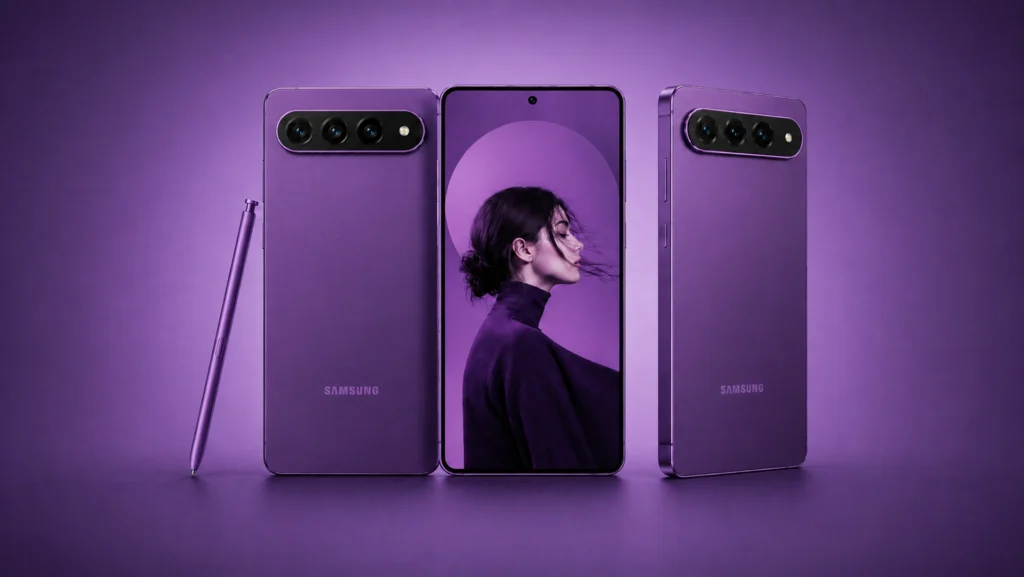
Motorola has introduced the Moto G Stylus (2026), continuing its push to make stylus-equipped phones more accessible in the mid-range segment. The idea here is fairly straightforward: give users a practical tool for writing, sketching, and quick input, without pushing into flagship pricing.
As expected, the built-in “active stylus” is the main highlight. It supports pressure and tilt, so it’s not just for basic taps or navigation. Motorola is also leaning into software. You can sketch inside the Notes app and turn drawings into AI-generated images, or write out math problems and have them recognized and solved. It’s not something everyone will use daily, but it does add some real utility.
On the front, the phone features a 6.7-inch AMOLED display with a 120Hz refresh rate and 1.5K resolution. Peak brightness is rated at 5000 nits, which sounds impressive, though real-world visibility will depend on how it behaves outside controlled conditions.
It’s built around the same 4nm Snapdragon 6 Gen 3 5G chipset as last year’s Moto G Stylus, but Motorola claims a roughly 10% performance boost, likely due to faster memory and storage: UFS 3.1 (up from 2.2) and LPDDR5X (up from LPDDR4X).
Camera setup includes a 50MP Sony LYTIA 700C (1/1.56-inch) main sensor, paired with a 13MP ultrawide that also handles macro shots, along with a 32MP front camera. You get 4K video recording across all cameras, plus some AI-based image processing and hybrid zoom.
The device is rated IP68 and IP69 for dust and water resistance, which is still relatively uncommon at this price point. It packs a 5200mAh battery with 68W wired charging and 15W wireless charging, and runs Android 16 out of the box.
Pricing and availability:
Starting at $499.99, the Moto G Stylus (2026) sits in the upper mid-range segment and will go on sale in the US starting April 16.
SanDisk has launched a rather expensive 2TB Extreme Pro UHS-II SD card for professionals and the like. And that is reflected directly in its price.
The new card from SanDisk is priced at $1,999.99. According to a report from Tom’s Hardware, that’s more than four times the cost of SanDisk’s own 2TB UHS-I card, which sells for under $500.
SanDisk 2TB Extreme Pro UHS-II SD card Specifications
What you’re paying for here is speed and reliability. The card supports sequential read speeds of up to 310MB/s and write speeds of up to 305MB/s, which makes it a UHS-II tier card. It’s designed for workloads like 8K video recording and high-resolution burst photography, where sustained performance matters more than raw capacity alone.
There’s also a durability angle. SanDisk says the card comes with an IP68 rating, meaning it can handle dust, water exposure, and even drops from up to six meters.
Still, the pricing stands out even within SanDisk’s own lineup. At roughly $1 per gigabyte, the 2TB UHS-II card matches the cost-per-GB of the 512GB version but remains significantly more expensive than UHS-I alternatives, which can dip as low as $0.21 per gigabyte. Even SanDisk’s newer microSD Express cards are far cheaper on a per-GB basis.
Below is a breakdown of SanDisk cards on a price/GB basis (via Tom’s Hardware):
In other words, this isn’t meant to be a mainstream upgrade. It’s a niche product for people who need both capacity and speed in a single, portable format, and are willing to pay a premium to avoid compromises.
For more daily updates, please visit our News Section.
The Redmi K90 Max has surfaced in official renders for the first time, offering a glimpse at its rear design ahead of launch. The company has showcased the device in a new Space Silver color, setting the tone for what appears to be a performance-focused smartphone with a refined look.
Redmi K90 Max design revealed
Redmi K90 Max
The Redmi K90 Max’s Space Silver variant features a cool-toned silver finish paired with a flat frame made of aluminium alloy, giving the device a clean and minimal appearance. While the front is not visible, it appears to be equipped with a flat display, as it is a gaming-focused phone.
At the back, the phone carries a horizontally aligned camera module similar to the Pro Max variant, but with a key difference. One section of the module houses a visible vent for the internal cooling system instead of a traditional speaker layout. Below this, a wide air outlet stretches across the panel, hinting at a more aggressive thermal setup.
The cooling system includes a large internal fan measuring over 18mm, designed to improve airflow efficiency. Redmi claims measurable gains in airflow compared to standard solutions, with faster heat dissipation during intensive tasks. The structure is said to be isolated from the motherboard, ensuring durability while maintaining dust and water resistance.
Redmi K90 Max specifications (rumoured)
Redmi K90 Max
As per reports, the Redmi K90 Max could feature a 6.83-inch OLED panel with 1.5K resolution and a 165Hz refresh rate, paired with the Dimensity 9500 chipset. The device is also tipped to pack a large 8,500mAh battery with 100W charging support, along with an ultrasonic in-screen fingerprint scanner for secure unlocking.
On the audio front, it may include Bose-tuned symmetrical dual speakers, while haptic feedback could be handled by a large X-axis linear motor. The phone is further expected to retain its built-in cooling fan system for thermal management and carry IP68 and IP69 ratings for dust and water resistance.
For more daily updates, please visit our News Section.
Xiaomi has launched a new power bank in China, bringing attention to updated safety norms and improved everyday usability. The device, called the Xiaomi Magnetic Power Bank 10000 7.5W 2026 Edition, aligns with upcoming regulatory standards while adding a few practical features.
Focus on new safety standards and battery design
The 2026 edition is designed to comply with China’s latest mobile power safety regulations, which are set to be implemented in 2027. Xiaomi claims the device passes multiple new compliance tests, including scenarios like heat exposure, overcharging, and physical stress. It also features a redesigned battery cell along with several layers of protection that work across both hardware and circuit levels.
Another addition is the ability to check battery health and status through a connected system, offering users more visibility into long-term usage. The company has also mentioned a recommended usage period of five years, which is now printed on the device to guide users on safe replacement timelines.
The power bank comes with a total capacity of 10000mAh and supports both wired and wireless charging. Wired output can go up to 33W, while wireless charging reaches up to 15W. It also supports wired input up to 30W, allowing faster top-ups when needed.
A key highlight is its magnetic attachment system, supported by strong internal magnets that keep compatible devices securely attached. There is also a built-in adjustable stand, which allows the phone to be placed at different angles for media viewing or gaming while charging.
The device includes a small digital display that shows battery percentage, charging status, and alerts. It can charge up to three devices at once through a combination of wired and wireless connections and supports multiple charging protocols for wider compatibility.
Priced at around 199 Yuan (~$29), the Xiaomi Magnetic Power Bank 2026 Edition is now available in China.
For more daily updates, please visit our News Section.
A new leak suggests that OnePlus could be exploring a different product category, with tipster Digital Chat Station sharing details about what appears to be an image of the company’s first gaming-focused handheld device. Continue reading ahead to know what’s known about it.
OnePlus gaming console’s design revealed
OnePlus gaming console leaked image by DCS
Based on the leaked image, the device looks significantly thicker than a typical smartphone and appears to include built-in purple-colored grips on both sides. This kind of design usually indicates a focus on long gaming sessions, where comfort and control are key. Shoulder buttons are also visible, hinting at a more immersive control setup, especially for competitive titles.
The overall layout suggests that OnePlus is not simply adapting a phone into a gaming accessory but working on a dedicated form factor. There are expectations of a large internal battery to support extended gameplay, along with the possibility of an active cooling system to manage heat during demanding sessions.
OnePlus gaming console: What’s known so far
According to details shared by the above-mentioned tipsters, the device could feature an 8-inch display and run on a flagship Dimensity processor. This combination suggests that performance will be a major highlight, especially for high frame rate gaming and sustained workloads.
Interestingly, the control system is expected to move away from traditional joystick-heavy layouts. Instead, the focus may be on FPS-style interaction, blending touchscreen input with physical triggers. This approach could align well with games like BGMI and similar shooters, where quick reactions and precise input matter.
There are also hints that the device may borrow several characteristics from modern smartphones, including high refresh rate screens, responsive multi-touch input, and advanced performance tuning. These additions could help bridge the gap between mobile gaming and handheld console experiences.
At this point, OnePlus has not shared any official details about such a product. However, if these leaks turn out to be accurate, the company could be preparing to enter a new segment that blends smartphone power with dedicated gaming hardware.
For more daily updates, please visit our News Section.
Casio has launched the G-Shock DW5600MNC series in the United States. The new watches were first revealed in February this year and later released in Japan. Each model from the series is priced at $165 and is now available to order in the US.
Casio G-Shock DW5600MNC Specifications
Casio offers the DW5600MNC series in three color schemes. The DW-5600MNC-1 comes in an all-black style with a monochromatic finish. The DW-5600MNC-7A8 is light gray with neon yellow accents for a fresh and bright appearance. The DW-5600MNC-8A2 features sporty colors, including a gray base with navy, orange, and yellow accents.
The series introduces a cloth band for improved comfort. Casio used polyester material for the band, which stretches up to 2.7 times its size to ensure a superior fit. The watches also include the Fidlock magnetic buckle system. This system uses magnets combined with a mechanical locking mechanism to make putting the watch on or removing it easy and quick. Casio designed the buckle for one-handed operation, which adds convenience to daily use.
The company has incorporated bio-based resin into key parts of the bezel. This material reduces the environmental impact compared to traditional resin while maintaining the durability G-Shock watches are known for. The DW5600MNC models remain shock-resistant and water-resistant up to 200 meters.
The watches retain G-Shock’s well-known rugged features. The DW5600MNC includes a 1/100-second stopwatch, a countdown timer with a range of up to 24 hours, multi-function alarms, a Super Illuminator LED backlight, and a full auto calendar accurate up to the year 2099. Casio also ensured a long battery life of approximately five years with a CR2016 battery.
Each DW5600MNC model has a compact case size of 48.9 x 42.8 x 13.4 mm and a weight of 53 grams. The watches are compatible with wrist sizes between 145 to 215 mm.
In related news, Casio has recently introduced the AE-1600HX series watches, featuring a large display, 100m water resistance, and an impressive 10-year battery life.
For more daily updates, please visit our News Section.
Hisense has officially unveiled the Vidda S Mini TV in China. The new Mini LED TV comes in three sizes: 55-inch, 65-inch, and 75-inch, and will be available for purchase starting April 17. The pricing starts at 2,552 yuan ($372) for the 55-inch model, 3,493 yuan ($509) for the 65-inch version, and 4,434 yuan ($646) for the largest 75-inch option.
Hisense Vidda S Mini TV Specs
The Vidda S Mini TV uses a Mini LED backlight system with up to 180 local dimming zones. The panel supports 180Hz refresh rates for smoother motion, making the TV suitable for fast-paced content and gaming. It features a 10-bit display that produces 1.07 billion colors and achieves 96% DCI-P3 color gamut coverage for vibrant and precise color reproduction.
Hisense included an anti-glare (AG) coating and a low-reflection (LR) layer to improve visibility in bright environments. The TV reaches a peak brightness of 600 nits and integrates RGB intelligent light sensing to adjust brightness and color temperature based on ambient lighting conditions.
The TV offers six-layer eye protection with 20,000Hz PWM dimming, low blue light filtering, and flicker-free technology for long-term viewing comfort.
The Vidda S Mini TV boasts a 2.1-channel speaker system with a built-in 1.2L independent subwoofer, which delivers up to 120W of total sound output. The audio setup supports Dolby Audio and DTS decoding.
Hisense equipped the TV with several gaming-friendly features. The Vidda S Mini TV includes HDMI 2.1 ports, Variable Refresh Rate (VRR), Auto Low Latency Mode (ALLM), and MEMC motion compensation.
The TV also supports Bluetooth 5.4 and Wi-Fi 6 for stable and fast connectivity. It includes two HDMI 2.1 ports, two USB 2.0 ports, an Ethernet port, and AV inputs for versatility across devices.
For smart features, Hisense has integrated the Xinghai large language model with DeepSeek AI. This allows advanced voice controls, multi-command recognition, and even support for regional dialects. It can also wirelessly cast content from Android, iOS, Windows, and macOS devices.
Sony might be planning a big design refresh for its next Xperia flagship. Fresh images of the Sony Xperia 1 VIII (via Insider Sony) reveal a design that doesn’t quite follow the company’s recent playbook.
The phone is noticeably different from earlier Xperia models, which have typically stuck to a tall, minimalist look with subtle changes year over year.
What stands out here is the camera layout. It feels familiar, not to Sony users, but to those who remember the OnePlus 10 Pro. Of course, the resemblance isn’t one-on-one, but the overall arrangement and styling do give an old OnePlus vibe.
Up front, things are more in line with Sony’s usual approach. The renders show a flat display with relatively standard bezels, rather than the ultra-thin borders seen on many competing flagships.
The front-facing camera sits within the top bezel instead of a punch-hole or notch. And in classic Sony fashion, there are also visible stereo speakers on the front.
Sony Xperia 1 VIII could bring notable camera upgrades
Beyond the design, early rumors also suggest some changes in the camera system. The Xperia 1 VIII is expected to feature a triple-camera setup built around 48-megapixel sensors. While the ultrawide camera may remain unchanged from the previous generation, the main and telephoto cameras could see more meaningful updates.
Specifically, leaks suggest a larger primary sensor, which typically helps with low-light performance and overall image quality. There’s also talk of a new telephoto sensor, possibly falling somewhere between 1/3-inch and 1/2-inch in size.
That said, it’s still just a rumor at this point. Sony has not confirmed anything yet, and details like the final design, hardware, and feature set could change before launch.
The foldable space could be getting a bit more crowded, and maybe more interesting, if the latest leaks are anything to go by. There’s fresh chatter around Apple’s first foldable, and more specifically, what it might be called.
According to Weibo tipster @DigitalChatStation, Apple’s upcoming wide-format foldable may actually launch as the iPhone Ultra. That’s not confirmed, of course, but the name alone is enough to get other brands thinking. The same leak suggests that some Chinese manufacturers are already considering using “Ultra” branding for their own wide foldable devices.
No specific brands were named, but that hasn’t stopped the speculation. Names like a possible “Huawei Pura Ultra 2” or “Xiaomi MIX Fold Ultra” have already started floating around online. Unofficial, obviously, but not entirely unrealistic given how naming trends usually evolve.
The mention of a “wide foldable” is also interesting. It lines up with earlier reports about Huawei working on a new model, possibly called the Pura X2. That device is said to feature a 7.69-inch WQHD+ inner display with a wider aspect ratio, along with a 5.5-inch outer screen. The goal seems to be better usability both when folded and unfolded. There’s also talk of a newer Kirin 9030-series chip and an upgraded telephoto camera, though details are still a bit thin.
As for Apple, its foldable iPhone is still expected sometime in the second half of 2026. A lot of the interest around it isn’t just about hardware; it’s also about how Apple might approach software and durability. If the “Ultra” branding does stick, it would clearly place the device at the very top of Apple’s lineup, both in terms of features and pricing.
At this point, the direction is becoming clearer: foldables are moving further into the premium space, and “Ultra” might just be the next label everyone wants to use.
If you have been in the loop, you might know smartphones are quietly getting more expensive. Just as Nothing Phone (3a) Lite saw a price bump today, Motorola has also increased prices for a handful of its devices in India. The revised pricing takes effect immediately and touches both its budget and mid-range portfolio.
Over the past few months, smartphone makers have been dealing with higher component costs, currency fluctuations, and ongoing supply chain pressure. This in turn, is directly affecting consumers, and Motorola’s latest revision fits neatly into that pattern.
Motorola hikes Moto G and Edge series prices in India
The price hike affects three devices across the Moto G and Edge lineups, including the Moto G35, Moto G57 Power, and Motorola Edge 60 Fusion. The increases vary depending on the variant, but in most cases, buyers are now paying between Rs 500 and Rs 2,000 more than before.
For the Moto G35, the base 4GB + 128GB variant now costs Rs 12,499, up from Rs 11,999. The higher-end 8GB + 128GB version sees a steeper jump, going from Rs 12,999 to Rs 13,999.
Moto G35
The Moto G57 Power, a higher-end phone in Motorola’s budget lineup, has also seen price changes. Its 8GB + 128GB model now retails at Rs 15,999, compared to its earlier price of Rs 14,999.
The biggest increase is on the mid-range Motorola Edge 60 Fusion. The 8GB + 128GB variant now costs Rs 22,999 (up from Rs 20,999), while the 8GB + 256GB and 12GB + 256GB variants have climbed to Rs 24,999 and Rs 26,999, respectively.
Moto Edge 60 Fusion
For buyers, the right time to purchase a phone is getting harder to predict. Prices that were once stable for months are now more fluid, even for devices that have been on the market for a while.
Minisforum has introduced the Elite M1 Lite, a compact mini PC powered by the Intel Core Ultra 5 125U processor, now available globally, including in China.
Minisforum Elite M1 Lite Specifications
The Intel Core Ultra 5 125U processor features 12 cores and 14 threads with a maximum turbo frequency of 4.3GHz. It includes a dedicated Neural Processing Unit (NPU) that delivers up to 21 TOPS of AI computing power. The NPU allows the M1 Lite to handle AI workloads like smart office tasks and on-device processing with minimal reliance on cloud-based resources.
The system supports up to 96GB dual-channel DDR5-5600 RAM via two SO-DIMM slots. It includes two M.2 2280 PCIe Gen4 SSD slots for storage, with configurations available for 512GB or 1TB pre-installed SSDs.
The Elite M1 Lite offers versatile connectivity options. It supports triple-display setups via an HDMI 2.1 port, a DisplayPort 1.4, and a USB4 port, enabling resolutions of up to 8K at 60Hz or 4K at 144Hz. The USB4 port provides 40Gbps data transfer speeds and supports Power Delivery input (up to 100W) and output (up to 15W).
It also features two USB 3.2 Gen2 Type-A ports, two USB 2.0 Type-A ports, a 3.5mm audio combo jack, and a 2.5GbE LAN port. For wireless connectivity, the device includes Wi-Fi 6E and Bluetooth 5.2.
The cooling system uses phase-change materials and a blower fan to maintain stable performance under load. The fan keeps noise levels under 45dB even at maximum speeds. The M1 Lite weighs 0.6kg and measures 130 x 126 x 50.4mm, making it compact enough to fit on small desks or mount behind a monitor using the included VESA bracket.
Pricing and Availability
The Minisforum Elite M1 Lite is priced competitively for both the US and Chinese markets. In the US, the barebone version starts at $311, while the 16GB RAM + 512GB SSD configuration is priced at $615. In China, the barebone model is available for ¥2,199, and the 16GB + 512GB variant costs ¥4,399.
In related news, Gmktec has recently unveiled the NucBox K17 mini PC, powered by an Intel Core Ultra 5 processor and supporting up to 16TB of storage.
For more daily updates, please visit our News Section.
Infinix is getting ready to launch the Note 60 Pro in India. The phone first showed up globally back in February 2026, and the India version looks set to follow pretty closely, with a few localized touches and launch offers.
The Infinix Note 60 Pro is scheduled to go official on April 13 at 12 PM IST, with pre-orders opening a few days earlier on April 8. It’ll be available in Deep Ocean Blue, Mocha Brown, and Solar Orange, which, at least from the renders, look fairly distinct.
One of the more unusual bits here is the back. Infinix is using what it calls an active matrix display. It’s essentially a hidden LED panel that lights up for notifications, battery status, and a few custom animations. It stays invisible otherwise, so the back doesn’t look busy all the time. The idea is somewhat similar to what Nothing has been doing, just executed differently.
Under the hood, the phone runs on the Snapdragon 7s Gen 4, built on a 4nm process. It’s paired with up to 12GB LPDDR5 RAM and 256GB UFS 2.2 storage. Nothing too surprising here, but it should be more than enough for everyday use and some gaming on the side.
On the front, there’s a 6.78-inch AMOLED display with a 1.5K resolution and a 144Hz refresh rate. Infinix is also claiming peak brightness of up to 4,500 nits, which sounds impressive on paper.
Camera setup is fairly standard for this category: a 50MP main sensor with OIS, an 8MP ultrawide, and a 13MP front camera. It does support 4K video recording on both sides, which is still a nice addition at this level.
Battery capacity is listed at 6,500mAh, with support for 90W wired and 30W wireless charging. The wireless charging support sets this mid-range apart from its competition. Other features include stereo speakers tuned by JBL, an IP64 rating, and Android 16 with XOS 16 on top.
For India, the hardware is expected to remain mostly unchanged, including the metal frame and Gorilla Glass 7i protection. Infinix is also expected to bundle in some launch offers.
All in all, the Note 60 Pro seems to be leaning heavily on its design and display, while still covering the basics on performance and battery.
Living rat neurons successfully trained to perform real-time AI computations
Structured neuron networks improved learning and reduced synchronization
Technology shows strong potential for brain-machine interfaces and bio-AI systems
AI – generated image for representation only
Research Overview
Researchers developed a novel bio-AI system where living rat cortical neurons were trained to perform real-time computational tasks. The study focuses on combining biological neural networks with machine learning techniques using a closed-loop reservoir computing approach. The goal is to explore whether living neurons can act as functional computing systems rather than just biological components.
System Design and Working
The system integrates living neurons with high-density microelectrode arrays and microfluidic devices. Neural signals are recorded, converted into continuous outputs, and fed back into the system as electrical stimulation in a loop of about 330 milliseconds. A real-time learning method continuously adjusts the output to match target signals, allowing the system to learn without external intervention.
Network Structuring Innovation
To improve performance, neurons were physically organized into 128 micropores connected through microchannels. This design prevented excessive synchronization, which is common in unstructured neural networks. As a result, neuron correlation dropped significantly from 0.45 to around 0.12, leading to more complex and efficient network behavior. The lattice network structure showed the best overall performance.
Capabilities and Results
The system successfully generated different waveform patterns such as sine, square, and triangular waves across multiple time intervals. It also demonstrated the ability to approximate complex chaotic systems like the Lorenz attractor. During training, the system maintained strong accuracy, achieving correlation levels above 0.8.
Limitations and Future Scope
Despite its capabilities, the system shows a performance decline after training stops, with increasing error during autonomous operation. A key limitation is the 330-millisecond feedback delay, which restricts the system’s ability to handle fast-changing signals. Future work aims to reduce latency using specialized hardware, with potential applications in brain-machine interfaces, neural prosthetics, and next-generation bio-hybrid AI systems.
Amazfit has launched two new smartwatches in India, the Active 3 Premium and the T-Rex Ultra 2. The two devices expand the company’s portfolio across mid-range and premium segments, with a clear split between general fitness use and rugged outdoor tracking.
The Active 3 Premium comes with a 1.32-inch AMOLED display with a 466 × 466 resolution and a 60Hz refresh rate. The panel reaches up to 3,000 nits of peak brightness and is protected by sapphire glass with an anti-fingerprint coating. It uses a 45mm stainless steel case with four physical buttons. The watch measures 45 × 45 × 11mm and weighs 38 grams.
It runs on Zepp OS 5 and supports Zepp Flow AI voice control. Connectivity includes Bluetooth 5.3 LE, with compatibility for Android 7.0 and above and iOS 14.0 and above. A built-in microphone and speaker enable Bluetooth calling.
The smartwatch includes the BioTracker 6.0 PPG biometric sensor with a 5PD + 2LED setup, along with an accelerometer, 3-axis motion sensor, barometer, ambient light sensor, and a skin temperature sensor. It supports five satellite positioning systems, including GPS, GLONASS, GALILEO, and QZSS.
Fitness tracking includes more than 170 workout modes, including HYROX race. It also supports automatic recognition of 25 strength training movements and 8 sports activities. Running-focused tools include built-in workouts, Zepp Coach plans, lactate threshold tracking, running power, ground contact time, track run mode, smart trajectory correction, and a virtual pacer.
Additional features include 24-hour heart rate, SpO2, and stress monitoring, along with BioCharge. The watch also supports notifications, to-do lists, calendar reminders, music control, and camera control. It includes 4GB of internal storage and supports offline maps. The device is rated 5ATM for water resistance and is backed by a 365mAh battery, rated for up to 12 days of typical use, 7 days of heavy use, and up to 24 hours of continuous GPS tracking.
The T-Rex Ultra 2 sits at the top end of the lineup and focuses on durability and extended outdoor use. It features a 1.5-inch AMOLED display with a 480 × 480 resolution, 60Hz refresh rate, and peak brightness of up to 3,000 nits. The display is protected by sapphire glass and 2.5D tempered glass, along with an anti-fingerprint coating. The watch uses a Grade 5 titanium bezel and case back, and measures 51 × 51 × 14.3mm. It weighs 89.2 grams without the strap.
It also runs Zepp OS 5 with Zepp Flow AI voice control and supports Bluetooth 5.2 LE connectivity. Like the Active 3 Premium, it includes a microphone and speaker for Bluetooth calling.
The T-Rex Ultra 2 supports dual-band positioning and six satellite systems, along with a circularly polarized GPS antenna. It offers more than 187 workout modes, including HYROX race, and includes automatic recognition for strength training and sports activities. Running features include Zepp Coach, track run mode, smart trajectory correction, virtual pacer, and race achievement predictions.
Health tracking is handled by the BioTracker 6.0 PPG sensor, supported by sensors such as an accelerometer, barometer, ambient light sensor, and temperature sensor. It includes continuous heart rate, SpO2, and stress monitoring, along with BioCharge.
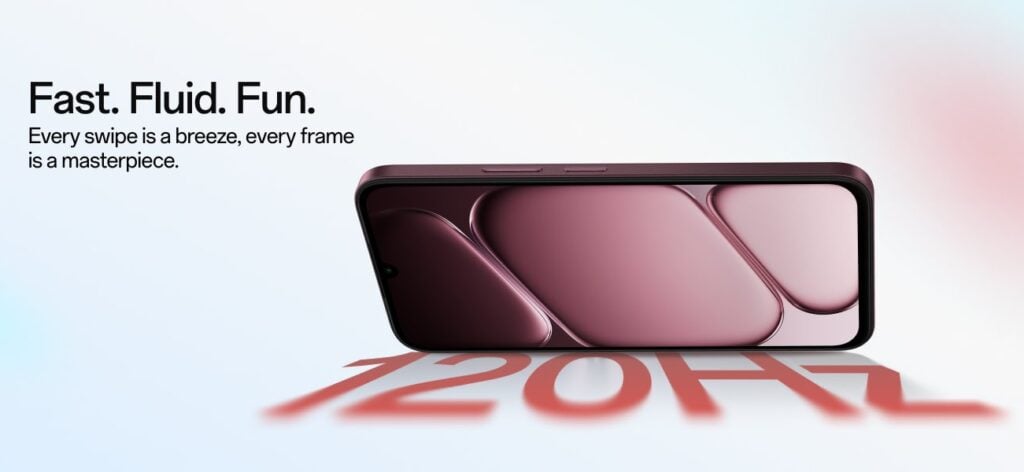
The device also includes 64GB of internal storage, support for full-color global maps, and a built-in dual-mode flashlight with adjustable brightness and a Boost Mode. Additional features include a green light mode designed for use with night vision goggles and an SOS signal function. The watch is rated for 10 ATM water resistance and includes dual diving certifications.
Battery capacity is 870mAh, with claimed usage of up to 30 days under typical conditions, 15 days with heavy use, and up to 44 hours in trail running mode. Continuous GPS usage is rated at over 50 hours.
Pricing & availability
In India, the Active 3 Premium is priced at Rs. 15,999 and is available in Apex Silver. The T-Rex Ultra 2 is priced at Rs. 49,999 and comes in Black Magma. Both models are available through the Amazfit India online store, Amazon.in, and offline retail channels.
For more daily updates, please visit our News Section.
Huawei has officially launched the Huawei Vision Smart Screen 6 SE, a new smart TV aimed at delivering a premium viewing and connected home experience. The device went on sale on April 7 at 14:08 China time, with a starting price of 3899 Yuan (approximately $540 USD). It is available through Huawei Mall, authorized e-commerce platforms, and offline experience stores.
The Smart Screen 6 SE features a sixth-generation Super Mini LED LCD panel with 4K Ultra HD resolution. A key highlight is its 288Hz refresh rate, which ensures ultra-smooth motion, especially beneficial for fast-moving content and gaming. The display also offers a wide 178-degree viewing angle, along with improved brightness and contrast, with peak brightness increased by around 50% for more detailed visuals.
Powering the device is Huawei’s self-developed Honghu chipset, built on a dual-core A73 and dual-core A53 architecture. It comes with 3GB RAM, expandable with an additional 1GB of virtual memory, and 64GB of internal storage. Huawei claims the new model delivers about 15% better responsiveness than its predecessor.
In terms of connectivity, the TV includes dual HDMI 2.1 ports, enabling support for high-bandwidth gaming and smooth 4K content playback. It runs on HarmonyOS, allowing seamless integration with Huawei’s ecosystem. The built-in AI camera supports video calls, home monitoring, and fitness tracking.
Additional features include AI-powered picture enhancement, eye protection mode, children mode, and cross-device interaction, making it a well-rounded smart TV available in 55, 65, 75, and 85-inch variants.
Xiaomi has expanded its smart lighting lineup with a new series, the Mijia Ceiling Light Pro Ultra-Thin. As the name suggests, the focus here is on a slim, low-profile design that doesn’t visually crowd the ceiling, while still delivering strong brightness and more natural-looking light. There’s also a clear push toward “healthier” lighting this time, alongside the usual smart features.
The series comes in three variants, each aimed at a slightly different room size. L100 (Large Square) is the top-end model, meant for bigger living rooms (around 25-45㎡). It pushes up to 10,000 lumens at 150W, which is quite a lot for a ceiling light. Xiaomi claims an average illuminance of ≥300lx, along with a Ra98 color rendering index. The panel itself measures 1050 × 650mm and is just 29mm thick.
D60 (Large Round) sits somewhere in the middle, targeting spaces like smaller living rooms or larger bedrooms (15–25㎡). It’s rated at 75W and delivers up to 5,200 lumens. Diameter is 600mm, with a 24mm thickness.
D50 (Small Round) is designed for more compact rooms under 15㎡. It drops to 60W and 4,200 lumens. This one measures 500mm across and is also 24mm thick.
All three use a custom full-spectrum LED setup, and you can adjust the color temperature between 2700K and 5700K. They also carry an RG0 rating, meaning minimal blue light hazard.
The ultra-thin design is clearly a big part of the appeal. They’re meant to sit close to the ceiling and spread light more evenly, rather than acting as a bulky fixture in the center of the room. On the smart side, Xiaomi is bundling in its HyperOS smart connectivity system. That means the usual stuff, such as remote control, scheduling, and linking with other Xiaomi devices.
Pricing is fairly aggressive, especially once subsidies are factored in:
D50: 849 yuan (around 721 yuan after subsidy)
D60: 999 yuan (about 849 yuan after subsidy)
L100: 1759 yuan (roughly 1495 yuan after subsidy)
The emphasis here seems to be on comfortable, soft lighting rather than just raw brightness. The wide light surface and high CRI should help with things like reading or desk work, though real-world performance will depend on placement and room size.
The Mijia Ceiling Light Pro Ultra-Thin series is already listed and available for purchase on Xiaomi Youpin and other e-commerce platforms in the home country.
Tecno has historically faced criticism for its slow software updates, and that trend hasn’t quite shifted yet. The company has recently announced its Android 16 rollout schedule, but most of its competitors are already offering Android 17 betas. Despite the wait, we finally have official details on which devices are eligible and when they can expect the new HiOS 16 update.
The Android 16 update for Tecno devices comes with the HiOS 16 skin on top, offering additional features and upgrades beyond what’s already included in Android 16. The update will be rolled out to the Camon 40 series, Camon 30 series, and several devices in the POVA and Phantom lineup as per the timeline below.
Tecno Android 16 (HiOS 16) rollout timeline
Q2 2026 (April – June)
Tecno Camon 40
Tecno Camon 40 Pro
Tecno Camon 40 Pro 5G
Tecno Camon 40 Premier 5G
Q3 2026 (July – September)
Tecno Camon 30
Tecno Camon 30 5G
Tecno Camon 30 Pro 5G
Tecno Camon 30 Premier 5G
Tecno Camon 30S
Tecno Camon 30S Pro
Tecno POVA Slim 5G
Tecno POVA 7 NEO
Tecno POVA 7
Tecno POVA 7 5G
Tecno POVA 7 Ultra 5G
Tecno POVA Curve 5G
Tecno POVA 7 5G Pro
Q4 2026 (October – December)
Tecno Phantom V Fold2 5G
Tecno Phantom V Flip2 5G
The company states that the availability of the update will depend on region, model type, and carrier certification. Because of this staged rollout, the same device in one region may receive the update earlier than some regions. You can manually check for available updates in the System update section inside the Settings app.
Tecno Android 16 (HiOS 16) update: New features and major upgrades
HiOS 16 focuses on smoother performance, visual changes, and much deeper AI integration through Ella and AIGC tools. It introduces a refreshed design language, “Superfluidity,” aimed at smoother animations, cleaner transitions, and a more cohesive visual experience. The UI has effects similar to Liquid Glass.
The Minus One screen is now more structured, allowing you to quickly access tools such as real-time translation and other smart services. You can access key actions and information without even opening individual apps.
AI has been a major focus in HiOS 16, now featuring a more powerful built-in “Ella” assistant with deeper system integration and better context understanding. It can help you manage daily routines, offer proactive suggestions, summarize YouTube videos, and integrate with WhatsApp to read and reply to messages.
The latest software offers AI-driven photo editing upgrades in the Gallery app, an intelligent calling assistant for real-time subtitles, call summaries, and noise cancellation.
HiOS 16 lets you transfer files with iPhones with just a single tap without requiring an internet connection. The software also introduces OneLeap for managing multiple devices. Furthermore, it brings App Flash Launch 2.0, Sensory Scheduling 3.0, and MemCompress to enhance the overall performance. There are also some gaming-related upgrades, such as Gaming Bypass Charging and a more precise touch control.
Backed by Jeff Bezos, Prometheus aims to build real-world industrial AI
Former xAI co-founder Kyle Kosic joins to lead infrastructure
Plans to raise billions and invest in AI-disrupted industries
AI-generated image for representation only
A new and highly secretive AI startup, Project Prometheus, is quietly emerging as one of the most ambitious bets in the artificial intelligence race. Backed by Amazon founder Jeff Bezos and co-led by former Google executive Vikram Bajaj, the company was founded in 2025 with a bold goal: to take AI beyond chatbots and into the physical world.
Unlike tools such as ChatGPT or Claude Code, Prometheus is focused on building systems that understand real-world environments. Its AI models are being designed to work in industries like aviation, engineering, and architecture, using domain-specific data such as jet engine design.
A major boost to the company comes from the hiring of Kyle Kosic, a co-founder of xAI. Kosic, who previously worked with Elon Musk and helped build the Colossus supercomputer, will now lead Prometheus’ AI infrastructure efforts.
The startup is also part of a growing “talent war” in AI, where top engineers are being aggressively recruited with massive offers. Notably, all 11 co-founders of xAI have now exited, highlighting rising tensions in the industry.
Prometheus is expanding fast, with offices in San Francisco, London, and Zurich, and hundreds of employees already hired. Its long-term plan includes raising tens of billions of dollars and building a Berkshire Hathaway-style investment model, acquiring stakes in companies, and using their data to train smarter AI.
Despite its rapid growth, Prometheus remains highly secretive, with no official public statements yet.
Fujifilm has introduced a new hybrid camera in India, expanding its X Series lineup with a model aimed at both photographers and video creators. The Fujifilm X-T30 III brings a familiar design but focuses heavily on improving video capabilities and intelligent shooting features.
Fujifilm X-T30 III key specs, features
Fujifilm X-T30Ⅲ – Silver
The Fujifilm X-T30 III combines a 26.1 megapixel X-Trans CMOS 4 sensor with the X-Processor 5, delivering faster image processing and improved dynamic range. This setup ensures consistent image quality for both still photography and video recording, making it suitable for a wide range of shooting scenarios.
On the video side, the camera supports 6.2K recording at 30fps with 10-bit color, along with 4K at 60fps and high-speed 1080p at 240fps. The open gate recording mode captures the full sensor area, allowing flexibility for cropping into different aspect ratios such as vertical or cinematic formats without losing clarity.
Fujifilm’s color science remains a key highlight, with a dedicated film simulation dial offering 20 presets. New additions like REALA ACE and NOSTALGIC Neg provide distinct looks, while custom slots allow users to save their own color profiles for quick access during shoots.
The camera also features AI-powered autofocus that can detect a variety of subjects including people, animals, birds, vehicles and even drones. Combined with digital stabilisation, it helps in maintaining sharp focus and smoother handheld footage during motion-heavy scenes.
Fujifilm X-T30 III price and availability
The Fujifilm X-T30 III is priced at Rs 102,999 for the body only, while the kit with a 13-33mm lens is available at Rs 119,999. It weighs around 378 grams and retains a compact form factor with a centre viewfinder and a tilting rear display suited for varied shooting angles.
With features that bridge still photography and advanced video, the X-T30 III is positioned for creators who want versatility without moving to larger systems. It also supports wireless connectivity with Instax Link printers for instant prints.
For more daily updates, please visit our News Section.
We use cookies on our website to give you the most relevant experience by remembering your preferences and repeat visits. By clicking “Accept”, you consent to the use of ALL the cookies.
This website uses cookies to improve your experience while you navigate through the website. Out of these, the cookies that are categorized as necessary are stored on your browser as they are essential for the working of basic functionalities of the website. We also use third-party cookies that help us analyze and understand how you use this website. These cookies will be stored in your browser only with your consent. You also have the option to opt-out of these cookies. But opting out of some of these cookies may affect your browsing experience.
Necessary cookies are absolutely essential for the website to function properly. This category only includes cookies that ensures basic functionalities and security features of the website. These cookies do not store any personal information.
Any cookies that may not be particularly necessary for the website to function and is used specifically to collect user personal data via analytics, ads, other embedded contents are termed as non-necessary cookies. It is mandatory to procure user consent prior to running these cookies on your website.