Advertisement

Xiaomi’s 2025 Smartphone Lineup for India: Here’s Every Expected Launch

Xiaomi is gearing up to unveil a diverse range of smartphones in the Indian market in 2025. The Chinese tech giant aims to cater to every segment from flagship models to budget friendly devices. So here’s a full list of all the rumored and confirmed smartphone that are set to launch in India next year.

1. Xiaomi 15 Series

Xiaomi 15 Standard Colors
Xiaomi 15

Back in October, Xiaomi unveiled its latest generation of flagship smartphones. This included the new Xiaomi 15 and Xiaomi 15 Pro. While the brand released the base model of this premium lineup, the launch of the higher end Pro variant was skipped in the Indian market. However, the brand did release the Xiaomi 14 Ultra after the Xiaomi 14 was announced in the region. So we can likely expect the Xiaomi 15 Ultra to also launch in India.

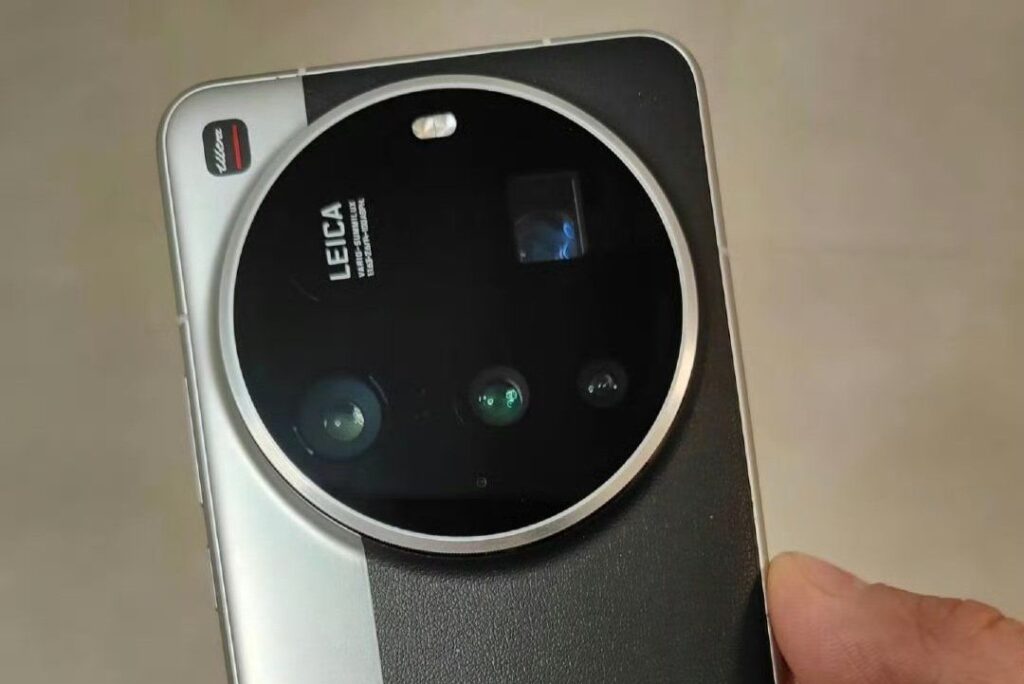
The Xiaomi 15 Ultra has yet to be unveiled, but it recently had its internal design, telephoto shooter, and other camera details leaked. On the other hand, the Xiaomi 15 was announced with the Snapdragon 8 Elite, 6.36-inch LTPO OLED 120Hz display, 50MP triple cameras, HyperOS 2, and a large 5,400mAh battery pack with 90W wired and 50W wireless fast charging support. You can even click here to read our full review of the Xiaomi 15, which is expected to launch in India around March 2025.

2. Xiaomi 15 Civi?

Xiaomi 14 Civi
Xiaomi 14 Civi

Last year, Xiaomi unveiled the Xiaomi 14 Civi in India. While there is no official word regarding the Xiaomi 15 Civi, the brand might unveil a successor in the middle of 2025. A recent rumor hinted that the company is working on a new Xiaomi Civi series smartphone, which could be powered by the MediaTek Dimensity 9400. This could also be the Redmi K80 Ultra.

3. Redmi Note 14 Series

Redmi-Note-14-Pro-Plus
Redmi Note 14 Pro+

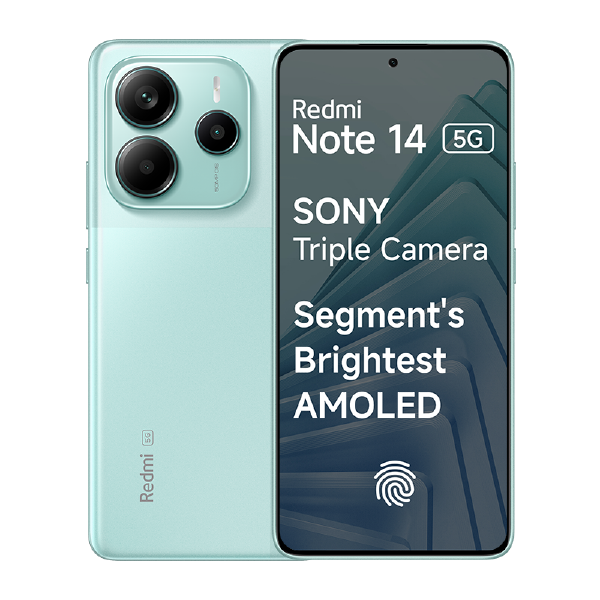
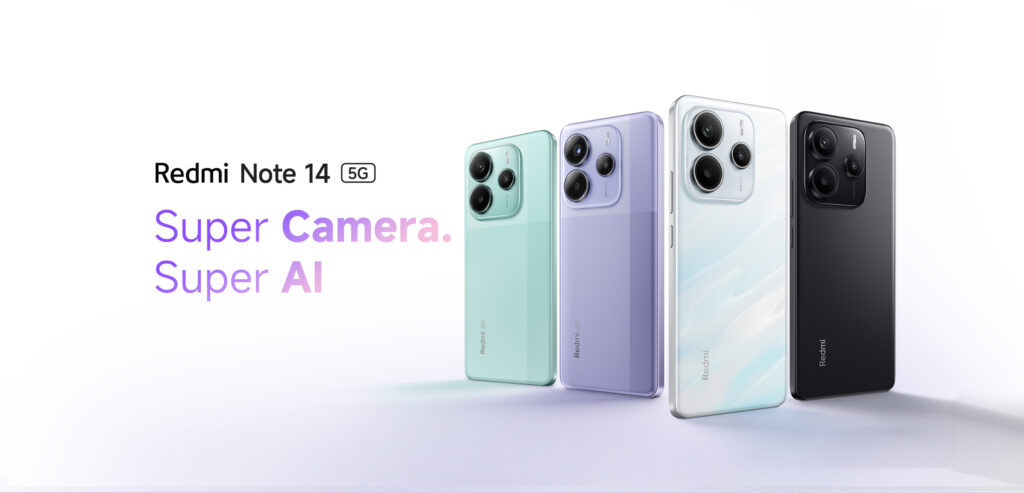
Xiaomi recently announced that the Redmi Note 14 series is set to launch in the Indian market soon. Based on what we know so far, Xiaomi plans to unveil the Redmi Note 14 series in December 2024, riding on the momentum of the festive season. In other words, it might hit store shelves by early January 2025. The Redmi Note 13 lineup was unveiled back in June 2024, so this also marks the first time since the pandemic that Xiaomi launched two Note series devices in the same year.

4. Redmi A4

Redmi-A4-5G-2
Redmi A4

Alongside the Redmi Note 14 series, the brand also confirmed the upcoming launch of the Redmi A4 in the Indian market. We covered a leak last month, which revealed its 8,499 INR price tag. This model is an affordable entry level handset, which offers 5G networking support thanks to the Snapdragon 4s Gen 2 chipset. Unfortunately, an official launch date is still unclear but its Indian release should be right around the corner.

5. Redmi 14

Redmi-14C-5G
Redmi 14C

The Redmi 14 series is another budget smartphone from Xiaomi that is expected to launch in India soon. The Redmi 14 4G appeared in the IMEI database with the model numbers “25028RN03L”, “25028RN03I”, “25028RN03Y” and “25028RN03A”. The letters at the end of these numbers indicate the region of launch, with the “I” hinting at an Indian release. Since the official launch date is still unknown, we can expect a 2025 release.

Teclast launches T60 Plus tablet with 12″ 90Hz display, Android 14, 8000mAh battery & more

Teclast has unveiled its latest Android tablet, the T60 Plus, a well-rounded device offering a large display, solid performance, and an affordable price tag. This release follows the earlier launch of the Teclast T60 earlier this year. Let’s check out its key specs.

Teclast T60 Plus

Teclast T60 Plus Specifications

The Teclast T60 Plus features a 12-inch IPS display with a 2000×1200 resolution and a 90Hz refresh rate. It comes with 330 nits of brightness, making it ideal for indoor use, and equips a 92% screen-to-body ratio for an immersive viewing experience, whether for work, streaming, or casual gaming. The tablet sports a slim 6.5mm bezel, enhancing its sleek and modern design.

Under the hood, the tablet is powered by MediaTek Helio G88 processor, a 12nm octa-core chipset featuring a 2x Cortex-A75 at 2.0GHz and 6x Cortex-A55 at 1.8GHz configuration. It comes with 6GB of RAM, which can be expanded by an additional 10GB using virtual memory. The tablet equips 128GB of internal storage, which is expandable up to 1TB via a microSD card.

Teclast T60 Plus

The T60 Plus runs on the latest Android 14, providing access to modern features. The tablet includes a 13MP rear autofocus camera and an 8MP front-facing shooter for photography and video calls. The cameras are ideal for casual photography, scanning documents, and online meetings.

The Teclast T60 Plus comes with an 8000mAh battery offering up to 10 hours of usage, dual 4G SIM support, Bluetooth 5.0, and WiFi (2.4GHz/5GHz). It equips GPS, Glonass, Galileo, and Beidou for navigation, while light, hall, and proximity sensors, along with a gyroscope, enhance gaming and app experiences. Additionally, it features a 3.5mm headphone jack for wired audio enthusiasts

The tablet sports an aluminum alloy vertical frame design, weighs about 610 grams, and measures approximately 282 x 178 x 8mm.

Teclast T60 Plus

Pricing & Availability

The Teclast T60 Plus is currently priced at $129.99 and it is now available on Aliexpress. It is also expected to be available on Amazon soon.

In other tablet news, Acer recently launched the Iconia iM9-12M and iM10-22 tablets in India, with prices starting at Rs. 11,990. Additionally, Amazon introduced the Fire HD 8 (2024) tablet, featuring AI capabilities, starting at just $54.99.

Vivo S20 processor revealed via benchmark

After the X200 series flagships, Vivo is set to launch its mid-range S20 series smartphones in China. We are expecting two models, the Vivo S20 and S20 Pro, by the end of this month. Ahead of the launch, the vanilla model got its performance tested on the Geekbench benchmarking platform. 

Here, the device carrying the model number V2429A achieved a score of 1222 and 3417 in the single-core and multi-core tests respectively.  It features a processor with a prime core running at 2.63 GHz, three mid-cores at 2.40 GHz, and four efficiency cores at 1.8 GHz.

Vivo S20: What can you expect?

Based on these specs, we believe the device is powered by the Qualcomm Snapdragon 7 Gen 3, paired with 16GB of RAM. And it runs on the latest Android 15 operating system.

The model number also aligns with previous leaks from China’s 3C and TENAA certification databases. These databases further hinted at a range of configurations for the S20, including 8GB, 12GB, and a hefty 16GB of RAM, alongside storage options from 128GB to a staggering 1TB. 

Moreover, the phone’s display is expected to be a large 6.67-inch 1.5K AMOLED panel. On the camera front, the S20 appears set to feature a 50MP main sensor alongside an 8MP secondary sensor on the back. The front will be home to a 50MP selfie camera.

The 3C certification reveals the battery will have a sizable 6365mAh capacity, which Vivo will likely market as a 6500mAh cell. This will be coupled with 90W wired fast charging. 

There seems to be no wireless charging support, but we may get an under-display fingerprint scanner for added security.

Vivo has not yet announced the launch date for the S20 series, but rumors suggest it might debut on November 28, 2024. Meanwhile, Oppo’s Reno 13 series, set to compete directly with the S20 series, is scheduled to launch on November 25. This makes Vivo’s launch likely to follow soon after.

(via)

Red Magic 10 Pro: Ultimate Gaming Smartphone with 144Hz Display and Liquid Cooling

Red Magic 10 Pro is a cutting-edge gaming smartphone that blends speed, power, and innovation, setting a new standard in mobile gaming technology. Built for those who demand nothing less than excellence, this device offers an exceptional gaming and multitasking experience. It is available now at Geekwills for a starting price of $899.

Stunning Design and Display

The Red Magic 10 Pro stands out with its sleek design, available in Black and Transparent finishes. Its 6.85-inch AMOLED Full HD+ display is designed to deliver vibrant visuals, offering a 144Hz screen refresh rate and an impressive 960Hz touch sampling rate for ultra-smooth performance. With 2000 nits peak brightness, 10-bit color depth, and 100% DCI-P3 color gamut, you’ll enjoy rich colors and excellent clarity, whether gaming, watching videos, or browsing.

Unmatched Performance

Powered by the Qualcomm Snapdragon 8 Elite Octa-core processor clocked at 4.32GHz and paired with the Adreno 830 GPU, the Red Magic 10 Pro ensures lightning-fast performance. With 12GB of LPDDR5X RAM and up to 512GB of UFS 4.0 Pro storage, you’ll have the power and space for all your apps, games, and media. The device runs on Red Magic OS 10.0, a gaming-optimized custom UX designed for superior performance and seamless multitasking.

Advanced Gaming Features

The Red Magic 10 Pro is built for gamers. It features dual 520Hz touch-sensitive shoulder keys for precise controls and supports multi-finger actions. ICE 13.5 Liquid-Cooling Technology ensures the device stays cool during long gaming sessions, thanks to its advanced 10-layer cooling system and high-speed fan running at 22,000 rpm.

Exceptional Camera System

This smartphone features a triple rear camera setup with two 50MP sensors for standard and ultra-wide shots, plus a 2MP macro lens. A 16MP under-display front camera captures stunning selfies and supports clear video calls.

Long Battery Life with Fast Charging

Equipped with a robust 6500mAh battery, the Red Magic 10 Pro provides extended gaming and usage time. Its 80W fast charging capability powers the device from 0% to 100% in just 35 minutes.

Key Specs:

  • Processor: Snapdragon 8 Elite (4.32GHz), Adreno 830 GPU
  • Display: 6.85-inch AMOLED FHD+, 144Hz refresh rate, 2000 nits brightness
  • Storage: 12GB RAM + 256GB/512GB storage
  • Cameras: 50MP (main) + 50MP (ultrawide) + 2MP (macro); 16MP front
  • Cooling: ICE 13.5 liquid-cooling with 10 layers and high-speed fan
  • Battery: 6500mAh, 80W fast charging
  • Gaming Features: 520Hz shoulder keys, Red Magic OS 10.0
  • Audio: Dual stereo speakers, 96kHz lossless audio

The Red Magic 10 Pro is the ultimate gaming smartphone, combining top-tier hardware with innovative features. Whether you’re a hardcore gamer or a multitasking professional, this device is designed to deliver an unmatched mobile experience.

Grab Realme Narzo N65 5G with 6GB RAM at the discounted price of Rs 10,998

Realme Narzo N65 5G with 128GB storage and 6GB RAM is on sale for the lowest price of Rs 10,998 via Amazon India. The users can apply a Rs 1500 discount coupon on the product page, and the same will reflect while doing checkout. There’s also an additional discount on some bank cards, including Amazon ICICI Bank Credit Card and others.

Realme Narzo N65 5G Specifications and Features

Launched early this year, the Realme Narzo N65 5G is an affordable entry-level smartphone featuring a 6.67-inch IPS LCD with 720 x 1604 pixels resolution and 500 nits brightness. It is powered with MediaTek Dimensity 6300 SoC along with Mali-G57 MC2. The smartphone is available in two storage variants, including 128GB storage and 4/6GB RAM options.

In the camera segment, the smartphone hosts a 50MP primary sensor and other auxiliary lenses. On the front, there’s an 8MP primary sensor for selfies and video calling. Realme Narzo N65 5G bundles WiFi 802.11 a/b/g/n/ac, Bluetooth 5.3, GPS, and USB Type-C. A more accessible side mounted fingerprint sensor is present along with other sensors like proximity, gyro, and compass.

It bundles a 5000mAh battery with 15W fast charging support. The smartphone is up for grabs in Amber Gold and Deep Green color options.

Please Note: When you buy something using the links in our articles, we may earn a small commission at no cost to you.

Xiaomi Magnetic Wireless Charger 30W: Fast Charging, Strong Magnetic Adsorption

Xiaomi Magnetic Wireless Charger 30W is a cutting-edge accessory designed to provide fast and convenient charging for both Xiaomi and Apple devices. Its strong magnetic adsorption and multi-protection features ensure a seamless charging experience. You can now get this magnetic charger for $35.99 only at Geekwills.

This wireless charger delivers a peak power of up to 30W, making it ideal for users with the latest Xiaomi devices such as the Xiaomi 15 and Xiaomi 15 Pro. Other Xiaomi phones, like the Xiaomi 14 or Redmi K60 series, can enjoy speeds of up to 10W. For Apple users, the charger supports MagSafe devices like iPhones, with a peak output of 7.5W, ensuring compatibility without compromising on performance.

The Xiaomi Magnetic Wireless Charger features automatic magnet adsorption. This strong magnetic alignment ensures your phone stays securely in place during charging, even with minor movements. This is particularly beneficial for users who multitask or use their phones while charging.

The charger works with a wide range of devices, including MagSafe-enabled iPhones such as the iPhone 16, iPhone 15, and iPhone 14 series. It is also optimized for Xiaomi devices like the Xiaomi 15, Xiaomi 14 Pro, Mix Fold series, Redmi K60, and many more. Its versatility makes it a great choice for households with mixed devices.

Safety is a priority with the Xiaomi Magnetic Wireless Charger. It is equipped with multiple protection mechanisms, such as FOD detection to avoid charging foreign objects, overcurrent, and overvoltage protection to safeguard your device from electrical issues, and temperature and electromagnetic field protection to ensure safe operation under various conditions.

Key Specs:

  • Model: Xiaomi Magnetic 30W Wireless Charger
  • Charging Protocol: Qi protocol
  • Output Levels: 30W / 15W / 10W / 7.5W
  • Input: 5V-20V⎓3.25A Max
  • Device Compatibility: Xiaomi and Apple MagSafe-supported phones
  • Safety Features: Overcurrent, overvoltage, FOD detection, temperature protection, and more

With its sleek design, powerful performance, and enhanced safety, the Xiaomi Magnetic Wireless Charger 30W is a reliable solution for effortless wireless charging.

Realme GT 7 Pro pre-orders now open in India

Realme is set to launch its GT 7 Pro flagship in India on November 18th. However, those who want to secure their units early can pre-order the smartphone starting November 18th. That’s roughly a week before the phone’s official international launch.

Consumers can pre-book the phone through either Amazon or authorized offline retailers.  Those opting for online pre-orders via Amazon will need to put down a deposit of INR 1,000 (around USD 12). 

This initial payment comes bundled with several attractive incentives, including a bank discount of INR 3,000 (USD 36), 12 months of no-cost equated monthly installments (EMI), one year of screen damage insurance, and an additional year of extended warranty.  

Offline retailers are also participating in the pre-order program, offering the same package of benefits for a slightly higher deposit of INR 2,000 (USD 24). Additionally, these stores will provide customers with the option to spread the cost of the phone over a 24-month installment plan.

To note, pre-orders for the Realme GT 7 Pro kick off at 12:00 PM local time on November 18th. If you’re considering placing an order, here’s a quick overview of its specifications.

Specifications

The GT 7 Pro features a 6.78-inch LTPO display with a 120Hz refresh rate, 2000 nits peak brightness, and support for HDR and Dolby Vision.

Powered by the Snapdragon 8 Elite chip, it efficiently manages thermals with a 11480mm² dual VC cooling system. The phone’s battery life is equally good, as the device is stuffed with a 6500mAh battery. Yet, the phone has a thickness of just 8.55mm.

With 120W fast charging, the battery reaches 50% in just 14 minutes. The rear camera setup includes a 50MP main lens, an 8MP ultrawide lens, and a 50MP periscope telephoto lens, while the front features a 16MP selfie camera.

(Source)

Upcoming Smartphones: ROG Phone 9, Redmi A4 5G, and More

With the announcement of the latest flagship chips, phones utilizing them started debuting a few weeks back. More such devices are expected to launch in the coming weeks.

Three brands have confirmed the announcement of new smartphones next week. There will be four launches and two of them will be from the same brand for different markets.

Firstly, Asus will take wraps off its next-gen gaming smartphone. Whereas Xiaomi will unveil its most affordable 5G smartphone to date in India.

Finally, Vivo will bring its recently released X200 series to Malaysia and a budget model to India.

Let’s take a look at these products one by one.

Upcoming Smartphones Next Week

1. ROG Phone 9

Asus ROG Phone 9 Renders

The ASUS ROG Phone 9 is scheduled to launch on November 19 (Tuesday). Like the previous generation, two devices are expected, namely ROG Phone 9 and ROG Phone 9 Pro.

Both handsets will be powered by Qualcomm Snapdragon 8 Elite. Similar to their predecessors, they will have a minimal design for gaming smartphones.

The vanilla model is tipped to arrive with a 6.78-inch FHD+ 165Hz OLED display, a 50MP (wide) + 13MP (ultrawide) + 5MP (macro) triple camera setup, a 32MP selfie camera, a 5,800mAh battery, and 65W charging support.

2. Vivo X200 Series

Vivo X200 Series

The Vivo X200 series is going global starting November 19 (Tuesday). Malaysia will be the first market to receive it.

The lineup will include two devices, such as Vivo X200 and Vivo X200 Pro. The smaller Vivo X200 Pro Mini will not be making its way outside mainland China.

The phones come with a MediaTek Dimensity 9400 chip, Zeiss optics, a 120Hz LTPO OLED display, an IP69 rating (dust and water resistance), and 90W charging support. Both feature a 50MP primary camera, a 50MP ultrawide unit with autofocus, and a 32MP selfie camera. 

However, the pro has a 200MP 3.7x periscope camera as opposed to a 50MP 3x unit on the standard model. Additionally, the pro arrives with 30W wireless charging support, a USB 3.2 port, and an ultrasonic fingerprint sensor.

3. Redmi A4 5G

Redmi A4 5G

The Redmi A4 5G is set to go official in India on November 20 (Wednesday). It is anticipated to change the landscape of affordable 5G smartphones in the country.

The handset will be powered by a Qualcomm Snapdragon 4s Gen 2 chip. It will feature a circular camera module, a glass back, and a flat frame.

The device will come with a 6.88-inch 120Hz display, a 50MP main camera, a side-mounted fingerprint sensor, and a 5,160mAh battery. The base 4GB + 128GB variant of the product is tipped to cost ₹8,499 (including offers).

4. Vivo Y300

Vivo Y300 5G

The Vivo Y300 will be officially unveiled in India on November 21 (Thursday). The handset will succeed the Y200 from earlier this year.

Talking about specs, the device will house a Qualcomm Snapdragon 4 Gen 2 chip and a 5,000mAh battery. It will sport a 50MP primary camera, a 32MP selfie camera, and a 6.7-inch 120Hz OLED display,

Lastly, the product will be available in Titanium Silver, Dynamic Black, and Emerald Green color options.

One UI 7’s beta might be buggier than expected

Samsung‘s software updates have become a model of consistency in the Android world. Regular releases, and a smooth beta program – it’s been a winning formula for the tech giant. But the upcoming One UI 7, based on Android 15, might be a bumpier ride than usual.

According to reliable tipster Ice Universe, the first public beta of One UI 7 could be unusually buggy, as even the latest internal test builds reportedly include newly introduced animation bugs. It looks like Samsung is facing challenges in implementing the revamped animations expected in One UI 7.

For those not aware, unlike previous versions that focused on minor tweaks and refinements, One UI 7 is a complete redesign of Samsung’s Android skin. From a revamped animation system to a whole new look for notifications and quick settings – not to mention app icons and more – it’s a major undertaking.

A result of big changes 

The extensive changes in One UI 7 likely mean a demanding workload for developers. Users excited to try the new features might find the beta unstable. However, that’s precisely the point. 

Beta testing is crucial for Samsung to gather feedback from developers and experienced users to refine the experience before the stable version reaches the public. Early access isn’t just about previewing features; it’s a critical step in identifying and fixing bugs ahead of a broader rollout.

Ice Universe acknowledges that Samsung’s software development may have “fallen behind” in recent years. However, he seems optimistic about the company’s ability to address these issues. 

The first public beta of One UI 7 is rumored to arrive as early as next week. Users can then test the new features and provide valuable feedback to Samsung, helping them iron out these bugs before the final stable release arrives alongside the Galaxy S25 in 2025.

Oppo Find X8 Series Global Launch: Where & When to Watch Event Live

Oppo is set to unveil its latest flagship smartphones, the Find X8 and Find X8 Pro, globally on November 21st at 5 AM UTC. The event will be live-streamed and will showcase the devices alongside the latest version of ColorOS 15.

Oppo-Find-X8-Pro-1
Oppo Find X8 Pro

You can watch the live stream on YouTube by following this link. Oppo’s global launch of the Find X8 and Find X8 Pro promises premium features across display, performance, and photography.

Oppo Find X8 and X8 Pro: What to expect

The specifications and features of the Find X8 series devices coming to the global market are expected to be largely similar to the Chinese models that made their debut a while back. This means that we can expect the Find X8 to offer a 6.59-inch 1.5K AMOLED flat display, while the Find X8 Pro will feature a 6.8-inch LTPO micro-curved AMOLED screen, both supporting 120Hz adaptive refresh rates, up to 4500 nits brightness, and durable Oppo Crystal Shield glass.

Oppo Find X8 Pro

Both smartphones are expected to be powered by MediaTek’s Dimensity 9400 SoC, paired with up to 16GB LPDDR5X RAM and 1TB UFS 4.0 storage. They will debut the world’s first dual periscope camera system, with the X8 featuring a triple 50MP setup and the Pro model adding dual 50MP periscope lenses for 3x and 6x optical zoom. They are expected to offer AI-powered Telescope Zoom, the HyperTone Image Engine, and a Hasselblad partnership to ensure professional-grade photography and videography, including Dolby Vision and 12-bit processing.

These phones are expected to offer large batteries (5630mAh for X8, 5910mAh for X8 Pro) and support 80W wired, 50W wireless, and 10W reverse wireless charging. In China, the devices start from $600, however, we can expect them to cost a bit more in the global market.

Amazon Fire TV Omni Mini-LED Series Debuts Alongside Soundbar Plus and Updated 4-Series TVs

Amazon has expanded its Fire TV lineup with the Fire TV Omni Mini-LED Series, Fire TV Soundbar Plus Series, and an updated Fire TV 4-Series. These new additions aim to improve picture quality, sound, and user experience.

Amazon Fire TV Omni Mini-LED Series features

The Fire TV Omni Mini-LED Series features a QLED Mini-LED display available in 55 inch, 65 inch, 75 inch, and 85 inch sizes. It offers up to 1,400 nits of peak brightness and 1,344 dimming zones, ensuring vibrant colors, deeper blacks, and better contrast. It supports Dolby Vision IQ and HDR 10+ Adaptive for enhanced visuals. The series includes Intelligent Picture Technology, which uses AI to adjust picture settings based on content, and a built-in light and color sensor that adapts brightness and color temperature to ambient lighting.

The Fire TV Ambient Experience lets the TV display interactive artwork and useful information when idle. A radar sensor adds movement-responsive visuals like koi fish or butterflies. The collection includes over 2,000 images, with regular updates. The series also features Dolby Atmos sound, built-in speakers, and subwoofers for better audio.

Amazon Fire TV Omni Mini-LED

Gaming-specific features include AMD FreeSync Premium Pro, a 144 Hz refresh rate, Variable Refresh Rate, and Auto Low Latency Mode, enhancing gaming performance. Connectivity options include Wi-Fi 6E and Bluetooth 5.2 for smoother streaming and lower latency. Accessibility features, such as Dual Audio support for ASHA-enabled hearing aids, are also included.

Privacy protections for the Fire TV Omni Mini-LED Series and Alexa include a microphone off switch that electronically disables microphones. Users can manage their voice recordings via the Alexa app, with options to view, listen to, or delete them. The TV’s I/O ports include 2 HDMI 2.0, 1 HDMI eARC 2.1, 1 HDMI 2.1, USB, Optical, Ethernet, IR Emitter, Headphone, and Cable/Antenna inputs.

Amazon Fire TV 4-Series features

Amazon Fire TV 4-Series

The updated Fire TV 4-Series comes in 43 inch, 50 inch, and 55 inch sizes with an ultra-slim bezel. It supports 4K UHD, HDR10, HLG, and Dolby Digital Sound for a high-quality viewing experience. It has two 8W speakers, along with multiple ports like 3 x HDMI 2.0, 1 x HDMI 2.1 with eARC, 1 x Ethernet port, 1 x USB, Cable, IR Emitter, and Headphones. It runs on FireOS, offering features like Fire TV Search, smart home control and Ask Alexa.

Fire TV Soundbar Plus Series features

Amazon Fire TV Soundbar Plus Series

The Fire TV Soundbar Plus is a 3.1-channel soundbar supporting Dolby Atmos, DTS, and DTS TruVolume. It offers adjustable settings like a Dialogue Enhancer and four listening modes: Movie, Music, Sports, and Night. It can be used alone or paired with wireless subwoofers and surround sound speakers for enhanced audio. It has multiple connectivity options like HDMI, Optical, Bluetooth, and USB.

Pricing & availabiltiy

The Fire TV Omni Mini-LED Series is priced at USD 819.99 for the 55 inch model, USD 1,089.99 for the 65 inch model, USD 1,499.99 for the 75 inch model, and USD 2,099.99 for the 85 inch model.

The Fire TV 4-Series is priced at USD 329.99 for the 43 inch model, USD 399.99 (Rs. 33,770 approx.) for the 50 inch model, and USD 459.99 for the 55 inch model. The Amazon Fire TV Soundbar Plus is priced at USD 249.99.

(Source)

Here’s how to get Nothing OS 3.0 beta on your Nothing phone

Nothing OS 3.0 beta

Nothing OS is one of the best Android skins. It’s minimalistic yet feature-rich with plenty of customizations, and with the latest Nothing OS 3.0 update, it’s getting a lot better.

The Nothing OS 3.0 beta is already out for a few devices, allowing users to get an early taste of the software ahead of the public release. If you also want to join the beta party, follow the steps mentioned below.

Steps to install Nothing OS 3.0 beta

Nothing OS 3.0 open beta (Android 15)

Before you follow the steps, ensure that Nothing OS 3.0 beta is available for your device and region.

Step 1: Ensure that your device is running Nothing OS 2.6 and has the following build number:

  • Nothing Phone (2): Pong-U2.6-241016-1700
  • Nothing Phone (2a): Pacman-U2.6-240828_1906

If it isn’t already, go to Settings > System > System Update and install the available update.

Step 2: Download this APK and install it on your phone.

Step 3: Navigate to Settings > System > Update to Beta version and tap Check for new version.

Step 4: Tap Download Package. If you don’t see this option, this means no beta version is available for your device right now. Check back again later.

Step 5: Once the package download is finished, tap Install Update.

Be sure to back up your device before installing the beta update to prevent data loss. Nothing says your device may experience temporary overheating and increased power consumption but will quickly return to normal, so there is no need to worry if that happens.

Also Read: What’s new in Nothing OS 3.0?

How to rollback to Nothing OS 2.6?

Beta software may have critical bugs. If those are unbearable, rolling back to a previous stable version makes a lot of sense.

[Note: Remember to back up your important data before downgrading to a previous software version.]

To roll back to Nothing OS 2.6, download the required rollback package from the Nothing community. Then, go to Settings > System > Update to Beta version. Tap Import file, choose the rollback package, and install it.

Here’s the direct download link to rollback packages:

What’s new in Nothing OS 3.0?

Nothing OS 3.0 introduces Shared Widgets. As the name suggests, you can share widgets with others or see others’ widgets on your home screen and interact through reactions.

The lock screen is now more customizable than before, allowing users to choose from multiple watch faces. You can add more widgets to the lock screen by toggling the Expand widget area.

The latest Nothing OS 3.0 software also improves the Camera app. The app launch speed has improved greatly, and the processing time for HDR and portrait effects is up to 25% faster. The low-light performance also improves.

Nothing has added new fingerprint and charging animations with signature dot matrix styling. The OS 3.0 enables predictive back animations for supported apps. There’s also the AI-powered smart drawer that automatically categorizes apps into folders.

During the Nothing OS 3.0 launch, the brand announced that the new software has the much-requested Nothing Gallery app. However, it’s notably absent in the beta update. This could indicate that it’s still under development and might be a part of the stable release.

Base Galaxy S25 spotted with ‘Snapdragon 8 Elite for Galaxy’ on Geekbench, but performance disappoints

Samsung is gearing up for the launch of its Galaxy S25 series, expected to debut sometime in January 2025. Among the upcoming models, the base Galaxy S25 has recently made an appearance on Geekbench, revealing some intriguing details about its hardware and performance.

Galaxy S25 Geekbench listing details

The Geekbench listing features the Galaxy S25 with the model number “SM-S931N,” likely for the Korean market. It is powered by the customized “Snapdragon 8 Elite for Galaxy” chipset, confirmed by its higher clock speed of 4.47 GHz, compared to the standard Snapdragon 8 Elite‘s 4.32 GHz. This specialized version of the chipset has previously been seen exclusively in Samsung flagships. The tested device packs 12 GB of RAM.

However, the performance scores are somewhat disappointing. The Galaxy S25 scores 2481 in single-core and 8658 in multi-core tests, significantly lower than most of the Snapdragon 8 Elite devices released or listed on the platform so far. For context, the OnePlus 13 and iQOO 13 routinely score over 3100 and 10,000 on the same tests, showcasing the disappointing performance of Samsung’s custom-tuned chip, at least on the test.

Potential reasons for the underwhelming performance

Could the underwhelming performance be attributed to a smaller cooling system on the base Galaxy S25 compared to the larger, performance-centric flagships? Or is Samsung simply adopting a more conservative approach to performance?

At this stage, there isn’t enough information to draw firm conclusions. However, it’s worth noting that Samsung’s ‘For Galaxy’ chipsets have historically scored lower than their standard Snapdragon 8-series counterparts. This difference may stem from Samsung’s focus on prioritizing efficiency over raw performance.

While the listing suggests the adoption of the Snapdragon 8 Elite for the Korean market, there’s good news for users in Europe and India as well. Prolific leaker Ice Universe has reiterated that Samsung plans to use the Snapdragon chipset across the entire Galaxy S25 series in all markets, similar to the Galaxy S23 series. Although this is still a rumor, there is a compelling reason why it seems plausible.

Tipster reiterates Entire Galaxy S25 Series will adopt Snapdragon 8 Elite, and here’s why

Samsung‘s Galaxy S series has long been part of Samsung’s dial-sourcing strategy, featuring both Snapdragon and Exynos chipsets, depending on regional markets.

However, a new tip suggests that the Galaxy S25 series might break this tradition once again after the Galaxy S23 series. Renowned tipster Ice Universe reiterates his previous claim saying that Samsung will power all models of the Galaxy S25 lineup with Qualcomm’s Snapdragon 8 Elite chipset, abandoning the Exynos 2500 for this generation.

This isn’t the first speculation about Samsung’s chip-sourcing strategy for its upcoming flagship. Earlier rumors hinted at Samsung using a mix of Snapdragon and Exynos chipsets or even adopting MediaTek flagship for select models. However, Ice Universe’s claim reinforces the possibility of an all-Snapdragon lineup, marking a significant shift for Samsung’s flagship series.

Snapdragon 8 Elite over Exynos 2500

Samsung Foundry’s 3nm process, which the Exynos 2500 (intended to power the Galaxy S25 and S25+) relies on, currently has a yield rate of around 20%. For context, the semiconductor yield represents the percentage of chips successfully produced relative to the maximum chip count on a wafer; it inversely correlates with the defective rate. To make the fabrication process economically viable, a yield rate of at least 70% is typically required. In comparison, TSMC’s 3nm process, used for the Snapdragon 8 Elite, reportedly achieves a yield rate exceeding 80%.

Qualcomm-Snapdragon-8-Elite-launched-specs-1

Such low yields make production costly and unsustainable, possibly influencing Samsung’s decision to go all-in with Snapdragon for the Galaxy S25 series. Significant in context, Samsung is also exploring possibilities to outsource Exynos’s production to TSMC, like most of the fabless manufacturers including Qualcomm and MediaTek.

While nothing is confirmed until the Galaxy S25 lineup officially launches, this rumored strategy could enhance user confidence in Samsung’s flagship devices. The series is expected to debut in January 2025, likely in the early weeks of the month.

(Source)

Digiera Magnetic Portable SSD Review: One Of The Best Ways to Add 1TB For Your iPhone/Android

Introduction

This might be the most elegant solution for creative work on an iPhone. (Picking up the phone, showing the SSD) But is it suitable for use exclusively as an iPhone’s external storage? What advantages does it have compared to conventional USB drives or portable SSDs? So, in the upcoming tests, I will compare this DIGIERA with my DIY solution.

Design

Compared to regular portable SSDs, the LSP2000M is very small. It’s also very light.

The material of glass and stainless steel frame makes it look more like a watch.

However, it would be cooler if it could display the remaining storage space. The bottom is labeled with the model and capacity. If you think 1TB is too small, DIGIERA also offers options up to 4TB, all using TLC NAND chips.

It can also be installed via magnetic if your phone case supports MagSafe. You can directly attach it and connect it to your phone. But if your phone case doesn’t support that, you can use the small kit included to achieve that.

Configuration

Before we get to the tests, let’s look at its configuration. It claims that this portable SSD uses Silicon Motion’s SM2320, a USB 3.2 Gen 2 Dual-Lane Portable SSD Controller Solution without a DRAM cache.

Compared to the conventional bridge chip + SSD controller solution, it is theoretically more power-efficient and can make the entire SSD smaller. This makes it more suitable for recording ProRes on the iPhone.

The NAND, according to the FLASH ID provided by MPTool, is a 128-layer NAND chip produced by YMTC.

Later we will use this Huawei MateBook X Pro and GEEKOM for testing.

To test the highest performance, I will also enable the write cache function in Windows. I will use the same cacheless SSD with 40Gbps and 10Gbps rate hard drive boxes for comparison.

We first tested the power consumption of these portable SSDs on the highest rate interfaces they support, followed by the more conventional 10Gbps and 5Gbps. Then we ran CrystalDiskMark to simulate high load power consumption.

You can see that DIGIERA’s single-chip solution has an excellent power consumption performance. If working on a common 5Gbps interface, the idle power consumption is less than 1W. When running CrystalDiskMark for performance testing, it fluctuates around 1.2W. On 10Gbps and 20Gbps interfaces, the idle power consumption is also low, and the power consumption during performance testing is slightly higher than 5Gbps, but it does not exceed 2W. However, the DIY solution we compared is not as environmentally friendly, among which the USB4 DIY solution in idle is higher than the DIGIERA in working, and the power consumption when measuring the speed on the 40Gbps interface is close to 7W.

Fortunately, for all the portable SSDs we compared, whether in idle or high load state, the power supply demand did not exceed the upper limit recommended by Apple.

But there is one thing to note, the current meter we used is not very accurate. If these portable SSDs have shorter peak power consumption, we will not be able to detect it.

Then in use, it is possible to see dropping or SSD not being recognized.

Performance

Here we used CrystalDiskMark to test the peak performance under three usage rates (0%, 50%, 70%) and mixed read and write that represents real use. In the tests, everyone performed very well, basically running at the upper limit of the interface. And LSP2000M also reached the performance they claimed.

Now, it’s time to make it a bit more difficult. In this test, we will use HD True for full disk write to test whether these two devices can hold long-term continuous writing.

In the test, the full disk write performance of LSP2000M was unexpectedly good. It took 14 minutes to fill the entire SSD, and the speed was very stable throughout the process. The test on the 10gbps port was also very stable. Even if the iPhone 17 pro that will be released next year supports 8k 60 ProRes recording, this little guy can easily handle it.

The 40gbps plan was very eye-catching at the beginning, but after writing a large amount of data, the speed suddenly dropped to 300 to 400, and then even dropped to 200. This performance is obviously a bit behind LSP. And the temperature detected by CrystalDiskInfo makes me worry whether it can survive in this test.The performance of the 10gbps plan is very conventional, but like the 40Gbps plan, it will slow down after writing a certain amount of data.

Although I used an infrared camera to check the temperature during the test, the two portable SSDs had abnormal results due to the reflectivity of the material. Also, this test will write a large amount of data in a very short time, which most consumers will never do. The following are the real application scenarios.

Shooting ProRes

Now let’s go back to the real use, using the iPhone to record ProRes video. DIGIERA can be recognized in the file app, and you can watch the recorded video in the file, and there is no tearing or loss. The idle power consumption is similar to what we tested on the PC, and the power consumption in recording is lower than the previous test.

The 40GBPS and 10GBPS DIY solutions are the same as the DIGIERA era in terms of usage, The DIY plan can be recognized and can preview the clips. The power consumption is a bit higher. But it can’t be attached on the iPhone like DIGIERA.

Disadvantages

Finally, we have to face a problem, that is the compatibility problem that these USB3.2 Gen2 X2 products have. If your host has a USB 3.2 Gen2 X2 interface, then you are lucky. Your host can make DIGIERA run at the best state. If it only has a USB4 interface, it depends on the OEM. Because in the USB4 protocol, the USB3.2 Gen2 X2 protocol is optional.

After testing on the Mac Mini M1 and three other PCs, only this MateBook X Pro can run at 20Gbps. Other devices can only run at 10Gbps.

Summary

Now these are the tests we have done on the DIGIERA Meganetic Portable SSD.

Surprisingly, the Digiera SSD was decently stable for various scenario tests, and it can complete a large amount of data writing at the fastest speed throughout the process. And the ultra-high power efficiency can also make it better compatible with mobile devices. So if you are recording videos on iPhones, or need a powerful and stable portable SSD across devices and platforms, the Digiera Portable SSD will be one of the most convenient and portable choise.

Oppo Reno 13 and Reno 13 Pro surfaces in real-life image showing with iPhone inspired design

Oppo has opened pre-orders for the Reno 13 series in China. The lineup includes the Reno 13 and Reno 13 Pro, both set to launch on November 25 alongside the Oppo Pad 3.  

Although Oppo has started teasing the release, it has kept the phone designs under wraps. So far, only a few comparisons between the Reno 13 series and iPhones have surfaced, revealing parts of the design

But an X user has now posted real-life images of both the Reno 13 and Reno 13 Pro smartphones.

The two devices feature similar camera islands with cold-craved glass that clearly draws inspiration from the iPhone’s design. Additionally, both phones have chamfered edges. Posts on Weibo also reveal the front design of the phones, revealing slim bezels all around. 

Oppo Reno 13 Series Specifications

The standard Reno 13 is expected to feature a 6.59-inch 1.5K display with a 120Hz refresh rate. It will likely be powered by a MediaTek Dimensity chipset, though the exact model is still unclear.

The front will house a 50-megapixel selfie camera, while the rear will feature a triple-lens setup, led by a 50-megapixel primary sensor. And the device is expected to be powered by a large 5,600mAh battery.

Details on the Pro variant are less clear, but rumors suggest a similar flat design with a metal frame. The display is expected to be a larger 6.83-inch micro-quad-curved panel, offering the same 1.5K resolution and 120Hz refresh rate. 

Under the hood, the Reno 13 Pro is rumored to feature the more powerful MediaTek Dimensity 8350 SoC. The battery is also likely to be slightly larger at 5,900mAh, also supporting wired and wireless charging. 

The Pro variant’s camera system is rumored to include a 50-megapixel main sensor with OIS (Optical Image Stabilization), a 50-megapixel periscope telephoto lens for zoomed shots, and an 8-megapixel ultra-wide sensor. 

Both the Reno 13 and Reno 13 Pro are expected to run on ColorOS 15 and will offer improved durability with dust and water resistance.

Qubo Launches Q600 and Q1000 Smart Air Purifiers for Larger Homes

Qubo, a leading brand in smart home devices from the Hero Group, has introduced two new air purifiers, the Q600 and Q1000, specifically designed to address air quality concerns in larger homes. These devices are equipped with advanced features such as a 4-layer filtration system, long-lasting filters, and QSensAI technology for automatic adjustments.

Qubo Q1000 and Q600
Qubo Q1000 and Q600

Targeting Larger Spaces

The Q600 and Q1000 are designed to purify areas up to 600 sq. ft. and 1000 sq. ft., respectively, making them ideal for spacious living rooms, galleries, and foyers. This addresses a common challenge in larger homes, where multiple air purifiers are often required to maintain clean air.

Key Features and Benefits

  • 4-Layer Filtration System: The advanced filtration system effectively removes 99.99% of harmful particles, including PM2.5, PM10, pet dander, pollen, and even ultra-fine particles as small as PM0.1.
  • Long-Lasting Filters: The filters are designed to last up to 15,000 hours, reducing the need for frequent replacements and minimizing maintenance costs.
  • QSensAI Technology: This intelligent feature automatically adjusts fan speed and filtration intensity based on real-time air quality readings, optimizing performance and energy efficiency.
  • Smart App Control: The Qubo app allows users to monitor air quality, receive filter replacement notifications, and control the devices remotely.
  • Voice Assistant Compatibility: The devices are compatible with popular voice assistants like Alexa and Google Assistant, enabling hands-free control.

Pricing and Availability

The Qubo Q600 and Q1000 are priced competitively at Rs. 24,990 and Rs. 29,990, respectively. However, the brand is currently selling them for just Rs. 13,990 and Rs. 18,990, respectively. They are available for purchase on the Qubo website and popular online marketplaces like Amazon, Flipkart, Blinkit, and Zepto.

Are Chinese Flagship Phones a Good Buy in India? Pros and Cons Explained

Chinese smartphone brands like Xiaomi, Oppo, and OnePlus have been dominating the smartphone market in India. These aren’t restricted to just affordable models, but even the higher end flagship phones as well. They often come packed with high-end features at competitive prices, giving stiff competition to veteran brands like Apple and Samsung. But are these Chinese flagship smartphones really worth buying in India? Here are all the Pros and Cons.

Xiaomi 15 Diamond Limited Edition

1. Competitive Pricing and Value for Money

One of the biggest advantages of Chinese flagship smartphones is their competitive pricing. Brands like Xiaomi and OnePlus are the best examples of this. From their entry into the Indian market, they have consistently offset the flagship pricing expectations. While they aren’t as aggressively affordable as before, these still offer impressive value.

The OnePlus 13 starts in China for under $700 but offers cutting edge hardware. The front has a tall 2K+ OLED display with a 120Hz refresh rate and 4500 nits of peak brightness. It is equipped with Qualcomm’s latest and greatest Snapdragon 8 Elite and features three 50MP flagship grade cameras on the back with Hasselblad tuning. You also get a massive 6,000mAh battery pack with 100W wired and 50W wireless fast charging. So it’s a complete package of top notch specs and features, despite costing less than even an iPhone 16 or Galaxy S24.

2. Cutting-Edge Features and Innovations

Chinese brands are known to be the first to adopt new technology, which are not proven in the market. These companies also push the envelope in features as well. Smartphones from China innovated in fast charging, advanced camera setups, high refresh rate displays, and more. Samsung is seen as one of the leaders for a premium Android experience but it still lags behind in charging speeds. This is something even Apple refuses to improve upon, and it gets worse considering how their latest $800 iPhone 16 still offers a 60Hz refresh rate.

3. Software Experience

Flagship smartphones from China are often feature packed not just in hardware, but also in the software side. However, the overall software experience can be a mixed bag. Every brand has their own spin on Android with unique custom skins which are heavily modified. In recent years, Oppo with its ColorOS has made massive improvements in its UI. But the stigma of Chinese Android UI’s being packed with bloatware still holds some ground.

Unlike Apple, Android users don’t get seamless continuity between different brands. So switching from Samsung’s One UI to Xiaomi’s MIUI can be more jarring than one would think, despite both platforms being on Android. One may prefer the former but might not like the look of the latter.

4. Privacy and Data Concerns

Another notable con is privacy concerns. Indian consumers hesitate to buy Chinese smartphones due to data privacy with the Indian government being wary of these brands as well. Military personnel were outright banned from using these devices as well in the past. There are constant reports and controversies regarding data collection, potential security risks, and much more. Finding concrete proof for any particular Chinese company isn’t easy, but this factor could be a deal breaker for privacy-conscious buyers.

Huawei confirms the launch date for Mate 70 series smartphones

Huawei has finally confirmed the launch date for its upcoming flagship Mate 70 series. In a surprise announcement during an interview at the 2024 Guangzhou Auto Show, Richard Yu, CEO of Huawei’s Consumer Business Group (CBG), revealed that the new phones will be unveiled on November 26th.

Interestingly, Huawei Mobile’s social media channels have not yet shared this date. However, with the CEO himself confirming it, there’s little room for doubt.

We are expecting the launch of at least four phones in the lineup – the base Mate 70, Mate 70 Pro, Mate 70 Pro+, and the high-end Mate 70 RS Ultimate.

All models will be the first to run natively on HarmonyOS Next, Huawei’s proprietary operating system, which is a complete departure from the Android Open Source Project (AOSP) base.  

Huawei Mate 70 series specifications

The hardware powering these devices is shrouded in some mystery. Reports suggest the smartphone will be powered by a new HiSilicon Kirin chip, tentatively named the Kirin 9100.

The chip is believed to be manufactured by SMIC on a 6nm process node and could offer performance comparable to the Qualcomm Snapdragon 8+ Gen 1. 

The Mate 70 series is expected to retain the iconic circular camera module, housing four camera sensors arranged in a square formation. However, the module might be integrated into a circular or elliptical island, adding a unique visual element. A render of the phone also surfaced online, although we are unsure about the leak’s accuracy. 

Following the trend of silicon-carbon batteries offering higher capacities, Huawei may adopt similar technology. Except for the standard model, the Mate 60 series included 6,000mAh batteries with 88W fast charging. 

The Mate 70 series could feature even larger batteries while maintaining 88W charging. The lineup is also expected to support 50W wireless charging and up to 20W reverse wireless charging.

Samsung Galaxy A26 design revealed in new render leak

An upcoming mid range Samsung smartphone has just been spotted in a fresh leak. A new set of CAD renders recently surfaced of the Galaxy A26, revealing its complete design from the front and back. So let’s have a look.

Samsung Galaxy A26 Renders

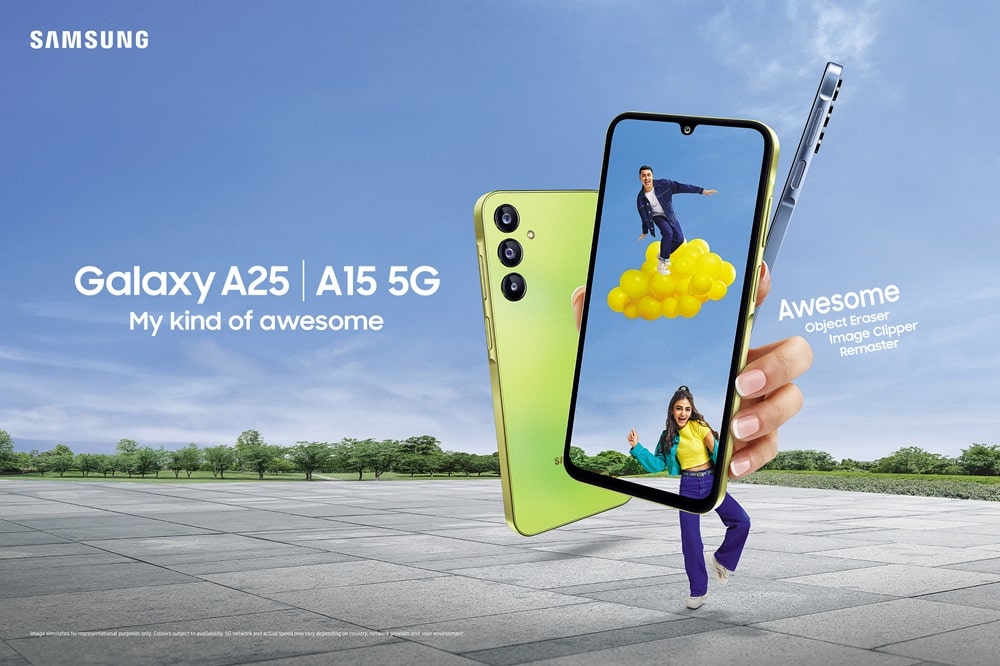
The South Korean tech giant’s Galaxy A26 was previously spotted on GeekBench with an Exynos 1280 processor. But now, the new mid range smartphone has its entire design revealed (Via AndroidHeadlines). The front has noticeable bezels and an Infinity-U screen. Meanwhile, the rear has a triple camera setup in an oval shaped module. The Galaxy A26 measures 164 x 77.5 x 7.7mm in dimensions, which makes it thinner than its predecessor. To recall, the Galaxy A25 was announced with a 161 x 76.5 x 8.3mm body.

Samsung Galaxy A26
Samsung Galaxy A26

Unfortunately, this was all the information that was shared in these leaked CAD renders. In the previous benchmark listing, the Samsung Galaxy A26 was spotted with 6GB of RAM, but there’s a chance that there might be an 8GB variant as well. The Galaxy A26 will run on the Android 15 OS based One UI 7 custom skin out of the box. While it’s still unclear, the Galaxy A26 could also arrive with 6 years of OS updates and 6 years of security updates.

The company has yet to make an official announcement regarding its launch. But rumours have hinted that the Galaxy A26 is expected to be introduced sometime in December 2024 or January 2025. It will likely have a similar price tag as the Galaxy A25 5G. Camera specifications are still at large, but the new phone could bring back the 50MP primary camera and an 8MP ultra wide angle lens on the rear. A large 5,000mAh battery should power this model as well, which could support 25W wired fast charging.