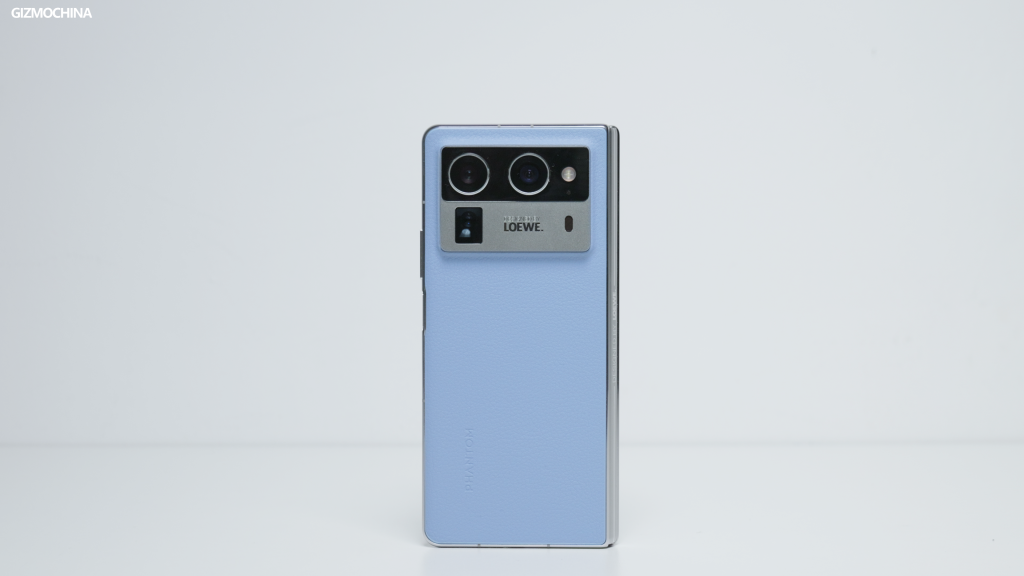
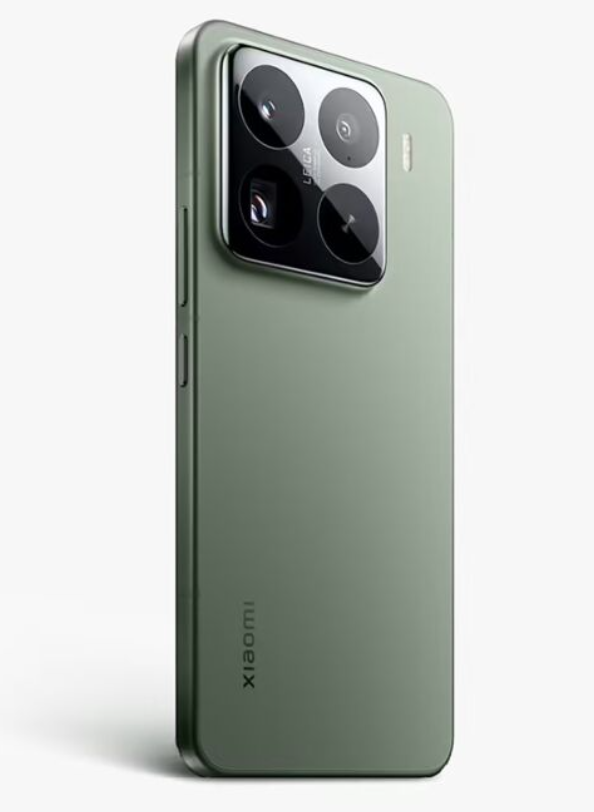
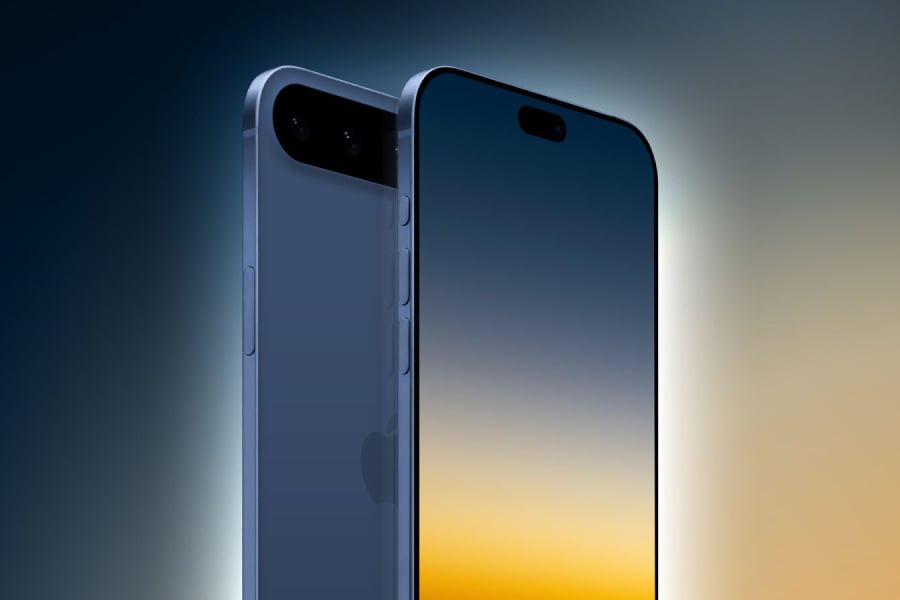
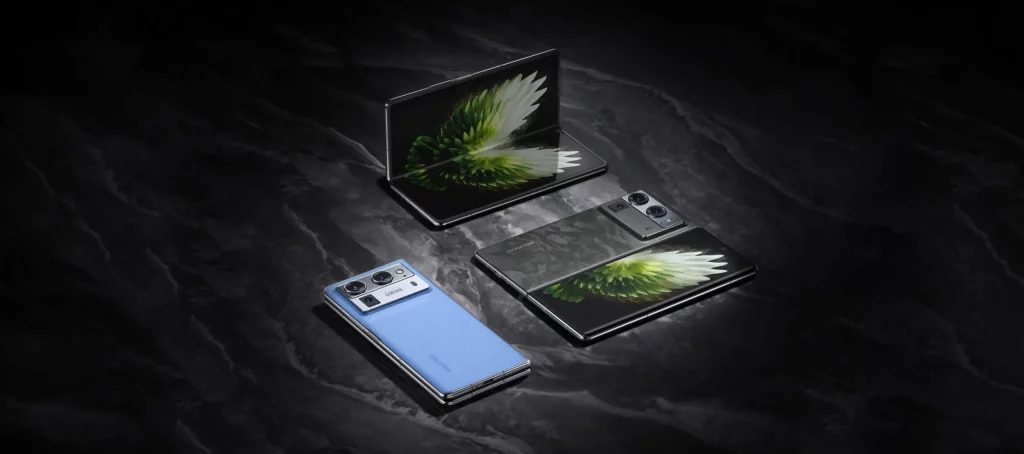
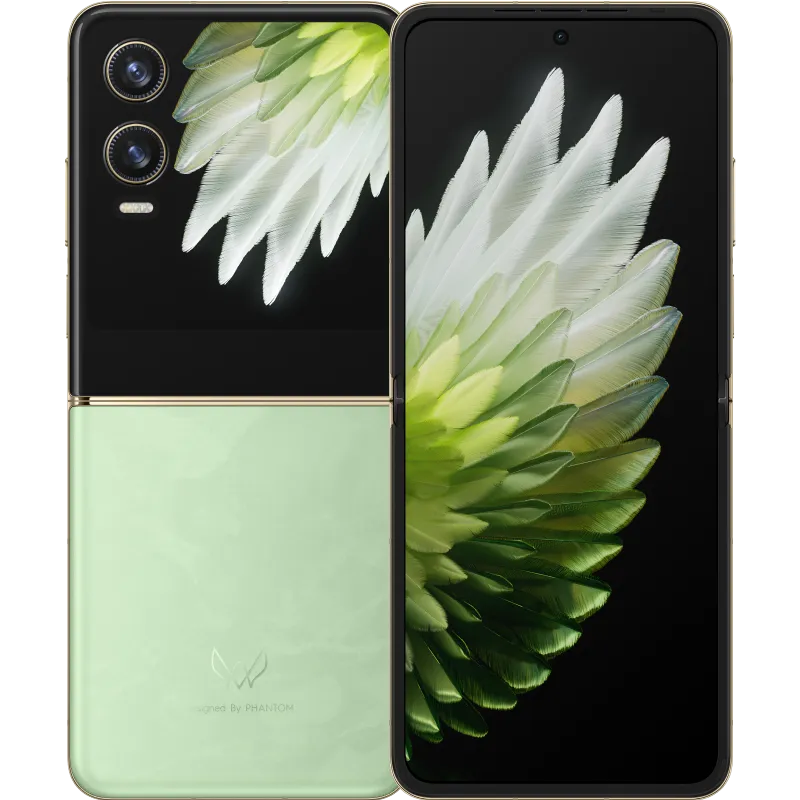
Huawei‘s tri-fold smartphone has garnered significant attention worldwide. However, Huawei may not remain the only company offering a tri-fold phone for long. A recent patent application from Xiaomi, published by China’s State Intellectual Property Office with application number 2022308530675, reveals the company’s development of a tri-fold device.
While the patent application doesn’t specify the model name, it does reveal the phone’s design. The device folds in a Z-shape, similar to the Huawei Mate XT.
As you can see from the image, the phone will have a horizontally placed rear camera island, which is narrower than that of the Xiaomi Mix Fold 4. The images also reveal that the tri-fold phone will include three cameras on the back. For context, the Mix Fold 4 packs a total of four cameras on the back.
Based on the images, it seems that the tri-fold from Xiaomi will be slightly thicker than the Huawei Mate XT. However, there’s still time for Xiaomi to improve the folding mechanism and thickness and come up with a slimmer tri-folding device.
Notably, this isn’t the first time we have heard about the company’s development of a tri-fold phone. There were patents from as far back as 2019 that revealed the company’s development of a tri-folding smartphone. However, the patent application is a completely different design with a dual inward folding mechanism. It seems like the company has been experimenting with different form factors and folding mechanisms for quite a while.
Back in August this year, Weibo tipster “Smart Pikachu” also talked about Xiaomi’s development of the new form factor. According to previous rumors, Xiaomi could launch this new phone sometime in 2025.
The Snapdragon 8 Gen 3 is Qualcomm’s most powerful smartphone chip until the 8 Gen 4 arrives later this year. It’s a 4nm octa-core chip built by TSMC using its cutting-edge advanced manufacturing technologies.
The chipset features one Cortex-X4 prime core, five Cortex-A720 performance cores, and two Cortex-A520 power efficiency cores. It has a 3.3 GHz maximum clock speed and features an Adreno 750 GPU for a smooth gaming experience. The Snapdragon 8 Gen 3 is already powering many high-end devices from Xiaomi, Samsung, OnePlus, Oppo, and other brands.
Here, I’ll show you how the Snapdragon 8 Gen 3 chip performs on popular benchmarks, such as AnTuTu, Geekbench, 3DMark, and more.
[Note: The following benchmark tests have been conducted on the OnePlus 12, powered by Snapdragon 8 Gen 3.]
Snapdragon 8 Gen 3 AnTuTu Score
AnTuTu is a popular benchmarking platform that runs a device through a series of tests that measure different aspects of its performance, such as CPU, GPU, memory, and UX. The combined score represents the overall performance of a device.
Here’s how the Snapdragon 8 Gen 3 chip performs on AnTuTu (V10):
AnTuTu V10
Result
CPU
3,70,873
GPU
7,50,494
Memory
3,50,215
UX
2,81,744
Total score
17,53,326
Snapdragon 8 Gen 3 Geekbench Score
Geekbench evaluates a device’s performance through a series of tests designed around practical scenarios. The tests include image processing, compression (text & image), speech recognition, and PDF rendering, to name a few.
Here’s how the Snapdragon 8 Gen 3 performs on Geekbench (V6):
Geekbench 6
Result
Single core
2,130
Multi core
6,175
The benchmarking platform outputs single-core and multi-core scores. The single-core score reflects the device’s performance when a single core is used, and the multi-core score is the performance when multiple cores are at work.
We also tested the device on Geekbench for its OpenCL and Vulkan performance, which are two different APIs used for handling graphics and computing tasks. Here’s how it performed:
Geekbench 6
Result
OpenCL score
14,362
Vulkan score
16,447
Snapdragon 8 Gen 3 3DMark Score
3DMark is a popular benchmarking platform for evaluating the graphics performance of a device. It has various benchmarking methods, such as Wild Life, Wild Life Extreme, Steel Nomad Light, and Solar Bay, to test various capabilities of a GPU.
Let’s look at the scores for Snapdragon 8 Gen 3:
3DMark
Score
Average FPS
3DMark Wild Life
Maxed Out
Maxed Out
3DMark Wild Life Extreme
4,494
26.91
3DMark Steel Nomad Light
1,683
12.47
3DMark Solar Bay
8,221
31.26
3DMark Wild Life: It uses a variety of non-ray traced workloads to examine the GPU capabilities.
3DMark Wild Life Extreme: It’s an enhanced version of the Wild Life test designed for high-performance devices.
3DMark Steel Nomad Light: It focuses on graphics tests that simulate game-like workloads without ray-tracing.
3DMark Solar Bay: This test evaluates how well a device can handle ray tracing workloads.
Snapdragon 8 Gen 3 Burnout Benchmark
The Burnout benchmark is helpful in determining how well a device can sustain performance under heavy workloads and how efficiently it utilizes power.
Here’s how Snapdragon 8 Gen 3 performs:
Burnout benchmark
Result
Performance under throttling
59.0%
Performance per watt
509
[Note: These benchmark results may vary for other Snapdragon 8 Gen 3 phones because of software optimizations and cooling systems.]
Snapdragon 8 Gen 3 Spec Sheet
SD 8 Gen 3 Specs
Release date
October 2023
Process node
4nm
Manufacturer
TSMC
Cores
8
CPU architecture
1 x Cortex-X4 @ 3.3 GHz 3 x Cortex-A720 @ 3.15 GHz 2 x Cortex-A720 @ 2.96 GHz 2 x Cortex-A520 @ 2.27 GHz
GPU
Adreno 750 770 MHz frequency Snapdragon Elite Gaming Hardware Accelerated Ray Tracing
NPU
Hexagon NPU
Camera
18-bit Spectra Triple ISP 200MP single camera 108MP camera with ZSL 64MP+36MP dual cameras with ZSL 36MP+36MP+36MP triple cameras with ZSL *ZSL = Zero Shutter Lag
Algolaser is giving incredible deals on its top-tier laser engravers, perfect for DIY enthusiasts and professionals alike. Whether you’re customizing projects or handling mass production, Algolaser’s powerful devices like the DIY Kit MK2, Alpha MK2, and Delta, offer precision and ease of use. With exclusive discounts, bonus gifts, and smart features, now is the perfect time to upgrade your engraving toolkit.
Exceptional Visual and Touch Experience Algo Laser engravers come equipped with a 3.5-inch IPS high-resolution touchscreen, providing users with an enhanced visual and touch experience. The AlgoOS system is seamlessly integrated into the device, ensuring smooth and intuitive interaction. The touchscreen allows for easy navigation, making the engraving process faster and more efficient.
Minimalist & Modern Interface Inspired by smartphone designs, the Algo Laser engraver’s interface is simple and user-friendly. All essential functions are easily accessible on the display, and the clean, straightforward layout eliminates the need for complex learning curves. This ensures that even first-time users can operate the engraver without hassle, enhancing overall productivity.
One-Touch Wi-Fi & Seamless Upgrades The engraver offers a smartphone-like Wi-Fi connection, allowing users to quickly connect to a network by simply entering their password. No complex computer codes are required. Additionally, the system supports faster OTA (over-the-air) updates, allowing users to update the firmware with one click, eliminating the need for manual downloads or computer-based updates.
Built-In Preset Specifications for Ease Algo Laser engravers come with preset parameters for a wide range of materials. Users can select their preferred material and desired engraving effect from preview images on the touchscreen, ensuring optimal results even for first-time users. This feature simplifies the engraving process, making it user-friendly and efficient.
Free Image Engraving and Cutting The Algo Graphics Engine (AGE) makes image processing effortless. Users can quickly transfer images to AlgoOS and start engraving or cutting without the need for professional software. The system processes 5MB images rapidly, engraving them in just one minute, offering both speed and precision.
One-Touch Batch Engraving The one-touch batch engraving feature is highly beneficial for users handling mass production or personalized customizations. Users can initiate batch production with a simple tap of the “Again” button, making the process more efficient and streamlined.
Recovery After Interruption AlgoOS provides a seamless solution to unexpected interruptions during engraving. The system allows users to resume their work from where they left off, ensuring that no work is lost and preventing any unnecessary delays.
Smart Accessory Integration The engraver smartly integrates with accessories such as an air pump, enclosure, and rotary chuck (ARC), automating and simplifying the production process. This integration enhances overall usability and speeds up workflow.
Built-In Resource Library Algo Laser engravers come with a rich selection of example materials, eliminating the need for additional software downloads or edits. This built-in resource library allows users to start engraving immediately, without the need for tedious effect testing.
Image Preview & Visual Engraving Before starting the engraving process, the touchscreen allows for an image and engraving area preview. This feature helps users avoid errors and increases accuracy, ensuring perfect results every time.
Multi-Language Support AlgoOS supports 17 languages, providing a seamless experience for users from all over the world. This makes the engraver suitable for a global audience, ensuring that language is never a barrier to productivity.
Safety and Machine Self-Check User safety and simplicity are top priorities for Algo Laser engravers. The system conducts a machine self-check within a minute, offering users a complete overview of the machine’s status, and ensuring it is ready for safe and optimal operation.
Overall, Algo Laser engravers combine cutting-edge technology with user-friendly features, making them an ideal choice for both professionals and hobbyists alike.
Redmi Note 14 Pro+ 5G is confirmed to come with 90W fast charging support. After the Note 14 5G and Note 14 Pro 5G models, the Redmi Note 14 Pro+ 5G now appears in the IMEI database. This device comes with 90W fast charging support. We see a downgrade compared to the previous Redmi Note 13 Pro+ 5G.
Xiaomi has made changes to fast charging in the new Redmi Note 14 family. 90W is pretty fast, but why did Xiaomi switch from 120W to 90W fast charging in this generation? Fast charging has been 120W since the Redmi Note 11 Pro+ 5G, and now it’s not normal to suddenly reduce fast charging to 90W.
Redmi Note 14 series brings changes to fast charging
The Redmi Note 14 series is experiencing a downgrade in terms of fast charging, of course, this does not apply to the Redmi Note 14 5G. The Redmi Note 14 5G offers fast charging support that increases from 33W to 45W compared to the Redmi Note 13 5G. However, Note 14 Pro 5G and Pro+ 5G models have lower fast charging support. Maybe Xiaomi aims to close the gap by making some optimizations at the point of fast charging.
Redmi Note 14 Pro+ 5G has the model number 24115RA8EG. This smartphone has already passed 3C certification and was revealed to support 90W fast charging. Some people thought that this model number belonged to the Note 14 Pro 5G, but our recent observations show that this is not true, and we have already mentioned this in an earlier article. The Redmi Note 14 series will be officially unveiled at the end of this month and Xiaomi will officially announce more details. Stay tuned.
Vivo is gearing up to unveil its next generation of flagship smartphones soon. The Vivo X200 series is expected to bring cutting edge tech for improvements in performance, photography, and more. So here’s a detailed roundup of everything you can expect from the upcoming premium phones.
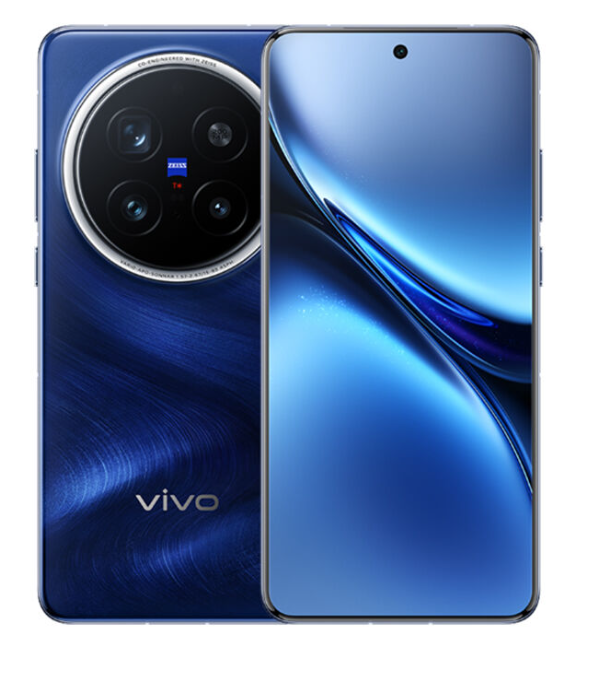
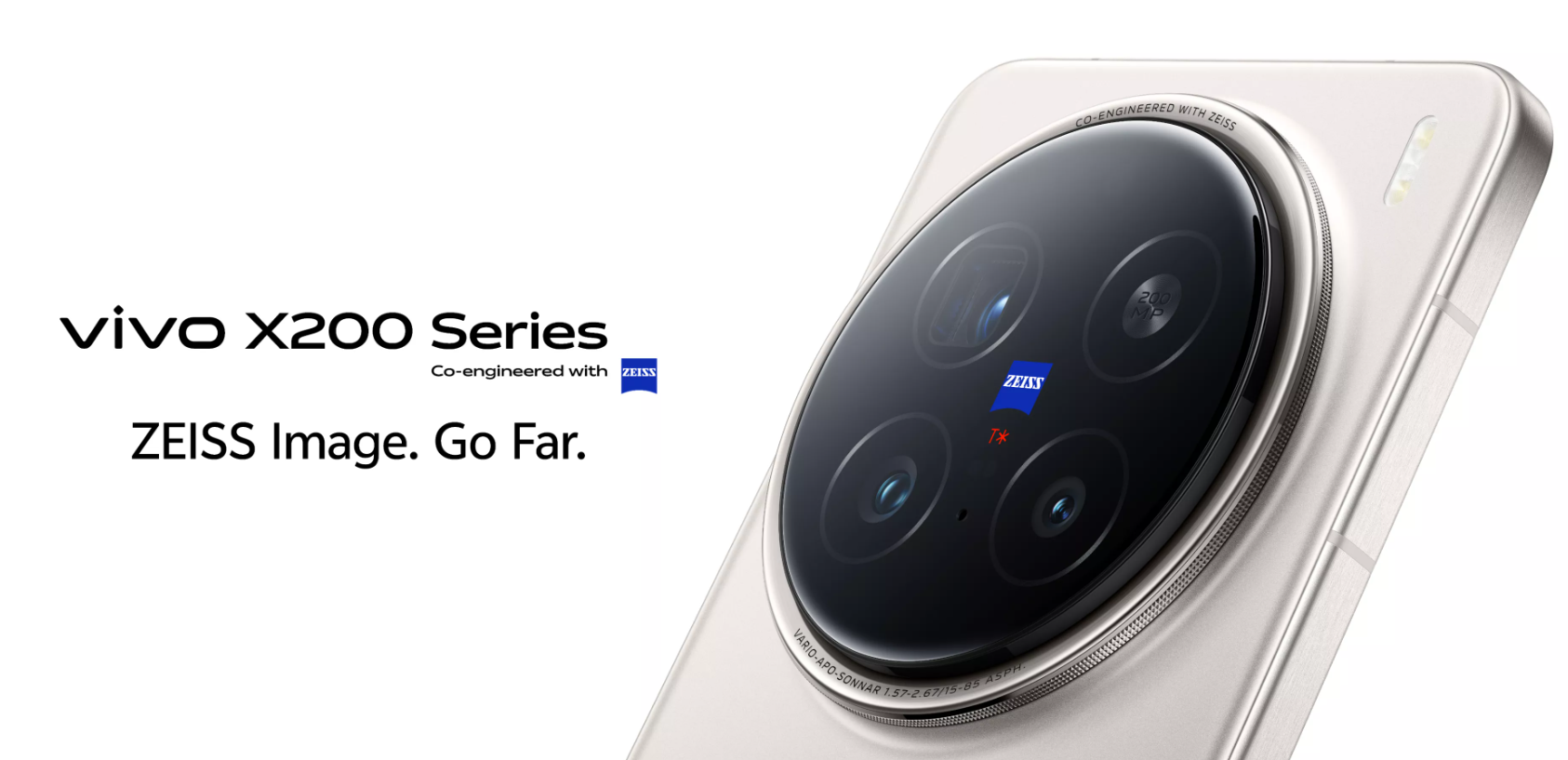
Vivo unveiled the X100 series with a design that blends glass with metal for a premium build. So we can expect the Vivo X200 lineup to offer a similar body as well. Leaked schematics have also offered us an idea of its design. The Vivo X200 can be seen with a massive circular camera island on the rear, similar to its predecessor.
Recently, even the front design was revealed in fresh renders which showcased ultra slim bezels on all four sides and a center aligned punch hole cutout. Two series are expected to feature an IP68/IP69 rating for water and dust resistance.
It is still unclear how many models Vivo will launch in the X200 lineup. It is expected to launch the X200, X200 Pro, and X200 Ultra. However, the Vivo X200 Ultra could be announced later on. So for now, let’s stick to the base and Pro variants. Vivo’s base X200 is expected to be a compact flagship phone like the Xiaomi 14.
Alleged Vivo X200 render by DCS
It will sport a 6.3-inch flat OLED panel with a 1.5K resolution. We can also expect HDR and high refresh rate. Meanwhile, the the Vivo X200 Pro will feature a tall 6.78-inch OLED panel, which may offer a higher 2K resolution, high refresh rate, and other top notch features. The X200 was rumored to have an optical fingerprint scanner, while the X200 Pro may offer an ultra sonic sensor.
2. Hardware
Vivo X200 leak shot
Vivo is rumored to launch the X200 and X200 Pro with MediaTek’s flagship Dimensity 9400 SoC. Meaning, we can expect top notch performance from these devices. On the other hand, the Vivo X200 Ultra could arrive with Qualcomm’s Snapdragon 8 Gen 4. A GeekBench listing showcased the synthetic benchmark performance of the Pro model with the Dimensity 9400 along with 16GB of RAM.
The vanilla model may be powered by a sizeable 5,500 or 5,600mAh battery pack, while the Pro could pack a larger 5,800mAh cell. The lineup might offer 90W wired fast charging as well as wireless fast charging. The Vivo X200 series is confirmed to run on the Android 15 OS based Origin OS5 custom skin out of the box.
3. Camera
Vivo X200 camera sample
Talking about the base model first, Digital Chat Station claimed that the Vivo X200 will pack a triple camera setup. This will consist of a 50-megapixel Sony IMX921 primary camera with an f/1.57 aperture and a 1/1.56-inch camera sensor size. It is coupled with a 50-megapixel Samsung JN1 ultra wide lens and a 50-megapixel Sony IMX882 (or LYT-600) periscope telephoto camera with an f/2.57 aperture and 70mm focal length. The leak adds that it will offer a 10x fusion super resolution algorithm (possible 10x hybrid zoom).
The X200 Pro is also rumored to have a triple camera setup with a similar senors, but its periscope telephoto shooter may be a 200-megapixel sensor with even more advanced zoom capabilities. Vivo’s X200 series will likely pack a custom sensor, imaging chip, and a chipset with Blue Crystal technology as well. Camera samples of the X200 surfaced online, which you can check out above.
4. Launch Date
Vivo has officially confirmed that it will announce the X200 series in its home market in China next month. The launch date is set for 14th October 2024, with the official unveiling planned in Beijing, China. The October launch period will also pit it against the OnePlus 13 and Xiaomi 15 series. This is all the information we have at the moment, so stick around for more updates.
The foldable phone market is getting crowded, but that’s not necessarily a bad thing. While established players like Samsung and Motorola continue to refine their offerings, new entrants like Tecno are shaking things up with innovative designs and competitive pricing.
Now, Infinix is throwing its hat into the ring with the Zero Flip, its first foray into the foldable space. Although the company hasn’t revealed much officially, leaks give us a good idea of what to expect. So, should you look forward to Infinix’s foldable debut? Let’s delve into the specs and see if the Zero Flip lives up to the hype (or lack thereof).
From the leaks, we know that the Infinix Zero Flip has a design that borrows heavily from the likes of the newer Galaxy Z Flip and Motorola Razr. We’re looking at a large, foldable main display on the inside and a smaller cover display on the outside.
The cover screen is expected to be a 3.64-inch OLED display with a smooth 120Hz refresh rate. That’s even a bigger screen than the one on the Samsung Galaxy Z Flip 6, which of course isn’t a bad thing. It should provide a more responsive experience for checking notifications or accessing quick features without unfolding the phone.
A banner leak about the Zero Flip highlights a “zero-gap hinge” that supposedly minimizes the crease and reduces dust or debris build-up within the hinge itself. This remains to be seen, as similar claims from other brands haven’t always translated to perfect long-term durability in other foldables.
2. Big Screen, Mid-Range Power
When unfolded, the Zero Flip is said to feature a 6.7-inch AMOLED main display with Full HD+ resolution and a 120Hz refresh rate. While it may not sound like the best screen feature-wise, it should still provide a solid viewing experience for everyday use.
However, the Zero Flip might fall short if you’re looking for flagship-level performance. Leaked specs suggest it will feature a MediaTek Dimensity 8020 processor. It’s a capable mid-range chipset sufficient for most tasks, but it might not offer as good of an experience as the Snapdragon 8 Gen 3 on the Galaxy Z Flip 6 for more demanding activities like high-end gaming.
3. Camera System
The Zero Flip will feature a dual-camera setup on the back. The primary sensor will clock in at 50 megapixels paired with another 10.8MP camera.
On the front, the foldable will have a 12-megapixel selfie camera on the cover display for video calls and casual selfies. There’s no mention of a telephoto lens, but that’s a common emission for flip phones right now.
Something that’s extra on the Infinix Zero Flip is that it will have a GoPro mode, allowing users to control their GoPro cameras. While the camera system appears basic and doesn’t stand out, its real-life performance will be the true test.
4. Battery and Other Specs
The Zero Flip is expected to come with a 4,590mAh battery, making it one of the largest in any flip phone, surpassing competitors like the Galaxy Z Flip 6 and Motorola Razr 50 Ultra. You will likely also get support for 70W fast charging, allowing for quick top-ups when needed.
Other leaked specs include stereo speakers, which is a plus for multimedia consumption. Connectivity options include Wi-Fi 5 and 5G support, Bluetooth 5.3, NFC, and a USB Type-C port. Audiophiles will also appreciate the inclusion of DTS and Hi-Res Audio support.
5. The Price is Right…Maybe?
While there’s no official confirmation on pricing yet, but the Zero Flip will likely be an affordable foldable offering competing with the likes of Motorola Razr 50 rather than 50 Ultra or Galaxy Z Flip 6. It’s rumored to come in black and pink color options.
6. So, Should You Fold for the Zero Flip?
The Infinix Zero Flip brings a familiar foldable design with appealing features like a large high-refresh-rate display and fast charging. However, its mid-range processor and basic camera setup may not satisfy power users.
Ultimately, the Zero Flip’s success depends on its pricing. If Infinix can significantly undercut competitors, it could secure a safe spot in the budget-friendly foldable market. Otherwise, it may struggle to stand out in an increasingly competitive foldable space.
Here’s a quick recap of Infinix Zero Flip specifications based on rumors:
Amazfit has just launched a new rugged smartwatch in India. The popular wearable maker’s new model is the Amazfit T-Rex 3, which is its next generation wearable with a military grade design. It offers both durable form and intuitive features, so let’s check it out.
Amazfit T-Rex 3: Specs & Features
Right off the bat, the durability is one of the standout features of the new smartwatch. The Amazfit T-Rex 3 has a MIL-STD-810G military grade rating, which means that it can function in extreme conditions. It can survive 70 degrees Celsius in heat to -30 degrees Celsius in the cold. It is also rated for 100 meter deep water thanks to its 10ATM water resistance. It sports a 1.5-inch AMOLED display with Corning Gorilla Glass for protection and up to 2000 nits of peak brightness.
Under the hood, the Amazfit T-Rex 3 offers 26Gb of internal storage, and BioTracker PPG biometric sensor for blood oxygen mapping. There are also heart rate, stress, sleep, breathing, and menstural cycle trackers as well. This smartwatch runs on the Zepp OS 4, which brings Zepp Flow for full voice controls. Amazfit offers support for more than 177 sports modes, along with 25 strength training, 8 sports movements, and Zepp Coach.
A 700mAh battery pack powers the T-Rex 3 that promises to offer up to 27 days of battery life on a single full charge. Heavy use may reduce this to just 13 days, while battery saver mode can bump it to 40 days. Other notable features include Stainless steel bezel, polymer middle frame, Bluetooth 5.2, and GPS.
Pricing and Availability
The Amazfit T-Rex 3 is available in two color options, namely Onyx and Lava. It has a 19,999 INR (roughly 239 US Dollars) price tag in India, which is more affordable than its global price tag of 279 US Dollars. You can purchase this smartwatch starting from 27th September 2024 via Amazon India and Amazfit’s official website.
Infinix has just introduced its “vlogging smartphone” in the Indian market. The Infinix Zero 40 5G was first unveiled in Malaysia and is now making its way to India. It features some impressive features that make it a great vlogging partner. It is the first in the segment to offer 4K recording at 60fps and also offer autofocus on its selfie camera. So what more does it offer? Let’s check it out.
The Zero 40 5G sports a tall 6.78-inch AMOLED display with an FHD+ resolution, a 144Hz refresh rate, 1500Hz touch sampling rate, 100% DCI P3 color gamut, Corning Gorilla Glass 5, and 1300 nits of peak brightness. The front also houses a 50-megapixel selfie camera that supports autofocus.
On the rear, users get a 108-megapixel primary camera on the rear along with a 50-megapixel ultra wide angle lens, and a 2-megapixel depth shooter. Notably, users can record at 4K@60fps from the front and back.
Under the hood, it is equipped with the MediaTek Dimensity 8200 Ultimate SoC, which is paired with 12GB of RAM and up to 512GB of internal storage. A large 5,000mAh battery pack powers this device with support for 45W wired fast charging, 20W wireless fast charging, and 10W reverse wireless charging.
Other notable features include stereo speakers powered by JBL, USB-C, an IP54 rating for water and dust resistance, an in-display fingerprint scanner, dual SIM, WiFi 6E, and Bluetooth 5.2.
2. Pricing, Offers, & Availability
The Infinix Zero 40 5G arrives in three color options, namely Violet Garden, Moving Titanium, and Rock Black. It has a starting price tag of 27,999 INR for the 12GB + 256GB option, while the 12GB + 512GB variant costs 30,999 INR. This model will go on sale on 21st September 2024 via Flipkart. Buyers can also avail a flat 3,000 INR discount on select bank cards.
Samsung launched the Galaxy A55 in March this year. However, the company is already working on the successor, the Galaxy A56. In the latest news, the phone has been spotted on the IMEI database with the model name ‘Galaxy A56 5G’ and model number SM-A566B/DS. It suggests the ongoing development of the phone.
Galaxy A56 chipset information (rumored):
The Galaxy A56 is expected to feature the new Exynos 1580 chipset. According to the Samsung community, this chipset boasts a robust architecture with Cortex-A720 and Cortex-A520 cores. For graphics, it is equipped with the advanced Xclipse 540 GPU. Additionally, the Exynos 1580 is said to include an upgraded NPU, capable of handling Galaxy AI and rivaling the flagship Exynos 2100 in this aspect. However, we will need to see the real-world performance of the chipset before drawing any conclusions about its overall capabilities.
The chipset was previously spotted on Geekbench with a single and multi-core score of 1046 and 3578 respectively. The device it was running on, is based on Android version 15 (according to the Geekbench listing). It also suggests that the chip will boast a 1+3+4 architecture, which seems to be focused on a performance upgrade over the 4+4 architecture-based Exynos 1480 chipset of the predecessor.
While not much is known about the other aspects of the Galaxy A56 yet, we can refer to the predecessor to get an idea of what to expect.
The Galaxy A55 packs a 6.6″ FHD+ Super AMOLED display with support for 1000 nits brightness (HBM). For those unfamiliar, HBM refers to a phone’s brightness in direct sunlight or other extreme lighting conditions. It comes with a promise of four years of major Android updates.
The Galaxy A55 packs a 50MP + 12MP + 5MP camera setup on the back, and a 32MP camera on the front, and offers decent photo and video quality. It packs a 5000 mAh battery which supports 25W wired charging.
TCL, the largest TV manufacturer in China, is facing scrutiny after a recent report suggested that certain models of its QLED TVs might not contain the quantum dot (QD) materials that are central to their marketing. This revelation, based on independent testing, has sparked controversy, as QLED technology is widely advertised as providing enhanced color reproduction and superior picture quality.
The issue came to light through an analysis commissioned by Hansol Chemical, a company specializing in materials for displays, semiconductors, and secondary batteries. Hansol tasked global testing and certification agencies SGS and Intertek with testing several TCL QLED TV models, including the C755, C655, and C655 Pro, which are sold both in China and internationally. The tests revealed a startling result: the TVs contained no traces of indium or cadmium, both essential materials for quantum dot technology.
Quantum dots are tiny semiconductor particles, only a few nanometers in size, that modify the wavelength of light to produce brighter, more vibrant colors. The absence of indium and cadmium means that these TCL models likely do not include quantum dots, contradicting their advertised specifications.
2. TCL’s Response
TCL’s headquarters in China responded by stating that they use QD films provided by various suppliers, and while the amount of QD material may differ depending on the supplier, they insisted that cadmium is included in the process. The company has also provided its own analysis, reportedly conducted by SGS and Guangdong Region Advanced Material, one of their quantum dot film suppliers. According to this report, traces of cadmium were found in the QD films used in these TVs, and a spectrogram confirmed the presence of quantum dots.
However, the crucial difference between the two analyses lies in the testing method. Hansol’s report was based on tearing down actual TCL TVs, whereas TCL’s analysis focused on the QD films provided by its suppliers. This raises questions about whether faulty QD films might have been used during production, and if so, whether TCL’s quality control measures are sufficient to ensure that all of its TVs meet the advertised specifications.
3. The Implications for Consumers
The findings have caused concern among consumers, particularly in Korea, where the TVs in question are also sold. QLED TVs are marketed as premium products, with the promise of improved color reproduction and picture quality thanks to quantum dot technology. If these TVs do not actually contain QD materials, buyers may feel deceived, especially considering the premium price tag associated with QLED technology.
At present, consumers largely rely on manufacturers’ claims when making purchasing decisions, as there are no universal certifications or evaluations for quantum dot content. This situation underscores the need for better transparency and possibly regulatory oversight to ensure that consumers are getting what they pay for.
Motorola has once again refreshed its popular Edge series with the launch of two new smartphones: the Motorola Edge 50 and the Motorola Edge 50 Neo. While both devices share some similarities, such as robust MIL-810H certification and IP68 dust and water resistance, they cater to different user preferences in terms of display size, processing power, and camera capabilities. Here’s a detailed comparison of how the Edge 50 Neo differs from the regular Edge 50.
The Motorola Edge 50 features a larger 6.67-inch curved pOLED display with a 1.5K resolution and up to 1600 nits peak brightness. It supports a 120Hz refresh rate and a 360Hz touch sampling rate, providing a highly responsive and smooth display experience. The curved design enhances the phone’s aesthetic appeal, making it feel more premium. The display is also protected by Corning Gorilla Glass 5, ensuring better durability against accidental drops and scratches.
In contrast, the Motorola Edge 50 Neo offers a slightly smaller 6.4-inch flat pOLED display with the same 1.5K resolution, but it’s an LTPO panel capable of adjusting its refresh rate dynamically up to 120Hz, which can help in conserving battery life.
What truly stands out about the Edge 50 Neo’s display is its impressive 3000 nits peak brightness, making it more suited for users who want excellent outdoor visibility, especially under direct sunlight. However, the Neo is protected by Corning Gorilla Glass 3, which is not as durable as the Glass 5 used in the Edge 50.
2. Performance
Performance-wise, the Edge 50 is powered by Qualcomm’s Snapdragon 7 Gen 1 Accelerated Edition SoC, which is built on a 4nm process. It offers up to 2.5GHz of CPU speed and is paired with an Adreno 644 GPU, making it a more capable option for moderate to heavy tasks, including gaming and multitasking. The phone also comes equipped with a vapor chamber cooling system to ensure optimal thermal management during extended usage.
On the other hand, the Edge 50 Neo is powered by the MediaTek Dimensity 7300 SoC, also a 4nm chipset. While the performance is still solid and on par with the 7 Gen 1 for day-to-day tasks and casual gaming, it lacks the same high-end gaming optimization and raw power of the Snapdragon 7 Gen 1 found in the Edge 50. However, for casual users or those who prioritize efficiency and light use, the Dimensity 7300 provides a good balance between performance and battery life.
3. Software
In terms of software, both phones ship with Android 14 out of the box. However, the Motorola Edge 50 Neo stands out by offering 5 OS upgrades and 5 years of security updates, a significant leap over Motorola’s usual update policy. This makes the Edge 50 Neo an attractive option for users looking for long-term software support, ensuring the phone remains updated for years to come.
The Edge 50, in comparison, offers 2 years of Android updates and 3 years of security updates. While adequate for most users, those prioritizing extended software support might prefer the Neo.
4. Camera
The camera setup in both devices is quite similar. The primary rear camera on both phones is a 50MP sensor with the Sony LYT-700C sensor. This camera supports Optical Image Stabilization (OIS), which is great for reducing shake in photos and videos. Both phones also feature a 13MP ultra-wide camera with macro capabilities, as well as a 10MP telephoto lens offering up to 30x digital zoom.
On the front, both phones feature a 32MP selfie camera. Both phones support 4K video recording, making it more appealing for those who use the front camera for vlogging or high-resolution video calls.
5. Battery and Charging
The Motorola Edge 50 packs a 5000mAh battery with 68W wired fast charging and support for 15W wireless charging. This larger battery, combined with its Snapdragon chipset, makes it more suitable for power users who need extended battery life throughout the day.
The Edge 50 Neo, on the other hand, comes with a 4310mAh battery, which is smaller but still offers 68W wired fast charging and 15W wireless charging. This should be more than adequate for users who prefer a lighter, more compact device but still want fast charging capabilities.
6. Design and Build
While both phones share the same MIL-810H certification for durability and IP68 ratings for water and dust resistance, the Motorola Edge 50 Neo is slightly more compact and lightweight. The Edge 50 Neo weighs 171g and has dimensions of 154.1 x 71.2 x 8.1 mm, making it easier to handle for users who prefer smaller phones. The Edge 50, in contrast, weighs 180g and is slightly bulkier at 160.8 x 72.4 x 7.79 mm.
The Edge 50 Neo comes in Nautical Blue, Latte, Grisaille, and Poinciana colors with a vegan leather finish, while the Edge 50 offers Jungle Green and Pantone Peach Fuzz with a similar vegan leather finish, along with a Koala Grey vegan suede variant. The aesthetic choices offer plenty of variety for both phones.
7. Pricing
When it comes to pricing, the Motorola Edge 50 is priced at Rs. 27,999 for the single 8GB + 256GB variant. On the other hand, the Motorola Edge 50 Neo is more budget-friendly, priced at Rs. 23,999 for the same 8GB + 256GB configuration.
Please Note: When you buy something using the links in our articles, we may earn a small commission at no cost to you.
8. Conclusion
Ultimately, the choice between the Motorola Edge 50 and the Motorola Edge 50 Neo depends on user priorities. The Edge 50 offers more power, better thermal management, and a larger display, making it ideal for gamers or heavy users.
In contrast, the Edge 50 Neo provides better software support, a brighter display, and a more compact design, catering to those who prefer longevity and portability. Both phones offer a solid overall experience, but they serve slightly different market segments.
Unisoc has announced the successful upgrade of its 5G and 4G mobile platforms to Android 15. This update covers platforms such as the T820, T770, T765, T760, T750 for 5G, and T620, T619, T616, T615, T612, and T606 for 4G. As per the chip maker, the upgrade aims to enhance performance, boost security, and introduce new features to improve user experiences.
Android 15 key features
Unisoc completes Android 15 upgrade across its 5G and 4G platforms
Android 15 has been designed to streamline productivity while offering enhanced media capabilities, superior adaptability to various device form factors, and reduced battery consumption. With improved app performance and strengthened privacy and security protocols, Unisoc’s chipsets are set to provide a refined and secure user experience across a range of devices.
One of the key features of this upgrade is the introduction of a frame rate stabilization scheme tailored specifically for gaming, integrated into both software and hardware. This ensures a smoother gaming experience. Additionally, Unisoc has incorporated a resource management center within its framework, optimizing CPU performance, algorithms, audio, video, and AI Codec technologies to deliver seamless and powerful performance across a variety of applications.
According to Unisoc, it has made several technology optimizations to address local climate conditions and user preferences. These innovations include advanced temperature management, improved gaming performance, and enhanced AI capabilities, ensuring stable and energy-efficient operations.
Furthermore, Unisoc has significantly upgraded its photographic features, supporting 100MP photography, continuous shooting, photo watermarking, and dual video recording. These enhancements are aimed at enriching the experience for Indian consumers.
Motorola Edge 50 Pro, Edge 50 Neo, and Edge 50 Fusion are solid mid-range phones, and their competitive pricing makes it difficult to pick the right one. In this post, we’ll compare these three Edge 50 series phones to help you make the right choice based on your needs.
The Edge 50 Pro, Edge 50 Neo, and Edge 50 Fusion have premium designs, but only the Pro model has an aluminium frame. All three have a vegan leather finish for a premium feel.
The three Edge 50 series phones have an IP68 rating for better protection against dust and water. In terms of durability, the Edge 50 Neo might have an edge over the other two because it meets military standards for durability.
The Edge 50 Pro and Edge 50 Fusions look similar; the Edge 50 Fusion differs because of a smaller camera module on the rear side, which only has two sensors. In contrast, the other two Edge 50 phones have three sensors on the back.
The Edge 50 Neo is slightly more compact and lightweight than the other two. However, the Edge 50 Fusion is the thinnest here.
Design is totally subjective. So, I’ll leave that to you. However, regarding durability, the Edge 50 Neo stands out because of military-grade durability. Among the other two, Edge 50 Pro wins because of its aluminium frame.
Display
All three Edge 50 models have the same pOLED screen but have different screen sizes and resolutions. The Edge 50 Pro and Edge 50 Fusion have a 6.7-inch screen, whereas the Edge 50 Neo has a smaller 6.4-inch screen. However, the Edge 50 Neo has more pixels per inch, resulting in better details and clarity.
Among the three, the Edge 50 Neo has the highest peak brightness of 2800 nits for better visibility outdoors (vs. 2000 nits on the Edge 50 Pro and 1600 nits on the Edge 50 Fusion). Notably, the Edge 50 Pro and Edge 50 Fusion support a 144Hz refresh rate, which is limited to 120Hz on the Edge 50 Neo. However, the Edge 50 Neo has the advantage of LTPO technology that allows a dynamic refresh rate for better smoothness and power saving.
The Edge 50 Fusion is protected using Gorilla Glass 5, while the Edge 50 Neo has Gorilla Glass 3. The Edge 50 Pro also features Gorilla Glass protection, but Motorola hasn’t specified the version.
Overall, the Motorola Edge 50 Neo has a better display than the other two, but if it’s too compact for you, the Edge 50 Pro might be a better choice.
Camera
The Motorola Edge 50 Pro and Edge 50 Neo have the same rear camera setup — a 50MP primary sensor, a 10MP telephoto sensor, and a 13MP ultrawide sensor. However, the Edge 50 Pro has a slight edge because of advanced autofocus technology. The Edge 50 Fusion, on the other hand, lacks a telephoto shooter. All three can record up to 4K videos with their rear cameras.
The Edge 50 Pro has a 50MP sensor for selfies and video calling, while the other two have a 32MP sensor. All three can record 4K videos using their selfie cameras, too.
The bottom line is that the Edge 50 Pro has the best camera setup of the three. The Edge 50 Neo is second, and the Edge 50 Fusion is third in terms of camera performance.
Performance
The Edge 50 Pro is powered by a Snapdragon 7 Gen 3 chip, the Edge 50 Neo has Dimensity 7300, and the Edge 50 Fusion has Snapdragon 7s Gen 2.
The Snapdragon 7 Gen 3 inside the Edge 50 Pro outperforms the other two. It has better performance and efficiency, although the difference between the other two isn’t significant.
So, the Edge 50 Pro can handle games better than the Edge 50 Neo and Edge 50 Fusion. However, the other two phones have similar performance.
The Edge 50 Pro is a better choice if you’re really into gaming. However, the other two devices would also work fine for regular day-to-day tasks and light gaming.
Battery & Charging
The Edge 50 Fusion has the highest battery capacity of all three — 5,000mAh (vs. 4,500mAh on the Edge 50 Pro and 4,310mAh on the Edge 50 Neo). But when it comes to charging, the Edge 50 Pro leaves the other two in the dust.
The Edge 50 Pro supports 125W wired charging, 50W wireless charging, and 10W reverse wireless charging. The Edge 50 Neo and Edge 50 Fusion supports 68W wired charging, but the former also supports 15W wireless charging, lacking on the Edge 50 Fusion.
Although the Edge 50 Pro doesn’t have the biggest battery of all three, the charging capabilities make up for it. The device only takes 18 minutes to reach 100% battery capacity, while the other two reach 50% in 15 minutes.
Software
All three Edge 50 models come with Android 14 out of the box. However, the Edge 50 Pro and Edge 50 Fusion will only get three Android upgrades, whereas the Edge 50 Neo will get two additional Android updates. This means the Edge 50 Neo will stay relevant for two more years after the other two become outdated.
Connectivity
Connectivity is another crucial factor that can affect your purchase decision. The Edge 50 Pro and Edge 50 Neo support Wi-Fi 6E, whereas the Edge 50 Fusions support Wi-Fi 5. The newer Wi-Fi standard reduces congestion and offers higher peak download/upload speed.
The Edge 50 Pro has Bluetooth 5.4, Edge 50 Neo has Bluetooth 5.3, and Edge 50 Fusion has Bluetooth 5.2. Only the Edge 50 Pro supports NavIC.
The Edge 50 Neo and Edge 50 Fusion support USB Type-C 2.0, while the Edge 50 Pro has USB Type-C 3.1, offering faster data transfer over a USB connection.
So, the Motorola Edge 50 Pro has the best connectivity features. Then comes the Edge 50 Neo and then the Edge 50 Fusion.
Motorola Edge 50 Pro vs Edge 50 Neo vs Edge 50 Fusion: Which Is the Best?
The Motorola Edge 50 Pro, Edge 50 Neo, and Edge 50 Fusion are solid budget phones, but choosing one really comes down to your priorities.
The Edge 50 Pro sounds better than the other two in most aspects. It has the fastest chip and charging speed and features better connectivity and camera features. If you’re only looking for a camera phone and don’t care about gaming, the Edge 50 Neo will save you some money.
While Android smartphones have supported wireless charging for quite some time, there is still significant room for improvement. Unlike iPhones, Android flagships lack magnets to properly align the charging coils, which would help enable a more efficient charging. But this could change soon with the launch of the Oppo Find X8 series and the Xiaomi 15 series.
The news comes from Weibo (Chinese microblogging site) tipster Digital Char Station, who claimed that Oppo has developed a magnetic power bank. He added that the entire Oppo Find X8 series includes magnets and can be attached to the power bank to offer Apple’s MagSafe-like charging experience. He also shared an image of Oppo‘s magnetic power bank, which you can see above.
Reportedly, Xiaomi has also prepared a 30W “ultra-thin” magnetic wireless charger this time. Notably, Xiaomi‘s 30W ultra-thin magnetic wireless charger has passed China’s CQC certification. The wireless charger has a model MDY-17-EY, which supports 65W input and a maximum of 30W wireless output. Currently, Xiaomi officially sells three models of magnetic power banks with three design styles: built-in stand hanging hole model, ordinary magnetic model, and vertical separation design model, priced at 249 yuan, 129 yuan, and 199 yuan respectively.
We have already seen Pixel devices facing compatibility issues with Google’s own Pixel Stand wireless chargers. This is inevitable when devices equip the charging coils in different positions. However, it can be fixed with the addition of magnets as it can hold the coils in place and also hold the weight of the phone. Speaking of the magnetic power bank, it should also make charging on the go much more convenient.
That being said, it’s currently unclear whether or not the phones will finally adopt the Qi2 wireless charging standard.
Samsung unveiled the Galaxy M55 with a starting price of Rs 26,999 in April of this year in India. Reports have revealed that the brand is working on a new variant of the said phone, dubbed the Galaxy M55s. An X post released by well-known tipster Mukul Sharma not only reveals the key specifications but also the real-life images of the M55s.
Samsung Galaxy M55s design
Samsung Galaxy M55s leaked shot by Mukul Sharma
As per the leak, the Galaxy M55s will sport the new Fusion Design. A closer look at the leaked image shows that it has a three-part design consisting of a matte portion, a glossy portion in the middle and a stripped section, which extends from just below the camera module area down to about two-thirds of the phone’s height. The images also show that the M55s will be available in blue and black options.
The source revealed that the Samsung Galaxy M55s will have an sAMOLED display that offers a 120Hz refresh rate. Under the hood, the device will be equipped with the Snapdragon 7 Gen 1 chipset and a 5,000mAh battery with 45W fast charging. According to a previous leak, the device will come with 8 GB of RAM, 128 GB of built-in storage, and a microSD card slot.
On the front, the Galaxy M55s will feature a 50-megapixel camera for selfies and video calls. The rear camera setup will include an OIS-assisted 50-megapixel primary camera, an 8-megapixel ultra-wide lens, and a 2-megapixel macro camera.
The above-mentioned specs appear identical to the Galaxy M55. Therefore, it remains unclear what distinguishes the M55s from the M55, aside from its design. Finally, the M55s is speculated to be priced at around Rs 20,000 (~$238).
Samsung’s OneUI update seems to have degraded the camera quality on the S23 series. More details on that story and other news from the past 24 hours below.
Today’s Tech Highlights:
Samsung’s One UI 6.1.1 Camera Issues: Learn more about the reported problems with Samsung’s latest software update, which appears to be reducing camera capabilities for some Galaxy devices.
iPhone 17 Pro’s Potential 2nm Chip: Apple could adopt TSMC’s 2nm process for the iPhone 17 Pro. Let’s see what this could mean for smartphone performance.
OnePlus 13 Design Leak: Get a sneak peek at a potential new color option for the upcoming OnePlus 13, hinting at the company’s design direction.
Plus, don’t miss our roundup of other exciting stories, including OnePlus Nord Buds 3’s Indian release, Vivo X200’s camera samples, buying advice for the Samsung Galaxy S23, and leaked details about the HMD Vibe Pro!
On September 16, 2024, Samsung began sending out the new One UI 6.1.1 upgrade to the Galaxy S23 series, Z Fold 5 / Z Flip 5, and many more smartphones. However, the most recent update has a few issues. On X (previously Twitter), users have already begun to complain that the update has decreased camera functionality.
Apple has announced the iPhone 16 series, that are powered by 3 nm-based A18 and A18 Pro CPUs. While Weibo tipster “Mobile chip expert” (translated from Chinese) had stated that the iPhone 17 range would not feature 2nm semiconductors. According to a new report from Business Times, TSMC’s 2-nanometer technology will be mass-produced in 2025, with Apple being among the first to embrace the new process node.
The OnePlus 13 is slated to be released in October, possibly following the introduction of the Snapdragon 8 Gen 4 flagship chip. Details regarding the handset have been leaked online, and a tipster now claims that the smartphone will be available in green.
The Infinix Zero Flip is expected to be available globally soon. The brand has started teasing its first clamshell-style foldable phone, which could be officially unveiled by the end of this month. Queen Mobile, a Vietnam-based retailer, has now revealed the phone’s entire specifications on social media.
Samsung has opened pre-reservations for its upcoming flagship Galaxy tablets in India, providing consumers the opportunity to secure their devices ahead of the official launch. While the South Korean tech giant has not mentioned the name of the upcoming tablet, leaks suggest that the brand is gearing up to launch the Galaxy Tab S10, Tab S10+, and Tab S10 Ultra tablets.
How to pre-reserve the Galaxy Tab S10 series?
New Galaxy Tab pre-reservations begin in India
To pre-reserve the new Galaxy tablets, customers need to pay a token amount of Rs 1,000. Those who pre-reserve will enjoy benefits worth Rs 3,499. This early access offer is designed to give consumers added value and a head start in experiencing the latest innovations from Samsung’s tablet lineup.
The pre-reservation process is available on various platforms, including Samsung’s website, Samsung India Smart Cafés, online platforms like Amazon and Flipkart, and authorized retail stores across the country.
Samsung Galaxy Tab S10+ and Tab S10 Ultra specifications (rumored)
According to a recent leak, the Galaxy Tab S10 Ultra will have a large 14.6-inch Dynamic AMOLED 2X display with a 120Hz refresh rate, 2960 x 1848 resolution, anti-reflection coating, and a peak brightness of 930 nits. In comparison, the Galaxy Tab S10+ will have a smaller 12.4-inch panel with a 2800 x 152 resolution and a peak brightness of 650 nits.
The MediaTek Dimensity 9300+ SoC will power the Tab S10+ and S10 Ultra. The Plus model will have 12 GB of RAM, up to 256 GB of storage, a microSD card slot, and a 10,090mAh battery with 46W fast charging. On the other hand, the Ultra edition will have 12 GB of RAM, up to 512 GB of storage, a microSD card slot, and an 11,200mAh battery with 45W charging.
The Galaxy Tab S10 series will feature a quad speaker setup for enhanced audio and are expected to launch with an IP68 rating for water and dust resistance, along with an armor aluminium frame. Both tablets are ultra-slim, measuring 5.4mm and 5.6mm in thickness, respectively. The devices are expected to run on One UI 6.1.1-based Android 14. The Tab S10 series may break cover on Sept. 26 in different markets.
Apple has launched the iPhone 16 series devices that are powered by 3 nm-based A18 and A18 Pro chips. While Weibo tipster “Mobile chip expert” (translated from Chinese) previously suggested that the iPhone 17 lineup won’t use 2nm chips a new report from Business Times claims that TSMC’s 2-nanometer process will be mass-produced in 2025 and that Apple will be one of the first to adopt the new process node.
It is expected that the next generation A-series chip that will power the iPhone 17 lineup will be based on TSMC’s 2nm process node.
However, it’s unclear whether both the chips for Pro and non-Pro iPhones will be based on the 2-nm node. There’s a possibility that the iPhone 17 Pro and iPhone 17 Pro Max models will be the first to be based on TSMC’s 2nm process node, while the non-Pro models will be based on a 3nm process. This shouldn’t be surprising as Apple has already used a generation-old chip on the next generation’s non-Pro models.
Compared to N3E (3nm), TSMC expects 2nm to improve performance by 10% to 15% at the same power, or reduce power consumption by 25% to 30% at the same frequency and complexity. So it could offer notable performance and power efficiency improvements to iPhone 17 Pro models. TSMC’s 2nm process reportedly adopts the leading nanosheet transistor structure, which will provide full-node performance and power advantages to meet the growing demand for energy-saving computing.
According to a previous leak, the iPhone 17 series will include a “Slim” model, that is expected to fill the performance gap between the Pro and non-Pro models.
Nonetheless, the adoption of a 2nm chip in the iPhone 17 lineup remains speculative. So, should you upgrade to the iPhone 16? There are several other important factors to consider before making that decision.
As per reports, Xiaomi may unveil the Xiaomi 15 series of flagship phones driven by the Snapdragon 8 Gen 4 chip in the fourth week of October. Last year, the Xiaomi 14 series was introduced with a starting price of 3,999 Yuan (~$565). There have been speculations that the 15 series would be at least 500 Yuan more expensive than its predecessor. A new leak, courtesy of a report by the publication CNMO, has tipped the starting price of the Xiaomi 15 and 15 Pro.
Xiaomi 15 series pricing: What to expect?
Xiaomi 14 series
According to the publication, a tech blogger has claimed that the Xiaomi 15 will be priced at 4,599 Yuan (~$650), whereas the 15 Pro will have a starting price of 5,499 Yuan (~$775). The tech blogger reportedly claimed that the price hike is due to the rising costs of chipsets and storage. Therefore, smartphone manufacturers are compelled to adjust their pricing strategies. Additionally, Xiaomi founder and chairman Lei Jun’s hints at the Xiaomi 14 launch event further confirmed that the Xiaomi 15 series will move away from the era of starting prices at 3,999 yuan.
Renowned analyst Ming-Chi Kuo also revealed earlier that the Snapdragon 8 Gen 4 will use TSMC’s latest N3E process, which has significantly increased manufacturing costs. Its price is about 25 percent to 30 percent higher than the Snapdragon 8 Gen 3, reaching between $190 and $200. This high chip cost will undoubtedly have an impact on the final price of the Xiaomi 15 series.
Based on existing leaks, the Xiaomi 15 series will undergo a comprehensive upgrade, featuring large primary sensors, telephoto macro, ultrasonic in-display fingerprint scanners, glass bodies, silicon anode batteries, wireless rapid charging, and an IP68-rated dust and water resistance. The standard version of the Xiaomi 15 will adopt a 1.5K resolution flat screen, emphasizing compact and portable design, while the Xiaomi 15 Pro will continue to use a 2K resolution new base material fully equal-depth micro-curved screen with a narrower bezel design.
In terms of imaging systems, the standard version of the Xiaomi 15 will be equipped with a 50-megapixel main camera, a 50-megapixel ultra-wide lens, and a 50-megapixel telephoto lens; the imaging system of the Xiaomi 15 Pro will be more impressive, featuring a 50-megapixel main camera backed by a larger lens, a 50-megapixel ultra-wide-angle lens, and a 50-megapixel periscope telephoto lens.
OnePlus 13 is expected to launch sometime in October, likely after the debut of the Snapdragon 8 Gen 4 flagship processor. Details about the device have been popping up online, and now, tipster Sanju Chaudhary has claimed that the smartphone will come in a green color option.
As per a post shared on X by Sanju, the OnePlus 13 will come with a green vegan leather back option. The leak also includes a rough render showcasing the potential placement of elements on the phone. It is worth mentioning that this render does not represent the actual OnePlus 13 device as the design of the device is still under wraps.
OnePlus 13 specs (expected)
The OnePlus 13 is expected to have a 6.82-inch 2K OLED LTPO display with a 120Hz refresh rate and a curved design. Under the hood, it will likely be powered by the Snapdragon 8 Gen 4 processor, which was also recently spotted on Geekbench. The camera setup is expected to include a triple camera system with a 50 MP LYT 808 1/1.4″ main sensor, a 50 MP LYT 600 1/1.95″ periscope lens with 3x zoom, and a 50 MP ultrawide lens.
Other rumored features include a large battery with support for 100W wired and 50W wireless charging, IP68/IP69 rating, NFC, IR Blaster, and dual stereo speakers. These specifications align with previous leaks and benchmarks, suggesting that the OnePlus 13 will be a powerful and feature-packed smartphone.
In other news, OnePlus has launched its new budget TWS earbuds, the Nord Buds 3, in India, featuring upgraded ANC (Active Noise Cancellation), improved battery life, and an affordable price. The earbuds come with 12.4mm dynamic drivers, Bluetooth 5.4, and dual microphones for clear calls. The Nord Buds 3 offers 32dB ANC, an improvement over the 25dB ANC of the previous model, and promises up to 43 hours of total playback with the case.
We use cookies on our website to give you the most relevant experience by remembering your preferences and repeat visits. By clicking “Accept”, you consent to the use of ALL the cookies.
This website uses cookies to improve your experience while you navigate through the website. Out of these, the cookies that are categorized as necessary are stored on your browser as they are essential for the working of basic functionalities of the website. We also use third-party cookies that help us analyze and understand how you use this website. These cookies will be stored in your browser only with your consent. You also have the option to opt-out of these cookies. But opting out of some of these cookies may affect your browsing experience.
Necessary cookies are absolutely essential for the website to function properly. This category only includes cookies that ensures basic functionalities and security features of the website. These cookies do not store any personal information.
Any cookies that may not be particularly necessary for the website to function and is used specifically to collect user personal data via analytics, ads, other embedded contents are termed as non-necessary cookies. It is mandatory to procure user consent prior to running these cookies on your website.