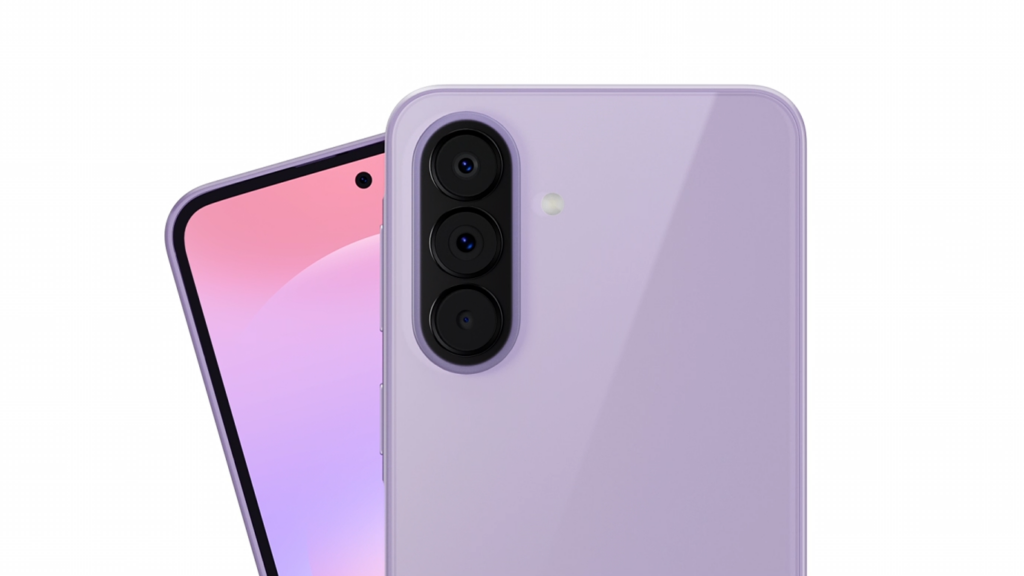
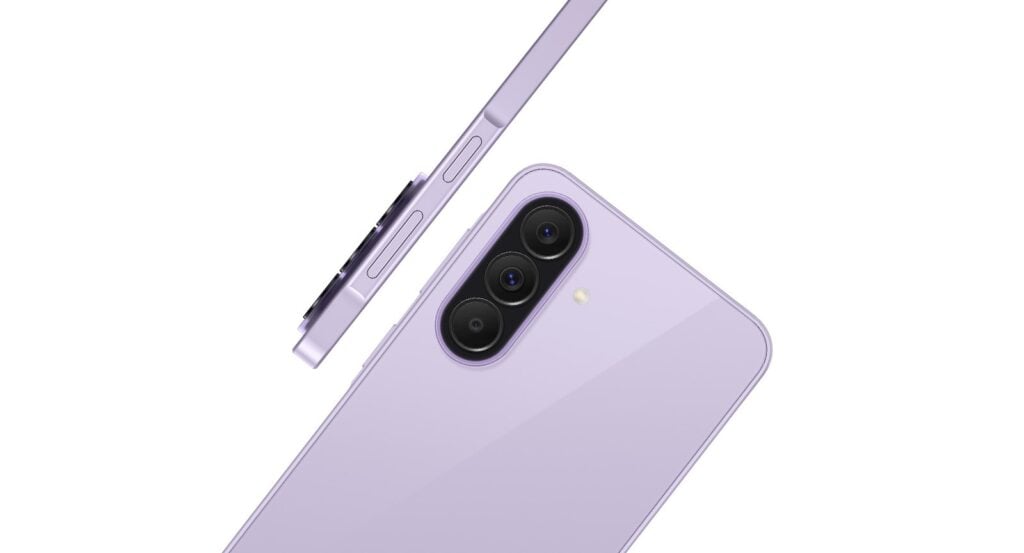
More leaks about Samsung’s next mid-range phones are rolling in. Right after similar details surfaced for the Galaxy A58, fresh info suggests the more affordable Galaxy A38 will follow a very familiar path when it launches next year.
According to Dutch site GalaxyClub, the A38 is expected to carry the same camera setup as the current Galaxy A37: a 50MP main camera, 12MP ultrawide, 5MP macro, and a 12MP front shooter.
As usual with these early leaks, we’re only getting megapixel counts for now. It’s still unclear whether Samsung plans to put newer sensors behind those figures.
This fits the broader pattern Samsung seems to be following with its 2027 A-series cameras: keep the hardware familiar and let any real improvements come from software, better processing, or image tuning. Upgrades are more likely to show up elsewhere, maybe the processor, battery, display, or overall system feel, though solid details on those parts haven’t leaked yet.
Pricing has been creeping up too. In Europe, the Galaxy A36 launched in 2025 starting around €379. The A37 arrived this year at €429 and has since seen its official price climb to €469 in some markets. Some people are already guessing the A38 could edge closer to the €500 mark when it arrives, partly because of rising component costs (especially memory).
Both the A38 and A58 are expected sometime in the March–April 2027 window, right after the Galaxy S27 series drops. The repeated camera setup might feel underwhelming if you were hoping for a bigger hardware jump, but it lines up with how Samsung has been handling this segment lately, focusing more on software support, build quality, and smaller refinements elsewhere. Clearer specs should start appearing as development moves along and the launch gets closer.
Apple’s first foldable has been generating a lot of hype since it was announced last month, but the official repair prices for India just dropped, and they’re raising some eyebrows.
The biggest shock is the inner display. If you crack the foldable screen and you’re out of warranty (and don’t have AppleCare+), Apple wants ₹1,49,900 to replace it. That’s nearly half the phone’s ₹2,99,900 starting price, and only a little less than what an iPhone 18 Pro costs at launch. There’s also an “other damage” category that goes even higher, at ₹2,24,900, roughly 75% of a brand-new Duo.
Here’s the rest of the list:
Outer display: ₹42,900
Outer display + back glass: ₹55,900
Rear camera: ₹26,900
Battery: ₹24,900
Back glass: ₹20,900
Cover layer: ₹5,900
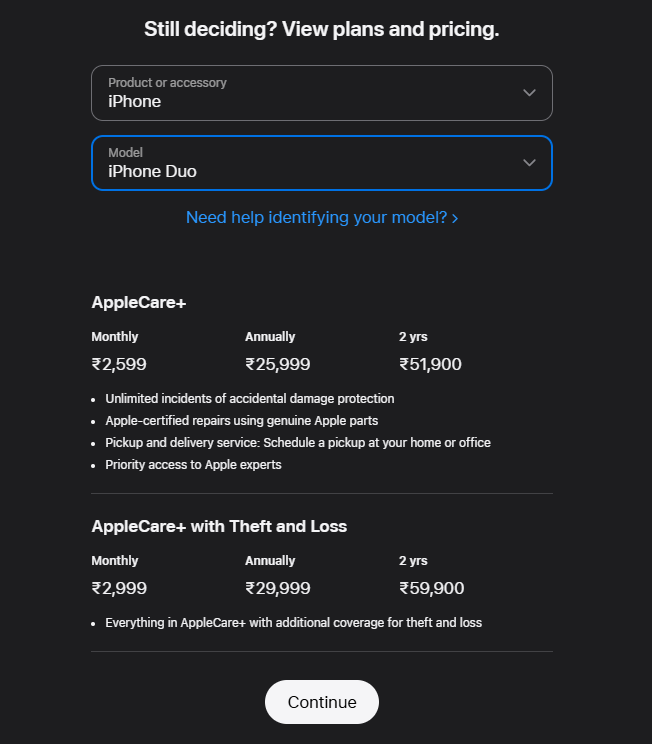
AppleCare+ does soften the blow quite a bit. The plan itself costs ₹51,900 and drops an inner-display repair to ₹8,900. Outer display or back glass incidents fall to ₹2,500 each, the cover layer is ₹1,900, and battery service is free. If you buy the phone, add AppleCare+, and grab a first-party case, you’re looking at roughly ₹3.5–3.6 lakh out the door. Even then, every covered incident still comes with a service fee, and the plan doesn’t cover theft or loss.
For comparison, Samsung’s published spare-part prices for the Galaxy Z Fold 8 are noticeably lower in several areas. The main screen assembly is listed at around ₹54,130 (or ₹35,490 for a component-level repair), while the back glass/cover and battery are both around ₹2,300. Motherboard prices vary by storage, but nothing comes close to Apple’s highest “other damage” figure.
Pre-orders for the iPhone Duo start today (October 16), with sales beginning on October 23.
Display replacements within the first few months of regular use are surprisingly common on Galaxy foldables, even after years of hinge and backplate refinements. The iPhone Duo is a big step forward for foldables, but it’s still a first-generation product. Getting AppleCare+ might be the smarter move instead of just hoping for the best.
Xiaomi just added another budget-friendly option to its REDMI monitor lineup. This one’s clearly aimed at competitive gamers who want smooth performance without spending a fortune.
The REDMI G27Q 240Hz 2026 Standard Edition is a 27-inch monitor with a Fast IPS panel. It runs at 2560×1440 (2K) resolution, hits 240Hz, and claims a 1ms GTG response time. You’re also getting 178° viewing angles, 500 nits of full-screen brightness, and HDR support. On the color side, it covers 95% DCI-P3 and 100% sRGB, uses 10-bit color (8-bit + FRC), comes factory calibrated, and aims for ΔE<2 accuracy.
For gameplay, it supports AMD FreeSync Premium across the full refresh range, with automatic compensation to help reduce tearing when frame rates dip. There’s also a dynamic overdrive feature that adjusts the gray-to-gray response based on the current frame rate.
Xiaomi packed in a few gaming extras too: Dark Field Enhancement Pro for brightening dark areas without blowing out the rest of the image, a dynamic crosshair with five modes and smart color adjustment, a night vision mode for shadowed spots, and the option to simulate a 24.5-inch screen size for different esports setups (just note that FreeSync Premium doesn’t work in that mode).
Eye comfort gets some attention as well. The monitor uses Xiaomi’s Green Mountain Eye Protection Solution, which picked up an S++ visual dimension certification from the China Quality Certification Center. It also has TÜV Rheinland hardware-level low blue light certification, which Xiaomi says cuts harmful blue light by 50% without turning the image yellow.
Design-wise, it goes for the usual esports look with three-sided ultra-narrow bezels. The stand is fully adjustable for height, pivot (so you can rotate the screen), left-right swivel, and tilt, and you can wall-mount it with a separate VESA arm if you prefer. Ports include two DisplayPort 1.4, two HDMI 2.0, and a headphone jack, so connecting multiple devices should be straightforward.
Price and availability
It goes on sale on JD.com on October 21. The launch promo price is capped at no higher than 799 yuan (around $119), while the regular price sits closer to 999 yuan (around $149).
Recent reports have revealed that the OnePlus Ace 7 series will be announced later this month in China. A recent report claimed that the lineup will include two models, the Ace 7 and Ace 7 Pro, with both expected to be powered by Snapdragon 8 Elite Gen 5 series chipsets. So far, OnePlus has remained silent about the Ace 7 series, but it has now opened reservations through its official online store in China.
OnePlus Ace 7 series reservations begin ahead of launch
OnePlus Ace 7 series reservations begin
The reservation listings suggest that OnePlus is preparing two performance-focused smartphones for the Chinese market. According to tipster Digital Chat Station, both models will feature a 200-megapixel primary rear camera. The phones are also rumored to offer a 185Hz display and an integrated active cooling fan, potentially helping them maintain performance during demanding gaming sessions.
The standard Ace 7 is tipped to feature the Snapdragon 8 Elite Gen 5 V Series chipset, while the Ace 7 Pro could use the regular Snapdragon 8 Elite Gen 5, similar to the Redmi K100 Pro series.
Digital Chat Station further revealed that the OnePlus Ace 7 Pro will feature a 50-megapixel periscope telephoto camera with 3.5x optical zoom, alongside the 200-megapixel primary sensor. The tipster also claims that the device will use imaging algorithms found in Oppo’s flagship camera phones, potentially giving it an advantage over other performance-focused smartphones.
It appears that the standard Ace 7 will not have a periscope telephoto camera. Also, there is no certainty yet that the Ace 7 will have a built-in cooling fan like the Pro edition. The brand is expected to confirm the Ace 7 series’ launch date in the next few days.
Fresh details on Samsung’s next mid-range phone are starting to surface, and the camera setup looks… familiar.
According to Dutch site GalaxyClub, the Galaxy A58 5G is expected to stick with the exact same megapixel count as the current A57: a 50MP main camera, 12MP ultrawide, 5MP macro, and a 12MP selfie shooter. Just to be clear, this is only about resolution numbers so far, no confirmed sensor sizes, apertures, or actual hardware changes. Samsung could still upgrade or even downgrade the sensors behind those numbers. That said, no groundbreaking change is expected.
The part that stands out is that 5MP macro lens. That exact type of camera first showed up on the Galaxy A51 all the way back in 2020. If the A58 launches in early 2027 like most sources are predicting (March or April), Samsung will have been using basically the same low-res macro shooter on its mid-rangers for around seven years. And once again, there’s no dedicated telephoto in the mix, just the main, ultrawide, and that close-up lens.
For context, the Galaxy A57 launched this spring with a 50MP main sensor (1/1.56-inch class with OIS), 12MP ultrawide, 5MP macro, and 12MP front camera. So the A58 matching those numbers feels like a clear “don’t fix what isn’t broken… or at least don’t spend more money” strategy. Reports say Samsung started hardware work on the A58 a couple of months ago and has recently moved into software development. It’s expected to ship with Android 17 and One UI 9.5, which would at least give it a software advantage even if the cameras stay the same.
Rising component costs, especially memory chips, are being blamed for manufacturers holding back on upgrades in this price range. For buyers, the leak basically suggests the A58 will offer a known photographic experience rather than anything transformative. Some improvements are more likely to come from better processing and new One UI features.
Casio just added three new versions of its MDV106 dive-style watch to its US online store. The new models, the MDV106C-1AV, MDV106C-3AV, and MDV106C-5AV, are priced at $110 each and are available to purchase right now.
Design Details
If you are familiar with Casio’s lineup, the MDV106 series is known for being a basic, functional watch that looks like a traditional diver but doesn’t cost a lot of money. These three new variants stick to that exact formula.
The main difference with the C models is the strap. Instead of the usual resin or metal bands, Casio is shipping these with a cloth band. The band is designed to fit wrist sizes ranging from 175 to 215 mm, which gives it a slightly more casual look and feel compared to the standard models.
As for the hardware, the watches feature a stainless steel case paired with an aluminum bezel. The case measures 48.5 x 44.2 x 12.1 mm. That is on the larger side for a standard analog watch, but the switch to a cloth strap keeps the total weight down to a very manageable 96 grams. The dial itself is protected by standard mineral glass.
Despite the relatively low price, Casio includes the standard durability features you would expect from this specific line. The watches have a screw-lock crown and a screw-lock back plate.
Together, these help give the watches a 200-meter water resistance rating, meaning you can comfortably wear them while swimming without worrying about water damage. They also feature an anti-reverse rotary bezel, which is a standard hardware tool on dive-style watches used for tracking elapsed time.
Internally, there are no smart features or complex mechanics here. These are straightforward analog watches. The dial has three hands for the hour, minute, and second, along with a small cutout for the date display.
They run on a standard quartz movement, which Casio says is accurate to within 20 seconds per month. Power comes from a single SR626SW battery, and you can expect about three years of battery life before you need to open the case back and replace it.
Tecno has launched a new smartphone in India, targeting buyers looking for a feature-packed device for everyday use. The latest addition to its Spark series combines connectivity-focused features with a durable design. It also brings several AI-powered tools and Google services to the budget segment.
Tecno Spark 50s 5G specifications and features
Tecno Spark 50s 5G
The Tecno Spark 50s 5G features a 6.78-inch LCD with HD+ resolution of 720 x 1576 pixels, a 120Hz refresh rate, a 240Hz touch sampling rate, and up to 560 nits of brightness. It runs Android 16-based HiOS 16 and uses the MediaTek Dimensity 6400 processor, built on a 6nm process. Memory options include 6GB or 8GB of LPDDR4x RAM and 128GB of UFS 2.2 storage, expandable by up to 2TB using a microSD card.
A 50-megapixel rear camera with an f/1.85 aperture and LED flash handles photography, while an 8-megapixel front camera takes care of selfies and video calls. The 6,500mAh battery supports 45W wired fast charging. Connectivity options include dual-SIM 5G, Wi-Fi 5, Bluetooth 5.3, GPS, USB Type-C, and a 3.5mm headphone jack. A side-mounted fingerprint sensor provides biometric security.
Tecno Spark 50s 5G
Tecno has included 4×4 MIMO antenna technology, which it claims can improve download speeds by up to 82%, alongside UPS 3.0 for faster UPI transactions in congested locations. FreeLink enables voice calls, text messages, and image sharing between compatible devices over distances of up to 1.5km in unobstructed conditions without cellular coverage or Wi-Fi. Its IP64 Pro rating and MIL-STD-810H certification offer protection against dust, splashes, and everyday physical stress.
The Tecno Spark 50s 5G costs Rs 19,999 (approximately $225) for the 6GB+128GB variant, while the 8GB+128GB model is priced at Rs 22,999 (approximately $260). Color options include Burgundy Red and Breeze Blue. Sales are scheduled to begin on October 20, 2026, although reports differ on whether the phone will be available through Amazon or offline retail stores.
Xiaomi has launched the Mijia Pocket Photo Printer Pro Gift Box in China for 799 yuan (~$119). The bundle includes the Mijia Pocket Photo Printer Pro itself—finished in an exclusive light purple color—along with a couple of accessories.
The standard Mijia Pocket Photo Printer Pro originally launched at 599 yuan (~ $90), making the Gift Box 200 yuan (~ $30) more expensive.
Mijia Pocket Printer Pro Gift Box Overview
The photo frame can sit on a desk or attach to a refrigerator using its built-in magnet. It also doubles as a small photo holder, with room for up to 20 prints. The included bag has separate compartments for the printer and its consumables, keeping them apart when you’re carrying everything around.
Photo PrinterFrame
The printer uses dye-sublimation technology to produce images at 313 dpi, with support for 16.7 million colors and 256 gray levels. Xiaomi says the combination helps reproduce photo colors accurately. Each print is automatically laminated as it comes out, which helps protect it from everyday moisture and slows aging and fading.
You connect over Bluetooth 5.2, and up to three people can use the printer at the same time. Through the app, you can attach a video or audio clip to a printed photo. Friends and family then scan a QR code to watch or listen. You can also add custom borders and watermarks, and pick from several filters and collage templates before you print.
The app also includes options for adding custom borders and watermarks, along with several filters and collage templates to adjust photos before printing.
Since AR video support and the main printing features were already available on the standard model, the new color and included accessories are the main differences in the Mijia Pocket Photo Printer Pro Gift Box. Xiaomi hasn’t shared details about availability outside China.
Honor has announced its global rollout plans for MagicOS 11. The Android 17-based software is already available to some users via the Open Beta program, which is now confirmed to expand to more devices until November. The stable rollout will be carried out beginning this month, with a target rollout completion by March 2027.
Honor MagicOS 11 Open Beta rollout timeline
September to November 2026
Honor Magic7
Honor Magic V5
Honor 600
Honor 600 Pro
Honor 200 Pro
Honor 400 Pro
Honor 400
Honor Magic7 Lite
Honor 600 Lite
Honor X9d
Honor X8d
Honor X7d
Honor X5c / X5c Plus
Honor X5d / X5d Plus
Honor X7c
Honor 200 Smart
Honor X7C 5G / X6b 5G
Honor Magic Pad4
Honor Magic Pad3
Honor MagicOS 11 stable rollout timeline
October 2026 to March 2027
Honor Magic series
Honor Magic V6
Honor Magic V5
Honor Magic V2 RSR
Honor Magic V2
Honor Magic V3
Honor Magic Pad4
Honor Magic Pad3
Honor Magic8 Pro
Honor Magic8 Lite
Honor Magic7 Pro
Honor Magic7 RSR
Honor Magic7
Honor Magic7 Lite
Honor Magic6 RSR
Honor Magic6 Pro
Honor Magic5 Pro
Honor Magic5
Honor number series
Honor 600 Pro
Honor 600 Lite
Honor 600 Lite s
Honor 600
Honor 600S
Honor 600e
Honor 600 Elite
Honor 600 Smart
Honor 600 Smart 5G
Honor 200
Honor 200 Pro
Honor 200 Smart
Honor 400 Pro
Honor 400 Lite
Honor 400
Honor Pad series
Honor Pad 20 Pro
Honor Pad 20 Pro Paperlike Edition
Honor Pad 20
Honor Pad 20 Paperlike Edition
Honor X series
Honor X9d
Honor X9c
Honor X9e Pro
Honor X9e s
Honor X7e Plus 5G
Honor X8d
Honor X8c
Honor X8c 5G
Honor X7d
Honor X7c
Honor X7c 5G
Honor X6b 5G
Honor X5d
Honor X5d Plus
Honor X5c
Honor X5c Plus
Other Honor devices
Honor Turbo
Honor Play9S
Honor Play9T
Honor Play10A
Unfortunately, the timeline doesn’t provide exact rollout dates. Even guessing the MagicOS 11’s rollout month for an Honor device is quite difficult unless you have a recent flagship phone such as the Magic V6, which should receive the update this month.
Based on previous rollouts, we expect to see a few more Honor Magic phones getting the update in October, while the remaining phones should get it next month. Soon, the Honor 600 Pro and other number series models will start to receive the update alongside Honor tablets, while the Honor X series models are likely to join the party towards the end of the year, or early 2027.
You can read about the changes in MagicOS 11 in our China’s launch coverage on this page.
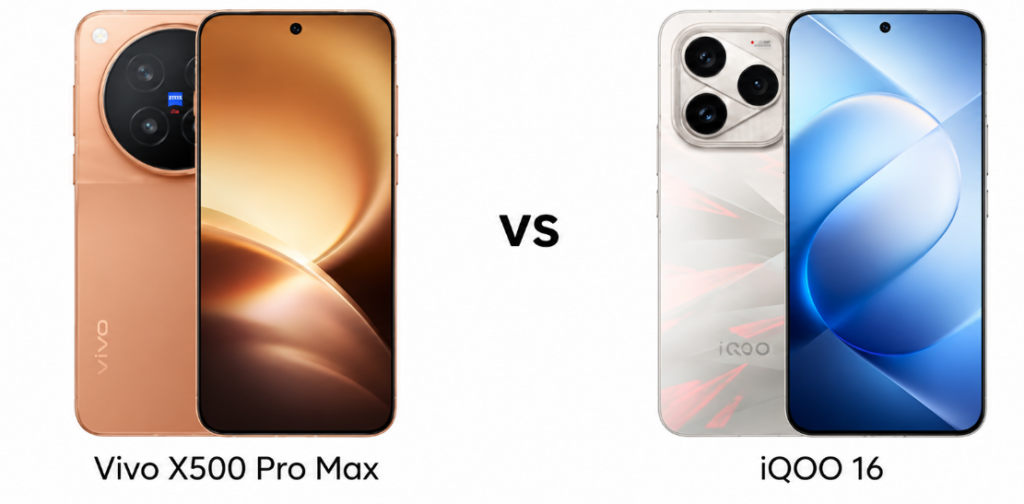
Vivo X500 Pro Max and iQOO 16 target users who want flagship performance, premium displays, powerful cameras, and large batteries. However, their priorities differ. Vivo focuses on advanced photography, Zeiss camera technology, and versatile imaging tools, while iQOO emphasizes processing power, gaming performance, and faster charging. Both offer impressive hardware, but the better choice depends on whether camera versatility or raw performance matters more.
Major Features:
Category
Vivo X500 Pro Max
iQOO 16
Winner
Build
Glass front, aluminum frame, glass or glass-fiber reinforced plastic back
Glass front, aluminum frame, glass or glass-fiber reinforced plastic back
Tie – Both offer premium construction
Water and Dust Resistance
IP68/IP69
IP68/IP69
Tie – Both provide strong protection
Display
6.85-inch LTPO AMOLED, 144Hz
6.85-inch AMOLED, 165Hz
iQOO – Higher refresh rate
Display Resolution
1440 x 3168 pixels
1440 x 3168 pixels
Tie – Both offer equally sharp resolution
Peak Brightness
4,400 nits
10,000 nits (isolated spot during video playback)
iQOO – Higher advertised peak brightness
Operating System
Android 17, OriginOS 7
Android 17, OriginOS 7
Tie – Same software platform
Processor
MediaTek Dimensity 9600 Pro (2nm)
Snapdragon 8 Elite Extreme Gen 6 (2nm)
iQOO – Stronger gaming-focused hardware
GPU
Mali-G2-Ultra-NX
Adreno 850
iQOO – Better gaming-oriented platform
RAM
Up to 16GB
Up to 16GB
Tie – Same maximum RAM
Storage
Up to 1TB, UFS 4.1
Up to 1TB, UFS 4.1
Tie – Same storage technology and maximum capacity
Main Camera
50MP, f/1.6, OIS
50MP, f/1.7, OIS
Vivo – Wider aperture
Telephoto Camera
200MP periscope, 3.5x optical zoom, OIS
50MP periscope, 3x optical zoom, OIS
Vivo – Higher resolution and greater optical zoom
Ultrawide Camera
50MP, autofocus
50MP, autofocus
Tie – Similar core specifications
Camera Features
Zeiss optics, T* coating, laser AF, colour spectrum sensor
LED flash, HDR, panorama
Vivo – More advanced imaging features
Rear Video Recording
Up to 8K at 30fps, 4K at up to 240fps in listed modes
Up to 8K at 30fps, 4K at 60fps
Vivo – More high-frame-rate recording options
Selfie Camera
50MP with autofocus
32MP
Vivo – Higher resolution and autofocus
Selfie Video
4K at 60fps
4K at 60fps
Tie – Same maximum recording capability
Battery
8,000mAh silicon-carbon
8,400mAh silicon-carbon
iQOO – Larger battery capacity
Wired Charging
90W
100W
iQOO – Faster wired charging
Wireless Charging
40W
40W
Tie – Same rated charging speed
Additional Charging Features
Reverse wired and reverse wireless charging
Bypass charging
Tie – Different useful extra features
Connectivity
Wi-Fi 7, Bluetooth 5.4/6.0, NFC, IR blaster
Wi-Fi 7, Bluetooth 5.4/6.0, NFC, IR blaster
Tie – Similar connectivity features
Audio
Stereo speakers, Hi-Res audio
Stereo speakers, Hi-Res audio, Snapdragon Sound
iQOO – Additional Snapdragon Sound support
Price/Value
Priced around $1,000 / ₹1,00,000
Priced around $800 / ₹83,000
iQOO – Lower price and strong flagship hardware
Overall Winner
Camera-focused flagship
Performance-focused flagship
iQOO – Better overall value for most buyers
Disclaimer: Specs are based on available data. Actual performance may vary. Verify details from official sources before buying.
Design and Display
Build and Feel
The Vivo X500 Pro Max features a glass front, aluminum frame, and either a glass or glass-fiber reinforced plastic back. Its IP68/IP69 rating provides strong protection against dust and water. The iQOO 16 offers similar construction options and the same durability rating, making both suitable for premium everyday use. Their overall build quality appears closely matched, although the selected back-panel material can influence the finish and feel. Vivo’s emphasis on premium imaging complements its flagship positioning, while iQOO maintains a more performance-focused identity.
Display Quality
Both phones feature 6.85-inch displays with 1440 x 3168 resolution, delivering sharp details and plenty of screen space. Vivo uses an LTPO AMOLED panel with a 144Hz refresh rate, HDR10+, Dolby Vision, and a reported 4,400-nit peak brightness. The iQOO 16 raises the refresh rate to 165Hz and advertises up to 10,000 nits peak brightness under specific conditions. These figures are not directly comparable because the iQOO brightness figure applies to an isolated spot during video playback.
Verdict
The iQOO 16 wins on refresh rate, while Vivo offers LTPO technology and strong display specifications. Both deliver excellent visuals, but iQOO better suits competitive gaming.
Specifications Including Battery
Performance
The Vivo X500 Pro Max runs on the 2nm MediaTek Dimensity 9600 Pro, paired with a Mali-G2-Ultra-NX GPU. The iQOO 16 uses Qualcomm’s 2nm Snapdragon 8 Elite Extreme Gen 6 processor and Adreno 850 GPU. Both platforms target demanding workloads, but iQOO’s high-clocked CPU configuration and gaming-oriented positioning make it particularly appealing to performance enthusiasts. Actual differences in gaming stability, heat management, and sustained performance will depend on testing. Both devices offer UFS 4.1 storage, configurations with up to 16GB RAM, and capacities reaching 1TB, providing ample room for demanding applications and large game libraries.
Battery and Charging
Vivo packs an 8,000mAh silicon-carbon battery with 90W wired charging, 40W wireless charging, and reverse wireless and wired charging. The iQOO 16 increases capacity to 8,400mAh and supports 100W wired charging, 40W wireless charging, and bypass charging. Its larger battery and faster wired charging give it an advantage for intensive gaming and frequent top-ups. Bypass charging is especially useful during supported gaming sessions because it can power the device directly while reducing battery stress.
Verdict
The iQOO 16 wins for its larger battery, faster wired charging, and gaming-focused bypass charging. Vivo remains competitive, but iQOO offers the more compelling performance package.
Camera
Main and Secondary Lenses
The Vivo X500 Pro Max features a 50MP main camera with optical image stabilization, a 200MP periscope telephoto camera offering 3.5x optical zoom, and a 50MP autofocus ultrawide camera. Zeiss optics, T* lens coating, laser autofocus, and a colour spectrum sensor further strengthen its photography credentials. The iQOO 16 also includes three rear cameras, but its configuration consists of a 50MP main sensor, a 50MP periscope telephoto camera with 3x optical zoom, and a 50MP autofocus ultrawide camera. Vivo’s higher-resolution telephoto sensor and specialised imaging features make it the more versatile choice for distant subjects, detailed portraits, and photography enthusiasts.
Vivo equips its front camera with a 50MP sensor, autofocus, and 4K video recording at up to 60fps. The iQOO 16 uses a 32MP selfie camera with HDR and the same maximum 4K recording frame rate. Vivo’s higher-resolution front sensor and autofocus offer greater flexibility for group selfies, portraits, and video calls where framing changes. Both phones provide capable front-facing video options, but Vivo’s hardware looks more ambitious for content creators who regularly record themselves.
Verdict
The Vivo X500 Pro Max wins for its 200MP telephoto camera, Zeiss enhancements, advanced video tools, and autofocus selfie camera. It is the stronger choice for photography enthusiasts.
Pricing
The Vivo X500 Pro Max is priced around $1,000 (₹1,00,000), placing it firmly in the premium flagship category. The iQOO 16 is priced around $800 (₹83,000), making it the more affordable option. This creates a meaningful difference for buyers deciding between camera-focused hardware and gaming-oriented performance. Vivo’s higher price reflects its specialised photography system, premium display technology, and extensive video capabilities.
Meanwhile, iQOO combines a powerful Snapdragon processor, a high-refresh-rate display, and a larger battery at a lower entry price. These figures are approximate, and actual retail prices may vary by market, storage configuration, taxes, and availability.
Is the price justified?
Vivo’s premium is easier to justify for users who regularly shoot telephoto photos, record advanced video, or value its Zeiss camera features. However, those who primarily game, stream, multitask, and browse may find little reason to spend more. The iQOO 16 delivers an impressive collection of flagship features while preserving a noticeable portion of the budget. Its larger battery and faster wired charging strengthen its value proposition.
Verdict
The iQOO 16 offers better overall value with its lower price, powerful processor, and larger battery. Vivo justifies the premium mainly through its superior camera hardware.
Disclaimer: Prices are approximate and may vary based on country, region, launch timing, and applicable taxes. Always check whether the listed price is for a China unit or a global/international variant when purchasing.
Conclusion
The Vivo X500 Pro Max distinguishes itself with a 200MP periscope telephoto camera, Zeiss optics, advanced video recording options, and a 50MP autofocus selfie camera. Its support for 8K recording, high-frame-rate 4K video, Dolby Vision HDR, and 10-bit Log recording also makes it attractive to serious mobile creators.
The iQOO 16 counters with its Snapdragon 8 Elite Extreme Gen 6 processor, 165Hz display, 8,400mAh battery, 100W wired charging, and bypass charging. These features make it particularly appealing for gaming, extended usage, and demanding everyday workloads. Both phones offer IP68/IP69 protection, ultrasonic fingerprint sensors, UFS 4.1 storage, wireless charging, and premium displays.
Their strengths are distinct rather than interchangeable. Vivo is designed to appeal to users who want a more advanced imaging system, while iQOO focuses on delivering speed and endurance without pushing the price as high. The better purchase therefore depends on which capabilities will genuinely be used most often.
Verdict
iQOO 16 is the overall winner for most buyers, thanks to its stronger value proposition, larger battery, faster charging, and gaming-focused performance. Choose the Vivo X500 Pro Max instead if photography and advanced video recording are your priorities.
1. Which phone is better for gaming, Vivo X500 Pro Max or iQOO 16?
The iQOO 16 is better suited to gaming, with its Snapdragon processor, 165Hz display, and bypass charging support.
2. Which phone has better zoom photography?
The Vivo X500 Pro Max offers better zoom hardware with its 200MP periscope camera and 3.5x optical zoom.
3. Which smartphone has longer battery life?
The iQOO 16 has a larger 8,400mAh battery, although actual battery life depends on usage and testing.
4. Is the Vivo X500 Pro Max worth the extra money?
Yes, for photography enthusiasts who value advanced telephoto imaging, Zeiss optics, and professional-grade video recording options.
5. Which phone should you buy for everyday use?
The iQOO 16 is the more practical choice for most users seeking flagship performance, long battery life, and better value.
Disclaimer: Prices, specifications, and availability may vary by region and retailer. Recommendations in this article are based on editorial opinion, feature-based value, and market positioning at the time of writing. Readers are advised to do their own research before making a purchase.
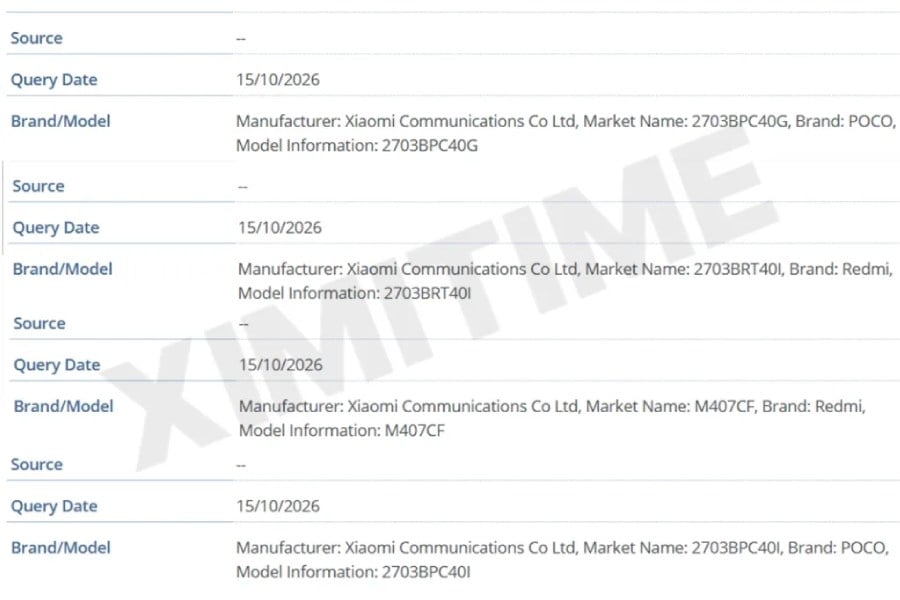
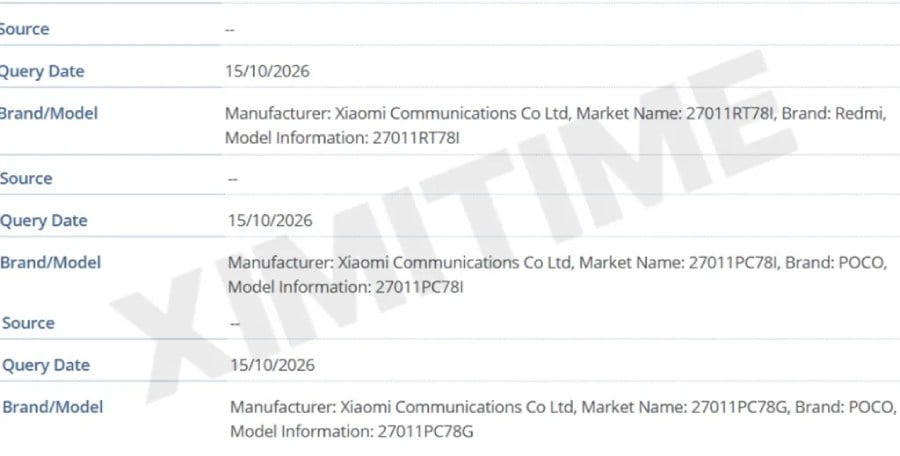
Xiaomi’s next Redmi Turbo phones may have turned up in the IMEI database. Ximitime shared model numbers of two phones, claiming they belong to the Redmi Turbo 6 and Redmi Turbo 6 Max. The code also suggests what they may be called outside China.
The Redmi Turbo 6 carries the internal codename Sofia and is also tagged Q10. The database lists four models: 2703BPC40G, 2703BRT40I, 2703BPC40I, and M407CF. Outside China, the phone is expected to be sold as the POCO X9 Pro.
Redmi Turbo 6 Redmi Turbo 6 Max
The Redmi Turbo 6 Max goes by denver, or Q10U, and carries model numbers 27011RT78I, 27011PC78I, and 27011PC78G. Its international release could be under POCO X9 Pro Max.
Based on how the model numbers are structured, the leak suggests the phones could launch as early as January to March 2027. The Turbo 5 series went on sale in January, by comparison.
The Redmi Turbo 5 uses the Dimensity 8500-Ultra, while the Redmi Turbo 5 Max was the first phone to ship with the Dimensity 9500s. Xiaomi priced them at 2,299 yuan and 2,499 yuan.
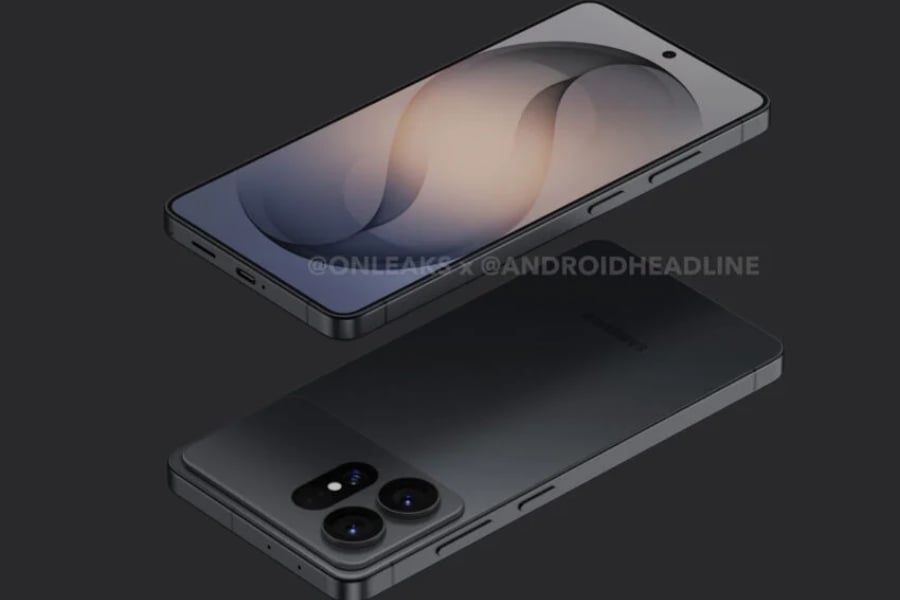
For the Redmi Turbo 6 Max, you’re looking at a 7-inch screen and a 10,000mAh battery if the earlier leaks hold. A render of the phone also surfaced in July. The processor could be the Dimensity 9500s.
Xiaomi hasn’t confirmed any of this, so treat the names, chips, and dates as unconfirmed for now.
Earlier this year, iQOO unveiled the iQOO 15R for the global market. This device was a tweaked version of the China-bound iQOO Z11 Turbo. Now, a reliable tipster has shared some key details about what appears to be the Z12 Turbo. There is a possibility that a tweaked version of this device could hit the global market with the iQOO 16R moniker.
iQOO Z12 Turbo’s key specs tipped
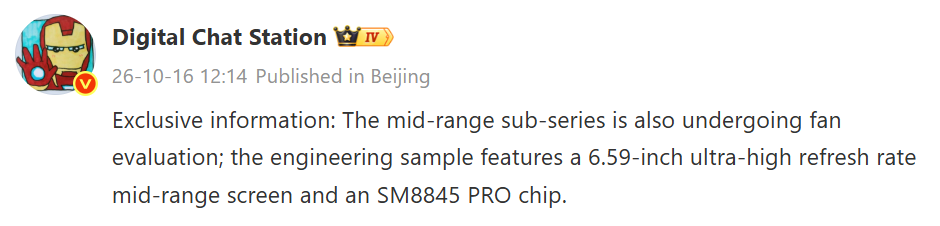
As per the tipster, iQOO is evaluating a built-in cooling fan for its mid-range Z-series phone, which will feature the Qualcomm SM8845 Pro chip. In the comments section, the tipster revealed that this chip will be called the Snapdragon 8 Gen 6.
To recall, the iQOO Z11 Turbo / iQOO 15R was one of the early adopters of the Snapdragon 8 Gen 5 chip. Hence, it is likely that the Snapdragon 8 Gen 6-powered iQOO phone the tipster is referring to could be the iQOO Z12 Turbo / iQOO 16R.
The leak further reveals that the iQOO Z12 Turbo’s engineering prototype has a 6.59-inch display with support for an ultra-high refresh rate. To recall, the Z11 Turbo has a similarly sized display with support for a 144Hz refresh rate.
The iQOO Z11 Turbo houses a 7,500mAh battery, but its successor may pack a considerably larger battery. Back in July, DCS hinted that the Z12 Turbo could feature a battery with a capacity of around 10,000mAh.
The iQOO Z11 Turbo was announced in January 2025, followed by the iQOO 15R’s India launch in February. It remains to be seen whether the iQOO Z12 Turbo and iQOO 16R will follow a similar release schedule.
On Oct. 21, Honor will unveil the Honor Win 2 series of smartphones. Among the Win 2, Win RT 2, and Win Turbo 2, only the Win 2 is expected to feature Qualcomm’s latest and most powerful Snapdragon 8 Elite Extreme Gen 6 chipset. Ahead of the launch, the device has appeared on AnTuTu, revealing its performance score and key hardware details.
Honor Win 2 AnTuTu listing
Honor Win 2 AnTuTu listing
According to the AnTuTu V12 listing, the Honor Win 2 (model number RTW-AN00) achieved an overall score of 5,702,964 points. The benchmark identifies the Snapdragon 8 Elite Extreme Gen 6 as its chipset, paired with an Adreno 850 GPU. The tested configuration includes 16GB of RAM, 1TB of storage, and Android 17.
Breaking down the benchmark results, the GPU scored 2,072,221 points, while the memory and user experience (UX) tests returned 755,729 and 1,372,277 points, respectively. The listing also mentions LPDDR5X memory and UFS 4.1 storage.
Honor Win 2 specifications (rumored)
According to a recent DCS post, the Honor Win 2 is tipped to feature a 6.89-inch flat OLED display with 2K resolution and a 185Hz refresh rate. The panel could feature ultra-narrow 0.93mm bezels on all four sides and support 5,920Hz high-frequency PWM dimming for brightness control.
The device will pack a huge 10,100mAh single-cell battery. The phone is also expected to support 100W wired charging and wireless charging. A dual-fan cooling system could help manage temperatures during extended gaming sessions, while dual 1216 large-cavity speakers may improve audio output.
Other rumored features include a 200-megapixel main camera paired with a secondary camera. While the original Honor Win featured a telephoto camera, it will be absent on the Win 2. The device could also feature an ultrasonic fingerprint sensor, USB 3.2 Gen 1 connectivity, and IP68, IP69, and IP69K ratings for dust and water resistance.
Surprisingly, the brand has already confirmed that the phone will cost 5,499 Yuan in China after the national subsidies. It will be available in shades, such as Quick Black, Designated Win, and Red/Blue Buff.
The Redmi K100 is gearing up to join the brand’s latest flagship smartphone lineup in China. Starting today, Redmi has started teasing the standard model, highlighting its focus on battery life and gaming performance. The phone is expected to deliver several high-end features while keeping its price below the Pro models.
Redmi K100 to launch this month with flagship gaming features
Redmi K100’s green variant
Redmi has confirmed that the K100 standard edition will launch this month, with the company promising gaming performance comparable to the Pro models. The smartphone is already available for reservations through Xiaomi’s online store, JD.com, and Tmall in China. Its official tagline highlights a new baseline for flagship smartphones, with endurance and gaming capabilities at the forefront.
The phone’s green variant was recently shown by Xiaomi Group president Lu Weibing. It features a design similar to the Redmi K100 Pro models but packs a dual-camera setup instead triple camera seen on the Pro variants. It is also confirmed to feature Bose-tuned speakers.
According to leaks, the Redmi K100 could feature a 6.9-inch AMOLED display with 1.5K resolution and a 185Hz refresh rate. For performance, the phone is expected to use Qualcomm’s Snapdragon 8 Elite chipset from 2024. A dedicated graphics chip could support simultaneous game super-resolution and frame interpolation for smoother gameplay.
The Redmi K100 will house a 10,000mAh silicon-carbon battery, potentially making it the largest battery ever fitted to a Redmi K-series phone. A 100W wired charging system has also been confirmed through China’s 3C certification, although Xiaomi has yet to officially announce the battery capacity. Other reported features include an ultrasonic fingerprint scanner and an IP68 rating for dust and water resistance, though these details remain unconfirmed.
Pricing has not been officially announced, but tipster Digital Chat Station previously suggested a starting price of around 3,500 yuan (approximately $490). The Redmi K100 is expected to sit below the K100 Pro and K100 Pro Max in the lineup. While the launch date is yet to be confirmed, the brand has revealed that the Redmi Clip Neo will also debut alongside the K100.
Sony is into news regarding its Android 17 rollout, but not for good reasons. The company has completely cancelled an Android 17 upgrade for one of its Xperia phones, despite a commitment at the launch. This happens rarely in the smartphone industry.
The unlucky device is the Sony Xperia 10 VI, which was originally promised “three Android OS upgrades.” It’s a mid-range phone launched in 2024 with Android 14, and was supposed to receive Android 17 as the phone’s last major upgrade, but the company has released an apology notice instead of a software update.
Sony says the Xperia 10 VI “does not support an Android 17 upgrade experience that we consider adequate” because of some “limitations related to the device’s storage configuration.” The reason isn’t entirely clear, but the company says other Xperia devices due to receive Android 17 are not affected and security updates will continue on as promised.
Here’s the official statement:
“We announced at launch that the Xperia 10 VI would receive three Android OS upgrades. However, after a detailed technical assessment, we determined that due to limitations related to the device’s storage configuration, the Xperia 10 VI does not support an Android 17 upgrade experience that we consider adequate. Accordingly, we have decided not to make this upgrade available. We recognise that this falls short of our original announcement, and we wish to apologise for this change.
On the other hand, our security update commitment remains unchanged. Sony will continue to provide security updates for four years from the product’s launch date, as previously communicated.
This issue is specific to Xperia 10 VI’s technical specifications and will not impact other Xperia models.”
The Xperia 10 VI was one of the six Sony smartphones that were previously guaranteed to get Android 17. The list has now shrunk to five devices, and all of them have started receiving the update.
We often see smartphone brands delaying update rollouts but cancelling a promised Android OS upgrade for a device is very rare.
The upcoming Galaxy S27 Ultra could see a significant change in its chipset strategy. The flagship phone is expected to use Qualcomm’s next-generation Snapdragon processor, but reported overheating issues could complicate that plan. Samsung may turn to its own Exynos 2700 chip if the problems remain unresolved.
Snapdragon overheating issues put Exynos 2700 in the picture
Samsung Exynos 2700
According to South Korea’s Seoul Economic Daily, Samsung has encountered overheating and performance throttling issues while testing Qualcomm’s Snapdragon 8 Elite Extreme Gen 6 for the Galaxy S27 Ultra. The processor reportedly exceeded temperature limits during sustained workloads, causing processing speeds to drop. Samsung is said to have asked Qualcomm to address the problems by mid-October, although both companies are continuing to work on improvements.
If Qualcomm cannot meet Samsung’s thermal stability and performance requirements, the company may consider its in-house Exynos 2700 as an alternative. The chip is being developed by Samsung’s System LSI division and manufactured using Samsung Foundry’s second-generation 2nm SF2P process. It is designed to improve computing performance and power efficiency compared with its predecessor.
An Exynos-powered Galaxy S27 Ultra would represent a major comeback for Samsung’s in-house processors in its premium smartphone range. The Galaxy S22 Ultra was the last Ultra model to offer an Exynos variant, with the Exynos 2200 appearing in European models in 2022. Samsung switched to Snapdragon processors across global markets for the Galaxy S23 Ultra and subsequent generations.
However, a global Exynos-only strategy remains unconfirmed. An earlier report suggested that Samsung was considering Exynos 2700 versions for selected markets, including South Korea, while retaining Snapdragon variants in the US. The latest overheating report does not establish whether Samsung intends to adopt Exynos worldwide or maintain a regional split.
The decision also has financial implications. Samsung’s mobile AP purchasing costs reached 13.83 trillion won in 2025, according to Seoul Economic Daily. Greater use of Exynos could reduce reliance on external chip suppliers and improve utilisation of Samsung’s advanced manufacturing facilities.
E Ink has launched Kaleido 4, so the color e-paper tablet, reader, or monitor you buy next can have a noticeably better screen than the ones on sale now. The company announced its fourth-generation canvas with a wider color gamut, brighter whites, higher contrast, and faster refresh. Hanvon Technology’s M10C II is the first device to use it.
Most color E Ink devices today run on Kaleido 3. This includes the Onyx Boox Tab Ultra C, the first Onyx tablet with that panel, and the Bigme S6 Color+, which Bigme rated at 12fps. The same panel has since moved beyond tablets into products like the 13.3-inch Bigme B13 monitor, which shows color at 150ppi.
Compared with the previous generation, E Ink says you get twice the color gamut volume, now above 40K. Likewise, white reflectance is up by 15%, and contrast improves by 50%. Per E Ink, the improvement makes images, charts, and presentations look clearer, and cuts the grainy look that color e-paper screens are known for.
The panel also refreshes faster. Kaleido 4 uses a new oxide TFT backplane that handles higher driving voltages, which speeds up screen refresh. New algorithms let it play video at up to 18 frames per second, up from the 12fps Bigme quoted for the S6 Color+. E Ink also redesigned the front light, and says colors look more natural and detailed.
Hanvon M10C II is the first Kaleido 4 device
E Ink says the Hanvon M10C II will be the world’s first product with Kaleido 4. It runs a Qualcomm octa-core processor with 4GB of RAM and 128GB of storage.
According to E Ink, page turning and scrolling are 27% faster than before. The improvement comes from combining the oxide backplane with Hanvon’s Enhanced Pressure Floating technology and T2000 timing controller.
For writing, you get a wireless, battery-free pen with 8,192 pressure levels. The screen is a micro-etched anti-glare black tempered glass panel that reduces glare and parallax and gives writing a paper-like feel. Hanvon also includes OCR, voice and AI-powered office apps, cloud library sync, ripple-reduction technology, and font rendering changes.
For more daily updates, please visit our News Section.
Redmi has set a launch window for its first clip-on earphone. Lu Weibing, Partner and President of Xiaomi Group, President of the Mobile Phone Division, and General Manager of the Xiaomi brand, announced today that the Redmi Clip Neo will launch this month, alongside the Redmi K100.
Redmi debuted the K100 Pro and K100 Pro Max in China in August, after teasing the lineup at ChinaJoy 2026 in July. The Redmi Clip Neo will arrive with the last phone in the family, not on its own.
The shared poster shows a pair of white earphones with a curved hook that rests over the ear, next to a rounded white charging case with a small light strip on the front.
Xiaomi’s first clip-on earphones went on sale in May in China, so we have a reference point for what Redmi may be building on. The earbuds retail at 849 yuan (about $124), weigh 5.5g each, and a memory titanium wire holds them in place.
You get an 11mm driver, a high-gloss mirror finish, and IP57 dust and water resistance. As we noted in our earlier coverage of Xiaomi’s clip-on earphones, they also support Apple’s Find My network for iPhone users and offer real-time translation in 21 languages.
Redmi hasn’t shared a price, battery life, driver size, or an exact launch date for the Redmi Clip Neo. It also hasn’t said how much of Xiaomi’s hardware carries over, so treat the specs above just as a reference point.
Timex is leaning further into its pop-culture collaborations with the release of five new Harry Potter-themed watches. The new lineup leans heavily on the brand’s retro-styled Q Timex series and the rugged Expedition line, offering a mix of standard wristwatches and a surprisingly detailed pocket watch.
The collection is anchored by three models based on the series’ Time-Turner device. The most prominent is the Q Timex Time Turner Chronograph, a 40mm stainless steel watch priced at $349. It utilizes a silver-tone dial with star-shaped cutouts and stacks its black chronograph sub-dials to visually mimic an hourglass. It features a gold-tone stationary bezel engraved with text from the books and runs on a standard quartz analog movement.
For those looking for a smaller footprint, Timex is also offering a 36mm Q Timex Time Turner variant for $249. This model drops the chronograph functionality in favor of a literal miniature hourglass filled with silver glitter placed at the center of a black and gold-tone dial. It comes on a black leather strap sourced from the S.B. Foot Tanning Company and features a black bidirectional bezel.
Rounding out the Time-Turner trio is a 48.5mm gold-tone stainless steel pocket watch ($349). It’s a heavy, novelty piece featuring a sculpted cover that opens to reveal a white dial modeled after the Hogwarts Clock Tower. It includes a standard Albert chain and features a perlage-finished interior.
Moving away from the Time-Turner motif, the collection includes the Q Timex Sorcerer’s Stone. Priced at $279, this 38mm watch features a black IP-coated stainless steel case and bracelet paired with a textured red dial. It includes standard Q Timex features like a day/date window and domed acrylic crystal, but adds a wand-shaped second hand and an exhibition case back displaying the stone’s name.
Timex is updating its field watch lineup with the Harry Potter x Timex Bolt Expedition Scout. This 40mm watch is the most understated of the group. It features a black dial with a lightning bolt replacing the traditional second hand.
The main gimmick here is tied to Timex’s proprietary backlight technology: pressing the crown activates the Indiglo backlight, which illuminates a hidden graphic of Harry’s signature glasses across the dial. While this specific Expedition model is already live on Timex’s Indian storefront, it is expected to officially launch on the US site shortly.
All models in the new collection are powered by battery-operated quartz movements and feature water resistance ratings ranging from 30 meters for the pocket watch to 50 meters for the wristwatches.
XElectron has introduced a new digital photo frame to the Indian market, and its primary distinguishing feature is its physical footprint. The new XElectron Large Digital Photo Frame features a 15.6-inch display, offering a significantly larger viewing area than the standard 8-inch or 10-inch smart frames typically found in this product category.
XElectron Digital Photo Frame Specs
The device is built around a 1920 x 1080 Full HD IPS touchscreen with a standard 16:9 aspect ratio. To help the device blend into a living room or office environment rather than looking like a repurposed tablet or computer monitor, XElectron has opted for wooden-look bezels. This design choice is a straightforward attempt to mimic the aesthetic of a traditional picture frame.
Functionally, the frame operates via a Wi-Fi connection and integrates with the third-party Frameo app, which is available on both iOS and Android. This integration allows users to send photos and short videos directly to the frame from a smartphone, regardless of their physical location.
It is a practical feature for users who want to update the photo rotation on a device located in a relative’s home without needing physical access to the hardware. The touchscreen interface handles the initial setup process and slideshow management.
For media storage, the frame includes 32GB of internal memory, which the manufacturer states can hold tens of thousands of compressed images. While app-based wireless transfers are the primary focus, the device also supports local media management. The frame includes an SD card slot, as well as USB Type-A and Type-C ports.
Pricing and Availability
The 15.6-inch digital photo frame is currently available on Amazon India and the company’s official website. The device is currently selling at a festive promotional price of ₹10,990. The standard regular price is listed at ₹11,990.
We use cookies on our website to give you the most relevant experience by remembering your preferences and repeat visits. By clicking “Accept”, you consent to the use of ALL the cookies.
This website uses cookies to improve your experience while you navigate through the website. Out of these, the cookies that are categorized as necessary are stored on your browser as they are essential for the working of basic functionalities of the website. We also use third-party cookies that help us analyze and understand how you use this website. These cookies will be stored in your browser only with your consent. You also have the option to opt-out of these cookies. But opting out of some of these cookies may affect your browsing experience.
Necessary cookies are absolutely essential for the website to function properly. This category only includes cookies that ensures basic functionalities and security features of the website. These cookies do not store any personal information.
Any cookies that may not be particularly necessary for the website to function and is used specifically to collect user personal data via analytics, ads, other embedded contents are termed as non-necessary cookies. It is mandatory to procure user consent prior to running these cookies on your website.