Advertisement

Huawei Mate X8 official renders with color options, RAM and storage options revealed

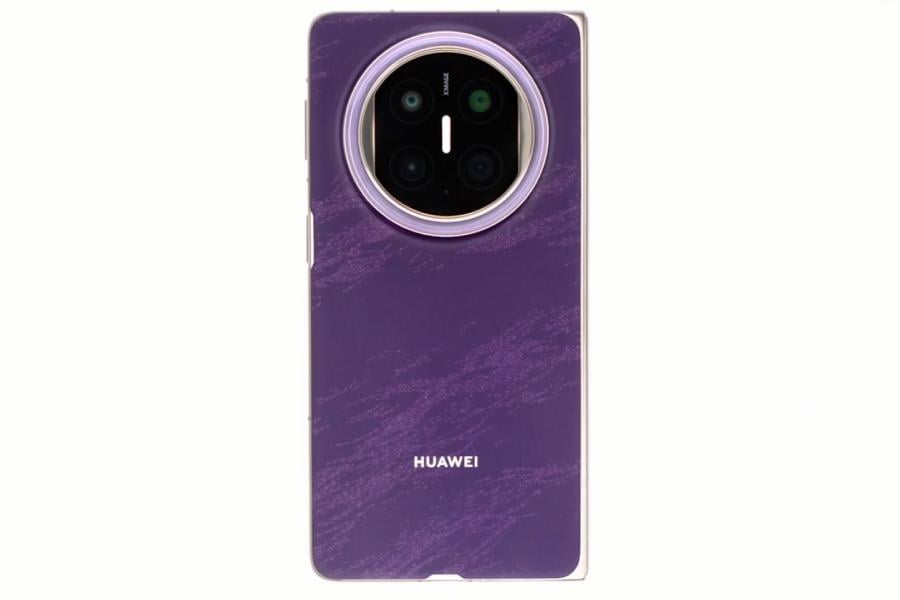
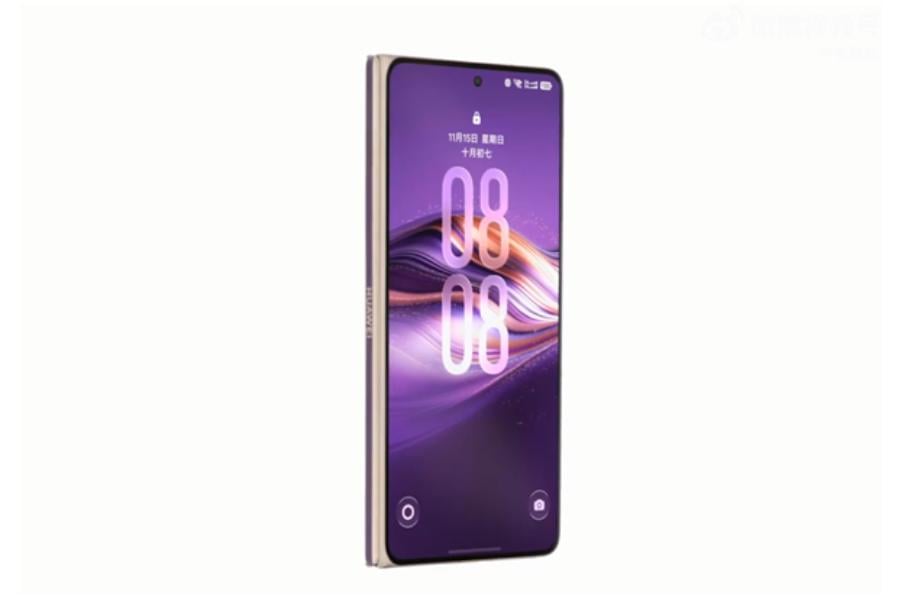
Huawei has now set a November 24 launch in China for the Mate X8, a day after the company showed the book-style foldable in a Mate X anniversary video and days after Richard Yu was photographed carrying a light purple unit. Official product renders have now appeared on Huawei’s official store, revealing the phone’s color options and memory configurations ahead of the event.

Huawei Mate X8 color options and configurations

Huawei Mate X8
Huawei Mate X8

The official store lists five color options: Purple Gold Brocade, Azure Sky Black, Snowy White, Qingyun Brocade, and Danxia Brocade. The purple, green Qingyun, and red Danxia versions have a brocade-textured back, while Azure Sky Black and Snowy White use a plain finish. That textured look was already visible on the light purple unit Richard Yu was seen carrying, and the new official images make the full color lineup clear.

Four memory configurations are listed: 12GB+256GB, 12GB+512GB, a 16GB+512GB Collector’s Edition, and a 16GB+1TB Collector’s Edition. Those options match earlier reports that split the lineup into a standard model and a Collector’s Edition. The store page does not yet show a price, and Huawei has not said when sales will start.

Huawei Mate X8 specifications (rumored)

Huawei Mate X8
Huawei Mate X8

The official renders show a large circular camera ring holding four lens cutouts, a center flash, and an XMAGE label, with a punch-hole camera on the cover display. Earlier leaks have pointed to a 6.5-inch cover screen and an 8.15-inch inner display with ultra-thin glass, a small step up from the Mate X7‘s 6.49-inch cover and 8-inch inner panel, though Digital Chat Station has also described the inner screen as an 8-inch wide color gamut BOE panel.

The camera system is tipped to include a 50-megapixel main sensor with a variable aperture and a 50-megapixel RYYB periscope telephoto, alongside a battery of more than 6,000mAh and the Kirin 9050 Pro already used in the Mate 90 series. A separate tip has suggested the Collector’s Edition may support Huawei’s Ruiying Z10 external camera, but that remains unconfirmed. Those hardware details have not been officially published, and Huawei has not set a price ahead of the November 24 event.

For daily updates, please visit our News Section.

Redmi Band 4 vs Huawei Band 11: Which Fitness Band Is Better?

Redmi Band 4 and Huawei Band 11 are affordable fitness bands designed for users who want health monitoring, activity tracking and everyday convenience without investing in a full-fledged smartwatch. Redmi focuses on battery endurance and affordability, offering up to 21 days of battery life at approximately $25. Huawei takes a more feature-rich approach with a larger AMOLED display, advanced sleep tracking, around 100 workout modes and additional smart features. However, the Huawei Band 11 costs approximately $45, making the price difference worth considering. So, which fitness band offers the better overall experience?

Redmi Band 4 vs Huawei Band 11

1. Major Features:

CategoryRedmi Band 4Huawei Band 11Winner
Frame DesignMetal-textured UnibodyAluminium Alloy / PolymerHuawei – Material options
Display Size1.47-inch1.62-inchHuawei – Larger display
Refresh Rate60Hz60HzTie – Same refresh rate
Maximum Battery LifeUp to 21 daysUp to 14 daysRedmi – Longer battery life
Typical Battery LifeApproximately 8 daysUp to 8 daysTie – Similar battery endurance
Heart Rate MonitoringSupportedSupportedTie – Both support monitoring
Blood Oxygen MonitoringSupportedContinuous and manualHuawei – More monitoring options
Stress MonitoringAll-dayEmotion/Stress Assistant TrackerHuawei – Additional wellness features
Sleep TrackingSupportedTruSleepHuawei – Advanced sleep tracking
Women’s Health TrackingSupportedMenstrual cycle trackingTie – Both support cycle tracking
Sports Modes50Around 100Huawei – More workout modes
Water Resistance5ATM5ATMTie – Same water resistance
NotificationsSupportedCalls and messagesTie – Both support notifications
Price$25 / ₹2,400$45 / ₹4,000Redmi – More affordable
Disclaimer: Specs are based on available data. Actual performance may vary. Verify details from official sources before buying.

2. Design & Build

The Redmi Band 4 features a metal-textured unibody design, 2.5D curved glass and a vertically textured strap, giving it a refined appearance. Huawei Band 11 offers aluminium alloy and durable polymer variants, weighing approximately 17g and 16g respectively without the strap. Its slim 8.99mm profile also makes it comfortable for extended wear, including overnight sleep tracking.

Huawei additionally offers multiple colour options and fluoroelastomer straps, allowing users to choose between different finishes. While Redmi has an attractive textured design, Huawei provides more clearly defined material choices and a lightweight construction.

Winner: Huawei – Lightweight construction, slimmer profile and multiple material options.

3. Display

The display is one of Huawei Band 11’s biggest advantages. Redmi Band 4 features a 1.47-inch display with a 60Hz refresh rate and 2.5D curved glass. Huawei Band 11 offers a larger 1.62-inch AMOLED display with a 286 × 482 resolution and 347 PPI.

Huawei also delivers up to 1,500 nits of peak brightness, improving visibility in bright outdoor conditions. Its AMOLED panel offers rich colours and deep blacks, while Always-On Display allows users to check information without waking the screen. Both provide a 60Hz refresh rate, but Huawei offers a considerably more advanced viewing experience.

Winner: Huawei – Larger AMOLED display, 1,500-nit brightness and Always-On Display.

4. Battery Life & Charging

Battery endurance is where Redmi Band 4 fights back. It offers up to 21 days of battery life, compared with Huawei Band 11’s maximum of 14 days. Redmi also has an approximately eight-day battery life figure with regular monitoring.

Huawei provides more detailed battery estimates, including up to eight days under typical usage and three days with Always-On Display enabled. It uses magnetic charging and requires a 5V/1A charger. Redmi’s charging details are not included in the available specifications.

Although actual endurance depends on usage and enabled tracking features, Redmi’s higher maximum rating makes it attractive for users who prefer less frequent charging.

Winner: Redmi – Longer maximum battery endurance of up to 21 days.

5. Health & Wellness Tracking

Both bands support heart rate monitoring, blood oxygen tracking, stress monitoring and sleep tracking. Redmi Band 4 additionally includes women’s health tracking and all-day stress monitoring, covering essential wellness needs.

Huawei Band 11 expands the experience with TruSleep, detailed sleep insights and multidimensional emotional wellbeing monitoring. It also supports continuous SpO₂ monitoring and an Emotion/Stress Assistant Tracker. Its optical heart rate sensor provides continuous heart rate monitoring, while the Huawei Health app offers additional health insights.

These additions make Huawei particularly appealing to users interested in understanding sleep patterns, emotional wellbeing and daily health trends.

Winner: Huawei – More comprehensive sleep analysis and emotional wellbeing features.

6. Sports & Fitness Tracking

Redmi Band 4 supports 50 sports modes, covering a useful range of everyday physical activities. Huawei Band 11 goes further with approximately 100 workout modes, including yoga, strength training and rope skipping.

Huawei also features activity rings, running courses and a 9-axis IMU combining an accelerometer, gyroscope and magnetometer. Its fitness platform provides workout records, training load, recovery information, VO₂ max estimates and Running Ability Index.

This makes Huawei more appealing to users who regularly switch between different exercise routines or want additional information about their training. Redmi remains sufficient for users who primarily need basic activity tracking.

Winner: Huawei – Around 100 workout modes and more advanced fitness insights.

7. GPS & Outdoor Tracking

Neither band offers confirmed independent GPS positioning in the specifications being compared. However, Huawei Band 11 supports outdoor cycling route tracking through a compatible smartphone with GNSS, allowing users to record their routes without requiring a separate GPS receiver inside the band.

This functionality depends on smartphone compatibility and the Huawei Health app. Redmi Band 4’s specifications do not confirm built-in GPS or connected route tracking.

For users who regularly walk, run or cycle outdoors, Huawei provides a more clearly documented route-tracking experience, although carrying a compatible smartphone is necessary.

Winner: Huawei – Offers confirmed phone-assisted outdoor cycling route tracking.

8. Smart Features & Connectivity

Redmi Band 4 supports notifications, alarms, watch faces and WeChat and Alipay QR payments, although NFC is not supported. Huawei Band 11 offers Bluetooth 6.0 connectivity, notifications for calls and messages, calendar reminders and remote camera shutter functionality.

Huawei also supports more than 100 watch faces, personalised widgets, Always-On Display, timers, a stopwatch, a calculator, compass, weather information and phone-finding functionality. Users can also decline incoming calls and respond with preset messages on compatible smartphones.

Compatibility with Android 9.0 and later and iOS 13.0 and later further strengthens Huawei’s everyday usability. Redmi remains attractive for users who specifically value its QR payment options, but Huawei offers a broader collection of smart features.

Winner: Huawei – More everyday utilities, Bluetooth 6.0 and extensive personalisation.

9. Water Resistance & Everyday Use

Both Redmi Band 4 and Huawei Band 11 offer 5ATM water resistance, making them suitable for swimming and everyday exposure to water.

Huawei specifies that its rating supports shallow-water activities, including swimming pools and coastal swimming, but excludes diving, hot showers and high-pressure water activities. These limitations are important because 5ATM does not mean unrestricted underwater use.

Redmi offers the same nominal resistance rating, making the two bands comparable in this category. For users who want a fitness tracker for swimming, exercise and everyday wear, both provide suitable water protection within their rated limits.

Winner: Tie – Both feature 5ATM water resistance.

10. Which One Should You Buy?

At approximately $25 or ₹2,400, Redmi Band 4 is the better choice for budget-conscious users who prioritise battery life, basic health monitoring and essential fitness tracking. Its 21-day maximum battery rating is particularly attractive.

Huawei Band 11 costs approximately $45 or ₹4,000, but justifies the additional expense through its larger AMOLED display, 1,500-nit brightness, approximately 100 workout modes and more advanced wellness capabilities.

It also offers a wider range of smart features and phone-assisted route tracking. Users who want more than basic fitness monitoring will find Huawei’s additional capabilities worthwhile.

For buyers who can comfortably spend the extra $20, Huawei Band 11 is the stronger overall choice. Redmi Band 4 remains a practical alternative for users who value battery endurance and affordability above everything else.

Overall comparison: Huawei Band 11 wins in display quality, health and fitness capabilities, connectivity and smart features. Redmi Band 4 takes the lead in maximum battery endurance and price, making it the better budget option.

Disclaimer: Prices, specifications, and availability may vary by region and retailer. Recommendations in this article are based on editorial opinion, feature-based value, and market positioning at the time of writing. Readers are advised to do their own research before making a purchase.

Vivo Buds Clip vs Vivo TWS 4: Which Wireless Earbuds Should You Buy?

Vivo Buds Clip and Vivo TWS 4 take two very different approaches to wireless audio. The Buds Clip feature an open-ear clip-on design focused on comfort, environmental awareness, and everyday convenience, while the TWS 4 use a conventional in-ear design with active noise cancellation and advanced audio technologies. Despite belonging to the same brand, their priorities differ considerably. With the Buds Clip offering newer open-ear features and the TWS 4 delivering stronger audio specifications at a lower price, choosing between them comes down to what matters most in everyday listening.

Vivo Buds Clip vs Vivo TWS 4

1. Major Features:

CategoryVivo Buds ClipVivo TWS 4Winner
DesignOpen-ear clip-onIn-earVivo Buds Clip – Open-ear comfort
ConnectorMemory titanium alloyConventional in-earVivo Buds Clip – Flexible connector
Driver12mm12.2mm ceramic-tungstenVivo TWS 4 – Advanced diaphragm
Audio codecsNot specifiedLDAC, aptX AdaptiveVivo TWS 4 – Better codec support
Spatial audio4 modes3D panoramic audioVivo TWS 4 – Advanced audio processing
Custom EQ10-band EQPersonalised audioVivo Buds Clip – Custom EQ
ANCNoUp to 55dBVivo TWS 4 – Active noise cancellation
TransparencyNatural open-ear awarenessAI dual transparencyVivo Buds Clip – Open-ear awareness
MicrophonesDual microphones + VPUTriple microphonesVivo TWS 4 – More microphones
Call noise cancellation2-mic + VPU AIAI call noise cancellationVivo Buds Clip – Dedicated VPU
Water resistanceIP55IP54Vivo Buds Clip – Better protection
Battery (earbuds)Up to 10 hoursUp to 11 hours (ANC off)Vivo TWS 4 – Longer playback
Battery (with case)Up to 42 hoursUp to 45 hours (ANC off)Vivo TWS 4 – Longer playback
Fast charging10 minutes for 3 hours10 minutes for 5 hoursVivo TWS 4 – Faster charging
Wireless chargingYes, version-dependentNot specifiedVivo Buds Clip – Wireless charging
BluetoothNot specifiedBluetooth 5.4Vivo TWS 4 – Newer documented standard
MultipointTri-device connectivityTwo devicesVivo Buds Clip – More connections
Gaming latencyNot specified44msVivo TWS 4 – Lower latency
ControlsTap, press and swipePressure-sensitive and slidingVivo TWS 4 – Dedicated volume gestures
Wear detectionYesYes–
Remote camera controlYesYes–
Price$90 / ₹8,300$55 / ₹4,700Vivo TWS 4 – More affordable
Disclaimer: Specs are based on available data. Actual performance may vary. Verify details from official sources before buying.

2. Design and Comfort

Build & Fit

The biggest difference between these earbuds is their wearing style. The Vivo Buds Clip feature an ergonomic open-ear clip-on design with a flexible memory titanium alloy connector that wraps around the ear. Their 12mm drivers deliver sound without sealing the ear canal, making them particularly suitable for people who dislike conventional in-ear earbuds. The leakage prevention mode also helps manage sound escaping into the surroundings.

The Vivo TWS 4 take a more traditional approach with an in-ear design and antibacterial ear tips. Each earbud weighs approximately 4.8g, providing a relatively lightweight fit, although the sealed design may not suit everyone during extended listening sessions.

Controls & Usability

The Buds Clip support double-tap, triple-tap, press-and-hold, and swipe gestures. They also include wear detection and remote camera control. The TWS 4 feature pressure-sensitive controls, sliding gestures for volume adjustment, wear detection, and remote camera control.

Verdict

The Buds Clip are the more interesting option for comfort and situational awareness, particularly for users who prefer an open-ear experience. However, the TWS 4 offer better isolation and a conventional listening experience.

Winner: Vivo Buds Clip – More comfortable open-ear design and flexible fit.

3. Sound Quality

Driver Performance, Bass, Mids and Highs

Both earbuds feature 12mm-class drivers, but their acoustic designs serve different purposes. The Vivo Buds Clip use 12mm high-performance drivers in an open-ear configuration. Their design prioritises environmental awareness and comfortable listening rather than creating a sealed acoustic environment. This makes them suitable for podcasts, calls, casual music, and everyday background listening, although their open design may limit bass impact compared with conventional in-ear earbuds.

The Vivo TWS 4 feature a ceramic-tungsten diaphragm driver with a 12.2mm speaker. Their in-ear construction provides a better foundation for bass response and passive isolation. The dedicated audio hardware and vivo Golden Ears acoustic tuning further strengthen their appeal for music enthusiasts.

Codec Support & Audio Features

The TWS 4 clearly have the technical advantage, supporting LDAC and aptX Adaptive, alongside Hi-Res Wireless certification and Snapdragon Sound. They also offer 3D panoramic audio, personalised sound, and multiple spatial audio modes. The Buds Clip offer four spatial audio modes and a 10-band custom EQ, but their audio codec support is not specified.

Verdict

The Buds Clip provide practical audio features, but the TWS 4 are considerably better equipped for high-quality music playback.

Winner: Vivo TWS 4 – Superior codec support, audio hardware and Hi-Res capabilities.

4. ANC and Transparency Modes

Noise Cancellation Quality

This is where the Vivo TWS 4 establish a significant advantage. They feature active noise cancellation with a claimed maximum depth of 55dB and a cancellation bandwidth of up to 5,000Hz. Their AI adaptive ANC adjusts noise cancellation according to the surrounding environment, making them better suited to commuting, travelling, and working in noisy environments.

The Vivo Buds Clip do not feature ANC. Instead, their open-ear construction allows users to hear surrounding sounds naturally without switching between dedicated transparency modes. They also include a leakage prevention mode to help minimise sound escaping from the earbuds. This is a different approach to managing the listening environment rather than competing directly with active noise cancellation.

Ambient & Call Performance

The TWS 4 include AI dual transparency mode, wind noise reduction of up to 90%, and three microphones with AI call noise cancellation. The Buds Clip feature dual microphones and a VPU alongside 2-mic + VPU AI call noise cancellation. Their open-ear design also makes conversations and environmental awareness more natural.

Verdict

The TWS 4 are the obvious choice for blocking unwanted background noise, while the Buds Clip are better suited to users who need to remain aware of their surroundings.

Winner: Vivo TWS 4 – Much stronger noise cancellation and dedicated transparency features.

5. Battery and Connectivity

Battery Life & Fast Charging

The Vivo Buds Clip offer up to 10 hours of playback on a single charge, extending to 42 hours with the charging case. Their fast-charging technology provides up to three hours of playback after just 10 minutes of charging. Wireless charging is also supported, although availability depends on the version.

The Vivo TWS 4 deliver up to 11 hours of playback with ANC disabled and up to 45 hours with the charging case. With ANC enabled, these figures drop to six hours and 26 hours, respectively. Their fast charging provides up to five hours of playback from a 10-minute charge.

The TWS 4 have a slight advantage in overall endurance, although the Buds Clip offer wireless charging convenience.

Bluetooth Stability and Multipoint

The TWS 4 support Bluetooth 5.4, LE Audio, and simultaneous connections to two devices. They also offer 44ms low-latency gaming and Qualcomm’s audio platform. The Buds Clip support tri-device connectivity, allowing connections to three devices, which is particularly useful for people switching between multiple gadgets.

Verdict

The TWS 4 offer longer battery life and stronger connectivity specifications, but the Buds Clip take the lead in multi-device convenience.

Winner: Vivo TWS 4 – Longer playback and more advanced Bluetooth audio features.

6. Pricing

Price is one area where the Vivo TWS 4 become particularly attractive. With an approximate price of $55 or ₹4,700, they offer active noise cancellation, LDAC and aptX Adaptive support, Hi-Res Wireless certification, Bluetooth 5.4, and up to 45 hours of total battery life. These specifications make them a compelling package for users prioritising audio quality and noise cancellation.

The Vivo Buds Clip cost approximately $90 or ₹8,300, positioning them considerably higher despite lacking ANC and having unspecified codec support. However, their premium is directed towards a different category of listening experience. The open-ear clip-on construction, flexible titanium alloy connector, tri-device connectivity, wireless charging, and environmental awareness make them more specialised.

The price difference is approximately $35 or ₹3,600, meaning the Buds Clip cost significantly more.

Winner: Vivo TWS 4 – Better overall specifications and substantially lower pricing.

7. Conclusion

The Vivo Buds Clip and Vivo TWS 4 are designed for different listening preferences, and their unique features make that distinction clear. The Buds Clip stand out with their flexible titanium alloy connector, open-ear construction, 10-band EQ, tri-device connectivity, and wireless charging. They are particularly appealing for people who want to listen to music while remaining aware of their surroundings.

The TWS 4, on the other hand, offer a more complete traditional wireless audio package. Their ceramic-tungsten diaphragm drivers, Qualcomm S3 Gen 2 platform, LDAC and aptX Adaptive support, 55dB ANC, and longer battery life make them considerably more versatile for music, travel, and everyday entertainment.

Verdict

The Vivo TWS 4 are the better overall purchase for most users. They deliver stronger audio specifications, effective noise cancellation, longer battery life, and considerably better value at their lower price. The Buds Clip are worth considering if open-ear comfort, environmental awareness, and clip-on styling are the main priorities.

Winner: Vivo TWS 4 – A more complete and affordable wireless audio package, while the Buds Clip remain a specialised choice for open-ear listening.

Read More:

Huawei Mate X8 launch date set for November 24

The Huawei Mate X8 foldable is officially confirmed to launch in China on November 24. The announcement comes after Huawei showed off the phone’s design yesterday.

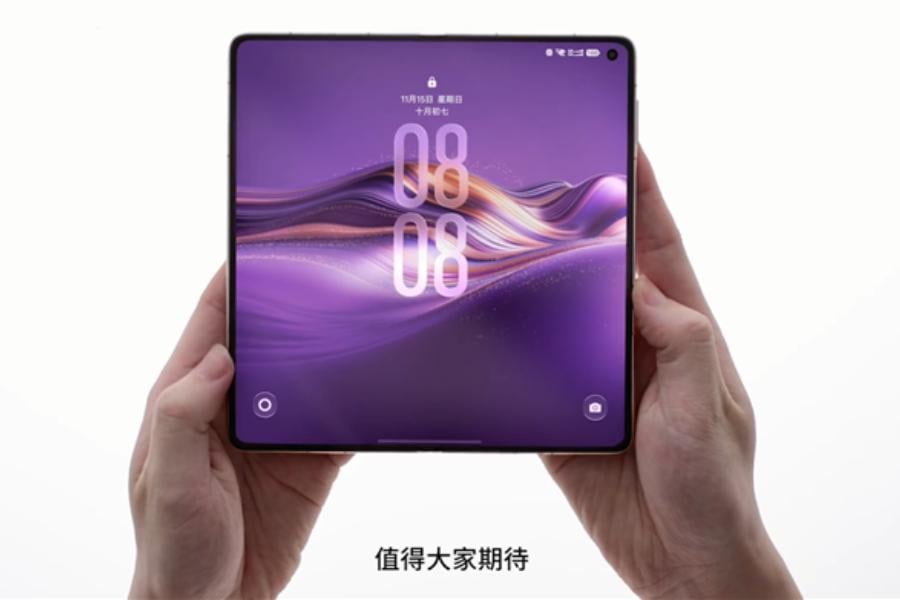
The foldable retains the Mate X line’s inward-folding layout, so the large display sits inside the phone when you close it. The back features a round camera module, while both the cover and inner screen have a selfie camera in a hole-punch cutout.

Huawei Mate X8 launch event poster featuring purple light beams and event date details.

What we know so far about the Huawei Mate X8

The Mate X8 is reportedly coming in two versions: a standard model and a Collector’s Edition. According to reports, the foldable will also support the Ruiying Z10 external camera, but it will be exclusive to the Collector’s Edition.

Likewise, the standard version could come in 12GB+256GB and 12GB+512GB. Meanwhile, the collector’s edition is rumored to be 16GB+512GB and 16GB+1TB.

Huawei has not confirmed this detail yet, so we will have to wait for the launch to know whether it is accurate.

As far as the hardware is concerned, the Mate X8 is tipped to feature a 6.5-inch cover screen and an 8.15-inch inner display, both slightly larger than the panels on the Mate X7.

The rumored specifications also include a battery of at least 6,000mAh, a 50MP main camera with variable aperture, and a 50MP periscope telephoto camera. A Privacy Display is also reportedly in the works.

These details remain unconfirmed, and Huawei has yet to reveal the phone’s price or sale date. The Mate X7 arrived in November 2025, so the Mate X8 is keeping the series’ yearly launch schedule. We should know much more when Huawei unveils the foldable on November 24.

Huawei OSTA O1 Pro leaks in real life before launch

Huawei‘s new sub-brand OSTA is preparing to introduce its first phones on November 20. The upcoming handhelds are the OSTA O1 and OSTA O1 Pro. A leak from China has now shown the OSTA O1 Pro as a real device.

The O1 Pro is the wide-screen model in the upcoming lineup. Its overall size and design closely resemble the Pura X View—we’re seeing a similar wide body, with one less camera.

OSTA O1 Pro design and specs

Huawei has already seen some success with the wide-screen design. The Huawei Pura X View sold around 449,800 units through late September. You can also get a better idea of how its unusual screen works for typing and watching videos in our Huawei Pura X View hands-on.

Two smartphones, one black OSTA O1 Pro and one red Huawei device, side-by-side.

The OSTA O1 Pro keeps much of the same look but makes a few changes. Its rear camera setup has two sensors instead of the Pura X View’s more elaborate arrangement. The back panel also drops the raster texture in favor of a plain finish. The simpler design gives it a different look while keeping the wide body that Huawei has already introduced.

On the front, the OSTA O1 Pro reportedly has a 6.39-inch 1.5K LTPS flat display with an expected 16:9.5 aspect ratio. All four bezels are said to measure around 1.05mm, leaving very little space around the screen.

The phone is expected to run on Huawei’s Kirin 9030 processor and come in four memory and storage configurations:

  • 12GB RAM + 256GB storage
  • 12GB RAM + 512GB storage
  • 16GB RAM + 512GB storage
  • 16GB RAM + 1TB storage

Buyers will reportedly get three color options: Starry Black, Nebula White, and Starburst Purple.

Huawei has not yet officially confirmed the design of the Osta O1 Pro. We can, however, expect it to do so soon in the lead-up to launch.

Meizu unveils MIFI N1 portable Wi-Fi 6 hotspot with 150Mbps speeds & 16-device support

Meizu has added a new portable Wi-Fi device to its website. The Meizu MIFI N1 is currently listed as Coming Soon with a retail price of 86.9 yuan ($13). It is designed to be a standard connectivity tool for people who need internet access while traveling, commuting, or working remotely.

Meizu MIFI N1 Portable Wi-Fi

Meizu MIFI N1 Specifications

Physically, the device is small and light. It measures 96.6 x 58 x 14.8mm and weighs about 102 grams, which makes it easy to carry in a bag or pocket. Inside, it runs on the Eigencomm EC800LE chipset. This chip combines the baseband, radio frequency, and power management into one component, a setup intended to keep power consumption low while maintaining a stable connection.

Meizu MIFI N1 Portable Wi-Fi

For connectivity, the MIFI N1 supports the Wi-Fi 6 standard. However, because it relies on 4G LTE networks (both FDD and TDD), the actual speeds are capped by the cellular connection. The theoretical maximums are 150Mbps for downloads and 50Mbps for uploads.

It can connect up to 16 devices at the same time, which is standard for this type of hardware and sufficient for a user carrying a phone, laptop, and tablet. It also includes a network switching feature that automatically looks for the best available signal if you are in an area with inconsistent coverage.

The device is powered by a 3,000mAh battery. Meizu says it takes about two hours to fully charge. To help preserve battery life, it features an intelligent sleep mode that reduces power usage when no devices are actively using the network.

Meizu MIFI N1 Portable Wi-Fi

The setup process is straightforward: users turn it on, scan a QR code, and connect. It includes basic security settings like WPA encryption, the option to hide the network name, and a management interface to block specific devices.

However, Meizu has not clarified whether the device supports a physical SIM card or relies on a built-in eSIM. While it offers flexible monthly and annual data plans alongside a promotional 1,500GB trial data offer, the company has yet to reveal the actual plan pricing, leaving the overall cost of ownership unclear.

In related news, Lenovo has recently launched a new portable Wi-Fi 6 hotspot with up to 12 hours of battery life and support for 10 devices, while ZTE has introduced the M3 Pro 5G portable Wi-Fi with a 5,000mAh battery, speeds of up to 500Mbps, and support for 16 simultaneous connections.

(JD)

Citizen launches new Mickey Mouse watch with football-inspired dial and Eco-Drive tech

Citizen has added a new model to its ongoing line of Disney-licensed timepieces. The Touchdown Mickey watch (model AW1739-02W) is now available on the company’s US website for $395. It is a solar-powered analog watch that incorporates American football motifs into its dial design, aimed primarily at Disney collectors and sports fans.

Citizen Touchdown Mickey watch

Design Details

The watch features an olive green dial with an illustration of Mickey Mouse carrying a football, designed by Disney artists John and Shelley Loter.

Instead of traditional hour markers, Citizen has incorporated luminous X and O symbols alongside directional arrows, giving the dial the appearance of a football coach’s playbook.

The outer chapter ring also features markings inspired by the 50-yard lines of a football field. Both the hands and playbook-inspired markers are coated with luminous material for improved visibility in low-light conditions.

Citizen Touchdown Mickey watch

In terms of hardware, the Touchdown Mickey is a relatively large watch, featuring a 44.3mm case made of gray, ion-plated stainless steel. The dial is covered by a domed mineral crystal.

While mineral crystal is standard for Citizen watches in this price bracket, it is more prone to scratching than the sapphire crystal found on higher-end models, though Citizen says the domed shape helps with impact resistance. The watch comes on a black leather strap with standard contrast stitching and a basic buckle clasp.

Citizen Touchdown Mickey watch

Inside the case, the watch is powered by Citizen’s J810 Eco-Drive movement, which offers a standard three-hand display and a date window. The movement uses Citizen’s Eco-Drive technology, which converts both natural and artificial light into energy to charge an internal rechargeable cell, eliminating the need for regular battery replacements.

For everyday durability, the case is rated for 100 meters of water resistance (WR100 / 10 Bar). This makes it safe for swimming and showering, though it is not intended for diving.

In related news, Citizen has recently launched a new Promaster Land GMT watch featuring Eco-Drive technology and sapphire crystal, alongside the Attesa AT8297-51L, which comes with a Super Titanium construction and atomic timekeeping.

(Citizen)

Galaxy S27 Ultra and S27 Pro to share this camera layout, here’s the design

Samsung‘s next flagship phones may share a more compact rear camera cluster than earlier leaks suggested. A new post from Ice Universe includes a line sketch of the back of the phone and says this is the actual, final camera arrangement for the Galaxy S27 Ultra and the Galaxy S27 Pro. The two phones are still expected to arrive in early 2027.

Samsung Galaxy S27 Ultra and S27 Pro camera design

Samsung Galaxy S27 Ultra

The sketch shows a raised camera island in the top-left corner of the rear panel. Two large lenses sit in a diagonal stack, with a smaller third lens to the right, a round flash or sensor module above that lens, and a small pinhole between them, forming a tight, diamond-like cluster of four circles.

That layout looks more compact than the wide rectangular camera plateau shown in earlier renders and later CAD leaks. Those reports, and dummy units built from the same idea, pointed to two cameras stacked on the left and a pill-shaped section on the right, with a large stretch of empty space inside the island.

It would also move away from the Galaxy S26 Ultra‘s vertical camera setup. The current Ultra uses a pill-shaped island with a vertical stack of lenses and a fourth camera sitting beside it on the back panel. The leaked cluster gathers those elements into a tighter group rather than spreading them down the back.

Ice Universe says the same arrangement applies to the Galaxy S27 Pro, the new model Samsung is adding between the Galaxy S27+ and the Ultra. Earlier coverage already pointed to a similar look for the two phones, with the Pro expected to be smaller and without an S Pen. Sharing a camera island would further align their design, even if the camera hardware is still expected to differ.

Earlier leaks have generally pointed to a 200-megapixel main sensor on both the Pro and the Ultra, with the Ultra likely moving to a three-camera rear setup by dropping the dedicated 3x telephoto. Supply chain reports have outlined that split, though the exact zoom hardware is still not settled. The Galaxy S27 series is still expected in January or February 2027.

For daily updates, please visit our News Section.

Citizen launches new Promaster Land GMT watch featuring Eco-Drive and sapphire crystal

Citizen has just released a new version of its Promaster Land GMT in the US and the UK. It’s a straightforward, solar-powered travel watch that avoids the bulk usually associated with the company’s outdoor-focused Promaster line.

You can pick it up now directly from Citizen’s website for $595 in the US or £399 in the UK.

Citizen Promaster Land GMT watch
Edited

Design Details

The Citizen BJ7150-50E features a 39.5mm silver-tone stainless steel case, offering a medium-sized profile that fits well with modern watch sizing preferences. It also comes with a matching stainless steel bracelet featuring a fold-over push-button clasp for a secure fit.

On the front, there is a fixed 24-hour bezel used for tracking a second time zone. The dial is black with standard white markers, plus a few red accents on the GMT hand and the dial text to help you quickly differentiate the time zones. There is also a basic date window at the 3 o’clock position.

Citizen Promaster Land GMT watch

Citizen went with an anti-reflective curved sapphire crystal for the glass, which is a welcome inclusion at this price point since it resists scratches much better than standard mineral glass. It also carries 200 meters of water resistance, meaning you don’t have to take it off when swimming or showering.

Inside, the watch runs on Citizen’s Eco-Drive Caliber B878 movement. If you aren’t familiar with Eco-Drive, it essentially means the watch is solar-powered. It charges from any light source, whether that is direct sunlight or standard office lighting, so you don’t have to worry about swapping out a battery every couple of years.

Citizen Promaster Land GMT watch

The movement includes a few practical, built-in safeguards, like a warning when the charge is getting low and a feature that prevents the internal cell from overcharging if you leave it sitting on a sunny windowsill.

Citizen packages the watch in a compact plastic Promaster tackle box rather than the usual cardboard watch box.

In other news, Citizen has recently introduced the Attesa AT8297-51L, featuring a Super Titanium construction and atomic timekeeping, alongside the Promaster Air NK0040-58P, which sports a champagne-colored dial and a Super Titanium case.

(Citizen 1,2)

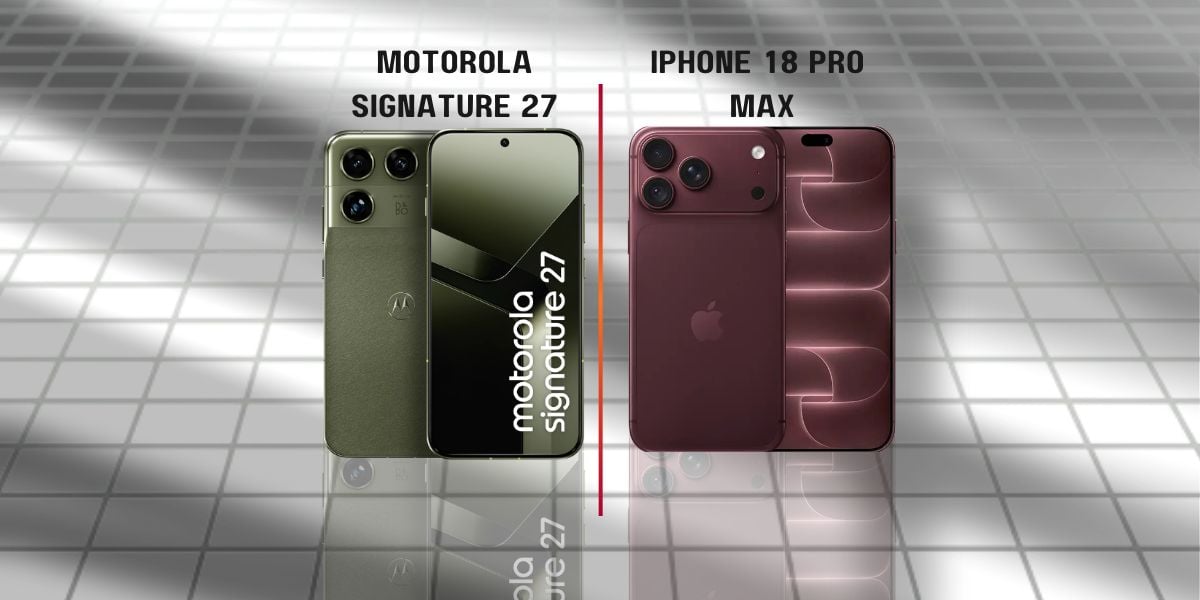
Motorola Signature 27 vs iPhone 18 Pro: When the iPhone is Cheaper

The Motorola Signature 27 has a battery that is 26 to 30 percent larger than the one inside the iPhone 18 Pro Max, at least on paper. It is also lighter, charges faster, and costs about $100 more when you compare the 512GB versions.

Motorola sells the Signature 27 in just one configuration in the US, with 12GB of RAM and 512GB of storage for $1,599.99. Apple’s iPhone 18 Pro Max costs $1,499 with the same storage, while its 256GB version starts at $1,299. Motorola doesn’t sell a 256GB version in the US.

The Signature 27 has a 6.8-inch display, just slightly smaller than the 6.9-inch screen on Apple’s flagship. But there’s more to this comparison than screen size and price, particularly when it comes to battery life, cameras, and software.

Side-by-side comparison of the Motorola Signature 27 and iPhone 18 Pro Max smartphones.

1. The Motorola Signature 27 is the lighter phone

Despite having a larger battery, the Motorola Signature 27 is both thinner and lighter than the iPhone 18 Pro Max. It measures 162.01 x 77.04 x 7.99mm and weighs 227g, compared to Apple’s phone at 163.4 x 78.0 x 8.75mm and 249g. That’s a 22g difference, with Motorola’s phone also being 1.4mm shorter, 1mm narrower, and 0.76mm thinner.

Apple has kept the aluminum unibody design of the iPhone 17 Pro Max, along with Ceramic Shield 2 and an anti-reflective coating protecting the front. The phone carries an IP68 rating and comes in Black, Silver, Glacier, and Burgundy.

Motorola built the Motorola Signature 27 with an aluminum frame and contoured edges. The camera panel combines ceramic with brushed aluminum. Gorilla Glass Ceramic 3 covers the front. The phone is rated IP68 and IP69. Motorola says it passed 14 MIL-STD-810H procedures across 16 categories. It comes in Pantone Coal Smoke with a Tactical Weave back. A second color called Pantone Capulet Olive has a brushed textile finish.

2. The battery gap is real but smaller than it looks

Apple doesn’t publish the battery capacity of its iPhones, but iFixit’s teardown found a 5,567mAh battery inside the US eSIM-only iPhone 18 Pro Max. The version with a physical SIM tray has a slightly smaller 5,391mAh unit.

Motorola, meanwhile, has fitted the Signature 27 with a 7,000mAh silicon-carbon battery, with a rated capacity of 6,790mAh. Depending on which iPhone version you compare it against, that’s roughly 26 to 30 percent more capacity.

Of course, a bigger battery doesn’t automatically translate into the same increase in battery life. If Apple’s numbers are to be believed, it offers up to 45 hours of video playback. Apple’s chip and software also play a part in keeping power consumption down, so the difference in everyday use may not be as large as the battery capacities suggest.

Charging, however, is the area where the Motorola phone has an advantage on paper. It supports 90W wired and 50W wireless charging, with Motorola claiming 12 minutes of wired charging is enough to provide power for the day. You’ll need to buy the chargers separately.

3. Cameras

The iPhone 18 Pro Max has three 48MP rear cameras, including a main sensor with a variable aperture. Its six-blade mechanism can move between f/1.48, f/1.8, f/2.8 and f/4, giving users more control over how much light enters the camera. Apple’s new Pro controls also let you adjust aperture, shutter speed, and white balance manually, with a histogram available in the camera app.

The other two cameras include a 48MP periscope telephoto with 4x optical zoom and 8x optical-quality zoom, along with a 48MP ultrawide camera covering 120 degrees. Digital zoom goes up to 40x. Around the front, Apple has an 18MP Center Stage camera with a square sensor.

Motorola’s main camera is a 50MP Sony LYTIA L910 sensor with an f/1.6 lens and LOFIC technology. The company says LOFIC helps preserve details in both bright and dark areas of the same image. There’s also a 200MP periscope telephoto camera with 3x optical zoom. Super Zoom Pro can reach 100x, although its generative AI sharpening plays a part at higher zoom levels.

The remaining cameras include a 50MP ultrawide with a 122-degree field of view and a 50MP front camera. Motorola has also included a dedicated EVS Action Sensor for capturing fast-moving subjects in low-light conditions.

4. The screens are close in size

The iPhone 18 Pro Max has a 6.9-inch LTPO OLED display with a resolution of 2,868 x 1,320 pixels, giving it a pixel density of 460ppi. Its refresh rate ranges from 1Hz to 120Hz, while brightness reaches 1,000 nits in typical use, 1,600 nits for HDR content and up to 3,000 nits outdoors.

The display also supports Dolby Vision. Apple has made the Dynamic Island smaller this year, and it can now show up to three Live Activities at once.

Motorola’s Signature 27 has a slightly smaller 6.8-inch tandem OLED panel with a resolution of around 1.5K. Display databases list it at 1,264 x 2,780 pixels, while Android Headlines reports a refresh rate of up to 120Hz. It supports both Dolby Vision and HDR10+.

The bigger claim comes from brightness. Motorola advertises peak brightness of up to 12,000 nits, which is four times Apple’s quoted outdoor peak. However, Motorola measured that figure in specific lab scenarios, so it isn’t directly comparable with Apple’s number. Independent measurements will give us a better idea of how the two displays compare in everyday use.

5. Both chips are on 2nm

Apple’s A20 Pro is built on a 2nm process and has a six-core CPU. The company says its two super cores are 20% faster than the previous generation. There’s also a seven-core GPU and a dual Neural Engine with 32 cores for AI-related tasks. The phone comes with 12GB of RAM.
Motorola has gone with Qualcomm’s Snapdragon 8 Elite Extreme Gen 6, which is also manufactured using a 2nm process. Its prime CPU cores can reach 5.01GHz, with Qualcomm claiming a 13% CPU improvement and a 44% GPU improvement over the Snapdragon 8 Elite Gen 5.

Both companies have plenty to say about their latest processors, but everyday tasks probably won’t reveal much of a difference. Gaming and on-device AI workloads are more likely to show where one chip has an advantage. We’ll have to wait for benchmarks from retail Motorola units before making that call.

6. iOS 27 or Android 17 is half the decision

Hardware is only part of the comparison, and the software experience could be just as important when choosing between any phone.

The iPhone 18 Pro Max ships with iOS 27 and Siri AI, bringing new camera and photo features along with it. Siri Mode in the camera app is one addition, while Spatial Reframing and the Extend and Clean Up tools are available in Photos.

The phone also works closely with Apple’s other products. Pairing it with an Apple Watch, AirPods, or a Mac is straightforward, and existing iMessage conversations and paid iPhone apps can make switching to Android less appealing.

Motorola ships the Signature 27 with Android 17, along with Gemini Intelligence and Motorola Qira. The latter helps users find and recall information across their apps, although it requires a Motorola or Lenovo account and at least 12GB of RAM. Android Headlines also lists GrapheneOS support.

Another addition is audio by Bang & Olufsen. The company has also promised seven OS upgrades and up to seven years of security updates.
7. What each phone costs

StorageiPhone 18 Pro MaxMotorola Signature 27
256GB$1,299Not sold in the US
512GB$1,499$1,599.99
1TB$1,899Not sold in the US
2TB$2,499Not sold in the US

Apple raised the starting price of the iPhone 18 Pro Max by $100 compared to the iPhone 17 Pro Max, with even larger increases for the 1TB and 2TB versions.

Motorola, on the other hand, has kept things simple with a single unlocked configuration in the US. The phone is available through Motorola.com, Amazon, and Best Buy, although no carrier has confirmed plans to sell it in stores. Apple sells the iPhone through its own stores and carrier partners.

At 512GB, the Signature 27 costs around $100 more than Apple’s phone. But someone looking for the entry-level version can get the iPhone for $300 less than Motorola’s only US configuration. In the UK, the Signature 27 starts at £1,299.

8. Who should buy which

The iPhone 18 Pro Max makes more sense if you want to spend less, particularly if 256GB of storage is enough. It has a slightly larger and sharper display, more manual camera controls, and Apple’s familiar ecosystem. It’s also the easier choice if you already own an Apple Watch, Mac, or other Apple devices.

The Motorola Signature 27 is a better option if battery capacity, charging speed, and weight matter more to you. It packs a considerably larger battery into a lighter body, supports faster wired and wireless charging, and comes with a seven-year software update promise. Its 200MP periscope camera and 50MP selfie camera also give it some interesting hardware advantages. You’ll pay $1,599.99 for the only US configuration, though.

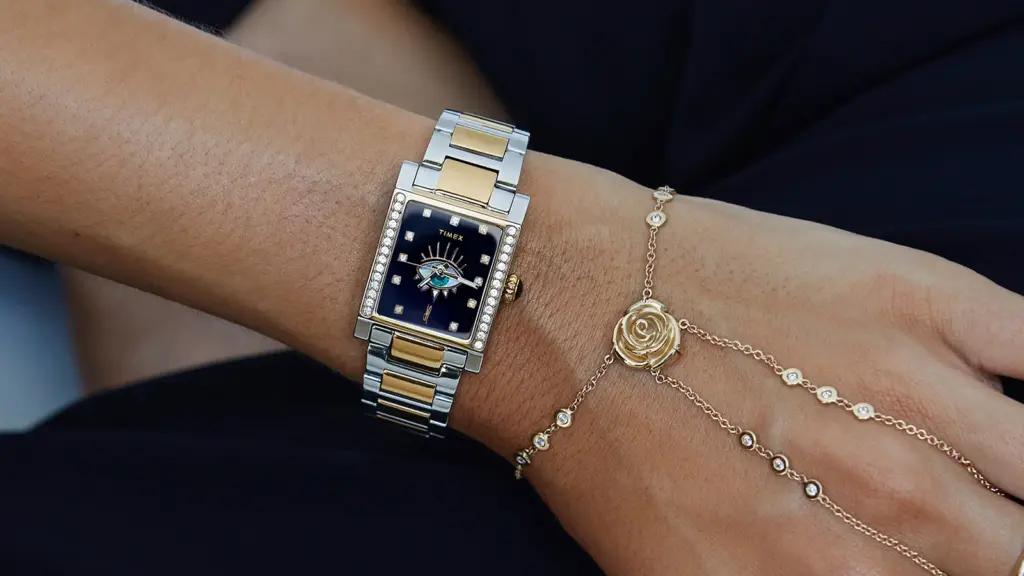
Timex launches two stunning rectangular watches in collaboration with Jacquie Aiche

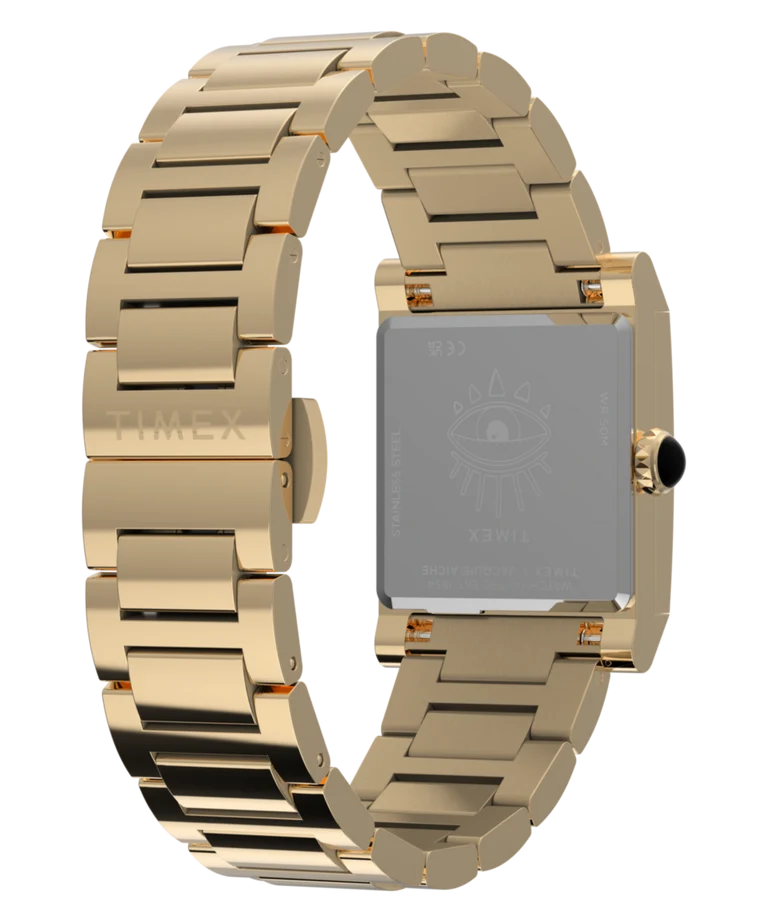
Timex has introduced a new line of watches in the US market, collaborating with jewelry designer Jacquie Aiche. The new release, named the True Intentions collection, consists of two 24mm rectangular stainless steel watches that merge standard quartz timekeeping with specific jewelry design elements. Both models are currently available directly through the Timex US website.

Timex Jacquie Aiche True Intentions watches

Pricing and Design Details

The physical dimensions of the watches are identical across the two available models. Each features a rectangular stainless steel case measuring 24mm in diameter and 34mm lug-to-lug, with a case height of 9mm. The watches weigh approximately 86 grams.

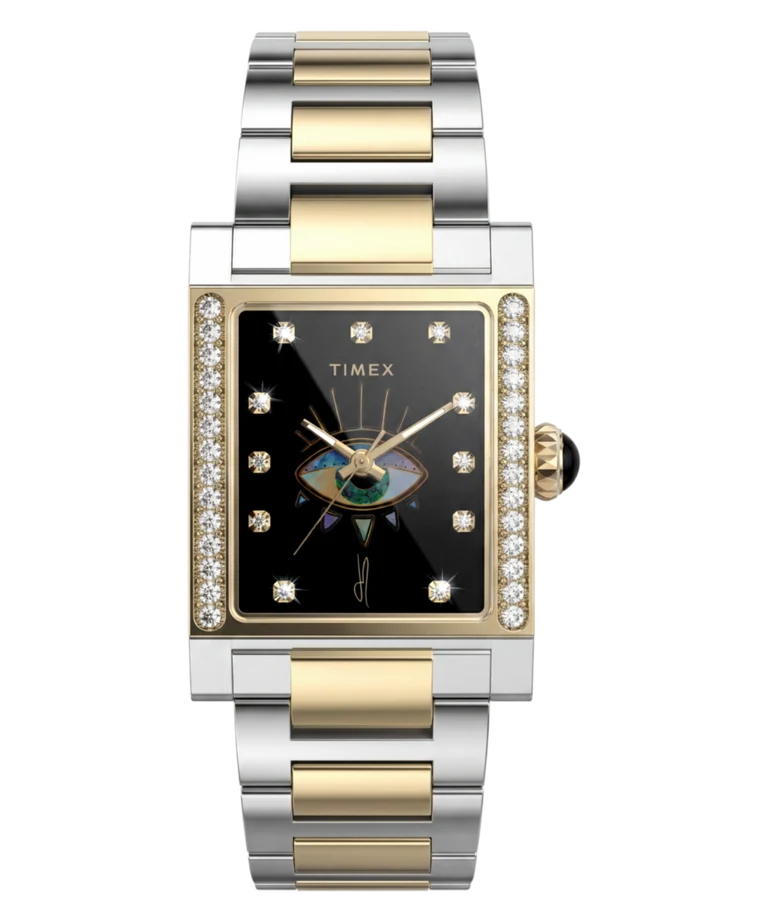
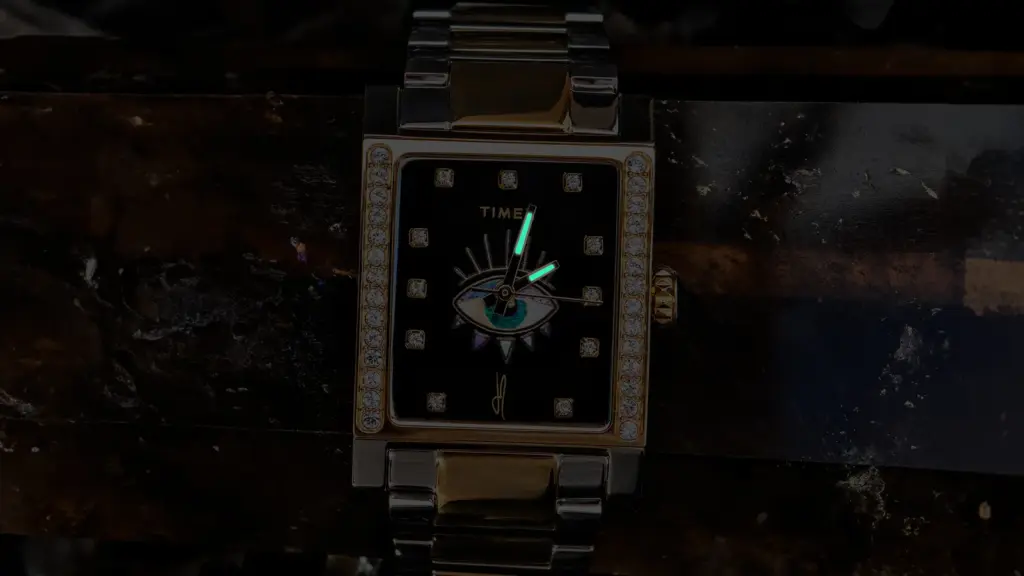
On the exterior, the bezel is set with 28 individual crystals, and additional crystals function as the hour markers on the dial. The center of the display features an eye motif, a recurring design choice in Aiche’s standard jewelry catalogs.

Timex is offering the True Intentions watch in two distinct configurations. The base model, carrying the product ID TW6A15300, is priced at $400. It comes with a two-tone polished stainless steel case and a matching 18mm bracelet. The dial on this version is made of black enamel.

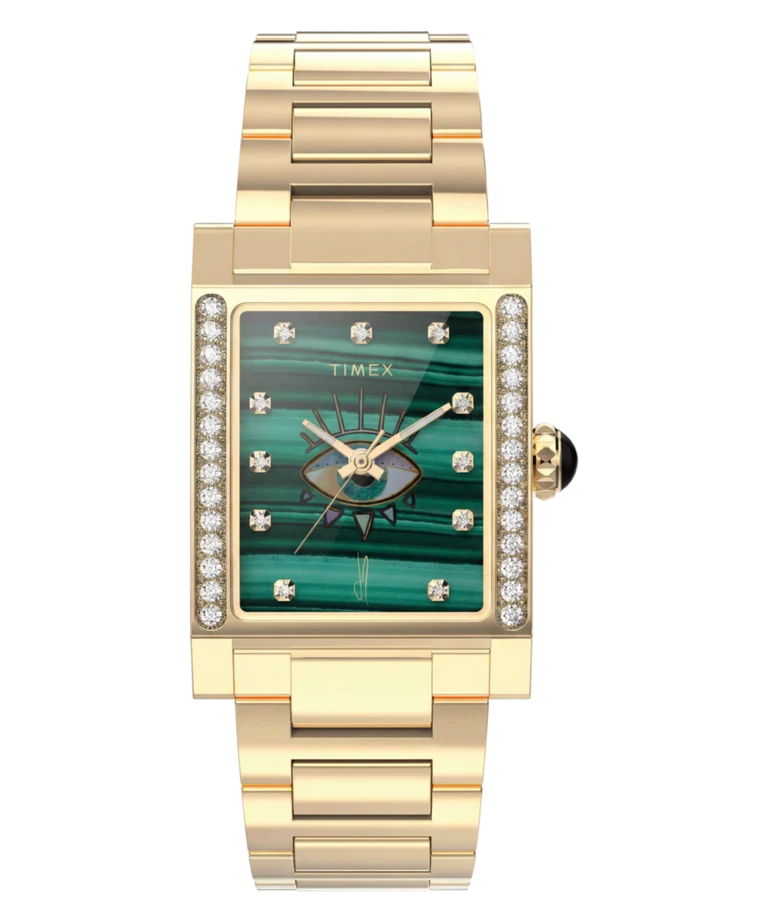
The second variant (TW6A15400) is priced higher at $500. This model uses a uniform gold-tone finish for both the case and the bracelet. Instead of enamel, the dial is constructed from natural malachite. Because it uses natural stone, the green banding and texture of the dial will differ slightly on each individual unit produced.

Timex Jacquie Aiche True Intentions watches

Internally, both watches rely on standard quartz analog movements powered by SR626SW batteries. The dial is covered by mineral crystal glass, and the hands include luminescent material for visibility in low-light environments.

Timex Jacquie Aiche True Intentions watches

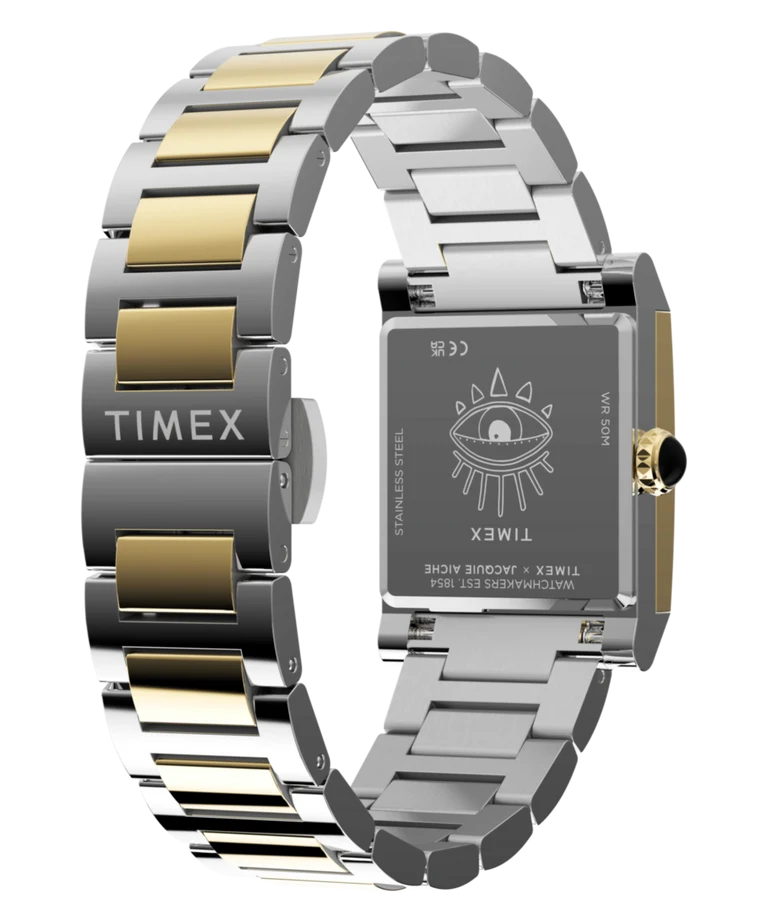
The watches carry a 30-meter water resistance rating, which means they are protected against minor splashes and hand-washing, but they are not built to withstand showering, swimming, or submersion. The 18mm stainless steel bracelets on both models use a butterfly deployant clasp for closure.

In related news, Timex has recently revived its 1976 Viscount to celebrate the 50th anniversary of Rocky, while also introducing a new limited-edition Marlin watch featuring a vintage California dial.

(Timex 1,2)

Japanese maker Kyodo launches Myofree tablet that requires special polarized glasses

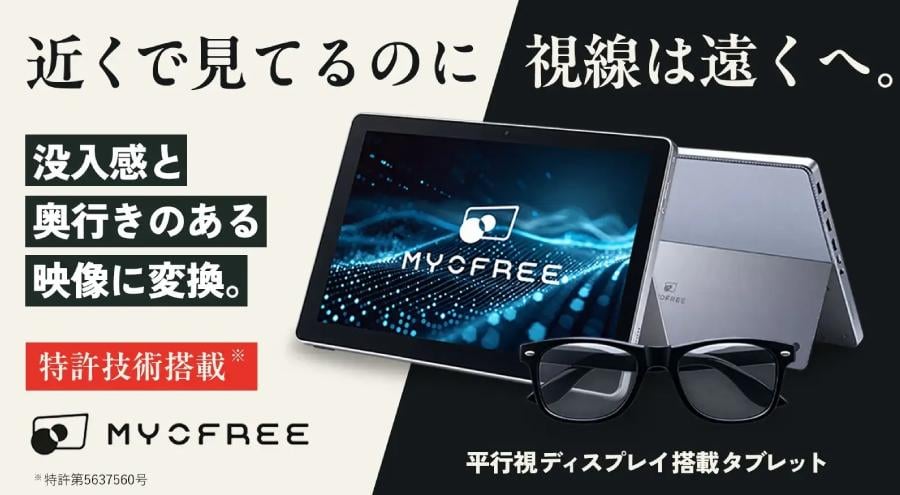
Japanese manufacturer Kyodo has introduced the Myofree, an eye-care tablet developed using research in brain science and ophthalmology. The company calls it the world’s first tablet of its kind, with a viewing system that is supposed to reduce eye strain during extended screen use.

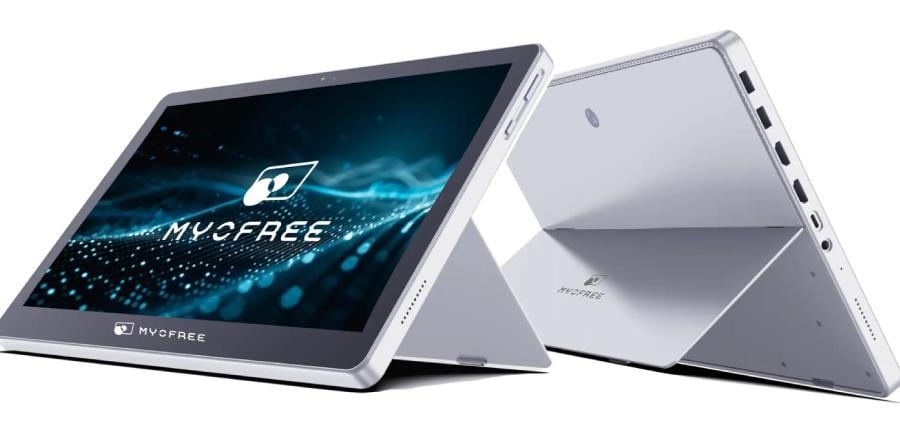
Kyodo MyoFree Tablet and Glasses

How the Myofree eye-care tablet works

The Myofree uses Kyodo’s own parallel view image generation technology. You wear a pair of dedicated glasses and sit around 40cm away from the screen. The system is designed to make your eyes adopt a parallel viewing position, similar to looking at an object about 5 meters away. Kyodo says this viewing method can reduce the strain associated with looking at a screen for long periods.

Kyodo Myofree design

The glasses are an essential part of the system. Kyodo offers three versions of its circularly polarized glasses: a standard pair for everyday use, a clip-on version that attaches to existing prescription glasses, and a smaller pair made for children.

Circular polarization has also appeared in other eye-care displays. TCL’s NXTPAPER 14 Pro featured a circularly polarized panel and received a Best of CES 2024 award. Kyodo takes a different route with the Myofree, relying on dedicated glasses to create its parallel-view effect.

As for the tablet itself, it has a 15.6-inch Full HD display and runs Android 16. Kyodo says users can watch videos, browse the web, play games, work, and study on it. Connectivity includes USB Type-C and HDMI ports, with both supporting input and output.

Kyodo has not revealed the Myofree’s price or shipping schedule yet. Pre-orders begin on November 18 through Makuake, where the company is expected to share more details about pricing and availability.

(Source)

Baseus has a new single-port 60W GaN charger with AVS support

Baseus has launched the EnerFill FE22 1C 60W charger in China for 89 yuan (around $13). Interestingly, that is the same price as the Baseus EnerFill FH22, which arrived in May with 100W output.

The newer model drops the maximum output to 60W but brings support for Apple’s AVS charging protocol, which is particularly relevant to the iPhone 18 series.

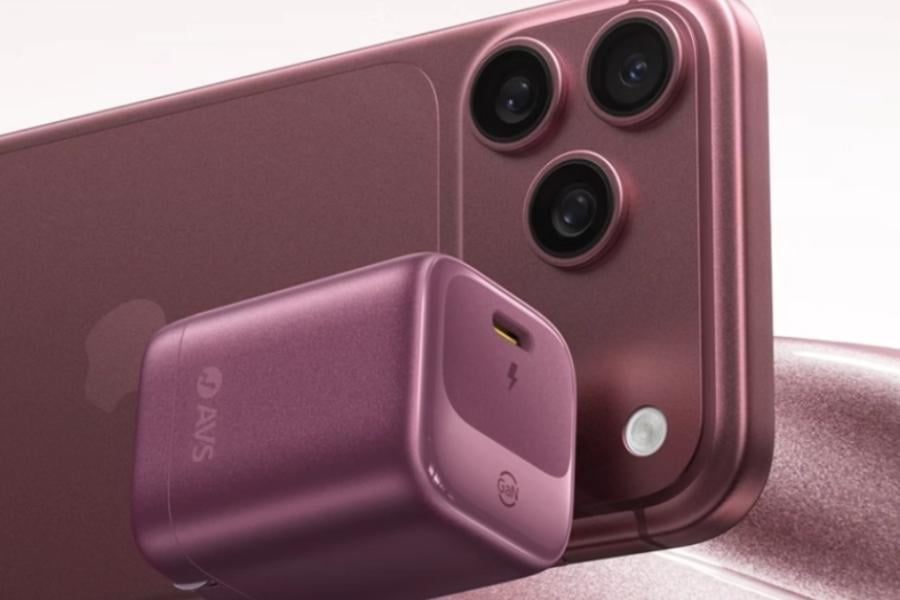
A pink Baseus EnerFill FE22 1C charger placed in front of a smartphone.

AVS allows a charger to adjust voltage in smaller increments during charging, and Apple’s iPhone 18 Pro models rely on the protocol for their fastest wired charging speeds. Baseus says the FE22 1C natively supports the iPhone 18 series, with AVS 60W dynamic fast charging listed as its main feature.

Baseus EnerFill FE22 1C 60W specifications

The EnerFill FE22 1C has a single USB-C port on the front. It measures 36.5 x 36.5 x 48mm and weighs around 102g. The plug folds flat against the body, making it easier to carry in a pocket or bag. Baseus also uses GaN technology inside.

Its standard output options include 5V/3A, 9V/3A, 15V/3A, and 20V/3A, while AVS allows it to deliver up to 60W. Besides AVS, the charger supports UFCS, PD, QC, and PPS protocols. That is, it supports compatible Android phones, tablets, and laptops too.

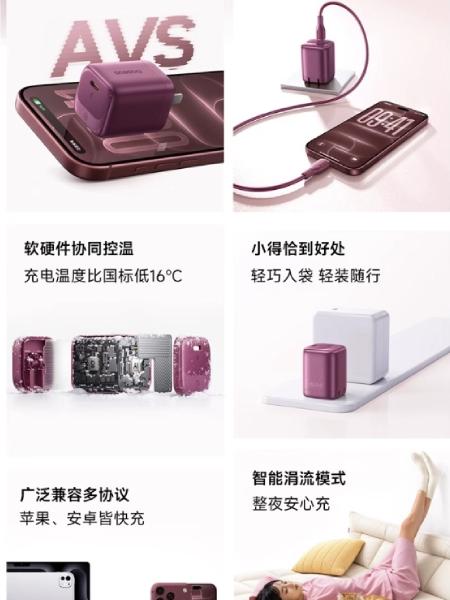
Baseus EnerFill FE22 1C charger shown with smartphone, internal components, and lifestyle usage.

The charging brick is also designed to manage thermals. The hardware and software work together to regulate heat and keep the temperature 16°C below the national standard. There is also a trickle charging mode for overnight use.

The FE22 1C comes in three colors: deep cherry, bright moon white, and starry sea blue. The deep cherry finish is also familiar from the company’s earlier accessories. Baseus introduced the PicoGo Pro AH22 in August as part of its Dark Cherry Collection for the iPhone 18 Pro.

The Baseus EnerFill FE22 1C 60W is currently available in China for 89 yuan (around $13). Baseus has not announced pricing or availability for other markets.

(Source)

OnePlus Turbo 6V vs Turbo 6: Is the More Expensive Model Really Worth It?

OnePlus Turbo 6V and Turbo 6 share much of the same foundation, including a massive battery, fast charging and a similar camera setup. However, the standard Turbo 6 introduces several meaningful upgrades that could influence buying decisions. The real question is whether its performance, display and connectivity improvements justify the additional cost, or whether the Turbo 6V delivers everything most users need.

OnePlus Turbo 6V vs OnePlus Turbo 6

1. Major Features:

CategoryOnePlus Turbo 6VOnePlus Turbo 6Winner & Reason
Design & Build
Dimensions162.5 x 77.5 x 8.5 mm162.5 x 77.5 x 8.5 mmTie
Weight215g217gOnePlus Turbo 6V – Lighter
ProtectionIP68/IP69KIP68/IP69KTie
Display
Display TypeAMOLED, 1B colorsAMOLED, 1B colorsTie
Display Size6.78 inches6.78 inchesTie
Resolution1272 x 2772 pixels1272 x 2772 pixelsTie
Refresh Rate144Hz165HzOnePlus Turbo 6 – Higher refresh rate
PWM Dimming3840Hz3840HzTie
HDR SupportNot specifiedHDR Vivid, HDR image supportOnePlus Turbo 6 – HDR support
Peak Brightness1800 nits1800 nitsTie
Performance
Operating SystemAndroid 16, ColorOS 16Android 16, ColorOS 16Tie
ChipsetSnapdragon 7s Gen 4 (4nm)Snapdragon 8s Gen 4 (4nm)OnePlus Turbo 6 – More powerful chipset
CPU2.7GHz octa-core3.21GHz octa-coreOnePlus Turbo 6 – Faster CPU
GPUAdreno 810Adreno 825OnePlus Turbo 6 – More powerful GPU
Memory
RAM Options8GB / 12GB12GB / 16GBOnePlus Turbo 6 – Higher RAM options
Storage Options256GB / 512GB256GB / 512GBTie
Storage TypeUFS 3.1UFS 4.1OnePlus Turbo 6 – Faster storage
Card SlotNoNoTie
Rear Camera
Main Camera50MP, f/1.9, PDAF, OIS50MP, f/1.9, PDAF, OISTie
Auxiliary LensColor spectrum sensorColor spectrum sensorTie
Video Recording4K@30/60fps, 1080p@30/60/120fps4K@30/60fps, 1080p@30/60/240fpsOnePlus Turbo 6 – Higher slow-motion frame rate
Front Camera
Selfie Camera16MP, f/2.416MP, f/2.4Tie
Selfie Video1080p@30fps1080p@30fpsTie
Audio
LoudspeakerStereo speakersStereo speakersTie
3.5mm JackNoNoTie
Connectivity
Wi-FiWi-Fi 6Wi-Fi 7OnePlus Turbo 6 – Newer Wi-Fi standard
Bluetooth5.45.4Tie
NFCYesYesTie
Infrared PortYesYesTie
USBUSB Type-C 2.0USB Type-C 2.0Tie
Battery
Battery Capacity9000mAh9000mAhTie
Charging80W wired80W wiredTie
Reverse Charging27W wired27W wiredTie
Approximate Price$300 / ₹25,000$350 / ₹27,000OnePlus Turbo 6V – More affordable
Disclaimer: Specs are based on available data. Actual performance may vary. Verify details from official sources before buying.

2. Design and Display

Build and Feel

The OnePlus Turbo 6V and Turbo 6 follow an almost identical design approach, with matching dimensions, IP68/IP69K protection and dual-SIM support. Both offer a durable construction designed to handle demanding everyday use. The Turbo 6V weighs slightly less at 215g compared with 217g for the standard model, but the difference is unlikely to influence purchasing decisions significantly.

Display Quality

Both smartphones feature a 6.78-inch AMOLED display with a 1.5K resolution, 3840Hz PWM dimming and up to 1800 nits peak brightness. The standard Turbo 6, however, upgrades the refresh rate from 144Hz to 165Hz and adds HDR Vivid support and HDR image compatibility. This makes the Turbo 6 more appealing for gaming and supported HDR content, although the Turbo 6V already delivers a smooth viewing experience.

Verdict

The Turbo 6 takes the display advantage with its higher refresh rate and HDR support. However, the Turbo 6V remains an excellent choice for users who do not need those additional visual upgrades.

3. Specifications Including Battery

Performance

The biggest difference between these smartphones is their processing hardware. The Turbo 6V uses the Snapdragon 7s Gen 4, while the Turbo 6 upgrades to the considerably more powerful Snapdragon 8s Gen 4. The standard model also gets the Adreno 825 GPU instead of the Adreno 810, making it better suited to demanding games, multitasking and sustained performance workloads. Storage is another important upgrade, with UFS 4.1 replacing UFS 3.1 on the Turbo 6. Both run Android 16 with ColorOS 16, but the standard model offers a more capable hardware foundation for demanding users.

Battery and Charging

Battery capacity is identical, with both smartphones packing a massive 9,000mAh silicon-carbon battery. Charging is also unchanged, featuring 80W wired charging and 27W reverse wired charging, alongside UFCS and additional charging protocol support. Neither model sacrifices battery endurance or charging convenience, making the Turbo 6V particularly attractive for buyers who prioritise battery life over processing power.

Verdict

The Turbo 6 is the clear performance upgrade, particularly for gaming and faster storage. However, identical battery hardware means the Turbo 6V delivers essentially the same endurance and charging experience.

4. Camera

Main and Secondary Lenses

Camera hardware remains largely unchanged between the two smartphones. Both feature a 50MP primary camera with an f/1.9 aperture, PDAF and optical image stabilisation, accompanied by a colour spectrum sensor. They also support 4K video recording at up to 60fps, with gyro-EIS and OIS. The Turbo 6 adds no major camera hardware advantage, although it supports 1080p recording at 240fps compared with 120fps on the Turbo 6V. This gives the standard model an advantage for slow-motion footage, but everyday photography capabilities should remain broadly similar.

Selfie Camera

Both smartphones feature an identical 16MP front-facing camera with an f/2.4 aperture and support for HDR and panorama photography. Video recording is also unchanged, with 1080p recording at 30fps and gyro-EIS. Neither phone offers a meaningful selfie camera upgrade, so buyers should not consider the standard Turbo 6 for its front camera capabilities alone.

Verdict

Camera hardware is effectively a tie. The Turbo 6 offers a higher slow-motion recording option, but the Turbo 6V provides almost the same photography and everyday video experience.

5. Pricing

The OnePlus Turbo 6V is priced around $300 / ₹25,000, while the standard OnePlus Turbo 6 is priced around $350 / ₹27,000. This creates a noticeable difference in positioning, with the Turbo 6V targeting budget-conscious buyers and the Turbo 6 sitting slightly higher in the lineup. The standard model costs more but brings meaningful improvements to processing power, storage speed and display technology.

Is the price justified?

The additional price of the Turbo 6 is reasonably justified for buyers who want stronger gaming performance, UFS 4.1 storage and a 165Hz HDR-capable display. However, spending less on the Turbo 6V makes more sense for everyday users because the battery, charging, camera hardware and overall design remain largely unchanged. The Turbo 6V offers better value for money, while the Turbo 6 offers more performance per upgrade.

Verdict

The Turbo 6V wins on affordability and overall value, but the Turbo 6 justifies its premium for users who will actually benefit from its hardware upgrades.

6. Conclusion

The OnePlus Turbo 6 and Turbo 6V are differentiated more by their internal hardware than their overall experience. The Turbo 6 stands out with its Snapdragon 8s Gen 4 chipset, Adreno 825 GPU, UFS 4.1 storage, 165Hz display and HDR Vivid support. Meanwhile, the Turbo 6V retains the same 9,000mAh battery, 80W charging, 27W reverse wired charging, IP68/IP69K protection and nearly identical camera hardware at a lower price. 

Essentially, the Turbo 6 is designed for users who want flagship-class performance from this series, whereas the Turbo 6V focuses on delivering the core experience without unnecessary spending.

Verdict

The OnePlus Turbo 6 is the overall winner thanks to its substantially stronger processor, faster storage and better display. However, the Turbo 6V remains the smarter budget purchase for everyday users who value battery life and affordability over performance upgrades.

Read More:

Here’s your first look at the Huawei Mate X8 from the front and back

Huawei has now shown you what the Huawei Mate X8 looks like. In a video marking the eighth anniversary of the Mate X series, the company revealed the foldable in both closed and open states, along with the circular camera module on the back.

The video covers the look of the phone and little else. Huawei hasn’t published a spec sheet, a price, or a launch date, so everything below the design section comes from tipsters and isn’t confirmed.

The Huawei Mate X8 keeps the Mate X line’s inward-folding layout, so the large display sits inside the phone when you close it. The back features a round camera module, keeping the phone visually in line with Huawei’s other Mate foldables. If you’ve seen the Huawei Mate X7, the overall shape will look familiar.

The video shows the phone in both states, so you can judge the proportions folded and unfolded. Huawei tied it to the Mate X series anniversary and attached no specifications to it.

What to expect?

Per leaks, the outer screen could measure around 6.5 inches and the inner screen at 8.15 inches. That’s a small step up from the 8-inch inner display on the Huawei Mate X7. The inner screen is also reported to use a UTG (ultra-thin glass) cover.

Hands holding the open Huawei Mate X8 foldable smartphone with a purple wallpaper.

For the chip, the Huawei Mate X8 is tipped to use the Kirin 9050 Pro. Huawei already uses it in the Huawei Mate 90 Pro Max and the Huawei Mate 90 RS, both launched this autumn. It’s built on the company’s LogicFolding 3D architecture. The Huawei Mate X7 runs the Kirin 9030 Pro, so you can expect a performance gain if the tip holds. Huawei hasn’t confirmed the processor.

The Huawei Mate X8 is said to come in a standard and a collector’s edition. The standard version could come in 12GB+256GB and 12GB+512GB. Meanwhile, the collector’s edition is rumored in 16GB+512GB and 16GB+1TB.

You’re also looking at five colors, reportedly offered on both editions: Danxia Orange, Qingshan Brocade, Xueyu White, Cangqiong Black, and Zijin. Huawei hasn’t announced names or finishes officially, so treat the list as a leak until the phone launches.

(Source)

AOC launches new budget 1440p 275Hz gaming monitor with Fast IPS panel

AOC has introduced a new budget-friendly gaming monitor in China, available on JD.com for 1,099 yuan ($165). The launch caters to gamers who prefer compact displays over larger screens without compromising on affordability.

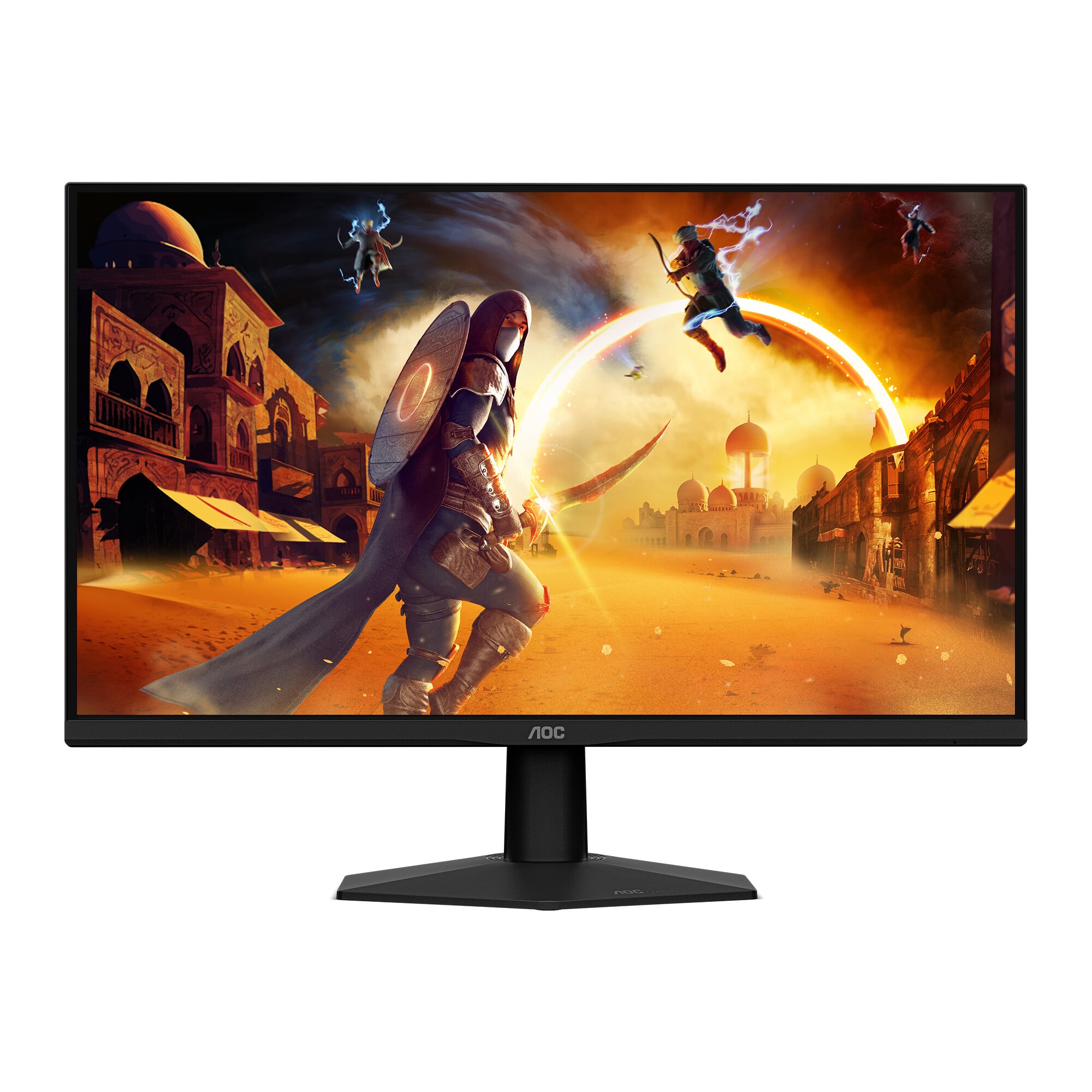
AOC Q25G5ZE8 monitor
Edited

AOC Q25G5ZE8 Specifications

The AOC Q25G5ZE8 features a 24.5-inch Fast IPS display with a QHD resolution of 2560 x 1440 pixels. It supports a refresh rate of up to 275Hz through DisplayPort 1.4, along with a 1ms GtG response time and an ultra-fast 0.3ms MPRT. The monitor also comes equipped with Adaptive-Sync technology and FreeSync compatibility to minimise screen tearing and deliver smoother gameplay.

On the color front, the display covers 95% of the DCI-P3 gamut and 100% of the sRGB space. AOC says that the monitor is factory-calibrated to an average Delta E of less than 2 in sRGB mode. The panel has a standard SDR brightness of 350 nits and can reach 450 nits when displaying HDR content, which gives it a VESA DisplayHDR 400 certification. Its static contrast ratio is 1300:1.

The AOC Q25G5ZE8 features a simple design with a stand that supports tilt adjustments from -5° to 23°. However, it lacks height, swivel, and pivot adjustments. For added flexibility, the monitor comes with a standard 100 x 100mm VESA mount, allowing users to install it on a compatible third-party monitor arm.

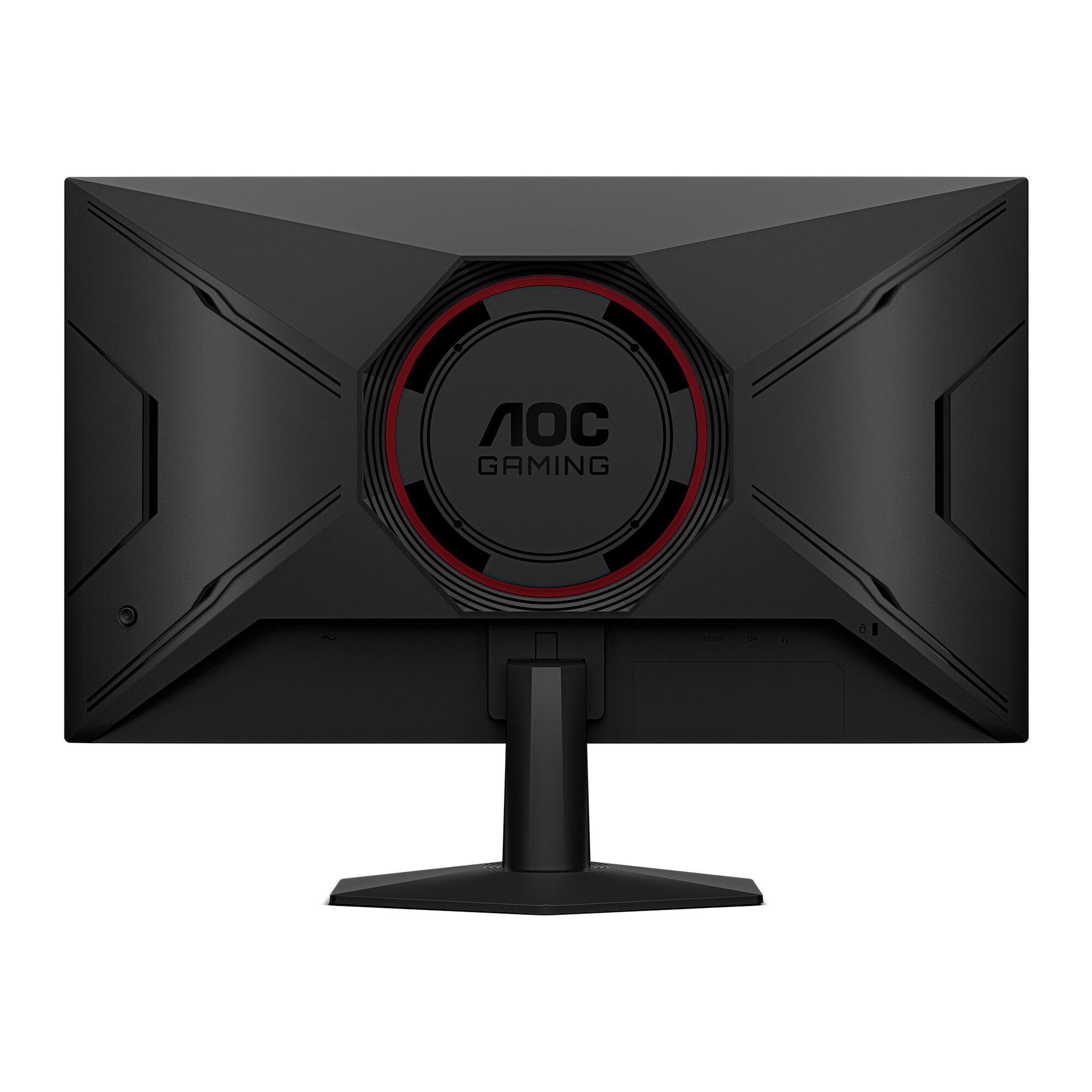
The port selection is limited to one DisplayPort 1.4 input and one HDMI 2.1 TMDS port. It is worth noting that HDMI 2.1 TMDS relies on standard HDMI 2.0 bandwidth. As a result, if you use the HDMI connection, the refresh rate is capped at 144Hz at the native 1440p resolution. There are no built-in speakers, just a 3.5mm audio jack for headphones or external speakers.

The monitor also comes equipped with low-blue-light technology and a flicker-free backlight for improved viewing comfort.

In related news, Philips has recently introduced a new 1440p 360Hz QD-OLED gaming monitor featuring AI-powered presence detection, while KTC has unveiled a 24-inch gaming monitor boasting an impressive 600Hz refresh rate.

(JD)

Citizen launches Attesa AT8297-51L watch with Super Titanium build and atomic timekeeping

Citizen has expanded its Attesa lineup by launching the AT8297-51L in the US and UK. It is priced at $1,395 and £995, respectively, and focuses on convenience and low-maintenance operation rather than traditional mechanical watchmaking.

Citizen Attesa AT8297-51L watch
Edited

Design Details

The watch features a 42mm case made from what Citizen calls Super Titanium. It is treated with a gray Diamond-Like Carbon (DLC) coating, which makes the metal more scratch-resistant than standard stainless steel while keeping the watch relatively light on the wrist. The matching titanium bracelet uses a standard fold-over clasp with push buttons.

On the front, there is a navy blue dial surrounded by a black world-time bezel, and the face is covered by an anti-reflective sapphire crystal to reduce glare. It also has a water resistance rating of 100 meters, which is standard for everyday wear and sufficient for swimming or showering.

Inside, the AT8297-51L runs on Citizen’s H800 Eco-Drive movement. The Eco-Drive system is essentially a solar panel built into the dial that charges the internal cell using any available light, whether that is direct sunlight or indoor office lighting.

Citizen Attesa AT8297-51L watch

The watch also features radio-controlled timekeeping through its H800 movement. Its built-in receiver picks up signals from atomic clocks to adjust the time automatically. It supports 26 time zones and features a perpetual calendar that automatically adjusts for month lengths and leap years.

Beyond standard timekeeping, the AT8297-51L includes a 1/20-second chronograph capable of measuring intervals up to 60 minutes. The dial layout also incorporates a 12/24-hour time display, a day and date readout, a calendar display, and a power reserve indicator to monitor the internal cell’s charge level.

In related news, Citizen has recently launched the Promaster Air NK0040-58P with a champagne dial and a Super Titanium case, alongside a limited-edition Star Wars Eco-Drive watch featuring a Death Star moonphase display.

(Citizen 1,2)

iPhone 20 Pro’s 3D quad-curved cover glass leaks in hands-on video

Reliable leaker Ice Universe just shared a video of what’s described as an approved “3D quad-curved” cover glass sample for Apple‘s upcoming 20th anniversary iPhone. The glass curves down on all four sides toward the frame, has rounded corners, and features noticeably smaller cutouts for the front camera and Face ID sensors. It lines up with the long-running rumors of a more immersive, nearly borderless look for the 2027 models.

iPhone 20 Pro 3D quad-curved cover glass

Apple is expected to skip the “iPhone 19” name entirely and go straight to the iPhone 20 series to mark two decades since the original. The redesign seems centered on a glass-forward approach: glass on both the front and back that curves into the sides, mostly hiding the metal mid-frame when you’re just looking at the phone. Internally, the Pro and Pro Max versions are reportedly codenamed V73 and V74.

Apple usually locks in big design decisions about a year before launch, so seeing an actual physical cover-glass sample this early fits the normal timeline. That doesn’t mean it’s final, though. The company has walked away from more ambitious all-glass concepts in the past after they didn’t hold up in durability testing, so changes are still possible as validation continues.

If the symmetrical curves on every edge make it to production, the phone should look smoother and give a more continuous viewing experience. There are also reports that the 2027 Pro models could finally get a meaningful screen-size bump for the first time since 2024, with the regular Pro potentially moving to around 6.41 inches and the Pro Max stretching closer to 6.96 inches. A brighter, thinner OLED panel from Samsung is also said to be in the mix to match the new shape.

Curved displays used to be a big thing on Android flagships before most brands dropped them, partly because of the practical downsides. Whether this sample ends up in the final product or not, the glass is the clearest early signal we’ve had of how Apple wants to celebrate the iPhone’s 20th year with a bolder look.

(Source: Ice Universe)

Future Apple and Samsung foldables to use UTG that’s only thin where it folds

Apple and Samsung are looking at a smarter way to handle foldable display glass, and it could finally fix one of the biggest complaints people have with these phones.

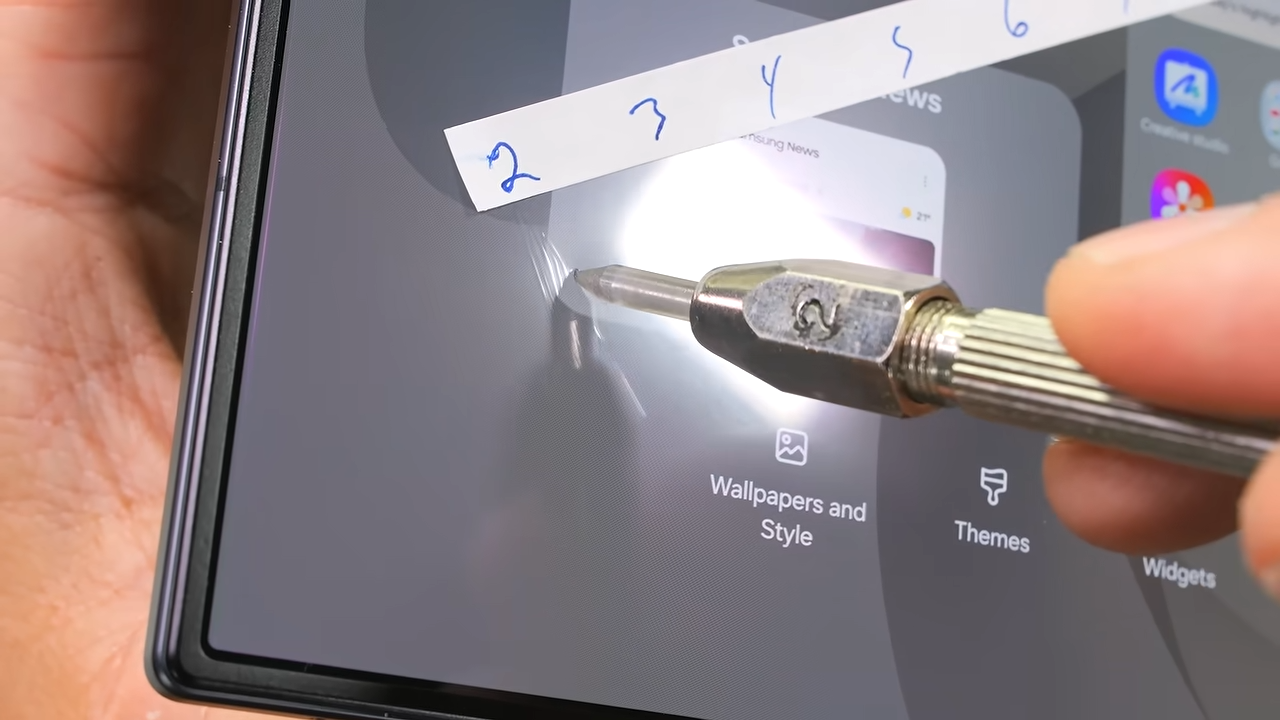
A metal pick scratches the screen of a Samsung foldable smartphone during testing.

According to industry reports citing supply-chain sources, both companies are testing selectively etched ultra-thin glass for their 2028 foldables. Instead of using one uniform sheet of glass, the idea is to thin only the part that actually folds, the central axis, down to around 40 micrometers.

The rest of the screen, the parts that don’t bend, would stay thicker than 100 micrometers. That way you still get the flexibility needed for folding, but the main viewing area should hold up better against scratches.

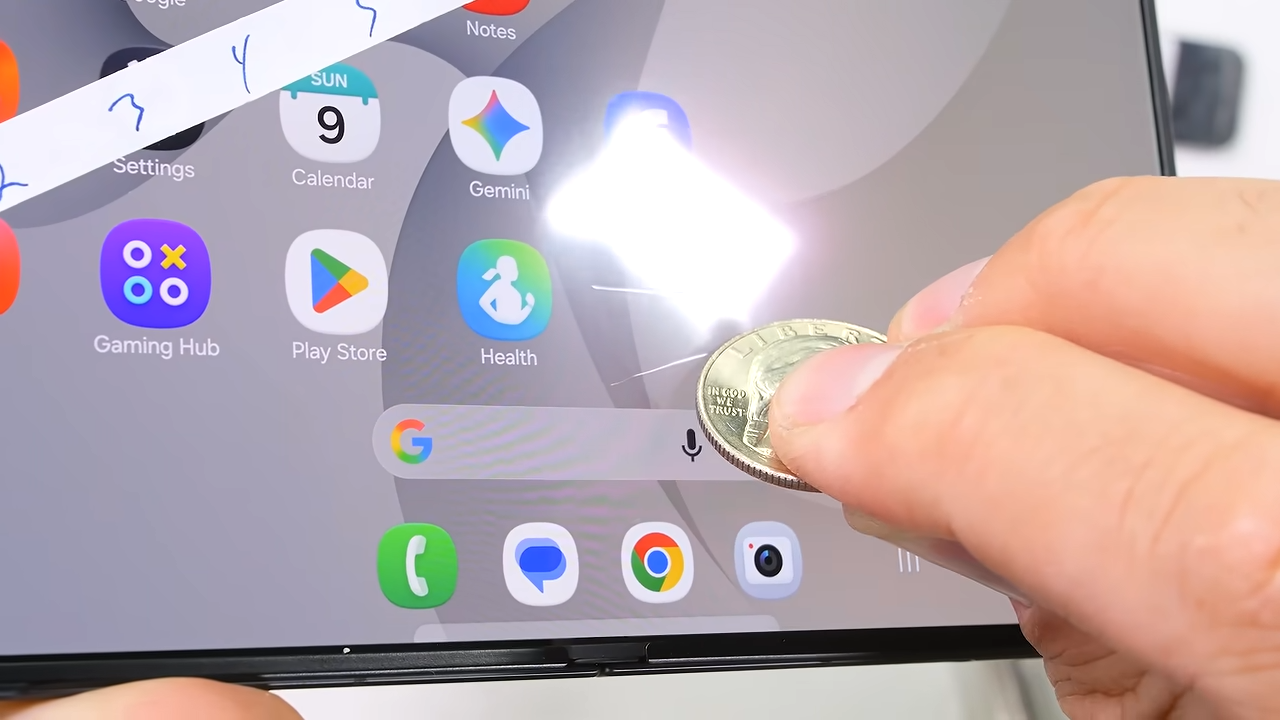
Right now every foldable is stuck with the same compromise. Samsung’s Galaxy Z Fold 8 uses 60-micrometer glass, the Z Flip 8 sits at 50, and both the Z Fold 8 Ultra and Apple’s iPhone Duo go down to 45 micrometers. Make the whole sheet thicker and you risk cracks along the hinge. Keep it thin and the screen picks up marks from keys, fingernails, and everyday life way too easily.

A hand uses a coin to scratch the screen of a foldable smartphone.

Selective etching tries to solve that, but it’s not simple. Suppliers have to carefully etch the glass and then fill the thinner middle section with a special resin that matches the refractive index of the glass so you don’t see any weird transition lines. Under the OLED panel the two companies are taking slightly different approaches: Apple is adding a second 40-micrometer UTG layer at the bottom to help reduce creasing, while Samsung is still relying on titanium support plates for now as it works on its own under-panel glass solution.

Final decisions on whether this actually ships are expected in the fourth quarter of 2027. If the yields work out, this hybrid glass could go a long way toward killing the “soft screen” feel that still puts a lot of people off foldables.

(Source)

Portronics launches Luxcell 100R 100W 20,000mAh power bank with 70cm retractable cable

Portronics has released the Luxcell 100R, a new 20,000mAh power bank capable of 100W output in the Indian market.

Portronics Luxcell 100R Power Bank

Portronics Luxcell 100R Specifications

The power bank features a built-in retractable Type-C cable that pulls out for charging and neatly retracts into the body when not in use. Portronics rates the mechanism for 20,000 retractions and the cable for 20,000 bends. It also sports an LED display that shows the exact battery percentage and a lanyard attachment point for easy carrying.

Portronics Luxcell 100R Power Bank

Internally, the Luxcell 100R supports USB Power Delivery 3.0 (PD 3.0) and Programmable Power Supply (PPS) standards. It features dual USB-C ports that handle both input and output. When charging a single device, it can output the full 100W, which is sufficient for charging most modern laptops like MacBooks. When it comes to recharging the power bank itself, it supports up to 65W input.

There is a specific power-management system to be aware of when charging two devices at the same time. If the power bank’s internal battery level is above 70%, it can output 65W to two devices simultaneously (65W + 65W). However, when the battery drops below 70%, the maximum combined output drops to 45W per port (45W + 45W).

Portronics Luxcell 100R Power Bank

The power bank includes standard safety features, such as overcharge and short-circuit protection, temperature control, and a fireproof casing. It is BIS certified and approved for carry-on cabin baggage on flights. However, Portronics points out that Indian aviation regulations currently do not allow using power banks during the flight.

Pricing and Availability

The Luxcell 100R is priced at Rs. 4,599 and is available now on the Portronics website. It comes in black and orange color options and includes a one-year warranty.

In related news, Portronics has recently launched the Zyron 3-in-1 Qi2 charger that doubles as a car mount and desk stand, alongside the affordable Zeno L Mini cordless leg massager with up to 75 minutes of runtime.

(Portronics)