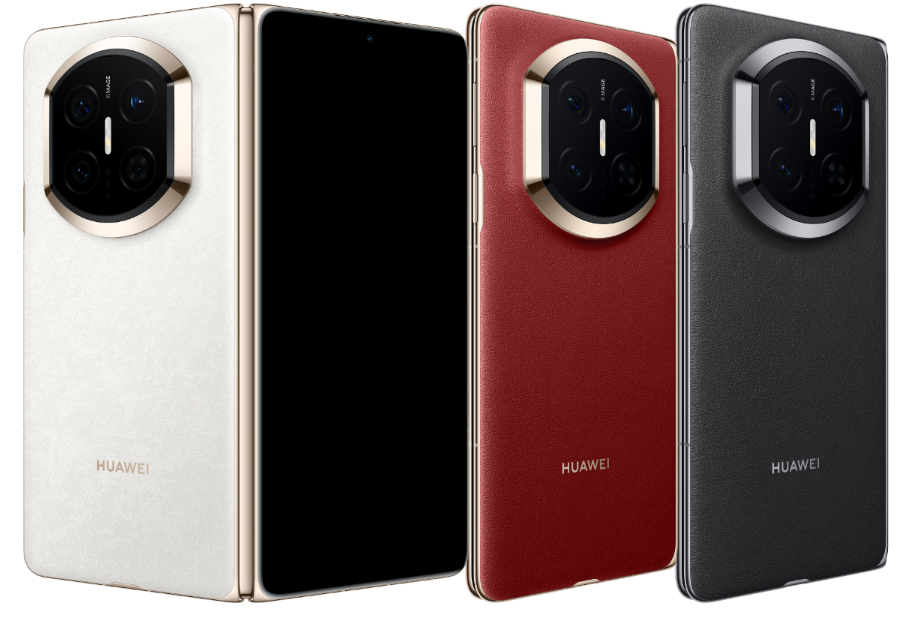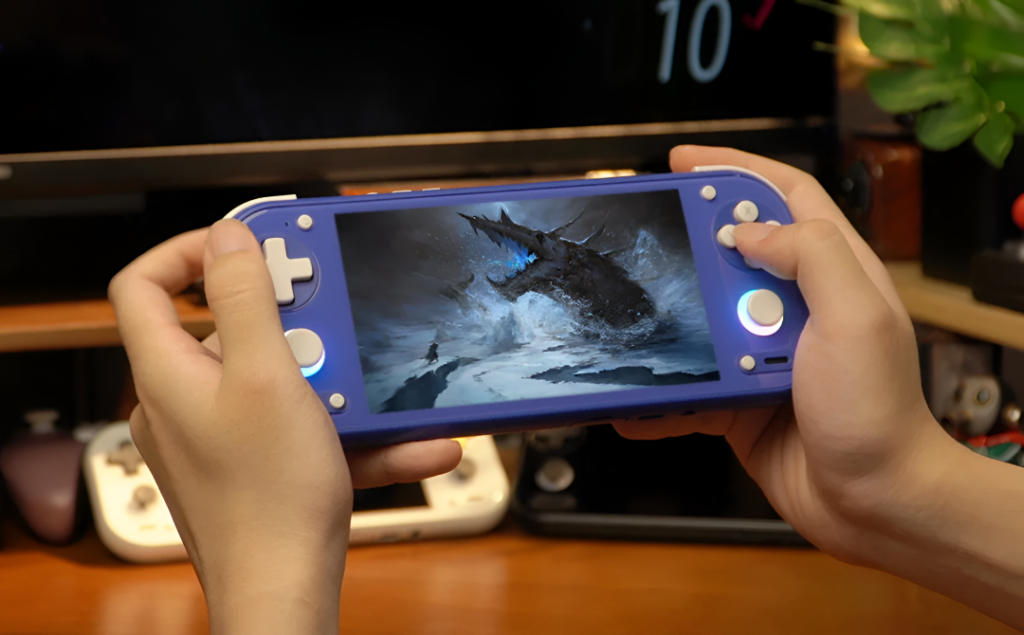
Huawei’s next-generation tri-fold smartphone is now moving closer to its official launch. Scheduled to debut on Sept. 7, the Mate XT 2 has opened for pre-orders in China, giving us a clearer picture of the configurations coming to market. The company has also revealed several design details that distinguish it from the original model.
Huawei Mate XT 2 configurations revealed
The Huawei Mate XT 2 is available in four configurations: 16GB+512GB, 16GB+1TB, 16GB+1TB with a privacy display, and a top-end 16GB+2TB version with a privacy display and stylus bundle. The first three options are offered in Obsidian Black, White, and Purple, while the 16GB+2TB package is exclusive to the Purple finish.
Huawei has not yet revealed the official pricing, although the first-generation Mate XT launched at a premium price, so the new model is expected to remain firmly in the flagship category.
The phone also adopts a redesigned tri-fold structure called the “Wing Fold” architecture. Unlike the original Z-shaped arrangement, the two secondary panels fold inward, enclosing the flexible main display when the phone is closed. A dedicated outer display on one side allows users to handle calls, messages, payments, and other everyday tasks without unfolding the larger screen.
Huawei has kept symmetry at the center of the design, aiming for a more balanced weight distribution when the device is opened. The company says the Mate XT 2 measures just 3.5mm in its thinnest unfolded section while accommodating both internal and external displays. The hinge system and screens have also been reinforced to improve durability against everyday impacts.
The outer display features a pill-shaped front camera cutout, with support for 3D face recognition and face-based payments expected. The phone is also tipped to support on-device heart-rate monitoring, while HarmonyOS 7 is expected to bring interface improvements designed specifically for the large tri-fold screen. These include enhanced multitasking and split-screen functionality. The chipset remains uncertain, with reports pointing to either the Kirin 9030S or a new Kirin 9050-series processor.
Oppo recently confirmed that the Find X10 series will be unveiled in September, although the official launch date remains under wraps. The lineup is expected to include three models, and a new leak suggests the standard Find X10 could offer specifications that rival higher-end standard flagships from other brands. The details also hint that Oppo may be taking a different approach to its flagship lineup this year.
Oppo Find X10 series lineup revealed
For the past few years, Oppo has typically introduced a standard Find X and a Pro model around October, followed by an Ultra variant in the first half of the following year. This time, however, the company appears to be changing that strategy.
According to Digital Chat Station’s latest Weibo post, the Find X10 is positioned as a particularly strong standard flagship. The tipster claims it will be the only phone in its segment with an 8,000mAh battery.
The camera setup is also said to include two 200-megapixel cameras, covering the primary and telephoto roles, along with a multispectral lens. While he has not specified it in this leak, the camera setup may include a 50-megapixel ultra-wide snapper.
DCS further claims the Find X10 will support the BT.2020 wide color gamut and offer what the tipster describes as the industry’s highest beneficial red-light output. If accurate, these additions would give the standard model a considerably more ambitious hardware package than what is typically expected from non-Pro flagships.
An earlier leak from DCS in May revealed that the Find X10 will have a 6.59-inch 1.5K LTPO display and a Dimensity 9500-series chip. It is also expected to pack other features, such as an ultrasonic fingerprint scanner, full-level water resistance, and a customizable AI button. The X10, which reportedly carries the model number PMW110, has also been spotted with an 80W charger through 3C certification and is expected to support 50W wireless charging.
Some Galaxy S26 Ultra users started noticing an unwanted reddish tint on the display last month, and now the software fix meant to clear it up might be creating fresh headaches for a few of them.
The original issue looked like a rectangular patch right in the middle of the screen. It was most obvious on white backgrounds, especially when the brightness was cranked up under strong ambient light. Complaints started trickling in a few months after the March 2026 launch and really picked up in July.
Samsung looked into it and said it’s not hardware, not burn-in, and not the panel itself degrading. According to them, it’s a software glitch in the color optimization and calibration routines. They noted that leaving the phone at max brightness under intense light for long stretches could throw the color balance off on some units.
Their fix was pretty straightforward: free same-day color calibration at service centers in South Korea (no matter how much warranty is left), plus an over-the-air software update. The August 2026 update started rolling out earlier this week, beginning in Korea. It apparently includes the color calibration correction along with the usual security patches. Samsung’s position is that most people won’t need to visit a service center. The software should handle it.
But here’s where it gets interesting. Some owners who already got the calibration, either through the update or at a service center, are now reporting tiny dot-like marks appearing on the display. These are still just individual user reports. There’s no official word that the dots are caused by the calibration process, and nothing yet to suggest it’s a widespread problem. Samsung hasn’t connected the new complaints to the software changes either.
Samsung has been clear that the red tint is a software calibration issue, not a result of the new Privacy Display hardware, but the novel panel design has still been part of the wider conversation about how this screen behaves.
For now, it makes sense to take the new dot reports with a grain of salt. If those marks stick around or start multiplying, the practical move is to get the phone checked at a service center so they can figure out whether it’s software-related or needs a closer look at the display.
Xiaomi’s next premium tablet lineup is starting to take shape through some fresh leaks, and it looks like a solid step up in size and battery life for one of its mid-to-high-end models.
Xiaomi has already confirmed that its top-tier Pad 9 Pro Max is coming in September 2026, powered by the company’s own Xring O3 chipset. The wider Pad 9 series is also expected to include a standard Pad 9 and a Pad 9 Pro. Recent details from tipster Digital Chat Station on Weibo focus on what most people believe is the Pad 9 Pro, giving a clearer idea of its core hardware.
According to the leak, the tablet should pack a 12.5″ LCD panel with 3.2K resolution and a peak 144 Hz refresh rate. Power is expected to come from Qualcomm’s Snapdragon 8 Gen 5, a 3 nm chip with eight Oryon CPU cores and an Adreno 829 GPU. Battery capacity is tipped at 11,000 mAh with support for 67 W wired fast charging.
Overall, that’s an upgrade over the current Xiaomi Pad 8 Pro, which has an 11.2″ LCD (also 144 Hz), a Snapdragon 8 Elite processor, and a smaller 9,200 mAh battery while keeping the same 67 W charging. The bigger screen and larger battery should make a noticeable difference for media and all-day productivity.
At the moment, Xiaomi hasn’t officially confirmed the standard Pad 9 or Pad 9 Pro models, and full specs or pricing haven’t been released. The Pad 9 Pro Max is still the only one with a firm September timeline and the in-house Xring O3 chip. More details on the rest of the lineup should start appearing as the launch window gets closer. The leak just reinforces that Xiaomi is continuing to expand its tablet range with more competitive hardware across different sizes and price points.
Oppo has had a busy 2026 so far, with new phones across almost every price range. The company also expanded its flagship Find X9 Ultra to the global market for the first time.
It also launched the Find N6 foldable with what it calls “Zero-Free Crease”. Below that, Oppo announced the Reno 16 series to cover the mid-range segment, while the A-series remains an option for a tighter budget.
There has also been some change elsewhere in Oppo’s corporate family. Realme has shifted its focus almost entirely to markets outside China, while OnePlus has pulled back from launching new phones in Europe and North America. Oppo itself has continued with its regular phone lineup.
So, whether you’re looking for a flagship camera phone, a foldable, a mid-range device, or something affordable, these are the best Oppo phones to consider in 2026.
The Oppo Find X9 Pro is the best all-round phone in the company’s current lineup. It brings much of Oppo’s high-end camera technology to a phone that costs less than the top-end Ultra model.
What actually sets this phone apart is the camera system, and specifically the telephoto. The 200MP Hasselblad telephoto camera uses a Samsung ISOCELL HP5 sensor at 1/1.56 inches, one of the larger telephoto sensors on any phone, paired with an f/2.1 aperture and a close-focusing distance of just 10cm for macro shots.
Oppo and Hasselblad also built a detachable telephoto extender lens that clips onto the phone. It increases zoom range by 3x to roughly 9.6x-10x, or a 230mm equivalent focal length.
Rounding out the rear camera array is a 50MP main sensor and 50MP ultrawide, plus a dedicated 2MP True Color camera that reads ambient light separately across the frame for more accurate skin tones and white balance.
You get a 6.78-inch LTPO OLED display on the front with a 120Hz refresh rate. Powering it is a MediaTek Dimensity 9500 chipset and a large 7,500mAh battery. The latter supports 80W wired and 50W wireless charging.
Oppo launched the Find X9 Pro globally in April 2026 alongside the Find X9 Ultra. This was also the first time the company brought this level of flagship hardware to international markets as part of the same launch.
If cameras are your main priority, the Find X9 Ultra is the Oppo phone to get. It takes the camera setup even further than the Pro model and is built for users who want some of the most capable smartphone photography hardware available.
It runs on the Snapdragon 8 Elite Gen 5 chipset, paired with a 6.82-inch LTPO AMOLED display at 144Hz and 3,600 nits of peak brightness, and a 7,050mAh Silicon-Carbon battery with 100W wired and 50W wireless charging.
The special part is the camera array: a dual 200MP setup, a 200MP main sensor and a 200MP telephoto lens with 3x optical zoom, both stabilized, alongside a 50MP ultrawide and a separate 50MP periscope telephoto capable of up to 10x optical zoom and 120x digital zoom. That’s four distinct focal lengths built into the Hasselblad Master Camera System, letting the phone shoot true optical zoom at two different ranges instead of relying on digital cropping for the longer one. The phone carries IP66, IP68, and IP69 ratings for dust and water resistance.
The battery is rated at 7,050mAh, with 100W wired charging and 50W wireless charging. It also supports 10W reverse wireless charging. The global version starts at $1,499 and comes with either 12GB of RAM and 512GB of storage or 16GB of RAM and 1TB of storage.
Oppo’s newest foldable focuses on solving one of the format’s most persistent complaints: the crease. The Find N6 uses what Oppo calls Zero-Feel Crease technology, a titanium alloy hinge paired with a memory glass layer that keeps the inner display flatter even after repeated folding. It carries an 8.12-inch QXGA+ foldable OLED inner screen and a 6.62-inch AMOLED outer display, both supporting 1-120Hz adaptive refresh rates and 240Hz touch sampling, with both panels TÜV Rheinland certified for eye protection.
The phone runs on the Snapdragon 8 Elite Gen 5 chipset with up to 16GB of RAM and 1TB of storage, and packs a 6,000mAh battery with 80W wired charging. The rear camera system includes a 200MP main sensor, a periscope telephoto, an ultrawide, and a multispectral sensor for more accurate color reproduction. It also supports an optional AI Pen stylus and a multi-window mode that runs up to four apps at once, aimed squarely at productivity rather than just media consumption.
If a flatter foldable display is the specific thing that’s kept you from buying into the format before, this is the phone built to address exactly that.
The Reno 16 Pro carries flagship-adjacent hardware into Oppo’s mid-range lineup. It features a 6.78-inch AMOLED display at 120Hz with HDR10+ support and 1,800 nits of peak brightness, running on the MediaTek Dimensity 9500s chipset with up to 16GB of RAM and 512GB of storage.
The camera setup includes a 200MP Sony IMX890 main sensor with optical image stabilization, paired with a 50MP periscope telephoto offering 3.5x optical zoom and a 50MP ultrawide.
The Reno 16 Pro has a 7,000mAh battery with 80W wired and 50W wireless charging. Oppo also launched an accessory alongside the phone called the Oppo Bubble Mag E-Badge, a small magnetic display that clips to the back of the phone, shows a live preview from the rear camera for framing selfies, and doubles as a remote shutter from up to 10 meters away.
Oppo’s A-series covers the budget end of the lineup, and the A6x 5G is the latest entry for buyers who just need a reliable phone without spending much. It’s built around a 6.75-inch LCD panel with a 120Hz refresh rate and 240Hz touch sampling, running on MediaTek’s Dimensity 6300 chipset paired with a Mali-G57 MC2 GPU.
The centerpiece is a 6,500mAh battery with 45W wired charging, which Oppo markets as one of the largest in its price segment. The A6x has basic camera hardware, though. You get a 13MP main sensor on the back and a 5MP front camera.
The Find X9 Pro is the best choice for most people. It gives you flagship performance, strong cameras, a large battery, and fast charging without reaching the price of the Ultra model.
If camera quality is your top priority, get the Find X9 Ultra. Its dual 200MP camera setup and 10x optical zoom make it Oppo’s most capable camera phone. But if you want a foldable, the Find N6 is the obvious choice.
For a mid-range phone, the Reno 16 Pro offers the best balance of cameras, performance, display quality, and battery life. And if you’re simply looking for the cheapest Oppo phone worth buying, the A6x 5G covers the basics without asking you to spend much.
For more daily updates, please visit our News Section.
Rumors suggest that Xiaomi will unveil the Xiaomi 18 Fold by early September in China. Ahead of the launch, the brand has already confirmed that it will be equipped with the all-new 3nm Xring O3 chip and will be the first device to feature the next-generation LPDDR6 RAM. It appears that in the days leading up to the launch, the brand is expected to reveal more details about it. Meanwhile, tipster Bald Panda has revealed the battery size and charging capabilities of the device.
According to the tipster, the Xiaomi 18 Fold will house a massive 6,000mAh battery, making it bigger than other wide-foldable phones available in the market. In comparison, the Galaxy Z Fold 8 has a smaller 4,880mAh battery, whereas the Huawei Pura X View has a slightly bigger 5,300mAh battery. The tipster also revealed that the device will support 67W wired and 50W wireless charging.
As per other leaks, the Xiaomi 18 Fold will arrive with a 7.6-inch foldable screen and will run on HyperOS 4-based Android 17. For photography, it is expected to feature a 200-megapixel primary camera. For security, it will have a side-facing fingerprint sensor.
Alongside the Xiaomi 18 Fold, the company will announce a new tablet called the Xiaomi Pad 9 Pro Max, which will also feature the Xring O3 chip. The other details of this device are under wraps.
For more daily updates, please visit our News Section.
Lenovo Legion Y700 Infinite is a compact gaming tablet with an 8.4-inch WQXGA OLED display. It offers a 2560 × 1600-pixel resolution and a 165Hz refresh rate for smooth visuals during gaming and everyday use. The display also supports up to 4000 nits peak brightness, 100% DCI-P3 colour coverage, Dolby Vision, and 3840Hz PWM dimming at low brightness. These features make the tablet suitable for gaming, streaming, and other multimedia use.
Performance and Storage
Powering the tablet is the Qualcomm Snapdragon 8 Elite Gen 5 Leading Version processor. The special edition chip can reach speeds of up to 4.74GHz, aiming to deliver strong performance for demanding games and multitasking. The Legion Y700 Infinite is available with 12GB, 16GB, or 24GB of LPDDR5T RAM, while storage options include 256GB, 512GB, and 1TB of UFS 4.1 Pro storage. A TF card slot also lets you expand storage up to 2TB.
The tablet features a large 15,000mm² vapor chamber cooling system designed to manage heat during extended gaming sessions. It packs a 7,470mAh battery with support for 68W fast charging. Lenovo also includes an Ultra Power Saving mode to help extend battery life when needed.
Cameras and Connectivity
For photography, the Lenovo Legion Y700 Infinite has a 50MP rear camera and an 8MP front camera with face unlock. The tablet supports 5G connectivity with dual-SIM dual-standby through a physical SIM and eSIM, along with the N79 5G band. It also features dual-band Wi-Fi and Bluetooth 5.4.
The Lenovo Legion Y700 Infinite runs Android 16 and comes with dual JBL-tuned super-linear speakers with Dolby Atmos. It has two USB-C 3.1 Gen 2 ports for charging and high-speed data transfers. Overall, its compact OLED display, flagship-grade processor, large cooling system, expandable storage, and 5G connectivity make it a feature-packed tablet for gaming and everyday use.
Price and Availability
The Lenovo Legion Y700 Infinite is available now at Giztop, with prices starting at $899. Global and express shipping options are also available. Most configurations are currently in stock, while the white 16GB/512GB model is on pre-sale and is scheduled to ship on September 5, 2026.
The word “Power” means something different on the Poco M8 Power. Instead of chasing benchmark scores or adding high-end hardware, Poco has taken a simpler route: put an 8,000mAh battery inside the phone and build the rest of the experience around it. That gives the M8 Power one of the biggest batteries you can get in this segment, along with a large 6.99-inch AMOLED display and a surprisingly long software support commitment.
The trade-offs become apparent elsewhere. The Snapdragon 4 Gen 4 is firmly an entry-level chipset, charging is not particularly fast for a battery this large, the cameras are merely adequate, and there is only a single speaker. After spending time with the Blaze Orange version, the M8 Power comes across as a phone that knows exactly what it wants to be — but whether that makes it a good buy depends heavily on your priorities.
7Verdict
The Poco M8 Power isn’t trying to be the fastest or most versatile phone in its segment. Instead, it makes a very specific trade: you get an enormous battery and a large, good-quality AMOLED display, while accepting weaker performance, average cameras, mono audio and relatively slow charging.
That trade makes sense for the right buyer. If your priorities are battery life, media consumption, a large screen and long-term software support, the M8 Power is an easy phone to appreciate. The Blaze Orange finish also gives it more personality than many budget devices.
But if you spend a lot of time gaming, care about camera quality or expect fast charging and stereo speakers, there are better-balanced options.
At its effective launch pricing, the M8 Power makes a compelling case for itself. It isn’t an all-rounder, but it doesn’t need to be. For users who simply want a phone that can keep going long after everything else needs a charger, Poco has built something that gets the fundamentals right.
For those looking to get the Poco M8 Power, they can visit Flipkart and get the 6GB+128GB edition for Rs 24,999 and the 8GB+128GB version for Rs 27,999.
For more daily updates, please visit our News Section.
BigMe has announced the pre-order schedule for its latest color e-reader, the BigMe B6 Pro. Pre-orders will open at 8:00 PM on September 1 and remain open until 10:00 AM on September 22. Buyers can then pay the remaining balance from 10:30 AM on the same day. The 8GB RAM and 256GB storage model costs 2,099 yuan.
The B6 Pro features a 6-inch color E Ink display with a resolution of 300 PPI for black-and-white content and 150 PPI for color. The screen supports up to a 75Hz refresh rate and features 36 levels of adjustable warm and cool front lighting for reading in various lighting conditions.
BigMe B6 Pro packs a Dimensity chip
Inside, the B6 Pro is powered by the MediaTek Dimensity 1080, an octa-core processor with up to 2.6 GHz speeds. It comes with 8GB of RAM and 256GB of storage. BigMe previously used the same chip in its original HiBreak Dual phone before switching to the newer Dimensity 8300 in later models.
One of the biggest features here is built-in 4G connectivity. The B6 Pro supports a SIM card, allowing users to make calls, send messages, and access the internet without a Wi-Fi connection. It also supports dual-band Wi-Fi and Bluetooth 5.3.
Despite the added connectivity hardware, the reader remains fairly compact. It measures 108 x 149.3 x 6.98mm and weighs around 176 grams. BigMe will offer it in black and white, while the software is based on Android 14.
The device also supports stylus input and has five physical touch buttons. A 2,120mAh battery powers the reader, with charging handled through a USB Type-C port. The same port can also be used for wired earphones. Other hardware includes dual microphones and a single speaker for calls and media playback.
The B6 Pro is part of BigMe’s growing push into E Ink devices this year. While the recent HiBreak Dual 3 focuses on the smartphone side of the company’s lineup, the B6 Pro is aimed more directly at readers who want a color E Ink device with 4G connectivity.
Huawei is refining one of its most unique health-focused wearables, and the teaser suggests some real comfort upgrades ahead of a big European launch.
Several HarmonyOS-powered models are getting updates in early September 2026. One of the devices set to be officially unveiled is the Huawei Watch D3, which will join the global Huawei Watch GT7 series and Huawei Watch 6 at a launch event in Munich on September 2.
Unlike the more sporty Watch and Watch GT series, the Watch D line has always been about one specific health feature. It uses an inflatable cuff on the wrist to take relatively reliable blood pressure readings when you follow the proper guidelines. A new teaser video just dropped and gives the first look at how the 2026 model is evolving that idea.
The Watch D3 brings new color options, a noticeably slimmer case, and a larger display thanks to thinner bezels. Huawei is also calling out softer, more comfortable wristbands compared to the ones on the Watch D2. The goal seems to be making a device that’s already unique for its medical-style blood pressure monitoring feel better for everyday wear. Full details on any extra hardware or software features are still under wraps until the Munich event.
For context, the current Watch D2 is built around its standout ambulatory blood pressure monitoring feature: it uses a slim 26.5 mm inflatable airbag cuff on the strap to take relatively accurate readings (including scheduled 24-hour monitoring) and is even CE-MDR certified as a medical device. Beyond that, it packs a 1.82″ AMOLED display, Health Glance that pulls up to 10 key indicators with one tap, ECG, pulse wave arrhythmia analysis, comprehensive sleep tracking, stress and SpO₂ monitoring, plus around 80 workout modes.
The Watch D2 is fairly light at about 40 g without the strap, offers up to 6 days of battery life in typical use (or about a day with continuous blood-pressure monitoring on), and comes in a few classic colors with interchangeable straps.
The upcoming launch will also introduce new earbuds called FreeBuds Neo, which show up in multiple colors in a separate teaser. Altogether, the announcements show Huawei is still pushing hard in wearables and audio, especially in regions where its ecosystem remains competitive. More complete specs and pricing for the Watch D3 should land on September 2.
The Oppo Enco Air 5 takes a fairly straightforward approach to budget wireless earbuds: deliver strong noise cancellation, enjoyable sound, long battery life, and useful smart features without making the experience unnecessarily complicated. After spending time with them, it is clear that Oppo has focused more on getting the fundamentals right than chasing flashy extras.
The earbuds feature up to 52dB adaptive ANC, a 12mm dynamic driver, Bluetooth 6.1, triple-microphone call noise cancellation, dual-device connectivity, and up to 54 hours of total battery life.
7Verdict
Oppo Enco Air 5
The Oppo Enco Air 5 gets the important things right. The ANC is genuinely effective for its class, the sound is energetic and customizable, the earbuds are comfortable, and battery life is excellent. Features such as dual-device connectivity, Alive Audio, AI Translate, and low-latency gaming mode add meaningful value rather than simply padding the specification sheet.
The glossy earbuds and average mid-range performance are minor drawbacks, but they do little to undermine an otherwise polished package.
If you want a pair of affordable wireless earbuds that prioritizes ANC, battery life, comfort, and everyday usability, the Oppo Enco Air 5 is an easy recommendation. It is available with a price tag of Rs 3,299 in India.
Earlier this month, the regular Galaxy Z Fold 8 came out of JerryRigEverything’s tough durability tests looking pretty solid. It handled reverse bends, grit, and the usual stress tests surprisingly well. All previous large-screen Galaxy foldables, including the first-generation Galaxy Fold, also survived the test without any major damage or loss of functionality.
The Galaxy Z Fold 8 Ultra, though, didn’t have the same luck when Zack Nelson put the $2,099 flagship through the exact same gauntlet.
Samsung has been talking up the Ultra’s durability upgrades: an Armor Aluminum frame, Gorilla Glass Ceramic 3 on the cover display, a redesigned Armor FlexHinge, and dual titanium layers (FlexTitanium) under the folding panel. They’re marketing it as having “lasting durability.”
In the test, the first reverse bend while open went fine. The second, harder bend was a different story. The main inner display took permanent damage: it flickered for a moment, then went completely dark and unusable. The phone also showed some noticeable flex when bent backward.
Possible reasons include damage to the display’s flex cable, a fold-detection sensor, or just internal stress from the hinge pressing against that ultra-thin folding panel. At only 4.1 mm thick when unfolded, the Ultra seems to be pushing how slim Samsung can go while still keeping the structure strong under extreme force. The regular Fold 8 had survived similar rearward bending with its chassis intact, which highlights how even phones in the same generation can behave differently.
Foldables are still more complex than regular phones: two displays, a hinge, and everything needing precise alignment. When the inner screen fails, repairs aren’t cheap: Samsung charges $639 in the US for a Galaxy Z Fold 8 Ultra inner display module replacement, while the outer display is a more reasonable $149. They do include one free inner screen protector replacement in the first 12 months (after that it’s about $19).
Apple’s rumored first foldable iPhone is raising eyebrows, not just for its expected sky-high price, but for how expensive it might be to repair.
According to a report from Apple World Today, Apple is getting ready to introduce its debut foldable smartphone (widely called the iPhone Ultra) next month, with a starting price that could top $2,000. The device hasn’t been officially confirmed yet, but some people are already looking past the launch price and worrying about long-term ownership costs.
Ricky Panesar, founder of repair company iCorrect, estimates that replacing the inner screen alone could run about $1,155. That’s noticeably higher than the roughly $772 Samsung charges for a similar inner-screen fix on the Galaxy Z Fold 8. Panesar thinks Apple’s mix of Samsung Display panels and its own proprietary hinge design is what’s pushing the numbers up, potentially making foldable iPhone repairs some of the most expensive in the industry.
Apple’s fall product event is set for September 9 under the theme “Surprise and shine.” Some reports suggest the foldable might not actually go on sale until October, but most expect Apple to at least show it off during the September event alongside its other new products.
The projected repair cost highlights a bigger issue with foldables in general: the innovative design often comes with complicated (and pricey) displays and hinges. Apple hasn’t shared any official repair pricing or AppleCare details yet. Anyone thinking about buying the iPhone Ultra will probably want to factor in both the premium sticker price and the potential cost of keeping it running down the road.
And speaking of repair costs, it’ll be interesting to see how well the hinge and inner display hold up in the first place. We’ve already seen some less-than-ideal durability issues with earlier foldables, so now it’s Apple’s turn to prove that the wait was worth it.
The right 3D printer can help you produce prototypes, custom products, replacement parts, miniatures, props, and small production runs. The market now includes fast CoreXY printers, large-format machines, dual-nozzle systems, and high-resolution resin printers.
Each printer in this list serves a different type of user. Some models focus on ease of use and low cost. Others support engineering materials, large parts, or detailed resin models. You should consider print volume, material support, multicolor features, maintenance, and available workspace before choosing a machine.
Here is a look at the best 3D printers available for creators and small businesses right now.
The Bambu Lab X2D is the most advanced printer in this group. It uses a dual-nozzle system that lets one nozzle print the model while the second nozzle handles support material. This setup can improve support removal and reduce the cleanup you need to do for complex shapes.
The X2D has a 256 x 256 x 260mm build volume, a 300-degree Celsius nozzle, and a 65-degree actively heated chamber. It supports materials such as PLA, PETG, ABS, ASA, TPU, nylon, polycarbonate, PVA, and several carbon- and glass-fiber-reinforced filaments.
Bambu Lab also includes a servo-driven extruder, automatic calibration, AI print monitoring, a toolhead camera, and a three-stage filtration system. The printer can detect problems such as spaghetti, nozzle clumping, foreign objects, and purge-chute jams.
The X2D costs $649, while the version with an AMS 2 Pro costs $899. It is a strong choice if you design products, make props, or run a small business that needs reliable support for advanced materials. Its price and more complex dual-nozzle system may be excessive if you are a casual hobbyist.
The Bambu Lab A2L focuses on build volume and flexibility. Its 330 x 320 x 325mm print area is much larger than the X2D’s volume. You can print large helmets, props, organizers, and batches of smaller products without splitting models into multiple sections.
The A2L supports AMS systems for multicolor and multi-material printing. It also supports optional cutting and drawing modules. Those accessories allow you to cut paper, vinyl, leather, and other materials or draw with compatible pens.
The printer costs $469. The A2L Combo costs $569 and includes an AMS lite system. The machine supports PLA, PETG, TPU, PVA, and some carbon-fiber materials. It does not offer the same high-temperature material support as the X2D or the Creality K2 Pro.
The A2L fits you well if you need a large print area at a reasonable price. It also suits you if you run a small shop that sells custom decorations, household products, cosplay items, and other consumer-focused goods.
3. Creality K2
The Creality K2 provides a compact CoreXY design with a 260 x 260 x 260mm build volume. It supports print speeds of up to 600mm/s and includes automatic leveling, a direct-drive extruder, filament monitoring, power-loss recovery, and print-failure detection.
The K2 Combo includes one CFS unit for multicolor printing. Creality says you can connect up to four CFS units for a total of 16 colors. The system also supports automatic filament feeding and relay functions.
The printer costs $399, which makes it one of the least expensive options in this comparison. The standard K2 supports PLA, PETG, and some PLA-CF materials. It lacks the active chamber heater found in the K2 Pro, so it is less suitable for demanding ABS, ASA, and other engineering filaments.
The K2 Combo is a practical choice if you want fast printing, an enclosed frame, and multicolor capability without paying a premium price.
4. Creality K2 Pro
The Creality K2 Pro adds several features for business and engineering use. It has a 300 x 300 x 300mm build volume, a 60-degree actively heated chamber, a 300-degree Celsius nozzle, and a hardened-steel extrusion system.
The printer supports materials such as ABS, ASA, PLA-CF, PA-CF, and PPA-CF. It also includes dual AI cameras, automatic leveling, flow calibration, Ethernet, 32GB of storage, and compatibility with up to four CFS units.
The K2 Pro Combo costs $799. It offers more material flexibility and a larger print area than the standard K2. You can use it for prototypes, cosplay parts, functional components, and short production runs.
The K2 Pro makes sense if you need an enclosed printer but do not want to spend more than $1,000. Its larger footprint and higher power requirements may create challenges if you have a smaller workspace.
5. Prusa CORE One+ Gen 2
The Prusa CORE One+ takes a different approach. It focuses on repairability, documentation, long-term support, and consistent print quality. The assembly kit costs $999, while the assembled version costs $1,299.
The printer has a 250 x 220 x 270mm build volume and a 55-degree heated chamber. It supports PLA, PETG, TPU, PVA, polycarbonate, nylon, ABS, ASA, and other materials. It also includes automatic first-layer calibration, a direct-drive extruder, a removable PEI spring-steel sheet, and support for Prusa’s MMU3 and INDX multicolor systems.
The kit takes about 12 hours to assemble. That process requires more time than the mostly preassembled machines in this list, but it also gives you a better understanding of the printer’s components.
The CORE One+ suits you if you value serviceability and long-term ownership. It is also a good choice if you prefer an open and well-documented hardware ecosystem.
6. Elegoo Saturn 4 Ultra 16K
The Elegoo Saturn 4 Ultra 16K is the only resin printer in this comparison. It targets you if you need extremely fine detail for miniatures, figurines, jewelry designs, and collectible models.
The printer uses a 10-inch 16K monochrome LCD with a 14 x 19-micron XY resolution. Its build volume measures 211.68 x 118.37 x 220mm. It also includes automatic leveling, tank heating, tilt-release technology, residue detection, an AI camera, and a maximum print speed of 150mm per hour.
The Saturn 4 Ultra 16K costs $499 at the listed sale price. Resin printing produces more detailed results than most filament printers, but it requires additional equipment and safety procedures. You need gloves, cleaning fluid, a curing station, and a well-ventilated workspace.
This printer is an excellent choice if you want detailed models. It is not the best option if you need large functional parts or a low-maintenance workflow.
7. Anycubic Kobra S1 Max
The Anycubic Kobra S1 Max Combo targets large-format printing. Its 350 x 350 x 350mm build volume can handle full-size helmets, large props, footwear, prototypes, and production batches.
The printer features a fully enclosed CoreXY design, a 350-degree Celsius hotend, a 65-degree heated chamber, and a 120-degree heated bed. It supports materials such as ABS, ASA, polycarbonate, nylon, PA6-CF, PET-CF, and other engineering filaments.
The included ACE 2 Pro system supports four-color printing. You can add more ACE 2 Pro units to reach up to 16 colors. The system also provides filament drying, automatic refill, filament identification, and moisture control.
The Kobra S1 Max Combo costs $899. It is a strong option if you need large parts or frequent batch production. You should plan for its large physical footprint and 25.7kg machine weight.
The Flashforge Adventurer 5M Pro offers a simpler experience. It has a 220 x 220 x 220mm build volume, an enclosed CoreXY frame, automatic leveling, a built-in camera, and HEPA and activated-carbon filtration.
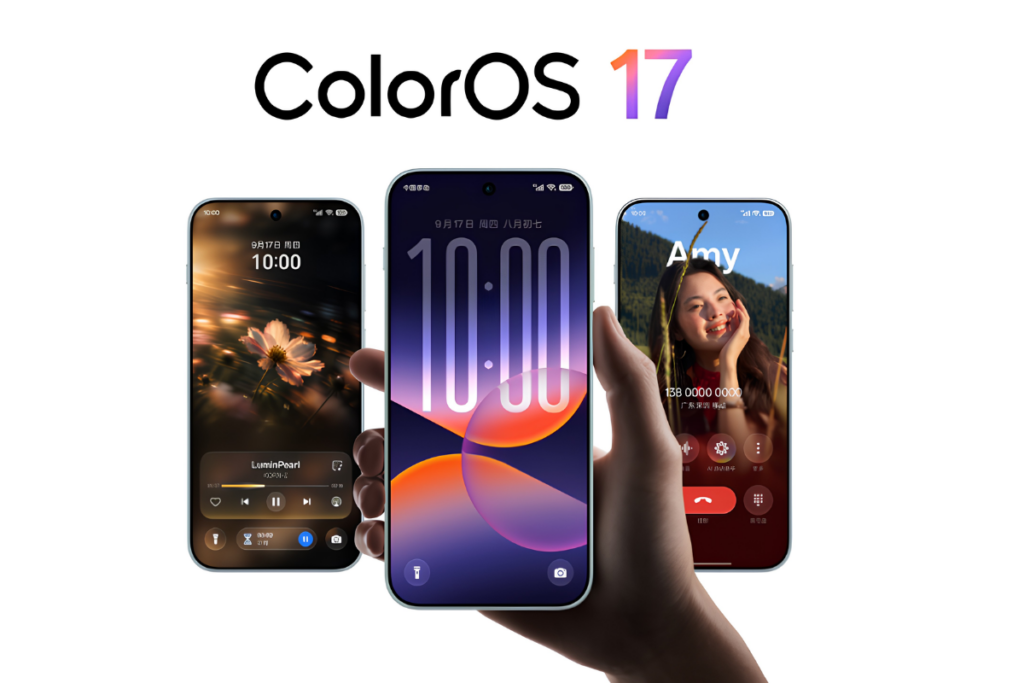
The printer reaches speeds of up to 600mm/s and supports PLA, PETG, ABS, ASA, TPU, PLA-CF, and PETG-CF with the proper nozzle. It arrives about 95% assembled, so you can begin printing after a short setup process.
The Adventurer 5M Pro costs $449 at the listed sale price. It is a good fit if you run a classroom, work from a home office, operate a small studio, or need a dependable general-purpose printer.
The Lenovo-owned company has confirmed it’ll officially unveil a new Swarovski crystal co-branded model at IFA in Berlin in early September. The teaser video shows the back of a Razr-style device, so most people expect it’s based on the Razr 70 (or Razr 2026 in some markets). This follows last year’s special Swarovski Edition of the Razr 60.
The official teasers show a black back cover with a diamond-patterned texture and plenty of crystal embellishments. Leaked renders that surfaced earlier line up with this look, including extra crystals below the external screen and around the hinge. Compared to the flashier Razr 60 Swarovski Edition, this one feels a bit more restrained. The black color keeps it from looking overly flashy while still delivering that signature Swarovski sparkle.
Based on the standard Razr 70, we’re looking at a 6.9″ OLED inner display and a 3.63″ outer screen, plus a battery somewhere in the 4,500–4,800 mAh range. Cameras should match the regular model: dual 50 MP rear sensors and a 32 MP front camera. The base Razr 70 also packs a MediaTek Dimensity 7450X chipset, up to 512 GB of storage, and 30W wired plus 15W wireless charging. This special edition is mainly a cosmetic upgrade.
Motorola hasn’t shared the price or exact release date yet. More details, including availability and any special packaging (like a transparent case that shows off the crystals), are expected at IFA 2026. It’s another step in Motorola’s Brilliant Collection approach of treating its foldables as fashion pieces as much as phones.
For the past few years, my gaming habits have been pretty one-note. I’ve spent most of my time playing PUBG Mobile competitively. It’s a demanding game that requires constant attention, quick reflexes, and a lot of screen tapping. After a while, that level of intensity gets tiring. Recently, I found myself wanting to step back and play something simpler, games that don’t require an internet connection or a competitive mindset.
That shift in interest coincided with the arrival of the Ayaneo Konkr Pocket Advance. Ayaneo is a company you might recognize for making relatively expensive gaming handhelds. Recently, they launched a new sub-brand called Konkr, aimed at the more affordable, Android-based retro handheld market. The Pocket Advance is their newest offering. As the name and shape suggest, it’s heavily inspired by the classic Game Boy Advance.
I’ve spent the last two weeks testing the 4GB RAM and 64GB storage model. I also installed the optional tempered glass screen protector and used the official carrying case. After using it daily, I’ve found it to be a very capable device for older games, though it has a few physical quirks you should know about before buying. Here is my full review of the Konkr Pocket Advance.
Design and Build Quality
When you first pick up the Pocket Advance, the most noticeable thing is its weight. With the tempered glass installed, my unit weighs 226 grams. For a device that measures 151.3 x 82.4 x 22mm, it feels quite dense. It’s significantly heavier than the original Game Boy Advance, which weighed around 140 grams.
The build is entirely plastic, but it doesn’t feel cheap or hollow. Ayaneo used a semi-matte finish on the shell, which does a good job of resisting fingerprints and smudges. The shape features rounded corners, gently tapered edges, and broad side grips with inward-curving contours.
It sits naturally in the hands when you are sitting up. However, because of that 226-gram weight, I found that playing it while lying flat on my back in bed caused my fingers to fatigue after about twenty minutes. It is definitely a handheld better suited for a seated position.
I have the Coral Orange variant, which combines a bright orange shell with white buttons and trim. It is also available in Navy Blue, Heritage Gray, and the limited-edition Pink & Onyx Ice variants.
The control layout is standard for a retro handheld but has some specific design choices. The D-pad and the ABXY face buttons use membrane switches rather than clicky microswitches. They are very quiet when pressed. The face buttons have a slight tactile bump, but they don’t produce the sharp click you get on some competing devices. Whether you like this comes down to personal preference; I found the quiet buttons useful for playing in the same room as someone else without bothering them.
The start and select buttons, along with two additional menu buttons, are made of soft silicone and are also silent. They are arranged a bit unusually: the left pair sits diagonally under the D-pad, while the right pair is placed more horizontally under the face buttons.
Along the top edge, you have the L1 and R1 shoulder buttons, which are quiet but have a distinct click. Alongside the clicky L2 and R2 buttons, this upper section houses the power button and an additional custom button.
The top layout has a tiered design; on the next step down sit the LC and RC custom shoulder buttons, which share that same clicky feel and are separated by a top fan grille. Moving to the back of the device, it features symmetrical ventilation grilles for the internal fan, some molded grooves for grip, and visible screws.
On the bottom edge, you’ll find a microSD card slot, a USB-C port, a 3.5mm headphone jack, and a physical volume slider. The volume slider works fine, but its placement is a bit frustrating.
Depending on how you hold the device, it’s easy to accidentally brush your hand against the slider and change the volume during a game. It’s a minor annoyance, but something I noticed frequently.
The screen is a 3.5-inch LCD panel with a 3:2 aspect ratio and a resolution of 960 x 640 pixels. The original Game Boy Advance had a screen resolution of 240 x 160. Because the Pocket Advance’s screen is exactly four times that resolution on both the horizontal and vertical axes, it allows for clean 4x integer scaling.
When you play GBA games, the image fills the screen perfectly without any stretching, blurring, or uneven pixels. To complete the look, Ayaneo included black borders on the sides of the display glass to mimic the original hardware’s bezel.
As for the panel itself, it’s a standard LCD. It doesn’t have the deep blacks or high contrast of an OLED screen, but it performs well for the price. It gets bright enough to use outdoors comfortably, and the lowest brightness setting is dim enough for playing in a dark room.
Because the screen is only 3.5 inches, navigating the Android interface can feel a bit cramped. Tapping small icons or typing on the on-screen keyboard takes some getting used to, but it’s manageable once you adjust.
I do need to mention a quality control issue with my specific unit. The bottom right corner of the display panel was slightly lifted above the plastic shell. Ayaneo has acknowledged this defect in the early review batches and stated that the retail units shipping to customers will have this corrected. If you do receive one with a lifted screen, the company says they will address it through their customer support.
Performance and Emulation
Inside the Pocket Advance is a MediaTek Helio G90T processor. It’s an older octa-core chip built on a 12nm process, featuring two Cortex-A75 cores and six Cortex-A55 cores, paired with a Mali-G76 MC4 GPU. My unit has 4GB of RAM and 64GB of internal storage.
In benchmark terms, it scores around 475,000 on AnTuTu, while on Geekbench 7, it hits 612 in single-core, 1,917 in multi-core, and 1,741 for the GPU. In practical terms, this chip is more than capable of handling the majority of retro consoles you would want to play on a device like this.
For 8-bit and 16-bit systems like the NES, SNES, Game Boy, Game Boy Color, and Sega Genesis, performance is consistent and smooth. You can fast-forward through slow RPG text without any stuttering. Moving up to 32-bit and 64-bit systems like the PlayStation 1 and Nintendo 64, the device continues to perform well. I didn’t experience any noticeable slowdowns in standard titles. Sega Dreamcast games also ran without issue.
I spent a lot of time playing PlayStation Portable (PSP) games. The G90T handles PSP emulation quite well; I was able to run most games at 2x or 3x their original resolution with playable fps. However, because the PSP used a 16:9 widescreen format, playing these games on the Pocket Advance’s 3:2 screen means you will have black bars at the top and bottom of the image.
The device can also run some lightweight 2D PS2 games, but the Helio G90T struggles with heavier 3D titles in the PS2 library. If your primary goal is to play PS2 games, this is not the right handheld for you. It is best viewed as a device for everything up to the Dreamcast, PS1, and PSP.
To keep the processor cool, the device has an active cooling fan. If you are playing demanding games or using the Max performance setting, the fan will turn on. You can hear it pushing air out of the top vents, but the noise isn’t overly loud or distracting. It does a good job of keeping the back of the device from getting too warm during long sessions.
Software Experience
The Pocket Advance runs on Android 12. Because it’s an Android device, you have the flexibility to download standard apps, use the Google Play Store, and install whatever standalone emulators or frontends you prefer.
Out of the box, Ayaneo provides its own software layer. The default home screen is AYAHome, a basic launcher that lets you organize apps into folders and change wallpapers. The core of the experience, however, is AYASpace. This is Ayaneo’s proprietary frontend for managing retro games.
It allows you to scan your microSD card for game files, automatically downloads box art and game descriptions, and organizes your library by console. It’s relatively easy to set up and works well for people who don’t want to spend hours configuring third-party apps.
The most useful software feature is the quick settings overlay, accessed by pressing the dedicated K button on the front of the device. This brings up a menu that lets you adjust system settings without leaving your game. You can view real-time stats like CPU usage, GPU usage, and framerate.
You can also switch between different performance profiles (Eco, Balanced, Gaming, and Max) and manually adjust the fan speed. The overlay also includes toggles for screen brightness, volume, controller mapping, screenshots, and Wi-Fi. Having these controls easily accessible makes life much easier.
Battery Life and Audio
The handheld is equipped with a 4,000mAh battery and supports 10W charging via USB-C. It takes about 45 minutes to charge the battery to 80%.
Battery life varies depending on how you use the device. When I played more demanding PS1 or PSP games on the Gaming performance profile, the battery lasted around 6-8 hours. When I switched to the Eco profile to play standard Game Boy Advance games, the battery life extended closer to 10-12 hours. For casual use, playing an hour or two a day, you can easily go a few days between charges.
For audio, the Pocket Advance has two chamber speakers located on the bottom edge. They are surprisingly clear and get loud enough for normal indoor use without distorting. The device also includes a rotor motor for haptic feedback, which works well in games that support rumble features. If you prefer to use wired headphones, the 3.5mm jack on the bottom provides clean audio output.
Final Thoughts
The Ayaneo Konkr Pocket Advance is a fantastic device that brings a genuinely premium feel to the retro handheld space. Between the excellent display, quite powerful chipset, and smooth Android interface, the overall design is incredibly well-executed. While it isn’t an exact replica of the original Game Boy Advance, it doesn’t need to be, it perfectly masters all the nitpicky details you would want in a modern GBA-style handheld.
The pricing is also highly competitive, starting at just $89, making it an easy recommendation. When comparing it to a direct competitor like the $59.99 Anbernic RG34XX, the Pocket Advance easily outclasses it in almost every category when it comes to raw specs and overall polish.
If you are specifically looking for a joystick experience, you might want to look toward the Pocket Air Mini, which starts at $109.99. However, if you want a premium, D-pad-focused handheld that nails the classic horizontal form factor, the Pocket Advance is an outstanding choice.
Poco is teasing a mid-range phone that’s all about battery life, and the official reveal is just a few days away.
Poco India dropped the first official teaser for the Poco X8 Power 5G, confirming it’ll launch in India on September 4 at 12 PM IST. The short video and posts show off a bright yellow back with a square camera module, but the real star is what they’re calling the “biggest battery EVER on a POCO phone”, a massive 10,000 mAh cell.
According to the brand, that should get you up to 3.5 days on a single charge, and they’re also pushing a six-year battery lifespan claim. Leaks suggest it supports up to 100W wired charging over USB-C and can even act as a power bank with reverse charging up to 27W. Those numbers haven’t been confirmed officially yet, but they’ve been consistent across multiple reports.
The teaser and earlier leaks point to a 6.83″ display that hits a claimed 3,500 nits peak HDR brightness, protected by Gorilla Glass Victus 2. It’s also got IP68 and IP69K ratings for dust and water resistance. Camera-wise, expect a 50 MP main sensor with OIS, an 8 MP ultrawide, and a 32 MP selfie camera.
10,000 mAh battery? Yeah, you read that right.
We didn’t just push the limits, we completely broke them. Introducing the biggest battery EVER on a POCO phone: #10000mAh of uninterrupted power that keeps going for 3.5 DAYS straight.#POCOX8Power, launching 4th September at 12 PM pic.twitter.com/6MmNt86JUj
The X8 Power is said to get four major Android OS upgrades plus six years of security patches. It apparently runs on Qualcomm’s Snapdragon 6 Gen 5 and is widely seen as a rebranded Redmi Note 17 Pro Max with only minor tweaks. A companion model, the regular Poco X8 5G with a 9,000 mAh battery, is also launching on the same day.
Full specs, pricing, and availability (likely through Flipkart) will be revealed at the September 4 event. With the combination of a 10,000mAh battery and Snapdragon 6 Gen 5, Poco is clearly aiming at people who just want a phone that lasts and lasts. Everything else should become clear in a few days.
Citizen has released three new men’s sports watches in the UK under its AW191 series. The new models are available now on the company’s UK website and stick to a basic, functional formula: standard analog designs powered by Citizen’s long-running Eco-Drive solar technology.
Design Details
The release includes three specific models: the AW1914-55L, the AW1911-53E, and the AW1911-53A. All three share the same underlying hardware and a 43mm stainless steel case, which is a fairly standard size for modern sports watches.
The AW1914-55L is the most expensive of the group at £299. It comes with a two-tone stainless steel case and bracelet, along with a navy blue dial and a matching blue bezel. The other two models are priced slightly lower at £279 and offer a more standard silver-tone steel finish. The AW1911-53E features a black dial and black bezel, while the AW1911-53A pairs a white dial with a black bezel. All three watches use a standard stainless steel bracelet secured by a fold-over clasp with push buttons.
The watch features Citizen’s Eco-Drive movement, which eliminates the need for regular battery replacements or manual winding. It converts natural sunlight and indoor light into power, allowing the watch to run continuously without a battery swap as long as it receives regular light exposure.
Otherwise, the specs are exactly what you would expect for a watch at this price point. The dial is covered by mineral crystal. It provides decent impact resistance, though it is more prone to scratching than the sapphire crystal you usually find on more expensive watches. The dial itself is straightforward, featuring a basic three-hand layout for the time and a small date window.
For water resistance, the watches are rated at 100 meters (10 Bar). This means they are fine for surface swimming, showering, and snorkeling, but they are not built for scuba diving.
We’d normally start a roundup like this by talking about which OnePlus phone has the fastest chipset or the biggest battery. This year, though, the more important story is outside the spec sheet. The OnePlus 15 launched in China in October 2025 and went global soon after, followed by the 15R in December and the smaller 15T in March. On paper, that’s business as usual for OnePlus.
However, in July, OnePlus confirmed that it will stop launching new devices in Europe, the United States, and Canada. The announcement caught many people off guard, especially since OnePlus has built a small but loyal following in these markets. Existing users will continue to receive software updates, security patches, and warranty support, but there will be no new OnePlus phones launching there.
So this list serves two purposes: it’s a look at the OnePlus phones that made it to market this year, and a guide to which ones are worth buying while they’re still officially available in your region.
The OnePlus 15 is the easiest recommendation in the lineup. It’s the phone OnePlus built to do pretty much everything well. You get a 6.78-inch 1.5K LTPO AMOLED display with a 165Hz refresh rate, although that ultra-high refresh rate is mainly useful in supported games. The phone is powered by Qualcomm’s Snapdragon 8 Elite Gen 5 and comes with up to 16GB of RAM and 1TB of UFS 4.1 storage.
The battery is the biggest highlight here. The OnePlus 15 packs a huge 7,300mAh silicon-carbon battery. The US version supports 80W charging, while charging speeds vary by market.
The camera setup is also properly flagship-level this time. There’s a 50MP main camera, a 50MP ultrawide, and a 50MP periscope telephoto with 3.5x optical zoom. The US model starts at $899.99 for 12GB/256GB.
The OnePlus 15R is where things get more interesting. It’s $200 cheaper than the OnePlus 15 in the US, but it still has a lot of the hardware that makes the flagship attractive. You get Qualcomm’s Snapdragon 8 Gen 5, a 6.83-inch 1.5K AMOLED display with a 165Hz refresh rate, and a massive 7,400mAh battery.
As for optics, you get a 50MP Sony IMX906 main camera and an 8MP ultrawide, but no telephoto lens. You also don’t get wireless charging.
The 15R starts at $699.99 with 12GB of RAM and 256GB of storage in the US. The 512GB version costs $799.99. In India, it starts at ₹47,999.
The OnePlus 15T is probably the most interesting phone in the lineup, and also the hardest one to recommend because you can’t officially buy it in most markets.
It launched in China in March with a 6.32-inch 1.5K OLED display and a 165Hz refresh rate. More importantly, it uses the same Snapdragon 8 Elite Gen 5 chip as the larger OnePlus 15. And then there’s the battery. Despite its compact size, the 15T packs a 7,500mAh battery, with support for 100W wired charging and 50W wireless charging.
The camera setup is also better than you might expect. It has a 50MP main camera and a 50MP telephoto with 3.5x optical zoom. There’s no ultrawide camera, but at least OnePlus didn’t completely sacrifice zoom photography to make the phone smaller.
Pricing starts at 4,299 yuan, around $625, for 12GB/256GB. The top-end 16GB/1TB model costs 5,699 yuan. The catch is availability. The 15T launched in China, and OnePlus never gave it a proper global rollout. With the company’s latest decision to stop launching new products in Europe and North America, its chances of getting an official release in those markets look even worse.
If you don’t need flagship performance, there’s still the Nord 6. It has a 6.78-inch 1.5K AMOLED display with a 165Hz refresh rate and is built around Qualcomm’s Snapdragon 8s Gen 4. The phone also gets a 50MP main camera and an 8MP ultrawide, along with a large battery.
The Nord 6 is less about having the most impressive spec sheet and more about getting the everyday stuff right. It’s fast enough for normal apps, social media, streaming, and gaming, without asking you to spend flagship money.
OnePlus sells the Nord 6 from Rs 38,999 (~$420) for the 8GB+256GB variant and Rs 41,999 (~$450) for the 12GB+256GB model.
This is the part that’s difficult to ignore when recommending OnePlus phones in 2026. OnePlus has officially said it will no longer launch new products in Europe and North America. At the same time, it says existing customers will continue to receive software updates and after-sales support.
So if you’re in the US, Canada, or Europe, buying a OnePlus 15 or 15R isn’t necessarily a bad idea. You’re not buying a phone that immediately loses support. But you should be aware that the next OnePlus phone may not officially arrive in your market.
That changes the buying decision quite a bit. If you’re the type of person who upgrades every two or three years and wants an easy official purchase, warranty, and local support, OnePlus is a less comfortable recommendation in those regions.
India is different for now. OnePlus has publicly rejected reports that it plans to leave the country, saying its business continues as normal. So you can rely on it, at least for the time being.
Huawei’s starting to tease what’s coming at its big global event in Munich on September 2, and the first two products they’re highlighting are the Watch 6 and the nova 16s Pro.
They announced the Munich gathering last week, but kept the actual products pretty quiet until now. Fresh promo material confirms that both the Huawei Watch 6 and the nova 16s Pro will be unveiled there.
Official posts describe the Watch 6 as lightweight and comfortable, with a refined design, smarter features, better health tracking, and AI expected to analyze a wider range of sports. It’ll share the stage with a few other wearables too, including the flagship WATCH GT 7 Series and the next WATCH D3 (the one that measures blood pressure).
For context, the current Huawei Watch 5 already packs some impressive tech. It’s built around the multi-sensing X-TAP sensor that lets you tap your fingertip for a quick, accurate blood oxygen reading in about 10 seconds, plus a one-tap Health Glance that pulls up to 10 key metrics like heart rate, ECG, HRV, stress and more in under a minute.
You also get phone-free eSIM calling and navigation, over 100 workout modes (including pro-level stuff like golf and freediving), smart gestures for hands-free control, a bright LTPO AMOLED display, solid battery life of up to 4.5 days on the larger model in standard mode (or longer in saver mode), and a premium build with options like aerospace-grade titanium or stainless steel cases in both 42 mm and 46 mm sizes.
Then there’s the nova 16s Pro. This one is all about the cameras. It packs a 200MP main sensor, with an RYYB-style color filter used on both the main and selfie cameras. Huawei claims the setup delivers noticeably more accurate colors. The series is focused on strong portraits and an all-around solid phone experience.
The Munich event looks like it’ll cover a pretty wide range — smartwatches, tablets, phones, and even audio stuff like the FreeBuds Neo series. As we get closer to September 2, expect Huawei to drip out more specs. For now, the teasers are leaning hard on two things: a watch that actually feels good to wear all day, and a phone that takes color seriously.
We use cookies on our website to give you the most relevant experience by remembering your preferences and repeat visits. By clicking “Accept”, you consent to the use of ALL the cookies.
This website uses cookies to improve your experience while you navigate through the website. Out of these, the cookies that are categorized as necessary are stored on your browser as they are essential for the working of basic functionalities of the website. We also use third-party cookies that help us analyze and understand how you use this website. These cookies will be stored in your browser only with your consent. You also have the option to opt-out of these cookies. But opting out of some of these cookies may affect your browsing experience.
Necessary cookies are absolutely essential for the website to function properly. This category only includes cookies that ensures basic functionalities and security features of the website. These cookies do not store any personal information.
Any cookies that may not be particularly necessary for the website to function and is used specifically to collect user personal data via analytics, ads, other embedded contents are termed as non-necessary cookies. It is mandatory to procure user consent prior to running these cookies on your website.