Acer’s newest announcement in India is a new gaming laptop that joins powerful specs with AI. The Nitro V 16 AI was first unveiled back in December 2023, and now, this model has been officially released in the region. It is designed for casual gamers while offering capable hardware.
Xiaomi launches the MIJIA Rice Cooker N1 1.6L with quick cooking function for 169 yuan ($24)
Xiaomi has launched the MIJIA Rice Cooker N1 1.6L in China. The rice cooker is being promoted for its compact form and multiple functions. It features a 1.6-liter compartment that can provide full steaming of the rice in 28 minutes.

The Xiaomi MIJIA Rice Cooker N1 1.6L retains the family-style appearance design of other models in the series. It has a mellow style and is easy to use in various home settings. The rice cooker can easily cook six bowls of rice at a time. Its inner pot is made of composite materials and is 1.7mm thick. The inner part of the cooker has a non-stick layer that allows higher durability and easy cleaning of the pot.
The MIJIA Rice Cooker N1 1.6L has a dual-engine bubble breaker to prevent spilling while cooking. It supports a 28-minute quick cooking function and nine-stage full-score cooking technology. The cooker has a detachable inner cover and a large water tank, as well as a rice spoon and measuring cup. The top lid of the MIJIA Rice Cooker N1 1.6L has a one-button top lid opening design.

There are eight cooking menus available with the Xiaomi MIJIA Rice Cooker N1 1.6L. The menus include fine rice cooking, quick rice cooking, porridge cooking, stew, hot rice, cake, and multi-grain porridge. The rice cooker supports one-click switching of the cooking modes. You can also activate 24-hour reservation and 12-hour keep warm functions.
Pricing & Availability
The Xiaomi MIJIA Rice Cooker N1 1.6L is available from retail platforms in China including JD.com. The model has a retail price of 169 yuan ($24) but there are no global available details yet for the model.
Get massive Back-to-School discounts on YEEDI’s advanced Robot Vacuum Cleaners
As August rolls in, families everywhere are gearing up for the hectic back-to-school season. The shift from laid-back summer days to structured school routines brings a unique set of challenges, from organizing school supplies to managing new schedules and activities. Amidst all this chaos, keeping a clean and organized home can feel overwhelming. That’s where YEEDI steps in with its advanced robot vacuums, offering back-to-school discounts that make maintaining a pristine home effortless, so you can focus on academic success and family well-being.

Why a Clean and Organized Home Matters
A tidy home is more than just visually pleasing—it’s essential for a productive and stress-free environment. Studies have shown that a well-organized space enhances focus, reduces stress, and improves productivity, all of which are crucial for students’ success. For busy families, a clean home fosters a positive atmosphere that helps both students and parents thrive during the school year. With YEEDI’s robot vacuums, you can maintain that clean and organized environment without the extra effort, allowing more time to focus on what truly matters: your children’s education.
How YEEDI Simplifies Back-to-School Cleaning
YEEDI’s robot vacuums are designed to make home cleaning seamless and efficient. Equipped with cutting-edge technology, these devices offer automated solutions to tackle everyday messes. Whether you’re dealing with pet hair, high-traffic areas, or stubborn grime, YEEDI has you covered. By handling the cleaning chores, YEEDI gives parents the freedom to dedicate more time to helping their kids succeed academically, while still enjoying a spotless home.
YEEDI Models Perfect for Back-to-School Season

M12 PRO+:
The M12 PRO+ is perfect for homes with high-traffic areas and daily messes. Boasting a powerful 11,000Pa suction, this model effortlessly tackles dirt, dust, and debris. It features TruEdge Mopping technology for precise corner cleaning, and the ZeroTangle Anti-Tangle System, making it ideal for pet owners. With Auto-Empty, Hot-Water Mop-Washing, and One-Tap Self-Cleaning capabilities, maintaining the vacuum itself is a breeze. TrueMapping 2.0 technology ensures optimal navigation, and with up to 320 minutes of battery life, the M12 PRO+ can keep your home spotless throughout the back-to-school rush.

C12 PRO PLUS:
For households requiring deep and thorough cleaning, the C12 PRO PLUS is a standout choice. With 8000Pa suction power and an Auto-Empty Station featuring PureCyclone technology and 4-stage filtration, this model leaves no dirt behind. The OZMO Mega Mopping System applies powerful downward pressure and enhanced vibration to tackle even the toughest grime. The ZeroTangle Anti-Tangle System is another bonus for pet owners, ensuring uninterrupted cleaning sessions. The C12 PRO PLUS is the perfect partner for families needing comprehensive cleaning solutions.
Back-to-School Deals: Prices and Availability
In celebration of the back-to-school season, YEEDI is offering substantial discounts on these advanced models, available until August 31. The M12 PRO+ is currently priced at $769, offering savings of $230 (23% off the original price). Meanwhile, the C12 PRO PLUS is available for $389, reflecting a discount of $110 (22% off). These deals are accessible directly through the YEEDI brand store, allowing families to invest in top-tier cleaning technology at an affordable price.
YEEDI’s robot vacuums are the perfect allies for families navigating the back-to-school hustle. With their advanced features and effortless cleaning capabilities, these devices help maintain a clean and organized home environment, paving the way for a successful and stress-free school year. Don’t miss out on these back-to-school discounts, and set your family up for academic success with YEEDI’s innovative cleaning solutions.
BUY NOW
- M12 PRO+: $769 (Save $230, 23% off)
- C12 PRO PLUS: $389 (Save $110, 22% off)
Oppo F27 5G Launched in India: Stunning Design Meets AI and Tall AMOLED
Oppo‘s latest smartphone has just been announced in India after recent leaks. The company is bringing its flagship Cosmos Ring design to the Oppo F27 5G along with the Halo Light (LED lighting) for an attractive look, with the model blending AI features and a tall AMOLED display as well.

iPhone 16 Pro Max and iPhone SE 4 marketing material leaks
Apple’s next generation of iPhones is usually kept under wraps until their official launch. However, a recent leak on Weibo (via Smartprix) seems to have revealed details about both the upcoming iPhone 16 series and the iPhone SE 4.
The authenticity of these leaks is still unconfirmed, so we advise you to take these details with a pinch of salt.
iPhone SE 4
The leaked promo material for the iPhone SE 4 suggests a significant design upgrade. The phone is shown to feature a larger 6.1-inch display, similar to the iPhone 14, with a notch at the top that will house the Face ID.

The biggest surprise, however, could be the inclusion of the A18 Bionic chip, the same chipset expected to power the iPhone 16 series. If this turns out to be true, the iPhone SE 4 would offer flagship-level performance at an attractive price point. The leak hints at a price of around 4199 Yuan (~ $599).
While the front design might mirror the iPhone 14, the leak doesn’t provide details about the back of the phone. Rumors suggest it might keep the single rear camera setup found in previous SE models.
iPhone 16 Pro
The leaked marketing material for the iPhone 16 Pro reveals a design that is mostly unchanged from the iPhone 15 Pro. The most noticeable difference might be the addition of a dedicated camera button on the lower right side.
Under the hood, the iPhone 16 Pro is rumored to be powered by the A18 Pro chip, a logical upgrade from its predecessor.

The leak also shows that the phone’s ultrawide camera will feature a 48-megapixel ultra-wide-angle sensor with “ultra-thin prism reflection technology.” The technology allegedly supported by the A18 Pro’s neural network engine, could improve image quality and possibly support features like spatial video for Apple’s Vision Pro headset.
Color options for the iPhone 16 Pro are rumored to include Black, White, Blue, and Yellow. There’s no mention of a Bronze option here, so we assume that may likely be reserved for the Pro Max model.


The iPhone 16 line will launch on September 10 globally, if a recent report is to be believed. The iPhone SE 4, on the other hand, is expected in the first quarter of 2025.
Apple returns to China for the manufacturing of iPhone 16 series
Apple previously shifted its focus from China to India for the production of iPhones. According to a report from Bloomberg, the company has produced $14 billion worth of iPhones in India over the last fiscal year. However, the latest report claims that Apple has shifted its focus back to China for the manufacturing of the iPhone 16 series.

For those unfamiliar, Apple works with Foxconn (a Taiwanese contract manufacturer) to produce iPhones. Now Foxconn has started large-scale recruitment in one of its factories in China, which has aroused the industry’s attention to Foxconn’s return to the country. The company also plans to invest 1 billion Yuan (approximately 140 million USD) in Zhengzhou (a city in China).
It is noted that Foxconn’s return to China is not accidental. The shift offers a number of benefits to production such as more skilled workers, a better supply chain, and overall infrastructure, which should improve the yield rate. It’s reported that the iPhone 15 series assembled in India has a yield rate of only about 50%.
Speaking of the supply chain, Apple still had to import parts from China to manufacture its products in India and Vietnam. The high transportation costs increase the overall production cost of iPhones.
The power supply infrastructure in India and Vietnam is also relatively poor as compared to China. As a result, factories more often have to face power cuts which hinders production capacity and efficiency.
As the deputy director of the South Asia Research Center of the Institute of Asia-Pacific and Global Strategy of the Chinese Academy of Social Sciences, Liu Xiaoxue said, China has a complete industrial chain and supporting system, coupled with a high-quality workforce and perfect infrastructure, including a stable power supply, providing a mature production base for global multinational companies.
(Source)
Why AAA Games Still Feel Out of Place on Smartphones
Back when Apple unveiled the iPhone 15 series, the support for AAA games was one of the highlights for me during the live event. Mobile gaming was often seen as a younger sibling to its console and PC counterparts. However, the bridge between the experience seemingly disappeared overnight.
It’s been nearly a year since the announcement and we’ve had a couple of new AAA titles released since. But these high fidelity games for mobile devices like smartphones and tablets still feel out of place.

Xiaomi Human Sensor Pro with up to 12-zone demarcation launched for 349 yuan ($49)
Xiaomi will open a crowdfunding campaign for the Xiaomi Human Sensor Pro. The crowdfunding period is from August 21 to 28 via Xiaomi Youpin. The Xiaomi Human Sensor Pro is an upgrade of Xiaomi’s first human sensor launched in May 2024.

The Xiaomi Human Sensor Pro is larger than its predecessor and features a different design. Unlike the first model, the new human sensor requires power supply and its installation is a bit more complicated. The Xiaomi Human Sensor Pro comes with a power cord and adapter.
There are many options when using the new Xiaomi human sensor. The model comes with significant upgrades from its predecessor in terms of its configuration. It is equipped with a high-performance 24GHz millimeter-wave radar capable of tracking the real-time position of humans in the room. The device can be configured to trigger the smart scene when a person enters the designated area.
The standard version of the Xiaomi Human Sensor offers a battery life of 3 years and its crowdfunding price was 119 yuan ($). The new human sensor supports the demarcation of up to 12 zones with zero cross-interference. It has a detection angle of 110 degrees and can track human movement up to 7 meters. It can also achieve static human body detection up to 4 meters. The sensor can track three objects at the same time.
The Xiaomi Human Sensor Pro is equipped with hidden infrared sensors which combine with a high-performance radar that can transmit four signals at a time. The operation of the Xiaomi Human Sensor Pro can be customized to meet individual requirements.

Pricing & Availability
The crowdfunding price of the Human Sensor Pro is 349 yuan ($49) until August 28. The original price of the sensor is 399 yuan ($56) and it could be introduced to overseas markets subsequently.
Hands-on with Acefast Z4 PD218W GaN desktop power station
The Acefast Z4 PD218W GaN desktop power station is designed for those who need a versatile and powerful charging solution. With its ability to deliver up to 218W across multiple ports, this power station is equipped to handle a range of devices, from smartphones and tablets to laptops and gaming consoles. Here’s a look at what the device is in store for the buyers.
iPhone 16 launch poster leaks, hints at September 10th event
Apple‘s annual September event, notoriously shrouded in secrecy, might have just had its details leaked – or so a new rumor suggests. Tipster Majin Buu claims to have obtained a poster for the event, which carries the slogan “Ready. Set. Capture.” The poster points to a September 10th date, aligning with previous rumors about the iPhone 16 launch timeframe.

However, it’s important to maintain a healthy dose of skepticism. Majin Buu himself acknowledges that his source wishes to remain anonymous, and he can’t independently verify the information. Until Apple itself sends out official invites, treating this leak with a “wait and see” approach is prudent.
Golden Apple, Golden Phone?
One interesting detail the poster does offer is a gold-colored Apple logo. This could be a hint towards the rumored “Desert Titanium” color option said to be coming for the iPhone 16.
The event slogan, “Ready. Set. Capture,” could refer to the capture button that’s rumored to be introduced with the iPhone 16 lineup. It will be a solid state capacitive button, with haptic feedback supplied by a built-in Taptic engine.

Although its exact functionality is unconfirmed, it’s possible that the button could trigger the camera shutter or serve as a shortcut to the camera app.
We’ll learn more about this at Apple’s September launch event. This year, we expect to see four new models, likely following the iPhone 16, iPhone 16 Plus, iPhone 16 Pro and iPhone 16 Pro naming scheme. These phones are expected to launch with iOS 18.
We’ll be keeping a close watch on Apple’s official channels and reliable sources for more information. In the meantime, take these early rumors with caution and stay tuned for more concrete details as we get closer to September.
Xiaomi to launch its latest QLED smart TVs in India next week
After introducing the Xiaomi Smart TV X Pro last April, the company has now announced the upcoming launch of the Xiaomi X Pro QLED TV series in India. Although details about the new lineup are still limited, the company has announced the launch date and some key features of the television.
The Xiaomi X Pro QLED TV series will debut in India on August 27th and in three screen sizes — 43-inch, 55-inch, and 65-inch. As the name implies, all three models will come with a QLED panel.
Xiaomi says the X Pro QLED TV has an “all-screen design” with minimal bezels for a more immersive viewing experience. The renders show the TV with incredibly thin metal bezels, though the bottom bezel is slightly thicker to accommodate the Xiaomi logo.

Unsurprisingly, it’s a 4K TV with MagicQ technology to complement both visual and audio experience, though specific details about this technology remain scarce.
Many questions are still unanswered, including the refresh rates, and HDR compatibility. However, we can make some educated guesses based on the earlier Xiaomi Smart TV X Pro series. They offered a 4K UHD HDR display with Dolby Vision IQ and HDR10+ support. It’s possible the X Pro QLED will offer similar features.
The Smart TV X Pro series used a quad-core Cortex A55 CPU with a Mali G52 MP2 GPU, 2GB of RAM, and 16GB of storage, running on Xiaomi’s PatchWall interface built on Android TV.

Pricing details for the X Pro QLED series have not been disclosed. However, the Smart TV X Pro series started at Rs 32,999 for the 43-inch model, which might give us a hint about the X Pro QLED’s price range.
As the launch date approaches, more details about the Xiaomi X Pro QLED TV series are likely to emerge. We’ll keep you updated as more information becomes available.
(Source)
Alleged Vivo X200 Mini’s display design, chipset, primary camera details leaked
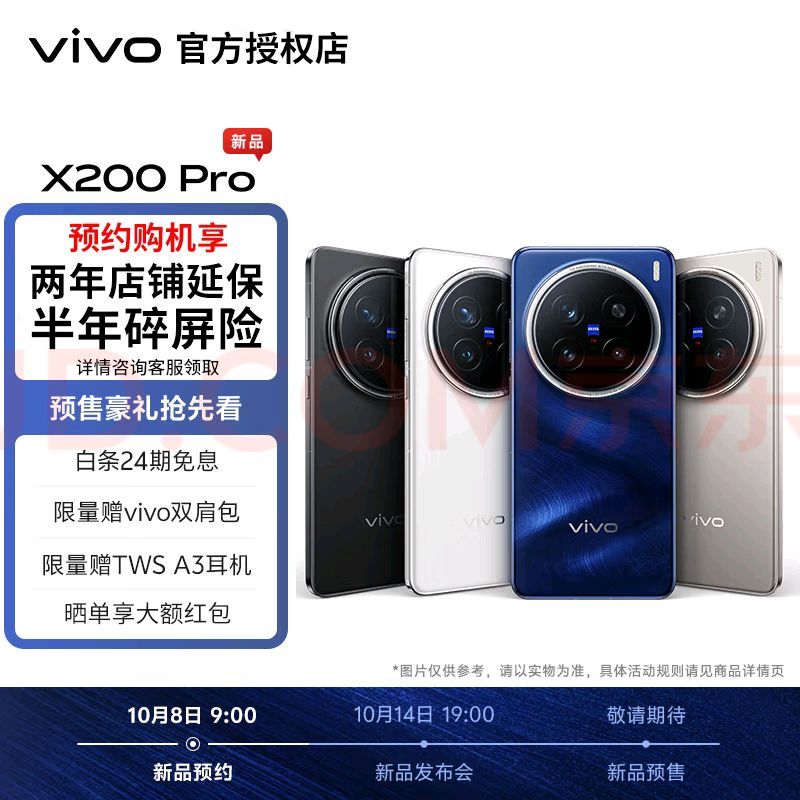
Vivo’s upcoming X-series is expected to include two models, the Vivo X200 and the Vivo X200 Pro. However, there has been chatter about the existence of a third model, which will be smaller than the X200, making it a compact flagship phone. Today, prominent leaker Digital Chat Station released a Weibo to share what appears to be the key details of the alleged Vivo X200 Mini.
Vivo X200 Mini key details leaked

According to reports, the Vivo X200 may feature a 6.4-inch or 6.5-inch display, whereas the X200 Pro may come equipped with a 6.7-inch screen. Speculation suggests that the alleged Vivo X200 Mini could have a smaller 6.3-inch display.
DCS’s latest leak indicates that the Dimensity 9400 chipset will power it. The same chip will also power the X200 and X200 Pro. Its advantages over competitors include a slightly larger silicon battery, which should provide better battery life, and a more versatile camera system. The camera setup is said to include a large 22nm Sony sensor for the main camera and a 3X periscope telephoto lens with a medium-sized sensor.

As far as the battery is concerned, other sources have claimed that it may pack a 5,500mAh or a 5,600mAh battery. A previous report claimed that it would also have support for wireless charging. The screen of this phone will offer a 1.5K resolution and a 120Hz refresh rate.
DCS also claimed that the purported Vivo X200 Mini is said to have some drawbacks. It will have a short-focus optical fingerprint sensor rather than an ultrasonic one, which may not be as advanced as those in some competing devices. In other aspects, the phone is described as being on par with its competitors.
Xiaomi Router BE6500 WiFi 7: The Most Affordable Next-Gen Router now available at a discounted price on GeekWiils
Xiaomi Router BE6500 WiFi 7 stands out in next-generation wireless routers. With its advanced technology, high-speed performance, and affordable pricing, it delivers a comprehensive networking solution for both home and small office environments
Grab the Xiaomi Router BE6500 WiFi 7 at an unbeatable price with a $10 discount, exclusively on GeekWills! Upgrade your home network with this powerful dual-band router featuring 6500Mbps speeds, 2.5Gbps high-speed ports, and seamless smart home integration.

Key Features
Wi-Fi 7 Technology for Unmatched Speed and Efficiency
The Xiaomi BE6500 leverages Wi-Fi 7 (IEEE 802.11be), the latest standard in wireless communication, offering a blazing-fast speed of up to 6500 Mbps. It ensures smooth 4K/8K streaming, lag-free AR/VR gaming, and ultra-fast downloads. This makes it ideal for high-bandwidth applications that demand consistent performance.
2.4GHz and 5GHz Dual-Band Support
The router operates on both 2.4GHz and 5GHz bands, ensuring versatile connectivity. The dual-band operation allows for more flexible device management, enabling older devices to use the 2.4GHz band while newer, bandwidth-heavy devices take full advantage of the faster 5GHz band.
Multi-Link Operation (MLO) Dual-Channel Integration
One of the standout features is MLO dual-channel integration. A single device can connect to dual 5GHz bands simultaneously, which improves connection reliability and reduces environmental interference, providing seamless and consistent network performance.
2.5Gbps High-Speed Network Ports
The Xiaomi BE6500 is equipped with four 2.5Gbps adaptive WAN/LAN ports, supporting port aggregation for up to 5Gbps data transmission. This setup allows for ultra-fast wired connections, making it perfect for users who demand top-tier performance for gaming consoles, PCs, or network storage devices.
Advanced 6nm Dual Wireless Chips
With Qualcomm’s quad-core A53 processor clocked at 1.1GHz and 512MB memory, the Xiaomi BE6500 offers high computing power (10120 DMIPS). It’s fast, stable, and capable of supporting up to 600 devices simultaneously, which is crucial for smart home environments and multi-user households.
Extended Coverage with 6 External Antennas
The router features six external antennas optimized with Beamforming technology, providing robust coverage across large areas. The enhanced signal strength reduces interference, ensuring stable connections even in environments with thick walls or multiple floors.
Mesh Networking Support
For larger spaces or buildings, the Xiaomi BE6500 supports Mesh networking. You can connect up to 10 Xiaomi or Redmi routers in a Mesh configuration, ensuring comprehensive coverage with seamless transitions as you move across different areas.
Smart Home and IoT Connectivity
Integrating seamlessly with Xiaomi smart home devices, the router provides one-click networking through Xiaomi HyperOS Connect. It also serves as a security hub, offering privacy protection and parental controls. Through the Mijia App, users can monitor network risks, manage devices, filter harmful content, and ensure a secure online environment for all family members.
Advantages of the Xiaomi Router BE6500 WiFi 7
High-Speed Performance
With a total wireless speed of 6500 Mbps, the Xiaomi BE6500 ensures that all your devices run at peak performance, whether it’s for high-definition media streaming, online gaming, or large file downloads.
Versatile Connectivity Options
The combination of 2.4GHz and 5GHz dual-band support, along with the 2.5Gbps ports, provides flexible options for connecting a wide range of devices, from smart TVs and gaming consoles to desktop PCs and IoT devices.
Effortless Smart Home Integration
The router’s seamless integration with Xiaomi smart home devices and its IoT-friendly design make it a perfect choice for modern connected homes. It’s simple to manage, secure, and optimized for a fully connected living environment.
Scalable Mesh Networking
Whether you need to cover a small home or a multi-floor building, the Mesh networking support allows you to expand coverage effortlessly by linking additional routers, ensuring there are no dead zones in your Wi-Fi network.
Robust Security and Parental Controls
Xiaomi’s security features, including real-time risk monitoring and targeted device management, ensure a safe and secure online experience for all users, making it especially beneficial for families.
The Xiaomi Router BE6500 WiFi 7 stands out as one of the most affordable yet feature-rich routers in the market. With its cutting-edge Wi-Fi 7 technology, advanced networking capabilities, and smart home integration, it offers a complete solution for users seeking both performance and value.
GC Daily: Snapdragon 8 Gen 4 datasheet reveals two variants, Huawei Mate 70 series’ design leaked
Snapdragon 8 Gen 4 leaks, Huawei Mate 70 design revealed, and why cheap smartwatches might disappoint. Here’s an overview of the top stories over the past 24 hours.
- Snapdragon 8 Gen 4 Leak: Dive into the leaked datasheet of Qualcomm’s next-gen flagship chipset. We’ll explore the two variants and key specifications that could shape the future of high-end smartphones.
- Huawei Mate 70 Series Preview: Get an exclusive first look at the back design of Huawei’s upcoming Mate 70 series. We’ll analyze the changes in camera layout and what they might mean for mobile photography enthusiasts.
- The Pitfalls of Cheap Smartwatches: Uncover the reasons why investing in a quality smartwatch might be more beneficial in the long run. We’ll break down the compromises often made in budget options and guide you towards making informed decisions.
- Tensor G4 Benchmark Concerns: Examine the early benchmark results of Google’s Tensor G4 chip. We’ll discuss how it stacks up against competitors and what this could mean for the Pixel 9 series’ performance.
Plus, don’t miss our roundup of other exciting stories, including Xiaomi’s experimentation with back panel materials, Samsung’s battery upgrade speculations, Red Magic’s upcoming gaming tablet, and Motorola’s teaser for the Razr 50 in India!
Snapdragon 8 Gen 4 datasheet leaked, reveals two variants, key specifications

Qualcomm is expected to unveil the Snapdragon 8 Gen 4, its next-generation flagship chipset for smartphones, in October of this year. Months before the official announcement, a leaked datasheet emerged to reveal its key details.
Here’s our first look at the Huawei Mate 70 series’ back design

Huawei launched the Mate 60 series in China at the end of August last year. Given this timeline, it’s expected that the company will reveal the successor around this time. However, Weibo tipster Digital Chat Station previously claimed that the launch of the successors might be delayed, potentially occurring in mid-to-late Q4 this year.
In the latest leak, images of the back panels of the upcoming devices have been exposed, which reveals some changes in the camera layout.
Why you shouldn’t buy cheap smartwatches

The appeal of a low-priced smartwatch can be tempting, but the saying “you get what you pay for” often holds true. While some budget options are decent, many inexpensive smartwatches cut corners on important features, durability, and overall user experience. Let’s delve into the reasons why investing a bit more in a quality smartwatch might be a wiser choice.
Tensor G4 show disappointing performance in AnTuTu and Geekbench benchmarks

Early performance benchmarks for Google‘s Tensor G4 chip, used in the new Pixel 9 series, raise concerns about its raw processing power compared to competitors. Yesterday, there was a report about how the Google Tensor G4 lost over 50% of its performance in throttling tests.
Tech YouTuber Sahil Karoul recently shared benchmark scores from a retail Pixel 9. His results reveal a significant performance gap between the Tensor G4 and its main competitor, the Qualcomm Snapdragon 8 Gen 3.
🔥More Top Stories You Might Have Missed
- Xiaomi 15 Ultra reportedly in works with three different back panel materials
- Galaxy S25 Ultra battery upgrade hopes dashed by new information
- Red Magic Gaming Tablet 3 coming next year with Snapdragon 8 Gen 4 & a small display
- Motorola Razr 50 India launch soon, teaser goes live
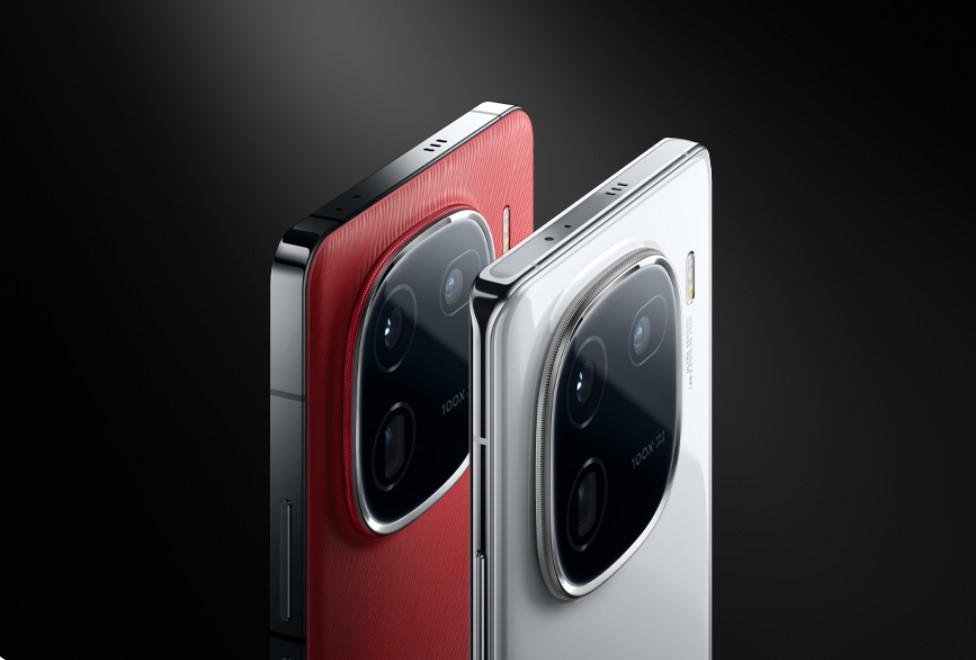
iQOO Neo 10, Neo 10 Pro leak reveals Snapdragon 8 Gen 3, Dimensity 9400, metal middle frame, and more
Last year, iQOO unveiled the iQOO 12 series and the iQOO Neo 9 series in November and December, respectively, in China. It seems that the brand may adopt a similar strategy this year. A fresh development reveals that the company is working on the Neo 10 series of smartphones for the Chinese market. Ahead of the expected launch in Q4 of this year, tipster Digital Chat Station has shared the key details of the Neo 10 lineup.
iQOO Neo 10 series’ first details leaked

DCS has stated that the next-generation iQOO Neo series, being sub-flagship phones, will adopt the Snapdragon 8 Gen 3 and Dimensity 9400 chipsets. The Snapdragon 8 Gen 4 will power the phone that follows the new Neo series.
Hence, it appears that the iQOO 13 may debut after the iQOO Neo 10 series this year. Although the leaker hasn’t explicitly stated it, it seems that the Neo 10 will run on the Snapdragon 8 Gen 3, while the Pro version might have the Dimensity 9400.
The above Weibo post also suggests that the iQOO Neo 10 models will feature a metal middle frame, unlike the Neo 9 series, which featured a plastic frame. The Neo 10 models may come with silicon batteries supporting fast charging, possibly over 100W, and a 6,000mAh+ battery capacity. Additionally, the devices are expected to sport a 1.5K resolution flat display with ultra-narrow bezels, emphasizing eye protection and improved display quality.
To recall, the iQOO Neo 9 series from last year included two models, namely, the Neo 9 and Neo 9 Pro. The Snapdragon 8 Gen 2 and Dimensity 9300 chipsets, respectively, powered these devices. The Neo 9 Pro remained exclusive to the Chinese variant, whereas the Neo 9 was rebranded as the iQOO Neo 9 in India. At present, there is no clarity about the global launch of the Neo 10 series.
Snapdragon 8 Gen 4 datasheet leaked, reveals two variants, key specifications
Qualcomm is expected to unveil the Snapdragon 8 Gen 4, its next-generation flagship chipset for smartphones, in October of this year. Months before the official announcement, a leaked datasheet emerged to reveal its key details.
Snapdragon 8 Gen 4 variants and specifications (rumored)

As per the leaked datasheet, the upcoming Snapdragon 8 Gen 4 chipset has two part numbers, namely SM8750 and SM8750P. The former is a regular version of the chipset, whereas the latter is an overclocked version.
The datasheet further reveals that Qualcomm will build the Snapdragon 8 Gen 4 chipset on an advanced 3nm process, promising significant enhancements in both performance and energy efficiency. It will feature Qualcomm’s latest Oryon CPU, engineered to deliver high-performance computing, and the Adreno 8-series GPU, which is designed to provide top-tier graphics capabilities ideal for gaming and other demanding tasks. The chipset supports dual-channel package-on-package (PoP) high-speed LPDDR5X SDRAM, further boosting its performance capabilities.
In terms of multimedia, the Snapdragon 8 Gen 4 will be equipped with the Qualcomm Spectra ISP 8-series, which is expected to significantly elevate the quality of photography and videography on mobile devices. Additionally, it includes Adreno VPU and DPU units that will handle UHD video encoding and decoding, along with high-definition display support.
The Snapdragon 8 Gen 4 will also excel in connectivity. It integrates a 3G/4G/5G modem capable of supporting mmWave and sub-6 bands. Additionally, it incorporates Qualcomm’s FastConnect 7900 system, enabling the latest wireless technologies like Wi-Fi 7, Bluetooth 5.4, and ultra-wideband (UWB).
Beyond raw power and connectivity, the Snapdragon 8 Gen 4 will incorporate advanced AI and security features. It will feature a Low-Power AI (LPAI) subsystem with a dedicated DSP and AI accelerator, enabling continuous on-device AI processing without compromising battery life.
Audio enthusiasts will also appreciate the Qualcomm Aqstic WCD3955 audio codec, which supports audiophile-grade sound quality. Lastly, the inclusion of a Secure Processing Unit indicates that Qualcomm is prioritizing enhanced security features, making this chipset not only powerful but also secure for a wide range of advanced use cases.
The SM8750 variant is expected to power most flagship phones that are expected to launch in the October–December period in China. The SM8750 variant will power the Galaxy S25 Ultra, which is expected to launch in January 2025. It’s possible that the SM8750P variant will power other flagship phones that release in China around mid-2025.
(source)
Should you get an old flagship or a new mid-range phone in 2024
If you’re in the market to upgrade your smartphone, the options are overwhelming. Whether you’re looking for top performance, the best camera, sleek design, or durability, there’s a phone to meet every need.
However, if you want a device that offers a balance of all these features, your choices will likely narrow down to flagship models. These phones offer the best of everything—performance, camera quality, design, you name it.

But a brand-new flagship comes with a flagship price tag and that’s not within everyone’s budget. This often leads many to consider a mid-range phone instead.
However, another option is to choose a previous-generation flagship, which can cost significantly less. But is going for an older flagship really better than buying a brand-new mid-range phone? Let’s compare the key aspects of both to see which one is worth your investment.
Motorola Razr 50 India launch soon, teaser goes live
Motorola has been consistently launching new phones in India. Today, it will unveil the Moto G45, a low-priced 5G smartphone. It is also said to be working on the launch of the Moto G35 5G, which could be the company’s most affordable 5G phone. While there is no official word on the arrival of the G35, the company has started teasing the arrival of the Razr 50.
Motorola Razr 50 teaser released in India
Keep a look out for the latest smartphone with a massive external display. We bet you’re going to love this 😉#ComingSoon #MotorolaRazr50 #FliplessDoMore pic.twitter.com/A0GZmIALVV
— Motorola India (@motorolaindia) August 19, 2024
To recall, Motorola unveiled the Razr 50 and Razr 50 Ultra in June in China. In July, the Ultra variant was released in other markets, including India. Now, the brand is all set to launch the standard Razr 50. It remains to be seen whether it will launch before the end of this month in India.
To recall, the Razr 40, which debuted last year, came equipped with a 1.5-inch cover display. The above teaser reveals that the Razr 50 will sport a larger cover screen, which will be slightly smaller than the Razr 50 Ultra’s cover display.
Motorola Razr 50 specifications
The Motorola Razr 50 is an IPX8-rated device featuring a 6.9-inch AMOLED LTPO panel that offers an FHD+ resolution, a 120Hz refresh rate, and 3,000 nits of peak brightness. The secondary display measures 3.6 inches and offers 1056 x 1066 pixels resolution. It is protected by a layer of Gorilla Glass Victus.
The Dimensity 7300X chipset, 12 GB of LPDDR4x RAM, up to 512 GB of UFS 2.2 storage, and a 4,200mAh battery with 30W fast charging power the Razr 50. It has a 32-megapixel front camera and a 50-megapixel (main, with OIS) + 13-megapixel (ultrawide) dual-camera setup on the back.
The Razr 50 Ultra is priced at Rs 99,999. It is likely that the standard Razr 50 could be priced at around Rs 70,000.
Xiaomi 13 series gets new HyperOS beta update in China
Xiaomi has begun rolling out the official beta update of HyperOS for the Xiaomi 13, 13 Pro, and 13 Ultra, with version numbers OS1.0.13.0.UMCCNXM, OS1.0.11.0.UMBCNXM, and OS1.0.15.0.UMACNXM respectively.

This update, which is part of the August beta program, brings several optimizations and fixes across various system aspects, enhancing the overall user experience.
What’s new in this update?
The update brings significant system performance improvements, including optimized startup animation for faster app launches and a more responsive interface. It addresses game crashes for a more stable experience and includes the August 2024 security patch for enhanced system security.
The update also fixes issues with the Free Window feature, including abnormal video app display in small window mode and size problems with the mini window in certain games. It improves Home Screen stability, particularly with the return-to-home animation, and resolves empty space issues in the desktop layout of the second space.
Additionally, it optimizes cross-device connectivity by speeding up device discovery, introduces a new lock screen setting to disable editing with a long press, and fixes a checkmark error in the Clock app for alarm settings in dark mode.
The new beta update enhances the CarWith feature with six redesigned interface styles, new map and music cards, and an updated XiaoAi Assistant dialogue style. It adds customization options for car wallpaper, background effects, card sorting, and widgets, while optimizing navigation with full-screen maps and a floating navigation capsule. The update also improves the connection experience and stability of CarWith.
Other fixes in this update include resolving an issue where the natural disaster alert subscription option disappeared in the Security Manager and addressing text and notification display issues in different languages within the Status Bar and Notification Bar.
Official beta testers can download this update now. The full version will be released to everyone after successful beta testing.
Xiaomi launched the Xiaomi 13 and 13 Pro in December 2022 in China, followed by the Xiaomi 13 Ultra in April 2023. The Ultra variant features a 6.73-inch Quad HD+ AMOLED display with 2600 nits brightness and a 120Hz refresh rate. It’s powered by the Snapdragon 8 Gen 2, offers up to 16GB RAM and 1TB storage, and has a 50MP main camera with multiple telephoto options and 8K video recording. The device comes with a 5000mAh battery with 90W wired and 50W wireless charging.
(Via)