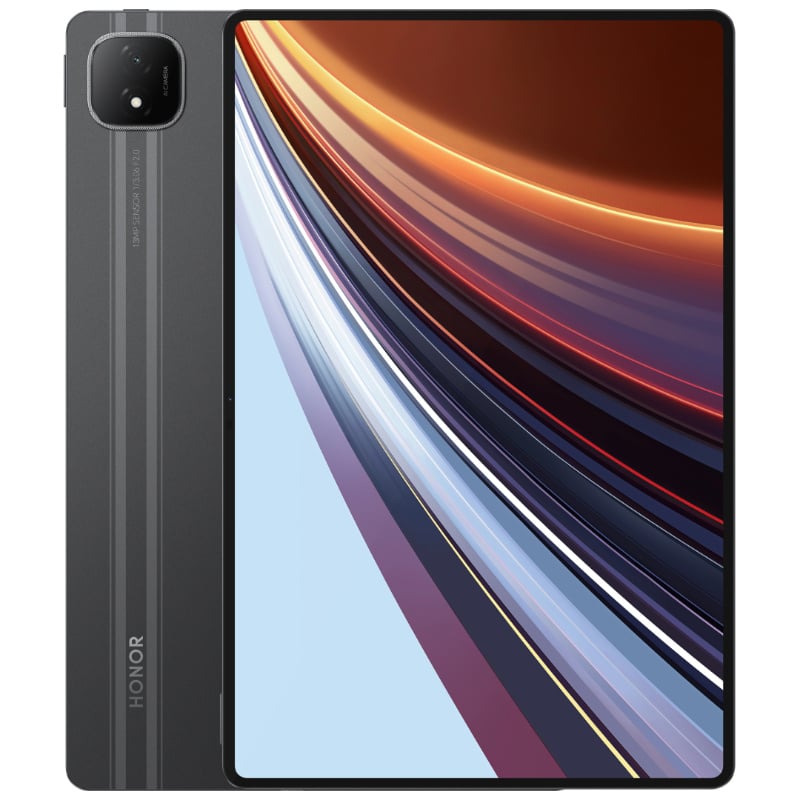
Just last week, a big leak revealed that Honor is working on a bunch of new products, which includes the Honor X60 series and the Pad GT Pro. The two smartphones are a part of the same lineup while the Pad GT Pro appears to be an upcoming mid range tablet. So here’s every exciting detail we know about this device.
The Apple iPad series is one of the most popular tablets in the market, but their larger options aren’t always affordable. Android tablets typically fill in the more budget friendly segments, but it appears that the Honor GT Pad Pro may target the premium segment. It will reportedly sport a tall 12.3-inch display, although, whether it is an OLED or LCD panel is still unclear.
Since this is more expensive than some of Honor’s recent launches that came with a TFT LCD panel, the Honor Pad GT Pro might feature an OLED screen. Looking at the leaked images, we can see the display is surrounded by thin bezels for a more seamless viewing experience. So the Honor Pad GT Pro would be great for watching your favorite movies or videos.
2. Slim Design & Big Storage
In our first report, we also covered the various storage configurations of the Honor Pad GT Pro. Apparently, this model would only support WiFi and launch in four storage options, including 8GB + 128GB, 8GB + 256GB, 12GB + 256GB, and 16GB + 512GB. This is a sizeable memory capacity.
All of this seems to be packed in a thin body. Back in September, the company released the Honor Pad X8a with a budget price tag along with a premium metal body that measured just 7.25mm in thickness. Meaning, it won’t be surprising that we see a similar design philosophy. Furthermore, the Honor GT Pad Pro is expected to launch in three color options, namely Star Black, Moon Shadow White, and GT Blue.
3. Budget Pricing
A second report confirmed that the GT Pad Pro will be priced lower than 400 US Dollars. A Weibo user shared a screenshot of an online listing, revealing its 2,899 Yuan price tag for the 8GB + 256GB variant. In other words, it is clearly an affordable tablet that targets the mid range segment, which is a competitive price range. This is especially true in the Chinese market. The Honor Pad 9 Pro was launched as a premium tablet with MediaTek Dimensity 8100 SoC for 2,199 Yuan in China. For the higher price, Honor might offer a faster processor that could make it better for gaming.
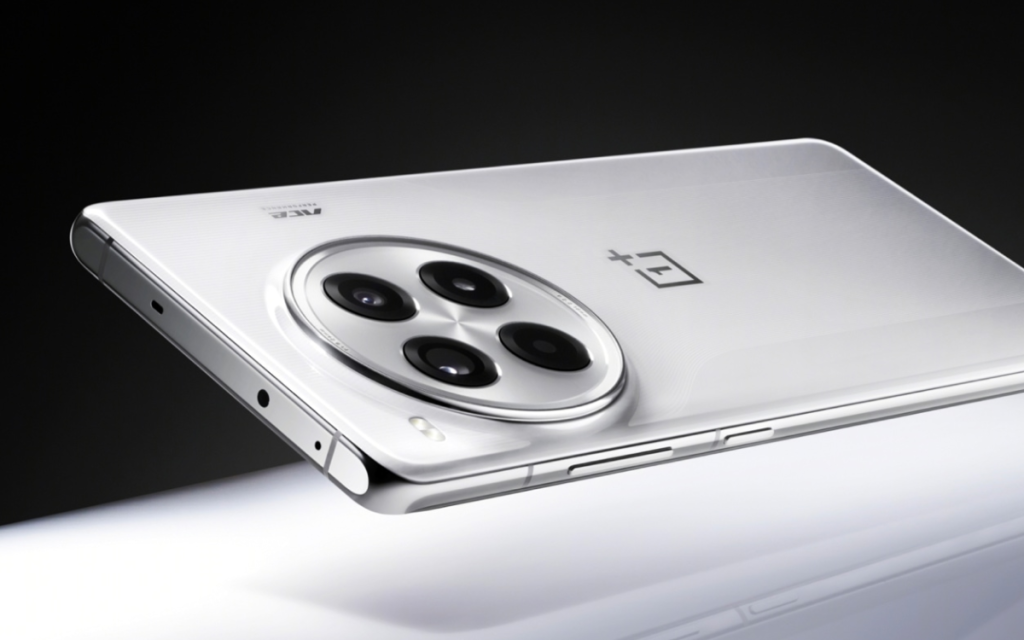
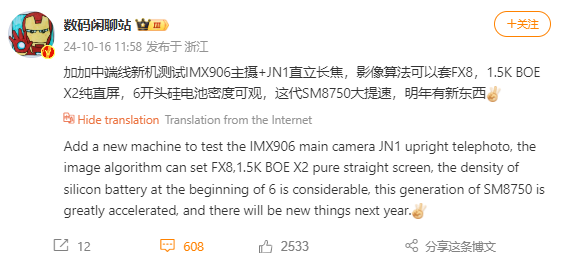
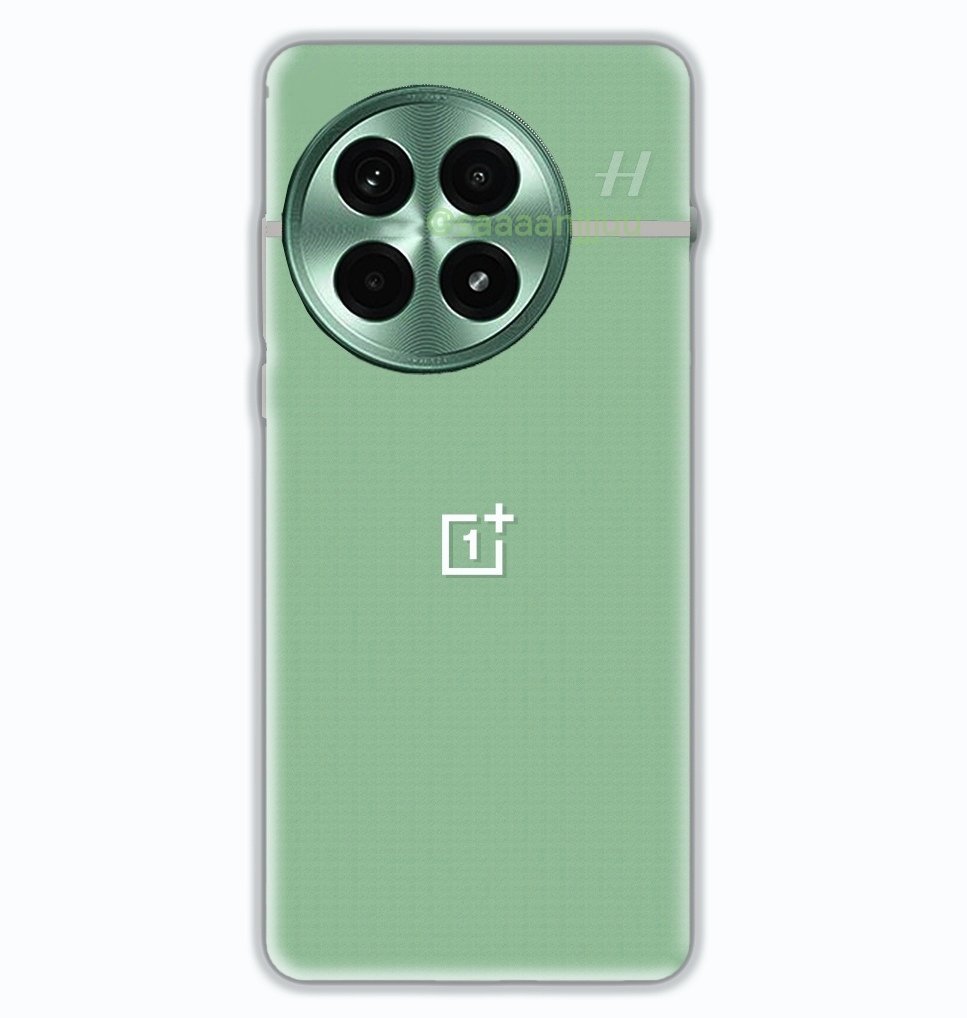
OnePlus launched the Ace 3 Pro in June this year, and the company is already working on the Ace 5 series. In the latest news, prominent tipster Digital Chat Station revealed some key specifications of the Pro model.
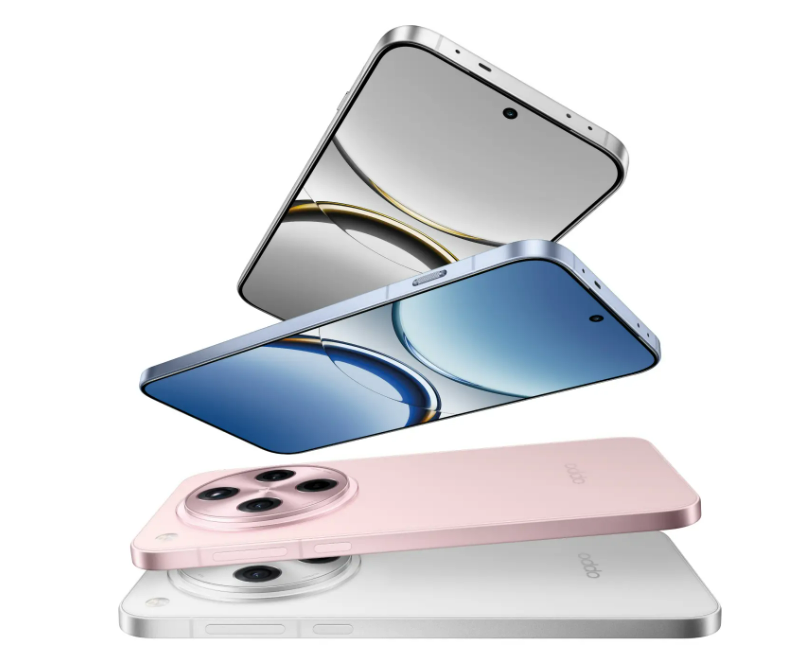
According to the tipster, the phone boasts a 1.5K BOE X2 flat AMOLED display. The use of a flat-screen also suggests a flat design similar to the upcoming Oppo flagships. However, the display size remains unknown.
OnePlus Ace 5 Pro specs (rumored):
Although he didn’t specify the name of the device himself, the use of SM8750 or the Snapdragon 8 Gen 4 chip paired with the other specifications suggests it to be the OnePlus Ace 5 Pro. The OnePlus Ace 3 Pro and Ace 3 were launched with the Snapdragon 8 Gen 3 and 8 Gen 2 chips respectively. So the Ace 5 Pro should be the one to pack this year’s year’s Snapdragon 8 Gen 4 chip.
The alleged Ace 5 Pro is also rumored to follow the new trend of packing a large capacity silicon-carbon anode battery and boasts a capacity that begins with 6, up from the 5500mAh of the Ace 3 Pro. He previously mentioned the use of a 6300-6500mAh battery on the device, which supports 100W fast charging.
As for the cameras, the phone is expected to use the 50MP IMX 906 as the main sensor, ISOCELL JN1 as the telephoto, and the same image processing algorithm as the Find X8 series. For those unfamiliar, IMX906 has a 50MP resolution and a sensor size of 1/1.56″. The telephoto sensor also has a 50MP resolution and measures 1/2.76″. Unfortunately, he didn’t reveal the zoom level of the telephoto camera.
The speculated Ace 5 (or OnePlus 13R for the global market) previously surfaced on thermal imaging results of a Genshin Impact gameplay test confirming the development of the prototype model. Both phones are also expected to ship with ColorOS 15 based on Android 15, which brings a number of visual improvements along with some AI features.
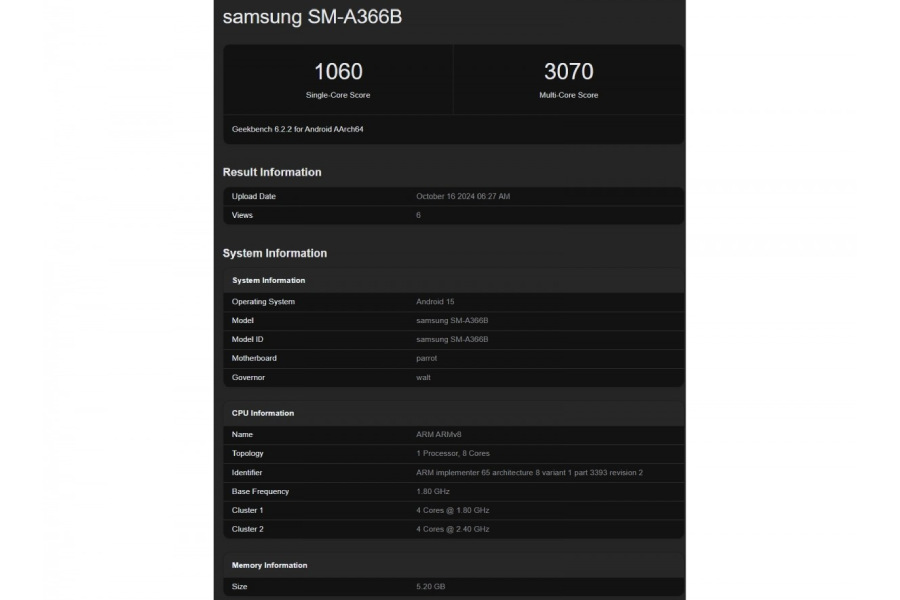
Samsung launched its mid-range Galaxy A35 5G smartphone back in March this year and we know the company has started working on its successor. The Galaxy A36 has now appeared on the performance benchmarking site, Geekbench, for the first time and it comes with a surprising Android version.
Samsung Galaxy A36 5G Geekbench
The device appeared in the benchmark with the model number SM-A336B. Based on Samsung’s typical naming pattern, we are sure that this is the Galaxy A36 5G.
The device actually made several benchmark runs, and while you can see one of its performance scores below, the most interesting reveal is that Samsung is already testing the device with Android 15 on board.
Google recently released Android 15 for its Pixel phones, and Samsung is expected to roll out its own version based on the new Android with the Galaxy S25 series in January. If the Galaxy A36 comes with Android 15 pre-installed, we can likely expect it to launch after the S25 series, around the same time as the Galaxy A35.
We can also expect the Galaxy A36 to receive six years of Android and security patch updates, as even the budget Galaxy A16 5G offers the same.
The benchmark shows the device with 6GB of RAM, but an 8GB version might also be available when it launches.
As for the chipset, we’re still uncertain. The benchmarks show its octa-core CPU with four high-performance cores clocked at 2.4GHz and four power-efficient cores at 1.8GHz. Whereas, the graphics are handled by an Adreno 710 GPU.
So the chip could be either the Snapdragon 6 Gen 3 or Snapdragon 7s Gen 2, both of which are built on Samsung Foundry’s 4nm process.
Earlier this month, We were the first to reveal that Samsung has already started working on the Galaxy A36. We spotted two models of the smartphone in the IMEI database: SM-A366B/DS and SM-A366U.
The first is the global version of the smartphone with dual SIM support, hence the “/DS” suffix. Whereas, the latter is the version that will be sold in the US.
Choosing between flagship smartphones often comes down to subtle differences in features, performance, and design that significantly influence the user experience.
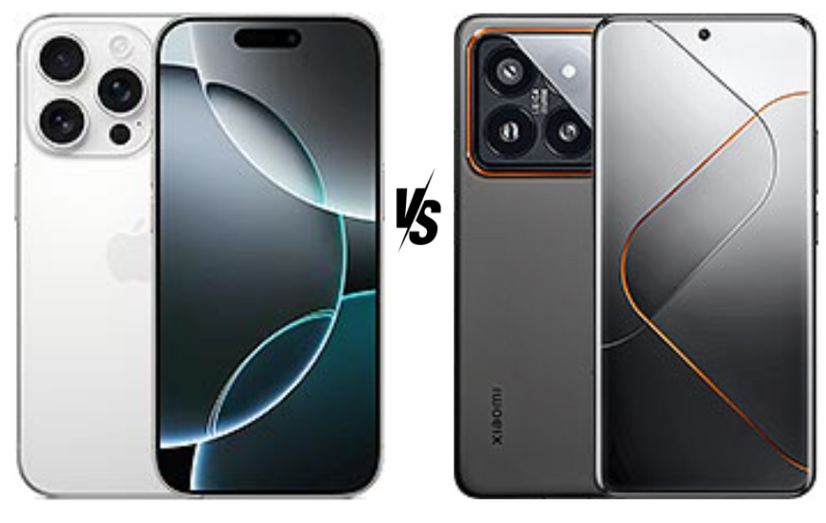
In this comparison, we’ll explore two of the latest high-end smartphones: Apple’s iPhone 16 Pro and Xiaomi’s 14 Pro. We’ll break down their design, display, media, software, performance, battery, and cameras, and see which phone provides a better overall experience.
SPECS OVERVIEW
Category
iPhone 16 Pro
Xiaomi 14 Pro
Best Specs
Design
– Glass front and back (Corning-made glass)- Titanium frame- IP68 water/dust resistance (6m)
– Glass front and back- Aluminum / titanium frame- IP68 water/dust resistance (1.5m)
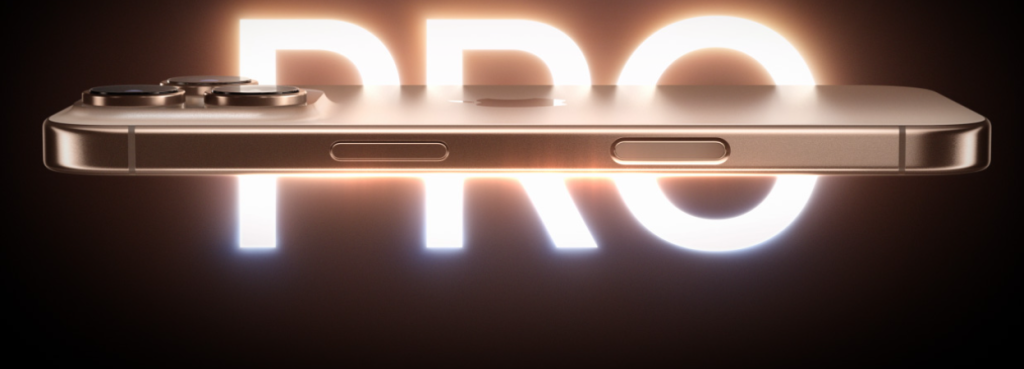
The iPhone 16 Pro features a premium build with a glass front and back protected by Corning-made glass, encased in a Grade 5 titanium frame. It’s also IP68-rated for water and dust resistance, allowing it to survive submersion in up to 6 meters of water for 30 minutes. The device is available in multiple SIM configurations, including a dual eSIM setup in the U.S. and a dual Nano-SIM model in China.
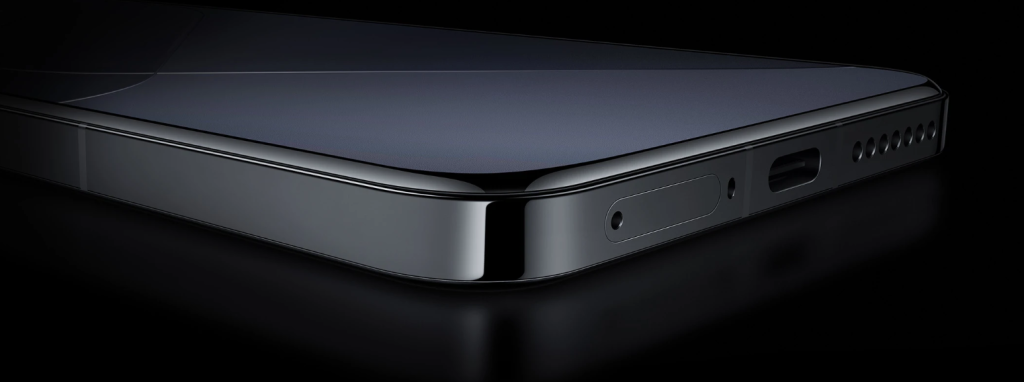
On the other hand, the Xiaomi 14 Pro offers a similarly premium design with a glass front and back, surrounded by either an aluminum or titanium frame. It also holds an IP68 rating, though it’s only water-resistant up to 1.5 meters for 30 minutes, making it slightly less durable in extreme conditions compared to the iPhone.
Similarities: Both phones feature premium materials like glass and titanium, ensuring a sturdy yet elegant build. They are IP68-rated, meaning both devices offer solid protection against water and dust. Neither phone includes a 3.5mm headphone jack, a feature that has become rare in modern flagship phones.
Differences: The most significant difference lies in the water-resistance depth, with the iPhone 16 Pro able to survive greater submersion. Additionally, the iPhone uses Apple’s proprietary Ceramic Shield glass, which is known for its durability. Meanwhile, Xiaomi employs its custom Longjing Glass, which may offer similar protection but lacks the same brand recognition.
Advantages: The iPhone 16 Pro has a clear advantage in terms of water resistance and the use of Corning-made glass for its build. Xiaomi’s 14 Pro, with its more affordable titanium variant, offers flexibility in materials, which might appeal to different user preferences.
Which is Better? For those who prioritize durability, the iPhone 16 Pro takes the lead with its stronger water resistance and more established protective glass. However, Xiaomi’s flexible design options might be appealing to those who want choices in their premium experience.
Display, Media, and Software
Features:
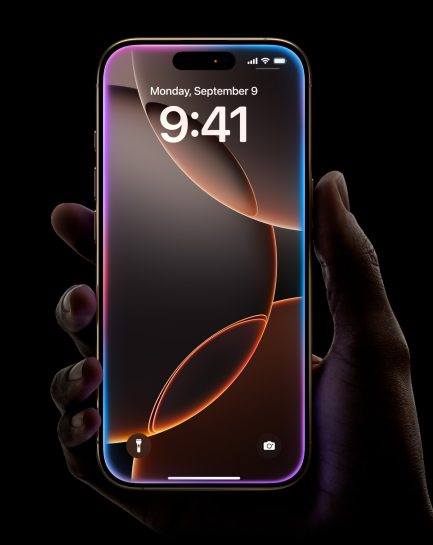
The iPhone 16 Pro comes with a 6.3-inch LTPO Super Retina XDR OLED display. It supports HDR10, Dolby Vision, and a 120Hz refresh rate, with brightness levels reaching 2000 nits for outdoor visibility. The screen is protected by the new Ceramic Shield Glass (2024 gen) and offers an always-on display feature. Apple’s iOS 18 powers the phone, offering a refined, secure, and exclusive software ecosystem.
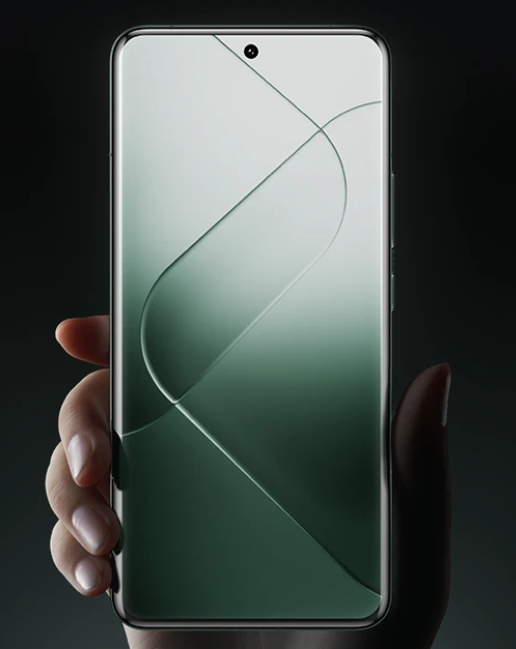
The Xiaomi 14 Pro features a larger 6.73-inch LTPO AMOLED display, also supporting Dolby Vision, HDR10+, and a 120Hz refresh rate. Xiaomi edges out Apple in brightness, with peak levels reaching an impressive 3000 nits. The display is protected by Xiaomi’s Longjing Glass. The phone runs on Android 14 with Xiaomi’s new HyperOS, blending customization with performance and offering users an open-source software experience.
Similarities: Both devices deliver top-tier AMOLED displays with 120Hz refresh rates, Dolby Vision, and high brightness levels. They also come with always-on displays and support a wide color gamut for enhanced media consumption.
Differences: Xiaomi’s 14 Pro has a slightly larger display, higher resolution (1440 x 3200 pixels compared to the iPhone’s 1206 x 2622 pixels), and a significantly brighter screen with a peak brightness of 3000 nits. The iPhone’s display, while smaller, provides a more compact and refined viewing experience. In terms of software, the difference lies in the ecosystems: Apple’s iOS 18 offers more security and optimization, while Xiaomi’s HyperOS provides more freedom in customization.
Advantages: For media consumption and outdoor visibility, the Xiaomi 14 Pro holds a slight edge due to its larger, brighter display. However, if software smoothness, security, and app optimization are priorities, the iPhone 16 Pro remains the better option with its seamless iOS experience.
Which is Better? For media lovers and those who value a bright, immersive display, the Xiaomi 14 Pro wins this round. However, for users deeply invested in Apple’s ecosystem and who prefer a more optimized software experience, the iPhone 16 Pro may be the better choice.
Performance and Battery
Features:
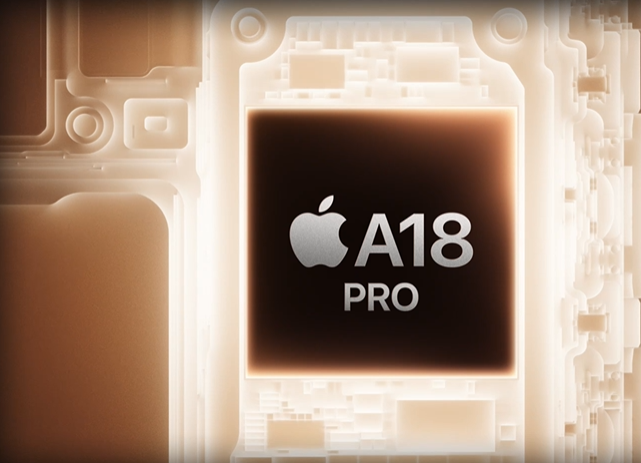
The iPhone 16 Pro is powered by the Apple A18 Pro chip (3 nm), with a Hexa-core CPU and Apple’s custom 6-core GPU. Paired with 8GB of RAM, it ensures top-tier performance for gaming, multitasking, and demanding applications. The battery capacity stands at 3582 mAh, with wired PD2.0 fast charging and up to 25W wireless MagSafe charging.
The Xiaomi 14 Pro utilizes the Qualcomm Snapdragon 8 Gen 3 (4 nm), featuring an octa-core CPU and Adreno 750 GPU. It is available with up to 16GB of RAM, making it a powerhouse for multitasking and gaming. Its 4880 mAh battery supports ultra-fast 120W wired charging, which promises a full charge in just 18 minutes, and 50W wireless charging.
Similarities: Both devices offer cutting-edge processors, ensuring smooth performance in daily tasks and high-demand scenarios. Neither phone supports expandable storage, although they offer substantial internal storage options.
Differences: The Xiaomi 14 Pro comes with a significantly larger battery and much faster charging capabilities. The 120W wired charging speed is one of the fastest in the industry, while the iPhone 16 Pro, though offering solid charging options, lags behind in terms of raw charging speed and battery size.
Advantages: If you’re seeking a phone with outstanding battery life and the ability to quickly recharge, the Xiaomi 14 Pro is the better option. However, Apple’s A18 Pro chip remains one of the most efficient and powerful processors on the market, which could mean better long-term performance for iPhone users.
Which is Better? For sheer power and battery management, the Xiaomi 14 Pro stands out. However, the iPhone 16 Pro may still appeal to those who value efficiency and the long-term reliability of Apple’s chips.
Cameras
Features:
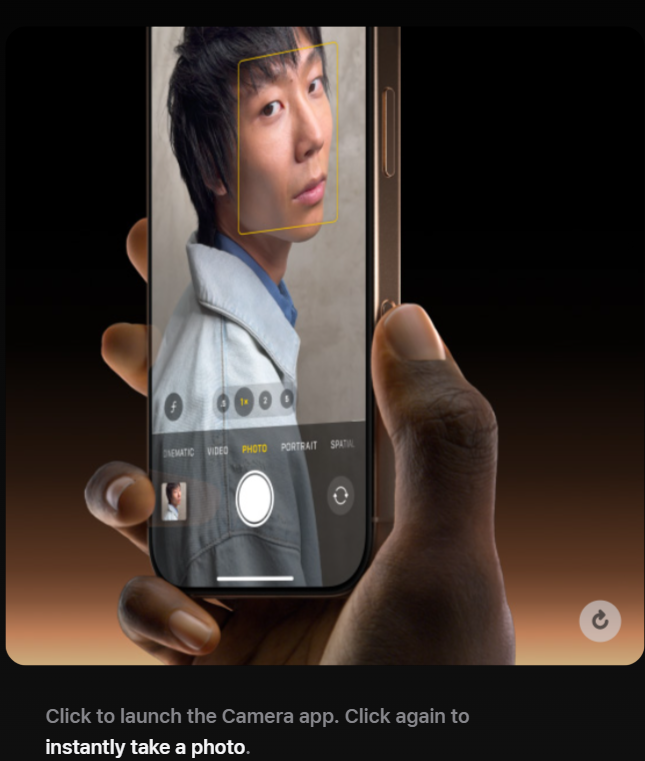
The iPhone 16 Pro is equipped with a triple-camera setup, featuring a 48 MP main wide sensor, a 12 MP periscope telephoto with 5x optical zoom, and a 48 MP ultrawide lens. It also has a TOF 3D LiDAR scanner for depth sensing. Video capabilities are exceptional, with 4K recording at up to 120fps, Dolby Vision, and 3D spatial video.
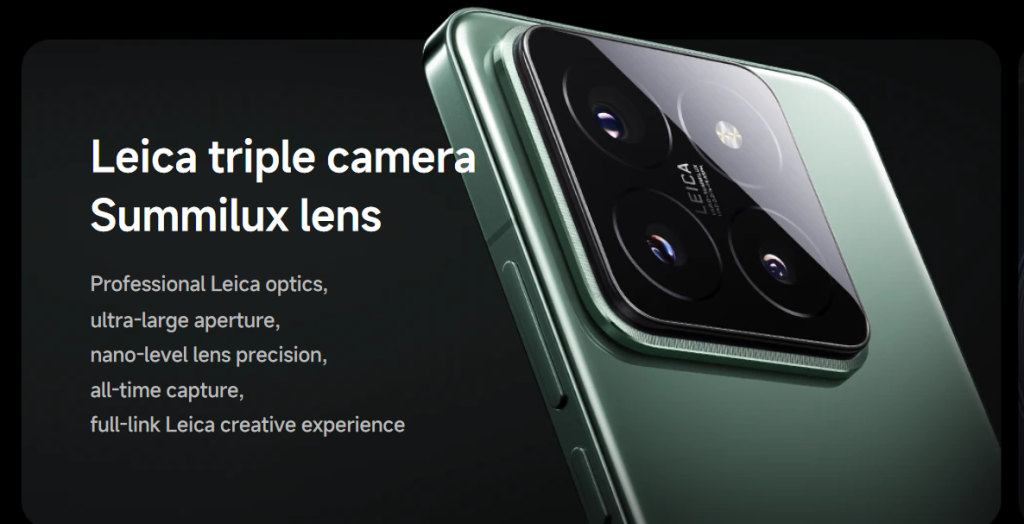
The Xiaomi 14 Pro also boasts a triple-camera system, including a 50 MP wide-angle lens with variable aperture, a 50 MP telephoto lens with 3.2x optical zoom, and a 50 MP ultrawide sensor. It features Leica optics and advanced video recording options, including 8K at 24fps, 4K at up to 60fps, and gyro-EIS.
Similarities: Both phones offer triple-camera systems with wide, telephoto, and ultrawide lenses. They also support advanced video recording technologies like Dolby Vision and high frame rates.
Differences: The iPhone 16 Pro features a more advanced LiDAR sensor for depth and spatial video recording, while Xiaomi’s 14 Pro offers a unique variable aperture on the main lens for greater control over exposure. Xiaomi also supports 8K video recording, which Apple currently lacks.
Advantages: For photography, the Xiaomi 14 Pro offers more control with its variable aperture and advanced Leica optics, while the iPhone 16 Pro excels in depth sensing and video recording, particularly with its 3D spatial video feature.
Which is Better? If photography is your priority, the Xiaomi 14 Pro offers more flexibility and customization. For videographers and those invested in Apple’s ecosystem, the iPhone 16 Pro is a better fit.
Which is the Better Buy?
Both the iPhone 16 Pro and Xiaomi 14 Pro are exceptional flagship devices that cater to different audiences. The Xiaomi 14 Pro shines in terms of display quality, battery life, charging speeds, and flexibility in photography. Its aggressive pricing compared to the iPhone makes it a strong contender for users seeking value without sacrificing premium features.
Please Note: When you buy something using the links in our articles, we may earn a small commission at no cost to you.
The iPhone 16 Pro, however, offers unmatched software optimization, stronger water resistance, and long-term performance, making it a better choice for users already integrated into the Apple ecosystem. Its camera features, particularly for video and depth sensing, are also more advanced.
Our Opinion: If you’re an Android enthusiast who doesn’t want to break the bank and need good battery and charging speed, then Xiaomi 14 Pro is the best option. However, if you’re invested in Apple’s ecosystem and value software reliability, then go for the iPhone 16 Pro.
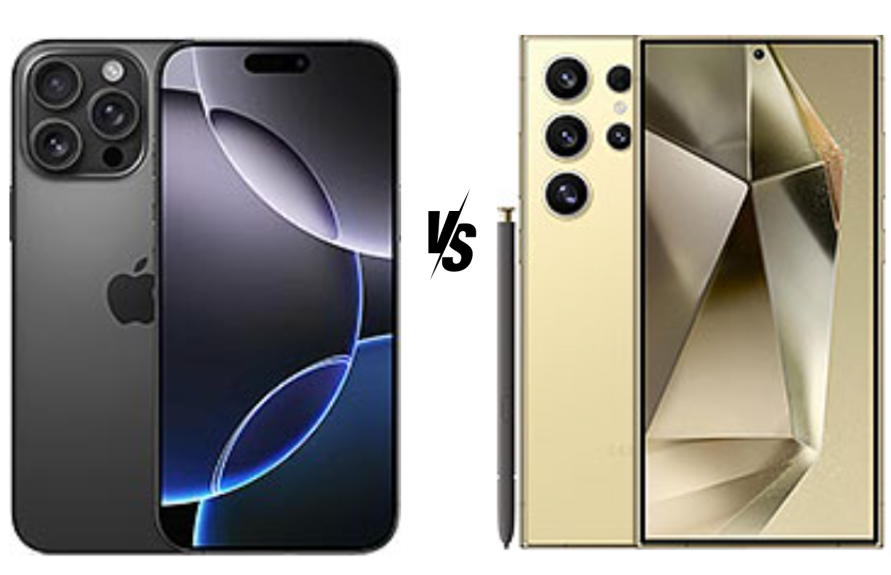
When it comes to flagship smartphones, Apple’s iPhone 16 Pro Max and Samsung’s Galaxy S24 Ultra are two of the most anticipated devices for 2024. Both phones come packed with cutting-edge technology, boasting features that cater to different user preferences. But if you’re in the market for a new premium phone, deciding which one is the better buy requires an in-depth look at several key areas.
In this comparison, we’ll dive into the design, display and software experience, performance and battery life, camera capabilities, and more to determine which device truly stands out.
SPECS
Category
iPhone 16 Pro Max
Galaxy S24 Ultra
Best in Specs
Design
Titanium frame, Ceramic Shield glass, IP68 (6m for 30 min)
Titanium frame, Gorilla Armor glass, IP68 (1.5m for 30 min)
iPhone 16 Pro Max (Better water resistance)
Display
6.9-inch LTPO Super Retina XDR OLED, 120Hz, 2000 nits
6.8-inch Dynamic LTPO AMOLED 2X, 120Hz, 2600 nits
Galaxy S24 Ultra (Brighter and more contrast)
Performance
A18 Pro chip (3 nm), 8GB RAM
Snapdragon 8 Gen 3 (4 nm), 12GB RAM
iPhone 16 Pro Max (More efficient A18 Pro chip)
Battery
4685 mAh, 50% charge in 30 mins (25W wired), MagSafe
5000 mAh, 65% charge in 30 mins (45W wired), reverse wireless
Galaxy S24 Ultra (Larger battery and faster charging)
Galaxy S24 Ultra (Higher resolution and versatile camera setup)
Design
Both the iPhone 16 Pro Max and Galaxy S24 Ultra embrace premium materials and sophisticated design, catering to those who value aesthetics and durability.
Features:
iPhone 16 Pro Max uses a titanium frame (grade 5) with Corning-made glass on both sides. Its Ceramic Shield glass adds an extra layer of toughness, and it is IP68-rated for dust and water resistance (up to 6m for 30 minutes).
The Galaxy S24 Ultra opts for a titanium frame (grade 2), but uses Corning Gorilla Armor for enhanced durability, protecting both the front and back. It’s also IP68-rated but only resists water up to 1.5m for 30 minutes.
Similarities: Both phones are water and dust-resistant, offering durability for everyday use. They both incorporate premium materials such as titanium and specialized glass.
Differences:
The iPhone 16 Pro Max boasts better water resistance with a 6-meter rating compared to the 1.5-meter rating of the Galaxy S24 Ultra.
While both use titanium, the iPhone uses grade 5 titanium, which is stronger than the grade 2 used in the Galaxy S24 Ultra.
The Galaxy S24 Ultra also offers an S Pen stylus with Bluetooth integration, giving it a productivity edge over the iPhone for users who enjoy stylus functionality.
Advantages:
iPhone 16 Pro Max: Superior water resistance, more durable titanium, and a sleek design.
Galaxy S24 Ultra: Versatility with the S Pen for note-taking and creative tasks.
Which is better? If water resistance and material durability are priorities, the iPhone 16 Pro Max wins. However, for added productivity, the Galaxy S24 Ultra with its S Pen might appeal more.
Display, Media, and Software
Both models bring top-tier displays with sharp resolutions, but there are distinct differences.
Features:
iPhone 16 Pro Max: 6.9-inch LTPO Super Retina XDR OLED with a 120Hz refresh rate, HDR10, and Dolby Vision support. It has 2000 nits peak brightness for outdoor visibility.
Galaxy S24 Ultra: 6.8-inch Dynamic LTPO AMOLED 2X display, also with 120Hz, HDR10+, and a staggering 2600 nits peak brightness for superior outdoor readability.
Similarities: Both displays support high refresh rates and HDR standards, making them ideal for media consumption and gaming.
Differences:
Brightness: The Galaxy S24 Ultra has a higher peak brightness (2600 nits vs. 2000 nits), making it better for use in extremely bright conditions.
Resolution: The Galaxy S24 Ultra edges out with a higher resolution (1440 x 3120 pixels vs. iPhone’s 1320 x 2868 pixels), offering slightly better sharpness.
Media and software: While iOS 18 on the iPhone provides a refined and secure user experience with Apple Pay and Face ID, Android 14 on the Galaxy S24 Ultra offers more customization options, Samsung DeX for desktop-like experiences, and Samsung Wireless DeX.
Advantages:
iPhone 16 Pro Max: Better integration with Apple’s ecosystem (iCloud, Apple Pay, Face ID), Dolby Vision, and ceramic shield protection for display durability.
Galaxy S24 Ultra: Higher peak brightness, better resolution, and added versatility with Samsung DeX.
Which is better? For multimedia enthusiasts who want the brightest, most vivid display, the Galaxy S24 Ultra stands out. However, Apple users will appreciate the seamless ecosystem and display quality of the iPhone 16 Pro Max.
Performance and Battery
Both devices are powered by cutting-edge chipsets, ensuring top-tier performance.
Features:
iPhone 16 Pro Max: Powered by the Apple A18 Pro (3 nm) chip, featuring a Hexa-core CPU and a 6-core GPU for high-performance tasks and gaming.
Galaxy S24 Ultra: Runs on the Snapdragon 8 Gen 3 (4 nm), with an 8-core CPU and the Adreno 750 GPU for gaming and multitasking.
Similarities: Both phones deliver flagship-level performance, offering the ability to run demanding apps, multitask, and handle intensive games.
Differences:
Chipset technology: The Apple A18 Pro is built on a smaller 3nm process compared to the 4nm Snapdragon 8 Gen 3, potentially making it more power-efficient.
RAM: The Galaxy S24 Ultra has a memory advantage with up to 12GB RAM, while the iPhone 16 Pro Max maxes out at 8GB RAM.
Galaxy S24 Ultra: 5000 mAh with 45W wired charging (65% in 30 minutes) and 15W wireless charging.
Advantages:
iPhone 16 Pro Max: Better chipset efficiency, iOS optimizations for smoother performance.
Galaxy S24 Ultra: Faster charging speeds, larger battery, and more RAM.
Which is better? For raw performance and efficient power usage, the iPhone 16 Pro Max has the edge, but if battery life and faster charging matter more, the Galaxy S24 Ultra is the winner.
Cameras
Both phones offer impressive camera systems with multiple lenses and advanced features.
Features:
iPhone 16 Pro Max: Triple-camera system (48MP main, 12MP periscope telephoto, 48MP ultrawide) with 5x optical zoom, LiDAR scanner for depth, and ProRes video with 3D spatial audio.
Galaxy S24 Ultra: Quad-camera system (200MP main, 10MP telephoto, 50MP periscope telephoto, 12MP ultrawide) with 5x optical zoom, Laser AF, and 8K video recording.
Similarities: Both have telephoto lenses with 5x optical zoom, support for high-quality video recording, and advanced stabilization features.
Differences:
Resolution: The Galaxy S24 Ultra leads with a massive 200MP sensor, offering sharper images and better low-light performance, compared to the iPhone’s 48MP main camera.
Video: While the iPhone offers ProRes and Dolby Vision HDR, the Galaxy S24 Ultra stands out with 8K video capabilities.
Advantages:
iPhone 16 Pro Max: Better for video creators with Dolby Vision HDR and 3D spatial audio.
Galaxy S24 Ultra: Superior still photography with its 200MP camera and 8K video recording.
Which is better? For professional video production, the iPhone 16 Pro Max is unbeatable, but for photographers, the Galaxy S24 Ultra offers more versatility and resolution.
Our Opinion
Both the iPhone 16 Pro Max and the Galaxy S24 Ultra are excellent choices for users seeking a high-end smartphone. The decision comes down to user priorities:
Design: If you want a more durable build, the iPhone 16 Pro Max offers a better grade of titanium and superior water resistance.
Display: The Galaxy S24 Ultra wins in resolution, brightness, and versatility with the S Pen.
Performance: The Galaxy S24 Ultra edges out the iPhone in multitasking due to more RAM, but the iPhone’s A18 Pro chip is likely more efficient.
Cameras: The Galaxy S24 Ultra dominates in camera hardware with its 200 MP sensor and 8K recording, making it the better choice for photography enthusiasts.
Please Note: When you buy something using the links in our articles, we may earn a small commission at no cost to you.
Which is the better buy? The Samsung Galaxy S24 Ultra is arguably the better-rounded device, offering a more versatile display, stronger camera capabilities, and the added benefit of the S Pen. However, if you’re deeply integrated into the Apple ecosystem, the iPhone 16 Pro Max remains a strong contender with its robust build quality, excellent performance, and
Amid rumors of Samsung launching its “Special Edition” Galaxy Z Fold soon, the company has now officially confirmed the release date.
In a press release today, Samsung announced that it will unveil a new Galaxy device on October 21. While the specific device is not confirmed, it’s highly likely to be the long-rumored Special Edition Fold.
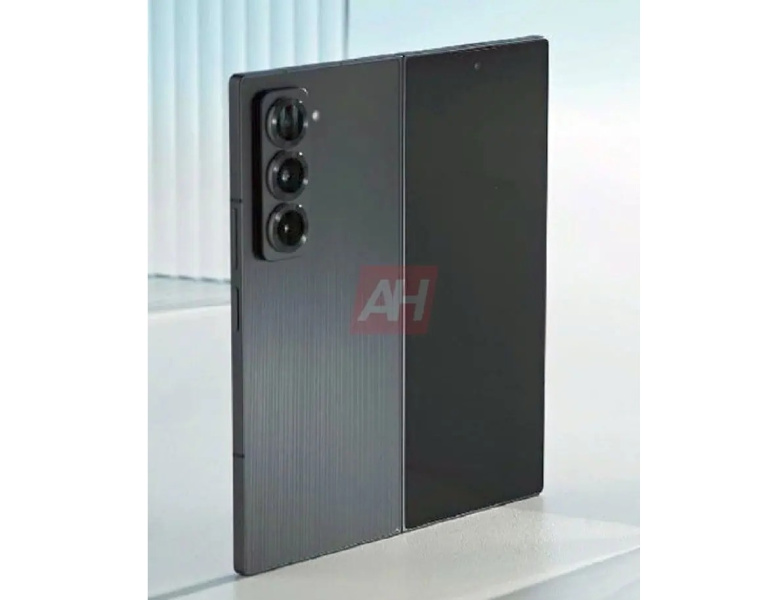
A report from September gave us our first sneak peek at the phone’s design. It revealed a revamped camera module in a rectangular format compared to the standard Z Fold 6’s pill-shaped layout.
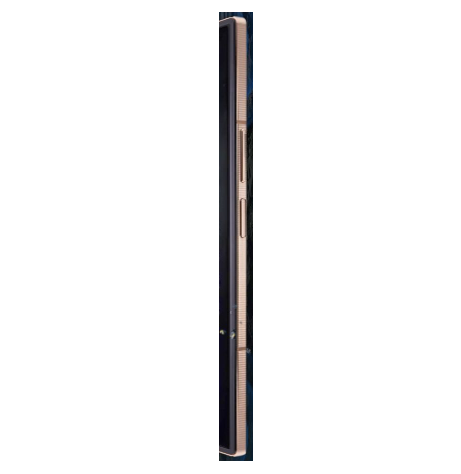
Prolific tipster Evan Blass also shared a closeup of the phone’s camera design in a leak recently, along with a luxurious rose gold frame with a textured finish for improved grip.
Galaxy Z Fold Special Edition will have some notable upgrades
Beyond the design, rumors suggest significant upgrades under the hood. Although specifics are under wraps, the camera system in the Special Edition Fold is expected to receive a welcome overhaul.
Another key upgrade could be the hinge. Tipster Ice Universe suggests that the display crease on the new fold will be less noticeable than in the standard Z Fold 6. If true, that will be a welcome improvement since previous models have made little progress in this area.
The unfolded inner display is rumored to be 8 inches, up from the standard Z Fold 6’s 7.6 inches. The outer display is also expected to grow from 6.3 inches to 6.5 inches.
However, the Galaxy Z Fold Special Edition may be hard to get. According to current reports, it will have a limited release, mostly available in Korea and China.
All will be revealed at Samsung’s October 21 event, where the company is expected to confirm the device’s full features and specifications.
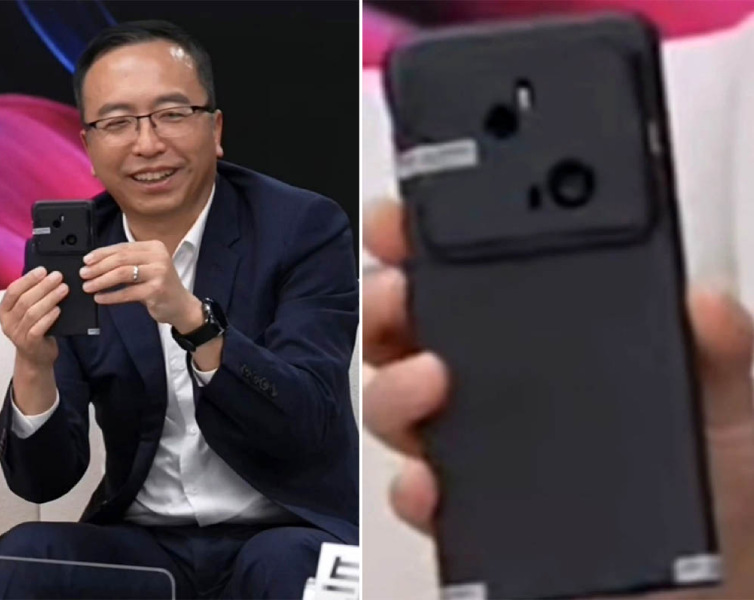
Honor is gradually revealing details about its upcoming Magic 7 smartphone. The company recently confirmed the device will launch on October 30th in China. In a live stream now, CEO Zhao Ming officially gave us a sneak peek at the phone’s design and even highlighted some of its features.
Honor Magic 7 Design
The Magic 7 seems to be embracing the trend of slimmer bezels. As we can see, the phone has a clean look with slim bezels on all sides and a quad-curved design, like its predecessor.
There’s also a familiar pill-shaped cutout on the top, likely for the selfie camera and a 3D face recognition system.
The CEO flipped the phone to show the back, but the hard case kept the design under wraps. However, two diagonally arranged lens openings, an LED flash, and an additional opening—likely for laser autofocus—were visible. We’ll have to wait for more teasers to get a full view of the back.
More intuitive AI Agent
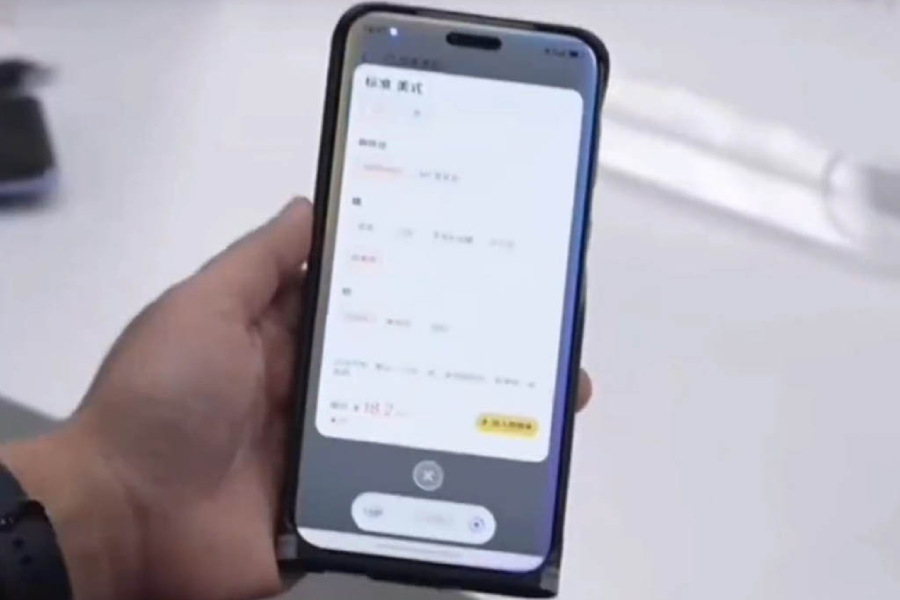
On the software side, Zhao demonstrated the progress of Honor’s AI Agent, their smart voice assistant. It looks like the assistant has grown more intuitive, and capable of handling various tasks with simple voice commands.
During the demo, Zhao uttered “Order three cups of American coffee,” and the phone seamlessly searched for the item and and completed the order within minutes. Users only need to confirm and pay – the assistant takes care of the rest.
These are just a few highlights of what the Magic 7 might offer. With the launch date set for October 30th, we can expect Honor to unveil more features and functionalities in the coming days.
Stay tuned for the full reveal, where we’ll learn everything about the Magic 7, including the back design, camera specifications, and the full potential of the improved voice assistant.
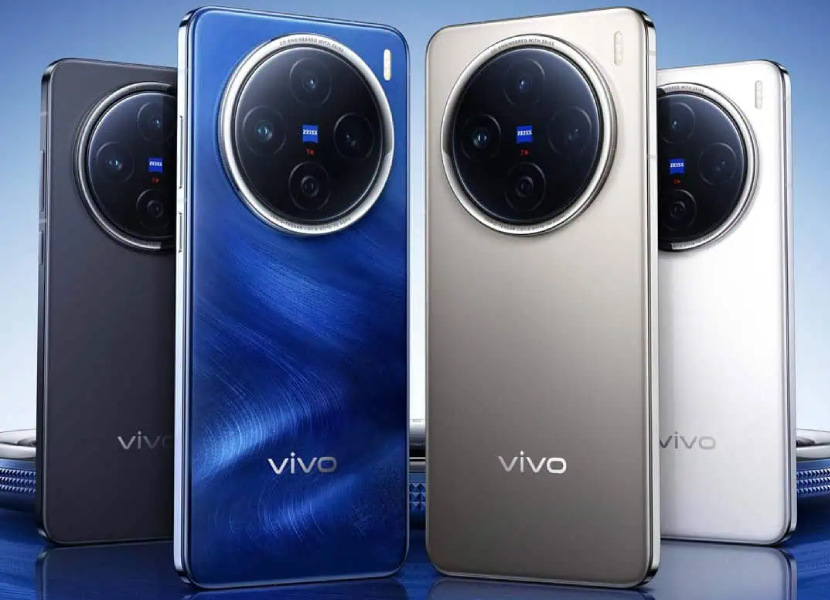
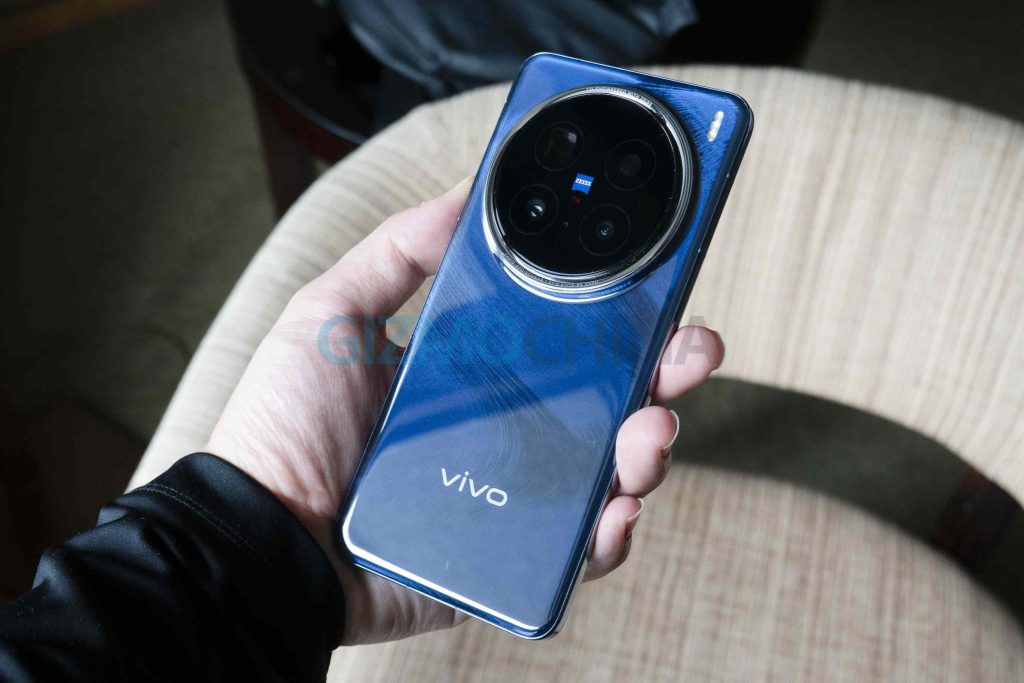
Vivo launched its X200 series flagship phones in China earlier this week, and their global release may not be far behind. A new report from SmartPrix claims that the Vivo X200 series could launch in India before the year ends.
Vivo is reportedly targeting for a release in the second week of December. While the exact date hasn’t been finalized, the report confirms the release window.
However, Vivo might initially only release the standard and Pro models in India. The availability of the smaller, more affordable X200 Pro mini remains uncertain.
Vivo will reportedly assess the market response to the standard and Pro variants before deciding whether to introduce the mini model in India.
A Look at the Vivo X200 / X200 Pro Specs
Both the X200 and X200 Pro boast a large 6.78-inch micro-curved 8T LTPO OLED display with a 120Hz refresh rate and HDR10+ and Dolby Vision support.
Both phones are powered by the Dimensity 9400 chipset, paired with up to 12GB of LPDDR5X RAM and 512GB of UFS 4.0 storage for the X200 and a staggering 16GB of RAM and 1TB of storage for the X200 Pro.
The camera setups differ slightly between the two models. The X200 features a triple-camera system with a 50MP main sensor, a 50MP ultrawide sensor, and a 50MP periscope telephoto lens with 3x optical zoom and 100x digital zoom.
The X200 Pro upgrades the main camera to a 50MP Sony LYT-818 sensor with a wider f/1.57 aperture and boasts a more impressive 200MP ISOCELL HP9 periscope telephoto lens offering 3.7x optical zoom. Both phones share a 32MP front-facing camera and are capable of 8K video recording at 30fps.
Battery capacities also differ, with the X200 housing a 5,800mAh battery and the X200 Pro sporting a larger 6,000mAh battery. Both phones support 90W wired charging and 30W wireless charging.
Connectivity options include Wi-Fi 7, Bluetooth 5.4, and NFC. The X200 utilizes a USB 2.0 port, while the X200 Pro features a faster USB 3.2 port for data transfer. The X200 Pro also boasts an in-display ultrasonic fingerprint sensor compared to the standard optical sensor on the X200.
The iPad Mini series has long been Apple’s answer to those who prefer a compact yet powerful tablet. With the release of the iPad Mini 7, Apple has introduced substantial updates to the device, further enhancing its performance, graphics capabilities, and overall utility.
Let’s dive into the major differences between the new iPad Mini 7 and its predecessor, the iPad Mini 6, and see what upgrades Apple has brought to its smallest tablet.
The most significant upgrade in the iPad Mini 7 is the transition from the A15 Bionic chip to the new A17 Pro chip. This 3nm processor includes a 6-core CPU (2 performance and 4 efficiency cores), which promises a 30% increase in CPU performance compared to the A15, and a 5-core GPU that delivers a 25% improvement in graphics performance.
Additionally, the A17 Pro chip introduces hardware-accelerated ray tracing, a feature that enhances gaming and graphic-intensive applications by rendering more realistic lighting and shadows. The iPad Mini 6, powered by the A15 Bionic, already delivered impressive speed, but the A17 Pro makes the iPad Mini 7 one of the most capable compact tablets available, with performance comparable to high-end laptops.
Please Note: When you buy something using the links in our articles, we may earn a small commission at no cost to you.
2. Display
The display size of both models remains at 8.3 inches with a 2266 x 1488 resolution, P3 color gamut, and 500 nits brightness. Apple has also maintained the True Tone display feature across both generations, ensuring vivid and accurate colors.
However, the iPad Mini 7 also brings the option for Apple Pencil Pro support, allowing for a more precise and enhanced drawing experience. This expanded functionality makes the iPad Mini 7 more versatile for artists and those using the device for design or note-taking purposes.
Apple has kept the Touch ID button from the Mini 6, which is disappointing, it really should have upgraded to Face ID by now. Additionally, the display remains at 60Hz, which is another big letdown for 2024.
3. Storage Options
Apple has adjusted the storage configurations with the iPad Mini 7. The 64GB base model from the iPad Mini 6 has been removed, and users can now choose from 128GB, 256GB, and a new 512GB option. This increased storage flexibility aligns with the enhanced performance and graphics, making it a great choice for users who need more space for applications, games, and multimedia content.
4. Camera Upgrades
The rear camera on the iPad Mini 7 continues to offer 12MP resolution with an f/1.8 aperture, 5P lens, and True Tone flash, similar to the iPad Mini 6. However, Apple has integrated Smart HDR 4 for natural-looking photos with an improved dynamic range. This feature leverages machine learning for document detection and scanning directly in the Camera app, making it particularly useful for on-the-go users.
The front-facing 12MP ultra-wide camera remains unchanged, providing excellent quality for video calls and selfies with features like Retina Flash and Center Stage support, which keeps you in the frame during video calls.
5. Battery and Charging
Both the iPad Mini 7 and Mini 6 provide up to 10 hours of battery life. Although Apple has retained the 19.3-watt-hour rechargeable lithium-polymer battery, the enhanced power efficiency of the A17 Pro chip may contribute to longer battery life during certain tasks, such as gaming or using resource-heavy applications.
6. Software
Both iPad Mini models run on iPadOS, but the iPad Mini 7 is optimized for the latest iPadOS 18, which brings new features such as Stage Manager and Freeform, enhancing multitasking and collaboration.
The tablet also supports Apple Intelligence which comes with advanced writing tools, image generation, and task automation, leveraging both on-device and cloud-based processing for optimal performance and privacy. These features will roll out in U.S. English via a free update with iPadOS 18.1 this month.
7. Connectivity and Ports
Connectivity sees improvements in the iPad Mini 7. While both models support 5G (sub-6 GHz) and Wi-Fi 6, the iPad Mini 7 comes with Bluetooth 5.3, compared to Bluetooth 5.0 on the iPad Mini 6.
Apple has also upgraded the USB-C 3 port, capable of 10Gbps data transfer speeds. This is an upgrade over the iPad Mini 6, which features a USB-C port with 5Gbps speed.
8. New Colors
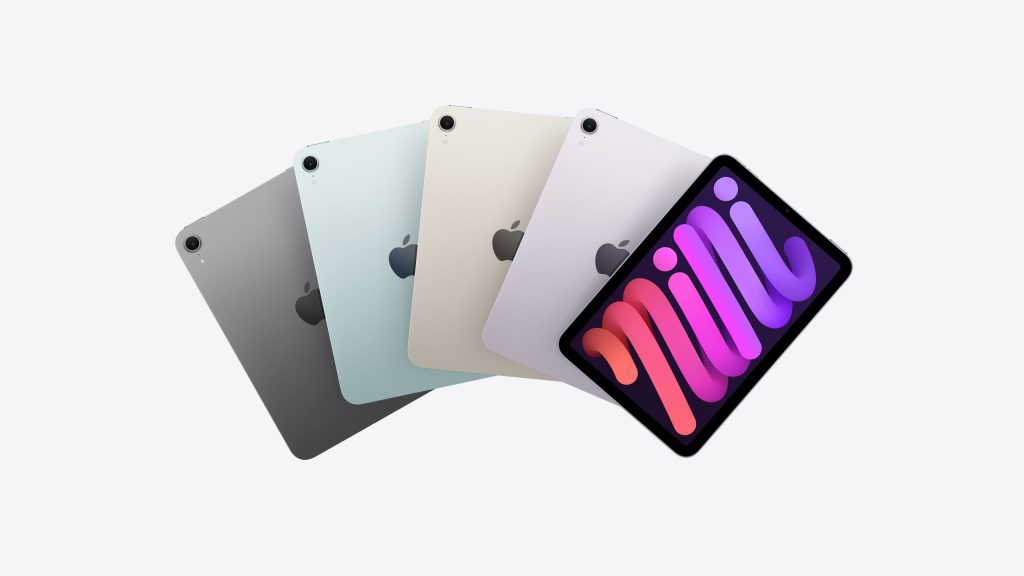
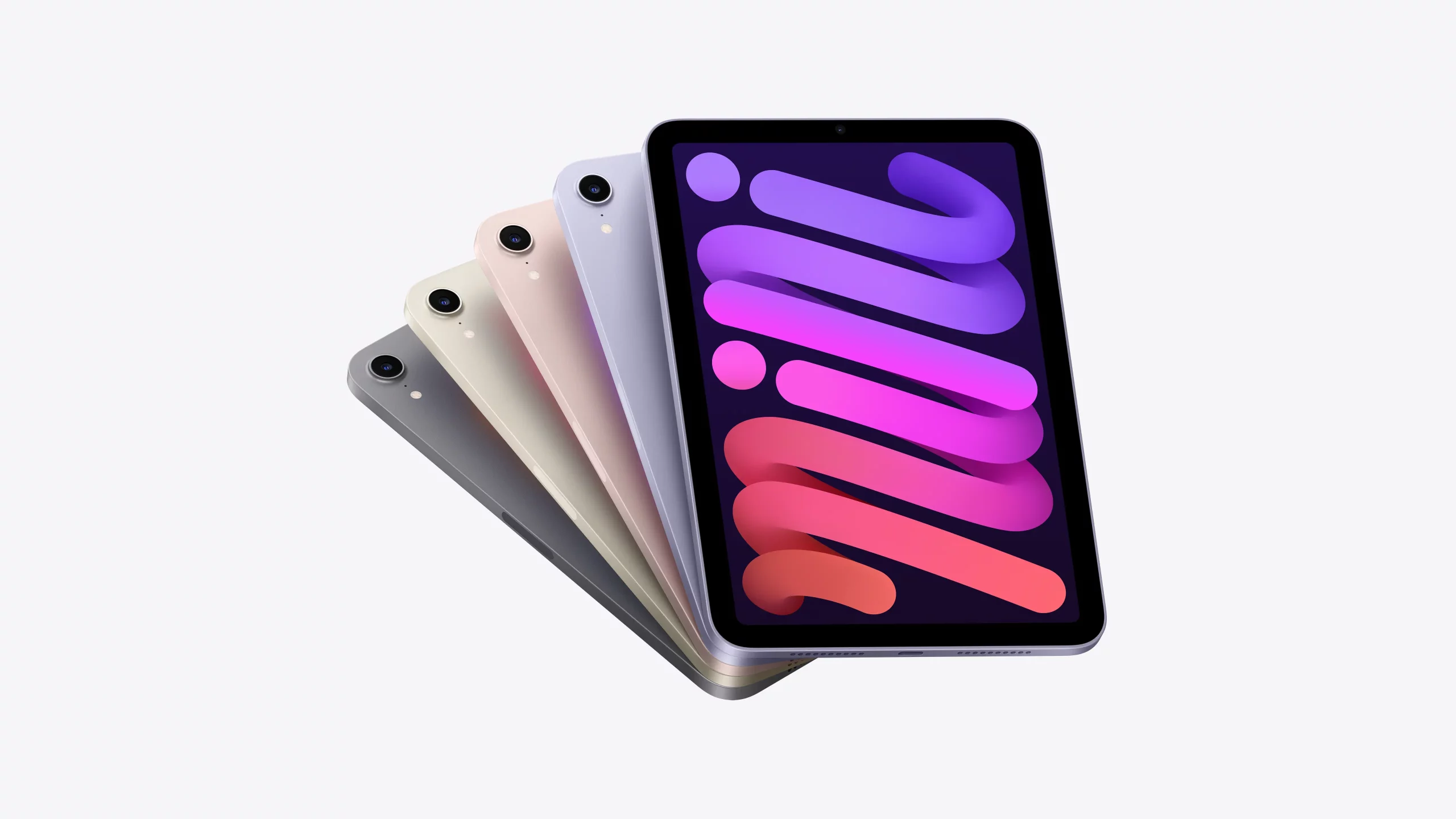
In terms of colors, the iPad Mini 6 was available in Space Grey, Pink, Purple, and Starlight. The iPad Mini 7 has introduced new color options, with blue and purple joining the classic starlight and space grey.
9. Final Thoughts
iPad Mini 7 builds on the solid foundation of the iPad Mini 6 with an array of performance upgrades and additional features. The A17 Pro chip, expanded storage options, improved connectivity, and Apple Pencil Pro support collectively make the iPad Mini 7 a worthy successor.
If you’re looking for a compact, powerful tablet for creative work, gaming, or multitasking, the iPad Mini 7 stands out with its improved processing power and functionality, making it the ideal choice over the iPad Mini 6 for those seeking the latest in mobile technology.
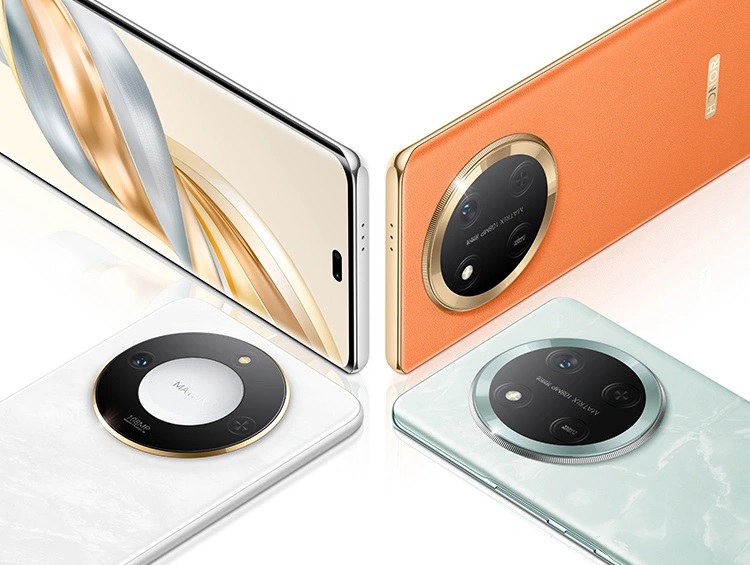
This evening, Honor launched the X60 and X60 Pro in China. Both phones are designed with drop resistance in mind and are the first in the industry to obtain SGS Gold Label five-star reliability certification. However, there’s much more to discuss than just drop resistance. So, let’s take a closer look.
Honor X60/ X60 Pro specifications:
The standard model is built around a 6.8″ FHD+ (2412×1080) TFT LCD display that reaches a peak brightness of 850 nits under direct sunlight.
In comparison, the Pro model packs a 6.78″ AMOLED display that offers a higher 1.5K (2700×1224) resolution and supports a peak brightness of up to 3000 nits. Both devices support a 120Hz refresh rate.
Both the standard and Pro models feature a sleek design, measuring 7.88mm and 7.98mm in thickness, and weighing 189g and 188g, respectively.
The Honor X60 comes in three different color options: Mint Green, White, and Black, while the Pro model comes in an additional orange color variant.
Under the hood, the Honor X60 runs on the 6nm-based Dimensity 7025 Ultra, while the X60 Pro packs the 4nm-based Snapdragon 6 Gen 1 chip.
Despite the slick form factor, both the devices pack large batteries. The Honor X60 Pro packs a massive 6600mAh battery and supports 66W fast charging. In comparison, the X60 still packs a reasonably large 5800 mAh battery and supports 35W charging.
As for the cameras, both phones pack a single 108MP main camera on the back paired with an 8MP selfie shooter.
The Pro model supports up to 4K video recording at 30FPS with the rear camera and also offers EIS for stabilization with 1080p resolution. The base model, however, keeps things simple with support for 1080P recording.
Both phones also offer an AI-powered object removal feature, which the company demonstrated in the image below.
Pricing:
Both the Honor X60 and X60 Pro come in four different configurations: 8GB+128GB, 8GB+256GB, 12GB+256GB, and 12GB+512GB.
The pricing for the standard model starts from CNY 1199 (roughly USD $168), while the remaining three models retail for CNY 1399 (roughly USD $196), CNY 1599 (roughly USD $224), and CNY 1799 (roughly USD $252), respectively.
The X60 Pro starts from CNY 1499 (roughly USD $210), while the remaining three models are priced at CNY 1699 (roughly USD $238), CNY 1999 (roughly USD $280), and CNY 2299 (roughly USD $322), respectively. The last one supports satellite connectivity.
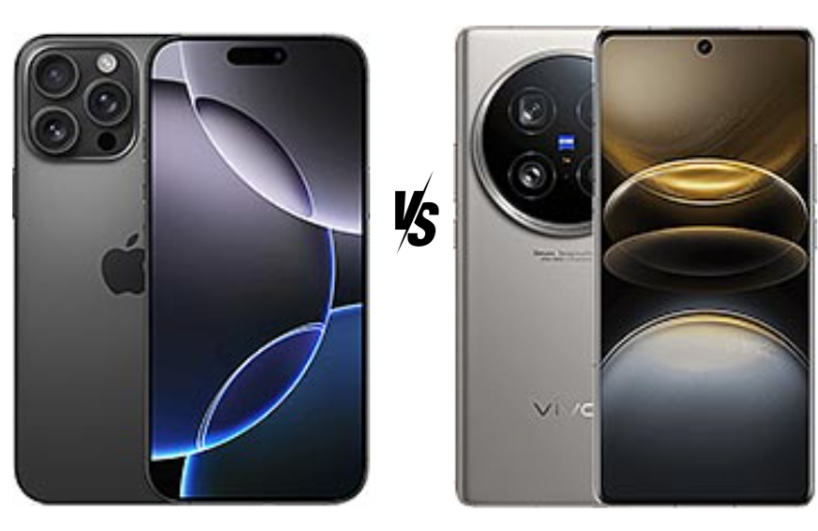
When deciding between the iPhone 16 Pro Max and Vivo X100 Ultra, you’re choosing between two powerhouse flagship smartphones that push the boundaries of technology. Both devices offer cutting-edge features, from high-performance chipsets to impressive cameras and displays, but they cater to different user needs. Let’s break down these factors in a detailed comparison to help you decide which device is better.
Specs:
Feature
iPhone 16 Pro Max
Vivo X100 Ultra
Best Specs
Design
– Titanium frame with Corning-made glass (front & back)- IP68 (6m for 30 min)- Dual SIM (Nano & eSIM options)
– Aluminum frame with glass (front & back)- IP69/IP68 (1.5m for 30 min)- Dual SIM (Nano-SIM)
iPhone 16 Pro Max: The iPhone 16 Pro Max features a premium build with a glass front and back made by Corning, framed by a titanium alloy (Grade 5). It is rated IP68 for dust and water resistance, capable of withstanding submersion in water up to 6 meters for 30 minutes.
Vivo X100 Ultra: The Vivo X100 Ultra comes with a glass front and back supported by an aluminum frame. It also carries an IP69/IP68 rating, which allows for protection from dust and water immersion up to 1.5 meters for 30 minutes.
Similarities: Both phones are durable, designed for premium aesthetics, and offer top-tier water and dust resistance. Neither has a 3.5mm headphone jack, in keeping with modern design trends, but both support advanced audio through their respective stereo speakers.
Differences: iPhone 16 Pro Max uses a more durable titanium frame, making it more resistant to drops and impacts compared to the aluminum frame of the Vivo X100 Ultra. The iPhone’s build quality is further enhanced with Corning-made glass, known for its scratch resistance, whereas Vivo relies on more traditional glass materials.
Advantages: If durability and premium materials are your priorities, the iPhone 16 Pro Max has the edge with its titanium frame and Corning glass. The Vivo X100 Ultra still provides a robust, water-resistant design but doesn’t quite reach the same level of material toughness.
Which Is Better?: For long-term durability and a sleek, ultra-premium feel, the iPhone 16 Pro Max takes the win, though the Vivo X100 Ultra remains an excellent option if you prefer a slightly smaller form factor and lighter build.
Display, Media, and Software
Features:
iPhone 16 Pro Max: The iPhone features a 6.9-inch LTPO Super Retina XDR OLED display, offering a resolution of 1320 x 2868 pixels. It supports HDR10, Dolby Vision, and peaks at 2000 nits in HBM (High Brightness Mode). It runs on iOS 18, Apple’s latest software, known for its smooth user interface, frequent updates, and optimized performance.
Vivo X100 Ultra: Vivo offers a slightly smaller 6.78-inch LTPO AMOLED display with a higher 1440 x 3200-pixel resolution. It supports HDR, Dolby Vision, and peaks at an impressive 3000 nits brightness. The Vivo X100 Ultra runs on Android 14 with Vivo’s custom OriginOS 4.
Similarities: Both displays offer stunning visuals with HDR support, high peak brightness levels, and 120Hz refresh rates for smooth scrolling and gaming experiences. They are designed for media consumption with vibrant colors and deep contrasts.
Differences: The Vivo X100 Ultra has a sharper display (517 ppi vs. 460 ppi) and significantly higher brightness, making it better suited for use in direct sunlight. The iPhone 16 Pro Max, while slightly larger, offers excellent brightness and color accuracy, especially with Dolby Vision. The software also differs drastically: iOS 18 is more polished and secure, with a focus on privacy, while Android 14 with OriginOS provides more customization but can be overwhelming for some users.
Advantages: For those who prioritize customization and a sharper display, the Vivo X100 Ultra offers more flexibility with Android 14 and a higher resolution screen. However, if you value software optimization, seamless integration, and security, iOS 18 on the iPhone 16 Pro Max is unmatched.
Which Is Better?: This boils down to user preference. For display quality, Vivo X100 Ultra edges out with its higher brightness and sharper resolution, but if software and seamless integration across devices matter more, the iPhone 16 Pro Max remains the better choice.
Performance and Battery
Features:
iPhone 16 Pro Max: Powered by Apple’s new A18 Pro chip (3nm), the iPhone delivers hexa-core CPU performance (2×4.05 GHz + 4×2.42 GHz) and a 6-core GPU. It comes with 8GB of RAM and storage options up to 1TB. The 4685 mAh battery supports fast wired (PD2.0) and MagSafe wireless charging, offering 50% in 30 minutes.
Vivo X100 Ultra: The Vivo X100 Ultra is equipped with Qualcomm’s latest Snapdragon 8 Gen 3 (4nm) chip with an octa-core CPU (1×3.3 GHz Cortex-X4 & 3×3.2 GHz Cortex-A720 & 2×3.0 GHz Cortex-A720 & 2×2.3 GHz Cortex-A520), paired with up to 16GB of RAM. Its 5500 mAh battery supports faster 80W wired charging and 30W wireless charging.
Similarities: Both phones come equipped with top-of-the-line processors and large batteries designed for intensive tasks like gaming, multitasking, and media editing. Neither supports expandable storage, but both offer large internal storage options.
Differences: The Vivo X100 Ultra has the edge in RAM and battery capacity (16GB and 5500mAh vs. 8GB and 4685mAh), making it more suitable for power users who demand the best from their devices. However, Apple’s A18 Pro chip offers superior single-core performance and better optimization, which allows it to compete despite its lower RAM.
Advantages: The iPhone 16 Pro Max is more energy-efficient, thanks to its 3nm architecture, resulting in better long-term battery life. On the other hand, the Vivo X100 Ultra has faster charging and a larger battery, making it ideal for users who need their phone to recharge quickly during the day.
Which Is Better?: The Vivo X100 Ultra wins in terms of raw battery life and charging speed, but the iPhone 16 Pro Max offers a more balanced, efficient performance with better long-term software optimization.
Cameras
Features:
iPhone 16 Pro Max: Triple-camera system with a 48 MP main sensor, 12 MP periscope telephoto (5x optical zoom), and a 48 MP ultrawide camera. It also features a TOF 3D LiDAR scanner and can record up to 120 fps in 4K and 240 fps in 1080p with Dolby Vision and ProRes.
Vivo X100 Ultra: Also with a triple-camera setup, Vivo includes a 50 MP main camera with gimbal OIS, a 200 MP periscope telephoto camera (3.7x optical zoom), and a 50 MP ultrawide lens. The front camera offers a staggering 50 MP resolution, supporting 4K video.
Similarities: Both smartphones have high-end camera systems designed for professionals and enthusiasts alike. They support various advanced video recording modes, including HDR and Dolby Vision, and have top-tier image stabilization technologies.
Differences: The Vivo X100 Ultra offers superior optical zoom with its 200 MP periscope telephoto lens, compared to the iPhone 16 Pro Max’s 12 MP telephoto. Additionally, Vivo’s 50 MP front-facing camera is significantly more powerful than the iPhone’s 12 MP selfie camera.
Advantages: For photographers and videographers, the Vivo X100 Ultra offers more versatility, particularly in zoom and resolution. However, the iPhone 16 Pro Max is famous for its consistency, color accuracy, and software-driven computational photography, making it an excellent all-around camera.
Which Is Better?: If camera versatility is key, the Vivo X100 Ultra takes the crown with its higher zoom and selfie capabilities. However, the iPhone 16 Pro Max is better for everyday photography and videography, particularly for those who prefer consistent results with minimal tweaking.
Conclusion: Which is the Better Buy?
Both the iPhone 16 Pro Max and Vivo X100 Ultra are exceptional devices, each excelling in different areas. The iPhone stands out for its durable design, efficient performance, and seamless software experience, particularly for those invested in Apple’s ecosystem. It’s the better option if you prioritize durability, long-term software support, and ease of use.
On the other hand, the Vivo X100 Ultra impresses with its stunning display, superior camera zoom capabilities, and longer battery life. It’s an excellent choice for power users and photography enthusiasts who need top-tier hardware, customization, and battery performance.
Please Note: When you buy something using the links in our articles, we may earn a small commission at no cost to you.
Our Verdict:
If you are already an Apple user or value a smooth, polished experience, the iPhone 16 Pro Max is a solid investment. However, if you prefer Android’s flexibility and want cutting-edge camera and battery tech, the Vivo X100 Ultra offers incredible value.
At the 2024 Lenovo Innovation Technology Conference, Lenovo introduced the prototype for a smart home assistant, codenamed “AI Buddy.” Designed to compete with popular devices like Amazon’s Echo, the Lenovo AI Buddy brings unique design elements and innovative features that set it apart from other smart home assistants on the market.
Lenovo AI Buddy Specifications:
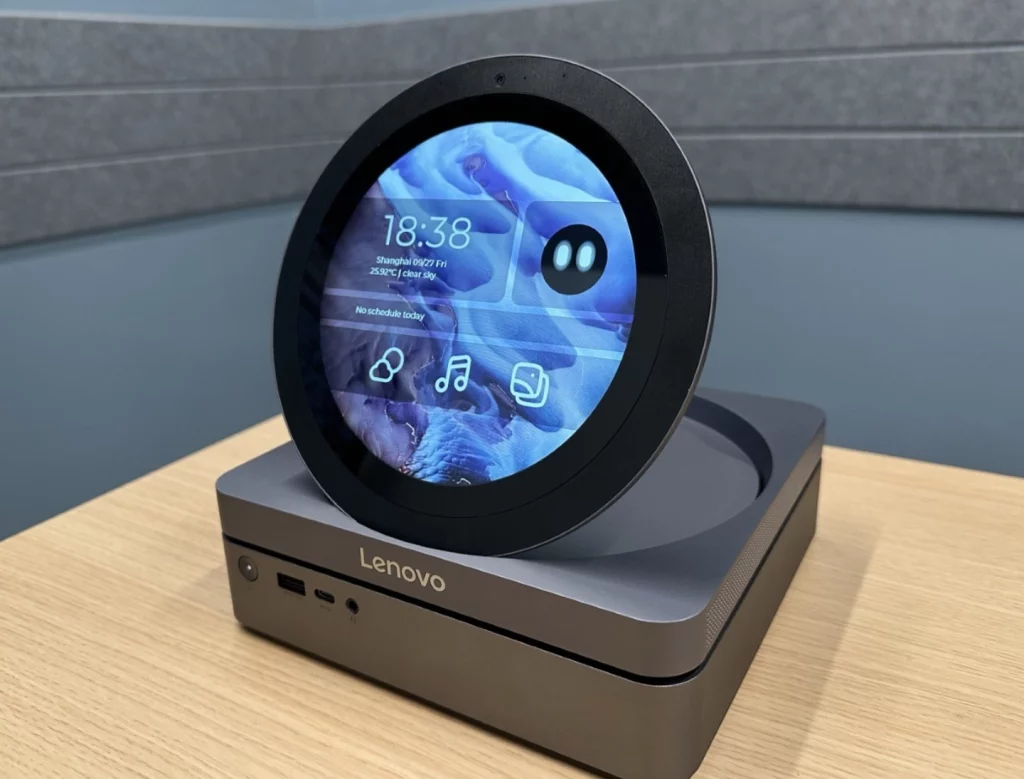
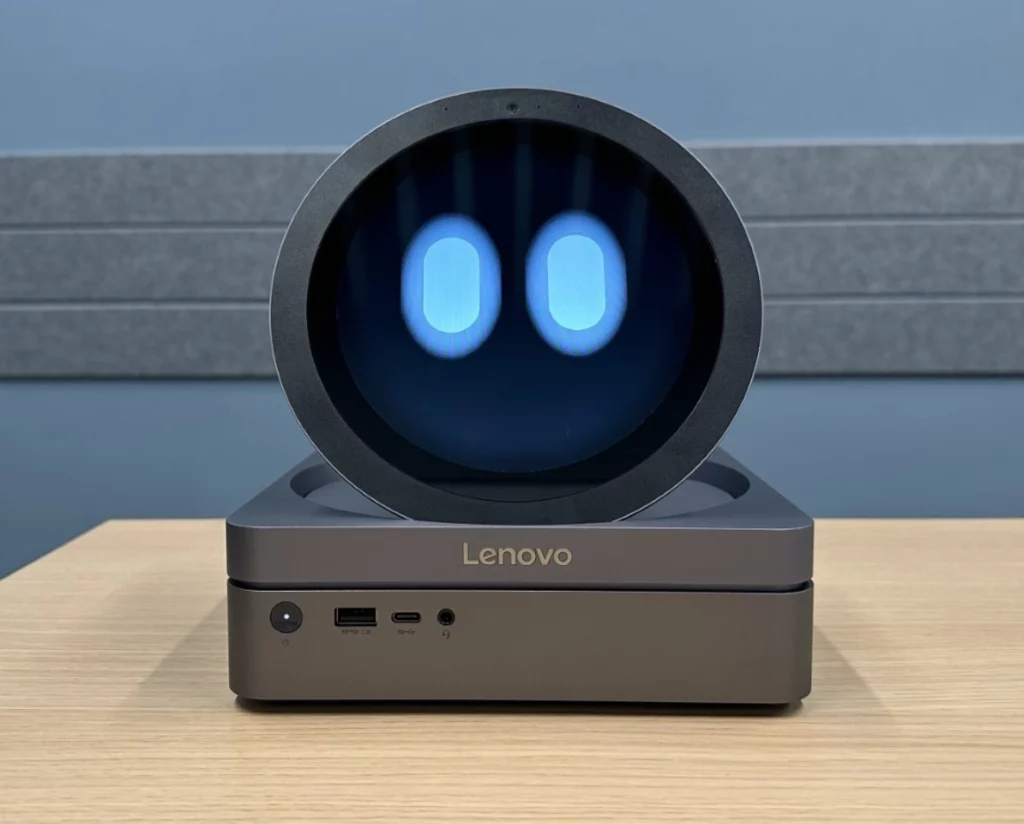
The Lenovo AI Buddy is shaped like an oversized, foldable MagSafe charging base, with a circular display on top that displays animated eyes as emojis to simulate emotions and enhance user interaction.
The facial expressions are reminiscent of the JoyfulRobotics Android Desktop Robot, developed by an ex-Xiaomi Employee last year. The display also shows basic information like time, weather updates, music options, and personal photos.
The AI Buddy also incorporates USB-A and USB-C ports, as well as a headphone jack on the base, making it versatile for users who want connectivity options in their smart home devices. The device is sleek and minimalist, aligning with Lenovo’s approach to design, while also providing essential functionality in a compact form factor.
Lenovo CEO Yang Yuanqing unveiled the AI Buddy alongside Meta CEO Mark Zuckerberg, announcing a partnership between Lenovo and Meta to launch AI Now, a personal AI assistant for PCs based on Meta’s Llama large model.
The AI Buddy incorporates this advanced technology, delivering a more natural and adaptive user experience. It uses sentiment-based AI to customize responses, handling tasks like scheduling, reminders, and daily tasks while learning and adapting to user preferences over time.
The product stands out with a rotating display that can adjust to maintain visual contact with the user, much like Amazon’s Echo Show 10. This feature makes interactions feel more personal and dynamic, as the AI Buddy follows users and adjusts based on where they are in the room.
With the integration of AI Now, the AI Buddy can assist with task management, helping users organize their day efficiently. Additionally, Lenovo emphasizes data security in this device, ensuring that sensitive information is handled with care and that user interactions with the AI Buddy remain private.
During the event, Lenovo also unveiled several other prototypes alongside the AI Buddy, such as the AI Mouse, which includes a dedicated AI Now button for seamless integration into Lenovo’s AI ecosystem. Furthermore, Lenovo teased the Lenovo Home AI Brain, which is designed to manage, organize, and safeguard family memories, creating AI-generated highlight reels for cherished moments.
Following the AOSP release, the stable version of Android 15 is now rolling out to Pixel 6 series devices and newer, including both Pixel foldables and the Pixel tablet. The update introduces features like Theft Detection Lock, Private Space, and App Archiving. Users with compatible devices can check for the update by going to Settings > About phone > System updates.
New features:
Ever heard about Samsung’s Secure Folder feature? Google is offering a similar implementation with Android 15. It allows users to create a separate space on their device and store sensitive apps under an additional layer of authentication.
Android 15 also brings App Archiving, a feature inspired by iOS. It lets you remove and restore the app’s installation and cached files, right from the Settings app. It can help easily free up storage space when needed.
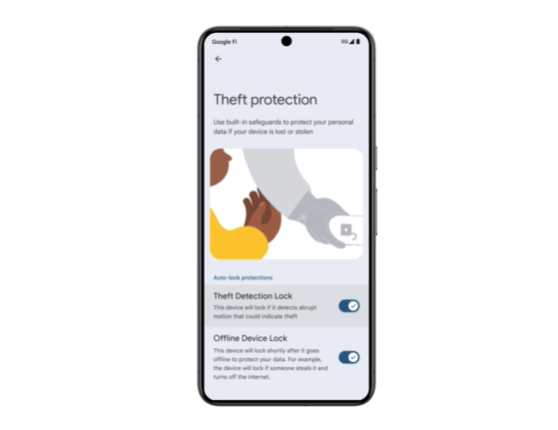
Another important addition is the Theft Detection Lock feature, which locks the phone automatically when it’s stolen. But how does it detect if the phone is stolen?
Image: Google
“By using on-device machine learning, Theft Detection Lock is able to analyse various device signals to detect potential theft attempts. If the algorithm detects a potential theft attempt on your unlocked device, it locks your screen to keep thieves out,” Google explained.
With Android 15, users can also share their screens without worrying about accidentally revealing information like notifications, OTPs, and login screens containing passwords. Now when you do the back swipe gesture, you’ll see a preview of the page you’ll be taken to. This lets you quickly decide if you want to move to that screen or not.
There’s also a feature for the large screen devices, where users will be able to pair two apps they frequently use together in split screen mode. Notably, this is also a feature borrowed from Samsung’s OneUI.
However, Pixel devices aren’t the first to get these features. Vivo has already rolled out the Android 15-based Funtouch OS 15 skin for iQOO 12.
Black Shark has launched a new wireless gaming keyboard with model number BKB02 in the Chinese market. The keyboard is priced at 699 yuan ($98) and it is now up for sale on JD.com. Let’s check out its key specs.
Black Shark BKB02 Gaming Keyboard Specifications:
The gaming keyboard sports an 84-key layout paired with a sleek multimedia knob, allowing users to adjust volume and access other multimedia functions easily.
This keyboard is built with high-performance gaming in mind. It features Tesla Inductive Switches with dual-directional active inductance, ensuring stable, responsive keypresses unaffected by environmental factors. The actuation distance can be adjusted between 0.2mm and 3.3mm, making it versatile for both gaming and office use. It also offers a gaming-grade latency of 1ms.
The keyboard comes with a five-layer Gasket structure that enhances durability, provides effective shock absorption, and delivers a quieter, comfortable typing experience.
The keyboard features Quick Trigger and Reset (RT) Technology for fast key activation, along with N-Key Rollover (NKRO) and anti-ghosting to ensure seamless gameplay. It is also fully hot-swappable, allowing gamers to customize their setups flexibly.
For versatile connectivity, the Black Shark Wireless Gaming Keyboard supports Wired, 2.4GHz wireless, and Bluetooth modes, making it compatible with a wide range of devices.
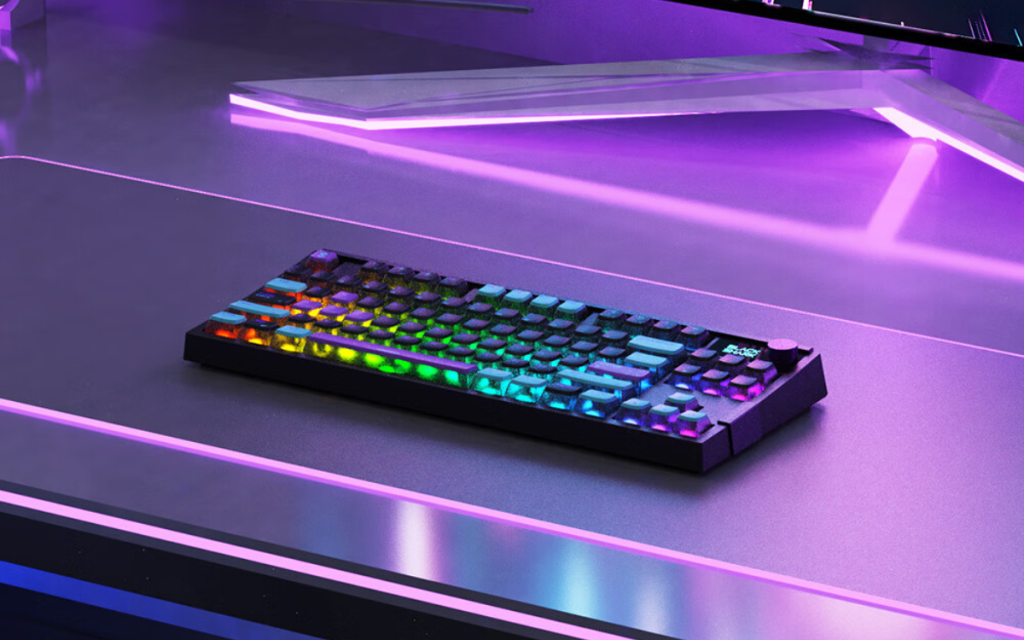
The keyboard features translucent pudding-style PBT keycaps for enhanced grip and a black base with purple and blue accents for a mech-inspired look. It includes Black Shark’s exclusive software for customizing key travel, lighting, and macros, appealing to gamers seeking both functionality and style.
Additionally, it boasts Neon RGB backlighting and a Black Shark logo breathing light, allowing users to customize the lighting to their preference, adding a stylish flair to their gaming setup. The lighting controls include multiple modes and adjustable brightness levels, accessible via dedicated function key shortcuts.
The keyboard offers up to 120 hours of battery life, depending on backlighting and connection mode, and features a USB-C port for C-to-C charging. Weighing 960g, it’s designed for convenient on-the-go use. The package includes the keyboard, a 2.4GHz receiver, a USB-C cable, a keycap and switch puller, and a transparent keyboard cover.
We recently reviewed the Varmilo Muse65 HE gaming keyboard. You can check out the full review here.
Earlier today (16th October 2024), Apple officially announced the new iPad Mini. With the new tablet, Apple introduced a powerful new iPad Mini, which is built by Apple Intelligence. But for the bookworms, is it really a good option? Should you pick the iPad Mini or Amazon’s Kindle? Read on to find out.
When comparing the two, the display is obviously the most important aspect to consider. The new iPad Mini uses a high resolution 8.3-inch LCD Super Retina screen that promises to offer vibrant colors. Overall, it’s a decent display to enjoy different kinds of content like movies and videos.
It does have features like Night Shift and True Tone to help mitigate eye strains, but for reading alone, the Kindle has a massive edge with the use of e-ink technology. These kinds of displays are usually used to offer a reading experience as close to printed paper. Not only is this gentle on your eyes, but it is also ideal for reading in bright sunlight since it has minimal glare. No risk of blue light strain during long reading sessions.
Please Note: When you buy something using the links in our articles, we may earn a small commission at no cost to you.
2. Battery Life
Amazon Kindle 2022
Don’t you hate it when you need to charge your device as you’re using it? While Apple has surely made improvements with the iPad Mini’s battery. Even with general use, you could only reach up to 10 hours. This makes sense considering the fact that the iPad Mini serves a lot more functions than the Kindle.
The Kindle was only built for reading enthusiasts. Since it serves just a single purpose, there were a lot of things cutout to improve the battery life. You’re getting a long battery life, which can reach up to 6 weeks on a single full charge. It isn’t a smart product, so it can easily outclass Apple’s new iPad Mini in this regard.
3. Content and Apps
The Kindle was launched for those who enjoy reading e-books. Buying this device gets you access to Amazon’s Kindle store and subscription services like Kindle Unlimited. While it does support PDFs and certain other formats, it is mostly for reading functions. All of this is to enhance the reading experience.
On the other hand, the iPad Mini was built to be more versatile. It’s a compact tablet that not only supports Kindle but also Apple Books and Libby. It is also capable of web browsing, which brings access to potentially unlimited amounts of information and entertainment.
4. Conclusion
If you want a dedicated e-reader that is easy on the eyes, has a long battery life, and is ideal for pure reading without distractions, then the Amazon Kindle is the right choice for you. However, if you prefer a multifunctional device that allows for reading, browsing, streaming, and much more, with a vibrant display, you can opt for the Apple iPad Mini to enjoy colored content as well.
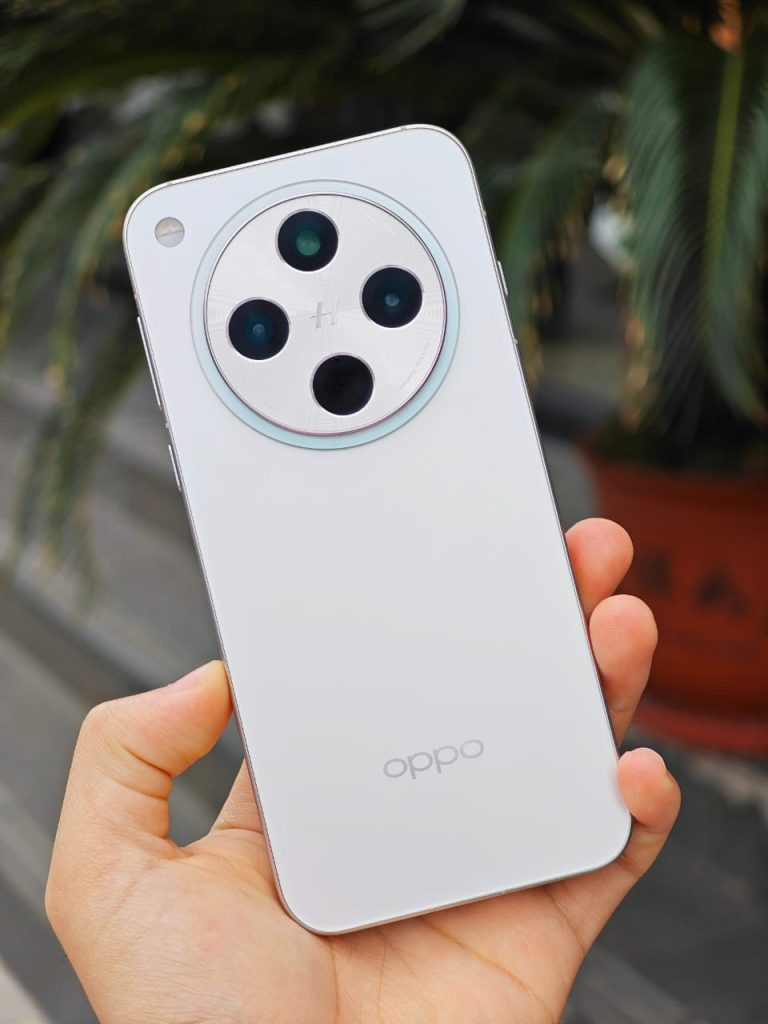
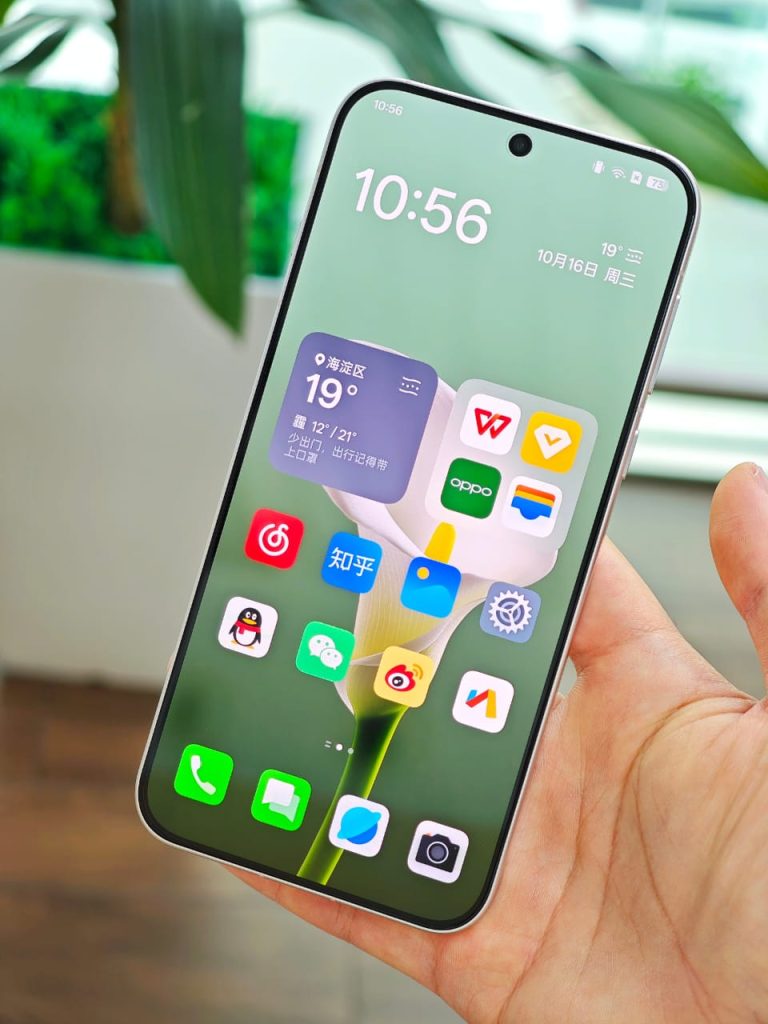
Today, tipster Digital Chat Station shared some high-definition real-life images of the Oppo Find X8, showcasing thin and symmetrical bezels on all four sides measuring only 1.45mm. In the comment section, someone also shared a side-by-side comparison image of the phone with the iPhone 16 Pro.
As can be seen in the image, the Find X8 comes with a matte glass back, which looks similar to the iPhone. The user even mentioned the upcoming device as ‘OPhone’, suggesting a similar visual and in-hand experience. The similarity extends to this year’s flat middle frame design.
The camera bump also appears to be less pronounced compared to the vivo X200 Pro, and resembles that of the iPhone 16 Pro. This subtle design could offer a more comfortable user experience, especially for those who carry their phones in their pockets.
The camera system includes a total of three cameras, with a fourth cutout for symmetry rather than utility. Three of the 50MP sensors include 1/1.56″ LYT-700 for the main camera, 1/1.95″ LYT 600 for 3x telephoto, and 1/2.75″ ISOCELL JN5 for the ultrawide. The Hasselblad logo on the middle also confirms about the partnership for better image processing.
What to expect from Oppo Find X8?
On the inside, the phone packs a large 5630 mAh battery, which supports 80W wired and 50W wireless charging. The FindX8 series is also one of the first to pack the Dimensity 9400 chip, which includes a significant improvement across CPU, GPU, and AI performance.
Despite its larger battery, the Find X8 maintains a slim form factor, thanks to Si/C battery technology. It measures just 7.85mm (slimmer than the 8.3mm iPhone 16 Pro) and weighs 193g, making it 6 grams lighter than the iPhone.
On the front, the phone packs a 6.59″ display (up from 6.3″ of the iPhone) that has a 1.5K resolution and a similar aspect ratio. For those interested, we have already covered the specifications of both the Find X8 and X8 Pro in detail.
Honor and Vivo might be on the same wavelength with their next gen smartphones. The Vivo X200 series is expected to feature the X200 Pro Mini as a new compact flagship phone, and now, a new rumor hints that the Honor 300 could be another small smartphone as well. So here’s everything we know so far.
Honor 300: New Competition to Galaxy S25 and iPhone 16?
The new rumor arrives from known tipster Smart Pikachu on Weibo (a Chinese microblogging website). The social media post claims that the upcoming Honor 300 series is expected to bring a new small sized smartphone model. While the name of this device wasn’t revealed, it could be the base version in the new premium lineup. If the Honor 300 is the brand’s new small phone, it would likely compete with the handful of similar models in the market.
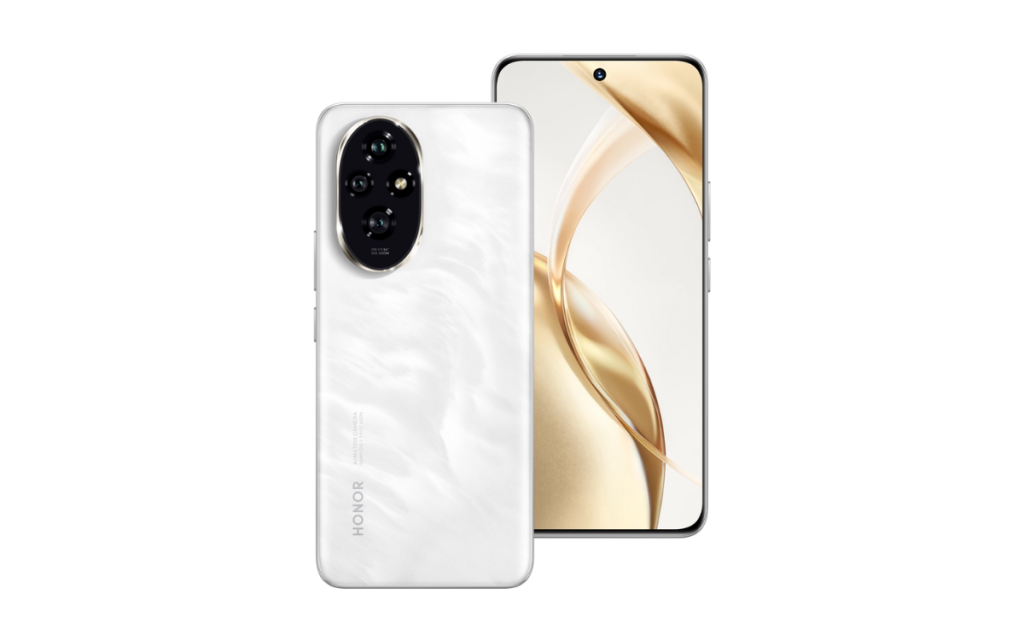
Honor 200
This includes the Motorola Edge 50 Neo, Google Pixel 7a, and the Galaxy S23 FE. To recall, the Honor 200 series only features the Honor 200, Honor 200 Pro, Honor 200 Lite, and Honor 200 Smart. Back in August, we also covered a report that shared renders of the Honor 300 Pro and its unique rear design. Considering the Honor 200 series launched back in May, the Honor 300 series will likely launch around the same time next year.
This means that we still have a long while before its release and also shows a new rising trend. Smartphones with small screens lost in popularity to large screen devices. Even in the premium segments, Samsung’s Galaxy S24 and Apple’s iPhone 16 are some of the only compact flagship phones. So it seems brands are once again making new smartphones that target those who prefer smaller phones. It is worth noting that this is still just an unconfirmed report, so take this news with a pinch of salt for now and stick around for more updates.
Apple brings wireless charging on its products like iPhones from its MagSafe technology. But now, Android brands are also bringing a similar feature on their next gen flagship smartphones. So here’s a list of 3 upcoming Android smartphones with magnetic wireless charging and how you can experience it yourself as well.
Oppo’s Magnetic Wireless Charger
OnePlus 13
One of the first to be confirmed with Magnetic Wireless Charging is the OnePlus 13. In a recent teaser, Liu responded to a fan’s question about the return of bamboo cases for the OnePlus 13. He made it clear that no wooden cases are returning but he revealed that there is a new case with a “magnetic suction function”.
OnePlus 13
OnePlus 13To complement this new technology, OnePlus is even working on a range of magnetic accessories, including a power bank. So the company is taking on Apple not just with the new flagship phones, but also its expansive accessories. You can click here to find out more about OnePlus 13.
Oppo Find X8
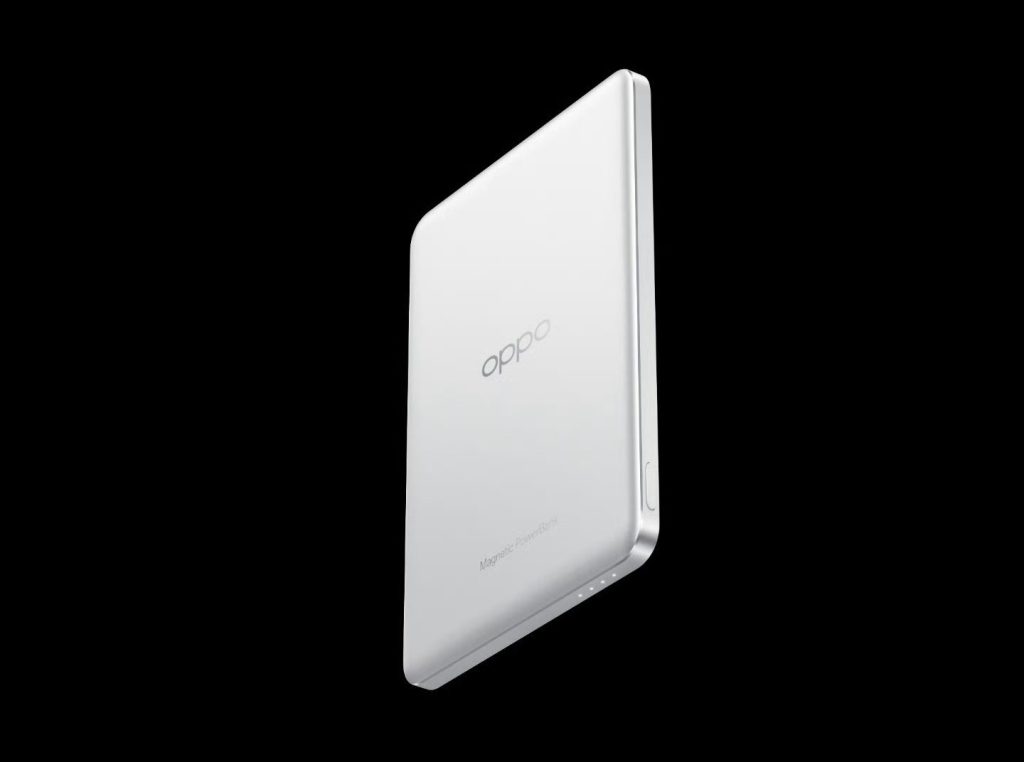
Oppo recently release a new demo video that showcased the Find X8 series with magnetic wireless charging. Oppo’s product manager, Zhou Yibao showcased this technology in action on Weibo (a Chinese microblogging website). It may support up to 50W wireless charging and support for reverse charging. The executive stated that Oppo also plans to introduce a range of magnetic wireless charging accessories.
Oppo Find X8
This may include an ultra thin magnetic case, portable magnetic power banks, and 50W magnetic chargers. These accessories would likely be compatible with products from other brands like iPhones. So the OnePlus 13 would likely work with these accessories as well.
Xiaomi 15
While wireless charging has been a thing for some time now on Android phones, the magnetic charging coils would be a new addition. Apple is best known for this technology, but Oppo, OnePlus, and Xiaomi may be the first to introduce such technology to Android phones.
Xiaomi 15
Like the OnePlus 13 and Oppo Find X8, the Xiaomi 15 is also expected to debut with magnetic wireless charging that mirrors Apple’s MagSafe. Xiaomi has reportedly prepared a 30W ultra thin magnetic wireless charger, which is in line with the other two devices as well.
How to experience Magnetic Wireless Charging right now?
While MagSafe is an Apple trademark, MagSafe works with Qi wireless charging so it isn’t exclusive to Apple devices. So as long as your Android phones support Qi wireless charging, they can run MagSafe accessories. With third party manufacturers, Android users can get access to the magnet that helps you connect your device to MagSafe compatible cases or adapters.
Anker is one such brand that offers MagSafe products while others companies have cases with a magnetic ring or sell magnetic rings separately. These basically helps your Android phone function similar to an iPhone on a MagSafe charger.
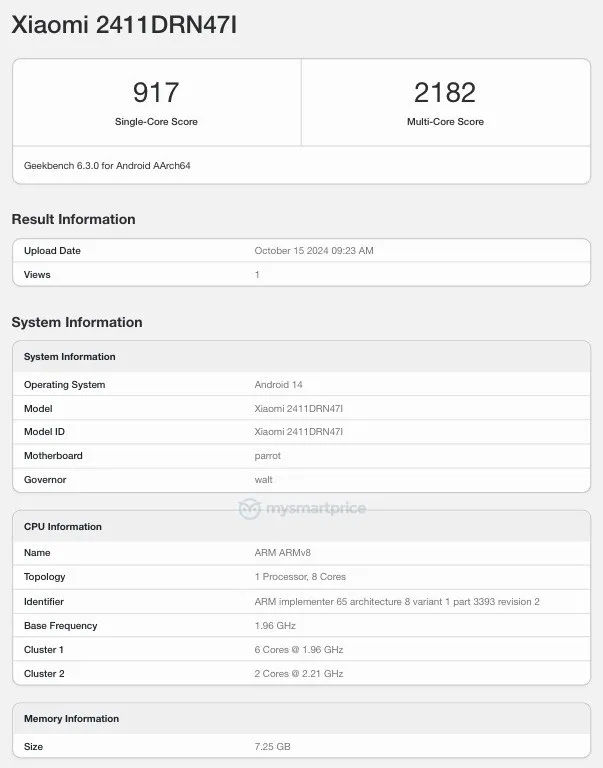
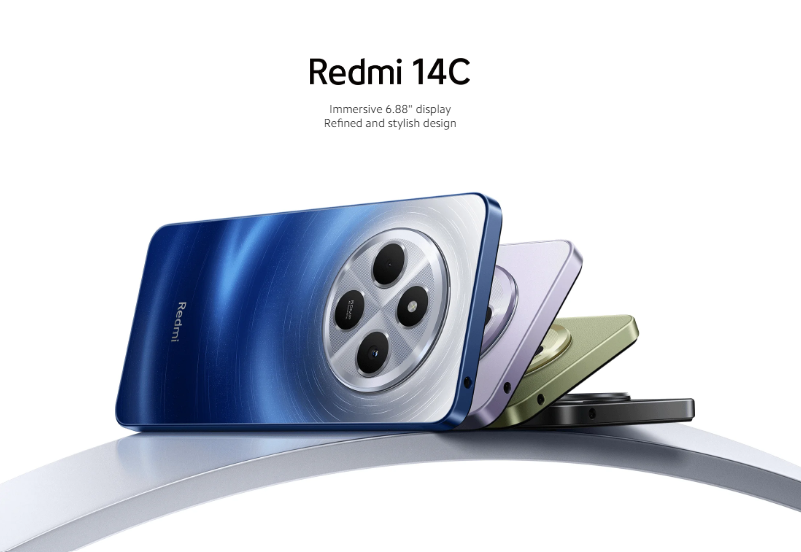
Redmi 14C 4G was launched in August this year with the Helio G81 Ultra. Now the 5G version of the phone has surfaced on Geekbench with a new chip that scores 917 and 2182 in the single and multi-core tests respectively.
For context, the Redmi 14C 4G scores around 418 and 1390 in the tests respectively. So the upcoming 5G version is going to deliver a considerably smoother experience with your day-to-day tasks alongside faster connectivity.
The motherboard information revealed by the Geekbench listing confirms that the chipset is Snapdragon 4 Gen 2, which is built on a power-efficient 4nm process node. The chipset comes with a 6+2 core architecture: 6 power efficient cores clocked at 1.96GHz and two performance cores at 2.21GHz.The listing also reveals support for 8GB RAM and the use of Android 14.
Redmi 14C 5G: what to expect?
According to previous reports, the phone is a rebrand of the Redmi 14R 5G, launched in China last month.
The 14R 5G is built around a large 6.88″ HD+ (720 x 1640) display that reaches a peak brightness of 600 nits under direct sunlight and 450 nits manually. The brightness is okay considering the price range. Under the hood, the phone packs a large 5160mAh battery.
In terms of cameras, the phone packs a dual setup on the back – 13MP main + 2MP macro – and a 5MP selfie on the front.
The Snapdragon 4 Gen 2 chip is paired with UFS 2.2 storage, which is also an upgrade over the much slower eMMC module of the Redmi 14C 4G. It suggests faster loading time for apps.
The Redmi 14C 5G has already made its appearance on Xiaomi’s HyperOS source code and IMEI database suggesting an imminent release.
Pricing (rumored):
According to 91mobiles, the phone could be launched in the Indian market with a price tag of Rs 10,000 – 12,000. In comparison, the 4G version was launched in the global market for a price tag of $119 USD, which is equivalent to Rs 10,000.
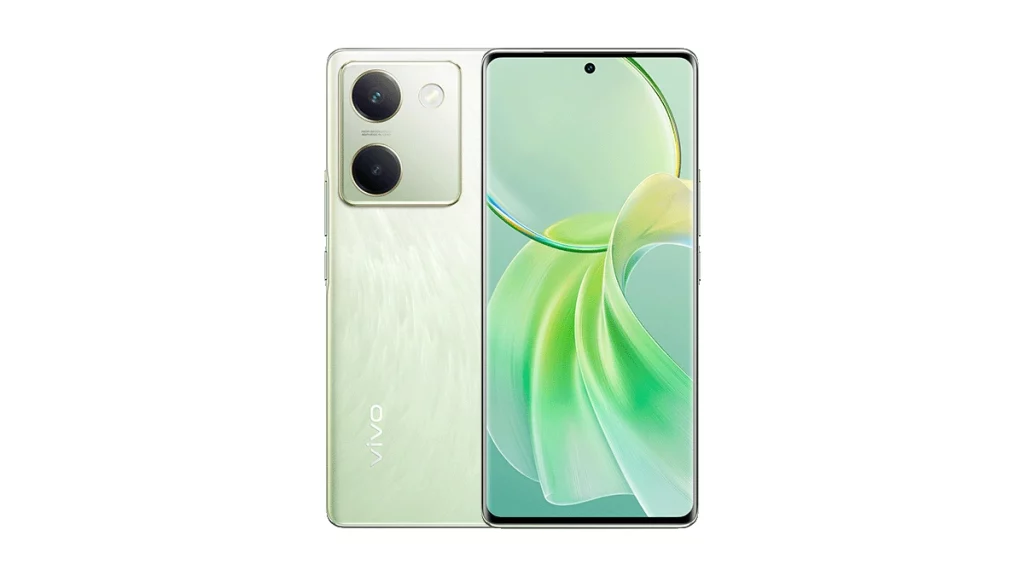
Vivo has officially launched the new Y300 Plus in India, bringing a premium experience at an affordable price. The brand’s latest model stands out thanks to its tall curved AMOLED display, which isn’t too common in the mid range segment. This launch arrives over a month after the Vivo Y300 Pro release, so here’s everything you need to know.
Vivo Y300 Plus: Specifications
The key selling point of the Vivo Y300 Plus is undoubtedly its display. For a mid range price, you’re getting a tall 6.78-inch curved AMOLED display that offers FHD+ resolution, a 120Hz refresh rate, and 1,300 nits of peak brightness. Such screens usually ship with premium mid range or flagship smartphones. Under the hood, the Vivo Y300 Plus is equipped with Qualcomm’s Snapdragon 695 SoC, paired with the Adreno 619 GPU.
Vivo Y300 Plus
This is an ageing chip that clearly shows one area where the brand is cutting costs. It also features 8GB of LPDDR4X RAM and 128GB of internal UFS 2.2 storage, which can be expanded by up to 1TB via a microSD card slot. The Vivo Y300 Plus runs on the Android 14 OS based FuntouchOS 14 custom skin out of the box. A large 5,000mAh battery pack powers this device, which supports 44W wired fast charging.
On the rear, the Vivo Y300 Plus packs a dual-camera setup, with a 50MP primary camera that has an f/1.8 aperture and a 2MP secondary sensor. Meanwhile, the front houses a 32MP selfie camera with an f/2.45 aperture.Other notable features include dual-SIM support, 5G, 4G LTE, Bluetooth 5.1, dual band Wi-Fi, an in-display fingerprint scanner, and an IP54 rating for water and dust resistance.
Pricing and Availability
The Vivo y300 Plus was announced in two color options, namely Silk Black and Silk Green. It has a 23,999 INR price tag for its lone storage configuration. Vivo is even offering an instant 1,000 INR discount to HDFC, SBI, and ICICI bank card holders. There is also a no cost EMI option as well. Those interested can buy this device from the brand’s official Vivo India e-store. You can also click here to check out some of the other best mid range smartphones.
We use cookies on our website to give you the most relevant experience by remembering your preferences and repeat visits. By clicking “Accept”, you consent to the use of ALL the cookies.
This website uses cookies to improve your experience while you navigate through the website. Out of these, the cookies that are categorized as necessary are stored on your browser as they are essential for the working of basic functionalities of the website. We also use third-party cookies that help us analyze and understand how you use this website. These cookies will be stored in your browser only with your consent. You also have the option to opt-out of these cookies. But opting out of some of these cookies may affect your browsing experience.
Necessary cookies are absolutely essential for the website to function properly. This category only includes cookies that ensures basic functionalities and security features of the website. These cookies do not store any personal information.
Any cookies that may not be particularly necessary for the website to function and is used specifically to collect user personal data via analytics, ads, other embedded contents are termed as non-necessary cookies. It is mandatory to procure user consent prior to running these cookies on your website.