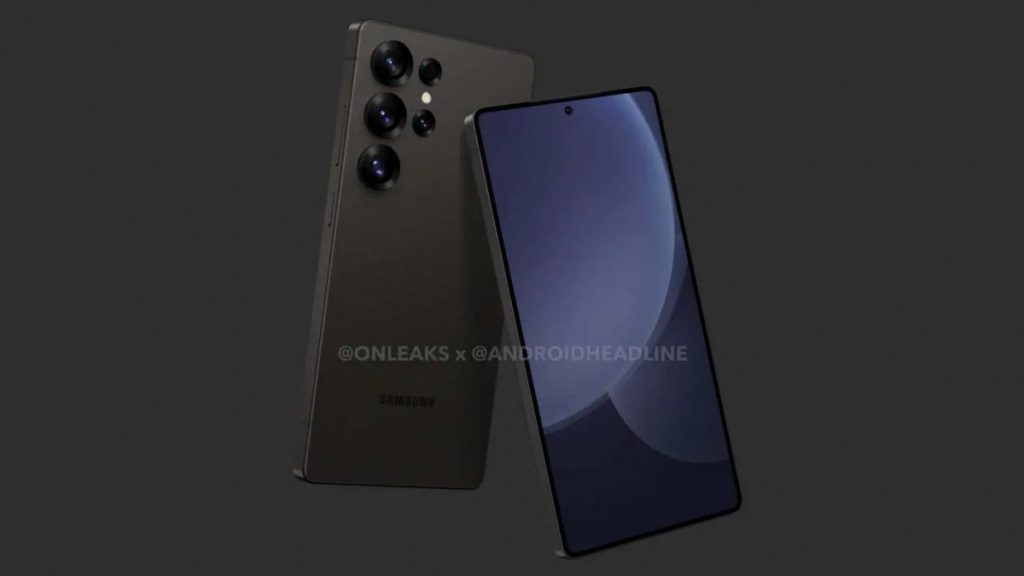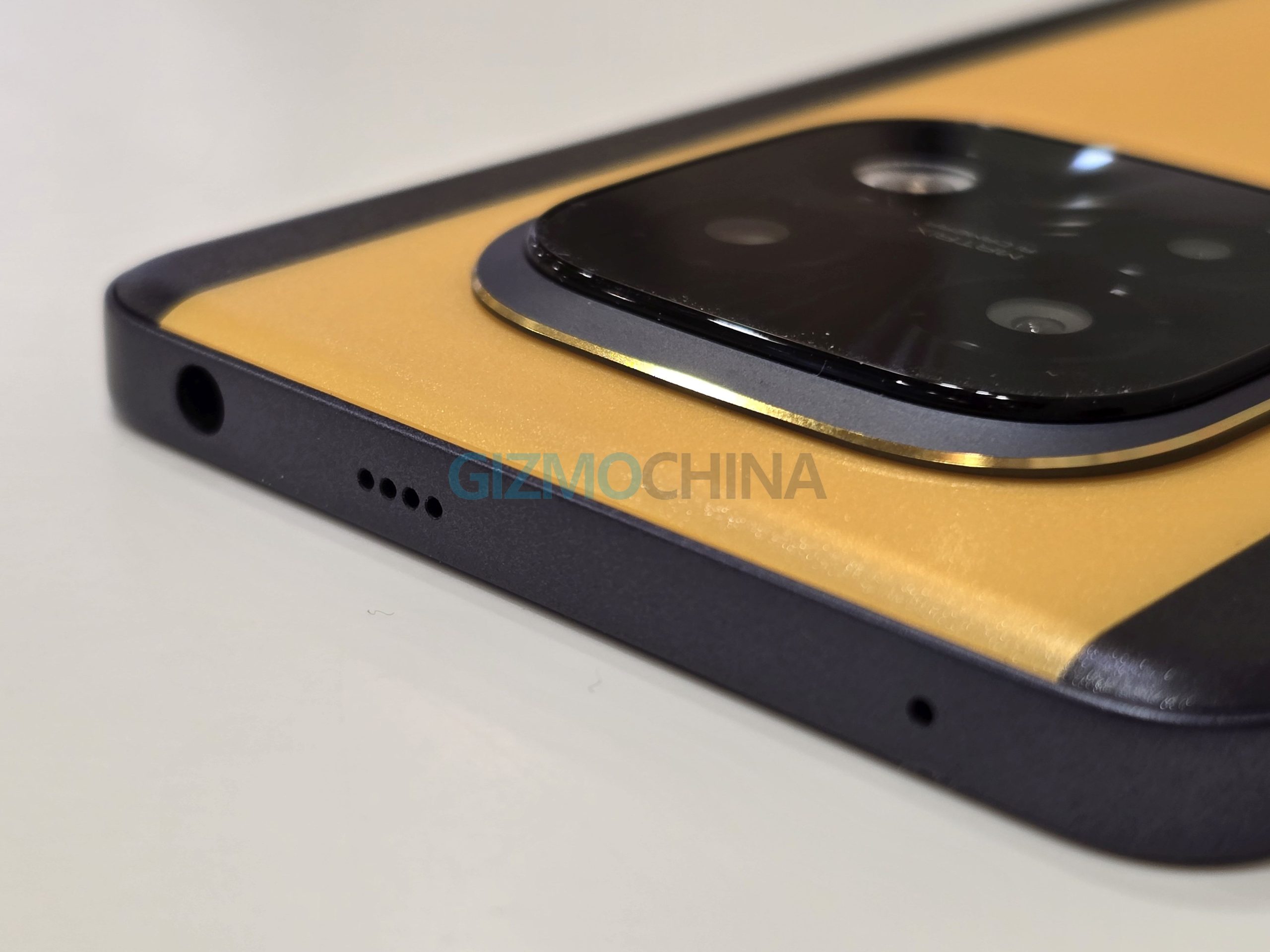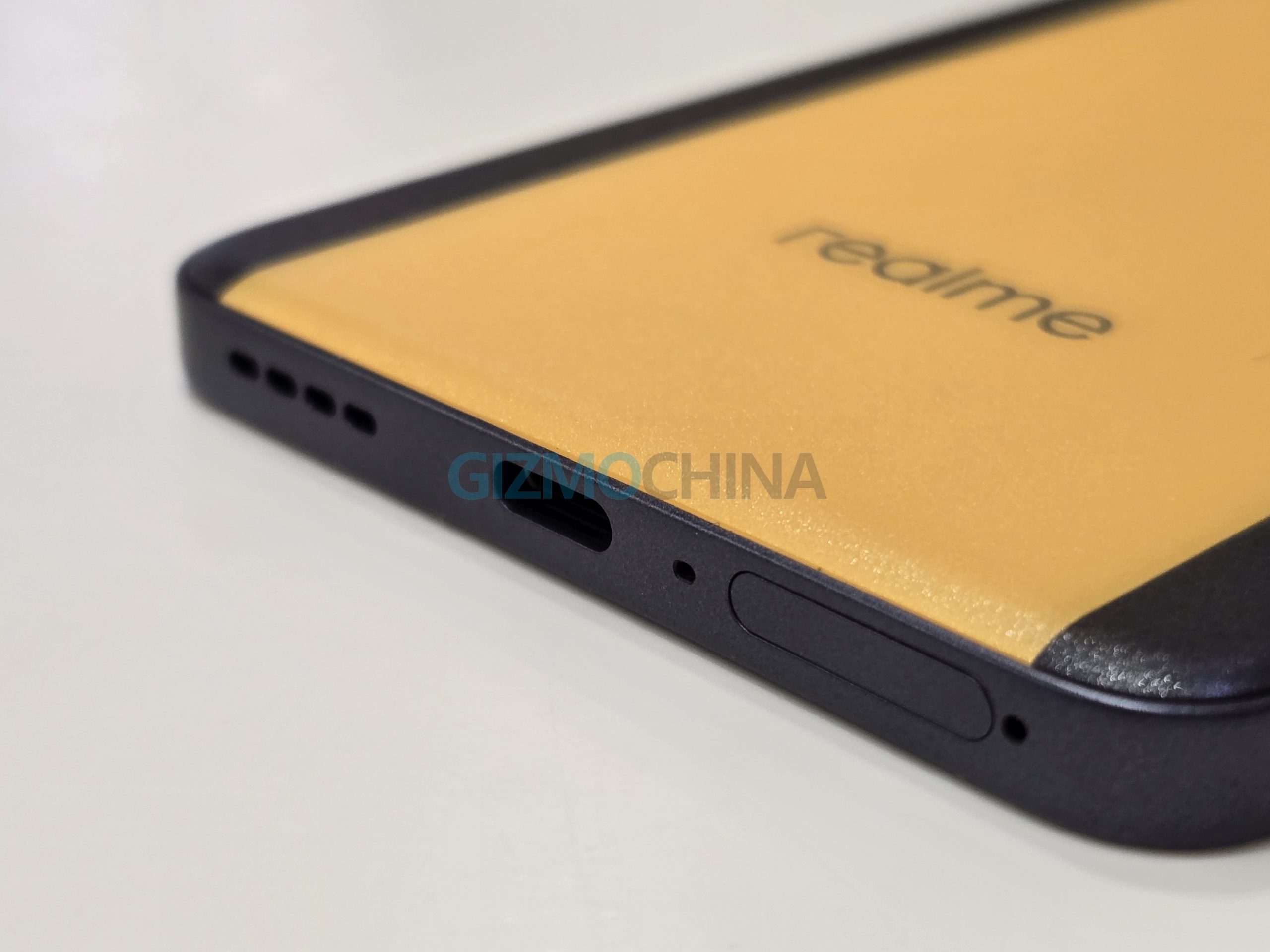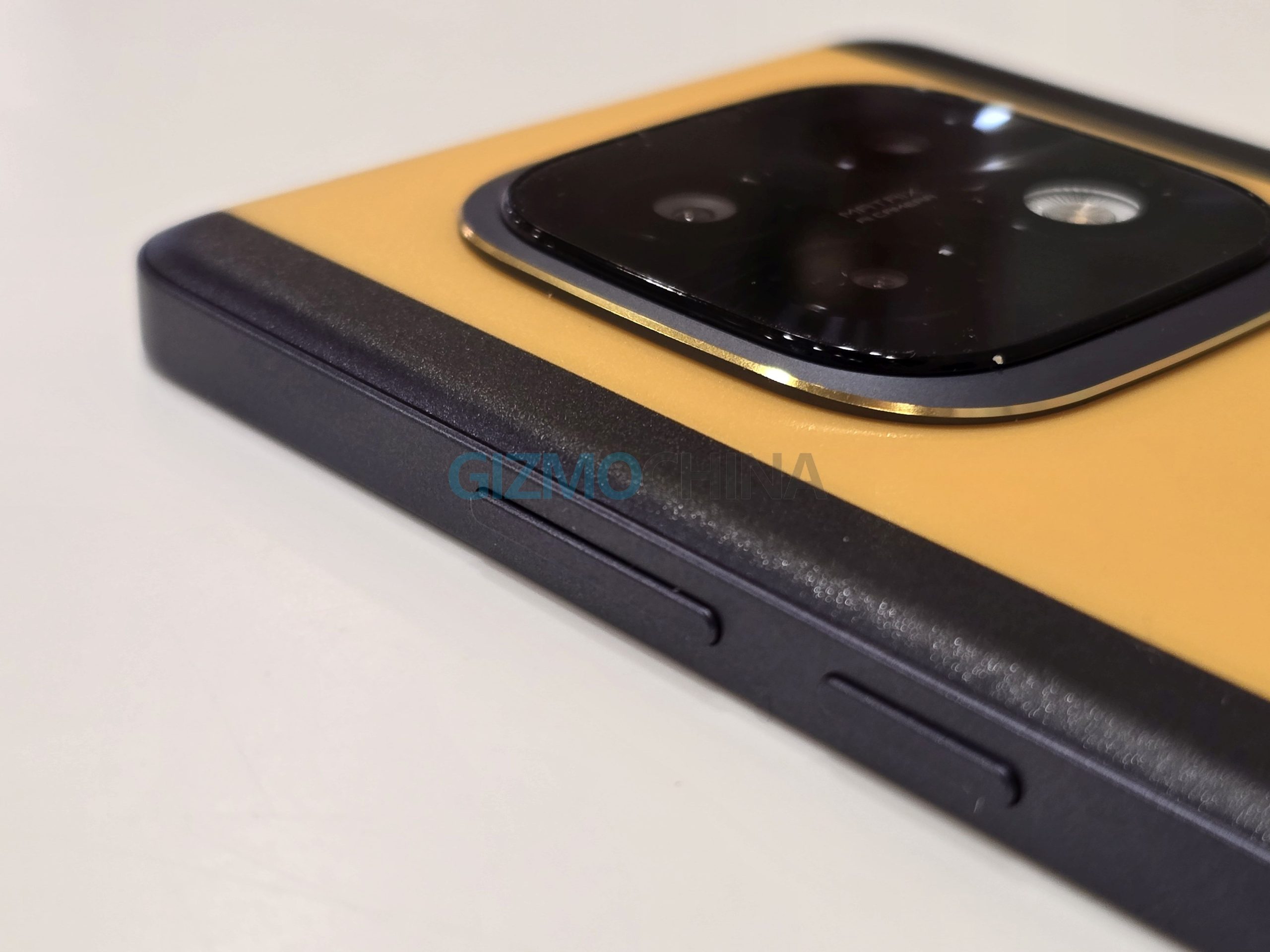
After a flurry of leaks and rumors, HMD has finally introduced the Skyline smartphone. As expected, the device draws design inspiration from the Nokia Lumia’s Fabula design language and is the most powerful smartphone HMD has made so far. Let’s dive into its specifications, features, and price.
HMD Skyline Specifications
As mentioned earlier, the Skyline takes design inspiration from Nokia’s Fabula design, characterized by rounded sides and square ends. On the front, it features a 6.5-inch OLED display with Full HD+ resolution and a 144Hz refresh rate. The screen has a punch-hole cutout that houses a 50MP front-facing camera for selfies.
Under the hood, the Skyline is powered by the Snapdragon 7s Gen 2 chipset, paired with either 8GB or 12GB of RAM. Storage options range from 128GB to 256GB, with a microSD card slot that is expandable up to an additional 512GB.
The phone has a triple camera setup on the back, consisting of a 108MP main sensor, a 13MP ultrawide lens, and a 50MP telephoto lens offering up to 4x zoom. It also features HMD’s AI Capture Fusion technology, which maximizes details in photos.
Fueling the Skyline is a 4,600mAh battery that supports 33W wired charging and 15W magnetic Qi2 wireless charging. Unfortunately, HMD does not include a compatible adapter in the box. You can purchase a 33W wall charger for an additional £30 or a 30W dual-port adapter for £20 on their website.
The phone runs Android 14 out of the box and is promised to receive two major OS updates and three years of security patches. It also includes a “Detox Mode” to limit notifications and social media access for those seeking a digital detox, and there is a customizable button on the side for quick access to preferred apps and features.
The standout feature of the HMD Skyline could be its repairability. HMD claims the device can be repaired in under ten minutes thanks to its “Gen 2 repairability” design. Users themselves can easily replace components such as the screen, battery, and charging port using standard iFixit kits. Spare parts will be available directly from HMD.
Pricing and Availability
The HMD Skyline is priced at €499, $499, or £399. If your device breaks down and you want to repair it yourself, you can buy the display for $95, the battery cover for $30, the battery for $25, and the charging port for $20. For your first purchase, you should get a fix kit from iFixit, which costs an additional $5.
CMF by Nothing recently introduced its first smartphone, the CMF Phone 1, which quickly became a hit. The brand sold over 100,000 units within just 3 hours of the live sales event, and the device went out of stock soon after its launch in India. The brand has now announced that a restock will occur tomorrow on Flipkart.
The restock is set for July 19 and will begin at 12 AM. The brand will also provide an instant discount of ₹1,000 for Axis Bank users, bringing the effective starting price down to ₹14,999. Without any discounts, the phone will be priced at ₹15,999.
CMF Phone 1 Specifications:
The CMF Phone 1 features a 6.67-inch display with FHD+ resolution, a 120Hz refresh rate, and excellent brightness for outdoor visibility, along with a fingerprint reader.
The phone’s design is customizable, sporting a camera module and four screws on the back panel. This allows users to swap out back covers in Light Green, Blue, or Orange, and attach accessories like a stand or lanyard using a special dial and the included screwdriver.
Powered by a MediaTek Dimensity 7300 processor, the CMF Phone 1 comes with 6GB or 8GB of RAM, which can be expanded with virtual RAM, and 128GB of storage. It houses a 5,000mAh battery with 33W fast charging support and runs on Android 14 with Nothing OS 2.6.
The camera setup includes a 50MP main sensor and a secondary lens for portraits, while the 16MP front camera is designed for selfies and can record 4K videos at 30 fps. The device also features Ultra XDR technology, co-developed with Google, for enhanced low-light photography.
Just last week, Oppo released the highly anticipated Reno 12 lineup in India. The series consisted of the Reno 12 and Reno 12 Pro, and the latter has finally gone on sale in the region. So let’s have a look at the specs, pricing, offers, and other details of the Reno 12 Pro.
Oppo Reno 12 Pro Pricing & Availability
The Chinese brand launched the Reno 12 Pro in two color options, namely Space Brown and Sunset Gold variants. It is also offered in two storage configurations with a starting price tag of 36,999 INR for the 12GB + 256GB option. Meanwhile, the top end 12GB + 512GB version costs 40,999 INR.
The Reno 12 Pro is officially listed for purchase on Flipkart, the company’s official website, and leading retail stores in the country. As a special launch offer, buyers can also avail a flat 3,500 INR discount on the 256GB variant and a 4,000 INR discount on the 512GB model. Bank discounts are also available on Flipkart for Bank of Baroda, DBS Bank, HDFCm ICICI, Kotak, SBI, and OneCard card holders.
Oppo Reno 12 Pro Specs
Oppo launched the Reno 12 Pro with a tall 6.7-inch curved OLED display that offers an FHD+ resolution, a 120Hz refresh rate, HDR10+ support, and 1200 nits of peak brightness. Under the hood, it is equipped with the Dimensity 7300 Energy processor. A large 5,000mAh battery pack powers this device, which supports 80W wired fast charging.
For optics, you get a 50-megapixel main, an 8-megapixel ultra wide angle, and a 50-megapixel telephoto camera on the rear, while the front houses a 50-megapixel selfie shooter. Other notable features include an in-display fingerprint scanner, IR blaster, dual speakers, Android 14 OS based ColorOS 14 custom skin out of the box, Corning Gorilla Glass Victus 2, and various AI features.
The upcoming Xiaomi Mix Flip, set to launch tomorrow, is one of the first clamshell foldable to be powered by the Snapdragon 8 Gen 3 processor. Naturally, there’s a lot of curiosity about how well it will be able to handle demanding tasks like gaming, especially considering its compact size.
While we typically have to wait for reviews for this kind of information, we’re in luck this time. The well-known tipster, Digital Chat Station, has already shared benchmark and gaming performance figures for the upcoming foldable phone.
The phone, equipped with a Snapdragon 8 Gen 3 chipset, 16GB LPDDR5X RAM, and 512GB UFS 4.0 storage, achieved an impressive AnTuTu score of 1.91 million. On Geekbench 6, the Mix Flip scored 2123 points in single-core and 6512 in multi-core tests, placing it on par with flagship smartphones in the traditional bar form factor.
Gaming performance is promising as well. The Flip managed to deliver an average frame rate of 119.8fps in Honor of Kings at high settings while consuming 2.9W of power. In PUBG Mobile, the device maintained a steady 60fps at smooth settings with a power draw of 2.3W.
However, for demanding titles like Genshin Impact, even with frame rate increase tech-enabled, the Mix Flip averaged 59.5fps at 720p resolution while drawing 4.8W. The tipster suggests using a “heat dissipation back clip”, likely referring to a cooling fan, if users want to play the game in high-end settings.
Honor of KingsPUBGGenshin Impact
Now looking at what has been revealed officially so far, the Mix Flip features a 4.01-inch external display with 1.5K resolution and 1600 nits brightness. The cover display has equal bezels and a curved-edge design on all four sides. It is shielded by a layer of Xiaomi’s Dragon Crystal Glass.
Xiaomi has also been thoughtful enough to include a dedicated earpiece and microphone above the top bezel of the cover screen, allowing Mix Flip users to make calls without opening the device. The external screen also supports a full-size keyboard for convenient typing.
Furthermore, the device will feature a dual-camera setup with Leica Summilux lenses and will be powered by a 4780mAh battery.
Realme recently announced that it will unveil the Realme 13 Pro and 13 Pro+ on July 30 in India. The 13 Pro series will also launch in China soon, but its launch date has not been confirmed yet. Chinese certification platforms, such as TENAA and 3C, approved the alleged Realme 13 Pro+, bearing the RMX3921 model number, in June. Now, a new device bearing the RMX3989 has also received approval by the TENAA authority. The listing has revealed the images and specifications of the device. It remains to be seen whether it will debut as the standard Realme 13 Pro.
Realme RMX3989 specifications
Realme RMX3989 TENAA images
According to the TENAA listing, the RMX3989 Realme phone features a 6.67-inch curved-edge AMOLED panel with an FHD+ resolution and an in-screen fingerprint sensor. It probably supports a high refresh rate of 120Hz. It has a 32-megapixel front camera and a 50-megapixel + 8-megapixel + 2-megapixel triple camera unit.
A 2.4GHz octa-core processor powers the Realme RMX3989, though the specific chipset is still unknown. It is expected to come in multiple RAM options, including 6 GB, 8 GB, 12 GB, and 16 GB, with storage variants of 128 GB, 256 GB, 512 GB, and 1 TB.
The Realme RMX3989 packs a 5,050mAh (rated value) battery. The device’s previously seen 3C certification revealed that it may have support for 45W fast charging. It is likely to run on Android 14 and Realme UI 5. Lastly, the phone measures 161.3 x 73.9 x 8.2mm and weighs 188 grams.
Amazon will carry out the Prime Day sale on July 20 and 21 in India. Among other phones, the OnePlus 12 series is the one to look out for, as it is going to be available with attractive discounts. Here is a look at the offers for those looking forward to purchasing the OnePlus 12 and the OnePlus12R.
OnePlus 12 series Prime Day sale
OnePlus 12
The OnePlus 12 and 12R are available at attractive discounts during the upcoming Amazon Prime Day Sale. The OnePlus 12 offers a flat Rs 5,000 discount, bringing the price down to Rs 53,000 for the 12GB/256GB variant and Rs 65,000 for the 16GB/512GB variant. Additionally, there is a Rs 7,000 discount available for ICICI and OneCard users.
To recall, both variants were priced at Rs 64,999 and Rs 69,999, respectively, at launch. The OnePlus 12 can be bought in shades, such as Sky Black, Glacial Whtie, and Flowy Emerald.
OnePlus 12R
The OnePlus 12R comes with a free pair of OnePlus Buds 3 with the 8GB/256GB variant and offers up to Rs 3,000 discount for ICICI and OneCard users. With the discount, the 8GB+256GB and 16GB+256GB variants can be bought for Rs 42,999 and Rs 39,999, respectively.
On the other hand, the 8GB+128GB model, which comes with Rs 2,000 discount, can be purchased for Rs 37,999. At launch, these variants were priced at Rs 39,999, Rs 42,999, and Rs 45,999, respectively. The phone comes in Iron Gray, Cool Blue, and the recently announced Sunset Dune color options.
Buyers can also take advantage of other offers, such as up to 12 months of no-cost EMI and benefits worth Rs. 2250 on JioPlus Postpaid Plans, up to 6 months of 100 GB Google One cloud storage, and up to 3 months of YouTube Premium.
Xiaomi is set to release the Redmi K70 Ultra on July 19, and ahead of the launch, the company has now revealed there will also be a limited edition variant, dubbed the Redmi K70 Ultra Champion Edition.
The phone takes design cues from the previous K70 Pro Champion Edition and features a Y-shaped logo of the Lamborghini Essenza SCV12 supercar alongside the SQUADRA CORSE racing shield logo. It will be available in a vibrant green and a bold yellow color.
Unsurprisingly, the focus of the Champion Edition is purely aesthetic, offering fans a chance to own a phone with a design that evokes the world of high-performance racing.
Xiaomi has yet to detail the specifications for this Champion Edition device, but it’s likely the core hardware will mirror that of the standard variant. However, the limited edition model might come with upgraded memory options.
Redmi K70 Ultra Specifications
The Redmi K70 Ultra is equipped with a MediaTek Dimensity 9300+ chipset, supporting a 1.5K resolution OLED display with a 144Hz refresh rate.
The screen also has 3840Hz PWM dimming, which Xiaomi claims delivers industry-leading eye protection in low-light conditions. While the exact screen size remains undisclosed, it’s known to be co-developed with TCL.
Its camera system features a primary 50MP Sony IMX906 sensor, likely accompanied by an 8MP ultra-wide sensor and a 2MP macro sensor. Notably, the K70 Ultra is the first Redmi phone to utilize Xiaomi’s self-developed AISP imaging algorithm, aiming to enhance overall camera performance.
Another highlight for the Redmi K70 Ultra is Xiaomi’s Pengpai T1 signal enhancement chip. It reportedly delivers a 12% boost in WiFi performance, a 20% improvement in GPS performance, and a significant 58% increase in 5G WiFi signal strength.
Apart from this, the phone will have a Surge P2 chip for fast charging, a G1 for power management, and a D1 chip for independent display processing. All of these are in-house SoCs developed by Xiaomi.
Moreover, the phone is confirmed to pack a 5500mAh battery with support for 120W fast charging for quick power refills. It also boasts an IP68 certification for dust and water resistance.
Indian tech brand boAt is gearing up to launch its latest wearable, the boAt Smart Ring Active, on July 20th. This new release follows the success of their first smart ring and aims to make smart wearable technology more accessible to Indian customers.
The boAt Smart Ring Active comes in at a much lower price than its predecessor, launching at Rs. 2,999. This will make it the most affordable smart ring in the Indian market, attracting buyers who may have been priced out previously. For those unaware, boAt launched its first smart ring back in August 2023 with a Rs 8,999 price tag.
The boAt Smart Ring Active prioritizes core health monitoring features. It automatically tracks heart rate, blood oxygen (SpO2), sleep, and stress, giving users a basic understanding of their overall health.
The ring is built with Airtight technology and stainless steel for long-lasting use and water resistance. It comes in three color options (black, silver, gold) and five sizes to fit various users. Additionally, a convenient shake gesture lets users take photos with a simple hand movement.
Pre-Order Availability
Pre-orders for the boAt Smart Ring Active begin July 18th on Amazon, Flipkart, and the boAt website, with official sales starting on July 20th.
In related news, boAt has recently introduced the Nirvana Space TWS earbuds, featuring 360° Spatial Audio developed with AMI Technologies. They come with diamond-like carbon drivers, customizable sound with EQ modes, and active noise cancellation (ANC) up to 32dB. The earbuds include a 60ms low-latency mode for gaming and videos, in-ear detection, touch controls, and multipoint connectivity.
Oppo recently launched the Reno 12 series smartphones in India, featuring two models: the Reno 12 and Reno 12 Pro. The Reno 12 will be available for purchase starting July 25th, while the Reno 12 Pro is on sale from today.
The latter comes in two color options — Space Brown and Sunset Gold — and has die-cast aluminum alloy frames and an IP65 rating for water and dust resistance. The front is protected by Gorilla Glass Victus 2 for added durability.
Powering it is a MediaTek Dimensity 7300 Energy processor and a 5000mAh battery. The camera setup includes a triple rear configuration with a 50MP main camera, an 8MP ultrawide lens, and a 50MP telephoto lens.
All this is available for a starting price of Rs 36,999 for the 12/256GB variant and Rs 40,999 for the 12/512GB variant. But for the price, is the Reno 12 Pro the best deal, or are there better alternatives? If you’re wondering the same, we’ve got you covered. In this article, we’ve listed the best alternatives to the Oppo Reno 12 Pro available in India.
The Oppo Reno 12 Pro faces tough competition in India, with many competitors offering better specs at lower prices. Before we dive into the alternatives, let’s take a look at its specifications.
The Nord 4 is a recent entry from OnePlus in the Indian smartphone market, and it outperforms the Reno 12 Pro in several key aspects.
It has a premium metal build and a slightly larger 6.74-inch display compared to the Reno 12 Pro. The Nord 4 lacks a telephoto lens and has a simpler 50MP main and 8MP ultrawide rear camera setup but it has a more powerful Snapdragon 7+ Gen 3 processor and superior software support (4 years of platform updates, 6 years of security). Plus, the Nord 4 throws in a larger 5500mAh battery and a 100W faster charging to sweeten the deal.
The OnePlus Nord 4 is available in India for Rs 29,999 for the base 8/128GB variant. The 12/128GB and 12/256GB configurations cost Rs 32,999 and Rs 35,999, respectively.
Next, we have the iQOO Neo 9 Pro which is a better phone than Reno 12 Pro for performance. Equipped with the flagship Snapdragon 8 Gen 2 processor, it outperforms the Reno 12 Pro’s MediaTek Dimensity 7300 in demanding tasks and gaming.
Additionally, it has a larger battery with faster charging capabilities. The display also offers a higher 1260 x 2800 pixels resolution and 144Hz refresh rate for a smoother visual experience.
However, the Reno 12 Pro holds its ground in the camera department with a versatile triple-camera setup, including a dedicated telephoto lens for better zoom capabilities. The iQOO Neo 9 Pro, on the other hand, relies on a dual 50MP rear camera system with no telephoto lens.
Another key difference lies in durability, as the Reno 12 Pro is IP65 rated for water and dust resistance, while the Neo 9 Pro offers only IP54 splash resistance.
The Neo 9 Pro’s 8/128GB costs Rs 35,999, 8/256GB is priced at Rs 37,999 while the 12/256GB variant has a price of Rs 39,999.
The Poco F6 (review) is another performance-centric phone in the same price range as the Oppo Reno 12 Pro. It features the more recent Qualcomm Snapdragon 8s Gen 3 processor, offering superior performance compared to the Reno 12 Pro’s MediaTek Dimensity 7300 Energy chip.
Both phones come with AMOLED displays and 120Hz refresh rates for smooth scrolling. But the F6 boasts a higher peak brightness of 2400 nits, significantly brighter than the Reno 12 Pro’s 1200 nits.
Like previous entries, the Reno 12 Pro has an edge again with its triple-camera system, including a telephoto lens. The Poco F6, on the other hand, has a dual-camera setup with a 50MP main sensor and an 8MP ultrawide sensor, lacking a telephoto lens. The Reno 12 Pro also offers a higher resolution 50MP front camera compared to the Poco F6’s 20MP sensor.
Both phones are equipped with large 5000mAh batteries. However, the Poco F6 supports faster 90W wired charging compared to the Reno 12 Pro’s 80W charging.
The Poco F6 starts at Rs 29,999 for the 8/256GB variant, Rs 31,999 for the 12/256GB, and Rs 33,999 for the 12/512GB model.
The Realme GT 6T stands out in this price range with its impressive display. It features a 6.78-inch AMOLED screen, similar in size to the Reno 12 Pro, but with a variable LTPO refresh rate of 1 to 120Hz.
Most notably, it has the world’s brightest screen with a peak brightness of 6000 nits, compared to the Reno 12 Pro’s 1200 nits. Other display specs like HDR 10+ certification, 10-bit color depth, and Gorilla Glass Victus 2 protection are identical for both phones.
The GT 6T is also powered with a more powerful processor, Snapdragon 7+ Gen 3, than the Reno 12 Pro. Both phones feature a 50MP main sensor on the rear. However, the Reno 12 Pro has an additional telephoto lens for optical zoom, appealing to users who enjoy capturing zoomed-in photos.
The Realme GT 6T excels in the battery department with a larger 5500mAh battery, compared to the Reno 12 Pro’s 5000mAh battery. Additionally, the Realme GT 6T supports faster 120W wired charging.
As for the price, the 8/256GB model retails for Rs 32,999 and the higher-tier 12/256GB and 12/512GB variants are priced at Rs 35,999 and Rs 39,999, respectively.
The Nothing Phone 2 stands out with its distinctive transparent design and the unique Glyph Interface. While its performance might not match some competitors, the Snapdragon 8+ Gen 1 chip still delivers a smooth experience. Also, Nothing OS is praised for its clean interface and consistent software updates which might be a deciding factor for users.
Compared to the Reno 12 Pro, the Phone 2 boasts a better LTPO AMOLED. However, Oppo’s device edges ahead in battery life and charging speed as Phone 2 has a smaller 4700mAh cell with 45W charging support.
The camera setup is another point of differentiation, with the Reno 12 Pro offering a dedicated telephoto lens. Phone 2 has a 50MP main and 50MP ultrawide lens on the back.
The base 8/128GB variant of Phone 2 retails at Rs 39,999. Meanwhile, the 12GB RAM and 256GB variant costs Rs 44,999, and the 12GB RAM and 512GB storage variant is available for Rs 49,999.
Last month, Oppo unveiled the Reno 12F 5G with the Dimensity 6300 chip onboard. There have been reports that the brand also has a 4G version of the device. The said device is now listed on the global website of the company. Although the price of the Reno 12F 4G is not known yet, the official listing has revealed everything else about it.
Oppo Reno 12F 4G specifications and features
The Oppo Reno 12F measures 163.1 x 75.8 x 7.76mm and weighs 187 grams. It houses a 6.67-inch flat AMOLED panel that offers an FHD+ resolution, a 120Hz refresh rate, and a peak brightness of 2100 nits. The screen is protected by AGC DT-Star 2, and the device has an in-screen fingerprint sensor for security.
On the front, the Reno 12F 4G has a 32-megapixel selfie camera. Its rear shell has a 50-megapixel main camera, an 8-megapixel ultrawide lens, and a 2-megapixel macro camera. The device ships with Android 14 and ColorOS 14.1, which bring support for Oppo AI features, such as AI Eraser, AI Studio, AI Smart Image Matting 2.0, and AI Link Boost.
The Reno 12F 4G has the Snapdragon 685 chipset, LPDDR4x RAM, UFS 2.2 storage, and a 5,000mAh battery with 45W fast charging. It offers other features, such as dual SIM, Wi-Fi 5, Bluetooth 5.0, USB-C, dual speakers, and an IP64-rated chassis.
The Oppo Reno 12F 4G will be available in two options, such as 8GB+256GB and 8GB+512GB. It will arrive in three shades, such as Amber Orange, Olive Green, and Matte Grey.
In September 2023, China’s Nio, which is best known for its electric vehicles, launched its first smartphone, the Nio Phone, in the home market. In March of this year, the company’s CEO, William Li, confirmed that the Nio Phone 2 reportedly entered the developmental phase. He also said the company plans to launch one new phone yearly. The arrival of the Nio Phone 2 is near, as it has reportedly received approval from China’s 3C certification platform.
Nio Phone 2 3C certified
Before its launch, the Nio Phone, with model number N2301, appeared on the 3C certification platform, equipped with a 100W charger. However, the phone only supports 66W wired charging and 50W wireless charging.
NIo Phone 2 3C listing
As seen above, the 3C database has spotted a new Nio smartphone with the model number N2401, along with a 100W charger. This device is likely the upcoming Nio Phone 2. Although it has a 100W charger listed, it’s unclear if it will support 100W charging or 66W charging like its predecessor.
Nio Phone 2 battery
It should be noted that a Nio battery with model number NBET02 and 4,900mAh (rated value) was spotted in May at the 3C certification. It is likely that this battery, with a probable 5,000mAh typical value, may power the Nio Phone 2. To recall, the Nio Phone appeared in 3C’s database in September and went official in the same month. Hence, there is a possibility that the Nio Phone 2 may debut later this month or in August.
Nio’s decision to build phones is a defensive strategy in response to Huawei and Xiaomi entering the electric car market. To recall, the Nio Phone is designed to work as a comprehensive car key, allowing owners to unlock, lock, and even start their vehicles using their phone, even when the phone is turned off. It also enables extensive vehicle control, allowing users to adjust settings like air conditioning, seats, and music, directly from their phone. Additionally, the phone seamlessly integrates with the car’s infotainment system, enabling features like automatic syncing of music and contacts, and smooth transitions of video meetings between devices.
The Nio Phone features an overclocked 3.36GHz Snapdragon 8 Gen 2 chipset, a 6.81-inch AMOLED 2K 120Hz screen, a 50-megapixel triple camera setup, and a 5,200mAh battery. There is a possibility that the Nio phone may come equipped with an overclocked version of the Snapdragon 8 Gen 3.
Snapdragon 8 Gen 3 is a popular choice among flagship phones. It was released in October last year and is already powering multiple phones from different brands. The Exynos 2400, on the other hand, is Samsung’s fastest chip for smartphones, released earlier this year.
The Exynos 2400 is a 10-core chip, whereas the Snapdragon 8 Gen 3 has 8 cores. Despite fewer cores, the Snapdragon chip offers impeccable performance. But how does it stack up against the Exynos 2400? Let’s compare them to find the best of both.
Snapdragon 8 Gen 3 vs Exynos 2400: Spec Sheet
SD 8 Gen 3
Exynos 2400
Release Date
Oct 2023
Jan 2024
Process Node
4nm (TSMC)
4nm (Samsung)
CPU
1 x Cortex-X4 @ 3.3 GHz 3 x Cortex-A720 @ 3.2 GHz 2 x Cortex-A720 @ 3 GHz 2 x Cortex-A520 @ 2.3 GHz
1 x Cortex-X4 @ 3.21 GHz 2 x Cortex-A720 @ 2.9 GHz 3 x Cortex-A720 @ 2.6 GHz 4 x Cortex-A520 @ 1.95 GHz
GPU
Adreno 750 Adreno 700 architecture Hardware-accelerated ray tracing Global illumination Snapdragon Game Super Resolution Adreno Frame Motion Engine 2.0 Game Post Processing Accelerator Snapdragon Shadow Denoiser
Xclipse 940 AMD RDNA 3 architecture Hardware-accelerated ray tracing
Bluetooth 5.4 Wi-Fi 7, Wi-Fi 6/6E, Wi-Fi 5, Wi-Fi 4
Bluetooth 5.3 Wi-Fi 6/6E, Wi-Fi 5, Wi-Fi 4
Location
Galileo, Beidou, NavIC, GPS, GLONASS, QZSS
Galileo, Beidou, GPS, GLONASS
Snapdragon 8 Gen 3 vs Exynos 2400: Geekbench 6 CPU Test
The Geekbench 6 test measures the CPU capabilities of devices. The test outputs single-core and multi-core scores. The single-core test evaluates the performance of a single CPU core, and the multi-core test shows the combined performance of all CPU cores working together.
For this test, we took the Galaxy S24+ (powered by Exynos 2400) and Galaxy S24 Ultra (powered by Snapdragon 8 Gen 3) to minimize the differences caused by software optimizations.
The Galaxy S24+ managed to pull off 2,074 points in the single-core test and 6,616 points in the multi-core test. On the other hand, the Galaxy S24 Ultra scored 2,219 points in the single-core test and 6,741 points in the multi-core test.
The Snapdragon 8 Gen 3-powered Galaxy S24 Ultra has outperformed the Exynos 2400-powered Galaxy S24+ in single-core as well as muti-core tests on Geekbench. In other words, this means the Snapdragon 8 Gen 3 has a more powerful CPU than the Exynos 2400, as per Geekbench.
Snapdragon 8 Gen 3 vs Exynos 2400: AnTuTu 10
AnTuTu is another popular benchmarking platform that measures CPU, GPU, memory, and UX performance. Again, the Snapdragon 8 Gen 3-powered Galaxy S24 Ultra is ahead of the Galaxy S24+ powered by Exynos 2400.
In the CPU test on the AnTuTu 10 platform, the Galaxy S24+ scored 413,360 points, whereas the Galaxy S24 Ultra scored 437,464 points. The S24+ has a GPU score of 617,368, which is 650,004 for the S24 Ultra. Memory is another important metric, where the S24+ scored 329,760 points, whereas the S24 Ultra stands at 360,619 points.
The Galaxy S24 Ultra has outperformed the Galaxy S24+ in the UX test as well on the AuTuTu benchmark.
Geekbench favored the Snapdragon 8 Gen 3 in the CPU test, and the AnTuTu results showed a faster GPU and memory than the Exynos 2400.
Snapdragon 8 Gen 3 vs Exynos 2400: 3D Mark GPU Test
3D Mark is one of the best benchmarks for evaluating device GPU performance. In the Wild Life test, the Galaxy S24 Ultra (Snapdragon 8 Gen 3) scored 18,182 points, while the Galaxy S24 (Exynos 2400) couldn’t even touch the 15,000 mark (it scored 14256, to be precise).
The Wild Life Extreme test gives the Galaxy S24 Ultra 5,134 points, but the S24 only managed 4,267 points. Solar Bay testing yields similar results, with the S24 Ultra leading by 286 points.
The two chipsets have massive differences in GPU stress testing. On the 3D Mark WildLife Stress test, both Galaxy S24 Ultra (Snapdragon 8 Gen 3) and Galaxy S24 (Exynos 2400) went head-to-head in the beginning, but the Snapdragon device had more consistent GPU performance over a long period.
Both chips have high-performance GPUs and can smoothly run high-end games, but the Snapdragon chip has a slight edge over the Exynos 2400 for long gaming sessions.
Snapdragon 8 Gen 3 vs Exynos 2400: Performance & Efficiency
The Exynos 2400 chip uses the same cores as the Snapdragon 8 Gen 3 but has two extra cores. Despite that, it was beaten down by the 8-core Snapdragon 8 Gen 3 on the CPU benchmarks because of its higher clock speeds.
The benchmarking results also suggest that TSMC’s 4nm fabrication process is more efficient than Samsung’s.
Snapdragon 8 Gen 3 vs Exynos 2400: Which Is Better?
Samsung Exynos 2400 is a powerful smartphone chip and can very well compete with flagship chips from other brands. It has plenty of processing power and a powerful GPU to offer a smoother performance. However, it couldn’t beat the Snapdragon 8 Gen 3 on any benchmarks. That doesn’t make the Exynos 2400 a bad chip. It’s still one of the best flagship chips right now.
Samsung has done well with Exynos 2400, but the Snapdragon 8 Gen 3 is still ahead of it. However, another chip, Dimensity 9300, from its rival MediaTek, is giving tough competition to this flagship Snapdragon chip. Look at the tough battle between Snapdragon 8 Gen 3 and Dimensity 9300.
Tomorrow, Xiaomi will unveil the Xiaomi Mix Flip as the company’s first flip-style foldable phone. Yesterday, the brand confirmed key details, such as the chipset, battery size, and design of the device. Today, the brand released the following poster to confirm the external screen size as well as related features.
Xiaomi Mix Flip key features
According to Xiaomi, the Mix Flip features a 4.01-inch external display with 1.5K resolution and 1600 nit global brightness. The cover display has equal bezels and a curved-edge design on all four sides. It is shielded by a layer of Xiaomi’s Dragon Crystal Glass.
The Xiaomi Mix Flip’s external screen stands out due to the dedicated earpiece and microphone situated just above its top bezel. This will allow Mix Flip users to make calls without opening the device. The larger external screen supports a full-size keyboard for convenient typing. Additionally, the display offers smart partitions, full-screen photography, and other intelligent features, making it both functional and aesthetically pleasing.
As per other reports, the Xiaomi Mix Flip features the Snapdragon 8 Gen 3 chipset, up to 16 GB of LPDDR5x RAM, up to 1 TB of UFS 4.0 storage, and a 4,780mAh battery with 67W rapid charging.
The Mix Flip is said to have a 50-megapixel (main) + 60-megapixel (2x telephoto) dual-camera system on the back. It is expected to arrive in three shades, such as black, white, and purple. At present, there is no information about the price of the device.
Tomorrow’s event will also see the arrival of other Xiaomi devices, such as the Mix Fold 4, the Watch S4 Sport, the Smart Band 9, and the Buds 5 TWS earbuds.
First up in today’s roundup, Xiaomi’s finally spilling the beans on why they’re fashionably late to the flip phone party. Their Mix Flip is coming, but why the wait? We’ve got the inside scoop straight from the CEO.
Meanwhile, Samsung’s playing hard to get with their rumored Galaxy Z Fold 6 Ultra. Looks like this ultra-premium foldable might be giving most of us the cold shoulder, staying exclusive to just two countries. We’ll dive into the details and what this means for foldable fans worldwide.
But hold onto your ethical hats, because Apple’s in hot water over their AI training methods. YouTube videos as AI fodder? We’re breaking down the controversy and what it means for content creators and tech giants alike.
And if you’ve ever wanted to see yourself as a 3D character (who hasn’t?), Tencent’s got you covered. Their new app turns your selfies into printable 3D avatars. It’s like magic, but with more pixels!
All the details on these stories are in today’s roundup below.
Xiaomi will launch the Xiaomi Mix Flip along with the Mix Fold 4 on July 19. However, many of Xiaomi’s competitors have been offering clamshell foldables for quite a while. Today the company’s CEO reveals the reason why Xiaomi is yet to release a clamshell foldable. According to him, the product “will not be released until it is ready”.
Samsung launched the Galaxy Z Fold 6 in the Galaxy Unpacked event earlier this month. However, the company didn’t announce the speculated Galaxy Z Fold 6 Ultra in the event. The latest news is that this product has not been canceled, but it will be released exclusively in China and South Korea. While we don’t know the exact release date, it is speculated to be in October.
We have previously come across numerous reports claiming that OpenAI used YouTube content to train its text-to-video model, Sora. Now it’s reported that companies like Apple, Nvidia, Anthropic, and more are also using the ‘publicly available data’ generated by users to train their AI models. Apparently, Apple used tens of thousands of YouTube videos with subtitles to train Apple Intelligence, which is against the platform’s content policy.
Tencent Yuanbao, a large-scale model application by Tencent, has introduced a groundbreaking feature called “3D Avatar Dream Factory,” transforming the landscape of 3D character creation.
This feature allows users to effortlessly generate personalized 3D characters from a single front-facing image, making it the first universal app to achieve such high-quality 3D generation.
Hisense has introduced a new range of Smart TVs in India, just in time for the Amazon Prime Day Sale and Flipkart G.O.A.T sale starting July 20th. The lineup includes various models with advanced features for different budgets and viewing preferences.
Hisense Q7N QLED TV
The Q7N QLED TV is aimed at premium entertainment. It comes with IMAX certification, a bezel-less design, and sizes from 55 to 100 inches. It offers 4K resolution, a 120Hz refresh rate, Quantum Dot technology, and Dolby Vision. The audio system includes 61W speakers with Dolby Atmos and DTS X. Connectivity options include 4 HDMI 2.1 ports, built-in Alexa, and support for screen sharing and Airplay 2.
Hisense U7N Mini LED TV
The U7N Mini LED TV focuses on picture quality with Mini LED technology for precise lighting control. Available in 55 and 65 inches, it offers a 240Hz refresh rate, 1500 nits brightness, and Dolby Vision. The audio system includes 49W speakers with Dolby Atmos. This model also comes with a premium remote control.
Hisense U6N Pro Mini LED TV
The U6N Pro offers a balance of features and affordability. It includes Mini LED and Full Array Local Dimming for clear visuals. Available in 55 and 65 inches, it features 4K resolution, Quantum Dot technology, and Dolby Vision. The audio system includes 20W speakers with Dolby Atmos.
Hisense E68N 4K TV
For Google TV users, the E68N integrates with the platform and is available in 43 and 55 inches. It includes Google Assistant for easy content browsing and control, 4K resolution, Quantum Dot Colour, and 4K AI Upscaler technologies. The audio system includes 24W speakers with Dolby Atmos, built-in Alexa, screen sharing, and Airplay 2.
Pricing & availability
Pricing for these new models starts at Rs. 53,999 for the Q7N on Amazon.in. The U6N Pro begins at Rs. 59,999 on Flipkart.com. The U7N is priced at Rs. 79,999 for the 55″ model and Rs. 1,14,999 for the 65″ model, available on both Flipkart.com and Amazon.in.
The E68N starts at Rs. 29,999 for the 43″ model and Rs. 41,999 for the 55″ model, available on Flipkart.com and Amazon.in. All models will be available for purchase starting July 19, 2024.
Dell has launched two new laptops in India, the XPS 13 and Inspiron 14 Plus, both featuring the Qualcomm Snapdragon X Series processors and boasting AI capabilities.
XPS 13: Thin, Light, and Long-Lasting
The XPS 13 is the company’s thinnest and lightest XPS model yet. It runs on the Snapdragon X1 Elite processor (12 cores, up to 3.4 GHz, Dual Core Boost up to 4.0 GHz) and comes with the Qualcomm Adreno GPU and Qualcomm Hexagon NPU for smooth graphics and power efficiency. Users can choose between:
13.4-inch FHD+ (1920 x 1200) InfinityEdge non-touch display: 500-nit brightness, 100% sRGB color gamut, 2000:1 contrast ratio, 30-120Hz refresh rate, Dolby Vision, Eyesafe technology, and anti-glare coating.
13.4-inch OLED 3K (2880 x 1800) InfinityEdge touch display: 400-nit brightness, 100% DCI-P3 color gamut, VESA Display HDR TrueBlack 500 certification, 1,000,000:1 contrast ratio, 48-60Hz refresh rate, Dolby Vision, Eyesafe technology, anti-reflective and anti-smudge coating.
Both options boast excellent color accuracy and Dolby Vision for immersive visuals. The XPS 13 comes with up to 32GB LPDDR5x RAM and up to 1TB PCIe 4 SSD storage. It houses a 55Whr battery with ExpressCharge 1.0 technology and supports Qualcomm FastConnect 7800 Wi-Fi 7 for blazing-fast wireless connectivity.
Inspiron 14 Plus: Powerful Performance and AI Integration
The Inspiron 14 Plus boasts a 10-core Snapdragon X Plus processor and offers up to 21 hours of local video playback. It features a spacious 14-inch QHD+ (2560 x 1600) IPS touch display and a variety of ports, including:
2 USB Type-C ports with DisplayPort and Power Delivery
1 USB-A 3.2 Gen 1 port
MicroSD card reader
Headphone jack
The Inspiron 14 Plus comes with 16GB of LPDDR5x RAM and offers storage options of 512GB or 1TB M.2 SSD. It has a 54Whr battery with a 65W USB-C adapter and supports Qualcomm FastConnect 7800 Wi-Fi 7. Security features include a fingerprint reader with Windows Hello support (optional), a webcam privacy shutter, and hardware TPM with Pluton.
AI Features
Both laptops come with unique AI features powered by the Snapdragon platform, designed to improve productivity and creativity:
Cocreator: This app allows users to generate images with AI based on their descriptions and brushstrokes.
Live Captions: This feature translates audio from 44 languages to English in real time, making video calls and online content more accessible.
New Windows Studio Effects: Enhance video calls with lighting adjustments and creative filters to create a more professional or personalized appearance.
Pricing & Availability
XPS 13: Available in three variants, priced between Rs. 1,39,990 and Rs. 1,69,990.
Inspiron 14 Plus: Available in two variants, priced at Rs. 1,15,590 (512GB) and Rs. 1,19,590 (1TB).
Both models are available for purchase today on Dell.com, Dell Exclusive Stores (DES), and major retailers across India, including Croma, Reliance Retail, Vijay Sales, multi-brand outlets, and Amazon.in.
Retail Offers
Dell is offering various retail offers on both laptops:
ASUS has introduced the ProArt 13 2024, a convertible laptop designed to empower creative professionals. This AI-powered machine boasts a powerful AMD Ryzen AI 9 HX 370 processor with Zen 5 cores and RDNA 3.5 architecture graphics handled by the Radeon 880M (16 CUs). The integrated NPU delivers up to 50 TOPS of computing power, ideal for demanding creative workloads.
The 2.8K OLED touchscreen display has a 550 nits peak brightness
The centerpiece of the ProArt 13 2024 is its stunning 2.8K OLED touchscreen display. This high-resolution panel covers 100% of the P3 color gamut for vibrant colors, boasts a peak brightness of 550 nits for excellent clarity even in bright environments, and supports stylus input for a natural drawing experience.
Despite its impressive performance, the ProArt 13 2024 remains surprisingly thin and light. Measuring just 15.8mm thick and weighing only 1.38kg, it’s perfect for creators on the go. ASUS’s Glacier Pro cooling system, featuring dual fans, four heat pipes, and liquid metal thermal compound, ensures the laptop stays cool even when unleashing its full 115W of performance.
The ProArt 13 2024 comes equipped with a long-lasting 73Wh battery, a built-in 1080p IR camera for secure facial recognition, and a 240Hz refresh rate touchpad for smooth and responsive control. ASUS is also offering a generous six-month free membership to a clipping service (availability may vary by region).
The ASUS ProArt 13 2024 is now available for pre-order and will officially launch on July 28th at a price of 14,999 yuan (approximately $1,204 USD).
ASUS has introduced the ProArt 13 2024, a convertible laptop designed to empower creative professionals. This AI-powered machine boasts a powerful AMD Ryzen AI 9 HX 370 processor with Zen 5 cores and RDNA 3.5 architecture graphics handled by the Radeon 880M (16 CUs). The integrated NPU delivers up to 50 TOPS of computing power, ideal for demanding creative workloads.
The centerpiece of the ProArt 13 2024 is its stunning 2.8K OLED touchscreen display. This high-resolution panel covers 100% of the P3 color gamut for vibrant colors, boasts a peak brightness of 550 nits for excellent clarity even in bright environments, and supports stylus input for a natural drawing experience.
Despite its impressive performance, the ProArt 13 2024 remains surprisingly thin and light. Measuring just 15.8mm thick and weighing only 1.38kg, it’s perfect for creators on the go. ASUS’s Glacier Pro cooling system, featuring dual fans, four heat pipes, and liquid metal thermal compound, ensures the laptop stays cool even when unleashing its full 115W of performance.
The ProArt 13 2024 comes equipped with a long-lasting 73Wh battery, a built-in 1080p IR camera for secure facial recognition, and a 240Hz refresh rate touchpad for smooth and responsive control. ASUS is also offering a generous six-month free membership to a clipping service (availability may vary by region).
The ASUS ProArt 13 2024 is now available for pre-order and will officially launch on July 28th at a price of 14,999 yuan (approximately $1,204 USD).
Samsung launched the Galaxy Z Fold 6 in the Galaxy Unpacked event earlier this month. However, the company didn’t announce the speculated Galaxy Z Fold 6 Ultra in the event. The latest news is that this product has not been canceled, but it will be released exclusively in China and South Korea. While we don’t know the exact release date, it is speculated to be in October.
Galaxy Z Fold 6
A report from GalaxyClub states that Samsung is developing firmware for a phone with model number SM-F958N, where the last letter represents the region. For reference, the Galaxy Z Fold6 has model number SM-F956. The “N” in the model mane reportedly stands for South Korea, while the Chinese model uses “0”.
It is also reported that the firmware of SM-F958N is suitable for the major Korean operator codes KOO, KTC, SKC, and LUC, which represent the unlocked version, KT roaming, SK Telecom, and LG U+ respectively. It indicates that the device will be launched on the three major operators in the home country. In addition to South Korea, the new phone will also be launched in the Chinese market. According to Allround-PC, the new book-style foldable phone from Samsung will be called Galaxy Z Fold 6 Ultra.
According to GalaxyClub, the device could still be in its development stage. The publication also speculates that the device could be “far from an official launch” as the company is still working with the firmware. That being said, the phone might not be ready for a launch until the fourth quarter of the year or early next year.
While we currently don’t know much about the upcoming foldable, the naming suggests similarities with the just-released Galaxy Z Fold 6. So here’s a recap. The phone comes with IP48 dust and water resistance, and equips a 7.6″ inner display with a resolution of 1856 x 2160 pixels and a peak brightness of 2600 nits. The outer display is measured at 6.3″, which offers a resolution of 968 x 2376 pixels. The phone is powered by the Snapdragon 8 Gen 3 chipset, which is paired with UFS 4.0 fast storage.
Speaking of cameras, the phone boasts a 50MP main camera and a 10MP 3x telephoto, both of which support OIS. There is also a 12MP ultrawide on the back. The phone equips a 4MP sensor for the cover camera and another 10MP sensor selfie camera on the outer screen. The phone packs a 4400 mAh battery and supports 25W charging.
Xbox is hosting a sweepstakes event to win a limited-edition Deadpoolwireless controller to celebrate the upcoming movie “Deadpool & Wolverine.” This unique controller won’t be sold in stores and features a design inspired by the superhero. Why is this design special? Because it sticks out – there’s literally a butt on the back of the remote.
This special edition Xbox controller is anything butt subtle
To enter the sweepstakes, simply follow Xbox on X (formerly known as Twitter) and repost their official announcement. You must also be 18 years or older. Entries will be accepted until August 11th, 2024.
The grand prize winner won’t just get the controller, but also a custom Deadpool-themed Xbox Series X console with a stand featuring foam replicas of Deadpool’s katanas. Collector’s items for sure — expect to see these items on eBay with huge price tags soon.
TCL has unveiled two new high-end soundbars, the Q85H and Q75H at a recent press conference. These soundbars cater to home theater enthusiasts seeking immersive sound experiences.
TCL Q85H Specifications
The Q85H boasts a 7.1.4 physical surround sound setup, featuring 12 channels with 15 independent sound units. This translates to a powerful 860W output with deep bass reaching down to 45Hz. The system includes a wireless subwoofer with a 200W power rating and large ferrite magnets for rich bass reproduction.
TCL incorporates their proprietary RAY-DANZ technology in the Q85H, which widens the omnidirectional sound arc. Additionally, T-Chord synchronized sound emission technology ensures perfect compatibility with TCL TVs for a seamless audio experience. The soundbar supports Dolby Atmos, DTS:X for spatial sound enhancement, and has won the Red Dot Design Award for its aesthetics.
Design-wise, the Q85H features a glass string aesthetic with Al Sonic-Adaptation technology that adjusts the sound field based on the environment. It offers six audio modes for customization (standard, movie, music, sports, news, games) and is Golden Ear tuned for audiophile-grade sound. Connectivity options include Airplay 2, a custom CEC protocol, HDMI eARC with VRR and ALLM support, 4K HDR, and Dolby Vision passthrough, allowing control with a single remote.
TCL Q75H Specifications
The Q75H offers a 5.1.2 physical surround sound experience with its 8-channel configuration. It delivers a cumulative peak power of 620W and features a wireless subwoofer with a 200W rating for deep bass. Similar to the Q85H, it utilizes RAY-DANZ technology and Dolby Atmos & DTS:X support for an immersive listening experience.
Like its bigger brother, the Q75H employs T-Chord technology for seamless integration with TCL TVs. It provides six sound modes, Bluetooth 5.1, and AirPlay2 for wireless connectivity. The design combines mirror glass with brushed aluminum for a premium look. It also comes with carved touch buttons that enhance user interaction. The soundbar includes HDMI eARC for high-resolution audio and low-latency connections, making it ideal for dynamic home entertainment setups.
Pricing and Availability
The TCL Q85H is priced at 3499 yuan (approximately $482) at launch, while the Q75H comes in at 2699 yuan (approximately $372). These soundbars are now up for pre-order on JD.com.
We use cookies on our website to give you the most relevant experience by remembering your preferences and repeat visits. By clicking “Accept”, you consent to the use of ALL the cookies.
This website uses cookies to improve your experience while you navigate through the website. Out of these, the cookies that are categorized as necessary are stored on your browser as they are essential for the working of basic functionalities of the website. We also use third-party cookies that help us analyze and understand how you use this website. These cookies will be stored in your browser only with your consent. You also have the option to opt-out of these cookies. But opting out of some of these cookies may affect your browsing experience.
Necessary cookies are absolutely essential for the website to function properly. This category only includes cookies that ensures basic functionalities and security features of the website. These cookies do not store any personal information.
Any cookies that may not be particularly necessary for the website to function and is used specifically to collect user personal data via analytics, ads, other embedded contents are termed as non-necessary cookies. It is mandatory to procure user consent prior to running these cookies on your website.