CMF is gearing up to launch its first smartphone along with TWS earphones and a smartwatch next week. The Nothing sub-brand has dropped teasers revealing some key details about the upcoming Phone 1, Buds Pro 2, and Watch Pro 2. The wearable devices will arrive as the successors to the last year’s models respectively. Read on to learn all the details below.
CMF Phone 1, Buds Pro 2, and Watch Pro 2 teased
Previously, CMF teased a small screwdriver. The Phone 1 was already confirmed to come with a screw on the back panel. Now, in the latest teaser, we can see it getting unscrewed using the screwdriver. This suggests that the smartphone could come with a removable back plate for personalization. The CMF Phone 1 is also confirmed to come with an AMOLED display surrounded by thick bezels and a centre-aligned punch-hole cutout.
The teaser does not divulge into more details. The upcoming offering is confirmed to come in Peppy Orange with leather texture and Black with matte finish colors. It will also have a rotating dial at the bottom right corner but its functionality remains a mystery.
In a separate teaser, the CMF Buds Pro 2 is said to feature a smart dial for intuitive sound control. It will work like a rotary dial along with the ability to press. We can expect it to be used for adjusting volume, music playback, or any other feature.
As for the CMF Watch Pro 2, the teaser confirms that it will come with a round dial compared to square on its predecessor. It will have an aluminium alloy body for a refined finish. The upcoming smartwatch shows thin bezels surrounding the display and also a rotating crown.
The CMF Watch Pro 2 and Buds Pro 2 have already bagged IMDA and BIS certifications. All three upcoming devices are confirmed to be available from Flipkart.
Obsbot has unveiled the Tiny 2 Lite, a new AI-powered PTZ webcam designed for streamers, video conferencing professionals, and anyone who wants to elevate their video call experience. Building on the success of the original Tiny 2, the Lite version offers many of the same premium features at a more accessible price point.
Obsbot Tiny 2 Lite Specifications:
The Tiny 2 Lite boasts a compact design with a built-in stand and a 2-axis gimbal for stable, smooth video. The star of the show, however, is the 1/2-inch CMOS sensor that captures stunning 4K resolution at 30 fps and 1080p at 60 fps.
The PTZ camera utilizes Obsbot’s advanced deep learning network to deliver real-time auto tracking with auto zoom. This means you can move around freely during your calls without ever leaving the frame. The improved body part tracking focuses on your upper body and close-ups, ensuring a polished and professional look.
For added control and efficiency, the Tiny 2 Lite introduces Preset Modes. With this feature, you can pre-set the PTZ position, tracking mode, image settings, and even background blur. This allows you to quickly switch between different scenarios with a single click, streamlining your workflow.
The Tiny 2 Lite incorporates Gesture Control 2.0, allowing you to control auto-tracking and zoom with simple hand gestures from a distance. It also features a built-in dual-omnidirectional microphone with adjustable noise cancellation for clear and focused audio, even in noisy environments. Additionally, human voice augmentation technology ensures your voice remains clear even in noisy environments.
The camera caters to a variety of shooting styles with its versatile mounting options and landscape or portrait modes. Additionally, Sleep Mode 2.0 with a privacy shield ensures your privacy is protected when not in use.
The Tiny 2 Lite works seamlessly with various platforms and software, including OBS Studio, Streamlabs OBS, XSplit, Zoom, and Microsoft Teams. It’s also compatible with Elgato Stream Deck for even greater control without needing an extra app, while the Obsbot Center unlocks a wider range of functionalities like PTZ control, beauty mode adjustments, and more.
Pricing and Availability
The Obsbot Tiny 2 Lite webcam starts at $179 for a basic package and goes up to $429 for a streamer-friendly bundle with a remote, microphone, tripod, and HDMI adapter. It is now available on the Obsbot website and authorized retailers.
Lenovo recently introduced a new feature called “Super Connectivity” alongside the announcement of the new iteration of their Xiaoxin Pad Pro 12.7 tablet, slated for release in July. Super Connectivity promises a seamless experience for users with multiple Lenovo devices. This new feature focuses on three core functionalities.
Lenovo is seemingly trying to refine its device ecosystem, making it more seamless
Super Connectivity acts as a file transfer station, allowing users to effortlessly share files of any size between compatible Lenovo devices. Moving beyond simple file sharing, Super Connectivity offers an “Application Transfer Station.” This functionality might allow users to transfer applications, potentially including their current state or progress, from one device to another. It could also have features like “computing power shuttle” for demanding tasks, projecting apps onto a larger display, and even relaying tasks between devices, like Apple‘s Handoff feature.
The “Device Hub Station” seems to position the Xiaoxin Pad Pro 12.7 as a central hub for other devices. Users might be able to connect a keyboard and mouse to the tablet for a more desktop-like experience. Additionally, wireless secondary screen functionality could be part of this hub station, potentially enabling the tablet to project its display onto another device wirelessly.
While details about the Xiaoxin Pad Pro 12.7 itself are limited, it appears to be the centerpiece for Lenovo’s Super Connectivity ecosystem. The tablet has already passed China’s 3C certification (model TB375FC) and is expected to come bundled with a 45W charger.
More information regarding the specifications, design, and exact functionalities of both Super Connectivity and the Xiaoxin Pad Pro 12.7 tablet are likely to be revealed as we approach the July release date.
Red Magic has officially unveiled the design renders of their first gaming laptop on Weibo. This highly anticipated laptop has a sleek design, powerful specs, and a focus on functionality for serious gamers. It features a construction that prioritizes both style and durability. Crafted from 6 series aviation-grade aluminum alloy, the chassis promises a lightweight yet robust build.
Red Magic’s laptop will feature a 14th Gen i9 CPU and the RTX 4070 GPU
The Red Magic gaming laptop has a well-designed keyboard layout. A full-size sunken directional key layout ensures comfortable and precise control during intense gameplay. The number pad is a nice addition to a laptop keyboard as well.
Gamers will also appreciate the comprehensive port selection on the device. The rear offers power input, USB-C, HDMI, USB-A, and a network cable interface, while the left side provides USB-A and an SD card reader. A right-side audio jack and an additional USB-A interface round out the connectivity options.
While official details are still emerging, the confirmed configurations point towards a powerful machine. A 14th Gen Intel Core i9-14900HX processor should be able to handle demanding games and multitasking with ease. The NVIDIARTX 4070 graphics card with 16GB of GDDR6 memory delivers enough power to run modern games at high resolutions and frame rates.
The 16-inch 2.5K 16:10 display offers ample screen real estate and sharp visuals for an immersive gaming experience. The 100% DCI-P3 color gamut coverage ensures vivid and color-accurate visuals, important for both gaming and creative pursuits.
The laptop will be available in both black and white color options, with the keyboard featuring RGB lighting effects for a customizable aesthetic. Gamers eager to get their hands on this machine can look forward to the official release at the Red Magic’s Product Launch Conference on July 3rd.
Motorola’s latest flip phones were just announced in China, with the Razr 50 Ultra being the flagship model. It arrives with various improvements over its predecessor. But how does it fair against another flip phone that was also recently released in China, namely the Honor Magic V Flip? Let’s find out in this comparison.
1. Motorola Razr 50 Ultra vs Honor Magic V Flip: Newer Flagship Chip
Despite both smartphones launching mere days apart from each other, the Motorola Razr 50 Ultra undoubtedly has an edge in terms of performance. The Honor Magic V Flip launched with the Qualcomm Snapdragon 8+ Gen 1 SoC. This chipset isn’t slow by any means but it’s been a couple of years since it was first released. On the other hand, the Razr 50 Ultra comes with the Snapdragon 8s Gen 3 chipset, which is the newest high-end mobile chip from Qualcomm. It is typically seen in the flagship killer category.
2. Honor strikes back with bigger battery & faster charging
The two devices are evenly matched in areas like the display, but the Chinese brand wins in the battery and charging department. Motorola houses a 4,000mAh battery pack on the Razr 50 Ultra, which supports 45W wired fast charging, 15W wireless charging, and 5W reverse wireless charging. The Magic V Flip outclasses the Moto device with a noticeably larger 4,800mAh battery pack that supports 66W wired fast charging. Unfortunately, it does skip wireless charging, although, a larger battery and faster wired charging are a higher priority for me.
3. Camera: Ultra wide or Telephoto?
In the camera department, the comparison comes down to preference more than specs. The Motorola Razr 50 Ultra features a 50-megapixel primary camera along with a 50-megapixel telephoto shooter with 2x optical zoom on the rear. On the front, it packs a 32-megapixel selfie shooter. Meanwhile, the Magic V Flip packs a 50-megapixel main sensor and a 12-megapixel ultra wide angle lens. The selfie shooter is a 50-megapixel camera. So which one you prefer also depends on whether you’d want the telephoto or ultra wide angle lens at the back.
4. Evenly matched displays
The two flip phones sport fairly similar displays. The primary panel is a 6.8-inch screen on the Honor Magic V Flip, while the Razr 50 Ultra has a 6.9-inch display. Both of these have an LTPO OLED panel with FHD+ resolution, HDR, and 3000 nits of peak brightness. Although, the Motorola phone has a smoother 165Hz refresh rate compared to the V Flip’s 120Hz screen. The cover screen is a 4-inch OLED panel on both devices (120Hz on Magic V Flip vs 165Hz on the Razr 50 Ultra).
5. Pricing & Verdict
Both flip phones are high-end devices but have a noticeable gap in pricing. Motorola released the Razr 50 Ultra for a starting price tag of around 785 US Dollars for the base model. This makes it more expensive than the 689 US Dollar starting price of the Honor Magic V Flip.
However, the Razr 50 Ultra offers a 12GB + 256GB storage configuration, which has a higher memory than Magic V Flip’s 8GB + 256GB base model. But this doesn’t justify a nearly 100-dollar price gap. So the Honor Magic V Flip is a better choice if you don’t wish to splurge too much. If you need top of the line specs like a 165Hz display, a more advanced chip, and a telephoto shooter, the Motorola Razr 50 Ultra is a better pick.
Xiaomi has officially announced that it will hold a product launch event on June 27 for the Xiaomi Civi 4 Pro Disney Princess Limited Edition. The phone is already officially available for pre-orders. People participating in the event also get a chance to win 3CE cosmetics, co-branded gift boxes, and more.
A good option for choosing a phone as a gift
The poster also reveals a limited edition gift box and the accessories that come with it. Inside the gift box, users will see a customized magnetic magic mirror protective case, magnetic holder, and stickers.
Speaking of the phone itself, it comes with an Aurora Midnight Purple color and a distinctive design on the back which looks special. This is noted as a retro markup mirror, which is highly reflective. Not to mention, this phone targets female users. The structure surrounding the mirror is reportedly made of platinum.
Speaking of the internals, the phone is the same as the regular Xiaomi Civi 4 Pro. The phone runs on the Snapdragon 8s Gen 3 chipset, which is said to be a slightly cut-down version of the Snapdragon 8 Gen 3, Qualcomm’s fastest chipset for smartphones so far. The 8s Gen 3 chipset is backed by a 4700mAh battery which supports 67W fast charging.
In the front, there is a 6.55″ micro-curved AMOLED display that offers a resolution of 1236 x 2750 pixels and reaches a peak brightness of 3000 nits. The panel is protected with Corning Gorilla Glass Victus 2.
In terms of cameras, the rear setup includes a 50-megapixel main sensor with a Leica optical Summilux lens, a 50-megapixel Leica professional portrait, and a 12-megapixel ultrawide that also includes the Leica branding.
Realme GT 6T is the company’s latest gaming-centric phone, packed with many gaming features. The device looks good on the spec sheet, but as we all know, it doesn’t show the complete picture.
There are several key metrics to consider when buying a gaming phone, such as heat management, FPS retention, and connection stability, to name a few. Along with those essential details, we’ll also show you the benchmarking results and gaming features it comes with to help you make an informed decision.
The Geekbench platform measures the CPU capabilities of a device. According to the test results, the device performs better than some Snapdragon 8 Gen 2-powered phones and has a comparable multi-core score.
AnTuTu benchmark also tells a similar story; the CPU score is comparable to a Snapdragon 8 Gen 2 device. Surprisingly, it leaves behind the Snapdragon 8s Gen 3-powered Redmi Turbo 3 by a small margin.
The benchmark results are promising, but they don’t give a clear picture of how the device performs in real life. So, now we look at some gaming tests.
Realme GT 6T Gaming Test
We selected everyone’s favourite Battlegrounds Mobile India (BGMI) online multiplayer game for testing purposes. As of writing this post, the device doesn’t support 90fps in BGMI, and it’s disappointing.
However, Realme GT 6T is a gaming phone, so the brand will likely release an update to support 90fps in BGMI. Otherwise, it will impact the sales figure, which the brand doesn’t want.
I started gaming with GT mode turned off and 90% of the battery. For the initial test, I went with smooth + extreme game settings. The device didn’t have lagging issues while maintaining 57-59 fps. With GT Mode turned on, you’ll experience little improvements but don’t expect it to work like magic.
After 10-15 minutes of playing BGMI, the temperature increased by 4°C (it was 35°C when I started).
In the next BGMI test, I opted for HDR + extreme settings. I was constantly getting around 50 fps without any lags.
While I was getting consistent fps throughout my gaming session, at some points, it dropped to as low as 40fps for just one or two seconds and quickly bounded back to offering 57-59 fps. So, there exist minor frame drops.
After an hour of gaming, the device impressively maintained a temperature of around 38°C. And the battery dropped from 90% to 77% — a 13% battery drop for an hour-long gaming session is fantastic, thanks to a massive 5,500mAh battery.
Regarding gaming performance, Realme GT 6T does a good job at handling high-end games. However, you might experience frame drops sometimes.
Realme GT 6T Thermal Management
Realme GT 6T features an iceberg vapour cooling system. It is a 9-layer advanced cooling system with a 10014 sq. mm cooling area and a side full partition cooling design.
The thermal management system on Realme GT 6T has a double-layer three-dimensional heat dissipation structure. This means two heat dissipation channels, combined with a middle frame cooling structure, resulting in higher and faster heat dissipation.
Realme GT 6T has a good heat management system. In our tests, the device’s temperature went up only by 4°C for an hour-long gaming session. It doesn’t have overheating issues.
Realme GT 6T Gaming Features
Geek Power Turning: This Realme GT 6T feature lets users fine-tune with an adjustment range of 50-100%. You can tweak the settings to achieve maximum performance and higher fps.
Dedicated Gaming Memory: The smartphone has a dedicated gaming memory facility. It lets you dedicate a portion of your CPU/GPU architecture specifically to gaming.
Gaming Sidebar: The gaming sidebar on Realme phones has many cool features. Some of those include:
Performance modes: You can choose from three modes: Low power mode, Balanced mode, GT mode. The Low power mode saves battery; Balanced mode offers a good balance of battery and performance; and the GT mode prioritizes maximum performance.
Game focus mode: This mode blocks Gaming Tools, Quick settings, calls, notifications, alarms, and gesture navigation to help you focus on the game.
AI Eye Comfort for Gaming: It uses AI to intelligently adjust the screen to protect your eyes.
Network optimisation: After tapping on it, you can enable the Smart dual-channel network to allow the device to automatically switch between your mobile and Wi-Fi connection for better connectivity.
Touch optimisation: You can enable Hyper Response Engine for better touch response, Mistouch prevention to prevent mistouches, and adjust touch/swipe sensitivity.
Voice Changer: Change your voice during gameplay.
System status: See FPS, GPU, and CPU usage on the screen.
Realme GT 6T Display
The display also matters a lot, as you’ll look at it for hours during gaming sessions. Thankfully, Realme has taken care of that, as the display on GT 6T is TUV Rheinland certified for eye protection.
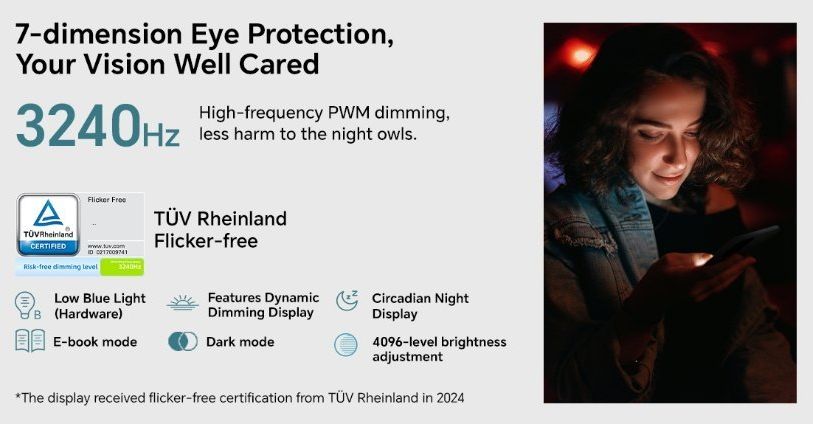
The smartphone has 6000nits of peak brightness — the maximum on any smartphone. But it’s the local brightness, which means the brightness level in a very small area of the screen.
The Realme device has an 8T LTPO display that can automatically adjust the refresh rate to save battery. The touch sampling rate is also high — 2500Hz — for a faster touch response.
Realme GT 6T Connectivity
Realme GT 6T has all necessary connectivity features, such as dual 5G SIM support, Wi-Fi 6, Bluetooth v5.4, NFC, and a positioning system (GPS, GALILEO, Beidou, QZSS, Glonass, NavIC).
The smartphone also features network optimisation, which intelligently switches between the mobile network and Wi-Fi. It is located inside the game sidebar.
Realme GT 6T: Is It Good for Gaming?
Realme GT 6T is a solid gaming phone with many gaming-centric features. It offers an optimal performance, though I have had frame drops sometimes, which could be resolved with software updates from the brand.
The smartphone offers an impressive battery backup, thanks to the 5,500mAh battery. Plus, it supports 120W super-fast charging, which can fill the battery by up to 50% in just 10 minutes.
Overall, the Realme GT 6T sounds like a good gaming phone. However, if you’d like to explore more options, consider checking out the Poco F6, which is available in the same price range with a solid Snapdragon 8s Gen 3 processor.
Realme has officially unveiled its newest budget-friendly smartphone, the Realme C61, to the Indian market. The company has disclosed the pricing and some key specifications ahead of the official launch, which is set for June 28th, along with the first sale.
Realme C61 Specifications:
The phone features an HD+ LCD display with a notch, likely to keep costs down. Under the hood, it retains the Unisoc T612 processor from its predecessor C51, but with the option for up to 6GB of RAM and expandable storage with up to 4GB of virtual RAM.
Realme touts the C61 as “tough as steel” thanks to its “integrated metallic frame” with “ArmorShell Protection.” The phone is IP54 certified for dust and splash resistance, and comes with “reinforced glass” for the screen, though the specific type remains undisclosed.
The device boasts a 32MP main camera paired with a depth sensor for enhanced photography. It is equipped with a 5000mAh battery, with the company claiming that it will retain over 80% of its capacity even after an impressive 1000 charging cycles.
The phone also includes a side-mounted fingerprint scanner and a mini capsule feature, similar to the Dynamic Island on iPhones. This feature activates with certain apps or functions in the camera area, displaying corresponding animations or app pages.
The Realme C61 will be available in two color options: Safari Green and Marble Black.
Pricing and Availability
The phone comes in three storage variants – 4GB RAM with 64GB storage, 4GB RAM with 128GB storage, and 6GB RAM with 128GB storage. The base variant starts at Rs. 7,699 ($92) while the the higher storage variants are priced at Rs. 8,499 ($102) and Rs. 8,999 ($108) respectively.
To incentivize early adopters, Realme is offering a special bank offer on the 6GB+128GB variant, reducing the price to Rs. 8,099 ($97) for customers using ICICI, SBI, or HDFC bank cards.
The phone will go on sale on June 28th and it will be available to purchase through realme.com, Flipkart, and offline stores.
The U.S. Commerce Department has launched an investigation into three major Chinese telecommunications companies China Mobile, China Telecom, and China Unicom due to concerns over potential exploitation of American data. This probe is focused on whether these companies might be providing data to Beijing through their cloud and internet services.
The current status of the investigation reveals that risk-based analyses for China Mobile and China Telecom have been completed. However, the investigation into China Unicom is less advanced. These investigations have not been publicly disclosed, and subpoenas have been issued to the companies involved.
source: Chinamobileltd.com
Despite being barred from providing telephone and retail internet services, these companies maintain a presence in the U.S. through small-scale operations such as offering cloud services and routing wholesale internet traffic.
So far, there has been no response from the Chinese companies or their U.S.-based lawyers. The Justice Department and the White House declined to comment on the matter, while the Chinese Embassy has urged the U.S. to stop suppressing Chinese companies. The Federal Communications Commission (FCC) has expressed serious concerns regarding national security and law enforcement risks.
Historical Context
This investigation is part of a broader pattern of regulatory actions against Chinese telecom firms. In 2019, the FCC denied China Mobile’s application for telephone services. This was followed by the revocation of China Telecom and China Unicom’s licenses in 2021 and 2022, respectively. In April 2023, the FCC barred these companies from providing broadband services, citing risks such as the misrouting of internet traffic through China and potential data interception, manipulation, or blockage.
Technical and Security Risks
There are significant technical and security risks associated with the presence of these companies in the U.S. Internet infrastructure. China Telecom’s Points of Presence (PoPs) in the U.S. are particularly vulnerable to metadata analysis and deep packet inspection. Additionally, there are concerns about cloud services potentially granting access to personal information and intellectual property, posing disruption risks to Americans’ data. Specific interest has been directed towards China Mobile’s partially owned data center in Silicon Valley, where ownership increases the potential for data mishandling.
Experts have emphasized the sophistication of China as a global adversary. Doug Madory of Kentik highlighted the risks posed by China’s advanced capabilities. Bert Hubert, a Dutch cloud computing expert, noted that ownership of data centers allows for greater opportunities to install back doors or bypass encryption.
The U.S. Commerce Department’s investigation into China Mobile, China Telecom, and China Unicom highlights the ongoing efforts to safeguard national security by scrutinizing foreign access to U.S. data. These measures, while potentially disruptive, are deemed necessary to mitigate risks associated with escalating U.S.-China tech tensions. As the probe continues, further regulatory actions may be taken to block transactions and operations in U.S. data centers, highlighting the importance of addressing national security risks linked to Chinese firms’ access to American data.
OnePlus recently debuted its Nord CE 4 Lite 5G smartphone in the global market including India. The device comes with many significant upgrades over its predecessor, including an improved display, improved camera as well a bigger and faster charging speeds. However, there are many other choices in this sub-20,000 INR that are also clad with attractive features. We recently made a comparison with the iQOO Z9, and in this article, we will put the Nord CE 4 Lite 5G against the Realme Narzo 70 Pro.
Both the Nord CE 4 Lite 5G and the Narzo 70 Pro feature boxy designs, with flat sides and backs however, the Nord CE 4 Lite has a relatively minimalistic camera island compared to the large circular camera island which is quite common these days. Both devices feature an all-plastic body.
On the front, there isn’t that much of a difference with both devices offering a 6.67-inch 1080 x 2400 pixels screen with a 120Hz refresh rate and 600 nits of typical brightness. Both smartphones also have a peak brightness of around 2000 nits, however, only the Narzo 70 Pro is capable of playing HDR videos, so this peak brightness number is kind of useless on the Nord CE 4 Lite.
2. Performance: Narzo has the advantage
The Narzo 70 Pro features a MediaTek Dimensity 7050 chip, while the Nord CE 4 Lite features the three-year-old Snapdragon 695 processor. This chip has also been onboard the Nord CE 3 Lite and CE 2 Lite 5G, which means that the device is still stuck on the performance levels of the 2022 model. While the devices are pretty similar in single-core performance, the Nazro has an advantage in multicore tasks. Additionally, the Narzo also offers better graphics performance, if you plan on gaming on your device.
Realme’s offering also has an upper hand when it comes to storage, as it uses UFS 3.1 technology, compared to the UFS 2.2 used on the OnePlus device. This means that launching apps, loading files, and transferring data will be noticeably faster on the Narzo 70 Pro.
The only saving grace for the Nord CE 4 Lite is its slightly bigger 5,500mAh battery and faster 80W charging. In comparison, the Narzo Z0 Pro has a 5,000mAh battery and 67W fast charging.
3. Camera: Superior sensors on the Narzo
Compared to its predecessor, the CE 4 Lite comes with a significantly improved 50 MP Sony LYT-600 sensor. That said, the Narzo 70 Pro outclasses the OnePlus offering yet again with its OIS-assisted 50 MP Sony IMX890 camera sensor. For those unaware, the IMX890 is a flagship-grade camera sensor that has previously been used in devices like the OnePlus 11, OnePlus 12R, and the Nothing Phone (2).
The secondary sensor on the CE 4 Lite is a 2 MP depth sensor, while the Narzo 70 Pro offers an 8 MP ultrawide (f/2.2) along with a 2 MP (f/2.4) depth sensor. On the front, both drives use a 16 MP sensor for snapping selfies.
4. Software
Software has typically been an area where OnePlus devices excel. However, since Realme UI 5.0 and OxygenOS 14 now share the same codebase, they are very similar. Both devices feature minimal bloatware.
As for software support, both drives are promised 2 major Android updates along with three years of security patches. They have both launched with Android 14 onboard so users can expect updates till Android 16.
5. Pricing
The OnePlus Nord CE 4 Lite 5G has launched for ₹19,999 for the 8GB + 128GB model, whereas the 8GB + 256GB model costs ₹22,999. The drive will go on sale starting June 27 with a Rs 1,000 instant discount for ICICI Bank and OneCard cardholders.
On the flip side, the Realme Narzo 70 Pro 5G was also launched for ₹19,999 for the 8GB + 128GB model and ₹21,999 for the 8GB + 256GB model. That said, the brand is currently offering the device with a massive ₹4,000 and ₹5,000 discounts on these variants, knocking their prices down to ₹15,999 and ₹16,999.
6. Verdict
Despite the OnePlus Nord CE 4 Lite 5G offering several upgrades over its predecessor, its reliance on the outdated Snapdragon 695 processor puts it at a disadvantage in the sub-₹20,000 price range. In contrast, the Narzo 70 Pro boasts a superior processor, significantly faster storage, and a better camera setup.
While the Nord CE 4 Lite’s battery life and fast charging are commendable, they do not sufficiently compensate for the other compromises. Moreover, Realme is set to rain on OnePlus’s parade by offering significant discounts on the Narzo 70 Pro 5G, making it an even more appealing option.

Apple has just brought back the iconic ‘Pill’. The Beats Pill has been revived, arriving as the newest portable Bluetooth speakers in years. Beats by Dr. Dre released its last Pill series speaker a couple of years back. So what’s new and what’s improved? Let’s find out.
Beats Pill (2024): What makes it special?
Right off the bat, the 2024 Beats Pill is immediately recognizable thanks to its pill shaped design. This makes it appear similar to the first Beats Pill rather than its last model, which was the Beats Pill+. Apple has been focusing on its own lineup of smart speakers in recent years, so returning with Beats speakers is a welcomed change. As per official claims, the new Beats Pill packs a punch thanks to its custom woofer and enhanced tweeter.
All of this is packed in a body that is rated with IP67 for water and dust resistance. In other words, you can take the party outdoors to enjoy music from where you choose. But one of the biggest improvements in the Beats Pill over its predecessor is the battery life. The last gen Beats Pill+ launched with up to 12 hours of battery life. Meanwhile, the latest entry can offer a whole day’s worth of endurance on a single full charge. You can even charge your smartphone from the Beats Pill.
These new speakers supports fast charging as well, with mere 10 minutes of charging offer up to 2 hours of audio playback. Other notable features include support for Android and Apple devices (Apple’s Find My and Android’s Find My Device), Amplify Mode, Stereo Mode, USB-C, support for calls, and voice assistants. The Beats Pill is priced at 149 US Dollars. You can buy this portable speaker in three color options, namely Gold, Red, and Black.
Apple is about to launch the iPhone 16 series which will be (at least the pro models) powered by the A18 Pro chipset. The company has finally joined the AI race and has developed a couple of exciting AI features for the upcoming iPhones.
You may be already aware of the importance of NPUs (Neural Processing Units) in in an SoC in performing AI-related tasks. Now the latest news is about the capability of the NPU of the Apple A18 Pro. According to a report, the NPU inside the Apple A18 Pro is more capable than the Apple M4 SoC that powers the latest iPad Pro. Not to mention, the powerful NPU hints at a respectable AI performance of the upcoming iPhones.
Apple has been building up the foundation for integrating AI with iPhones for a long time
The NPU inside the A17 Pro chip, which powers the iPhone 15 Pro models, comes with 16 cores and the AI performance is measured at 35TOPS. For reference the Snapdragon 8 Gen 3 from last year offers an AI performance of 15TOPS. We will need to see what Qualcomm manages to achieve this year with the Snapdragon 8 Gen 4 SoC.
The 11″ and 13″ iPad Pro released this year equips the M4 chipset, which is based on TSMC’s 3nm process node, and the NPU capability of the SoC is measured at 38 TOPS, slightly higher than the A17 Pro from last year. Now it is said that the new smartphone chipset from Apple will surpass the M4 again in this regard. Nonetheless, the end-user experience or the implementation of specific AI features depends on other aspects such as the form factor of the device.
At the last Worldwide Developers Conference (WWDC) event, Apple announced its contribution to AI, “Apple Intelligence”. It is integrated into iOS 18 system apps and voice assistant Siri. Now iOS 18 requires a chipset with a powerful NPU as Apple focuses on running as many AI features as possible natively on iPhones.
It is said that the NPU capability of the A18 Pro may surpass 45 TOPS, exceeding the strongest NPU among current Windows AI PC processors, which is offered by Qualcomm’s Snapdragon X Elite.
Motorola has just launched a new smart tracker that will rival the Apple AirTags for Android devices. It is aptly dubbed the Moto Tag and it arrives with support for UWB tech and Google’s network as well to help find your tagged items with ease.
Moto Tag: What makes it special?
The company announced the Moto Tag with enhanced precision thanks to support for the Ultra Wideband technology (UWB). So smartphones that also come with UWB tech can take advantage of this. An example is the brand’s very own Edge 50 Ultra. It is worth noting that the integration with the Find My Device app won’t be available at launch and will arrive in a future update. Similar to the Apple AirTag, the Moto Tag has a circular body that also houses a multifunction button.
This serves the purpose of ringing a paired smartphone and taking pictures remotely. Motorola has placed an emphasis on privacy with the Moto Tag, which uses end-to-end encryption on the Google Find My Device network. In other words, your location data should remain private. For added security, it offers alerts to users regarding an unknown tracker along with manual scans. The body of the Moto Tag comes with an IP67 rating for water and dust resistance, making it durable enough for outdoor use.
Thanks to Google Fast Pair, the setup process is convenient, while the Moto Tag app offers functions like battery monitoring and alert volumes. Motorola claims that its smart tracker has a year long battery life. The CR2032 battery cell is also replaceable. The Moto Tag is set to launch in select markets for a 29 US Dollar price tag for one, while a pack of four costs 99 US Dollars. It is listed in two color options, namely Blue and Green variants. The brand will release the smart tracker on 2nd August 2024.
Infinix recently unveiled the Note 40 5G model was announced in the Indian market. Now, the latest mid-range smartphone has finally gone on sale in the region. The smartphone arrives with some unique features for its price tag, so here are all the details.
The Infinix Note 40 5G was announced in a sole 8GB + 256GB storage configuration. It has a price tag of 19,999 INR. Despite its mid-range price, the smartphone comes with support for wireless charging and the brand is offering an Infinix MagPad wireless charger for free to customers. The device is available in multiple color options, namely Titan Gold and Obsidian Black. The first sale of the Infinix Note 40 5G will kick off today (26th June 2024) at 2:00 PM IST. You can purchase it via Flipkart. Buyers can get a flat 2,000 INR discount through HDFC, Axis, ICICI, and SBI bank card holders. There is also a 2,000 INR exchange bonus.
Infinix Note 40 5G: Specs
Infinix Note 40 5G sports a tall 6.78-AMOLED display that offers FHD+ resolution, a 120Hz refresh rate, 2160Hz PWM dimming, and 1300 nits of peak brightness. Under the hood, it is equipped with the MediaTek Helio 7020 SoC. The storage can be raised via a microSD card slot, while the RAM can also be virtually expanded by up to 8GB. This model runs on the Android 14 OS based XOS 14 custom skin out of the box.
For optics, the rear features a 108-megapixel primary camera and a 2-megapixel secondary sensor. Meanwhile, the front houses a 32-megapixel shooter for selfies and video calls. A large 5,000mAh battery pack powers this device, which supports 33W wired fast charging and 15W wireless charging. Other notable features include an IP53 rating for water and dust resistance, AI voice-activated Halo Lighting, stereo speakers tuned by JBL, Dual SIM support, and an in-display fingerprint scanner.
The list of the best-selling TWS earphones in mainland China in Q1 this year has been released. The report comes from market research firm Canalys.
Xiaomi occupies the first position
According to the report, Apple has ranked third on the list while Xiaomi has won the first spot for largest shipments in the first quarter of 2024. Huawei occupies the second position.
Xiaomi has shipped 3 million TWS earphones in Q1 2024, an increase of 76.2%. According to the market research firm, Xiaomi’s newly launched open-ear headphones have significantly contributed to its market share in the product space. Canalys sees the recently released products as a strategic move to expand the product portfolio and appeal to a wide range of customers. Reportedly, Xiaomi has maintained a double-digit growth in this product category for four consecutive quarters.
The recently released Redmi Buds 5A comes equipped with a 12mm dynamic driver, offers up to 25 dB ANC (Active Noise Cancellation), and 5 hours and 30 hours without and with the charging case respectively. The case comes with a pebble-shaped design and offers IP54 dust and water resistance. The company has priced the product at Rs 1,499.
Speaking of Huawei, it shipped 2.5 million units in the first quarter. According to the research firm, the company’s entry-level FreeBuds SE2 mainly contributed to the achievement. Huawei has also achieved rapid growth in the last four Quarters.
Apple has managed to occupy the third position in mainland China with a total of 2 million shipments in Q1 2024. Edifier ranked in the fourth position with a shipment of 1.7 million units in Q1.
Canalys shows that the shipment of audio devices in mainland China was 19.5 million units in the first quarter, which represents a 21.3% increase compared to the last year.
In July, Realme will announce the Realme GT 6, featuring the Snapdragon 8 Gen 3 chip, in China. After the GT 6, the brand is expected to shift focus to the Realme 13 Pro series of mid-range phones. By the end of the year, the brand is expected to remove covers from the Realme GT 7 Pro as a successor to last year’s Realme GT 5 Pro, which was announced in December 2023 in China. The global market has already confirmed the release of the GT 7 Pro, while the GT 5 Pro remained exclusive to the Chinese market. Today, popular tipster Digital Chat Station rolled out a Weibo post to reveal some key information about the device.
Realme GT 7 Pro key specifications (rumored)
Realme GT 7 Pro leak by DCS
Earlier this month, DCS revealed the details about the Realem GT 7 Pro’s display, chipset, RAM, storage, and cameras. In today’s leak, he revealed that it will be an IP69-rated dustproof and water-resistant device. Hence, it appears that the GT 7 Pro could be the company’s first IP69-rated phone.
He also mentioned that the GT 7 Pro’s rear-facing triple camera module has a simple design. The GT 7 Pro will feature a Sony IMX882 periscope telephoto camera that supports 3x optical zoom.
On the front, the Realme GT 7 Pro will have a micro-curved OLED panel that offers a 1.5K resolution. It appears that it will be Realme’s first smartphone to feature a single-point ultrasonic in-screen fingerprint sensor.
Under the hood, the Realme GT 7 Pro will feature the Snapdragon 8 Gen 4 chipset. A previous leak revealed that it would offer 16 GB of RAM and 1 TB of storage. The tipster claimed that the device will feature an extra-large silicon negative electrode battery. However, he did not mention its size.
Xiaomi recently teased a Disney Princess-themed limited edition Civi 4 Pro smartphone that it plans to launch tomorrow (June 27). Ahead of the launch, the brand has revealed what this new variant looks like.
According to a poster shared by Xiaomi on Weibo, the Xiaomi Civi 4 Pro Disney Princess Limited Edition comes in a Purple color scheme and features a “magic mirror” on the back with the words “mirror, mirror” engraved above it. The camera island is adorned with a crown on the side, and the bottom of the device showcases a crown and an apple, clearly indicating that it is based on the Disney classic Snow White.
Other than the physical aesthetics, the device will likely also come with a custom Snow White-themed operating system. Notably, the Xiaomi Civi 4 Pro is available outside of China, specifically in India, as the Xiaomi 14 Civi. While there will undoubtedly be strong interest in this special edition device, given Xiaomi’s history with special editions, it is likely that the Xiaomi Civi 4 Pro Disney Princess Limited Edition will remain exclusive to the domestic market. Specification-wise, the special edition will be the same as the regular model.
Xiaomi Civi 4 Pro specs:
The Xiaomi Civi 4 Pro features a 6.55-inch AMOELD CSOT C8 display with curved edges and a 1.5K resolution. It also has a 120Hz refresh rate and up to 3000 nits of peak brightness. Under the hood, the device has a Snapdragon 8s Gen 3 processor, paired with LPDDR5x RAM, UFS 4.0 storage, and a 4,700mAh battery with 67W fast charging.
As for optics, the device has a 50 MP OmniVision OV50E primary camera with optical image stabilization, paired with a 12 MP ultra-wide lens and a 50 MP 2x zoom telephoto camera. On the front, it has a 32 MP primary and another 32 MP ultra-wide camera setup.
Samsung has finally confirmed that its next Galaxy Unpacked event will be held on July 10 globally. The event will be held in Paris, France, and it will be livestreamed on Samsung’s website, Samsung Newsroom and Samsung’s YouTube channel at 3 p.m. CEST, 6 am. PDT, and 9am EDT.
Samsung Galaxy Unpacked to be held on July 10
The South Korean company has not confirmed the names of the devices to be unveiled at the next Galaxy Unpacked event. However, it has been confirmed that the new Galaxy Z series will be announced, along with the integration of AI throughout the entire Galaxy ecosystem. As per reports, the brand will announce as many as seven new devices through the July 10 event.
Samsung Galaxy Z Fold 6 and Z Flip 6 alleged images
The Galaxy Z Fold 6 and Galaxy Z Flip 6 are most likely to be the star of the Galaxy Unpacked event. Both devices are expected to come equipped with the Snapdragon 8 Gen 3 for Galaxy chipset. The Z Fold 6 is expected to boast a lighter and more durable design, potentially featuring a reduced weight compared to its predecessor. It may also sport a slightly larger cover display, enhancing usability when folded. The Galaxy Z Flip 6, on the other hand, is expected to offer an improved photography experience.
2. Galaxy Watch 7 and Galaxy Watch Ultra
Galaxy Watch Ultra’s alleged image
The Galaxy Watch Ultra is expected to feature a new 3nm Exynos chipset, BioActive Sensor 2, and Galaxy AI support. It is likely to be available in 40mm and 44mm variants. Rumored to be priced at $700, the Galaxy Watch Ultra could be a large model with a 47mm case. It is expected to be a premium smartwatch with a titanium frame. It is expected to feature a 3nm Exynos chip, a 590mAh battery, 32GB of native storage, Galaxy AI support, 10ATM pressure resistance, and three physical buttons. Both watches are expected to run on the latest One UI-flavored Wear OS.
3. Samsung Galaxy Buds and Galaxy Buds 3 Pro
Alleged Galaxy Buds 3 series
A leaked image that surfaced recently revealed the design of the Galaxy Buds 3 series. It is expected to arrive with new audio drivers, longer battery life, Galaxy AI support, adaptive EQ, and an IP57 rating. There is no clarity on what differentiates the Buds 3 Pro from the standard model.
4. Galaxy Ring
Samsung Galaxy Ring
Rumors suggest that the Galaxy Ring will be a smart ring packed with health-tracking features, including sleep monitoring, heart rate tracking, and potentially even blood oxygen level monitoring. Some sources also suggest it may offer features like ECG functionality, fertility tracking, and the ability to control other devices. It’s expected to have a multi-day battery life and come in various sizes.
The Global 5G-A Commercial Pilot Program launch conference was held in Shanghai yesterday. Huawei‘s Executive Director and Chairman of the ICT Infrastructure Business Management Committee Wang Tao delivered a keynote speech at the conference. The official shared three key changes in the combination of 5G-A and AI and predicted how the proportion of AI-powered smartphones might change (or increase) going forward.
Huawei Pura 70 series AI Photo Retouch
Wang Tao believes that AI-powered smartphones will account for 11% of shipments this year. He added that it could reach 90% by 2030. It seems from his speech that the integration of LLMs and major AI features will become a standard for smartphones within a couple of years.
“We will soon see a huge boost to traffic from AI. At the same time, 5G-A networks will be able to provide higher speeds, lower latency, and greater capacity to meet the network demands of the AI era,” said Wang Tao.
Currently, many flagship smartphones from different Chinese and overseas manufacturers like Huawei, OPPO, Samsung, Google, and Apple have integrated relatively lightweight Large Language Models to perform certain tasks on-device, which offers a couple of advantages. It makes the advanced features more secure and doesn’t require an internet connection at the same time.
For more advanced features, the phone the phone communicates with a cloud server that runs larger LLMs. As the LLMs get more efficient, and the chips get more capable, companies will be able to run more features on-device, which will not only make it more appealing for the user but also likely benefit the manufacturers by reducing the operating cost of the cloud servers.
Notably, Apple was the last to enter the market of AI smartphones. The company’s latest iOS version, iOS 18, comes with “Apple Intelligence” which adds new and exciting capabilities to its system apps and voice assistant Siri.
Vivo is expected to announce the Vivo X200 and X200 Pro in October of this year. The upcoming Dimensity 9400 chipset will power both phones in their debut. Tipster Digital Chat Station has spilled details about the X200 lineup. In his latest Weibo post, he shared the key specifications of the X200.
Vivo X200 key specifications (rumored)
According to the tipster, the Vivo X200 has a flat OLED screen with a 1.5K resolution. He stated that the display will be compact, featuring narrow bezels. To recall, last year’s Vivo X100 featured a 6.78-inch screen. Hence, it is likely that the X200 may arrive with a smaller screen than its predecessor.
The Vivo X200 will have a redesigned lens module and a 50-megapixel triple-camera system on the back, including a periscope telephoto camera with 3x optical zoom. Vivo’s self-developed imaging chip will complement the X200’s cameras, promising enhanced imaging capabilities.
Finally, he revealed that the X200 prototype features an optical under-screen fingerprint unlocking solution. The other details of the phone are yet to be revealed.
DCS has previously leaked some details about the Vivo X200 Pro (model number: V2413). It is said to feature a 6.7-inch or 6.8-inch curved-edged OLED panel that offers a 1.5K resolution. In addition, it is expected to feature an ultrasonic in-screen fingerprint scanner. It is likely to pack a larger battery than the 5,400mah battery that powered last year’s Vivo X100 Pro.
We use cookies on our website to give you the most relevant experience by remembering your preferences and repeat visits. By clicking “Accept”, you consent to the use of ALL the cookies.
This website uses cookies to improve your experience while you navigate through the website. Out of these, the cookies that are categorized as necessary are stored on your browser as they are essential for the working of basic functionalities of the website. We also use third-party cookies that help us analyze and understand how you use this website. These cookies will be stored in your browser only with your consent. You also have the option to opt-out of these cookies. But opting out of some of these cookies may affect your browsing experience.
Necessary cookies are absolutely essential for the website to function properly. This category only includes cookies that ensures basic functionalities and security features of the website. These cookies do not store any personal information.
Any cookies that may not be particularly necessary for the website to function and is used specifically to collect user personal data via analytics, ads, other embedded contents are termed as non-necessary cookies. It is mandatory to procure user consent prior to running these cookies on your website.