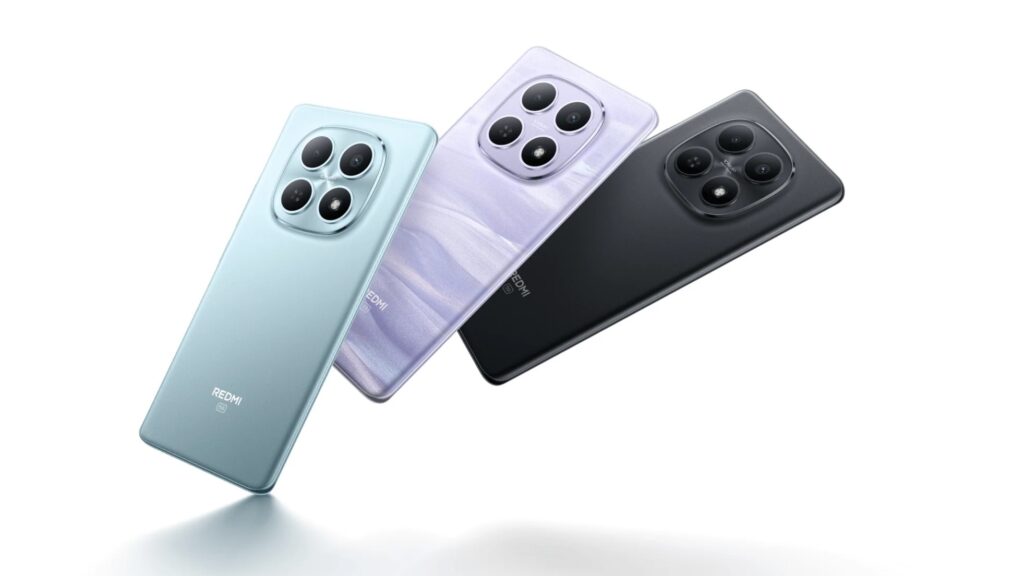
Redmi is about to expand its Note 15 lineup in India, and the next addition looks like it’s aimed at keeping things simple and affordable. The company has confirmed that the Redmi Note 15 SE will launch on April 2, 2026, joining the rest of the Note 15 series already on sale.
The announcement was made through Redmi India’s X account, with Flipkart listed as the exclusive platform. As expected, the teaser itself doesn’t go into specifics, but the messaging suggests a focus on everyday usability rather than pushing high-end features.
If this sounds familiar, that’s because Redmi has done something similar before. The Note 14 SE last year was essentially a rebrand of the standard model, keeping most of the core experience intact while adjusting a few things to hit a lower price. The Note 15 SE is likely to follow that same route.
Looking at the regular Redmi Note 15 5G gives a rough idea of what to expect. It offers a 6.77-inch curved AMOLED display with a 120Hz refresh rate, runs on the Snapdragon 6 Gen 3, and includes a 108MP main camera along with a 5,520mAh battery and 45W charging. The SE version will probably keep most of this, but with a few practical compromises, maybe in the camera setup or what’s included in the box.
Pricing will obviously play a big role. The 8GB+128GB variant of the Note 15 5G is currently listed at ₹21,499 on Flipkart and ₹22,998 on Amazon, so the SE variant could land closer to ₹20,000 or even slightly below. That’s a pretty competitive spot, especially for buyers who just want a reliable phone for daily use without spending too much. There’s also a fair chance Redmi might skip the charger in the box again. It’s not ideal, but at this point, it’s also not unexpected.
With the launch just around the corner, the full details should be out soon. If Redmi keeps the balance right, the Note 15 SE could end up being one of those easy recommendations in its price range.
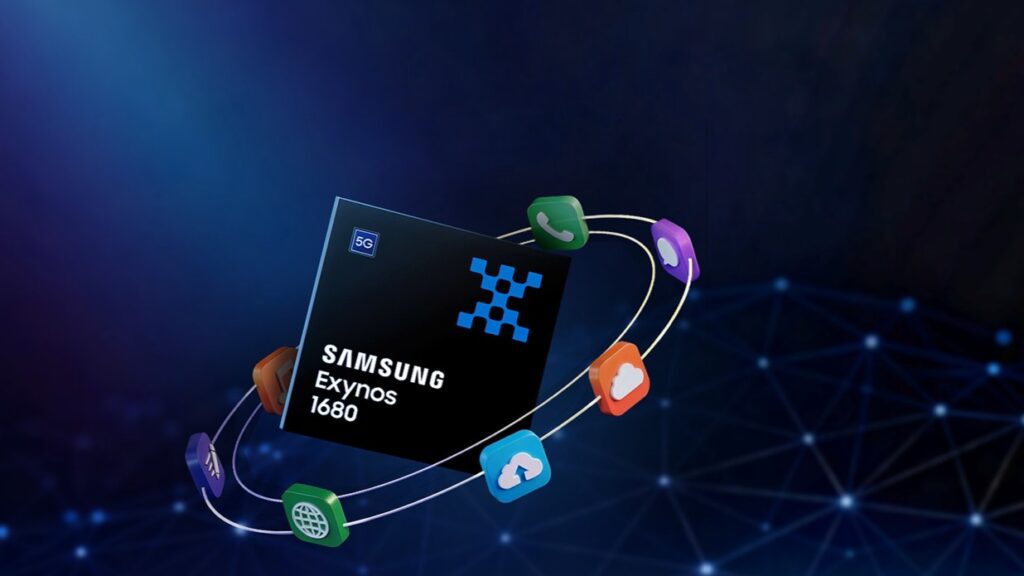
Samsung has taken the wraps off its new Exynos 1680 chipset, and it looks like a fairly important upgrade for its mid-range lineup. This is the chip that’s expected to power the Galaxy A57, and the focus seems to be on making everyday performance feel a bit more polished rather than chasing headline numbers.
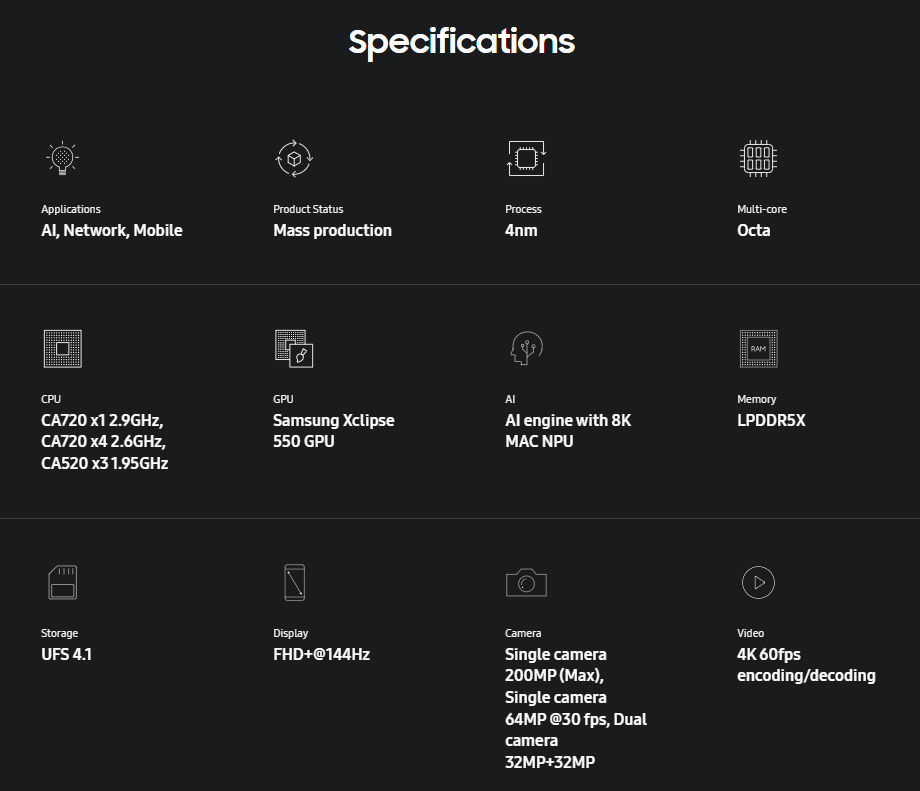
It’s built on Samsung’s updated 4nm process, and the CPU setup is what you’d expect in this category. You get one Cortex-A720 core going up to 2.9GHz, along with four more A720 cores and three efficiency-focused A520 cores. Nothing unusual on paper, but the newer cores should help with smoother app switching and better consistency over longer use.
Graphics have been improved too. The Xclipse 550 GPU, based on AMD’s RDNA 3 architecture, is said to deliver around 15% better performance. That’s not a massive jump, but it should be enough to make games feel a bit more stable and animations slightly smoother. It also supports Full HD+ displays at up to 144Hz, which is becoming more common even outside flagship devices.
Exynos 1680 is also leaning into AI: the NPU can handle up to 19.6 TOPS, which is about a third higher than before. In real terms, that should help with things like camera processing and the AI features baked into One UI.
Another interesting bit is memory and storage support. The chip works with LPDDR5X RAM and UFS 4.1, which you’d usually see on more expensive devices. That could make a noticeable difference in how quickly apps open and how the phone feels overall.
Camera support goes up to 200MP, with 4K video at 60fps and 10-bit HDR. Connectivity is also well covered, with 5G, Wi-Fi 6E, and even Bluetooth 6.1 making an appearance.
Taken together, the Exynos 1680 doesn’t try to reinvent anything, but it does seem like a well-rounded step forward. If Samsung gets the tuning right, the Galaxy A57 could end up feeling faster and more refined in day-to-day use.
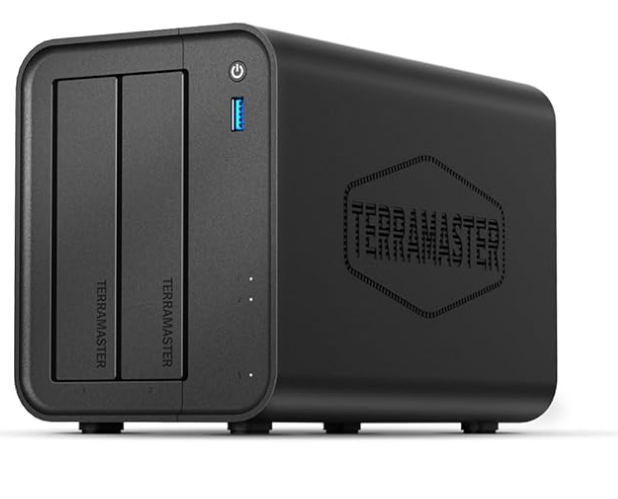
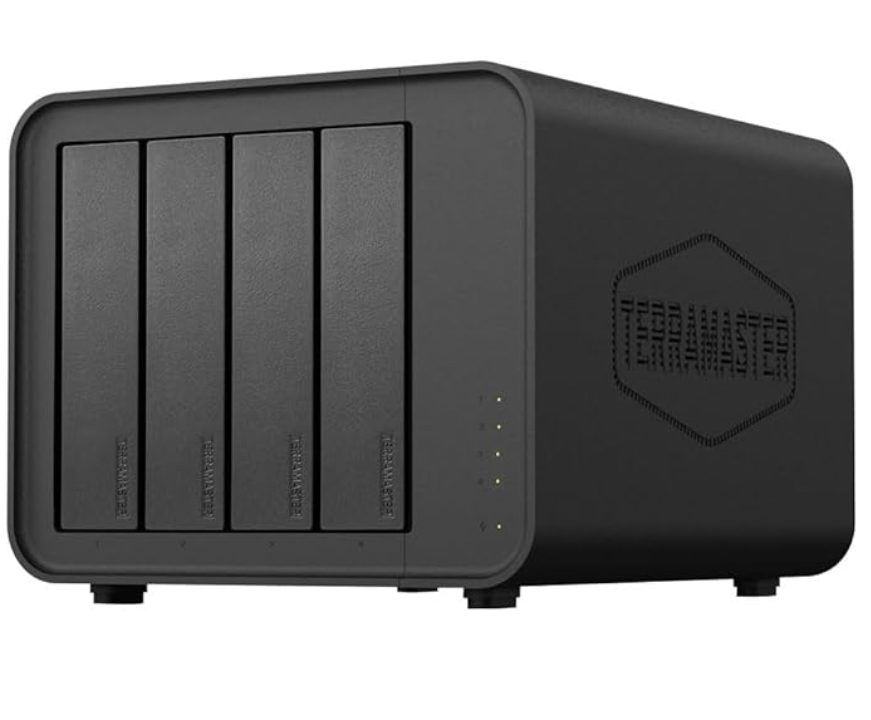
If you’re looking to upgrade your storage setup, these limited-time TerraMaster deals offer solid value for both home users and professionals. The TerraMaster F2-425 NAS is a powerful all-in-one network storage solution designed for backups, media streaming, and cloud-like access, while the TerraMaster D4-320 DAS enclosure focuses on high-speed direct storage with simple plug-and-play use. Together, they cover both network-based and direct-attached storage needs, making this deal period a great opportunity to upgrade your data setup at a lower price.
TerraMaster F2-425 2-Bay NAS:
Performance & Speed
The TerraMaster F2-425 is built for smooth and reliable performance. It comes with an Intel x86 quad-core processor and 4GB RAM, making it capable of handling multiple tasks at once. Whether you’re streaming videos or transferring files, the 2.5GbE LAN ensures fast speeds and stable connections. It can even handle 4K video transcoding without lag, making it ideal for modern home use.
Multimedia & Entertainment
This NAS works as a complete home media hub. It supports 4K H.265 decoding and works well with popular apps like Plex, Emby, and Jellyfin. You can stream content across multiple devices using DLNA. The built-in Photos app also helps organize large photo collections using AI-based smart albums.
Easy Setup & Mobile Control
Setting up the F2-425 is simple and doesn’t require a computer. You can use the TNAS Mobile app to get started and manage everything. The app allows automatic backup of photos and videos, along with real-time sync between devices, both locally and remotely.
Quiet Design & Storage Capacity
The device runs quietly at just 19dB, making it suitable for bedrooms or offices. It features a tool-free design, so installing hard drives takes only seconds. With support for up to 60TB storage and flexible TRAID system, it offers efficient storage and data safety.
Security & Data Protection
The F2-425 includes advanced security features like SPC protection and cloud sync support for Google Drive, OneDrive, and Dropbox. It also supports TerraSync for easy file syncing across devices, ensuring your data stays safe and accessible.
Deal & Availability
The TerraMaster F2-425 NAS is currently available at a discounted price of $239.99, down from its original price of $299.99, offering a solid 20% discount. This limited-time deal is live from March 25 to March 31, making it a great opportunity for buyers looking to upgrade their home storage setup at a lower cost. You can grab the offer directly from Amazon using this link.
The TerraMaster D4-320 is a powerful external storage enclosure designed for fast data transfers. It uses USB 3.2 Gen2 with speeds up to 10Gbps. With four hard drives installed, it can reach combined speeds of up to 1,016 MB/s. Even with a single SSD, you can get read speeds of around 510 MB/s. It supports up to 30TB per drive, giving a total capacity of 120TB, making it ideal for large data storage.
Compatibility & Ease of Use
This device is a DAS (Direct Attached Storage), not a NAS, meaning it connects directly to your computer. It supports plug-and-play, so no drivers are needed. The D4-320 works with Windows, macOS, and Linux. It also supports multiple interfaces like USB 3.0, 3.1, 3.2, and even Thunderbolt 3 and 4, making it highly versatile.
Flexible Storage & Hot Swapping
The D4-320 supports four separate drives with no RAID function, giving you full control over each disk. It also supports hot swapping, so you can replace or add drives without turning off the device. This makes managing storage quick and efficient.
Design & Cooling
The enclosure features a tool-free design, allowing you to install drives easily. Its push-lock system keeps drives secure. It also includes an intelligent cooling fan and sound-dampening design, reducing noise by up to 50%. In standby mode, it runs at less than 21dB, ensuring a quiet working environment.
Deal & Availability
The TerraMaster D4-320 DAS enclosure is currently available at a discounted price of $151.99, down from its original price of $189.99, offering a solid 20% discount. This deal is valid from March 25 to March 31, making it a limited-time offer for users looking for high-speed external storage. The device supports 4 individual disks and works as a direct-attached storage (DAS) solution. You can purchase it directly from Amazon here.
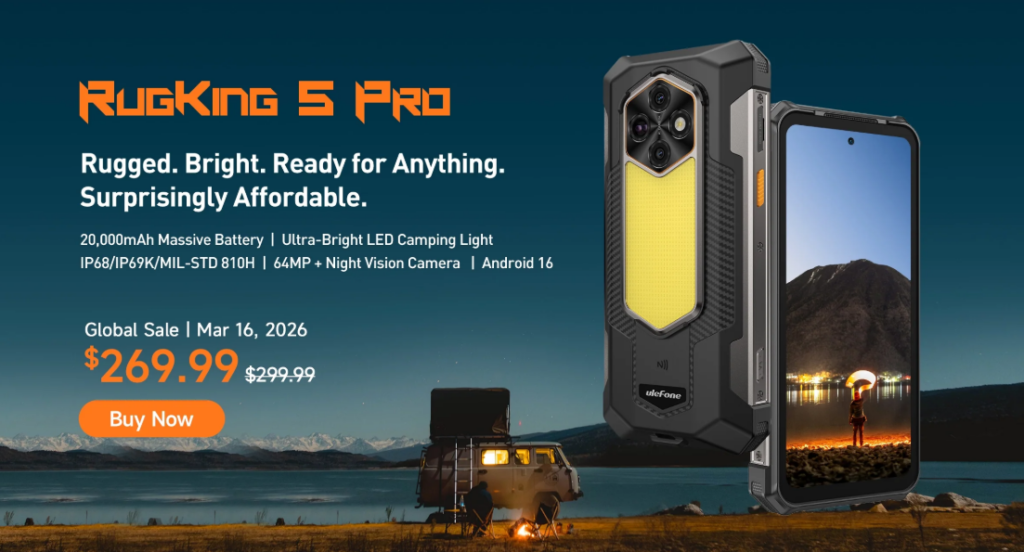
Launch Offer Ends Today: Ulefone is offering the RugKing 5 Pro at an early bird price of $269.99, with the deal valid until March 25.
Focus on Professional Use: The device is designed for emergency responders and outdoor professionals, featuring a powerful 976-lumen floodlight for real-world field operations.
Built for Extreme Conditions: With a 20,000mAh battery, rugged design, and night vision camera, the phone is positioned for extended use in off-grid and low-light environments.
Ulefone has officially introduced the RugKing 5 Pro, a rugged smartphone designed for professionals who work in extreme conditions. Positioned as a more affordable successor to the Armor 24, the device targets emergency responders, outdoor workers, and industrial users. As part of its global launch, the company is offering an early bird price of $269.99, valid until March 25.
Powerful Lighting for Real-World Use
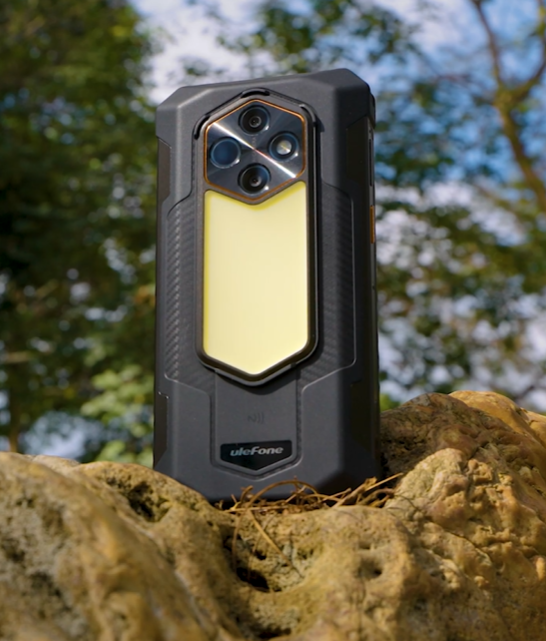
One of the standout features of the RugKing 5 Pro is its professional lighting system. It comes with a rear-mounted 976-lumen floodlight that uses 1,202 LED beads, making it significantly brighter than a typical smartphone flash. This makes it ideal for search and rescue operations, emergency repairs, and outdoor work at night. The lighting can be controlled through a dedicated Camping Light app, which allows users to adjust brightness, set timers, and activate SOS or emergency modes.
Massive Battery and Outdoor-Friendly Display
The smartphone is powered by a huge 20,000mAh battery, built for long usage in off-grid environments. It also supports 33W fast charging and reverse charging, allowing it to function as a power bank. On the front, the device features a 6.78-inch FHD+ display with up to 910 nits brightness, ensuring good visibility even under direct sunlight.
Camera and Software Features
The RugKing 5 Pro includes a 64MP main camera and a 20MP Sony Night Vision camera, enabling clear photography in low-light and even total darkness. It runs on Android 16 and comes with 8GB RAM and 256GB storage. The phone also introduces a Water-Lock Mode, which disables the touchscreen in wet conditions to prevent accidental inputs.
Availability and Giveaway
The device is available through Ulefone’s official online stores. Alongside the launch, the company is hosting a global giveaway event where users can win the RugKing 5 Pro and accessories.
Xiaomi has officially pulled the plug on MIUI, which was the company’s starting point and later became one of the most popular Android skins in the world, with more than 500 million monthly active users at its peak. Following the HyperOS release, Xiaomi upgraded millions of its devices to the new OS, while many were added to the end-of-life (EOL) list.
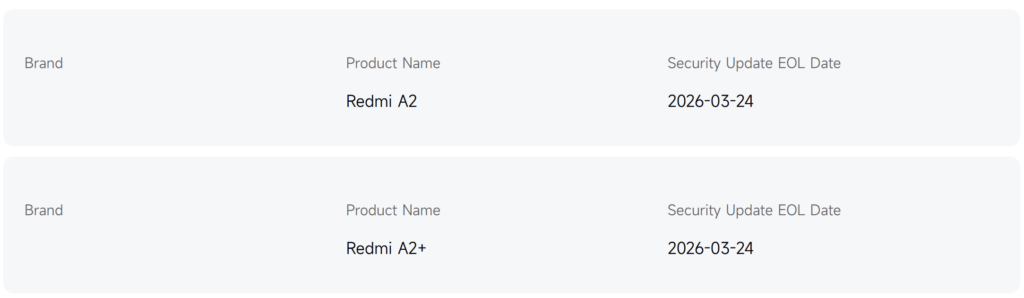
However, two devices continued to receive MIUI updates even in 2026. We’re talking about the Redmi A2 and Redmi A2+. Both devices received Android 13 as their major OS upgrade, but continued to receive security patches and minor updates. The last update for them arrived in December with the firmware version V14.0.44.0.TGOMIXM, although the official website mentions EOL on March 24, 2026.
That day has arrived for the last MIUI-running devices, and they’re now officially retiring from all kinds of software updates. That also leads to a complete discontinuation of the MIUI legacy, which initially began as a custom ROM project for third‑party Android phones.
How MIUI became one of Android’s most popular skins
MIUI was actually Xiaomi’s first product, released before the company launched any hardware. It was introduced in August 2010 and was based on Android 2.2 Froyo. Early MIUI builds were distributed as a custom ROM for third-party Android phones.
MIUI quickly attracted an enthusiastic community because it offered weekly beta updates, aggressive feature additions, and ports to non-Xiaomi devices. This community-first origin story helped MIUI gain a reputation as a “tinker-friendly” skin, with robust rooting and modding support compared to other OEM UIs of the time.
MIUI focused on user-visible customization rather than stock Android minimalism. Soon, MIUI started bundling its own apps for core functions such as phone, messaging, notes, music, and gallery. Xiaomi also brought in a powerful theme engine that could change icons, fonts, sounds, lock screens, and system UI elements, well before most of its competitors.
Some of the notable features that later became part of MIUI’s identity include Second Space, Dual Apps, App Lock, hidden apps, and built-in call recording. Doubling down on MIUI’s popularity, Xiaomi entered the hardware market by launching Mi-branded phones in China, and later expanded to India and other global markets.
MIUI crossed 100 million global monthly active users in 2015, 200 million in 2018, 300 million in 2019, 400 million in early 2021, and surpassed 500 million monthly active users worldwide by November 2021. At its peak, roughly 15% of the world’s population was using a Xiaomi/Redmi/Poco phone running MIUI.
Why did Xiaomi shut down MIUI?
In October 2023, Xiaomi officially announced that a new operating system, Xiaomi HyperOS, would replace MIUI. Just a few days later, Xiaomi launched the Xiaomi 14 as the company’s first phone preloaded with HyperOS. But why did Xiaomi feel the need to ditch MIUI and move to HyperOS?
Well, the decision was made for good reasons. Despite MIUI’s success, Xiaomi was finding it challenging to connect hundreds of millions of devices across 200 product categories, from smart speakers to air conditioners, and eventually cars. Back then, Xiaomi had a mix of firmware stacks, making unified development and cross-device experience difficult to implement.
The decision to switch to HyperOS wasn’t made out of the blue. The company began exploratory development in 2014 and R&D in 2017, with the aim of supporting all ecological devices and applications through an integrated system framework.
Xiaomi HyperOS is described as a human-centric operating system built on an integration of a deeply evolved Android base and Xiaomi’s in-house Vela IoT system, running atop a Linux kernel. It takes less space than MIUI and delivers better performance and a more consistent experience.
HyperOS is the pillar of Xiaomi’s “Human x Car x Home” strategy, designed to connect personal devices, smart home products, and EVs into a coordinated platform, enabling them to share context and services. One of the key elements of this new OS is “HyperConnect,” which enables real-time networking and device discovery. So, a phone can, for example, act as a key for a car, mirror its camera to a TV, or manage smart home devices without relying on a traditional setup that requires Android-plus-vendor apps.
While Xiaomi HyperOS focuses primarily on a unified OS with deeper integration among Xiaomi devices, it also offers better resource utilization, tighter security, and a consistent experience while preserving much of MIUI’s interface language.
To ensure you do not miss out on the latest HyperOS news, visit the Xiaomi section on this website regularly. Alternatively, you can join us on Telegram to get instant notifications about the latest HyperOS updates, along with the biggest tech headlines.
Back in October 2025, iQOO unveiled the iQOO 15 and Neo 11 in China. Unlike the previous Neo 10 generation, the Neo 11 wasn’t accompanied by a Pro variant. A recent leak by tipster Smart Pikachu revealed that the Neo 11 Pro could be in the works. Now, a new leak suggests that the brand could be gearing up to launch not one but two Neo 11 series devices for China.
iQOO Neo 11 Pro, Neo 11 Pro+ could be in the works
iQOO Neo 11 series phones’ specs leaked
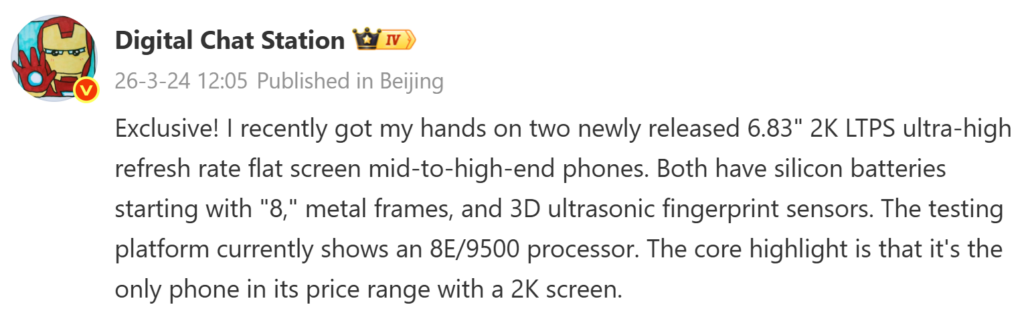
As per the leak, the two upcoming iQOO flagships will feature 6.83-inch 2K LTPS flat displays with ultra-high refresh rates, which, according to other reports, may reach 165Hz. The phones are also tipped to feature metal middle frames and 3D ultrasonic fingerprint sensors.
Both devices are said to pack silicon batteries starting with an “8” capacity figure, likely indicating large 8,000mAh+ battery sizes. In terms of performance, the prototypes are currently being tested with Snapdragon 8 Elite and Dimensity 9500 chipsets.
The exact monikers of these devices have not been revealed in the leak. It remains to be seen whether the Snapdragon variant could be called the Neo 11 Pro, while the Dimensity version could be dubbed the Neo 11 Pro+.
iQOO Neo 11
DCS added that the major highlight of this series is the inclusion of a 2K resolution display, which could be a rare offering in this segment. To recall, the existing iQOO Neo 11 has a 6.82-inch OLED 2K 144Hz screen, a Snapdragon 8 Elite chip, and a 7,500mAh battery with 100W fast charging. It is speculated that the brand may discontinue the Neo 11 after the arrival of the new Neo 11 series phones.
There’s a possibility that these Neo 11 series devices may remain exclusive to the Chinese market. The reason behind this is that a recent report claimed the company has no plans to launch a Neo-branded phone in India in 2026.
For more daily updates, please visit our News Section.
Honor unveiled the Honor 600 Lite earlier this month. A recent report revealed that the brand may soon announce the Honor 600 and 600 Pro in the coming weeks. With the launch drawing near, the standard model has surfaced on Geekbench, revealing key hardware details.
Honor 600 Geekbench listing
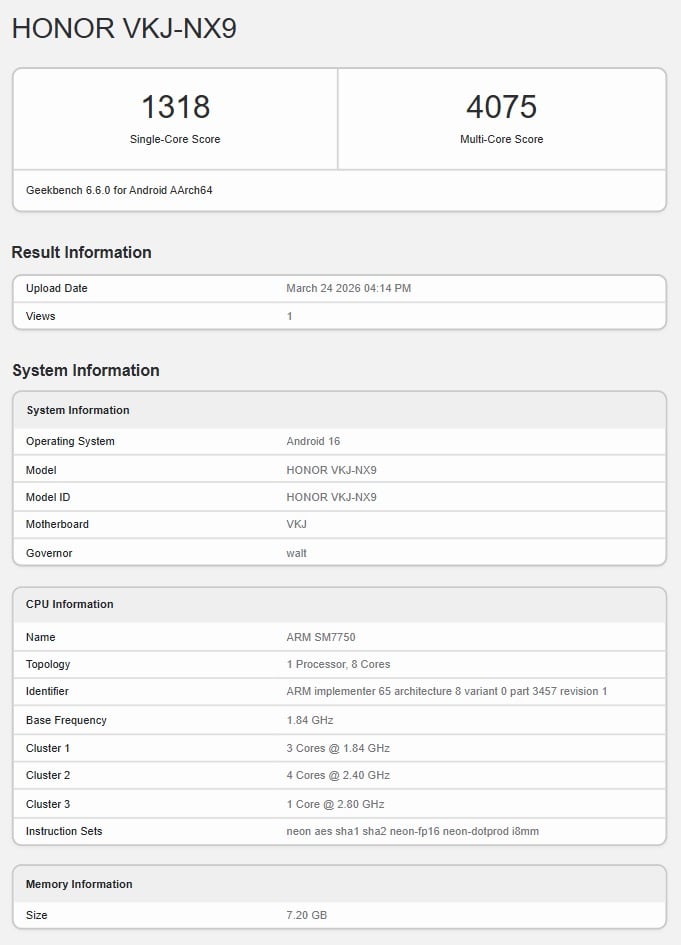
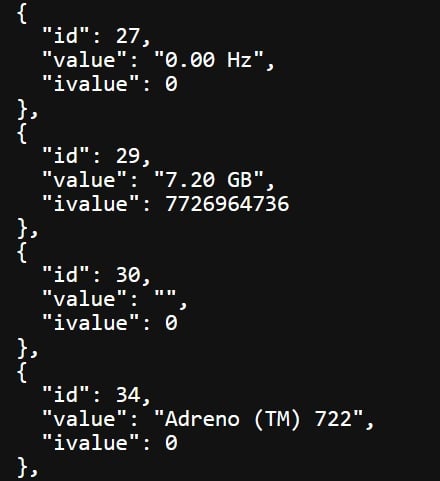
The Honor 600 and 600 Pro carry the model numbers VKJ-NX9 and VKP-NX9, respectively. The VKJ-NX9 variant, which is the standard model, has now appeared on Geekbench. The listing confirms that the device is powered by a chipset with model number SM7750, indicating the presence of the Snapdragon 7 Gen 4. It also shows 8GB of RAM and Android 16, likely layered with MagicOS 10. In benchmark tests, the device scored 1318 in single-core and 4075 in multi-core performance.
The chipset marks an upgrade for the Honor 600, as the Honor 400 featured the Snapdragon 7 Gen 3. Other reports suggest that the Honor 600 may feature a 6.57-inch OLED display with a 1.5K resolution and a 120Hz refresh rate. It is also expected to include a 200-megapixel primary camera and a large 9,000mAh battery.
Honor 400 specifications
To recall, the Honor 400 features a 6.55-inch AMOLED display with a 120Hz refresh rate and 1.5K resolution. It comes with a 50-megapixel front camera for selfies, while the rear setup includes a 200-megapixel primary sensor along with an additional 12-megapixel sensor for ultra-wide shots.
Under the hood, the Honor 400 is powered by the Snapdragon 7 Gen 3 chipset, paired with up to 12GB RAM and ample storage options. The device houses a battery of around 6,000mAh capacity with 80W wired charging. Its European edition has aa 5,300mAh battery with 66W charging.
Honor is also working on the Honor 600 series for China. Speculations are rife that the Honor 600 and 600 Pro’s China editions could be powered by a Snapdragon 8-series chipset, offering a more premium experience compared to the global variants.
For more daily updates, please visit ourNews Section.
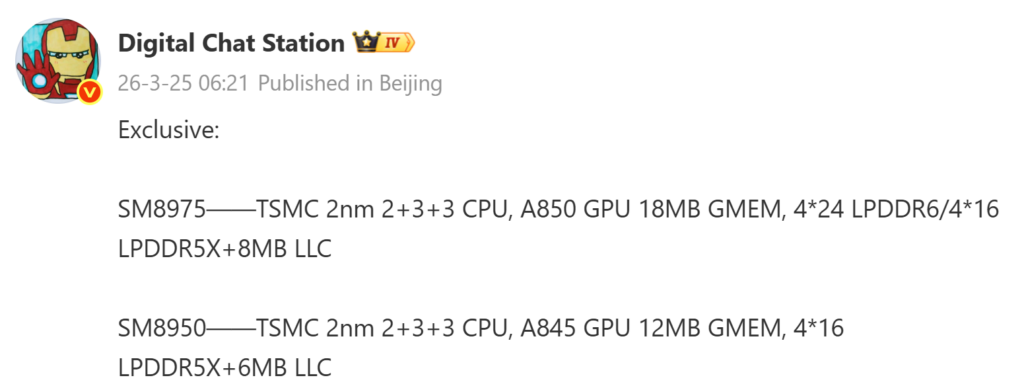
Qualcomm is expected to unveil its next-generation flagship chipset, widely expected to be part of the Snapdragon 8 Elite Gen 6 series, in September this year. So far, reports have revealed that it could comprise of two chips, which are tentatively dubbed the Snapdragon 8 Elite Gen 6 and 8 Elite Gen 6 Pro. In a new leak, reliable tipster Digital Chat Station has revealed key specifications of both variants, hinting at a notable shift in the company’s strategy for premium mobile processors.
Snapdragon 8 Elite Gen 6, Gen 6 Pro key details leaked
Snapdragon 8 Elite Gen 6 series specs leak
According to the leak, Qualcomm is working on two models, identified as SM8950 and SM8975, both reportedly built on TSMC’s advanced 2nm process. As mentioned above, these chips are expected to be called the Snapdragon 8 Elite Gen 6 and 8 Elite Gen 6 Pro, respectively.
Each version is said to feature a 2+3+3 CPU architecture, indicating a balanced approach between performance and efficiency cores. However, there are clear differences between the two chips in terms of graphics and memory capabilities.
The SM8975 appears to be the more powerful option, featuring an Adreno 850 GPU paired with 18MB GMEM. It is also tipped to support LPDDR6 memory in a 4×24 configuration, alongside LPDDR5X support and an additional 8MB LLC cache.
In comparison, the SM8950 is expected to come with a slightly toned-down Adreno 845 GPU, 12MB GMEM, LPDDR5X memory in a 4×16 setup, and 6MB LLC.
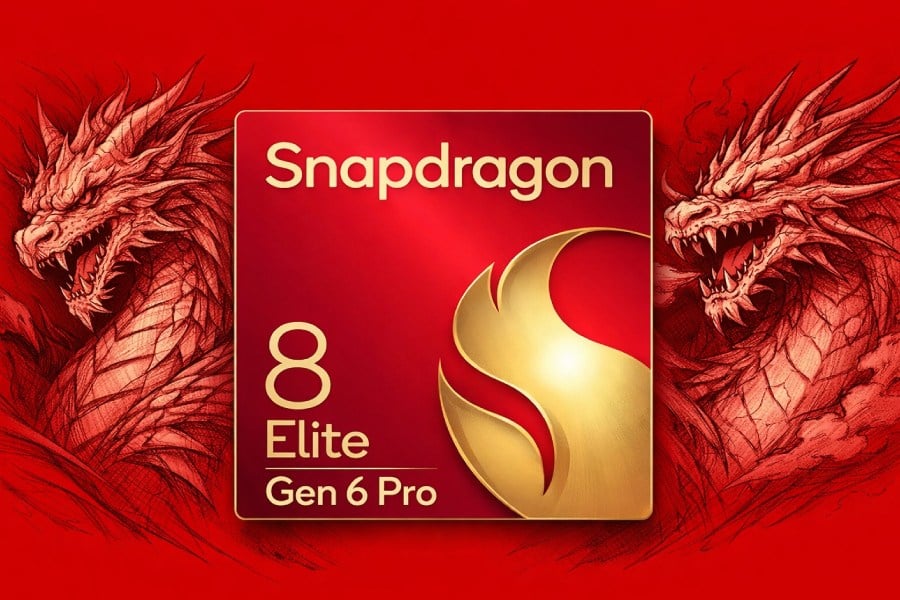
Snapdragon 8 Elite Gen 6 Pro (AI-generated image)
The leak also suggests that the SM8975 could be positioned as a top-tier variant, possibly arriving with a “Pro” branding, while the SM8950 may serve as the standard flagship offering.
Interestingly, the tipster claims that MediaTek’s upcoming Dimensity 9600 may sit between these two chips in terms of performance, indicating tighter competition in the flagship segment. At the same time, a separate Snapdragon 8 Gen 6 is also expected, though early indications suggest it may not be as impressive in terms of specifications.
Snapdragon 8 Gen 6 in works
The report further notes that the higher-end SM8975 could come with significantly higher production costs, which may limit its adoption to select premium devices. Meanwhile, the SM8950 is said to be the more likely candidate for wider use, with a possibility of Qualcomm even considering a fallback option depending on development progress.
For more daily updates, please visit ourNews Section.
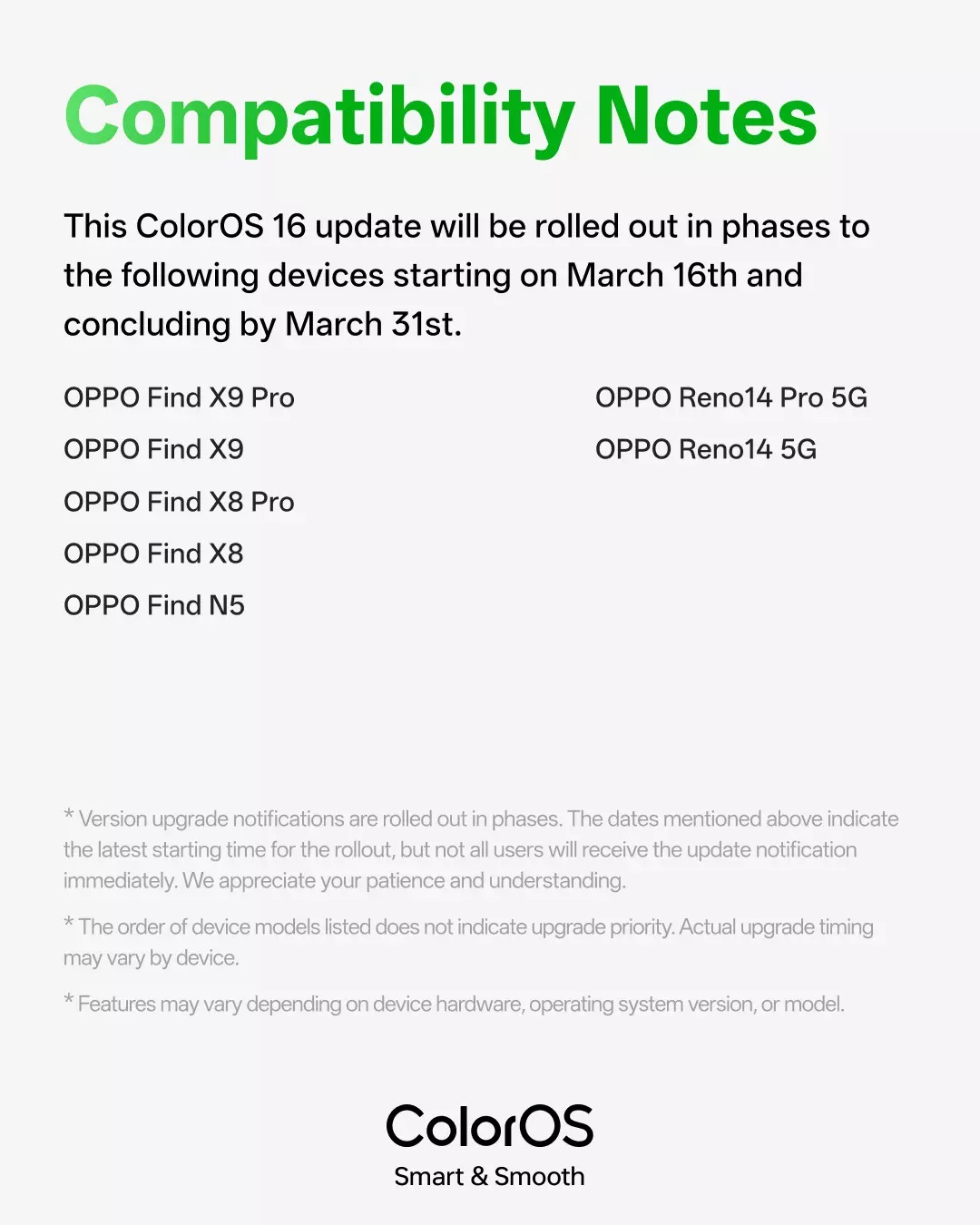
OPPO has started rolling out a new set of updates under ColorOS 16, bringing incremental but practical changes focused on security, usability, and everyday convenience. The rollout began on March 16 and is expected to continue in phases through March 31, depending on device and region.
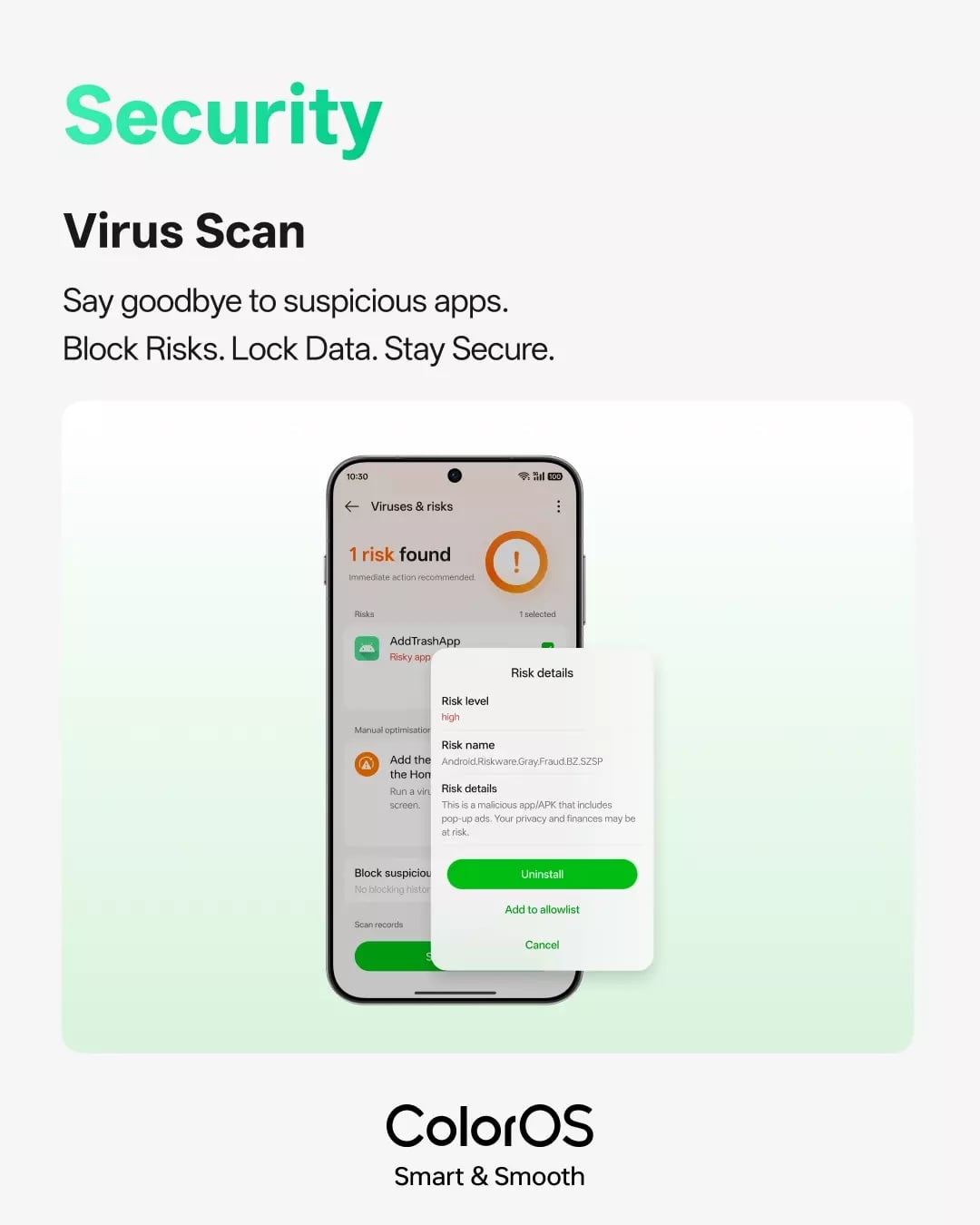
A key addition is an upgraded Virus Scan feature. It identifies potentially harmful apps, explains the associated risk level, and allows users to remove them directly from the scan screen. The system highlights issues such as malicious APKs or apps with intrusive ads, reducing the need to manually search through settings for removal. The feature is positioned as a built-in safeguard aimed at improving device-level security without requiring third-party tools.
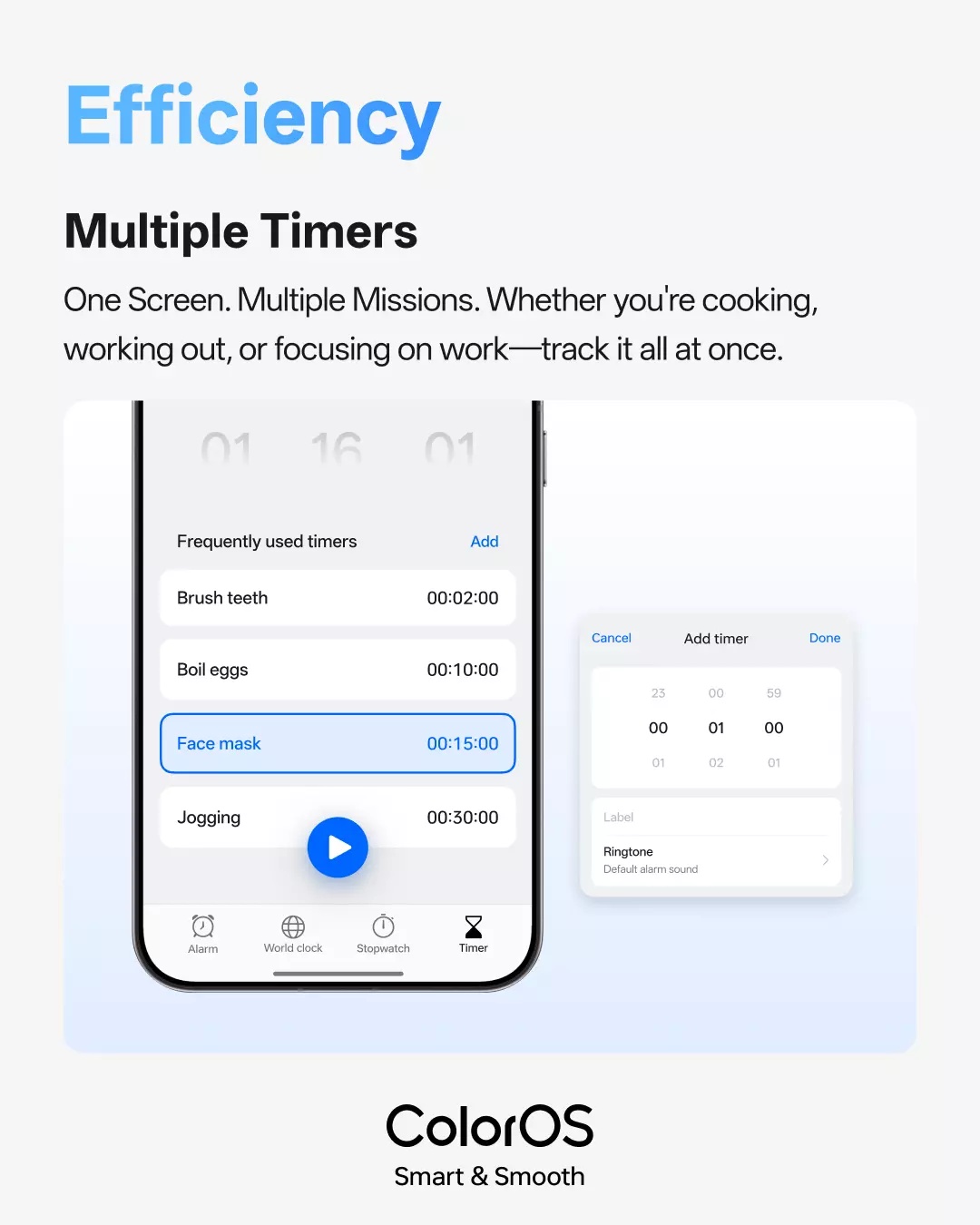
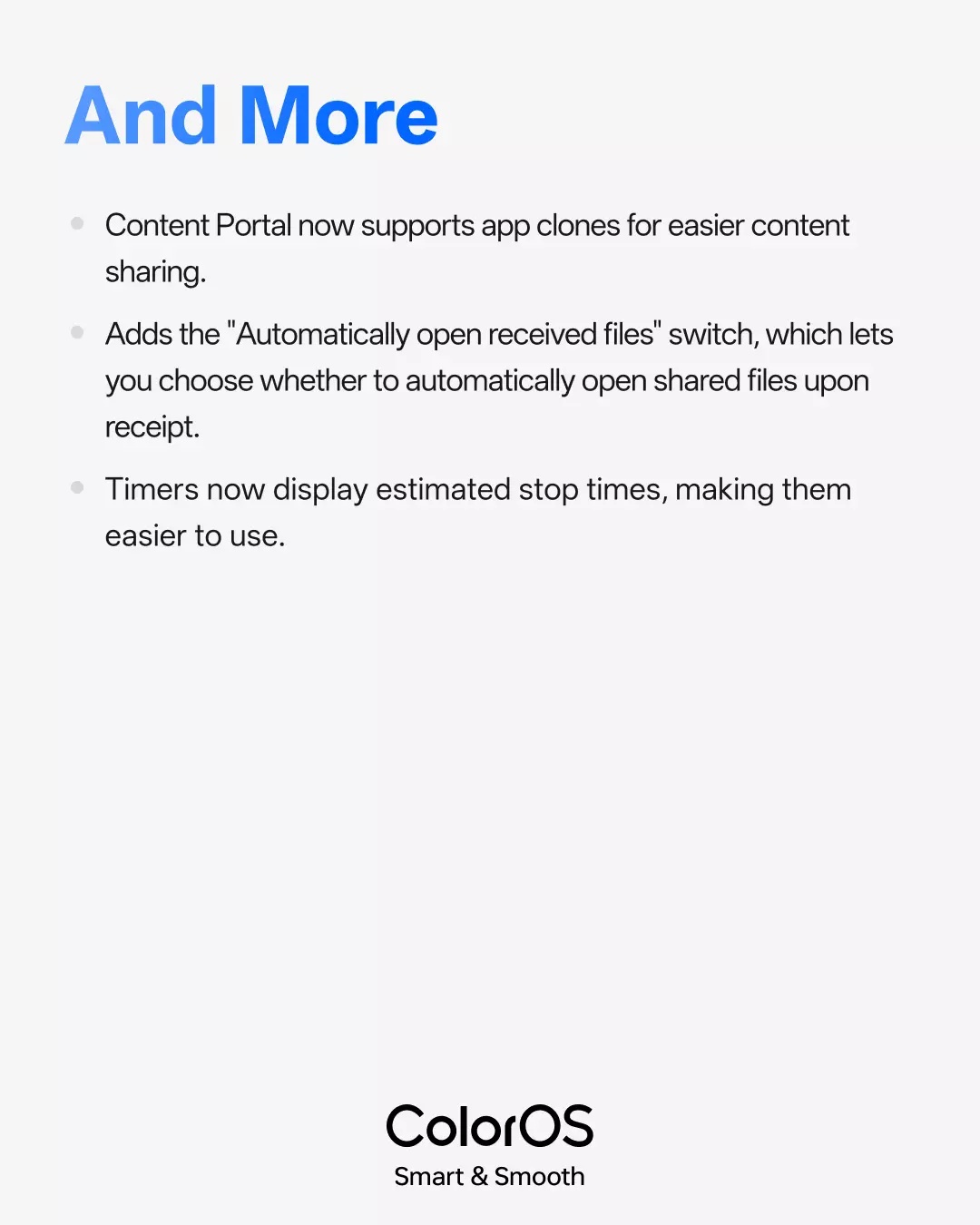
ColorOS 16 also introduces support for running multiple timers simultaneously. Users can manage different activities on a single screen, whether it is cooking, workouts, or task tracking. Each timer can be labeled and monitored together, and the interface now shows estimated stop times, making it easier to plan around ongoing tasks.
Additional updates focus on small but useful changes. Content Portal now supports app clones, allowing smoother content sharing between duplicate apps used for multiple accounts. A new toggle lets users decide whether received files should open automatically, adding a layer of control over incoming content. These changes are designed to reduce friction in daily use rather than introduce major interface overhauls.
The update is rolling out to several OPPO devices, including the Find X9 Pro, Find X9, Find X8 Pro, Find X8, Find N5, Reno 14 Pro 5G, and Reno 14 5G. As with most staged rollouts, availability may vary, and not all users will receive the update at the same time.
For more daily updates, please visit ourNews Section.
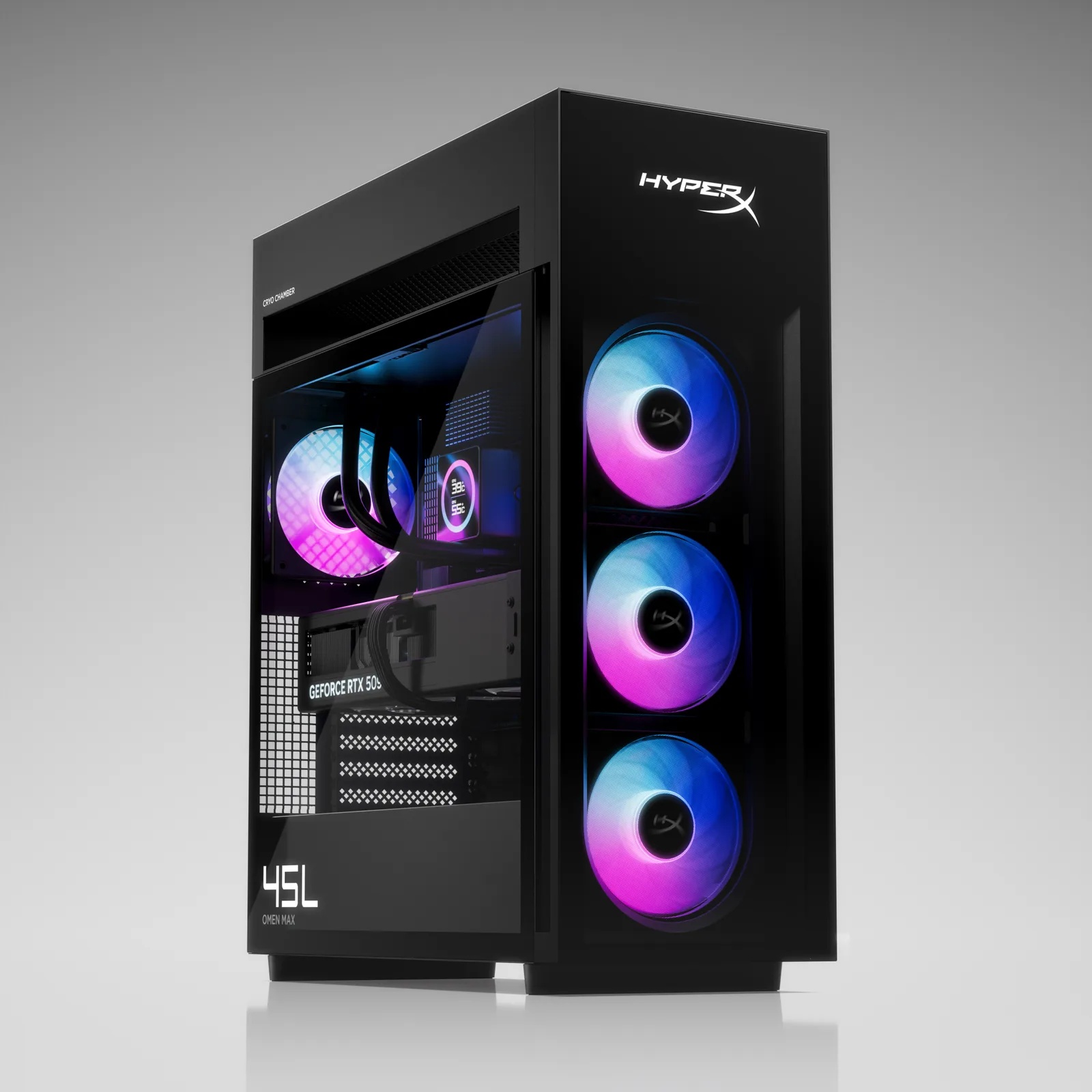
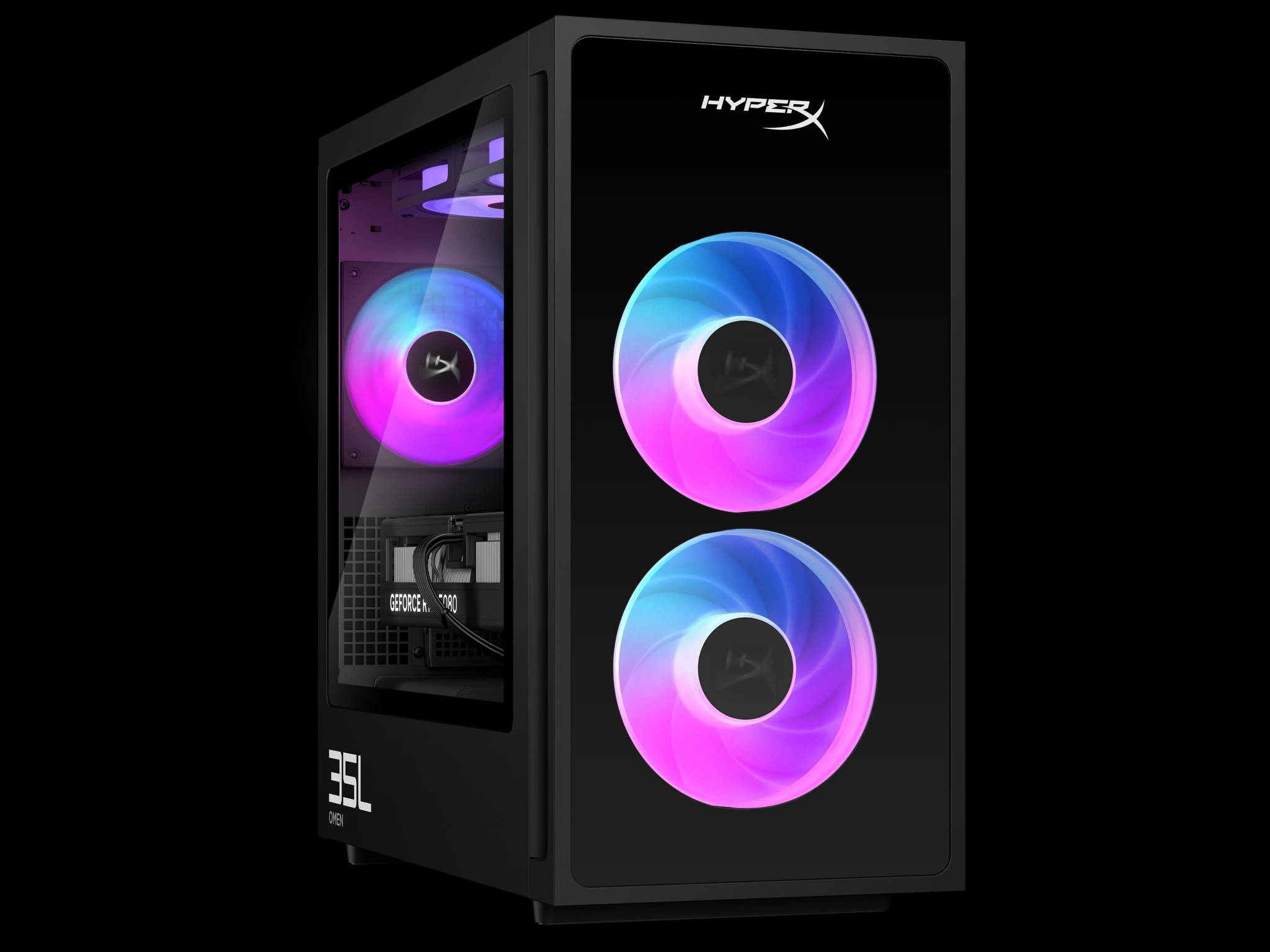
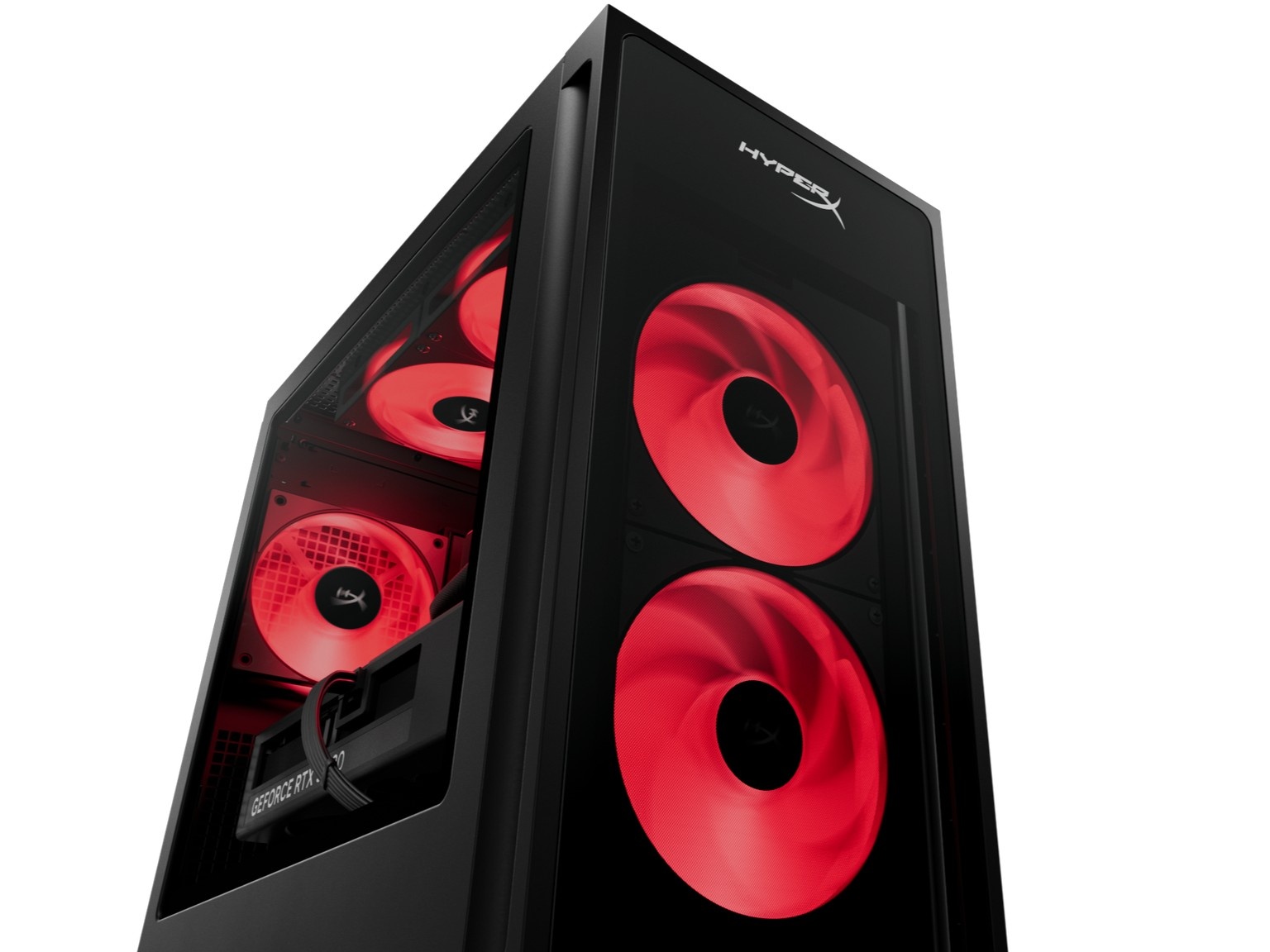
HP has announced new gaming hardware updates at its HP Imagine 2026 event. The lineup includes the HyperX OMEN MAX 45L and HyperX OMEN 35L.
HyperX OMEN MAX 45L
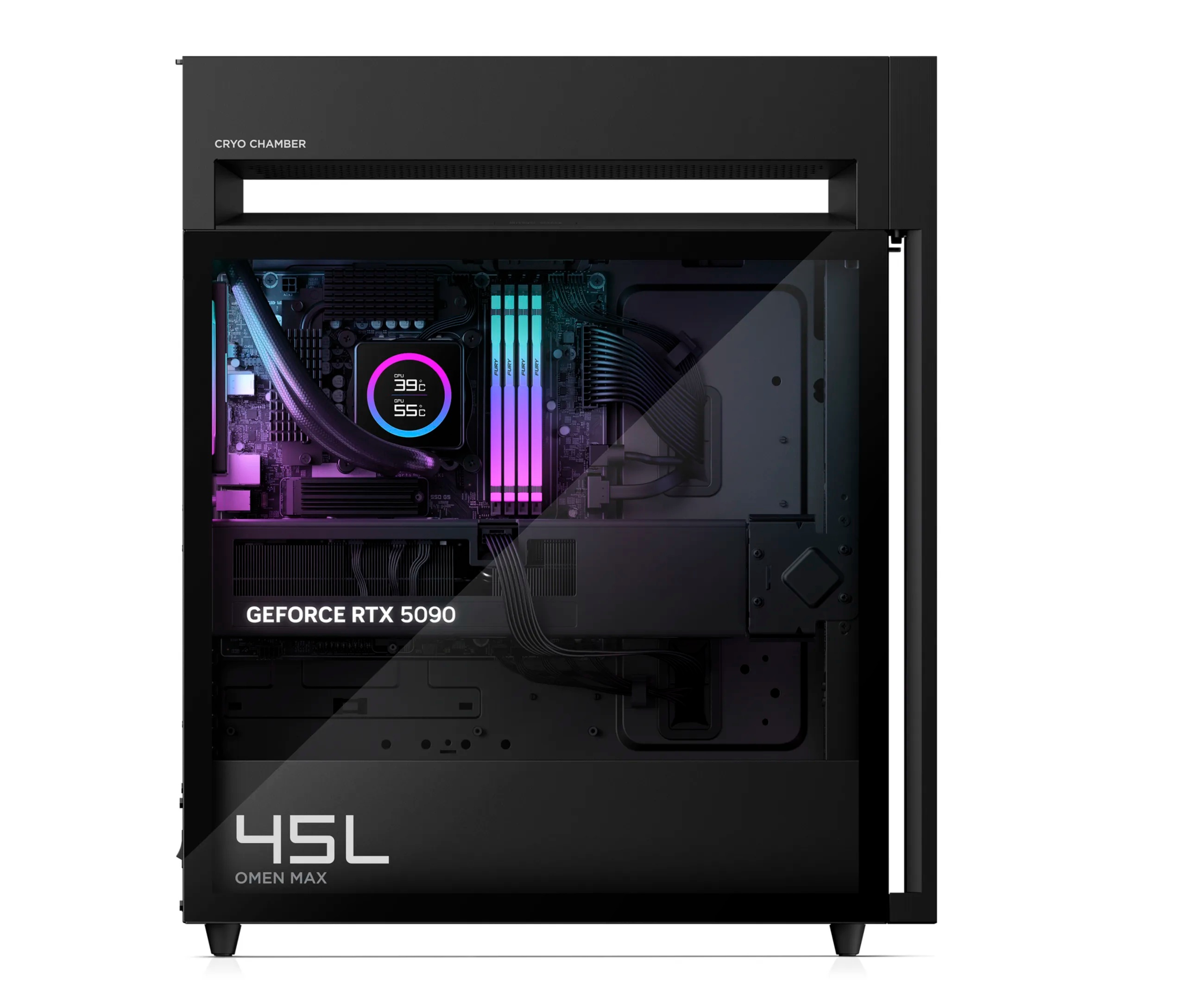
The HyperX OMEN MAX 45L is built for high-end gaming and heavy workloads. It runs on an Intel Core Ultra 7 270K Plus processor, which HP says offers up to 10 percent better gaming performance compared to the previous generation. The system can be configured with an NVIDIA GeForce RTX 5090 GPU and supports up to 128 GB of DDR5 RAM. It also includes a fully modular 1200W power supply for stable performance and future upgrades.
HP Omen Max 35L
Cooling is handled by the second-generation Cryo Chamber system, along with support for up to a 360 mm LCD liquid cooler. The desktop uses a tool-less design with improved cable management, making it easier to upgrade components. It also supports standard HyperX parts for easier customization.
The HyperX OMEN 35L is positioned as a more accessible option. It uses the same Intel Core Ultra 7 270K Plus processor but comes with an NVIDIA GeForce RTX 5080 GPU. The system is designed to deliver steady performance for gaming while keeping noise levels low. It uses an optimized thermal design for consistent cooling during long sessions. Like the 45L, it includes a tool-less chassis and supports future upgrades using standard components.
HP also shared updates to its software. OMEN AI is being expanded to support more games and improve system performance through automatic tuning. The OMEN Gaming Hub is getting updates that give users more control over performance settings and system management.
HP said the OMEN MAX 45L will be available starting in May. Pricing details have not been announced yet.
For more daily updates, please visit ourNews Section.
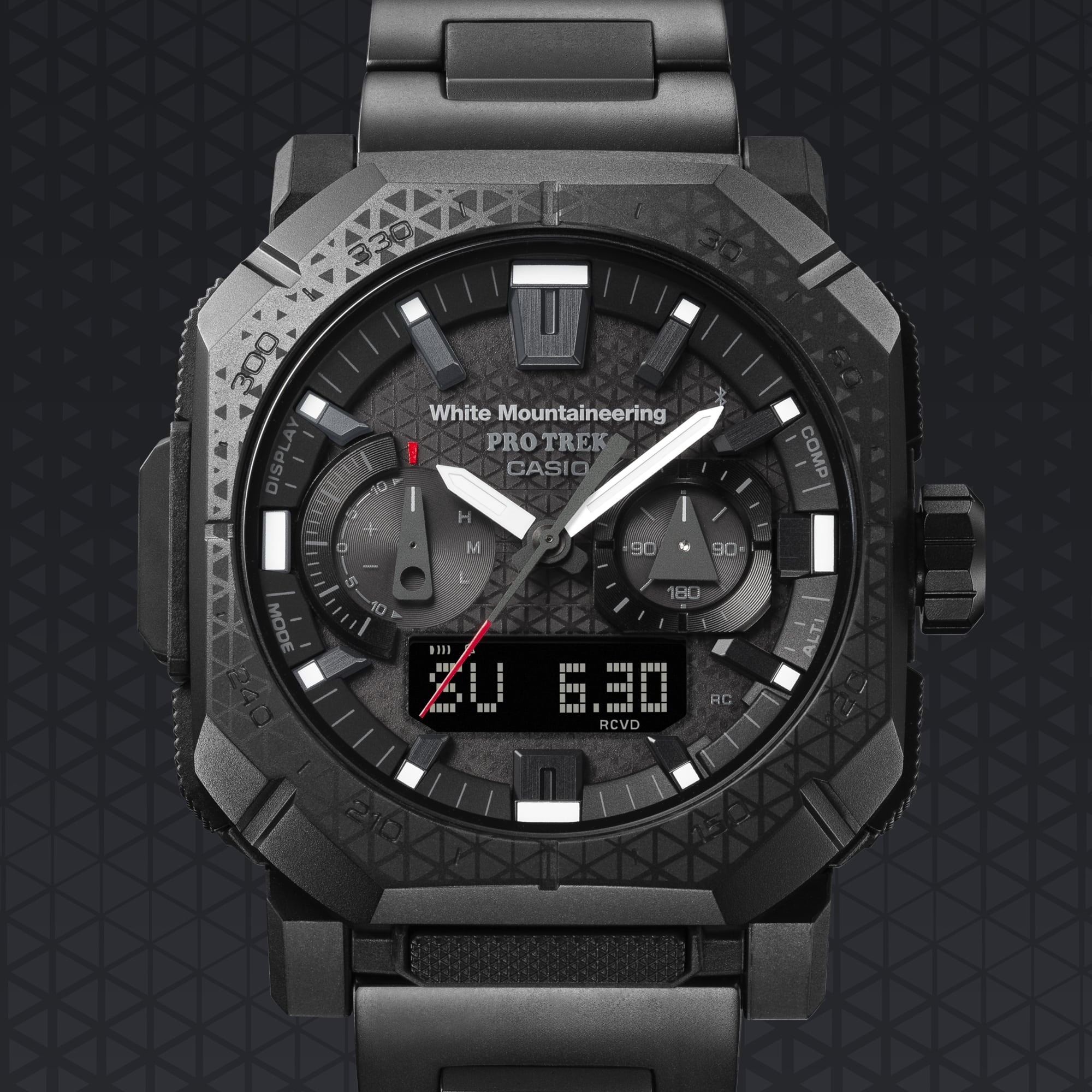
Casio’s Pro Trek lineup has received a new collaboration model with Tokyo-based label White Mountaineering, with the PRW-B1000WM-1 now appearing on US retail listings. The watch, which was introduced earlier this year, is currently marked with limited stock availability and carries a price tag of $990.
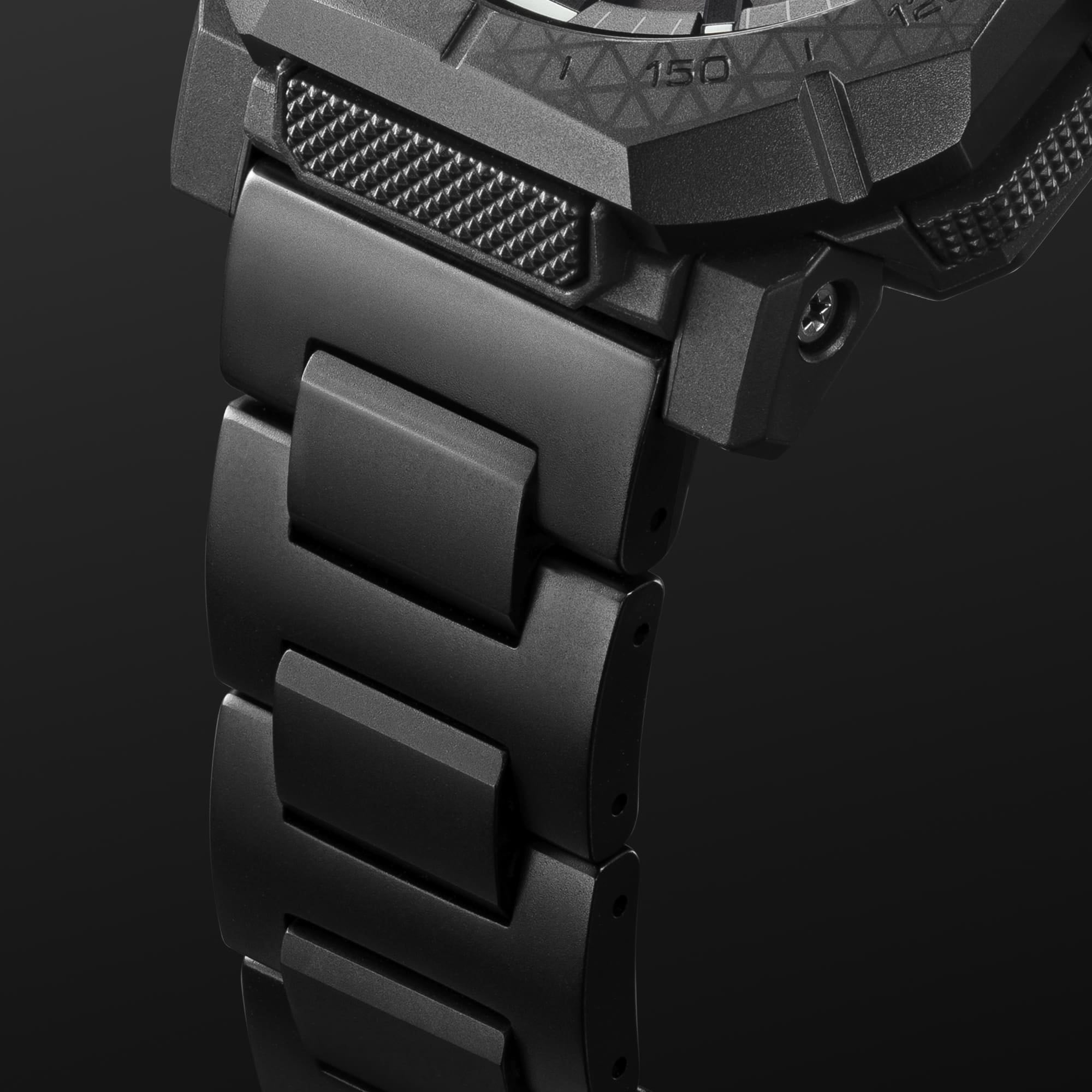
The model is based on the PRW-B1000 platform but shifts toward a full-metal build. It uses a matte black case paired with a solid titanium bracelet, replacing the standard resin construction seen in other variants. The bracelet follows an H-link design and includes a three-fold clasp with a double-lock mechanism. Titanium helps reduce overall weight while maintaining durability.
Visually, the watch keeps a low-contrast, utility-focused design. The dial uses a matte black base with white hour markers and hands, along with a red seconds hand for contrast. A triangular pattern, associated with White Mountaineering, is applied across the dial and bezel using translucent printing and ion plating. The detailing is subtle, relying more on texture than color.
The watch features an analog-digital layout, with a small digital display positioned in the lower section. A subdial at the 9 o’clock position functions as a location indicator when connected to the Casio Watches app.
In terms of functionality, the PRW-B1000WM-1 includes Casio’s Triple Sensor system, offering compass, altitude, barometric pressure, and temperature readings. It also supports Tough Solar charging and combines Multi Band 6 radio signal reception with Bluetooth connectivity for automatic time adjustment.
Other hardware elements include a sapphire crystal with anti-reflective coating and a case structure that incorporates flame-resistant bio-based resin. A dual LED backlight is included for visibility in low-light conditions.
The model sits at the higher end of the Pro Trek range. Retail listings indicating limited stock suggest that availability may be restricted.
For more daily updates, please visit ourNews Section.
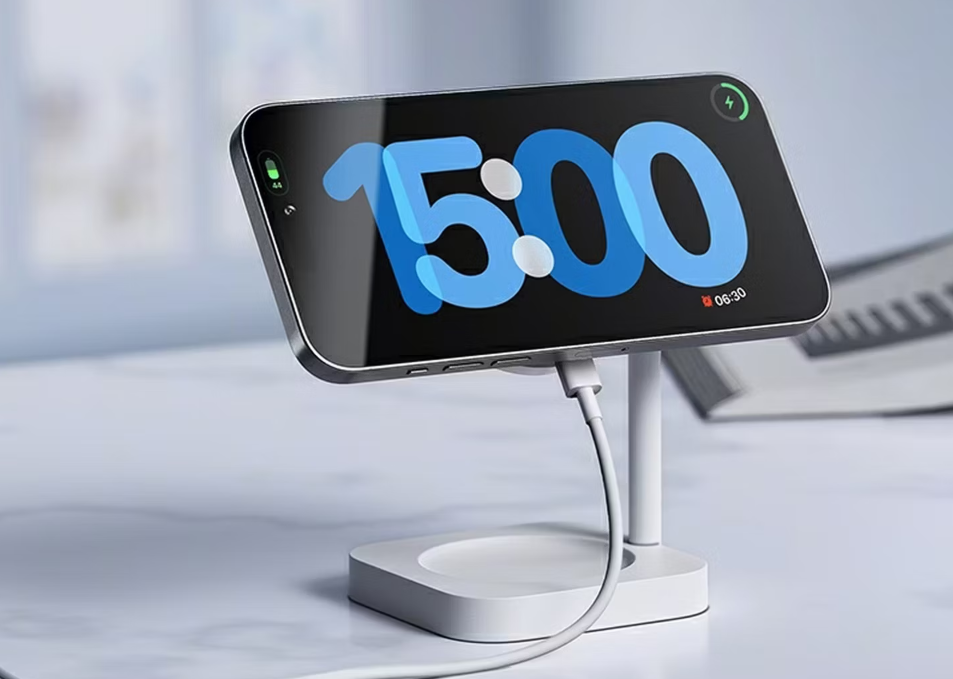
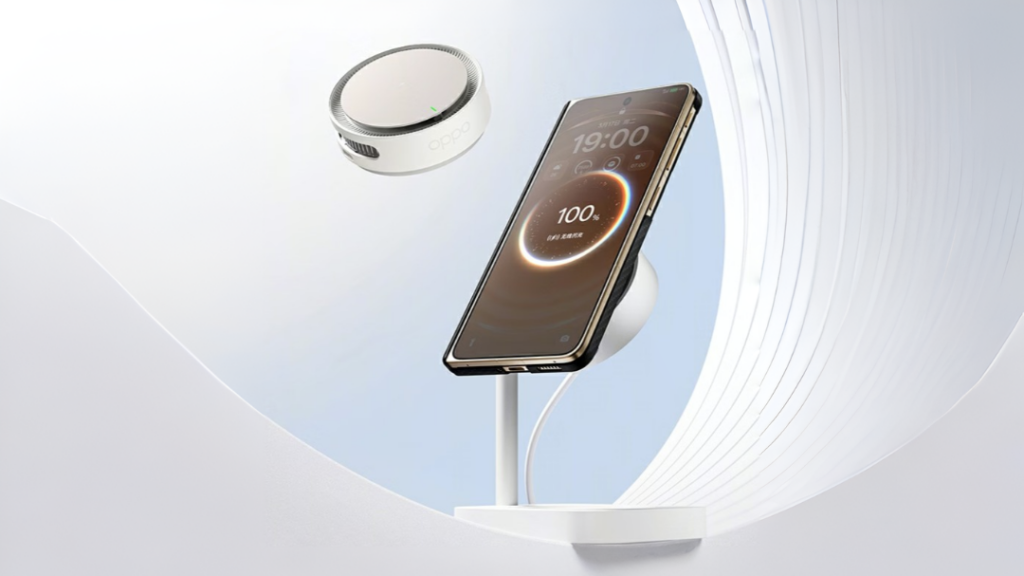
OnePlus has launched the Magnetic Turbo 2 AirVOOC 50W Wireless Charger. The new charger delivers 50W fast wireless charging, active cooling, and a built-in stand. It supports both Android devices and iPhones and is priced at 349 yuan (~$50).
OnePlus Magnetic Turbo 2 Specifications
The charger offers high-speed wireless charging through the AirVOOC protocol. It provides up to 50W output for compatible Oppo and OnePlus devices when paired with an 80W or higher SuperVOOC power adapter. It includes magnetic alignment for seamless attachment and supports Apple’s magnetic wireless charging for iPhones. However, it does not support the standard Qi wireless protocol.
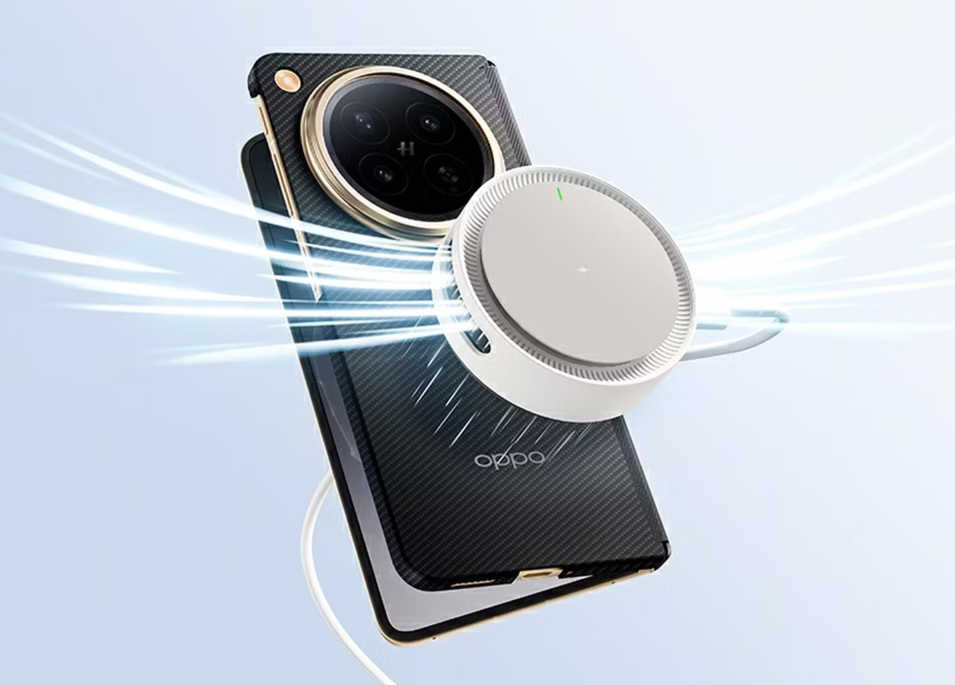
The Magnetic Turbo 2 uses a TEC cooling system to control temperature during charging. This system includes a semiconductor cooling plate, a centrifugal fan, and heat dissipation fins to manage airflow and reduce overheating. OnePlus has added multiple cooling modes, allowing users to switch between high-power charging, low-noise charging, and cooling-only modes with a double-tap on the charger.
The charger features a 360-degree adjustable stand that supports both vertical and horizontal orientations, making it ideal for video calls or watching content. It can also be detached for standalone use.
The device features a compact design with a diameter of 63mm and a height of 22.27mm. It weighs 265 grams, including the stand, and comes in a Cloud White finish.
OnePlus claims the device can charge the OnePlus 15T to 50% in around 40 minutes. The Magnetic Turbo 2 supports Apple’s StandBy mode when used with iPhones, further enhancing its functionality.
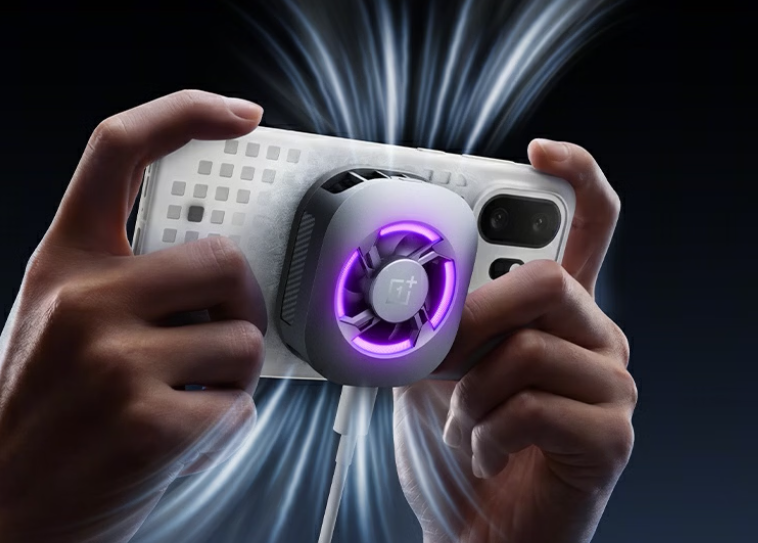
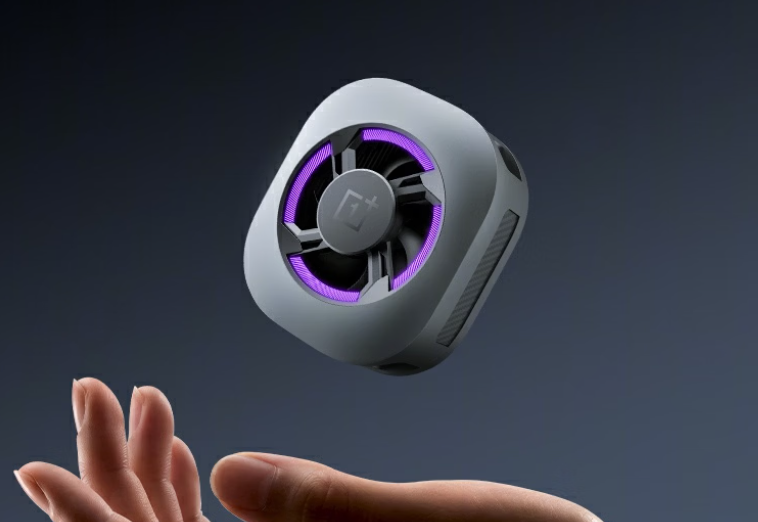
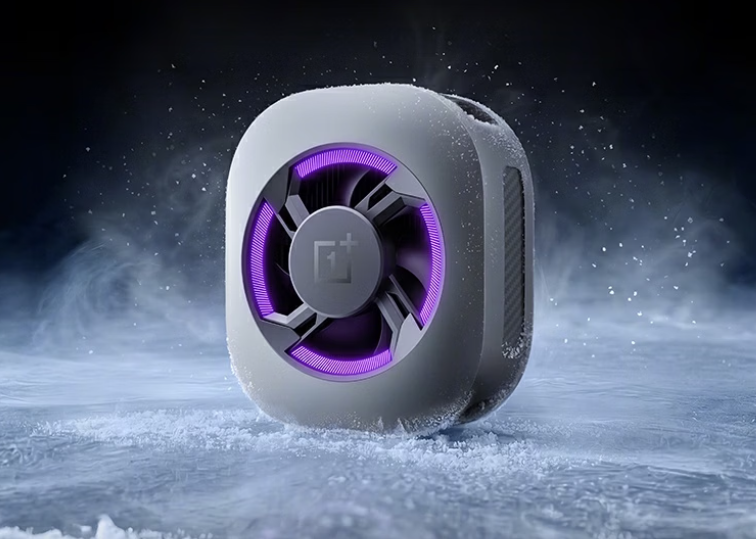
OnePlus has launched its new 40W Super Ice Magnetic Cooler, a high-performance cooling accessory designed for gaming and demanding smartphone tasks. The cooler is priced at 229 yuan (approx $33) and offers significant upgrades over earlier models, including powerful cooling capabilities and a compact design.
OnePlus Super Ice Magnetic Cooler Specs
OnePlus designed the cooler with a high-performance cooling system centered around a 1600mm² custom TEC cooling plate. The device can drop temperatures to 0°C in 18 seconds and as low as −1.41°C in 20 seconds under controlled conditions. The TEC cold surface can reach a minimum temperature of −22°C. The cooler delivers a maximum power output of 40W, a significant improvement over its predecessor’s 27W cooling capacity.
The cooler requires a PD 45W or higher fast charger to achieve optimal performance. OnePlus recommends pairing it with the company’s own 100W GaN SuperVOOC charger for the best results. It supports ColorOS X Mode, allowing automatic Bluetooth pairing and system performance optimization when used with compatible OnePlus devices.
The cooler features a dual airflow channel to keep hot air away from users’ hands, improving comfort during long use. It incorporates an axial fan, fin-based heat dissipation, and layered materials like copper foil and thermal silicone pads for enhanced heat conduction.
OnePlus included four adjustable cooling modes on the device: high, medium, low, and auto. The cooler connects magnetically to Android and iPhones, providing up to 10N of magnetic force for a secure attachment.
The magnetic cooler weighs 103 grams and measures 68.5 x 59 x 29 mm. It operates at noise levels of 39dB in performance mode and 28dB in low-power mode. It features RGB lighting with blue and purple effects for a gaming aesthetic and is built with durable PC and aluminum alloy in a Deep Space Silver finish.
Alongside this model, the company has also introduced an ultra-thin magnetic cooler, which it claims is the world’s thinnest magnetic smartphone cooler.
For more daily updates, please visit our News Section.
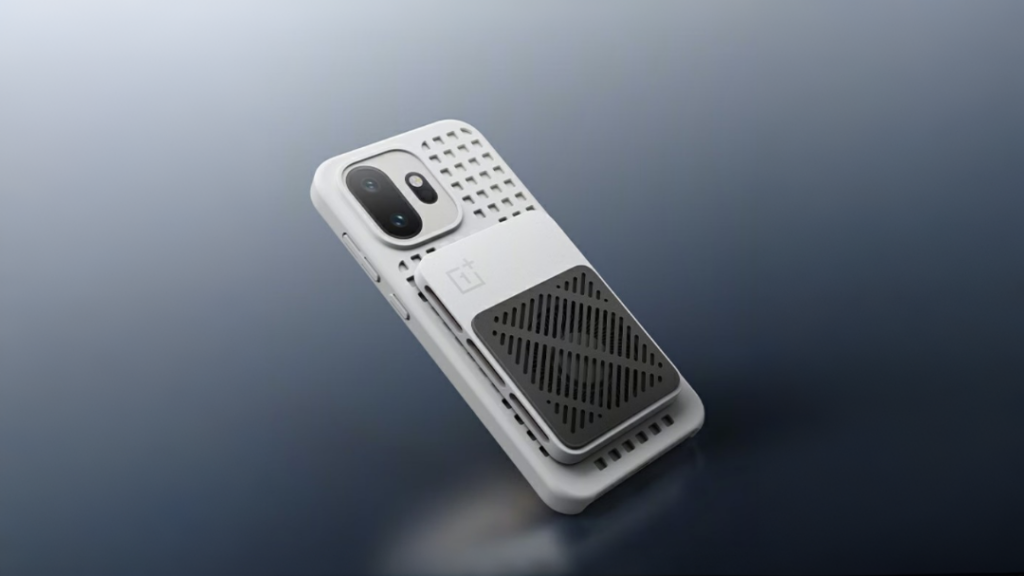
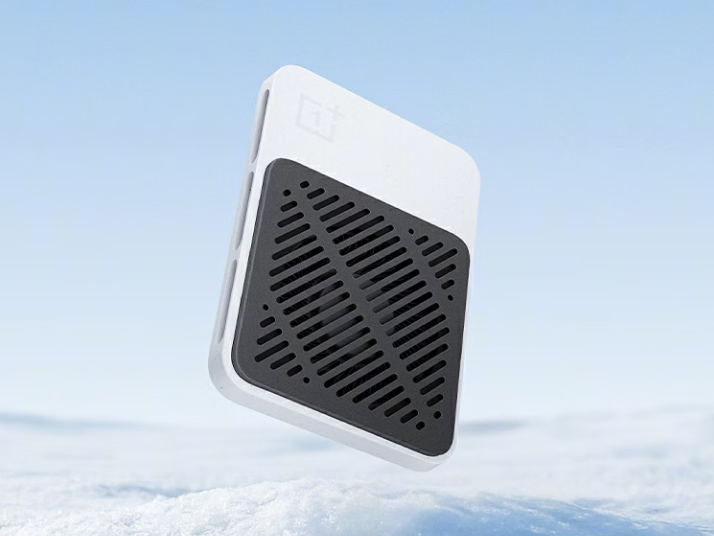
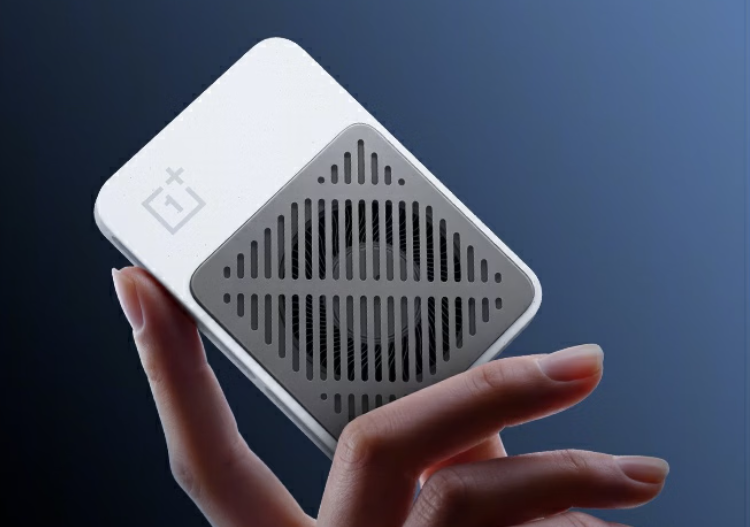
OnePlus has introduced the Magnetic Ice Cooling Clip, touted as the world’s thinnest magnetic smartphone cooler. The company unveiled the product during the OnePlus 15T launch event. The device is priced at 179 yuan (~$26) and aims to provide efficient cooling in a lightweight, compact design.
OnePlus Magnetic Cooling Clip Specifications
The Magnetic Ice Cooling Clip features a slim power bank-like design with a thickness of 9.8mm at its thinnest point and weighs just 68 grams. The dimensions measure 87.6 x 62 x 9.8mm, with some structural variations reaching up to 11.9mm.
OnePlus has equipped the cooler with advanced internal components for efficient thermal management. The cooling system includes a thermoelectric cooling (TEC) module, a curved progressive air duct, and a pressurized low-noise centrifugal fan. The curved air duct design ensures that cool air enters from the top, while hot air exits from the side, keeping the user’s hands comfortable during extended use.
The cooler features a dual-mode cooling system, allowing users to switch between silent mode for reduced noise during tasks like streaming and photography, and performance mode for maximum cooling during gaming and heavy workloads. It operates at 36dB in performance mode and 22dB in silent mode.
The cooler attaches magnetically and works with both Android and iPhone devices, with a magnetic force rated up to 10N for a secure connection. It also supports Bluetooth connectivity for advanced tuning through ColorOS X mode.
The device operates via a USB Type-C connection with a maximum power input of 5V/3A. OnePlus used durable PC and aluminum alloy materials to build the cooler, which also features an indicator light system.
In related news, Black Shark has recently launched the Ice Cooling Back Clip 6 Pro with a full-color display and 35W cooling power, while Red Magic has introduced the Cooler 8 Air featuring a 65g lightweight design, −20°C cooling, and RGB lighting.
For more daily updates, please visit our News Section.
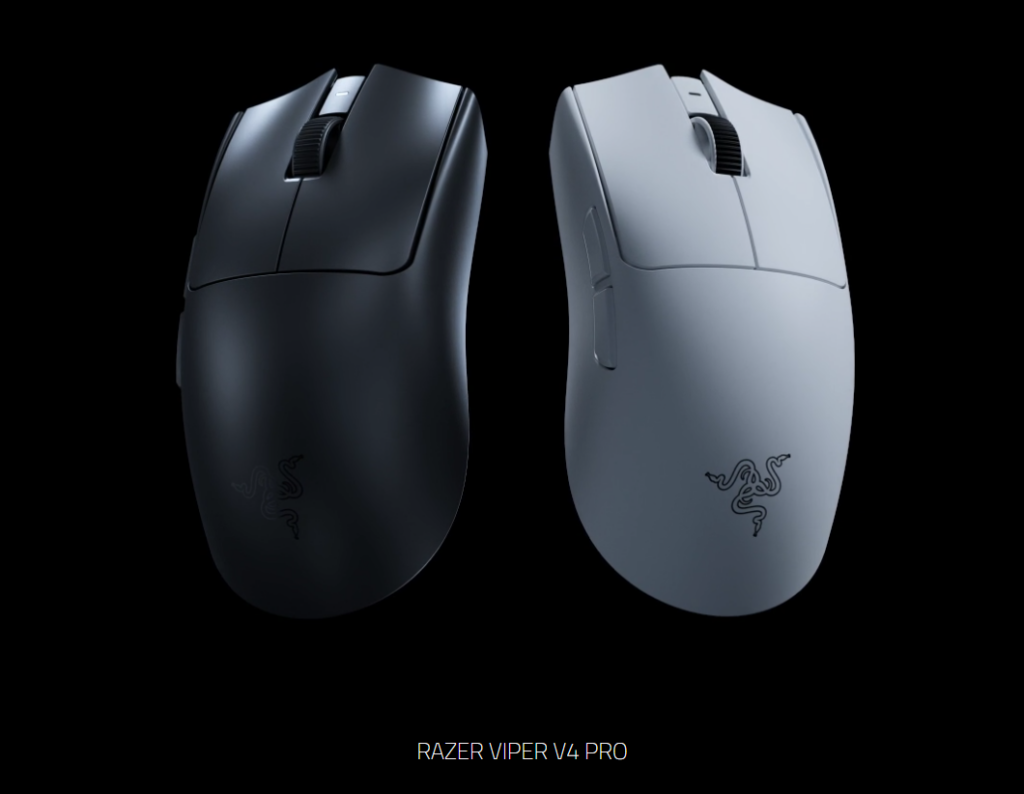
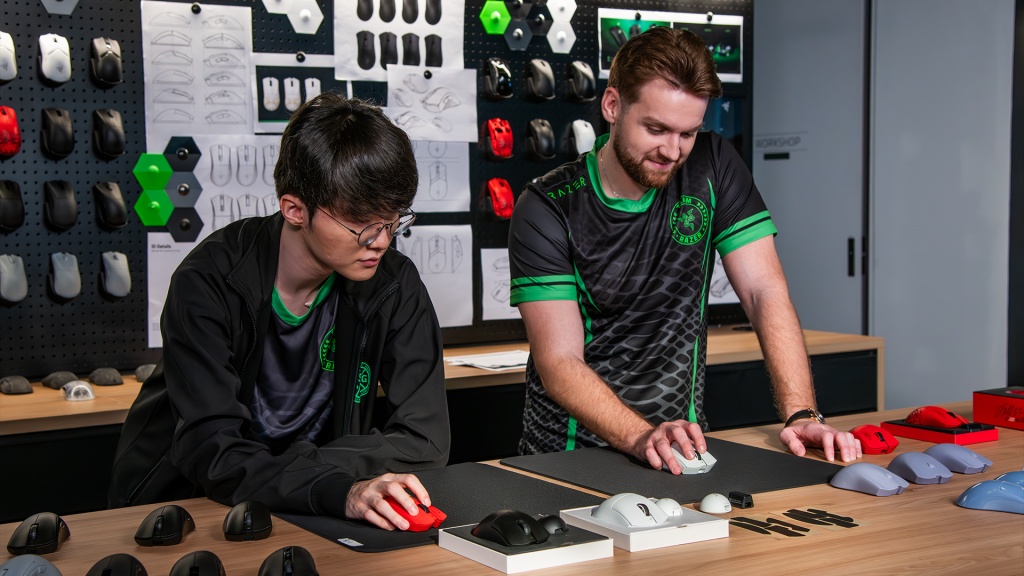
Razer has announced two new additions to its esports hardware lineup: the Viper V4 Pro gaming mouse and the Gigantus V2 Pro mouse mat. The launch focuses on incremental upgrades in latency, tracking accuracy, and surface customization, targeting competitive gaming use cases.
The Viper V4 Pro follows the Viper V3 Pro, introducing updates in wireless performance and sensor behavior. It uses Razer’s HyperSpeed Wireless Gen-2 technology with support for 8,000 Hz polling in both wired and wireless modes. According to the company, the mouse achieves click latency as low as 0.204 ms and motion latency of 0.36 ms. Battery life is rated at up to 180 hours at a 1,000 Hz polling rate.
The device is powered by the Focus Pro 50K Optical Sensor Gen-3, offering up to 50,000 DPI, 930 IPS tracking speed, and 90G acceleration. A new Frame Sync feature aligns sensor data with polling intervals to reduce processing delays. The mouse also includes software-level controls such as Dynamic Sensitivity, Mouse Rotation, 1 DPI step adjustments, Sensitivity Matcher, 26 levels of Asymmetric Cut-Off, and Smart Tracking.
Weighing 49 grams in black and 50 grams in white, the Viper V4 Pro is lighter than its predecessor by around 9 percent. The weight reduction comes from internal design changes, including a more compact PCB and refined shell structure. The shape is optimized for claw and fingertip grips.
Other hardware changes include a redesigned optical scroll wheel and Gen-4 optical switches rated for up to 100 million clicks. The switches use optical actuation to eliminate debounce delay and reduce double-click issues associated with mechanical designs.
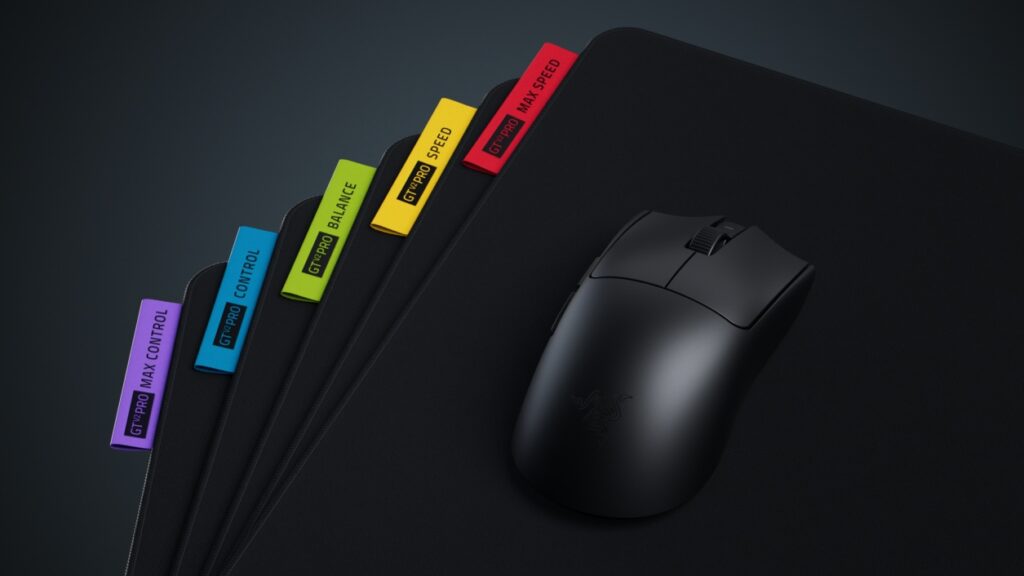
Alongside the mouse, Razer has introduced the Gigantus V2 Pro mouse mat with five surface variants based on friction levels: Max Control, Control, Balance, Speed, and Max Speed. Each variant uses a different weave pattern and is paired with a specific foam base to adjust firmness and glide.
The mat is designed for use with optical sensors and includes stitched edges, an anti-slip base, and a rollable structure for transport. Together, the two products reflect Razer’s continued focus on low-latency input devices and customizable setups for competitive gaming environments.
The Razer Viper V4 Pro is priced at $159.99. The Gigantus V2 Pro mouse mat is priced at $50, with the NiKo Edition costing $20 extra.
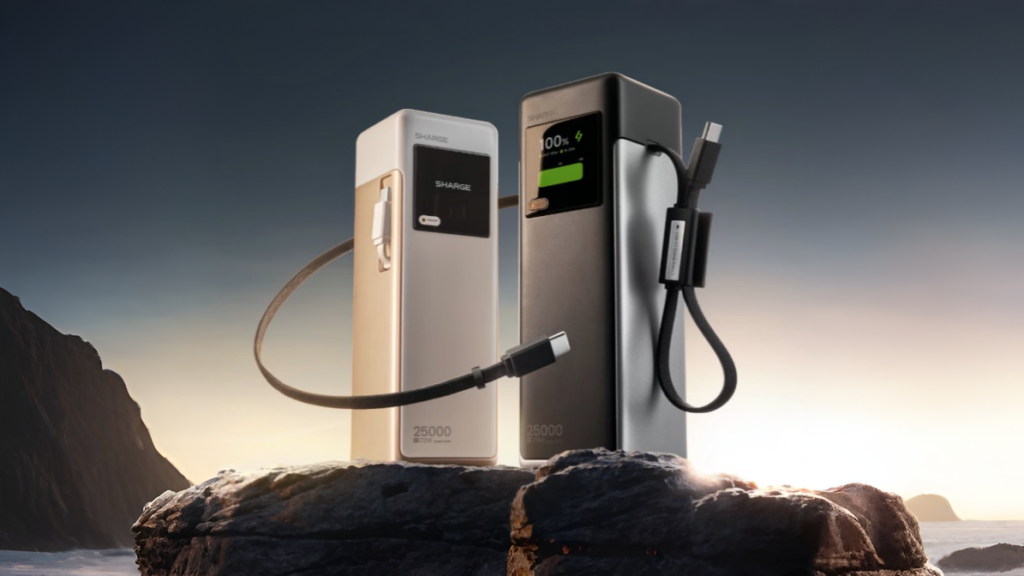
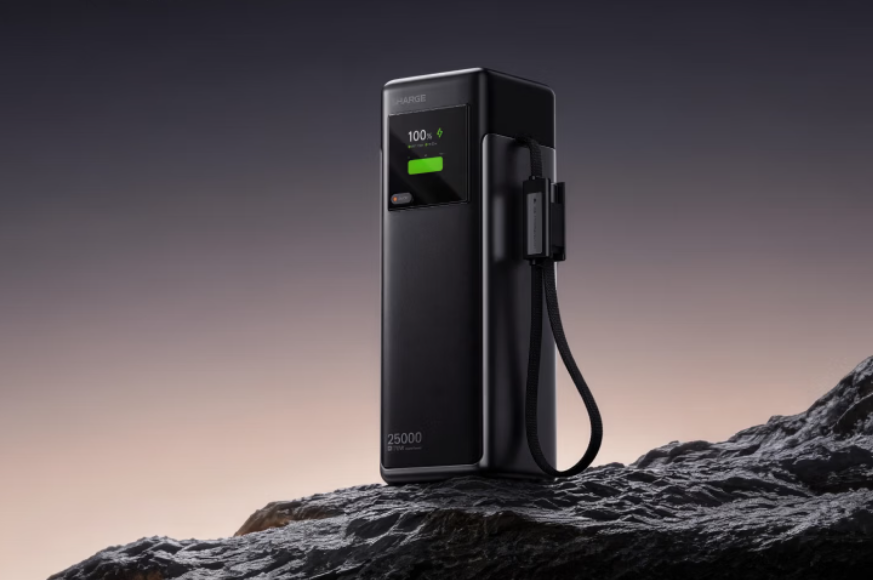
Sharge has introduced a new 170W power bank, the X6, in China. The device features a 25,000mAh battery and supports high-speed charging for multiple devices. It is priced at 399 yuan (around $58) and is available in black and white on JD.com.
Sharge 170W Power Bank Specifications
The power bank uses automotive-grade 21700 battery cells. Sharge designed the X6 to deliver a maximum output of 170W, allowing users to charge multiple devices at full speed. The device includes a 3C+1A port configuration, which features three USB-C ports and one USB-A port.
The power bank also includes two integrated USB-C cables. One cable is a 60cm retractable design that supports over 30,000 pulls, while the second is a 25cm braided cable that doubles as a carrying strap.
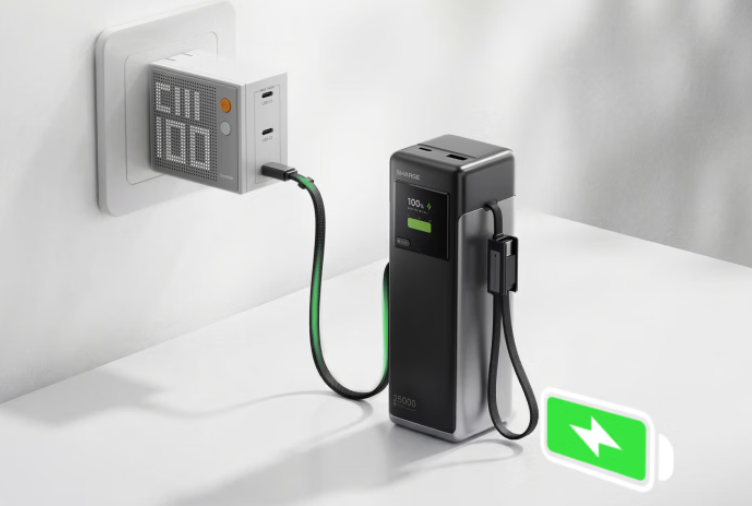
The X6 supports fast charging protocols, including 120W Xiaomi HyperCharge and 100W USB Power Delivery. It can deliver up to 120W from a single port and up to 165W combined output when using two ports. The full 170W output can be achieved with three ports or a maximum of 165W when all four ports are used.
Sharge has added a 1.3-inch color display to provide charging information in real time. The screen shows details like battery level, output power, temperature, and cycle count. The device also includes a dual-layer heat dissipation system made with aluminum alloy and high thermal conductivity materials to maintain safe temperatures during use.
The X6 has a compact design with dimensions of 159.8 x 53.4 x 52.2mm and weighs 665g. It features a matte finish and supports fast self-charging at up to 100W, which can fully recharge the power bank in about an hour. The device is also certified for air travel and complies with 3C safety standards.
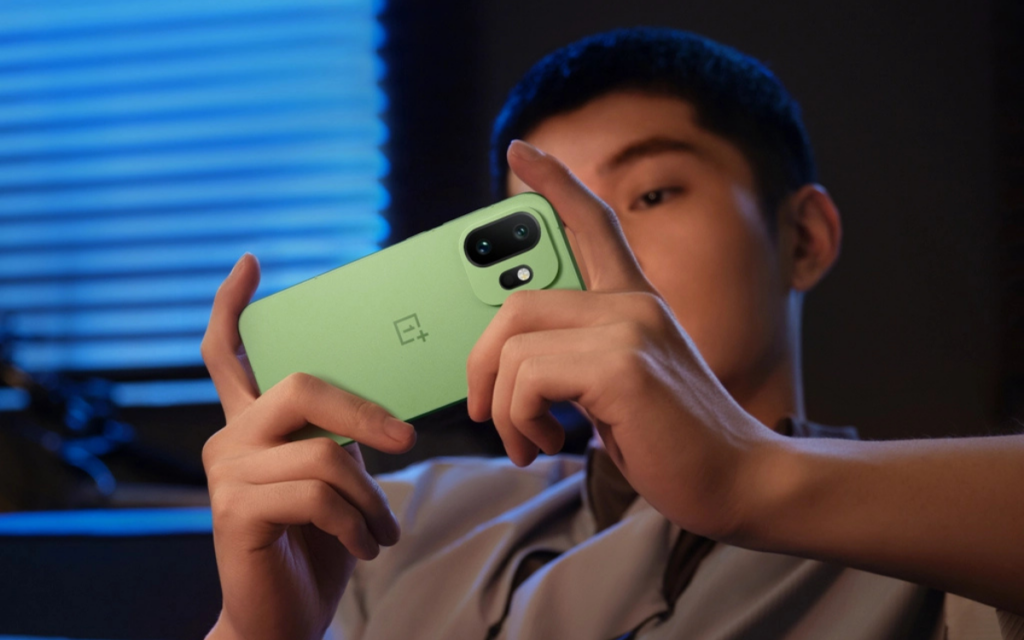
OnePlus has confirmed that the OnePlus Nord 6 will launch in India, with the full details set to be announced on April 7 at 7:00 PM IST. The device is expected to be priced between ₹35,000 and ₹40,000 and is positioned around performance, gaming, and battery capacity.
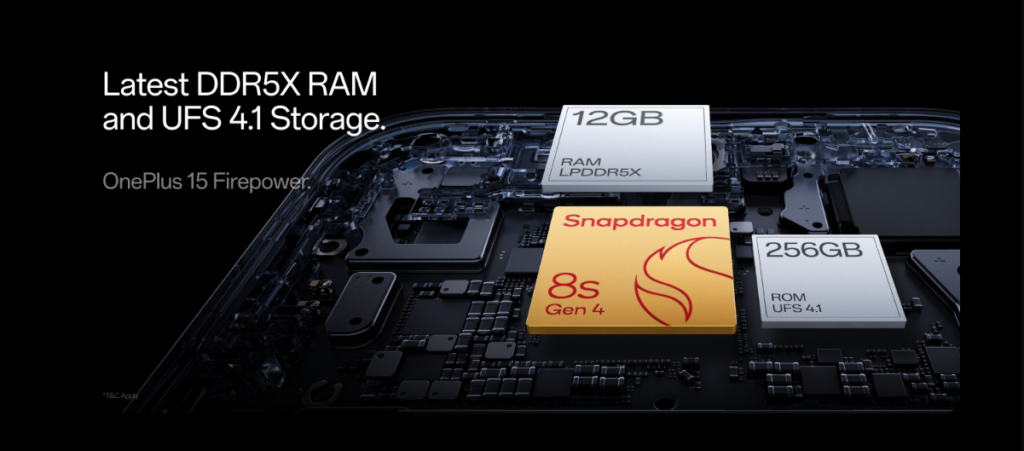
The phone is powered by Qualcomm’s Snapdragon 8s Gen 4 processor, built on a 4nm node. It uses a 1+3+4 CPU layout, led by a Cortex-X5 core clocked at up to 3.2GHz, along with an Adreno 835 GPU. In benchmark figures shared by the company, the device recorded an AnTuTu score of 2,503,854 under test conditions. OnePlus claims this gives it an edge in CPU, GPU, and AI performance within its segment, including over the Motorola Edge 60 Pro.
On the display side, the Nord 6 comes with a 1.5K AMOLED panel that supports a 165Hz refresh rate. It reaches 1800 nits in High Brightness Mode and up to 3600 nits peak HDR brightness. The panel also supports a minimum brightness of 2 nits and uses 3840 Hz PWM dimming for better visibility in low-light conditions.
Gaming features are a key focus. OnePlus says the device can deliver sustained 165 FPS gameplay in supported titles such as BGMI, Call of Duty Mobile, and Free Fire MAX. It includes a dedicated Touch Reflex Chip that enables a 3200Hz instant touch sampling rate for quicker input response. A 6-axis gyroscope with ±4000dps sensitivity is also included for motion-based controls. Additional features include a Spatial Audio Booster for improved directional sound and Aqua Touch 2.0, which helps maintain touch accuracy even when the screen is wet.
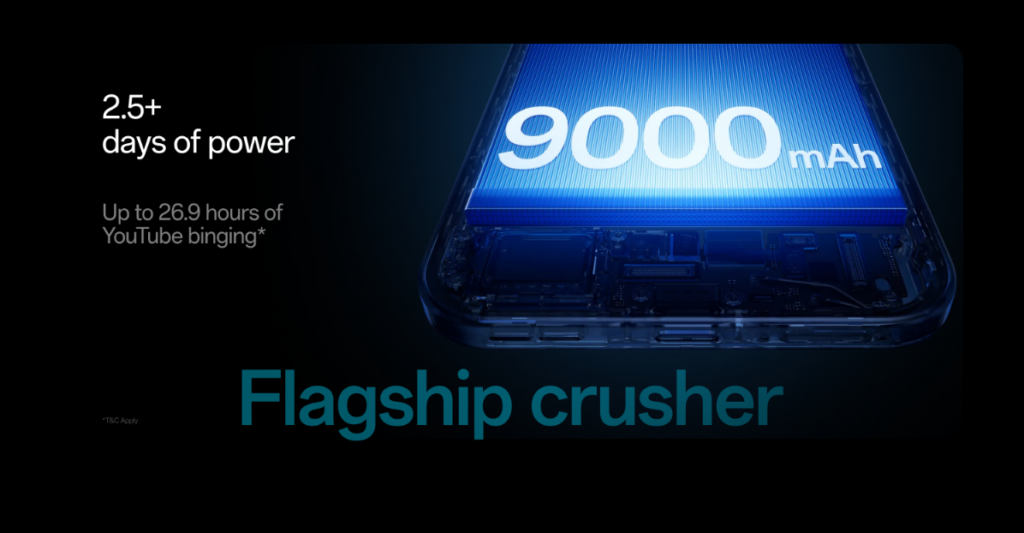
The Nord 6 is equipped with a 9000 mAh battery based on silicon-carbon technology with 15 percent silicon content. OnePlus claims up to 2.5 days of moderate usage, 26.9 hours of YouTube streaming, or 6.3 hours of 4K video recording at 60 fps on a single charge. Charging is handled by 80W SUPERVOOC wired charging, with a claimed 0 to 100 percent time of around 70 minutes. The phone also supports Bypass Charging to reduce heat during heavy use and offers 27W wired reverse charging.
For connectivity, the device includes a dedicated G2 Wi-Fi chip and support for 5G Advanced networks. It will be available in Holographic Quick Silver, Fresh Mint, and Low-Reflection Pitch Black, and will be sold through Amazon India, the OnePlus India online store, and offline retail outlets.
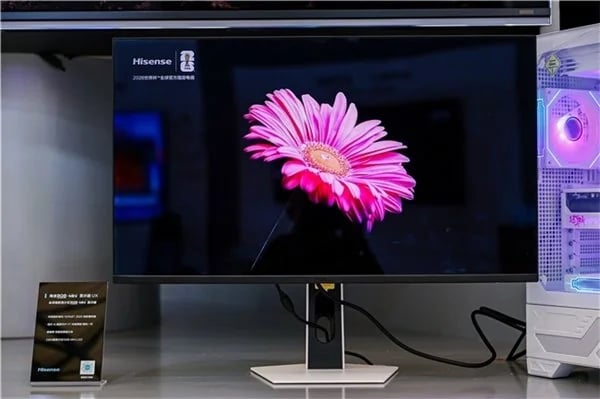
Hisense is stepping into the gaming monitor space with new mini-LED displays shown at AWE 2026 in China. The lineup is led by the Hisense UX, which uses a true RGB mini-LED backlight system, a technology the company has previously used in its premium TVs.
The key difference in this panel lies in how it handles light and color. Standard mini-LED displays usually rely on a single white or blue backlight. The UX instead uses separate red, green, and blue light sources inside each LED. This allows the screen to generate colors directly from the backlight rather than filtering them later. In practical terms, this improves color accuracy and reduces the glow effect that often appears around bright objects on darker backgrounds.
The UX monitor is equipped with 2,304 local dimming zones and up to 6,912 zones dedicated to color control. This setup allows more precise adjustment of brightness and color across different parts of the screen. Hisense says the display can cover up to 100 percent of the BT.2020 color gamut. It also includes the H7 AI image processing chip, which handles image adjustments such as contrast and sharpness in real time. An Obsidian Screen coating is used on the panel to limit reflections and improve viewing clarity.
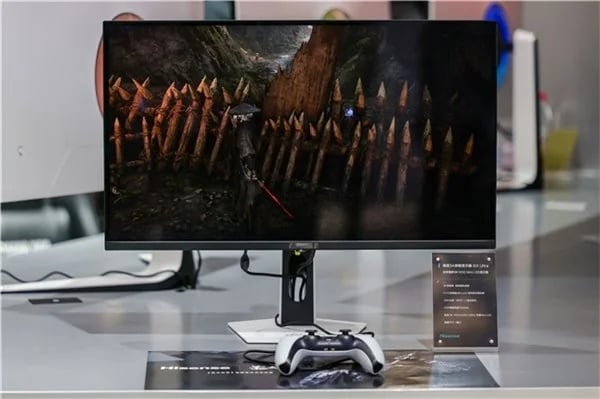
Hisense also introduced the GX Ultra alongside the UX. This model uses a 5K mini-LED panel and comes with the same 2,304 local dimming zones. It supports a peak brightness of 2,000 nits and includes the same Obsidian screen coating. One of its main features is the ability to switch between two display modes. Users can run it at 5K resolution with a 165 Hz refresh rate, or switch to QHD resolution at 330 Hz for higher frame rates. The monitor also includes a full bandwidth DisplayPort 2.1 port to handle these output modes.
Hisense has not yet shared details on pricing, full specifications, or release timelines for either model. More information is expected to be announced later.
For more daily updates, please visit our News Section.
OnePlus has introduced the OnePlus 15T, a compact flagship smartphone. It features advanced specifications, a stylish design, and a large battery, offering a high-performance option for small-screen enthusiasts.
OnePlus 15T Specifications
The OnePlus 15T features a 6.32-inch 1.5K AMOLED display with a 165Hz adaptive refresh rate and ultra-slim 1.1mm symmetrical bezels. It includes advanced luminous materials for better brightness, 1-nit minimum brightness for low light, 3840Hz PWM dimming, and low blue light certification. The display is protected by durable Oppo Crystal Shield Glass.
Under the hood, the device is powered by the Snapdragon 8 Elite Gen 5 processor with 3nm architecture, delivering an AnTuTu score of over 4.45 million. It comes with up to 16GB LPDDR5X Ultra Pro RAM, up to 1TB UFS 4.1 storage, and a 5150mm² vapor chamber cooling system. It also features a triple-chip gaming system that enhances performance, connectivity, and signal strength.
OnePlus also added a new gaming engine that enables native 144FPS gameplay in Honor of Kings at max settings. It supports native 165Hz gameplay in titles like PUBG Mobile and Valorant Mobile, along with full-frame support for many popular games.
The OnePlus 15T runs on Android 16 with ColorOS 16. It includes a new gaming assistant, cross-device connectivity, and improved AI capabilities. OnePlus promises 5 years of software support, including 4 major OS updates.
For photography, The device boasts a dual-camera system branded as LUMO Imaging. It features a 50MP Sony main sensor with OIS and a 3.5x periscope telephoto lens with OIS, offering up to 7x optical-quality zoom.
The telephoto lens has an 85mm equivalent portrait focal length, making it ideal for professional-grade portraits. The camera supports 4K live photos, Master Mode, and various film-style presets. On the front, it features a 16MP lens for selfies.
Despite its compact size, the OnePlus 15T packs a massive 7500mAh Glacier battery. It supports 100W wired charging, 50W wireless charging, bypass charging for gaming, and reverse charging (wired and wireless).
The OnePlus 15T includes IP66, IP68, and IP69K ratings for superior dust and water resistance. It also features a 3D ultrasonic in-display fingerprint sensor, stereo speakers, and advanced connectivity options like 5G, Wi-Fi 7, Bluetooth 6.0, NFC, and GPS.
Pricing and Availability
The OnePlus 15T is available in three colors: Healing White Chocolate, Pure Cocoa, and Relaxing Matcha.
The pricing for the device starts at 4299 yuan ($624) for the base variant with 12GB RAM and 256GB storage. The 16GB RAM and 256GB storage model is priced at 4599 yuan ($669).
For users requiring more storage, the 12GB RAM and 512GB storage variant costs 4899 yuan ($712). The 16GB RAM and 512GB storage model is priced at 5199 yuan ($754). The top-end variant, with 16GB RAM and 1TB storage, is priced at 5699 yuan ($830).
The phone is now available for pre-order in China and will go on sale starting March 25.
For more daily updates, please visit our News Section.
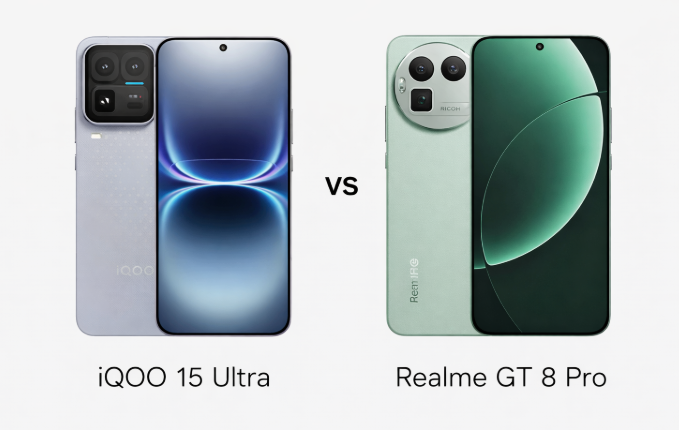
Spending flagship money isn’t easy, especially when two phones promise almost the same power on paper but feel completely different in real life. The iQOO 15 Ultra and Realme GT 8 Pro both deliver top-tier performance, but they cater to very different kinds of users. One is built for people who push their phone to the limit, while the other focuses on giving a smoother, more practical everyday experience. This comparison breaks down which one actually makes more sense once the specs stop mattering and real usage begins.
Major Features:
Feature
iQOO 15 Ultra
Realme GT 8 Pro
Winner
Design & Build
Gaming-focused design, cooling fan, pressure zones
The iQOO 15 Ultra leans toward a performance-first design with aggressive elements like pressure-sensitive zones and an integrated cooling fan, giving it a gaming-centric identity. It feels engineered rather than styled, which will appeal to power users. The Realme GT 8 Pro, on the other hand, takes a more refined route with premium materials, optional eco leather, and a cleaner aesthetic. The presence of Gorilla Glass protection and a more polished finish makes it feel slightly more premium in everyday use. One feels like a performance machine, the other like a flagship all-rounder.
Display Quality
Both phones deliver sharp 2K AMOLED panels with 144Hz refresh rates and Dolby Vision support. However, the iQOO 15 Ultra pushes brightness further, especially in peak conditions, making it more comfortable outdoors. Realme’s display is still excellent, but tuned more for balanced visuals rather than extreme brightness. Colors and smoothness are equally impressive on both, but iQOO edges ahead in sheer visual punch.
Verdict
Realme wins on premium feel, while iQOO dominates in raw display brightness and gaming-focused design.
2. Specifications Including Battery
Performance
Both devices run the Snapdragon 8 Elite Gen 5, delivering flagship-level performance with identical CPU and GPU setups. In real-world usage, performance is virtually identical, handling gaming, multitasking, and AI tasks effortlessly. However, the iQOO 15 Ultra adds a built-in cooling fan, which gives it a noticeable advantage during sustained heavy loads like long gaming sessions. It feels more stable under pressure, while Realme focuses on balanced efficiency.
Battery and Charging
The iQOO 15 Ultra packs a larger battery and supports wireless charging alongside fast wired speeds. Realme counters with faster wired and wireless charging, making it quicker to top up despite a slightly smaller battery. In daily use, iQOO lasts longer, while Realme feels more convenient for quick charging bursts.
Verdict
iQOO is better for endurance and sustained performance, while Realme is more practical for fast-charging lifestyles.
3. Camera
Main and Secondary Lenses
Both phones feature triple-camera setups with strong hardware, but they differ in approach. The iQOO 15 Ultra focuses on consistency with three 50MP sensors, delivering balanced shots across all focal lengths. Realme takes a more aggressive route with a 200MP periscope telephoto, offering more detail and flexibility for zoom photography. Realme also adds advanced video features like Dolby Vision and 10-bit LOG, making it more appealing for creators. iQOO feels reliable, while Realme feels more ambitious.
Selfie Camera
Both devices use similar 32MP selfie sensors with 4K video support. Image quality is comparable, with sharp results and decent dynamic range. Realme’s processing leans slightly toward vibrant tones, while iQOO maintains a more neutral output. Differences are subtle and unlikely to impact most users.
Verdict
Realme wins for zoom and video versatility, while iQOO offers more consistent overall camera performance.
4. Pricing
The iQOO 15 Ultra is priced at around $850 (₹74,000), while the Realme GT 8 Pro comes in significantly lower at $600 (₹50,000). This creates a clear gap between the two, positioning iQOO as a premium flagship and Realme as a high-value flagship killer. The difference is substantial enough to influence buying decisions immediately.
Value for Money
At its price, the iQOO 15 Ultra justifies itself with features like a cooling fan, a bigger battery, and a brighter display. However, Realme delivers nearly identical performance, a more versatile camera system, and faster charging at a much lower cost. It feels like a better value for most users, especially those who don’t need niche gaming features.
Verdict
Realme GT 8 Pro clearly offers better value, while iQOO targets a more premium, niche audience.
5. Conclusion
The iQOO 15 Ultra stands out with its built-in cooling fan, pressure-sensitive gaming zones, brighter display, and larger battery. It is clearly designed for gamers and performance enthusiasts who want maximum stability and endurance. The Realme GT 8 Pro differentiates itself with a 200MP periscope camera, faster charging speeds, premium build options, and advanced video capabilities. It feels more versatile and well-rounded for everyday flagship use.
Verdict
Realme GT 8 Pro emerges as the smarter overall choice, delivering nearly identical flagship performance while offering more versatile cameras, faster charging, and significantly better value for money. It feels like a well-balanced flagship that makes fewer compromises for most users.
That said, the iQOO 15 Ultra still holds a clear edge for gaming-focused buyers, thanks to its dedicated cooling system, larger battery, and more stable sustained performance, making it the better pick for those who prioritize power and endurance above everything else.
We use cookies on our website to give you the most relevant experience by remembering your preferences and repeat visits. By clicking “Accept”, you consent to the use of ALL the cookies.
This website uses cookies to improve your experience while you navigate through the website. Out of these, the cookies that are categorized as necessary are stored on your browser as they are essential for the working of basic functionalities of the website. We also use third-party cookies that help us analyze and understand how you use this website. These cookies will be stored in your browser only with your consent. You also have the option to opt-out of these cookies. But opting out of some of these cookies may affect your browsing experience.
Necessary cookies are absolutely essential for the website to function properly. This category only includes cookies that ensures basic functionalities and security features of the website. These cookies do not store any personal information.
Any cookies that may not be particularly necessary for the website to function and is used specifically to collect user personal data via analytics, ads, other embedded contents are termed as non-necessary cookies. It is mandatory to procure user consent prior to running these cookies on your website.