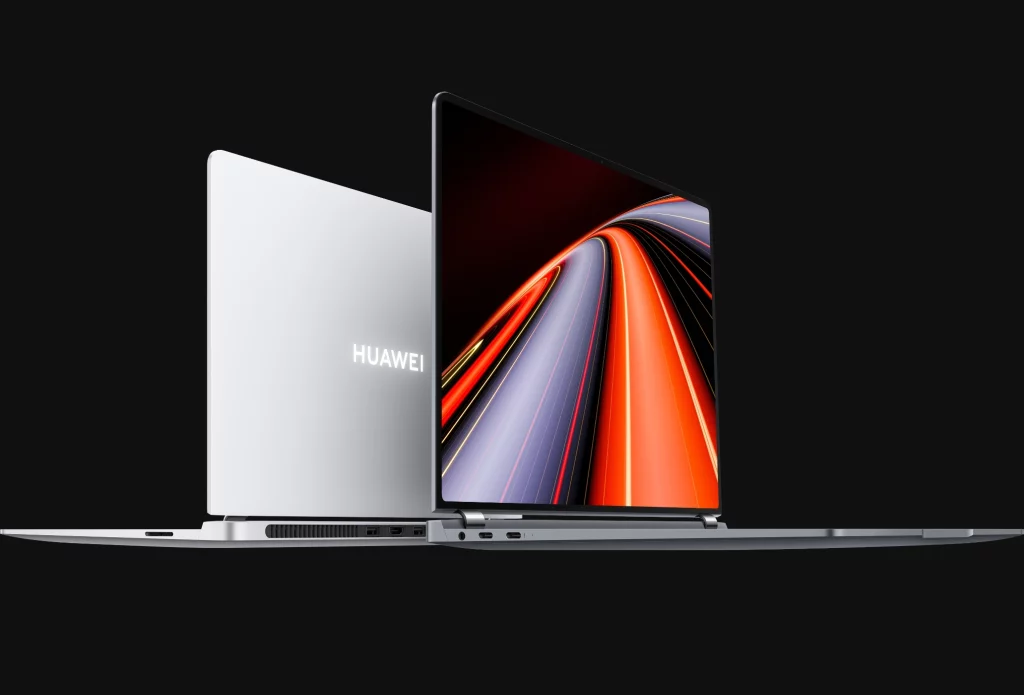
Huawei launched the MateBook GT 14 last week in China, targeting users who need high-performance computing in a slim and sleek design. The laptop now goes on sale on JD.com. Let’s check out its key specs.
Huawei MateBook GT 14 Specifications:
The MateBook GT 14 features a 14.2-inch OLED display with 2.8K resolution, boasting a 91.2% screen-to-body ratio and 1000 nits peak brightness. It offers a wide color gamut, TÜV Rheinland Eye Comfort certification, and Delta E<1 accuracy, making it ideal for professional tasks requiring precise color reproduction, such as photography, video editing, and design.
The MateBook GT 14 comes with Intel Ultra 5/7/9 processors along with up to 32GB of RAM and 2TB of PCIe 4.0 storage. It features a 70Wh battery, supports 140W GaN fast charging, and offers 40W reverse fast charging for other devices, like smartphones and tablets.
The laptop comes with the Huawei Uranus Cooling System with metallic graphene technology and dual Shark Fin fans, improving airflow by 45% and heat conduction by 3.3 times.
It also supports an external GPU dock, the Hi GT Cube, which doubles as a 100W GaN charger. This setup allows the laptop to handle large games and complex applications efficiently, boosting both entertainment and productivity.
For connectivity, the laptop includes HDMI 2.1, USB 3.2 Gen 1, an SD card slot, full-function USB-C, and Thunderbolt 4 ports. The device is also supported by Huawei’s AI Space 2, which offers AI-enhanced productivity tools like real-time meeting minutes and key information identification.
The MateBook GT 14 is designed with an all-metal body, weighing about 1.49kg and measuring 15.3mm in thickness, with the thinnest part of the device at just 6mm. It also features a luminous ‘Huawei’ logo.
Pricing and Availability
The laptop is priced at 7499 Yuan ($1,045) for the Ultra 5 version with 16GB RAM and 1TB storage, 8199 Yuan ($1,142) for the Ultra 5 with 32GB RAM and 1TB storage, 9199 Yuan ($1,282) for the Ultra 7 with 32GB RAM and 1TB storage, and 10999 Yuan ($1,533) for the Ultra 9 with 32GB RAM and 2TB storage. Student buyers of the MateBook GT 14 will receive a 200 Yuan ($28) discount.
QCY has launched a new TWS earbuds called the MeloBuds Neo in the Chinese market. The earbuds are now up for sale on JD.com for 139 Yuan ($19). Let’s check out its key specs.
QCY MeloBuds Neo Specifications:
These earbuds feature a transparent charging case lid that showcases the internal components, creating a distinct and contemporary look. The clear design allows a direct view of the earbuds and their stems, which are adorned with intricate circuit patterns.
The QCY MeloBuds Neo earbuds feature a 10mm dynamic driver with a wool paper biofilm speaker, delivering a wide sound field and clear vocals. They offer nine customizable sound effects, including Pop, Rock, Classical, and Heavy Bass, adjustable via the QCY app.
The earbuds offer impressive battery life, providing up to 7 hours of playback on a single charge and 24 hours in total with the charging case. It also features a smart battery display screen that shows the battery levels of both the earbuds and the case when the lid is opened or the earbuds are placed back.
In terms of connectivity, the earbuds feature Bluetooth 5.3, ensuring a stable connection with a communication distance of up to 10 meters. They also support dual device smart connection, allowing users to connect two devices simultaneously and switch between them easily. The earbuds also come with a low latency of 68ms, making them suitable for gaming.
The QCY MeloBuds Neo also includes four microphones for call noise reduction, enhanced by a wind noise-resistant structure. It ensures clear voice communication even in noisy environments. The earbuds are also water-resistant with an IPX5 rating, making them suitable for use during workouts or in light rain.
The earbuds come with smart touch controls, app customization options including EQ settings, and firmware upgrades. They are compatible with iOS and Android, supporting HFP, A2DP, and AVRCP protocols.
The earbuds are compact and feature a Type-C charging interface, with dimensions of 21.5 x 32.5 x 23.5 mm for the earbuds and 55.0 x 55.0 x 25.2 mm for the charging case.
In a hot deal, Amazon is offering the Apple MacBook Pro M3 with an exciting discount of $300. It is up on retail for the price of around $1300 via Amazon US. However, the stock is depleting quickly, and you may need to hurry if you want to grab the Apple MacBook Pro M3 at a discounted price. At the time of writing, only 7 items were left in stock.
macbook pro m3
Apple MacBook Pro M3 Deal in the US
The Apple MacBook Pro with 8GB of RAM and 512GB of storage is on sale at a discounted price. However, buyers have the option to choose between Silver and Space Grey Color options. The price sans any Apple Care; if you add it, then it costs $300 for 3 years. Still, it is a great price if you get the Apple MacBook Pro M3 at that price.
The MacBook Pro M3 powers the latest Apple Silicon M3 with 8/16 GB RAM and 512GB/1TB of storage options. The new Apple Silicon brings an 8-core CPU and a 10-core GPU, which helps you multitask and do highly intensive tasks easily. It offers upto 22 hours of battery life. It bundles a 14.2-inch Liquid Retina XDR display, 1000 nits of brightness, and 600 nits of brightness for SDR content.
It features an advanced camera, so you don’t have any chance of extra noise while on a video call. Further, it offers an SDXC card slot, an HDMI port, a 3.5mm audio jack, a Magsafe 3 port, two Thunderbolt and USB 4 ports that support DisplayPort, charging, and Thunderbolt 3.
In respect to the MacBook Air M3, the Pro variant ships with a high-resolution display, added ports, and better cooling systems. These added advantages help the machine run more efficiently.
It is an exciting deal, and we suggest you grab it if you were already searching for a good deal on the Apple MacBook Pro M3.
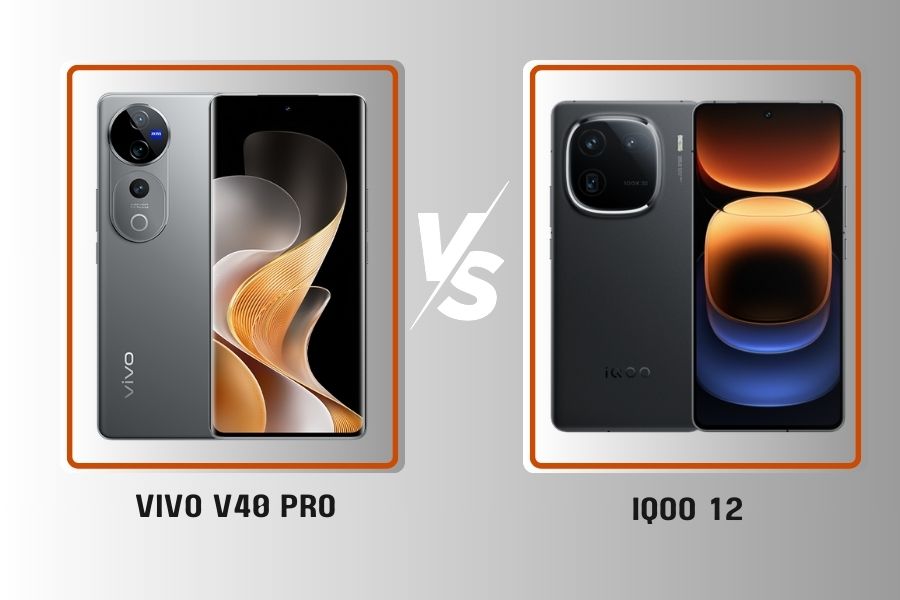
Vivo recently launched the V40 series smartphones in India, with the V40 Pro as the top-of-the-line offering. Priced at around Rs 50,000, it enters a competitive market filled with strong contenders from Xiaomi, Oppo, and even its own sub-brand, iQOO.
We’ve already compared the V40 Pro to rivals like from other brands like Xiaomi 14 Civi and Reno 12 Pro. But how does it stack up against its own sub-brand’s offering, the iQOO 12?
Both phones fall in a similar price range but cater to different needs. The V40 Pro offers a well-rounded experience, while the iQOO 12 focuses on delivering raw power. So which Vivo phone stands out? Let’s dive into the specs, features, and performance to help you decide.
Design and Build
At first glance, the Vivo V40 Pro and iQOO 12 share a similar design with glass fronts and backs. However, there are subtle differences that could sway your decision based on your priorities.
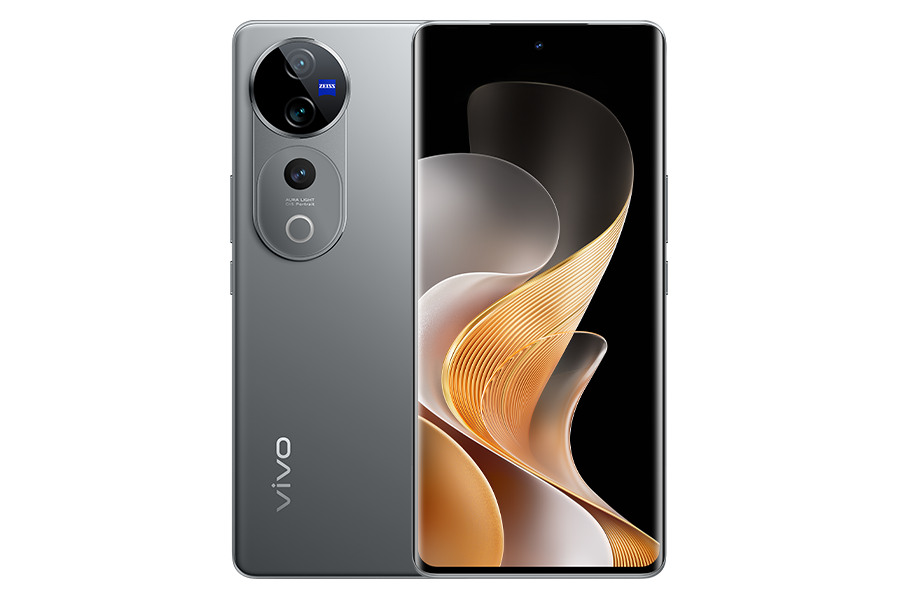
The Vivo V40 Pro is slightly lighter at 192 grams compared to the iQOO 12’s 198.5 to 203.7 grams. While this weight difference may seem minor, it does make the Vivo device feel marginally more comfortable in hand. The V40 Pro’s thinner profile (7.6mm) adds to this comfort.
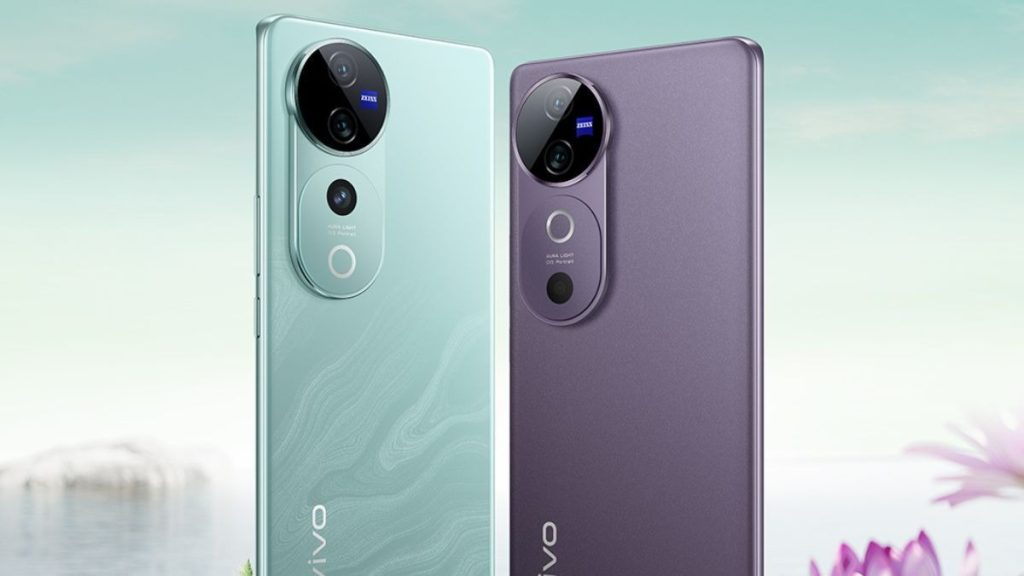
Vivo V40 Pro
The iQOO 12, on the other hand, features an aluminum frame, which might offer a sturdier feel, but it is thicker at either 8.1mm or 8.4mm. Moreover, the V40 Pro’s IP68/IP69 rating provides superior protection against dust and water, compared to the iQOO 12’s IP64 rating, which is limited to dustproof and splashproof capabilities. If you need a phone that can handle tougher environments, the Vivo V40 Pro has a clear advantage.
Display
Both smartphones feature 6.78-inch AMOLED displays with a resolution of 1260 x 2800 pixels and a 20:9 aspect ratio, resulting in a sharp 453 ppi density. The Vivo V40 Pro provides a peak brightness of 4500 nits, supports HDR10+, and boasts a 120Hz refresh rate, ensuring vibrant content and smooth scrolling.
iQOO 12
The iQOO 12 goes a step further with an LTPO display offering a higher refresh rate of 144Hz. Although its peak brightness of 3000 nits is lower than the Vivo V40 Pro, it should still be plenty enough for outdoor usage or watching HDR10+ content.
Performance and Software
For performance, the Vivo V40 Pro is powered by the MediaTek Dimensity 9200+ chipset, while the iQOO 12 features the Qualcomm Snapdragon 8 Gen 3. Both chipsets use a 4nm process for efficiency and power, but the Snapdragon 8 Gen 3, with its advanced Cortex-X4 core, may deliver slightly better performance in CPU-intensive tasks and gaming compared to the Dimensity 9200+.
Additionally, the iQOO 12 benefits from LPDDR5X RAM and UFS 4.0 storage, offering superior performance and faster read and write speeds than the LPDDR4X RAM and UFS 3.1 storage in the Vivo V40 Pro.
Both phones run on Android 14 with Funtouch 14 OS, but the iQOO 12 has the advantage in terms of software support. It will receive three years of Android updates and four years of security patches, while the Vivo V40 Pro is limited to just two years of major OS updates and three years of security updates.
Cameras
As for the camera hardware, the Vivo V40 Pro features a triple-camera setup on the back, with three 50MP sensors: a wide-angle, a telephoto with 2x optical zoom, and an ultrawide. The phone has Zeiss optics and a Ring-LED flash adds to its appeal, particularly for users interested in low-light photography and consistent color reproduction.
The front-facing camera is also impressive, with a 50MP sensor capable of 4K video recording, which could be a strong point for content creators.
The iQOO 12 also features a triple-camera setup but with different specifications. The main sensor is a 50MP wide-angle, accompanied by a 64MP periscope telephoto lens with 3x optical zoom and a 50 MP ultrawide lens. The front-facing camera, however, is a more modest 16 MP.
Battery and Charging
Battery capacity and charging speeds are key areas where these phones differ. The Vivo V40 Pro has a larger 5500 mAh battery, offering a slight edge in endurance over the iQOO 12’s 5000 mAh battery.
However, the iQOO 12 excels in charging speed with its 120W wired charging, comparatively faster than the V40 Pro’s 80W. If quick recharges are important to you, the iQOO 12 will get you back to full power faster, making it a more convenient choice for heavy users.
Connectivity and Additional Features
Both smartphones are well-equipped with the latest connectivity options. The Vivo V40 Pro includes Wi-Fi 7 support, Bluetooth 5.3, and NFC, making it a future-proof option for most wireless connectivity needs. It also features a range of positioning systems, including GPS, GALILEO, GLONASS, QZSS, BDS, and NavIC, catering to various global markets.
The iQOO 12, while similar in many respects, offers a few additional features that might appeal to specific users. It includes Wi-Fi 7, Bluetooth 5.4 with aptX HD and Snapdragon Sound, and an infrared port.
Price
Price is often a decisive factor, and both devices are competitively priced within their segment. The Vivo V40 Pro starts at ₹49,999 (approximately $596) for the 8GB RAM + 256GB storage variant and goes up to ₹55,999 (approximately $667) for the 12GB RAM + 512GB storage model.
The iQOO 12, slightly higher in price, starts at ₹52,999 (around $635) for the 12GB RAM + 256GB variant, with the 16GB RAM + 512GB model priced at ₹59,999 (around $720).
Please Note: When you buy something using the links in our articles, we may earn a small commission at no cost to you.
Conclusion
Both the Vivo V40 Pro and iQOO 12 offer compelling packages, but their appeal depends on the user’s priorities. The Vivo V40 Pro leans towards a more refined design with an emphasis on durability, battery life, and a balanced performance.
In contrast, the iQOO 12 targets users who prioritize raw power, faster charging, and advanced camera features. The choice between these two devices ultimately depends on individual preferences and usage patterns.
Here’s a quick recap of Vivo V40 Pro and iQOO 12’s specifications:
Feature
Vivo V40 Pro
iQOO 12
Dimensions
164.4 x 75.1 x 7.6 mm
163.2 x 75.9 x 8.1 mm or 8.4 mm
Weight
192 g
198.5 g or 203.7 g
Build
Glass front, glass back
Glass front, aluminum frame, glass back
Water Resistance
IP68/IP69 dust/water resistant (up to 1.5m for 30 min)
Both Vivo and Xiaomi have recently launched their latest contenders in the premium smartphone segment – the Vivo V40 Pro and the Xiaomi 14 Civi. While both phones boast impressive specs and aim to attract a similar audience, some key differences might influence your purchase decision. Let’s delve deeper and compare these two devices across various aspects.
The Vivo V40 Pro features a slightly larger 6.78-inch AMOLED display with a 1.5K resolution compared to the Xiaomi 14 Civi’s 6.55-inch 1.5K OLED panel. Both offer a smooth 120Hz refresh rate for a seamless viewing experience.
However, the V40 Pro boasts a higher 4500 nits peak brightness compared to the Civi’s 3000 nits, making it potentially better suited for outdoor use under direct sunlight.
Both the V40 Pro and Xiaomi 14 Civi feature curved displays, but they differ in intensity. The V40 Pro boasts a fully curved design for a more immersive experience, while the Xiaomi 14 Civi offers a subtle four-side micro-curve. Ultimately, display curvature is a matter of personal preference.
Both phones also offer HDR support (HDR10+ on the V40 Pro and HDR10+ and Dolby Vision on the Civi) for enhanced visuals.
Please Note: When you buy something using the links in our articles, we may earn a small commission at no cost to you.
2. Performance
The Vivo V40 Pro packs the MediaTek Dimensity 9200+ processor, which is the latest iteration of the Dimensity 9200 series known for its powerful performance. The Xiaomi 14 Civi, on the other hand, is equipped with the Qualcomm Snapdragon 8s Gen 3 chipset.
Both processors are top-of-the-line and offer excellent performance for demanding tasks like gaming and multitasking. However, benchmark results suggest the Dimensity 9200+ might edge out the Snapdragon 8s Gen 3 in terms of raw processing power, particularly under sustained load.
However, the Vivo V40 Pro is equipped with slightly less powerful LPDDR5 RAM and UFS 3.1 storage, compared to the Xiaomi 14 Civi’s LPDDR5x RAM and UFS 4.0 storage. The Civi’s upgraded RAM and storage contribute to improved multitasking and faster app loading.
3. Camera
Both phones offer a versatile triple rear camera setup. The Vivo V40 Pro features a 50MP main sensor with Sony’s IMX921 sensor and OIS for sharper low-light photos, accompanied by a 50MP ultrawide and a 50MP telephoto lens for capturing close-up shots.
The Xiaomi 14 Civi also utilizes a 50MP main sensor with Leica Summilux lens. It’s backed by a 12MP ultrawide sensor and a 50MP telephoto lens.
Both phones offer impressive front-facing cameras, with the Vivo V40 Pro sporting a single 50MP sensor and the Xiaomi 14 Civi boasting a dual setup consisting of two 32MP sensors, including an ultrawide option.
Ultimately, the best camera choice depends on your priorities and shooting preferences, but on paper, the Vivo V40 Pro holds a slight edge.
4. Software
Both phones run the latest Android 14 operating system. Vivo utilizes its Funtouch OS 14 on top of Android, while Xiaomi utilizes its HyperOS interface. Both are custom UIs with their own unique features and aesthetics.
Ultimately, the best software for you depends on personal preference and whether you prefer a more minimalist or feature-rich user experience.
Both phones are offering 3 Android version updates and security patches for 4 years.
5. Battery and Charging
The Vivo V40 Pro boasts a larger 5500mAh battery compared to the Xiaomi 14 Civi’s 4700mAh capacity. This could translate to longer battery life for the Vivo phone, especially for heavy users.
Both phones support fast charging – the Vivo V40 Pro offers 80W fast charging, while the Xiaomi 14 Civi utilizes 67W fast charging. While the difference in charging speeds might not be significant in real-world usage, the Vivo V40 Pro could potentially charge slightly faster.
6. Design and Build
The Vivo V40 Pro features a sleek design with a glass back. The Xiaomi 14 Civi has a slightly more compact form factor with a choice of glass or vegan leather back options. While both phones offer a premium feel, the material choice might influence your decision based on preferences for grip and durability.
The Vivo V40 Pro offers superior protection against water and dust with its IP68 rating, while the Xiaomi 14 Civi has a more limited IP54 rating.
7. Pricing
The Vivo V40 Pro starts at Rs. 49,999 for the 8GB + 256GB variant and goes up to Rs. 55,999 for the 12GB + 512GB model. The Xiaomi 14 Civi starts at Rs. 42,999 for the 8GB + 256GB version and costs Rs. 47,999 for the 12GB + 512GB variant. The Xiaomi 14 Civi offers a more affordable starting price for the same RAM and storage configuration.
8. Conclusion
Vivo V40 Pro is a strong contender if you prioritize a larger display with higher peak brightness, a slightly longer battery life, and a more powerful processor. Its IP68 rating for dust and water resistance is also a significant advantage for those who often find themselves in challenging environments. The Vivo’s camera system is versatile, with three 50MP sensors, while the Zeiss branding adds a premium touch.
However, Xiaomi 14 Civi excels in terms of design with its slim profile and attractive color options. It also offers a competitive camera setup with a larger main sensor and Leica tuning. The device has also a slight edge in performance due to its superior RAM and storage types.
Ultimately, both phones are flagship-level devices with impressive specifications. However, considering the specifications and pricing, the Xiaomi 14 Civi appears to offer better overall value in our opinion.
Samsung launched the Galaxy Z Fold 6 and Flip 6 with Android 14-based One UI 6.1.1, which packs a couple of new AI features. A report already claims that Samsung is going to Expand some of the Galaxy AI features to its A series with the One UI 6.1.1 update. So there’s a lot of work for Samsung to do in the near future. As a consequence of that, It was also reported that Samsung has delayed the One UI 7 beta due to being too busy working on One UI 6.1.1. The company was supposed to roll out the beta version of Android 15-based One UI 7.0 last week.
While Samsung is busy rolling out Android 14-based One UI 6.1.1 to existing models, leaks and rumors about Android 15-based One UI 7.1 have already started coming in. The latest one comes from famous tipster Ice Universe, who claims that the One UI 7.1 will be one of the selling points of the Galaxy S25 series and will come with major improvements. He also notes that the One UI 7 will focus on improving the animations (including elegant animation) and the fluency of the UI.
To recall, the Galaxy S24 series was launched with One UI 6.1 based on Android 14, which brought new and improved Galaxy AI features. It won’t be surprising to see the S25 series coming out with Android 15-based One UI 7.1 which offers an improved UI experience with new features. Notably, every new version of One UI has brought improvements in various aspects compared to the previous version.
Unfortunately, the tipster couldn’t reveal more about the expected changes in One UI 7.1. Speaking of the Galaxy S25 series, some of the battery, charging, and camera details of the Galaxy S25 Ultra have already been revealed by Weibo tipster Digital Chat Station, which you can check out here.
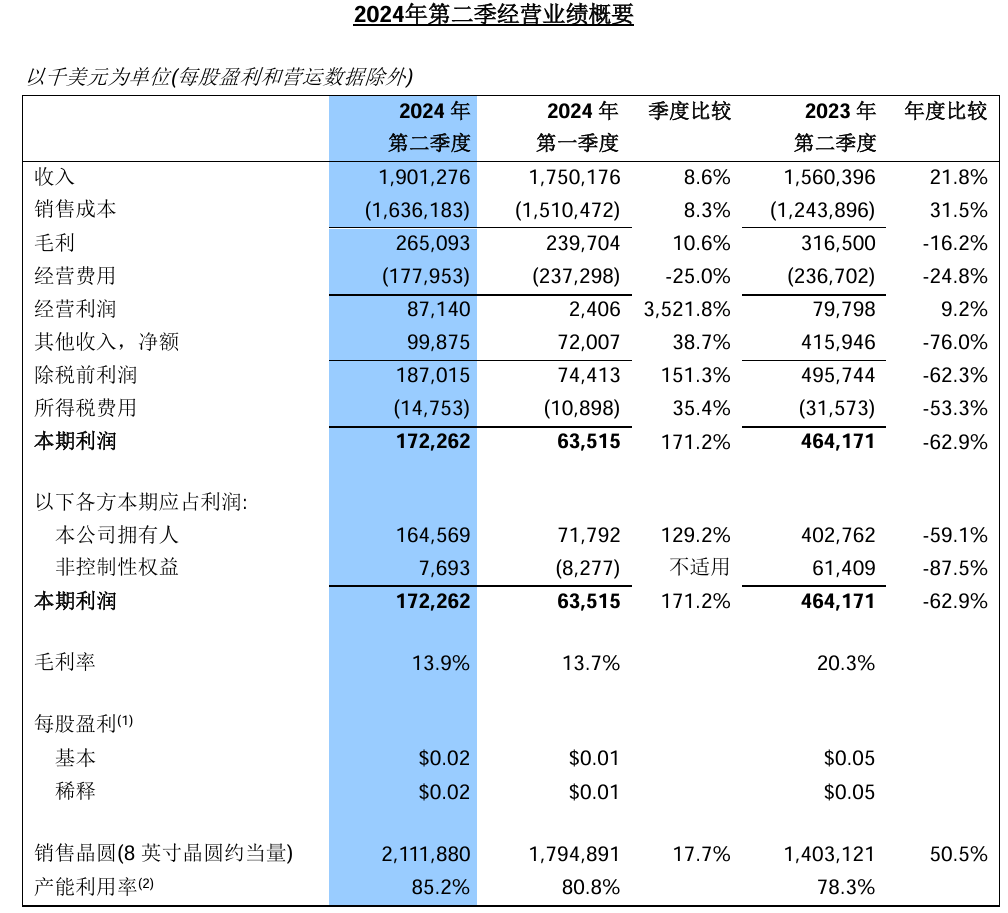
China’s semiconductor foundry leader SMIC has released its financial report for the second quarter of the year today. According to the report, the company has achieved a sales revenue of US$1.9013 billion (equivalent to RMB 13.635 billion). This is reportedly a month-on-month increase of 8.6% and a year-on-year increase of 21.8%.
The company’s gross profit margin in the second quarter was 13.9%; net profit in the second quarter was US$164.6 million (currently approximately RMB 1.18 billion), which was estimated to be US$76.3 million, a month-on-month increase of 129.2% and a year-on-year decrease of 59.1%.
Reportedly, 36.5% of the company’s revenue in Q2 2024 came from consumer electronics, 32% from smartphones, 13.3% from PCs and tablets, 11% from Internet and wearables, and 8.1% from industry and automobiles. From a regional perspective, 80.3% of the company’s second-quarter revenue came from China alone. In comparison, only 16% of it came from the US and only 3.7% came from Eurasia. Notably, the second quarter sales revenue and gross profit margin were better than expected.
In terms of wafer size, 12-inch wafers accounted for 73.6% of SMIC’s revenue in the second quarter, while 8-inch wafers accounted for 26.4% of its revenue. The company’s monthly production capacity increased from 814,500 8-inch equivalent wafers in Q1 2024 to 837,000 8-inch equivalent wafers in Q2 2024.
SMIC’s capacity utilization rate continued to increase to 85.2% in Q2 this year. It sold 2.11188 million 8-inch equivalent wafers In the period, which is a month-on-month increase of 17.7% and a year-on-year increase of 50.5%. The company’s capital expenditure in Q2 was US$2.2515 billion, slightly higher than US$2.2354, which was the capital expenditure in Q1.
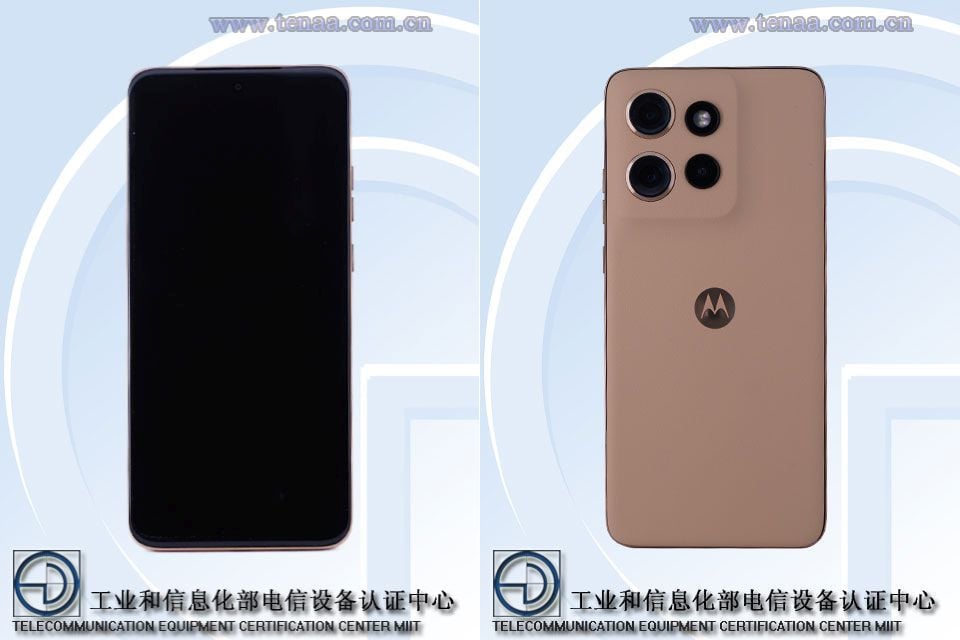
A new Motorola phone with model number XT2409-5 has received approval from China’s TENA certification platform. This phone is speculated to be the Moto S50 Neo, the Chinese variant of the Motorola Edge 50 Neo. This phone has also obtained network access approval in the country.
Motorola Edge 50 Neo TENAA images
In the latest news, tipster @WHYLAB speculates that this phone uses the Snapdragon 7 Gen 1 Accelerated Edition chipset. It was previously revealed that the octa-core CPU reaches a clock speed of 2.5GHz, which also supports the speculation. Reportedly this is the same chipset that powers the Honor 90.
For those unfamiliar, the chipset packs a Cortex-A710 clocked at 2.5GHz alongside three other Cortex-A710 cores clocked at 2.36GHz and four Cortex-A510 cores clocked at 1.8 GHz. It uses the Adreno 644 GPU. This chipset supports LPDDR4X memory and UFS 2.2 storage. It could be paired with up to 16GB RAM and 1TB storage.
According to previous reports, the Moto S50 Neo will be available in three colors – Grisaille (black), Nautical Blue, Poinciana (red), and Latte (beige). As you can see from the image above, the phone comes with a familiar back design. Speaking of the camera system, it is expected to pack a 50-megapixel main sensor, a 13-megapixel ultrawide sensor, a 10-megapixel telephoto, and another 32-megapixel one for the selfie camera. The telephoto on the back could offer 3x magnification.
The Motorola S50 Neo is expected to come with a 6.36-inch OLED FHD+ display with a resolution of 1200 x 2670 pixels that will display 10-bit colors. It is also expected to pack a 4300 mAh battery and weigh 172 grams.
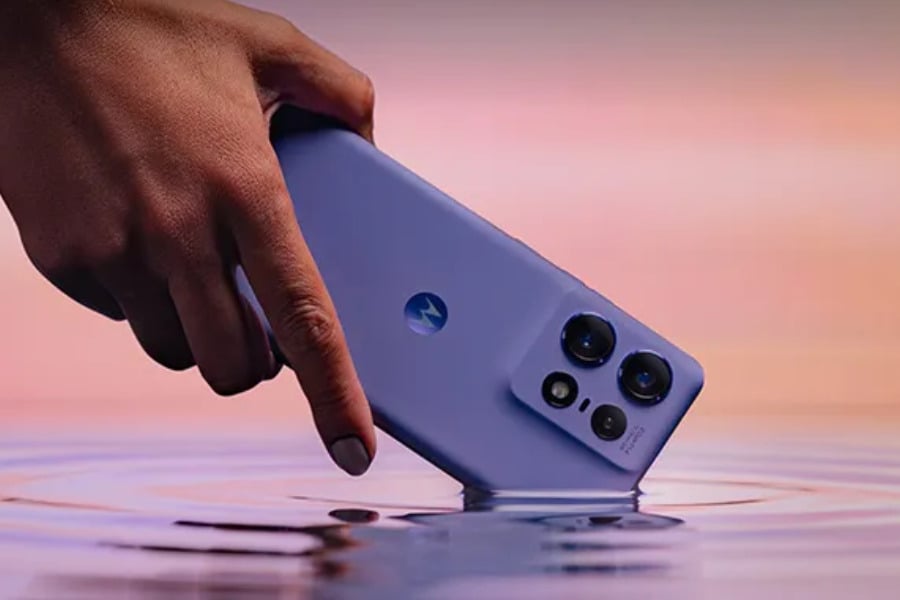
Motorola unveiled the Edge 50 in India last week as the brand’s latest mid range option. It aims to be an all rounder with capable specs and features. But this is a competitive segment which Chinese brand often dominate. So how does the Edge 50 stack up against another popular alternative, the Oppo Reno 12? Here’s a quick comparison.
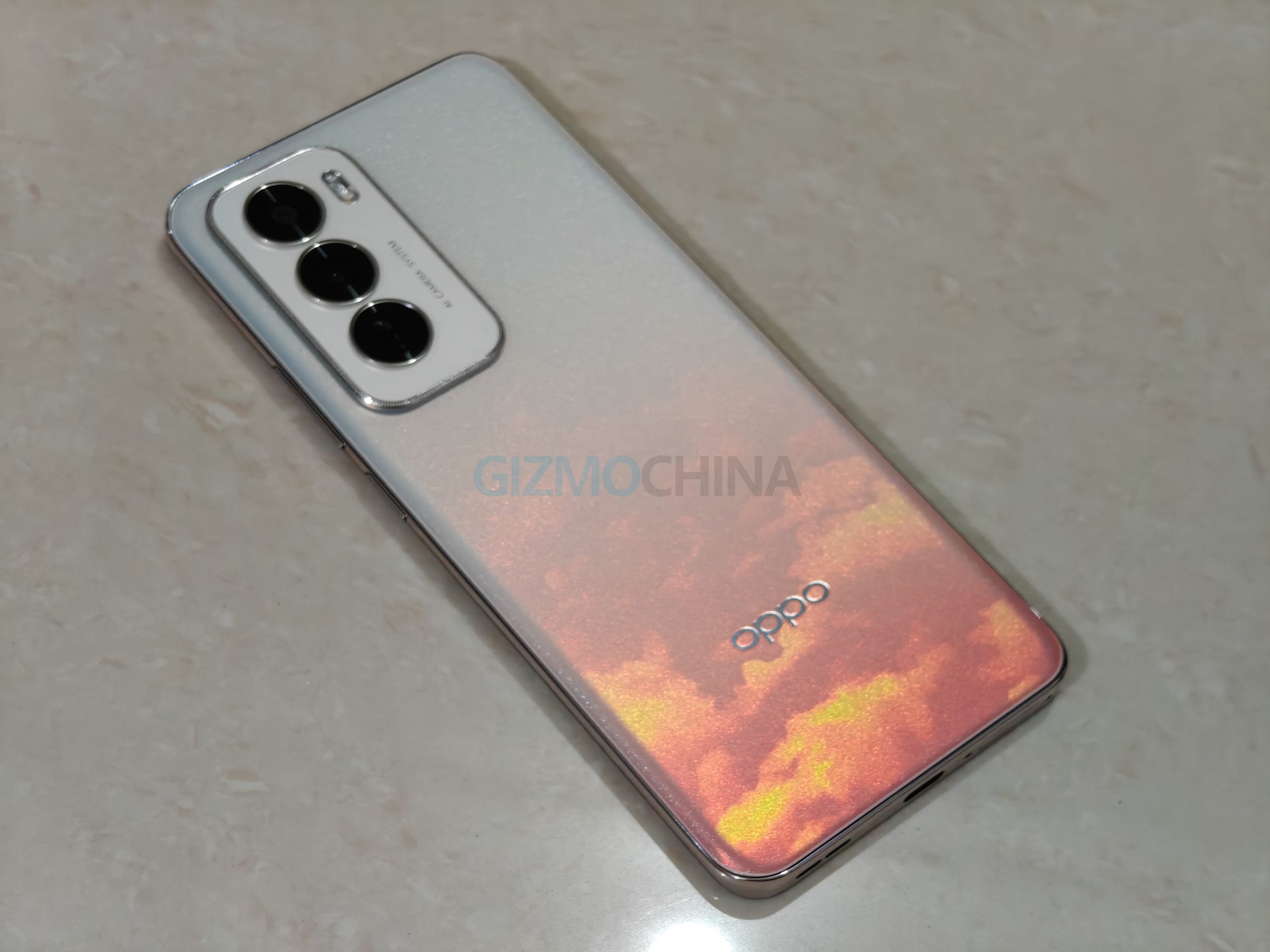
Oppo announced the Reno 12 with an All-Round Armour protection for resistance against drops and impacts. It also employs an alloy framework for a sturdy build and an IP65 rating for water and dust resistance. However, the Chinese company uses a plastic frame and plastic back panel. The front sports a tall 6.7-inch OLED FHD+ curved AMOLED display with a 120Hz refresh rate, 1200 nits of peak brightness, HDR10+ support, and an in-display fingerprint scanner. This panel is protected by Corning’s Gorilla Glass 7i.
On the other hand, the Motorola Edge 50 arrives with a higher IP68 rating for water and dust resistance as well as MIL-STD-810H compliant. In other words, it has received military certification. The rear has an eco leather finish while the sides have a metallic frame for a more premium feel. This model also has a 6.7-inch OLED display along with support for a 120hz refresh rate, HDR10+, 1900 nits of peak brightness, SGS Blue Light Reduction certification, Smart Water Touch technology, and Gorilla Glass 5 protection.
Please Note: When you buy something using the links in our articles, we may earn a small commission at no cost to you.
2. Hardware
Oppo Reno 12
Under the hood, Motorola equips the Edge 50 with a Qualcomm Snapdragon 7 Gen 1 SoC, which is paired with 8GB of RAM and up to 256GB of internal storage. For software, it runs on the Android 14 OS based Hello UI as well as Google AI for features like Magic Eraser, Photo Unblur, and Magic Editor. Motorola also employs its own AI enhancements on the Edge 50. A large 5,000mAh battery pack powers this device, which supports 68W wired fast charging, 15W wireless charging, and 5W reverse wireless charging. Other notable features include Dolby Atmos, Hi-Res audio, and an in-display fingerprint scanner.
In comparison, the Oppo Reno 12 features the MediaTek Dimensity 7300 Energy processor that is coupled with 8GB of RAM and 256GB of internal storage. Unlike the Edge 50, users can expand the storage via a microSDXC card. It also runs on the Android 14 OS based ColorOS 14 custom skin out of the box. Oppo unveiled the Reno 12 series with various AI powered features. There’s AI Eraser 2.0, AI Clear Face, AI Best Face, AI Smart Image Matting 2.0, and AI Studio. A sizeable 5,000mAh cell powers this device, with 8-W wired fast charging. There is also an IR Blaster, in-display fingerprint scanner, and dual speakers.
3. Camera
For photography, the Edge 50 features a 50MP primary camera with Sony’s Lytia 700C sensor, a 10MP 3x telephoto shooter, and a 13MP ultra-wide lens. On the front, there is a 13MP camera for selfies and video calls. The Reno 12 also comes with a triple-lens rear setup with a 50MP main sensor, an 8MP ultrawide sensor, and a 50MP telephoto sensor with 2x optical zoom and up to 20x digital zoom. For selfies, the device houses a 32MP camera.
4. Pricing and Verdict
Oppo launched the Reno 12 with a 32,999 INR price tag for the sole 8GB + 256GB configuration. This makes it noticeably more expensive than the Motorola Edge 50, which costs 27,999 INR for the same storage option. These two models are quite comparable in terms of specs and performance. But the design and pricing are what make the Motorola Edge 50 a great choice for those who don’t wish to spend more than 30,000 INR.
Vivo recently launched the V40 Pro, their latest flagship in the V series. While it boasts impressive specs, the company continues to sell the V27 Pro, V29 Pro, and V30 Pro at more affordable prices. This raises the question: is the V40 Pro worth the premium price tag compared to its predecessors? Let’s delve into a detailed comparison to help you decide.
All four phones have a 6.78-inch AMOLED display with a 120Hz refresh rate. The V40 Pro, V29 Pro, and V30 Pro feature a higher 1.5K resolution (2800 x 1260 pixels), while the V27 Pro has an FHD+ resolution (2400 x 1080 pixels).
The V40 Pro stands out with a peak brightness of 4500 nits, offering superior outdoor visibility compared to the V27 Pro and V29 Pro’s 1300 nits and the V30 Pro’s 2800 nits.
2. Performance
The Vivo V40 Pro is powered by the MediaTek Dimensity 9200+ SoC, which is a significant upgrade over the Dimensity 8200 found in the Vivo V30 Pro, V29 Pro, and V27 Pro. The Dimensity 9200+ is a flagship-grade chipset that offers faster processing speeds, better graphics performance with the Immortalis-G715 GPU, and improved efficiency thanks to its 4nm architecture. This makes the V40 Pro not only more powerful for everyday tasks but also more capable in competitive gaming and other intensive applications.
The V40 Pro comes with 8GB or 12GB LPDDR5 RAM and storage options of 256GB or 512GB UFS 3.1. In comparison, the V27 Pro and V29 Pro offer up to 12GB LPDDR5 RAM with up to 256GB UFS 3.1 storage, while the V30 Pro provides a top-tier 12GB LPDDR5X RAM option with up to 512GB UFS 3.1 storage.
3. Camera
All four phones boast a triple rear camera system, but the V40 Pro offers the most impressive setup. It features a 50MP main sensor with Sony’s IMX921 sensor and OIS enhanced by ZEISS optics for sharper photos and steadier videos.
The V30 Pro is equipped with the Sony IMX920 sensor, while the V27 Pro and V29 Pro use the slightly older Sony IMX766 and IMX766V sensors, respectively. Both the V40 Pro and V30 Pro have an advantage in low-light photography thanks to their more advanced sensors.
The V40 Pro also shines with its 50MP telephoto lens with 2x optical zoom for capturing zoomed-in shots with better detail compared to the 2MP macro lens found on the V27 Pro. The V30 Pro also comes with a 50MP telephoto sensor while V29 Pro offers a 12MP telephoto sensor with 2x optical zoom, a decent middle ground.
Coming to the ultra-wide cameras, the V40 Pro and V30 Pro are equipped with 50MP sensors, while the V29 Pro and V27 Pro come with 8MP sensors. For the front-facing cameras, all the phones feature 50MP sensors.
4. Battery and Charging
The V40 Pro boasts a slightly larger 5500mAh battery compared to the V27 Pro and V29 Pro’s 4600mAh batteries. The V30 Pro sits in the middle with a 5000mAh battery. While real-world usage might show minimal differences, the V40 Pro could potentially offer slightly longer battery life on a single charge.
However, V40 Pro along with V30 Pro and V29 Pro support 80W fast charging, ensuring quick top-ups when needed. This is a significant improvement over the V27 Pro’s 66W fast charging.
5. Software and Other Features
V40 Pro and V30 Pro run on the latest Android 14 with Funtouch OS 14 on top. While the other two come with Android 13 with Funtouch OS 13 out of the box. Although they are upgradable to Android 14.
Vivo promises 3 Android updates and 4 years of security updates for both V40 Pro and V30 Pro, ensuring sustained software support.
All four phones feature in-display fingerprint sensors, but the V40 Pro stands out with an IP68 rating for dust and water resistance, offering superior protection against the elements compared to the others, which have an IP54 rating.
6. Price and Availability
All four phones are available for purchase. The Vivo V40 Pro is priced at Rs. 49,999 for the 8GB + 256GB variant and Rs. 55,999 for the 12GB + 512GB variant. In comparison, the Vivo V30 Pro, V29 Pro, and V27 Pro are available at significantly lower prices now, with the V30 Pro starting at Rs. 41,999, the V29 Pro at Rs. 39,999, and the V27 Pro at Rs. 31,990.
7. Conclusion
The Vivo V40 Pro undoubtedly offers top-tier specifications with its powerful processor, impressive camera system, and vibrant display. However, it comes with a premium price tag. If you’re a demanding user who prioritizes the latest hardware and cutting-edge features, the V40 Pro is a compelling choice.
On the other hand, if you’re looking for a more budget-friendly option without compromising on performance too much, the V30 Pro, V27 Pro, or V29 Pro could be excellent alternatives. They offer pretty good cameras, decent displays, and fast charging at a more affordable price point.
Ultimately, the best choice depends on your specific needs and budget. If you’re willing to spend extra for the latest and best, the V40 Pro is worth considering. However, if you prioritize value and don’t need the absolute top-tier specs, the V27 Pro, V29 Pro, or V30 Pro could be equally satisfying options.
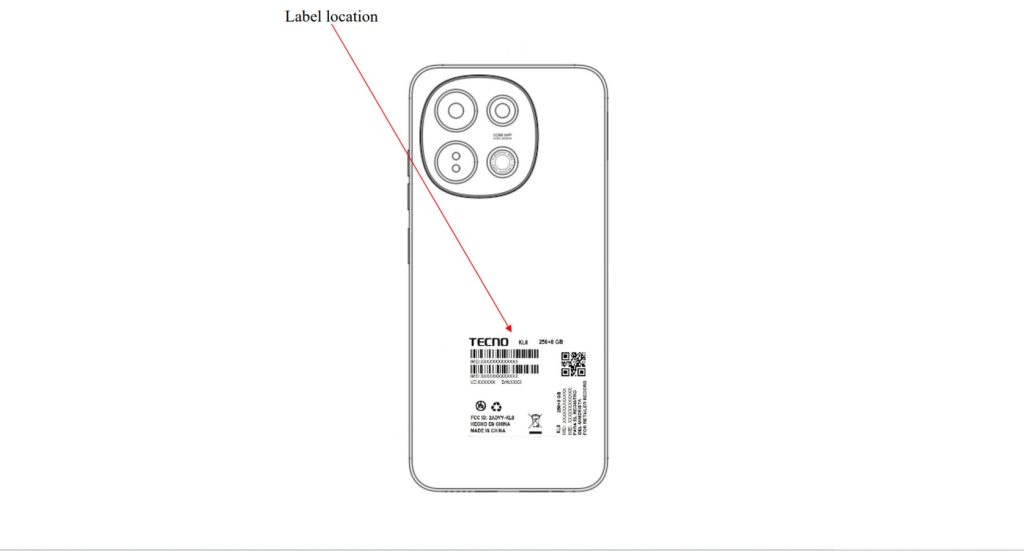
Tecno is reportedly working on the Spark 30 5G smartphone. It is expected to arrive as the successor to last year’s Spark 20 that released in December. Now, the Spark 30 5G has been spotted on the FCC certification website. It mentions some key details about the device along with a schematic render that reveals the device’s design.
Tecno Spark 30 5G bags FCC
The Tecno Spark 30 5G has been listed on the FCC certification website with the model number KL8 and 2ADYY-KL8 as the FCC ID. As per the schematic image, the smartphone has a squircle-shaped camera module. It looks like a square but has curved corners. The power and volume rocker buttons are located on the right side. The former will likely double up as a fingerprint scanner.
As per the certification listing, the Tecno Spark 30 5G will come with support for 18W fast charging. It will pack 8GB RAM and 256GB internal storage. Dimensions-wise, the device will measure 165 x 76 x 8mm. The rest of the details of the smartphone remain under the wraps. The FCC certification mentions 5G, so we can expect the device to be equipped with a 5G-compatible processor. We can expect it to surface on more certification sites that should reveal more details.
To recall, the Tecno Spark 20 has a 6.6-inch display with a centre-aligned punch-hole cutout, an HD resolution, and a 90Hz refresh rate. Internally, it is powered by a Helio G85 processor and offered in two variants – 4GB + 128GB and 8GB + 256GB. The device features a 50MP main camera coupled with a 0.08MP secondary sensor. The smartphone is backed by a 5,000mAh battery unit with support for 18W fast charging.
iQOO has just shared a new teaser that confirms a new hearable product. The company is gearing up to launch its first ever truly wireless earbuds in the Indian market. We get a glimpse of this audio product in the teaser. So let’s have a look.
iQOO teases new TWS Earbuds
The Chinese brand’s teaser was shared by its senior executive Nipun Marya who shared the image poster on X (formerly Twitter). While the company has released hearable gadgets in the past, this would be the first time it is launching a model in India. Looking at the teaser, iQOO only shares a coming soon message and does not reveal any finer details like its name, pricing, or specs.
But looking at the teaser poster, we can see silicon eartips with a stem design on the earbuds, while the charging case carries a dual tone finish. The inner parts of the upcoming iQOO TWS earbuds feature a bright yellow hue, while the outside has a dark color. This looks pretty familiar to an existing wireless earphones, which the company launched recently. We’re talking about the iQOO TWS 1i that was unveiled in the brand’s home market of China last month.
It is worth noting that this is still just speculation at this moment. To recall, this model features 10mm audio drivers along with support for 3D panoramic audio. This model comes with support for DeepX 3.0 stereo sound effects for a more personalized listening experience. For gamers, the iQOO TWS 1i also supports 55ms low latency to get rid of any delays and ensure smooth audio and video synchronization. Other notable features included a long 45 hours battery life, fast charging support, IP54 rating for water and dust resistance, and more. The company will likely unveil this alongside the new iQOO Z9s Pro on August 21, so stick around for more updates.
Tecno started work on the new affordable Tecno POP 9 series. Gizmochina has spotted the new smartphones in the IMEI database. The company aims to gain a position in the affordable phone market with the POP 9 series.
Tecno POP 9 series
Tecno wants to increase competition in the smartphone market. The company will soon launch the affordable Tecno POP 9 series. Gizmochina has spotted 2 new smartphone models of the POP 9 series. The Tecno POP 9 series consists of two models: POP 9 4G and POP 9 5G. Tecno’s POP 9 4G smartphone will likely have similar specifications to the previous POP 8. The POP 8 was powered by a Unisoc T606 processor. The POP 9 4G may have similar specifications.
Coming to the Tecno POP 9 5G, this should be quite different from the 4G versions. The POP 9 5G has a 5G SOC, as the name suggests. But we don’t know which processor it has. We only have the model number of the devices.
The Tecno POP 9 4G comes with model number KL4. The POP 9 5G has the model number KL8. The Tecno POP 8 was announced in October 2023. We expect the new POP 9 series to be unveiled in October 2024. But we don’t have an official launch schedule. Therefore, we can’t say anything for sure.
There is currently no detailed information about the technical specifications of these smartphones. However, the devices may offer some innovations compared to their predecessor, the Tecno POP 8. So let’s take a look at the Tecno POP 8 specifications to get an idea about this new smartphone.
This smartphone is powered by the Unisoc T606 processor. At the same time, the device has up to 4GB of RAM and up to 128GB of storage. The smartphone is equipped with a 5,000 mAh battery and runs on Android 13 (Go Edition). For those who don’t know; “Go Edition” means a simplified version. Users will be able to use the next-generation features of Android 13 on this operating system, while memory consumption will be quite low.
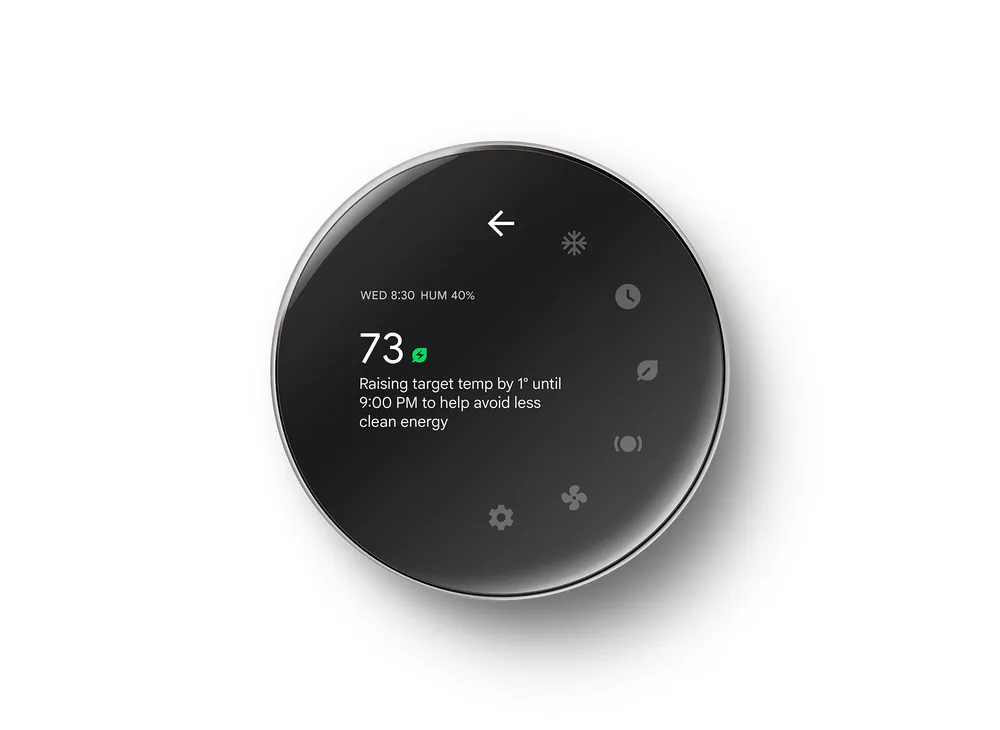
Google has recently announced a couple of new smart home products. We previously covered the launch of the Google TV Streamer 4K a while back, and now, the brand has unveiled the Nest Learning Thermostat. Similar to the TV Streamer, this gadget is also smarter thanks to AI.
Google Nest Learning Thermostat Specs
The search engine giant has been working on bringing AI to its software like Google Photos, Gmail, and others. But the integration of AI has expanded to its physical products as well. The Google TV Streamer is a great example and the Google Nest Learning Thermostat expands on this as well. Officially, the gadget is dubbed the Nest Learning Thermostat 4th Gen. It brings a refreshed design and new AI powered features to your smart home.
The company has made its screen bigger with thinner bezels than its predecessor. The panel displays key information like time, temperature, weather, and outdoor air quality. Google’s new Nest Learning Thermostat arrives in three color variants, namely Polished Silver, Polished Obsidian, and Polished Gold. A major smart feature of this device is automatic micro adjustments based on the user’s patterns. These changes are also based on the analysis of the temperature and weather conditions outside. This pebble shaped product can be controlled via the Google Home app.
Pricing and Availability
Google has unveiled the Nest Learning Thermostat and it is currently on pre-order at select Google stores and select retailers. It has a price tag of 279.99 US Dollars in the US and 379.99 US Dollars in Canada. First sales for this device will kick off on 20th August 2024. The Nest Learning Thermostat also comes with additional sensors, which you can buy for 39.99 US Dollars each or for 99.99 US Dollars for a 3 pack.
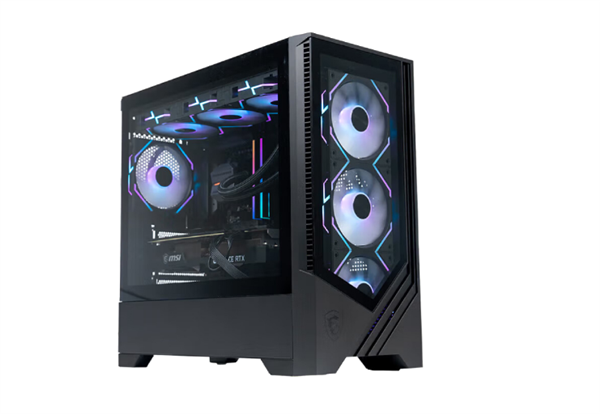
AMD’s Ryzen 9000 series desktop processors are finally available. MSI has officially announced three PC builds equipped with Ryzen 9000 series processors, the top-of-the-line build uses the Ryzen 9 9950X, paired with the RTX 4080 Super. So let’s take a look one by one.
The first one packs Ryzen 5 9600X + AMD Radeon RX 6750 XT 10GB graphics
The first one is based on the Ryzen 5 9600X and is equipped with an AMD Radeon RX 6750 XT 10GB graphics card, which can offer a decent gaming and multitasking experience. This build uses the MSI PRO B650M-B motherboard, which provides a solid foundation for the build. This PC comes with a 1TB Kingston NV2 M.2 high-speed SSD.
Speaking of the power supply, it uses the MAG A600DN PSU, which provides a stable power supply. On the exterior, you will be looking at the MSI PAG FORGE M100L “Tomahawk Mini” case, which comes with a transparent side.
This build reportedly costs 5,499 yuan, which is equivalent to US$770.
The second build packs a more capable Ryzen 7 9700X CPU
This build uses the Ryzen 7 9700X CPU, which comes with an 8-core 16-thread design and a maximum acceleration frequency of up to 5.5GHz. It can easily handle many high-intensity workloads and heavy titles. The Ryzen 7 9700X is paired with Lexar 32GB dual-channel DDR5 memory. This build equips the MSI B650M GAMING WiFi motherboard, which comes with built-in WiFi6E for reliable connectivity.
For cooling it packs Limin’s 360 water cooling and PAG FORGE M100L case for a transparent look. This build is priced at 9,499 yuan, which is equivalent to US$1325.
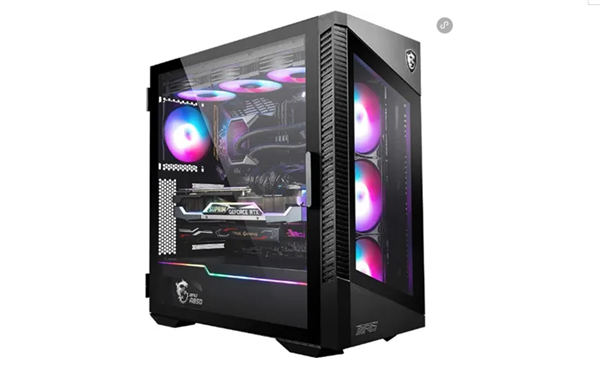
The top-of-the-line build boasts the Ryzen 9 9950X CPU and MSI RTX 4080 Super GPU
The motherboard in this build, the MSI X670E GAMING PLUS, also supports built-in WiFi connectivity. The Ryzen 9 9950X CPU packs 16 cores and 32 threads and reaches a Max Boost Clock of 5.7GHz, where the base clock speed is 4.3GHz. The default TDP of this chip is 170W.
The MSI RTX 4080 Super graphics card pushes the graphics processing capabilities to the top. This build should handle both heavy games and professional graphic design.
Speaking of storage and memory, this build uses the ADATA D500G DDR5-6800MHz high-frequency memory and the Pterosaur S70 Blade 1TB M.2 SSD.
It uses the 850W MAG A850GL PCIE5 power supply and Limin’s WARFRAME PRO 360 ARGB ice armor water cooling system. On the exterior, it offers the MPG VELOX 100R blade case.
A pre-release version of Google‘s upcoming Weather app, intended for the Pixel 9 series, has surfaced online. While the Pixel 9 launch is still a week away, users eager to try out new features can now sideload the app on their Android 14 devices.
Currently, Google bundles weather information within the clock app, but it will be launching a dedicated weather app with the Pixel 9 series. That means Pixel 9 phones will be the first to come pre-loaded with this new app.
The app has a pretty minimalist design. It displays the current weather conditions at the top followed by an hourly forecast. Below that, there’s a large tile that shows a 10-day forecast. This is also the only interactive tile on this APK which you can click to view detailed weather information for the upcoming days.
Below this, you will find separate circular and square tiles that show details like wind speed, sunrise and sunset times, UV Index, and more.
Although you can now sideload the app — I tested it on my Galaxy S22 Ultra, and it works fine — the app might not function properly on every device. Also, make sure the device you’re sideloading it on runs Android 14 or above.
This pre-release version might also be missing features that will appear in the final release. According to a 9to5Google report, the app will eventually offer weather notifications. Additionally, Dylan Roussel on X (formerly Twitter) mentioned that it will include features like weather maps and AI-generated weather summaries.
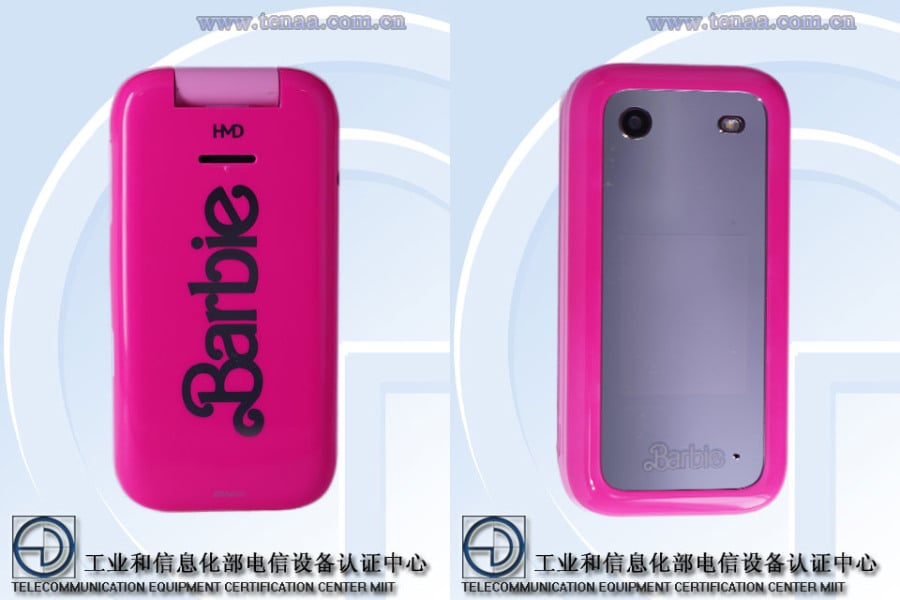
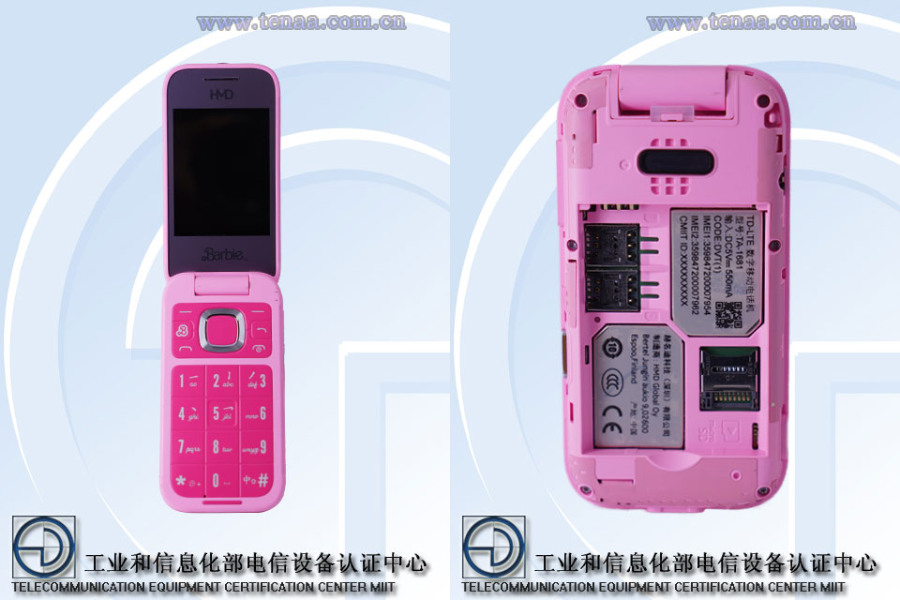
Following HMD‘s confirmation of a global launch for the HMD Barbie phone on August 28th, its specs and renders have now surfaced on China’s TENAA certification.
When HMD first introduced this phone earlier this year, they made it clear that it would be a classic feature flip phone rather than a smartphone. And the TENAA certification confirms this.
The photos of the actual device reveal a decidely uninspired feature phone aimed at capitalizing on brand recognition rather than innovation. It looks like a toy my sister once wished for to complete her self-made Barbie collection.
As expected, its specs are quite underwhelming. The phone features a 2.8-inch TFT screen with a resolution of 240 x 320 pixels. The certification also mentions a secondary display, which is even smaller at 1.77 inches with a 128 x 160-pixel resolution, but we couldn’t spot it in the images provided by TENAA.
The phone runs on a single-core SoC clocked at a modest 1.05 GHz and comes with just 64MB of RAM and 128MB of internal storage. This setup is unlikely to support much beyond basic calling and texting.
Storage expansion is limited to 32GB via a micro-SD card slot, and the device has 4G LTE for connectivity. It will be powered by a 1450mAh battery which is easily swappable thanks to the user-replacable back cover. For basic photography, you’ll find a single rear camera with an LED flash.
Unsurprisingly, the overall design leans heavily into the Barbie aesthetic. The phone is a vibrant shade of pink, with a big Barbie logo prominently displayed on lid of the device. The back, however, has a contrasting silver finish. The device measures 108 x 55 x 18.9 mm and weighs 123 grams.
There’s no information on pricing yet, but we’ll find that out in a couple of weeks. Expect it to be an affordable option.
Vivo is making one of its Y series smartphones more affordable in the Indian market. The Chinese brand unveiled the Vivo Y58 back in June 2024. This model is a budget mid range device that offers a massive battery, a smooth display, and a sleek design.
Vivo Y58 5G: New Price
The company’s Vivo Y58 model was initially launched in a lone 8GB + 128GB variant with a 19,499 INR price tag. But now, the smartphone got a 1,000 INR price slash, which brought its cost down to just 18,499 INR. This price change is currently live and can be purchased from the Vivo India e-store, Flipkart, and other partner stores like Amazon India. The Vivo Y58 is available in two color options, namely Sundarbans Green and Himalayan Blue.
Vivo Y58 5G
Specs
Talking about its specs, the device sports a tall 6.72-inch LCD panel that offers an FHD+ resolution, a 120Hz refresh rate, and up to 1024 nits of peak brightness. Under the hood, Vivo equips with Y58 5G with the Qualcomm Snapdragon 4 Gen 2 SoC that is coupled with the Adreno 613 GPU, 8GB of RAM, and 128GB of internal storage. Users can even expand the storage via a microSD card slot (up to 1TB). For photography, you get a 50-megapixel dual camera setup with an LED flash on the rear and an 8-megapixel shooter for selfies and video calls on the front.
A massive 6,000mAh battery pack powers this device that supports 44W wired fast charging. The Vivo Y58 runs on the Android 14 OS based Funtouch OS 14 custom skin out of the box. Other notable features include an IP64 water and dust resistance rating, stereo speakers, a 3.5mm audio jack, a side mounted fingerprint scanner, hybrid Dual SIM (nano + nano/microSD), and Bluetooth 5.1 support.
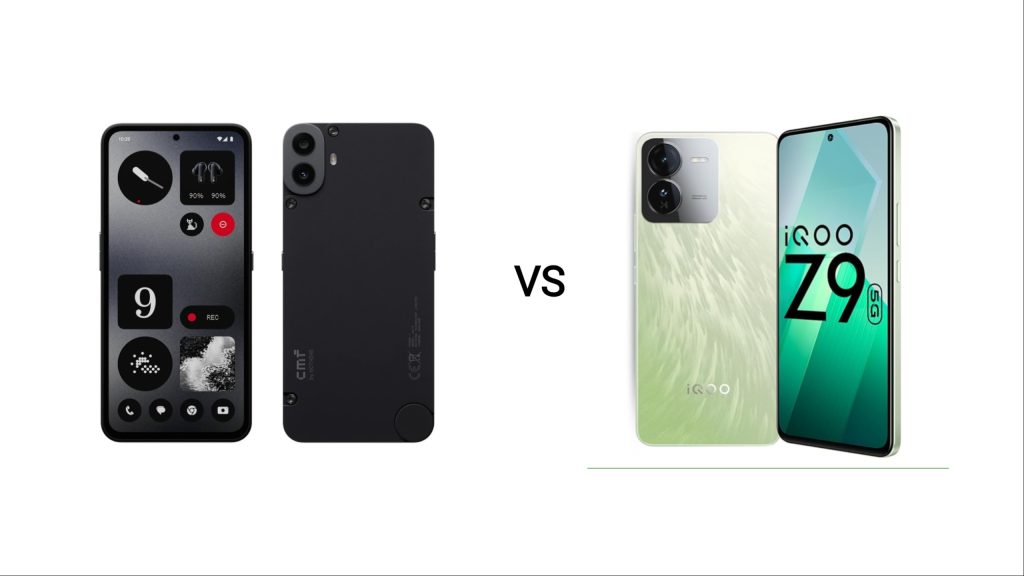
The Nothing CMF Phone 1 took the internet by storm as the brand’s more affordable entry for buyers. It features budget level specifications and features, as well as a design that make it stand out from the crowd. But how does this device compare with other budget level Android entries? In this article, we pitch the CMF Phone 1 against the iQOO Z9 to find out which is better.
Please Note: When you buy something using the links in our articles, we may earn a small commission at no cost to you.
CMF Phone 1 vs iQOO Z9: Design and colours
CMF Phone 1:
The CMF Phone 1 comes with a very impressive design language that might not be for everybody. It comes with a dual rear camera setup as well as a circular cutout towards the base of the device for modular add-ons. On the right side of the device sits the power button, and to the left side are the volume rocker keys. At its base is the USB-C port, speakers, microphone, and the SIM tray slot. A major selling point for this device is its modular design, as users can sap out the rear panel for a different colour or screw in different accessories. Available colour options on this device are Black, Orange, and Light Green.
iQOO Z9:
Unlike the CMF Phone 1, the iQOO Z9 isn’t a modular device, but it packs good looks. This device comes with a dual rear camera setup with a large cutout. On the right side of this device sits the power button and volume rocker keys. At its base you’ll find the SIM tray slot, the USB-C port, microphone, and speaker. Available colour options on this device are Brushed Green and Graphene Blue.
Major differences:
Modular design on the CMF Phone 1.
Traditional design on the iQOO Z9.
CMF Phone 1 vs iQOO Z9: Display
CMF Phone 1 and iQOO Z9:
When it comes to the display performance of these devices, they come with some similarities. First they both come with AMOLED screen displays but the CMF Phone 1 comes with a higher peak brightness. Despite featuring the same screen size, the iQOO Z9 comes with slimmer bezels than the CMF Phone 1.
Major differences:
Brighter display on the CMF Phone 1.
Slimmer bezels on the iQOO Z9.
CMF Phone 1 vs iQOO Z9: Cameras
CMF Phone 1 and iQOO Z9:
These devices come with the same rear and front facing cameras. A main 50MP sensor and a secondary 2MP depth sensor with 4K video recording capability. Up front, this device gives users 16MP sensors with no 4 K video recording ability.
Major differences:
Nil.
CMF Phone 1 vs iQOO Z9: Performance
CMF Phone 1 and iQOO Z9:
These devices make use of a processor that is just a generation apart from one another. The CMF Phone 1 comes with the MediaTek Dimensity 7300 processor, while the Vivo Z9 comes with the MediaTek Dimensity 7200 processor. Both devices offer up to 8GB of RAM and 256GB worth of storage capacity.
Major upgrades & differences:
The Dimensity 7300 processor on the CMF Phone 1.
CMF Phone 1 vs iQOO Z9: Software
CMF Phone 1 and iQOO Z9:
Both devices run on Android 14 out of the box but use different software programs. The CMF Phone 1 uses the Nothing OS, while the iQOO Z9 makes use of the Funtouch 14 software. You can get up to 3 years of OS upgrade if you purchase either of these devices.
Major differences:
CMF Phone 1 runs OriginOS 4.
iQOO Z9 runs iOS 17 out of the box.
CMF Phone 1 vs iQOO Z9: Battery life and charging
CMF Phone 1 and iQOO Z9:
While both devices come with a 5000mAh battery capacity the iQOO Z9 comes with faster charging. Yes it features 44W fast charging while the CMF Phone 1 comes with 33W fast charging.
Major differences:
Faster charging on the iQOO Z9.
CMF Phone 1 vs iQOO Z9: Final Verdict
Considering the fact that these devices are very similar in specifications some might have a hard time picking which to purchase. If you’re out for a device that will turn heads and has better performance then the CMF Phone 1 is for you. But if you want something simple yet powerful and comes with faster charging, the iQOO Z9 is the pick for you.
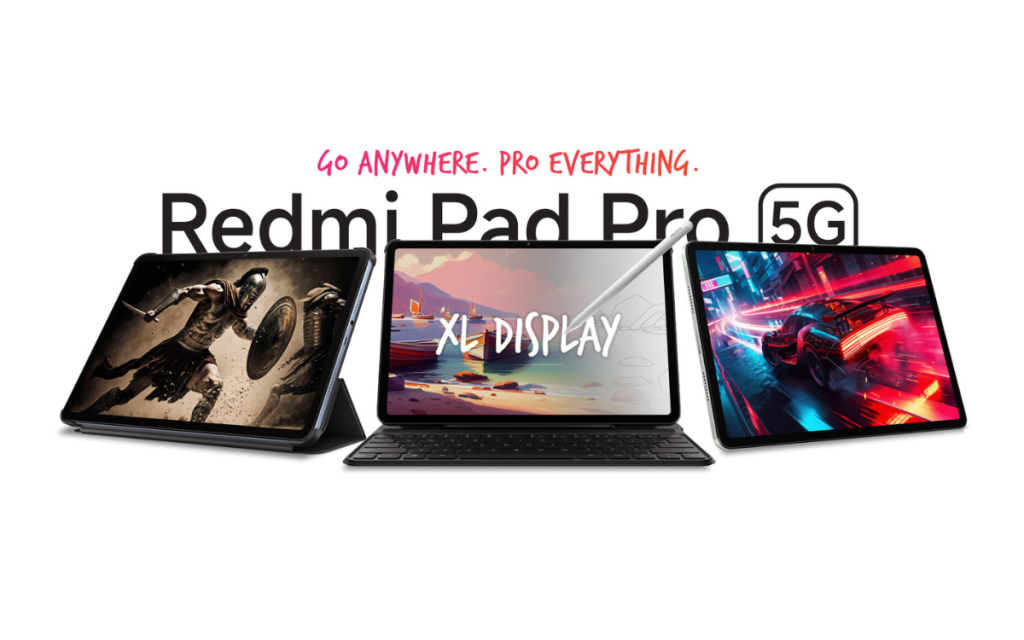
Xiaomi’s Redmi Pad Pro 5G, previously launched in India, has expanded its reach to European and UK markets. While the tablet is mostly similar to the already available Redmi Pad Pro, the key upgrade is 5G connectivity.
The Redmi Pad Pro 5G comes with starts at £279 in the UK and €379.90 in the Eurozone. Configurations vary by region, with up to 8GB RAM and 256GB storage available. Pre-orders include a free cover, and additional accessories like the Redmi Buds 5 or the Redmi Smart Pen stylus.
Redmi Pad Pro 5G specs:
The Redmi Pad Pro 5G supports dual SIMs, allowing 5G connectivity on both. It has the same specifications as the earlier Wi-Fi-only model. The tablet has a 12.1-inch 2.5K LCD screen with a resolution of 2560 × 1600 pixels, a 120 Hz refresh rate, and a 180Hz touch sampling rate. The display reaches up to 600 nits of brightness, supports Dolby Vision, and is protected by Corning Gorilla Glass 3.
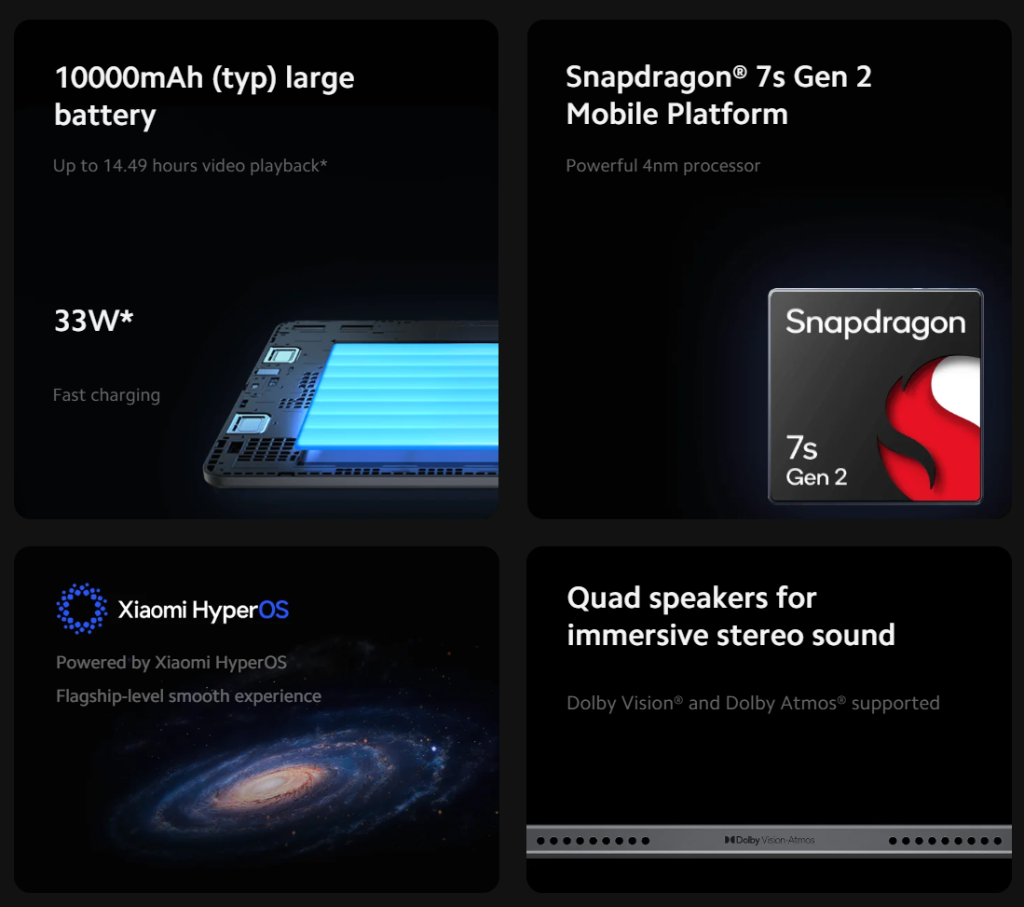
It runs on an Octa-Core Snapdragon 7s Gen 2 processor with a clock speed of up to 2.4 GHz, paired with an Adreno 710 GPU. The tablet offers 6GB or 8GB of LPDDR4X RAM and 128GB or 256GB of UFS 2.2 storage, expandable up to 1.5TB via microSD. The operating system is Android 14-based HyperOS.
For cameras, it has an 8MP rear camera and an 8MP front camera. Other features include an in-display fingerprint sensor, an infrared sensor, quad speakers with Dolby Atmos support, and dual microphones.
The tablet measures 280 × 181.85 × 7.52 mm and weighs 571 grams. Connectivity options include 5G, Wi-Fi 6 (802.11 ac) on 2.4GHz and 5GHz bands, Bluetooth 5.2, and USB Type-C 2.0. It has a 10,000mAh battery with 33W fast charging.
In other news, more details about the Xiaomi 15 Ultra have emerged. As per a leak from tipster Ice Universe, the Xiaomi 15 Ultra will have a quad-camera setup, including a 200-megapixel periscope telephoto lens with 4.x optical zoom.
We use cookies on our website to give you the most relevant experience by remembering your preferences and repeat visits. By clicking “Accept”, you consent to the use of ALL the cookies.
This website uses cookies to improve your experience while you navigate through the website. Out of these, the cookies that are categorized as necessary are stored on your browser as they are essential for the working of basic functionalities of the website. We also use third-party cookies that help us analyze and understand how you use this website. These cookies will be stored in your browser only with your consent. You also have the option to opt-out of these cookies. But opting out of some of these cookies may affect your browsing experience.
Necessary cookies are absolutely essential for the website to function properly. This category only includes cookies that ensures basic functionalities and security features of the website. These cookies do not store any personal information.
Any cookies that may not be particularly necessary for the website to function and is used specifically to collect user personal data via analytics, ads, other embedded contents are termed as non-necessary cookies. It is mandatory to procure user consent prior to running these cookies on your website.