
Add GIZMOCHINA on Google:
POCO is finally back.
For a brand that literally means ‘Little’ in Spanish, Poco managed to gather a HUGE fan following. It was so popular that Manu Kumar Jain, MD of Xiaomi India was bombarded with one question – every single day – ‘when is Poco F2 launching in India?’.

And Poco’s popularity was backed by figures. Poco sold 700,000 units of its first smartphone in just three months. Counterpoint reports that Poco managed to grab a solid 3.6 percent market share in the year 2018 in the Rs. 15,000-30,000 price segment. This figure dropped to 1.1 percent in 2019. Notably, Poco has launched only one model so far: the Poco F1.
So what was the secret behind Poco’s incredible popularity?
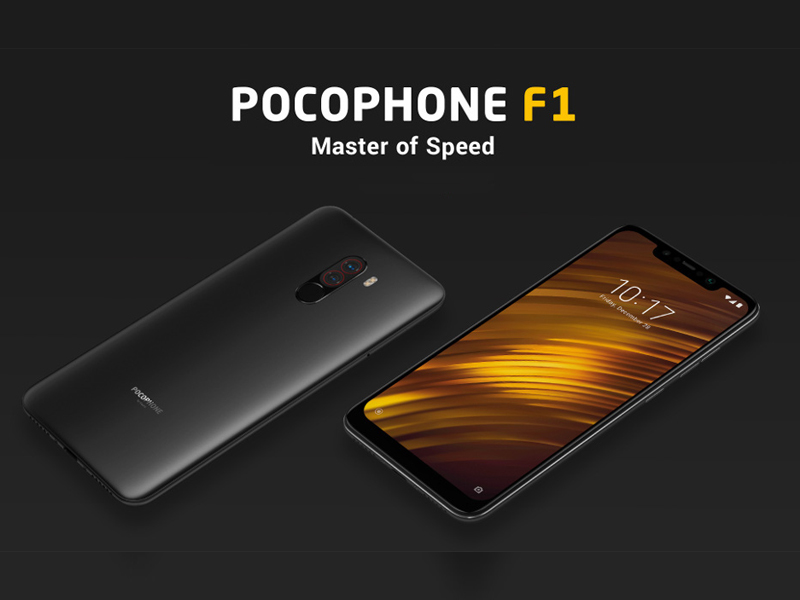
The Poco F1 tapped into a market that OnePlus opened up back in 2014. It came from a young & dynamic brand, was youth-oriented and affordable. But what made the Poco F1 truly special was its flagship Snapdragon 845 processor at the INR 20,000 or $300 price tag in India and €350 in Europe. Nobody could have ever imagined the all-powerful SD845 at this price point. The phone offered an incredibly smooth experience with a really capable camera. It was truly a phone built for enthusiasts.
Editor’s Pick: Xiaomi’s offline stores across China will be shut from January 28 due to the Coronavirus epidemic
But even after 1.5 years, Poco’s popularity has shown no signs of dialing down.
Why?
Because there’s no one else like Poco. OnePlus sneaked its way into the premium segment recently, leaving a void in the INR 15,000-30,000 segment. Both Realme and Redmi have powerful phones in this segment right now, but their product portfolio is pretty huge, and the phones in this segment don’t really have their own separate identity.
Personally, I think fans are still waiting for Poco because they want something unique, with its own identity. So splitting up the Poco brand was definitely the right way forward.
However, if Poco X2, that’s all set to debut on February 4th in India, turns out to be a rebranded Redmi K30, I’d be really disappointed. Splitting up Poco from Xiaomi was a smart move, not just for better management. I feel Poco could have leveraged its separate identity to offer something unique to its customers, which is exactly what Poco F1 did back in 2018.
Almost everyone I have come across who have used or are still using the Poco F1 are extremely proud of their smartphones. I believe it’s because they feel no other phone can match the specifications or experience of the Poco F1, especially at its affordable price point.

After the recent teasers, we are almost sure that the Poco X2 will be a rebranded Redmi K30. But that’s not really a good thing. The Redmi K series already had a pretty strong fan following in India. If Poco fans were looking for flagship specs for an affordable price tag, the Redmi K20 Pro should have been enough. But why were fans demanding Poco F2? Because they were looking for a smartphone that has its own identity, kind of like what OnePlus enjoys in the premium segment right now.
Poco X2 makes sense in the short term
So will the Poco X2 do well in the market? Of course! The Redmi K30 is an extremely value for money smartphone and in a price-sensitive market like India, it is bound to sell well.
But Poco could lose its exclusivity by launching a rebranded Redmi device. And given how Poco plans to release multiple devices this year, it could easily lose its charm. With this strategy, Poco is setting itself to become just another value for money brand in the Indian market. But are we looking for a Redmi replacement? I think not.
It’ll be a real shame if both Xiaomi and Poco miss out on this opportunity. After all, with the kind of fan following it enjoyed, Poco could have transformed into a real OnePlus rival in India. Unfortunately, the upcoming X2 isn’t a threat to OnePlus. In fact, it’s more of a threat to the Redmi Note 8 Pro!

Regardless of how Poco performs after splitting up, it’s a really exciting time to be a consumer in the Indian market. I guess we will have to patiently wait and see what it does in the coming months.
UP NEXT: POCO GM sheds light on the company’s new plans



Comments